1. Linen Closet Color-Matched Shelf Bins
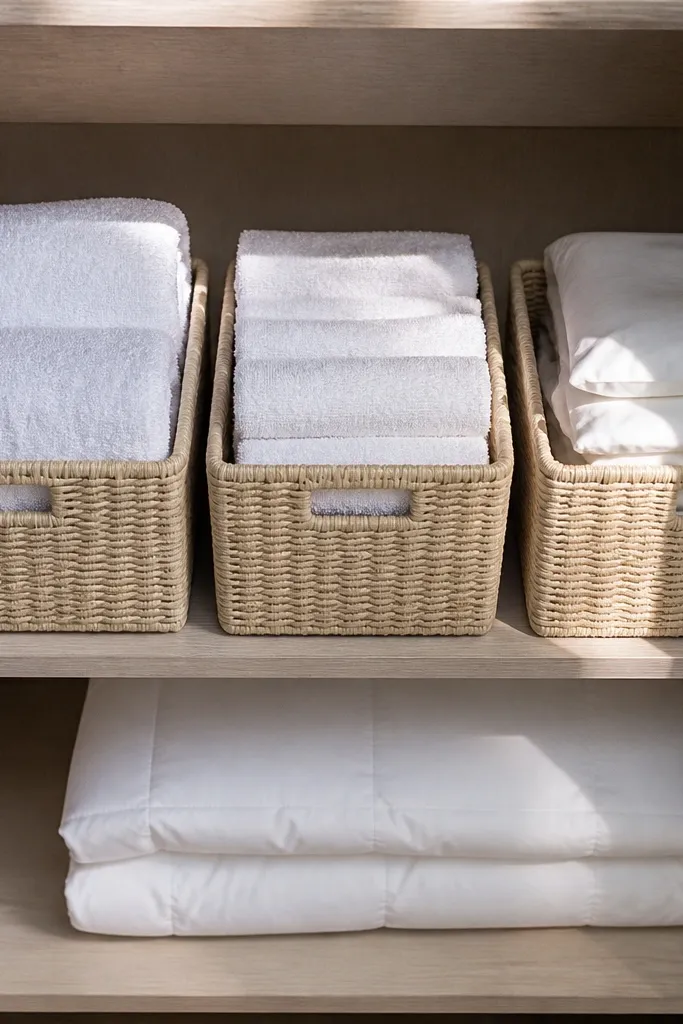
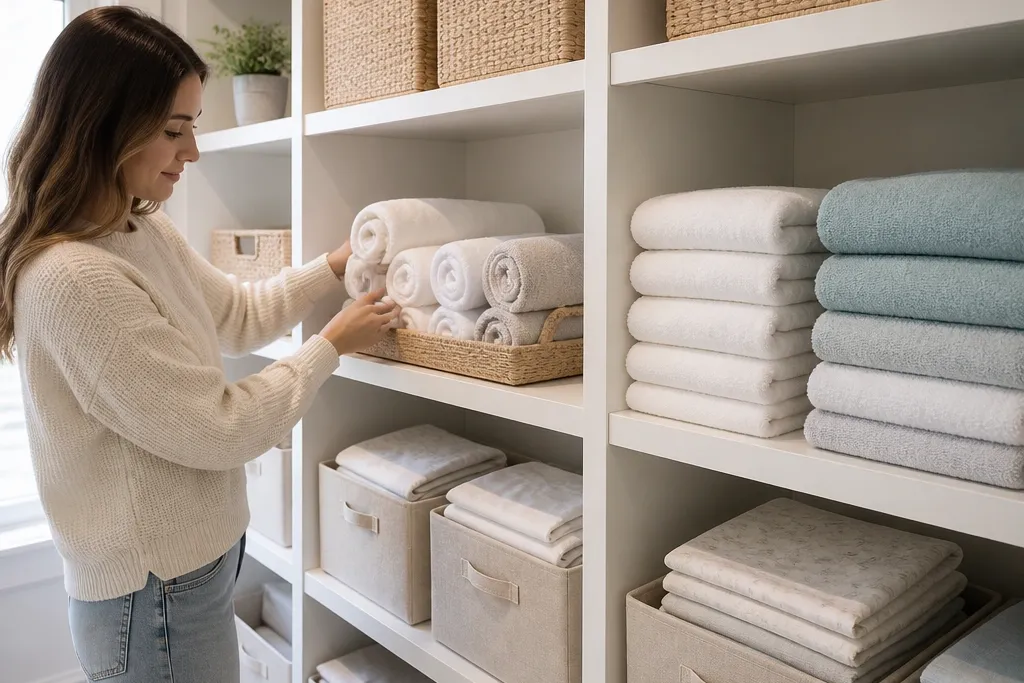
Measure each shelf depth and choose bins that leave 1 inch of clearance from the back wall for airflow. Line shelves with a thin, washable liner, then set bins in a grid so their fronts align. Add labels that name the function (Bath towels, Hand towels, Pillowcases) and place them centered on the bin front.
This is the fastest way to make a linen closet look intentional. Use bins in one neutral family (white, sand, or natural woven) so the closet reads clean instead of chaotic. Keep categories separate: one bin for bath towels, one for hand towels, one for extra pillowcases. The look comes from consistent height and label placement at the same eye level on every bin. It also helps because every time you restock, you’re returning items to the same visual pattern.
Skip thisDon’t mix bin heights randomly — that’s what makes the closet look cluttered.
Editor's noteUse removable label tabs with a matte finish so they don’t look glossy and cheap under closet light.
2. Rolling Towel Stacks in a Slim Riser Tray
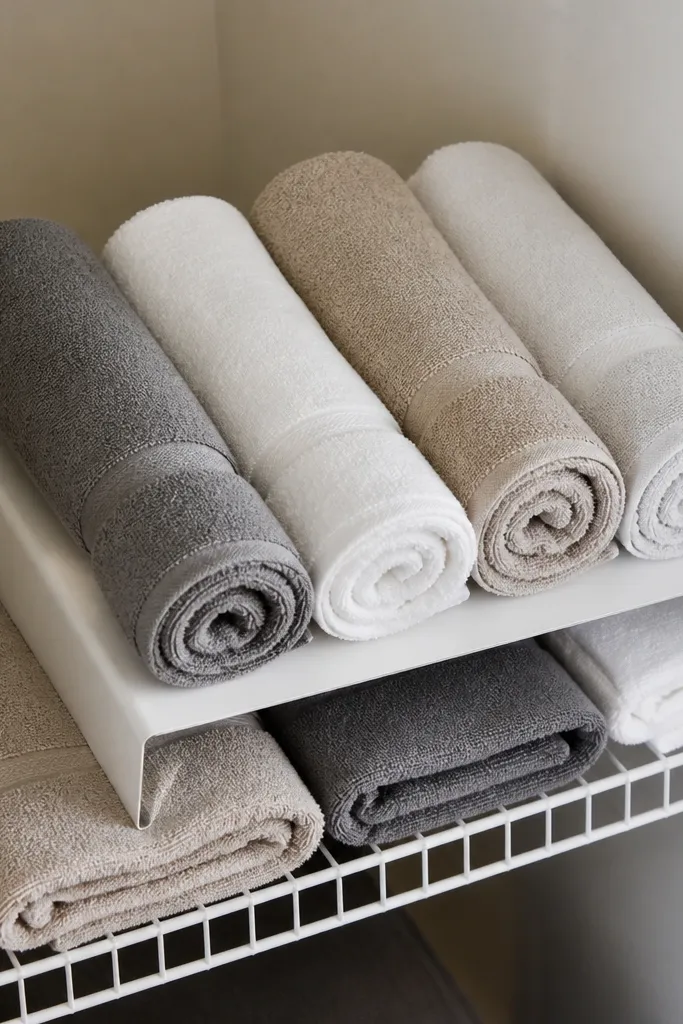
Rolled towels look neat and they’re easier to grab than folded stacks that slide. A slim riser tray lifts the rolls so you see the labels and the towel ends without digging. This works especially well for small linen closets where shelves are shallow and items get crammed. The aesthetic is clean because rolls are uniform in diameter and sit in straight rows. It also keeps towels from getting wrinkled from being shoved around.
Buy or build a slim tray that fits your shelf width and is about 2-3 inches deep. Roll towels to a consistent thickness (aim for about 2 inches diameter), then stand them upright inside the tray so the roll ends face the front. Place a simple label card behind the front edge of the tray for “Bath,” “Hand,” and “Washcloth.”
Use a light cotton tie or elastic band for one towel size only so every roll stays the same shape.
Avoid mixing towel sizes in one tray — different thicknesses ruin the uniform look.
3. Sheet Sets in Matching Fabric Drawers
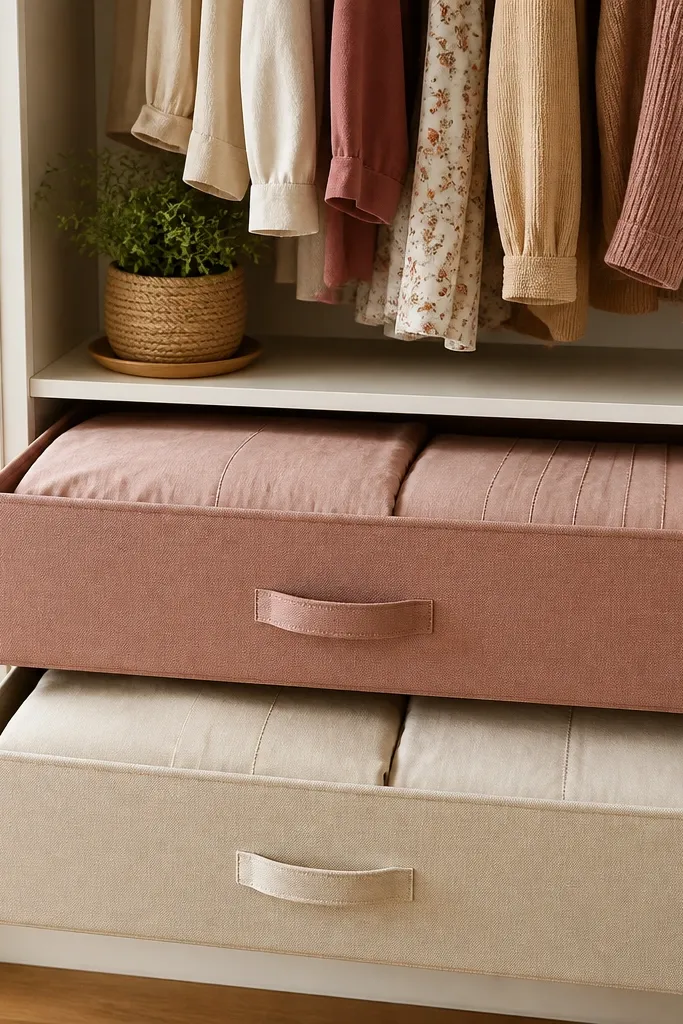
Sheet sets are the hardest linen items to keep tidy because they multiply and pieces separate. Fabric drawers solve that by keeping each set together and hiding the bulk while still looking soft and clean. Use matching drawers so the closet looks designed, not like storage bins were thrown in. Label each drawer with the set size and function (Queen sheets, Guest sheets). This keeps you from hunting for fitted sheets and pillowcases when you need them.
Choose fabric drawers with stiff sides so they hold shape on shelves. Fold sets using a consistent method: fitted sheet goes first, then flat sheet, then pillowcases stacked on top. Label the drawer front with large text and add a small photo icon if you struggle with sizes.
Store fitted sheets in a dedicated “fitted sheet sleeve” pocket inside the drawer so they don’t pop out.
Don’t store loose pillowcases in open stacks — they slide and disappear.
4. Airflow Slatted Shelf Inserts for Towels
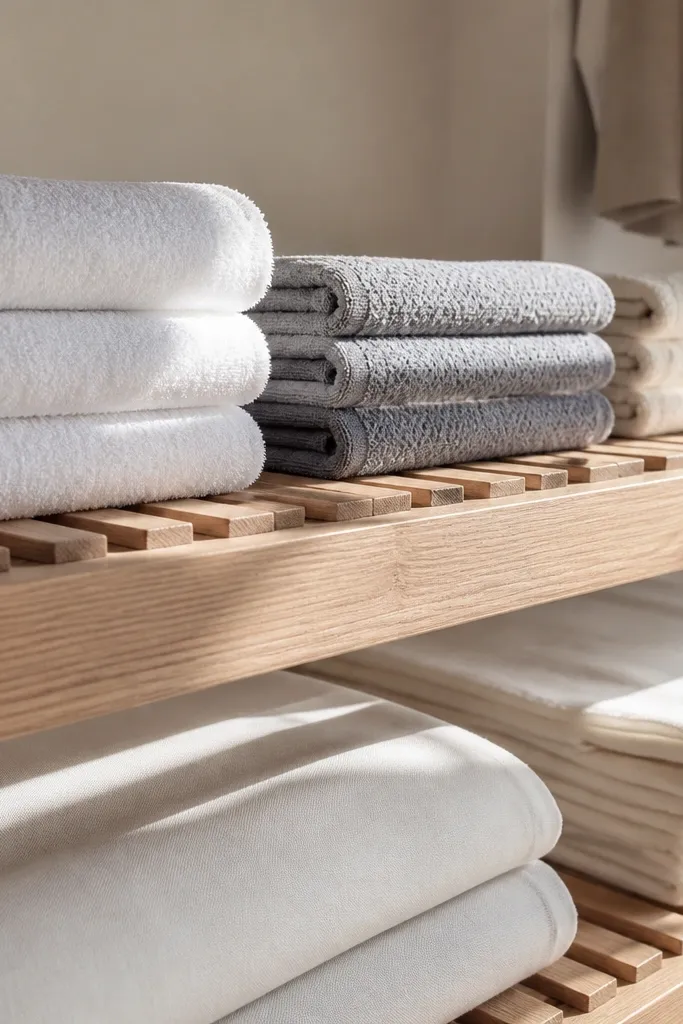
If your linen closet smells even slightly musty, storage is the problem. Slatted shelf inserts create airflow under towels and between stacks, which reduces damp odors. They also make the closet look crisp because towels sit on raised, evenly spaced surfaces instead of directly on dusty shelves. This idea is especially good for closets with solid shelving where air circulation is poor. It’s practical and it looks better than covering everything with solid plastic bins.
Measure shelf width and choose slatted inserts that sit flush with the shelf edges. Place towels in neat stacks or roll bundles on top of the slats so air can move underneath. Keep the number of stacks limited per shelf so you don’t overfill and compress everything.
Use a thin washable mat under slats only if the shelf is rough; otherwise skip it for maximum airflow.
Avoid full-coverage plastic liners under towels — they trap moisture and kill the airflow benefit.
5. Vertical Divider File System for Pillowcases
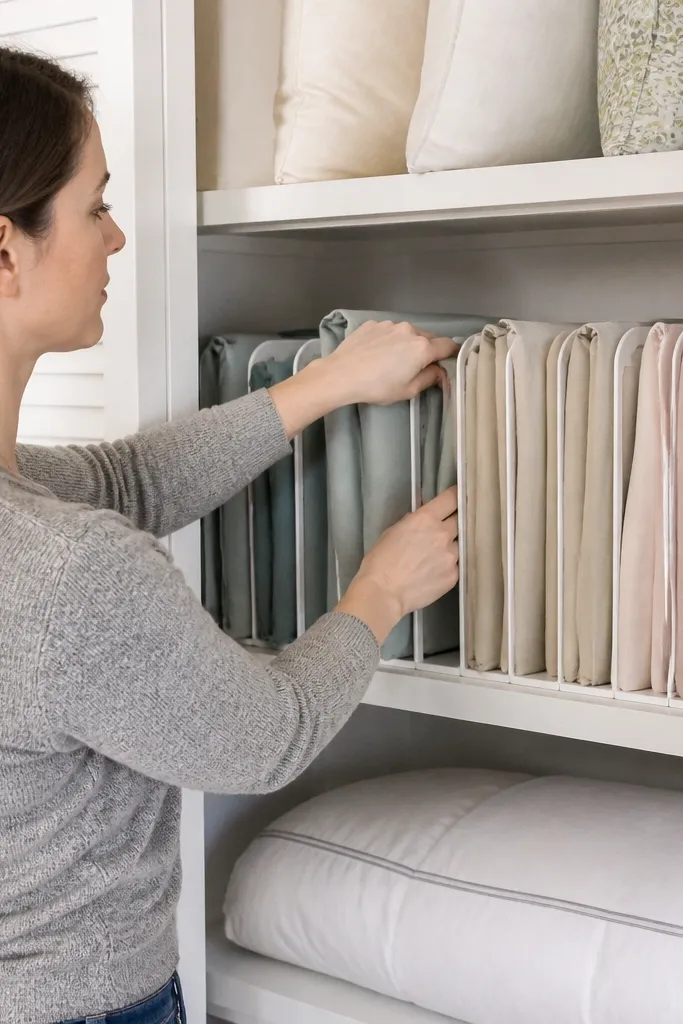
Pillowcases are small, but they cause big mess because they’re easy to mix. A vertical divider file system keeps them upright like folders so you can see everything at a glance. The closet looks tidy because the dividers create straight lines and uniform spacing. This setup is perfect for people who host guests and want quick access to the right size. It also reduces the “one pile for everything” problem that makes closets look messy fast.
Use a slim organizer box and add vertical dividers with adjustable spacing, keeping each divider wide enough for one folded pillowcase. Fold pillowcases into a uniform rectangle and file them upright behind each divider. Add labels at the top of each section for Standard, Queen, King, or Guest.
Fold pillowcases with the same orientation every time so the label and seam lines line up visually.
Don’t cram multiple pillowcases into one divider — that collapses the upright look.
6. Clear Front Bins with Color Dot Labels
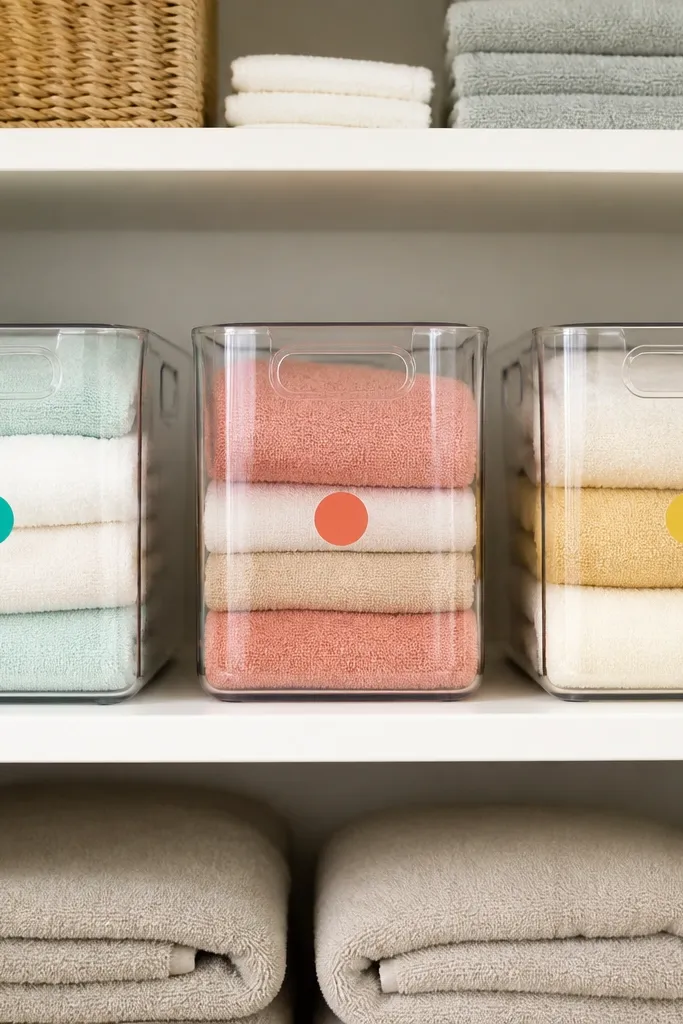
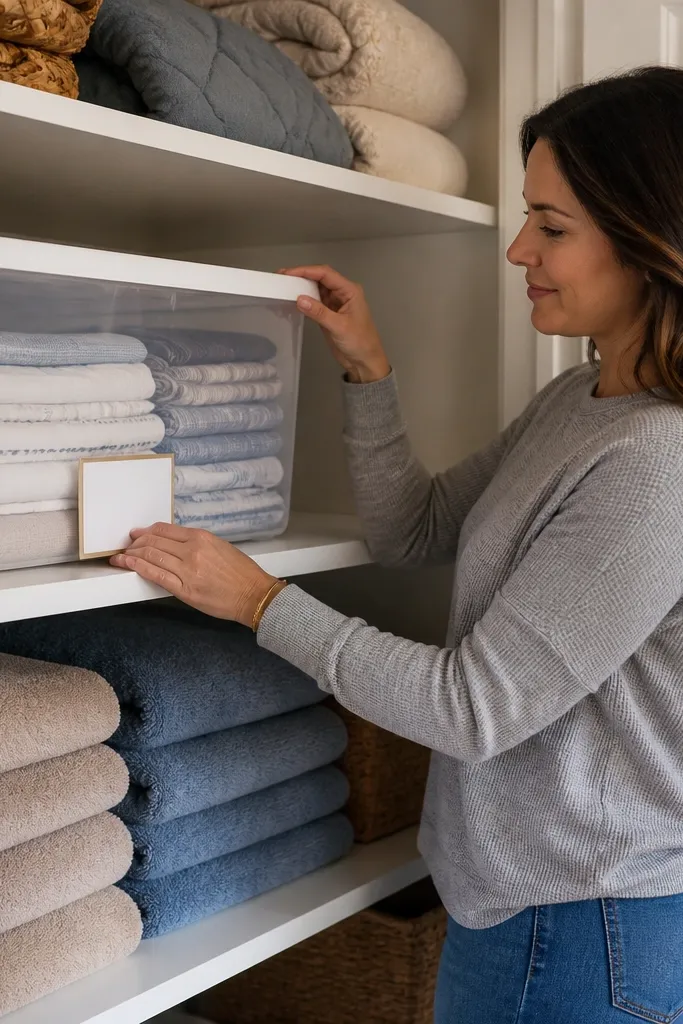
Choose clear bins with lids or clear fronts that fit your shelf width. Stack items in consistent layers: towels rolled or folded, pillowcases stacked flat, and bedding folded to a uniform height. Apply a colored dot label on the front corner and add a small legend card inside the closet door or on a nearby wall.
Clear front bins make closet organization look clean because you can see the inventory without opening anything. Color dot labels add order without heavy black text covering the front. This is a great option if you want the closet to look bright and airy instead of boxed in. Keep each bin category narrow: bath towels, hand towels, washcloths, and extra bedding. The look stays neat because the contents are stacked and visible in a grid.
Skip thisDon’t overstuff clear bins — visible piles turn into visual clutter fast.
Editor's noteUse matte dot stickers instead of glossy ones so they don’t reflect and look messy under closet lighting.
7. Corner Hanging Organizer for Extra Guest Bedding
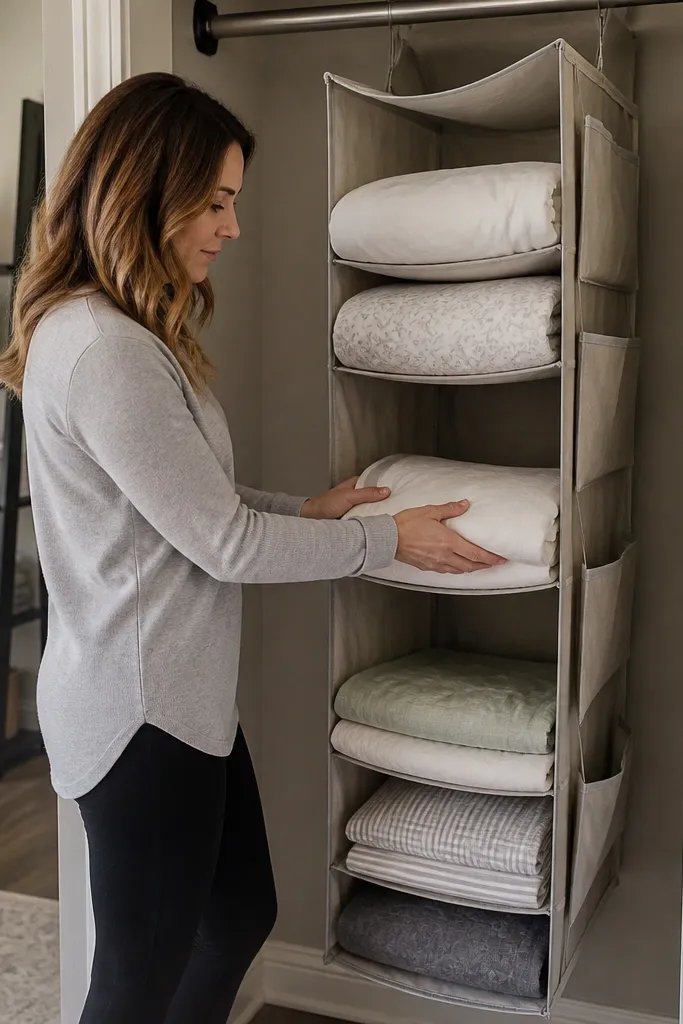
Hang the organizer from a closet rod using the included hooks, and verify it clears the shelf edges below. Fold guest bedding into consistent bundles and place each bundle into its own compartment. Label each pocket with size and set type (Guest towels, Guest sheets) using fabric labels or cardstock tags inside a clear sleeve.
Corner space is wasted space in most linen closets. A hanging organizer uses that vertical corner area and keeps guest bedding visible and separated. This makes the closet look more open because you’re not stacking bulk on top of shelves. It’s also practical because you can pull the whole compartment when you set up for guests. Choose compartments that are stiff enough to hold their shape so the organizer doesn’t sag.
Skip thisAvoid stuffing big comforters into small pockets — it warps the compartments.
Editor's noteUse a breathable fabric organizer, not vinyl, so bedding doesn’t trap humidity.
8. Woven Hampers for Dirty-to-Clean Linen Swap
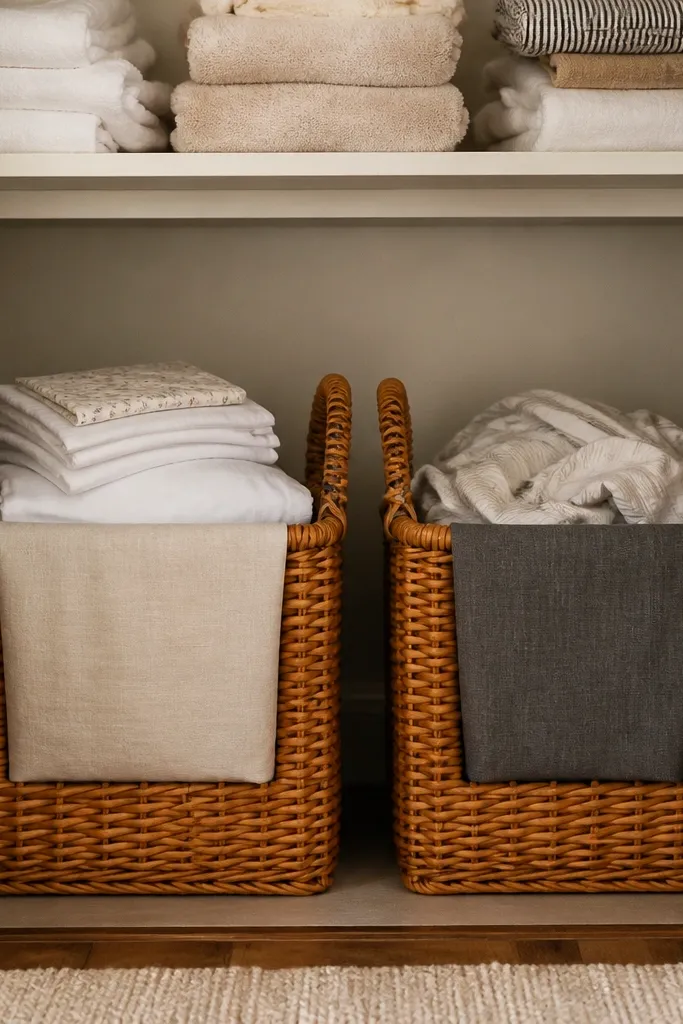
A linen closet gets messy when clean storage and “ready to wash” items share the same space. Two labeled woven hampers solve that by creating a clean-to-wash swap zone. This is one of the most visually calming setups because woven textures look warm and intentional. It also makes it easy to keep towels and sheets moving through your home without dumping them into random stacks. Keep the hampers close to where you actually do laundry so the system gets used.
Choose two small hampers that fit your closet floor space without blocking the door swing. Place the clean overflow hamper on a shelf or low step area, then the “ready to wash” hamper beside it. Add labels with a neutral tag and keep the opening clear so you can toss items in one motion.
Line the hampers with washable cotton liners so odors don’t soak into the weaving.
Avoid putting dirty items directly on shelves — it spreads the mess.
9. Drawer Inserts for Rolled Washcloths and Small Linens
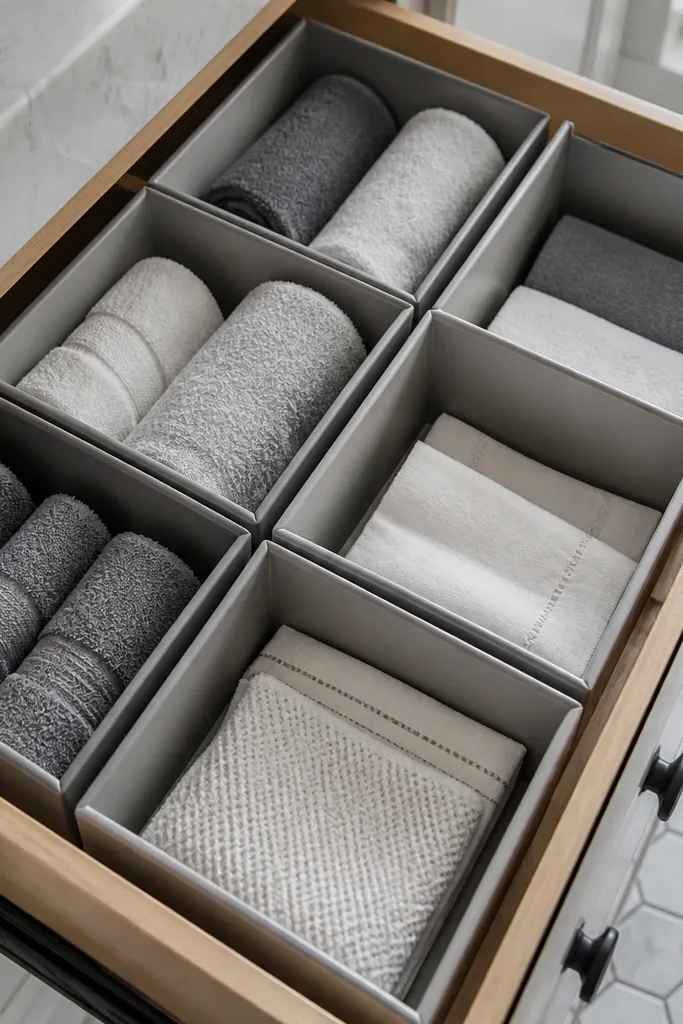
Measure your drawer interior and pick adjustable dividers or a pre-cut insert kit. Roll washcloths to a consistent width, then place them standing or flat in each compartment. Label each divider with the item name and a simple count target like “8” if you want to keep inventory tight.
If your linen closet has drawers, they’re gold for small items. Drawer inserts keep rolled washcloths, hand towels, and small table linens from turning into one mixed pile. The look is sharp because everything sits in straight compartments. This setup is ideal for bathrooms that share linen storage with other textiles like cleaning cloths. It also speeds up restocking because you can count what’s missing by compartment.
Skip thisDon’t leave drawer bottoms bare — small items slide and the compartments lose their clean look.
Editor's noteUse a low-adhesive label maker or removable tape so you can re-label when you run out of stock.
10. Clear Lid Plastic Bins for Seasonal Swaps
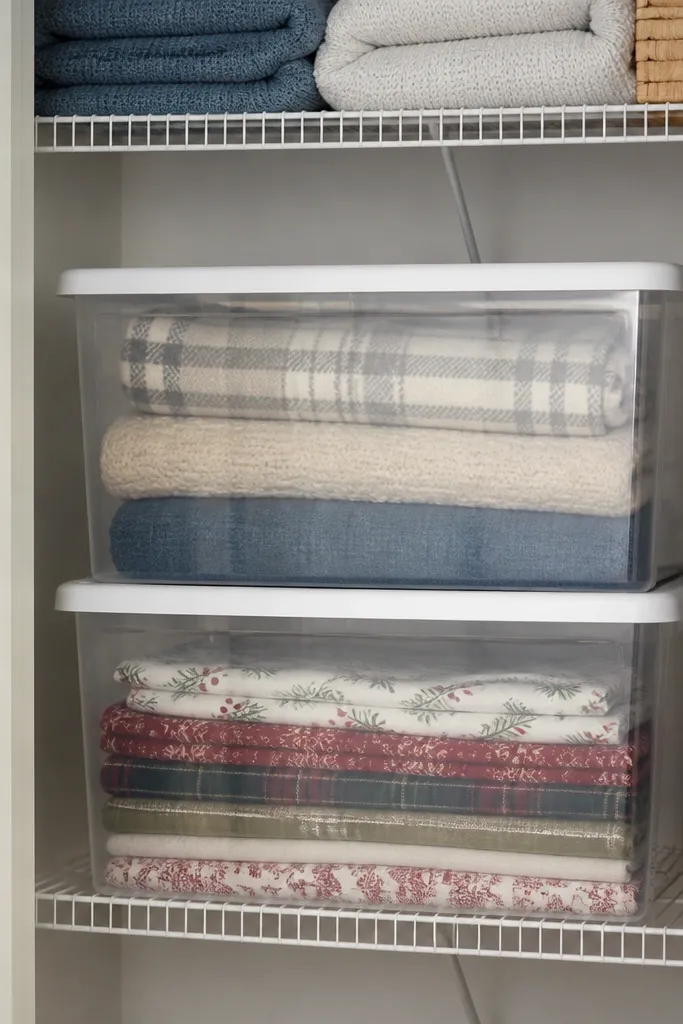
Pick bins that stack cleanly and match each other in size so the top shelf looks symmetrical. Fold seasonal items using a consistent height and place them inside with a breathable liner like cotton or a thin sheet between layers. Label the lid front with season and item type (Summer sheets, Holiday table linens).
Seasonal linen belongs in one predictable place or it will scatter across the closet. Clear lid bins make the “what’s in there” question disappear, and they look orderly because lids align visually. Use them only for seasonal items like extra blankets, special holiday table linens, or summer sheet sets. The aesthetic stays clean because these bins sit on the top shelf out of daily reach, and their labels keep them from becoming mystery boxes. It also protects linens from dust.
Skip thisAvoid storing all year bedding in seasonal bins — you’ll forget what’s inside.
Editor's noteAdd a small piece of cedar or a breathable sachet inside the bin for scent control without trapping moisture.
11. Shelf Divider Boards for Stacked Towels
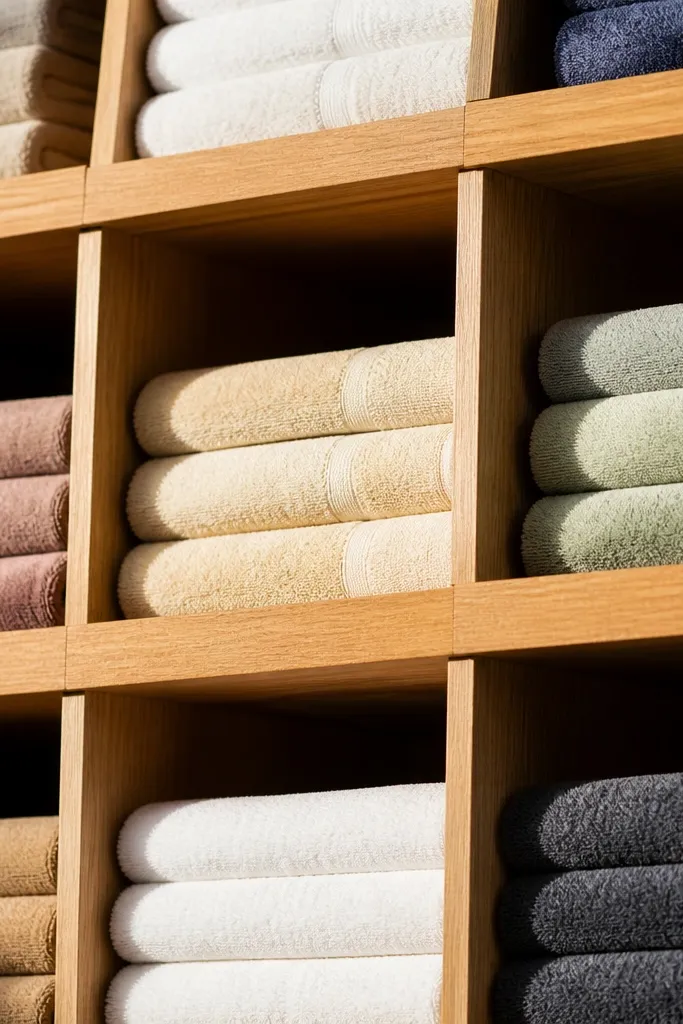
Towels look messy when stacks lean or slide. Shelf divider boards create boundaries so stacks stay straight and visually separated. This makes the closet look like a display, not storage. It’s a strong choice when you want a warm, wood-toned look instead of plastic bins. It also helps you separate categories without adding more containers that take up space.
Cut divider boards to match your shelf depth and install them with small L-brackets or adhesive shelf mounts. Place dividers so each section holds one stack of towels at a consistent height. Fold towels to the same width and place them into each section so the front edges align.
Sand edges lightly and wipe with a tack cloth so the boards don’t shed dust onto linens.
Don’t install dividers too close — towels need a tiny gap to avoid crushing the stack.
12. Label Station on Closet Door with Color-Coded Categories
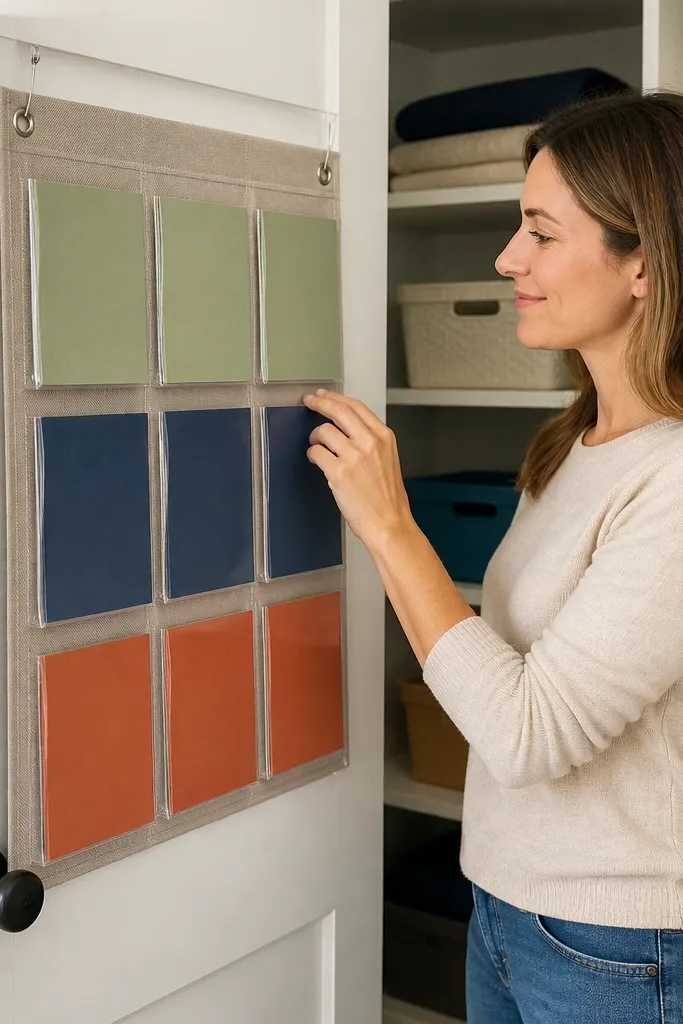
Labels that live only on bins can be hard to read when you’re reaching into the closet. A label station on the closet door creates a quick reference so you can restock correctly without rummaging. The look is clean because you get one organized “system” spot instead of scattered label clutter. Color-coded categories keep it fast: one color for bath linens, another for bedding, another for seasonal items. This also makes the closet easier for anyone in the house to follow.
Choose a small board or clear sleeve mounted on the inside of the closet door. Write category names in big text and assign each category a color swatch that matches the bin labels. Then label bins consistently using the same category name and color so the door reference matches what you see inside.
Use matte cardstock and laminate it with clear self-adhesive film so it wipes clean.
Avoid tiny labels on top shelves — they read like clutter, not organization.
13. Fitted Sheet Envelope Pockets for Set Integrity
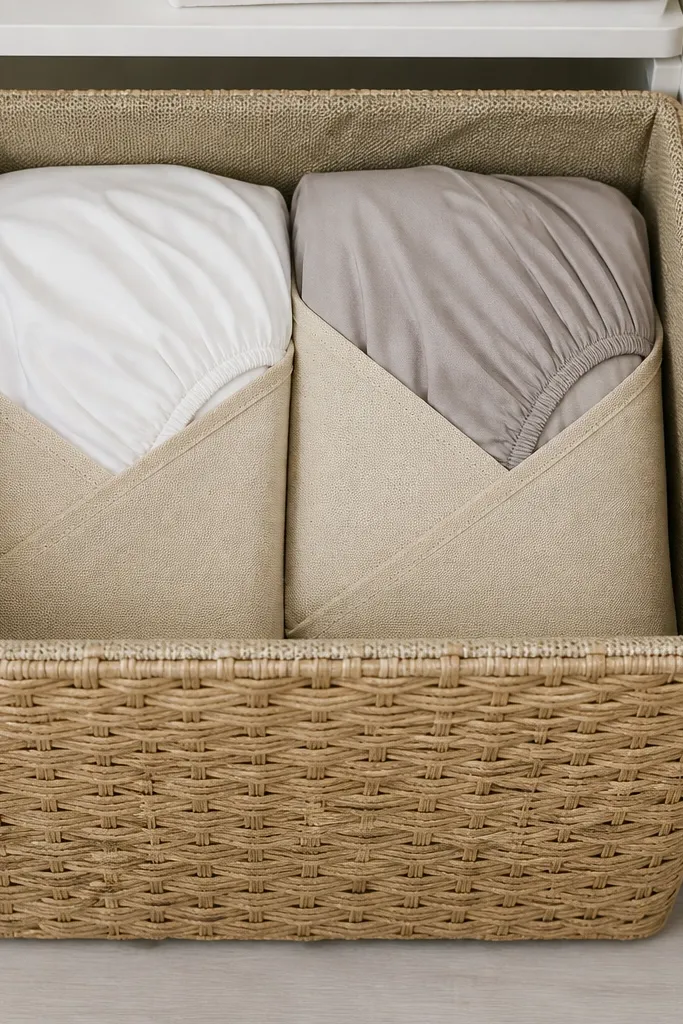
Make simple fabric envelope pockets from cotton with a top flap that closes with a small hook-and-loop strip. Place one pocket inside each set drawer or bin and store the fitted sheet in the pocket. Add a small label on the flap for the bed size, then stack the flat sheet and pillowcases on top.
Fitted sheets are the first piece to go missing, and that ruins the whole set. Envelope pockets keep each fitted sheet paired with its flat sheet and pillowcases so nothing separates during restocking. The look is neat because pockets create defined shapes inside bins. It also protects against wrinkles because the sheet isn’t folded and refolded repeatedly. Use this especially for families who cycle through multiple bed sizes.
Skip thisDon’t use thin plastic sleeves — they trap moisture and make linens feel stale.
Editor's noteUse a pocket size that holds the fitted sheet without stretching the elastic — it keeps the sheet looking better.
14. Uniform Linen Stacks Using the 'Tri-Fold' Method
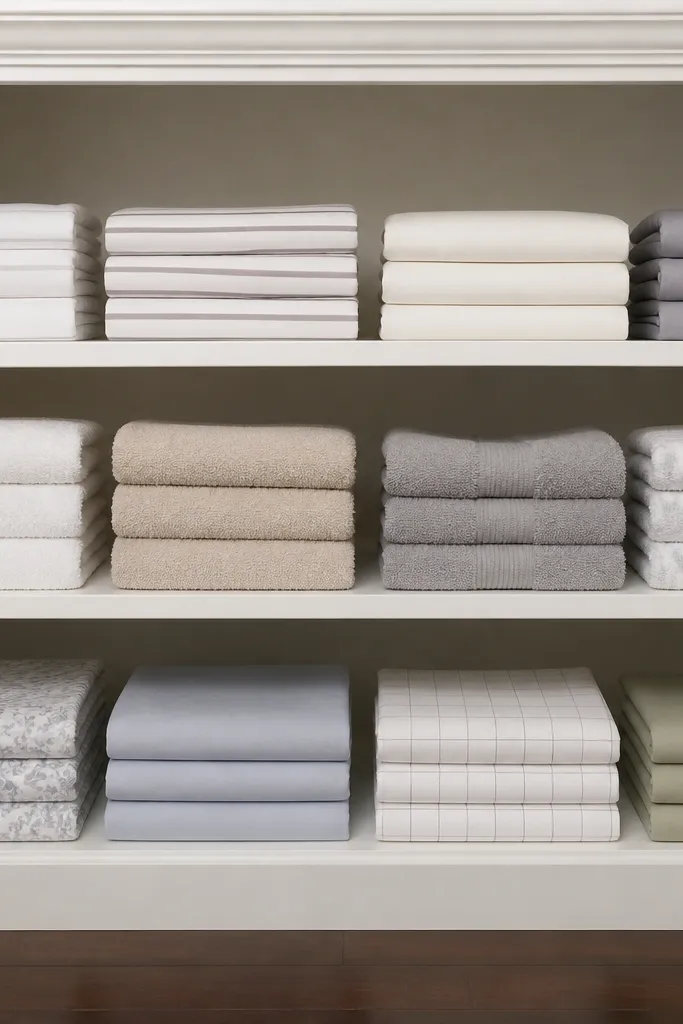
Lay the towel flat, fold in half lengthwise, then fold again into thirds so the width matches your shelf divider or bin width. Press the fold edges with your palm so the stack holds shape. Stack with the folded edge facing the front and keep stack heights consistent across the shelf.
Uniform folds make a closet look tidy even before you add bins. The tri-fold method creates consistent thickness, so stacks don’t wobble and don’t develop those lumpy edges that scream “mess.” This is the aesthetic backbone for everything else in this list. It also helps you fit more without overstuffing, because you’re controlling the geometry of the stack. Use it for towels, washcloths, and flat linens where you want a crisp, display-like look.
Skip thisAvoid mixing fold styles on the same shelf — it looks uneven immediately.
Editor's noteUse one folding board cut from cardboard or foam board to keep width identical every time.
15. Top-Shelf Book-Style Stacking for Extra Blankets
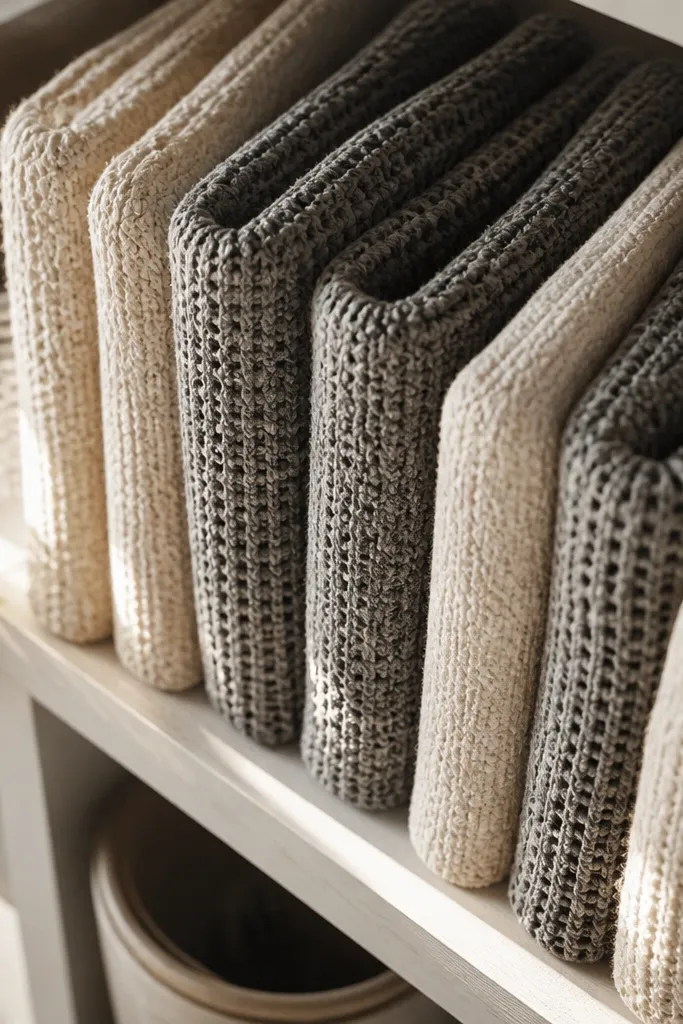
Fold blankets to a consistent rectangle size so they stand upright. Place a thin foam or fabric barrier at the back of the shelf so stacks don’t tip forward. Add a label on the front edge of each blanket bundle and keep only two to three stacks per shelf for stability.
Blankets are bulky, and bulk makes shelves look messy fast. Book-style vertical stacking keeps blankets upright and reduces the slumping that happens with flat stacks. The look is clean because vertical lines read tidy, especially on higher shelves. This works for extra throws, guest blankets, and backup comfort layers. You also get better visibility, so you can grab the right blanket without pulling everything out.
Skip thisDon’t compress blankets hard to make them fit — that creates permanent wrinkles.
Editor's noteIf a blanket won’t stand, fold it narrower and add a small support wedge behind the stack.
16. Bottom Shelf 'Grab Zone' for Daily Towels
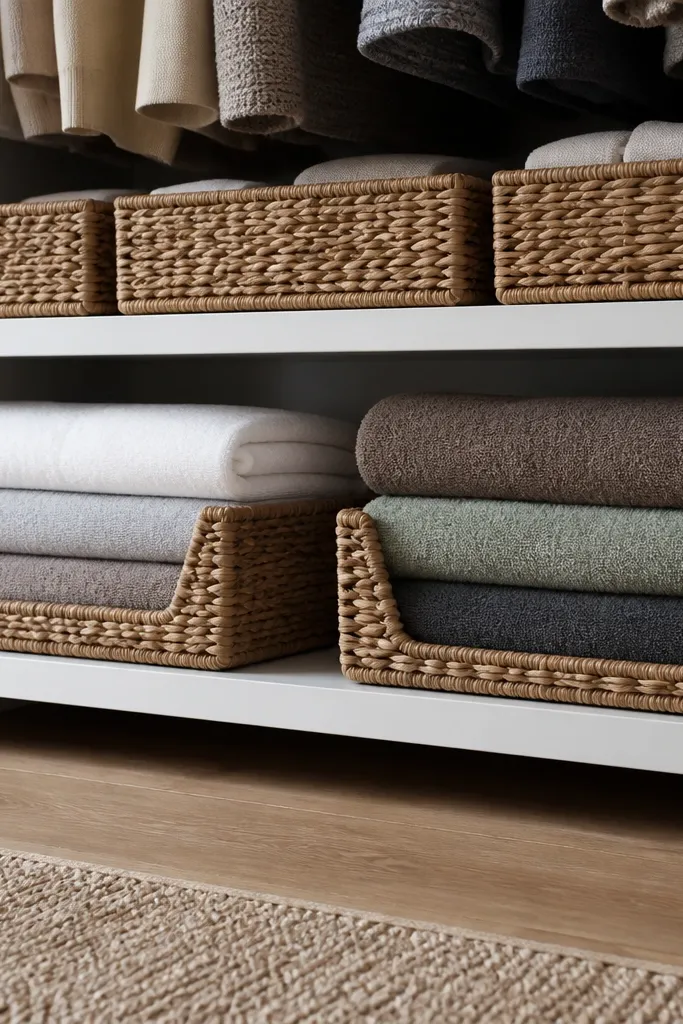
Daily towels should be the easiest thing to grab, or the closet turns into a nightly guessing game. A bottom-shelf grab zone uses two open baskets or shallow trays so you can see what’s low. The look is tidy because open baskets are arranged symmetrically and stay at a consistent height. This idea also reduces wear on other linens because you’re not digging through deep stacks for the right towel. Keep this zone strictly for “in use” items, not for extra storage.
Place two shallow baskets on the bottom shelf with equal spacing. Fill them with the exact daily items you use most: bath towels in one basket and washcloths in the other. Label the front edge of each basket and restock by swapping the entire basket when it runs low.
Set a simple refill rule: when a basket is missing 2 items, restock immediately from the reserve shelf.
Avoid using this grab zone for seasonal overflow — it ruins the clean, predictable look.
17. Hanging Rod Tidy Rail for Table Linens and Napkins
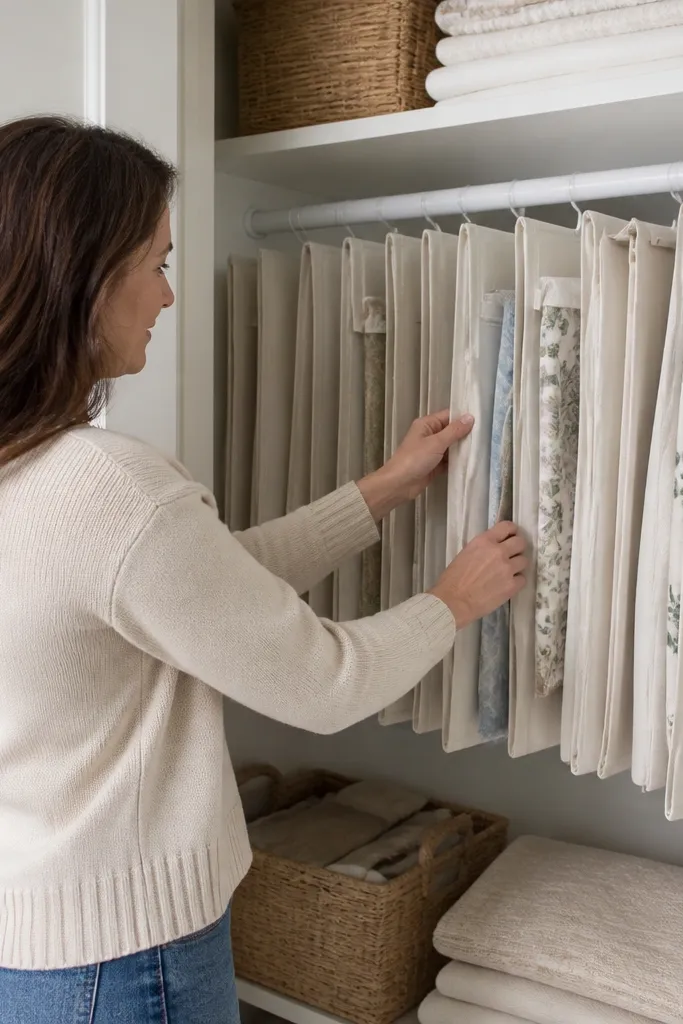
Table linens get crushed in shelves and they look messy when they’re stacked. A small hanging rail makes napkins and table runners visually organized and easy to grab for dinner or holidays. Store them in breathable cotton bags or paper-backed sleeves so they don’t collect dust. This setup looks clean because everything hangs in a straight line with matching bag shapes. It also protects fabric edges and keeps corners crisp.
Install a secondary rod or use a wall-mounted rail inside the closet at a height you can reach. Fold napkins into consistent squares and place them in matching breathable sleeves. Hang table runners and larger pieces in pairs, then label the sleeves with the category (Everyday napkins, Holiday table runner).
Use clothespins or small hooks that match the bag color so the rail looks intentional.
Avoid plastic dry-cleaning bags — they make linens feel stuffy and can trap humidity.
18. Corner Shelf Ladder with Woven Fronts
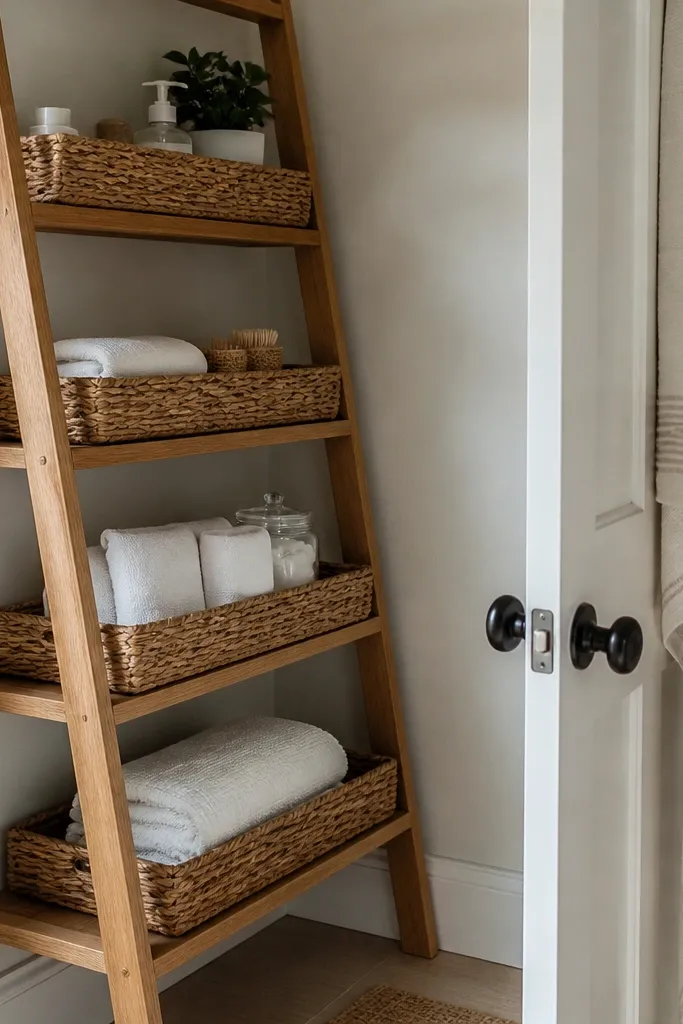
Choose a ladder shelf that fits your closet corner width and doesn’t block the door. Place woven baskets on each rung and keep baskets the same size for a uniform look. Add labels on basket fronts and use the same folding style inside so the baskets don’t bulge unevenly.
A linen closet corner can turn into a dumping ground if you don’t use it intentionally. A ladder-style corner shelf with woven baskets gives you extra storage while keeping the look airy. The ladder shape is visually tidy because rungs create clear lines and each basket has a consistent front. Use it for smaller, photogenic categories like guest towels, travel-size toiletries, and spare pillowcase bundles. It also makes the closet feel lighter because you’re not building bulky box stacks.
Skip thisAvoid oversized baskets on one rung — the ladder starts looking lopsided.
Editor's noteAnchor the ladder shelf to a stud if it’s tall — it prevents wobble and the visual clutter that comes from shifting storage.
19. Clear Label Tags on Opaque Bins for a Clean Front
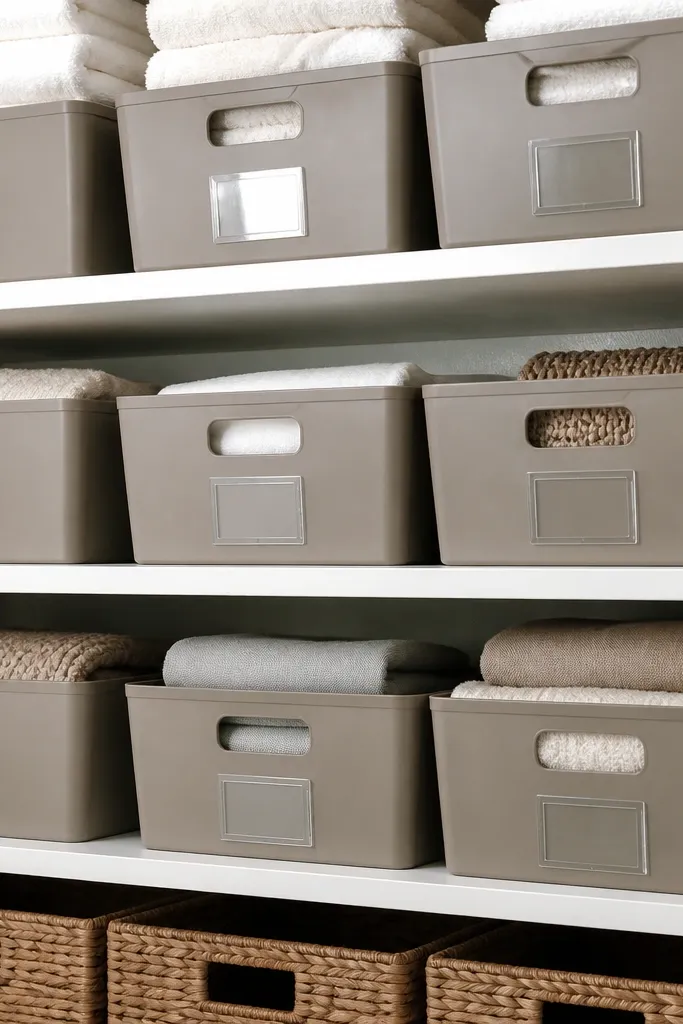
Pick opaque bins in one color family and check that the label area can fit a standard 2x3 inch card. Install label holders or use a clear plastic sleeve taped to the front so labels sit level. Put labels at the same height on every bin and keep category names short and consistent.
Opaque bins can look messy if labels are crooked or inconsistent. Clear label tags fix that by giving you a crisp, front-facing label area while keeping contents hidden. This is a great choice when you want a calm, neutral closet look without clear plastic everywhere. It also makes restocking easier because the label is always visible even when you can’t see inside. The closet stays photogenic because every bin front looks the same.
Skip thisAvoid handwritten labels directly on bin plastic — they look uneven and cheap.
Editor's noteUse a black label base with white text for high contrast under closet lighting.
20. Cabinet Door Liner Pocket Grid for Spare Linens
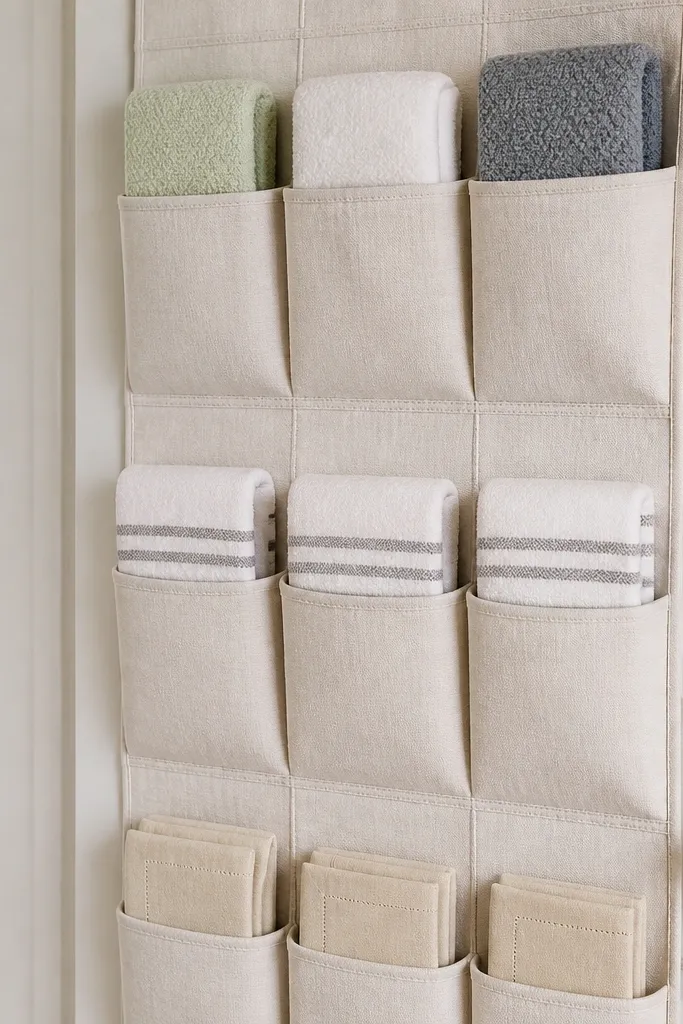
Measure the inside door panel from left to right and top to bottom, then subtract 1/2 inch from each dimension so the grid sits flat without binding. Cut a piece of heavy canvas or thick cotton duck liner to that size, and add a 1-inch hem around the edges using a straight stitch. Mark a grid with a ruler: start with 6-inch wide pockets and 7-inch tall pockets, leaving a 1/2-inch seam strip between rows. Sew or glue (fabric adhesive + stitching) pocket dividers from the back side, then fold and hem the pocket openings so the top edge stays neat. Attach the finished liner to the door using fabric Velcro strips on four corners and one along the center so you can remove it for washing.
This is the fix for the “where do the extra pieces go?” problem that always shows up in linen closets. You use the inside of the closet door as storage for small, high-rotation items like spare washcloths, extra hand towels, and guest napkins, so the shelves stay clean and stackable. The look is crisp because each pocket is the same width and height, so folded linens sit square instead of getting shoved in a messy pile. It also keeps fabric from sliding around when the door swings, since the pocket liner holds everything in place. This is a beginner-friendly project that takes about 2 hours, and it works best in narrow closets where shelf space is tight.
Skip thisDon’t make pockets wider than 7 inches or taller than 8 inches — folded linens slump and the door looks messy fast.
Editor's noteUse a clear plastic ruler and a chalk pencil for the grid lines; it keeps pocket edges straight and makes the finished look feel store-bought.