
1. Triangular Tiered Rack
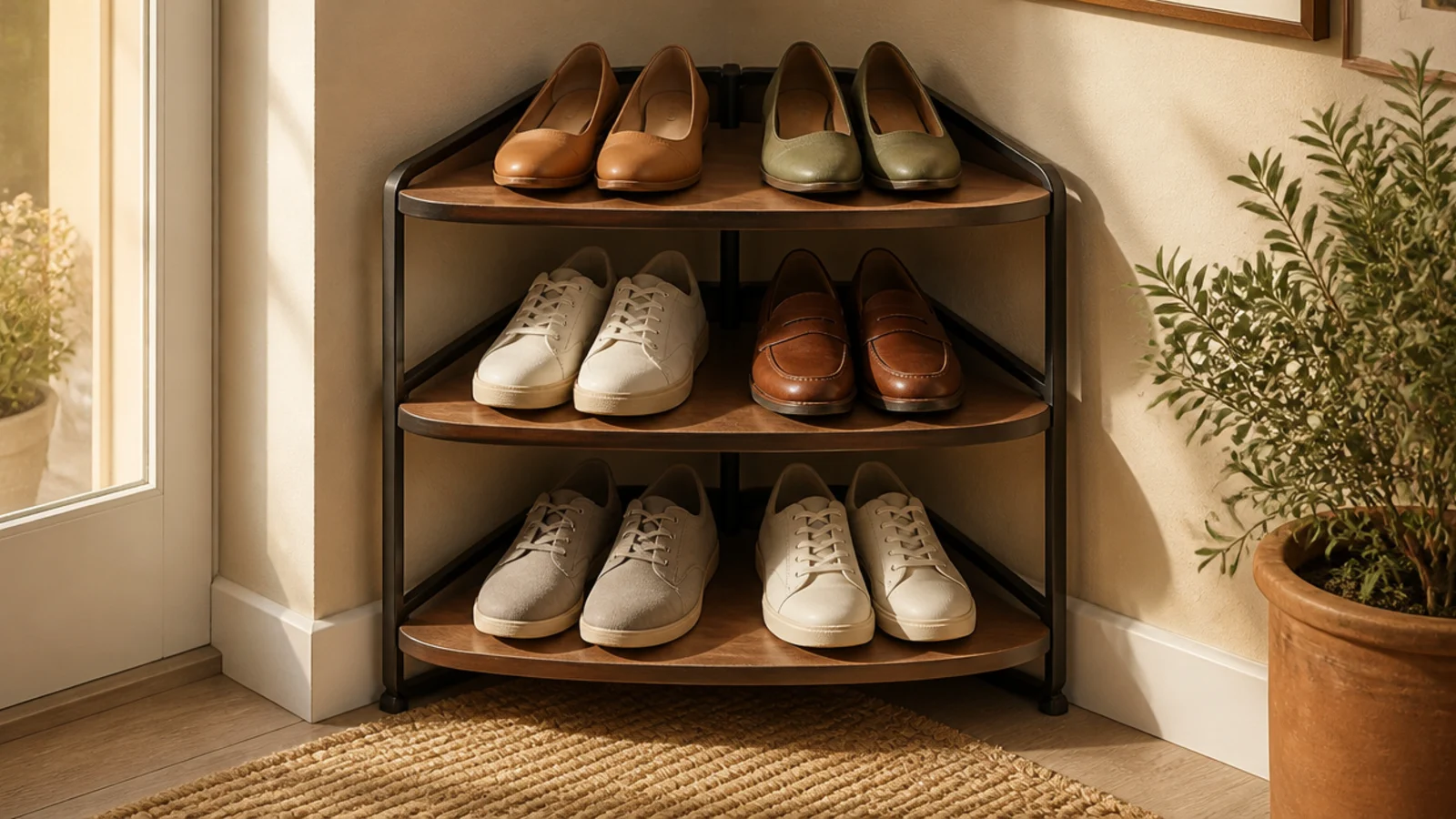
A triangular tiered rack is the simplest corner fix and the one to start with. Its angled tiers fit snugly into the corner and hold six to nine pairs. It needs no tools and uses the dead triangle where straight racks leave a gap.
Measure both corner walls and pick a triangular rack that fits within them without blocking a door swing. Slot it into the corner and check it sits level. Load the widest bottom tier with the biggest shoes and the narrow top with flats. It captures the deep corner space a square rack would waste.
Choose one with a rotating or fan-out top tier so the pairs tucked deep into the angle are still easy to reach.
Do not put a square rack in the corner at an angle; it wastes the whole triangle of space behind it.
2. Corner Lazy-Susan Carousel
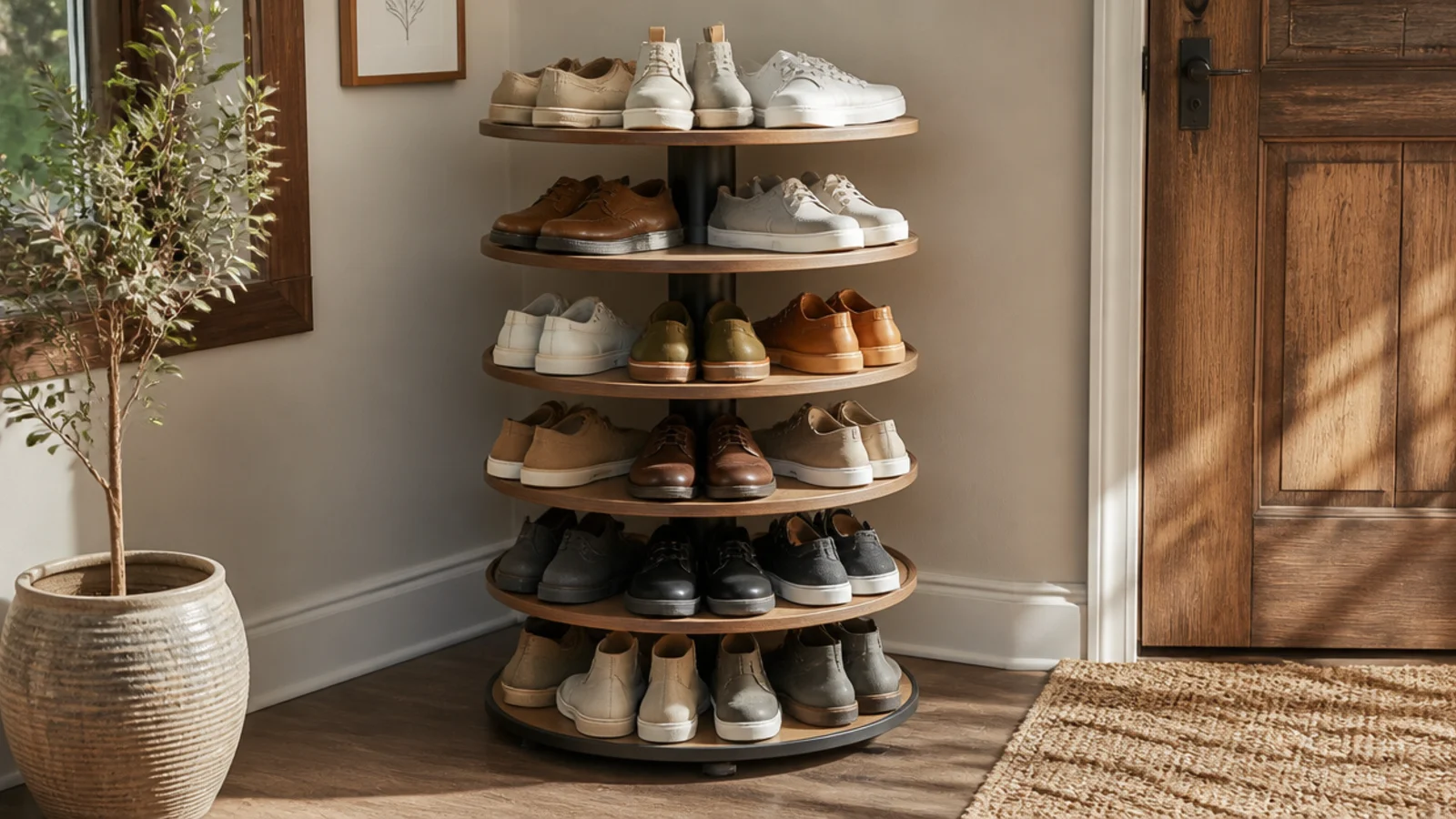
A rotating carousel fills a deep corner with a lot of shoes on tiers you spin to reach. It suits a corner where the back would otherwise be unreachable. Spinning brings every pair to the front.
Stand the carousel in the corner and level the base so it spins true. Clip the round tiers at heights matched to your shoe types. Load pairs evenly around each tier for balance. Keep daily shoes at eye level and spin the rest around when needed.
Editor's notePut rarely worn pairs on the lowest and highest tiers and daily shoes at chest height so the spin pays off most.
Skip thisDo not load one side heavy; an unbalanced carousel spins unevenly and a tall one can tip out of the corner.
3. L-Shaped Corner Bench
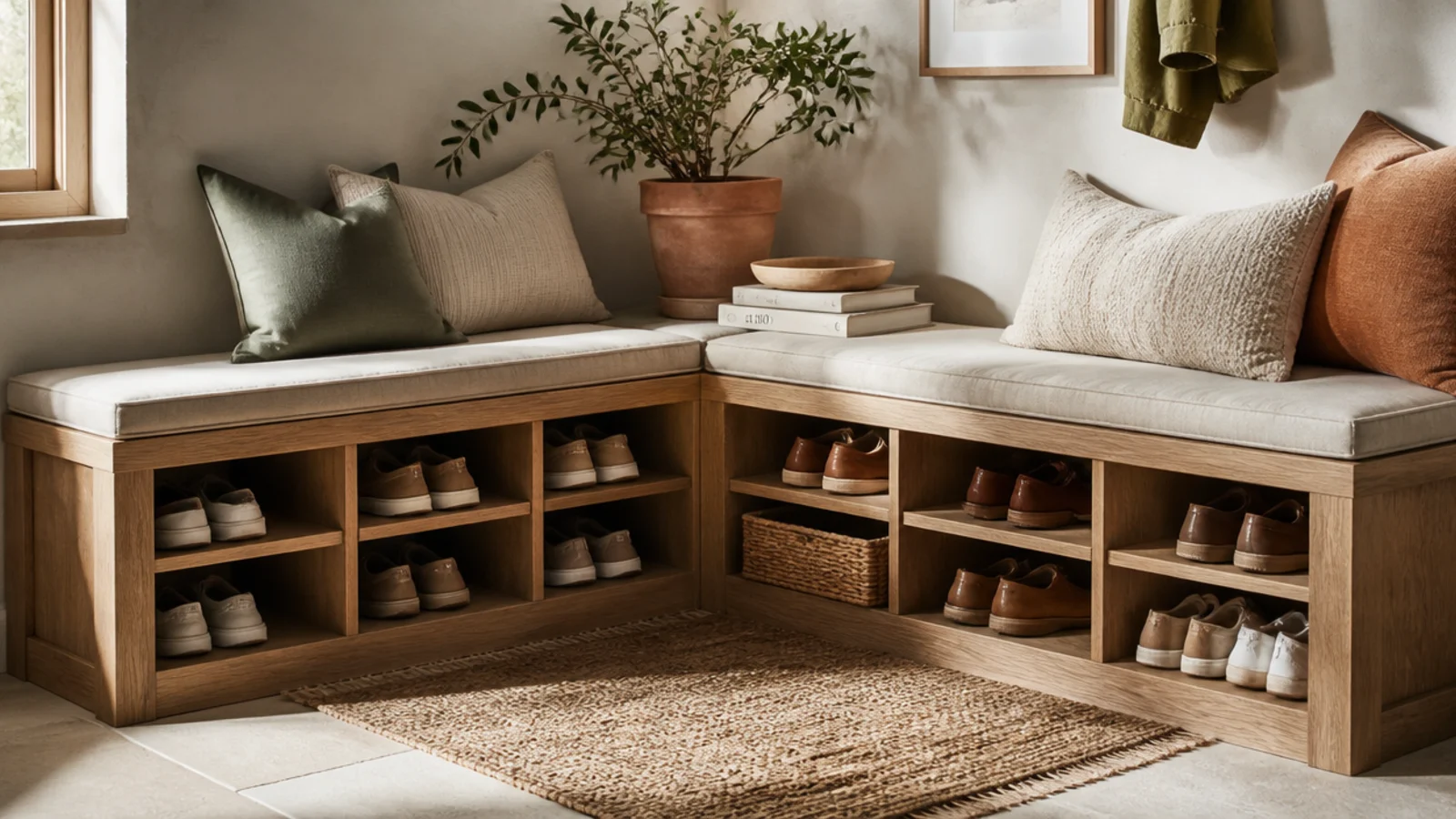
An L-shaped bench wraps the corner with a seat and storage under both arms. It suits an entry corner where you want to sit to change shoes. The wrap-around shape holds more shoes and more people than a straight bench.
Measure both corner walls and fit an L-bench that tucks into the angle. Use the cubbies or open base beneath both arms for shoes, sorted by person. Add cushions along the top and a couple of baskets where the arms meet. Slide a boot tray into the base for wet pairs.
Reserve the deep corner section where the arms meet — the hardest spot to reach — for off-season or rarely worn shoes.
Do not let the long arm block a door swing; check the door clears the bench before fixing anything in place.
4. Corner Floating Shelves
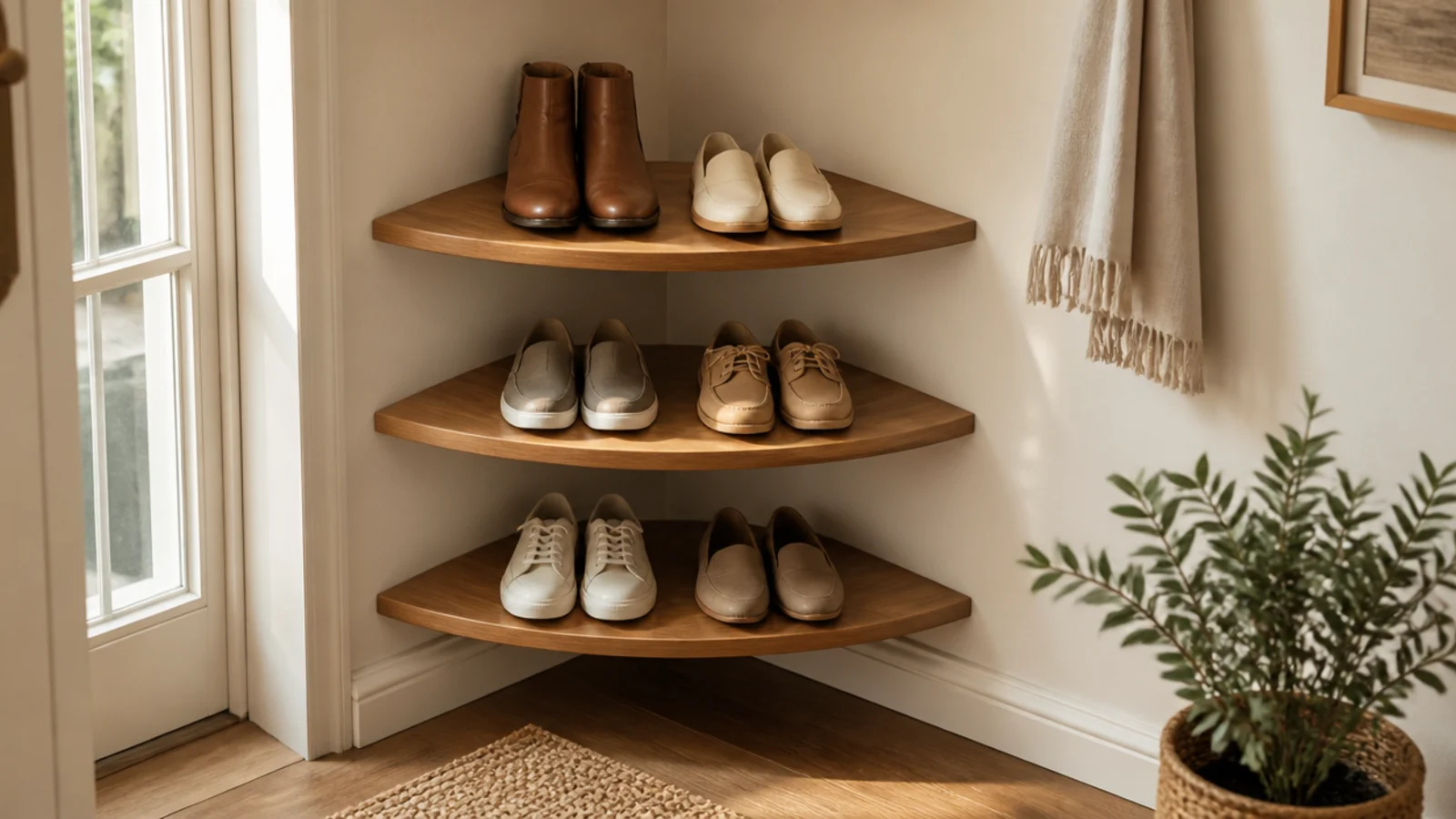
Triangular floating shelves stacked up the corner keep the floor clear and turn the angle into a display. Each shelf holds a few pairs. It suits a corner you can drill and a small collection.
Cut or buy triangular shelves and mount them on cleats screwed into both corner walls, level, spaced about 8 inches apart. Confirm the fasteners hit studs or use rated anchors. Line each shelf with a few pairs toe-out and leave the floor clear beneath for boots or cleaning.
Editor's noteRun a cleat along both walls under each shelf; the two-wall support makes corner shelves far sturdier than a single bracket.
Skip thisDo not mount corner shelves into drywall alone; loaded shelves in a corner carry real weight and need studs or rated anchors.
5. Corner Ladder Shelf
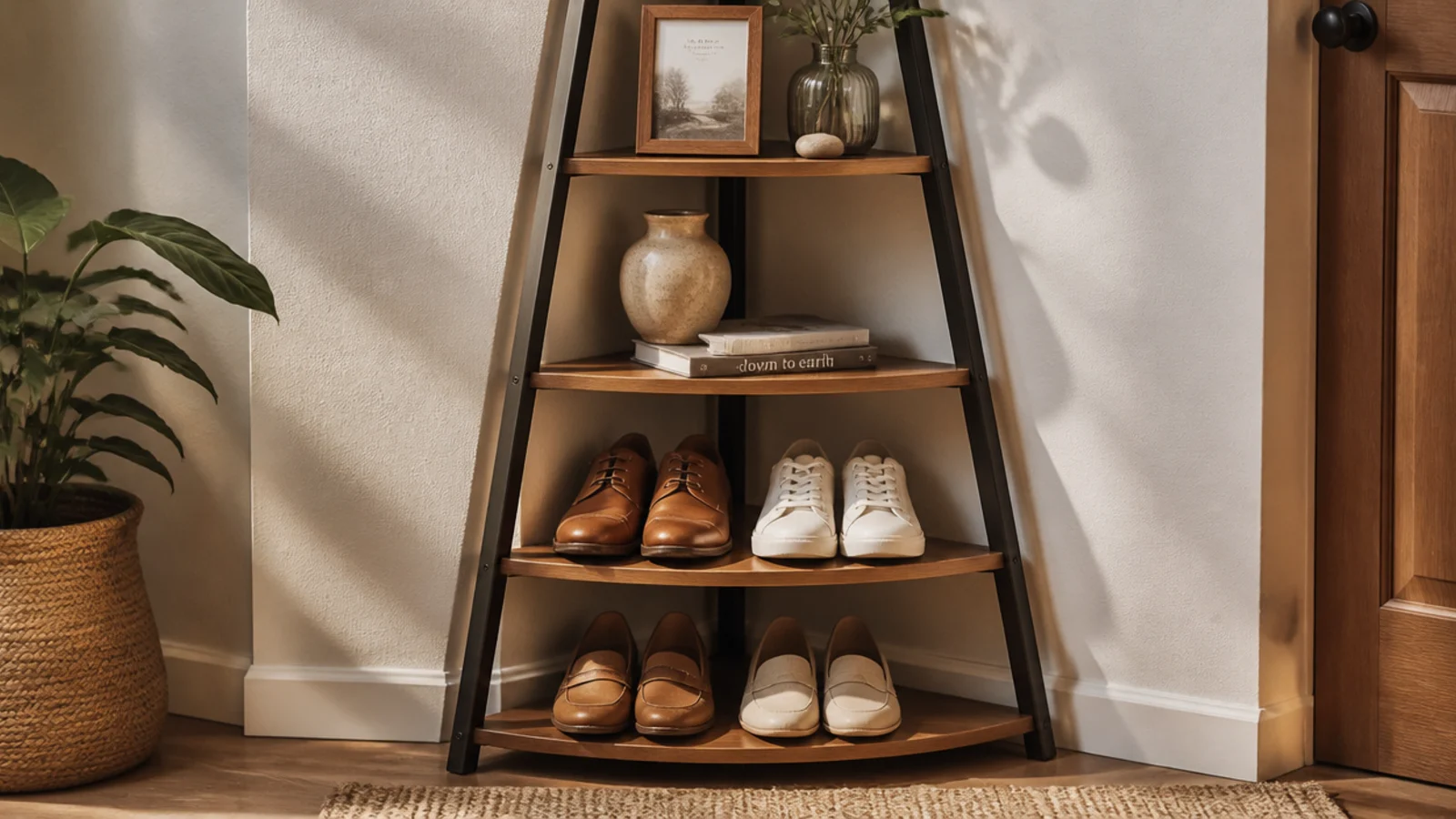
A corner ladder shelf with triangular tiers leans into the angle, holding shoes low and decor high. It suits a corner where you want light, open storage. The leaning frame keeps a small corner feeling airy.
Set the corner ladder into the angle so the tiers tilt back, and strap the top to the wall so it cannot slide. Use the lowest tiers for shoes and the upper ones for a plant, basket, or books. Keep heavier shoes low. Limit pairs per tier so the open look stays.
Editor's notePut the heaviest shoes on the bottom tier to lower the center of gravity and keep the leaning frame stable in the corner.
Skip thisDo not load the top tiers heavy; a top-heavy corner ladder pulls out of the angle even when strapped.
6. Quarter-Round Cabinet
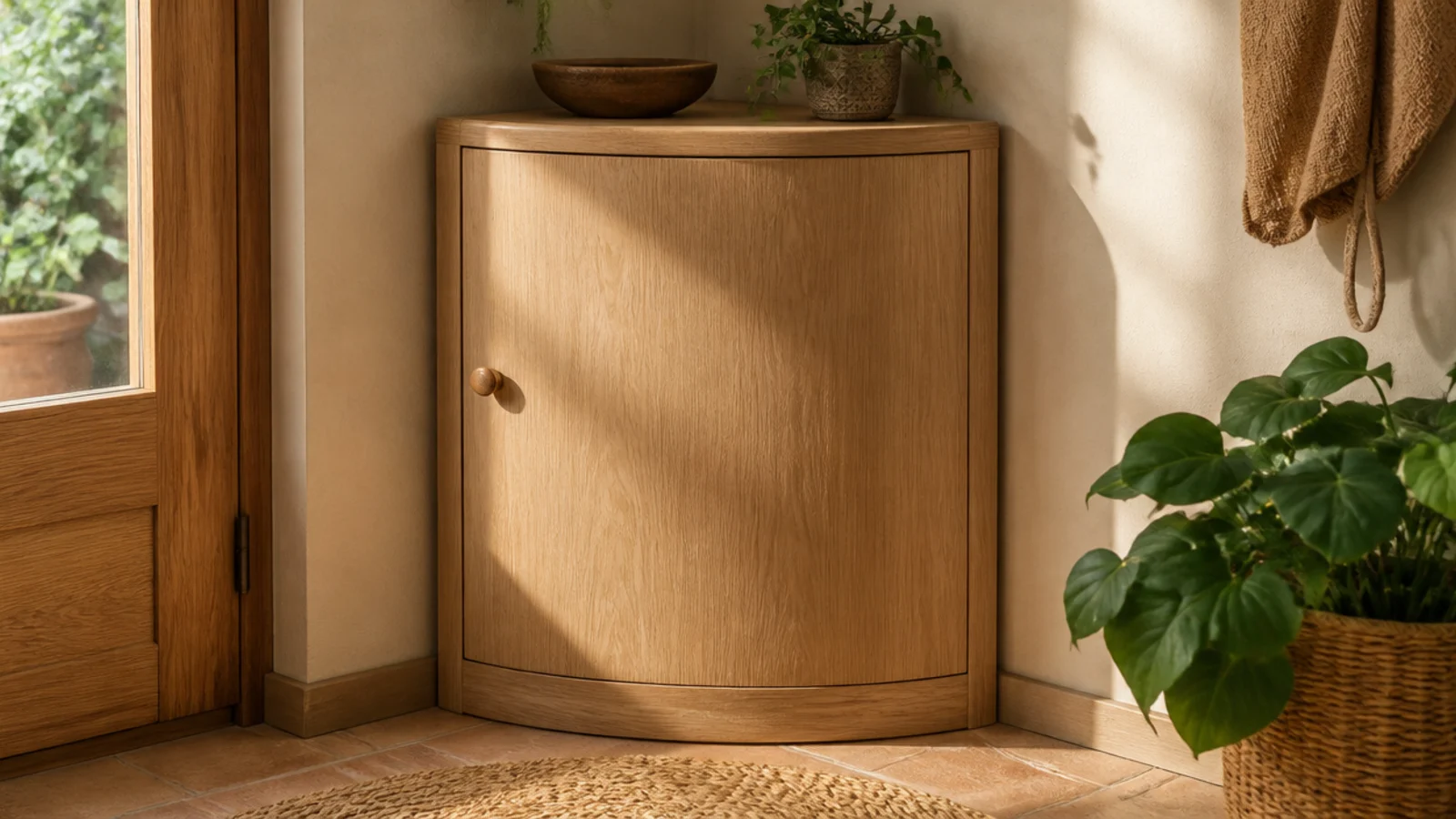
A quarter-round cabinet fits the corner with a curved front and hides shoes behind a door. It suits a tidy entry or bedroom corner. The rounded front softens the angle and looks built-in.
Measure the corner and choose a quarter-round or curved-front cabinet that fits the two walls. Set interior shelves at shoe spacing and store pairs on edge to fit more. Anchor a tall one to the wall. Use the flat top as a surface for a lamp or a plant.
Editor's noteA lazy-Susan shelf inside a quarter-round cabinet makes the deep curved back fully reachable.
Skip thisDo not force a square cabinet into the corner instead; it wastes the triangle behind it that a quarter-round would use.
7. Corner Cube Tower
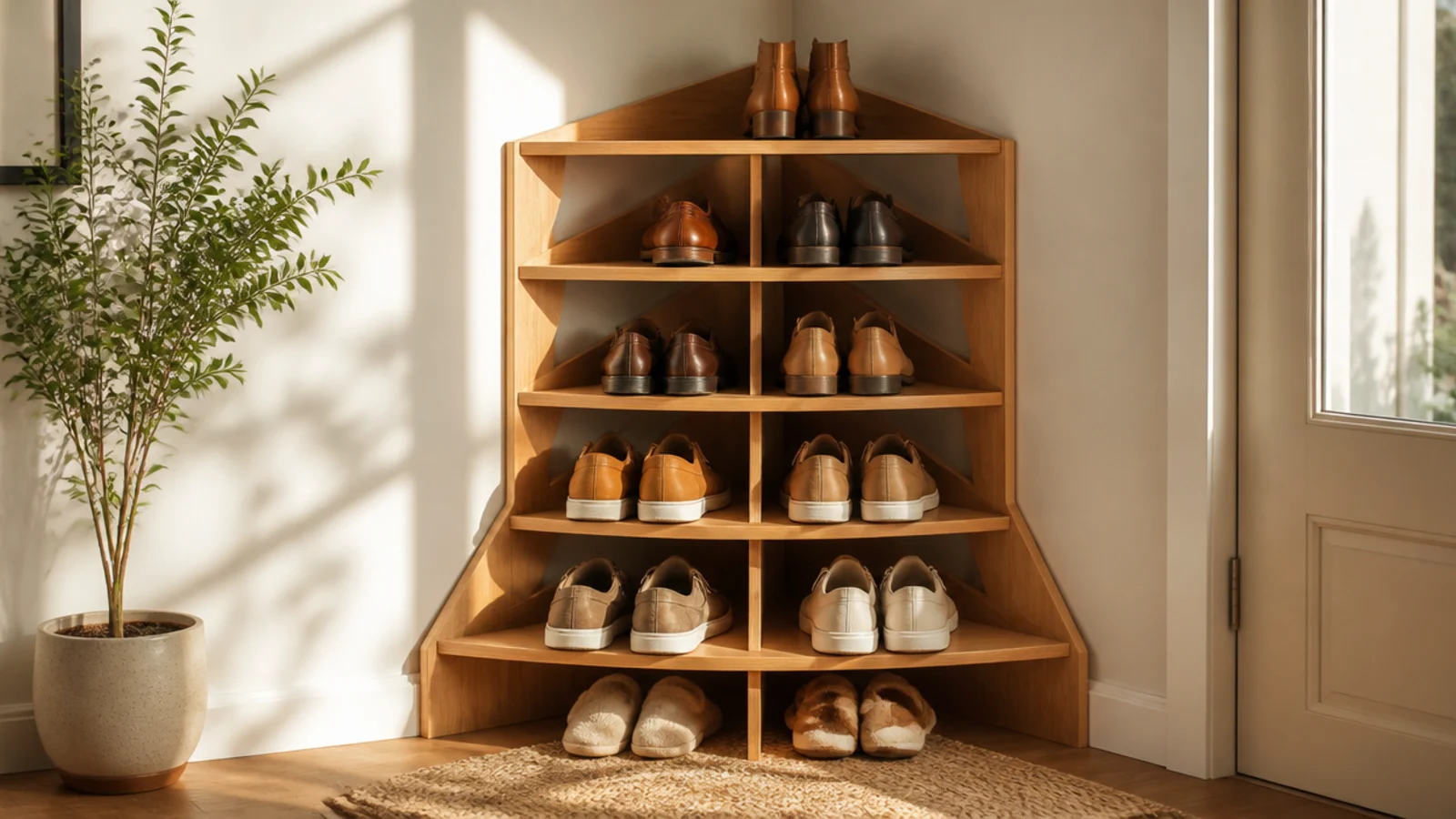
A tall tower of triangular cubbies fills a corner floor to shoulder height, giving each pair a slot. It suits a closet or entry corner with vertical space. Going tall multiplies what a corner holds.
Build or buy a corner cube tower with triangular cubbies sized for shoes, and anchor it to both walls at the top. Put daily shoes at eye and knee level and boxed pairs up high. Add a fabric bin to a lower cube for small shoes. Keep one pair per cube.
Make a couple of cubbies double-height for boots and bags so the tower handles every kind of footwear.
Do not build it tall and narrow without anchoring; a corner tower tips forward if a child climbs it, so secure it to both walls.
8. Diagonal Wall-Mounted Rack
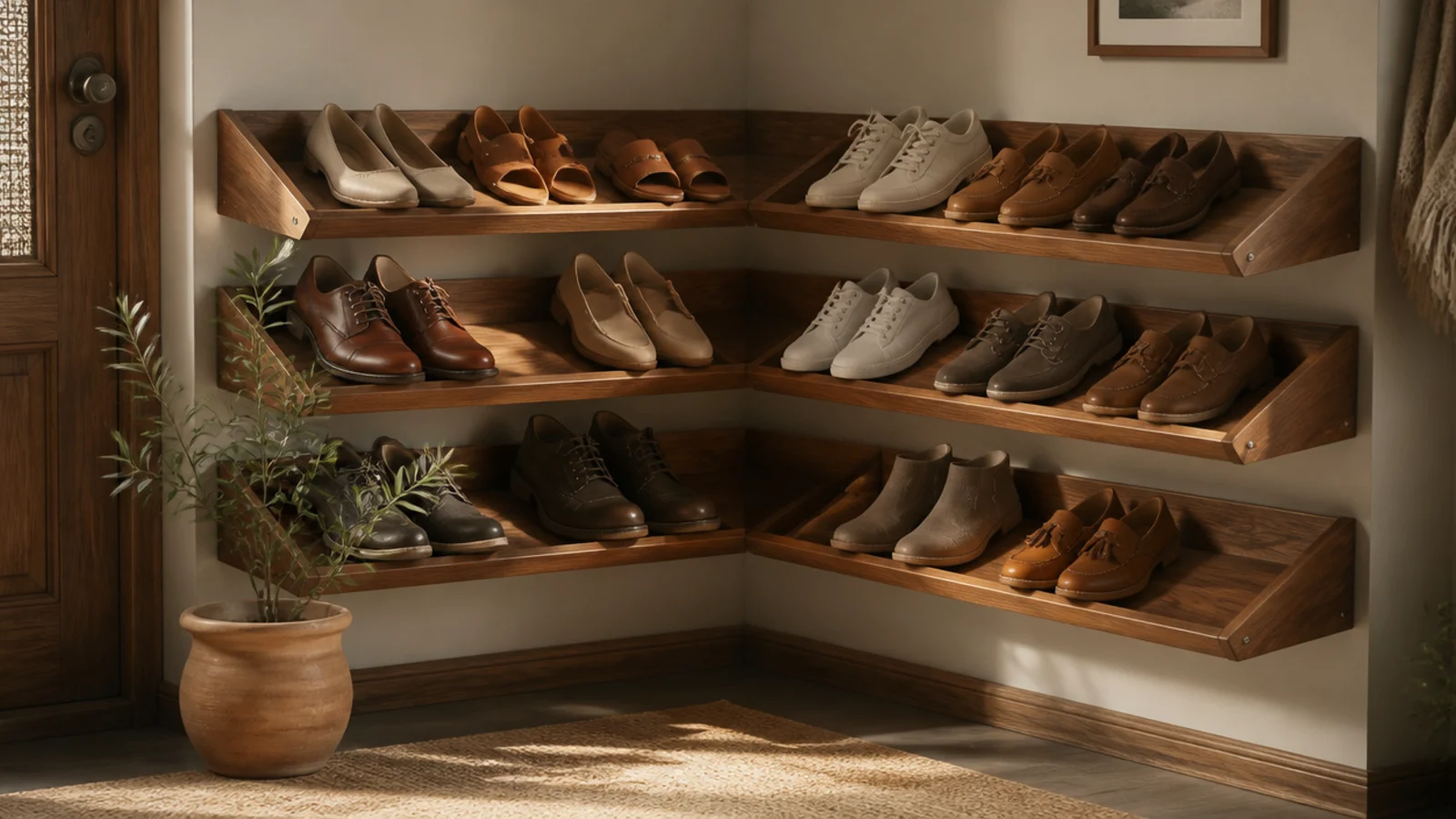
A rack mounted diagonally across the corner spans both walls and holds shoes above a clear floor. It suits a corner where you want nothing on the ground. Bridging the angle uses space a floor rack cannot.
Mount angled tiers or a shelf diagonally across the corner, fixed into studs on both walls, level. Space tiers about 7 inches apart. Load shoes toe-out on the tiers and leave the floor beneath open for boots or cleaning. A front lip stops shoes sliding off.
Editor's noteAnchoring into both walls across the corner gives the rack two-sided support, so it carries more weight than a single-wall rack.
Skip thisDo not span the corner with only one wall’s anchors; use both walls so the diagonal rack cannot sag or pull loose.
9. Under-Stairs Corner Rack
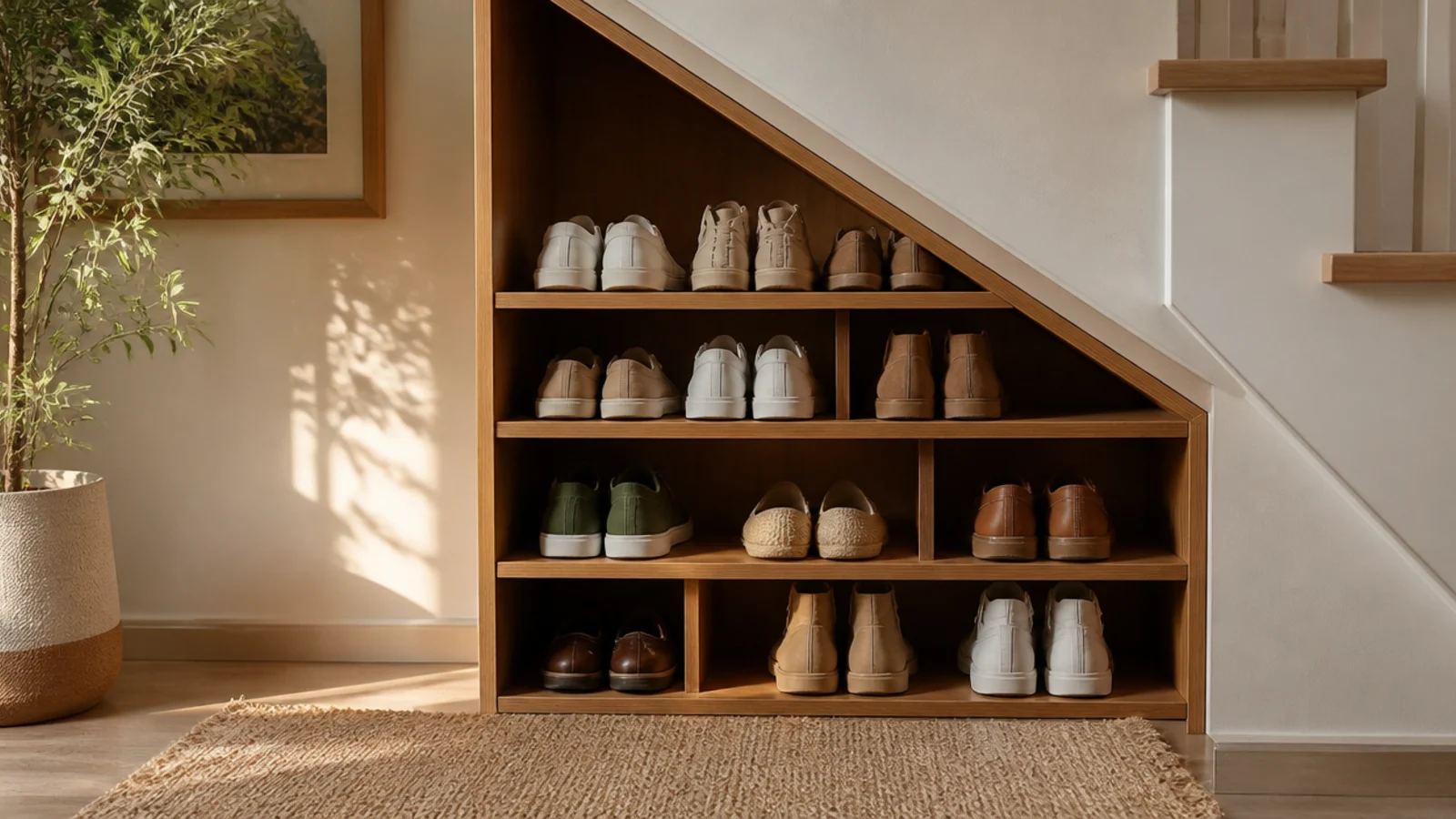
The low triangular space where a staircase meets the corner is dead space a stepped rack can use. It suits a home with an under-stairs corner. It turns an unusable slope into shoe storage.
Measure the sloped under-stair corner and fit a stepped or graduated rack that follows the angle — tall at the outer end, low under the slope. Put boots and tall shoes where the height allows and flats where it is lowest. Add a light so the recess is not a black hole.
Editor's noteMatch the tallest tier to the outer edge where there is headroom and step it down under the stair slope so no space is wasted.
Skip thisDo not push a uniform-height rack under the stairs; it only fits where the ceiling is tallest and wastes the low slope.
10. Fan-Out Rotating Tiers
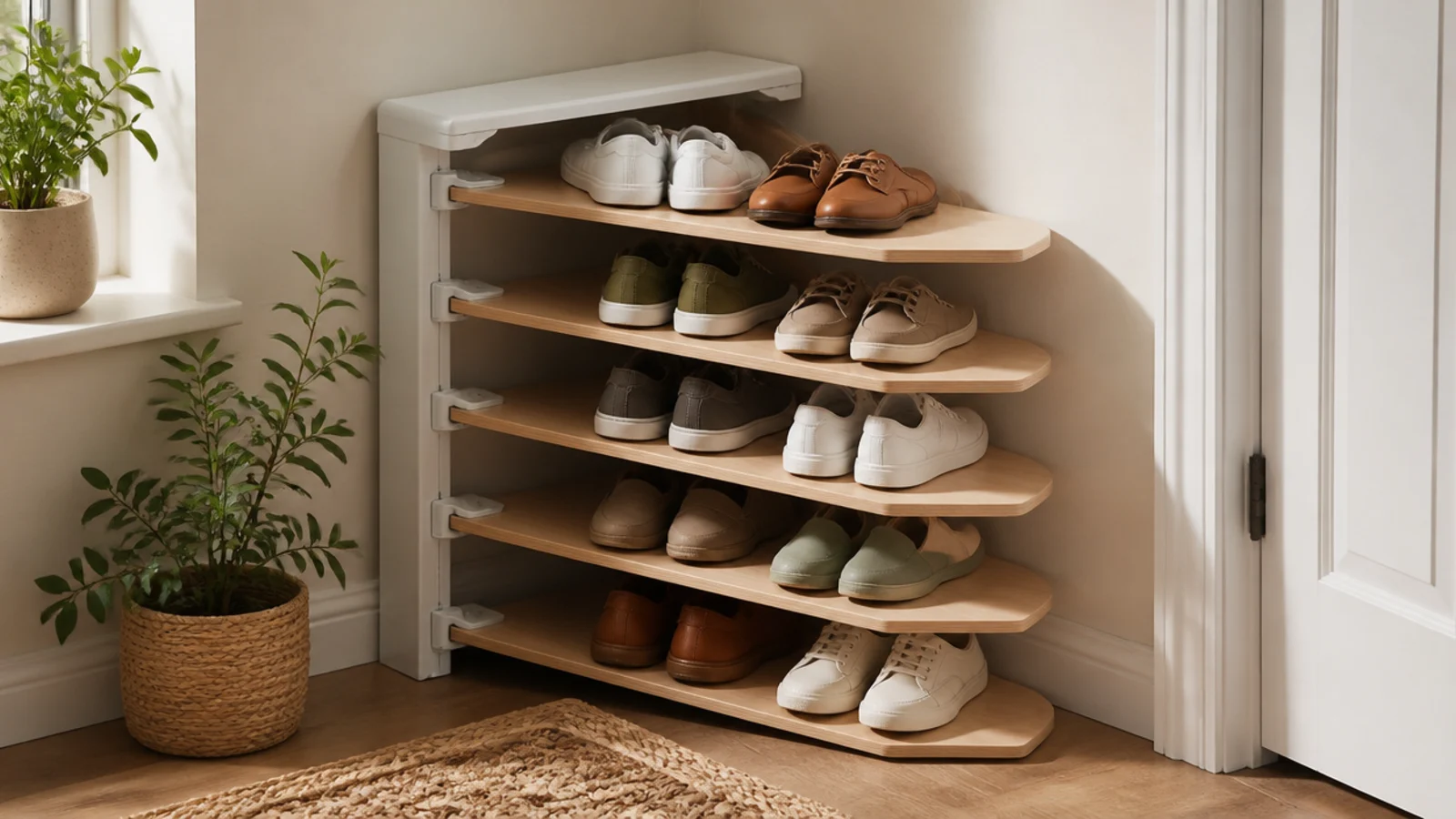
A rack with tiers that swivel out from the corner like fanning pages brings deep pairs to you. It suits a corner where a fixed rack would bury the back rows. Each tier swings out to reveal its shoes.
Stand the fan-out unit in the corner and level it. Load each swivel tier with a row of shoes. Swing a tier out to reach its pairs, then fold it back into the corner. Keep the tiers balanced so they swing smoothly and do not sag.
Editor's noteKeep the swivel joints clean and lightly lubricated so the tiers fan out smoothly even when fully loaded.
Skip thisDo not overload a single fan-out tier; too much weight on one arm makes it droop and bind instead of swinging freely.
11. Corner Bench with Baskets
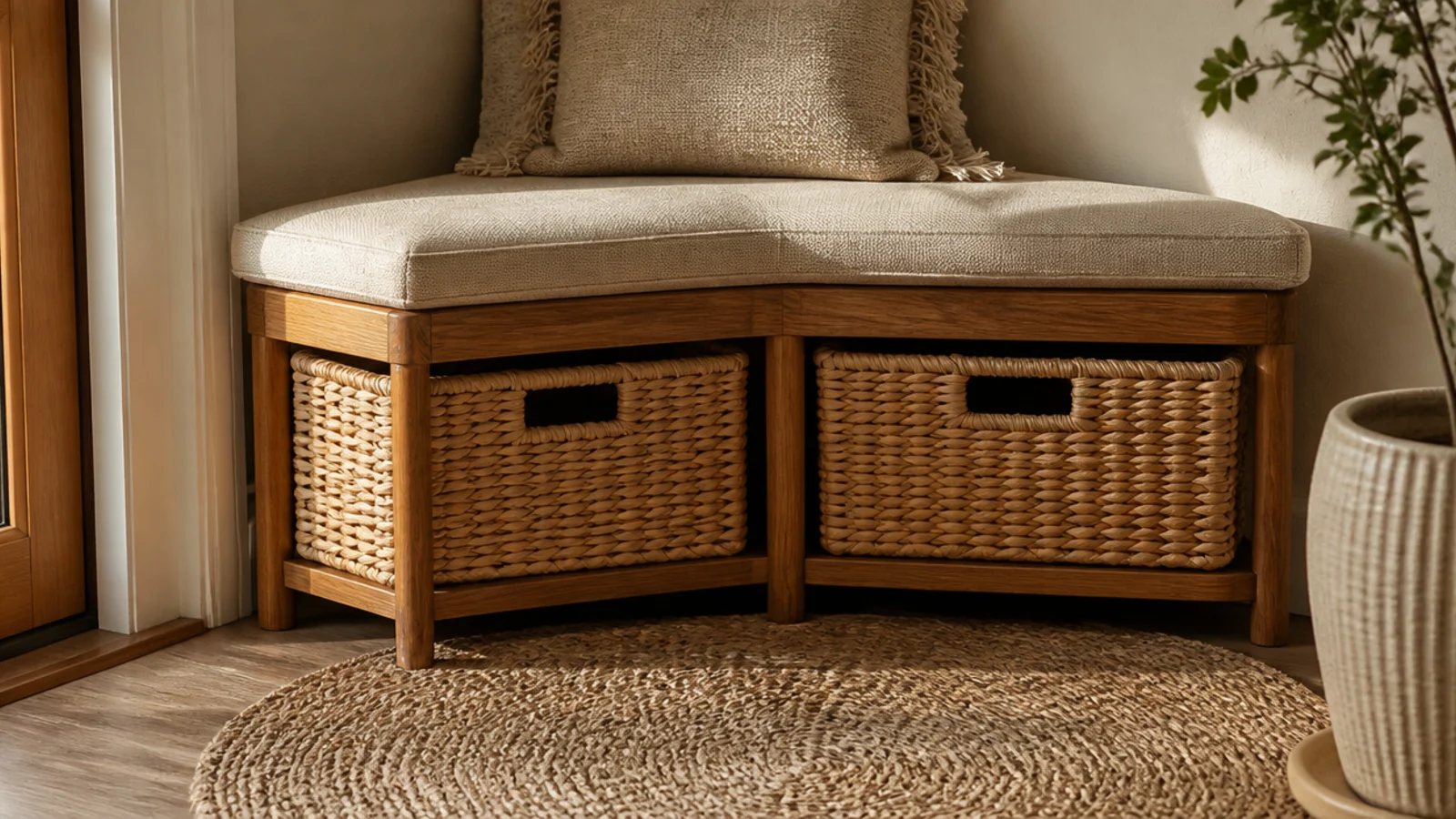
A small corner bench with baskets beneath hides shoes in the angle and gives you a seat. It suits an entry or bedroom corner. The baskets tuck into the triangle and pull out when needed.
Fit a corner-friendly bench into the angle with an open base, and slide woven or fabric baskets underneath. Assign each basket a category and load a pair or two. Add a cushion on top for seating. Pull a basket out to choose, then push it back into the corner.
Use wedge or triangular baskets if you can find them; they fill the corner base better than square ones.
Do not use baskets too deep for the bench; overhanging baskets in a corner get bumped and shoved out of line.
12. Two-Wall Heel Rails
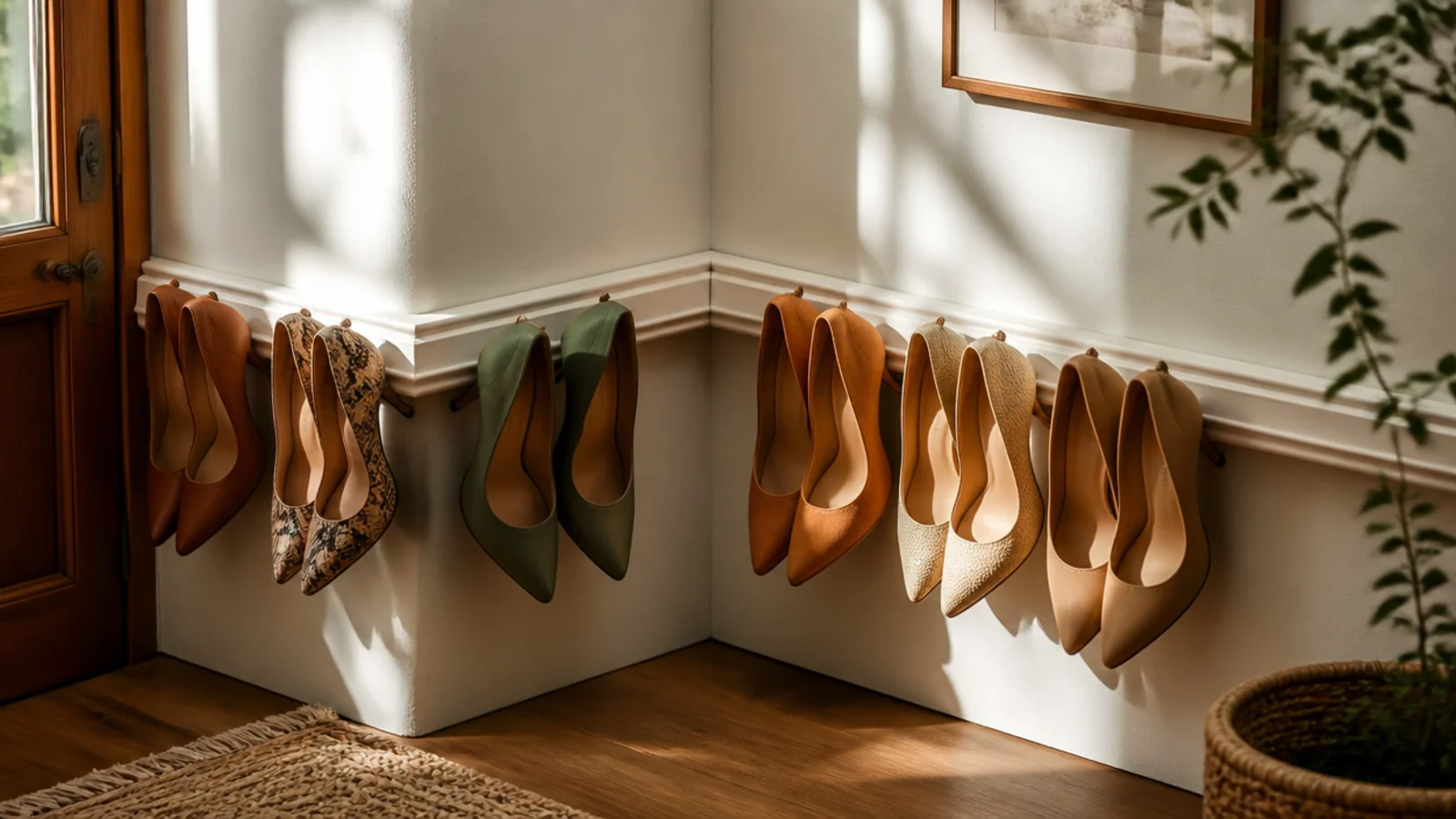
Two molding rails meeting at the corner store heels around the angle with almost no depth. It suits a heel collection and a corner with two shallow walls. The heels wrap the corner in a neat display.
Mount a length of crown molding lip-up on each corner wall at hip height, into studs or with anchors, meeting at the corner. Paint them to match the walls. Hook each heel over the lip so it hangs flat, wrapping the pairs around the angle. Add a second rail below for more.
Miter the two rails where they meet at the corner so they join cleanly and look like one continuous piece.
Do not try to hang flats or sneakers on the rails; only shoes with a defined heel catch on the molding lip.
13. Slim Corner Wire Tower
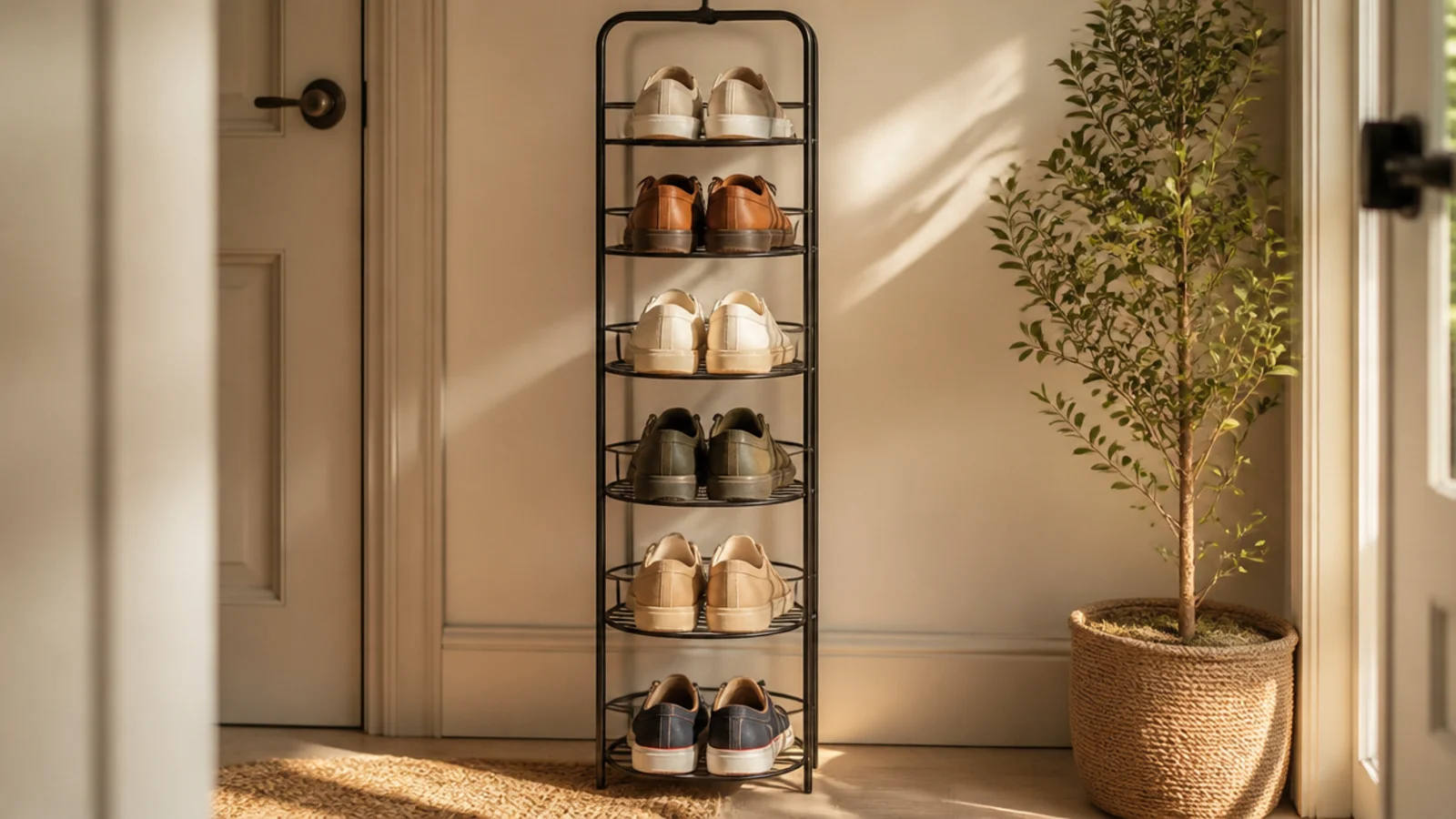
A slim wire tower tucks into a corner and stacks a lot of shoes vertically in a tiny footprint. It suits a narrow corner where floor space is scarce but height is free. The open wire keeps it light.
Pick a vertical wire tower in a single color and set it into the corner. Level it and load pairs evenly up the tiers so it does not lean. Keep daily shoes at eye level and rarely worn pairs top and bottom. The open wire keeps a small corner feeling airy.
Editor's noteA soft color like sage or clay reads more designed in a living corner than plain chrome or white wire.
Skip thisDo not overload one side of a tall tower; uneven loading makes a slim corner tower lean and eventually tip.
14. Custom Wedge Cubbies
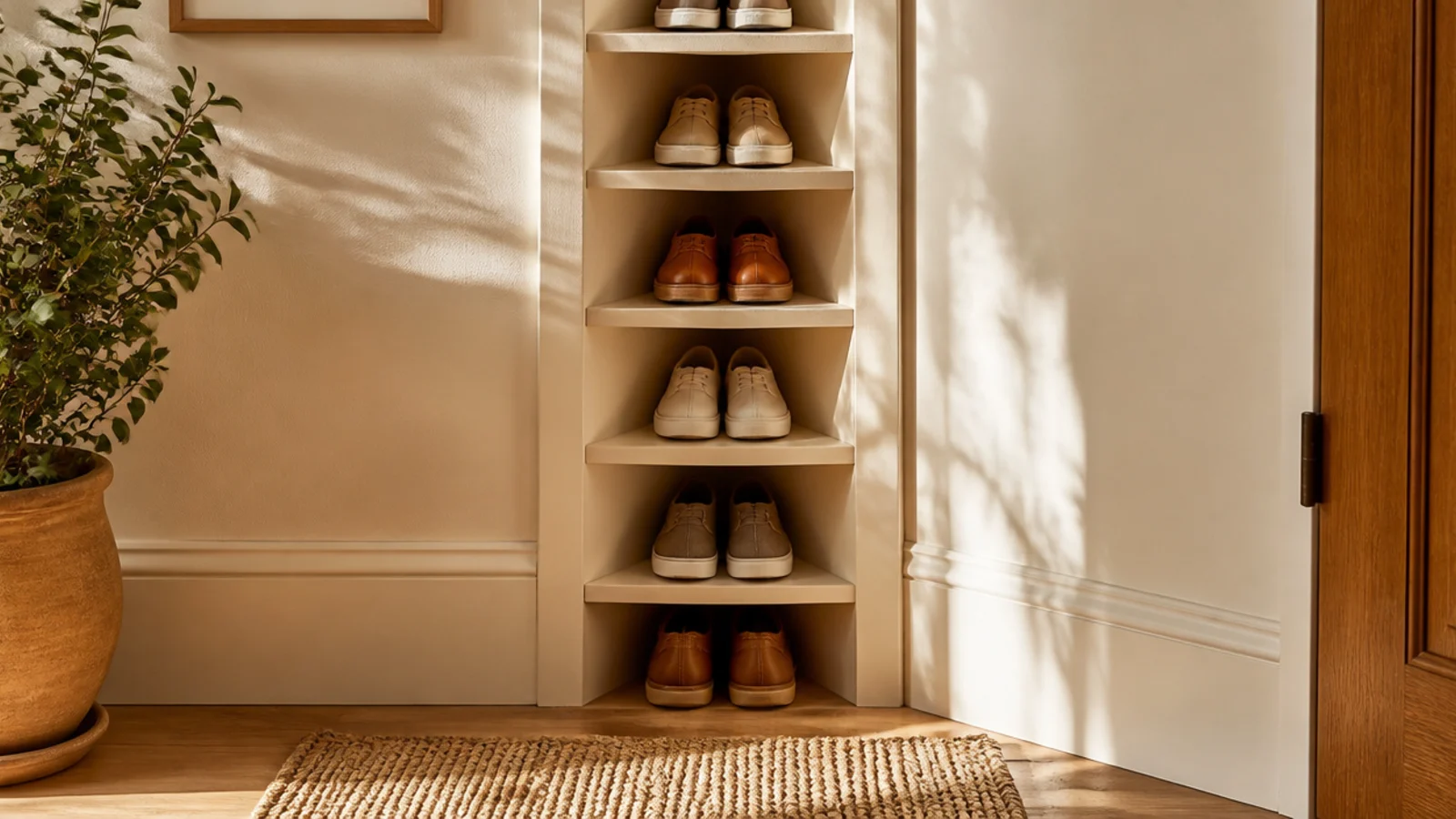
Wedge-shaped cubbies built to fit the exact corner give a tailored, built-in look with a slot per pair. It suits anyone willing to build and wanting the corner used completely. Fitted cubbies waste nothing.
Measure the corner precisely and build wedge cubbies from plywood, angled to fill the triangle, joined and backed for rigidity. Anchor them to both walls. Sand and seal or paint. Assign a cubby per pair, with a taller wedge at the end for boots.
Template the corner angle with a piece of cardboard first; corners are rarely a perfect 90 degrees, and the template ensures a tight fit.
Do not assume the corner is square; build to your actual measured angle or the cubbies will gap against the walls.
15. Stacking Corner Stools
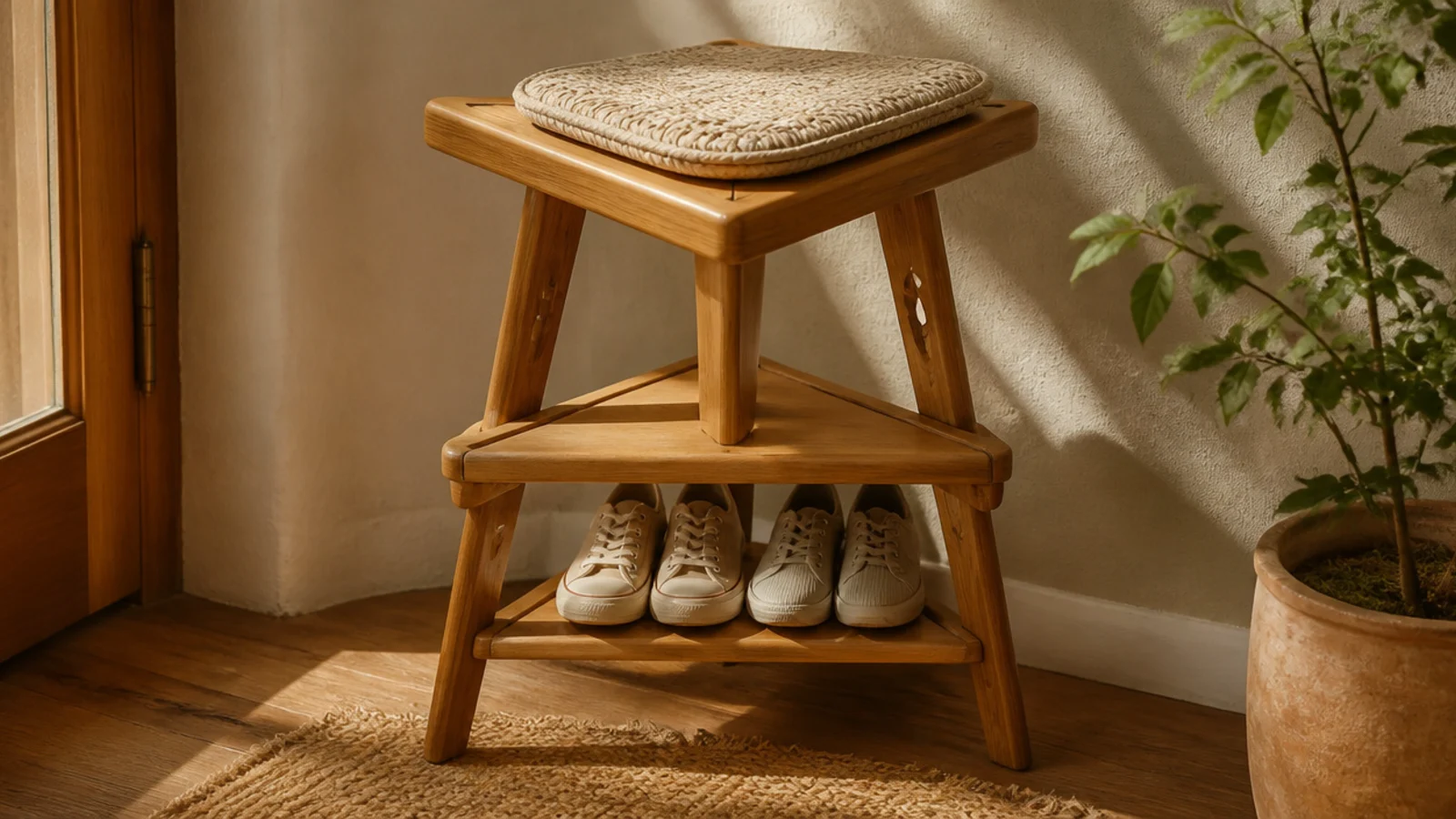
A pair of small triangular stools in the corner double as seats and shoe shelves. It suits a tiny space that needs flexible, movable storage. Pull one out to sit, keep shoes under the other.
Set two corner-friendly stools with open bases into the angle. Store shoes under each stool top or in a small basket beneath. Use one as a seat to change shoes and pull the other over when needed. Keep it to a few pairs so it stays light and movable.
Editor's noteChoose stools light enough to lift with one hand so you can move them aside to sweep the corner easily.
Skip thisDo not stack heavy items on a lightweight stool used for storage; keep it to shoes so it stays safe to sit on.