
1. Point-and-Pray Picture Card Board
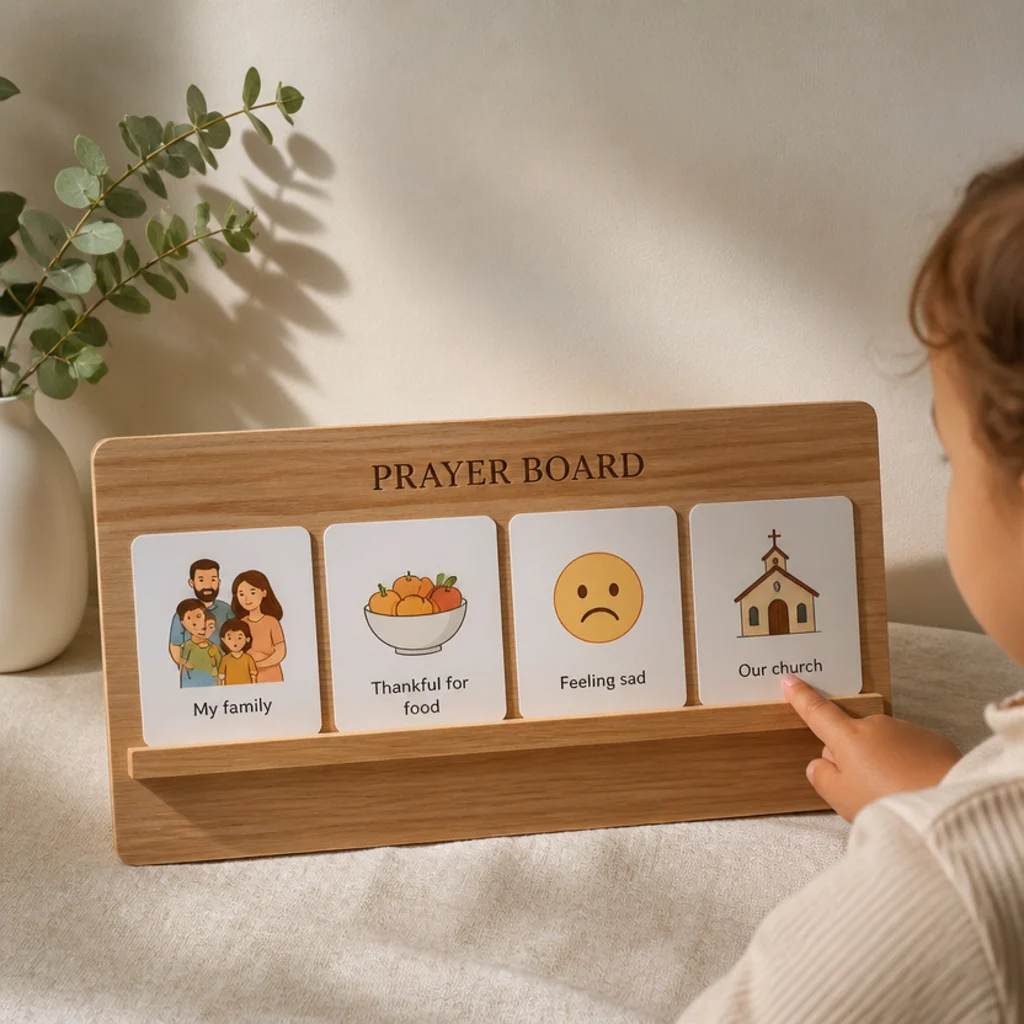
This is the easiest kids' board because a child prays by pointing, no reading needed. You use simple picture cards — people, thank-yous, worries — the child points to and prays. It suits toddlers and pre-readers. Pointing gives even the youngest child a way to pray on their own.
Editor's noteInclude a simple sad-face card for worries; kids often can’t name a feeling but can point to the face.
Make or print clear picture cards — a family, a meal, a sad face for worries, a church, a friend. Mount them on a low magnetic or felt board the child can reach. At prayer time, let the child point to a picture and pray about it in their own words. Add photos of real people. Keep it to six or eight pictures so it’s not overwhelming.
Skip thisDon’t use too many cards; six to eight clear pictures is plenty, or a young child gets overwhelmed and disengages.
2. ABC Prayer Board
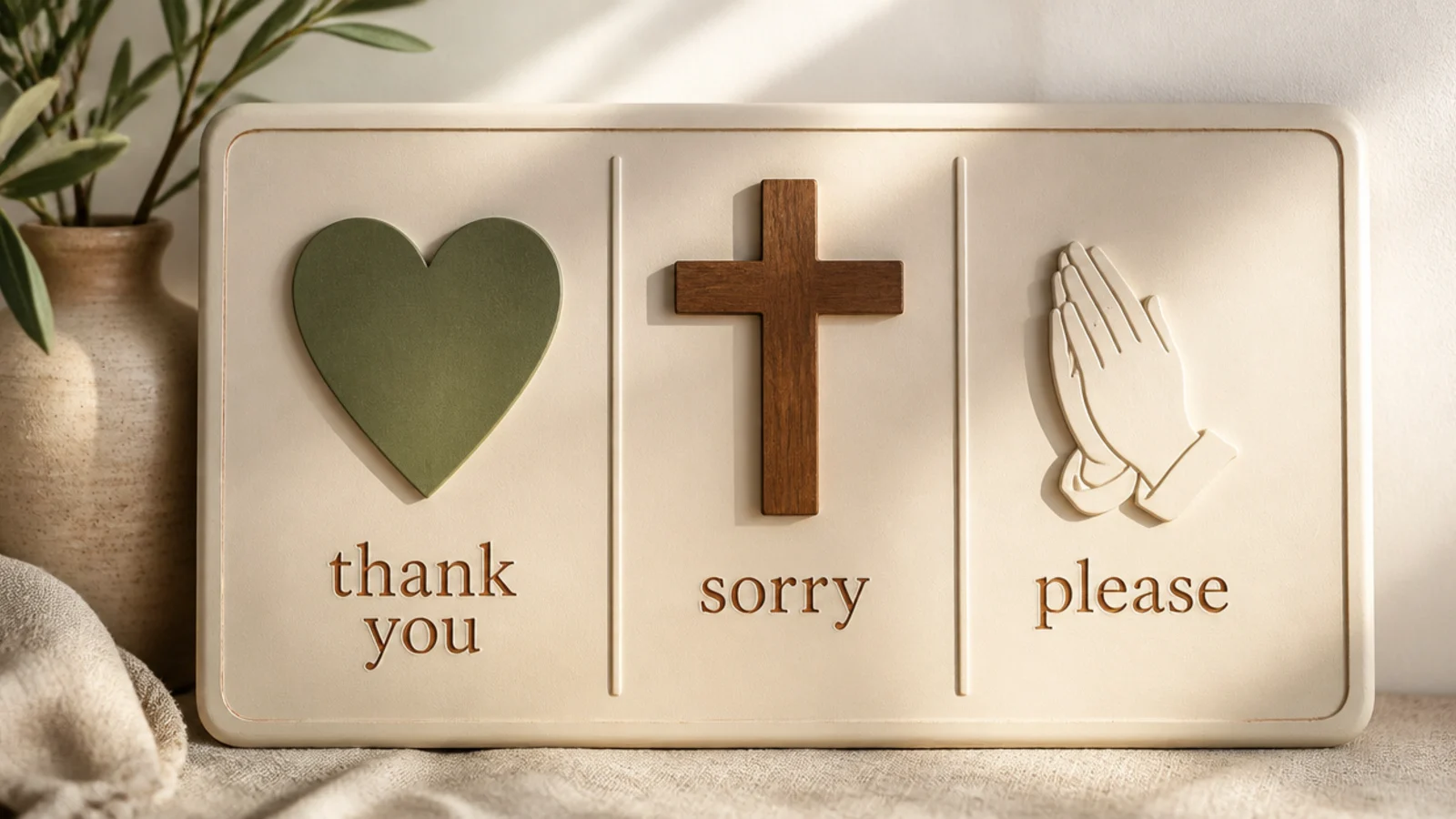
An ABC board teaches the simple shape of prayer — Adore, Confess, Ask, or thank you, sorry, please. You give each part a picture zone the child moves through. It suits early learners ready for a little structure. The three steps make prayer easy to remember.
Editor's noteAnchor each step to a picture the child already knows — a heart, a cross — so the structure sticks without words.
Divide the board into three picture zones — a heart for thank you, a cross for sorry, praying hands for please. Put a couple of picture cards or photos in each. Walk the child through the three zones each prayer time, praying one thing from each. Keep it short and warm. As they grow, add simple words under the pictures to bridge into reading.
Skip thisDon’t make it feel like a worksheet; keep the three steps light so prayer stays a warm habit, not a task.
3. Bible Story Character Board
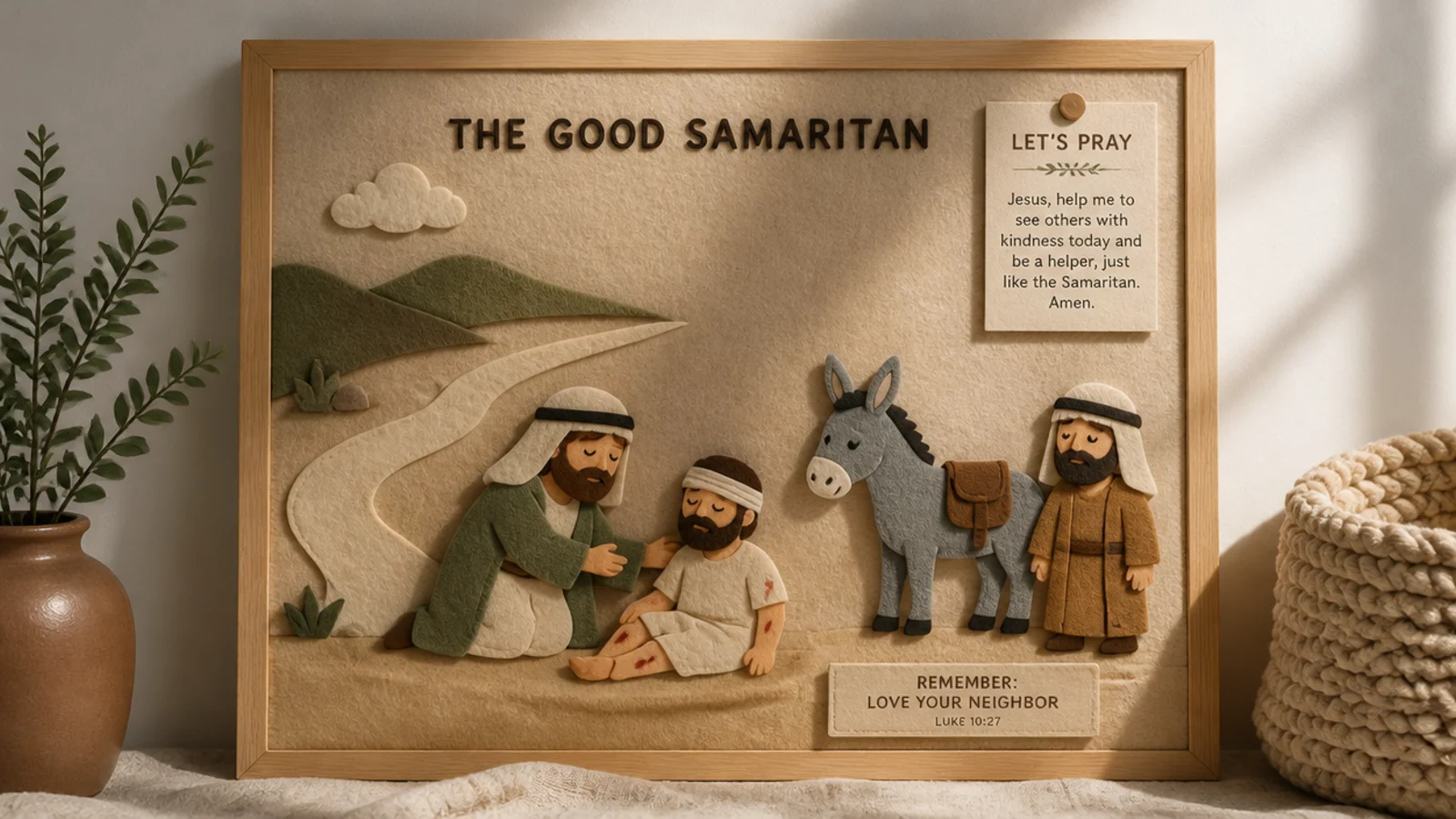
A story-character board ties prayer to the Bible stories kids are learning. You use movable figures to retell a story, then pray about it. It suits families and Sunday school doing story-based teaching. Acting it out helps the lesson and the prayer stick.
Editor's noteLet the child move the figures and retell the story in their words before praying; teaching it back cements it.
Use a felt board with felt figures, or laminated character cutouts with magnets. After reading or hearing a Bible story, let the child arrange the figures to retell it, then pray about what they learned — to be brave like the hero, to trust like a certain character. Rotate the story weekly. Keep the figures in a labeled bag so it’s easy to reset.
Skip thisDon’t correct every detail of their retelling; let them own the story so the prayer that follows feels theirs.
4. Prayer Sticker Reward Chart
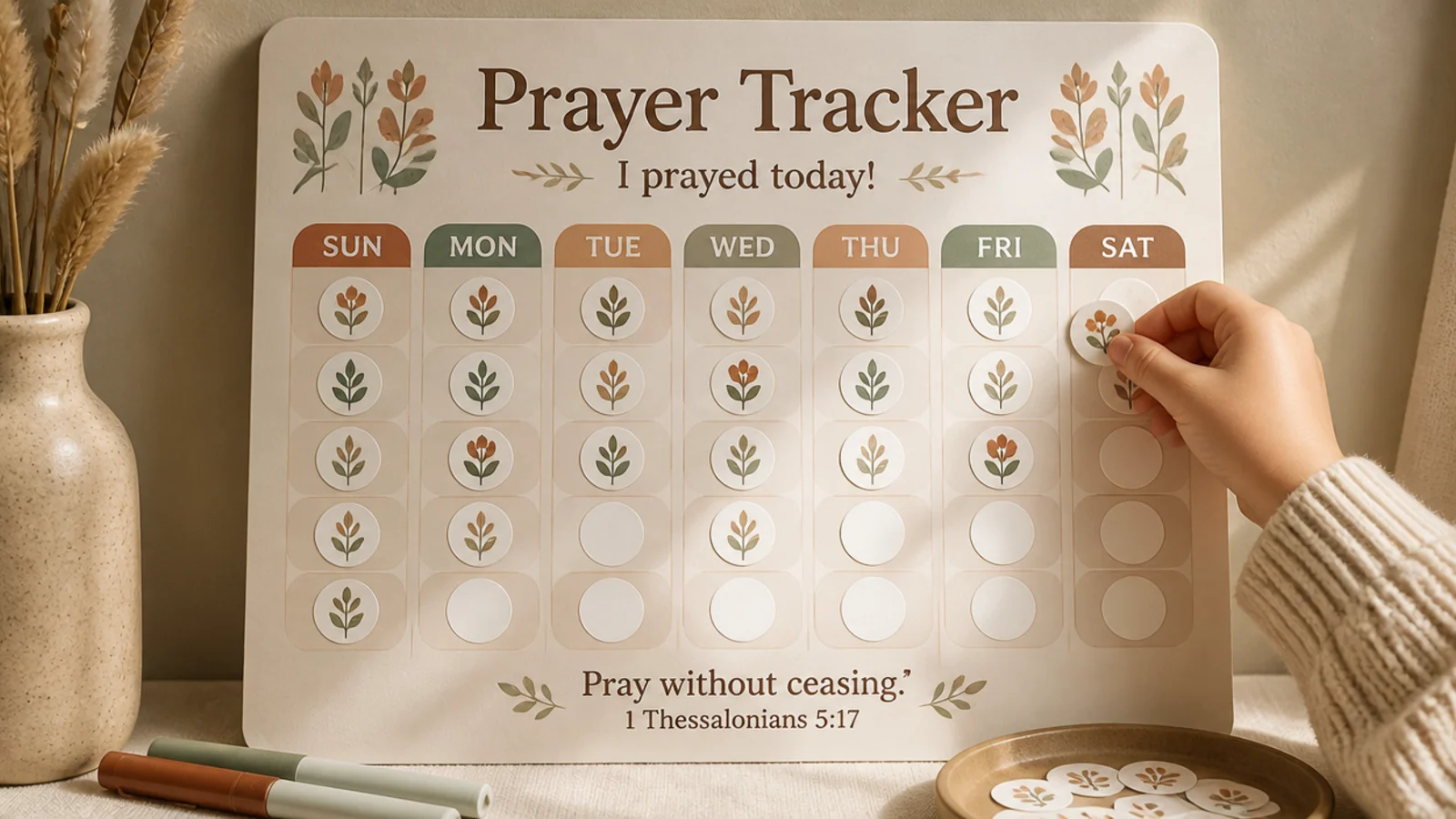
A sticker chart gives kids a fun, visible reason to keep the prayer habit. You let the child add a sticker each day they pray. It suits kids who love a reward and a routine. The chart pulls them to the board day after day.
Editor's noteMake the reward relational, like extra time with you, so the habit connects to warmth, not just prizes.
Make a laminated grid and post it on the board. Each day the child prays, they add a sticker or check a box. Set a small, simple reward for a full week — extra story time, a treat. Keep prayer itself short so the sticker is earned easily. Start fresh weekly so a missed day doesn’t discourage them. Celebrate the streak together.
Skip thisDon’t turn it into pressure or take stickers away; keep it purely encouraging so prayer stays a joy.
5. Handprint Prayer Board
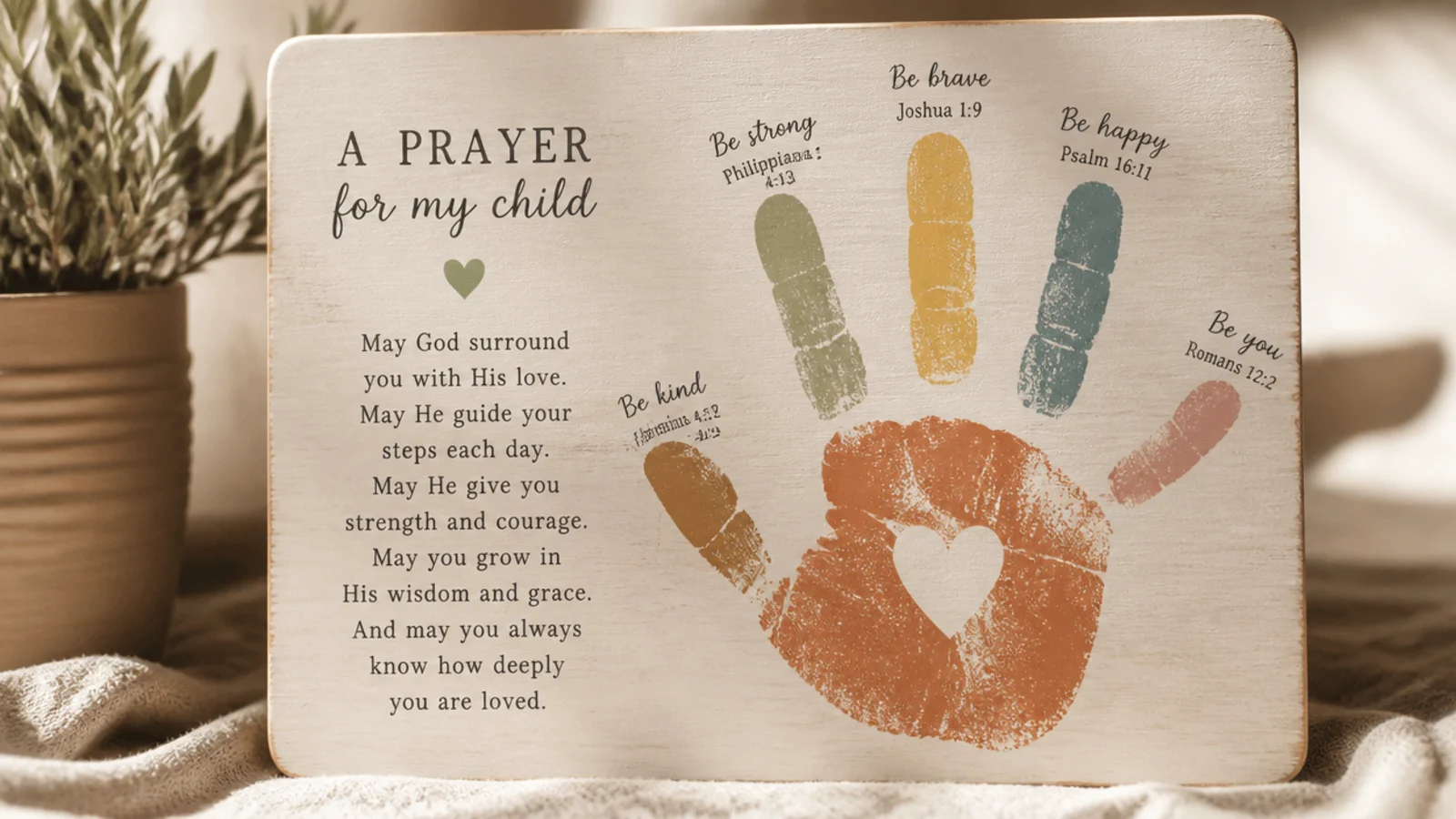
A handprint board uses the classic five-finger prayer in the child’s own hand. You paint their handprint and assign a prayer to each finger. It suits a keepsake craft that teaches a memorable method. Their own hand makes the method personal and precious.
Paint the child’s hand and press a print on cardstock, or trace it. Assign each finger a prayer focus — thumb for those close to us, index for teachers and helpers, and so on through the five-finger prayer. Mount it on the board. The child prays through their fingers each time. Keep the handprint as a keepsake and remake it as they grow.
Remake the handprint each year on a birthday; the growing hand becomes a sweet record alongside the prayer method.
Don’t overload each finger with a long list; one clear focus per finger is what makes the method easy to recall.
6. Friends Photo Prayer Board
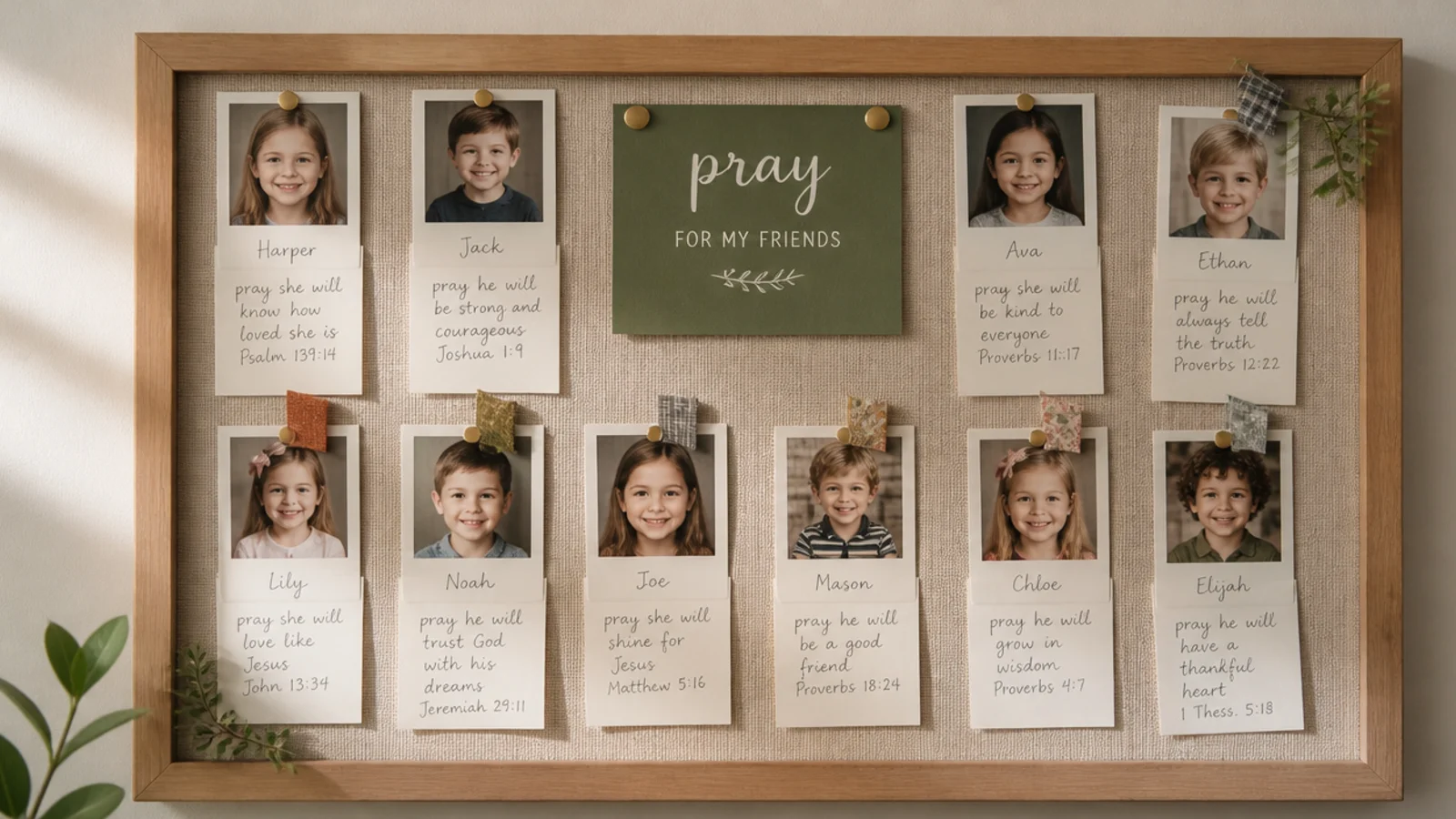
A friends board lets a child pray for the people in their own little world. You add photos of friends and classmates with simple prayers. It suits school-age kids. Praying for friends by face makes prayer feel real and relevant to them.
Editor's noteLet the child choose which friend to pray for each day; the small choice keeps them invested and thinking of others.
Print small photos of the child’s friends and classmates, or let them draw the friends. Pin each with a simple prayer — for a hurting friend, thanks for a good one. Let the child pray for one or two each day. Update as friendships change. When a friend has a real need, add a card and pray it together, teaching them to carry others.
Skip thisDon’t make it a popularity list; include the lonely kid or the one they struggle with, teaching prayer for all.
7. Popsicle-Stick Prayer Prompts
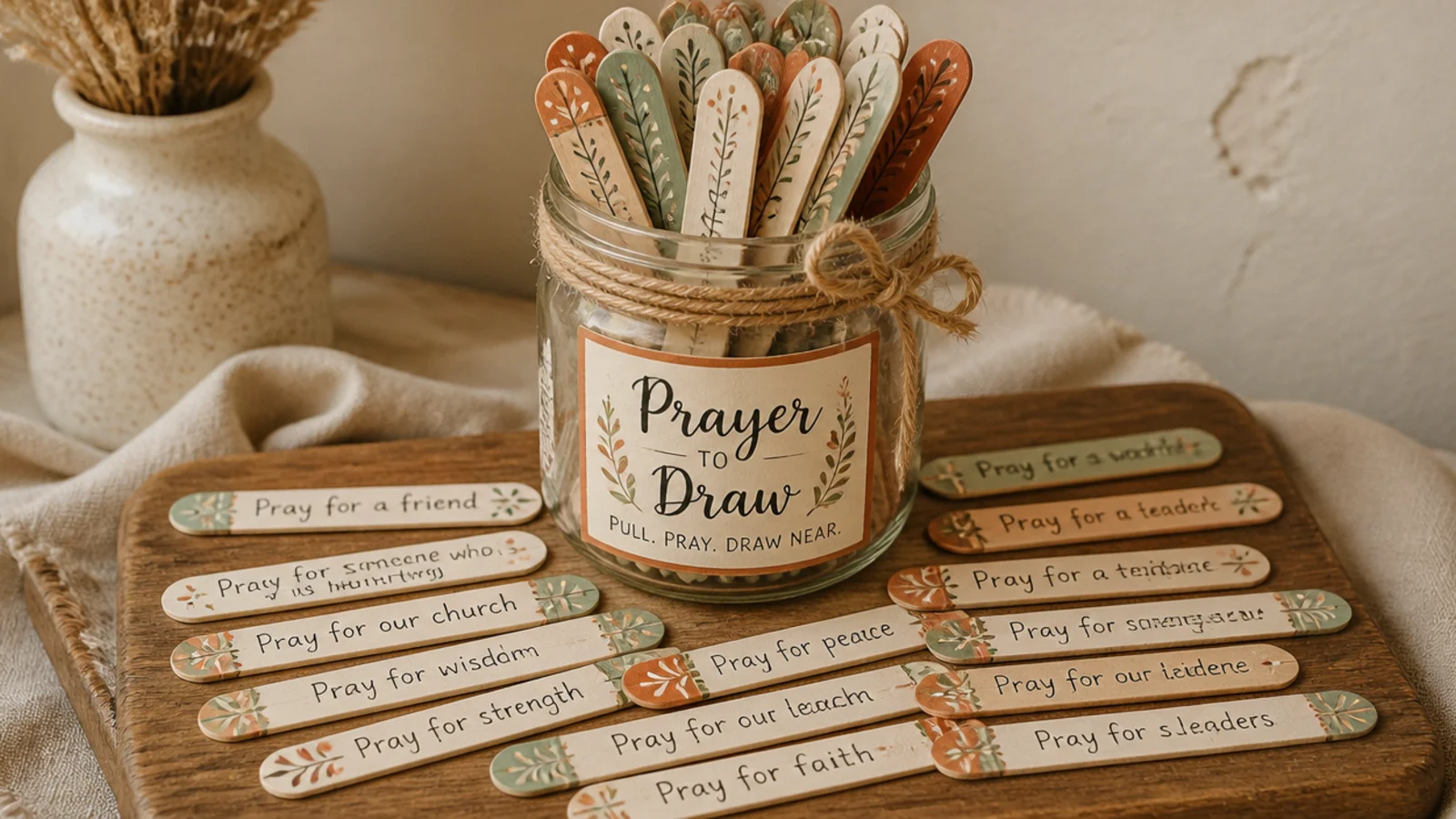
Prayer-prompt sticks turn choosing what to pray into a fun draw. You write simple prompts on craft sticks the child pulls from a jar. It suits kids who freeze up or get bored. Drawing a stick makes prayer a little game with a happy surprise.
Editor's noteAdd a couple of thank-you sticks to the jar so prayer isn’t only asking; drawing one balances the habit.
Write or draw a simple prompt on each craft stick — someone sick, thank you for something, a leader, the world. Decorate them and keep them in a jar on the board. The child draws one or two at prayer time and prays them. Make new sticks together as ideas come. Keep prompts broad so the same set stays useful for a long time.
Skip thisDon’t write long prayers on the sticks; a short prompt invites the child’s own words, a script gets read once.
8. Felt Movable Prayer Board
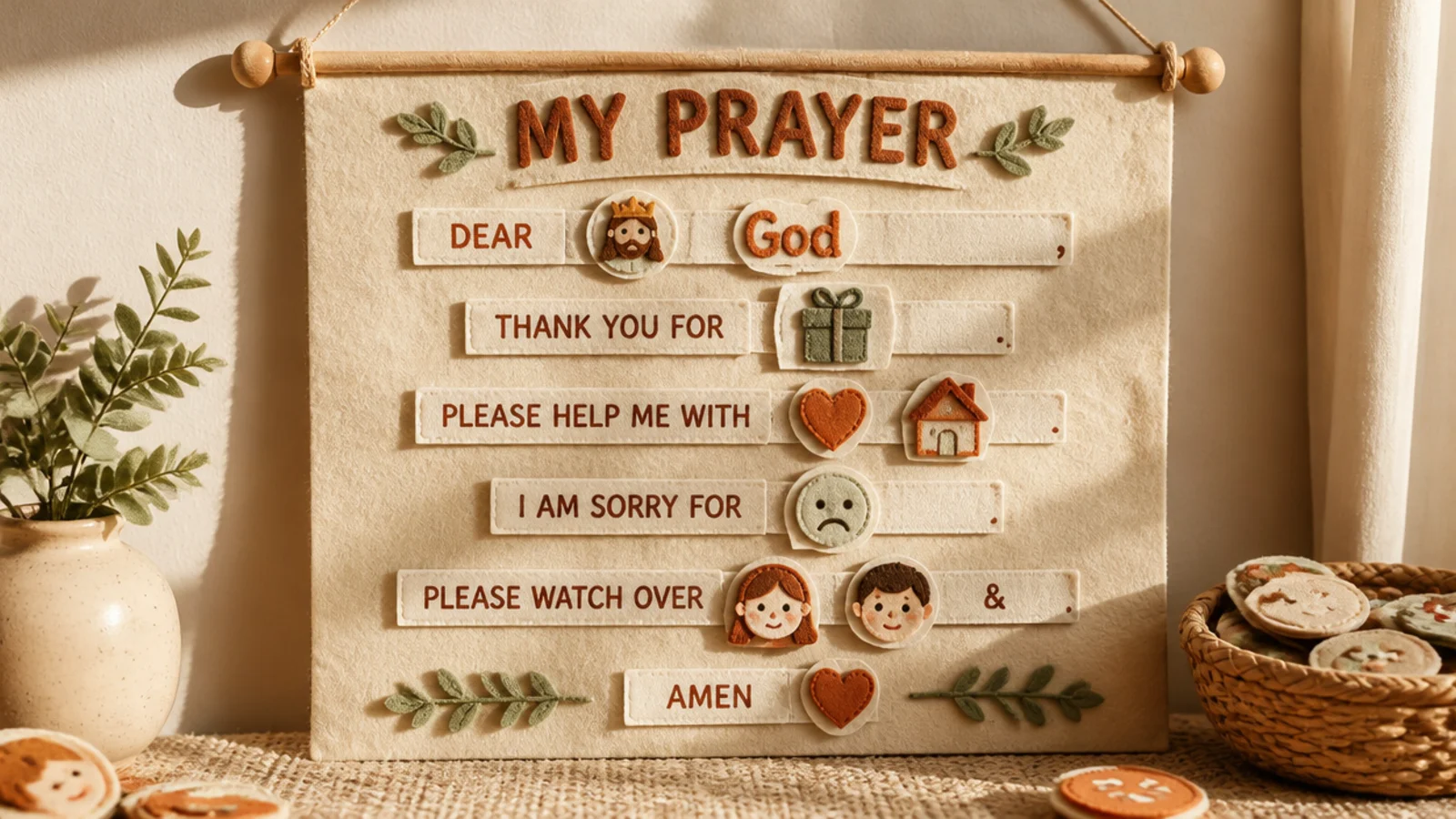
A felt board lets little hands build their prayer by moving soft pieces. You use felt shapes — people, hearts, crosses — the child arranges. It suits toddlers and preschoolers who love tactile play. Moving the pieces makes prayer a hands-on activity.
Editor's noteBack small photos with a scrap of felt so real faces stick to the board alongside the shapes.
Cover a board in felt and cut felt shapes — simple people, a heart, a cross, a sun. The child arranges pieces to represent who and what they’re praying for, then prays. No pins or glue needed since felt sticks to felt. Store pieces in a pouch. Add photos backed with felt to include real people. Reset it fresh each time.
Skip thisDon’t make pieces so small they’re a choking hazard for toddlers; keep felt shapes large and safe.
9. Roll-a-Prayer Cube Board
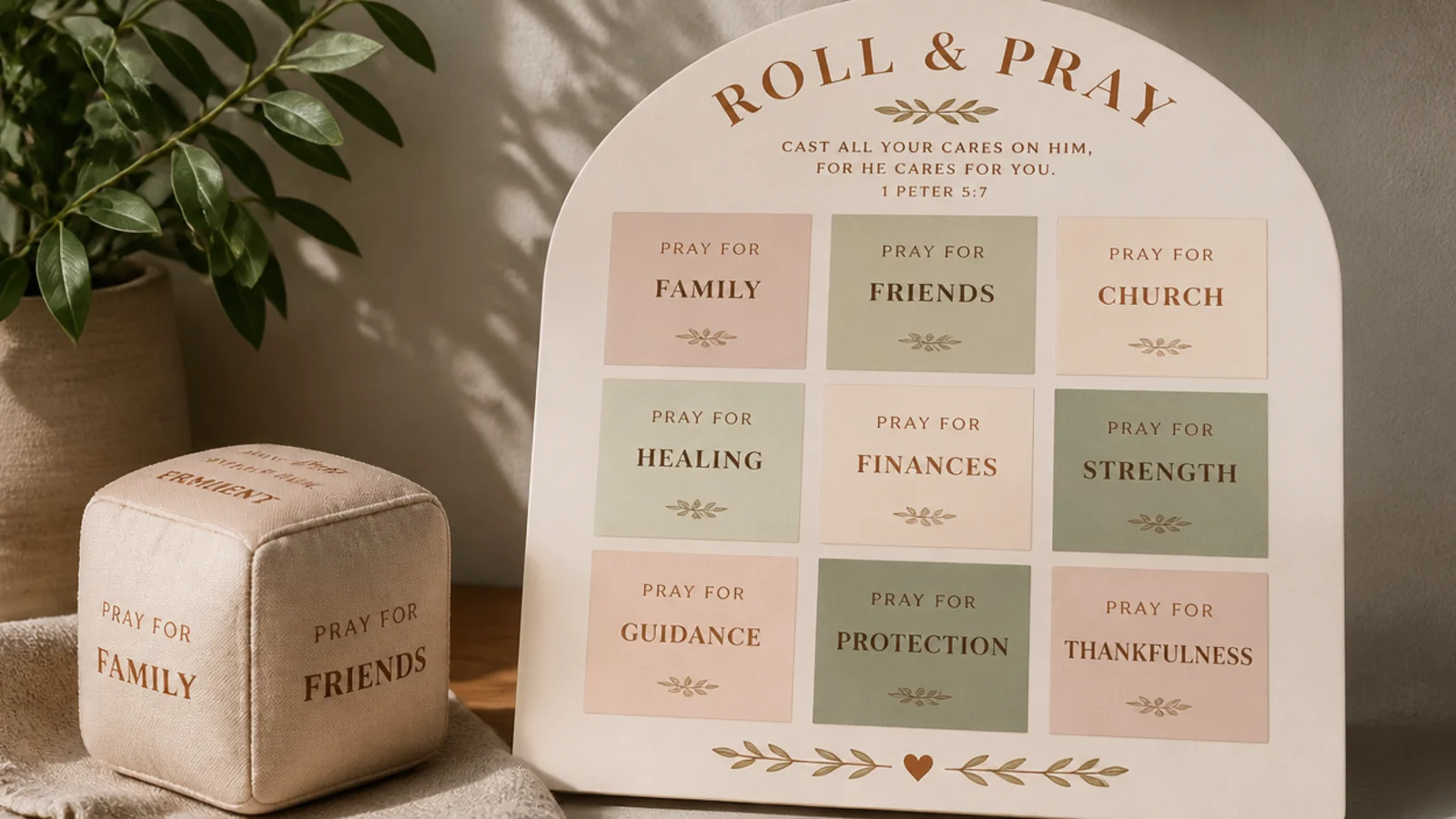
A prayer cube makes choosing what to pray a roll of the dice. You put a topic on each side and the child rolls to pick. It suits kids who love games and need variety. The roll adds fun and takes the pressure off deciding.
Make a soft fabric or foam cube with a simple prayer topic or picture on each of the six sides — family, friends, thank you, the world, someone sick, church. Keep it by the board. The child rolls and prays whatever comes up, using the board’s cards for that topic. Roll a few times for a fuller prayer. Remake sides as interests change.
Pair the cube with the board’s zones so a roll points the child to real cards and photos to pray over.
Don’t let it become only a toy; after the roll, guide them to actually pray the topic, not just keep rolling.
10. Coloring Verse Board
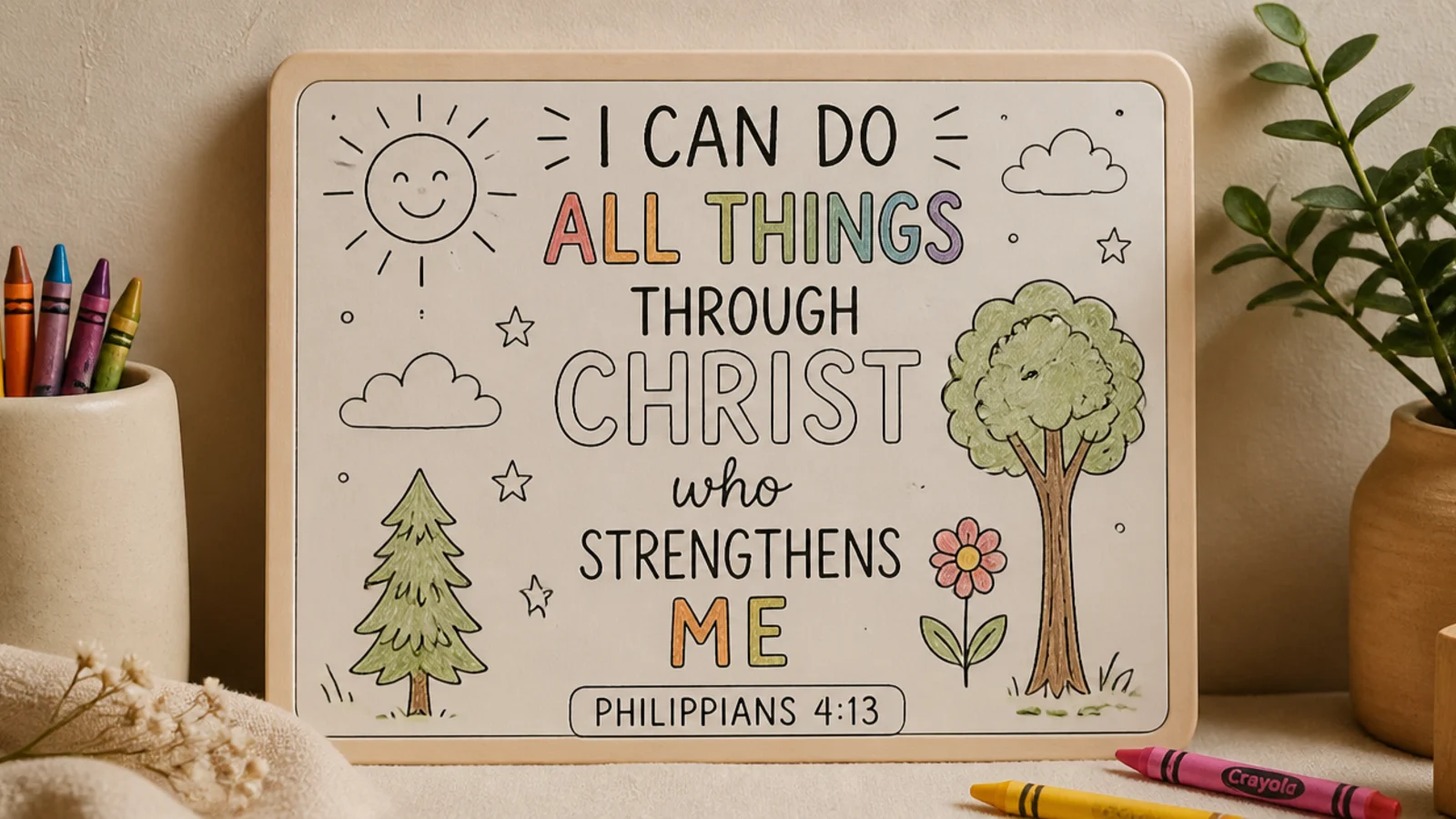
A coloring verse board teaches scripture while the child colors. You post a coloring-page verse they fill in and learn. It suits kids who focus best with their hands busy. Coloring the verse helps them remember it.
Print a simple coloring-page version of a short, kid-friendly verse. Let the child color it while you say it together, then pin it on the board as the verse of the week. Repeat it at meals or bedtime until they know it. Swap for a new one weekly and keep the colored pages in a folder. Let the child pick colors freely.
Say the verse aloud while they color; hands-busy repetition is how young kids memorize almost effortlessly.
Don’t rush them to finish or stay in the lines; the coloring is calming focus time, not a neatness test.
11. Thankful Heart Board
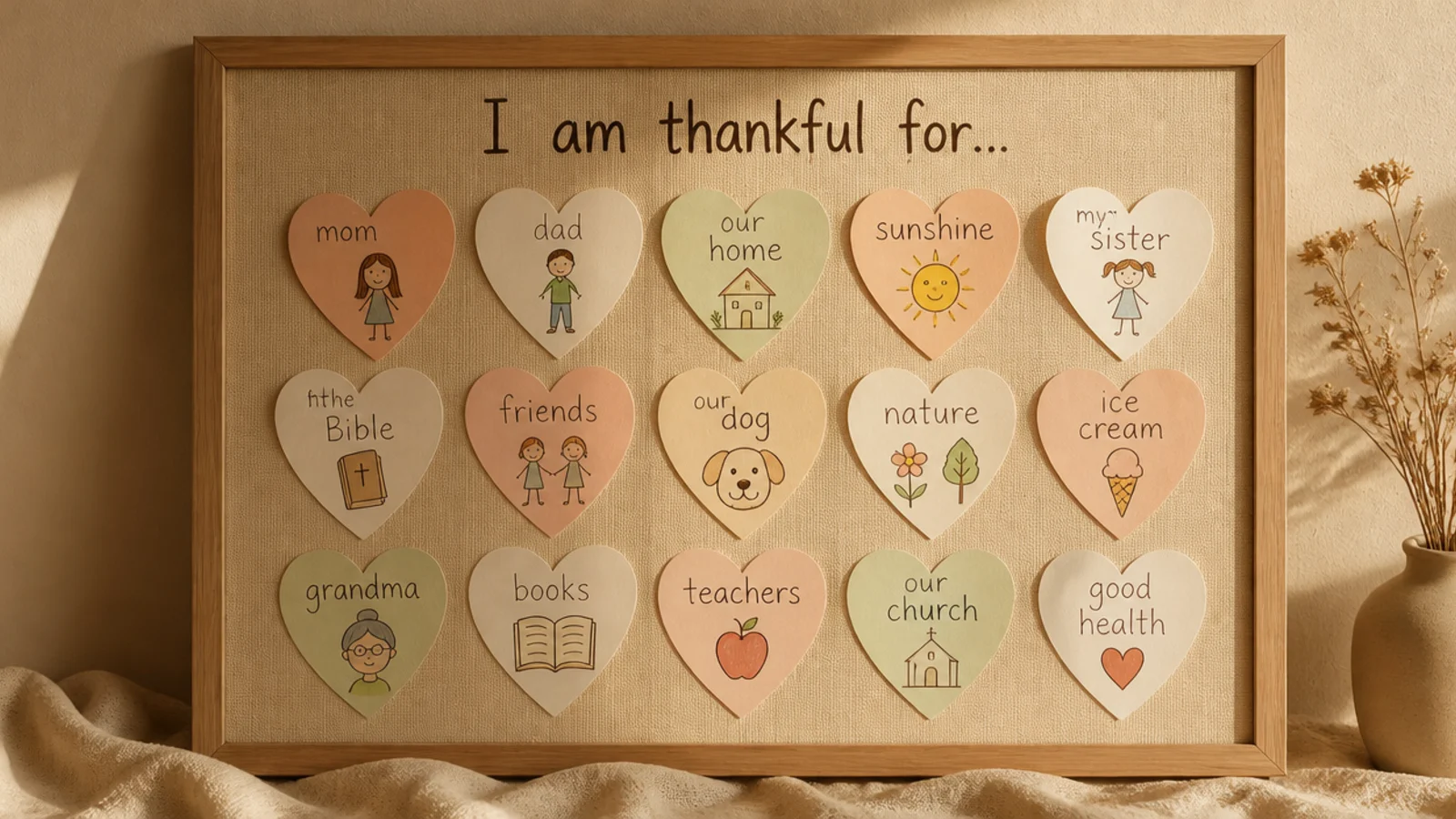
A thankful heart board grows a child’s gratitude one heart at a time. You add a heart for each thing they’re thankful for. It suits all ages and builds a habit of thanks. Filling the board with hearts feels like a happy accomplishment.
Editor's notePrompt with 'what was one good thing today?' at dinner; the answer becomes tomorrow’s heart on the board.
Cut paper hearts in warm colors and keep them by the board. Each day, the child draws or writes one thing they’re thankful for and pins a heart. Fill the board over a week or a month. Read some aloud at prayer time to thank God together. Archive them and start fresh. Ask a simple question — what was good today — to spark ideas.
Skip thisDon’t let thanks get vague; encourage one specific thing per heart so gratitude stays real, not rote.
12. Kids' Prayer Jar With Drawings
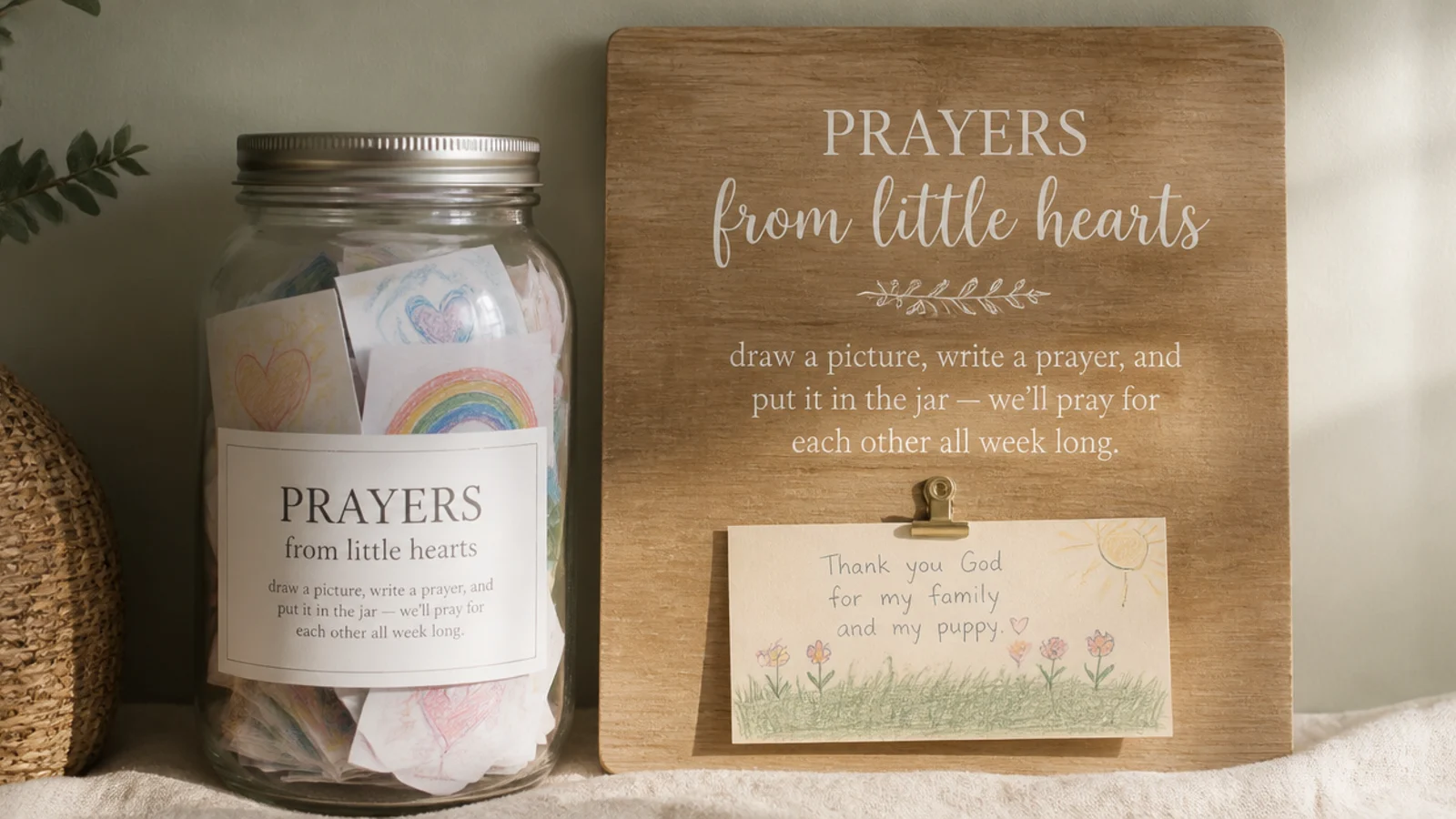
A kids' prayer jar collects their drawn and written prayers to pull and pray. You let the child fold drawings into a jar. It suits kids who like to draw their prayers. Drawing to pull out later makes prayer a keepsake activity.
Editor's noteEmpty the jar together every few weeks and cheer the answered prayers; kids love seeing God said yes.
Keep a jar by the board with paper and crayons. The child draws or dictates a prayer, folds it, and drops it in. At prayer time, pull one out to pray together. Once in a while, empty it and look back at answered ones, celebrating them. Save favorites as keepsakes. The drawing makes it accessible even before they can write.
Skip thisDon’t just let it fill forever; pull and pray regularly so the prayers get prayed, not only collected.
13. Kids' Verse of the Week Board
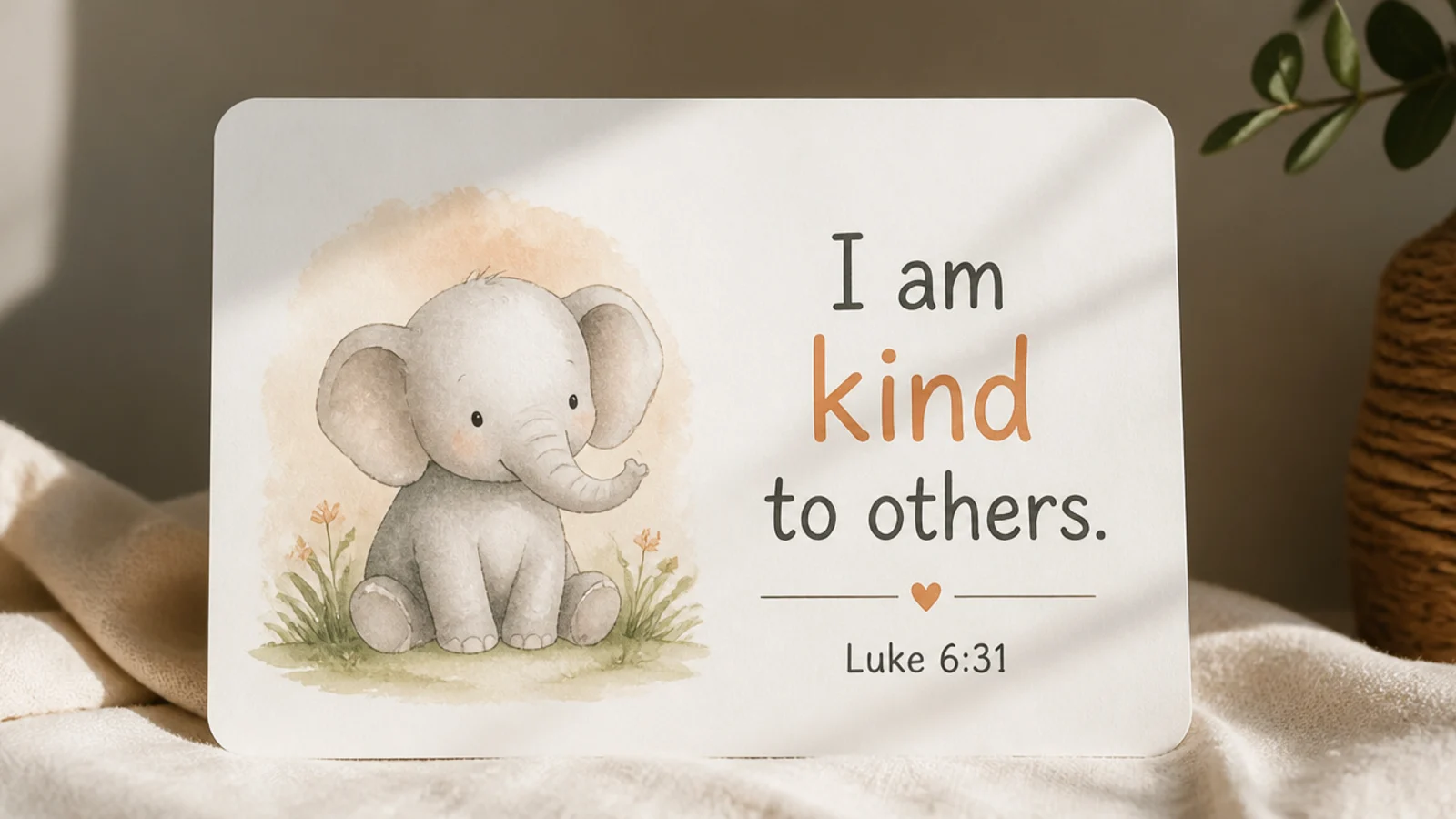
A verse-of-the-week board gives kids one short scripture to learn at a time. You post a big, illustrated verse and change it weekly. It suits building scripture memory gently. One short verse a week is a real, achievable win.
Choose a short, kid-friendly verse each week and letter or print it big with a simple picture. Post it as the board’s centerpiece. Say it together at a set time daily until they know it — most kids get a short verse in a week. Swap it weekly and keep old ones on a ring to review. Let the child illustrate or pick the next verse.
Add a small picture clue to the verse; kids anchor the words to the image and recall it faster.
Don’t pick long verses; one short line a week keeps memory a success, not a discouragement.
14. Good Day, Hard Day Faces Board
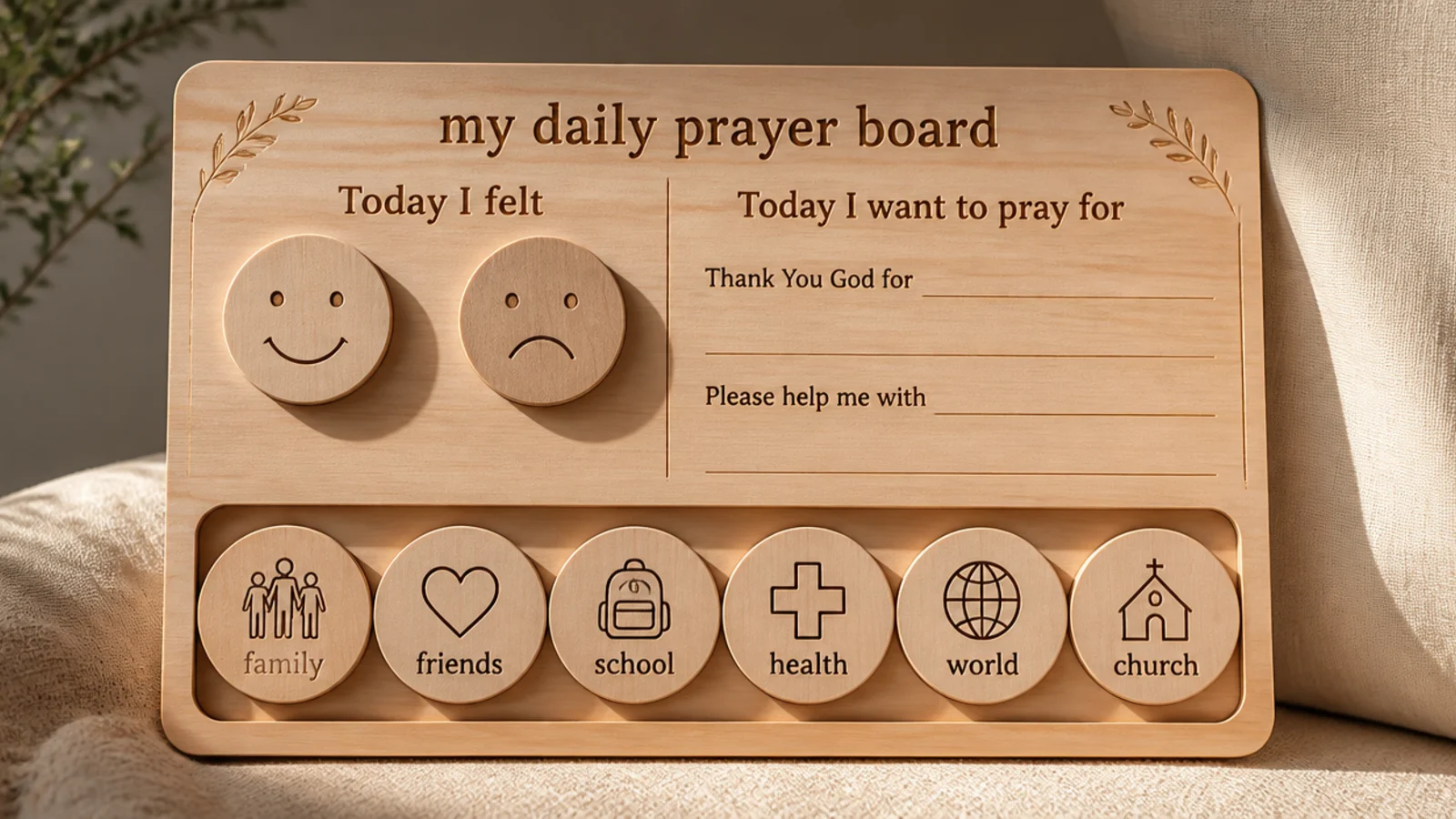
A feelings board helps kids pray about their actual day. You use face cards the child moves to show a good or hard day. It suits kids learning to name and pray their emotions. Pointing to a face opens a real conversation and prayer.
Make simple face cards — happy, sad, worried, mad, thankful. Each day, the child moves the face that matches their day onto a spot, and you talk and pray about why. Thank God for the good, bring the hard to him. Keep it gentle and unhurried. Over time it teaches kids that every feeling can be brought to God in prayer.
Follow the face with a gentle 'why?' and pray that; the feeling is the doorway to a real prayer.
Don’t rush past a sad or angry face; sitting with it and praying it is exactly what builds trust in prayer.
15. Kids' World Prayer Map Board
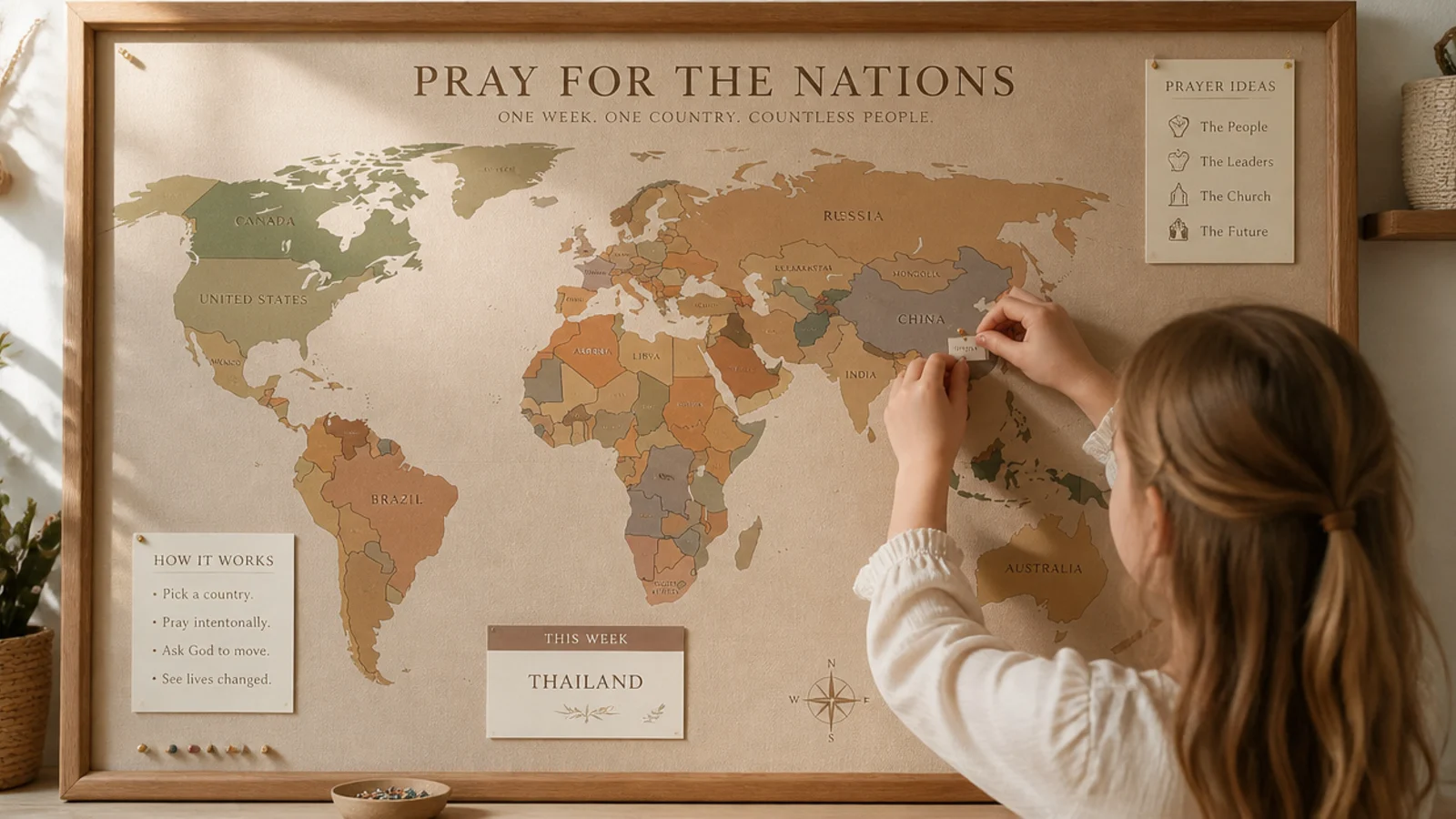
A world map board teaches kids to pray beyond their own world. You pin a country a week for the child to pray over. It suits kids ready to think about others far away. Finding the country makes global prayer an adventure.
Pin a colorful, simple world map at the child’s height. Each week pick a country together and pin it with a simple need — kids there, missionaries, a hard situation kept age-appropriate. Let the child find and pin it. Pray for it that week. Rotate weekly so the map fills over time. Connect it to any missionaries the family knows.
Let the child find the country themselves; the search turns praying for the world into a weekly treasure hunt.
Don’t share scary details; keep the world’s needs simple and hopeful so global prayer doesn’t frighten them.