
1. Painted-trim bench with removable cushion panels

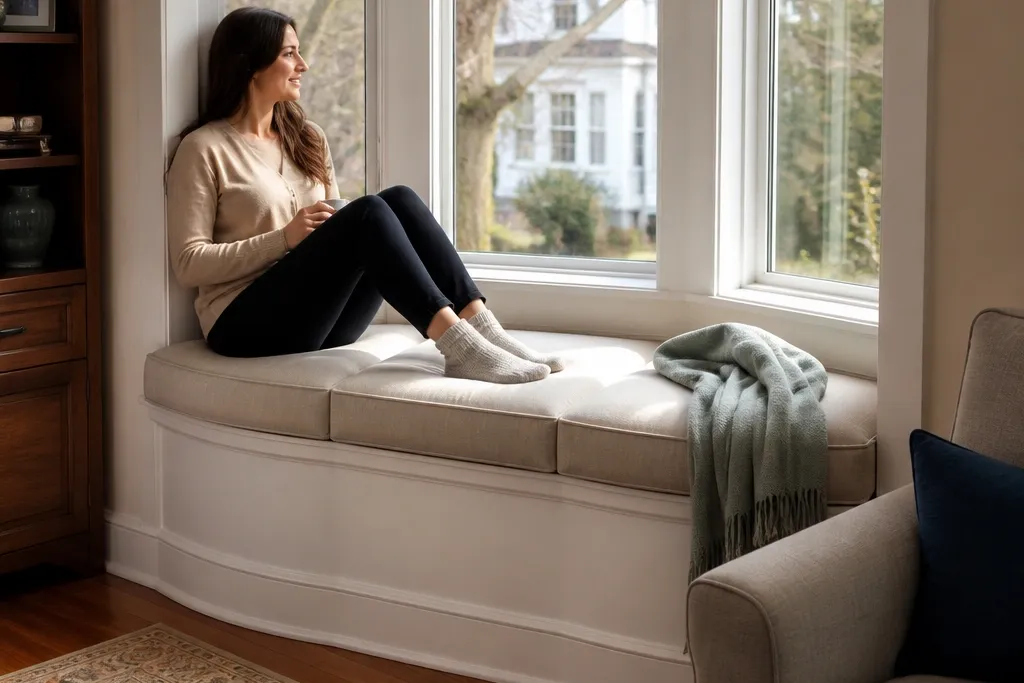
This look works because it treats the bay seat like built-in millwork instead of a loose cushion pile. A painted base ties into the window trim and makes the curved shape look crisp, even in small rooms. Use three cushion panels that match the bay’s angles so the seams follow the geometry. The removable design keeps it year-round: swap covers in winter with heavier cotton, and switch to lighter performance fabric for summer. Skill level is medium because you’re building a base, but it’s straightforward carpentry that stays forgiving.
Start by building a bench base with plywood and face framing — cut side pieces to match the bay angles and add a front rail about 3 inches tall for a clean edge. Sand, prime, and paint the base to match trim; let it fully cure before adding hardware. Next, make three cushion panels sized to sit flush on the bench top with a 1/4-inch lip so they don’t slide — use 2 inches of foam plus a thin batting layer for smooth edges. Finally, sew or buy removable covers with zippers along the back edge and add non-slip grip tape to the bench top.
Editor's noteUse a 1/4-inch lip on the cushion base so covers stay aligned when you remove and replace them.
Skip thisAvoid cushions that sit on top with no lip — they drift and the curve looks sloppy fast.
2. Deep storage window bench with fabric-front drawers
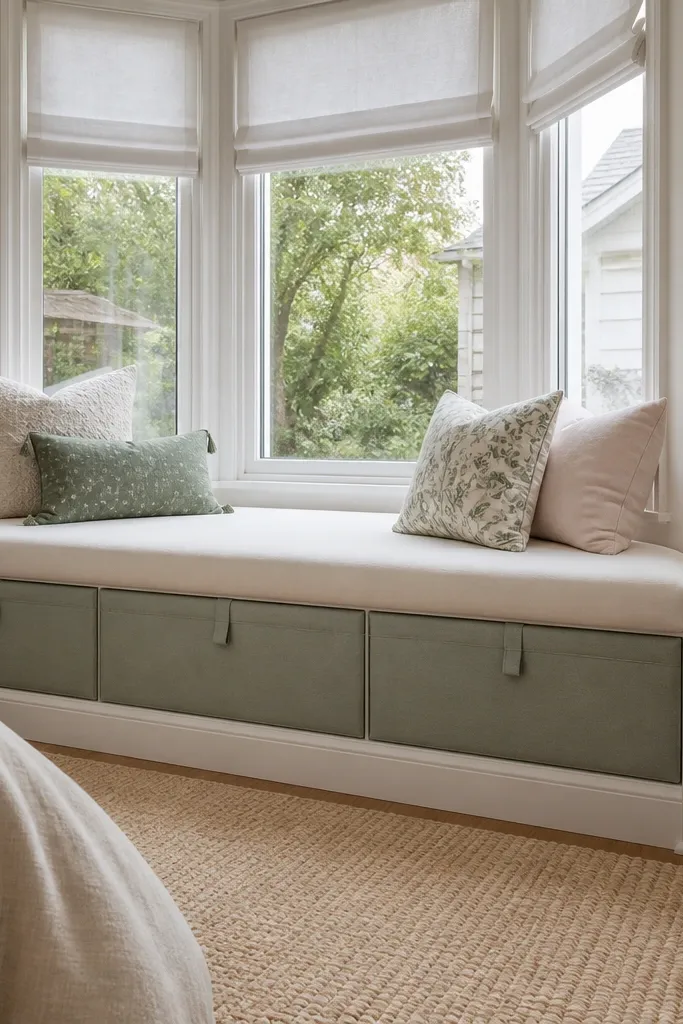
If your bay is in a small room, storage is the aesthetic. This design hides clutter while keeping the seat looking intentional and smooth. The deeper bench (about 18-20 inches from front rail to back) lets you store blankets, board games, or extra pillows without turning the bay into a dumping ground. Fabric-front drawer fronts add softness so the storage doesn’t look like kitchen cabinetry. It’s a good year-round choice because you can keep seasonal items out of sight and rotate what’s on top.
Build the bench box to your bay footprint, then add a false front frame with two or three drawer openings sized to the storage compartment height. Use 1/2-inch plywood for the drawer boxes and install full-extension slides rated for the drawer weight. Cut fabric-front panels to fit the drawer faces and attach them to thin MDF backers for a crisp edge. Finish by adding a hinged cushion top or removable seat cushions on top of the storage lid so you can access items without wrestling the foam.
Editor's noteFor drawer fronts, use magnetic catches instead of bulky knobs so the face stays clean and photo-ready.
Skip thisDon’t underbuild the box — thin walls bow under weight and your drawer fronts won’t sit flat.
3. Corner-to-corner window banquette with slim backrest
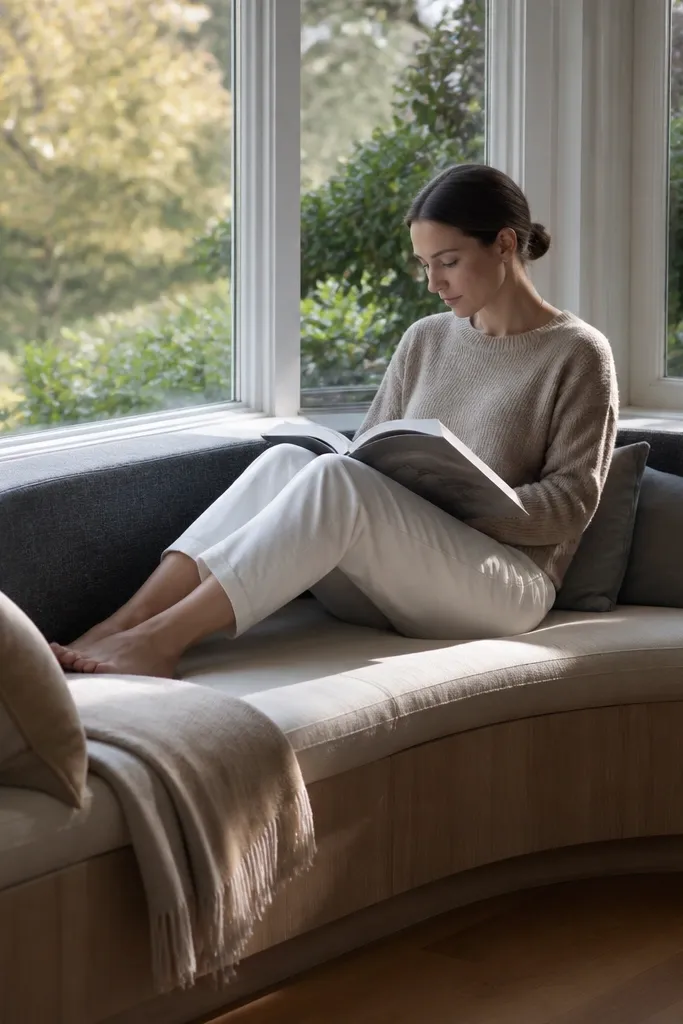
A slim backrest changes everything because it makes the bay seat feel like furniture, not just a ledge. The look stays photogenic because the backrest frames the window and gives you a place for styling — pillows, a folded throw, or a small seasonal runner. Keep the backrest depth around 3-4 inches so it doesn’t steal space. Use a medium-height backrest (about 16-18 inches tall from the seat surface) so people can actually lean back. This is a solid option for living rooms, reading corners, and entry nooks where you want comfort without a bulky chair.
Start with a bench base as wide as your bay, then add a backrest frame across the curve using thin plywood strips bent to match the angles. Upholster the backrest with a 1-inch foam layer and batting, then wrap fabric tightly to avoid ripples. Cushion the seat with 2 inches of foam and a topper for a smooth top line. Add a trim strip along the bottom edge of the backrest to hide staples and make the shape look finished.
Use a single patterned fabric for the backrest and keep pillow covers in solid tones for cleaner photos.
Avoid a tall, thick backrest in small spaces — it visually turns the bay into a wall of fabric.
4. Wainscot-style panel bench with tuft-free cushion
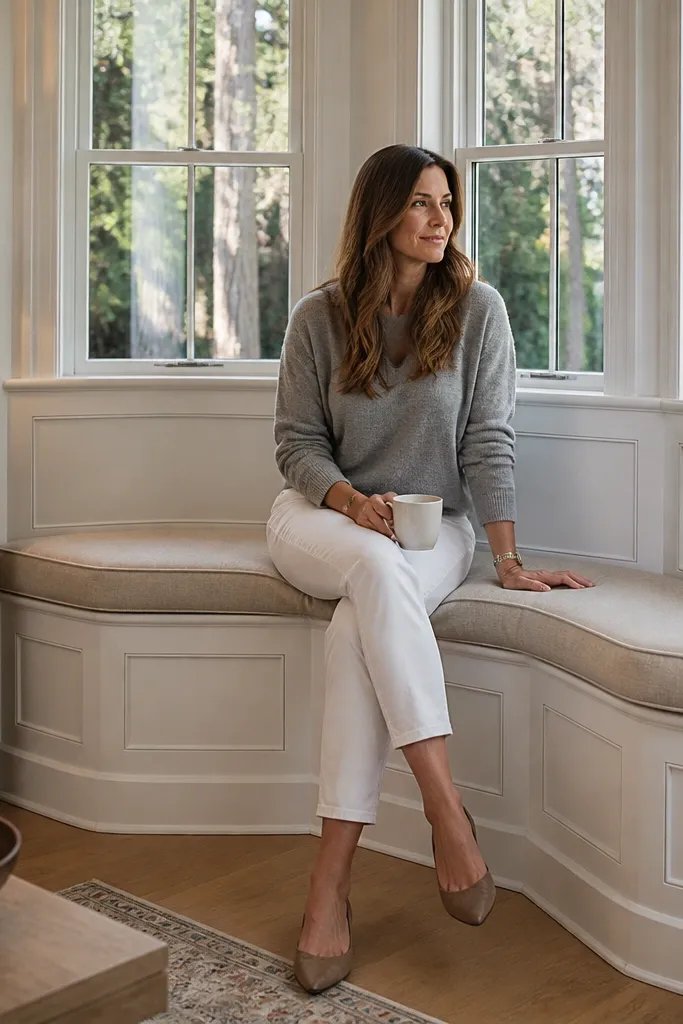
This one looks expensive because the bench base has structure. Wainscot-style panels bring straight lines to the curved bay, which makes the whole nook look designed. Pair it with a tuft-free cushion to keep the seat looking modern and easy to maintain. Tufting traps wear patterns and makes small spaces look busier, especially in daylight. The result is a warm, classic bay that still looks good in summer because the cushion reads clean and flat.
Build the bench base, then install paneling: use 1x2 or 1x3 rails to create a simple grid on the front face. Add a chair-rail-height horizontal strip and two or three vertical sections depending on your bay width. Prime and paint the paneling, then build the seat cushion separately so it doesn’t get paint on the fabric. For the cushion, use 2 inches of foam with a fitted cover and sew a smooth edge piping or bias tape around the perimeter for a crisp look.
Editor's noteKeep panel widths around 6-8 inches so the pattern looks intentional instead of cramped.
Skip thisSkip deep decorative molding if your bay is narrow — heavy trim eats sight lines.
5. Rattan-backed seat with woven seat cover
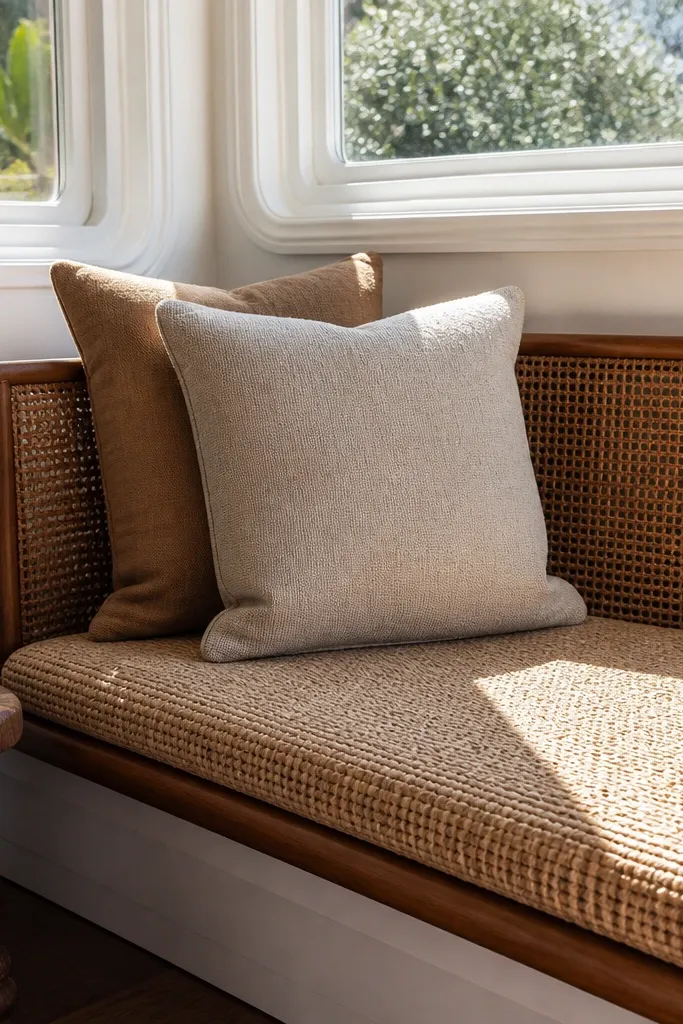
Woven textures belong in bay windows because they catch light on curved surfaces. A rattan-backed seat looks airy, and it’s a strong visual contrast against painted trim or white walls. Keep the rattan detail only on the backrest or sides so the bench stays compact. For year-round use, choose a woven seat cover that you can remove and shake out, then layer a thin cushion on top for comfort. This is a great fit for coastal, boho, or Scandinavian-style rooms where you want the bay to feel light.
Build a simple bench base, then add a backrest frame using thin plywood strips that match the bay angles. Attach rattan panels or pre-woven rattan sheets to the frame using small screws and trim strips at the edges. For the seat, use 1.5-2 inches of foam and add a removable woven cover with elastic corners. Finish by adding a non-slip mat under the woven piece and a washable pillow cover for the top layer.
Editor's noteUse a matte fabric for seat cushions — gloss yarns reflect harshly and look messy in daylight.
Skip thisDon’t cover the whole bench in rattan if you’re tight on space — it can look visually heavy.
6. Two-tone upholstered seat with contrast piping
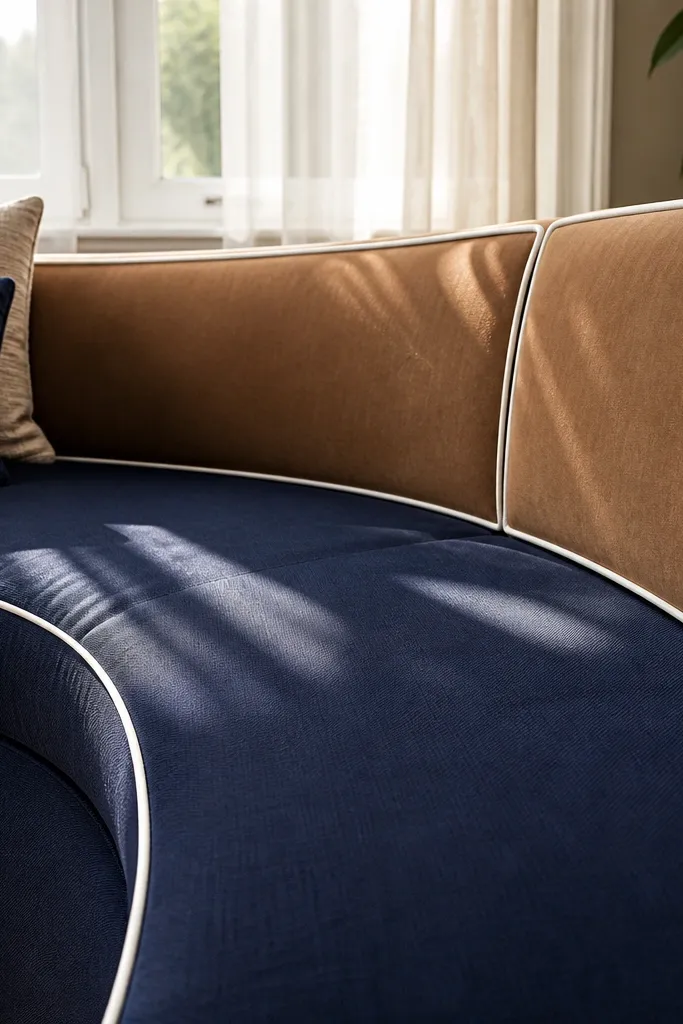
Two-tone upholstery makes a bay seat look styled even when you change pillows. The key is contrast piping: it draws the curve and makes the seams look deliberate. Choose one fabric for the cushion body (solid or subtle texture) and a second for the backrest or side panels. This is one of the best year-round Bay Window ideas because you can swap the top throw and keep the base look consistent. It’s also a strong option for small spaces because the visual lines guide the eye instead of drowning the bay in one flat color.
Start by building or buying a bench base that has clean, straight edges for attaching fabric. Make cushion patterns for each bay section and keep the seam line aligned with the bay’s inner corners. Add piping around the outer perimeter using pre-made piping cord — sew it into the cover seams so it stays crisp. Upholster the backrest with the second fabric, then top with a removable seat cover that zips off for washing.
Pick piping cord in a color that matches your trim or your floor — it makes the whole bay look grounded.
Avoid two-tone fabrics with the same undertone — if both are warm or both are cool, the contrast looks flat.
7. Slipcovered bench with oversized linen throw drape
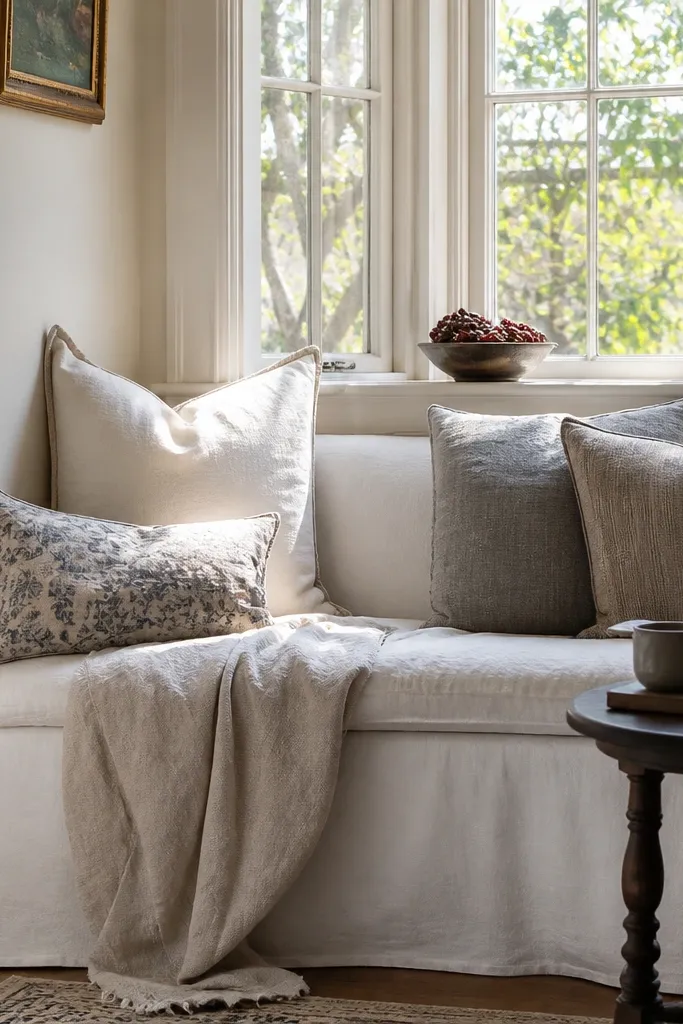
This is the “always looks styled” approach: a slipcovered base plus a draped throw that you can swap by season. Slipcovers keep the bench looking tailored even after guests sit there, and linen throws photograph beautifully against window light. For year-round Bay Window ideas, the magic is how the throw hides minor cushion seams and keeps the texture layered. Choose a neutral slipcover and keep the throw in a seasonal palette — warm oatmeal in winter, airy sand or light gray in summer. It’s best for living rooms where you want a calm, bright bay instead of heavy storage.
Build a bench base with a flat top, then attach a fitted cushion and a removable slipcover over the cushion surface. Sew or buy slipcover panels that wrap around the front and sides — keep the front panel height around 10-12 inches so it reads clean from across the room. Add a separate throw that’s about 70-80 inches long, draped so one edge hangs down the front. Secure the back edge with hidden Velcro so the drape doesn’t slide when people sit.
Use a slightly textured linen blend for the drape — smooth fabric clings and looks wrinkled in photos.
Don’t use a tight, short throw — it looks accidental and the bay loses the styled look.
8. Window seat with gallery shelf for seasonal decor
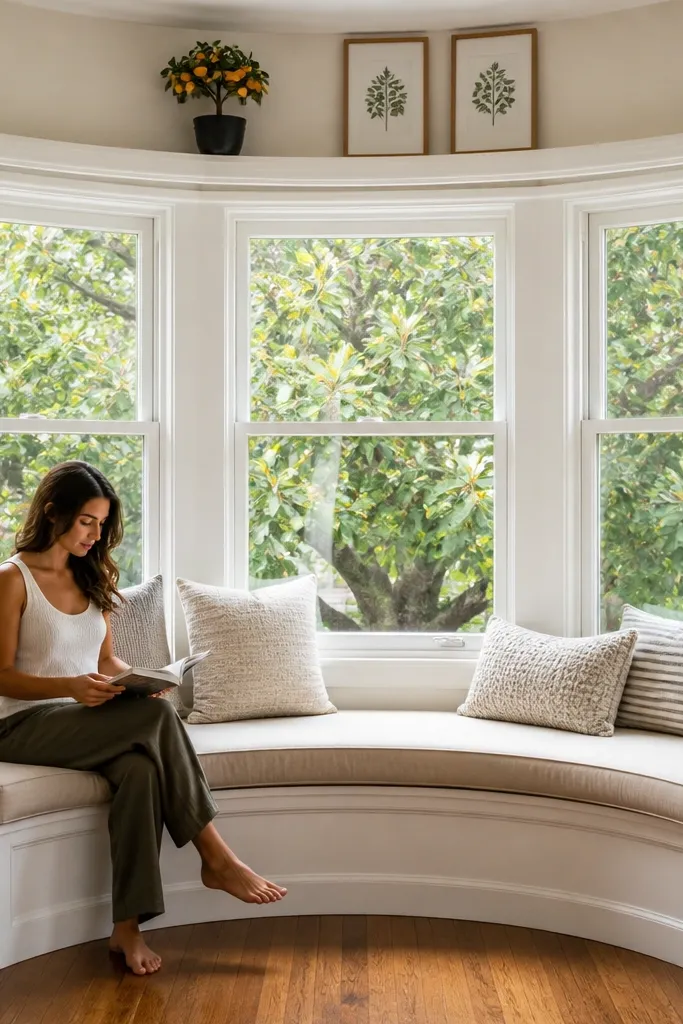
If you want the bay seat to look good year-round without constantly changing cushions, add a shelf above it. A narrow gallery shelf lets you rotate decor — small plants in summer, candle lanterns in winter, and framed prints for fall and spring. The shelf also visually “finishes” the bay so it doesn’t look like furniture is missing a top. Keep the shelf depth around 6-8 inches so it doesn’t crowd the window and stays practical for small items. This style is great for reading nooks and bedrooms where you want a soft, decorative corner.
Install a bench base first, then measure the space above the seat to keep the shelf from blocking window trim. Use a ledger board level across the bay, then attach shelf supports at each bay angle so the shelf follows the curve. Sand, prime, and paint the shelf to match trim or go with a contrasting wood stain. Finally, add a cushion and backrest (optional) with removable covers, then style the shelf with items that have similar heights so the curved bay looks tidy in photos.
Use clear or matte glass holders for candles — they look clean in daylight and night photos.
Skip deep shelves — they cast shadows that make the bay look cramped.
9. Built-in bench with angled side cabinets and toe-kick
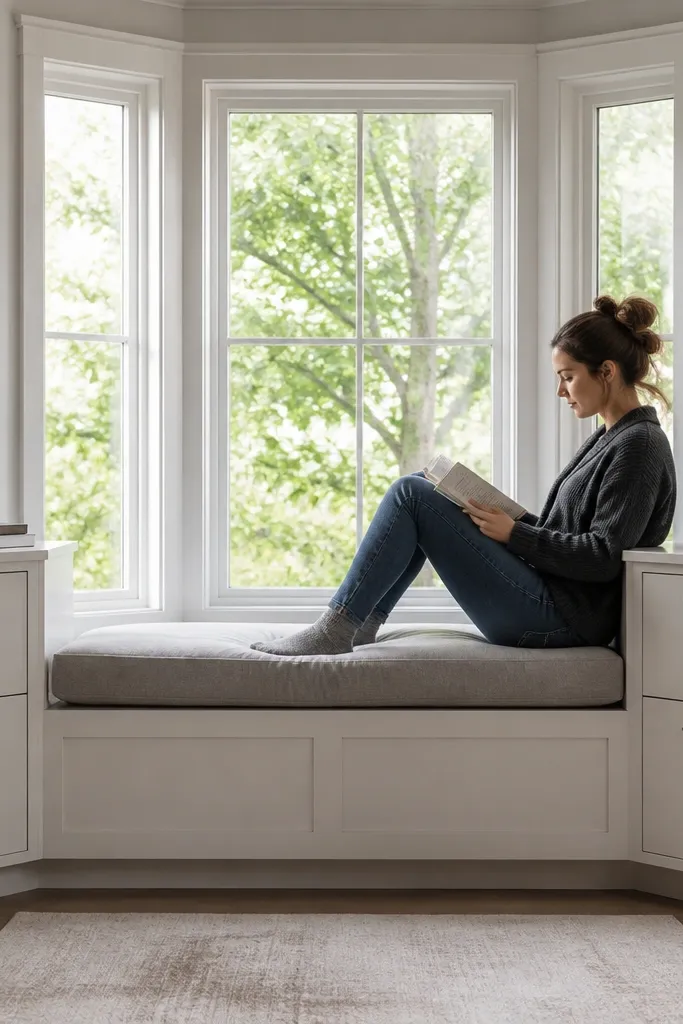
This is the “small space, big finish” option. Side cabinets give the bay seat storage and a built-in look that reads intentional from every angle. A toe-kick shadow line makes the bench look lighter and more furniture-like, even with storage boxes. Keep the cabinets simple: flat doors, slim pulls, and matching paint or stain. Year-round Bay Window ideas benefit here because your top stays clean while you swap only what sits on the seat.
Build the bench base and add a toe-kick opening about 3 inches high under the front rail. Frame two side cabinet boxes that match the bay angles — use plywood and add face frames so doors hang straight. Install hinges rated for the door weight and add magnetic catches for quiet closure. Finish by adding a cushion top and a backrest panel (optional) so the seat reads as one unit with the cabinets.
Set cabinet door gaps to 1/16-1/8 inch so the bay looks crisp instead of wobbly.
Don’t skip a toe-kick — without that shadow line, storage can look heavy and boxy.
10. Patterned floor-to-seat runner with neutral bench
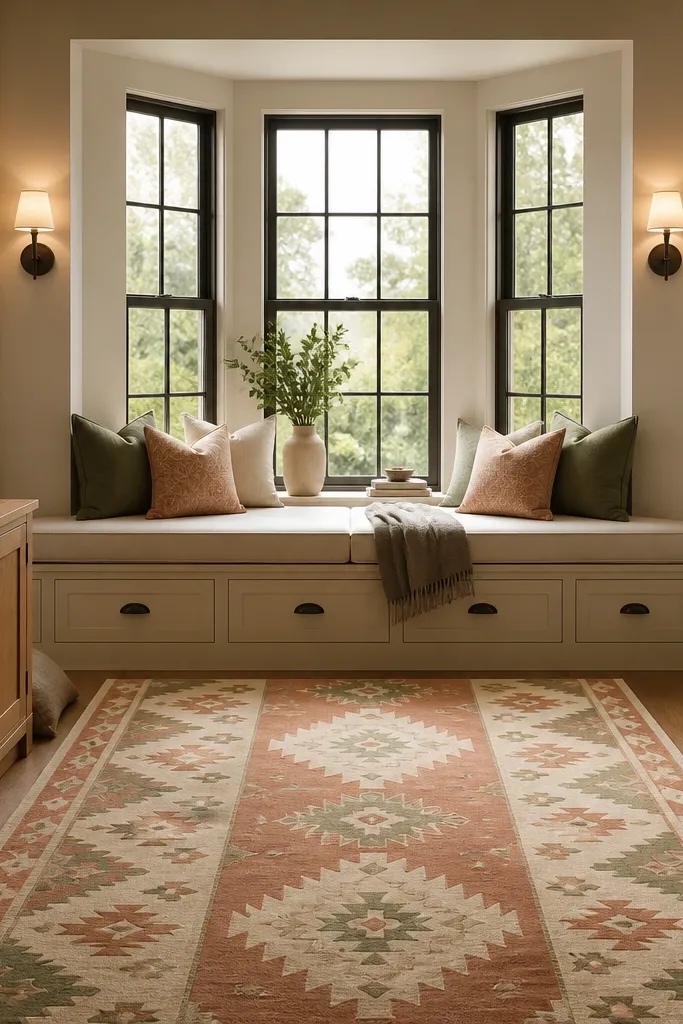
A runner is the easiest way to make a bay seat feel dressed year-round. Keep the bench base neutral — oatmeal, warm white, or light gray — and let the runner carry the pattern. The trick is continuity: extend the runner slightly beyond the bench edges so the bay looks like one composed area, not separate pieces. In winter, choose wool-like textures and darker tones; in summer, switch to lighter woven patterns. This idea is perfect for small spaces because it adds style without adding bulky furniture.
Start by choosing a runner width that covers the front face and seat surface — aim for 18-24 inches wide depending on your depth. Build or use a neutral bench cushion with a smooth top so the runner lies flat. Cut the runner so it follows the bay curve — you can do this by tracing the cushion outline on paper and transferring it to fabric. Secure the runner with a non-slip rug pad underneath and add a small Velcro strip at the back edge to stop shifting.
Editor's notePick a runner pattern with one dominant color that matches your throw pillows — it ties the bay together fast.
Skip thisDon’t use a high-contrast pattern on a dark bench — it makes small bays look busy.
11. Outdoor-performance seat for sun-heavy bay windows

Sun-heavy bays fade regular upholstery fast. This style uses outdoor-performance fabric so the seat stays bright through summer and still looks clean in winter. The aesthetic is simple and intentional: crisp piping, solid colors, and removable covers. It’s one of the best year-round Bay Window ideas when your bay gets direct light because it reduces the “why does this look tired already?” feeling. Use a neutral base and add seasonal pillows for color changes so you don’t constantly replace cushions.
Build a bench base and use 2 inches of foam with a thin batting layer to smooth the top. Sew covers from outdoor-performance fabric with hidden zippers on the back edge. Add piping along the outer seam so the cushions look tailored, even with thick outdoor fabric. For durability, use a fabric-safe thread and reinforce zipper seams with extra stitching. Finish by adding a removable cover for the backrest if you include one.
Choose a fabric color 1 shade darker than your wall paint — bright whites glare in sun and look washed out.
Avoid cheap thin outdoor fabric — it stretches and the cushion corners look rounded instead of sharp.
12. Dark-stained wood bench with light knit cushion
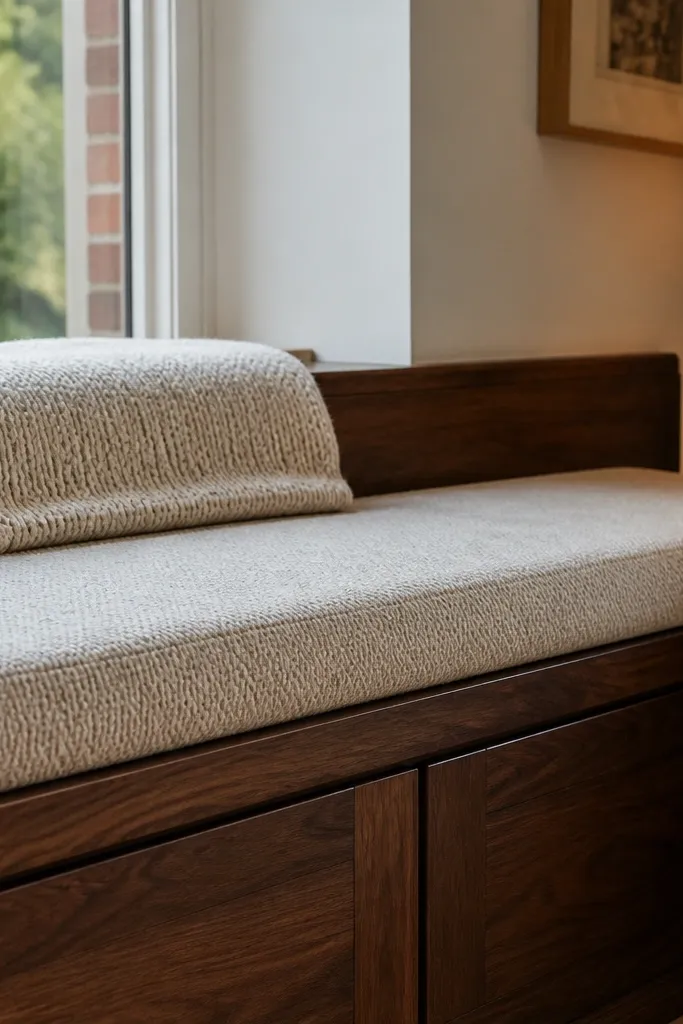
Dark-stained wood makes the bay seat look grounded, and light knit cushions keep it from feeling heavy. This combo reads great in both daylight and lamplight because the wood adds depth while the knit adds softness. It’s especially good in small spaces because the bench base has a strong silhouette and the cushion keeps the curve plush. For year-round Bay Window ideas, you can keep the wood finish constant and swap cushion covers with seasonal knits or lighter cotton in summer. It also hides minor scuffs better than light-painted wood.
Build the bench base with hardwood plywood or solid wood panels, then sand to 150 grit. Apply a dark stain evenly and wipe off excess within the manufacturer’s time window, then add two coats of matte polyurethane for a smooth protective finish. Make a cushion with 2 inches of foam and a removable cover in a knit fabric — choose one with a tight weave so it doesn’t pill instantly. Add a non-slip underlayer like a thin rubberized mat so the cushion doesn’t creep on the smooth finish.
Editor's noteUse matte topcoat, not satin — glossy wood reflects window light and can flatten the whole bay in photos.
Skip thisDon’t skip sealing — unsealed stained wood grabs moisture from cushions and spots show up fast.
13. Soft pleated skirt bench with hidden magnets
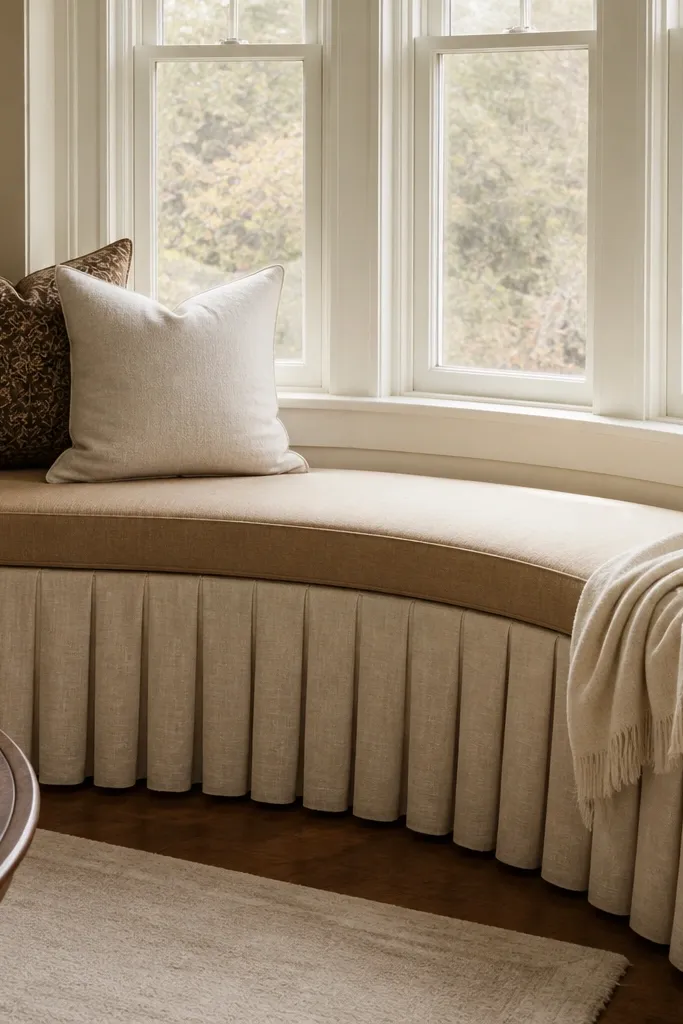
A pleated skirt is the fastest way to make a bay seat look dressed up while keeping the base tidy. The skirt hides the front edge, any small gaps between cushions, and the mess that happens when you remove covers. Use a skirt fabric with structure — cotton poplin or a light linen blend — so the pleats hold shape. This is a year-round option because you can change the skirt fabric seasonally while keeping the cushion system consistent. It’s also great for bedrooms where you want a softer, more feminine look without buying a chair.
Build the bench base and install a clean front ledge where the skirt will attach. Sew a pleated skirt panel using 2-3 inch pleat spacing, then add a magnetic strip along the top edge so it snaps on and off cleanly. Make sure the skirt height ends around 3-4 inches above the floor or toe-kick so it doesn’t drag or collect dust. Finally, use removable cushions on top and add Velcro tabs at the corners to keep them from shifting under the skirt.
Use steel-backed magnets with a thin fabric tape over them so they don’t show through light-colored fabric.
Avoid flimsy skirts — they collapse and the bay looks unstructured instead of tailored.
14. Floating ladder shelf above bay seat with hanging planters
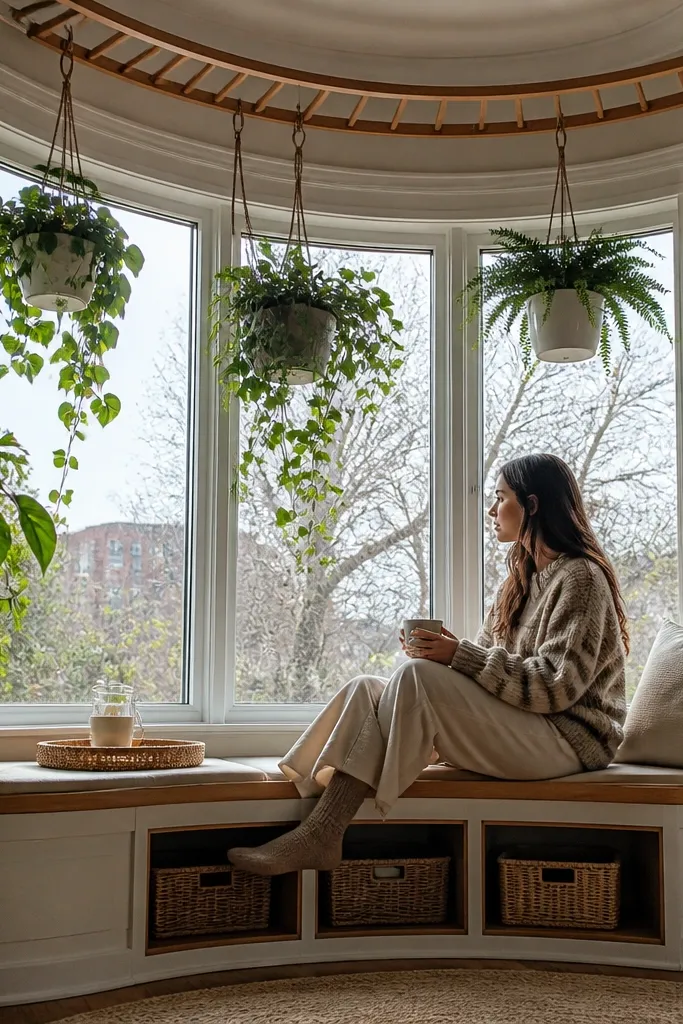
This is the “green + cozy” approach that still reads clean in photos. Instead of cluttering the seat, you place plants and small decor above it on a slim ladder shelf, then keep the bench top mostly clear. Hanging planters add movement against the curved window, which makes the whole nook feel alive in spring and summer, and tidy in winter when you swap for branches or dried stems. The bench stays comfortable because you’re not stacking objects on the seat. It’s a strong choice for small spaces where floor clutter makes everything feel cramped.
Mount a ladder-style shelf directly above the bay seat using studs and heavy-duty anchors if needed, then keep the shelf depth under 8 inches. Hang planters with adjustable macramé or cord so you can set them at two heights for depth — one near the window level and one closer to the shelf. Build a simple bench base with a removable cushion top in a solid color so the plants don’t compete with patterns. Finish with a back cushion or slim backrest so the seat looks complete even when you remove seasonal decor.
Editor's noteUse matte plant pots in two finishes (one light, one dark) so the bay looks intentional instead of random.
Skip thisDon’t hang planters too low — they hit the seat area and ruin the clean line of the bay.
15. Corner reading nook: built-in seat + book ledge + warm wall lamp
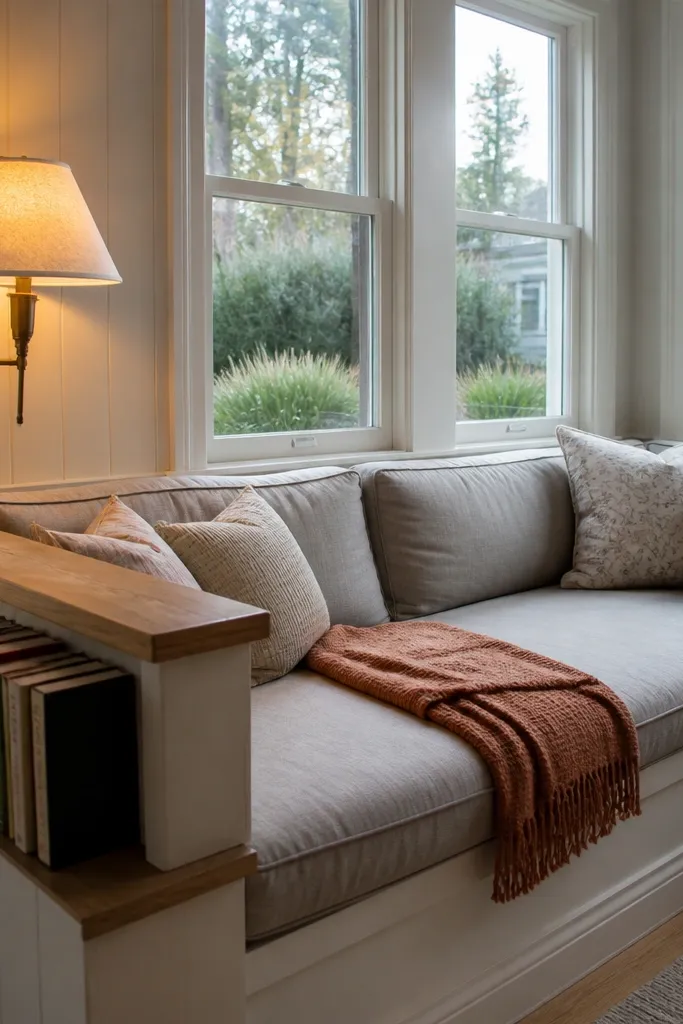
A bay seat looks best when it has a job, not just a cushion. This setup adds a built-in book ledge on the side closest to the room, plus a warm lamp that lights the seat back and cushion front. The aesthetic is layered and cozy: soft upholstery, a clean book display line, and lighting that avoids harsh shadows on the curve. It’s year-round because you can swap reading throws for winter and lighten the palette in summer while keeping the lamp and ledge constant. This works especially well in small living rooms where you want a reading spot without adding a full armchair.
Build the bench base and cushion first, then add a side book ledge using a narrow shelf board mounted to a vertical support bracket. Keep the ledge height around 26-30 inches above the floor so books sit at eye level when you’re seated. Install a plug-in wall sconce or a hardwired lamp with a warm bulb (2700K) aimed toward the cushion. Finish by adding a backrest panel and a removable seat cover with a neutral base so the lighting makes the fabric look flattering.
Editor's noteAim the lamp so it hits the cushion front from a slight angle — that’s what makes curved seats look dimensional.
Skip thisSkip cool-white bulbs — they make cushions look flat and washed out in daylight.