
1. Warm limestone limewash with a dark walnut mantel
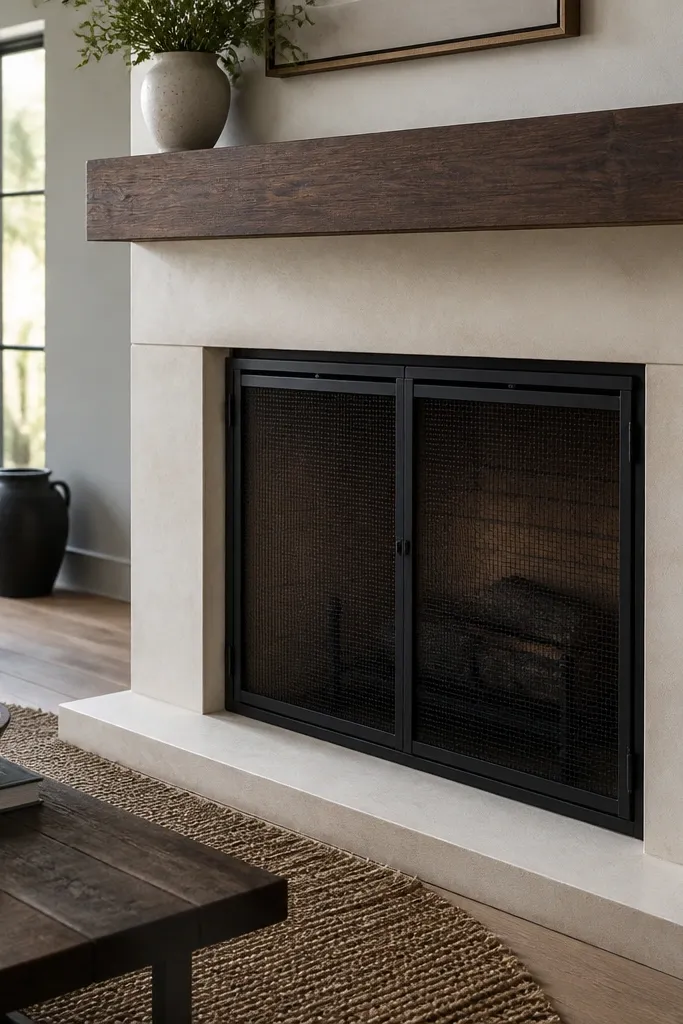
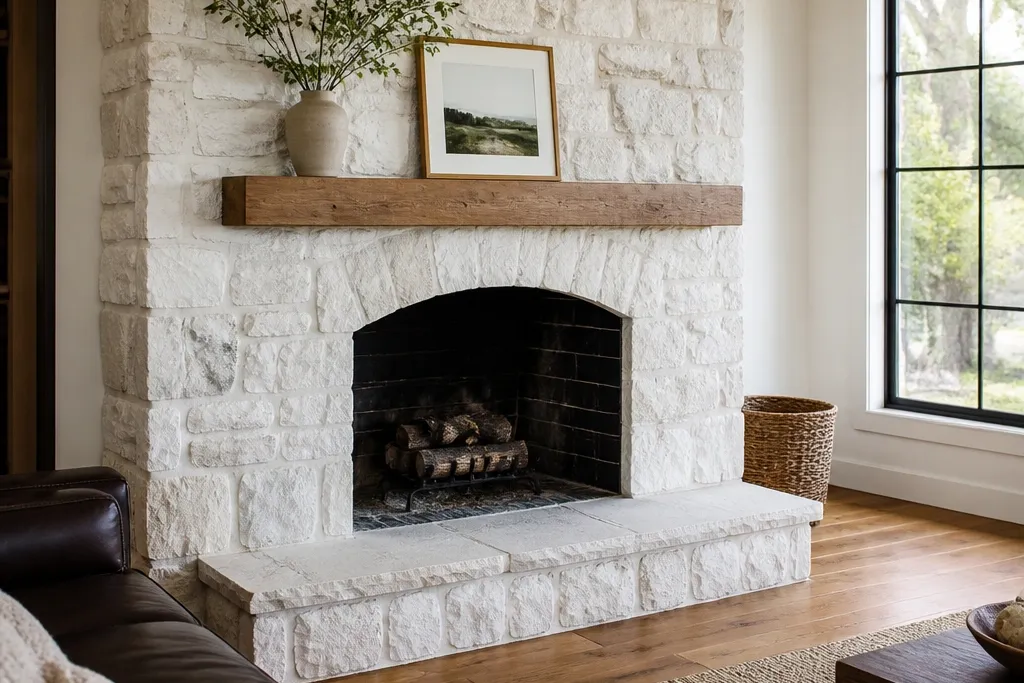
This look is all about soft brightness. Warm limestone limewash gives you that creamy, lived-in white without turning sterile, and it hides minor unevenness in the surface so the fireplace looks natural. Pair it with a dark walnut mantel so the stone doesn’t disappear into the wall. Add a matte black fire screen or wall sconce to sharpen the contrast. This is a good fit for rooms with oak or walnut furniture and warm lighting, where cool white can feel a little cold.
First, prep the stone surface by cleaning and lightly scuffing it so the limewash bonds. Use limewash in a warm white tone and apply in thin coats with a brush, then knock the texture back with a damp rag for an even, creamy finish. Next, install a walnut mantel with a simple flat profile, then seal the stone with a breathable sealer made for limewash so it stays wipeable. Finish by adding matte black hardware and a black hearth trim strip where the stone meets the hearth.
Do a small test patch on the least visible side and view it at night with the room lights on.
Avoid painting over unsealed porous stone with a standard wall paint — it can peel and look blotchy.
2. Cool quartzite slab surround with a thin black mantel shelf
If you want a crisp White Stone Fireplace aesthetic that photographs clean, go for cool quartzite or slab-look stone. The slab look keeps lines tight and gives you a modern, high-end frame around the firebox. A thin black mantel shelf adds a sharp edge that makes the white look intentional, not accidental. Keep the hearth simple and dark so the flames pop. This direction works best in rooms with gray walls, black window frames, or a modern sofa with clean lines.
Start by choosing a slab-look stone with a consistent veining direction so the surround reads smooth. Dry-fit the pieces around the opening and mark your centerline, then set the stone with a thinset rated for natural stone. Next, install a thin black mantel shelf with concealed brackets so it doesn’t visually bulk up the surround. Finally, seal the stone with a natural-stone sealer and apply a dark grout or caulk line where the edges meet for clean shadowing.
Ask for stone with low-contrast veining if you want a calmer look in daylight.
Don’t use a thick, bright white grout on slab-look stone — it can make the seams look glaring.
3. Stacked ledgestone in bright white with charcoal mortar
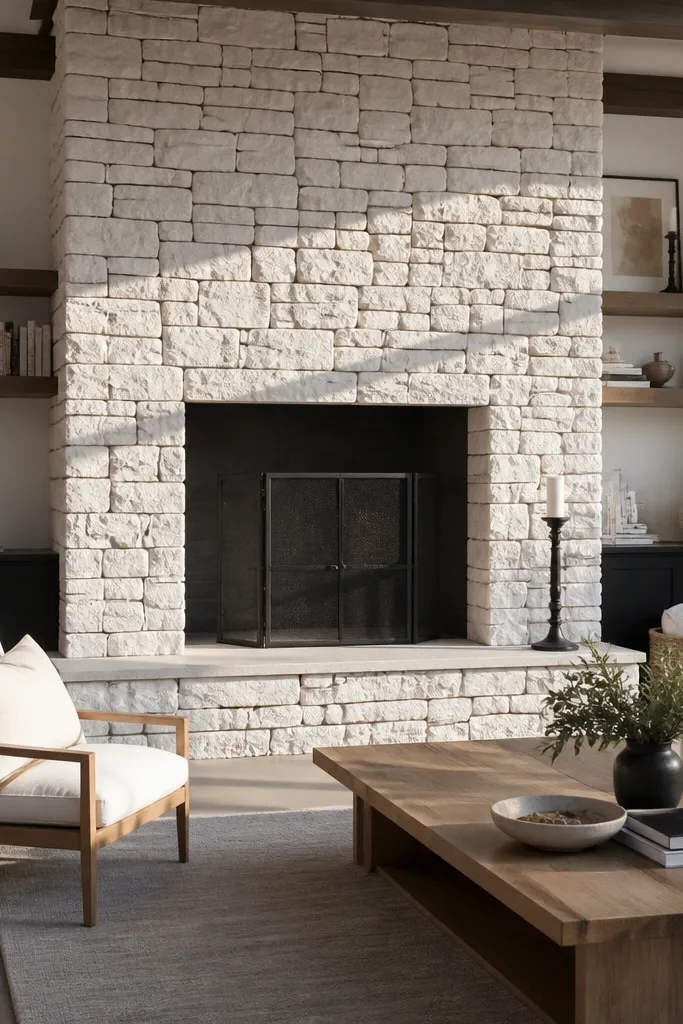
First, choose stacked ledgestone panels sized for your surround so you’re not cutting around every row. Mix mortar using a charcoal tone and test it against the stone in daylight; adjust until the joint looks shadowy, not brown. Then set the stone starting at the bottom course and work up, keeping consistent joint depth. Finish by grouting or pointing carefully, wiping off haze before it cures, and sealing the stone for stain resistance.
Stacked ledgestone plus charcoal mortar is the easiest way to get high-contrast drama. The mortar lines create intentional shadows, so the fireplace reads dimensional even from across the room. A bright white stone keeps the focal point light, but the dark joints prevent that flat, “painted over” look. This is the best choice when you want the fireplace to look bold without adding more bulk. It suits both farmhouse and modern rooms because the contrast does the heavy lifting.
Skip thisAvoid rushing the joint cleanup — dried mortar haze makes white stone look dirty.
Editor's noteUse a grout float with a slight diagonal sweep so the mortar stays crisp in the recesses.
4. White subway tile firebox surround with a brushed nickel trim
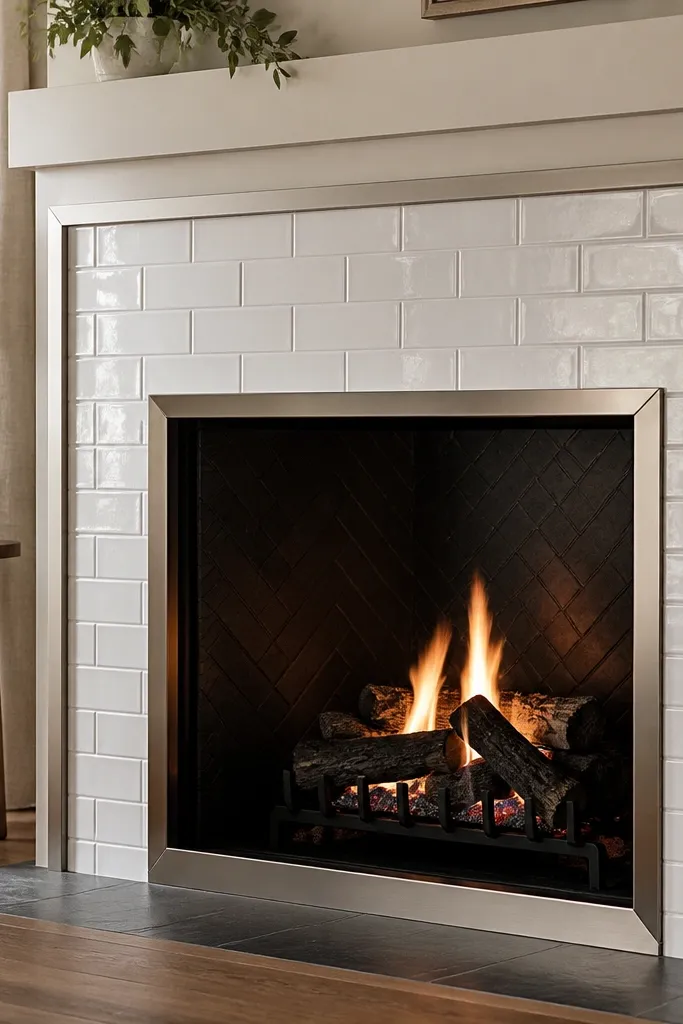
Start by applying a cement backer board or appropriate tile backer to the surround area if you’re going over drywall. Use a white thinset and install 3x6 or 4x8 subway tile with a consistent offset, typically a 1/3 stagger. Next, use a thin grout line and choose a light gray grout to keep seams visible but not stark. Finish with a brushed nickel metal trim around the opening and seal the grout with a penetrating sealer.
Subway tile gives you a clean, geometric White Stone Fireplace aesthetic without the texture risk of irregular stone. The thin tile lines make the opening look crisp, and the reflective glaze brightens the area around the fire. A brushed nickel trim adds a soft metallic that doesn’t feel as harsh as chrome. This look works especially well in smaller rooms because it frames the fireplace neatly without visual weight. If your room has a lot of straight lines — built-ins, simple baseboards, or tile floors — this is a strong match.
Skip thisAvoid wide grout joints — they make subway tile look dated and less photogenic.
Editor's noteDry-lay one row first to confirm your stagger lines up with your mantle center.
5. White stacked stone with a floating hearth ledge
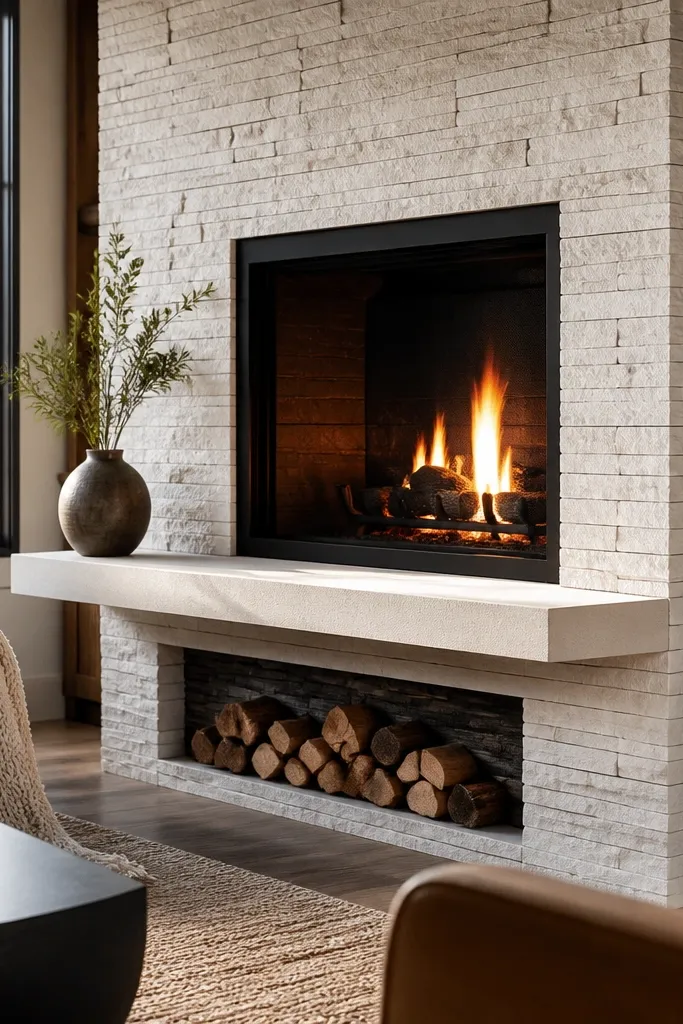
This is the “clean frame” look. White stacked stone gives you texture, but the floating hearth ledge controls the visual bulk so the fireplace feels light. The hearth ledge acts like a design platform, letting you keep decor and firewood storage visually tidy. Add a darker hearth base or firebox frame so the white stone stands out. This direction is perfect if you want a White Stone Fireplace aesthetic that still feels modern and not too rustic.
First, plan the hearth structure so the ledge projects evenly on both sides of the firebox opening. Build the hearth with cement board over a stable base, then tile or cap it with a darker stone or porcelain slab. Next, install stacked stone up to the ledge, keeping joints consistent and using spacers if needed. Finally, seal the stone and grout, then add a thin black metal band at the base edge for a sharp finish.
Use a level laser line to keep the ledge perfectly straight — a slight dip shows up instantly in photos.
Don’t let the stone spill over the ledge edge unevenly; it makes the whole unit look unfinished.
6. White brick fireplace with a thin whitewash mortar line
If your fireplace already has brick, a whitewash treatment can deliver a White Stone Fireplace aesthetic without tearing everything out. The trick is keeping the mortar line thin and intentional so the look reads like stone, not a heavy paint job. Pair it with a light oak mantel to keep the overall effect airy. This works in older homes where demolition is a pain and you want a fast visual refresh. It’s also a good choice if you want the fireplace to feel cozy rather than high-gloss modern.
First, clean the brick and remove any soot with a masonry cleaner, then let it fully dry. Mix a whitewash with water and a small amount of masonry-friendly binder, and test on a hidden section. Apply thin coats with a brush, wiping back quickly so mortar lines stay visible. Next, seal with a breathable masonry sealer and install a light oak mantel with a simple, flat front.
Use a damp rag to pull the whitewash off the brick faces so the texture stays readable.
Avoid thick, opaque coats — they hide the brick texture and look plasticky.
7. White herringbone stone surround with a cream mantel
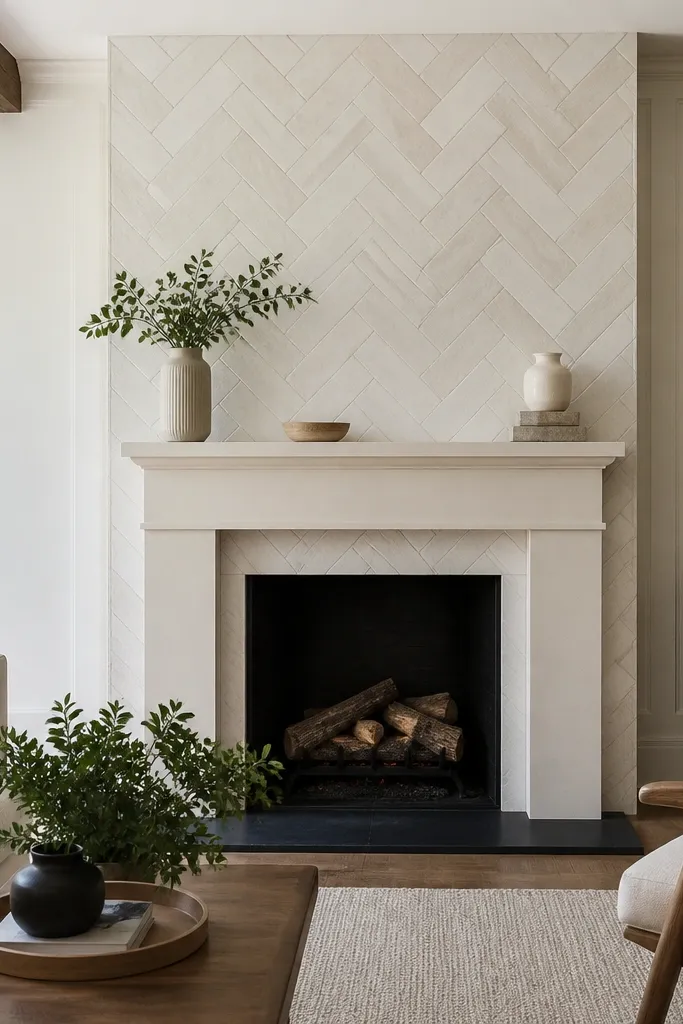
First, pick stone pieces that are sized for a herringbone layout, and dry-fit them on the floor to confirm the cut angles. Apply thinset to the backer and set the first row level, then work outward from the center so the pattern stays symmetrical. Use spacers or a consistent edge method to keep grout lines even. Finally, grout with a light warm gray, seal the stone, and cap the hearth with a slightly darker base material.
Herringbone is where White Stone Fireplace aesthetic gets interesting fast. The angled pattern creates movement and makes the surround look custom even with a simple mantel. Use white stone with subtle variation so the pattern doesn’t look like flat wallpaper. A cream mantel keeps the palette consistent, but you still need contrast through the hearth or firebox frame. This works best in living rooms with warm bulbs and beige textiles where crisp white might feel too sharp.
Skip thisAvoid mismatched stone sizes in the same surround; it makes the herringbone look messy.
Editor's noteMark a centerline and start the pattern from that point — it prevents a slow drift as you build upward.
8. White marble-look tiles with a black fireplace frame
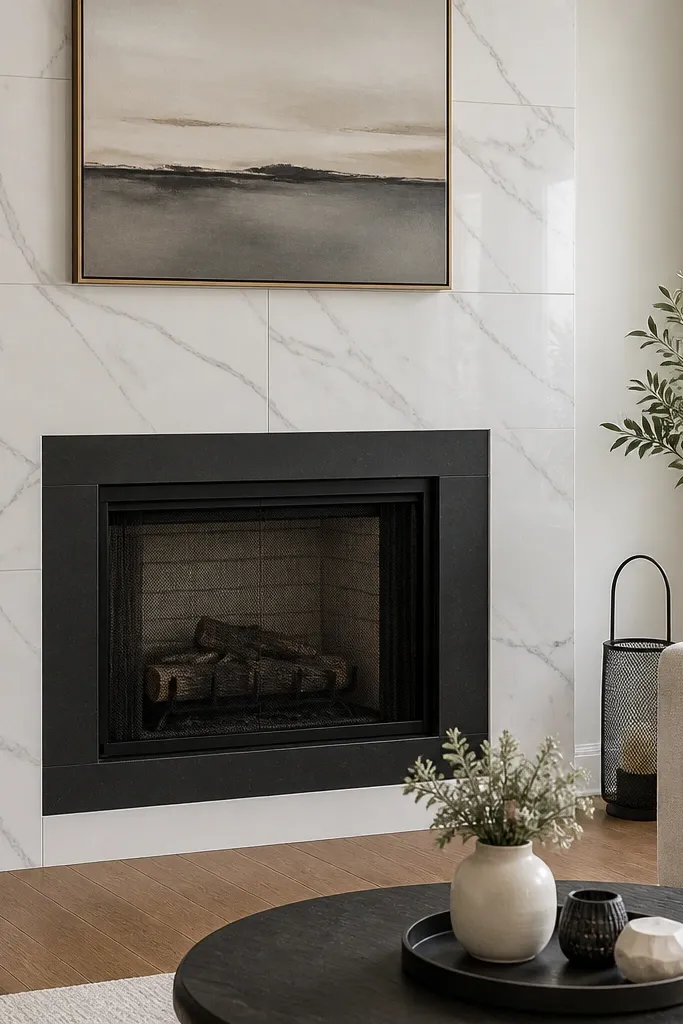
Marble-look tile gives you the White Stone Fireplace aesthetic with a more controlled finish than real marble. The veining adds interest so the fireplace doesn’t look like plain white blocks. The black fireplace frame is non-negotiable here — it creates a crisp boundary that makes the marble-look read premium. Keep the mantel clean and simple, and let the frame do the visual work. This is a great pick if you want a glam edge without the maintenance of natural marble.
First, choose marble-look porcelain or ceramic with low to medium veining and a consistent pattern repeat. Install on a cement backer with a white thinset and use a 1/16 to 1/8 inch grout line for a tight, polished look. Next, paint or install a black metal frame around the firebox opening and hearth edges. Finally, seal grout and wipe off any thinset haze before it hardens to prevent dull spots.
Use a grout release or grout sealer on the first tile course to make cleanup faster and cleaner.
Avoid high-sheen white grout — it can look dingy and highlights uneven joints.
9. White quartzite stacked stone with a light oak mantel
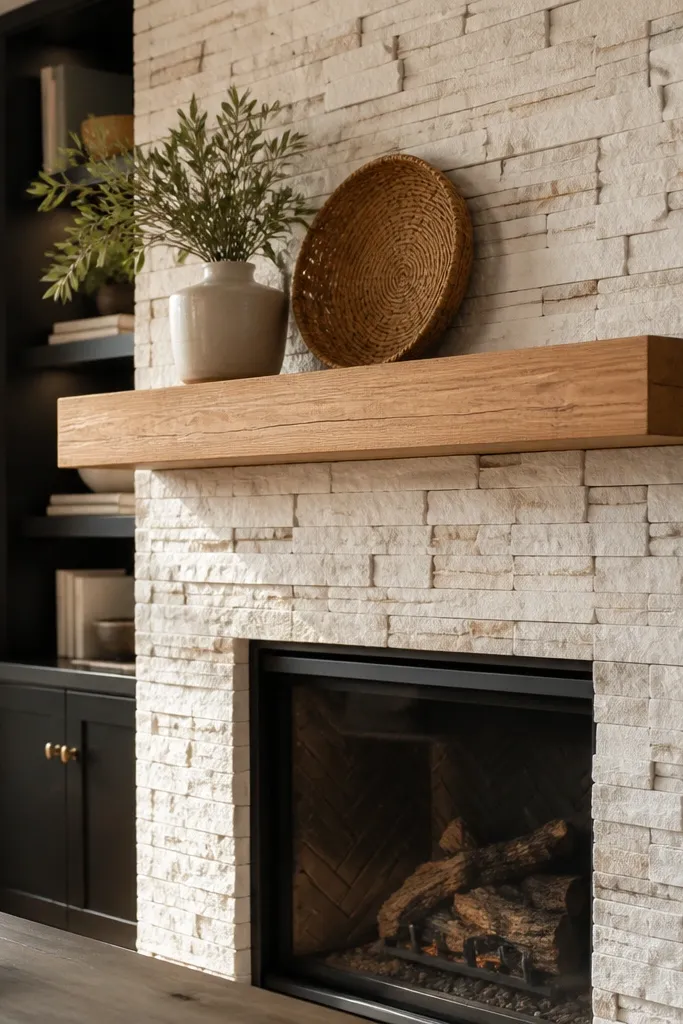
First, order quartzite stacked stone with a similar thickness across pieces so you don’t fight uneven heights. Set the stone on a cement board using a modified thinset, and keep your mortar joints consistent in width. Then install the light oak mantel with a stain matched to your existing wood tones, and add a simple hearth cap in a beige or taupe stone. Finally, seal the quartzite with a penetrating sealer so it stays clean and doesn’t absorb soot stains.
Quartzite stacked stone gives you a photogenic white with natural depth. The stone’s subtle variation keeps it from looking like a flat white wall, and the stacked pattern adds texture around the opening. A light oak mantel warms the palette and makes the white feel inviting, not sterile. This combination is ideal for spaces that already have neutral fabrics, rattan, or light wood furniture. It also works when you want brightness but don’t want a stark, high-contrast look.
Skip thisDon’t skip sealing — unsealed quartzite stains fast around the firebox.
Editor's noteUse a darkened mortar only at the firebox edges if you want gentle contrast without going fully charcoal.
10. White stone fireplace with a tall full-height surround
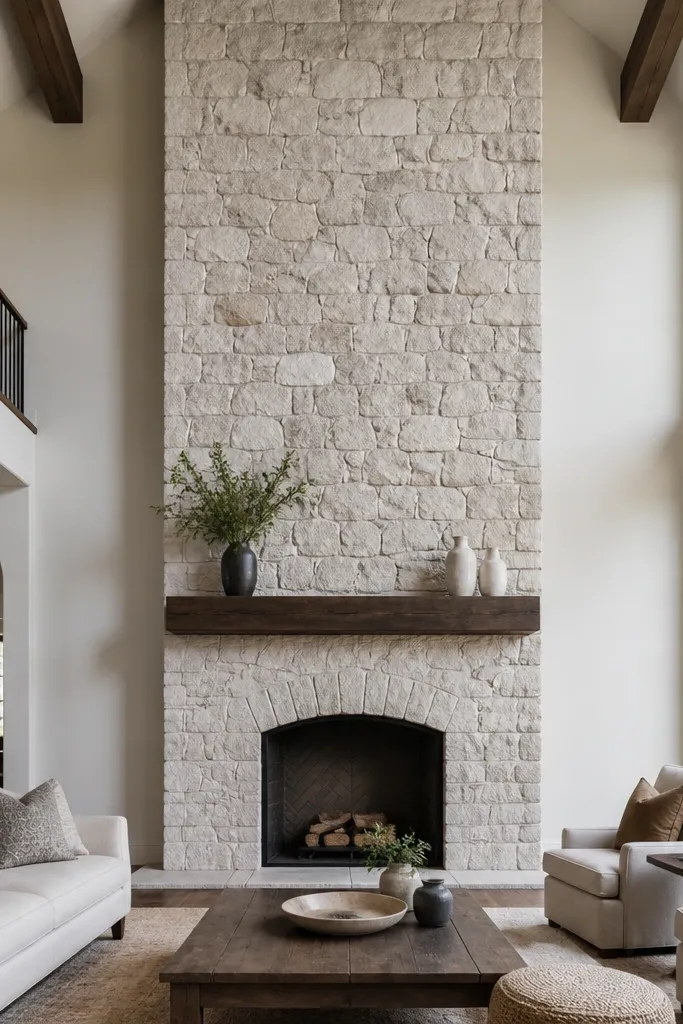
Going full-height makes the White Stone Fireplace aesthetic feel built-in and dramatic. When the stone climbs toward the ceiling, it pulls the eye upward and makes the fireplace look like an architectural feature. The key is to keep the stone pattern consistent and avoid mixing textures randomly. A simple mantel keeps the look airy, and a darker hearth base prevents the whole thing from blending into the wall. This is a strong choice for living rooms with high ceilings or a long wall where the fireplace needs more presence.
First, measure from the hearth top to the ceiling and plan your stone courses so cuts land near edges, not in the center. Install backer board or lath over the wall area you’re tiling, then set the stone from the bottom upward using spacers for consistent joints. Next, choose a grout color that matches your undertone — warm gray for warm whites, cool gray for cool whites. Finish by sealing the stone and adding a mantel that doesn’t block the top stone line.
Dry-lay your first three rows on the wall floor or on sawhorses to lock in the layout before you start drilling.
Avoid stopping the stone at mantel height; it makes the feature feel incomplete.
11. White ledgestone with a chunky limestone mantel shelf
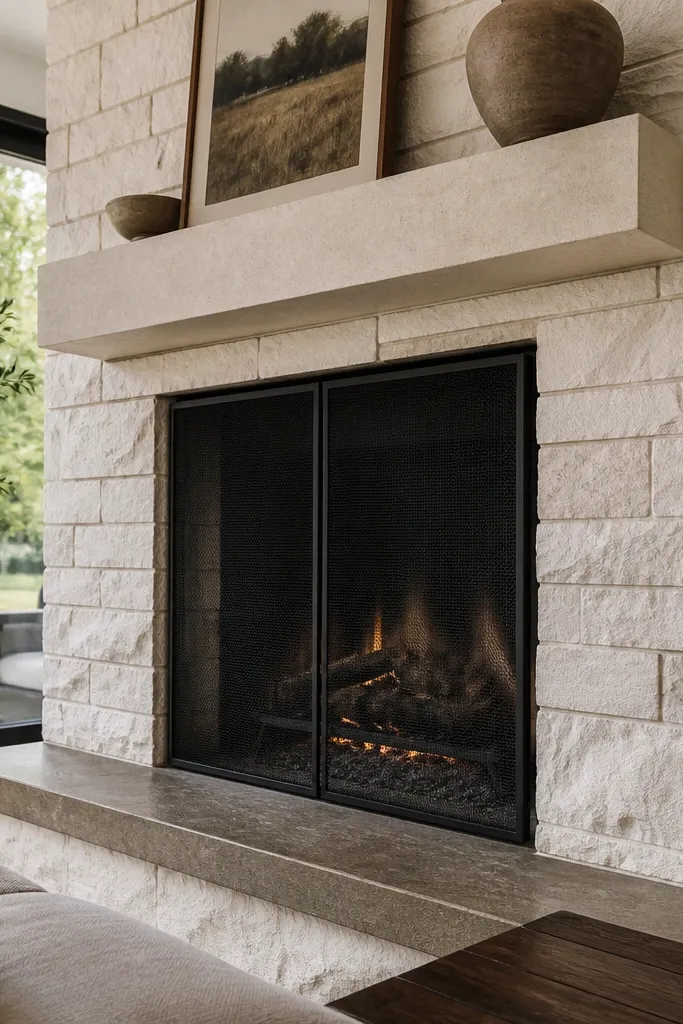
First, choose a mantel shelf with a thickness around 2 to 3 inches so it reads substantial. Install the ledgestone surround with careful joint spacing, then anchor the mantel into studs using proper brackets and masonry anchors if needed. Next, cap the hearth with a stone or porcelain slab that matches the undertone of the mantel. Finally, seal everything that needs it and use a caulk line at the mantel-to-stone contact so it stays clean and crack-resistant.
This look is about weight and softness. White ledgestone gives you that stacked texture, while a chunky limestone mantel shelf makes the fireplace feel grounded. The mantel thickness matters — a thin mantel can look like it’s floating, especially with ledgestone. Keep the hearth simple and slightly darker so the stone frame stays visually crisp. This direction fits rustic modern rooms and cottages where you want cozy texture without going fully farmhouse.
Skip thisDon’t mount a heavy mantel on just drywall; anchor into studs or you’ll regret it.
Editor's noteUse long level marks across the surround before installing the mantel — ledgestone can hide slight lippage.
12. White stone surround with a built-in wood storage niche
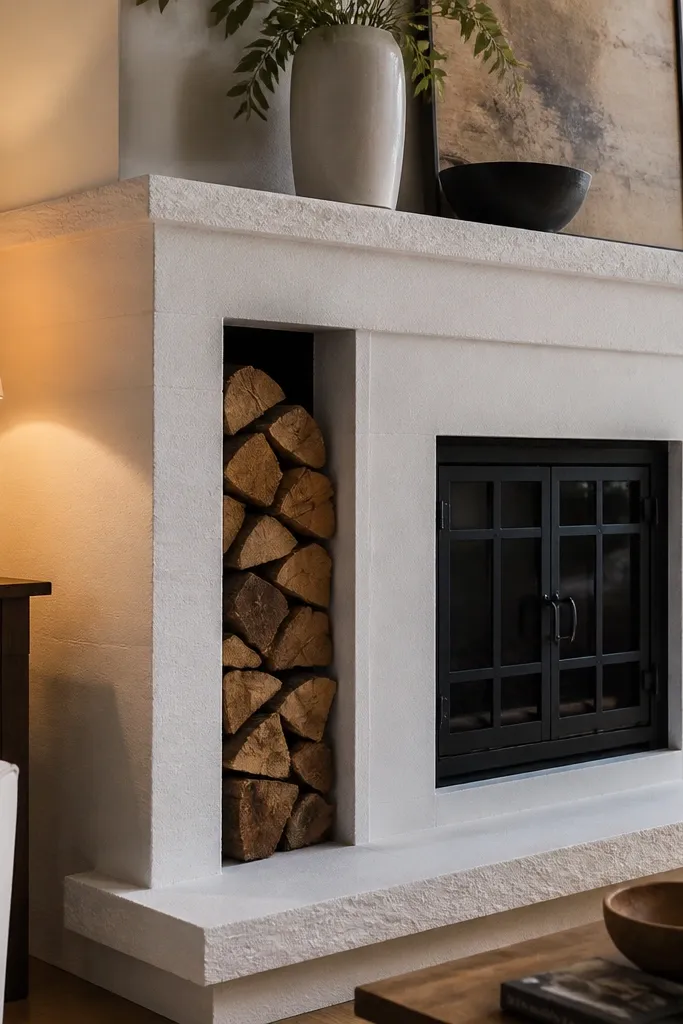
A White Stone Fireplace aesthetic gets way more usable with a built-in wood niche. The stone frames the opening so the niche looks intentional, not like an afterthought. Keep the niche interior darker — black steel liner or dark tile — so the white stone stays the star. Add a simple metal grate or door so it looks tidy. This is perfect if you burn wood or want the fireplace area to look styled even when the flames are off.
First, measure the niche size so it fits standard firewood lengths; a depth around 10 to 12 inches usually works. Build a frame with cement board around the niche opening, then tile the exterior stone around it using the same joint width as the fireplace surround. Next, line the niche interior with high-heat rated black steel or dark tile and attach a metal grate. Finish by sealing the stone and using heat-safe caulk at all transitions.
Plan the niche so the wood sits 1 to 2 inches below the stone edge — it looks cleaner and prevents scuffs.
Avoid white tile inside the niche; ash and soot will show immediately.
13. White stone fireplace with a black hearth and white surround
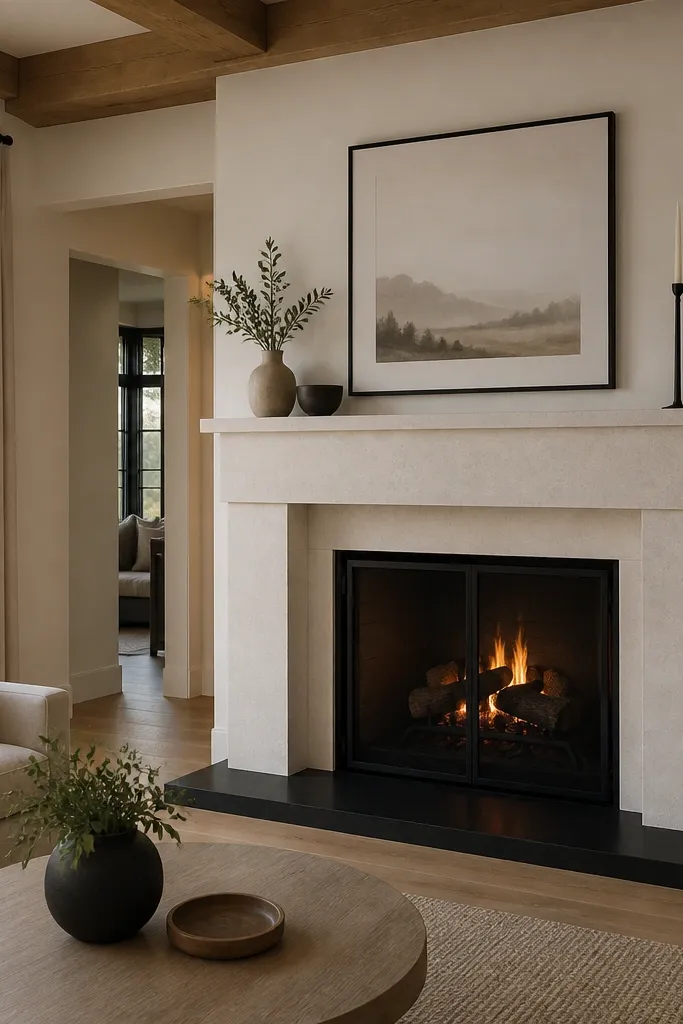
First, install your white stone surround and keep mortar consistent in color and joint width. Then cap the hearth with a matte black slab — cut with a wet saw and leave a thin gap for heat-safe caulk where it meets adjacent surfaces. Next, use a matching black trim piece at the base edge so the hearth looks framed. Finally, seal the white stone and grout, and wipe down the black slab with a gentle cleaner to remove dust before use.
This is the contrast-first version of the White Stone Fireplace aesthetic. White stone creates brightness, and a black hearth slab makes the flames look richer. The black also grounds the fireplace so it doesn’t float visually. Choose a matte black hearth material like honed slate or a matte porcelain slab so it doesn’t look glossy and cheap. Keep the mantel simple and light so the contrast stays sharp without adding clutter.
Skip thisAvoid a shiny black hearth; reflections make soot and dust more obvious.
Editor's noteIf your room has warm lighting, choose charcoal grout instead of pure white mortar for a softer look.
14. White microcement surround with a thin wood mantel
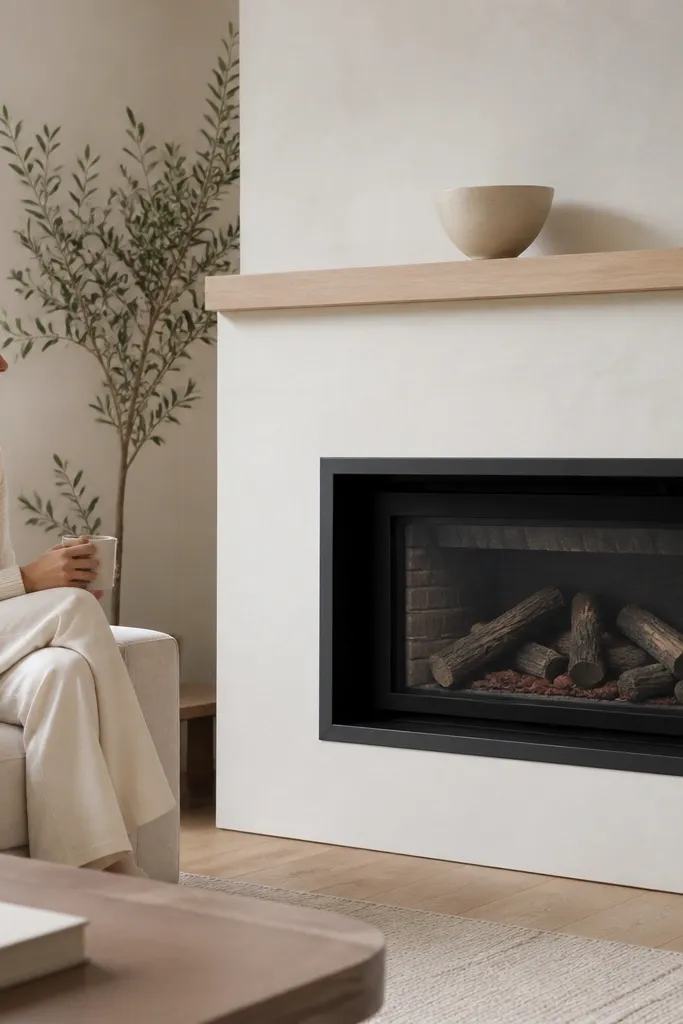
First, build a cement backer system and patch the surface flat, because microcement shows every bump. Apply microcement in thin layers as directed by the product, sanding between coats to keep it smooth. Then seal with a microcement-compatible topcoat rated for interior walls near heat sources. Install a thin wood mantel on proper anchors and finish with a black metal surround to define the opening.
Microcement is the “smooth white stone” vibe without actual stone. It gives you a continuous, modern surface that reads like a crafted plaster finish, and it photographs clean because there are fewer seams. Pair it with a thin wood mantel and a simple black firebox frame for a crisp contrast. This look works in modern homes where you want the fireplace to feel like part of the architecture. It’s also a good choice if you hate grout haze and want fewer maintenance points.
Skip thisAvoid painting microcement over loose substrate; it will crack where the base moves.
Editor's noteUse a straightedge to check flatness in multiple directions before the first coat — it’s the difference between “sleek” and “wavy.”
15. White stone surround with a recessed mantel panel
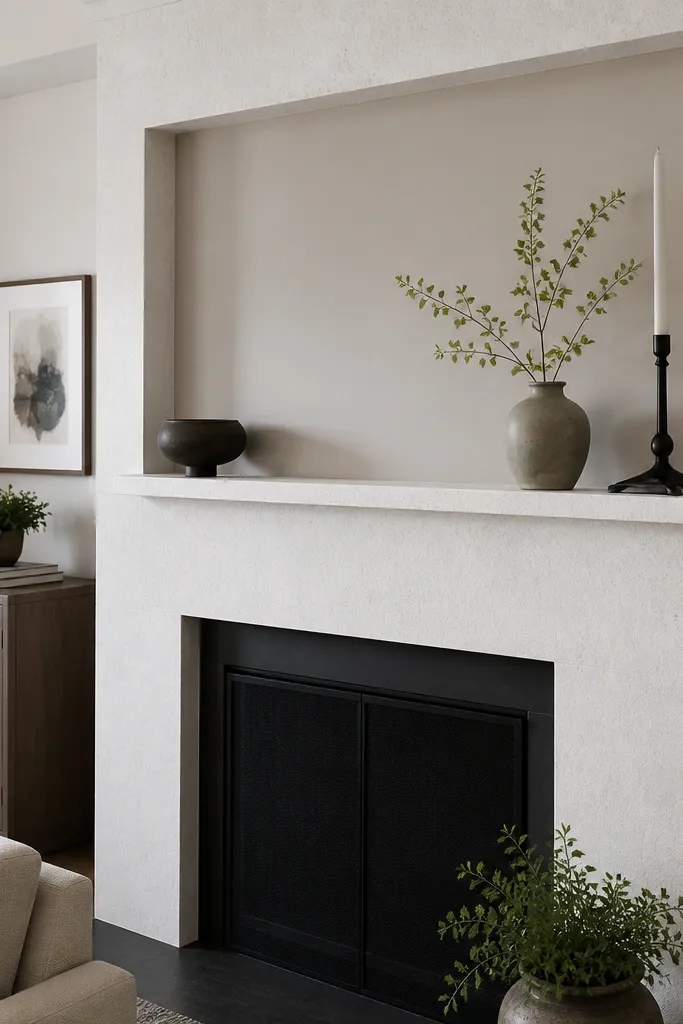
A recessed mantel panel makes the White Stone Fireplace aesthetic look custom. Instead of the mantel sitting on the stone like an add-on, the panel creates a shadow line that makes the whole area feel designed. Use white stone for the surrounding frame and recess the mantel backer area with a slightly darker paint or a warm wood panel. This gives you depth without adding more stone. It’s especially effective in rooms where the wall color is mid-tone and you want the fireplace to pop.
First, frame a recessed panel area behind the mantel line using studs and cement board so it’s sturdy. Install your white stone surround up to the recess edges, keeping joint lines consistent. Then paint the recessed panel a warm off-white or cover it with a warm wood veneer panel, and install the mantel on top with hidden brackets. Finish by caulking the recess perimeter so the shadow line stays crisp.
Keep the recess depth around 1 to 2 inches for a visible shadow line without making the mantel feel heavy.
Don’t recess too shallow; if the shadow line is tiny, it just looks like a bad trim job.
16. White stone fireplace with a curved hearth edge
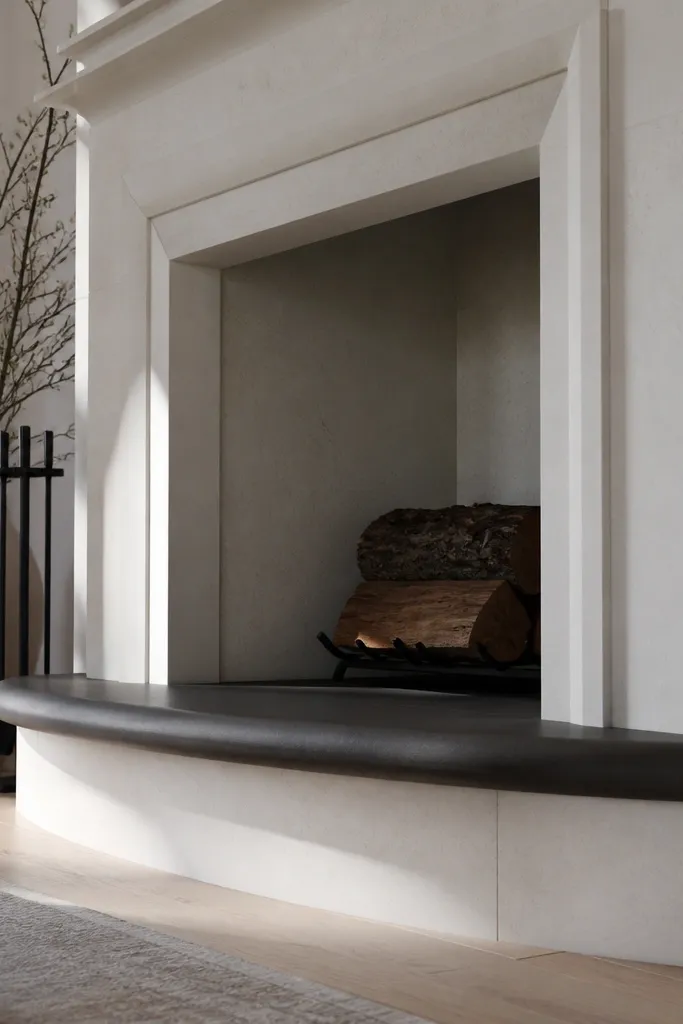
Curved hearth edges soften the White Stone Fireplace aesthetic. When the fireplace surround is angular and crisp, a rounded hearth cap adds a gentle counterpoint that looks expensive in photos. Keep the stone surround in white with clean joints, then use a curved slab cap in black or deep gray for contrast. This is a strong pick for modern living rooms where you want smooth shapes and a calm focal point. It also makes the hearth feel more “furniture-like” and less like a box.
First, choose a hearth material that can be cut and finished into a curve, like porcelain slab or a fabricated stone piece. Install the surround stone first, then build the hearth base with cement board and plywood underlayment so it holds the curve. Next, set the curved slab cap with thinset, then fill seams with heat-safe caulk or grout made for stone transitions. Finish by sealing the stone and checking that the curve is centered to the opening.
Dry-fit the curved cap multiple times before thinset — alignment is everything on a curved edge.
Avoid trying to curve a standard tile without a proper flexible system; cracked grout looks messy.
17. White stone fireplace with a tall black fluted column surround
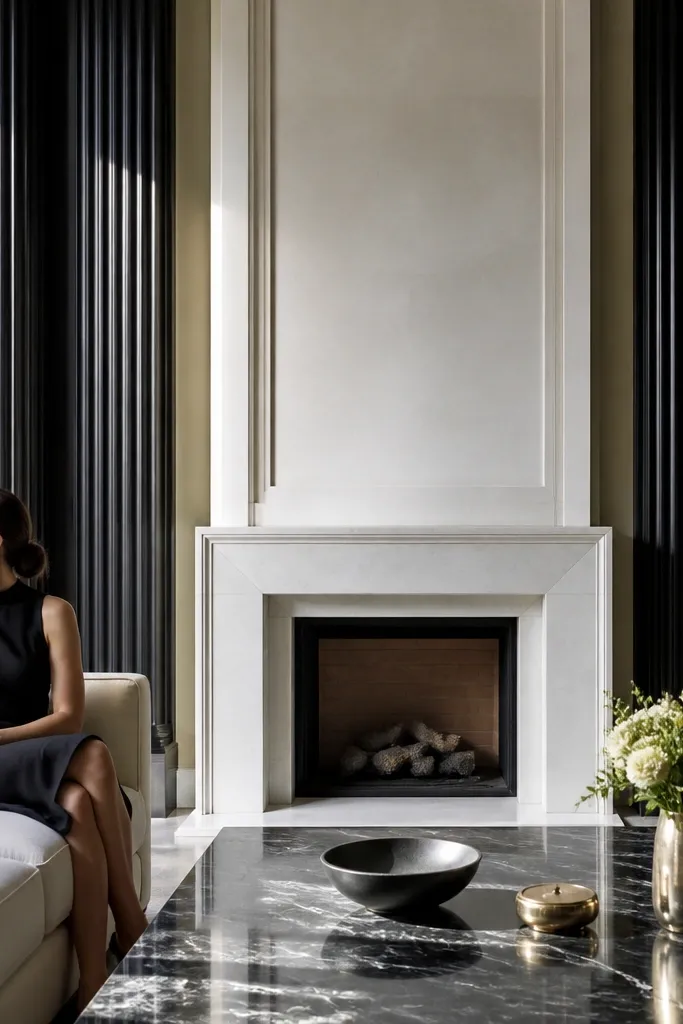
This look is for people who want the White Stone Fireplace aesthetic to feel styled, not plain. White stone frames the firebox, but tall black fluted columns on each side add strong vertical rhythm. The columns create a gallery-like effect and make the fireplace look taller. Choose black finish with a satin sheen so it doesn’t look glossy or cheap. This works well in living rooms with high ceilings or where you already have black accents like light fixtures or picture frames.
First, build or install the side columns using primed MDF or a lightweight panel system, then apply a satin black paint. Mount the white stone surround between and around the columns, keeping stone height aligned on both sides. Next, install a light mantel that spans the column tops, and add a black metal fire screen to tie everything together. Finally, seal the stone and use caulk at the stone-to-column edges so the lines stay sharp.
Paint the columns before installing stone so you don’t get stone dust into fresh paint.
Avoid mismatched column heights; a small difference shows immediately next to a white frame.
18. White stone fireplace with a built-in floating shelf mantel
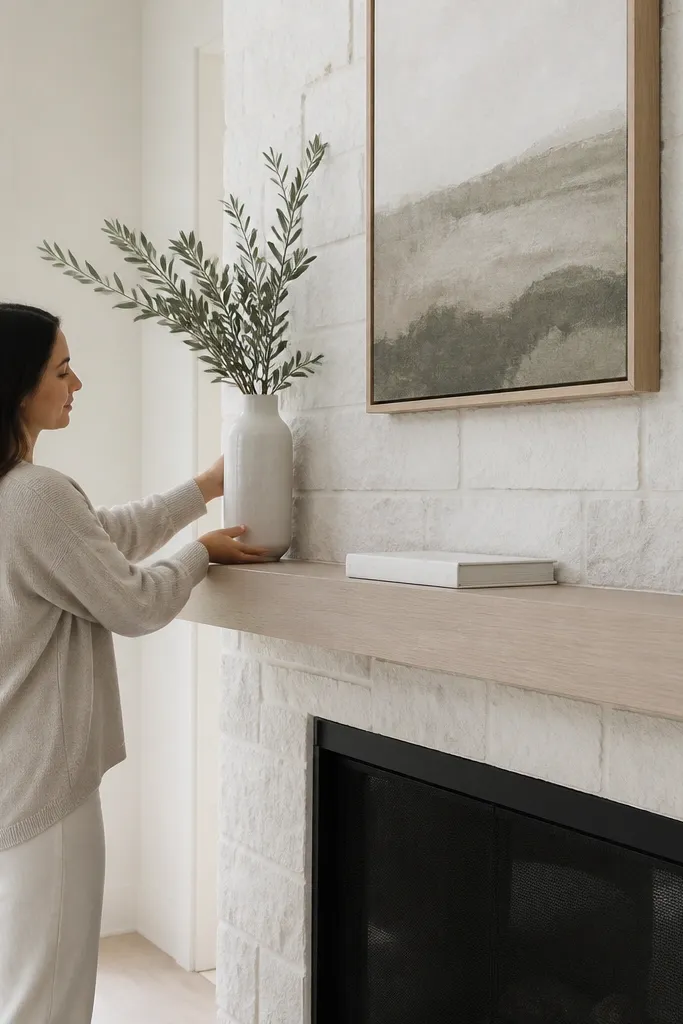
First, install a backer board or mounting rail behind the stone so the shelf brackets have solid support. Set your white stone surround, then mount the floating shelf using hidden brackets into studs. Next, finish the shelf with a matte clear coat so it doesn’t glare under lamps. Finish by sealing grout and cleaning the stone so the shelf sits against clean, crisp edges.
A floating shelf mantel keeps the White Stone Fireplace aesthetic airy while still adding a strong horizontal line. White stone does the texture work, and the floating mantel keeps the top from looking bulky. Use a pale wood shelf or a white oak finish so it feels warm against stone. This look is great if you want decor styling flexibility: books, small frames, or a single oversized vase. Keep the decor low and centered so the stone frame stays the hero.
Skip thisAvoid a shelf that’s too deep; it can look heavy and block light from the firebox.
Editor's noteUse a single oversized decor object on the mantel, not a bunch of small items, so the fireplace stays calm.
19. White stone fireplace with a pale gray grout and matching hearth tile
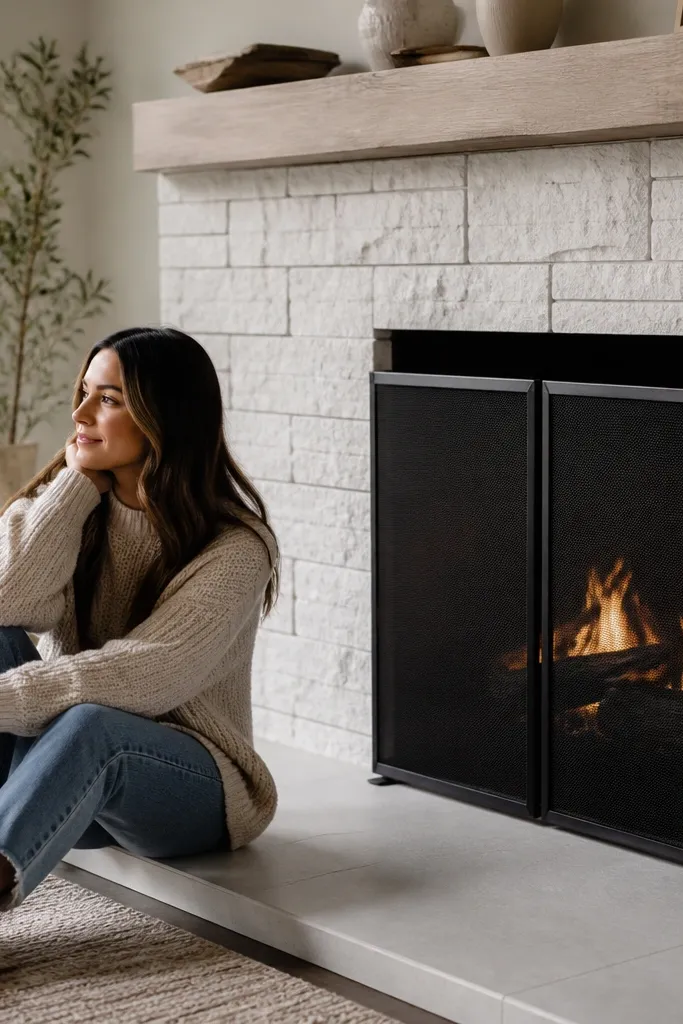
First, choose white stone with consistent undertone and test your grout color against it in daylight. Install the stone with thinset and keep joint width uniform using spacers or a consistent trowel method. Next, grout with pale gray and wipe in small sections to prevent haze. Finally, cap the hearth with light gray tile or a matching slab, then seal the stone and grout for stain resistance.
This version keeps the White Stone Fireplace aesthetic subtle and cohesive. Instead of high-contrast charcoal joints, you use pale gray grout that blends just enough to let the stone texture show without looking harsh. Matching the hearth tile to the grout tone creates a smooth visual line from surround to base. It’s a good choice if your room has a lot of pattern — the fireplace stays clean but not dramatic. This also helps if your stone pieces have slight color variation.
Skip thisAvoid pure white grout — it can look stark and highlight every uneven spot in the stone.
Editor's noteUse a grout sealer with a matte finish so the grout doesn’t look shiny and dirty.
20. White stone fireplace with a stone hearth apron and metal kick plate
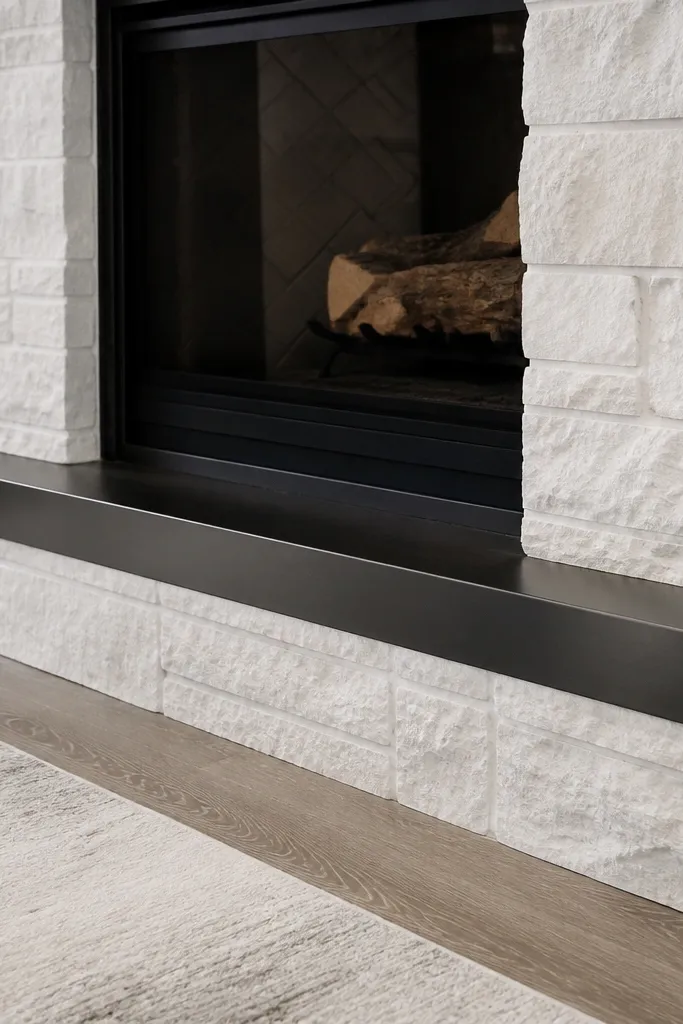
A stone hearth apron makes the base look built-in, while a metal kick plate adds a clean, modern boundary. This combination gives you a White Stone Fireplace aesthetic that looks finished even when the hearth is empty. Choose a matte metal like brushed stainless or matte black, and keep the apron stone in the same undertone as the surround. It’s a great fix if your fireplace currently looks like it was assembled from mismatched pieces. This is also a strong option for homes with baseboards that are either painted white or finished in a similar color.
First, install the white stone surround and grout it, then plan the hearth apron depth so it lines up with your baseboard. Build a cement board hearth apron surface and tile or stone it to match the surround. Next, install a metal kick plate along the bottom edge with a straight level line — use screws into a solid backing. Finish by sealing the stone and caulking the top edge where the apron meets the hearth surface.
Dry-fit the metal kick plate and mark screw locations before you start sealing anything.
Avoid leaving gaps at the metal edge; soot and dust collect and make the seam look dirty.
21. White stone fireplace with a stained wood mantel and whitewash stone
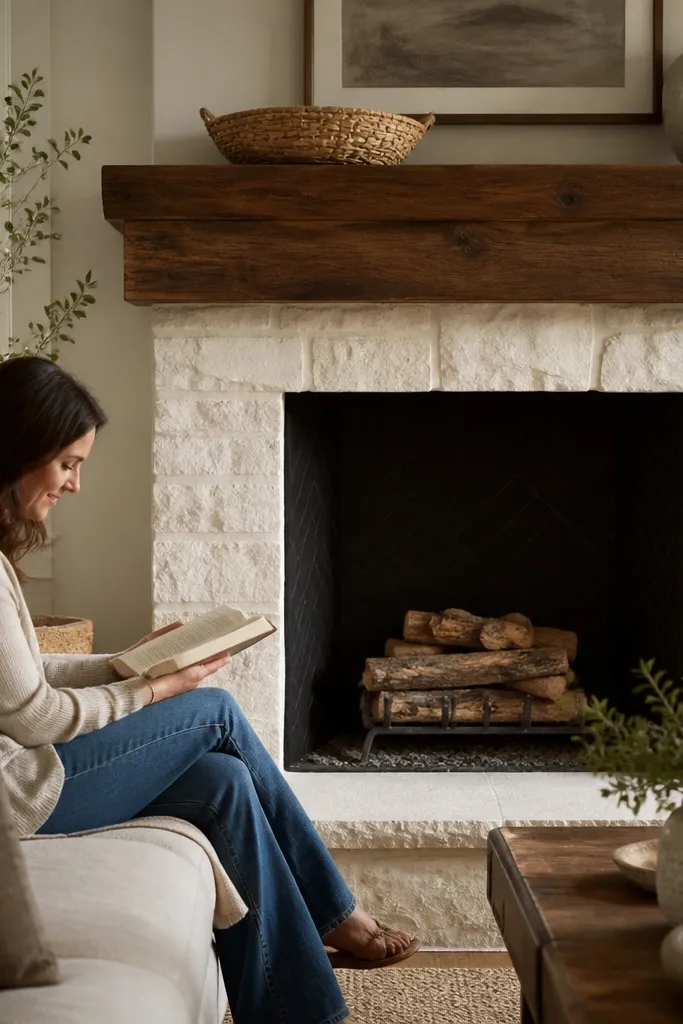
First, whitewash the stone lightly so the texture shows through and mortar lines don’t disappear. Seal the stone so it’s wipeable around the firebox area. Next, install a stained wood mantel and use a matte topcoat to reduce reflections. Finally, finish the hearth edge with a simple strip of stone or a dark metal trim so the mantel doesn’t look like it’s sitting on a flat white wall.
Whitewash stone plus a stained mantel gives a cozy, layered look without going fully farmhouse. The stone stays bright, but the mantel adds depth and warmth through visible wood grain. This pairing is great when you want a White Stone Fireplace aesthetic that feels lived-in and forgiving. Choose a medium walnut or chestnut stain so it doesn’t fight with warm flooring tones. Keep your accessories simple: a couple of black frames or a single ceramic vase.
Skip thisAvoid glossy lacquer on the mantel; it creates glare and makes photos look harsh.
Editor's noteUse painter’s tape to protect the stone edges while you stain and clear-coat the mantel.
22. White stone fireplace with a thin white mantel and black side shelves
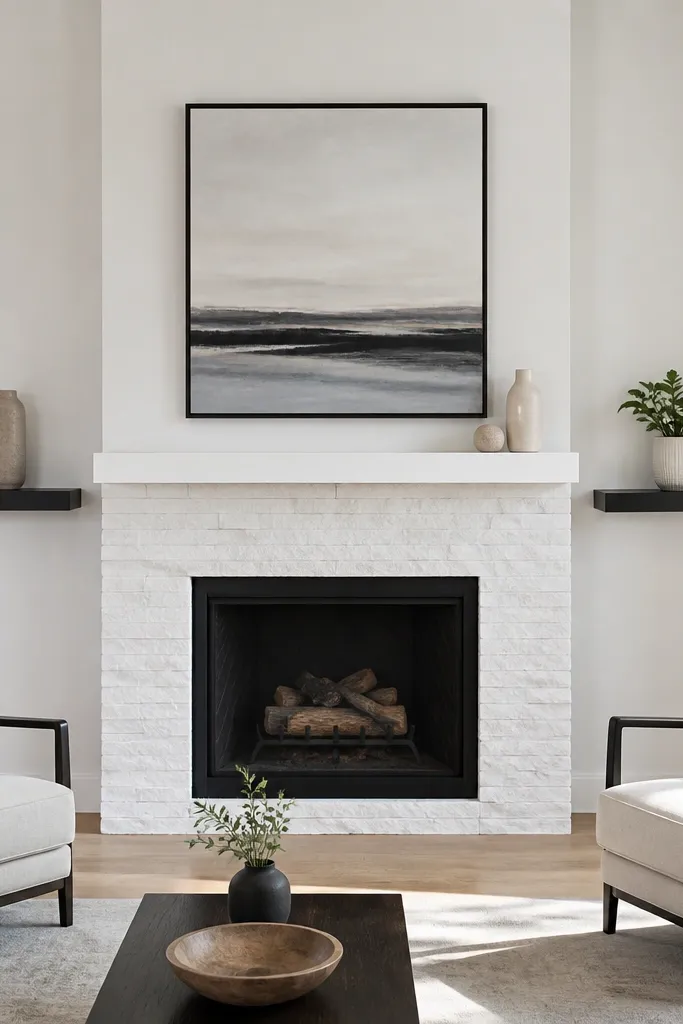
First, set your white stone surround and keep the mortar color consistent so the frame looks uniform. Install the thin mantel with hidden brackets into studs, keeping it perfectly centered. Next, mount the black side shelves with a level — measure from the floor to each shelf bracket so both sides match. Finish by adding a black fire screen and sealing grout and stone so the whole unit looks crisp.
This is a clean, modern styling trick. The White Stone Fireplace aesthetic stays bright, while black side shelves add symmetry and make the fireplace feel “designed” even with minimal decor. Use a thin mantel in white or painted light oak, then mount two slim black shelves on each side at the same height. It frames the fireplace like a gallery wall. This works best if your room has black accents already or if you’re willing to commit to adding a couple black items elsewhere.
Skip thisAvoid placing shelves too close to the stone; it crowds the frame and makes it look cramped.
Editor's noteMatch shelf depth on both sides; uneven shelf projection is the quickest way to ruin symmetry.
23. White stone fireplace with a woven texture mantel surround
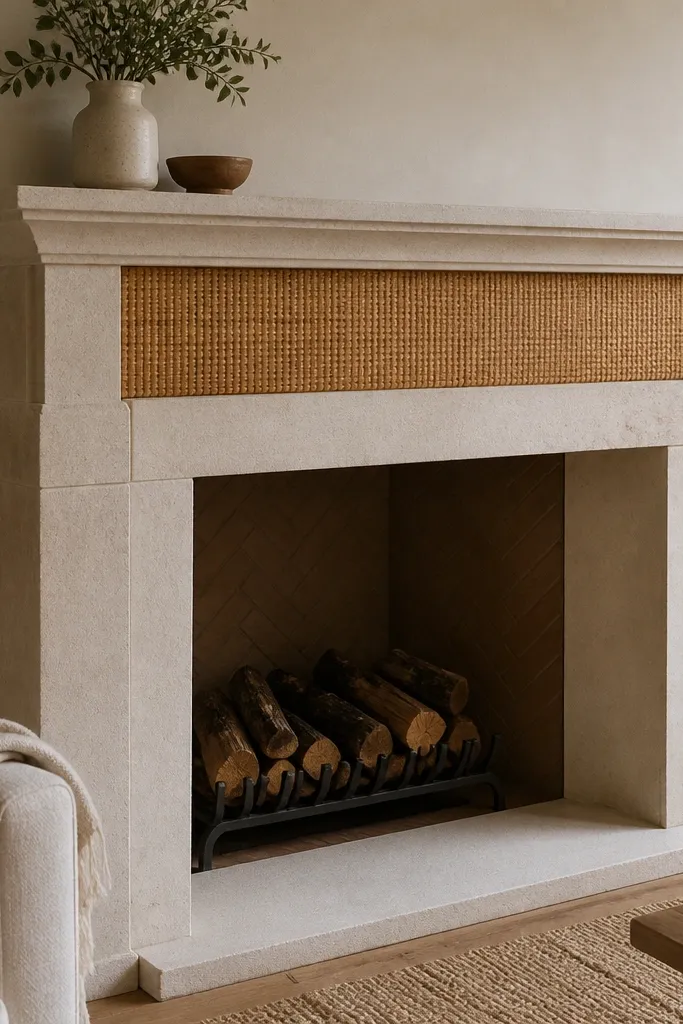
This look adds warmth without changing the White Stone Fireplace aesthetic. Pair white stone with a woven texture panel or rattan insert around the mantel area, so the fireplace feels soft and tactile. The contrast between hard stone and warm weave makes the whole scene look intentional. Keep the stone undertone warm and creamy so it works with natural fibers. This direction fits coastal, boho-leaning, and cottage rooms where you want brightness but also softness.
First, install the white stone surround up to the mantel height and grout cleanly. Create a mantel panel frame with plywood or cement board, then attach a woven panel or rattan sheet inside the frame. Next, install a light wood mantel that spans the woven panel, and finish with a clear matte seal on the wood. Finally, seal the stone and use a heat-safe barrier behind the firebox area if your design is near the heat zone.
Use a removable panel behind the weave so you can clean it later without tearing everything apart.
Avoid placing woven materials directly near high heat without a proper barrier.
24. White stone fireplace with a herringbone hearth and simple surround
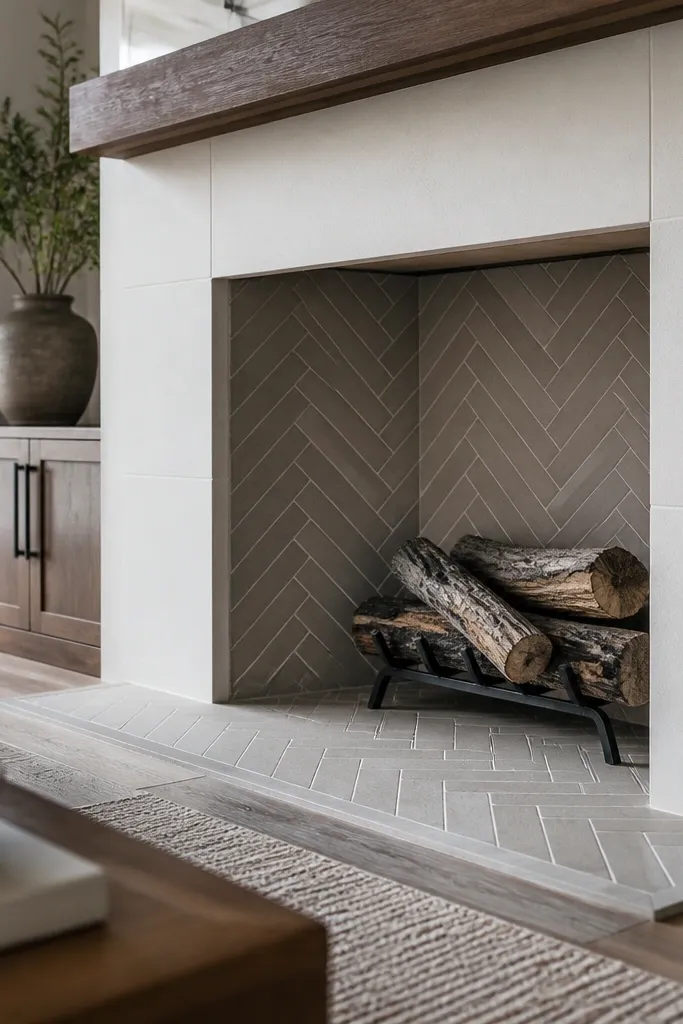
First, install the white surround using consistent stone pieces or subway tile with straight lines. Then build the hearth surface flat with cement board and thinset. Next, install a herringbone hearth tile in a light white or warm white with a subtle gray grout line. Finish by sealing grout and stone, and add a simple mantel that doesn’t compete with the hearth pattern.
Let the hearth do the pattern work. Keep the surround in clean, uniform white stone or tile, then add a herringbone pattern on the hearth itself. This gives you a White Stone Fireplace aesthetic that looks custom but stays calm around the firebox. The hearth pattern is visible even when you’re not styling the mantel, so it keeps the fireplace photogenic all year. It’s also easier than herringbone on the entire surround because you only pattern one surface.
Skip thisAvoid busy patterns on both surround and hearth; it turns the fireplace into visual noise.
Editor's noteUse spacers and a centerline for the hearth pattern; misalignment shows more on horizontal surfaces.
25. White stone fireplace with a sculpted arch opening and dark interior
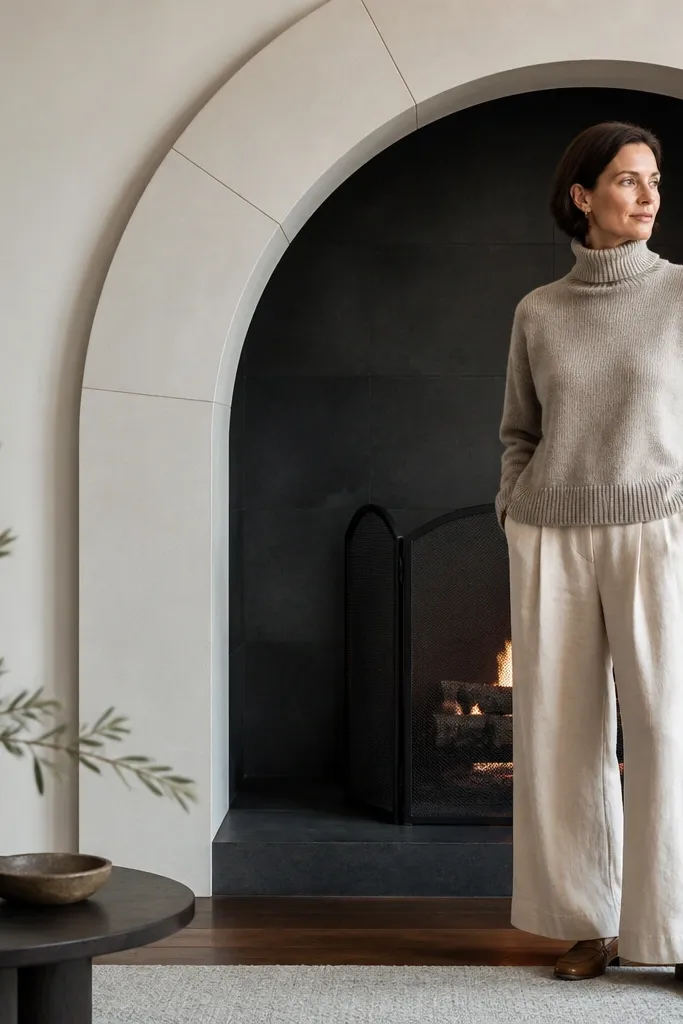
First, plan the arch radius so it fits your opening and doesn’t look stretched. Build a stable backer board for the arch and cut stone or tile to match the curve, dry-fitting until the edges look smooth. Next, set white stone around the arch and line the firebox interior with dark, heat-safe tile or a painted metal insert. Finally, grout with a color that matches the stone undertone and seal the surround for stain resistance.
An arched opening makes the White Stone Fireplace aesthetic feel architectural. White stone frames the curve, while a darker interior keeps the arch crisp and stops the opening from looking washed out. Choose stone pieces that can follow the arch shape cleanly, or use a tile system designed for arches. This direction looks especially good in rooms with curved furniture legs or round mirrors. It’s a strong pick if your current fireplace opening is rectangular and you want a more character-filled focal point.
Skip thisAvoid using random stone sizes for an arch; it creates ugly gaps along the curve.
Editor's noteDry-fit every arch segment in order and label pieces so you don’t mix them up mid-install.
26. White stone fireplace with a built-in TV niche above the mantel
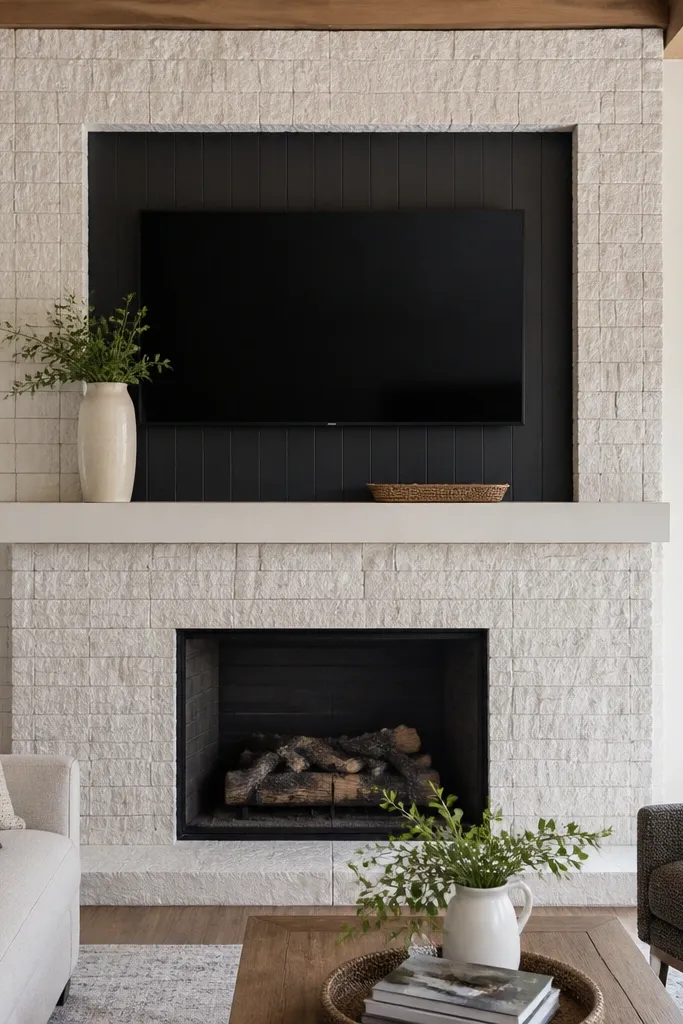
A TV niche can still look like a White Stone Fireplace aesthetic if you treat it like part of the architecture. Keep the stone surround cohesive and extend the stone frame up around the niche opening. Use a black or dark panel behind the TV to create contrast so the screen doesn’t blend into white. The mantel should be minimal — a thin shelf or ledge — so the fireplace stays readable underneath the TV. This is a practical choice for living rooms where you need media without losing the look of a styled fireplace wall.
First, frame the TV niche area with studs and cement board, then decide your stone coverage lines so the surround looks intentional. Install the white stone around the niche and mantel area, keeping seams consistent across both sections. Next, add a dark backing panel behind the TV and install the TV mount on the framed structure. Finish by sealing stone and grout and using heat-safe caulk at the hearth-to-stone transitions.
Plan cable routing before stone goes up; once the stone is installed, you’ll hate yourself for every change.
Avoid placing the TV too high; if the fireplace is the focal point, the screen needs to sit so the mantel still reads.
27. White stone fireplace with a black vertical shiplap accent panel
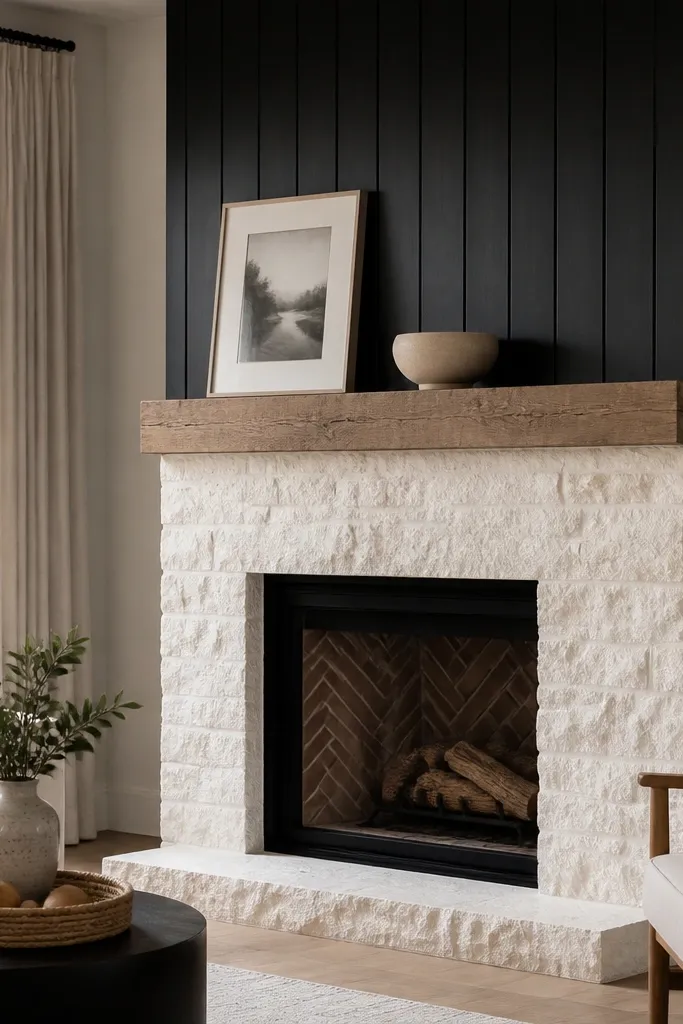
This one uses a darker backdrop to make the White Stone Fireplace aesthetic feel crisp. White stone frames the opening, then a black vertical shiplap panel behind or around the mantel creates strong contrast and adds texture. Vertical lines make the fireplace look taller, and the black background keeps the mantel decor from floating. Use a matte black paint so it doesn’t glare under lights. This works in rooms with white walls and simple furniture, where you want a focal point that feels styled without a lot of clutter.
First, install or paint a vertical shiplap panel in matte black and secure it to studs. Then mount your white stone surround on adjacent backer board, keeping the stone edges aligned with the panel borders. Next, install the mantel and use a thin trim strip to cover any uneven transitions between shiplap and stone. Finally, seal the stone and grout, and add a black fire screen to tie the palette together.
Use a caulk line between stone and the shiplap so the seam stays clean and doesn’t collect dust.
Avoid glossy black; glare makes the stone look dingier in photos.
28. White stone fireplace with a pale green undertone for a softer look
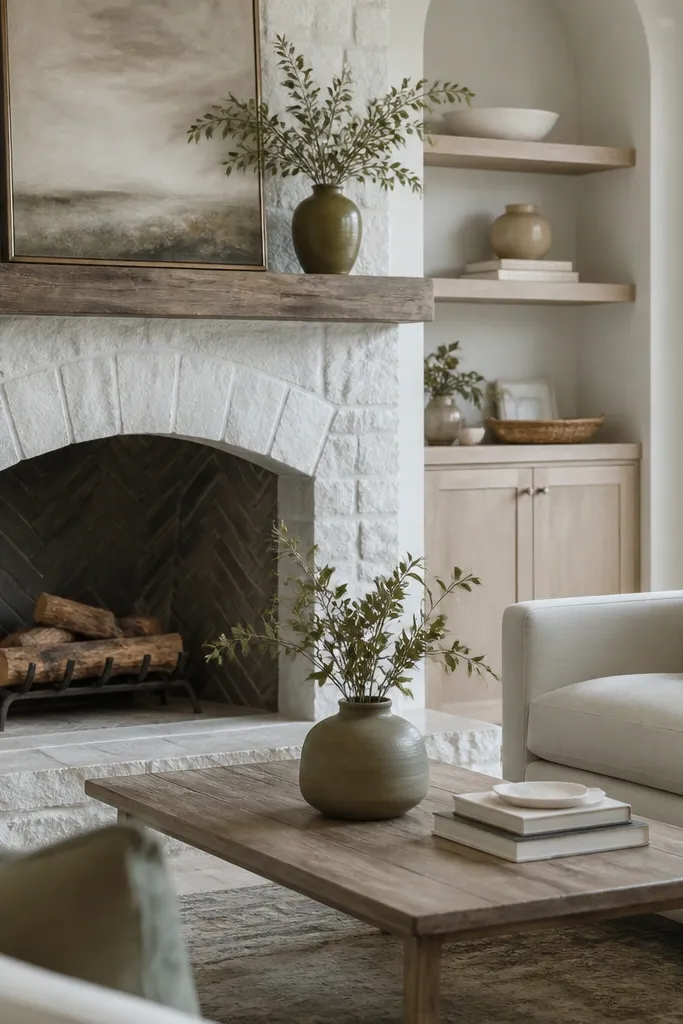
First, pick stone or tile that has that subtle green cast when viewed next to your wall color. Install the surround with consistent mortar and keep grout lines tight so the undertone stays clean. Next, seal the stone and choose a mantel finish in light natural wood or a warm off-white paint. Finally, style with two muted green objects and one neutral piece so the palette looks intentional.
Not all white is pure white, and the right tint makes the White Stone Fireplace aesthetic feel calm. Choose white stone with a very faint pale green undertone, then style with sage or muted olive accents. The fireplace looks bright, but it avoids the starkness that pure cool white can bring. This direction suits cottage, farmhouse, and light Mediterranean rooms. Keep your mantel wood in a natural finish so the undertone reads cohesive rather than random.
Skip thisAvoid pairing pale green undertone stone with bright blue accents; the clash looks accidental.
Editor's noteUse your actual wall paint sample as the judge; undertones look different on different walls.
29. White stone fireplace with a thin tile border around the opening
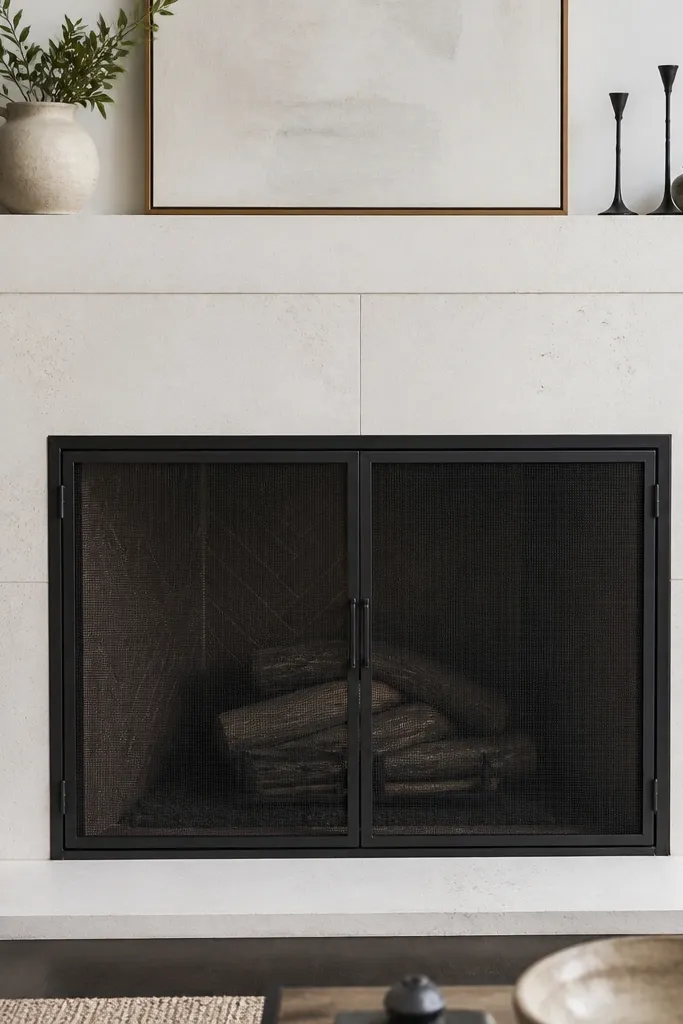
A thin tile border makes the White Stone Fireplace aesthetic feel finished like a custom build. Keep the main surround in white stone, then add a narrow border in warm gray or black around the firebox opening. That border creates a clean edge that frames the flames and prevents the opening from blending into the stone. This look is great if your fireplace opening is slightly uneven or your stone pieces vary in size. The border hides small inconsistencies and makes the whole unit look sharper.
First, install your white stone surround and grout it, then measure the opening perimeter precisely. Next, cut and install a thin tile border — around 1/2 to 3/4 inch wide — using a flexible thinset if needed. Use a consistent grout line and keep the border centered and level. Finally, seal grout and stone and wipe thoroughly so the border stays crisp and doesn’t get haze.
Use a carbide tile blade and make a test cut on scrap to keep edges clean around corners.
Avoid a thick border; it can make the opening feel smaller and visually heavy.
30. White stone fireplace with a mirrored mantel decor and matte stone
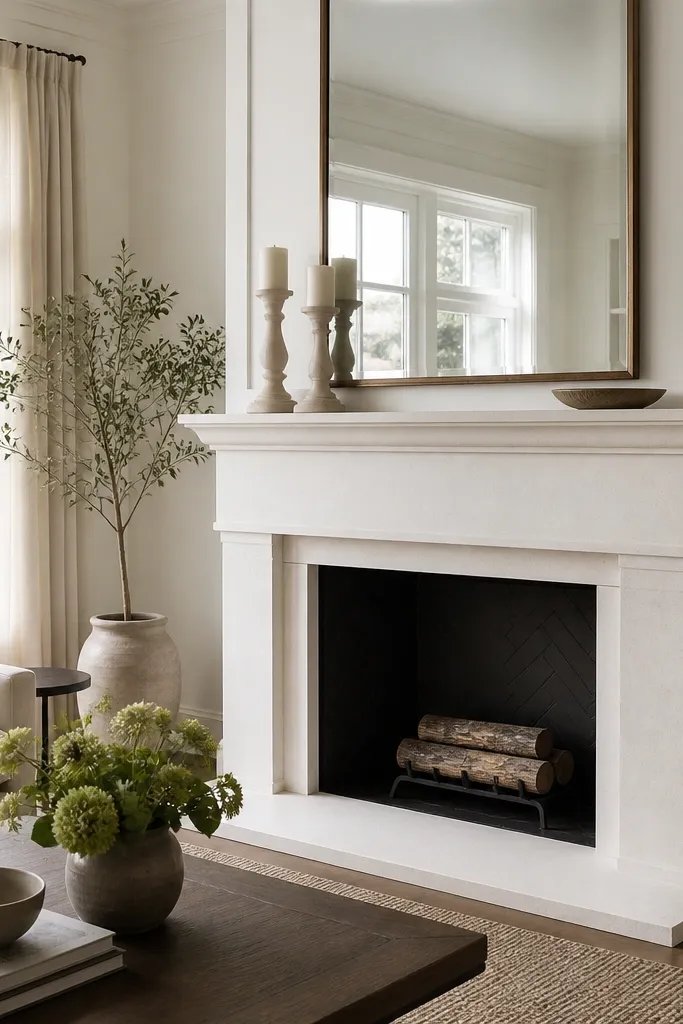
First, build or install the matte-finish white stone surround and seal it so it doesn’t look blotchy. Then mount the mirror directly above the mantel at eye level relative to your seating. If your mirror sits on the mantel, anchor it into wall studs or use a secure mounting system. Finally, style the mantel with one tall piece and one low piece so the mirror reads clean and the fireplace remains the focal point.
This is the styling direction that makes a White Stone Fireplace aesthetic look extra dreamy in photos. A large mirror above or behind the mantel bounces light back into the room, and the matte stone keeps everything from looking shiny and messy. The mirror also makes the stone frame feel like it has depth. Use a simple mantel — light wood or painted — and let the mirror be the statement piece. This works especially well in rooms with limited daylight because the mirror adds brightness.
Skip thisAvoid clutter on the mantel; mirror reflections multiply mess.
Editor's noteChoose a mirror frame color that matches metal accents in the room — black with black, brass with brass.