1. Black powder coat with warm teak-style composite treads
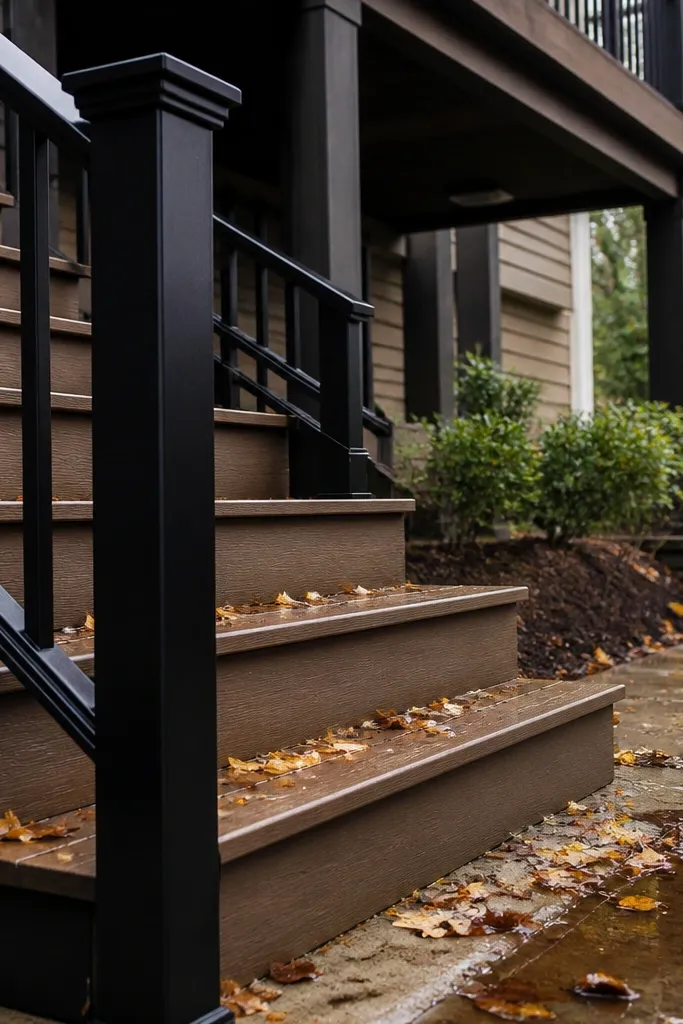
This is the outdoor spiral staircase look that reads expensive without being fussy. The black powder coat makes the column and guard lines crisp, while the teak-style composite treads add warmth and hide minor surface scuffs. Choose a composite with a textured top so it looks like real grain and also stays less slippery when wet. The combination also photographs well in both golden-hour light and overcast weather because the contrast stays steady.
Start by sourcing a spiral kit or cutting a steel center column to your desired diameter, then powder-coat the entire frame before assembly. Mount a base plate with through-bolts into solid substructure, not just decking boards, and level it carefully. Install the spiral steps using exterior-rated hardware and a spacer system that keeps tread edges aligned; finish by sealing any exposed wood-like edges only if your treads have cut ends that need treatment.
Editor's noteUse a non-slip tread top texture rating made for outdoor decks, not indoor vinyl flooring — wet treads matter on spiral geometry.
Skip thisDon’t paint over bare steel after installation; you’ll miss crevices and the finish will fail first at joints.
2. Weathered gray iron look with sealed cedar treads
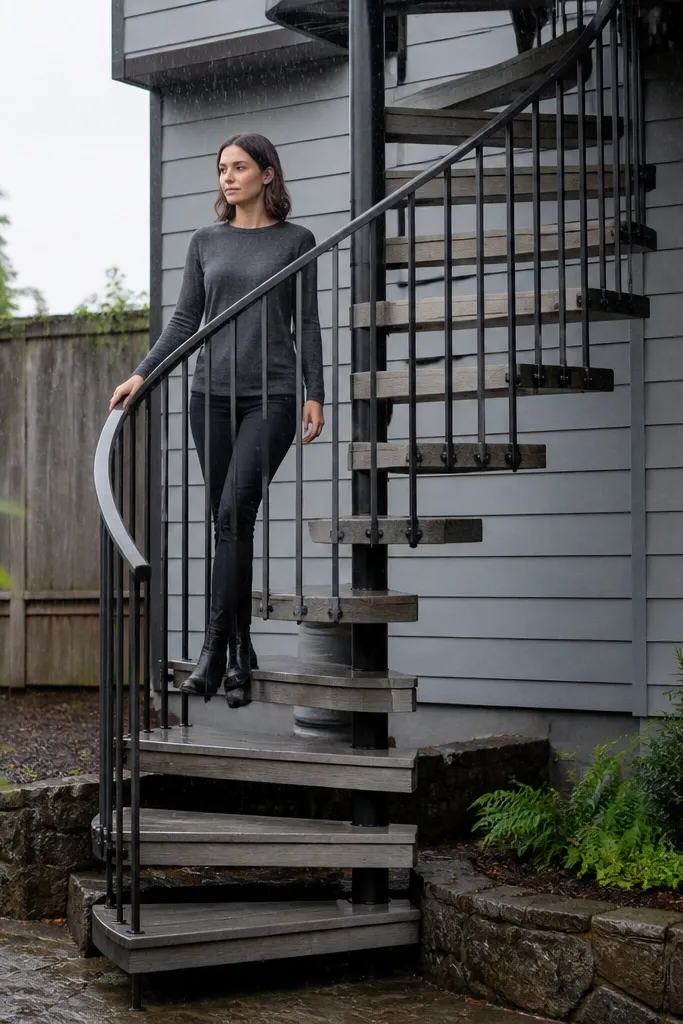
If your yard has stone paths, gray siding, or weathered fence boards, this palette looks like it belongs. The trick is keeping the cedar from turning blotchy — you want even tone, not random fading. A sealed cedar finish gives you that light, airy look while still handling rain. Pair it with a dark gray guard so the staircase doesn’t blend into the background.
Pick kiln-dried cedar or exterior-rated cedar-look decking boards for the steps, then cut all treads with clean blades. Pre-seal every cut end and underside with an exterior penetrating sealer, then topcoat the tread tops with a UV-stable clear finish made for horizontal surfaces. For the frame, use powder-coated steel in a weathered gray tone, then assemble and re-check clearances before installing treads.
Editor's noteSand the tread tops lightly after sealing so water sheds instead of clinging to raised grain.
Skip thisAvoid clear finishes meant for vertical wood; horizontal cedar needs a UV system that doesn’t chalk fast.
3. Matte bronze center column with walnut-toned treads
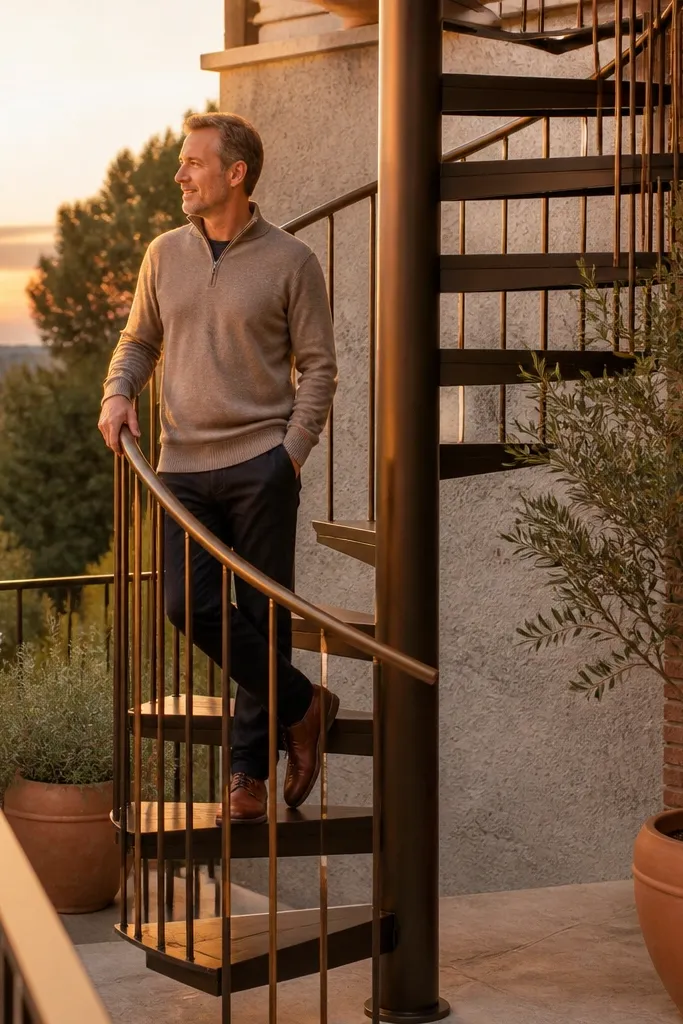
Bronze tones look especially good outdoors because they pick up warm highlights from the house lights. A matte bronze center column with walnut-toned treads gives you a “gallery” vibe without going flashy. This design works when your exterior has warm materials like brick, terracotta, or honey-toned siding. The darker treads also hide dust and water spots better than pale finishes.
Choose powder-coated steel in matte bronze for the column and guard, then plan your tread material as a stainable exterior wood or a composite that matches walnut tone. If you stain wood, do a test board first and match the tone under the same lighting you’ll see at night. Install the treads with concealed exterior screws where possible, and keep fastener heads consistent for a cleaner look.
Use a thin, even stain coat and let it cure fully before topcoat; thick coats lead to uneven gloss on treads.
Don’t mix bronze powder coat with bright chrome hardware; the shine mismatch makes the staircase look unfinished.
4. White frame with light oak composite steps for beachy patios
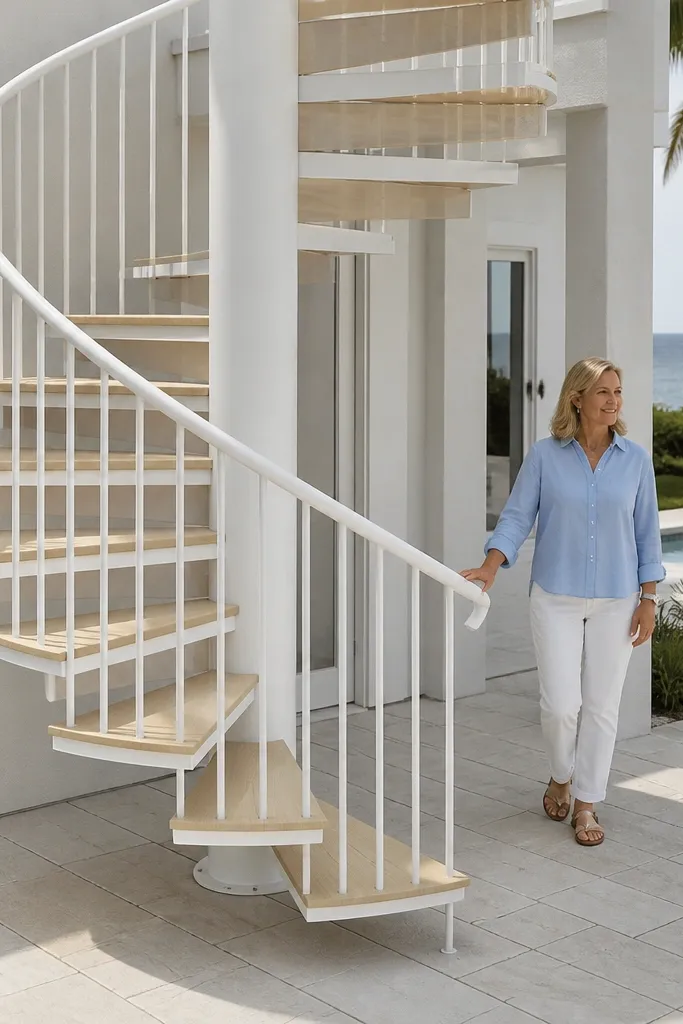
A white spiral staircase is bold, but it works when the surrounding palette is light. Light oak composite treads keep the warm wood look without the maintenance drama of real wood in coastal salt air. The visual effect is clean and airy, which makes small patios feel bigger. Keep the guard either white or a very dark gray so the steps stay the focal point.
Use powder-coated steel in a true outdoor white (not off-white) for the column and rail, then select composite treads with a light grain pattern. Assemble the staircase and seal any exposed metal edges with a compatible touch-up coating so chips don’t rust. Install treads with stainless exterior hardware and keep spacing uniform so the spiral reads crisp from every angle.
Editor's noteWash the white frame with a pH-neutral cleaner early in the season; salt films dull white powder coat quickly.
Skip thisAvoid glossy paint on outdoor stairs — it shows every drip and water mark.
5. Corten-style frame with black non-slip treads
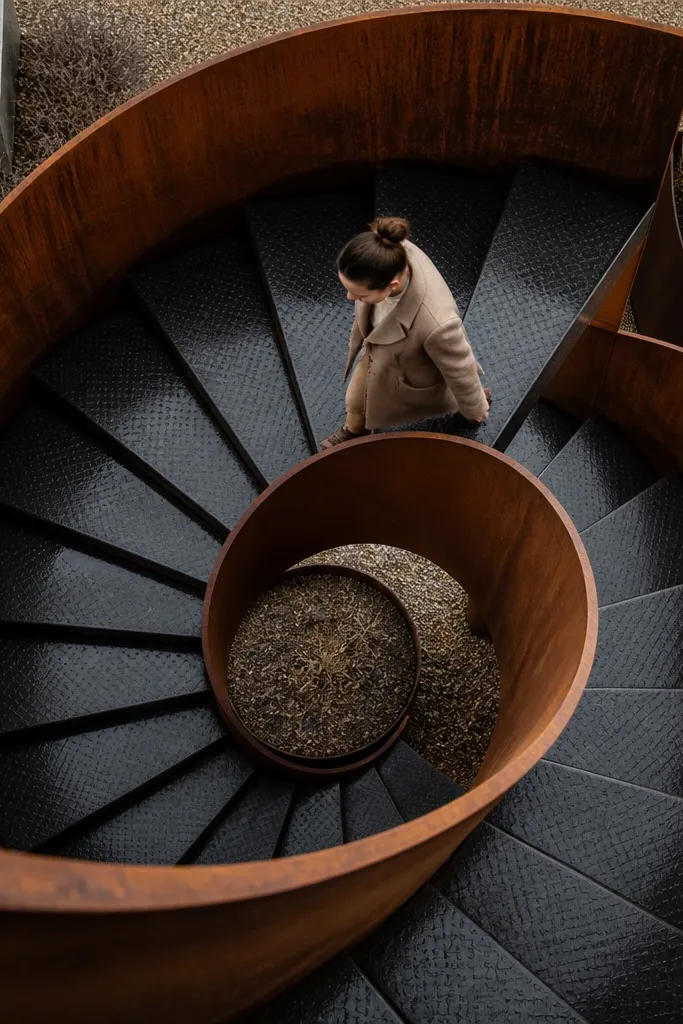
Corten-style finishes scream “designed,” and the color shifts look good all year because the patina changes with weather. Pair it with black non-slip treads so the staircase stays readable even when the yard is wet. This combo works especially well near modern planters, gravel, or dark landscape lighting. The result is a staircase that looks like it belongs even in winter when plants are bare.
Start with a frame finish that’s either real corten steel or powder-coated to match corten tone with a weathering topcoat. Choose outdoor black treads with a textured surface and UV-stable color; keep the tread edge profiles clean so water doesn’t collect. Assemble and then inspect every seam for exposed metal; touch up with a compatible coating before you install.
If you choose real corten, plan for a protective clear coat only on tread edges and high-contact areas — too much clear slows patina and can look patchy.
Don’t use regular interior black paint on the treads; it scuffs and turns shiny in the wrong spots.
6. Stone-clad base with a sleek steel spiral
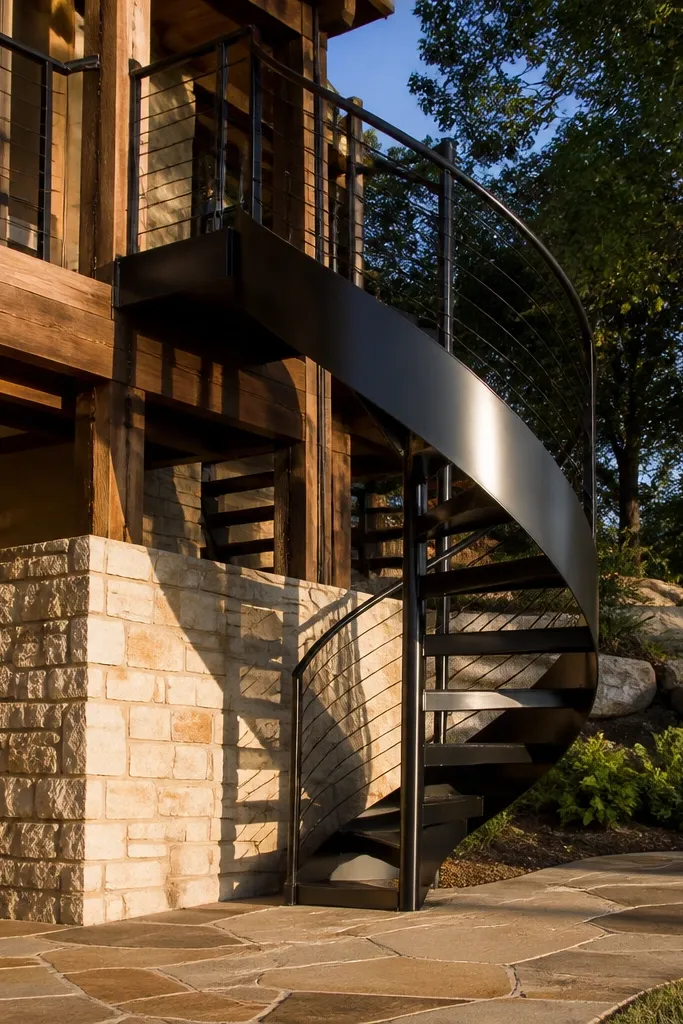
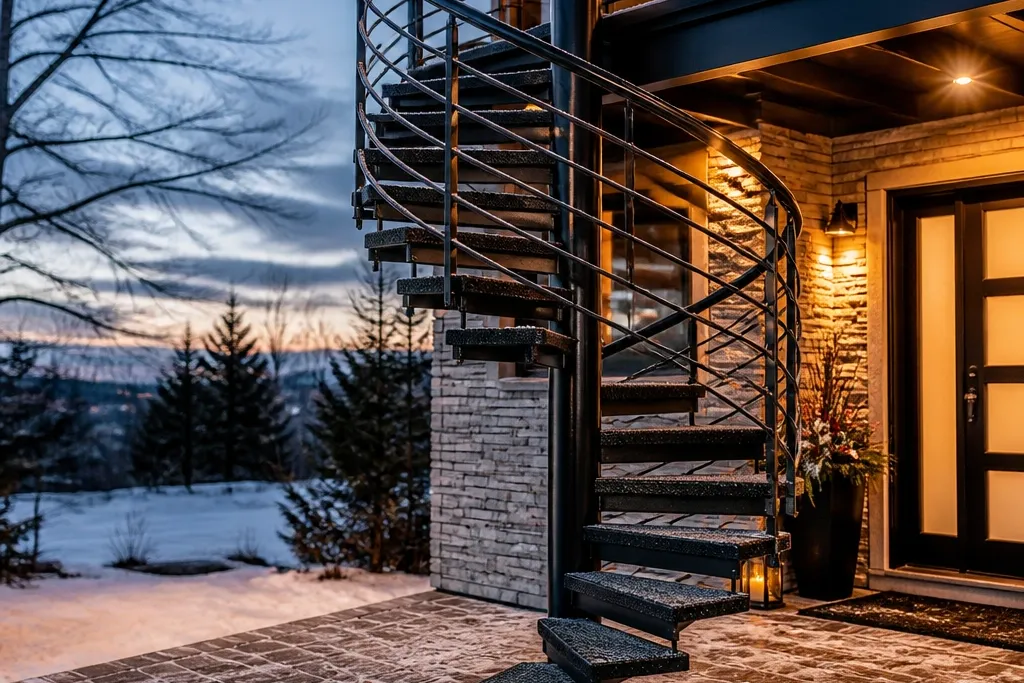
This design is for people who want the staircase to feel grounded in the landscape. The steel spiral stays light and modern, while the stone-clad base makes it look like part of the hardscape. It also solves a real outdoor problem: hiding the messy transition between deck/framing and the staircase base. Use stone tones that match your walkway so the staircase reads intentional, not bolted-on.
Build a solid landing pad or base platform first, then set a stone cladding layer on a cement board or exterior-rated backer. Install the spiral frame on a base plate anchored into the pad with anchor bolts, then keep the steel column caulked where it meets the stone to limit water intrusion. Install treads after the base is finished so you can adjust step alignment to the landing height.
Use a stone setting method that leaves a thin drainage gap at the bottom edge; trapped water stains stone and can loosen mortar over time.
Don’t glue stone directly to thin framing; movement cracks grout and makes the base look rough fast.
7. Dark green powder coat with light gray concrete-look treads
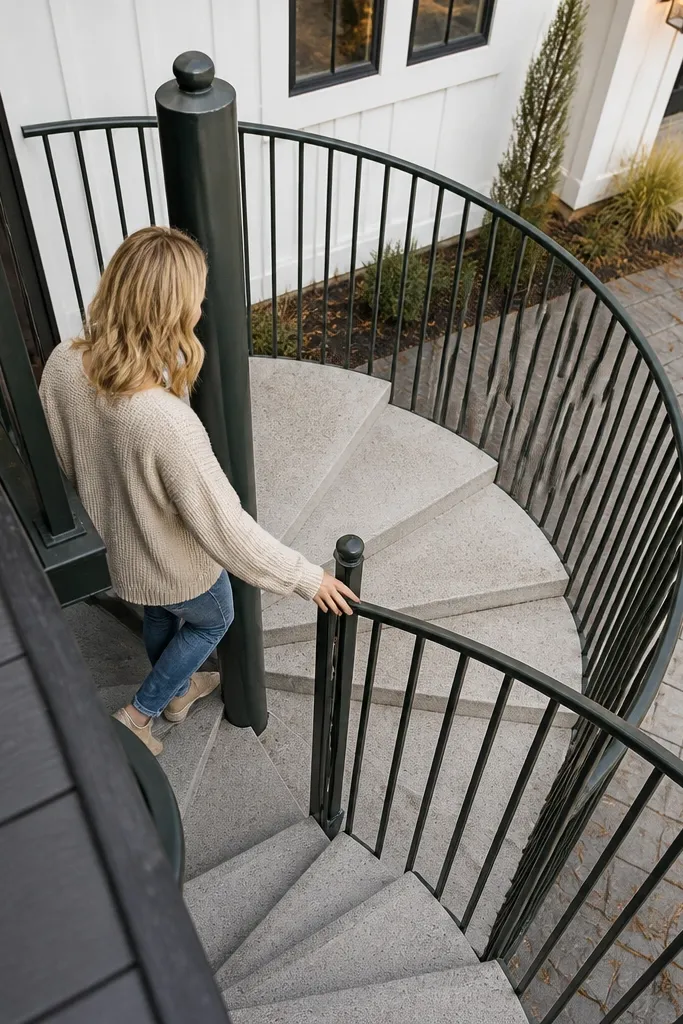
Green powder coat makes the staircase look like it belongs in a garden without blending into it. Concrete-look treads add a sculptural, architectural feel that photographs clean from above and from the landing. This is a strong choice if you have gray pavers, light railings, or a modern farmhouse exterior. The look stays bold even when everything else is muted in winter.
Pick dark green powder coat for the frame, then choose concrete-look outdoor treads made for stairs or deck use. If you’re fabricating treads, use an exterior cementitious product rated for freeze-thaw and seal all faces including edges. Assemble the spiral and test tread fit dry first; then install and apply a breathable exterior sealant where the tread meets the metal to reduce water creep.
Editor's noteUse a matte finish on the treads so they don’t glare under sun and porch lights.
Skip thisAvoid glossy concrete-look coatings — they show water streaks and make the staircase look dirty quickly.
8. All-black spiral with horizontal pickets and a glass-free guard
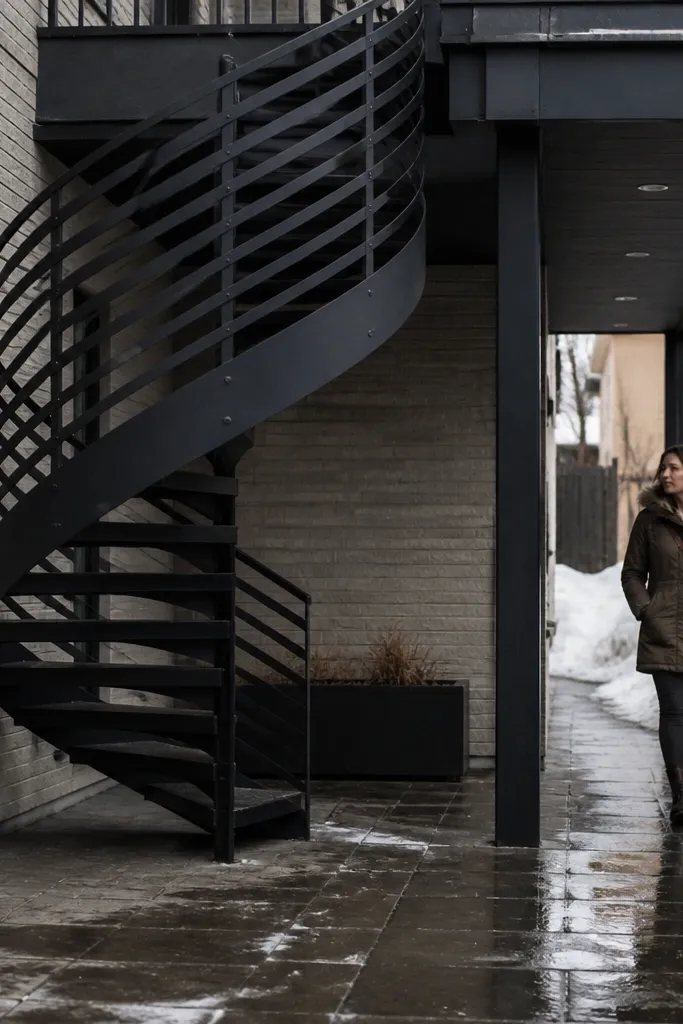
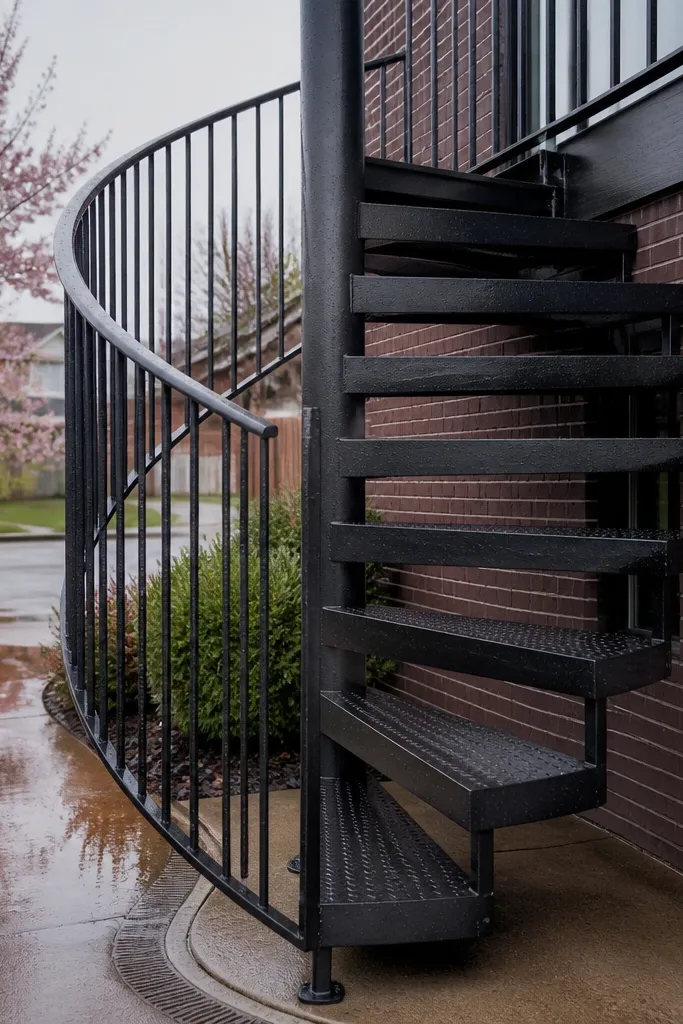
This look is clean and modern, and it stays readable in photos because the guard lines are simple. Horizontal pickets also help with visual rhythm: each step aligns with a rail bar, so the spiral feels intentional. Skip glass here; glass outdoors needs constant cleaning and can look cloudy in winter. If you want a year-round aesthetic with low fuss, all-black powder coat is the easiest win.
Use powder-coated steel for the entire frame and guard, then choose treads in a warm material like exterior composite or a stain-darkened wood tone. Install pickets with consistent spacing using a jig so the bars look straight from every angle. Finish by checking hand clearance and making sure the guard top edge has a smooth radius for comfortable grip in wet weather.
Build the guard on a flat surface first, then lift into place; it keeps the lines straight and reduces rework.
Don’t mix satin and semi-gloss blacks; the sheen mismatch makes parts look like different staircases.
9. Rustic white-washed frame with natural wood treads

White-washed metal plus natural wood treads gives you that cottage-modern vibe that still looks sharp outdoors. The key is using a finish system that won’t peel: you want a thin, even coating over powder coat or properly prepped bare metal. Natural treads add warmth, but you still need exterior sealing so the staircase stays photogenic after heavy rain. This design works best when you have light trim, white railings, or natural stone.
Start with a powder-coated frame as the base, then apply a white-wash style exterior coating system designed for metal. Choose wood treads with a uniform grain, pre-seal them before assembly, and topcoat after installation so the tread edges stay protected. Use stainless fasteners and keep the screw lines consistent so the spiral looks tidy.
After white-wash dries, seal only where you expect hand contact so it stays clean without turning chalky.
Avoid thick paint layers on spirals; they crack at curves and look uneven on camera.
10. Walnut-stained wood spiral with bronze hardware accents
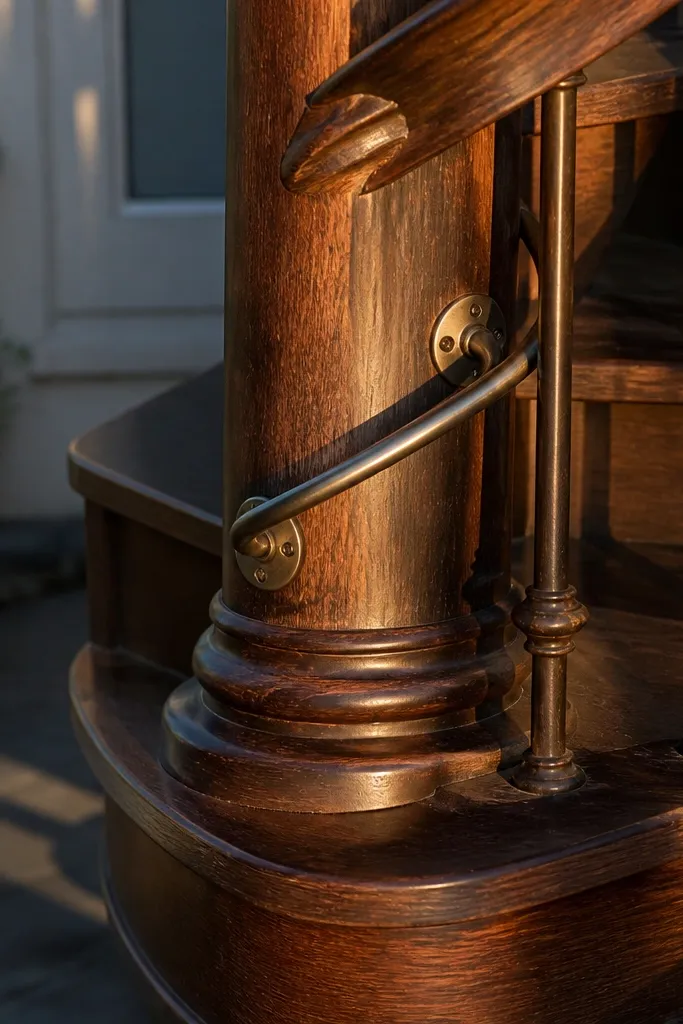
This one leans classic and warm. Walnut-stained wood treads and surfaces look gorgeous in daylight, and bronze accents add a subtle glow when the porch lights hit. The real win is the restraint: keep the guard simple and let the wood tone do the talking. If your outdoor space has wood decking, pergolas, or warm metal lighting, this staircase will look like it was planned from the start.
Use exterior-rated wood for treads and any wood elements, then stain with a UV-stable exterior stain and topcoat with a horizontal-surface clear. For the frame, use powder-coated steel in bronze or dark bronze tone so hardware and guard match. Install bronze hardware with stainless backing where needed to avoid corrosion staining on the wood.
Seal the underside of each tread — water runs down spiral geometry and will soak from below.
Don’t skip a topcoat for stained treads; stain alone fades fast on horizontal outdoor surfaces.
11. Clear-coat stainless spiral with dark composite treads
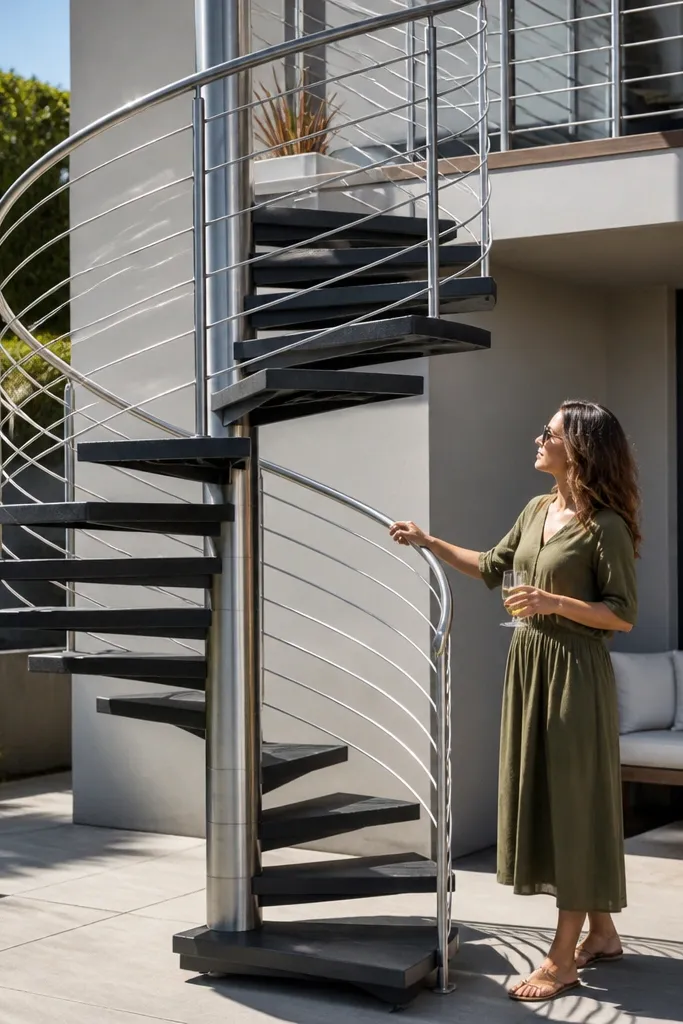
Stainless looks sharp and stays clean-looking when the finish is protected. It also keeps the spiral bright against darker patios or landscaping. Pair it with dark composite treads so the staircase doesn’t turn into a glare machine in sun. This design reads modern and works well for tight spaces because the rail can be slim and still feel light.
Choose stainless steel for the frame and guard components, then inspect all welds and smooth sharp edges before finishing. Use a clear, marine-grade protective coating on the stainless if your area gets heavy salt or coastal mist. Install dark composite treads with exterior-rated fasteners and keep the tread edges sealed if the underside is cut.
Editor's noteWipe stainless with a mild cleaner and microfiber; abrasive pads leave fine scratches that show in sunlight.
Skip thisAvoid leaving stainless hardware with no clear protection in salt-heavy areas; spotting will build quickly.
12. Powder-coated gray spiral with terracotta step accents
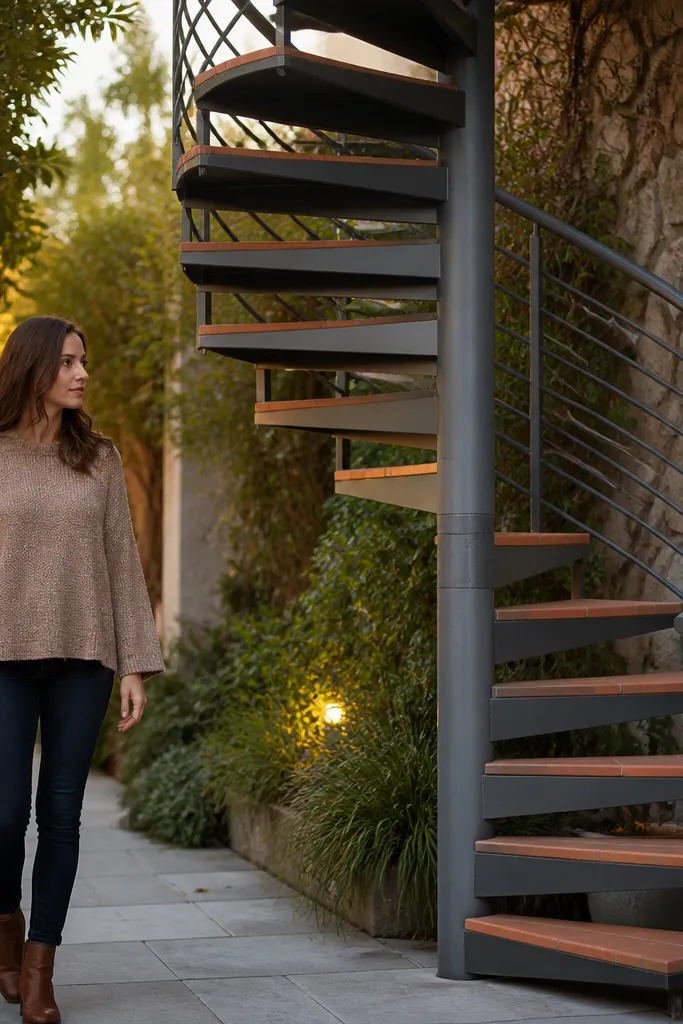
Terracotta accents make a spiral staircase feel handcrafted and warm without turning it into clutter. The gray frame keeps the look grounded, while terracotta pops in photos — especially when paired with greenery and warm outdoor lighting. This design is best when you have terracotta planters, clay roof tiles, or warm concrete around the entry. It also hides minor scuffs because terracotta tones blend naturally.
Pick a mid-gray powder coat for the steel frame, then choose either terracotta-look exterior tiles made for wet areas or terracotta-colored composite tread inserts. If you’re using tile, set them with an exterior thinset designed for freeze-thaw and seal grout lines after cure. Build the treads so water sheds off the front edge, then install with proper exterior anchors and keep the guard simple.
Editor's noteUse slip-resistant tile or a textured tread insert; smooth tile becomes slick on a spiral step.
Skip thisDon’t rely on grout alone for outdoor sealing — water hits tread edges and will penetrate through microcracks.
13. Cedar-railed spiral with a galvanized steel center column
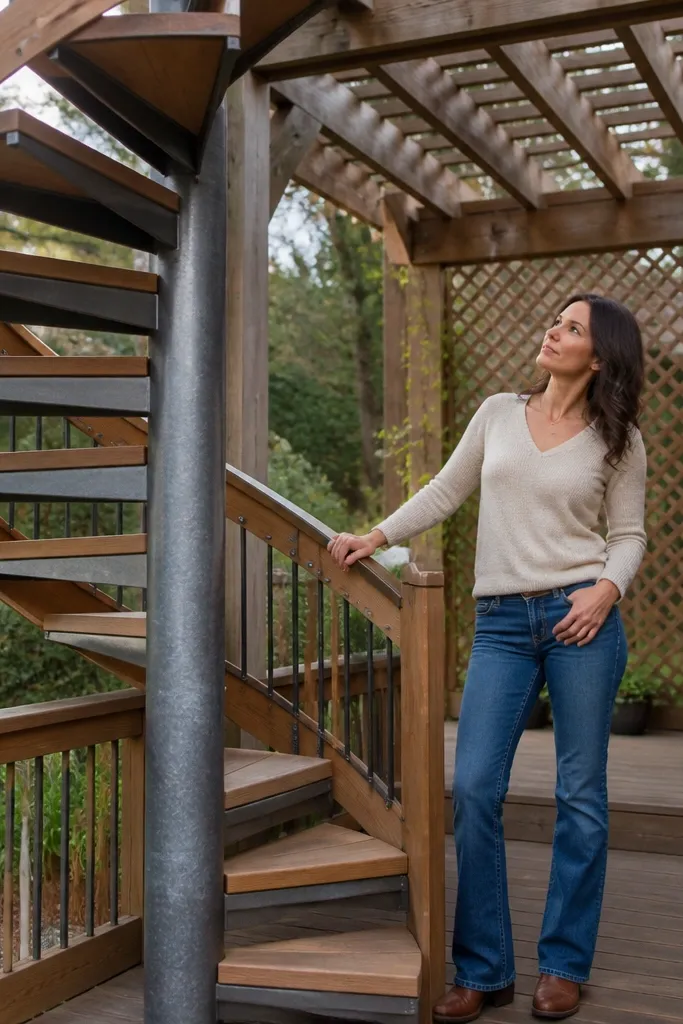
This is a mixed-material look that reads cozy and still handles weather. The galvanized center column gives you a tough, corrosion-resistant structure, and cedar rails keep the staircase from feeling cold. You get a natural color palette that works with rustic porches, lattice screens, and wood pergolas. Keep the treads either sealed cedar or exterior composite for consistent color across seasons.
Start with a galvanized steel center column and guard frame, then prep and prime any cut edges so zinc coatings don’t rust. Build cedar rails from exterior-rated cedar, then seal all cut ends and fastener lines before assembly. Install the spiral staircase on a solid base plate with corrosion-resistant anchors, then mount treads and finish with a clear exterior topcoat on the wood surfaces.
Editor's noteUse stainless or galvanized fasteners only; mixed metals can stain cedar and cause weird discoloration around screws.
Skip thisAvoid painting galvanized without proper prep; the coating can fail at bends and edges.
14. Black-and-white geometric guard spiral for modern decks
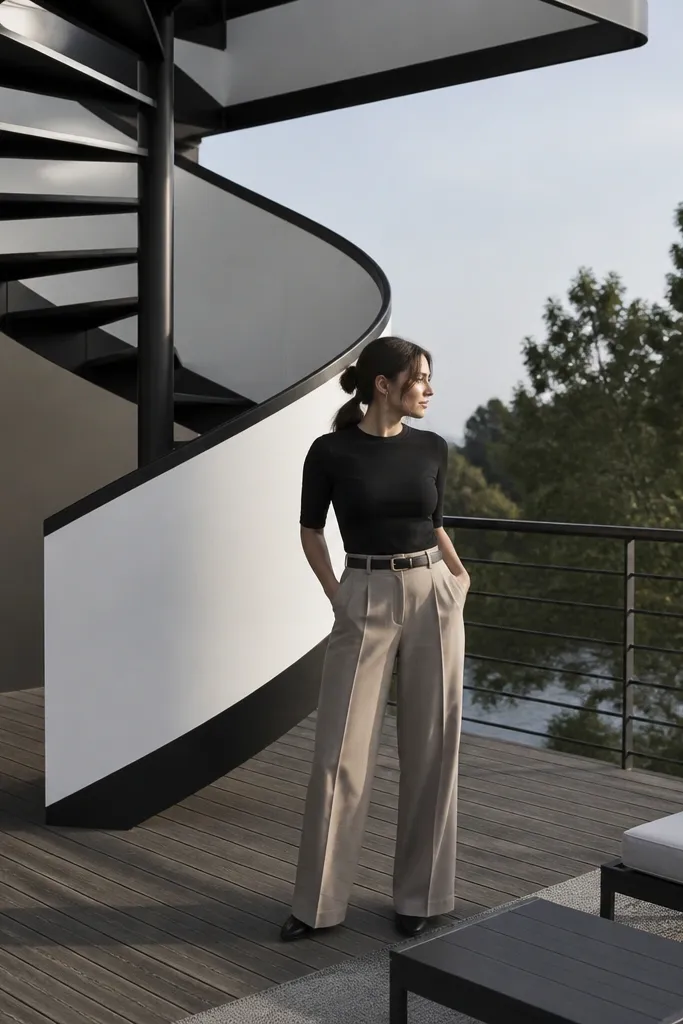
This design is all about crisp geometry. A black frame with white guard panels makes the spiral read like a graphic — great for modern decks with clean lines. It also photographs well because the contrast stays strong even in shadow. Choose dark treads to balance the bright guard and prevent visual glare. This is for people who want the staircase to look like part of the architecture.
Use powder-coated black steel for the frame and install a guard system with white exterior panels (cement board panels or exterior-rated composite panels) that are sealed and edge-painted. Keep the panel edges protected with a compatible exterior primer and topcoat so water doesn’t wick into the board. Assemble the spiral, then secure panels with a corrosion-resistant fastening plan and seal the perimeter joints with an exterior sealant made for outdoor use.
Editor's notePre-fit panels and mark cut lines on the ground; spirals punish miscuts because the geometry locks in immediately.
Skip thisDon’t skip sealing board edges; that’s where swelling starts and the panels look wavy.
15. Light stone treads with dark bronze frame for patios
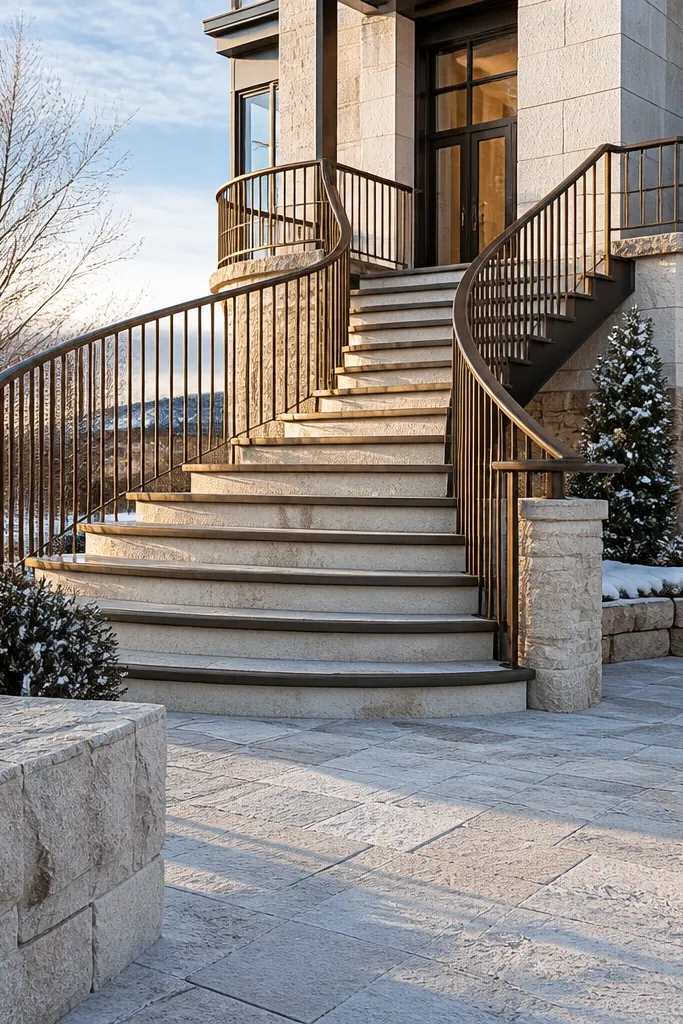
Light stone treads make the staircase feel substantial and architectural. A dark bronze frame keeps the whole thing from looking too pale, and it adds a warm metal highlight near the entrance. This look works well on patios with light pavers or limestone accents. The staircase also stays photogenic in winter because stone tones don’t fade like wood stains.
Use a dark bronze powder-coated steel frame, then choose outdoor-rated stone or stone-look pavers designed for exterior freeze-thaw. If you cut stone treads, seal all surfaces and edges before installation, and use a slip-resistant finish or textured surface so the step grip stays safe. Mount treads to the spiral structure with exterior-rated anchors and set them so water runs off the front edge.
Editor's noteDo a dry-fit and water-test: hose the front edge and watch where it runs before you fully grout or seal.
Skip thisAvoid polished stone on outdoor stairs; it looks good until it gets wet and turns slippery.