1. Matte black steel with perforated tread plates
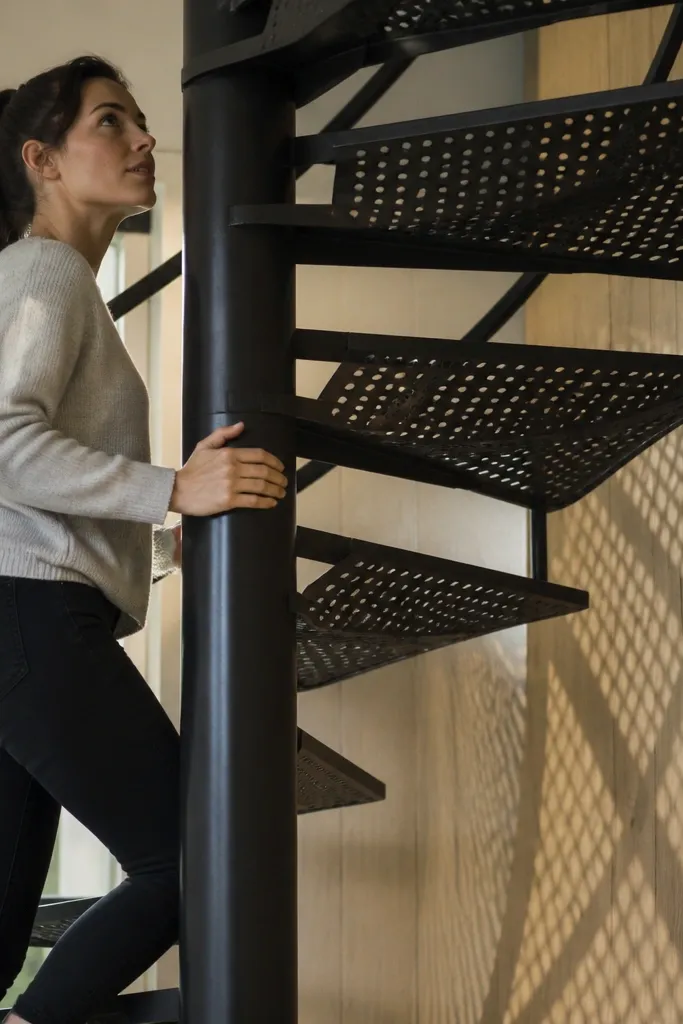
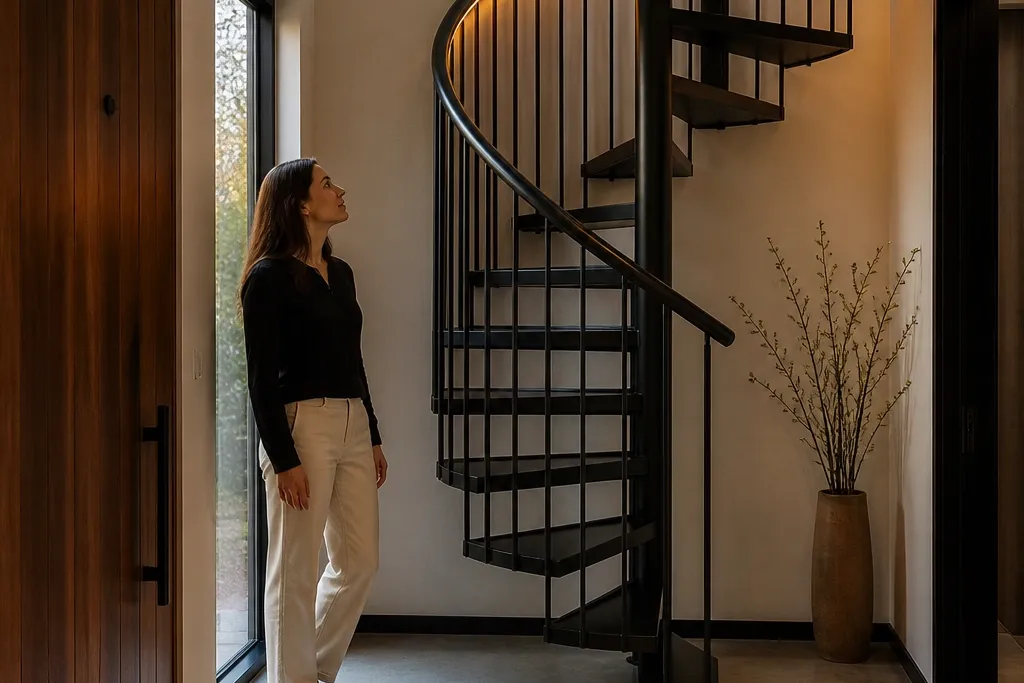
This look works because perforated treads reduce the “solid slab” feeling in a small footprint. The holes break up the light and create a softer shadow pattern on the wall, which makes the spiral read more airy. Matte black steel also hides minor scuffs and fingerprints better than glossy finishes, so the staircase stays photo-ready longer. Keep the center post and guard in the same matte finish so the spiral line stays continuous. Use a slim handrail profile for a clean silhouette from hallway angles.
First, choose perforated tread plates sized to your stair system and keep the tread edge consistent around the spiral. Then, paint or powder-coat the center post, treads, and handrail in matte black (powder coat is the cleanest for even coverage on metal edges). Finally, install a thin baluster or cable guard in matte black and make sure the top guard termination matches the handrail curve.
Ask for powder-coat masking on threaded ends so you don’t fight fitment during assembly.
Avoid glossy black — it shows glare and every touch point in small rooms.
2. Satin zinc spiral with clear-coated wooden treads
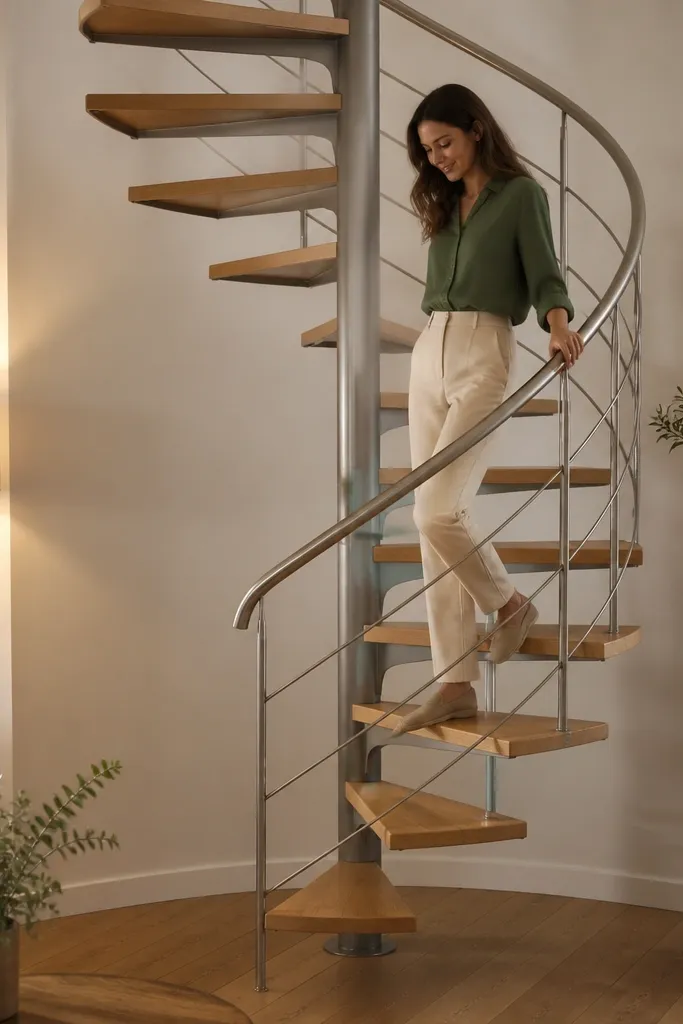
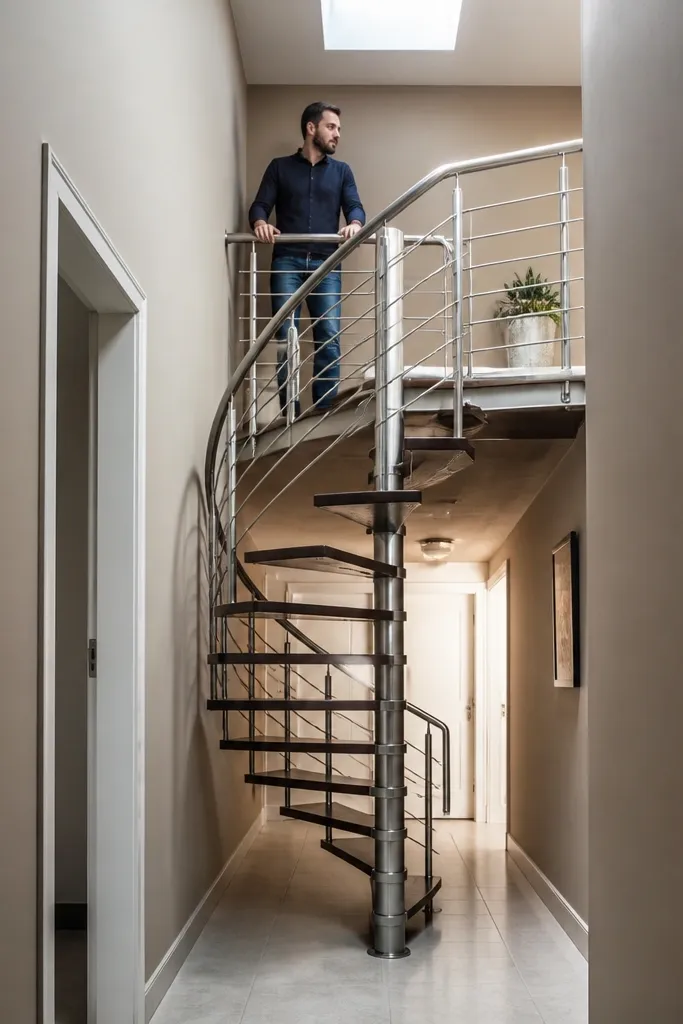
Metal and wood is a small-space cheat code: the metal rail gives you the spiral structure, and the wood treads warm the space. Satin zinc has a soft, industrial tone that doesn’t flare under indoor lights like shiny chrome. Clear-coated wood treads add contrast so each step reads clearly, which helps the staircase feel less visually busy. This idea looks especially good in entry foyers, loft corners, and hallways with light walls. The key is consistent finish — the zinc should be uniform and the wood should look like one species, not mixed scraps.
Start by selecting light-toned wood planks cut into semi-circular or matching tread segments sized for your spiral system. Seal and clear-coat the wood with a durable floor finish, then attach them to the zinc metal tread carriers. Next, powder-coat or finish the center post and guard in satin zinc, and install a matching zinc handrail with minimal decoration.
Editor's noteUse a clear coat rated for floors so the treads resist scuffs from shoes.
Skip thisSkip mixed wood colors — mismatched treads make the spiral look patchy.
3. Aged bronze center post with black cable guard
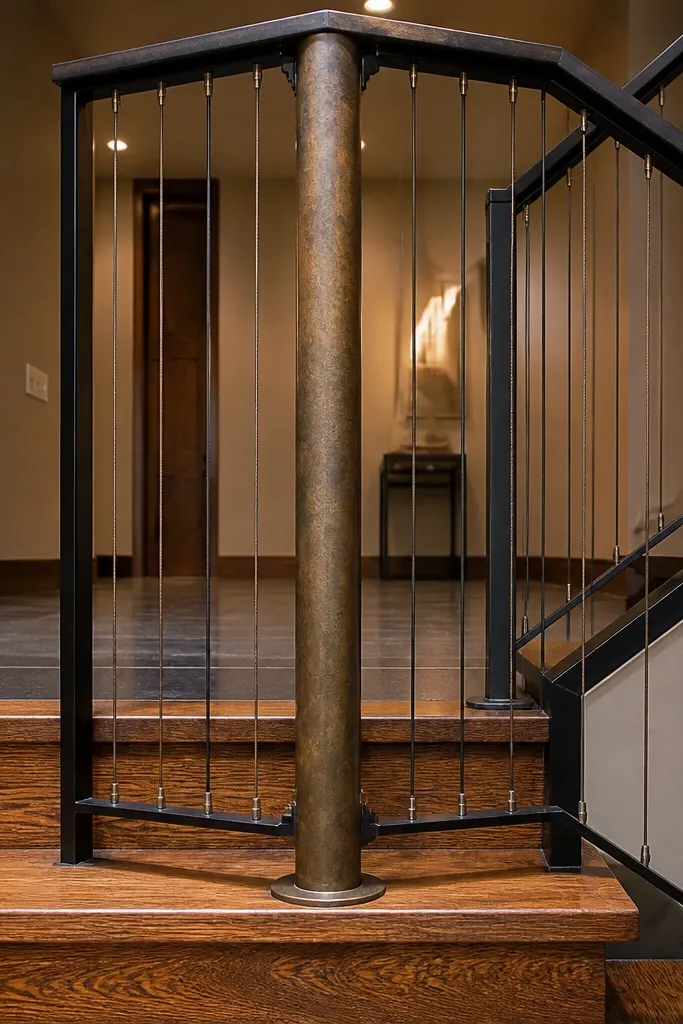
Aged bronze brings warmth and depth without needing bulky ornament. Pairing it with a black cable guard keeps the enclosure open, so the staircase doesn’t visually eat your square footage. The cable lines also photograph well because they create fine vertical rhythm behind the spiral. This is a great choice for small spaces that already have wood, warm paint, or natural stone — the bronze ties the materials together. Go for a handrail that matches the bronze tone but stays slim so the guard doesn’t look like a cage.
First, select an aged bronze finish for the center post and handrail (powder coat with a metallic topcoat looks most even). Then install the spiral treads and mount the cable guard posts at consistent intervals around the curve. Finally, tension the cables evenly and add end caps that match the bronze or black finish so the ends look intentional.
Use stainless cable with a black sheath so the guard stays crisp and resists corrosion.
Don’t use thick, decorative balusters with bronze — it turns airy into bulky fast.
4. White steel spiral with black tread edges
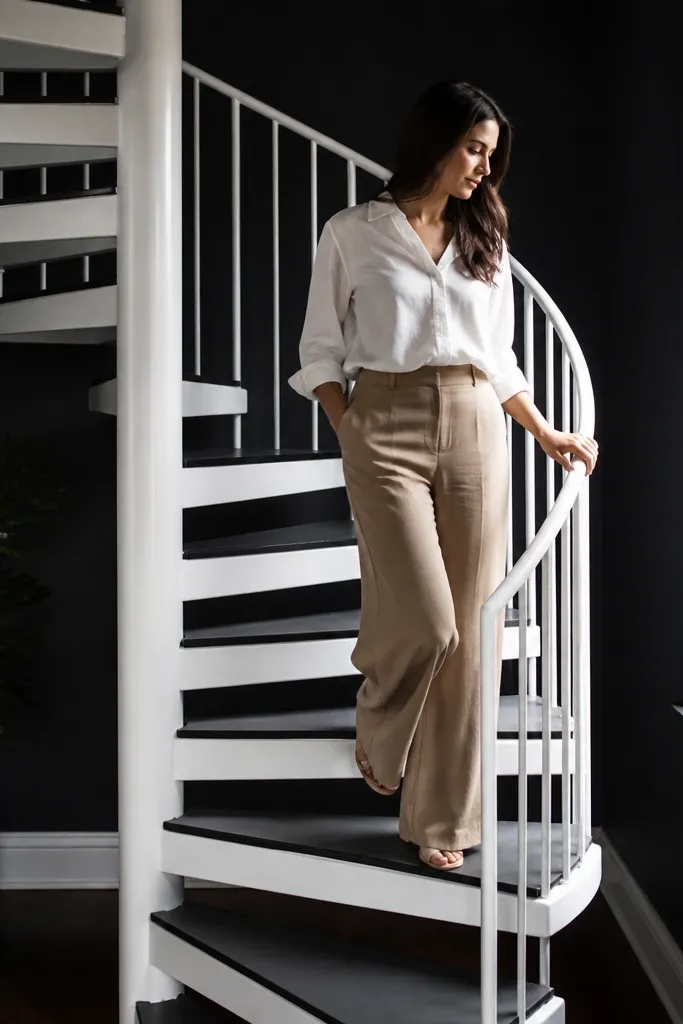
If your small space is already dark, this idea brightens it without looking flimsy. White steel reads clean and architectural, and black tread edges give you crisp definition so each step shows up in photos. The contrast also helps people perceive the stair direction more clearly, which matters on steep spirals. This style looks best against a textured wall like plaster, exposed brick, or a matte paint color. Keep the center post white and use a matching black trim line on the treads so the spiral has a consistent graphic look.
Start by choosing a white powder-coated spiral system or painting the center post and guard with a matte white finish rated for metal. Then, add black edge trim or paint the tread edges with a durable metal paint before assembly. Finally, install a white handrail and keep the guard minimal so the black edge line stays the visual focal point.
Editor's noteUse painter’s tape to mask tread edges for sharp lines; cheap masking leaves fuzzy borders.
Skip thisAvoid full gloss white — it reflects overhead lights and makes the stair look washed out.
5. Black spiral with smoked glass panels on the guard
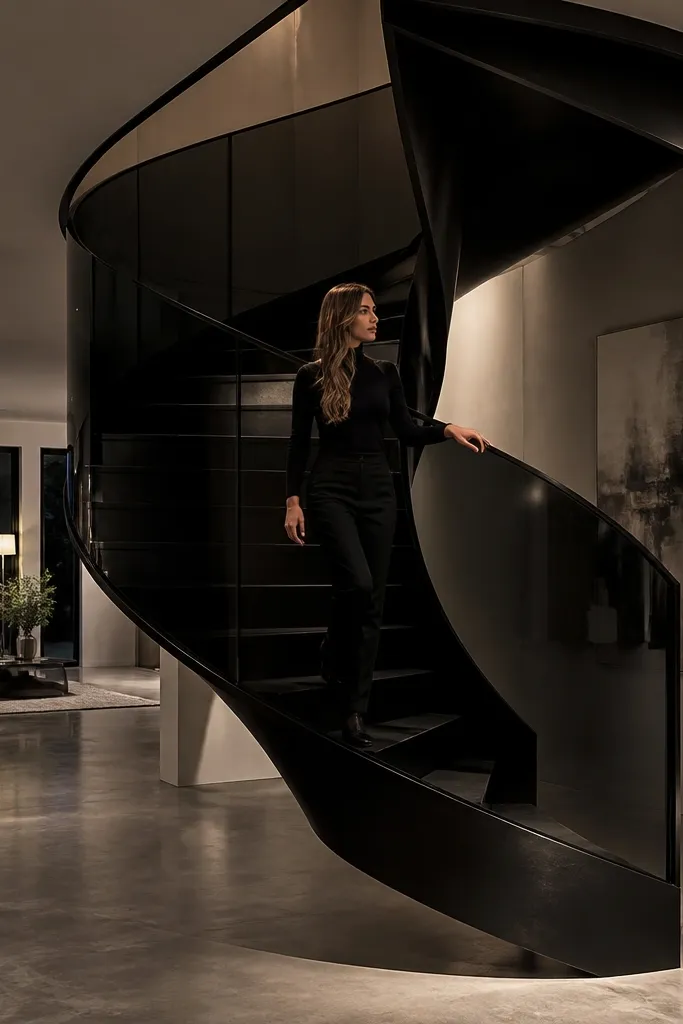
Smoked glass turns a small spiral into a design object. The staircase still stays open, but the guard looks sleek and continuous instead of a bunch of separate parts. Black metal plus dark glass hides clutter and keeps the visual line smooth from multiple angles. This is a strong option for modern interiors where you already have glass, metal lighting, or dark cabinetry. The trick is to pick glass that looks uniformly tinted, not patchy, and pair it with a slim black frame.
First, choose smoked glass panels sized to your guard layout and use a black metal framing system that matches your center post finish. Then install the treads and center column, and mount the glass brackets so the panels align without visible gaps. Finally, run the handrail over the top of the guard so the glass reads like one continuous barrier.
Editor's noteUse tempered safety glass and confirm thickness matches your bracket spacing.
Skip thisDon’t mix glass tints — uneven tint makes the staircase look DIY and messy.
6. Natural steel spiral with brushed handrail and black treads
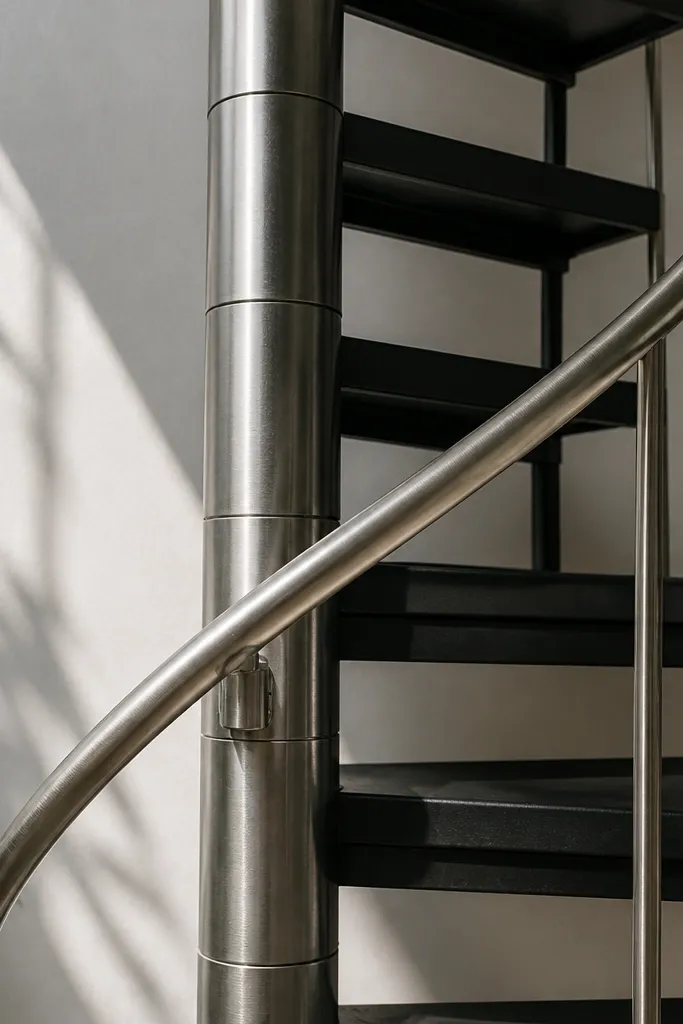
This idea splits the look into two textures: warm brushed metal on the handrail and center post, and deep black on the steps. That contrast makes the spiral pattern pop while still feeling grounded and not too stark. Brushed metal adds a soft highlight that photographs nicely, especially near windows. Black treads reduce glare and hide shoe scuffs. This is a smart pick for small spaces that have lots of wood or neutral walls but need a strong focal point.
Start by choosing a brushed finish for the center post and handrail components (brushing plus clear coat keeps it from turning blotchy). Then finish the tread plates in matte black and keep the tread edge profile consistent. Finally, assemble the spiral and align the guard so the brushed handrail is the highest continuous line.
Clear-coat brushed metal lightly so it stays uniform and doesn’t stain from fingerprints.
Avoid mixing brushed directions on the same handrail — it looks random in photos.
7. Corten-style metal spiral with warm interior lighting
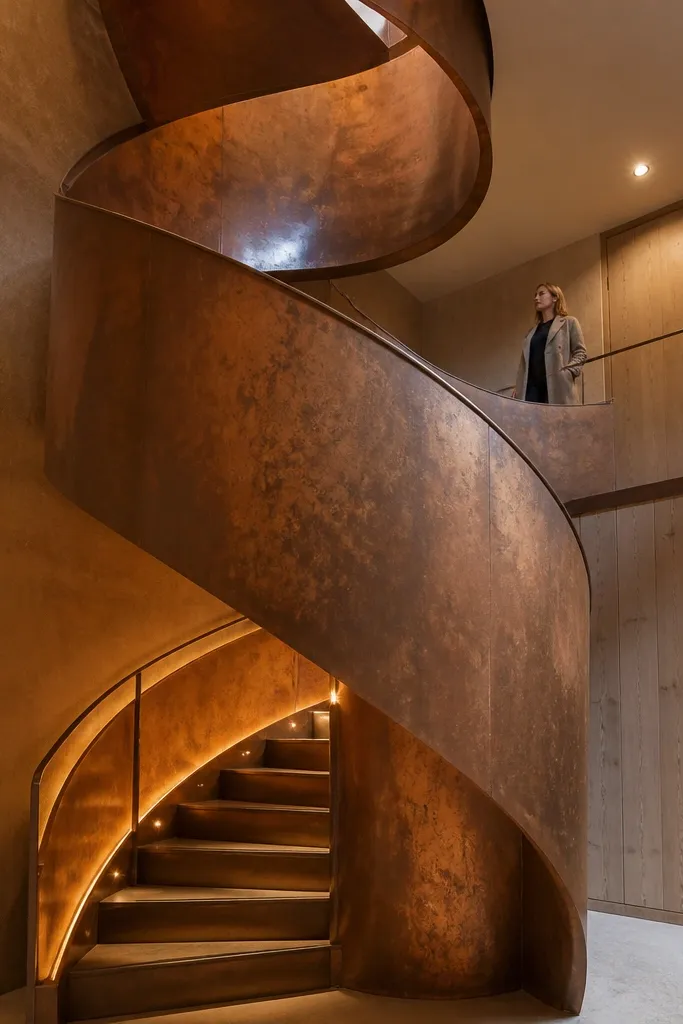
Corten-style finishes look incredible in small spaces because the color is warm and textured, so the staircase doesn’t disappear. The surface variations create a natural “movement” effect as the spiral moves upward. Pair it with a thin guard and simple balusters so the patina remains the star. This works especially well in rooms with warm bulbs (2700K-3000K) and earthy wall colors. The staircase reads like a sculptural object instead of a functional ladder.
First, use a corten-look coating system on the center post and guard, and choose treads in a matching or slightly darker tone for depth. Then, install the spiral with a guard design that uses thin vertical pieces so it doesn’t compete with the patina texture. Finally, add lighting aimed at the stair line (wall-wash style) so the finish shows its color without harsh glare.
Editor's noteKeep the lighting warm and directional; cold white lights flatten patina color.
Skip thisSkip heavy decorative spindles — they make a corten stair look cluttered.
8. Two-tone spiral: brushed silver center post, black rail, black treads
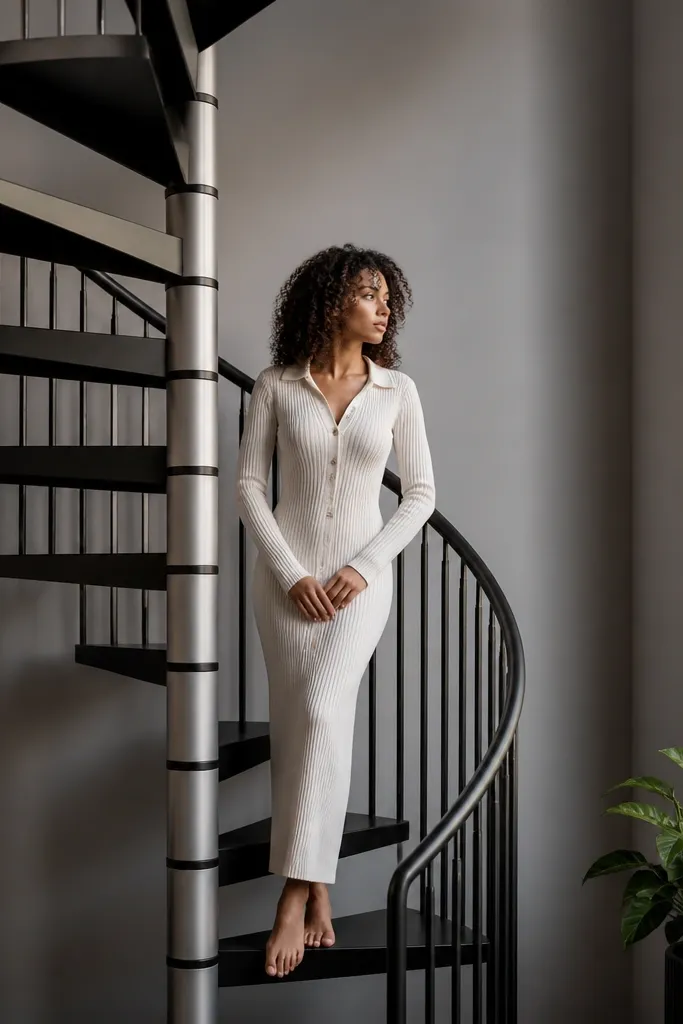
Two-tone designs look intentional in small spaces because they create a controlled color story. Brushed silver on the center post adds a bright vertical line without turning the whole staircase reflective. Black rail and black treads keep the steps grounded and reduce glare. This is a great option if you have stainless appliances, chrome fixtures, or brushed metal accents nearby but you don’t want a fully metallic look. The best version keeps the two tones crisp — no random repainting or mismatched sheen.
Start by finishing the center post and any structural uprights in brushed silver with a clear topcoat. Then coat the handrail and tread plates in matte black, and assemble so the color transition happens at a clear edge line. Finally, use black guard posts or cables so the guard reads as one shape with the rail.
Editor's noteUse a matte black powder coat for treads so scuffs don’t show as shiny spots.
Skip thisAvoid mixing satin black with matte black — the different sheen levels show up fast.
9. Slim open riser spiral with minimal guard and narrow balusters
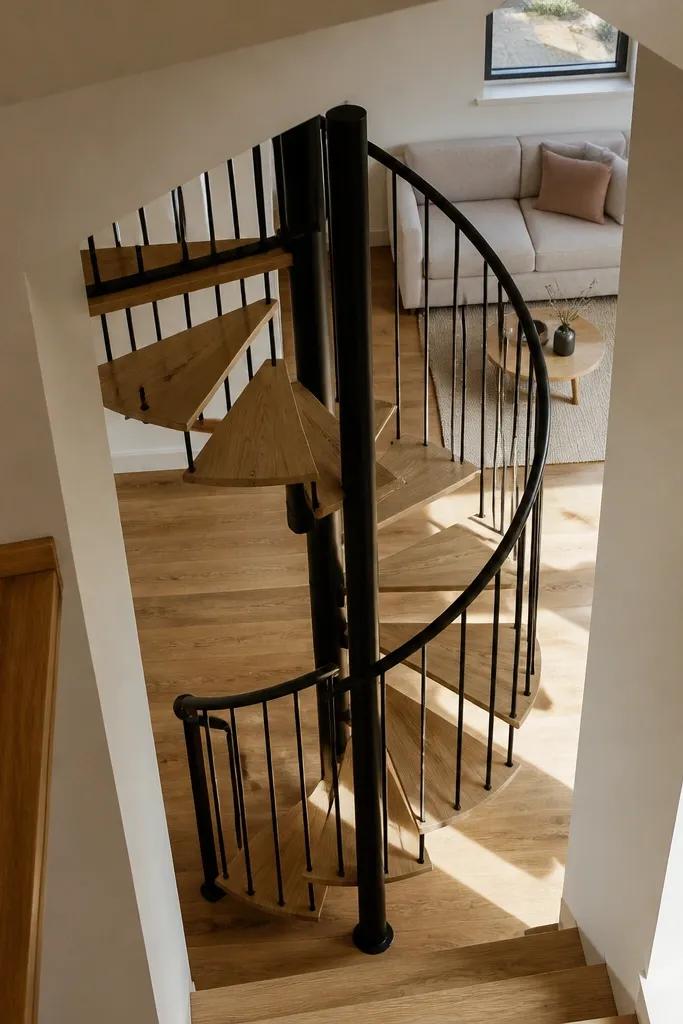
Open riser designs make a small staircase feel less heavy because you can see through it. Narrow balusters keep the safety and boundary without blocking the view of the room behind. In photos, the spiral lines become the visual pattern rather than a thick fence. This look works best when the wall behind the staircase has a clean, solid color so the negative space reads intentional. Choose a consistent metal finish, and keep the guard height aligned with the handrail for a sharp silhouette.
First, choose treads that have an open riser or slim plate design compatible with a spiral kit. Then install narrow balusters spaced evenly and keep them the same finish as the handrail. Finally, check guard clearance and tighten everything so there are no wobble points that can look sloppy in close photos.
Editor's noteUse a level and a long straight edge to set the baluster line — tiny misalignments show up immediately.
Skip thisAvoid oversized guard posts — they kill the airy look.
10. Hex tread spiral with hammered metal finish
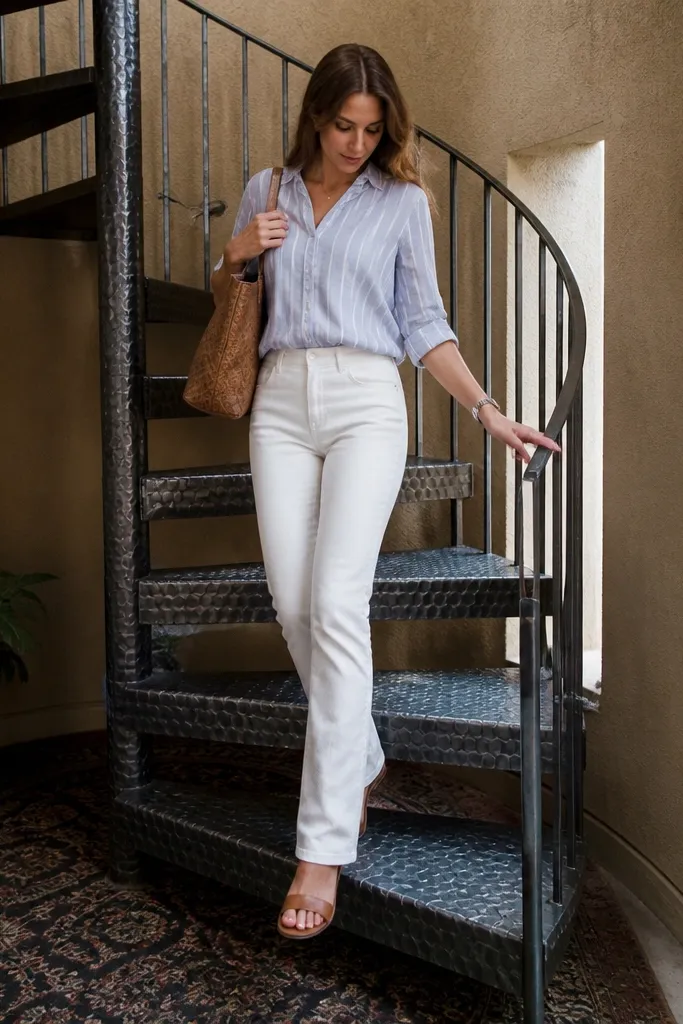
Hammered metal adds texture, and hex tread plates add a graphic pattern. Together, they make the staircase look custom even in a small footprint because the tread surface catches light at different angles. This idea is for people who want the staircase to be the focal point, not a background element. It also helps visually because the tread shape creates clear step recognition. Use a consistent hammered finish across the treads and guard parts so the texture looks intentional, not random.
First, source or fabricate hex tread plates that fit your spiral’s tread radius and bolt pattern. Then finish them with a hammered metal coating or powder coat that mimics the hammered look, and mount them to the spiral frame. Finally, match the hammered finish on the handrail and guard so the texture reads as one system.
Editor's noteIf you’re coating, do a test panel first — hammered finishes show uneven color if the base prep is sloppy.
Skip thisSkip mixed textures — hammered treads with smooth rails look mismatched.
11. Wood-wrapped handrail with black metal spiral

A wood-wrapped handrail makes a spiral staircase feel more comfortable and less like a factory ladder. Black metal keeps the structure sharp, while the wood adds warmth where your hand actually touches. In small spaces, comfort matters because the staircase gets used daily, and a warm handrail also looks better in photos — fingers and shadows read naturally. Pair it with a cable guard or minimal balusters so the wood stays visually dominant. Pick one wood tone and keep it consistent with nearby trim.
First, install the black metal center post, treads, and cable guard (or slim balusters). Then wrap the handrail with a thin wood profile — most people use curved wood segments glued and clamped, followed by sanding and a clear finish. Finally, seal the wood and attach end caps so the wrap line is clean at the top and bottom.
Editor's noteSand the wood wrap to a smooth radius so it feels good without looking glossy.
Skip thisDon’t leave raw wood edges at the handrail ends — they look unfinished fast.
12. Gallery wall spiral: off-white spiral with brass guard accents
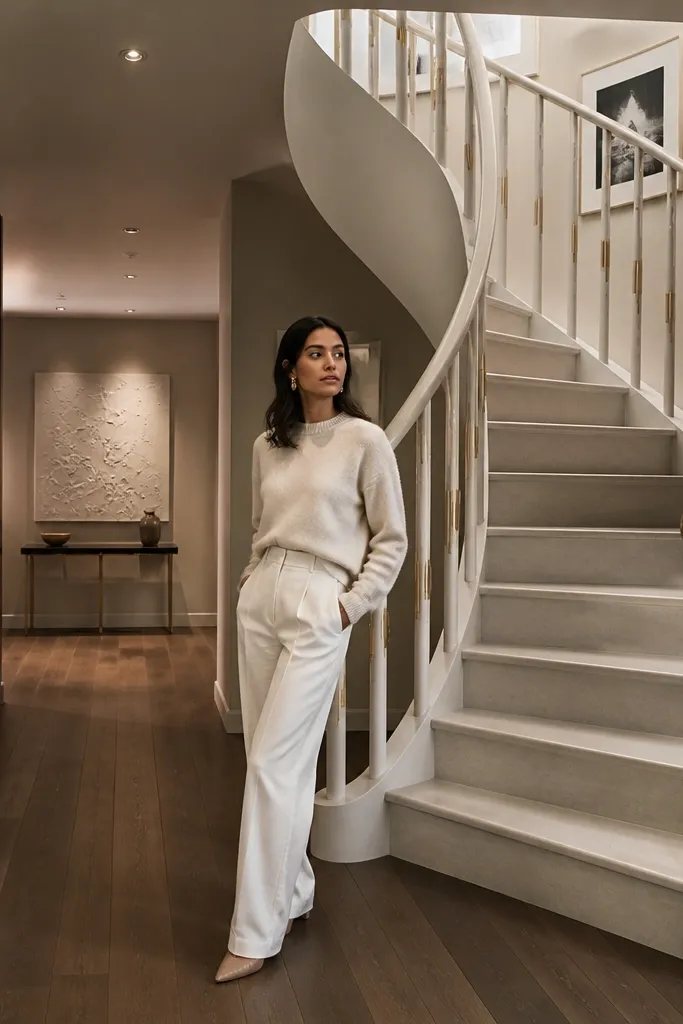
This is a smart aesthetic trick for small spaces with art or a hallway wall. Keep the main structure off-white so it blends with the wall, then add small brass accents so the staircase still reads as a deliberate design element. Brass on guard caps and handrail ends catches light and makes the spiral look more expensive than it is. It also frames artwork because the staircase doesn’t compete with wall color. Choose a matte off-white, not glossy, so it doesn’t reflect light onto your photos.
First, finish the center post, handrail base, and treads in matte off-white. Then add brass accents only at the top rail ends, guard caps, and any visible junctions, using brass-colored powder coat or fitted brass pieces. Finally, install a guard that stays off-white or wire-like so the brass appears as small highlights rather than a full brass cage.
Mask and paint junctions carefully — brass edges look best when the line is sharp and clean.
Avoid full brass everywhere — it overwhelms a small wall and competes with art.
13. Black spiral with waterfall-style continuous handrail curve
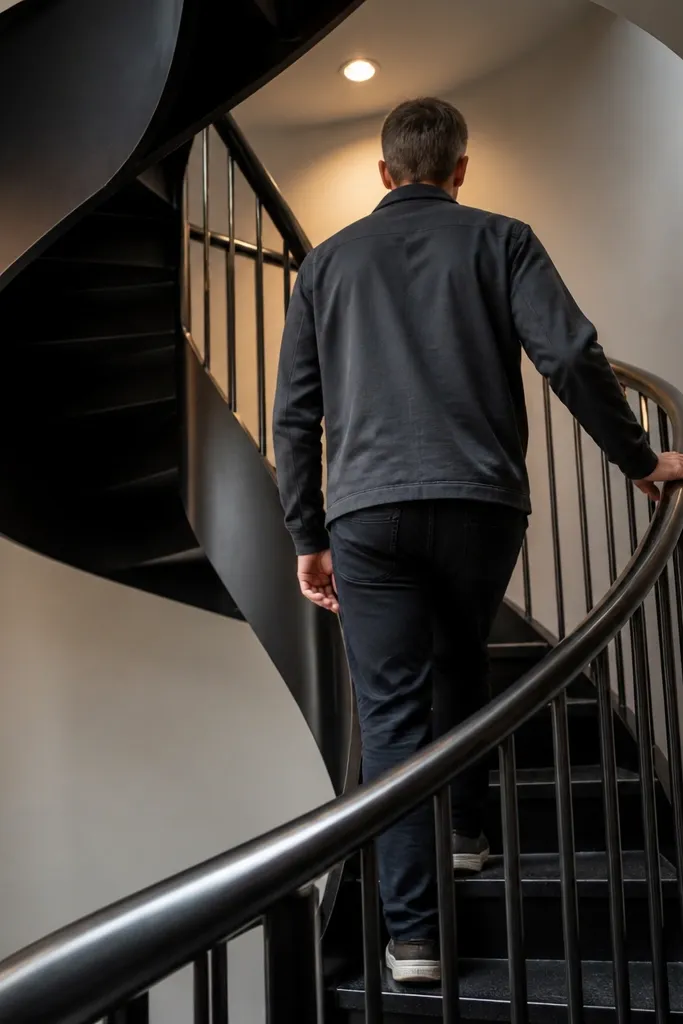
A continuous handrail line makes a spiral look designed, even if the footprint is small. The “waterfall” feel comes from a rail profile that flows without obvious breaks at guard segments. Black steel keeps it bold, and the uninterrupted curve reads clean in photos shot from the base. This style is best when the staircase is visible from a doorway or open-plan living area. Keep the rest minimal: slim guard elements and simple tread shapes so the rail line stays the hero.
First, pick a handrail system that allows long, curved sections or a single continuous curve plan. Then install the spiral treads and center post, and mount the guard using minimal connectors that won’t interrupt the rail line visually. Finally, attach the continuous handrail and check alignment so the curve is smooth from bottom to top without kinks.
Dry-fit the rail sections and mark alignment points before final tightening — small bends show up hard under overhead lights.
Avoid handrail splices in the middle of the most visible section — they look like a repair in photos.
14. Gray powder-coated spiral with rope-cable guard
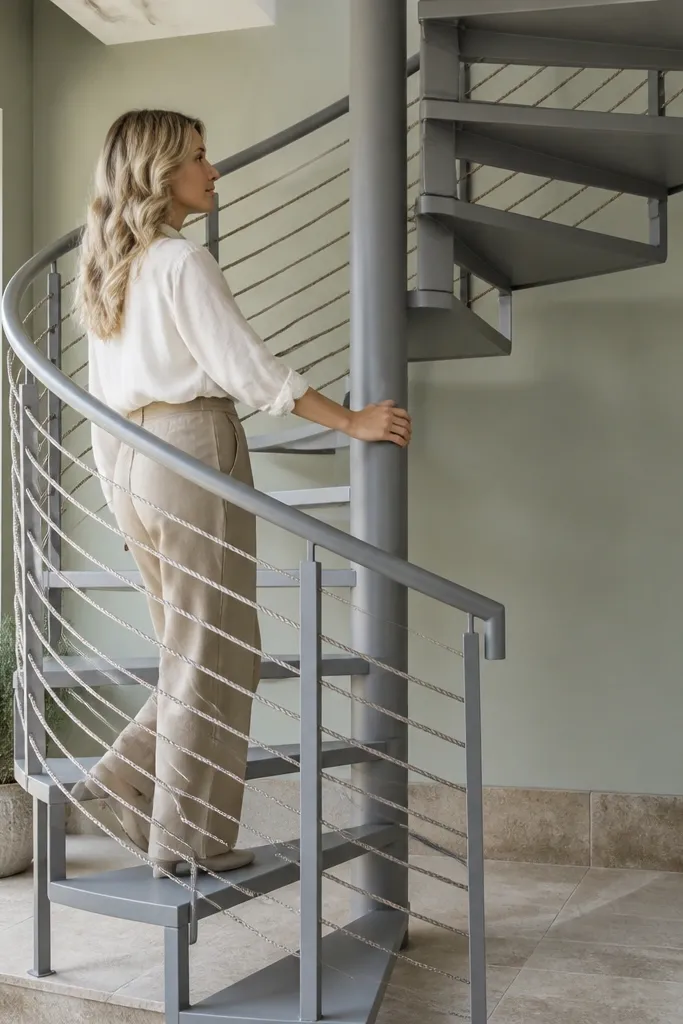
A rope-cable look softens the vibe of a metal spiral without making it look childish. Gray powder coating gives you a modern neutral that works with almost any wall color, and the rope-like guard lines add texture and depth. In a small space, texture helps the staircase feel like part of the room instead of a big metal object. This idea is especially photogenic in rooms with natural materials like wood floors or woven rugs. Keep the handrail simple and the rope/cable tension even for a clean, intentional look.
First, powder-coat the center post, guard frame, and handrail in a consistent gray finish. Then install a guard that uses rope-like cable or braided line over a metal support frame with evenly spaced attachment points. Finally, tension the lines and secure end knots/caps so the guard looks tight and symmetrical from both sides of the staircase.
Choose braided cable with a tight weave so it doesn’t look fuzzy up close in photos.
Don’t let guard lines sag — sagging makes the whole staircase look temporary.
15. Brushed black spiral with floating tread edge lighting strip
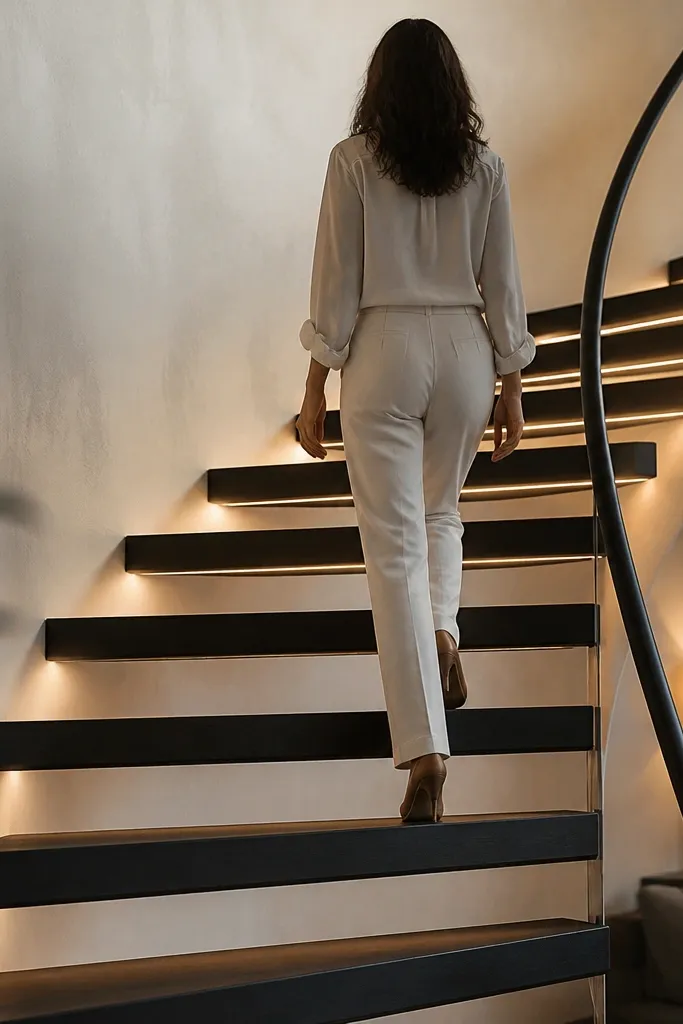
Edge lighting makes small-space stairs look like they’re floating, even though the structure is solid. The trick is to use a subtle strip along the tread edge or under the tread lip so the light grazes the metal and emphasizes the spiral path. Brushed black reduces glare, so the light feels like part of the design instead of a bright LED bar. This is one of the most photogenic options because cameras love edge highlights. It also helps at night, since you can see step edges without blasting the whole room.
First, choose brushed black metal treads and plan a route for low-voltage LED strips along the tread lip or underside. Then mount the LED strips with aluminum channels and a diffuser so the light line stays even. Finally, wire to a low-voltage driver hidden near the base or in an access panel, and test brightness before you close everything up.
Use warm LEDs around 2700K so the metal looks natural, not blue.
Avoid exposed LED points — dotty light looks messy and cheap.