1. Matte Black Powder-Coated Steel Spiral with Smoked Oak Treads
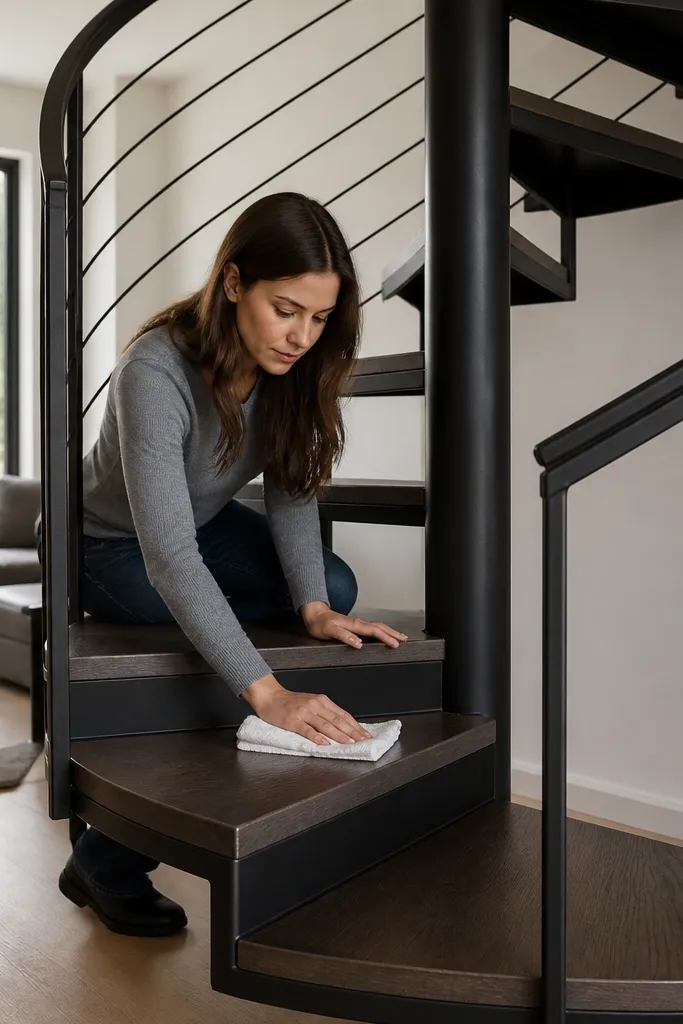
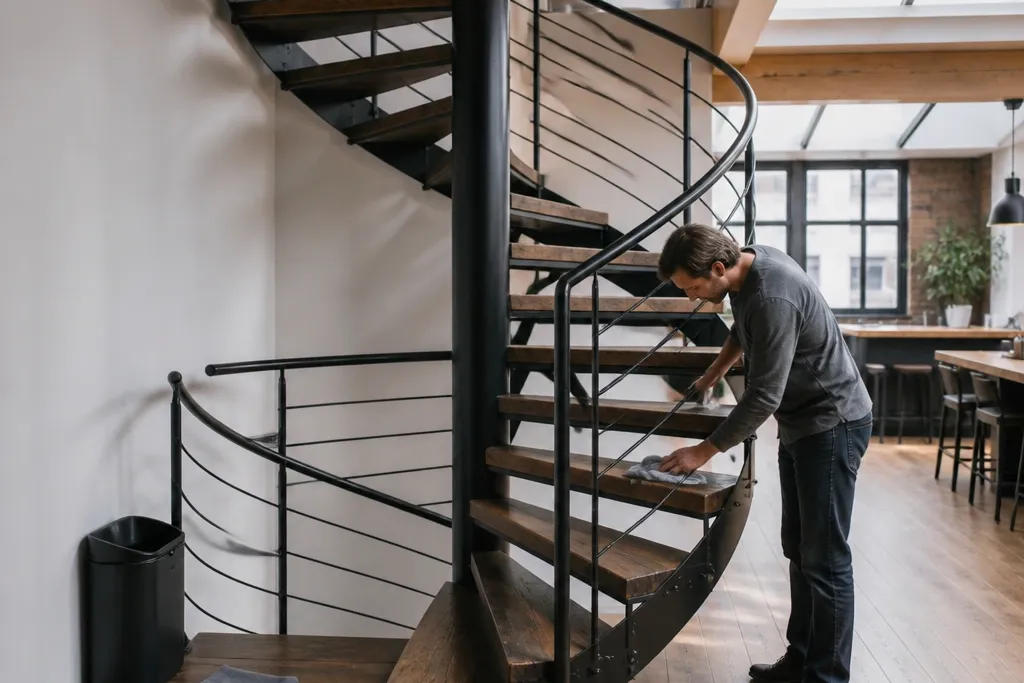
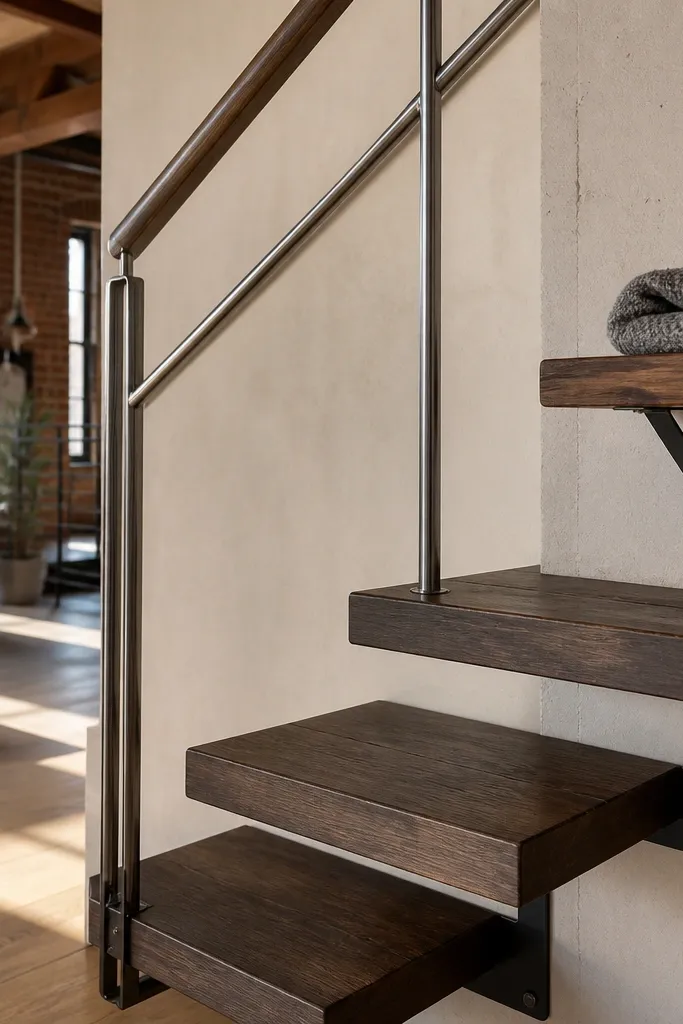
This look is clean, modern, and forgiving. Matte black powder-coated steel hides minor scuffs better than glossy paint, and it wipes down without streaking when you use a simple microfiber cloth. Smoked oak treads bring warmth, but the trick for low maintenance is the topcoat: choose a factory hard finish (not a thin DIY varnish) so shoe grit doesn’t embed. The contrast makes the staircase photogenic from every angle in a loft, especially with warm lighting. Skill level is moderate if you’re building from a kit, because the real work is getting tread surfaces and edges aligned so they don’t snag shoes.
Start with a powder-coated steel center column and handrail in matte black. Then install pre-finished smoked oak treads with the same thickness on every step, keeping the tread overhang consistent (measure from the center column to the tread edge on two adjacent steps and use that as your reference). Finally, seal any exposed wood edges with a clear, hard finish and add floor-safe rubber pads or glides where the staircase meets the loft framing to prevent rattles.
Use a wax-free wood cleaner on the oak; wax buildup makes treads look hazy under loft lights.
Avoid high-gloss clear coat on the oak tread tops because it shows hand smears and scuff lines fast.
2. Warm White Concrete Spiral with Brushed Nickel Rail
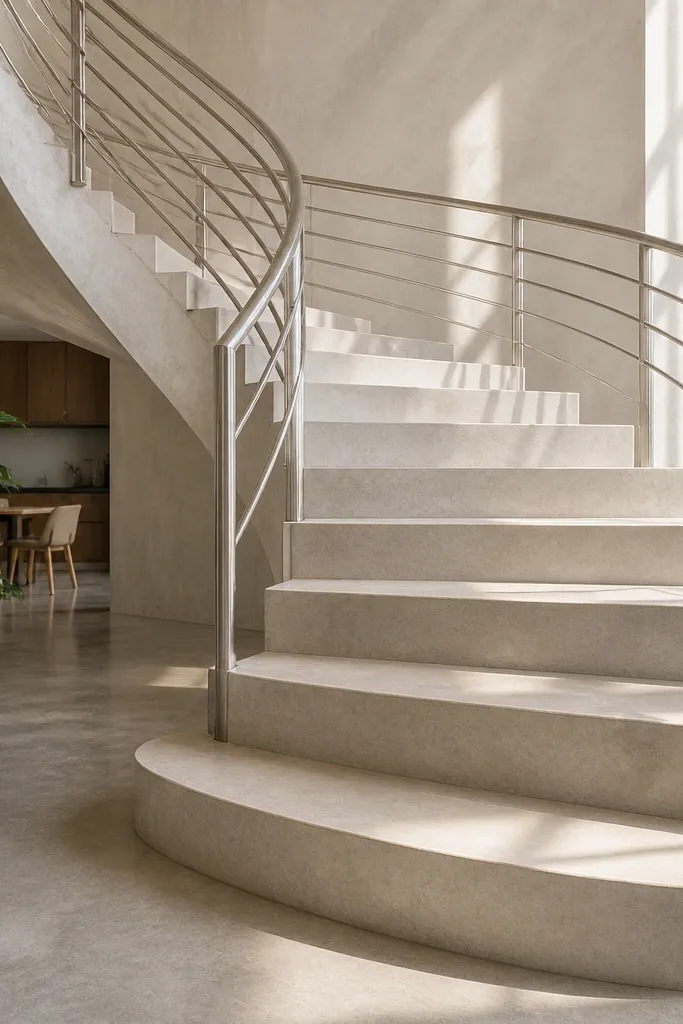
Concrete steps give you a stone-like look without the constant fuss of natural stone maintenance. If you use a sealed concrete topcoat (or choose precast sealed treads), it stays wipeable and won’t soak up oils from hands. Brushed nickel rail keeps the vibe light and airy, and it’s less visually loud than polished chrome when loft dust settles. This combo photographs well because the steps have subtle texture while the rail stays smooth and reflective. It also suits lofts with white walls and light floors, where dark metal can feel heavy.
Pick a staircase kit that accepts concrete or concrete-look treads, or plan for precast sealed step slabs sized to your spiral diameter. Install the treads with a consistent gap so grout-like dust doesn’t collect in seams; then use a construction adhesive rated for concrete and metal contact at each tread bearing point. Finish by sealing any cut edges, then secure the brushed nickel rail with manufacturer-approved brackets so there are no sharp edges catching debris.
Before final sealing, wipe treads with a dust-remover tack cloth so the sealer bonds evenly and doesn’t peel at edges.
Skip unsealed concrete-look surfaces; they stain from oils and turn gray in high-touch spots.
3. Charcoal Steel Spiral with Teak-Color WPC Treads
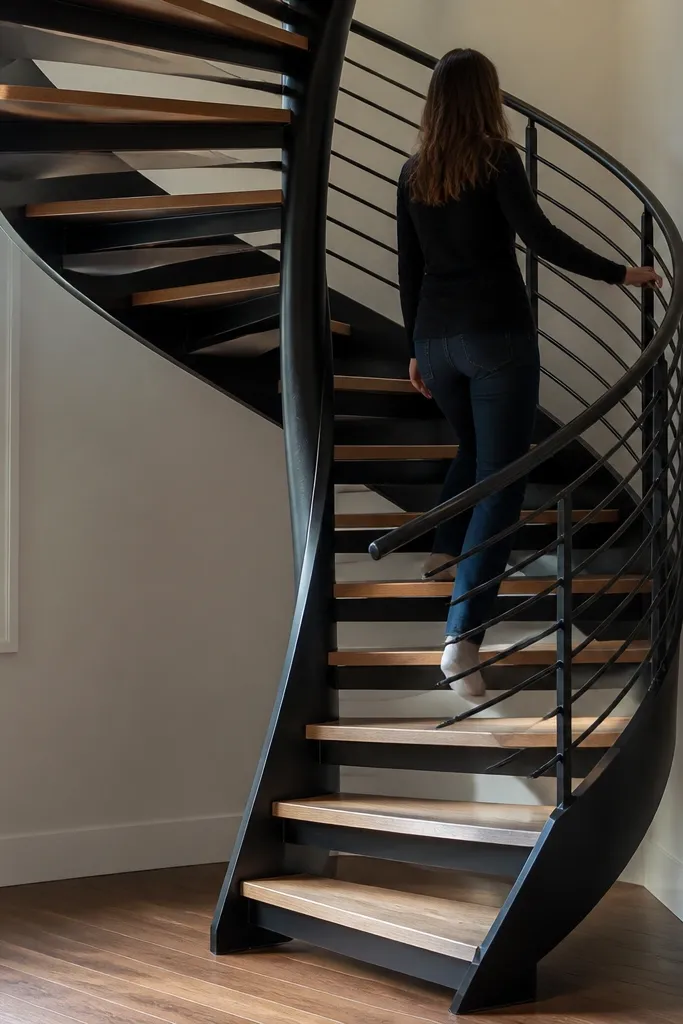
WPC (wood-plastic composite) treads are one of the most low-maintenance choices that still look warm. They resist staining, don’t require periodic re-oiling, and they handle shoe grit without turning patchy like some softwoods. Charcoal steel keeps the aesthetic grounded, and powder coating helps the whole staircase stay consistent even after scuffs. Teak-color WPC also photographs well because it reads as wood grain from a distance. This idea suits lofts with kids, pets, or frequent guests because the tread surface is forgiving.
Choose WPC treads sized for your spiral diameter and install them with hidden fasteners or threaded inserts so the top stays smooth. Coat or seal any cut ends on WPC (if your treads require trimming) using a compatible edge sealant to prevent moisture intrusion. Then assemble the charcoal steel structure and mount the handrail so the grip surface is continuous and easy to wipe.
Use a neutral cleaner (pH 7-8) for WPC; harsh solvents can dull the color over time.
Don’t sand WPC treads to “fix” edges; it creates rough spots that trap dirt.
4. Natural Oak Spiral with Clear Satin Film and Black Hardware
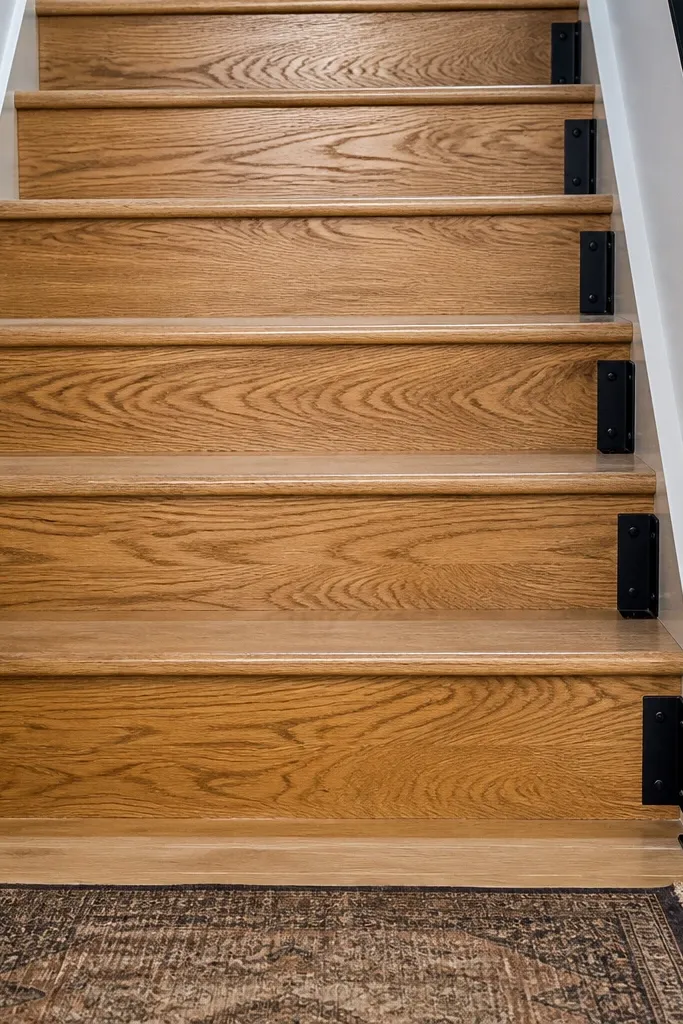
If you love wood, this is the way to keep it looking clean. Natural oak treads plus a satin hard-clear film gives you a matte feel that hides micro-scratches better than glossy finishes. Black hardware (brackets, fasteners, and a matte black rail) makes the grain pop without making every scuff obvious. A satin film also helps with loft glare; the stairs won’t look like they’re covered in fingerprints. This style works in bright lofts where you want warmth without the heavy look of full dark metal.
Editor's noteKeep the rail hardware matte; glossy bolts look messy after a few weeks of hand contact.
Select oak treads that are pre-finished with a hard, clear satin system, then install them with metal stringers that don’t rub the underside. Use black powder-coated brackets or install black anodized hardware to keep the visual line crisp. Finish by touching up any field cuts on the oak with the same satin system and letting it cure fully before regular use.
Skip thisAvoid oil-based “wipe-on” finishes for a high-touch loft staircase; they need redoing and show uneven wear.
5. Sage Green Powder-Coated Spiral with White Composite Treads
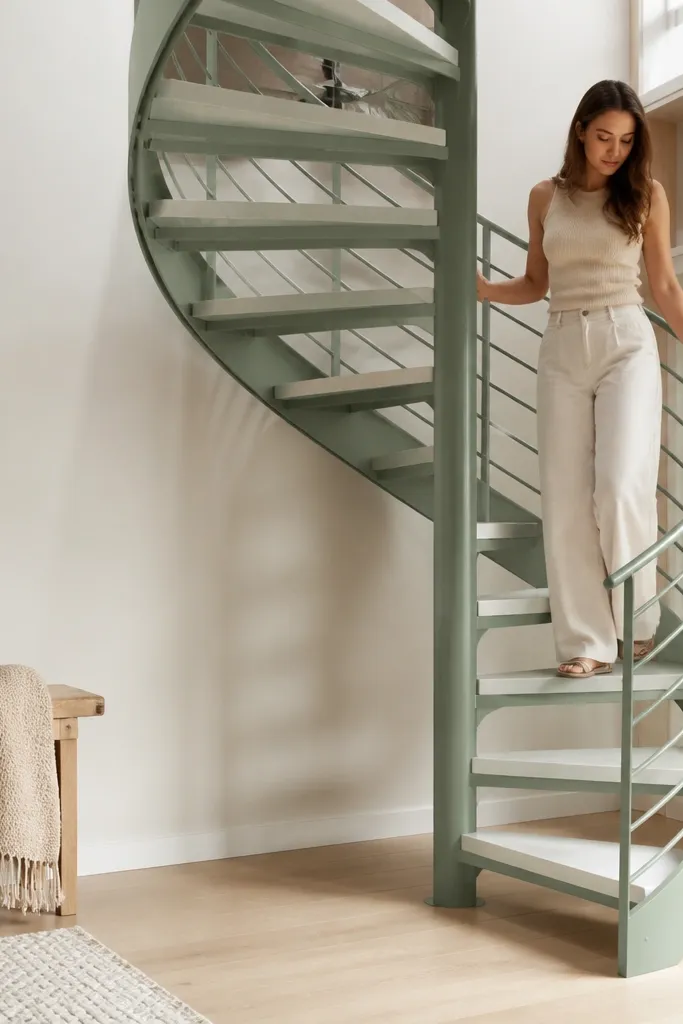
Sage green adds personality without turning the staircase into a loud focal point. Powder-coated steel in sage is wipe-clean, and the matte finish resists scuff visibility. White composite treads keep the steps bright and photogenic, and they’re easier to maintain than porous stone because you can clean them without worrying about staining. This combo looks especially good in lofts with warm wood floors or off-white walls. It’s a smart choice if you want “pretty” that still behaves like a practical surface.
Editor's noteFor white treads, keep a small spray bottle of diluted dish soap and water — quick wipe after dirty shoes prevents permanent discoloration.
Order or spray powder-coated sage steel components, then install the central column and step brackets first so you can check spacing. Mount composite white treads with consistent overhang and use gasket tape or thin rubber shims at contact points to prevent squeaks. Finally, wipe the full staircase with a mild degreaser before the first use so any manufacturing residue doesn’t smear under foot traffic.
Skip thisDon’t use glossy white coatings; they show every shoe mark and handprint.
6. Brushed Stainless Spiral with Clear Anti-Glare Step Coats
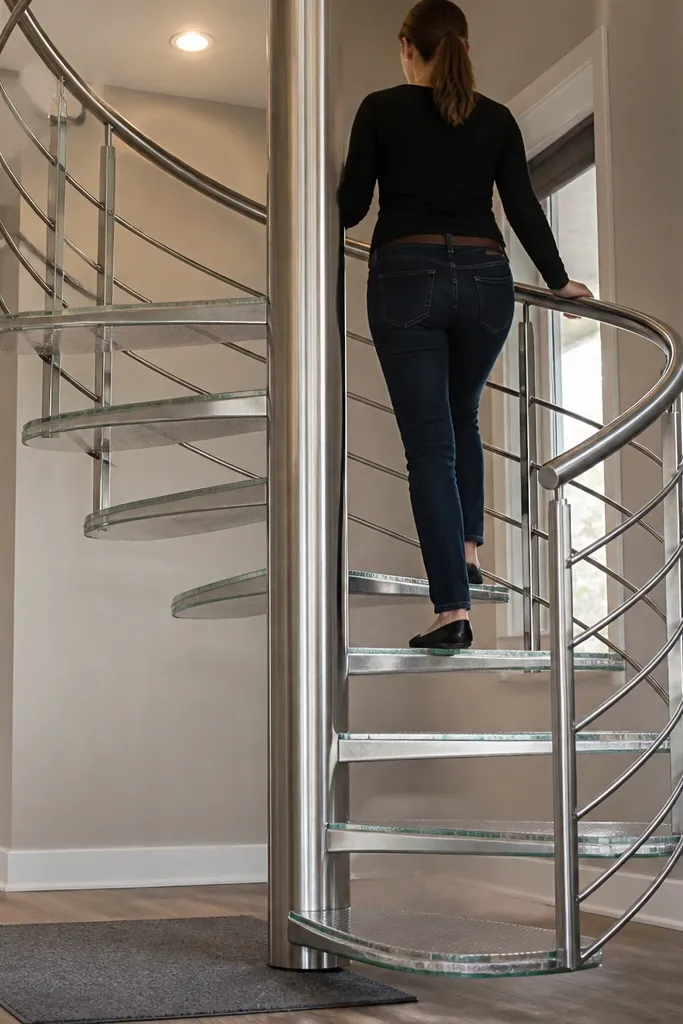
Stainless steel gives you a sleek, “clean lab” look that also stays pretty with minimal effort. Brushed stainless hides fingerprints better than polished, and it resists rust in humid lofts. The maintenance win is the tread surface: use a clear anti-glare topcoat rated for abrasion so the steps don’t get cloudy or scratched. This style is great for modern lofts where you want the staircase to look crisp against neutral walls. It also works well when you want the staircase to feel light and airy.
Choose brushed stainless for the center column and rail, then use abrasion-resistant clear topcoat on the tread material (wood or composite) rather than leaving it bare. Install treads with sealed underside contact points so moisture doesn’t creep into seams. After assembly, clean with a stainless-safe cleaner, then apply the anti-glare coat only after the staircase is fully mounted and stable.
Use microfiber cloths labeled for glass/clear coats; they reduce streaking on the anti-glare finish.
Don’t combine stainless with untreated wood treads; wood absorbs oils and will look uneven next to metal.
7. Espresso Stain Spiral with Ceramic-Top Treads
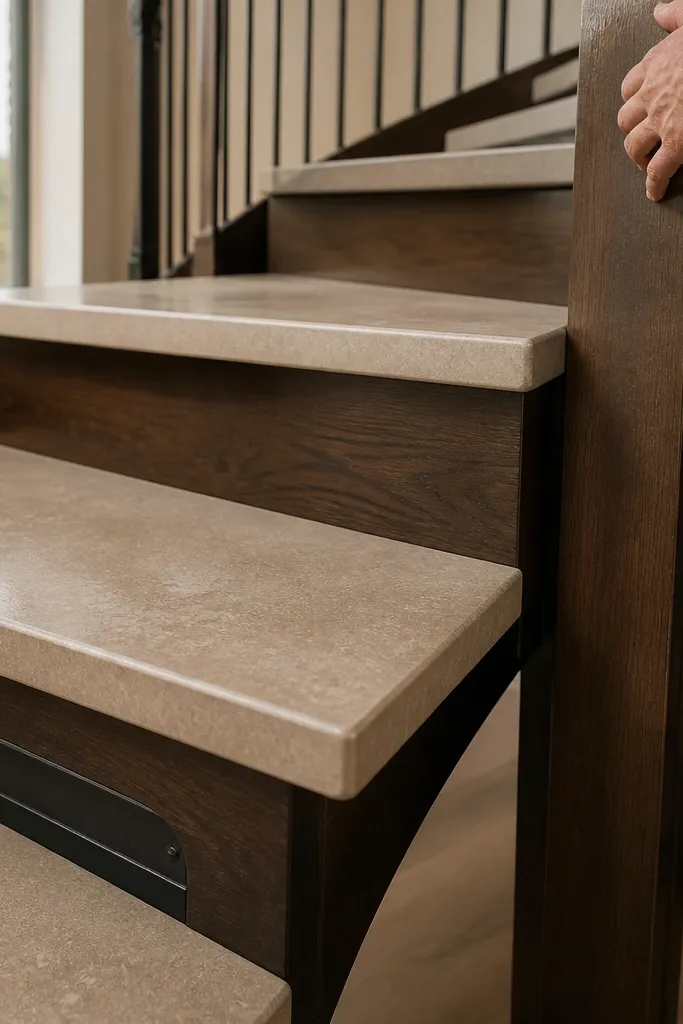
Ceramic-topped treads are the “set it and forget it” answer for a staircase that gets hammered. The tile surface is non-porous, resists stains, and wipes clean in seconds. Espresso-stained wood or wood-look structural elements keep the look warm, while the ceramic top makes the contact area durable. This idea looks especially high-end because tile can be chosen with subtle texture or a soft matte glaze that catches light without glare. It suits lofts with kids, messy shoes, or frequent entertaining where you want the stairs to stay presentable.
Editor's notePick a matte tile with micro-texture; glossy tile looks great at first but shows scuffs and glare quickly.
Build or buy a spiral frame that accepts tile treads, then use a cement board or tile-ready substrate for the tread top. Set ceramic tiles with thinset rated for interior floor surfaces, and grout with a stain-resistant grout for easier cleaning. Seal grout after it cures, then attach or finish the tread edges with an espresso trim piece so there’s a clean visual line and no raw substrate exposed.
Skip thisAvoid sanded, porous grout colors; they darken and require more scrubbing to look new.
8. Light Oak Spiral with White Powder-Coated Rail
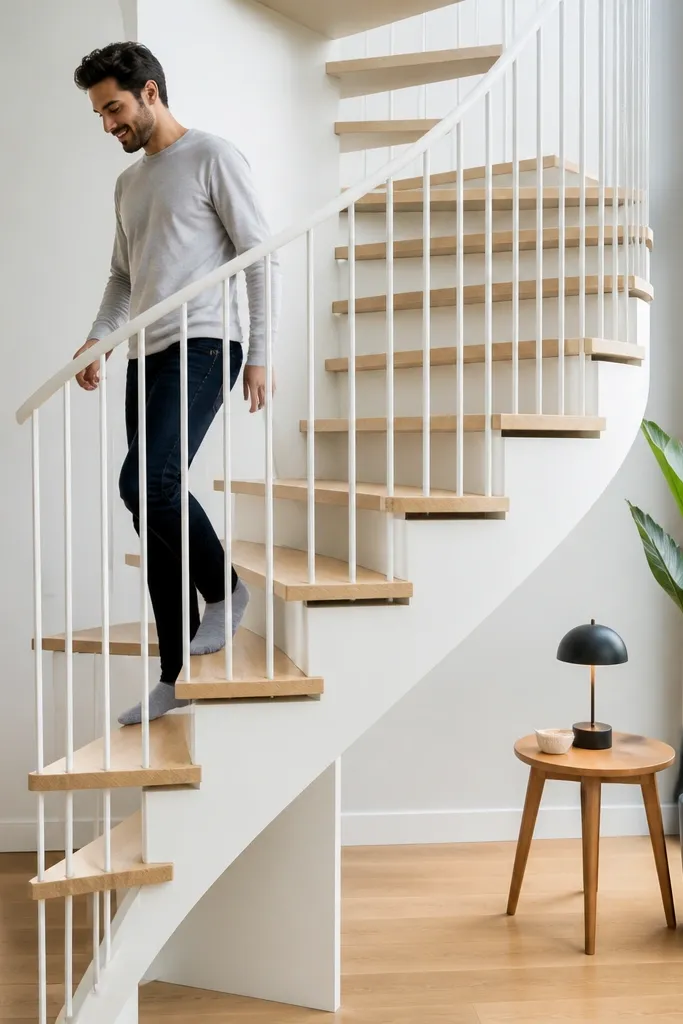
This is a bright, airy loft staircase that still stays low-maintenance. Light oak treads are attractive, but the key is the finish: choose a hard, clear satin that resists hand oils and reduces visible wear. A white powder-coated rail keeps cleaning simple because it’s non-porous and consistent in color. The look works best in rooms with light floors or big windows where the staircase can read as part of the space instead of a dark object. It’s also a good choice if you want a clean, modern look without going fully metal.
Editor's noteRound over any exposed tread edge corners slightly; it reduces chipping and makes wiping easier.
Install a light oak tread package with factory-finished satin clear coat, then mount a white powder-coated handrail with smooth, rounded grips. Use stainless or coated fasteners so you don’t get rust halos around the wood. Finish by sealing any drilled holes or cut edges on the oak and checking that the rail brackets don’t create tiny gaps where dust packs in.
Skip thisDon’t leave white rail sections uncoated; scratched primer shows and requires repainting.
9. Rustic Black Iron Look with Sealed HPL Step Surfaces
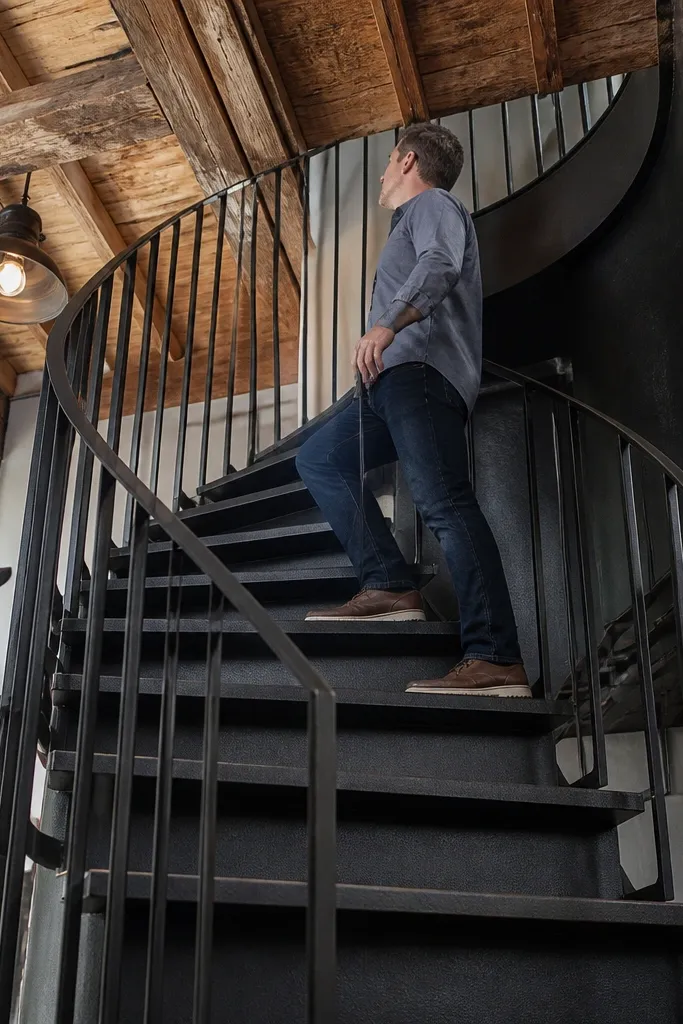
If you like the iron-work look but want modern maintenance, HPL (high-pressure laminate) treads are a strong move. HPL is tough, non-porous, and resists staining, so the steps stay clean even when the loft gets lived-in. Pair it with a black iron-look coating on the structure and you get that textured, old-world vibe without the rust worry. The laminate can be chosen in wood grain or matte stone patterns, which makes the staircase look intentional rather than “builder basic.” This is also one of the easiest options to keep looking crisp because you’re cleaning a sealed surface, not a porous one.
Editor's noteUse a laminate-safe cleaner; bleach and harsh degreasers can dull some patterns over time.
Choose HPL treads that fit your spiral radius and have sealed edges (edge banding matters for low maintenance). Attach the treads to the spiral frame using a construction adhesive rated for laminate-metal contact. Seal any field-cut edges with edge banding or a compatible sealant, then assemble the rail and confirm there are no sharp corners at the step edges.
Skip thisAvoid thin, unsealed laminate edges — that’s where dirt and moisture creep in.
10. Travertine-Look Seal-Coated Steps with Matte Bronze Rail
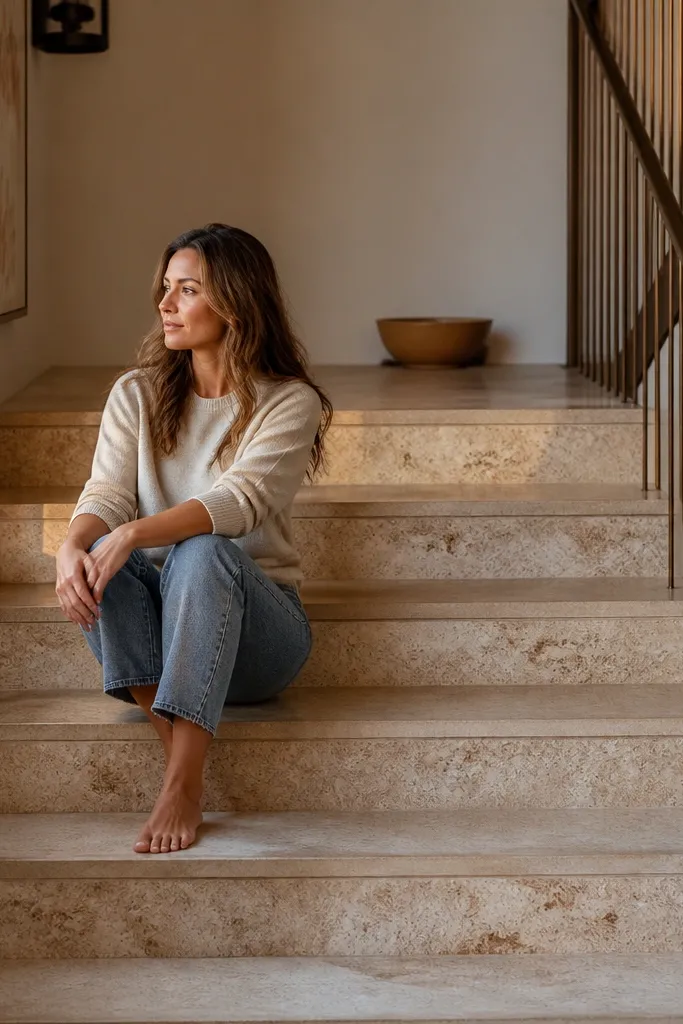
Travertine-look steps give you that layered stone aesthetic without the constant stone upkeep, as long as you use a properly sealed surface. The sealed finish is what keeps the treads wipe-clean and prevents oil absorption from hands and food spills. Matte bronze rail adds warmth and frames the stone look, and it also hides minor scuffs better than mirror finishes. This combination makes the staircase read expensive in photos because the step texture catches light from loft fixtures. It’s a great fit for neutral lofts with beige walls, warm lighting, and natural wood.
Editor's noteUse a spray-on, wipe-off stone-safe cleaner that doesn’t leave residue; residue makes travertine-look surfaces look patchy.
Buy travertine-look composite or laminate treads with a factory-sealed top, or use real stone only if it’s professionally sealed and maintained. Install the sealed treads to the spiral frame with a thinset or adhesive system appropriate for the tread material. Seal any cut edges and grout lines if you have them, then mount the matte bronze rail with spacing that keeps dust from packing behind brackets.
Skip thisSkip unsealed travertine-look surfaces; they stain and start looking blotchy.
11. Graphite Gray Powder-Coated Spiral with Walnut Veneer Treads
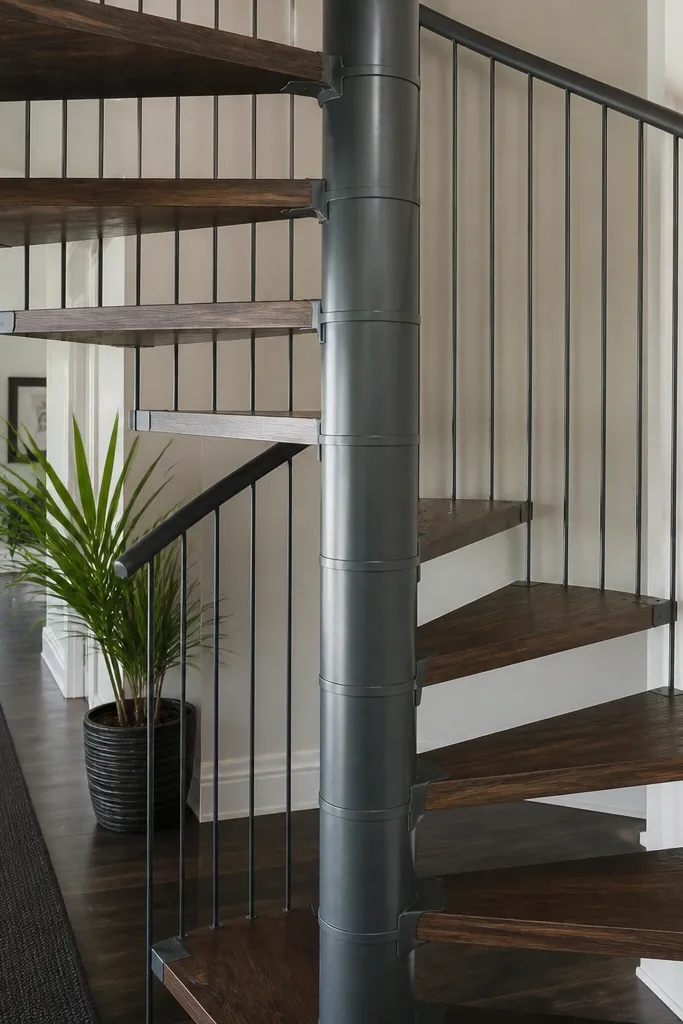
Walnut veneer looks premium, but the maintenance comes down to how it’s finished. When veneer treads are factory-coated with a hard, clear system, they stay smooth and wipeable instead of turning blotchy. Graphite gray powder-coated steel gives you a modern, soft-black tone that hides scuffs without looking flat like matte black. The walnut veneer grain adds depth, so the staircase looks great even in dim loft corners. This idea is best when you want warmth and contrast but don’t want the upkeep of untreated wood.
Pick walnut veneer treads that are factory-finished and rated for abrasion on foot traffic. Install them with tight tolerances so the veneer edges aren’t exposed to constant shoe scraping. Assemble the graphite powder-coated structure first, then mount the rail last so you can align the hand contact height and check that the rail doesn’t rub the treads. Touch up any chips with matching clear coat and allow full cure before heavy use.
Ask for a hard-clear finish spec (not “polyurethane” in general) so you get a durable abrasion layer for treads.
Avoid DIY staining over veneer for stair treads; it creates uneven sheen that screams “maintenance needed.”
12. Two-Tone Spiral: Black Center Column, Natural Stone-Look Treads
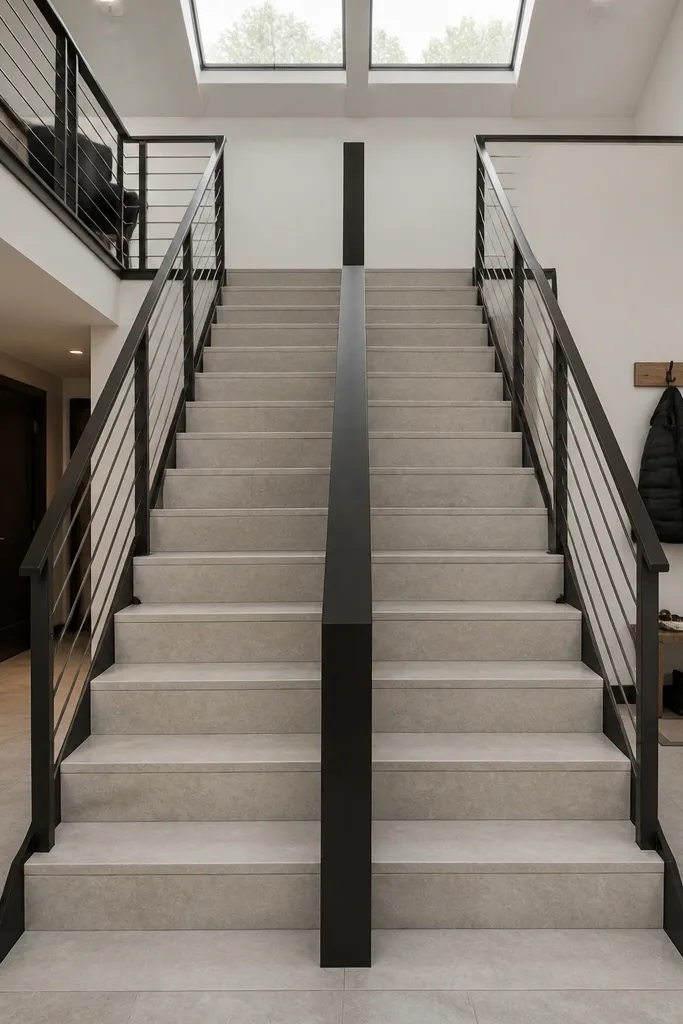
Two-tone stairs look intentional and hide wear because scuffs blend better across different materials. A black center column and rail keep the structure visually tight, while stone-look treads add texture that photographs beautifully. The low-maintenance part is choosing stone-look treads that are sealed and non-porous, like composite stone or sealed laminate. That way, you get the stone vibe without the constant sealing cycle. This style works in lofts that already have one strong neutral — gray concrete, white plaster, or natural wood — because the staircase doesn’t fight the room.
Choose sealed stone-look treads sized to your spiral and verify they have sealed edges or edge banding. Install the black center column and brackets, then place the treads with consistent overhang and clean, even spacing between each step. Add a black rail with rounded ends and wipeable coating, then do a full cleaning pass before first use to remove installation dust that can stain stone-look finishes.
Use a felt or rubber shim under each bracket contact point to reduce squeaks and keep the finish from rubbing.
Don’t mix matte and glossy finishes randomly; dust shows up on glossy spots and looks messy in photos.
13. Cedar-Color Spiral with Weatherproof Composite Treads and White Rail
Cedar color looks warm and modern, and weatherproof composite treads make it truly low maintenance. Composite treads resist stains and don’t require periodic oiling, so the stairs stay neat even with frequent use. A white rail brightens the line and keeps the staircase from feeling heavy, especially in a loft with light walls. The whole look stays photogenic because the colors are clean and the treads have a stable, sealed surface. It’s a smart option for lofts near doors or entryways where dirt gets tracked in.
Editor's noteKeep a soft brush for the tread edges; grime collects at seams and wipes off faster when you remove it early.
Select a cedar-color powder-coated or coated steel frame, then choose weatherproof composite treads with a matte top. Install the treads using manufacturer-recommended fasteners and check that each step has the same pitch so shoes land flat. Mount the white rail with smooth supports and add any required end caps so there’s no raw metal exposed. Clean thoroughly after installation and avoid abrasive pads that can dull composite treads.
Skip thisAvoid untreated “cedar look” painted surfaces; chips show as a rough, hard-to-touch-up spot.
14. Black and Brass Spiral with Anti-Fingerprint Tread Coats
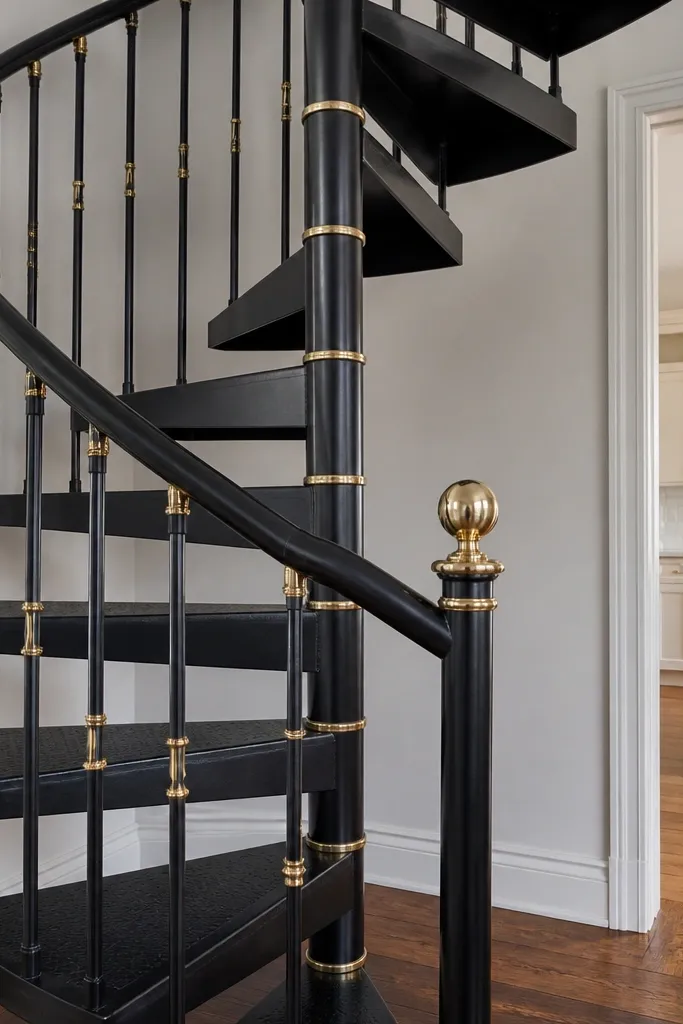
Brass accents make the spiral feel elevated, but maintenance is where most people get burned. The solution is to keep the structure matte black and use brass only on small, cleanable parts like the rail cap or decorative rings. For treads, use an anti-fingerprint or abrasion-resistant topcoat on wood or composite so fingerprints don’t turn into permanent smears. This look is gorgeous in lofts with warm bulbs because brass glows without looking greasy. It also stays photogenic because matte black hides scuffs while brass highlights the design instead of showing dirt.
Editor's noteDry the brass after cleaning — water spots are the one thing that makes brass look “dirty” in photos.
Choose matte black powder-coated steel for the main frame, then add brass accents as separate pieces with secure mounting. For treads, select a factory anti-smudge topcoat or apply a hard, clear abrasion finish designed for high-touch surfaces. Install treads, then mount brass elements last so you can protect them during assembly. Finish by wiping brass with a gentle brass cleaner and drying fully to avoid water spots.
Skip thisAvoid placing brass on the full hand contact area; it needs more frequent cleaning than matte black.
15. Olive Green Spiral with Stone-Effect Epoxy Treads
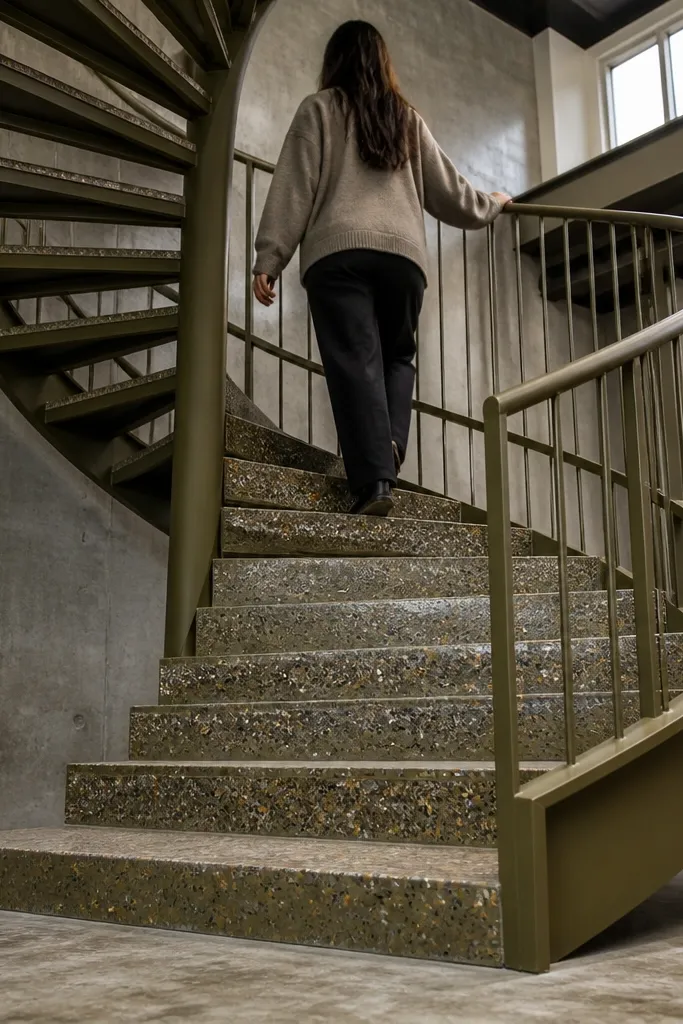
Epoxy-coated treads can look like stone when you pick the right system, and they’re extremely wipeable once cured. Olive green powder coating on the steel gives a muted, earthy tone that hides scuffs, while the stone-effect epoxy top adds depth and keeps the treads durable. The low-maintenance win is that epoxy is non-porous and resists staining and hand oils. This idea is especially photogenic under textured wall finishes because the treads look dimensional. It’s also a practical pick for lofts where you want a dramatic look without constant refinishing.
Start with an olive green powder-coated spiral frame. Prep the tread base thoroughly (clean and lightly abrade if required by the epoxy instructions), then pour or roll a stone-effect epoxy system in thin, even coats. Add a non-slip additive if the loft gets wet shoes, then cure fully before using. Once cured, inspect edges and seal any exposed substrate so dust can’t collect.
Use tape dams at the tread perimeter to keep epoxy edges crisp and reduce sanding later.
Don’t rush cure time; using the stairs before full epoxy cure leads to tacky spots and permanent scuffs.
16. Sand Beige Spiral with Micro-Textured Painted Rails and Sealed Wood Treads
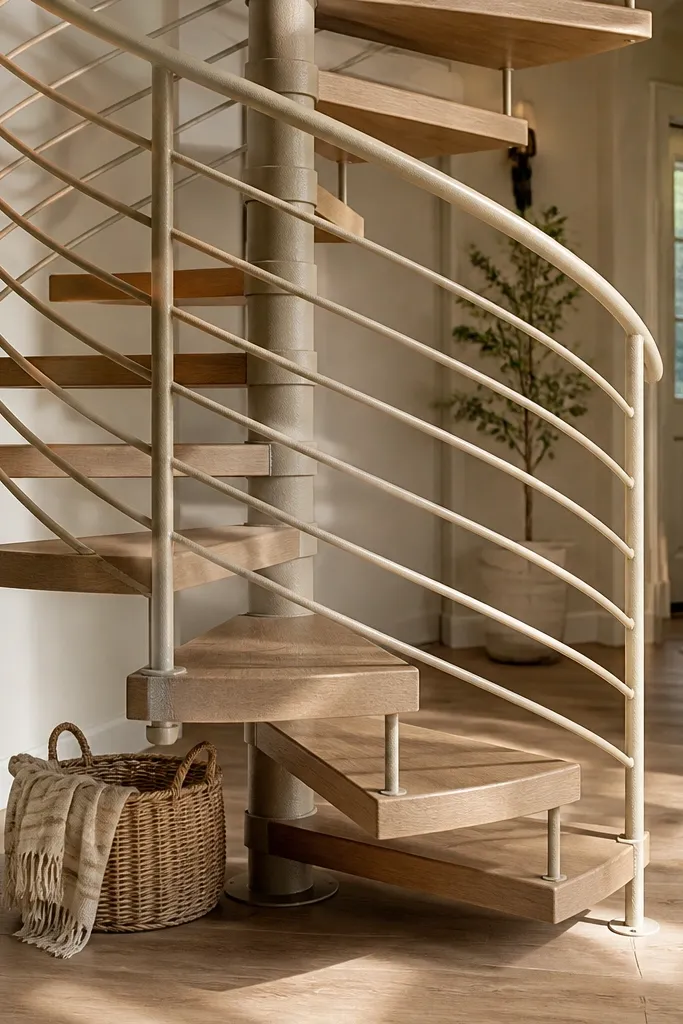
Micro-textured paint on rails is a small change that makes a big difference. It hides hand smudges and minor scratches better than smooth paint, so the rail stays looking clean between wipes. Pair that with sealed wood treads in a warm neutral tone, and you get the “soft” look without porous surfaces. Sand beige steel keeps the staircase light in the room, and the textured rail catches light in a flattering way. This style works in lofts with beige walls, linen curtains, and warm wood floors.
Choose sand beige powder-coated steel for the structure, then apply or select micro-textured paint for the rail so fingerprints don’t show. Install sealed wood treads with a hard clear coat and verify the tread top is non-porous. Mount the rail with brackets that don’t leave gaps, then clean off installation dust before finishing. Finally, test a wipe with a damp microfiber cloth on an inconspicuous spot to confirm the finish doesn’t streak.
Use a rail-safe cleaner and avoid all-purpose degreasers; some leave a film that changes the texture look.
Avoid flat matte rail paint; it absorbs oils and turns patchy fast.
17. Black Steel Spiral with Rattan-Style Tread Screens and Wipe-Clean Liners
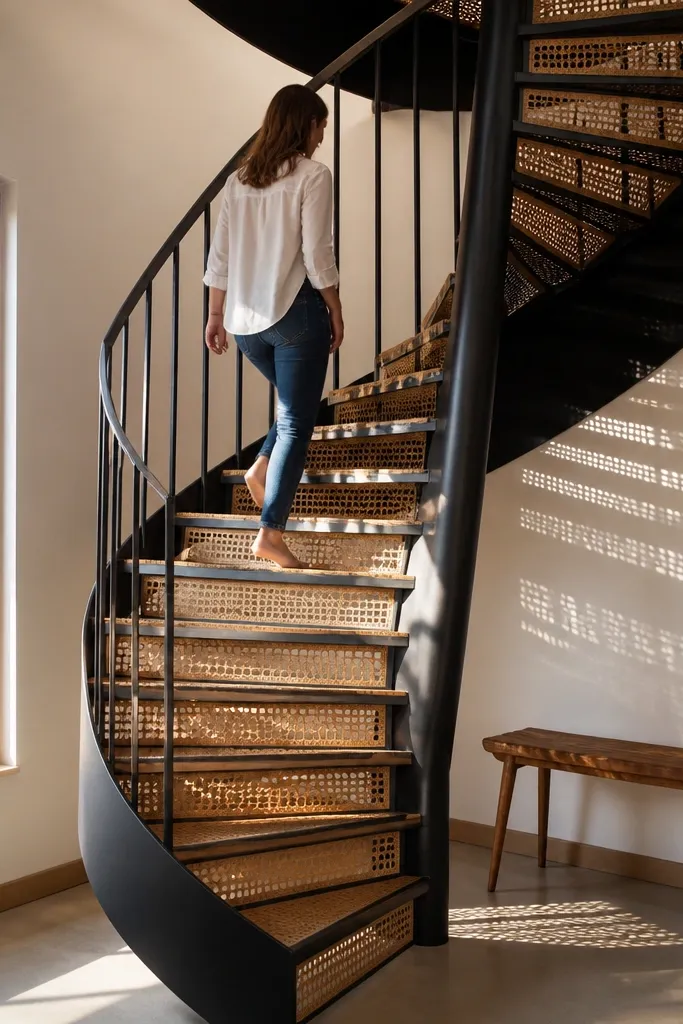
This is the playful, photogenic option that still stays low-maintenance because the contact surface is protected. The idea is to use a black steel spiral for the structure, then add rattan-style visual tread screens while keeping a wipe-clean liner or sealed top panel underneath. It gives you that airy, design-forward look without relying on porous materials where shoes land. In photos, the screen pattern adds texture and shadow, which makes the staircase feel custom. It’s a good choice if you want aesthetic interest but your real priority is easy cleaning.
Build the spiral with black powder-coated steel, then design tread openings that accept removable screen panels. Install sealed, wipe-clean tread liners under each screen so the shoe contact is protected. Attach the screens with hidden clips so you can remove them weekly to vacuum and wipe; then mount the handrail with a matte, wipeable finish. Finish by adding corner guards on the liner edges so they don’t peel or lift.
Vacuum the screen underside with a brush attachment; dust trapped under the pattern makes the staircase look dull.
Skip real rattan as the tread contact surface; it frays and stains where shoes hit.
18. Graphite Spiral with Dark Smoke Glass Tread Inserts
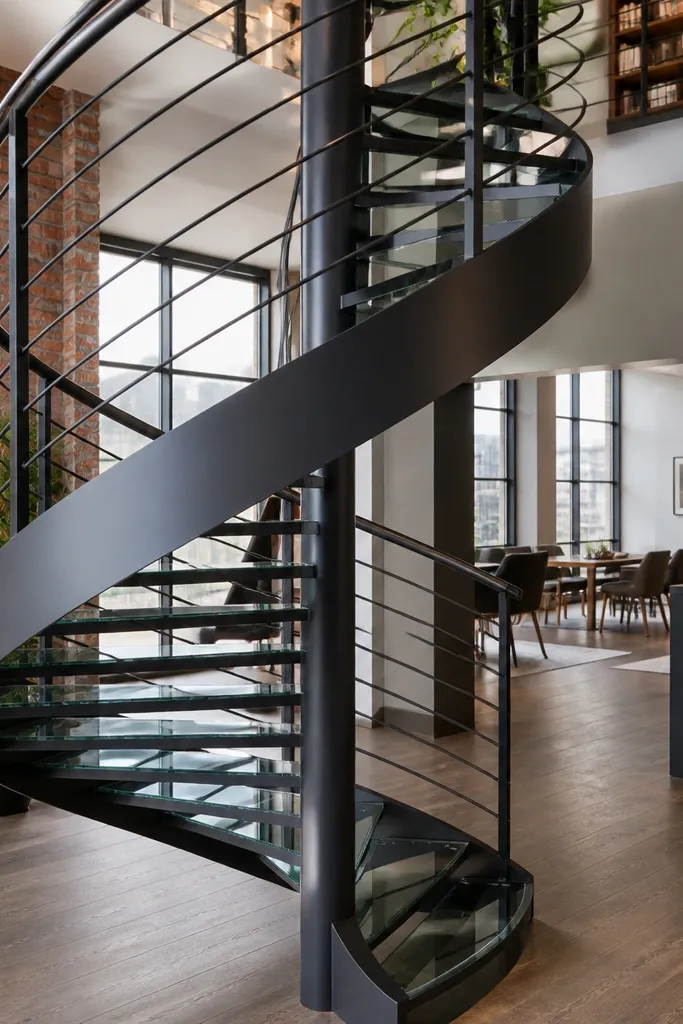
Smoke glass inserts make the staircase look dramatic and modern, especially in lofts with overhead lighting. The maintenance benefit is that glass is non-porous and wipes clean quickly, and it doesn’t absorb oils. You pair it with graphite steel so the glass looks intentional instead of floating. For safety and practicality, you use textured or anti-slip glass inserts with a sealed edge system so you don’t get debris trapped at the perimeter. This idea is best when you want the staircase to feel light and high-end in photos while still being easy to clean.
Editor's noteUse a microfiber cloth dedicated to glass; paper towels leave micro-scratches that show as glare.
Choose graphite powder-coated steel for the structure and install a tread frame that accepts glass insert panels. Use smoke glass inserts with a non-slip surface treatment and sealed edges so dirt doesn’t creep into the seam. Install inserts with manufacturer-approved gaskets and clips, then mount the rail in the same graphite finish. Clean the glass with a streak-free glass cleaner after installation and dry with a microfiber cloth.
Skip thisDon’t use clear glass without anti-slip texture; it looks sleek but becomes slippery and shows every footprint.
19. White Powder-Coated Spiral with Gray Composite Treads and Hidden Drain Grooves
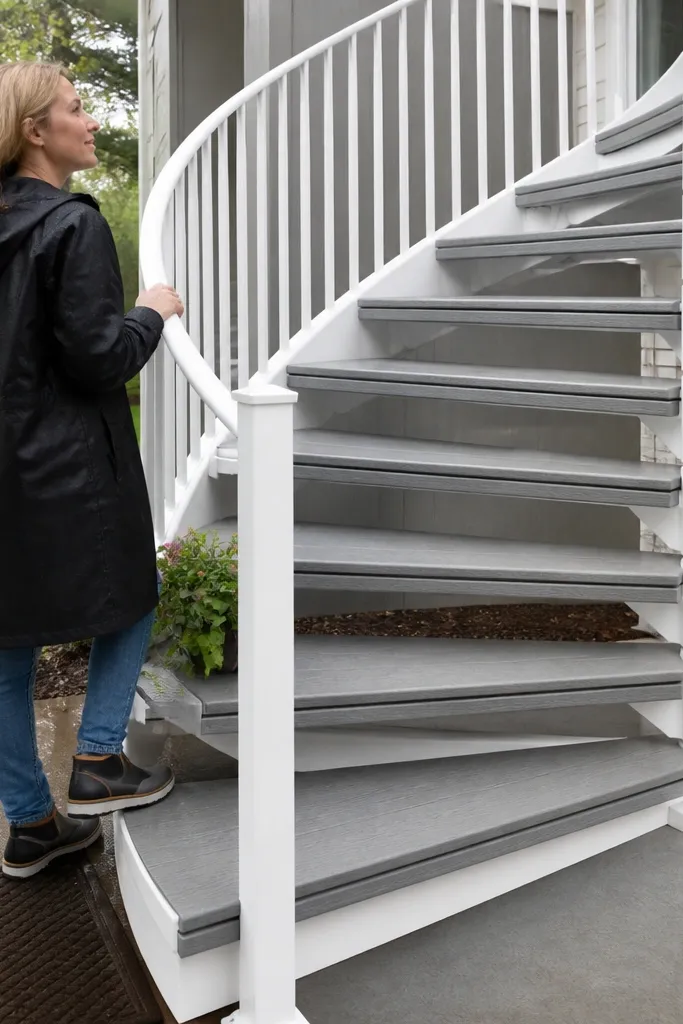
White powder-coated steel makes the staircase feel crisp, and gray composite treads hide grit better than bright white. The “low-maintenance” upgrade here is adding shallow drainage grooves or channels in the tread design so water and shoe grime don’t sit in flat pockets. With sealed composite, that grime wipes away faster because it isn’t trapped. The look stays photogenic because the white frame reads clean even when the loft is busy. This style suits spaces where people come and go — near patios, garages, or entry doors.
Use a white powder-coated spiral frame, then select gray composite treads that include drainage channels or choose treads designed for outdoor-like wipe-clean performance. Install treads with sealed underside contact points and keep seams tight so dust doesn’t pack into the channels. Mount a gray or matching white handrail and use end caps to prevent debris buildup. After assembly, run a quick hose-free wipe test: pour a little water onto a tread in a controlled area and confirm it channels away instead of pooling.
Mark one stair tread as the “cleaning target” — keep it spotless because it’s usually the most stepped on.
Avoid flat, seam-heavy tread designs if your loft sees wet shoes; grime collects and becomes hard to remove.
20. Walnut Veneer Spiral with Matte Black Steel and Anti-Slip Stair Tread Strips
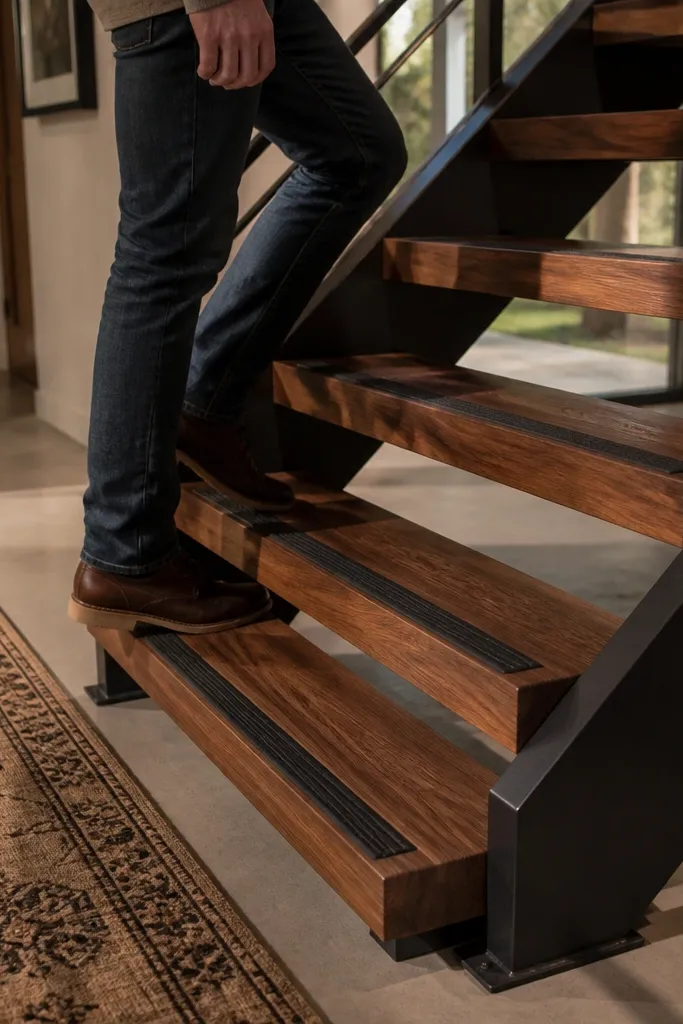
Walnut veneer looks warm and expensive, and matte black steel keeps the overall staircase from becoming too “light and fussy.” The low-maintenance part is the traction solution: instead of relying on a rough finish, use anti-slip tread strips over a smooth, sealed top surface. That way you keep the wipe-clean finish while improving grip, and the strips hide scuffs better than bare wood. This idea photographs well because the walnut grain reads clearly, while the matte black structure makes the pattern stand out. It’s a solid choice for loft stairs used daily.
Editor's noteUse a straightedge and template for strip placement; uneven strips look messy fast in close-up photos.
Choose walnut veneer treads with a factory hard clear coat, then apply anti-slip stair tread strips rated for interior use. Install the matte black steel structure, then mount the treads and rail. Cut strips to the tread width with a clean straight edge and press them firmly so edges don’t curl. Finish by checking that tread edges are protected and there are no sharp transitions where a shoe sole could catch.
Skip thisSkip sandpaper “roughening” of sealed wood; it increases dirt grip and makes the wood look worn.
21. Terrazzo-Look Composite Spiral with Satin Chrome Rail
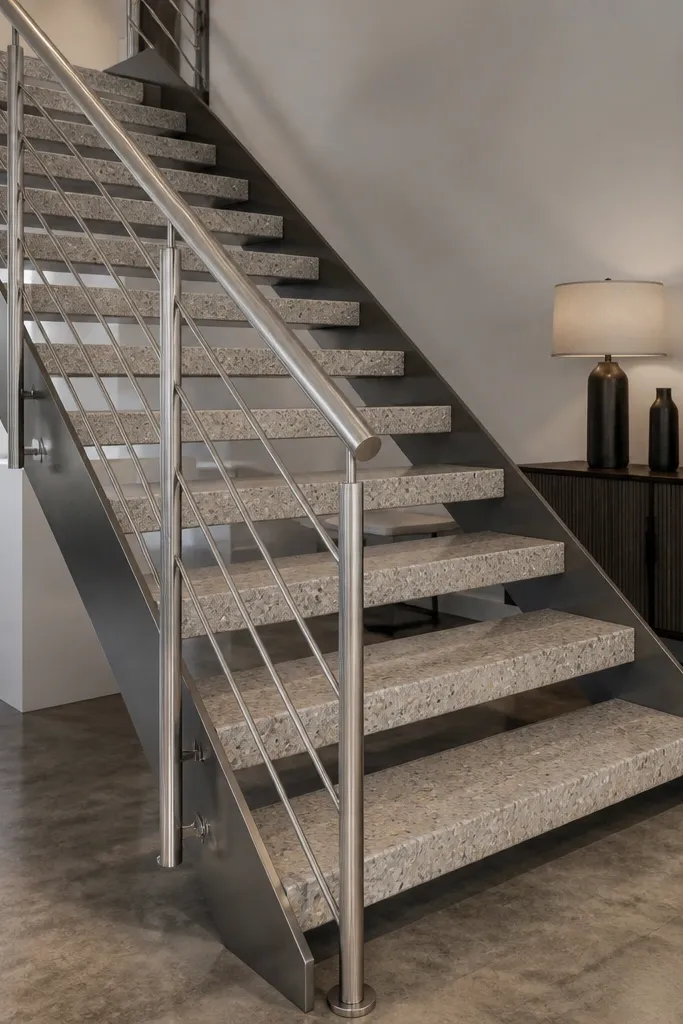
Terrazzo-look composite treads give you a speckled, designer look that hides scuffs and dirt better than solid colors. Because it’s sealed and non-porous, it cleans quickly and doesn’t stain like natural terrazzo can if it’s not maintained. Satin chrome rail keeps the line bright without the mirror-fingerprint problem of polished chrome. This combination is photogenic because the terrazzo specks catch light and add movement to the staircase in every angle. It suits modern lofts with gray, white, and warm neutrals.
Editor's noteAvoid abrasive scrubbers on terrazzo-look — they can dull the speckle finish.
Choose a spiral frame with compatible tread supports, then install terrazzo-look composite treads with sealed edges. Mount the satin chrome rail with rounded grips and stable brackets to prevent wobble. Seal any field-cut areas on the composite and ensure the tread top is smooth and continuous. Clean after installation with a gentle, non-abrasive cleaner so the speckle pattern stays crisp.
Skip thisDon’t use solid white treads with terrazzo-look elsewhere; it creates a mismatch where dirt stands out on the first scuffed steps.
22. Black Steel Spiral with Removable Washable Tread Covers
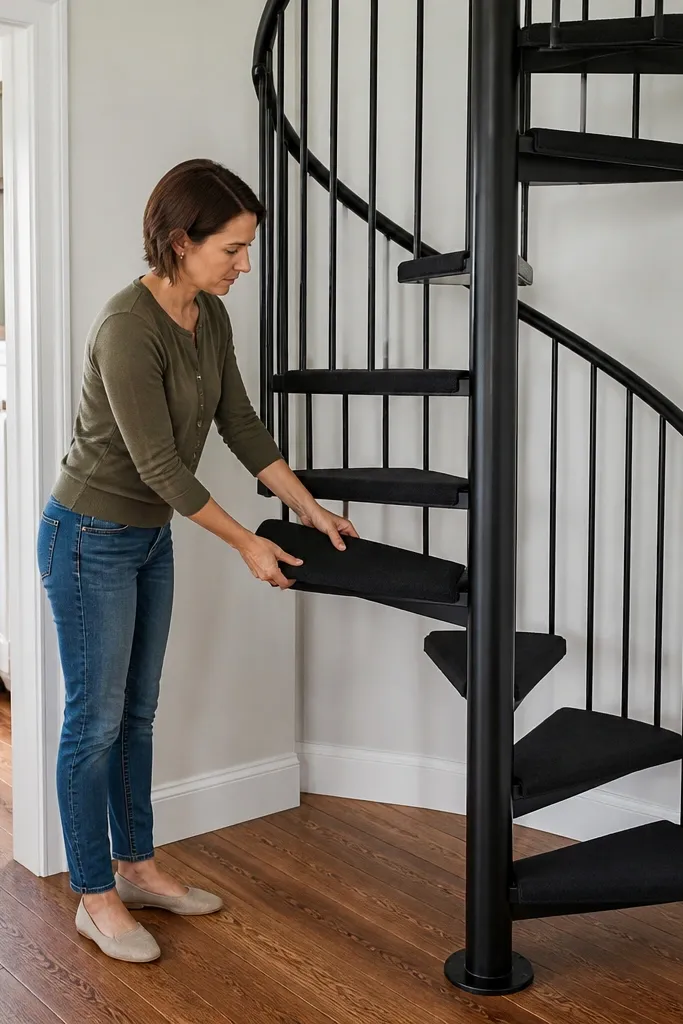
If your loft traffic is messy, removable covers are the real low-maintenance hack. The structure stays black powder-coated and wipe-clean, while the visible tread surface is a washable cover that you can remove and launder on a schedule. This keeps the staircase looking “styled” instead of “worn,” and it also protects the underlying tread finish from shoe grit. Choose covers with a tight weave and a grip backing so they don’t slide. The look is still photogenic because you’re intentionally styling the treads with a pattern or texture that matches your loft.
Build or buy a black powder-coated spiral staircase with smooth, sealed tread tops underneath. Install tread covers using non-slip grip pads or Velcro-like tread anchors designed for indoor use so the covers can be removed. Pick a cover fabric that handles washing and doesn’t shed fibers easily, then test the fit on the most-used steps first. Finally, vacuum the covers before every wash so they don’t trap grit in the washer.
Have two sets of covers so you can swap and wash without living with a half-finished staircase.
Don’t use loose covers without anti-slip backing; they shift and look sloppy fast.
23. Steel Spiral with Light Stone-Effect Laminate Treads and Oak-Color Handrail Wrap
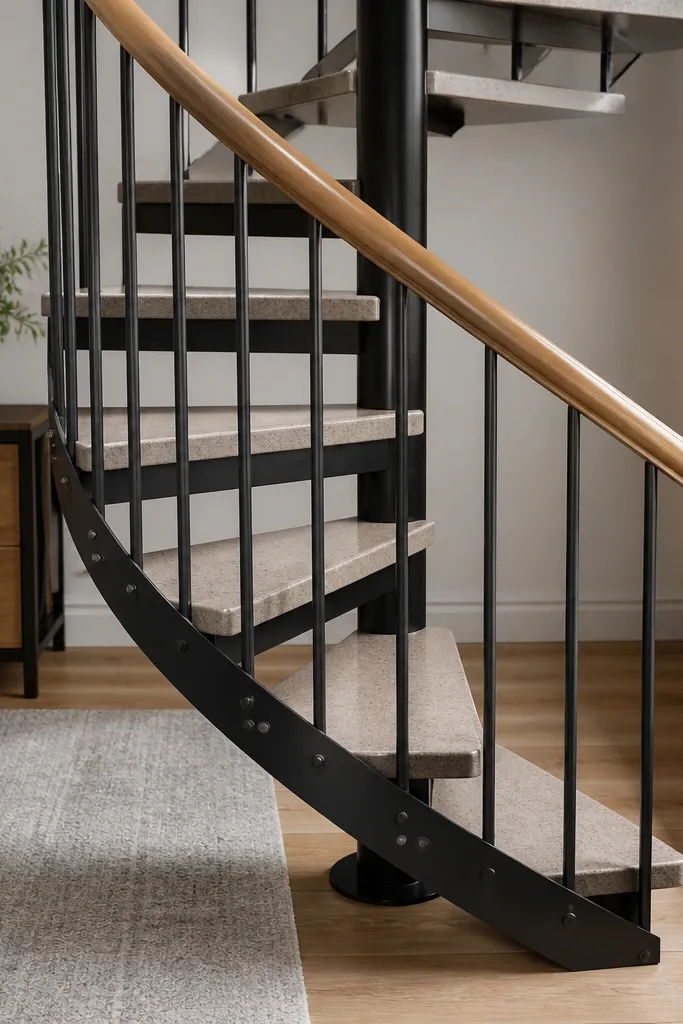
This is a “best of both worlds” look: stone-like treads with low maintenance, plus a warm hand feel on the rail. Laminate treads are sealed and wipeable, so you get the visual texture of stone without the staining and sealing schedule. The handrail wrap adds comfort and helps with grip, and if you choose a wipeable, coated wrap material it stays clean instead of soaking oils. It photographs nicely because the treads bring visual texture while the rail stays warm and inviting. This idea is great if you want the staircase to feel cozy even though the base materials are tough and easy to maintain.
Choose a steel spiral kit with a matte or satin finish, then install light stone-effect laminate treads with sealed edges. Add an oak-color handrail wrap that’s designed for grip and can be wiped clean; keep the wrap seam on the back side of the rail. Use rail end caps and tight wrap tension so the wrap doesn’t bunch. Finish by wiping down the laminate treads with a laminate-safe cleaner and drying so dust doesn’t stick to any residue.
Wrap the rail with a tight overlap and trim cleanly at the ends; loose edges collect grime.
Avoid fabric-only rail wraps without a wipeable coating; they stain where hands hit every day.
24. Matte Bronze Spiral with Sealed Micro-Cement Treads
Micro-cement style treads look modern and architectural, and sealed versions stay low-maintenance compared with bare cement. The finish is smooth, uniform, and wipeable when you use the correct topcoat system. Matte bronze rail adds warmth and hides small scuffs better than shiny metal, which matters on a staircase that gets touched constantly. This look is strong in lofts with concrete floors, dark trim, or warm lighting because the bronze and micro-cement tones play well together. It’s also photogenic because the treads have subtle texture without looking busy.
Editor's noteUse a topcoat with a satin sheen, not high-gloss; satin hides wear and looks better in overhead lighting.
Choose micro-cement treads that are already sealed or use a micro-cement overlay system designed for interior floors and cured topcoat. Install the treads on the spiral frame with a compatible adhesive and keep seams sealed. Mount the matte bronze rail and ensure bracket contact points are coated so you don’t get rust transfer. After curing, do a wipe test with a damp cloth to confirm the topcoat doesn’t smear.
Skip thisSkip DIY micro-cement on stair treads without a proven floor topcoat system; it can wear unevenly and stain.
25. Black Spiral with Factory-Finished White Oak Treads and Cable-Style Rail
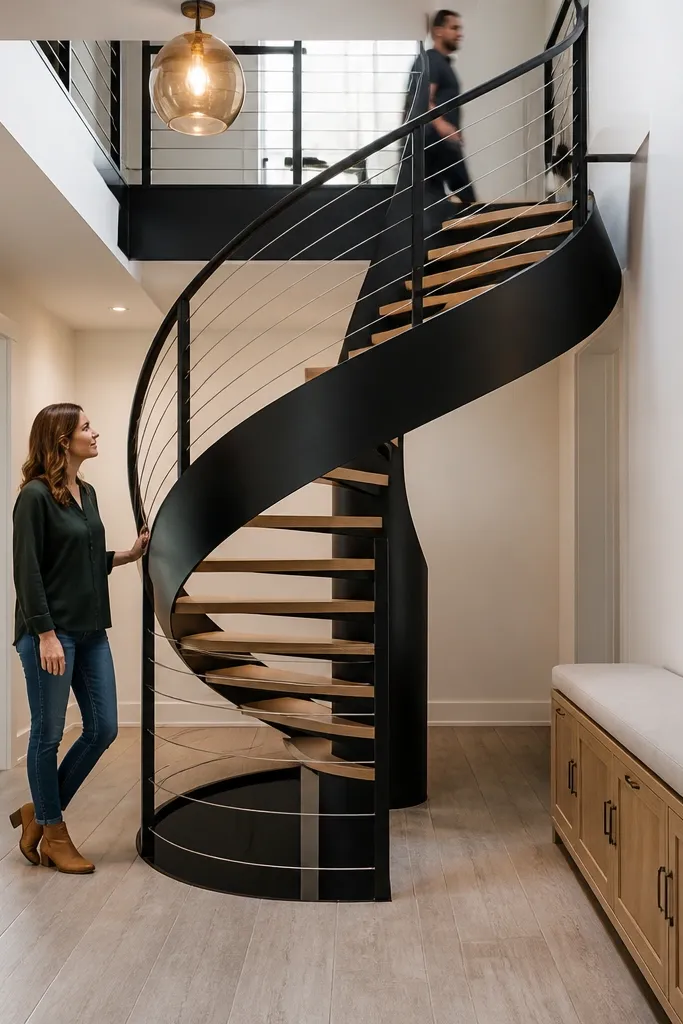
Cable-style rails look airy and modern, and they can still be low maintenance if the cables and fittings are coated properly. Pair them with factory-finished white oak treads so the contact surface is hard, sealed, and wipe-clean. The contrast between white oak and black structure makes the staircase read crisp in photos, even when the loft has clutter. Cable rails also reduce horizontal surfaces where dust settles, which helps with quick cleanups. This style works well in minimalist lofts where you want visual openness.
Editor's noteUse a small microfiber cloth wrapped around a finger for cable cleaning; it reaches into the tight gaps fast.
Install a black powder-coated spiral frame and mount white oak treads with a factory hard clear coat. Choose coated stainless cables or a coated cable rail system and tension it according to the manufacturer’s instructions. Keep cable ends capped and check clearance so hands don’t snag on fittings. Clean the cables with a soft microfiber and mild cleaner after installation, then wipe the oak treads dry to prevent spots.
Skip thisAvoid uncoated cables; they spot and discolor where hands touch.