
1. Matte Black Rail with Walnut Treads and Brass Caps
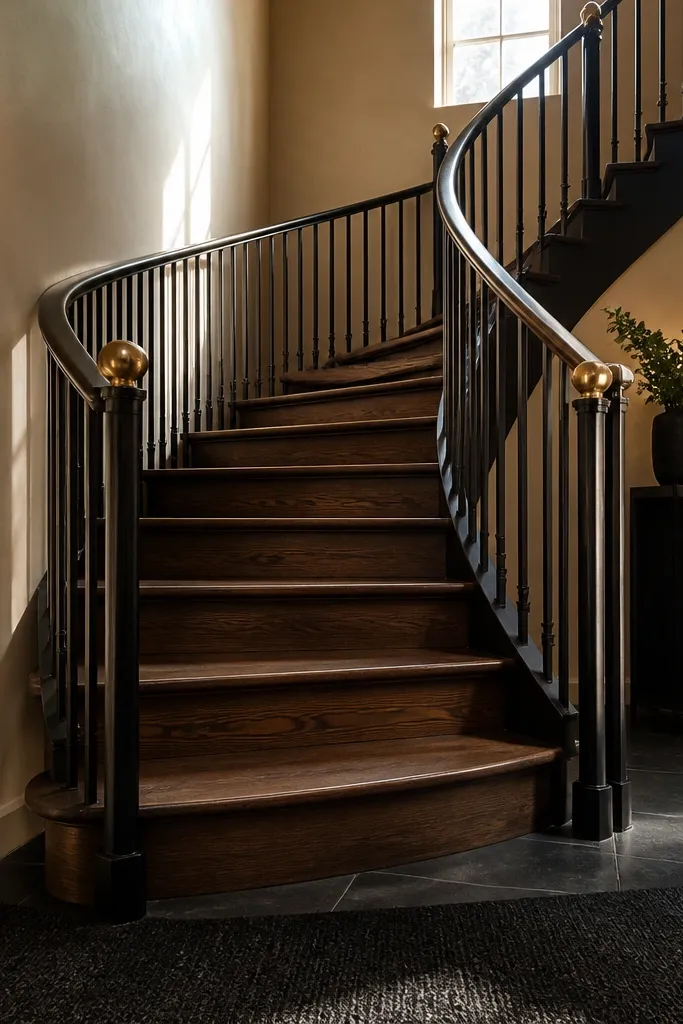
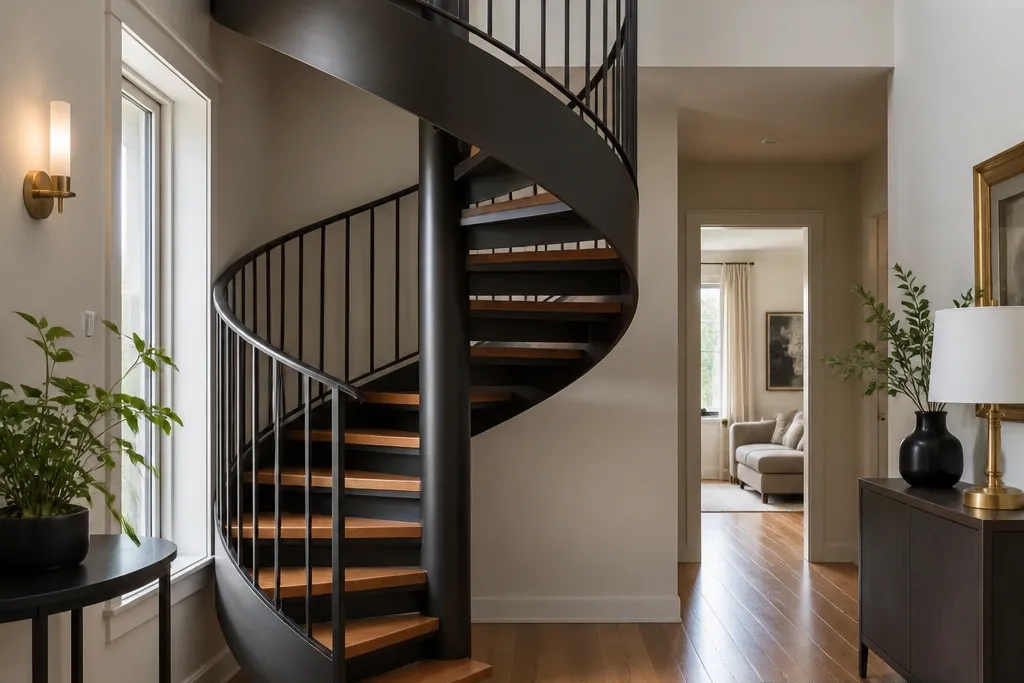
This is the “clean and warm” combo that photographs well because the contrast stays controlled. Matte black steel keeps the structure crisp, while walnut-stained treads add color without turning orange. Brass caps on the newel or handrail ends catch light at the landing and make the whole staircase feel finished. Build it if your home has warm wood, beige walls, or a neutral entry — it won’t fight your palette.
Editor's noteMask the steel before topcoating the treads so the black stays matte and doesn’t get scuffed by sanding dust.
Start with a matte black powder coat on the steel rail and posts, then stain treads with a walnut tone (oil-based stain for a deeper look). Cut and install the treads so the nosing line stays even all the way around — dry-fit each tread and mark the rotation before screwing. Finish by adding brass end caps and a clear matte topcoat on the wood so it doesn’t glare.
Skip thisAvoid high-gloss clear coat on the treads — it turns reflections into a messy shine in photos.
2. Whitewashed Oak Steps with Clear-Coated Steel Balusters
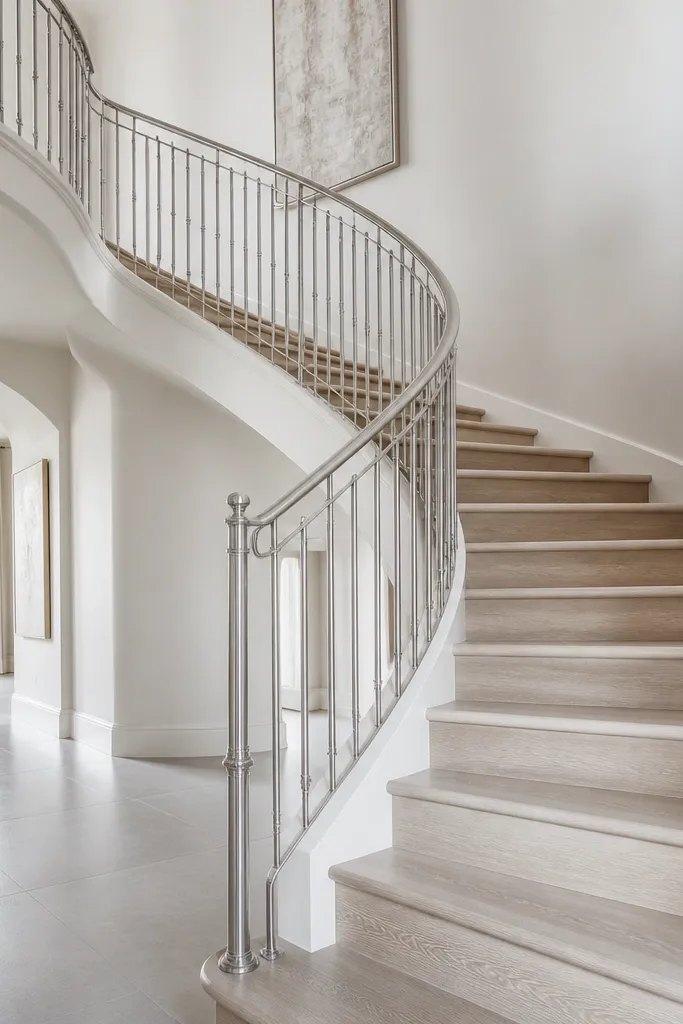
If your space is bright and you want the staircase to look airy, whitewashed oak plus clear-coated steel is a smart move. The pale steps visually lighten the spiral, and the clear finish keeps the steel from looking too harsh. This design looks especially good next to white walls, light tile, and linen curtains because the staircase doesn’t create heavy contrast. It’s also great for smaller homes where you want vertical drama without visual weight.
Editor's noteUse a foam brush for the whitewash so you don’t get streaks on the curved tread faces.
Use pre-finished oak boards or sand raw oak to a smooth 180-grit, then apply a whitewash stain and wipe back evenly. Install treads with consistent overhang and keep the tread edges sharp (no rounding unless you want a softer look). Spray the steel balusters with a clear matte or satin clear coat so they don’t get fingerprints and so the metal stays clean-looking.
Skip thisSkip dark stain over whitewash — it makes the steps look gray and dull instead of bright.
3. Satin Stainless Rail with Dark Grey Composite Treads
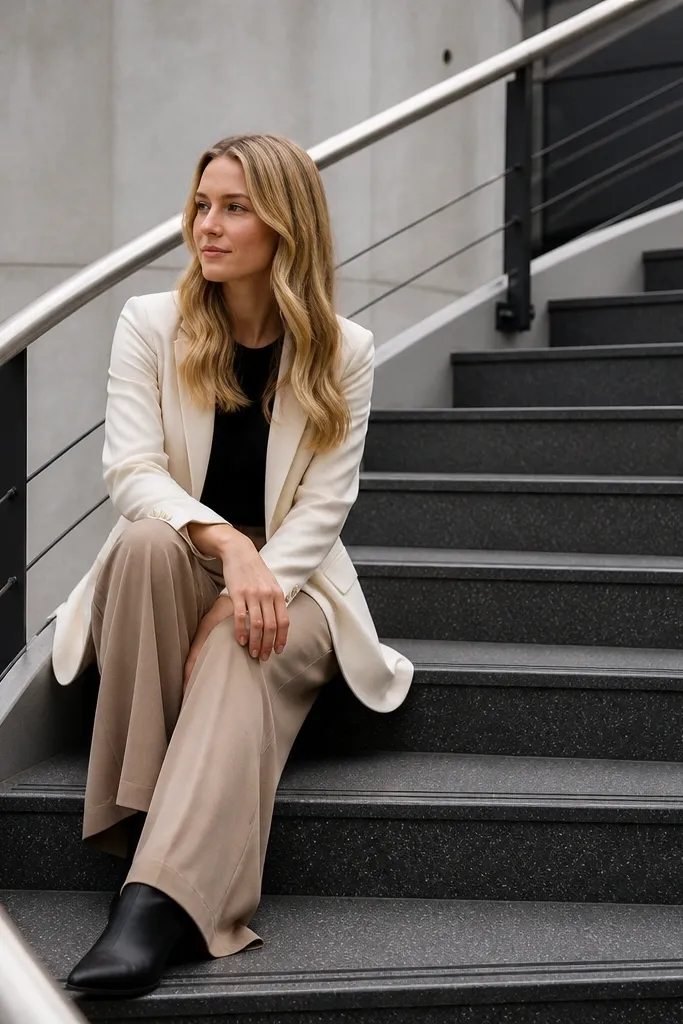
Satin stainless reads modern and expensive, and it stays photogenic because it reflects light without looking mirror-shiny. Pair it with dark grey composite treads to get a uniform, durable surface that hides scuffs. This combo works best in homes with concrete, black hardware, or cool-toned finishes. The spiral shape also benefits from the consistent tread color — it makes the rotation feel intentional.
Editor's noteBefore final tightening, check the handrail line from the landing — small misalignment shows up fast on stainless.
Pick composite treads in dark grey and cut them to your spiral template, then sand the cut edges lightly for clean fit. Install the treads to the center post or structure with stainless screws so you don’t get rust stains. Finish by using satin stainless for the handrail and balusters, then wipe with a stainless cleaner before final assembly so the metal looks even.
Skip thisDon’t use chrome-look hardware — it creates harsh glare that makes the staircase look cheap.
4. Blackened Steel Central Post with Reclaimed Barnwood Steps
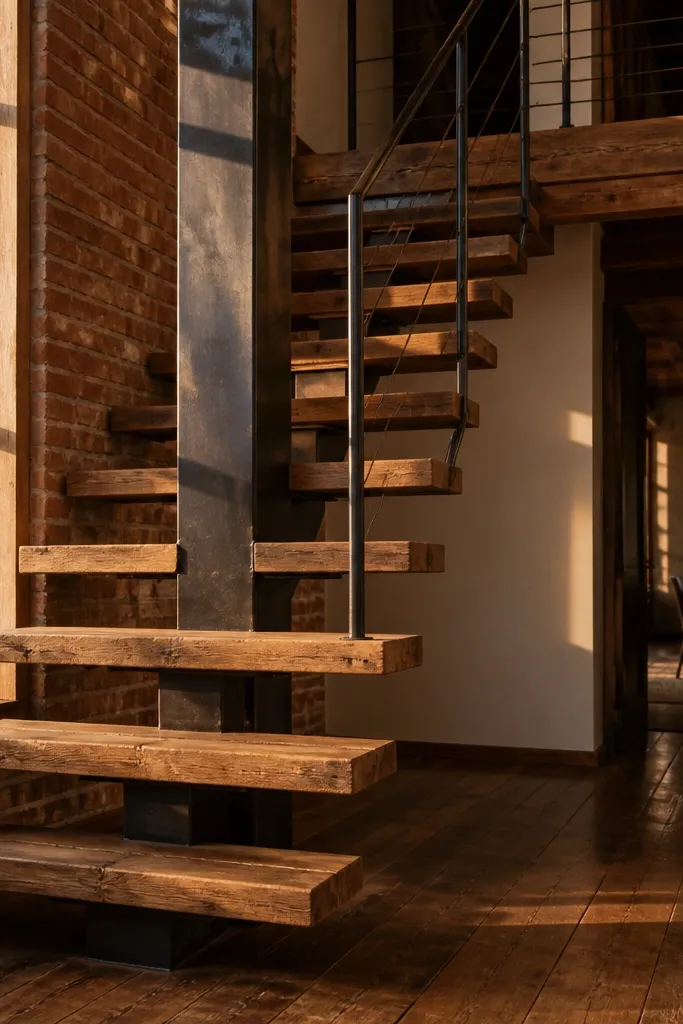
This one is about character without chaos. Blackened steel gives you that aged, smoky metal look, and reclaimed barnwood adds texture and grain that looks great under warm lighting. The goal is to keep the wood color consistent across treads so the staircase still reads as a single design, not random boards. It suits farmhouses, lofts, and cottages where you want the spiral to feel like it belongs to the building.
Editor's noteLay all treads out flat before installing and pick a rotation order that keeps the darkest boards from clustering.
Select boards with similar thickness and similar tone, then plane or sand to a uniform thickness so every tread sits flat. Stain or seal the barnwood with a matte clear so the grain stays visible but protected. Install the blackened steel central post and rail, then mount each tread so the grain direction flows around the spiral rather than fighting it.
Skip thisAvoid mixing wildly different board colors — the spiral will look patchy instead of deliberate.
5. Two-Tone Steps with Light Beech and Dark Under-Rail
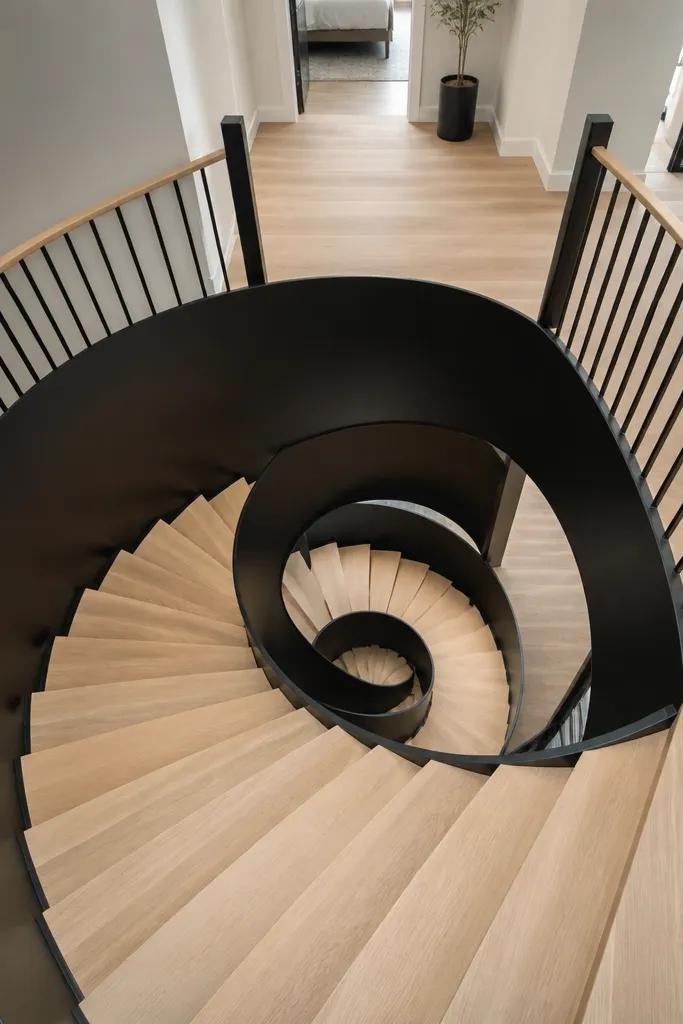
Two-tone design is a cheat code for making a spiral look “designed” instead of generic. Light beech treads keep the upper structure bright, while a dark under-rail (or dark underside trim) creates depth when you look down the center. This is especially striking in staircases with open sightlines, like near a hallway window. The eye reads the spiral as a clean shape because one color carries the steps and the other anchors the underside.
Editor's noteUse the same dark color on the underside trim and the handrail so the spiral reads as one continuous object.
Build or install treads from beech and finish with a light clear stain or a natural oil so the color stays pale. Add a dark trim strip under the tread edge using powder-coated metal or painted wood trim that matches your rail. Install the handrail, then check the underside trim visibility from the landing — adjust the trim position so it forms a continuous dark line.
Skip thisDon’t pick two tones that are too close — the contrast needs to be obvious at a glance.
6. Glass Balusters with Clear Handrail and Warm Wood Steps
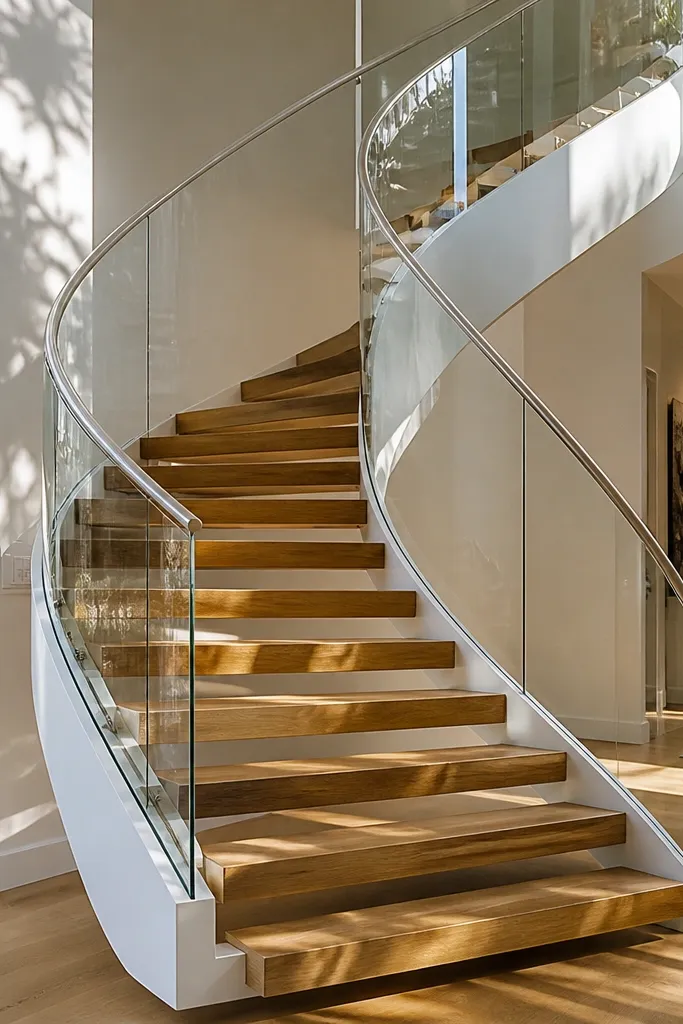
Glass balusters make the spiral look lighter and more modern, and they’re great when you want the staircase to feel like it floats in front of a wall. Warm wood steps keep it from feeling cold. This design is photogenic because the glass lets background light through, so the spiral shape stays the focal point. It works in contemporary homes with large windows or clean wall surfaces.
Editor's noteUse a satin finish on the handrail, not gloss, so fingerprints don’t look obvious.
Choose tempered glass panels or glass balusters sized to your stair spacing, then use proper clamps and gaskets designed for glass posts. Install the central structure first, then mount glass balusters with consistent spacing around the spiral. Finish with a clear or lightly tinted handrail — and seal the wood steps with a warm-toned matte finish to reduce glare.
Skip thisSkip cheap hardware kits — poor glass clamps cause uneven alignment and a sloppy look.
7. Cedar Steps with Rope-Wrapped Handrail Detail
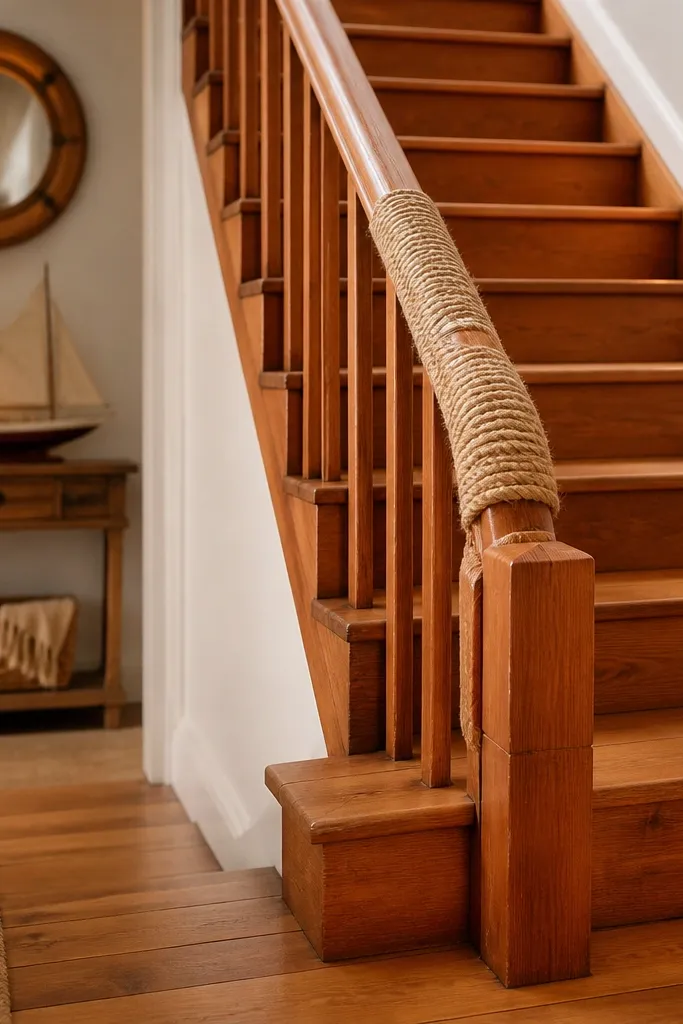
This is the “cozy nautical” look that still reads modern when you keep it minimal. Cedar steps bring warm smell and a soft orange-brown tone, while a rope-wrapped section on the handrail adds texture you can see and feel. The rope detail looks good in close photos on the landing because it creates a pattern against smooth steel. It fits beach houses, cabins, and entryways with natural fibers like jute or linen.
Editor's noteWrap rope when the rail is warm and dry so it tightens evenly without gaps.
Finish cedar treads with a cedar oil or natural sealer so the tone stays even, then seal the edges to prevent darkening. Install the steel rail and balusters, then wrap a rope segment around the handrail using marine-grade cord and tight spacing. Secure with hidden end ties or small clamps, then apply a light clear protective coat to the rope (matte) after it’s fully dry.
Skip thisDon’t wrap the entire rail — one section looks intentional; full-length rope can look messy.
8. Terracotta Tread Inserts with Black Steel Frame
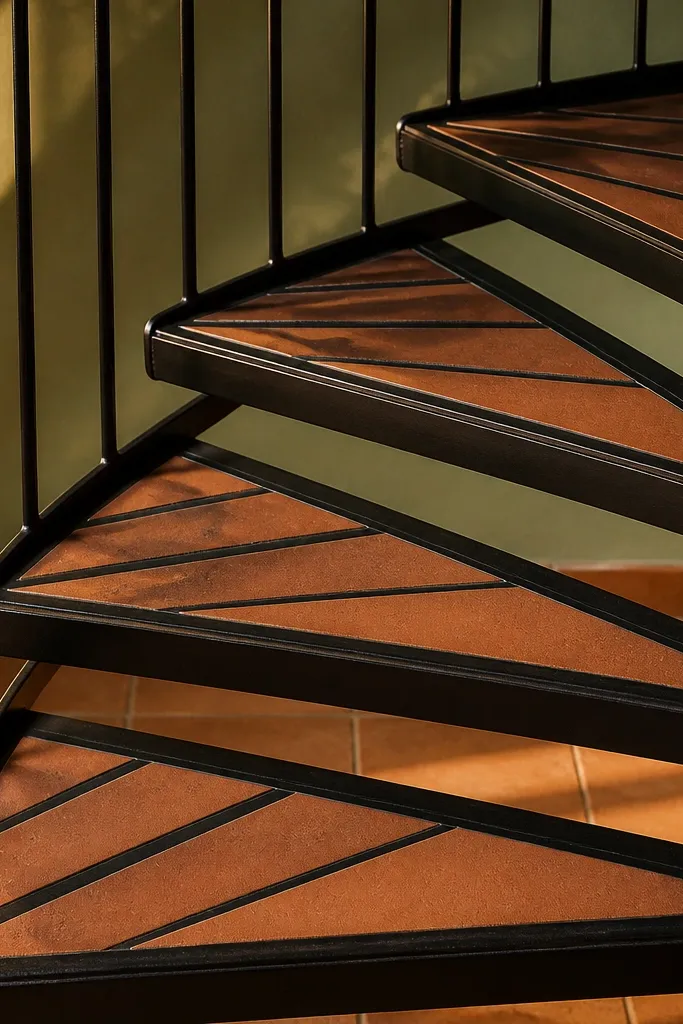
Terracotta inserts on the tread surface turn the staircase into a design object, not just a way to get upstairs. The color works with warm walls, terracotta tile, and olive or sage accents. Black steel makes the terracotta pop without looking loud. This is one of the best “aesthetic-first” options because every step shows color as you move, and the spiral rotation creates a repeating pattern.
Editor's noteChoose a grout color close to the terracotta — high-contrast grout makes the spiral look busy.
Use terracotta tiles or terracotta-look composite inserts sized to your tread openings, then dry-fit to confirm the rotation line. Seal the terracotta with a breathable sealer rated for floors, then set inserts using a thin, flexible adhesive made for tile. Install the black steel frame and mount the tread assemblies, then grout lightly and wipe immediately so you don’t leave haze on the curved edges.
Skip thisAvoid unsealed terracotta — it stains fast around shoes.
9. Hex-Tiled Treads in a Monochrome Pattern
Hex tiles give you a graphic look that stays readable even when the staircase twists. A monochrome palette (charcoal, light grey, or off-white) keeps it modern and prevents the pattern from turning into visual noise. This design is especially photogenic from above because the hex grid feels like it’s wrapping around the center. It works well in hallways with tile floors or when the home already has a strong geometric style.
Create tread surface templates from cardboard, then cut hex tiles to fit each tread curve. Dry-lay the tiles on a flat board to confirm the pattern direction before you glue. Use a flexible thinset or tile adhesive, set tiles into each tread, and grout after cure. Finally, seal the grout and mount the completed tread panels to the spiral structure.
Keep the grout line width consistent across every tread so the spiral pattern doesn’t “break” visually.
Don’t use too many tile cuts — the spiral reads cleaner with fewer seams.
10. Sandstone-Colored Stone Veneer Treads
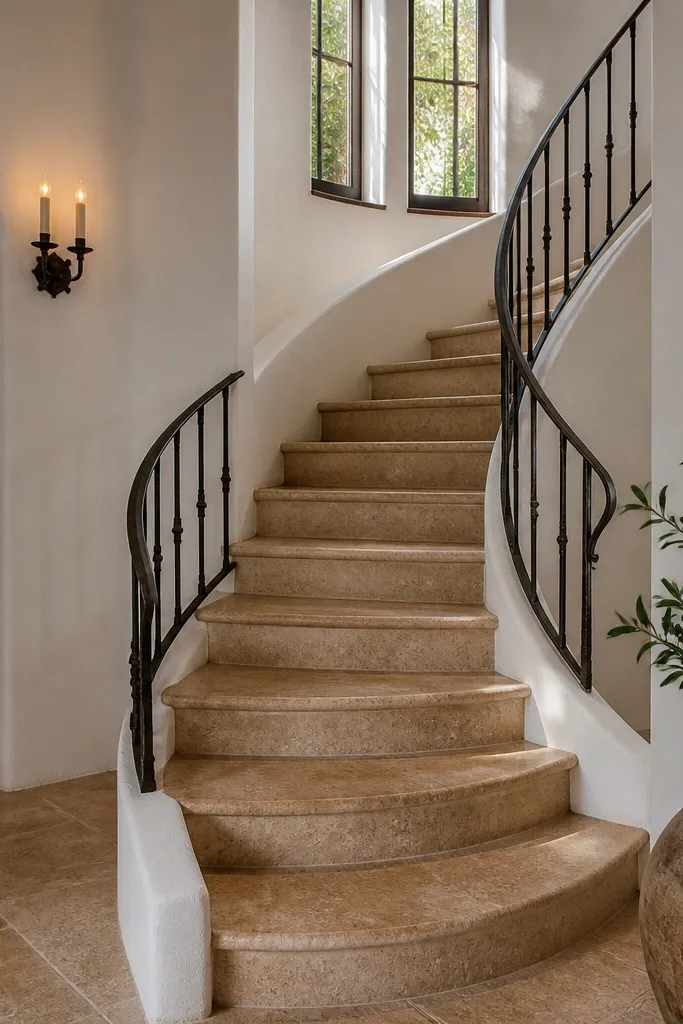
Stone veneer treads look substantial, and “sandstone” tones soften the spiral so it feels grounded instead of industrial. The look is photogenic because stone has natural speckling that changes with light, especially near windows. This design suits Mediterranean-style homes, modern farmhouses, and spaces with warm lighting. It also hides minor wear better than glossy finishes.
Order or cut stone veneer pieces to tread shape, then back them with a suitable underlayment so the surface stays flat. Seal the stone veneer with a penetrating sealer made for natural stone so it resists stains. Mount the tread panels to the spiral structure using flexible adhesive and stainless fasteners. Finish by checking tread edges for chips and sanding any sharp spots.
Use a matte sealer — gloss on stone makes reflections look like smears.
Avoid thin, fragile veneer that chips on the tread edges during installation.
11. Olive Powder Coat Rail with Natural Ash Steps
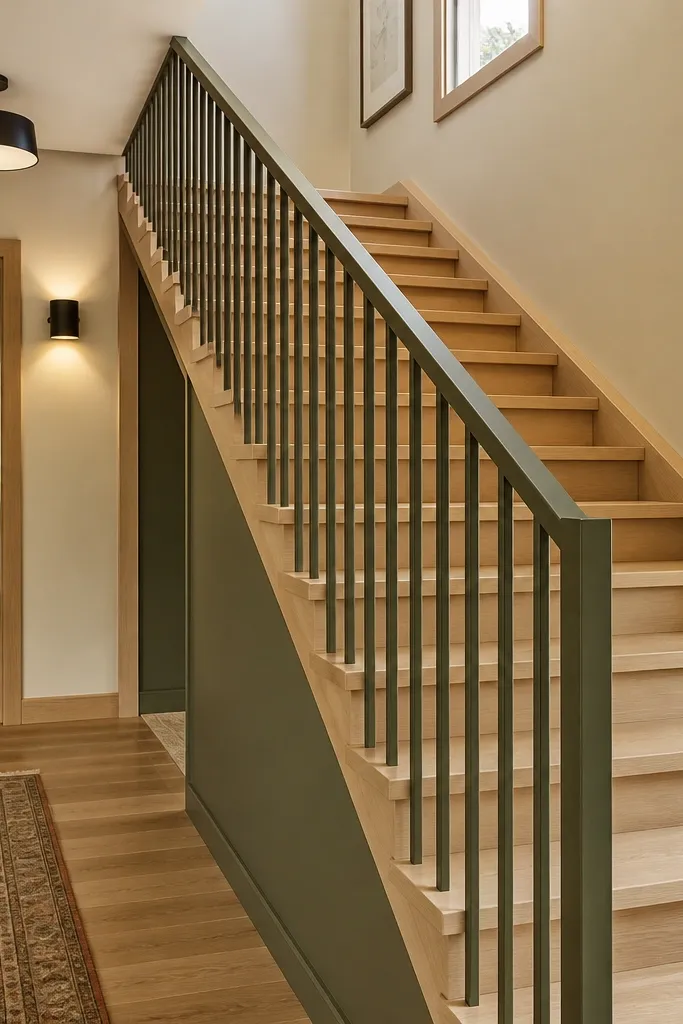
Olive powder coat is a standout color that still works in real homes because it sits between green and neutral. Natural ash steps add lightness and keep the spiral from feeling heavy. This combo looks great when you have wood trim, beige walls, or black lighting fixtures. The payoff is color that reads warm in daylight and soft in evening light.
Editor's noteTest the olive color on a scrap board in your room’s light — it can read darker under warm bulbs.
Powder coat the rail and central elements in an olive tone, then sand and prime any welds before coating. Finish ash treads with a natural oil and a matte topcoat to keep the grain crisp. Install the treads with equal overhang and keep the rail height consistent around the spiral. Add simple end caps in a brushed metal like brass or satin steel to finish the look.
Skip thisDon’t pair olive with red-toned wood floors — the colors fight.
12. Faux-Marble Treads with Polished Black Rail
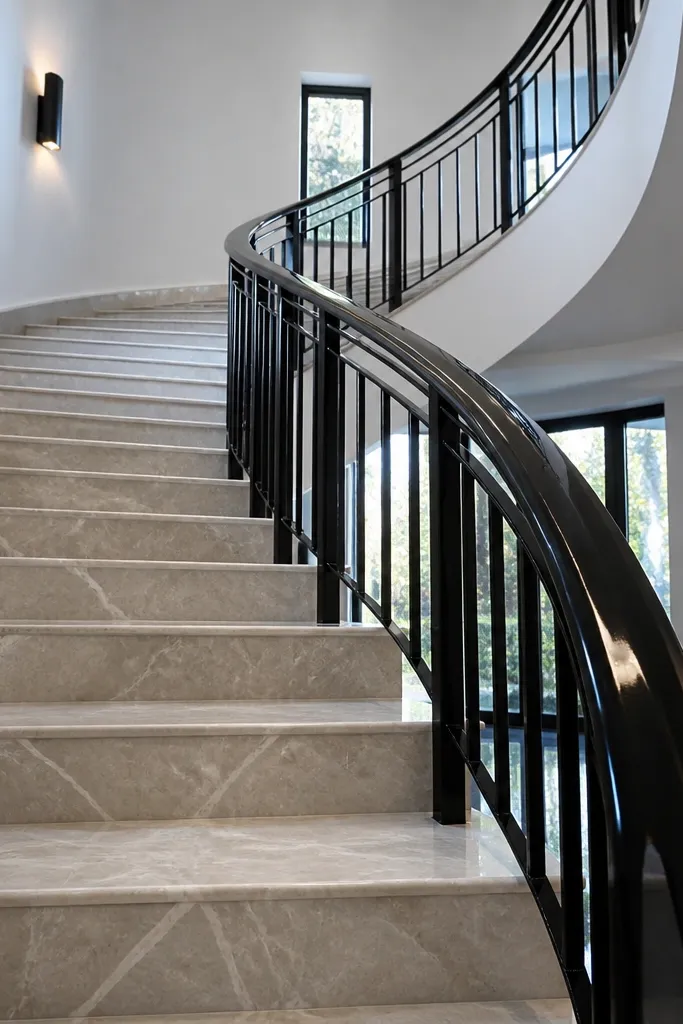
Faux-marble surfaces look high-end because the veining creates movement as you climb. Keep the pattern subtle and consistent, then pair with a polished black rail for a sharp, luxury feel. This design works best in sleek interiors: white walls, black fixtures, and smooth surfaces. It’s also a good option if you want the marble look without the weight and cost of real stone.
Use a marble-look composite or laminate designed for flooring treads so it can handle abrasion. Cut to your tread template, then seal the surface edges carefully. Install the polished black rail and make sure the handrail line is straight — polished finishes show waviness. Mount treads evenly and wipe off any adhesive residue right after installation.
Match veining direction across adjacent treads so the spiral looks intentional, not random.
Avoid bold, high-contrast marble prints — they look chaotic on a spiral.
13. Rattan-Inspired Woven Side Panel Spiral
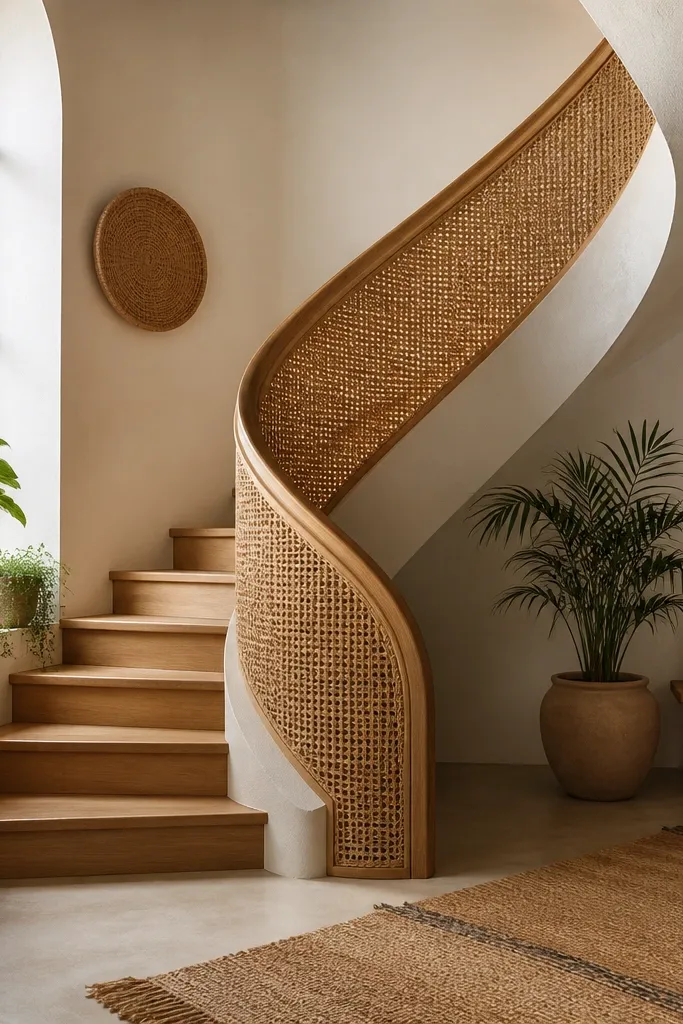
A woven side panel turns the staircase into a tactile design feature. The key is keeping the structure behind it solid so the weaving reads decorative, not structural. This idea looks great in boho-modern homes because it adds warmth and texture without changing the stair’s core geometry. It’s also photogenic because the weave creates shadow patterns as sunlight hits it.
Editor's noteUse a matte finish on the backing frame — it reduces glare through the weave.
Build a thin backing frame around the spiral’s outer edge using lightweight plywood or metal mesh. Attach a woven material panel (rattan-like panels or cane sheets treated for indoor use) to the backing with trim strips and hidden fasteners. Keep clearance for safety by ensuring the weaving doesn’t interfere with handrail access. Paint the backing frame in a neutral (black or warm brown) so it disappears behind the weave.
Skip thisDon’t use untreated natural fibers — they warp and sag around humidity.
14. Light Grey Painted Treads with Natural Oak Handrail
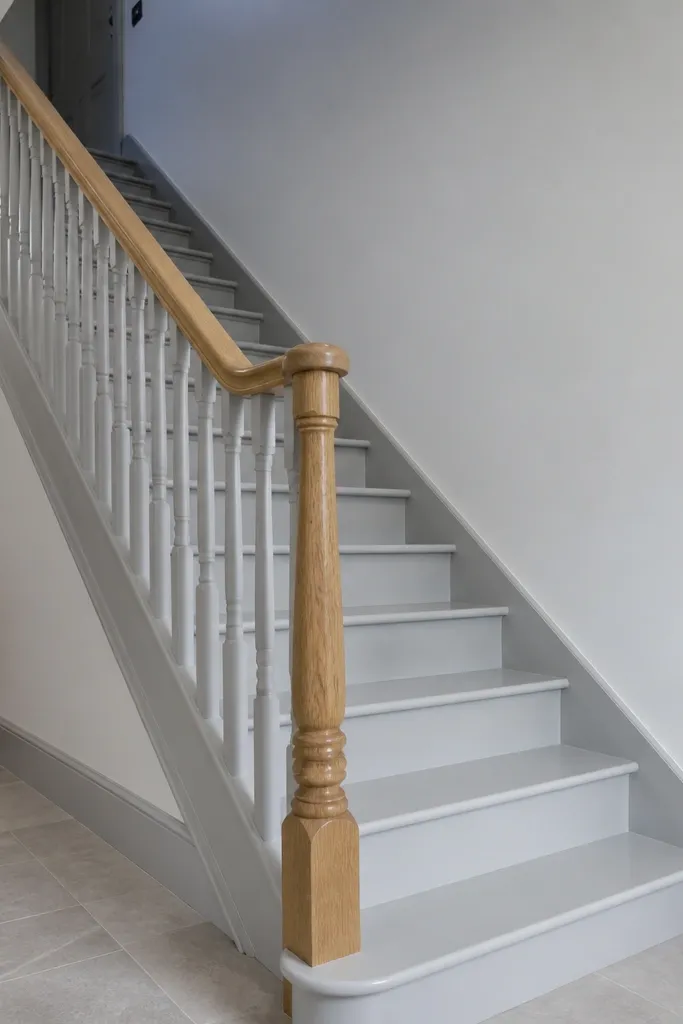
This is a designer look that works when you want a calm staircase without going fully white. Light grey treads keep the spiral visually quiet, while a natural oak handrail adds warmth where you touch it. It also helps if your walls are cool-toned and you want one warm element to soften the space. The contrast reads clean in photos because grey and oak have a gentle separation.
Editor's noteUse a small foam roller for painted treads — it keeps the curved surface smooth.
Sand treads to 150-180 grit, then use a cabinet paint system (primer + durable enamel) in a light grey with a satin sheen. Finish the oak handrail with a clear matte topcoat so the grain stays visible. Install treads with consistent overhang and align the oak handrail so it follows the spiral without kinks. Finish by sealing the painted treads with a scuff-resistant clear coat.
Skip thisAvoid flat paint on treads — it scuffs and looks dull fast.
15. Walnut Staves Wrapped Around the Central Pole
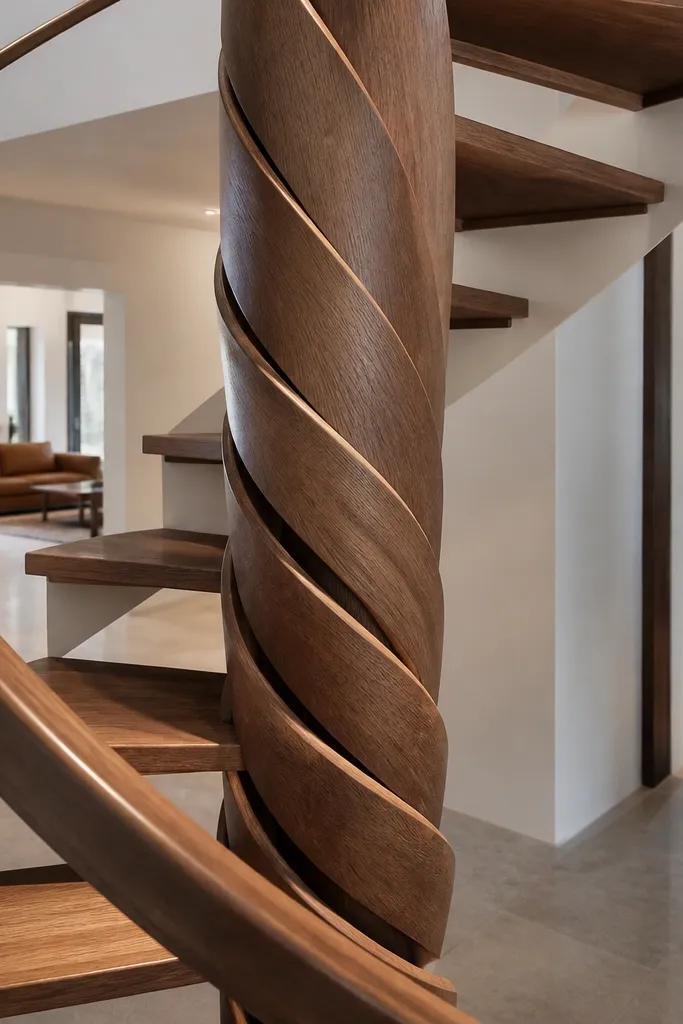
This design makes the center pole look like a feature, not a support. Walnut staves wrapped around the pole create a sculptural effect that’s visible even when the steps are in motion. It’s a smart choice for spaces where the staircase is visible from multiple rooms, because the pole stays in view. Pair it with simple black or steel rails so the pole remains the hero.
Editor's notePre-wrap one stave segment on the floor to confirm seam spacing before you commit to the full pole.
Cut thin walnut staves (or slats) to wrap the pole circumference, leaving a consistent seam gap. Pre-sand and stain the staves to a uniform walnut tone, then apply a matte clear coat. Attach staves to the pole with a flexible wood adhesive and small hidden clamps while curing. After the wrap cures, install treads and a simple handrail, then check alignment so the staves don’t interfere with railing clearance.
Skip thisDon’t skip sealing end grain — it drinks stain and creates blotchy sections.
16. Copper Accents on Posts with Natural Maple Steps
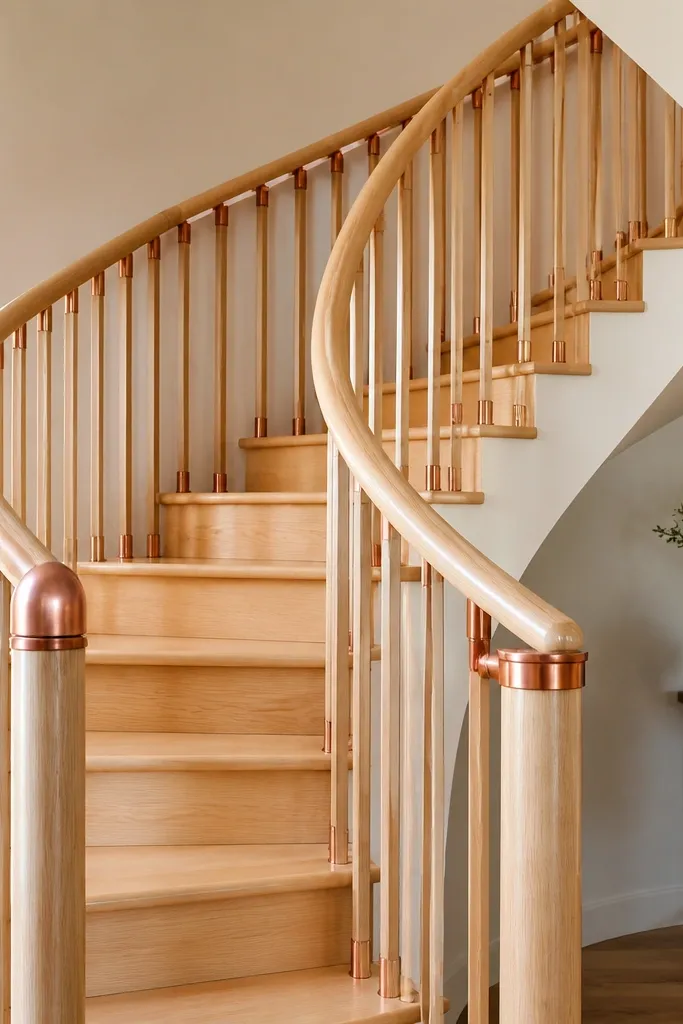
Copper accents make a spiral staircase look warm and handcrafted, especially against light maple. The trick is restraint: use copper only at connection points (post rings, handrail ends, or tread brackets) so the look stays refined. Natural maple keeps everything bright and clean, which makes copper glow in morning light and soften at night. This option fits kitchens, sunrooms, and modern homes with warm lighting.
Finish maple treads with a clear matte or satin (avoid heavy amber tones that make maple look orange). Install the steel structure, then add copper rings around post sections using pre-cut copper sleeves or machined washers. Secure copper with hidden screws through bracket points. Finish by sealing the copper with a clear lacquer so it doesn’t turn uneven green indoors.
Use matching copper tones for every accent point so it reads as one material, not random hardware.
Avoid unlacquered copper if you don’t want patchy patina on day one.
17. Charcoal Treads with White Oak Handrail and Cable Railing
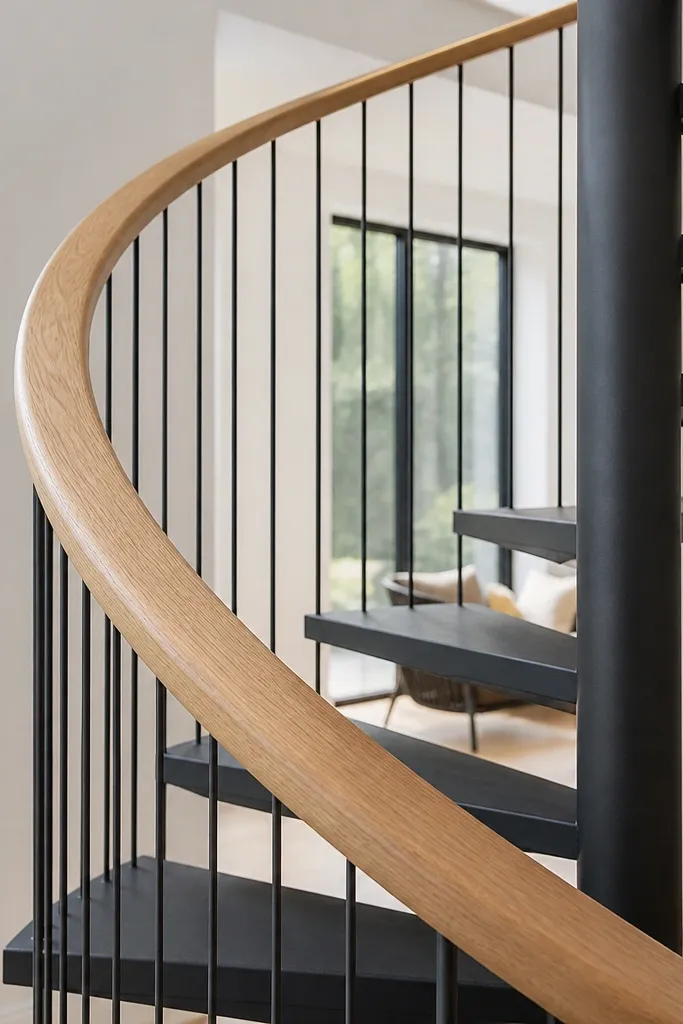
Cable railing gives you a super-clean line that keeps the spiral from looking busy. Charcoal treads add depth, while a white oak handrail adds warmth at grip level. This combination looks sharp in modern homes with black window frames, white walls, or minimalist decor. It’s also great for photos because cables don’t visually block the view like thick balusters do.
Editor's noteUse a laser line or a long straightedge to align cable tensioners — the eye catches crooked cables immediately.
Use charcoal-stained wood treads with a matte topcoat for low glare. Install the handrail in white oak, then mount cable posts around the spiral at consistent intervals. Thread stainless cables with tensioners and set the tension so cables look straight, not sagging. Finally, check cable height around corners so the line stays smooth from landing to stair.
Skip thisDon’t over-tension cables — they can bow and look worse than slight sag.
18. Stained Glass Insert Under Transparent Steps
This idea is pure visual magic: stained glass under the treads turns the staircase into art. The look works best when you have a landing or open area below where light can hit the glass. Keep the stained glass palette tight (teal, amber, and clear) so it doesn’t look like a craft project. It’s high-impact and photogenic because the spiral shape creates rotating light patterns as you move.
Use clear or translucent tread panels only if your structure supports them safely; otherwise, create a visible opening where the stained glass sits below. Install a sealed stained glass panel on a rigid backing under the stair path, with protective edging and proper spacing. Add under-stair lighting (warm LEDs) so the glass shows at night. Mount the treads with a gap that lets light reach the glass without exposing sharp edges.
Pick stained glass that has strong leading lines — they stay readable through curved shadows.
Avoid busy multicolor glass — the spiral shadows smear it into a muddy look.
19. Olive-Smoky Treads with Black Wrought Iron Balusters
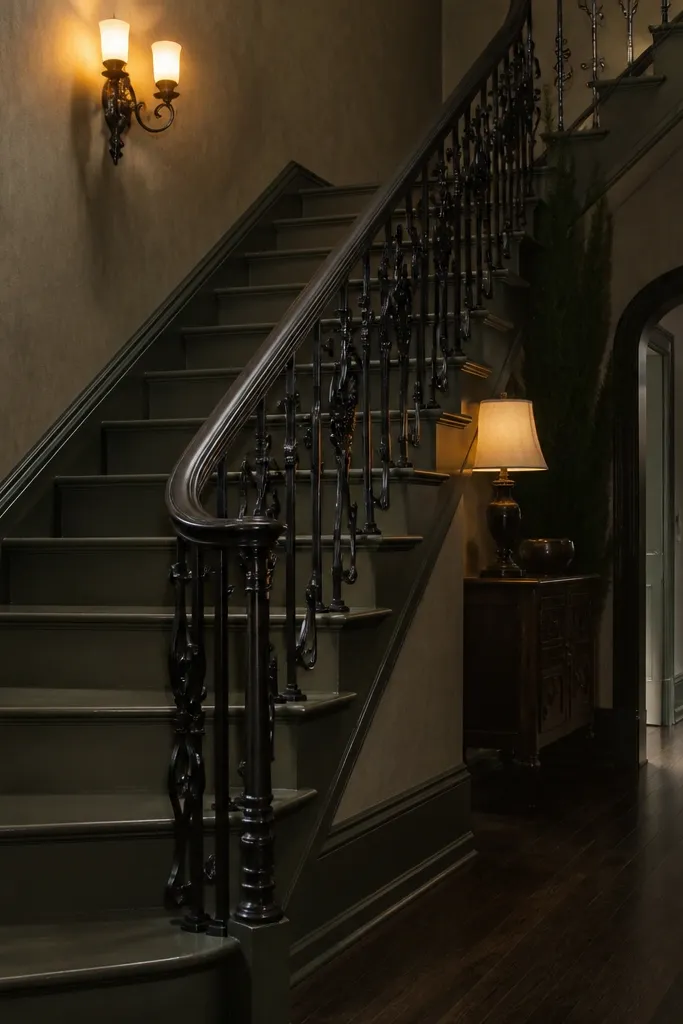
Wrought iron balusters add romance, but the staircase can look heavy if the steps are too dark. Olive-smoky treads keep it moody and stylish without turning the whole stair into a dark mass. This design looks great in older homes with dark trim, and it also works in modern spaces if the ironwork stays clean and not overly ornate. The spiral’s repeating iron pattern is what makes it photogenic.
Editor's noteUse a template jig to space balusters so the pattern stays even around the full rotation.
Choose wrought iron balusters with a consistent pattern and a matte black finish. Stain or paint treads in an olive-smoky tone and seal with a matte clear coat. Install the balusters evenly around the spiral, then attach the handrail last — it helps you correct any slight twist in alignment. Finish by sanding any sharp edges on tread corners so the ironwork and wood meet cleanly.
Skip thisDon’t choose overly thick balusters — the spiral will look crowded.
20. Pale Concrete Steps with Steel Grate Insert Strips
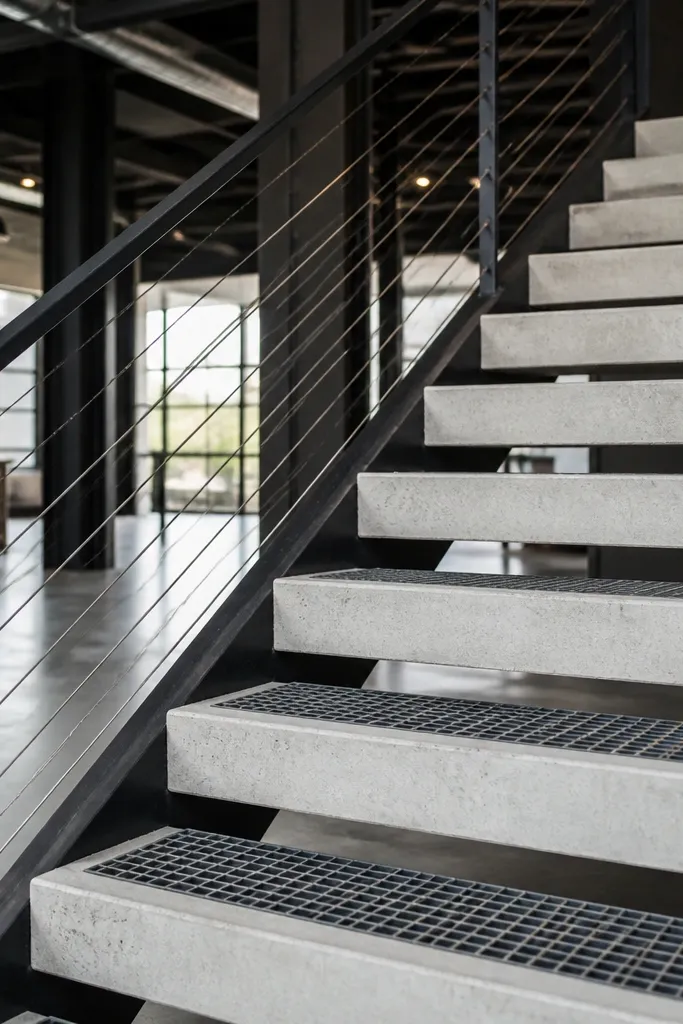
Pale concrete treads look modern and make the staircase feel architectural. Steel grate strips add a subtle industrial texture that’s visually interesting but not loud. This is a good match for homes with concrete floors, black accents, or open loft styling. The key is keeping the concrete tone light so the staircase doesn’t feel like a block of grey.
Editor's noteSeal before installation if possible so the underside gets protection too.
Use pre-made concrete tread panels or cast thin concrete overlays designed for stairs, then seal with a clear matte concrete sealer. Cut steel grate strips to fit along the tread edge, then attach with a metal adhesive or mechanical fasteners through pre-drilled holes. Install treads onto the spiral structure and keep the grate strip alignment consistent so it forms a clean repeating line. Finish with a protective matte topcoat on any wood or composite parts.
Skip thisAvoid glossy concrete sealer — it creates bright hotspots on stairs.
21. Mirror-Finish Side Panels with Champagne Brushed Rail
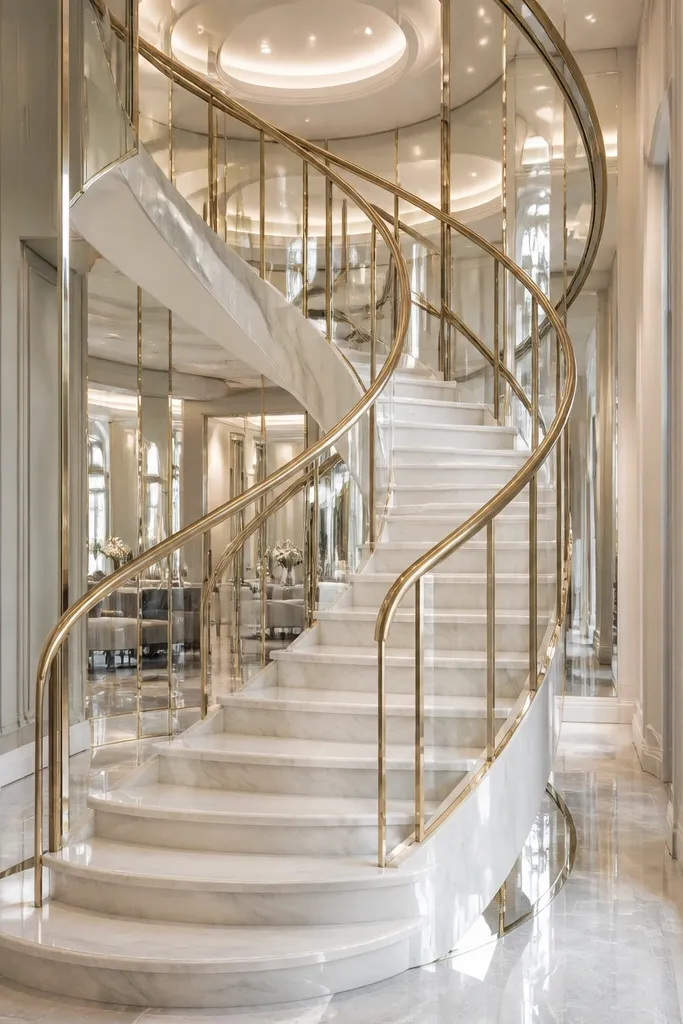
Mirror-finish side panels make the staircase look bigger and brighter because they bounce light around the spiral. Pairing that with a champagne brushed rail keeps it warm and avoids the icy look of silver mirrors. This design is excellent for narrow foyers where you want more visual space. It’s also a strong choice if you have a statement light fixture — the reflections will amplify it.
Editor's noteUse standoffs and spacer tape so vibrations don’t rub and scratch the mirrors over time.
Install the spiral structure first, then mount mirrored panels to the side with proper mounting standoffs to prevent cracking. Use champagne brushed metal for the handrail and any exposed connectors. Seal panel edges and check clearance around moving parts and rail grip space. Finally, polish the mirrors and wipe the whole assembly with a streak-free glass cleaner before you call it done.
Skip thisDon’t use mirror panels without edge protection — chips look obvious and ruin the look.
22. Single-Color Monochrome All-Black Spiral Stair
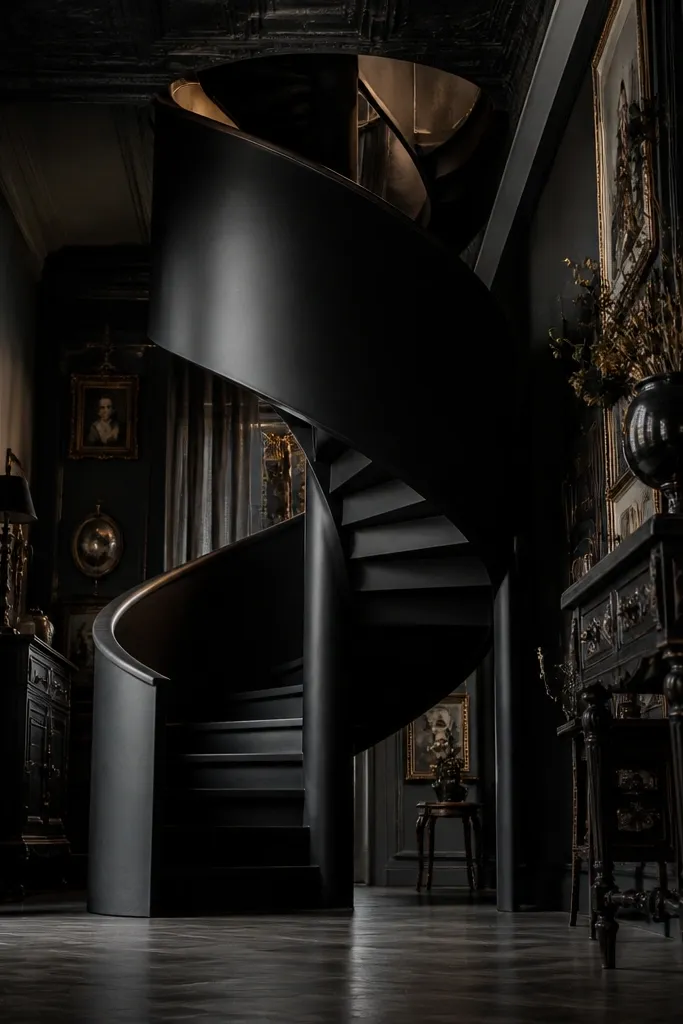
A true monochrome all-black spiral looks deliberate because the eye tracks one continuous object. The trick is using different sheens — matte for treads, satin for rail — so it doesn’t look like one flat silhouette. This idea is perfect when your room has busy decor and you want the staircase to calm the space. It’s also extremely photogenic because black creates sharp edges against light walls and floors.
Editor's noteTest sheen differences on scrap — the staircase will look “designed” only if the sheens are clearly separated.
Powder coat the steel in matte black, then finish wood or composite treads with a matte black paint system. Assemble the structure, then install treads in consistent order so tread seams don’t drift. Use satin black for the handrail if you want a slightly smoother grip feel. Add minimal end caps in the same tone so nothing interrupts the single-color read.
Skip thisAvoid mixing black finishes that are too different in tone (jet black vs dusty charcoal).
23. Terracotta + Cream Patterned Tread Runner Inserts
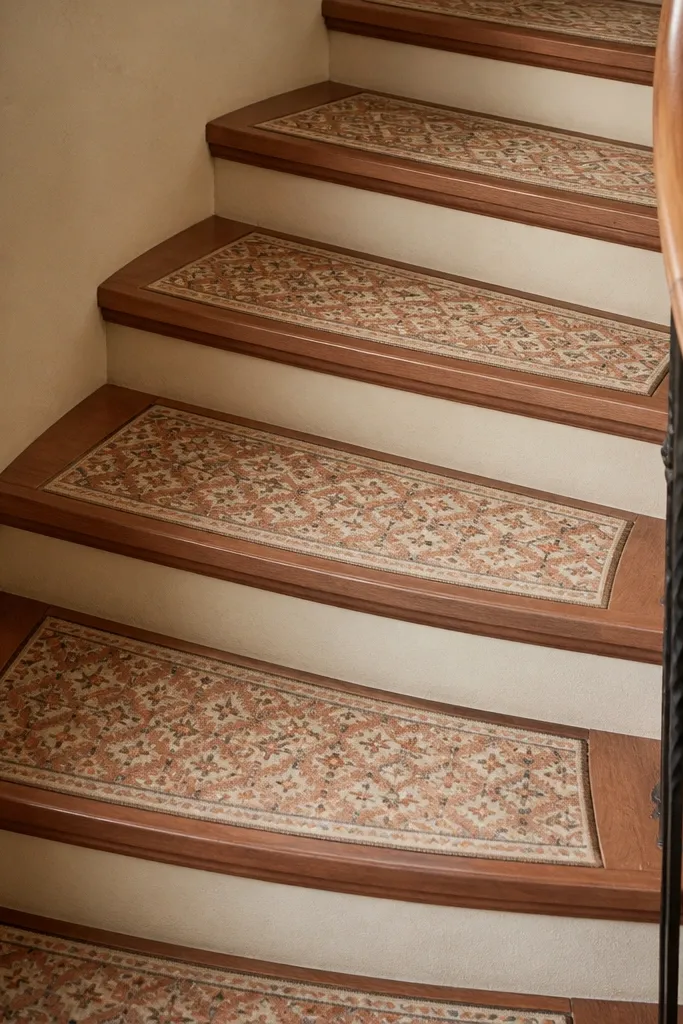
Runner-style inserts on the treads make the staircase look cozy and styled, especially when the rest of the home is neutral. Terracotta and cream is a winning combination because it reads warm but not heavy. This design is good when you want to reduce slip risk without adding bulky rugs. It also photographs well because the pattern repeats in a spiral rhythm.
Cut non-slip tread inserts or thin runner strips to match each tread surface shape. Use a fabric or vinyl-backed material rated for stair use, then secure edges with adhesive made for stairs or small concealed screws. Keep the pattern repeat consistent between treads by numbering each tread position during installation. Seal any wood around inserts with a clear matte so dirt doesn’t soak into fibers.
Use a non-slip tread backing with grip texture so the insert stays flat as humidity changes.
Avoid loose edges — curled corners make the whole staircase look sloppy fast.
24. Bamboo-Handrail Spiral with Light Linen Treads
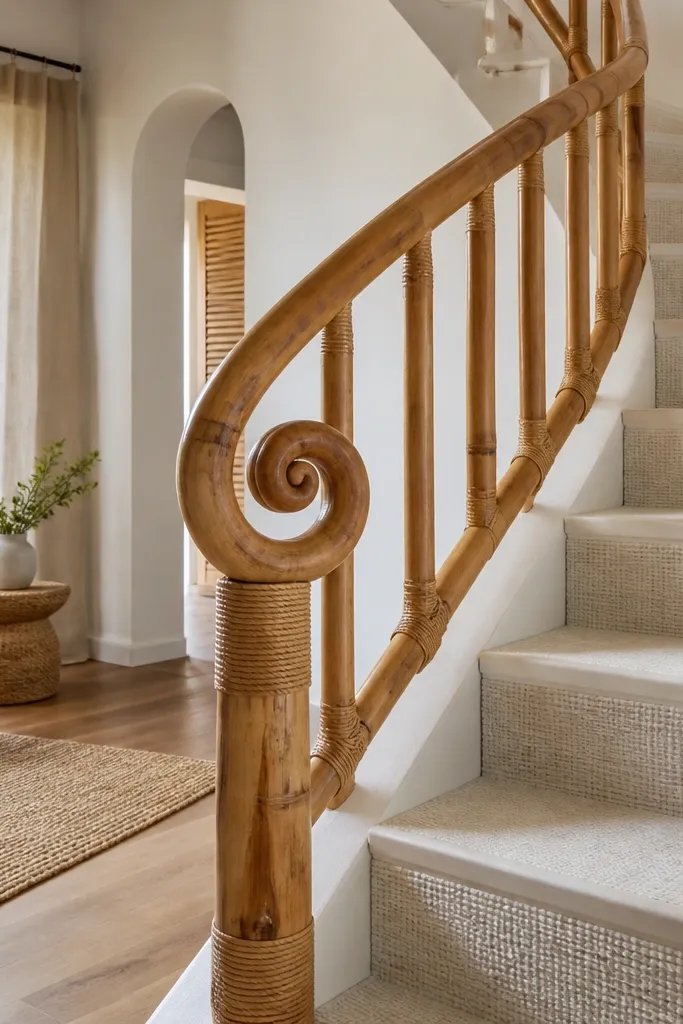
Bamboo-handrail details look fresh and natural, and they photograph well when the rest of the staircase stays simple. Light linen-toned treads keep the look airy and help the bamboo stand out. This setup works in homes with light walls, natural fiber decor, and soft lighting. It’s also a good “aesthetic upgrade” when you already have a basic spiral frame — swapping the handrail and tread finish changes the whole vibe.
Editor's noteSand bamboo lightly between coats — it smooths high points and reduces splinters.
Finish bamboo handrail sections with a clear matte protective coat so it resists scuffs. Choose linen-toned treads using a light stain or paint color matched to linen (not bright white). Install treads with a consistent overhang, then fit the handrail last so you can adjust the grip line around the spiral. Seal the treads with a scuff-resistant topcoat since stair surfaces get direct wear.
Skip thisDon’t pick a glossy handrail finish — it looks plasticky under indoor light.
25. Oak Treads with Brass Inlay Strips on Each Step
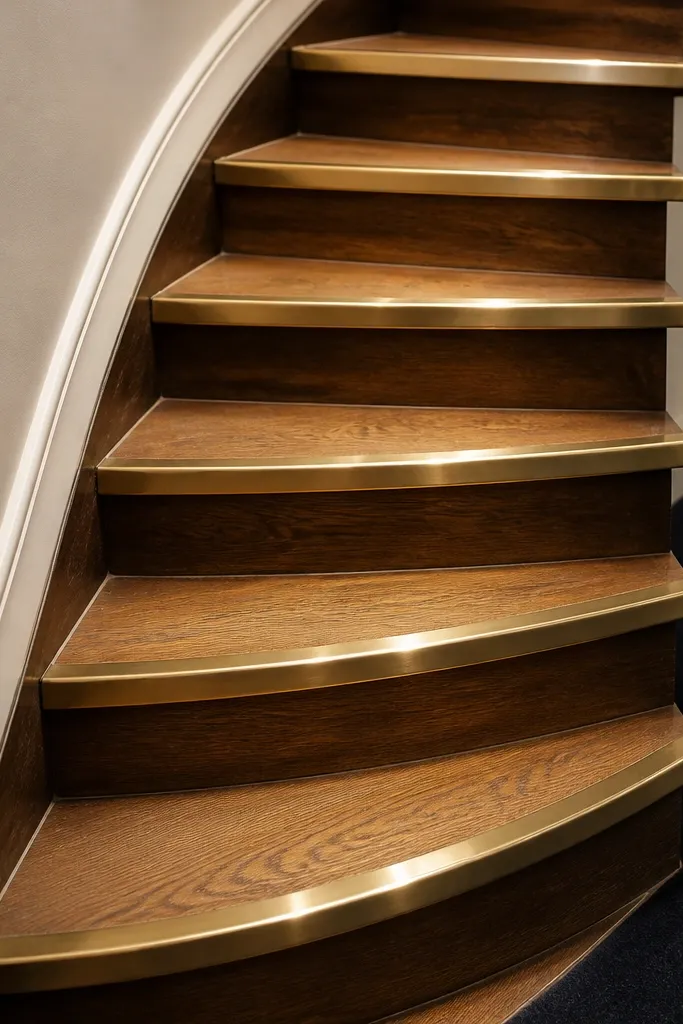
Brass inlay strips give you a repeating highlight that makes the spiral feel crafted. Oak is the perfect base because it’s warm and easy to match, and brass adds a clean line without overwhelming the wood grain. This design photographs well from the side because each tread edge catches a thin strip of light. It suits modern classic interiors where you want warmth but still want sharp details.
Cut oak treads to shape and sand to 180 grit. Route a shallow channel along the tread edge on each tread, keeping the depth consistent so the brass sits flush. Press in thin brass strips, then glue with a wood-safe adhesive and wipe squeeze-out immediately. Seal the whole tread with a matte clear coat so the brass looks clean and doesn’t tarnish unevenly.
Test the routing depth on one sacrificial tread so your brass sits exactly flush.
Avoid thick brass — chunky inlays look heavy on a spiral.
26. Dark Oak Treads with White Porcelain Baluster Inserts
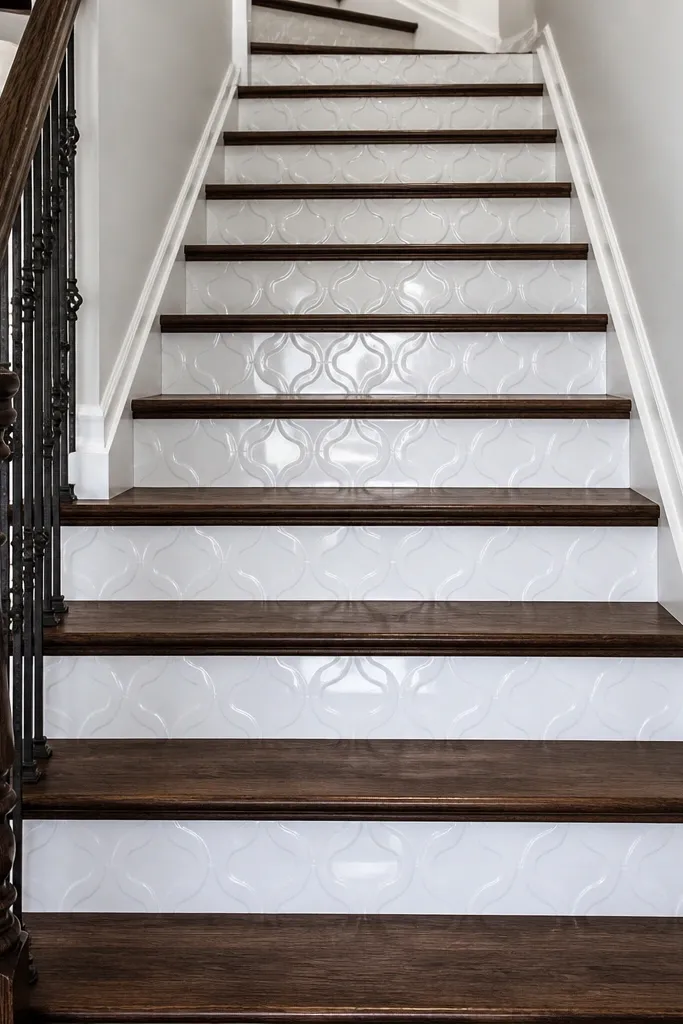
White porcelain inserts against dark oak make the spiral look crisp and slightly architectural. Porcelain is also visually consistent, which helps the staircase look “designed” instead of random. This option is great when you have white walls, white trim, or tile nearby. The contrast is strong but controlled, and it stays photogenic because porcelain highlights don’t smear like glossy paint can.
Editor's noteDry-fit every insert before final adhesive so you don’t end up with misaligned porcelain points.
Finish oak treads with a dark oak stain and a matte topcoat to keep glare down. Install balusters with insert-ready housings, then press or mount porcelain inserts securely using the correct adhesive or gaskets. Keep spacing consistent around the spiral so the white points form a clean ring. Finish by installing the handrail and checking that the porcelain doesn’t interfere with safe grip clearance.
Skip thisAvoid glossy porcelain if you want a calm look — satin reads more expensive.
27. Sand-Colored Powder Coat with Teak Treads and Brass Screws
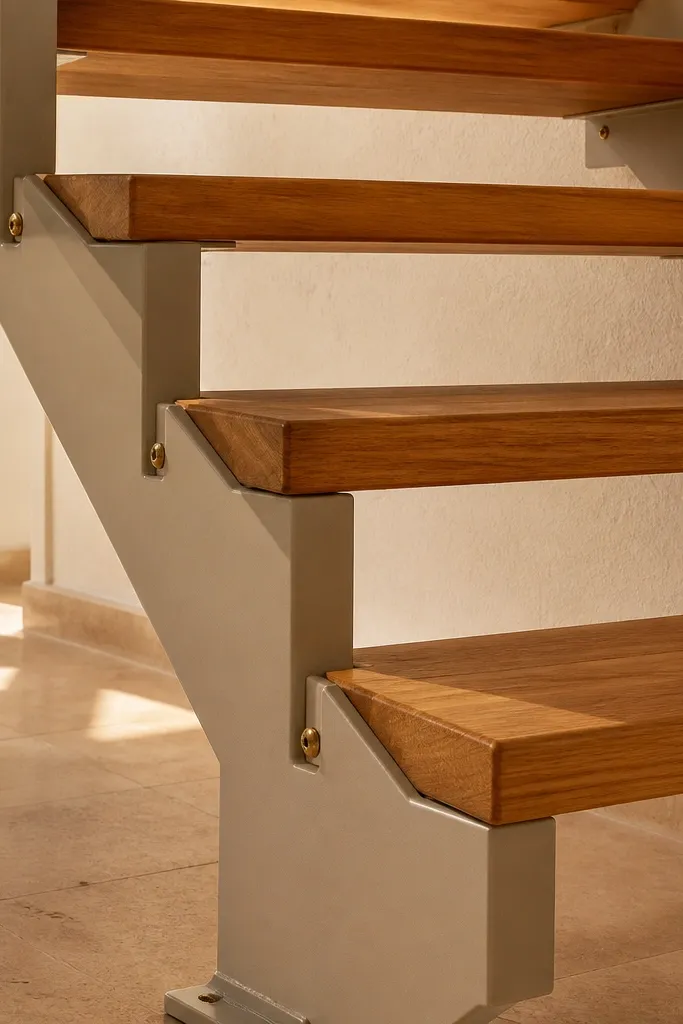
Sand-colored powder coat is a smart neutral that looks better than plain grey because it warms up the whole staircase. Teak treads bring natural golden tone, and brass screws add a tiny detail that makes everything feel intentional. This design works well in sunlit spaces and rooms with warm neutrals. It’s a strong option when you want a modern build but still want it to feel cozy.
Editor's noteCountersink with a drill stop so every screw hole depth is identical around the spiral.
Powder coat the steel in a sand tone and choose a satin sheen so it looks smooth rather than flat. Install teak treads with brass screws so the hardware matches the brass accents. Pre-drill and countersink screw holes so the screw heads sit flush and don’t crack the wood. Seal teak with a matte clear coat, then wipe down the steel before final assembly to remove dust.
Skip thisDon’t use dull gold hardware in a bright brass scheme — the mismatch reads messy.
28. Two-Layer Riser Panels in Sage Green and Natural Wood
Riser panels shape how the staircase reads when you look from the side. Using sage green risers behind natural wood steps adds color without turning the staircase into a loud statement. The layered look creates depth, and sage stays friendly with both warm and cool interiors. This design is great for homes with sage paint, green ceramics, or lots of plants — it blends instead of clashes.
Editor's notePaint risers off the staircase first, then install — you’ll get cleaner edges and fewer smudges on the wood.
Build riser panels that match the spiral tread spacing, then paint them sage green with a satin finish. Use natural wood treads (oak or ash) with a matte topcoat so the wood doesn’t glare. Install risers first, then mount treads so the wood overhang covers the riser edge cleanly. Finish by aligning the handrail line and adding simple end caps in brushed metal.
Skip thisAvoid high-gloss sage — it reflects light and can look plasticky.
29. Copper-Toned Handrail with Light Grey Stone Composite Steps
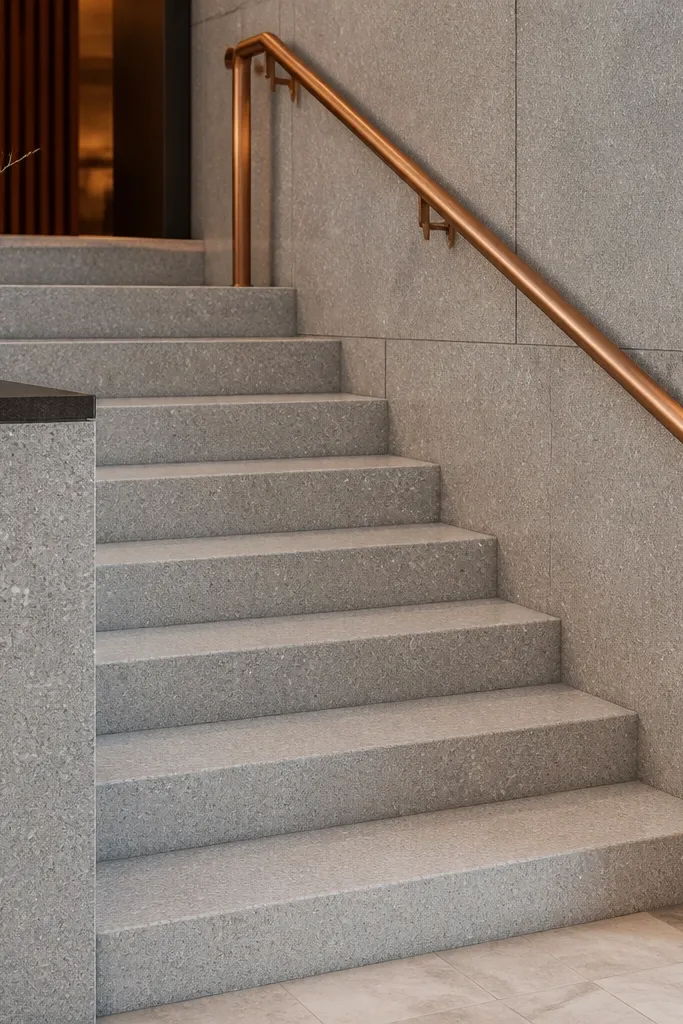
This design balances warm metal and cool stone so it feels modern, not rustic. Light grey stone composite steps create a calm surface, and a copper-toned handrail adds warmth at grip level. It looks especially good in bathrooms or entryways with stone counters and warm lighting. The spiral stays readable because the step color is uniform and the handrail creates a single flowing line.
Editor's noteChoose a copper tone that matches your other hardware — even a small mismatch shows up in the staircase’s close-up light.
Use light grey stone composite treads and seal them with a matte stone sealer. Install the spiral structure, then wrap or coat the handrail in a copper tone using powder coat or a durable metal finish. Mount the treads evenly and keep the handrail height consistent around the entire spiral — that’s what makes it look “designed.” Finish by adding copper-toned end fittings and wiping the metal clean for a uniform sheen.
Skip thisDon’t use a red copper with cool grey stone — it looks off and too warm.
30. Matte White Steps with Black Steel Step Edge Trim
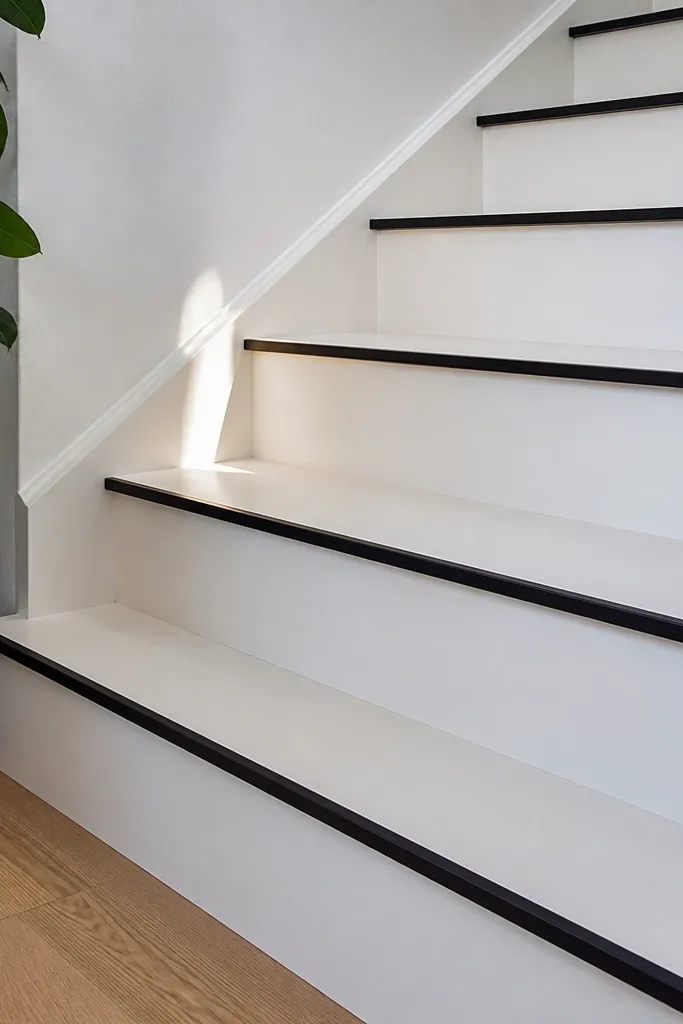
Matte white steps look crisp and modern, and black steel edge trim makes the spiral geometry pop. This is one of the best choices for small foyers because it visually brightens the stair while still giving you strong structure lines. The black trim also hides minor scuffs that happen during assembly and daily use. This design looks great next to dark doors, black light fixtures, and simple wall panels.
Editor's noteUse a matching black primer under the trim so any tiny gaps don’t show bright underlayers.
Paint or use matte white stair treads, then add a thin black steel edge trim along each tread perimeter. Install treads with equal overhang and keep the edge trim aligned so it forms a continuous ring. Powder coat the rail in matte black and assemble with consistent fasteners. Finish by sealing the white surface with a scuff-resistant clear coat so it stays clean-looking.
Skip thisAvoid semi-gloss white — it shows fingerprints and turns yellow in warm lighting.