1. Aged bronze rail with walnut treads and matte white skirt wall
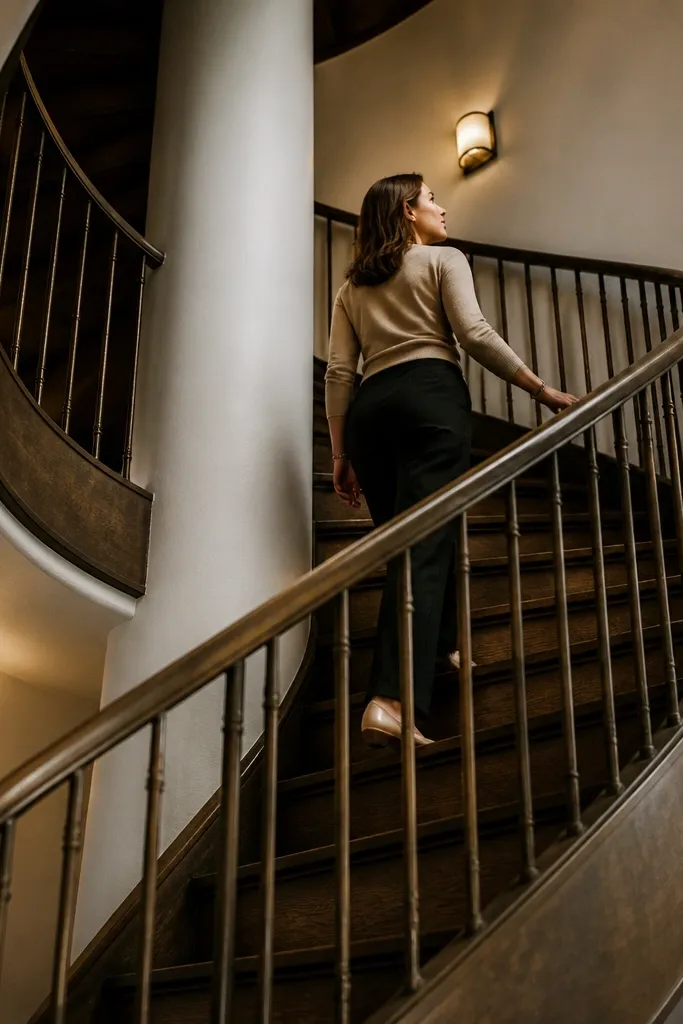
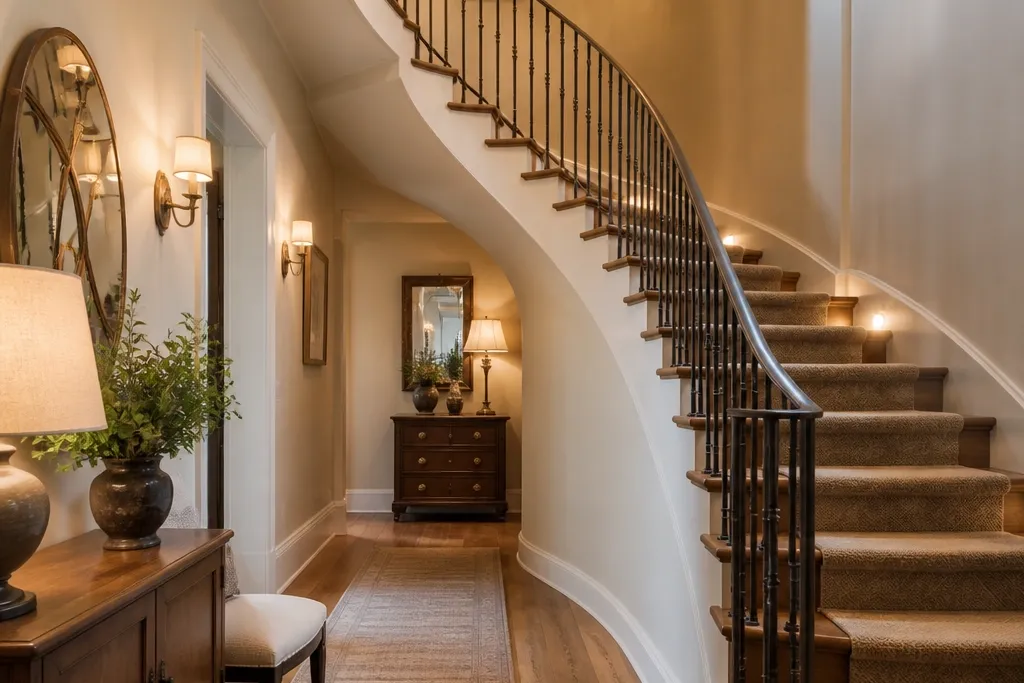
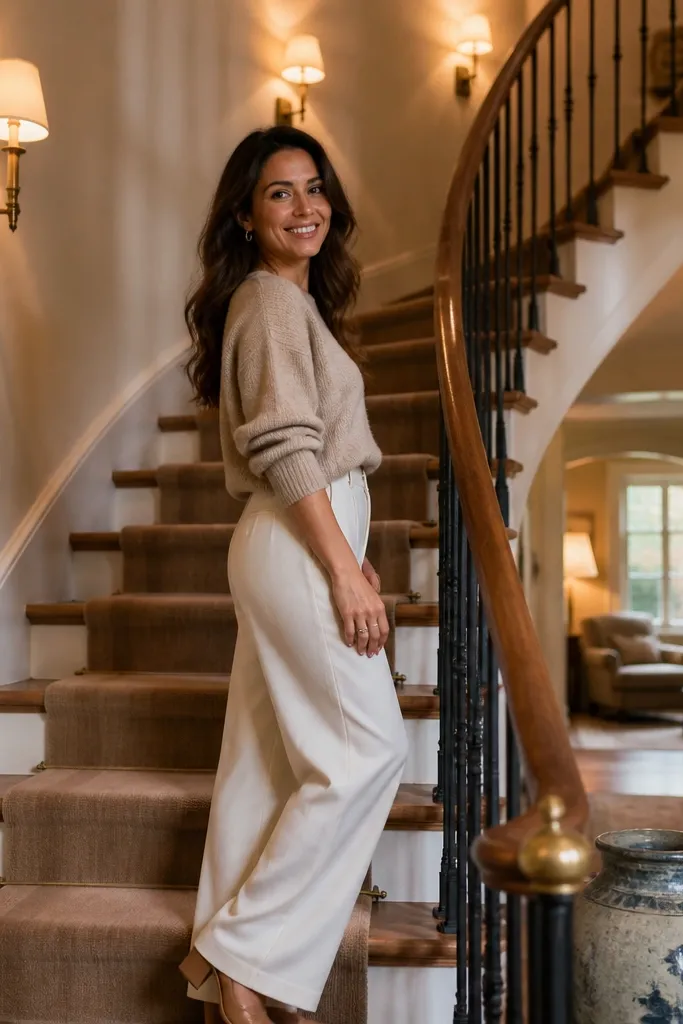
This look is cozy because the metal reads warm and the wood reads deep, not orange. Aged bronze on the rail and center column softens the steel vibe, while walnut treads add a brown that matches most warm paint colors. The matte white surround wall keeps the staircase from feeling boxed in and makes the wood tone stand out. In photos, the continuous satin grain on each tread creates a rhythm that feels intentional instead of industrial. It also hides minor scuffs better than glossy finishes.
First, choose walnut treads with a satin clear coat or hardwax oil so the grain stays warm and not plasticky. Then spray or powder the rail and center column in an aged bronze or oil-rubbed bronze finish, staying consistent across every metal part. Finally, paint the nearby wall or skirt panel matte white, and keep the baseboard simple so the staircase becomes the focal point without clutter.
Editor's noteUse a satin clear coat on treads and a semi-matte topcoat on the rail so both surfaces catch light softly.
Skip thisDon’t pair glossy “high shine” treads with aged metal — it looks cold and cheap in small rooms.
2. Cognac stained oak treads with blackened bronze handrail
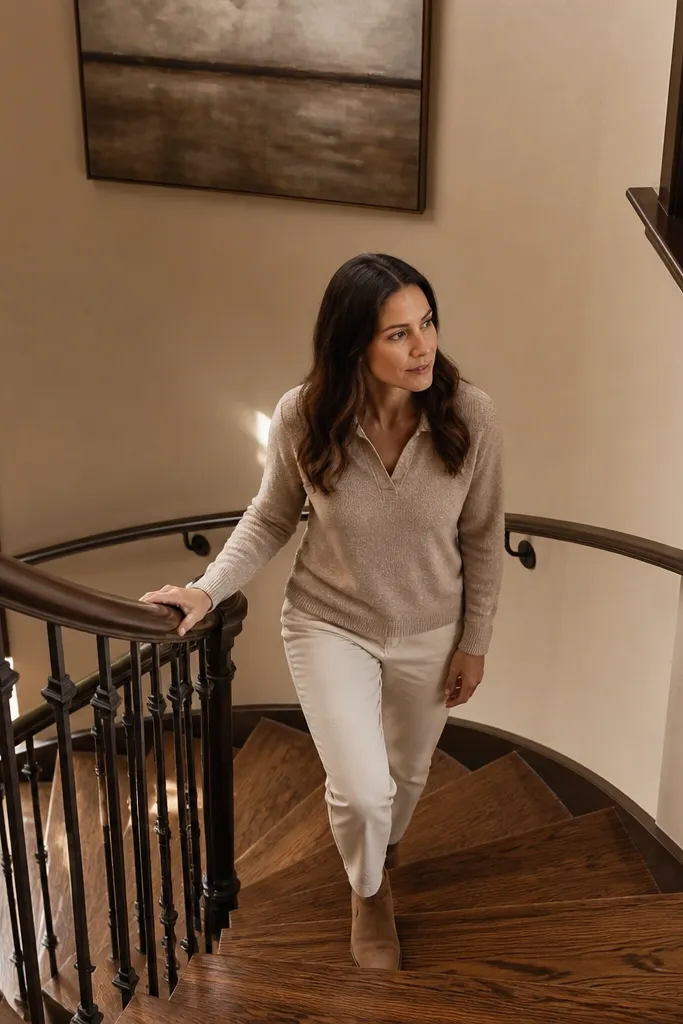
Cognac stained oak is the cozy middle ground: it’s warm without going red-orange. The blackened bronze handrail brings contrast without looking like harsh black steel. This style works well when your floors are medium brown and your room has tan or cream walls. It also looks good in daylight because the oak grain stays readable instead of getting swallowed by dark stain. The result is a staircase that feels like furniture, not hardware.
Start by staining oak treads in a cognac tone and sealing with a satin polyurethane or water-based satin finish. Next, finish the handrail in blackened bronze — aim for a matte or low-sheen powder coat. Then match the stair landing trim or adjacent wall trim to the tread color family, not the rail color, so the space feels warmer and more connected.
Editor's noteDo a sample board test: stain the same oak offcut and check it next to your wall paint at night with lights on.
Skip thisAvoid using a bright yellow oak stain next to blackened metal — it makes the whole staircase look washed out.
3. Rustic reclaimed wood treads with cable balusters and soft brass accents
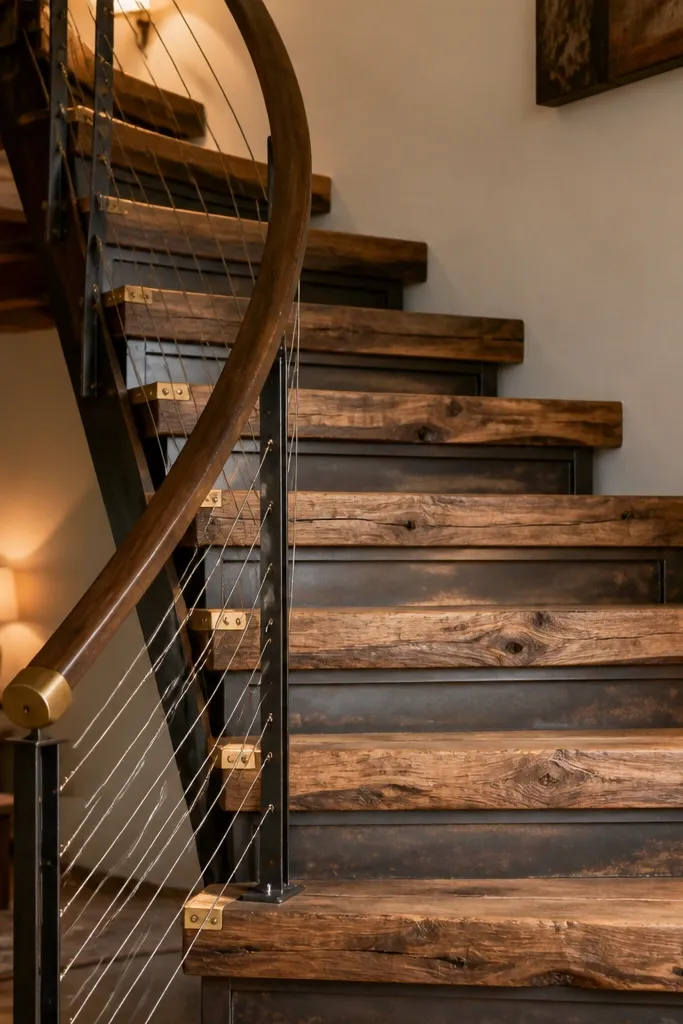
Reclaimed wood treads create instant warmth because the grain and slight variation read handmade. Cable balusters keep the spiral airy, which matters in small spaces where thick balusters feel heavy. Soft brass accents — small brackets or a brass-toned handrail end cap — add a cozy glow that doesn’t scream “modern industrial.” This is a great option when you want the staircase to look lived-in and inviting. It’s also forgiving if your wall colors shift seasonally.
First, select reclaimed wood planks for the treads and cut them to match tread size, then sand to remove splinters without erasing all character. Seal with a matte hardwax oil so the surface looks natural and doesn’t glare. Next, install cable balusters with warm brass or bronze hardware, and attach the handrail with matching warm-toned brackets. Finish by adding a thin brass trim strip at the base landing edge to tie the look together.
Editor's noteSeal all underside edges too; it prevents uneven darkening and keeps the warm tone consistent.
Skip thisDon’t use high-gloss clear coat on reclaimed wood — it highlights every knot and looks plasticky.
4. Teak-toned treads with honey brass handrail and warm sconce lighting
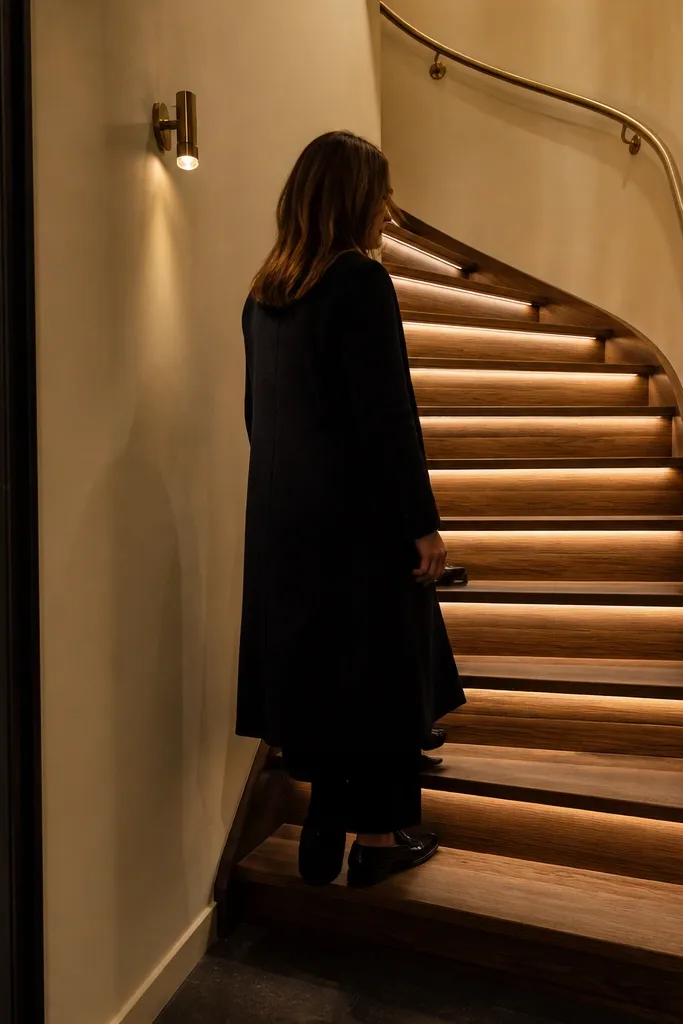
Teak-toned treads look cozy because they sit between golden and brown without turning red. Pairing that with honey brass makes the rail feel like warm metal jewelry instead of dark steel. The real secret here is lighting: a warm wall sconce aimed along the steps creates shadows under each tread, which makes the staircase feel dimensional and inviting. This style photographs well because the brass catches light while the wood stays soft. It’s also a strong choice if you want a “hotel hallway” warmth at home.
Start by finishing treads in a teak tone stain and seal with satin topcoat. Then finish the handrail and center column in honey brass or a brass powder coat with low sheen. Finally, mount a wall sconce on the adjacent wall and aim it so the light skims across the tread faces; use a 2700K bulb and a dimmer if possible.
Aim for light that hits the tread edge, not the wall — you want step shadows, not glare.
Avoid cool-white bulbs (4000K+) — they make brass look greenish and wood look dull.
5. Soft gray wood stain with oil-rubbed bronze rail and cream walls
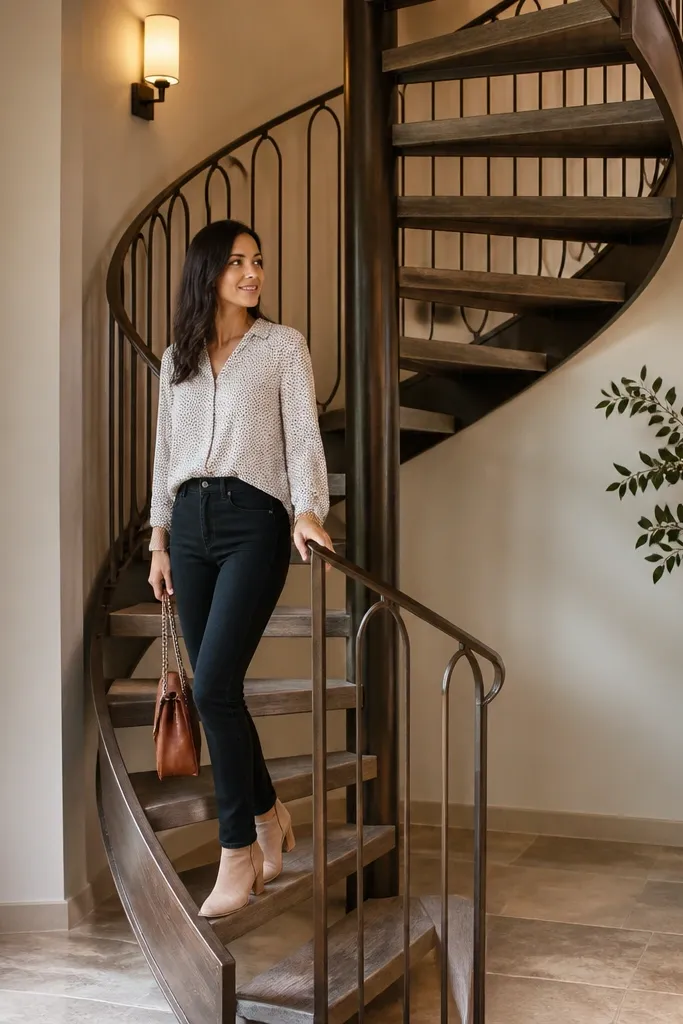
This is cozy warm style for people who don’t want “brown everywhere.” A soft gray stain on treads can still feel warm if it leans greige rather than blue-gray. Oil-rubbed bronze keeps the metal deep and muted, which complements cream walls without harsh contrast. The staircase looks modern but still welcoming because the materials stay low-glare. In tight stairwells, the cream walls brighten the area and prevent the spiral from feeling like a tunnel. It’s a smart move when your home already has gray finishes elsewhere.
First, stain the treads in a greige/soft gray tone and seal with satin so the finish doesn’t look like plastic. Then apply oil-rubbed bronze to the rail and any metal supports, keeping the sheen low. Finally, paint the stairwell walls in a warm cream (not bright white) and add a simple runner or non-slip strips that match the tread tone.
Editor's noteChoose a cream wall paint with a yellow undertone; it keeps the gray from turning cold.
Skip thisDon’t pair blue-gray stain with bronze — the combination reads muddy in small spaces.
6. Monochrome walnut with matching walnut handrail wrap
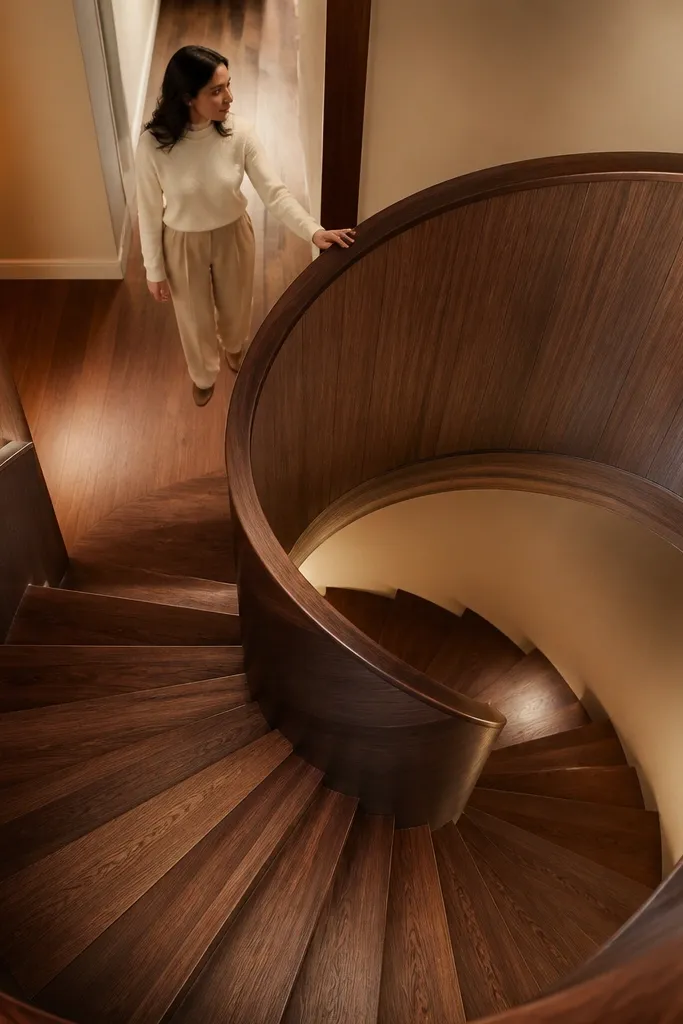
Monochrome walnut makes a spiral staircase feel like one continuous object, which is what makes it cozy in cramped spaces. When the handrail matches the tread color and sheen, your eyes don’t bounce around. This style also hides wear because wood can be refreshed with spot sanding and a new coat. It’s a great option if you already have walnut furniture or trim. The end result reads warm and intentional even if the staircase is the smallest thing in the room.
Start by finishing treads in walnut with satin clear coat. Then wrap or clad the handrail in walnut — either with a pre-made rail wrap or by building a thin wood sleeve that matches the rail profile. Finally, apply the same satin topcoat across both treads and rail wrap so the sheen matches under warm lighting.
Editor's noteUse the same topcoat brand on both wood surfaces so the sheen level stays consistent across the staircase.
Skip thisAvoid mixing matte treads with glossy rail wrap — the contrast screams “two different projects.”
7. Matte black frame with warm oak treads and a linen stair runner strip
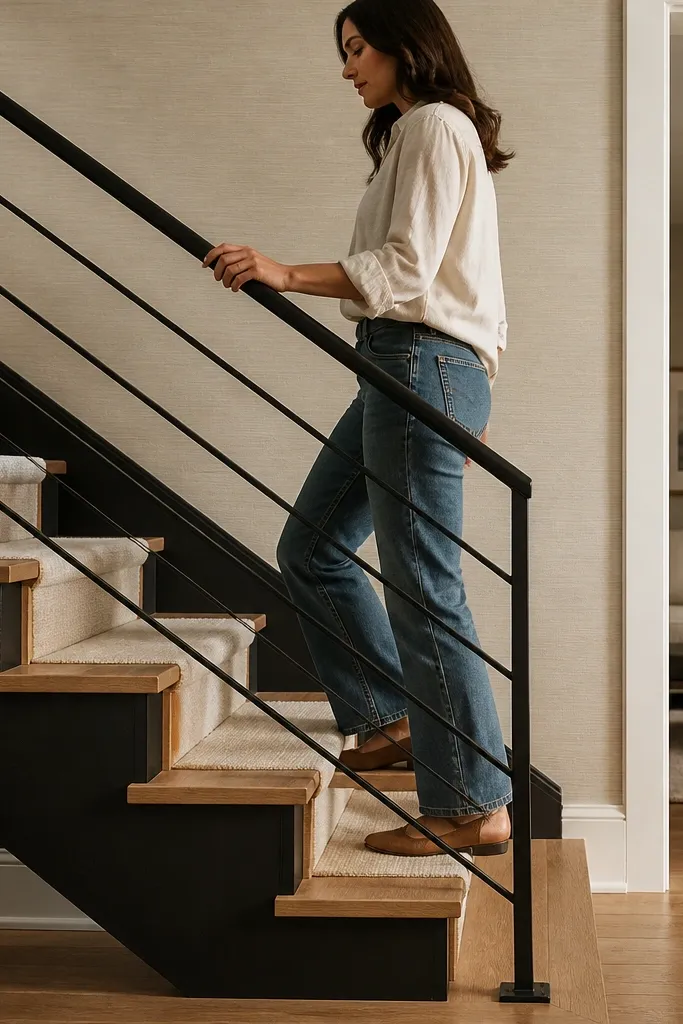
If your staircase frame is already matte black, you don’t need to replace it to get cozy. Warm oak treads add the missing warmth, while a linen runner strip gives softness underfoot and visually breaks up the spiral steps. Keep the runner narrow and aligned with each tread edge so it looks tailored, not bulky. This style works especially well in small entry areas where you want the staircase to feel friendly. It also helps with grip and reduces the “clicky” sound of bare treads.
First, refinish or install warm oak treads in a satin finish so they don’t glare. Then attach non-slip tread mats or grip tape to prevent slipping, and add a linen runner strip cut to each tread length. Finally, keep the runner color in the warm family — cream or light tan — and stitch or hem the edges so it looks crisp.
Use breathable non-slip pads under the runner so moisture doesn’t get trapped and discolor the fabric.
Don’t go full wide runner — it makes the staircase look cramped and blocks the spiral pattern.
8. Walnut edge-banded treads with brass tread nosing
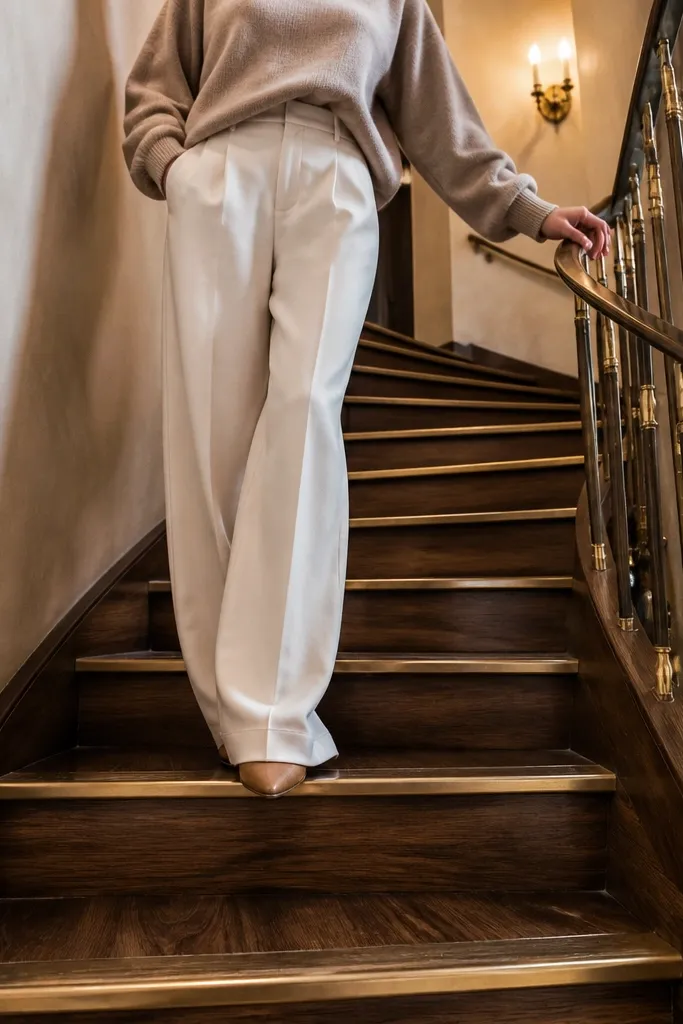
Edge banding is a detail people notice without knowing why. When the tread edges have a clean band of walnut and the nosing has a thin brass strip, the staircase looks finished and warm at every angle. Brass nosing also catches light at step level, so the staircase reads cozy even in dim hallways. This style is especially good if your staircase has a visible metal substructure underneath and you want to hide it. It’s photogenic because the nosing creates a repeating highlight across the spiral.
Start by using plywood or composite treads with walnut edge banding, then sand and seal the faces in satin clear coat. Next, install thin brass nosing strips along the front edge of every tread, using screws or adhesive designed for wood-metal bonding. Finally, finish the rail in a warm tone that matches the brass — honey brass or aged bronze — and keep the rest of the frame matte so the nosing remains the bright point.
Pre-drill for nosing screws to prevent wood splitting at the tread edge.
Avoid thick brass plates — they look heavy and can catch shoes in tight stairwells.
9. Terracotta wall surround with oil-rubbed bronze and oak treads
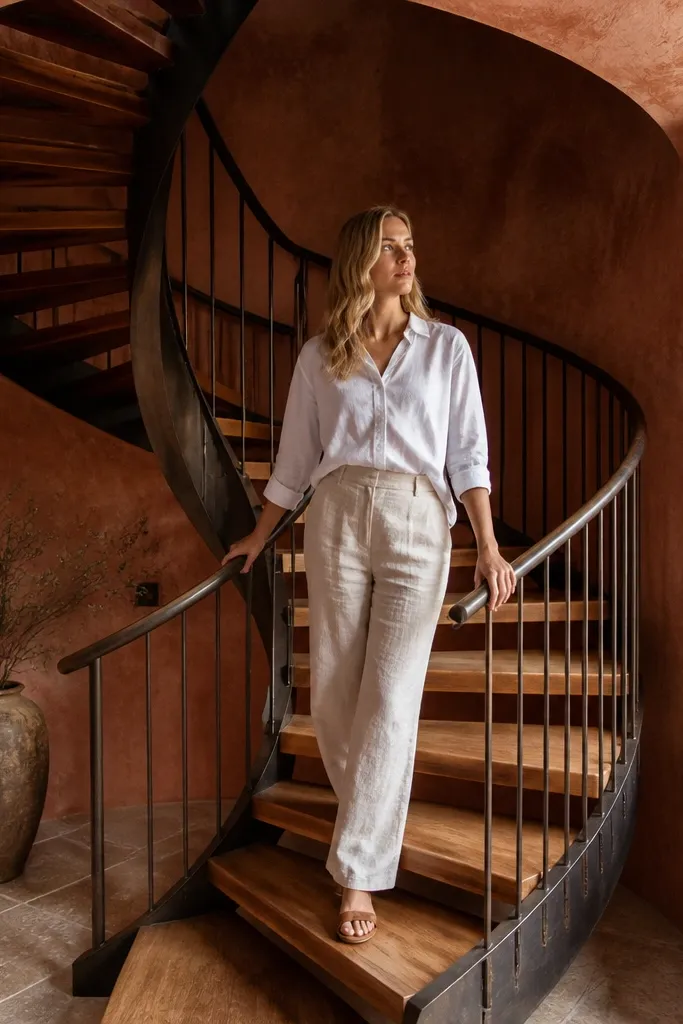
Terracotta around the staircase makes the whole area feel warmer than the temperature ever could. Pair it with oak treads and oil-rubbed bronze and you get a cozy palette that looks great in both daylight and warm lamps. The terracotta also reduces the “metal tunnel” feeling by giving the spiral a textured, earthy backdrop. In photos, the wall color makes the steps look grounded, not floating. This is a strong choice when your home has warm earthy colors elsewhere — clay, rust, tan.
First, paint the stairwell surround terracotta in a matte finish so it doesn’t reflect harsh light. Then install or refinish oak treads in satin and apply oil-rubbed bronze to the rail. Finally, add a small amount of warm wood trim at the bottom landing edge so the staircase looks like it belongs to the room, not pasted in.
Use a matte paint and keep the rail low-sheen; shiny paint plus metal looks slick and cold.
Don’t choose a bright orange terracotta — it can overpower walnut and make bronze look too dark.
10. Satin white stair frame with warm beech treads and rope-wrapped handrail ends
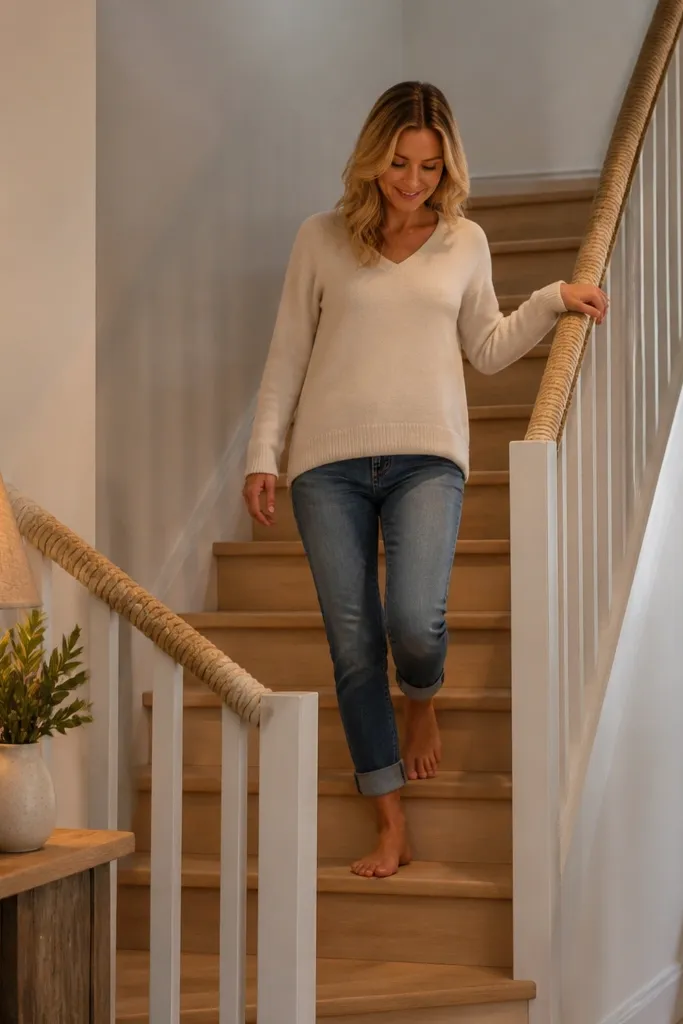
This style feels cozy because it mixes clean brightness with warm texture. A satin white frame keeps the stairwell visually lighter, which matters in small spaces. Warm beech treads add a gentle golden tone, and rope-wrapped handrail ends bring a tactile, cottage vibe without changing the structure. It’s a great option if you want the staircase to feel airy but still inviting. The rope also makes the handrail feel softer to touch, and it photographs beautifully in warm light.
First, finish the frame in satin white (not glossy) and install warm beech treads with a satin topcoat. Then wrap just the handrail ends or the first handrail section near the landing with rope and seal it with a clear matte fabric-safe finish. Finally, add a small non-slip runner strip on the first few treads so the rope vibe doesn’t get undermined by slippery steps.
Wrap rope tight and keep the coil direction consistent so it reads neat, not messy.
Don’t wrap the entire handrail — it gets bulky and looks uneven in close quarters.
11. Smoked oak treads with bronze cable guard and warm floor lamp glow
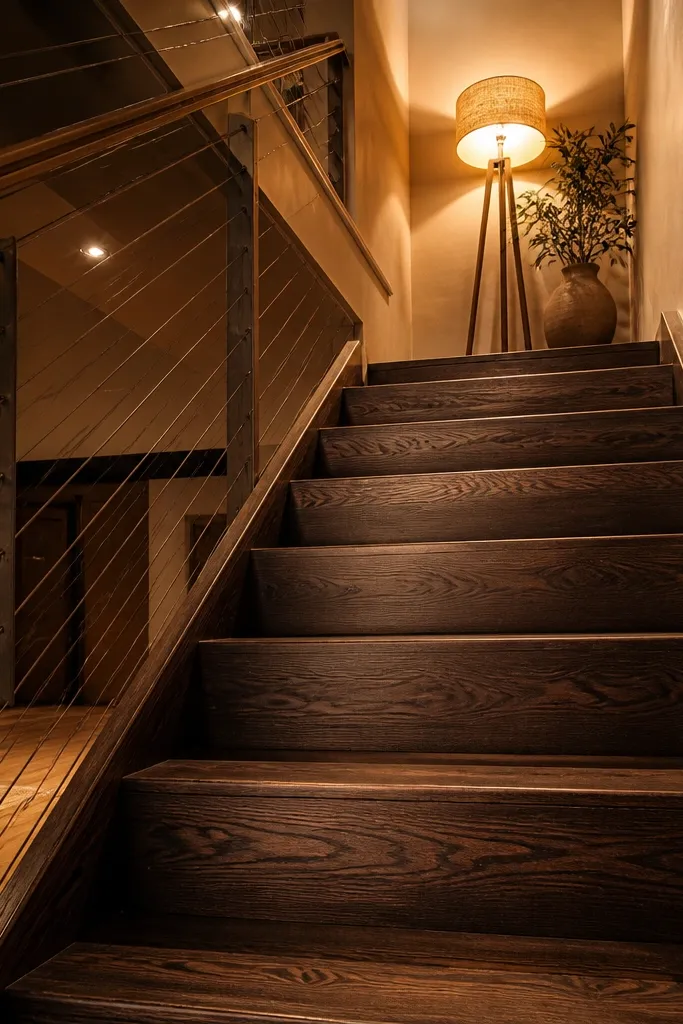
Smoked oak is dark without being cold. The color feels moody and cozy at the same time, especially when the rail is bronze and the guard is cable — cable keeps the staircase airy. Add a warm floor lamp that spills light into the stairwell and you get a soft glow across the steps. This is the right look when your room already has dark furniture or moody wall colors. The staircase stays photogenic because the smoked grain shows up under warm light.
First, refinish treads in a smoked oak stain and seal with satin clear coat to avoid glare. Then install or finish the guard in bronze and keep the cable spacing tight enough to feel secure. Finally, position a floor lamp so its light hits the side of the staircase — use a 2700K bulb and dimmer if you can.
Editor's noteUse a warm lamp shade (linen or fabric) so the light is soft, not harsh.
Skip thisAvoid cool LED strips inside the stairwell — smoked wood looks gray under them.
12. Woven rattan under-tread panels for a warm, airy look
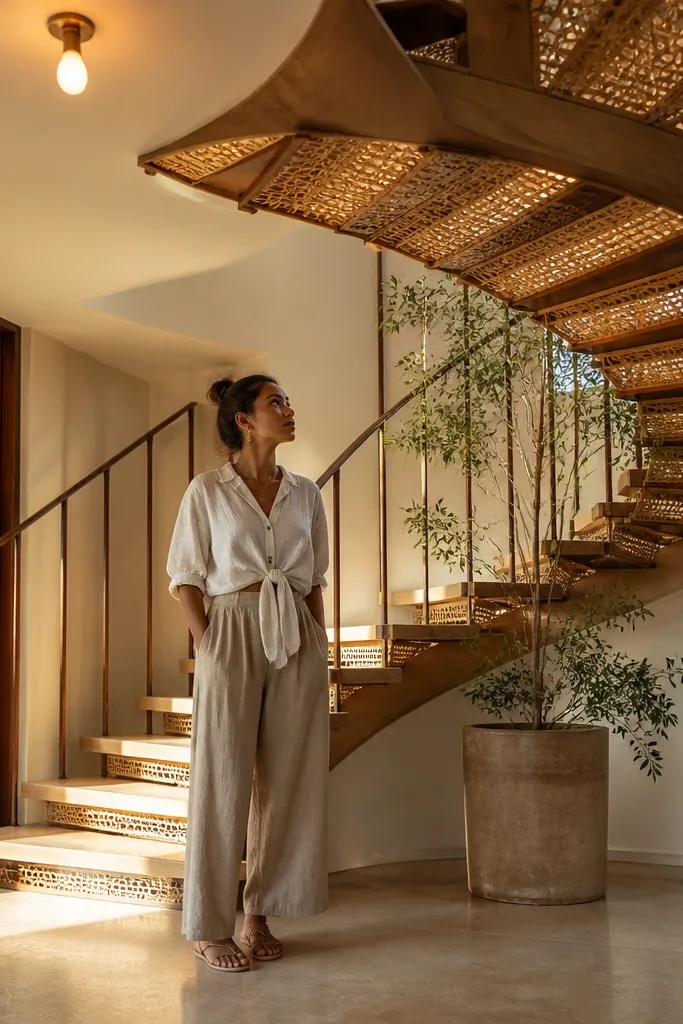
This idea adds warmth by changing what you see between steps. A woven rattan panel under the treads creates texture that reads cozy instead of industrial, and it hides the voids that make stairwells feel drafty. You get a breathable, light-blocking effect that’s still photogenic because the weave creates a pattern that shifts with light. This works best when the staircase is visible from a living area. It’s not the quickest install, but it’s one of the most visually distinctive options on this list.
First, measure the openings under the treads and cut rattan panels or woven sheets to fit, leaving a small clearance for movement. Then attach the panels using a thin wood frame or discreet brackets screwed into the stair structure. Finally, seal the rattan edges with a clear matte wood-safe sealer and add warm bulbs aimed at the weave so it casts a soft shadow pattern.
Editor's noteSeal the rattan edges, not the whole piece — it keeps the weave breathable while preventing fraying.
Skip thisDon’t cover the entire stairwell in opaque panels — you’ll lose the airy cozy effect.
13. Caramel leather-wrapped handrail with light oak treads
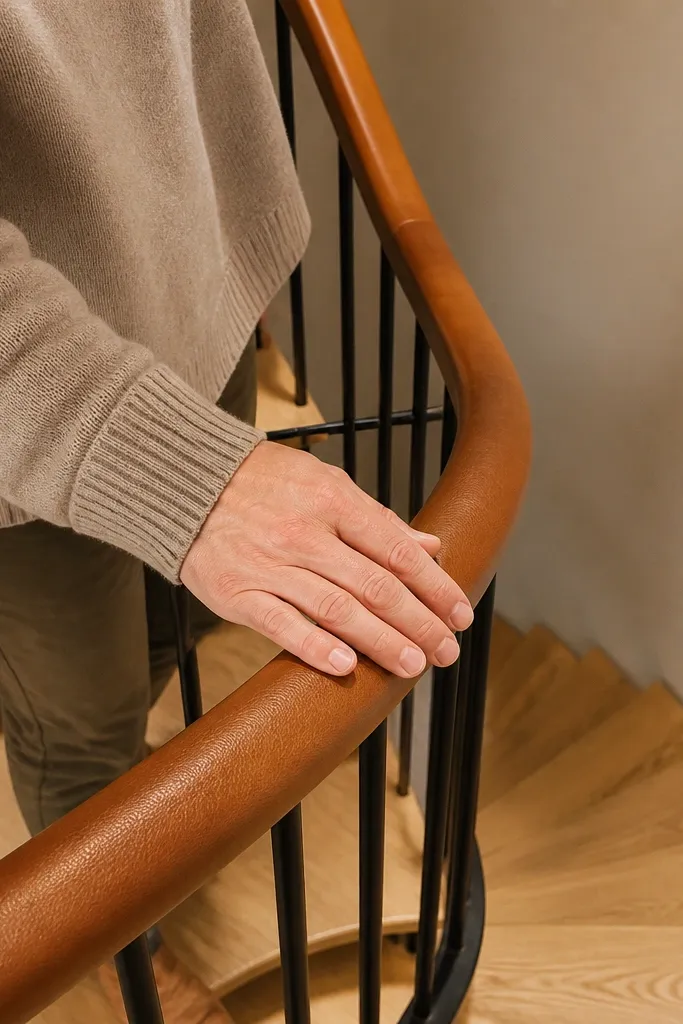
Leather on a handrail reads warm instantly because it’s textured and slightly matte. Caramel leather in particular plays nicely with light oak treads, giving a soft, inviting look without adding clutter. This style is great for narrow staircases where people grab the rail a lot — the tactile feel matters. In photos, leather catches light in a gentle way, so the staircase looks cozy even if the room lighting is basic. It’s also a practical upgrade if your current rail is cold-feeling metal.
First, sand and wipe the handrail, then wrap it with pre-cut or custom leather strips, using strong contact adhesive or mechanical fastening at the underside. Next, apply a leather conditioner to keep the finish even and matte. Finally, refinish the treads in light oak with satin sealer and add a non-slip strip at the tread edges so the look stays safe.
Editor's noteWrap from one end to the other with tension and smooth seams to avoid visible ridges.
Skip thisAvoid glossy leather — it turns the handrail into a glare source on stair photos.
14. Warm white frame with walnut treads and a copper downlight ring
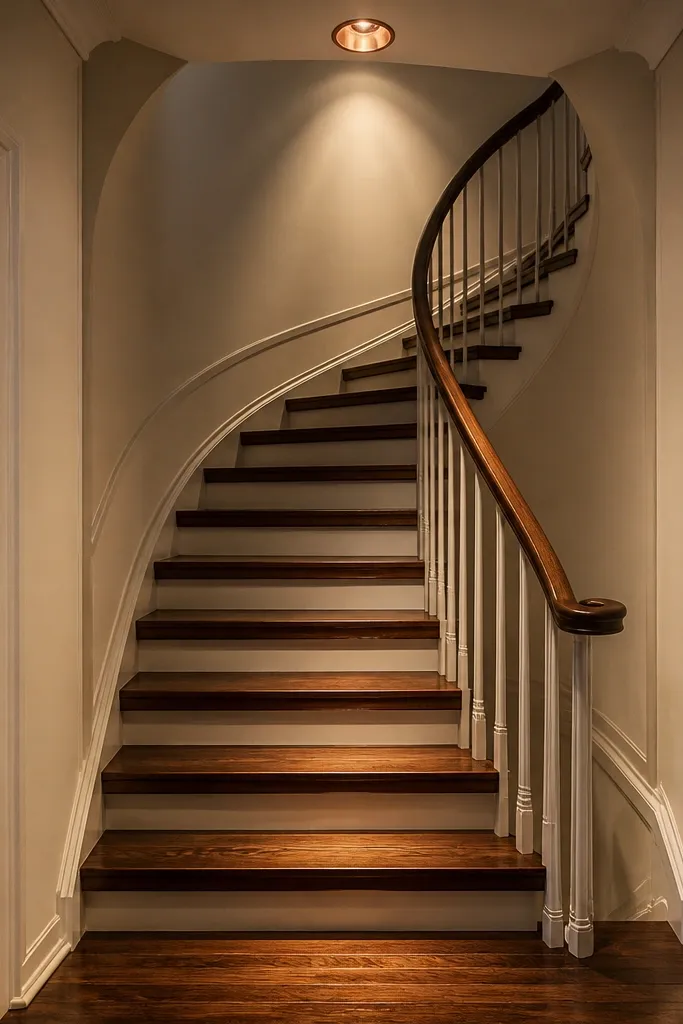
If your staircase sits in a hallway where overhead light is harsh, this fixes the vibe. Warm white frame keeps it bright, walnut treads keep it cozy, and a small copper ring downlight adds a focused glow over the steps. The ring light creates a “lantern” feeling without needing fancy fixtures. This looks great in small spaces because it adds warmth where you actually look — on the steps and handrail. It’s a clean style for people who want cozy without rustic clutter.
First, finish the frame in warm white (use satin) and seal walnut treads in satin clear coat. Then install a small recessed or surface downlight ring positioned so it hits the tread faces, not the ceiling. Finally, use a 2700K bulb and add a dimmer so you can keep the glow soft during evenings.
Test the beam angle with a cheap LED flashlight before you commit to the light location.
Don’t mount the light too high — it will light the wall and leave the steps looking shadowy.
15. Smoky black frame with amber glass panels and walnut treads
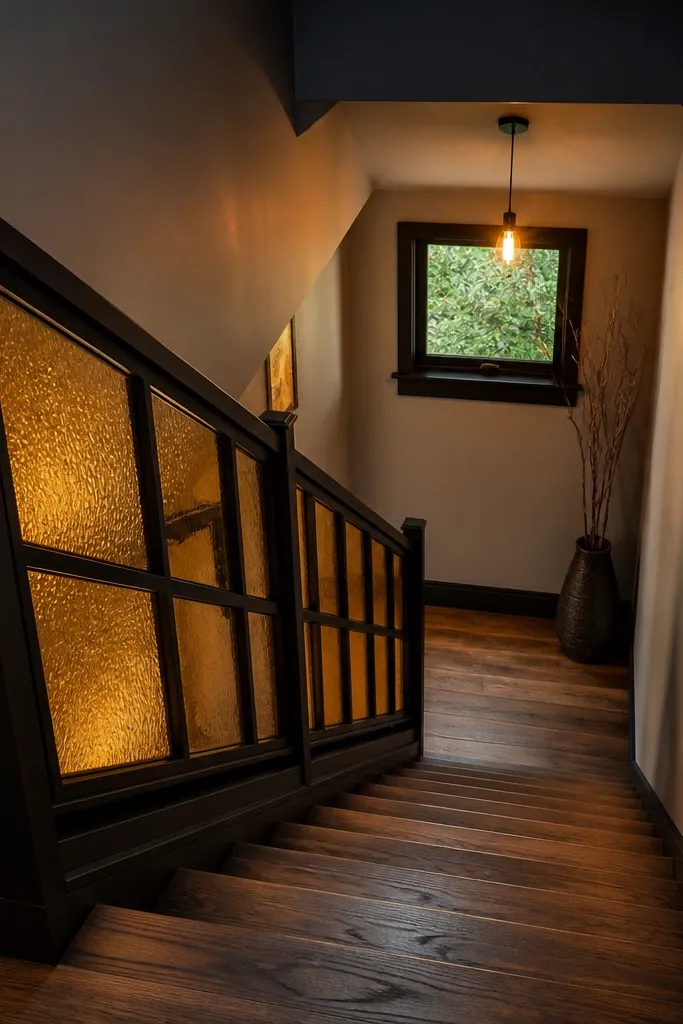
Amber glass makes a staircase feel like a lantern instead of a ladder. When you pair smoky black metal with walnut treads and amber glass panels, the colors stay warm even when the room is dim. Glass also adds depth, which helps a small stairwell feel less flat. This style is especially photogenic because the amber tint warms every reflection. It’s a good choice if you want a more dramatic cozy look without going fully rustic.
First, refinish walnut treads in satin and keep the wood grain visible. Then finish the metal frame in smoky black with low sheen. Finally, install amber-tinted glass panels in the guard sections, using rubber glazing gaskets for a clean fit and sound control.
Editor's noteUse amber with a low tint — too dark blocks light and makes the stairwell feel heavy.
Skip thisAvoid clear glass with warm bulbs only — it looks cold because the glass shows every glare spot.
16. Honey-stained birch treads with aged brass baluster caps
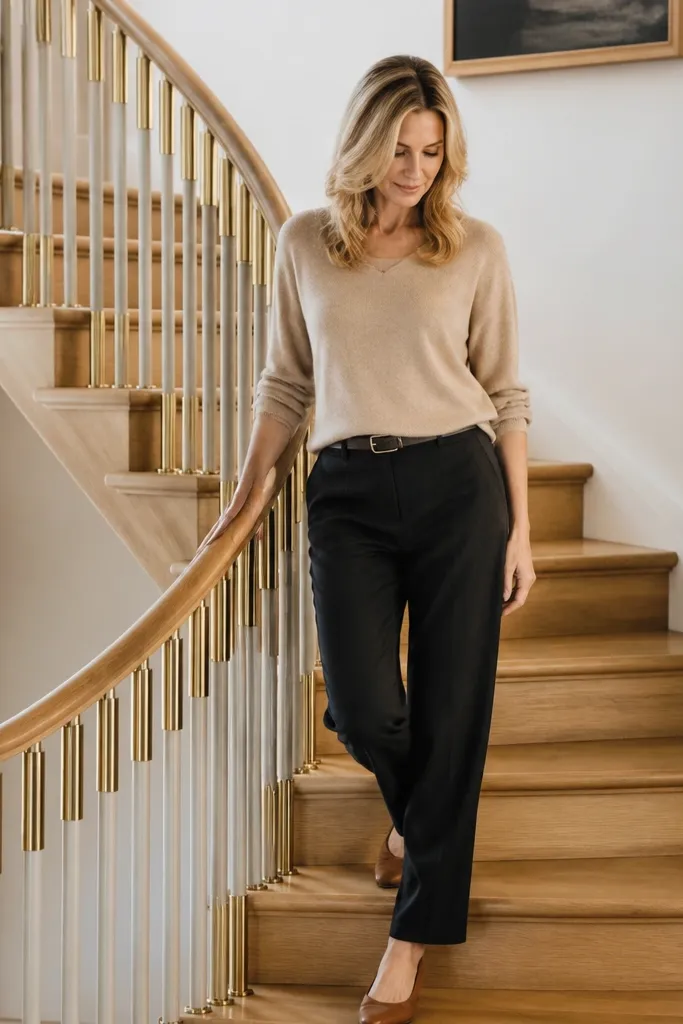
This is bright-cozy: honey-stained birch reads warm and clean, and aged brass caps add subtle sparkle without turning the whole staircase into bling. If your small space already has light walls or light flooring, this style keeps everything from feeling cramped. The caps also create a repeating pattern along the spiral, which makes the staircase look intentional in photos. It’s a good option when you want warmth but you don’t want the dark, heavy feel of smoked or deep brown treads.
Start by staining birch treads in a honey tone and sealing with satin clear coat. Then install or refinish balusters and add aged brass caps on the top of each baluster section. Finally, paint the surrounding wall in a warm light tone and keep trim minimal so the brass pattern stays readable.
Editor's noteUse satin on both wood and brass so the staircase doesn’t throw harsh reflections in the stairwell.
Skip thisDon’t use bright gold brass — it looks yellow and can clash with honey wood tones.
17. Dark espresso treads with warm walnut handrail and cream stairwell trim
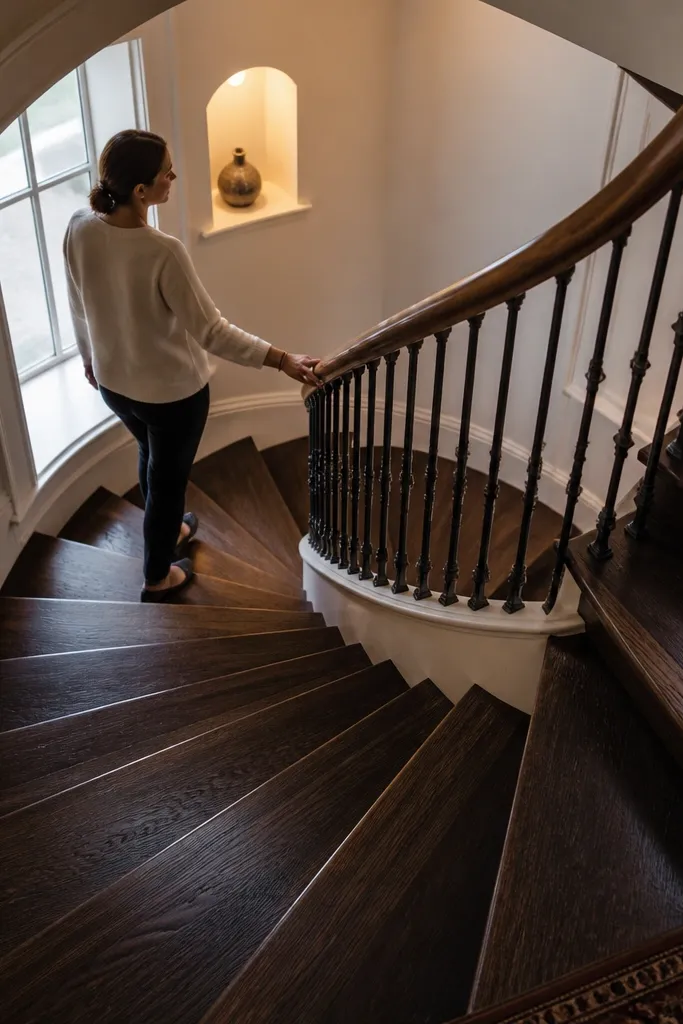
Espresso treads can still feel cozy if the rail and trim balance the darkness. Warm walnut handrail softens the look and cream trim around the stairwell keeps it from feeling like a cave. This style works in small spaces that already have darker furniture or a fireplace wall. The contrast is controlled: dark steps, warm rail, bright trim. In photos, the staircase looks sculptural and inviting rather than severe.
First, stain treads espresso and seal with matte-satin clear coat to reduce glare. Next, finish the handrail in warm walnut and keep it slightly lighter than the treads so it reads friendly. Finally, paint surrounding trim and the stairwell edge in a warm cream and add a narrow non-slip strip at the tread edges.
Editor's noteKeep the cream trim color consistent with nearby baseboards so the staircase feels built-in.
Skip thisAvoid pairing espresso treads with cool white trim — it makes the whole stairwell feel harsh.
18. Terrace-style round wood bullnose treads with bronze rail
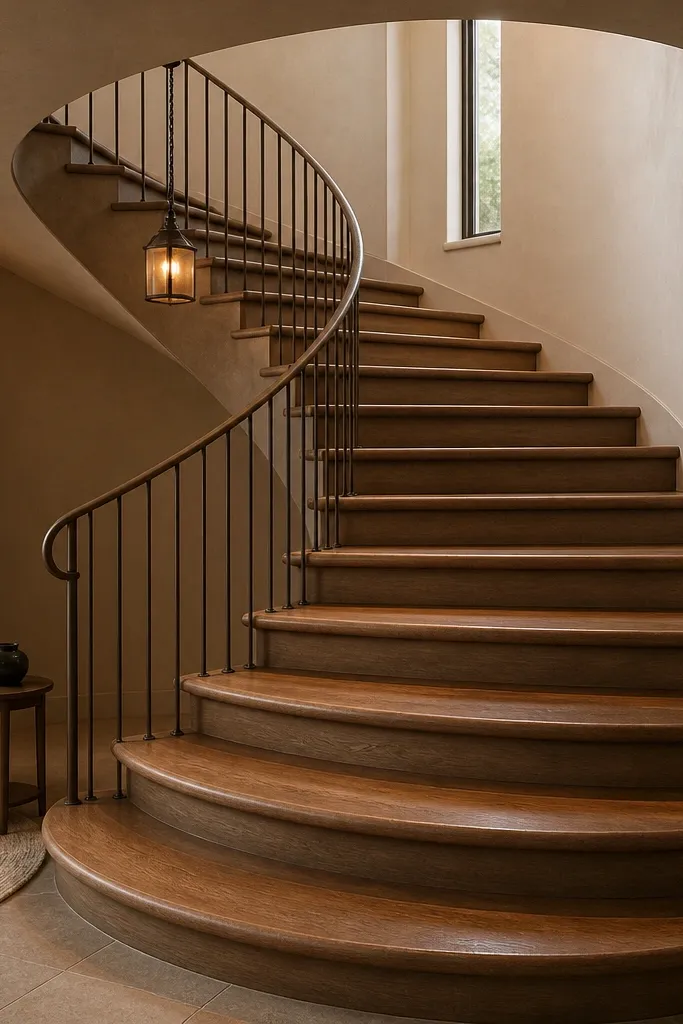
Bullnose treads make a staircase look softer because the edges are rounded, not sharp. That single change reads cozy in photos — your eye sees gentleness instead of geometry. Pair those round wood treads with a bronze rail and you get a warm, terrace-like feel. This is a great option if you’re building from a kit or planning to replace treads. It also helps with comfort underfoot because the front edge feels more forgiving.
First, choose treads with a bullnose or rounded nosing profile, ideally in oak, walnut, or beech with satin finish. Then finish the rail in bronze with low sheen so it doesn’t glare. Finally, add anti-slip strips or tread tape and test shoe clearance at the landing because rounded edges can change how shoes land.
Sand the bullnose profile by hand with 180 then 220 grit so it feels smooth, not slippery.
Don’t skip non-slip — round edges can still be slick depending on finish.
19. Carved wood newel post cap with simple metal spiral and warm LED step lights
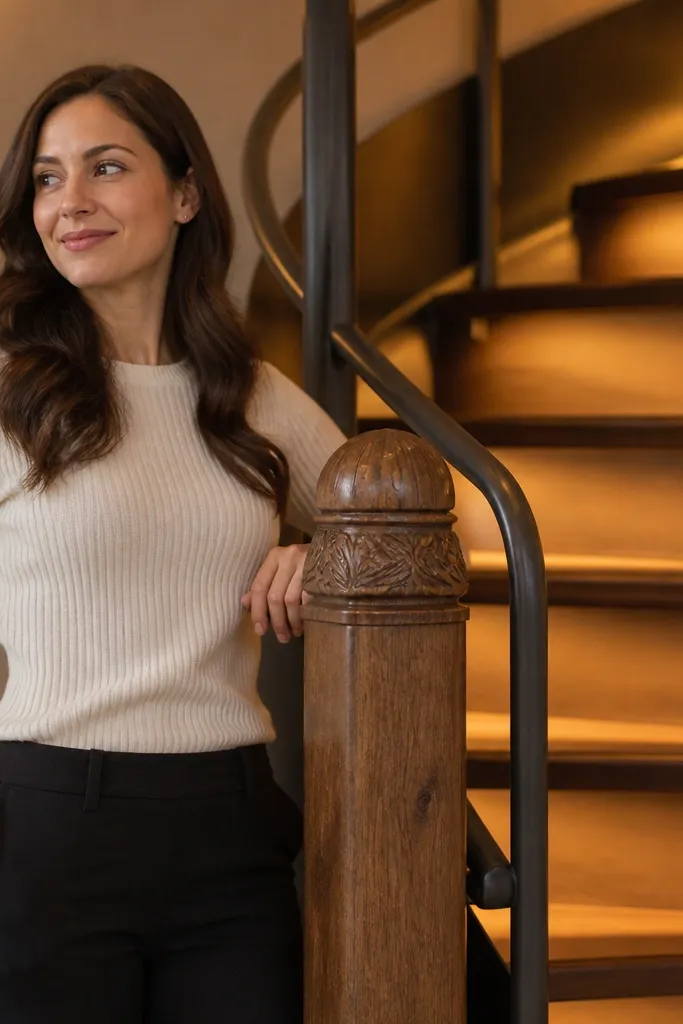
A carved wood newel post cap adds warmth at the eye level people notice when they walk in. Keep the rest of the spiral simple — clean metal frame, minimal ornament — and use warm LED step lights to create cozy glow. The LEDs should be low and angled to wash the tread surfaces, not to shine directly at faces. This style works in ultra-small entryways where you can’t add a lot of visual bulk. It’s also a good “upgrade” approach if you’re not ready to replace the whole staircase.
First, add a carved or turned wood cap on the newel post and finish it in the same satin tone as your treads. Then install step lights along the underside or side of treads with a warm 2700K LED driver and dimmer. Finally, keep wiring hidden in the central column and secure all fixtures so they don’t rattle as the staircase moves.
Editor's noteUse warm LED strips with a diffuser so the light looks like it’s coming from the tread, not from a bare diode.
Skip thisDon’t place LEDs too close to the handrail — you’ll get glare instead of cozy glow.
20. Matte sage paint stairwell with white oak treads and antique brass hardware
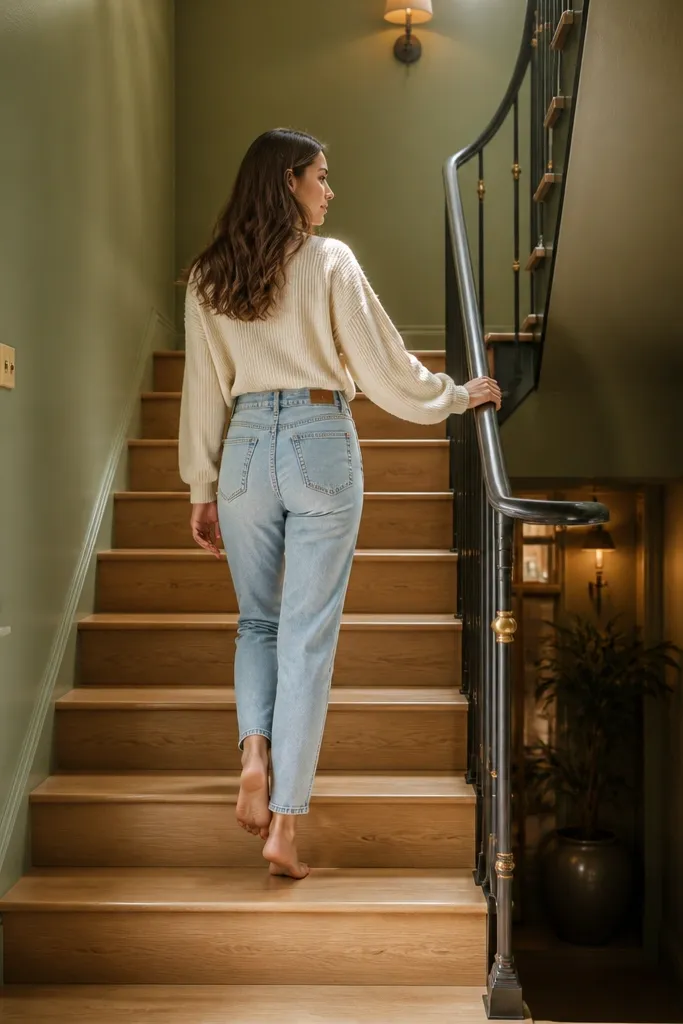
Sage is cozy when it’s muted and matte, and it makes the staircase feel calmer and more livable. White oak treads keep the wood warm, and antique brass hardware adds a gentle golden accent that looks good under warm lighting. This style is perfect for small spaces that feel too beige or too sterile. It also photographs well because sage has enough color to add depth without being loud. The staircase reads like part of the room’s palette instead of a separate object.
First, paint the stairwell walls matte sage and let it cure fully before finishing the staircase. Then install or refinish white oak treads in satin, keeping the grain visible. Next, finish rail hardware in antique brass and add small brass accents at the landing — bracket plates or a handrail mounting cover. Finish by adding warm bulbs around 2700K so the sage stays green and not gray.
Editor's notePick a sage with a gray-green undertone; bright green sage can look funky next to brass.
Skip thisAvoid glossy sage — it makes the stairwell reflections look sharp and cold.
21. Cinnamon wood stain with blackened steel frame and warm rope handrail grip
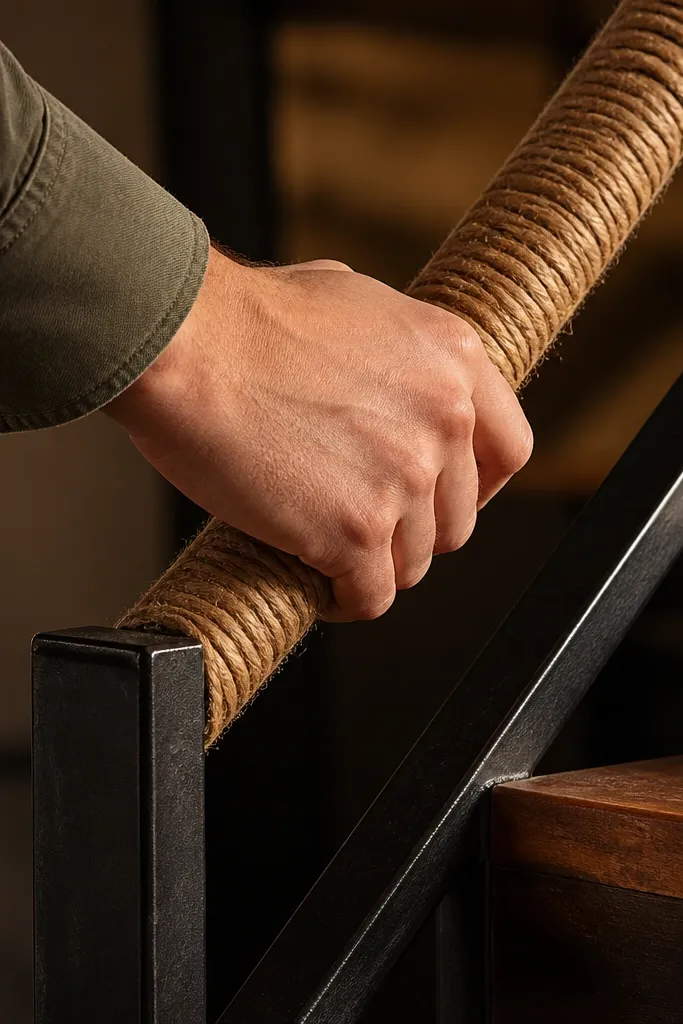
Cinnamon stain adds warmth without going full caramel, and blackened steel keeps the look grounded. The rope handrail grip makes the staircase feel cozy even if the room is otherwise modern. This style works in small spaces because it adds texture in a focused way — the rail is where people look and touch. It also hides fingerprints better than smooth metal. The overall look feels like a cabin-meets-modern hallway.
First, stain treads in a cinnamon tone and seal with satin finish to keep the surface warm and non-glossy. Then finish the steel frame in blackened steel or oil-rubbed black with matte sheen. Finally, wrap the handrail grip area with rope and secure ends underneath, then apply a clear matte finish to keep fibers from fraying.
Use thick rope for grip comfort, then trim the strands cleanly at the ends.
Don’t use thin rope — it looks decorative only and feels awkward to hold.
22. Walnut tread box surround with hidden storage and warm under-step light
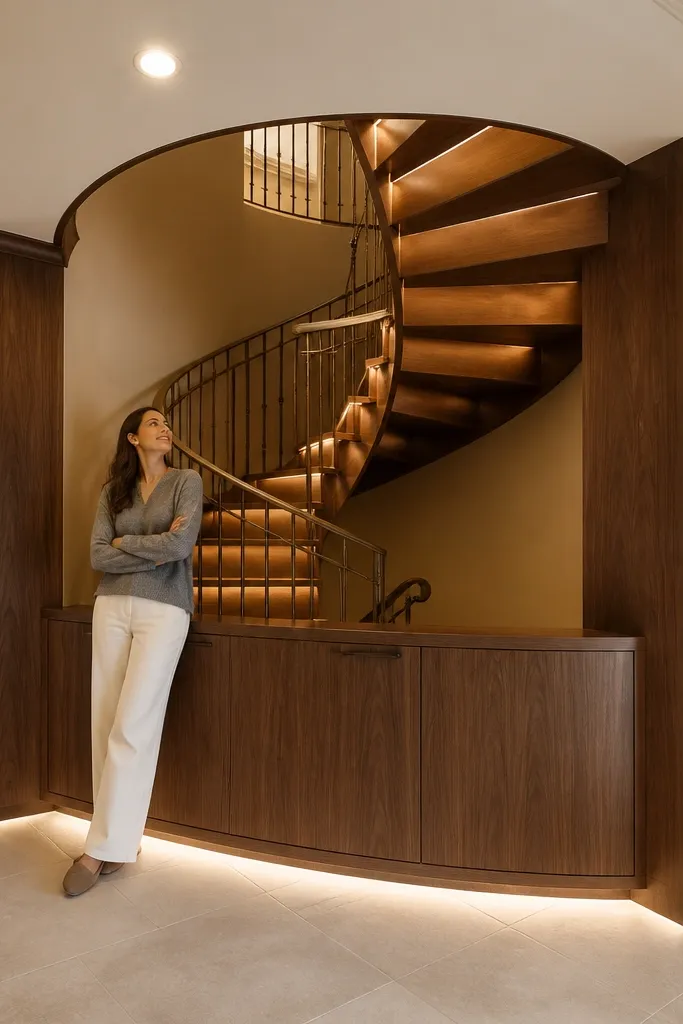
Cozy warmth improves when the stairwell looks “finished” instead of open voids and bare structure. A walnut tread box surround — panels that frame the spiral opening — makes the staircase feel built-in, and it also gives you a place to hide small clutter. Add under-step warm light and the wood paneling glows softly, which is what makes it feel inviting in photos. This style is ideal when your staircase is visible from a main room and you want it to look like a designed feature. It’s more work than a finish-only refresh, but the payoff is huge.
First, build a simple plywood or MDF surround box around the lower visible section of the stair opening, then veneer or laminate it in walnut with satin topcoat. Next, add a hidden storage cavity behind one panel and install a magnetic latch for access. Finally, install low-profile warm under-step LED lights aimed upward along the wood panels and keep cords routed inside the surround.
Editor's noteUse magnetic catches and removable panels so you can reach wiring without tearing the surround apart.
Skip thisDon’t box in the entire staircase opening — you’ll lose the spiral’s airy look in small spaces.
23. Textured stone surround in warm beige with walnut treads and bronze rail
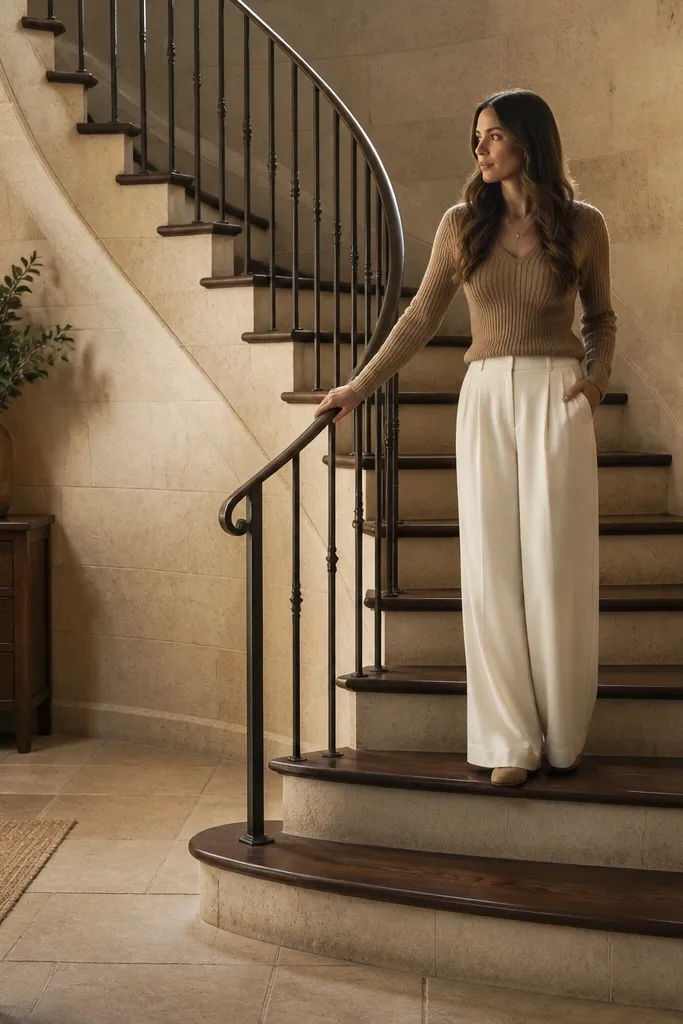
A textured stone surround makes the staircase feel grounded, which reads cozy even when the staircase itself is metal. Warm beige stone — honed or lightly tumbled — reflects light softly and avoids the glare you get with glossy tile. Pair it with walnut treads and a bronze rail for a warm, cohesive palette. This style is photogenic because the stone texture creates depth behind the spiral. It’s also a good choice if your home already has stone surfaces elsewhere.
First, choose a warm beige stone with a honed finish and install it around the staircase opening with thinset and proper backer board. Then install walnut treads with satin sealer and bronze rail finish. Finally, seal stone joints and add non-slip tread strips that match the walnut tone so the staircase looks continuous and safe.
Use a slightly darker grout than the stone so the texture stays crisp rather than looking washed out.
Avoid glossy stone — it throws highlights that make the staircase look harsh.
24. Honey oak treads with brass line inlays and matte white rail supports
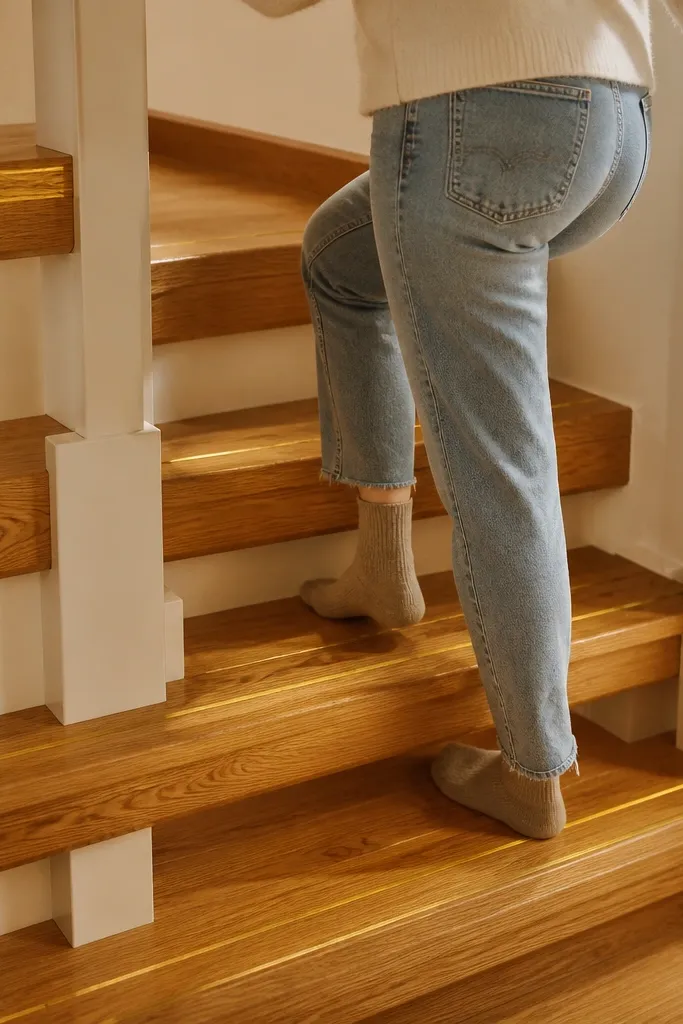
Thin brass line inlays are a subtle detail that makes a staircase feel designer without being flashy. Honey oak treads keep everything warm and light, while matte white rail supports reduce the visual bulk in a tight stairwell. The brass lines act like fine jewelry in the photo — they catch light at step edges and guide the eye up the spiral. This style is best when your room is bright or when you want the staircase to blend into a light interior. It’s also a smart refresh if you can update treads but not the whole frame.
First, install or refinish honey oak treads and seal with satin clear coat. Then add thin brass line inlays along the tread face — use pre-cut brass strips or custom strips secured with wood epoxy and sand flush after curing. Finally, paint rail supports matte white and finish the handrail in a warm brass or keep it bronze so the brass lines don’t fight the metal.
Editor's noteKeep the brass inset lines consistent distance from the tread edge so the spiral rhythm looks clean.
Skip thisDon’t add thick brass inlays — they look heavy and can feel awkward on narrow treads.
25. Teak-look laminate treads with warm under-rail LED strip
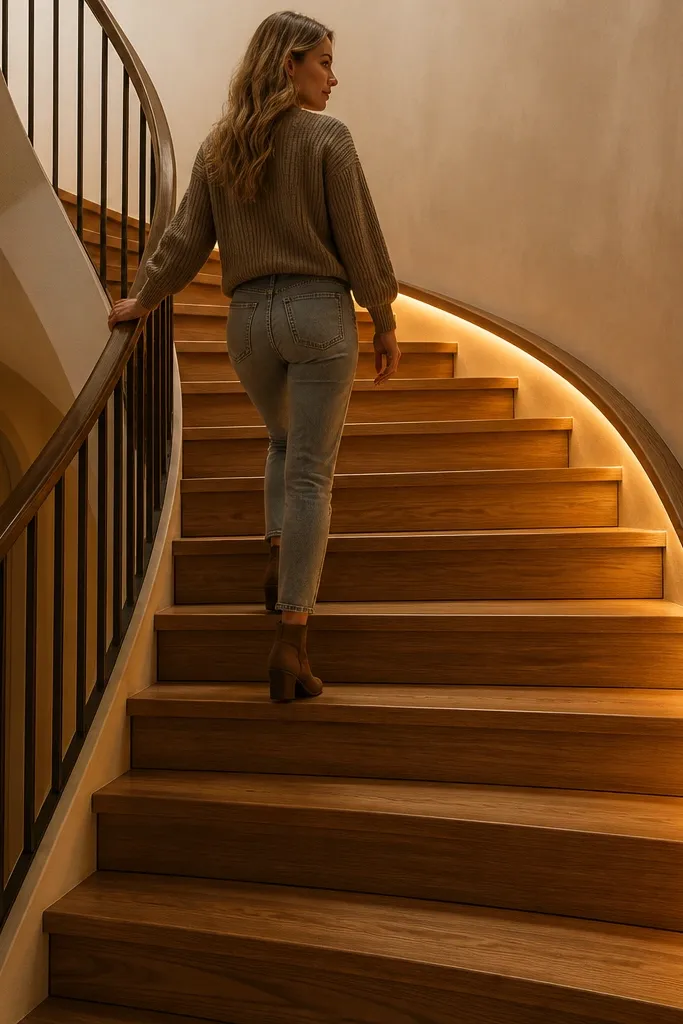
Real teak is expensive, but a teak-look laminate can get the warm vibe if you choose the right sheen and pattern. Pair it with an under-rail LED strip in 2700K and the staircase looks cozy because the light creates a soft edge glow along the handrail. This is a practical option when you want the warm look without the full cost of custom wood treads. It’s also easier to maintain in busy households because laminate resists dents better than soft wood. The key is keeping the LED diffused and low-glare so it doesn’t look like a gadget.
First, choose teak-look laminate treads with a satin or matte surface and install them with the correct tread fasteners for your staircase kit. Then mount a warm LED strip under the handrail channel using a diffuser cover and a dimmer. Finally, route the wiring through the center column and test brightness at night before closing any access panels.
Use a diffuser cover and set brightness so the steps glow, not the wall — aim for soft edge lighting.
Avoid glossy laminate — it reflects LED dots and kills the cozy effect.