1. Matte Black Thin-Grid Frame
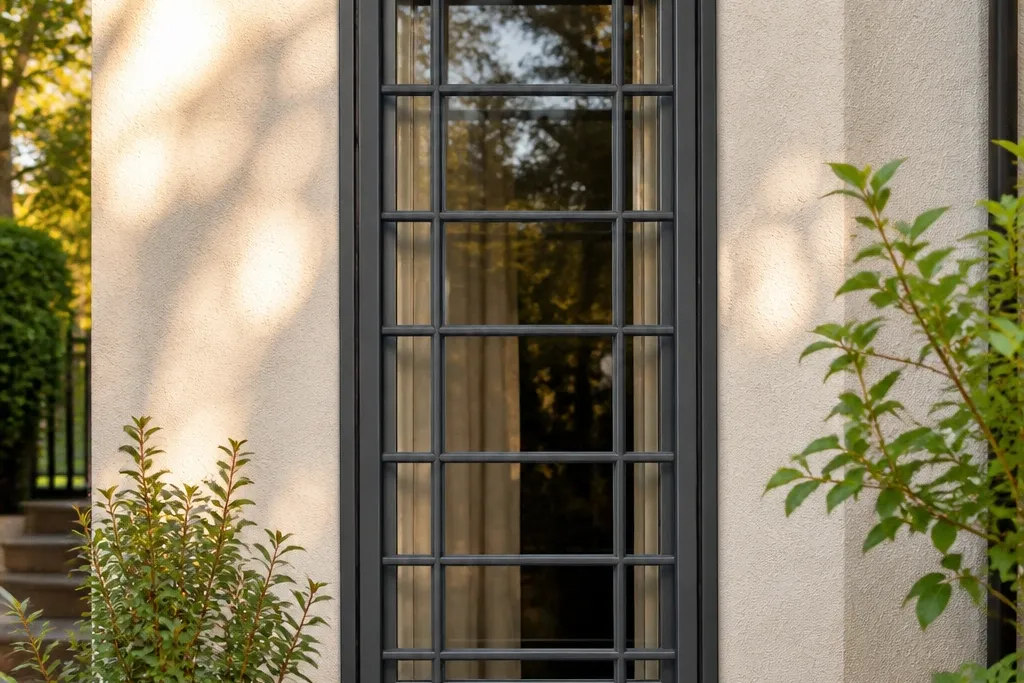
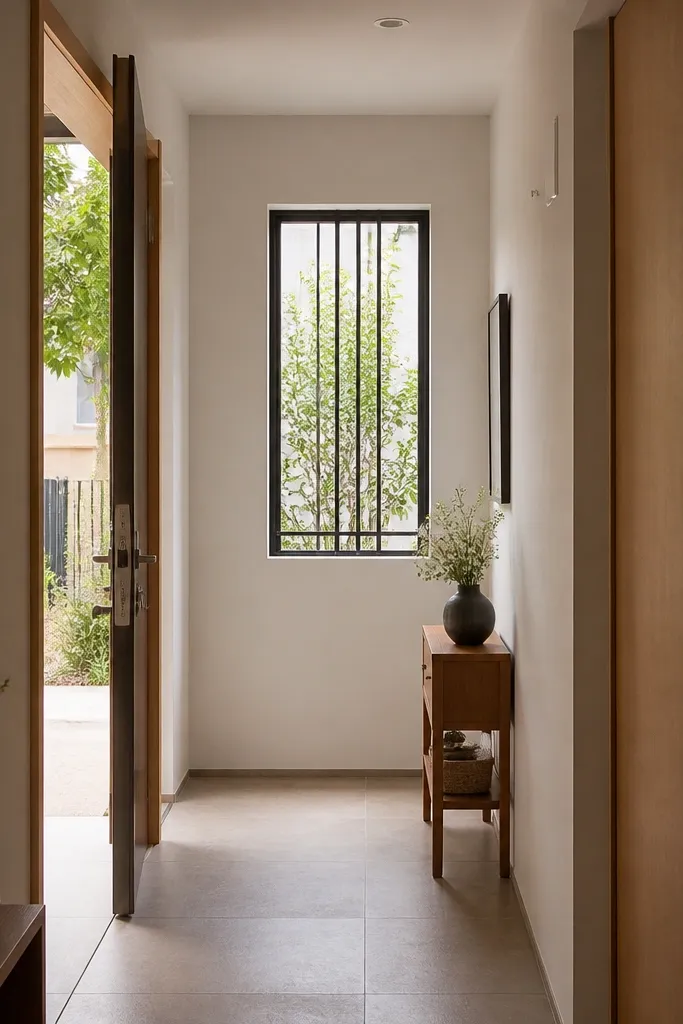
This is the safest modern choice for a small-space window because it makes the opening look larger, not heavier. The thin grid lines act like a clean drawing, and the flush frame keeps the silhouette tight against the wall. Use a charcoal or matte black powder coat so the grill looks uniform even if your welds aren’t perfect. The pattern is simple enough to build at home, but it still photographs well because everything lines up in straight geometry. This design suits front doors with sidelights, narrow bedroom windows, and any window where you want security without the “prison” vibe.
Measure the window opening and decide on a flush mount — the frame should sit tight to the wall surface. Cut a perimeter frame from 1-inch flat bar (or 1x1 inch square tube) and weld corners square, then add two horizontal rails and 3-5 vertical bars spaced evenly. Aim for 1/4 to 3/8 inch bar width for the grid members, and keep spacing consistent from top to bottom. Sand welds lightly, then coat with primer and matte black powder coat (or quality exterior paint if powder coating isn’t an option). Install with stainless anchors through the frame’s mounting holes.
Before welding, clamp a straight “spacing jig” using scraps so every vertical bar lands at the same width.
Don’t use thick bars (like 1/2 inch) on a small window — the grid turns into a block.
2. Charcoal H-Frame Modern Bars
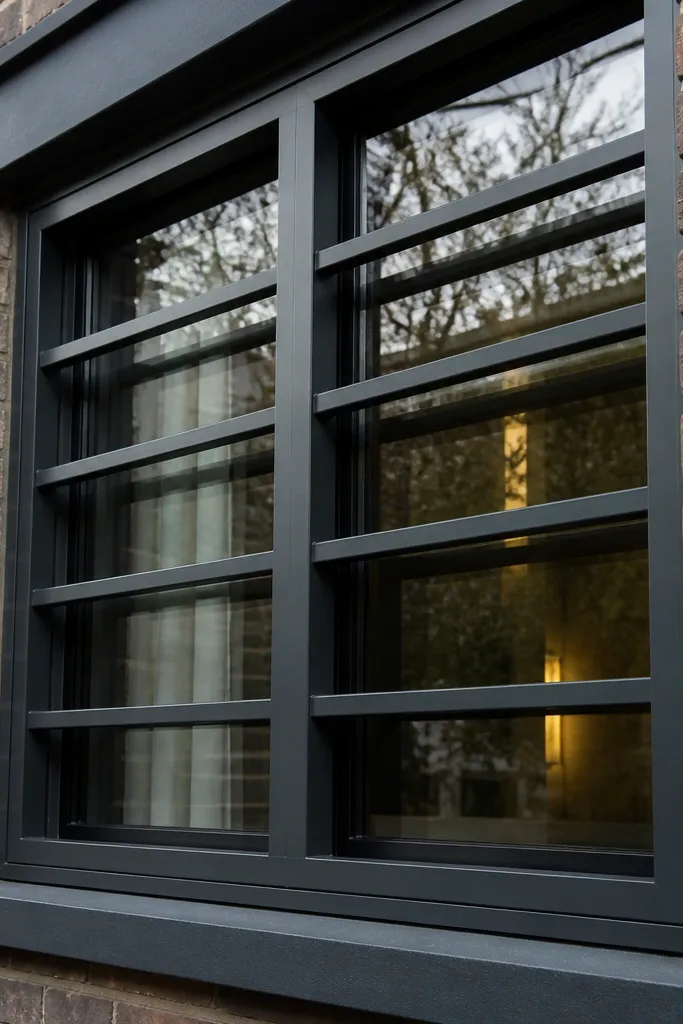
An H-frame design looks modern because it gives you two strong horizontal lines and a calmer vertical rhythm. On small windows, the “H” shape prevents the grill from looking like a random cage. The horizontal rails should be slightly bolder than the vertical bars so the pattern reads instantly. Charcoal powder coat is the move here — it looks architectural, not harsh. This is a good fit for living rooms and hallways where you want privacy and security, but you still want the window to feel airy.
Editor's noteKeep the top and bottom rails equal in thickness so the H shape stays balanced, not top-heavy.
Build the perimeter frame first, then set two horizontal rails across the middle and upper third to create the H look. Use 3/8 inch vertical bars and 1/2 inch horizontal rails so the contrast is visible from across the room. Space the vertical bars evenly with a gap that matches your comfort level for visibility. Weld all intersections, grind the weld tops flush, and check alignment by sighting from the side. Finish with exterior primer and charcoal powder coat, then mount using corner brackets or through-frame anchors.
Skip thisAvoid mixing bar widths randomly; the H effect disappears if everything is the same thickness.
3. Diagonal Brace Diamond Grid
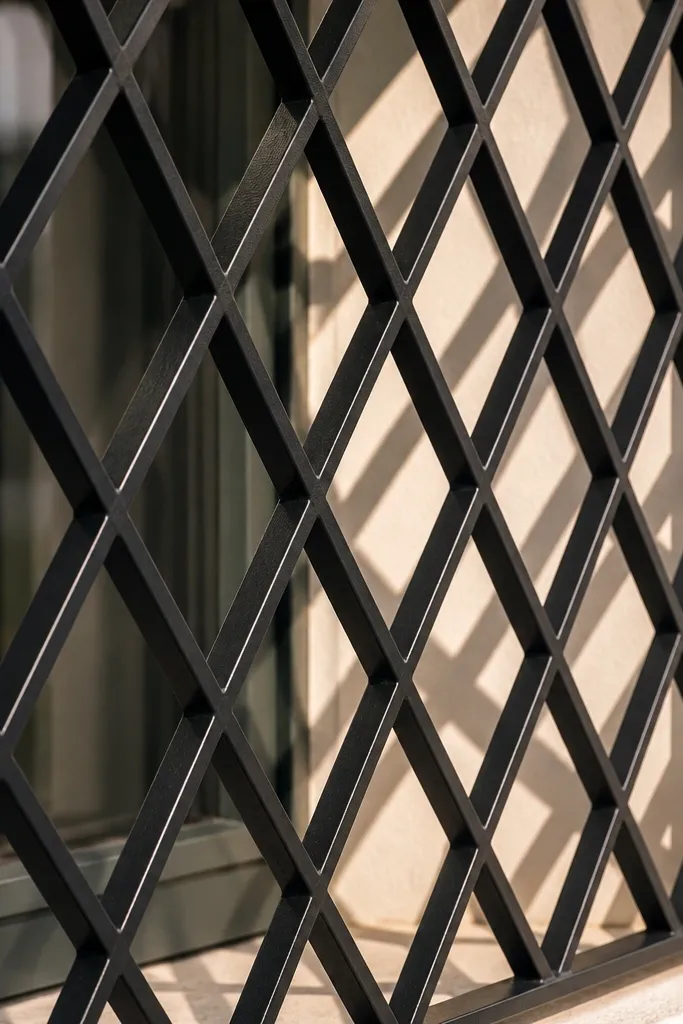
Diagonal braces give you a modern look with fewer bars, which is exactly what small-space windows need. The diagonal members create a diamond rhythm, so the grill feels designed instead of “added for safety.” Keep the diamonds compact by using a consistent diagonal spacing; it looks sharp up close and doesn’t overwhelm the opening. A matte black finish makes the diagonals read crisp against brick or plaster. This design works well for stairwells, compact bathrooms, and any window where you want privacy but still want daylight.
Start with a thin perimeter frame and two horizontal rails so the diagonal pattern has a clean boundary. Cut diagonal braces at a consistent angle (usually 45 degrees) and weld them between the rails, alternating direction to form diamonds. Use 1/4 to 5/16 inch vertical or edge bars only if you need extra structure — the key look is the diagonals. Grind welds flat where they catch light, then powder coat matte black. Install with at least four anchors, one near each corner, to keep the frame from flexing.
Lay out the diamonds on a flat table and measure the diagonal length twice — small length errors create a wavy pattern.
Don’t overbuild the pattern with extra vertical bars; the diamonds should be the star.
4. Single-Arch Top Rail with Thin Bars
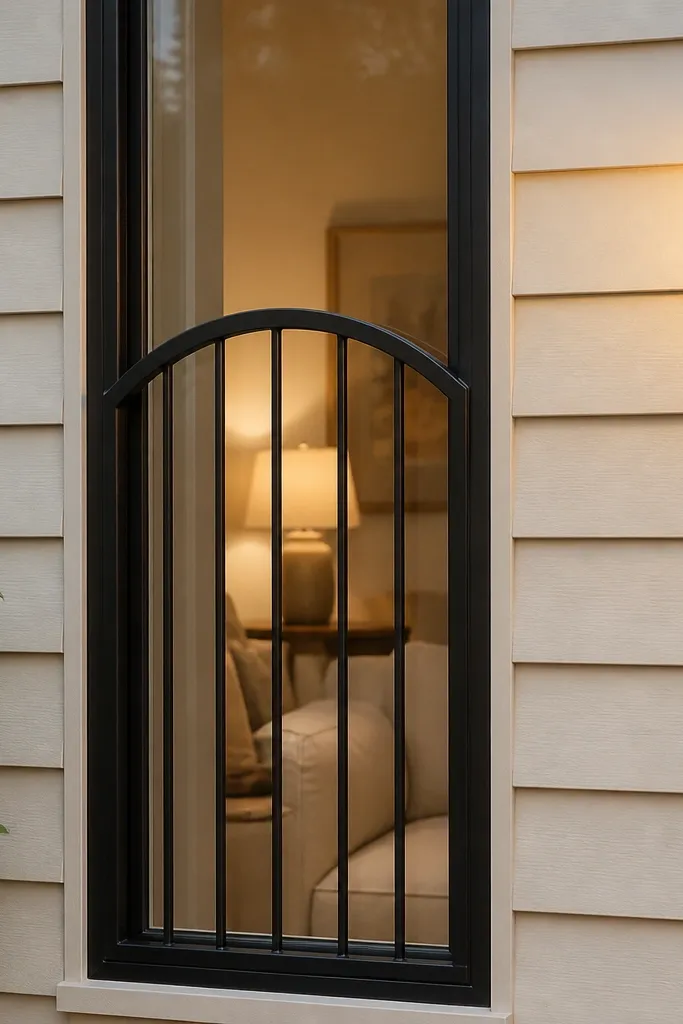
A single arch top rail makes a small window look more custom without turning the whole grill into a scroll-heavy mess. The arch gives a focal line at eye level, while the thin vertical bars keep the rest light. This is a modern take on traditional ironwork: controlled curve, minimal ornament, and clean spacing. Powder coat in matte black or deep bronze makes the arch feel crisp. It’s a great option for front-facing windows where you want curb appeal and a little softness.
Editor's noteUse a cardboard template for the arch curve first so you can match the arch height to your window proportion.
Frame the window with a thin perimeter and add a top rail that includes a centered arch. Form the arch from bent flat bar or pre-bent steel strip, keeping the curve smooth and symmetrical. Weld thin vertical bars beneath the arch in evenly spaced intervals, and add a bottom rail to lock everything square. Tack, check symmetry from two angles, then finish welds. Sand, prime, and powder coat, then install with flush-mount anchors.
Skip thisDon’t let the arch overshoot the frame edges; a tiny overhang makes it look sloppy.
5. Split-Level Grid with Center Rhythm
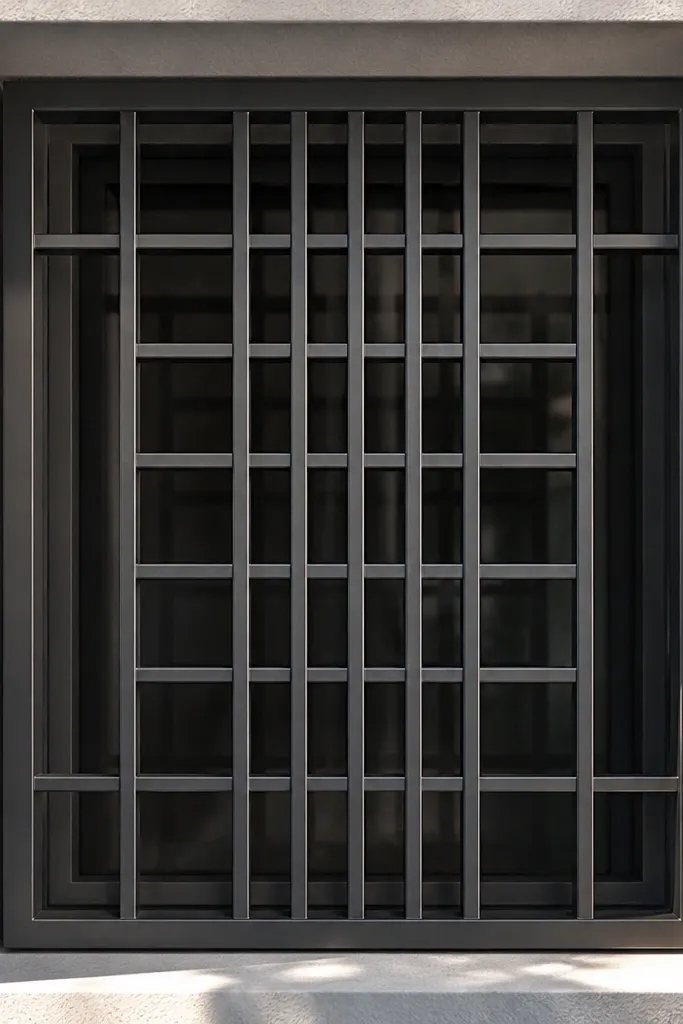
This design looks modern because it breaks the “every space is the same” rule — in a controlled way. You keep a clean grid, but the center section has tighter or wider spacing, creating rhythm. On small windows, that center rhythm draws the eye and makes the grill feel intentional rather than generic. Matte charcoal or black powder coat makes the spacing changes read cleanly. It suits windows where you want a focal point, like a kitchen sink window or a small front bedroom window.
Editor's noteDraw the spacing on paper full-size and mark bar positions; it’s the fastest way to avoid “almost right” layouts.
Build your perimeter frame and two horizontal rails, then plan your vertical bars with one different spacing zone in the middle. For example, use 4 vertical bars total, with two in the center closer together and two at the sides spaced slightly wider. Weld the bars in place using a jig or measuring blocks so the spacing difference is consistent. Grind welds, then coat. Mount with a flush frame so the rhythm stays sharp and doesn’t look thick from the side.
Skip thisAvoid changing spacing in more than one zone — the pattern gets messy fast.
6. Micro-Cage Frame with Corner Posts
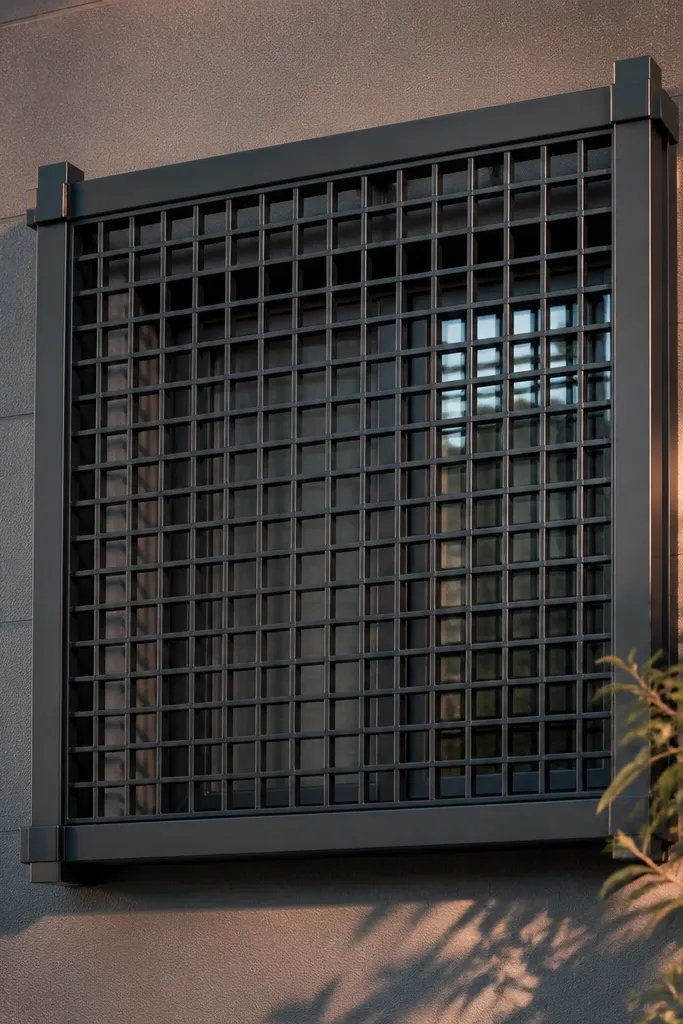
A micro-cage design looks modern because it uses small repeated squares, and it adds corner posts for structure and style. The thicker corner posts create a clean frame inside your frame, which reads architectural on small openings. Keep the squares small enough that the grill feels dense, but don’t use thick bars — dense thin squares look sleek. Matte black is the best finish because it turns the grid into a single solid graphic. This one is great for windows where you want maximum privacy and you don’t want to cover the whole window with heavy bars.
Use a perimeter frame from square tube or flat bar, and add four corner posts slightly thicker than the grid members. Fill the center with a grid of small squares using 1/4 inch steel rod or 1/4 to 5/16 inch flat bars. Weld intersections carefully, then grind only the weld humps that catch light. Prime and powder coat matte black or gunmetal charcoal. Install with anchors through the frame and corner post area so it doesn’t shift.
If you’re using round rod, keep the squares true by welding each intersection with a small spacer and checking diagonals.
Don’t use big square openings; large squares read outdated and feel less secure visually.
7. Minimal Vertical Slats with One Horizontal Band
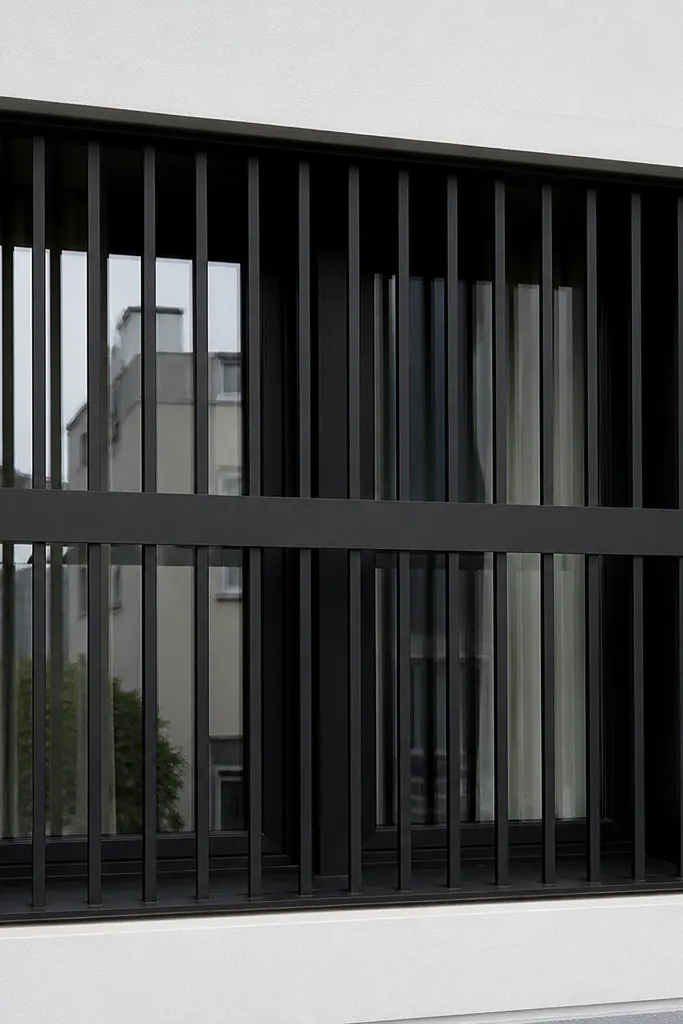
This is the modern “almost invisible” look. Thin vertical slats give you security while letting daylight and views through, and one horizontal band adds a designed focal line. For small windows, this pattern looks clean and doesn’t block the whole opening. Use matte black so the slats don’t shine like hardware-store bars. It suits interior windows, narrow side windows, and any place where you want the grill to disappear visually.
Editor's noteUse a spacer block equal to your desired gap so every slat lands the same distance apart.
Make a flush perimeter frame, then weld thin vertical slats evenly spaced across the full height. Add one horizontal band across the middle with a slightly thicker bar so it reads as a deliberate design element. Keep slat width around 1/4 to 3/8 inch and avoid random spacing. Grind welds, prime, and powder coat. Install with at least two anchors per side so the frame stays straight.
Skip thisAvoid two or three horizontal bands on small windows — the design gets busy.
8. Two-Tier Chevron Top Half
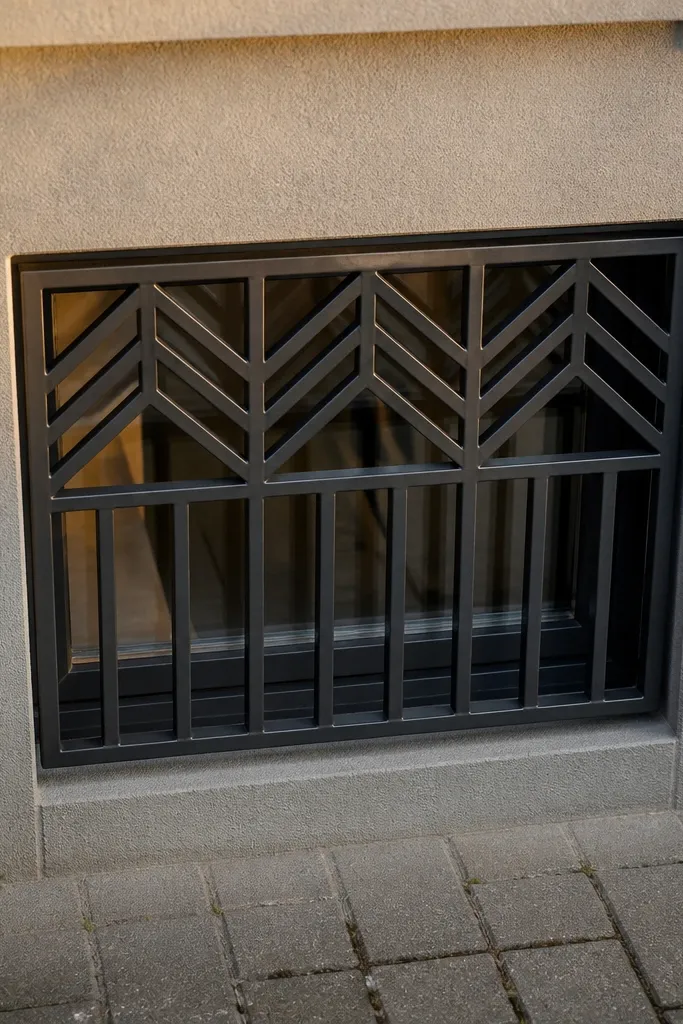
Chevron in the top half looks modern because it creates movement where your eye naturally goes first. The bottom half stays simple with vertical bars, so the grill doesn’t feel crowded. This is a strong choice for small windows because you get a statement pattern without filling the entire frame with complex geometry. Matte black makes the chevron lines crisp, especially against light-colored walls. Great for kitchens, laundry rooms, and stair landings where privacy matters but you still want brightness.
Start with a flush frame and vertical bars running full height. Then build a chevron panel only in the top half: weld angled bars in V shapes that meet at a center line, using consistent angle cuts. Keep the chevron height around 40-50% of the total window height. Weld the chevron intersections carefully, grind, and powder coat matte black. Install and check for square — chevrons show misalignment instantly.
Cut chevron angles from the same offcut batch so all angles match and the pattern stays symmetrical.
Don’t extend chevrons into the bottom half; it makes small windows feel boxed in.
9. Thin Rectangle Lattice with Center Void
This one looks custom because it leaves a deliberate “void” in the center, like a modern frame-within-a-frame. The thin rectangle lattice outlines the space without filling it completely, so the window still feels open. For small-space window grill design modern, the trick is keeping the lattice thin and the void centered. Matte charcoal makes the negative space read cleanly rather than messy. This suits rooms where you want a decorative security look but you also need airflow and daylight.
Editor's noteUse painter’s tape to mark the void boundaries on a flat surface before welding anything in place.
Build the outer perimeter frame, then add four inner vertical/horizontal members that create a centered rectangle outline. Fill the outer area with a thin lattice: short horizontal segments connecting to inner rails at consistent intervals. Keep bar width around 1/4 to 3/8 inch, and keep the center void large enough to feel intentional (roughly 40% of the opening area). Weld, grind, prime, and powder coat. Mount flush so the inner void reads straight and not distorted by a thick frame.
Skip thisAvoid a center void that’s too small; it turns into clutter rather than a clean negative-space design.
10. Bronze Steel Frame with Offset Grid
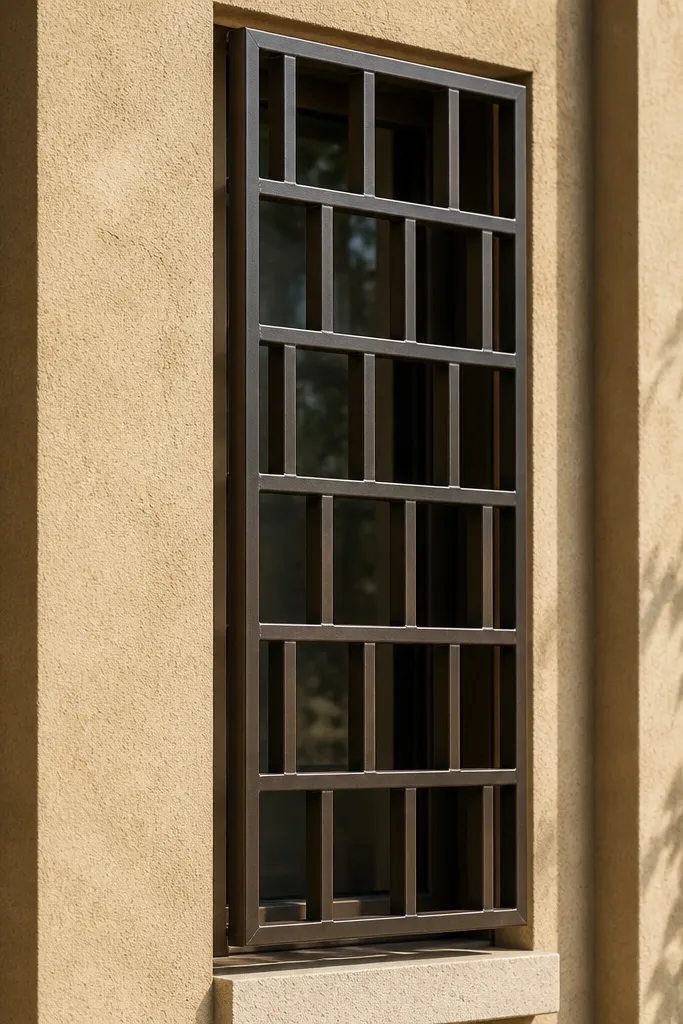
Offset grids look modern because the lines don’t start and stop exactly where you expect. You keep a grid, but you shift one row or one column so it creates a subtle diagonal rhythm. Bronze or dark bronze powder coat looks warmer than black and reads premium on tan, cream, and gray facades. For small windows, offsetting the grid adds interest without increasing the bar count. This suits entryways, small living room windows, and side windows where you want a bit of design without ornament.
Editor's noteLock the offset using a reference line measured from one corner so it stays consistent top to bottom.
Make a flush perimeter frame first, then decide which grid row will be offset. Use thin bars (1/4 to 3/8 inch) and keep the grid spacing consistent except for the offset row or column. Weld the offset members to the perimeter and cross members so the offset line locks the geometry. Grind weld points, prime, and powder coat in dark bronze. Install with anchors through the frame and check alignment — offset patterns reveal even small crookedness.
Skip thisAvoid offsetting multiple rows; one offset line is enough for the modern look.
11. Rounded Corners Frame with Minimal Bars
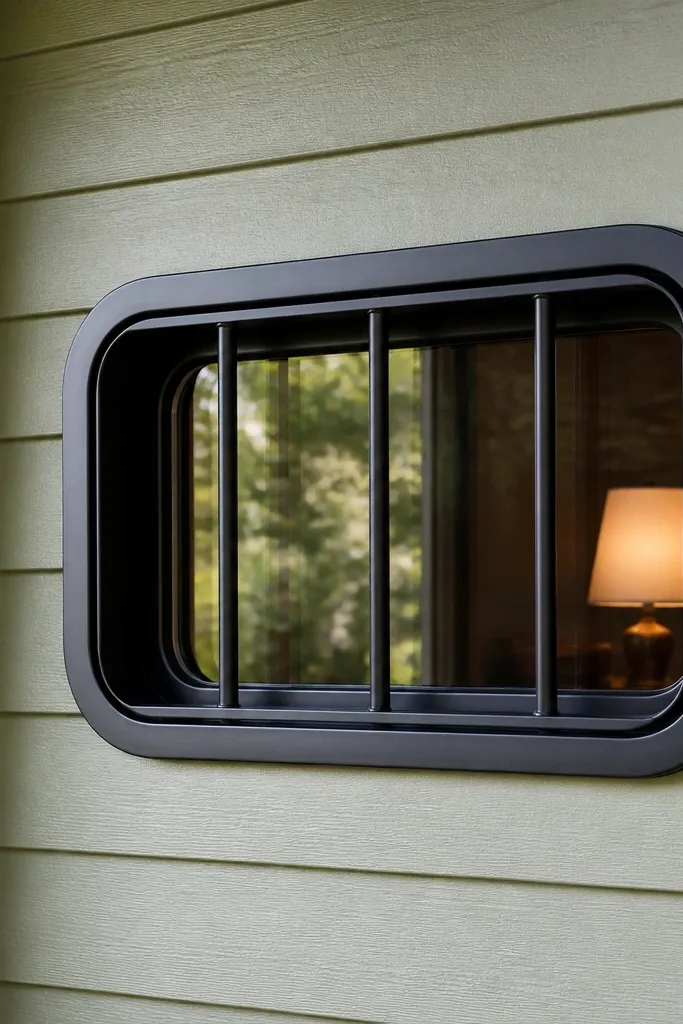
Rounded corners soften the entire grill and make it feel modern, not heavy. Keep the bars minimal — think 3-4 vertical members and one clean top and bottom rail. The rounded frame corners read as “designed” even if the bar pattern is simple. Matte black or gunmetal charcoal makes the rounded frame look smooth and intentional. This is ideal for small windows with curved trim or for homes that already use rounded details in hardware and door handles.
Editor's noteIf you’re bending corners yourself, make a test bend on scrap first so the radius matches the window proportion.
Use a perimeter frame with bent steel corners or weld-and-grind curved corner segments from flat bar. Keep your bar count low: 3 vertical bars on narrow windows and 4 on slightly wider ones. Weld a top and bottom rail, then add evenly spaced vertical bars between them. Grind welds at the rounded corners carefully so the surface feels smooth. Prime and powder coat matte black, then install flush with corner anchors.
Skip thisDon’t add extra decorative curls just because the corners are rounded; it ruins the clean modern line.
12. Geo Square Frame with Slim Inner Border
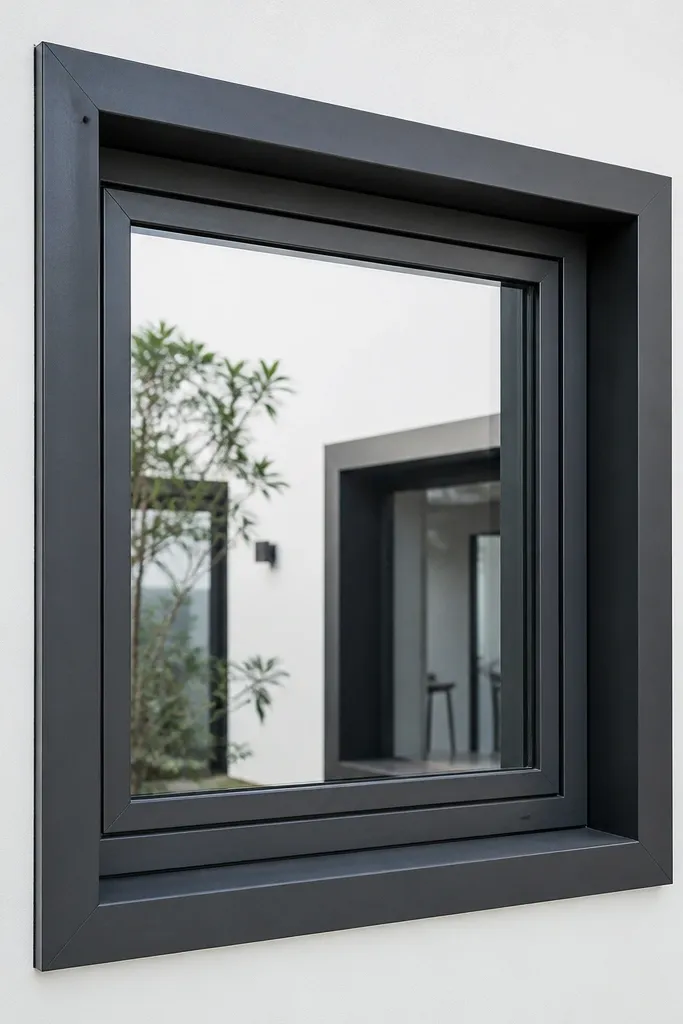
A slim inner border makes the grill look like a modern graphic, not a cage. The outer frame gives structure, and the inner border adds depth and crisp definition around the window opening. Small-space window grill design modern relies on this kind of layering, because it creates visual interest without adding more bars. Use thin members for both the outer and inner borders so it stays light. Matte black or dark gray powder coat turns the lines into one clean block.
Build the outer perimeter frame first, then add a second inner rectangle border set back about 1-2 inches from the outer edge (depending on your window thickness). Weld four inner border corners precisely, then add 3-5 vertical bars between the inner border and the outer frame lines if you want extra security. Keep bar width under 3/8 inch and spacing consistent. Grind and prime, then powder coat. Mount flush so both borders align cleanly with the window edges.
Use a digital angle finder or a simple square to keep the inner border corners true — skewed inner borders look cheap fast.
Avoid thick inner borders; they make the grill look heavy and visually smaller.
13. Modern Cage with Offset Vertical Rods
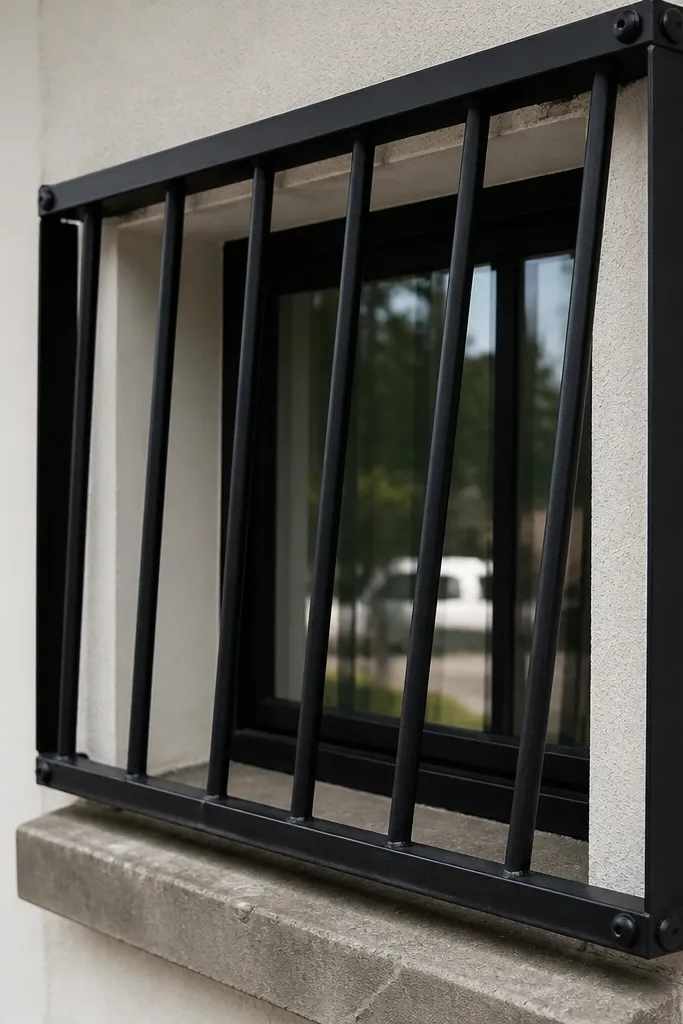
A cage frame is secure, but it can look old-school if the rods line up perfectly in a boring grid. This modern version offsets the vertical rods slightly so the cage has a subtle diagonal tension. The result looks more like industrial design than traditional bars. Matte black helps because it flattens the visual noise created by offsets. This suits small windows where you want maximum security and you like a slightly industrial look.
Editor's noteMark rod positions with a measuring tape and painter’s tape before welding — offsets are unforgiving once you commit.
Make a perimeter frame and add horizontal rails at top and bottom plus one mid rail. Install vertical rods, but offset every other rod by a small measured amount, like 1/4 to 1/2 inch, while keeping overall spacing consistent. Weld each rod to the rails so the offset stays locked. Grind weld tops so the offset doesn’t catch light in ugly lumps. Prime and powder coat matte black, then mount flush with multiple anchors along the frame length.
Skip thisDon’t offset randomly; each offset needs to follow the same rule or it becomes messy.
14. Slim Scroll Ends on Straight Grid
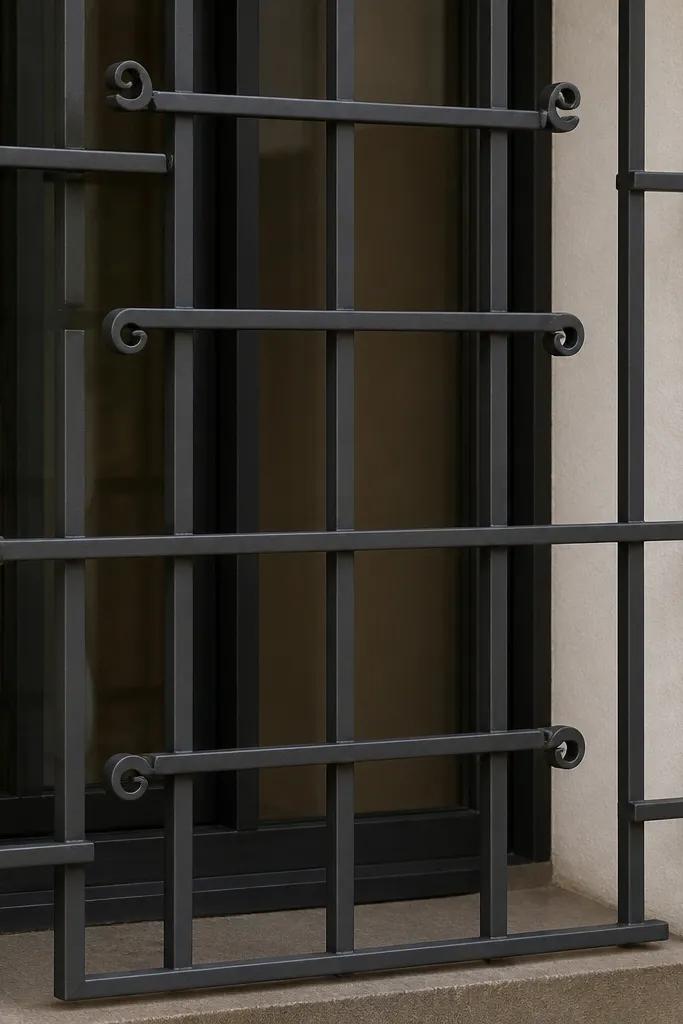
This design keeps the modern steel grid but adds tiny scroll ends as a controlled accent. The scroll pieces should be small and consistent — think subtle end caps, not full decorative curls. That way the grill still reads modern and clean, especially on small windows. Matte black powder coat makes the scroll ends look crisp instead of fussy. This is a good choice for entry doors, porch windows, and any spot where you want a hint of traditional style without the heavy look.
Editor's noteUse identical scroll end pieces from the same batch or template so every end matches in size and curve.
Build the thin grid first with a flush frame, 3-5 vertical bars, and one or two horizontal rails. Then add slim scroll end pieces at the top and bottom of each vertical member, centered and symmetrical. Weld the scroll ends carefully at the tips, grind lightly, and keep the scroll shape consistent across all bars. Prime and powder coat matte black so the scrolls blend into the grid visually. Install with anchors through the perimeter frame and add a couple of discreet anchor points near the rails.
Skip thisAvoid big scrolls; they overpower small windows and pull the whole design into “dated” territory.
15. Vertical Bars with Center Split Rail
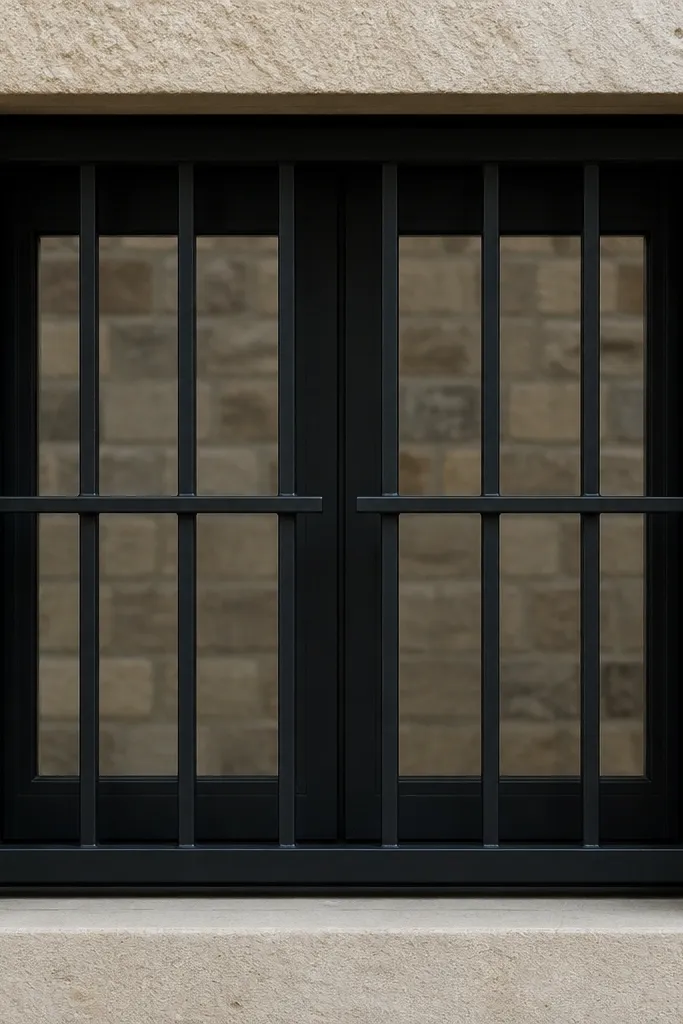
A split rail is a small design trick that reads modern instantly. Instead of a single mid horizontal bar, you use two shorter bars with a gap in the center, aligned with the window centerline. Thin vertical bars keep the grill light, while the split rail creates a graphic focal point. Matte charcoal or matte black makes the gap look intentional rather than like a missing piece. This suits small windows where you want security but also want the grill to look like it belongs to the building.
Editor's noteMeasure the centerline from the window edges and mark it on the frame before welding the split rail pieces.
Frame the window with a flush perimeter and install vertical bars spaced evenly from top to bottom. Add a top and bottom rail, then build the center rail as two pieces with a gap in the middle. Keep the gap width consistent with your design (for example, 1.5 to 2 inches on many small windows) and align it exactly to the window center. Weld, grind, prime, and powder coat matte black. Mount flush with anchors at corners and along the rails so the frame stays rigid.
Skip thisDon’t let the split rail gap drift off-center; it turns a modern detail into an obvious flaw.