
1. 24-inch Bedside Book Ledge Grid
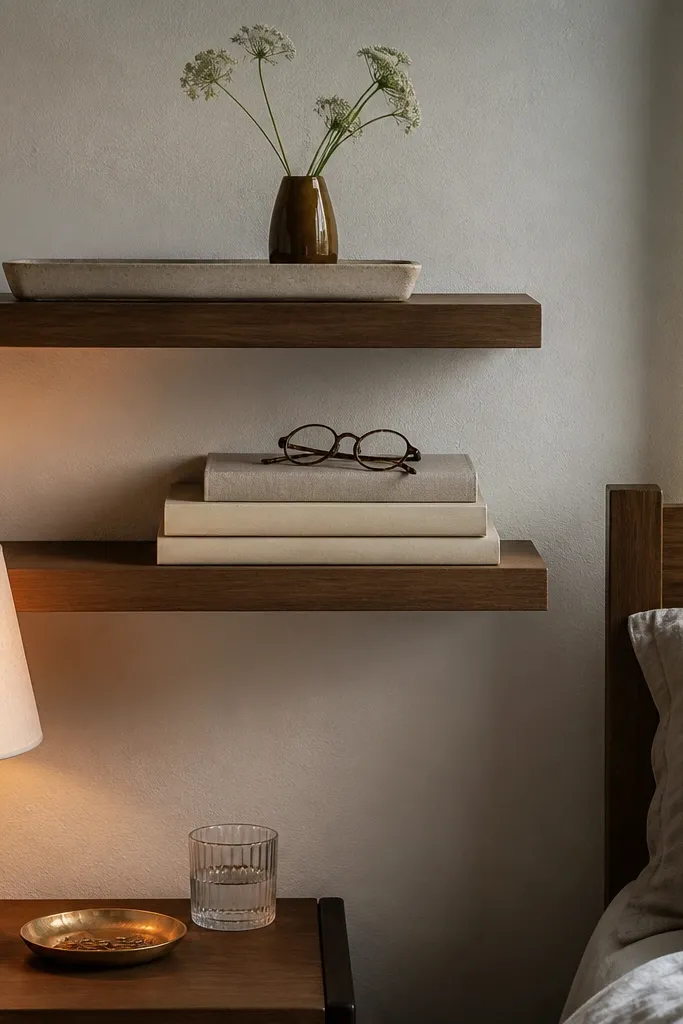
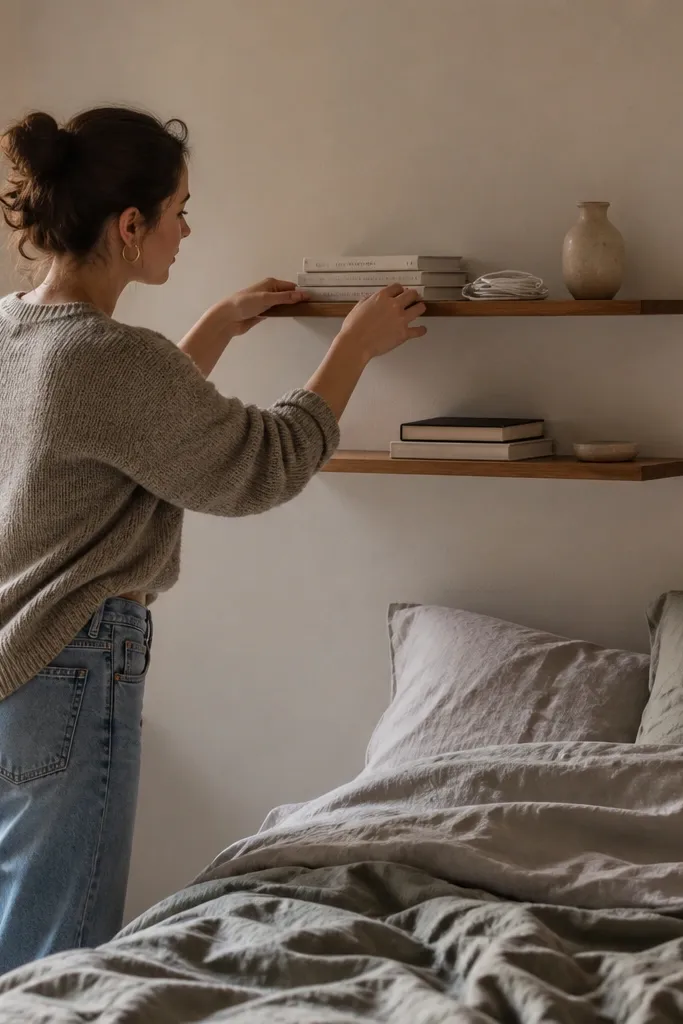
This setup is the fastest way to get cozy storage without turning your bedroom into a display room. Two 24-inch shelves above the nightstand give you a dedicated zone for books, a tray, and a small vase, so your floor and dresser stay calmer. The grid look works because the shelves share the same width and sit at consistent heights, which makes the wall feel organized even when you change items seasonally. Use a warm wood top with slim, matte black brackets so it reads like built-in furniture. This is a beginner-friendly project that takes about a weekend including measuring and patching.
Editor's notePre-finish the shelves before mounting — it’s easier to get crisp edges and a smooth underside.
Start by measuring the wall above your nightstand from left edge to right edge and choose two shelves that total roughly the same span. Mark stud locations and plan your bracket spacing so each shelf has at least two solid mounting points. Install the first shelf level, then dry-fit the second shelf using a spacer to keep the gap between shelf surfaces around 10-12 inches. Sand edges, wipe with a tack cloth, then stain or paint the shelves and let them fully cure before loading books.
Skip thisDon’t mount floating shelves into only drywall anchors if you plan to hold books.
2. Corner Float Shelf Trio for Nightstand Replacement
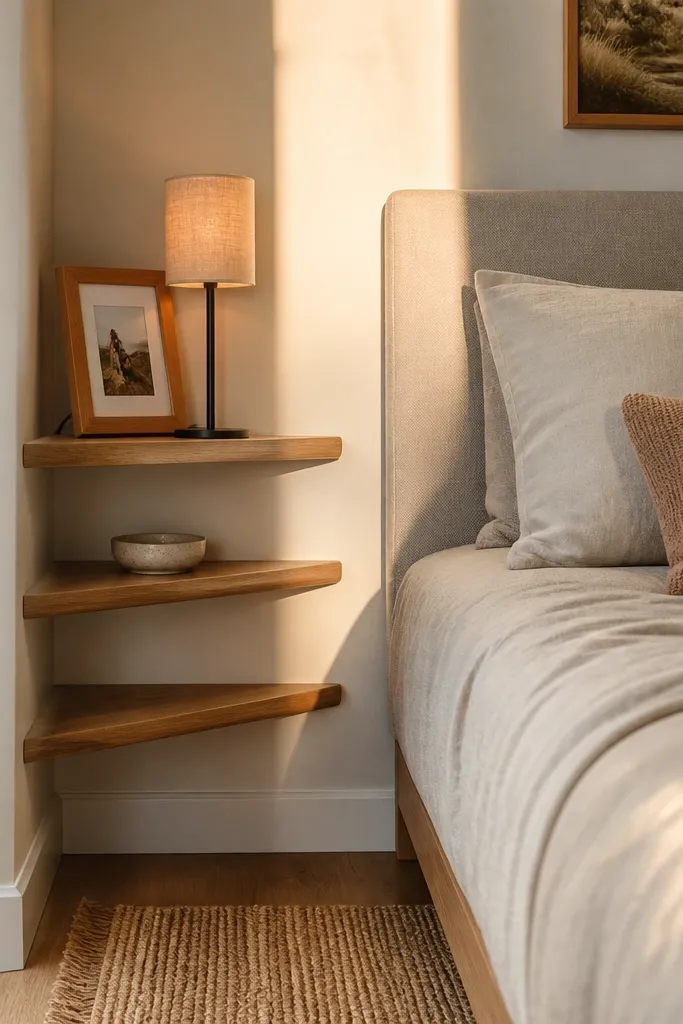
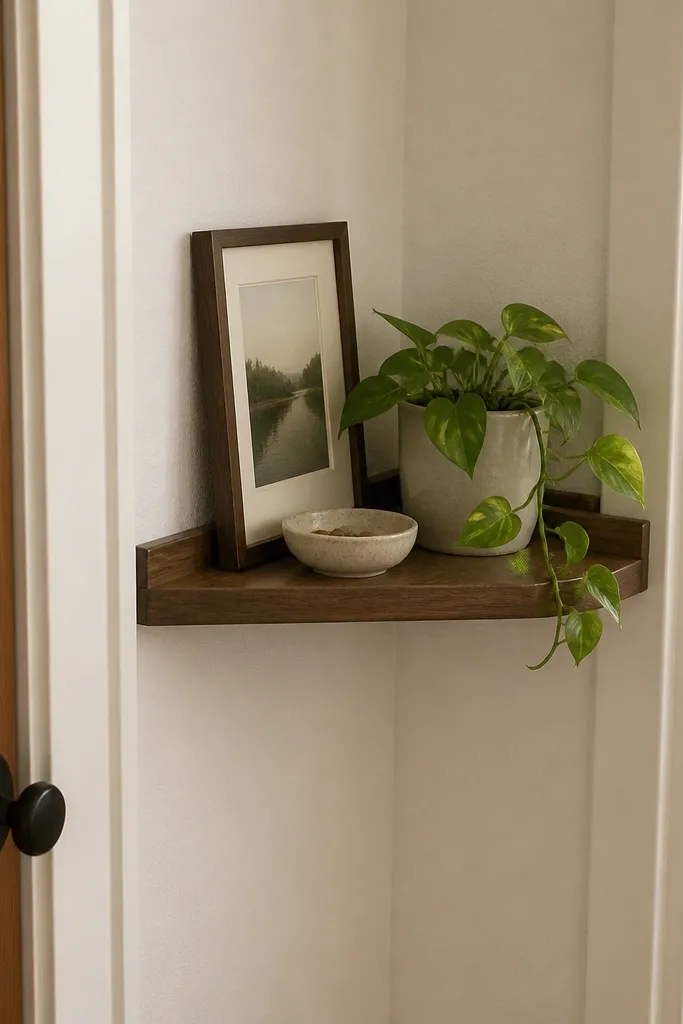
Corners waste space, and they’re perfect for small-space Floating Shelves Bedroom storage. A trio of corner shelves lets you replace a bulky nightstand with a slimmer storage wall, which makes the room feel bigger. Keep the shelves narrow — about 10-12 inches deep — so you don’t create a sharp visual block. The cozy part is how the corner shelves frame small objects like a candle, a framed photo, and a glass for water. This is a great option for renters because you can use a compact layout and remove shelves with minimal wall disruption.
Editor's noteUse a laser level if you have one — corner walls can be slightly off, and a laser keeps the shelves looking straight.
Decide on three shelf heights so the top shelf sits around eye level when you’re sitting in bed. Choose shelf depths of 10-12 inches and widths that fit between the corner and the nearest stud — measure carefully before cutting. Mount a stud-based bracket on each side wall, then install the shelves one at a time using a level and a temporary pencil line for alignment. Finish by sealing the wood and adding felt pads if you’ll place glass or ceramics.
Skip thisDon’t place the shelves too low or they’ll look like storage clutter instead of cozy bedside styling.
3. French Cleat Floating Shelves Over Dresser
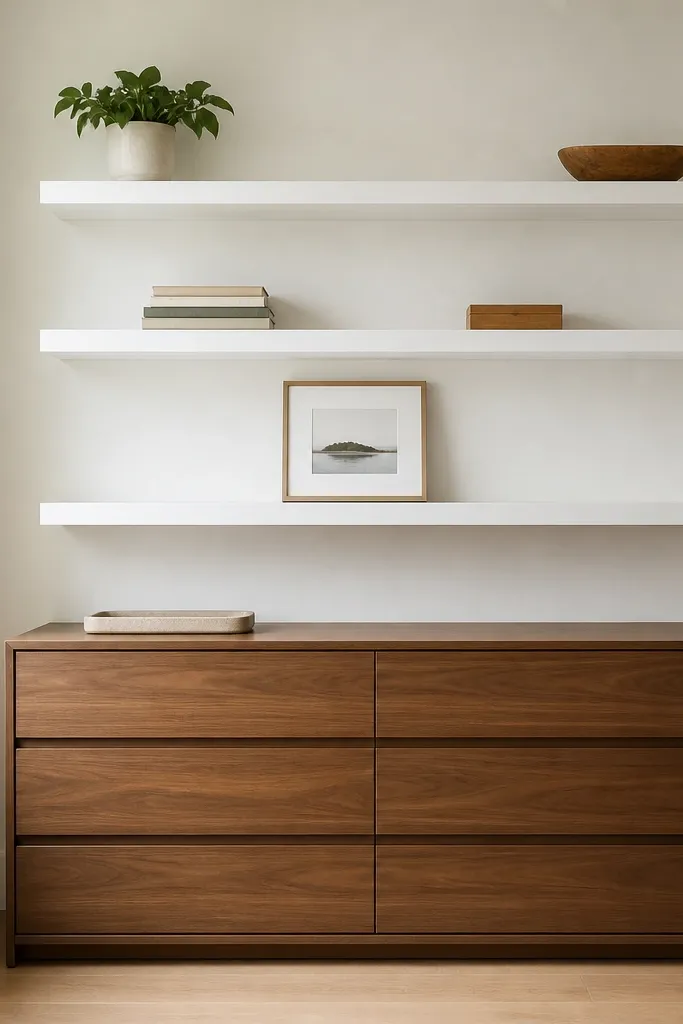
If you want the clean floating look without visible hardware, French cleats are the move. Over a dresser, two or three shelves with concealed mounting keep the wall looking calm and furniture-like, which helps a small bedroom feel curated instead of crowded. This style also makes shelf installation smoother because you can hang the cleat rail first, then slide the shelf on. The cozy storage effect is real: you get a place for daily items and decor without the visual noise of chunky brackets. It’s best for intermediate DIY because you need accurate cutting and a straight mounting line.
Cut a cleat rail from 1x3 or 1x4 lumber, then cut matching strips for each shelf so the joints lock when slid together. Mark studs and install the wall cleat rail so the top edge is perfectly level. Attach the shelf cleat pieces to the back of the shelves, then slide each shelf onto the wall rail and secure if needed. Sand, finish, and let the stain or paint cure fully before adding weight.
Test-fit one shelf on the floor before mounting — you want a snug slide, not a loose wobble.
Don’t assume every stud is perfectly spaced — measure and adjust the cleat rail location to hit solid wood.
4. Staggered 16-inch Shelves for Visual Rhythm
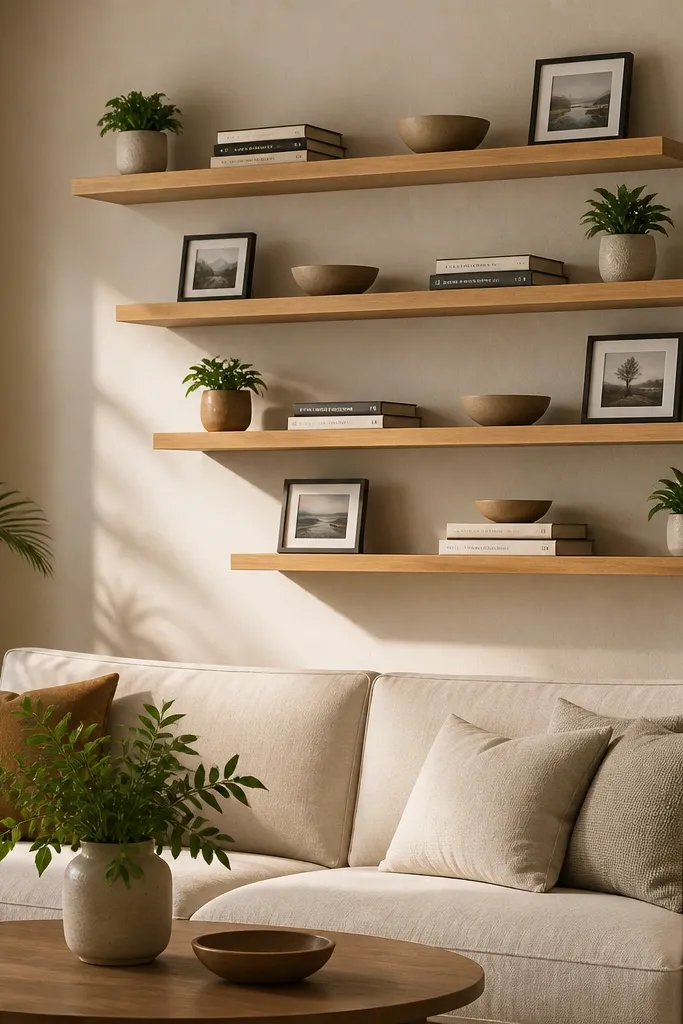
Staggered shelves break the “flat wall” feeling, which matters in a small-space Floating Shelves Bedroom. Use four shelves around 16 inches wide and stagger them by a few inches left-to-right or up-and-down so the wall has rhythm. This looks good from across the room because the eye follows the stagger, not the clutter. Keep each shelf lightly styled: one framed photo, one small plant, and one book stack, so the wall stays cozy. This build is straightforward with standard brackets, but the key is spacing and consistent shelf thickness.
Mark a center line on the wall and choose a layout that keeps shelves within the stud span. Install the lowest shelf first and level it, then measure upward for the next shelf so you leave about 10-12 inches between shelf surfaces. Stagger by shifting the shelf centers a few inches each time while keeping the bracket mounting points aligned with studs. Finish with a single consistent stain or paint so the stagger reads intentional, not random.
Use painter’s tape to mock the stagger heights on the wall before you drill anything.
Don’t stack heavy decor on every shelf — staggered walls look messy fast if they carry too much weight visually.
5. Narrow Floating Shelf Above Closet Door
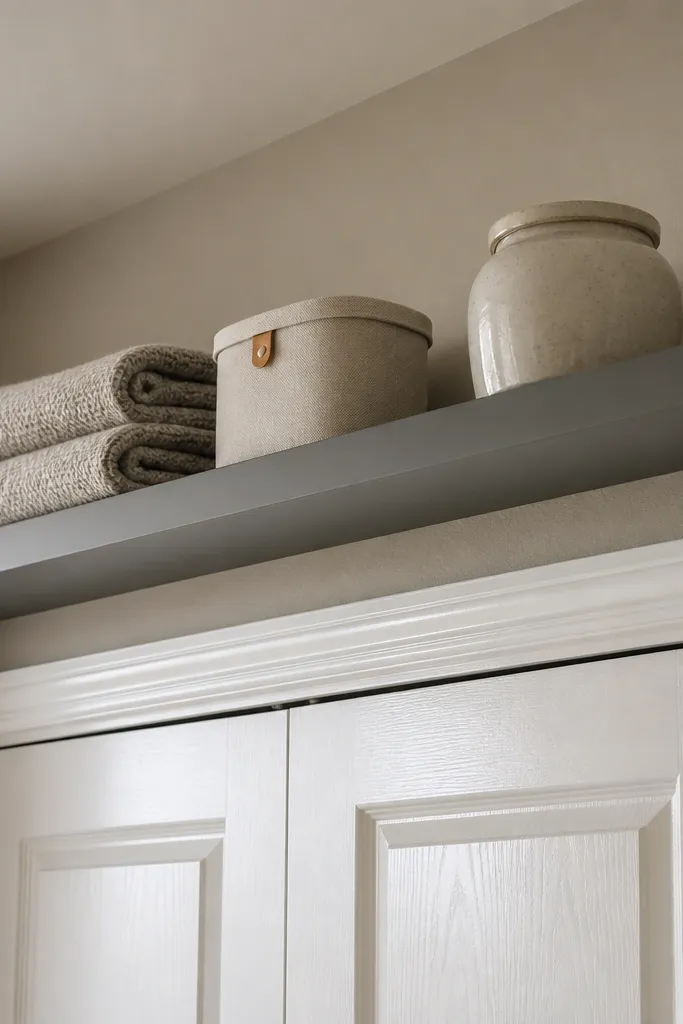
This is one of the most practical small-space Floating Shelves Bedroom moves because it uses vertical air you already have. A single narrow shelf above a closet door gives you storage for seasonal items, extra throw blankets, or a small bin for socks and hats. Choose a depth around 10-12 inches so the shelf doesn’t stick out into the hallway traffic line. The look stays cozy when you keep the items contained — use matching fabric bins or a closed wood box instead of loose clutter. It’s a clean DIY job: fewer shelves mean fewer alignment headaches.
Measure the closet door width and pick a shelf width that leaves 2-4 inches on each side. Locate studs along the wall above the door — studs are often present, but you still need to check. Install two brackets spaced to hit the studs, then mount the shelf so the underside clears the door trim by at least 1 inch. Sand and seal the shelf, then add a bin or folded storage so you don’t see random shapes.
Use a matte topcoat — glossy finishes reflect light and can make small rooms feel harsher.
Don’t mount the shelf too close to the door casing or it will look crowded and be harder to wipe clean.
6. Floating Shelf + Curtain Rod Mini Reading Corner
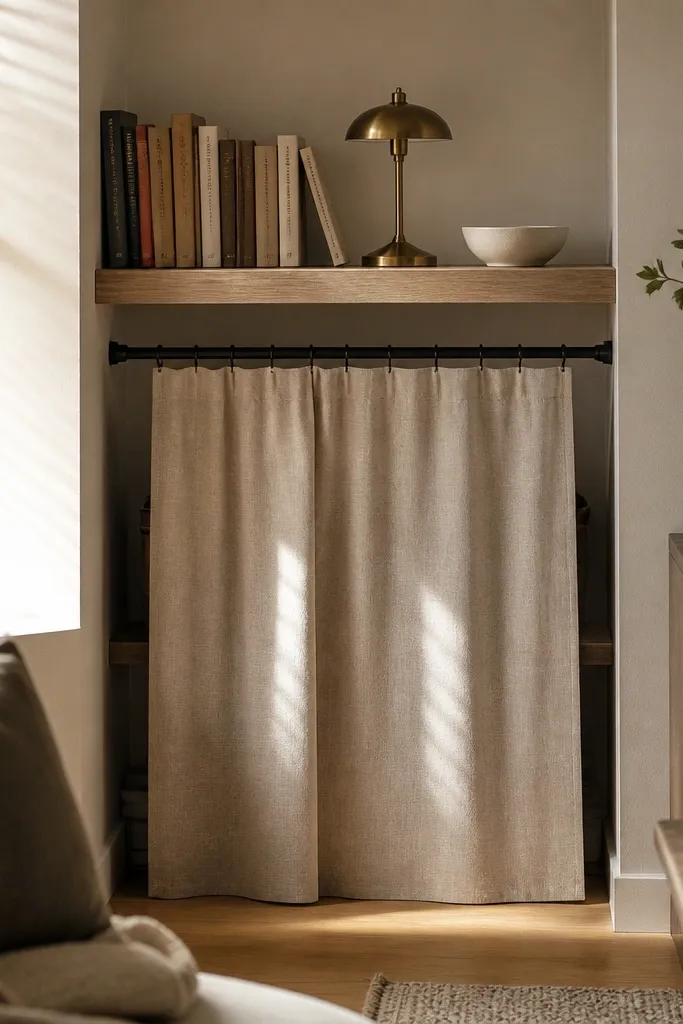
For a cozy storage bedroom, style matters as much as function. This idea pairs a floating shelf with a short curtain rod so you can hide extra items behind a soft panel, like a mini “reading corner” that doesn’t show clutter. The shelf holds the pretty stuff — book spines, a lamp, a small ceramic bowl — while the fabric panel lets you tuck away charging cords, spare pillows, or a folded throw. It looks intentional because the curtain line adds softness against the hard shelf. This is beginner-friendly if you can mount a rod level, and it takes about one day.
Pick a shelf depth of 12-14 inches so books don’t hang over. Mount two brackets into studs, then install a short curtain rod above the shelf at a height that gives the fabric room to fall without touching the shelf. Use a fabric panel that’s wide enough to cover the items you want hidden, and hem it cleanly if needed. Finish the shelf with stain or paint and add a small tray so the top stays tidy.
Choose a curtain fabric with a tight weave so it looks smooth, not wrinkly.
Don’t use a rod that’s too short — a narrow curtain makes the storage area look unfinished.
7. Layered Floating Shelves With Framed Artwork Ledges
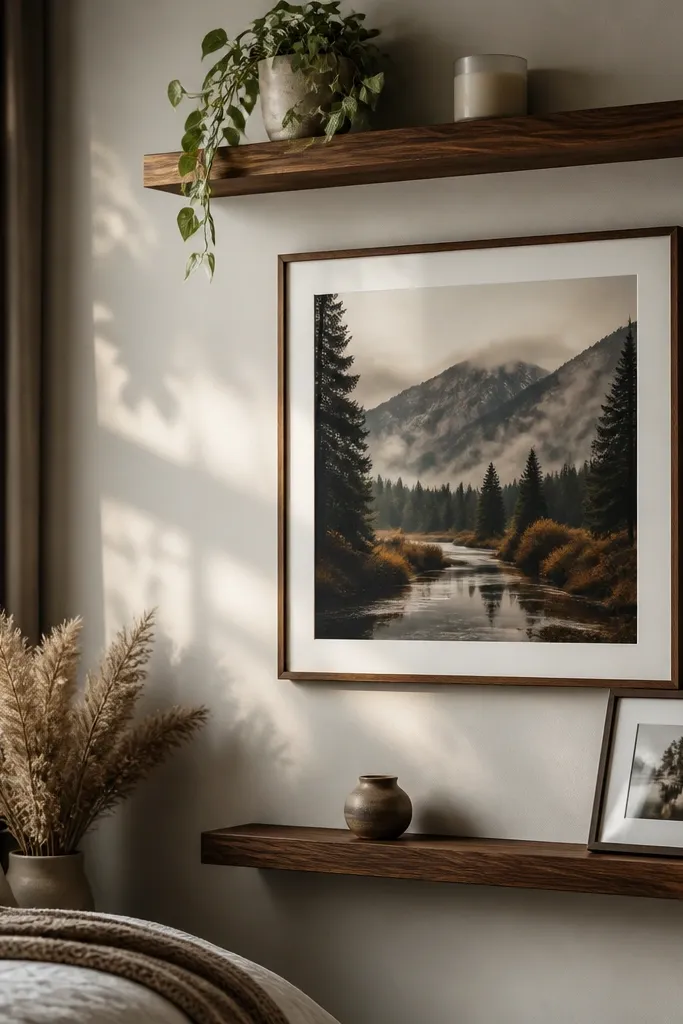
This look turns wall art into functional storage without making the wall busy. Put one floating shelf above and one below a framed piece, then use the shelves as ledges for small decor. The frame creates a focal point so the shelves don’t feel like random hardware. For small-space Floating Shelves Bedroom, this is excellent because it’s a vertical composition that doesn’t steal floor area. Keep shelf widths slightly different, like 18 inches on top and 16 inches on bottom, for a gentle, cozy asymmetry. It also works well in rentals because you can swap the artwork seasonally.
Editor's noteUse spacers to keep consistent gaps between frame and shelf edges while you level everything.
Choose the frame size first and mark its center on the wall. Install the top shelf so its bottom edge sits about 8-10 inches above the frame center, then install the bottom shelf so it sits about 8-10 inches below the frame center. Mount brackets into studs and keep shelf tops level with each other if you want a calm look. Pre-finish the shelves, then place a small tray on each shelf and add decor that matches the frame colors.
Skip thisDon’t place tall decor next to the frame — it blocks the artwork and breaks the composition.
8. Floating Shelf With Built-In Cable Channel for Bedroom Tech
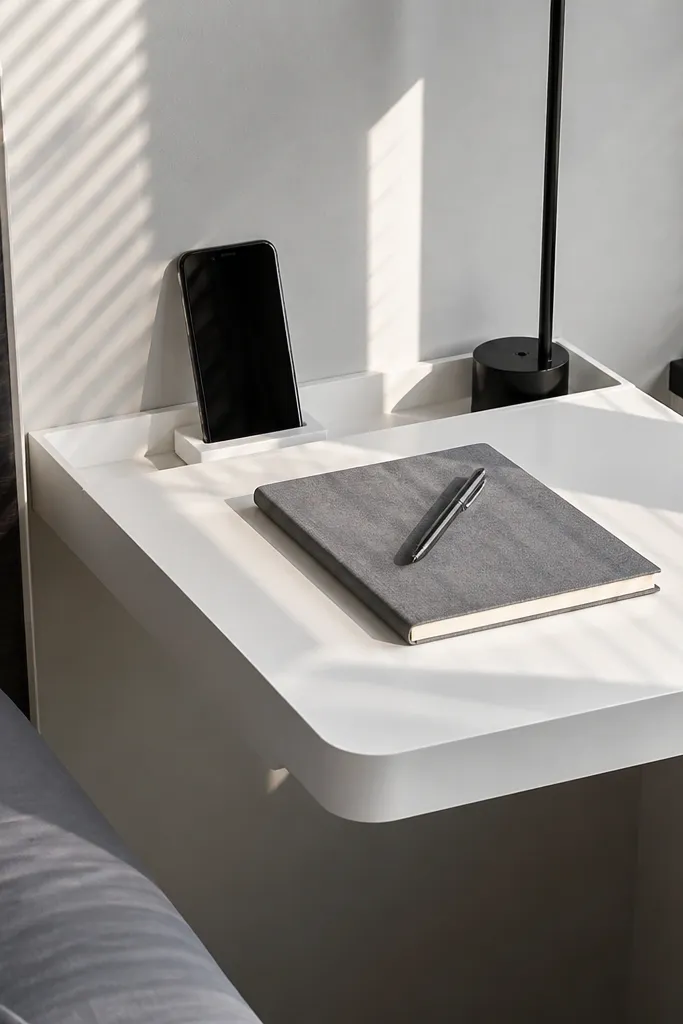
Bedroom tech clutter kills the cozy vibe, and this shelf fixes it. A floating shelf with a built-in cable channel lets you charge a phone, power a lamp, or run a small device without visible cords. The shelf top still looks clean, while the channel hides the messy part. Depth around 14-16 inches gives enough room for a power strip and a small container. This is a great solution for small-space Floating Shelves Bedroom setups where you don’t have a lot of outlets near your bed.
Build the shelf box from a 1x board top with a back rail, then add a narrow channel strip at the back where cables can tuck down. Cut a rectangular opening in the back panel for a power cord path and mount a power strip on a small board inside. Install brackets into studs and mount the shelf level, leaving clearance behind for cord routing. Finish the wood and test cord routing before you close anything permanently.
Use a cord management kit with adhesive clips — it keeps cables from sagging and showing under the shelf.
Don’t trap cords under a closed top — you need slack and airflow for safe routing.
9. 24-inch Floating Shelf With Under-Shelf Basket Lip
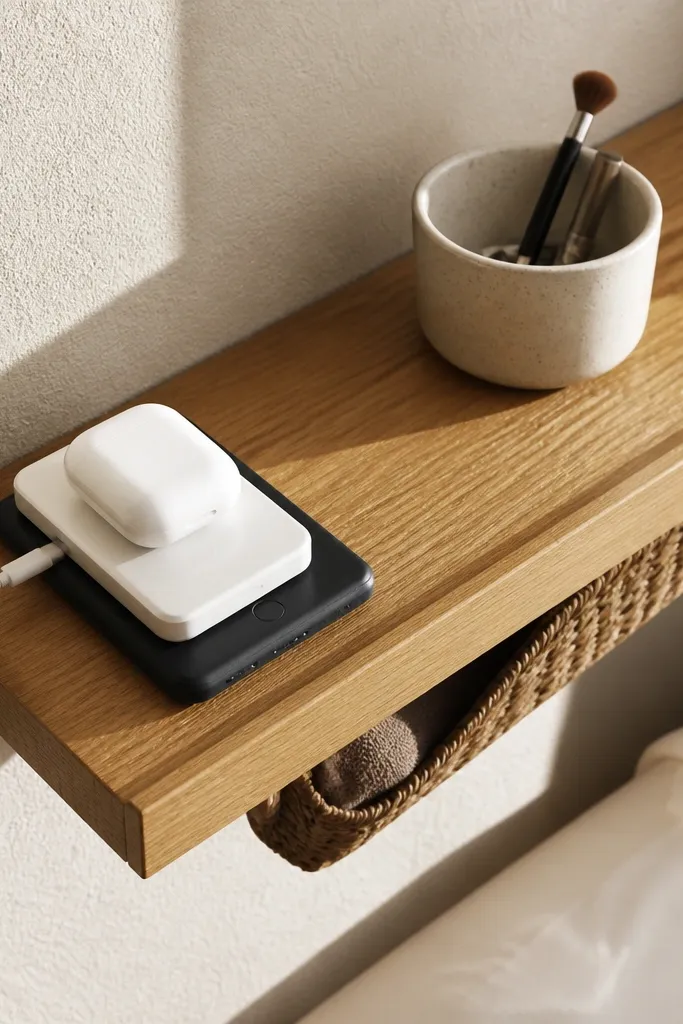
This is storage that looks soft, not utilitarian. A long floating shelf with a small under-shelf lip lets you hang or rest a basket beneath it, turning the space you’d waste into hidden storage for blankets, chargers, or cleaning supplies. In a small-space Floating Shelves Bedroom, that extra “shadow storage” keeps the wall visually light while still giving you real capacity. The shelf top can hold decor, and the basket handles the messy stuff. Use a warm stain and a basket material like woven rattan or fabric for that cozy feel.
Pick a shelf width like 24 inches and depth 14-16 inches for enough room under the lip. Attach a front lip board under the shelf front edge so the basket has something to sit against, then sand everything smooth. Mount the shelf to studs with brackets rated for at least 50 pounds per shelf, then test the basket fit before final finishing. Seal the shelf top, then lightly stain or paint the lip if it’s visible.
Choose baskets with a rigid rim so they don’t sag and scratch the shelf underside.
Don’t make the basket lip too tall — it creates a chunky silhouette on a small wall.
10. Slim Floating Shelves for Skincare Wall Organization

If your bedroom dresser is turning into a skincare station, shelves fix the visual mess. Use three slim floating shelves, each around 10-12 inches deep, and style them with matching trays or small containers so everything looks intentional. This delivers cozy storage because the wall becomes a neat “system” instead of random items. The aesthetic comes from repeating container shapes and keeping shelf spacing consistent. It also helps if you have limited drawer space and want quick access in the morning without hunting through clutter.
Editor's noteUse clear acrylic trays for small bottles if you want the wall to stay bright.
Choose shelf lengths based on your container tray size, then plan for at least 10-12 inches between shelves so bottles don’t bump. Mount brackets into studs and keep the shelves level using a long level or straightedge. Add a thin backing board or shelf liner if bottles tend to slide, then finish the shelves. Style in rows: one tray per shelf, with bottle labels facing the same direction for a uniform look.
Skip thisDon’t mix tall and short items on the same shelf — it creates a top-heavy look fast.
11. Floating Shelf Over Bed With Reading Light Pair
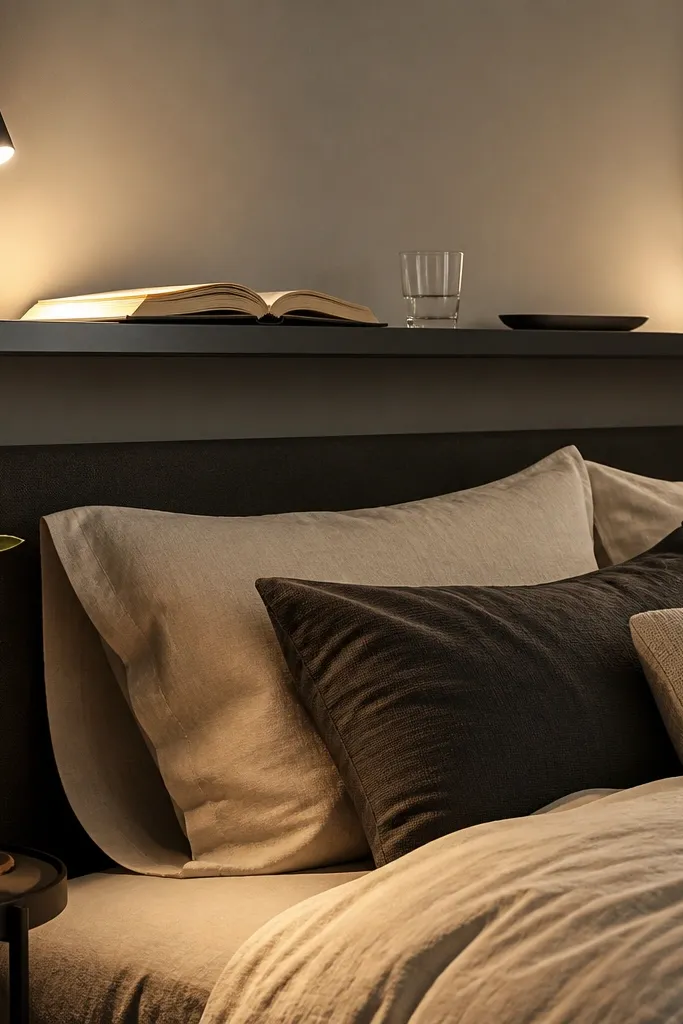
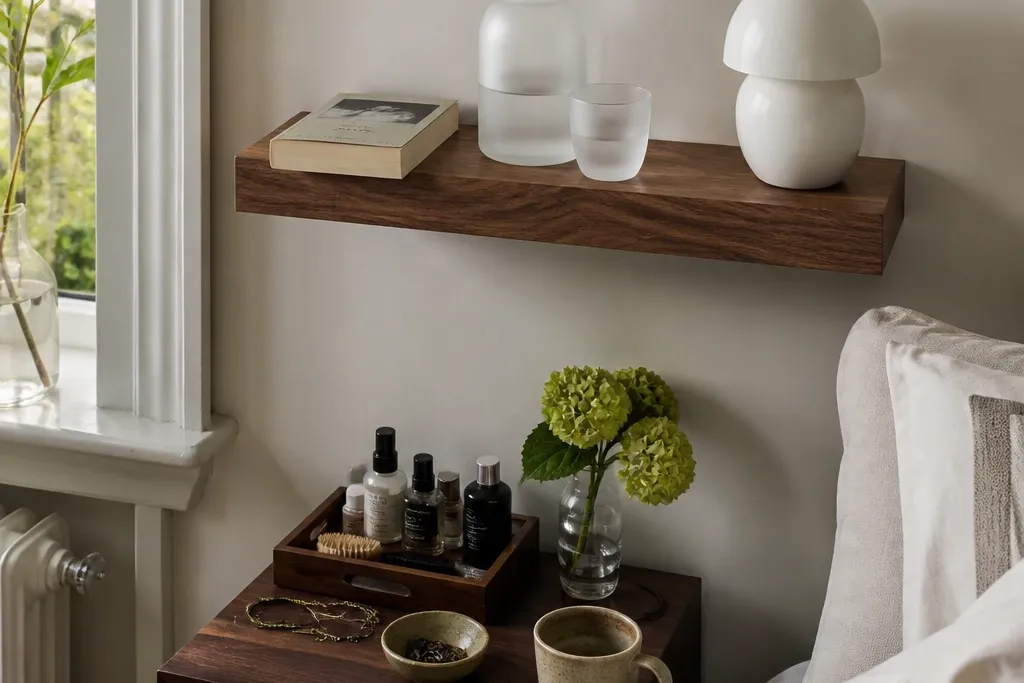
A shelf above the bed makes a small bedroom feel designed, and adding reading lights makes it practical. The storage part is the top surface for books, a glass, and a slim tray. The cozy part is the warm lighting — put two small wall or clip-on lights aimed at the shelf area and your bedside reading. Keep the shelf depth around 12-14 inches so it doesn’t feel like a ledge pressing down. This is best when your bed sits centered under the shelf line, so the composition looks intentional.
Measure your headboard width and choose a shelf width that’s about 2-4 inches wider on each side. Locate studs and plan bracket placement so each bracket lands on a stud — don’t rely on anchors. Mount the shelf so there’s about 36-42 inches from the floor to the shelf top, then install the reading lights according to their mounting instructions. Finish the shelf and add a small tray plus two book stacks so the wall looks styled, not empty.
Use a light color bulb around 2700K for cozy warmth against warm wood.
Don’t mount the shelf too low — it makes the bed area feel boxed in.
12. Grid of Mini Floating Shelves for Photo Stack Storage
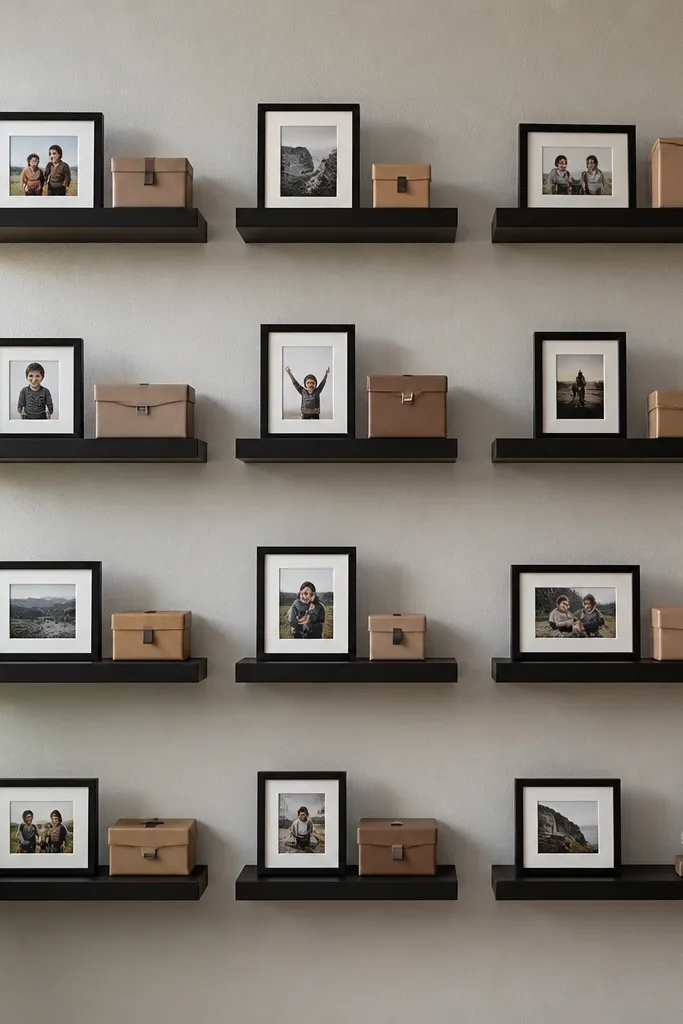
Mini shelves turn memories into storage, and the grid keeps it organized. Use small shelves around 8-10 inches deep for framed photos, small keepsake boxes, and a few decorative objects. The grid pattern looks good in small bedrooms because it’s structured — your wall has a “layout,” not scattered decor. This is a great choice if you want a cozy gallery wall but hate the mess of hanging frames that never align. It also lets you mix frame sizes while keeping a consistent shelf line.
Plan your grid on paper first: for example, 3 columns by 2 rows around the wall area above a dresser. Mark studs and mount brackets for each shelf, keeping shelf tops aligned with a level line across the whole layout. Cut shelves to consistent depth (8-10 inches) so the wall silhouette stays tidy. Finish the shelves, then place frames on each shelf with small spacers under corners to prevent sliding.
Pick one frame finish — black or natural wood — so the mini shelves look cohesive.
Don’t overload every mini shelf — leave at least one empty space in the grid for breathing room.
13. Floating Shelf + Side Table Narrow Hybrid
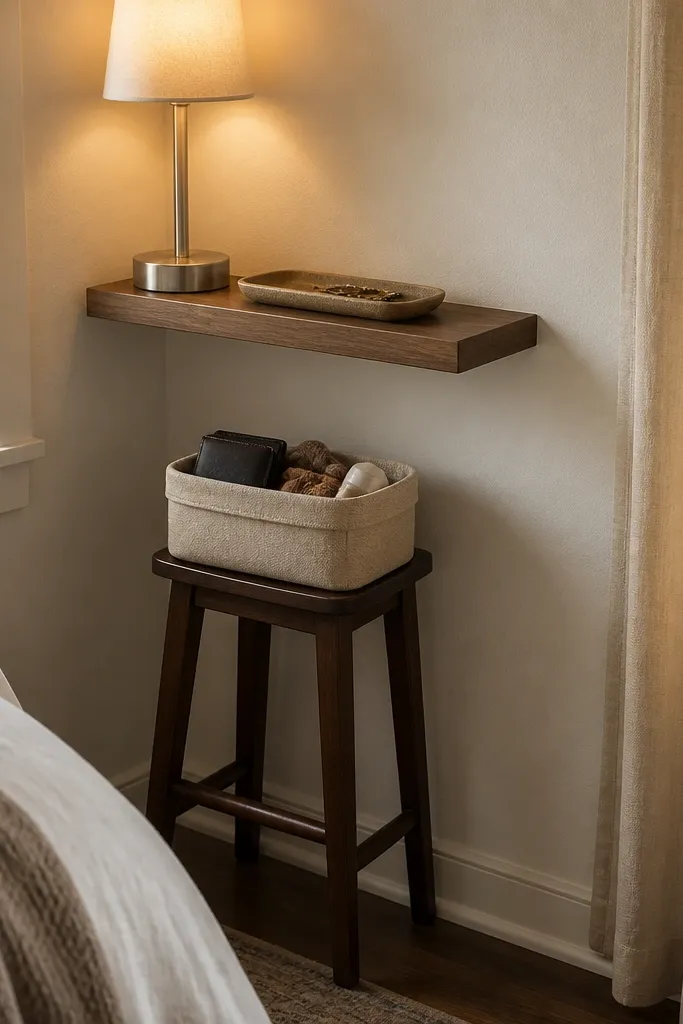
This hybrid solves a layout problem: you want bedside function, but you don’t have space for a full side table. Put one floating shelf above a narrow stool or small cabinet, then store the everyday items on the shelf surface. The shelf keeps the top clear and gives you room for a lamp, while the stool holds a basket for blankets or charging. In a small-space Floating Shelves Bedroom, this makes the bed wall do more work without blocking walkways. It looks cozy because the shelf and stool share the same wood finish and the lamp adds softness.
Choose a shelf width that matches the stool top, usually 18-24 inches. Mount brackets into studs and set the shelf so the stool fits underneath with about 12-16 inches of clearance. Finish the shelf and stool with matching stain or paint so the wall feels cohesive. Style the shelf with a small tray and one plant, then put a closed basket on the stool to hide unsightly items.
Use a stool with a flat top so you can place a charging station or a small container without tipping.
Don’t pair a wide shelf with a tiny stool — the scale mismatch makes the wall feel awkward.
14. Corner-to-Wall Ledge for Closetless Bedrooms
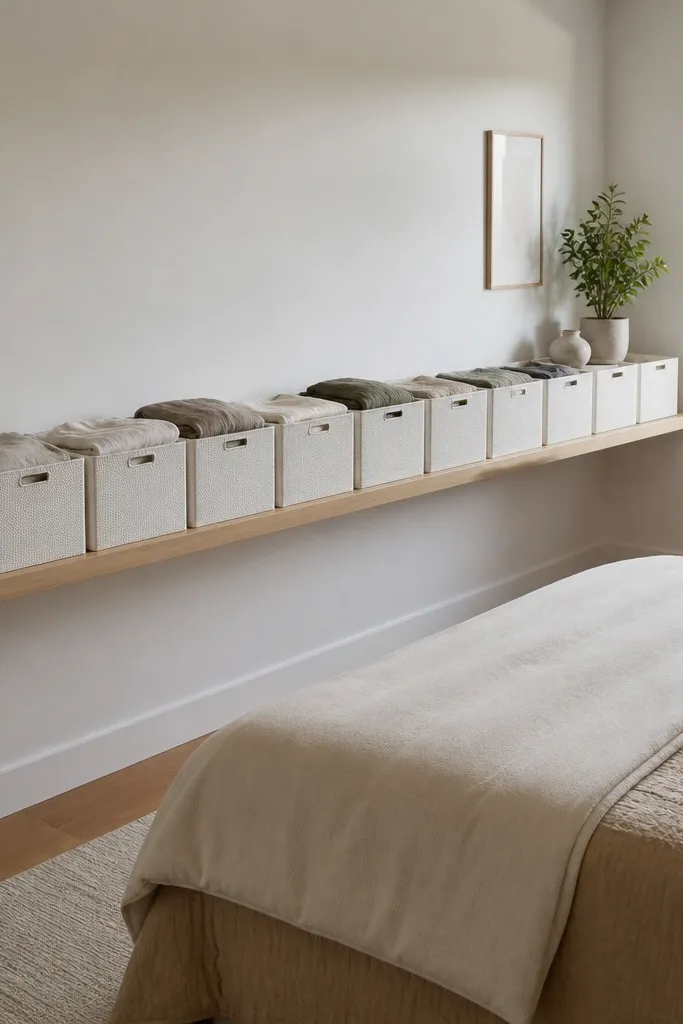
When your bedroom has limited closet space, a long floating ledge is a practical storage hack that still looks good. Run the shelf along a wall segment from near the corner to where studs allow, then use matching bins for folded items. This keeps your storage off the floor and reduces visual clutter. The cozy look comes from using uniform bins and a warm wood finish, so the shelf reads like furniture, not shelving. This works especially well in small bedrooms where you need storage but can’t afford bulky armoires.
Measure the wall length you want to cover and plan shelf segments so bracket placement hits studs every 16-24 inches. Use a shelf depth of 12-14 inches so bins fit without hanging over. Install brackets first, then mount shelf boards in sections if needed for long spans. Sand and finish the shelf, then add bins with consistent heights so the top edge looks clean.
Match bin colors to your bedding palette — it makes the storage blend in instead of shouting.
Don’t leave bins mismatched in height — the shelf will look messy even if it’s organized.
15. Floating Shelf With Built-In Curtain Hideaway
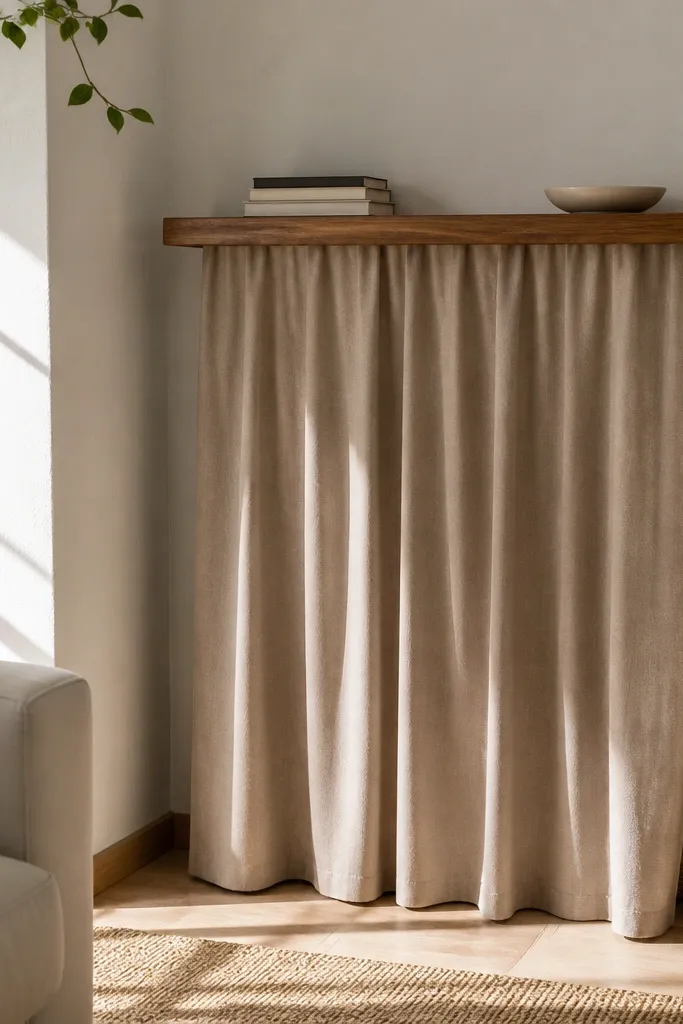
This is the cleanest way to hide “bedroom extras” while keeping the shelf area photogenic. A shelf mounted above a narrow opening, with a curtain panel you can pull to cover items, gives you a tidy face and hidden storage underneath. Think extra pillows, a spare throw, or a basket of skincare backups. In a small-space Floating Shelves Bedroom, this keeps surfaces from becoming catch-alls. The look is cozy because fabric softens the wall and hides the clutter that always accumulates under decor.
Editor's noteUse a curtain fabric with enough weight to fall straight — thin fabric looks messy when it moves.
Frame a small opening under the shelf using a simple 1x board support secured to studs, then hang a curtain rod or tension rod inside the frame. Mount the shelf to studs at a height that clears the curtain fabric when open. Finish the shelf and frame, then install a fabric panel sized to cover the opening fully. Use a small hook to hold the curtain open so you can access items quickly without fighting the fabric.
Skip thisDon’t pick a curtain color that clashes with your wall — it draws attention to the storage area.
16. Floating Shelf for Hanging Plant Over Bedside
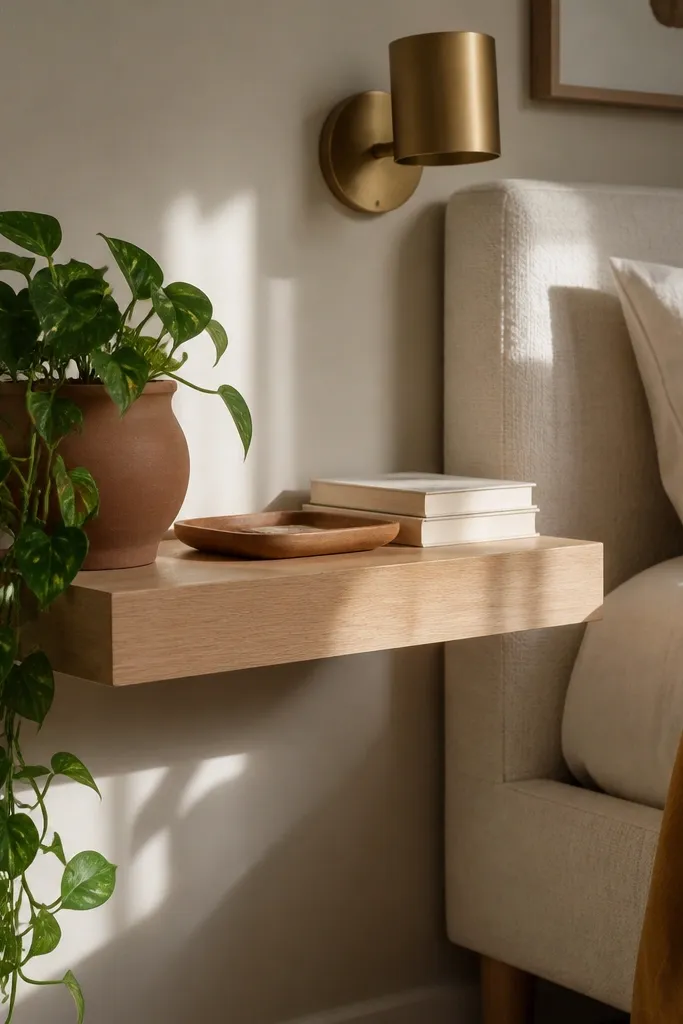
A trailing plant on a floating shelf makes the room feel lived-in, not staged. This setup gives you cozy storage, but the main win is vertical softness: the plant drapes downward while the shelf holds books and a small tray. Keep the shelf depth around 12-14 inches so plant pots fit without wobbling. Use a simple pot stand or a ceramic holder so water doesn’t stain the shelf. It’s a small-space Floating Shelves Bedroom idea that adds personality while staying functional.
Choose a shelf width based on the pot base — usually 16-24 inches for a standard 6-inch pot. Mount brackets into studs and install the shelf level, keeping the pot placement near the center for balance. Add a small waterproof tray or liner under the pot, then place a book stack and tray on the opposite side. Finish the wood with a protective topcoat so minor spills wipe clean.
Use a saucer under the pot and wipe the shelf underside after watering.
Don’t place the plant too close to the edge — it makes the shelf look crowded and increases the chance of bumps.
17. Two-Tone Floating Shelves With White Sides and Wood Top
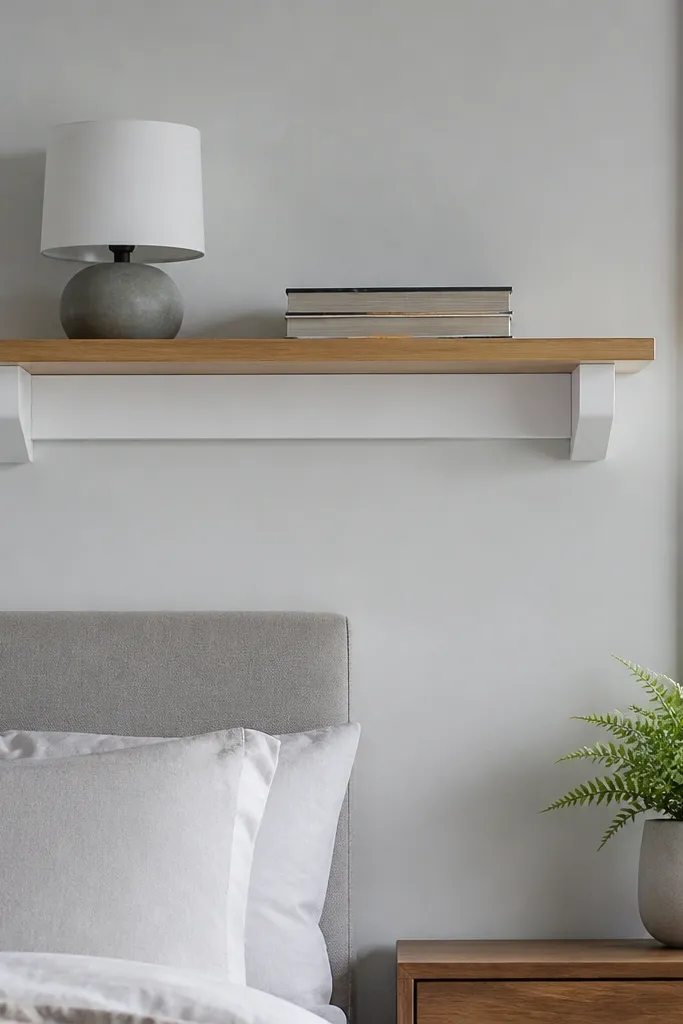
Two-tone shelves make small bedrooms look more polished because they separate the shelf surface from the wall. A warm wood top reads cozy, while white sides or white brackets keep the silhouette light. This is especially good if your bedroom walls are white or light gray because the shelves blend without disappearing. Use this with a simple layout: two shelves above a dresser or a desk corner, styled with minimal items. The look stays clean even when you rotate decor because the color contrast stays consistent.
Build shelves with a wood top board and paint the side frames or brackets white. Cut shelf boards to 14-16 inches deep for storage that doesn’t overhang. Mark studs and mount brackets, then attach the two-tone components so the painted parts align straight. Sand the wood top smooth, apply stain, then seal. Let everything cure before styling with trays and one or two book stacks per shelf.
Use painter’s tape edges before painting the sides so the line stays crisp.
Don’t mix multiple wood stains — two-tone looks best when there’s one clear warm tone.
18. Floating Shelf With Hidden Storage Drawer Front
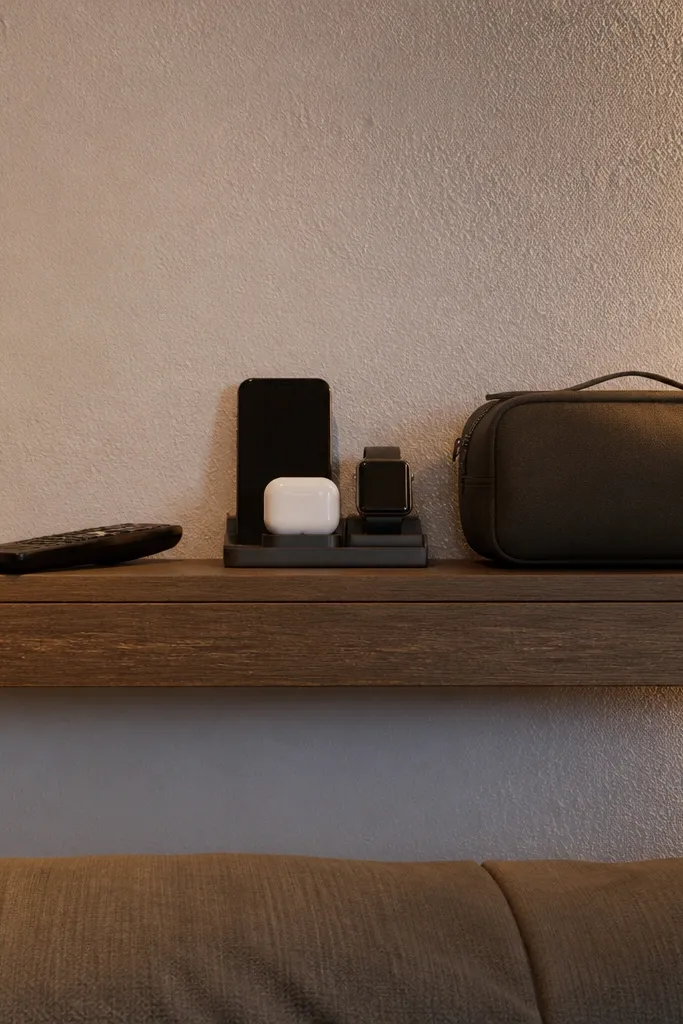
This is the most practical “cozy storage” idea on the list because it removes the visual clutter completely. The shelf looks like a normal floating shelf from the front, but the underside includes a small drawer panel where you stash remotes, extra charging cables, or a spare skincare bag. In a small-space Floating Shelves Bedroom, drawer storage is gold because it stops the nightly pile-up. Use a warm wood shelf top and a matching drawer front so it reads like built-in furniture. Skill level is intermediate because you’re adding a drawer mechanism, but the result looks high-end.
Editor's noteMeasure drawer slide length first and design around it — forcing the fit is where these projects go sideways.
Build a shelf carcass using a 1x frame and attach a drawer front panel below the shelf underside. Install drawer slides to the frame and test the drawer movement before you finish everything. Mount the shelf to studs with brackets that support the full weight of the top plus drawer contents. Finish the wood and drawer front, then add a small drawer pull and a soft-close mechanism if you want quieter use.
Skip thisDon’t ignore clearance under the shelf — if the drawer binds, you’ll hate using it.
19. Floating Shelf Above Bed With Built-In Photo Rail
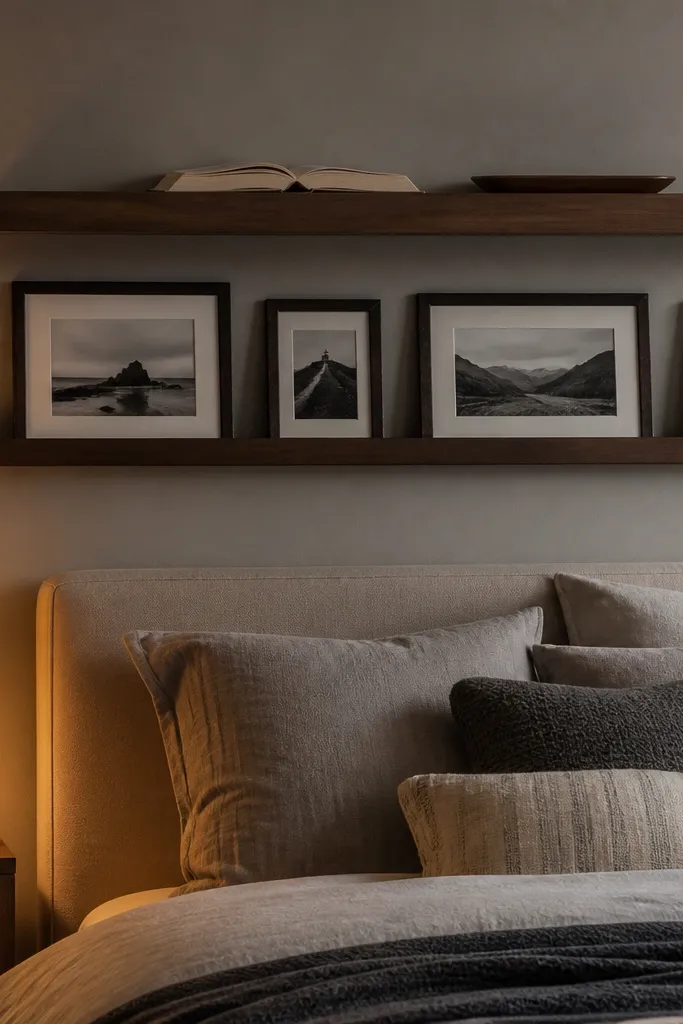
If you want the “cozy storage” look but you also love photos, this makes them functional. Add a narrow photo rail or ledge lip under the shelf so frames sit neatly and don’t tip. The shelf still holds books and a tray, but the photo rail keeps smaller framed pieces aligned like a gallery. This is photogenic because the frames create a repeating pattern, and it’s practical because you don’t have to hang more hardware on the wall. Keep the shelf depth around 12-14 inches so the rail stays in proportion.
Choose shelf width around your headboard width and mount brackets into studs with a level line. Add a thin rail lip under the front edge — about 3/4 inch tall — so frames rest securely. Sand and finish the rail so it matches the shelf top and doesn’t snag fingers. Style with 2-4 frames sized similarly and place books on the back half of the shelf so the rail stays visible.
Use frame stands or foam bumpers so frames sit flat and don’t slide on the wood.
Don’t use random frame sizes — the rail looks best when frames are close in height.
20. Minimal Floating Shelf With Matte Black Brackets and Linen Bins
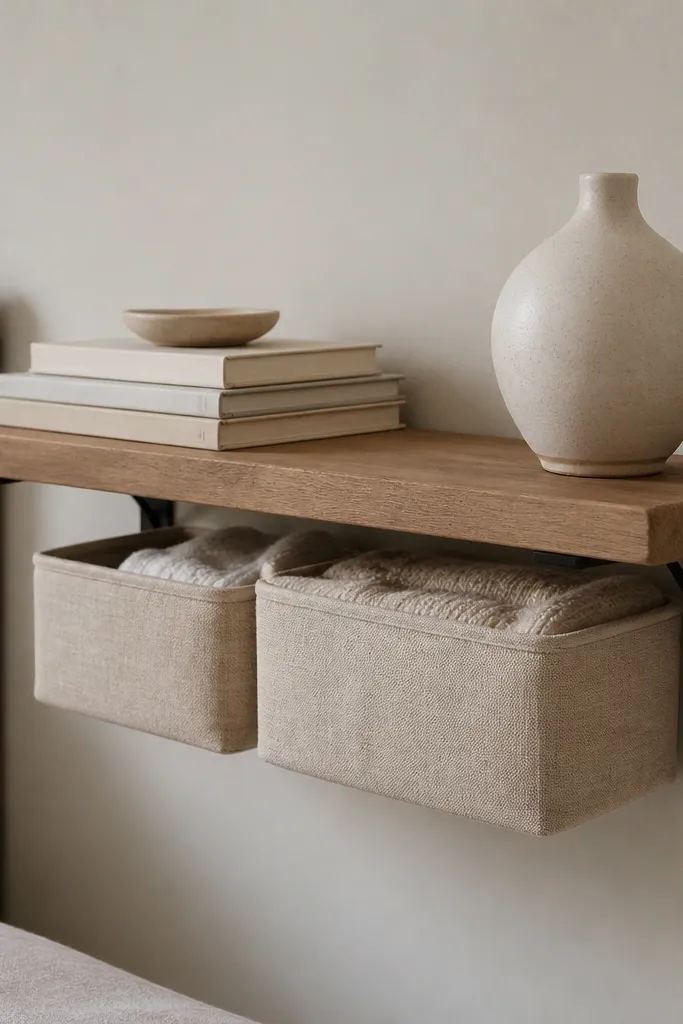
If your bedroom already has a lot going on, minimal shelves help more than you’d think. One single floating shelf with matte black brackets can look sharp and cozy if you style it with linen bins instead of loose objects. The shelf becomes a tidy zone for folded throws, extra bedding, or a small stack of books. This works because linen bins hide the irregular shapes that make storage look messy. In a small-space Floating Shelves Bedroom, this saves you from building a wall of clutter. The build is quick and the look stays clean for months.
Editor's noteUse bin labels on the inside — it keeps the outside look clean and makes it easier to find what you need.
Pick a shelf depth of 12-14 inches so linen bins fit without hanging. Find studs and mount two brackets spaced to support the shelf weight and bin load. Install the shelf level, then lightly sand and seal the wood top with a matte finish to avoid glare. Place one or two linen bins inside the shelf footprint and keep the rest of the shelf surface for a single decorative object.
Skip thisDon’t choose glossy paint for the shelf — it reflects light and makes storage look harsher.