1. Jaali screen behind the sofa with a warm brass lamp
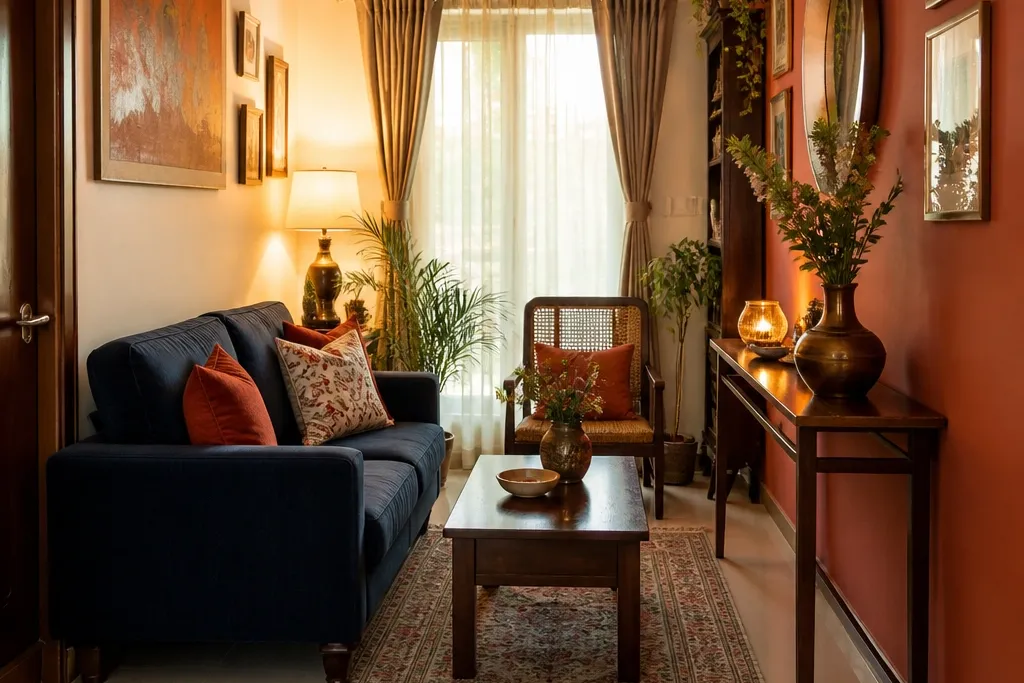
Start by measuring your sofa width and buy or build a jaali panel set that covers 70-90% of that width. Place it 4-6 inches behind the sofa so it doesn’t feel pasted to the wall. Next, set a narrow side table (under 16 inches deep) on the lamp side, and keep the lamp shade warm and matte, not glossy. Finally, style the top edge of the screen area with two small frames or one long runner on the console beneath, then switch on the lamp and check the shadow pattern from the seating angle.
This is one of the best small-space drawing room interior decor ideas because it adds a patterned backdrop without eating floor area. A jaali screen creates depth — your eye reads layers instead of a flat wall. Pair it with a warm brass lamp so the pattern throws soft highlights across the wall and cushion backs. Use a screen size that matches the sofa width, not the whole wall, so the room still feels open. It looks intentional in Indian homes because the jaali motif matches wood tones and traditional textiles.
Skip thisAvoid hanging heavy curtains directly in front of the screen — it kills the layered look.
Editor's noteUse a frosted warm bulb and keep the lamp aimed slightly upward to avoid harsh glare.
2. Floating picture ledge with a tight 3-frame art strip
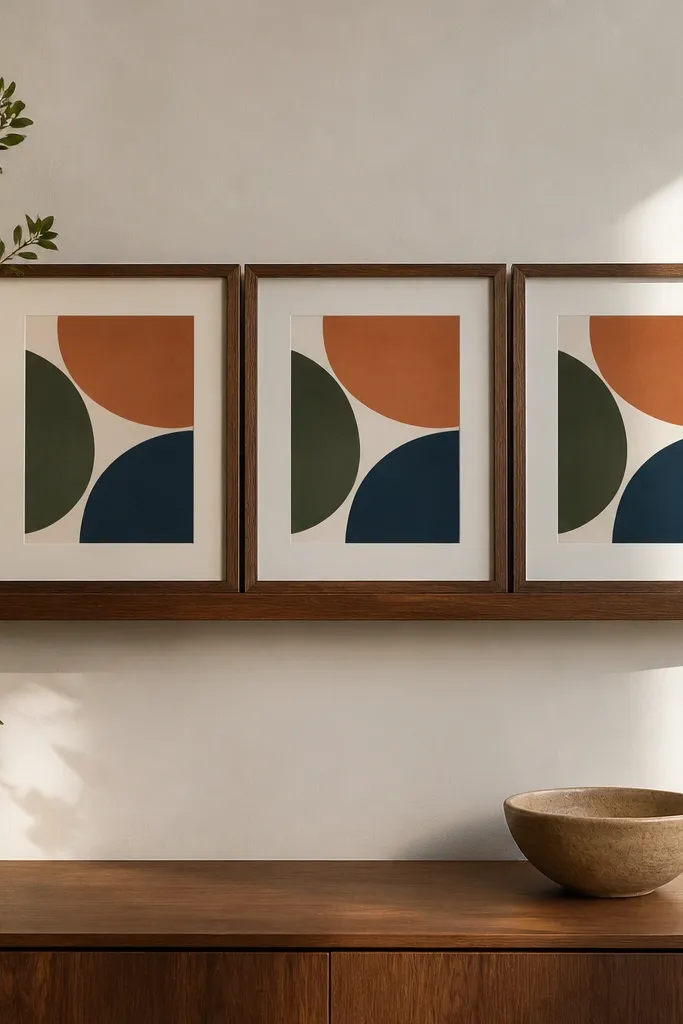
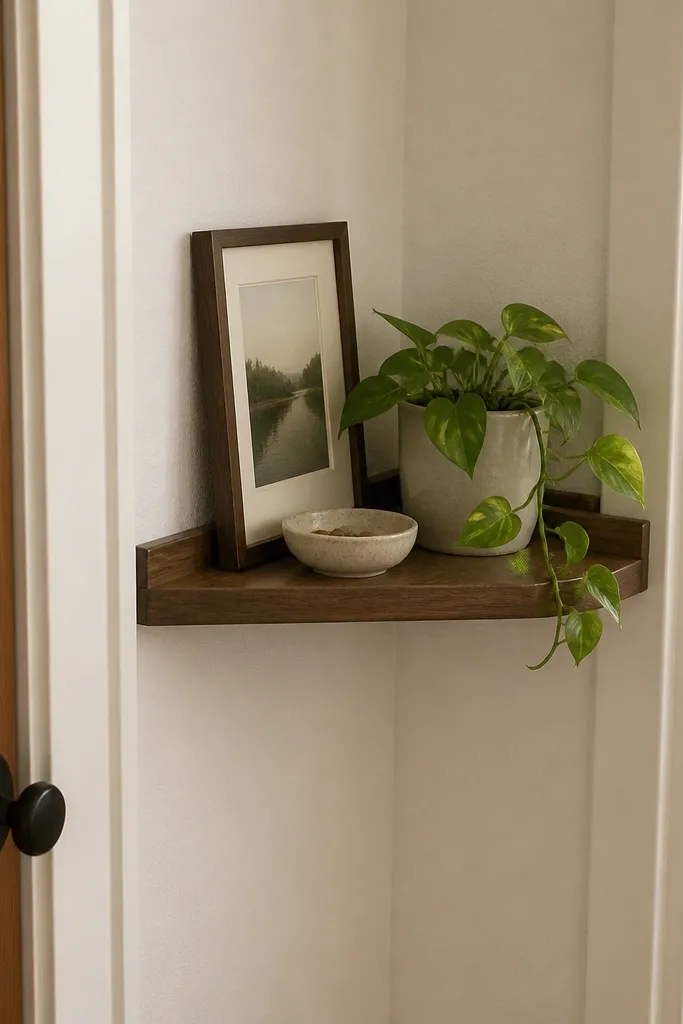
Pick a ledge that is 6-7 inches deep so frames sit securely and don’t look crowded. Mark the centerline of your wall, then place three frames with equal spacing: left and right at 2-3 inches gap, middle centered. Mount the ledge so the frame centers land around 56-60 inches from the floor. Use a level and drill pilot holes; then mount frames after the ledge is fixed to avoid alignment headaches.
A floating picture ledge is a clean way to add Indian drawing room interior style without placing a bulky console against the wall. The magic is the 3-frame strip: it reads organized and photogenic, especially when frames are the same width. Choose art with warm tones — terracotta, deep olive, indigo — and keep the mat color off-white for a calm backdrop. This setup also solves the “blank wall” problem that makes small rooms feel unfinished. It’s a smart choice for renters because you can mount it with minimal wall footprint if you use proper anchors.
Skip thisDon’t mix frame sizes in a small room — the wall starts looking messy fast.
Editor's notePrint or buy frames with the same mat thickness; it makes the strip look custom even on a budget.
3. Corner reading nook: small floor pouf + jute rug + wall sconce
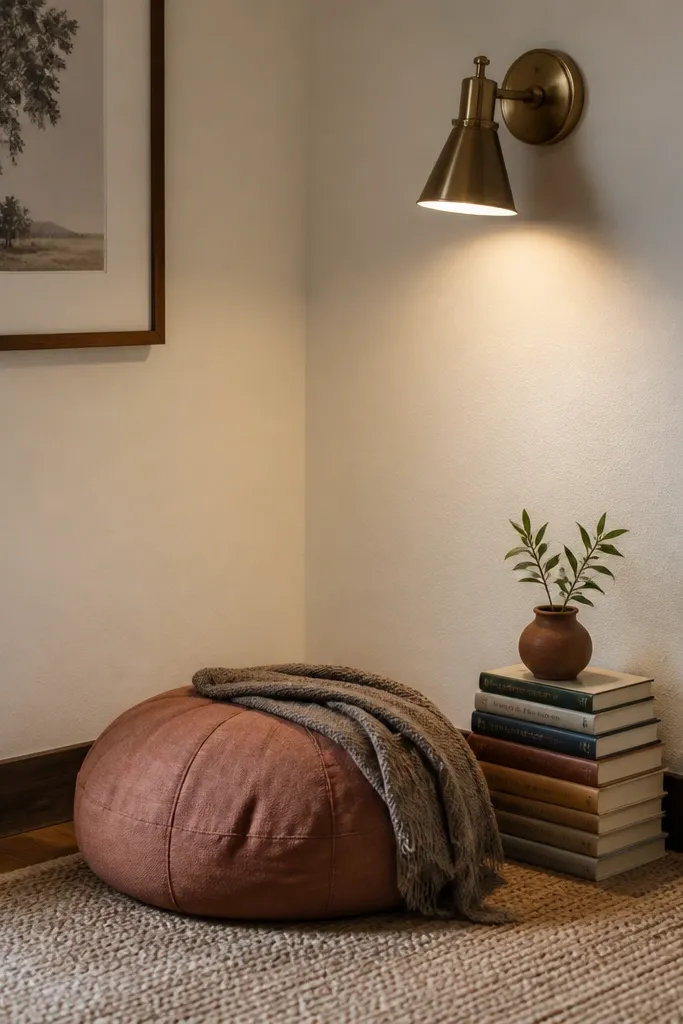
Choose a jute rug that is 4x6 ft or 5x8 ft depending on your corner size, but keep it at least 8 inches away from the main walkway. Place a low pouf at the rug’s far corner and anchor it visually with a small tray or book stack on the pouf. Mount a single wall sconce at about 5 ft from the floor, aiming light slightly downward. Finally, add one throw in rust or indigo and one cushion with ikat-style pattern so the rug isn’t the only texture.
If your drawing room is small, the corner is the best place to add character without blocking traffic. A jute rug brings that grounded Indian texture, and a small floor pouf adds comfort without taking the same visual weight as a chair. Add a wall sconce to keep the surface uncluttered — no extra side tables needed. This trio makes the room look styled because it creates a mini zone with its own lighting and texture. It’s ideal for apartments where the main seating is already tight.
Skip thisSkip shag rugs in small rooms; the pile makes the corner look heavier than it is.
Editor's noteUse a thin rug pad under jute so it doesn’t curl — flat edges look neater in photos.
4. Two-tier console styling: one tray, three heights, zero clutter
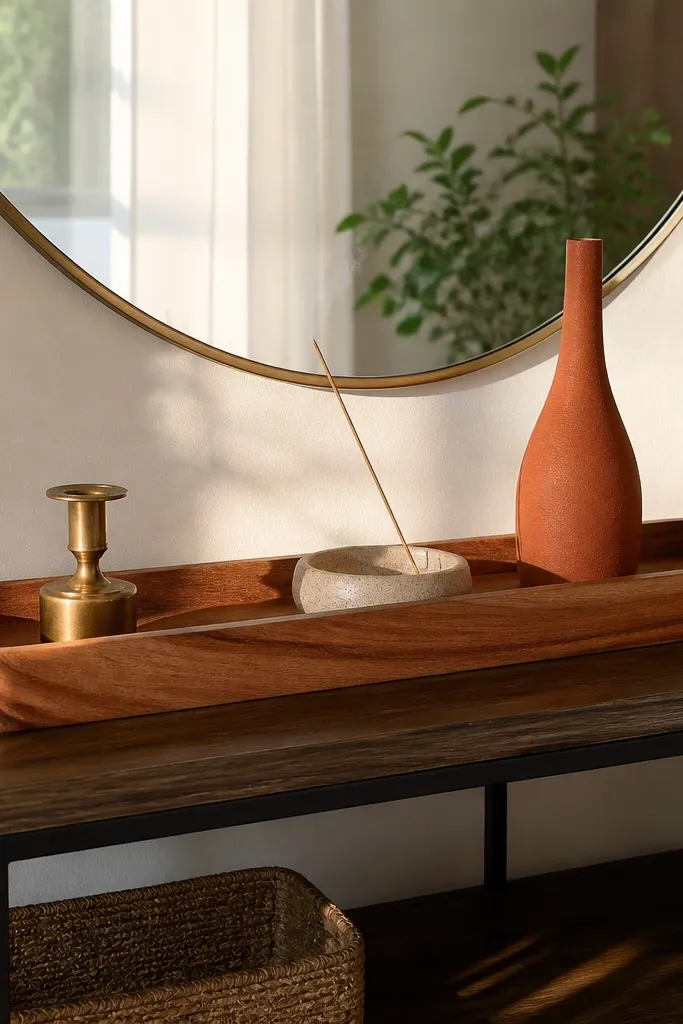
Pick a console depth of 10-14 inches so it doesn’t block movement. If you’re using a two-tier console, fill only the top tier with decor and keep the bottom tier for closed baskets or a single stack of books. Arrange decor on one tray first, then add the vase and candle holder around it to make a triangle. Use 1-2 items with strong color (terracotta or deep green) and keep the rest neutral so the room doesn’t feel busy.
Many small-space drawing room interior decor setups fail because the console becomes storage and the wall behind stays empty. A two-tier console styling approach fixes both: you keep the surface curated and add vertical presence without a big cabinet. Use one long tray as the base, then build heights with a small brass bowl, a medium vase, and a short candle holder. Keep everything in the same material family so the room looks cohesive. This works especially well in Indian homes where consoles often sit near entry or behind seating.
Skip thisAvoid multiple small items scattered across the top — it reads like clutter in a small room.
Editor's noteWipe brass and glass with microfiber before styling; small smudges show up in daylight.
5. Sofa back wall texture: DIY limewash effect on one panel
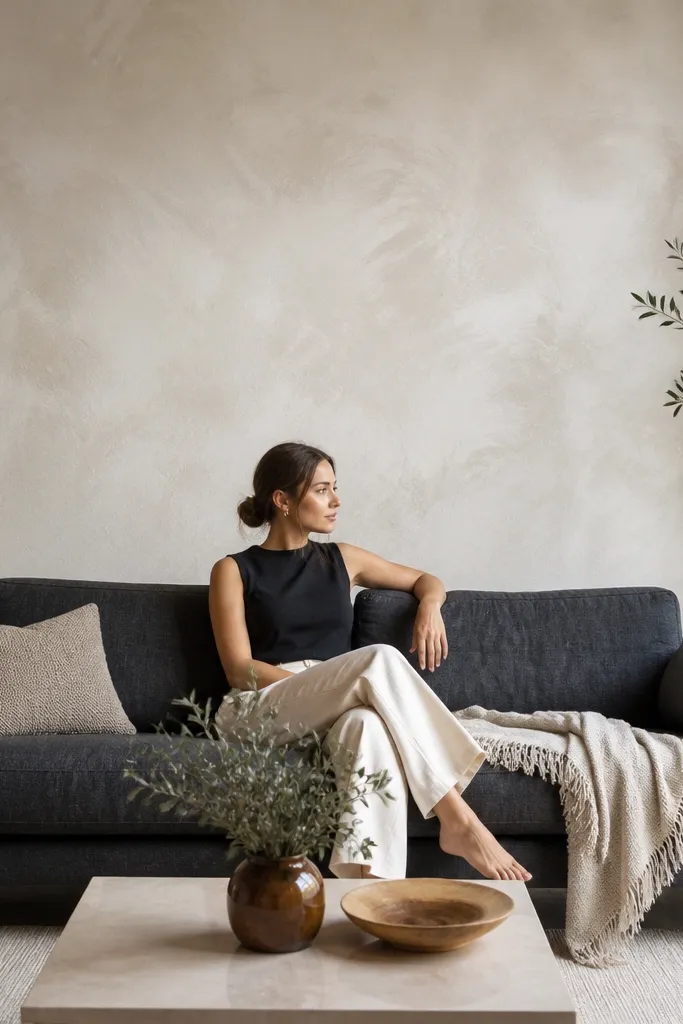
Texture is the fastest way to make small rooms look richer without adding more furniture. A limewash effect on one panel behind the sofa gives a soft, uneven finish that photographs beautifully and hides minor wall flaws. Keep the tone close to your existing wall color, then let the variation do the work. This is ideal when your room feels plain or when you want an Indian artisanal look without buying expensive wallpaper. It also plays well with jute, wood, and cotton throws.
Tape off a rectangle behind the sofa — usually 4-6 ft wide and 6-7 ft tall — and clean the wall so paint sticks. Mix limewash-style paint according to the product directions, then apply in thin coats with a brush and rag for streaking. Let it dry, then lightly sand high spots after the first coat if you want a softer, aged look. Finish with a matte sealer only if the brand recommends it so the wall stays breathable and doesn’t look plastic.
Test your color on a 1 ft square patch and check it at night with lamp light.
Don’t cover the entire room in texture; one panel is what keeps the space feeling open.
6. Mirror-with-tray: round mirror over a slim console
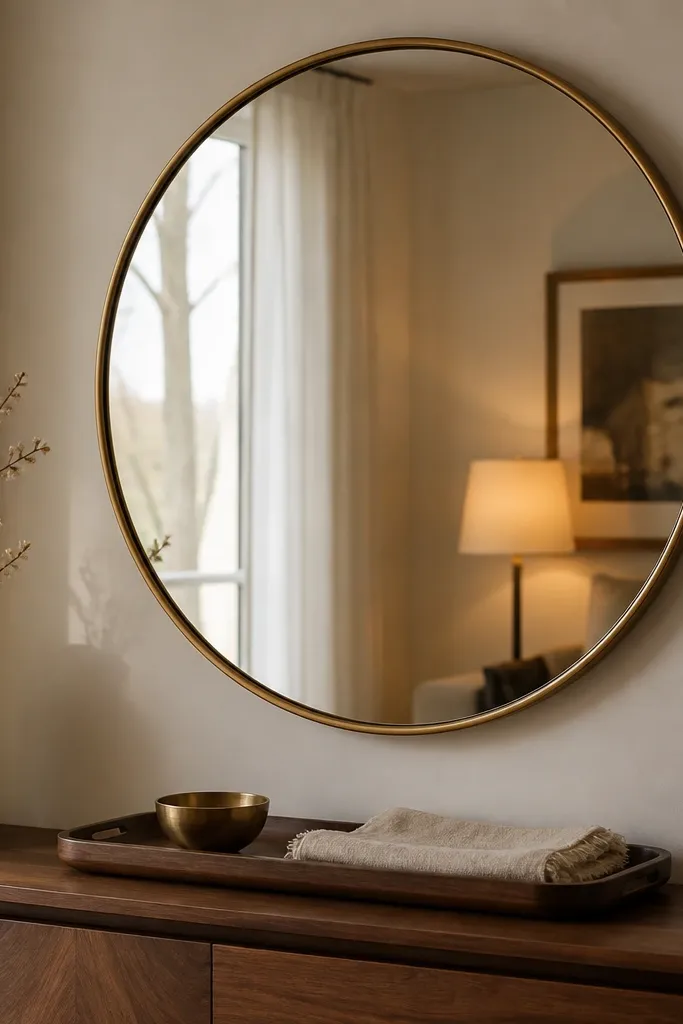
A mirror is the simplest small-space drawing room interior decor tool, but the trick is placement and styling. A round mirror above a slim console bounces light and softens sharp corners, which makes the room feel wider. The tray below stops the mirror from turning into a random reflection of clutter. Choose a mirror with a thin frame in brass or wood, not a thick ornate one, so it doesn’t look heavy. This setup works well for Indian living rooms where the seating area needs visual balance.
Pick a mirror diameter around 24-30 inches for small walls and ensure it sits centered above the console. Keep the console depth under 14 inches, and place a single long tray on top. Style only three items on the tray: one tall (vase or candle), one medium (bowl), and one flat (small stack or incense holder). Finally, check the mirror reflection from the sofa — if you see messy walls, rearrange first, then lock in the decor.
Angle the mirror so it reflects a lamp or a bright window area, not the ceiling light directly.
Avoid mirrored furniture and multiple reflective pieces in the same zone; it creates glare.
7. Curtains that make the room look taller: 4-inch top overlap
Measure from floor to ceiling and install the rod 7-10 inches above the window top mark. For fullness, choose curtains with 2-2.5 times the window width so folds look full even in a small room. Install rings or hooks that slide smoothly; then let the curtain panels reach just above the floor or lightly kiss it. Finally, keep a single tieback style and place it on one side only for a cleaner silhouette.
Tall curtains are one of the most reliable small-space drawing room interior decor upgrades because they change how the ceiling reads. Hang the curtain rod high enough that the top looks intentional, not cramped. Use a fabric with a soft drape — cotton-linen blend or matte viscose — so it falls in clean folds. Keep the color in the same family as your wall so the room doesn’t break into sections. In Indian drawing rooms, this also helps balance brass and wood tones by keeping textiles calm.
Skip thisSkip short curtains that end at the sill — they cut the room and make it feel smaller.
Editor's noteIron or steam the panels before hanging; wrinkled curtains ruin the “taller” effect.
8. DIY fabric wall panels in a grid behind the seating
Create panels using plywood or MDF rectangles cut to 18x24 inches, then wrap with fabric using a staple gun on the back. Make 6-8 panels for a typical small sofa wall and keep edges tight for a clean grid. Mount them with French cleats or heavy-duty wall anchors so alignment stays consistent. Finish by adding one narrow brass strip or simple trim at the panel edges if you want a more finished look.
Fabric wall panels give you the look of expensive upholstered walls without buying a full headboard setup. A simple grid behind the seating adds warmth, absorbs some sound, and creates that layered Indian drawing room feel. Choose fabric with a subtle pattern — small block print, ikat-inspired lines, or solid cotton in warm beige. The grid keeps it organized, which matters in small rooms. This is a good option when you want a statement but your budget is tight.
Skip thisDon’t choose shiny satin fabric; it reflects light and makes the wall look uneven.
Editor's noteUse foam backing under the fabric wrap if you want a softer, more upholstered photo look.
9. Coffee table with a mirrored tray and 3-color styling
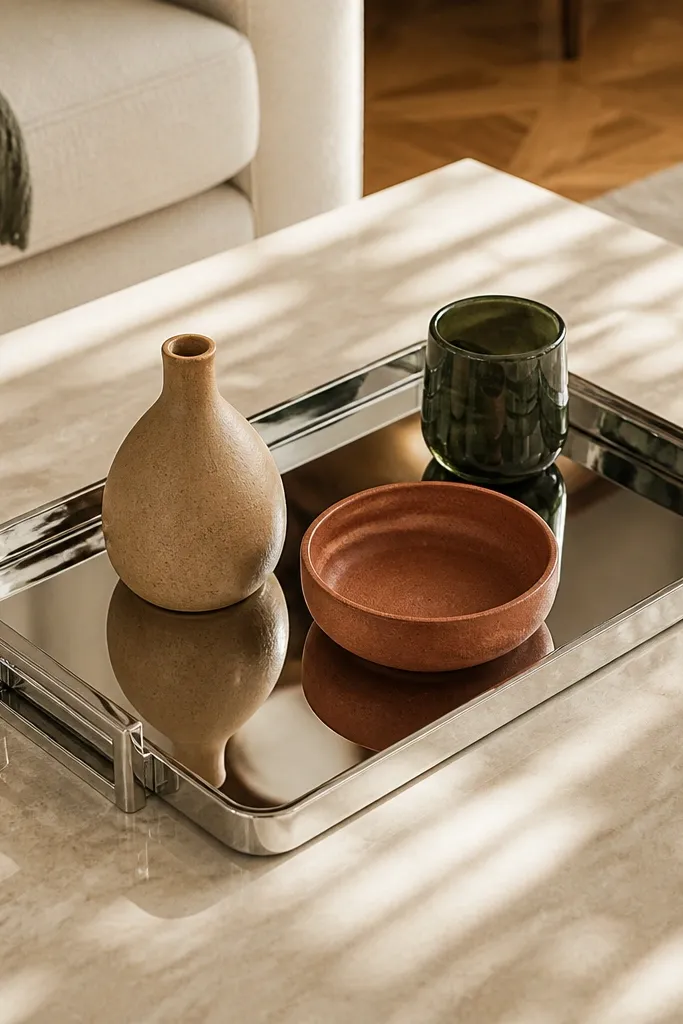
Choose a tray size that covers about half the table surface, so the rest can stay clear. Place a small book stack or coaster set first, then add a bowl and a candle holder for height. Keep items small enough that you can still walk around the table without shifting decor. If your table is wood, wipe it and use felt pads under the tray to prevent scratches.
A coffee table can make or break small-space drawing room interior decor because it’s where clutter shows first. A mirrored tray adds light bounce and keeps the center of the table visually controlled. Style with exactly three colors: one warm neutral, one earthy accent, and one deep tone. For Indian rooms, a smart combo is ivory + terracotta + deep olive. Add one functional item like a coaster set or a small bowl so the tray doesn’t feel decorative-only.
Skip thisAvoid placing loose items directly on the table; they break the clean look fast.
Editor's noteUse matte-black or brass candle holders so the mirror doesn’t look like random shine.
10. Low-height seating with dark base + light cushions
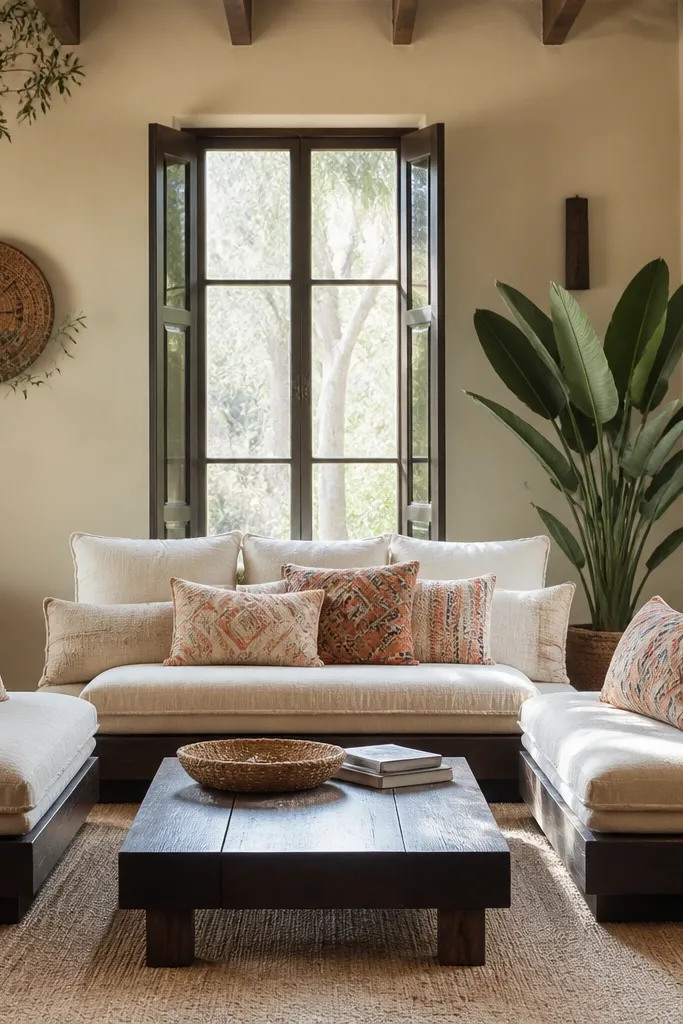
In a small drawing room, high furniture can make the space feel boxed in. Low-height seating — or at least cushions that sit lower visually — opens the sightline above it. Pick a dark base in charcoal, espresso, or deep navy, then balance it with light cushions in cream and warm prints. This contrast makes the room look styled and helps the wall decor stand out. It’s also practical because dark upholstery hides everyday marks better in Indian homes.
Choose cushion heights so the back cushions align around 18-20 inches from the seat and keep throw pillows in front at staggered heights. If you’re updating without replacing furniture, add seat cushions or a firmer back cushion cover to lower the visual mass. Place 2 large cushions on the ends and 2 medium cushions in the middle, then add one small accent cushion with a bold pattern. Keep throws in matte cotton or knit and drape it only over one side of the sofa.
Use cushion covers with hidden zippers so the seams sit flat and look neat in photos.
Avoid matching all cushions in the same pattern scale; it looks flat in small rooms.
11. Wall shelves in a single vertical line for books + decor
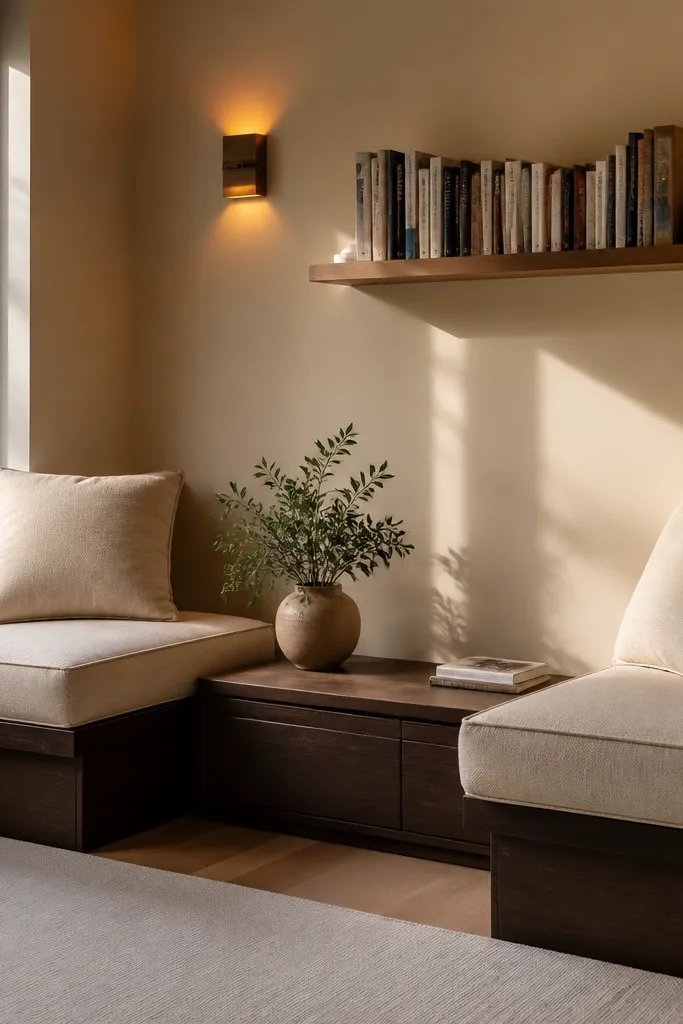
Measure the wall section beside the sofa or near the corner and mark one vertical center line. Install two or three shelves at 12-18 inches spacing so books fit without overhang. Use brackets rated for your shelf load and anchor into studs with pilot holes. Style by placing books first, then add one small decor item per shelf — keep it to 1-2 items maximum so the wall stays airy.
Vertical shelving turns wall space into storage without stealing floor area, which is the biggest win in small-space drawing room interior decor. Keep shelves in one vertical line so the wall reads clean instead of cluttered. Use shelves that are 8-10 inches deep so the items don’t project out. Style books upright with spines facing out, then add one small plant or brass object every other shelf. This creates rhythm and makes the wall look designed, not random.
Skip thisSkip deep shelves; they make the room feel narrower from the seating angle.
Editor's notePaint shelves the same color as the wall for a quieter look; the objects become the focus.
12. Handmade look floor runner with a simple geometric pattern
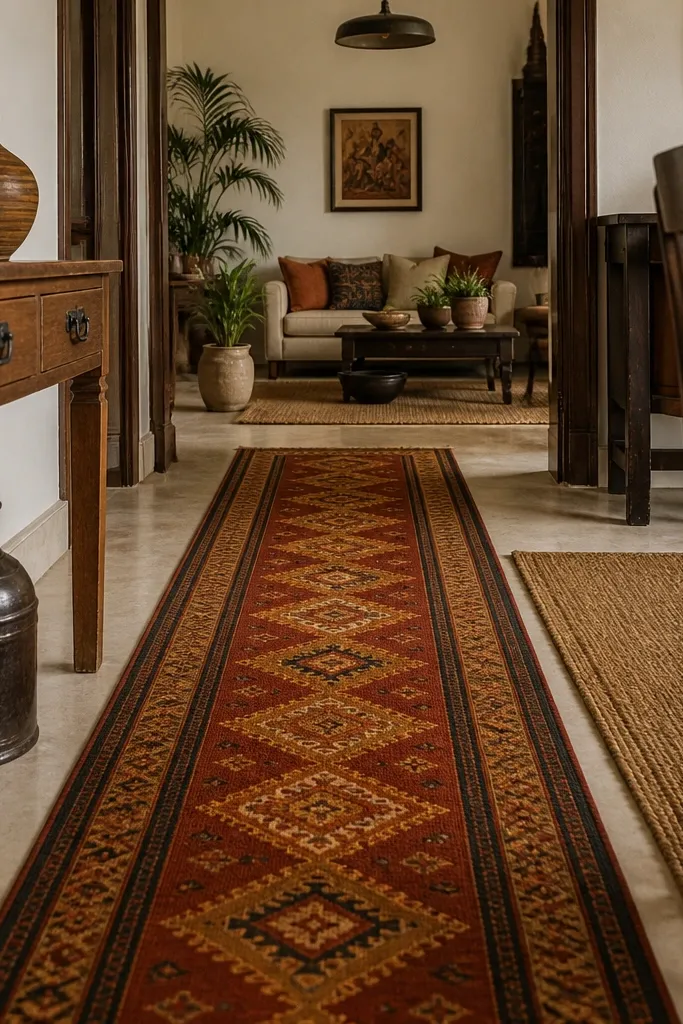
Measure the path from entry or hallway to the main seating area and pick a runner length that leaves 6-10 inches of clear floor at each end. Center the runner so it aligns with the sofa front or coffee table axis. Layer a thin rug pad underneath to prevent slipping and curling. Style the furniture edges so at least one side table or chair leg lands on the rug, tying it into the seating zone.
A floor runner can make a small drawing room feel intentional when the room has multiple seating zones or a doorway cut-through. Choose a runner with a geometric pattern in warm tones — rust, mustard, and deep brown — so it ties into Indian textiles. The runner guides the eye, which makes the space look longer and more organized. It also helps protect flooring in high-traffic areas without installing extra furniture. This is a photogenic move because patterns read clearly even in tight interiors.
Skip thisAvoid loud multicolor runners; in small rooms they compete with cushions and wall art.
Editor's noteChoose a runner with a low pile so it doesn’t snag on chair legs and looks flatter in photos.
13. DIY wall panel shelf for incense, brass bowls, and one framed print
This idea works because it concentrates decor into one tidy vertical moment. A slim wall panel shelf with a framed print above gives you that Indian drawing room styling without adding a bulky cabinet. Use the shelf for small, high-contrast objects: brass bowl, incense holder, and a tiny tray. Keep the framed print simple — one statement piece with warm tones — so the shelf doesn’t become a clutter shelf. In small spaces, controlled repetition looks expensive on camera.
Cut a board panel sized around 18-24 inches wide and 6-8 inches tall, then add a narrow shelf ledge on top or bottom for objects. Sand edges smooth and apply wood stain in walnut or dark teak, then seal with matte clear coat. Mount the panel at about 52-56 inches from the floor and fix a single framed print above it. Place only three objects on the shelf and leave empty space around them so the wall stays breathable.
Use felt under brass bowls to stop rattling and scratches when you move items.
Don’t crowd the shelf — three objects max reads clean, especially in small rooms.
14. Textile color-block cushions using ikat-style fabric panels
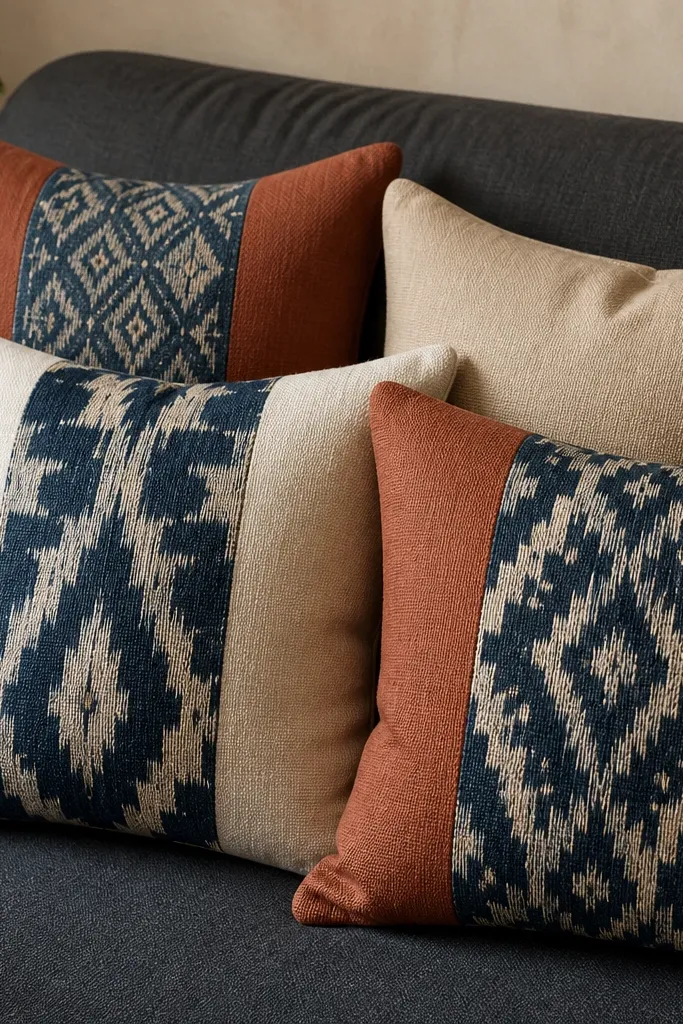
If you want small-space drawing room interior decor that photographs well without construction, cushions are the fastest lever. Ikat-style fabrics bring Indian pattern energy while still looking structured when you use color blocks. Go for two cushion covers with complementary patterns and two covers in solid warm neutrals. Keep the palette tight: ivory base with terracotta and indigo accents. This makes the sofa look styled even if the rest of the room is simple. It’s also easy to switch seasons without replacing furniture.
Buy pre-cut ikat-style fabric panels or yardage in matching tones and sew into 18x18 inch covers with a zipper closure. Make two covers with bolder pattern placement and two covers in solid beige or sand so the look has breathing room. Add one long lumbar cushion if your sofa back is low, keeping it around 12x18 inches. Use iron-on interfacing on the fabric backing so seams stay crisp and the covers look sharp.
Wash and press fabric before sewing so shrinkage doesn’t twist the pattern alignment.
Avoid mixing three different pattern types on a small sofa; it turns into noise.
15. Lacquered wood side table with one statement vase
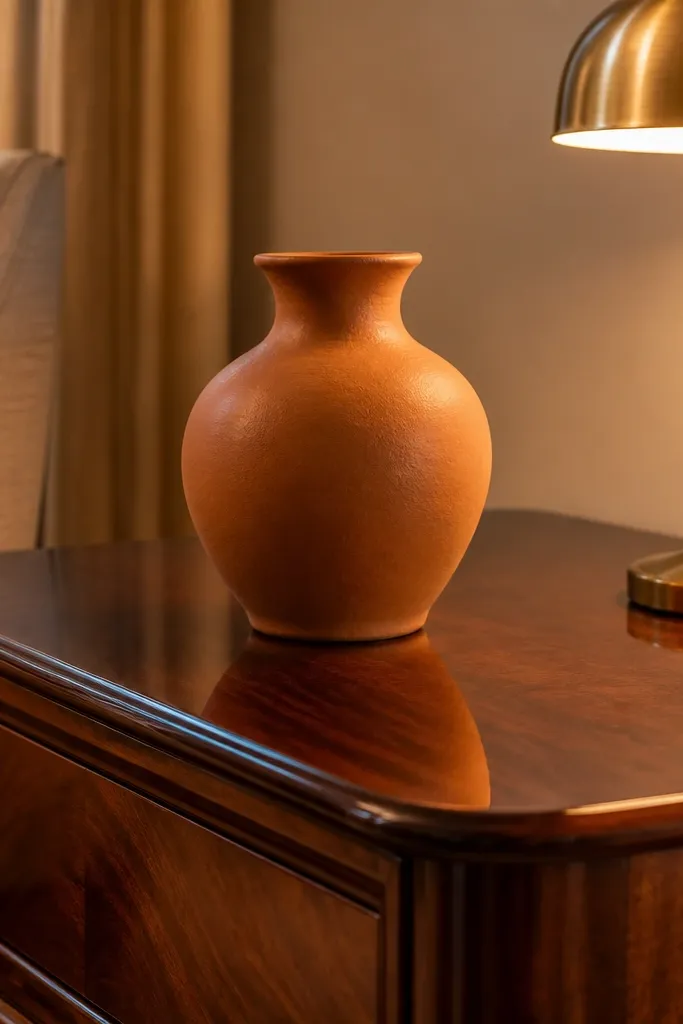
A small lacquered wood side table adds a polished look that plays nicely with Indian metals and textiles. The reason it works for small-space drawing room interior decor is that it gives you a clean vertical surface — without clutter. Put one statement vase on it, plus a lamp if you need light, and keep the rest empty. Lacquered finishes catch light softly, which makes the room feel more “finished” than matte-only furniture. This also fixes the common problem where small rooms have furniture but no focal point near the seating.
Choose a side table that is 14-16 inches wide and about the same height as your sofa arm or slightly lower. Pick a lacquer finish in walnut, dark teak, or warm mahogany and ensure the top is flat. Place the lamp on one side and the vase on the other, leaving a clear gap between them. Style the vase with one stem or small branch so it doesn’t sprawl into the walking path; then wipe the surface and check the reflection from the seating angle.
Use a vase that’s 1.5 times the height of the lamp base for balanced proportions.
Skip oversized vases; in small rooms they block sightlines and dominate the space.