
1. The Slim Storage Bench (the big fix)
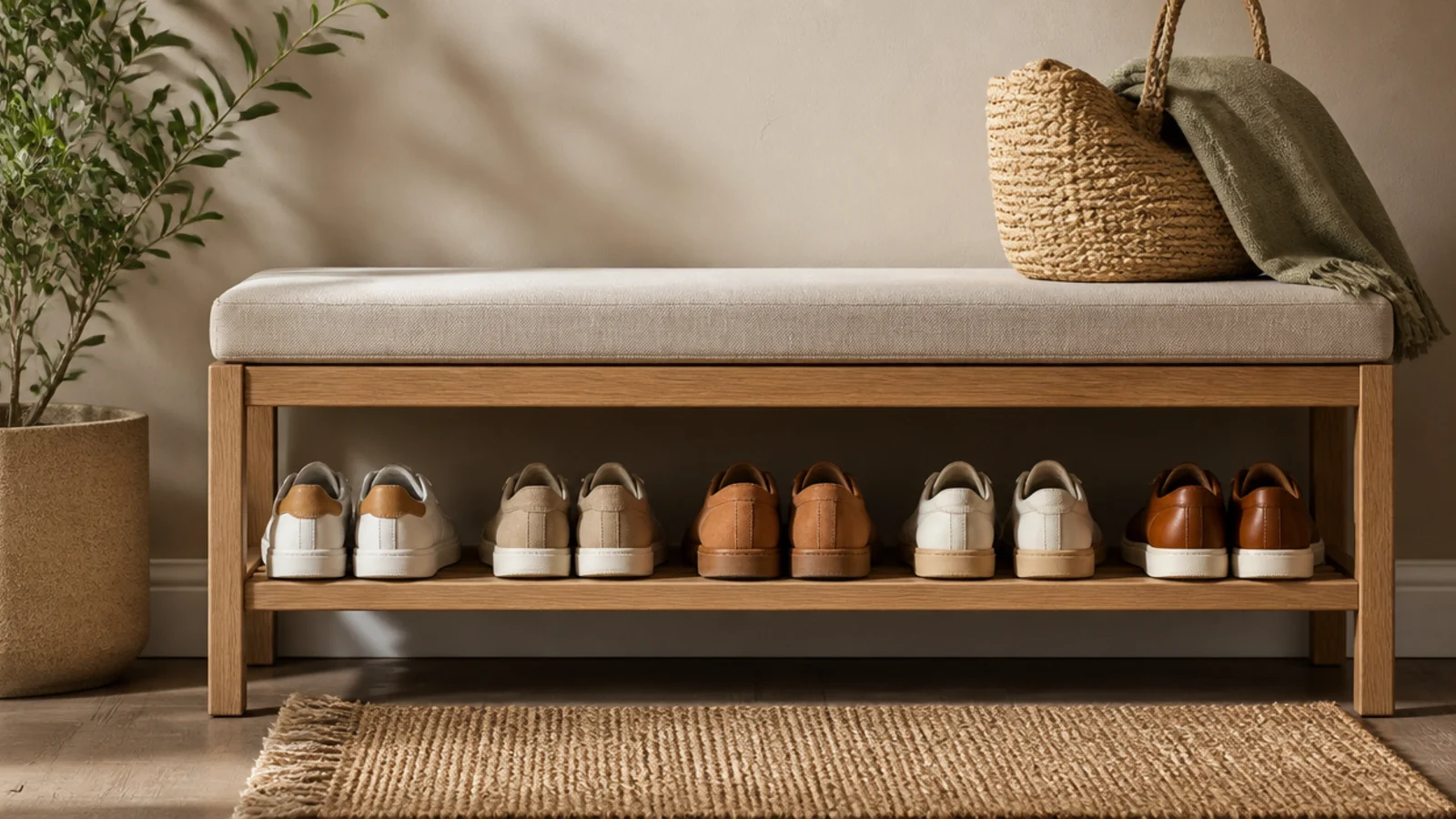
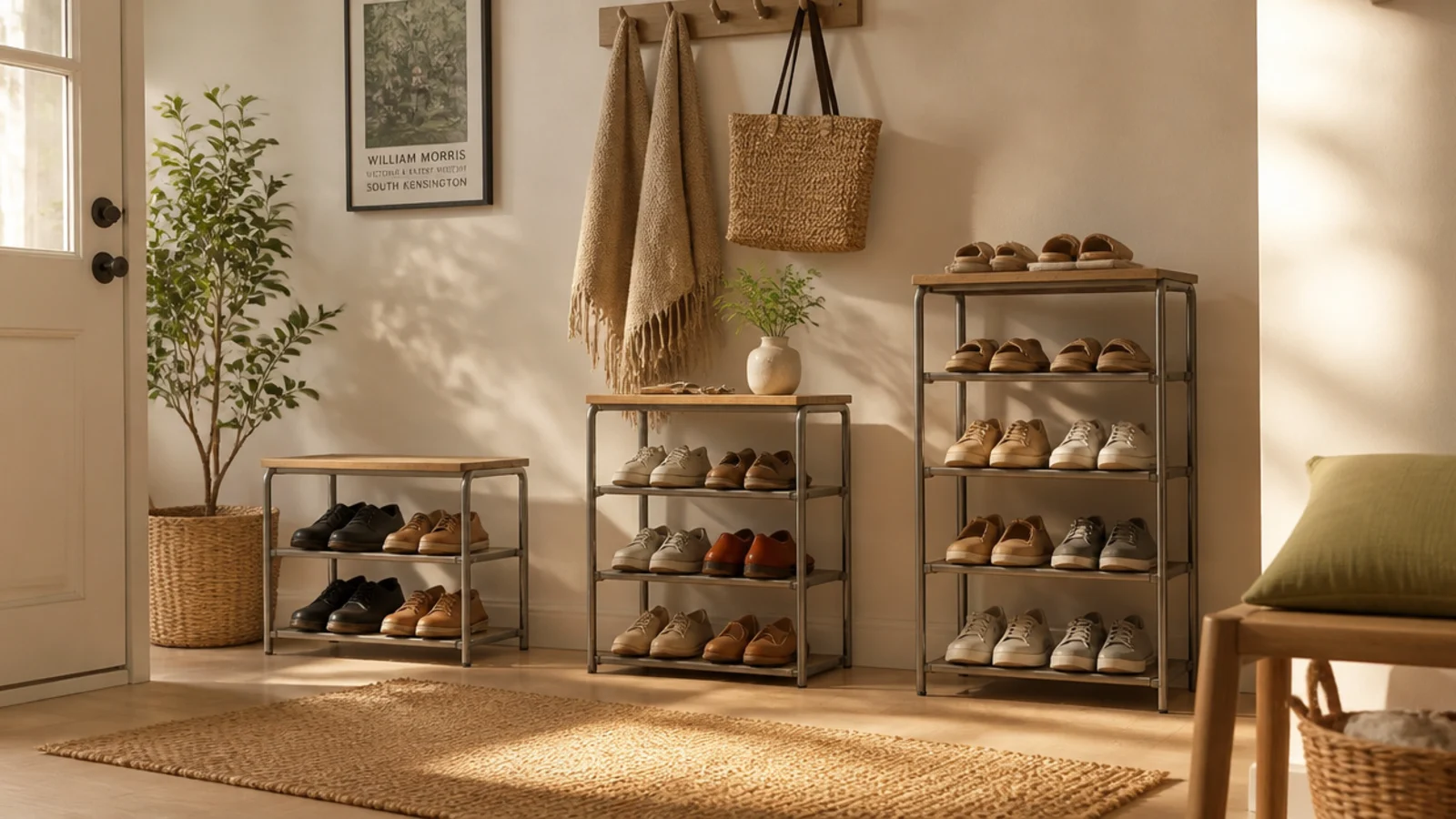
This was the first thing I bought and it did the most. A slim bench gave us somewhere to sit to pull off shoes and a shelf to tuck them under, all in a piece narrow enough for our 34-inch hall. Having a seat is what made people actually take shoes off at the door instead of walking through.
Editor's notePut the bench exactly where shoes already get kicked off, not where the wall looks best — the habit only sticks on the natural path in.
I measured the wall and bought a bench about 30 inches wide and 14 deep so it cleared the door swing. I set it on the side where we naturally kick off shoes and lined the lower shelf with daily pairs, toe-out. A cushion on top made it look like furniture. I keep a boot tray on the shelf for wet days.
Skip thisDo not buy a bench deeper than about 15 inches for a narrow hall; a deep one you squeeze past every time gets resented fast.
2. Over-the-Door Organizer (for the kids)
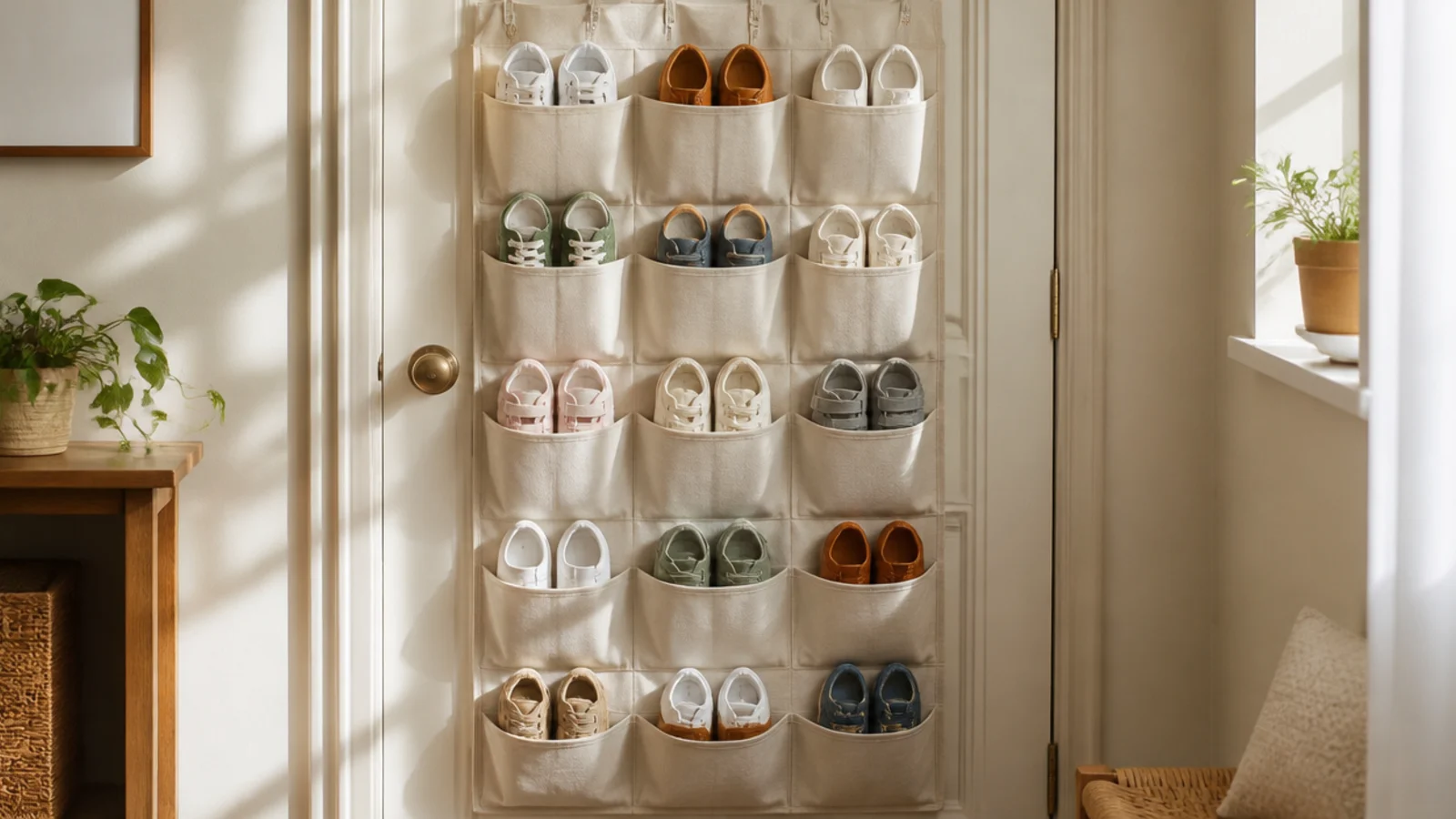
The kids' shoes were half the problem, so I hung a pocket organizer on the back of the hall closet door. It swallowed a dozen pairs of small shoes without using any floor. The kids could reach the lower pockets themselves, which meant they actually used it.
I measured the door and hung a fabric-front organizer that cleared the floor. The metal hooks go over the top edge; I checked the door still closed without catching. I loaded heavier shoes low so it hung straight and stuck the bottom corners to the door with hook-and-loop strips so it stopped swinging.
Choose a fabric-front organizer over clear vinyl — it looks tidier and hides the inevitable jumble of kids' shoes inside.
Do not load heavy boots into an over-door organizer; on our hollow closet door the weight started to bow it until I moved the boots out.
3. Wall Hooks and a Grab Basket
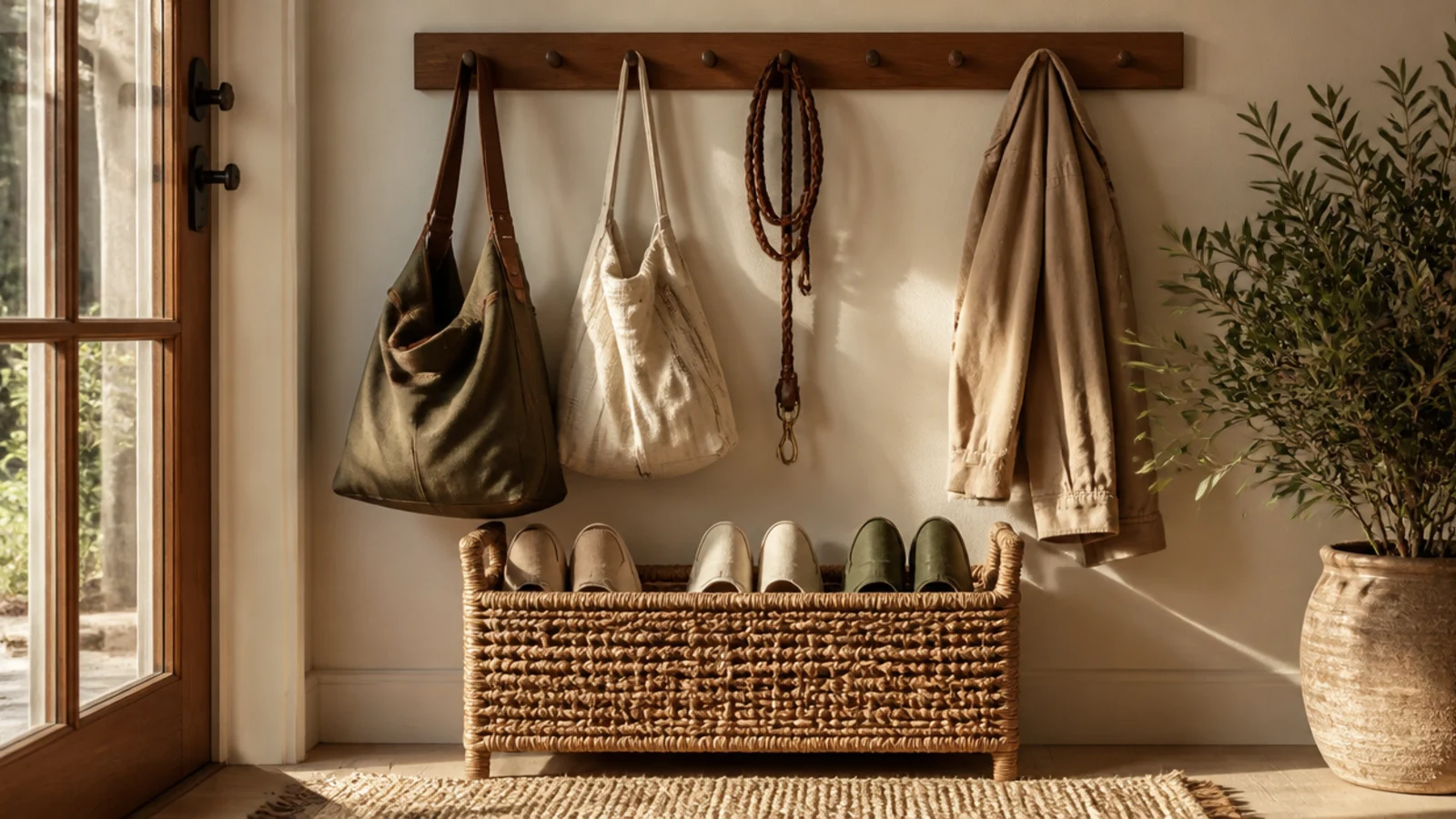
A row of hooks with a basket underneath became our grab-and-go spot for bags, the dog leash, and the slip-ons we wear constantly. Getting those off the floor cleared the last of the daily clutter. It is the spot everything lands in the ten seconds before heading out.
Editor's noteMount a couple of hooks low enough for kids to reach; my first mistake was hanging them all at adult height, so their coats ended up on the floor.
I found the studs and mounted a hook rail at coat height, with a couple of lower hooks the kids can reach. I set one woven basket on the floor beneath for the slip-ons we grab most. Bags and the leash go on the hooks. Keeping the basket to a few pairs stops it becoming a new pile.
Skip thisDo not let the grab basket become a catch-all; I keep it to slip-ons only, or it quietly turns back into the pile I was fixing.
4. A Boot Tray for Wet Days
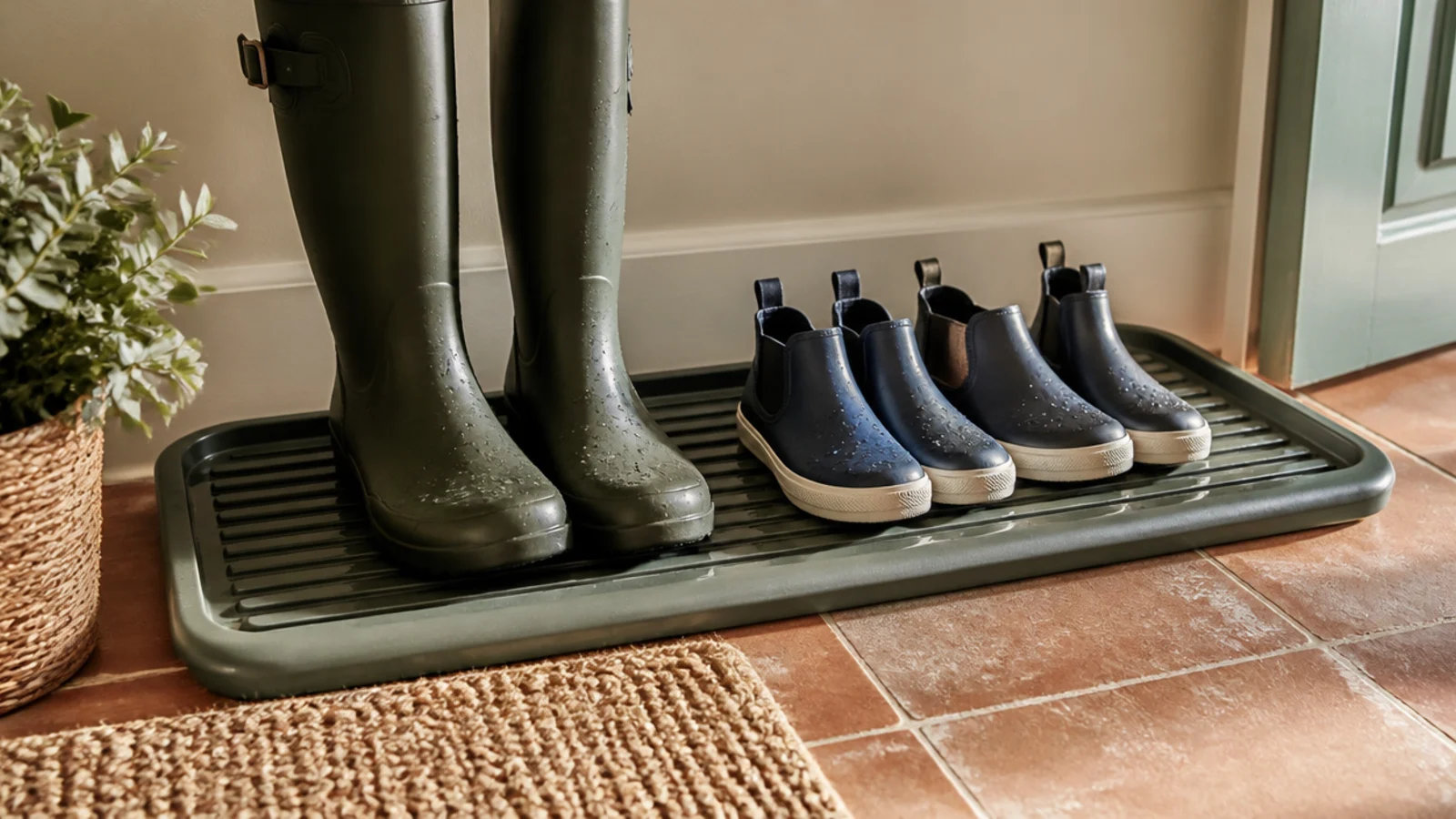
Winter undid all my tidying until I added a boot tray. It gives wet, muddy boots a contained spot to drip so they stop soaking the floor and getting kicked around. It is the cheapest thing I bought and one of the most useful.
I set a large ribbed rubber tray just inside the door and put a thin layer of pebbles in it so the boots drain and dry above the water. Only the wet pairs live on it. I tip out the water and rinse the tray every week or so in wet season. Dry shoes stay on the bench.
A layer of pebbles in the tray lets boots dry from below and keeps them out of the dirty water that otherwise pools in the bottom.
Do not forget to empty the tray; I let it sit once and it got smelly, which defeated the whole point of having it.
5. A Labeled Cubby Per Person
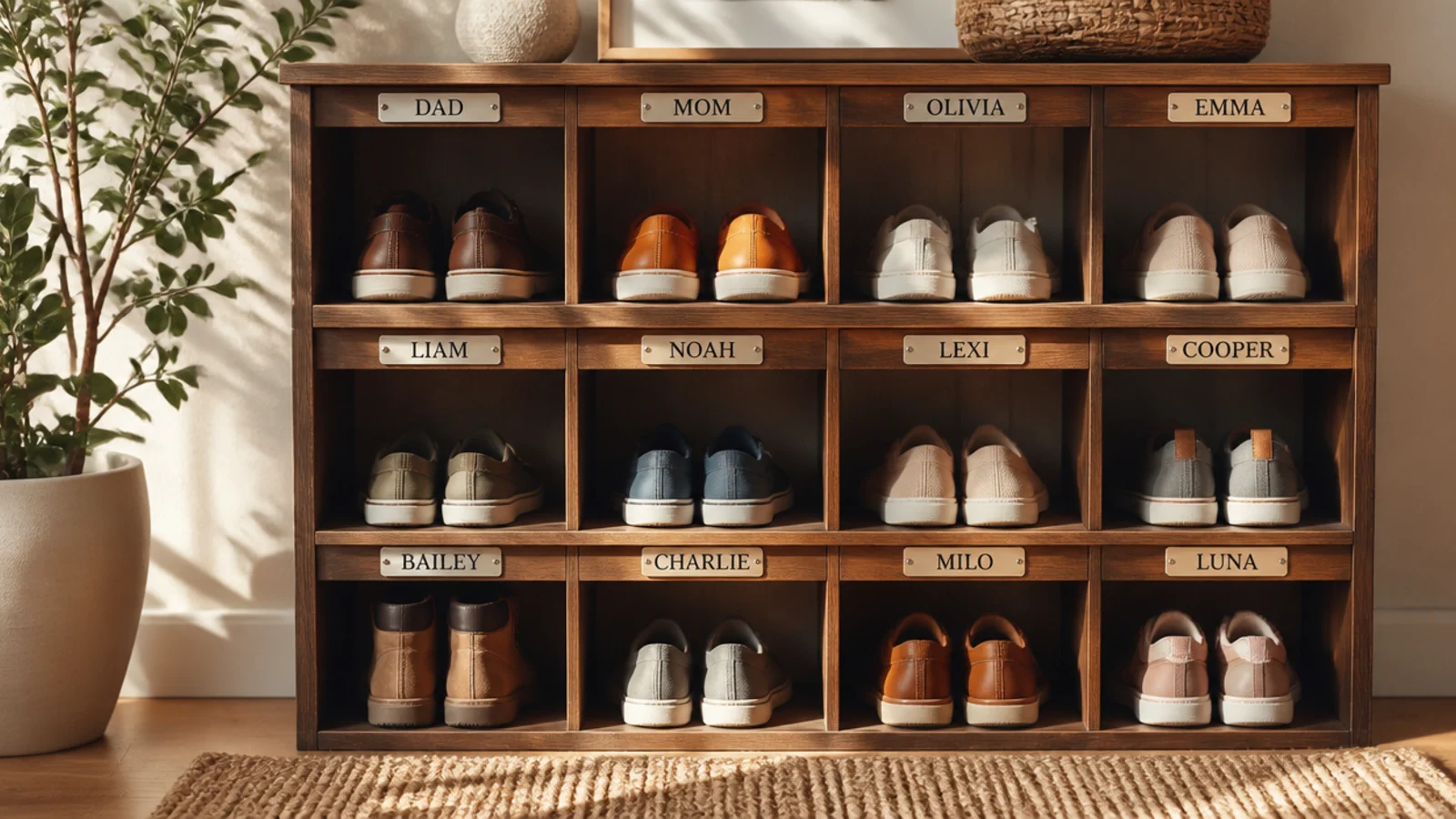
The change that made it stick was giving each person their own labeled cubby. Once everyone had a named square, shoes got put away without me nagging. It turned tidying from my job into everyone’s automatic habit.
I stood a small cube shelf against the hall wall, anchored to the wall with the included strap, and labeled one column of cubes per person. Daily shoes go in your own cube; I dropped a fabric bin into the kids' lower cubes so small shoes did not scatter. One cube stays empty as a drop spot for the shoes just taken off.
Label each cubby with a name and, for little kids, a small picture — a named spot is what makes putting shoes away require no thought.
Do not build the cube shelf tall and narrow without anchoring it; ours got climbed by a toddler, and an unsecured one would have tipped.
6. Under-Bench Baskets for Overflow
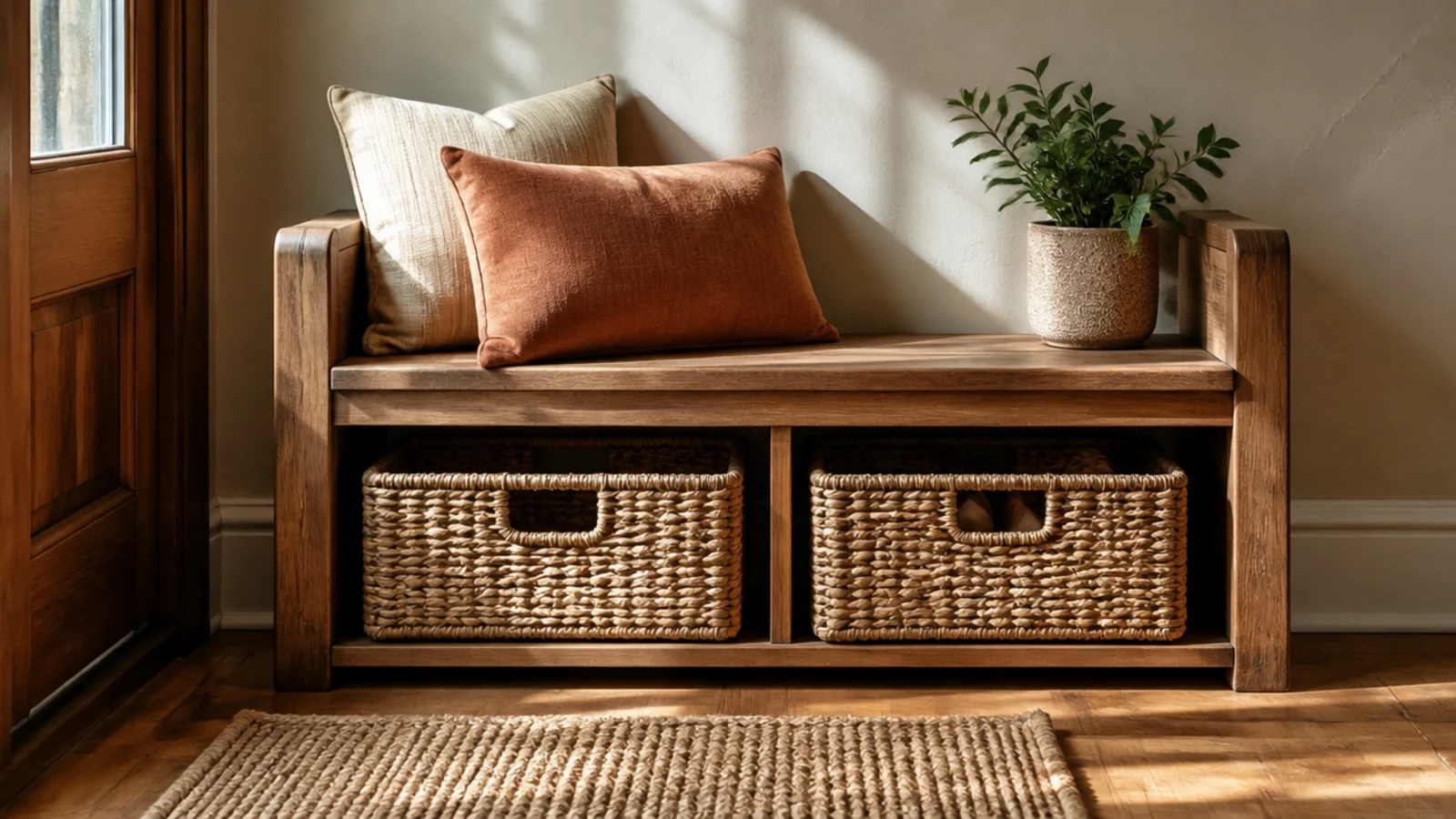
Even after all that, there was overflow — gym shoes, the odd extra pair — so I slid baskets under the bench for it. They hide the pairs that do not fit a cubby and pull out when needed. It is the pressure valve that keeps everything else looking neat.
Editor's noteGive each basket a category — sports, overflow — so it stays useful instead of turning into a random dumping bin.
I measured the clearance under the bench and slid in two baskets a half-inch shorter than the gap so they glide out. One holds gym and sports shoes, the other overflow. I pull a basket out to dig through it, then push it back. Keeping them categorized stops them becoming a junk drawer for shoes.
Skip thisDo not buy baskets deeper than the bench; overhanging ones we kept kicking got shoved out of line and looked messy again.
7. A Landing-Zone Tray and Mirror
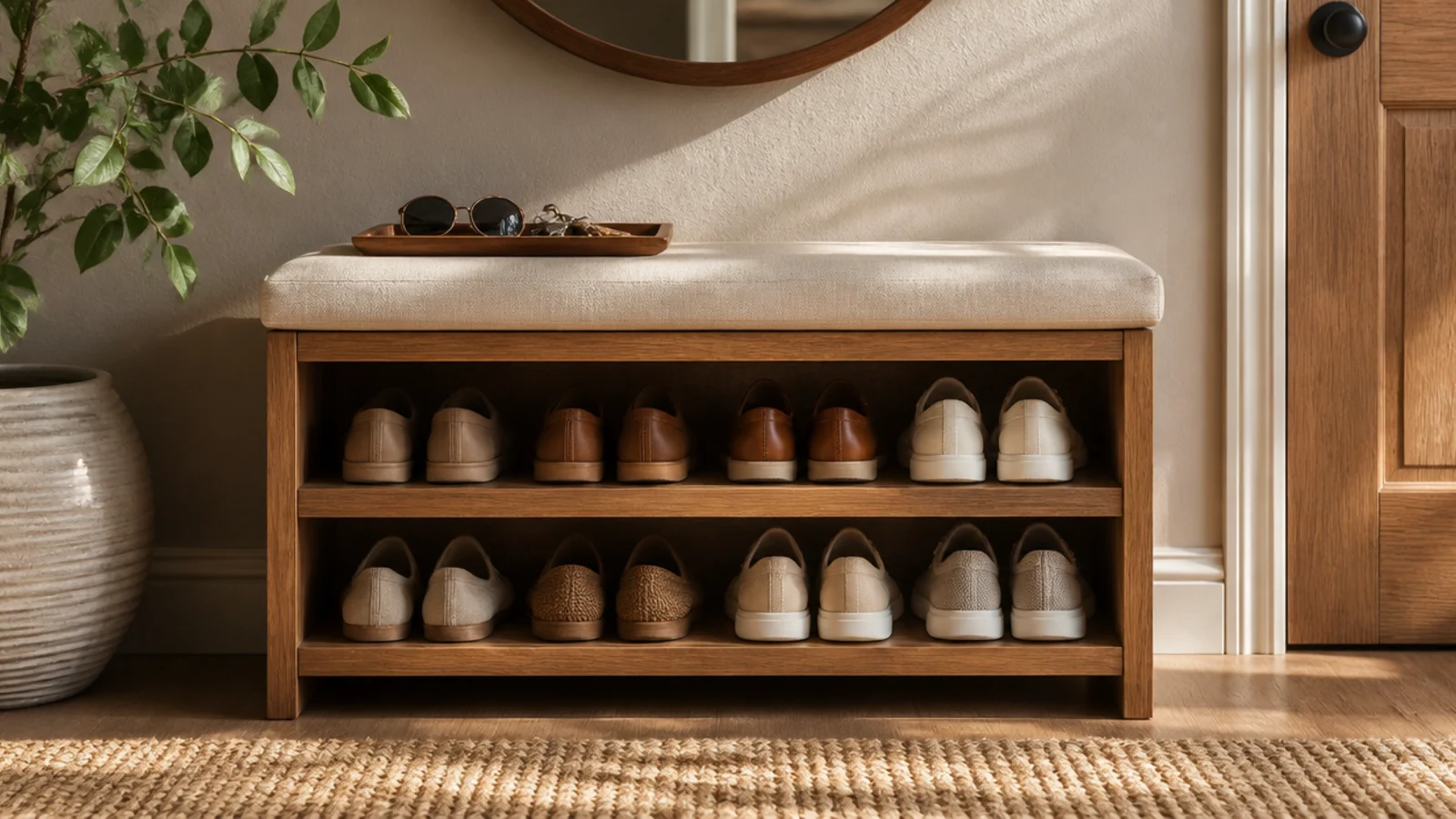
The finishing touch was a small tray for keys and a mirror above the bench, which turned the hall into a proper landing zone instead of just shoe storage. It gave the small stuff a home too, so nothing else piled up. The mirror also makes the narrow hall feel brighter and bigger.
I put a lipped tray on the end of the bench for keys, sunglasses, and the mail that used to scatter, and hung a round mirror above it into a stud. Now the whole leaving-the-house routine happens in one spot — shoes off, keys down, quick look in the mirror. It made the hall feel finished rather than functional.
A lipped tray for keys and small stuff is the difference between a tidy landing zone and a slowly growing pile on the bench.
Do not hang a heavy mirror on a drywall anchor alone above a bench people sit on; I mounted mine into a stud so it cannot fall.