

1. Simple Faith Goals Board
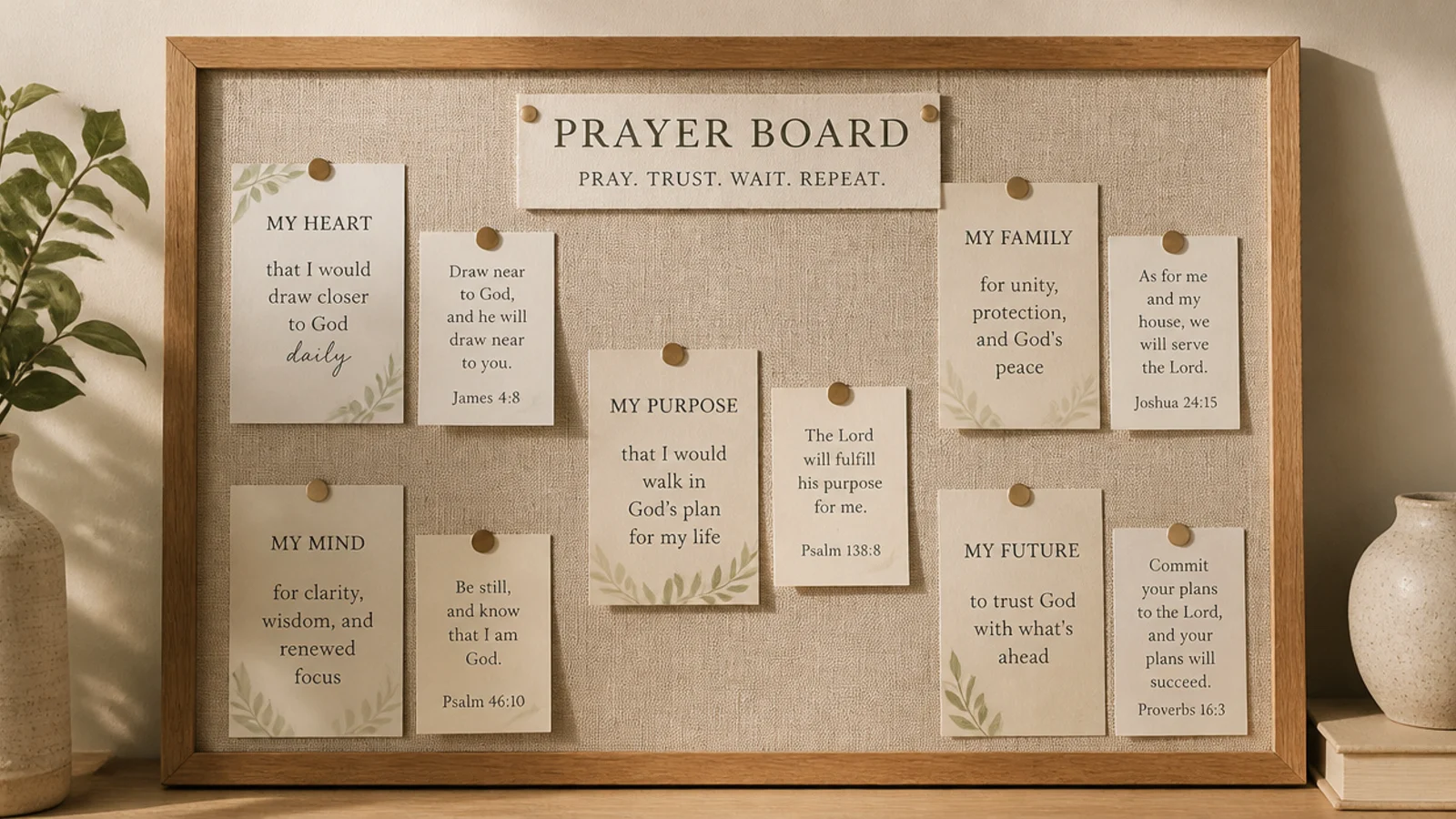
This is the easiest prayer vision board because it’s just goals plus verses, no collage. You write a handful of hopes and pin a scripture beside each. It suits beginners and anyone wary of a busy board. The one-goal-one-verse pairing is the whole method, and it stays clear and prayerful.
On a 16x20 board, write four to six honest goals on cardstock cards. Beside each, pin a small verse card — a promise or a prayer for that hope. Space the pairs so each has room. Pray down the list when you sit down, thanking God and surrendering each. Update a card whenever a hope shifts or is fulfilled.
Editor's noteChoose the verse for each goal by praying through it, not by what sounds nice — the fit is what makes you pray it.
Skip thisDon’t list a dozen goals; four to six you genuinely pray over beats a wall of hopes you skim past.
2. One-Word Theme Vision Board
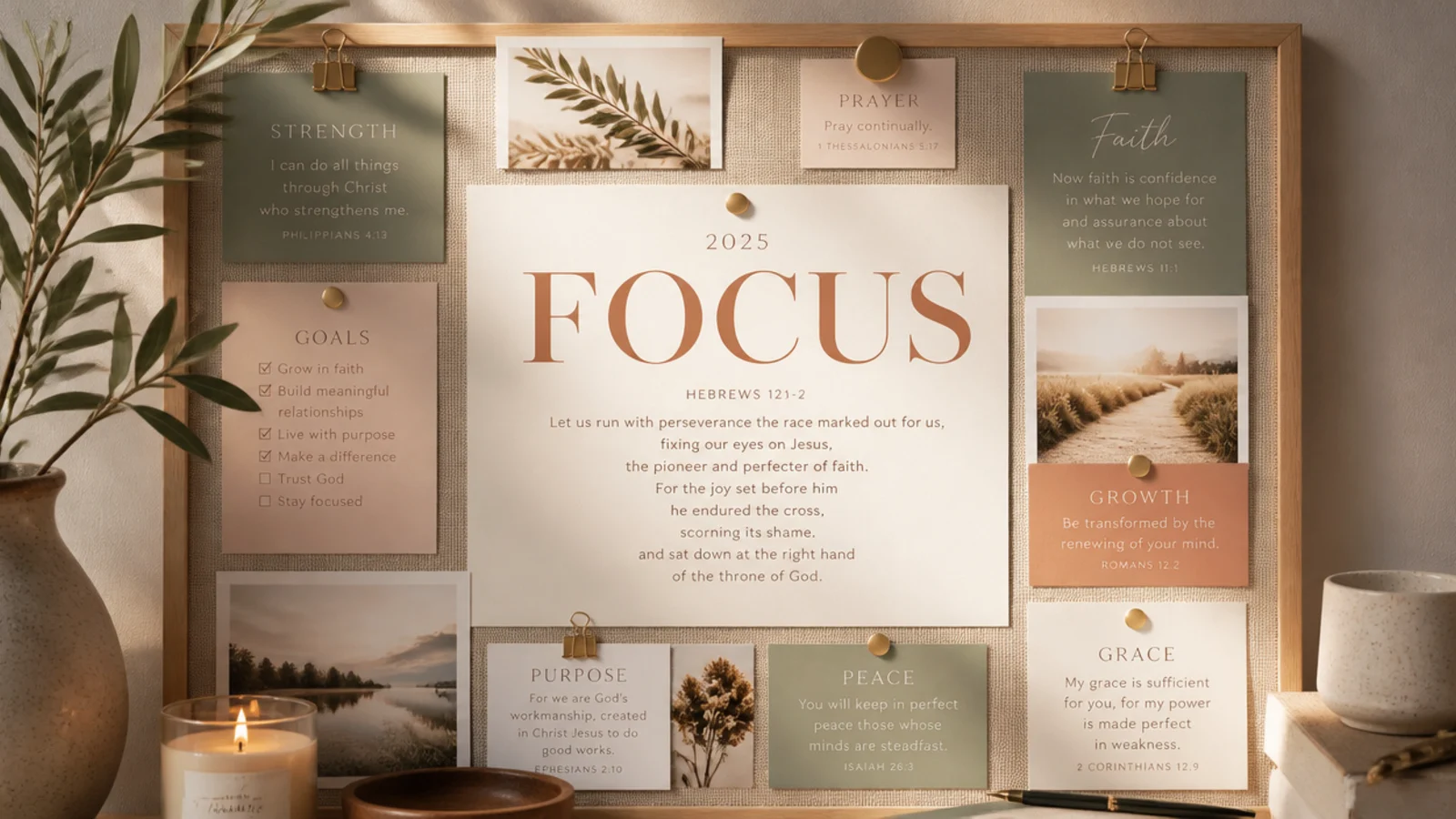
Choosing one word for the year gives the whole board a prayerful focus. You letter a word — surrender, courage, rooted — large in the center and build hopes around it. It suits anyone tired of long resolution lists. The single word is easy to pray and remember all year.
Pick your word by praying over the season ahead. Letter it large in the center of the board with a paint pen. Around it, pin the verse that inspired it and three or four goals that flow from it. Keep the palette simple so the word stays the star. Revisit the word monthly, asking how God is growing it in you.
Editor's notePick the word by prayer and reflection over the holidays, not on a whim, so it genuinely carries the year.
Skip thisDon’t pick a word just because it’s trendy; a word that doesn’t fit your season won’t hold your attention or prayer.
3. Life Areas Layout
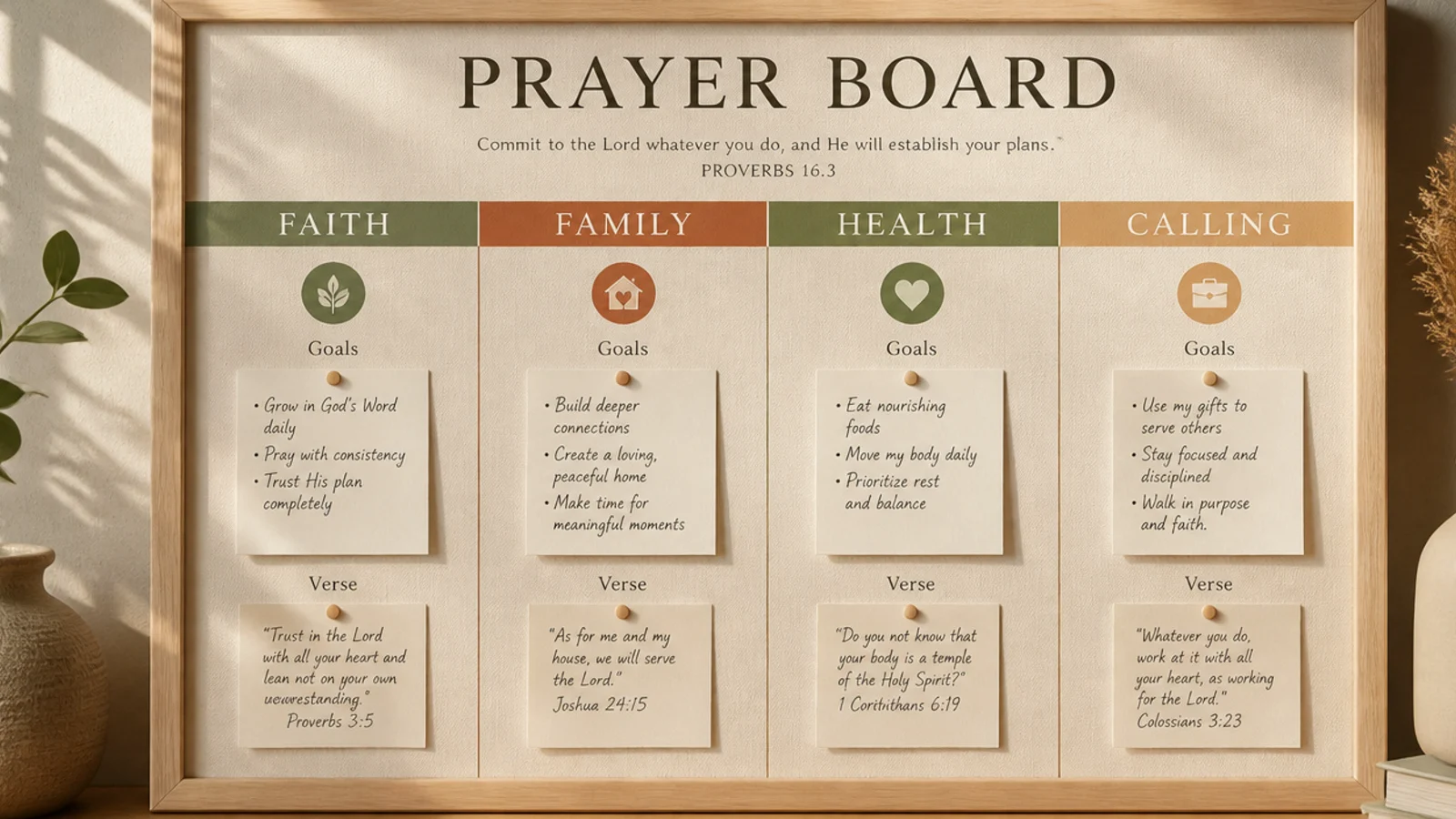
Dividing the board by life area keeps your vision balanced across everything that matters. You give faith, family, health, and calling each a zone with goals and a verse. It suits anyone whose hopes span many areas. The zones stop the board from tilting toward just one part of life.
Split a 16x20 board into four labeled quadrants. In each, pin two or three goals and one anchoring verse. Keep cards the same size across zones so the board reads unified. Pray through one or two areas each day so the whole board gets covered in a week. Rebalance the zones as seasons shift priorities.
Cap each life area at three goals; balance across areas matters more than piling everything into your favorite one.
Don’t let one zone swell to fill the board; even coverage is the point, so keep the areas roughly equal.
4. Goal and Promise Pairing
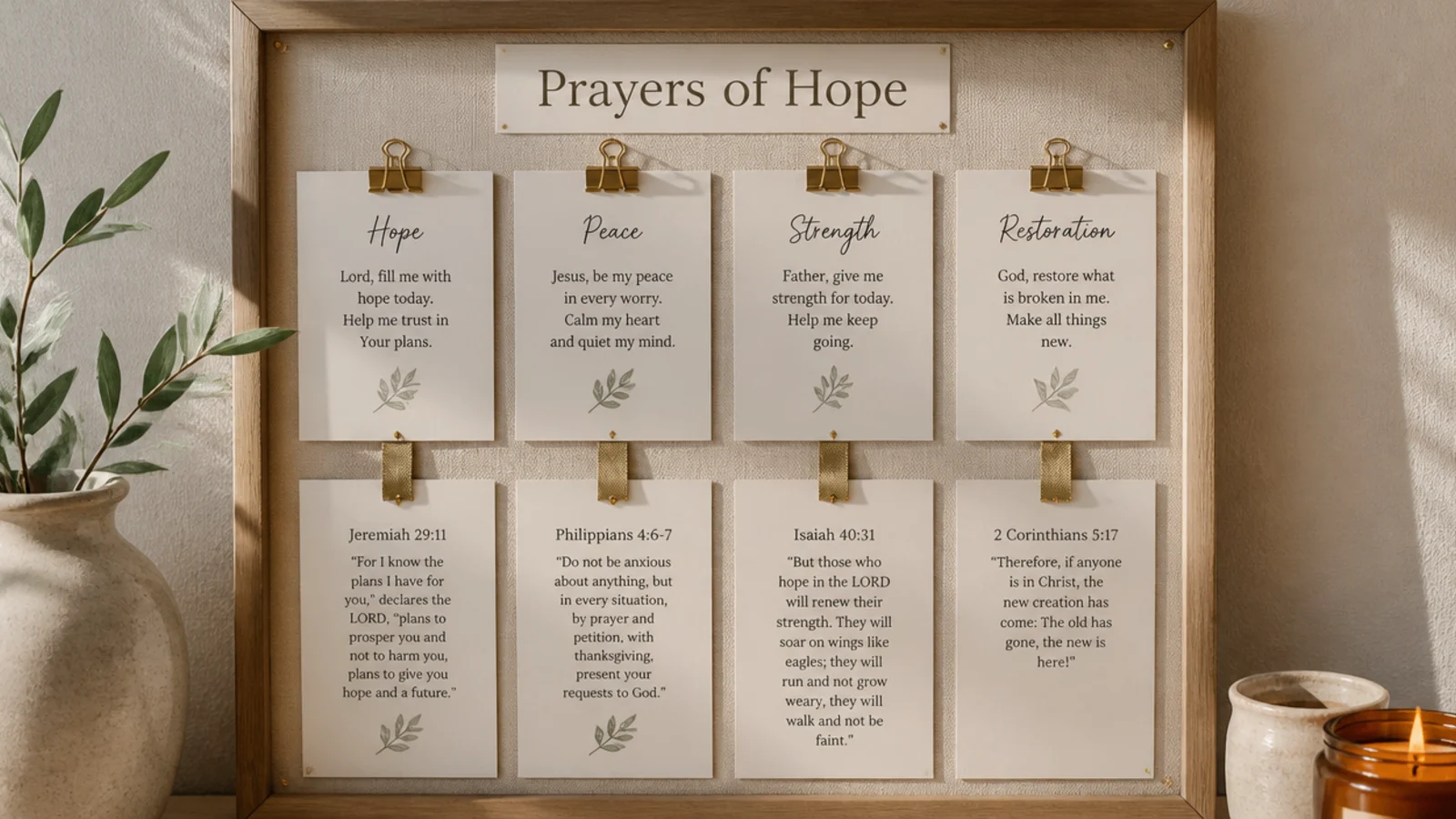
Physically linking each goal to a promise makes the pairing unmistakable. You clip or tie a hope card to its scripture so they read as one unit. It suits anyone who wants the connection front and center. Seeing them joined reminds you to pray the promise over the hope.
Write each goal on one card and its promise verse on another. Join each pair with a short ribbon, a clip, or by mounting them touching. Arrange the pairs down the board with space between. When you pray, hold each pair and pray the promise over the goal. Re-pair as goals change or new promises come to mind.
Editor's noteTie the two cards with a literal ribbon so the goal and its promise never drift apart on the board.
Skip thisDon’t pick a promise out of context to force-fit a goal; let the verse genuinely speak to the hope.
5. Fulfilled Vision Timeline
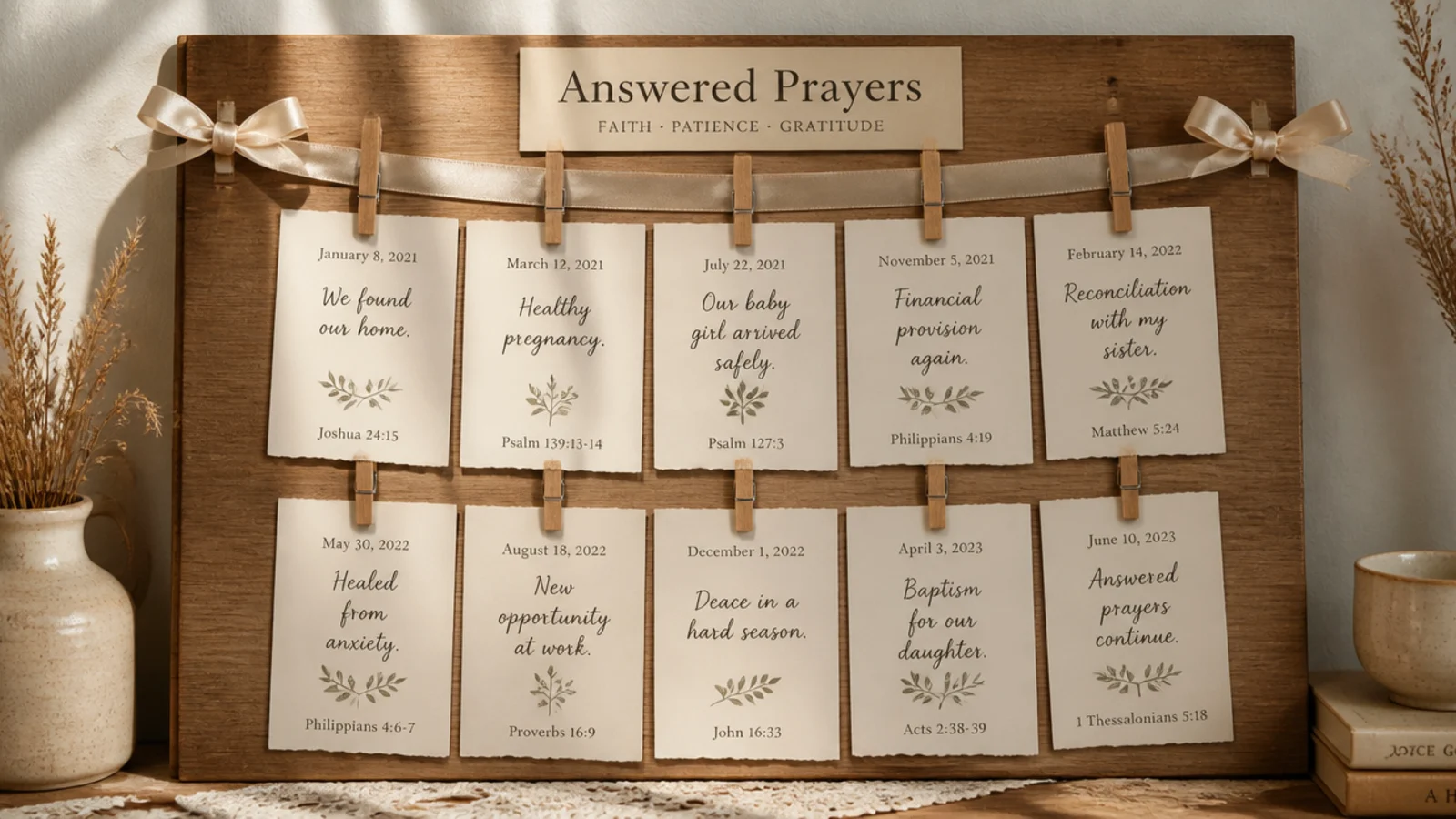
A fulfilled timeline shows God moving on your vision over time. You move goals to a timeline ribbon as they come to pass, dated. It suits anyone who wants encouragement to keep praying. Watching the timeline fill builds faith for the goals still waiting.
String a ribbon across the lower board. When a hope is fulfilled — fully or in part — write a dated card and clip it to the ribbon in order. Keep the active goals above and the fulfilled below. Read the timeline when you’re discouraged. Photograph it yearly so you keep the record even as cards are archived.
Editor's noteNote partial answers too, not just complete ones; small movements keep hope alive for the bigger prayers.
Skip thisDon’t remove and forget fulfilled cards; the timeline’s power is seeing the accumulation, so keep it visible.
6. Future Home and Family Board
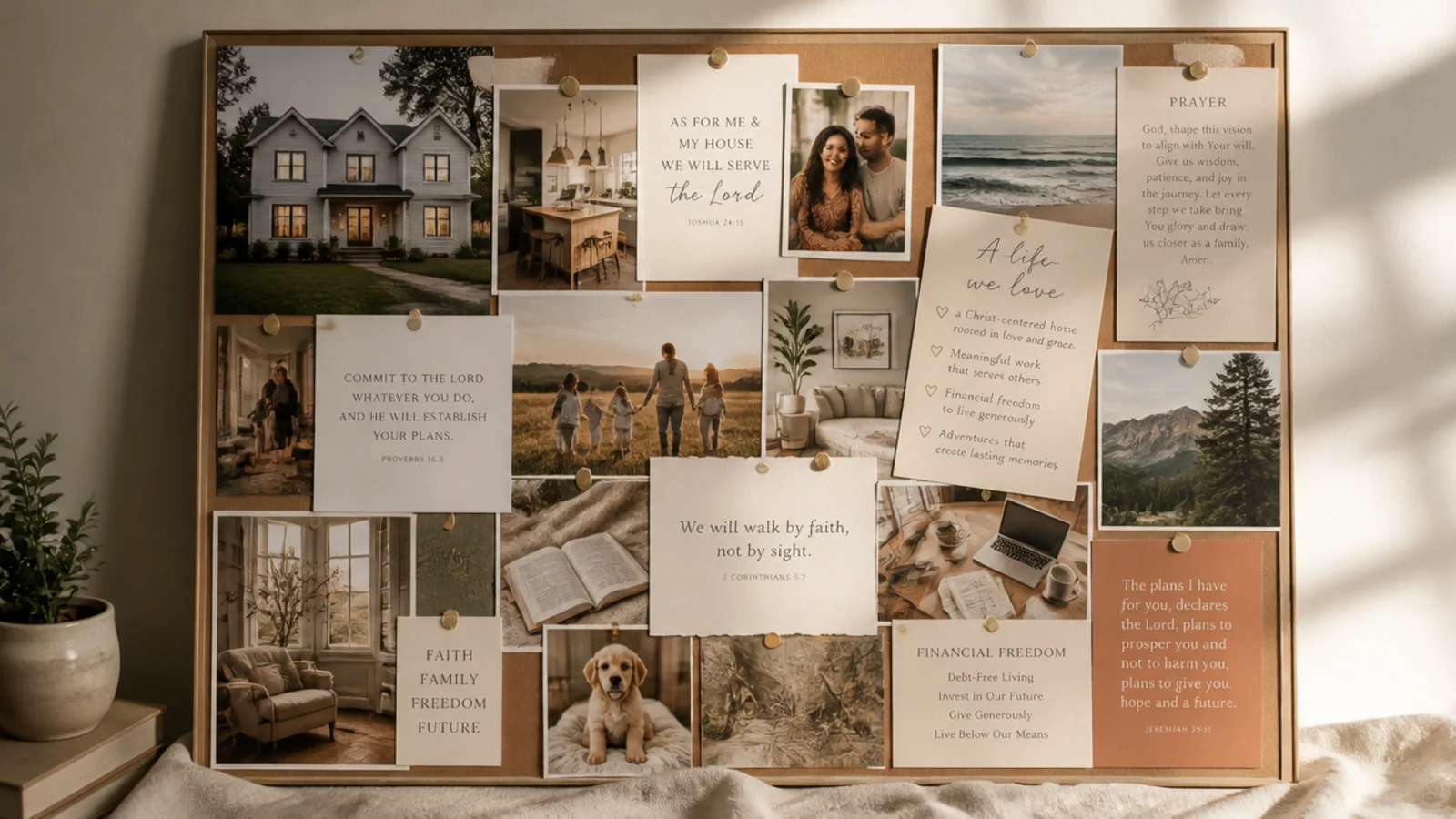
A home-and-family board holds long-term hopes for the people and place you’re praying toward. You pair images of the life you hope for with scripture and prayers. It suits those praying for a spouse, children, or a home. The images make distant hopes feel worth praying over faithfully.
Gather images or words for the home and family life you hope for. Pin them with a verse and a prayer beside each, in one zone or across the board. Keep it prayerful by adding a surrender note — trusting God’s timing and best. Pray over it regularly, and update as hopes are met or reshaped. Hold the images loosely, not as demands.
Editor's noteAdd a surrender card here especially; tender hopes need the reminder to trust God’s timing, not to force outcomes.
Skip thisDon’t turn it into a rigid checklist of exactly how life must look; hold the specifics openly before God.
7. Calling and Career Vision Board
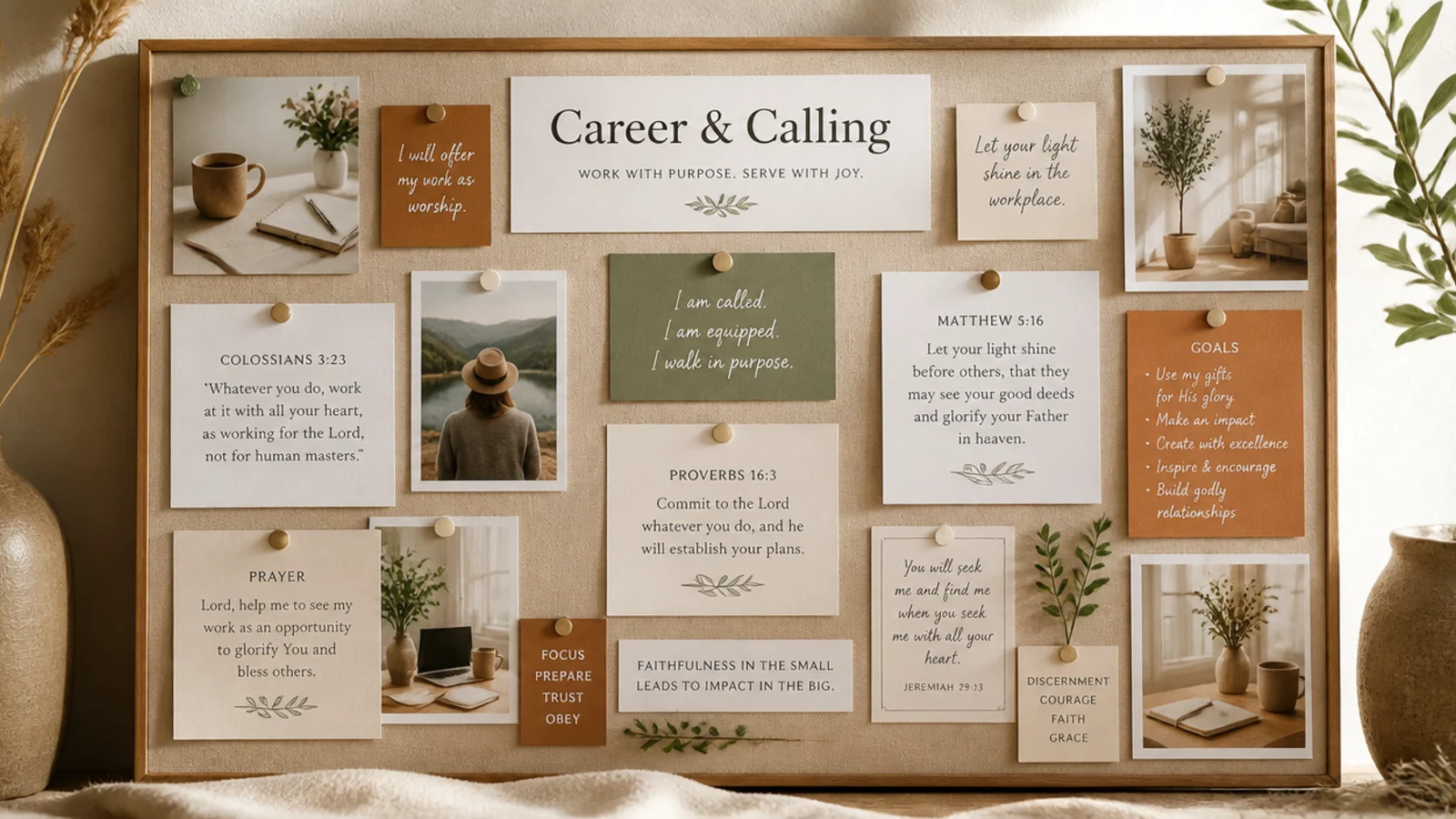
A calling board brings your work and purpose under prayer. You map career hopes and pair them with scripture about work and calling. It suits anyone discerning direction or growing in their field. Praying over vocation keeps ambition tethered to purpose.
List your career and calling hopes on cards — a role, a skill, an impact. Pair each with a verse about work, wisdom, or purpose. Add a discernment note asking God for direction where the path is unclear. Pray over it when you plan your work. Update as doors open and close, thanking God for guidance either way.
Include a 'closed door' note; thanking God for redirection keeps the board honest about how calling unfolds.
Don’t make it purely about status or income; anchor it in purpose and stewardship so it stays a calling board.
8. Character Growth Board
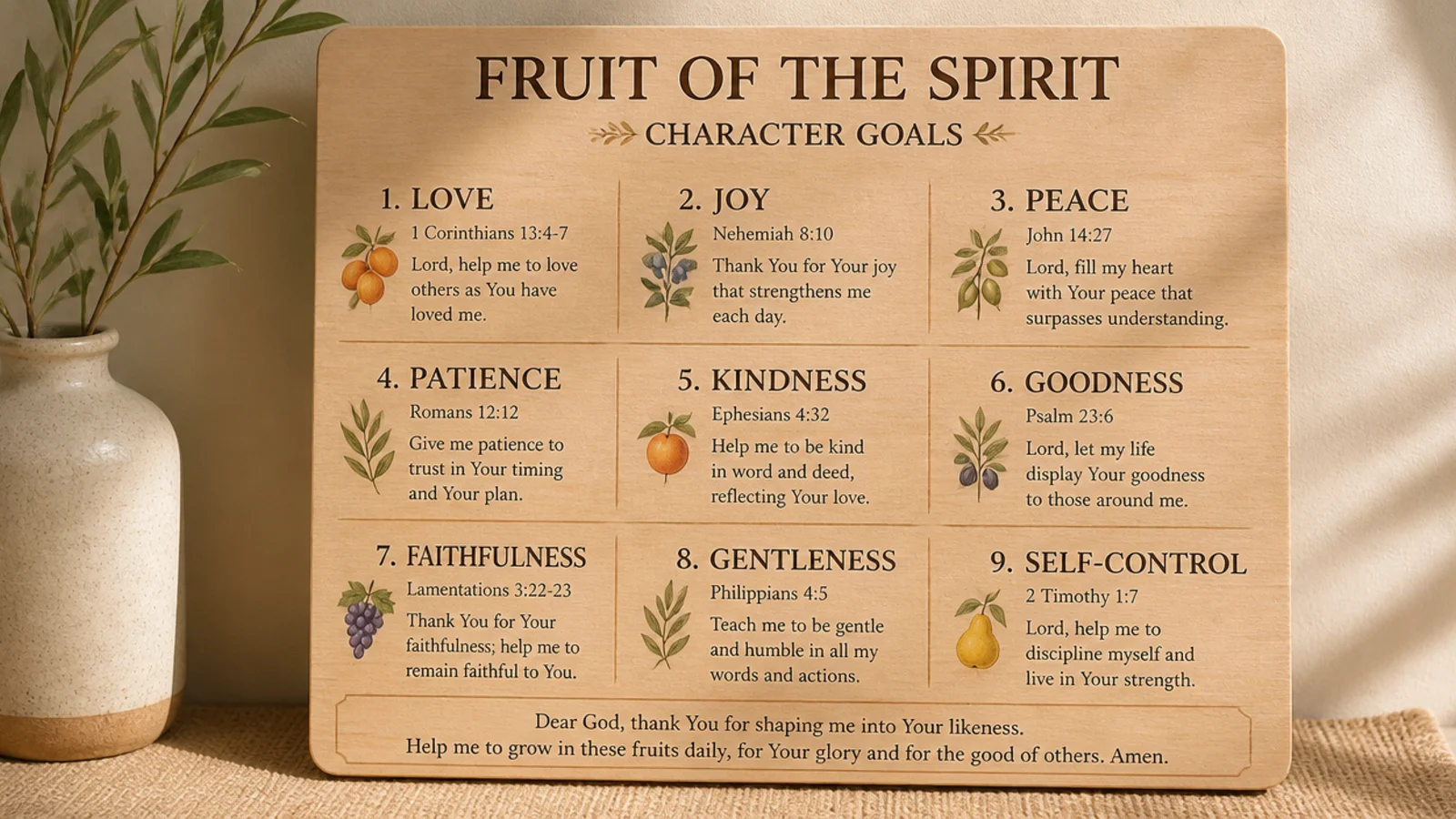
A character board aims your vision at who you’re becoming, not just what you want. You pray over growth in patience, gentleness, and the like. It suits anyone who wants inward change to matter as much as outcomes. Character goals are ones you can always pursue, whatever the season.
List character qualities you want to grow — patience, self-control, kindness — one per card. Pair each with a verse and a short prayer asking God to grow it. Add a small note of a real situation where you need it. Pray over one or two daily. Revisit monthly to notice growth and give thanks, adding new areas as you go.
Editor's noteTie each quality to a real, current situation where you need it, so the growth prayer stays concrete not abstract.
Skip thisDon’t make it a self-improvement scorecard; frame it as God growing you, not you white-knuckling change.
9. Health and Wholeness Board
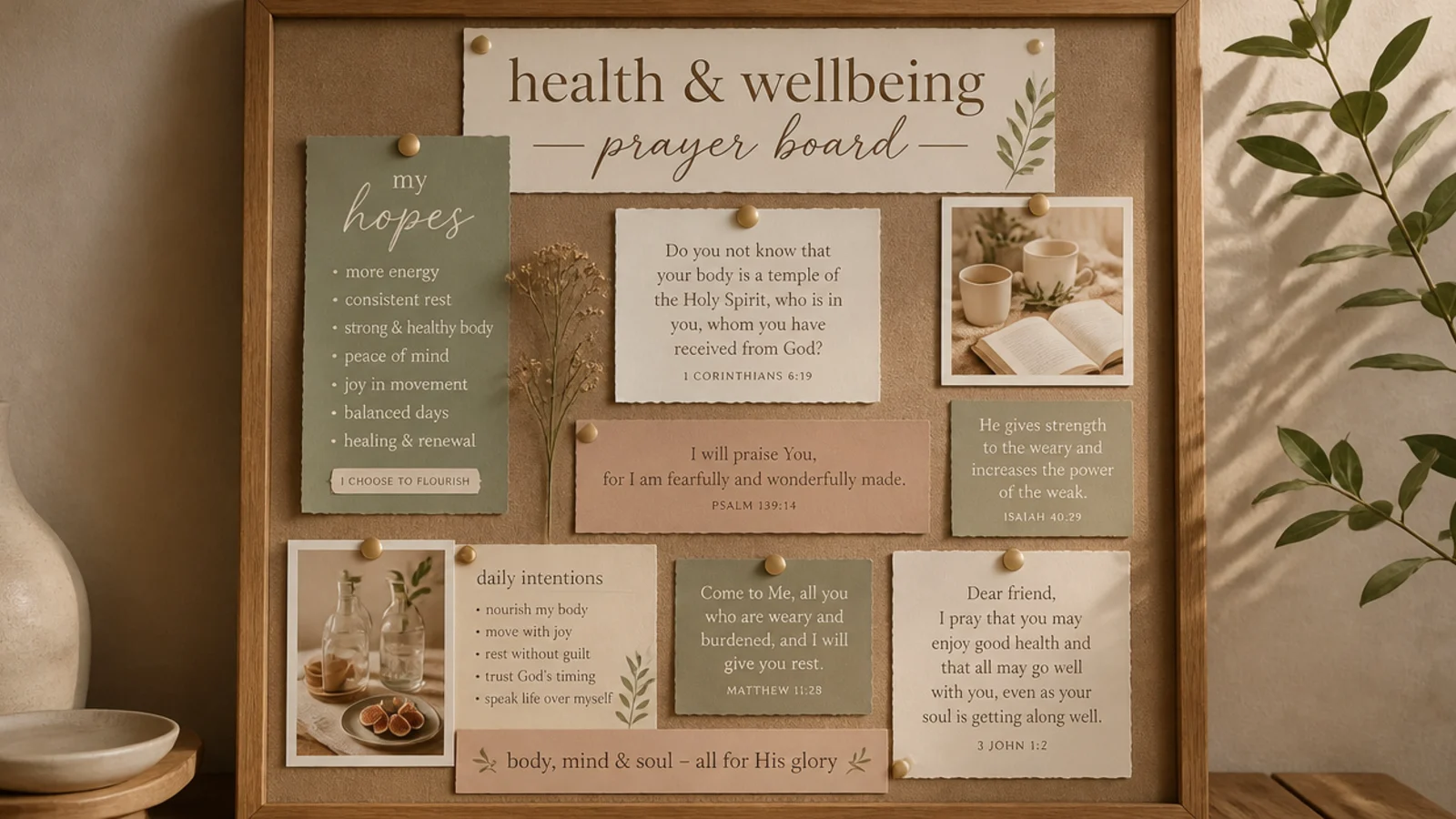
A health board prays over your body, rest, and wellbeing. You pair wellness hopes with scripture about the body and stewardship. It suits anyone facing a health goal or a season of healing. Praying over health keeps it a matter of trust, not just willpower.
Write your health and wellbeing hopes — rest, movement, healing, habits — on cards. Pair each with a verse about the body, rest, or God’s care. Add a prayer of trust for what’s beyond your control, like a diagnosis. Pray over it as part of your routine. Update as you heal or as goals change, thanking God for progress.
Editor's noteInclude rest and peace, not just fitness; wholeness is broader than a workout goal and worth praying over too.
Skip thisDon’t fill it with appearance goals or numbers alone; frame health as stewardship and trust, not pressure.
10. Relationships Vision Board
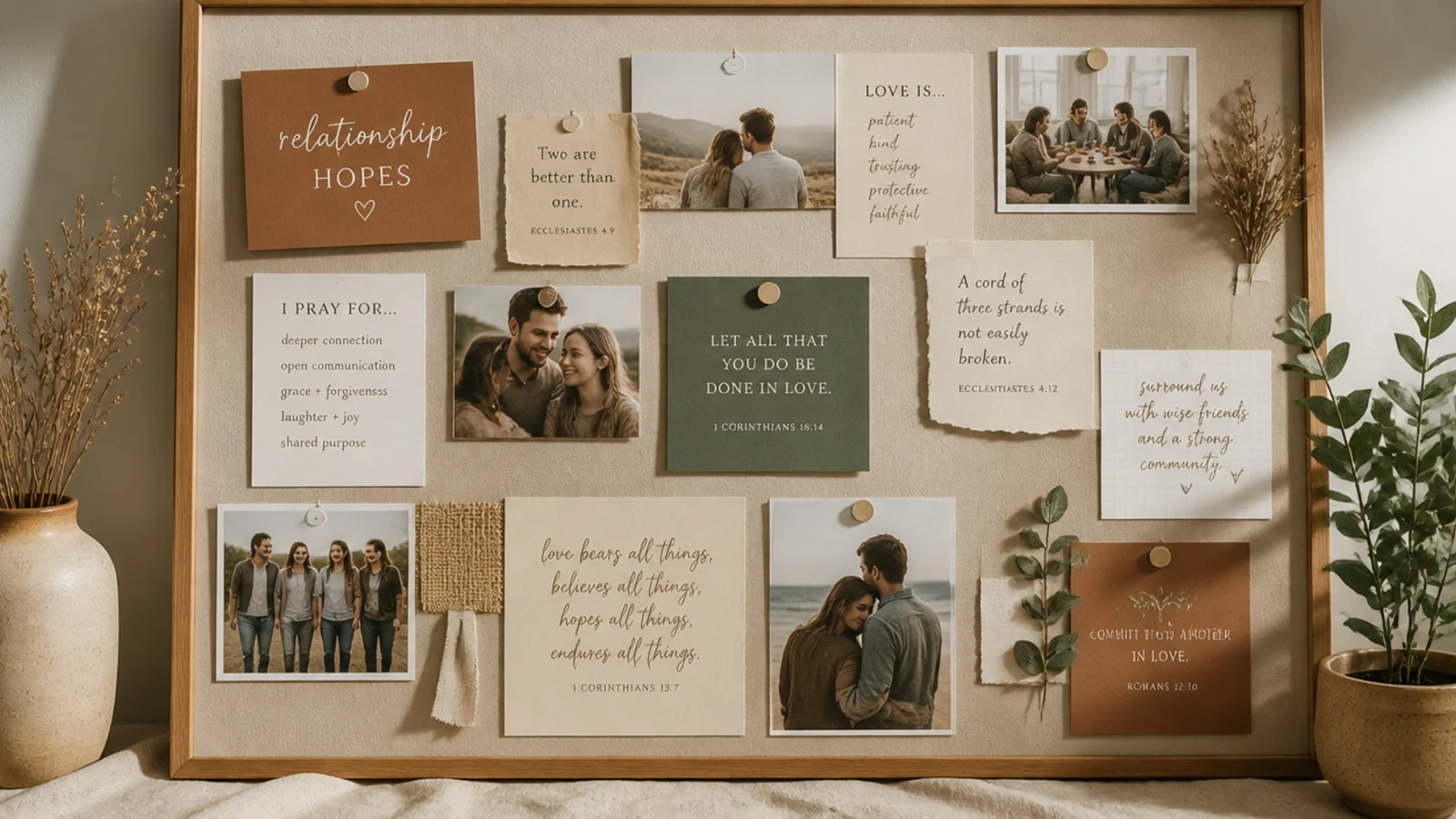
A relationships board prays over the people in your life and the ones you hope for. You pair loved ones and relationship hopes with scripture about love. It suits anyone investing in marriage, friendship, or community. Praying by name keeps relationships intentional.
Add photos or names of key relationships and any relationship hopes — reconciliation, deeper friendship, a future spouse. Pair each with a verse about love, unity, or patience, and a specific prayer. Pray through them by name. Move answered hopes to a fulfilled spot, and keep the tone one of blessing others, not just wanting for yourself.
Editor's notePray blessing over the people, not just what you want from them; it keeps the board generous rather than self-focused.
Skip thisDon’t post private relational struggles where guests can read them; use initials or keep sensitive cards subtle.
11. Missions and Travel Vision Board
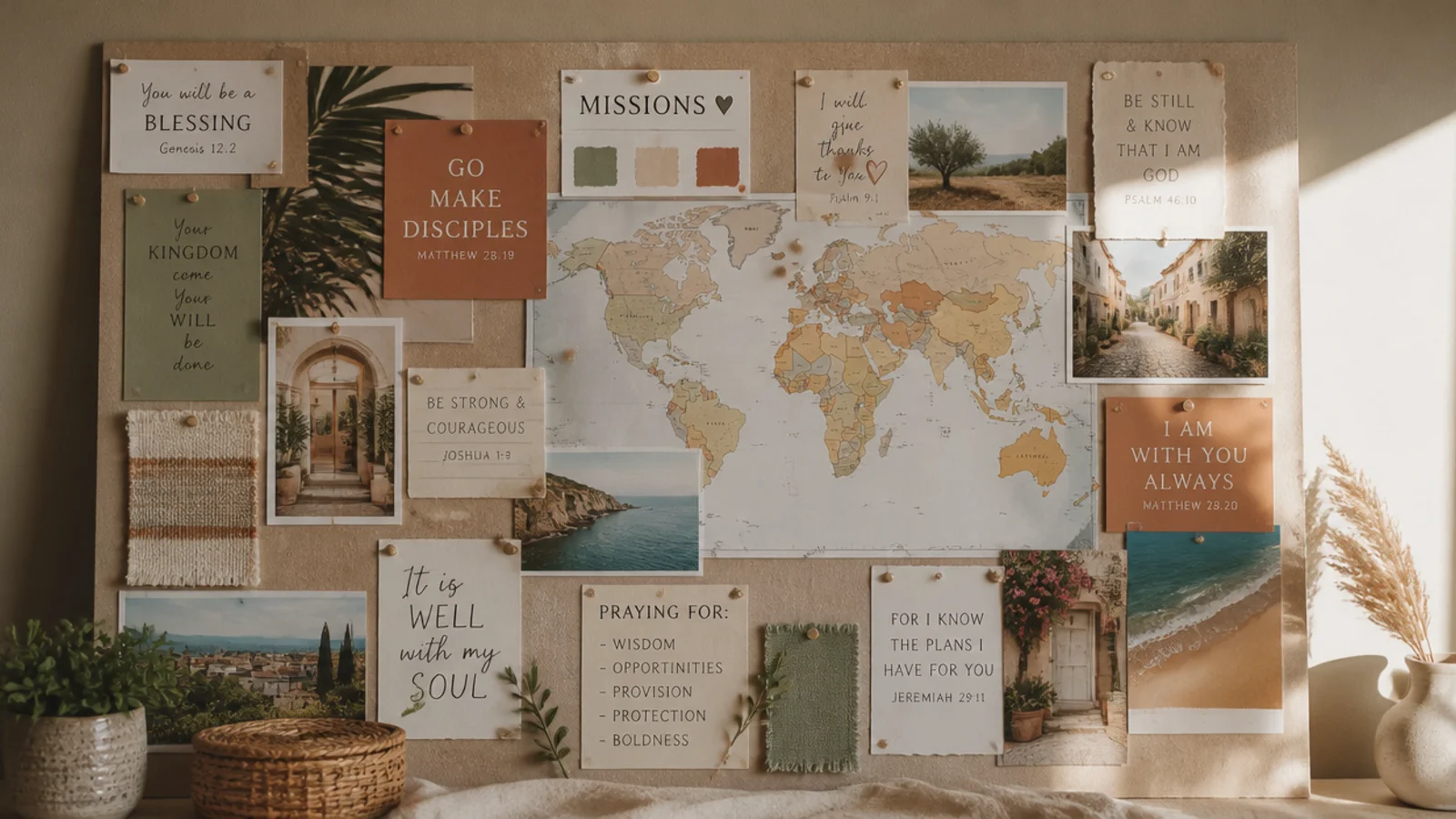
A missions and travel board prays over places you hope to go and serve. You pair a map and destination images with scripture and prayer. It suits anyone with a heart for missions or a dream trip. Praying over places turns wanderlust into intercession.
Pin a map and images of the places on your heart. Pair each with a verse about going, serving, or God’s heart for the nations, and a prayer for that place. Mark places you’re praying to visit or support. Pray over them and, when you go, move the card to a fulfilled zone with a photo. Keep missions and leisure honestly distinct.
Editor's notePray for the places, not just about visiting them; interceding for a destination reshapes why you want to go.
Skip thisDon’t blur serving and sightseeing into the same vague hope; be honest about which is which as you pray.
12. Surrender and Holding Loosely Board
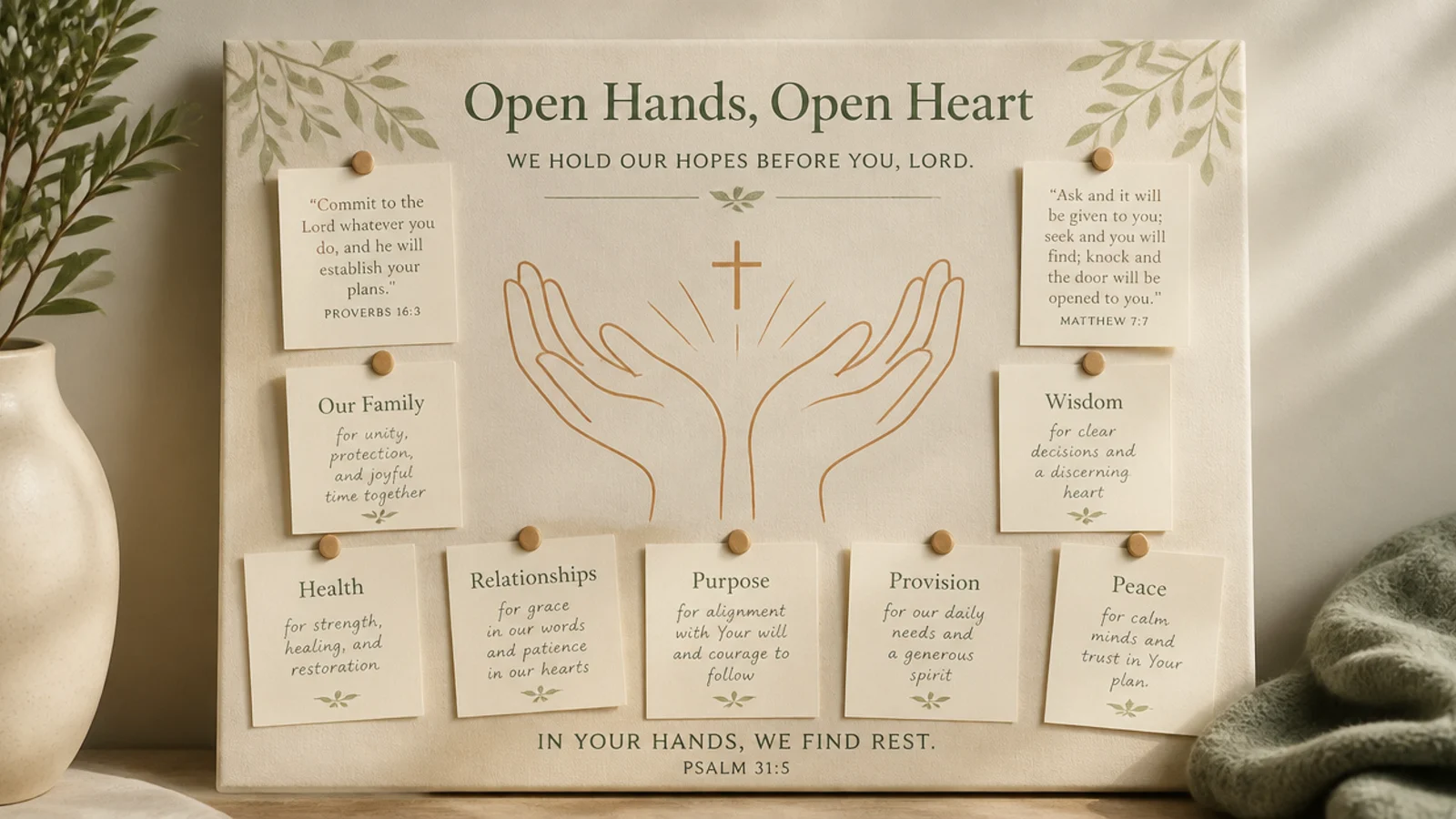
A surrender board is built around holding your hopes openly, not gripping them. You feature an open-hands theme and place hopes under it as offered, not demanded. It suits anyone prone to anxiety over outcomes. It keeps the whole vision humble and trusting.
Make an open-hands image or the word Surrender the centerpiece. Place your hopes beneath it as things offered to God. Add a verse about trusting God’s will and timing. When anxiety rises over a goal, physically move its card under the surrender header as an act of release. Pray, hands open, over the board.
Physically move an anxious goal under the Surrender header as a small ritual of letting go each time worry spikes.
Don’t treat surrender as giving up; it’s entrusting the outcome to God while still praying and acting faithfully.
13. Prayer and Affirmation Hybrid
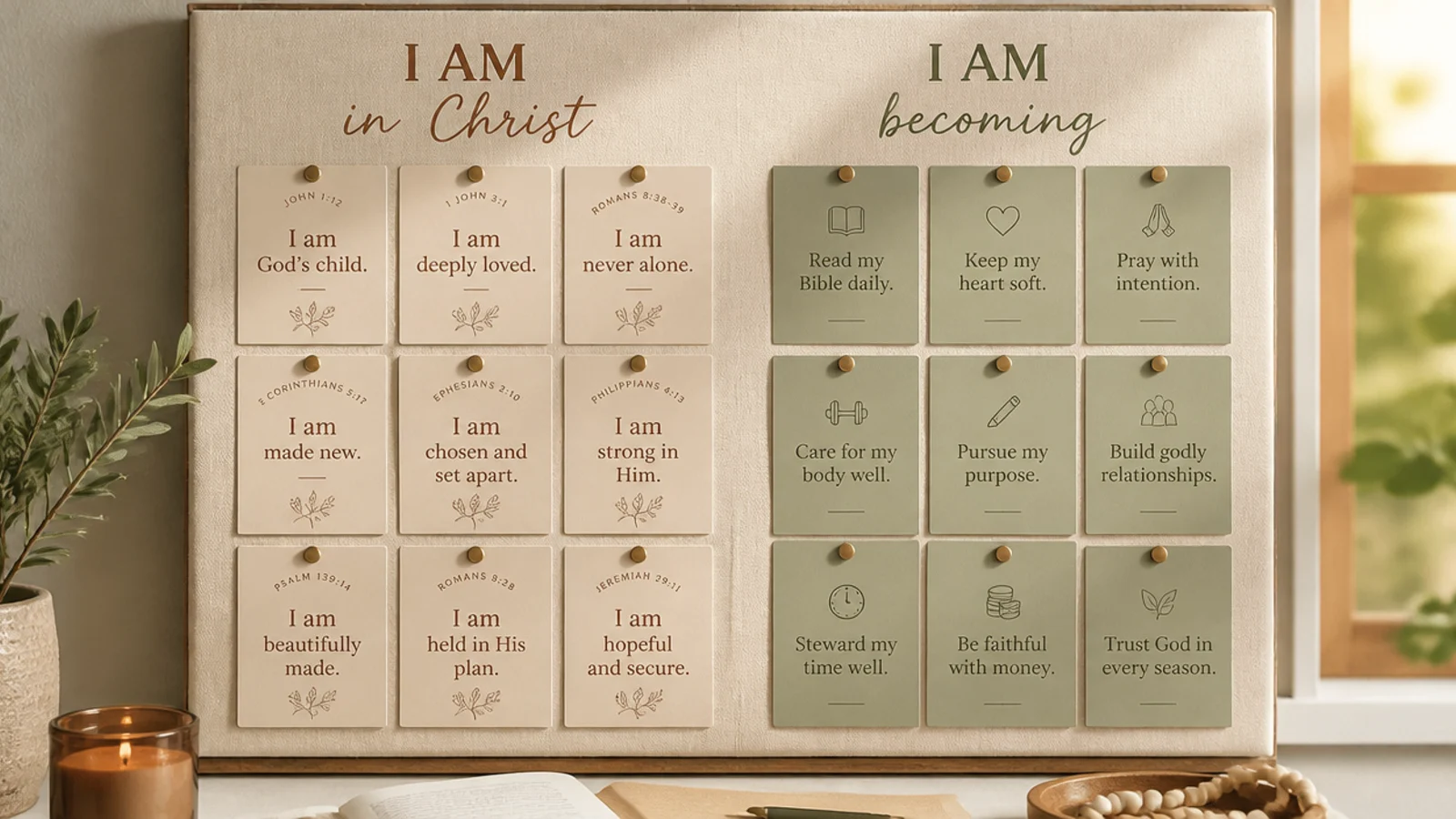
This hybrid pairs who God says you are with what you’re praying toward. You put scripture-based identity truths alongside your goals. It suits anyone whose fears undercut their hopes. The truths steady you as you pray over the goals.
Make two columns: identity truths from scripture on one side, goals on the other. Read the truths first, then pray the goals, so you approach your hopes from security, not striving. Keep the truths scripture-based, not just positive self-talk. Update goals freely, but keep the identity column steady — it’s the anchor the goals hang on.
Editor's noteAlways read the identity column before the goals; praying from security rather than fear changes how you hope.
Skip thisDon’t let affirmations drift into generic self-talk; anchor each to a verse so it stays truth, not just positivity.
14. Season-Ahead Vision Board
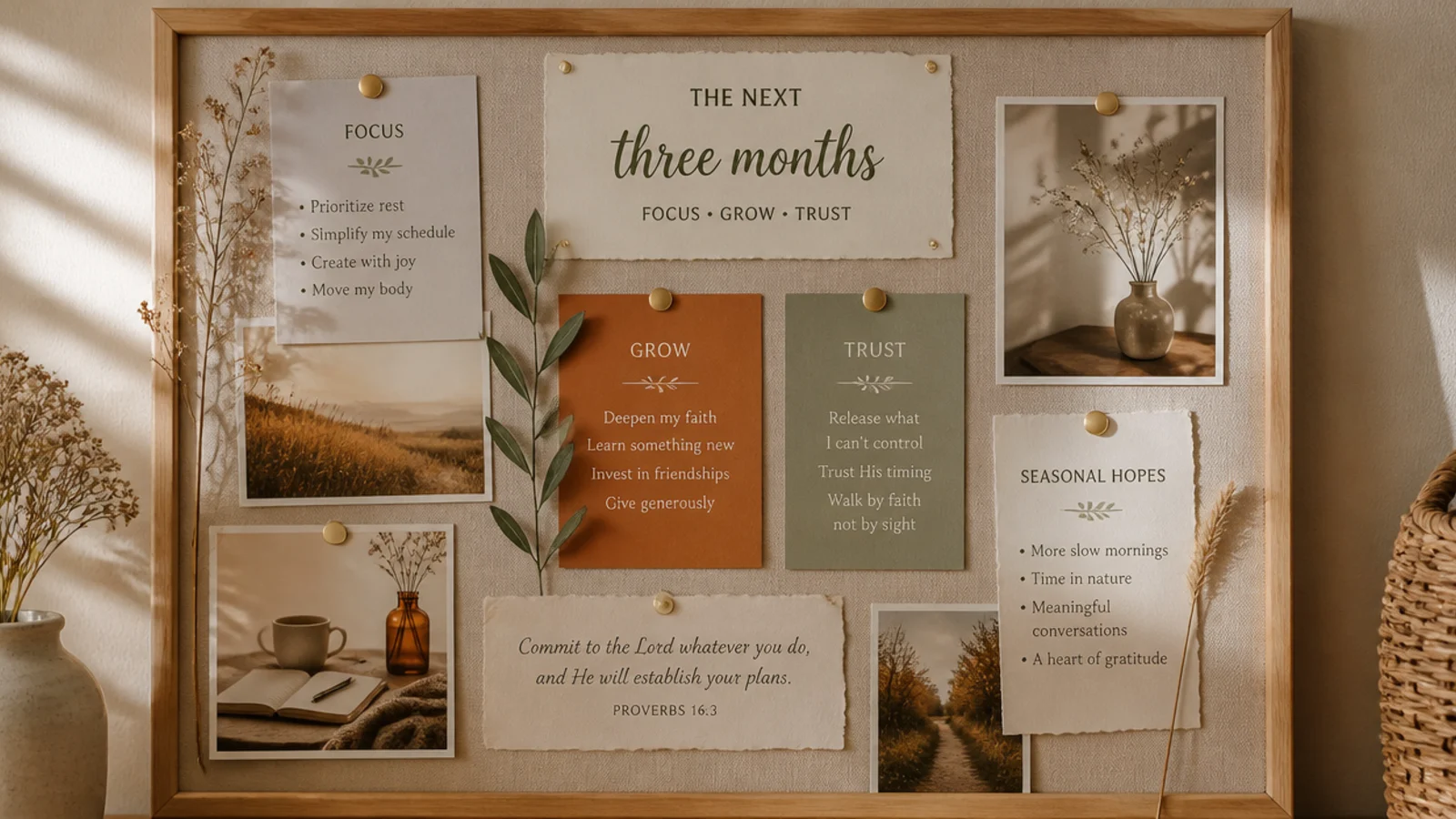
A season-ahead board keeps the vision short and prayerful instead of a distant yearly list. You focus on the next three months with a few hopes and a verse. It suits anyone who finds a whole year too abstract. The near horizon makes the board feel actionable and current.
Pick three or four hopes for the coming season and one guiding verse. Keep the board small and focused. Pray over it through the season, adjusting as things unfold. At the season’s turn, review what happened, give thanks, and rebuild for the next three months. The frequent reset keeps it honest and alive.
Editor's noteRebuild it each season rather than yearly; a three-month horizon stays concrete and easy to actually pray over.
Skip thisDon’t overload a short-season board with lifelong goals; keep it to hopes that fit the next few months.
15. Ministry and Service Vision Board
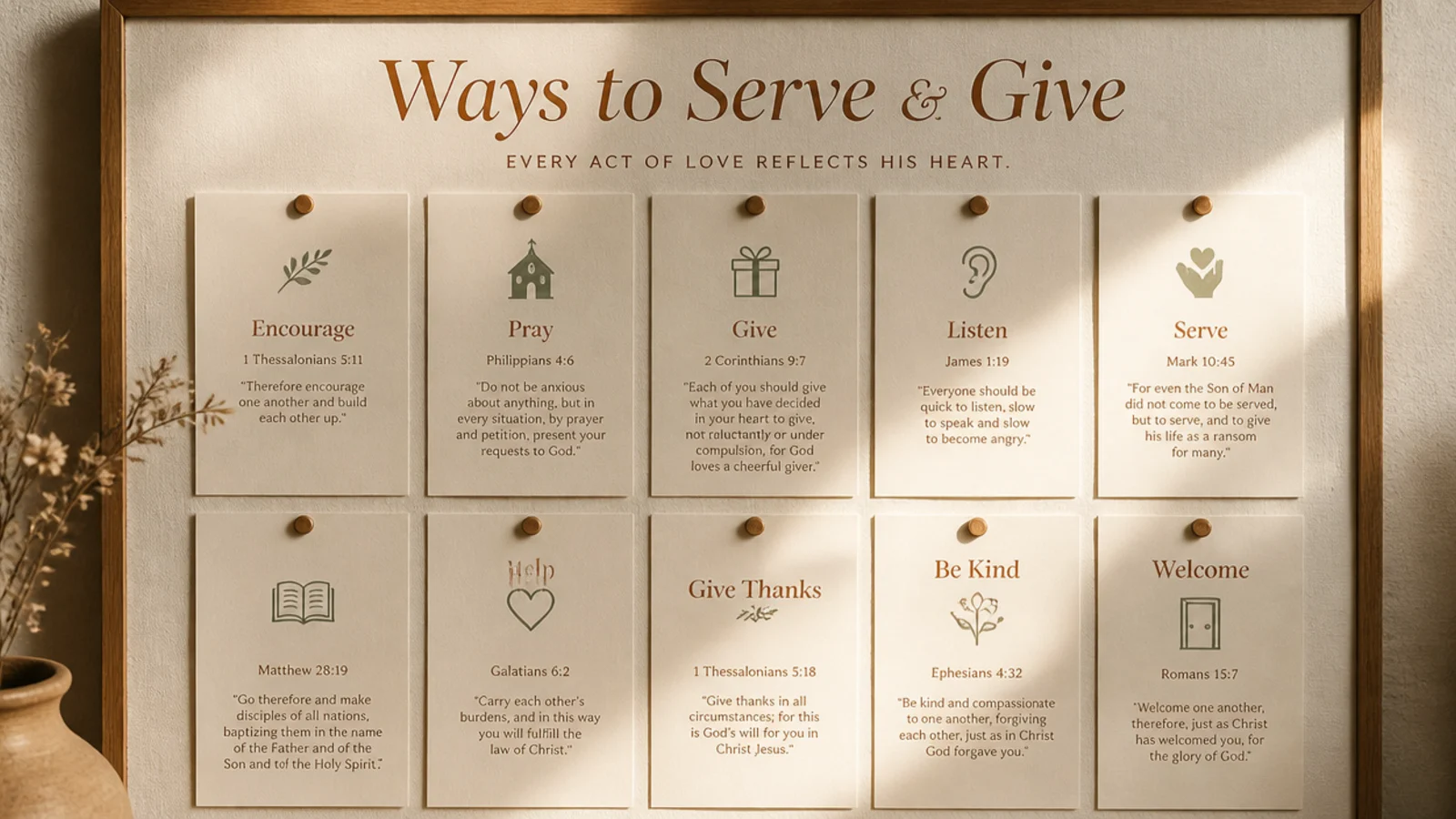
A ministry board prays over how you want to serve and give. You map service hopes and pair them with scripture about generosity. It suits anyone wanting their vision to point outward. Praying over service keeps the board from being all about yourself.
List ways you hope to serve — a ministry, a person to help, a habit of giving — on cards. Pair each with a verse about service, generosity, or love of neighbor, and a prayer for opportunity and willingness. Pray over it and act on the nudges. Move fulfilled service to a done zone and add new ways as God opens them.
Editor's noteAct on the small nudges quickly; a ministry board grows when you follow through on one prompt at a time.
Skip thisDon’t let it stay theoretical; a service board is meant to move you to act, not just to display good intentions.