
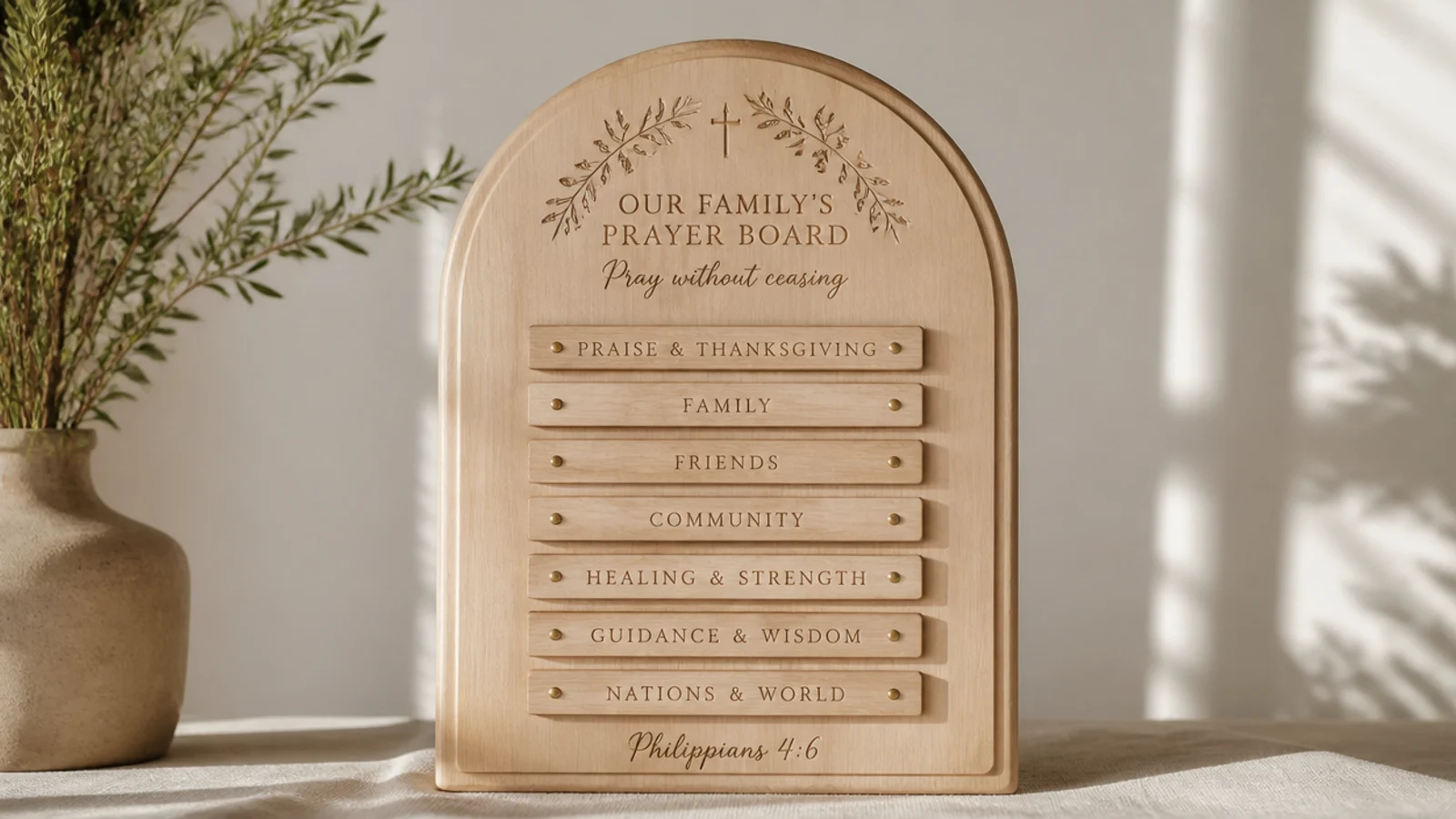
1. Sectioned Cork Board With Labeled Zones
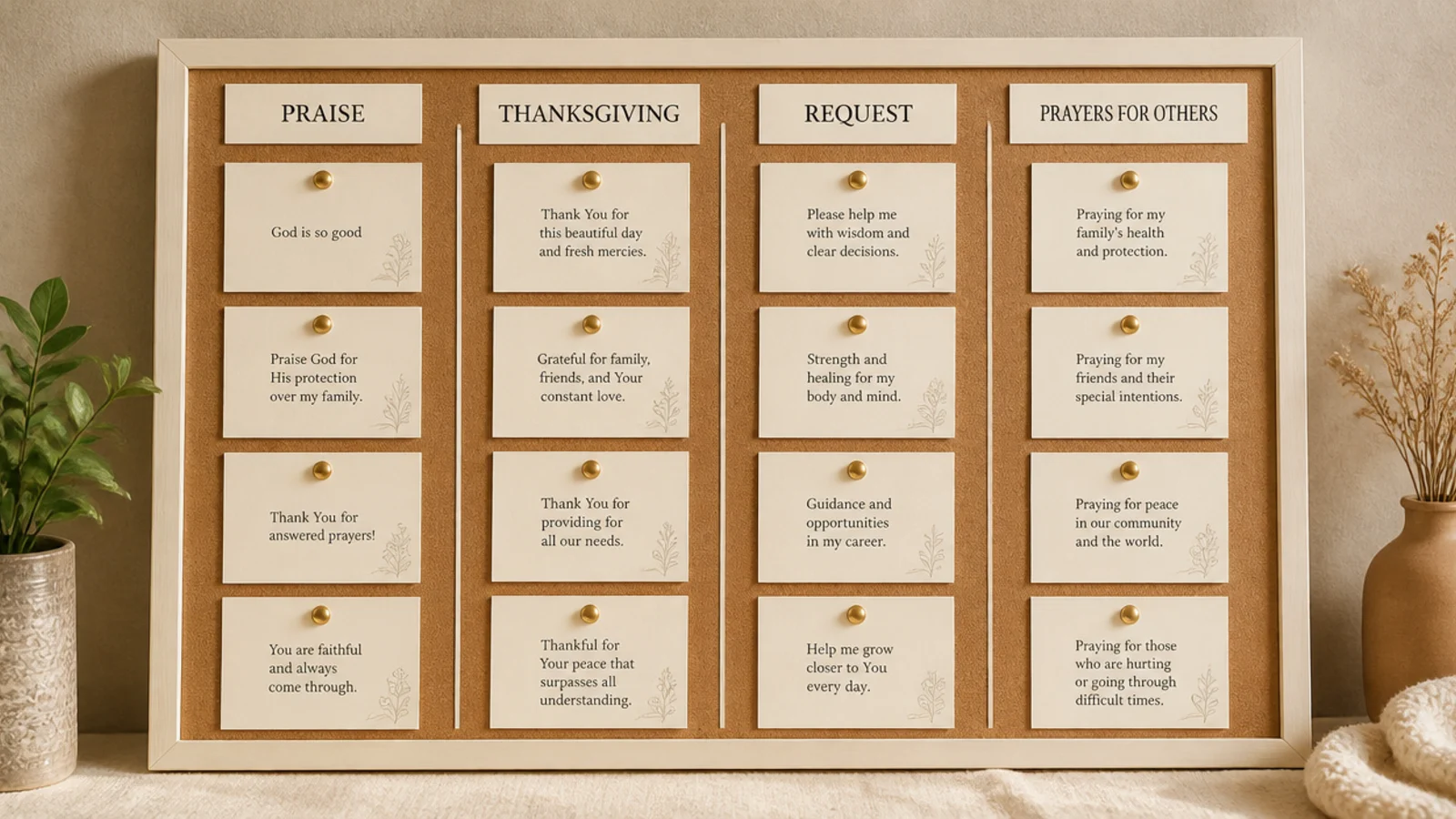
Start with a 16x20 inch cork board. Use thin washi tape to draw two dividing lines — one vertical, one horizontal — splitting it into four quadrants. Print or hand-letter a small header card for each zone and pin it at the top of that quadrant. Cut cream cardstock into uniform 3x5 cards for entries, write with one gel pen, and pin three to five per zone. Seal nothing — the point is to swap cards freely.
This is the easiest creative board that still looks designed, because the structure does the styling for you. You split one cork board into four zones — Requests, Scripture, Praying For, and Answered — and pin matching cards in each. It suits anyone who wants order over art, and it grows with you as prayers change. Keep every card the same cream cardstock so the four zones read as one board.
Skip thisDon’t mix card sizes and colors — uneven scraps are what make a sectioned board look chaotic instead of calm.
Editor's noteCap each zone at five active cards so it never overflows; extra requests wait in a small envelope pinned to the back.
2. Watercolor Scripture Centerpiece
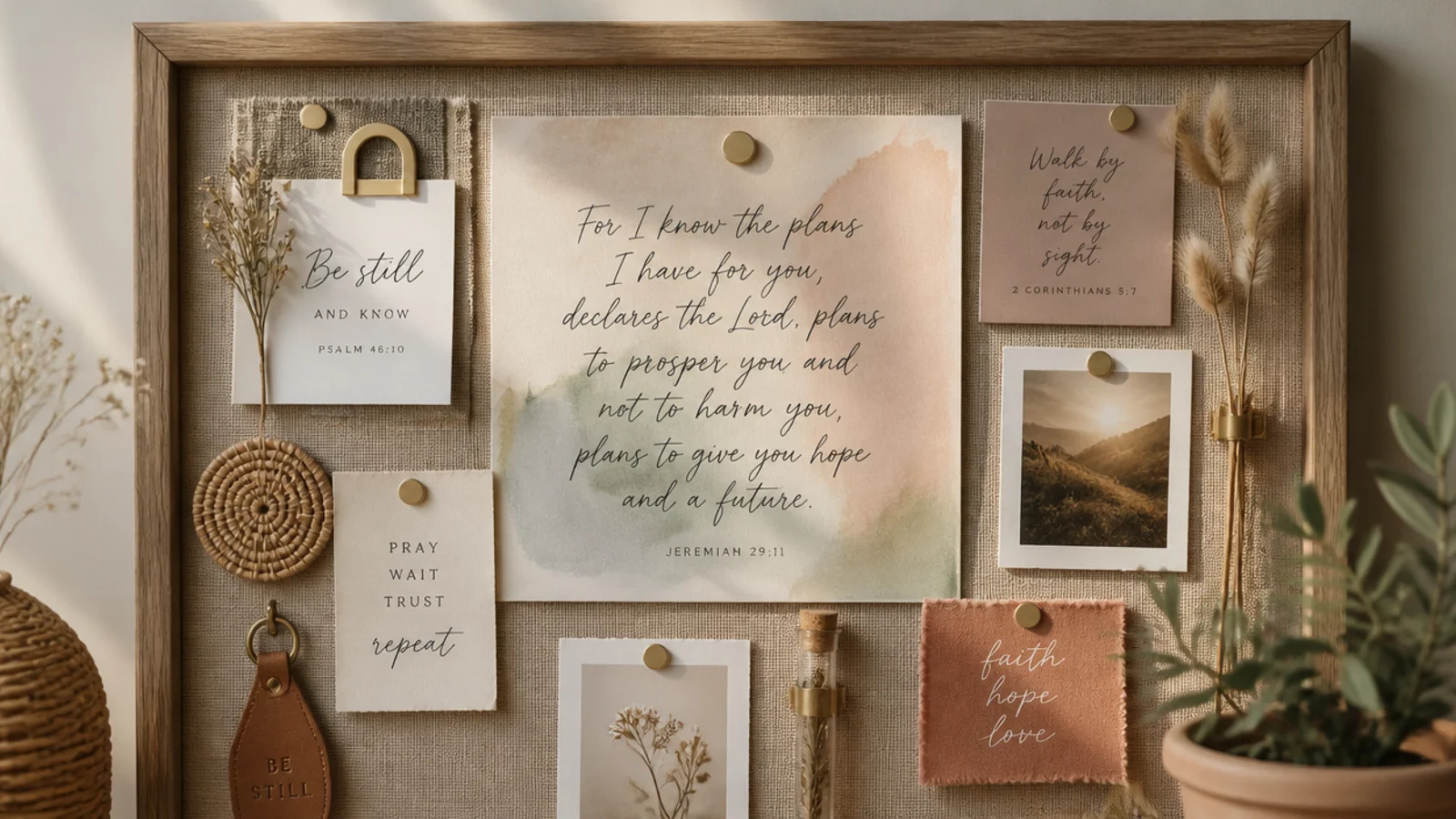
On a piece of 140lb watercolor paper cut to 5x7, brush a pale, watery wash and let it dry flat so it doesn’t buckle. Pencil your verse lightly, then trace it with a fine paint pen or a fude pen and erase stray pencil once dry. Mount it centered on the board and arrange simple cards around it. Keep the surrounding cards plain so the centerpiece stays the star.
One painted verse in the center gives the whole board an artistic anchor without you decorating every card. You wash a card in soft color and letter a short verse over it, then build plainer request cards around it. It works for people who want beauty but only have patience for one hero piece. Muted washes — sage, blush, dusty blue — keep it calm.
Skip thisDon’t over-wet the paper or the letters will feather; let the wash fully dry before you write a single word.
Editor's noteChoose a short verse — six to ten words — so the lettering stays large and readable from across the room.
3. Answered-Prayer Photo Timeline
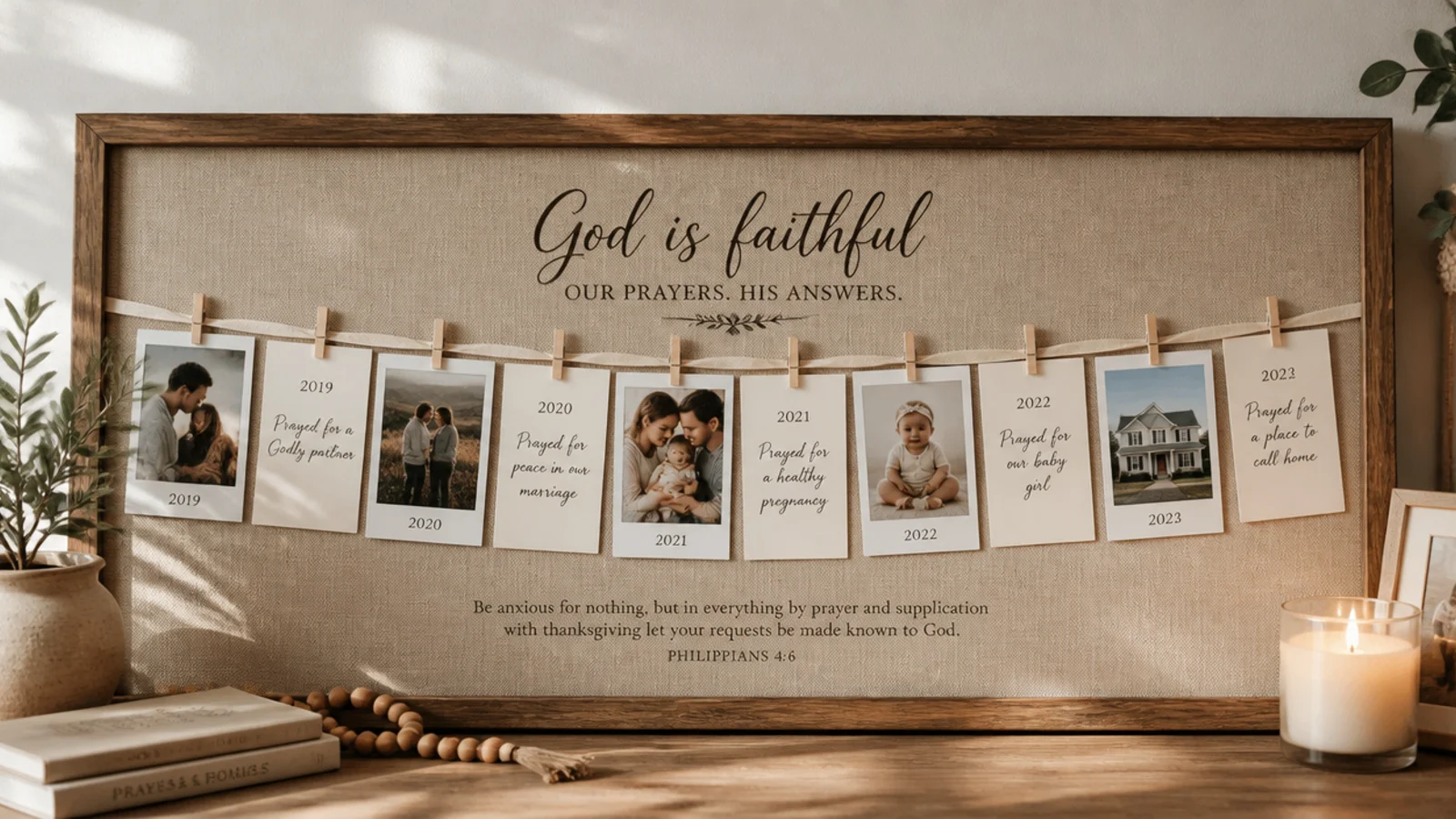
A timeline of answered prayers turns your board into an encouragement you can actually see. You string a ribbon across the board and clip small dated cards or photos along it in order. This is the section people find most moving, and it’s what keeps you praying through the hard seasons. It suits anyone who wants proof of progress, not just a to-do list.
Pin a length of twine or thin sage ribbon taut across the lower third of the board. Each time a prayer is answered, write a one-line card with the date and clip it to the ribbon with a mini wooden clip. Add a small printed photo when there’s one. Keep the cards in date order left to right so the line reads as a story you can follow.
Write the answered card the same day it happens — the specific detail fades fast, and specifics are what make it powerful later.
Don’t crowd the ribbon; leave space between clips so each answer gets to be its own moment, not a blur.
4. Monthly Focus Word Header
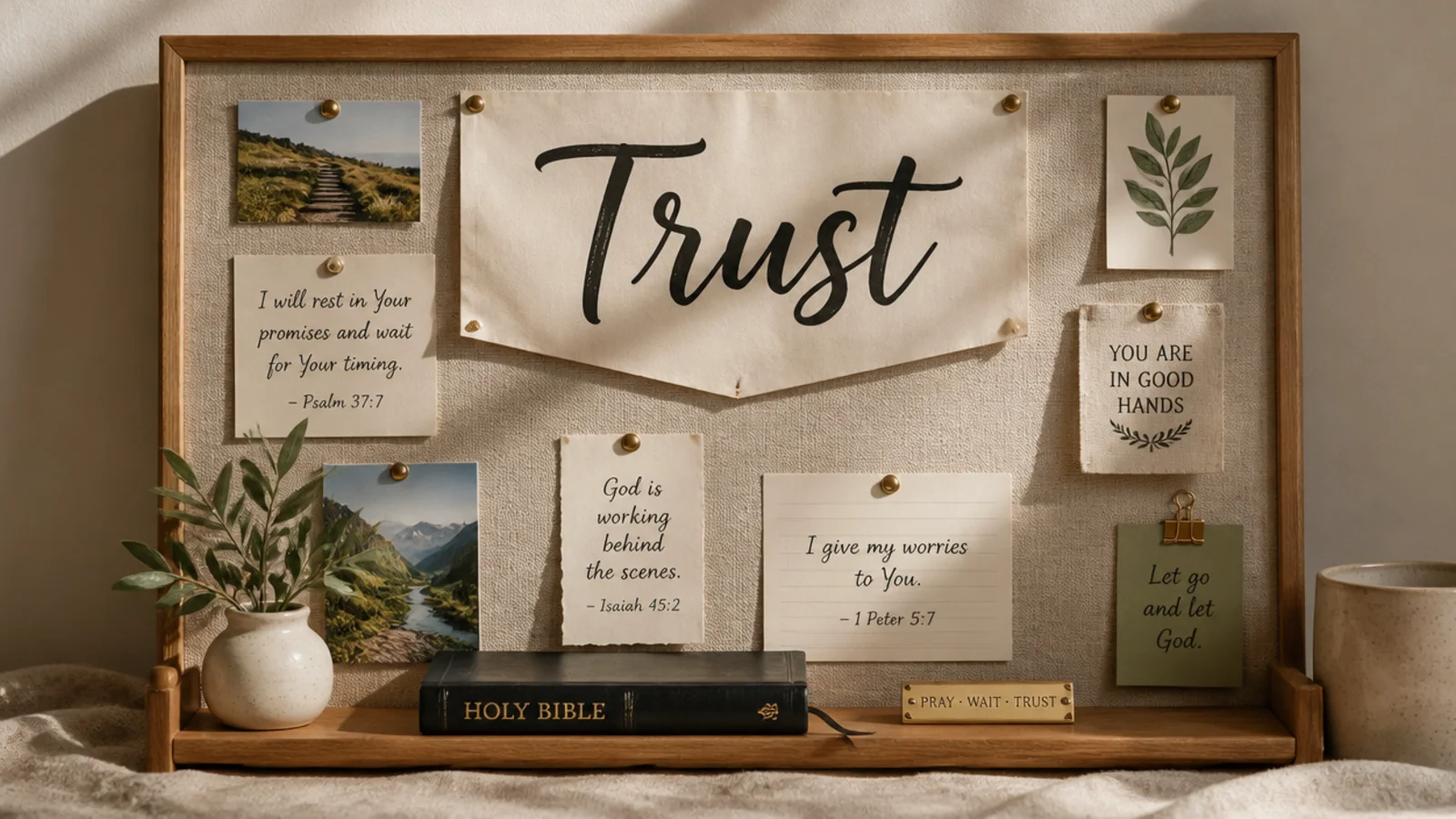
One big word across the top sets the tone for everything below it. You pick a focus for the month — trust, peace, patience — and letter it large as a header. It gives a busy board a single unifying idea, and swapping it monthly keeps the board feeling current. Great for anyone who prays around a theme or a season.
Cut a long banner card about 12 inches wide from cream cardstock. Pencil your word in a simple block or serif at a large size, then fill it with a paint pen. Pin it centered across the very top of the board so it frames the sections beneath. Keep a small stack of pre-made blank banners so you can swap the word on the first of each month.
Pick the word by praying through it first, not by what looks pretty — the meaning is what makes you glance up at it all month.
Don’t use thin script for the header; a bold block letter stays legible and looks intentional from a distance.
5. Seven-Day Prayer Pocket Chart
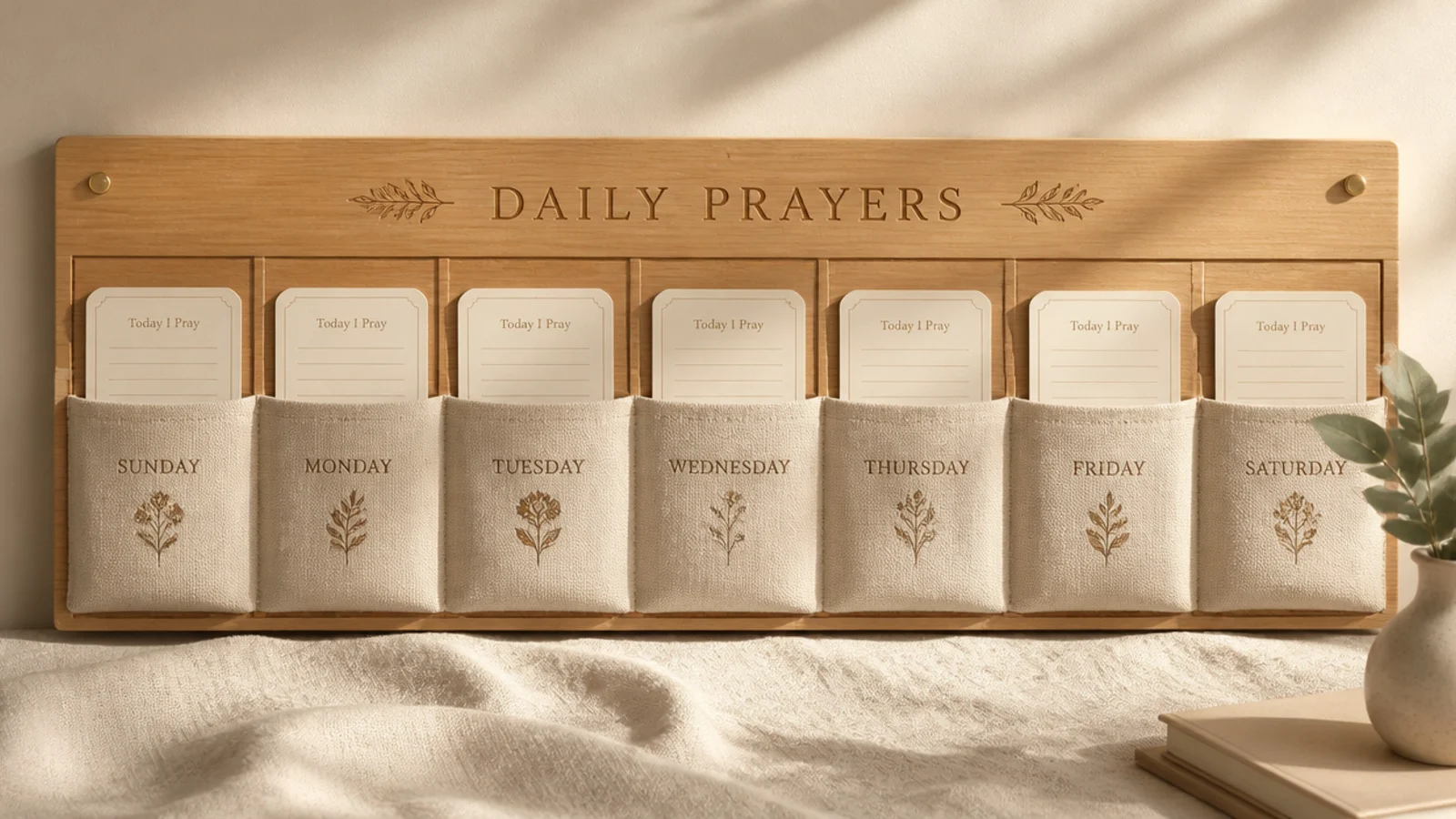
Make seven pockets from folded cardstock or small fabric library pockets and pin them in a row across the board, labeled Sunday through Saturday. Write each request on a card and file it in the day you want to cover it. Each morning, pull that day’s pocket, pray through the cards, and refile them. Rotate answered cards to a separate answered zone.
Seven pockets, one per day, break a long prayer list into a manageable daily rhythm. You sort request cards into the day you’ll pray them, so you’re never staring at everything at once. This is the most practical layout for anyone with a big list — family one day, church another, the world another. It turns overwhelm into a simple routine.
Skip thisDon’t overfill one pocket; if a day has ten cards you won’t pray them all, so spread the load across the week.
Editor's noteAssign categories to days — people, church, world, self — so each day has a clear focus instead of a random handful.
6. Gratitude Corner
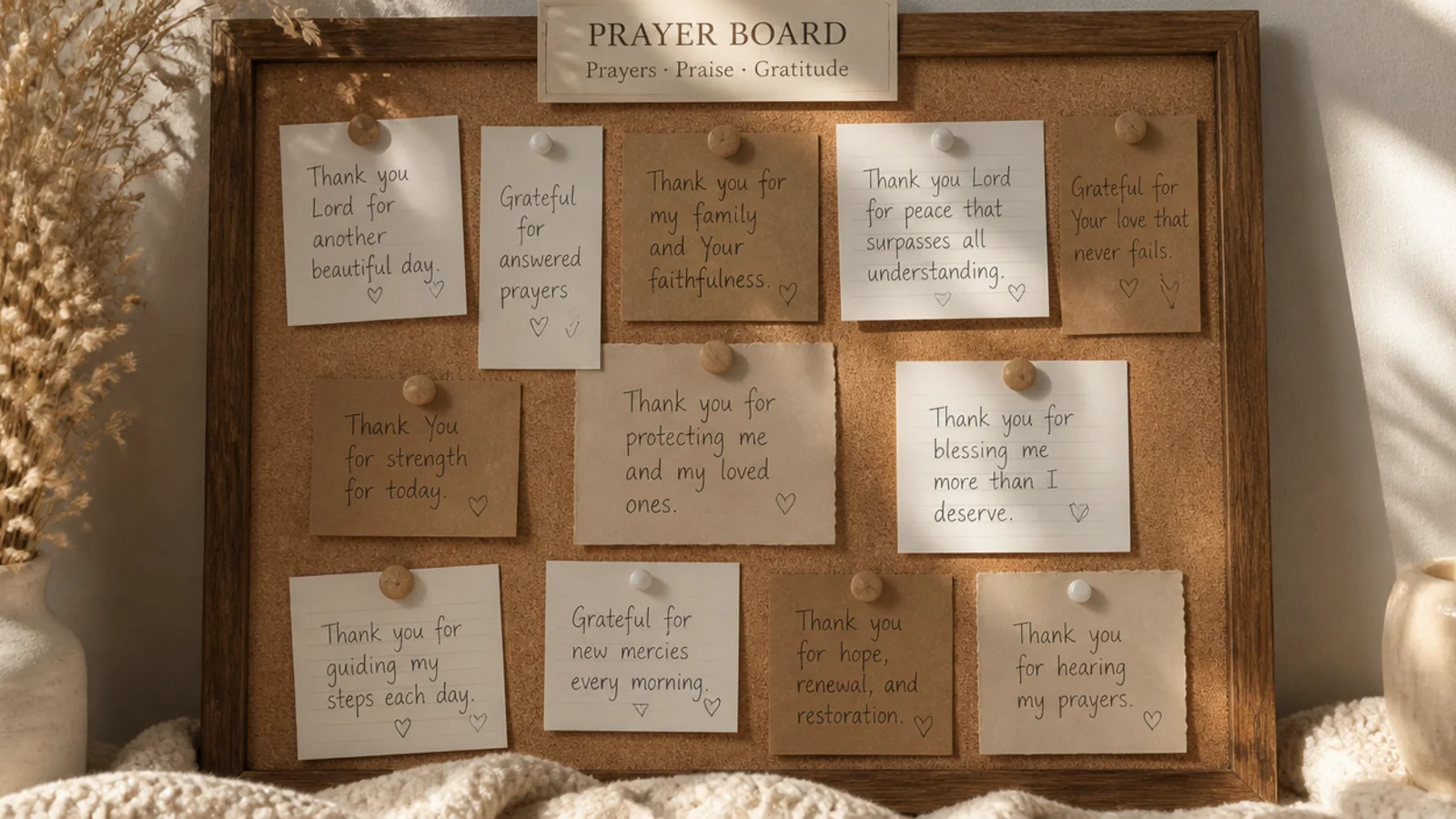
Claim one corner — about a quarter of the board — and pin a small Grateful header. Cut little cards, half the size of your request cards, so gratitude notes read as their own thing. Add one line whenever you notice a small mercy, date it, and pin it in the corner. When it fills, move the oldest to a keepsake box and keep the space fresh.
A gratitude corner balances the asking with thanking, and it’s the section that changes your mood fastest. You reserve one corner for small thank-you notes and add one whenever something good happens. It suits anyone whose prayers tilt heavy — a few grateful lines lift the whole board. Warm tones like blush and mustard make it feel bright.
Skip thisDon’t let it become a to-do list of blessings to chase; keep it strictly to things that already happened.
Editor's noteWrite gratitude notes in a warmer color than your requests so the corner visually glows against the rest of the board.
7. Family Photo Prayer Grid
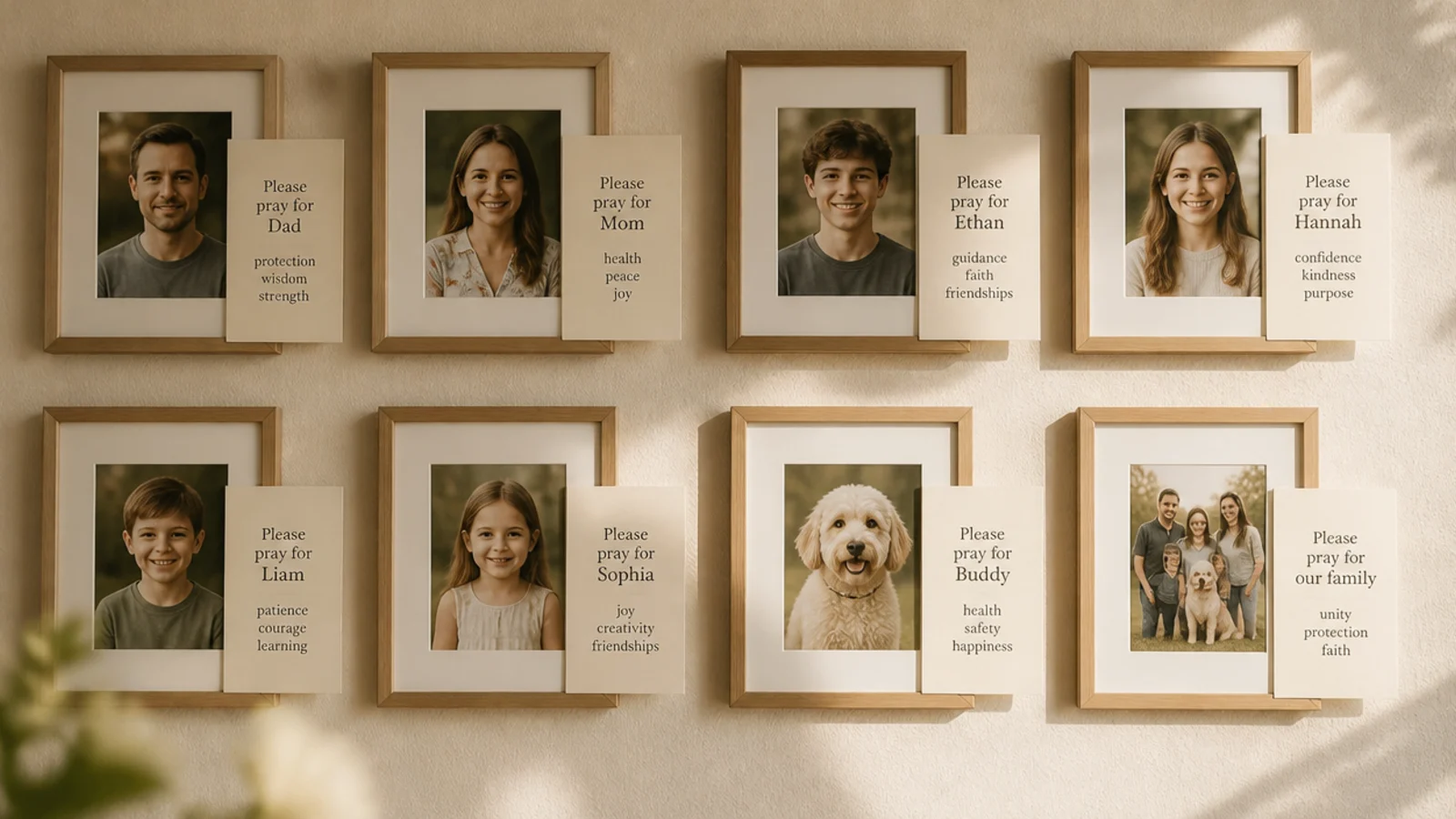
Print small 2x3 inch photos of each person and pin them in an even grid. Beside each, clip a card with one current request and update it as things change. Leave a little space under each photo to swap the card without moving the picture. Group by household or category so the grid has a logical order you can pray down in one pass.
Pairing a face with a request makes intercession personal instead of abstract. You pin a small photo of each person with a card beside it naming what to pray. It’s ideal for praying through family, friends, or a small group by name. Seeing the faces is what keeps you specific and consistent.
Skip thisDon’t crowd faces edge to edge; a little space around each photo keeps the grid calm and easy to pray through.
Editor's noteKeep one blank card per person so you can rewrite the request the moment it changes, without disturbing the layout.
8. Verse of the Month in a Small Frame
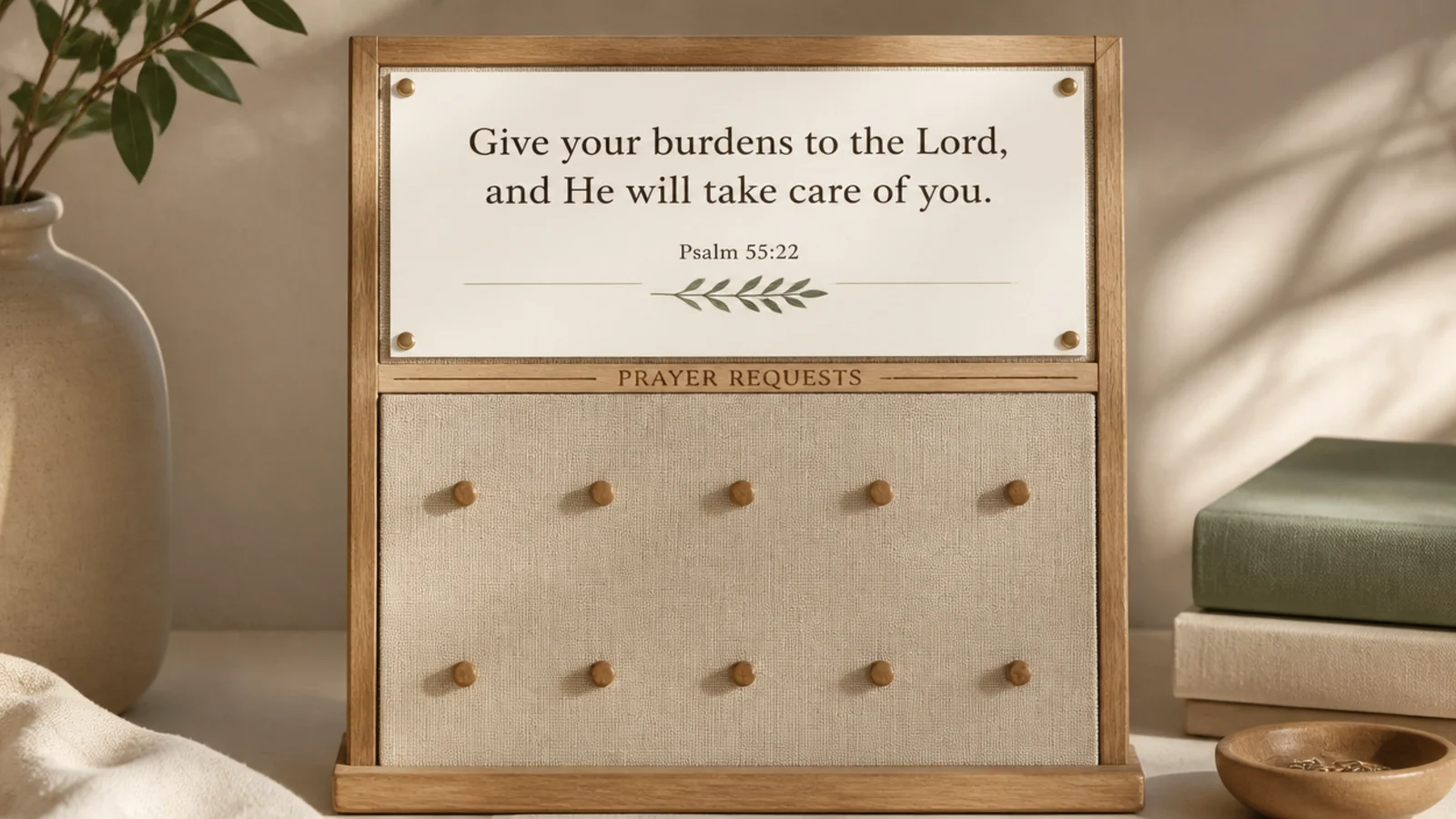
A framed verse you swap monthly gives the board a polished focal point and a memory goal. You print one verse, frame it, and change it on the first. Framing lifts a printed card from casual to intentional, and the monthly swap gives you one verse to actually memorize. Perfect for anyone building a scripture-memory habit.
Choose a small 4x6 frame in natural wood or cream. Print or letter one verse per month on cardstock sized to the frame. Mount the frame near the top center, either pinned through a small hook or resting on a tiny shelf clip. On the first of the month, swap the card and tuck the old one into a memory ring you keep nearby.
Keep last year’s verses on a single binder ring by the board so you can review the ones you’ve already learned.
Don’t pick a long passage to memorize monthly; one or two verses is realistic, a whole chapter sets you up to quit.
9. Prayer for the World Map
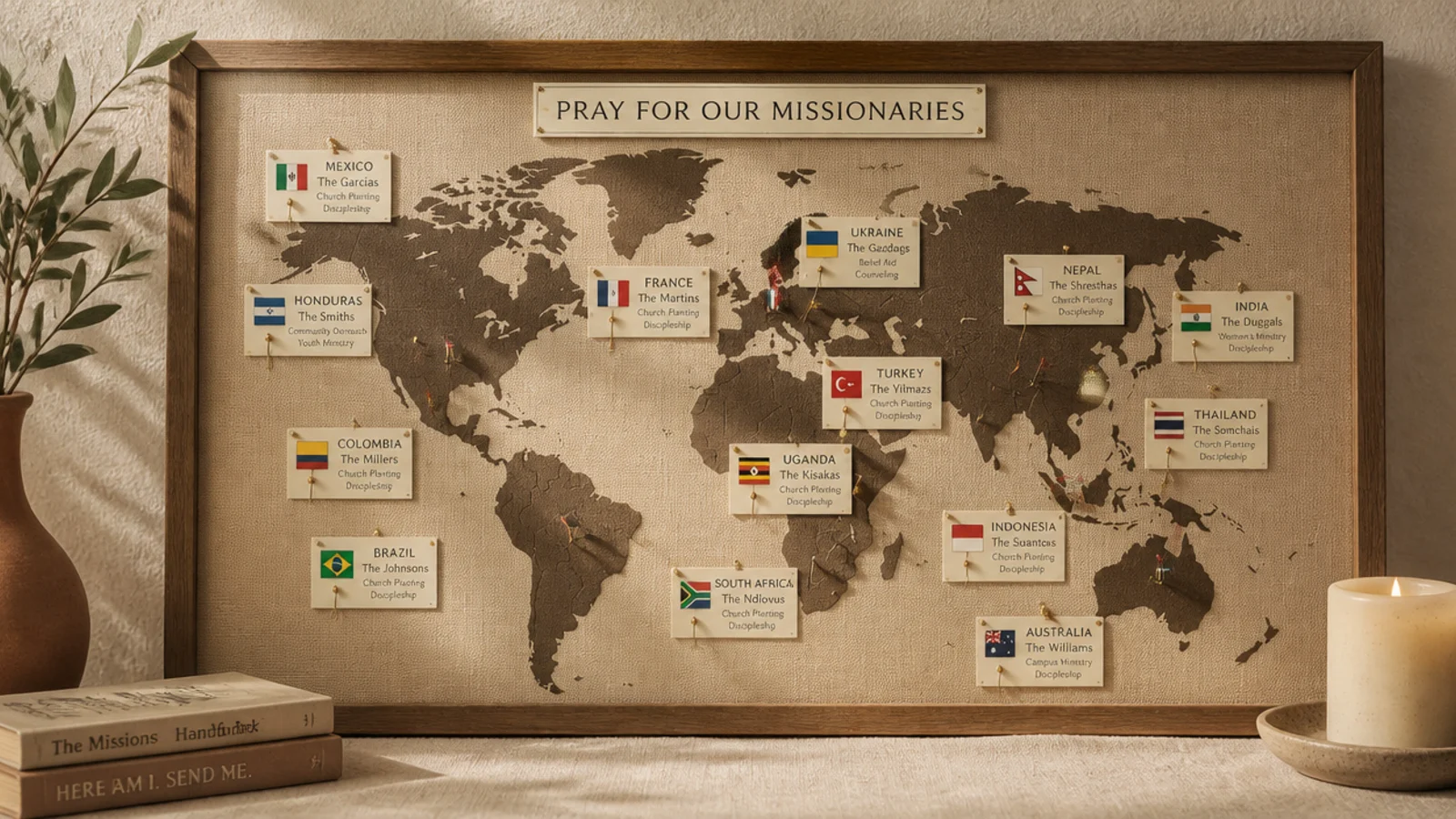
Print a simple world map about 8x10 and mount it on the board. Use map pins to mark each place you pray for, and clip a tiny flag card to note the name or need. Keep a short list beside it of what’s happening there so prayers stay specific. Move or add pins as you take on new places to pray for.
A little map turns global prayer into something you can point at. You pin a printed world map and mark the places, people, or missionaries you’re praying for with tagged pins. It’s great for families and anyone who supports missions, because it makes far-away needs feel near. Kids especially love finding the country each week.
Skip thisDon’t pin so many places that it’s a sea of dots; a handful you pray for well beats a map you can’t focus on.
Editor's noteRotate through one region per week so the whole map gets covered over a month instead of praying the same spot every day.
10. Sticky-Note Prayer Wall
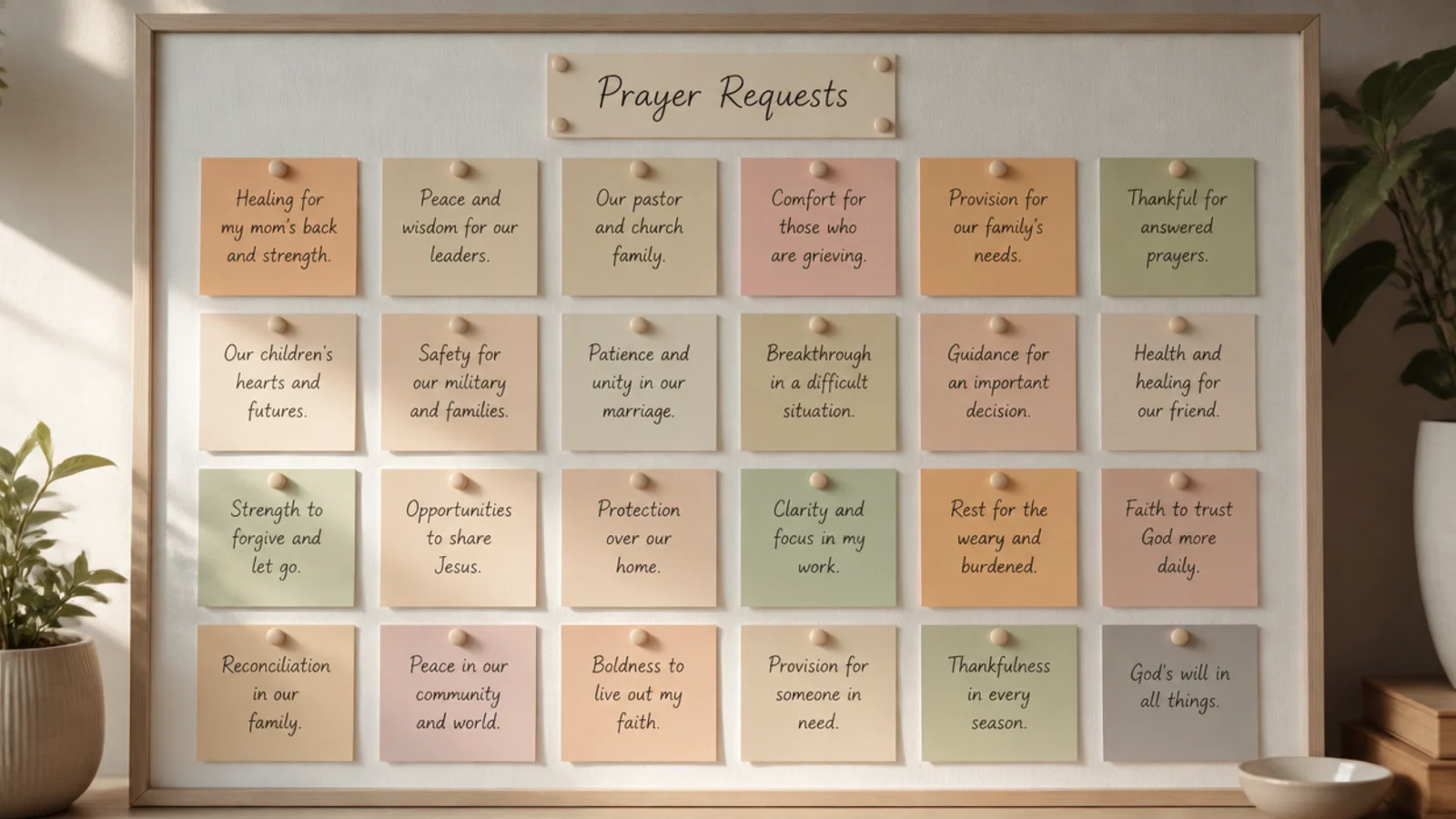
Use one or two pastel sticky-note colors — reserve a brighter color for answered notes. Write one short request per note and press it firmly onto a foam or cork board in an even grid. When a prayer is answered, move the note to an answered column instead of tossing it. Refresh curling notes so the wall stays crisp.
A wall of sticky notes is the fastest, most flexible board there is — no pins, no cutting. You jot one request per note and stick it up, then peel it down when it’s answered. It suits busy people and anyone who adds prayers on the fly. Aligning the notes in a grid keeps it from looking like a messy desk.
Skip thisDon’t let notes curl and fall; press the full adhesive strip down and replace any that stop sticking so the wall stays neat.
Editor's noteLine notes up to an invisible grid using the board’s frame as a guide — straight rows are what make sticky notes look intentional.
11. Mixed-Media Faith Collage
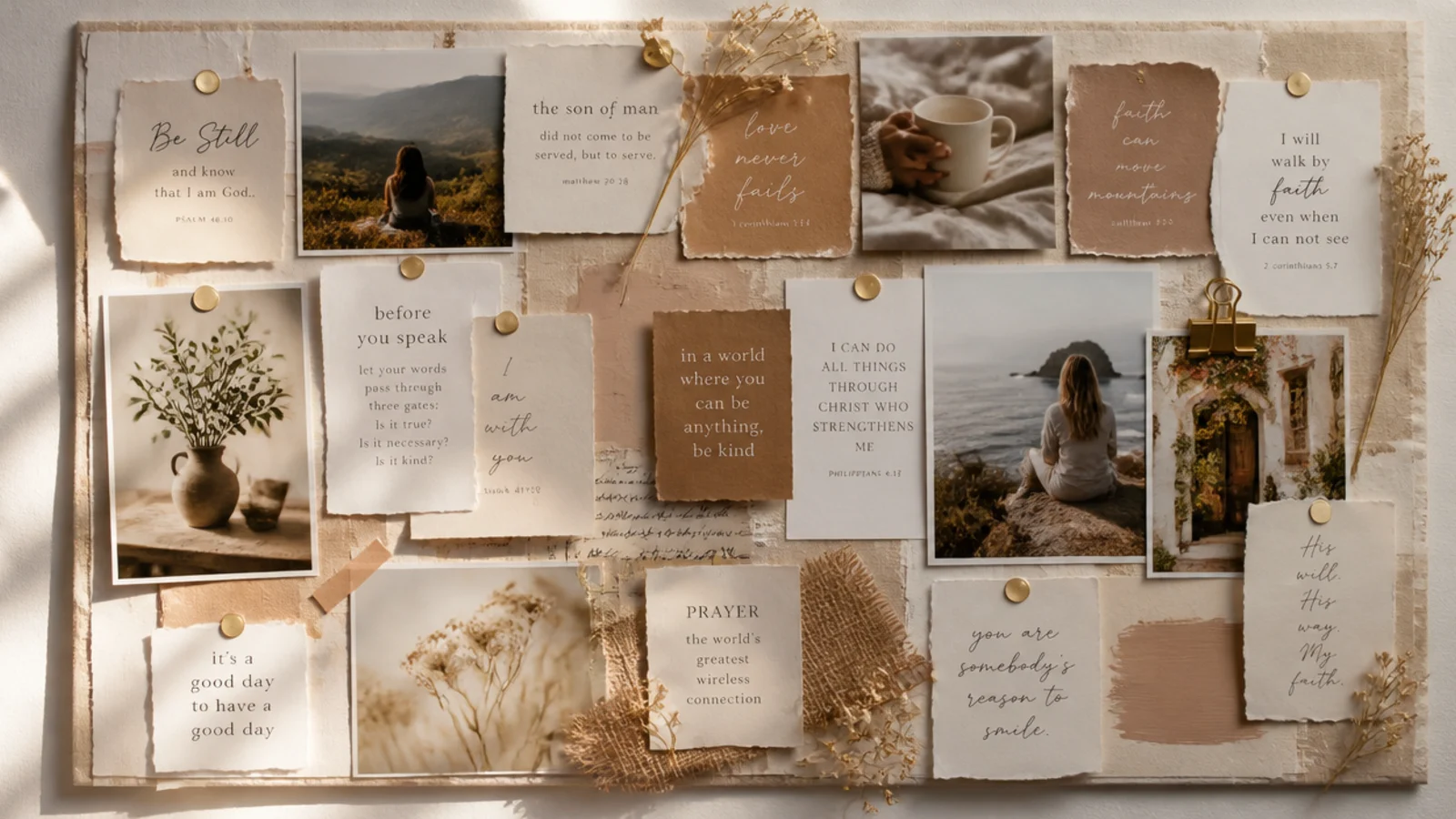
Start with a foam board base since you’ll glue, not pin. Gather materials in one palette — cream and terracotta paper, a few pressed leaves, printed verse strips, small photos. Arrange everything loosely first, take a photo to check the balance, then glue with a matte medium or glue stick. Leave some negative space so the eye can rest, and add a couple of pinned cards on top for prayers you’ll swap.
A collage board is for people who think in images, not lists. You layer torn paper, verse snippets, pressed flowers, and small photos into one meaningful arrangement. It reads as art on the wall and as prayer up close. The trick to keeping it from looking messy is sticking to one warm palette across every element.
Skip thisDon’t use a dozen clashing colors; a collage lives or dies on one restrained palette, so edit ruthlessly.
Editor's notePhotograph your layout before gluing — the phone screen shows imbalance your eye misses in real life.
12. Chalkboard Prayer Board
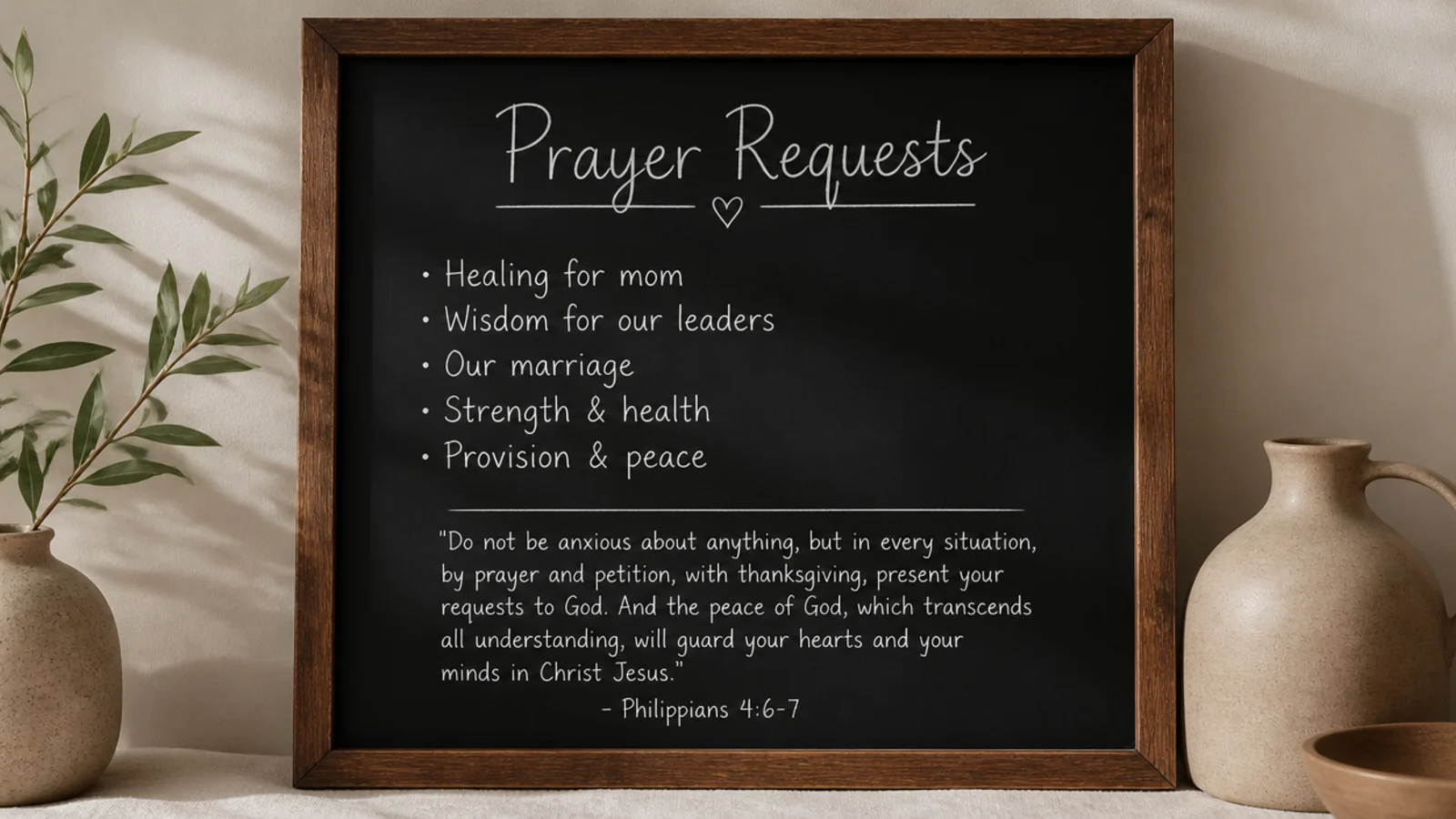
A chalkboard lets you rewrite freely, which suits prayers that change daily. You write requests and a verse in chalk marker and wipe them as they shift. It’s ideal for people who don’t want to store cards and like a clean slate. A framed chalkboard also just looks handsome on a wall.
Buy or make a framed chalkboard — chalkboard paint on a smooth board works too. Season a painted board first by rubbing chalk over it and wiping. Use a fine white chalk marker for legible lines that resist smudging, and divide the board with a drawn line into requests and a verse. Wipe with a barely damp cloth to update, and let it dry before rewriting.
Use a chalk marker, not soft chalk, so a passing sleeve doesn’t erase your prayers — it wipes only when you want it to.
Don’t write with regular chalk if the board is anywhere it’ll get bumped; it smears into an unreadable gray haze.
13. Prayer Jar Mounted on the Board
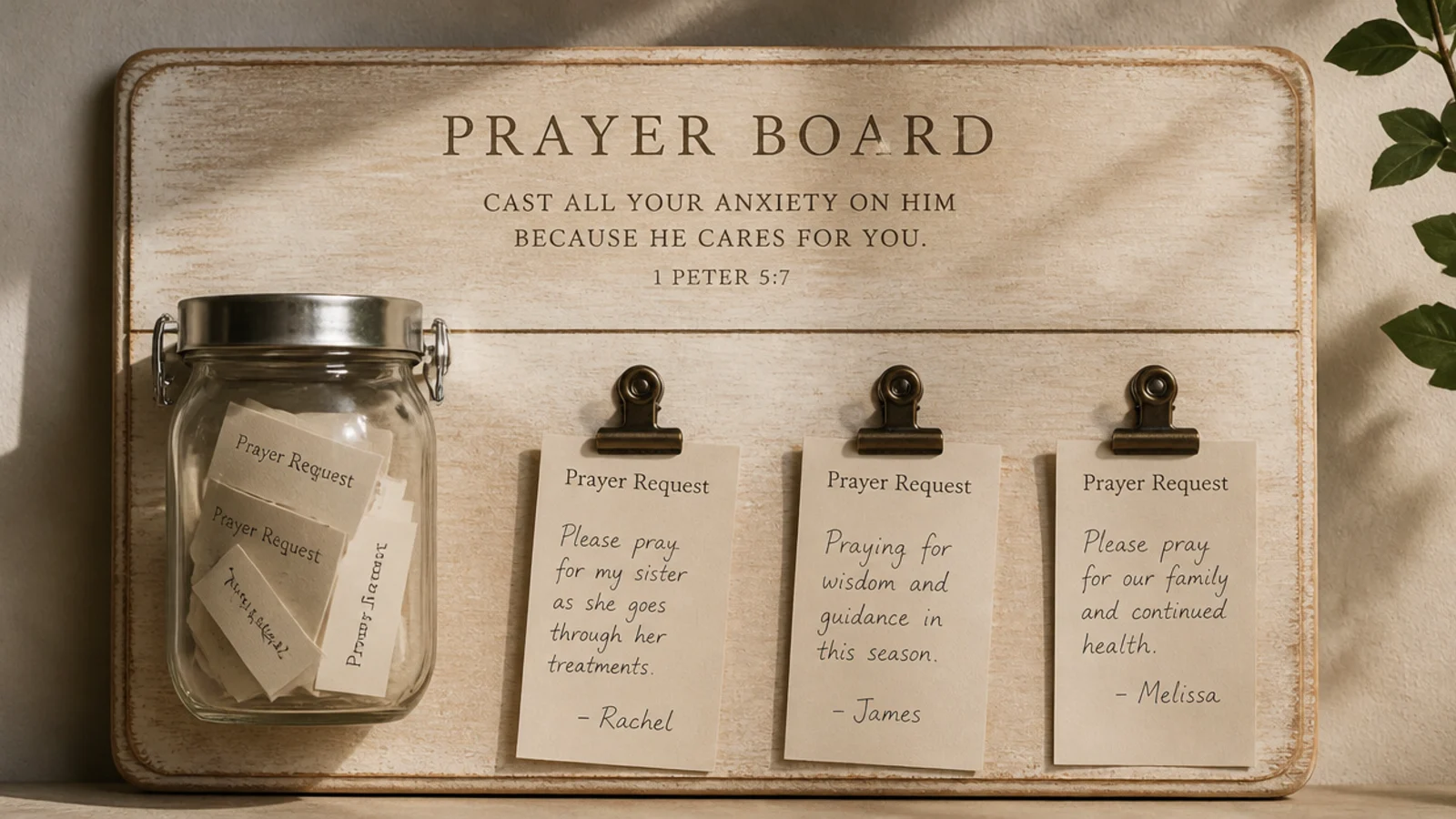
Mount a small jar or clear pocket to the board with a sturdy clip or adhesive hook rated for the weight. Cut a stack of small paper slips and keep a pen nearby. Write a worry or private prayer, fold it, and drop it in as an act of release. Once a month, read back through them and move any answered ones to your answered zone.
A little jar holds the prayers you’d rather keep private or release entirely. You write a request, fold it, and drop it in — a physical act of handing it over. It pairs well with a board full of open cards, giving you a spot for the tender things. Anyone who struggles to let worries go finds this one meaningful.
Skip thisDon’t over-mount a heavy glass jar with weak tape; use a proper hook so it can’t fall and break.
Editor's noteDo a monthly read-through of the jar — you’ll almost always find something already answered that you’d forgotten you gave over.
14. Praise Report Column
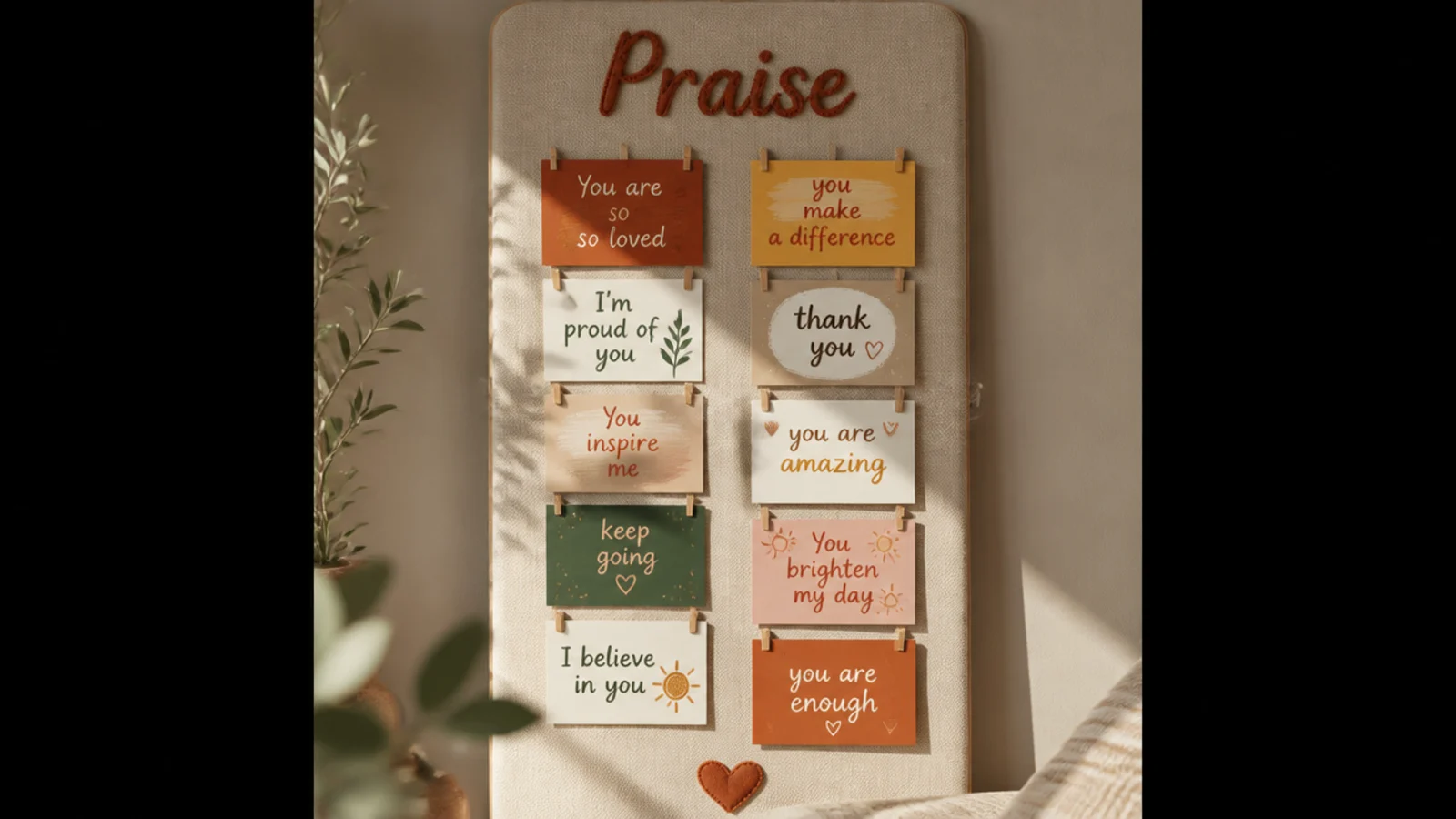
Reserve a column on the right edge, about a quarter of the board’s width, with a Praise header. Use a warmer cardstock than your requests so the column stands out. Add a short, dated card for every answered prayer or good report. When the column fills, archive the oldest into a keepsake ring and keep the freshest visible.
A praise column keeps the good news front and center, separate from requests. You reserve one vertical strip for wins — big and small — and add to it constantly. It suits anyone who forgets to celebrate and rushes to the next ask. Kept bright, it becomes the cheerful side of the board you look at first.
Skip thisDon’t blend praise into the request zone; keeping it visually separate is what makes the celebration land.
Editor's noteRead the praise column out loud when you sit down to pray — starting with thanks reshapes how you bring the requests.
15. Bible Reading Plan Tracker
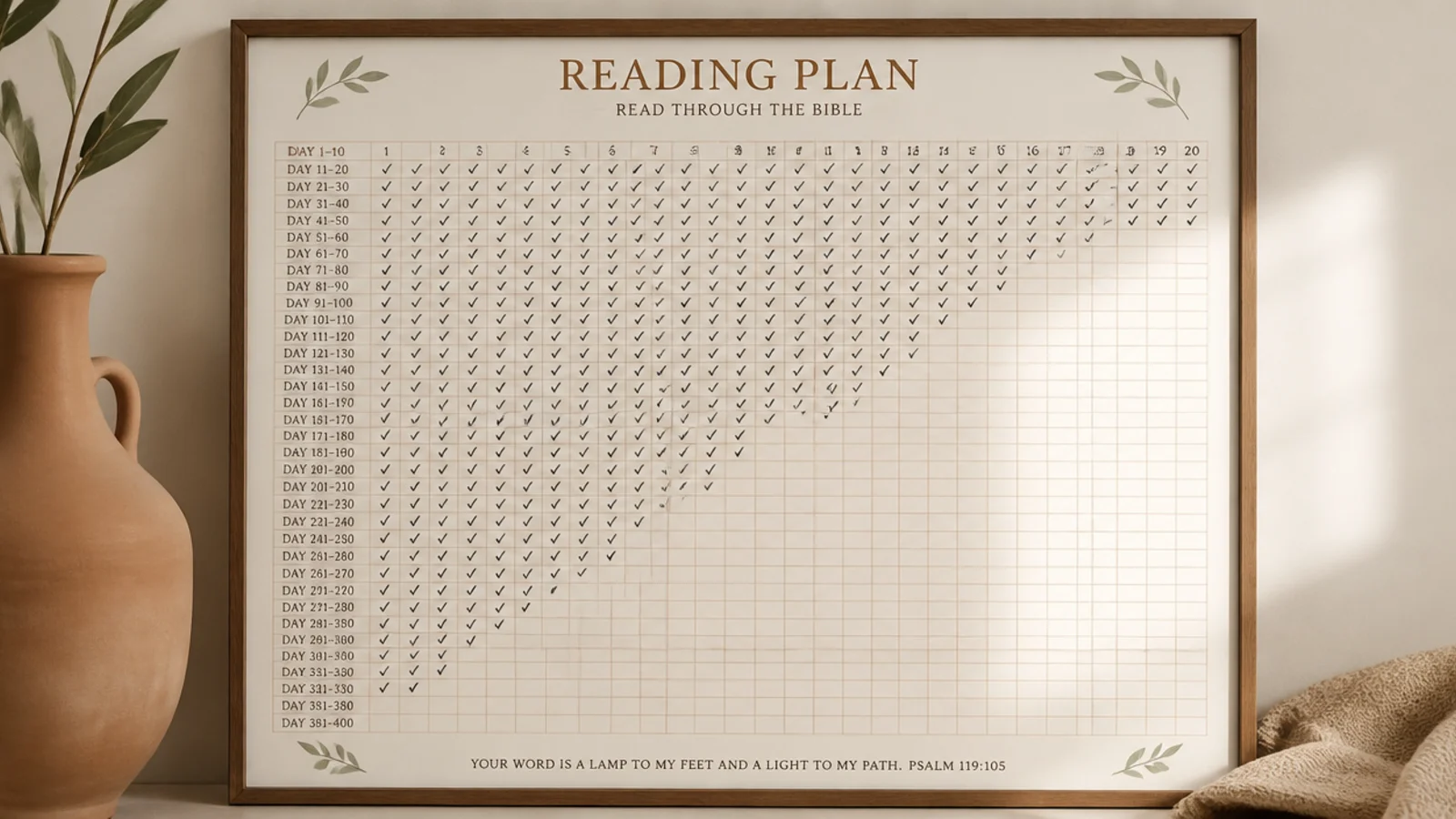
Print or draw a month grid with a box per day, or a checklist for a reading plan. Pin it in one zone with a small pen tucked in a clip beside it. Check a box each day you read, and note the passage if you like. Start a fresh grid each month so a missed week doesn’t discourage you from continuing.
A reading tracker ties your prayer board to a daily time in scripture. You pin a simple grid and check off each day you read. It suits anyone working through a plan who wants gentle accountability in view. Watching the grid fill is quietly motivating without being a guilt trip.
Skip thisDon’t tie shame to the empty boxes; the tracker is an invitation, so just pick up on the next day and keep going.
Editor's noteKeep the grid small and monthly — a whole-year chart with gaps feels like failure, a fresh month feels like a restart.
16. Scripture Affirmation Strips
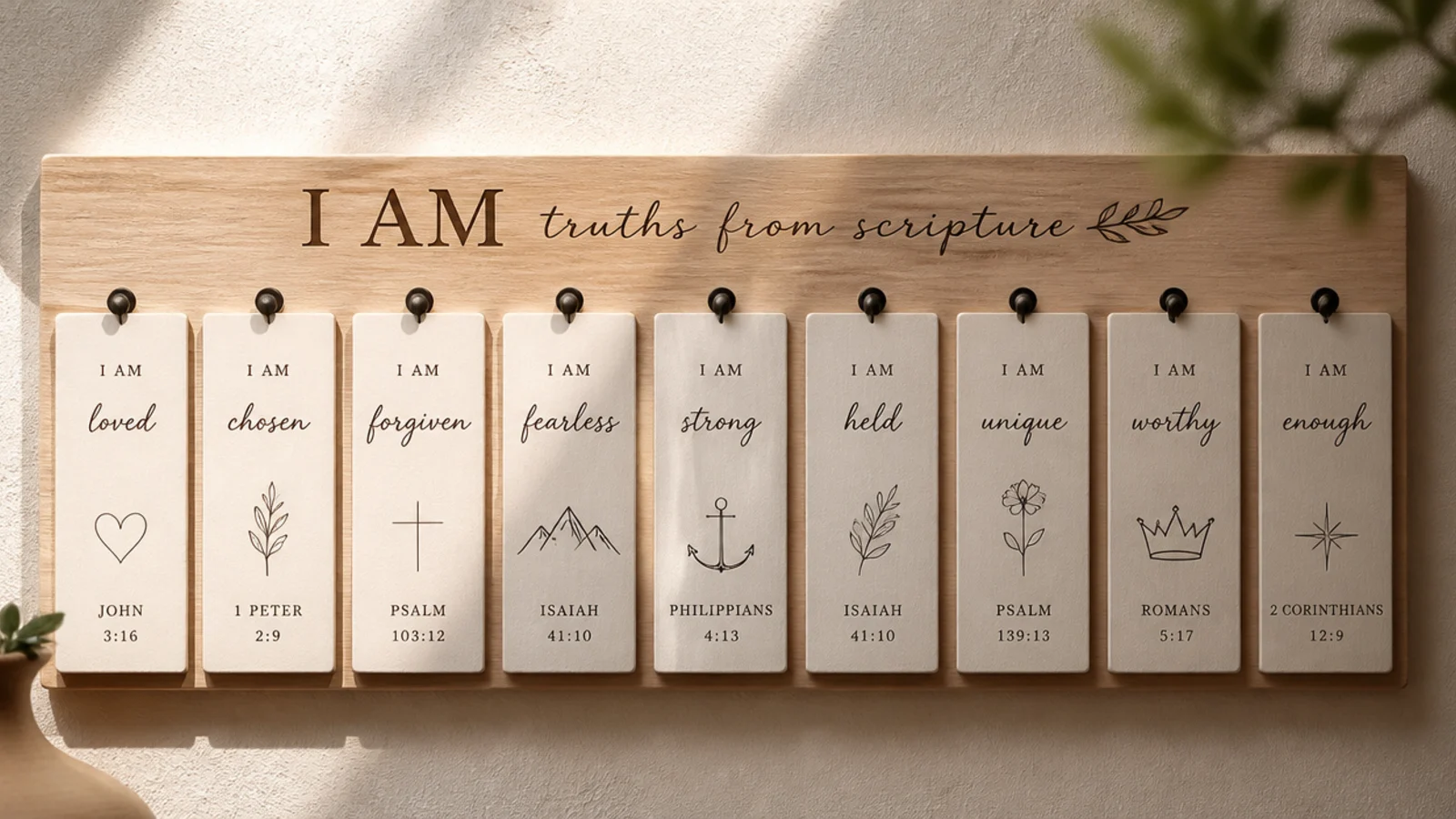
Cut narrow strips about 6 inches long from cream cardstock. On each, write one short scripture-based truth in clean type or careful lettering. Pin four or five in a neat stack or row in one zone. Read them aloud when you sit down, and swap in new ones as different truths become the ones you need to hear.
Short truth strips speak identity over you every time you pass the board. You print or letter a few scripture-based affirmations — who God says you are — and line them up. It suits anyone fighting anxious or defeated thoughts. Read daily, these become the lines you carry off the board and into the day.
Skip thisDon’t pin twenty at once; a handful you actually read beats a wall of strips your eye skips over.
Editor's noteAnchor each affirmation to its verse reference in small print — it keeps the truth grounded in scripture, not just positive self-talk.
17. Seasonal Prayer Focus Swap
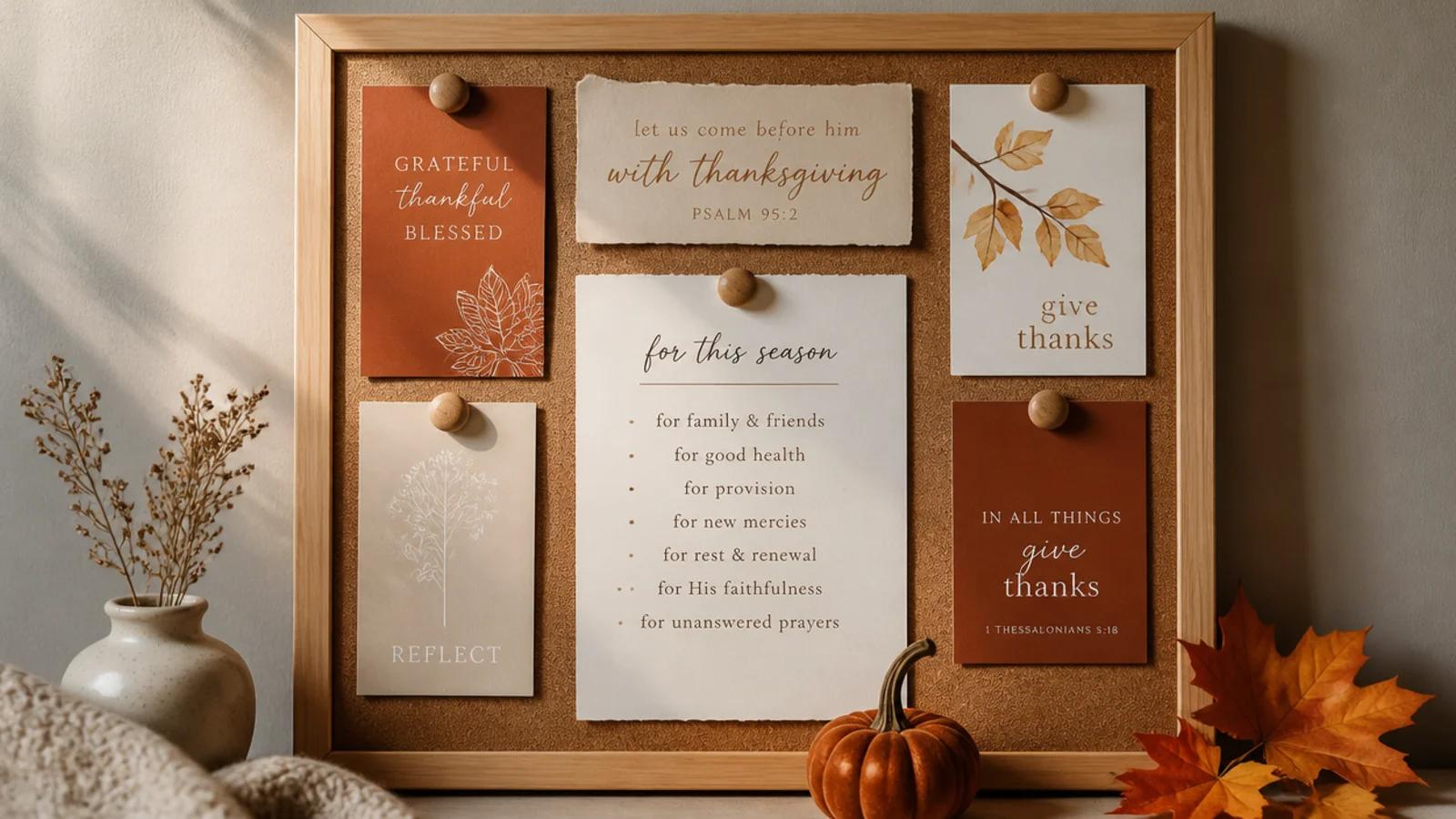
Set aside one zone for seasonal content and build a small kit for each season — a themed verse card, two or three focus prayers, and one small natural accent like a sprig or a paper leaf. At the turn of each season, swap the whole kit in five minutes. Store each season’s kit in a labeled envelope so the change is effortless.
A seasonal zone keeps the board from going stale by refreshing it four times a year. You dedicate one area to the current season’s prayers and decor — Advent, Lent, a new school year, harvest. Changing it marks time and keeps prayer tied to real life. It’s a favorite for anyone who loves matching decor to the season.
Skip thisDon’t let a season linger past its time; a Christmas card up in March is the quickest way to stop noticing the board.
Editor's noteBuild all four seasonal kits at once while you’re in the mood, then swapping later takes minutes instead of a whole afternoon.
18. Prayer Partner Exchange Section
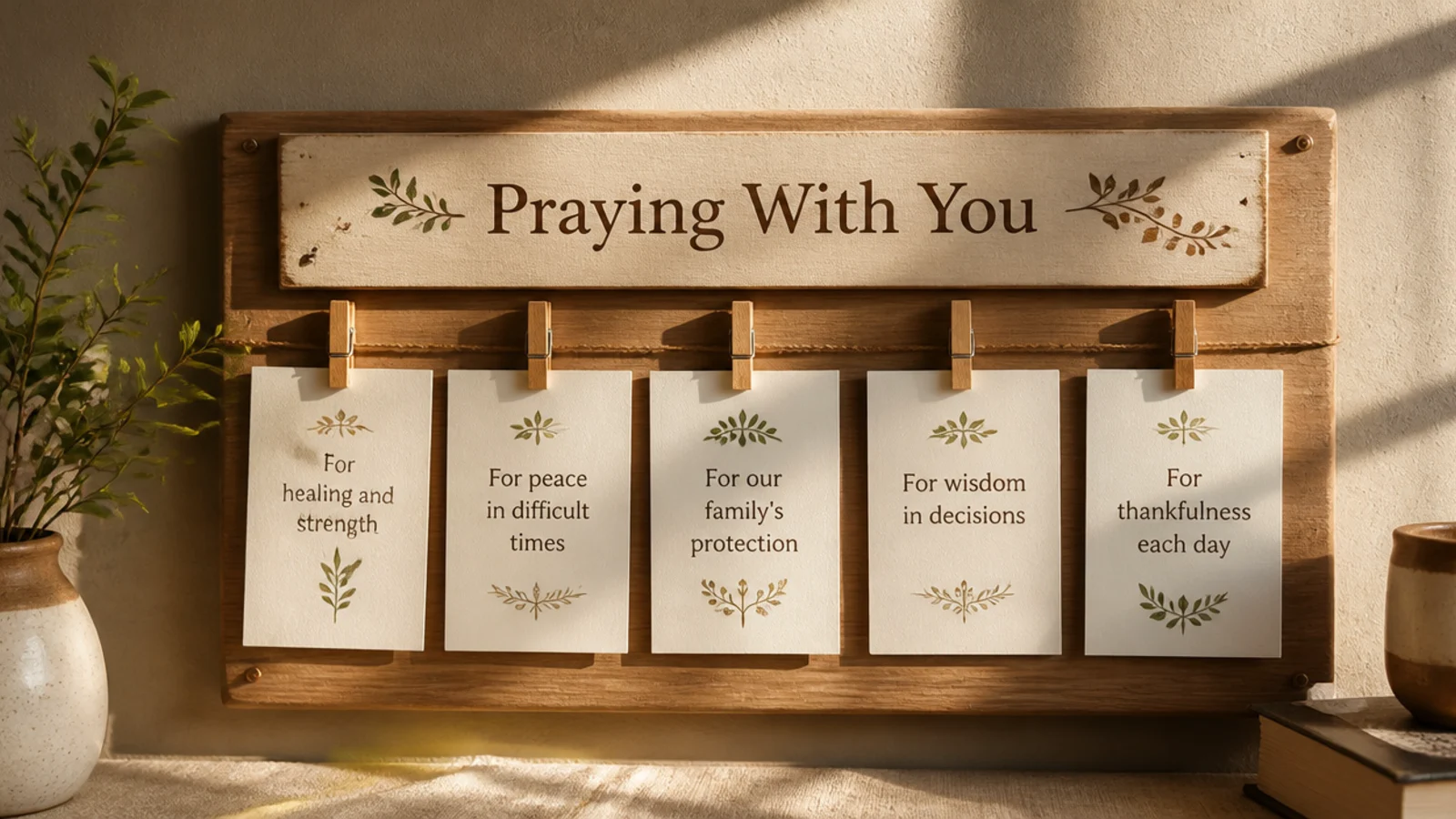
Reserve a small zone with a Praying With You header. Each time your partner shares requests — by text or note — write them on cards and pin them here, dated. Pray through them when you pray your own, and text your partner when you see an answer. Keep the zone tidy by moving answered items to your answered area and reporting back.
A partner zone holds the requests you carry for a friend or prayer partner. You keep their shared list in its own spot and pray it alongside yours. It suits anyone in a prayer partnership or accountability pair. Having a dedicated place means you actually follow through on what you promised to pray.
Skip thisDon’t post anything sensitive a partner shared in confidence where guests can read it; use initials or a code if the board is visible.
Editor's noteSnap a photo of the zone and send it to your partner monthly so they know their requests are genuinely being carried.
19. Casting My Cares Release Box
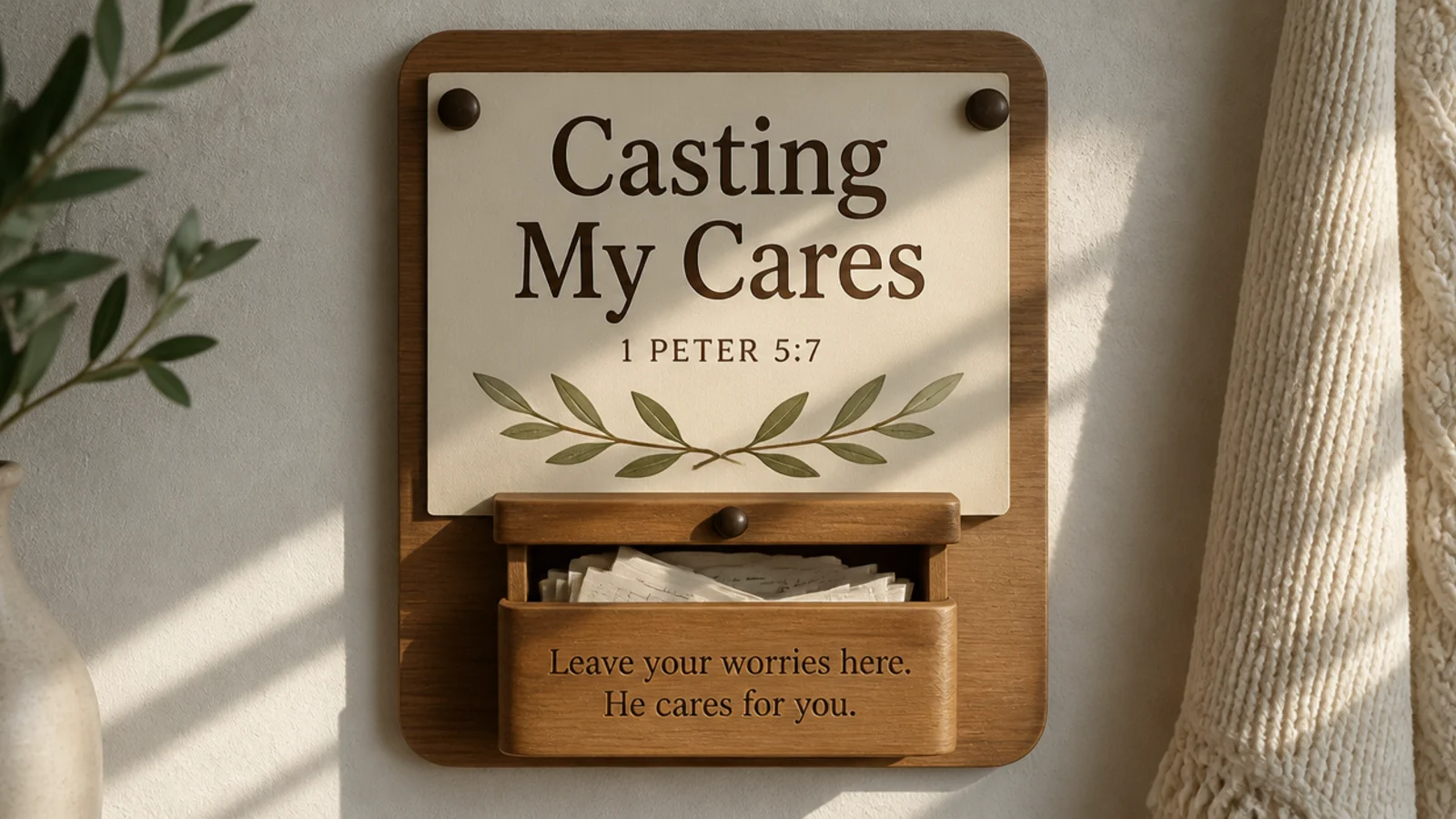
Mount a small lidded box or a slotted envelope beneath the board with a Casting My Cares label. Keep slips and a pen close. When anxiety spikes, name it on a slip, fold it, and drop it in — out of sight on purpose. Empty and review the box at month’s end, thanking God for what’s shifted and re-releasing what hasn’t.
A release box gives worry a physical destination so it stops living on the open board. You write the thing you’re anxious about, fold it, and post it into the box as a deliberate letting-go. It suits anyone whose requests pile into a wall of stress. The act of closing the lid does something the mind can feel.
Skip thisDon’t reopen the box daily to reread worries; the point is to leave them there, so save the review for once a month.
Editor's noteSay the verse about casting your cares as you drop each slip in — pairing words with the action makes the release stick.
20. Framed Fabric Board With Ribbon Lattice
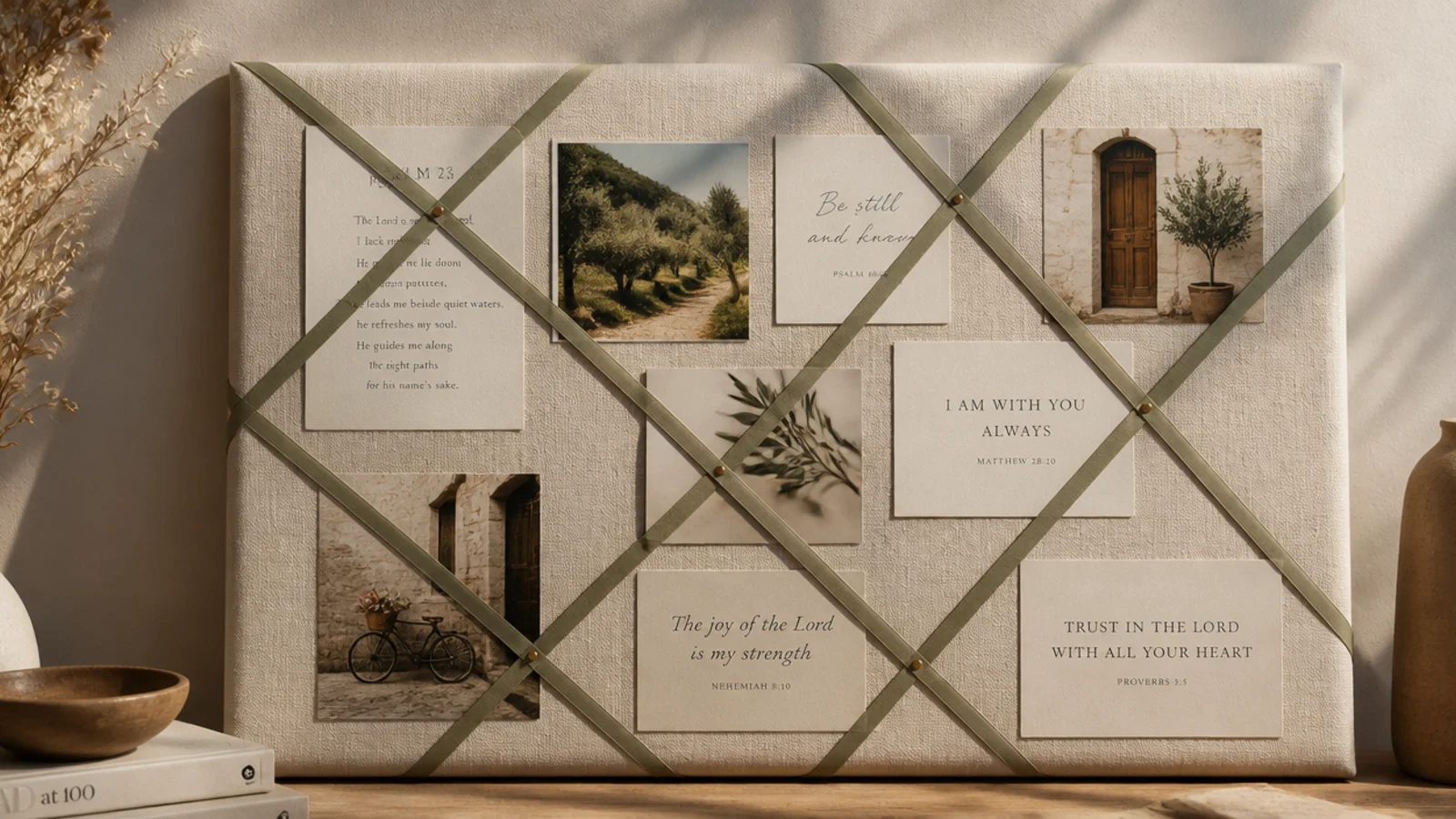
Cover a foam or corkboard with linen, wrapping it to the back and securing with staples or strong tape. Stretch ribbon diagonally in both directions to form a diamond lattice, pinning or stapling the ends behind the board. Slip scripture cards, photos, and requests behind the ribbon crossings. Keep the palette to linen, cream, and one accent so it stays elegant.
A ribbon-lattice board is the prettiest way to hold cards without a single pin. You stretch linen over a board and crisscross ribbon so cards tuck behind the crossings. It looks like a boutique memo board and suits anyone who wants the board to double as decor. Cards slide in and out, so it stays flexible.
Skip thisDon’t stretch the ribbon loosely; slack ribbon lets cards sag and fall, so keep every run taut before you fix the ends.
Editor's notePin a small button or bead at each ribbon crossing — it both anchors the lattice and adds a finished, boutique detail.