
1. Matching Scripture Card Set
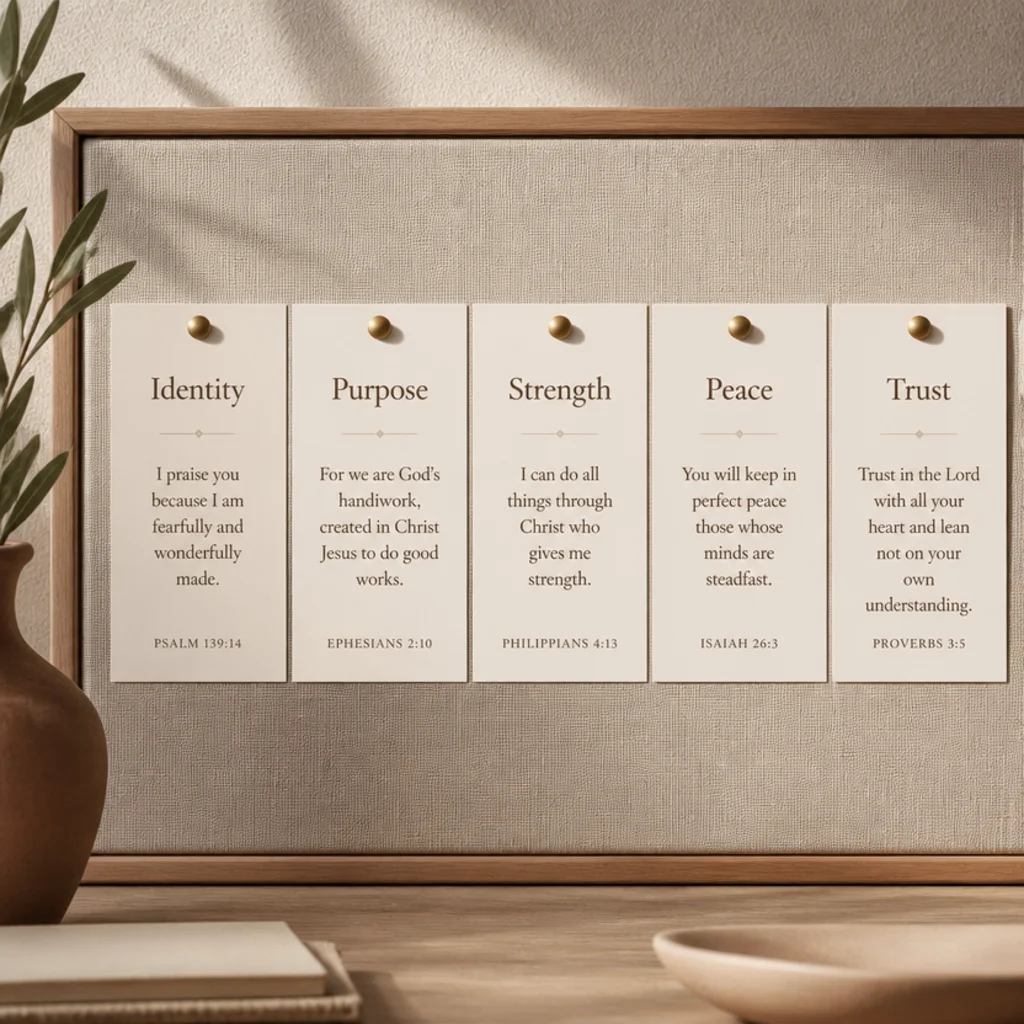
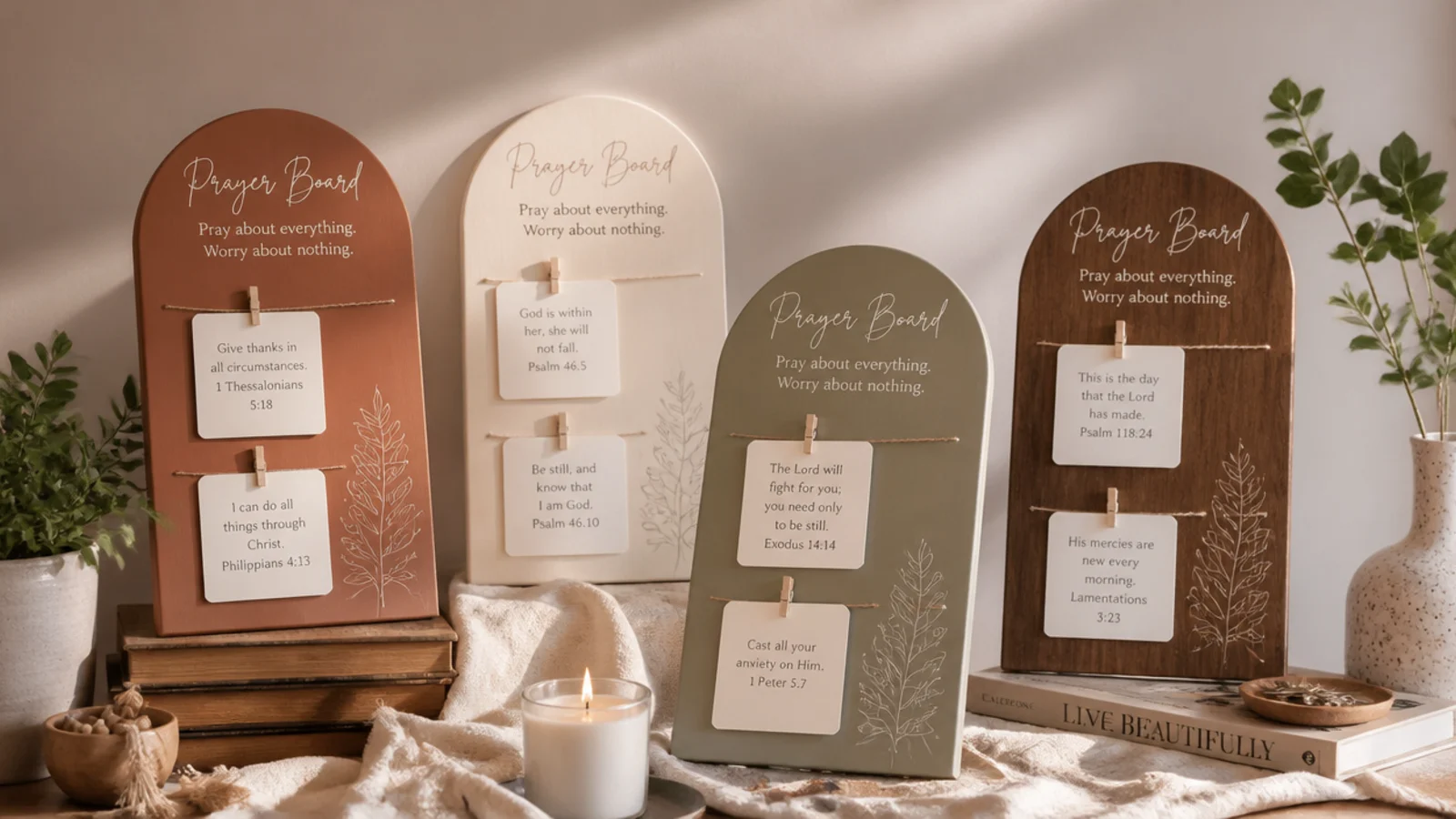
In Canva, make a 3x5 card with your chosen font and palette, then duplicate it and change only the verse and reference for each card. Print six to ten on cream cardstock at actual size. Trim with a paper trimmer and round the corners. Pin them in a tidy row or grid. Keep the design identical so the set reads as one polished collection.
A matching scripture card set is the easiest printable win — one template, printed a few times, instantly cohesive. You make one card design and swap the verse for each. It suits total beginners and makes a bare board look planned in minutes. The shared font and color do all the styling.
Skip thisDon’t mix fonts to make cards 'interesting'; one font across the set is exactly what makes it look professional.
Editor's noteChange only the words between cards, never the font or layout, so the set stays perfectly matched across every card.
2. Prayer Request Template Cards
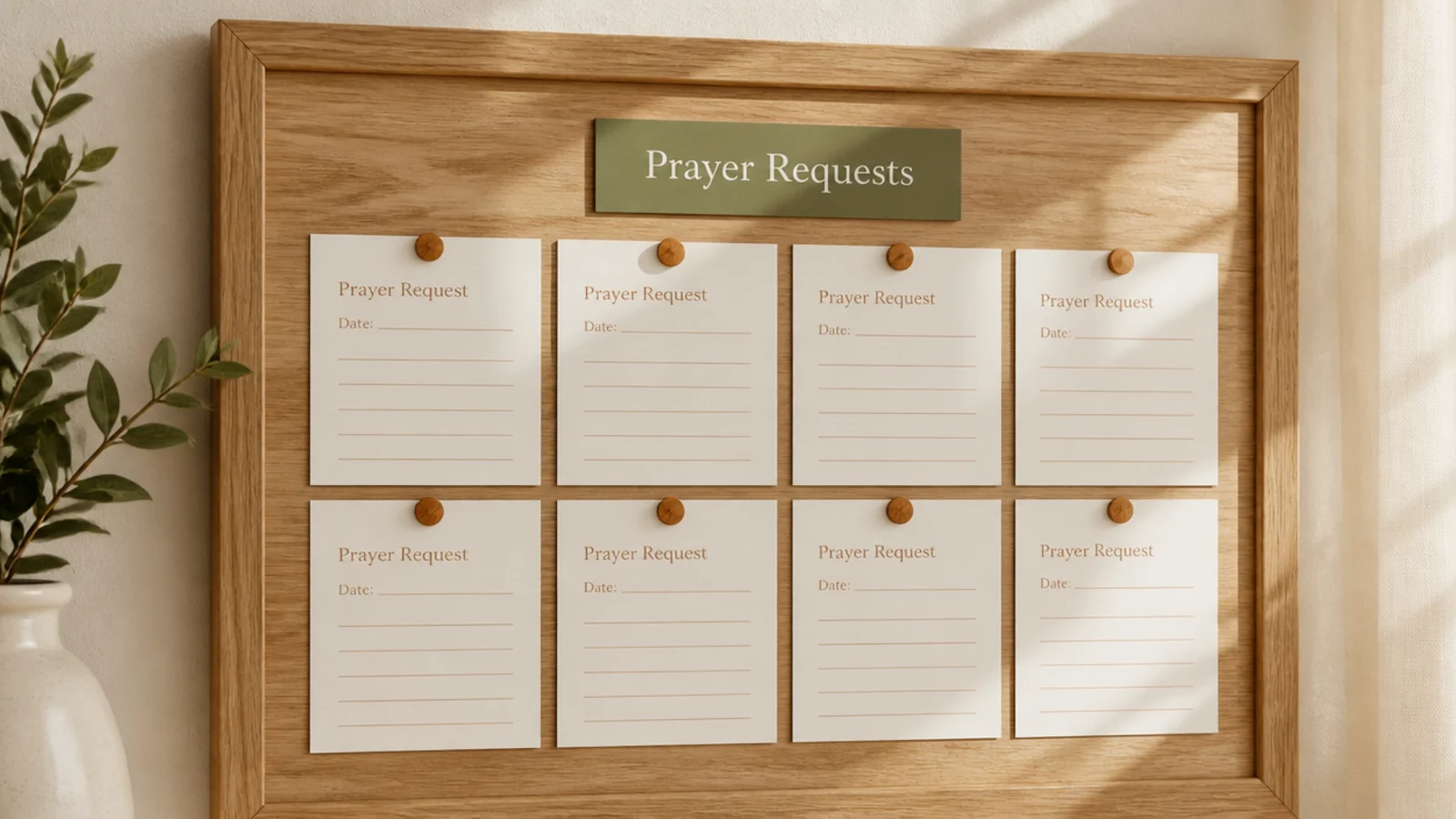
Design a 3x5 card with a small header, a couple of writing lines, and a dated corner. Print a stack on cardstock and keep blanks near the board. Write one request per card, date it, and pin it in your requests zone. When it’s answered, note the date answered and move it to the answered area. Reprint the blank stack when you run low.
Fill-in request cards give every prayer a consistent home with a spot for the date. You print blank templates and write the request in. It suits anyone who wants an organized request zone. The pre-printed lines keep your handwriting neat and every card uniform.
Skip thisDon’t cram tiny lines onto the card; leave enough room to actually write the request without squeezing.
Editor's noteAdd a small 'date answered' line at the bottom so each card carries its own before-and-after story when it moves.
3. Answered Prayer Log Printable
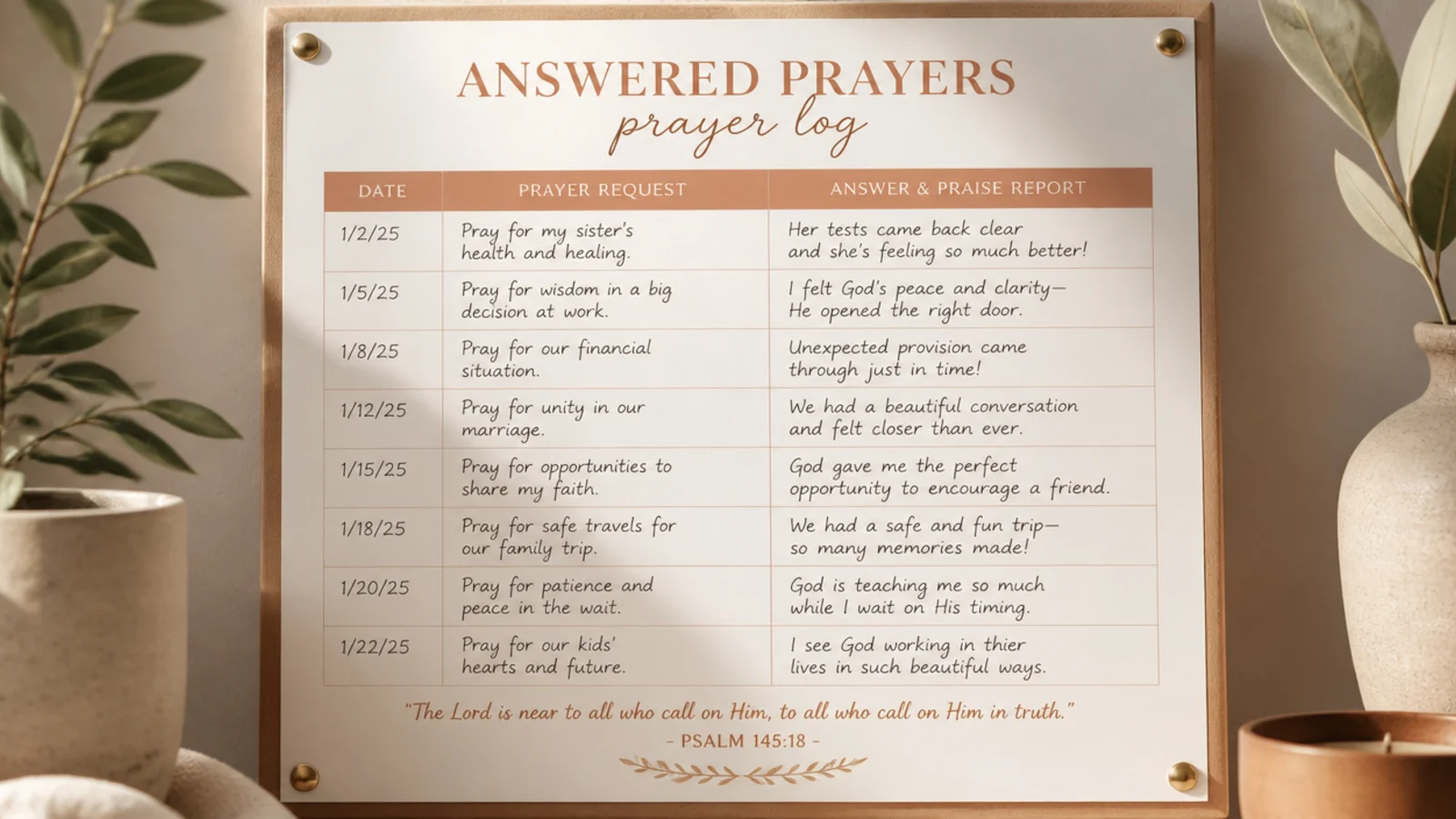
An answered-prayer log keeps a running record you can look back on. You print a lined log sheet and add a dated line each time a prayer is answered. It suits anyone who wants proof of faithfulness over time. Filling in lines becomes quietly encouraging.
Make a single-page log with dated rows and a wide notes column. Print it on cardstock and laminate it, or slip it in a sheet protector. Mount it on the board and write new entries with a fine wet-erase marker. When the sheet fills, print a fresh one and file the old in a binder. Keep the completed logs as a faith record.
Laminate the log and write with wet-erase marker so smudges resist a passing hand but you can still archive by photo.
Don’t use dry-erase on a board you’ll brush past; it smears, so wet-erase or a fresh printed page keeps entries safe.
4. Monthly Prayer Calendar
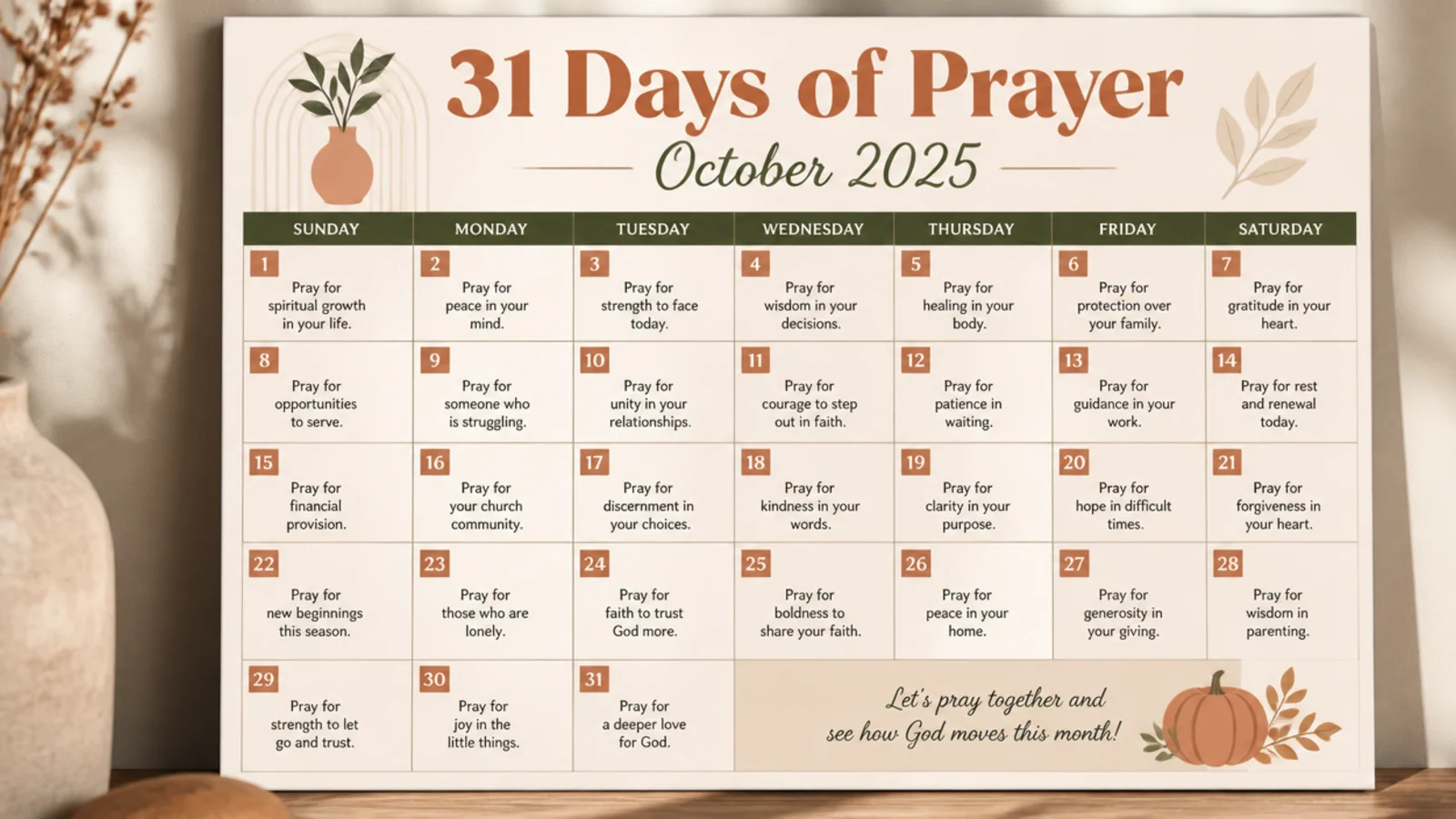
A prayer calendar assigns a focus to each day so you never run out of what to pray. You print a month grid and fill each day with a person, need, or theme. It suits anyone who wants structure. Following the calendar turns a vague intention into a daily habit.
Design a month calendar with roomy date boxes. Print on cardstock and laminate it. Write a daily focus in each box with wet-erase marker — family Monday, church Tuesday, world Wednesday, and so on. Pray that day’s box each morning and check it off. At month’s end, wipe it and plan the next month.
Assign themes to weekdays rather than filling all 30 days from scratch; a weekly pattern is far easier to keep up.
Don’t over-schedule every single day with something huge; a realistic, repeatable rhythm beats an ambitious plan you drop.
5. Prayer Prompt Cards
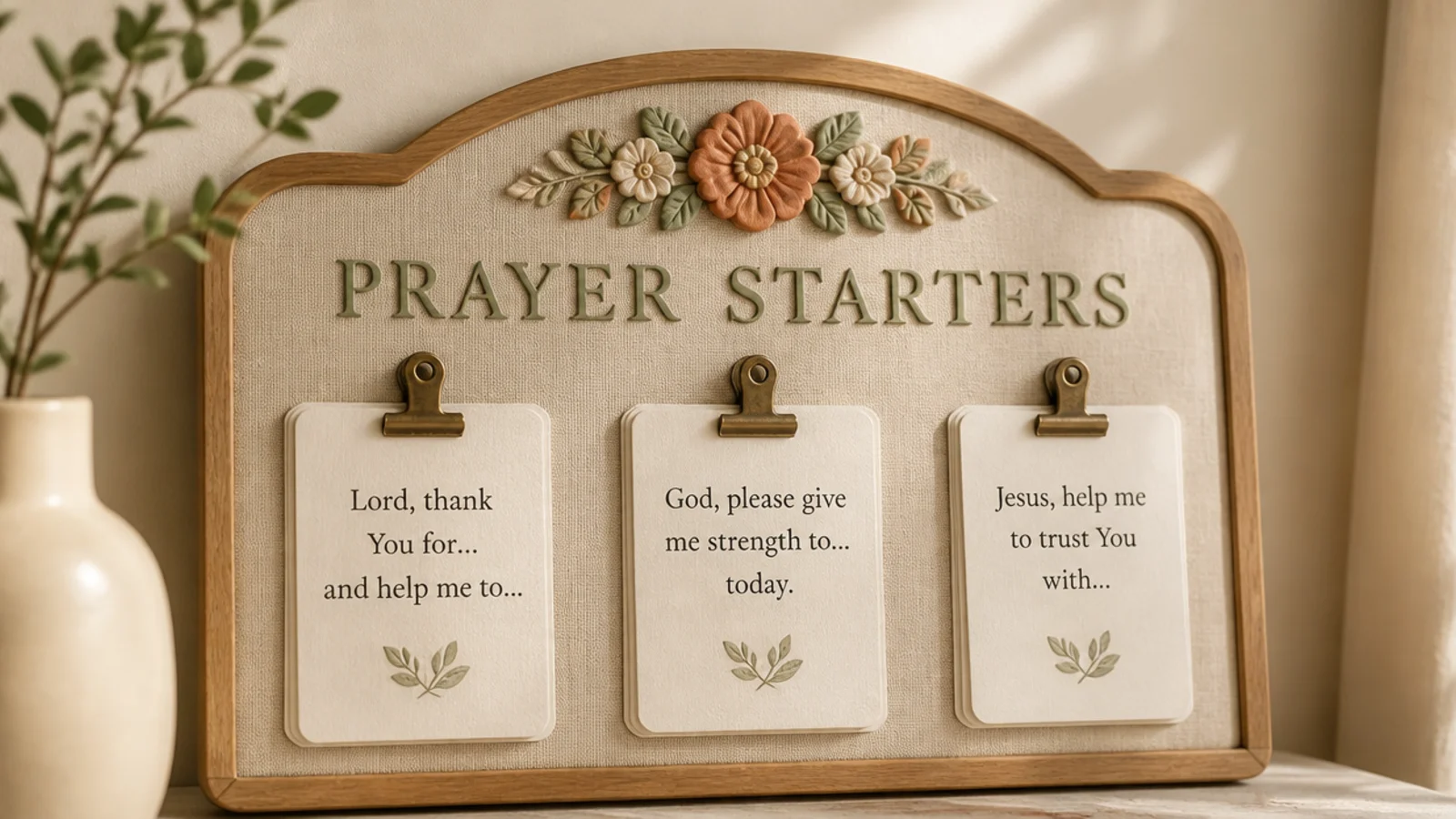
Prompt cards help when you don’t know what to pray. You print short starters — a topic or a phrase — and draw one when you’re stuck. It suits dry seasons and anyone who freezes up. The prompt gives your prayer a direction to start.
Make business-card-size prompts, one short starter each — 'someone who’s hurting', 'a leader', 'thank God for'. Print a set on cardstock, trim, and clip them in a small stack or a printed pocket on the board. Draw one when you’re stuck, pray it, and return it to the bottom. Add new prompts as ideas come.
Keep the prompts broad, not specific, so the same small set stays useful week after week without going stale.
Don’t write full scripted prayers on the prompts; a short nudge invites your own words, a script just gets read once.
6. Gratitude List Printable
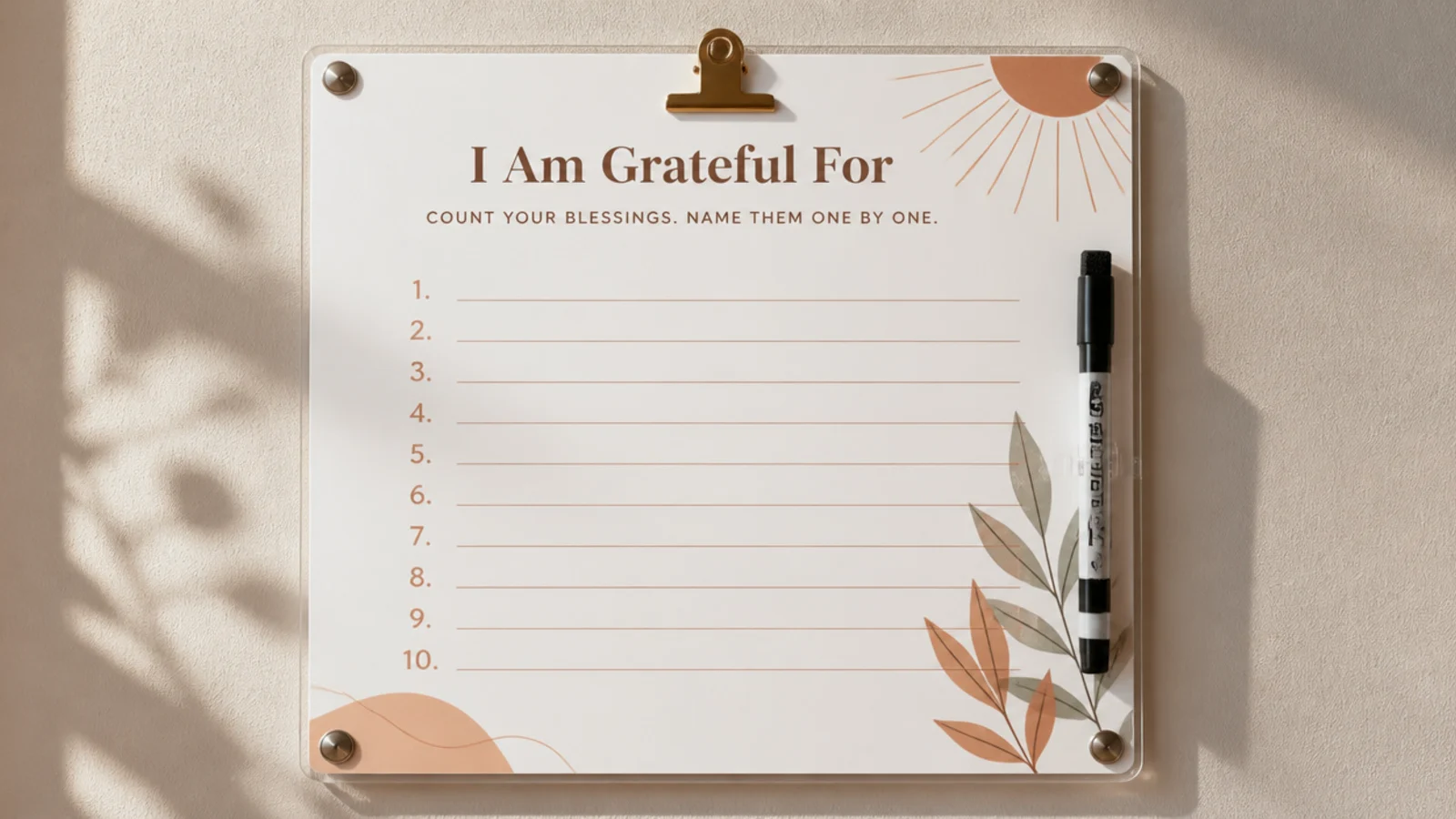
Design a single sheet with numbered lines under a Grateful header. Print on cardstock and laminate it, clipping a wet-erase marker beside it. Add one line each day. When it fills, snap a photo for your records, wipe it, and start again. Keep it in a bright spot so it’s the first thing you see.
A gratitude sheet gives thanks a dedicated, reusable spot. You print a numbered list and add one thing daily. It suits anyone wanting to build a thankfulness habit. Watching the list fill lifts the whole board’s mood.
Skip thisDon’t leave it blank for weeks; a stale gratitude sheet loses its pull, so add even one small line daily.
Editor's notePhotograph the full sheet before wiping so you keep a running record of answered gratitude across the months.
7. Bible Reading Plan Printable
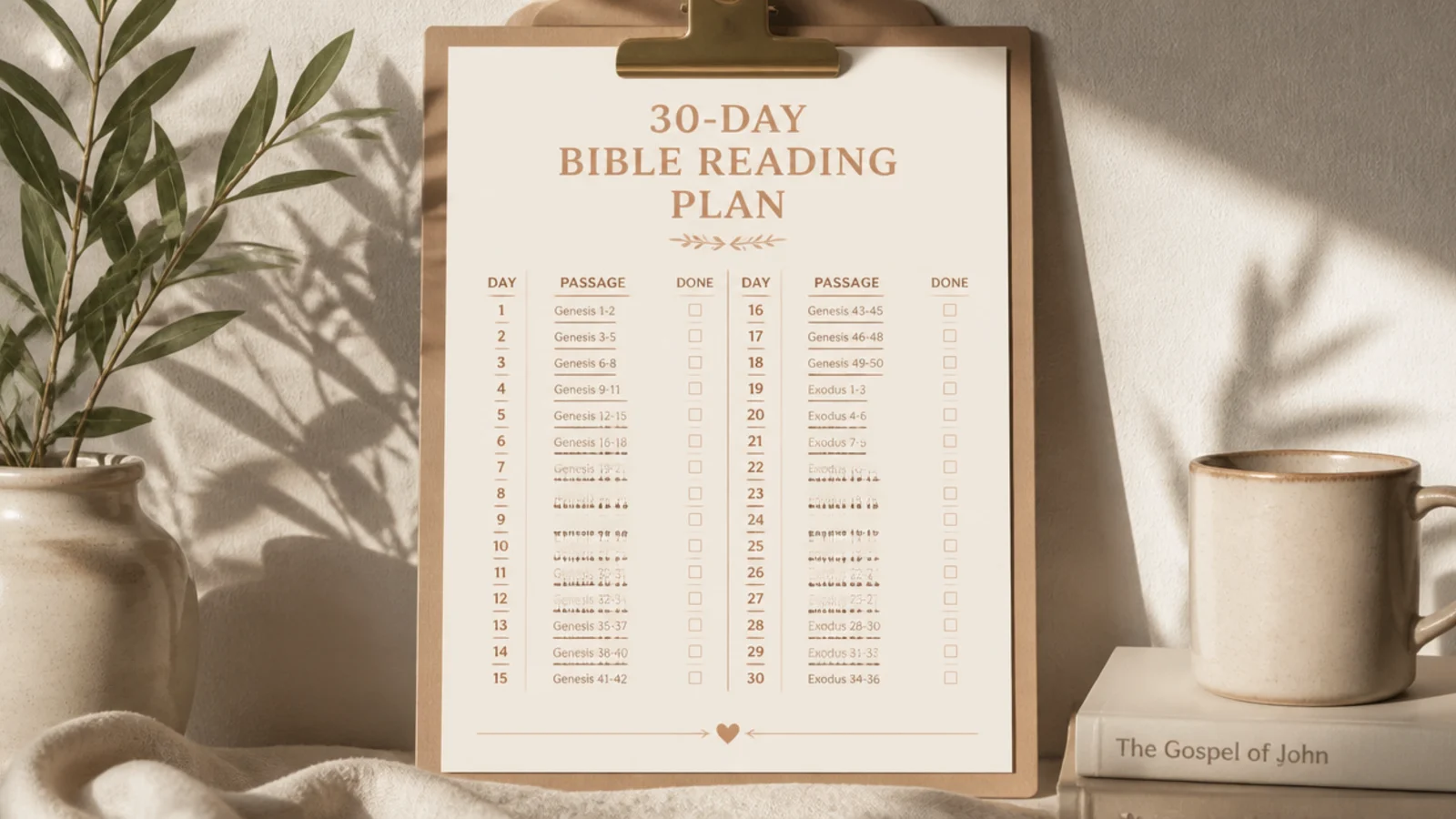
A reading-plan printable ties your board to daily scripture. You print a checklist and tick each reading. It suits anyone working a plan who wants gentle accountability. The visible checklist keeps you moving through it.
Make a checklist for your plan — a month of passages or a book-a-month grid. Print on cardstock and laminate it so you can reuse the plan, or print monthly and let it fill. Mount it with a pen or wet-erase marker nearby, and check a box each day you read. Start a fresh sheet if you fall behind rather than staring at gaps.
Break a big plan into monthly printed pages; one clean month at a time feels doable where a full-year sheet feels heavy.
Don’t tie guilt to missed boxes; the checklist is an invitation, so just pick up on today’s reading and continue.
8. Family Member Prayer Cards
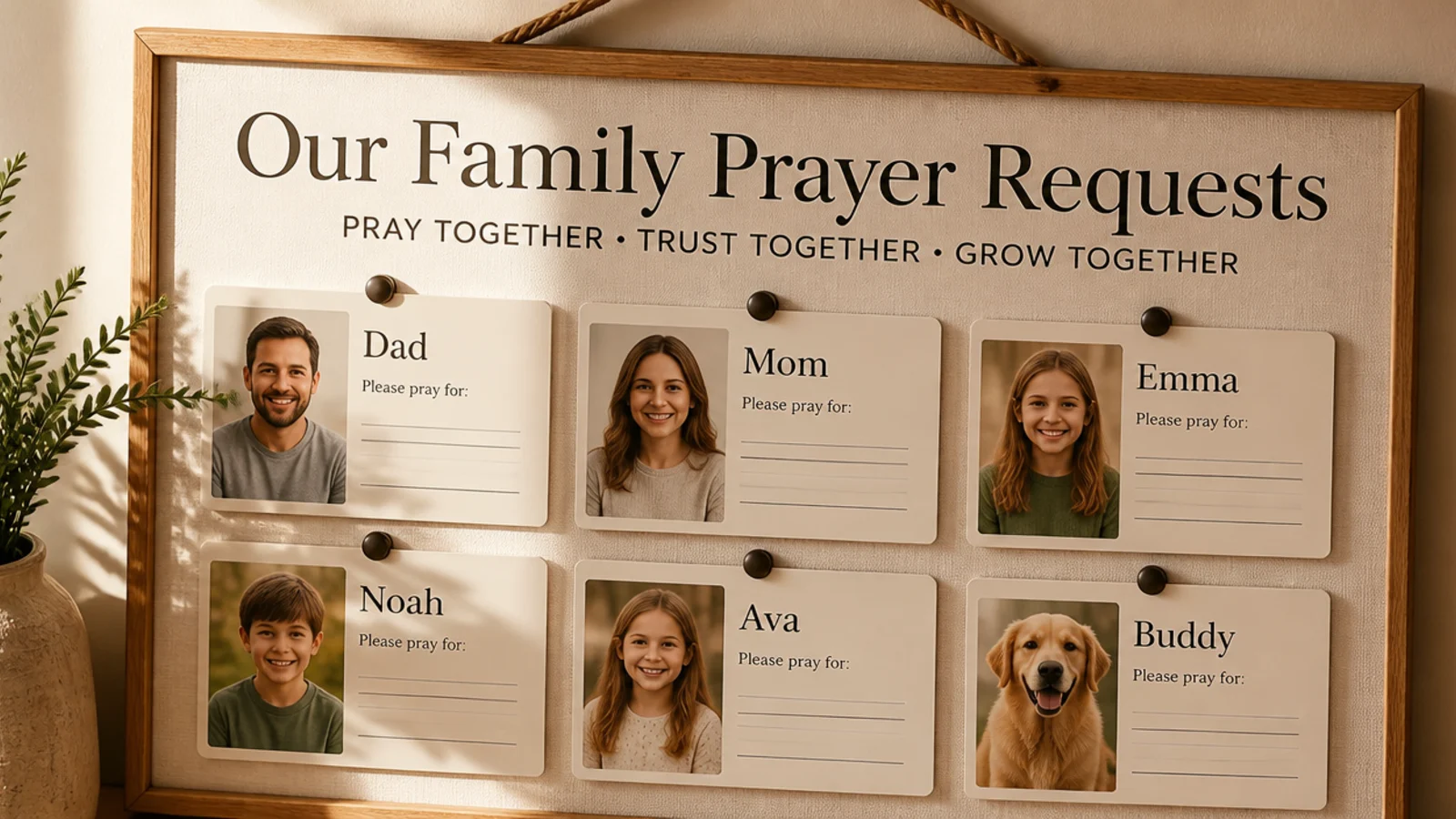
Design a 4x6 card with a photo box at top and request lines below. Print one per person, glue or tuck in a small photo, and fill the current requests in pencil so you can update them. Pin them in a grid. Update the request lines as things change, keeping the same card so the layout stays stable.
A per-person card pairs a name and photo with what to pray. You print a card for each person with a photo slot and request lines. It suits family and small-group intercession. Seeing the name and face keeps prayers specific and consistent.
Skip thisDon’t print faces so small they’re unreadable; a clear photo is what makes the prayer feel personal, so size it well.
Editor's noteWrite requests in pencil so you can update each person’s card without reprinting the whole set every time life shifts.
9. Weekly Prayer Planner Sheet
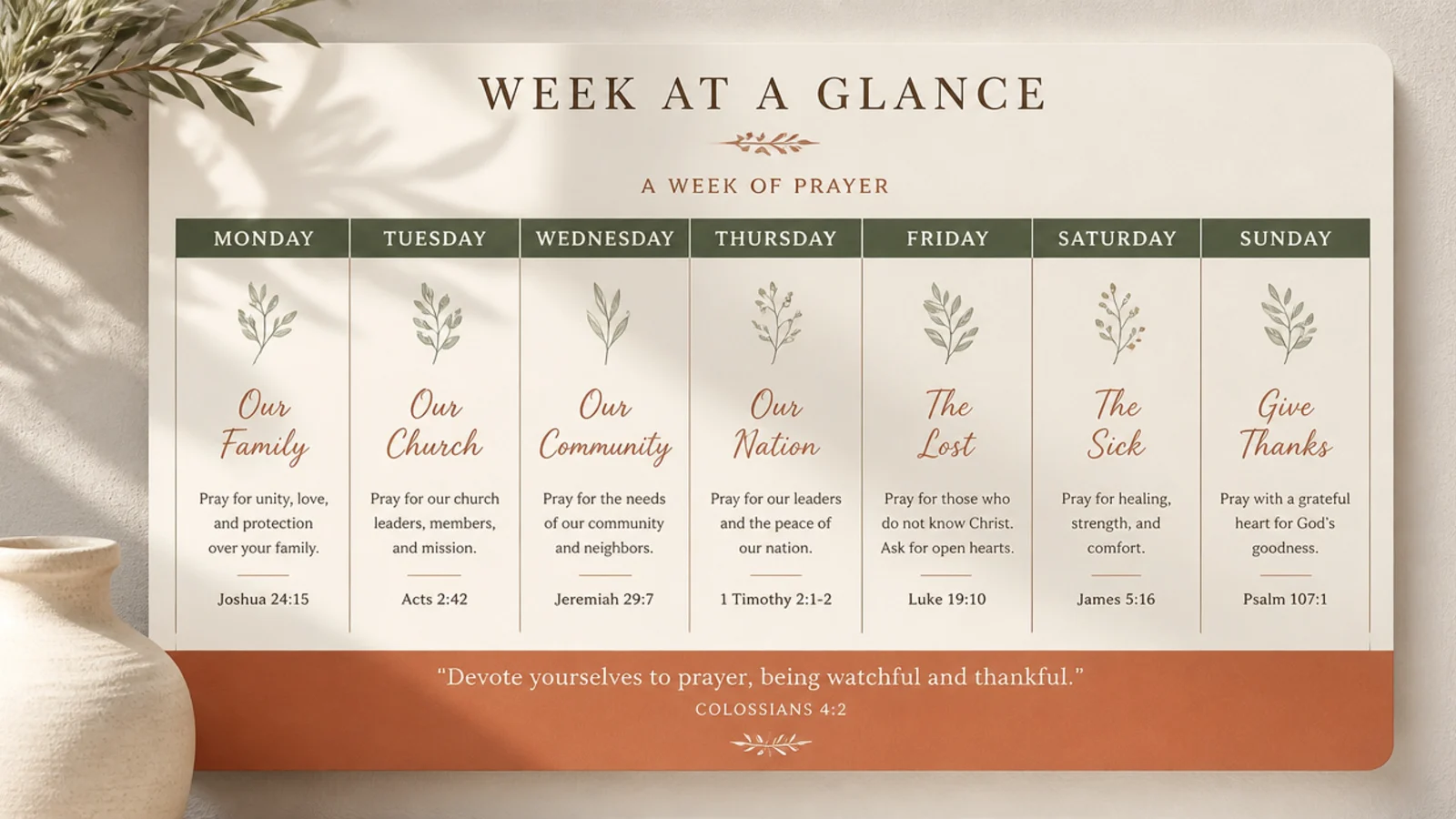
Make a week-at-a-glance sheet with a box per day and a small header. Print on cardstock and laminate it. Fill each day with a category and any specific names, and check off as you go. Wipe and re-plan weekly. Keep it beside your current-requests zone so you see the plan and the list together.
A weekly planner sheet spreads your prayer list across seven manageable days. You print a week grid and assign focuses per day. It suits anyone overwhelmed by a long list. Breaking it into days makes the whole list feel possible.
Skip thisDon’t schedule so much per day you can’t finish; a short daily focus you complete beats a long one you abandon.
Editor's noteReuse the same weekly theme pattern each week and just update names; a stable rhythm is easier to sustain than a new plan weekly.
10. Verse of the Month Poster
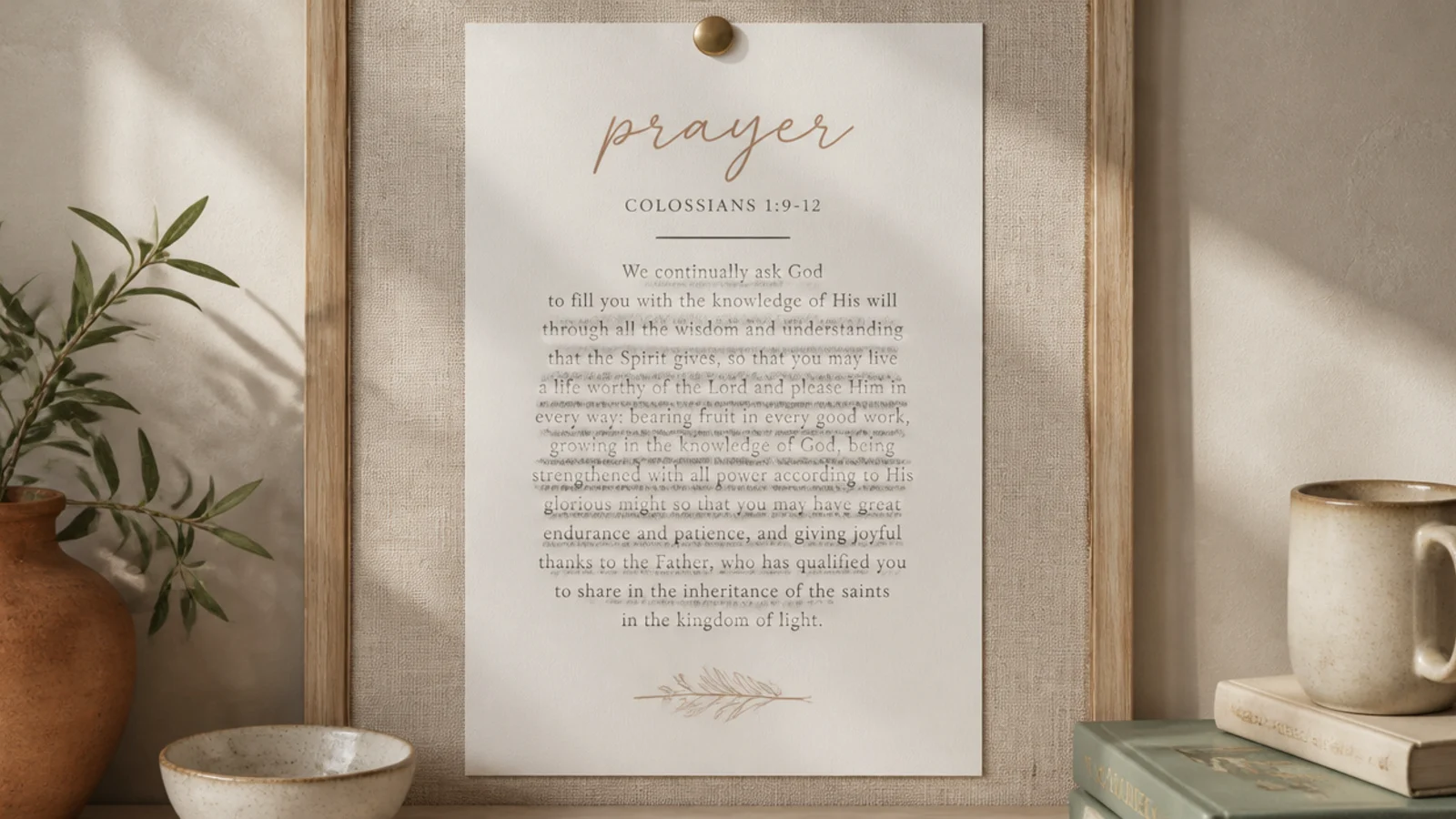
Design a letter-size poster with one verse in large, clean type and a simple accent. Print on cardstock and mount it as the board’s centerpiece with clips or a frame. On the first of the month, print the new verse and swap it, filing the old one on a ring. Keep the design consistent month to month for a cohesive look.
A printable verse poster gives the board a bold focal point and a memory goal. You print one verse large and swap it monthly. It suits anyone building scripture memory. The large type anchors the whole board and is easy to memorize.
Skip thisDon’t choose a whole passage to memorize monthly; one or two verses is realistic and keeps the poster readable.
Editor's noteKeep the poster template identical and change only the verse; a consistent frame makes the monthly swap feel like a series.
11. Section Header Labels
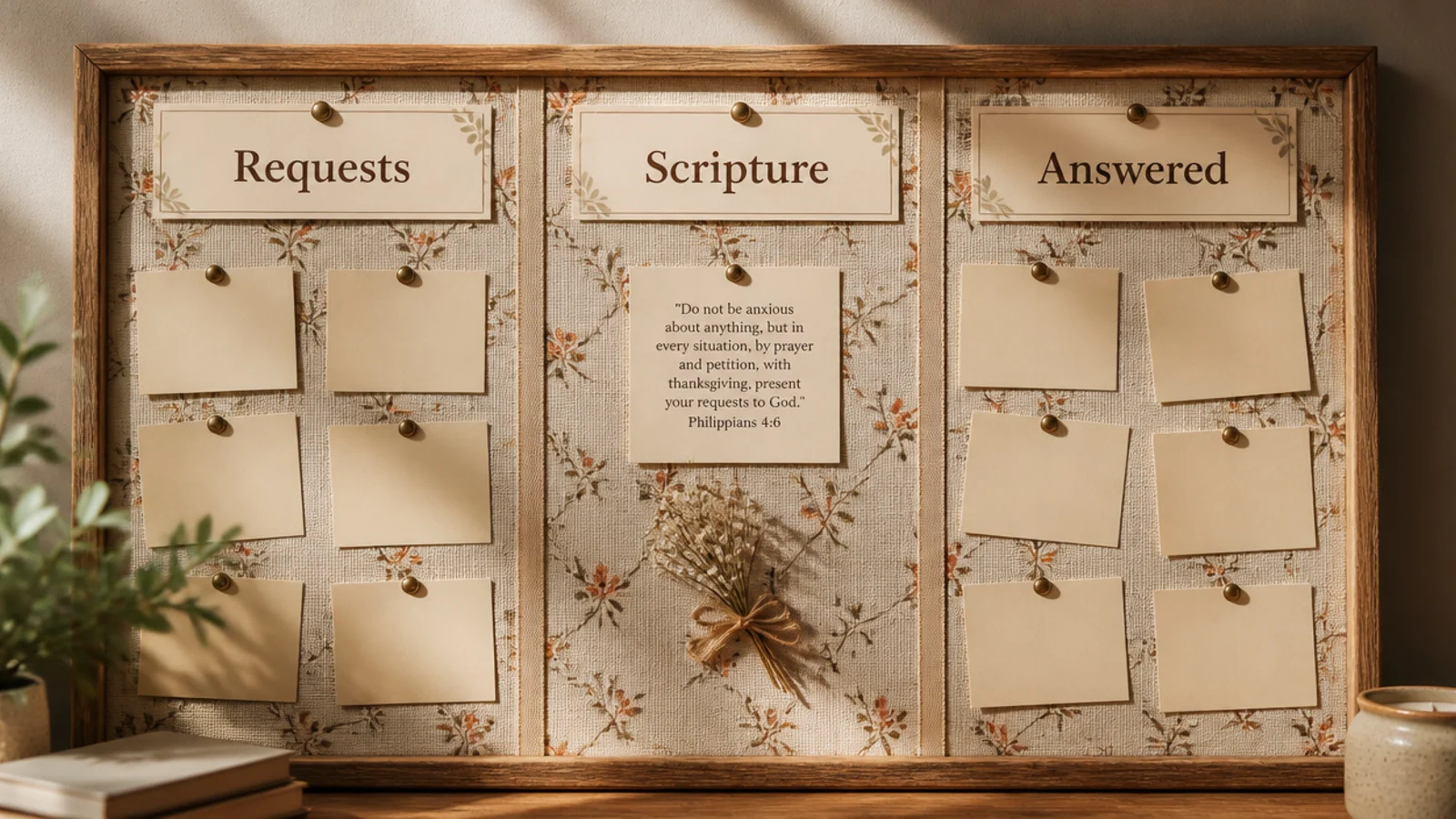
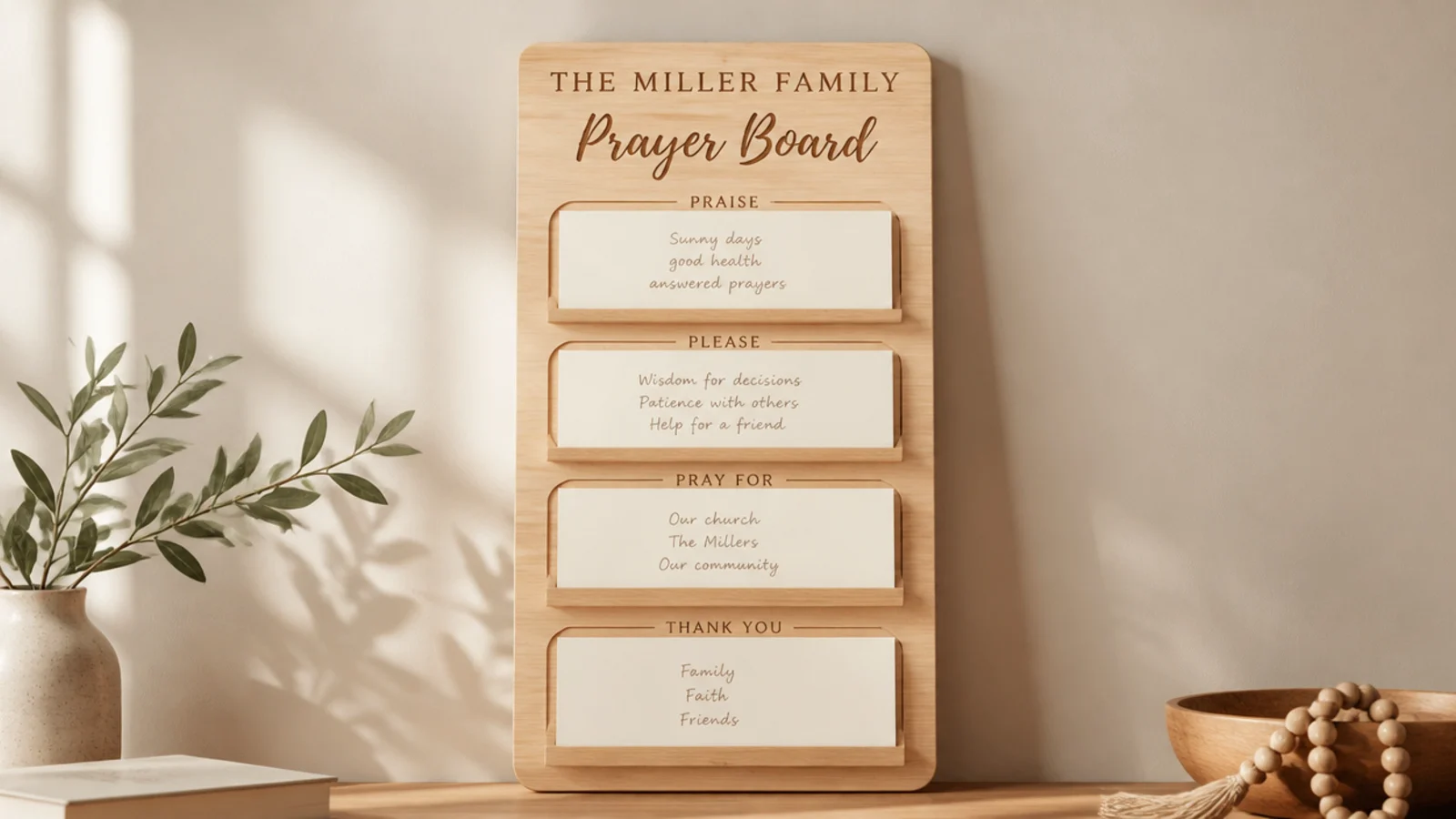
Printed header labels turn a random board into clearly organized zones. You print small titles — Requests, Scripture, Praying For, Answered — and pin one above each area. It suits anyone whose board feels chaotic. The labels instantly impose order.
Design small banner labels in your set font, one per zone. Print on cardstock, trim, and pin each above its section. Space the zones so the labels have room to breathe. Reprint if you rename or add a zone. Keep them the same style as your cards so the headers and contents look like one system.
Make the header labels a slightly different shape — a banner or tag — so they read as titles, not just more cards.
Don’t over-label into a dozen tiny zones; three or four clear sections read organized, more just adds clutter.
12. ACTS Prayer Method Printable
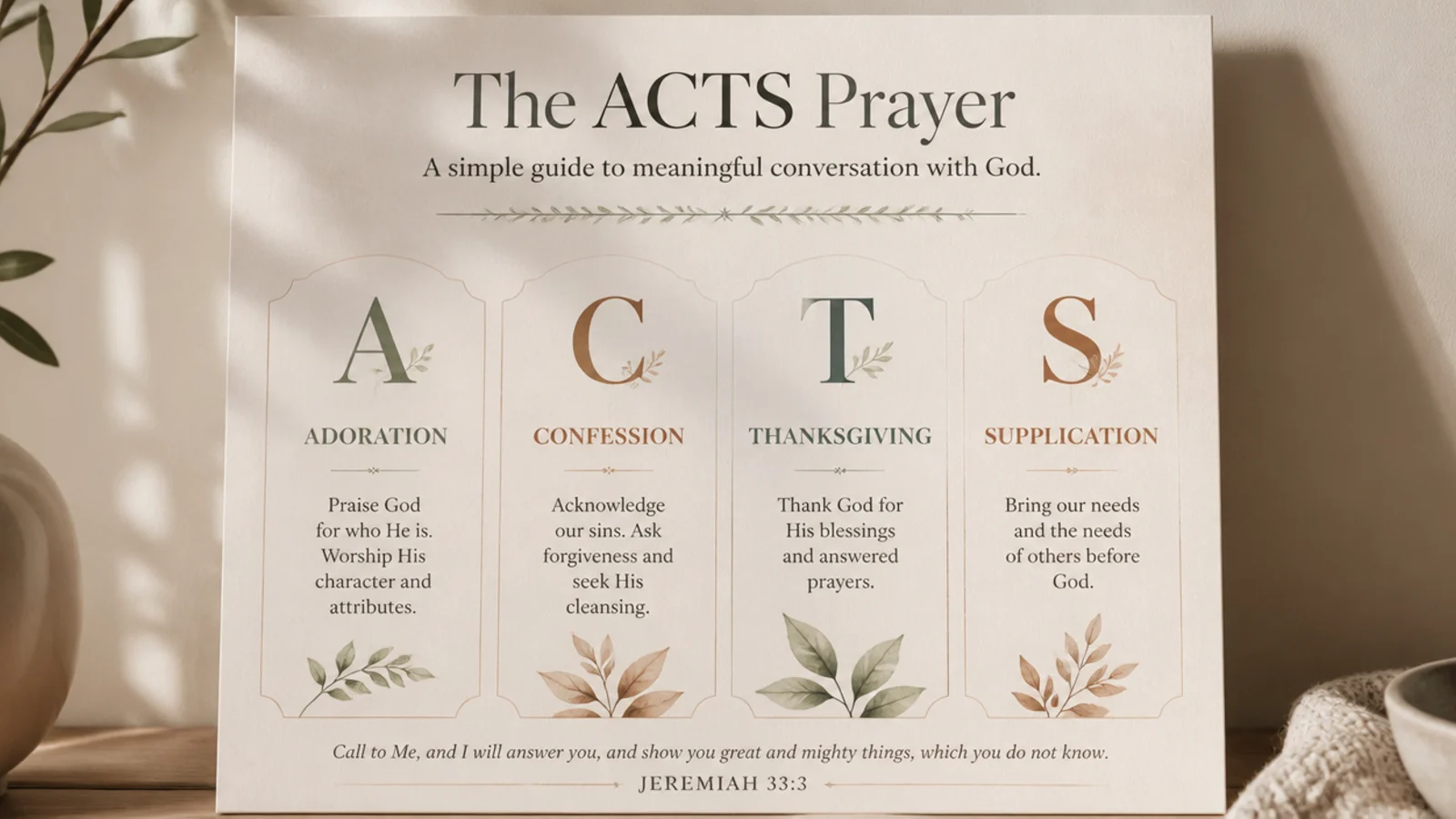
Design a card listing the four ACTS steps with a one-line prompt under each. Print on cardstock and pin it where you sit to pray as a gentle guide. Work down the four sections when you pray. Pair it with your request cards for the Supplication step. Keep it simple — the card is a reminder, not a script.
An ACTS guide card structures your prayer time into Adoration, Confession, Thanksgiving, and Supplication. You print the framework as a reference. It suits anyone who wants a fuller prayer rhythm than just requests. The four steps keep prayer balanced, not all asking.
Skip thisDon’t turn the method into a rigid checklist; let it guide the flow rather than making prayer feel like a form to fill.
Editor's notePin the guide card at eye level where you actually pray so you naturally glance at the four steps and follow them.
13. Prayer Jar Slip Printables
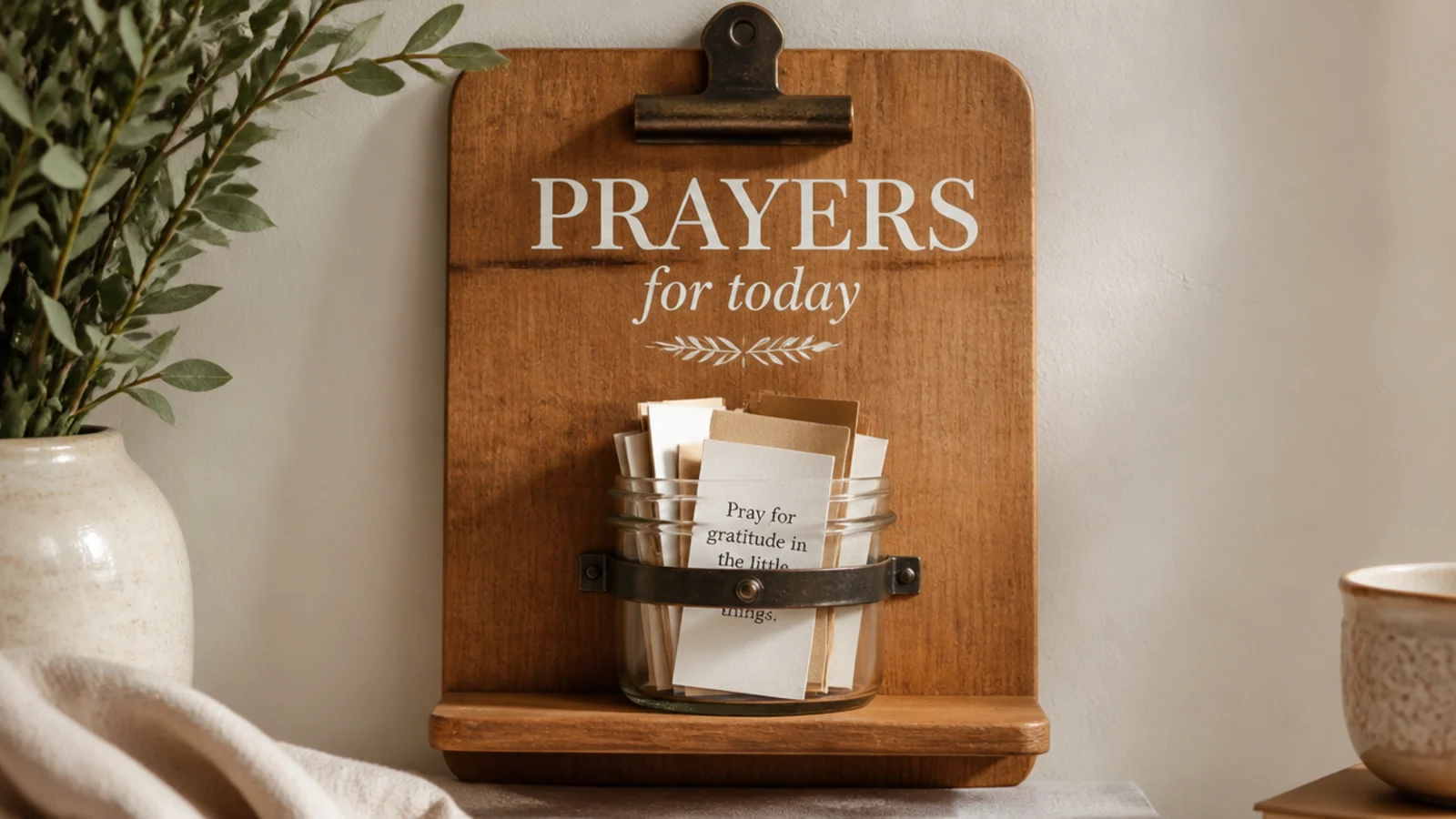
Design a page of small slips — a short line for the prayer and a spot for the date — and print a full sheet on cardstock. Cut them apart and stack them by the jar. Write a prayer, fold it, and drop it in. Once a month, read through and move any answered ones to your answered zone. Reprint a sheet when the stack runs low.
Printable slips make a prayer jar feel intentional instead of scrap paper. You print small uniform slips to write and fold into a jar. It suits the release-and-let-go practice. Matching slips keep the jar tidy and the ritual consistent.
Skip thisDon’t use random scrap paper alongside the printed slips; mismatched sizes make the jar look messy when you open it.
Editor's notePrint a whole sheet of slips at once and cut them in a stack with a trimmer, so you always have a supply ready to grab.
14. Names of God Printable Set
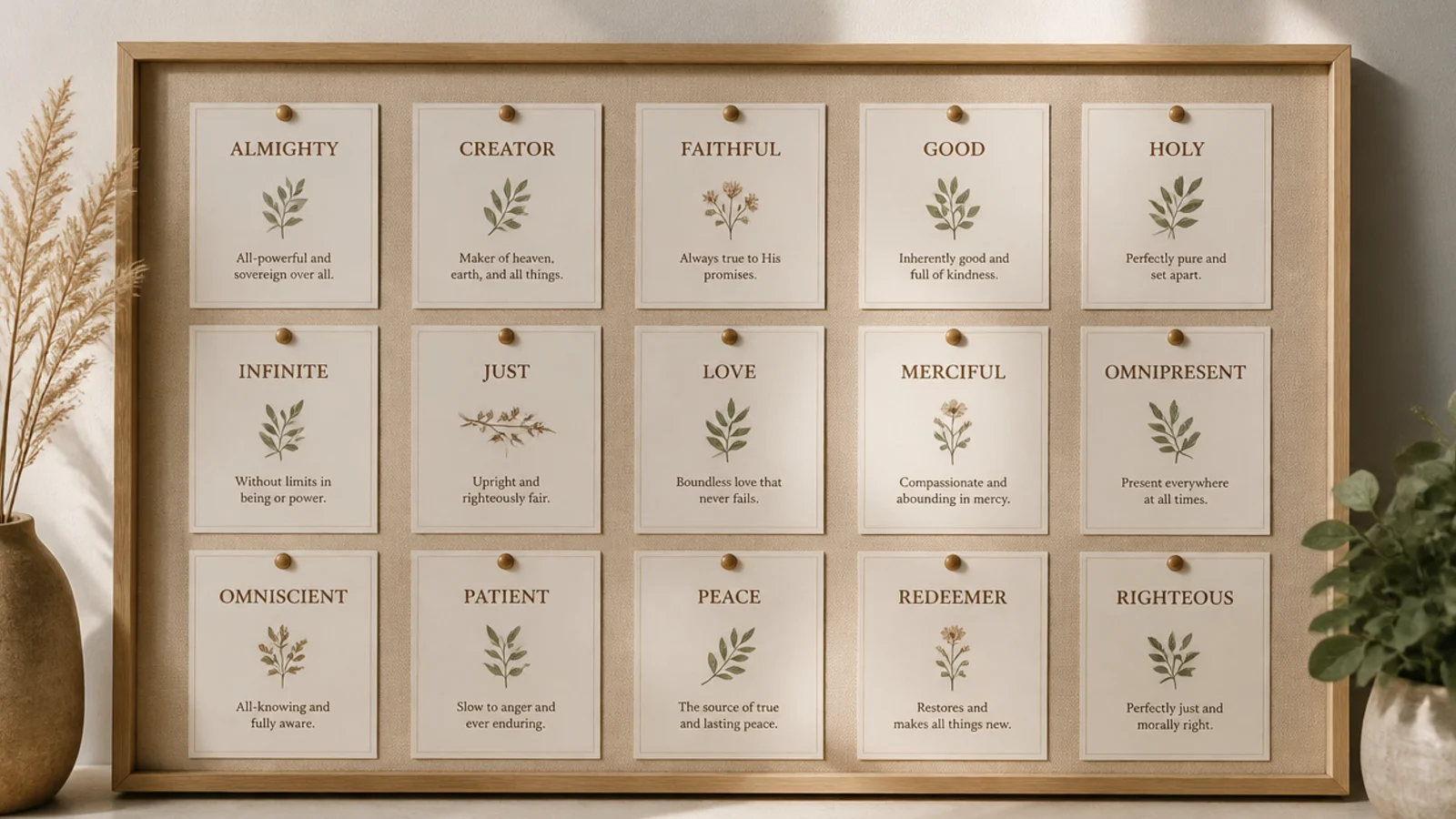
A names-of-God set turns adoration into something you can pray through. You print cards each naming a character or attribute of God. It suits anyone who wants to grow in worship, not just requests. Praying the names deepens the adoration part of prayer.
Design a matching set of cards, one attribute or name each with its reference. Print on cardstock, trim, and arrange in a calm grid or a dedicated zone. Pray through one or two each day as adoration before you bring requests. Keep the design uniform so the set reads as one collection. Add cards as you learn more.
Pray one name each day as your opening adoration; rotating through the set keeps worship fresh and unhurried.
Don’t crowd all of them on at once as decor; a readable grid you actually pray through beats a wall of tiny cards.
15. Scripture Affirmation Printables
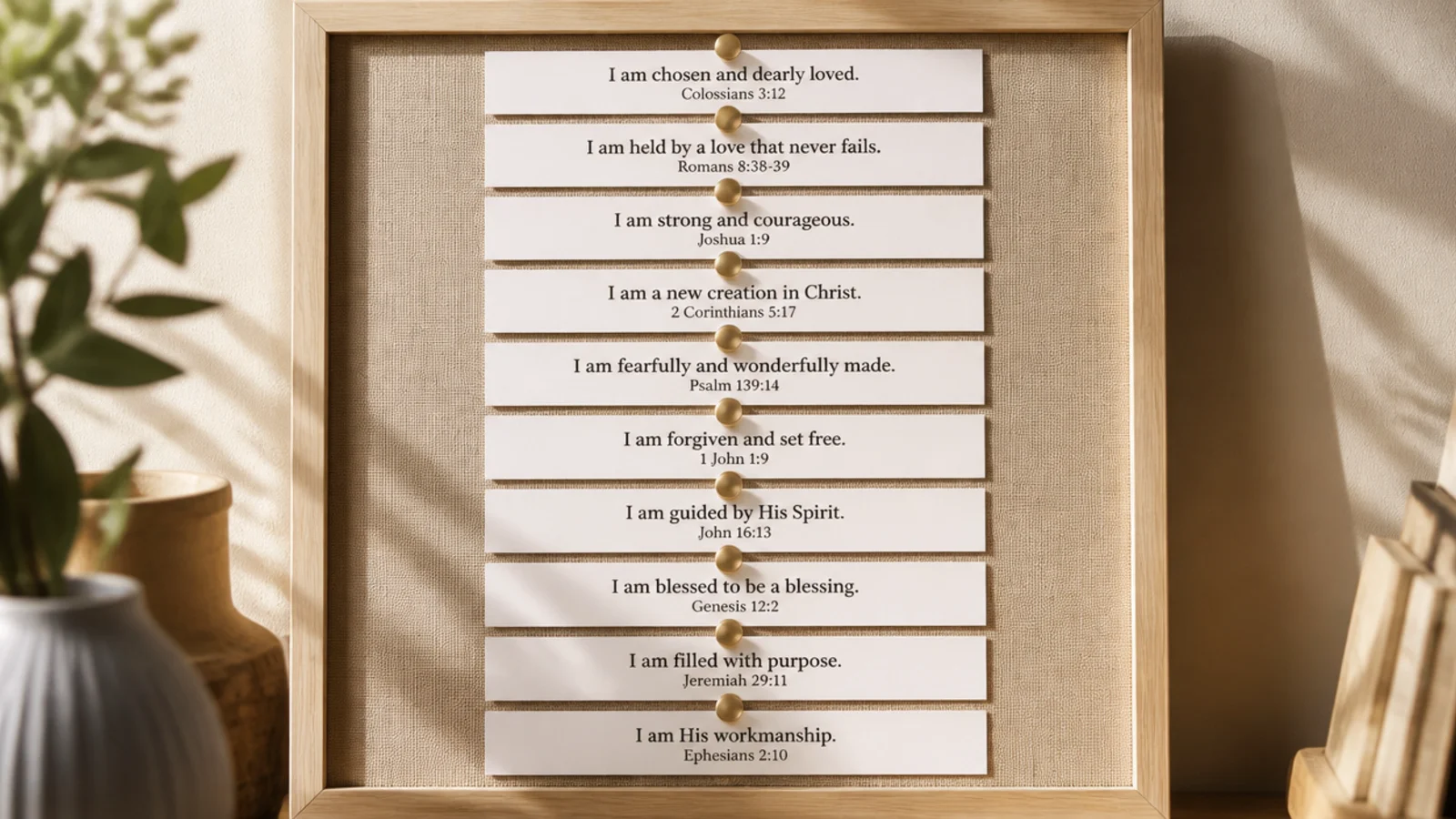
Design narrow strips, one short scripture-based truth each with its reference in small print. Print on cardstock and trim into strips. Pin four or five in a stack you read aloud when you sit down. Swap in new ones as different truths become the ones you need. Keep them anchored to real verses, not just positive lines.
Truth strips speak scripture-based identity over you daily. You print short affirmations grounded in verses and read them each morning. It suits anyone fighting anxious or defeated thoughts. Reading them becomes the truth you carry into the day.
Skip thisDon’t post a wall of twenty; a handful you read aloud daily does more than a stack your eye skips over.
Editor's notePrint the verse reference on each strip in small type so every affirmation stays rooted in scripture, not just self-talk.
16. Kids' Coloring Prayer Cards
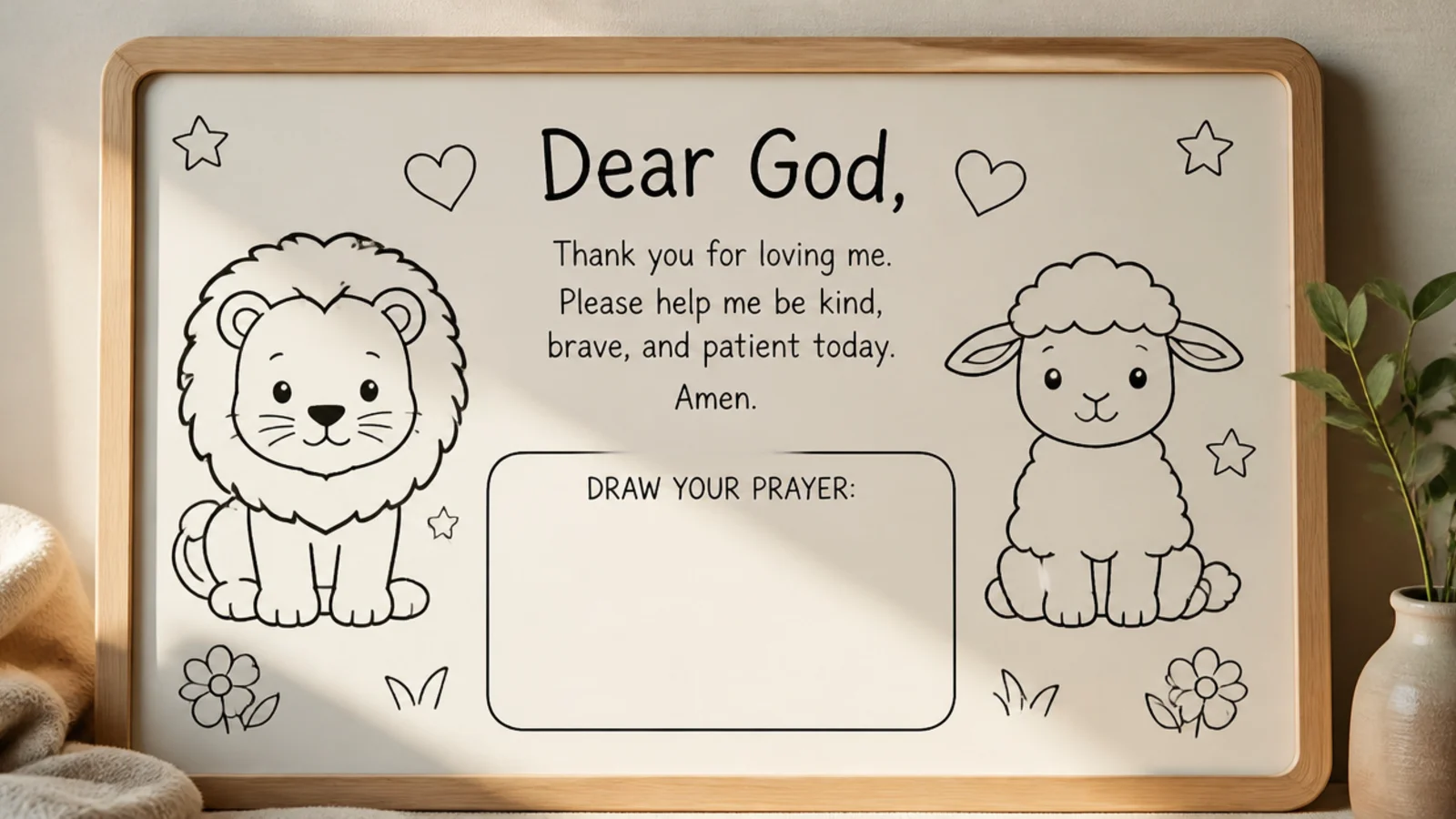
Design simple line-art cards with a short prayer and blank space to draw. Print on cardstock so crayon and marker don’t bleed through. Let kids color and draw what they’re praying for, then pin their cards in a kids' zone. Rotate in fresh outlines regularly so it stays engaging. Keep a few blanks handy for spontaneous prayers.
Coloring prayer cards get kids involved in the board. You print outline cards children color and add their own drawing or request. It suits family boards and children’s rooms. Coloring makes prayer hands-on and theirs.
Skip thisDon’t correct or redo their cards; the point is their participation, so let the wobbly coloring stay proudly on the board.
Editor's notePrint on cardstock, not paper, so markers don’t bleed through and the colored cards stay stiff enough to pin.
17. Praise Report Cards
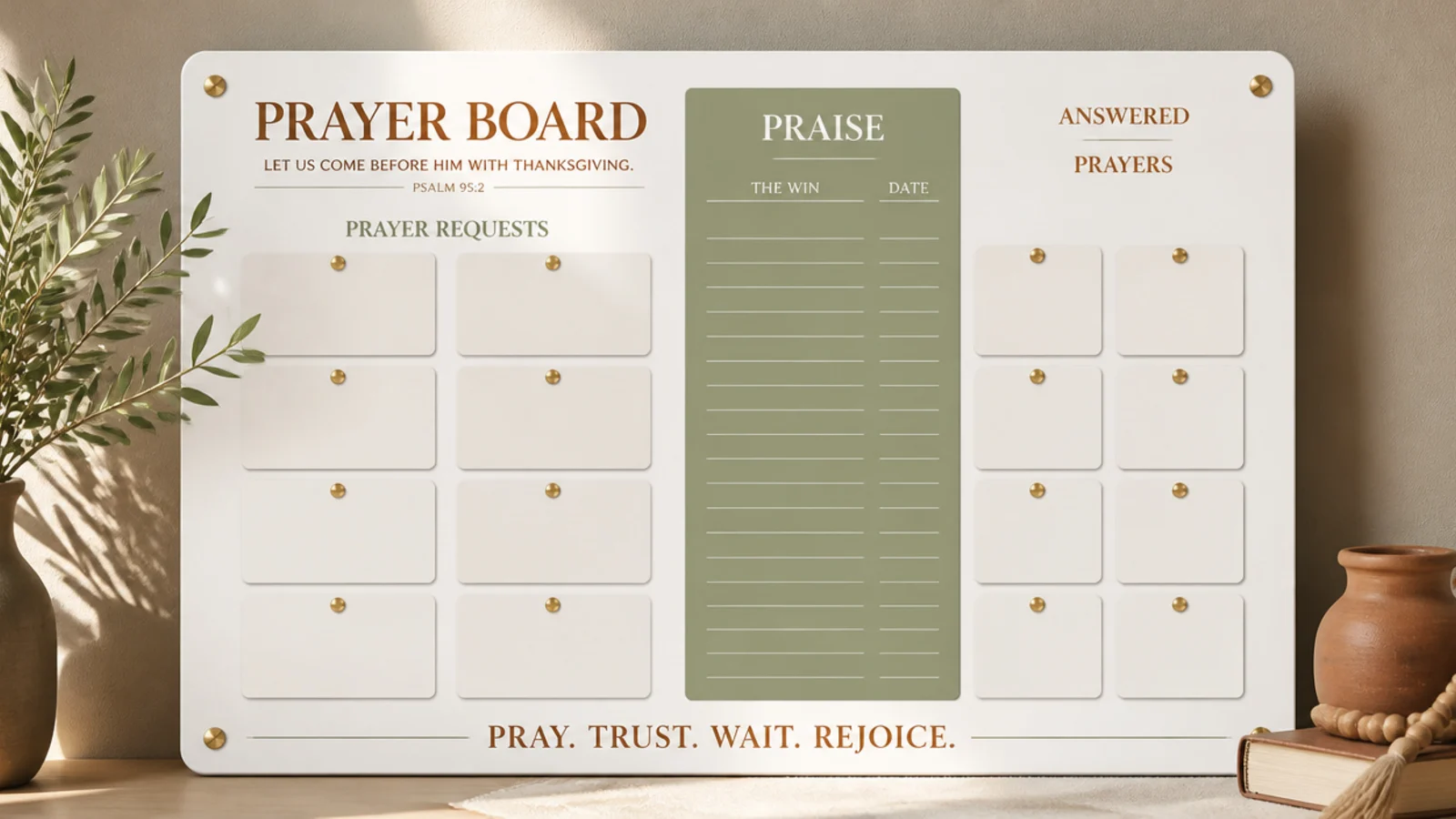
Design a card in a warmer color than your requests, headed Praise, with a line for the win and a date. Print a stack and keep them handy. Fill one for every answered prayer or good report and pin it in a praise column. Archive the oldest to a keepsake ring when the column fills, keeping the freshest visible.
Praise cards keep answered prayers and good news celebrated and separate. You print bright, distinct cards for wins and fill one whenever something good happens. It suits anyone who forgets to celebrate. The distinct color makes the praise column pop.
Skip thisDon’t blend praise cards into the request zone; keeping them a distinct color and place is what makes the wins stand out.
Editor's notePrint praise cards in a warmer tone than requests so the celebration column visually glows against the rest of the board.
18. Prayer for the Nations Printable
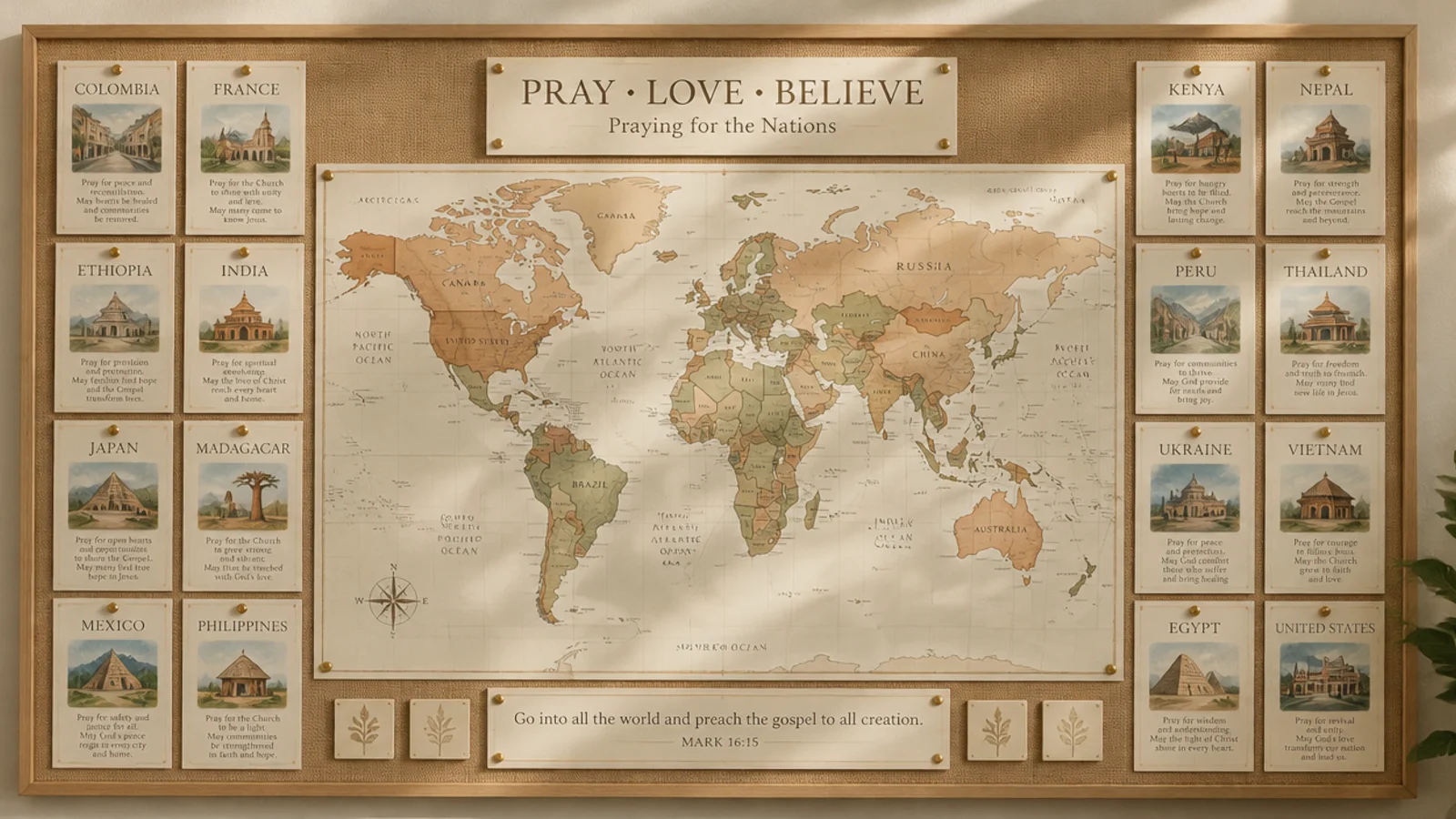
Print a simple world map and a set of small country or region cards. Mount the map and pin a card beside the places you pray for, noting the need. Rotate through a region each week so the whole map gets covered monthly. Update cards as needs change. Keep it to a focused handful of places so prayers stay specific.
A nations printable makes global and missions prayer tangible. You print a map and small country cards to pray through the world. It suits families and missions supporters. Pointing to each place makes far-off needs feel near.
Skip thisDon’t pin so many countries it’s a blur; a few you pray for well beats a map you can’t focus on.
Editor's noteCover one region per week rather than the whole map daily; rotating keeps global prayer specific instead of vague.
19. Board Section Divider Printables
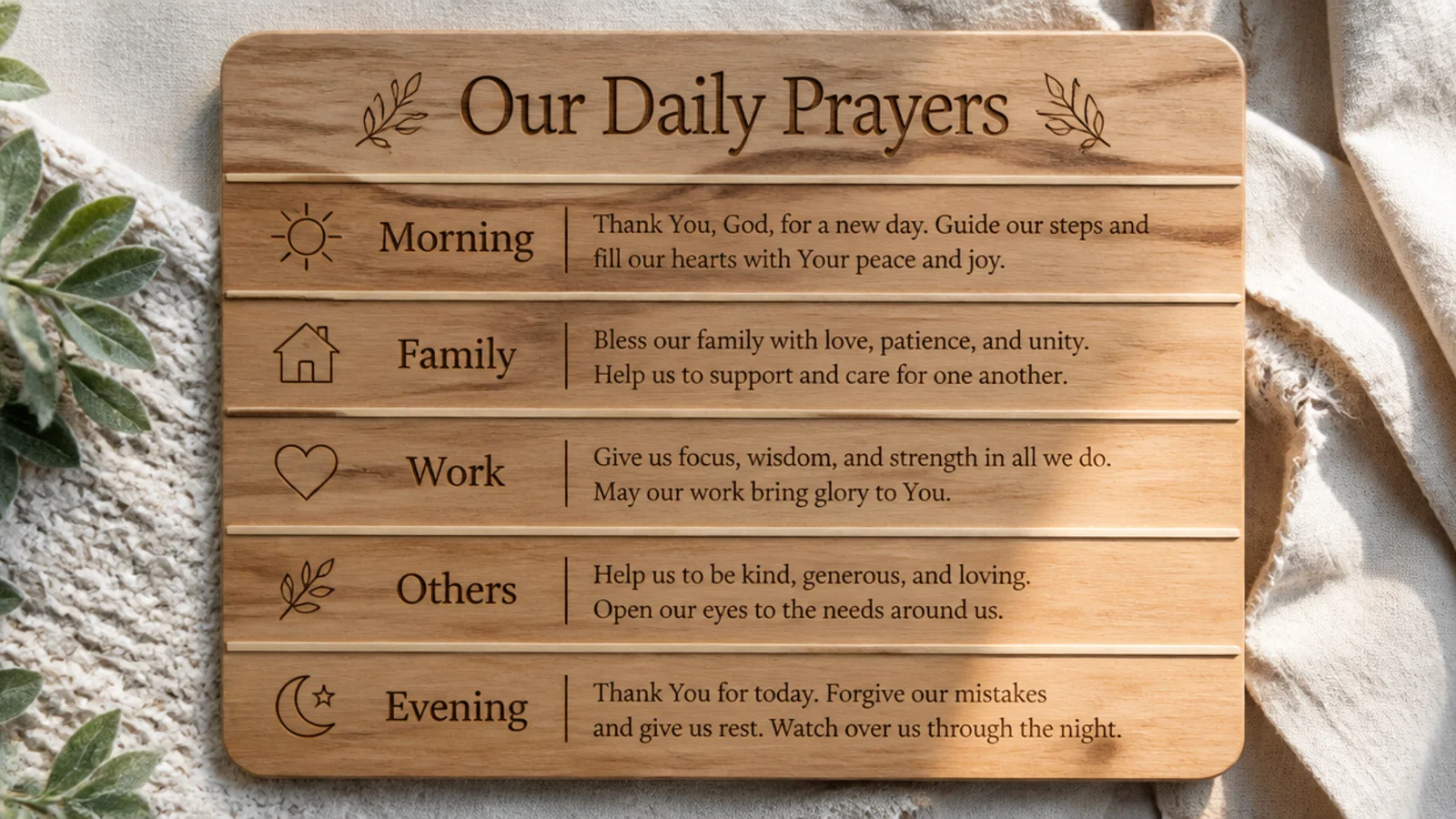
Design thin horizontal or vertical divider strips in your palette — a simple pattern or a solid band. Print on cardstock, trim into strips, and pin them between your sections to separate zones. Match them to your header labels for a coordinated system. Reposition as your layout changes since they just pin in place.
Divider strips create clean visual borders between zones without tape lines. You print thin decorative strips and pin them between sections. It suits anyone who wants defined zones that look designed. The printed dividers read more polished than washi tape.
Skip thisDon’t make dividers bold or busy; they should quietly separate zones, not compete with the cards for attention.
Editor's noteMatch the dividers to your header labels so the whole board reads as one designed system, not assorted printed bits.
20. Verse Bookmark Printables
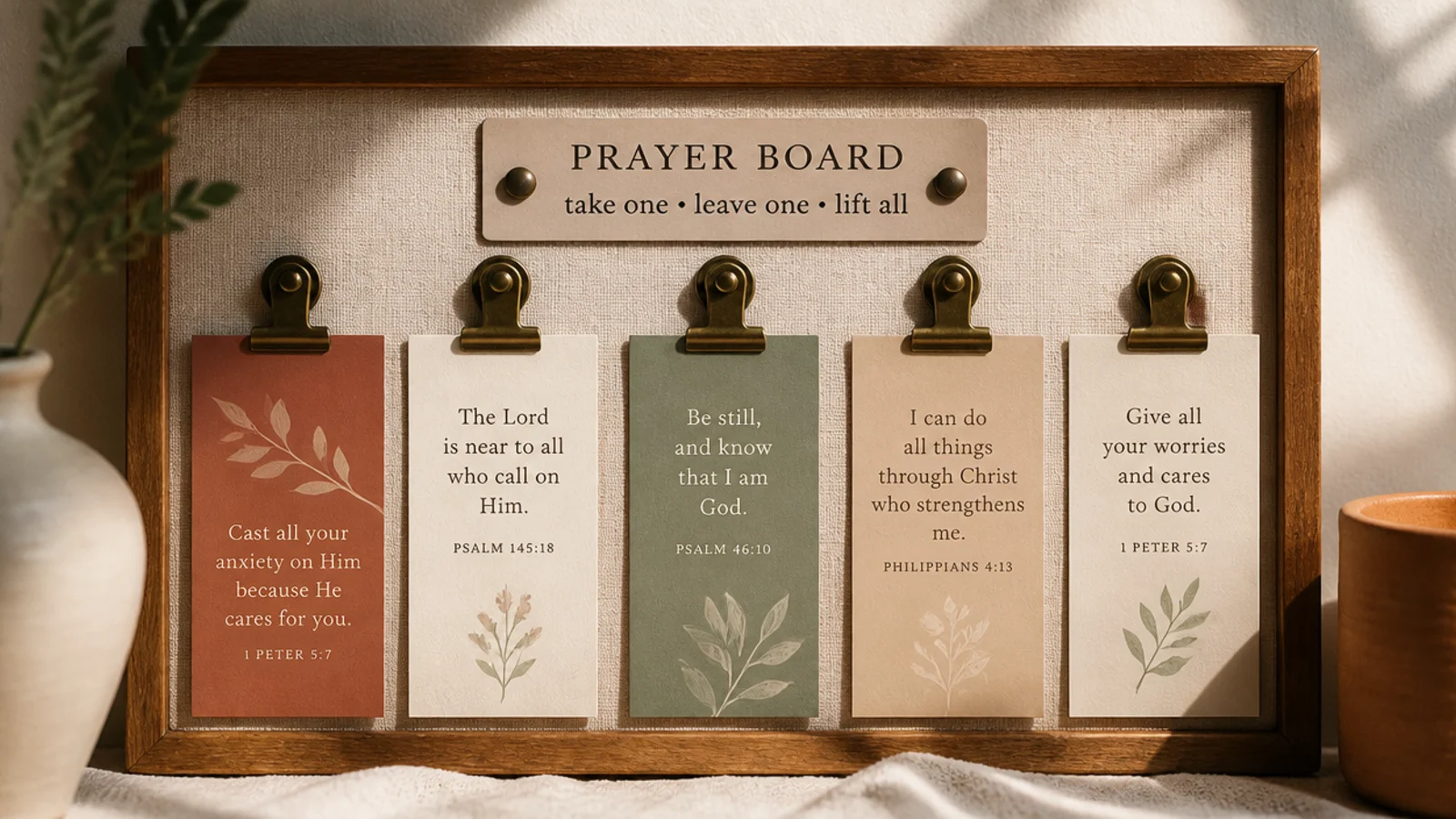
Design tall, narrow bookmarks with a verse and a small graphic. Print on cardstock, trim, and round the corners or add a ribbon or tassel through a punched hole. Clip several to the board. Pull one to carry in your Bible, planner, or bag, and print more as you give them away. Keep the set matching for a tidy display.
Verse bookmarks double as board decor and take-along scripture. You print bookmarks that hang on the board until you slip one into your Bible or bag. It suits anyone who wants scripture to leave the wall with them. The board becomes a place to grab a verse for the day.
Skip thisDon’t make them too wide; a slim bookmark tucks into a book easily, while a fat one just falls out.
Editor's noteLaminate the bookmarks so they survive being carried in a bag or Bible without creasing or fading.