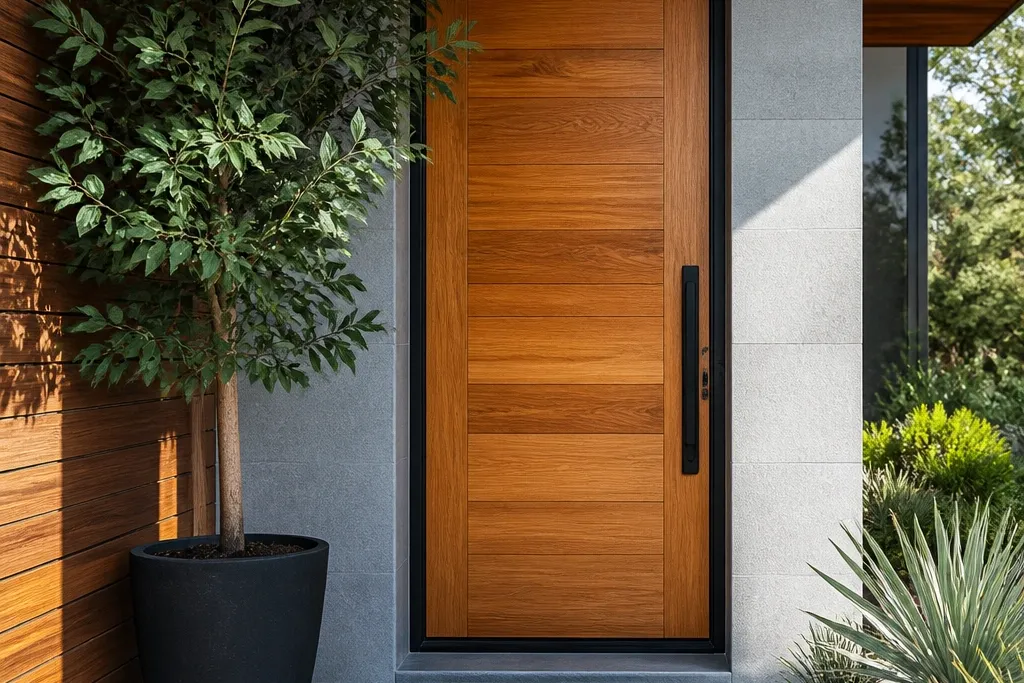
1. Honey teak slab with charcoal shadow-gap frame
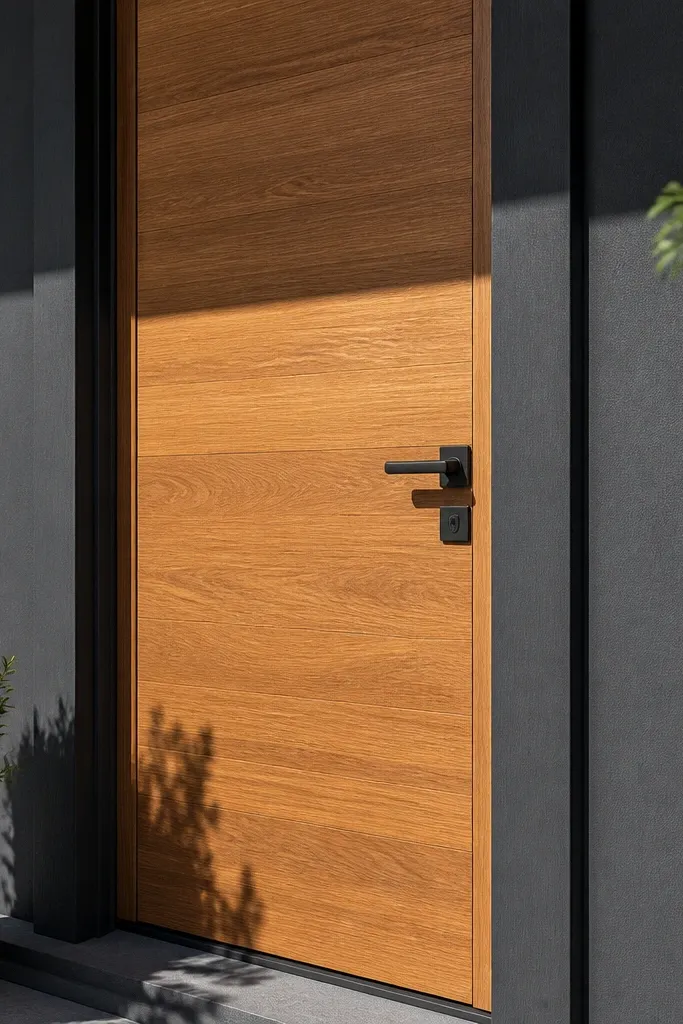
Start by sanding the teak to 180-220 grit and wiping it clean so the finish doesn’t streak. Apply a teak brightener or wood conditioner if your teak is blotchy, then use a honey-toned penetrating oil or a light brown gel stain in thin coats until the color matches your wall lighting. Frame it in charcoal paint on a primed MDF or aluminum frame, then mount the slab with spacers to hold an 8-12 mm reveal all around. Finally, seal the door edges and install weather stripping at the jamb so the threshold line stays tight.
This design makes teak look warm without needing heavy stain. Go for a honey teak slab and a charcoal-painted frame so the door reads like it’s glowing against a darker border. Keep the slab flat and modern — no raised arches or busy detailing. The thin shadow gap around the door gives you that sharp, architectural line that looks great in wide entry photos. Skill level is moderate because you’re chasing even reveals and straight mounting, not carving details.
Skip thisSkipping sanding consistency is the fastest way to get blotchy sheen on honey-toned teak.
Editor's noteUse plastic packers at the hinge locations so your reveal stays even while you screw everything down.
2. Vertical teak slats with matte black pull handle
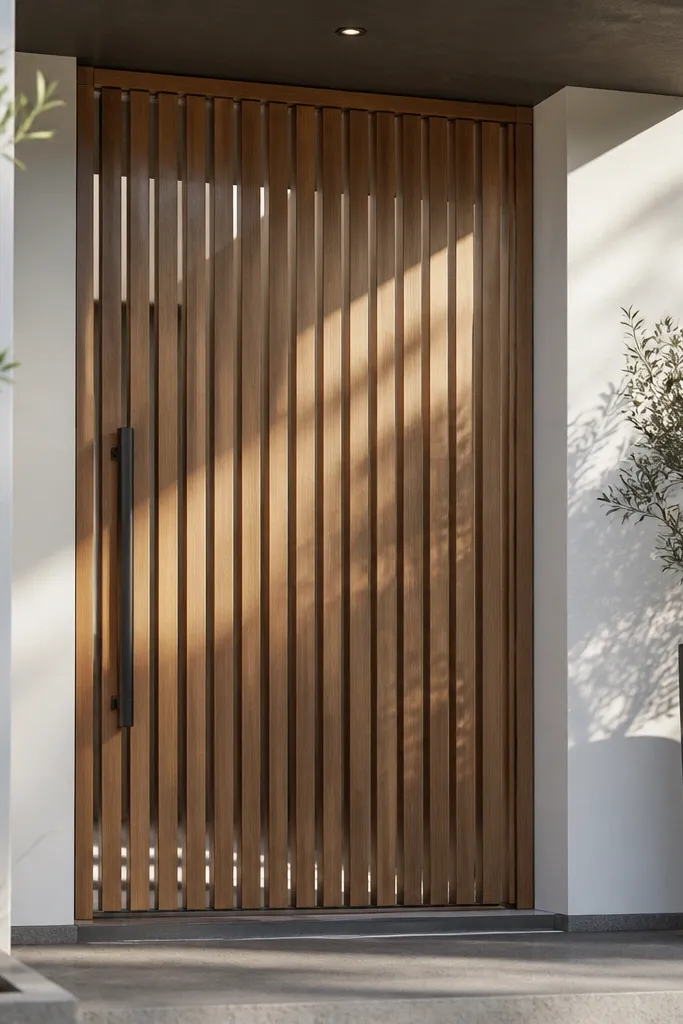
Build a rectangle frame from kiln-dried hardwood or aluminum angle, then cut teak slats to the same width with clean edges. Dry-fit slats with spacers so you get an even gap (start around 10-14 mm). Fasten slats using countersunk screws from the back or glue + brad nails, then sand the front face flush. Finish with a medium toast oil so the slats look even across the width. Mount the door with 8-12 mm reveals, then install a matte black bar pull and a matching deadbolt.
Vertical slats read modern and warm because teak’s grain runs in long, light-catching lines. This is a great option when you want privacy but still want the entry to feel airy. The slat spacing matters: too tight and it looks heavy, too wide and it looks like a screen. A matte black bar pull keeps the look sharp and keeps the door from turning into “brown on brown.” This is a DIY-friendly design if you’re comfortable with building a simple slat frame and making straight cuts.
Skip thisDon’t vary slat widths — one tiny difference shows up instantly in door photos.
Editor's noteMark slat positions with painter’s tape on the frame before you glue — it saves you from drifting off-center.
3. Teak panel door with brushed brass lever and clean inset
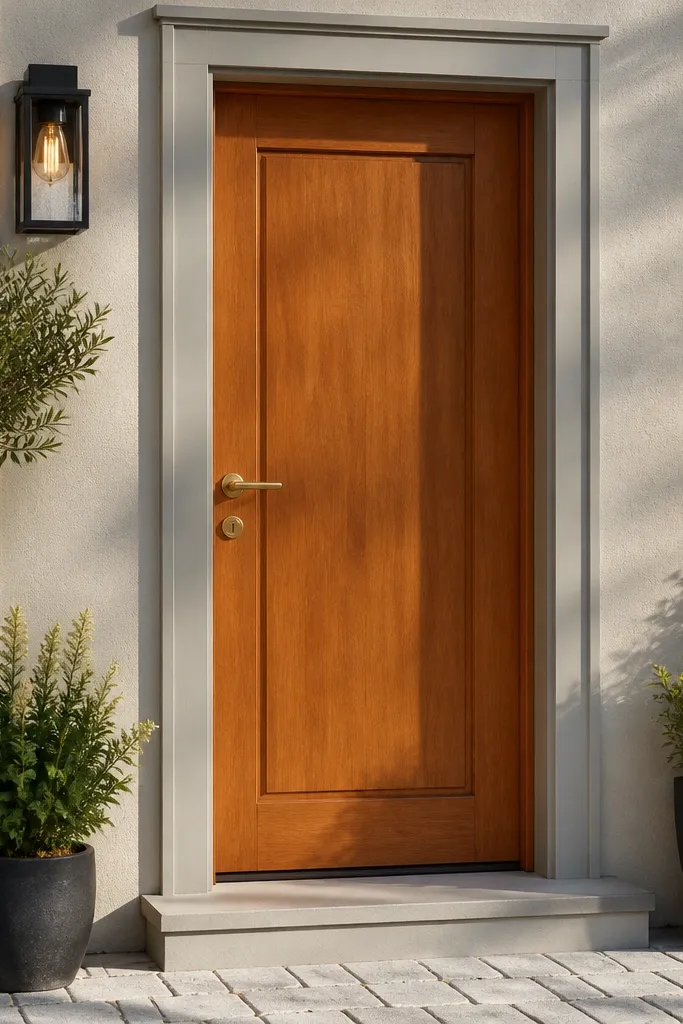
Cut a teak slab or build a panel door with a thin border frame and a recessed center panel. Use a router or table saw to make a consistent inset depth (start around 10-15 mm) so the shadow line stays crisp. Sand the recessed surfaces carefully; corners show finish unevenness. Apply a medium toast teak oil and top with a matte clear coat for less glare. Install a brushed brass lever set and align it with a template so the latch height is consistent and looks intentional.
This is the “warm modern” look that works for both new builds and older homes. The key is an inset panel that creates a shadow line without adding ornament. Use medium teak and a brushed brass lever so the hardware warms the whole entrance instead of cooling it. Keep the panel geometry simple: one large inset rectangle or a single inset plus a narrow border around it. The result is calm, photo-friendly, and easy to explain to a carpenter.
Skip thisUsing glossy varnish — it turns medium teak into a shiny “commercial” look.
Editor's noteDry-fit the lever and latch faceplate before final finish — you’ll avoid finish build-up at screw holes.
4. Deep toasted teak with thin stainless reveal strip
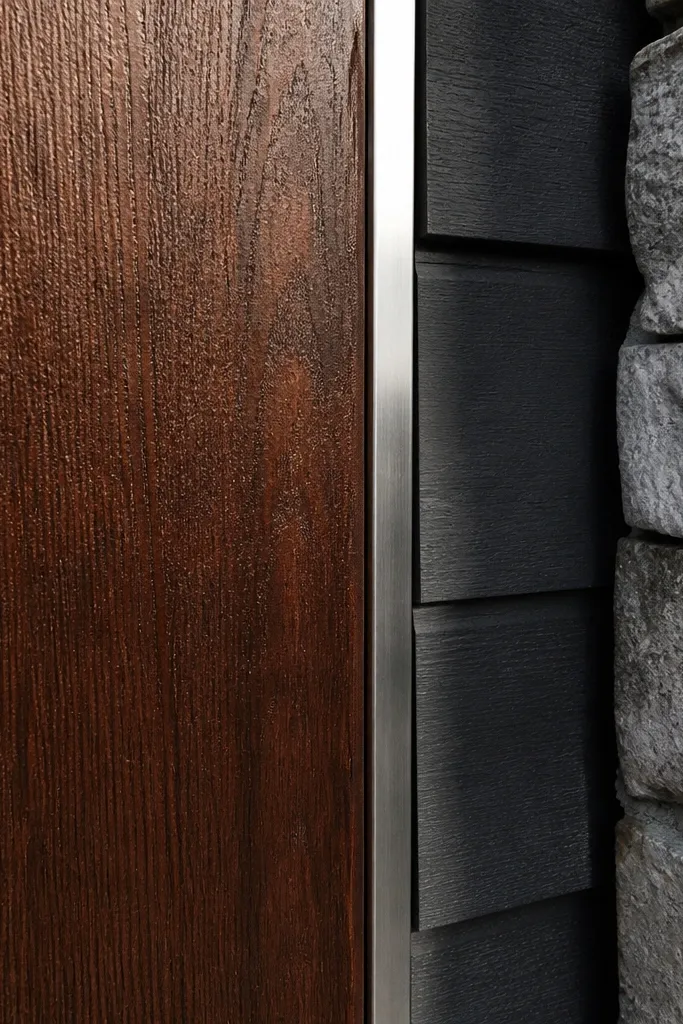
If you want maximum warmth but still want a modern edge, go deep toasted teak and add a thin stainless reveal strip. The stainless line makes the door look engineered and keeps the design from feeling rustic. This is especially good when your entry has dark siding or a stone surround. Keep the stainless strip narrow so it reads like a detail, not a frame. Expect a slightly higher build effort because the strip alignment has to be straight.
Finish your teak first: sand to 220 grit, then apply a deep toasted stain or oil-stain blend in multiple thin coats. Seal the surface with a matte or satin topcoat so the tone stays even. Install a narrow stainless trim strip on the frame perimeter, using a laser or long straightedge to keep it level. Mount the door with the stainless strip forming a thin shadow line, then attach hinges and weather seals. Finally, check the door closes with even contact across the latch side.
Use a magnetic level or laser line to set the stainless strip — the human eye catches even small waviness.
Trying to correct misalignment after the stainless is installed — you’ll end up with crooked gaps.
5. Teak-framed glass with warm diffusion frosted panel
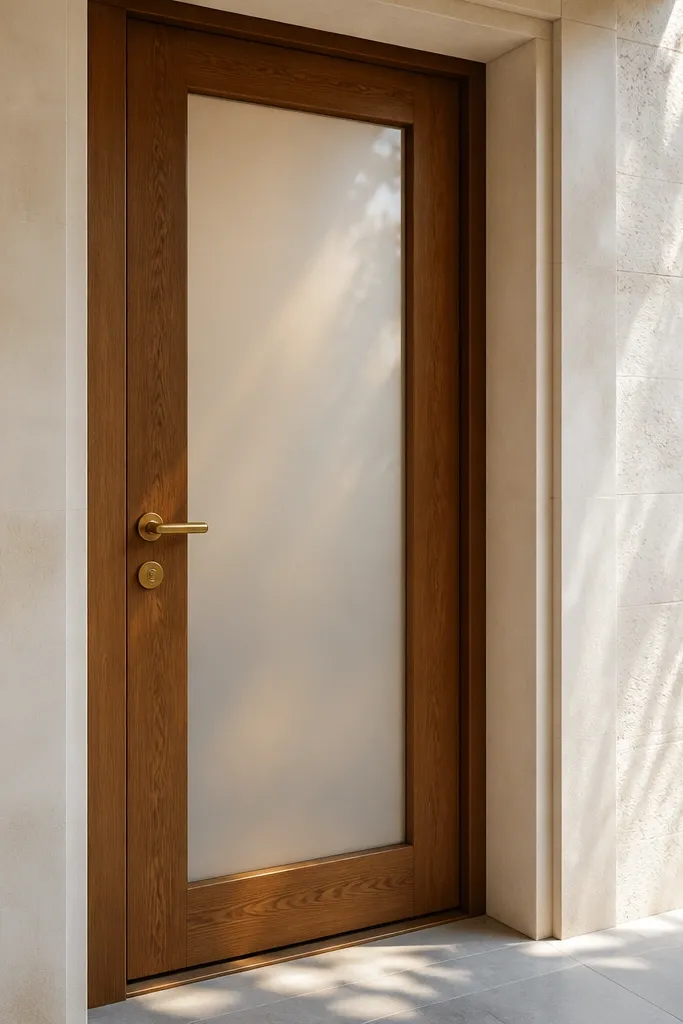
This design makes the entry feel modern and welcoming at the same time. The teak frame warms the glass, and the frosted diffusion keeps it private while still letting daylight in. Choose a frosted pattern that doesn’t look decorative; aim for a smooth diffusion or minimal etched texture. Pair with warm hardware like aged bronze or brushed brass so the metal doesn’t go cool. It’s a smart pick for narrow hall entries where daylight matters.
Build a teak frame around a glass panel sized to fit with a small expansion gap (follow your glass maker’s spec; plan for a rubber gasket). Dry-fit the frame, then install glass using glazing tape or gasket strips so it doesn’t rattle. Finish the teak frame with a medium toast oil, then topcoat for moisture resistance. Mount the door in your opening with 8-12 mm reveals and install weather stripping around the frame. Finish with a warm bronze or brass lever set and a matching deadbolt.
Use setting blocks under the glass so the panel sits level and won’t stress the frame over time.
Skipping gasket installation — glass movement will crack the finish and cause rattles.
6. Horizontal teak bands with off-center modern geometry
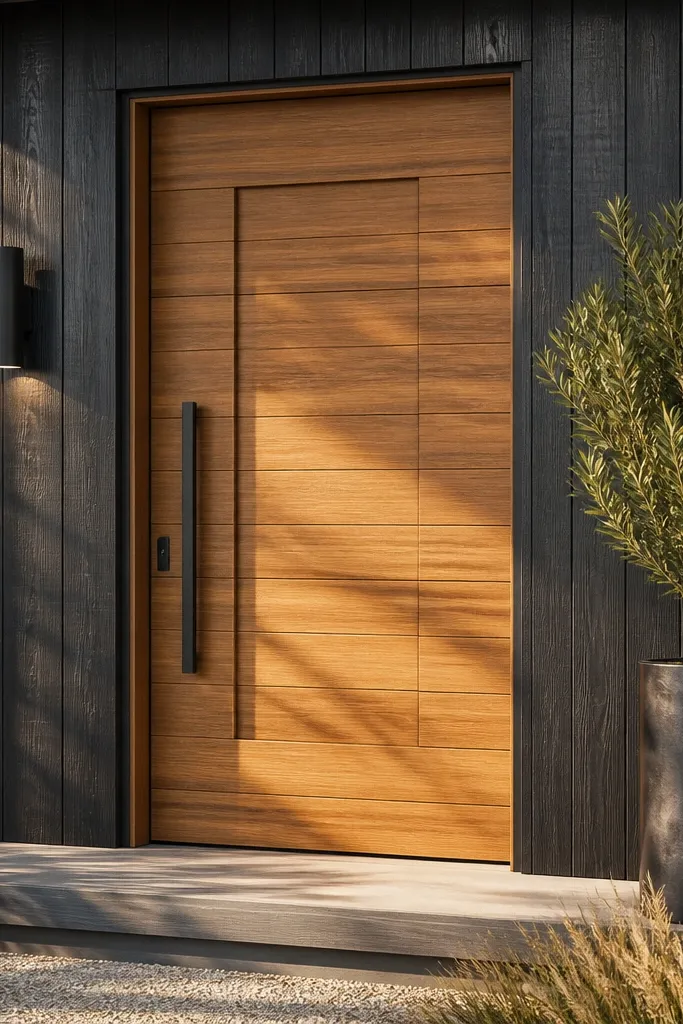
Horizontal bands make a door feel grounded and modern, and the off-center inset adds visual energy without clutter. Warmth comes from medium-to-light teak and the way the bands catch sunlight across the grain. Keep the inset simple: one rectangle or one narrow vertical cut within a larger field. This design looks great on modern facades because it frames the entry as a graphic element. Build difficulty is moderate — you’re cutting multiple rails and keeping them aligned.
Cut teak rails for the horizontal bands, with uniform widths and consistent thickness. Build a backing frame, then layout band positions on the front face before you glue anything. Add the off-center inset by routing a recess or adding a thin teak divider strip — aim for a 10-15 mm shadow line depth. Sand all faces flush and apply a light toast oil to keep the warmth. Mount the door with even reveals, then install a long pull handle that visually follows the horizontal rhythm.
Use a long straightedge and a single reference square to keep every band parallel — it’s the difference between “designed” and “off.”
Making the inset too big — it stops reading as a detail and starts reading as a patch.
7. Two-tone teak with charcoal interior panel
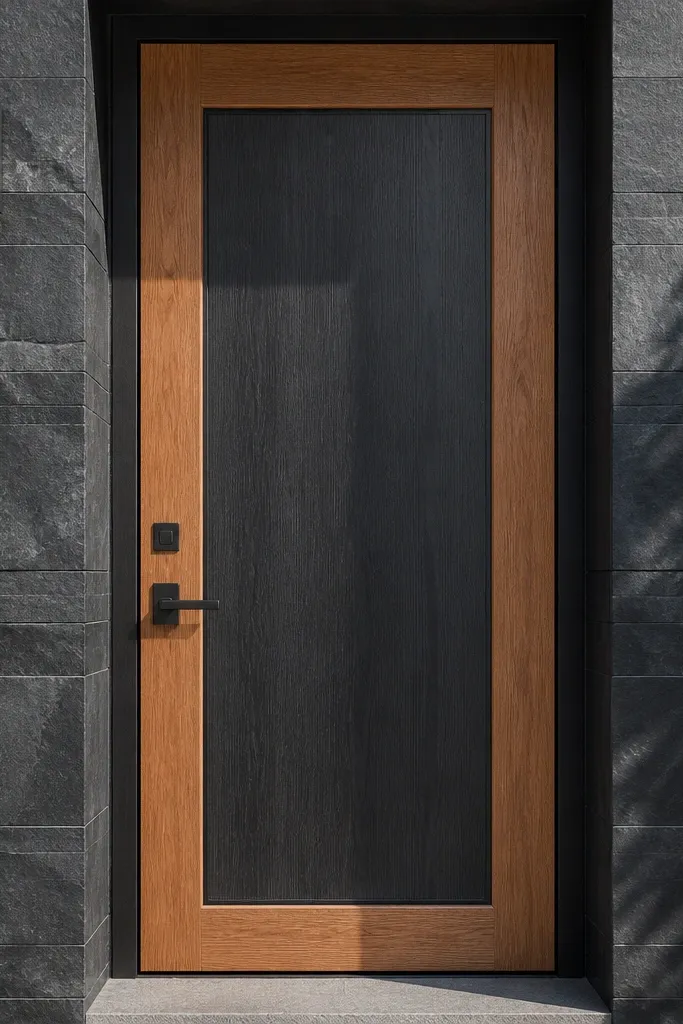
Two-tone doors look designer because they create contrast without adding ornament. The warm part is the teak border; the cool part is the charcoal center panel that keeps the whole entry from going too beige. This works well when your exterior has gray, black, or dark stone nearby. The look is clean because you keep the geometry simple: teak outer frame, one charcoal center panel, and no extra trim. It’s a solid DIY project if you can paint a flat panel cleanly.
Build the door slab with a teak outer frame and a center panel made from plywood or MDF. Sand and finish the teak frame with medium toast oil, then mask it off before painting the center panel. Prime the center panel, then spray or roll with a durable enamel in charcoal and keep the coat thin to avoid drips. Assemble the door with hidden screws from the back and seal edges. Install hinges and weather stripping, then mount with 8-12 mm reveals and a charcoal-matching lever.
Mask with fine painter’s tape and remove it immediately after the last coat — the line stays razor clean.
Painting over raw wood — porous panels absorb unevenly and look patchy.
8. Teak slat door with diagonal infill for warmth
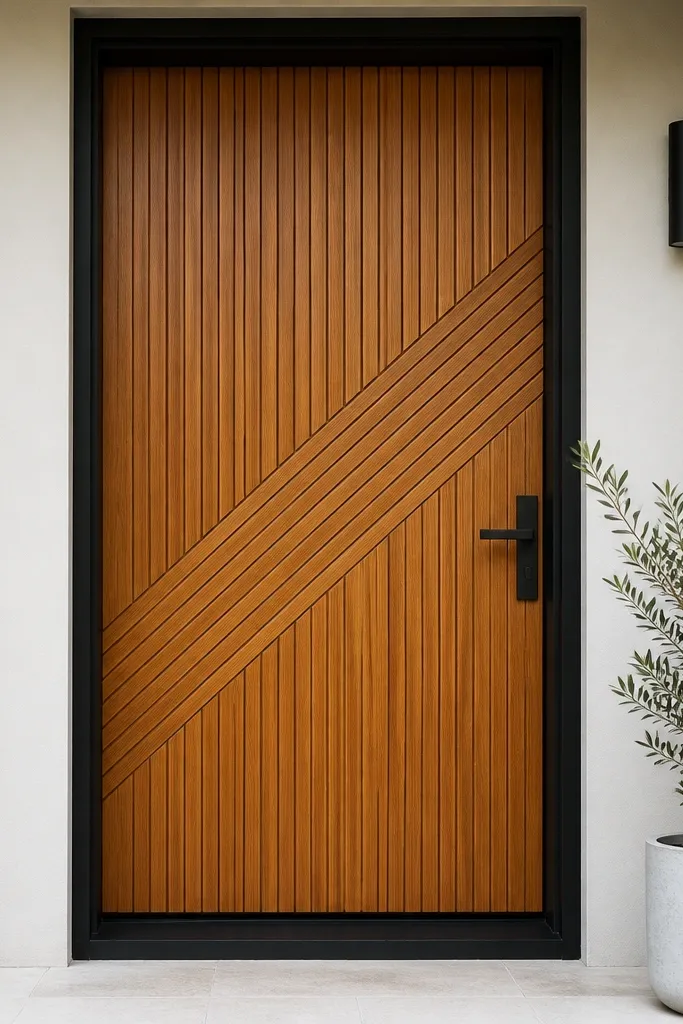
Diagonal infill makes the door feel modern and a little architectural, and teak keeps it warm instead of industrial. Use teak slats for the main field, then add diagonal strips that break up the flat look. The diagonal lines catch light differently than vertical ones, so the door looks good from multiple angles. Choose dark bronze hardware to tie the diagonal accent into the metal. This is a better project for someone comfortable with layout and careful cuts.
Make a rectangular frame, then install vertical or slightly angled teak slats across the main area with even spacing. Mark and cut diagonal infill strips so their edges land cleanly on the frame corners. Dry-fit first: adjust strip angles until the diagonals look balanced at the handle height. Finish with a medium toast teak oil and matte topcoat. Mount the door with consistent reveals and install hinges that keep the door plumb so the diagonals don’t look skewed.
Cut diagonal strips using a stop block on your miter saw so each piece lands the same length.
Changing the diagonal angle mid-door — it reads as sloppy, even if everything else is perfect.
9. Teak veneered modern panel door on a plywood core
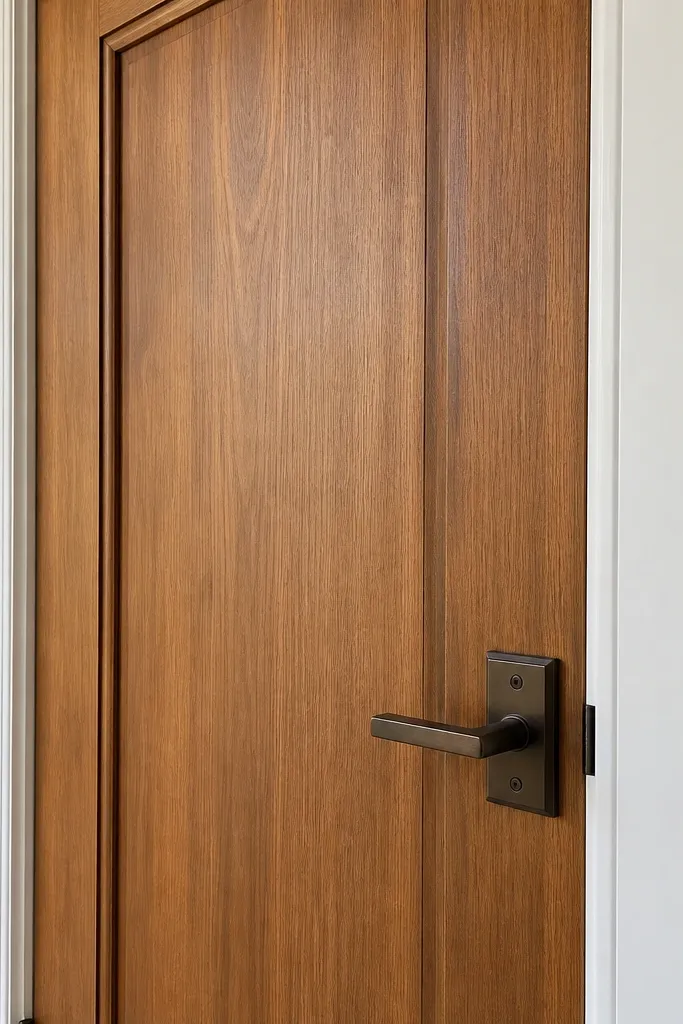
Build a flat plywood core door panel with a simple recessed layout — one or two inset rectangles. Apply teak veneer using contact adhesive or a veneer press method, keeping seams tight and aligned. Trim edges cleanly and edge-band the perimeter with matching teak or a thin hardwood strip. Sand lightly and apply a medium toast oil or oil-based sealer designed for wood surfaces. Install hardware with correct backer blocks so screws bite securely, then mount with 8-12 mm reveals and add weather stripping.
If you want the teak look without the cost of a full teak slab, veneer gets you there. A plywood core keeps the door stable, and a modern panel layout makes it read high-end. The warmth comes from teak veneer’s grain and a satin finish that doesn’t glare. This is especially useful when you’re replacing an older door and need a clean modern main door design entrance quickly. Build time is moderate because you’re handling veneer and edge banding carefully.
Skip thisSkipping edge sealing — veneer edges drink moisture and can lift.
Editor's noteUse a crisp utility knife and a straight guide for veneer trimming — it keeps seams invisible.
10. Teak and stone-look surround with recessed door set
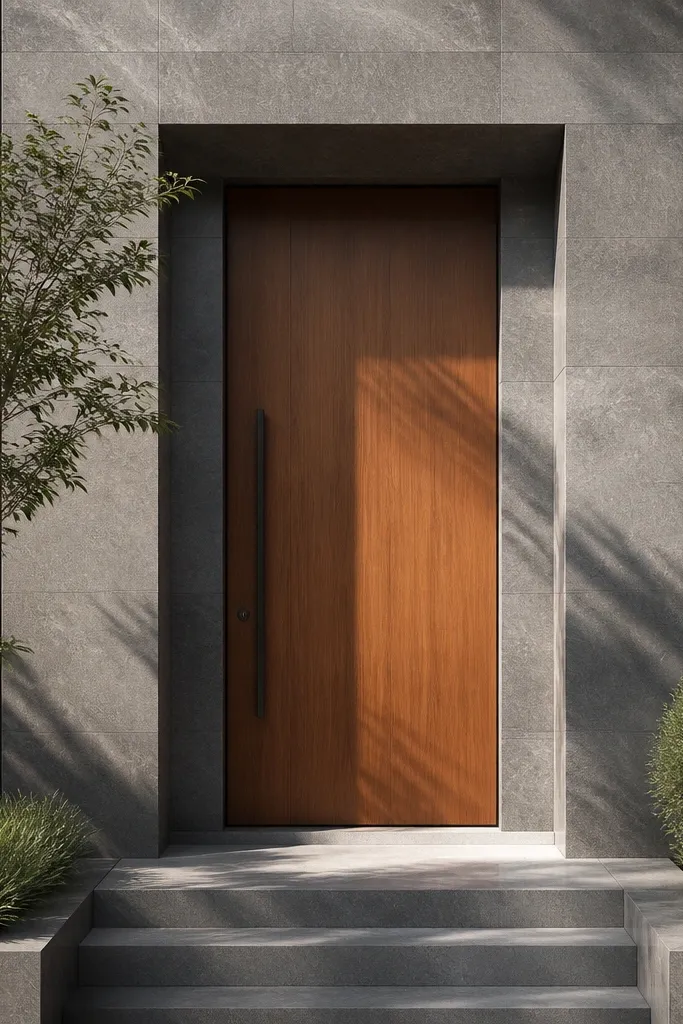
Plan your recess depth and reveal before you order the door. Build or frame the opening so the door sits back roughly 25-40 mm, then maintain consistent side gaps. Install a stone-look panel or faux stone surround on the frame, then seal all substrate edges. Finish the teak slab with a medium toast oil and satin topcoat, then mount with hinges and weather seals rated for exterior use. Add a threshold that matches the surround color and caulk cleanly along the joint line.
This design isn’t about the door slab alone. When you recess the door slightly into a stone or stone-look surround, the teak reads warmer because the shadow around it softens the contrast. The modern part is the clean recess line and straight edges, not carved ornament. Choose a teak slab in medium toast so it doesn’t fight the stone tones. Use a warm metal finish like bronze or aged brass so the entrance feels cohesive. This works best on homes with textured cladding, stucco, or stone entry walls.
Skip thisTrying to recess without planning the threshold — the bottom joint is where it usually looks messy.
Editor's noteUse a backer rod and paintable exterior caulk for the recess seam — it stays neat after seasonal movement.
11. Teak door with thin vertical grille and warm interior light
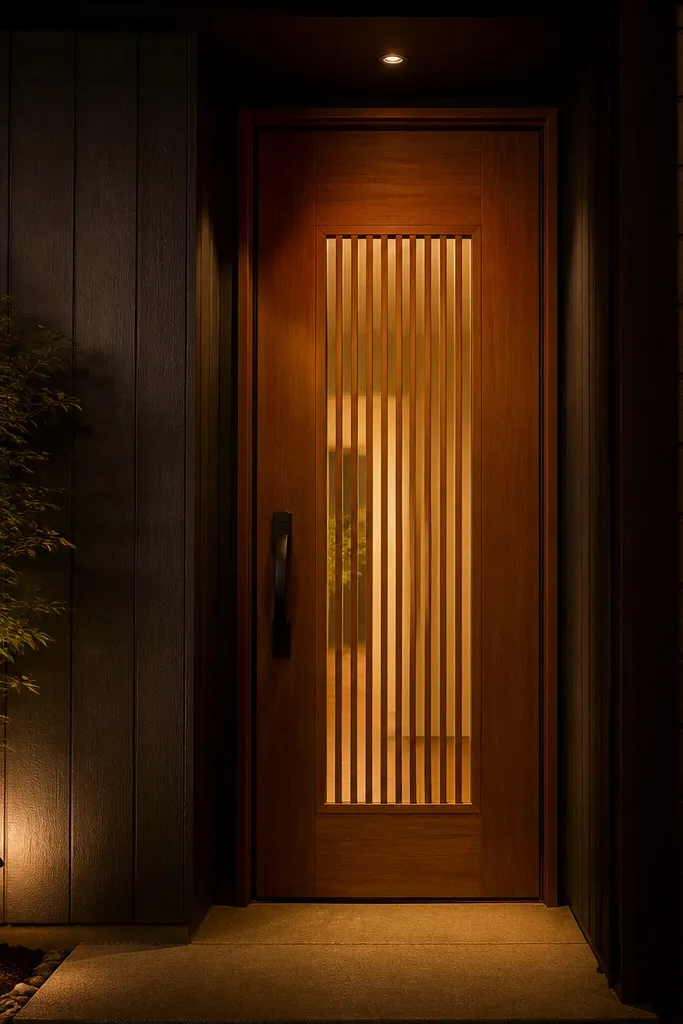
Thin vertical grille bars make a modern main door design entrance look intentional and upscale, especially when paired with a warm-lit glass panel. The warm light helps the teak look richer at night, and the grille keeps the design graphic. Pick a warm white interior light temperature (around 2700K) so it doesn’t turn the teak orange or dull. The door looks best when the grille bars are straight and evenly spaced. This build is more advanced because you’re aligning metal bars and sealing a glass or panel area.
Create a teak frame and add a glass or translucent panel inside it. Install thin metal grille bars (matte black, bronze, or aged brass) with equal spacing using a template and pre-drilled holes. Finish the teak frame with medium toast oil and satin topcoat, then mount the frame into the opening with even reveals. Seal the glass perimeter with gasket strips to prevent drafts. Install a warm interior light fixture behind the translucent panel so the light evenly washes the teak frame.
Measure spacing from a single centerline — symmetry matters more than you think on doors.
Uneven bar spacing — it makes the door look handmade in a bad way.
12. Teak slab with floating panel border and hidden hinges
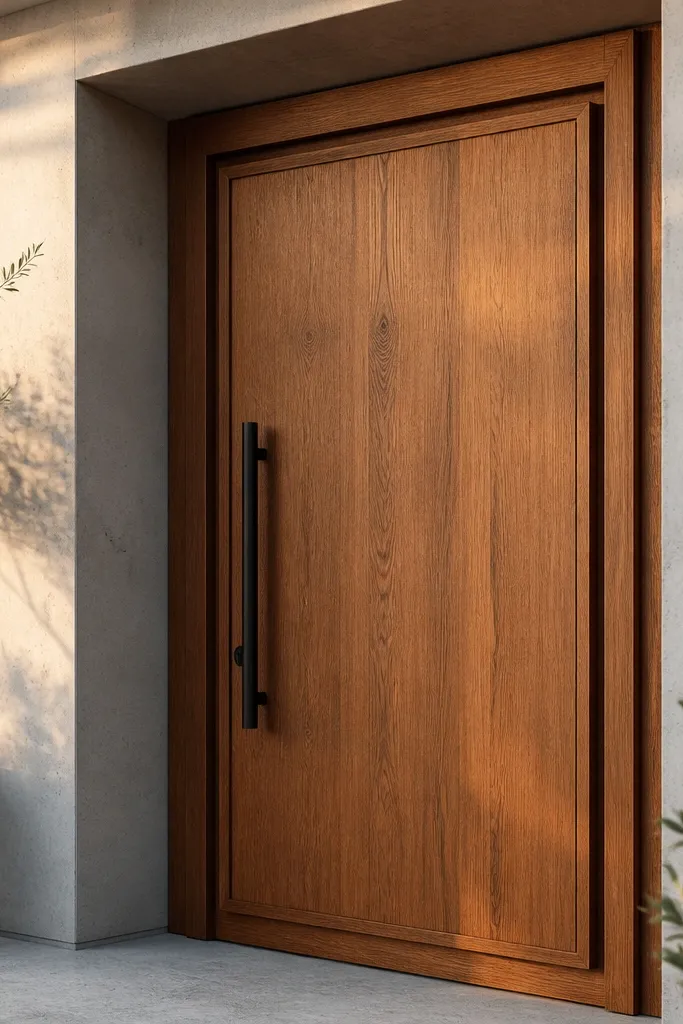
Hidden hinges make a door read sleek, and a floating border panel adds a modern “layered” look. The teak slab stays warm, while the border creates depth without busy carving. This design is excellent for tight entries where you want the door to look clean and flush. Use medium or deep teak so the floating border shadow line shows in daylight. Build difficulty is higher because hidden hinges require precise alignment.
Start with a solid door slab or veneered panel door sized to your opening, with a recessed border detail around the perimeter. Install hidden hinges using a hinge jig and follow the hinge manufacturer’s drilling template exactly. The floating border should be a separate panel piece mounted so it leaves a consistent shadow gap (around 6-10 mm). Sand all faces flush, finish with deep toasted oil, and add a satin topcoat. Mount the door and adjust hinges until the reveal is even and the border shadow line is consistent.
Do a dry alignment without finish first — once you coat teak, small hinge adjustments leave scuffs.
Guessing hinge positions — hidden hinges punish sloppy measurement.
13. Teak-and-graphite aluminum frame with matte finish
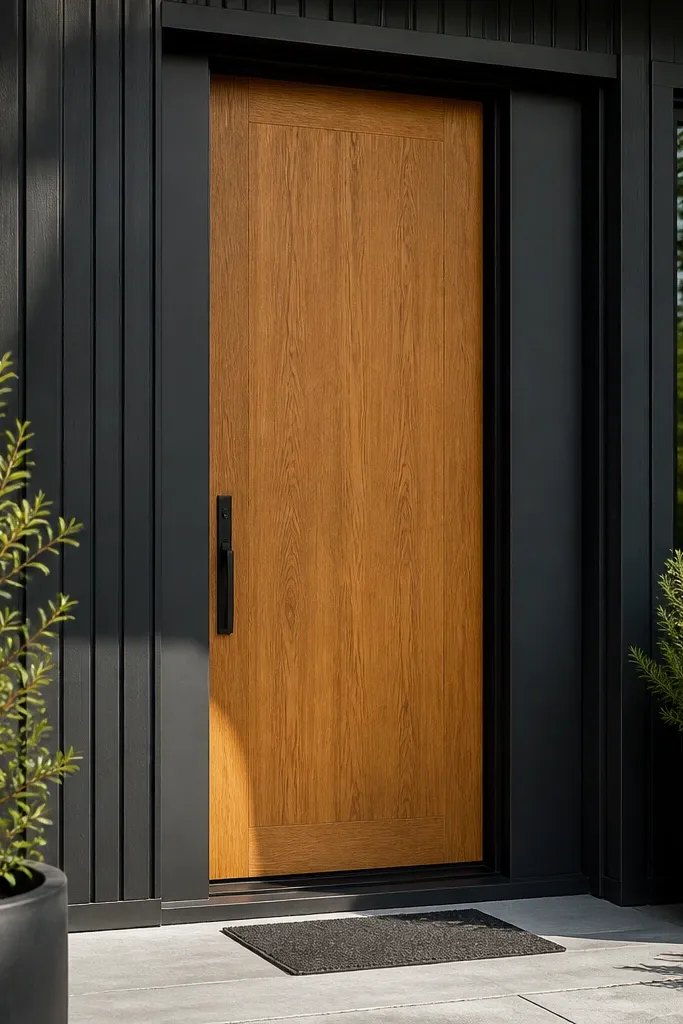
An aluminum frame in graphite makes the teak look intentional and modern, especially when you want low maintenance. The graphite finish stays consistent in weather and gives you clean edges. Keep the teak slab simple and flat so the aluminum does the “modern” work. This is a good choice if your entry sees lots of sun — aluminum frames resist warping and keep the door alignment stable. It’s also easier to maintain than painting a full wood frame.
Order or build a graphite aluminum frame sized to your rough opening, with a designed reveal. Fit the teak slab into the frame using gasket strips and proper screw locations so you don’t crush the teak. Finish the teak separately with medium toast oil and satin topcoat, then let it cure fully before installation. Install hinges and a weather seal strip designed for aluminum frames. Attach the handle in a warm metal finish like bronze so the contrast stays warm, not cold.
Use rubber gaskets at every contact point — it prevents squeaks and finish wear.
Mounting teak directly to metal without gaskets — movement will chew up the finish.
14. Teak door with wide vertical groove channels
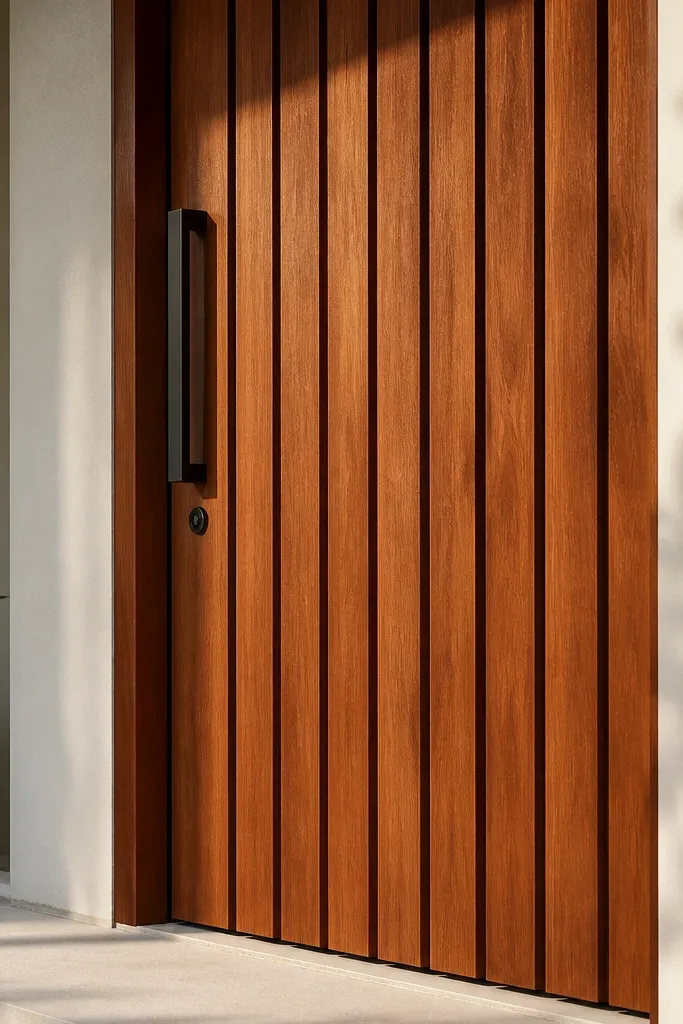
Start with a teak slab thick enough to handle routing without getting thin (plan for enough material behind grooves). Mark groove lines evenly across the door width, then rout wide channels using a straight bit and consistent depth. Sand the face carefully so the grooves edges are smooth, then wipe dust out completely. Apply medium toast oil, then seal with a satin topcoat that won’t fill the grooves too much. Mount with even reveals and install a bronze lever set that matches the groove shadow direction visually.
Wide groove channels create a modern, tactile look and make teak feel more architectural. The warmth comes from the wood tone, while the grooves catch shadows instead of relying on paint. Choose groove depth that creates a visible shadow line but doesn’t weaken the slab. This design photographs well because it has texture that reads even in low-angle shots. It’s best for medium teak so the grooves show contrast without turning the door too dark.
Skip thisFilling grooves with heavy varnish — you lose the texture and the modern look.
Editor's noteVacuum the grooves with a crevice tool before finishing — trapped dust causes dull gray patches.
15. Teak door with grid glass inserts and warm timber border
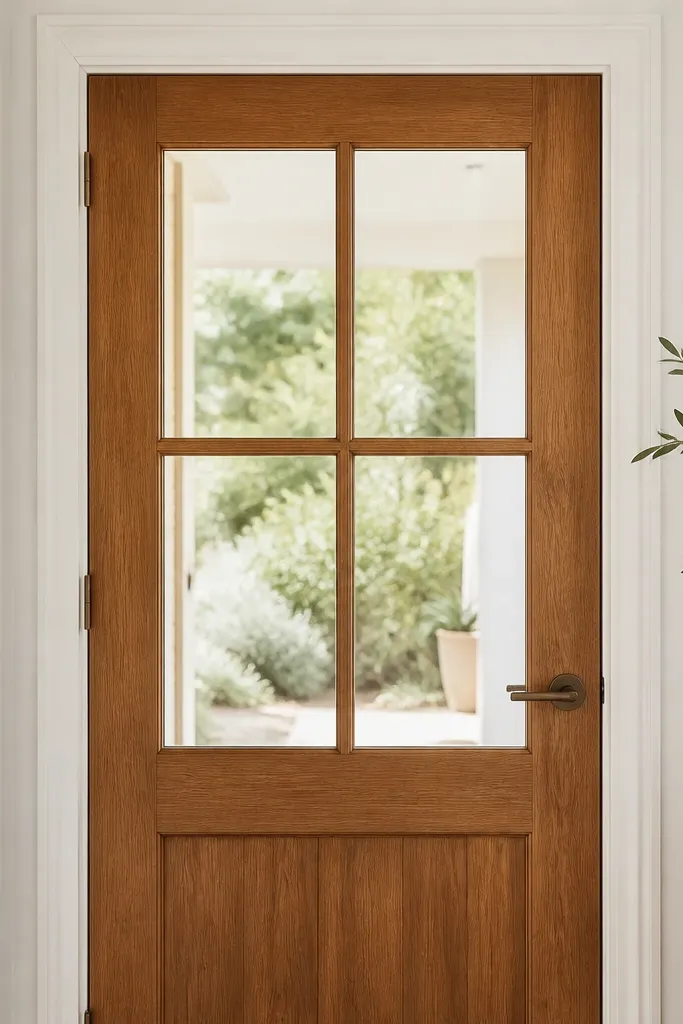
Build a teak border frame and create openings for glass panels. Install glass with gasket strips and a muntin system that you can screw through from the back. Dry-fit the grid so each pane is evenly spaced and the muntins are straight. Finish teak border with medium toast oil and satin topcoat, then mount in the opening with 8-12 mm reveals. Install warm brass hardware and seal the frame perimeter with exterior-grade weather stripping.
Grid glass inserts look modern when the grid is minimal and the border is teak. You get a warm timber frame plus the brightness of light through glass. The grid also helps the door feel structured, which is what makes it look good from the street. Pick a clean 2x2 or 3x3 grid pattern and keep the muntin thickness slim. This is a great option for entryways where you want daylight but still want some privacy and structure.
Skip thisThick muntins — they make a modern door read old-fashioned quickly.
Editor's noteUse a template for muntin spacing so every pane looks equal — the grid is unforgiving.
16. Teak door with matte white wall panel contrast and bronze hardware
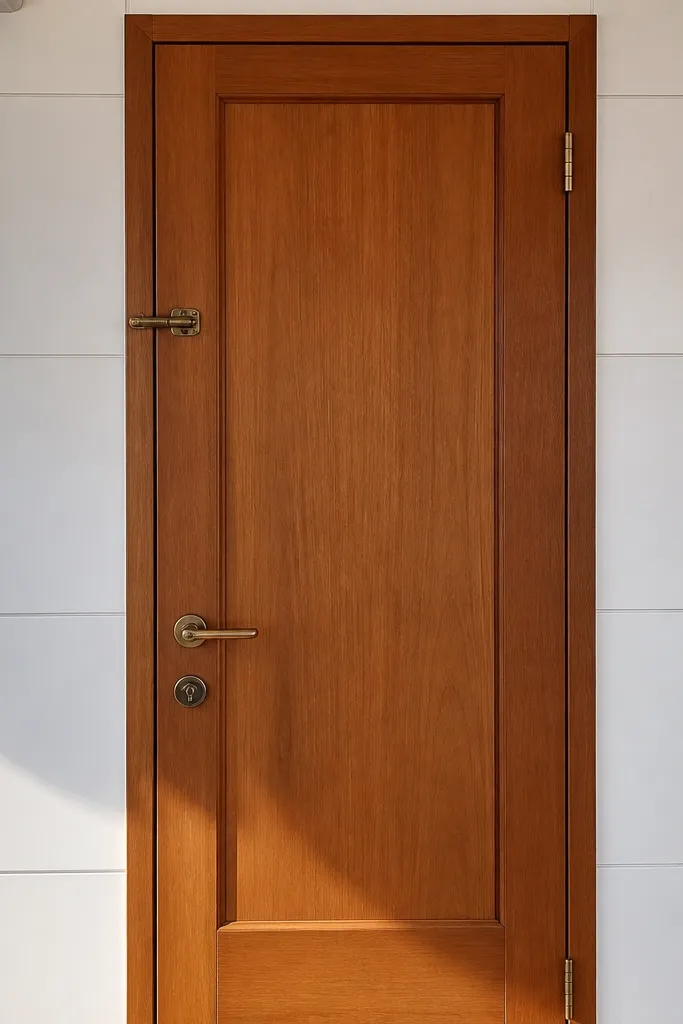
Paint or install a matte white surround panel around your door opening before finishing the teak. Build the teak door slab or use a ready slab, then sand to 220 grit and apply medium toast oil with a satin topcoat. Mount the door with even 8-12 mm reveals and install weather stripping at the jamb. Add bronze lever and deadbolt, aligned to a consistent height. Finally, caulk the surround edges with paintable exterior caulk to keep the lines crisp.
This design is simple but very effective: teak in front of matte white makes the door look warm and clean. The trick is the surrounding paneling. Use a flat, matte white cladding or painted panel around the door so it doesn’t reflect harsh glare. Then choose bronze hardware so the metal ties into teak’s warm undertone. This works beautifully for small entries because the white area frames the door and makes it feel larger. The build is straightforward if you’re also doing the entry surround.
Skip thisGlossy surround paint — it creates glare that kills the warm teak look in photos.
Editor's noteChoose a matte white paint with a flat finish — eggshell can reflect light and make the entrance look washed out.
17. Teak slab with recessed vertical handle channel
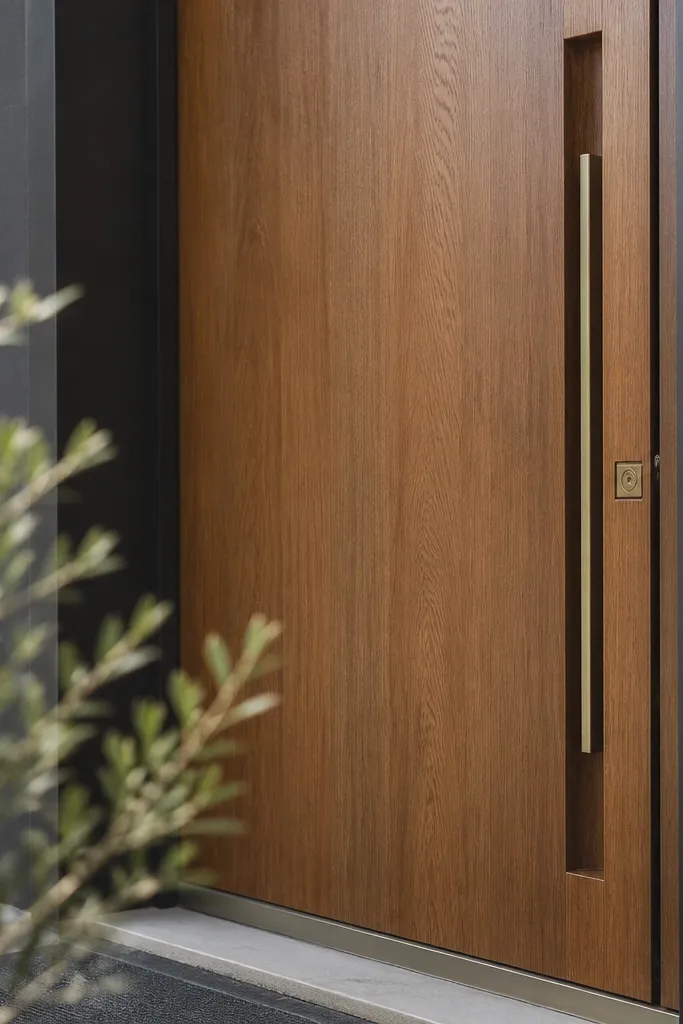
Mark the handle location and measure the handle’s exact recess dimensions from the hardware spec. Rout a vertical channel into the teak slab to the correct depth so the handle sits flush without wobble. Sand the channel edges and test fit the handle before finishing the door. Finish teak with medium toast oil and satin topcoat, then install the handle and latch mechanism. Mount with even reveals and ensure the door swings freely with weather stripping installed.
A recessed handle channel keeps the door modern and makes teak look smoother and more premium. Instead of a big surface-mounted pull, you create a narrow channel in the slab where the handle sits flush. The warmth stays in the teak surface, and the recessed detail creates a subtle shadow line. This design is great if you want a minimalist look but still need a functional grip. It’s a more technical DIY build because you’re routing a precise channel.
Skip thisRouting too deep — you’ll weaken the slab around the latch and the door will feel flimsy.
Editor's noteDo the routing before any final finish — correcting a channel mistake is much easier on raw wood.
18. Teak door with rounded top transom panel
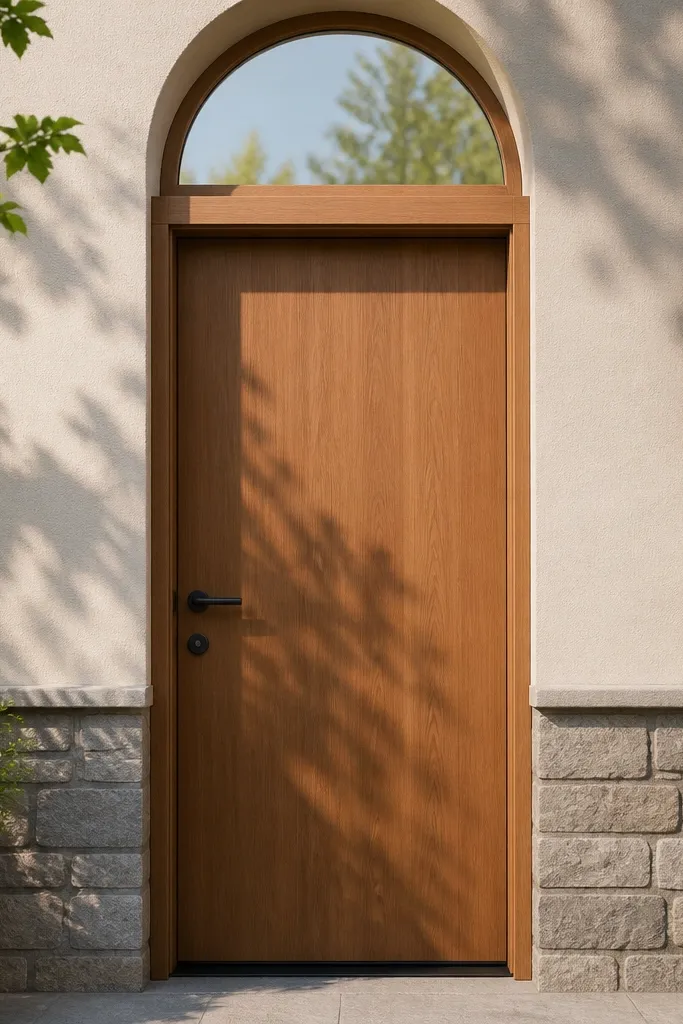
A rounded transom panel adds warmth and softness while the main door stays modern and flat. Teak keeps the color inviting, and the transom brings daylight into the entry without needing stained glass. Choose a simple rounded top radius and keep the transom frame minimal so it doesn’t turn into a decorative arch. This works well on homes with straight lines where you want one gentle curve. Build difficulty is moderate because you’re working with a curved panel.
Build a main teak door slab with a flat panel design, then create a transom frame above it with a rounded top. Cut a curved plywood or thin MDF panel for the transom, then cover it with teak veneer or finish it with matching wood. Install the transom panel with a gasket if it’s translucent glass or a sealed panel if it’s wood. Finish teak surfaces with medium toast oil and satin topcoat. Mount the door and transom assembly with consistent reveals and seal the top joint carefully against drafts.
Use a template made from cardboard or scrap plywood for the transom radius so both sides match perfectly.
Skipping gasket sealing at the transom seam — that joint leaks air and ruins the crisp look.
19. Teak door with vertical grip rail and concealed kick plate
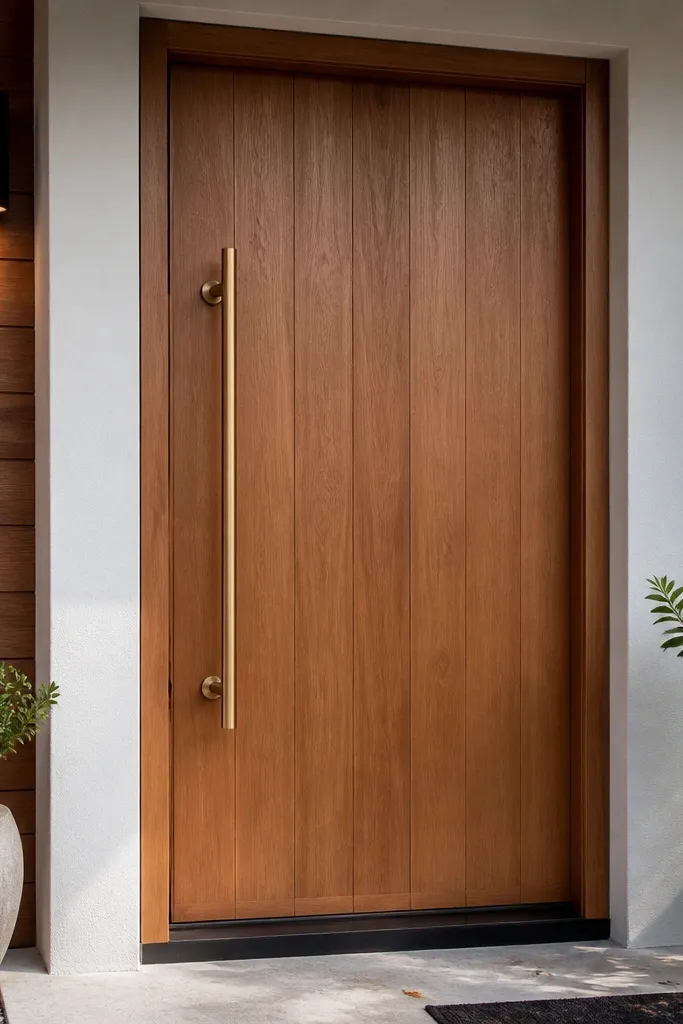
Plan where the kick plate sits — usually 300-450 mm from the floor — then set a concealed metal or composite plate behind a recessed recess. Install a teak rail or add a narrow teak grip rail that aligns with the handle side for visual balance. Build or buy a door slab, route the recesses for the kick plate and rail, then test-fit all metal parts. Finish teak with medium toast oil and satin topcoat, then install metal parts and hardware after the first finish cure. Mount with even reveals and seal edges so the recessed kick plate doesn’t trap moisture.
This is the functional modern door design that still looks warm. The vertical grip rail reads sleek and helps people use the door with one hand. A concealed kick plate keeps the teak from getting scuffed at foot level while staying visually minimal. The warmth comes from teak’s tone, and the rail finish should match your other hardware (bronze or brushed brass). This design is ideal for households with kids, dogs, or frequent entry traffic where the door gets touched and bumped.
Skip thisExposed kick plates — they look like hardware added later and break the modern line.
Editor's noteAdd a thin bead of exterior sealant behind the kick recess — it stops water from wicking under the plate.
20. Teak door with warm walnut tone laminate panels
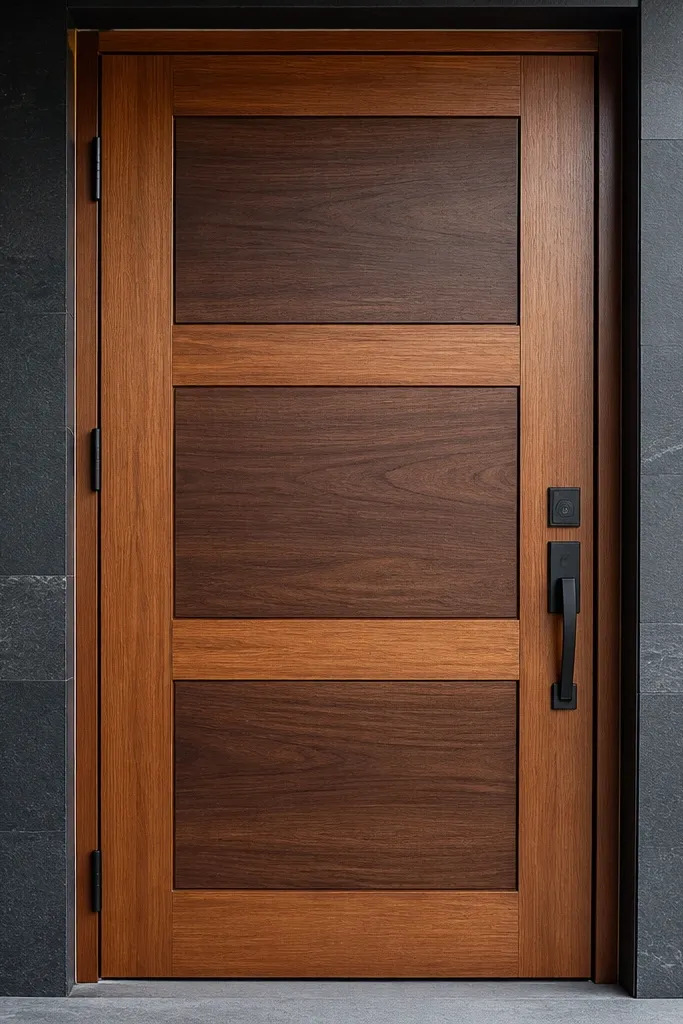
Teak plus warm walnut tone panels gives you depth without going darker overall. The door stays warm because both materials sit in the same brown family, and the contrast is controlled. Use laminate or high-quality veneer panels for the inset sections so you get crisp edges and less maintenance than raw wood everywhere. This is a smart look when you have a walnut cabinet tone inside and want the entry to match the interior palette. The door reads modern because the panel layout is clean and the hardware is minimalist.
Build a teak outer frame and cut inset openings for walnut tone panels. Install laminate or veneer panels into the recesses with glue and hidden screws from the back so the front stays flat. Sand the frame and edges so the inset seams are tight and even. Finish the teak frame with medium toast oil and satin topcoat, then wipe off any excess so the seam area stays clean. Mount the door with 8-12 mm reveals and install minimalist black hardware for contrast against the warm browns.
Use a thin spacer during panel install so the inset seam stays consistent across the full perimeter.
Mismatching undertones — cool gray-brown panels next to honey teak makes the whole door look off.