1. Smoked Oak Wall Panel + White Linen Sofa Grid
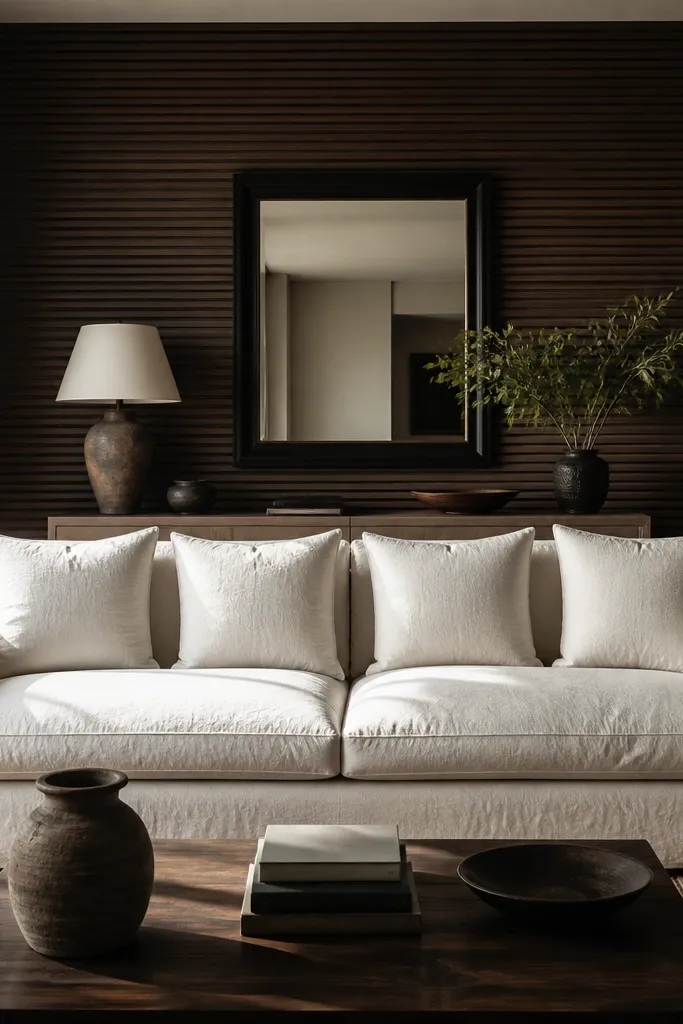
Start by marking your slat layout on the wall: keep the slat height consistent and leave a 2-3 cm margin around the edges so it doesn’t look glued-on. Install slats using a level and a stud finder, then sand lightly and finish with a smoked oak stain or a stain + clear matte topcoat. Next, center a mirror above your sofa back height and hang it so the bottom edge lands around seat-back level. Finish by adding a wool or boucle throw and a textured rug in warm greige to repeat the wood warmth.
This look is clean, high-end, and very “modern drawing room interior design” because the wall does the heavy lifting. The smoked oak slats add warmth without turning the room into rustic territory, and the white linen keeps everything bright. A black framed mirror centers the composition and gives you a reflective pop that reads luxury in both daylight and warm bulbs. The key is the spacing: slats that are evenly aligned and furniture that sits off the wall enough to show the texture clearly.
Skip thisDon’t paint the slat wall gloss — matte reads more expensive.
Editor's noteUse a laser level for the slat lines. Uneven slats ruin the luxury effect fast.
2. Fluted Plaster Feature Wall with Charcoal Seating
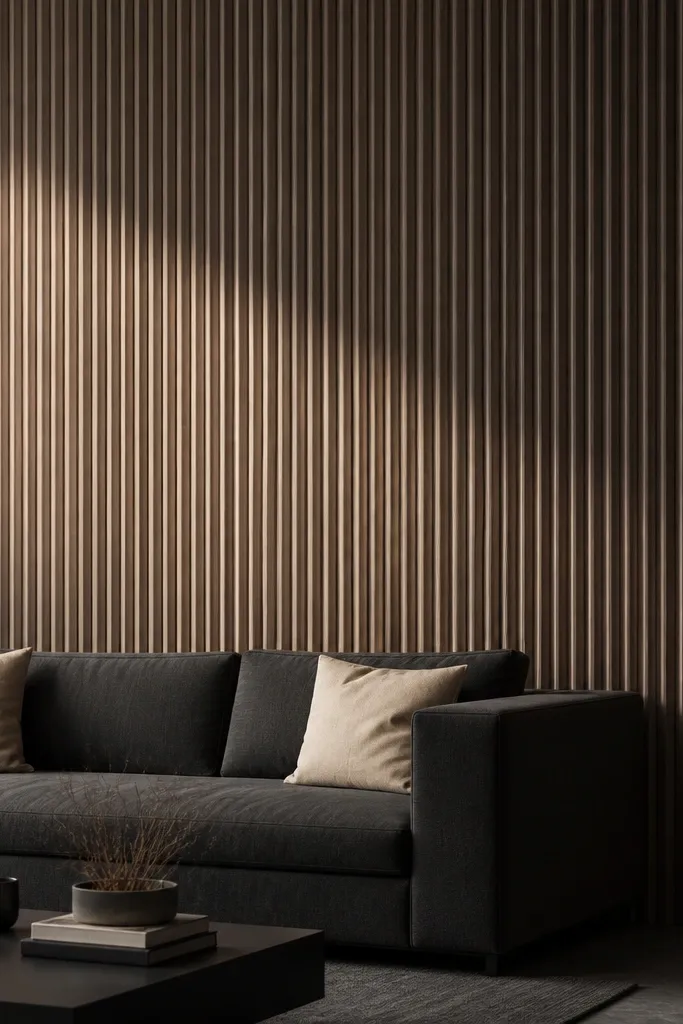
Fluted plaster looks expensive because it creates shadow depth even with simple lighting. Charcoal seating gives you contrast without the harshness of pure black, and cream cushions keep the room from feeling heavy. This combination photographs well because the wall texture becomes the background pattern while the furniture stays calm. It’s ideal for drawing rooms that need a focal point but don’t want loud colors.
Apply a plaster-effect base coat or install ready-made fluted panels first, then fill and sand seams until the surface is smooth to the touch. Prime and paint with a warm off-white or soft greige that matches your flooring undertone. Mount your sofa so its back is centered to the fluted section, then add a rug that’s 15-20 cm wider than the sofa footprint. Install a wall-wash light or aim a ceiling spotlight so it grazes the flutes and makes the shadows visible.
Paint the fluted wall one shade warmer than your trim. Cool whites can make flutes look gray.
Don’t place ceiling lights directly facing the wall; you’ll wash out the shadows.
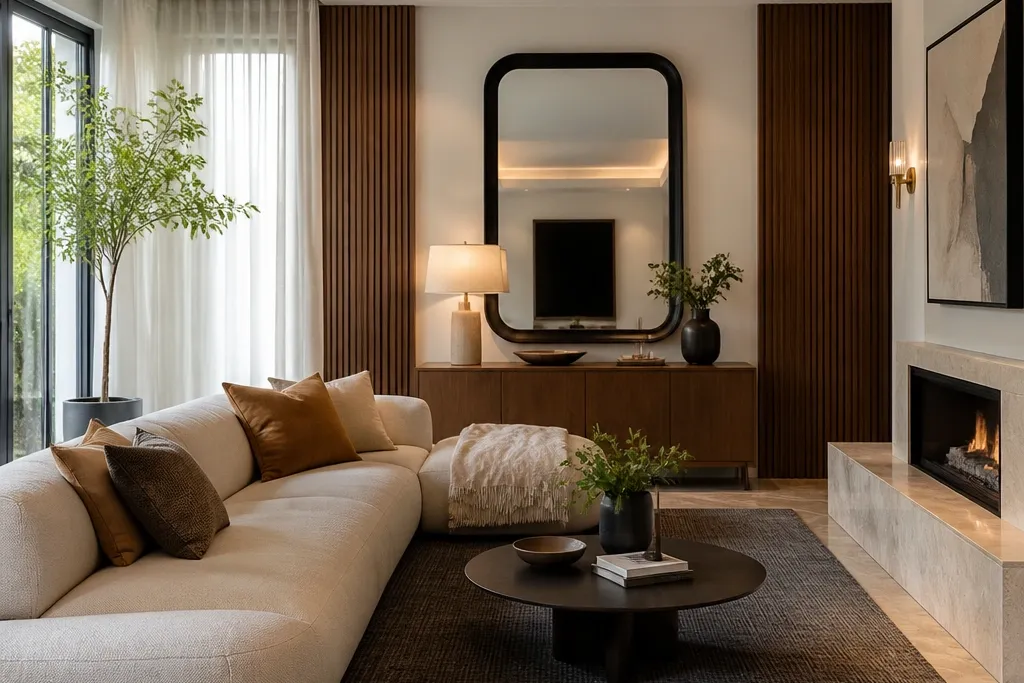
3. Travertine-Look Tile Hearth with Black Frame Mirror
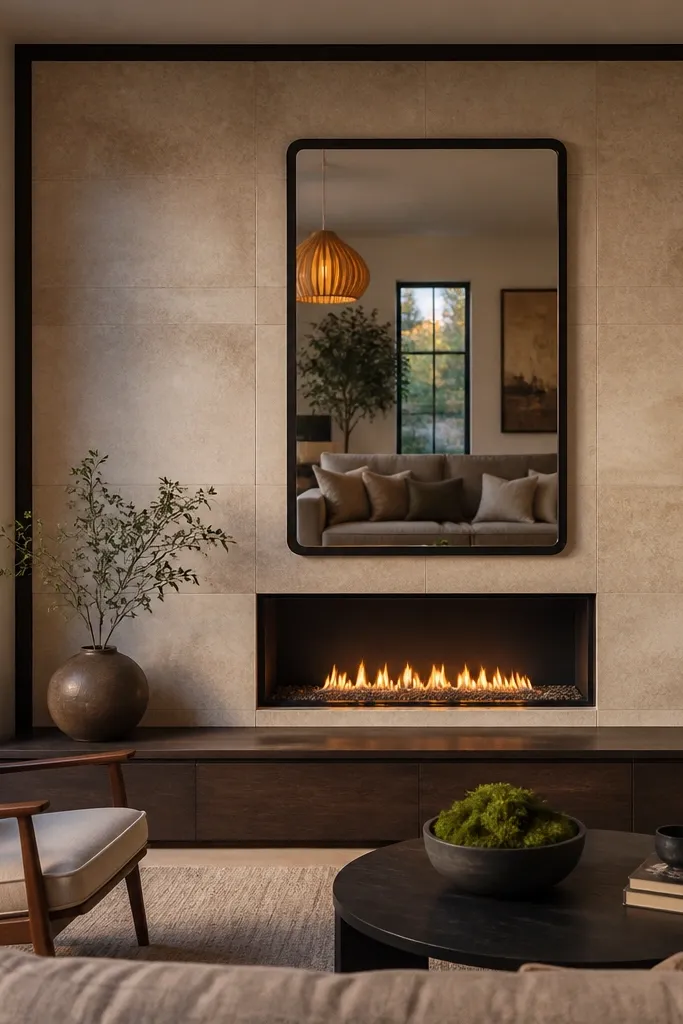
Choose travertine-look porcelain tiles with a consistent pattern scale so the room reads cohesive. Start by leveling the hearth area, then apply thinset with a notched trowel and back-butter large tiles for full coverage. Lay tiles in a staggered pattern and keep grout joints consistent, aiming for 2-3 mm spacing. After curing, grout with a warm greige grout and seal if the tile requires it. Finally, mount the mirror centered over the hearth height and style a slim plant pot and a pair of matching candle holders.
A tile hearth wall creates instant architecture, which is why this modern drawing room interior design works even with minimal furniture. Travertine-look finishes add organic movement, and the black mirror adds crisp contrast. The low console keeps the sightline open, so the room doesn’t feel blocked. This is a great DIY option because tile gives you a durable, clean focal surface that hides minor wall imperfections.
Skip thisDon’t use bright white grout — it makes modern tile look cheap fast.
Editor's noteDo a dry layout first. Travertine-look tiles can shift pattern placement if you skip this.
4. Gallery Wall in One Color with Soft Matting
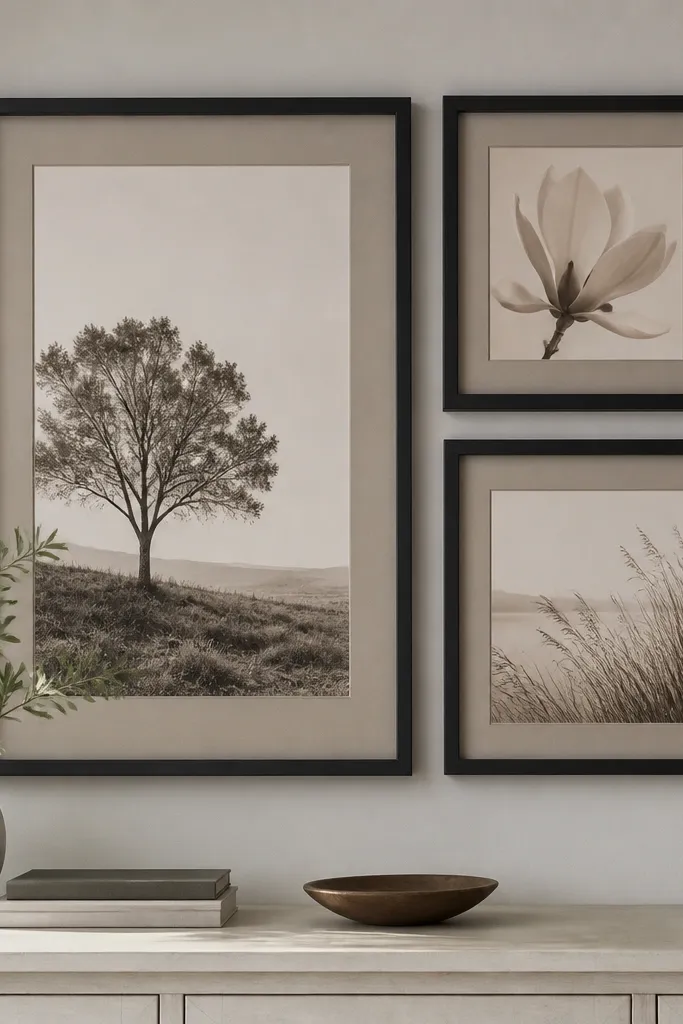
If your room feels “unfinished,” a controlled gallery wall fixes it without changing your whole layout. Keeping frames in one color and prints in one tonal family makes the wall look designed, not random. Soft matting creates a gentle border that reads expensive, especially against a neutral wall. This is excellent for modern drawing rooms where you want personality but don’t want clutter.
Pick one frame finish — matte black or warm walnut — and stick to it for all pieces. Decide your wall width, then plan a grid: center the gallery so the middle piece aligns with your main seating focal point. Use 3-5 mm spacers between frames and keep mat sizes consistent for a uniform look. Hang with a level and measure from floor to the centerline of the gallery, then secure each frame into studs or use heavy-duty wall anchors. Finish by adding one oversized clock or sculptural object on the console to balance the wall visually.
Use paper templates taped to the wall. It prevents crooked spacing and wasted holes.
Don’t mix frame finishes. Two metals already reads messy in a modern room.
5. Rug-First Layout with Oversized Coffee Table Proportion
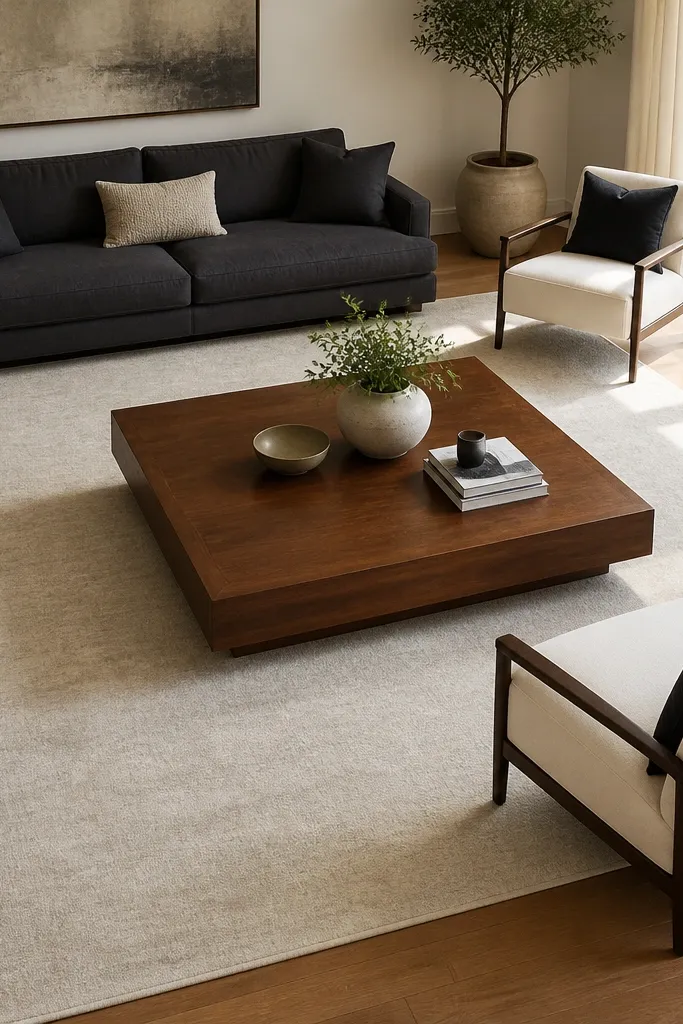
Measure your seating area and choose a rug that extends at least 15-20 cm beyond the front legs of the sofa and chairs. Place the rug first and align your sofa so it sits centered on the rug, not floating. Choose a coffee table height around 35-40 cm for most modern sofas, and keep the table width about two-thirds of the sofa length. Add two side chairs with matching spacing so the room has a clear conversation zone. Finish with a thin runner or minimal tray styling to avoid visual clutter.
Luxury modern rooms start with correct scale, and rug-first planning is the quickest way to fix cramped drawing rooms. When the rug is the right size, the seating looks grounded and intentional. Pair that with a coffee table that’s low and wide enough to sit comfortably between chairs, and the whole room looks tailored. This look is all about proportions, so it works even if your furniture is already neutral.
Skip thisDon’t buy a small rug just because it fits budget. The scale mismatch ruins the luxury feel.
Editor's noteIf your rug edges curl, tape the underside corners and use a gripper pad. It keeps the look crisp.
6. Two-Tone Curtains: Warm Off-White with Dark Side Panels
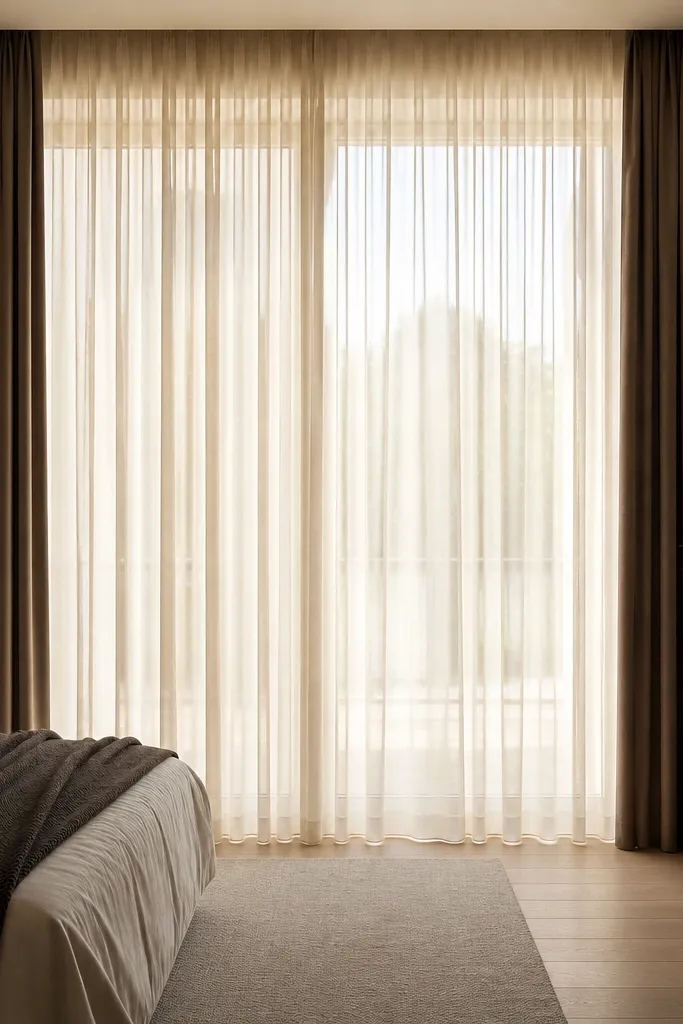
Choose a warm off-white main fabric and a darker coordinating panel fabric that matches your metal accents. Install a ceiling curtain track 8-12 cm above the window frame and extend it 15-25 cm past each side so curtains don’t hug the glass. Hang the outer dark panel edges first, then fill with the off-white sections to create balanced symmetry. Use blackout lining if your room gets harsh glare; it also makes the drape look thicker. Hem carefully and steam the folds so the pleats sit sharp.
Curtains can make a modern drawing room interior design look expensive in a day because they control height and framing. Two-tone panels add drama without bright colors, and the warm off-white keeps the room light. Dark side panels create a built-in border effect that makes the window look larger. This is perfect if your windows feel visually small or the room lacks “framing.”
Skip thisDon’t hang curtains inside the window frame. It makes ceilings look shorter.
Editor's noteUse a floor-length fabric. If it breaks on the floor, use a slightly heavier weave to avoid dragging.
7. Blackened Steel Floating Media Console with Walnut Veneer Top
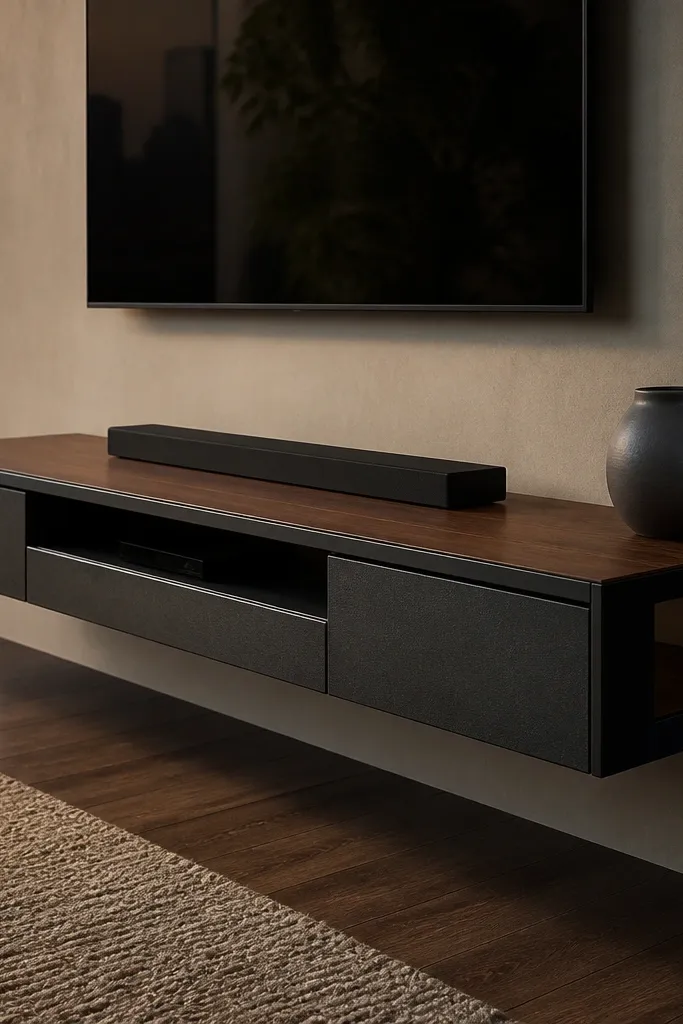
Build a floating frame using steel angle or a heavy-duty concealed mounting rail, then attach a walnut veneer top board. Measure wall studs and mount points before you buy anything so the console doesn’t wobble. Apply a matte black powder coat finish to the steel or buy pre-finished components. Seal the veneer with a matte clear coat to resist scratches. Mount the console level, then style with a slim cable box, one low vase, and a pair of matching candle holders.
A floating console instantly modernizes a drawing room because it clears the floor and makes the space feel lighter. Blackened steel gives you the crisp, architectural edge, while walnut veneer brings warmth. Minimal styling keeps the look luxury instead of cluttered. This works best when your room has a TV wall or media zone that you want to clean up visually.
Skip thisDon’t use a thin top board without support — it warps and looks sloppy.
Editor's noteUse a cable raceway behind the console. Visible wires kill the luxury look.
8. Corner Reading Nook with Built-In Bench and Woven Storage Lid
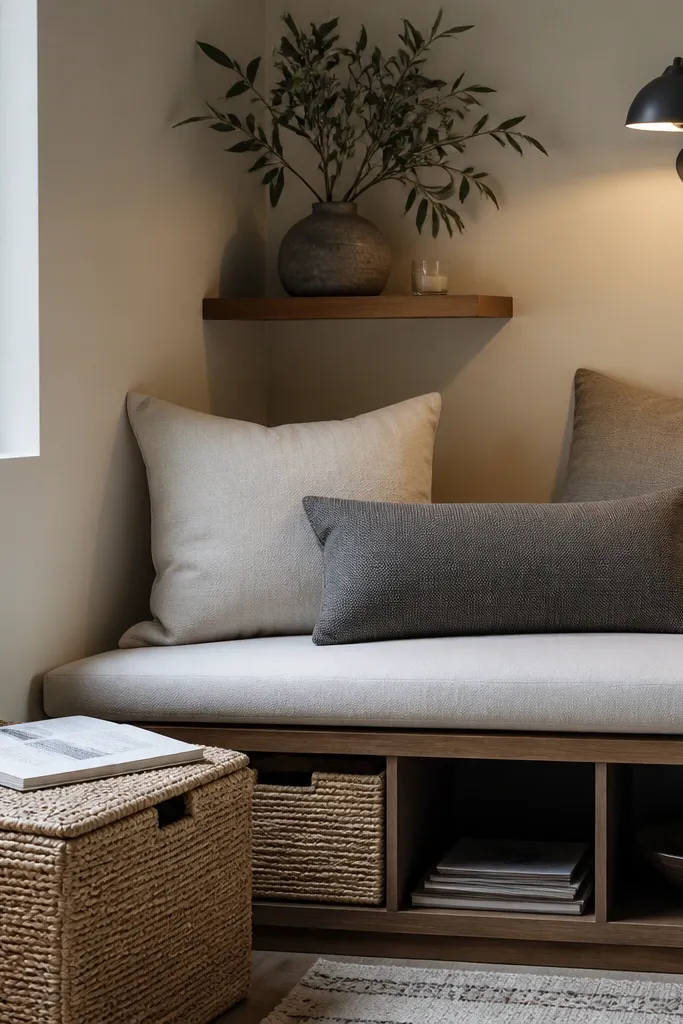
Measure the corner and plan a bench that fits the space with clean sides, leaving 5-8 cm clearance from baseboards. Build a frame from plywood and 2x2 supports, then skin with MDF or plywood panels for a smooth modern face. Install a hinged woven lid on soft-close hinges, and add a thin cushion on top with a removable cover. Paint the bench in a matte warm white or greige that matches trim. Finish with a wall-mounted reading light and a small rug under the bench for separation.
A reading nook is luxury when it looks built-in and intentional, not like random seating. The bench shape gives you extra storage and makes the corner feel designed. Woven lids add texture that softens the modern lines, and neutral cushions keep it calm. This is a strong choice for drawing rooms that need function without visual mess.
Skip thisDon’t skip a back panel or dust gap. Open framing looks cheap quickly.
Editor's noteUse foam seat cushions with a removable zip cover. It makes the nook look fresh even after spills.
9. Monochrome Wall Paint + Brass Sconce Pair
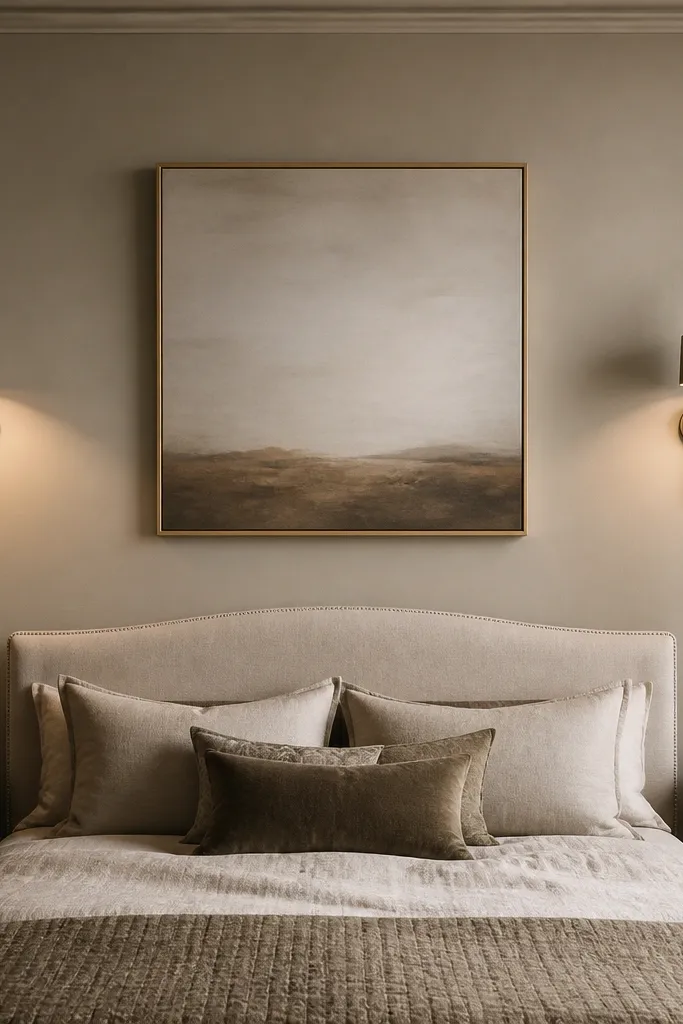
Pick a matte paint shade with a warm undertone, then patch and sand walls before painting. Apply two coats and let it cure fully so sheen stays consistent. Mark sconce mounting points using a level, then mount electrical boxes if you’re doing rewiring; for DIY safety, hire an electrician for any new wiring. Install sconces with warm bulbs around 2700K. Place a sofa so the sconces are slightly above cushion height, then add a single large art piece between them.
This is the easiest luxury upgrade because lighting and paint do most of the work. Matte monochrome walls hide imperfections and make brass sconces look intentional. The sconce pair creates symmetry, which modern drawing rooms need for a clean, high-end feel. Choose a warm neutral so the brass doesn’t look yellow and harsh.
Skip thisDon’t use satin or semi-gloss on walls. It reflects and kills the calm luxury look.
Editor's noteMatch bulb temperature across the room. Mixed temps make brass look off.
10. Woven Jute Rug + Black Leather Accessories Layer
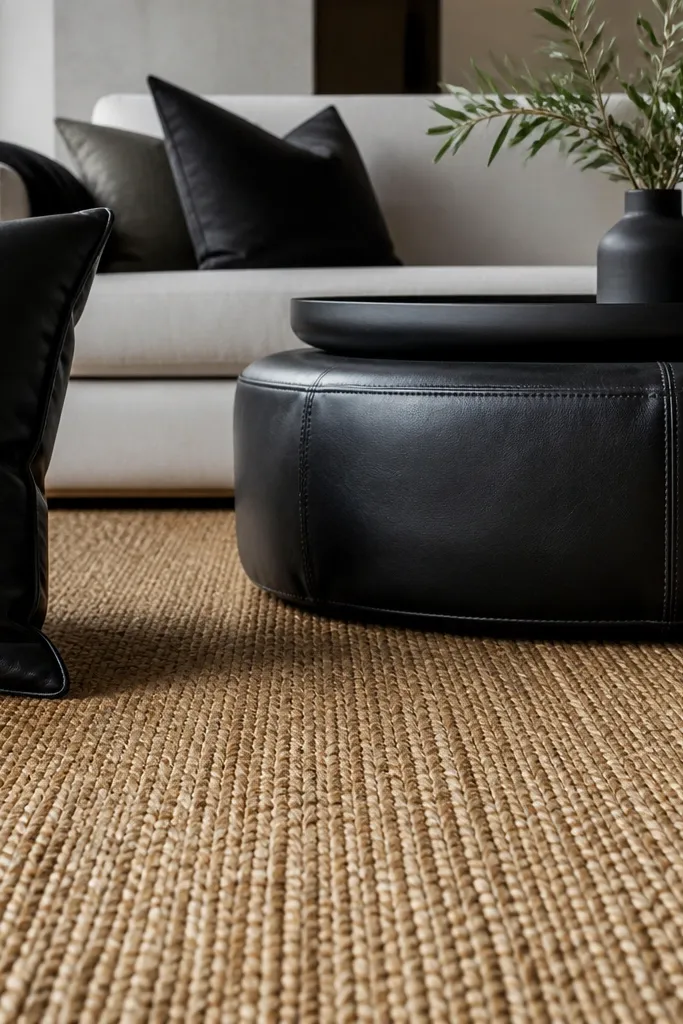
Choose a jute rug blend that has a tight weave and minimal fraying so it reads modern instead of rustic. Add a leather pouf at one side of the coffee table and keep the rest of the accessories monochrome black. Use a matte black tray to corral remotes and small items. Place a thin wool throw on one sofa arm to repeat the rug’s fiber warmth. Finish by adding two matching candle holders or a single sculptural vase in black.
This design earns its luxury look through contrast: natural texture on the floor and sleek black leather at the edges. Jute or wool-blend rugs add depth, and black leather accessories look sharp without needing extra color. It’s especially good if your drawing room has neutral furniture but feels too soft and undefined. The black accents give you a crisp “frame” around the seating zone.
Skip thisDon’t mix multiple natural textures at once. One woven hero plus controlled black looks cleaner.
Editor's noteVacuum jute with a suction-only setting to avoid pulling fibers loose.
11. Sculptural Plaster Columns in One Wall Corner
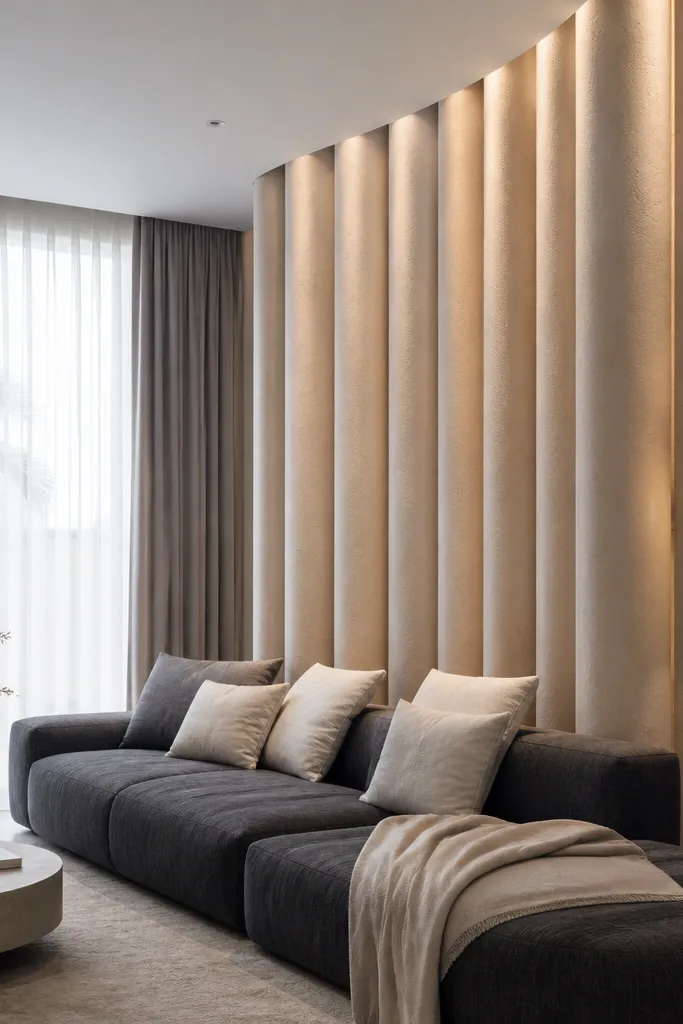
Modern luxury often comes from subtle architecture, and sculptural columns do that without taking over the room. Plaster columns create shadow and depth, making the corner feel intentional even with simple furniture. A cream sofa keeps the columns the star, and dark accents add crisp contrast. This is a smart pick for drawing rooms with awkward corners that look empty.
Build two slim column forms using foam or drywall profiles, then skin with plasterboard or a thin cement board for strength. Tape and mud seams, then texture lightly so the surface catches light. Prime and paint in a soft white, and add a satin protective topcoat if you used cement board. Install corner spotlights or wall-wash lighting directed at the columns. Position the sofa so its back aligns to the column centerline, and keep the coffee table minimal and low.
Use warm-white light (2700K). Cool light makes plaster look chalky.
Don’t choose glossy paint for columns. Matte looks more architectural.
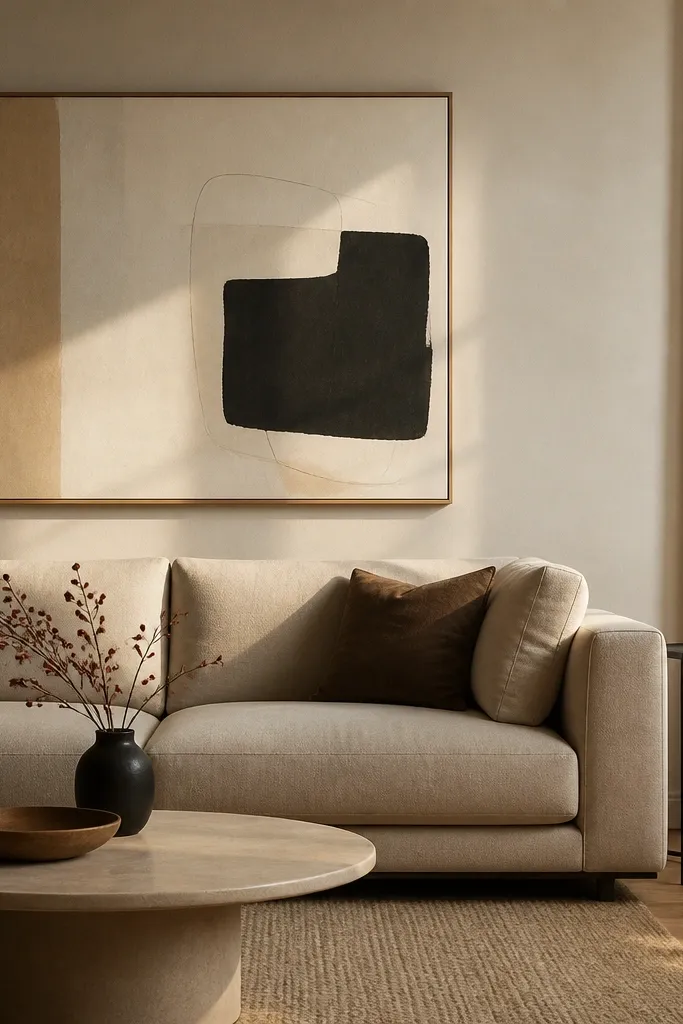
12. Custom Color-Blocked Accent Wall Behind Sofa
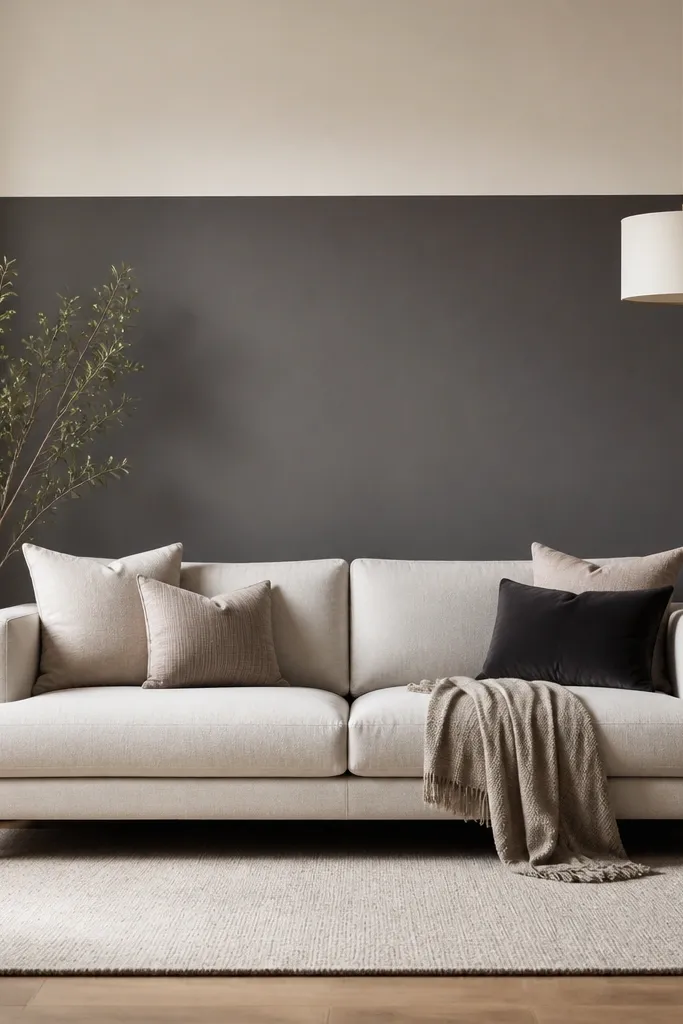
Choose a light base paint and a deeper accent shade in the same undertone family. Tape your shape with painter’s tape and use a small foam roller for crisp coverage. Paint the base first, let it cure, then apply the accent block and remove tape while paint is still slightly tacky for cleaner lines. Use matte finish on both colors for a modern look. Hang one large artwork centered on the accent block so the composition feels anchored.
Color-blocking can look designer when the shapes are disciplined and the palette stays muted. This modern drawing room interior design uses two paint tones: one light base and one deeper accent that frames the sofa back height. The result is a focal wall that looks expensive without needing wallpaper or built-ins. It’s also practical for DIY because you can tape clean edges and control the finish.
Skip thisDon’t add three colors. Two tones already looks intentional; three reads like DIY chaos.
Editor's notePress tape edges firmly with a plastic putty knife. It prevents bleed lines.
13. Smoked Glass + Walnut Dining-Style Coffee Table
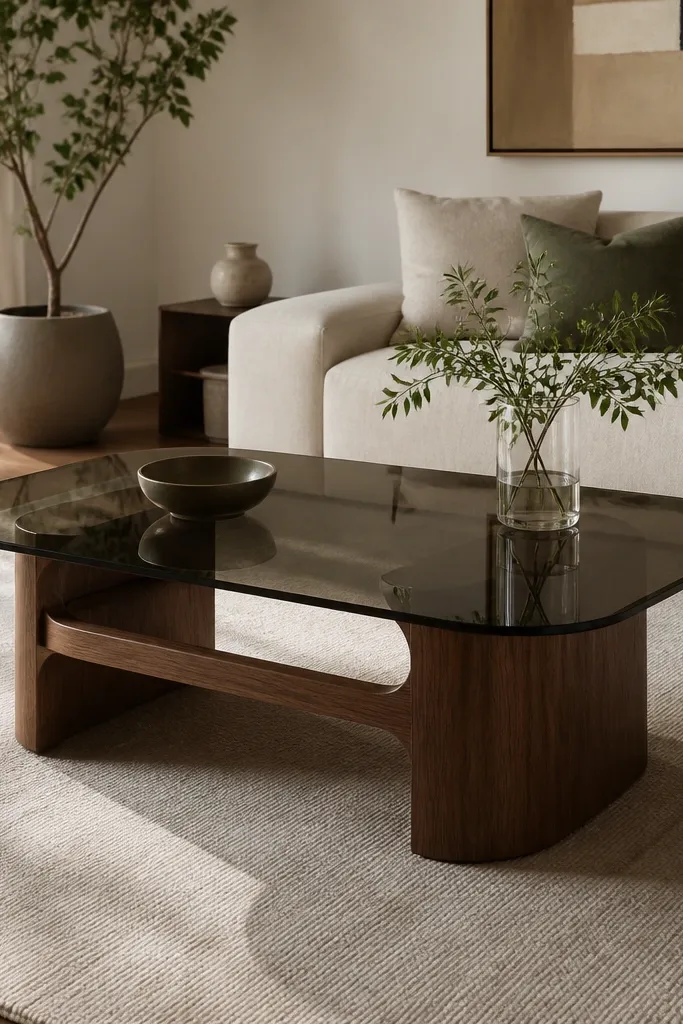
A smoked glass coffee table makes a modern drawing room interior design feel lighter and more upscale because the glass visually disappears. The walnut base adds warmth and gives you a strong material contrast. This setup works when you want a luxury look but your room is small or has dark flooring. The glass also helps keep the center of the room open so it looks breathable in photos.
Buy or build a coffee table frame with a walnut base and a smoked tempered glass top. If building, use 18 mm plywood for the base panels and edge-band it for a clean modern edge. Sand to 220 grit, then stain walnut and seal with matte clear coat. For glass, use a local glass shop to cut tempered panels to your exact dimensions. Place the table centered on the rug and keep the rug size large enough that table legs sit fully on the rug.
Add felt pads under the glass supports so the table doesn’t rattle and scratch the base.
Don’t choose overly dark glass. It can swallow the room instead of lifting it.
14. Layered Lighting Plan with Floor Lamp + Two Table Lamps
Choose matching lamp families: one floor lamp and two table lamps with the same metal finish and shade style. Install bulbs at 2700K and use smart dimmers if you want easy control. Place the floor lamp at the corner of the seating zone, then put table lamps on either side of a console or end table aligned with sofa arms. Keep shade heights around the same level so the room reads balanced. Test angles before final placement and adjust so light grazes the wall behind the sofa.
Luxury lighting is a plan, not a single fixture. This modern drawing room interior design uses three light sources so the room feels warm from every angle. A floor lamp creates height, while two table lamps add symmetry and softness near seating. The look is photogenic because shadows fall gently on walls and textiles instead of blasting straight down. It also helps you avoid the dead-flat look that makes rooms feel budget.
Skip thisDon’t mix warm and cool bulbs in the same room. The mismatch shows immediately.
Editor's noteUse drum or empire shades in linen-look fabric. They diffuse light better than shiny shades.
15. Integrated Storage Wall with Matte Slab Doors
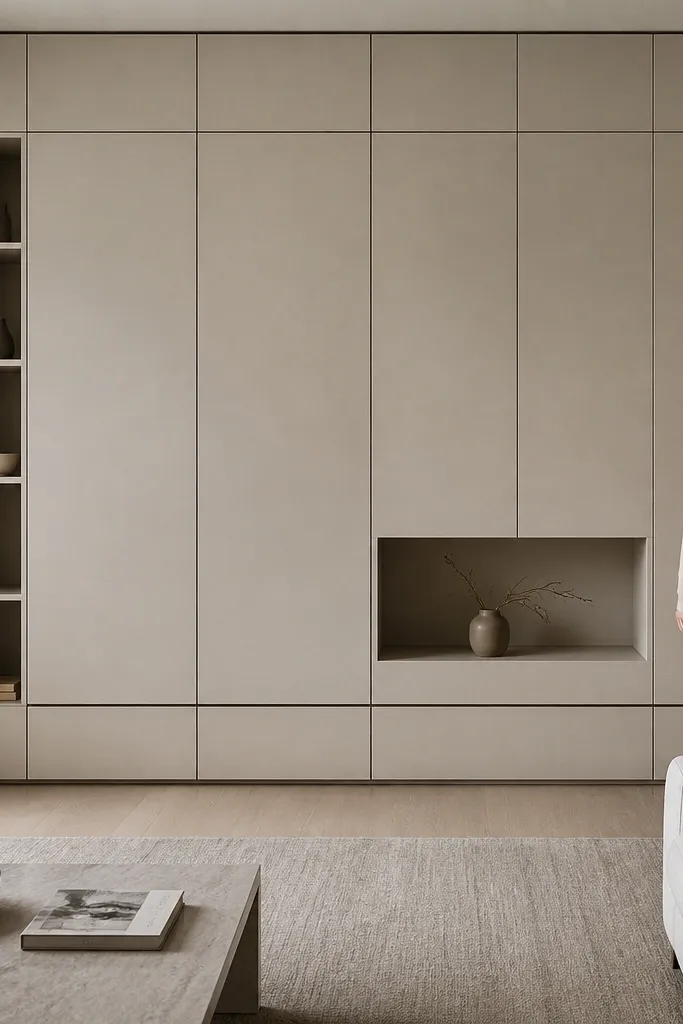
Plan your storage wall around a single grid: define cabinet widths and keep door lines aligned. Use plywood carcasses and slab doors, then install soft-close hinges. Paint or laminate the doors in matte finish in a warm neutral or deep charcoal. Add a top shelf for decor and keep it minimal so the wall doesn’t feel crowded. Mount the unit level, anchor to studs, then install a slim LED strip inside the display section or under top shelves for a soft glow.
A storage wall makes a drawing room look luxury because it eliminates visual noise. Matte slab doors read modern and calm, and they hide clutter that otherwise ruins the clean look. You get a built-in feel without complicated styling, since the doors keep everything behind one surface plane. This is ideal when your drawing room doubles as a family space or you need electronics and books nearby.
Skip thisDon’t leave open shelving without a plan. One shelf of random items makes the whole wall look messy.
Editor's noteSet door gaps consistently at 2-3 mm. Uneven gaps instantly look DIY.
16. Marble-Effect Side Table with Velvet Tray Styling
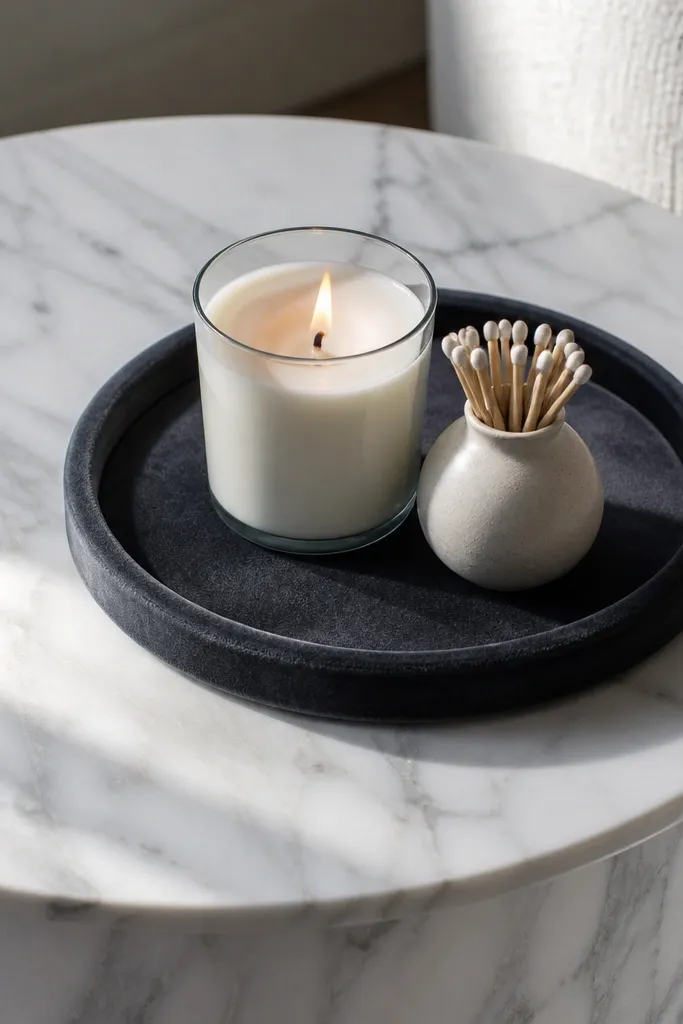
Pick a side table with a marble-effect top and a matte base that matches your metal accents. Sand any rough edges, then wipe and apply a clear matte sealer if the finish needs it. Add a black or deep brown velvet tray on top and place one tall element (like a slim vase) plus one flat element (like a candle). Keep the palette to two neutrals and one dark so the table doesn’t look busy. Repeat the same tray color on the other side table for symmetry.
This is a small change that makes a modern drawing room interior design look finished. Marble-effect side tables add brightness and pattern, while a velvet tray makes the styling look intentional and soft. The contrast between hard stone and plush fabric reads high-end even with simple objects like a candle and a small vase. It’s perfect for rooms where you already have a good sofa and rug but the surfaces feel bare.
Skip thisDon’t stack too many small items. One vertical + one flat looks cleaner.
Editor's noteUse felt under the tray corners. It prevents scuffs and keeps the tray from sliding.
17. Ceiling Coves with Warm Indirect LED Strip
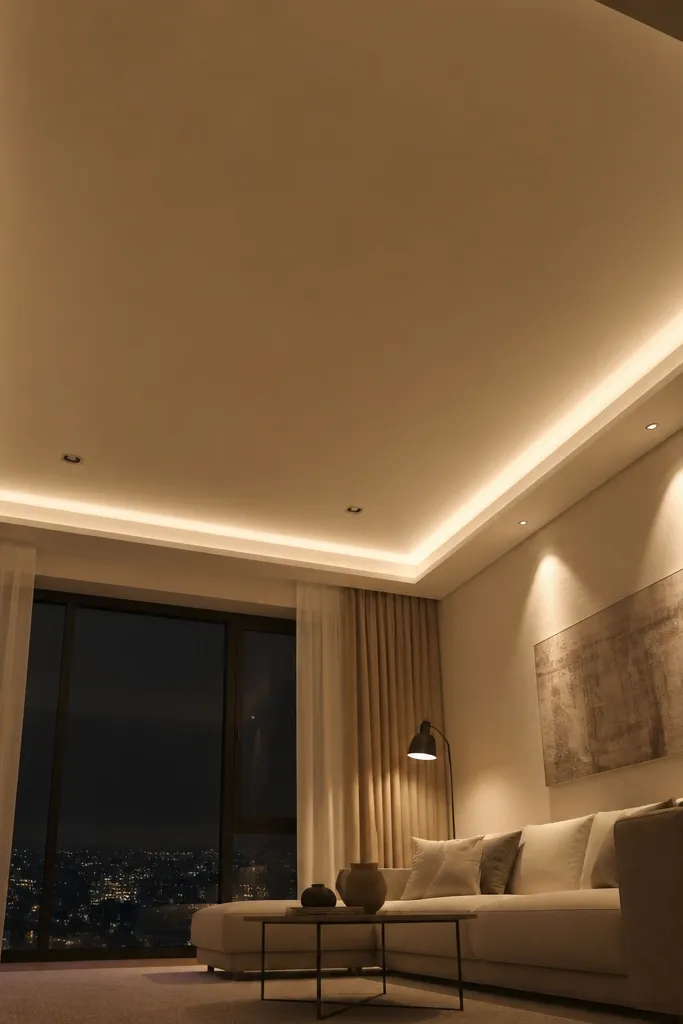
Measure the room perimeter and decide your cove depth, usually 8-12 cm, so it doesn’t look heavy. Install a drywall or gypsum cove using metal channels and board, then sand and prime before painting. Paint the ceiling and cove in matte white, leaving the LED channel area clean. Add an LED strip rated for coves and cover it with a diffuser so the light is smooth, not pixel-bright. Wire to a dimmer and test before you close any access panels.
Indirect LED in a ceiling cove adds instant luxury because it changes the room’s mood without changing furniture. In a modern drawing room interior design, the glow creates a clean boundary and makes walls look taller. Warm indirect light also flatters skin tones and textiles, so everything looks more expensive in photos. This is a strong choice for rooms with plain ceilings that feel flat.
Skip thisDon’t skip a diffuser. Visible LED dots make the room look cheap.
Editor's noteUse 2700K or 3000K LEDs with a high CRI so whites look natural, not yellow-green.
18. Monochrome Sofa Styling with Boucle Throw and Knife-Edge Cushions
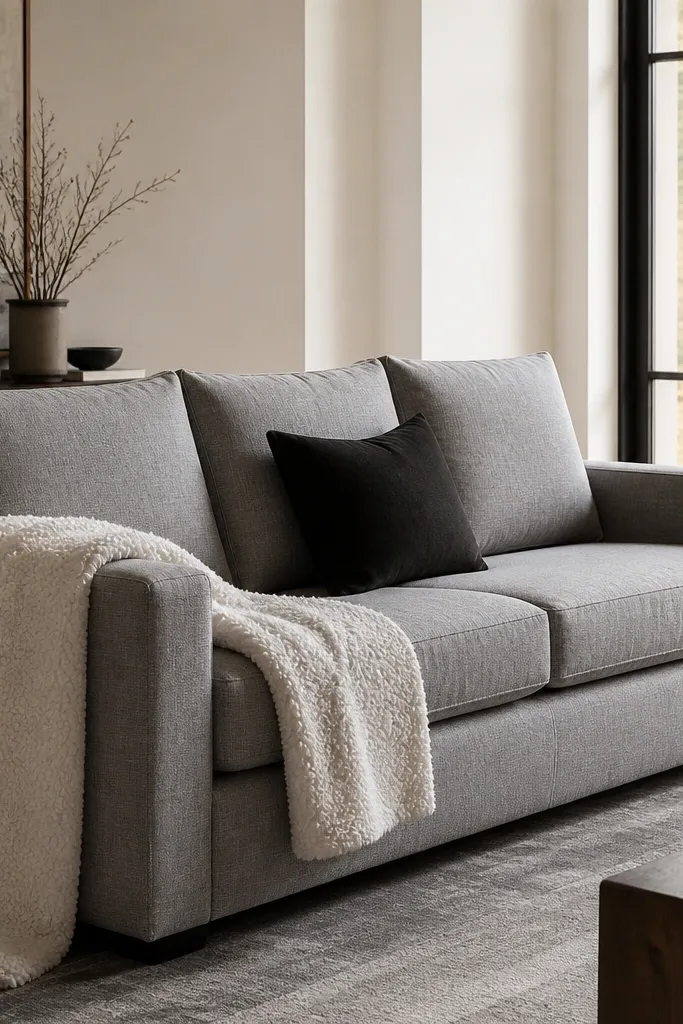
Choose a base cushion set in one tone family like cream and warm taupe, then add a boucle throw in the middle tone. Arrange cushions with the front edge aligned and keep the number consistent: two larger cushions and two smaller accent cushions works cleanly. Add one long lumbar cushion only if it matches the sofa width. Style a single tray on the coffee table with two items max. Steam the throw so it falls naturally over the sofa arm.
You can’t fake texture, and luxury modern rooms lean hard on it. This look uses monochrome sofa styling with one tactile hero: boucle or sherpa-like throw. Knife-edge cushions keep the lines sharp and modern, so the softness doesn’t look sloppy. The palette stays tight, so your room reads designer even if you’re using basic furniture. It’s ideal for drawing rooms that need an immediate refresh without major construction.
Skip thisDon’t mix rounded, fluffed cushions with knife-edge ones. The mix looks accidental.
Editor's noteUse cushion covers with hidden zippers and firm inserts. Saggy cushions look cheap immediately.
19. Walnut Frame Window Treatments with Floor-Length Sheers
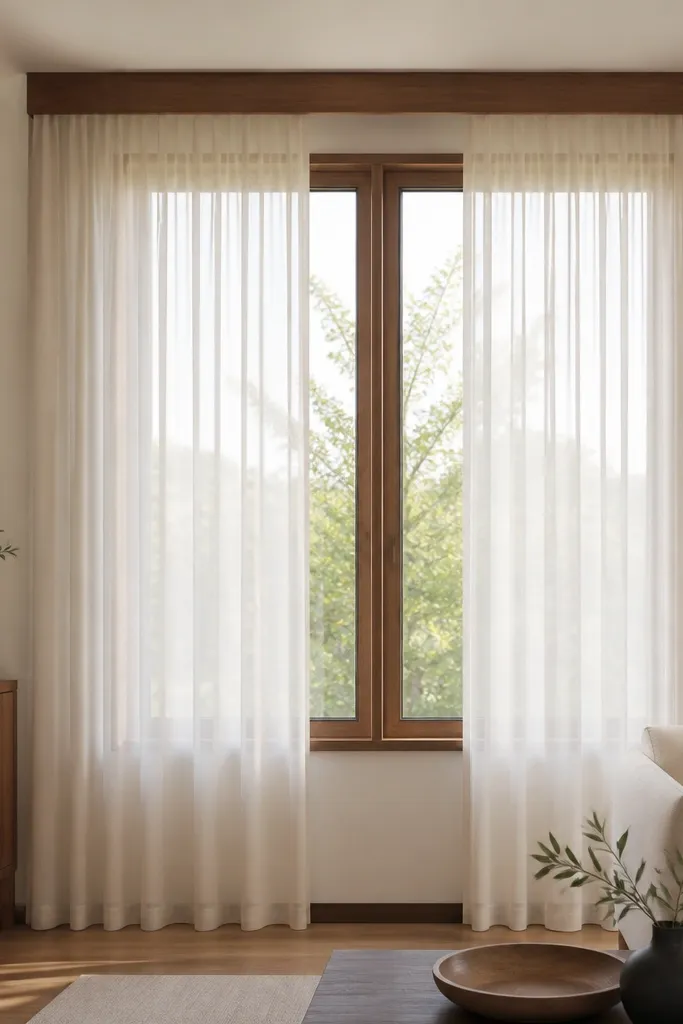
Install a minimal curtain rod with walnut brackets or add walnut trim panels around the window recess if you’re doing a renovation. Hang sheer panels floor-length, with the bottom hovering 1-2 cm above the floor for a tailored look. Use a sheer fabric that doesn’t look shiny; choose linen-look sheers for texture. If you want privacy, add a hidden blackout layer behind the sheers using a second track. Keep the pleats light and evenly spaced across both sides.
Modern luxury around windows is about how light enters, and sheers control that without blocking the view. Walnut trim ties into warm wood tones and makes the window look custom, even when the room is simple. Floor-length sheers add softness while staying modern because the rod and trim are clean and minimal. This design is especially good when your drawing room has good daylight but feels too stark.
Skip thisDon’t use short sheers. They break the vertical line and shrink the room.
Editor's noteSteam sheers hard before installing. Wrinkles make them look bargain even if the fabric is decent.
20. Limewashed Brick Half-Wall + Walnut Slat Backlit Bar
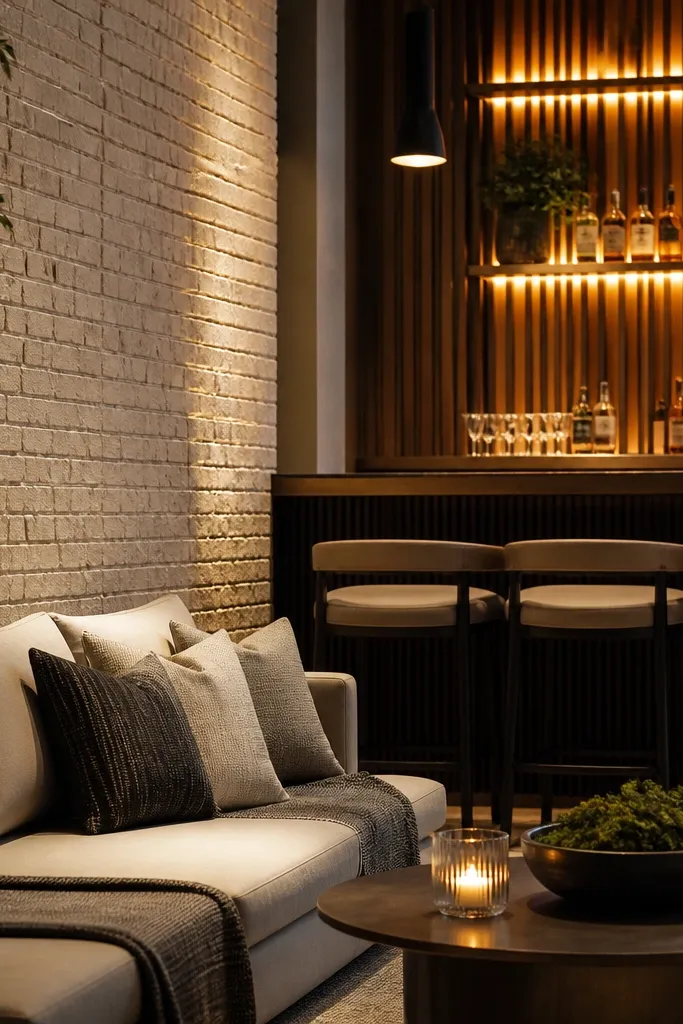
This design gives you the luxury look of a boutique lounge without going full renovation. The limewashed brick half-wall adds texture that reads expensive in photos, and the walnut slat backlit bar niche adds that warm, modern glow modern drawing room interior design needs. It’s a smart way to zone a drawing room — seating stays open, but the bar area feels defined. You’ll build a clean, straight half-wall finish and then install a simple slatted frame with LED behind it, so the glow looks even instead of patchy. Skill level is DIY-medium: you need basic carpentry and careful leveling, but the materials are standard and the cuts are straightforward. It suits drawing rooms that are long or open-plan, where you want structure and atmosphere without blocking sightlines.
Step 1: Build the half-wall finish. If you already have brick, clean it, then apply a limewash mix (lime putty + water + a small amount of pigment if you want greige) in thin coats with a stiff brush, letting each coat dry 4-6 hours; keep the top edge razor-straight with painter’s tape. Step 2: Frame the walnut slat backlit niche. Mount a level backer board to the half-wall (or to a new stud frame if you’re starting from scratch) and cut a rectangular opening about 1100 mm wide x 450 mm high; screw a 10 mm ply backer in place, then install walnut slats 25 mm wide with 20-25 mm spacing so light hits evenly. Step 3: Add LEDs and finish. Use a warm LED strip (2700K) on a diffuser channel behind the slats, then cover the edges with a thin walnut trim so you don’t see hardware; wire to a dimmer and test before closing. Seal the walnut with a matte hardwax or water-based clear to keep the glow clean and prevent fingerprints.
Use a diffuser channel behind the LEDs — it costs a bit more but stops the slats from showing bright hotspots.
Avoid painting brick with thick masonry paint; limewash needs thin coats and patience to look like real, lived-in texture.