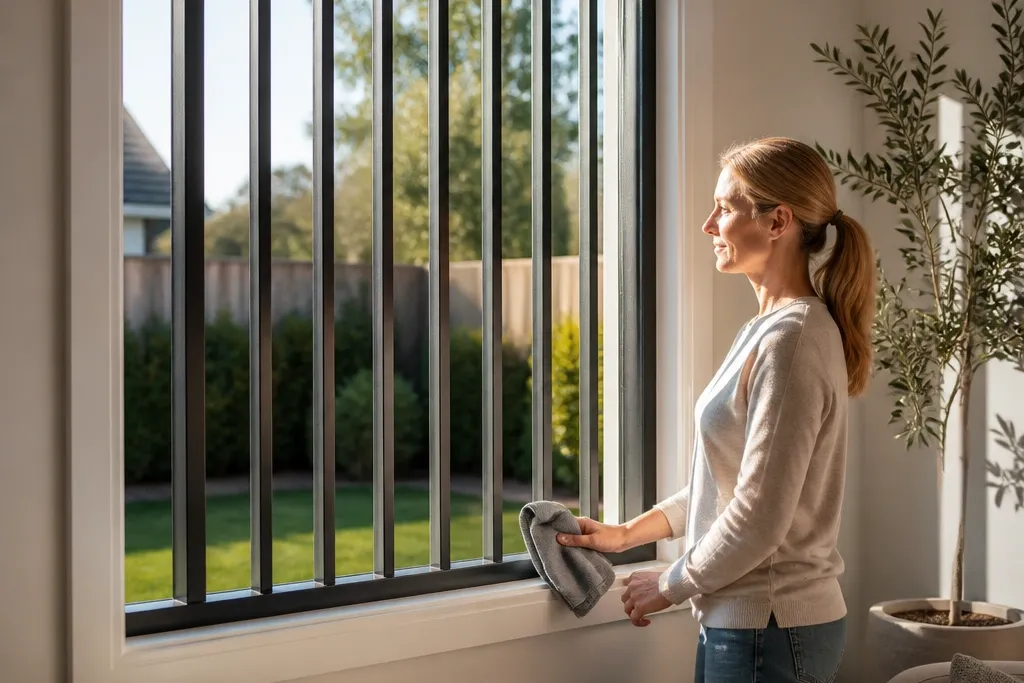
1. Powder-Coated Vertical Fin Frame with Hidden Fasteners

This design gives you the modern “tall lines” look without turning the window into a cage. Vertical fins read sleek from across the room, and the thin perimeter frame keeps the whole thing light and architectural. Use matte black powder coating for a finish that hides minor scuffs better than glossy paint. It stays low-maintenance because water drains straight down the fins and you can wipe between them with a microfiber cloth. Skill level is basic-to-intermediate if you’re comfortable cutting a frame and drilling accurate holes.
Start by measuring the window opening and deciding your face size — add 25-30 mm extra width and height for a clean border. Build a rectangular frame from 25x25 mm square tubing or 20x30 mm flat bar, then drill evenly spaced holes for the vertical fins; keep spacing consistent at about 60-80 mm for a modern open look. Cut vertical fins from 10-12 mm flat bar, deburr edges, and weld to a back rail or insert into drilled slots, then cap the ends with sealed end caps. Finish by powder coating the full assembly, then mount using stand-offs or a shallow back plate with hidden screws through the frame corners.
Editor's noteBefore powder coating, run a sanding sponge over weld beads so the coating lays smooth and doesn’t create dust-catching ridges.
Skip thisDon’t use thick fins packed too tightly — it looks heavy and makes wiping the glass edge annoying.
2. Matte Brushed Aluminum Rectangle Grid (Open Center)
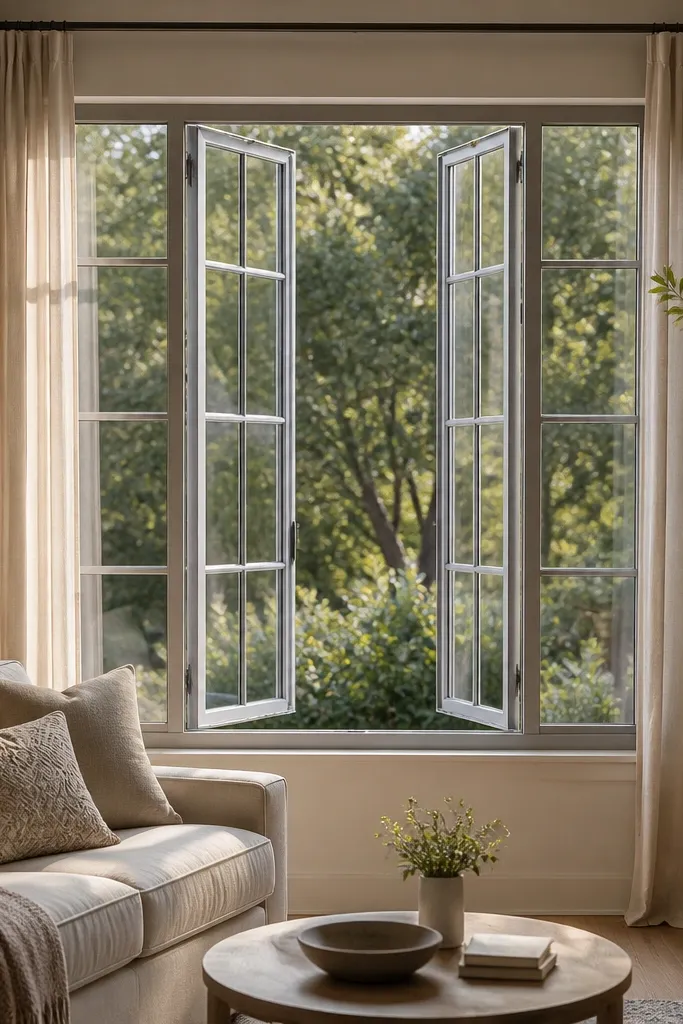
A rectangle grid is the easiest modern look to get right because it creates order without visual clutter. Brushed aluminum keeps the grill from looking too dark in a bright living room, and it stays low-maintenance since aluminum resists rust and wipes clean quickly. The trick is making the frame thin and the grid lines consistent, so it looks like a design element, not a safety barrier. With an open center and clean corners, you still get plenty of daylight and a crisp shadow pattern on the wall. This suits living rooms with neutral walls where you want the window to feel designed, not blocked.
Cut a perimeter frame from 30x10 mm aluminum flat bar and make it slightly larger than the window trim, leaving a 10-15 mm overlap on each side. Build the grid using aluminum rectangular bars, typically 10x6 mm, and keep the grid opening around 100-120 mm for a balanced look. Tack the grid to a jig or flat surface so the rectangles stay square, then fully join corners and file any sharp edges. Seal the inside corners with a thin bead of clear exterior-grade sealant if you want extra wipe-friendliness, then mount with stand-offs so air can circulate behind the grill.
Editor's noteUse a simple cardboard spacer template for grid spacing; it keeps every cell the same and prevents “drift” over long frames.
Skip thisSkip thick weld blobs at corners — they create bumps that collect dust.
3. Sand-Blasted Steel Diagonal Rhythm Panels
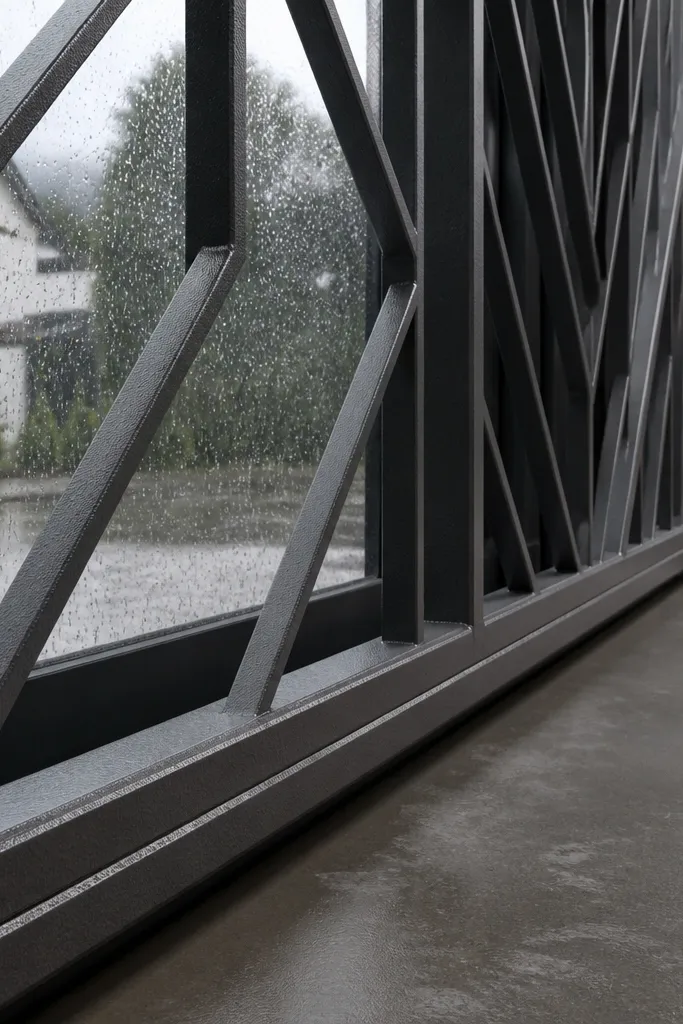
Diagonal bars make a window grill look modern fast because they create movement and a graphic shadow. Sand-blasted steel with a matte finish hides minor wear and looks intentional in daylight. It’s low-maintenance when the coating covers every edge and the bottom rail has a drip line so rain doesn’t pool. This is a great choice if your living room has plain curtains and you want the window to carry the design. The clean border frame keeps it from looking busy even with diagonal detail.
Make a thin perimeter frame from 25x25 mm square tubing and add a 10-15 mm drip edge on the bottom using an angled cap plate. Cut diagonal bars from 12-14 mm flat bar and set a consistent angle, commonly 30-45 degrees, across the panel. Weld or bolt the bars to a back grid rail so spacing stays even; use a jig to keep the angle identical from top to bottom. Prime and powder coat the entire assembly, then mount with four corner stand-offs to keep the face off the trim and allow cleaning.
Editor's noteLay the panel flat while welding and use clamps at both ends so the diagonal bars don’t twist before coating.
Skip thisDon’t mix bar widths — it creates a visual wobble that reads “DIY messy” from a few feet away.
4. Two-Tone Frame with White Powder-Coated Bars
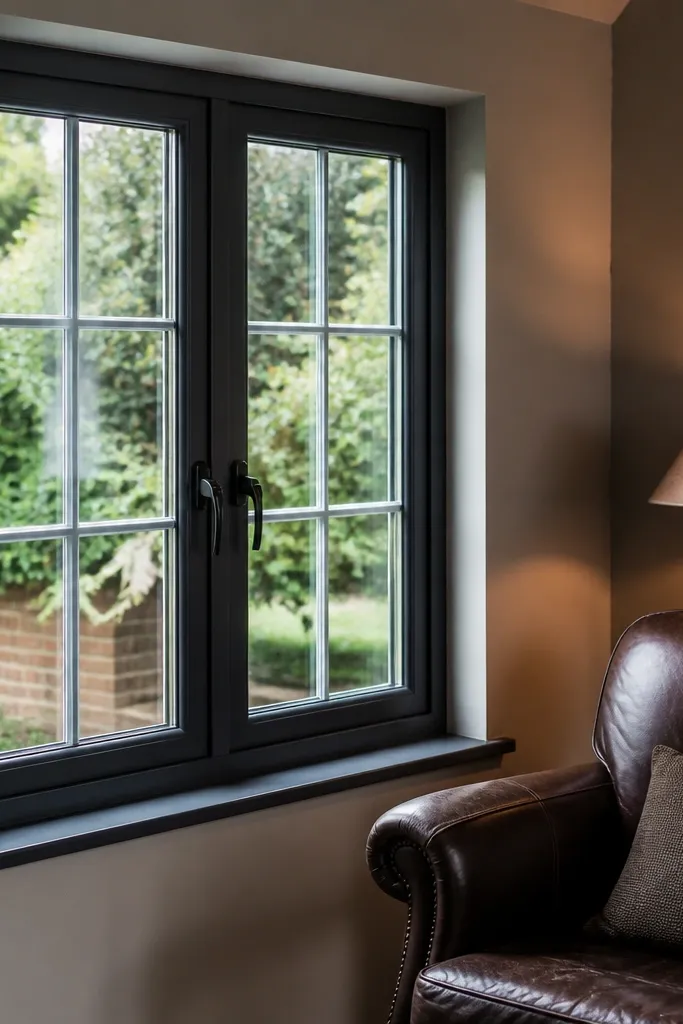
Two-tone grills look premium because they break up the silhouette and make the window area feel designed. White bars feel airy and modern, especially in rooms with dark trim or black hardware. Low-maintenance comes from using powder-coated finishes on both the frame and bars so you can wipe fingerprints and dust without chasing glossy marks. The key is controlling contrast: keep the white matte and the frame slightly deeper in tone, like charcoal or matte black. This design works best when your living room has light walls and you want the grill to blend with brightness while still looking crisp.
Build a perimeter frame from 30x30 mm square tubing and choose a darker matte powder coat for the frame. For the bars, use 10-12 mm flat bar powder-coated matte white and weld to two horizontal rails behind the frame. Keep bar spacing around 70-90 mm so it reads modern and doesn’t feel cluttered. After coating, mount the grill with stand-offs and use color-matched screws or hidden brackets to keep the hardware invisible from the front.
Editor's noteAsk your powder coater for a uniform matte texture on both colors; mismatched sheen can look cheap even when the design is solid.
Skip thisAvoid glossy white — it shows dust and smudges much faster than matte.
5. Slim Black Square Tube Grid with Micro Spacing
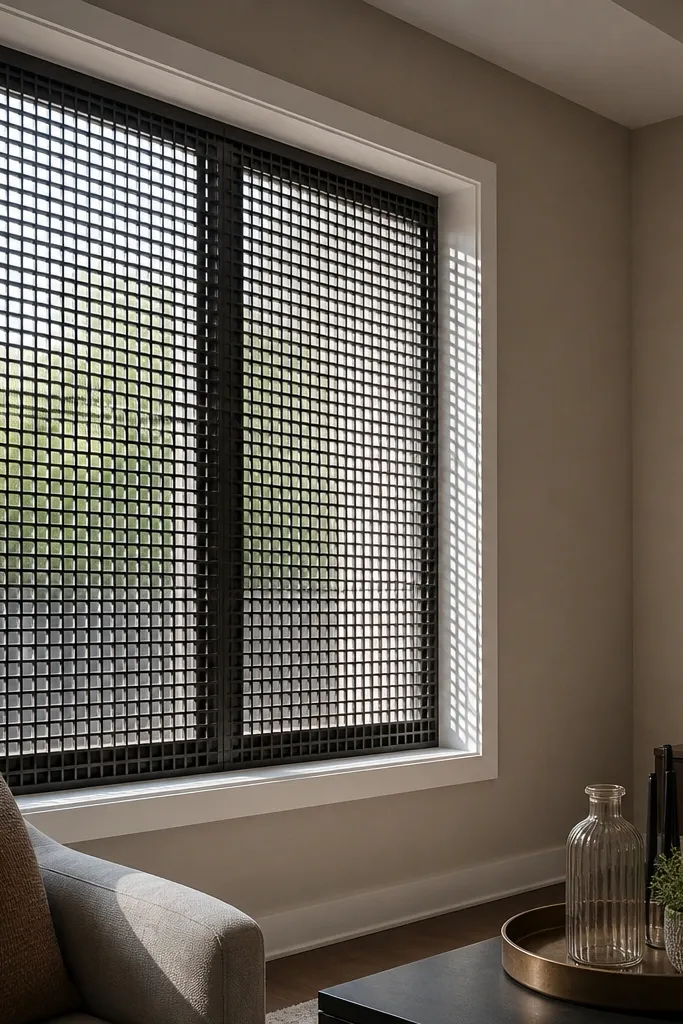
If you want a modern grill that still feels protective visually, use a grid built from slim square tubing. Micro spacing makes the shadows crisp and gives you a clean lattice look that photographs well. Matte black powder coating keeps it looking sharp and reduces glare, which helps the grill blend into modern living rooms with smart lighting. The low-maintenance part is the frame geometry: smooth square tubes and sealed corners mean fewer crevices for dust. This is a strong pick for apartments where you want the window to look “designed” without heavy bulk.
Use 15x15 mm or 12x12 mm square tube for the grid and a slightly larger 25x25 mm tube for the perimeter frame. Create a grid with openings around 60-80 mm by cutting consistent lengths and assembling on a flat jig. Weld each intersection lightly or use corner plates with screws if you want easier repairs later. Powder coat the full unit and mount with spacers so the back edge is accessible for cleaning.
Editor's noteBefore welding, mark every tube cut with a center line so your grid stays perfectly aligned and squares don’t drift.
Skip thisDon’t leave sharp internal weld corners; they snag dust and are annoying to wipe.
6. Rectangle Frame with Centered "Architect Strip" Horizontal Rail
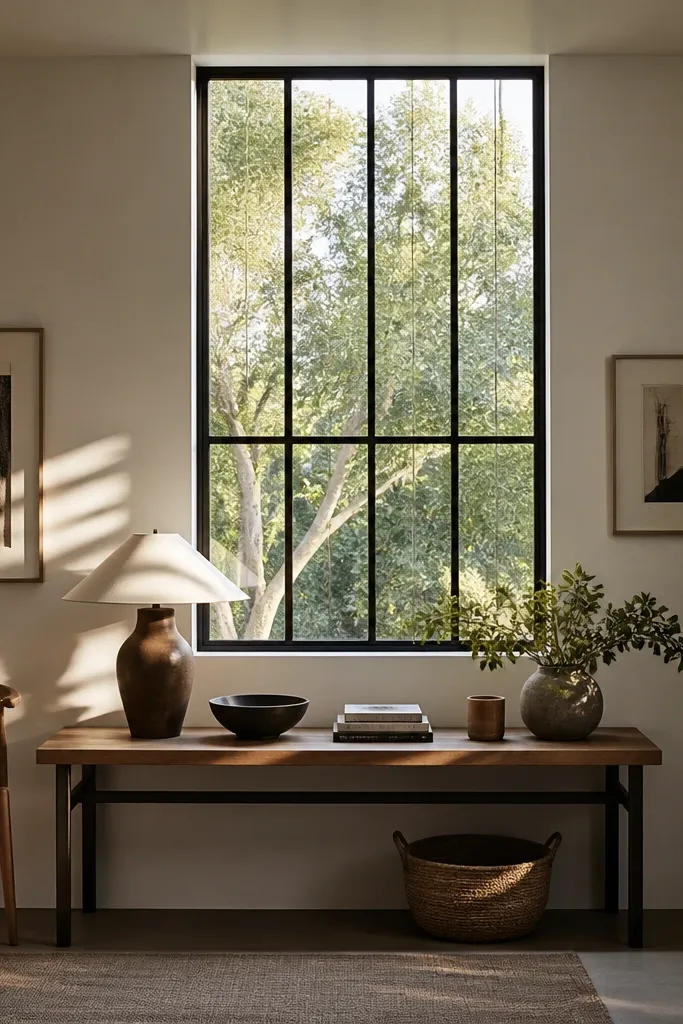
This design uses one strong horizontal rail to anchor the look, then uses vertical bars to keep it modern. It’s a good middle ground if you like the openness of vertical fins but want a more “designed” composition than a plain grid. The centered rail creates a clean focal line that looks great with wall art or a TV on the adjacent wall. Low-maintenance comes from smooth bar surfaces and a simple geometry that’s easy to wipe. It suits contemporary living rooms where you want the grill to look intentional without adding clutter.
Build a thin rectangle frame from 25x20 mm flat bar and weld two back rails at top and bottom. Add vertical bars from 10-12 mm flat bar spaced 80-100 mm apart, then weld one horizontal “architect strip” at the center using a thicker flat bar, around 25-30 mm wide. Keep the strip centered by measuring the frame height and marking the midpoint before welding. Powder coat matte black, then mount with four corner stand-offs and hidden brackets behind the frame.
Editor's noteUse a laser level or a taut string line for the center strip so it doesn’t look slightly off after coating.
Skip thisDon’t add multiple horizontal rails — it turns into a busy grid and loses the modern calm.
7. Warm Bronze Frame with Clear-Coated Steel Bars
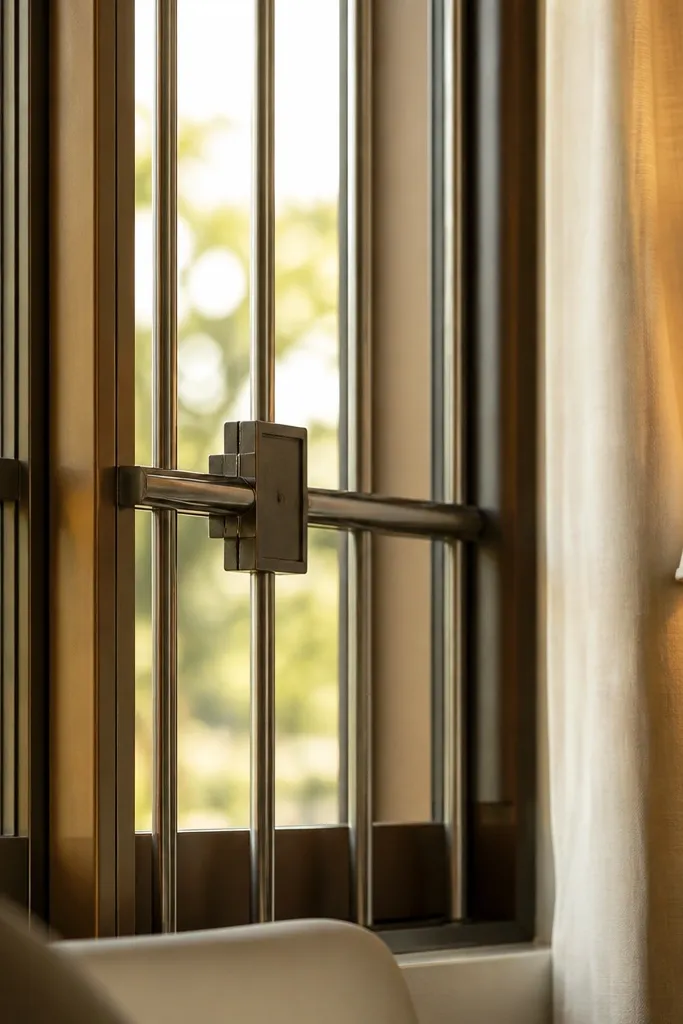
Warm bronze frames make a window grill look softer and more decorative without becoming ornate. Pair the bronze frame with light steel bars that are powder-coated and then clear-coated for a smooth, wipe-friendly surface. This is low-maintenance because the clear coat smooths micro pores that catch dust on rough powder. The look is modern because the bars are straight and evenly spaced, with a simple border frame. It works well if your living room has warm wood tones, brass lamps, or beige walls.
Cut a perimeter frame from 30x10 mm metal strip or square tubing and spray or powder coat it in a bronze tone. Build the bar field from 10-12 mm flat bar, powder coat them in a light neutral (graphite gray or light steel), then add a clear coat for extra wipe performance. Weld bars to two horizontal rails, then sand any sharp edges before coating. Mount with stand-offs so the grill doesn’t sit flush against the trim where grime builds.
Editor's noteAsk for a textured bronze only on the frame; keep the bar field matte-smooth for easier cleaning.
Skip thisDon’t clear-coat directly over bare welds; it will trap under-coating residue and create peeling.
8. White Minimal Frame with Black Vertical Lines (Contrast Stripe Look)
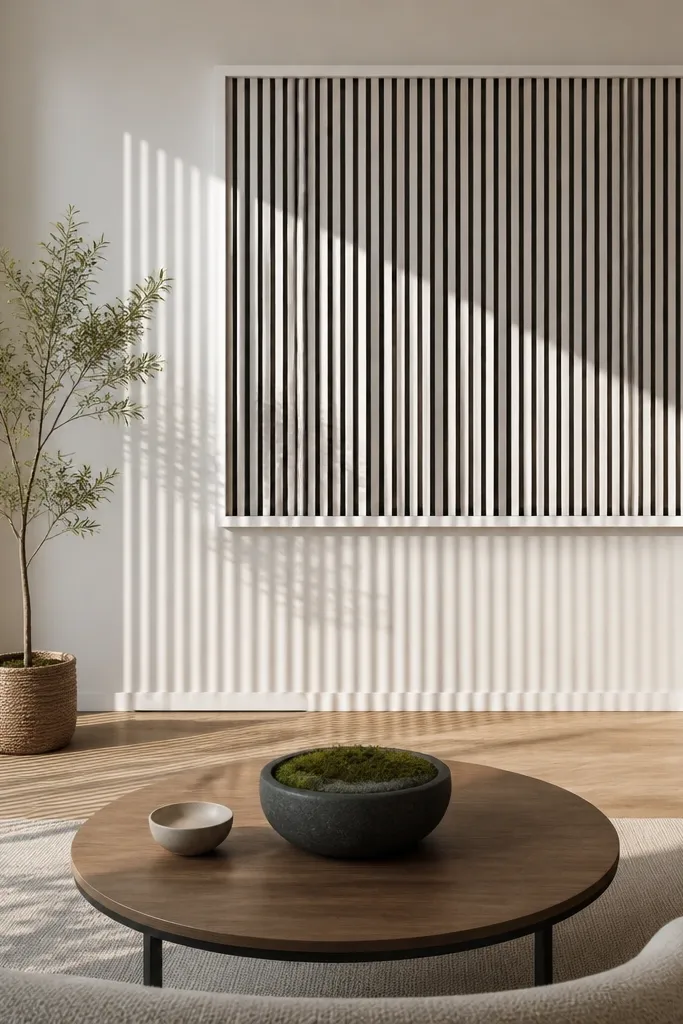
This is the “graphic” modern look: white perimeter, black vertical lines, and lots of open space. It’s photogenic because it creates strong contrast and a clean shadow pattern on the wall. Low-maintenance happens when both finishes are powder-coated matte and the frame is thin enough that you can wipe the edges quickly. If your living room has white walls and black accents, this grill ties the room together without feeling heavy. It also works in small rooms because it doesn’t visually block the window.
Use a thin white frame, like 20x30 mm metal flat bar, and build it slightly larger than the window trim. Cut black vertical bars from 8-10 mm flat bar and space them 90-110 mm apart for an airy look. Weld bars to two back rails, then powder coat the frame white and bars black separately or in a two-stage process. Mount using hidden corner brackets plus spacers so the front face stays crisp and the back edge is reachable.
Keep bar ends perfectly square and deburred; the clean edges make the contrast look sharp in photos.
Avoid thick bars — the contrast stripe look collapses if the lines become too wide.
9. Charcoal Powder-Coated Square Frame with Centered Cross Bars
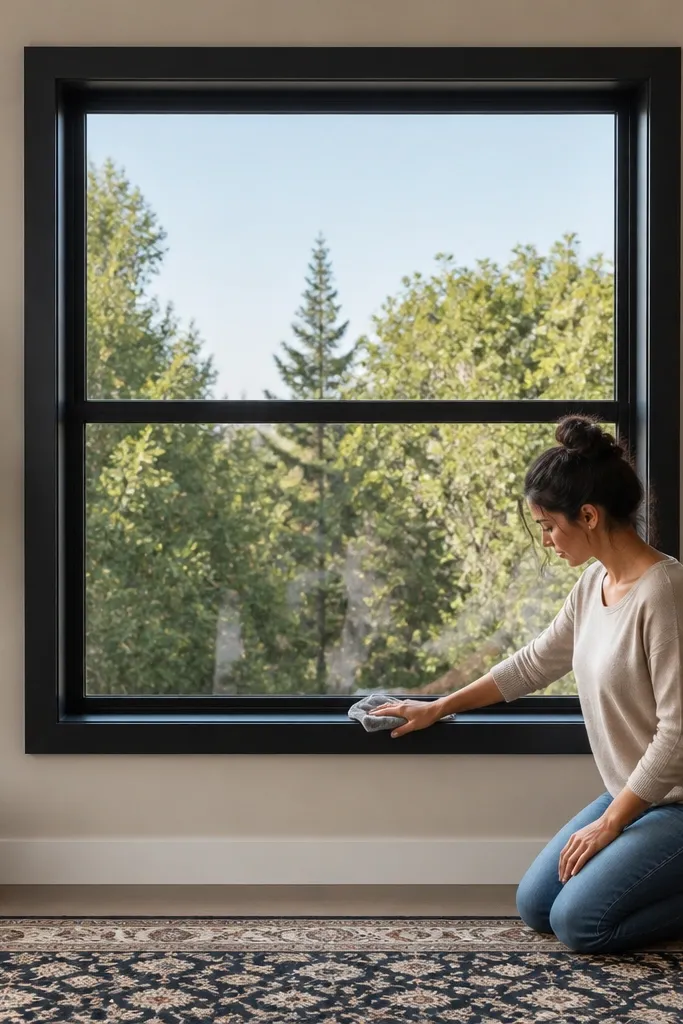
A centered cross-bar layout gives you a modern, balanced look without turning into a full grid. The cross creates structure, and the frame keeps it crisp. Charcoal matte powder coating resists fingerprints better than bright black and looks good in most living rooms. Low-maintenance is straightforward: fewer intersections mean fewer dust traps, and the smooth bars wipe easily. This suits rooms with mid-tone walls where you want a grill that reads clean but not stark.
Build a perimeter square frame using 25x25 mm tubing and add a subtle bottom drip edge using a small angled plate. Add two vertical bars and two horizontal bars forming a centered cross, using 12-14 mm flat bar, and keep the arms aligned with the frame midpoint. Weld the cross bars to a back rail or to thin support strips so the structure doesn’t flex. Powder coat charcoal matte, then mount with stand-offs and use four anchors into studs or proper masonry inserts.
Editor's noteUse a flat welding jig for the cross so the intersection stays square and doesn’t create a visible lean after coating.
Skip thisDon’t add extra decorative curls or twists — the cross needs clean lines to look modern.
10. Floating Face Frame with Inset Grid (No Dust Shelf)

A floating face frame looks modern because it creates a shadow gap between the grill and the window trim. The inset grid sits inside the frame so there’s no wide shelf where dust collects. This is low-maintenance because the gap allows you to wipe around the perimeter easily and airflow reduces moisture pooling. It also photographs well because the shadow line adds depth. This design is ideal when you want a “built-in” look but don’t want the grill to look bulky.
Build an outer face frame from 30x10 mm flat bar and create an inner opening that leaves a 10-15 mm border. Assemble the inset grid separately using 10-12 mm bars spaced about 80-100 mm, then weld it to a back support that keeps it centered. Add mounting points behind the frame using spacers so the face floats off the trim. Powder coat the whole assembly matte black, then mount with concealed brackets so the front stays clean.
Measure the inset opening twice: a 2-3 mm mismatch can show as an uneven border after coating.
Avoid a design with a deep back shelf — it turns into a dust ledge.
11. Aluminum Louver-Style Vertical Slats with Drain Channels
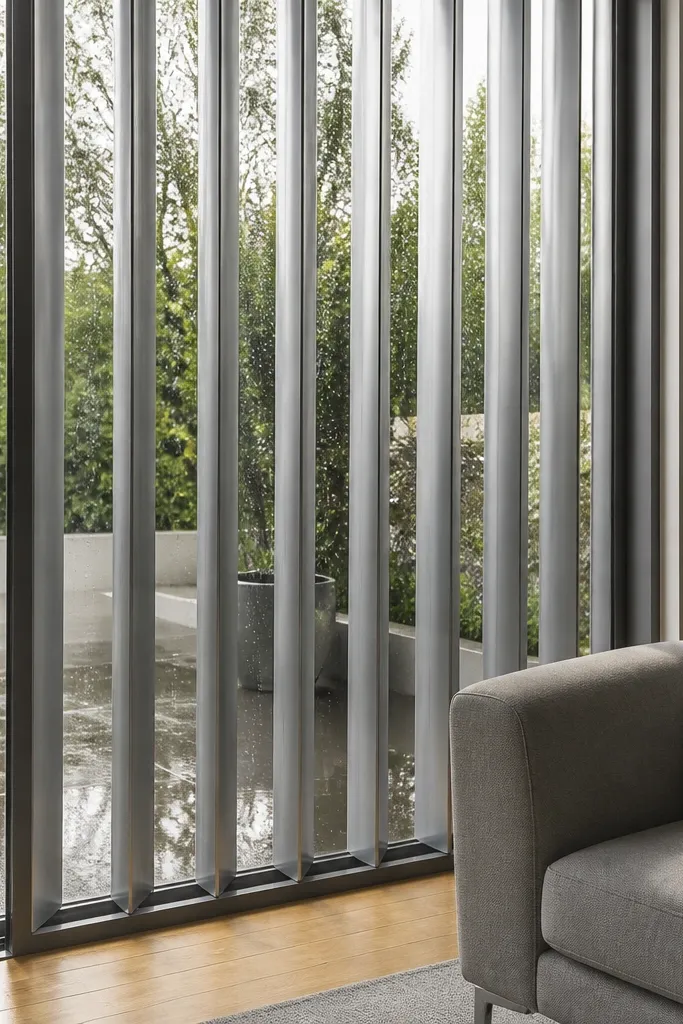
Louver-style slats look modern and they’re genuinely practical for low maintenance. The slat profile sheds water rather than letting it sit, and the channels guide moisture away from the bottom rail. Aluminum keeps rust risk low, and the smooth slat surfaces wipe quickly. This design also gives you a softer visual texture compared to flat bar grids. It’s a smart pick for living rooms that face sun and rain exposure because the grill doesn’t look grimy as fast.
Use pre-formed aluminum louver slats if you can, or build from narrow aluminum channels with a consistent angle. Create a perimeter frame from 40x20 mm aluminum and add a bottom drip rail that’s angled outward. Mount the slats to internal cross supports so each slat has a small gap for airflow and drainage. Finish with anodized or powder-coated aluminum, then mount with spacers so water doesn’t collect behind the frame.
Editor's noteKeep the bottom rail slightly overhanging the vertical frame edge so drips fall outside the trim line.
Skip thisDon’t block drainage with thick sealant at the bottom corners.
12. Matte Black Round-Bar Minimal Frame (Soft Modern)
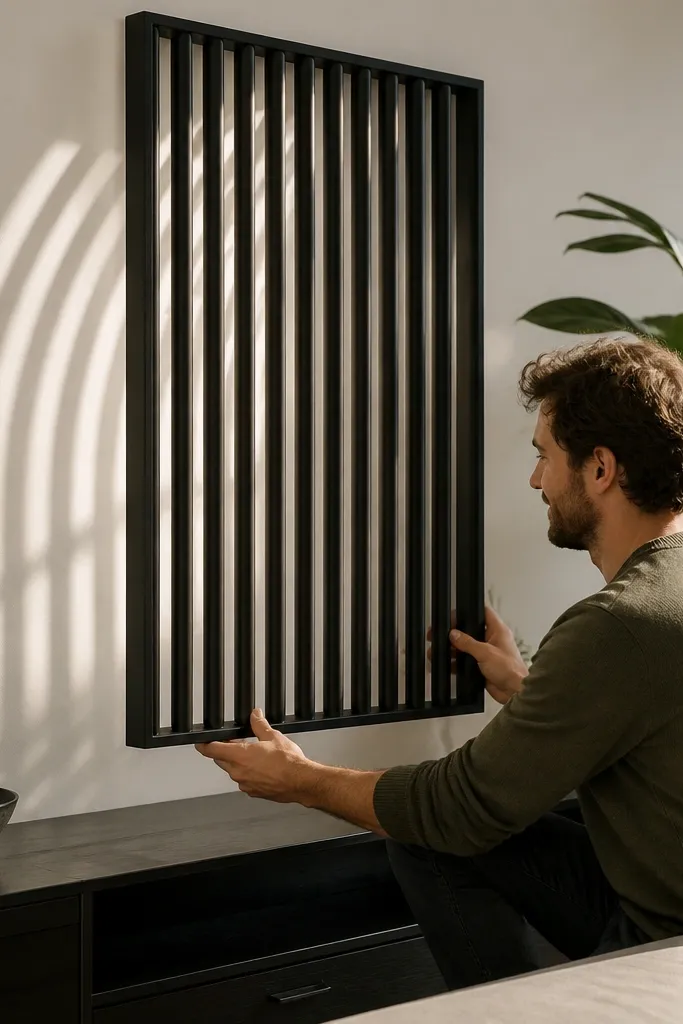
Round bars look less harsh than flat bars and still read modern when the spacing is consistent. A thin perimeter frame keeps the grill from becoming a metal cage. Matte black powder coating helps hide the tiny scuffs you get over time from cleaning. Low-maintenance comes from the smooth bar profile: dust clings less than it does to flat bars with sharp edges. This design suits living rooms with softer decor — light fabrics, warmer tones, and rounded furniture shapes.
Build a thin perimeter frame from 25x10 mm flat bar and weld it into a rectangle slightly larger than the window trim. Use round steel rod, commonly 10-12 mm diameter, and space them 70-100 mm apart depending on how open you want it. Weld rods into two horizontal mounting rails or create drilled anchor plates to keep spacing uniform. Powder coat matte black, then mount with stand-offs using corner brackets.
Use a drill press or consistent hole jig if you’re anchoring rods into plates; hand-drilled holes create a wavy look.
Don’t use oversized rod diameters — the minimal look disappears if the bars feel too thick.
13. Bronze Micro-Grid with Wide Frame Border
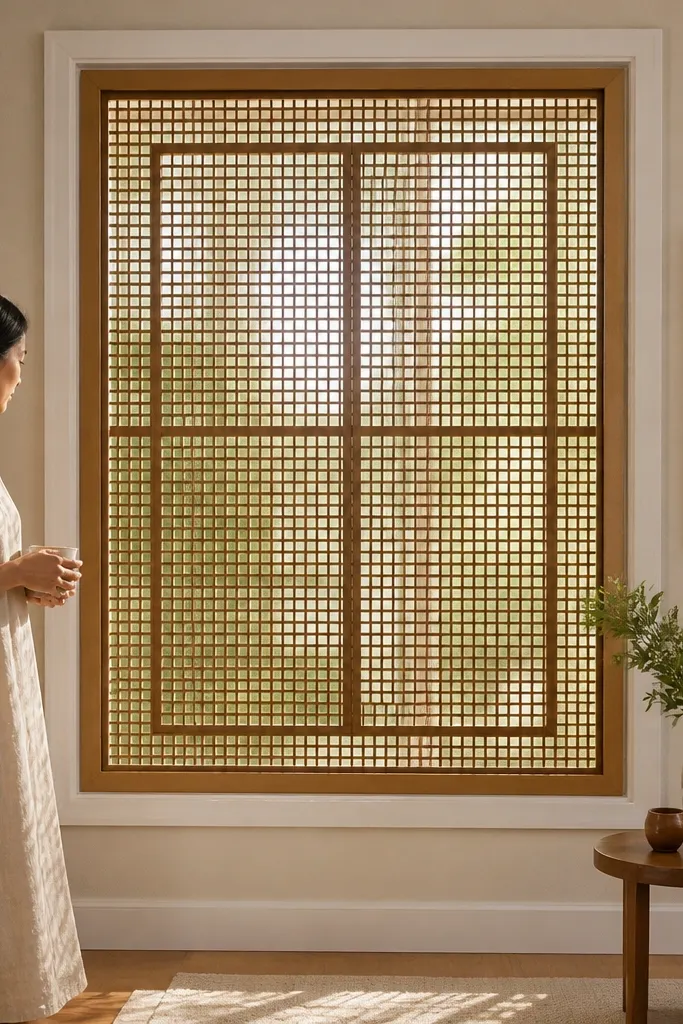
A micro-grid looks expensive when the outer border is wider than the grid lines. The bronze tone warms up the whole window area, and the small openings create a fine shadow pattern without clutter. Low-maintenance is about the finish and the border: use powder-coated bronze and keep the frame smooth so you can wipe the face quickly. This works well for modern living rooms with dark curtains or wood floors because the bronze adds warmth. It also feels more protective visually without adding heavy bars.
Choose a wider frame, like 40x20 mm material, and build it to overlap the window trim by 25-30 mm. Cut grid bars from slim square tube or flat bar and aim for 50-70 mm grid openings. Assemble using a flat jig so every intersection stays square, then weld and file smooth. Powder coat bronze matte, add sealed end caps, and mount with stand-offs to keep the back edge clean.
Editor's noteIf you want it to feel extra smooth, sand the face lightly after welding and before coating so powder lays evenly.
Skip thisSkip shiny bronze — it shows fingerprints and makes dust stand out.
14. Black-and-Wood Tone Frame with Clear Exterior Seal

You get a warm modern look by combining matte black metal with a wood-tone frame finish. The metal bars keep maintenance easy, and the wood-tone frame can be sealed to wipe clean. This design is good for living rooms where you want the window to match wood furniture or flooring. It looks intentional because the colors are separated: metal lines stay crisp, while the frame adds warmth. Maintenance stays low if the frame finish is a proper exterior clear coat, not interior varnish.
Build the grill bars from powder-coated matte black metal and weld them to a black perimeter frame made from metal, not real wood. For the wood-tone effect, use a powder-coat that mimics wood grain or apply a durable exterior coating system designed for metal. Add a bottom drip edge to the frame and seal all cut edges before coating. Mount with stand-offs so the wood-tone finish doesn’t sit flush where water can collect.
Editor's noteUse a satin clear topcoat over wood-tone finishes; it hides minor scuffs better than gloss.
Skip thisDon’t use bare “wood look” paint — it chips at corners and turns into peeling fast.
15. Minimal Two-Vertical-Column Rail with Center Air Space
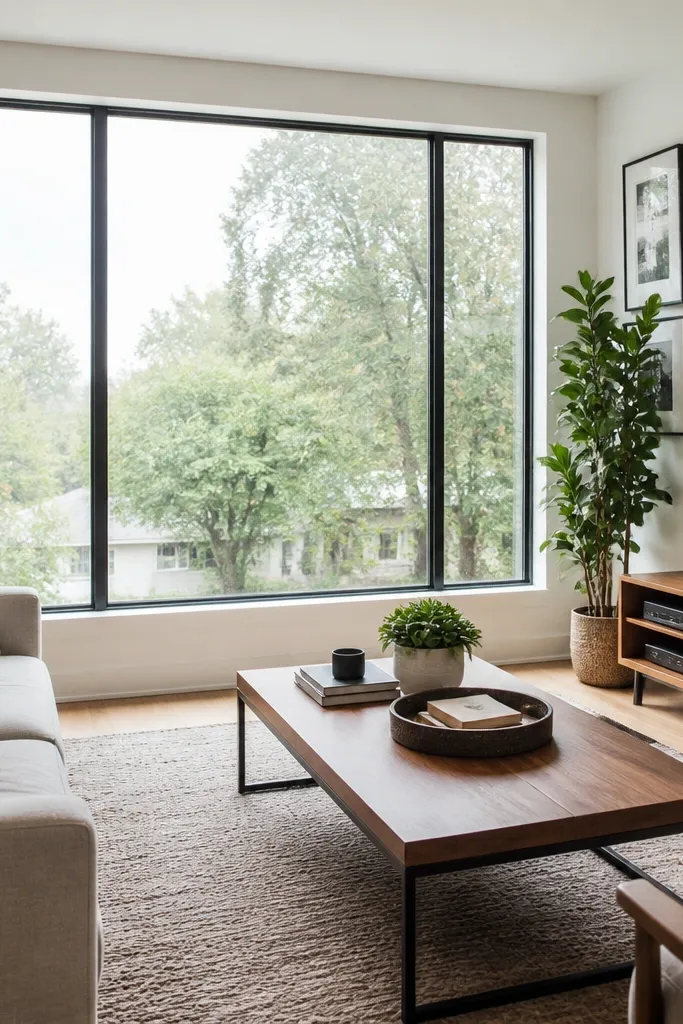
This one is for people who want the grill to be present but not visually heavy. Two vertical columns plus a thin top and bottom rail create a modern frame outline while leaving most of the window area open. It’s low-maintenance because there are fewer bars, so there are fewer surfaces to wipe and fewer dust traps. The look is clean and modern, especially when you use a matte finish that matches your room’s hardware. It suits minimal interiors where you want the grill to feel like a design line, not a barrier.
Build a thin rectangular frame from 25x15 mm metal and weld a top and bottom rail. Add two main vertical columns using 12-14 mm flat bar, centered or placed at a deliberate offset based on your window proportions. Keep corners smooth by grinding welds flush before coating. Powder coat matte black or matte dark gray, then mount with four stand-offs and hidden brackets for a flat, crisp front.
Editor's noteDecide column placement first (centered looks calm, offset looks more graphic) and mark it before welding.
Skip thisAvoid adding extra decorative bars — the minimal effect dies when you clutter the middle.
16. Matte White Grid with Thin Charcoal Frame (Airy Modern)
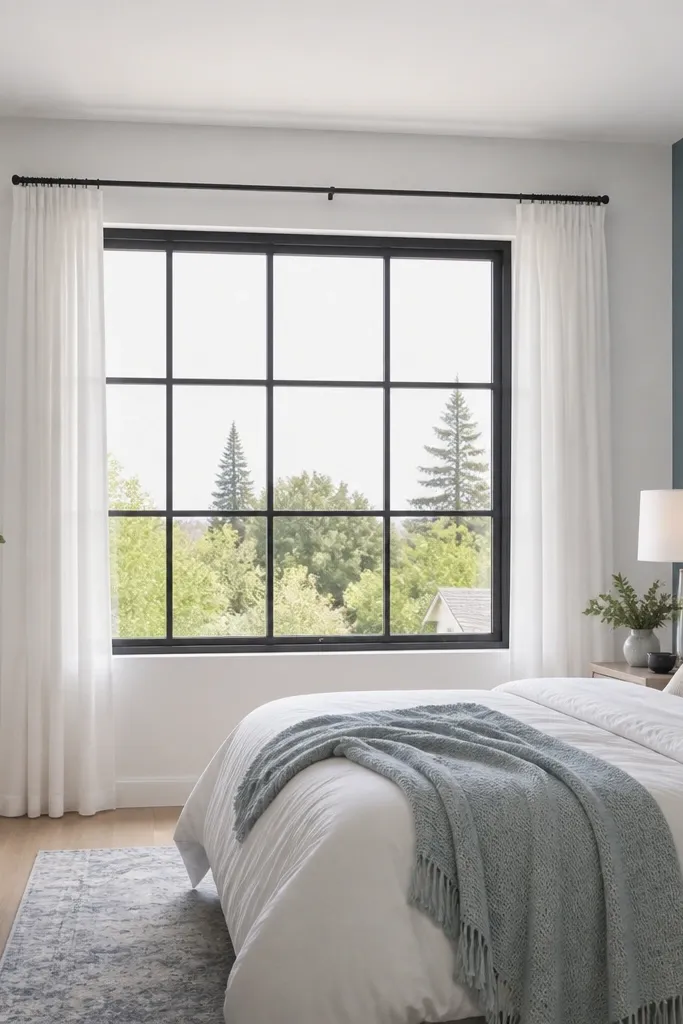
A white grid with a thin charcoal frame gives you a modern look that still feels light. It’s especially good for living rooms with lots of daylight where dark grills can overpower the space. Low-maintenance is built into the design: thin, smooth bars and a simple grid with consistent spacing are easy to wipe, and matte finishes hide small dust specks. The charcoal border keeps it from looking washed out. This is a clean option if you want the grill to blend with bright walls while still looking intentional.
Make a thin outer frame from 20x30 mm flat bar in charcoal powder coat. Build the grid using white powder-coated bars, typically 8-10 mm flat bar, spaced around 90-110 mm apart. Weld bars to two back rails so the grid stays square, then grind any sharp weld edges. After coating, mount using spacers so the grill sits off the trim and you can clean the perimeter line.
Editor's noteUse the same matte sheen on both colors; different textures can look mismatched even when tones are correct.
Skip thisDon’t thicken the grid bars — it will read heavy against the white and lose the airy look.
17. Graphite Gray Frame with "Window Within a Window" Border
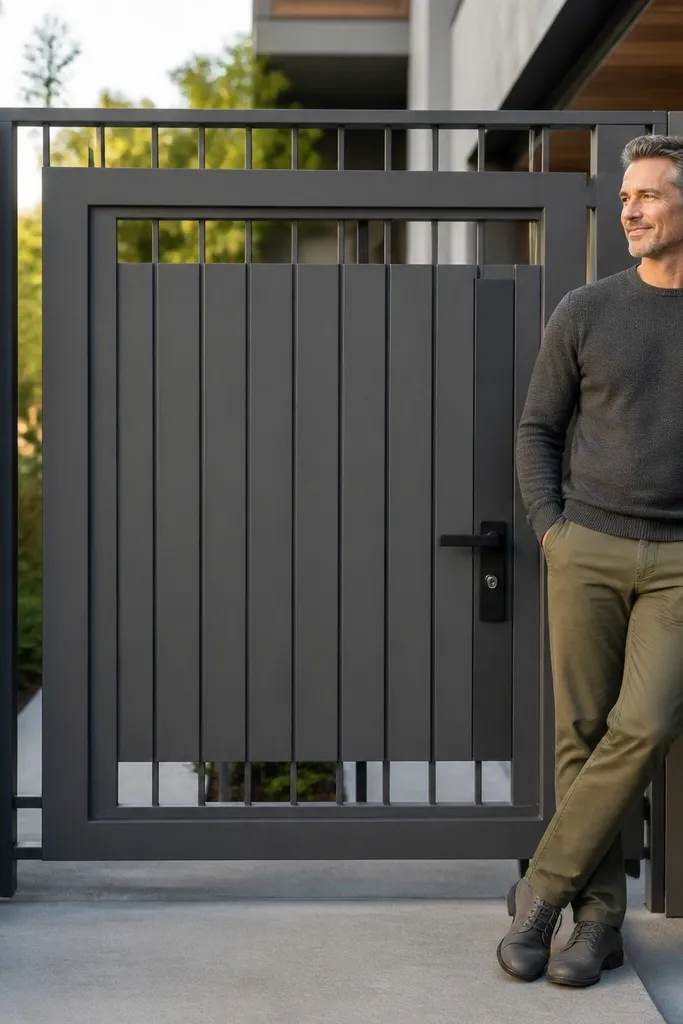
This design looks modern because it creates a layered border instead of a full cage. The “window within a window” frame makes the grill feel like architecture, and the graphite gray finish hides dust better than bright colors. Low-maintenance comes from the simple geometry: a thick inner border and minimal bar count means fewer wipes and fewer crevices. It’s also great if you want privacy without blocking all light — the inner border guides the eye while still letting brightness through. This suits modern living rooms with clean trim lines.
Build an outer rectangle frame from 30x20 mm metal and add an inner rectangle border using 15-20 mm flat bar, leaving a 30-50 mm gap between outer and inner borders. Add two or three subtle vertical dividers only if you need extra structure, but keep the design mostly border-based. Weld carefully, grind flush, and powder coat graphite gray matte. Mount with stand-offs so the layered frame casts a clean shadow line and you can wipe around the inner rectangle.
Editor's noteKeep the inner border corners crisp. Rounded corners look dated fast in this style.
Skip thisDon’t add too many extra bars — the layered border effect becomes busy.
18. Stainless Look Steel with Clear Coat Over Matte Frame
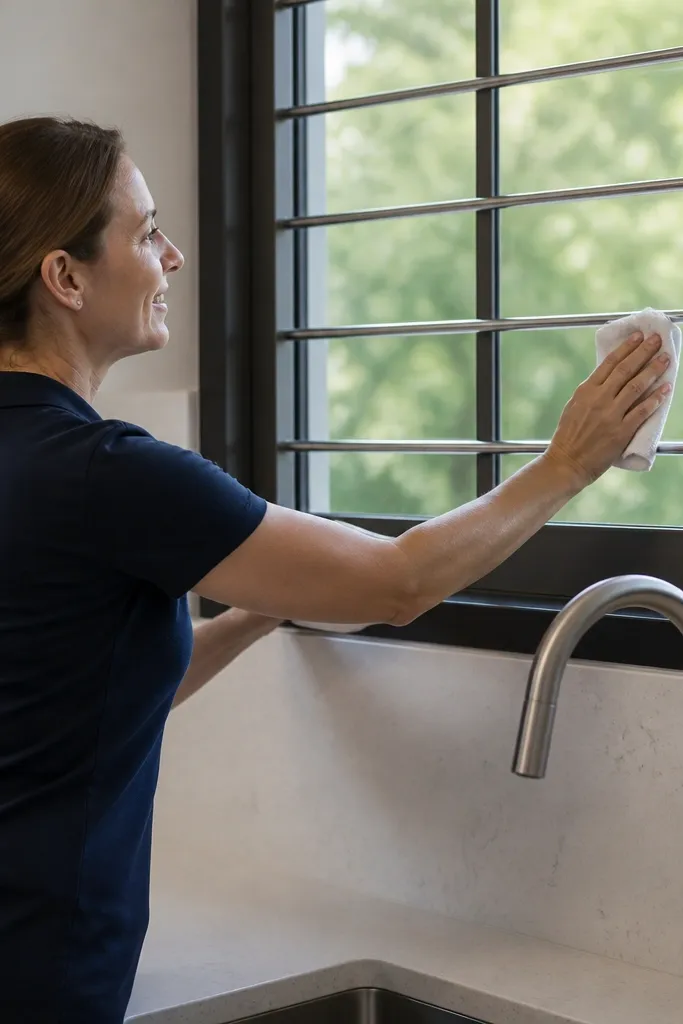
If you like the clean look of stainless without the maintenance headaches, go for a stainless-look powder coat with a matte frame. It gives you that modern metallic vibe while staying low-maintenance because it’s sealed and wipeable. The key is using matte on the frame and smooth powder on the bars — it reduces glare and hides micro scratches. This design works in living rooms with gray walls, stainless appliances, or modern lighting. It’s also good for people who hate the look of glossy black but still want something that reads crisp.
Choose a powder-coat color that reads “stainless look” and a matte frame tone like graphite. Build the frame from 25x25 mm square tubing and assemble the bar field from 10-12 mm flat bar with consistent spacing. Weld, grind sharp edges, and ensure welds are fully covered by coating. Apply a clear topcoat if your powder system supports it for extra wipe performance, then mount with stand-offs so water doesn’t sit behind the grill.
Use a microfiber cloth with a mild soap solution for cleaning; abrasive pads can dull the stainless-look finish.
Don’t use real uncoated stainless hardware in the frame if you’re putting it outdoors — mixed metals can stain.
19. Two-Panel Split Grill with Vertical Bars on Both Sides
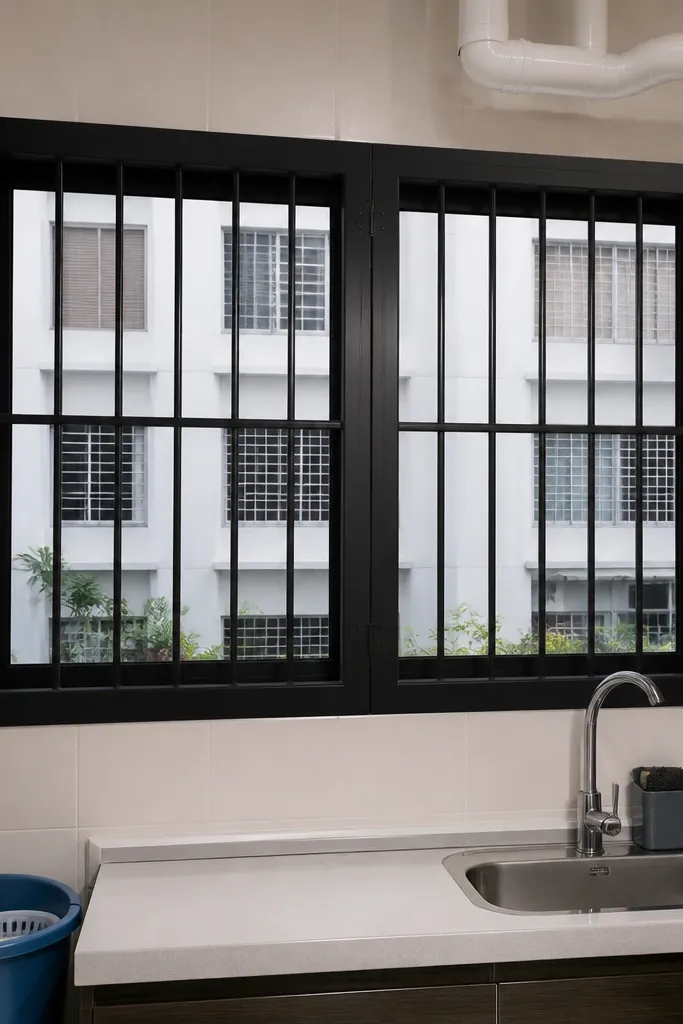
A split, two-panel grill makes cleaning easier because you can access more of the window surface and reduce the need to reach deep behind the bars. Visually, it still reads modern if both panels share the same bar spacing and frame thickness. This is low-maintenance because the design reduces the “hard to reach” zones where dust collects, especially around the center seam. It also looks good in living rooms with wide windows where a single large grill feels heavy. The seam can be clean and straight, or set with a small overlap for a tighter look.
Measure the window and decide a center seam location, typically at the middle of the opening. Build two identical grill frames, each with its own thin border and vertical bars spaced 70-90 mm apart. Make sure the seam alignment is exact by using a jig and measuring diagonals before welding. Powder coat both panels, then mount using rails or hinges if you want one side to swing out for cleaning, or use removable brackets if you want a simpler install.
Editor's notePlan for an access plan: if you can remove one panel, you’ll actually keep the grill clean because it’s not a chore.
Skip thisDon’t leave a crooked seam; even a 3-4 mm misalignment shows up instantly in photos.
20. Corner-Focused Grill with Diagonal Corner Braces
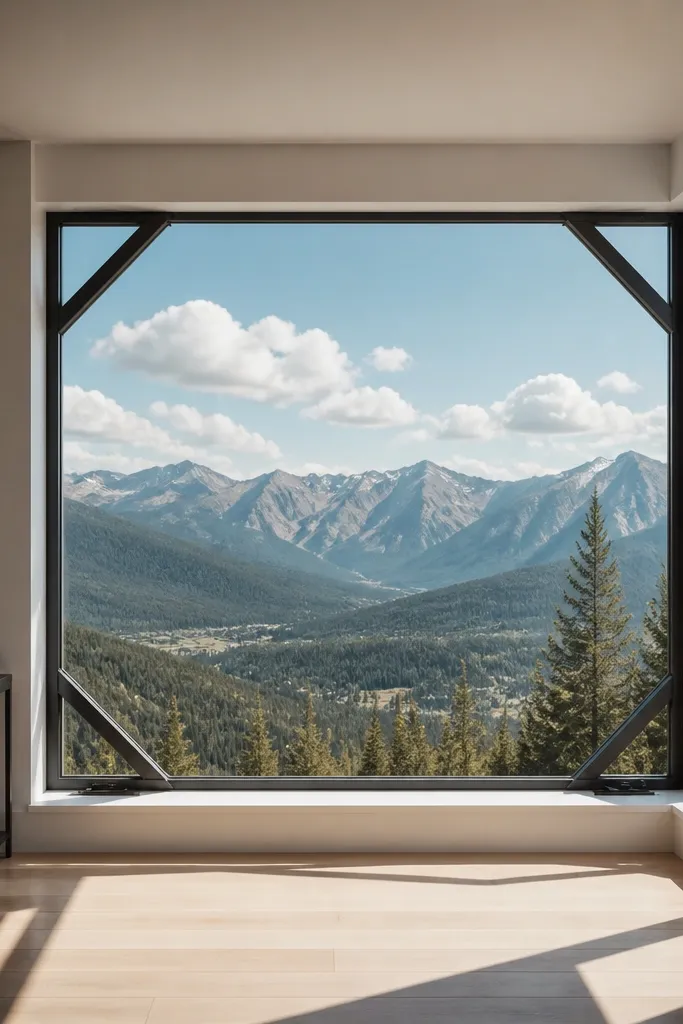
This design keeps the center open and adds diagonals only where they matter — the corners. It looks modern because the braces create a structured frame, not a cage. Low-maintenance comes from fewer bars across the viewing area and smooth surfaces where dust can be wiped quickly. It’s a good choice if you want something stronger visually but still airy. The corner brace pattern also makes the grill look intentional and well-engineered, which matters when you’re aiming for a high-end look.
Build a perimeter frame from 30x20 mm metal and add two vertical bars spaced 120-160 mm apart inside the frame. Create diagonal corner braces using 12-14 mm flat bar, welded at the top-left and bottom-right corners, and mirror them if you want symmetry. Grind welds flush where they touch the face so the coating lays smoothly. Powder coat matte black, then mount with stand-offs and use corner anchors so the grill doesn’t sag over time.
Editor's noteCoat after final fitment. If you tweak alignment after coating, chips start at drilled spots and rust can follow.
Skip thisDon’t add diagonals across the whole panel — it becomes a busy lattice.
21. Soft-Shadow Scroll-Free Minimal Frame in Matte Black
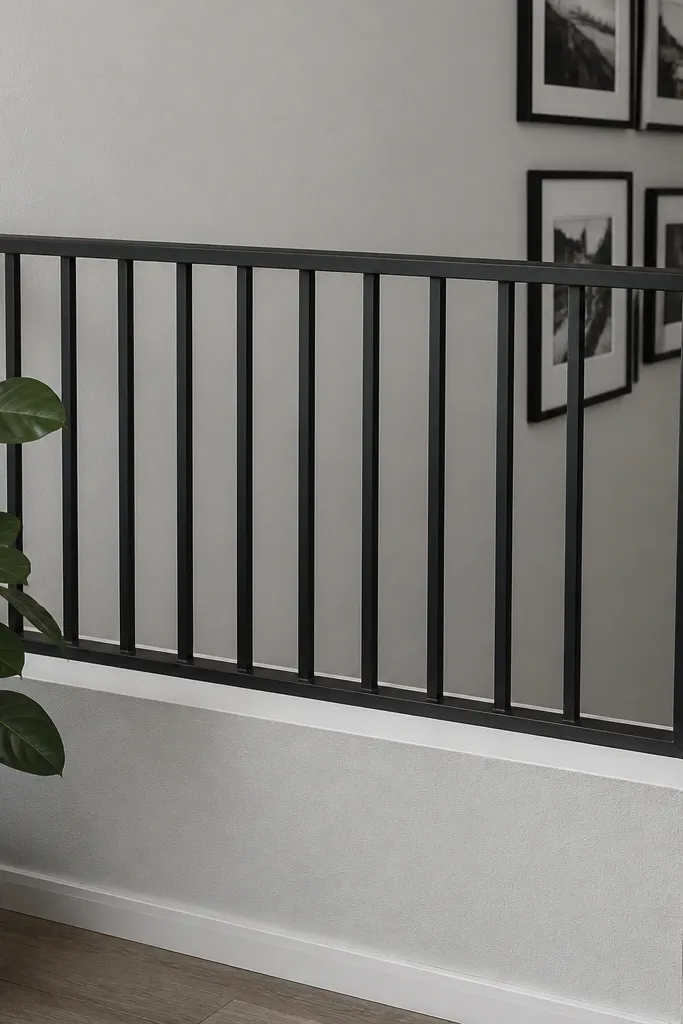
A minimal frame with no scrollwork still looks modern when the proportions are right. This design uses thin rails, evenly spaced vertical bars, and a slightly recessed mounting so it throws a soft shadow line. Low-maintenance is baked in: simple surfaces, fewer intersections, and matte powder that doesn’t show every fingerprint. It’s ideal for living rooms where you want the grill to disappear visually and just protect the window area. The best part is how clean it looks in daylight — no glare, no busy pattern, just a crisp outline.
Build a perimeter frame from 20x30 mm flat bar and add a back rail system that holds vertical bars at consistent spacing. Cut vertical bars from 8-10 mm flat bar and space them 90-110 mm apart. Weld, grind flush, and powder coat matte black. Mount with a recessed standoff or a shallow back plate so there’s a small air gap behind the grill for easy wiping and airflow.
Editor's noteUse spacers of the same thickness at all corners so the shadow gap is even — it looks more “designed” instantly.
Skip thisAvoid mixing bar thicknesses. One thickness keeps the pattern calm and modern.
22. Sand Gray Powder-Coated Steel with Rounded Bottom Drip Rail
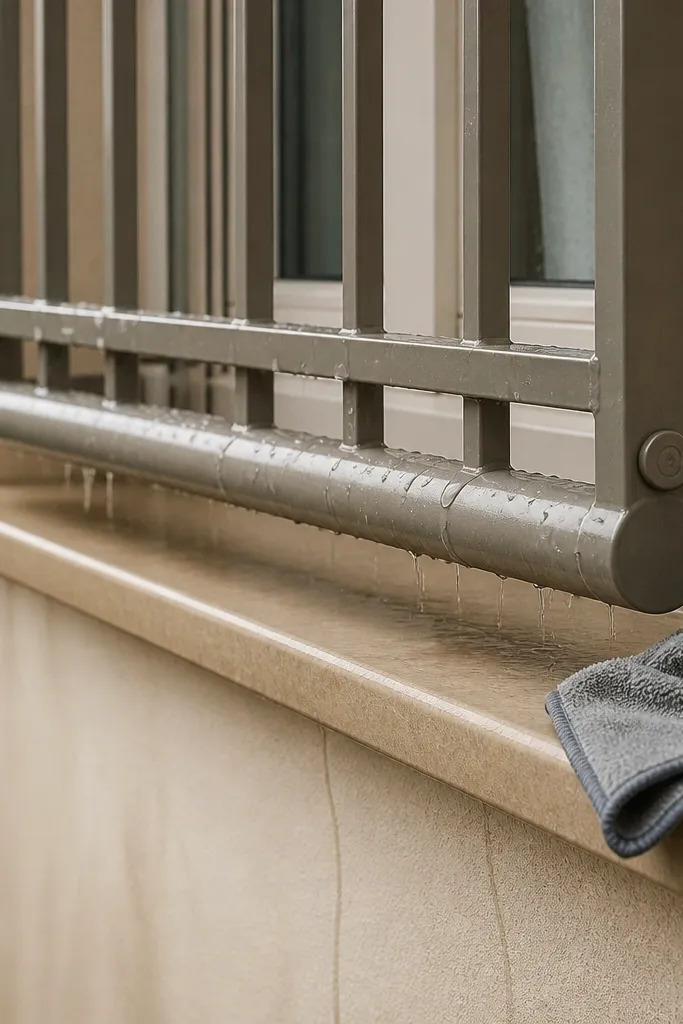
A rounded bottom drip rail is a small detail that makes a big difference in how low-maintenance the grill stays. Water runs off instead of pooling, and the rounded shape is easier to wipe than sharp corners. Sand gray powder coating looks modern and softer than black, especially in living rooms with beige or warm gray walls. The rest of the grill stays minimal with straight vertical bars and a clean frame. It’s a strong pick if you live in a place with frequent rain or sprinklers hitting the window area.
Build the perimeter frame from 25x25 mm square tubing and fabricate a bottom rail that has a rounded lip or angled cap plate. Use vertical bars from 10-12 mm flat bar and space them 80-100 mm apart for an open look. Weld bars to two back rails, then grind edges smooth where the bottom rail meets the frame. Powder coat sand gray matte, then mount with stand-offs so the drip rail doesn’t sit against trim where water can track.
Editor's noteTest the drip direction by pouring a little water on the bottom rail before final mounting; adjust the angle if it runs toward the trim.
Skip thisDon’t skip the drip geometry — a flat bottom rail turns into a grime collector.
23. Matte Black "Grid + Frame" with Removable Inner Section
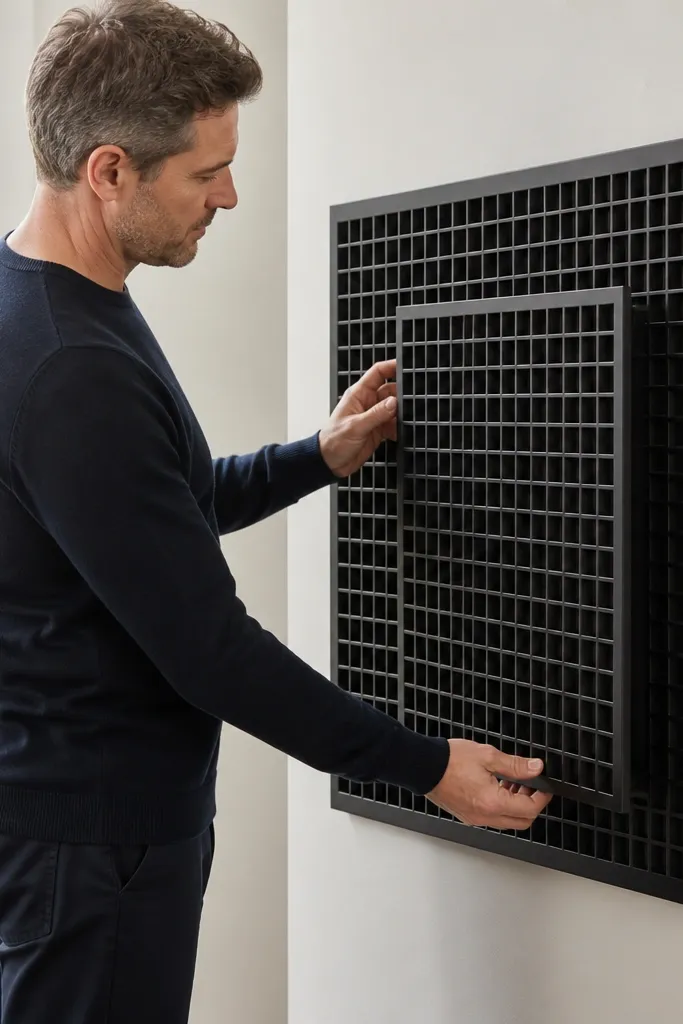
Removable sections are the secret to truly low-maintenance modern window grill ownership. You get the clean grid look but can lift the inner panel out for quick glass cleaning and dust removal behind the bars. The design stays modern because the inner panel follows the same grid geometry and the outer frame keeps a crisp border. Matte black powder coating hides small scuffs and makes the grill look sharp even if you clean it often. This is best for wide living room windows where dust buildup is noticeable.
Build an outer frame with a shallow recessed lip that can hold an inner grid panel; use 25x25 mm tubing for the outer frame. Create the inner grid from 10-12 mm flat bar with 70-90 mm openings, and weld it into a separate rigid panel. Add two removable bracket points on the inner panel edges so it slides or lifts out cleanly. Powder coat both outer and inner parts, then mount the outer frame permanently and keep the inner panel removable with quick-release hardware.
Use stainless or zinc-plated fasteners for the removable hardware so you don’t get rust streaks around the seam.
Don’t rely on loose friction fit. If the inner panel wobbles, it looks sloppy and is annoying to remove.
24. Vertical Fin Grill with Bottom Mesh Infill Strip

This design keeps the top modern and open while adding a lower infill strip for extra coverage and a cleaner look. The bottom mesh area can help with small debris and it hides the lower dust line that often collects near window sills. Vertical fins above keep the modern aesthetic and maintain airflow so the grill doesn’t trap moisture. Low-maintenance is real because the mesh strip is easy to wipe and the rest of the grill has fewer horizontal ledges. It’s a strong option for living rooms where kids or pets are near windows and you want a tidy look.
Build a thin perimeter frame from 25x20 mm flat bar and add vertical fins using 10-12 mm flat bar spaced 80-100 mm apart. Leave a bottom zone for infill, typically 150-250 mm tall depending on your window height, and mount a fine stainless or coated metal mesh panel within the frame. Weld or bolt the mesh frame to the back rails so it stays taut and doesn’t sag. Powder coat the metal frame and fins matte, leaving the mesh protected by a compatible coating, then mount with stand-offs for airflow.
Editor's noteChoose mesh with a consistent wire diameter and tight spacing so it doesn’t look “cheap” through the glass shadow.
Skip thisDon’t make the mesh too tall — it blocks light and kills the modern open look.
25. Aluminum Tube "Floating" Vertical Bars with Side Rails

Floating vertical bars look sleek because they feel lighter than a full frame grid. The side rails hold the structure, while the vertical tubes create a rhythm that still reads modern from the street or across the room. Aluminum tubes stay low-maintenance and resist rust, and the smooth cylindrical shape is easy to wipe. This design also creates a clean vertical shadow pattern that looks good with modern lighting. It’s a great choice when you want a minimalist look but still want a structured grill presence.
Build two side rails using 40x20 mm aluminum flat bar and make them slightly taller than the window opening for a crisp border. Use aluminum tubes, commonly 10-15 mm diameter, and space them 70-100 mm apart, attaching each tube to top and bottom mounting plates. Use a simple jig to keep tube spacing even and prevent twist before fastening. Finish with anodized or powder-coated aluminum, then mount with stand-offs and set the face so the tubes are centered on the window view line.
Editor's noteDeburr tube ends and add small end caps so water doesn’t sit inside the tube and stain over time.
Skip thisAvoid mixing tube diameters — it looks accidental and less modern.