1. Matte Black Fiberglass Door With Two Vertical Glass Columns
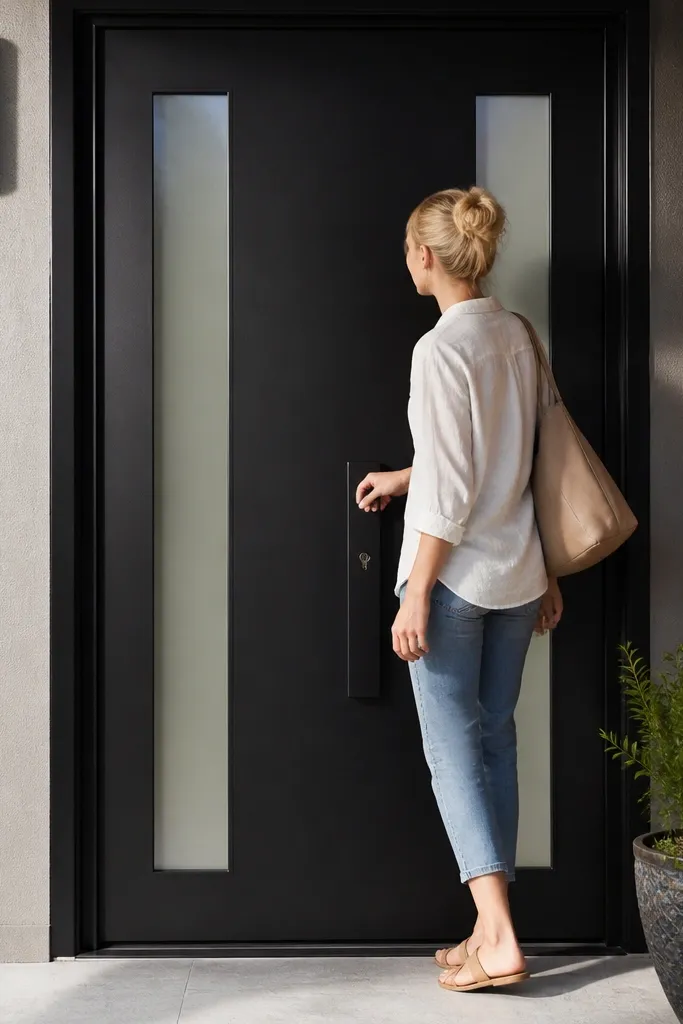
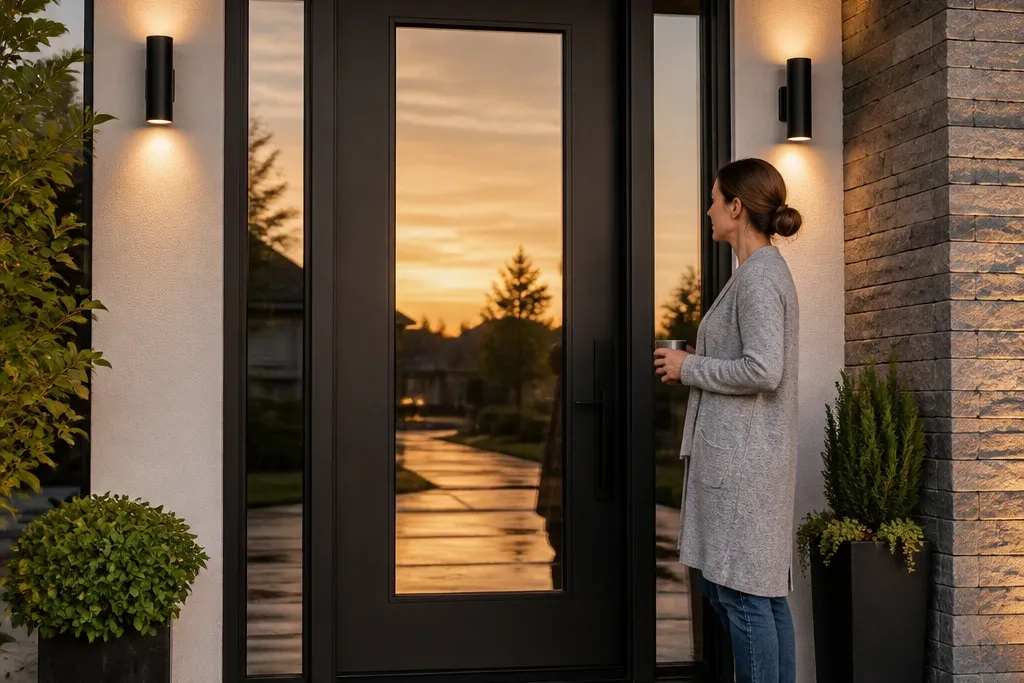
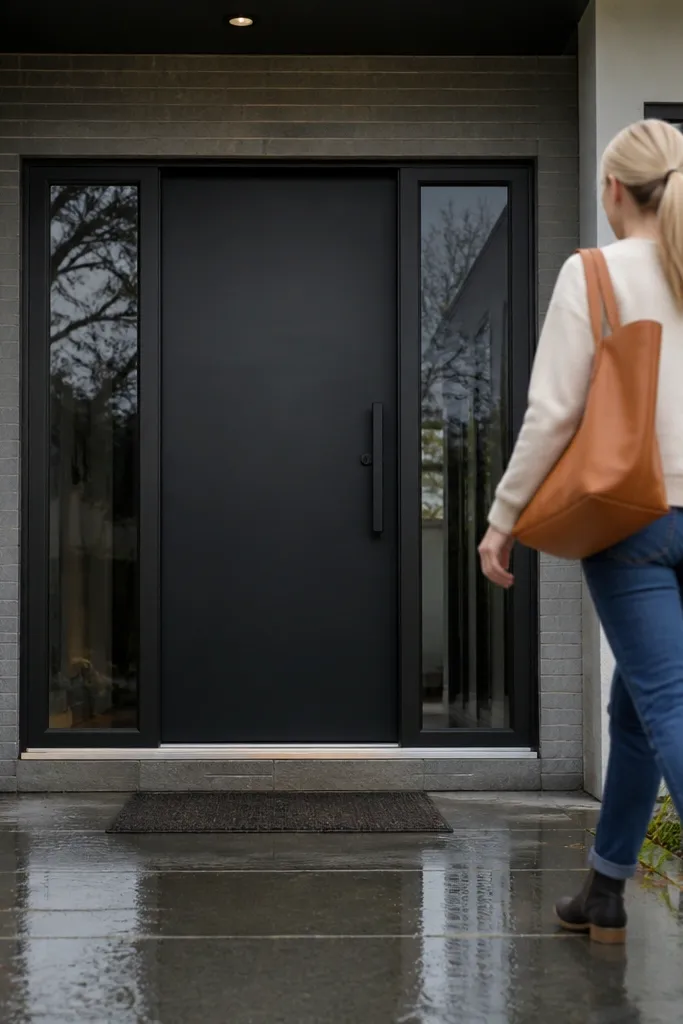
This design keeps the entrance modern because the glass sits in vertical lanes, not a busy mosaic. The matte black fiberglass finish hides minor scuffs better than glossy paint, so daily life doesn’t show as much. The glass columns brighten the entry while still giving you privacy because you can choose frosted-on-one-side or patterned options. For low-maintenance main entrance door design, the real win is that the door surface is mostly solid — less glass means fewer cleaning edges and fewer places for water to cling. Skill level is beginner-friendly because fiberglass doors install like a standard slab, and the glass inserts are factory-set.
Start by measuring your rough opening and buying a prehung fiberglass slab that includes the glass columns you want. Then choose a matte black factory finish and insulated glazing; confirm the unit is sealed so you don’t get fogging. Install the prehung unit with stainless shims at the hinge and latch points, and use foam rated for exterior doors around the perimeter. Finally, fit the handle and deadbolt, then run a bead of exterior-rated silicone where trim meets the frame to stop water tracking onto the glass edges.
Editor's noteUse painter’s tape to mark the exact seal line before caulking so you don’t smear silicone onto the glass.
Skip thisDon’t choose unsealed single-pane glass inserts — they fog and turn into a weekly cleaning chore.
2. Wood-Look Door With Clear Glass and Hidden Frame Shadow Gap
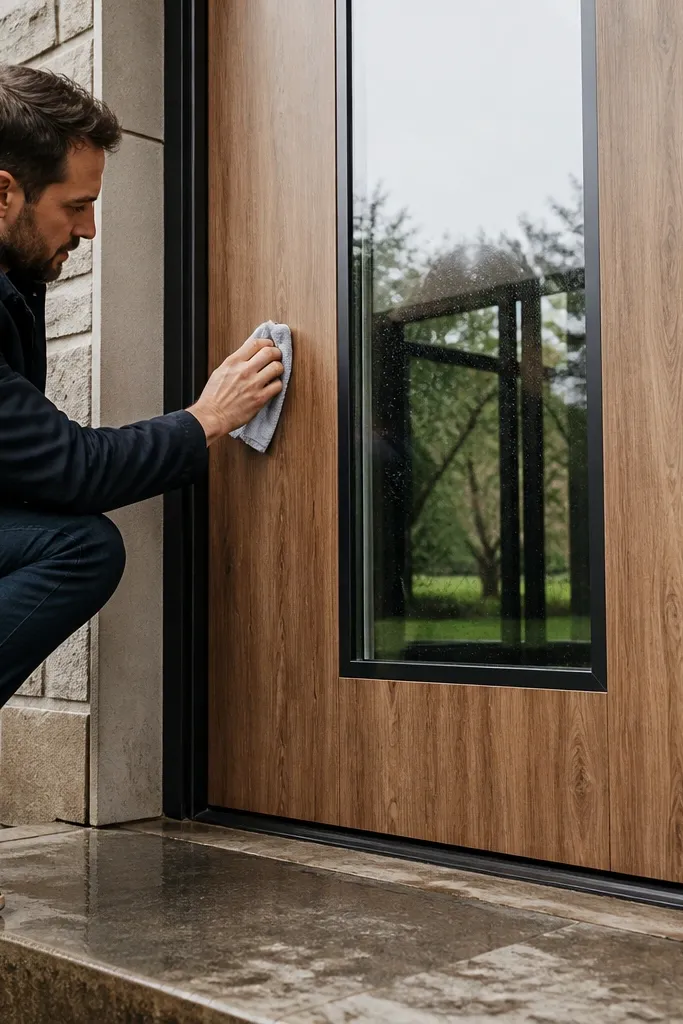
A shadow gap makes glass-and-door combos look expensive because you see a crisp line between door and frame instead of a chunky seam. This is a strong option for a low-maintenance main entrance door design because you can keep the door face in a durable wood-look finish while the shadow gap hides minor caulk shrinkage. Clear glass brings in light, and the clean perimeter joint makes wipe-down faster — you’re not scrubbing around uneven edges. The look is modern but still warm, which works well for entries that have stone or wood siding. Plan for a moderate DIY level if you’re adding trim or a frame system; the glass itself should be factory-installed.
Buy a door system that includes a trim kit or matching frame so the shadow gap is built-in, not improvised. Install the door first, then attach the frame cover pieces to create a consistent gap line around the glass. Use exterior-rated caulk in a matching color only at the joints where material changes, not across the whole perimeter. Finally, apply a door-safe exterior topcoat if your wood-look finish is not factory sealed, then inspect the bottom edge for any standing-water path.
If you’re doing a shadow gap, keep the caulk line thin; thick caulk turns into a dirt magnet fast.
Avoid mixing brands of frame trim and door — mismatched profiles make the gap uneven and harder to keep clean.
3. Bronze Aluminum Door With Frosted Glass Center Panel
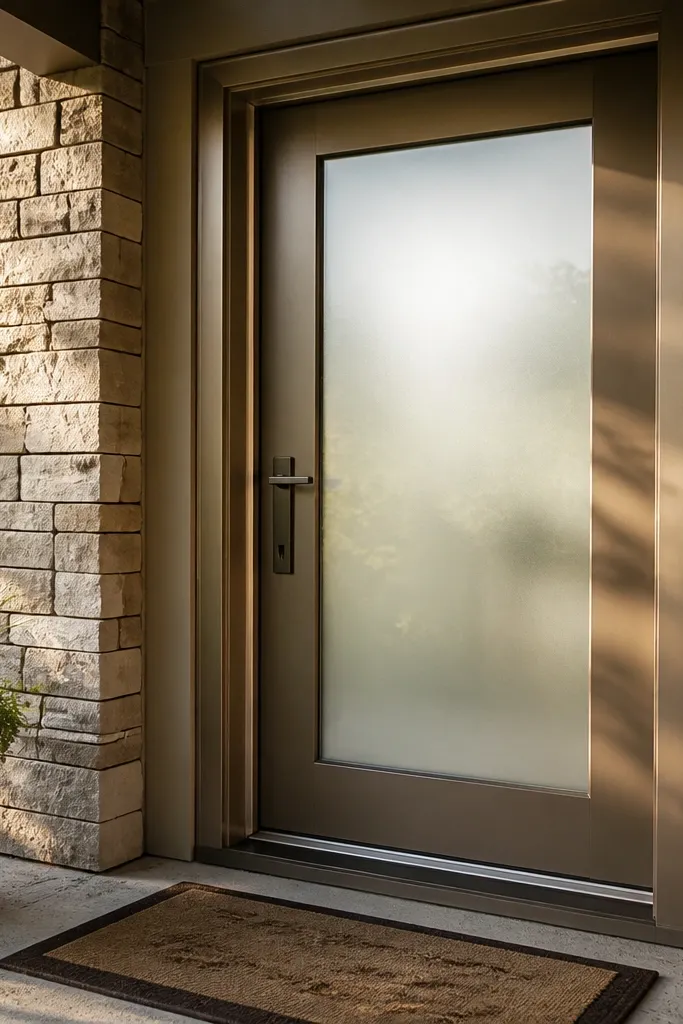
Frosted center glass is the easiest way to keep the entry bright without turning your front door into a glass display case. The bronze aluminum finish stays sharp because it resists chalking and doesn’t show fingerprint smears like lighter finishes. This is a low-maintenance main entrance door design because frosted surfaces hide water spots better than fully clear glass, and the centered panel keeps cleaning simple. You also get a clean, architectural look — a single slab of glass reads modern from the street. Installation is straightforward if you use a prehung aluminum door with factory sealed insulated glass.
Choose an exterior bronze aluminum prehung door with a single large frosted insulated panel and an integrated weather seal. Set the door in the opening using shims at hinges and latch points, then verify plumb at the glass side edges. Use exterior screws through the frame into studs, and tape off the glass area while you foam the sides. After the foam cures, trim the excess, then seal the exterior trim seams with a paintable exterior caulk.
Editor's noteWipe frosted glass with a microfiber cloth dampened with plain water first; cleaner residue doesn’t grab as much as it does with soap.
Skip thisDon’t pick frosted glass that’s only a film — it peels at door edges after temperature swings.
4. Black Grid Glass Door With Two-Story Sidelights
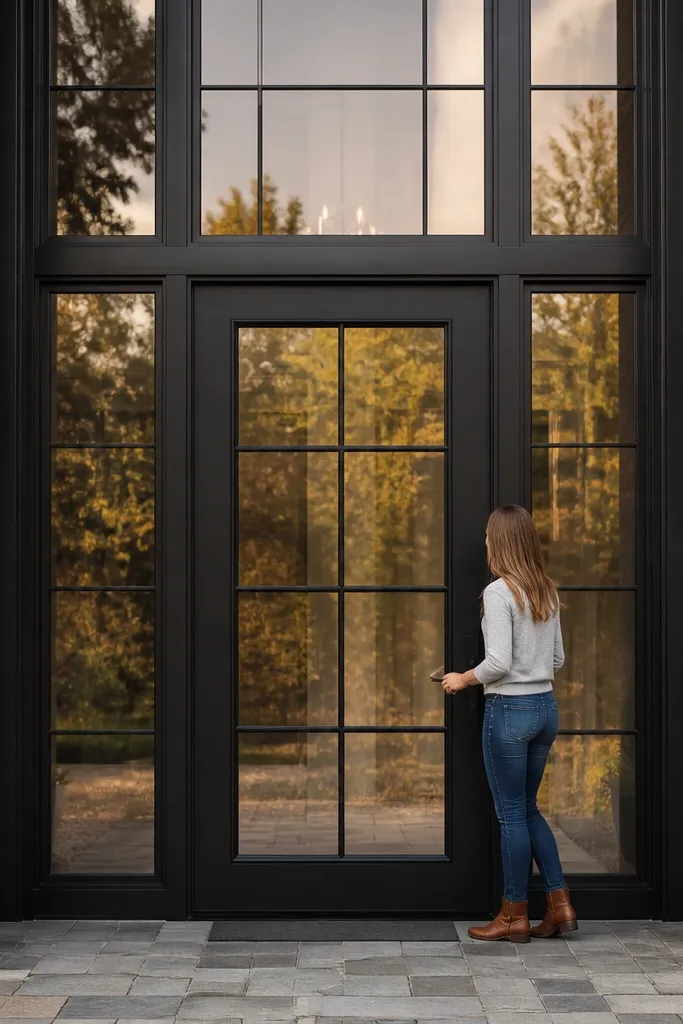
This one reads modern because the grid creates rhythm — tall sidelights add drama without needing more glass on the door face. The grid also hides minor imperfections and micro-scratches, which helps a lot for low-maintenance main entrance door design. Choose a black finish on the door and mullions so the lines look intentional even when you’re not staring at the entry. It’s photogenic in daylight because reflections break up into clean squares instead of blinding streaks. DIY difficulty is moderate because sidelights require careful alignment, but the payoff is a front entry that looks designed, not patched together.
Measure the opening for the sidelights and buy a matching door + sidelight unit from one system so mullion sizes line up. Dry-fit the frame into the opening, check level across the header, then shim until the glass panel lines up with the door slab. Install with exterior-rated screws and keep the weather seal compressed evenly around the perimeter. Caulk only the exterior seams, then remove tape before the caulk skins so edges stay crisp.
Plan your glass cleaning tool: a telescoping squeegee with a microfiber edge keeps grid lines from trapping streaks.
Don’t use clear glass on grid systems if glare bothers you — you’ll see every reflection and water mark.
5. Clear Glass Door With Horizontal Floating Rails

Horizontal rails give this door a modern, gallery-like look while keeping the glass area clean and easy to frame. Choose clear tempered insulated glass so the entry stays bright but safe. The rails add structure, and they also reduce the amount of visible frame around the glass — that means fewer places where grime collects at corners. For low-maintenance main entrance door design, the key is using powder-coated metal rails that don’t chip when you wipe them. This suits contemporary homes with flat siding or clean stone because the lines match the architecture.
Start with a door slab that has a large glass opening, then select rails that match the glass size with a tight reveal. Mark rail locations using the factory reference points or a level line, then predrill pilot holes to prevent splitting. Attach rails with stainless fasteners and use a thin bead of exterior-rated sealant behind the rail base if the system allows it. Finish by sealing around the glass edge with the manufacturer’s approved glazing sealant, then test the door swing to ensure nothing rubs.
Editor's noteUse a plastic scraper to remove any caulk squeeze-out before it cures; cured blobs are harder to clean off glass.
Skip thisDon’t mount rails directly to painted wood without sealing — moisture creeps behind and lifts the finish.
6. Pivot-Style Door With Narrow Glass Strip
A pivot door looks high-end because the hinge system disappears and the slab reads like a single plane. Add a narrow glass strip and you get that clean modern glow without turning the whole door into a glass panel you have to baby. This works for low-maintenance main entrance door design because the glass area is small, and the pivot hardware is usually powder-coated and sealed. The aesthetic is all about minimal lines, so choose a matte finish and crisp shadow gaps. It’s best for entries with a wide opening where the pivot swing has room and you don’t need to cram a narrow door.
Plan for the pivot hardware first: confirm your pivot frame kit matches your door weight and thickness. Install the pivot frame to studs with proper anchor spacing, then hang the door slab and adjust the pivot bearings until the slab sits evenly. Install the narrow insulated glass strip using the kit’s glazing method; don’t improvise edge sealing. Seal the perimeter with exterior-rated weather stripping and caulk the exterior seams after the door is aligned.
Keep the glass strip width consistent with the door proportions — a too-thin strip looks accidental.
Avoid putting a narrow strip of uninsulated glass — you’ll feel drafts and see condensation.
7. Full-Height Glass Sidelight Wall With Solid Door Center
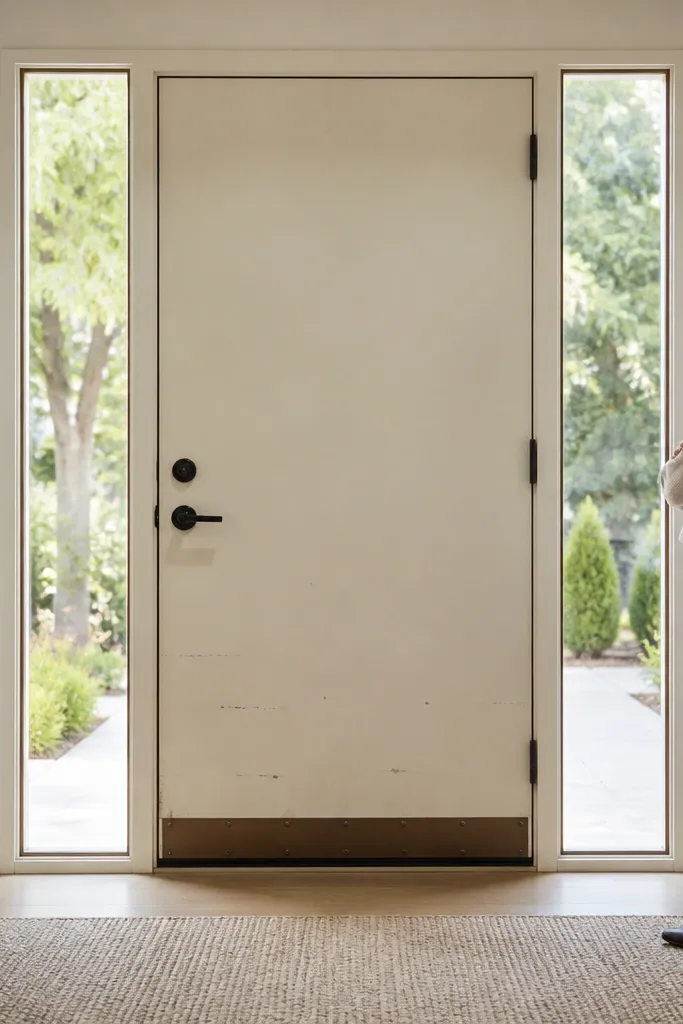
This layout looks modern because the entry reads like a frame — the door is the anchor, and the glass sidelights form a clean light wall. You get a bright foyer without putting tons of glass on the door surface itself, which is a big win for low-maintenance main entrance door design. Solid door faces handle scuffs well, and the sidelights are fixed, so you don’t deal with cleaning moving edges every time someone opens the door. The glass also creates a strong vertical rhythm that photographs well in daylight. DIY difficulty is higher because the sidelight wall needs accurate framing, but it’s doable with careful measurement and a prebuilt unit.
Use a prebuilt full-height sidelight kit that matches your door size so the mullions and seals line up. Frame the opening to spec, then install the sidelight assembly into the rough opening first. Set the solid door in next, shim for plumb, and ensure the perimeter seals compress evenly. Apply exterior caulk at the exterior trim joints and use flashing tape if your siding system requires it around the header.
Clean fixed sidelights from the inside with a long-reach squeegee so you don’t rely on ladders.
Don’t skip a properly flashed header — water intrusion around a full-height glass wall shows up fast.
8. Matte White Door With Textured Glass Privacy Pattern
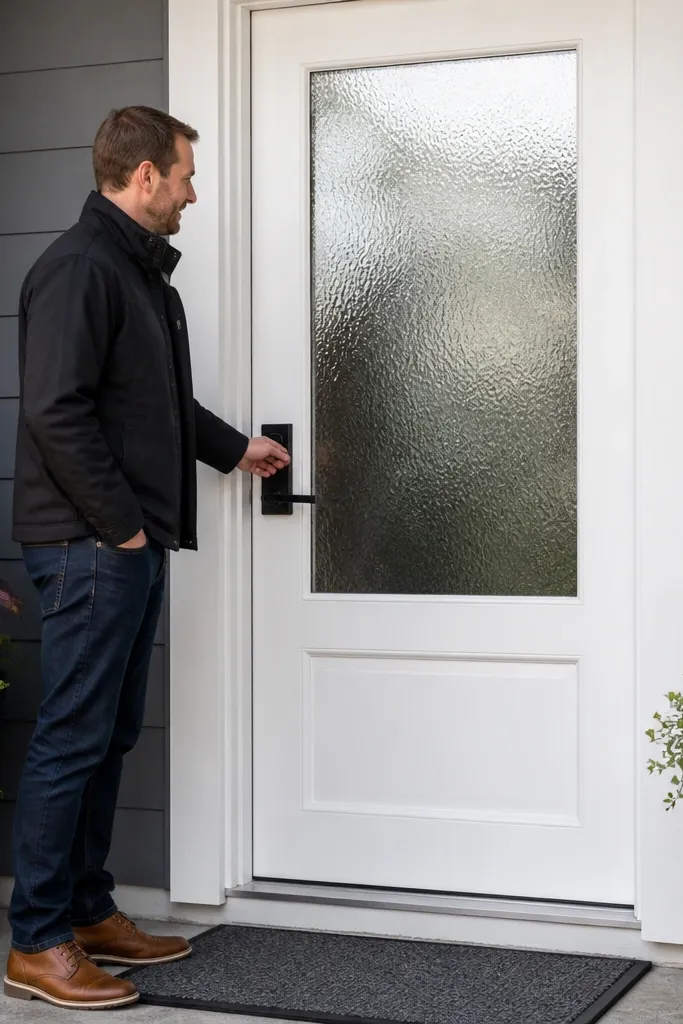
Matte white reads clean and modern, and textured glass makes it practical. The texture hides fingerprints and water marks, which matters for low-maintenance main entrance door design because front doors get touched constantly. You still get daylight, but the view is broken up enough that you don’t feel exposed. Pair it with a dark handle and a simple frame for contrast, and the whole entry looks intentional. Skill level is easy if you buy a prehung door with textured insulated glass.
Pick a matte white exterior door with a factory-applied exterior coating and insulated textured glass panel. Install the prehung unit, shim and level at hinge and latch points, then fasten through the frame into studs. Use exterior-rated weather stripping and seal the exterior trim seams with paintable caulk. Finish by checking for any gaps at the bottom edge and adjusting the threshold so water drains outward.
Editor's noteFor textured glass, use a microfiber towel and minimal pressure; heavy scrubbing can smear residue into the texture.
Skip thisAvoid glossy white on entries with heavy sun — it shows grime and scuffs more clearly.
9. Smoked Glass Door With Champagne Bronze Hardware

Smoked glass gives a modern, moody look without going fully opaque, so you get privacy and reduced glare. The color also hides minor spotting, which helps low-maintenance main entrance door design because you’re not staring at every water dot. Champagne bronze hardware adds warmth and looks sharp against dark door slabs. This is a photogenic choice because reflections look smooth on smoked glass instead of harsh on clear panes. It suits contemporary entries with dark siding, brick, or modern metal accents.
Choose an exterior door slab or prehung unit with insulated smoked glass and a dark finish like espresso or charcoal. Install the door with a continuous weather seal and compress it evenly so smoked glass doesn’t fog from leaks. Mount the hardware using the manufacturer’s template so the lock aligns cleanly with the strike plate. Seal the exterior perimeter with caulk and then test the latch engagement with the door closed firmly.
Editor's noteUse alcohol-free glass cleaner sparingly; smoked glass can show streaks if you over-wet it.
Skip thisDon’t use abrasive pads on smoked glass — it scratches and turns the finish cloudy.
10. Wide Clear Glass Door With Vertical Recessed Panels
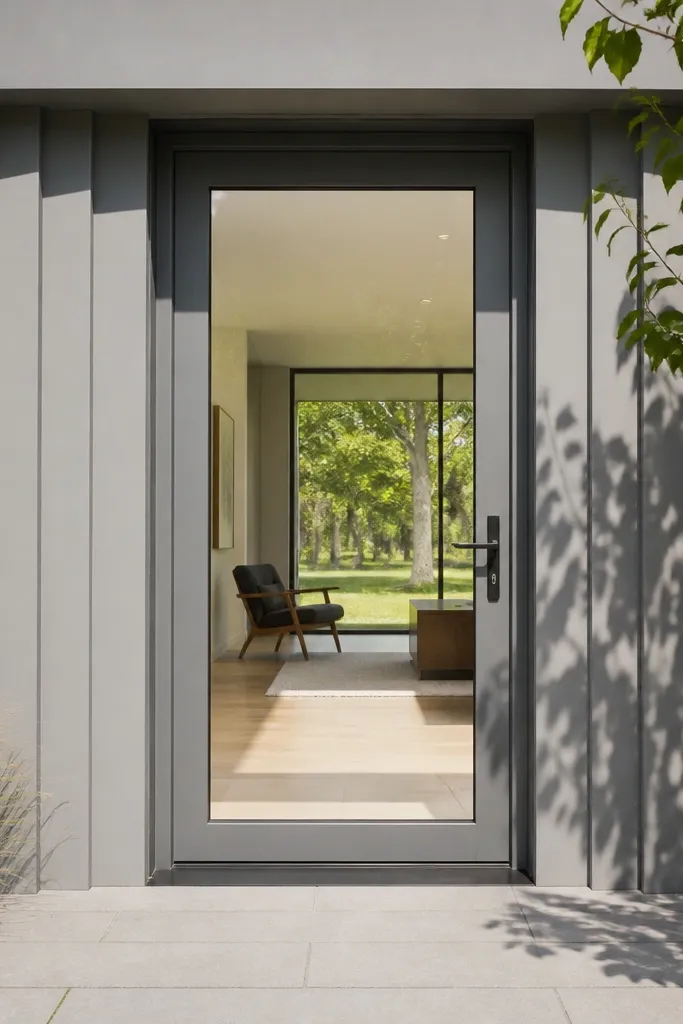
This design makes the glass look intentional by surrounding it with recessed vertical panels, not flat trim that looks stuck on. It’s modern because the glass is the center, and the recesses create shadow lines that look great in sun. Low-maintenance main entrance door design comes from using a sturdy, sealed exterior finish on the solid parts, so you’re not polishing around decorative details. Clear glass is bright, and the recessed panels keep water from sitting against the frame edges. This is best for entries with strong vertical siding lines or modern stucco.
Start with a door that already has the recessed panel profile or install a recessed panel trim system around the glass opening. Fit the door in the opening and shim for plumb, then check that the glass edge sits evenly in its frame channel. Seal the exterior seams and any trim joints with exterior caulk, keeping the bead thin. After cure, run a fingertip along the bottom edge to confirm there’s no gap that lets water into the frame.
Use a door threshold with a drip edge so water sheds away from the glass-frame seam.
Don’t rely on paint alone at the glass-frame interface — sealant matters where moisture can get trapped.
11. Two-Panel Door With One Large Glass Pane Per Side
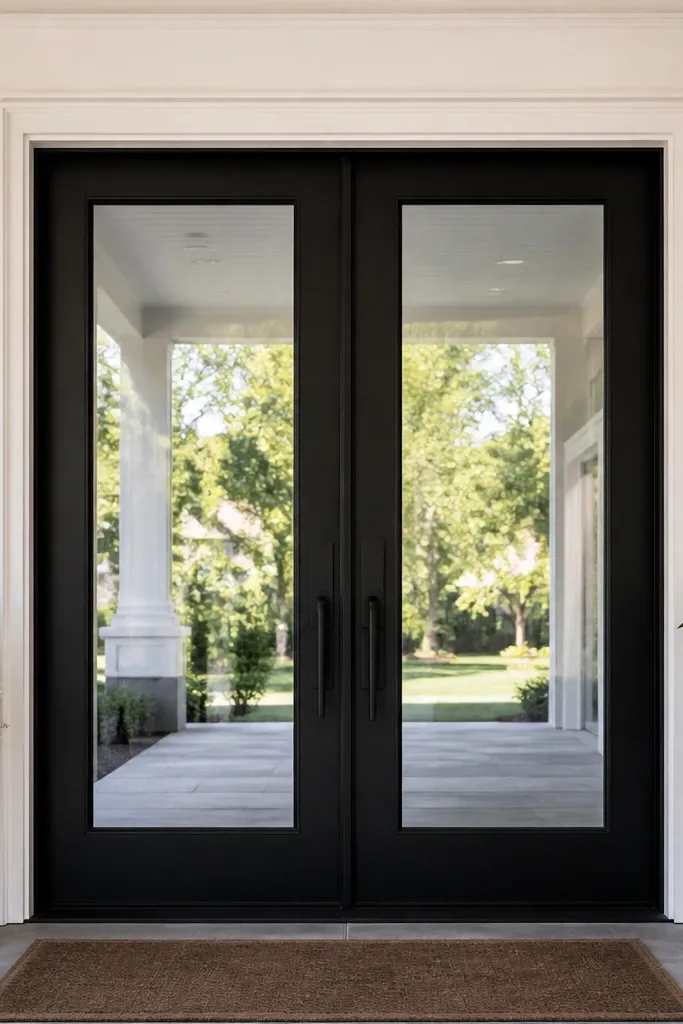
Double-door entries look modern when they keep the glass layout simple. One large glass pane per leaf gives a clean, balanced look and makes the light feel symmetrical, which photographs well. For low-maintenance main entrance door design, the panels are large and flat — easier to wipe than a grid of tiny sections. Choose tempered insulated glass and a durable dark finish so you don’t see scuffs after the first season of use. This works best for wide openings and homes that get a lot of natural light.
Measure the total opening width and buy a matched double-door prehung set with sealed insulated glass. Install the active and inactive leaves with correct hinge spacing and ensure the meeting stile closes evenly. Add weather stripping at both the perimeter and the meeting point if the kit includes it. Seal exterior seams, then adjust the strike plates so the doors latch without rubbing the glass frame.
Clean both doors in one go with the same cloth — changing rags mid-way can create streaks that look like smudges.
Avoid clear glass without a glare plan; if you get direct sun, you’ll spend more time cleaning reflections.
12. Charcoal Door With Horizontal Frosted Band

A horizontal frosted band gives you privacy and still lets light in where you want it. It’s modern because the band acts like a design stripe across the door, and it breaks up the door face so it doesn’t look flat. Low-maintenance main entrance door design benefits from the frosted surface hiding fingerprints and water spotting. The glass is also a single band, so cleaning is faster than a multi-panel layout. This suits homes with contemporary landscaping — the band looks good against greenery and stone.
Pick a prehung charcoal door with a single horizontal insulated frosted band and sealed glazing. Install the door, shim at hinges and latch, then verify the band aligns visually with nearby windows. Seal the perimeter with exterior caulk at trim joints and use foam rated for doors at the sides. Finish by checking drainage at the bottom threshold and replacing any worn weather strip if it compresses poorly.
Editor's noteUse a microfiber towel folded into quarters — it gives you multiple clean faces for the band without reloading residue.
Skip thisDon’t let caulk touch the band edge — cured caulk creates a grime ridge that never fully cleans.
13. Clear Glass Door With Slim Black Mullions
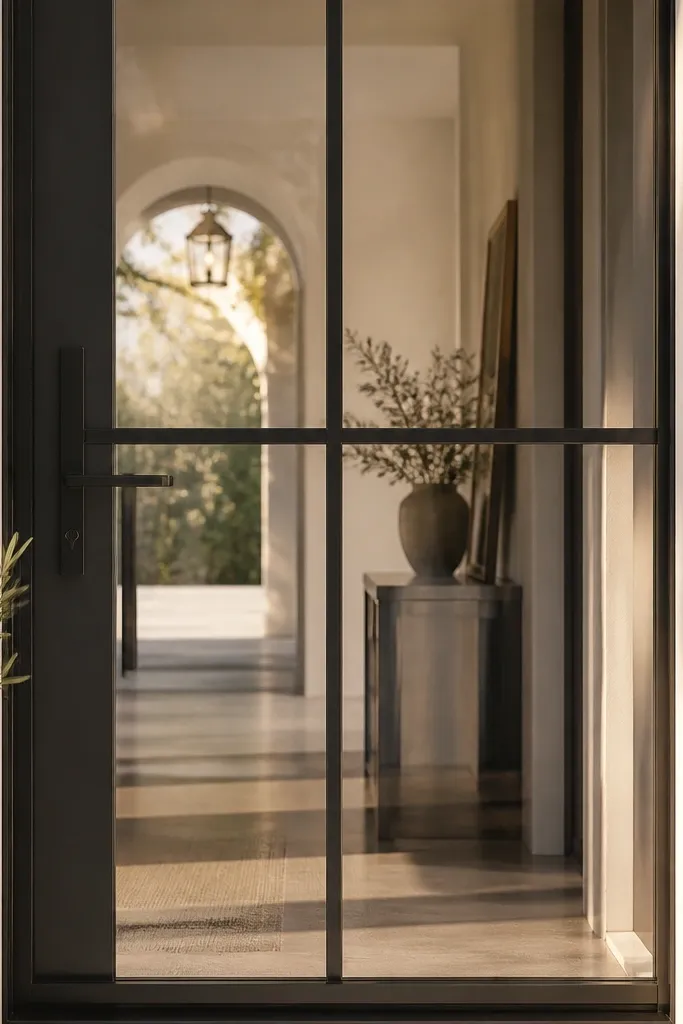
Slim mullions keep the look modern without making the door feel busy. Clear insulated glass makes the entry feel open, and thin black lines make the design read crisp even from a distance. For low-maintenance main entrance door design, the trick is keeping the mullion count low — fewer junctions means fewer spots where water and cleaner residue collect. The door also photographs well because reflections stay organized. This works with both contemporary and transitional homes, especially with black exterior lights or railings.
Choose an insulated door unit that has factory slim mullions and a sealed frame system. Install the prehung door, then check that the mullion lines are level across the glass — a slight tilt looks off in photos. Seal exterior joints where trim meets siding, and keep caulk off the glass. After installation, test the door sweep and adjust hinges if you see any rubbing that could chip paint near the mullions.
Editor's noteFor cleaning, use a squeegee and wipe in one direction; cross-hatching streaks show up more on clear glass with mullion lines.
Skip thisAvoid thick mullions if you want low-maintenance — the thicker the frame, the more edge cleaning you’ll do.
14. Frosted Side Panels With Solid Center Door
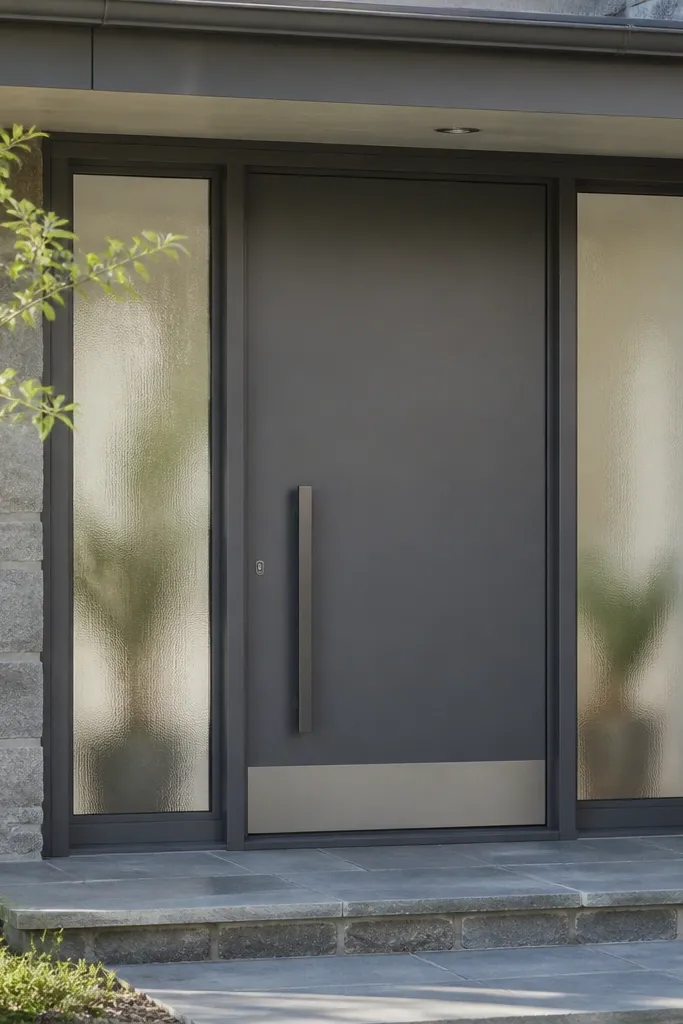
This is a smart low-maintenance main entrance door design because the glass is confined to the sides, while the center stays solid. You get light and privacy from the side panels, and you avoid the constant cleaning of a big door glass surface. The solid center handles scuffs and impacts better than glass, and it looks modern when paired with a clean, minimal frame. Choose frosted insulated side panels so you don’t see water spots as clearly, and keep the door hardware dark for contrast. It suits narrow entries where full sidelights would be too much.
Buy a door system that includes side glass panels (not film) and sealed insulated units. Install the prehung door, shim for plumb, then fasten the frame securely around hinge and latch areas. Apply exterior caulk at trim seams and confirm the weather strip compresses evenly along the sides with glass. Finally, check the gap between side panels and center slab so water can’t pool at the meeting line.
Editor's noteUse a narrow microfiber cloth for the side panels; wide cloth bunches and leaves streaks in the corners.
Skip thisDon’t add frosted film over existing glass — edges lift and turn into a peeling mess right at the door perimeter.
15. Matte Teak Fiberglass Door With Clear Glass Window
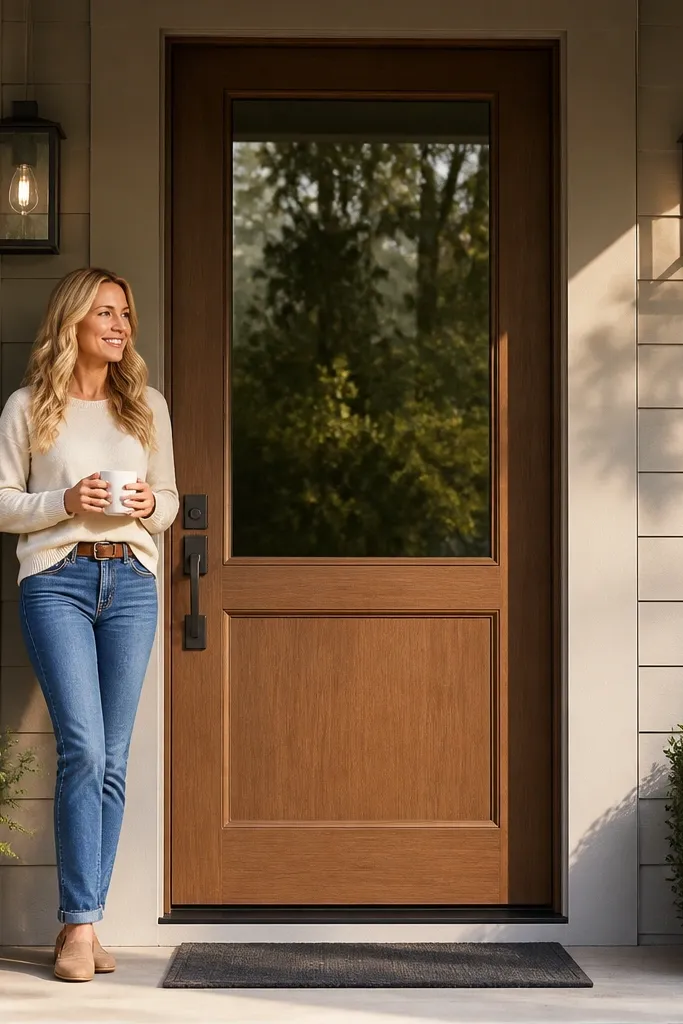
Teak-look doors read warm and modern, especially when the finish is matte and even. A clear glass window panel adds light without making the whole door glass, which keeps maintenance low. With fiberglass, you get the look of wood and the durability of a factory-sealed exterior coating, which matters for low-maintenance main entrance door design. The window placement is key: keep it at eye level so it frames the view and looks intentional from the street. This fits modern farmhouse-lite, contemporary craftsman, and clean stucco entries.
Pick a fiberglass prehung door with a teak-look finish and sealed insulated glass window panel. Install it with stainless shims and exterior screws, then verify the glass window sits level relative to nearby trim. Apply foam around the perimeter as directed by the door manufacturer, then trim and caulk exterior seams. If the finish is not fully factory sealed, add an exterior-rated topcoat to the door face but keep sealant off the glass edge.
If you get glare, swap to low-iron clear glass — it stays clearer and looks better even when the sun hits.
Avoid a semi-gloss teak finish — it shows fingerprints and water streaks more than matte.
16. Black Steel-Look Door With Decorative Glass Squares
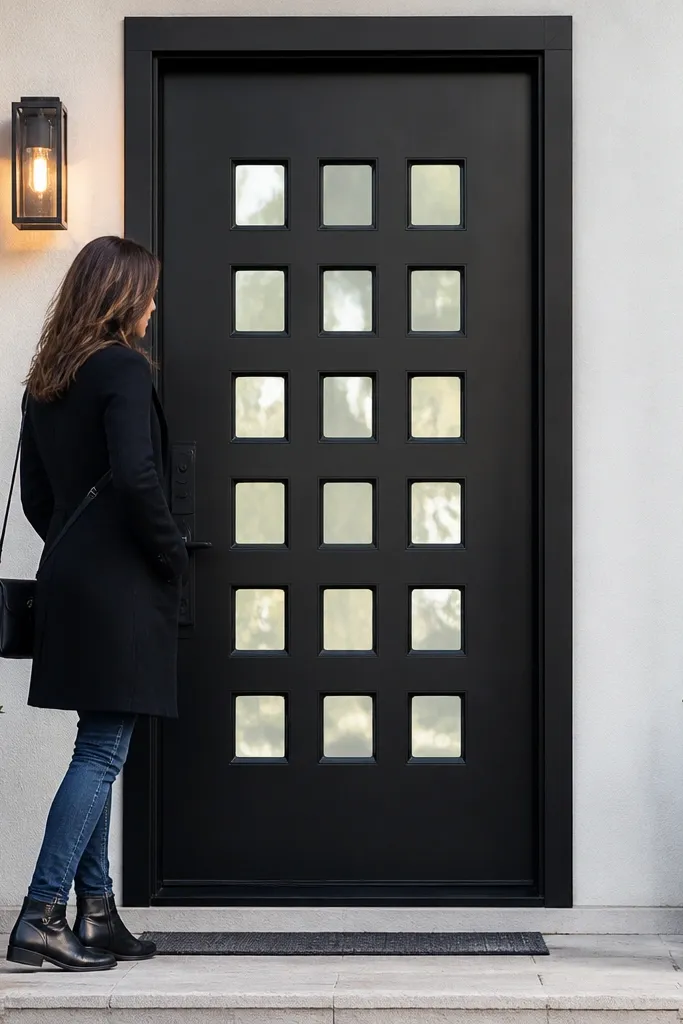
Small glass squares can look modern when the frame is minimal and the grid is consistent. A steel-look door finish makes the glass pattern feel structured rather than decorative. For low-maintenance main entrance door design, you need factory insulated glass and a tough coating; otherwise, the many junction points will collect grime. This design is photogenic because the light breaks into repeating squares, especially on bright days. Skill level is moderate because you’re committing to a specific door style — but installation is still standard prehung.
Choose a prehung door with insulated glass squares and a sealed metal or fiberglass frame. Install the door and check the grid alignment — a crooked pattern looks sloppy fast in photos. Seal the exterior perimeter with caulk and flashing tape where your siding meets the frame. After installation, test the lock alignment and adjust strike plates so the door closes cleanly without rubbing the glass frame edges.
Use a grout-style detailing brush for the mullion seams, but only after the cleaner sits for 30 seconds so you don’t grind dirt into the corners.
Don’t pick a door with exposed raw metal at the glass edges — those spots rust and stain.
17. Pivot Door With Frosted Glass Octagon Insert
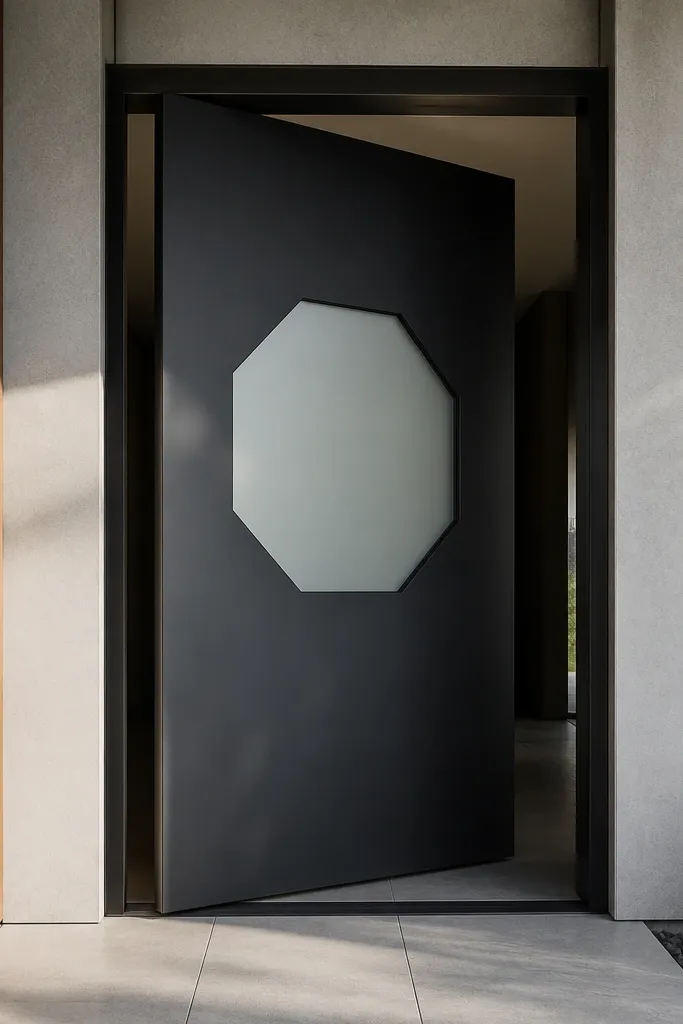
An octagon insert makes the door look designed without covering the whole slab in glass. Frosted glass keeps privacy while the geometry adds curb appeal. This is low-maintenance main entrance door design because the glass area is small, and the frosted finish hides fingerprints and light spotting. Pair it with a matte black door and a clean handle, and you get a modern entry with a hint of classic geometry. This suits homes that want personality at the front without turning the door into a craft project.
Buy a pivot door kit or a pivot-compatible slab that includes an insulated frosted octagon insert from the manufacturer. Install the pivot frame to studs, then hang the door and adjust alignment until the slab sits evenly. Seal all exterior joints around the pivot frame and ensure the weather seal compresses on both sides. Finish by mounting the hardware and doing a water test with a hose at the top seam to confirm no leaks around the trim.
Editor's noteKeep the insert edges sealed with the manufacturer’s glazing sealant only; DIY silicone can react with coatings.
Skip thisAvoid adding an octagon insert to a door yourself — DIY cutouts around glass edges lead to leaks.
18. Large Clear Glass Door With Vertical Steel Recess Lines
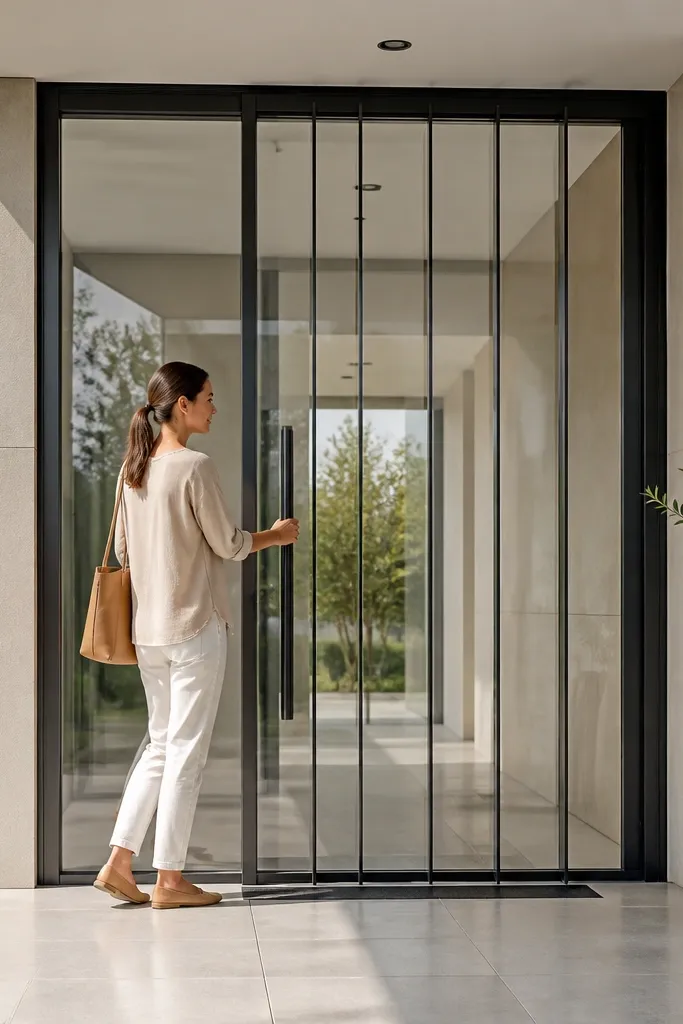
This is the modern look where the glass dominates, but the door still feels structured. Vertical recessed lines break up the panel so it doesn’t look like a giant window stuck to a frame. Low-maintenance main entrance door design works here when you choose insulated tempered glass and a frame finish that wipes clean, like powder-coated aluminum or durable fiberglass. The recess lines create shadow and hide micro marks, so the door stays photo-ready. Best for covered entries where the door gets less direct rain blast, since more glass means more water contact.
Choose a full-glass or large-glass door system with insulated tempered glass and a powder-coated frame. Install the prehung unit and ensure the frame is perfectly square; even a small twist makes the glass look uneven. Seal exterior seams and verify the threshold has a drip edge. After installation, apply a thin exterior caulk line at trim-to-frame joints and keep caulk off the glass surface.
Editor's noteUse a hydrophobic glass cleaner on the first day after installation — it makes wiping easier for the next month.
Skip thisDon’t choose a glossy frame finish — it shows streaks and water spots instantly.
19. Matte Gray Door With One-Side Glass and Privacy Etch
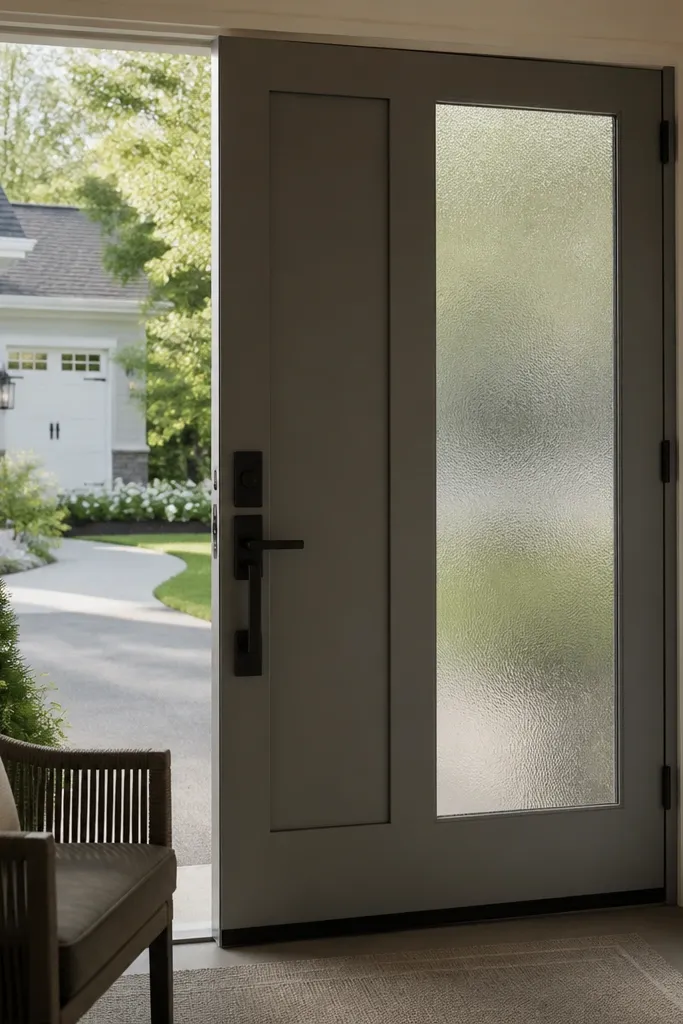
If you want modern glass without the maintenance of full-door glass, one-side glass is the move. Privacy etch keeps the entry from feeling exposed, and it also hides fingerprints because the surface is not fully smooth. Matte gray gives a calm, contemporary look that matches most siding colors and light fixtures. For low-maintenance main entrance door design, you’re cleaning less glass area, and the etched surface keeps spotting from looking obvious. This works well for narrow foyers where you still want daylight but don’t want a bright, transparent door face.
Buy a door with a factory insulated glass panel on one side and a privacy etch pattern you like. Install the prehung door, shim for plumb, then mount hardware with the provided template so you don’t misalign the latch. Seal the exterior trim seams and check the weather stripping at the glass side so water doesn’t creep into the frame channel. Finish by cleaning any caulk residue off the glass right away with a plastic scraper and glass cleaner.
Editor's noteChoose an etch pattern with fewer edges; heavy patterns trap residue and take longer to wipe.
Skip thisAvoid adding etch film — it peels and creates uneven light and cleaning lines.
20. White Door With Slim Sidelights and Black Transom Bar
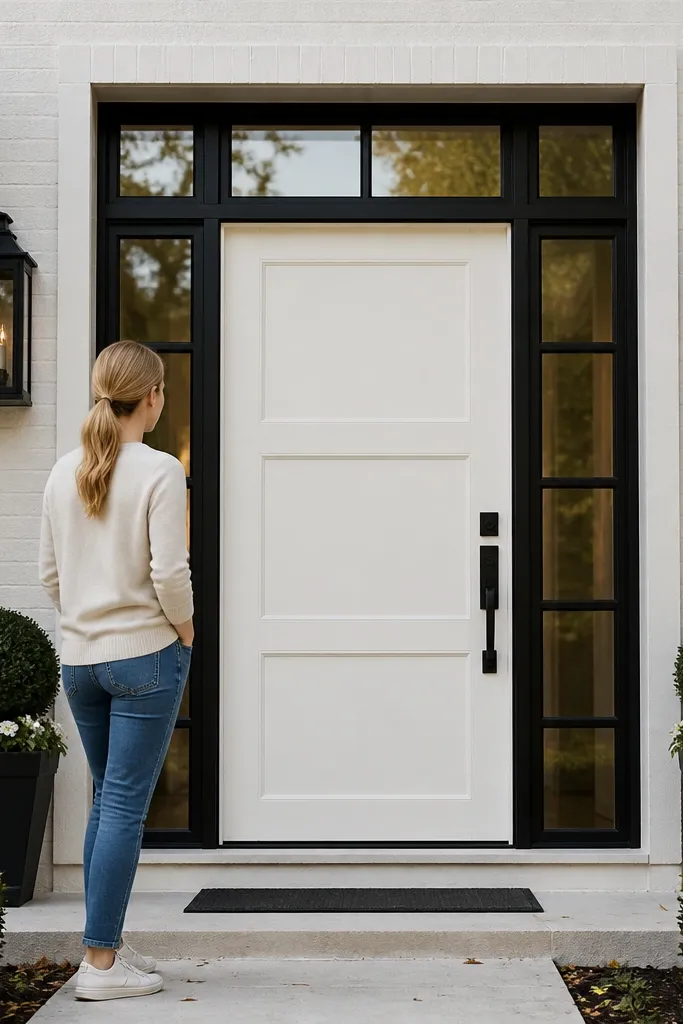
A transom bar plus slim sidelights makes the entry feel taller and more architectural, which looks great in modern homes. The glass is split into smaller fixed sections, so you don’t have to clean a huge swinging pane. Low-maintenance main entrance door design comes from keeping the door face mostly solid and using sealed insulated glass in the transom and sidelights. The black transom bar adds strong contrast and hides minor frame imperfections. Skill level is moderate if you’re buying a full unit, but it’s still a straightforward install with the right shimming.
Select a prebuilt door + sidelight + transom unit so the frame and seals match. Install the top section first if the system allows, then set the door leaf and check level at the transom bar. Shim behind hinge points and latch points, then fasten into studs. Seal exterior seams, then check the transom bottom edge for any gap that can collect water.
Editor's noteUse a small foam roller to apply caulk in tight corners for a cleaner bead line.
Skip thisDon’t use white caulk that dries uneven — it turns into a visible grime line near glass.
21. Charcoal Door With Vertical Fluted Glass Insert
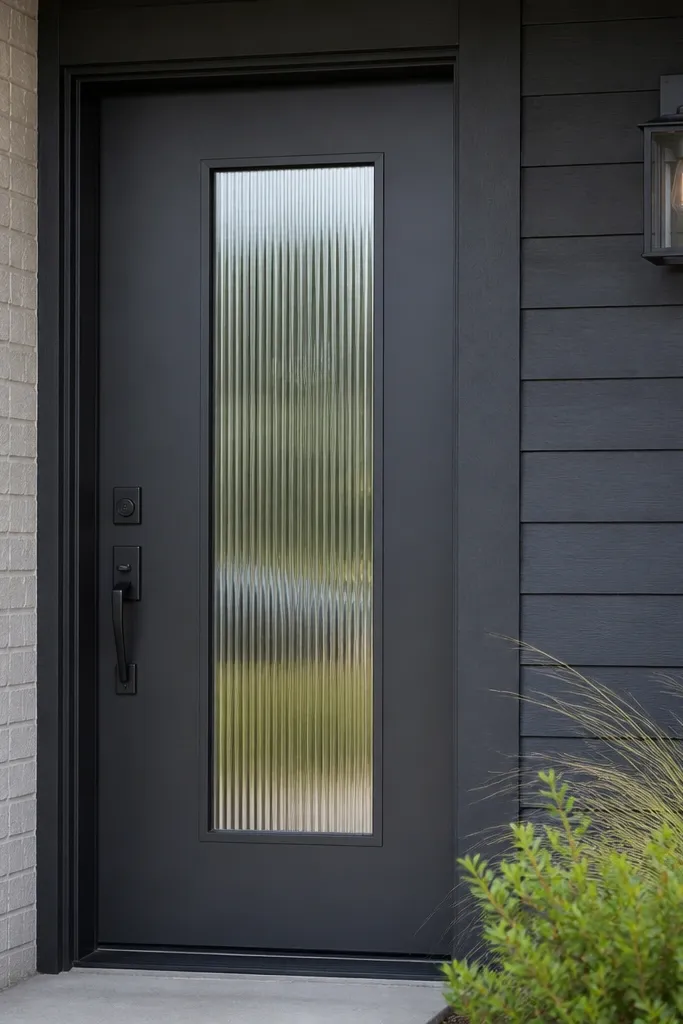
Fluted glass looks modern because it creates texture and light diffusion without needing heavy frosting. The vertical ridges also make water spots less obvious, which helps low-maintenance main entrance door design. Charcoal matte finish hides everyday scuffs and looks crisp next to modern numbers and lighting. This door is photogenic because the light creates vertical highlights inside the flutes. It’s also practical — the glass diffuses glare and keeps the entry feeling private.
Choose a prehung charcoal door with a factory insulated fluted glass insert. Install the unit and keep the glass insert centered and level — fluting exaggerates misalignment in photos. Seal the exterior trim joints and ensure the weather strip compresses evenly around the glass edge frame. Clean any factory residue from the glass with a non-abrasive cleaner before you caulk around trim so you don’t trap dirt.
Editor's noteFor fluted surfaces, wipe with a microfiber cloth wrapped around your fingers so you reach the ridges without streaking.
Skip thisAvoid abrasive glass tools on fluted glass — they flatten ridges and ruin the look.
22. Dark Brown Door With Tall Narrow Glass Panels and Long Pull

Tall narrow glass panels make the entry feel sleek and taller, and a long pull handle adds a clean vertical line that matches the glass. Dark brown looks warmer than black but still modern, and it hides minor wear better than lighter stains. Low-maintenance main entrance door design comes from using a door finish that’s sealed and durable, plus insulated glass panels that don’t fog. The tall panels also give you daylight without covering the whole door with fingerprints. This suits homes with wood accents, modern brick, or warm neutral siding.
Select a prehung dark brown fiberglass or steel-look door with two tall narrow insulated glass panels. Install with shims and exterior screws, then check the pull alignment so the handle doesn’t sit crooked relative to the glass. Use foam around the perimeter and seal exterior trim joints after curing. Finally, wipe the glass and inspect for any gaps at the bottom threshold that could let water pool against the frame.
Choose a long pull with a smooth finish — textured pulls collect grime around the handle area.
Don’t pick a stain that’s not exterior-rated — it will fade unevenly around the glass edges.
23. Satin Bronze Door With Glass That Wraps Into Sidelight Frame
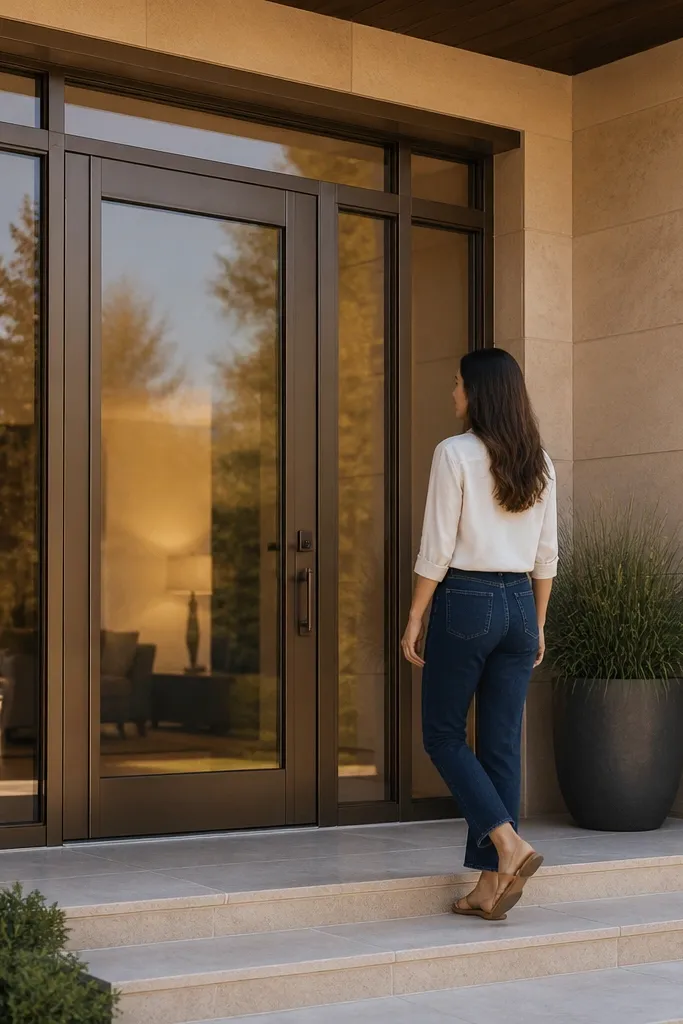
This design looks cohesive because the glass language repeats: the door glass aligns with the sidelights so you see one continuous system. Satin bronze keeps the hardware and frame looking clean without the high-contrast fingerprint drama of shiny metal. Low-maintenance main entrance door design improves because the glass is part of a factory-sealed unit — fewer DIY seal lines means fewer leaks and fewer dirty caulk edges. It’s modern and photogenic because the entry reads like a single architectural element, not a door plus accessories. It’s best for new installs or full replacement because alignment matters.
Order a matching door and sidelight kit where mullion thickness and glazing gasket style are the same across the system. Install the sidelights first, then set the door slab so the glass edges meet the same reveal lines. Shim and fasten the frame, then seal exterior seams with a paintable exterior caulk that matches the trim color. Do a water test at the top and sides and inspect the interior for any dampness around the glass-frame junction.
Match caulk color to trim, not to the door — color mismatch shows up fast near glass.
Avoid mixing trim profiles — different gasket thickness makes the reveals uneven and harder to keep clean.
24. Minimal White Door With Two-Foot Tall Clear Glass Panel
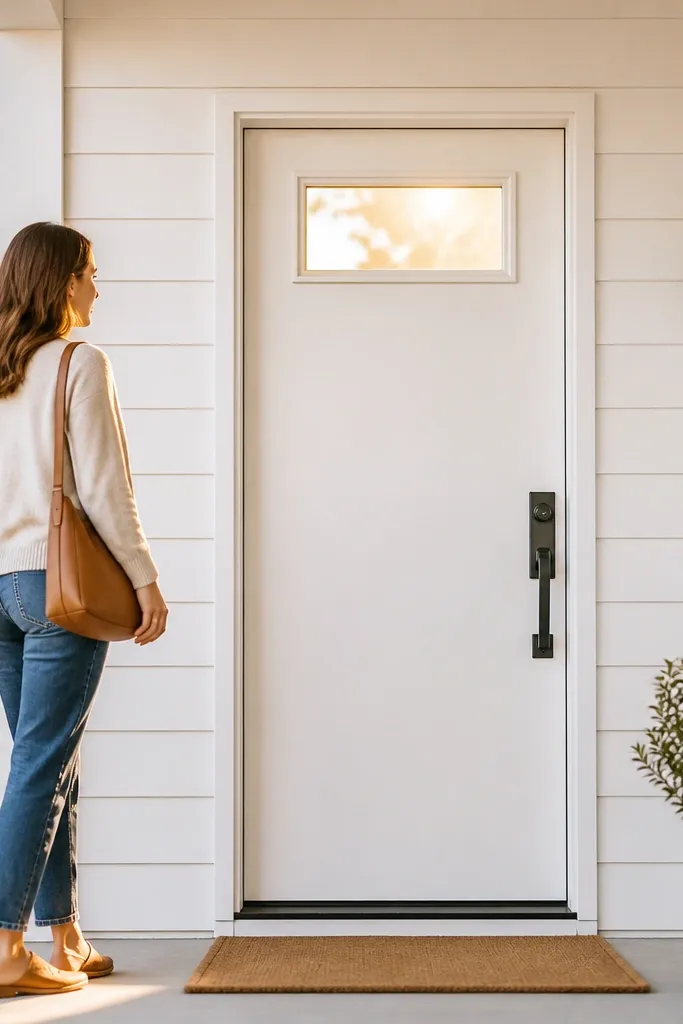
A single tall clear panel keeps the entry modern and bright without turning maintenance into a daily job. Minimal frames look clean because there’s less trim to collect dirt, and white doors make the glass glow in daylight. For low-maintenance main entrance door design, the best move is using insulated tempered glass and a durable exterior coating that doesn’t chalk. The slim black frame adds contrast so the door doesn’t blend into light siding. This works for contemporary houses with simple porch posts and clean lines.
Buy a minimal prehung door with a tall insulated clear glass panel and a factory-sealed frame. Install it with shims at hinge and latch points, then check that the glass panel is level — slim frames make misalignment obvious. Seal exterior seams and install a threshold with a drip edge. After cure, clean the glass with a non-ammonia cleaner and inspect corners where the frame meets the panel for any gaps.
Editor's noteUse a microfiber cloth for the frame as well — dirt on the frame transfers to glass when you wipe.
Skip thisDon’t choose a white door with a thin coating; it scuffs and looks dirty faster.
25. Black Door With Horizontal Glass Pivot Lite Above the Main Door
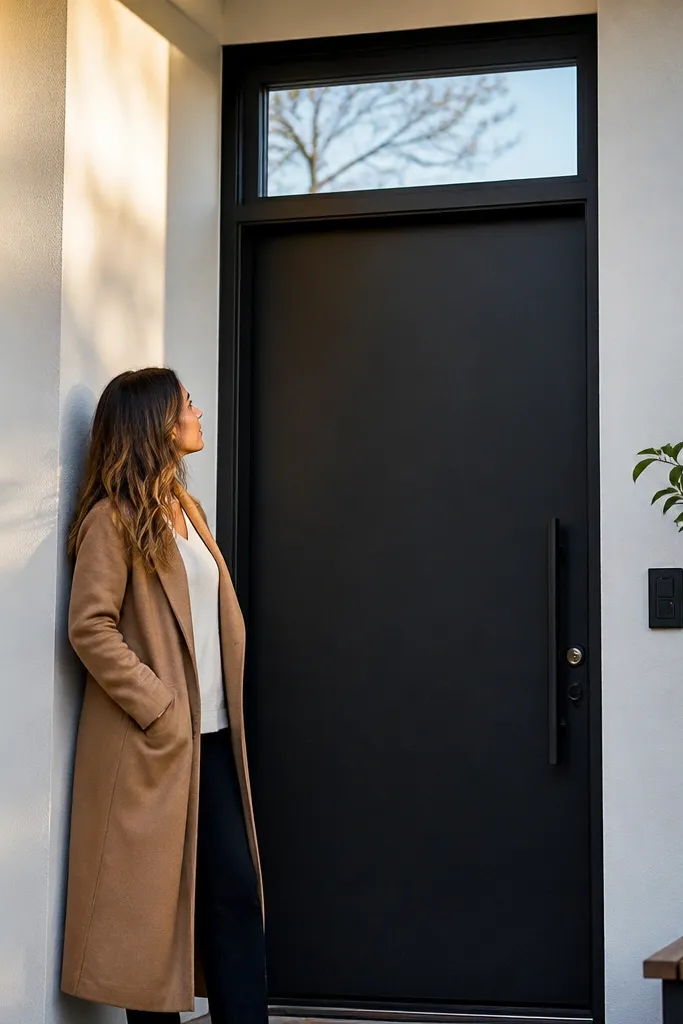
A glass lite above the main door adds light to the entry while keeping the door itself mostly solid. The horizontal panel reads modern because it creates a band of light across the top, and it helps the entry feel open without a huge glass surface on the door leaf. Low-maintenance main entrance door design benefits because the lite is fixed, so you’re not cleaning moving edges or dealing with gasket wear on an active door. Choose insulated glazing to prevent condensation on cold nights. This works especially well for narrow entries where sidelights would crowd the space.
Choose a door system that includes an insulated transom lite or add-on frame above the opening. Install the transom frame level, then mount the main prehung door below it, ensuring the two assemblies share a consistent weather seal. Seal the exterior perimeter and install flashing tape if your siding requires it around the header line. Finish by testing the seals with a hose run at the top seam and checking for any water inside the trim.
Editor's noteUse a squeegee with a rubber edge that’s not too stiff — it won’t chip the lite frame around the corners.
Skip thisAvoid DIY glass lites that rely on random silicone beads — they shrink and create visible grime lines.