
1. The Knob Rail by My Mirror
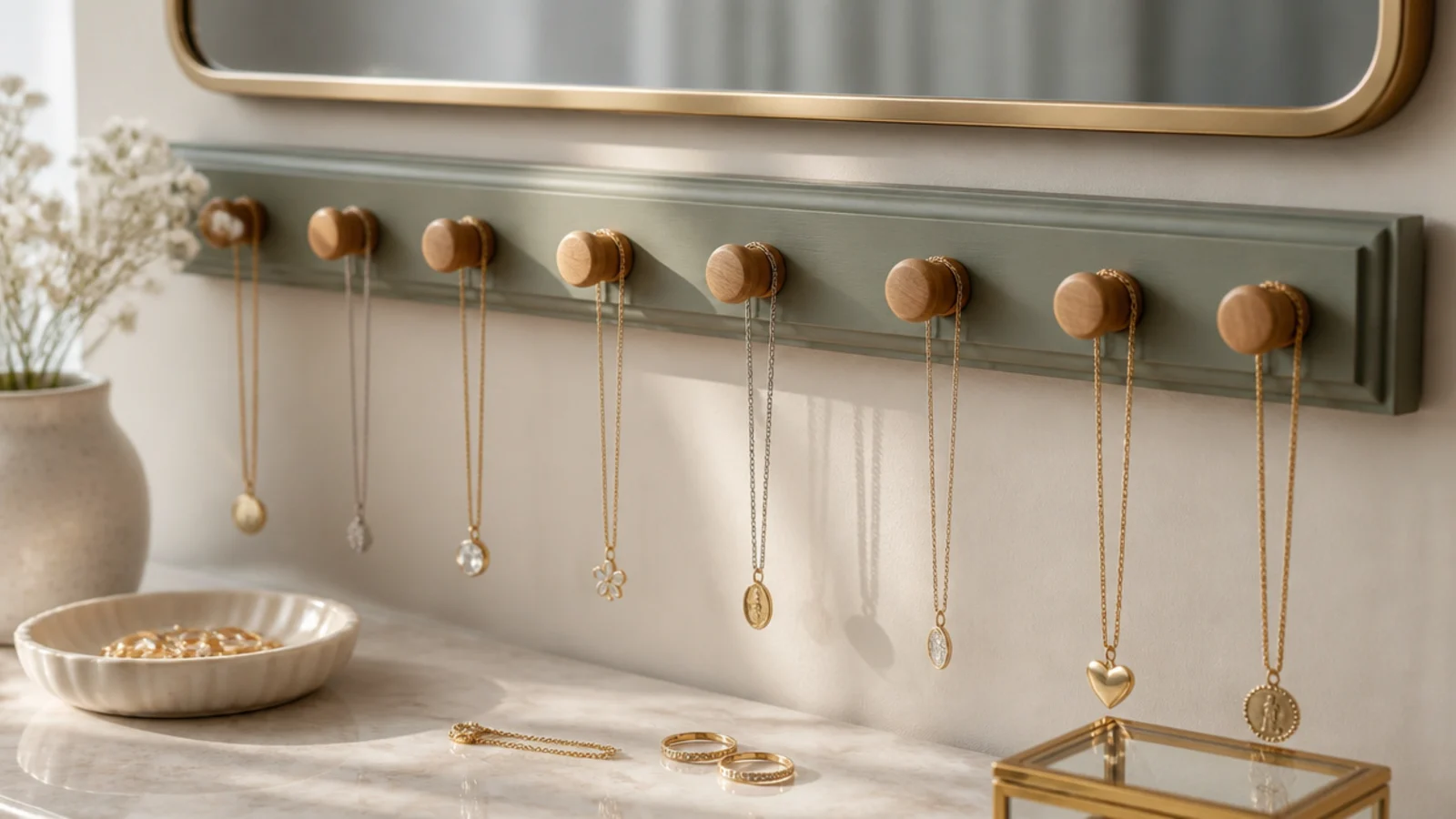
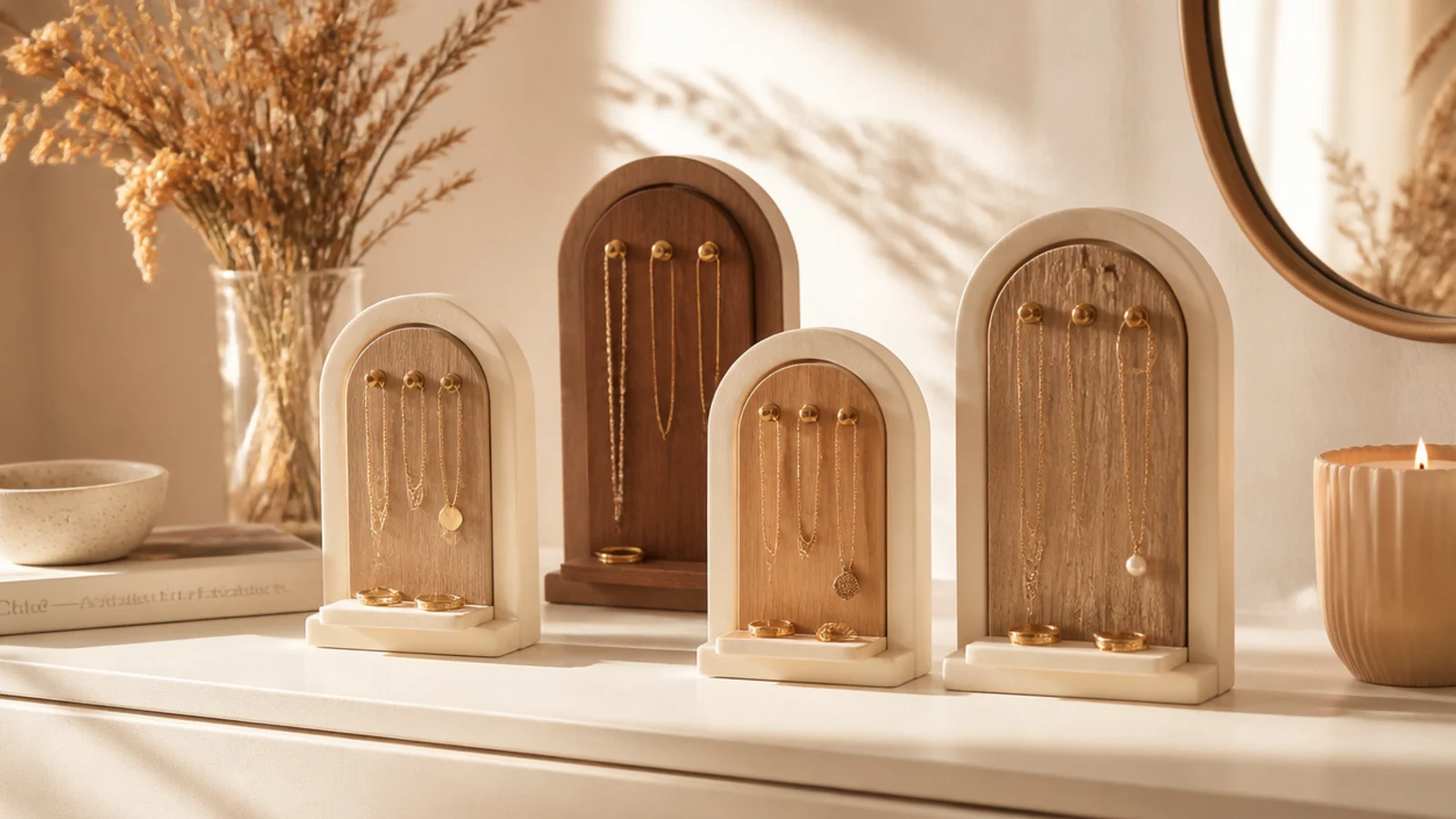
This is the one that ended the worst of my mess — a rail of knobs by the mirror, one necklace per knob. Necklaces were a permanent knot in my drawer, and giving each its own peg right where I get dressed fixed it in ten minutes. It’s the first thing I’d tell anyone to do.
I cut a wood rail, painted it to match my trim, and screwed on wooden knobs every 3 inches along a level line. I mounted it with two anchors right beside my mirror at eye level. Longest necklaces went on the outer knobs, shortest in the middle. The habit that makes it work: I hang each necklace the second I take it off instead of setting it down.
Editor's noteMount it beside the mirror, not somewhere prettier; being exactly where you get dressed is what makes you actually use it.
Skip thisDon’t space the knobs too close — I did at first, and long chains still swung together, so I redrilled them 3 inches apart.
2. The Ring Dish at the Sink
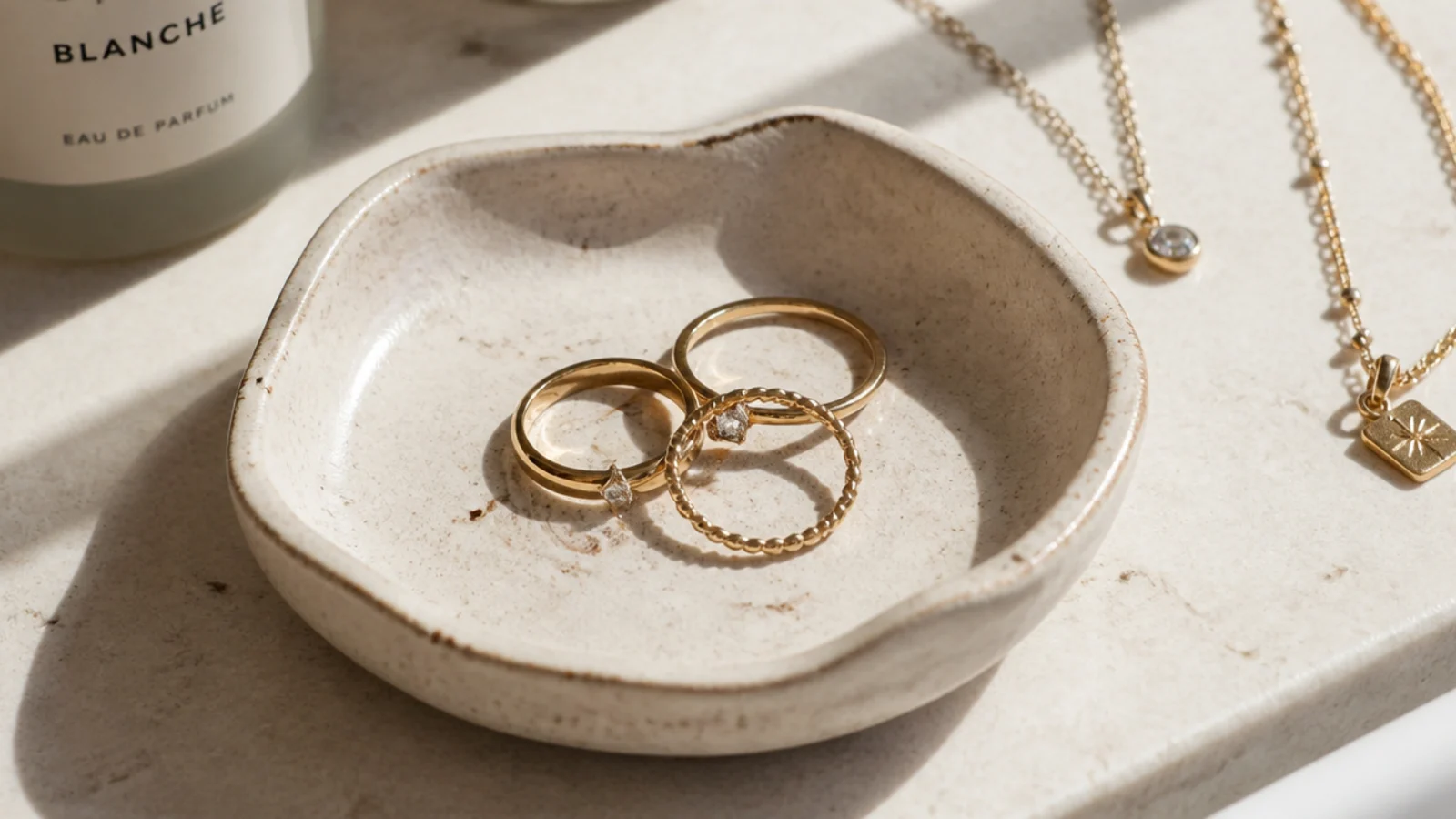
A little dish right at the sink ended my lost-ring panic. I take rings off to wash my hands, and now they land in the same dish every time instead of on a random ledge. It’s tiny but it saved me from the recurring 'where’s my ring' scramble.
I set a small handmade clay dish (about 3 inches) on the sink ledge where I always take my rings off. That’s the whole setup. The habit is the important part: rings go in this exact dish, every single time, no exceptions. I sealed the clay so it wipes clean of soap splashes. A second matching dish went on my nightstand for the rings I take off at night.
Editor's notePut one dish at every spot you actually remove rings — sink and nightstand for me — so there’s never a reason to set one down loose.
Skip thisDon’t use a dish so shallow it doesn’t contain the rings; a slight lip keeps them from getting knocked into the sink.
3. The Mesh Frame for Earrings
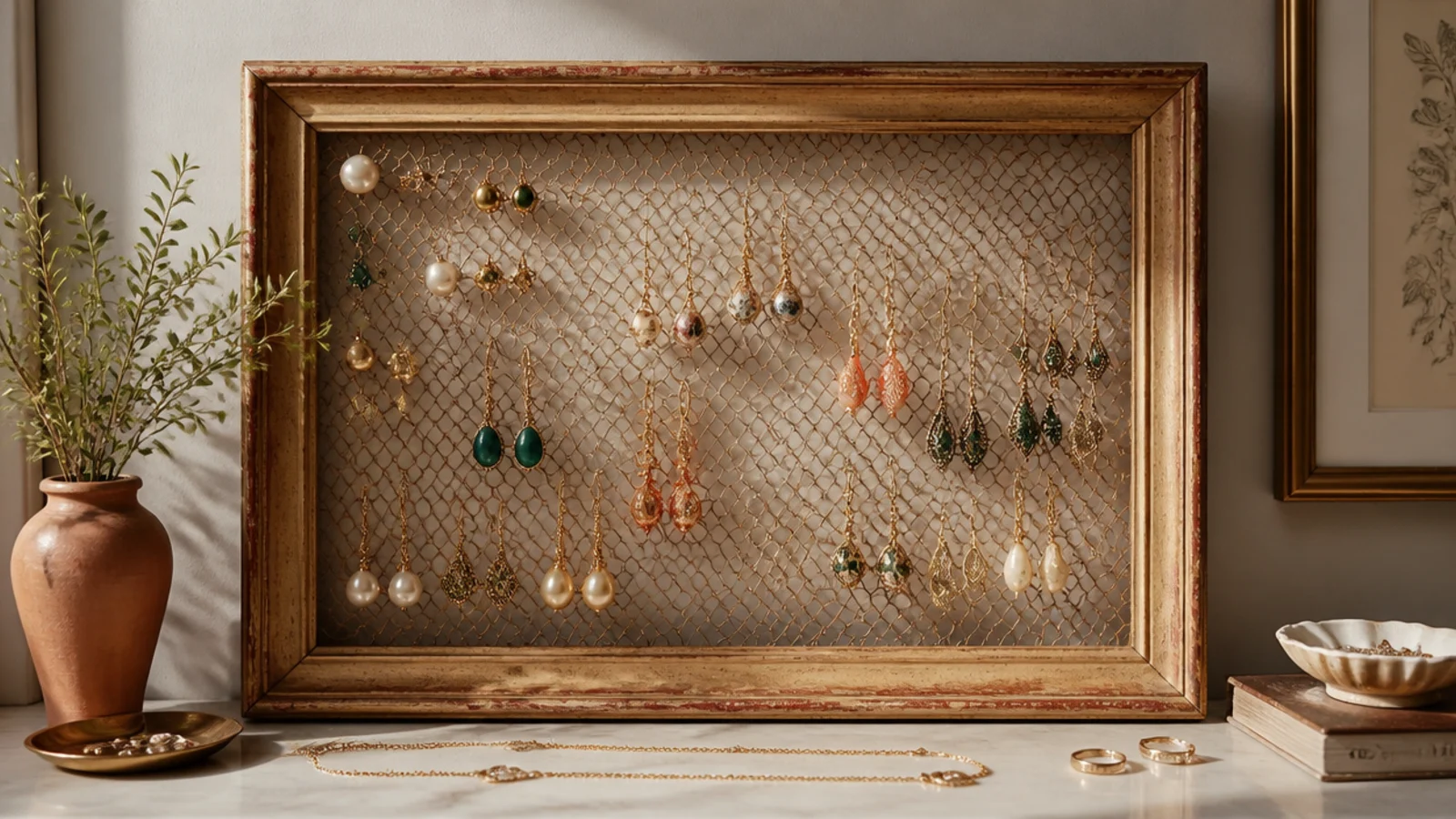
A frame with mesh ended my earring pile and my stud-back losses at once. Dangles hook into the squares and studs push straight through, pairs side by side. I can finally see every pair instead of digging through a tangled dish.
I stretched fine wire mesh across the back of a thrifted frame and hung it by the mirror with two strips. Dangles go in columns, studs push through anywhere with the backs on the reverse. The habit: I put the earring straight back next to its pair when I take it off, so pairs never get separated. Quarter-inch mesh holes were the sweet spot — hooks fit, posts don’t fall through.
Push studs through and screw the back on behind the mesh; the back holds the stud in place and can’t roll off and vanish.
Don’t use foam or cork if you have a lot of studs — the mesh lets studs and hooks share one board, which cork can’t do well.
4. The Felt Drawer for Everything Else
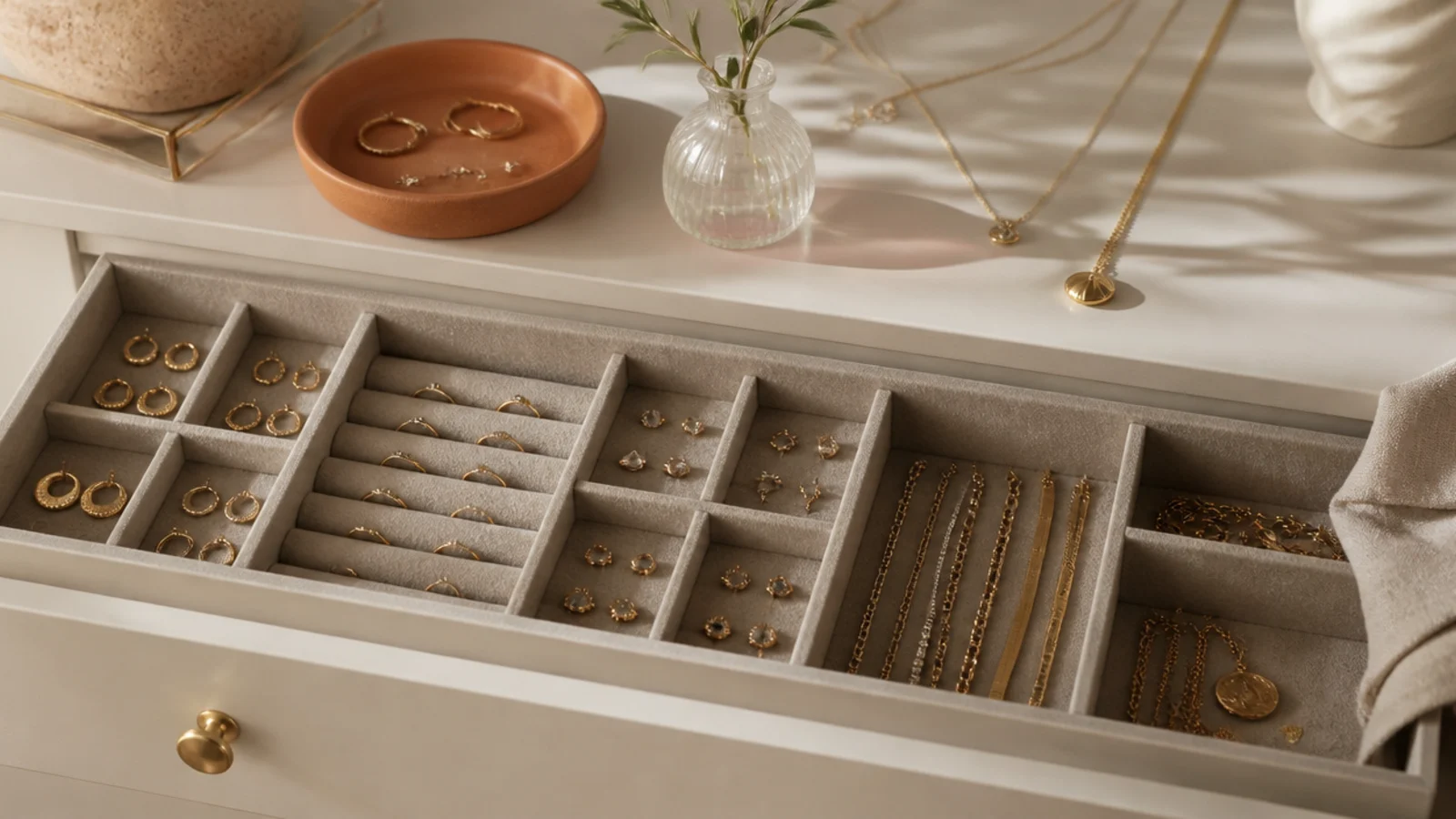
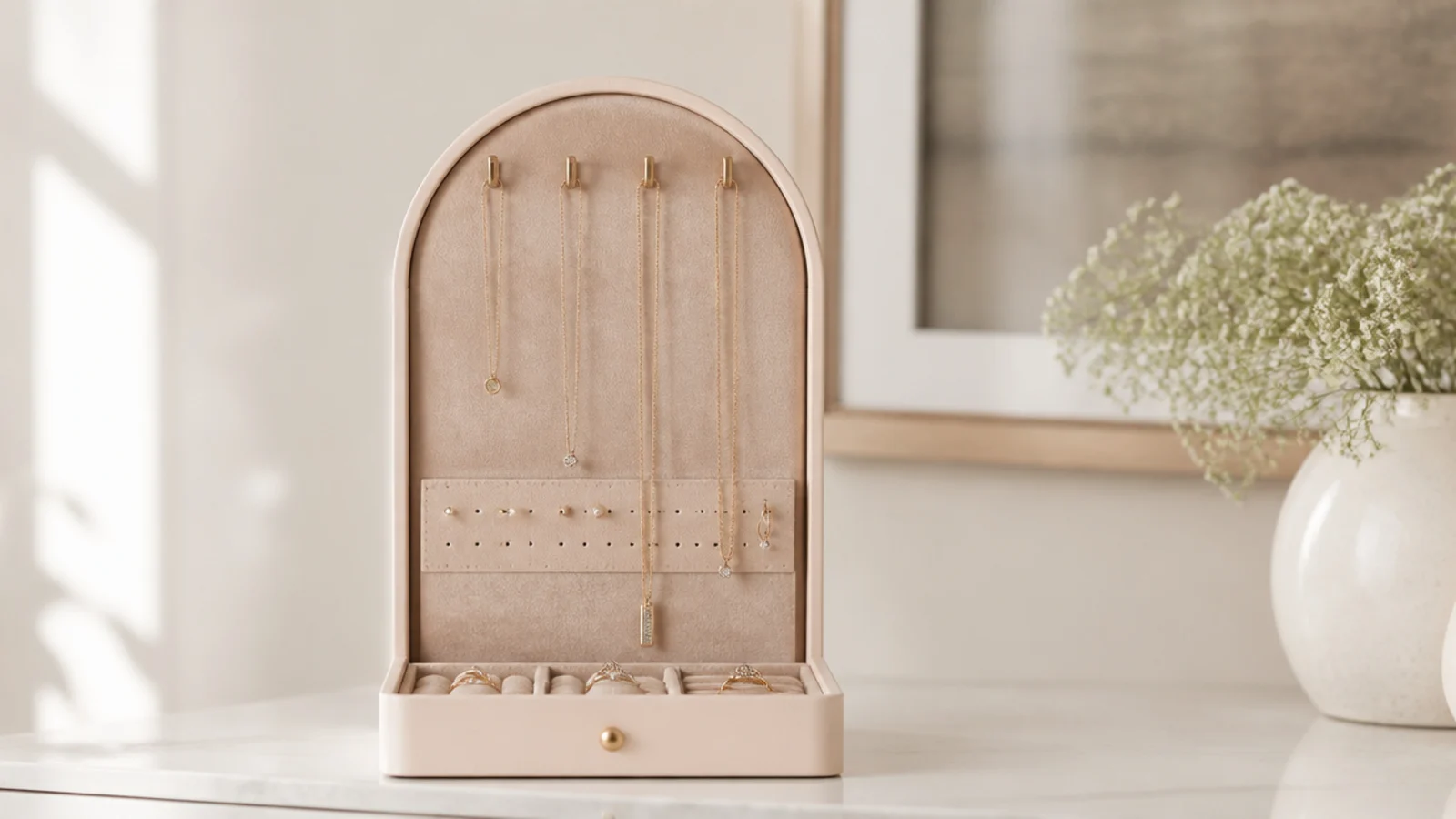
This is where everything I don’t wear daily lives, and it’s what keeps my visible spots clear. A felt-lined, divided drawer sorts the occasional and sentimental pieces out of sight. Separating everyday from occasional was half of what fixed my mess.
I lined a shallow drawer with adhesive felt and made a lift-out grid of felt-wrapped foam dividers — a long channel for bracelets, small squares for rings and studs, and a foam slit strip to stand rings upright. Occasion necklaces lie flat in their own lanes. The habit: daily pieces stay out on the wall and dishes; this drawer is only for the rest, so it never overflows the everyday spots.
Editor's noteMake the dividers lift out as one piece so you can tip out the crumbs and re-sort as your collection changes.
Skip thisDon’t let daily pieces creep into this drawer; keeping it strictly for occasional pieces is what stops the everyday spots refilling.
5. The Closet Pocket Panel
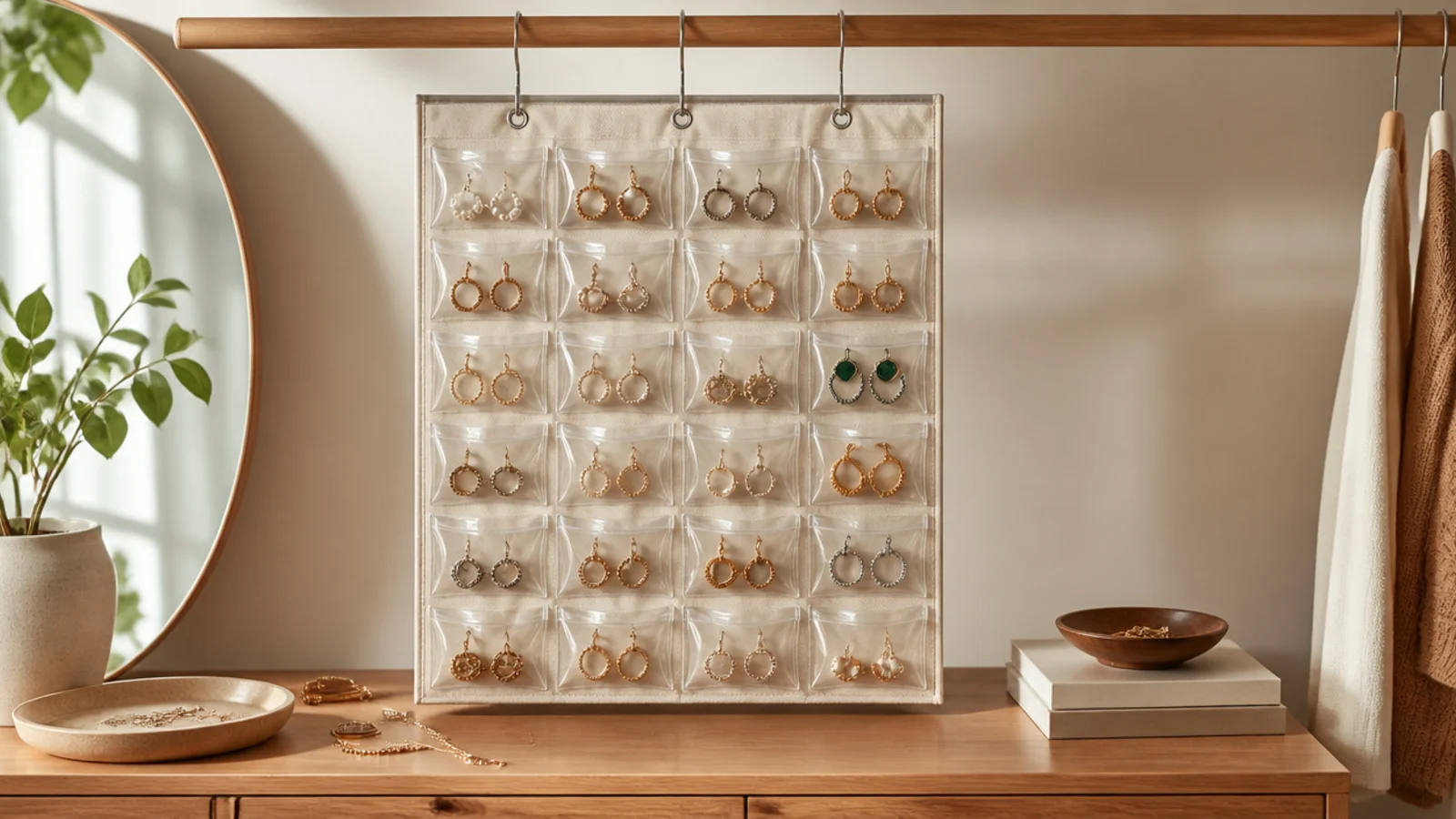
For the overflow of small pieces, a clear-pocket panel on the closet rod holds a ton without any surface space. Each little piece has its own visible pocket. It’s what let me get the last of the clutter off the dresser entirely.
I slotted a double-sided clear-pocket organizer onto the closet rod. I sorted by pocket — studs in one, spare backs in another, small pendants in a third — and put the heavier pieces in the lower pockets so it hangs steady. The habit: anything small and infrequent goes in its assigned pocket, so the dresser top stays clear for only my daily dishes and trays.
Get a double-sided panel; flipping it doubles the pockets on the exact same bit of closet rod.
Don’t load heavy pieces up top — I did once and the whole panel sagged and swung, so weight goes in the bottom pockets.
6. The Bracelet Bar on the Dresser
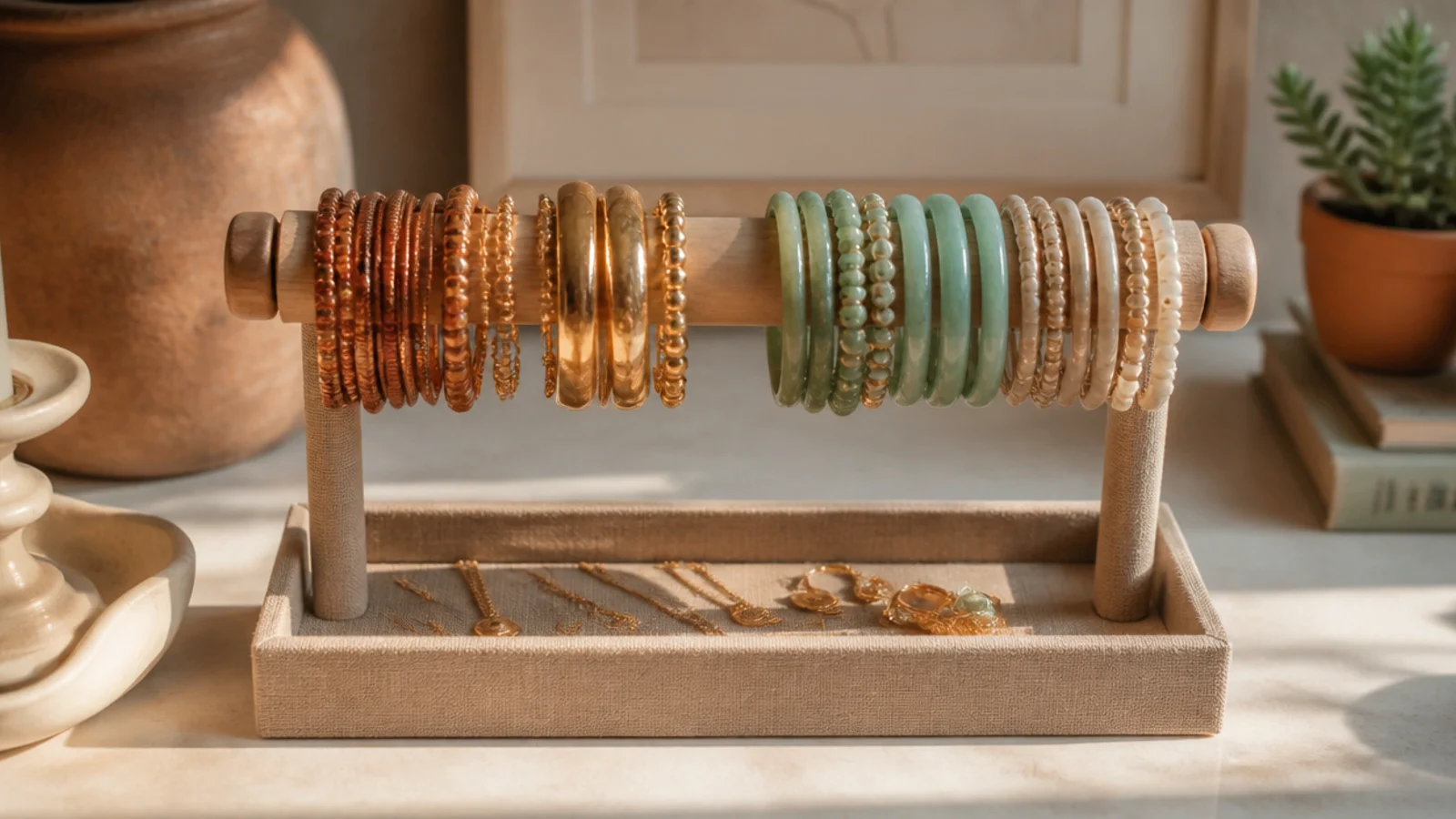
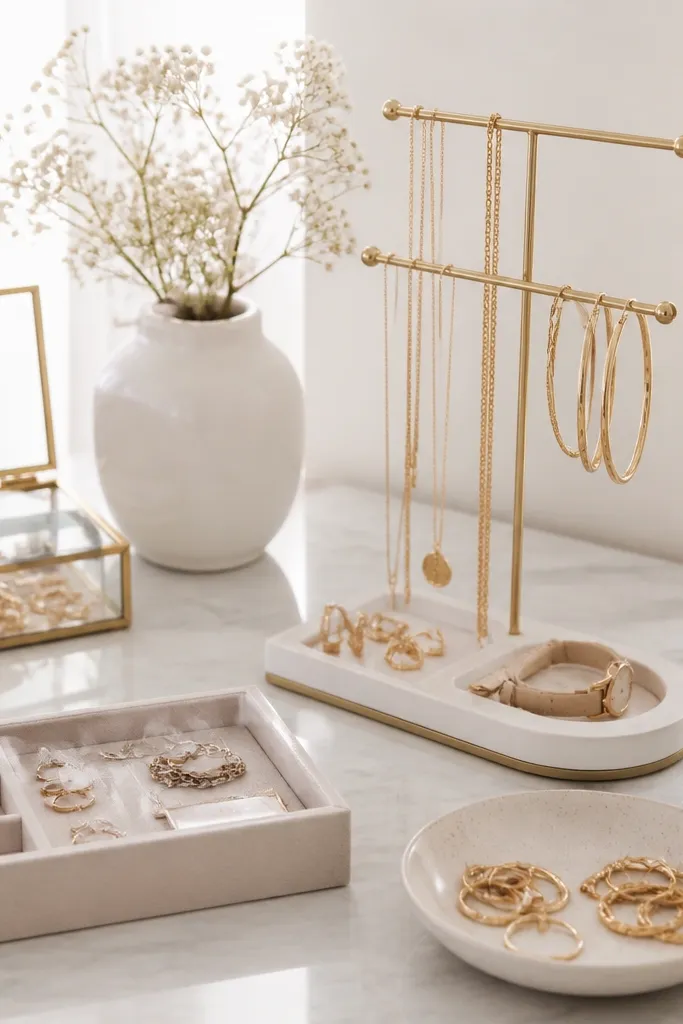
Bangles used to scatter across my dresser and roll off; a little bar stand corralled them. I slide each one on and grab one without knocking the rest. Such a small thing, but it stopped the daily bracelet avalanche.
I used a small stand with a horizontal bar on a weighted base and slid my bangles and watch onto it, grouped by color with the heaviest at the base. The habit: bracelets go back on the bar, not down on the dresser. A small dish at the base catches the rings and earrings I take off at the same moment, so everything from one 'undress' lands in one place.
Editor's noteGroup bangles by color as you load them; it looks deliberate and makes grabbing the one you want instant.
Skip thisDon’t pile all the bangles on one end; spread them so the stand stays balanced and doesn’t tip when you pull one off.
7. The Nightstand Catch-All
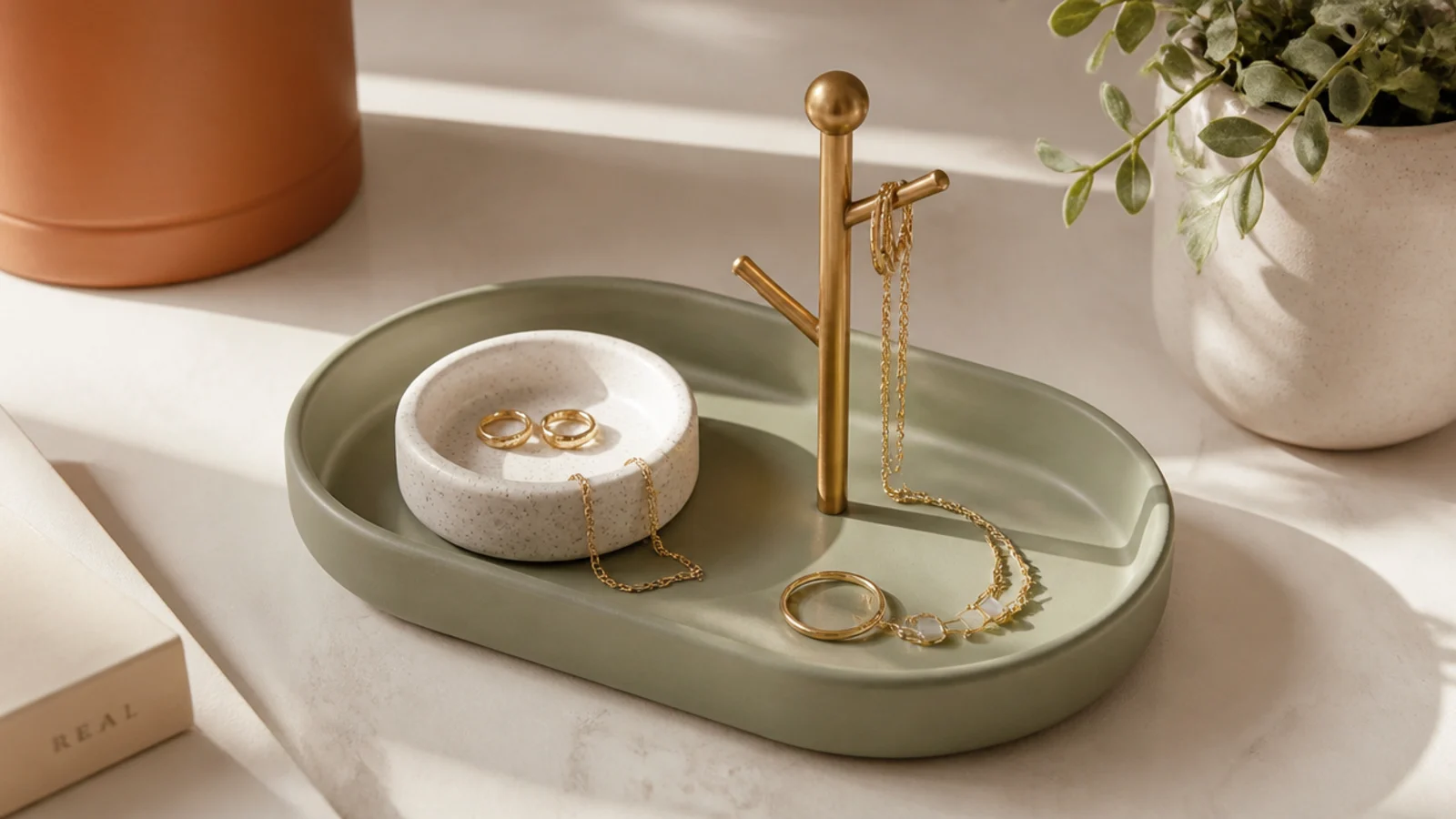
The last piece of my system is a small catch-all tray by the bed for whatever I’m still wearing at bedtime. It stops me dumping the day’s jewelry on the nightstand loose. Everything from the end of the day has one landing spot.
I set a small tray on the nightstand with a little ring dish and a tiny two-hook stand on it. Rings go in the dish, a necklace or bracelet loops on the hooks, earrings go in the dish corner. In the morning I either put them back on or return them to their proper spots. The habit: nothing gets set down loose on the nightstand — it all goes on the tray, then gets sorted.
Keep the tray small so it’s a catch-all, not a second storage pile; anything that stays more than a day goes to its real home.
Don’t let the nightstand tray become permanent storage; empty it back to the wall and drawer regularly or it becomes a new mess.