1. Charcoal fiberglass flush slab with satin clear topcoat
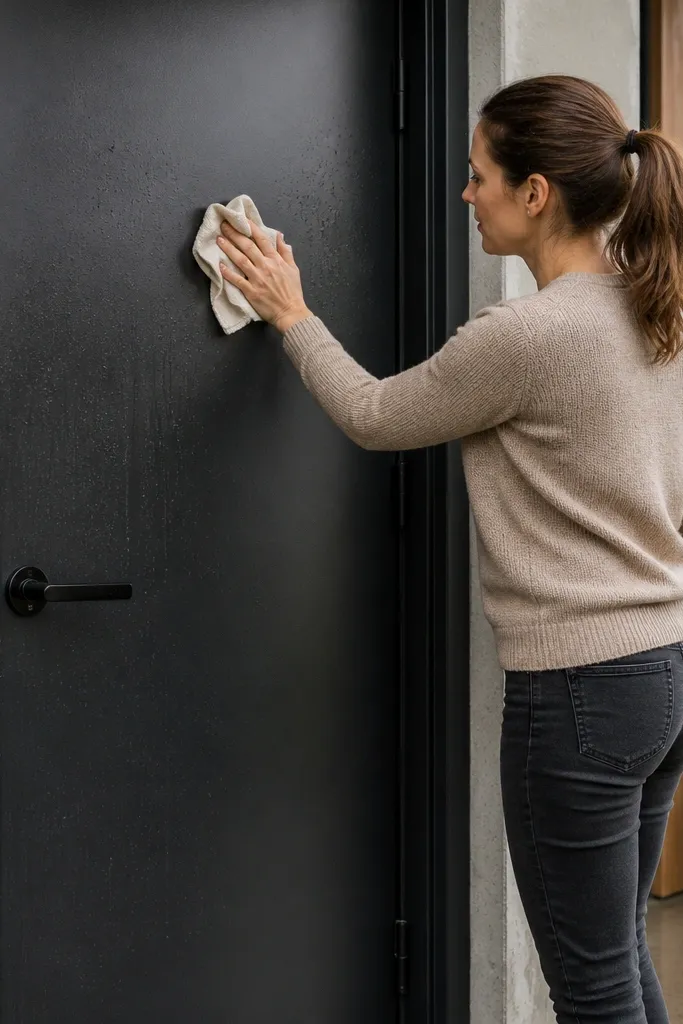
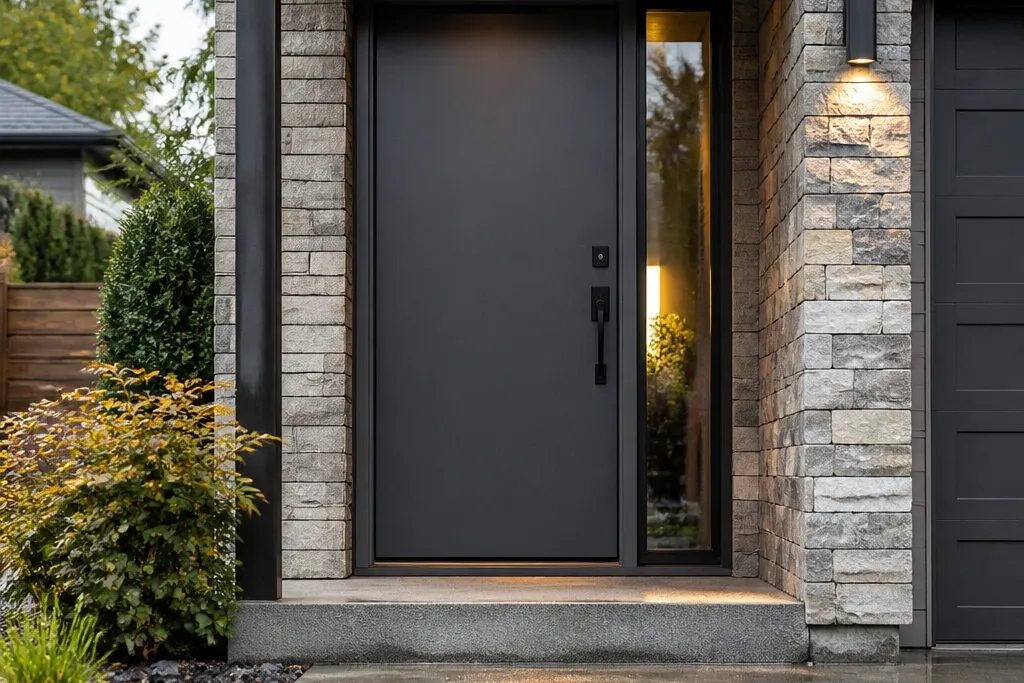
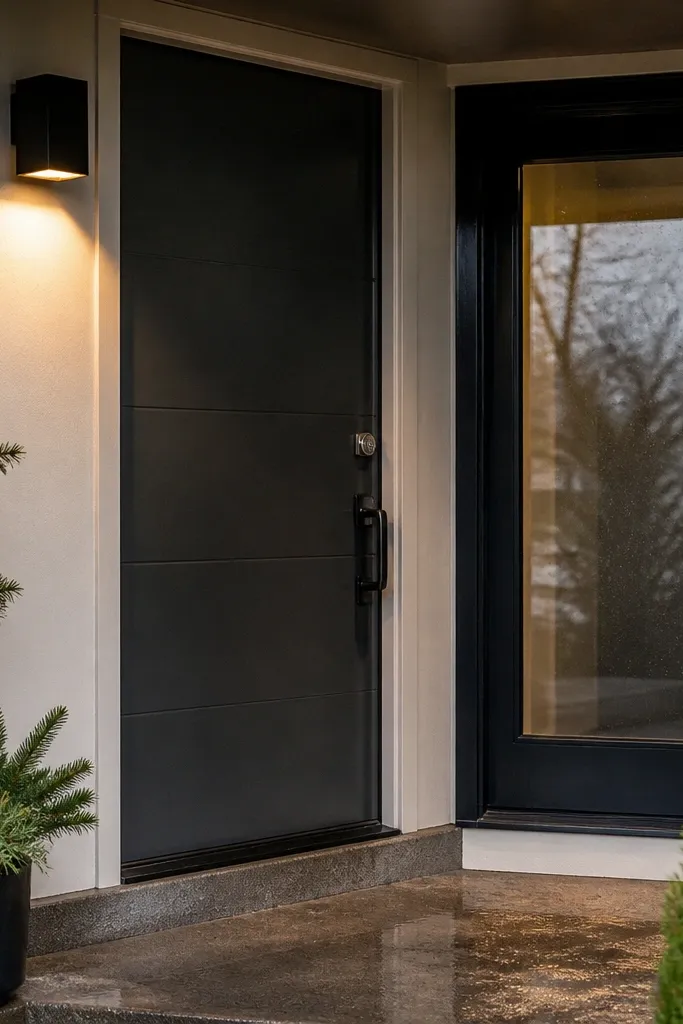
A charcoal fiberglass door with a flush surface is one of the cleanest-looking modern setups because it hides minor scuffs better than glossy finishes and it doesn’t warp like solid wood. Fiberglass also takes an exterior finish that handles sun exposure without turning blotchy. Keep the look modern by avoiding raised panels and sticking to a smooth slab with a simple edge profile. Pair it with satin hardware so the door looks consistent in both shade and direct light. This is a solid pick for House Main Door low-maintenance when your entry gets regular rain splash or dust.
Editor's noteUse painter’s tape to mask the slab edge while you seal the frame so caulk stays crisp and wipe-clean.
Start by choosing a fiberglass slab that’s exterior-rated and fits your rough opening with the right hinge mortises. Dry-fit the slab, then install new exterior weatherstripping if the frame is older or uneven. Apply a satin clear exterior topcoat only if the manufacturer’s system allows it; otherwise, stick to the factory finish and just protect the cut edges with exterior primer. Finally, mount hardware after the finish cures and run a bead of paintable exterior caulk around the frame gaps.
Skip thisDon’t use interior semi-gloss paint on a flush exterior slab — it chalks and shows water streaks.
2. Warm oak veneer door with graphite hardware
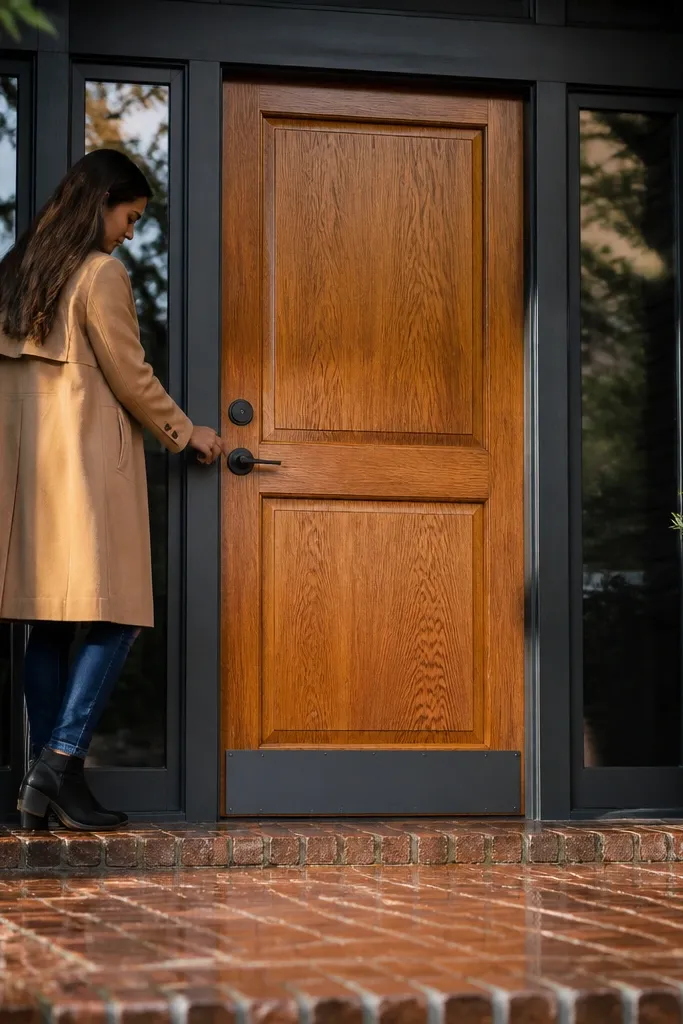
If you want modern but still warm, a warm oak veneer door with a clear, exterior-rated topcoat gives you that natural texture without the maintenance burden of raw wood. Veneer looks expensive up close, but the sealed finish keeps it from absorbing moisture and swelling. Graphite hardware keeps the palette modern and hides fingerprints better than shiny chrome. This combination also looks great with light stone or pale siding because the wood grain shows clearly without the entrance looking heavy. For House Main Door low-maintenance, the win is sealed veneer plus dark, easy-care metal.
Editor's noteClean with a damp microfiber cloth and avoid abrasive pads — oak veneer shows scratches fast.
Pick an exterior door with oak veneer that already has an exterior finish system; re-finishing thin veneer incorrectly is where people mess up. Install the door with fresh shims at hinge points so the slab closes evenly and doesn’t scrape the threshold. Use a UV-stable clear topcoat only if the door manufacturer specifies it; otherwise, protect any cut edges with exterior primer and matching topcoat. Mount graphite hardware after curing, then seal around the frame with a paintable exterior caulk.
Skip thisAvoid leaving veneer edges unsealed; water wicks into the edge band and ruins the look.
3. White matte painted steel door with black bar pull
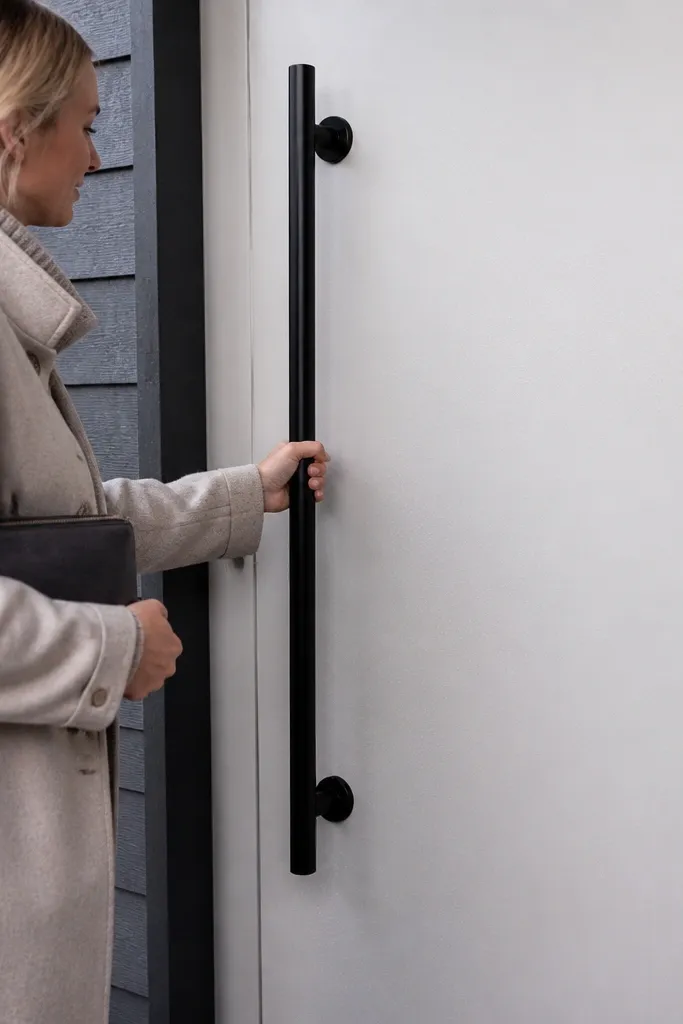
A white matte steel door is the “modern minimal” look that stays sharp because dirt contrast is predictable and the matte finish hides fine dust better than glossy. Steel is also stable in weather, so you don’t get the sag and misalignment that causes streaking. The key is using an exterior paint system built for UV and impact — cheap paint will chalk and leave gray smudges around the handle. Add a black bar pull or lever to keep the silhouette clean and architectural. This is an excellent House Main Door low-maintenance option when you want a bright entrance that doesn’t look dirty after a few weeks.
Editor's noteSpray-painting a door looks cleaner than rolling because you avoid roller texture catching dirt.
Choose an exterior steel door that’s already primed for exterior paint, or prime with an exterior bonding primer if required. Sand lightly where needed, then apply two topcoats of exterior paint with UV protection, keeping coats thin and even. Let the paint cure fully before mounting hardware so you don’t chip the finish. Install weatherstripping and caulk the perimeter after the door is hung and aligned.
Skip thisDon’t use satin or semi-gloss on a white exterior — it shows every water spot and fingerprint.
4. Black aluminum-clad door with clear sidelights
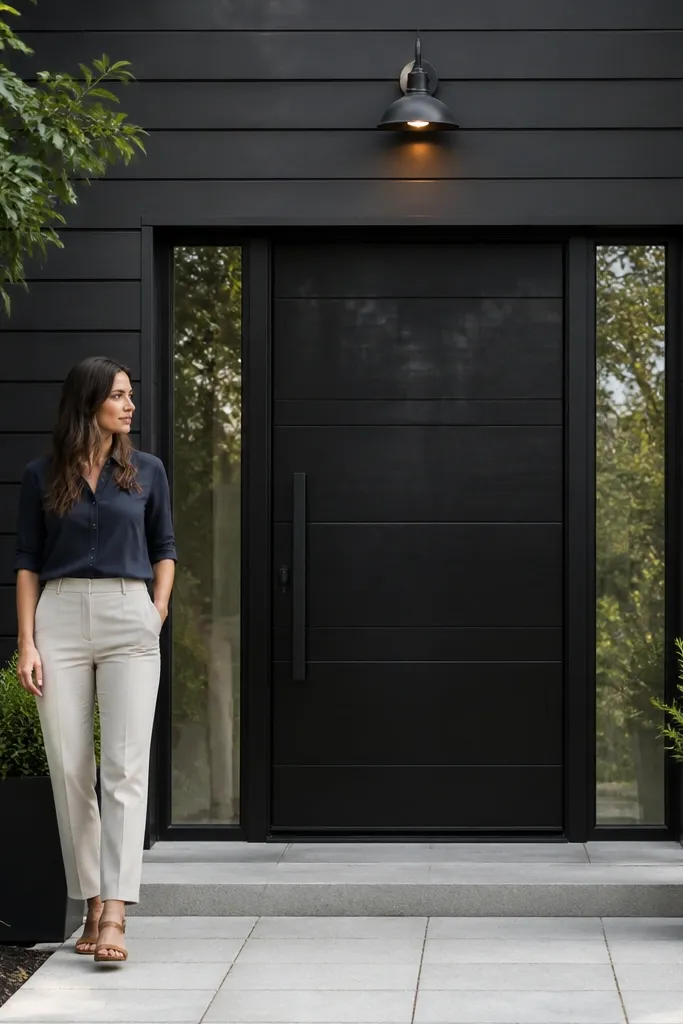
Aluminum-clad doors are low-maintenance because the outer skin doesn’t need re-staining and it resists dents better than painted wood. A black exterior finish reads modern and pairs with clear glass sidelights for a brighter entry without adding visual clutter. The trick is keeping the glass clean: use self-cleaning glass if you can, and keep the framing slim so it doesn’t collect grime. Black hardware and hinges finish the look and reduce the chance you’ll see rust or tarnish over time. This is a smart House Main Door low-maintenance setup when you want a modern frame and minimal upkeep.
Confirm the door is exterior-rated aluminum-clad and that the sidelights have proper seals. Install the door and sidelights as a single unit if possible; it reduces leak points and makes alignment easier. Use exterior shims at hinge and strike points, then fasten per the manufacturer’s instructions. Seal around the perimeter with exterior-rated sealant and install drip caps if the design includes exposed horizontal surfaces.
Choose hinges and strike plates in powder-coated black to avoid scuffed bare metal near the latch.
Don’t leave silicone-only seams unpainted if you want a clean modern line; use paintable exterior sealant where visible.
5. Smoked glass panel door in matte charcoal frame
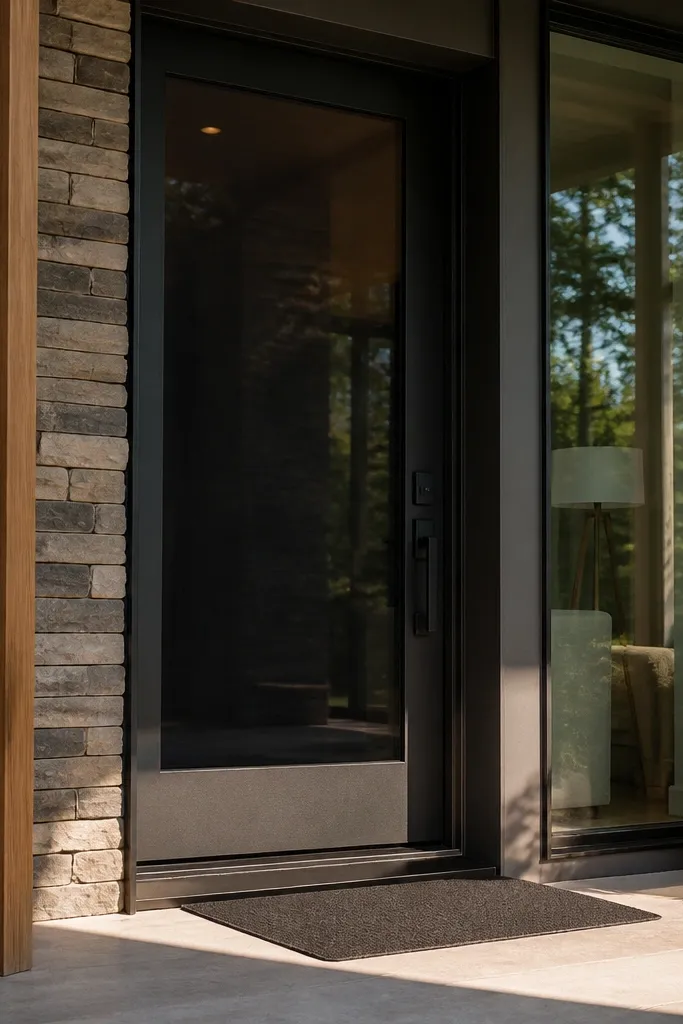
A smoked glass panel door gives you modern drama without adding maintenance headaches that come with carvings and deep recesses. The dark glass hides minor fingerprints and reduces the look of dust smears compared to clear glass, especially in bright sun. Pair it with a matte charcoal frame so the whole entry reads cohesive. If your porch gets a lot of glare, smoked glass also makes the interior feel more comfortable. For House Main Door low-maintenance, this idea wins because the door face stays visually clean and the glass is less likely to show every smudge.
Buy a pre-hung door or a door slab kit that includes sealed glass units so you don’t have to re-glaze. Dry-fit the glass panel to confirm the gasket seats evenly in the frame. Install the door, then check that the latch aligns without forcing the slab — misalignment makes glass hardware look crooked over time. Seal the exterior perimeter and use a glass-safe cleaner during the first month so you don’t haze the tint.
Use a lint-free microfiber cloth for glass; paper towels scratch smoked glass faster than you’d think.
Avoid clear glass with a glossy white frame if you hate fingerprints; it shows everything.
6. Two-tone entry door with light frame and dark slab
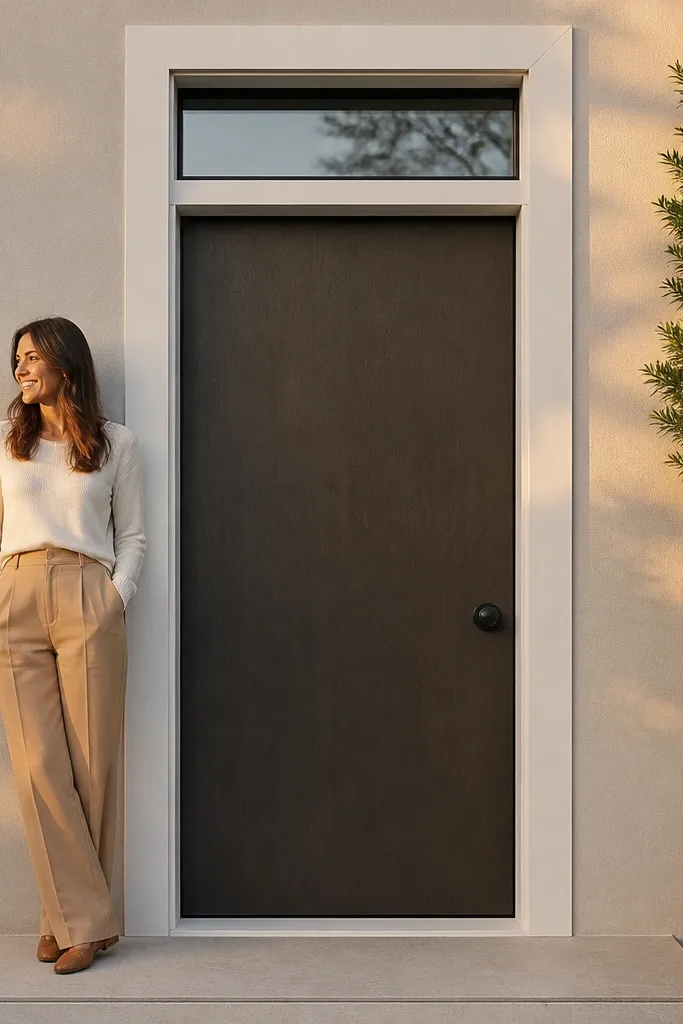
Two-tone doors look modern because they create a clean border line and make the door read like part of the architecture, not a standalone piece. Use a dark slab (charcoal or deep brown) paired with a light surround trim in matte white or warm off-white. The low-maintenance part comes from choosing finishes that wipe clean and hiding wear on the darker slab where scuffs happen. Keep hardware in a single finish so the contrast stays intentional. This approach is especially good if your siding or trim is already light and you want the entry to pop without adding complex details.
Start by painting or finishing the surround trim first so you get crisp edges around the door opening. Install the dark door slab and hang it level, then test the gap all around before final sealing. Caulk the perimeter with a paintable exterior sealant and mask both sides so the line stays straight. After curing, mount hardware and add a matching door knocker or peephole cover.
Pick one paint sheen for the whole entrance — matte on everything looks cleaner than mixing matte and satin.
Don’t mix warm and cool whites; the door surround will look dirty even when it’s clean.
7. Deep-brown fiberglass with vertical grain texture
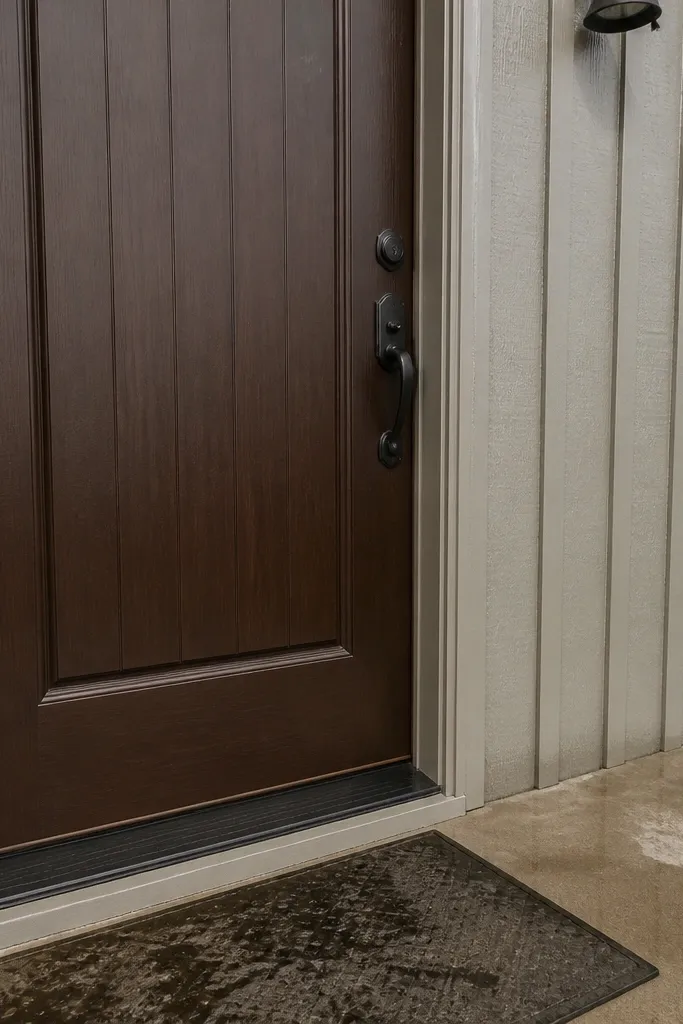
Vertical grain texture is a modern trick that adds visual depth while staying low-maintenance. Fiberglass can be finished to mimic wood grain, and the sealed surface resists moisture so you don’t get the grain raising that real wood can develop. Deep brown is also forgiving — it hides tiny scuffs around the handle and looks warm against gray stone or light cladding. Bronze hardware adds a slightly softer modern feel and reduces the look of water spotting compared to bright steel. This is a strong House Main Door low-maintenance choice when you want wood-like warmth without wood-like upkeep.
Editor's noteUse bronze hardware with a sealed finish; it stays consistent and doesn’t develop patchy tarnish.
Choose a fiberglass door with a subtle vertical grain emboss or printed texture and an exterior-rated finish system. Hang the door with new weatherstripping and verify the strike aligns with the latch so the door closes without rubbing. Touch up any cut edges with exterior primer and matching topcoat if the manufacturer allows it. Seal the frame perimeter and keep drainage paths clear so water doesn’t pool at the threshold.
Skip thisAvoid heavy gloss coatings on textured doors; glare makes texture look uneven and shows dirt streaks.
8. Matte black steel door with recessed panel-free geometry
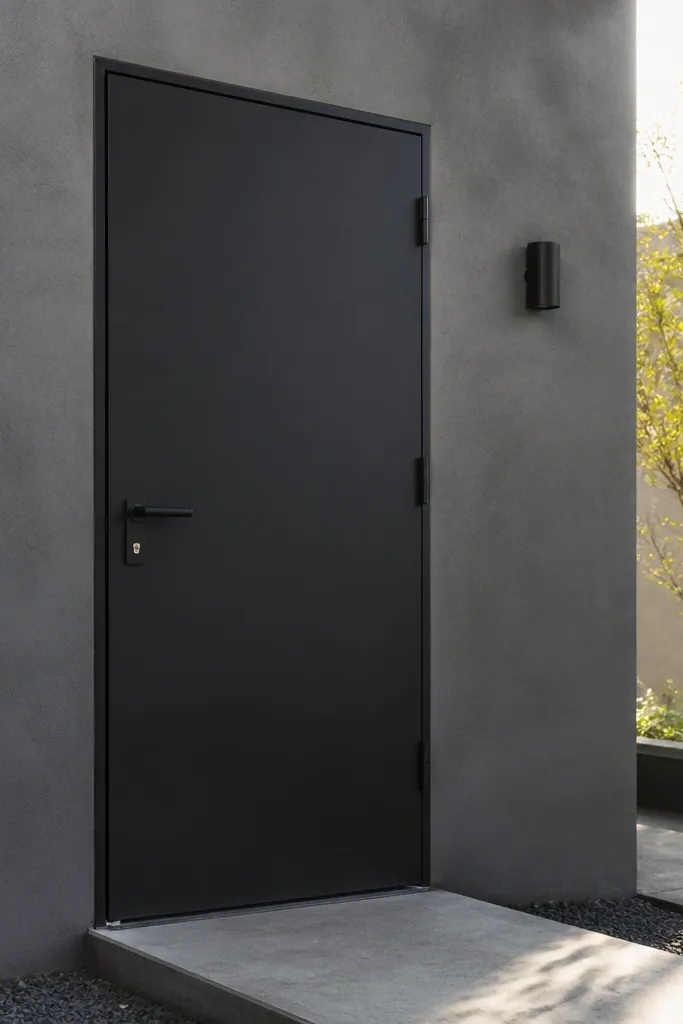
If you want the most modern, most low-maintenance face, go flat and keep the geometry simple. A matte black steel door reads architectural, and matte finishes hide hairline marks better than glossy ones. Flat faces also mean fewer ledges for dust and water to sit on. The look stays sharp because the door is visually uniform — there’s no panel shadowing to reveal grime. Pair it with simple black pull hardware and a slim address plaque so the entry looks designed, not decorated. This fits House Main Door low-maintenance when you want a door that looks “new” longer.
Buy a pre-finished exterior steel door in matte black so you don’t have to recoat it yourself. Install hinges and verify the door closes with even gaps, then replace weatherstripping if it’s compressed or cracked. Seal the perimeter with paintable exterior caulk and check that the threshold has a clean water-shed slope. After sealing, mount hardware and address plaque, then wipe away any caulk residue before it cures.
Use a magnetic door sweep or a tight bottom seal to reduce dust buildup at the threshold line.
Don’t add decorative grooves or deep trim on a matte black door; they collect grit and show it.
9. Natural stone veneer surround with flush door slab
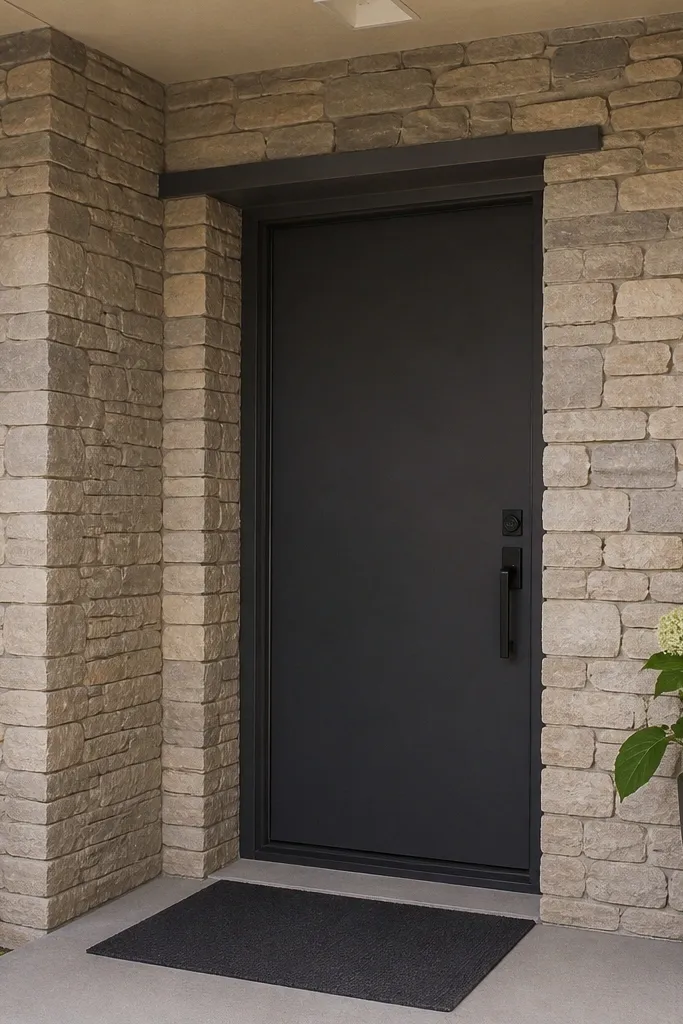
This one is about the surround. A stone veneer surround hides minor wall imperfections, looks high-end, and stays low-maintenance because stone doesn’t care about sunlight the way paint does. Pair it with a flush modern door slab in fiberglass or sealed wood so the door surface stays easy to wipe. The result is a clean, modern frame that photographs well because the texture reads dimensional even from a distance. Choose a door color that matches the undertone of your stone — cool gray stone likes charcoal, warm beige stone likes dark brown. For House Main Door low-maintenance, it’s a smart split: easy door care, durable surround.
Install stone veneer on properly prepped sheathing with exterior-rated thinset and the correct lath where required. Leave expansion gaps where the stone meets trim, then seal the visible stone faces with a breathable masonry sealer. Hang your flush door and set the frame so the door gap sits evenly inside the stone opening. Finally, caulk the trim edges and apply sealant only where water can reach — keep it off the stone face.
Use a penetrating sealer made for your stone type so water beads instead of soaking in.
Don’t skip the breathable sealer — unsealed veneer can stain around leaks and it’s hard to clean later.
10. Light gray painted fiberglass with hidden hinge look
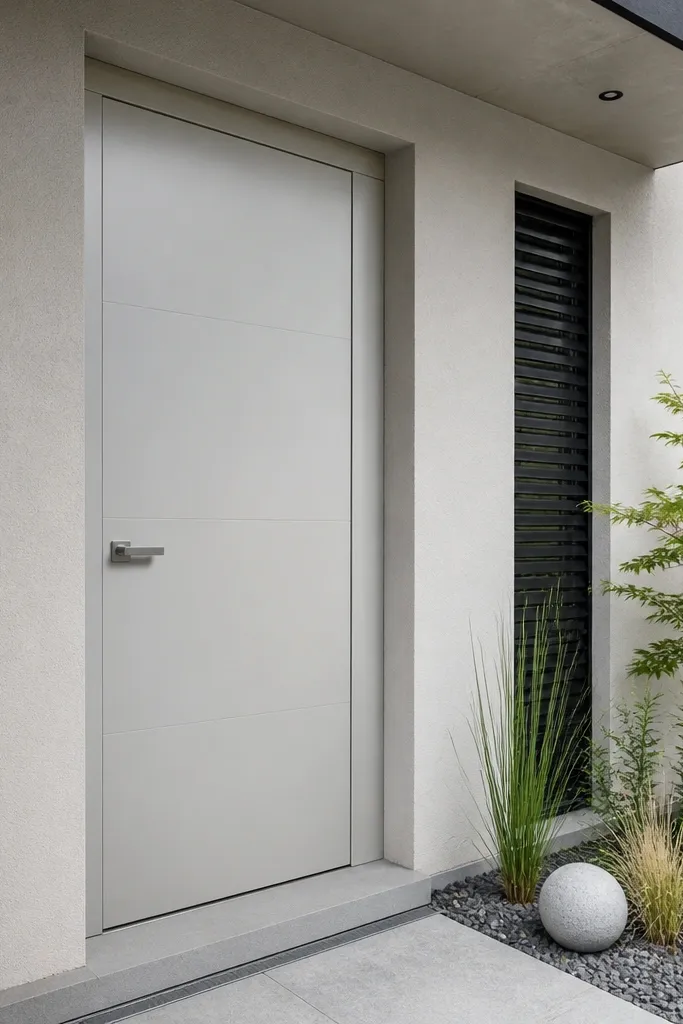
Hidden hinge look is modern, clean, and it reduces visible hardware that can rust or tarnish. A light gray painted fiberglass door keeps the entrance bright and makes the surrounding landscaping show up better. The low-maintenance win is fiberglass stability plus hardware that stays protected inside the hinge cover. Use a light gray that’s slightly cool, not creamy, so it doesn’t look dingy next to warm siding. Keep the knob finish consistent with your outdoor lighting so the whole entry reads intentional.
Editor's noteBefore painting, confirm the door’s hinge-side clearance so the concealed covers sit flush and don’t catch dirt.
Choose a fiberglass door designed for concealed hinges or one that’s compatible with a concealed hinge kit. Hang the door using the hinge jig and set the reveal width evenly on all sides. Apply exterior paint systems in two coats, and seal cut edges if any modifications are required. After paint cures, install concealed hinge covers and mount the strike plate with correct alignment.
Skip thisAvoid a light door with glossy paint; it shows every water spot and smears around the handle.
11. Matte white door with horizontal rib texture
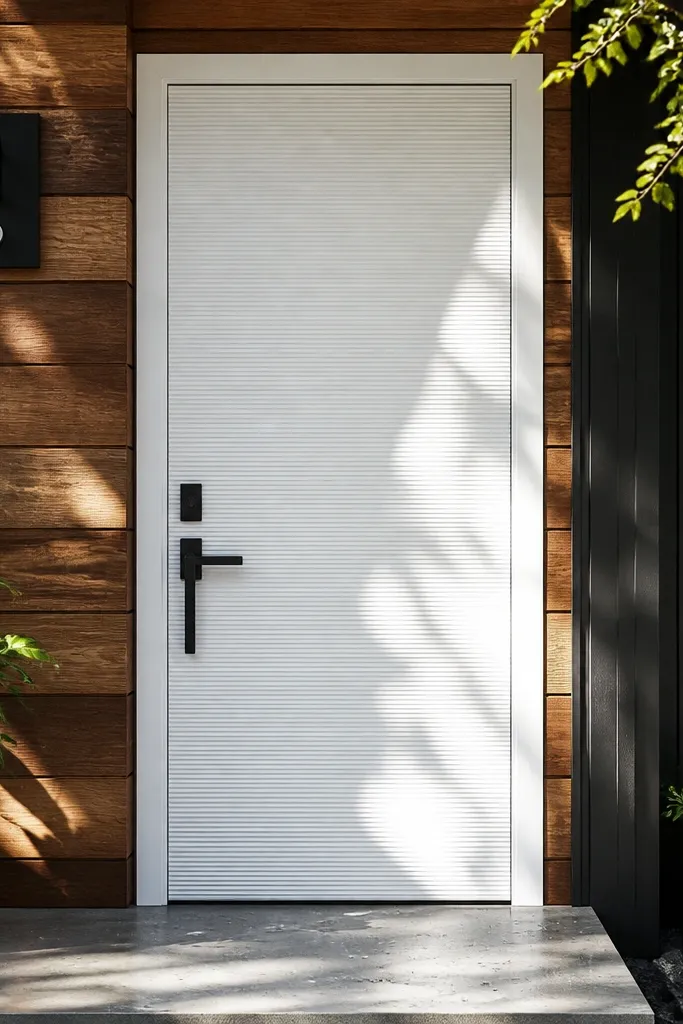
Horizontal rib texture gives a modern rhythm without the mess of deep grooves. Keep the ribs shallow so water doesn’t pool in the valleys, and use a matte exterior finish that resists UV fading. Matte white can look pristine when the door is sealed well and the threshold is tight. Add black hardware and a black address light to sharpen the contrast. This idea works especially well on entries with black rails or modern sconces. It’s House Main Door low-maintenance because the texture adds style while the finish still cleans with a simple wipe.
Editor's noteUse a soft brush attachment on a vacuum when dust collects in texture — it prevents scratches.
Pick an exterior door slab with shallow horizontal ribbing and a factory exterior finish system. Install it with fresh weatherstripping and ensure the bottom seal contacts the threshold evenly. Seal the frame perimeter and check the door closes without dragging — dragging scuffs rib edges and makes them look dirty. Mount hardware after the finish cures, then clean the ribs with a damp microfiber to remove any installation dust.
Skip thisDon’t pick deep ribbing on a white door; it traps grime and looks gray fast.
12. Charcoal door with vertical micro-slat aluminum insert
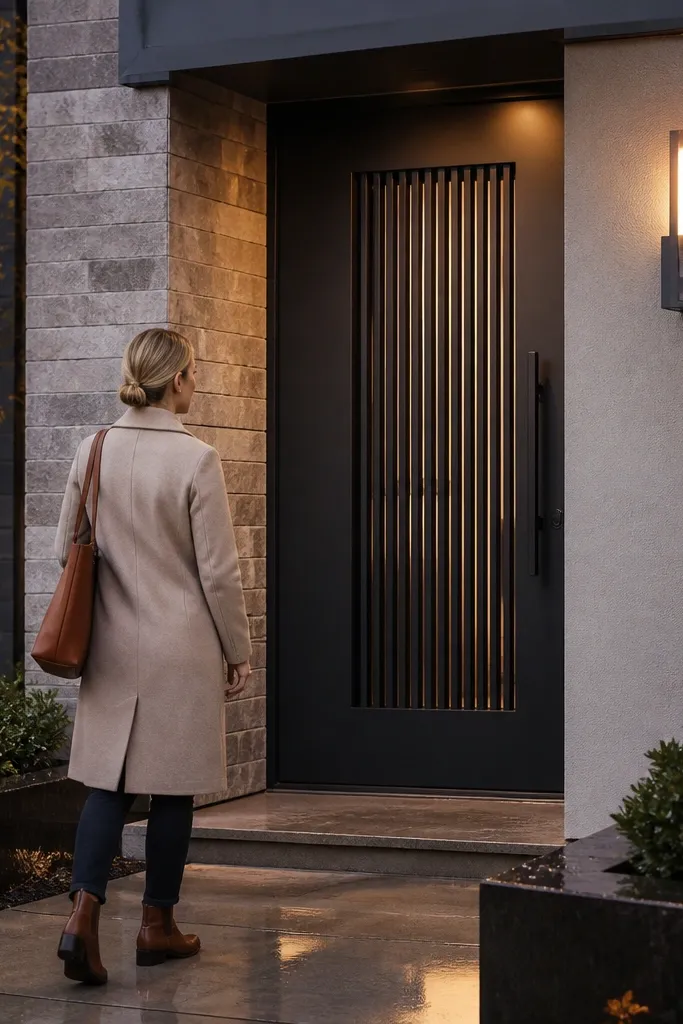
Micro-slat aluminum inserts look modern and do something practical: they block direct visibility while keeping the entry feeling open. Aluminum is low-maintenance — it wipes clean and doesn’t rot. Choose vertical slats with a dark powder coat so the door stays uniform and scuffs are less obvious. Bronze hardware adds warmth and keeps the look from feeling too industrial. This is a great House Main Door low-maintenance idea when you want privacy without installing bulky curtains or heavy patterned glass.
Editor's noteUse a silicone-free exterior sealant where the insert meets the door skin so future adjustments are easier.
Buy a door slab or pre-hung door that includes an aluminum insert kit with sealed edges. Dry-fit the insert panels and confirm the gasket seats evenly to avoid water intrusion. Install the door, then seal the perimeter and any fastener holes with exterior-rated sealant. After curing, mount hardware and test the latch pull so the insert area doesn’t flex the slab when closed.
Skip thisAvoid unsealed aluminum edges; water creeping into the seam will show as dark streaking.
13. Rusted-iron look door with clear satin varnish top layer
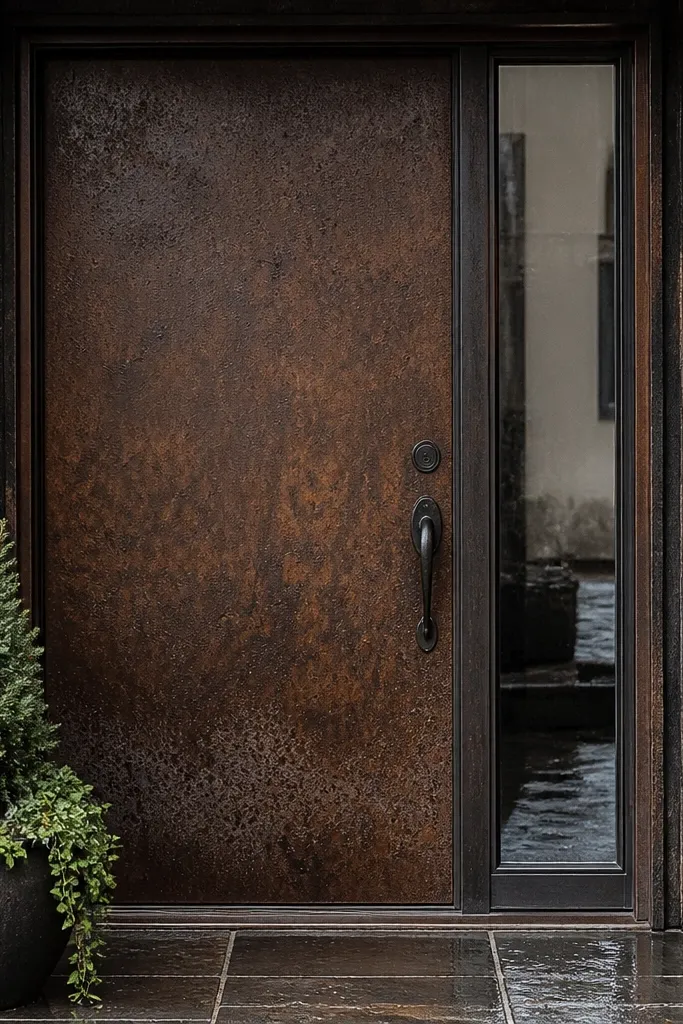
The “rusted iron” aesthetic can be low-maintenance if you treat it like a finish system, not like raw metal. A faux rust texture with a clear satin exterior topcoat gives you that lived-in modern look while protecting from flaking and water staining. The door surface still wipes clean, and the clear coat keeps the color consistent in sun. Pair with black hardware and a simple peephole plate so the texture stays the hero. This is a House Main Door low-maintenance option for people who want character but don’t want to re-finish every year.
Editor's noteMask hardware mounting points carefully — clear coats can look uneven where you drill without clean edges.
Choose a door or door skin that already has a faux rust finish designed for exterior use with a protective clear top layer. If you’re applying the look yourself, follow the system’s exact cure times between layers and only use exterior-rated clear satin over the textured base. Hang the door and seal the frame perimeter before installing hardware so you don’t trap sealant under plates. After everything cures, clean with a non-abrasive cleaner and check for any spots where water can reach unsealed edges.
Skip thisDon’t leave the faux rust unsealed; water will lift pigment and leave patchy spots.
14. Matte teak stain on composite door with black strike plate
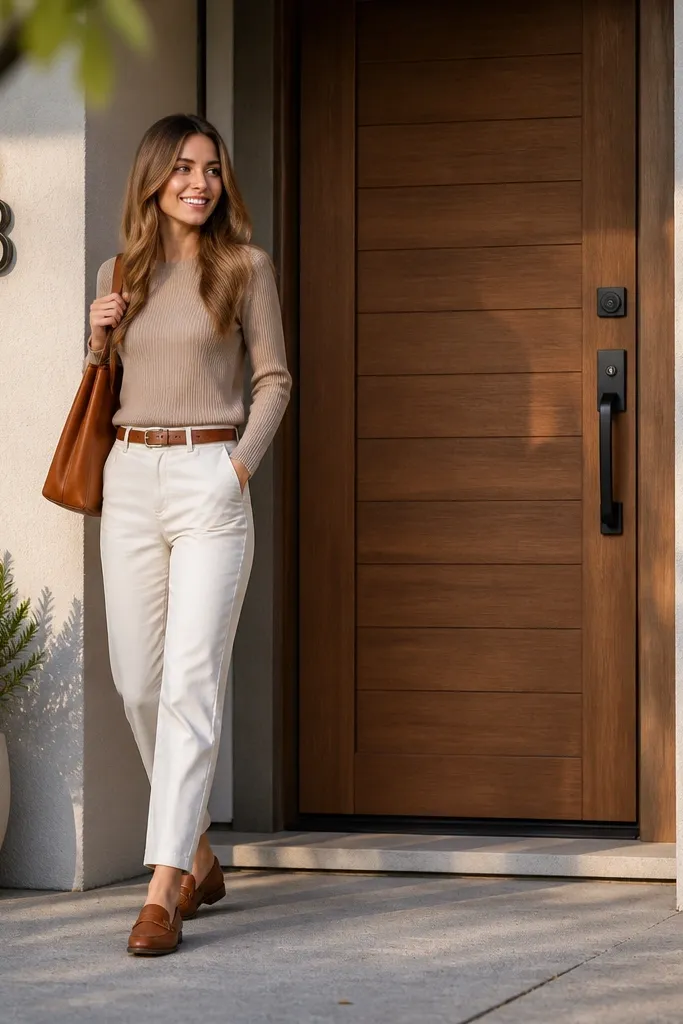
A teak-tone composite door gives you wood color without the wood problems. Composite doesn’t swell like real wood, and a matte exterior stain tone stays visually calm instead of showing glare or scratches. Teak color also hides small scuffs better than very light stains. Pair it with black strike plate and matching lever so the latch area looks sharp. This setup works in modern entries with warm gray siding, tan stone, or beige brick. For House Main Door low-maintenance, the combination is stable substrate plus a finish that doesn’t feel high-maintenance to clean.
Select a composite door with an exterior stain-ready surface and a manufacturer-recommended stain system. Prep the surface by scuffing lightly and wiping clean, then apply stain in even coats and let it dry between coats as directed. Seal with an exterior matte topcoat if the stain system requires it, especially on sun-facing doors. Install the door, then seal around the frame and mount hardware using corrosion-resistant screws.
Choose matte sheen for the latch side too; shiny areas show fingerprints and water marks.
Avoid high-gloss clear over teak tones; it highlights every micro-scratch.
15. Slim framed glass door with black gasket lines
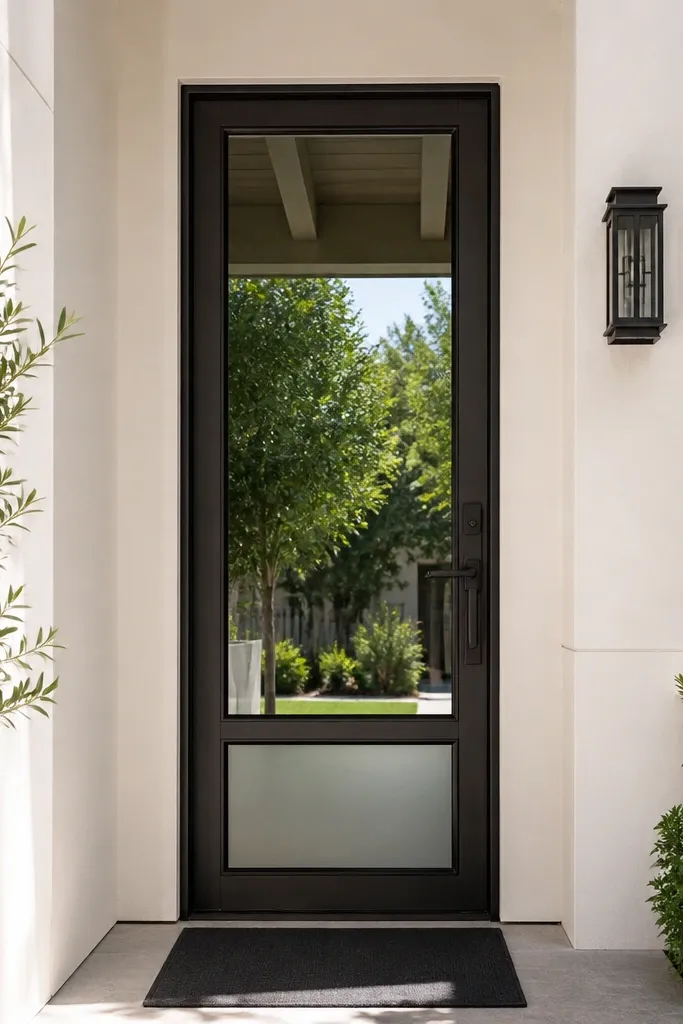
A slim framed glass door looks modern because it makes the entry feel light, and it’s photogenic because the lines stay crisp. For low-maintenance, the secret is the gasket and frame finish: black gaskets and powder-coated frames keep water spots less noticeable than bare metal. Use privacy glass if you don’t want to see every finger mark, but still keep the door bright. Choose hardware that matches the frame so the door reads as one design. This idea is House Main Door low-maintenance when you want modern transparency without constant cleaning attention.
Editor's noteWipe gaskets during routine cleaning; grime builds where seals meet the frame and looks messy fast.
Pick a pre-hung glass door unit with sealed glazing and exterior-rated gaskets. Confirm the glass type and edge sealing so you don’t end up with fogging later. Install the unit plumb and level, then seal the exterior perimeter with paintable exterior sealant. Mount hardware after sealant cures and test the door swing to ensure gaskets aren’t being pinched.
Skip thisDon’t use cheap clear glass if you hate cleaning; it shows smudges and streaks.
16. Gray-green door with black push plate for low-touch
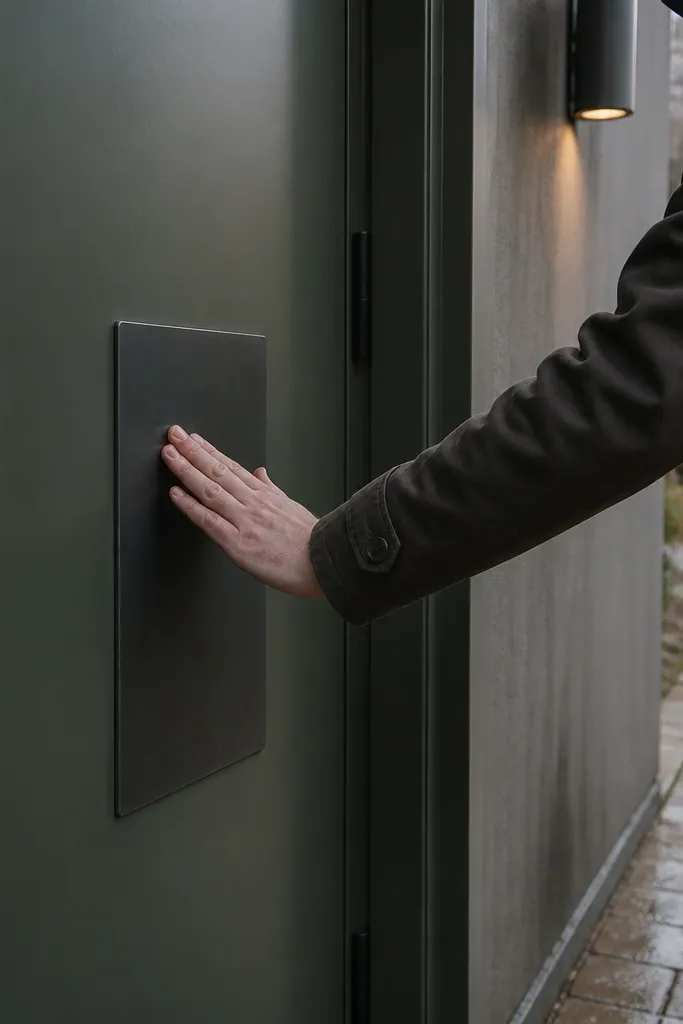
Gray-green is a modern color that hides dust and minor scuffs better than pure white and it looks great with black lighting. Add a black push plate for the hand contact area so wear concentrates on one replaceable piece instead of the whole slab finish. The door stays clean-looking because the push plate is easy to wipe and it keeps the finish from getting polished by repeated contact. Choose an exterior paint or coating made for UV so the gray-green doesn’t shift to muddy tones. This is a House Main Door low-maintenance choice when your entry gets heavy daily use.
Editor's noteUse screws with exterior corrosion resistance so the plate stays tight and doesn’t stain the paint.
Select a door color system that’s exterior-rated and apply two coats with adequate cure time. Install the push plate using template placement so it sits level and doesn’t drift on the door face. Hang the door and seal the frame perimeter before mounting the plate if you want cleaner edges. After everything cures, apply a thin protective wax or spray sealant only if the coating system allows it.
Skip thisDon’t mount the push plate before the paint fully cures; it can chip around screw holes.
17. Matte bronze door with vertical wood slats and sealed gaps
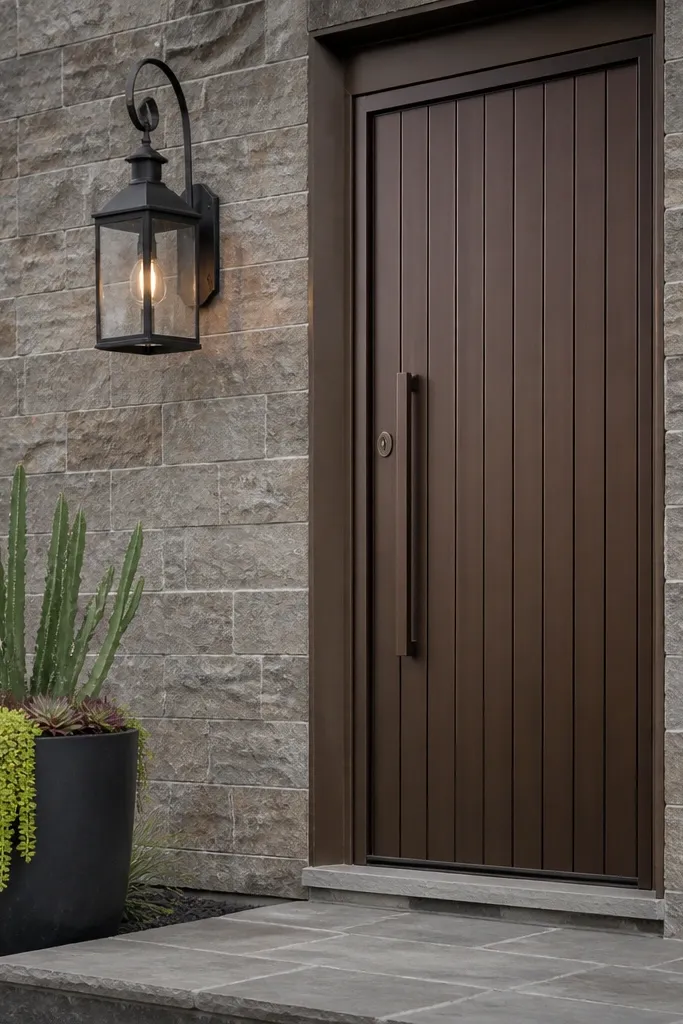
Vertical slats add modern texture and they can still be low-maintenance if the slats and the gaps are sealed correctly. A matte bronze exterior frame gives you a metal look that hides scratches, and sealed slats keep water from soaking in and leaving dark streaks. Slats also reduce the look of fingerprints compared to smooth glossy surfaces. Pair with warm lighting — matte bronze and warm LEDs look cohesive and hide minor wall grime around the entry. For House Main Door low-maintenance, the win is texture that reads clean plus a finish system that blocks moisture.
Editor's noteSeal the bottom edge of each slat area; it’s where water collects and where slat finishes fail first.
Use a pre-finished exterior door with slats or build with sealed exterior slats and a frame designed for slat mounting. Ensure each slat is set with exterior-rated spacers and that the joint gaps are sealed with a paintable exterior sealant. Install the door with new weatherstripping and seal the perimeter. Mount hardware and check that the door closes without rubbing slat edges — rubbing creates visible scuff lines.
Skip thisAvoid open, unsealed slat gaps; they trap water and dirt and turn into black lines.
18. Dark walnut stain exterior door with aluminum surround trim
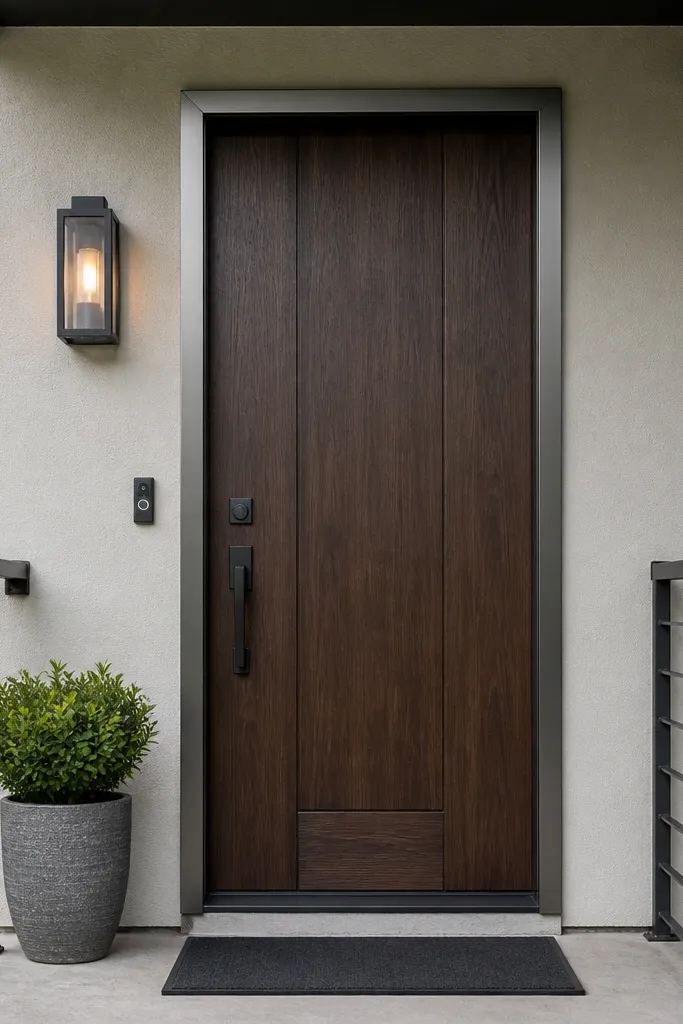
Dark walnut stain looks modern when you pair it with clean aluminum surround trim. The aluminum trim is low-maintenance and it keeps the frame line crisp even after seasons of rain. The door itself should be a sealed exterior wood or composite that’s stable — walnut color is forgiving, and sealed surfaces wipe clean. Black hardware ties the walnut to the aluminum and keeps the palette sharp. This setup works well when your entry has modern windows, aluminum railings, or metal accents. For House Main Door low-maintenance, it’s a smart combo: durable surround + sealed door face.
Editor's noteUse a thin bead of sealant at the aluminum-to-frame joint so water can’t creep behind the trim.
Install aluminum surround trim around the opening with exterior fasteners and proper flashing/drip edges where water can run. Hang the walnut-toned door and keep the reveal consistent so the aluminum line looks intentional. Seal the perimeter with exterior-rated sealant and ensure water sheds away from the wood edge. If you’re staining a door yourself, use an exterior stain system with a UV topcoat and let it cure fully before hardware installation.
Skip thisDon’t rely on paint alone at the wood edge where aluminum meets; moisture will find the seam.
19. Satin black door with vertical slotted mail integration
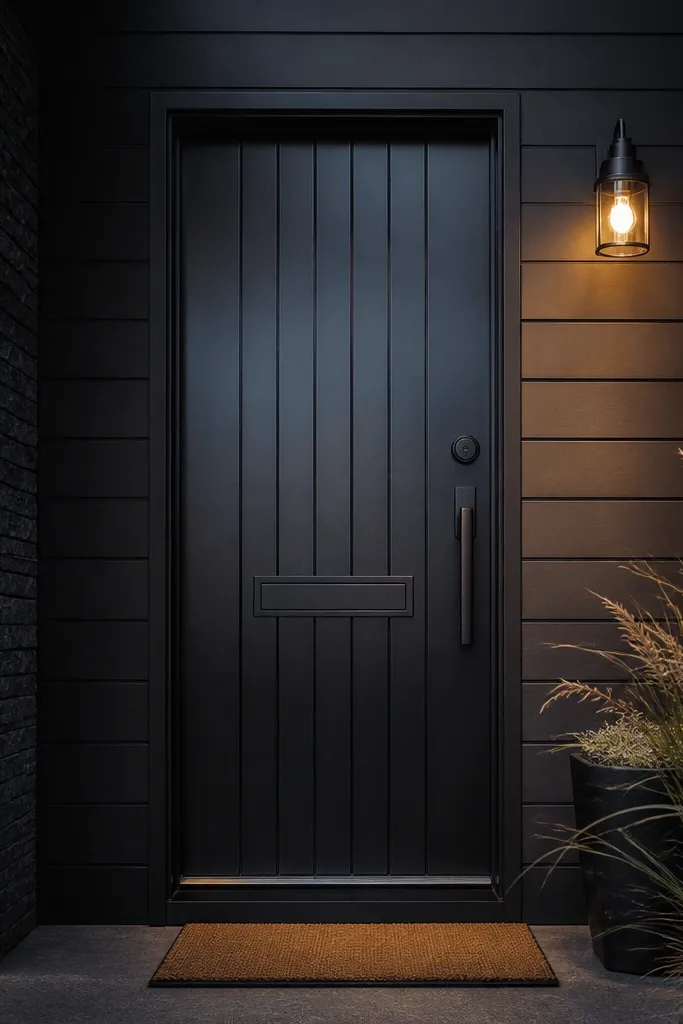
A built-in mail slot and clean door face make the entry feel modern and tidy because you avoid the clutter of a separate wall mailbox. For low-maintenance, a metal mail slot in the door keeps the outside surface simple and reduces surfaces where grime builds. Choose satin black for the door and slot so they match and scuffs don’t stand out. Keep the slot opening design simple — fewer ledges means less paper debris stuck in corners. This is House Main Door low-maintenance when the goal is a door that stays neat in daily life.
Editor's noteUse an exterior mail slot flap with a spring or magnet so it closes fully and keeps drafts from pushing dust inside.
Select a door slab or pre-hung door that has a mail slot cutout location or is compatible with a retrofit kit. Measure the slot opening carefully and drill only where the kit specifies to avoid cracking the skin. Install the mail slot with gasket and exterior screws so water doesn’t enter around the edges. Hang the door, seal the perimeter, then mount hardware and test the slot door for smooth operation.
Skip thisAvoid mail slots with complex internal folds; they snag paper and look messy fast.
20. Two-layer door look with thin vertical accent strips
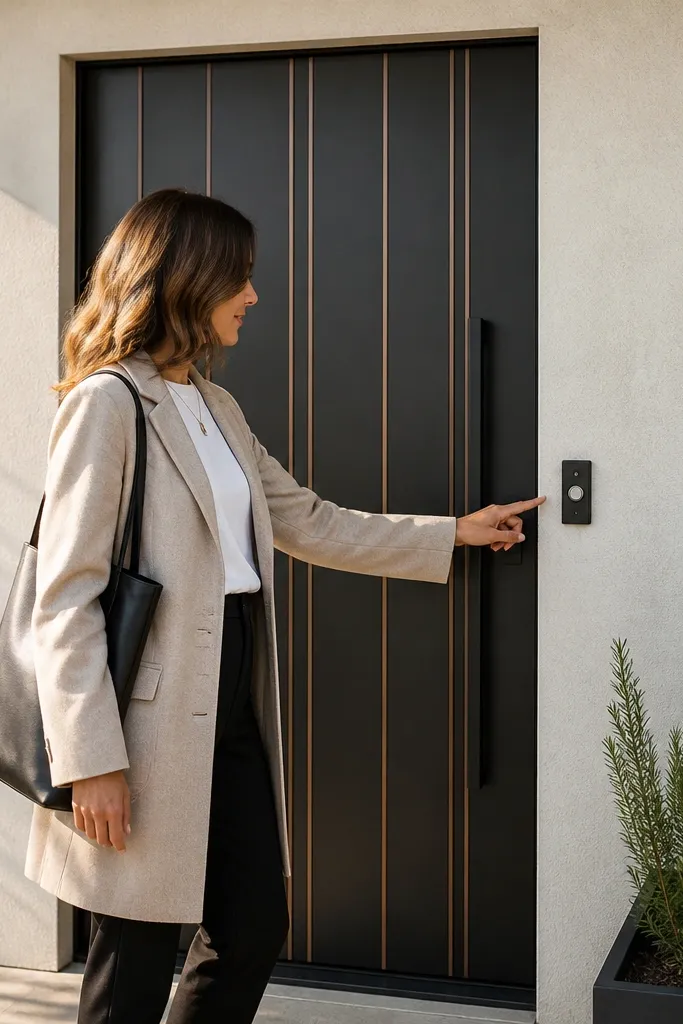
You can get that expensive modern “layered” look by using a dark door base with thin vertical accent strips instead of deep panels. Keep the strips flush or nearly flush so they don’t create grime-catching pockets. Use a durable base finish like powder-coated metal or exterior fiberglass paint, then add accent strips in a matching or contrasting metal finish. This style looks sharp in photos because the vertical lines elongate the entrance and the door face stays simple. For House Main Door low-maintenance, it’s a good middle ground: modern texture without the upkeep of carved details.
Editor's notePre-snap a straight reference line on the door edge so your strips stay parallel even if the frame is slightly off.
Start with a smooth exterior door slab in a durable finish. Mark strip locations using a level and tape lines, then mount thin aluminum or metal strips using exterior-rated screws and spacers if needed to prevent water trapping. Seal edges around the strip perimeter with paintable exterior sealant if the strips create a seam. After curing, install hardware and seal the frame perimeter so water doesn’t get behind the door skin.
Skip thisDon’t glue strips to exterior door skins; glue seams fail and show up as bubbles.
21. Matte charcoal door with oversized address light and clean framing
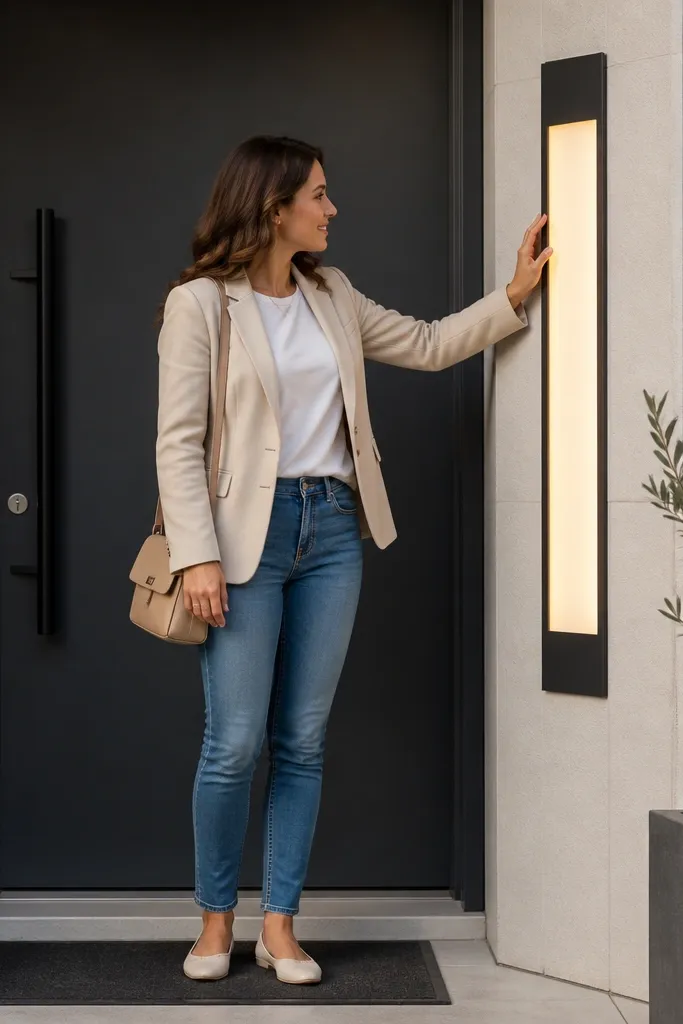
This idea is about making the entrance look finished without adding maintenance. An oversized address light positioned near eye level gives you a modern focal point and it hides small imperfections around the door face because the light draws attention. Choose a matte charcoal door so the hardware and light finishes blend and don’t reflect harsh glare. Keep trim minimal and use a consistent frame color so the whole entry reads cohesive. For House Main Door low-maintenance, the design stays clean because it leans on lighting and simple surfaces instead of textured decorations that collect grime.
Editor's noteChoose a fixture with a sealed lens so bugs and dust don’t build inside the light housing.
Hang the door first and confirm the height of the knob and lock so your lighting lines up with daily use. Install an exterior-rated wall sconce or address light with a weatherproof junction box and correct wire gauge. Use a mounting plate to keep the fixture aligned, then seal around the fixture base with exterior-rated sealant. Finish by wiping the door surface and polishing hardware lightly after the fixture is installed.
Skip thisAvoid decorative address numbers mounted directly on glossy paint; water streaks and grime show around the base.
22. Light concrete-look door with sealed microtexture
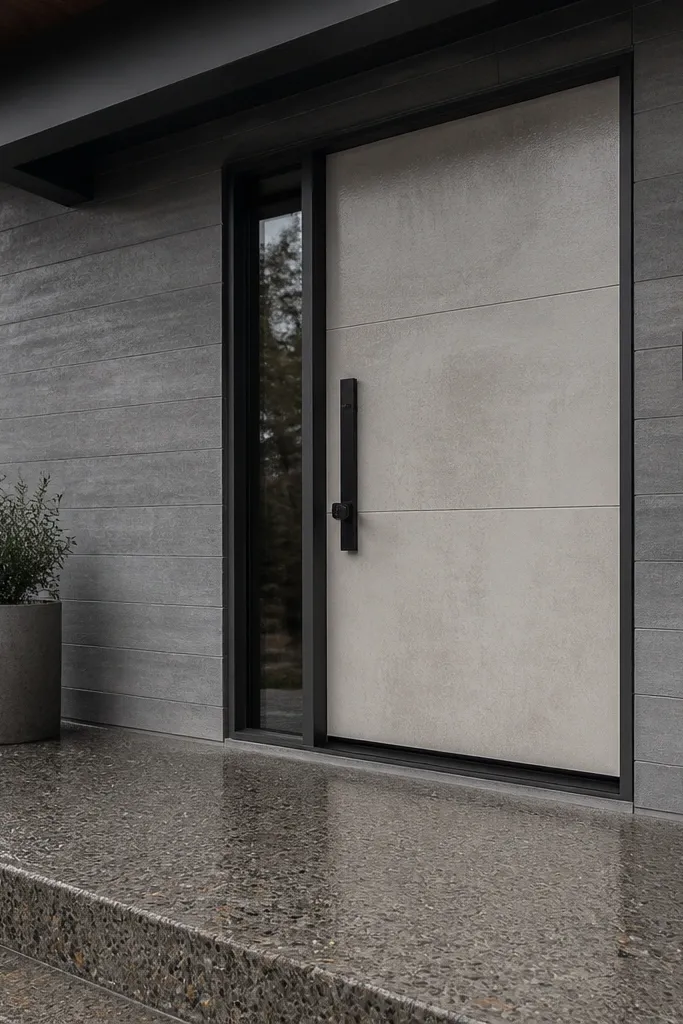
A light concrete-look door gives you modern texture without the maintenance of real concrete. The key is that the surface must be sealed microtexture — it should wipe like paint, not absorb like raw cement. When done right, it looks industrial and clean, and it hides minor scuffs because the texture is even. Black hardware and a simple black door pull keep the palette tight. This is a House Main Door low-maintenance option for entries with modern planters, gray stone, or smooth stucco walls.
Editor's noteTest a small hidden spot for cleaner reaction; some cleaners leave a haze on sealed textures.
Use an exterior door finish kit or a door product that has a factory-sealed concrete-look coating. If you’re coating yourself, apply the microtexture system and then the manufacturer’s specified top sealer; don’t improvise with indoor sealers. Let the coating cure fully before mounting hardware and after installation seal the perimeter gaps. Clean the surface with pH-neutral cleaner so you don’t dull the sealer.
Skip thisDon’t use unsealed concrete-look coatings outdoors — they stain and get patchy fast.
23. Matte black door with vertical channel drainage groove
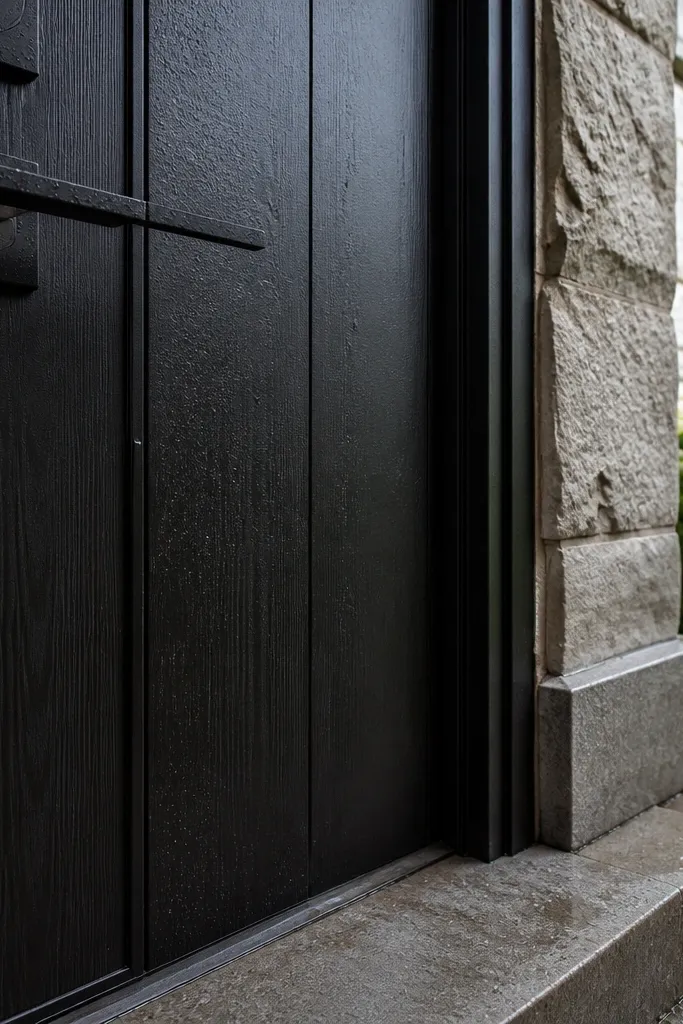
A door with a subtle vertical channel drainage groove helps water move instead of sitting on the face. That matters for low-maintenance because standing water creates streaks and spotty grime that you’ll see every time the sun hits the door. Keep the color matte black and pair it with dark hardware so the entry looks consistent even after storms. This style stays photogenic because the surface remains visually uniform — fewer water trails. It’s a practical modern choice when your entry is sheltered but still gets splash from gutters or sprinklers.
Choose an exterior door design that includes drainage channels molded or routed into the door skin. Install the door with proper shimming so the groove line stays vertical and the door closes evenly. Seal the frame perimeter and bottom threshold so water doesn’t bypass the drainage path. After hardware install, run a quick water test from a hose at low pressure and watch for streaking — adjust if needed before the sealant fully cures.
Use a threshold with a tight bottom seal; the best drainage groove still loses if water gets under the door.
Avoid placing the door where it constantly pools against the threshold — no groove beats standing water.
24. Bronze-clad door with warm white trim and minimal glazing
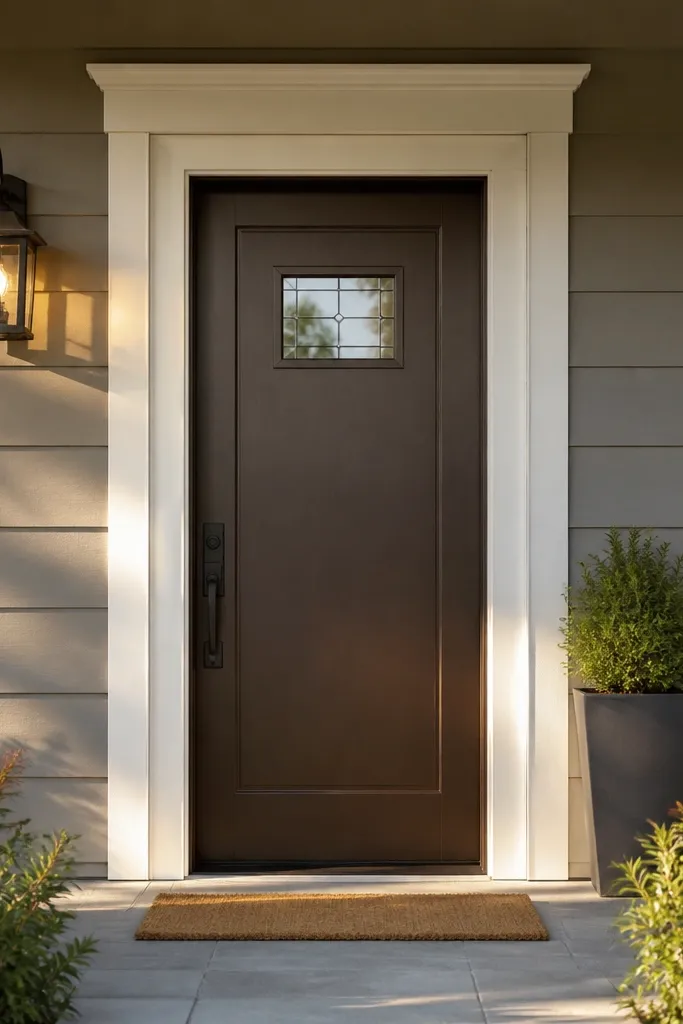
Bronze-clad doors look modern and they age well because the finish is made for outdoor exposure. A warm white trim around the door keeps the entrance bright and makes the bronze read warmer instead of muddy. Add a small glazed panel near the top for light without turning the whole door into a fingerprint magnet. Minimal glazing also means fewer cleaning targets and fewer visible streaks after rain. This is House Main Door low-maintenance when you want a warm, high-contrast entry that still stays easy to keep looking crisp.
Choose a bronze-clad exterior door with minimal glazing and sealed units. Install the door and trim, then seal all perimeter joints with paintable exterior sealant so water can’t creep behind. If you’re painting the trim, use exterior primer and two topcoats in warm white with a matte or eggshell sheen. Mount hardware after curing and wipe the glazed panel with glass-safe cleaner only.
Keep the glazed panel clean with a soft microfiber every couple weeks; small panels show streaks quickly.
Don’t use cool stark white next to bronze; it makes the bronze look dull and gray.
25. Matte dark green door with brass toned strike accents
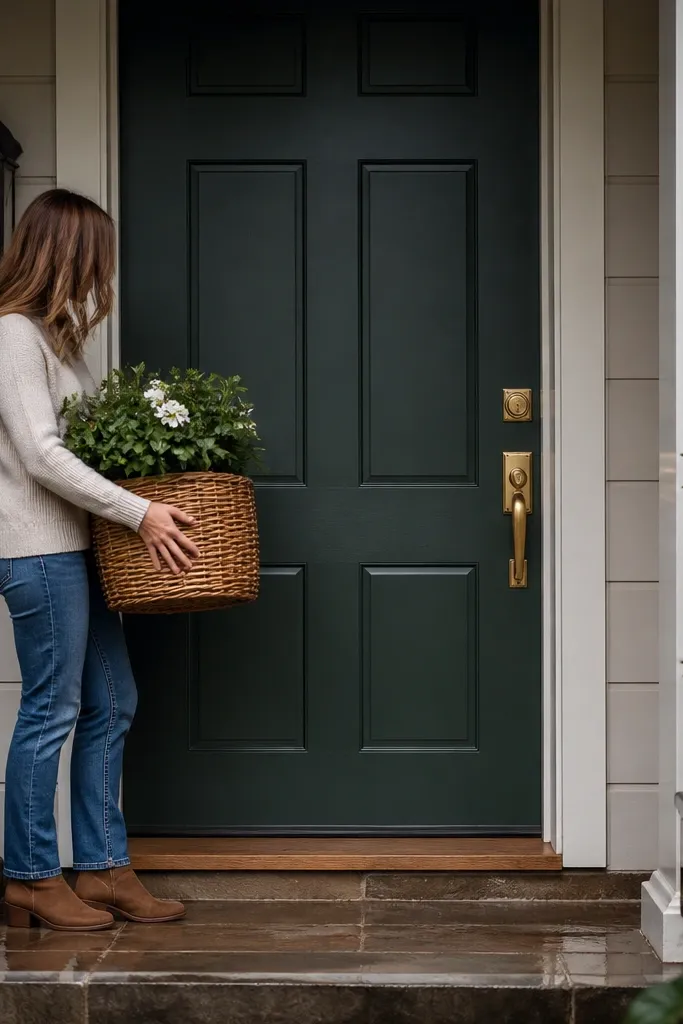
Dark green reads modern and it hides dust better than lighter colors, especially on busy entries. Pair it with brass-toned accents at the lock and strike plate so the door has a warm focal point. The low-maintenance angle is that you can choose a sealed exterior coating that wipes clean, and brass-toned finishes can be selected for low tarnish. Keep the door face flat and simple so you avoid grime trapped in design details. This idea works in House Main Door low-maintenance projects when you want a color that looks intentional and doesn’t look dirty after weather.
Editor's noteChoose hardware with a sealed finish so brass tone doesn’t turn patchy near the edges.
Pick an exterior door in dark green with a UV-resistant finish, or paint with an exterior system rated for sun exposure. Install the door with new weatherstripping and ensure the strike plate alignment is correct so you don’t create rubbed-off scuffs. Mount brass-toned hardware and a matching peephole cover after the finish cures. Seal around the frame and check for drafts — drafts pull dust onto the door face and make it look gray faster.
Skip thisAvoid glossy green paint; it reflects light and makes smudges obvious.