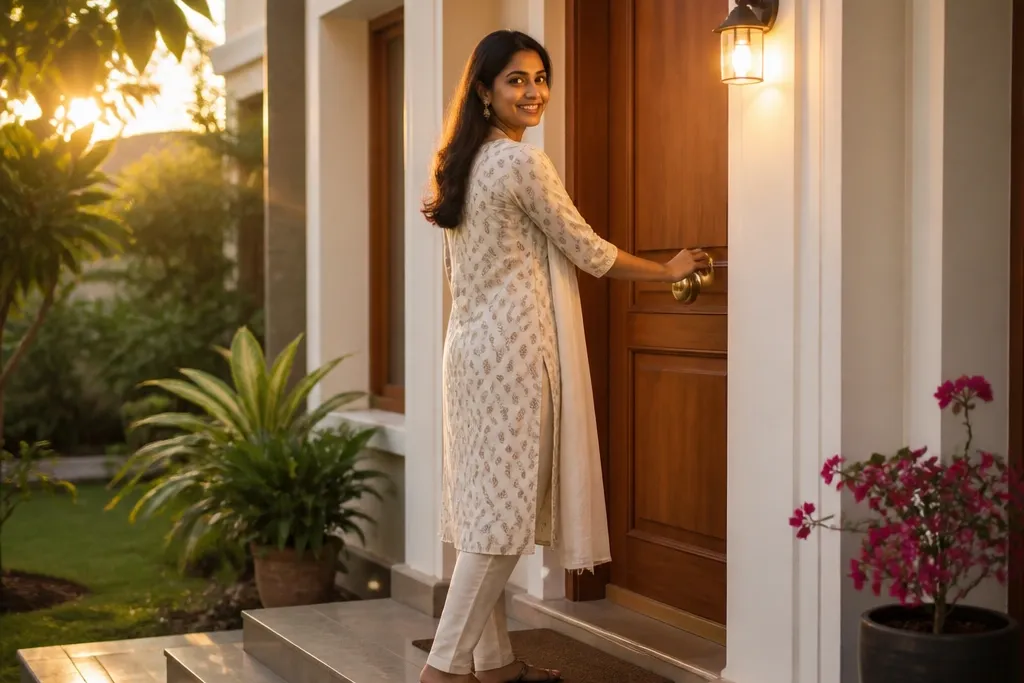
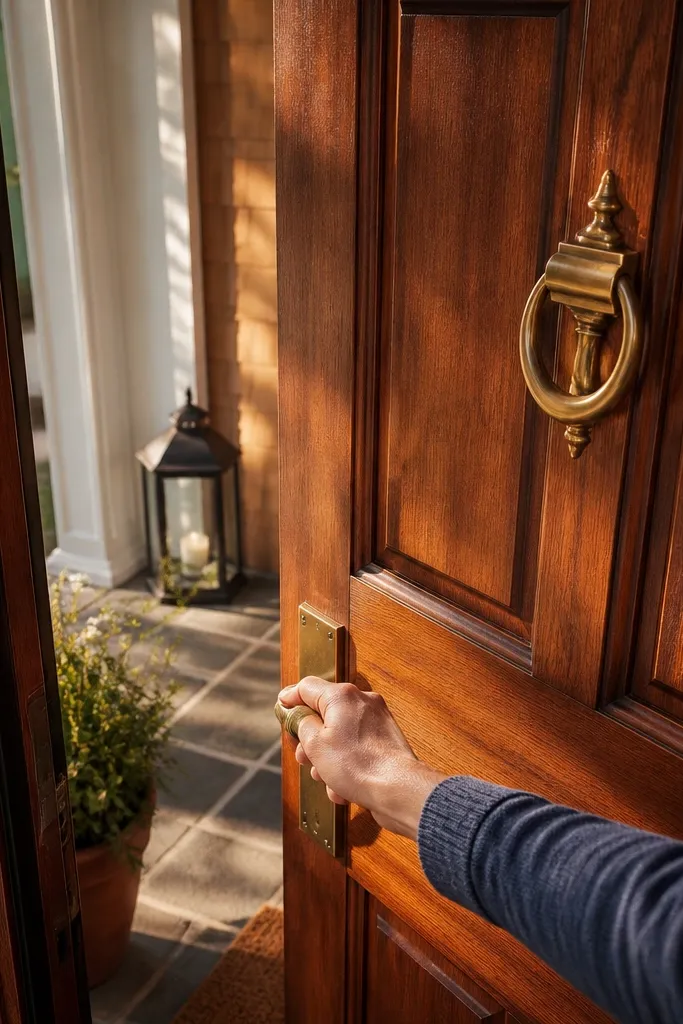
1. Honey Teak Door with Warm White Frame and Brass Knob
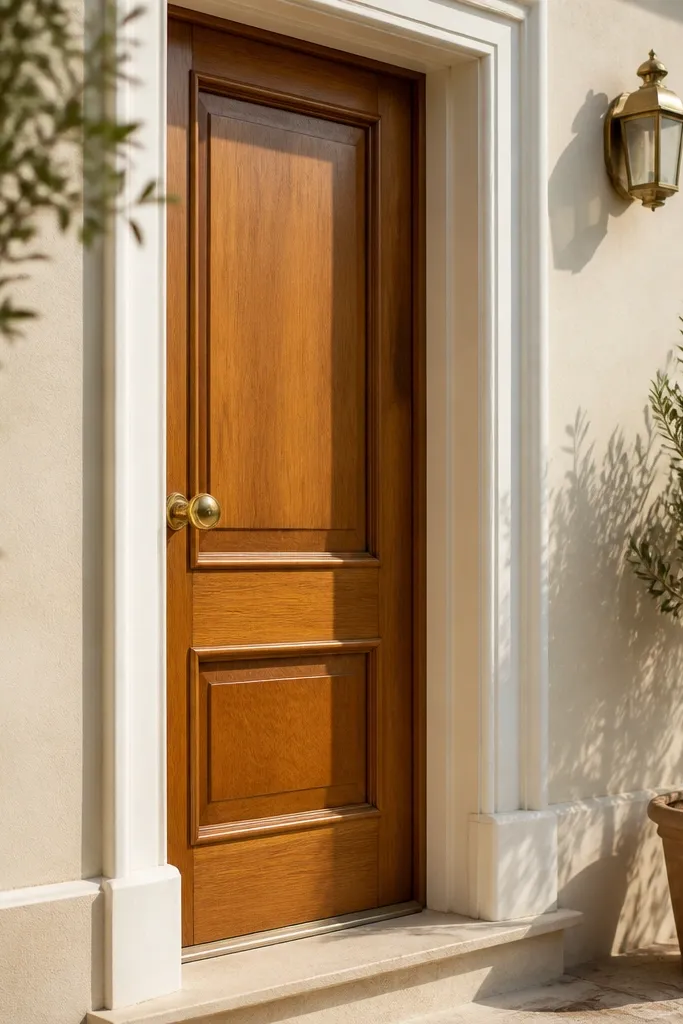
This design gives you cozy warm instantly because honey teak has a golden undertone that reads inviting even in harsh daylight. The warm white frame keeps the door from looking heavy and makes the grain stand out without extra decoration. Brass hardware adds a soft glow effect at night when lights hit it at a slight angle. It works best on facades with beige, cream, or light sand walls, and it looks clean for both modern and traditional homes. Skill level is basic carpentry and finishing — mostly paint/finish work and hardware alignment.
Start by sanding the door leaf to remove old flaking paint or roughness, then wipe clean with a tack cloth. Apply a wood primer if the surface is bare wood, followed by a teak-brown stain or honey-toned tint, then seal with matte polyurethane in 2-3 thin coats. Frame it with warm white trim paint — use painter’s tape for crisp edges and keep the trim width consistent (about 2.5-4 cm visually). Finish by installing a brass knob or lever and matching hinges, then tighten all screws so the door closes flush.
Editor's noteUse matte polyurethane, not high gloss, if dust is common near your main door.
Skip thisSkipping edge sealing on the door sides is how wood swells and looks patchy fast.
2. Deep Chocolate Door with Arched Glass Inserts and Copper Handle
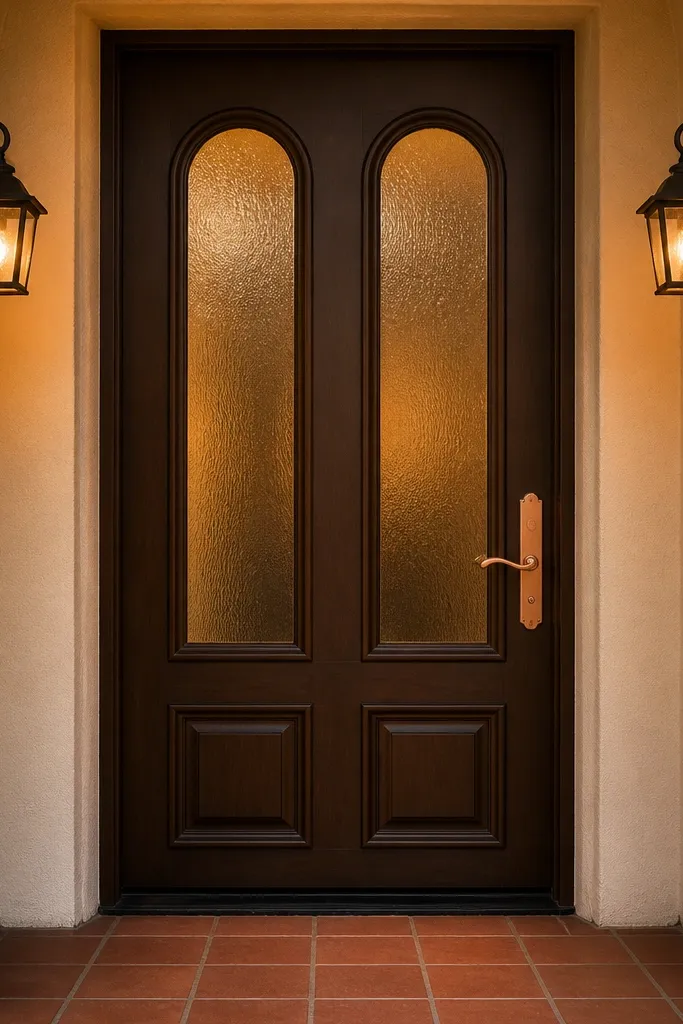
A deep chocolate door looks cozy warm because it creates depth and warmth at the same time. Arched glass inserts add light without making the entry feel cold, especially when you use frosted or textured glass that hides the inside. Copper hardware gives a lived-in warmth that pairs well with terracotta and warm off-white walls. This is a strong pick if your porch is dim or shaded, since the glass brings in a soft glow. It takes moderate effort because you’re aligning glass panels and ensuring a tight weather seal.
Mark the insert positions on the door leaf, then cut openings using a jigsaw with a fine-tooth blade and clamp the panel so it doesn’t vibrate. Fit frosted arched glass with rubber glazing gaskets, then screw the trim in place without overtightening. Paint or finish the surrounding door in a chocolate brown enamel, ideally matte or eggshell, and seal the cut edges with primer first. Install a copper handle and deadbolt, then check the latch engagement with the door closed and adjust strike plate height if needed.
Use frosted textured glass so you get warmth from light without losing privacy.
Installing inserts without rubber gaskets leads to rattling and leaks during monsoon.
3. Terracotta Door with Diagonal Slat Paneling and Black Powder-Coated Knocker
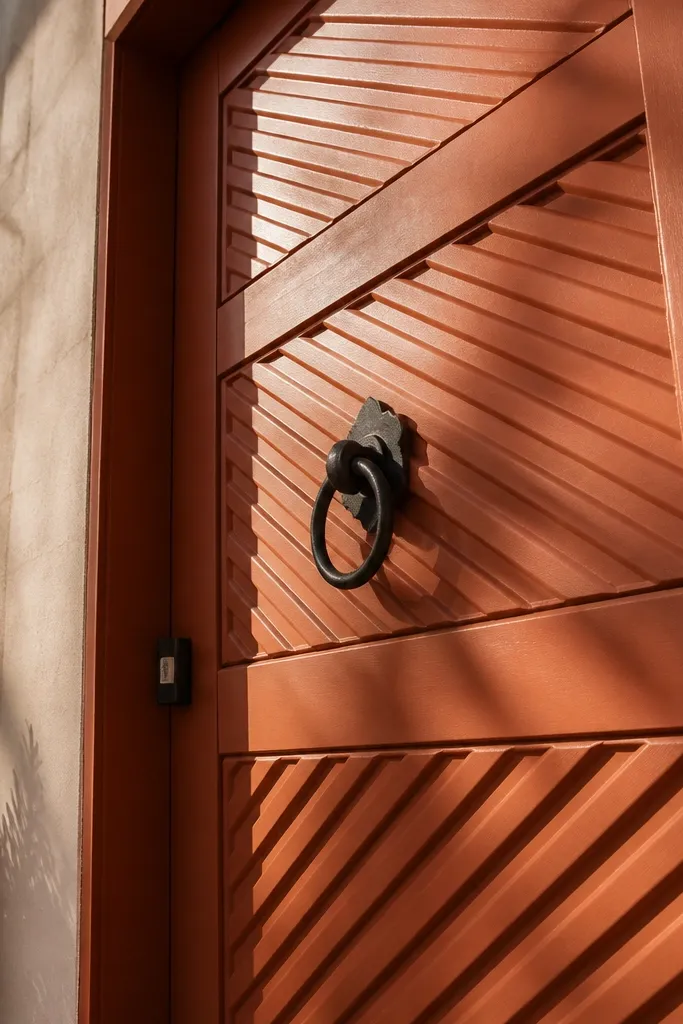
Terracotta reads cozy warm because it’s already a warm color family, not a neutral that needs help. Diagonal slat paneling adds movement — it catches light differently across the day and looks great in photos. Black powder-coated hardware keeps the design grounded and makes the terracotta pop without going loud. This works especially well on light cream, white, or lime-wash style walls. Plan for mid-level DIY because slat alignment needs patience and clean spacing.
Build a simple door overlay frame or use pre-made slats, then measure and mark a diagonal grid so gaps look even (aim for 1.2-1.8 cm spacing). Fix slats to the base door using wood screws and wood glue at the ends, then sand edges so slats don’t snag fingers. Apply a terracotta primer, then 2-3 coats of weatherproof enamel in a matte finish. Install a black knocker and matching lock set, and seal around the lock area with silicone or a sealant strip to prevent moisture creep.
Editor's noteDry-fit slats with spacers before fixing so you don’t end up with a crooked pattern at eye level.
Skip thisPainting over unsealed knots and end grain makes terracotta look blotchy after rain.
4. Warm White Door with Walnut Veneer Panels and Gold Tone Lever
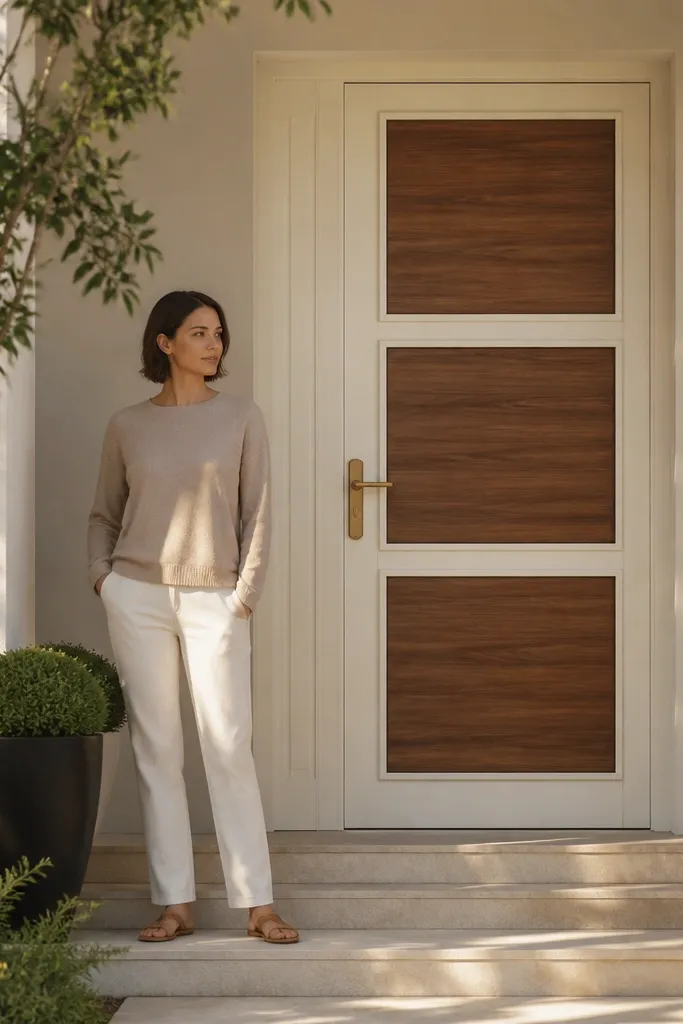
If your facade is busy, a warm white main door calms everything down and still feels cozy warm. Walnut veneer panels add controlled warmth without the heavy look of full wood doors, so the doorway stays airy. Gold tone hardware ties the warm whites and walnut together, especially in warm lighting. This design looks best when the wall paint around the door is also warm white or a creamy beige — the contrast should be gentle, not harsh. It’s a good DIY choice if you can handle veneer trimming and careful finishing.
Cut veneer panels to fit the door’s recessed areas and glue them down using veneer adhesive, pressing with a roller for full contact. Trim edges with a sharp utility knife and sand lightly to remove glue ridges. Prime the door surface, paint the base in warm white eggshell or satin, then apply a clear matte top coat over the veneer for protection. Install gold tone lever handle and hinges, and check door swing clearance so the handle doesn’t scrape the frame.
Editor's noteClear matte top coat over veneer prevents glare and keeps the walnut grain looking soft.
Skip thisUsing a high-gloss clear coat over veneer makes dust and fingerprints look obvious.
5. Teak Brown Door with Wrought Iron Scroll Grille and Amber Light
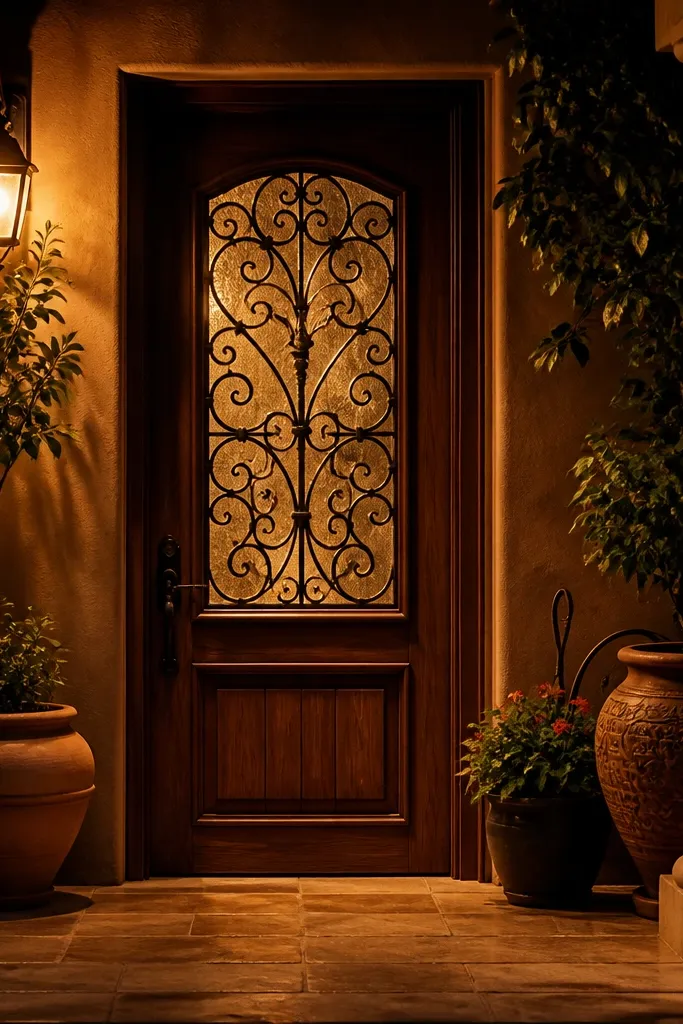
This one is cozy warm because it mixes warm wood tone with old-world detail. A wrought iron scroll grille adds texture and makes the doorway look styled, not plain, while still letting you see light through. Amber porch lighting (not pure white LED) makes the iron look softer and the wood feel richer at night. It suits houses with stone cladding, brick, or warm beige walls. DIY difficulty is moderate because grille fitting has to be secure and rust-resistant.
Sand and finish the door in teak brown matte enamel or stain, then seal all edges. Prepare the iron grille by cleaning with wire brush and applying a rust-inhibiting primer, then coat with black or dark bronze powder coat (or spray paint rated for metal outdoors). Position the grille on the door and mark screw points, then drill pilot holes so the wood doesn’t split. Mount using stainless screws or hardware rated for outdoor use, and install an amber bulb in a porch light fixture aimed toward the door.
Editor's noteAim the light slightly from the side, not straight-on. It makes wood grain and iron scrolls look dimensional.
Skip thisSkipping rust primer under iron hardware ruins the look within a monsoon season.
6. Sandstone Beige Door with Micro-Textured Paint and Brass Studs
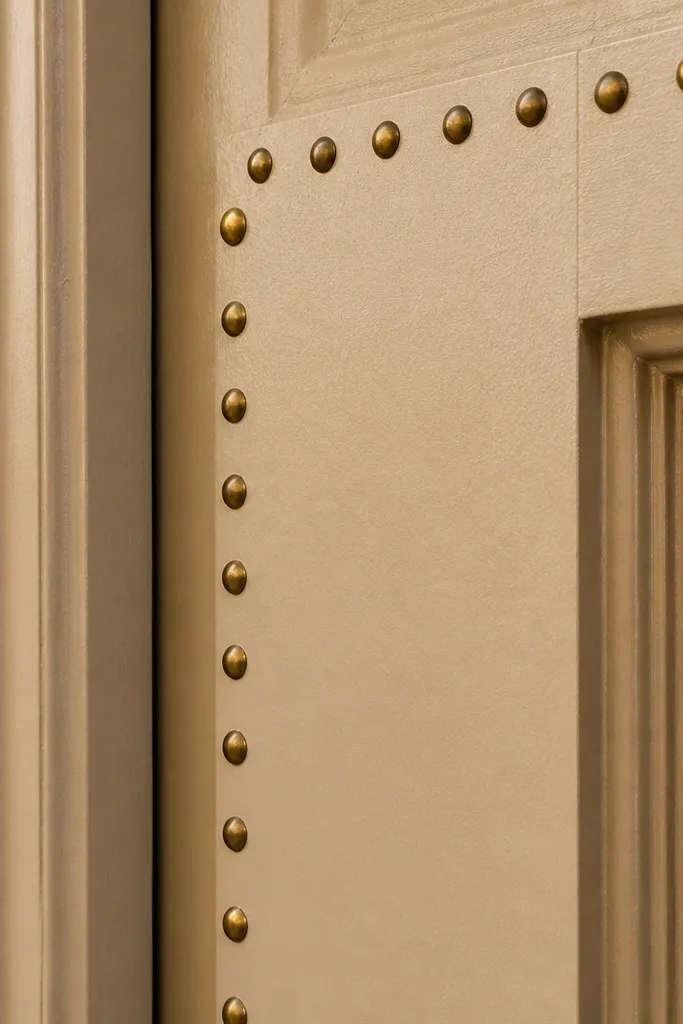
Micro-textured paint makes a main door feel cozy warm because it diffuses light and hides small imperfections. Sandstone beige is warm without turning yellow, so it looks modern and friendly. Small brass studs or nail-head trim give you a precise decorative rhythm without clutter. This works well on flat-front facades where you want texture without heavy carving. It’s an easy DIY project if you can handle painting technique and straight stud placement.
Clean the door and fill dents with wood filler, then sand smooth and wipe dust off. Use a tinted primer, then apply micro-textured paint with a roller, keeping strokes consistent to avoid patchy texture. Mark stud lines with a measuring tape and pencil, then stick or screw studs evenly spaced (about 6-10 cm apart depending on door size). Seal over the textured paint with a compatible matte clear coat if your product allows it, and check that the studs don’t interfere with the latch area.
Editor's noteUse painter’s tape as a guide for stud rows so your lines stay straight.
Skip thisApplying textured paint too thick makes it look rough instead of soft and warm.
7. Cane Insert Door with Warm Oak Frame and Rattan-Style Knob
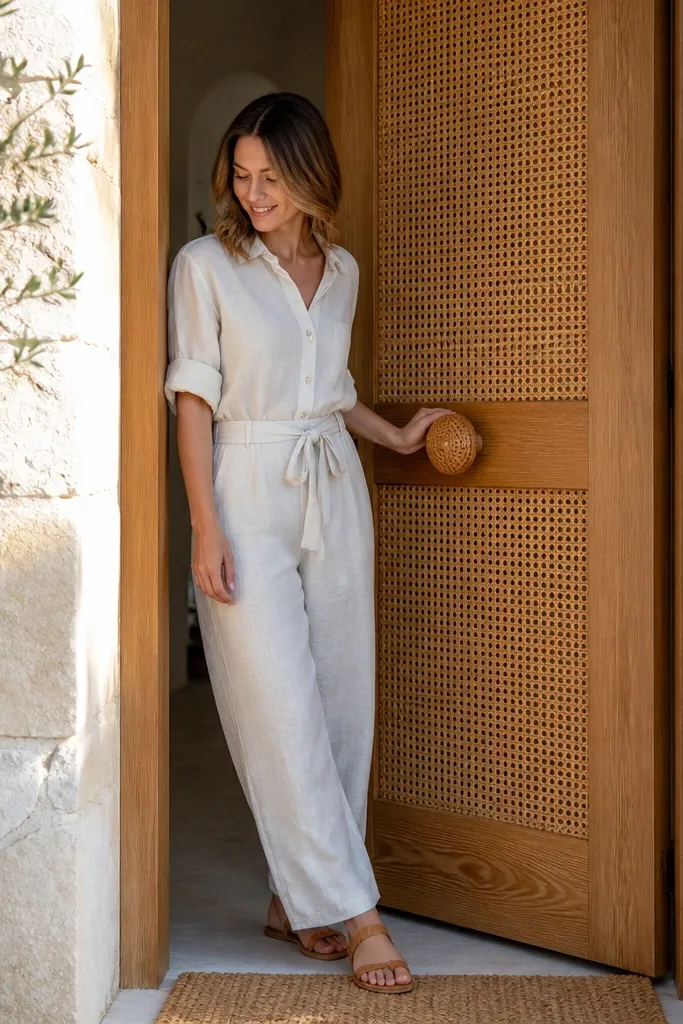
Cane inserts instantly make a door feel cozy warm because the woven texture breaks up flat surfaces and softens the doorway. A warm oak frame holds the look together and prevents the cane from reading too casual. If you use a rattan-style knob or a warm brass knob, the whole entry feels in the same temperature family. This is a strong pick for homes with minimal exterior decor, where the door needs to carry the style. DIY difficulty is medium because cane needs tension and careful sealing.
Cut or buy cane sheets sized for the door recessed panels, then build a simple frame backing using thin plywood or battens. Fix cane using small staples or screws with a trim strip, keeping the weave taut so it doesn’t sag. Seal cane with a clear matte varnish meant for woven materials, then finish the oak frame with honey oak stain and polyurethane. Install the handle after the finish cures, and check that the door closes without rubbing the cane edges.
Editor's noteUse a clear matte varnish so the cane looks warm, not shiny.
Skip thisLeaving cane unsealed — it drinks moisture and warps, especially near the bottom.
8. Classic Panel Door in Warm Walnut with Gold Trim Line
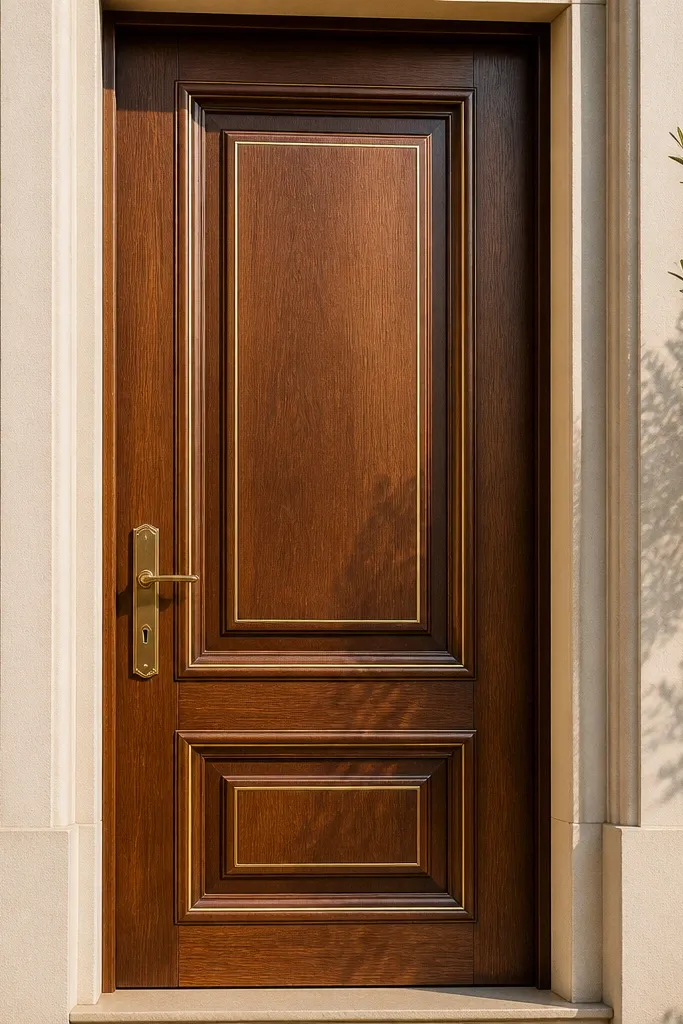
A classic panel door reads cozy warm because the raised-and-recessed geometry creates shadow and depth. Warm walnut finish makes those shadows look flattering instead of gloomy. A thin gold trim line around the panels adds a clean decorative edge without turning the door into a craft project. This works in both modern and traditional homes because the base door shape stays familiar. Skill level is moderate because you’re painting with tight lines and keeping trim straight.
Sand the door and apply walnut-toned stain or paint in a matte or eggshell finish. Once dry, tape off a thin border line around the panel edges using 6-10 mm painter’s tape for crisp gold. Apply gold trim paint or gold leaf pen style enamel carefully, then remove tape before the paint fully hardens for clean edges. Install gold tone hinges or keepers, then mount a matching handle so the trim line and hardware look aligned.
Mark tape positions with a ruler and check alignment from eye level, not from above.
Using thick gold paint makes edges look messy and cheap.
9. Olive Green Door with Cream Border and Black Lever Handle
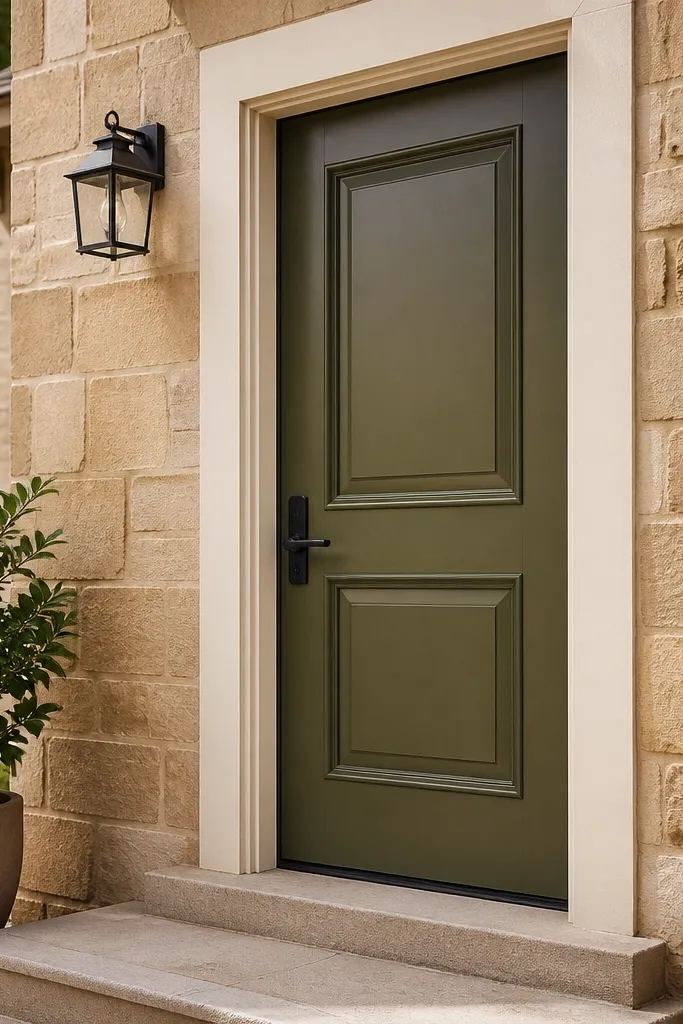
Olive green can look cozy warm when it’s the right shade — muted, slightly earthy, not neon. Pair it with a cream border so the doorway frames itself and feels welcoming. Black hardware gives contrast and keeps the design grounded, especially on warm beige or sandstone walls. This is a great choice if your exterior is already earthy and you want the door to match without blending in. DIY time is moderate since painting borders cleanly takes care.
Choose a muted olive enamel and prime the door first, especially if you’re painting over older glossy paint. Paint the main door olive in 2-3 coats with a foam roller to reduce streaks. Tape a cream border around the door panels or outer frame, then paint the cream in eggshell and remove tape carefully while paint is still tacky. Install black lever handle and ensure the latch aligns so the door closes without rubbing the border.
Use a foam roller for the door leaf and a small angled brush only for edges.
Skipping primer — olive paint shows every old color through it.
10. Warm White Door with Terracotta Tile Inlay Strip

A single terracotta tile inlay strip makes the door look designed, not decorated. The warm white base keeps it clean and bright, while the tile adds texture and that cozy warm color hit. This works great on doors with simple panels because the inlay creates a focal point at chest height. It also holds up well because ceramic resists scratches better than paint. DIY difficulty is medium because tile alignment and sealing matter.
Decide the inlay position — a horizontal strip about 20-30 cm from the floor looks balanced. Cut a recess or surface mount area on the door leaf so the tile sits flush with the door face. Glue ceramic tiles using tile adhesive meant for exterior surfaces, then grout with a sanded grout or seal grout with exterior sealant. Seal the entire door with a weatherproof clear coat, and install hardware after the adhesive cures so you don’t disturb the inlay.
Dry-lay the tile strip first on the floor so spacing looks even before you commit.
Using indoor grout without sealing — it stains and chips near moisture.
11. Dark Smoky Brown Door with Rope-Wrapped Jute Frame Detail
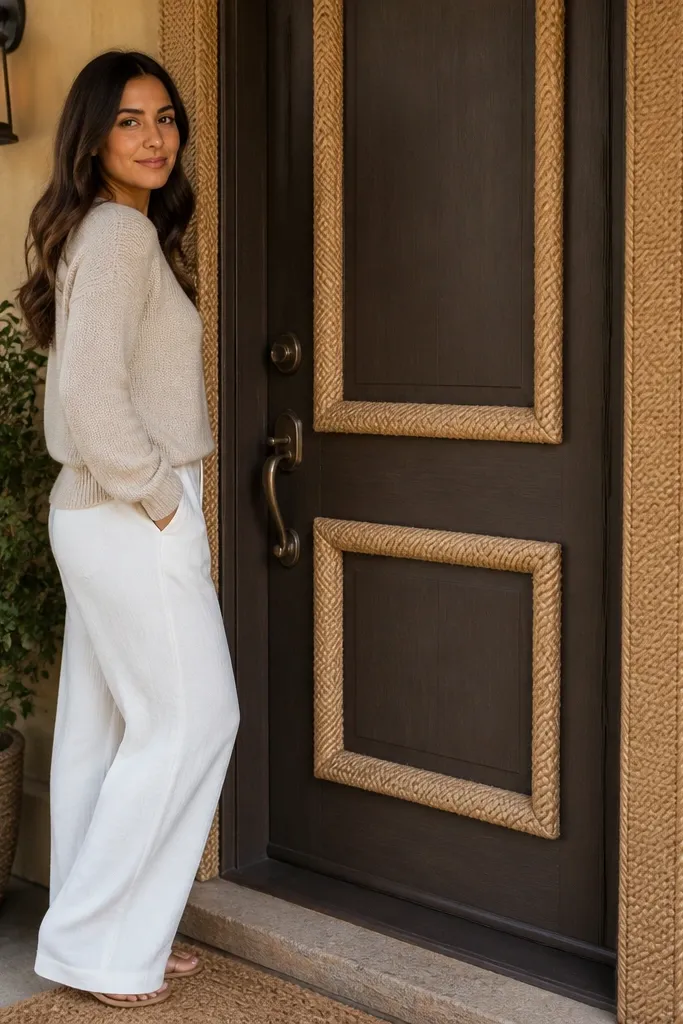
This is cozy warm through texture and contrast: dark smoky brown makes the jute look intentional and warm instead of rustic clutter. Rope-wrapped jute around the panel edges adds a tactile border that looks great in close-up photos and also hides minor paint edges. It suits homes with earthy exteriors — beige, stone, or muted brick. DIY is easy to moderate, but you need to seal the rope properly so it doesn’t unravel in humidity. Keep the rope detail limited so the door still looks clean.
Paint the door in a dark smoky brown matte enamel and let it cure fully. Cut jute rope to length and wrap it around a thin guide strip you stick to the door edge, using hot glue or exterior-grade adhesive. Secure ends by tucking and gluing, then apply a clear exterior matte varnish or polyurethane over the rope to lock fibers in place. Finish by sealing around the rope edges with thin clear sealant where moisture could creep.
Use a narrow guide strip (about 5-8 mm) so your rope line stays consistent.
Skipping varnish over jute — it frays and turns patchy under monsoon.
12. Teal-Brown Door with Carved Geometric Panels and Warm Brass Ring Pull
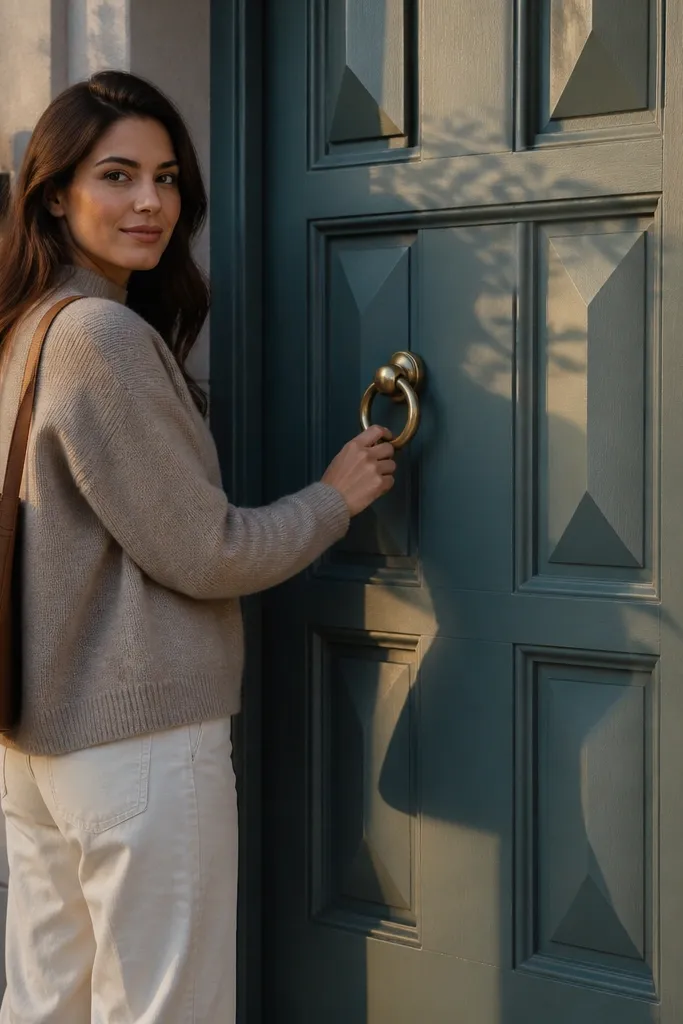
A teal-brown (earthy green with blue undertone) door can still read cozy warm when it’s dark and muted. Carved geometric panels give you shadow depth, and warm brass ring pull adds a soft focal point. This style is great for contemporary Indian homes that want texture without going traditional. It’s also forgiving if you have slight wall unevenness because the carved door catches light. Skill level is moderate: you need precise panel carving or use ready-made carved panels.
If using ready-made carved panels, align them on the door leaf and fix with wood adhesive plus small screws from the back if possible. Base coat the door in a teal-brown matte enamel, then paint the carved recesses slightly darker only if you want extra depth. Install a warm brass ring pull and matching latch plate, and make sure the pull sits at comfortable height (usually around 95-105 cm from floor). Finally, apply a matte clear coat over the whole door for durability.
Editor's noteFor extra depth, lightly dry-brush the carved recess edges with a slightly darker shade after the base coat cures.
Skip thisOver-washing carved recesses with glossy paint — it makes carvings look filled with dust.
13. Warm Beige Door with Dark Wood Crossbars and Black Door Knocker
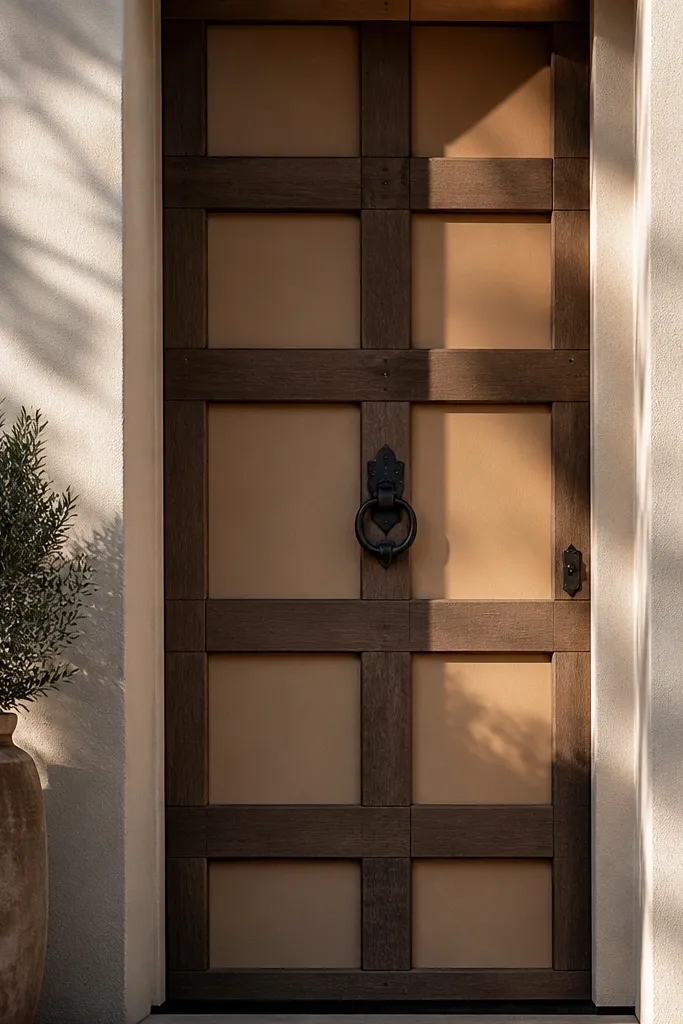
A warm beige door becomes cozy warm when the contrast is controlled. Dark wood crossbars create a strong graphic look and make the doorway feel structured, not plain. A black knocker ties the contrast together and adds a crisp focal point. This design works well when your facade has large blank wall surfaces or when you want a modern farmhouse vibe. DIY time is moderate because crossbars need straight alignment.
Sand and prime the door, then paint the base in warm beige eggshell. Measure and mark crossbar positions — a centered crossbar at about mid-height and a lower one at around 20-30 cm above floor usually balances well. Fix crossbars using screws and glue, then sand edges smooth where crossbars meet the door. Finish crossbars with a dark walnut or mahogany stain and seal with matte clear coat, then install a black knocker and ensure the door closes without crossbar interference.
Editor's noteUse a laser level or straight spirit level for crossbar marks — your whole look depends on this.
Skip thisMounting crossbars without sealing end grain — moisture gets in and the wood swells.
14. Mahogany Red Door with Small Glass Squares and Antique Brass Handle
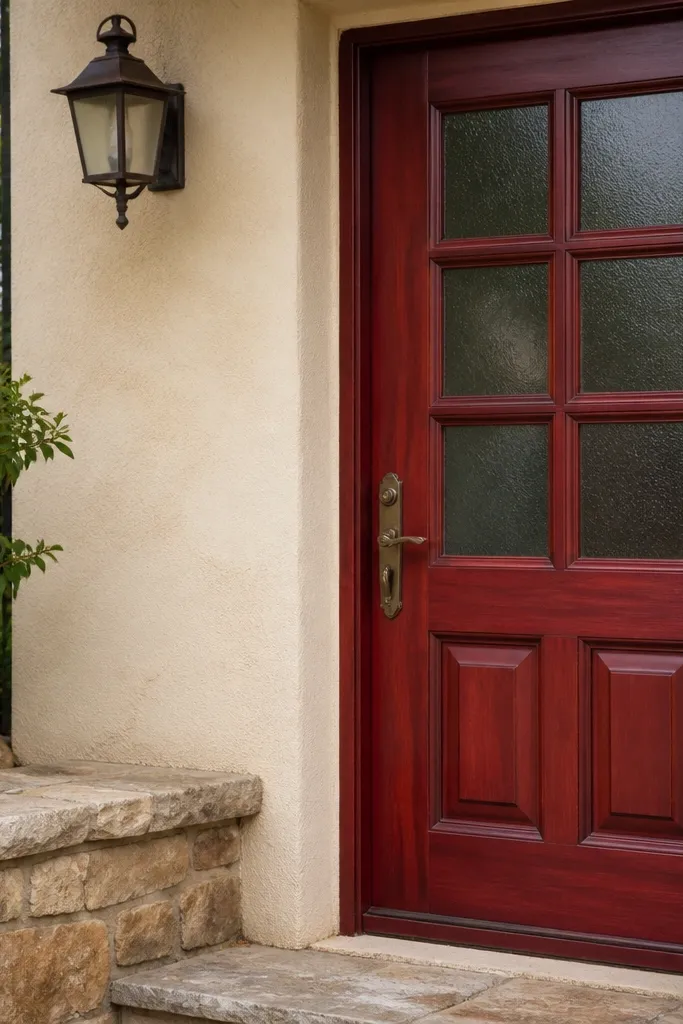
Mahogany red gives cozy warm through color that feels like deep wood and spices. Small glass squares add a little sparkle in daylight and softness at night, especially if you use textured glass. Antique brass hardware makes the door look older and more handcrafted without needing heavy carving. This style suits entrance porches with warm lighting or where you want the door to be the hero. Difficulty is moderate because glass panel cutting and sealing are part of the job.
Choose textured glass squares and mark openings on the door leaf, then cut carefully with a jigsaw and clamp the door. Install glass using glazing tape and rubber gaskets, then add trim around openings with screws. Paint the door mahogany red in matte enamel, seal all cut edges with primer, and apply 2-3 coats for even color. Install the antique brass handle and deadbolt, then check alignment with the strike plate so the glass trims don’t get stressed.
Use glazing tape before screws so the glass sits tight and won’t rattle.
Using clear smooth glass — it looks cold and makes the door feel less cozy.
15. Warm White Door with Vertical Timber Slats and Natural Jute Mat Accent
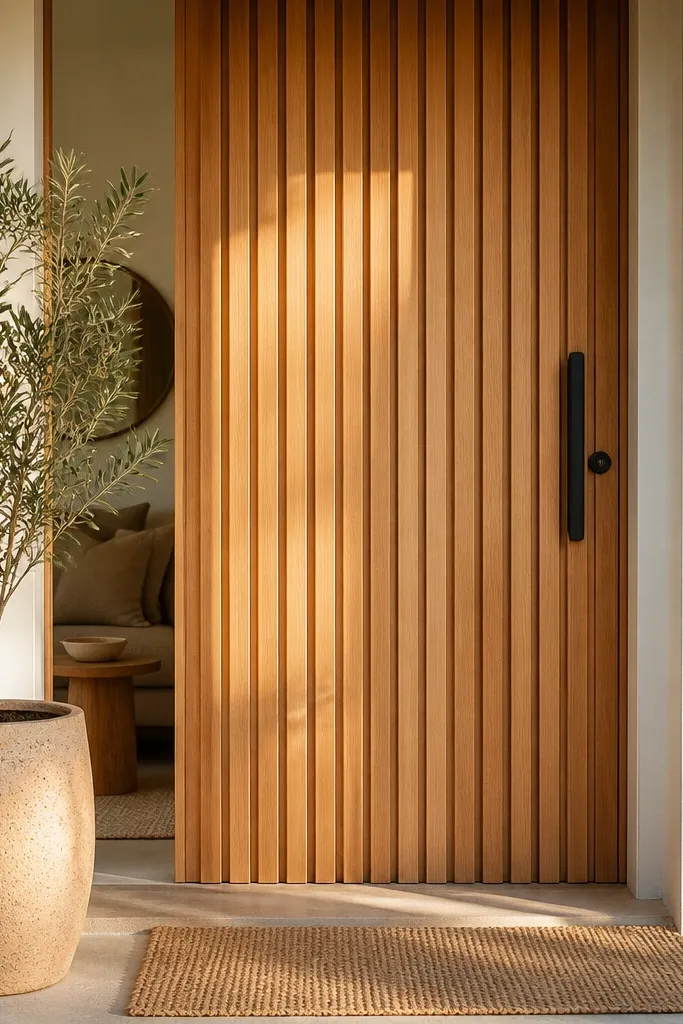
This design keeps the door bright but still cozy warm because vertical timber slats add warmth and shadow. Warm white base makes the entrance look clean, while natural slats bring that earthy texture that feels welcoming. The look finishes nicely when you add a natural jute mat at the threshold — it ties the door materials together. It’s great for apartments and bungalows with smaller entrances where you want the doorway to feel bigger. DIY is easy to moderate if you’re comfortable mounting slats and painting clean edges.
Paint the door warm white eggshell and let it cure fully. Mark vertical slat positions and attach slats using wood screws through the back or hidden brackets so the front stays clean. Stain slats in a natural oak or light teak tone, then seal with matte clear coat. Finish by installing a simple handle and ensure the mat sits flat at the threshold so water doesn’t wick under it.
Editor's noteKeep slat spacing consistent (about 2-3 cm) so it reads intentional, not random.
Skip thisAttaching slats without leaving a small gap for wood expansion in monsoon.
16. Black-Brown Door with Brass Lattice Panel and Warm White Surround
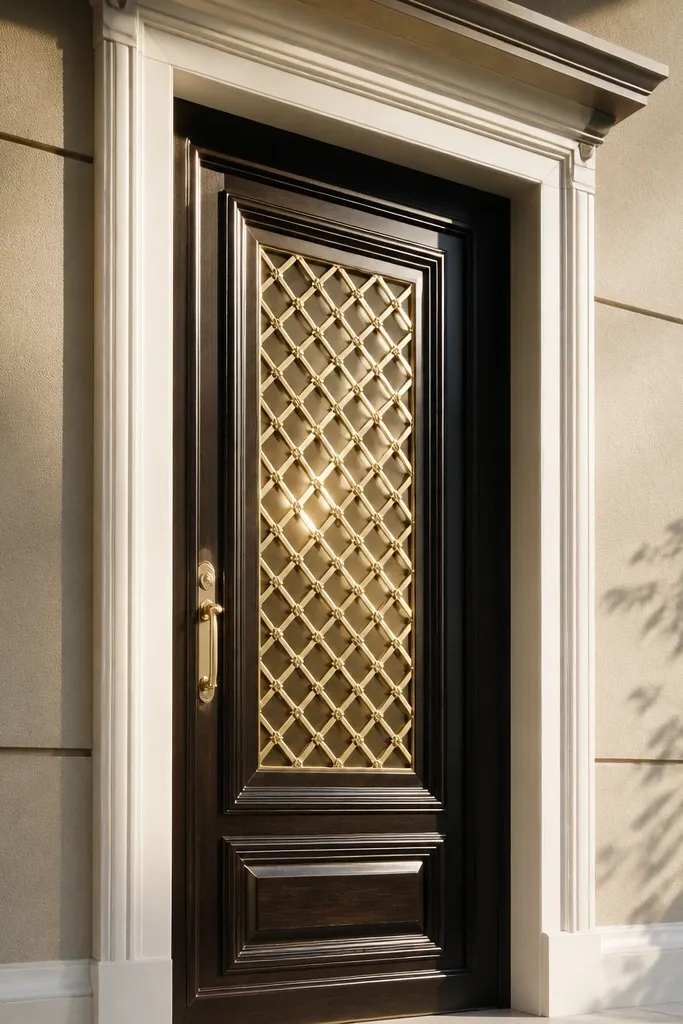
A black-brown door can still feel cozy warm when the surrounding frame is warm white and the decorative element is brass lattice. The lattice adds a warm glow effect when light hits it, and the black-brown base keeps everything grounded. This style is photogenic because it has repeating lines that show depth. It’s a strong fit for modern homes with clean exterior walls. DIY is medium because lattice needs precise fit and you want it to sit straight.
Paint the door leaf black-brown matte enamel and seal it well. Create a lattice insert using thin brass strips or a pre-made brass lattice sheet, then mount it into a recessed panel area or onto a flat insert frame. Use screws with washers or strong adhesive rated for metal-on-wood, then check the insert sits flush. Paint the frame surround warm white and install brass handle and hinges to match the lattice.
Use warm white surround paint with a slight beige tint, not pure blue-white.
Mixing silver hardware with brass lattice — it makes the design look unfinished.
17. Stone-Effect Door Paint with Gold Corner Detailing
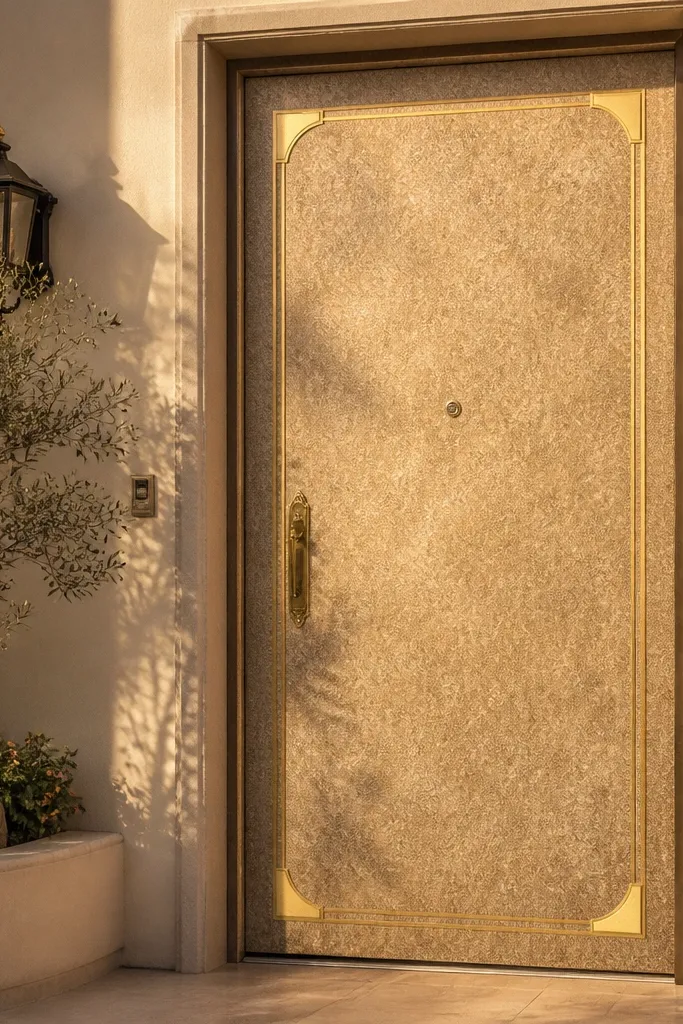
Stone-effect paint makes the door surface look like textured material, which reads cozy warm even without wood. Warm beige or sandy stone tones soften the entrance and hide minor wall scuffs around the frame. Gold corner detailing adds a small luxurious highlight that still feels grounded. This is ideal if your existing door is plain and you want a dramatic upgrade without replacing it. DIY is easy if you follow the paint system and don’t rush layering.
Clean and de-grease the door, then apply a base coat in warm sand. Apply stone-effect glaze or texture paint using a sponge technique — dab in random patterns while keeping edges controlled. After it dries, tape corner shapes and paint thin gold lines on the outer corners or panel corners. Seal with a matte exterior clear coat so the texture stays consistent and doesn’t peel in humidity.
Editor's noteTest the stone effect on a scrap piece or hidden door edge first so the pattern density matches what you want.
Skip thisTrying to get the stone texture in one thick coat — it looks muddy.
18. Warm Walnut Door with Raised Center Medallion and Teal Accent Strip
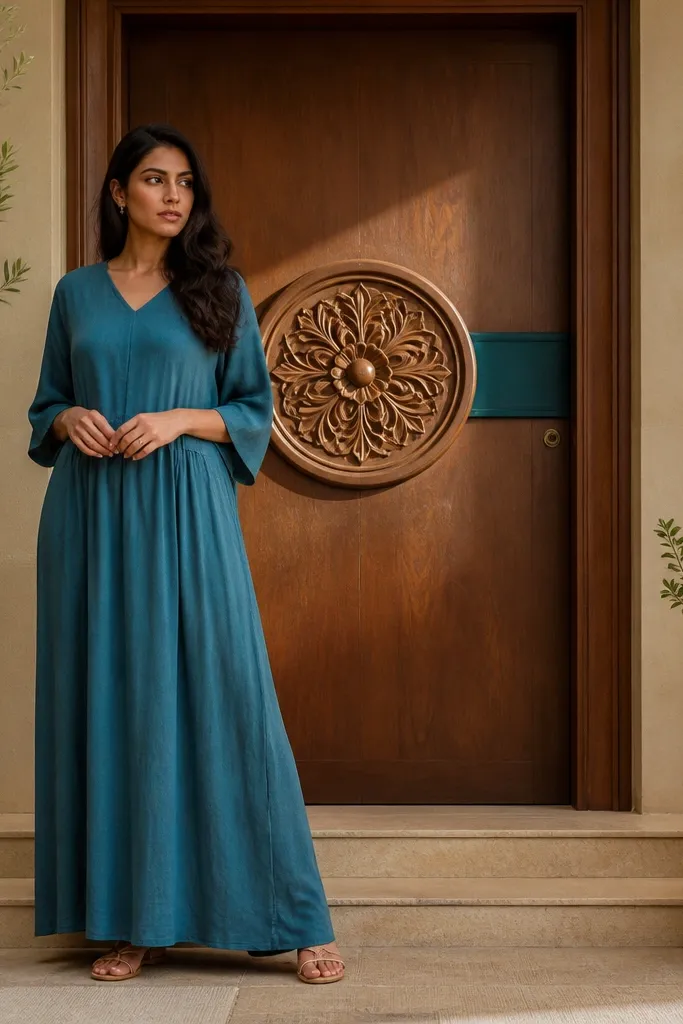
This design feels cozy warm because walnut is already warm, and the raised center medallion adds a strong focal point. The teal accent strip adds a color pop that looks intentional instead of random, especially next to warm walls. It’s photogenic because the medallion creates a highlight and shadow effect that shows up in photos even from a distance. This works well when you want the door to look styled but not busy. DIY difficulty is moderate because you’re fitting a medallion and aligning the accent strip.
Sand the door and apply warm walnut stain or walnut-toned paint, then seal with matte clear coat. Mark a centered medallion area and fix a raised wooden or resin medallion using wood adhesive and screws where hidden. Paint or apply a teal accent strip around the medallion — keep it narrow (about 1-2 cm) and tape edges for crisp lines. Install hardware in warm metal (brass or bronze) and check that the medallion doesn’t interfere with latch clearance.
Use thin strip tape and remove tape at an angle so gold/teal lines stay sharp.
Making the teal strip too wide — it shifts the door from cozy warm to loud.
19. Cream Door with Terracotta Panel Borders and Jute Rope Knocker
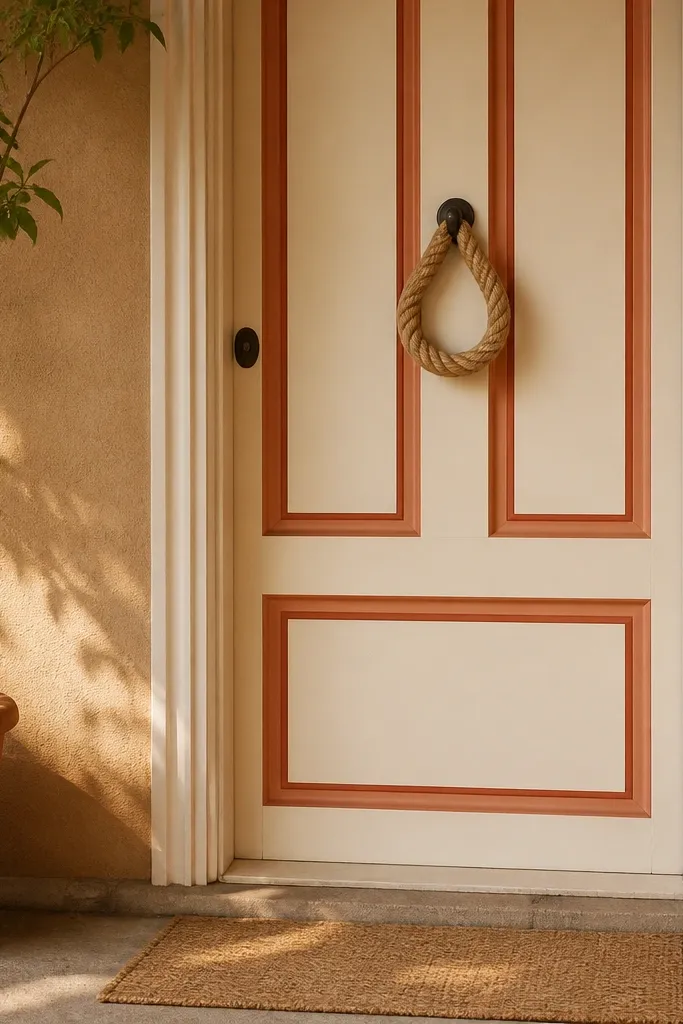
Cream + terracotta borders is a cozy warm combo that looks handmade and welcoming. The terracotta lines define the door panels and make plain doors look designed without heavy carving. A rope knocker (sealed properly) brings texture right where people notice it — at hand height. This is a great option for homes with cream walls, where you want the door to add warmth without changing the whole facade. DIY difficulty is easy to moderate because you’re painting borders and mounting the knocker.
Paint the door cream eggshell and let it cure. Tape panel border lines and apply terracotta enamel in 2 thin coats for an even color. Seal the terracotta paint with a compatible matte top coat to resist dust and moisture. Mount the rope knocker using a metal backing plate so the rope doesn’t take the full load, then seal around the mounting holes to prevent water entry.
Editor's noteSeal all around knocker mounting points — that’s where water gets trapped.
Skip thisUsing unsealed rope — it frays and looks messy fast.
20. Warm Beige Door with Horizontal Oak Veneer Band and Matte Black Handle
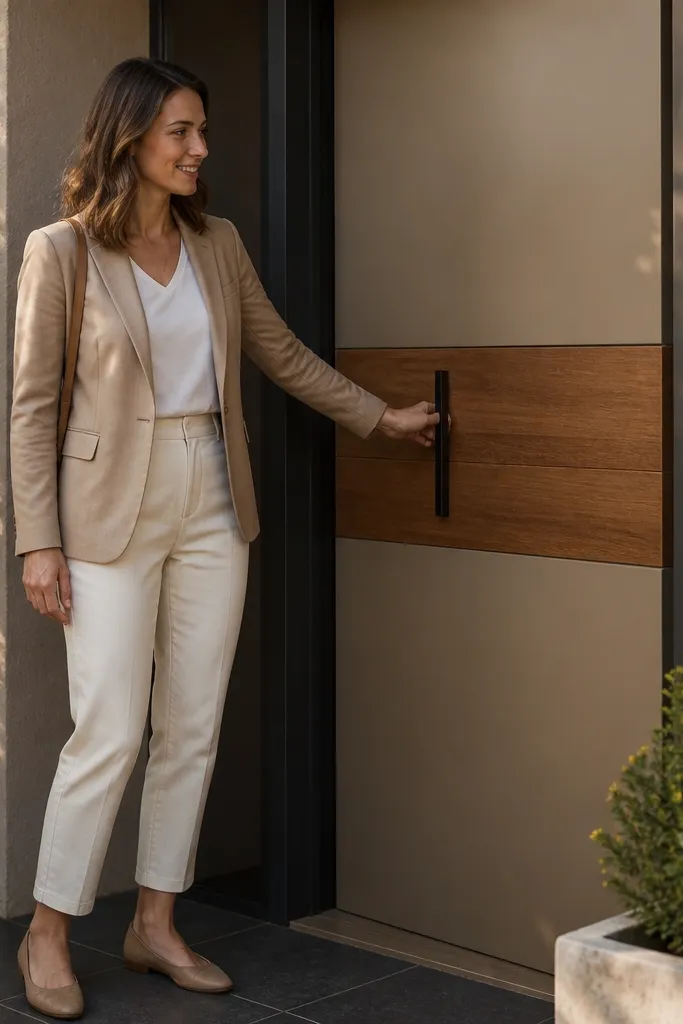
A warm beige base keeps your entrance calm and clean, while a horizontal oak veneer band adds warmth exactly where your eye lands. The matte black handle gives crisp contrast and keeps the door from looking too soft. This style is modern but still cozy warm because the veneer band brings real wood grain texture. It suits apartment entrances and narrow facades where vertical decoration looks tight. DIY is moderate because veneer alignment has to be straight.
Paint the door warm beige eggshell and let it dry fully. Cut veneer band to size, then glue it down with veneer adhesive and press with a roller. Trim edges cleanly and sand lightly, then seal the veneer with matte clear coat so it matches the door finish. Install the matte black handle and lock set, and check the distance from the edge so the handle doesn’t look skewed.
Align the veneer band using a level and mark reference lines before gluing.
Over-smoothing veneer after glue — it can thin the grain and look patchy.
21. Sandalwood Yellow Door with Carved Floral Corner Frames and Brass Hinges
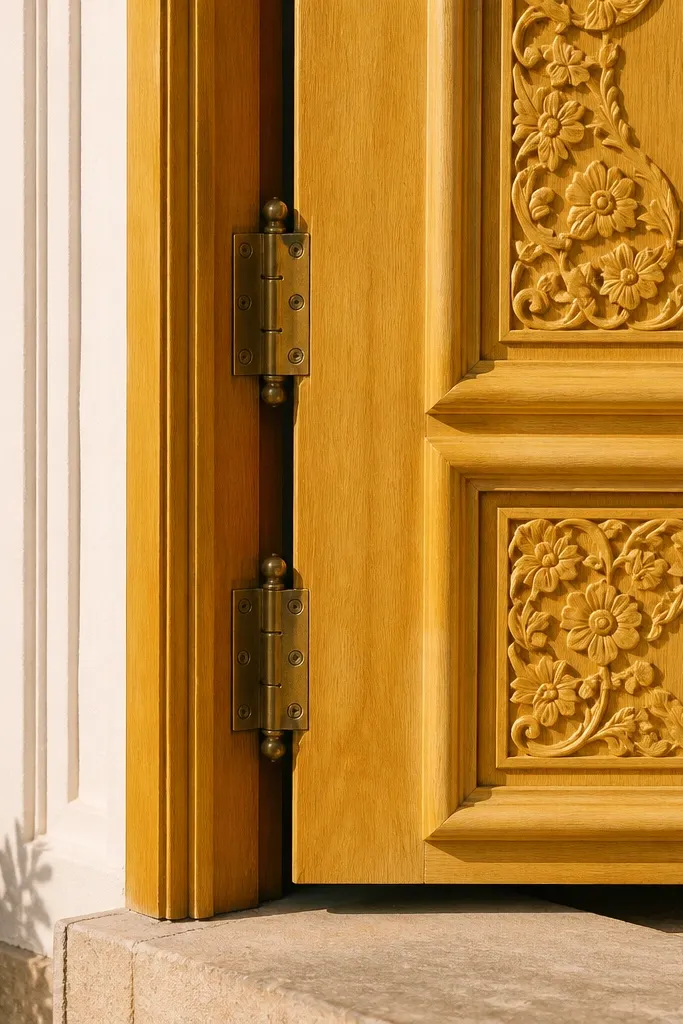
Sandalwood yellow is cozy warm when it’s muted and slightly sandy, not bright lemon. Carved floral corner frames add a traditional feel without covering the whole door in clutter. Brass hinges make the door look finished because the hinge line is visible every time you open the door. This design works best when your exterior walls are neutral — cream, beige, or light grey with warm undertones. DIY difficulty is moderate since carving or installing corner frames must be precise.
Paint the door sandalwood yellow in matte or eggshell enamel and seal it well. Install carved corner frames or create them using ready-made wooden corner panels, then glue and screw them for stability. Paint or stain the carved frames in a slightly darker brown so they read clearly on camera. Finish by installing brass hinges and a matching brass handle, then seal around hinge edges to keep humidity from creeping under.
Editor's noteKeep the floral frames only in corners so the door still reads clean from across the porch.
Skip thisUsing a bright yellow — it looks harsh and kills the cozy warm mood.
22. Deep Forest Door with Warm White Panel Insets and Copper Door Knocker
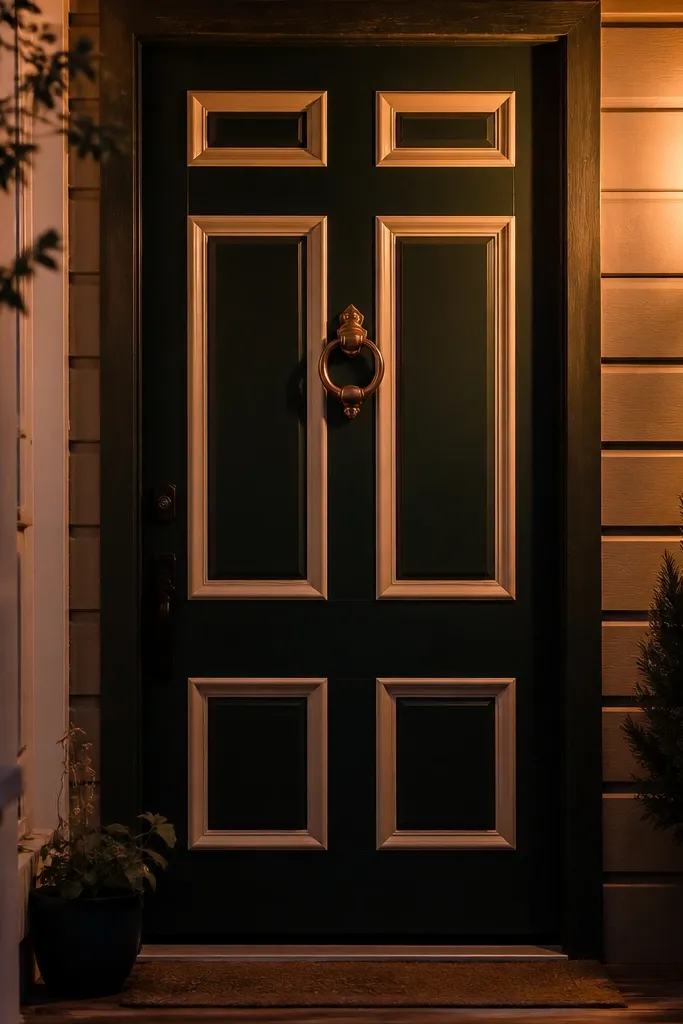
Deep forest green can feel cozy warm when it’s paired with warm white insets that create light contrast. The warm white panel insets make the door look structured and welcoming, not dark and heavy. Copper knocker adds warmth and makes the door look like a statement piece without extra clutter. This is a great choice for entrances with warm lighting or earthy stone around the doorway. DIY is moderate because panel inset edges must be neat.
Prime the door and paint it deep forest green matte enamel. Mark and mask inset shapes, then paint warm white panel insets using a foam roller for smooth coverage. After the white cures, remove tape carefully and touch up edges with a fine brush. Install copper knocker and handle, then apply a matte clear coat to protect both colors from fading and scuffs.
Editor's noteUse thin masking tape and press edges firmly so inset borders stay crisp.
Skip thisMixing warm white and cool grey trim — it makes the door look off-temperature.
23. Warm Grey Door with Walnut-Toned Cross Pattern and Warm Brass Handle
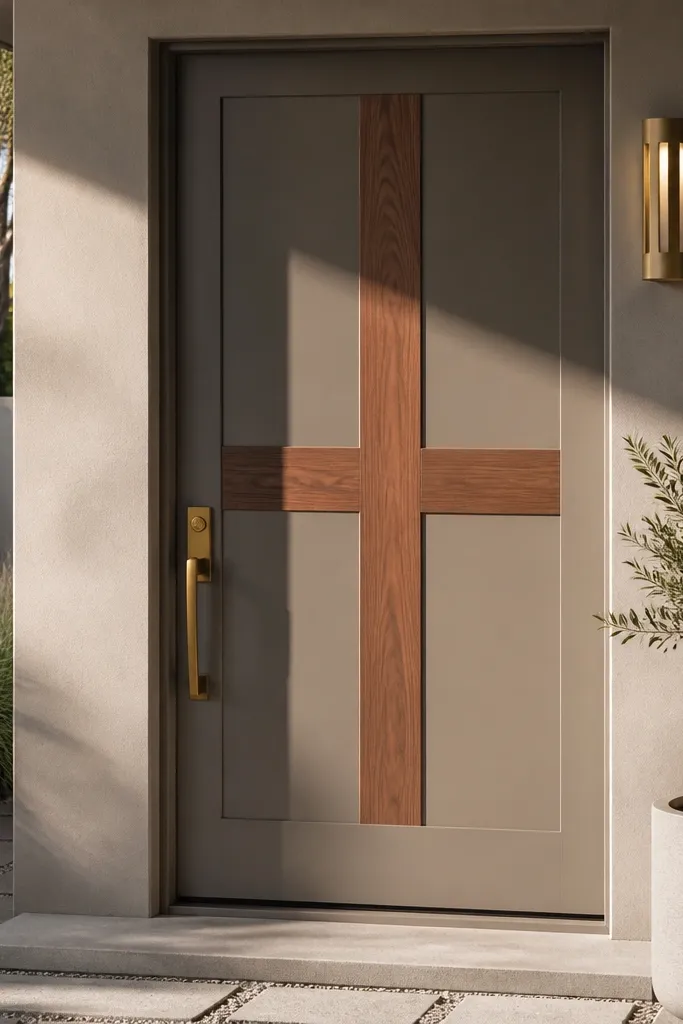
Warm grey can still deliver cozy warm when it’s paired with walnut-toned cross patterns that add real wood warmth. The cross pattern creates an easy focal point and makes the door look designed even if the rest of the facade is simple. Warm brass hardware ties the grey and walnut together so the doorway doesn’t look cold. This style suits contemporary homes and also works with modern Indian exteriors that use grey stone. DIY is moderate because the cross pattern needs straight lines and consistent spacing.
Paint the door warm grey eggshell and let it cure. Cut narrow walnut-toned wooden strips or use veneer strips, then fix them in a cross pattern with glue and small finishing nails or screws from the back. Sand the strip edges flush and seal with matte clear coat so the pattern looks integrated. Install warm brass handle and check that the door closes without the strips interfering with the frame.
Editor's noteUse a template for strip thickness and spacing so both diagonals or bars look symmetrical.
Skip thisLeaving strip edges unsealed — they swell and the pattern lifts over time.
24. Walnut Brown Door with Vertical Brass Dot Inset Grid
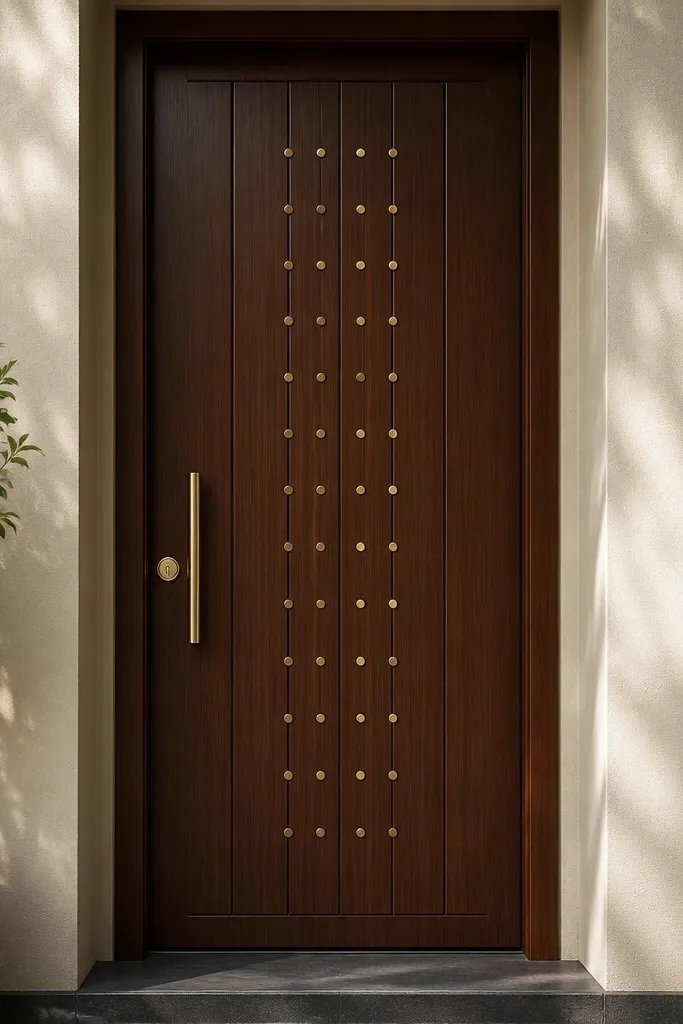
This design makes a main door cozy warm by combining deep walnut warmth with a controlled metallic pattern. Vertical brass dot insets look modern, but they still feel inviting because the base tone is wood-like and matte. It’s photogenic because the dots catch light as small highlights, especially when porch lighting is warm. This works well on plain door leaves where you want a statement without big carvings. DIY difficulty is medium because dot placement needs measuring so it doesn’t look random.
Finish the door in walnut brown matte enamel or stain and seal it well. Mark a vertical grid for brass dot insets — for example, 3 columns and evenly spaced rows — using a ruler and measuring tape. Drill small holes or install brass studs/dot inserts using a template so spacing is consistent. Seal around each inset with clear sealant if you drilled holes, then install the handle after the sealant cures.
Make a paper stencil grid first and tape it to the door before drilling — it saves you from crooked rows.
Relying on eyeballing dot spacing — tiny misalignment shows up instantly in photos.
25. Warm White Door with Dark Walnut Frame and Amber Glass Panel
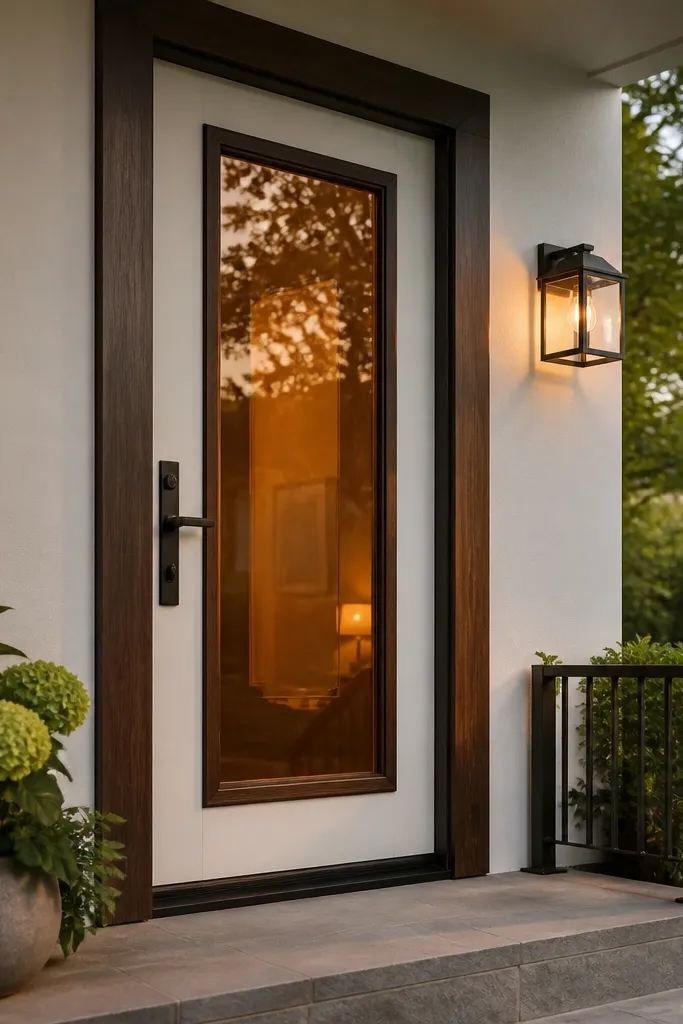
Warm white with a dark walnut frame looks cozy warm because it’s high contrast but still soft thanks to the amber glass. Amber glass adds a gentle glow that makes the entry feel welcoming when lights are on. This design works beautifully if your porch light is near the door, because the glass will tint that light. It’s a good choice for contemporary homes with a simple door shape. DIY difficulty is moderate due to glass panel fitting and sealing.
Paint the door leaf warm white eggshell and let it dry thoroughly. Build or attach a dark walnut frame around a center panel opening, then fit amber textured glass using rubber gaskets and glazing tape. Screw the frame in place and seal edges with exterior sealant so moisture doesn’t get behind the glass. Finish with a matte clear coat over the walnut frame and install a warm brass or bronze handle.
Editor's noteUse textured amber glass instead of clear — it keeps the cozy glow without looking too exposed.
Skip thisOver-tightening glass fittings — it can crack the panel during temperature swings.