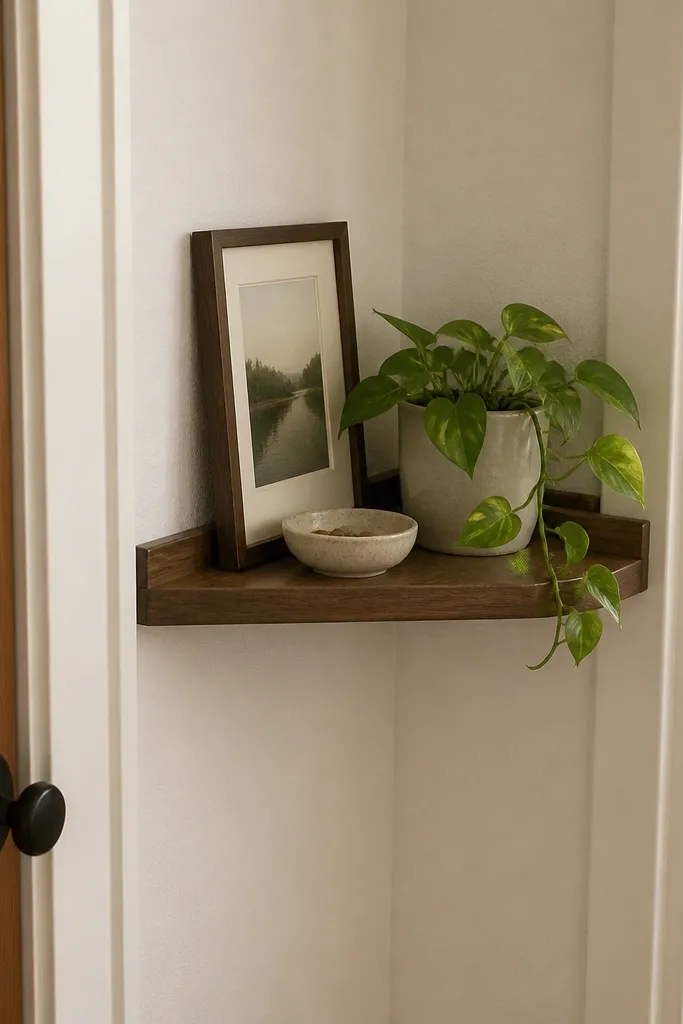
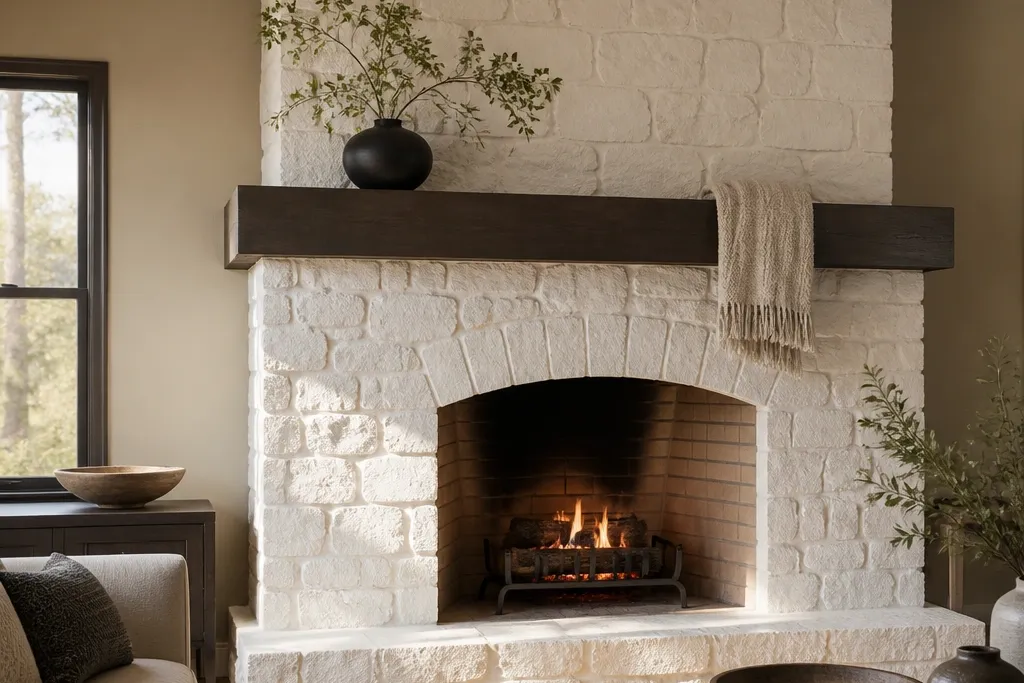
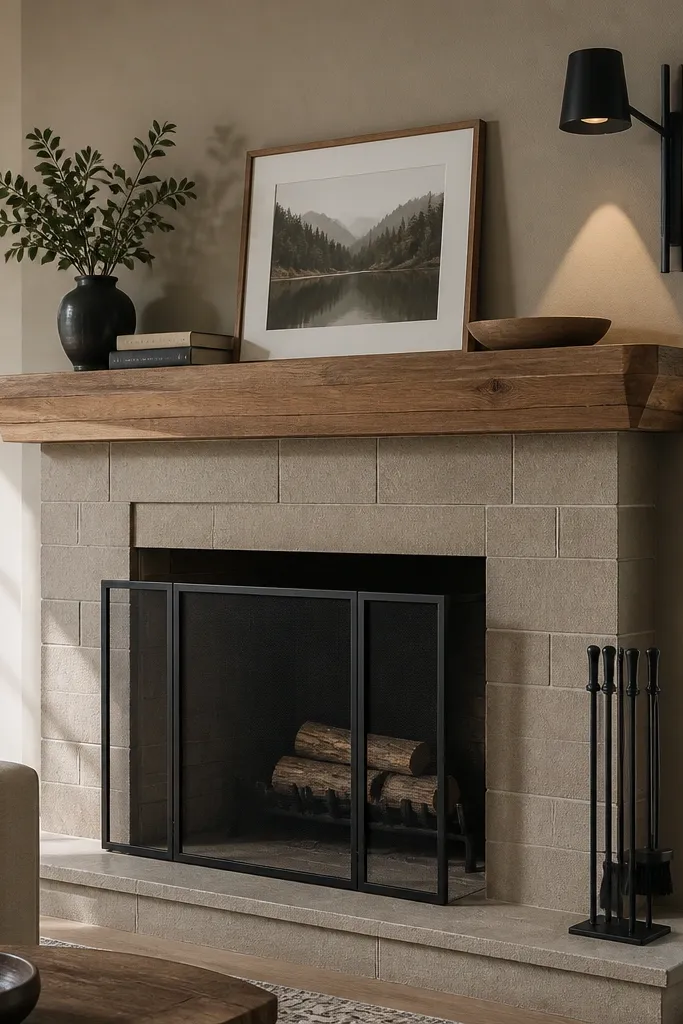
1. Chalky Warm White with Soft Gray Wash
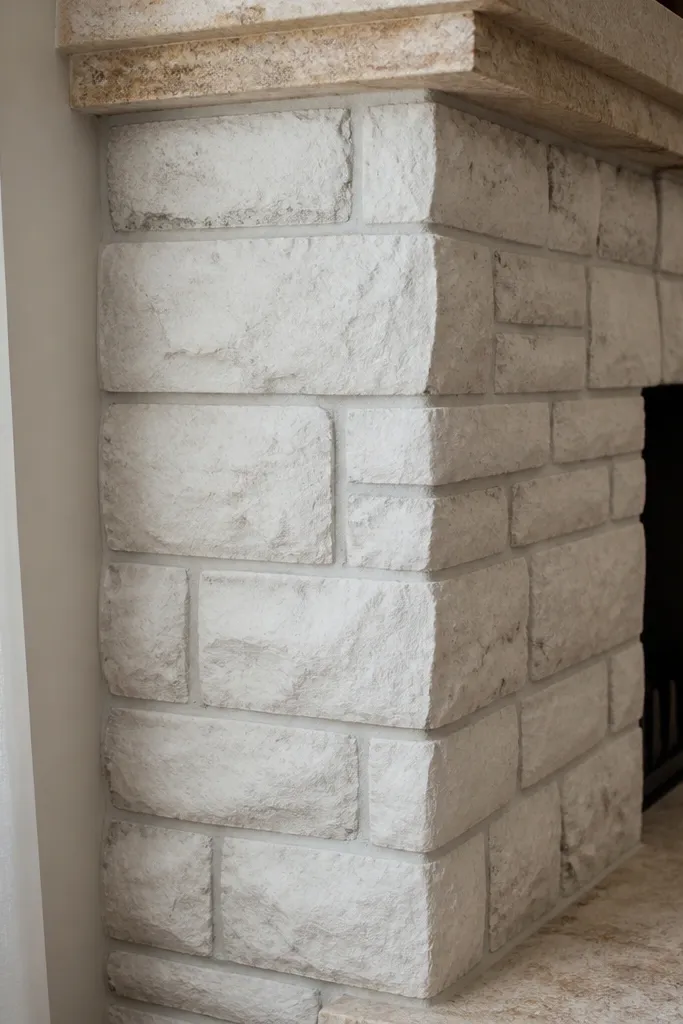
This look makes a stone fireplace feel custom because it turns high-contrast grout lines into a gentle shadow. Start with a chalky warm white as the main color, then add a thin gray wash that only settles into recesses. The result keeps the texture but removes the “pebbly” chaos that reads dated in photos. It’s perfect for rooms with natural wood, woven textiles, and warm undertones where pure bright white would feel too cold.
Editor's noteUse a rag in small sections for the wash — brush strokes lock into texture and show up under daylight.
Start by cleaning the stone thoroughly, then prime with a masonry bonding primer. Roll or brush on a warm white base coat and let it cure fully so the wash doesn’t streak. Mix a gray wash that is mostly water-based paint (thin enough to move easily) and apply it with a rag or soft brush, wiping highlights immediately. Once dry, add a second base coat only where the wash pulled color unevenly, then finish with an eggshell topcoat for a smooth, tailored look.
Skip thisSkip skipping the primer — paint over unprimed stone will look fine for a month, then fail at seams.
2. Greige One-Tone Over the Whole Face
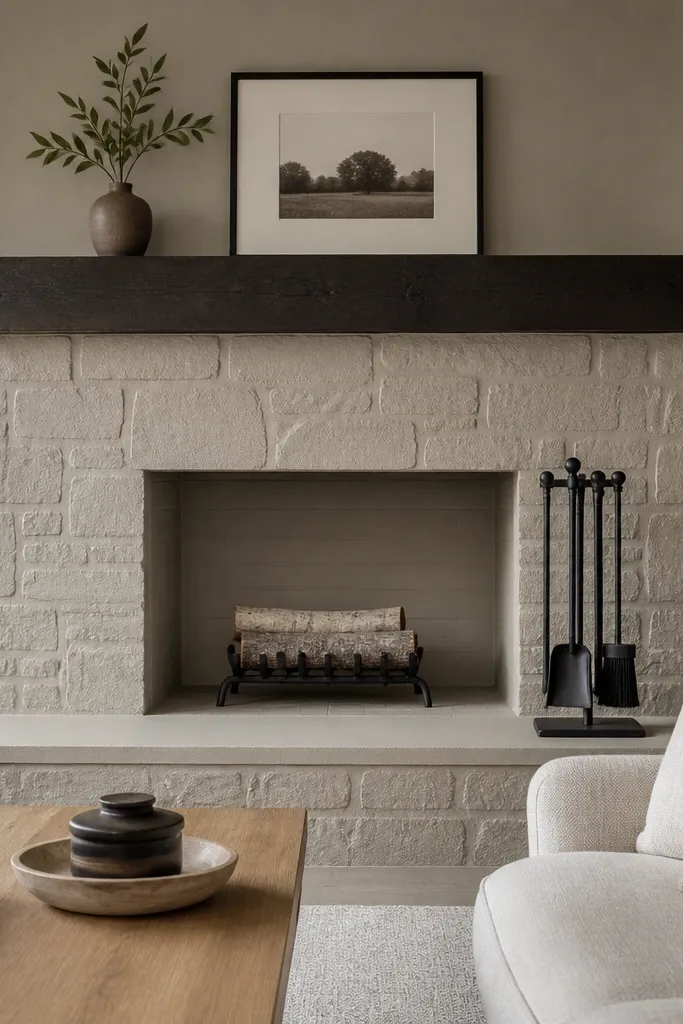
If your fireplace reads busy, greige one-tone fixes it fast. You paint stone and recess areas the same color so the texture becomes subtle instead of loud. This creates the clean, designer vibe people associate with newer builds, especially when paired with a dark mantel or black metal accessories. It also photographs well because the stone stops acting like a pattern and starts acting like a calm backdrop.
Clean and degrease, then scuff glossy or sealed areas lightly and vacuum dust. Prime with masonry primer, then apply a greige base coat using a brush to push paint into grooves and a roller to even the surface. Work in small zones so the finish stays uniform before it starts to tack up. After the first coat dries, do a second full coat to eliminate patchiness, then use eggshell for a crisp look that still hides surface flaws.
Brush into grooves first, then lightly roll — it reduces streaks without flattening the texture.
Don’t try to “spot cover” — every missed recess becomes a darker line later.
3. Deep Charcoal Stone with White Mortar Lines
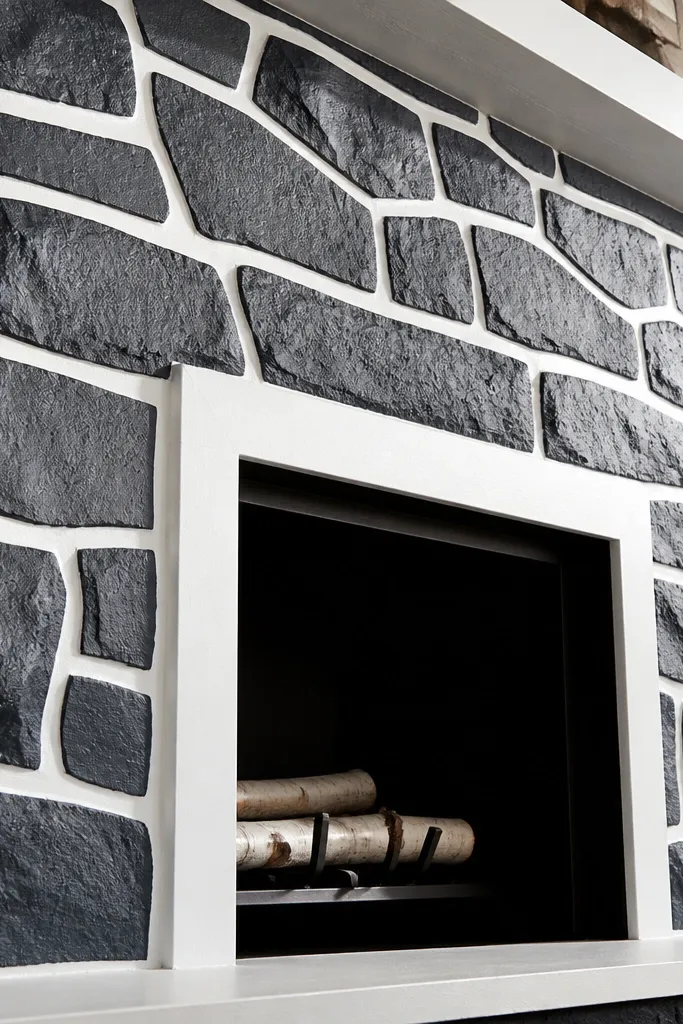
This is bold, graphic, and very photo-friendly. Painting the stone charcoal while keeping or painting mortar recesses bright white creates crisp linework that looks like intentional design, not a remodel. It’s ideal for modern spaces where you want the fireplace to be the focal point without adding trim or new surround. The key is controlling edges so the white lines look sharp and evenly spaced.
Editor's noteTape a guide line along the firebox opening edges so the white linework stays consistent across the whole face.
Prime the entire surface, then apply charcoal paint with a brush to reach every crevice. Let it dry completely and check for thin spots where the stone color might ghost through. For the mortar lines, use a small angled brush or a grout-painting tool and paint the recesses white, wiping any overflow with a damp rag. Finish with a satin or eggshell topcoat over charcoal only if you want a slightly richer sheen; matte can look dusty against the white lines.
Skip thisDon’t use flat white in the recesses — it can look chalky and uneven next to charcoal.
4. Slate Gray Dry-Brush Texture Highlighting
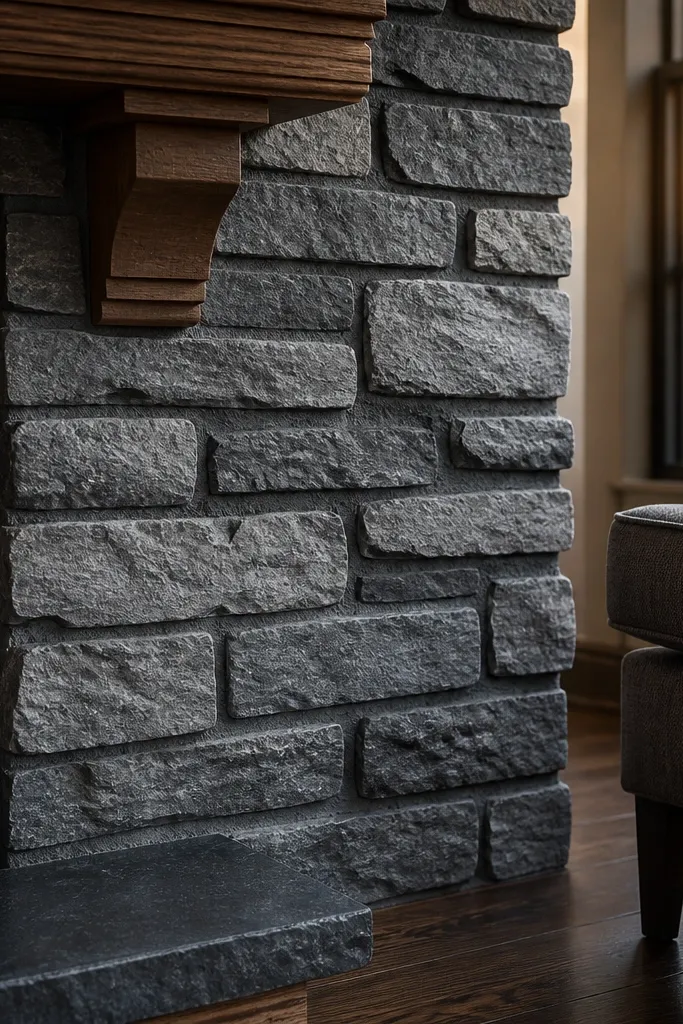
Dry-brushing gives stone a sculpted look without masking the texture. You paint a slate gray base, then add a lighter gray almost dry on the high points so the rocks catch light like they were professionally finished. This makes older stone feel intentional, not painted-over. It works especially well in rooms with gray floors, black fixtures, or cool-toned art where a soft highlight adds depth.
Editor's notePractice on a spare scrap of similar stone or a hidden corner first to dial in the pressure for your texture.
Prime with masonry primer, then apply a slate gray base coat and let it dry fully. Load a flat brush with a lighter gray, then wipe most paint off on cardboard until it barely transfers. Lightly sweep across the stone face so only the peaks pick up color — focus on edges and ridges, not the recesses. Seal with an eggshell topcoat so the dry-brush stays even and doesn’t rub off.
Skip thisDon’t overwork the dry-brush — repeated passes turn highlights muddy.
5. Warm Taupe Stone with Caramel Wood Mantel Pairing
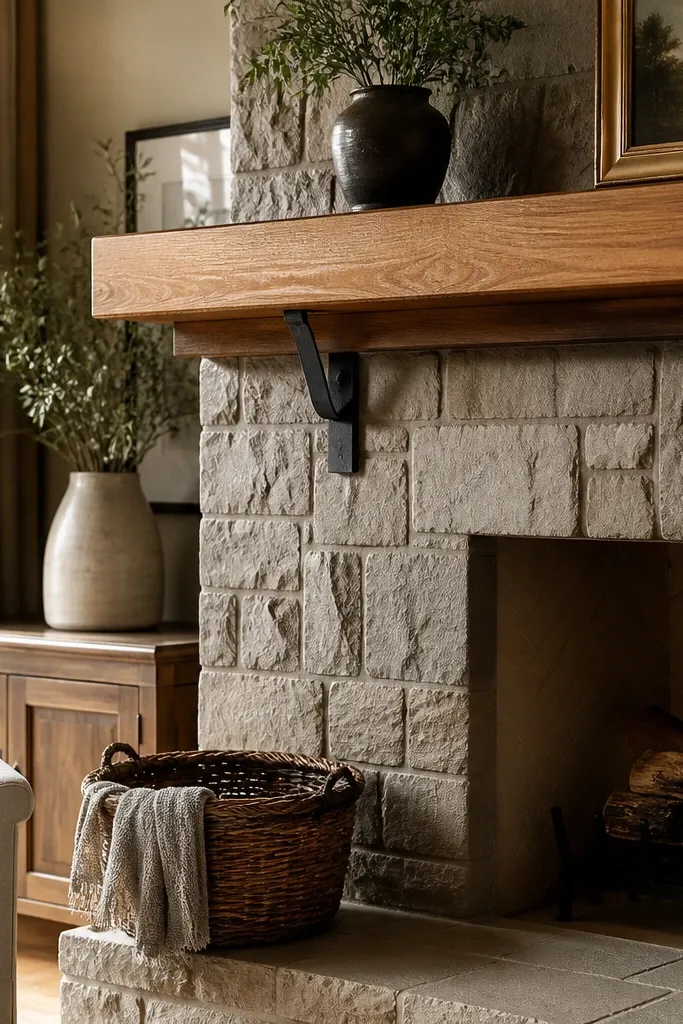
Warm taupe is the sweet spot between gray and beige, and it keeps stone from looking cold. This idea looks high-end because it harmonizes with caramel or medium-brown wood finishes and makes hardware feel more intentional. If your fireplace currently reads beige but uneven, taupe evens it out while still showing texture. It’s a great pick for open-plan rooms where you need the fireplace to blend but still look styled.
Clean, degrease, and prime with a masonry bonding primer. Apply warm taupe paint as the single main coat, brushing into grooves and rolling to flatten the overall tone. After the first coat, inspect under side lighting; touch up thin areas before the second coat. Finish with eggshell for a soft sheen that looks clean around the firebox frame and mantel edges.
Use a paint color sampler under daylight — taupe can tip too pink if your room has warm lighting.
Don’t skip two coats; taupe shows patchiness more than darker colors.
6. Antique White with Faded Limewash Recesses
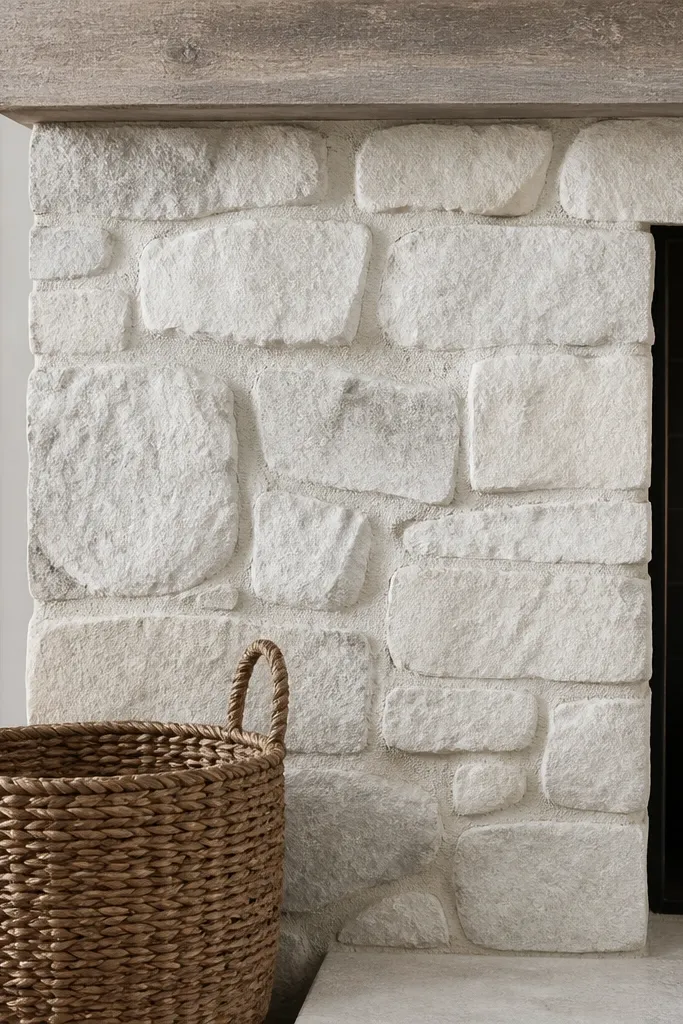
This look gives stone a gentle, aged feel without going full shabby-chic. Antique white keeps things bright, while faded limewash-style recesses add subtle variation that looks like natural mineral aging. It’s photogenic because it creates soft depth — the recesses look slightly older, the stone face stays clean. Works best in cottages, farmhouse-modern living rooms, and anywhere you have light wood and matte black accents.
Editor's noteKeep the limewash very thin — you want tint, not stripe lines.
Prime with masonry primer, then apply antique white as your base coat. For recess shading, thin a limewash-like color (a muted pale green or yellow-green) and apply sparingly so it tints only the low areas. Wipe the surface quickly with a damp rag to remove any haze on the high points. After it dries, apply a final topcoat in matte or eggshell depending on your stone texture; matte hides unevenness and mimics limewash feel.
Skip thisDon’t seal over fresh limewash tone too soon — it can trap uneven wet color.
7. Modern Black Surround with Light Gray Stone Face
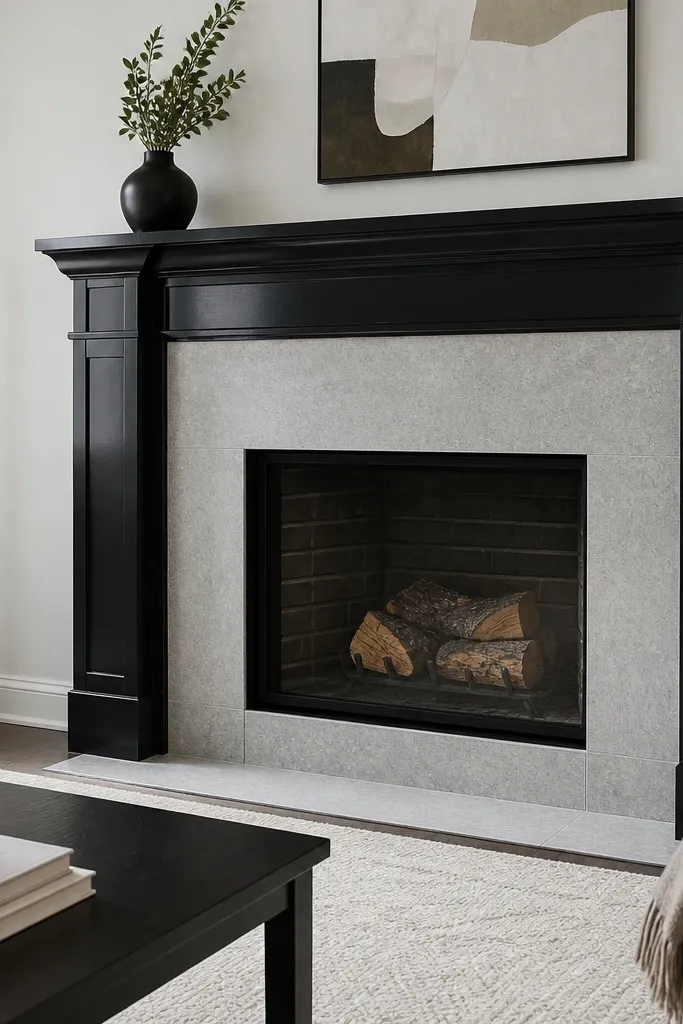
This is the cleanest way to make an existing stone fireplace feel modern without repainting everything the same dark color. Paint the stone face a light gray so the texture stays refined, then paint the surround, trim, or adjacent flat surfaces black for contrast. The black frames the opening and makes the whole fireplace read designed. It looks especially sharp with black screens, matte metal sconces, or a white mantel shelf.
Editor's notePress tape edges down with a plastic putty knife so black doesn’t bleed onto the gray.
Prime the stone face and any porous areas with masonry primer. Use light gray for the stone face in two coats, brushing into crevices first. Mask off the stone from the surround with painter’s tape and use a separate brush for black paint so you don’t contaminate colors. Apply two coats of black on the trim/surround and finish with satin or eggshell for a smooth, modern sheen.
Skip thisDon’t paint black first — any drips on light gray are harder to fix cleanly.
8. Ivory with Sand-Toned Glaze for Sun-Baked Depth
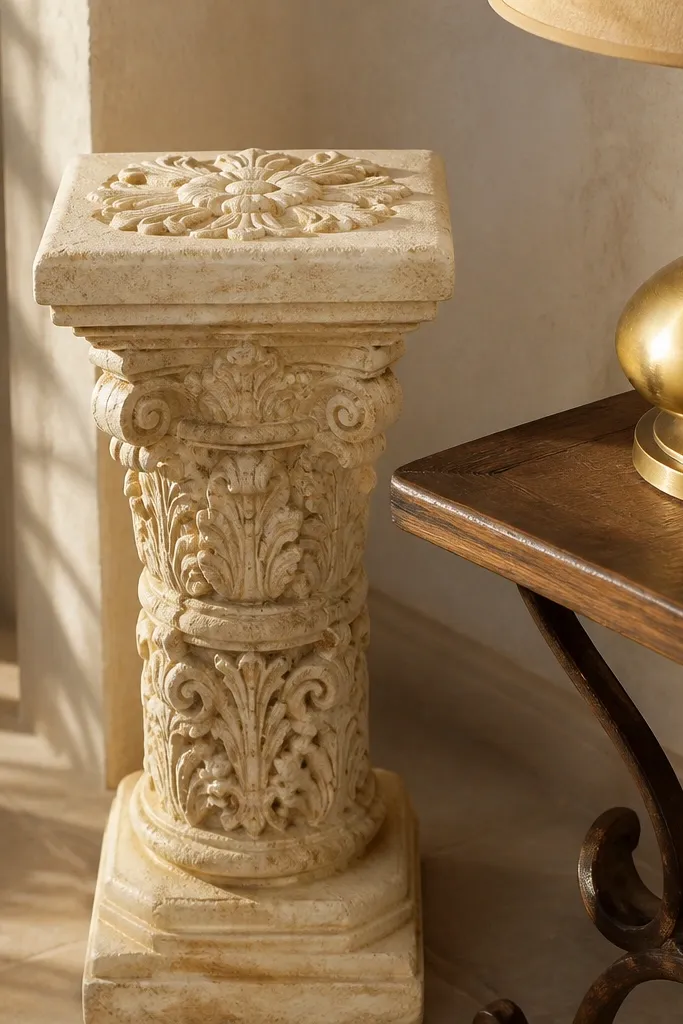
Ivory plus sand glazing makes stone look like it came from a warmer climate. The base stays bright and clean, while the glaze adds a sandy undertone in recesses so texture has depth without looking dirty. This is a great high-end option if your current fireplace looks gray, sterile, or too stark. It pairs well with brass, warm stone counters, and off-white walls.
Editor's noteUse a glaze medium, not just water, for more controlled tint and fewer streaks.
Prime with bonding primer, then apply an ivory base coat in two even layers. Mix a sand-toned glaze using a translucent paint glaze medium or by thinning paint heavily with glaze medium. Apply the glaze with a brush into recesses, then wipe the surface so only low areas retain the tint. Let it dry, then topcoat with eggshell to lock the color and keep the finish easy to wipe.
Skip thisDon’t glaze over glossy paint — it can repel and leave patchy spots.
9. Soft Sage Stone with Whitewashed Mantel
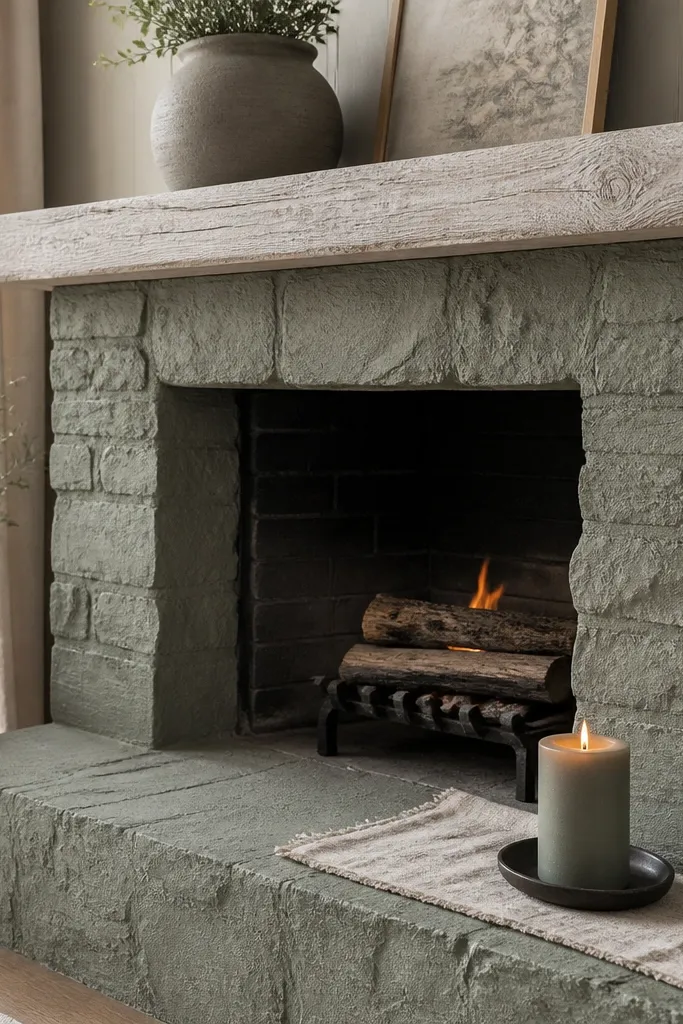
Soft sage is a calming color that still looks stylish, and it makes stone feel fresh instead of heavy. Pairing sage stone with a whitewashed mantel keeps the fireplace from looking too dark and gives a light, airy frame. This look photographs well because sage has enough pigment to read clearly, but it stays gentle. It works in kitchens and living rooms with cream walls, light oak, and natural linens.
Prime the stone face, then paint with soft sage in two coats. For the mantel, use a whitewash technique: thin white paint, apply with a brush, then wipe back so wood grain or texture still shows. Let both dry fully before removing tape. Finish the stone with eggshell so it wipes clean; keep the mantel in matte or satin depending on how you want it to look against the stone.
If your stone texture is deep, use a thicker brush bristle so sage fills without leaving thin gray shadows.
Don’t use a highly saturated green — it reads harsh next to warm wood.
10. Sandstone Beige with Antiqued Edge Dry-Brush
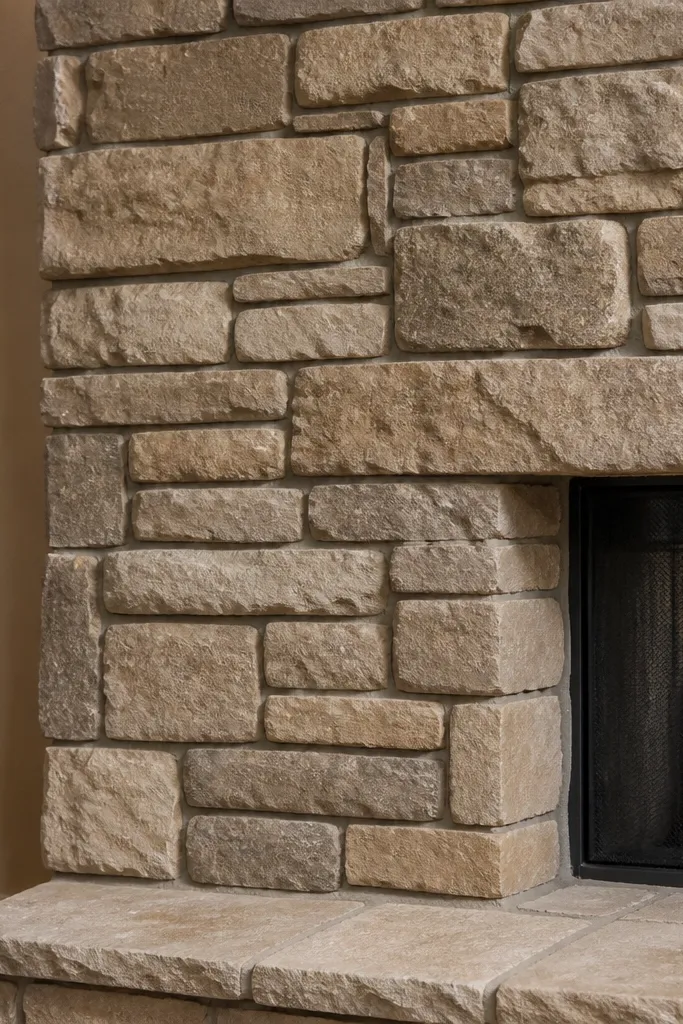
This idea gives stone a premium, mineral-like finish. You paint everything a believable sandstone beige, then dry-brush slightly lighter tones on edges so the rocks look dimensional. It’s subtle enough for everyday rooms but still looks “done” in photos. If your fireplace is currently a flat beige with no depth, dry-brushing brings back that sculpted effect.
Editor's noteWork from one side of the fireplace toward the other so the highlight pattern stays consistent.
Prime thoroughly, then apply sandstone beige as a base coat. After it cures, mix a second lighter beige and load a brush lightly — you should see very little paint transfer. Dry-brush only the outer edges and tops of stones, keeping recesses consistent. Seal with eggshell so the finish looks even and doesn’t rub off on the textured peaks.
Skip thisDon’t highlight the recesses — that makes stone look dirty instead of dimensional.
11. Two-Tone Stone: Darker Base, Lighter Peaks
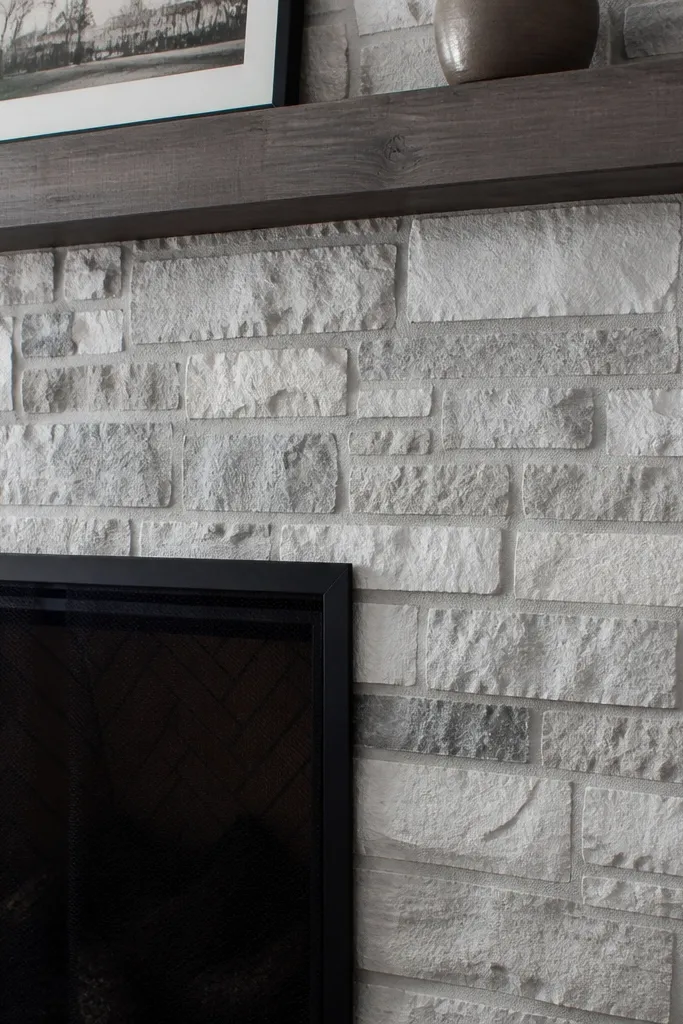
Two-tone painting makes stone feel carved, not covered. You paint the recess-heavy areas a darker shade, then lighten the high points so light naturally travels across the texture. This look reads high-end because it mimics how natural stone shows depth. It’s great if your fireplace is in a dim room and you want it to look brighter without going fully light.
Prime, then paint the whole face in a darker gray base. Once dry, use a lighter gray and a small brush to paint only the peaks and ridges — think “edge highlights,” not full coverage. Keep a soft blend by feathering the lighter paint outward a little, then stopping before recesses. Topcoat with eggshell so both tones stay clean and the texture remains tactile.
Use a smaller brush than you think — control matters more than coverage here.
Don’t blend aggressively — harsh transitions look like sloppy repainting.
12. Pearl White with Gray Vein-Look Glaze
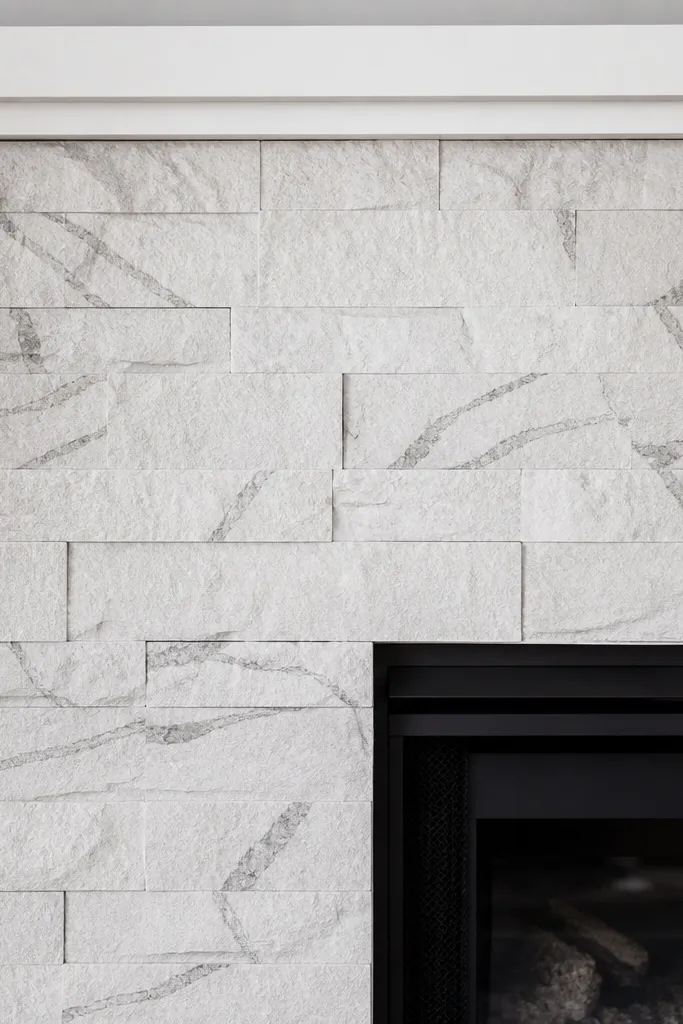
This one is for people who want the fireplace to look like custom stonework. You paint a pearl white base, then add a gray glaze in thin, irregular lines across some stones to mimic natural veining. The trick is restraint — you place lines where they catch light so it reads like design, not camouflage. This looks stunning with sleek modern mantels and minimalist decor.
Editor's noteStep back every 30 seconds — spacing is what makes it look like stone, not graffiti.
Prime and paint a pearl white base coat in two layers. Make a gray glaze with a translucent consistency and a very small brush. Apply thin lines across selected stone faces, varying length and direction; keep most stones unlined so the effect stays premium. After it dries, seal with eggshell to lock the pattern and make it wipeable.
Skip thisDon’t line every rock — full coverage turns into busy patterning.
13. Warm Charcoal with Coppery Dry-Glaze Highlights
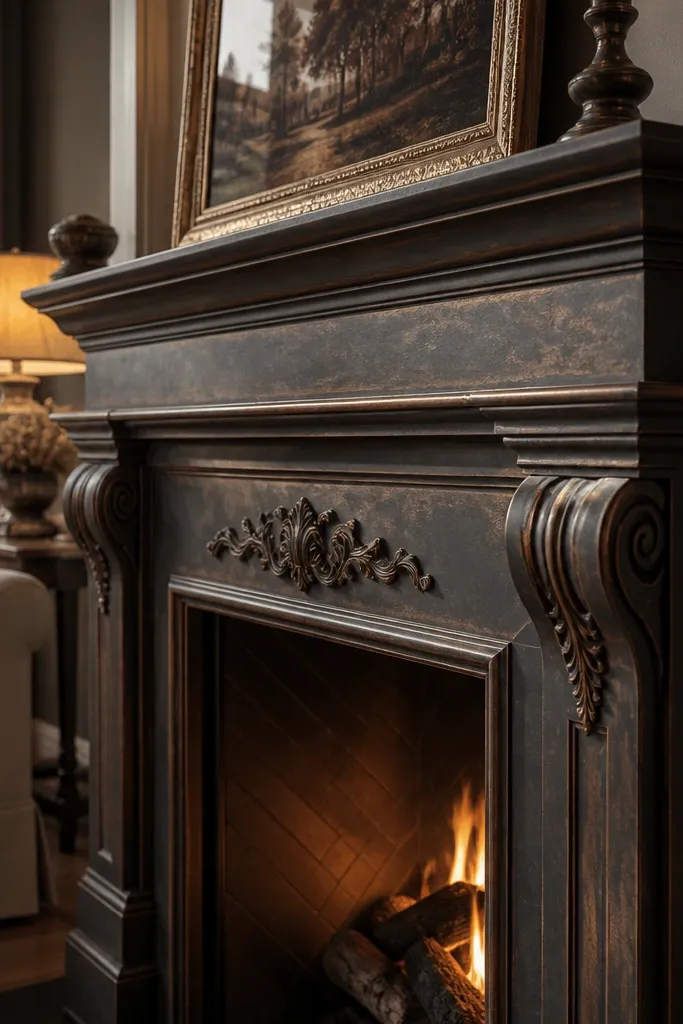
Warm charcoal keeps the fireplace grounded, and a coppery dry-glaze makes the texture catch light like old metal. This look feels high-end because it adds a second material vibe without adding actual metal cladding. It’s a great match for brass picture frames, copper bar carts, or warm lighting. The copper should be subtle — enough to glow, not enough to look like you used gold paint.
Editor's noteUse a foam brush for the copper glaze — it grips texture and reduces streaky lines.
Prime, then apply warm charcoal as your base coat in two layers. After drying, mix a copper-tinted glaze or thin metallic paint with glaze medium until it barely colors the brush. Dry-brush or lightly sponge it on only the peaks and edges, wiping excess quickly. Seal with satin or eggshell so the copper doesn’t rub off and the charcoal stays consistent.
Skip thisDon’t go heavy-handed with metallics — thick metallic glaze looks patchy and cheap.
14. Cool White with Matte Gray Recess Wash
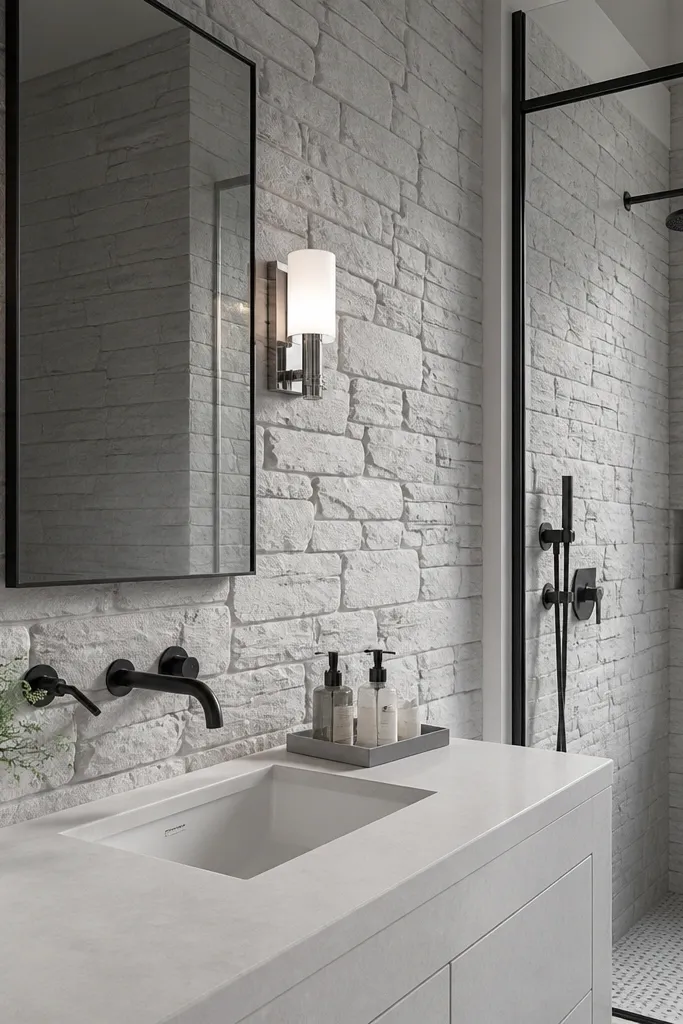
Cool white makes the fireplace feel crisp, and a matte gray recess wash gives shape. This option is ideal if your stone currently looks yellowed or beige and you want a cleaner, more modern baseline. The matte gray in the low areas creates a shadow effect that feels architectural. Pair it with black, chrome, or cool-toned decor for the best cohesion.
Editor's noteSponge application gives softer shadow edges than brushing, which reads more expensive.
Prime with masonry primer, then paint cool white in two full coats. Mix a matte gray wash that is thin and low-sheen, then apply with a sponge in small sections. Wipe the high areas immediately so the wash stays in recesses only. When fully dry, topcoat lightly with matte or keep it matte if your topcoat plan matches the look of the wash.
Skip thisDon’t use glossy topcoat — it makes stone look plastic in photos.
15. Oiled Limestone Look with Greige Wash Over Beige
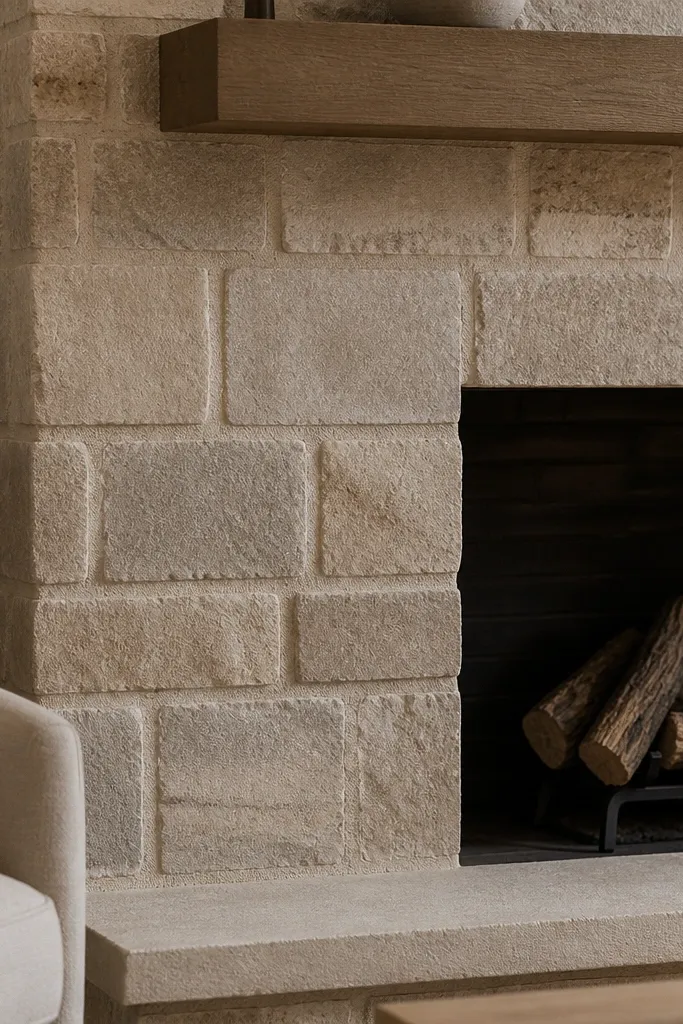
This look mimics the way limestone looks after it’s been sealed: warm, smooth, and slightly toned. Start with a beige base, then add a greige wash that tints everything subtly and makes the surface feel more uniform. It’s a great choice when you want the texture to remain but you hate the uneven dye look that some stones have. In daylight, it reads soft and high-end without looking flat.
Editor's noteUse glaze medium for the wash — it keeps the tone even and reduces streaking.
Prime with masonry bonding primer, then apply a beige base coat in two layers. Mix a greige wash using paint plus glaze medium so it spreads evenly and doesn’t dry too fast. Apply the wash with a brush, then wipe back so only a gentle film remains on the stone face and a bit gathers in recesses. Finish with satin topcoat to create that “sealed” look while staying forgiving on uneven texture.
Skip thisDon’t choose a base that’s too yellow — the greige wash can make it look dirty.
16. Matte Dove Gray One-Coat Finish
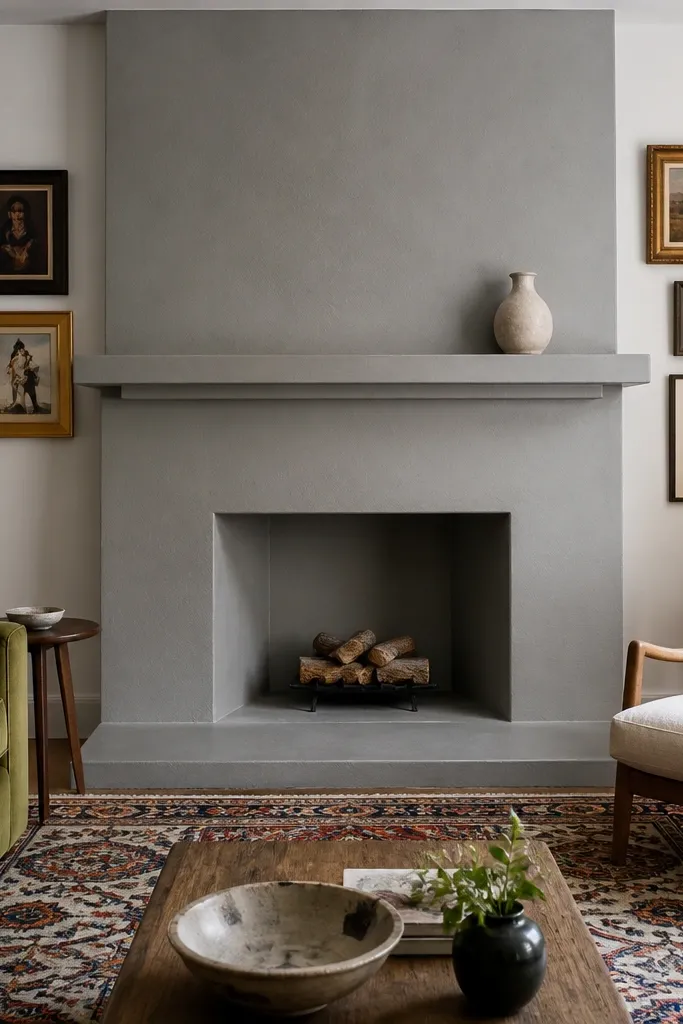
A matte dove gray is the easiest way to make stone look modern and calm. This is a strong option when your room already has a lot going on — art, furniture, or patterned rugs — because it keeps the fireplace from competing for attention. The key is an even, uniform finish so the stone reads like a single material surface. Matte also hides small imperfections in uneven stone texture.
Clean, degrease, and prime with masonry bonding primer. Apply dove gray using a brush to cover grooves and a roller for the flat spread, then stop only when you get full coverage. Let dry fully and inspect under a bright lamp at an angle; if you see any lighter patches, spot prime and add a second coat in those areas. Seal with a matte topcoat designed for masonry or use a matte paint with proper durability for interior walls.
Angle light at the surface during drying — it reveals missed spots before the paint fully cures.
Don’t rush the second coat — early touch-ups can leave lap marks on textured stone.
17. Terracotta Clay Wash Over Light Stone
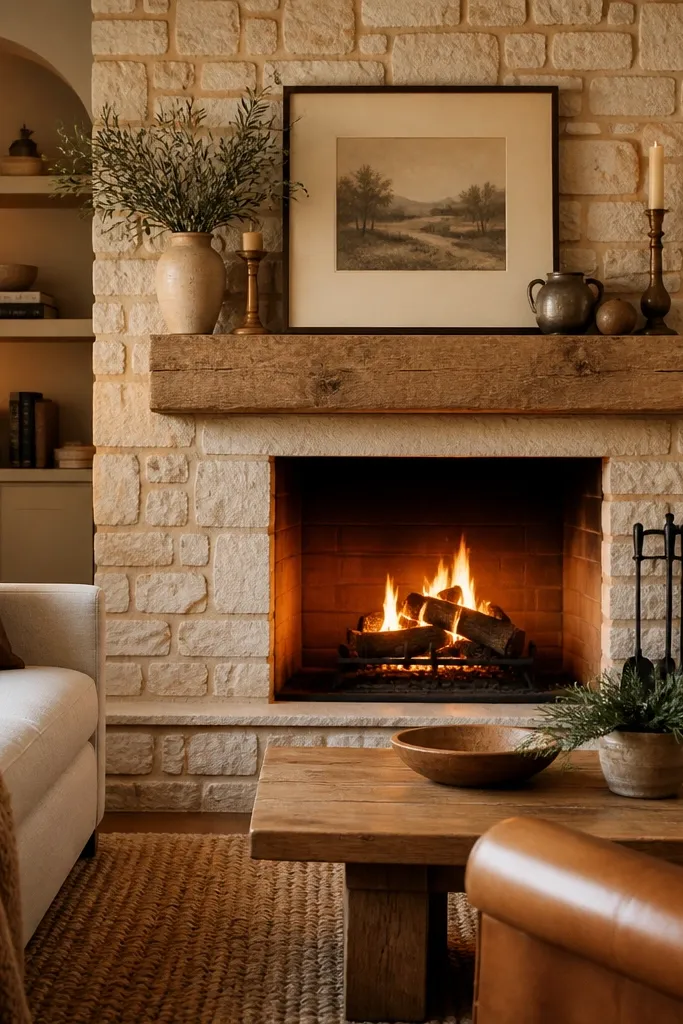
Terracotta wash makes a fireplace look like it belongs in a warm, sunlit home. You keep the base light and clean, then tint the recesses with clay-orange so the texture looks naturally aged. It’s photogenic because the warm undertone makes shadows look richer, especially under warm bulbs. This pairs beautifully with white walls, natural wood, and patterned tiles.
Prime the stone, then paint a light neutral base coat (off-white or very pale beige) in two layers. Mix terracotta paint into a glaze medium or thin it heavily so it flows like a wash. Apply it into recesses with a brush or sponge, then wipe the surface so the tint stays low. After drying, topcoat with eggshell to keep the color stable and wipeable.
Use a slightly redder terracotta than you think — orange-only can go too dusty on white bases.
Don’t apply terracotta thick — thick paint makes stone look coated instead of tinted.
18. Graphite Black Fireplace with White Mantel Shelf
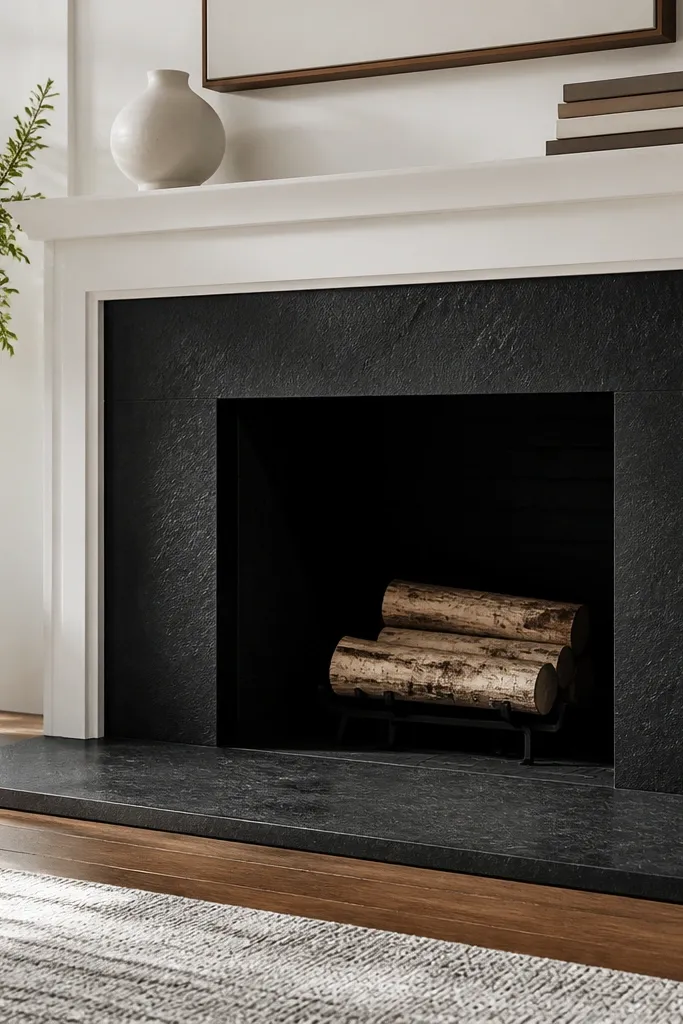
Graphite black is dramatic, but it looks high-end when you keep the surrounding architecture bright. Paint the stone face graphite black in two even coats, then contrast with a white mantel shelf or a white-painted surround. This setup makes the fireplace feel intentional and framed, not heavy. It’s best for rooms with light walls, light floors, or big windows so the black doesn’t swallow the space.
Editor's noteIf the black looks patchy during drying, don’t add more paint right away — let it dry and recoat after it fully sets.
Prime the stone first with bonding primer, then apply graphite black paint with a brush into every groove. Follow with a roller to smooth the coverage and reduce streaks. If your stone texture is deep, expect more paint consumption — plan for two coats at minimum. For the mantel shelf, sand and prime, then use a bright white enamel or eggshell for a clean edge. Finish by sealing the black with satin or eggshell so it stays wipeable around the firebox area.
Skip thisDon’t use flat black — it can look chalky and uneven on textured stone.
19. Two-Stage Limewash: White Base with Pale Gray Soft Spots
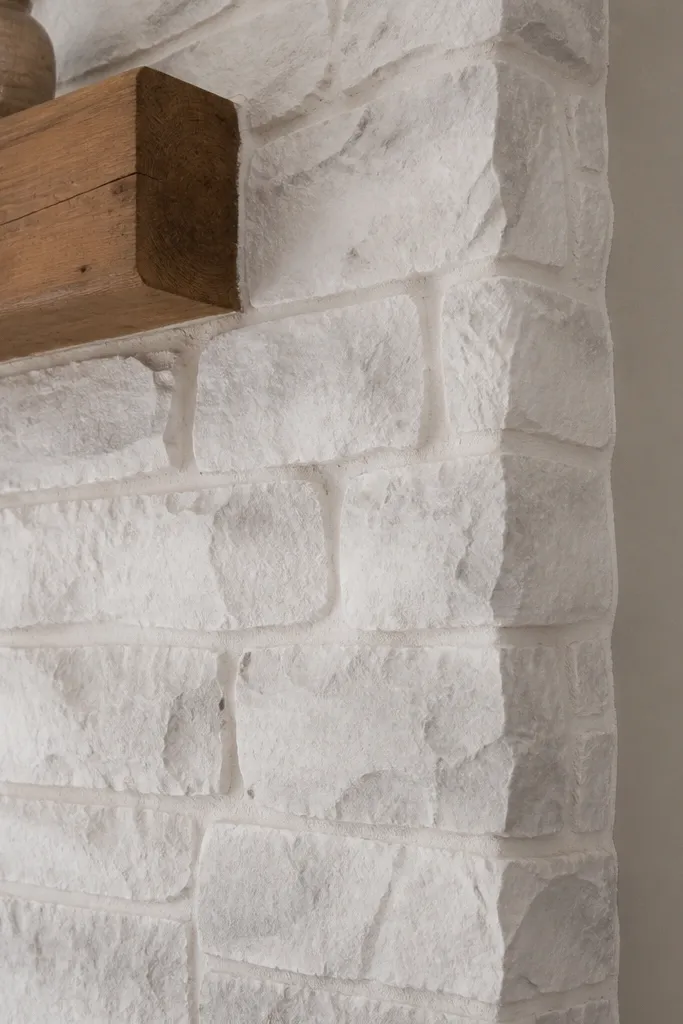
This is the limewash look that still reads clean. You paint a white base, then add pale gray soft mottling so the stone has natural variation without hard lines. The effect feels artisan because it’s irregular and breathable-looking, but it’s still paint — so you can control it. Great for people who want charm without the heavy, distressed look that can date a room.
Prime with masonry primer, then apply a white base coat and let it dry. Use a rag or sponge to dab pale gray paint thinned with water or glaze medium — keep the dabs random and light. Work in small areas so it doesn’t dry before you blend the edges with a barely damp rag. Once it dries, protect with a matte topcoat so the surface stays soft-looking and doesn’t get glossy patches.
Mix a slightly lighter gray than you think — too dark turns the mottling into dirt.
Don’t cover the entire surface with mottling — keep most of it white.
20. Satin Whitewash Over Natural Stone with Darkened Mortar
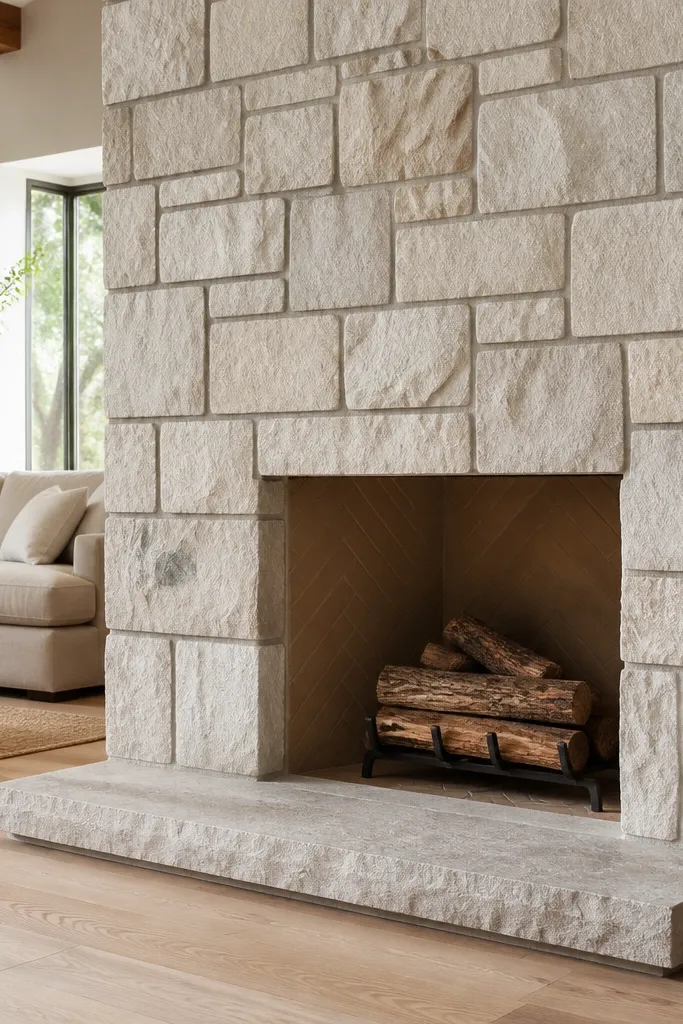
This is the high-end stone fireplace makeover look that reads airy from across the room but still shows real stone texture up close. You get a soft satin whitewash on the stone face, then you deepen the mortar so the joints stay crisp instead of turning muddy. It fixes the common problem where white paint hides the stone pattern and makes the whole surround look flat. Use it if your fireplace already has decent stone shape and you want to keep that character while upgrading the color and finish. This project is DIY-friendly if you can do careful brushing and you’re patient with drying times — plan on about a full weekend for prep, coats, and curing before you touch anything again.
Editor's noteWork one section at a time and keep a rag damp with clean water so you can pull back whitewash before it sets — that’s what keeps the stone pattern sharp. Use a satin sealer, not gloss, or the joints will look shiny and cheap.
Start by degreasing the stone and mortar with a masonry cleaner, then rinse and let it dry fully — the surface should feel squeaky when you wipe it. Tape the mantel edges and hearth, then thin a whitewash using matte interior paint cut with water (around 1 part paint to 1 part water) plus a splash of acrylic bonding agent to keep it from chalking. Brush the whitewash onto the stone face only, pushing it into pores lightly, then wipe back with a damp rag so highlights stay on the raised areas and the low spots get a little more coverage. After the whitewash dries, use a small artist brush to darken the mortar lines with a tinted masonry stain or a watered-down gray-brown paint (about 2 parts paint to 1 part water) — keep it in the joints and wipe any spill off the stone face immediately. Seal everything with a breathable masonry sealer in a satin finish so the white doesn’t yellow fast and the mortar stays easy to clean.
Skip thisAvoid flooding the mortar with whitewash — if the joints lighten too, the whole fireplace loses that high-end definition.