
1. Ceiling-mount linen drape with hidden track cover
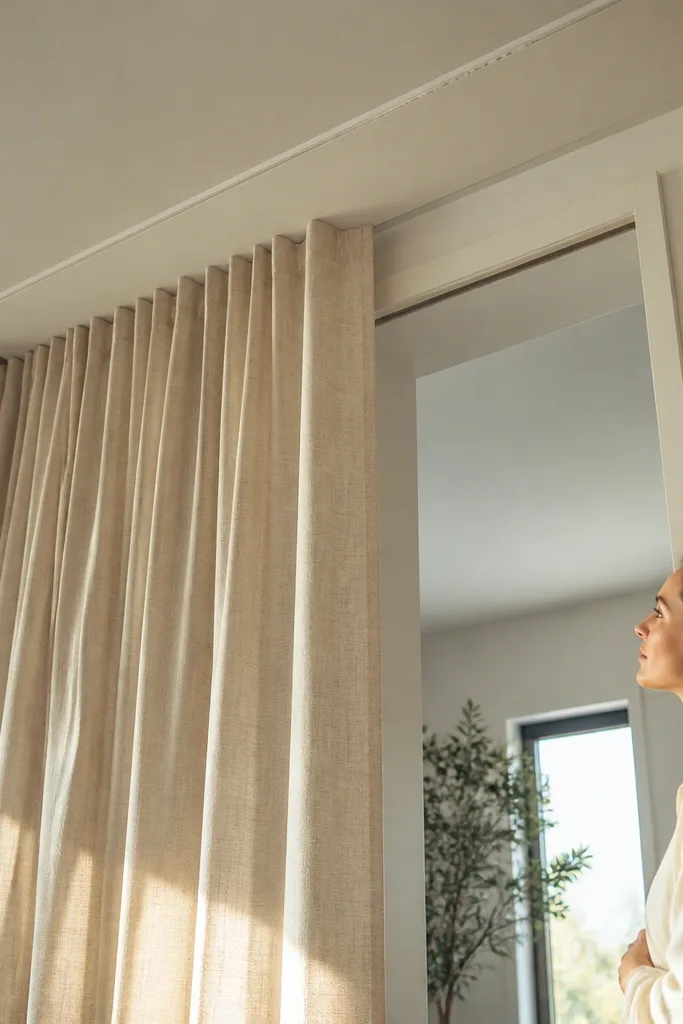
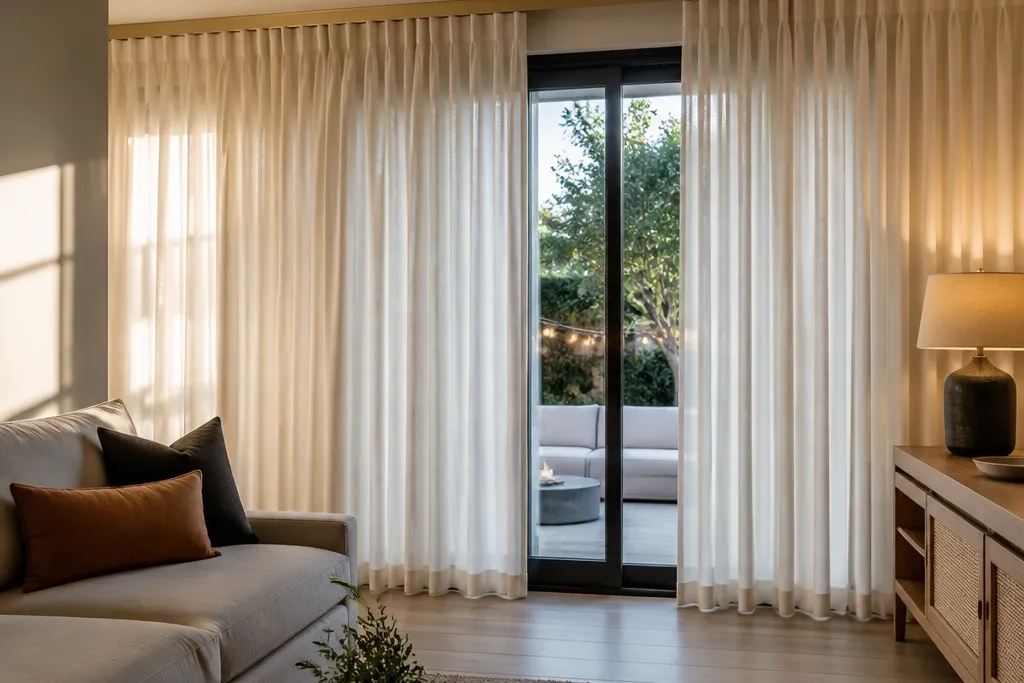
This is the cleanest way to make sliding door hardware vanish. A ceiling-mount rod or track cover creates one continuous “fabric wall” that reads designer in both daylight and lamps. Use medium-weight linen blend panels so they fall straight and don’t cling to the door gap. The overlap should land over the door edge by a few inches, so you don’t see a bright line when the panels close. DIY difficulty is moderate, mainly because alignment matters — but the payoff is a crisp, high-end silhouette.
Start by locating the exact track/door opening line, then mark a ceiling mount line 3-6 inches above the top of the door frame. Install two ceiling brackets (or a ceiling track) spaced to support the panel width, and pre-check that the curtains clear the door when it slides. Hang 2 panels per side with a 2-4 inch overlap and hem them with weights if you want that heavy, premium drop. Finish by adding a track cover casing or a slim fascia strip in the same finish as the hardware so nothing mechanical shows.
If your ceiling is uneven, shim the brackets before drilling — it prevents a curtain that “leans” visually.
Avoid mounting the rod at frame height; it exposes the track and turns the door into a stripe.
2. Double-rod layered drapes for a built-in boutique look
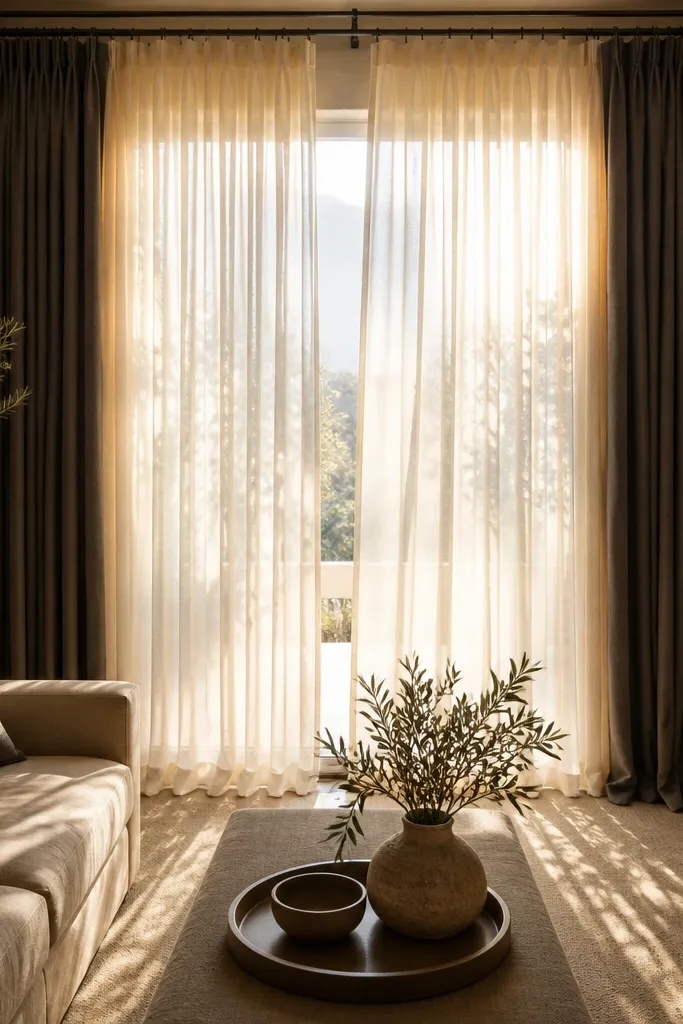
Layered drapes make sliding doors look like a planned architectural feature instead of a utilitarian opening. A front rod with sheer or lightweight panels softens the light, while a back rod with heavier curtains blocks the visual line of the door. This combination also gives you options: close both layers for privacy, open the heavy layer for a bright, styled look. Choose fabric that drapes with weight — faux silk, linen blend, or cotton velvet — so the layers stack neatly. It’s a great fit for living rooms, bedrooms, and hallways where you want the opening to look intentional from across the room.
Mark two parallel mounting lines: one 2-3 inches forward of the other, both 3-6 inches above the door top. Install the back rod first, then hang the heavier panels and set their width so they overlap 4-6 inches when closed. Add the front sheer panels on a separate rod, using lighter fabric clips or rings that slide smoothly. Finally, adjust the stacking so the sheer layer peaks behind the heavy layer by about 1-2 inches, then iron or steam to set the folds.
Editor's noteUse fabric weights on the heavy layer and keep sheers unweighted so they billow softly without dragging.
Skip thisDon’t use the same fabric weight for both layers; if both are heavy, the opening looks bulky.
3. Weighted blackout velvet panels with soft center seam
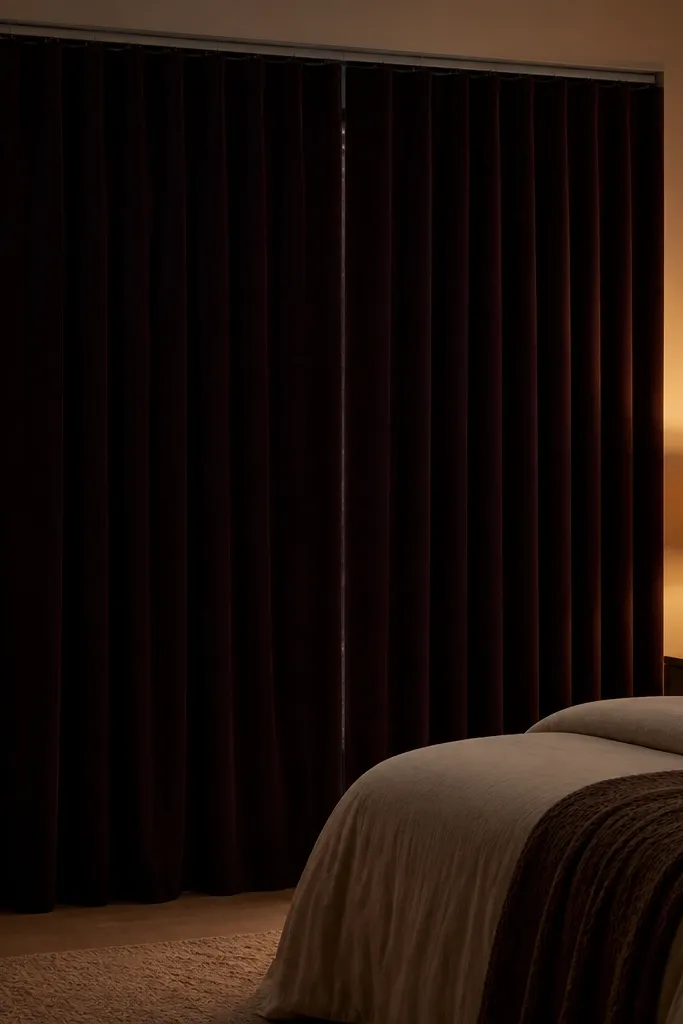
If you want high-end sliding door ideas that look expensive in low light, go velvet with blackout backing. Velvet’s pile catches light and hides minor imperfections in the track line, and the blackout layer keeps the door gap from showing as a bright stripe at night. The key is a soft center seam — the two panels meet cleanly without punching a hard crease. Use weighted hems so the drape lands and doesn’t float up near the floor. This works especially well in bedrooms and media rooms where you care about both aesthetics and light control.
Buy blackout lining or blackout velvet panels, then add or confirm hem weights so the bottom edge stays heavy. Mount a rod 4-6 inches above the door top and extend it 6-10 inches past each side so the panels overlap the frame. Hang two panels and adjust so they meet at the center with a 1-2 inch overlap, not a tight butt seam. Steam the pile carefully and press the panels where they meet so the center seam looks intentional.
Editor's noteChoose velvet with a matte face and keep nap direction consistent across both panels for a uniform sheen.
Skip thisSkip cheap velvet that sheds; it looks fuzzy in close-up photos and around the hem.
4. Roman shade-style curtain panels with pleat tape
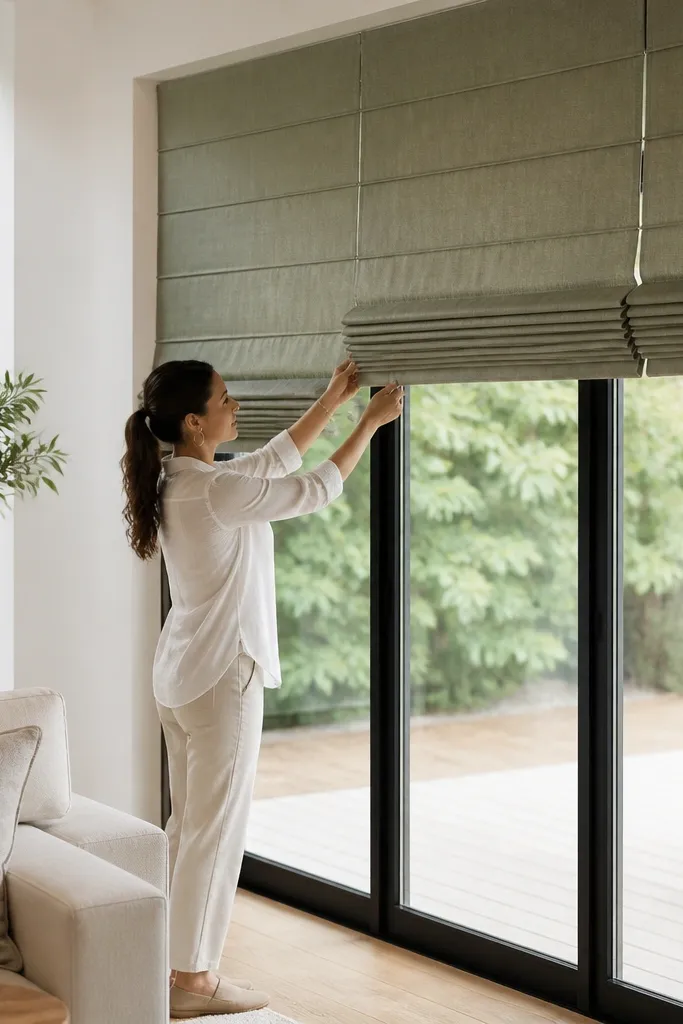
Roman-shade styling gives a tailored, high-end look even when you don’t want full-length drapes. The pleat tape controls how the fabric folds, so the curtain stays structured instead of collapsing into random waves. This works well for sliding doors that are used frequently because the panels can lift and stack neatly. Pick medium-weight cotton or linen blend and use blackout lining if you need privacy and light control. The final look is crisp and architectural, great for dining rooms, home offices, and entryways.
Install a top track or a rod with curtain clips that can handle a pleat-tape setup. Sew or apply pleat tape to the back of each panel at consistent spacing, then attach the panel to the lift system. Hang the panels so they clear the door path and maintain overlap when closed. Test the lift at full travel, then add a small weighted bottom bar so the fabric stays flat when lowered.
Editor's noteUse a stiff bottom bar even with blackout fabric; it stops the panel from sagging in the middle.
Skip thisDon’t skip pleat tape; freehand pleats look homemade fast.
5. Faux silk café panels over the top rail
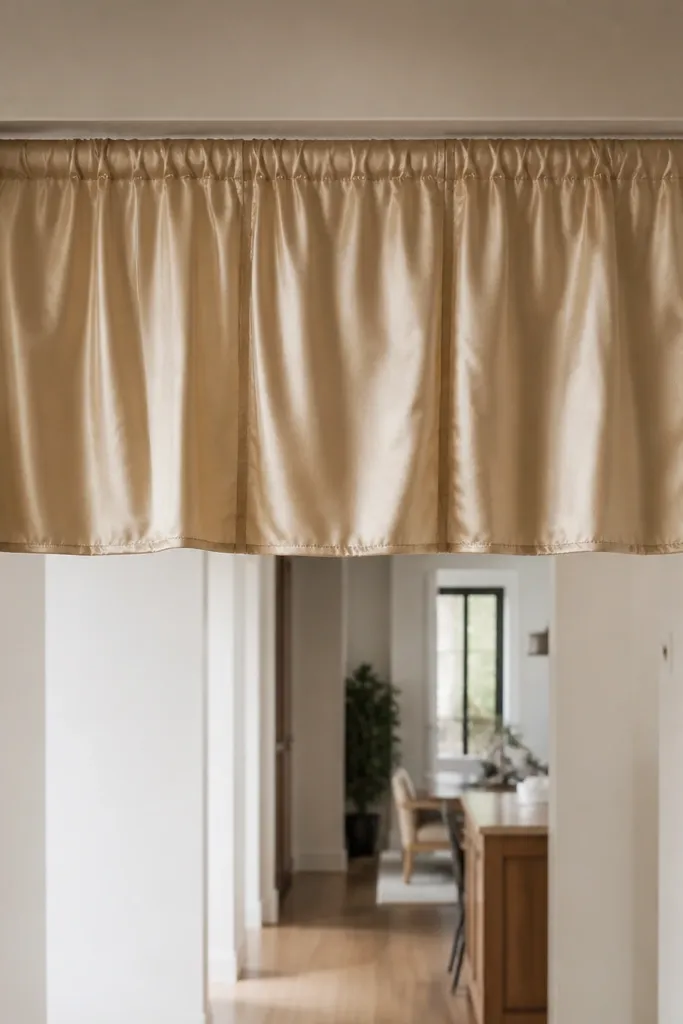
If you want a high-end look without covering the whole opening, café panels are the move. They dress the upper portion of the door so the rail line disappears, while leaving the lower area clean for furniture or a walkway. Faux silk drapes with a smooth shine that reads expensive, and the short length makes DIY installation simple. Use a rod mounted high so the panels still frame the opening. This is a smart fit for kitchens, breakfast nooks, and apartments where you want style but not full blackout.
Mount a short rod on the wall above the sliding door top, extending 4-6 inches beyond each side. Cut or buy two café panels that are 18-24 inches tall, then hem the bottom edges if needed. Attach with rings or clip-on hooks, then center them so they overlap slightly at the middle. Press the fabric flat and steam to set the folds so the top edge looks straight.
Editor's noteChoose panels with a built-in rod pocket; it hides the hardware and looks cleaner than clip-only tops.
Skip thisAvoid sheer-only café panels if the door gap shows from street light; use a lining or thicker fabric.
6. Geometric sheer layer with solid blackout underlay
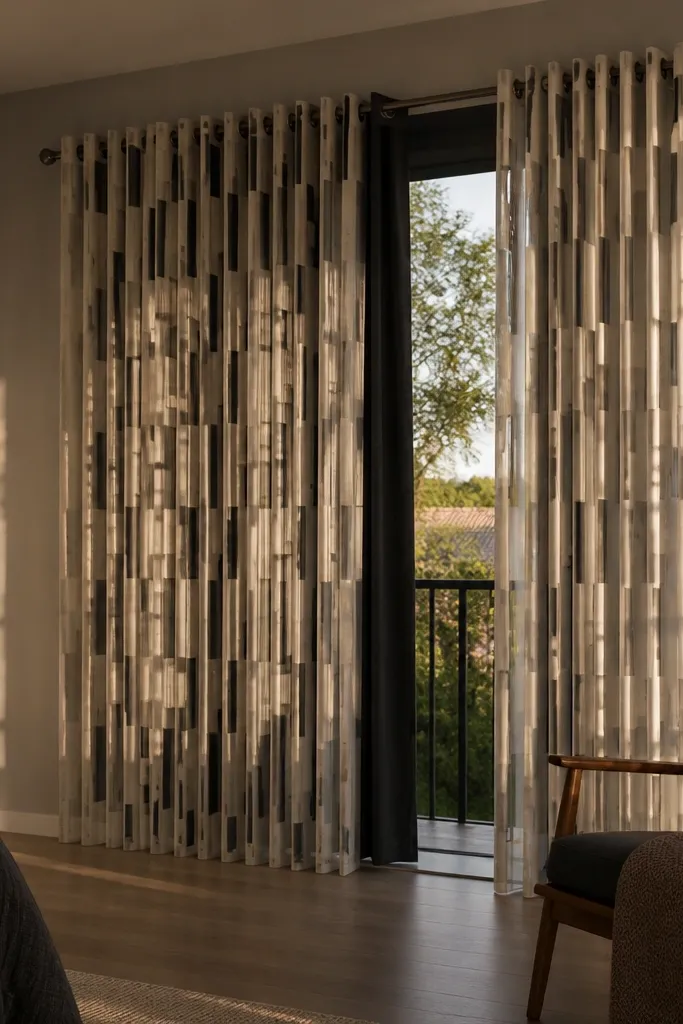
This idea looks high-end because it creates depth. The geometric sheer catches light and adds pattern without making the room feel heavy, while the solid blackout underlay stops the “striped door” problem. The layering also hides the seam line where the panels meet. Use a sheer with a tight pattern so it doesn’t smear when the fabric moves. It’s a great pick for modern living rooms where you want a stylish focal point and still need control over privacy and glare.
Hang a blackout rod or track first at the correct height and width, with two solid panels that overlap 4-6 inches. Add a second, closer-to-the-glass rod for the geometric sheer, using lighter hooks that slide smoothly. Keep the sheer panels slightly narrower than the blackout panels so the solids frame the pattern. Finally, steam both layers separately — sheers need gentler heat so the pattern stays crisp.
Editor's noteUse fabric weights on the blackout layer and avoid weights on the sheer so the pattern doesn’t twist.
Skip thisDon’t pick a large, loose pattern; it distorts and looks messy at the door seam.
7. Velcro-track fabric wrap for pocket doors
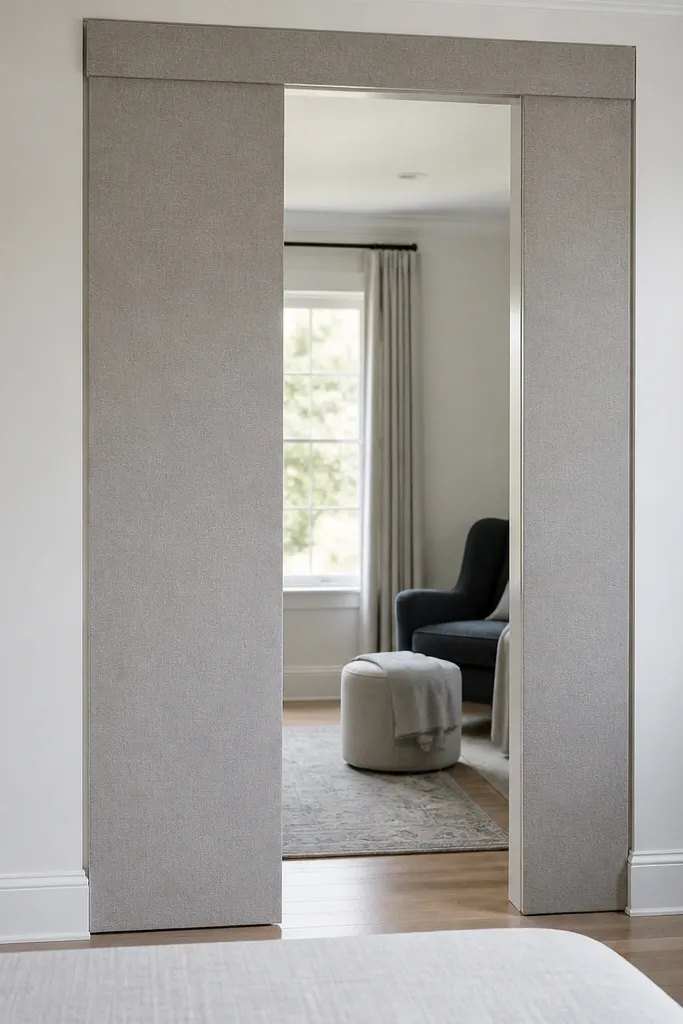
Pocket doors break most curtain plans because the door disappears into the wall. A wrap system solves that by keeping fabric out of the slide path and still covering the visible track area. The result looks like a single, dressed opening rather than a door with missing trim. Use a fabric that folds neatly, like linen blend or medium cotton with a bit of structure. This works best when you want a clean look but your door is used daily and needs to slide without snagging.
Install a narrow track or guide on the fixed wall side, then attach hook-and-loop (Velcro) strips along the edge where the fabric will wrap. Cut two wrap panels that cover the opening when closed and fold back along the pocket line when the door slides. Sew a clean hem and add a small weight at the bottom corners so the wrap stays flat. Test the door travel with the panels attached, then adjust the overlap so you still cover the gap with the door closed.
Editor's noteUse Velcro with a wide hook strip so the fabric holds firmly without pulling threads.
Skip thisDon’t use long, loose fabric bottoms; they catch in the pocket opening.
8. Wooden slat top valance with floor-length drapes
This is a high-end trick: add a structured top element that frames the opening, then let drapes soften the rest. A wooden slat valance hides the curtain rod area and makes the whole treatment look built-in. Keep drapes in a complementary neutral — oatmeal, warm gray, or deep olive — so the wood reads intentional. The slats also create a “designed” rhythm that photographs well. This works in living rooms and bedrooms where you want that modern-meets-warm look.
Build or buy a slat valance box that extends 6-10 inches past each side of the opening and sits 2-4 inches above the door top. Mount it to the wall studs or use proper anchors at the edges. Hang floor-length panels from a rod under the valance, using rings that allow smooth movement. Adjust the drape overlap so the seam lands near the center of the door, and add hem weights so the bottom edge stays even.
Editor's noteMatch the wood finish to your room hardware — blackened steel and walnut look especially cohesive.
Skip thisDon’t mount the valance too low; if it sits on the door frame, it looks like a cover-up instead of a trim piece.
9. Bamboo roller shade panels with sheer overlay
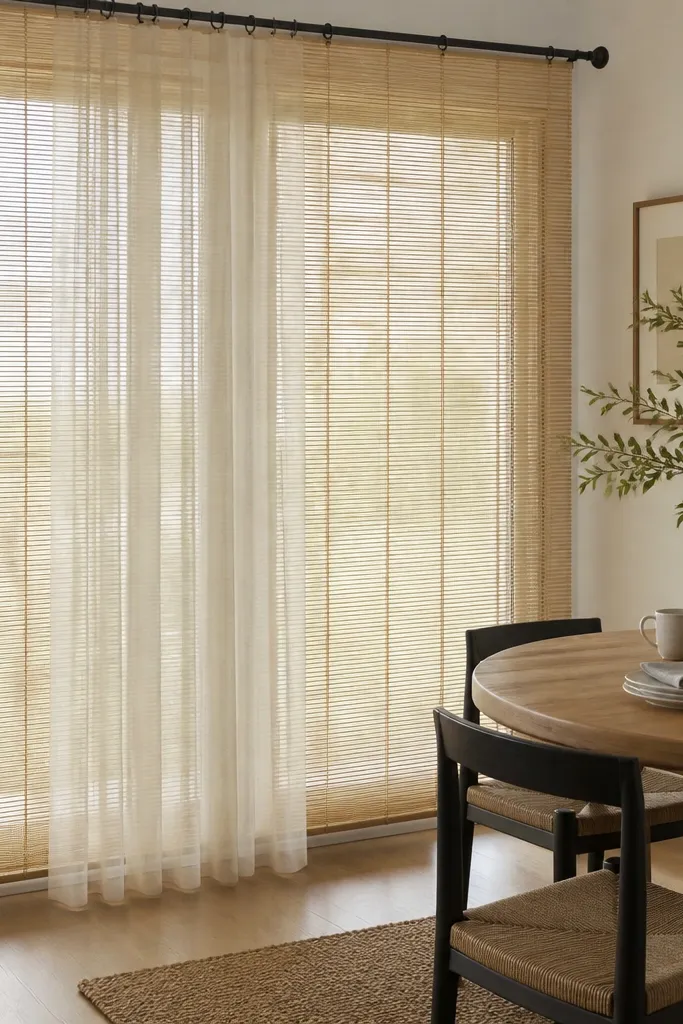
Bamboo roller shade panels give a clean, natural texture, then the sheer overlay adds that soft, layered finish. The shade controls privacy and glare, while the sheer makes the opening look styled instead of purely functional. Use shades in a uniform tone — light bamboo or espresso — so the visual line stays calm. This is ideal for sunrooms, dining rooms, and bright hallways where you want texture without heavy blackout curtains. The look is high-end because the layers are controlled and the hardware stays hidden behind the valance line.
Mount two roller shade units on a top track or separate brackets, aligned to the opening width with a small overlap at the center. Add a top fascia or valance strip to hide the roller head. Hang two sheer panels on a rod below the valance, using rings for smooth movement. Adjust the sheer so it falls 1-2 inches below the shade bottom when lowered, then steam to remove wrinkles.
Editor's noteUse a cordless or quiet-roller mechanism so the shade doesn’t rattle when you move the door room-to-room.
Skip thisAvoid mismatched shade widths; even a 1-inch difference shows at the seam.
10. Curtain panels with decorative grommet rings on a black steel rod
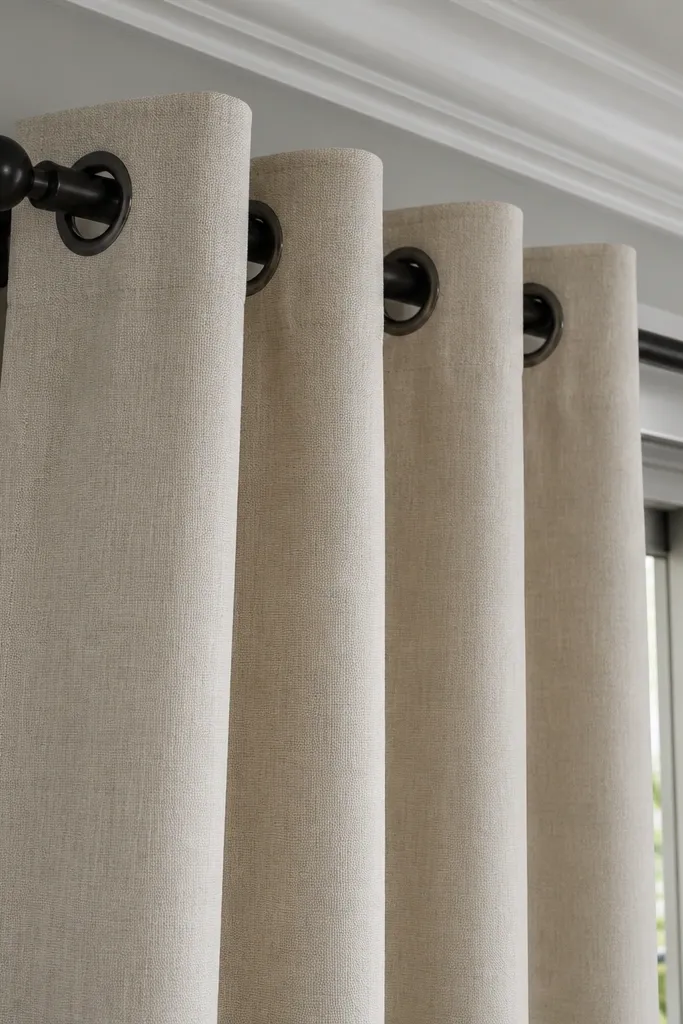
Grommet rings create a modern, polished look and make curtain movement smooth. Pair that with a black steel rod and you get a crisp silhouette that reads high-end even with simple fabric. Choose a thick cotton-linen or faux silk and hang with enough width to create proper folds. The grommets also hide the top hem line neatly, so your curtain looks finished. This works in modern apartments and offices where you want clean lines and a little drama at the opening.
Select grommet curtains or add grommets to your own panels at consistent spacing. Mount a matte black steel rod 4-6 inches above the door top and extend it 6-10 inches past each side. Thread the panels onto the rod and adjust so the seam overlaps by 4-6 inches. Add a hem weight or choose pre-weighted curtains to keep the bottom edge from curling.
Editor's noteUse 1-inch grommets or larger; small grommets tighten the drape and can make fabric look stiff.
Skip thisDon’t hang grommet curtains too short; they should reach the floor or stop with a deliberate break above it.
11. Soft pleated panels with pinch pleat tape and brushed brass rod
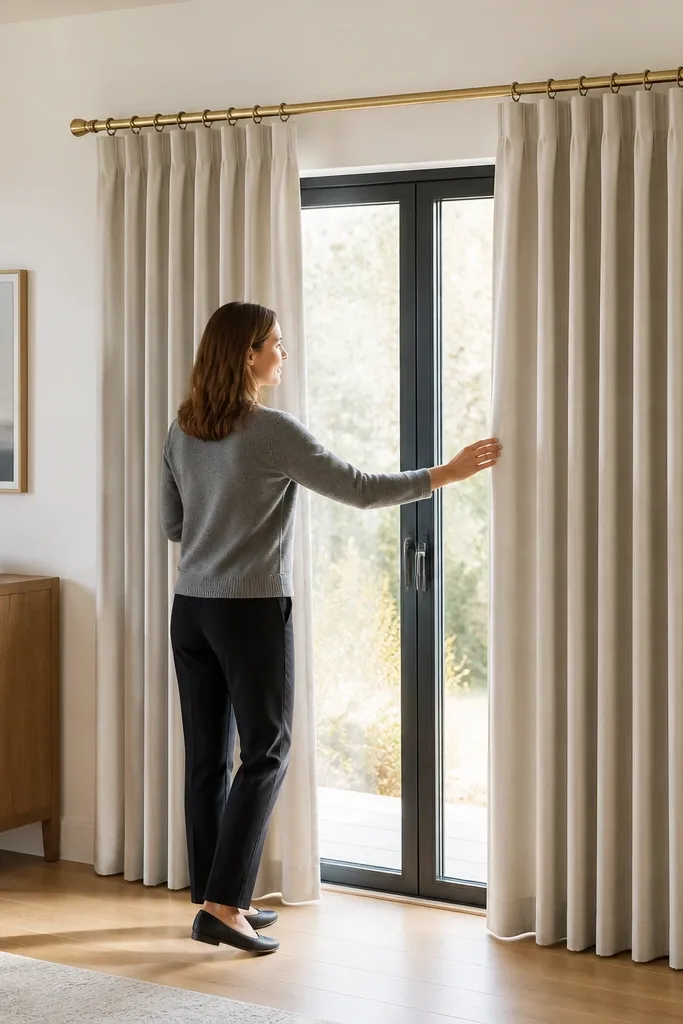
Pinch pleats are the quickest path to a “tailored” look. The pleat tape controls spacing so the folds look even and expensive, and a brushed brass rod adds warmth without going shiny-plastic. This setup is great if you want the door opening to look like a window treatment, not a workaround. Use a medium-weight fabric like linen blend or cotton sateen so the pleats fall clean and don’t collapse. It’s a solid choice for living rooms and bedrooms where you want a formal finish.
Buy pinch pleat tape designed for your rod system, then attach it to the back of each curtain panel. Mount a brushed brass rod 4-6 inches above the door top and extend it 6-10 inches beyond each side. Hang the pleats using the correct hooks or carriers so the spacing is uniform across both panels. Steam the pleats from the back side and check overlap at the center seam.
Editor's noteMatch your rod diameter to fabric weight; a 1-inch rod holds pleats better for heavier linen blends.
Skip thisAvoid mixing pleat spacing between panels; one side will always look “off” in photos.
12. Sheer curtain wings that fold to the sides like a theater drape
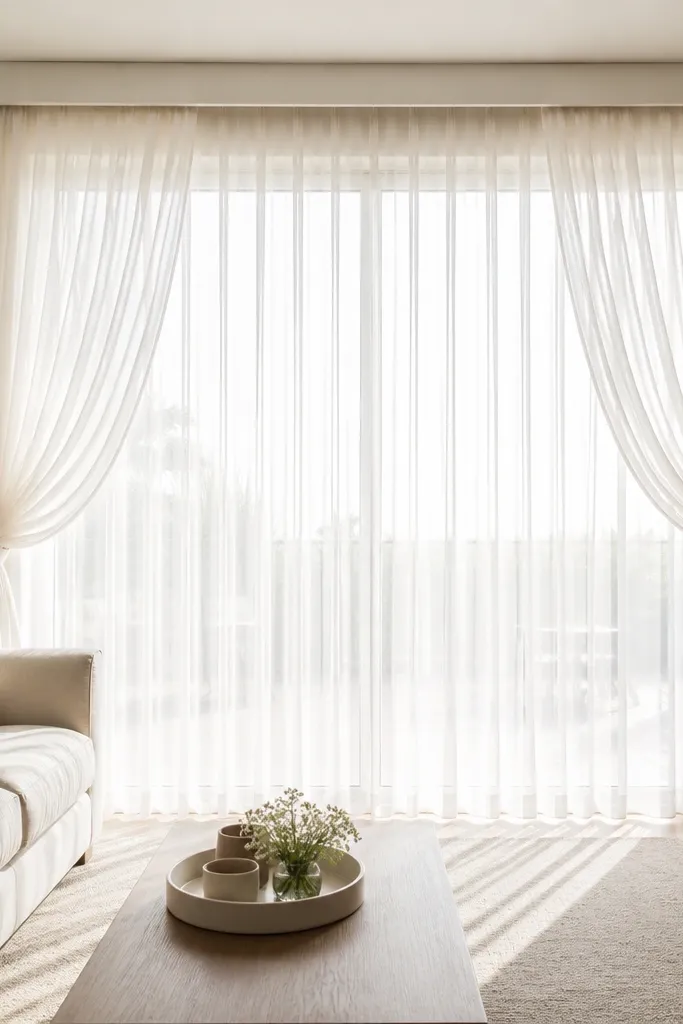
Theater-style wing curtains make sliding doors look like a staged entryway. The trick is to create a wing effect: sheer panels fold and gather at the sides so the center stays clean and bright. This hides the door seam line while keeping the room airy. Choose a crisp sheer with a bit of body so it holds shape when gathered. It looks best in rooms with strong natural light where you want softness without blocking everything.
Mount a rod across the top, then hang sheer panels that are long enough to reach the floor. Add tiebacks or side gathers using wall-mounted hooks at the sides, positioned so the fabric folds at about 45 degrees. Use a light gather stitch or curtain rings that allow the fabric to collect neatly at the hook. Test the slide clearance if the door moves — the wings should remain on the fixed wall side.
Editor's noteUse matching sheer panels on both sides so the fold angle looks symmetrical.
Skip thisDon’t use ultra-fine, clingy sheers; they collapse and look wrinkled instead of structured.
13. Textured bouclé drapes with a slim track and soft folds
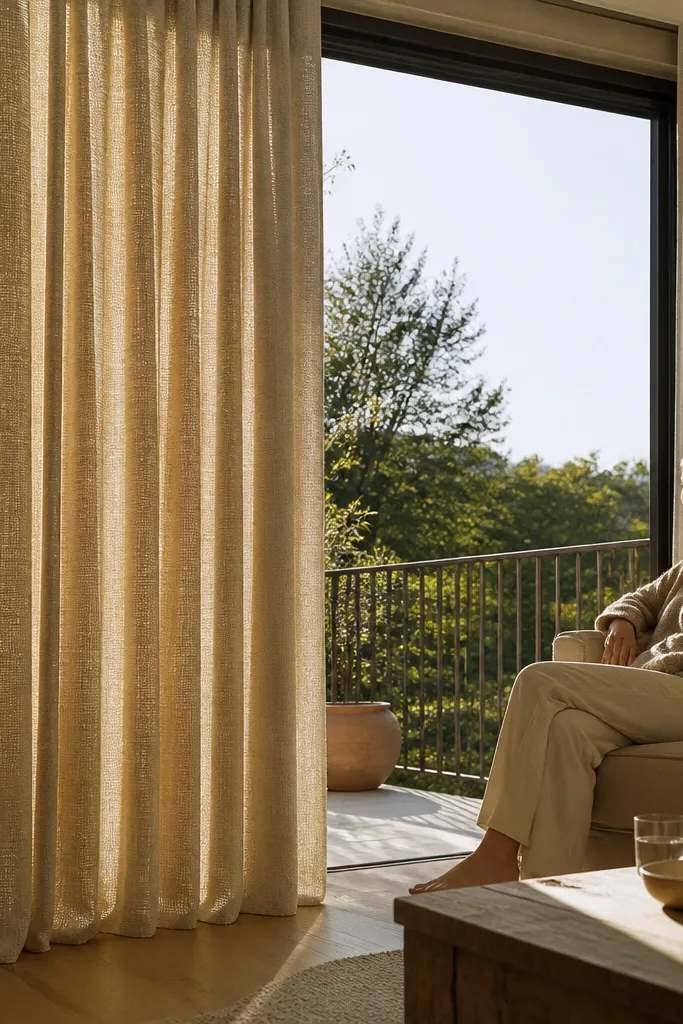
Bouclé adds instant high-end texture. Because the fabric has a looped surface, it hides minor dust and small wrinkles better than smooth fabrics, and it photographs with a rich dimensional look. Use a slim track or low-profile rod so the texture stays the star. The goal is soft folds, not stiff panels, so choose a bouclé with drape and keep panel width large enough to form natural stacking. This is ideal for bedrooms, reading nooks, and fashion-forward living rooms.
Select a bouclé curtain fabric with a drapey backing, then buy or sew panels to your measured height with enough width for stacking. Mount a slim ceiling track 3-6 inches above the door top and extend past each side by 6-10 inches. Hang with ring clips that don’t snag the loops. Steam carefully using low heat and keep the fold lines consistent so the texture doesn’t crush.
Editor's noteUse a lint roller after hanging; bouclé shows stray fibers more than linen.
Skip thisAvoid heavy, upholstery-grade bouclé; it can look like a blanket instead of a curtain.
14. Color-block panels with two-tone overlap at the center
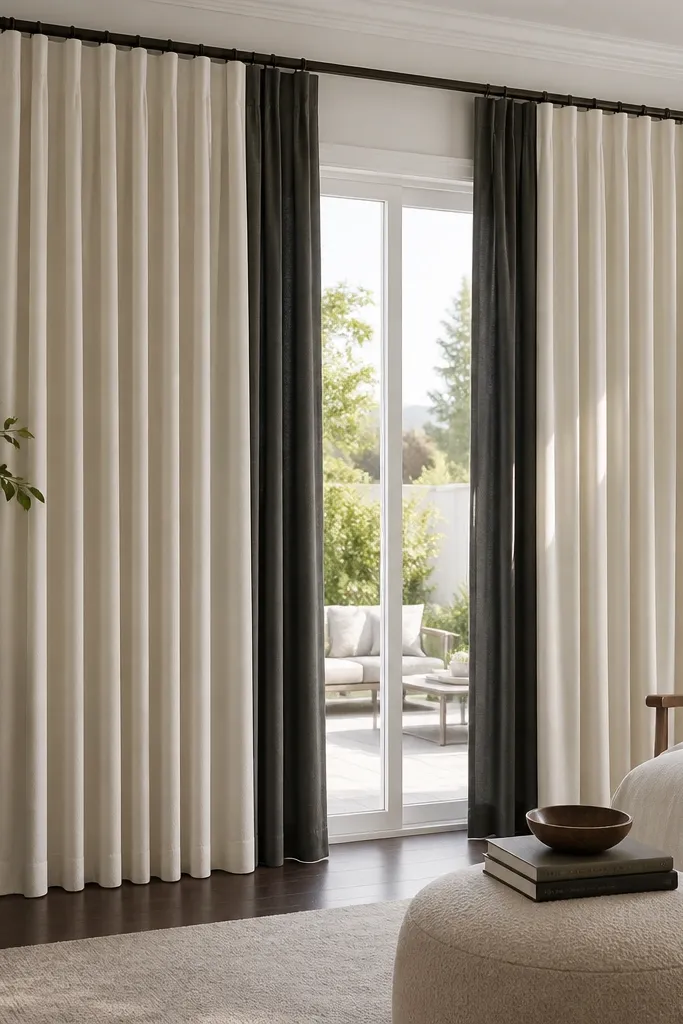
Color-block curtains turn the sliding door into a design feature. The high-end look comes from controlled overlap — one color frames the opening while the other sits slightly behind it, creating a clean edge line. Pick two tones that match your room trim or flooring, like ivory with charcoal, or warm sand with deep green. Use medium-weight fabric that holds crisp seams, not flimsy sheers. This works well in entryways and living rooms where you want a bold statement but still want the door area to look finished.
Measure the opening width and choose panel widths that create a 4-6 inch overlap at the center. Sew or buy two sets of panels in complementary colors, then hem them to the same length. Mount a rod high and wide, hang one color in front on each side, and place the second color behind so the overlap line is visible. Press the seams and steam the panels to keep the two-tone edge sharp.
Editor's noteUse solid fabric on both layers; color-block sheers tend to blur at the overlap.
Skip thisDon’t pick two colors with the same undertone temperature; mixing warm and cool shades makes the seam look muddy.
15. Macramé fringe curtain with weighted bottom line
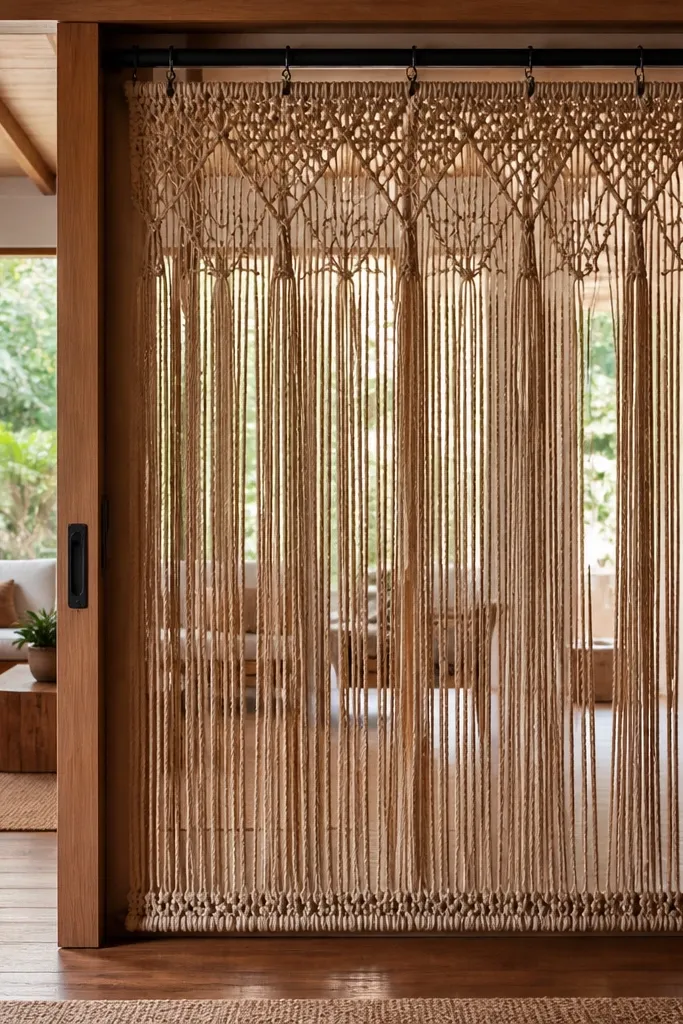
Fringe adds movement and a handmade look, but you still want it to look intentional. A macramé curtain works as high-end sliding door ideas because the texture reads rich even from across the room. The secret is a weighted bottom line so the fringe hangs straight and doesn’t fan out unevenly. Pair it with a simple matte rod and keep the rest of the room clean so the fringe becomes the focal point. This suits boho-modern living rooms, sunrooms, and covered patios.
Choose a macramé curtain that has a reinforced top channel for hanging on a rod. Mount a matte rod 4-6 inches above the door top and extend 6-10 inches beyond each side. Add a thin weighted bar or sew small weights into the bottom hem so the fringe stays aligned. Arrange the curtain so the fringe ends at a consistent height on both sides, then secure any stray strands with discreet ties.
Editor's noteSteam the top edge gently and hang it overnight; macramé settles and looks smoother after first day use.
Skip thisAvoid letting fringe touch the floor if you have pets or frequent cleaning; it gets messy fast.
16. Textile track curtain in a recessed ceiling niche
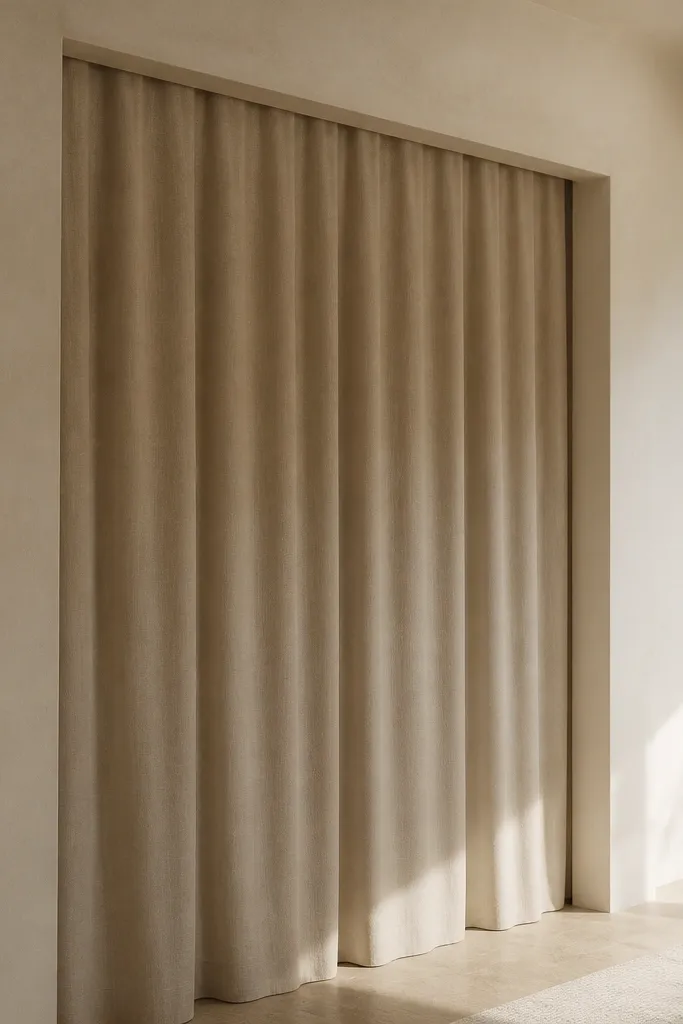
A recessed ceiling niche hides everything — track, rod, and even the curtain head — so the opening looks built-in. This is one of the most “high-end” approaches because your eye only sees fabric. The downside is more DIY work, but it’s worth it if you’re already doing a ceiling repair or have open access above the door. Use a medium-weight curtain that doesn’t cling to itself when pulled, like linen blend or cotton sateen. Great for bedrooms and living rooms where you want a clean, upscale ceiling line.
Frame a shallow niche above the sliding door area, leaving enough clearance for the curtain to move without scraping. Install a curtain track inside the niche and run it the full width so panels can close with overlap. Hang curtains with a head design that fits inside the recess and doesn’t show hardware. Finish by covering the niche edges with matching trim and painting everything to match the ceiling for a seamless look.
Editor's notePlan the niche depth around your curtain rings — if they’re too tall, they’ll rub.
Skip thisDon’t guess the clearance; measure the curtain head height and add at least 1 inch of breathing room.
17. Folding screen curtain panels on a side rail
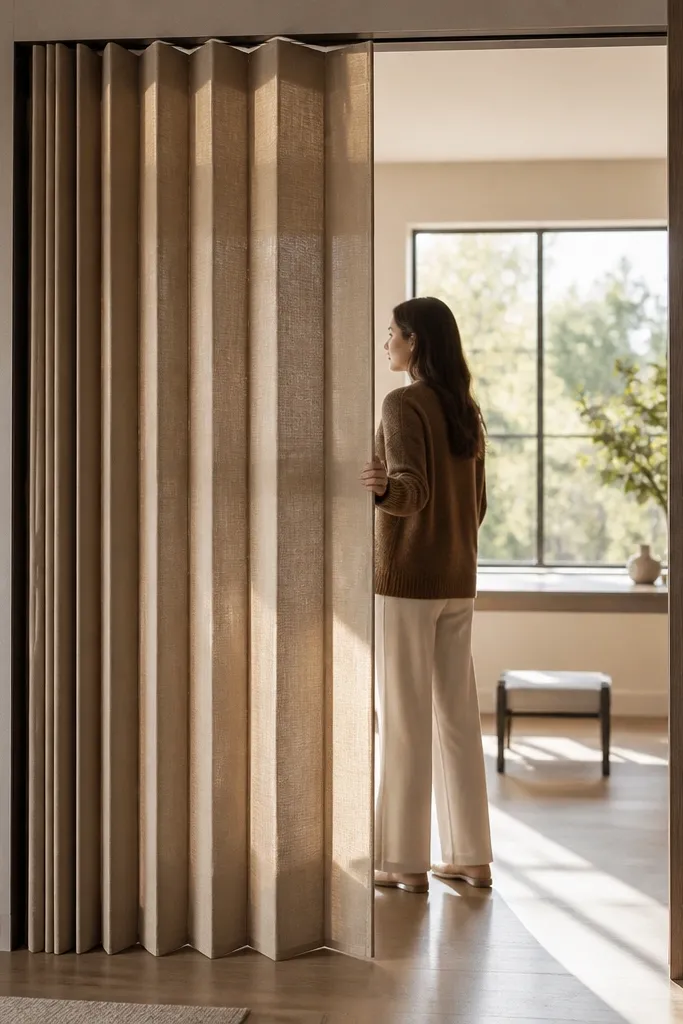
This is a clever way to keep the door area dressed without relying on a center seam. Curtain panels move like a folding screen, so the opening reads layered and sculpted from the side. It’s a high-end look because you see depth and structure instead of a flat hanging sheet. Use a sturdy fabric like thick linen blend or cotton canvas so the folds stay crisp. Best for living rooms and studios where you want the sliding door to visually “frame” the space rather than cover it completely.
Install a side rail or track on the fixed wall with hinges or carriers that allow panels to fold. Cut two or three panels sized for the opening depth, and attach them to the carrier system so they swing and fold cleanly. Add inter-panel stops so they align at the center when closed. Finish by adding weighted hems to the outer panels so the bottom edges stay straight and the folds don’t sag.
Editor's noteUse thicker fabric on the panels closest to the viewer; it keeps the folds looking crisp on camera.
Skip thisAvoid lightweight sheers for screen-style folds; they flutter and look sloppy when you move the door.
18. Patterned jacquard panels with contrast piping
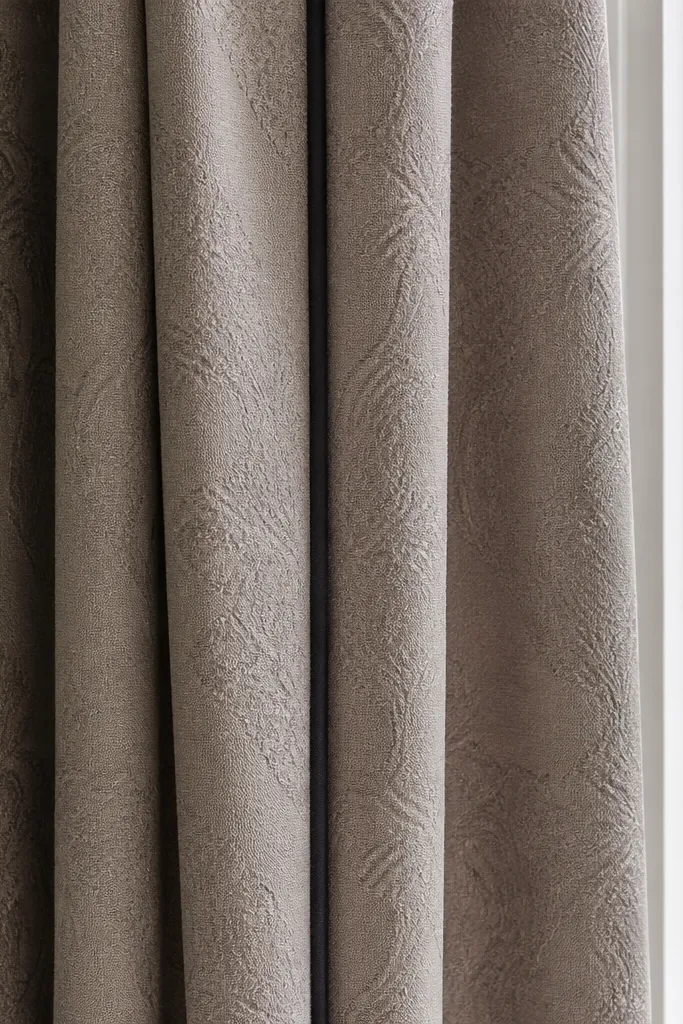
Jacquard curtains look expensive because the surface pattern adds depth without needing extra layers. Contrast piping makes the seam line look tailored, which is exactly what sliding doors lack. The piping also helps hide minor imperfections where panels meet, so the opening reads polished. Choose jacquard in a medium scale pattern so it doesn’t distort at the overlap. This works well for dining rooms, bedrooms, and hallways where you want a strong “finished” look.
Buy jacquard panels or sew your own and add contrast piping along the vertical edges and center seam line. Mount a rod high and wide, then hang two panels so they overlap 4-6 inches. Make sure the piping lines align at the center for a clean visual break. Steam with caution — jacquard can crush if heat is too high — then hang and let gravity settle the shape.
Editor's noteUse piping thread in a slightly darker shade than the lightest part of the fabric so it doesn’t look too stark.
Skip thisAvoid tiny busy patterns; they make the overlap seam look chaotic.
19. Sheer-to-blackout gradient panels for a luxe lighting effect
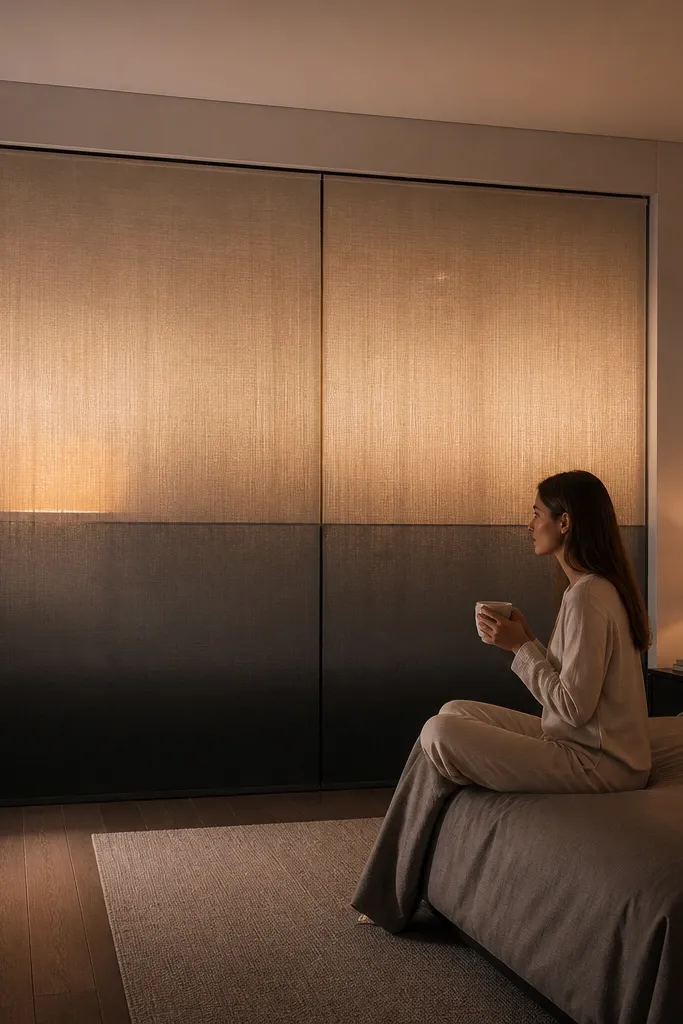
Gradient panels turn the sliding door into a lighting effect. The fabric transitions from light and airy near the top to more solid at the bottom, so the seam looks smooth even when panels close. This is a high-end look because it adds color and depth without feeling heavy. Choose a gradient fabric with a consistent fade so it doesn’t look patchy across panels. Great for rooms with good daylight where you want privacy control at night but a soft glow during the day.
Pick gradient curtain panels sized for your opening height, then decide where the fade should land relative to the door top. Mount a rod 4-6 inches above the door top and extend 6-10 inches past each side. Hang two panels with a 4-6 inch overlap at the center so the gradient lines don’t split. Steam lightly and check the seam under both daylight and lamp light.
Editor's noteIf the gradient is subtle, add a blackout underlayer so the bottom doesn’t look uneven when closed.
Skip thisDon’t flip one panel orientation; it creates a mismatched gradient at the overlap.
20. Corded fabric panels with tie strings for instant styling
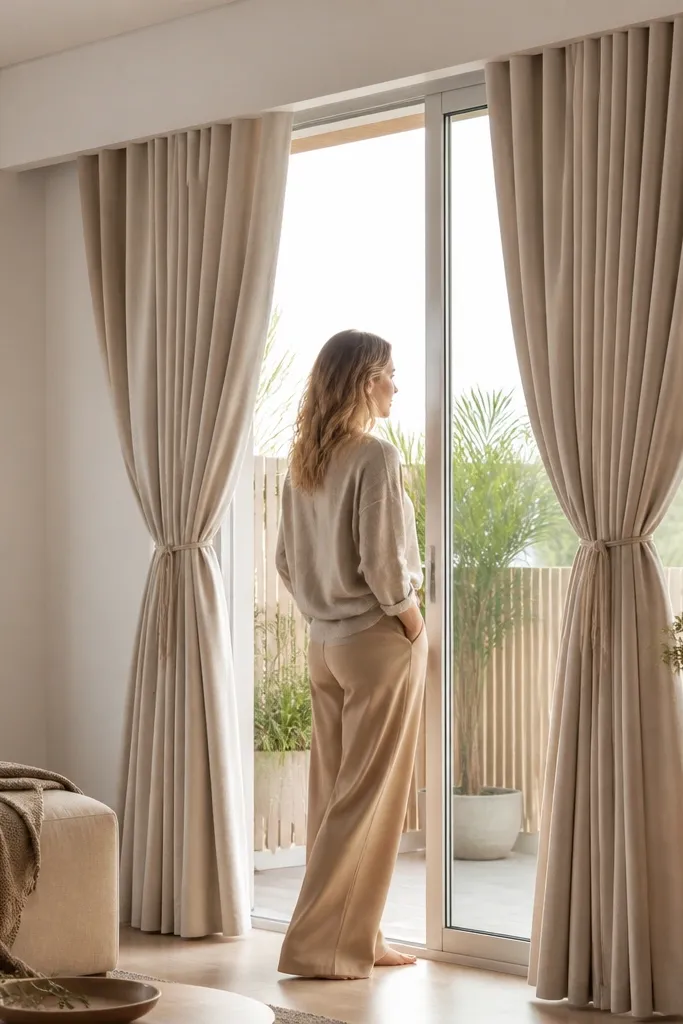
Cords and ties create a styled look that feels tailored, even if your fabric is simple. When you tie the panels at consistent heights, the door opening looks intentional and photogenic from multiple angles. Choose a fabric with enough body to hold the fold, like cotton-linen or medium-weight polyester with a woven texture. This option is great if you want the flexibility to change the look daily without re-hanging hardware. It’s also easier than building complex tracks because ties do the heavy lifting visually.
Mount a rod high and wide above the sliding door, then hang two full-length panels that overlap 4-6 inches. Sew or attach decorative tie strings at two heights on each panel, usually about 12 inches and 24 inches from the floor break. When you want the look, tie the panels back to side hooks so the fabric forms a controlled S-curve fold. Keep tie positions identical on both sides for a balanced, high-end finish.
Editor's noteUse satin-finish ties or matching fabric straps; rough cords look casual fast.
Skip thisAvoid ties that are too low; they drag across the floor and look messy.