1. Walnut handrail with white painted half wall panels
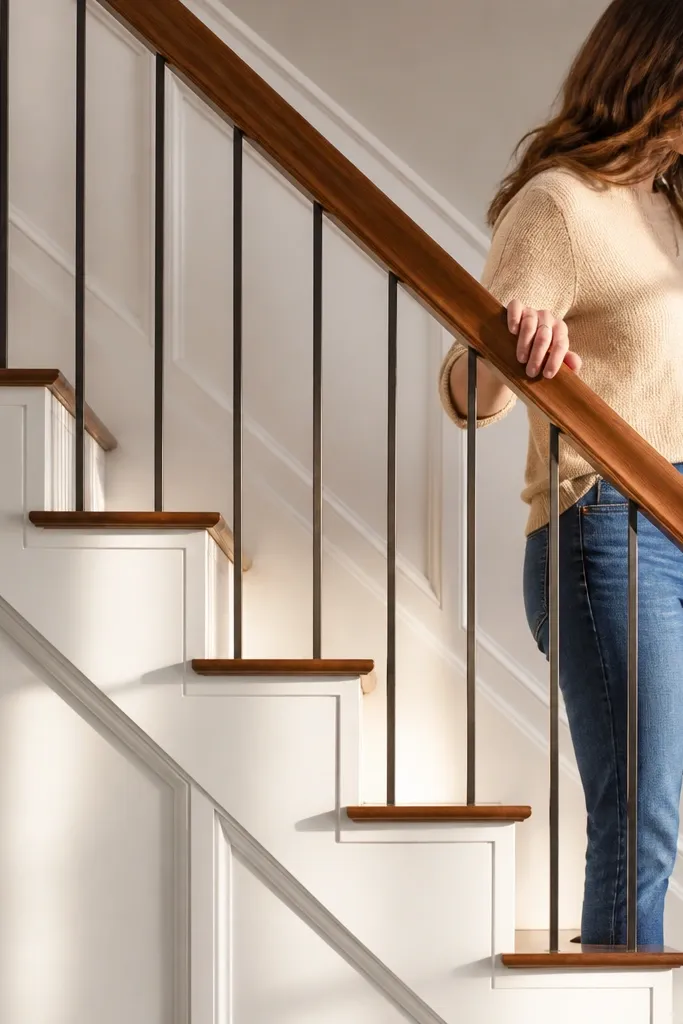
Measure the half wall height and cut 1/2-inch MDF or plywood panels to fit between the baluster lines, then prime and paint with a satin enamel. Install the half wall top cap (a straight, routed trim piece) so the handrail has a clean landing edge. Mount your walnut handrail using metal brackets hidden behind the cap, then finish with a satin clear coat on the wood. Finally, install balusters and tighten everything so there’s no wobble at the top — that wobble ruins the luxury look.
This is the easiest “high-end luxury stair railing” look to pull off because the contrast does the heavy lifting. The half wall stays bright and crisp, while the walnut handrail adds warmth and a real wood grain that reads expensive in photos. Keep the half wall surfaces smooth and the trim lines sharp so the railing looks custom, not rushed. Use dark balusters to anchor the pattern and prevent the white from feeling sterile.
Skip thisDon’t leave the half wall top edge raw — a sloppy edge makes the whole railing look DIY.
Editor's noteSpray the half wall trim after assembly. It keeps the edges sharp and removes brush lines that show up under stair lighting.
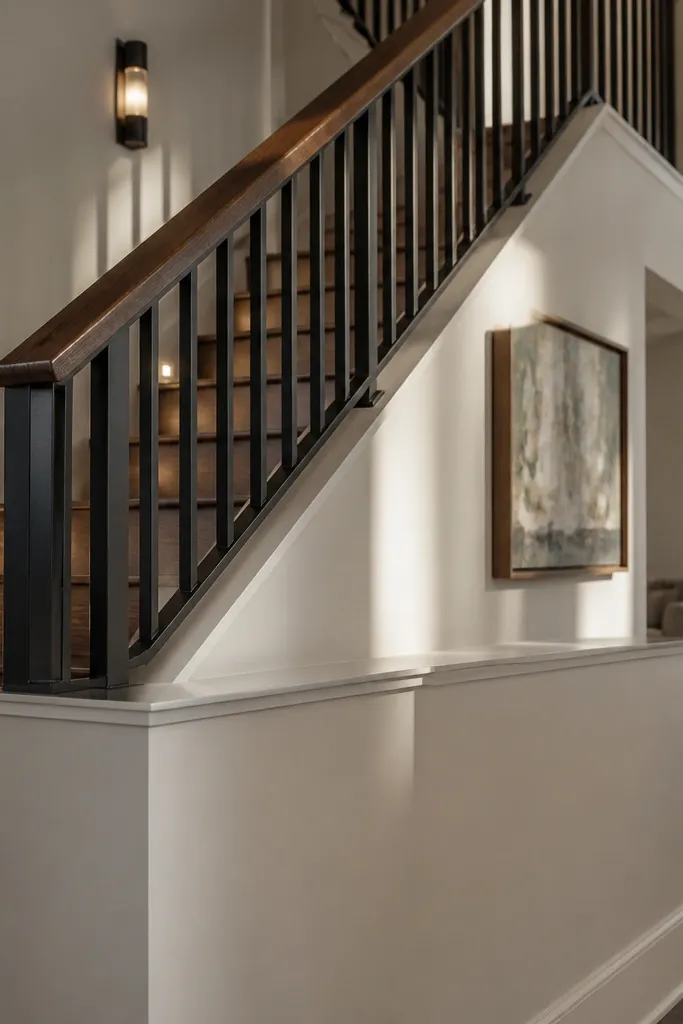
2. Matte black metal half wall cap with oak handrail
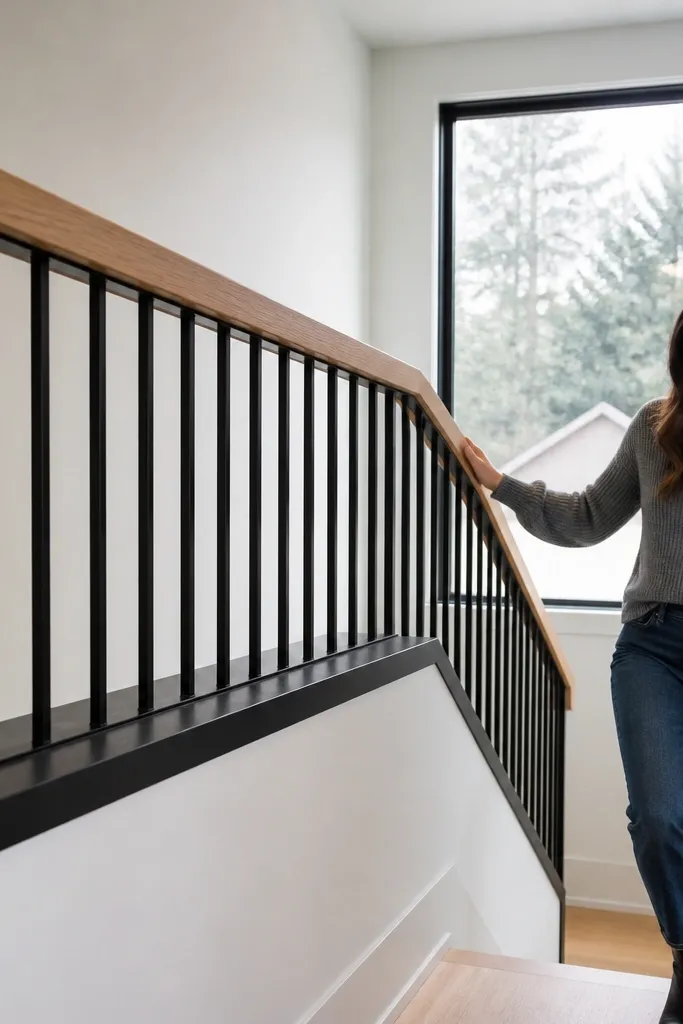
This look is clean and modern, with the half wall acting like a frame. A matte black cap on top of the half wall gives you a sharp, shadowed line that makes the handrail look thicker. Oak handrail adds warmth and keeps the black from feeling too hard. Slim, evenly spaced balusters keep the sightlines airy while still looking “finished” from every angle.
Build the half wall with plywood sheathing and finish it with paint or a thin veneer. Add a 1x2 or 2x2 equivalent metal cap (powder-coated matte black) on top, anchored through the sheathing so it doesn’t flex. Install the oak handrail on top of the cap with concealed brackets and pre-drill to prevent splitting. Mount matching slim balusters and keep their spacing uniform along the entire run.
Use a metal cap with a consistent lip depth. A tiny change in lip size shifts the shadow line and makes photos look off.
Avoid glossy black — it reflects stair lights and turns the railing into a glare strip.
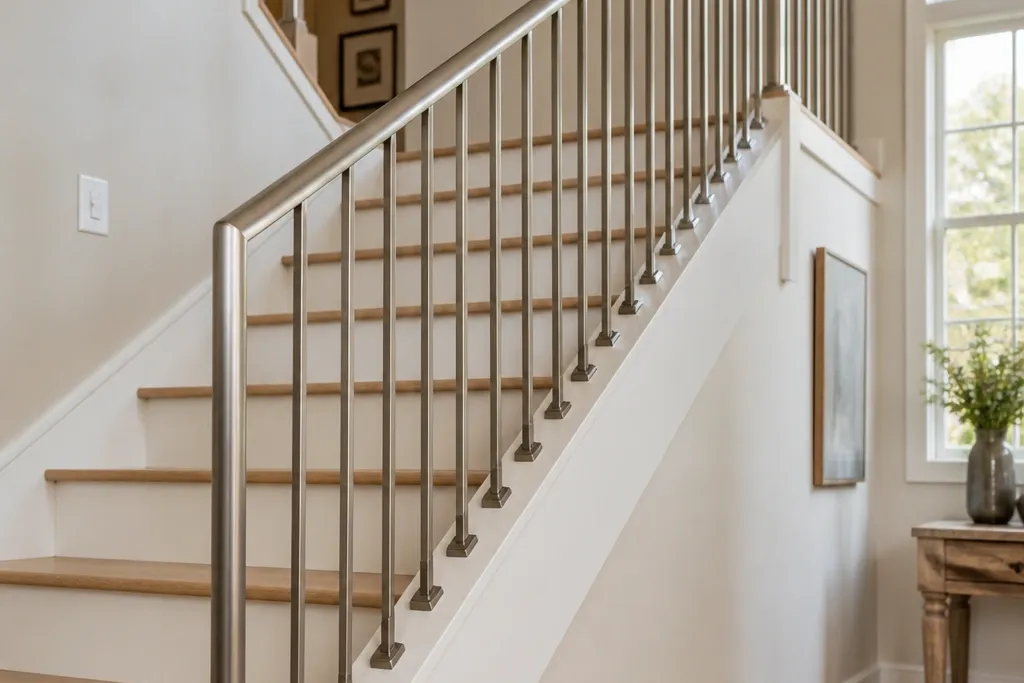
3. Stone-look porcelain half wall with brushed steel posts
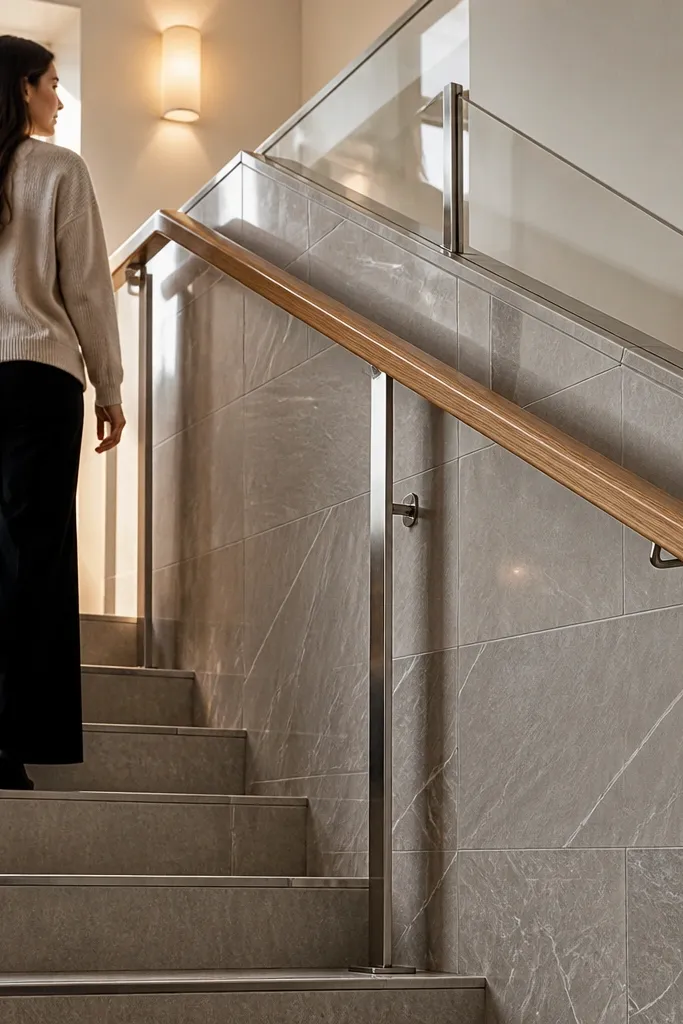
Start by sealing your half wall substrate (cement board over studs works best), then set porcelain panels using thinset and a 1/16-inch spacer for tight grout lines. Install brushed steel posts using base plates anchored into framing behind the half wall surface. Mount the handrail to the posts with proper rail brackets and add end caps for a finished edge. Finish by grouting, cleaning, and sealing the grout if needed per the product spec.
If you want the “expensive materials” vibe without real stone weight, porcelain panels in a stone-look finish do it. The half wall texture reads upscale, and brushed steel posts add a cool, light-catching accent without going shiny. Pair it with a warm wood handrail so the stair doesn’t look cold. This combo also photographs well because the surface texture creates depth even in low light.
Skip thisDon’t grout too thick. Thick grout lines between posts make the luxury surface look chunky.
Editor's noteChoose porcelain with smaller “vein” movement. Big, dramatic veining looks busy on stair rail heights.
4. Fluted panel half wall with satin brass handrail
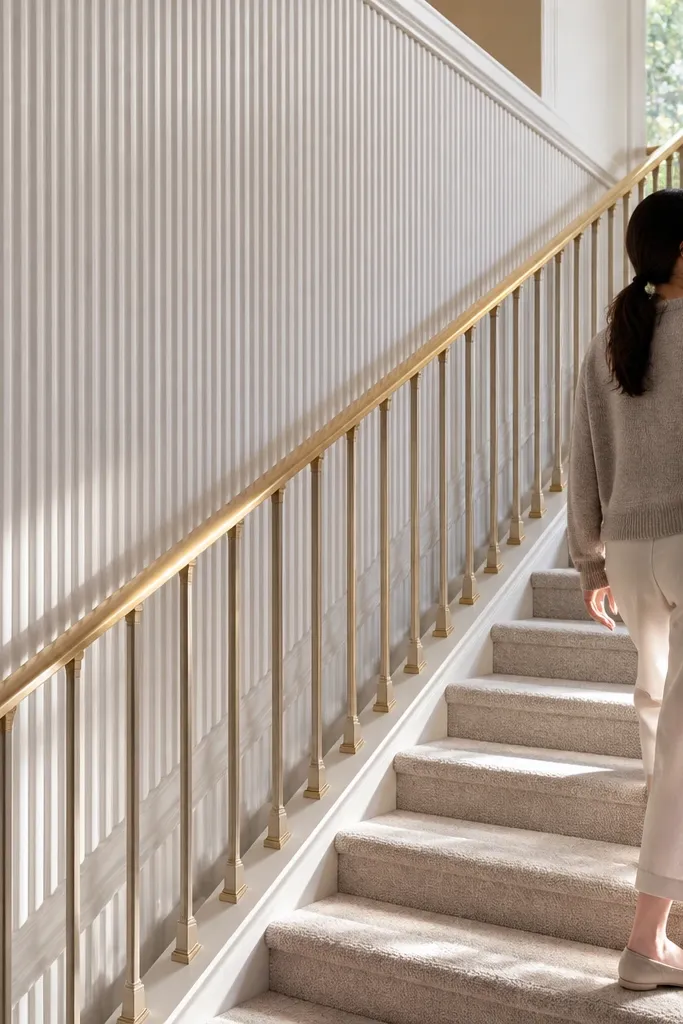
Build your half wall frame and skin it with smooth backing, then attach fluted panel boards (or install fluted trim strips) so the ridges run vertically. Paint the fluted surface with a smooth satin finish and let it cure fully before metalwork. Install satin brass handrail brackets into the framing and mount the handrail with end supports at each post. Add balusters that match the brass tone and keep spacing consistent along the run.
Fluting on the half wall gives you the kind of shadow play that reads luxury without needing heavy ornament. A satin brass handrail is the right finish here because it warms the whites and avoids harsh mirror glare. Keep the balusters simple and consistent so the fluting stays the hero. This is a strong choice for a traditional-to-modern interior where you want elegance that still feels clean.
Skip thisSkip high-gloss paint on fluting — it highlights imperfections and looks cheap fast.
Editor's noteLightly sand the fluted peaks before paint. It keeps the ridges crisp and reduces bumpy texture under lighting.
5. Vertical wood slat half wall with blackened steel rail posts
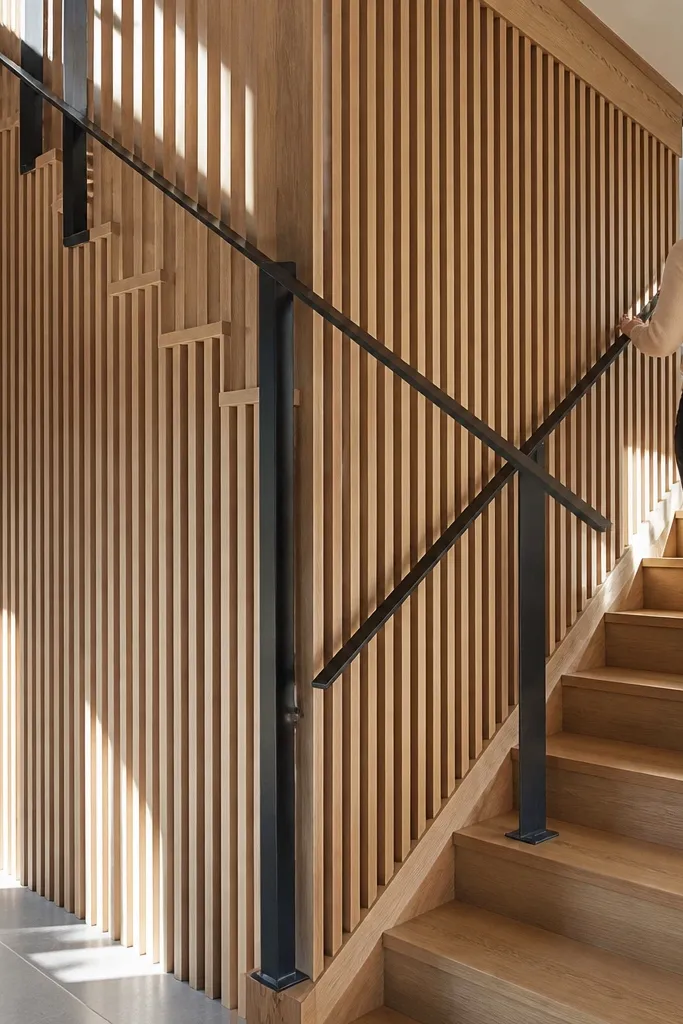
Frame the half wall and attach evenly spaced slats using a jig so the gaps match from top to bottom. Use a stain that matches your interior wood tones, then seal with a satin clear coat to keep it uniform. Install blackened steel posts into framing and run a top cap that aligns with the handrail height. Mount the handrail and then set balusters or glass panels between the posts depending on how open you want the view.
Vertical slats add motion and make the railing feel architectural. When you pair slats with blackened steel posts and a dark handrail, the whole staircase looks designed, not assembled. This is a great option if you want a modern farmhouse or Scandinavian vibe without the “rustic clutter” feeling. The slat pattern also hides minor surface waviness because the eye reads the lines, not the flatness.
Skip thisDon’t vary slat width. Even small differences show up instantly in stair photos.
Editor's noteUse a spacer block for slat gaps and mark every slat location before you start. It prevents drift on long stair runs.
6. Glass panel half wall with hidden fasteners and warm wood rail
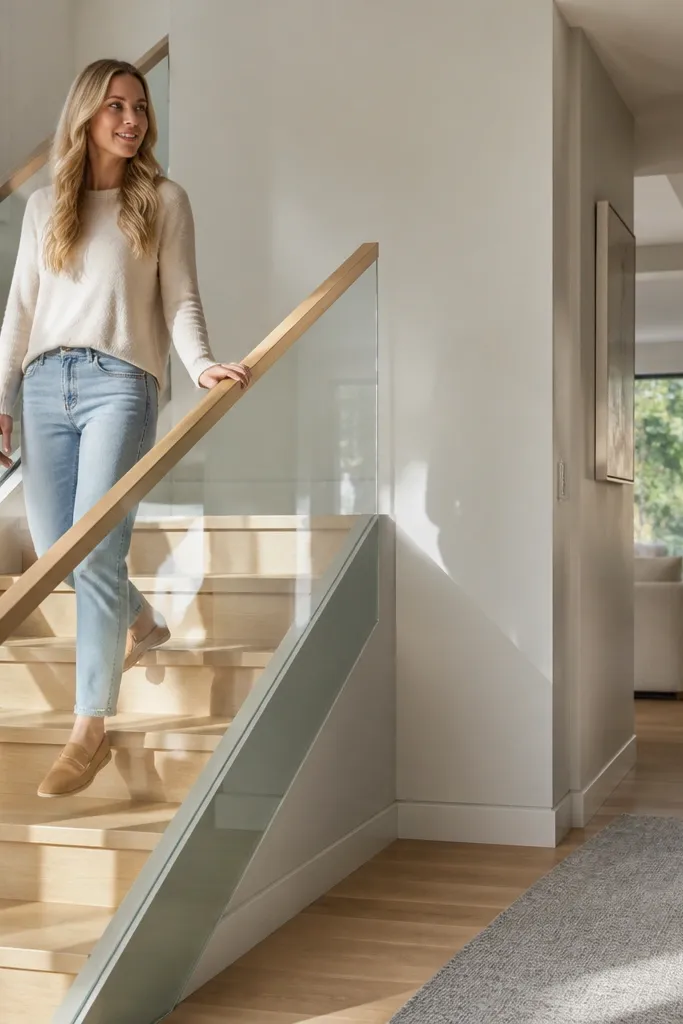
A glass half wall is the cleanest way to make a railing look high-end while keeping the staircase visually open. Hidden fasteners are what make it look luxury instead of “temporary install.” The warm wood handrail gives you grip and comfort, while the glass keeps light moving through the stairs. Choose this when your stair landing gets shadowy and you want it brighter.
Build the half wall frame with a level top and install a glass-ready backing panel. Use a glass panel system with edge clamps and hidden anchors so the glass sits flush and doesn’t rattle. Mount the wood handrail with brackets into the framing, not just the glass. Finish by installing slim balusters or a minimal rail line so the overall look stays light and airy.
Use clear glass with a slight edge polish. It looks cleaner and reduces glare bands.
Don’t use visible screws on the glass edge. It instantly kills the luxury look.
7. White shaker half wall with continuous raised top rail
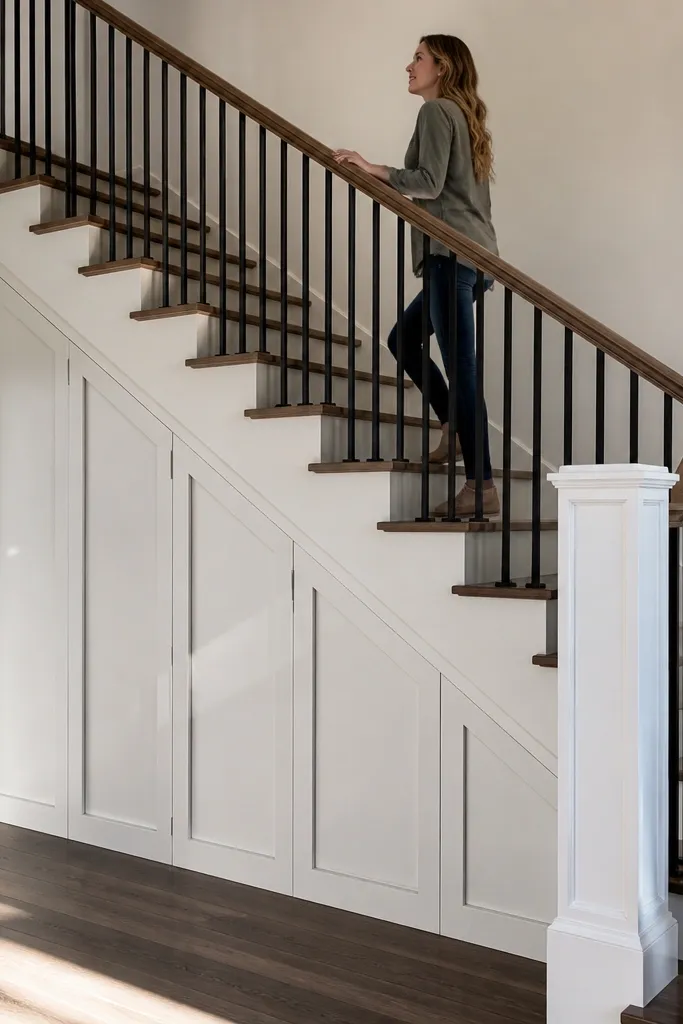
Shaker-style flat panels on the half wall give you crisp geometry and a timeless feel. The trick for luxury is the continuous raised top rail that wraps the entire run so your handrail reads as one uninterrupted line. Dark balusters add contrast and keep the white from looking like plain drywall. This is a safe choice when the rest of your trim is already traditional.
Frame the half wall and skin it with plywood. Install shaker-style panel trim so each panel has a consistent inset depth, then paint with a satin cabinet-grade finish. Add a continuous raised top rail board across the entire run, anchored into studs to prevent movement. Mount your handrail on top of the raised rail and install balusters with the same spacing as the shaker panel grid.
Match the shaker trim profile to your baseboards. When those lines agree, the railing looks custom without extra decoration.
Avoid thick, chunky trim on small stairs. It makes the railing overpower the opening.
8. Charcoal stained half wall with matching handrail and steel pickets
Dark wood tones look high-end because they hide minor inconsistencies in the substrate and create a dramatic silhouette. A charcoal-stained half wall paired with steel pickets makes the railing feel modern and intentional. Keep pickets straight and evenly spaced so the pattern reads clean. This is a strong look if your floors or cabinetry already pull dark.
Build and sand the half wall smooth, then apply stain in multiple thin coats to get an even charcoal tone. Seal with a satin clear coat so it doesn’t look plastic. Install steel pickets using a rigid top and bottom track so they align perfectly. Mount the matching handrail using brackets that lock into framing, then add end caps for a crisp finish.
Use painter’s tape to mask the handrail bracket lines before finishing. It keeps the wood tone uniform where metal meets wood.
Don’t use semi-gloss on dark stains. It adds shine where you want a soft, expensive look.
9. Two-tone half wall: white base with walnut insets
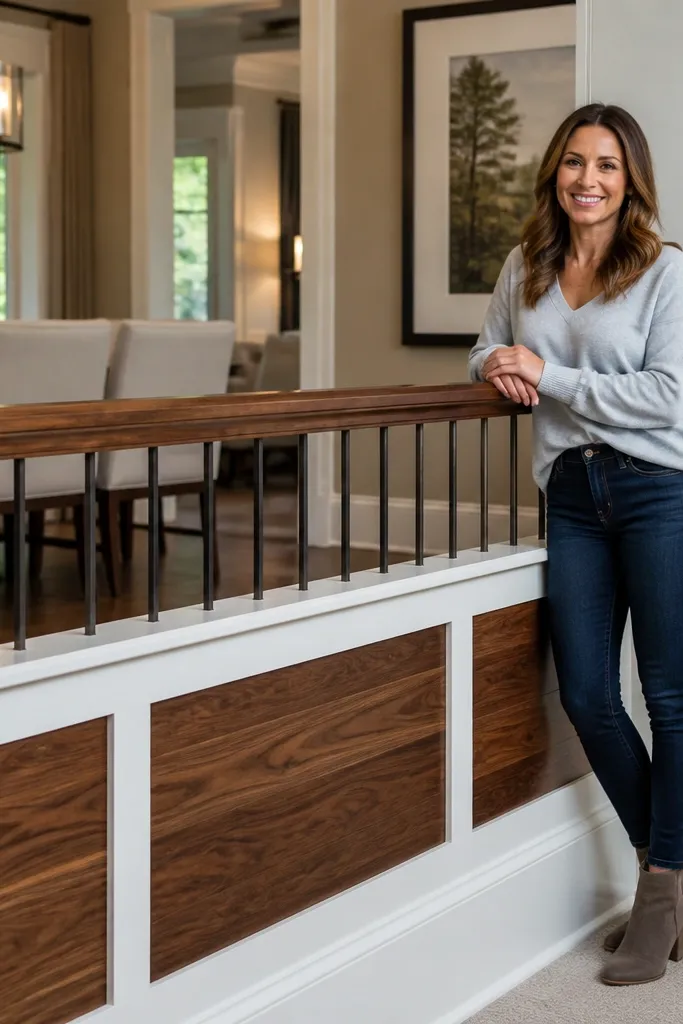
Two-tone panels look designer because they create a layered composition. The white base keeps the space bright, while walnut insets add warmth and a premium material cue. Add a matching walnut handrail so the eye has a clear focal point. This is a great option for stairs that sit near a dining area where you see the railing from multiple angles.
Construct the half wall with a white-painted outer surface, then cut walnut inset panels at a consistent size. Use a router to create clean inset rabbets or use trim strips to form the walnut rectangles. Seal the walnut with a satin clear coat that matches the handrail finish. Install balusters after the two-tone panels are set so you can align spacing with the inset grid.
Keep inset panel edges razor sharp. Sanding through veneer edges ruins the high-end look.
Avoid random inset sizes. Stick to one rectangle size across the run.
10. Vertical cable railing with half wall and recessed handrail
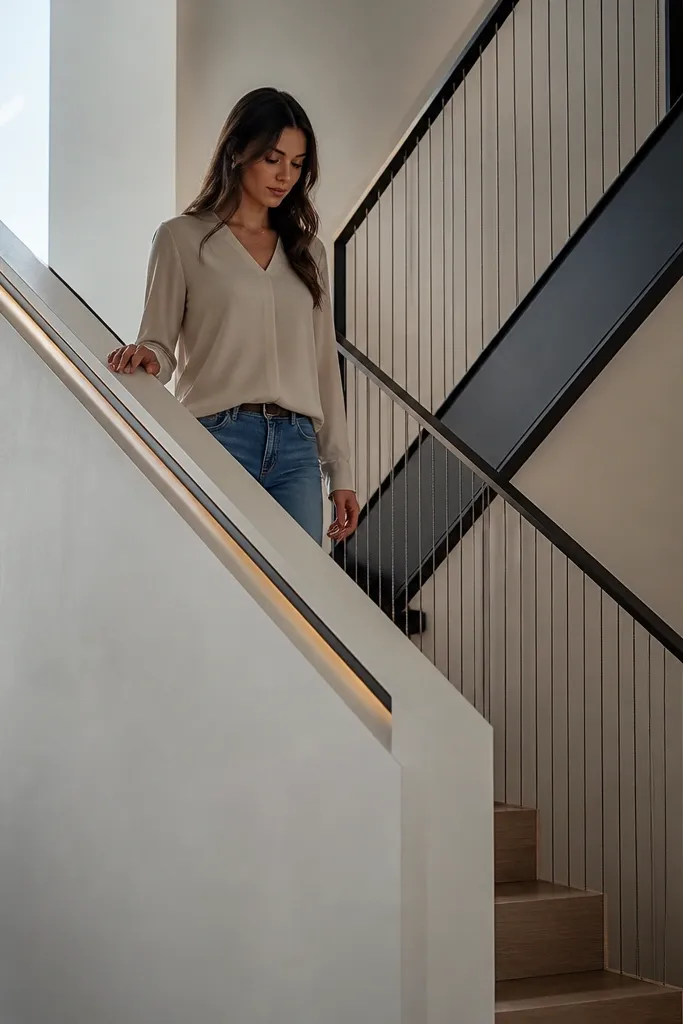
Build the half wall to your height target and install a top mounting channel for cables. Use a cable kit with proper tensioning hardware and pre-plan anchor points so the cable spacing stays even. Install the recessed handrail by cutting a shallow channel in the rail backing so it sits flush over the cable anchors. Tension cables, then mount the handrail trim to cover the anchor line.
Cable railing is clean, but luxury comes from how you integrate it. When you pair a half wall with vertical cables and a recessed handrail, the railing looks custom-built and sleek. The cables disappear visually, so the half wall and handrail become the focus. It also works well for modern interiors where you want minimal clutter.
Skip thisDon’t tension cables before the handrail is installed. Tension changes alignment slightly.
Editor's noteMark every cable anchor location with a laser line or long straightedge before drilling. Cable spacing looks sloppy when anchors drift.
11. Slim black balusters with a white half wall and wood picture-frame trim
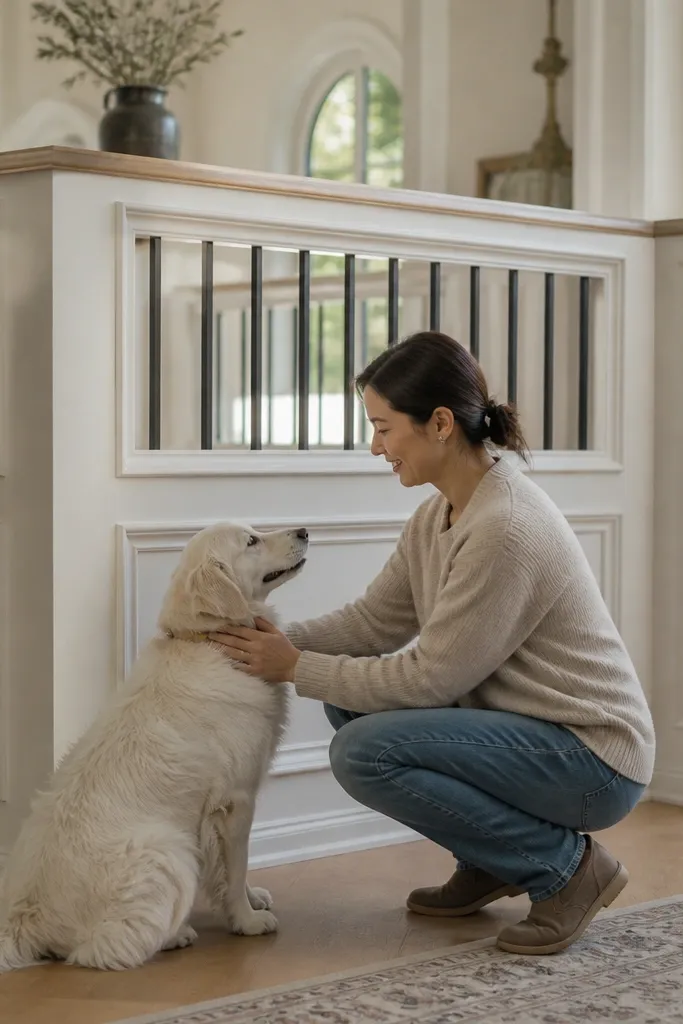
Picture-frame trim gives you that “finished cabinetry” look on a half wall. Pair it with slim black balusters and a simple wood handrail and the whole railing reads like a built-in. The luxury effect is in the crisp frame edges and consistent proportions. This is great when your interior already has framed openings, wainscoting, or paneling.
Install a half wall surface first, then build picture-frame trim using 1x2 or 1x3 strips with a consistent inside inset. Paint the field and trim the same color or keep trim slightly different for depth. Mount slim balusters into a top rail plate so they align straight. Finish with a wood handrail that sits cleanly on the top trim and add end caps.
Use a stop block when cutting trim lengths. It keeps every frame piece the same width across the staircase.
Skip rounded trim edges. Sharp, squared profiles look more expensive in stair lighting.
12. Walnut half wall with hidden LED under the top cap
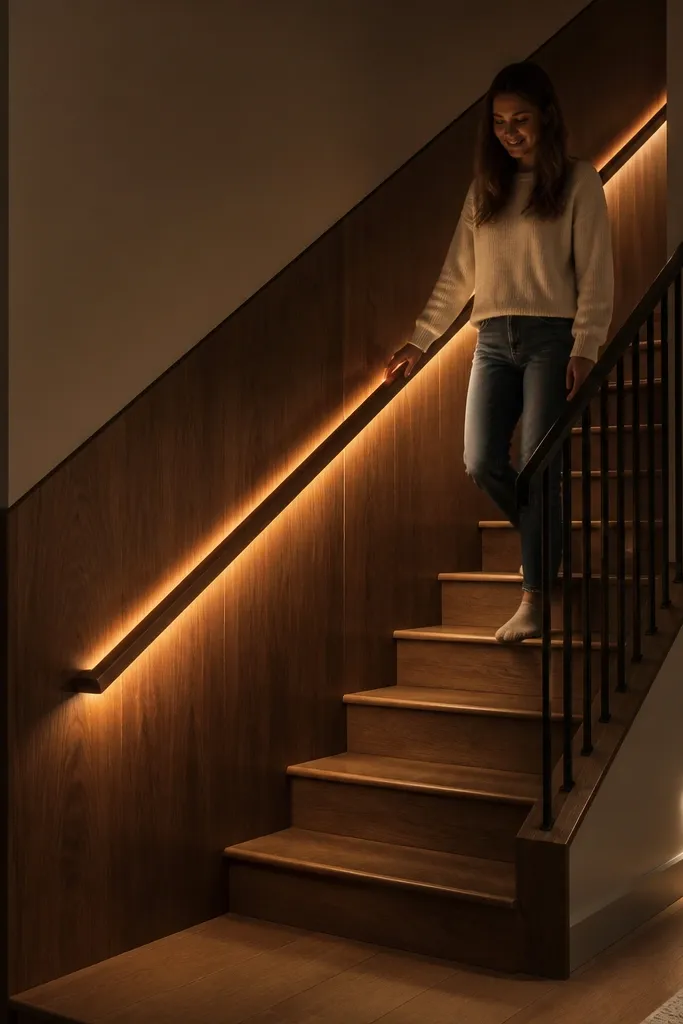
This is the most “wow in photos” option because light makes the half wall look deeper and the handrail look floating. A walnut half wall with a concealed LED line under the top cap creates a soft glow along the stair run. Keep the LED diffused so you get an even wash, not a bright strip. Pair it with minimal balusters so the glow stays the star.
Finish the walnut half wall with a satin clear coat so it reflects light gently. Install a top cap with a channel for an LED strip and diffuser lens, anchored to framing. Wire and test the LED before you close the channel, then secure the diffuser and cap. Install handrail brackets above the LED line and mount the handrail so it covers the channel edges.
Choose a warm LED color temperature around 2700K for wood. It looks natural with walnut and avoids blue-tinted glow.
Don’t use bare LED chips. The visible points ruin the luxury effect.
13. Matte white half wall with vertical metal slats and wood handrail
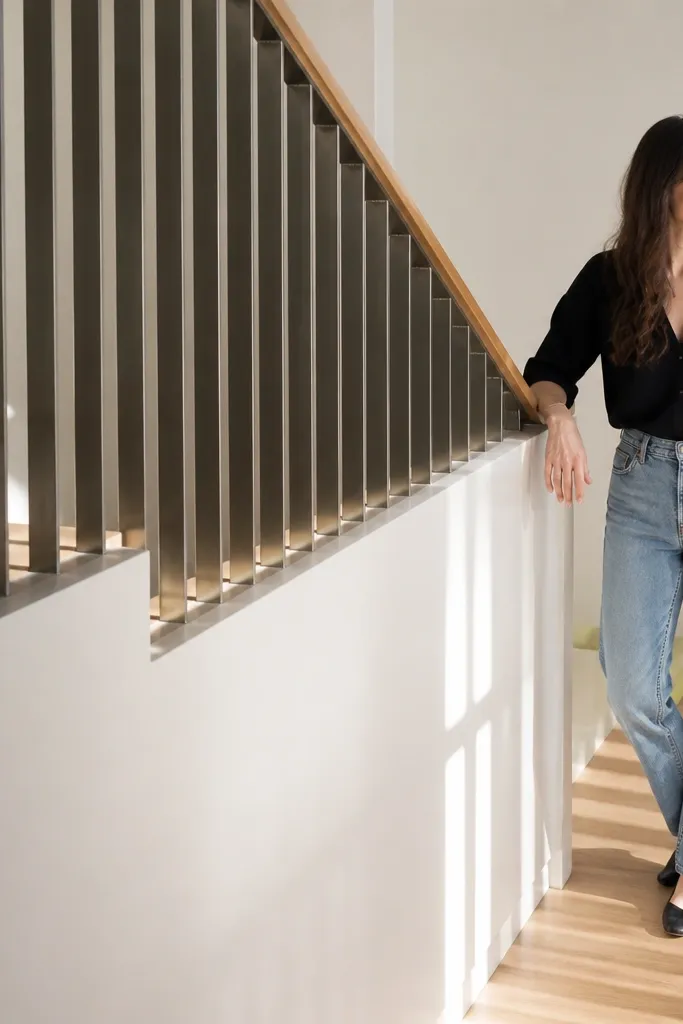
Vertical metal slats between the half wall and handrail create a high-end rhythm without going heavy. Matte white keeps the look crisp, and the metal slats add a subtle industrial edge that still feels refined. Use a light wood handrail so the metal doesn’t feel too cold. This is a strong pick for bright entryways and modern open-plan spaces where you want a clean stair feature.
Paint the half wall with a durable matte or satin white and let it cure fully. Install a top and bottom track for the metal slats so spacing stays consistent and the slats sit straight. Mount the wood handrail on concealed brackets anchored into framing. Finish by aligning the slat ends with the half wall trim lines so the rail reads straight from every angle.
Use slats with a consistent width and consistent gap. Mixed widths look cheap fast on stairs.
Avoid glossy metal slats. They reflect overhead lights and show every fingerprint.
14. Routed wood half wall panels with black metal balusters
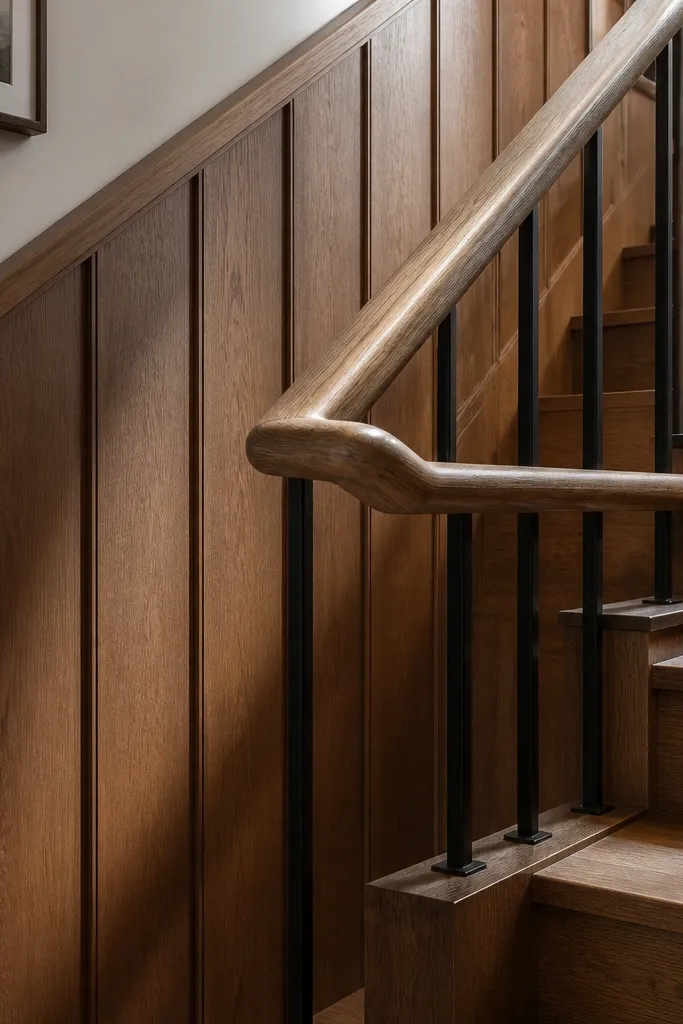
Build the half wall frame and skin with plywood, then route panel grooves using a template so the pattern stays consistent. Sand lightly and apply stain in thin coats to prevent blotching, then seal with satin clear coat. Install balusters using a top rail plate so each baluster sits at the same height and angle. Mount the handrail on brackets that bite into framing, then add end caps to cover bracket edges.
Routed panels look premium because shadows sit inside the grooves. A wood half wall with routed panel lines gives you that depth you’d normally get from expensive millwork. Pair it with black metal balusters for sharp contrast and visual structure. This works especially well when your stair rail needs to blend into wood trim already in the home.
Skip thisDon’t route too shallow. Shallow grooves don’t cast enough shadow to read luxury.
Editor's noteMake a simple routing template and clamp it every time. Consistency matters more than the groove depth.
15. Honed marble-look half wall with brushed nickel handrail
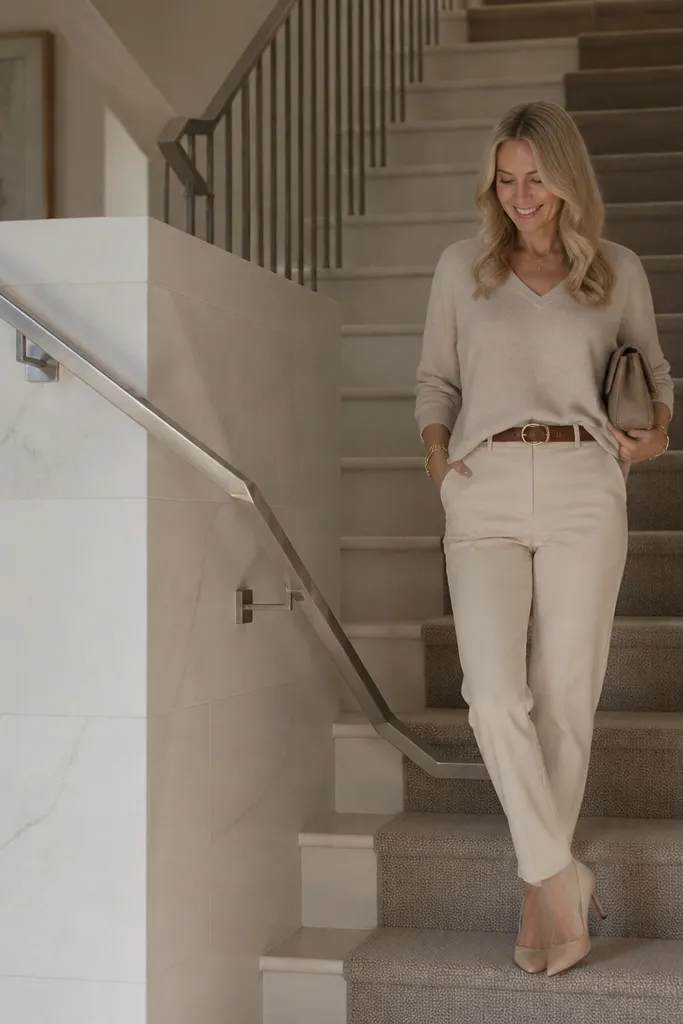
Install a cement board or backer panel on the half wall so the surface stays flat. Apply a marble-look porcelain or large-format stone-look panel system with thinset and careful alignment. Mount brushed nickel posts or a top rail bracket plate anchored into framing. Install the handrail and then set slim balusters at a consistent spacing, keeping their line straight with a chalk guide.
Honed marble-look surfaces bring that high-end spa feel without the maintenance of real marble. The half wall looks expensive because honed finishes absorb light instead of reflecting it, so the stair stays flattering in photos. Brushed nickel on the handrail keeps the palette cool and modern. Use slim balusters to avoid visual clutter against the stone pattern.
Skip thisAvoid glossy stone-look. It makes the stair feel shiny and less upscale.
Editor's notePick a honed finish with subtle veining for stair heights. Busy veining competes with balusters.
16. Rustic reclaimed wood half wall with modern metal rail cap
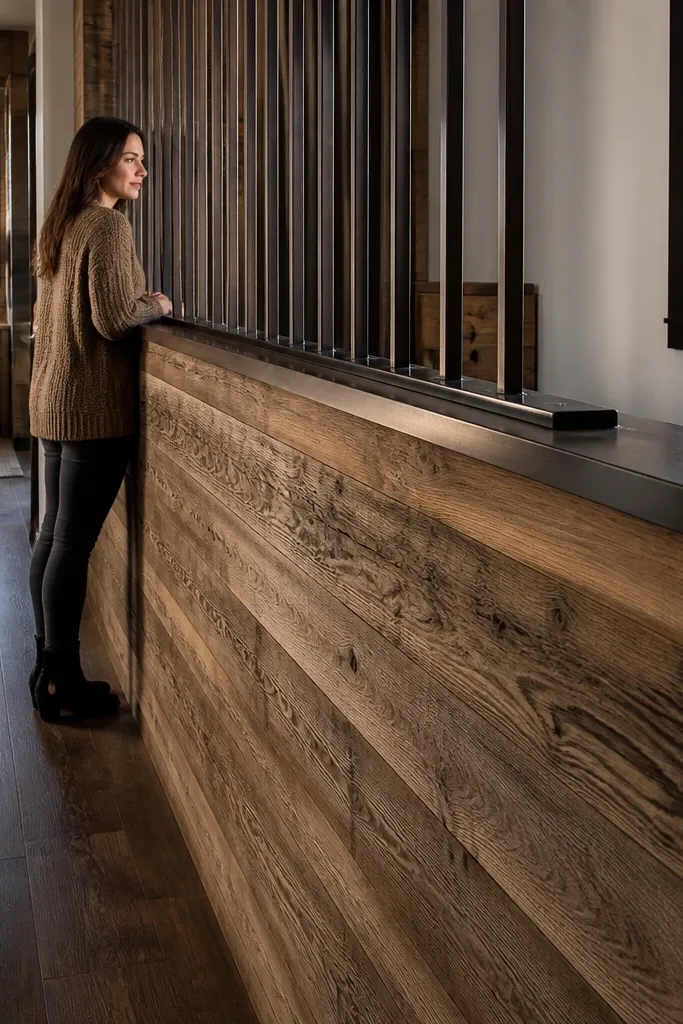
Reclaimed wood can look luxe when you treat it like millwork instead of a barn accent. The half wall gets the character, while a modern metal rail cap and dark balusters keep it grounded and clean. This combo is photogenic because you see grain variation on the half wall, but the railing still has straight, modern lines. It’s a good choice when you want warmth and texture without going fully traditional.
Use reclaimed boards that are planed and squared so the half wall surface is flat. Install them as a framed panel, then sand and apply a clear matte or satin finish to even out sheen. Add a metal rail cap on top to protect the wood edge and give the handrail a crisp mounting surface. Mount the handrail and balusters using brackets that anchor into framing, then check alignment along the entire run.
Seal knots and end grain first with a stain-blocking primer. It prevents dark spots from popping later.
Don’t leave reclaimed boards un-squared. A wavy half wall reads cheap immediately.
17. Half wall with vertical board-and-batten and a thick oak top rail
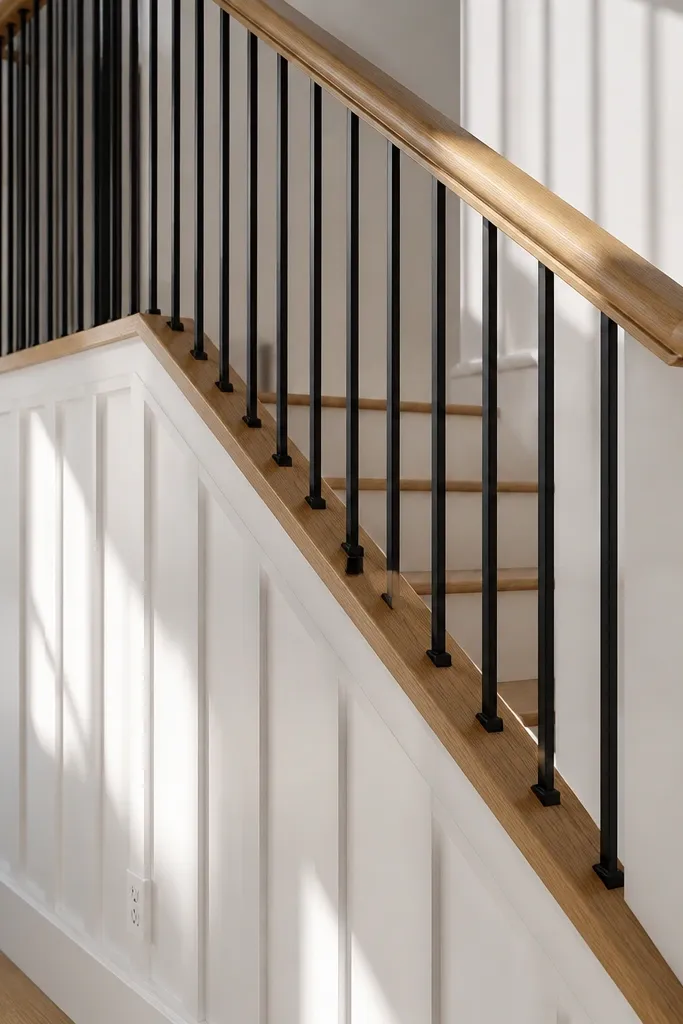
Board-and-batten gives you built-in texture and straight lines that look sharp on stairs. The luxury move here is a thick oak top rail that feels substantial in the hand and visually anchors the railing. Pair it with black balusters for contrast and to keep the texture from getting too busy. This design works well in entryways where you want the staircase to look like furniture.
Build the half wall and install vertical boards evenly spaced, then cover seams with battens. Paint the base color and keep battens aligned so the pattern looks intentional. Install a thick oak top rail board across the run, anchored into framing so it doesn’t flex. Mount the handrail to the rail board and install balusters with a consistent pattern that matches the board-and-batten rhythm.
Keep battens centered on seams. Off-center battens read sloppy from the bottom of the stairs.
Avoid thin, wimpy top rails. A thin top rail makes the whole half wall look temporary.
18. Half wall with arched top trim and simple straight balusters
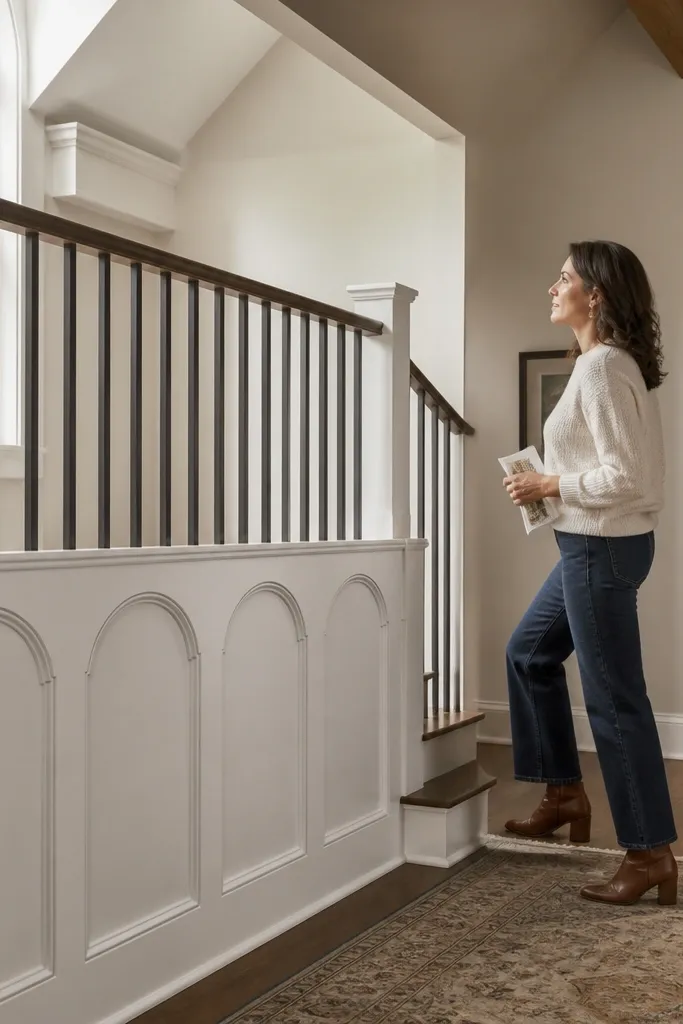
Create a half wall frame and install flat paneling as the base. Cut arched top trim pieces from MDF or plywood and attach them in a repeating pattern with consistent spacing. Paint the half wall and trim so the arch lines are crisp, then seal and lightly sand before final coat. Mount the handrail above the arch line and install straight balusters with uniform height and spacing.
Arched trim adds a refined architectural touch without turning the railing into decoration. The half wall stays clean, and the arch motif reads as custom millwork when it repeats consistently along the run. Straight balusters keep the design from getting too ornate. Choose this when you want traditional elegance but still want a modern, tidy railing layout.
Skip thisDon’t mix arch sizes. Variation makes the railing look like it was patched.
Editor's noteUse a template for the arch cut. Matching radii is what makes it look expensive.
19. Textured plaster half wall with walnut handrail and bronze accents
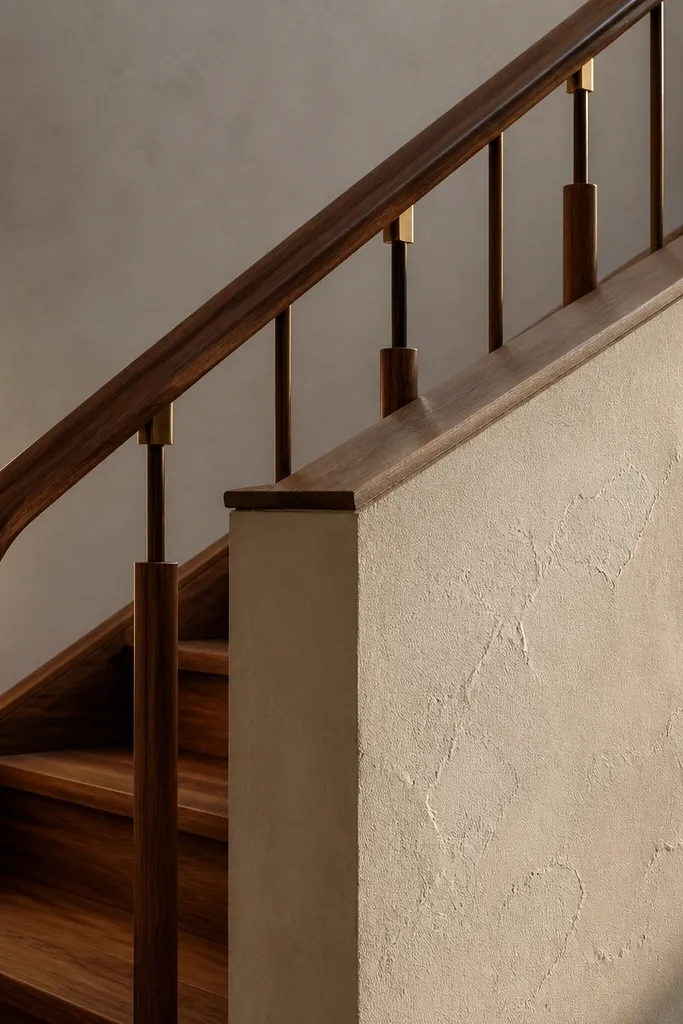
Build the half wall substrate smooth and stable, then apply a plaster texture system designed for walls. Use a consistent trowel pattern across the entire half wall so the texture direction matches. Let it cure fully, then seal with the recommended topcoat so it’s durable. Install walnut handrail brackets into framing, mount the handrail, and add bronze-tinted baluster caps or posts for the metallic tie-in.
Textured plaster on the half wall makes the railing look like it belongs in a design magazine because the surface captures light differently at every angle. Walnut handrail keeps it warm, and bronze accents add a soft metallic tone without going flashy. Keep balusters simple so the texture stays the hero. This is a high-end look for living rooms with warm lighting and neutral walls.
Skip thisDon’t skip sealing. Untreated plaster scuffs and looks dull fast.
Editor's notePick one texture pattern and repeat it. Random texture areas look like patchwork when seen from the stairs.
20. Dark stained half wall with brass cable anchors and glass panels
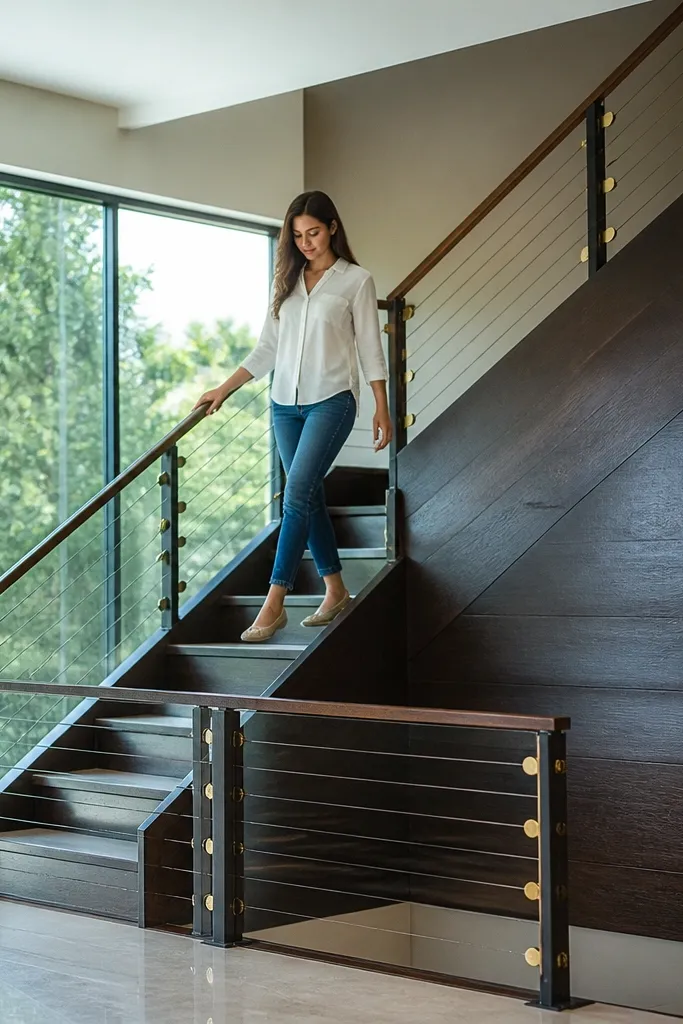
Stain and seal the half wall wood with a satin finish and let it cure. Install glass panel supports into framing behind the half wall so the glass stays solid. Add brass cable anchor hardware at consistent intervals, then thread vertical cables and tension them to remove slack. Mount a simple handrail on top and add end caps so the metal details look clean and intentional.
This design feels luxury because it combines three premium cues: dark material depth, glass openness, and brass hardware detail. The half wall is the anchor, the glass panels keep the stair airy, and the brass cable anchors add small, intentional highlights. It’s a great choice when you want a clean modern look but still want warmth from wood. The brass should be satin, not mirror, so it reads expensive instead of flashy.
Skip thisDon’t let glass edges show raw metal. Cover anchor areas with proper trim plates.
Editor's noteUse satin brass hardware with a consistent sheen across every piece. Mixed sheen makes it look mismatched.