1. Matte Charcoal 1x4 Vertical Bar Frame
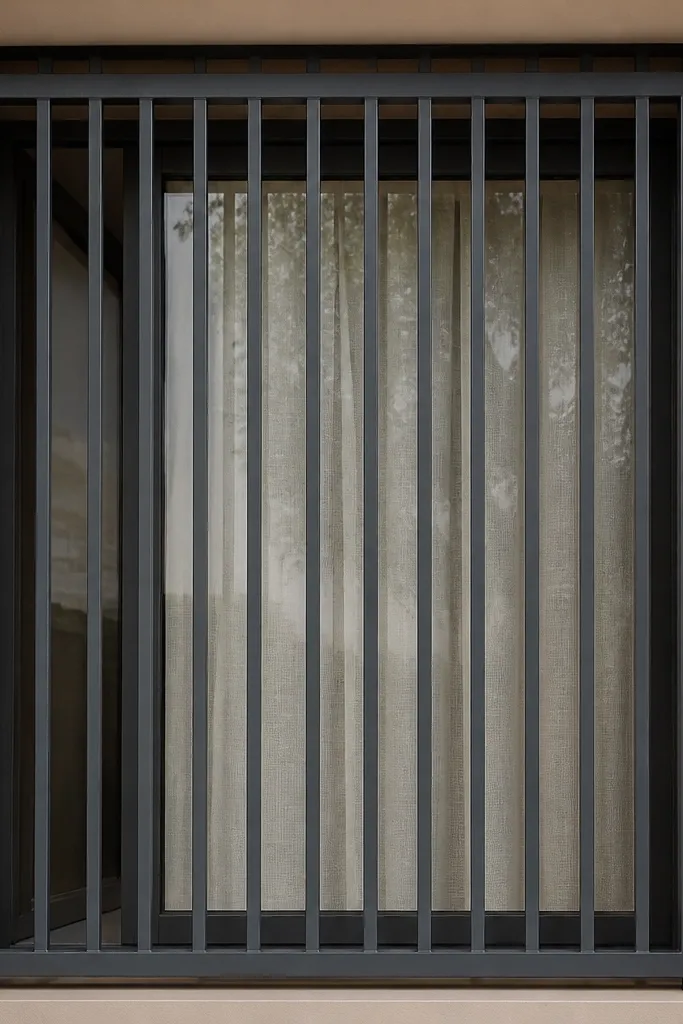
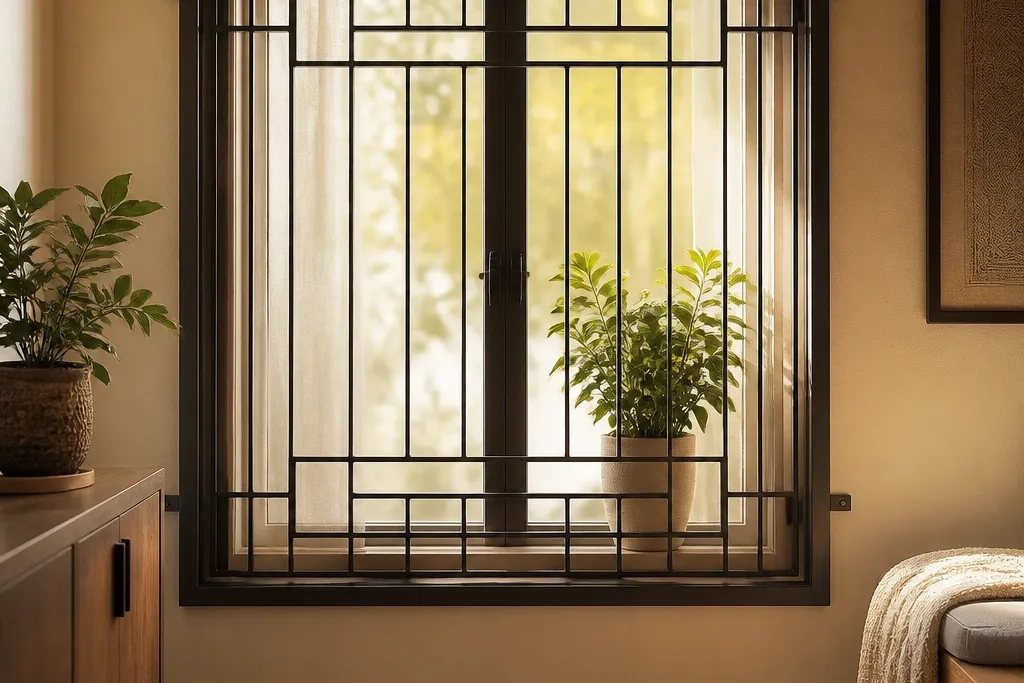
This design is modern because it reads as one clean rectangle around the window, with the bars doing the work in a simple, vertical rhythm. The “cozy” part comes from matte charcoal — it absorbs light instead of reflecting it back into the room. You get strong safety coverage without turning the view into a busy grid. It’s also one of the easiest patterns to build neatly because every bar repeats the same spacing.
Start by measuring the window opening and adding a perimeter frame that sits flush or slightly proud of the trim. Cut four frame rails from steel square tubing and weld the corners, then mark bar locations on the frame using a spacing jig set to hit your target openings (about 4 inches max). Cut your vertical bars to height, tack them in place, check the alignment from the side, then fully weld. Finish by grinding welds smooth where they touch fabric, then powder-coat or paint with a matte finish and let it cure fully before mounting.
Editor's noteMake a cheap cardboard spacer template that matches your bar spacing so every repeat stays consistent.
Skip thisAvoid bar spacing that looks “close enough” — measure the clear openings, not the bar-to-bar distance.
2. Warm Bronze Arched Top Rail + Vertical Bars

If you want cozy safety window grill design modern without a heavy look, an arched top rail softens the whole composition while the vertical bars keep it secure. Warm bronze looks inviting next to wood floors and beige walls, and it hides minor weld marks better than glossy finishes. The arch adds a focal line at eye level, so the grill looks like a deliberate design element. This is a great fit for entry doors with sidelights or living room windows that need visual warmth.
Build a rectangular frame first, then create the arched top by using a bent rail or a segmented top rail made from short pieces welded into a curve. Mark and weld vertical bars beneath the arch with consistent spacing and a straight lower rail. Test-fit the grill in front of the window so the arch doesn’t interfere with trim or blinds, then drill mounting holes through the frame. Prime all metal, apply warm bronze coating, and install with corrosion-resistant screws and plastic shims to keep it from rocking.
Editor's noteUse a cardboard arch template taped to the glass to confirm the curve looks right from sitting height.
Skip thisSkip welding the arch after mounting — you’ll fight alignment and end up with a crooked top.
3. Matte Black X-Pattern Center Panel
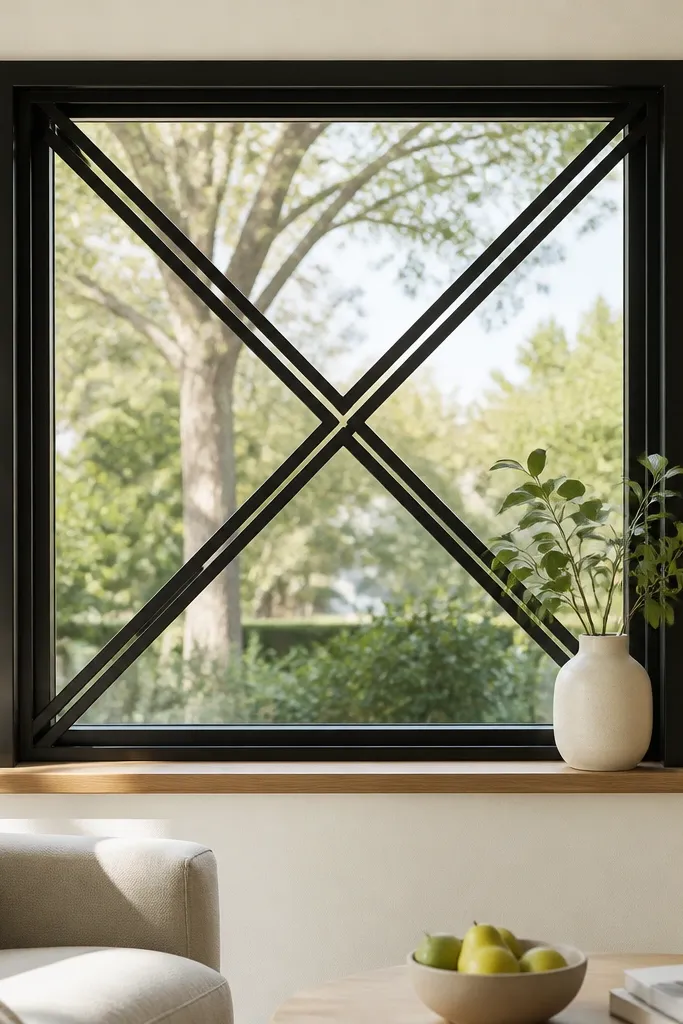
This one looks graphic instead of prison-like because the grid is controlled: a clean perimeter frame, then a centered X motif that draws the eye. The bars still meet safety needs, but the design hides the “fence” vibe by concentrating the pattern in the center. Matte black makes the X read crisp and modern. It works well for dining rooms and hallways where you want security without blocking the whole visual field.
Cut a full perimeter frame from square tubing, then decide your bar thickness so the X lines match the vertical/horizontal spacing you need. Weld vertical and horizontal bars to form the baseline safety structure, then add the diagonal bars for the X with equal offsets from the center. Grind the welds, then apply matte black powder-coat for a uniform surface. Mount using four corner fasteners plus one middle fastener on the top rail so the center doesn’t flex.
Lay the diagonal bars on a flat surface first and clamp them into an exact X before welding to avoid skew.
Don’t add extra diagonals to “fill space” — it makes the design look busy and harder to keep straight.
4. Dark Espresso 2-Bar Horizontal Ladder
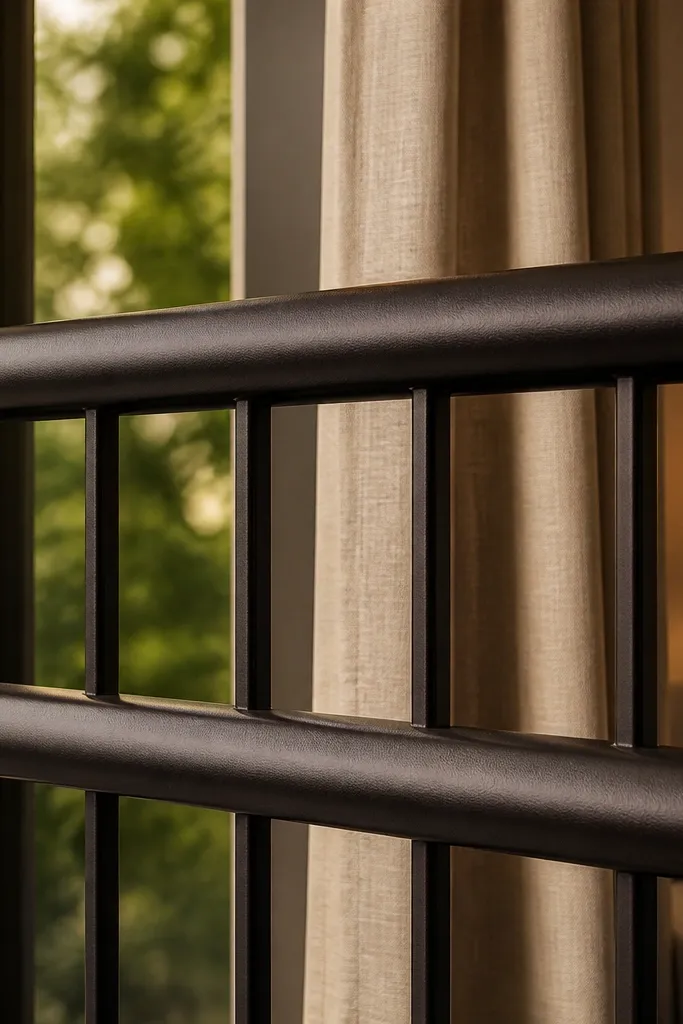
This design feels modern and cozy because the eye sees a ladder-like structure: two strong horizontal rails with vertical bars between them. Dark espresso reads warm like coffee wood tones, so it doesn’t scream “metal cage.” The horizontal rails also give you a visual place to rest curtains against without the bars feeling chaotic. It’s a solid choice for bedrooms where you want the grill to look intentional even when the window is uncovered.
Start with a rectangular frame and weld on two horizontal rails at measured heights, then fill the space with vertical bars using a spacing jig. Keep the vertical bars straight and consistent in length so the ladder lines stay crisp. Grind any sharp edges at the rail ends so fabric doesn’t catch. Prime and spray with an espresso-toned coating, then install with anchors rated for your wall type (use proper masonry anchors if you’re mounting to brick).
Pre-fit your curtain rod or track so you know whether the rails will block it before final coating.
Avoid overly thick horizontal rails — they can look chunky and ruin the modern proportions.
5. Charcoal Side-Fixed Grid with Floating Inner Frame
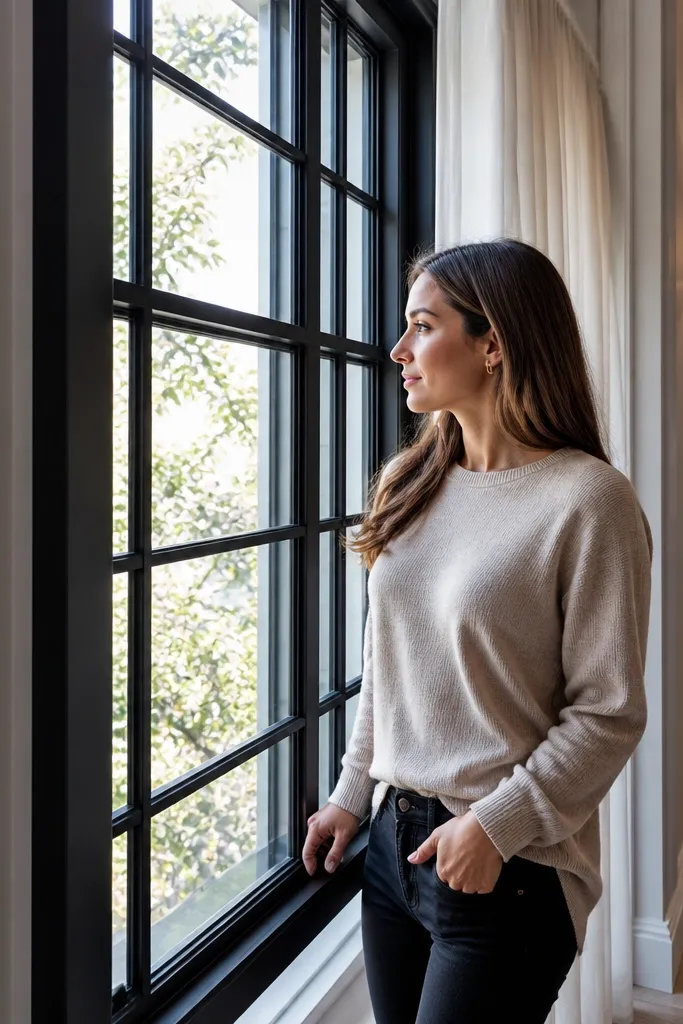
A floating inner frame is what makes this look architectural instead of utilitarian. The outer frame reads like trim, while the inner grid does the safety work. Charcoal keeps it modern, and the double-frame effect makes it look like a designed panel rather than a welded fence. This style looks great on windows with decorative trim or simple walls that benefit from a little structure.
Build an outer perimeter frame that matches your window size, then add an inner grid frame set back by about 1 inch so it appears to float. Weld vertical bars and a light horizontal bar structure to the inner frame using consistent spacing. Attach the inner assembly to the outer frame using four corner standoffs so the gap stays even. Coat both frames together in matte charcoal, then mount the outer frame first and check the inner panel clearance from the glass and any sashes.
Standoffs matter — use identical spacers or you’ll see the float gap wobble from across the room.
Don’t skip the standoff plan — welding the inner panel directly to the outer frame usually distorts the spacing.
6. Matte Black Ring Motif Around a Center Circle
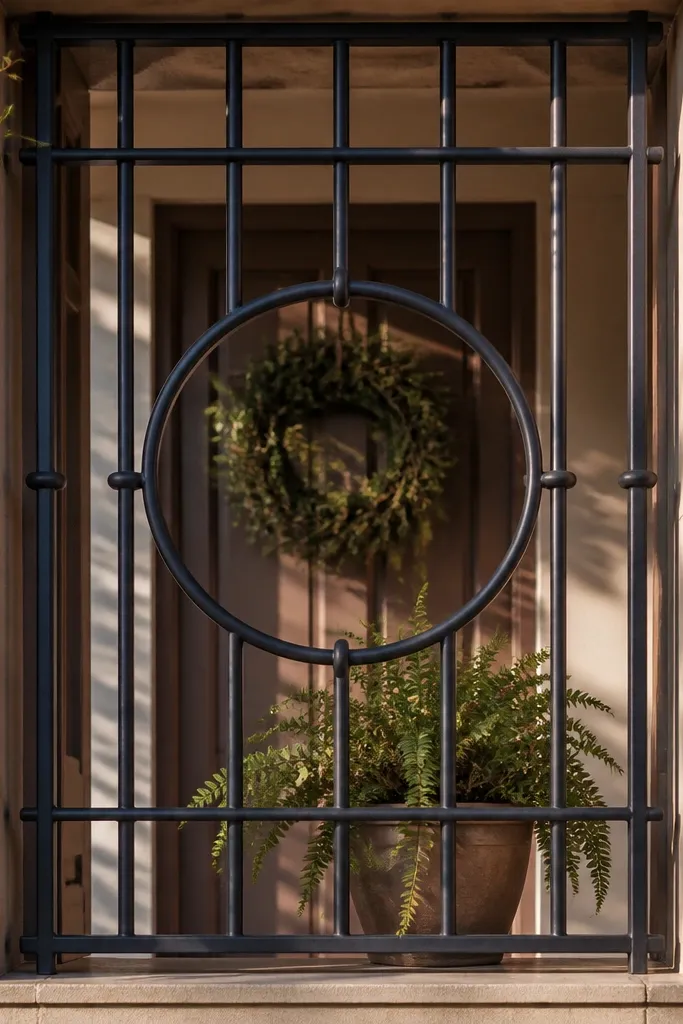
A single ring motif makes a grill feel decorative without adding clutter. The center circle gives you a cozy focal point and breaks up the repetitive lines, while the surrounding bars keep it functional and safe. Matte black makes the circle read crisp and modern. This design is especially photogenic on entryway windows where the pattern sits at face level.
Create a rectangular frame, then add vertical and horizontal bars to meet your clear-opening spacing goal. Weld a center ring using round bar bent into a circle or a pre-made ring, then connect it to the grid at four points. Grind and coat so the ring edges are smooth. Mount with at least six fasteners across the frame to prevent racking, and confirm the circle doesn’t interfere with window crank hardware.
Use a template cut from plywood for the circle so it stays round while you tack it.
Avoid attaching the ring only at one or two points — it will look loose and can shift over time.
7. Warm Bronze Minimal Spindle Bars with Thin Frame
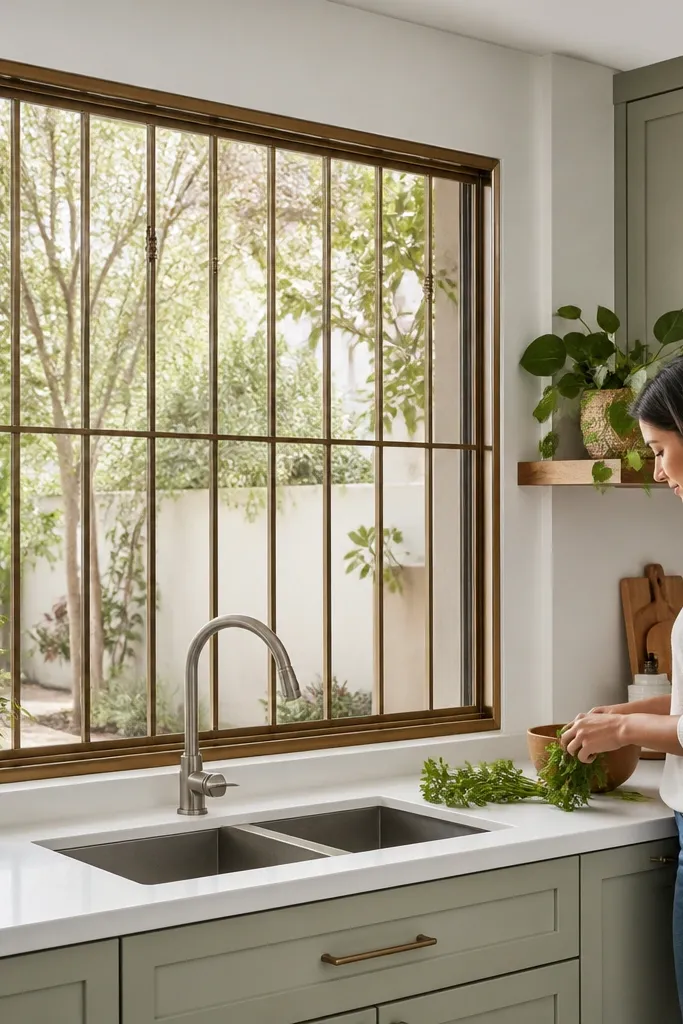
This is the “less metal, still safe” approach. A thin perimeter frame makes the bars feel lighter, and warm bronze keeps it cozy. The look stays modern because the spindles are evenly spaced and the frame lines are simple. It’s a good choice when you want maximum light through the window and fewer visual interruptions.
Use a thinner steel profile for the perimeter frame, then select vertical bars sized to match your safety opening goal. Mark spacing on a flat work surface, tack the bars to the frame, and check for bowing by sighting across the top rail. Weld out the joints, then smooth only where fingers and curtains might contact. Coat in warm bronze matte, and mount with shims so the frame sits level even if the trim is slightly uneven.
Choose bar thickness first, then work out the clear opening — don’t pick spacing and hope the bars fit.
Skip sanding sharp edges before coating, because paint hides nothing for touch — it feels rough.
8. Charcoal Window Grill with Horizontal Slat Infill Panel
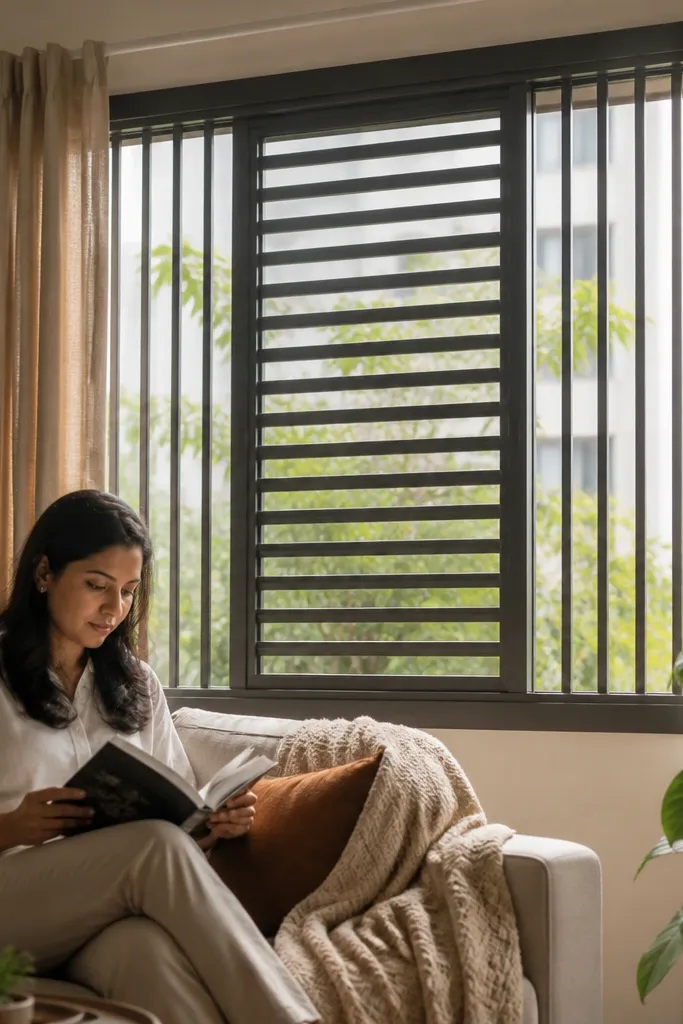
This one adds warmth by using horizontal slats as a cozy infill panel while keeping vertical bars for safety. The result looks like a modern vented screen rather than a full grid. Charcoal keeps it grounded, and the slats soften the “bars everywhere” look. It’s great for living rooms where you still want privacy but don’t want a heavy lattice.
Build a perimeter frame and install vertical safety bars at your target spacing. Then weld a middle infill panel made from horizontal slats between two horizontal rails, leaving the slat spacing consistent. Keep the slats slightly recessed so they don’t stick out and catch curtains. Prime thoroughly, then coat matte charcoal, and mount with a gasket or thin weather strip so the metal doesn’t rattle against trim.
Editor's noteRecess the infill panel by 1/4 inch so it looks intentional, not tacked on.
Skip thisDon’t make the slats too wide — it breaks safety and makes the pattern look open.
9. Espresso Chevron Corners with Straight Center Bars
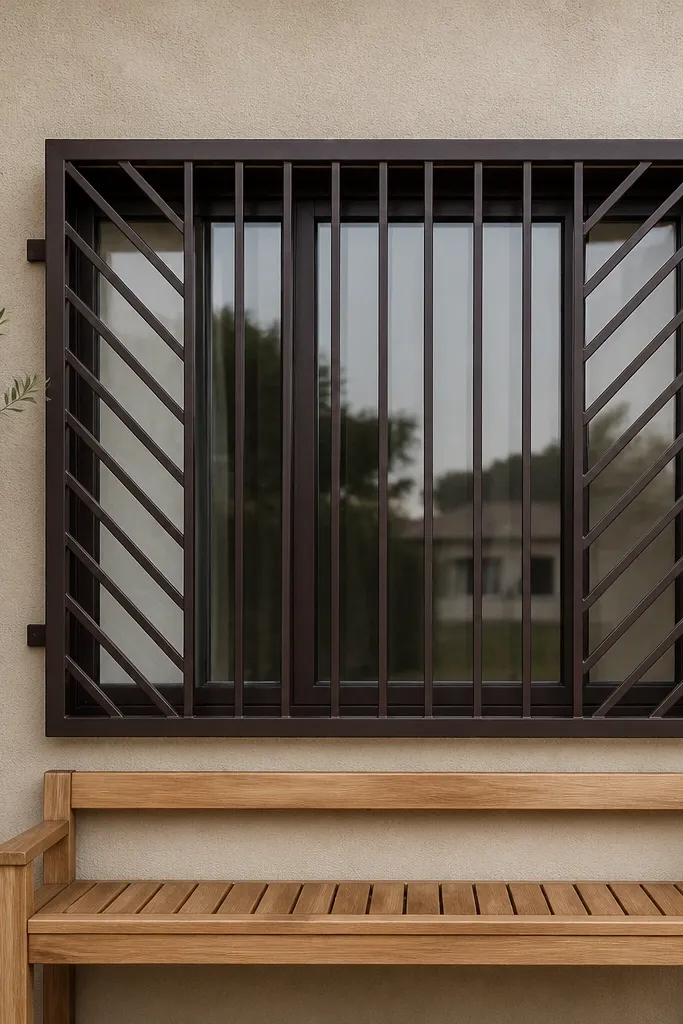
Chevron corners give you a modern style cue without turning the whole grill into a complicated lattice. The center stays straight and clean, so the safety function is obvious and the look remains calm. Espresso finish reads warm and pairs well with wood and beige tones. This is a smart option for windows that face a porch or patio where you’ll see the corners up close.
Start with a rectangular frame and install straight vertical bars for safety. Add chevron accents by welding diagonal short pieces only in the corner zones, not across the whole grid. Grind smooth, then coat in espresso matte. Install using corner brackets and at least one middle anchor so the corner accents don’t make the frame feel flexy.
Editor's noteKeep chevrons small — about 6-8 inches tall at each corner — so the design stays modern and not decorative clutter.
Skip thisAvoid chevrons that reach the center — they create visual noise and complicate alignment.
10. Matte Black Open-View Window Grill with Side Rails Only
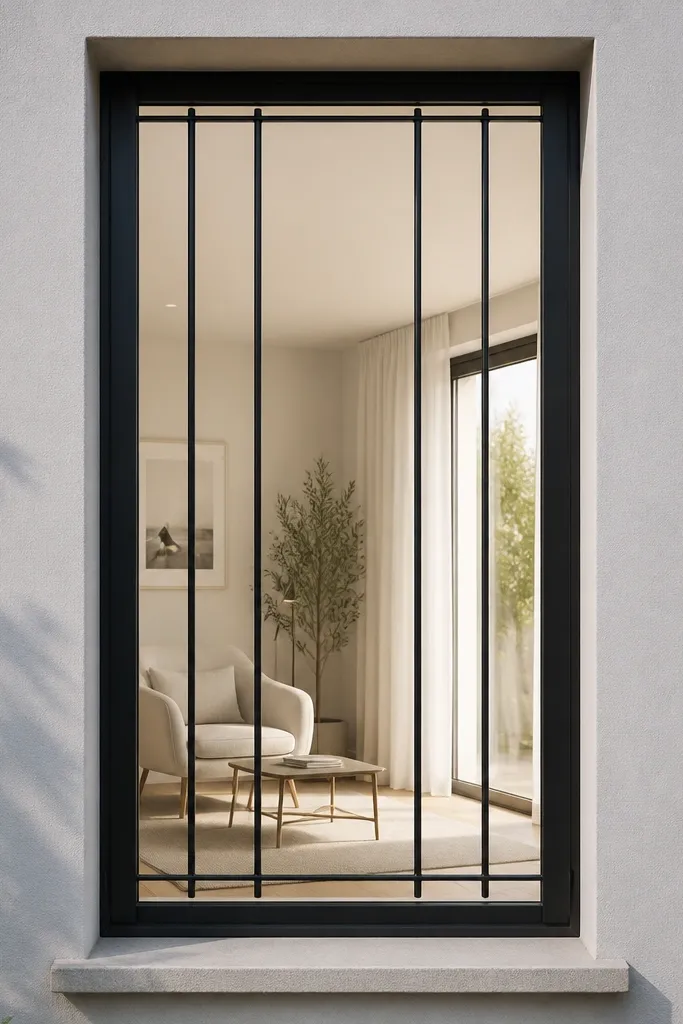
This design is for rooms where you want light and a clean view. Instead of a full grid, it uses thicker side rails and a limited number of vertical bars that still meet your clear-opening safety target. Matte black keeps it sharp, and the open center reads modern. It works well for taller windows where the eye naturally tracks vertically.
Measure the window width and plan bar placement so the clear openings stay within your safety target. Build a full perimeter frame, then weld in only the required number of vertical bars between the side rails. Reinforce with a top and bottom rail so the frame doesn’t rack. Coat matte black, then mount with a tight fit to the trim so the grill can’t shift under pressure.
If your window has a crank or latch, plan the bar positions around the hardware before welding.
Don’t rely on fewer bars if your openings end up larger than your safety target.
11. Warm Bronze Geometric Frame with Square Center Grid
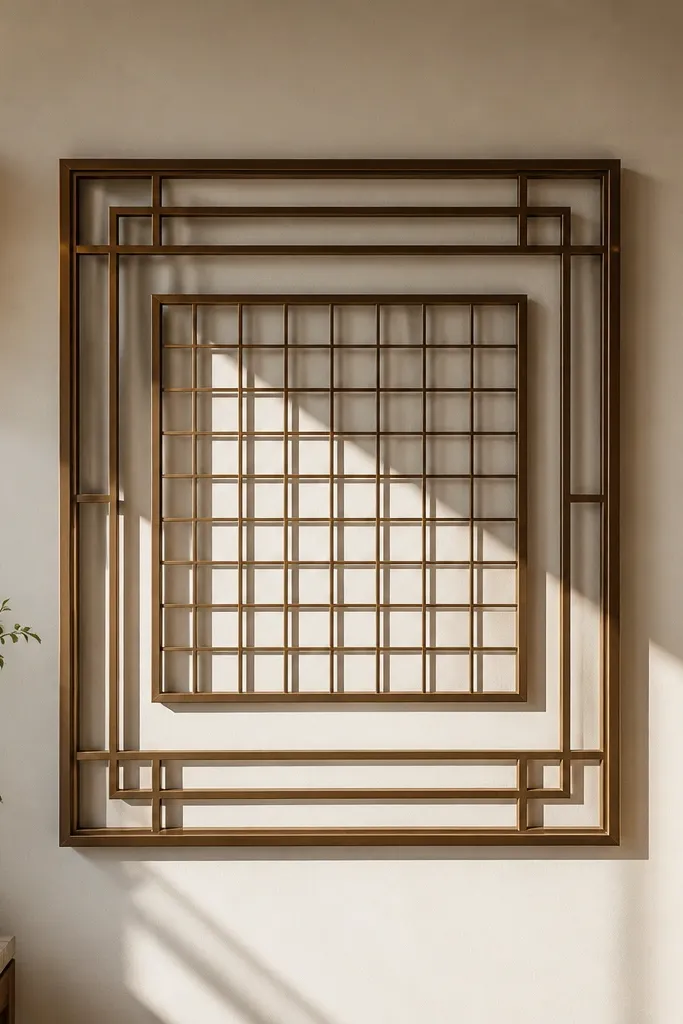
A geometric outer frame makes the grill look like a modern wall feature, while the square center grid gives predictable safety. Warm bronze keeps it cozy and soft against neutral walls. This design is photogenic because it creates a grid within a frame — your eye reads it as intentional architecture. It’s a good match for windows that already have square trim details.
Build an outer frame with slightly thicker rails, then create a center grid from vertical and horizontal bars. Use a spacer jig to keep the grid squares consistent in size and to meet your clear-opening goal. Weld the center grid to the inner perimeter, then weld the inner to the outer frame. Grind, prime, and coat in warm bronze matte, then install with corner mounts and check the grill sits flat without twisting.
Use a metal cutting guide or stop block so every bar length is identical — it’s what keeps the grid square.
Avoid mixing bar thicknesses — the grid looks off even when the spacing is correct.
12. Charcoal Window Grill with Vertical Wave Top Rail
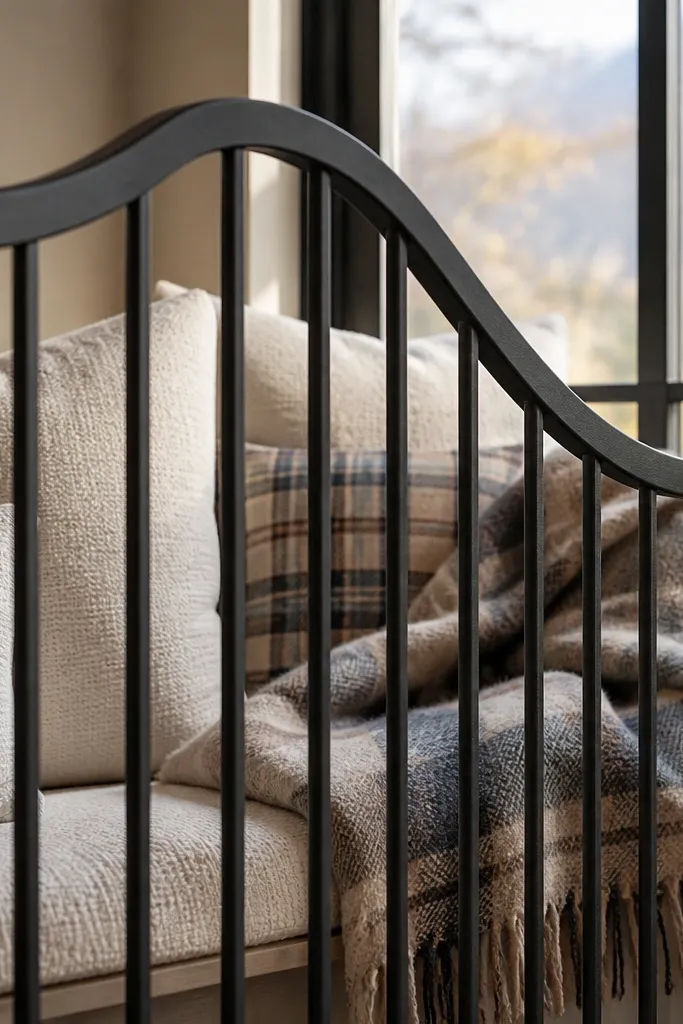
Waves at the top rail add a cozy, human touch while the vertical bars keep the protection straightforward. The wave is a subtle design move: it breaks the strict rectangle without turning the whole grill into art metal. Charcoal makes the wave look modern and controlled. This works best on windows that are slightly tall or narrow where a top detail is noticeable.
Start with a rectangular frame and weld vertical safety bars in your target spacing. Fabricate the wavy top rail by cutting and welding short segments into a gentle wave shape, then weld it across the top. Grind where the wave meets the side rails so the surface is smooth. Prime and coat matte charcoal, then mount and verify the wave doesn’t block blinds or curtain tracks.
Mark the wave points with a ruler and painter’s tape so your curve stays even from left to right.
Don’t make the wave too sharp — sharp peaks catch light and look harsh.
13. Dark Espresso Frame with Frosted Glass Infill Panel
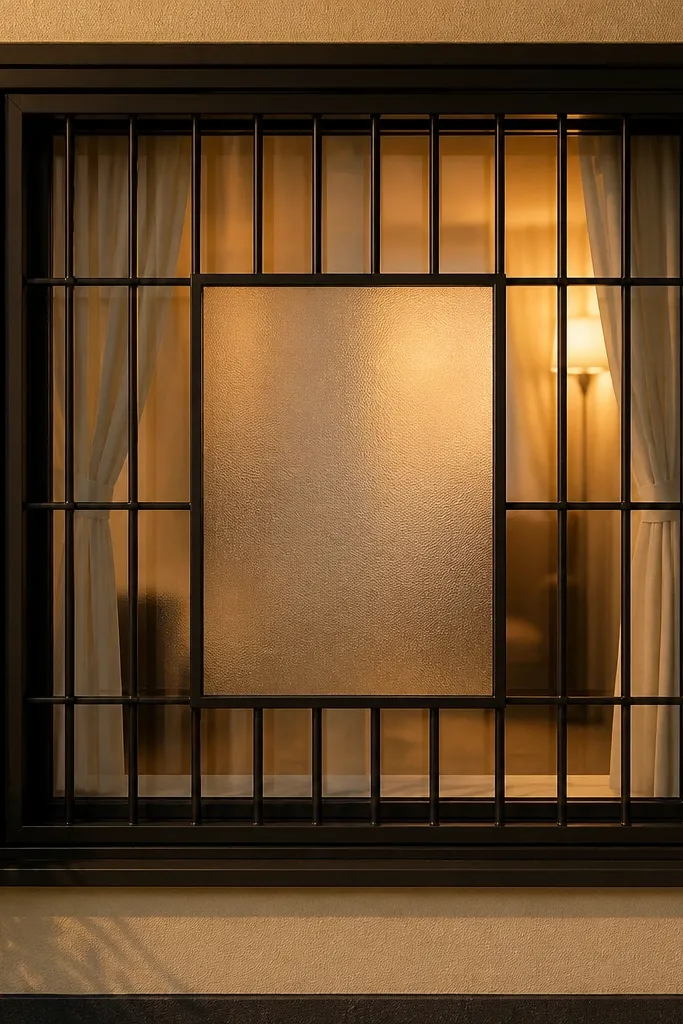
This is how you get privacy and a soft look without messy lattice. The grill has a modern metal frame, but the center is a frosted glass infill that diffuses light and feels cozy. The metal bars still handle safety, while the glass panel reduces the “bars everywhere” visual. Dark espresso ties it together and looks good in both modern and farmhouse interiors.
Build a perimeter frame in dark espresso-ready metal and weld vertical bars behind the glass panel area to meet your clear-opening safety target. Install a frosted glass infill panel using a gasket and retaining clips so the glass can’t rattle. Seal edges with glazing tape or silicone made for glass, then coat the metal frame (not the glass). Mount the assembly with rubber shims so vibration doesn’t crack the panel.
Use tempered or laminated frosted glass for safety — it holds up better if something hits the window area.
Don’t skip gaskets — glass-to-metal contact causes rattling and eventual chipping.
14. Matte Black Picture-Frame Grid with Inner Border
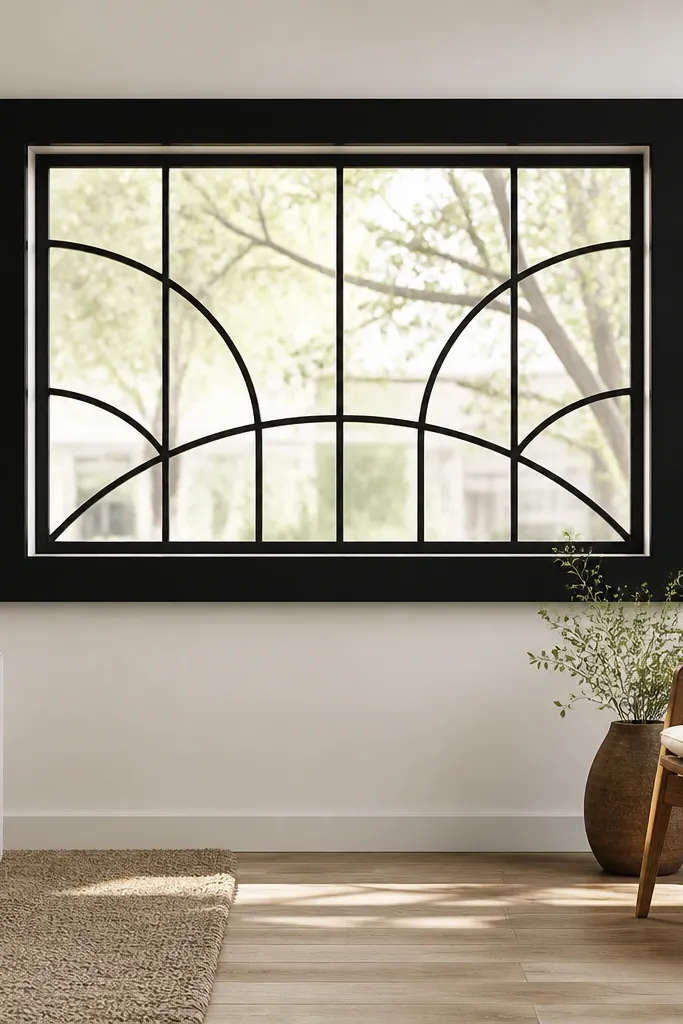
This one looks like wall art for your window. The outer border is clean like a picture frame, and the inner grid is simple enough to feel modern. Matte black makes the border crisp, and the inner lines add safety without overwhelming the view. It’s a strong pick for front-facing windows where the grill is visible from the street.
Create an outer perimeter frame and an inner grid frame separated by a small reveal (around 1/2 inch). Weld vertical and horizontal bars to form a grid inside the inner frame while keeping clear openings at your safety target. Add a thin inner border ring if you want extra definition, then grind and coat matte black. Install with even shims behind the frame corners to keep the reveal consistent.
Editor's noteUse a spacer block to set the reveal width — it’s the difference between “designed” and “assembled.”
Skip thisAvoid big reveal gaps — they make the grill look cheap and catch dust.
15. Warm Bronze Vertical Slat Grill with Narrow Spacing
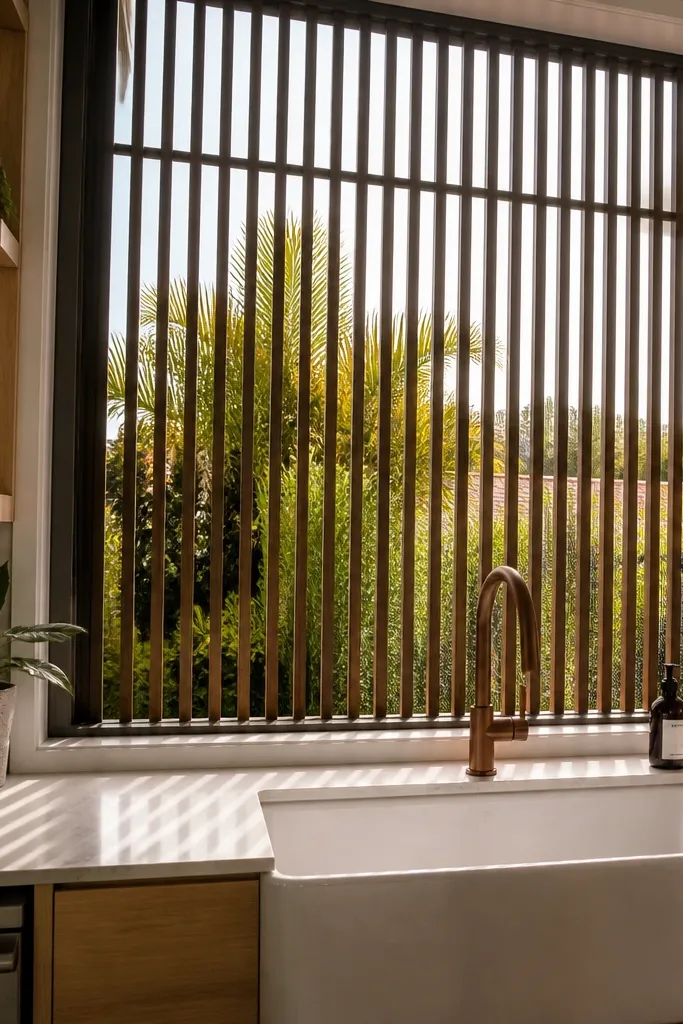
Vertical slats make the grill feel like a modern screen, not a fence. Warm bronze reads cozy and matches lots of hardware finishes. The narrow spacing keeps it safe while still letting light through. This is a great solution for windows where you want privacy from the street but still want the room to feel bright.
Make a thin perimeter frame, then weld vertical slats at even intervals calculated for your clear-opening target. Keep slats uniform in width and straightness — even a slight bend makes the whole panel look sloppy. Grind welds at the slat ends, prime, and coat in warm bronze matte. Mount with a tight perimeter fit and use corrosion-resistant screws so the finish doesn’t chip at the fasteners.
Cut slats from consistent bar stock and deburr both ends before welding for clean spacing.
Don’t eyeball slat straightness — sight down the panel while it’s clamped.
16. Charcoal Half-Grid with Center Vertical Accent Bars
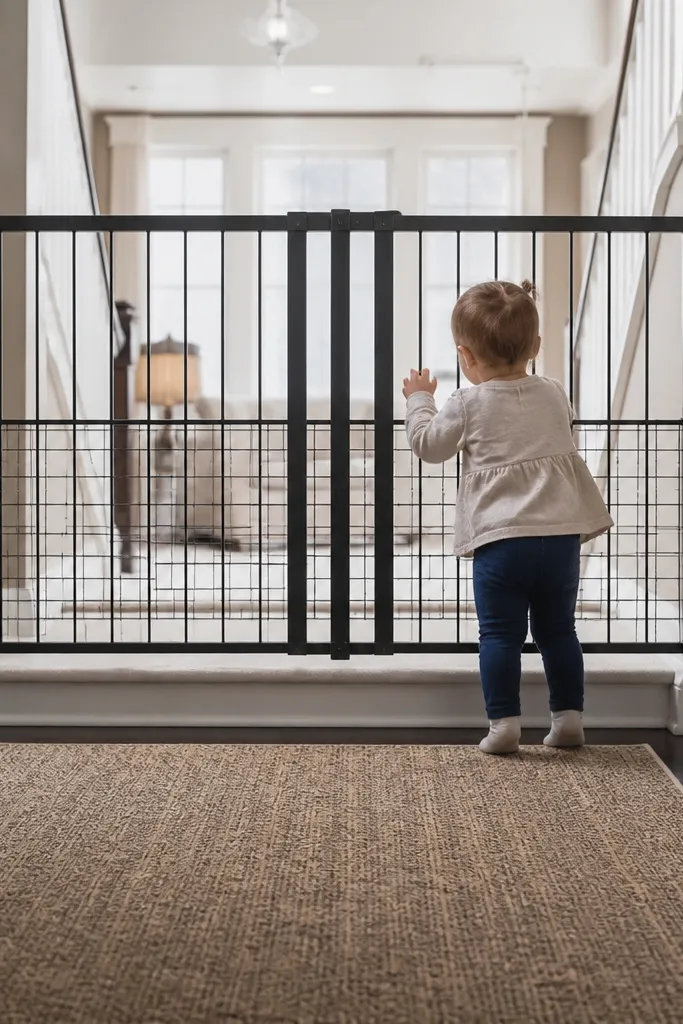
Half-grid designs look modern because the pattern has a “resting” area instead of filling every inch. The thicker center bars add a cozy anchor line that frames the window like a doorway. Charcoal keeps it understated. This works well for windows where you want safety mainly at the lower portion or where you have decorative upper trim.
Build a full perimeter frame, then plan a lower half grid using vertical and horizontal bars with your safety spacing target. Add thicker vertical accent bars in the center that run the full height, welding them to the perimeter. Keep the top half mostly clear except for needed perimeter reinforcement. Coat matte charcoal and mount with anchors that prevent the lower grid from shifting.
Measure the exact height of your lower safety zone before cutting — don’t guess from eyeballing the window.
Avoid leaving the upper area too open if kids can reach it — safety has to match the threat zone.
17. Espresso Corner Lattice Panels with Clean Center
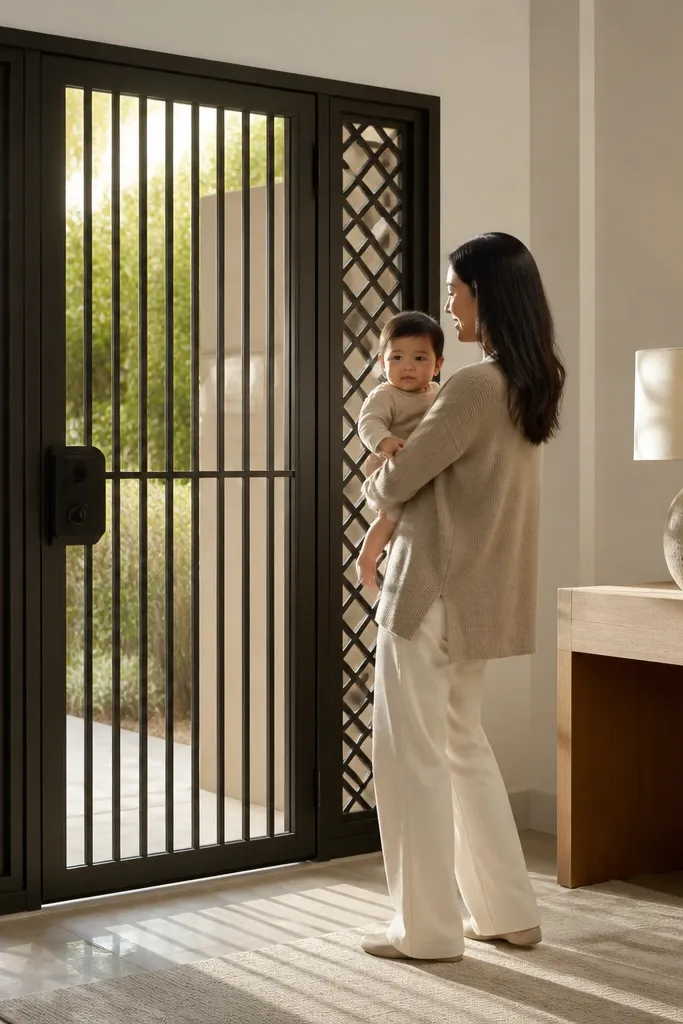
Corner lattice gives you pattern interest where it’s most visible, while the center stays simpler for a modern look. Espresso makes it warm, and the limited lattice keeps it from turning into a heavy wall of metal. You still get safety because the center has straight bars and the corners are reinforced. This design is photogenic on windows with curtains because the corner patterns show even when fabric moves.
Weld a perimeter frame and install straight vertical bars across the center area at your safety spacing goal. Build small lattice corner panels from diagonal bars or crisscross strips, welded only within corner zones (for example 8x8 inch areas). Grind smooth and coat in espresso matte. Mount with corner brackets plus center anchors so the lattice corners don’t create uneven stress.
Keep lattice corners symmetric and measured — asymmetry reads sloppy in metal work.
Don’t cram lattice too close to the center — it makes the design feel busy instead of intentional.
18. Matte Black Two-Tone Grill with Warm Wood-Accent Slats

Two-tone grills look modern when the contrast is controlled. Matte black does the safety structure, while warm wood-tone slat accents add cozy warmth without making the panel feel heavy. You keep the safety from the metal bars, and the wood-tone parts are just visual infill. This is a good option for rooms that already have wood finishes and want the grill to match instead of clash.
Build the metal perimeter frame and weld vertical safety bars at your target spacing. Add wood-tone accents as removable infill slats attached with small standoffs or brackets, keeping them away from areas that need to be secured for safety. Seal or paint the wood-tone slats with exterior-rated coating so they handle humidity. Coat the metal in matte black, then install and test that the infill doesn’t rattle when the window is opened or closed.
Use removable infill slats so you can clean behind the grill without taking the whole panel down.
Avoid using bare wood for infill — it will warp and the look will fall apart.
19. Warm Bronze Roman-Style Vertical Bars with Center Medallion
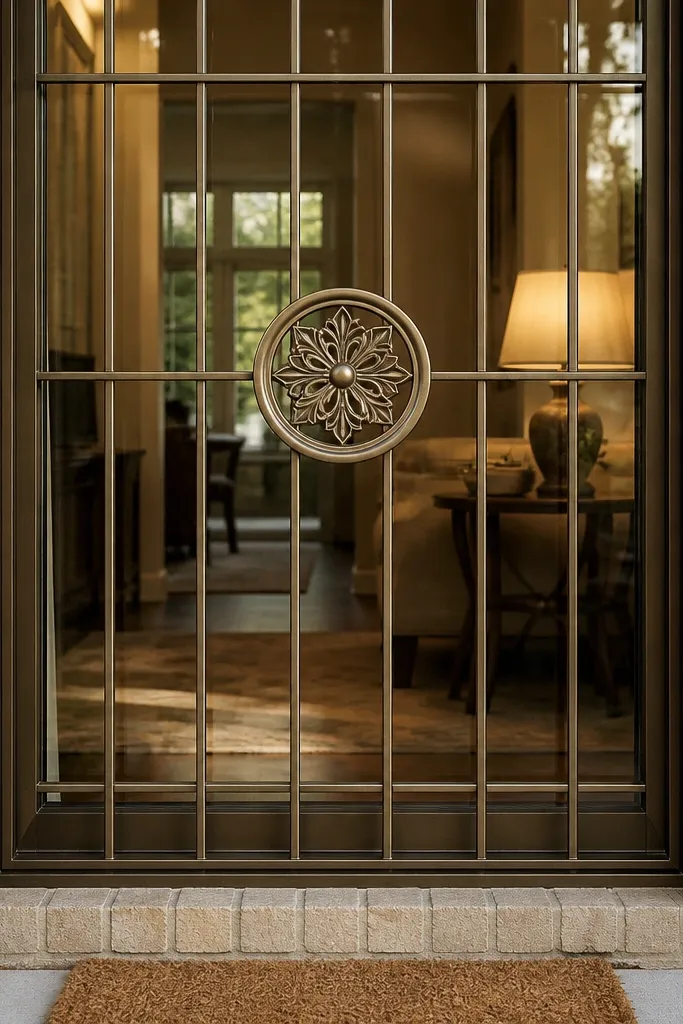
A medallion at the center reads cozy and “designed” without making the grill ornate everywhere. Warm bronze gives it a softer tone than cold steel, and the vertical bars keep it securely modern. The medallion creates a focal point that looks good in photos and at eye level. It works well for entry windows where you want a little character but still need real protection.
Make a perimeter frame, then weld vertical bars to match your safety spacing target. Add a center medallion made from a round plate or bent ring, welded at four points to the grid so it can’t crack free. Grind and coat in warm bronze matte. Mount with a level check at the top rail and at least one anchor in the center so the medallion zone stays rigid.
Use a thicker medallion plate than you think — thin medallions look flimsy in daylight.
Don’t add scrollwork all over — it makes the grill harder to clean and less modern-looking.
20. Charcoal Slim Frame with Sliding Side Access Bars
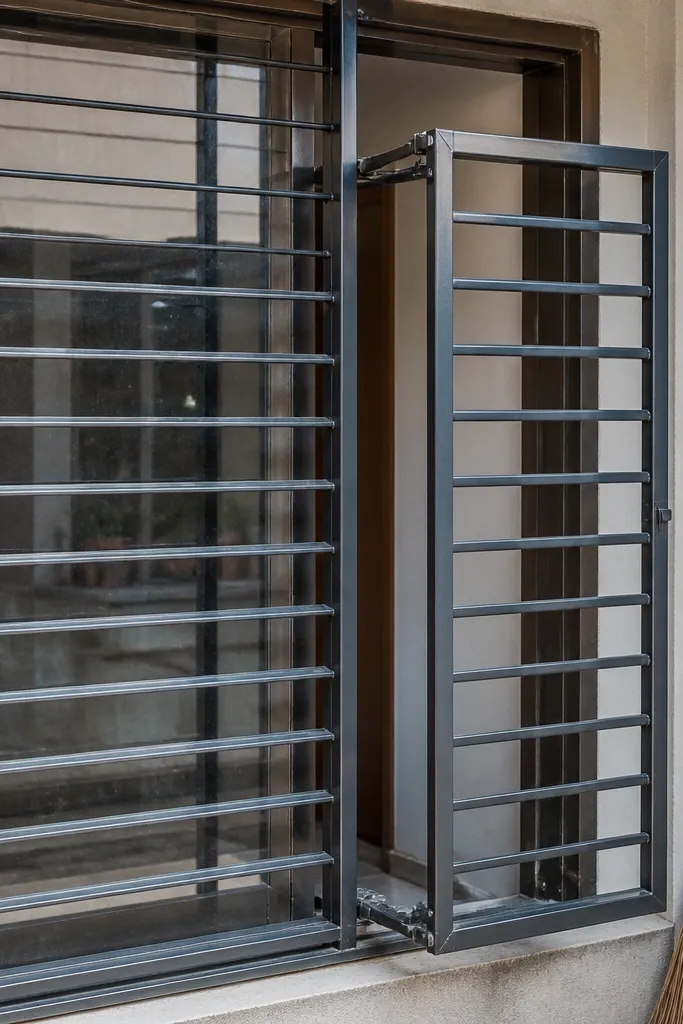
This design is modern because it solves a real DIY problem: cleaning and emergency access. The main grill stays clean and straight, while a side access panel or hinged section gives you a practical way to reach the glass. Charcoal keeps it understated and cozy. It’s a strong pick for windows that get dusty or for homes where you need a clear, predictable access point.
Build a slim perimeter frame in charcoal-ready metal and weld vertical bars for safety across the main area. Add a side access section using hinges or a keyed latch and keep the opening small enough to still meet your safety target when closed. Install the latch so it sits flush under a protective cover to prevent snagging. Coat everything matte, then test the access section for smooth movement before final mounting.
Use a latch cover plate so fingers don’t catch on edges during quick access.
Avoid leaving the access section without a proper locking point — it’s pointless if it can be pushed open.
21. Matte Black Vertical Bars with Bottom Privacy Screen Panel
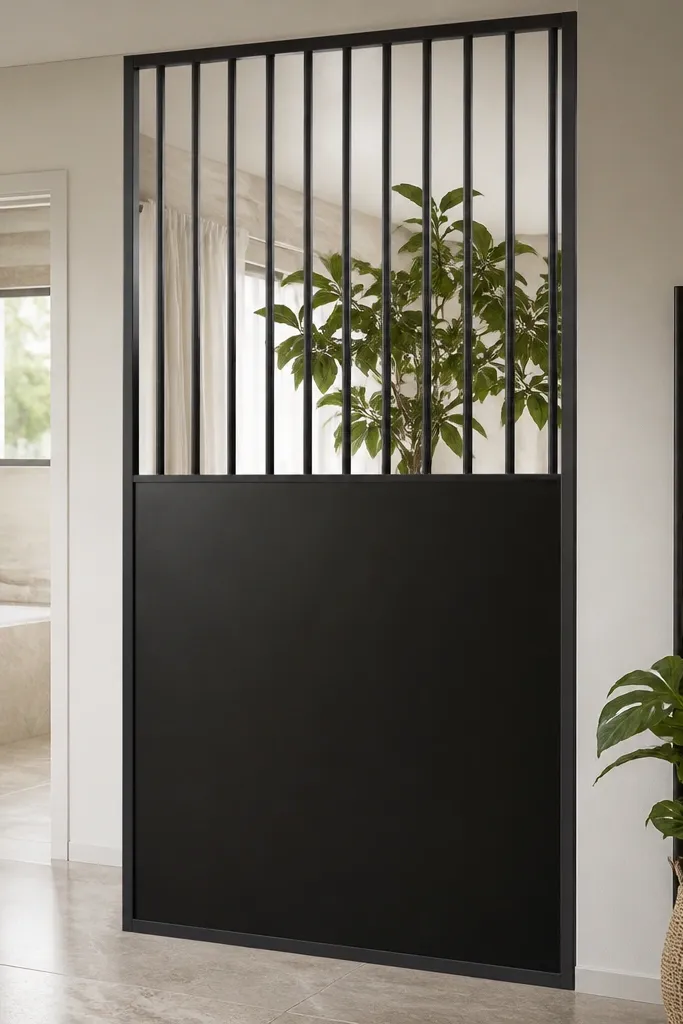
If you want cozy safety window grill design modern and privacy at the same time, use a solid bottom privacy screen. The upper bars stay open for light, while the lower panel blocks direct sightlines and reduces the “look through bars” feeling. Matte black keeps the panel modern and clean. This is a great option for street-facing windows and bedrooms.
Build a perimeter frame and weld vertical bars in the upper portion at your clear-opening safety target. Add a bottom privacy panel from steel sheet or a perforated steel plate backed by a fine screen layer, mounted within the frame. Coat in matte black so the panel and bars match. Install with weatherproofing tape between frame and trim so the panel doesn’t rattle and create noise.
Use a perforated privacy panel with small holes if you want airflow — it looks less heavy than solid sheet.
Avoid a privacy panel that’s too thin — it dents easily and looks ugly fast.
22. Espresso Grill with Perimeter Decorative Bead Rod
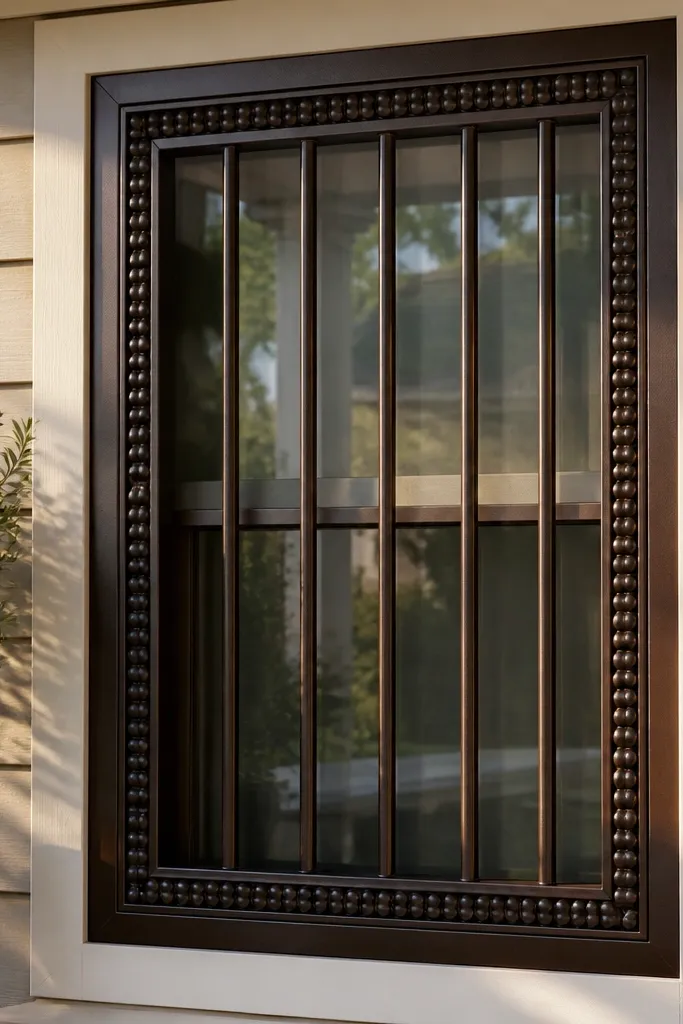
A decorative bead rod along the perimeter makes a basic safety grill look finished. It’s a small design change, but it frames the window like trim and adds cozy warmth when the finish is espresso. The center stays simple with vertical bars for safety, so it doesn’t get busy. This is a good fit for older homes where the window trim already has molding and you want the grill to match.
Weld a standard safety frame first, then attach a bead rod or rounded trim rod around the outside edges using small weld tabs or clamps. Install vertical bars inside the frame to your safety spacing goal and tack them in place before full welding. Grind the welds, prime, and coat in espresso matte. Mount with screws through the outer frame so the bead rod stays aligned and doesn’t shift.
Editor's noteSand the bead rod area thoroughly before coating — it’s the part that catches the light, so surface prep shows.
Skip thisAvoid bead rods that are too oversized — they can look decorative in the wrong way.
23. Charcoal Open Diamond Grid with Safety Perimeter

Diamonds look modern and airy when you keep the perimeter strong and the diamond size controlled. This grill uses an open diamond grid approach where the bars cross to form diamonds, but the edges stay clean and secure. Charcoal keeps it cozy and not too bright. It’s photogenic because the diamond pattern creates a repeating geometry that catches light differently across the day.
Build a rectangular perimeter frame, then mark a grid layout on a flat surface using a centerline reference. Cut diagonal bars for the diamond pattern and weld them so the clear openings meet your safety target — measure the diamond gaps, not the bar intersections. Add a couple of reinforcing cross members where needed to prevent flex. Grind, prime, and coat matte charcoal, then mount with even corner support so the diamonds stay symmetrical.
Cut diagonals in matched pairs and keep a scrap checker to ensure the diamond angles stay consistent.
Avoid a diamond size that’s too large — it looks airy but fails the safety spacing.
24. Warm Bronze Vertical Bars with Top Crown Rail
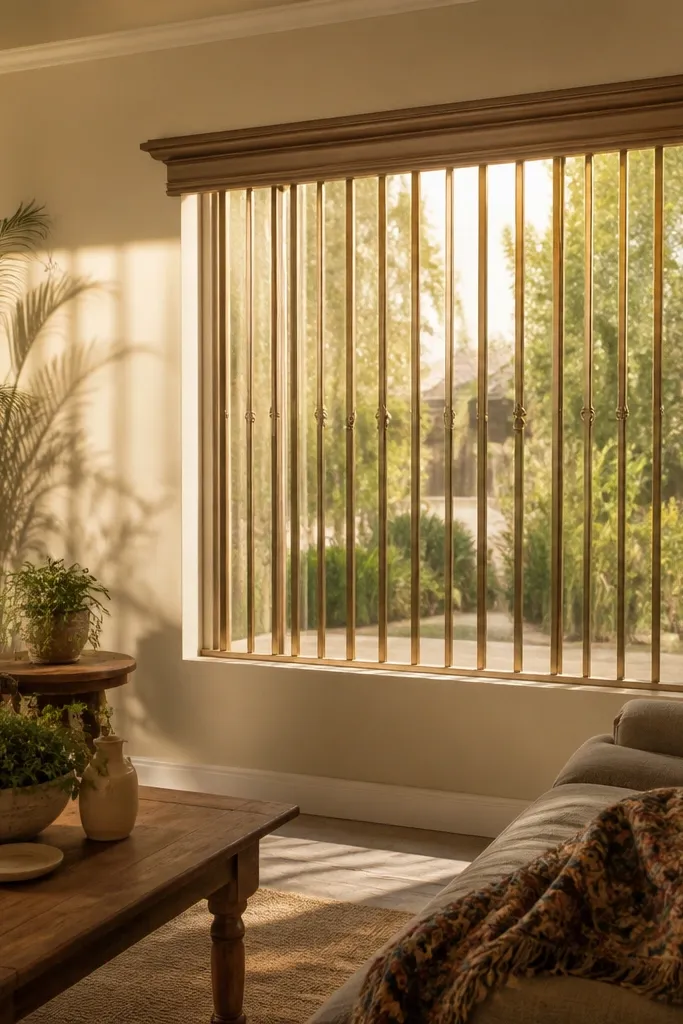
A crown rail gives you a cozy, slightly traditional cue while the vertical bars keep it modern and safe. Warm bronze makes the crown look like decor, not like a warning sign. The top rail also helps the grill read as one unit. This is a good option for front rooms and entry windows where a top detail adds character without clutter.
Weld a perimeter frame and install vertical bars at your clear-opening safety goal. Fabricate a simple crown rail by bending or welding a stepped top profile, then weld it to the side rails. Grind edges smooth, prime, and coat in warm bronze matte. Mount with corner anchors plus a center anchor so the crown rail doesn’t flex under pressure.
Keep the crown profile low — about 2 inches above the top rail — so it stays modern instead of ornamental.
Avoid sharp crown corners — they snag curtains and feel rough to the touch.
25. Matte Black Narrow-Bar Grid with Rounded Outer Corners
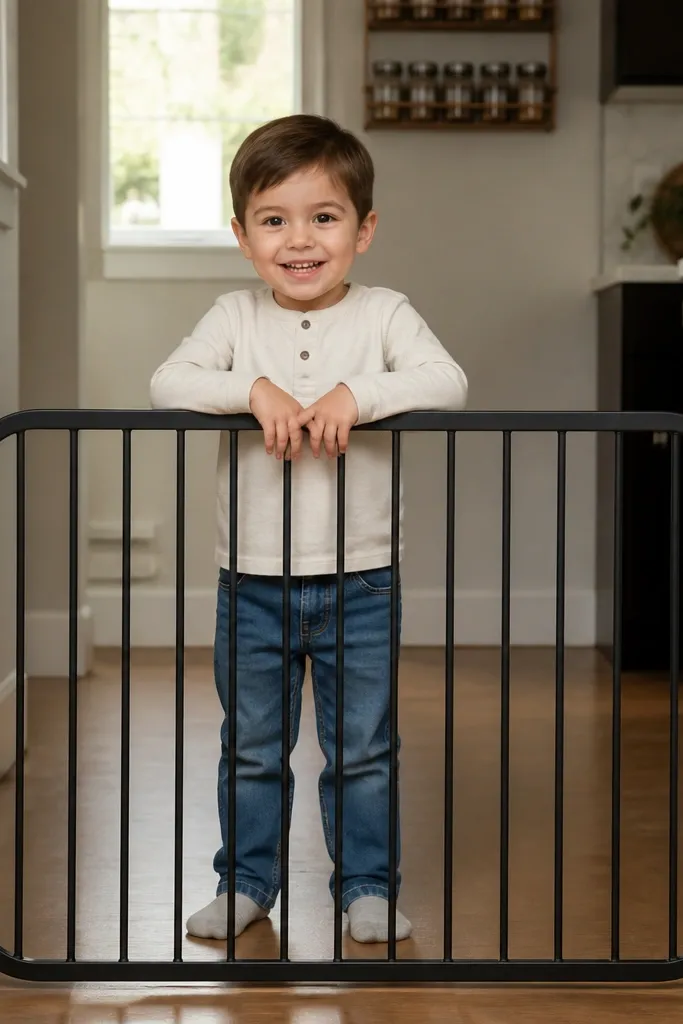
Rounded outer corners make a metal grill feel friendlier instantly. With narrow bars and matte black, the result stays modern and cozy rather than industrial. The rounded shape softens the silhouette, so the grill looks like a designed screen. This is ideal for windows in kitchens and hallways where the grill is close to walk paths and you want fewer sharp visual lines.
Use a perimeter frame made from bent or fabricated corner pieces so the corners are rounded. Weld narrow vertical bars at consistent spacing inside the frame, then add a top and bottom rail for rigidity. Grind all touch points smooth and coat matte black. Mount with a gasket strip so the frame doesn’t chip from vibration and so the corners don’t rub trim.
If you can’t bend the corners, fabricate two-piece rounded corners from pre-cut segments and keep the seam centered and ground smooth.
Avoid leaving weld seams at the rounded corners — they look obvious and catch light.