1. Honey-stained shaker double doors with matte black grid glass
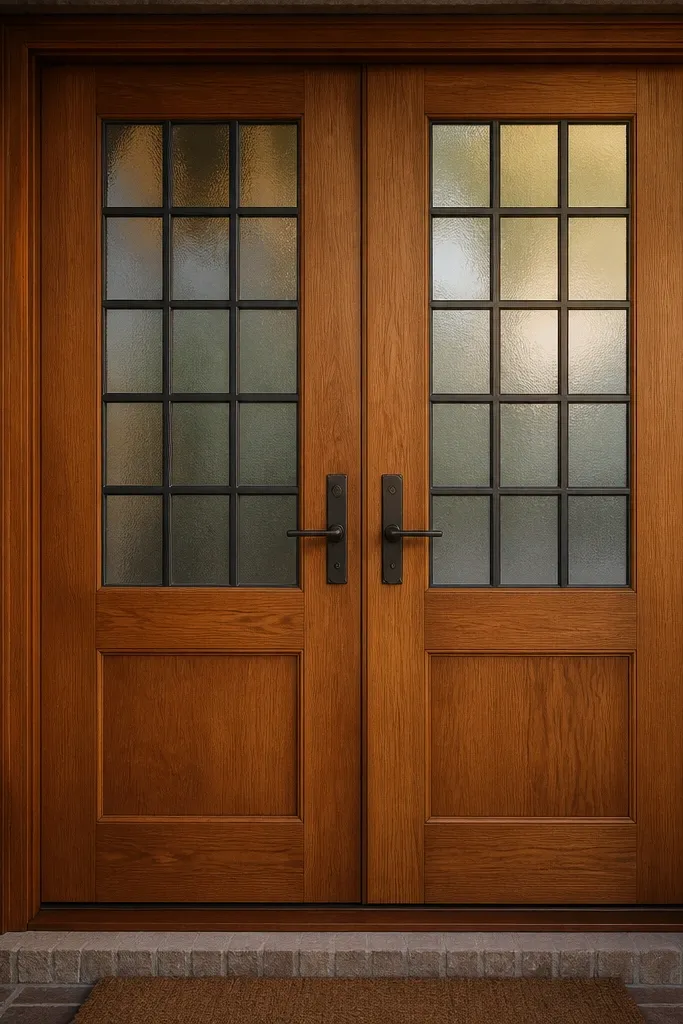
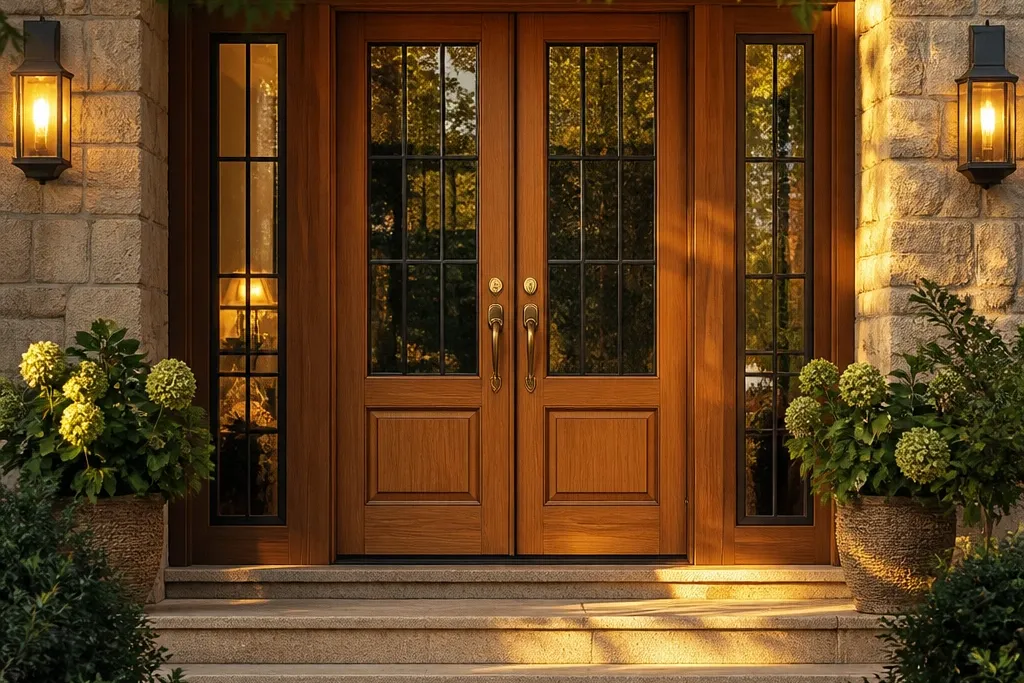
This is the cozy main entrance door design that looks inviting without trying too hard. Shaker panels create clean lines, and honey stain adds that warm, interior-like tone to the exterior. The matte black grid on the glass pulls the whole entry together and keeps the doors from looking washed out in daylight. Choose warm, patterned glass so the light breaks into soft squares rather than reflecting the sky. This look works especially well on houses with siding, brick, or stucco where you want the doors to be the main focal point.
Start by selecting double doors with shaker-style recessed panels and plan your stain schedule. Sand to 150-180 grit, wipe clean, then apply a honey-toned stain in thin coats until you hit a medium amber (don’t chase a dark orange). After staining and drying, install or swap glass panels so you have a grid pattern and match the muntin color to matte black trim. Finally, paint the door frame trim and hardware finish in matte black, then seal the wood with an exterior-rated clear topcoat.
Editor's noteUse 2700K bulbs on the porch so the honey tone reads warm instead of yellow-green.
Skip thisSkip high-gloss clear coats — they look bright and cold on doors in rain.
2. Espresso carved panel double doors with antique brass pulls
If your entry feels plain, deep carved panels fix it fast. Espresso stain makes the door look rich without turning orange, and the carved detailing catches light at angles, which is what makes double doors feel cozy instead of flat. Antique brass pulls add warmth and a little old-world contrast against dark wood. This design looks best on brick, stone, or wood siding because the dark door gives you a strong focal point. It also photographs well at dusk because the carved shadows create texture.
Choose double doors with raised or carved panels, then sand and stain to an espresso tone using a water-resistant exterior stain. Apply the stain with a foam brush or rag, let it sit briefly, then wipe back to keep the grain visible. Seal with a clear exterior polyurethane or spar varnish made for exterior doors. Install antique brass pulls and matching hinges, then add a simple matching brass kick plate if you want extra durability at the bottom.
Pick pulls that sit at the same height on both leaves, even if one door is normally used more.
Don’t mix brass finishes — yellow brass with brushed nickel hardware will look off.
3. White-painted beadboard double doors with warm walnut sidelights
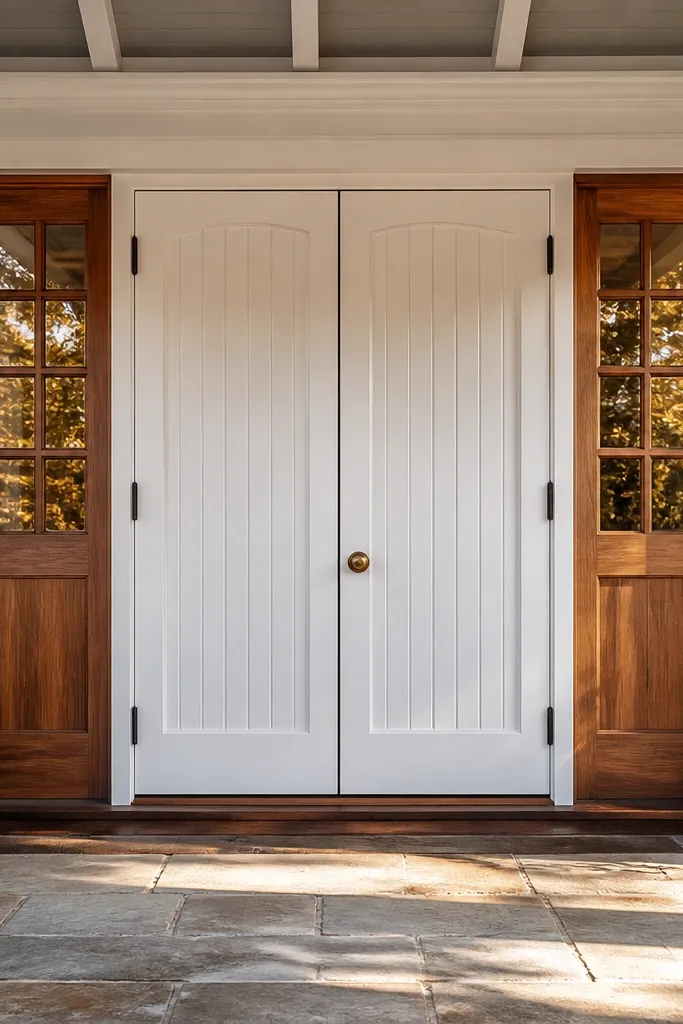
Beadboard gives you that cottage-cozy texture, and paint keeps it crisp. White-painted double doors reflect light and make the entry feel airy, while walnut sidelights add warmth so it doesn’t feel sterile. The key is the sidelights: choose warm-toned wood trim and small glass panes so light filters in softly. Pair with brass hardware so the metal reads warm, not gray. This works great for farmhouse exteriors, porch columns, and entries with light-colored siding.
Start with beadboard-style double doors or add beadboard panels to a door slab. Prime with an exterior bonding primer, then paint two coats of exterior trim enamel in a warm white. Build sidelights with a walnut trim frame and install glass inserts in a pattern like small squares or a gentle arch grid. Finish by sealing all exterior wood edges and installing brass pulls and hinges.
Editor's notePaint the door slab edges too — that small detail keeps the doors from looking unfinished when the light hits the sides.
Skip thisAvoid pure blue-white paint — it reads icy against warm porch lighting.
4. Natural oak double doors with clear-to-frosted transition glass
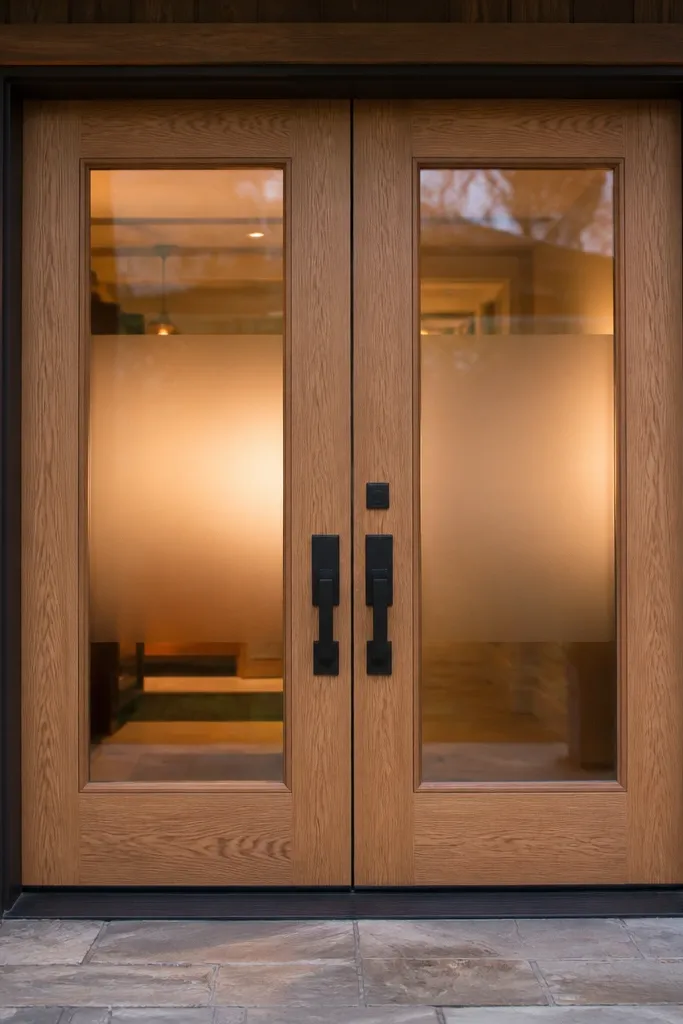
This design is cozy because the glass gives you privacy and soft glow at night. Natural oak looks friendly, and the clear-to-frosted transition lets you see movement without turning the entry into a glare box. The gradient effect makes the doors feel more expensive than plain clear glass. Use dark trim around the glass to frame the gradient and keep it readable from the street. It suits modern homes that still want warmth, especially if your exterior color palette is neutral.
Choose oak double doors with glazed sections, then order glass inserts with a transition frost pattern. Sand and finish the doors with a natural oak stain or clear stain, then seal with an exterior topcoat. Paint the interior and exterior trim around the glass opening in a dark color like matte black or espresso. Install the glass using proper glazing tape and exterior-rated sealant, then mount the doors with matching dark hardware.
Editor's noteTest the glass transition in daylight first — some gradients look stronger from inside than from the street.
Skip thisDon’t use fully clear glass if you want cozy — it reads cold and exposes the entry.
5. Terracotta-toned double doors with whitewashed panel accents
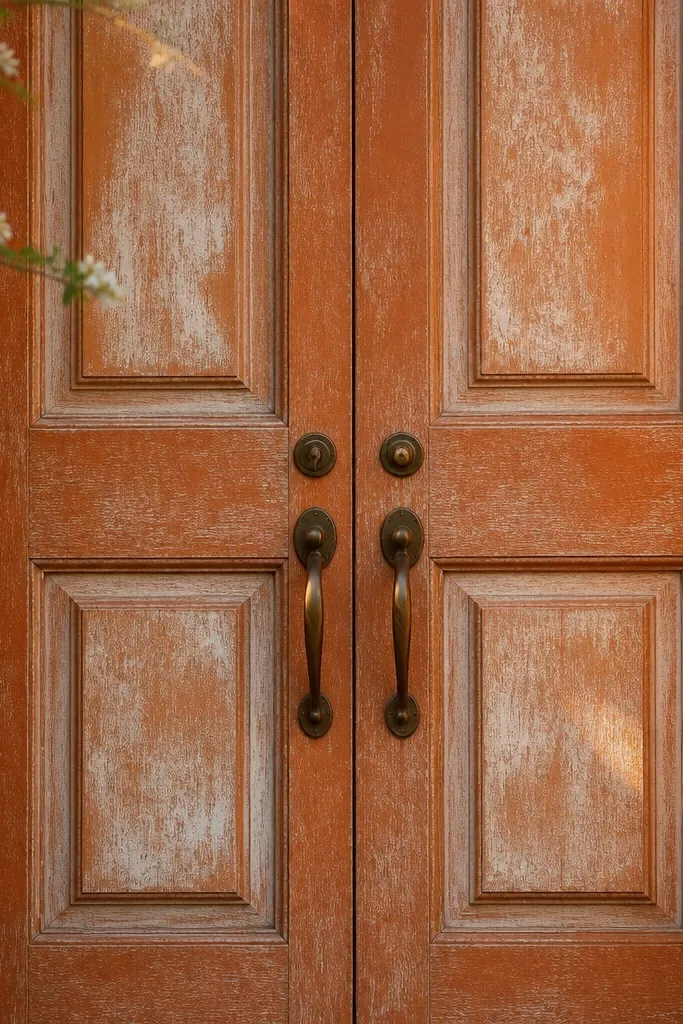
Terracotta sounds bold, but it reads cozy when you keep the panels light. Paint the doors in a warm terracotta and add whitewashed accents only on the recessed panel areas, so the texture shows through. This gives you depth without needing complicated carving. Bronze hardware ties the warm paint to the metal and looks great against stucco or light brick. The whole entry feels sun-warmed even on overcast days.
Prime and sand the doors, then spray or roll a terracotta exterior paint as your base coat. Mix a thin whitewash glaze (paint + water + a little glazing medium), then wipe it into the recessed panel lines to create a lightened texture. Once dry, seal with an exterior clear topcoat rated for doors. Install bronze pulls and hinges, then add a small porch light with a warm bulb for the cozy glow effect.
Editor's noteUse painter’s tape to mask the raised door edges so the whitewash only hits the recesses.
Skip thisSkip thick glaze layers — they crack faster on exterior doors.
6. Walnut-stained double doors with arched top glass and black muntins
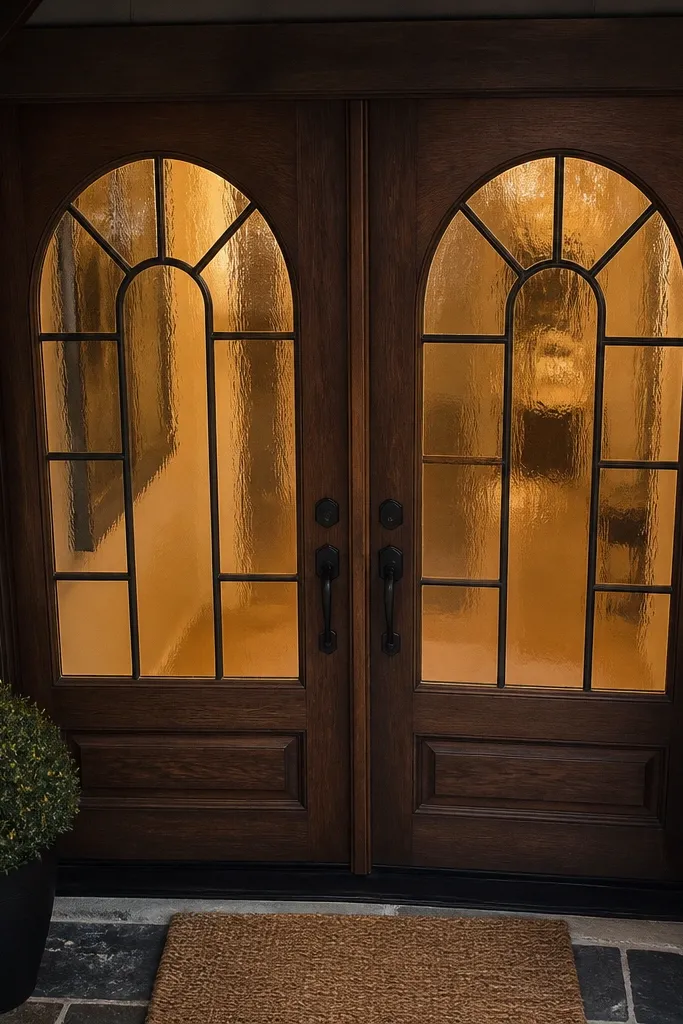
Arched top glass makes double doors feel welcoming because it frames the entry like a doorway within a doorway. Walnut stain adds a deep warm tone that doesn’t look orange, and the black muntins keep the shape crisp. This is a cozy main entrance door design for anyone who wants softness without losing structure. It also looks great on homes with arched windows, columns, or brickwork. At dusk, the arched panes glow and guide the eye upward.
Pick double door slabs with an upper arched glass opening or cut an arched opening if you’re replacing the door. Sand to 180 grit, then stain walnut in even passes and wipe back consistently. Install glass in the arched section with black muntin bars or muntin-style grids. Seal the wood fully, then add matte black hardware and a weatherproof threshold for a tight seal.
Choose muntins that are the same width on both leaves — mismatched thickness looks sloppy from the street.
Don’t install arched glass without checking swing clearance — arched doors can hit trim during full open.
7. Dark blue double doors with brass inlay strips
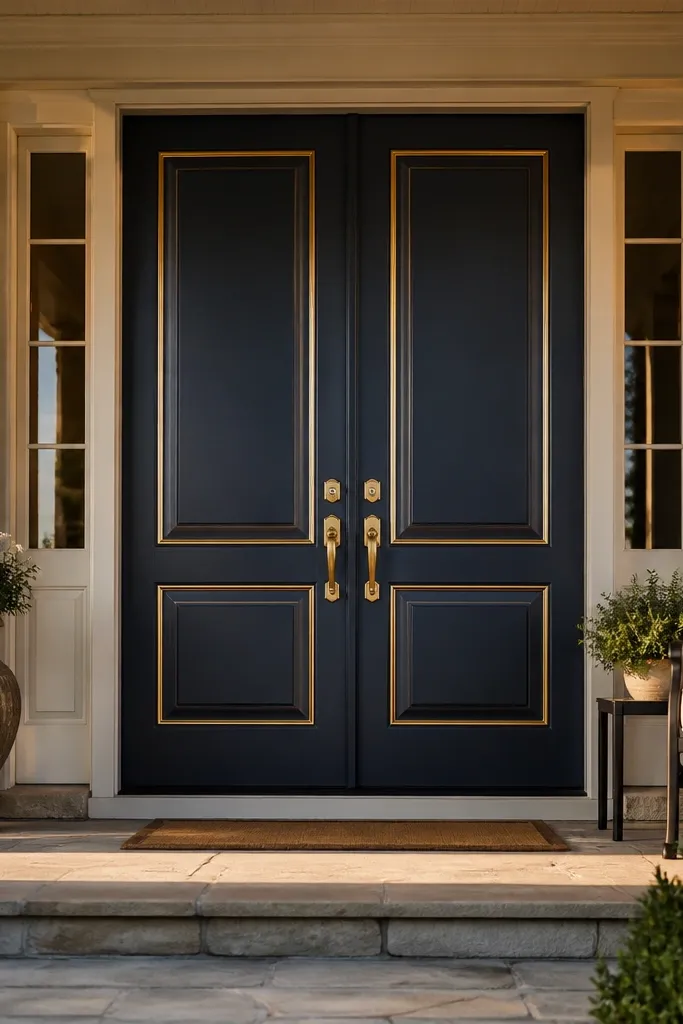
Dark blue is cozy when it’s not navy-cold. Go for a deep, slightly warm blue and add thin brass inlay strips that outline panel edges. That brass detail makes the doors look custom, and it catches porch light like jewelry. This design is great if your exterior already has warm stone or cream trim, because the brass and blue play nicely together. It also reads clearly even from far away because the inlay creates strong vertical lines.
Sand and prime the doors, then paint with an exterior rated deep blue enamel. Cut or buy brass inlay strips (thin metal strips meant for trim), then apply them with exterior-grade adhesive on the flat recessed panel borders. Seal over the painted areas where the strips meet the wood to prevent moisture creep. Install matching brass knobs and hinges, and finish with a brass kick plate if you want extra protection at the bottom.
Editor's noteUse a simple cardboard template to keep strip spacing identical on both leaves.
Skip thisDon’t skip sealing at the strip edges — water will creep under the metal over time.
8. Natural pine double doors with stained glass half-panels
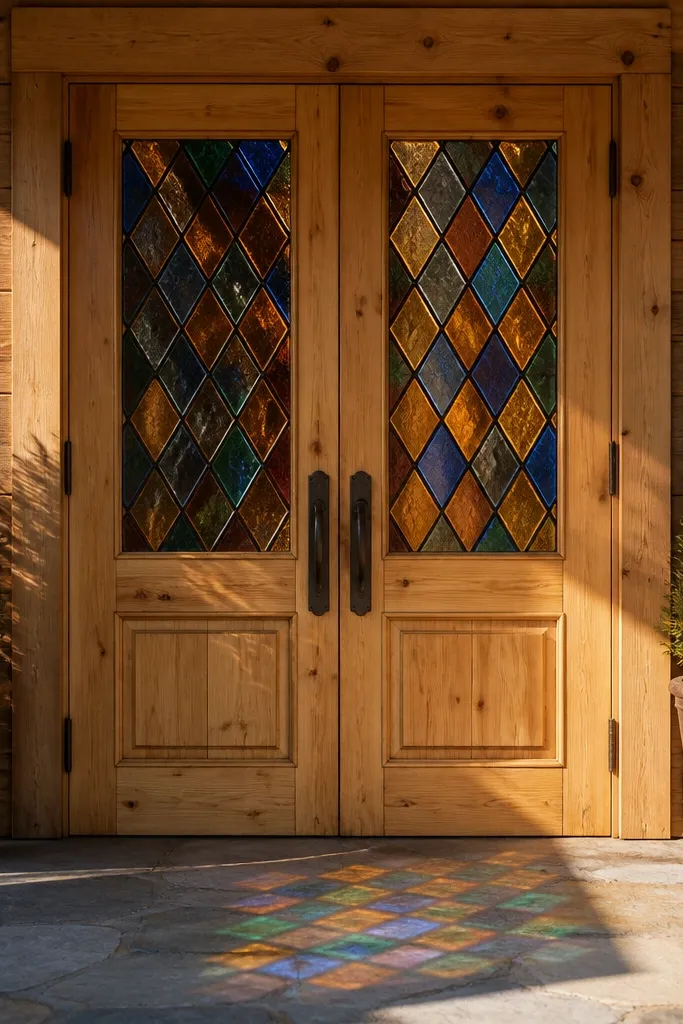
Half-panel stained glass is cozy because it adds color without turning the whole door into a distraction. Pine keeps the base light and warm, and stained glass brings soft color glow at night. Choose a restrained pattern — small diamond or subtle floral swirls — so the design looks intentional rather than busy. Pair with black hardware for contrast and a clean, modern farmhouse feel. This is a great option if you want visual warmth but don’t want full-height glass.
Start with pine double doors or pine door slabs, then sand and stain to a natural honey tone. Order stained glass inserts sized to your half-panel sections and confirm thickness fits the glazing rabbet. Install glass using glazing tape and exterior sealant, then protect the wood with a clear exterior topcoat. Mount the doors with black hinges and pulls, and add a warm porch light to make the glass glow.
Pick stained glass with warm ambers and soft reds — cool blues can read icy in shadowy entries.
Avoid thick, heavy glass if your doors wobble — it increases weight and can strain hinges.
9. Textured cement-smooth double doors with warm wood frame
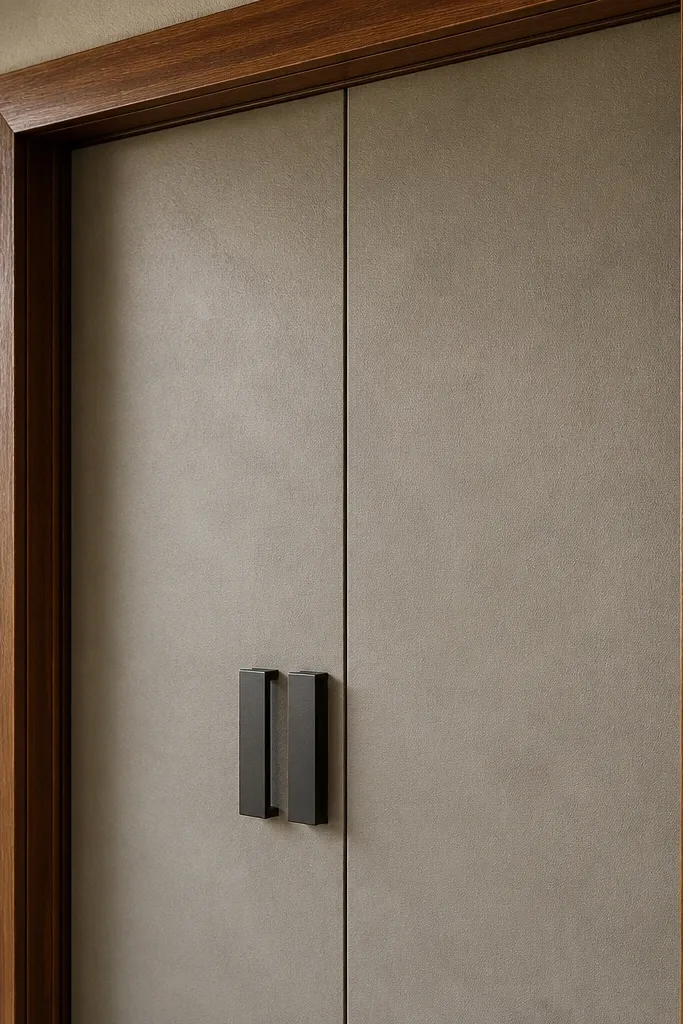
This one is cozy through contrast: smooth, warm wood framing around a lightly textured door surface. The textured finish hides minor scuffs and looks high-end in photos because it catches light softly. Keep the door surface in a neutral warm tone like greige or warm gray, then wrap the frame in a medium walnut or cedar stain. Matte black hardware keeps everything crisp. It suits modern homes that still want a welcoming entry instead of a cold steel look.
Use double doors with a smooth front face and add a subtle texture finish like a knockdown plaster coat or textured exterior coating made for doors. Stain the frame separately with a warm wood tone and seal it well. Install doors with weatherproof insulation and a tight perimeter seal. Finish by painting or installing matte black hardware and adding a warm exterior light to emphasize the texture.
Editor's noteUse a satin finish on the door coating — it reads cozy and hides fingerprints better than semi-gloss.
Skip thisDon’t use flat paint on the door face — it scuffs and soaks water faster.
10. Rustic barn-door style double doors with vertical slats and lantern sconces
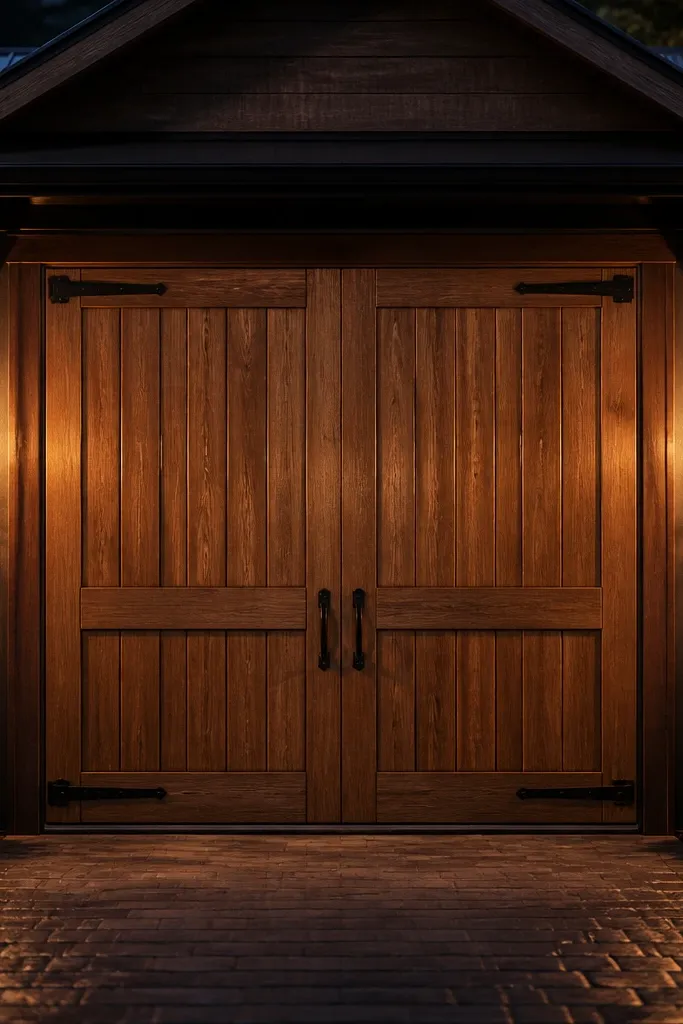
Vertical slats feel cozy because they create a warm, lived-in texture. This design is basically a barn look, but scaled for double doors so it still reads symmetrical and tidy. Use a medium stain and add subtle hardware like strap hinges and matching pulls. Pair with lantern sconces on both sides and warm bulbs so the slats cast soft shadows. It works best on farmhouse, craftsman, and rustic-modern exteriors.
Choose double doors with vertical slat panels or build slats using exterior-rated boards. Sand, stain, and seal the boards before assembly to get even color. Install the door leaves onto a properly aligned double door frame and use strap-style hinges if your frame can handle the mounting. Add matching pulls and then install lantern sconces flanking the doors for the shadow pattern effect.
Editor's noteStain the slats slightly darker than you think — they lighten as they cure outdoors.
Skip thisAvoid wide gaps between slats if you want privacy — use narrower slats or add frosted glass inserts.
11. Black-framed double doors with warm wood panel center and frosted sidelites
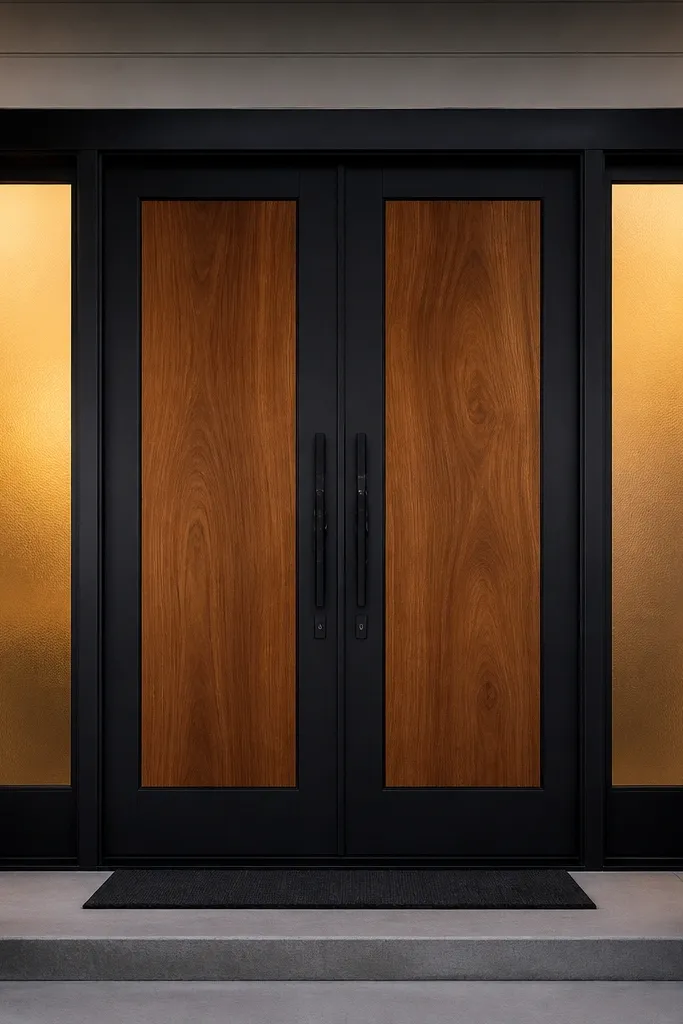
This is cozy main entrance door design built around light control. The black frame gives you clean structure, while the warm wood center panels keep it welcoming. Frosted sidelites add privacy and glow without showing too much, and they also make the entry look larger. This combo is perfect if you have a narrow entry and want it to feel open at night. It photographs well because the frosted glass creates a soft halo.
Select double doors with solid center panels and black-framed glazing sections or add a black frame trim around existing doors. Stain or paint the center panels in a warm wood tone, then seal. Install frosted sidelites next to the doors with proper glazing tape and exterior sealant around the perimeter. Finish by mounting black hardware and adding a warm porch light aimed toward the sidelites.
Editor's noteUse frosted glass that’s consistent across both sidelites — uneven patterns look like a mismatch from the street.
Skip thisSkip cheap clear tape glazing — it yellows and makes the black frame look dirty.
12. Cream double doors with dark walnut raised panel inserts
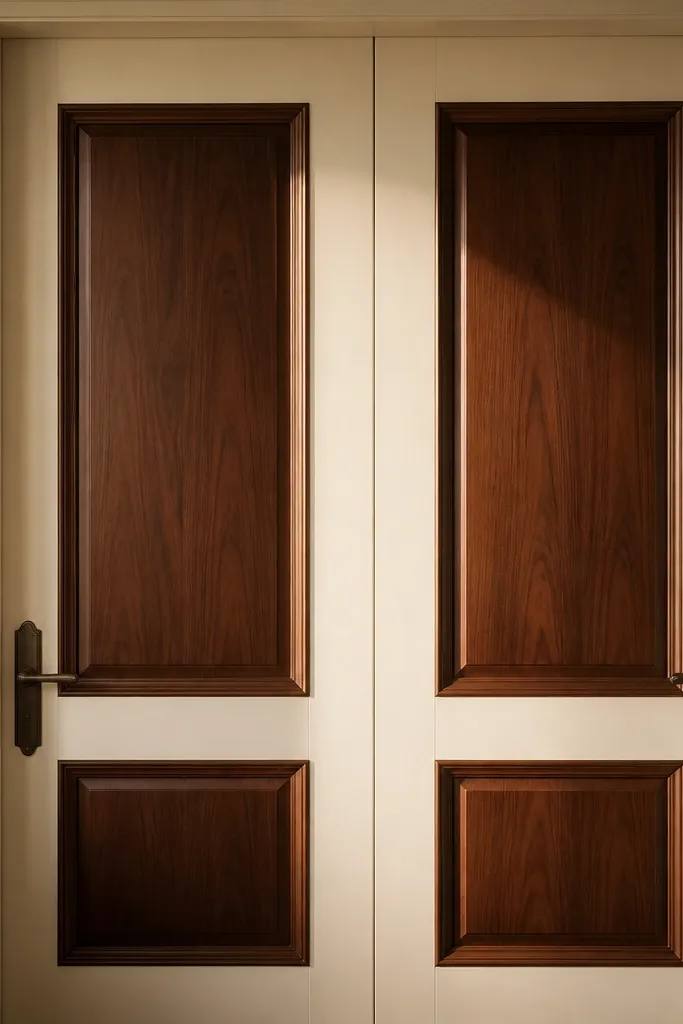
Cream doors can feel cozy when the color isn’t stark and you add real contrast texture. Raised walnut inserts make the center look dimensional, like custom cabinetry. The warm walnut tone keeps the cream from looking cold, and bronze hardware ties it together. This is a smart choice for entries with lots of white trim because the doors won’t blend in. It also looks great with seasonal wreaths because the raised inserts give the wreath shadows a backdrop.
Paint double doors in a warm cream exterior enamel, using two coats and sanding lightly between coats. Cut or buy raised panel inserts in dark walnut tone and attach them to the center recess areas with exterior-rated construction adhesive and small hidden fasteners if needed. Seal edges of the inserts with a compatible clear finish. Install bronze pulls and a matching deadbolt, then add a dark doormat and porch light to strengthen contrast.
Editor's noteKeep insert edges crisp — 1/16 inch reveal looks clean; sloppy edges look DIY quickly.
Skip thisDon’t use glossy cream — it reflects porch light and can look harsh.
13. Cedar-toned double doors with copper knob set and hammered texture
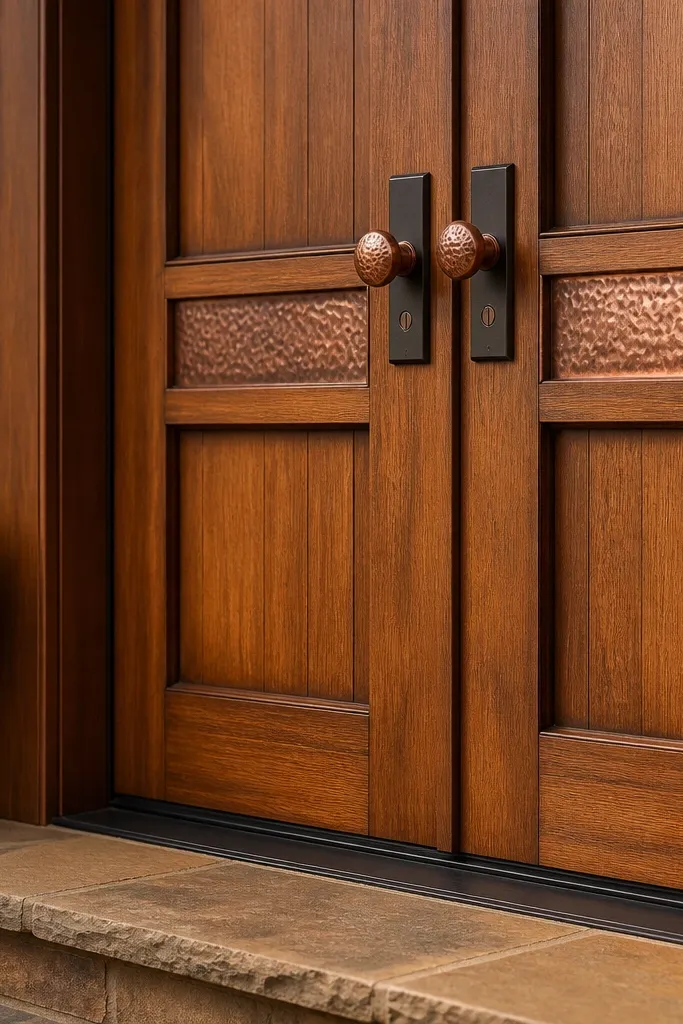
Cedar tone is cozy because it looks warm and natural, and copper adds that earthy glow. Add a hammered metal accent band or hammered texture panel detail to catch light without needing glass. This design looks especially good on homes with natural stone, cedar siding, or brick with warm undertones. It’s also forgiving if you want a slightly rustic look but still want the doors to look intentional and coordinated. At dusk, copper knobs and hammered details light up nicely.
Sand and stain the doors in a cedar tone, then seal with an exterior clear topcoat. Install a copper knob set and matching hinge accents in the same copper finish. Add a hammered metal accent band on each door at the same height, using exterior adhesive and concealed screws where possible. Finish by sealing all penetrations with exterior sealant so moisture doesn’t creep behind the metal.
Use a matte copper finish for the knobs if your porch has lots of warm wood — it reads softer than shiny copper.
Avoid mixing copper with bright chrome — it makes the whole door look temporary.
14. Two-tone double doors with warm wood lower panels and painted upper glazing
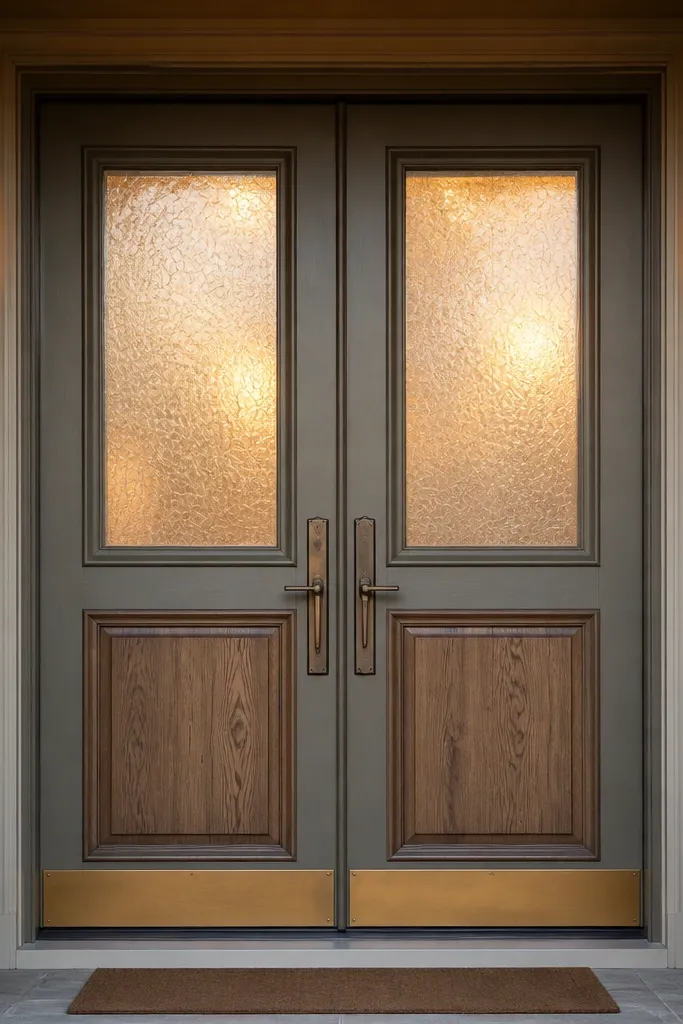
Two-tone doors are cozy because they guide the eye and add depth. Keep the lower half in warm wood tone for warmth underfoot, then paint the upper area around glass to match your trim color. The glass in the upper half should be patterned or lightly frosted so it glows rather than reflects. This design works well if you have a busy facade and need the door to look layered, not flat. It also lets you tie the doors to your siding and trim without losing warmth.
Start by marking a straight divider line across both door leaves at the same height. Stain and seal the lower panels, then mask the upper half and paint in an exterior trim enamel that matches your house. Install patterned glass in the upper glazed sections and seal around the edges. Mount the doors and install matching hardware, then add weatherstripping so the door seam stays tight.
Editor's noteUse a laser level or long straight level to draw the divider line — crooked two-tone lines ruin the look.
Skip thisDon’t stain over primer or paint — you’ll get uneven absorption at the seam.
15. Walnut and smoked glass double doors with thin black frames
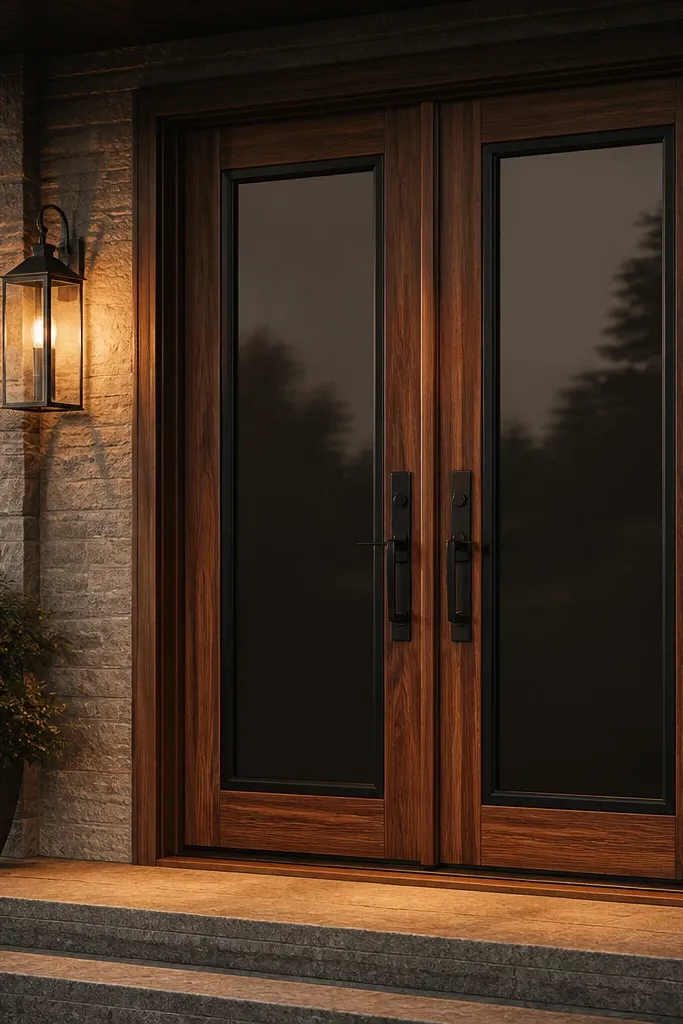
Smoked glass can read cozy if you keep it warm and pair it with walnut. The smoked tone hides the interior while still letting light in, so the entrance feels private and calm at night. Thin black frames make the glass look intentional and modern without feeling cold. This is a great choice for entries with modern lines or low-contrast facades that need a strong focal point. The walnut warmth keeps it from turning into a generic black-and-glass look.
Choose double doors with a glazed center section and a frame that can accept thin muntin bars. Stain walnut to a medium-dark tone, then seal with exterior topcoat. Install smoked glass inserts and use glazing tape designed for exterior windows. Paint or finish muntin frames in matte black, then install matte black hardware and a tight door sweep for draft control.
Pick smoked glass that’s not too dark — you want glow around the edges, not a blackout effect.
Skip thick, chunky muntins — they make smoked glass feel heavier and less cozy.
16. Arched top double doors with stained glass diamonds and warm wood trim
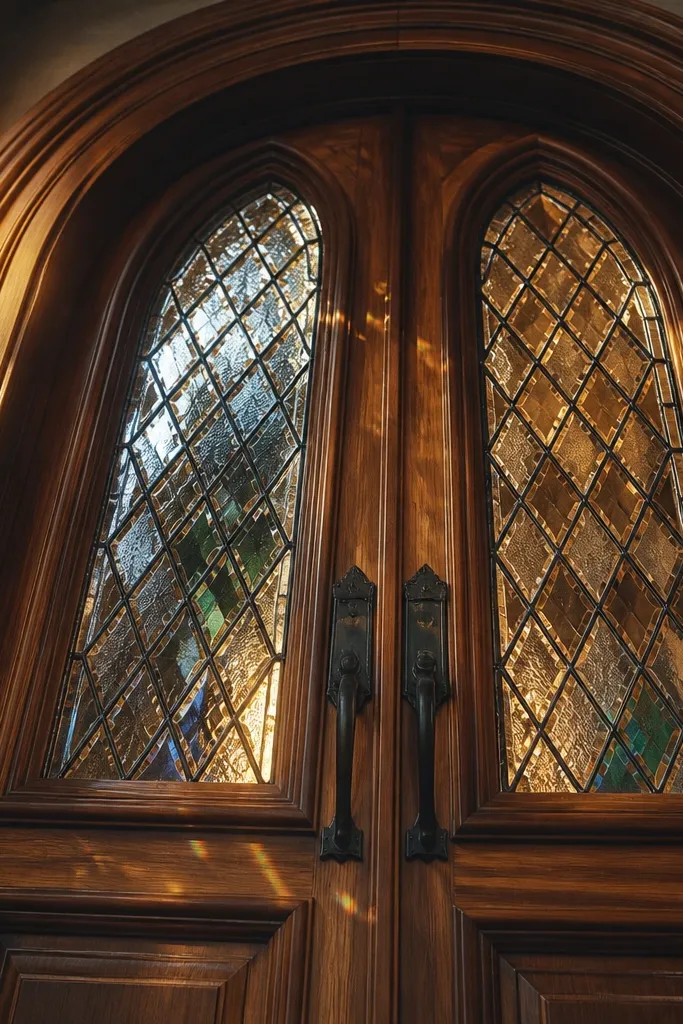
Diamond stained glass in the arched top reads cozy because it creates a soft sparkle when porch lights hit it. The arched opening gives you that classic welcoming shape, while the warm wood trim keeps the entry grounded. This is a strong choice if your entry has columns or an overhead porch where the top area is visible from the street. It’s also a good option if you want color but not too much — diamonds keep the pattern controlled.
Start with double doors that have an arched top section, then plan your stained glass insert dimensions to fit the opening. Sand and finish the wood with a warm stain, then seal fully. Install diamond-pattern stained glass in the arched panel area using glazing tape and sealant. Attach warm wood trim around the glass edges, then mount brass or bronze hardware for a cohesive metal story.
Editor's noteChoose stained glass with a warm amber base so it looks friendly at night under 2700K bulbs.
Skip thisDon’t pick high-saturation blues — they can read harsh once the sun goes down.
17. Cream double doors with vertical linen-look panels and brass kick plate
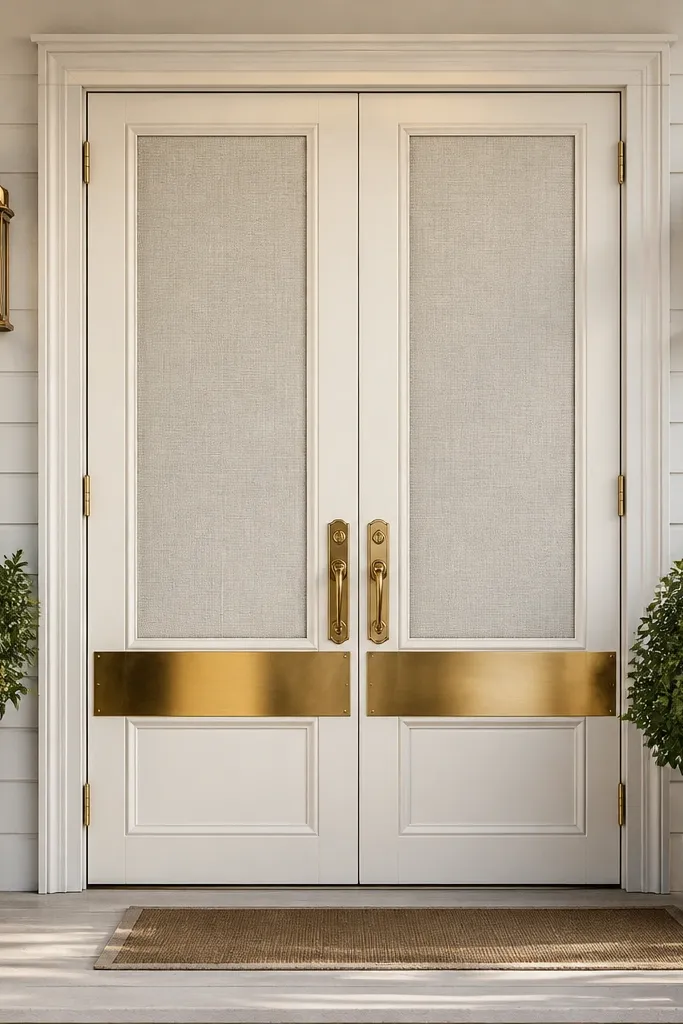
This is cozy because the surface texture looks soft even when the color is light. Linen-look panels are visually calming, and the brass kick plate adds warmth where people walk up. Keep the doors in a warm cream tone and add brass hardware so the metal doesn’t fight the paint. This design works on modern farmhouse and cottage entries where you want a gentle, inviting feel. It also hides scuffs better than smooth glossy paint.
Use double doors with textured panel inserts or apply an exterior-rated textured panel skin to the door leaves. Prime and paint the doors in warm cream enamel, then seal the textured surface with a compatible exterior clear coat. Install a brass kick plate centered on each door at about 8-10 inches from the floor to protect from shoes. Add brass pulls and hinges, then test door alignment so the kick plates sit evenly on both leaves.
Use a foam roller for paint on textured doors — it levels paint without filling the texture.
Skip sanding the texture lightly before priming — paint won’t grip and it peels at edges.
18. Olive green double doors with warm wood frame and lantern-style sconces
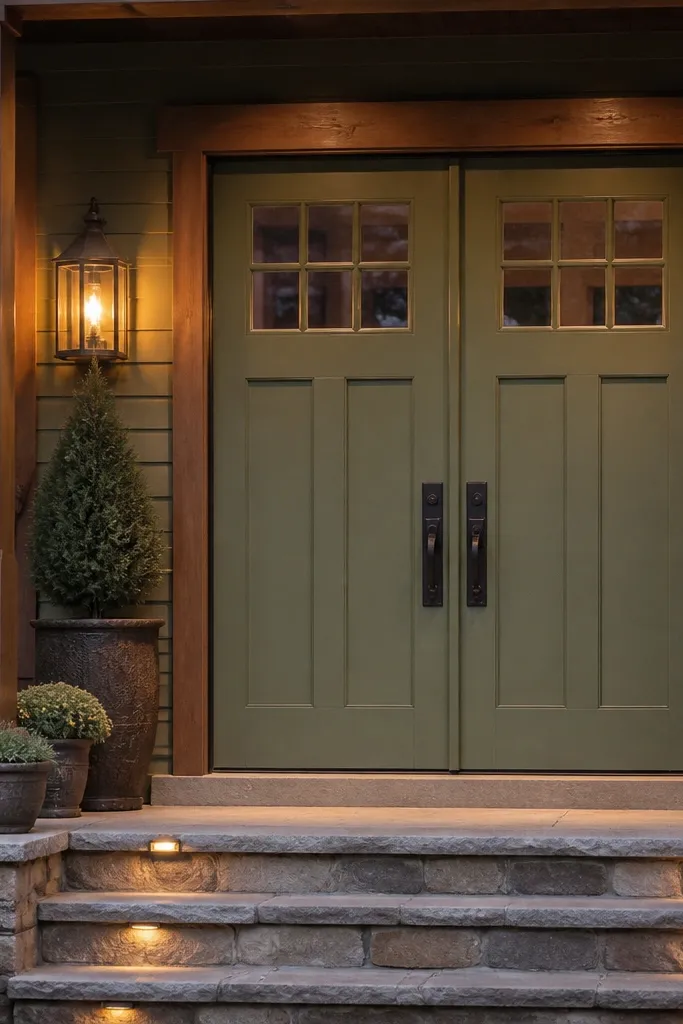
Olive green reads cozy when it’s not too gray. Pair it with a warm wood frame so the entry feels grounded and natural instead of dark and heavy. Add lantern-style sconces beside the doors and use warm bulbs to create a soft amber glow. This design works on homes with stone steps, brick, or warm gray siding where the green can sit comfortably. It also looks great in fall photos because the color matches the season without being “themed.”
Paint the double doors in an olive exterior enamel with two coats and a light sanding between coats. Use warm wood trim or stain the existing frame in a medium oak or walnut tone, then seal. Install matching lantern sconces and set bulbs to 2700K for warm color. Finish with warm metal hardware like aged brass or bronze and check that the door sweep seals evenly along the threshold.
Editor's noteSpray the door stiles and rails, then roll the panels — it gives smooth coverage without brush marks.
Skip thisAvoid fluorescent-white porch bulbs — olive turns muddy under them.
19. Matte black double doors with warm wood inlay squares and frosted glass
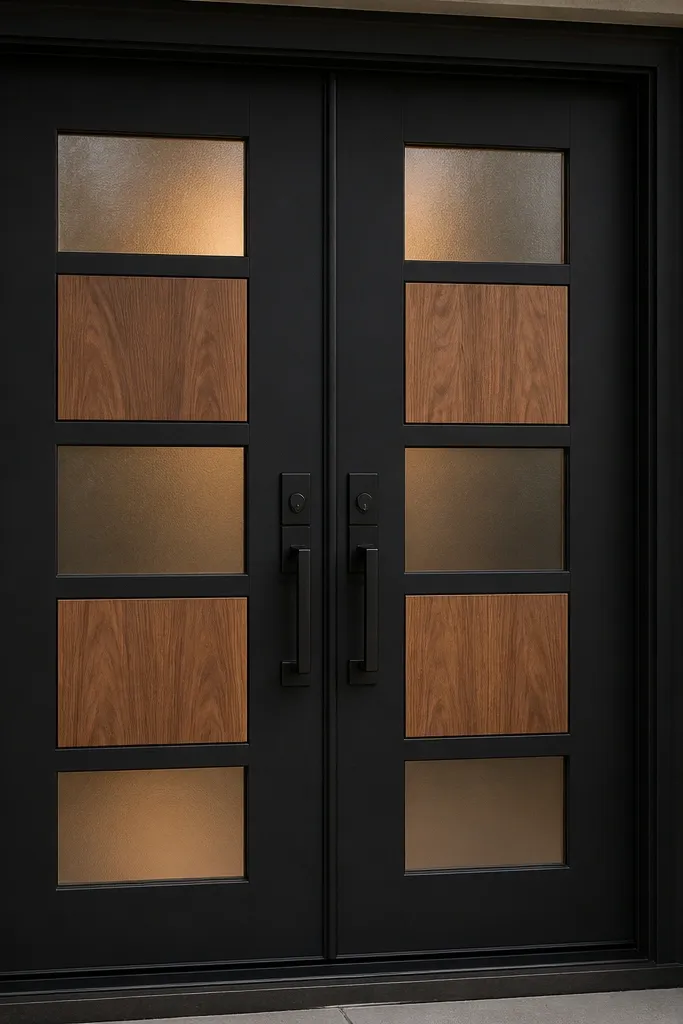
This is modern cozy: dark doors with warm wood details that soften the whole look. Matte black makes the entry look crisp, and warm wood inlay squares add that friendly, handcrafted feel. Frosted glass keeps the light diffused, so you get a warm glow without glare. It’s a strong option for stucco and flat siding where you need visual texture. From the street, the square pattern reads structured and cozy at the same time.
Paint both door leaves matte black using exterior door paint, then cure fully. Cut warm wood inlay squares sized to the panel areas and mount them with exterior-rated adhesive and small hidden brads if needed. Install frosted glass inserts in the main glazed sections and seal with glazing tape. Apply a clear protective topcoat over the wood inlays where they face weather, then mount matching matte black hardware.
Editor's notePre-finish the wood squares with stain and seal before you glue them — weatherproofing is much easier this way.
Skip thisDon’t leave raw wood edges — they soak moisture and swell under matte black coatings.
20. Whitewashed oak double doors with soft arched glass and antique bronze
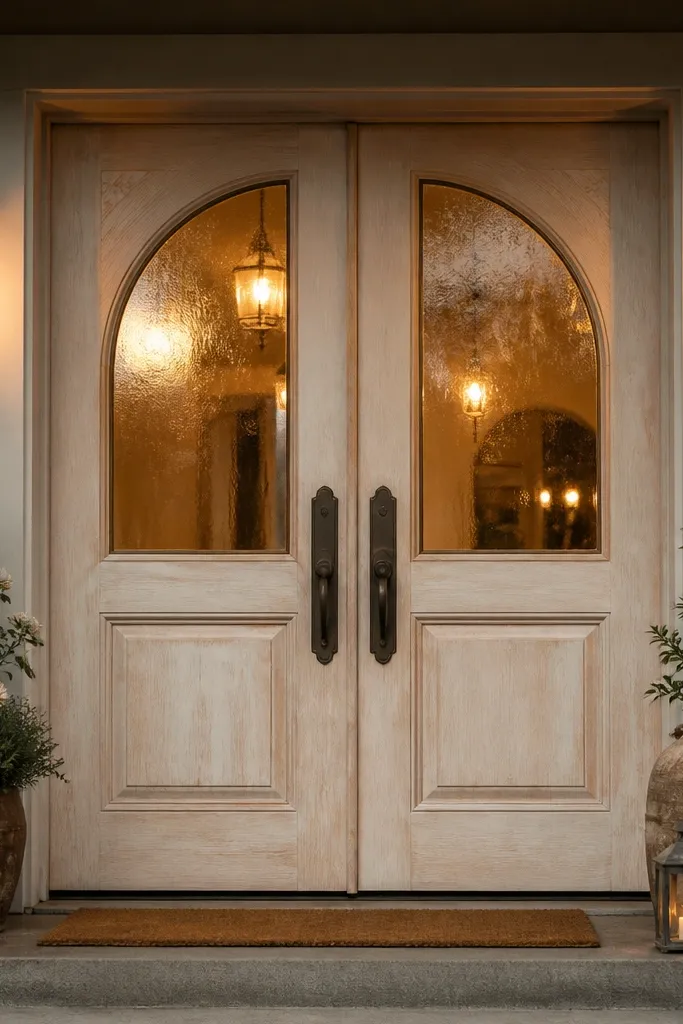
Whitewashed oak has that lived-in, cozy feel because it keeps the grain visible and bright. Soft arched glass adds warmth without going full stained-glass. Antique bronze hardware looks aged and inviting, especially with warm porch lighting. This design works when your exterior has light colors and you want the doors to feel warm but not heavy. It also looks great with tall planters flanking the entry — the glass shape echoes them.
Sand the doors and apply a whitewash over oak stain, then wipe back until the grain still shows. Seal with an exterior topcoat so the whitewash doesn’t chalk. Install arched glass inserts with a subtle frosted finish or light pattern to soften reflections. Mount antique bronze pulls and hinges, then install a weatherproof threshold and check the door gap alignment.
Editor's noteUse a tack cloth before sealing — dust in the sealant shows through whitewashed finishes.
Skip thisSkip thick whitewash layers — they hide grain and look like paint, not wood.
21. Smoked gray double doors with warm wood corner panels and brass hinges
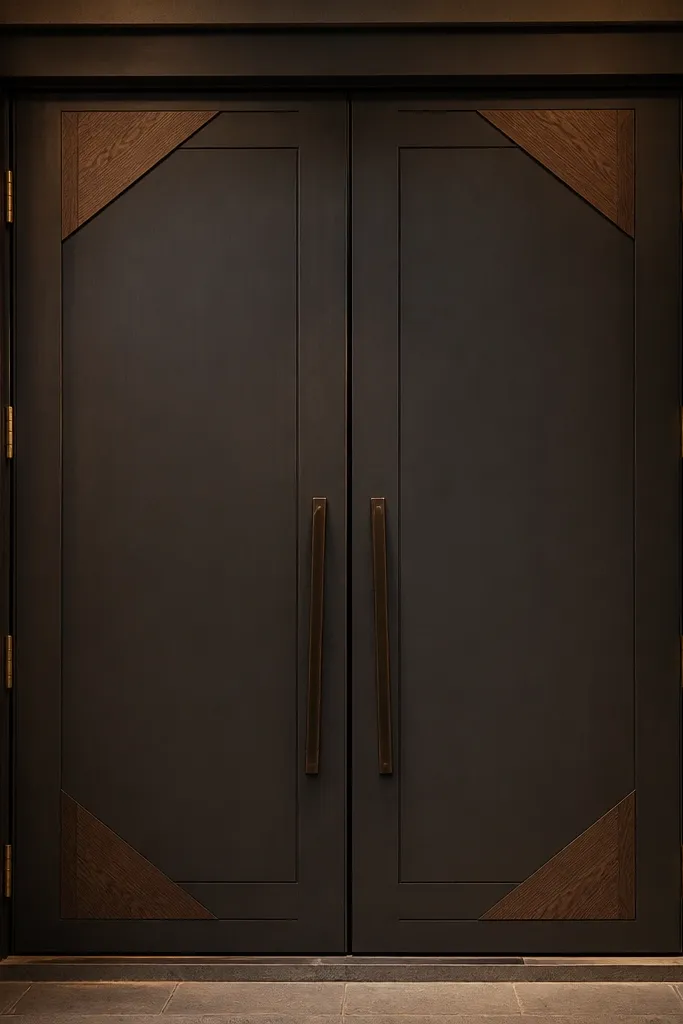
Smoked gray can still feel cozy if you add warm wood where your eye lands first. Corner panels are a smart placement because they frame the door without covering the whole leaf. Warm wood tone in the corners keeps the design welcoming, while smoked gray keeps it modern. Brass hinges add a gentle shine that doesn’t look flashy. This design is ideal for entries with clean trim lines and minimal decoration where you want the door to do the work.
Paint the doors in a smoked gray exterior enamel and apply two coats with sanding between. Cut warm wood corner panels and install them at each corner of the recessed areas, centered and evenly spaced on both leaves. Seal the wood and then seal the perimeter edges with exterior caulk. Install brass hinges and matching pulls, then add door weatherstripping to keep the seam tight.
Mark corner panel positions using measurements from the top rail — symmetry matters a lot on double doors.
Don’t place corner panels at random heights — it breaks the balanced look instantly.
22. Rustic reclaimed wood double doors with simple black hardware and glass half-moons
Reclaimed wood brings warmth through texture, and half-moon glass adds a cozy glow element without taking over the whole design. Keep the hardware simple and matte black so the wood stays the star. This is a great choice when your entry has a porch roof and you want the doors to look handmade in a good way. Half-moon glass also reads friendly because it’s rounded rather than boxy. The result is photogenic at sunset because the glass arcs catch light and the wood grain shows depth.
Build or buy reclaimed wood double doors with stable framing behind the reclaimed boards so they don’t warp. Sand lightly to even splinters, then seal with an exterior clear finish made for reclaimed wood. Install half-moon glass inserts at matching positions on both leaves, using glazing tape and exterior sealant. Finish by installing matte black hardware and a matching black metal threshold strip.
Editor's noteBefore sealing, fill gaps with an exterior wood filler tinted close to the reclaimed boards to keep the look consistent.
Skip thisDon’t skip a stable frame — reclaimed boards alone warp and ruin the alignment of double doors.
23. Matte sage double doors with warm cream panel borders and frosted glass panels
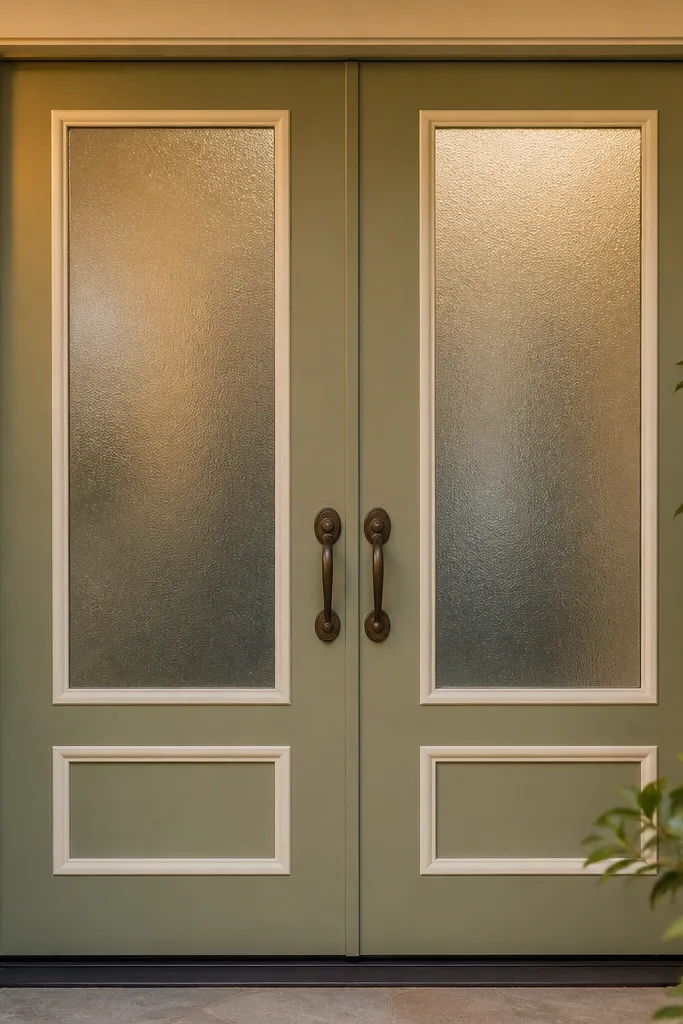
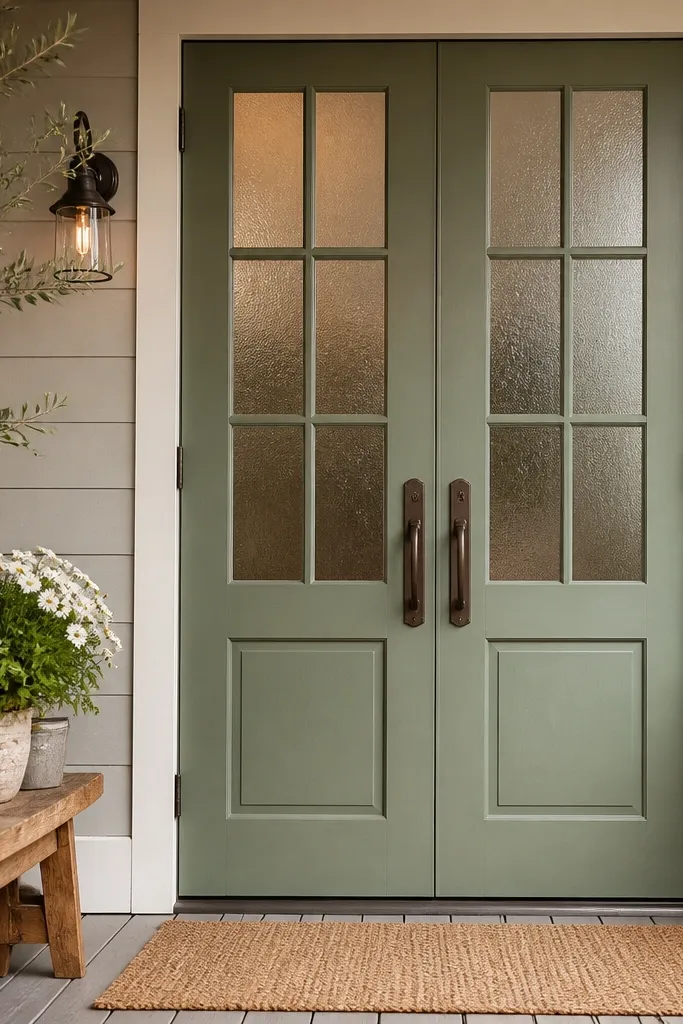
Sage is cozy because it feels natural and soft, especially with warm cream borders that frame the panels. Frosted glass keeps the light diffused, so the entry glows at night instead of reflecting. This design works well when your exterior has earthy tones, stone, or light brick. It also looks great if you want something calmer than terracotta but still warm. The cream borders add definition so the doors read crisp, not muddy.
Paint the door leaves matte sage exterior enamel, then mask and paint panel borders in warm cream enamel. Install frosted glass panels in the glazed sections and seal around the perimeter with glazing tape. After everything dries, apply an exterior clear coat over paint surfaces if your door paint requires it for weather resistance. Install matching hardware in aged brass or bronze and add weatherstripping for draft control.
Editor's noteUse painter’s tape with a sharp edge and pull it while paint is slightly tacky to avoid ridges.
Skip thisAvoid glossy sage — it can look too shiny and cold in rain.
24. Warm oak double doors with vertical glass ribbons and bronze pulls
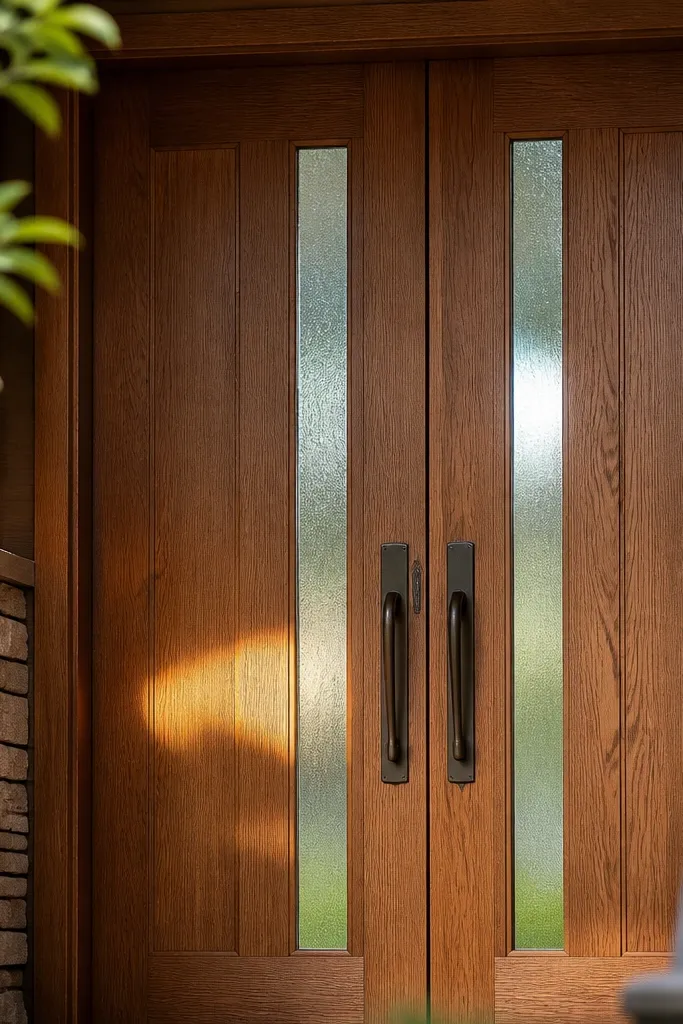
Vertical glass ribbons make double doors feel elegant and cozy because they create a soft vertical glow. Warm oak keeps it friendly, and bronze hardware adds warmth without the brightness of yellow brass. The ribbons should be narrow and lightly frosted or seeded so they scatter light instead of reflecting. This look works well for modern or transitional homes that want warmth but like clean lines. It also helps if your entry has low window light — the glass gives you illumination without glare.
Choose double doors with a glazed section layout or cut narrow vertical openings if you’re replacing the door. Sand and stain the wood to a warm oak tone, then seal. Install vertical glass ribbons using exterior glazing tape and sealant, keeping ribbon widths consistent across both leaves. Mount bronze pulls and hinges, then check the door swing and latch alignment so the glass edges don’t scrape trim.
Editor's noteSeeded glass reads warmer than frosted sheets — it breaks light into tiny, cozy specks.
Skip thisDon’t use wide glass panels — they make the entry feel exposed and less cozy.
25. Caramel-stained double doors with decorative lattice glass insets
Caramel stain is cozy because it sits between light honey and deep walnut, giving you warmth without heaviness. Lattice glass insets add a handcrafted feel, and they create a pattern of shadows that looks great on the porch floor. Use black hardware to sharpen the lattice lines and keep the design from looking too sweet. This works especially well on entries that already have some wood trim or a porch ceiling detail. The lattice also makes the doors look custom even if you’re not doing a full rebuild.
Sand and stain the double doors to a caramel tone, then seal with a clear exterior topcoat. Install lattice glass insets sized to your door panels and secure with glazing tape and exterior sealant. Paint or finish the lattice muntins in matte black so they match your hardware. Mount the doors and install a properly adjusted latch so the double seam stays tight.
Editor's noteChoose lattice patterns with fewer, thicker bars for a calmer look from the street.
Skip thisAvoid ultra-thin lattice muntins — they look fragile and can warp visually in photos.