1. Cream Ceramic + Dark Book Spines Corner Stack
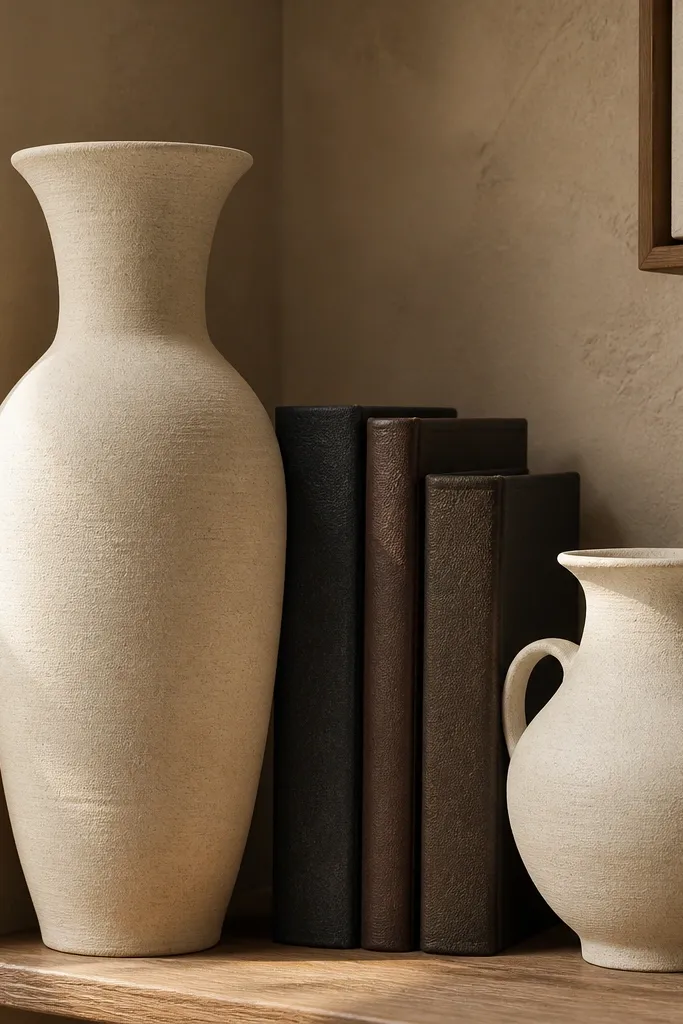
This look makes built-ins feel intentional because the books act like a uniform backdrop and the ceramics add soft warmth. Start with a corner stack where one shelf has a tall ceramic vase and the next shelf has a shorter vessel, so your eye keeps moving upward instead of scanning across clutter. The color contrast — dark spines against cream — reads cozy in daylight and still looks good after the lights turn on. It works best when you have at least 2-3 shelves in a bay and you can keep at least one shelf line clear enough for negative space.
Editor's noteUse bookends that match your hardware finish (brass, bronze, matte black) so the corner doesn’t look random.
Step 1: Choose 12-20 books with dark spines (black, deep navy, espresso) and arrange them vertically with consistent height, leaving a small gap near the corner for the vase. Step 2: Place one tall cream ceramic vase on the corner shelf and one shorter cream piece on the next shelf down; keep the tallest item at least 2-3 inches above the book tops. Step 3: Add one small framed photo or a single ceramic bowl on the opposite side of the bay to balance the weight. Finish by wiping dust off book covers and ceramics so the color stays crisp.
Skip thisDon’t fill every open spot — leaving one shelf line mostly empty is what makes the cozy spacing work.
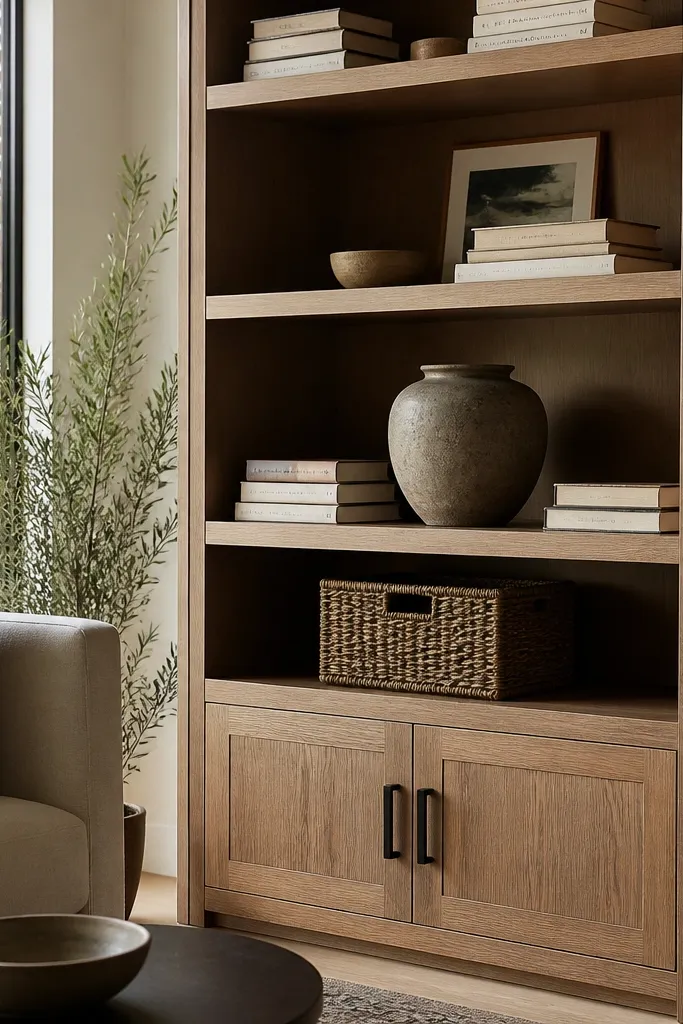
2. Woven Baskets Under Books for a Soft Storage Look
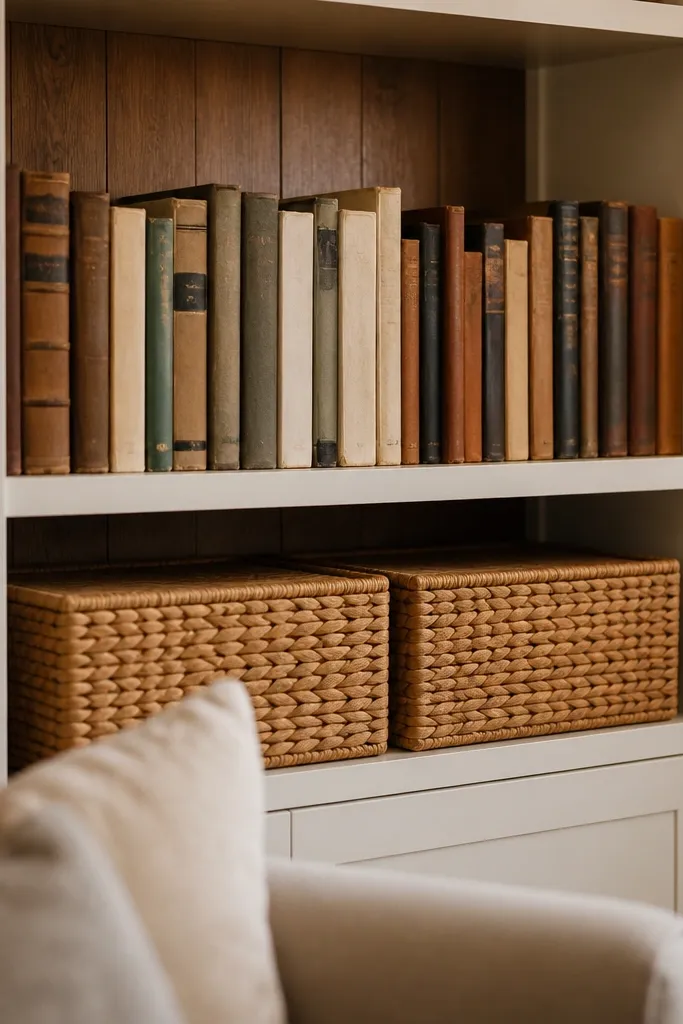
If your built-ins are getting used for everyday clutter, this is the cleanest cozy answer. The baskets hide the mess without turning the whole shelf into storage bins, and the books keep the display from looking like a utility shelf. Woven textures also soften hard edges, which matters a lot in living rooms with wood trim or glass-fronted cabinets. This setup is ideal for lower shelves where you want function, and it still photographs well because the pattern is consistent.
Editor's notePick one woven color family (natural, honey, or walnut) and stick to it — mixed basket tones look messy fast.
Step 1: Measure the basket footprint and choose baskets that fit with 1/2 inch clearance on each side so they don’t scrape when you pull them out. Step 2: Put books flat or slightly angled on the top of the basket area so the spines create a neat band across the shelf. Step 3: Add a small tray on the upper shelf with one candle or a small plant pot to give the bay a focal point. Step 4: Line the shelf with a thin felt or shelf liner under the baskets to prevent fraying and sliding.
Skip thisAvoid placing baskets too high so you lose the “hidden storage” effect and end up with a clutter wall.
3. Photo Ledge + Frame Grid With One Tall Plant
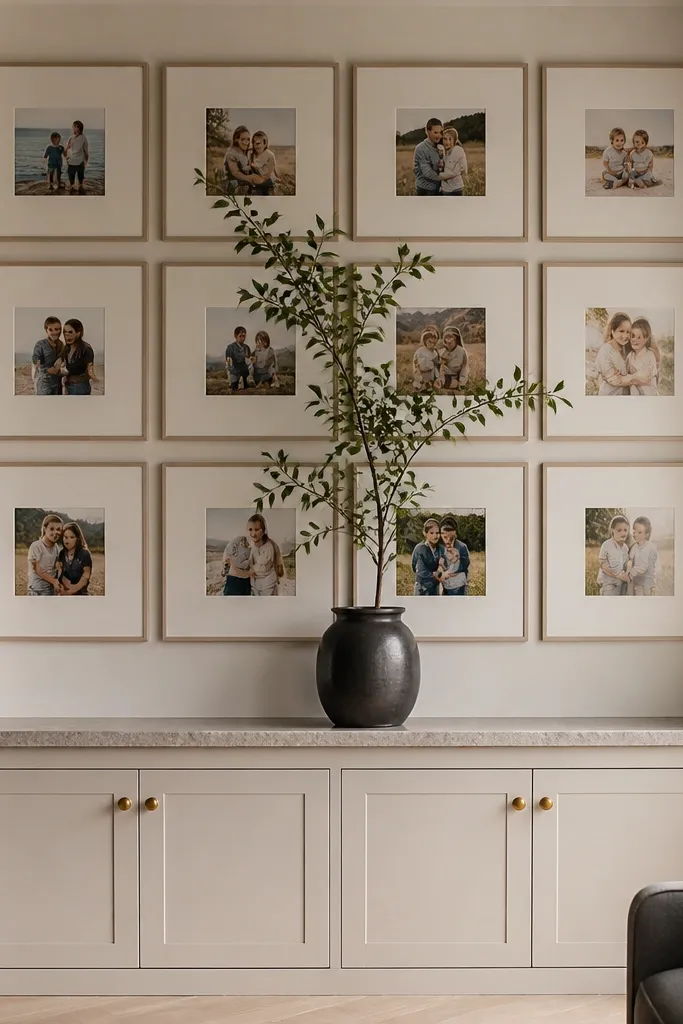
This is the most reliable way to make built-ins look styled without turning them into a museum. A frame grid gives structure, and one tall plant creates the cozy vertical lift that prevents the shelf from feeling flat. Use frames with a consistent mat color and thickness so the grid reads as a single design element. This works especially well if your living room has neutral walls and you want the built-ins to add personality without adding more clutter.
Editor's noteUse a matte frame finish and keep glass glare low by angling frames slightly inward on the ledge.
Step 1: Choose 9-12 frames that use the same mat color and a similar frame width (around 1-1.5 inches). Lay them out on the shelf floor first to decide spacing; aim for 1/4 to 1/2 inch gaps between frames. Step 2: Install a simple photo ledge or shelf cleat so frames sit securely and don’t slide forward. Step 3: Place a tall plant (real or faux) in the corner of the bay on the lowest shelf, using a pot color that matches your frame mat. Step 4: Add one small object on the opposite side of the plant to balance the weight.
Skip thisDon’t mix frame thicknesses — it breaks the grid and makes the shelf look busy.
4. Backed Shelf Panels in Warm Linen for Instant Calm
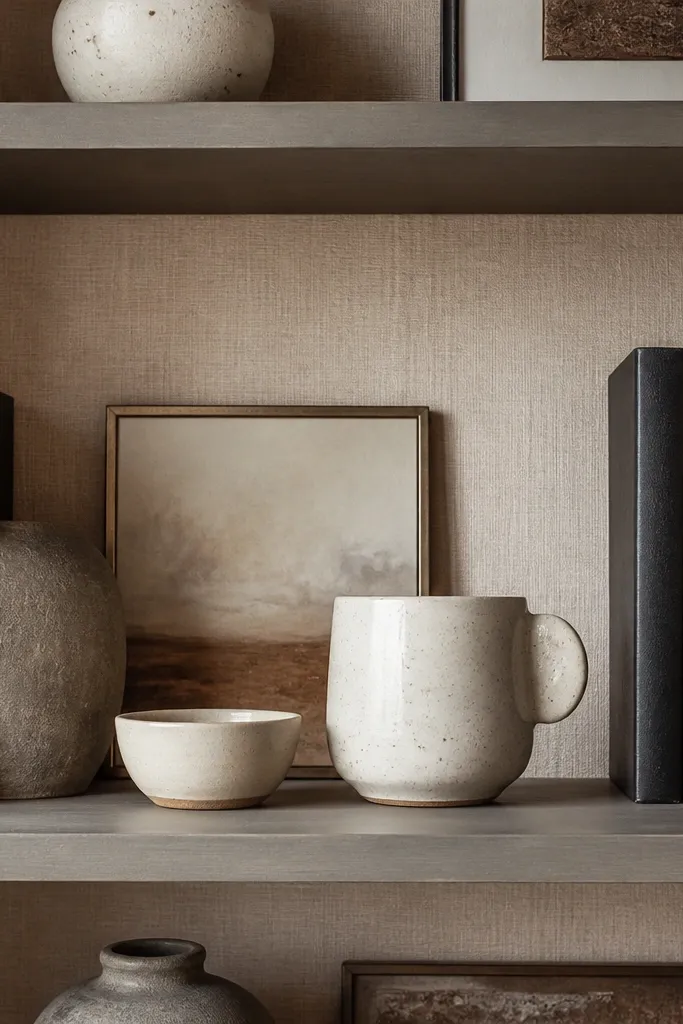
A shelf back that’s plain wood or painted flat can make everything look harsh. Adding a warm linen-like panel behind your display softens the whole bay and makes ceramics and book spines look richer. You’ll also gain contrast, which helps your decor read clearly from across the room. This is one of the fastest ways to make built-in shelves look cozy because it changes the background, not just the objects.
Step 1: Cut a panel sheet (thin plywood or foam board) to the back opening size minus 1/8 inch for a snug fit, then wrap it in linen fabric using spray adhesive. Step 2: Staple or glue the fabric on the backside, pull tight, and trim clean edges so the front looks smooth. Step 3: Mount the panel with small finishing nails or brad nails through the trim, or use removable velcro strips if you want flexibility. Step 4: Style with 2-3 book stacks, then place ceramics and one framed print so the background doesn’t feel crowded.
Choose a linen tone close to your curtains or throw color so the shelves look like they belong to the room.
Avoid shiny fabric backs — they catch light and make the shelf look cheap.
5. Three-Tier Riser System for Books, Bowls, and Small Art
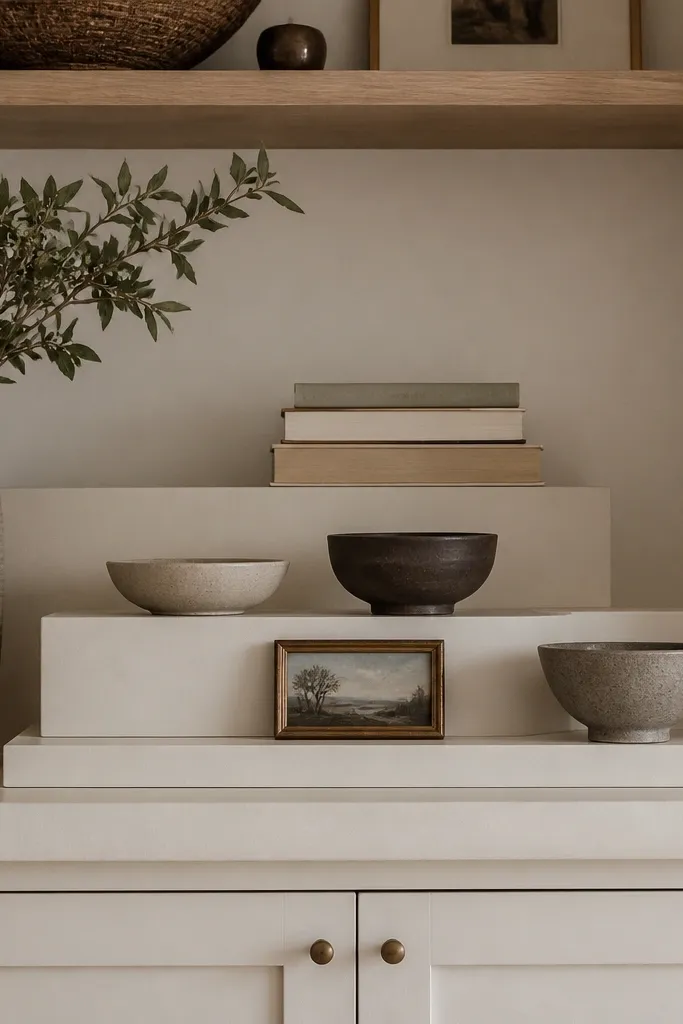
Risers fix the “everything sits on the same plane” problem that makes built-ins look flat. When you create tiers, even a simple setup looks designed because objects overlap in a controlled way. This layout is great for shelves that are wide enough for one tall piece and still need space for smaller decor. It’s also good if you hate dusting tiny items because you can group them on fewer surfaces.
Editor's notePaint risers in the same finish as your built-ins (or stain them) so they disappear and the decor looks intentional.
Step 1: Build or buy three risers in graduated heights (about 1 inch, 2 inches, and 3 inches) sized to fit within the shelf depth. Step 2: Place the tallest riser near the back corner and stack books on it, then put a bowl or small sculpture on the 2-inch riser. Step 3: Add one framed print or small art piece on the lowest riser, keeping its bottom edge aligned with the top of the books. Step 4: Leave a 2-inch gap between the riser group and the shelf edge so it doesn’t look cramped.
Skip thisDon’t cram all three risers into one corner — spread them across the bay so the layout reads as a triangle.
6. Tall Lantern + Short Stacked Frames for Evening Cozy
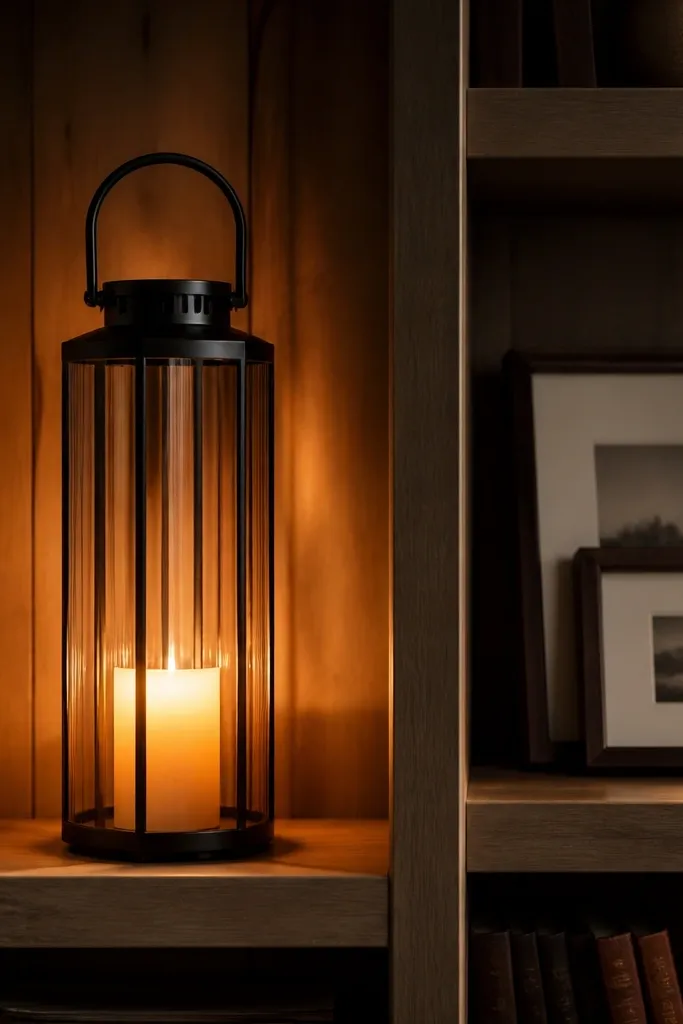
Lighting objects make shelves feel cozy because they add glow and depth. A tall lantern paired with shorter stacked frames gives you a vertical focal point without needing big bulky decor. Keep the lantern in a warm tone (smoky glass, amber, or matte black with a warm LED candle) so it reads inviting. This works best on shelves that get evening light or where you can add a small warm lamp nearby.
Editor's noteUse warm LED bulbs (2700K) if you’re adding any lighting — it keeps the lantern from looking icy.
Step 1: Place one tall lantern in the center of the bay on the top shelf, centered front-to-back so it doesn’t look lopsided. Step 2: On the same bay but lower shelf, stack 2-3 small frames vertically or slightly stagger them, keeping the top of the stack at about the lantern’s mid-height. Step 3: Add one low decorative tray with a matchbox-sized candle or a warm LED tea light. Step 4: Use neutral paper prints inside frames so the lantern remains the star.
Skip thisAvoid placing the lantern too low — if it sits below the book tops, it stops reading as a focal point.
7. Matte Black + Brass Minimal Sculpture Line
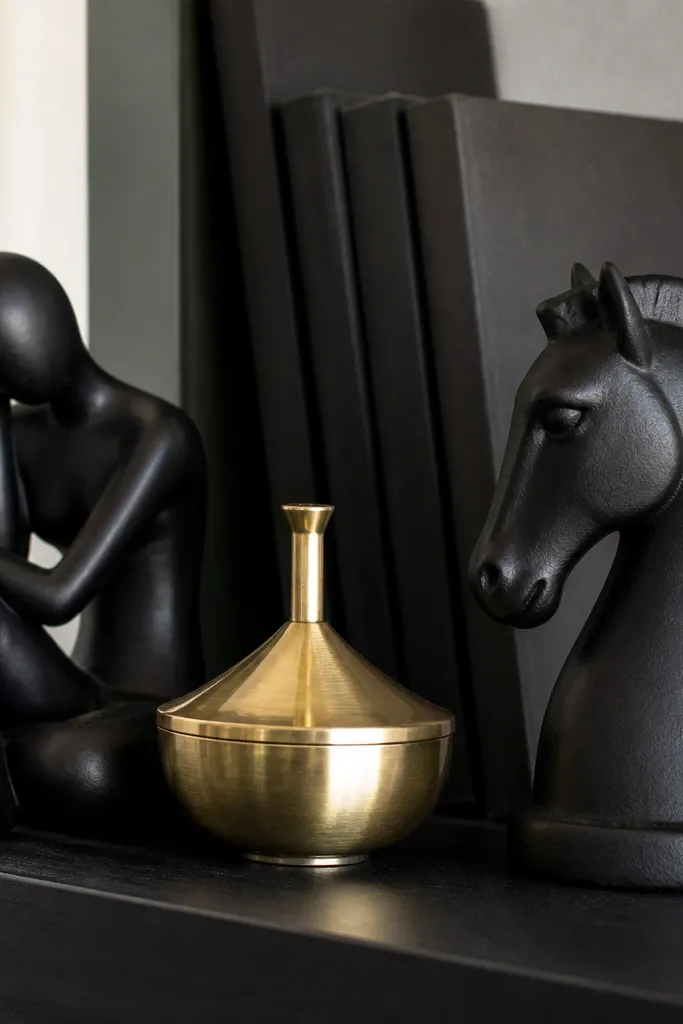
For built-ins that already have a lot of visual detail (trim, cabinets, mixed finishes), a metal-focused line looks clean and cozy at the same time. Matte black anchors the look, while brass adds warmth and catches light. Keep the objects small and grouped, not scattered, so the shelf still feels calm. This style is photogenic because it creates sharp contrast against lighter walls and wood tones.
Editor's noteUse the same brass color family as your room hardware (if your doorknobs are satin brass, don’t switch to antique gold).
Step 1: Choose 3-5 objects in two finishes only: matte black (ceramic or stone) and brass (small bowls, candle holders, or a thin sculpture). Step 2: Place the largest matte piece in the center of one shelf, then flank it with two smaller brass items at different heights. Step 3: On the next shelf down, repeat the pattern but shift the group slightly left or right so it feels balanced, not mirrored. Step 4: Add one stack of books under the smallest object so everything has a solid base.
Skip thisDon’t add more than two metal finishes — the shelf stops reading cohesive.
8. Color-Blocked Books With One Contrast Vase
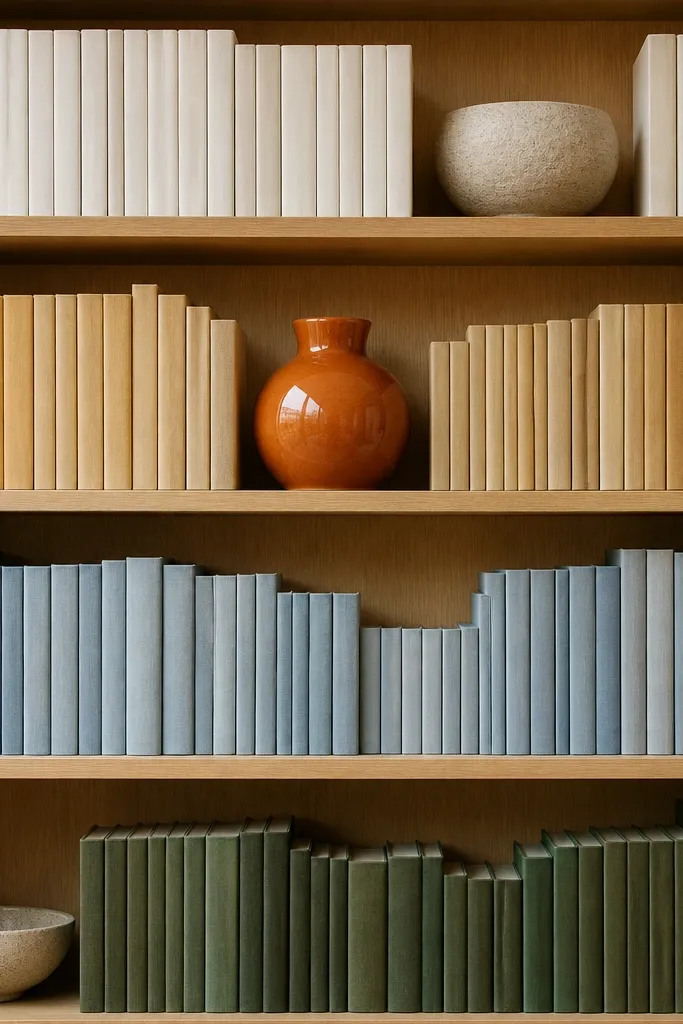
This is the cozy version of a designer shelf. When books are grouped by color bands, you get order without needing many decor objects. Add one contrast vase or ceramic vessel to break up the book grid and keep the shelf from looking too rigid. This works best when you have enough books to create two or three color blocks, and it’s especially good for built-ins with a consistent background color.
Step 1: Sort your books by spine color into 2-3 groups (for example: cream, warm gray, and deep green) and stack each group vertically so spines align. Step 2: Place the tallest book group on the left side of the bay and the second group on the right, leaving a small empty gap in the center. Step 3: Put one vase in that center gap; choose a color that isn’t in the book groups (terracotta, mustard, or black). Step 4: Add a single framed print on the shelf above or below to finish the look.
Keep book heights within 2-3 inches of each other so the color blocks read as intentional stripes.
Avoid mixing paperback and hardcover in the same stack — the height mismatch makes the blocks look sloppy.
9. Ceramic Tray + Candles at Varying Heights
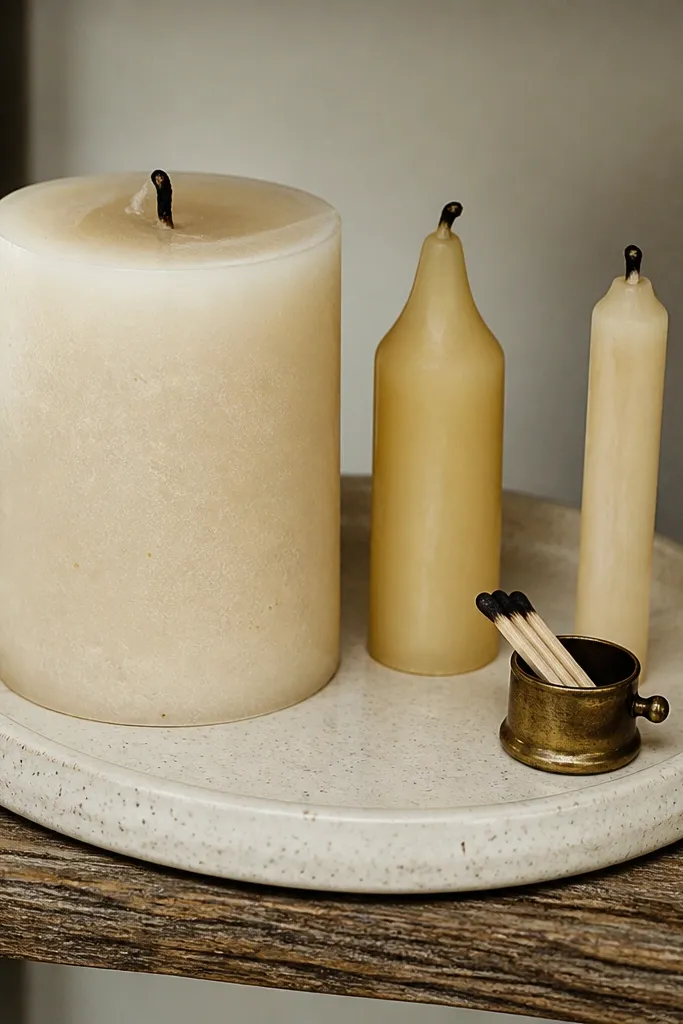
A tray is the easiest way to make small items look curated. It groups candles, matches, and tiny decor into one visual unit, which instantly makes built-ins look more expensive. Varying candle heights adds depth without needing more objects. This idea works great when you have shelves that are too narrow for larger decor but still want a cozy, styled look.
Editor's noteIf your candles are real, use flameless candles for shelves with any dust cover or low airflow — it keeps maintenance easy.
Step 1: Pick a ceramic tray with a warm neutral finish (cream, oatmeal, sand) and place it centered on one shelf. Step 2: Arrange three candles on the tray: one tall (about 8-10 inches), one medium (5-6 inches), and one short (3-4 inches). Step 3: Add a small ceramic dish or a single decorative match holder in the remaining space. Step 4: On the shelf above, place one book stack and one small framed photo so the tray doesn’t float alone.
Skip thisDon’t use trays that are too large — if the tray touches both shelf edges, the bay looks cramped.
10. Tall Vase With Branches and a Lived-In Woven Base
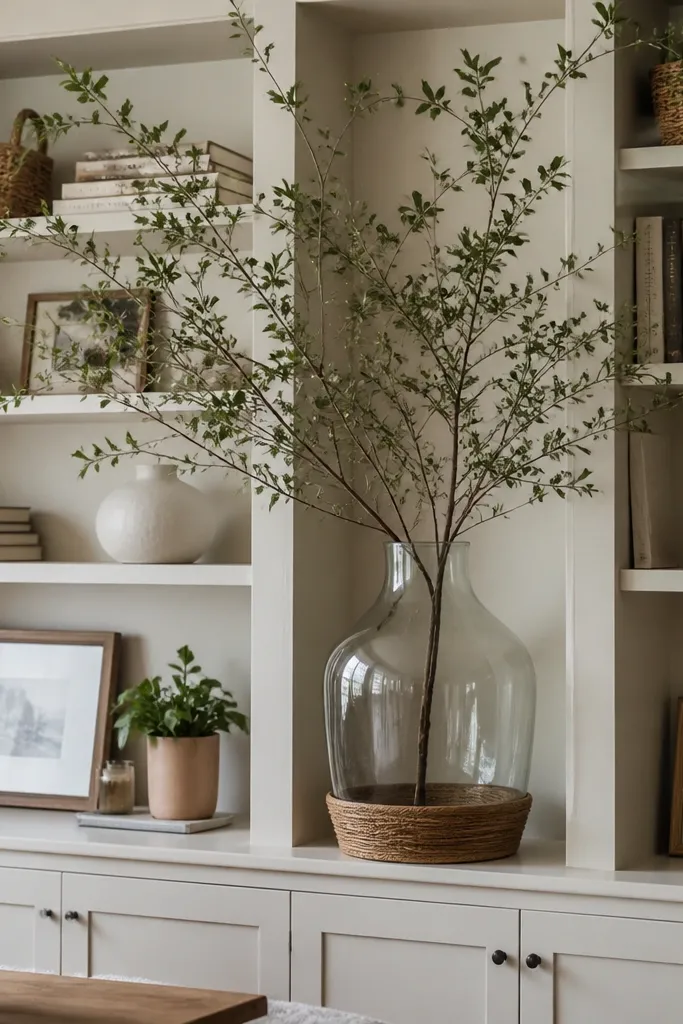
Branches give movement, and movement reads cozy because it breaks straight lines. A tall vase plus a woven base makes the shelf look styled, not staged. This works especially well in living rooms where you already have plants, rattan, or woven throws. The key is keeping the branches airy so they don’t block your framed art or book spines.
Step 1: Choose a tall vase (around 12-18 inches) and place it slightly off-center toward the corner of the bay. Step 2: Add a woven placemat or small rattan tray under the base of the vase so the bottom looks finished. Step 3: Insert branches that are varied in length; keep the tallest tip near the top of the bay without touching the shelf above. Step 4: Fill the negative space with one small book stack or a single framed photo so the branches don’t feel like clutter.
If you use faux branches, lightly bend a few twigs outward so the silhouette looks irregular instead of symmetrical.
Avoid packed-in branches — dense bunches look like a craft project rather than a shelf statement.
11. Oversized Art Lean + Book Stack as a Visual Stand
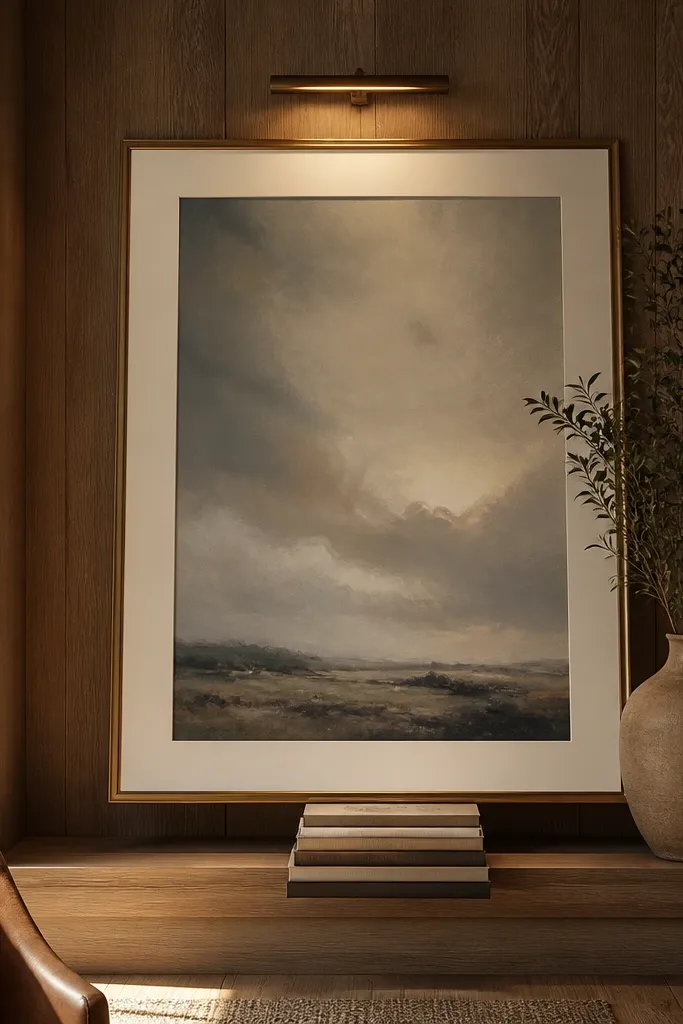
Leaning art inside shelves adds depth and makes the whole bay look like a gallery wall. Pair that with a book stack used as a stand and you get height and structure in one move. Choose one oversized piece per bay, not two — too many big frames makes built-ins feel busy. This idea looks best when your shelf backs are plain and you want the art to be the star.
Editor's noteUse picture frame bumpers or thin felt dots on the back edge so the frame doesn’t scratch the shelf or slide.
Step 1: Pick one large framed print or canvas sized so it nearly reaches the top shelf line but still leaves a 1-2 inch gap. Step 2: Lean it against the back with a book stack placed underneath as the support; use 3-5 books for a stable slope. Step 3: On the shelf above or beside, add a small ceramic object and a single candle so the art doesn’t float. Step 4: Keep the rest of the bay minimal — one art piece plus one supporting object reads cleaner.
Skip thisAvoid leaning frames without a stop — if it can shift, the whole bay looks messy instantly.
12. Shiplap-Style Shelf Back With Whitewashed Wood Tone
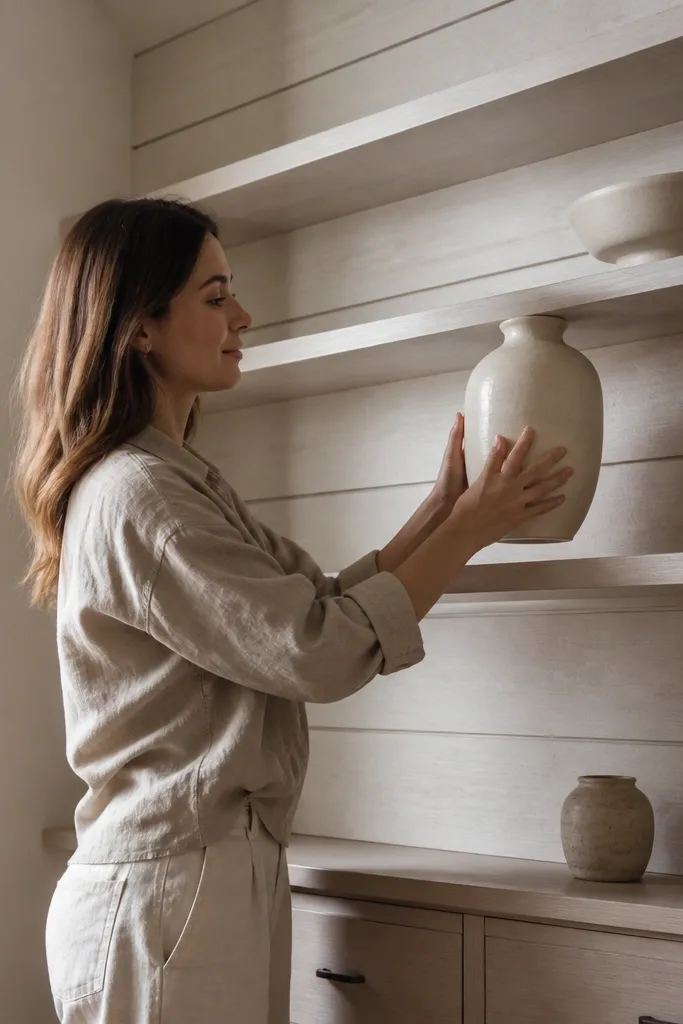
Textured backs turn empty shelves into a design feature. A shiplap-like panel behind the shelves adds warmth and shadow, which makes your decor look better even when the shelf isn’t full. Keep the front styling simple — books and one or two ceramic pieces — so the texture stays the star. This is a strong choice when your built-ins are painted or flat and feel a little too sterile.
Editor's noteChoose a matte clear coat — gloss makes wood texture look oily and less cozy.
Step 1: Cut thin tongue-and-groove boards or shiplap-style paneling to the back opening size, then whitewash or lime-wash the surface for a soft grain. Step 2: Install the panel with wood glue plus small brad nails, keeping the top edge aligned to the trim. Step 3: After it cures, style with one tall item per bay and keep the rest to books and a small tray. Step 4: Seal with a matte clear coat so the texture doesn’t catch dust and looks clean under daylight.
Skip thisDon’t cover the whole shelf with decor — textured backs already add visual noise.
13. Rainbow Ceramic Stack in a Single Shelf Column
This is playful but controlled, and that’s why it looks good. Instead of scattering colors across the whole built-in, you stack ceramic pieces in one vertical column so the shelf still reads organized. Use warm, muted ceramic colors like terracotta, dusty rose, olive, and cream. Pair the column with neutral books so the colors feel cozy rather than loud.
Editor's noteGroup ceramics by finish — mix matte with one glossy glaze max, not multiple shiny pieces.
Step 1: Choose 4-6 ceramic pieces that vary in height but share a warm color family; keep the largest at the bottom. Step 2: Place the stack in one corner or a single straight column, leaving at least 3 inches between the stack and other objects. Step 3: Fill surrounding space with neutral books and one small frame so the ceramics don’t float. Step 4: If you want extra polish, add a thin felt pad under the bottom piece to prevent chipping and sliding.
Skip thisAvoid mixing too many colors in the same shelf line; keep the color stack vertical.
14. Monochrome Green Plant Shelf With Light Linen Books
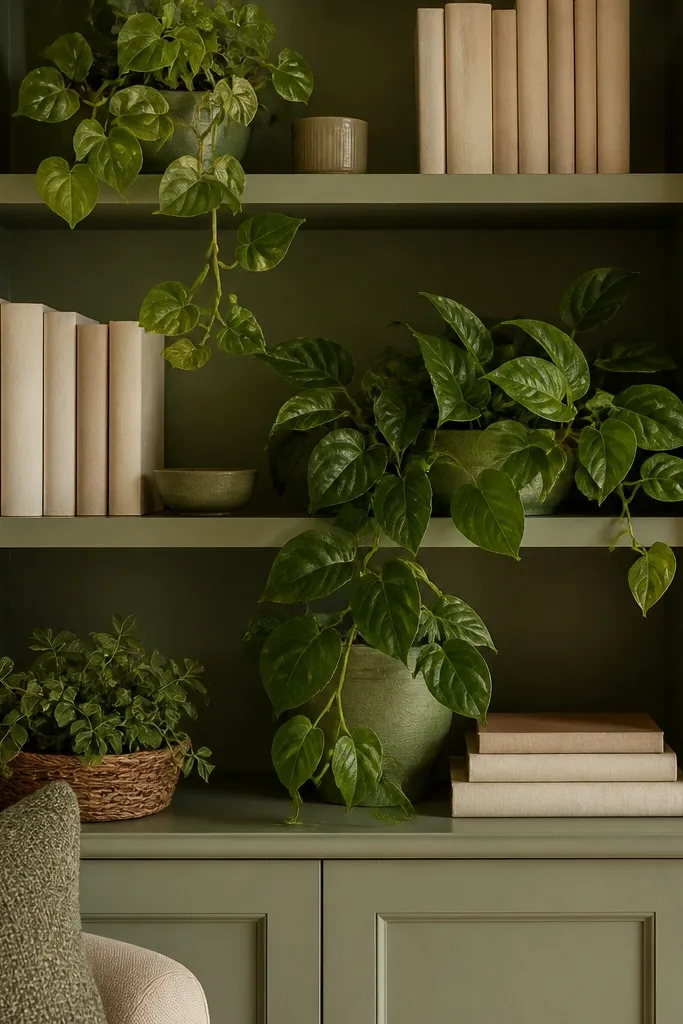
Monochrome green makes built-ins feel alive without clutter. When your plants share the same green tone and your books are light linen or cream, the whole bay looks calm and cozy. This style is especially forgiving if your shelf openings are uneven sizes because the plant silhouette can stretch to fill gaps. It also photographs well because green contrasts with warm wood and cream walls.
Editor's noteDust leaves with a microfiber cloth before styling — dusty faux leaves ruin the cozy look fast.
Step 1: Pick one plant with a clear shape — a tall fiddle-leaf style or a trailing vine you can train upward. Step 2: Place the plant in a pot that matches your decor palette (cream ceramic or matte black). Step 3: Arrange light-colored books around the plant, keeping spines facing outward and aligned. Step 4: Add one neutral frame or small sculpture on the opposite side to balance the plant mass.
Skip thisDon’t add multiple plants in one bay unless their silhouettes match; otherwise it turns into a jungle mess.
15. Layered Tray + Books + Small Mirror for Depth
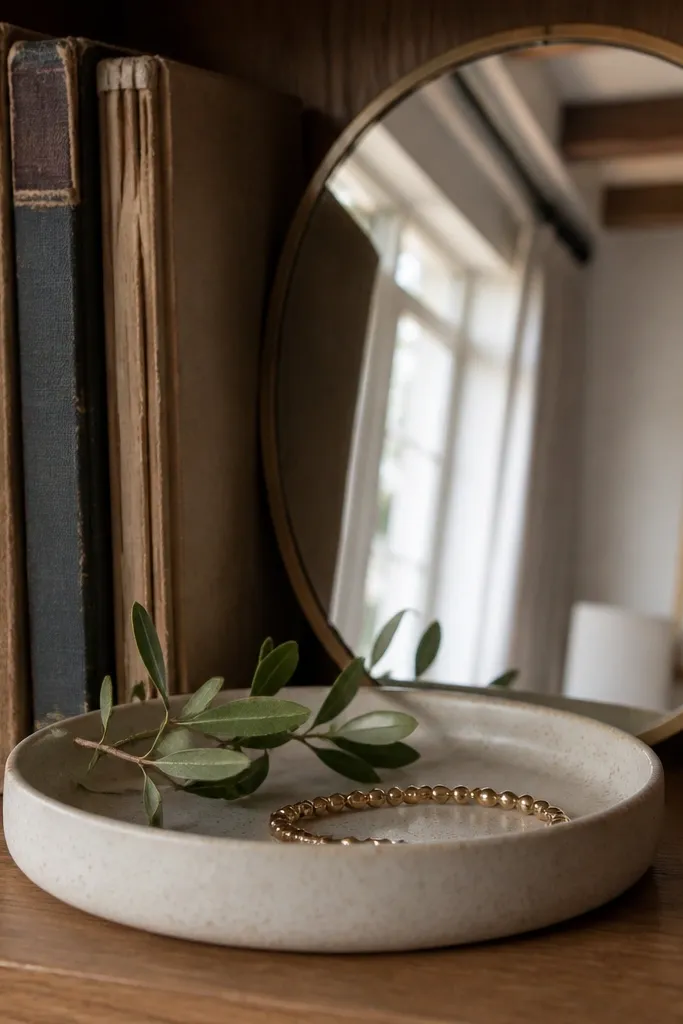
A small mirror inside built-ins adds depth and makes the space feel bigger, which is a real win in smaller living rooms. The trick is layering: tray in front, books in back, mirror placed to catch light. This setup reads cozy because it uses warm materials and creates soft reflections rather than harsh shine. It’s also great if you want the built-ins to feel more styled without adding more color.
Editor's noteIf your mirror frame is glossy, wipe it with glass cleaner and buff dry so reflections stay soft.
Step 1: Choose a small round or oval mirror with a thin frame in brass, bronze, or black. Step 2: Place a warm-toned tray on the shelf front, then stack books behind it so the mirror sits on the books or just above the tray. Step 3: Put one small object on the tray like a candle or a ceramic dish, keeping it neutral. Step 4: Adjust the mirror angle so it reflects a lamp or window light without glaring directly at the room.
Skip thisAvoid placing mirrors too low — reflections get blocked and the depth effect disappears.