
1. Under-Bed Rolling Drawer
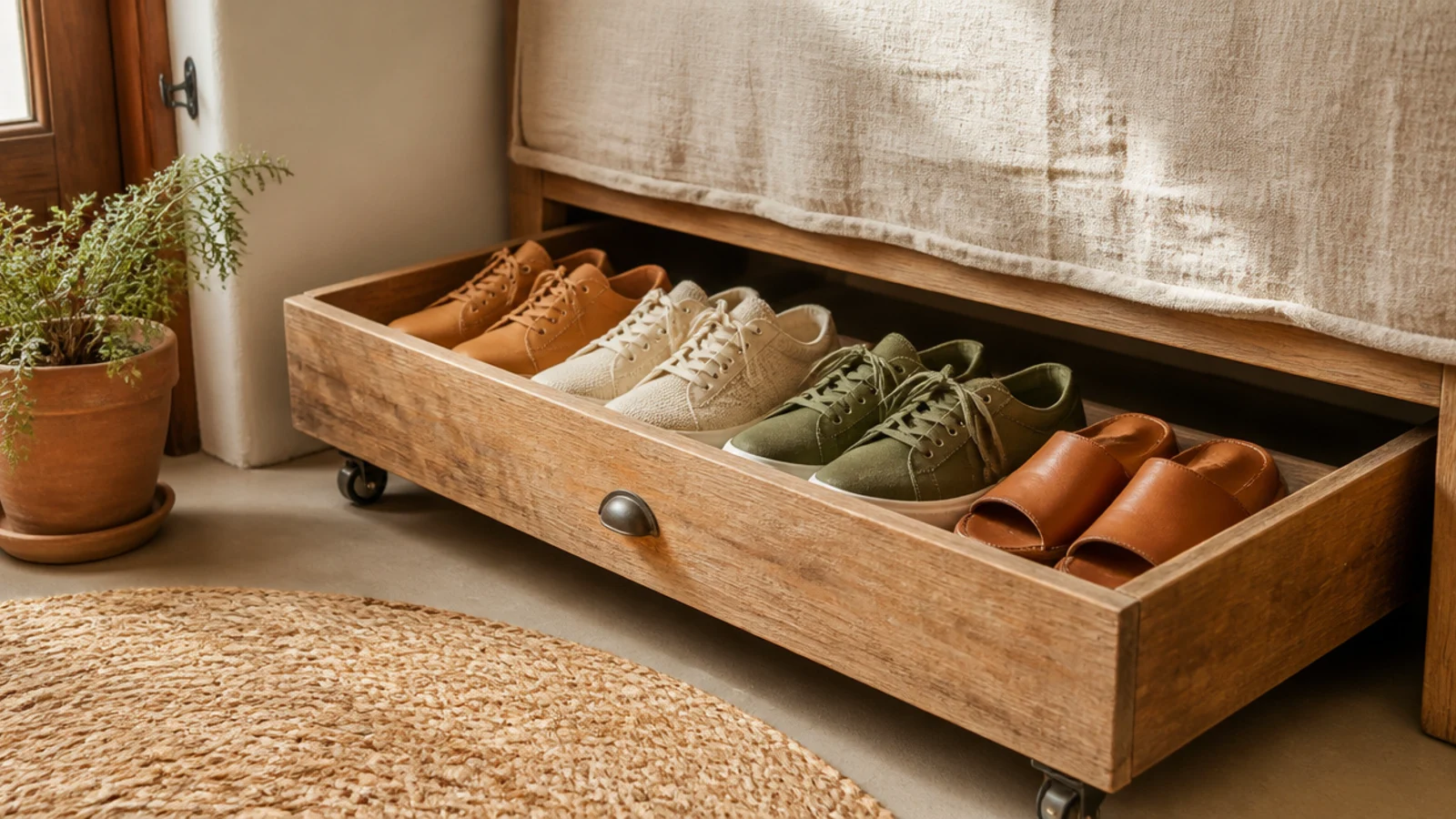
The space under the bed is the biggest hidden surface in most bedrooms, and a rolling drawer turns it into a shoe drawer. It suits overflow and off-season pairs you do not need daily. One drawer holds six to eight pairs out of sight.
Measure the clearance under your frame and pick a drawer on casters that clears it. Lay pairs in a single layer facing the same way so you can scan them. Add a lid or fabric cover against dust. Roll it out to choose, then push it back under the bed skirt so nothing shows.
Fit a pull handle or a loop of webbing to the front so you can hook the drawer out with a foot instead of crouching.
Do not skip casters on carpet; a plain box drags and snags, so it stops getting used within a week.
2. Closet Floor Tiered Rack
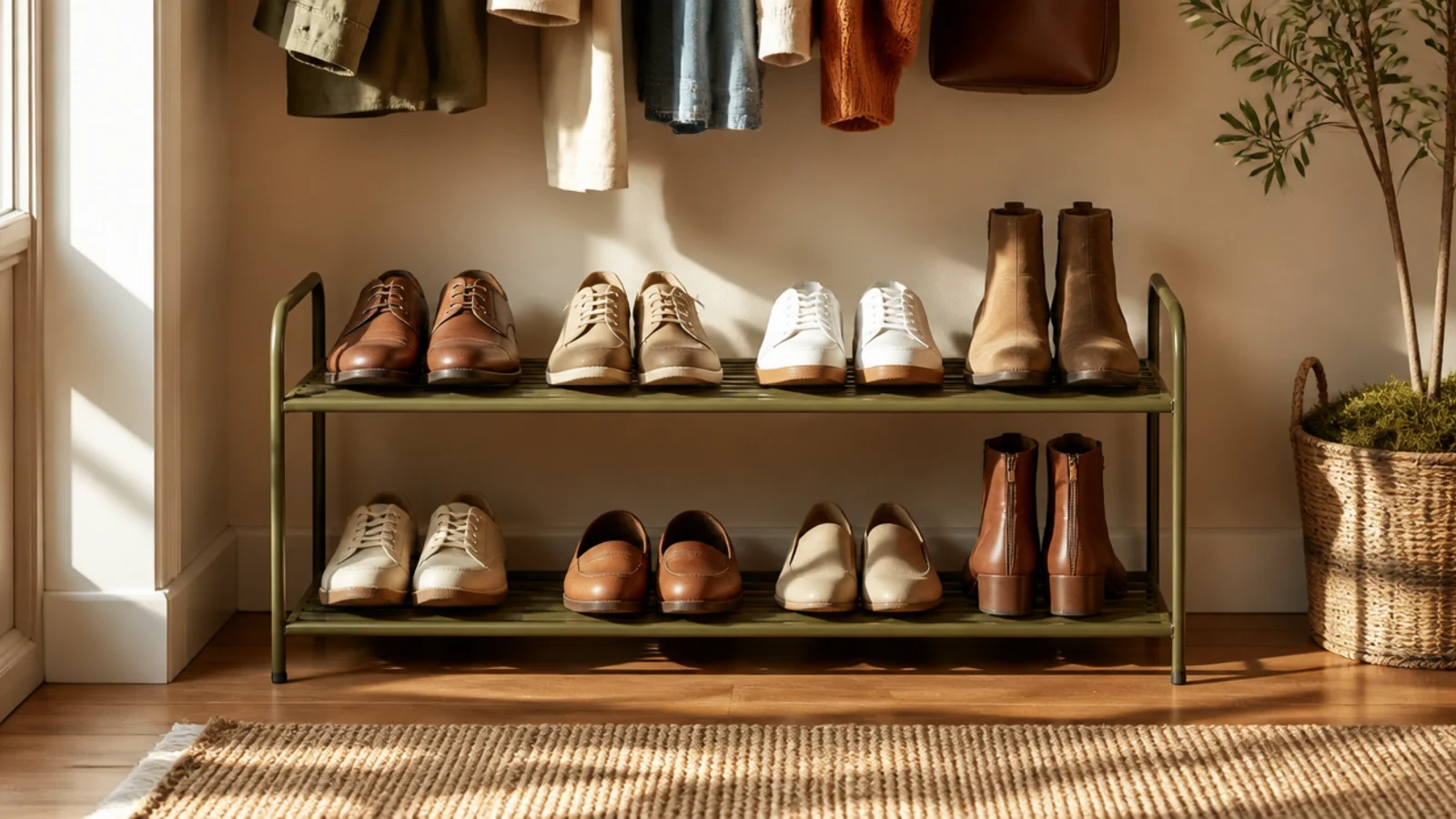
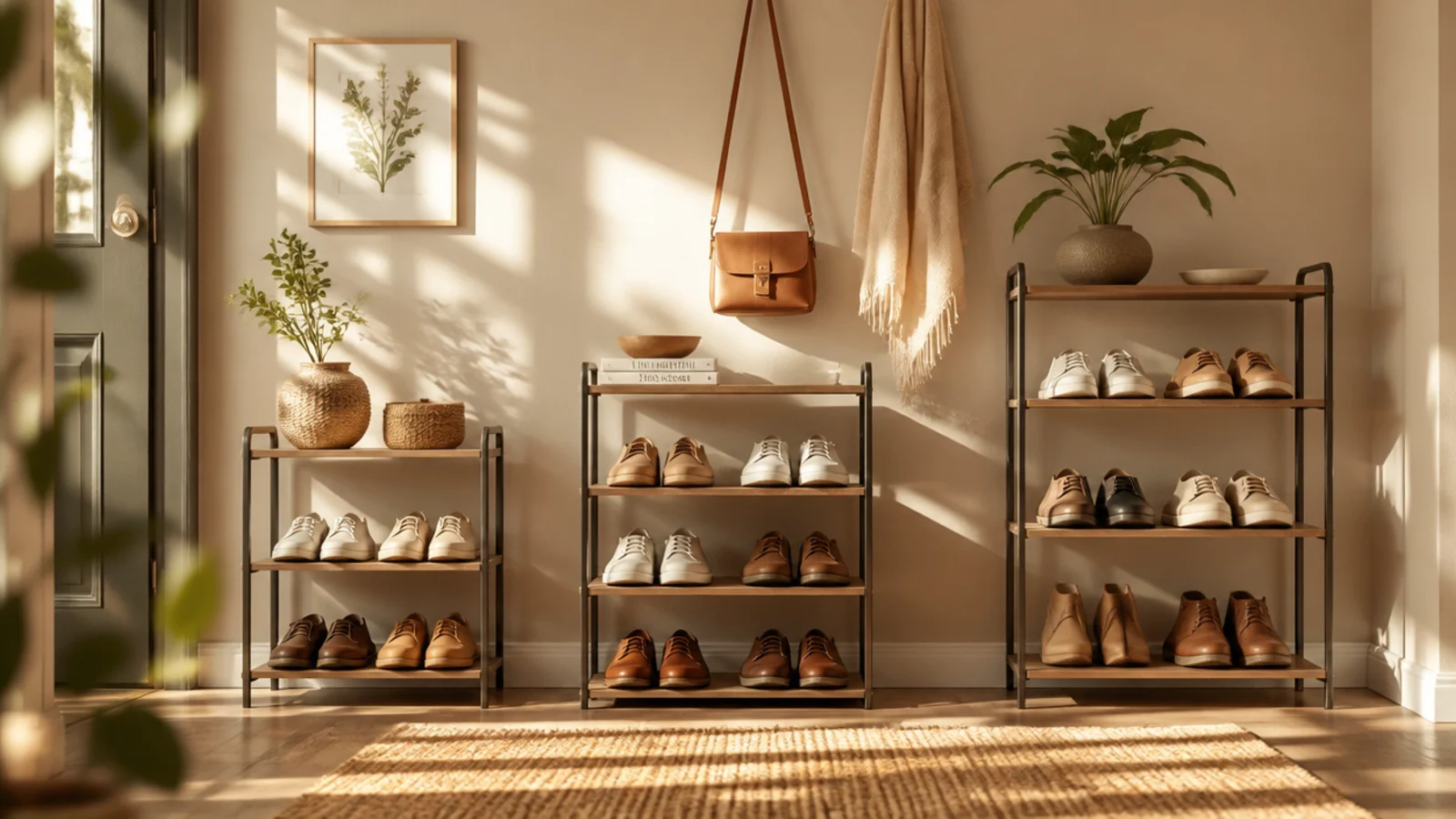
A simple tiered rack on the closet floor doubles the pairs that fit under your hanging clothes. It suits the wasted floor space beneath a clothes rod. It needs no tools and keeps shoes off the closet floor where they scatter.
Measure the width of the closet floor and the height under the shortest hanging clothes. Pick a two- or three-tier rack that fits both. Set it on the floor under the rod and line the tiers with daily shoes toe-out. Leave the top of the closet for boxed off-season pairs.
Choose a rack shorter than your hanging clothes so long items still hang freely above it without bunching.
Do not buy a rack taller than the space under your clothes; a too-tall rack forces you to shorten what you can hang.
3. Behind-the-Closet-Door Organizer
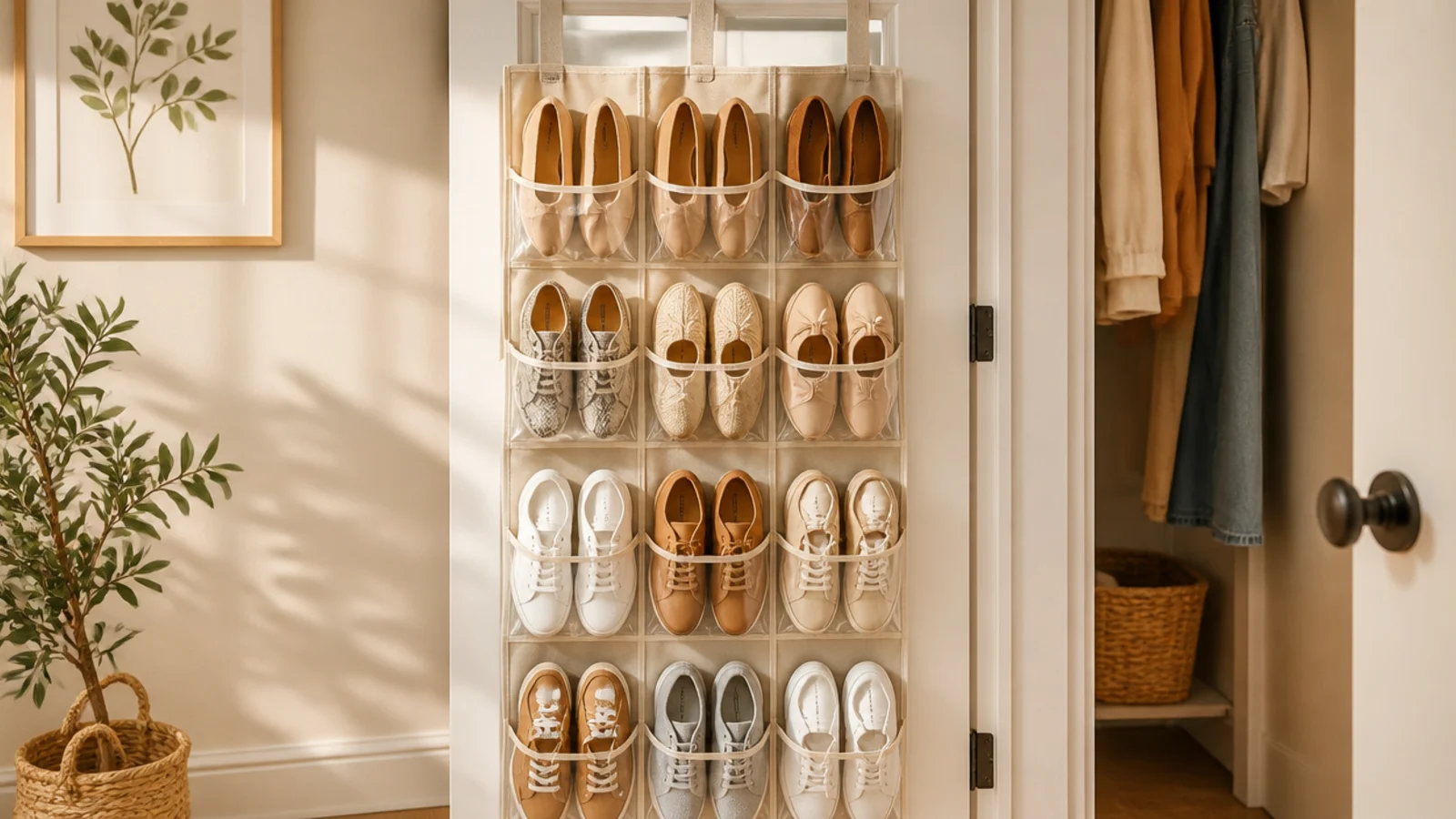
The back of the closet door is a full empty surface, and a pocket organizer there holds 12-24 pairs. It suits flats, sneakers, and small shoes. It adds a lot of capacity without touching floor or shelf space.
Measure the door height and choose an organizer that clears the floor. Hang the hooks over the top edge and close the door to check it does not catch. Load heavier shoes in the lower pockets so it hangs straight. Choose a fabric-front version over clear vinyl for a tidier look.
Stick the bottom corners to the door with hook-and-loop strips so the panel stops swinging when you open the closet.
Do not load heavy boots into an over-door organizer; the weight can bow a hollow door over time.
4. Hanging Fabric Closet Shelf
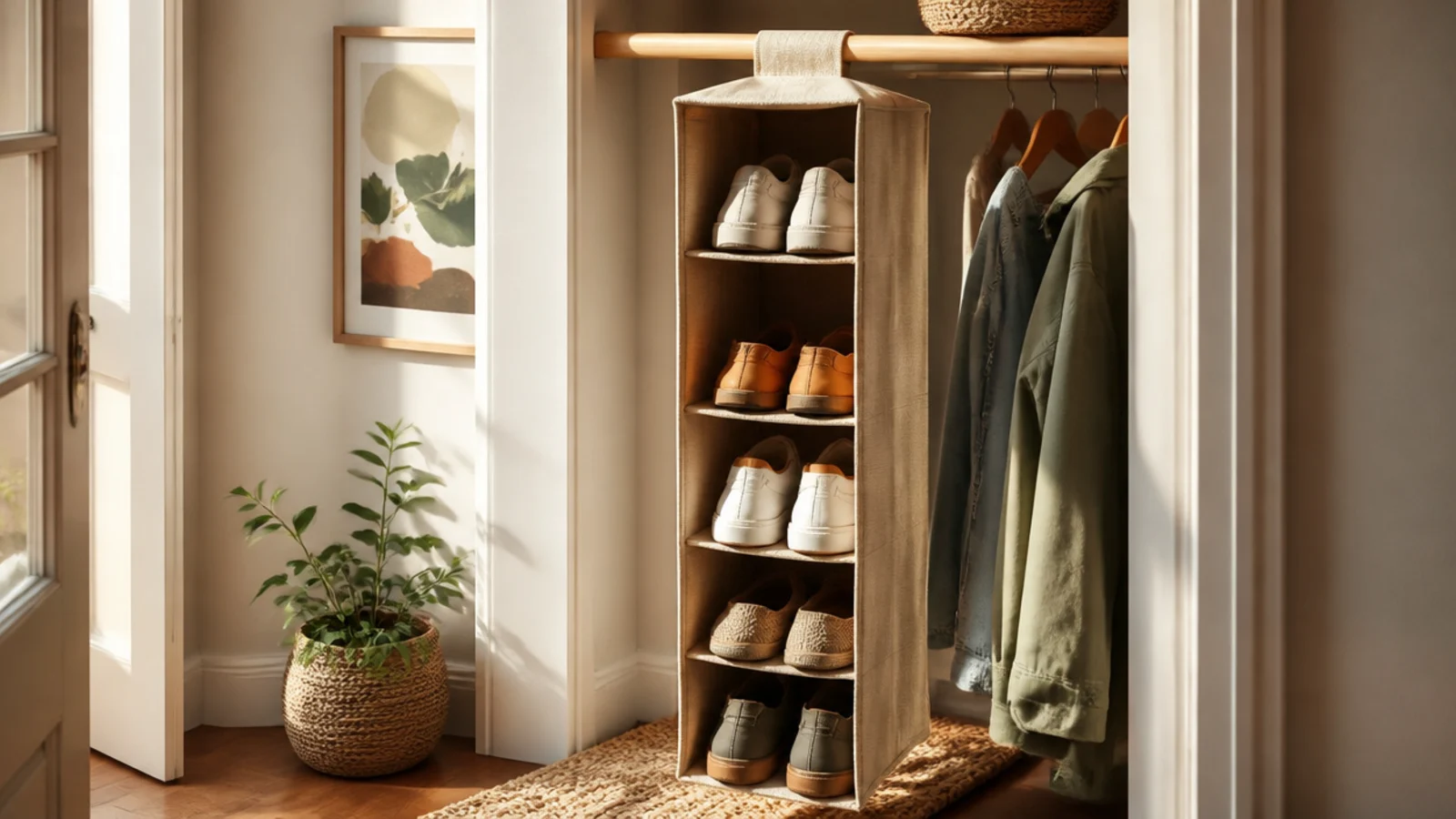
A fabric hanging organizer clips over the closet rod and stacks shoe shelves vertically. It suits a closet with spare rod space and no floor. It uses hanging height instead of the floor and installs in seconds.
Hook the organizer’s strap over the closet rod where you can spare the hanging width. Load one pair per compartment, heaviest at the bottom so it hangs plumb. Keep it to lightweight shoes so the rod is not overloaded. Zip-up or covered versions keep dust off.
Editor's noteHang it at the end of the rod nearest the door so the shoes are the easiest thing to reach when you get dressed.
Skip thisDo not overfill a hanging shelf with heavy shoes; it sags, pulls the rod down, and crushes the compartments.
5. Clear Stackable Shoe Boxes
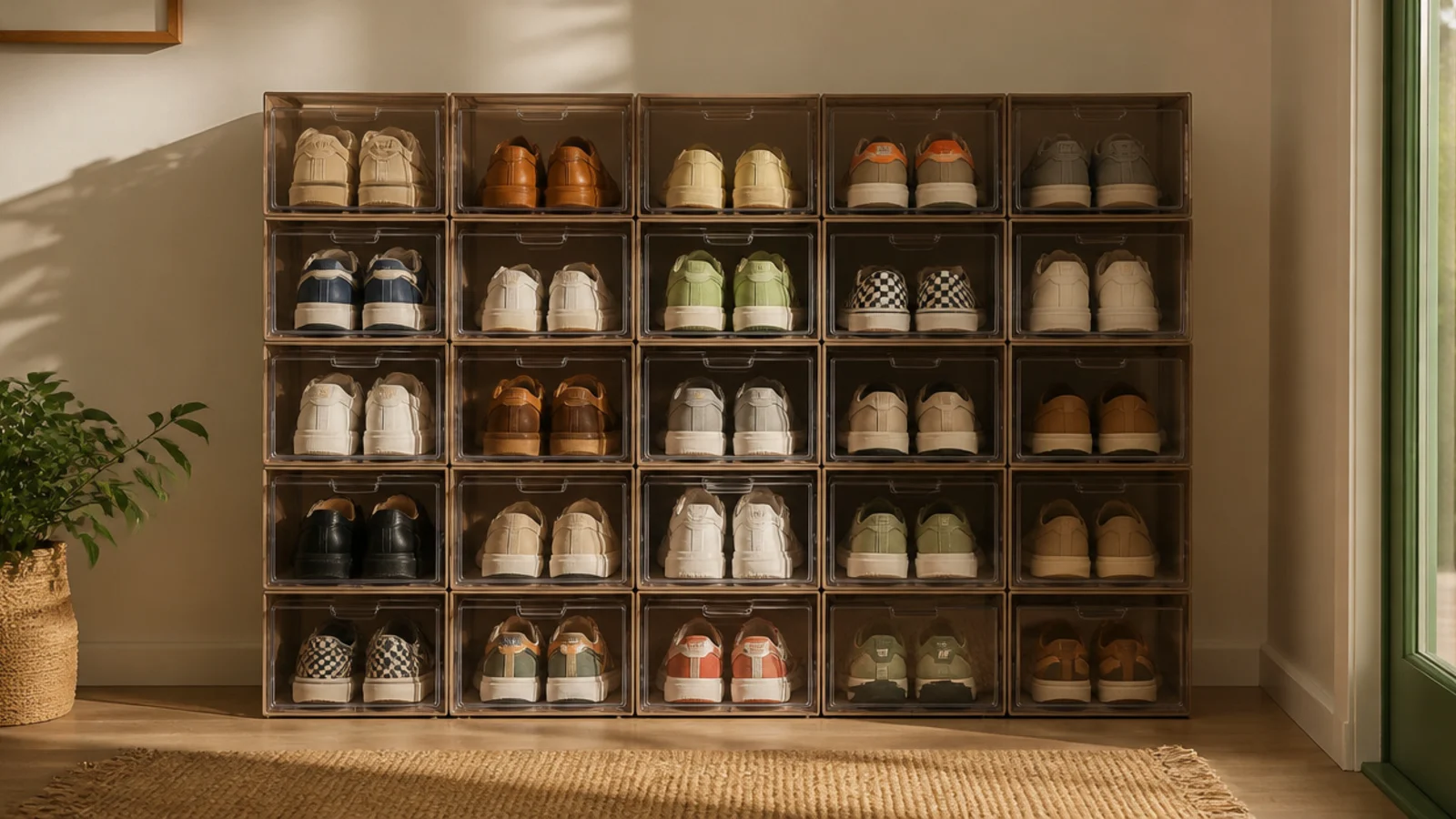
Clear drop-front boxes turn a closet corner into a dust-free, see-through shoe wall. Each pair gets a protected box you can open without unstacking. It suits nicer shoes and anyone who likes to see their collection.
Buy drop-front boxes and measure your tallest everyday shoe to pick the right height. Stack them against the closet wall, heaviest at the bottom, and label lookalike pairs. The drop front lets you grab a pair from a lower box without toppling the stack. Wipe each box before use.
Editor's noteSnap a photo of unusual pairs and tape it to the box front so you can find them at a glance in a big stack.
Skip thisDo not stack them higher than you can reach easily; a tower you need a stool for stops getting used.
6. Wardrobe Base Cubbies
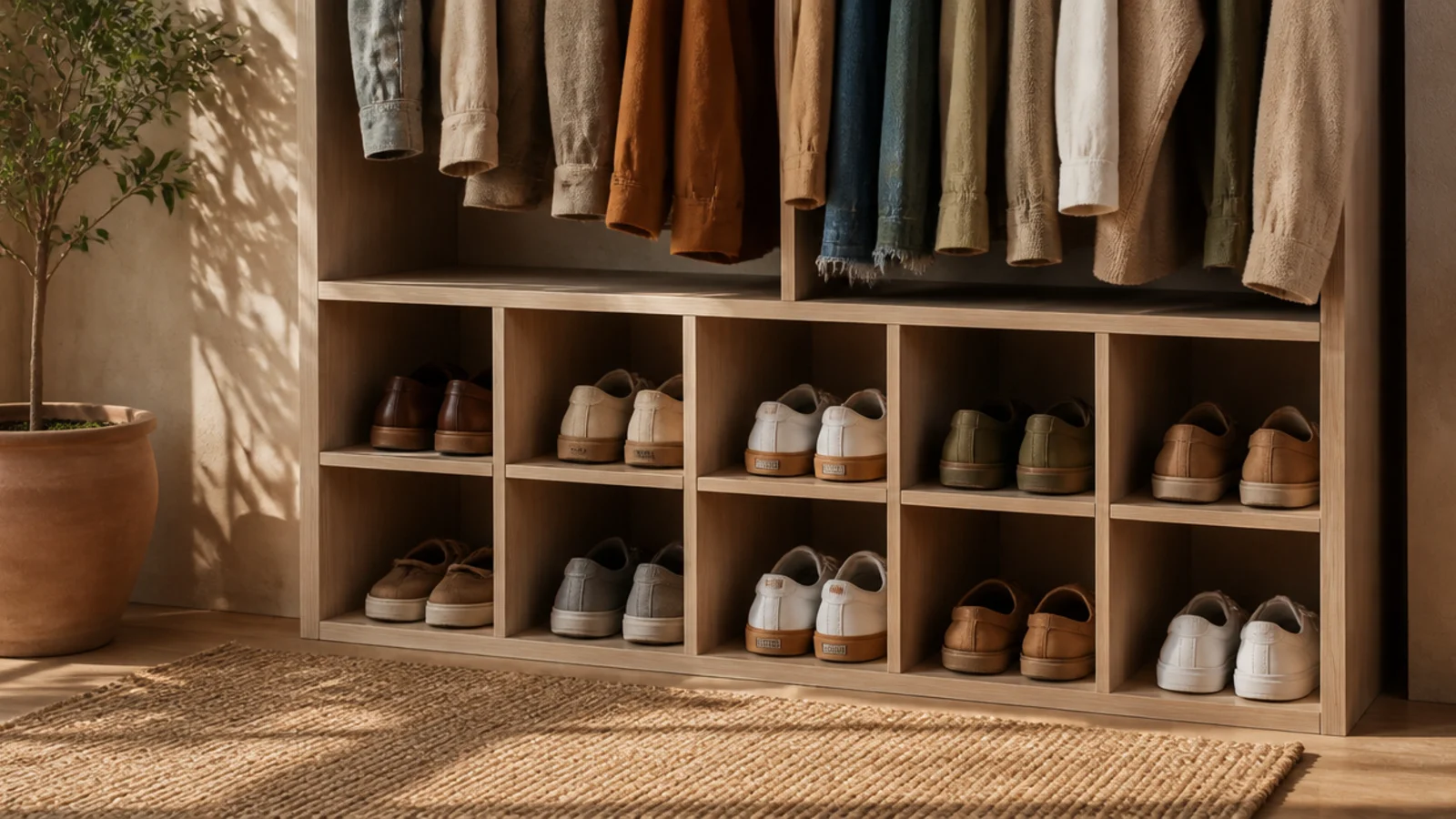
Fitting cubbies into the base of a wardrobe uses the dead space beneath hanging clothes. Each cubby holds a pair, neatly separated. It suits a fitted or freestanding wardrobe with an empty bottom.
Measure the wardrobe base and build or buy cubby inserts about 7 inches square to fill it. Slide them in below the hanging rod. Assign daily shoes to the cubbies and boxed pairs above. Add a fabric bin to any leftover cubby for small items.
Leave one taller cubby at the end for boots or a bag so the whole base is usable, not just shoe-height slots.
Do not build cubbies so deep that the shortest hanging clothes brush them; leave clearance above for the hems.
7. Nightstand with Shoe Shelf
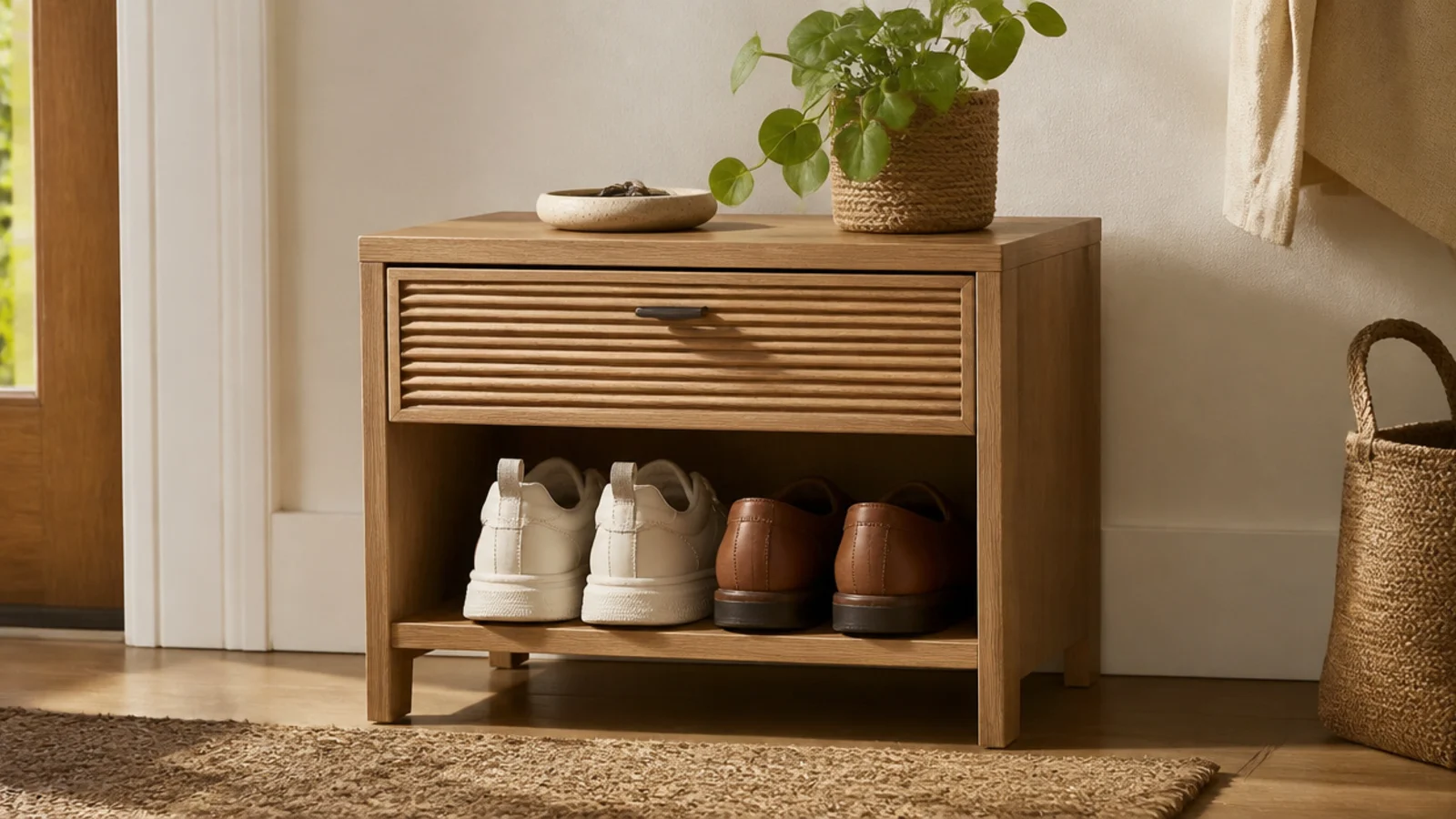
A nightstand with an open lower shelf sneaks a couple of daily pairs beside the bed. It suits a small bedroom where the nightstand is the only free surface. The shoes hide in plain sight under the bedside table.
Choose a nightstand with an open lower shelf 10-12 inches deep. Keep the top for a lamp and the drawer for essentials, and line the lower shelf with the pairs you slip on first thing. Keep it to two pairs so it looks styled, not stuffed. A small basket on the shelf hides slippers.
Store the shoes you wear first each morning here so they are literally the first thing you reach as you get up.
Do not pile more than two pairs on an open bedside shelf; more turns a tidy nightstand into visible clutter.
8. Heel Rail on the Closet Wall
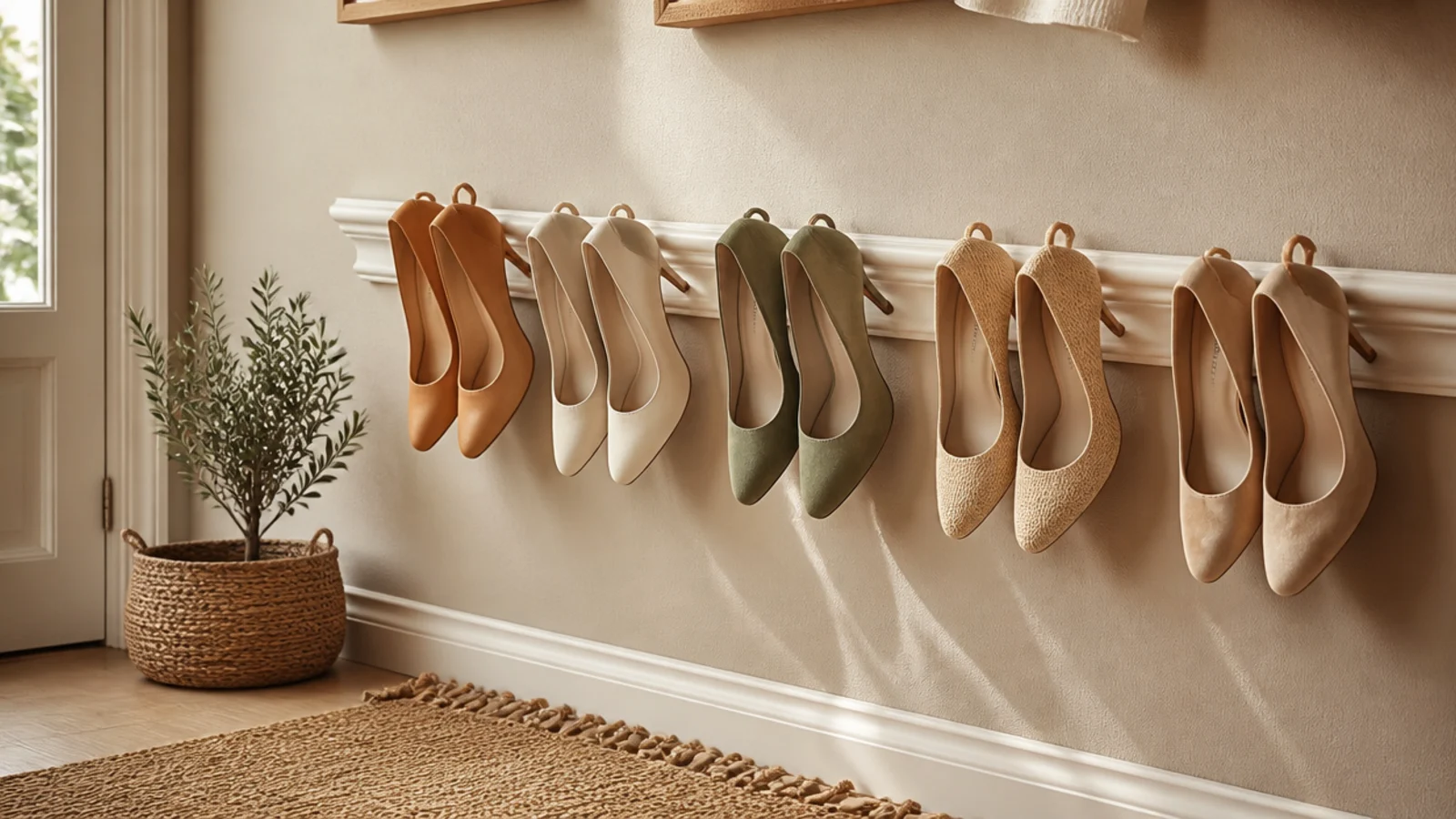
A strip of molding mounted lip-up on the closet wall stores heels hooked over the edge with almost no depth. It suits a heel collection and a wall too shallow for a shelf. Heels hang flat and visible.
Mount a length of crown molding lip-up on the closet wall at hip height, into studs or with anchors. Paint it to match the wall. Hook each heel over the lip so it hangs flat in a row. Run a second rail below for more pairs.
Editor's noteSpace the heels a couple of inches apart so they do not scuff each other as you lift one off.
Skip thisDo not try to hang flats or sneakers on a heel rail; only shoes with a defined heel catch on the lip.
9. Tension-Rod Closet Rack
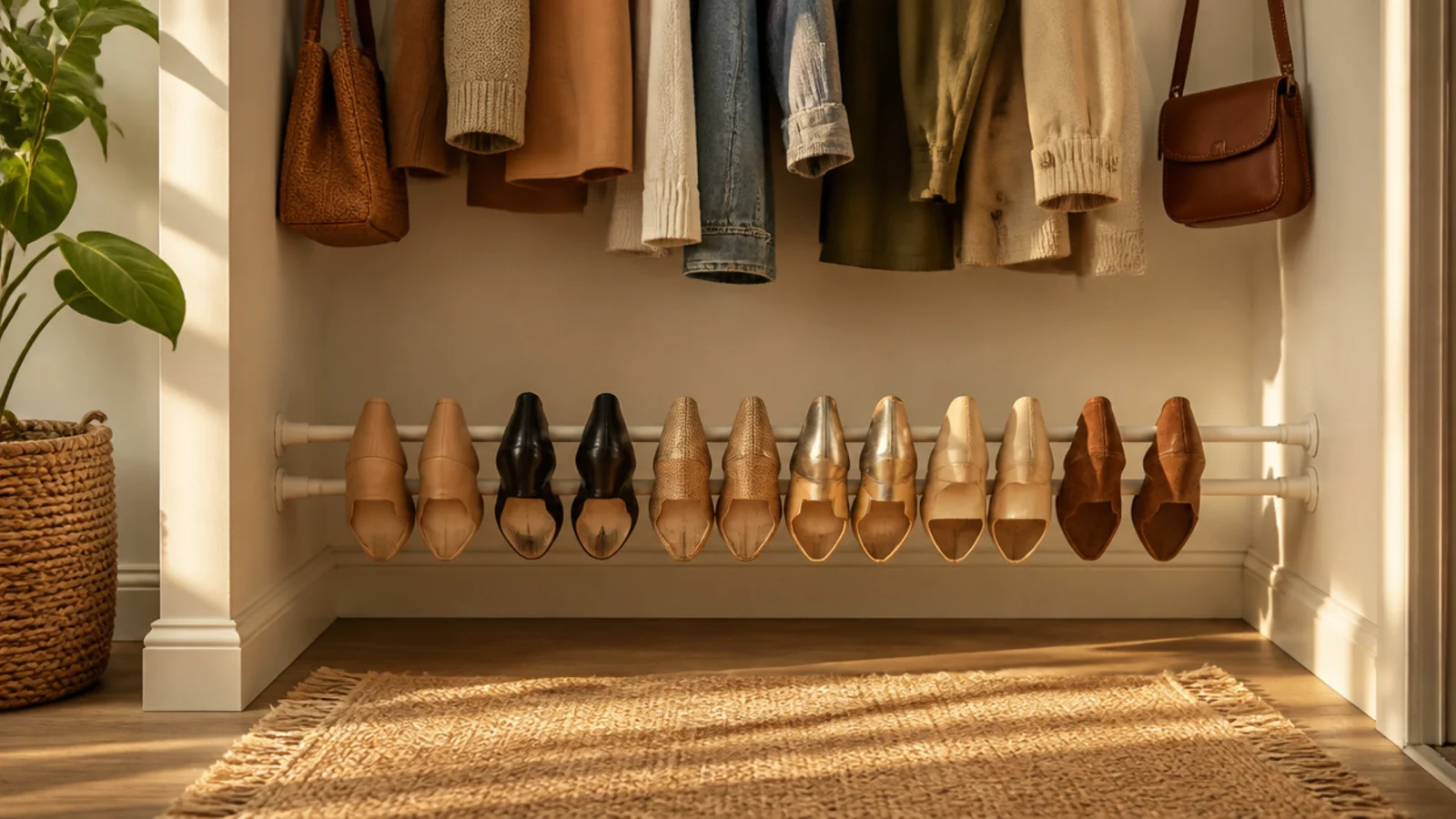
A pair of tension rods low in the closet makes a no-drill heel rack for a few dollars. Heels hook over the front rod, soles resting on the back. It suits renters and heels or sandals.
Mount two spring-tension rods across the closet a few inches apart and a few inches off the floor, front rod slightly lower. Test the tension by tugging before loading. Hook heels over the front rod. Keep it to light shoes so the rods do not slip.
Editor's noteSet the front rod lower than the back so shoes tilt toward you and lift off easily.
Skip thisDo not hang heavy boots on tension rods; the weight pulls them loose and dents the closet walls.
10. High Closet Shelf Rack
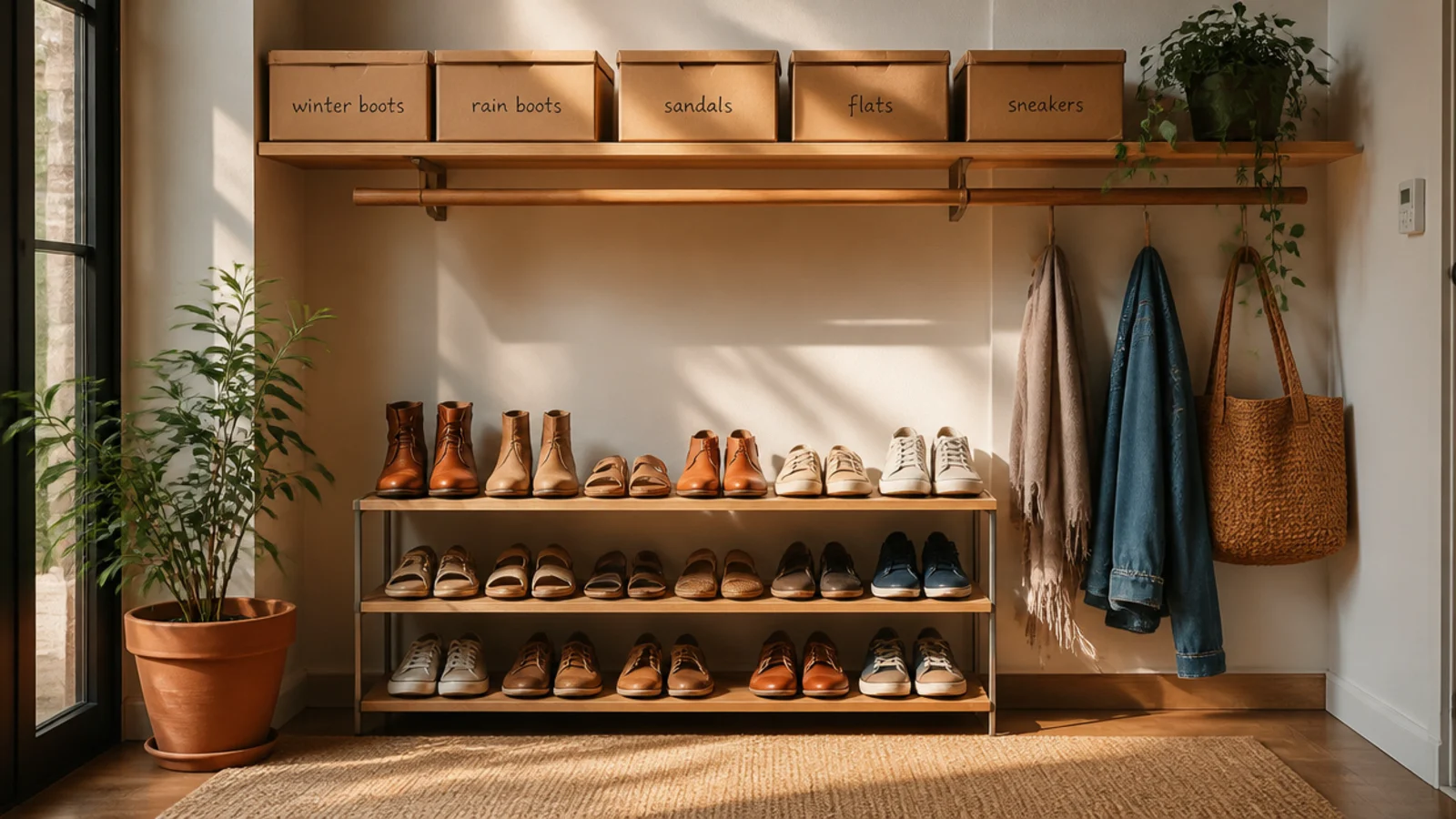
The top foot of a closet is usually wasted, and labeled boxes there store off-season shoes out of the way. It suits pairs you wear only part of the year. Getting them up high frees the reachable zones for daily shoes.
Line the high shelf with matching labeled boxes, one pair each, or a long divided bin. Note the contents on the front so you do not have to pull each box down. Keep only off-season and occasion shoes up here. Use a small step stool to reach them a few times a year.
Editor's noteUse identical boxes with front labels so the high shelf looks tidy and you can find a pair without a ladder-and-guess routine.
Skip thisDo not store daily shoes up high; anything you reach for often should live at knee-to-eye level instead.
11. Storage Bench at the Foot of the Bed
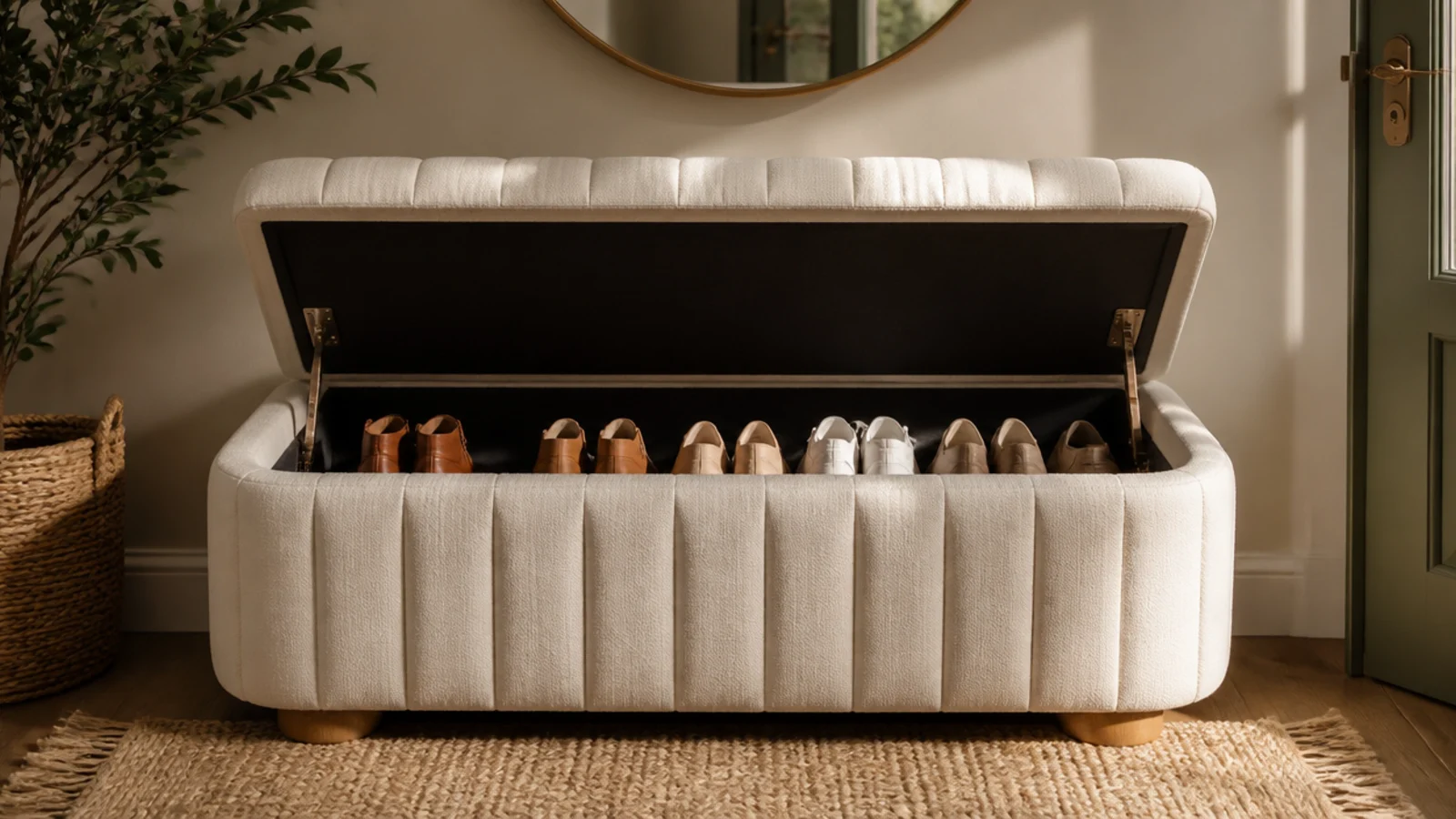
A lift-lid bench at the foot of the bed hides shoes and gives you a spot to sit and put them on. It suits the empty end-of-bed space. Closed, it reads as a furniture piece, not storage.
Measure the bed width and choose a bench that matches, 15-18 inches deep. Set it at the foot of the bed and store shoes inside on their sides or in a shallow tray. Add a cushion or keep the upholstered top. Fit soft-close hinges so the lid does not slam.
Drill a few discreet vent holes in the base so shoes stored inside can breathe and do not get musty.
Do not overfill so the lid gaps; an overstuffed bench that will not close flush loses the clean furniture look.
12. Corner Closet Carousel
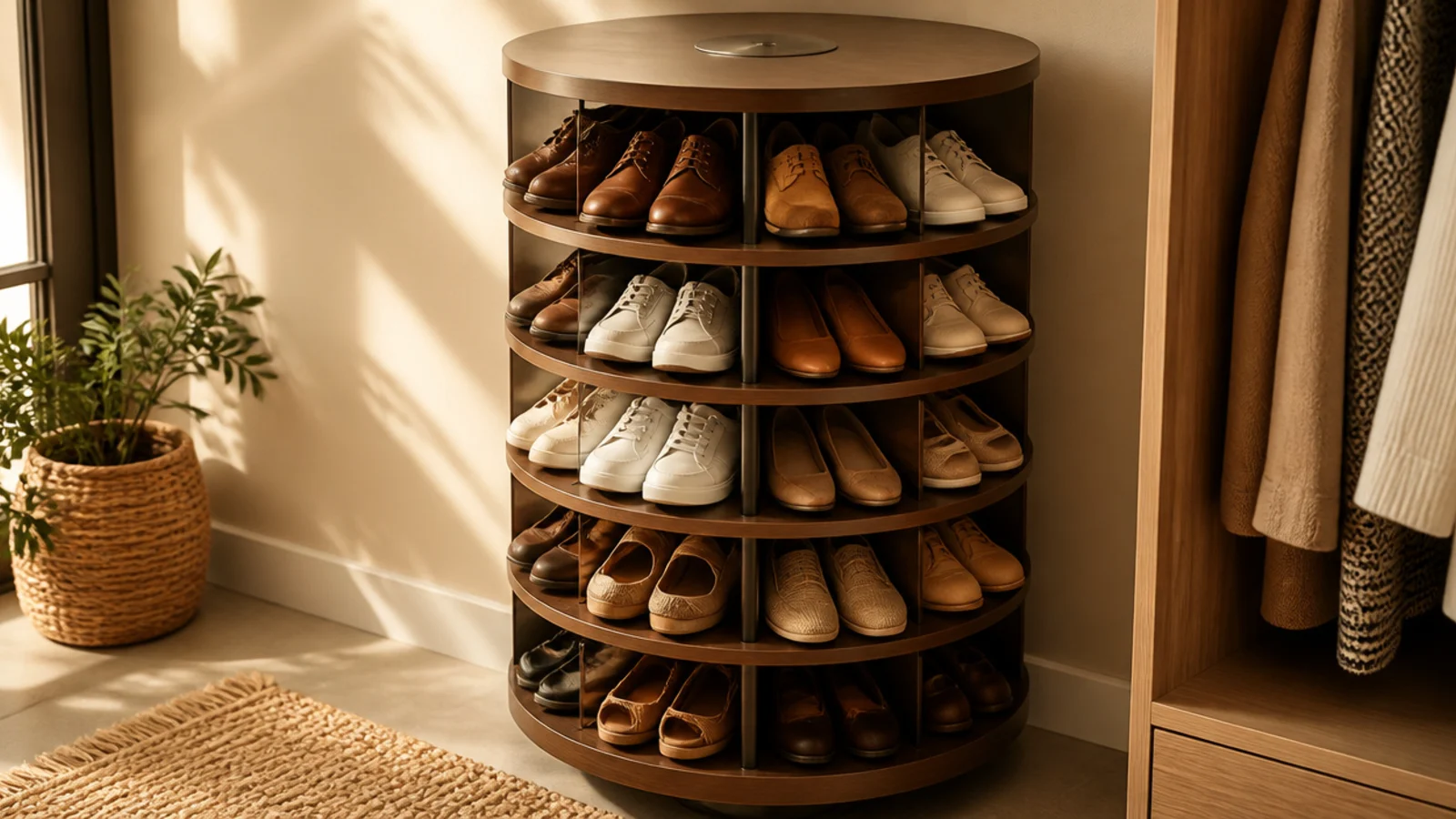
A rotating carousel fills a dead closet corner with a lot of shoes on tiers you spin to reach. It suits a walk-in corner where a straight rack leaves a gap. The spin makes the deep corner pairs reachable.
Stand the carousel in the closet corner and level the base so it spins true. Clip the round tiers at heights matched to your shoe types. Load pairs evenly around each tier for balance. Keep daily shoes at eye level and spin the rest out of the way.
Reserve the lowest and highest tiers for rarely worn pairs and keep the middle tiers for daily shoes.
Do not load one side heavy; an unbalanced carousel spins unevenly and a tall one can tip.
13. Floor-to-Rod Closet Tower
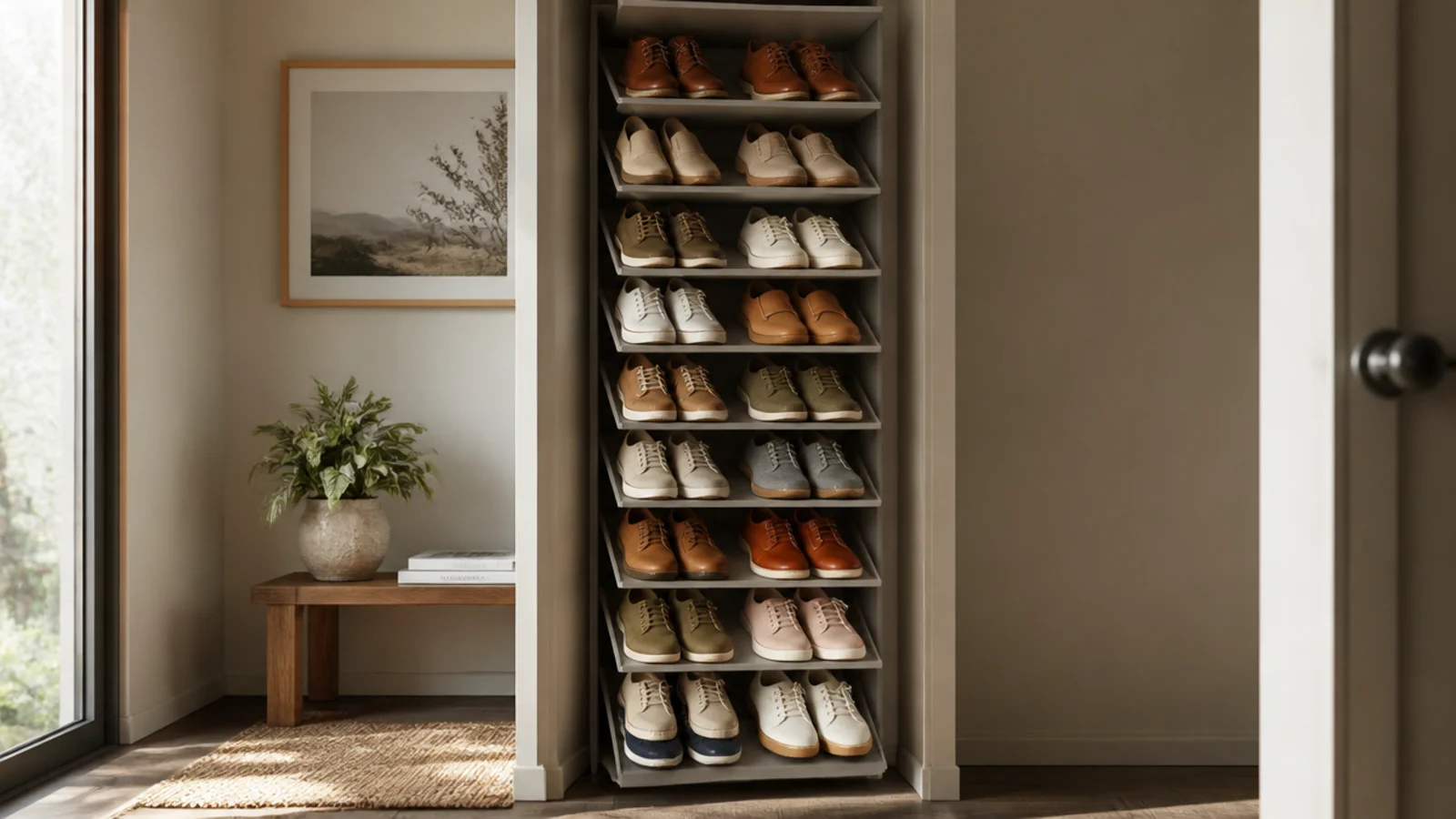
A tall narrow tower fills the full height from closet floor to rod, doubling capacity in the same footprint. It suits a closet with wasted vertical space. Going tall is the single biggest space win in most closets.
Measure floor-to-rod height and pick or build a tower that fits within it. Set angled shelves at about 6-7 inch spacing for shoes. Anchor a tall tower so it cannot tip. Load daily pairs at reachable heights and off-season pairs at the top and bottom.
Editor's noteAngle the shelves so shoes tilt toe-out; you fit more pairs and can see each one at a glance.
Skip thisDo not build it taller than the rod if it blocks hanging clothes; measure so the tower and the rod coexist.
14. Shoe Storage Ottoman
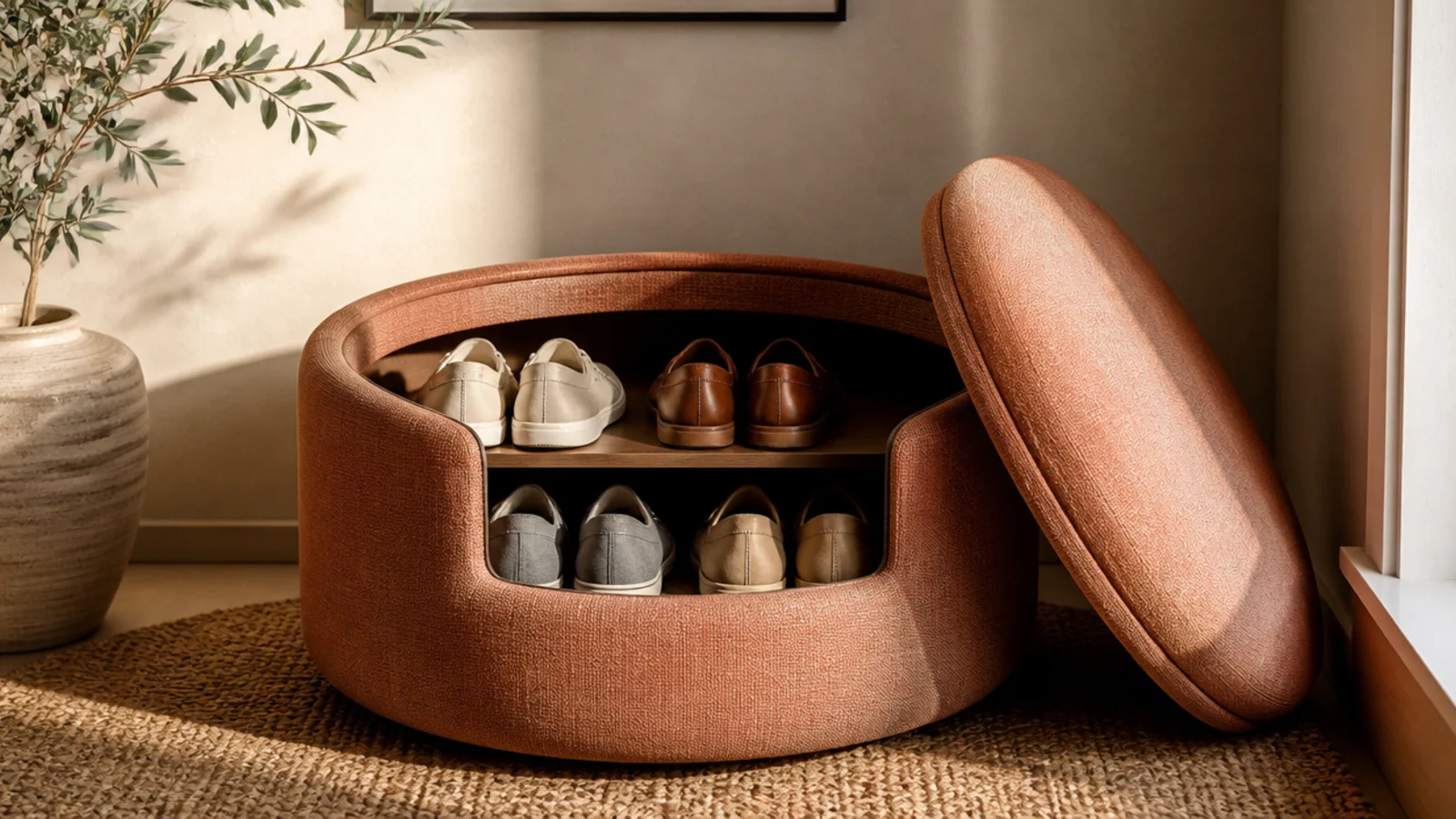
An ottoman with a hollow base hides shoes inside and gives you a soft seat or footrest. It suits a bedroom reading corner or the end of the bed. It looks purely like furniture with no hint of storage.
Choose an ottoman with a lift-off or hinged lid and a deep base. Store shoes inside on their sides or in a shallow divided tray. Keep the top cushioned for seating. Use it for the pairs you want completely out of sight.
Editor's noteUse a round ottoman to soften a boxy bedroom corner while still hiding a surprising number of pairs inside.
Skip thisDo not store damp or gym shoes in a sealed ottoman; with no airflow they will make the whole thing smell.
15. Under-Window Bench
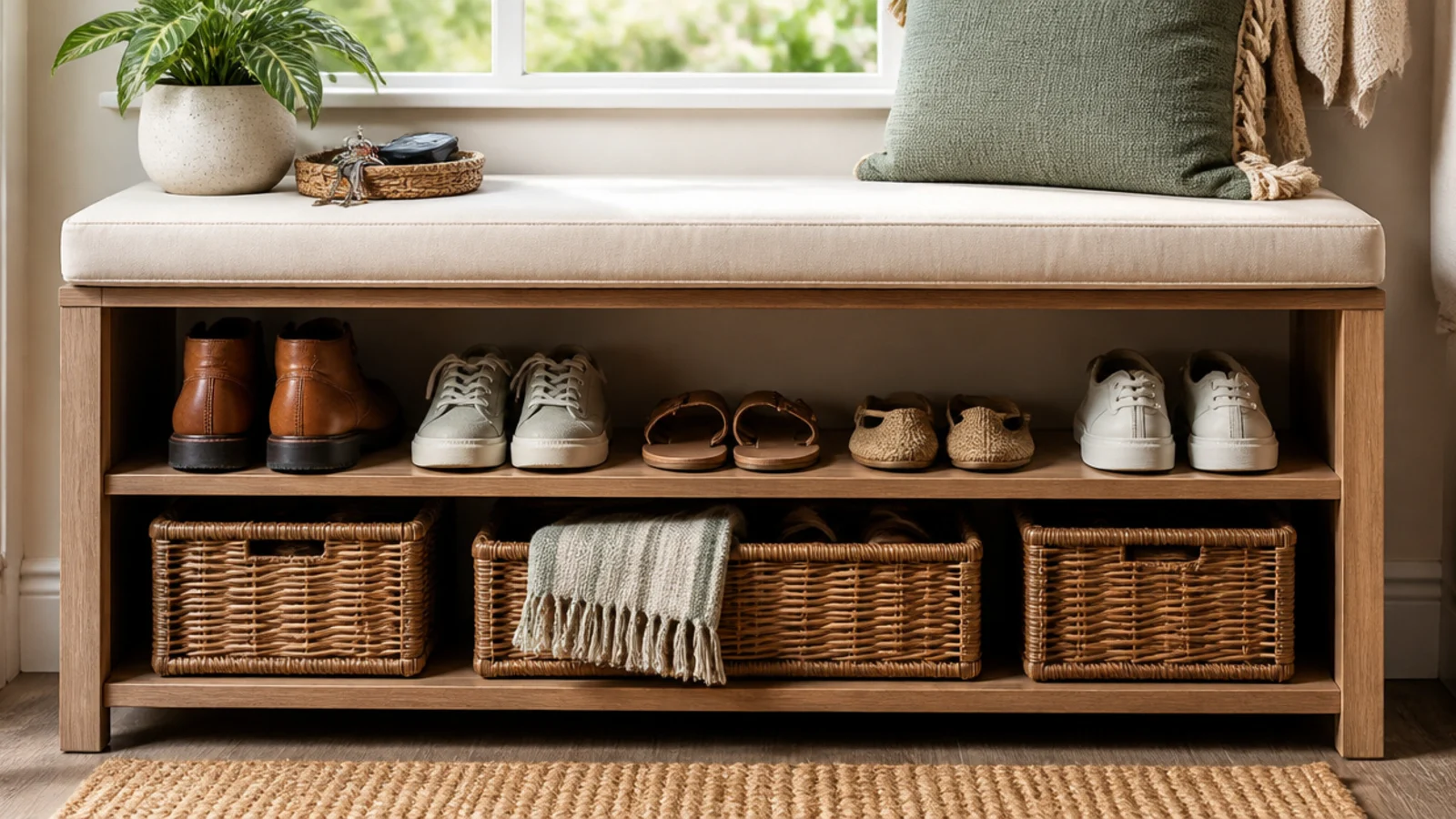
A bench under a bedroom window makes a bright seat with shoe storage below. It suits the often-empty wall under a window. It turns dead wall space into a reading nook plus storage.
Measure the wall under the window and fit a bench at seat height with an open shelf or baskets beneath. Line the shelf with daily shoes or slide in fabric bins. Add a cushion sized to the window and a couple of pillows. Keep the seat clear so it stays inviting.
Match the cushion fabric to your bedding or curtains so the bench reads as a designed nook, not just storage.
Do not block a low window’s opening with a too-tall bench; keep it at seat height so the window still works.
16. Bedroom Corner Ladder Shelf
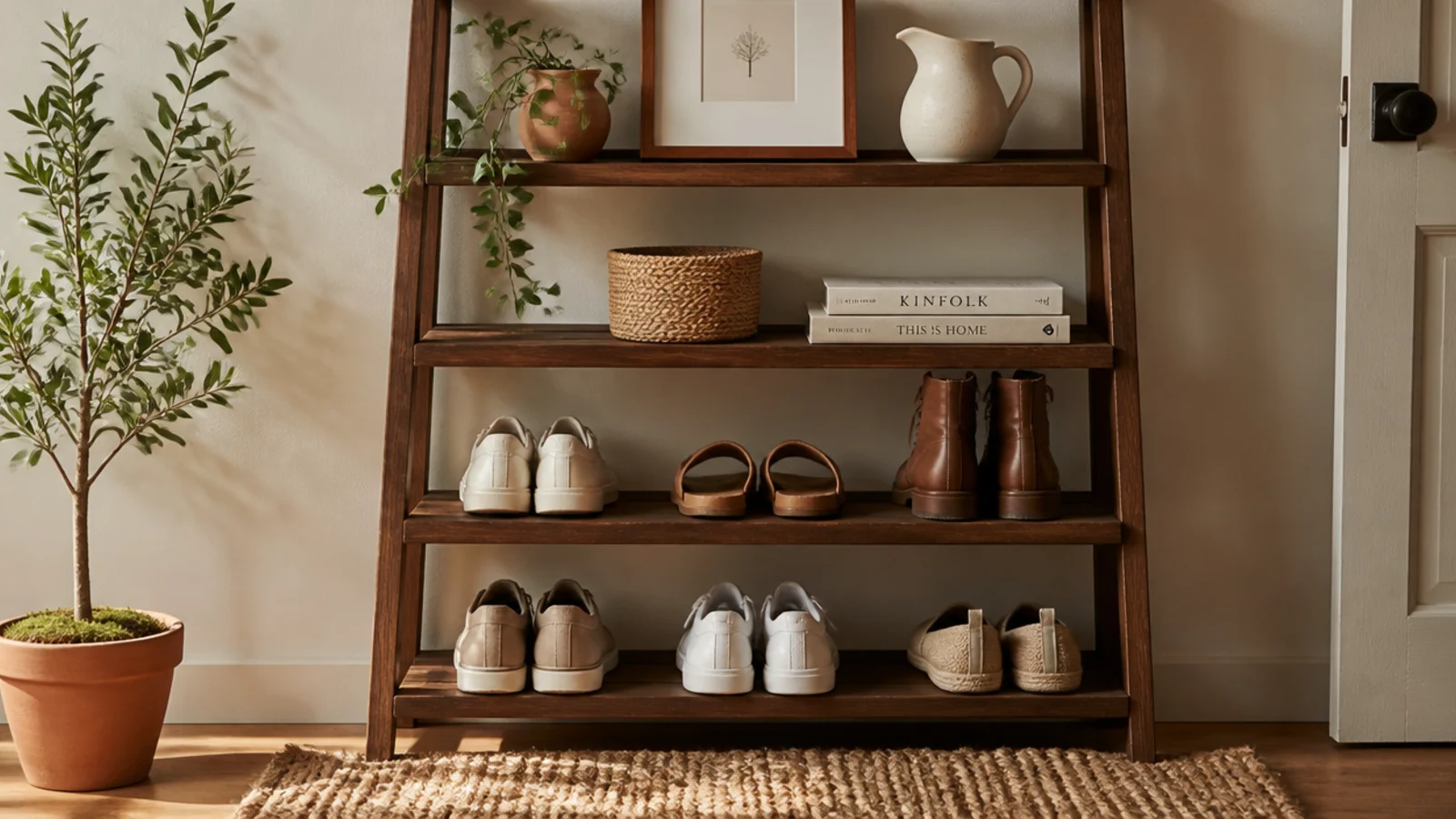
A leaning ladder shelf in a bedroom corner holds shoes low and decor up high, using vertical space. It suits a spare corner and keeps a small room feeling open. The open frame does not crowd the room.
Lean the ladder into the corner so the shelves tilt back, and strap the top to the wall so it cannot slide. Use the two lowest shelves for shoes and the upper ones for books, a plant, and a basket. Keep heavier shoes low. Limit shoes to a pair or two per shelf.
Put a small tray on a lower shelf to corral jewelry or keys so the ladder does double duty in the bedroom.
Do not load the top shelves heavy; a top-heavy leaning ladder pulls away from the wall even when strapped.
17. Labeled Shoe Box Stack
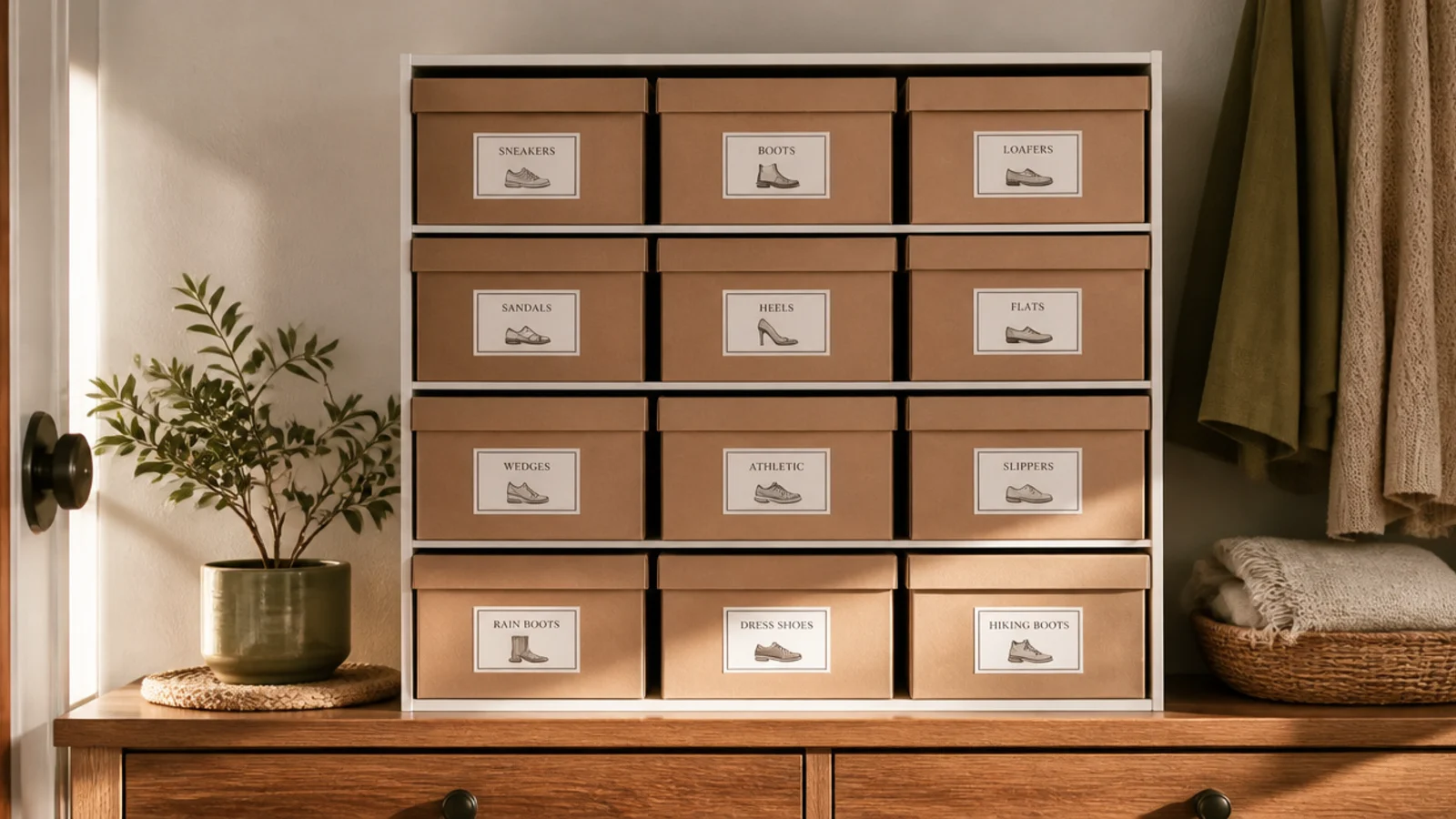
A stack of matching labeled boxes turns a dresser top or shelf into tidy shoe storage that looks curated. It suits anyone who likes uniform, hidden storage. The matching boxes make even a big collection look calm.
Buy identical sturdy boxes and put one pair in each. Label the front (or add a photo) so you can find pairs without opening them. Stack them on a dresser top, a shelf, or the closet floor, heaviest at the bottom. Keep the labels facing out and aligned.
Photograph each pair and tape the picture to the box front; it beats reading labels when you are in a hurry.
Do not mix box sizes and colors; the tidy, expensive look depends on them all matching.
18. Cube Organizer as Nightstand
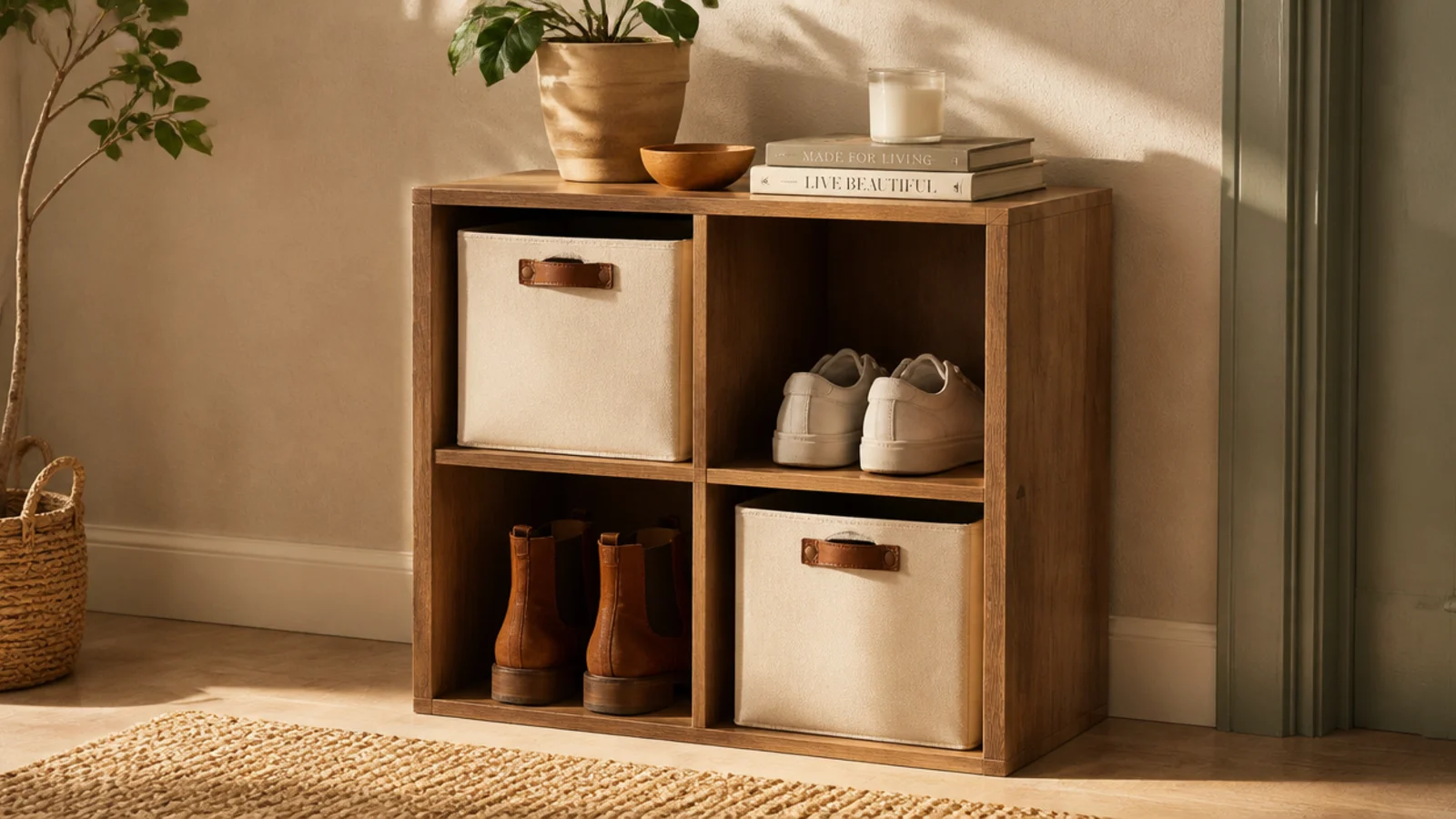
A small cube organizer doubles as a nightstand with shoe cubbies below the surface. It suits a tight bedroom that needs bedside storage and shoe space in one piece. Every cube earns its keep.
Stand a two-by-two cube unit beside the bed to use as a nightstand. Keep the top clear for a lamp, use one cube for books, and fill the rest with shoes or a fabric bin. Anchor it if it is tall. Assign the lowest cube to the shoes you wear first.
Editor's noteDrop a fabric bin into one cube for slippers and small shoes so the open cubes stay looking tidy.
Skip thisDo not stack it tall and narrow beside a bed without anchoring; a bedside tower can be pulled over when reached for.
19. Built-In Closet Cubby Wall
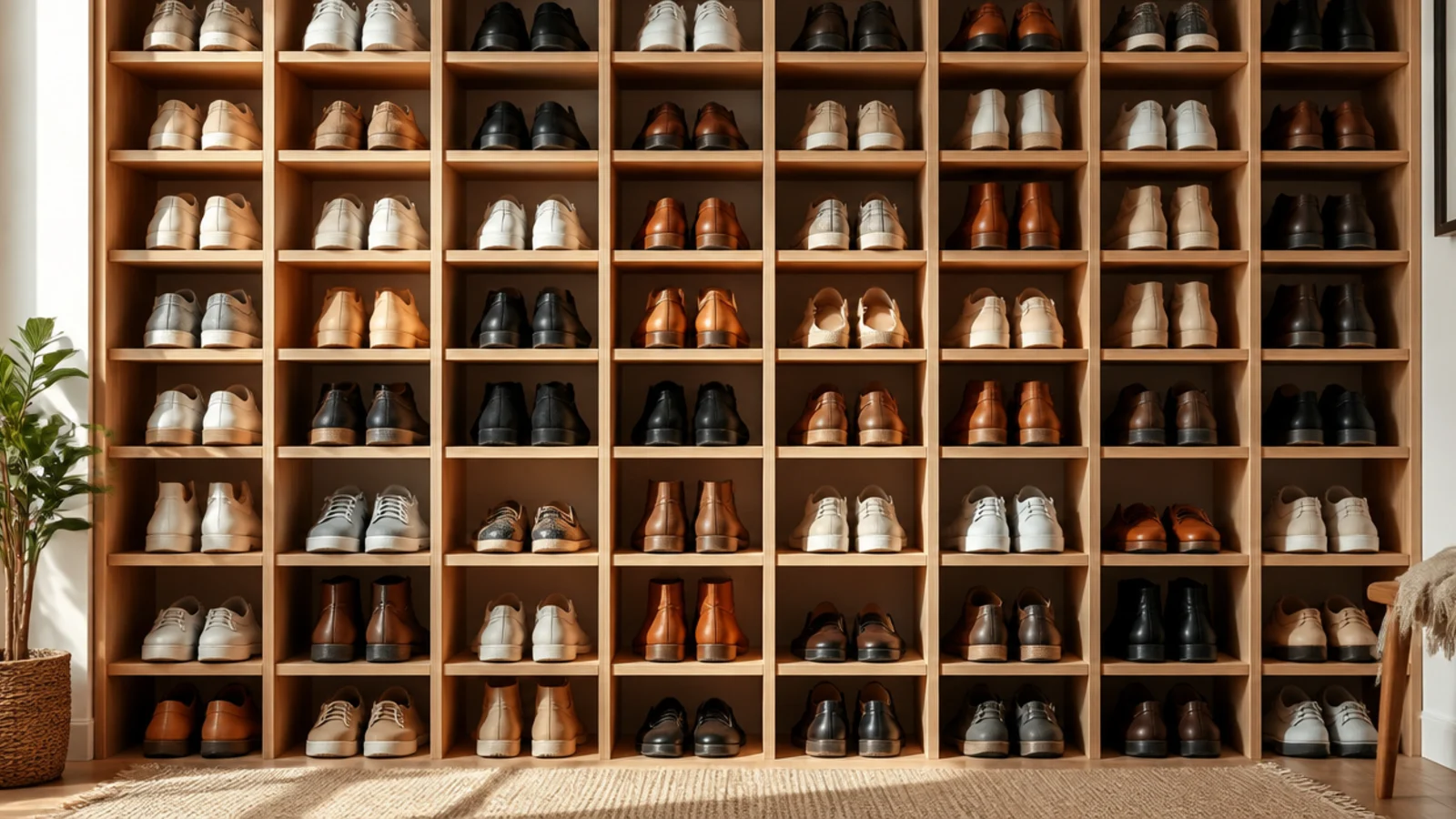
A wall of built-in cubbies in a walk-in gives every pair its own square, floor to shoulder height. It suits a walk-in closet and a serious collection. It is the most organized shoe storage there is.
Build cubbies about 7 inches square across a closet wall, joined and backed for rigidity, anchored to the wall. Put daily shoes at eye and knee level and boxed pairs up high. Add angled shelf inserts if you want the toes to show. Keep one pair per cubby.
Editor's noteMake a couple of cubbies double-height for boots and bags so the wall handles every kind of footwear.
Skip thisDo not size every cubby for flats; without a few tall bays, boots and heels have nowhere to go.
20. Boot Shelf with Shapers
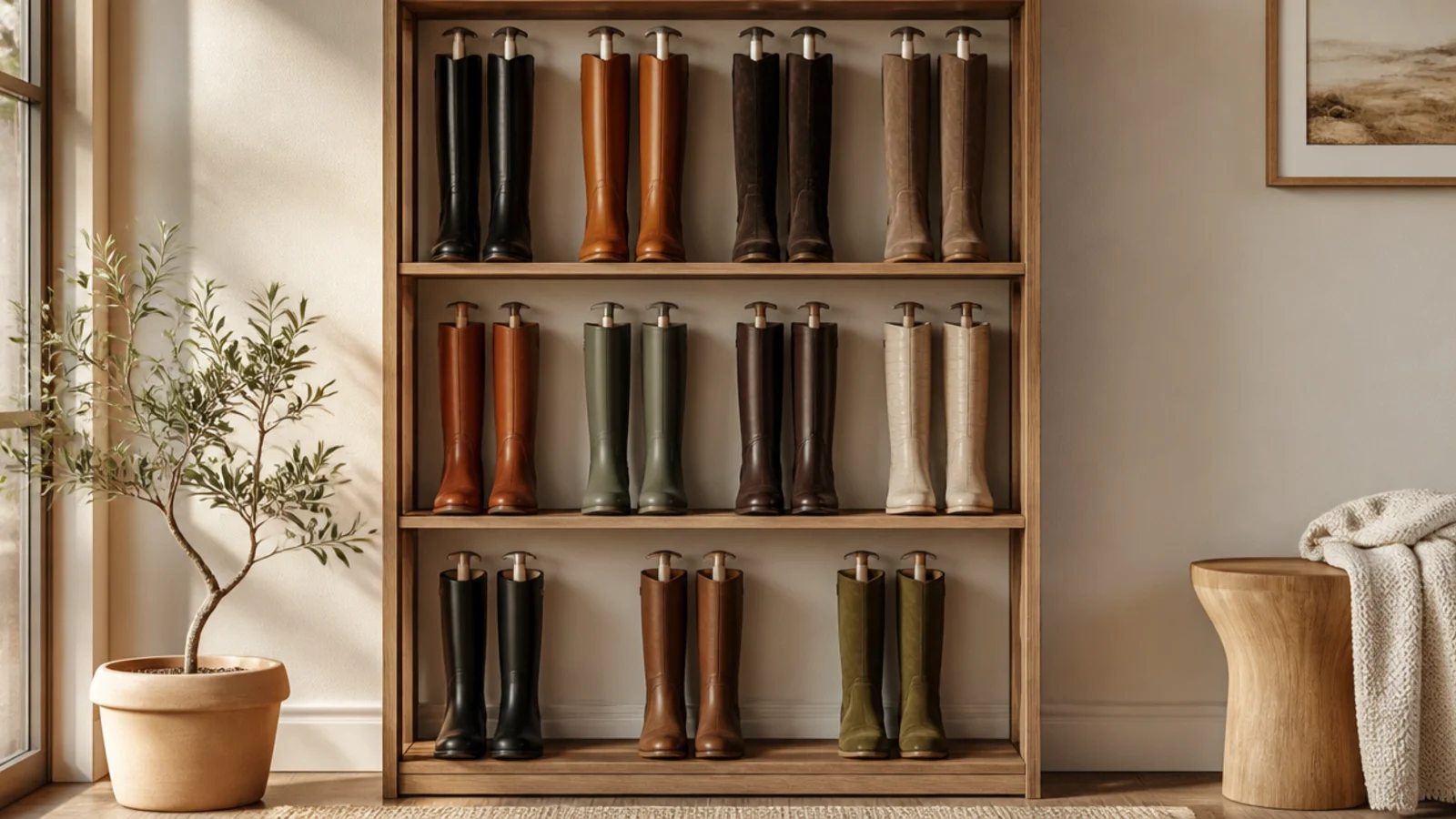
A tall shelf plus boot shapers keeps knee and ankle boots standing upright instead of flopping and creasing. It suits a boot collection. Upright boots take less space and last longer.
Set a shelf with 14-16 inches of clearance for the tallest boots. Slide boot shapers, rolled magazines, or pool noodles into the shafts so they stand tall. Line them up in pairs. Keep the shelf near eye level so you can grab a pair without them all falling.
Editor's noteCut a pool noodle to the boot shaft height for a free shaper that keeps tall boots standing perfectly.
Skip thisDo not lay boots flat in a pile; they crease permanently and take far more space than standing upright.
21. Over-the-Rod Sneaker Rack
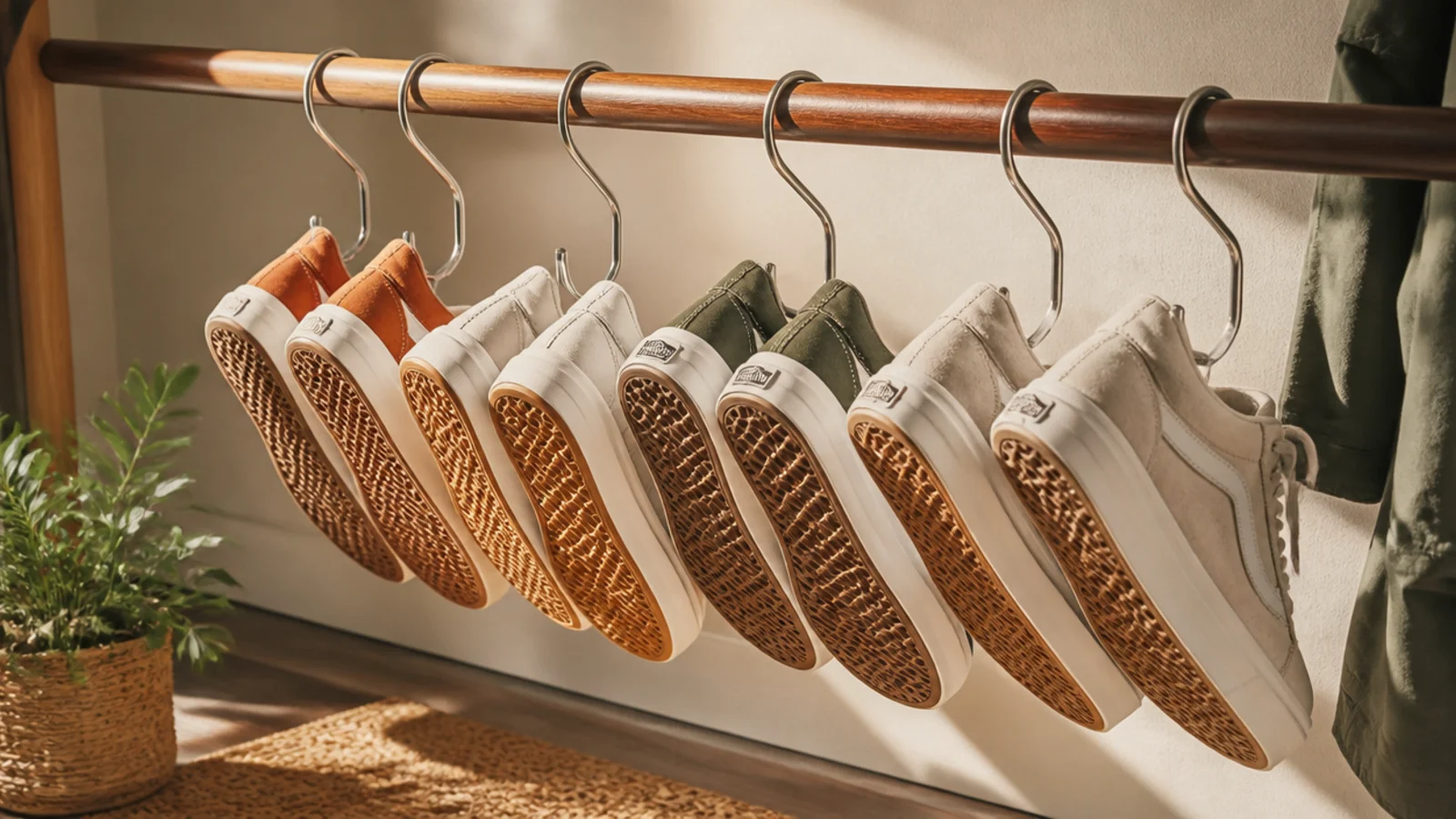
Simple hooks over the closet rod hang sneakers and flats by their heels in unused rod space. It suits a closet with rod to spare. It costs almost nothing and clears floor space.
Drape S-hooks or purpose-made shoe hooks over the rod where you can spare width. Hook each shoe by its heel so pairs hang flat. Keep them to lightweight shoes so the rod is not overloaded. Group by person or color for a tidy row.
Use one hook per shoe rather than per pair; single-shoe hooks let them hang flat and take less rod width.
Do not overload the rod with heavy shoes; too much weight bows or dislodges the closet rod.
22. Pull-Out Closet Shoe Drawer
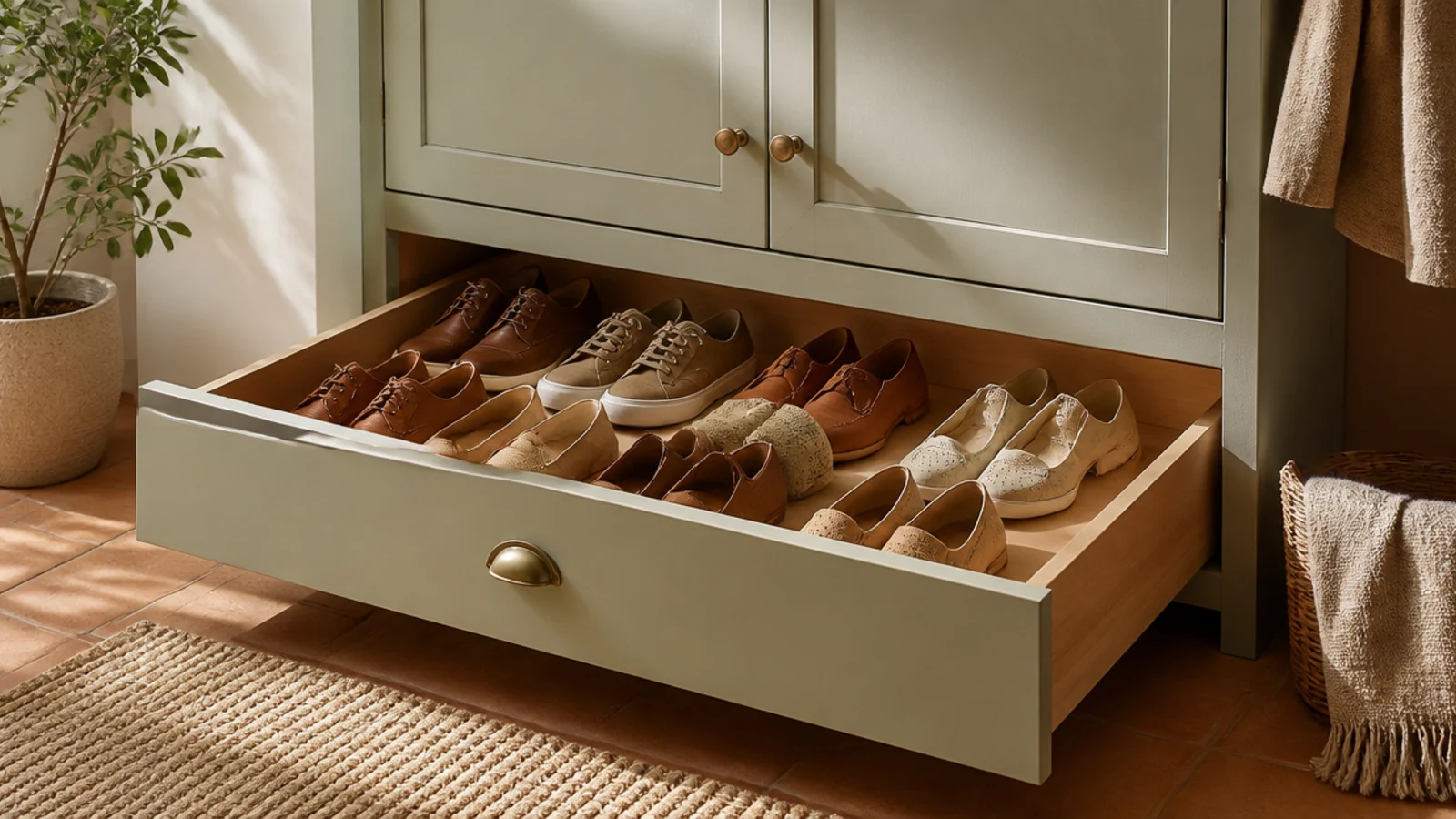
A wide pull-out drawer at the closet base brings back-row shoes to you instead of making you dig. It suits a deep closet where the back is a black hole. Everything is visible when the drawer glides out.
Fit a drawer on full-extension glides into the closet base, sized to the opening. Lay shoes in rows facing the same way. Pull it fully out to see and reach every pair, then slide it back. Add a divider if pairs slide around.
Editor's noteChoose full-extension glides so the drawer pulls all the way out and the very back pairs are actually reachable.
Skip thisDo not use cheap half-extension slides; the back third stays hidden and you are back to digging.
23. Fabric Shoe Cubbies on a Shelf
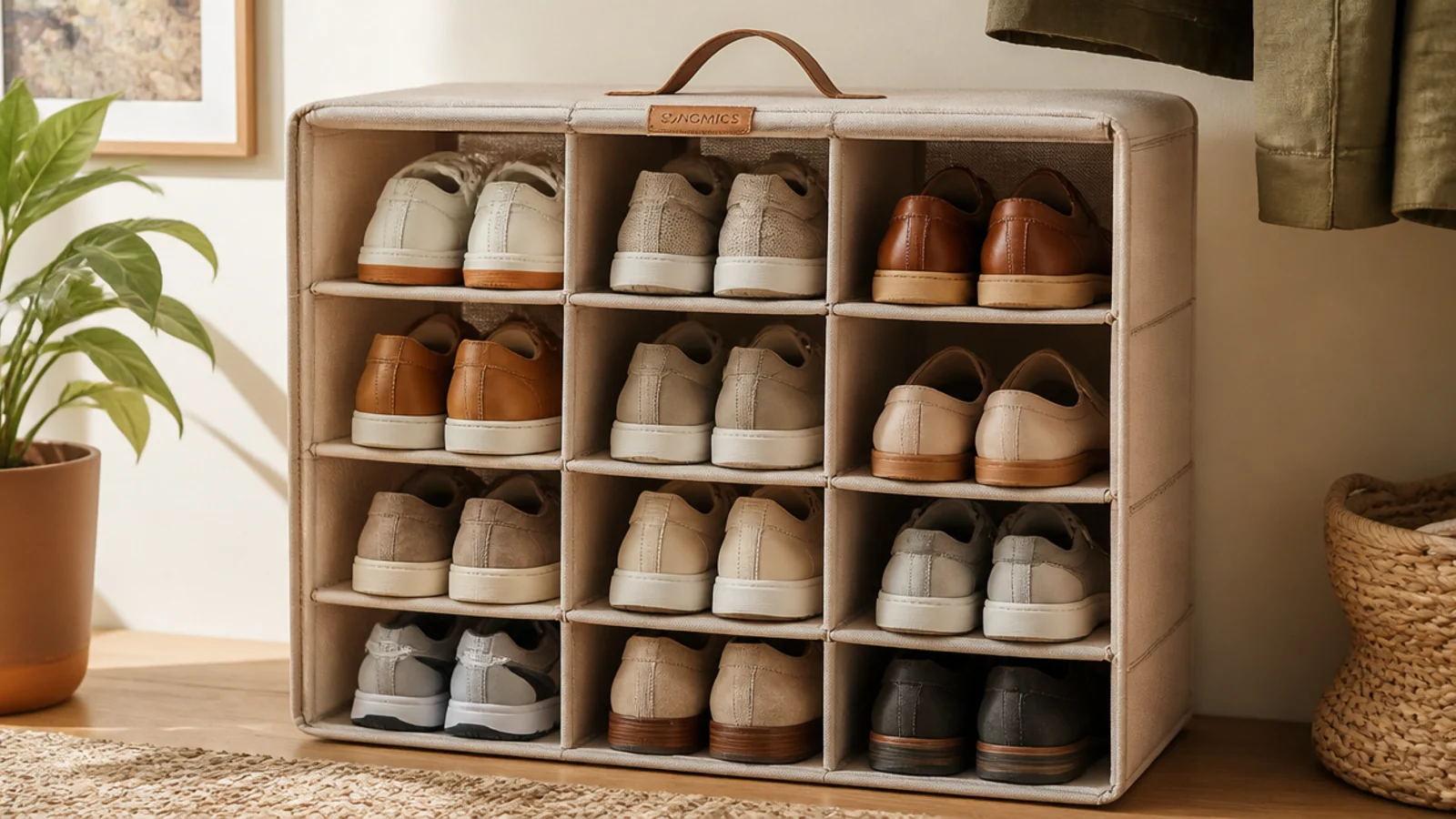
A collapsible fabric cubby organizer divides a wide closet shelf into soft shoe compartments. It suits a shelf that is too deep or tall for one row. It is cheap, light, and folds flat if you move.
Set a fabric cubby unit on the closet shelf and load one pair per compartment. Choose a size that fits the shelf depth and height. Keep lightweight shoes here since the shelves are soft. Fold it flat and store it when not needed.
Pick a cubby unit with a stiffened top and back so it holds its shape on the shelf instead of slumping.
Do not load heavy boots into soft fabric cubbies; they sag and the compartments collapse into each other.
24. Slanted Closet Wall Shelves
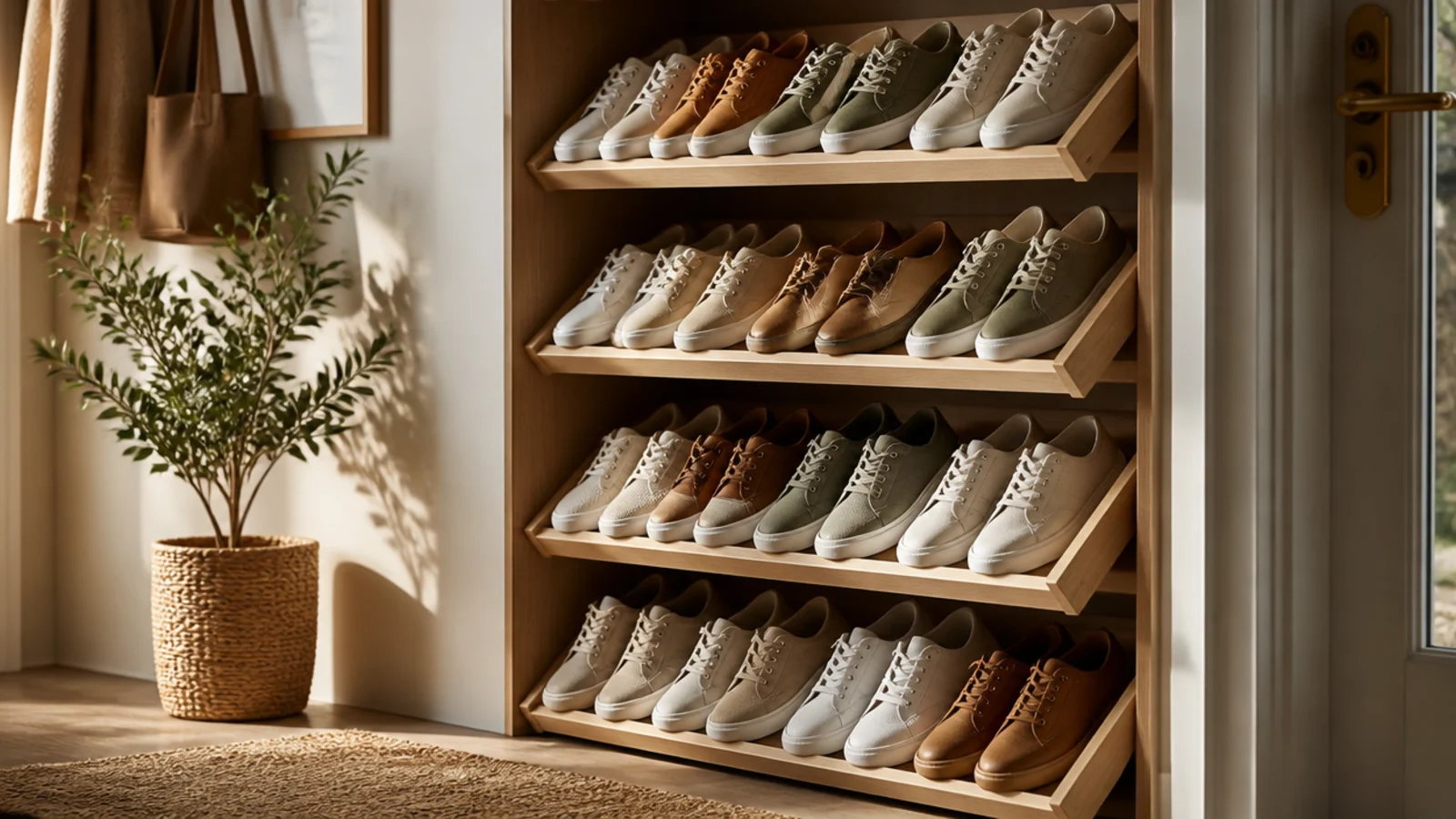
Slanted shelves mounted on the closet wall display shoes tilted toe-up like a shop, so you see every pair. It suits a wall you can drill and a collection you want visible. The tilt fits more and shows the toe.
Mount angled shelves or shelves with a front rail into studs, spaced about 7 inches apart. The slant holds shoes tilted so the toe shows and they do not slide off. Line each shelf with pairs, keeping it to one row. A front lip stops shoes creeping forward.
Editor's noteAdd a thin dowel or lip along each shelf front so the tilted shoes rest against it instead of sliding off.
Skip thisDo not set the slant too steep; over-tilted shelves let shoes slide off, while too flat wastes the display effect.
25. Shoe Dresser (Chest of Drawers)
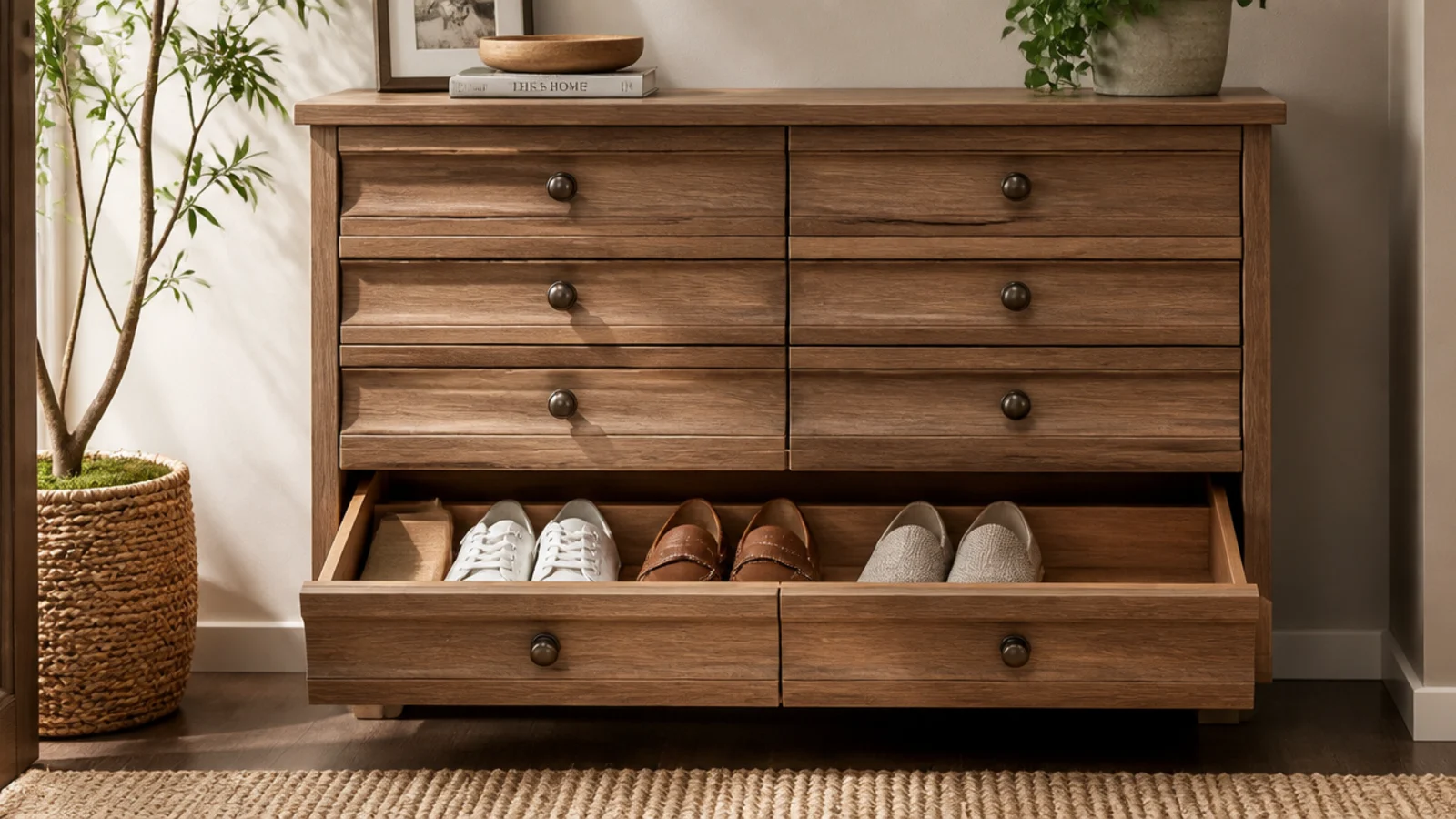
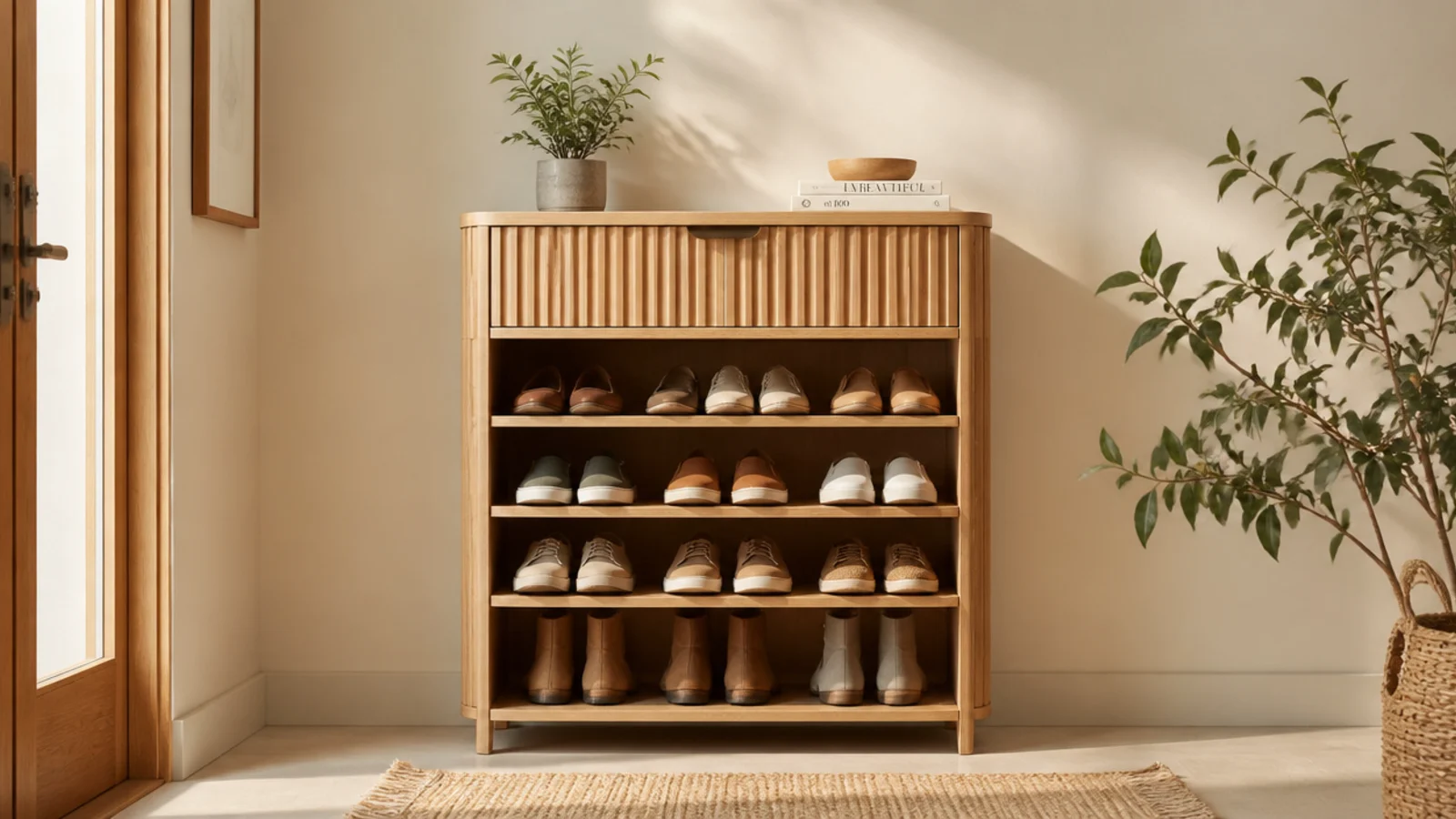
A dresser-style chest with shallow drawers hides shoes completely behind a piece that looks like bedroom furniture. It suits a bedroom that wants zero visible shoes. Each shallow drawer holds a row of pairs.
Choose a shoe dresser with shallow drawers sized for shoes lying flat. Store pairs in rows, one drawer per category or person. Keep the top as a surface for a lamp or tray. Line drawers with a wipeable liner for grit.
Editor's noteGroup by type — one drawer flats, one drawer sneakers — so getting dressed is a single drawer pull.
Skip thisDo not force boots into shallow shoe-dresser drawers; keep a separate tall spot for anything that does not lie flat.
26. Under-Vanity Basket Row
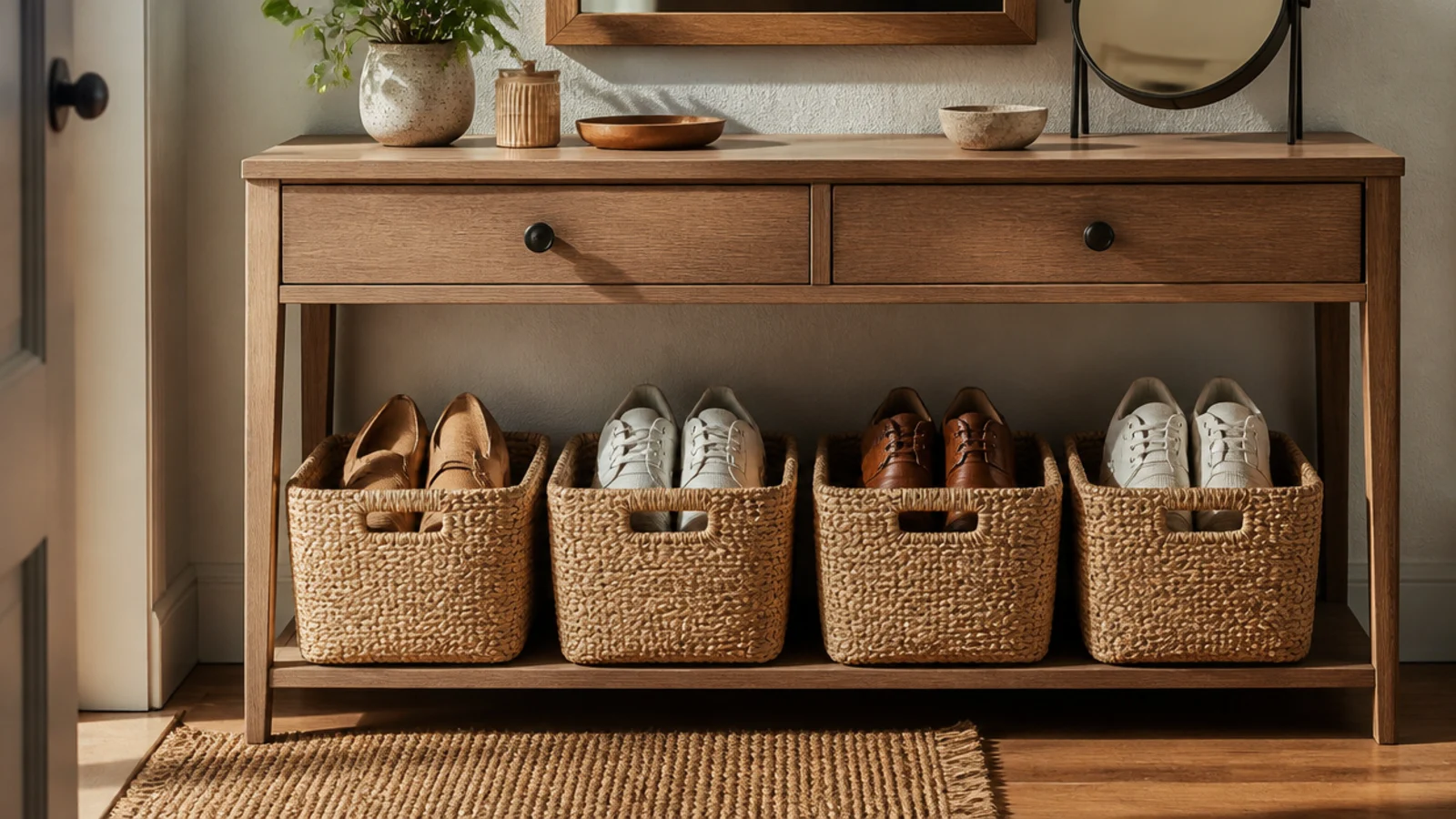
Baskets tucked under a vanity or dressing table use the empty leg space for shoes. It suits a bedroom with a vanity you sit at. The baskets hide the shoes and pull out when you need them.
Measure the clearance under the vanity and slide in two or three baskets that fit. Assign each a shoe type and load a pair or two. Pull a basket out to choose, then push it back. Keep the vanity top for its usual use.
Editor's notePick baskets with handles so you can slide them out from under the vanity without getting on the floor.
Skip thisDo not use baskets deeper than the vanity clearance; overhanging baskets you keep kicking get shoved out of line.
27. Wall Grid with Bins
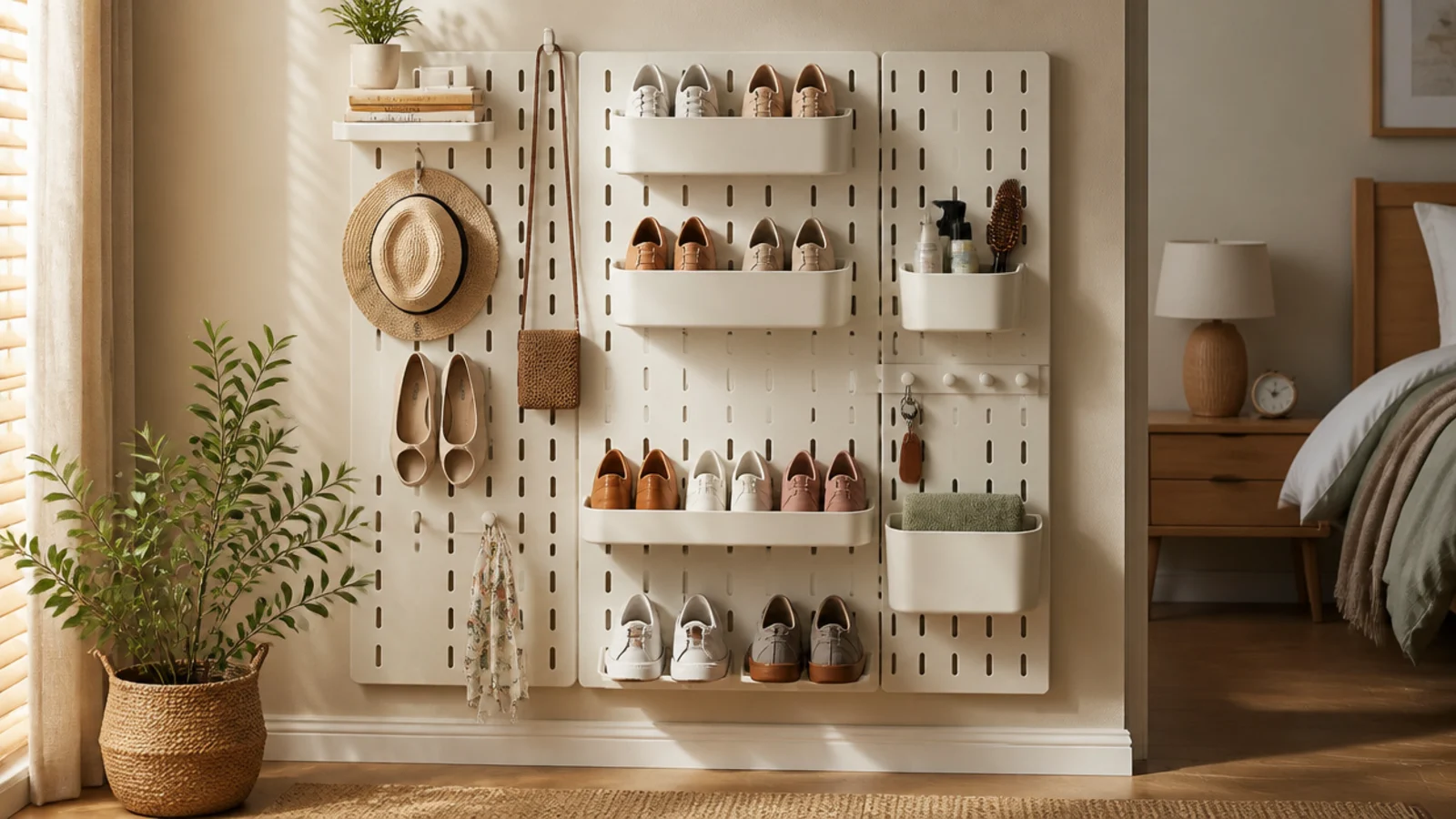
A wall grid panel with clip-on bins and hooks holds shoes and accessories off the floor in a flexible, modern way. It suits a small bedroom wall. You rearrange the bins as your needs change.
Mount a grid panel to the wall into studs or with rated anchors. Clip on small bins for flats and sandals and hooks for hanging pairs. Keep it to lightweight shoes. Mix in a bin for accessories so the grid does double duty.
Group shoes on the lower bins and accessories up top so the shoes stay in the easy-reach zone.
Do not overload the clip-on bins; they are for light shoes, and heavy pairs pop the clips off the grid.
28. Bed-Riser Box Storage
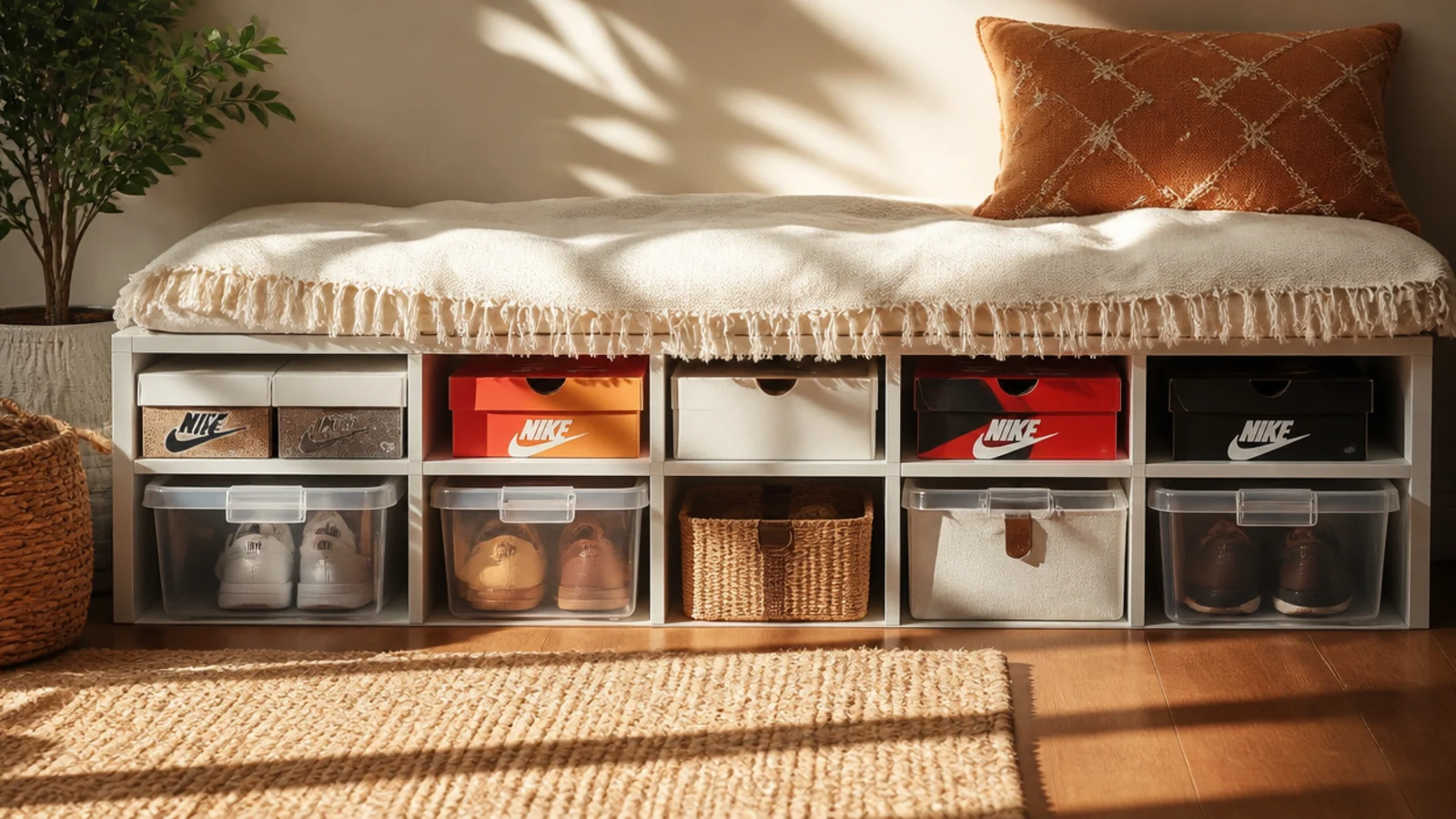
Raising the bed on risers creates extra under-bed clearance for boxes and bins of shoes. It suits a bed frame that sits too low for storage now. A few inches of lift unlocks a whole extra storage zone.
Fit sturdy bed risers under each leg to gain a few inches of clearance. Slide in labeled boxes, drawers, or bins of shoes underneath. Add a bed skirt so it all hides. Keep off-season pairs here and daily ones more reachable.
Choose risers with a locking recess for the bed leg so the frame cannot slide off them when you sit down.
Do not overraise a bed that is already tall; add only enough lift for your boxes so the bed stays comfortable to get into.
29. Walk-In Closet Island
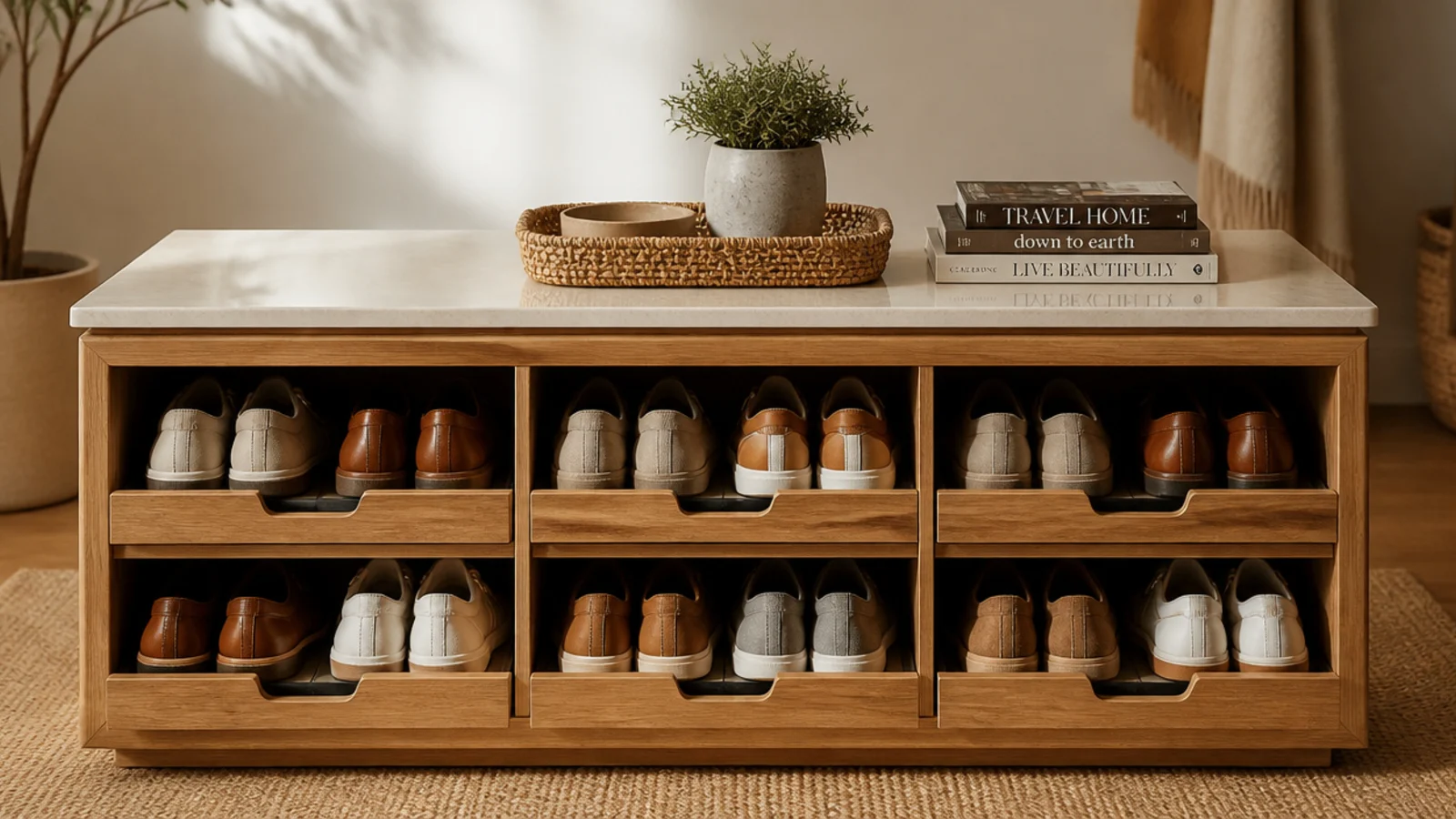
An island in the center of a walk-in packs shoe drawers below a display or folding surface. It suits a roomy walk-in with a wasted middle. It adds a lot of storage and a work surface at once.
Place a low island (a repurposed dresser works) in the closet center with drawers for shoes. Store pairs flat in the shallow drawers. Use the top for folding or a jewelry tray. Leave walking clearance all around.
A dresser with shallow drawers makes an instant closet island — no build required, and the drawers are already shoe-depth.
Do not add an island unless you have real clearance around it; a cramped walk-in needs the floor, not a center piece.
30. Door Mirror and Shoe Rack Combo
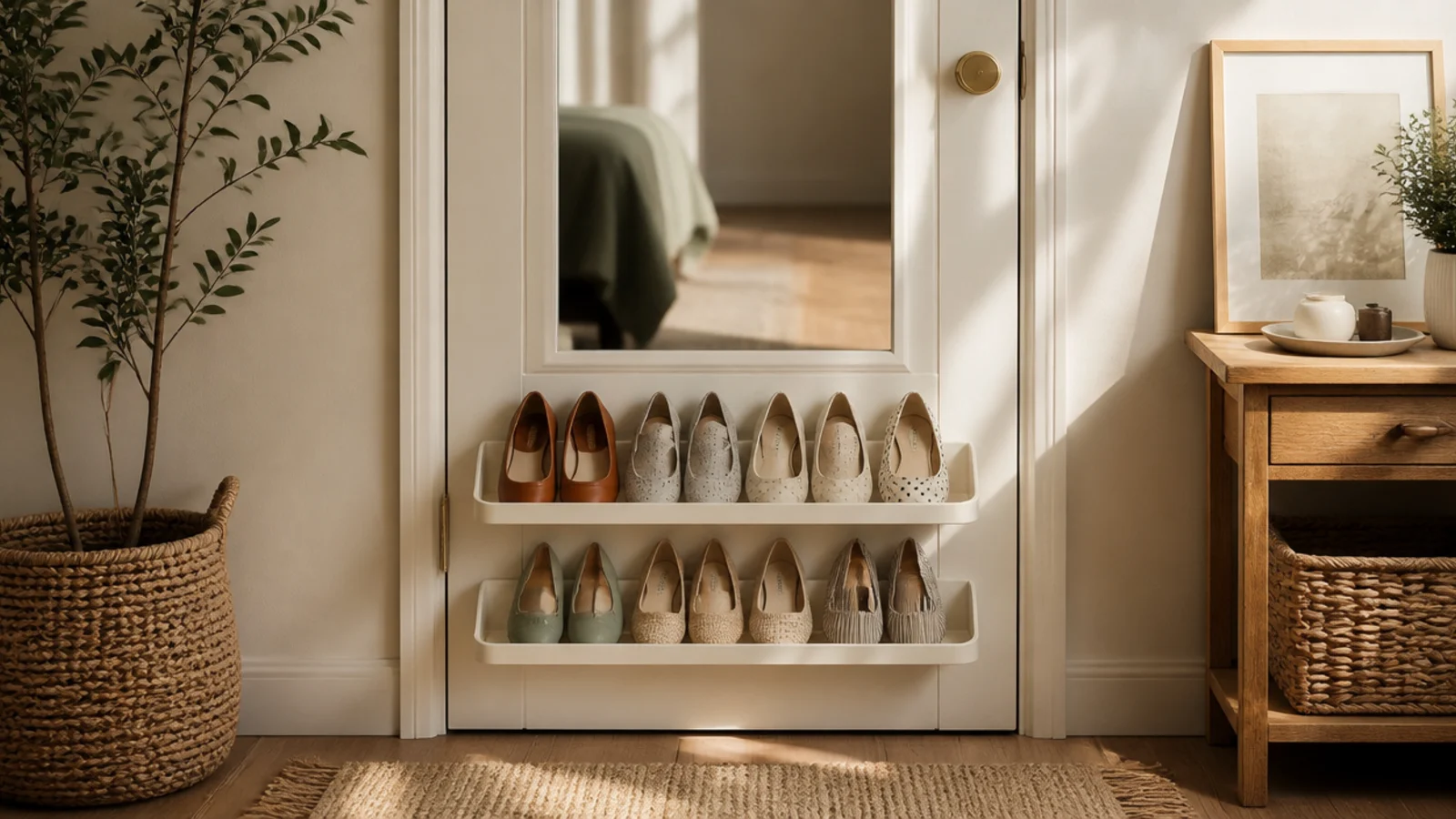
A full-length mirror on the back of the door with a slim rack beneath combines your dressing mirror and shoe storage. It suits a bedroom with a spare door and no wall for a mirror. Two needs, one door.
Mount a full-length mirror on the back of the bedroom door, and fit a slim over-door or door-mounted rack below it for flats and sandals. Keep the rack shallow so the door still closes. Load lightweight shoes only. Check the door clears the frame when loaded.
Editor's noteKeep the shoe rack below the mirror shallow and light so the door still swings and closes without straining the hinges.
Skip thisDo not hang a heavy mirror plus a loaded rack on a hollow door; the combined weight bows it, so use a solid door or lighten the load.