1. Walnut shadow-box shelf with linen backdrop
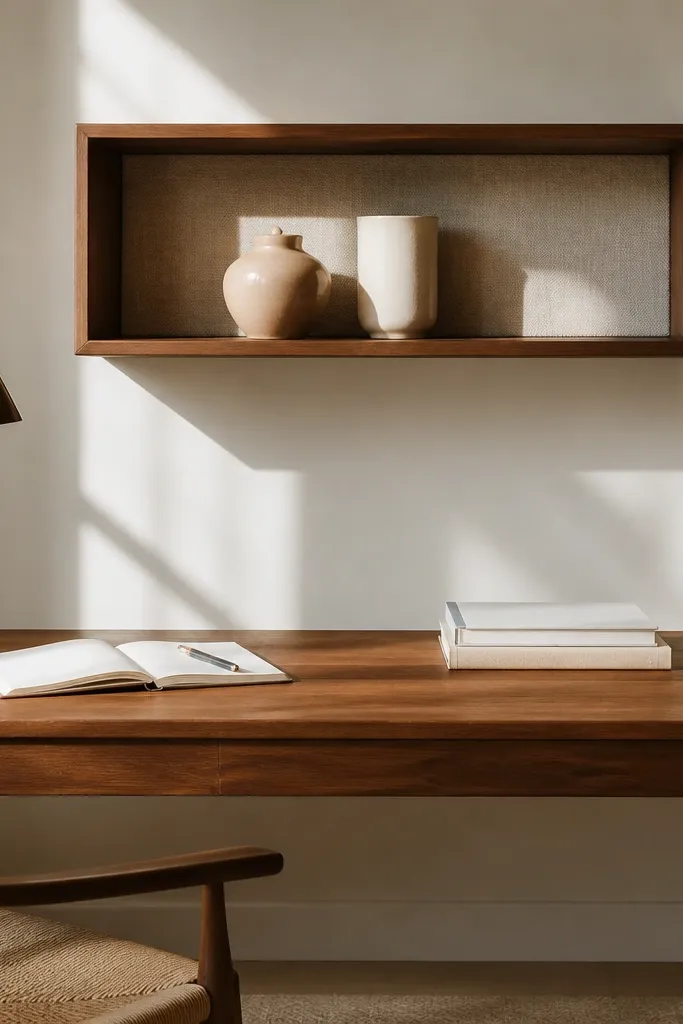
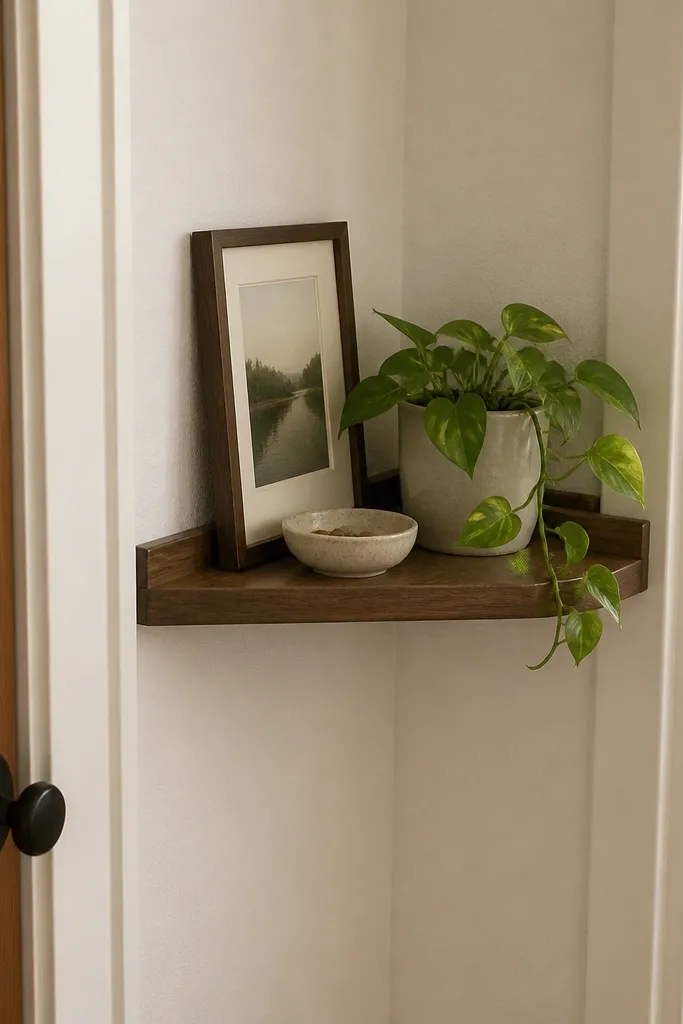
This is one of the cleanest ways to make a study wall feel cozy without turning it into a craft project. A shadow-box shelf hides the mounting mess and gives your wall depth, while linen behind it softens the whole scene so the shelf doesn’t look harsh. Style it with two warm objects only: a ceramic jar in sand or clay and a small framed print with a cream mat. If your wall is bare and echoey, this adds warmth through texture and shadow, not more color.
Editor's noteUse a matte linen — it absorbs glare and reads cozy in daylight and at night.
Start by buying a floating shelf box style (or build one) sized to your wall space, then cut a linen panel to fit the back inside the box. Paint or stain the interior edges in a matching warm tone, then attach the linen using a staple gun or fabric-safe adhesive. Mount the shelf so the bottom edge sits about 12 inches above the tabletop, then place the ceramic jar and one framed piece centered. Finish by adding a small felt pad under the jar so it doesn’t slide or scratch.
Skip thisDon’t fill it with five knickknacks; two items look intentional, five looks cluttered.
2. Grid cork board with warm paper pins
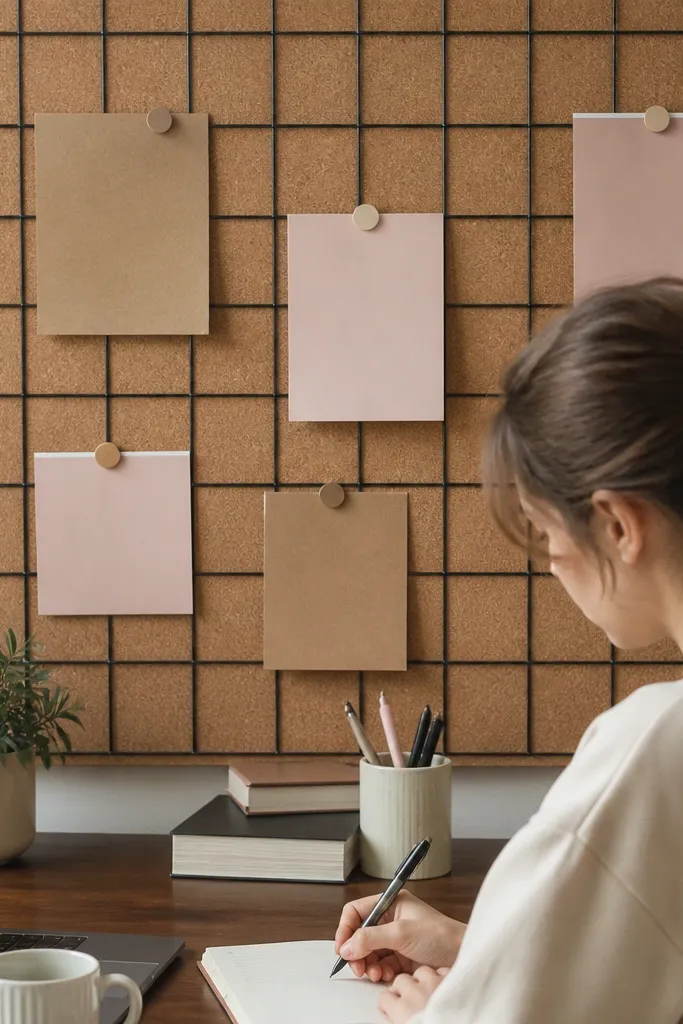
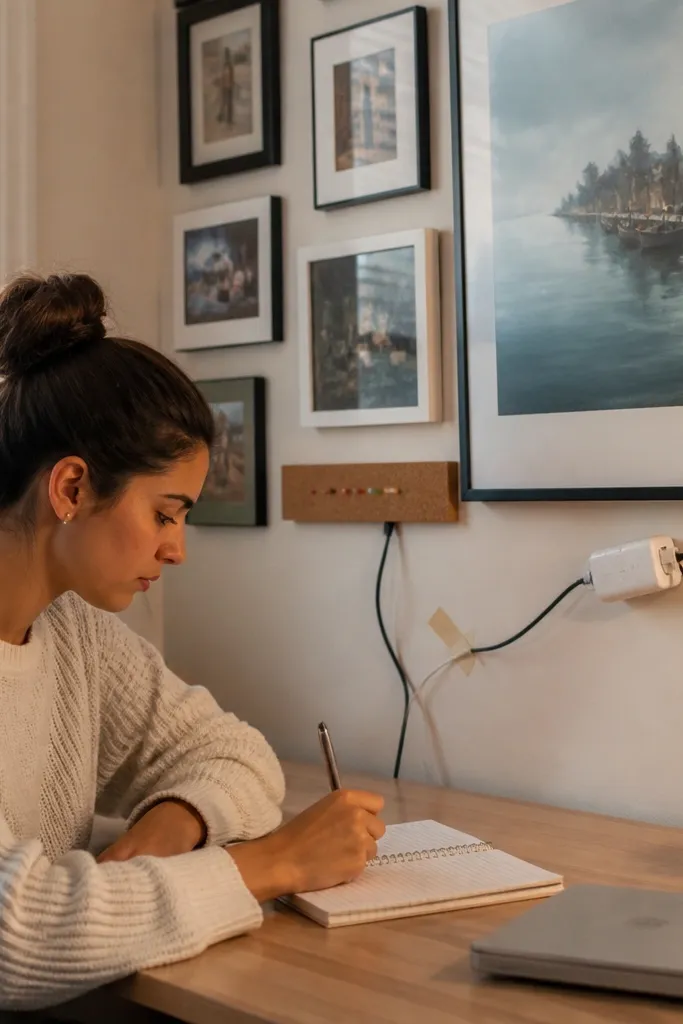
Cork board decor is cozy because it’s soft-looking and practical at the same time. The grid keeps it from turning into a random notice wall, and warm paper pins make the board feel like part of the room, not a chore tool. Use it behind your work area so your eye has a gentle visual anchor while you study. This idea is great for people who need reminders but hate how cluttered whiteboards look.
Editor's noteCut your paper to the same width so the board looks uniform from across the room.
Mark a grid on your cork board using a light pencil and a ruler, then label the grid lines so you can keep spacing consistent. Pin notes with warm paper in three tones max: cream, terracotta, and muted olive. Mount the board so it sits 8-12 inches above the desk surface, keeping it high enough that you don’t block your view while writing. Add one small line of tape or washi along the bottom edge to hide any uneven spacing.
Skip thisDon’t use neon pins or bright glossy tape; they kill the cozy warmth instantly.
3. Rope-wrapped picture ledge with two frames
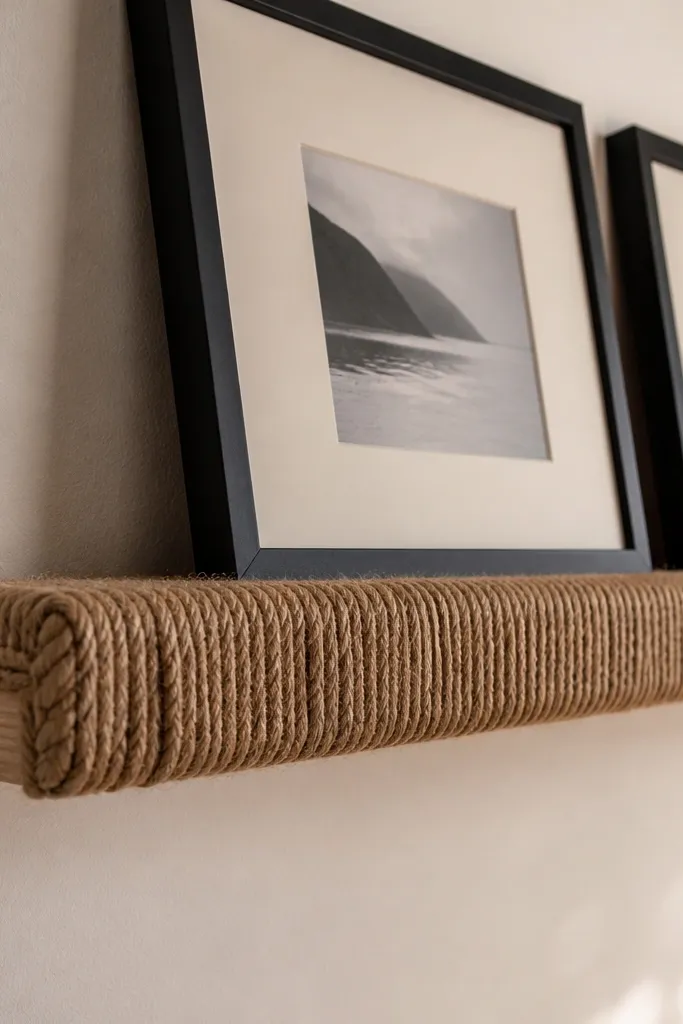
A rope-wrapped ledge brings warmth through material texture and a slightly nautical, softened vibe. Pair it with two frames only, because the rope already adds visual interest. Keep both frames in the same color family — natural wood or matte black — and use cream mats to stop the wall from looking busy. This works especially well on small study walls where you want cozy but don’t have space for a big gallery.
Cut a simple wood picture ledge to length, then wrap it tightly with natural jute rope starting at one end and gluing as you go. Seal the rope with a clear matte sealant so it resists dust and looks even. Mount the ledge above the desk with the bottom edge about 12 inches up, then hang or rest two frames centered under it. Use picture hanging hooks rated for the frame weight and confirm level before tightening.
Wrap under tension and keep the rope seams staggered so the ledge looks smooth.
Don’t mix frame sizes wildly; two different sizes is fine, three starts to look random.
4. Fabric pennant banner in three-color stripes
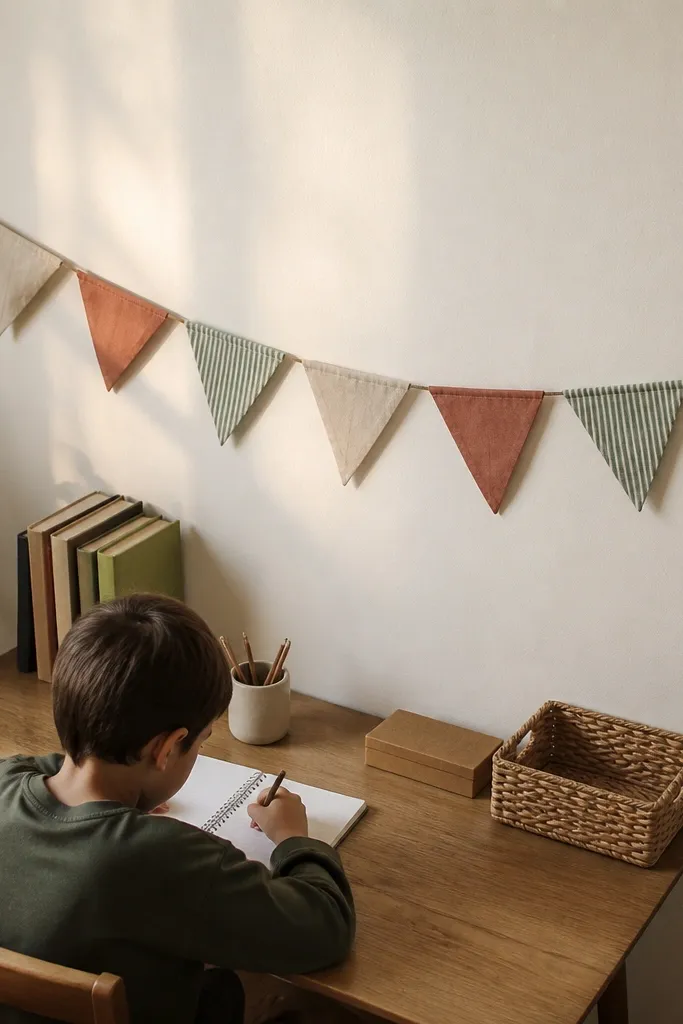
A pennant banner makes a study wall feel cozy because fabric looks softer than paper and it adds movement without being loud. Use three stripe colors that already belong in your room: oatmeal, clay, and muted sage. The triangle shapes create a gentle rhythm overhead, which makes the wall feel styled even in minimal rooms. This is a good fix if your wall decor feels too flat or too serious.
Editor's notePress the fabric flat before hanging; wrinkles make the banner look sloppy.
Cut pennant triangles from cotton or canvas fabric, then stitch pairs right sides together and turn them for clean edges. Add a simple bias tape or fold-over header at the top and thread a thin dowel or rope through. Hang it so the banner sits 10-14 inches above the desk, with the center triangle aligned to your chair or desk centerline. Tie each end off and trim any uneven fabric edges with sharp fabric scissors.
Skip thisDon’t use more than three colors; extra shades make it feel like a party, not a study space.
5. Macramé mini wall plant shelf
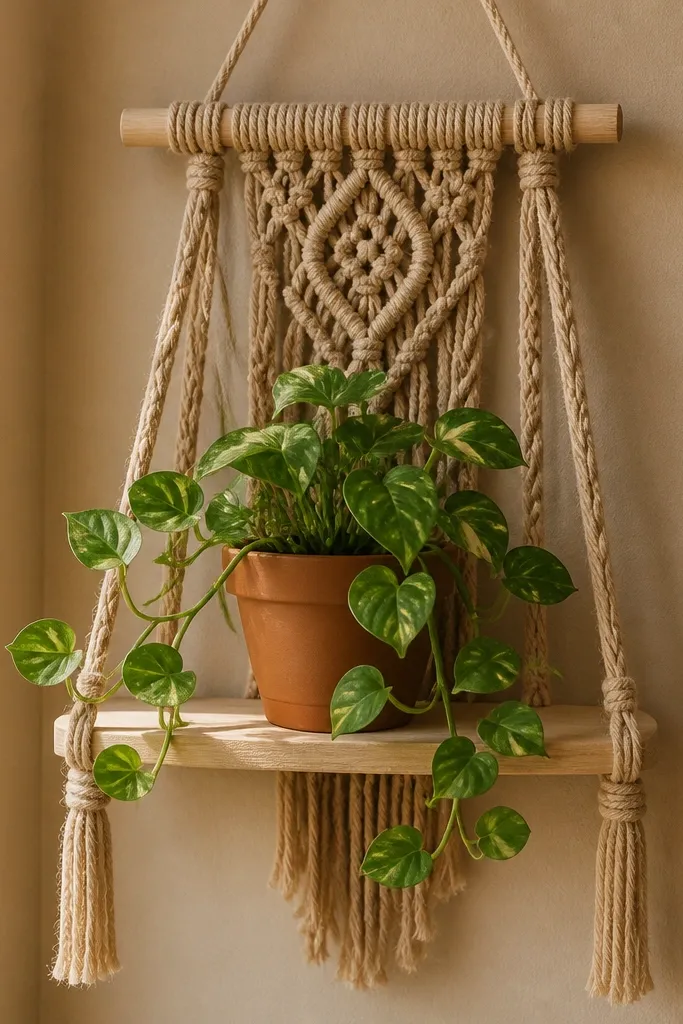
Macramé adds cozy texture fast, and the plant shelf gives you a living element that looks good year-round. Keep it small: one pot, one shelf level. Use a warm-toned rope (natural or light tan) and a pot in matte terracotta or cream to avoid visual harshness. This is ideal if your desk wall is missing softness and you want something that feels handmade without clutter.
Editor's noteChoose a plant with compact leaves (like a pothos cutting) so the shelf doesn’t get lopsided as it grows.
Mount two strong anchors into studs if possible, spaced about 14-18 inches apart. Tie a macramé knot section between the anchors and build a shelf platform using a small wooden board or a ring with a fabric sling. Hang your pot so the bottom clears the desk area by at least 6 inches. Finish by trimming rope ends cleanly and securing with a small drop of fabric glue where knots loosen.
Skip thisDon’t hang a heavy planter; use a pot that stays under 2-3 pounds when watered.
6. LED backlit cork letter board
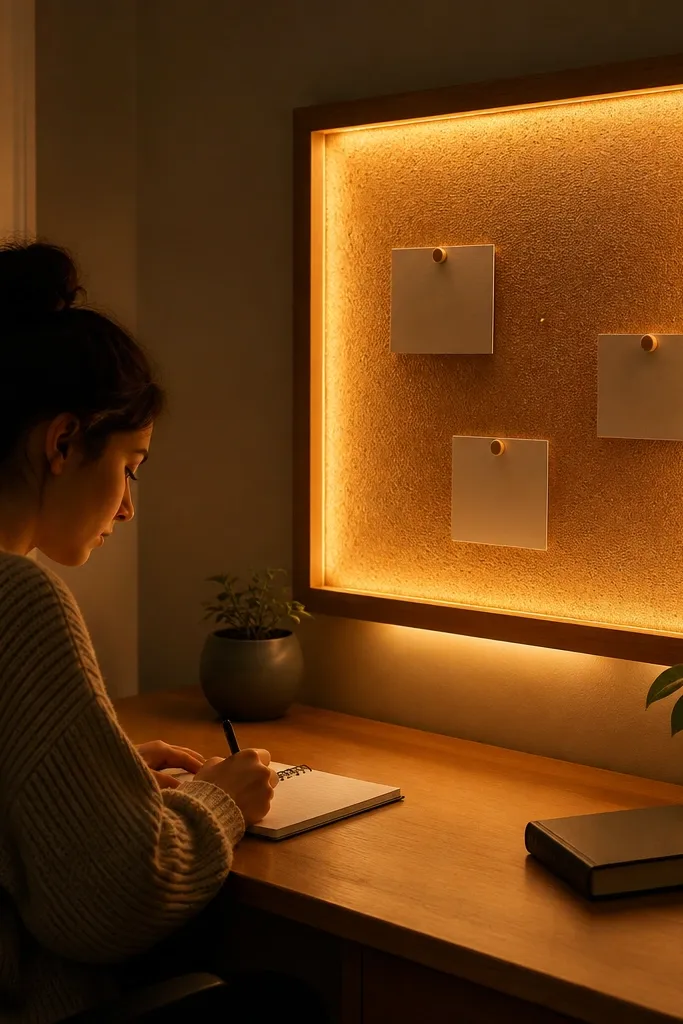
If your study wall looks too dark or flat at night, backlighting fixes that. A cork letter board with warm LEDs looks cozy because the light spreads softly through the cork texture. You can leave it functional with rotating prompts like “focus,” “review,” or your weekly goals, but framed by warm glow it also looks like decor. Pick warm white LEDs around 2700K to keep the vibe gentle, not blue.
Editor's noteDim the LEDs so the cork texture shows; full brightness makes it look like signage.
Buy or build a cork board backing, then mount a thin LED strip behind it using double-sided mounting tape made for LEDs. Wire it to a plug-in adapter with a dimmer if you can; set the brightness so the glow is visible but not glaring. Place your cork letter board in a simple frame or build a shallow shadow-box frame to hide the wiring. Hang it so it sits about 12 inches above the desk, then arrange letters in one line and add one small icon element.
Skip thisDon’t use cool white LEDs; 4000K makes the wall feel sterile.
7. Wood slat panel with warm plug-in lights
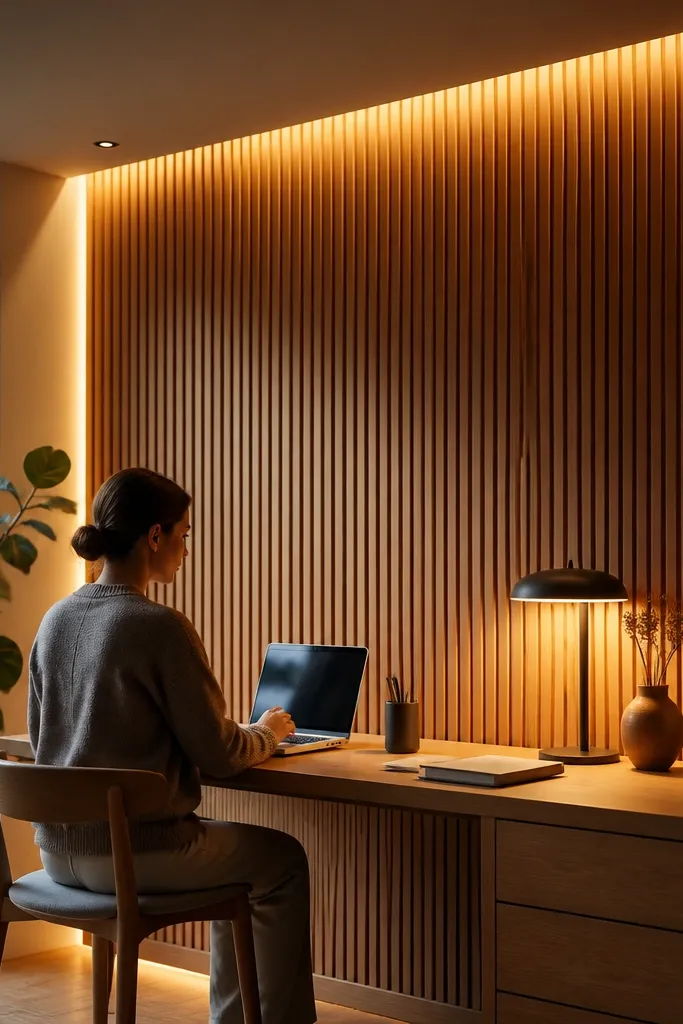
A wood slat panel gives you instant cozy structure. The slats add depth and shadow lines so the wall looks finished even with minimal decor. Tuck warm plug-in lights behind the slats so the glow hits the wall, not your eyes. This works well for people who like clean design but still want warmth, because the warmth comes from the material and lighting, not clutter.
Editor's noteSand to 220 grit and wipe with a tack cloth; slats look cleaner and more even after staining.
Cut slats from thin pine or birch, then sand edges smooth and stain in a warm walnut tone. Arrange slats with consistent spacing, about 1 inch between centers, on a backing sheet or directly onto the wall. Mount into studs for stability, then hide screw heads with wood filler and touch-up stain. Tuck 2700K string or mini LED lights behind the slats and secure with small clear clips. Finish by adding one minimal framed print at the center so the panel doesn’t look empty.
Skip thisDon’t leave slats unsealed; raw wood catches dust and looks dull fast.
8. Layered frame gallery with matching mats
A layered gallery makes a study wall feel cozy because it creates a controlled visual rhythm. The trick is matching mat colors so everything ties together, even when the art is different. Use 3-5 frames only, and keep the art in warm neutrals: beige sketches, terracotta typography, or botanical line drawings. This is the best approach if you already have thrifted frames but they clash and make the wall look messy.
Remove existing mats from frames and replace them with the same cream mat color, cutting mats to fit if needed. Arrange frames on the floor first, then measure the final footprint and find the center of your wall space. Hang the middle frame at eye level (about 60 inches centerline), then hang the others with even spacing between frame edges. Use picture hanging hardware rated for each frame, and level everything before tightening screws. Add one small fabric element, like a narrow ribbon banner, if you need extra softness.
Use the same frame thickness across the set; it makes layered galleries look intentional.
Don’t mix glossy and matte finishes in the same cluster; the glare makes it feel chaotic.
9. Ribbed ceramic wall pockets for pens and notes
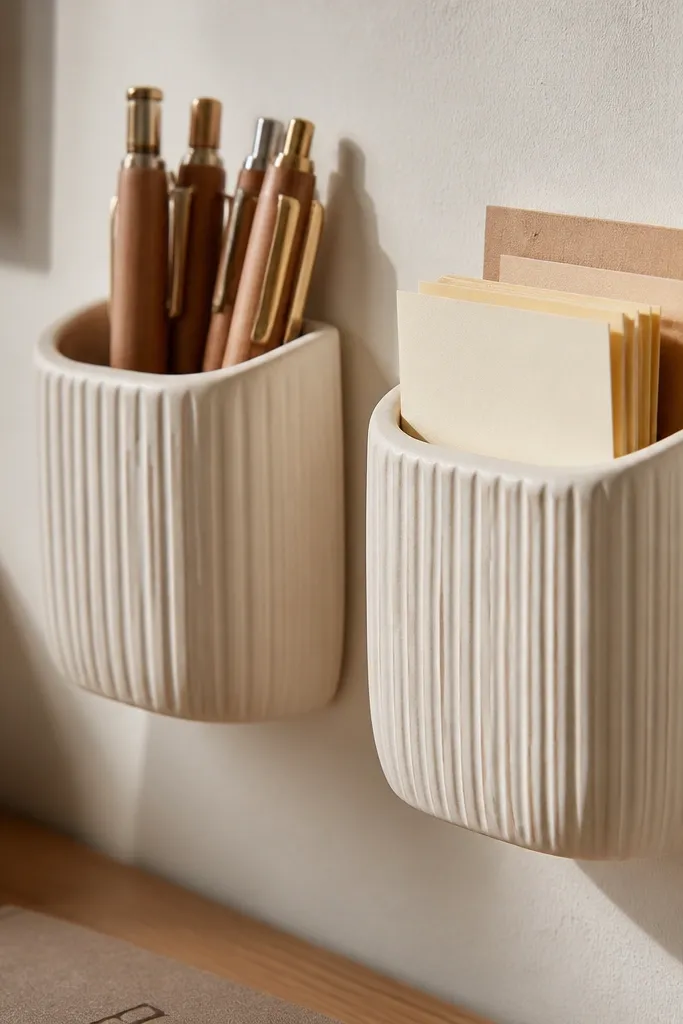
Wall pockets make your study wall feel cozy because they’re functional and tactile. Ribbed ceramic has texture that reads warm even from a distance, and it’s an easy way to reduce desk clutter. Use two pockets only: one for pens and one for sticky notes or small index cards. Keep the colors muted — cream, sand, or light terracotta — so the pockets look like decor instead of storage.
Mark mounting points with a level, then use wall anchors rated for ceramic weight if you can’t hit studs. Attach each ceramic pocket using the manufacturer’s screws or appropriate masonry anchors for your wall type. Place pens and sticky notes after mounting to check the visual height from your sitting position. Add a small paper label in matching color for one pocket so it looks styled, not random. Wipe the ceramic with a dry cloth before mounting so it doesn’t trap dust under the pocket.
Stick to one pen color family (black ink + warm-toned cases) so the pocket doesn’t look messy.
Don’t overload pockets; if pens stick out too far, it stops reading as cozy decor.
10. Felt letter garland above the desk
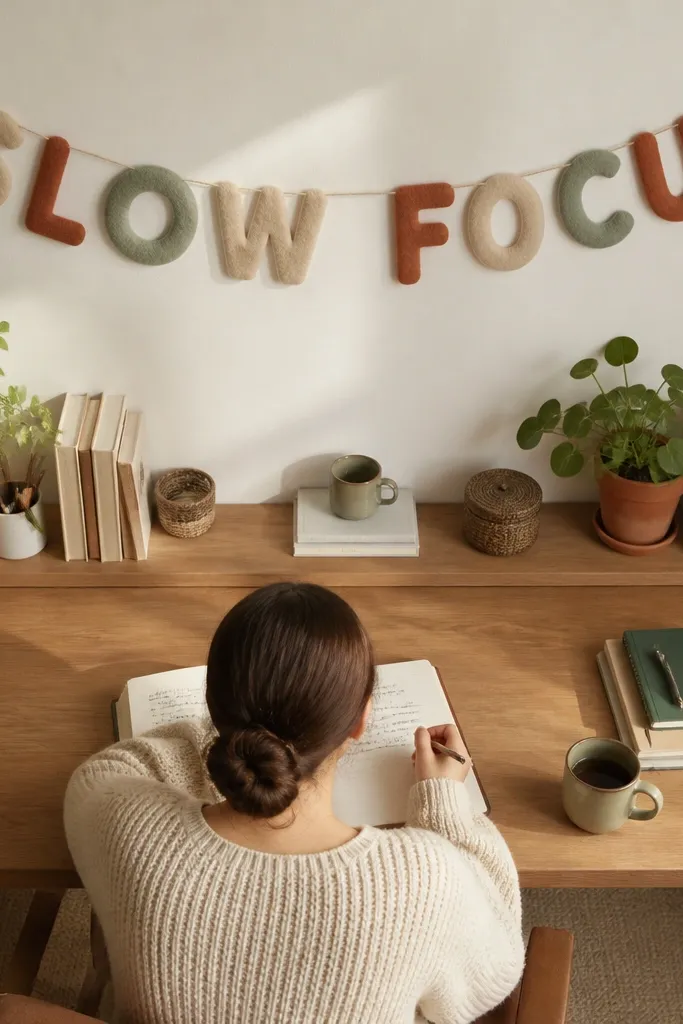
Felt garlands add instant softness. They also solve a common problem: people hang art but forget the wall needs a “warm line” across the top area above the desk. Use felt letters in a single font style and keep the message short — two to four words like “study” or “slow focus.” This looks great in photos because felt absorbs light and avoids glare.
Cut felt letters using a stencil or printed letter template, then stitch or glue the edges with matching thread. String the letters using twine or thin cotton cord, leaving 2-3 inches between letters. Mount two small hooks on studs and tie the cord so the garland sits centered above the desk, about 12 inches over the tabletop. Add a small bow or knot only at the ends to keep the middle clean. Steam or press felt gently if it gets wrinkled in shipping.
Use thicker felt (around 3-4 mm) so letters hold their shape and don’t sag.
Don’t use thin craft felt; it curls and makes the banner look cheap.
11. Woven wall basket cluster in one color family
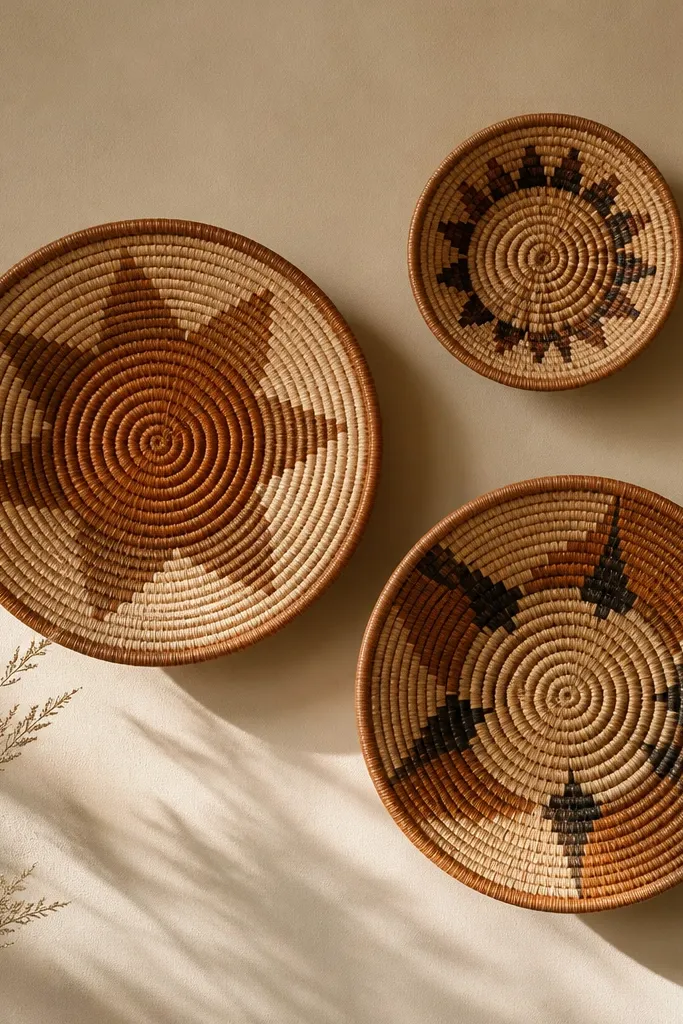
Woven baskets are cozy because they add natural texture and create shadow depth. A cluster looks curated when the baskets are the same color family and different sizes. Choose one wall basket style — flat weave or round rattan — and repeat it. This idea works for study corners that feel bare and echoey because the baskets absorb light instead of reflecting it.
Pick three baskets: one large, one medium, one small. Determine spacing by dry-fitting on the wall and keeping about 4-6 inches between basket edges. Mount using picture hooks or basket hangers attached to the wall; if baskets have loops, use those as attachment points. Hang the largest slightly above eye level so the cluster doesn’t sit too low. Place baskets so the bottom of the smallest basket stays at least 10 inches above the desk.
Use a consistent weave direction across baskets for a calmer look.
Don’t mix basket materials (metal + plastic + rattan) in one cluster; it reads patchy.
12. Canvas wall calendar with cork backing
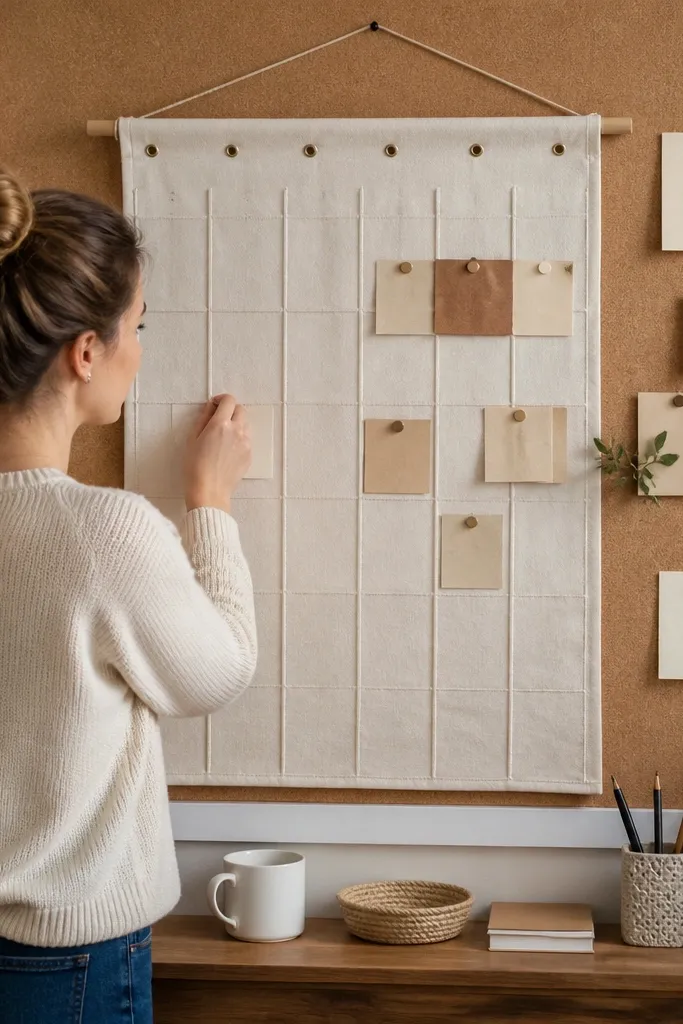
A calendar looks cozy when it’s made of fabric and cork, not plastic and glare. The cork backing lets you pin reminders in warm paper tones, so the calendar becomes part of the decor and also part of your routine. Keep the design simple: one month view, one color, and plenty of negative space. This is perfect if you want the wall to feel functional without the chaos of a full pinboard.
Editor's noteUse matte paper for reminders; glossy paper reflects light and looks colder.
Buy a canvas calendar or print and mount on canvas using a stretched frame. Attach a cork sheet behind it using spray adhesive or glue, then trim edges cleanly. Add a small pin strip or corner cork area for reminders so pins don’t cover the whole calendar. Mount the calendar so its top sits around 64-68 inches from the floor, then place it above the desk with 10-14 inches clearance. Pin only 3-6 reminders at once so the wall stays calm.
Skip thisDon’t pin dozens of items; a cozy wall needs breathing room.
13. Shallow tray wall organizer with linen labels
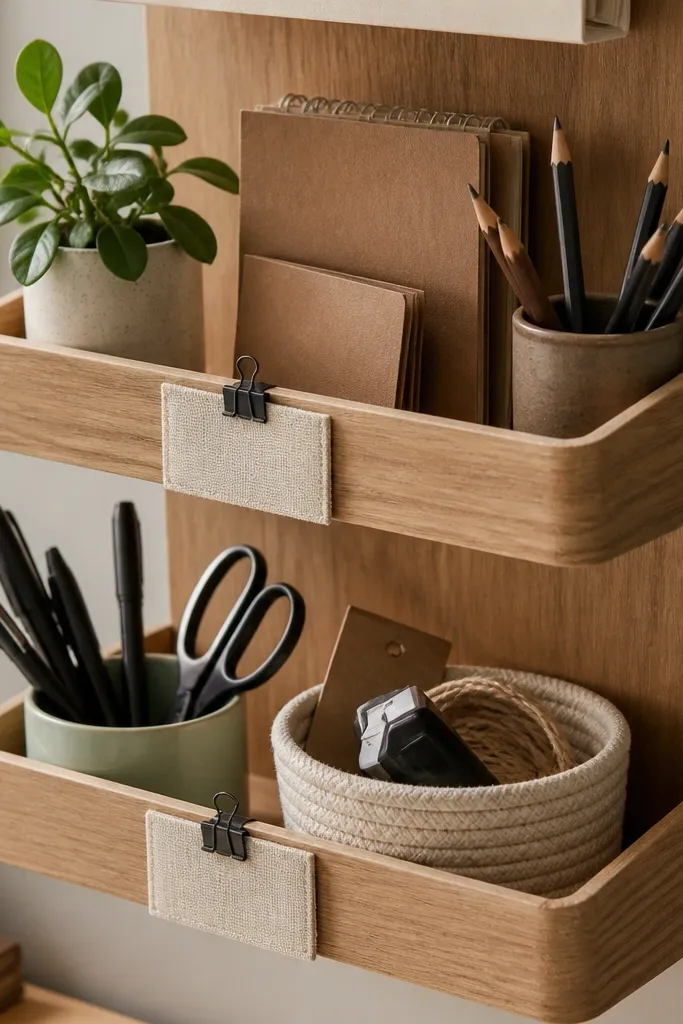
This idea makes the wall feel cozy because it turns everyday supplies into styled objects. Shallow trays in wood or matte metal look tidy, and linen labels add softness. It’s a good choice if your desk storage is messy and you want a “styled station” look without buying a whole new desk. Keep it minimal: two trays and one small label set.
Editor's noteIf your wall is painted, use anchors rated for the tray weight so the trays stay straight over time.
Mount two shallow trays on the wall above the desk, with the bottom tray about 10-12 inches above the tabletop. Choose linen labels and attach them with simple clothespins or Velcro so you can swap them. Add a small tray for pens and a second for sticky notes or index cards. Measure your wall space and keep the trays aligned to the desk centerline. Wipe trays with a dry cloth before mounting and use level marks so they don’t drift.
Skip thisDon’t mix four label fonts; one linen label style keeps it cozy, not busy.
14. Mini gallery shelf with fabric-covered books
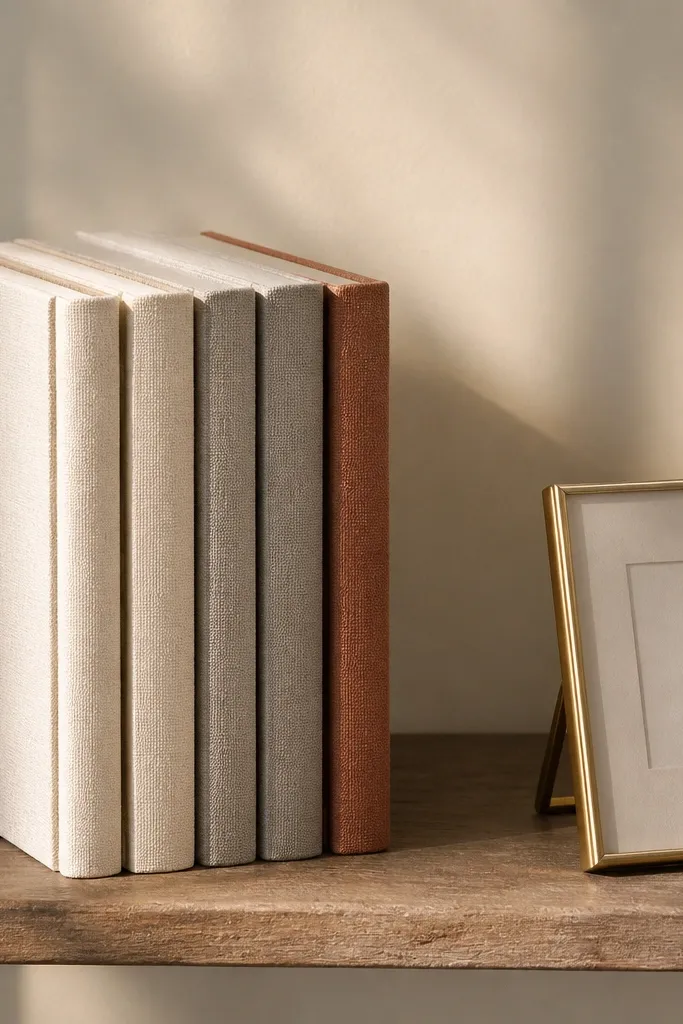
Fabric-covered books look instantly cozy because they soften the hard lines of standard book spines. Put them on a mini shelf so the wall decor still feels like decor, not storage. This works best when you match fabric colors across multiple books — cream, warm gray, and a clay accent. Add one small framed card or photo so the shelf reads personal but not cluttered.
Editor's noteUse fabric with a slight texture like cotton canvas; smooth fabric can look plastic under light.
Pick a shelf that’s 12-20 inches wide so it doesn’t dominate the wall. Cover book spines with fabric using spray adhesive, then trim edges so the fabric doesn’t peel at the corners. Mount the shelf about 12 inches above the desk, then place three fabric-covered books in a row with staggered heights. Add one small framed card centered on top or beside the books. Secure the shelf and confirm level before loading books so the arrangement doesn’t shift.
Skip thisDon’t use bright covers; keep it muted so the shelf reads cozy, not loud.
15. Soft gradient wall art using fabric dye on cotton
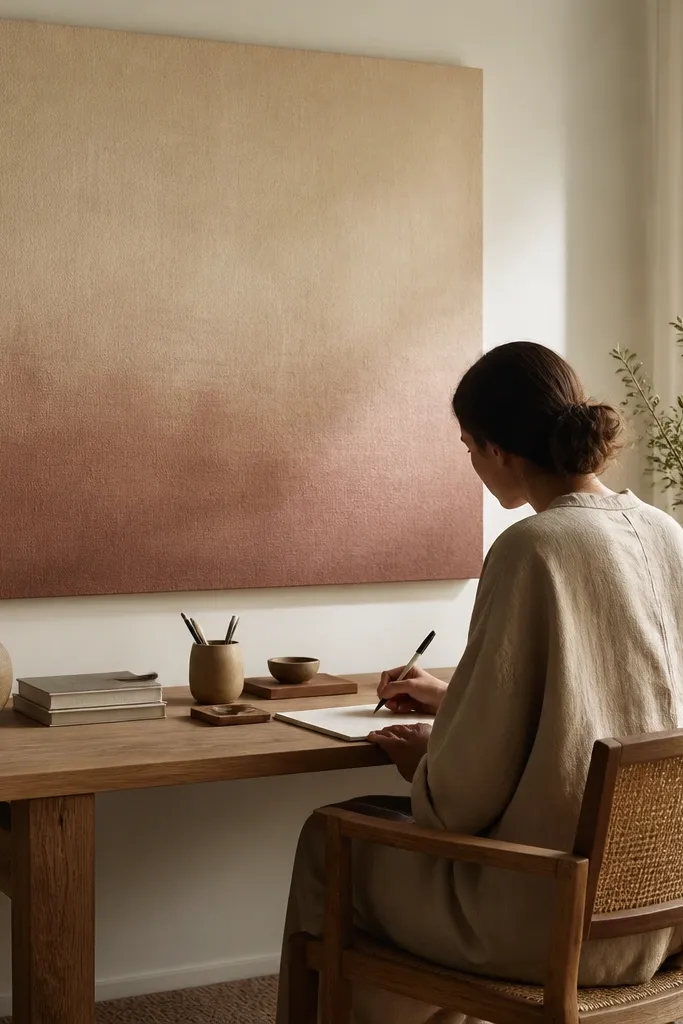
Hand-dyed cotton art looks cozy because it has organic variation and a matte surface. A warm gradient — oatmeal to clay or sand to terracotta — makes the whole wall feel warmer without adding clutter. This is a great option if you want something bigger than a frame but not a busy print. Keep the piece simple and let the texture do the work.
Buy unbleached cotton (fat quarter or yardage), then stretch it over a simple frame or tack it to a backing board. Mix fabric dye in two warm tones and apply with a sponge in horizontal bands, blending where they meet. Let it dry fully, then rinse according to dye instructions and iron flat. Hang the finished panel above the desk with 10-14 inches clearance and center it to your chair or desk. Add a thin frame in natural wood so it doesn’t look like a craft banner.
Use matte acrylic sealer on the finished fabric if your piece will get handled or dusty spots.
Don’t choose high-contrast colors; the whole point is a gentle warm shift.
16. Paper lantern wall cluster with 2700K bulbs
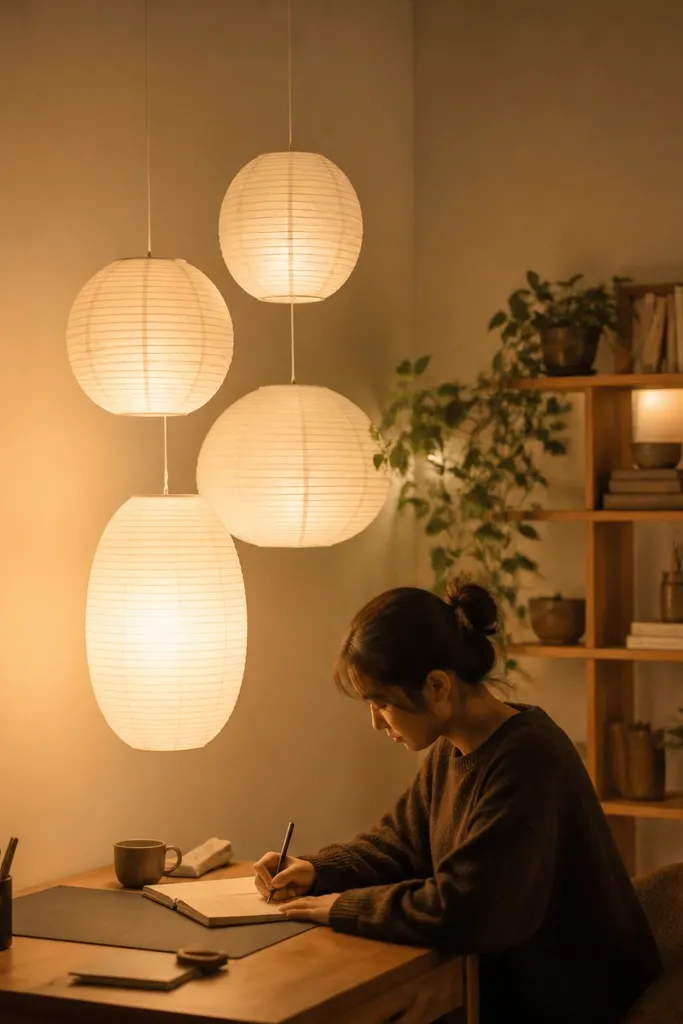
Lanterns make a study wall feel cozy because the light wraps the space in a soft glow. A wall cluster also avoids the “table lamp clutter” issue and gives you a decorative light source above your work area. Use paper lanterns in warm white or cream, and swap in 2700K bulbs so the color stays warm. Keep the cluster small so it reads like decor, not a party setup.
Editor's noteTest the brightness before final hanging; too bright turns cozy into harsh.
Mount two hooks into studs spaced about 10-14 inches apart, then hang lanterns at different heights using thin wire or string. Use a warm plug-in LED bulb system or plug-in light string rated for your lantern type. Arrange three lanterns: one center and two flanking it, with the bottom lantern sitting about 18 inches above the desk surface. Secure wiring so it doesn’t droop into your workspace. Finish by turning off overhead lights and checking the glow from your seated position.
Skip thisDon’t use bright white LEDs; the glow will look gray on paper.
17. Pegboard wall with fabric bins and brass hooks
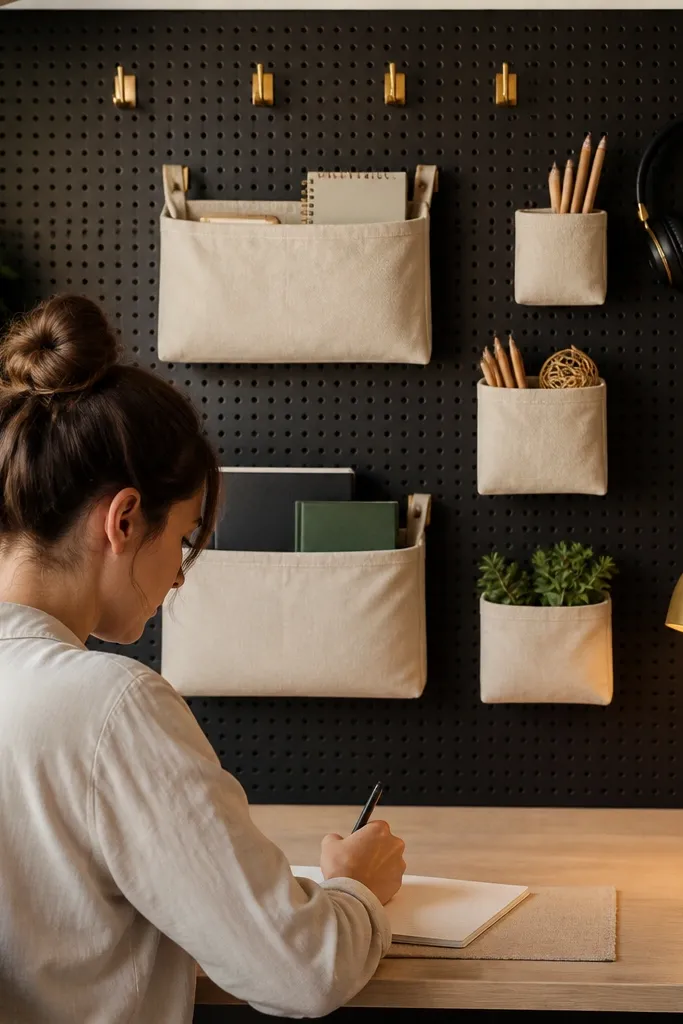
Pegboard can look industrial, but cozy happens when you soften it with fabric and warm metals. Fabric bins hide the mess, and brass-colored hooks add warmth without turning everything into dark hardware. This is a strong solution for study table setups where you need organization but hate visible clutter. Keep it to one section above the desk so the wall looks purposeful, not like a workshop.
Editor's noteChoose bins with a stiff rim so they hold their shape and look neat.
Paint or finish pegboard in a warm matte color like off-white or warm gray. Install it above the desk so the bottom edge sits about 12 inches above the tabletop. Add brass hooks and two fabric bins sized to hold your most-used items: pens, highlighters, index cards. Label the bins with small linen tags for a calm look. Use a level and stud finder so the pegboard doesn’t sag over time.
Skip thisDon’t hang every tool you own; limit to the items you grab daily.
18. Corner reading nook wall with fabric wall panel
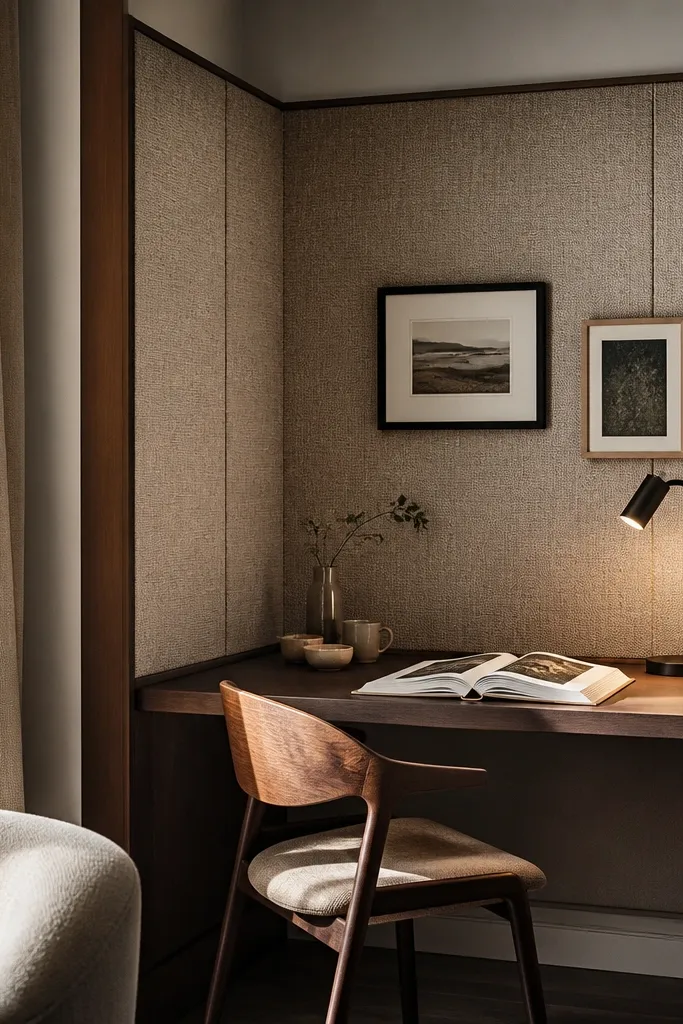
A fabric wall panel in the corner makes the whole study area feel like a cozy pocket. The wall becomes softer visually, and you get a better background for frames, shelves, or a small reading light. Choose a fabric with texture — boucle, thick cotton, or linen blend — in warm neutral tones. This is ideal if your wall is plain drywall and your decor keeps looking flat.
Measure the corner wall and cut a fabric panel with extra overlap for tacking or stapling. Add a backing board or foam sheet behind the fabric so it has body and doesn’t drape like a curtain. Staple fabric to the backing, then mount the panel with corner brackets or adhesive strips designed for walls. Place a small shelf directly above the desk line and keep one frame centered on the panel. Add a warm plug-in sconce or LED strip for glow against the fabric.
Use a fire-safe fabric if you’re adding any lighting near the panel.
Don’t use thin sheers; they look watery and do not create the cozy wall depth.
19. Warm-tone map print with wood clip line
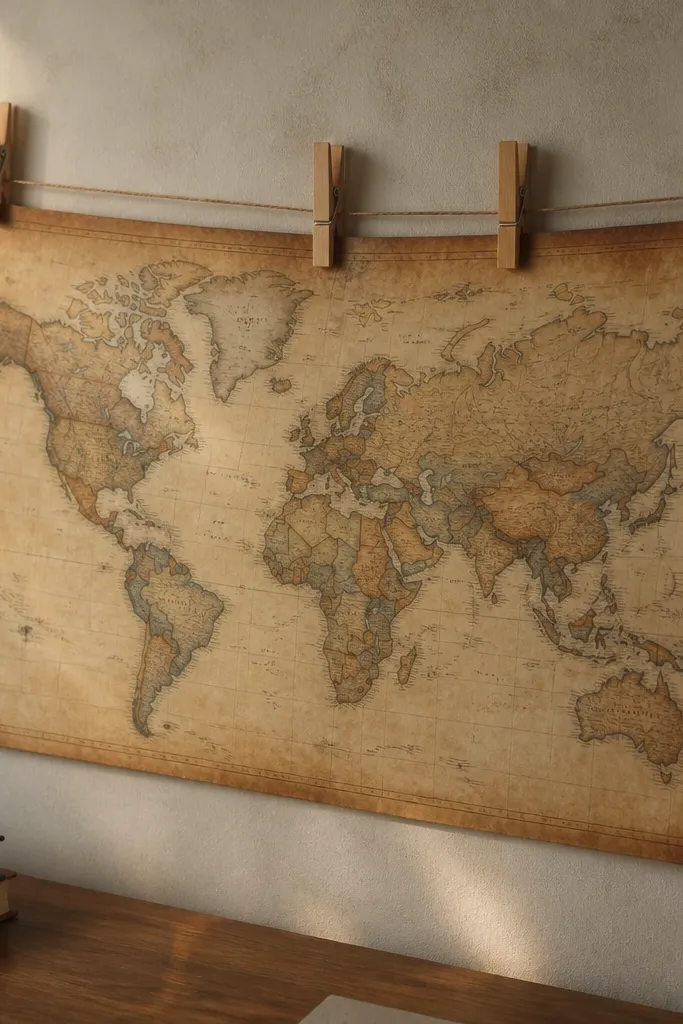
A map print feels cozy when it’s in warm paper tones and displayed with clothespin-style clips. The clips add a handmade texture and let you swap prints without remounting frames. Use one big warm map print or two smaller ones, but keep the rest of the wall minimal. This idea works well for people who like travel-inspired decor but don’t want it to feel like a poster.
Editor's noteChoose clips in natural wood or matte black; shiny chrome looks cold.
Print or buy a map in warm neutrals, then trim it cleanly to size. Mount a simple horizontal line of cord or a thin dowel above the desk, using two wall hooks spaced evenly. Attach the print with wooden clips so it hangs with a slight curve. Center the display and keep it 10-14 inches above the desk for balance. Add a small secondary item below, like a ceramic tag holder, so the whole area looks finished.
Skip thisDon’t clip multiple prints at once; one or two is cozy, three looks like clutter.
20. Clay wall sconce with swap-out shade

A wall sconce makes the desk area feel cozy because it adds warm light without taking up tabletop space. Clay or terracotta shades look soft and warm, and swap-out shades let you change the vibe seasonally. Keep the shade matte so the light spreads gently. This is the best pick if your current lighting is overhead-only and your study wall looks flat at night.
Mount a plug-in wall sconce bracket or a corded sconce fixture near the desk, aiming the light downward so it doesn’t glare. Choose a terracotta or clay shade and use a 2700K bulb. Secure the fixture to studs when possible, or use heavy-duty anchors if your wall allows it. Position the light so it sits slightly to the side of your writing hand, reducing shadow while you work. Add one small decor element under the light, like a frame or a small woven basket, so the sconce looks styled, not random.
Use a dimmer plug if you want the glow to match your study mood.
Don’t place the light directly behind the chair; it creates glare and makes the wall look harsh.