
1. Open Wire Shelf Baskets with Front Handles
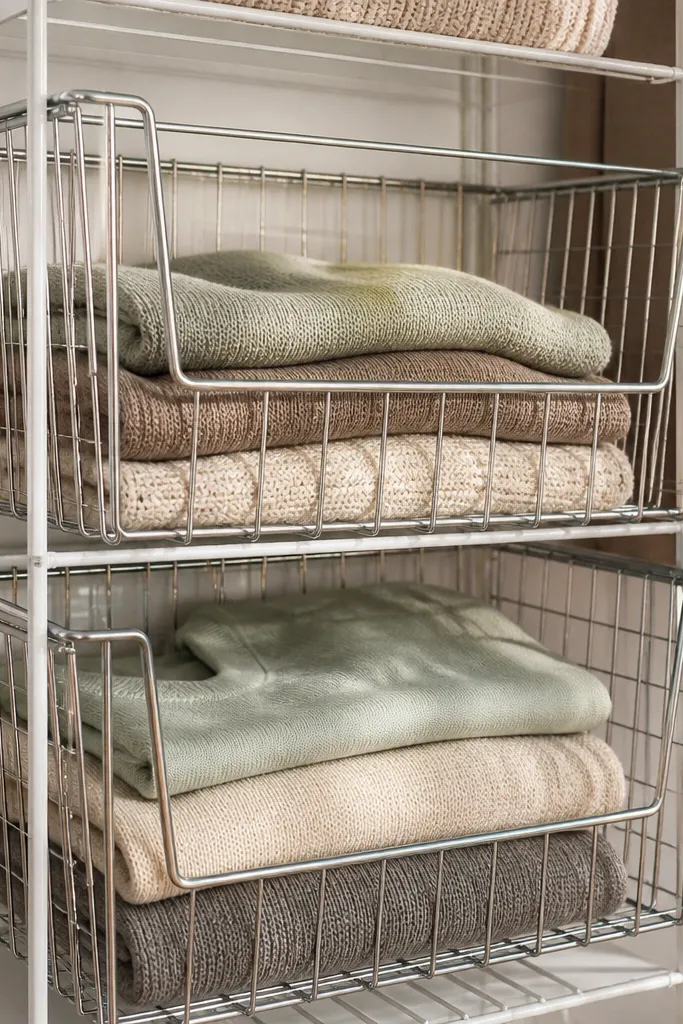
These are the simplest beginner-friendly swap because they solve the “grab and go” problem without forcing you to learn a new system. The open front makes it easy to reach into the back without dumping everything, and the wire bottom breathes so textiles don’t trap stale air. Look for baskets that have a flat, rigid bottom frame instead of flimsy mesh — that extra stiffness prevents sagging when you load winter scarves. They work best on middle shelves where you access items weekly and want fast visibility.
Start by measuring your shelf depth and width so the basket sits flush without overhang. Choose baskets with handles that line up with the front edge of the shelf grid so you can lift straight up. Finally, add two non-slip shelf pads on the shelf rails (not the center) so the basket doesn’t creep when you pull it.
Editor's noteIf the basket wobbles, add a thin rubber shelf liner under the basket’s base frame — it stops grid-to-wire slipping.
Skip thisDon’t buy baskets that only rest on the wire grid without a solid bottom frame — the center will bow after a few weeks.
2. Fabric Storage Bins with a Rigid Insert Bottom
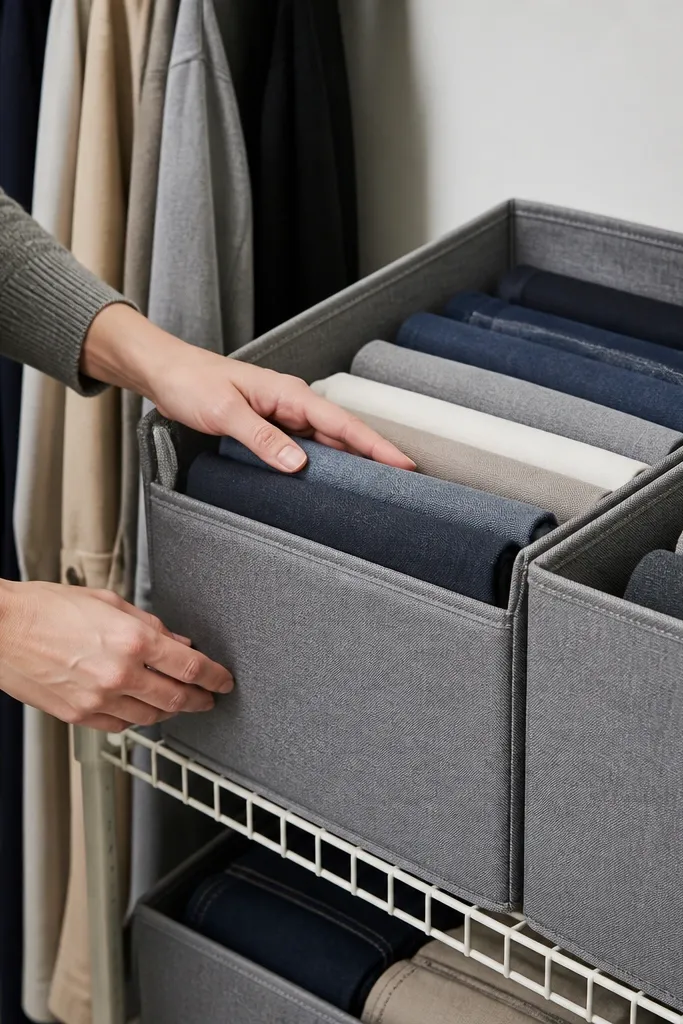
Fabric bins feel softer and look cleaner than open wire, but the rigid bottom is what keeps them from turning into floppy bags. That firm base helps folded clothes stay stacked and stops the bin from sagging into the wire grid. Choose bins with reinforced side walls if your closet is narrow; thin fabric collapses when you pull from the middle. This is a strong option for middle shelves and for top shelves where you don’t want hard plastic showing.
Pick bins that advertise a rigid base or include a removable insert. Place the bin so the bottom insert spans across the shelf rails, then test the fit by pushing down in the center — it should not dip. Use a label card slot or a small fabric tag on the front so you can find items without digging.
Use fabric bins for dry items first, then switch to vented plastic for anything that might hold moisture.
Avoid fabric bins with a totally soft bottom — they collapse and make you repack constantly.
3. Vented Plastic Bins for Wire Shelves
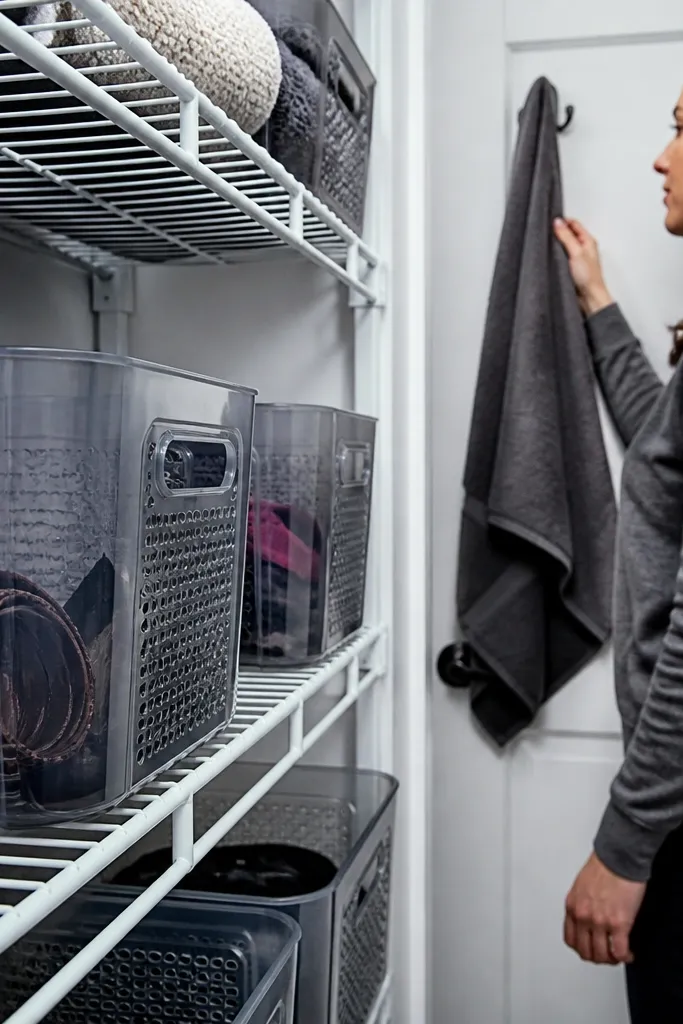
Vented plastic bins are a practical middle ground: they stack better than fabric and they don’t trap odors like fully sealed containers. The venting matters for closets that get humidity from laundry or bathrooms, where closed bins can smell like old fabric. If you pick the right size, these bins also stop small items from slipping through the wire shelf grid because the sides wrap down. This option is best for seasonal clothes, folded sweaters, and accessories you want protected but easy to access.
Choose bins with dimensions that match your shelf opening so the bin sits on the shelf rails, not just on the grid wires. Place the bin on a shelf liner pad, then check that the bottom is fully supported across the rails. If you have multiple bins, line them up and keep one consistent front edge so you can slide them in and out without catching.
Editor's noteAdd a strip of felt or rubber tape to the bin’s front lip to prevent scuffs and reduce sliding.
Skip thisDon’t pick bins that are too tall for the shelf clearance — tight lids make you fight the bin every time you open the closet.
4. Clear Snap-Front Poly Bins
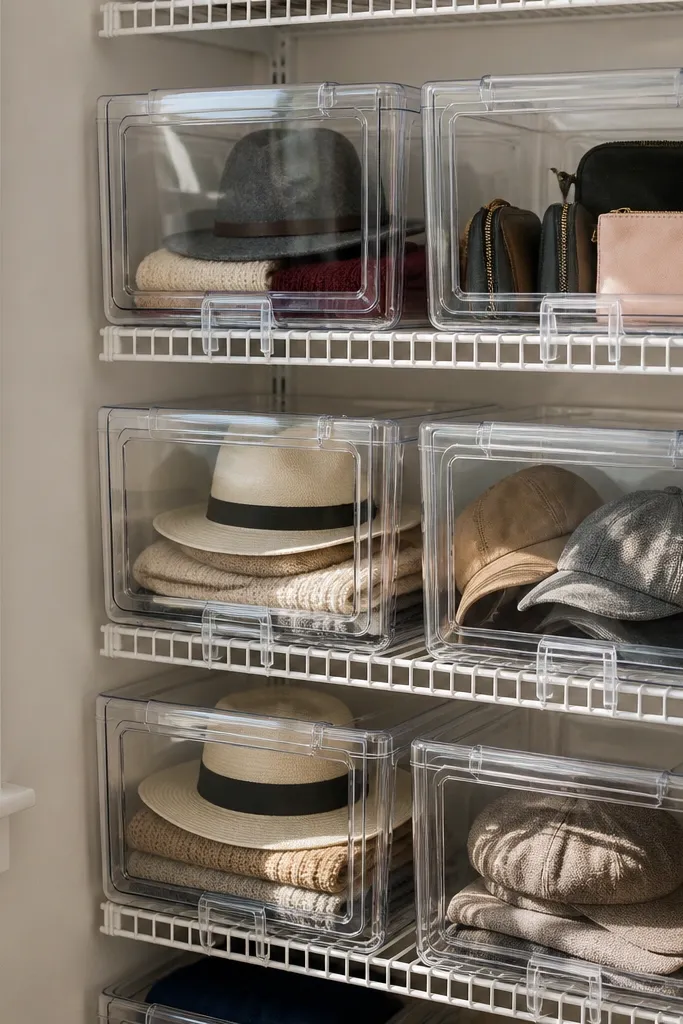
Clear snap-front bins cut down the rummaging problem because you can see what’s inside at a glance. The snap front keeps the contents from spilling when you pull the bin out, and it’s easier for beginners than lidded bins that require two hands. I like clear bins for shoes accessories, seasonal hats, and anything you forget you own. The catch is that clear plastic can show dust, so it’s best for closets you actually keep wiped down.
Select bins that fit your shelf depth with at least a 1-inch gap from the back wall for airflow. Place the bin on a non-slip pad and pull-test it by sliding it forward slightly — it should stop without tipping. Snap the front closed, then label using a removable label on the side so you can update it later.
Use a fine microfiber wipe on the lid every time you do a quick closet sweep — clear plastic gets dusty fast.
Avoid bins that are too shallow for your items — you’ll end up overstuffing and the snap front will pop open.
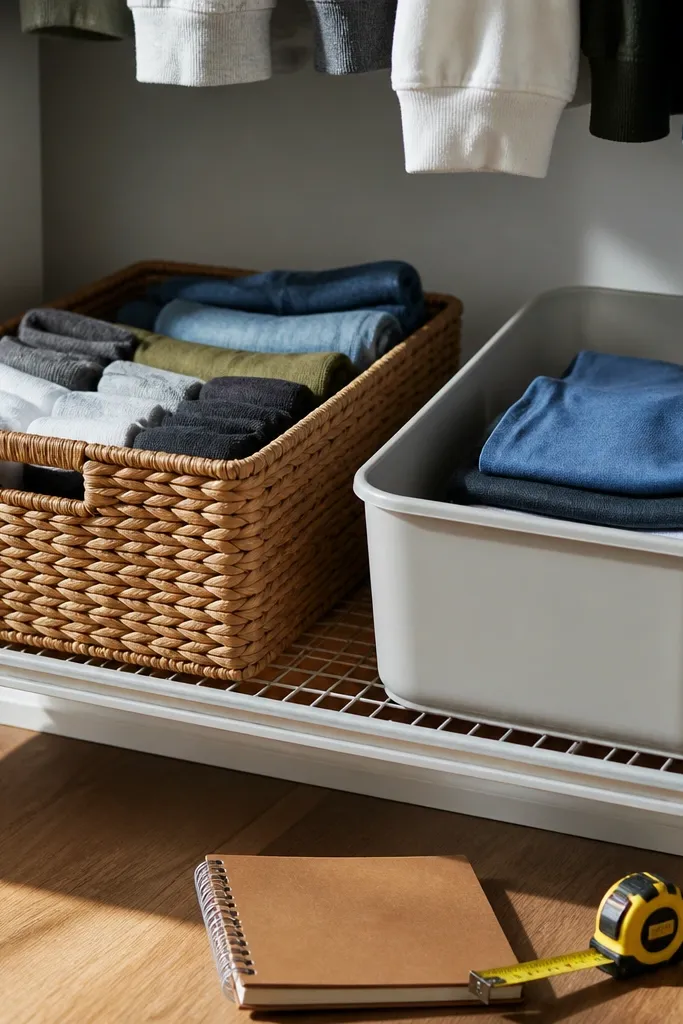
5. Woven Baskets with a Flat, Wide Base
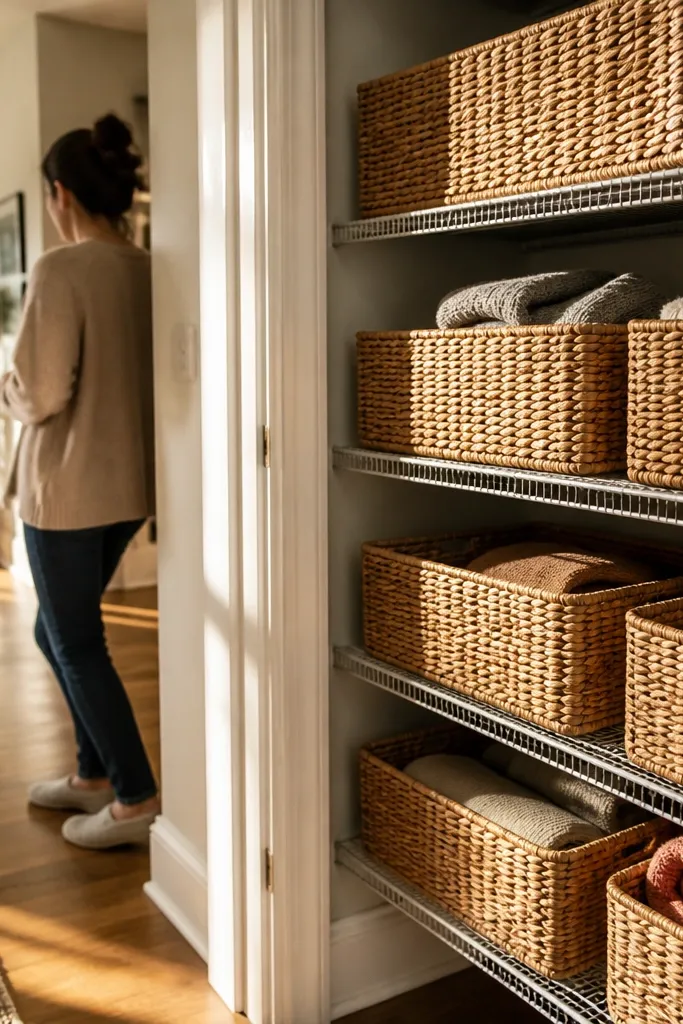
Woven baskets are the “looks good from the doorway” option, especially if your closet is in a visible hallway. The wide base helps them stay stable on wire shelves, and the open weave hides clutter without trapping it. Pick baskets with a flat bottom and thick rim; thin wicker bends and won’t hold folded stacks. These are best for middle shelves where you want a softer look and for items like scarves, beanies, and folded sleepwear.
Choose baskets that sit with a full bottom contact area, not just the edges. Set them on a shelf liner pad so the basket doesn’t slide on wire. If you’re using them for stacked items, keep the stack height low enough that you can lift the basket without pulling the rim.
Put heavier items in the center and lighter items toward the back so the basket doesn’t tip forward when pulled.
Don’t use tall, narrow woven baskets on higher shelves — the center of gravity makes them feel unstable.
6. Fabric Cubes with a Wire-Reinforced Frame
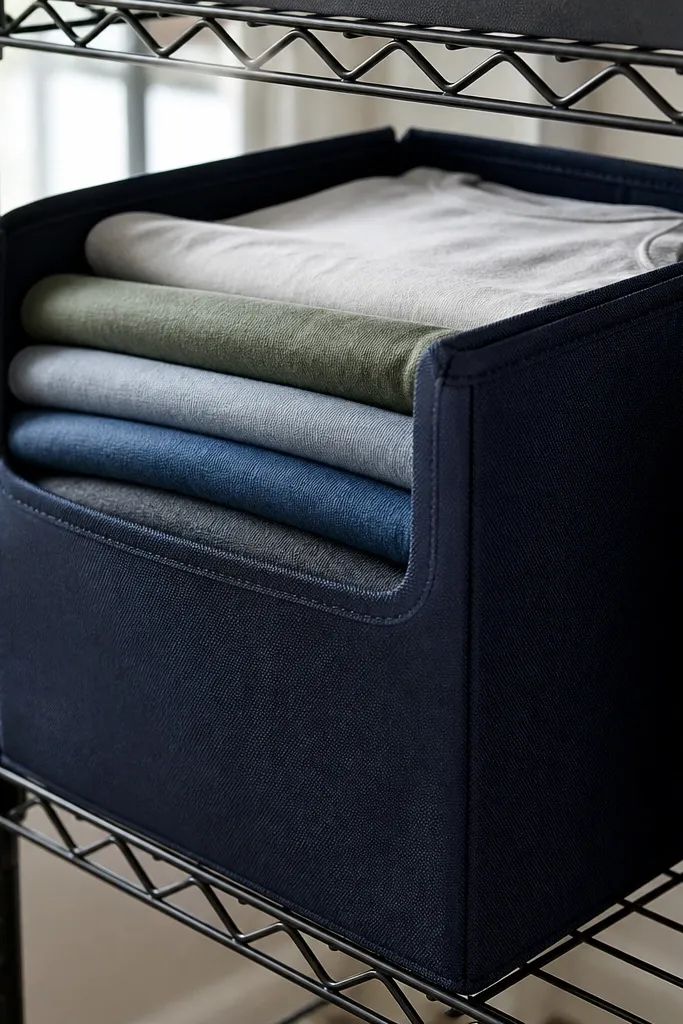
Fabric cubes with a wire-reinforced frame give you a structured shape without hard plastic. They’re beginner-friendly because you can compress them when you need space, but they still hold their form when filled. The wire frame helps them sit more evenly on wire shelves so the bottom doesn’t collapse into the grid. This option works well in small closets for linens, kids clothes, or anything you sort by category rather than by exact item.
Pick cubes with a stiff frame and straight side panels so they don’t bow. Place the cube on a shelf liner and check that the bottom stays flat after you load 2-3 folded stacks. If you’re using multiple cubes, align them by the front edge so you don’t create gaps that catch hangers or sleeves.
Editor's noteUse a label on the inside front flap so you still see it even with the cube partially filled.
Skip thisSkip cubes with no reinforcement — they look neat empty and collapse once you actually store things.
7. Stackable Lidded Bins Built for Closet Shelves
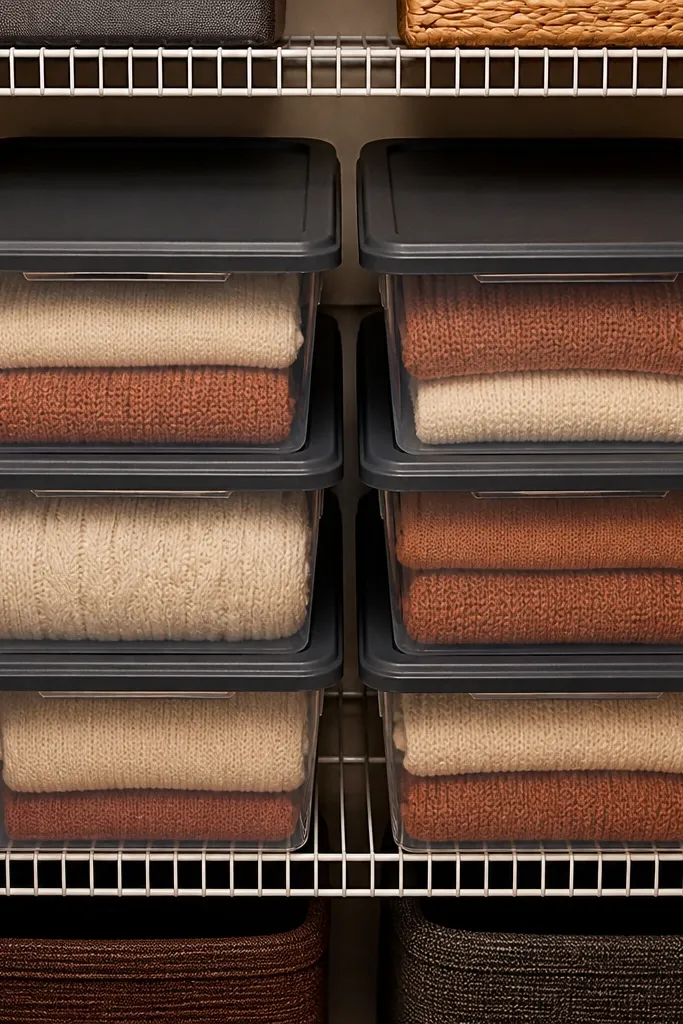
Stackable lidded bins are the best pick when you need height, not just organization. On wire shelving, the biggest win is keeping bins aligned so you can build a column that doesn’t wobble. Lids protect against dust and help keep seasonal clothes from getting that “closet smell” from air exposure. Choose bins with interlocking lids or stack tabs so the top bin can’t shift when you open the closet door. This is a great fit for top shelves where you store winter gear and don’t want to repack every month.
Measure your vertical clearance from shelf to shelf so the lid doesn’t collide with the next wire shelf above. Place the bottom bin first, then lock the lid or stack tabs and test the stack by gently pushing side to side. Add non-slip pads under the bottom bin only, because too much padding can make the bin sit uneven.
Label the lid, not the side — it’s faster to scan from the doorway.
Don’t stack bins that don’t lock — stacking on wire shelves turns into a slow slide over time.
8. Rolling Wire Basket Cart for Closet Floor Storage
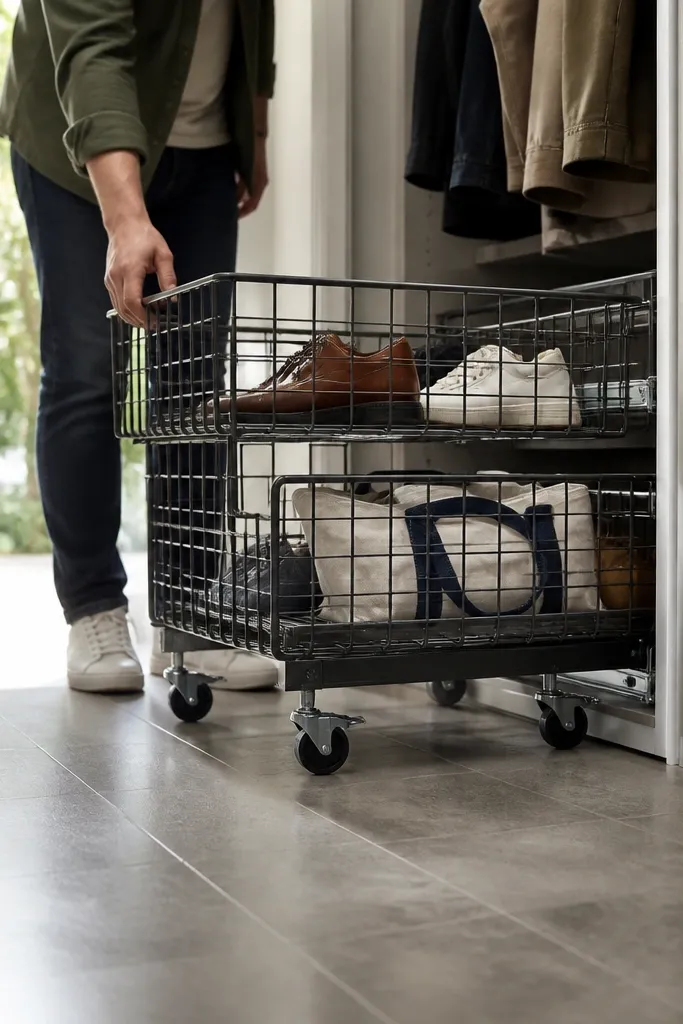
If your closet floor is where clutter goes to multiply, a rolling wire cart fixes the problem by giving you a dedicated “moveable zone.” You can pull the cart out to find something without digging through piles, and wire baskets let air circulate around shoes and bags. Look for carts with locking casters if the closet is in a hallway; unlocked wheels create small shifts every time you open the door. This works best for floor-level items like extra shoes, gym bags, or seasonal totes.
Choose a cart width that fits your closet door opening without forcing you to angle it. Put heavier items on the bottom basket and lighter items on top to keep it stable. Lock the casters, then do a quick clearance test by opening the closet door — you want the cart to stay fully inside the doorway swing.
Use a thin rubber mat under the cart if your closet floor is smooth — it reduces micro-movement.
Skip carts with soft caster wheels on carpet — they drag and make the cart annoying to use.
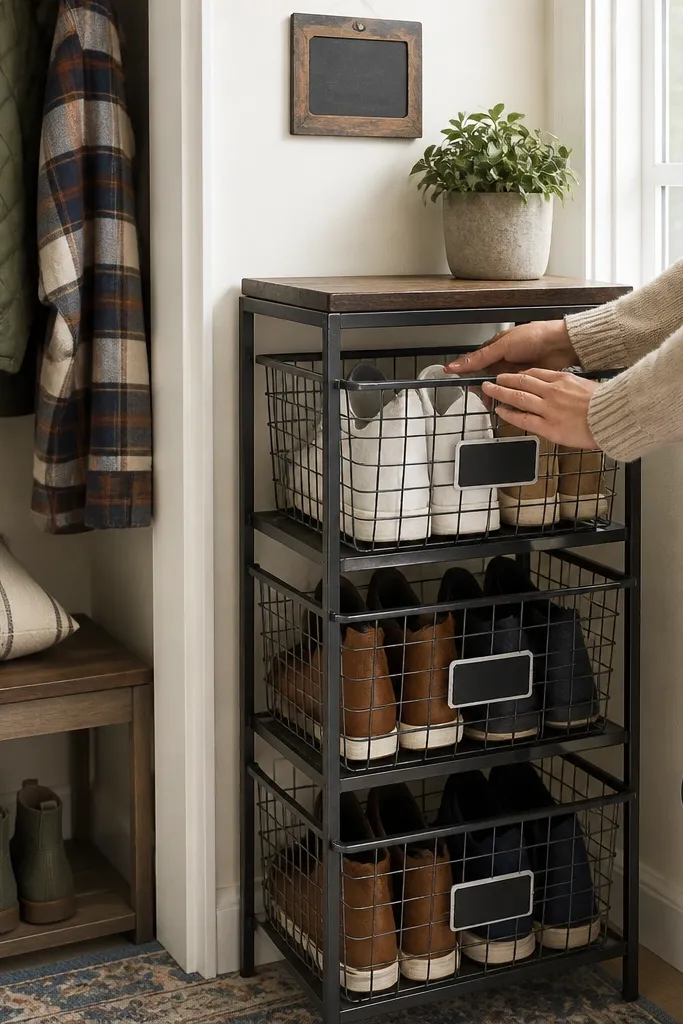
9. Shoe-Specific Wire Baskets with Dividers
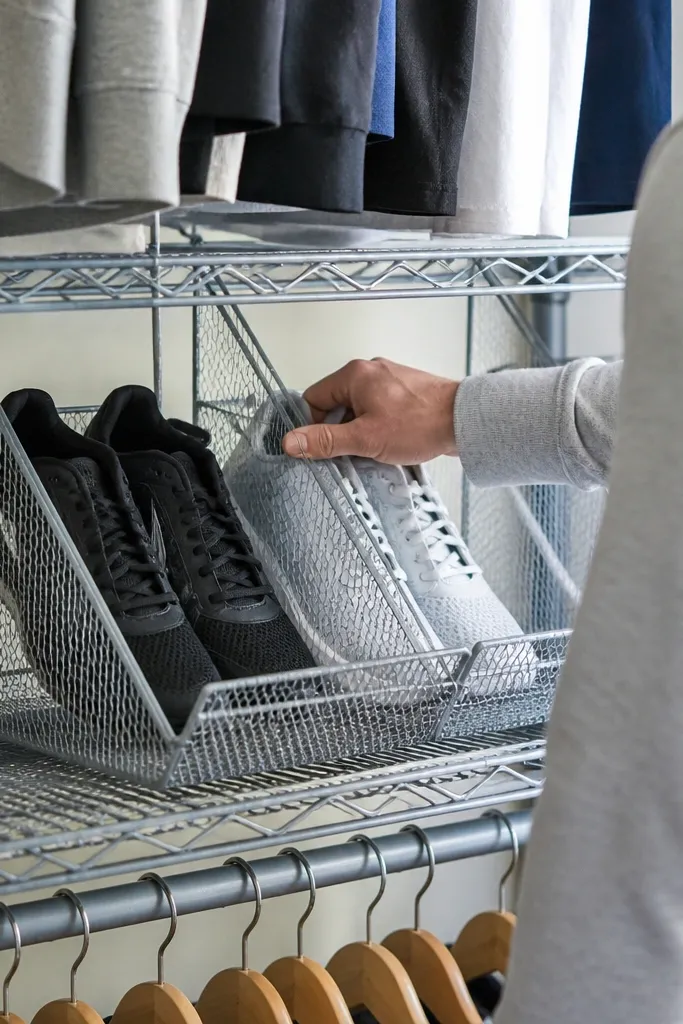
Shoe chaos is where wire shelf organization usually falls apart, because shoes slide and take up irregular space. Shoe-specific wire baskets with dividers keep pairs from migrating and make it easy to grab one side without moving everything. The wire construction also handles airflow, which matters if you store sneakers that aren’t fully dry. This is best for middle-to-lower shelves where you want shoes upright and visible instead of stacked in a pile.
Measure the shoe basket opening and compare it to your widest sneaker toe box. Install or place the basket so the dividers line up with the shelf’s front edge; that keeps pairs from tipping forward. Add a small non-slip liner under the shoes if your sneakers have smooth soles that slide.
Editor's noteStore only fully dry shoes in wire baskets — air helps, but trapped moisture still causes odor.
Skip thisDon’t use general-purpose baskets for shoes — without dividers, pairs shift and you lose the system.
10. Clip-On Shelf Bins for Wire Racks
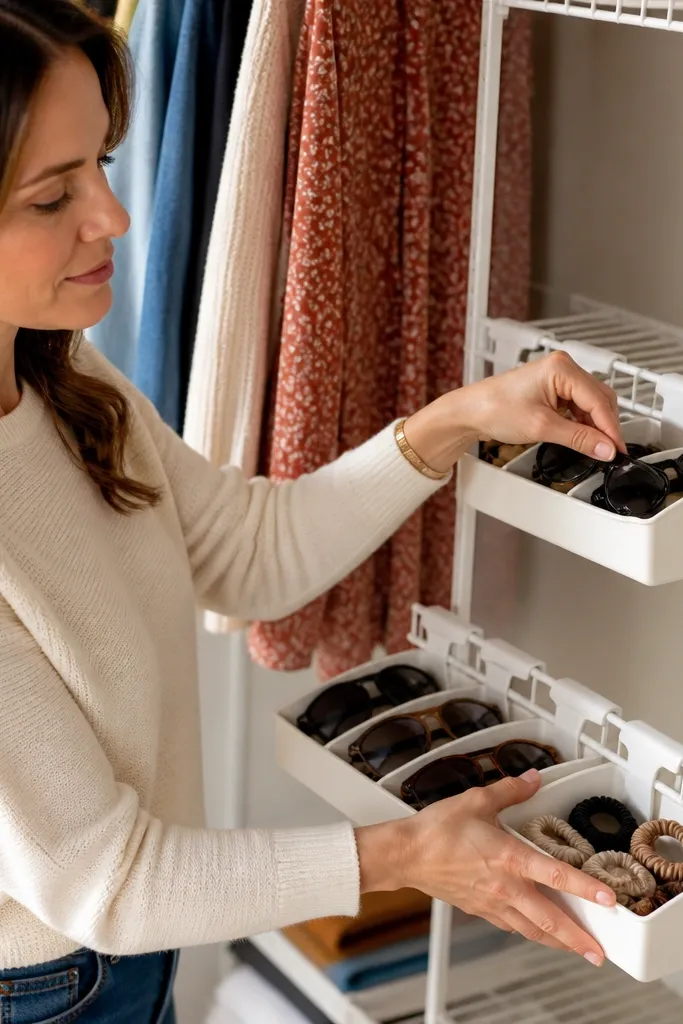
Clip-on bins are the most “stay put” option for beginners because the hardware connects the container to the shelf rails. That means less wobble, less sliding, and fewer moments where you pull one bin and everything shifts with it. Look for bins with snap tabs that attach to the wire shelf without tools, and bins that have a reinforced bottom. This option is especially good for busy households, laundry closets, and any closet where the door gets opened and closed all day.
Pick clip-on bins that match your shelf rail style — the tabs need to fit the wire thickness. Clip the bin onto the rails first, then test by pulling the front edge lightly. If the bin moves, re-seat the clips closer to the corners so the load spreads across the shelf.
Editor's noteIf you have kids or frequent access, clip bins on both sides of the shelf for the best anti-wobble.
Skip thisDon’t force mismatched clips onto different wire rail sizes — you’ll weaken the tabs and the bin will loosen.
11. Collapsible Storage Tote with Stiff Side Panels
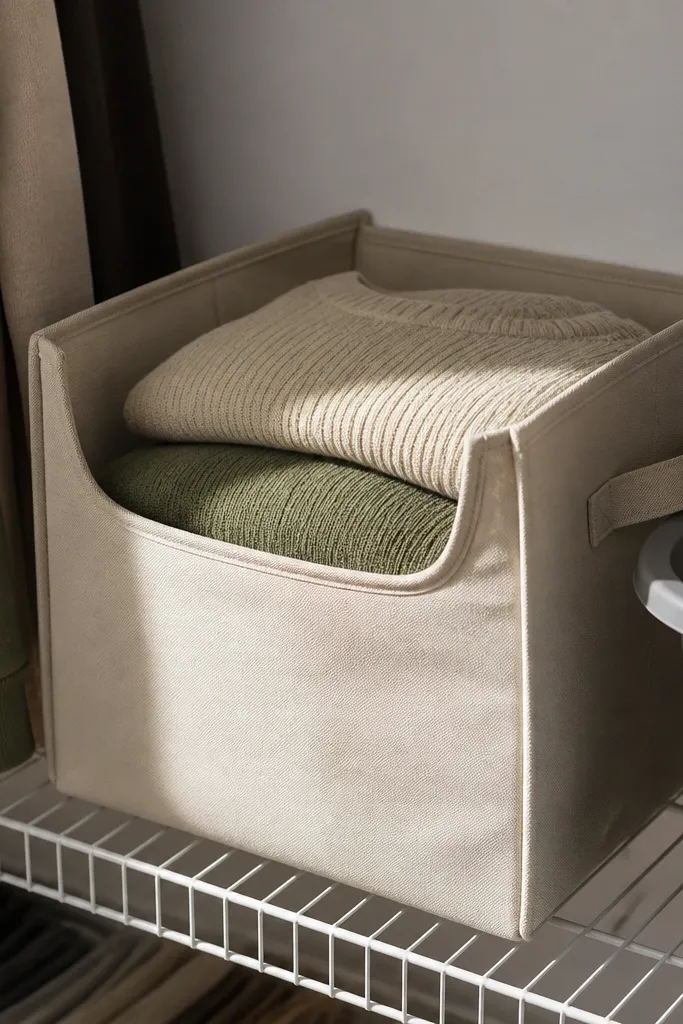
A collapsible tote is a good choice when you need storage now but you also want flexibility later. Stiff side panels help it hold shape so folded sweaters don’t slump into a lopsided pile. The tote style also makes it easier to carry from closet to laundry room without unstacking everything. This works best for middle shelves and for items you move seasonally, like scarves, beanies, and extra blankets.
Choose a tote with stiff side panels and a flat base insert so it sits evenly on wire rails. Compress the tote slightly and place it on the shelf to check that it doesn’t rock. Fill it with 2-3 layers of folded items, then lift using the handles to confirm the base stays supported.
Editor's noteUse fabric dividers inside the tote if you store mixed items — it keeps you from digging.
Skip thisAvoid totes with soft gussets on the sides — they bow outward and waste shelf space.
12. Wired Basket with Removable Fabric Liner
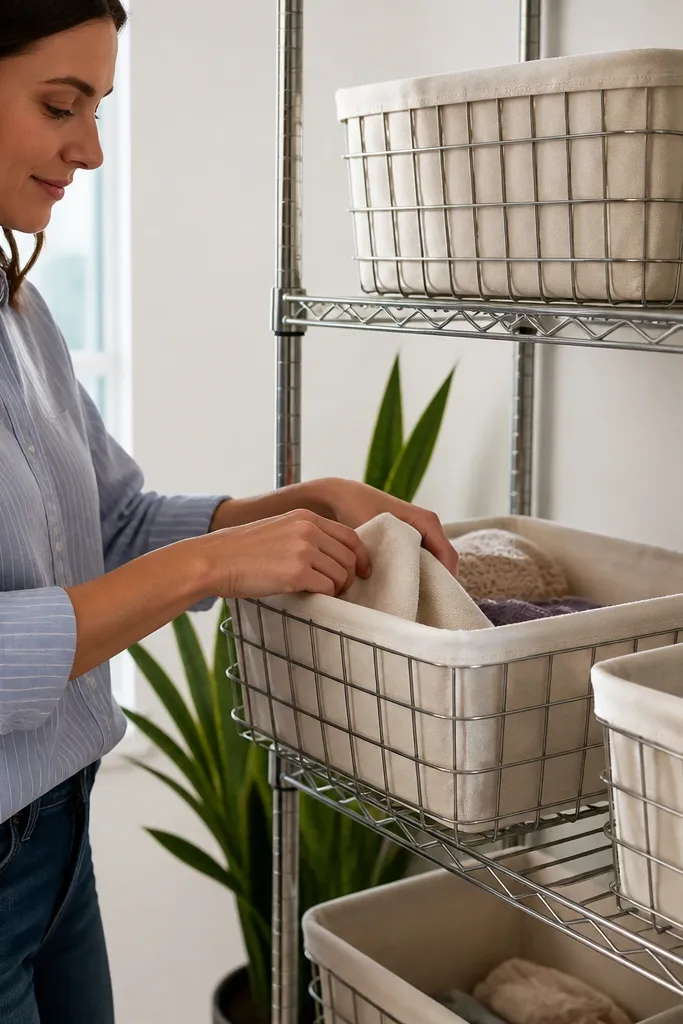
A wire basket plus a removable fabric liner gives you airflow from the wire and a cleaner look from the fabric. The liner prevents small items like socks, hair ties, and scarves from falling through the grid spaces. It also makes emptying easier because you can lift the liner out instead of dumping the whole basket. This is a great beginner option when you want the benefits of wire baskets but you’re tired of small stuff getting lost.
Buy a wire basket that matches your shelf size, then choose a liner that covers the full bottom and sides. Place the liner into the basket and tuck the edges so it doesn’t slide. Fill with small categories, then remove the liner to clean or refresh without moving the basket.
Editor's noteKeep one extra liner so you can swap and wash without leaving the closet half organized.
Skip thisDon’t use loose liners that bunch — they snag on the basket and make quick grabs slower.
13. Under-Shelf Hanging Bins for Shoes and Accessories
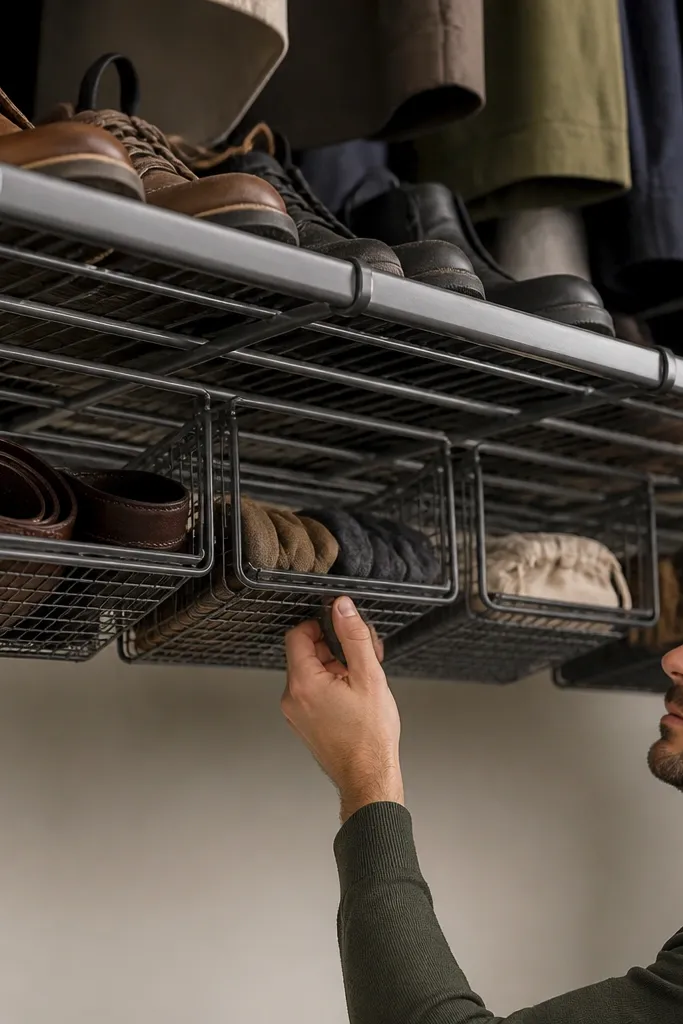
Under-shelf hanging bins use the vertical space that most people ignore, and they’re great for beginner-friendly organization because you don’t have to replace the whole shelf. They’re ideal for small items that you want to grab without bending — socks, gloves, belts, and small bags. The key is choosing bins with a sturdy hanger and a bottom that doesn’t stretch when loaded. This works best on lower shelves where you can reach comfortably and where you want shoes or accessories to stay off the floor.
Measure the clearance under the shelf so the bin doesn’t hit your knees when you open the closet door. Choose a hanging bin designed for wire shelves with a hook or clip hanger that locks onto the wire. Attach, load light items first, then test by pulling the bin forward gently — it should not sway.
Editor's noteUse a bin liner or a small insert pocket for belts so they don’t tangle.
Skip thisSkip flimsy hanging bins — a stretched hanger makes the bin tilt and dump.
14. Fabric Drawstring Hamper Bins for Dirty-to-Clean Sorting
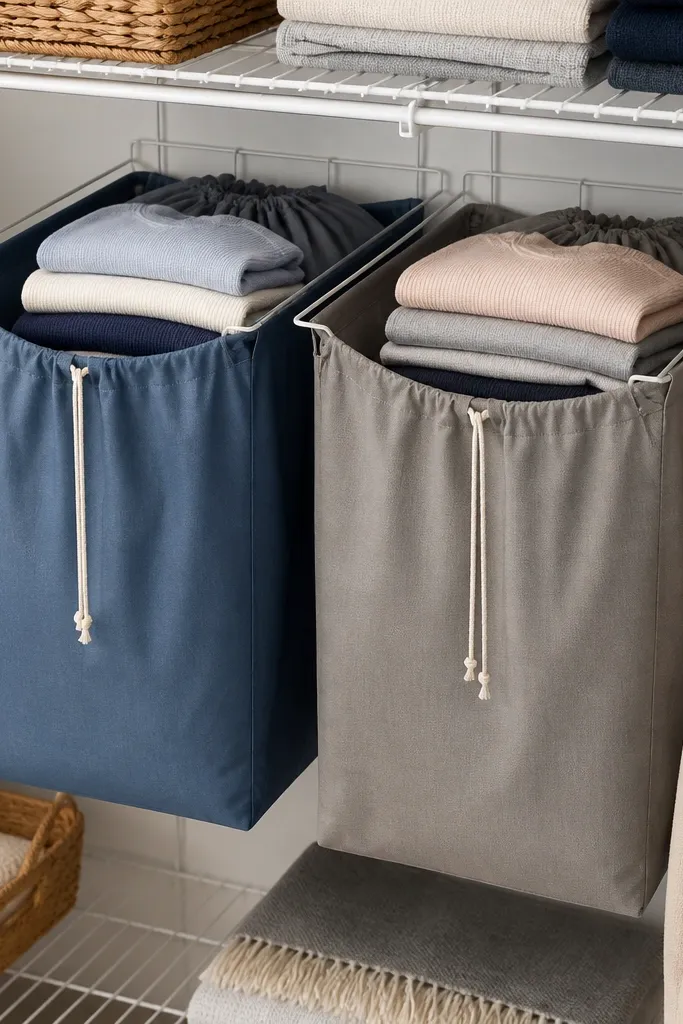
A drawstring hamper bin is a smart wire-closet organizer when you want a sorting step, not just storage. You can keep a “wear again” pile separate from “laundry” items, and the drawstring keeps the closet from looking messy between loads. For wire shelves, the fabric and airflow reduce trapped odor compared to fully sealed containers. This is best for laundry-adjacent closets or bedrooms where clothes management is the real problem.
Pick a hamper bin sized to your shelf so it sits fully on the rails without hanging over the edge. Place it on a shelf liner to prevent sliding, then tie the drawstring so it doesn’t snag on wire. Use two bins side-by-side or one bin with a divider insert so sorting is clear.
Editor's noteWash the hamper liner on a schedule — odors stick to fabric and spread into nearby items.
Skip thisDon’t use a hamper bin that’s too small — overstuffing makes the drawstring jam.
15. Rigid Plastic Drawer-Style Bins for Small Items
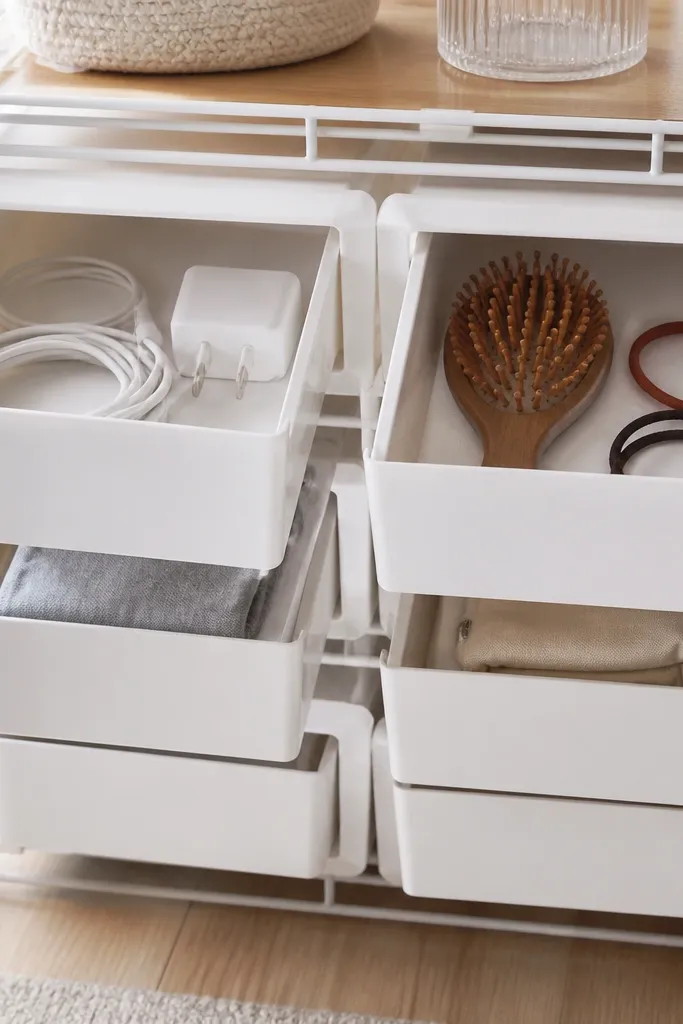
Drawer-style bins are the cleanest fix for small-item clutter because you stop the “pile digging” habit. They slide out like shallow drawers, so you can access jewelry, hair tools, socks, and chargers without moving everything above it. On wire shelves, choose bins with a rigid side frame so they don’t sag in the middle and bind when you pull them. This option is best for middle shelves where you can see and use drawers often.
Measure the shelf opening and choose a drawer bin that fits without rubbing the shelf rails. Install or place the bin so its front edge clears the wire without snagging hangers. Pull each drawer fully loaded once to confirm smooth movement, then label the drawer face with masking tape at first.
Label with tape and a marker first — you can update the labeling after a week of real use.
Avoid bins that require you to lift to remove — drawer-style only works if it slides smoothly.
16. Two-Tier Stackable Shelf Organizers for Wire Closets
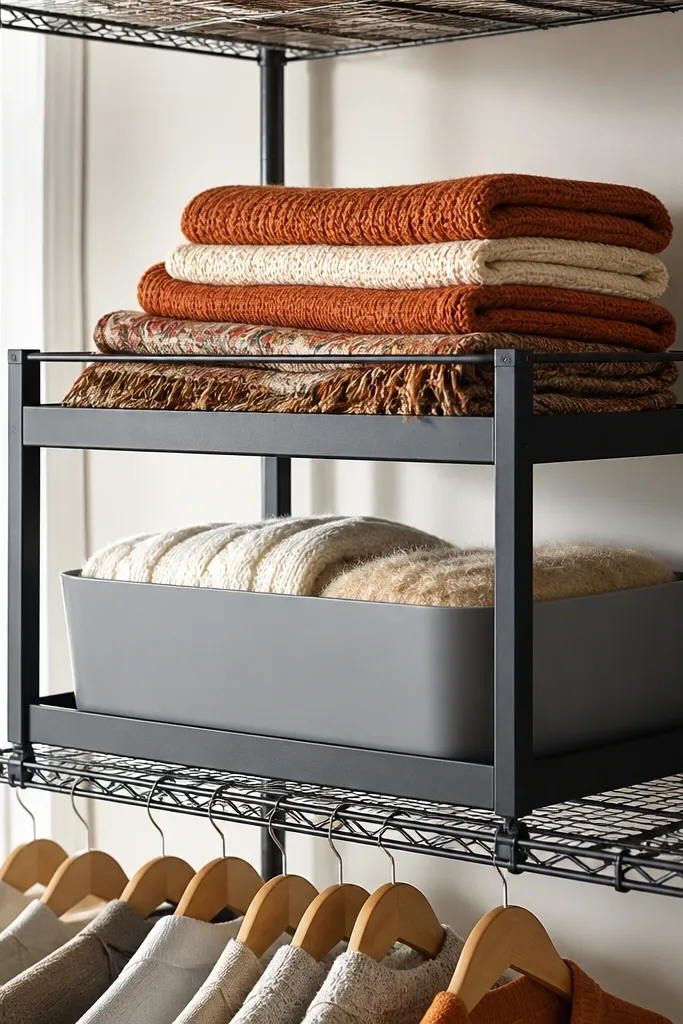
Two-tier stackable organizers create more usable shelf height without adding new shelves, which is a huge win in tight closets. The top level keeps frequently used items visible while the bottom level holds bulk or less-used pieces. On wire systems, look for organizers that lock to the shelf rails so the two tiers don’t drift apart. This is best for middle shelves where you want to separate categories like tees vs. Leggings, or accessories vs. Folded socks.
Confirm your wire shelf rail height and choose an organizer that matches it so the top tier sits level. Place the organizer on the rails, then load lighter items on top and heavier items on the bottom. Test stability by pressing down at the front corner — it should not flex.
Editor's noteUse shallow bins on the top tier and deeper bins on the bottom tier so your hands don’t snag on taller items.
Skip thisDon’t overload the top tier — extra weight makes the frame tilt on wire shelves.
17. Modular Plastic Bin Sets with Snap Dividers
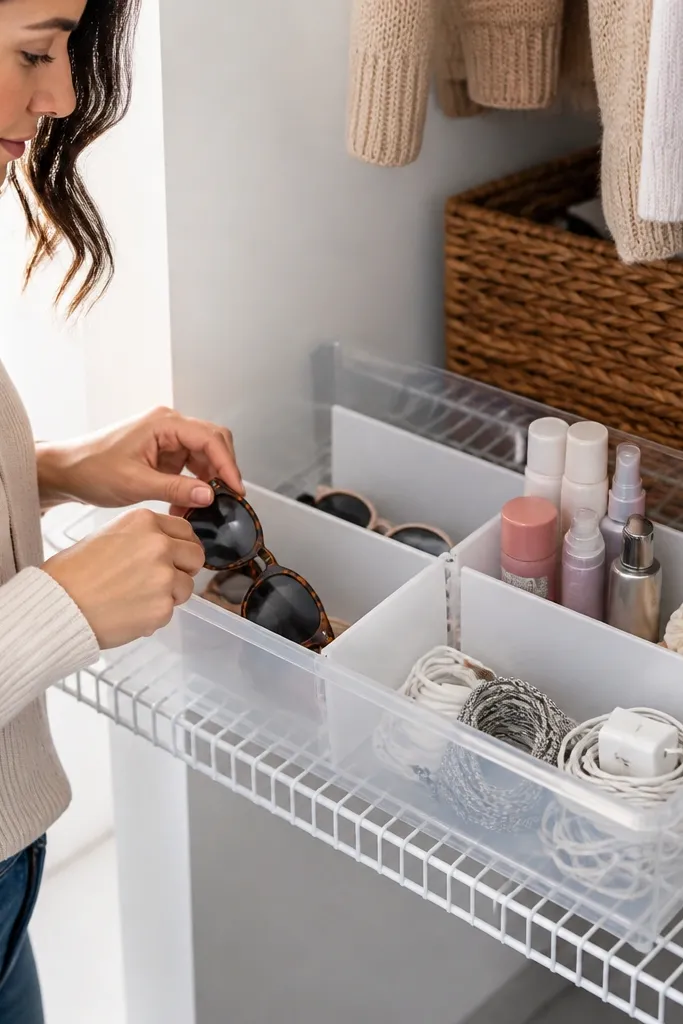
Modular bin sets with snap dividers keep categories from bleeding into each other, which is the real reason closets look messy again. Each compartment holds a small group, so you stop the “one box for everything” trap. Plastic bins also wipe clean, which matters for items like sunglasses, hair products, and tech chargers. This is a strong beginner-friendly choice for closets with lots of small accessories and for anyone who hates relabeling later.
Choose a bin system that fits your shelf depth and includes dividers sized for your items. Place the bin on a non-slip pad, snap in dividers, then do a test fit with your heaviest items first. Label each compartment with short text and keep the dividers in place so you’re not reorganizing every time you grab something.
Editor's noteUse dividers for categories, not for single items — you want a small group you can grab quickly.
Skip thisDon’t use modular bins for bulky items — dividers waste space and you’ll end up removing them.