1. Matte black barn track with solid oak slab door
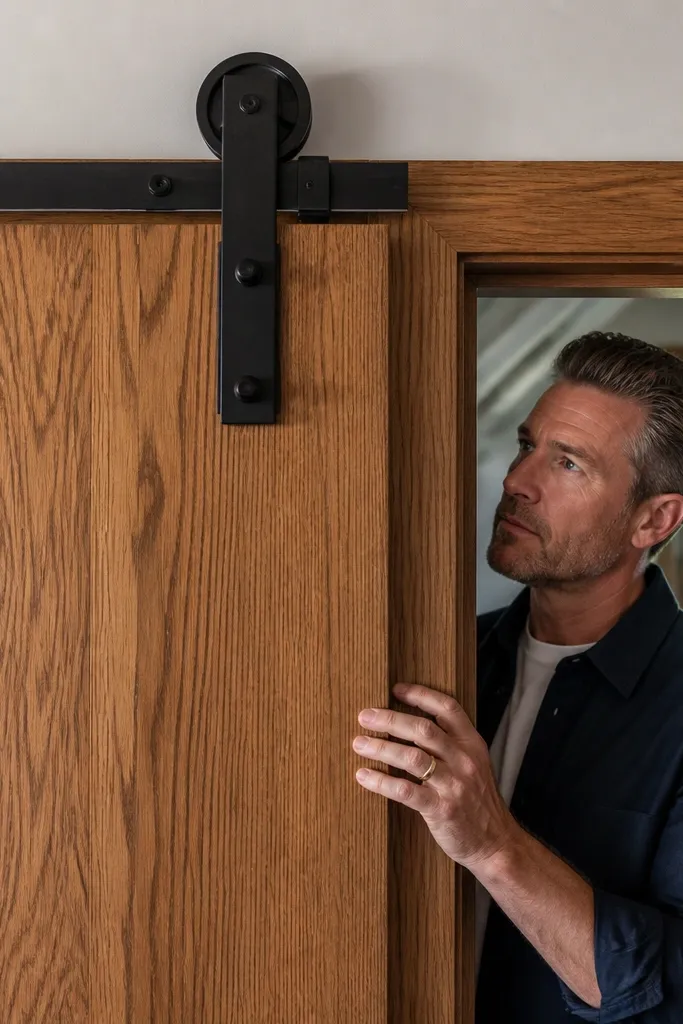
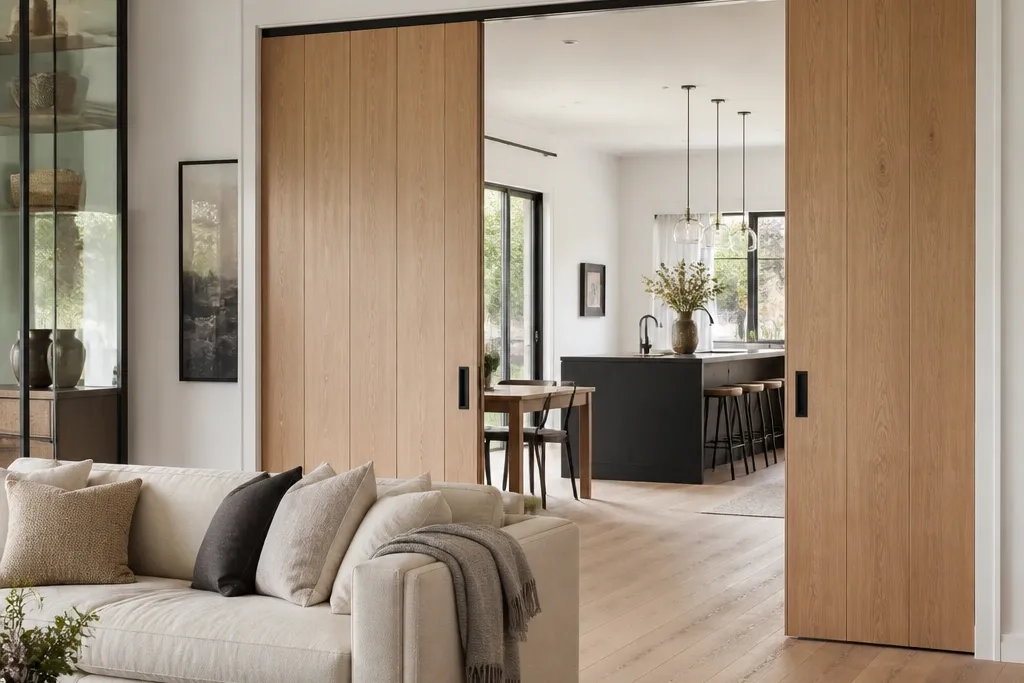
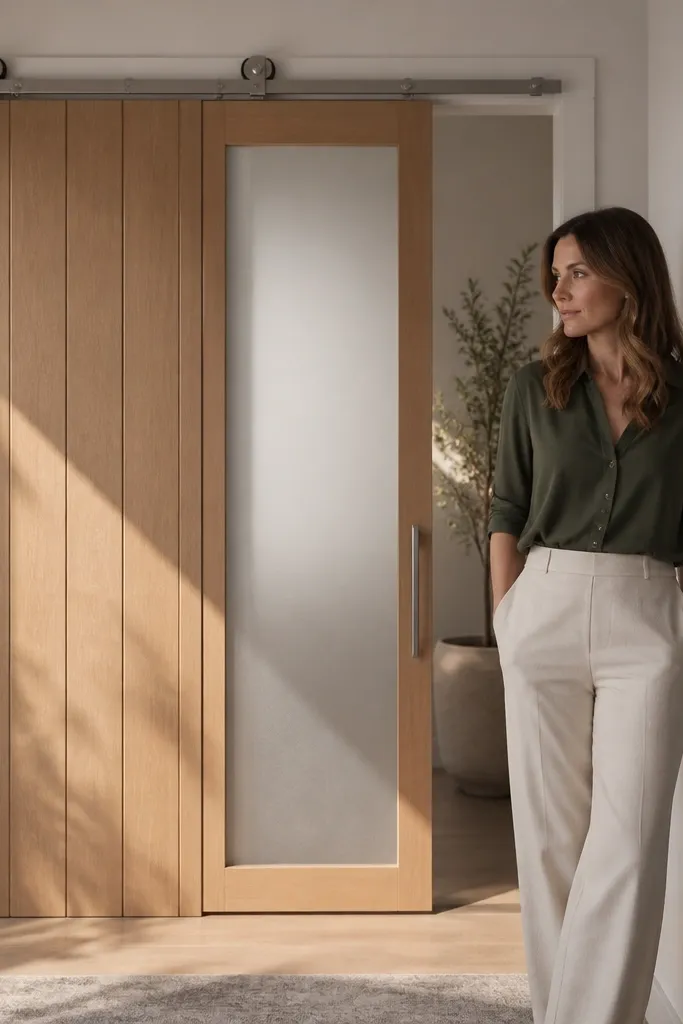
This is the clean, high-contrast look that reads “intentional” in photos. A solid oak slab gives visible grain and warmth, while matte black track hardware makes the whole thing feel modern and crisp. The key is to keep the trim simple and continuous so the door edge looks like it belongs in the opening. If your door hardware is brushed or shiny, it will fight the oak tone, so stick to matte finishes. This works well for living rooms, offices, and dining areas where you want the door to look like a design element instead of a utility panel.
Start by choosing a door slab width that overlaps the opening by at least 1/2 in on both sides when closed. Install a matte black surface-mounted rail on a level line across the top of the opening, using a stud finder and 2-1/2 in wood screws. Add a matching face trim around the opening so the door gap disappears when the door is shut. Hang the door on the rollers, then set the bottom guide so the door stays plumb without rubbing. Finish by adding soft-close stops at the end positions to prevent impact.
Editor's noteUse a 2 ft level and check the rail in two directions before tightening the last screw.
Skip thisDon’t use a glossy track finish with oak — the shine makes the hardware look cheap fast.
2. White shaker door with brushed nickel concealed wheels
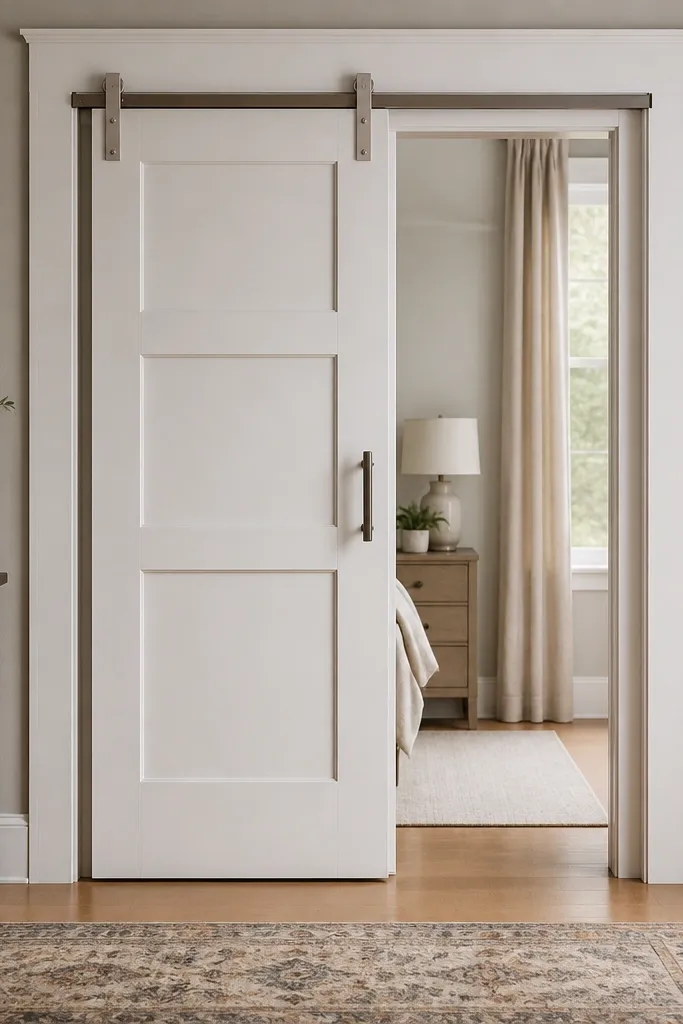
A shaker profile reads classic and neat, and white keeps the space bright. The brushed nickel wheels add just enough warmth to avoid looking like cold metal on a white door. The best part is how the paneling breaks up the flat surface, so the door looks styled even when it’s closed. This is a great choice for hallways, laundry rooms, and small spaces where you want “clean and bright” instead of heavy. It also hides imperfections well because the rail and trim can be painted the same white.
Pick a pre-built shaker slab or assemble shaker panels onto a 1-3/8 in thick core for stiffness. Paint the door and trim before install so you don’t get roller marks in awkward corners. Mount the top rail level with concealed wheel hardware, following the manufacturer’s bracket spacing so the door doesn’t sag. Install a bottom guide that touches the door edge lightly, leaving a paper-thin gap for movement. Finally, paint or caulk the trim seams so the opening looks framed, not patched.
Dry-fit the door on the track before painting the trim — it’s easier to adjust the overlap while everything is bare.
Don’t mount the rail too low; it will visually shrink the opening and make the door look off.
3. Reclaimed barnwood door with warm bronze hardware
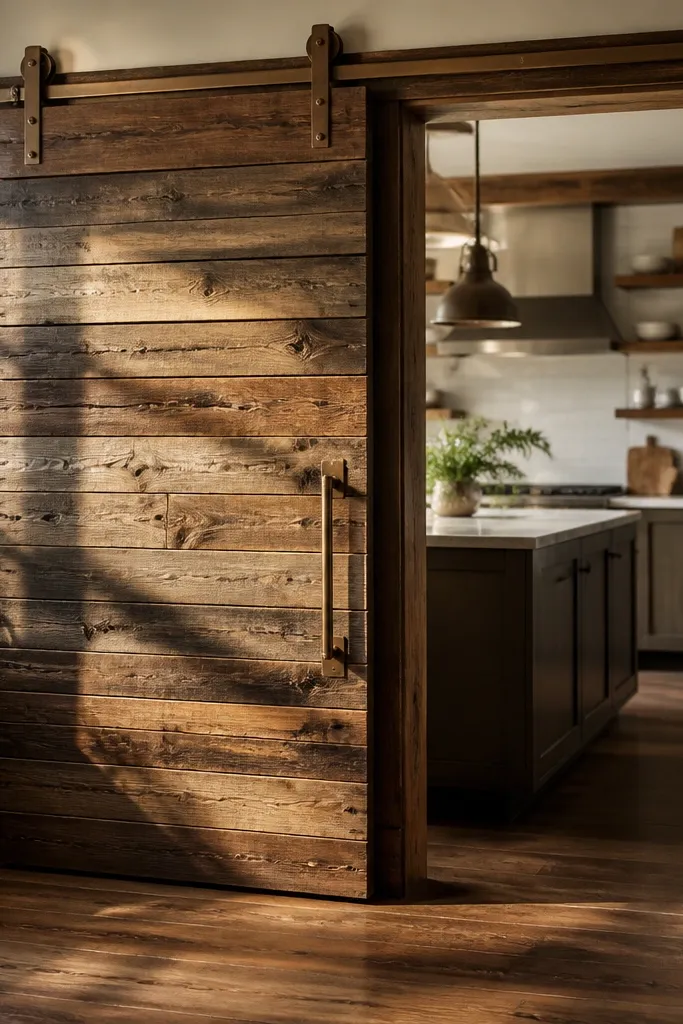
Reclaimed barnwood has built-in texture, so the door becomes the focal point. Warm bronze hardware keeps the look earthy instead of industrial. The trick for a clean aesthetic sliding door design is controlling the chaos: use a consistent frame and keep the track hardware finish uniform. If your boards are too mismatched, the door reads messy; if you select planks with similar tone, it reads curated without looking staged. This works especially well for kitchens, breakfast nooks, and entry spaces where you want character but still want the opening to look finished.
Build the door using a plywood core with barnwood cladding, so it won’t warp like full solid boards. Lay out boards side-by-side with 1/8 in spacing for expansion, then glue and nail them to the core using small finishing nails. Frame the edges with straight trim to create a clean perimeter line. Install a bronze surface-mounted track, and set the rail so the door overlaps the opening by at least 1/2 in. Seal the wood with a matte clear finish, then add a bottom guide to prevent swinging and rubbing.
Editor's noteStain or tone the cladding before sealing so the plank color variation stays intentional after the clear coat.
Skip thisSkip high-gloss clear coats — they make reclaimed wood look plasticky in daylight.
4. Frosted glass insert door with matte black frame
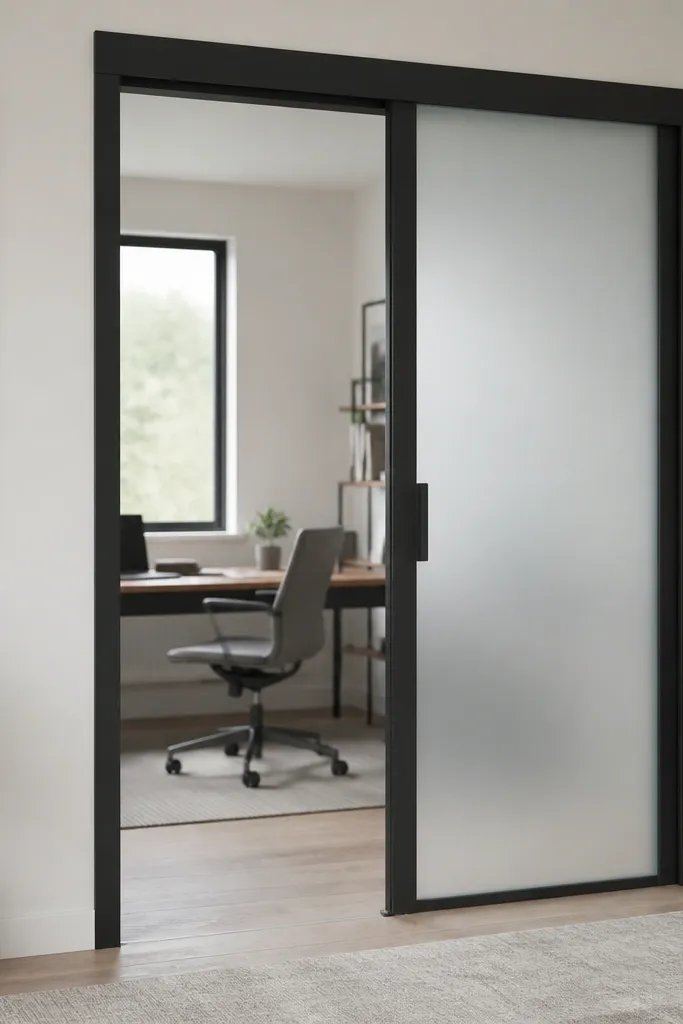
Frosted glass gives privacy without making the room feel enclosed. The matte black frame keeps it modern and sharp, and the light diffusion looks great in photos because it softens harsh shadows. This aesthetic sliding door design is ideal for bathrooms, home offices, and any spot where you want airflow and a lighter visual footprint. The glass also hides clutter behind it while still letting you see movement. If you’re trying to make a narrow hallway feel bigger, frosted panels do that better than solid doors.
Use a solid door frame (wood or aluminum) with glass rated for interior door use, typically 1/4 in thick acrylic or tempered glass. Build or buy the frame so the glass sits in a gasket channel — don’t rely on caulk alone. Spray or powder-coat the frame matte black, then install the glass with the manufacturer’s glazing clips. Mount a matte black top rail and roller set, keeping the rail level so the door doesn’t drift. Add a bottom guide and adjust so the door doesn’t scrape the glass edge.
Choose frosted glass that has an even pattern — patchy frosting looks uneven once installed.
Don’t use thin craft glass — it chips and looks uneven at the edges.
5. Mirrored sliding door with champagne gold track
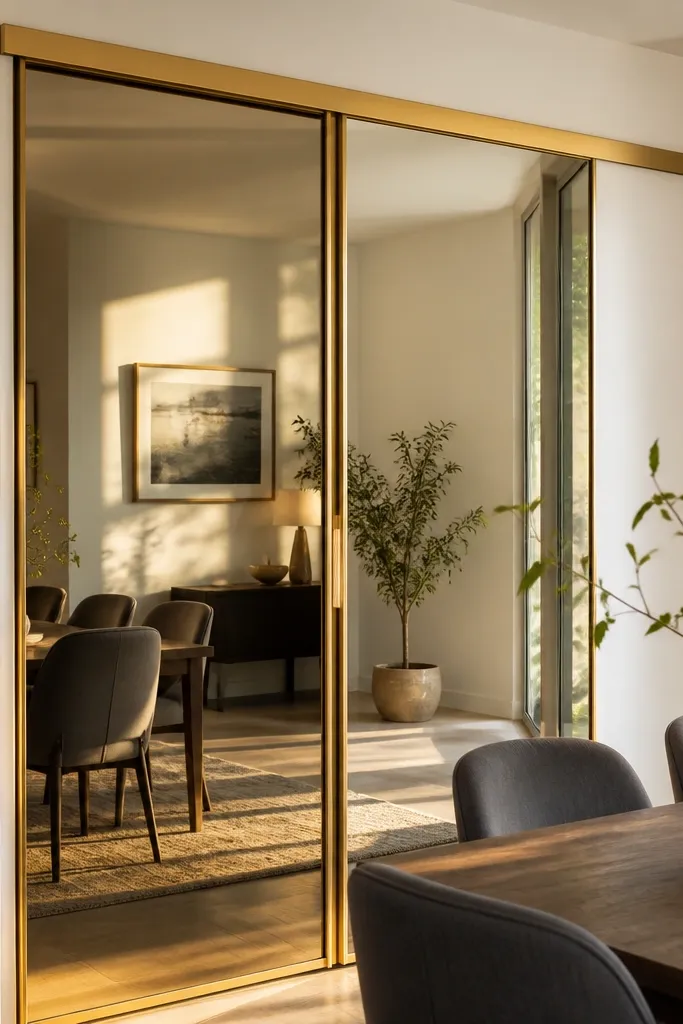
Mirrors make a room feel bigger, and they photograph beautifully because they bounce light across the walls. A champagne gold track adds warmth so the mirror doesn’t look like a retail display. The aesthetic sliding door design here is about clean reflections — you want a smooth, continuous frame and a track that matches the mirror’s vibe. This is great for entryways, dining rooms, and bedrooms where you want a glam touch without adding another surface. Keep it away from humid bathrooms unless the mirror is properly sealed.
Start with a mirror door panel that’s built for sliding hardware, with backing that prevents warping. Install a champagne gold surface track and hang the door with rollers rated for the mirror weight. Add a perimeter frame so the mirror edges are protected and visually crisp. Install soft-close stops so the mirror doesn’t slam into the end caps. Finally, add a bottom guide that keeps the mirror aligned without touching the glass surface directly.
Editor's noteUse felt or rubber contact points where the guide touches the door so you don’t scratch the backing.
Skip thisDon’t mount mirror doors without a bottom guide — they swing and eventually loosen the rollers.
6. Vertical slat door with clear finish and black hardware
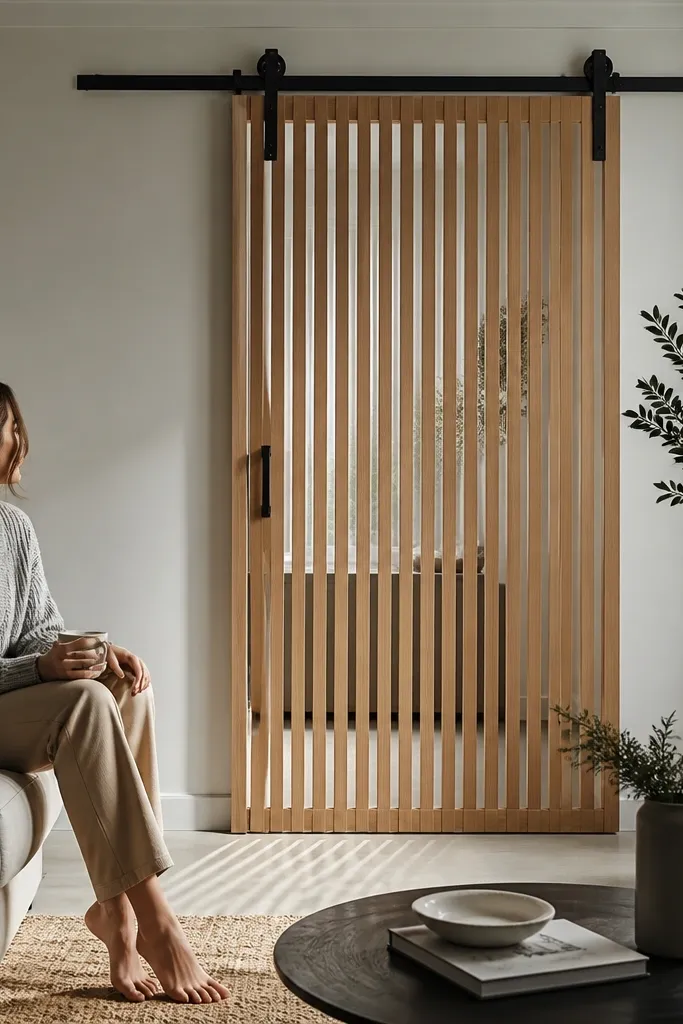
Vertical slats create movement and texture, and the gaps add that airy look that makes rooms feel less boxed in. A clear finish keeps the wood tone natural, while black hardware gives sharp contrast. This aesthetic sliding door design works when you want privacy-lite — you can see silhouettes, but it doesn’t feel fully open. It’s perfect for home offices, laundry-to-pantry transitions, and living rooms where you want the door to look like furniture. The best part is how the slats catch light — photos show depth even from straight-on angles.
Build a door frame and install 1-1/4 in wide slats spaced about 1/4 in apart, leaving a consistent reveal for a clean grid. Use a solid core or rigid backing so the slats don’t flex when the door moves. Sand to 150 grit, then apply a clear matte or satin finish that won’t turn yellow fast. Mount a black surface track level, and hang the door with roller sets that can handle the door weight. Fit a bottom guide to keep slats aligned and avoid rubbing on the frame.
Editor's notePre-stain slats before assembly so the color is even in every gap.
Skip thisDon’t use random slat widths — it looks cheap once installed.
7. Tongue-and-groove interior door with white paint and brass pulls
Tongue-and-groove paneling gives you a classic texture that looks expensive even with plain paint. White paint makes it feel fresh, and brass pulls add a warm accent that prevents the door from looking sterile. This aesthetic sliding door design is great when you want farmhouse-leaning charm without heavy rustic hardware. It also hides small dents and installation marks better than flat MDF. Use it for bedrooms, closets, and dining nooks where you want a cozy look.
Use a tongue-and-groove panel insert or build a door with tongue-and-groove boards mounted to a rigid core. Prime with a bonding primer, then paint two coats with a satin finish so the grooves stay defined. Install a brass pull centered at about 36 in from the floor for comfortable grip. Mount a surface track in a warm brass tone, and hang the door with wheels rated for panel doors. Add a bottom guide so the door closes straight and the grooves don’t catch on trim.
Editor's noteSand only the painted faces, not the groove edges — you want crisp line definition.
Skip thisSkip flat paint — it makes grooves disappear in daylight.
8. Walnut veneer door with slim aluminum track
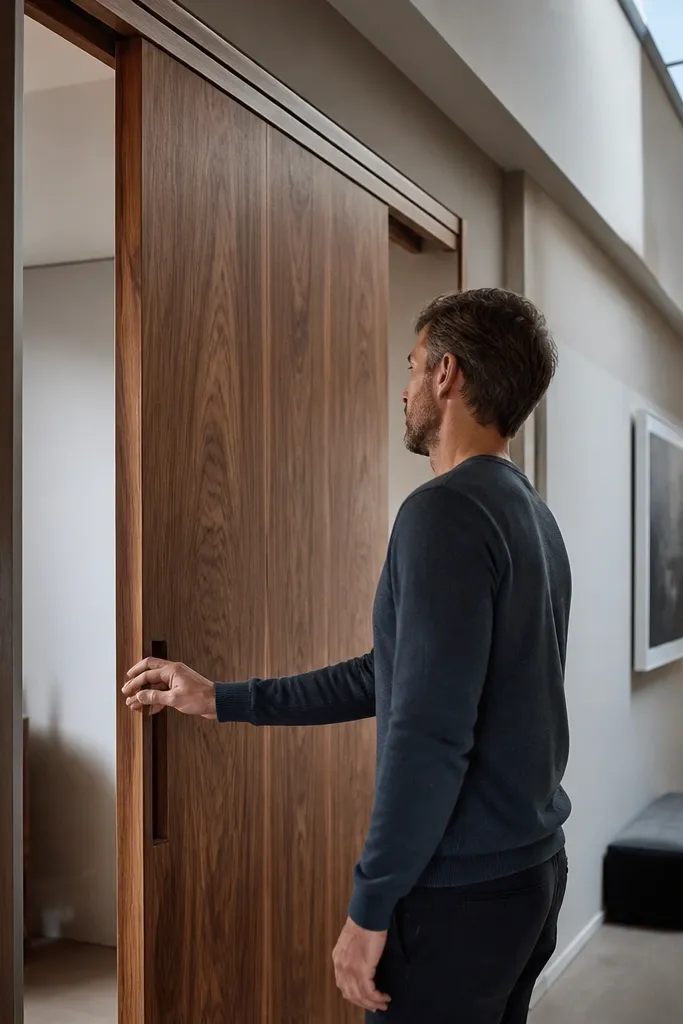
Walnut veneer gives a luxe look without the weight and warping risk of full solid walnut. A slim aluminum track keeps the design modern, like a built-in rather than a barn door. This aesthetic sliding door design works when your space already has clean lines — think modern kitchens, hallways, and lofts. The veneer edge needs to be clean or it will look rough, so you’ll get the best result with solid edge banding and careful trim. It’s also a good choice if you want the door to disappear visually when open.
Buy a walnut veneer door slab or make your own with a plywood core and walnut veneer laminated on both sides for balance. Apply edge banding that matches walnut tone so the perimeter looks finished. Mount a slim aluminum top track with concealed brackets, keeping the rail perfectly level. Install rollers that match the track profile and add a bottom guide for stable travel. Finish the door with a satin clear coat to keep the walnut warm and resistant to fingerprints.
Editor's noteUse a roller cover with low lint when finishing the veneer so you don’t create tiny texture bumps.
Skip thisDon’t leave the veneer edge raw — it will peel and looks unfinished immediately.
9. Rattan panel sliding door with black steel frame
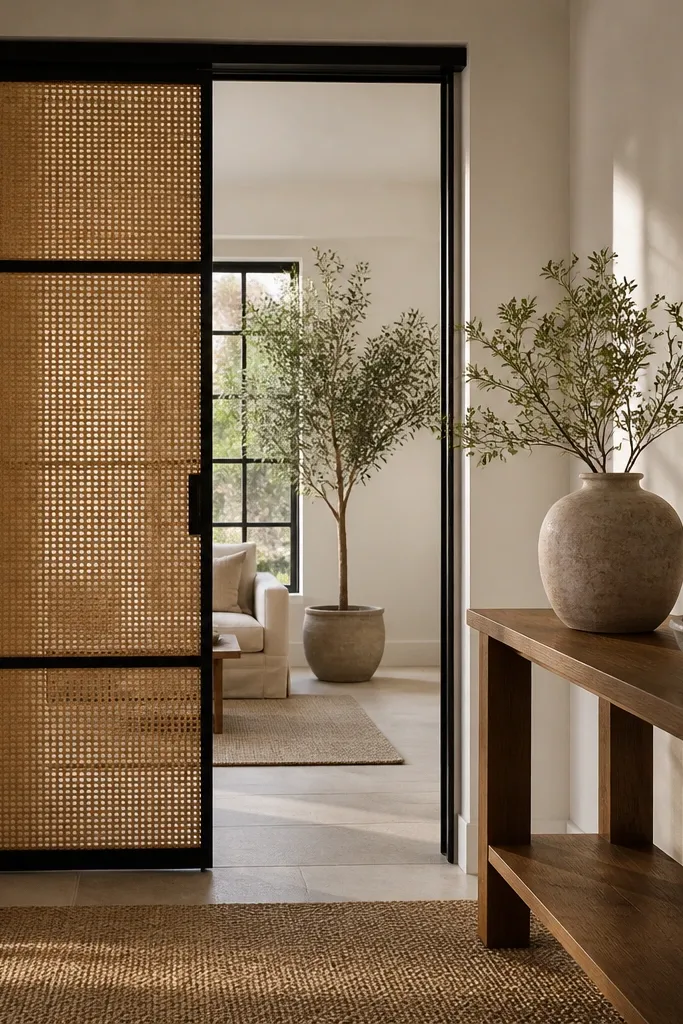
Rattan adds texture and a light, coastal feel that still looks stylish. A black steel frame keeps it grounded and gives the aesthetic sliding door design a modern edge. This is a great option for living rooms and entryways where you want something airy but not flimsy. The door also softens the look of hard surfaces like tile or polished concrete. If your home has woven baskets, linen curtains, or natural wood, this door will match the vibe without trying too hard.
Build a rectangular door frame out of thin steel or faux-steel trim, then mount rattan panels inside with a consistent border width. Use rattan panels with a tight weave so they don’t look sparse from close range. Secure the panels with small screws and corner brackets, then cover screw heads with matching caps if needed. Install a black surface track and rollers, and use a bottom guide so the rattan doesn’t drag. Finish by adding a clear matte sealant to protect against dust and minor scuffs.
Editor's noteVacuum rattan gently with a brush attachment before sealing so the finish looks even.
Skip thisDon’t use rattan that’s too loose — it sags and looks uneven after a few weeks.
10. Stone-look laminate door with brushed nickel track
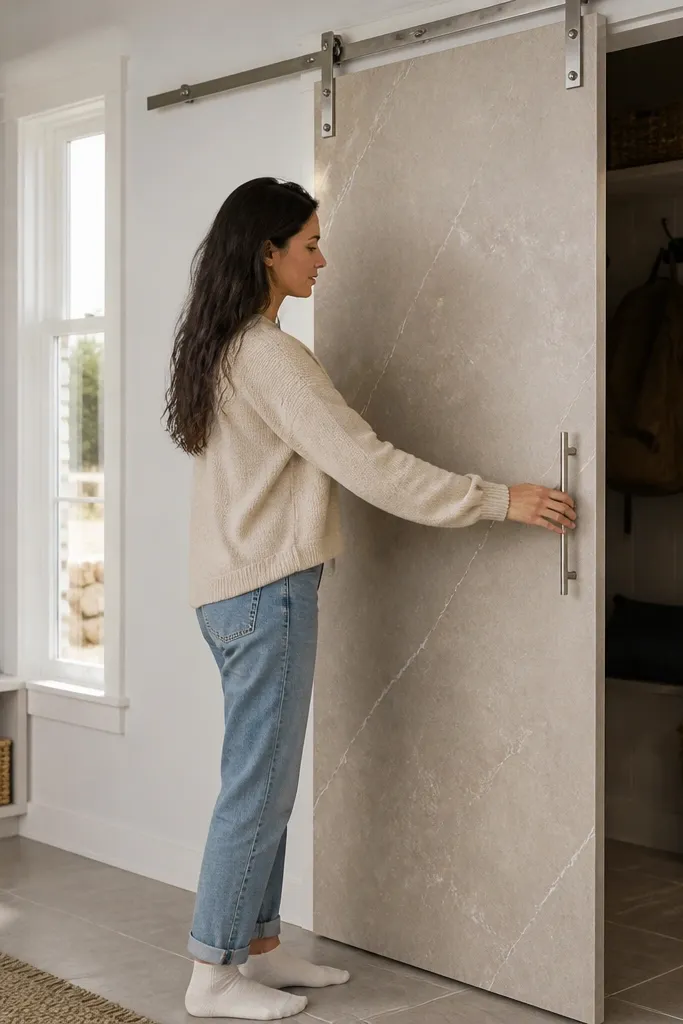
Stone-look laminate gives you a dramatic surface without the weight and mess of real stone. Brushed nickel hardware keeps it cool and clean, and the contrast makes the door look like a custom built-in. This aesthetic sliding door design is ideal for modern kitchens, mudrooms, and bathrooms where you want durability and easy cleaning. The key is using a solid core and a matching edge finish so the door looks like one material instead of a sticker panel. It also photographs well because the surface pattern catches light.
Use a rigid MDF or plywood core at about 1-1/2 in thick for stiffness, then laminate both sides with matching stone-look sheets. Apply edge trim to cover the laminate edges, then seal the edges with a trim lacquer so moisture doesn’t creep in. Mount a brushed nickel top rail level, and hang with rollers rated for the door weight. Add a bottom guide and adjust so the door closes without rubbing the laminate surface. Finish with felt pads on the guide contact points to prevent scuffs.
Editor's noteLaminate edges last — trim and seal the edges immediately after cutting so water can’t wick in.
Skip thisSkip a rigid core — thin cores flex and cause laminate bubbling.
11. Cane webbing door with warm oak trim
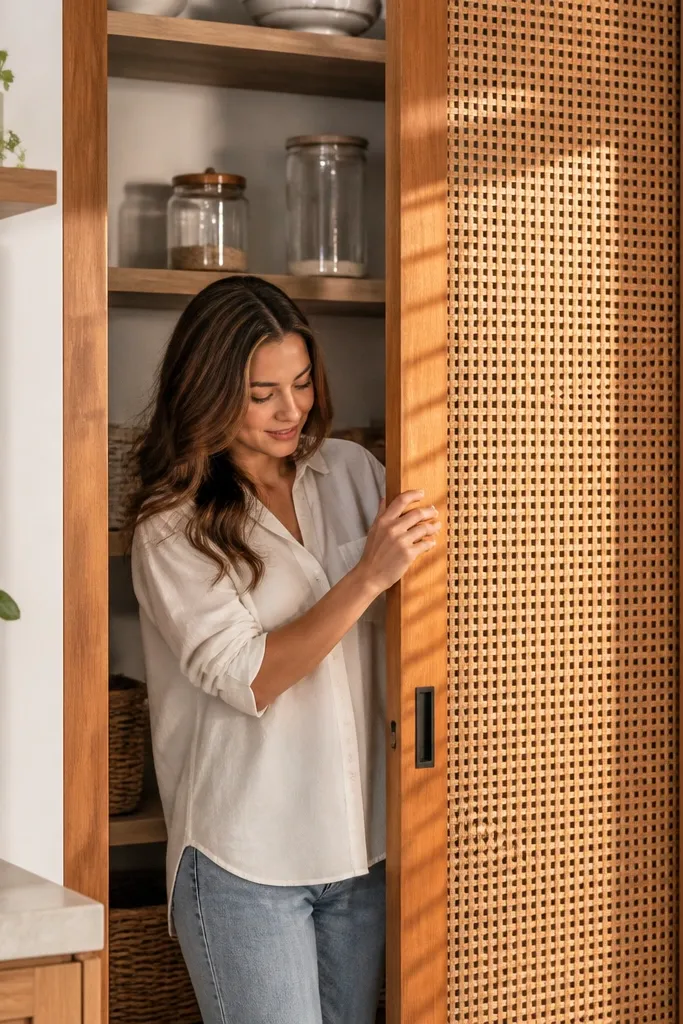
Cane webbing looks light and handcrafted, and it gives a soft texture that makes the opening feel less harsh. Warm oak trim ties it to natural wood tones, so the aesthetic sliding door design feels cozy instead of trendy. It’s a smart choice for pantries, home offices, and closet doors where you want airflow and a gentle visual barrier. Cane also hides minor imperfections in framing because the texture is forgiving. If you want “pretty” without heavy maintenance, this is one of the nicer DIY-friendly looks.
Make a frame with 1x2 oak or similar trim, then stretch cane webbing inside using a backing strip and staples or small screws. Cut cane so it sits evenly with a consistent border thickness on all sides. Seal the frame with a satin oil-based finish, then install the door on an oak-toned or natural wood-look track. Mount a surface rail level and add rollers that can handle cane doors without wobble. Install a bottom guide so the door stays aligned and the cane doesn’t rub on trim.
Editor's notePre-tension the cane by pulling it snug in the center first, then work outward to the edges.
Skip thisDon’t skip a bottom guide — cane doors drift and rub over time.
12. Black framed glass door with geometric privacy film
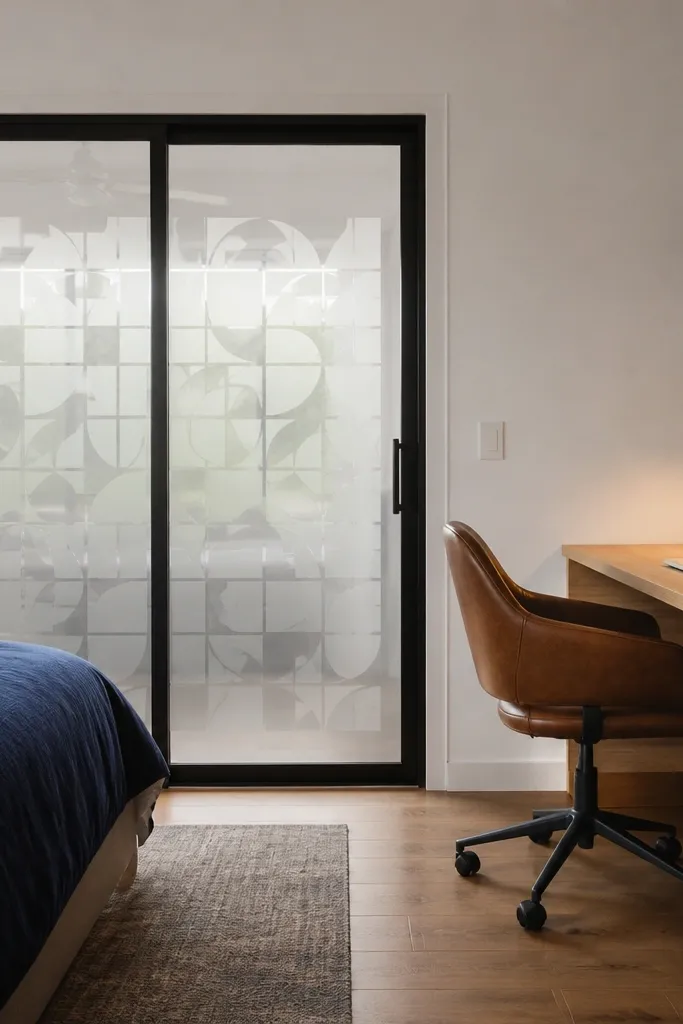
Privacy film is a design cheat code: it makes a plain glass door look custom and intentional. Black framing keeps the look modern, and geometric patterns add visual rhythm without blocking all light. This aesthetic sliding door design is great for offices, therapy rooms, and bedrooms where you want daylight but not full visibility. Choose a film pattern with clean lines so it looks crisp from a distance. The door also makes the room feel larger because the glass still reflects light.
Start with a glass door panel in a black frame, using tempered glass for safety. Apply privacy film on a clean, dry surface, smoothing from the center outward with a plastic squeegee. Trim edges with a sharp utility knife so it follows the frame cleanly. Mount a black surface track and rollers, then install a bottom guide that prevents side-to-side drift. Seal the frame edges and check for any film lifting before you finish the trim.
Editor's noteUse a tape grid and measure before applying film so the pattern stays level and symmetrical.
Skip thisDon’t apply film on dusty glass — it traps grit and looks wavy up close.
13. Recessed panel MDF door with white textured paint
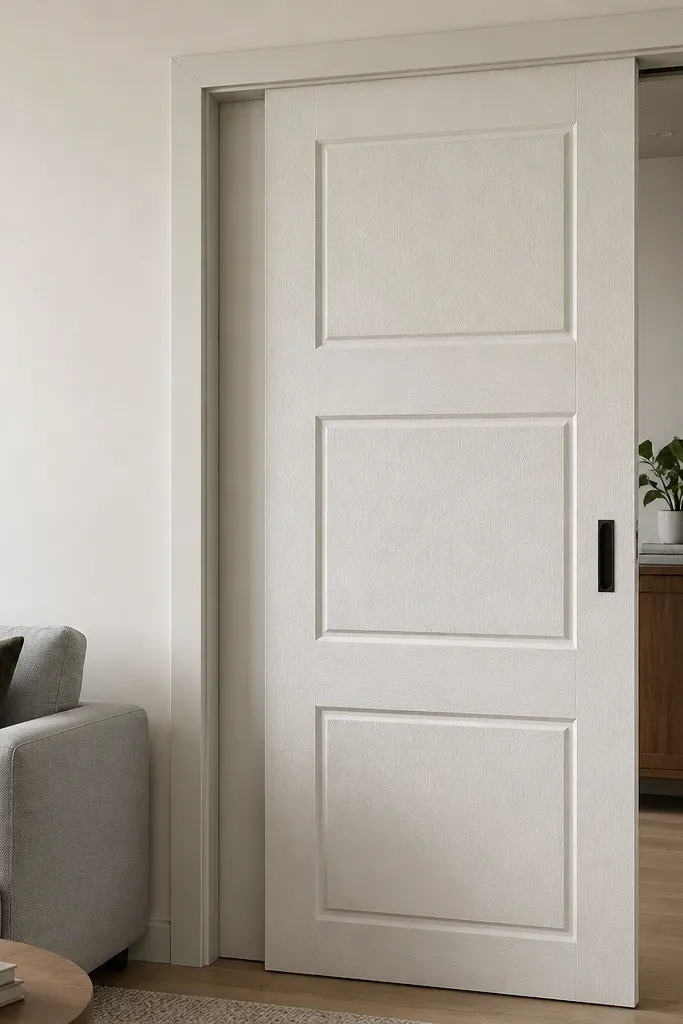
Textured white paint adds depth so your door looks interesting even when the rest of the room is simple. A recessed panel design keeps the texture from looking random. This aesthetic sliding door design works in modern interiors where you want a calm, minimal look but still want visual interest. Hidden or semi-hidden track makes it feel built-in. It also hides small surface flaws from DIY, which matters if you’re making the door yourself from MDF.
Build a door from MDF with a recessed panel layout, or buy a recessed-panel slab. Prime with a high-build primer, then spray or roll a textured paint system meant for furniture surfaces. Mount a concealed top track so the rail disappears behind a cover trim. Hang the door and set the height so the gap is even across the top. Install a bottom guide and add door stops so the door lands gently every time.
Editor's noteTest the texture in a small scrap first so you know how it looks under your room lighting.
Skip thisDon’t skip high-build primer — MDF texture can show through and look patchy.
14. Shiplap door with light sage paint and black hardware
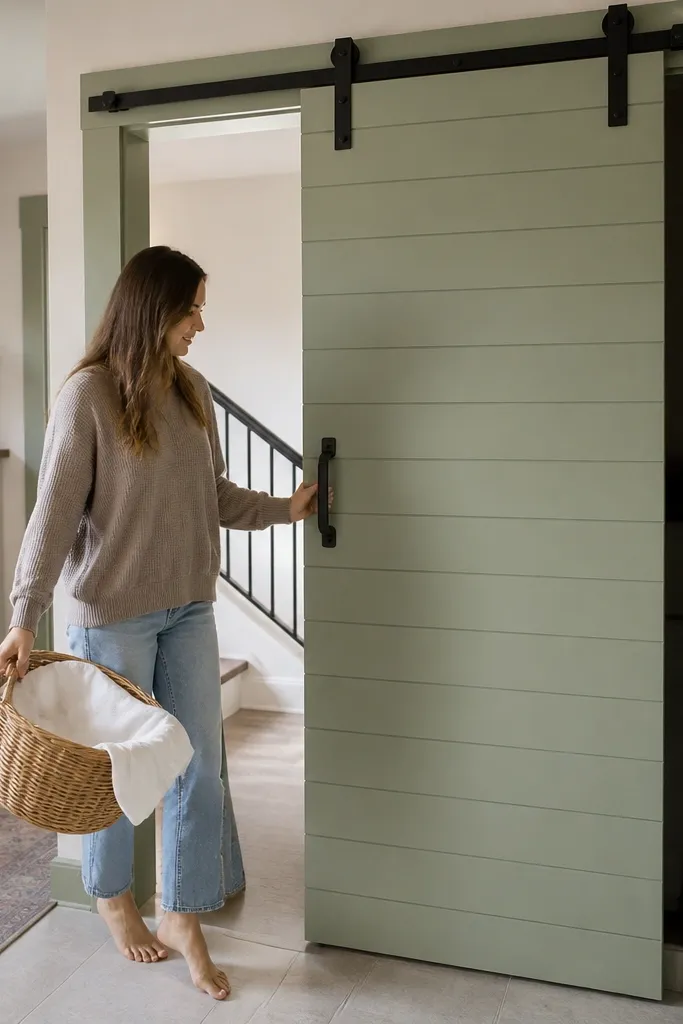
Shiplap gives you an instant coastal-farm vibe, but sage paint keeps it from feeling dated. Black hardware adds contrast and makes the door look crisp instead of soft. This aesthetic sliding door design is a great way to add color without committing to full-wall paint. It works especially well in entryways, laundry rooms, and powder rooms where you want a statement door. The horizontal lines also help the opening feel wider in photos.
Assemble a door using shiplap boards over a rigid core so it stays straight. Paint with a cabinet-grade paint in light sage, then seal with a satin topcoat for easy wiping. Mount a matte black surface track level, and hang the door on rollers sized for panel doors. Add a simple trim frame painted the same sage as the door or crisp white for contrast. Install a bottom guide and adjust so the shiplap doesn’t scrape the frame.
Editor's noteFill nail holes and sand between coats; shiplap looks rough when the paint bridges over dents.
Skip thisDon’t choose a chalky finish — it scuffs and looks dull quickly.
15. Two-tone door with natural wood panels and white frame
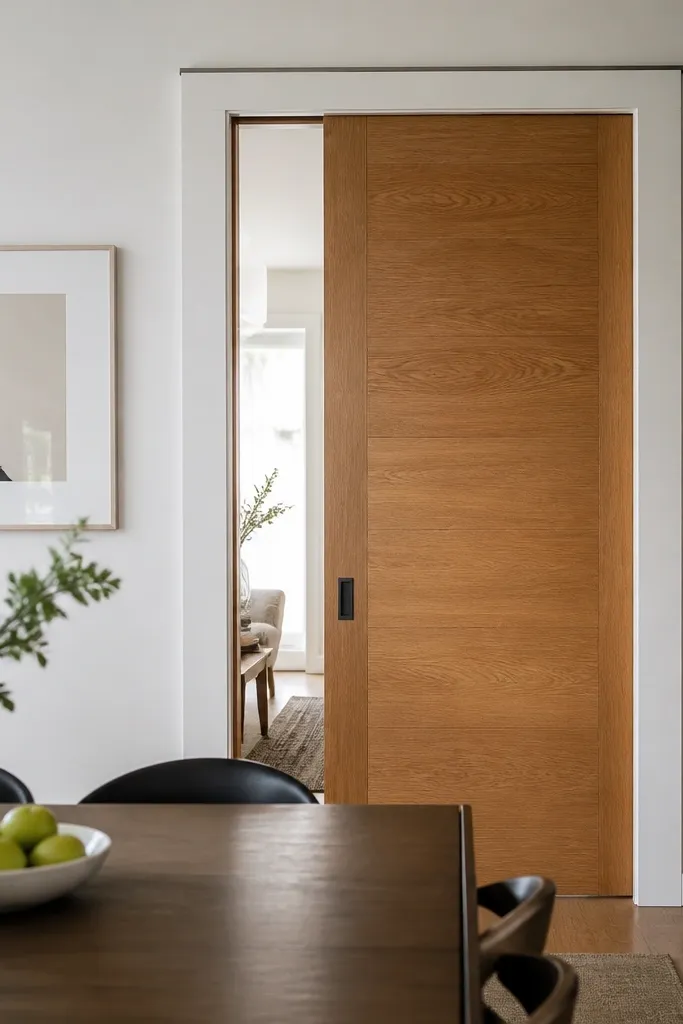
Two-tone doors look custom because the eye reads a designed frame around the panels. Natural wood panels add warmth, while a white frame keeps the look modern and bright. This aesthetic sliding door design is excellent when your room has mixed finishes — like white cabinets plus wood floors. It also works well in dining rooms and kitchens where you want the door to match cabinetry. The secret is crisp edge lines: the panel-to-frame transition should be straight and clean so the two materials look intentional.
Build a door frame out of white-painted trim boards, then inset natural wood panels (oak, birch, or walnut) cut to fit. Use pocket screws for the frame corners, then glue and nail the panel edges so the panel sits flush. Paint the frame with cabinet paint and seal with a satin clear. Mount a matching white or neutral track cover, or pick a hardware finish like brushed nickel that matches nearby fixtures. Install rollers and a bottom guide so the door slides without rubbing the panel edges.
Editor's noteUse a consistent reveal size around all four sides of the wood panel so the door looks symmetrical from any angle.
Skip thisDon’t mix wood tones randomly — choose one main wood species and stick to it.
16. Cedar plank door with warm oil finish and antique brass track

Cedar planks look gorgeous because they have natural color variation and a subtle grain pattern. An antique brass track makes the door feel vintage without going full rustic. This aesthetic sliding door design is perfect for closets, pantries, and laundry rooms where you want the door to feel like a handcrafted cabinet. Cedar also smells good in a closet context and resists some moisture compared to cheaper woods. Keep the finish matte or satin so the wood looks soft rather than shiny.
Make the door from a rigid core and attach cedar planks with glue and finishing nails, keeping plank edges aligned. Sand through 120-150 grit, then wipe with mineral spirits to see the true color before finishing. Apply a warm oil finish in thin coats, letting it cure fully between coats. Install an antique brass surface track level across the top, and hang the door on rollers rated for the door weight. Add a bottom guide and adjust so cedar edges don’t scrape the trim.
Editor's noteSeal the back side of the door too — it helps the door stay straight during seasonal humidity swings.
Skip thisDon’t use polyurethane over cedar oil without proper cure time — it can look uneven.
17. Black steel mesh door with industrial rollers
Steel mesh looks industrial and modern at the same time, and it photographs with a strong graphic pattern. The best aesthetic sliding door design with mesh is to keep the frame simple and the hardware finish consistent — black on black is the cleanest. This door style works in studios, garages, and laundry rooms where you want airflow and a visual barrier. It also helps hide clutter because the mesh breaks up silhouettes. If you have concrete, tile, or dark walls, this door will look right at home.
Build a sturdy metal or wood frame, then attach black steel mesh using clamps or screws into the frame. Make sure the mesh is tight and centered so it doesn’t sag. Install a black surface track and heavy-duty rollers designed for metal doors. Add a bottom guide that touches the frame, not the mesh, so you don’t deform the pattern. Finally, check for sharp edges and add edge caps for safety.
Editor's notePaint or powder-coat the frame and mesh together so the color match stays tight after curing.
Skip thisDon’t hang mesh-only panels; you need a rigid frame or the mesh will distort.
18. White oak veneer door with vertical channel grooves

Channel grooves create shadow lines, which is why this door looks expensive even with a neutral finish. White oak veneer keeps it warm, and the minimal trim makes it look like a custom cabinet door. This aesthetic sliding door design is great for modern living rooms and offices where you want texture without loud color. The grooves also hide minor surface imperfections better than a perfectly smooth door. If you’re trying to make a doorway feel taller, vertical channels help the eye move upward.
Use a white oak veneer panel on a plywood core so it stays flat. Cut or rout shallow vertical channels into the veneer-ready surface, then apply veneer carefully so the channels remain crisp. Seal with a satin clear coat to preserve the warm tone. Mount a concealed top track or a slim surface rail, keeping the rail level and centered. Add a bottom guide and adjust the rollers so the grooves don’t rub the frame.
Rout channels at a consistent depth and width; uneven grooves read as DIY fast.
19. Terracotta clay tile insert door with matching grout lines
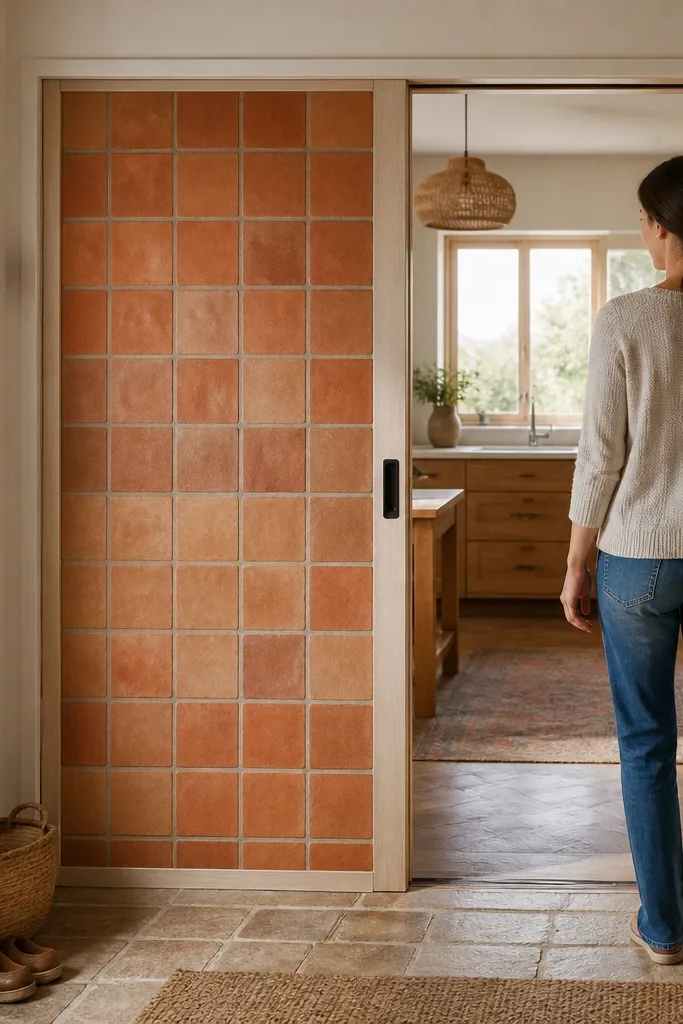
Tile inserts make a sliding door feel like a piece of architectural work, not a store-bought panel. Terracotta looks warm and handmade, and grout lines create a natural grid that photographs cleanly. This aesthetic sliding door design works well for entryways and mudrooms where you want durability and easy wiping. The door also brings texture to smooth walls and floors. Keep the surrounding frame simple so the tile becomes the focal point.
Build a rigid door core and frame, then set small-format terracotta tiles in a grid pattern using thinset or tile adhesive designed for interior panels. Use spacers to keep grout lines consistent, then grout and seal the tile surface. Allow full cure time before installing on rollers. Mount a top track with strong brackets and hang the door carefully so the tile doesn’t stress at the edges. Add a bottom guide and verify the door closes squarely so grout lines don’t chip from rubbing.
Use a grout sealer after cure so everyday scuffs wipe off without staining.
Don’t rush tile cure time; installing too soon can crack edges.
20. Panelled door with dark denim blue paint and brass pulls
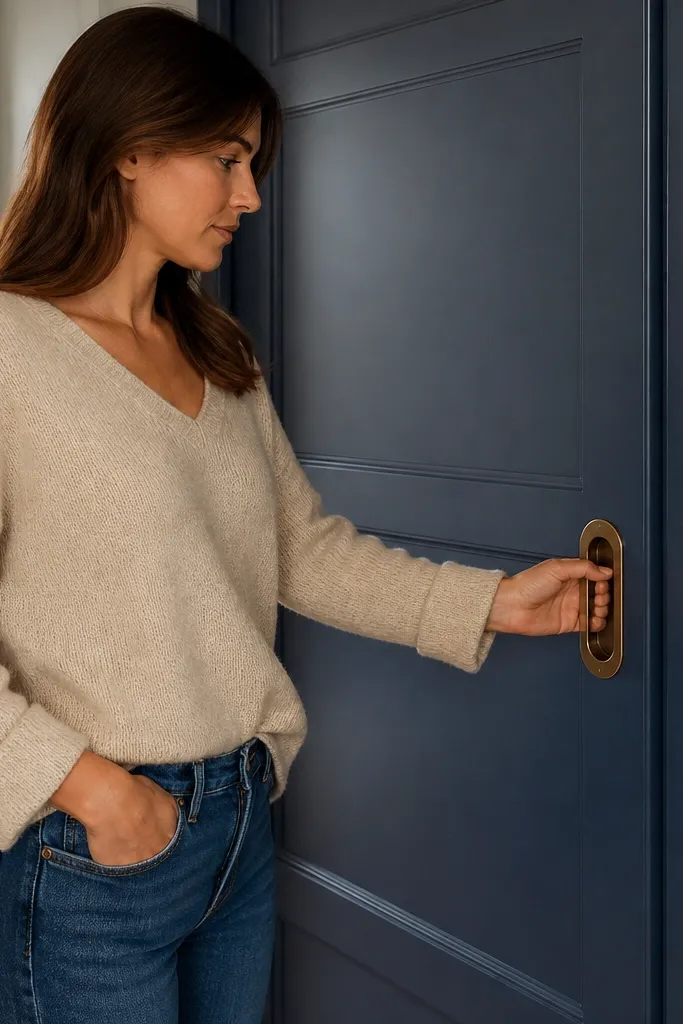
Deep blue reads bold, and it makes the door look like a statement cabinet door. The trick to making this aesthetic sliding door design look intentional is using a matte finish and clean panel lines, then matching the hardware with brass pulls. Brass warms the blue so it doesn’t look cold, especially in natural light. This is a great option for offices, bedrooms, and dining spaces where you want mood without darkening everything. The door also creates a strong contrast against white walls in photos.
Use a recessed panel door slab or build panels onto a rigid core. Paint with a cabinet-grade deep denim blue and finish with a matte topcoat to reduce glare. Install brass pulls at about 36-38 in from the floor for comfortable grabbing. Mount a brass or matching warm bronze surface track level, then hang the door on rollers rated for the slab weight. Add soft-close stops so the door lands gently against the frame.
Editor's noteUse painter’s tape to mask panel edges and get sharp lines — blue paint shows sloppy masking quickly.
Skip thisDon’t use satin if you want the designer look; satin highlights brush strokes.
21. Clear acrylic sliding door with smoked tint film
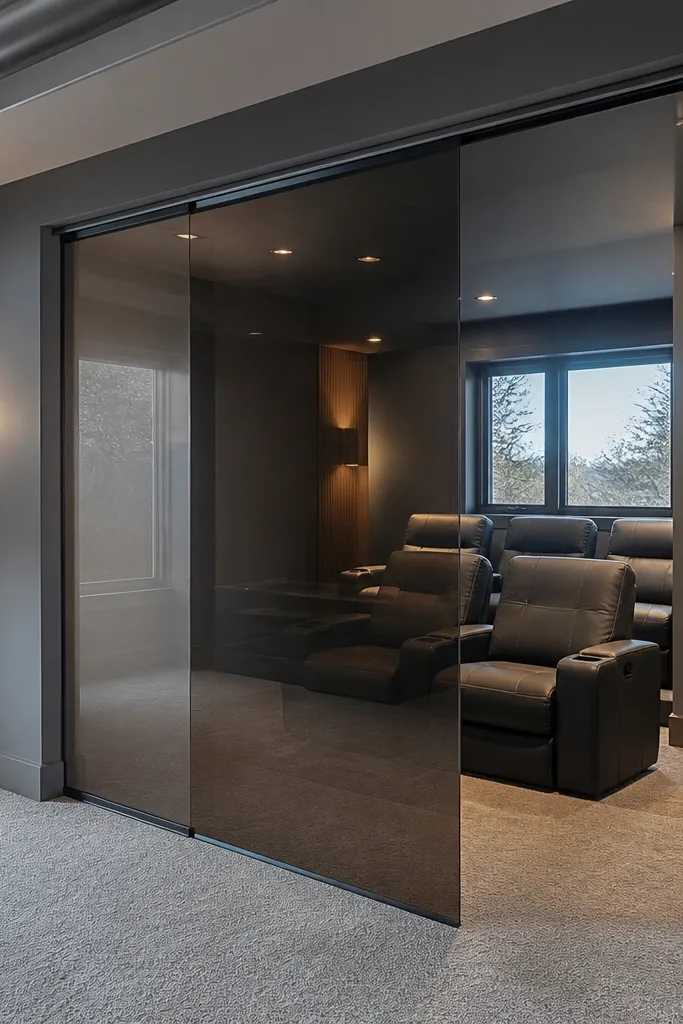
A clear acrylic door with smoked tint is a modern way to add separation without blocking light. The door looks sleek and futuristic, but the smoked film keeps it from feeling like a storefront. This aesthetic sliding door design works for home offices, pantry areas, and media rooms where you want a clean barrier. It also hides clutter behind it while keeping the room bright. The look depends on crisp hardware and clean mounting, so you need careful alignment.
Use impact-rated acrylic or polycarbonate panels, sized to overlap the opening by 1/2 in. Apply smoked tint film evenly, smoothing with a squeegee to avoid bubbles. Build a minimal frame around the panel if needed for edge protection. Mount a black or smoked-gray top track and rollers designed for smooth sliding surfaces. Install a bottom guide with soft contact pads and adjust so the acrylic doesn’t rub.
Editor's noteClean acrylic with a microfiber and acrylic-safe cleaner so you don’t leave scratches that show through tint.
Skip thisDon’t use abrasive cleaners — scratches become obvious with tinted panels.
22. Walnut and black slatted combination door

This door looks like a furniture design because it mixes warm wood and graphic black. Horizontal black slats create a modern grid, while walnut keeps it from looking cold. This aesthetic sliding door design is ideal for living rooms and offices where you want privacy-lite and a strong visual pattern. It also works when you have both black accents and wood tones already in the space. The door reads stylish even when it’s partially open because the slats catch light.
Build a rigid door core and frame, then install walnut panels or veneer as the base. Add black slats across the face using thin boards, keeping spacing consistent at about 1/4 in. Paint or finish the black slats with a matte coating so they don’t reflect harshly. Mount a black surface track and rollers, ensuring the rail is level to prevent uneven contact. Add a bottom guide and trim so the door closes flush and the slats don’t hit the frame.
Editor's noteUse a scrap spacer block for slat spacing so every gap stays identical.
Skip thisDon’t go too thick on slats; chunky slats look heavy and less refined.
23. Beadboard door with brass rail and soft curves
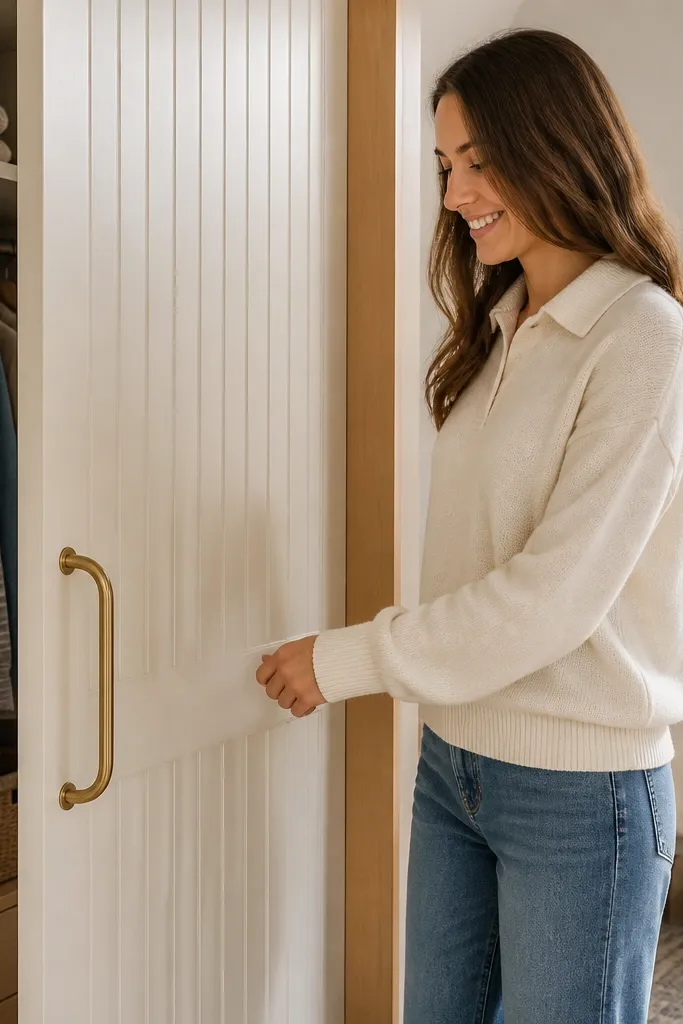
Beadboard has that cottage-meets-clean look, and brass hardware makes it feel warm instead of old-fashioned. The aesthetic sliding door design here is about the beadboard texture plus gentle trim shapes so it looks friendly. This is a strong choice for bedrooms, closets, and laundry rooms where you want the door to blend while still looking special. Brass also pairs well with warm wood floors and cream walls. It photographs well because the beadboard creates tiny highlights along each ridge.
Use a beadboard panel insert or build a beadboard door with a rigid backing. Paint with a warm white and use a satin topcoat so the bead ridges stay defined. Install a brass surface track and hang the door with rollers that match the rail style. Add rounded trim details around the opening if you want the soft curve look, then caulk and paint. Install a bottom guide and adjust so beadboard edges don’t rub.
Editor's noteSand beadboard ridges lightly before painting so the peaks stay crisp.
Skip thisDon’t use bright blue-white paint; it makes beadboard look stark and cheap.
24. Hidden pocket-style vibe with track cover and matching wall paint
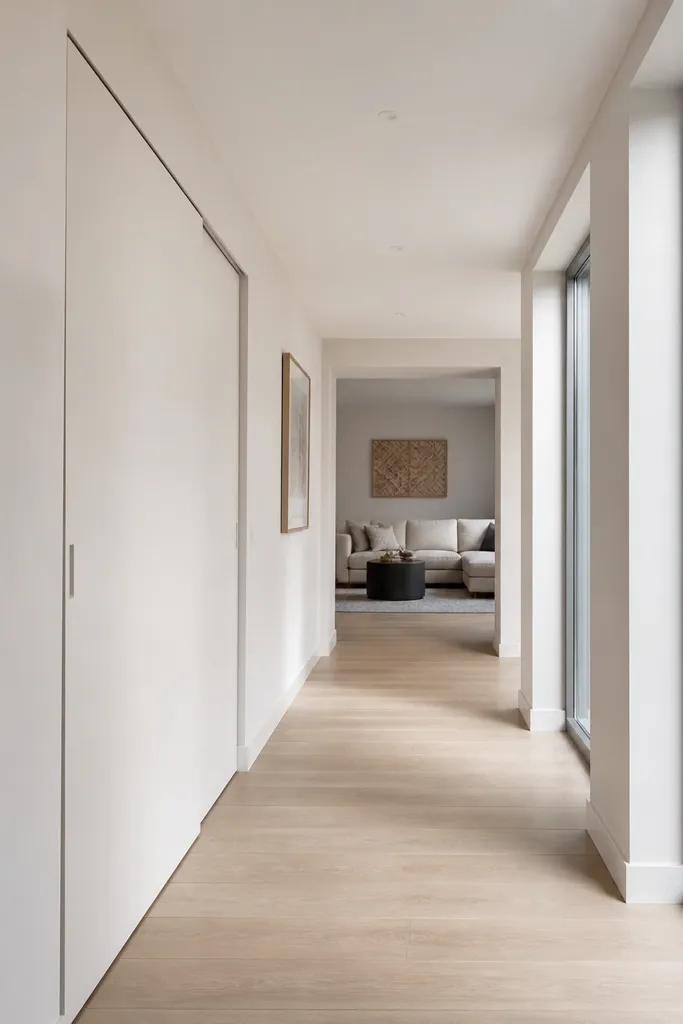
Aesthetic sliding door design often fails when the track is visible. This approach hides the track with a cover that matches your wall color, so the door looks built-in. You still get smooth sliding from a real rail system, but visually it’s clean and uninterrupted. This style works in modern hallways and living rooms where you don’t want a barn-door look. It’s also good when you’re working with a tight opening and want the door to look flush and neat.
Frame a track cover box above the opening with MDF or drywall underlayment, leaving space for the rail brackets. Paint the cover the same color as the wall or match the trim so it disappears. Install the top rail level inside the cover, then hang the door with rollers that fit the cover opening. Add a bottom guide and adjust the door so the gap stays even. Seal the cover seams with caulk and touch up paint for a smooth line.
Dry-fit the cover panels first so you can check roller clearance before you commit to paint.
Don’t trap the rail too tightly; you need room for bracket movement and vibration.
25. Color-block sliding door with two matte finishes
Color-block doors look graphic and modern, and they make the sliding opening feel like a design feature. Pick two matte paint finishes that match other elements in the room — like a warm greige plus deep charcoal. The aesthetic sliding door design works best when the color boundary is straight and the trim is crisp. This is a great pick for entryways, kids rooms, and home offices where you want personality without clutter. It also helps you hide minor panel imperfections because the color split draws attention to the geometry.
Build or use a panel door slab with flat faces for clean paint edges. Mask a straight boundary line with painter’s tape and paint the first color, then let it cure before removing tape. Paint the second color and seal both with a matte clear or satin topcoat made for cabinetry. Mount a black or matching track rail level and use rollers sized for the door weight. Install trim and stops so the door closes with a consistent overlap and no uneven gaps.
Editor's noteUse a new blade in your utility knife for tape edges so paint doesn’t creep under the masking line.
Skip thisDon’t freehand the color boundary — slight slant looks sloppy fast on matte paint.
26. White oak edge-framed door with linen fabric panel
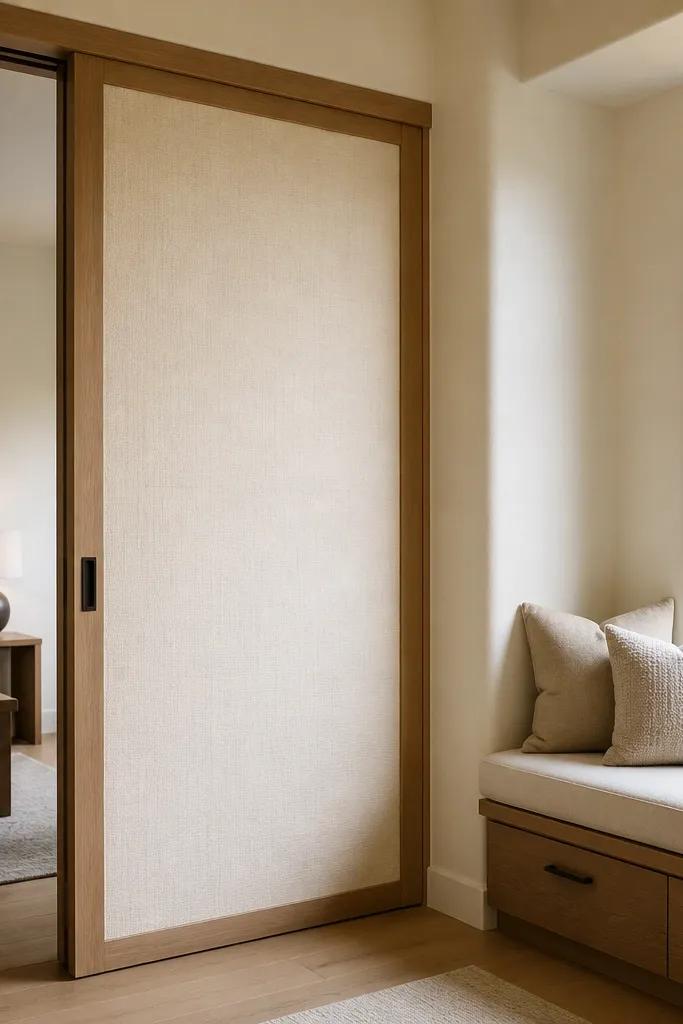
Fabric panels make a sliding door feel soft and warm, and linen looks great in daylight. An edge frame in white oak keeps the door structured, so the fabric doesn’t look like a curtain. This aesthetic sliding door design is perfect for home offices, reading nooks, and bedrooms where you want visual separation without a hard barrier. It also helps absorb some sound, which is helpful in small rooms. The door photographs beautifully because fabric texture adds depth even when the pattern is simple.
Build an edge frame out of white oak and stretch linen over a rigid backing panel like thin plywood. Use a tight weave linen and staple it evenly on the back so the front stays smooth. Install a hidden zipper or removable back panel if you want to replace linen later. Mount a top rail and rollers designed for lighter doors, then add a bottom guide to prevent swinging. Finish the frame with satin clear so it matches nearby oak trim.
Choose linen with a consistent weave — uneven weave shows through in close photos and under raking light.
Don’t use thin fabric without a backing; it will sag and wrinkle at the edges.
27. Smoked walnut door with brass channel pulls and quiet stops
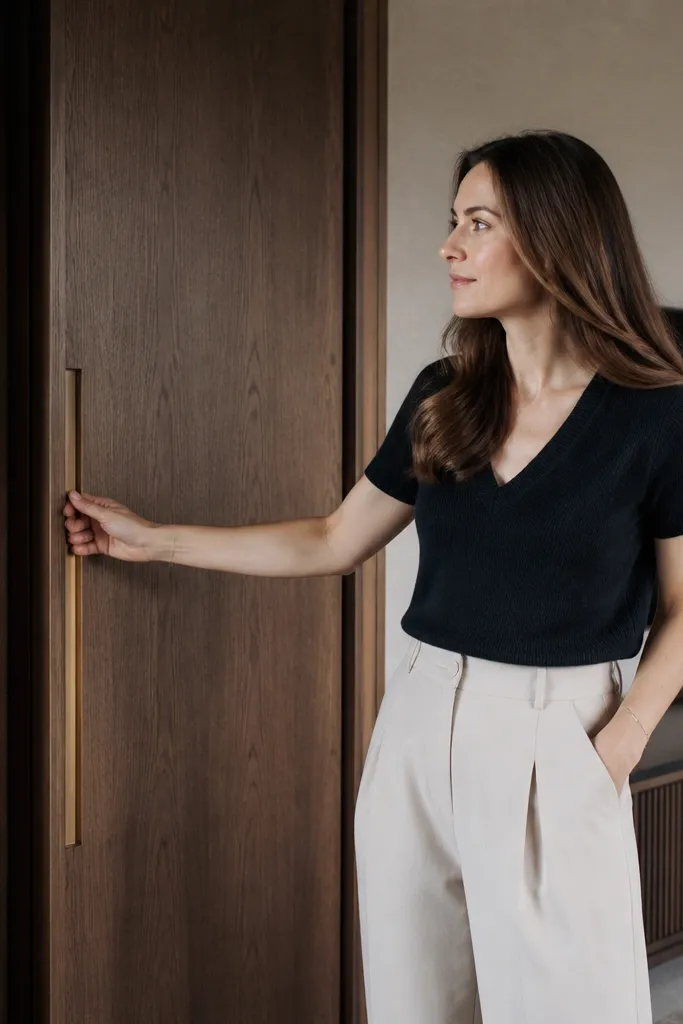
Smoked walnut is dark and moody, and it makes a room feel styled even if the walls are plain. Brass channel pulls add a clean, modern grip line, and quiet stops prevent that loud door slam that ruins the vibe. This aesthetic sliding door design is best for home offices, bedrooms, and media spaces where you want a calmer, more dramatic mood. The smoked finish also hides minor scuffs better than bright clear wood. If you have warm lighting, it looks especially good.
Use a walnut veneer or solid-core door, then apply a smoked stain in thin coats until you hit the tone you want. Seal with a satin topcoat to keep the finish smooth and less fingerprint-prone. Install brass channel pulls centered for easy grabbing. Mount a brass or warm bronze track level, and hang the door with rollers rated for the door weight. Add soft-close stops and a bottom guide with felt contact so the door closes quietly.
Editor's noteTest the smoked stain on a scrap of the same veneer before coating the full door.
Skip thisDon’t skip soft-close stops; walnut doors show edge chips when they slam.
28. White limewash shiplap door with brushed iron track
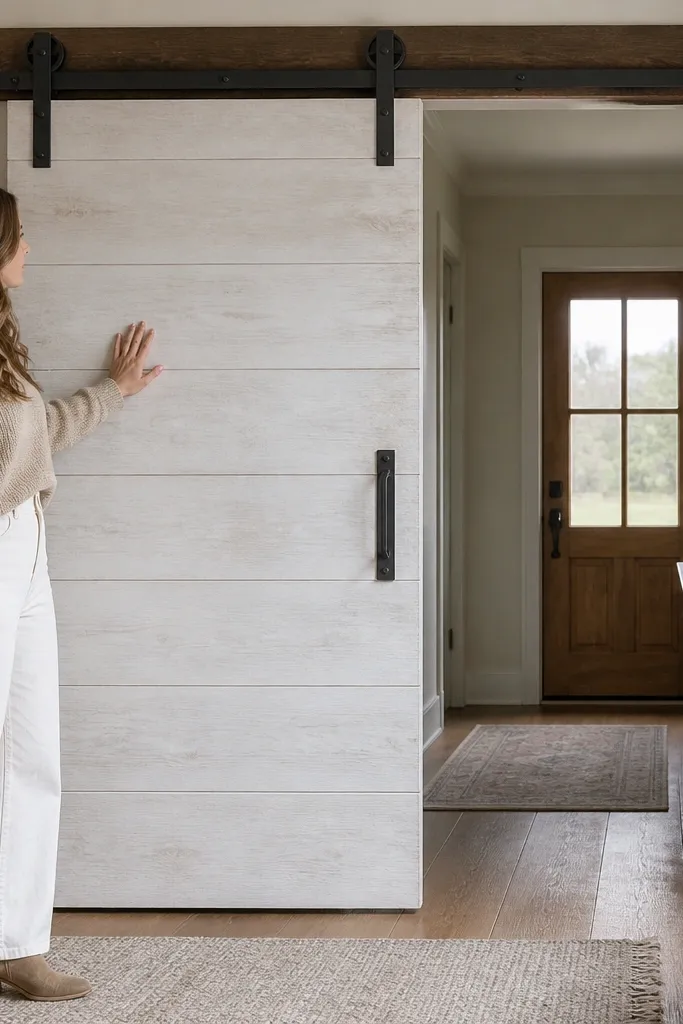
Limewash gives a lived-in, soft-matte look that looks great in rustic-modern homes. Shiplap keeps the texture clear, and brushed iron hardware adds depth without turning the door into a barn-door cliché. This aesthetic sliding door design is perfect for farmhouses, cottages, and modern spaces that want a softer texture instead of glossy paint. It also photographs well because limewash has natural variation that reads like craftsmanship. The door becomes a visual anchor without being overly heavy.
Build a door with shiplap boards on a rigid core, then sand smooth enough for paint adhesion but don’t erase all grain. Apply a limewash product in thin coats using a brush for the right speckled texture, letting each coat dry fully. Seal lightly only if the product requires it; some limewashes stay best without heavy clear coats. Mount a brushed iron track level and hang with rollers suited for panel doors. Add a bottom guide and stops so the limewashed surface doesn’t get scuffed at contact points.
Editor's noteMask and protect the hardware while limewashing so you don’t get haze on the track finish.
Skip thisDon’t over-seal limewash; it flattens the look and turns it glossy.
29. Matte sand door with woven jute insert and natural wood rollers
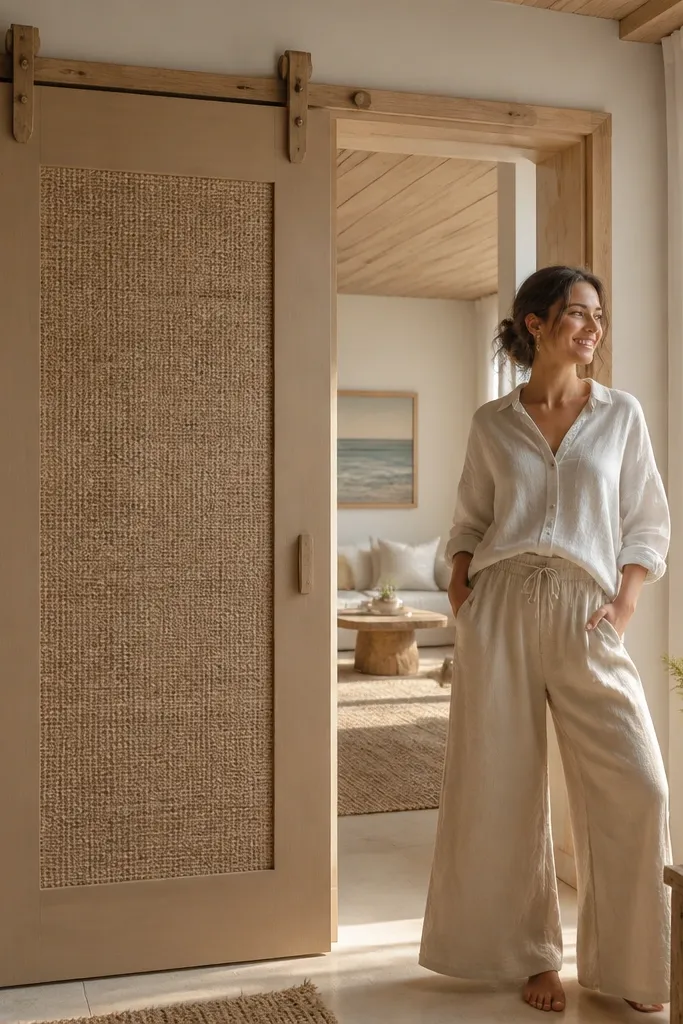
Sand-colored doors with woven jute insert bring a warm, beachy calm that still looks clean. Natural wood roller accents make the hardware blend, which is the difference between “style” and “costume.” This aesthetic sliding door design is ideal for coastal rooms, sunrooms, and airy living spaces where you want texture without dark heaviness. The jute insert also adds an organic pattern that looks great in sunlight. Keep the frame simple and the hardware quiet so the weaving stays the star.
Build a rigid door frame and stretch jute or jute-blend fabric over a backing board, then secure it from the back. Paint the frame matte sand and seal it so dirt wipes off. Install the door on a track system with natural wood-look roller components or matching hardware covers. Mount the rail level and add a bottom guide with soft pads to prevent scuffing. Finish by adding end stops so the door closes without impact.
Editor's noteUse a fabric backing board so the jute stays tight and flat instead of sagging over time.
Skip thisSkip heavy jute — thick fibers catch on trim and cause uneven sliding.
30. White metal slat door with clear coat and minimal track
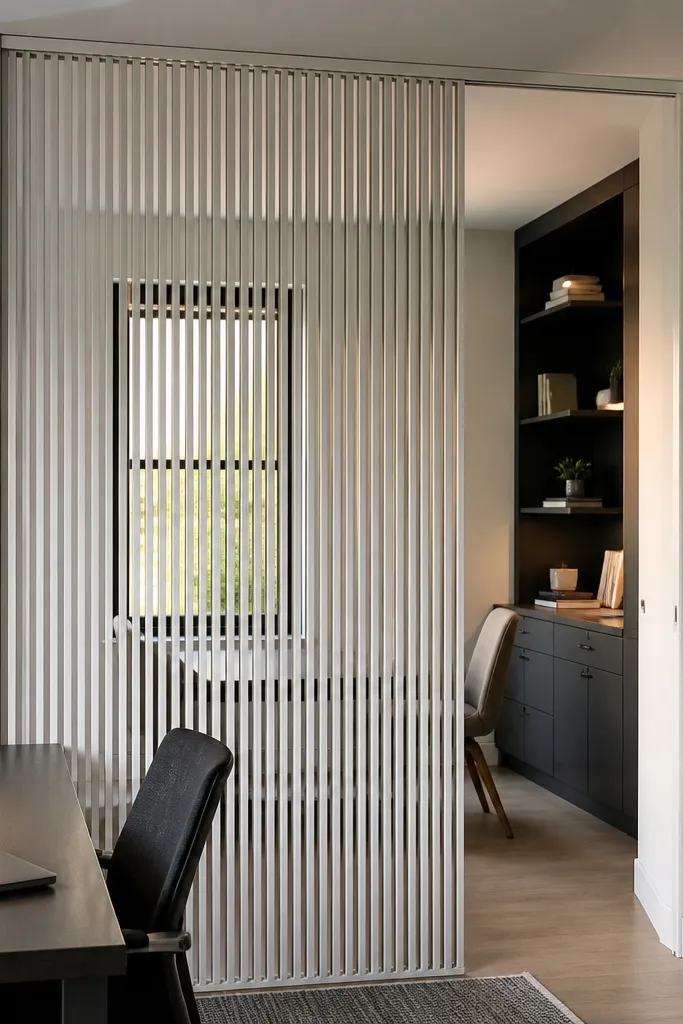
Metal slats give you a crisp, modern look with strong lines that read architectural. A white finish keeps it bright, and a clear coat helps resist fingerprints in high-traffic areas. This aesthetic sliding door design is great for entryways, utility rooms, and small offices where you want a clean barrier and easy maintenance. It’s also a practical choice if you need something that doesn’t swell with humidity. The visual trick is to keep slats evenly spaced and the frame slim so it looks intentional, not bulky.
Use metal slats mounted to a rigid frame with consistent spacing, then apply a durable white paint or powder coat. Seal with a clear topcoat if your system allows it so cleaning is easy. Mount a minimal top track and center the rail so the door doesn’t drift. Hang with rollers designed for metal doors and adjust the bottom guide to touch only the frame. Test slide smoothness and confirm the door overlaps the opening evenly before final tightening.
Editor's noteMark the rail centerline on the wall and use it as your anchor for straight alignment.
Skip thisDon’t use uneven slat spacing — it looks wavy once the light hits.