
1. Single Dried Rose Shadow Box
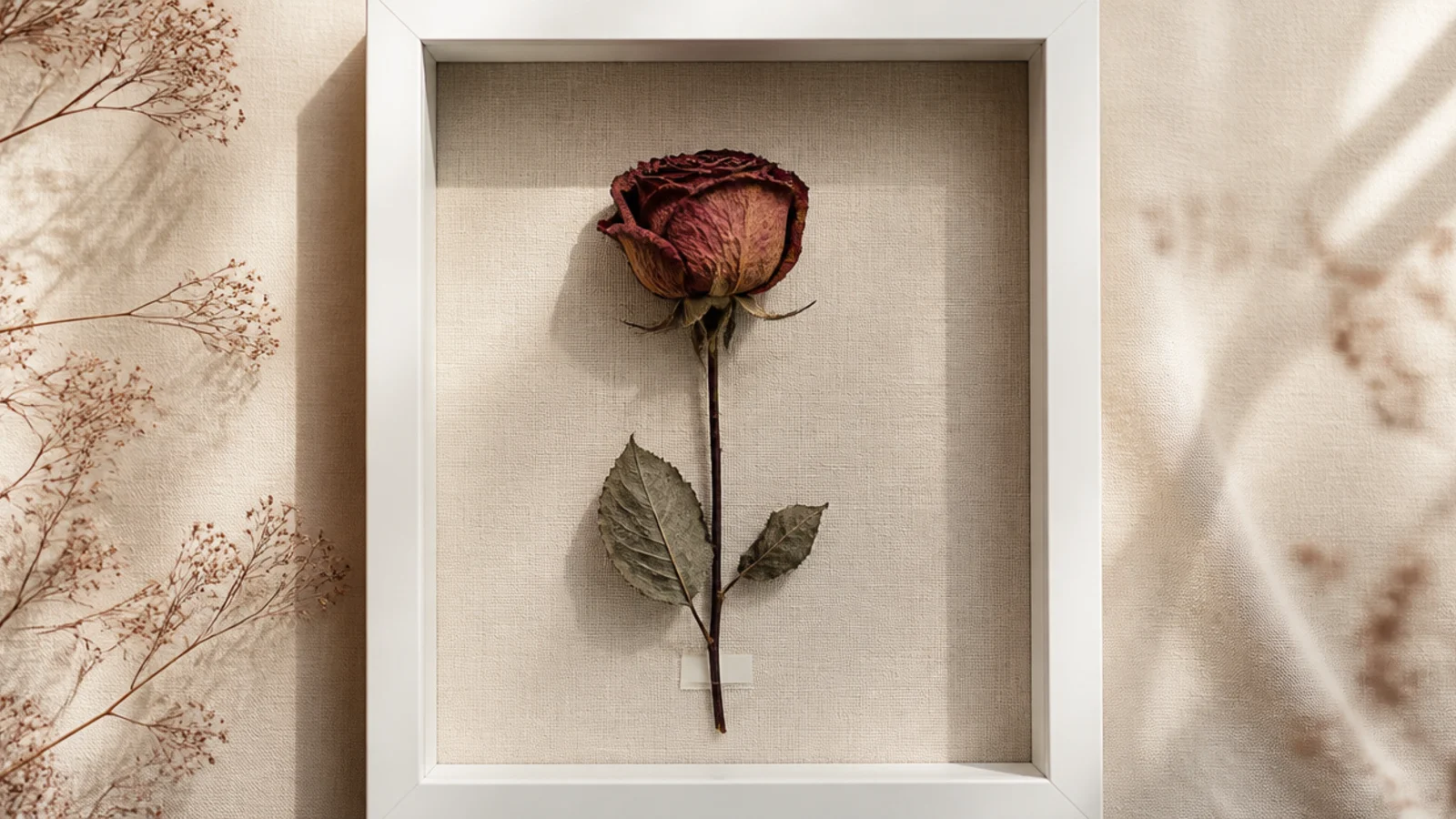
This is the easiest dried flower frame that looks striking — one full dried rose in a deep box. A single well-dried bloom needs no arranging skill and the depth keeps it looking alive. It’s the perfect first project and a lovely keepsake or gift.
Silica-dry a rose for about a week until firm, keeping its shape and color. Use a deep shadow box lined with linen or cardstock. Trim the stem short, then glue the base of the bloom (or the stem) to the backing with strong archival glue, positioning the rose upright and centered. Let it cure fully, then close the deep glass front, which clears the bloom.
Silica-dry the rose rather than air-drying; silica holds the petals full and the color rich, while air-drying shrinks and darkens it.
Don’t use a shallow frame; a flat frame crushes the rose against the glass and flattens the whole point of a dimensional bloom.
2. Dried Bunny Tail Grass Frame
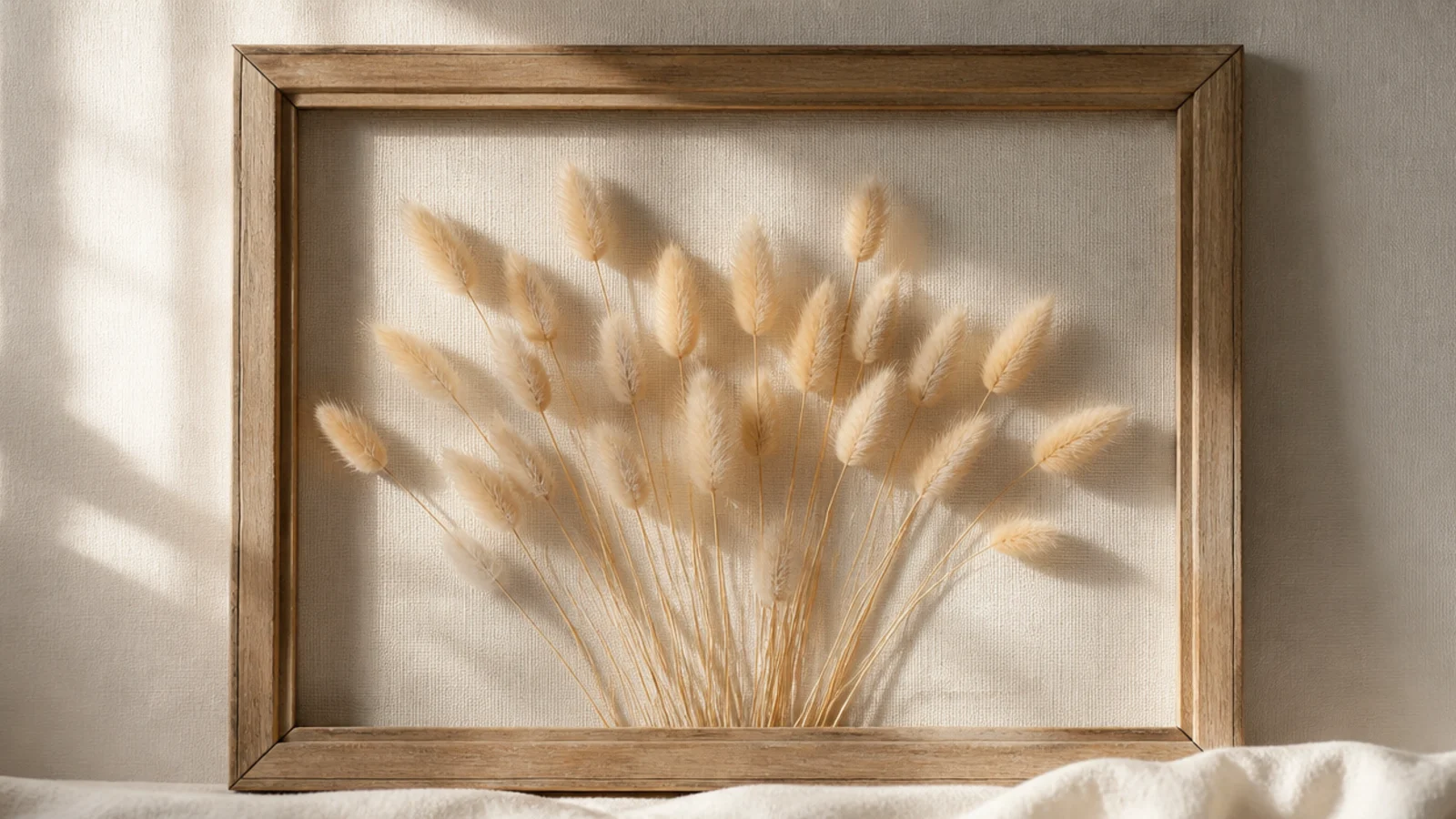
Fluffy dried bunny tail grasses are soft, tactile, and almost impossible to get wrong. Their gentle texture fills a frame with movement and calm. This is one of the most beginner-friendly dried materials because it dries by simply standing in a jar.
Air-dry bunny tail grasses upright in an empty jar for a week or two until fully dry. Use a frame with a little depth. Arrange the grasses in a loose fan on a cream backing, anchoring each stem with a dab of archival glue at the base. Keep the fluffy heads clear of the glass, let it cure, and close the frame.
Let the grasses dry standing upright in a dry jar; hanging them upside down flattens the fluffy heads on one side.
Don’t press the fluffy heads against the glass; even a little depth keeps them soft and full instead of squashed flat.
3. Dried Lavender Bundle Frame
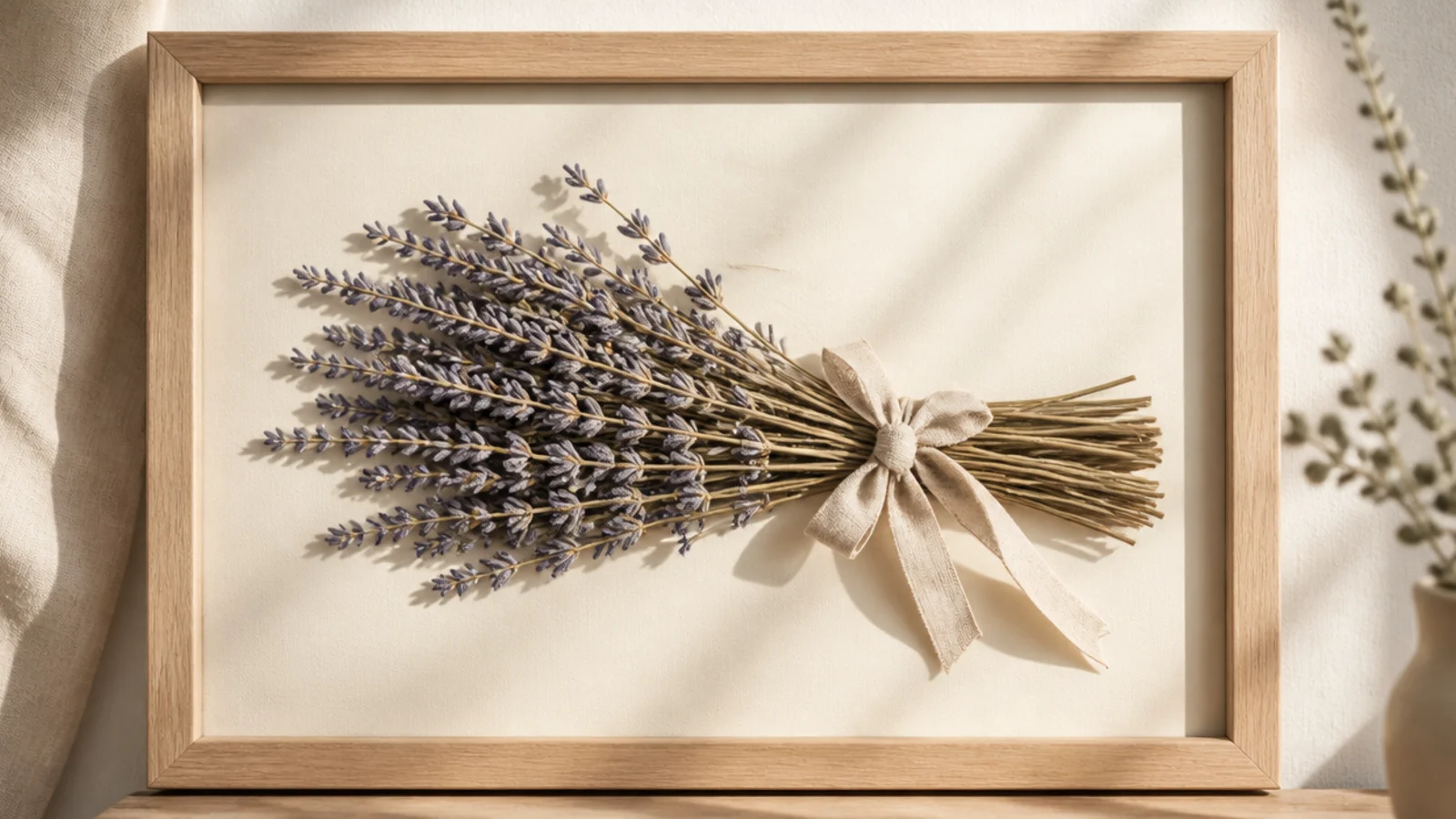
A tied bundle of dried lavender is fragrant, pretty, and instantly reads as farmhouse-calm. The purple-grey stems and linen tie look styled with no arranging skill. It’s a classic that suits a bedroom or bathroom wall.
Air-dry lavender by hanging small bunches upside down in a dark, dry spot for one to two weeks. Gather a bundle, trim the stems even, and tie them with a linen ribbon. Lay the bundle horizontally or diagonally on cream backing in a frame with slight depth, anchoring it with archival glue under the stems and behind the tie. Cure and close the frame.
Editor's noteHang lavender to dry in a dark spot; light fades the purple fast, and a dark, airy room keeps the color deep and rich.
Skip thisDon’t skip the ribbon tie; a loose scatter of lavender looks messy, while a neat tied bundle looks deliberately styled.
4. Dried Hydrangea Head Frame
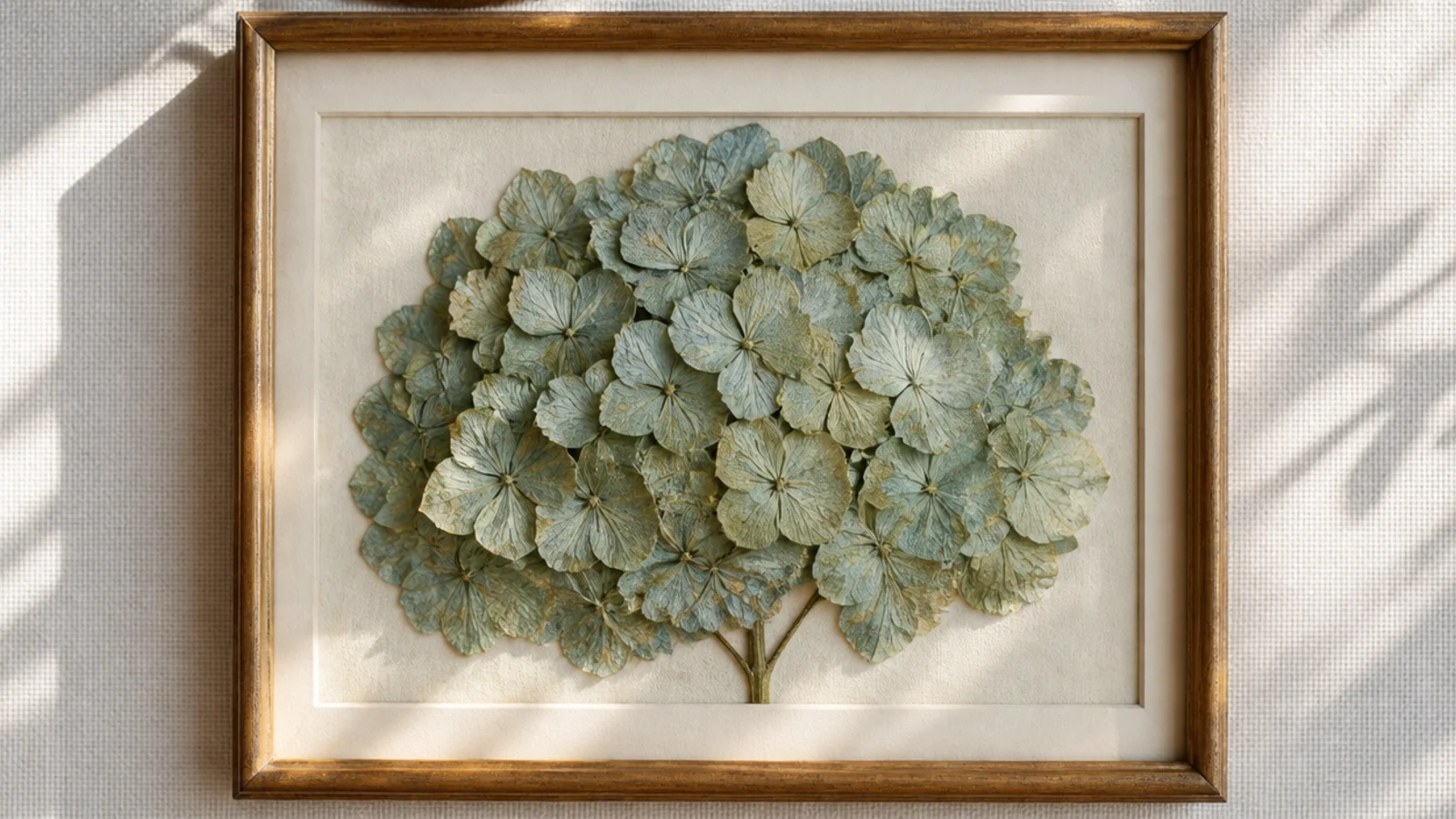
A single dried hydrangea head fills a frame with a cloud of papery florets for rich texture. One big bloom does the work of many small ones. Dried hydrangea holds its soft antique color for years and suits a generous frame.
Air-dry a hydrangea head slowly (leave it in a vase with an inch of water that evaporates) until the florets feel papery. Use a deep shadow box. Mount the head by its stem base to a neutral backing with strong glue, fanning the florets to fill the frame. Let it cure fully, keeping the dome clear of the glass, and close the deep front.
Editor's noteDry hydrangea slowly in evaporating water; this keeps the florets full and softly colored instead of shrivelled and brown.
Skip thisDon’t flatten a hydrangea into a shallow frame; its beauty is the three-dimensional dome, which a flat frame destroys.
5. Bleached and Dried Botanical Frame
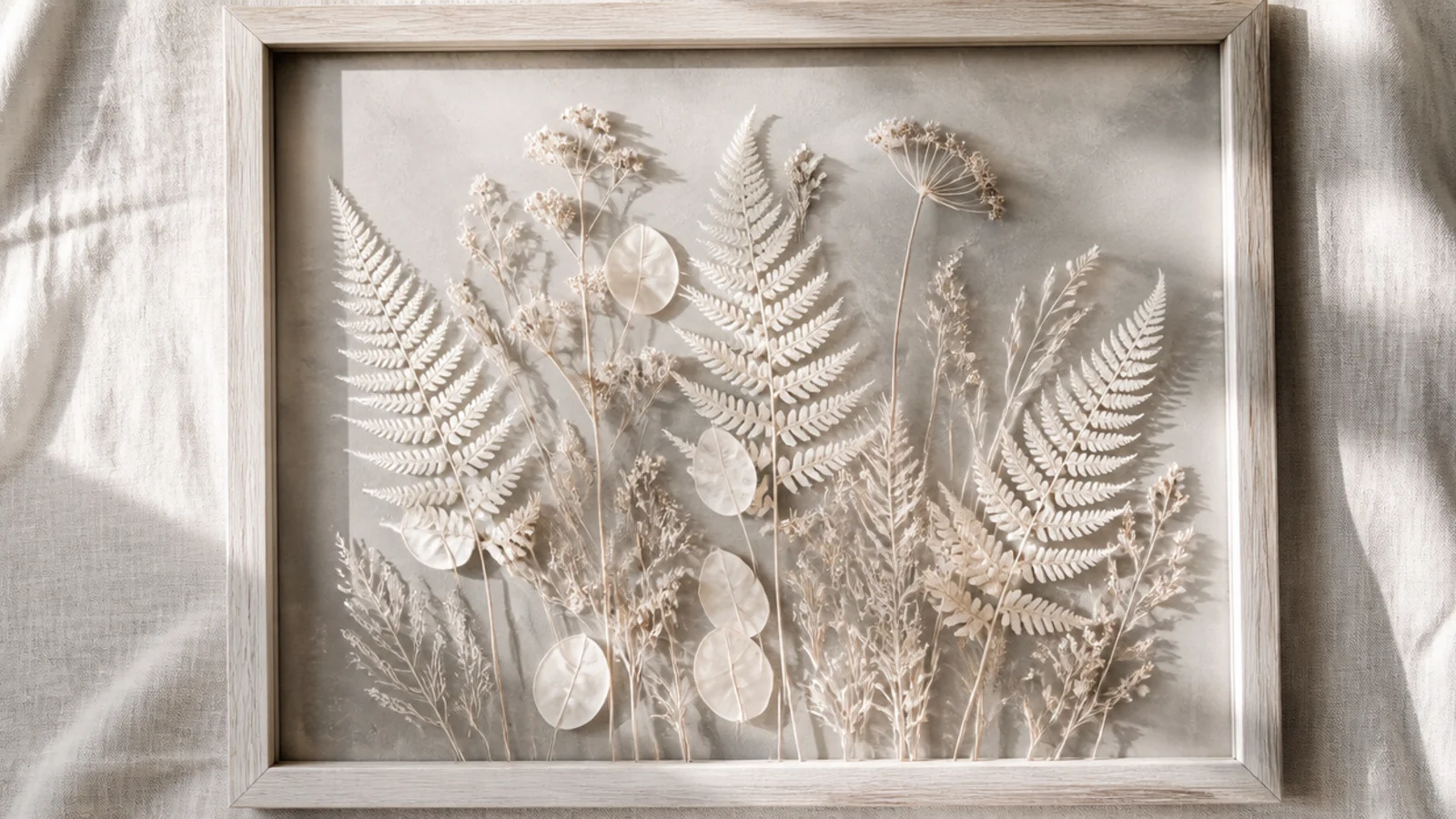
Bleached, sun-faded dried botanicals in ghostly white look modern and gallery-cool. The pale, skeletal shapes read sophisticated against a soft background. It’s a striking, contemporary take on dried flowers for a minimalist room.
Bleach dried ferns or seed heads by soaking in a diluted bleach solution, then rinse and re-dry fully — or use naturally pale dried skeleton leaves. Arrange the white botanicals on a soft grey or taupe backing in a frame with slight depth. Anchor each with archival glue at the base, let cure, and close the frame.
Rinse bleached botanicals thoroughly and dry them completely before framing; leftover bleach keeps working and turns pieces brittle.
Don’t bleach delicate flowers you want to keep whole; bleaching weakens them, so use it on sturdy ferns and seed heads.
6. Dried Wildflower Bouquet Shadow Box
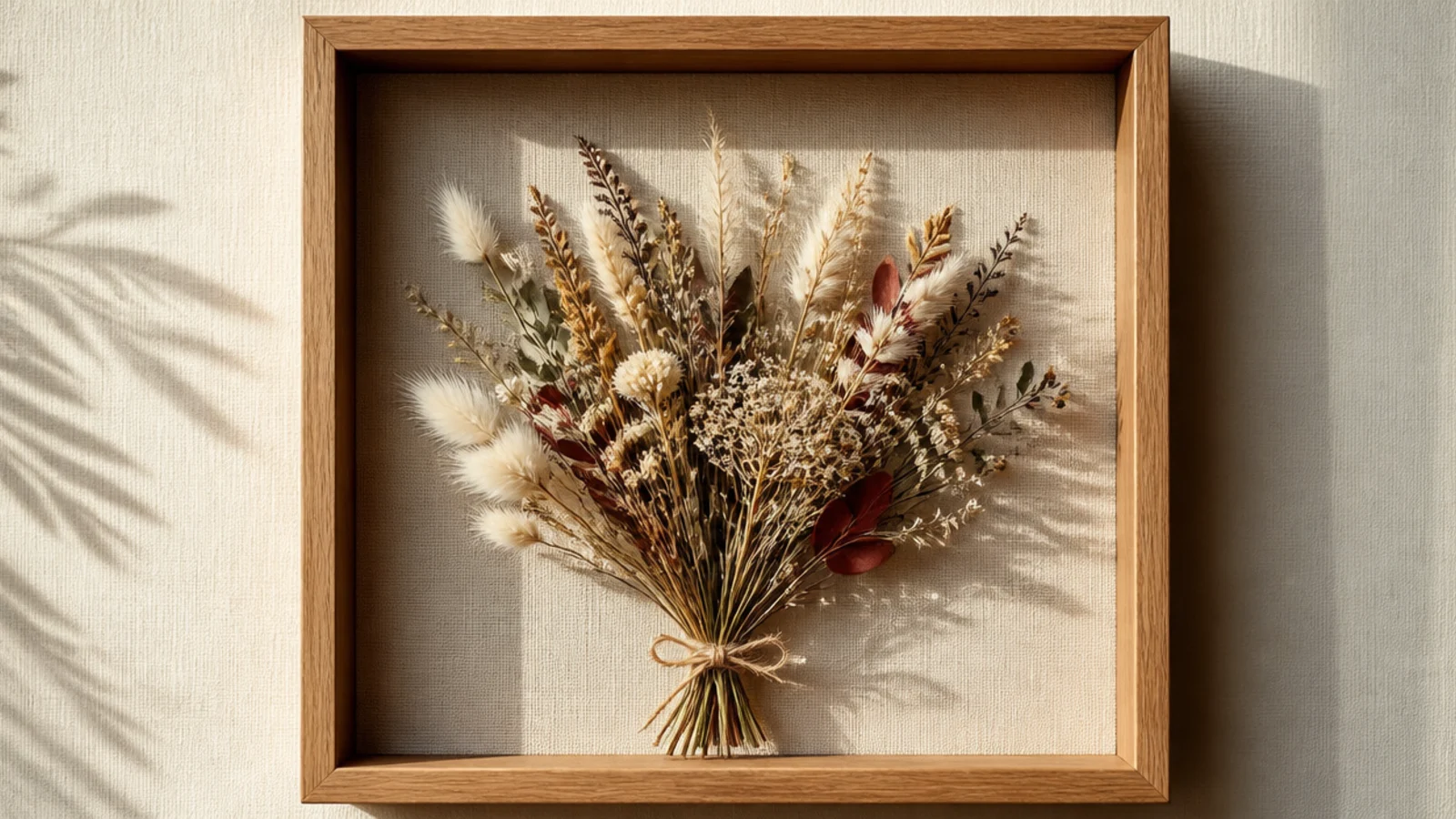
A small dried wildflower bouquet in a shadow box preserves a whole gathered mix with all its varied textures. The combination of shapes and tones looks lush and natural. It’s ideal for flowers picked on a meaningful day.
Air-dry a mixed wildflower bunch upside down until papery. Use a deep shadow box lined with linen. Arrange the dried flowers in a loose fan or bunch, taller stems behind, and anchor each stem to the backing with archival glue. Let it cure so nothing rattles, and close the deep glass front clear of the blooms.
Vary the textures — a grass, a round bloom, a spiky seed head — so the mixed bouquet has contrast rather than looking like one plant.
Don’t cram the bouquet edge to edge; leave a little space around it so each dried texture reads instead of blurring together.
7. Dried Eucalyptus Sprig Frame
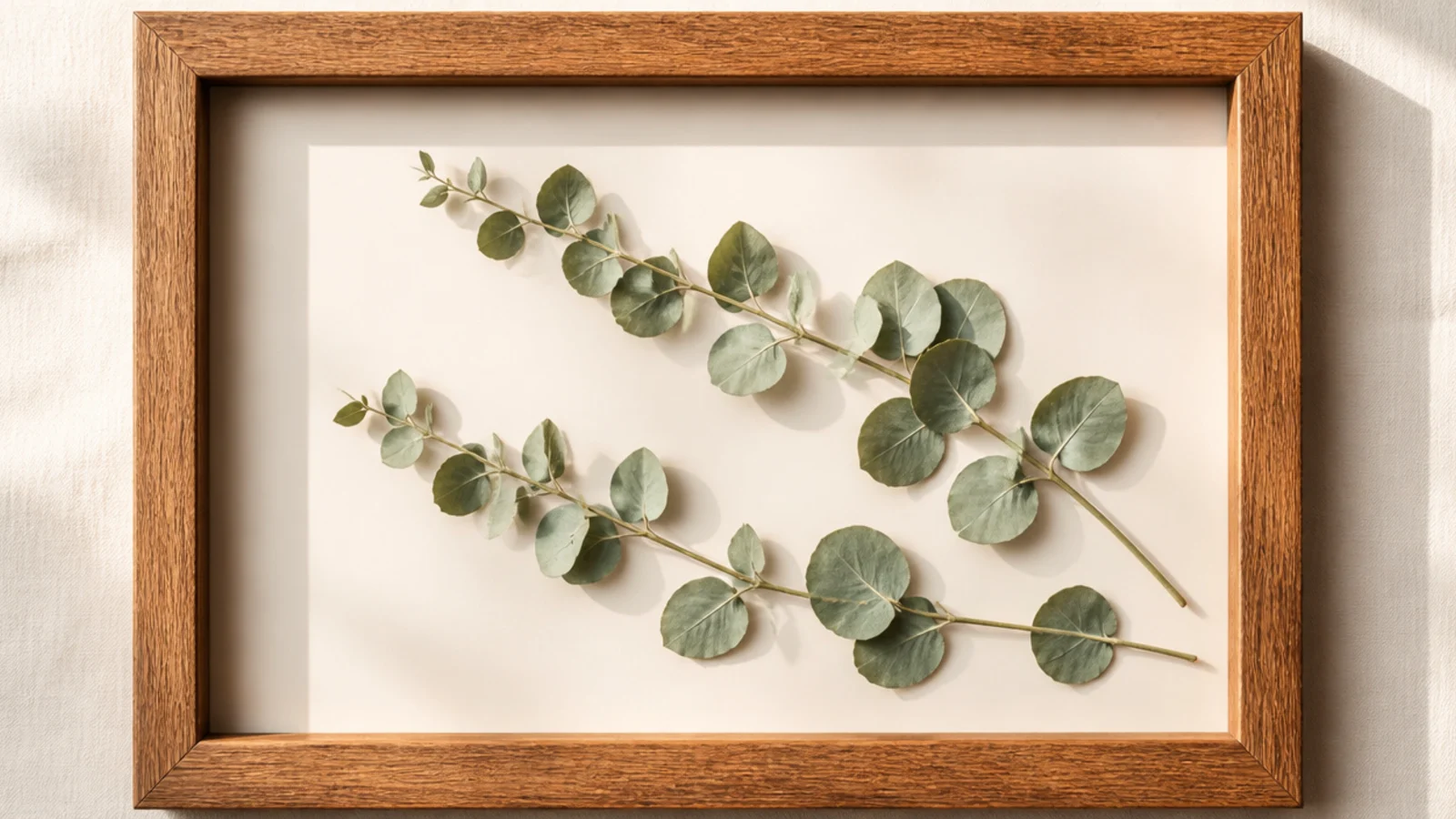
Dried eucalyptus sprigs are silvery, elegant, and calming with their round leaves. Just one or two stems make a serene, spa-like frame. The soft grey-green suits almost any color scheme and needs no color to work.
Air-dry eucalyptus by hanging or standing it until the leaves feel dry and slightly stiff (they keep their shape well). Arrange one or two sprigs diagonally across a cream backing in a frame with slight depth. Anchor the stems with archival glue at a couple of points, keeping leaves clear of the glass, then cure and close.
Dry eucalyptus with a little glycerin in the water first if you want the leaves to stay supple and not shatter over time.
Don’t let dried eucalyptus leaves press on the glass; the round leaves flatten and lose their gentle dimensional curl.
8. Dried Poppy Pod and Seed Head Frame
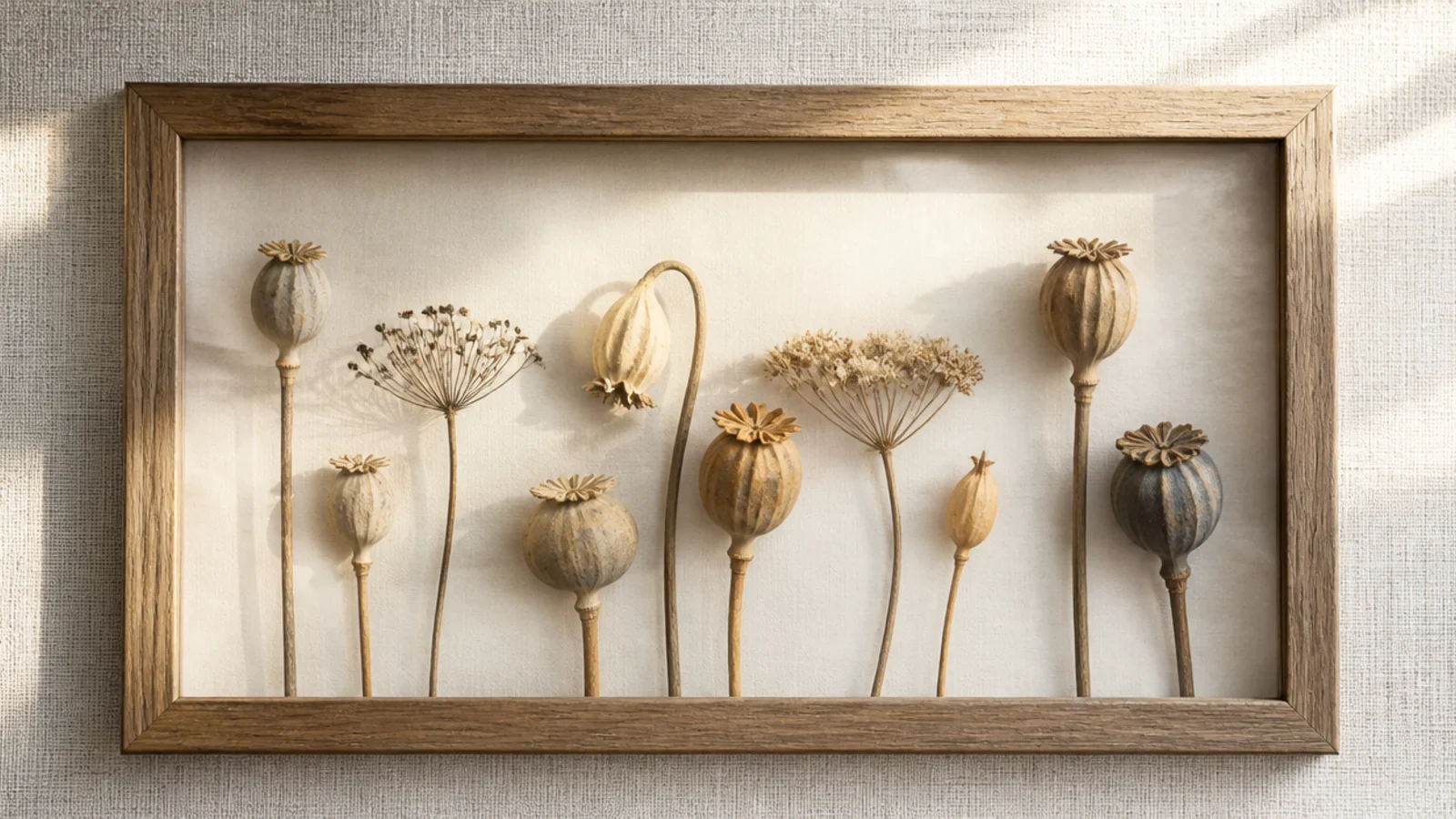
Dried poppy pods and seed heads are sculptural and architectural, more shape than flower. Their round, crowned pods look like little artworks. This frame suits anyone who likes structure and earthy, muted tones.
Dry poppy pods on the stem until they rattle with seed and feel woody. Use a frame with depth for the round pods. Arrange them in a row or loose cluster on a warm neutral backing, varying stem heights. Anchor each stem with strong glue, let cure, and close the frame clear of the pods.
Editor's noteChoose pods with intact crowns and varied sizes; the little crown on top is the sculptural detail that makes them look designed.
Skip thisDon’t shake loose seeds around inside the frame; empty or seal the pods first so stray seeds don’t rattle behind the glass.
9. Preserved Fern Shadow Box
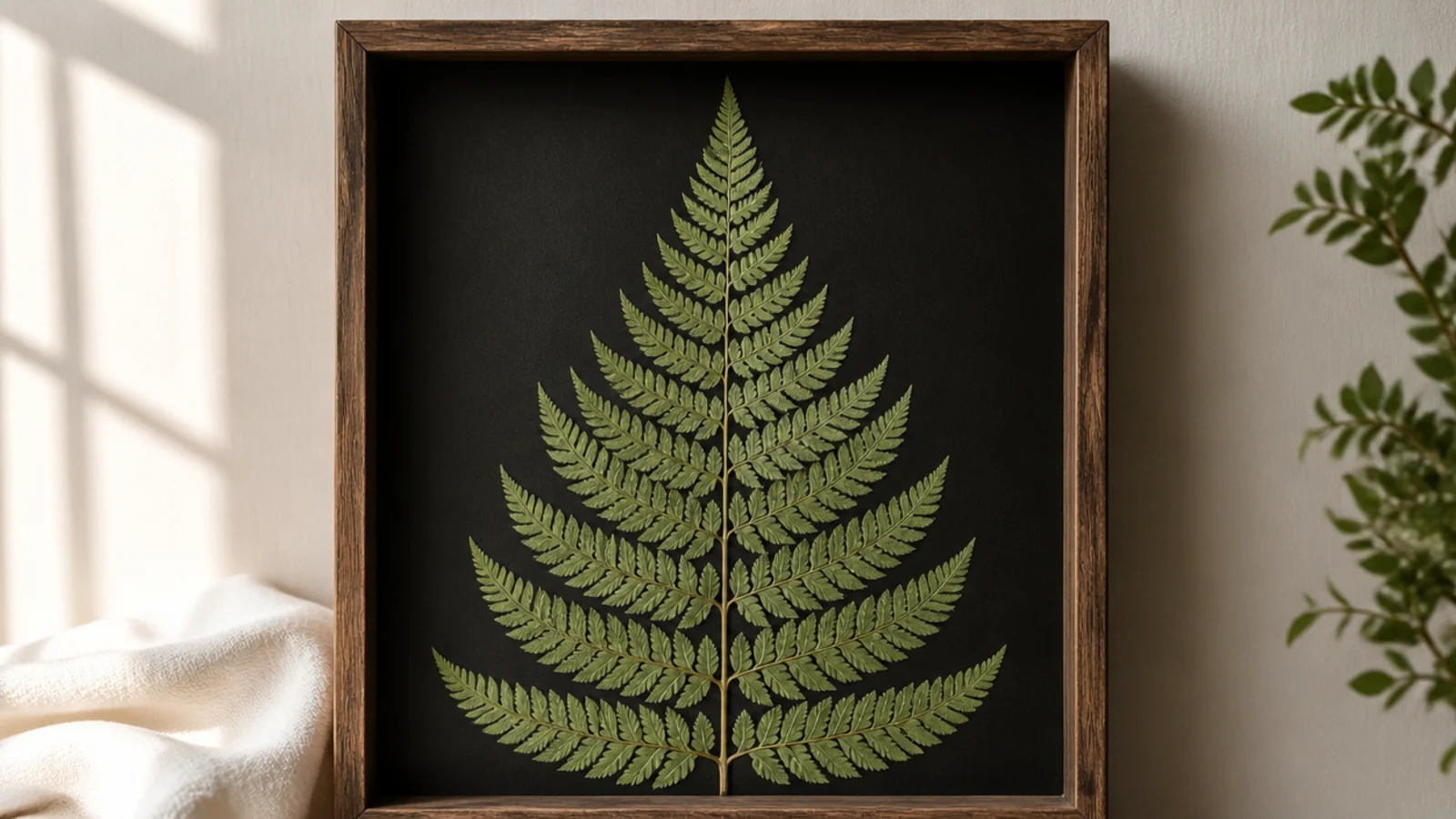
A single large preserved fern frond looks bold and jungle-fresh against a dark background. Preserved (glycerined) ferns stay green and supple rather than brittle. One dramatic frond fills a frame with graphic greenery.
Preserve a fern by standing it in a glycerin-and-water solution for a week so it stays flexible and green, then let it dry. Use a shadow box with a dark backing for contrast. Mount the frond upright, anchoring the stem with archival glue, keeping the fronds clear of the glass. Let cure and close the box.
Editor's notePreserve the fern with glycerin rather than just air-drying; glycerin keeps it green and bendable instead of brown and crumbly.
Skip thisDon’t air-dry a fern for this and expect green; plain air-drying browns ferns, so glycerin preservation is what keeps the color.
10. Dried Statice Color Block
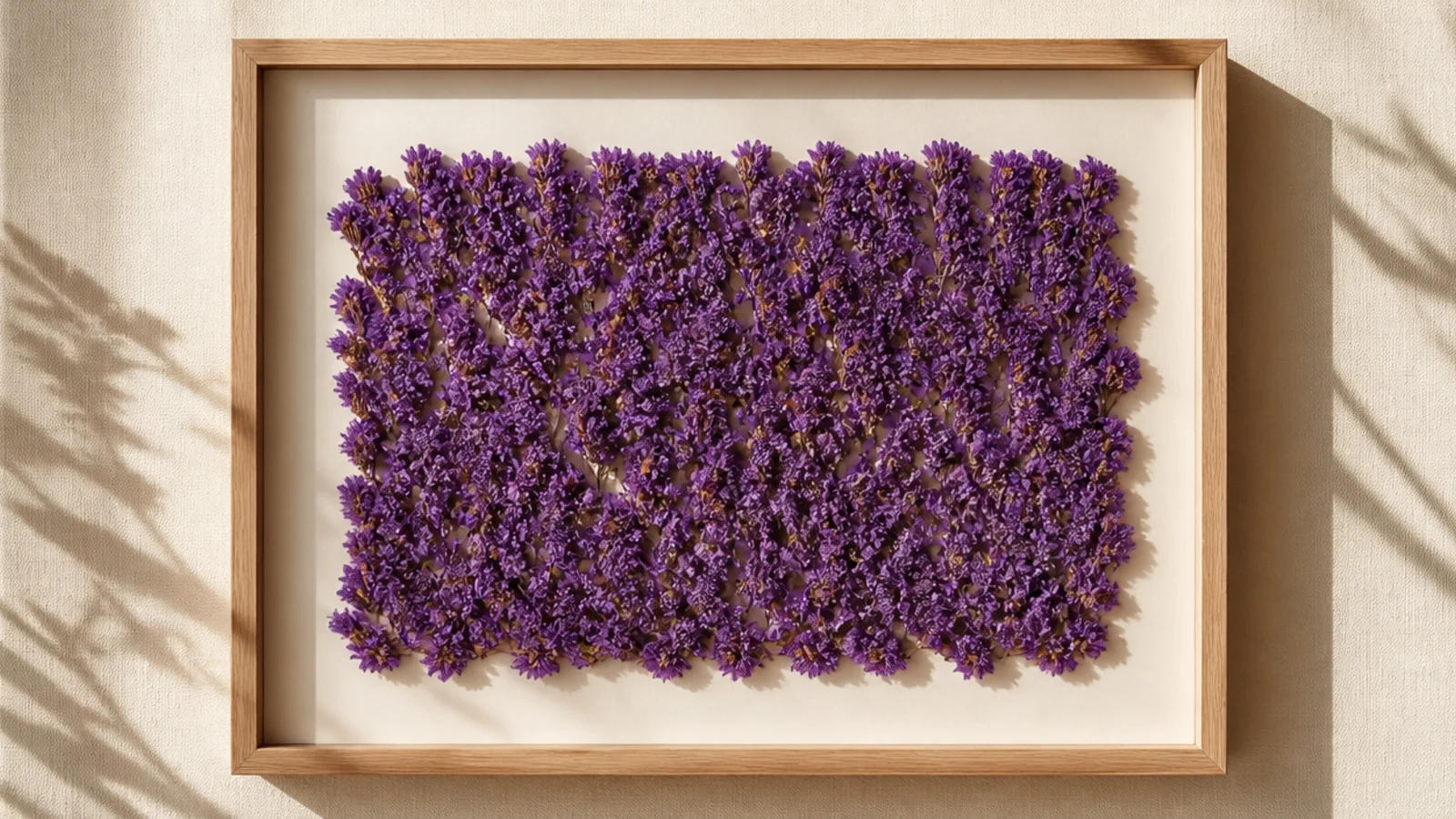
Dried statice keeps its color brilliantly, so a packed block of one vivid shade makes a bold, saturated frame. The papery clusters hold their hue for years. It’s a punchy choice when you want real color from dried flowers.
Air-dry statice by hanging it upside down; it dries fast and keeps its color. Use a frame with slight depth. Pack the dried statice densely in a block or drift of one color on a cream backing, anchoring clusters with archival glue. Keep the blooms just clear of the glass, cure, and close the frame.
Editor's noteStatice holds color best of the common dried flowers, so it’s the go-to when you want a dried frame that stays genuinely vivid.
Skip thisDon’t spread statice thinly; its charm here is a dense, saturated block, so pack the clusters close for full color impact.
11. Dried Grass Minimalist Line
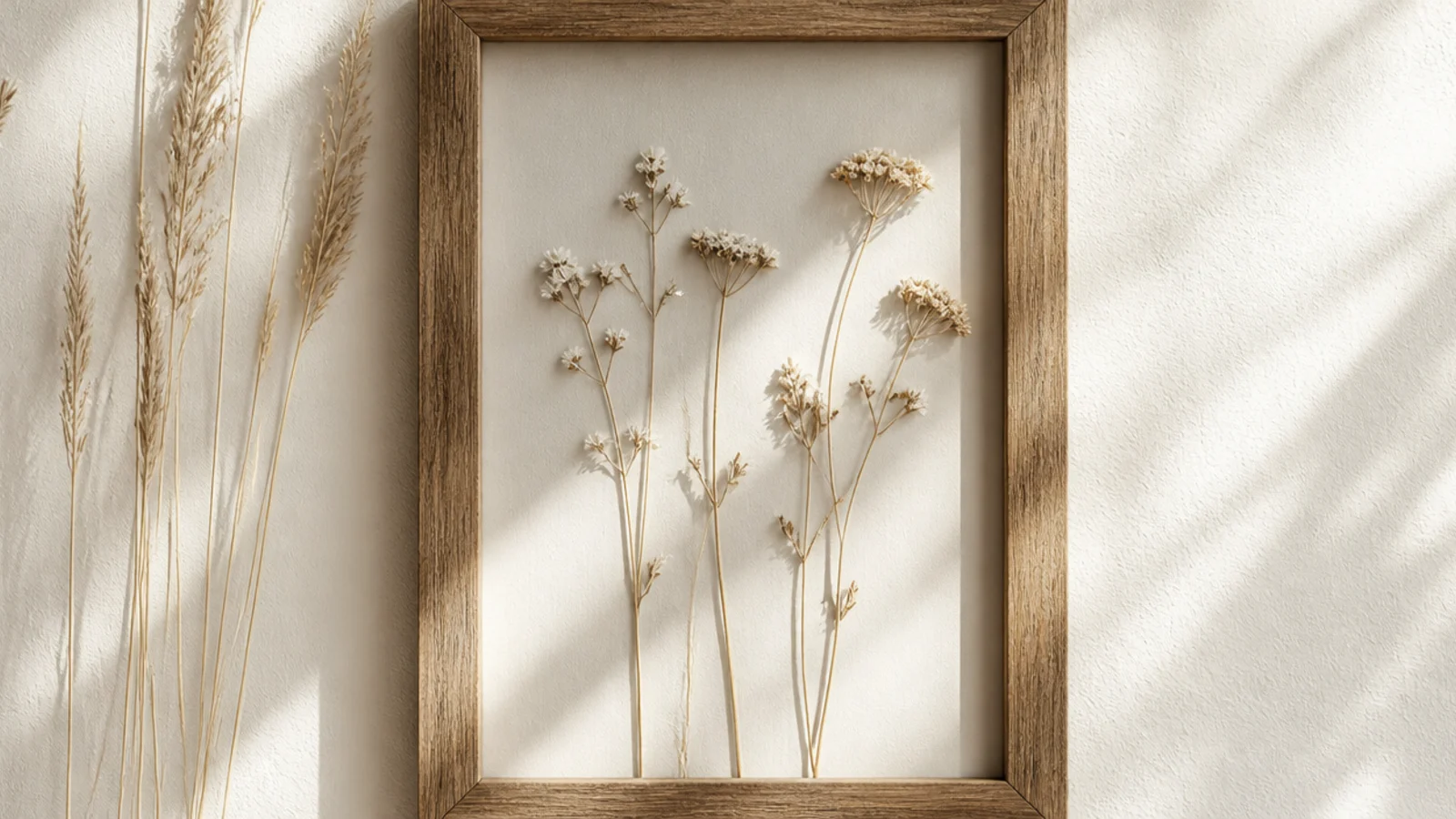
A few slender dried grasses in a tall frame make a calm, minimalist line. The open space around them reads modern and gallery-like. It suits a narrow wall gap and a pared-back room.
Air-dry a few slim grass stems upright until dry. Use a tall, narrow frame with slight depth. Arrange two or three stems vertically, slightly staggered, on a pale backing, leaving generous empty space. Anchor each stem with a small dab of archival glue, keeping heads clear of the glass, then cure and close.
Editor's noteUse an odd number of stems — three reads more natural and balanced than two or four in a minimalist line.
Skip thisDon’t add more grasses to fill the space; the emptiness is the design, and crowding it turns minimalist into ordinary.
12. Dried Craspedia Dot Frame
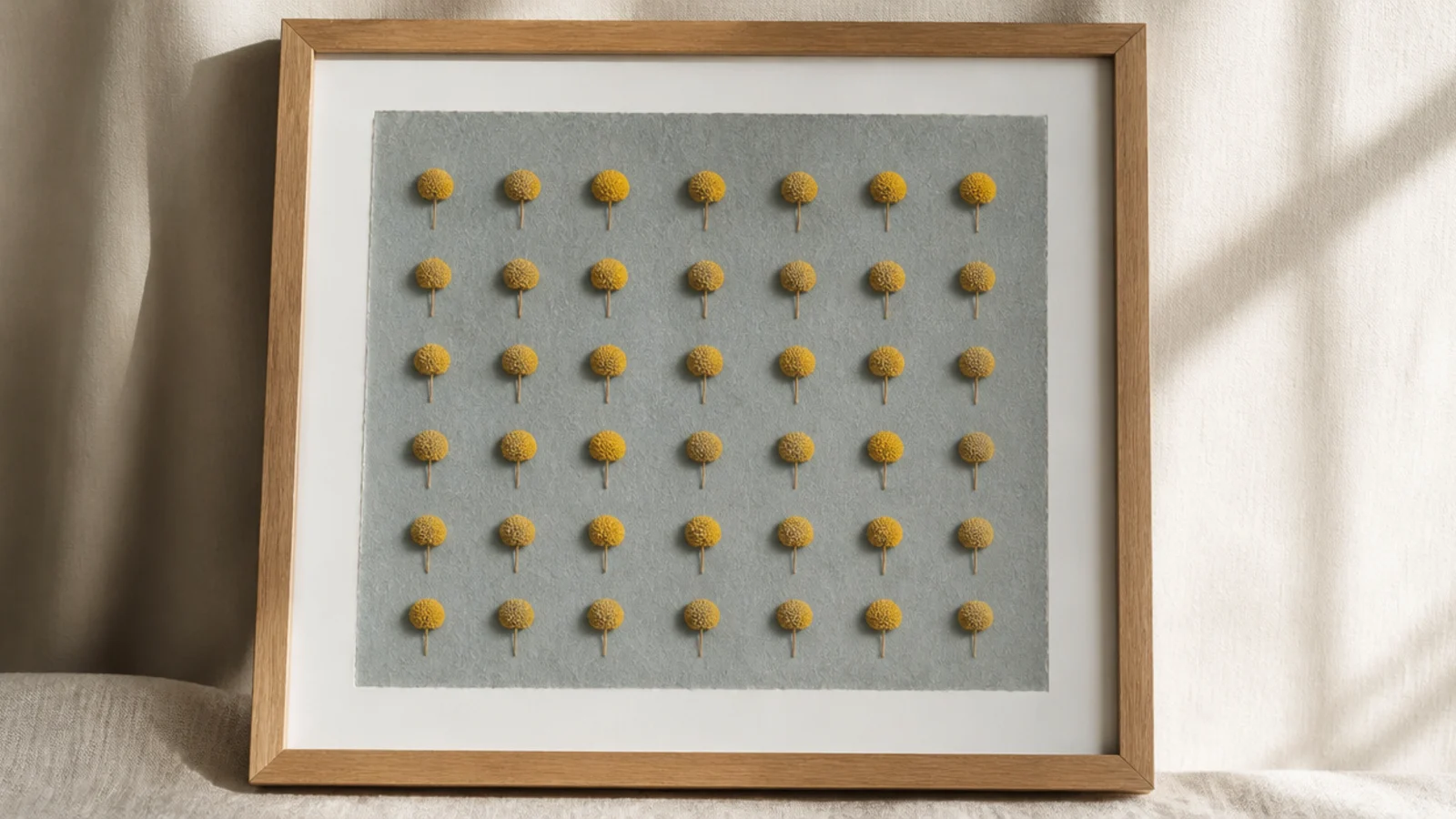
Dried craspedia, or billy balls, are perfect little yellow spheres that look playful arranged as dots. Their round shape and bright color hold beautifully. A grid or scatter of these cheerful balls is modern and fun.
Air-dry craspedia upright; the round heads dry hard and keep their color. Use a frame with depth for the spheres. Arrange them as evenly spaced dots — a grid or a scatter — on a grey-blue backing, anchoring each stem with strong glue. Keep the balls clear of the glass, cure, and close the frame.
Trim the stems short and glue the ball bases so the spheres sit close to the backing and read as clean dots, not floating heads.
Don’t let the balls touch the glass; pressed against it they flatten on one side and lose their perfect round shape.
13. Dried Bouquet Crescent Frame
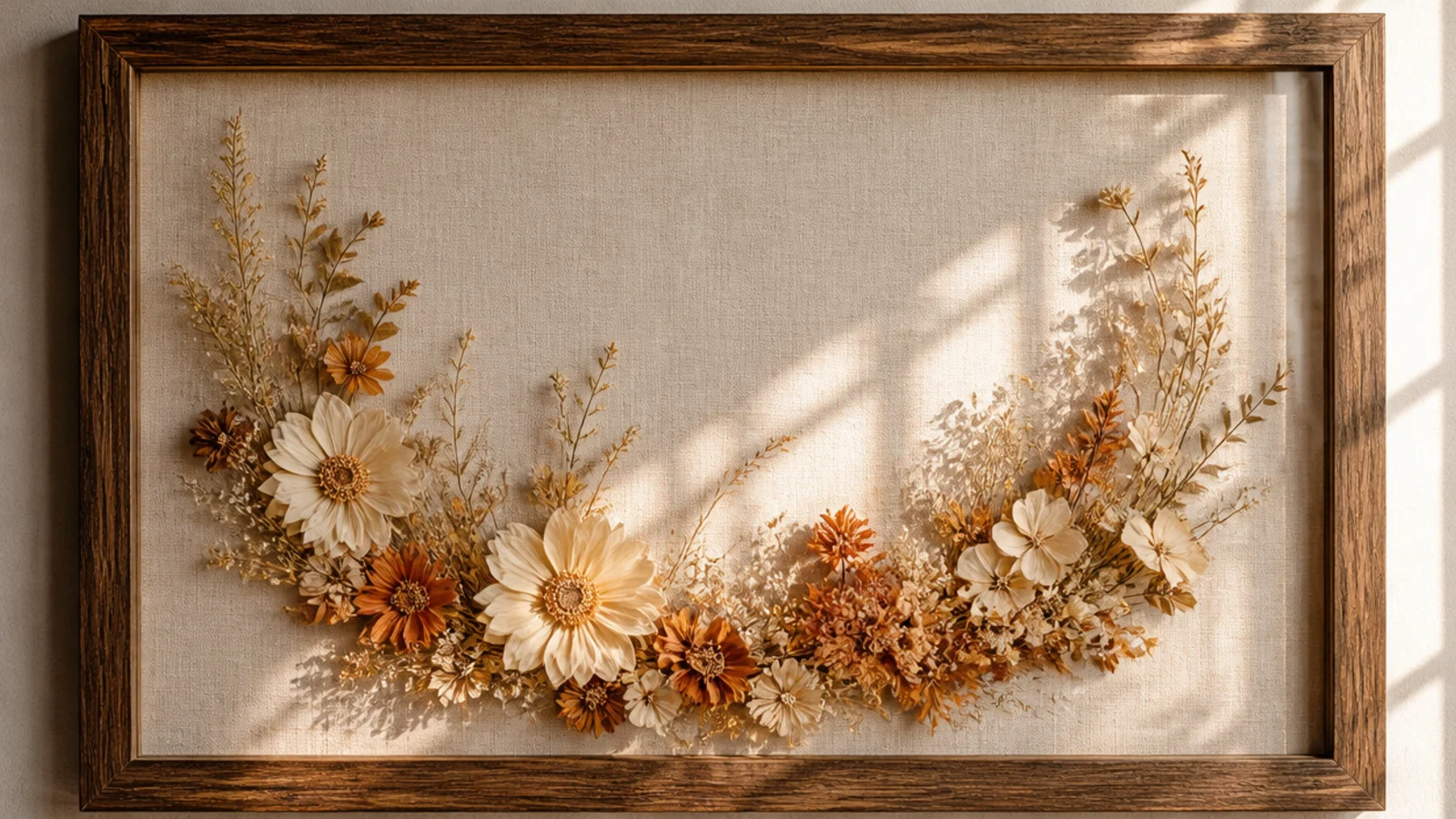
Arranging dried flowers in a flowing crescent gives a frame graceful, asymmetric movement. The sweeping shape feels like a real florist’s arrangement. It’s a lovely way to preserve a mixed bunch or a special bouquet.
Dry a mix of blooms and foliage (silica for rounded flowers, air for the rest). Use a deep shadow box lined with linen. Arrange the dried flowers in a crescent sweeping from one side across the lower half, largest blooms at the center and tapering to fine stems. Anchor each with strong glue, cure, and close the deep front.
Editor's notePlace your largest, best bloom at the crescent’s heart and let smaller pieces trail off; a clear focal point makes the sweep read.
Skip thisDon’t make the crescent symmetrical; its grace comes from the asymmetric, tapering sweep, not a balanced two-sided arrangement.
14. Dried Flower Initial Shadow Box
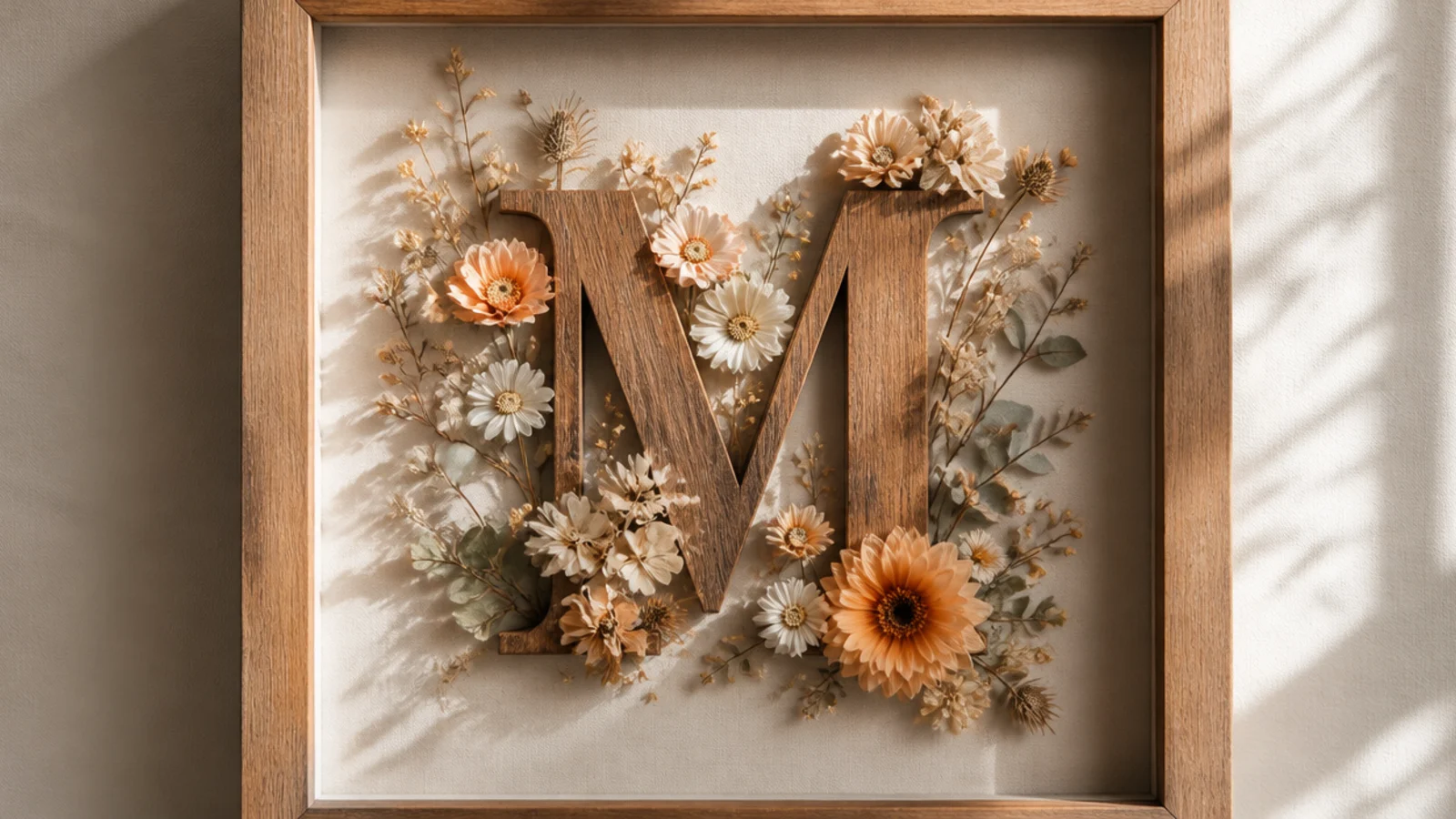
Clustering small dried flowers over a wooden letter shape makes a dimensional floral monogram. The letter gives structure and the dried blooms add lush texture. It’s a popular gift for weddings, babies, and housewarmings.
Get a wooden or cardboard letter that fits your shadow box. Dry small blooms and buds. Hot-glue the dried flowers onto the letter, clustering them to cover the shape, mixing sizes for fullness. Mount the finished letter inside a deep shadow box on a neutral backing with strong glue, let cure, and close the front.
Cover the whole letter shape densely with blooms of varied sizes; a full, lush letter reads far better than sparse flowers on bare wood.
Don’t use a thin, ornate letter; a chunky block letter holds the flowers and stays readable once it’s covered in blooms.
15. Dried Wheat and Grain Frame
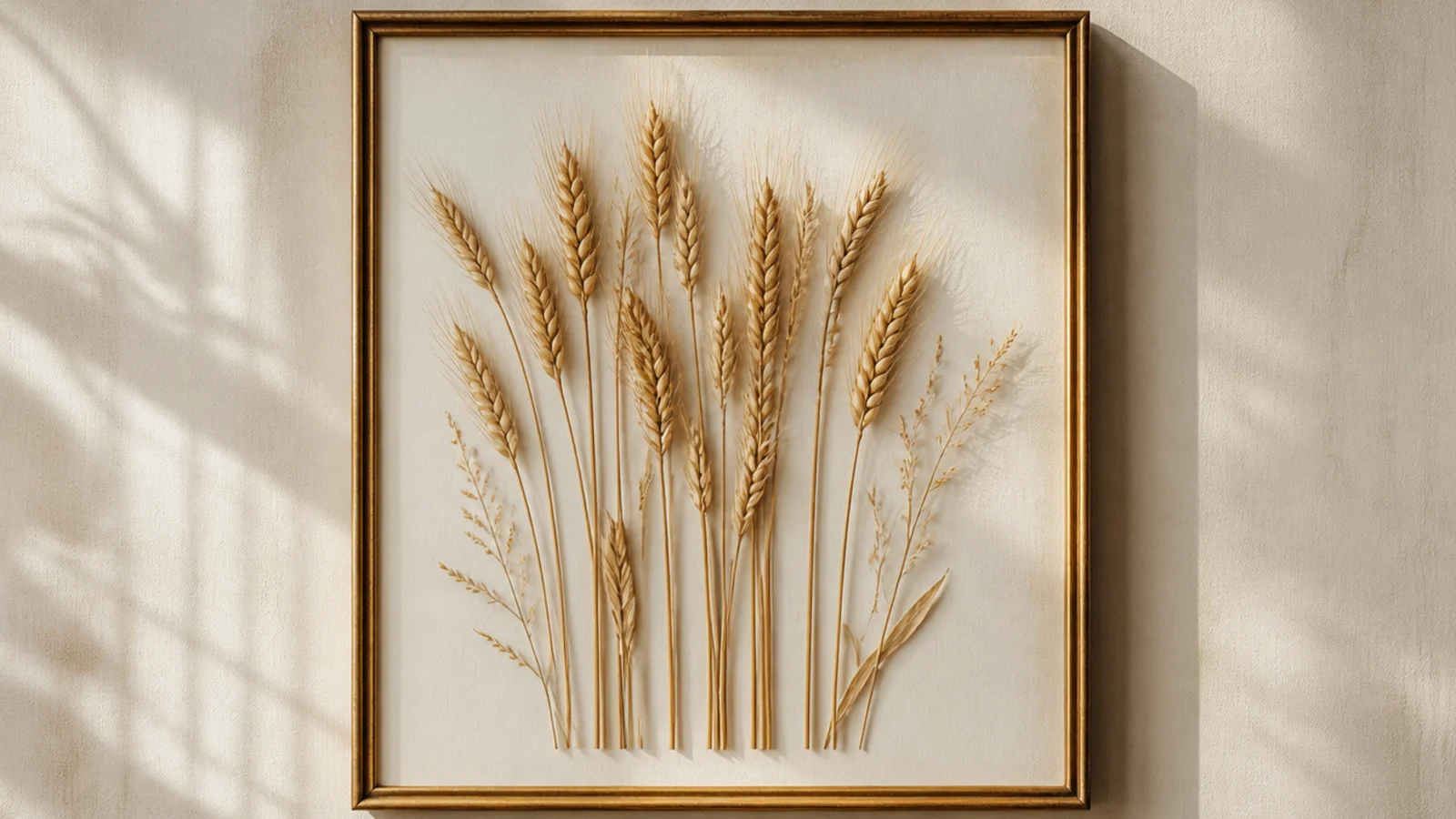
Golden dried wheat and grains bring harvest warmth and a farmhouse feel. The tidy vertical stalks look rich and autumnal. It’s a sturdy, forgiving material that suits a kitchen or dining wall.
Air-dry wheat stalks (they dry naturally and hold well) until fully dry. Use a frame with slight depth. Bundle the stalks and lay them in a neat vertical or diagonal arrangement on a warm cream backing, tied with twine if you like. Anchor with archival glue under the stalks, keep the heads clear of the glass, cure, and close.
Editor's noteAlign the wheat heads so they sit at the same level; a tidy, even top edge makes the bundle look intentional and rich.
Skip thisDon’t let wheat heads shed onto the glass; give a little depth and secure the stalks so loose grains don’t collect inside.
16. Dried Ranunculus Cluster Frame
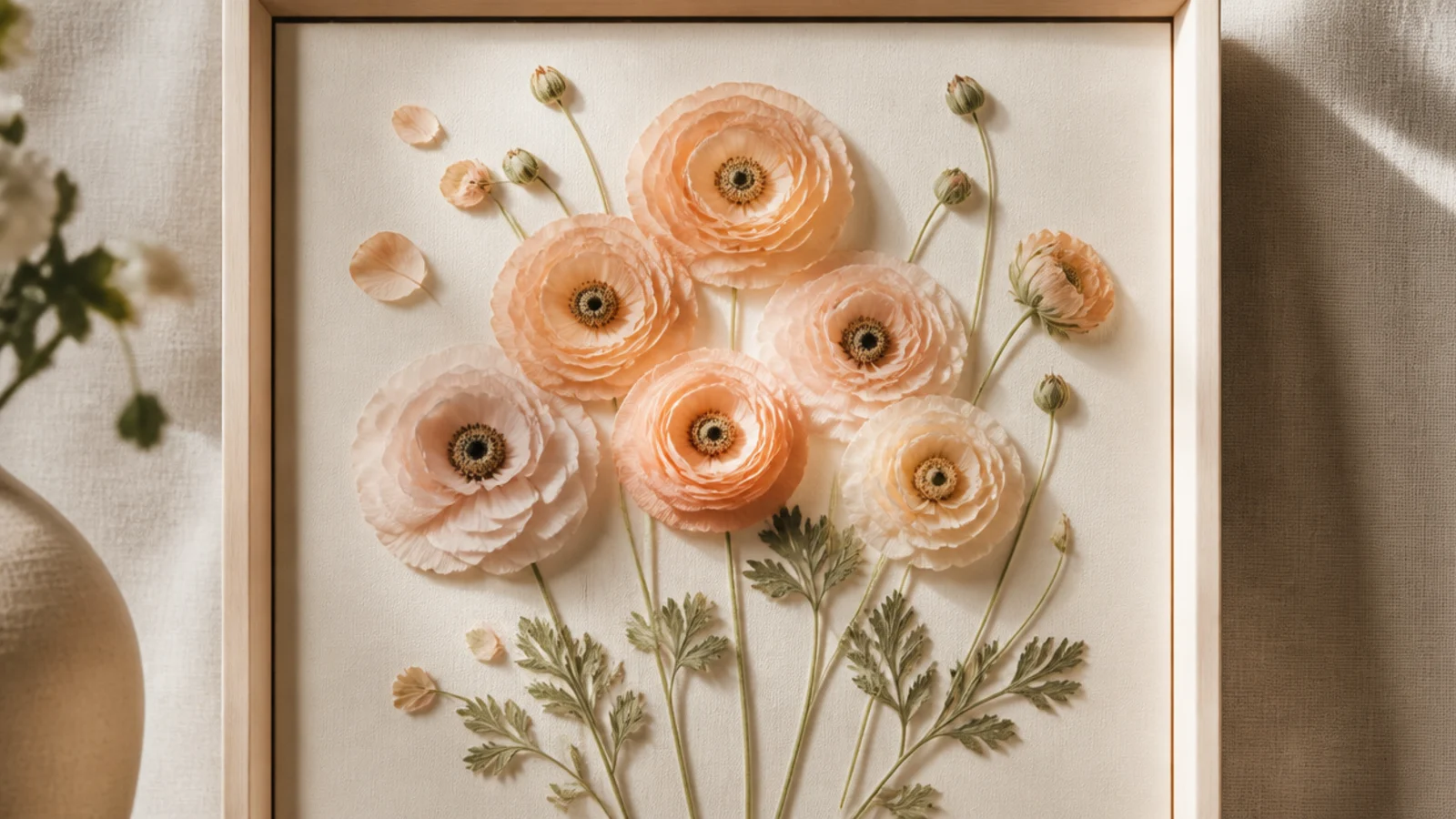
Silica-dried ranunculus keep their many-layered petals and soft color for a romantic, full look. A small cluster of these ruffled blooms is elegant and delicate. It’s a step up in prettiness for anyone who’s dried a rose or two.
Silica-dry ranunculus for about a week to preserve the layered petals and color. Use a deep shadow box. Arrange a small cluster of the dried blooms on cream backing, layering them for fullness, and anchor each bloom base with strong glue. Keep the petals clear of the glass, cure fully, and close the deep front.
Editor's noteHandle silica-dried ranunculus gently by the base; their layered petals are delicate, so anchor from underneath, never squeeze the bloom.
Skip thisDon’t air-dry ranunculus for this; air-drying shrivels the petals, while silica keeps the ruffled, full shape that makes them lovely.
17. Preserved Moss and Dried Bloom Frame
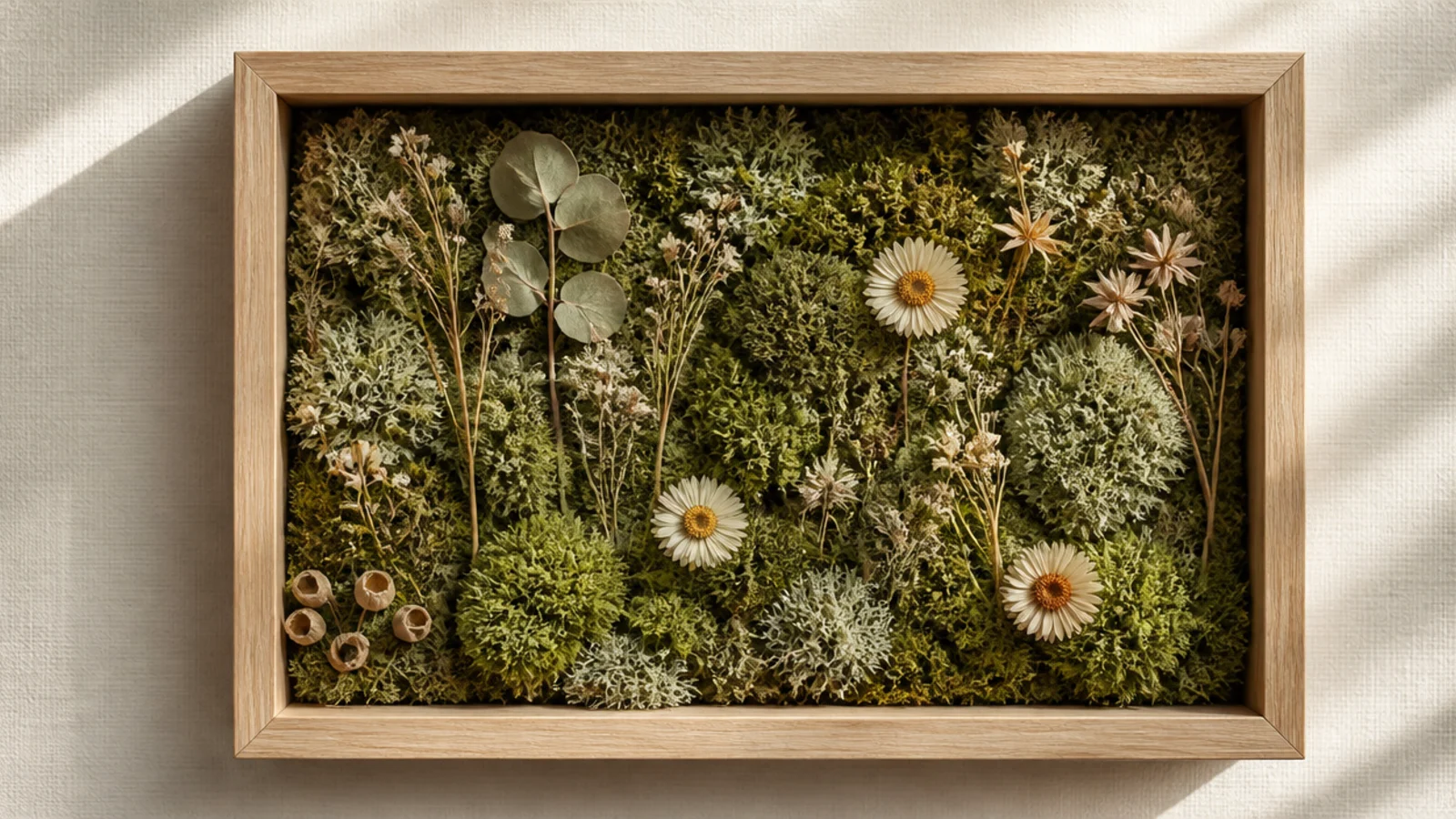
A bed of preserved green moss with a few dried blooms nestled in looks like a little slice of forest floor. The soft moss adds lush color and texture as a living-looking base. It’s a calming, woodland frame for nature lovers.
Use preserved (not fresh) moss, which stays soft and green. Line a deep shadow box back with a layer of moss, gluing it down with archival glue to cover the surface. Nestle a few dried flowers or seed heads into the moss and anchor them. Keep everything clear of the glass, let it cure, and close the deep front.
Editor's noteUse preserved moss, not fresh; fresh moss dries out, browns, and can mold, while preserved moss stays soft and green for years.
Skip thisDon’t pack too many flowers into the moss; a few blooms in a lush green bed look natural, while a crowd hides the moss base.
18. Dried Corner Wreath Frame
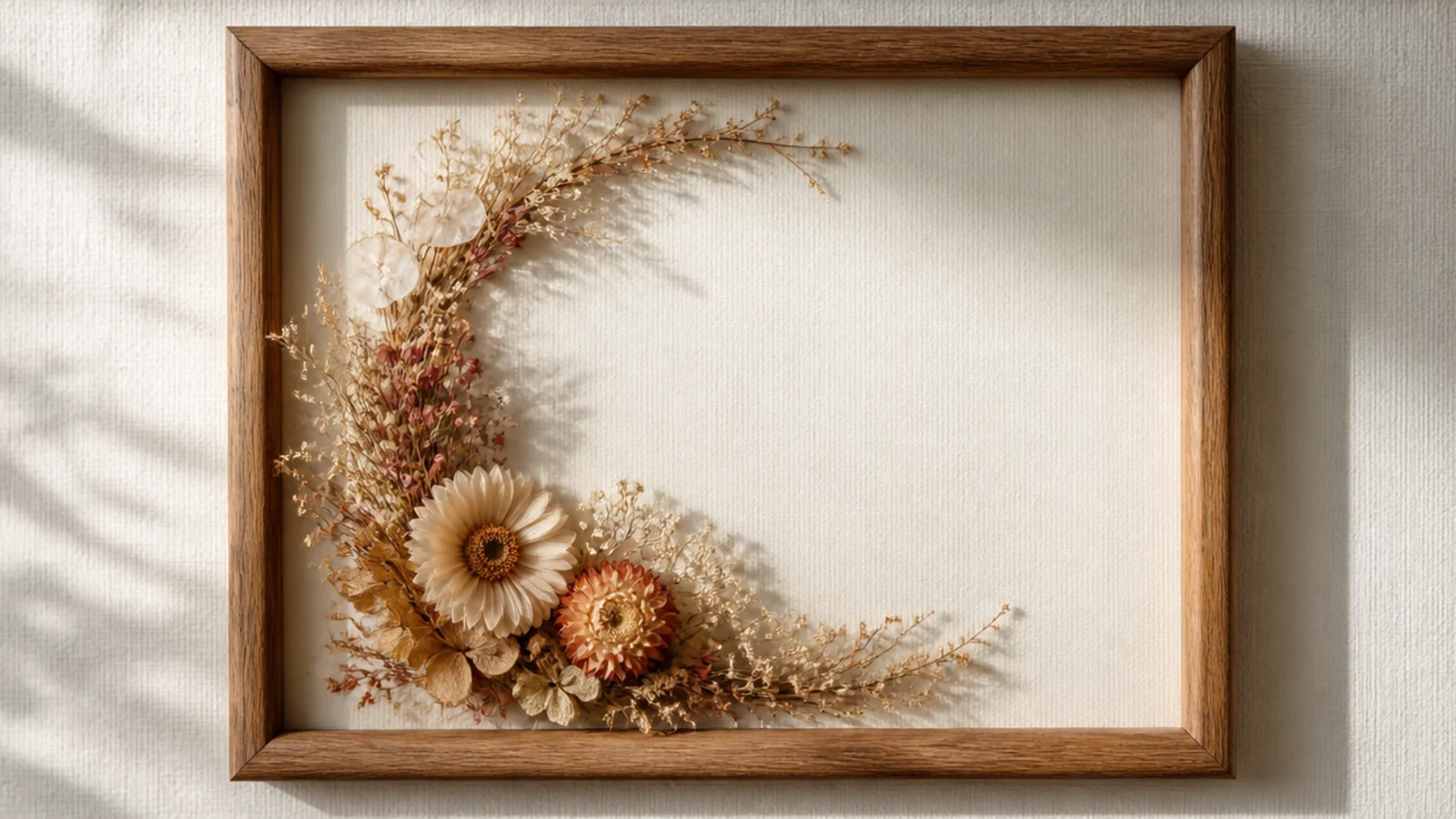
A half-wreath of dried flowers curving around two corners frames an open center beautifully. It leaves room for a name, a date, or just calm space. The partial wreath feels fresh and less expected than a full ring.
Dry an assortment of small blooms, buds, and foliage. On cream backing in a frame with slight depth, build a curving half-wreath around two adjacent corners, flowing in one direction and tapering at the ends. Anchor each piece with archival glue, keep the center open, cure, and close the frame.
Editor's noteTaper the wreath to fine sprigs at both ends so it looks like it’s growing around the corner rather than stopping abruptly.
Skip thisDon’t complete the full circle; the open, asymmetric half-wreath is what makes this modern instead of a standard ring.
19. Dried Palm and Pampas Frame
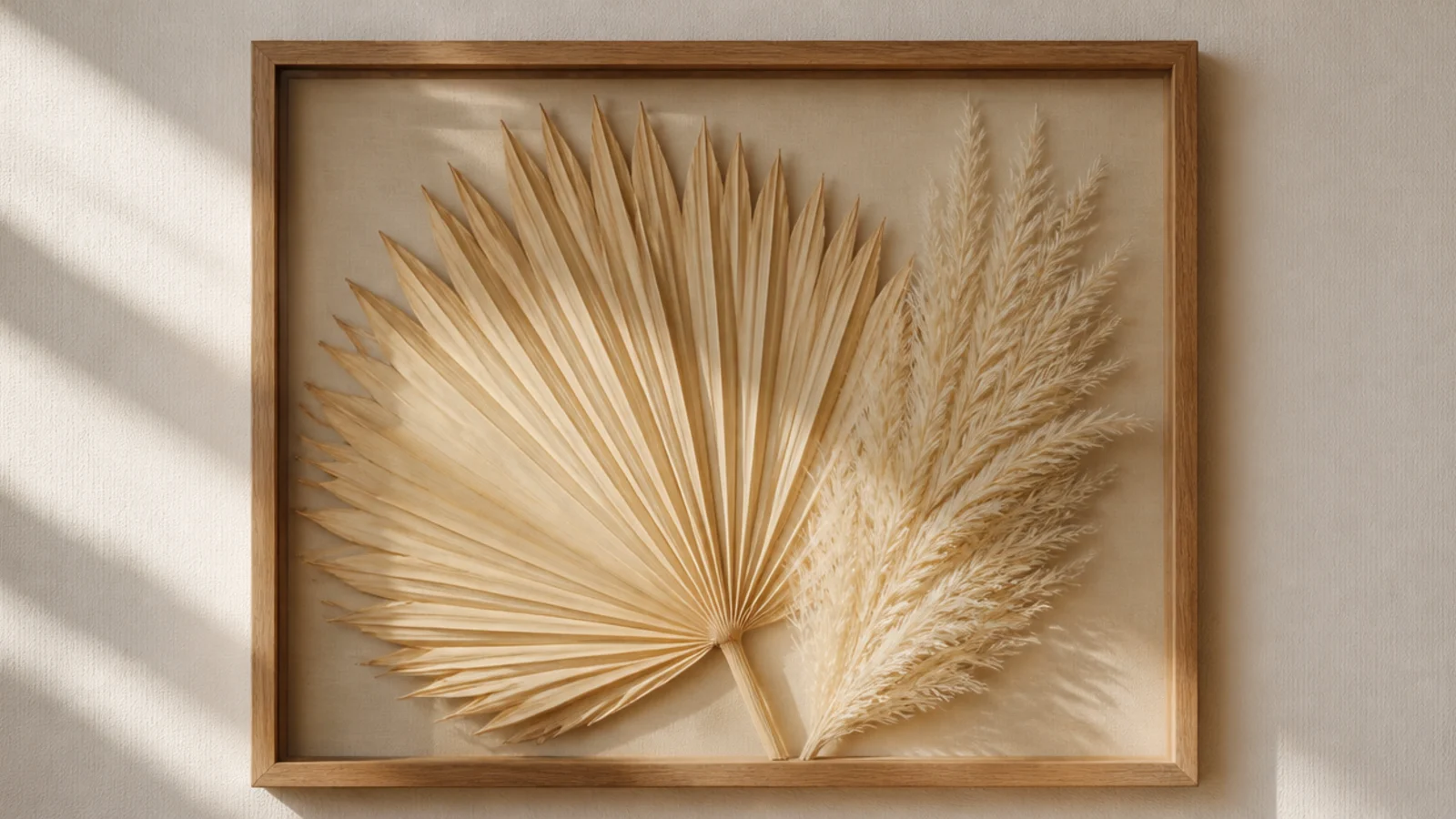
A dried fan palm and a soft pampas plume together look boho and dramatic. The big graphic palm and feathery pampas fill a large frame with texture. It’s a statement piece for a modern, earthy room.
Air-dry a fan palm leaf flat and a pampas plume upright. Use a large frame with depth for the plume. Arrange the palm as a bold backdrop and lay the pampas across it on a sand-toned backing, anchoring the palm and the pampas stem with strong glue. Keep the fluffy plume clear of the glass, cure, and close.
Spray the pampas plume with a little hairspray before framing to stop it shedding fluffy seeds inside the frame.
Don’t crush the pampas plume against the glass; it needs depth to stay feathery, and pressure mats it down permanently.
20. Large Mixed Dried Meadow Statement Box
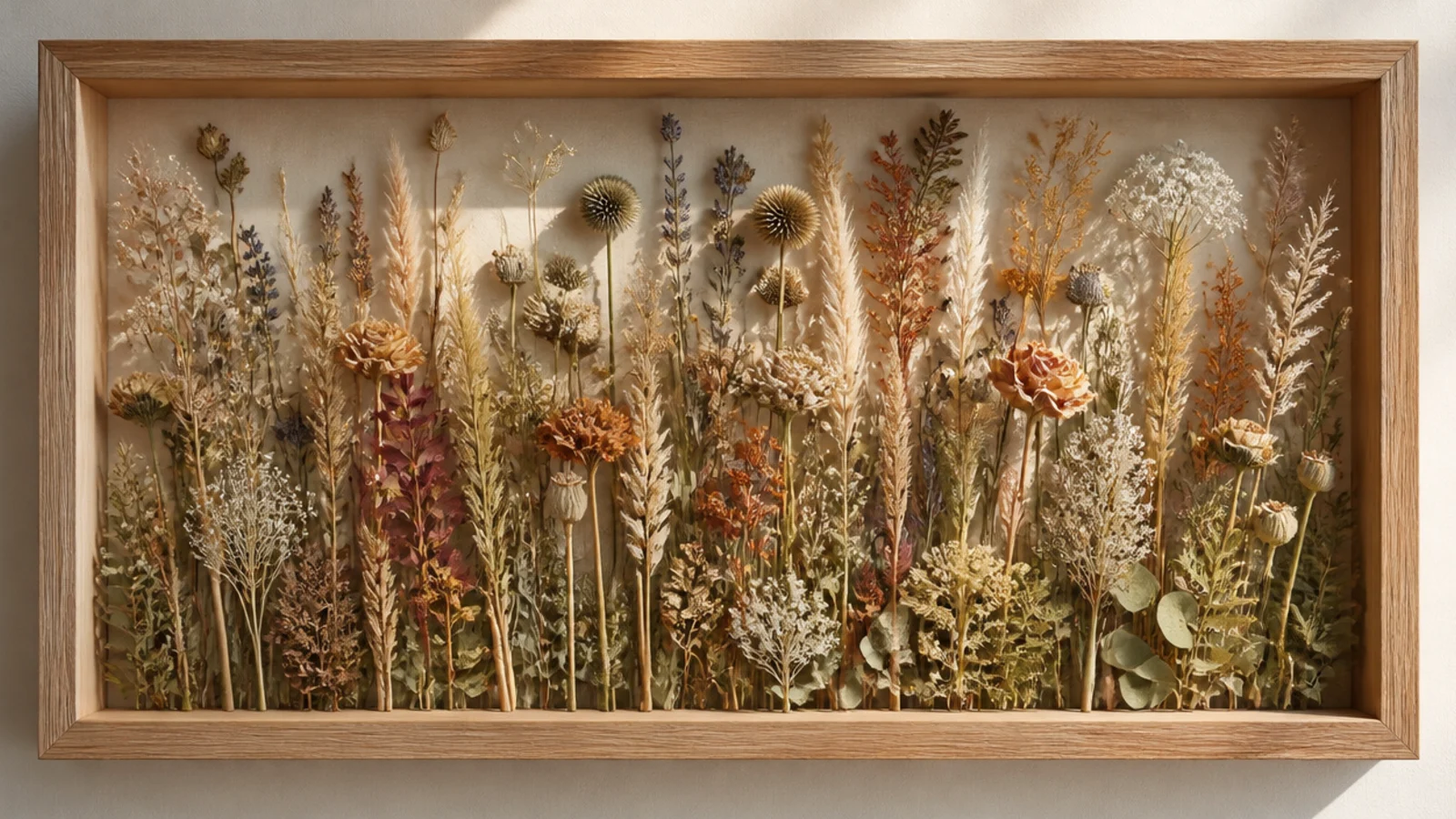
A large deep shadow box packed with a lush mix of dried flowers, grasses, and seed heads is the grand statement of dried flower framing. The abundance of textures and tones fills a big wall with warmth. It’s the finale piece that shows off a whole season of drying.
Dry a wide variety of blooms, grasses, and seed heads. Use a large, deep shadow box lined with linen. Arrange the material as a full meadow — tall grasses and plumes at the back, blooms through the middle, fine sprigs in front — building depth in layers. Anchor every stem with strong glue, cure fully, and close the deep glass front.
Build the arrangement in depth layers, tallest at the back, so the meadow has real front-to-back dimension inside the deep box.
Don’t use a shallow frame for a big mixed arrangement; without depth the layers crush together and the meadow effect collapses.