

1. Galvanized Metal Rack
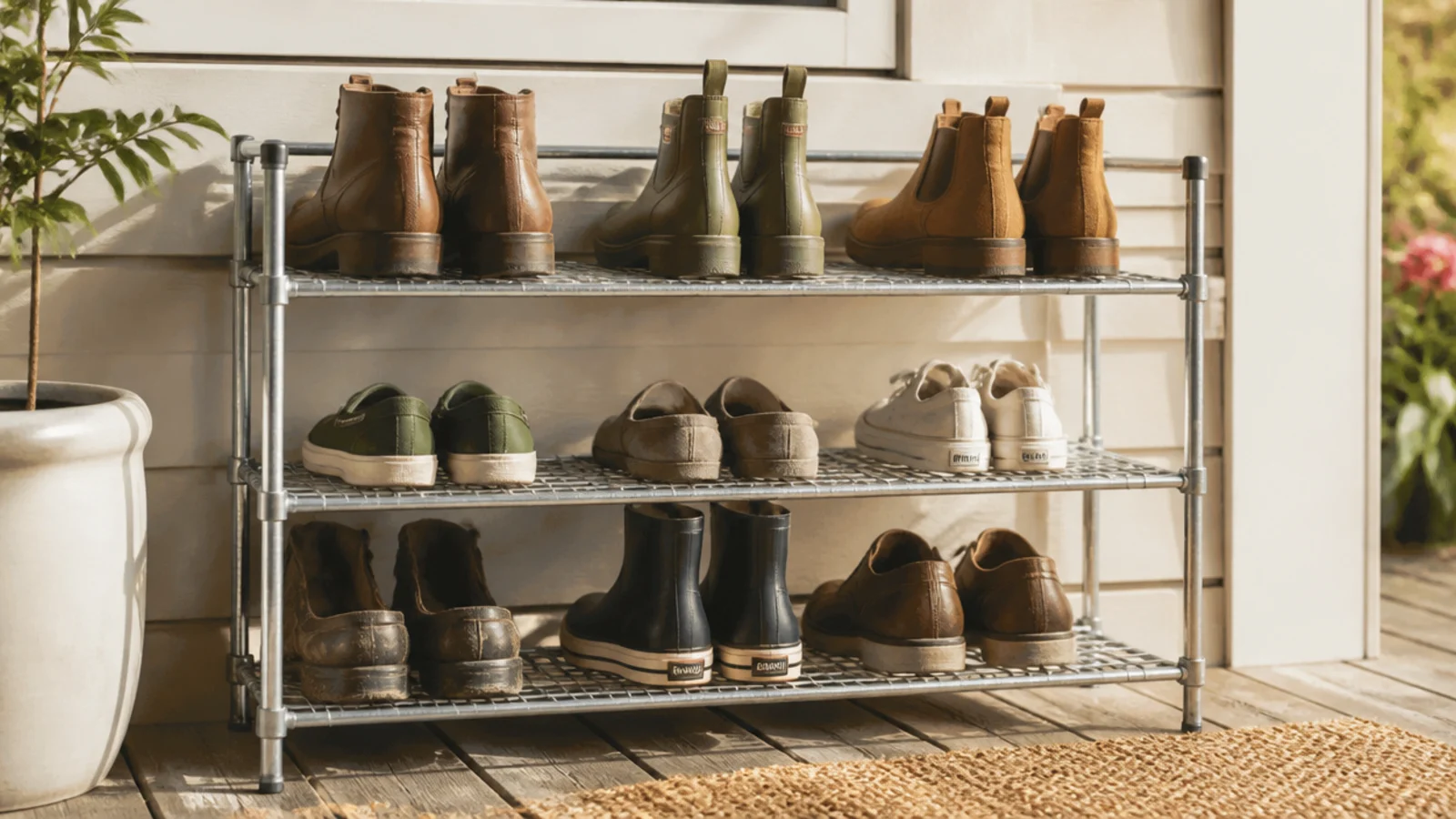
A galvanized wire rack is the easiest weatherproof starting point — rust-resistant, cheap, and it drains through the grid. It suits an exposed or covered spot and holds muddy boots you can hose off. Water and grit fall straight through.
Choose a galvanized or powder-coated steel rack with open wire tiers. Set it where rain drains away, on feet or pads so it is not sitting in water. Rinse the whole rack with a hose when it gets muddy. Check the coating for chips each season and touch up any bare metal to stop rust.
Set it on small rubber feet or pavers so the frame is not in contact with a wet deck, where even galvanized metal eventually corrodes.
Do not use a plain painted-steel indoor rack outside; the paint chips and it rusts through in a single wet season.
2. Teak Slat Bench
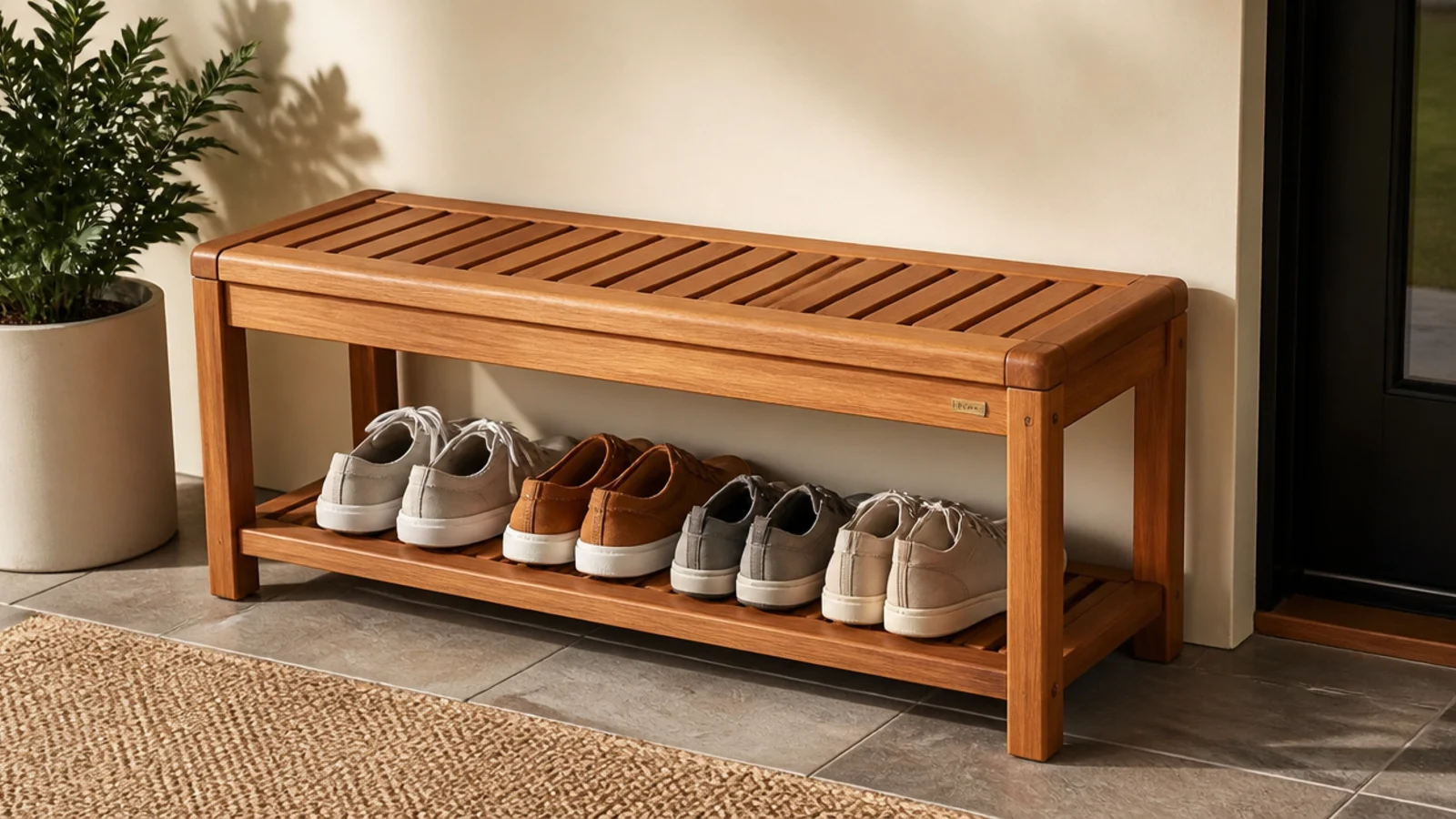
A teak bench is the handsome, long-lasting outdoor choice — teak’s natural oils resist rot and weather beautifully. It gives you a seat plus a slatted shoe shelf. It suits a covered porch or a sheltered front door.
Choose a slatted teak bench with a lower shelf so water drains through. Set it under cover if possible; teak handles exposure but lasts longer sheltered. Oil it once or twice a year to hold the golden color, or let it silver naturally. Store daily and transition shoes on the shelf.
Let teak weather to a soft silver-gray if you prefer low maintenance, or oil it yearly to keep the warm brown tone.
Do not varnish teak; its oils reject film finishes, which peel outdoors — use teak oil or let it weather instead.
3. Boot Tray Station
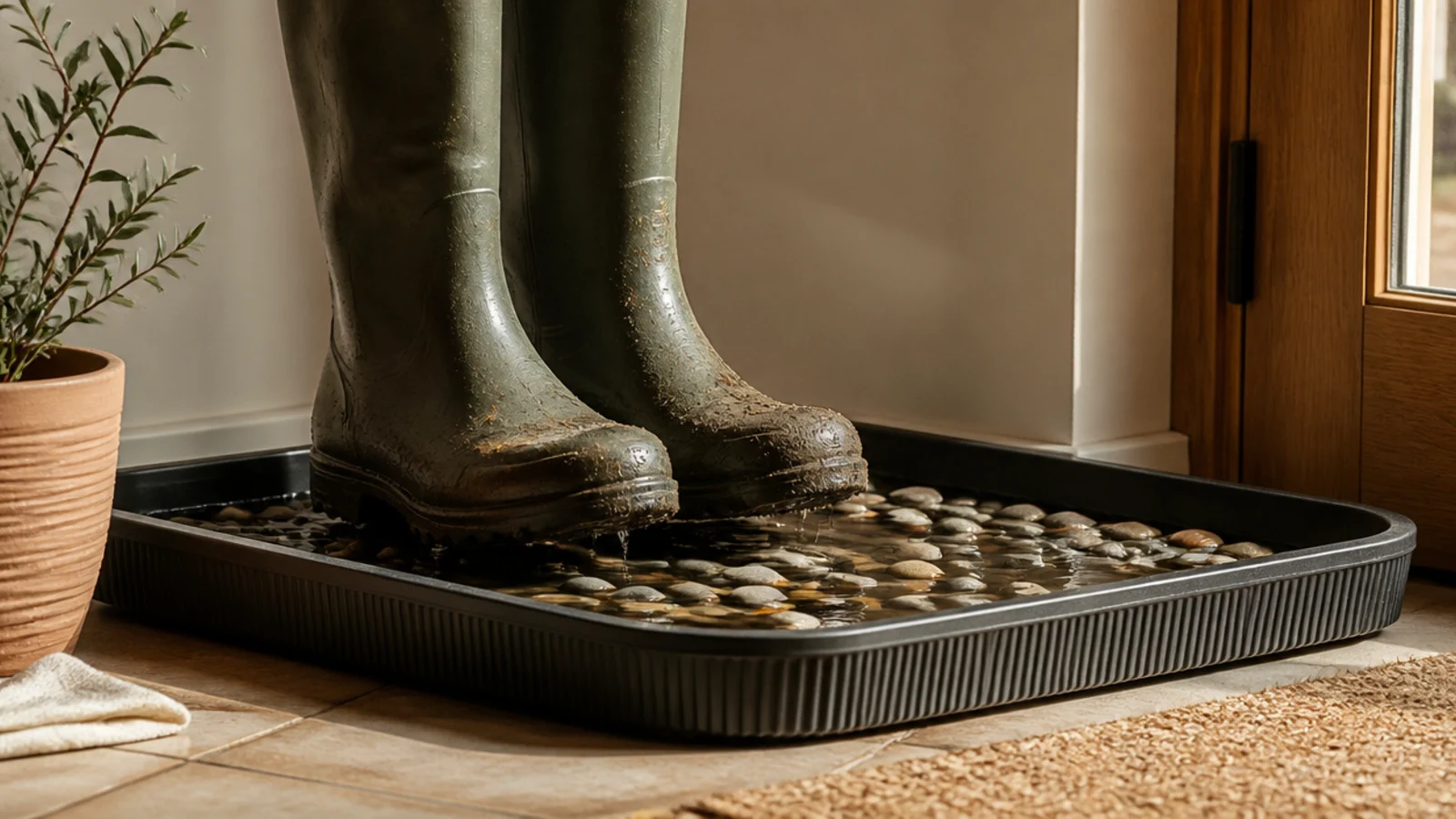
A big boot tray with a pebble layer is the simplest wet-weather station for a back or front door. Boots drip and dry above the water, keeping the porch clean. It suits the muddiest, wettest spot you have.
Set a large ribbed rubber or metal boot tray by the door and pour in a layer of decorative pebbles. Stand wet, muddy boots on the pebbles so they drain and dry above any pooled water. Tip out the water and rinse the tray at the end of each wet week. Add a low rack inside for more pairs.
The pebble layer lets boots dry from below and keeps them out of the dirty water that collects in a plain tray.
Do not skip emptying the tray; standing water breeds mosquitoes and smells, and defeats the point of the station.
4. Cedar Outdoor Cubbies
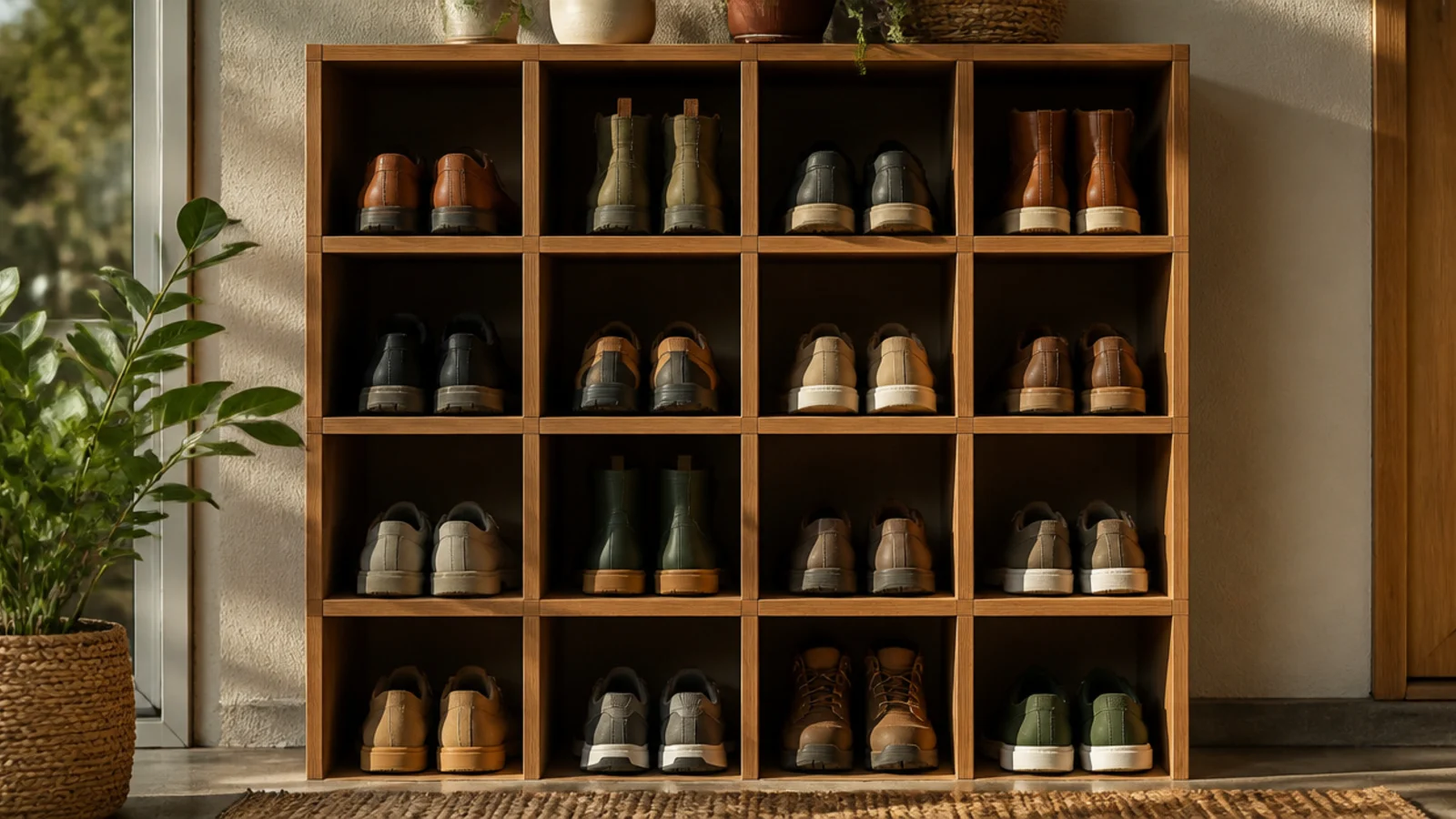
Cedar cubbies mounted under an eave give each pair a slot in a naturally rot-resistant wood. Cedar also smells fresh and deters bugs. It suits a covered porch wall with room to mount.
Build cubbies from cedar, sealed with a spar finish, and mount them to a covered wall into studs with coated screws. Angle a drain gap or leave the backs open so water does not collect. Assign a cubby per pair. Reseal the cedar each year to keep it sound outdoors.
Editor's noteLeave a small gap at the back of each cubby so any water that gets in can drain out instead of pooling in the corner.
Skip thisDo not mount cedar cubbies in a fully exposed spot; even rot-resistant wood lasts far longer under an eave than in the rain.
5. Powder-Coated Steel Rack
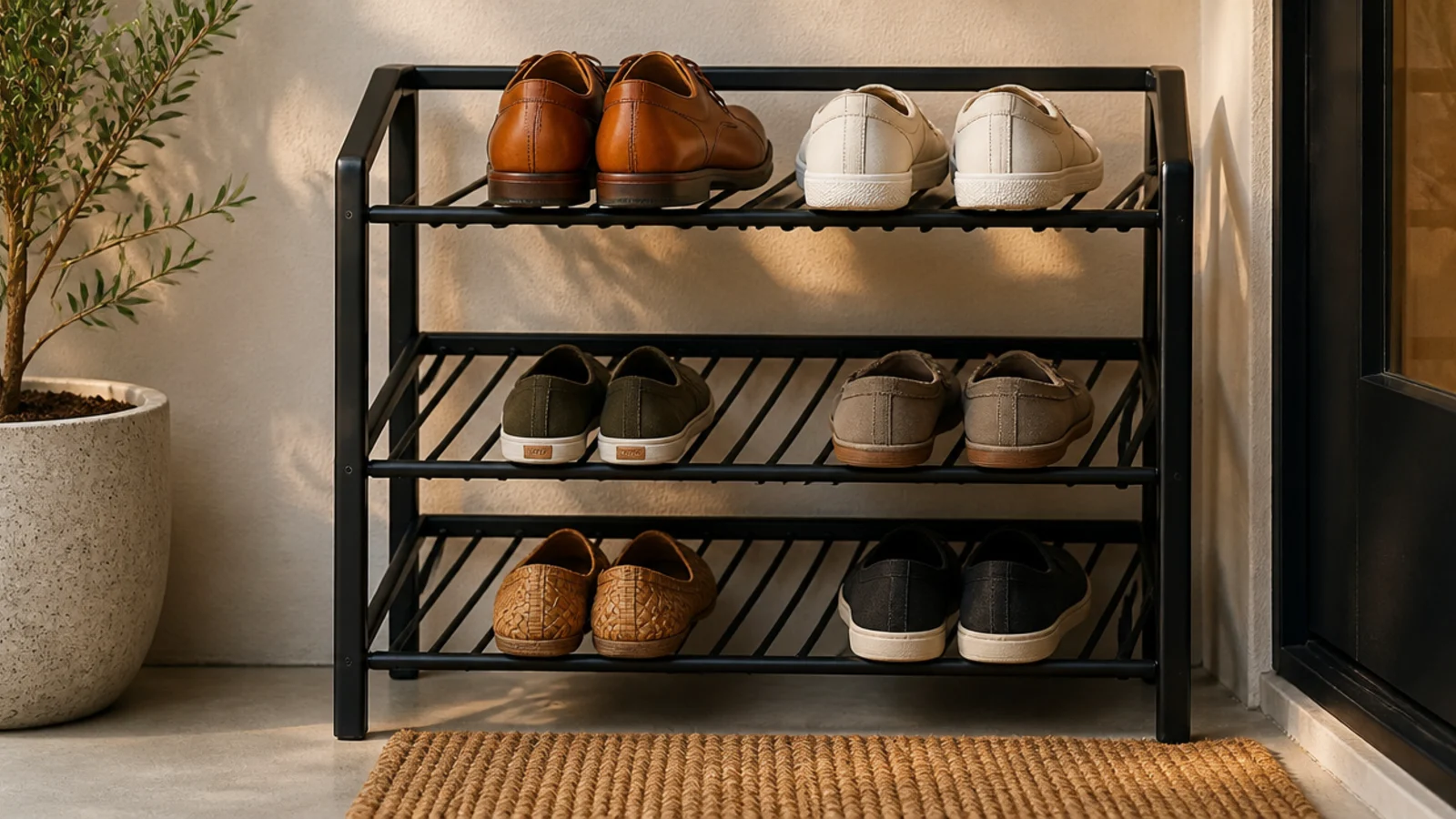
A powder-coated steel rack pairs a tough rust-resistant finish with a clean modern look. The baked-on coating handles weather far better than paint. It suits a modern porch or patio and comes in colors.
Choose a rack with a factory powder-coat finish and angled bar tiers that shed water. Set it on pads where rain drains away. Wipe it clean and hose off mud. Inspect the coating each season and touch up any chips with an exterior enamel to keep rust from starting.
Editor's noteA chip in powder coating is where rust begins, so dab any nicks with matching exterior touch-up paint as soon as you spot them.
Skip thisDo not let a chipped powder coat go unrepaired near the coast; salt air finds bare metal fast and undercuts the coating.
6. Recycled Plastic Rack
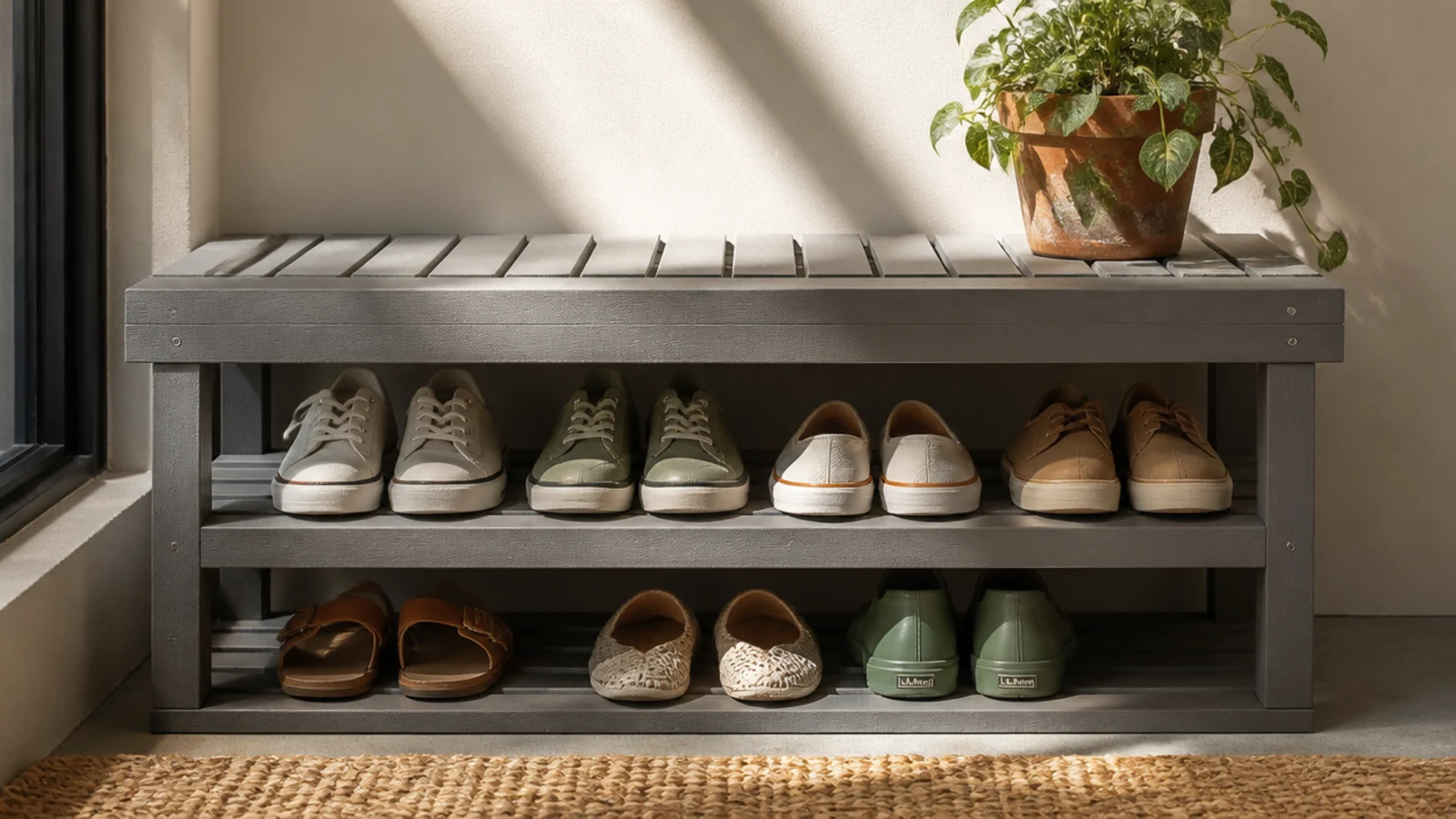
Recycled-plastic lumber never rots, never needs sealing, and shrugs off rain and sun — the most maintenance-free outdoor pick. It looks like painted wood but lasts indefinitely. It suits anyone who wants zero upkeep.
Build or buy a rack from recycled-plastic (composite) lumber with slatted tiers for drainage. Assemble with stainless screws. Set it anywhere — exposed or covered — since it will not rot or fade much. Hose it clean whenever it gets dirty; no sealing ever needed.
Editor's noteRecycled-plastic lumber expands more than wood in heat, so leave a small gap at fastened joints and do not overtighten screws.
Skip thisDo not span long unsupported lengths of plastic lumber; it sags in heat, so keep shelf spans short or add a center support.
7. Covered Porch Cabinet
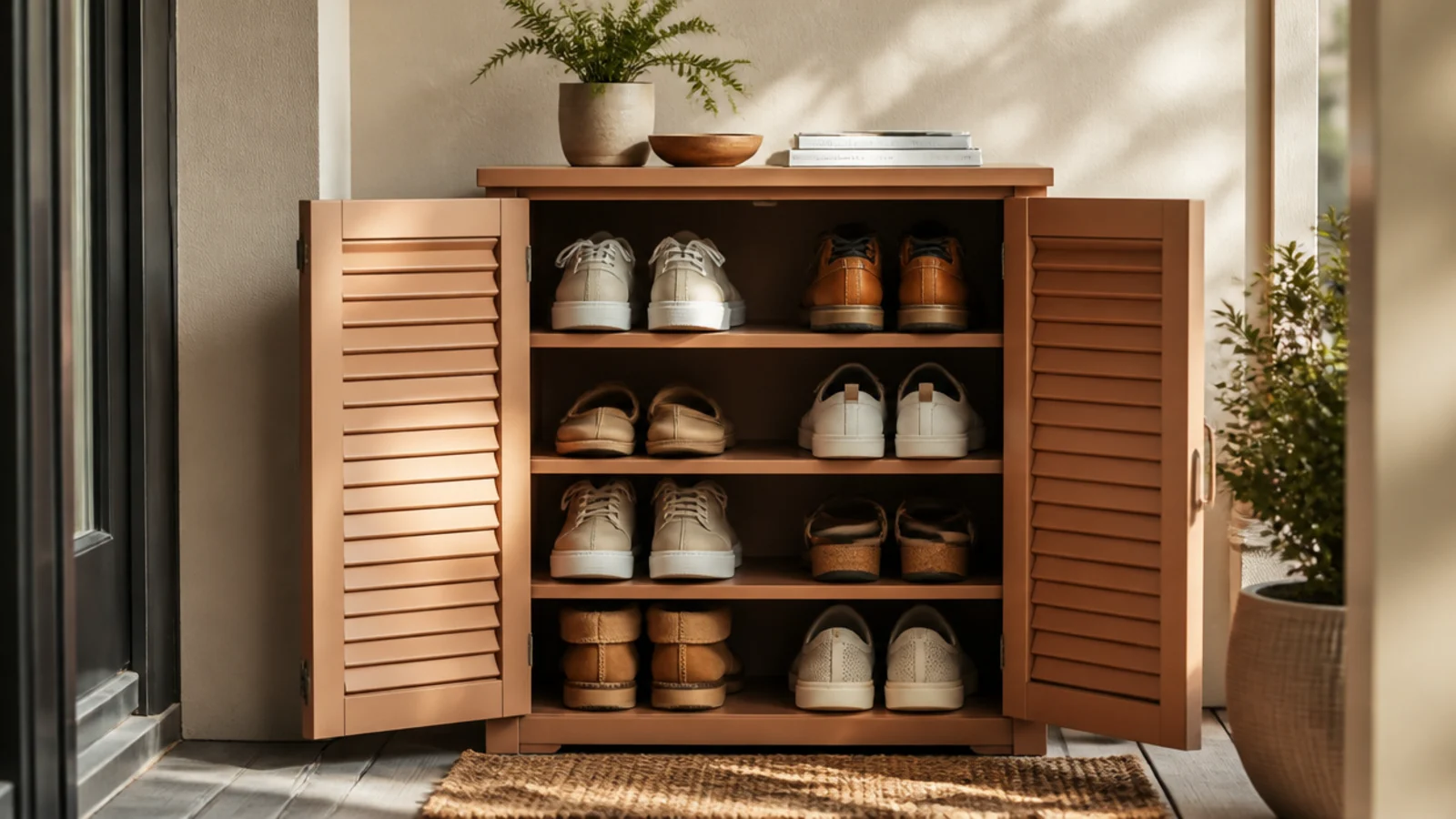
A vented outdoor cabinet hides shoes fully while letting them breathe, protecting them from rain, sun, and leaves. It suits a covered porch and a tidy front entrance. Closed doors keep the porch looking clean.
Choose a cabinet in teak, cedar, or resin with louvered or vented doors so air moves and moisture escapes. Set it on a covered porch, up on feet off the deck. Store transition shoes inside on shelves. Keep the vents clear and reseal a wood cabinet yearly.
Editor's noteLouvered doors are the key detail; they keep rain and leaves out while letting damp shoes dry instead of getting musty.
Skip thisDo not use a sealed solid-door cabinet outside; with no ventilation, condensation builds inside and the shoes and cabinet both mildew.
8. Wall-Mounted Slatted Rack
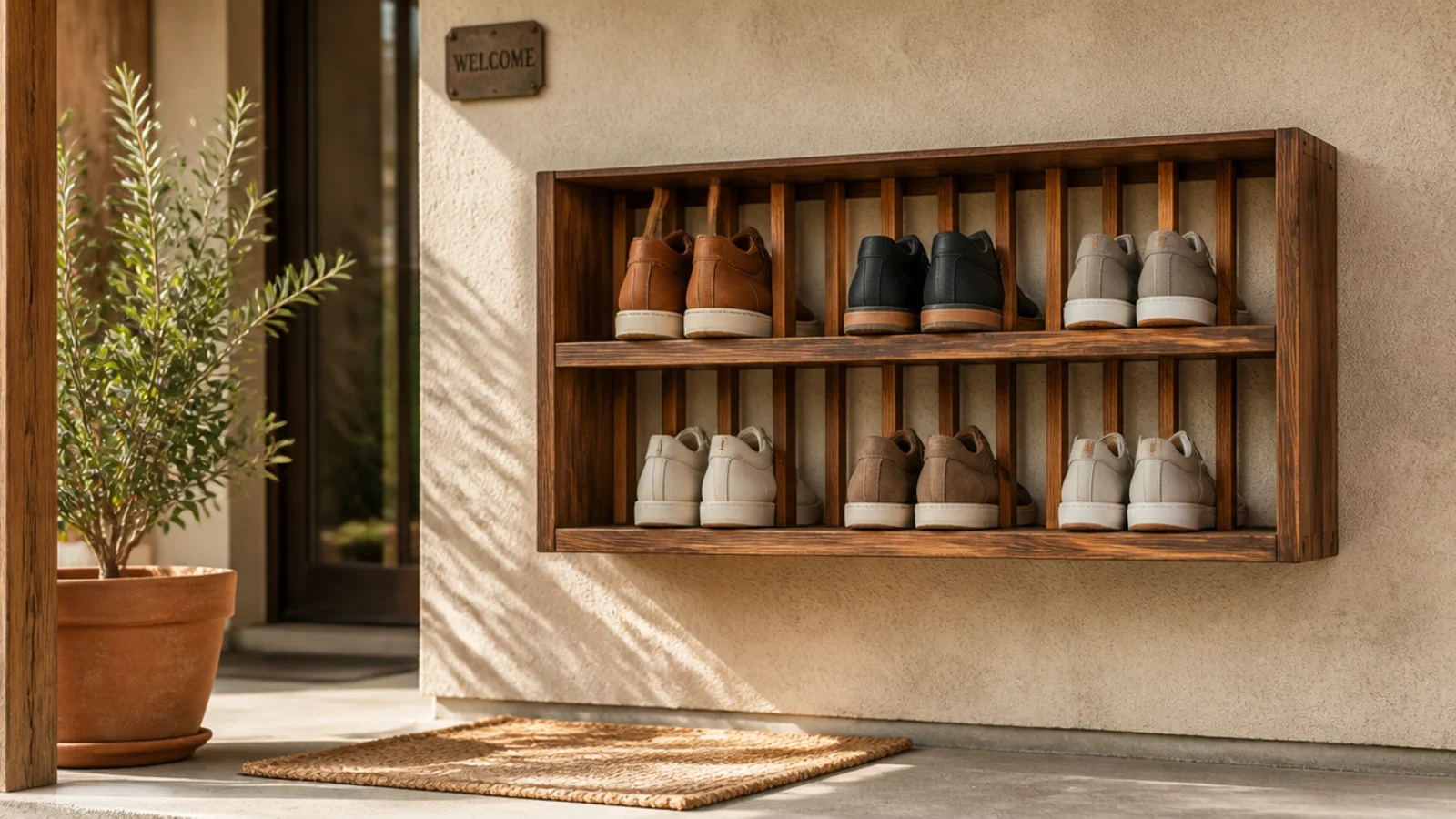
A slatted rack mounted on the exterior wall keeps a small stoop clear by lifting shoes off the step. The slats drain and it uses wall space, not floor. It suits a tiny porch or stoop with no floor to spare.
Mount a sealed cedar or teak slatted rack to the exterior wall under an eave, into studs with coated screws. Set the slats angled so shoes tilt back and water drains through. Keep it to transition shoes. Reseal the wood yearly and check the fasteners for rust.
Mount it under the eave line so the roof overhang shelters the rack and the shoes stay drier than they would on the step.
Do not mount it into exterior render or siding without hitting studs or using masonry anchors; a loaded rack pulls straight out.
9. Concrete Block Rack
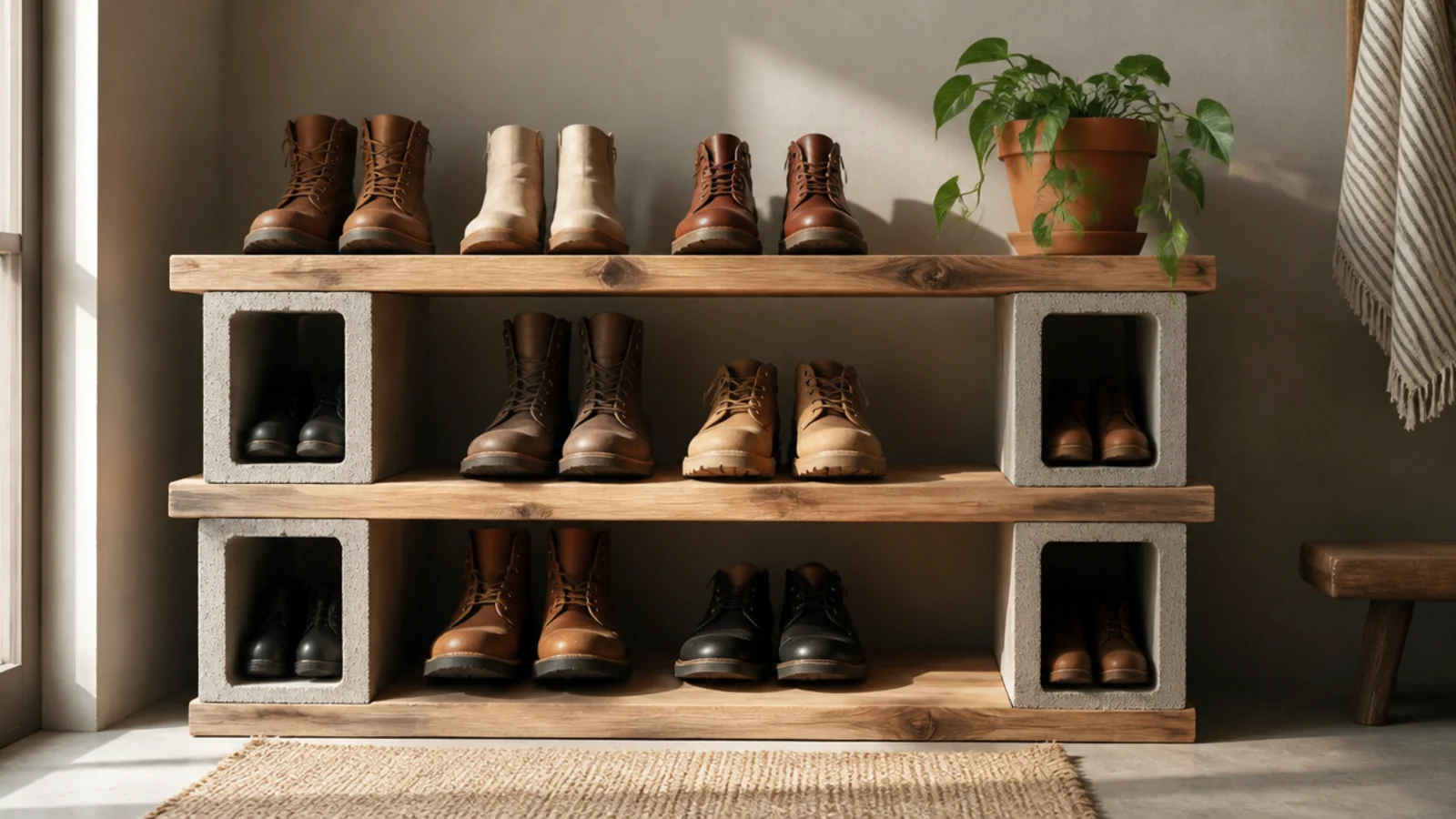
Concrete blocks with sealed boards make a rugged, weatherproof rack for almost nothing. The blocks never rot and the holes hold extra pairs. It suits a utilitarian back door, garage entry, or patio.
Stack concrete blocks at each side and lay sealed exterior boards across for shelves; the block holes hold sandals and flip-flops. Dab construction adhesive between blocks and boards so it cannot shift. Set it where it drains. Seal or leave the concrete raw; it handles weather either way.
Turn the blocks so their open cells face out and each one becomes a cubby for sandals and garden shoes.
Do not lay unsealed pine boards across the blocks outside; they rot fast, so use treated or sealed exterior lumber.
10. Weatherproof Storage Bench
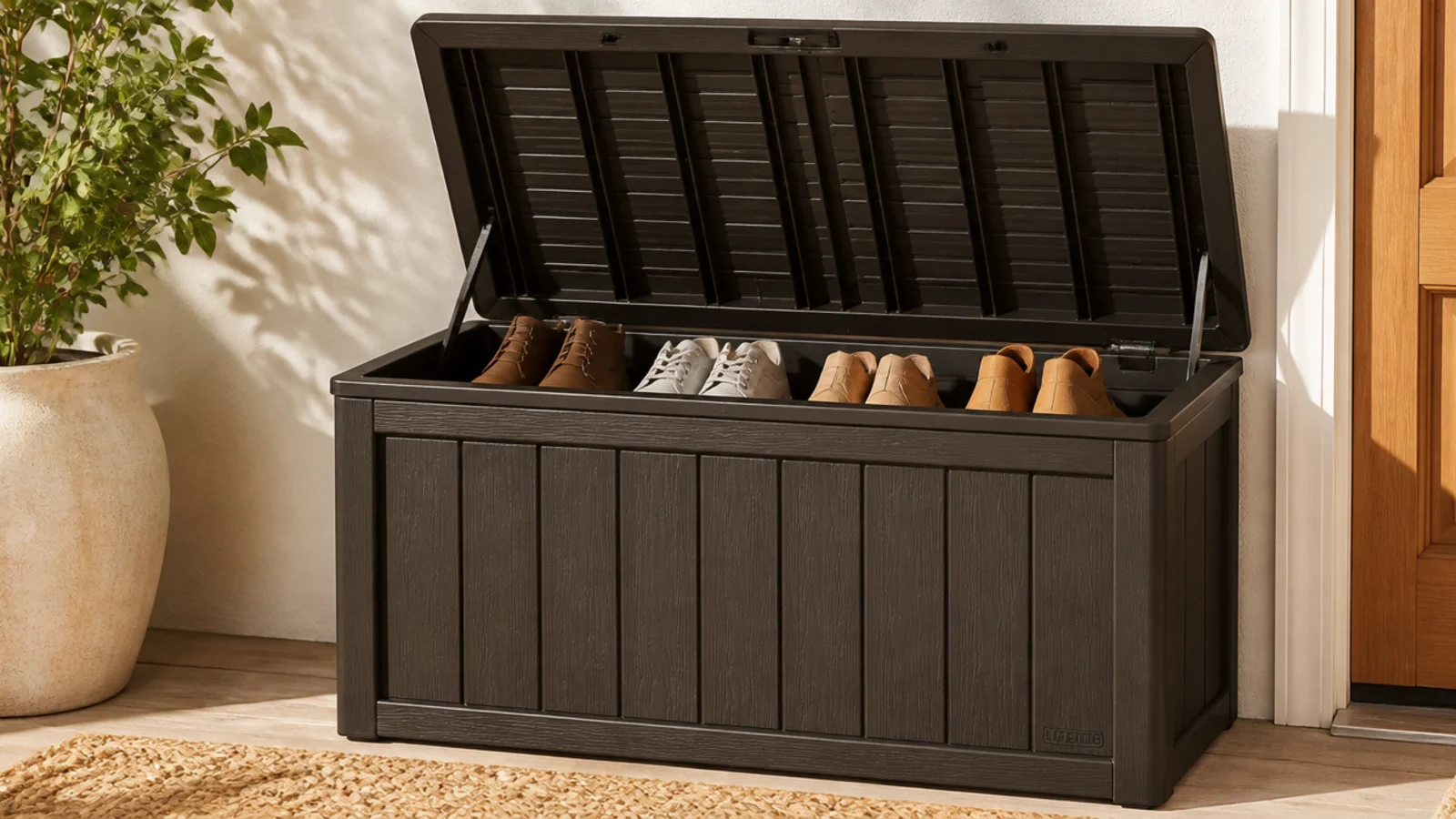
A resin deck-box bench hides shoes in a weatherproof sealed box you can also sit on. It suits an exposed porch where shoes need real protection. It keeps rain, sun, and leaves off everything inside.
Choose a resin or coated-metal storage bench rated for outdoors, ideally with vents or drainage holes. Set it on the porch and store shoes inside, on a raised tray if the base can collect water. Drill a couple of small drain holes in the base if it has none. Wipe it out at season change.
Add a small raised grate or tray inside so shoes sit above any water that sneaks in and can dry out.
Do not seal it fully airtight; without a vent hole, condensation collects inside and the shoes mildew even when it never rains in.
11. Sealed Pallet Rack
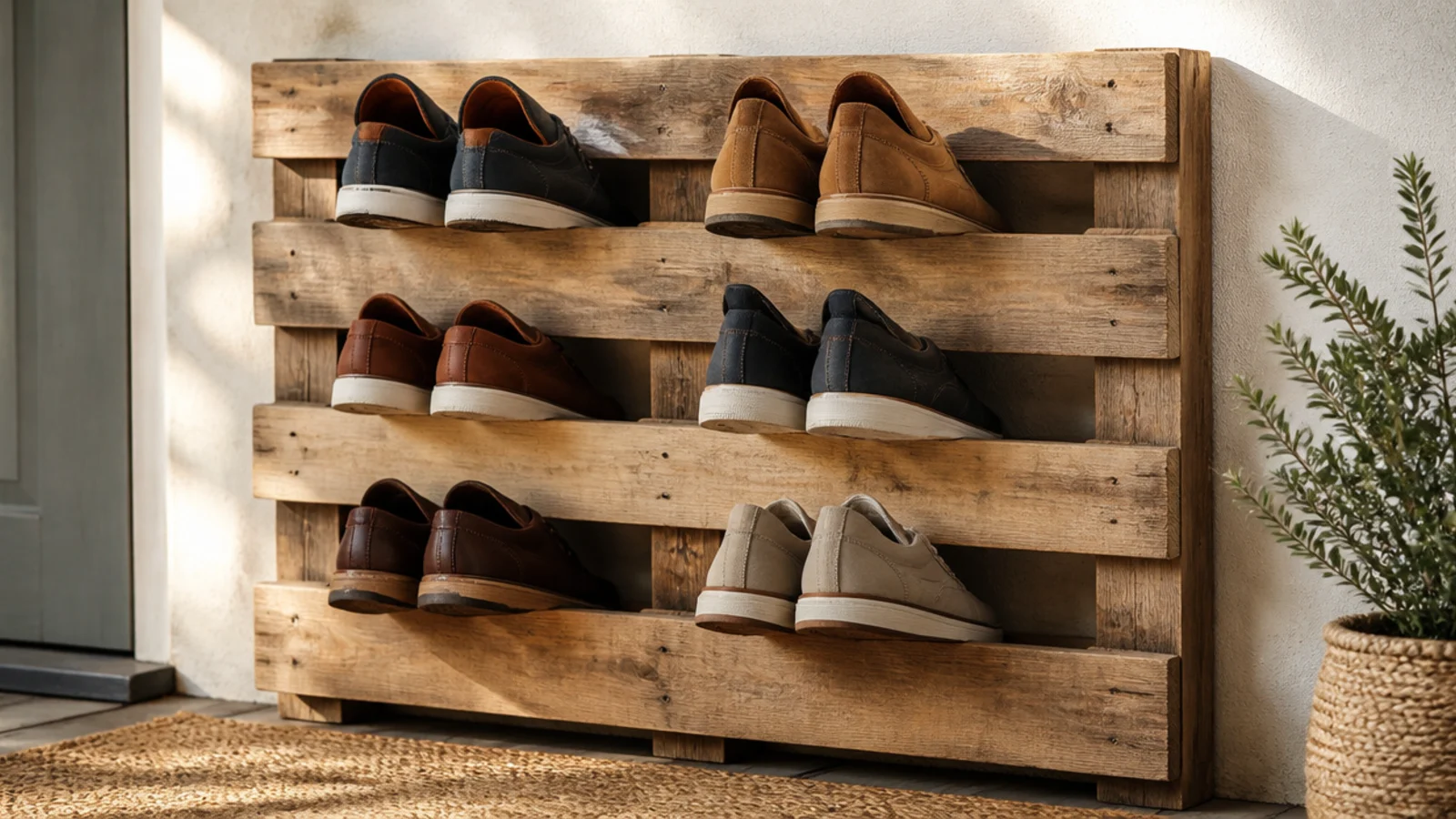
A heat-treated pallet, sanded and sealed for outdoors, makes a rustic wall rack for free. Shoes slot into the slat gaps and water drains through. It suits a casual covered porch or shed entry.
Choose a heat-treated (HT-stamped) pallet, sand it, and seal it with a spar finish for weather. Mount it to a covered wall into studs with coated screws. Add angled blocks behind the slats so shoes tilt out. Reseal it yearly and keep it under cover.
Editor's noteGive it two coats of spar varnish, especially on the cut ends, since end grain soaks up water and rots first.
Skip thisDo not use a chemically treated (MB-stamped) pallet; only heat-treated pallets are safe, and even those need sealing outside.
12. Coastal Driftwood Rack
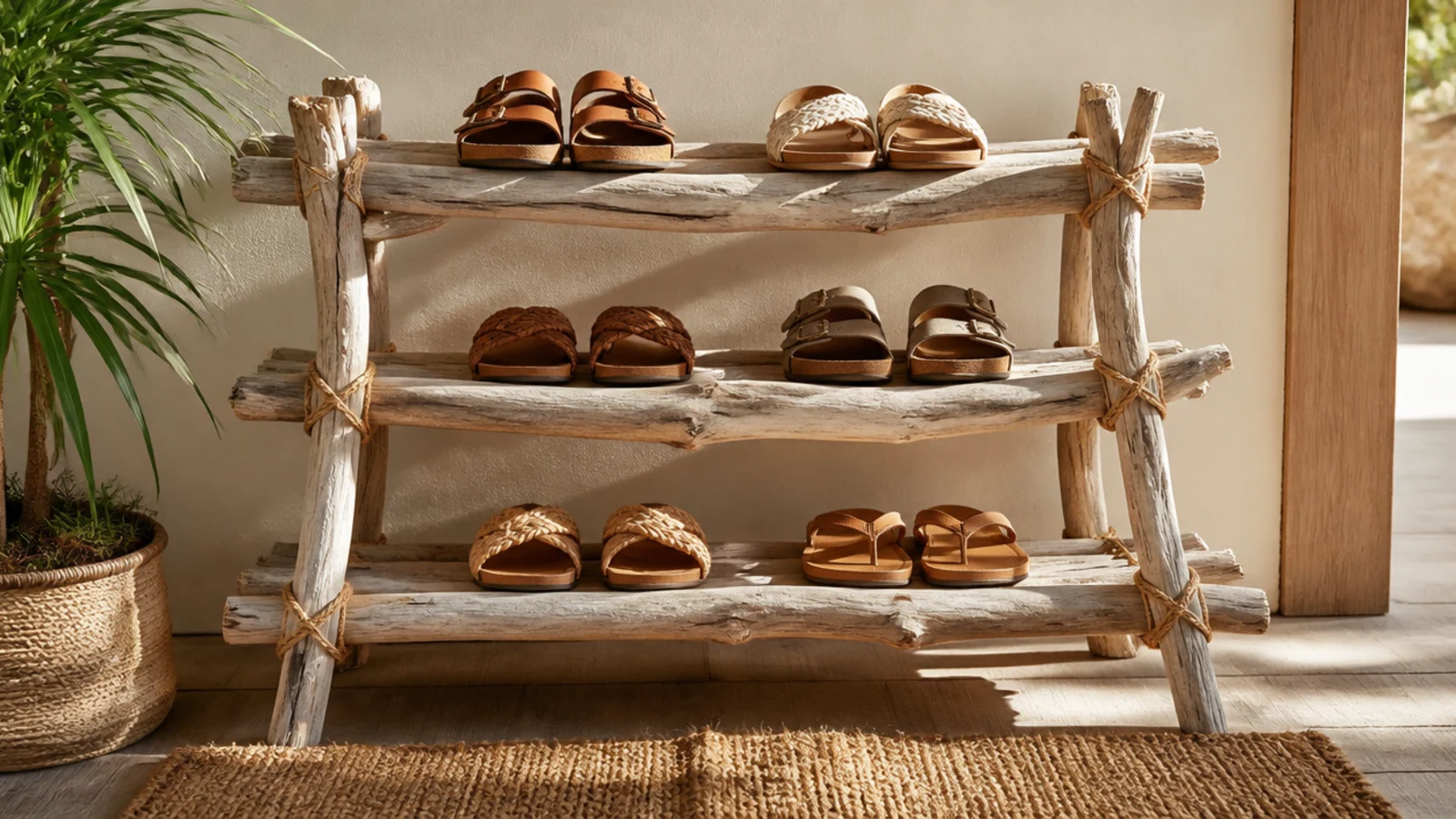
A rack of driftwood poles lashed with rope suits a beach house porch and holds sandals across the poles. It leans into a coastal, weathered look. It is a characterful piece for a covered seaside entry.
Collect or buy dried driftwood poles and lash them into a frame with marine rope, or fix them with stainless screws. Seal the wood with a spar finish for salt air. Rest sandals and flip-flops across the poles. Keep it under cover and re-oil or reseal each season.
Use stainless or coated hardware only near the coast; regular steel screws rust and bleed streaks down the wood in salt air.
Do not leave beach-found wood unsealed and unchecked; salt and damp can hide rot and insects, so dry and seal it first.
13. Boot Drainage Bench
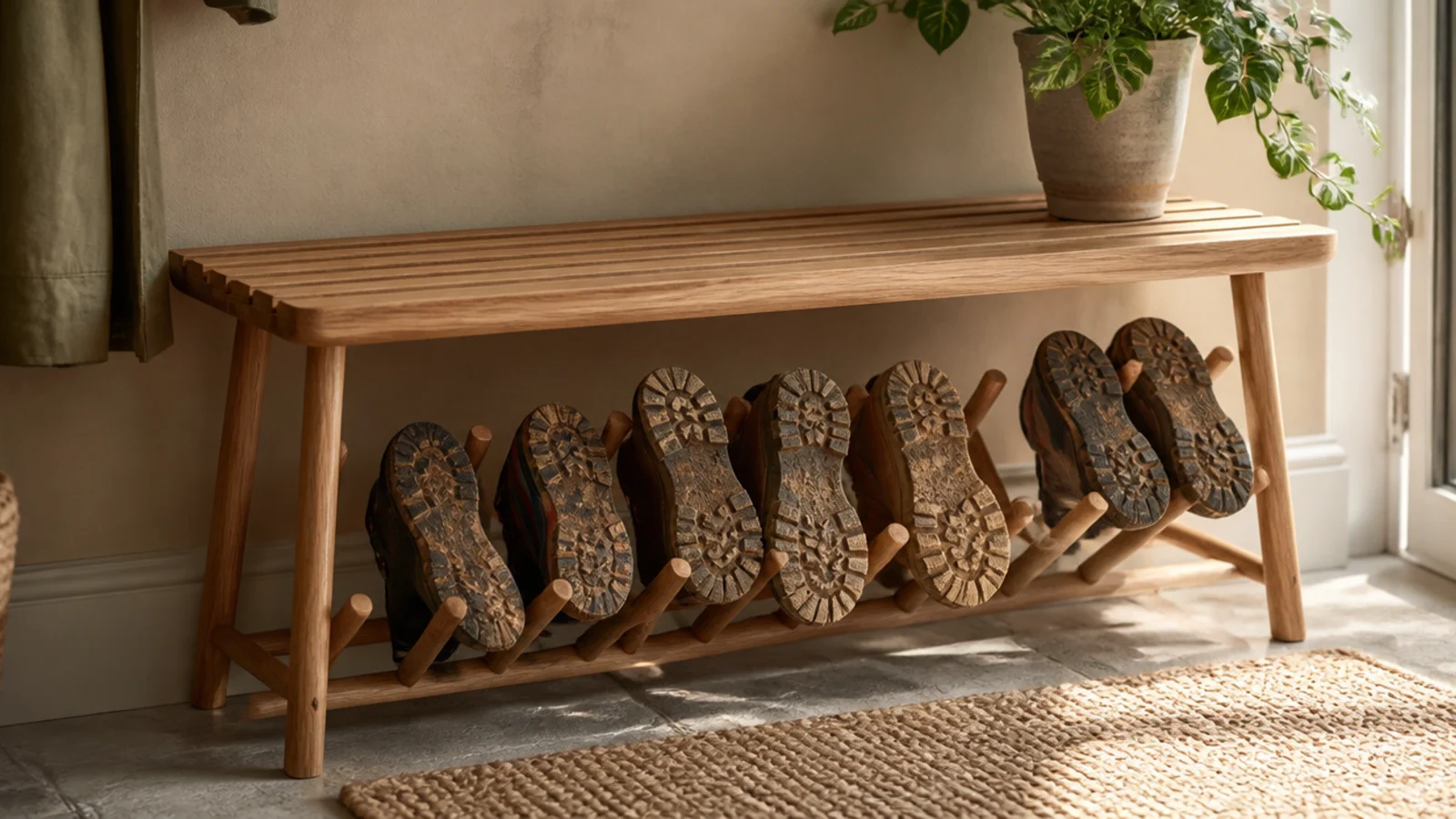
A bench with upside-down boot dowels beneath drains and dries wet boots while giving you a seat to pull them off. It suits a muddy rural or back-door entry. Boots dry inside-out instead of staying damp.
Build a slatted outdoor bench from sealed cedar or teak, and fix angled dowels beneath the seat pointing up. Slip wet boots upside down over the dowels so water runs out and air circulates. Set it where the drips drain away. Reseal the wood yearly.
Editor's noteAngle the drying dowels slightly downward at the tip so boots slide on and off easily but still stay put while draining.
Skip thisDo not stand wet boots upright to dry; water pools in the toe and they stay damp and start to smell.
14. Rubber Grid Mat and Rack
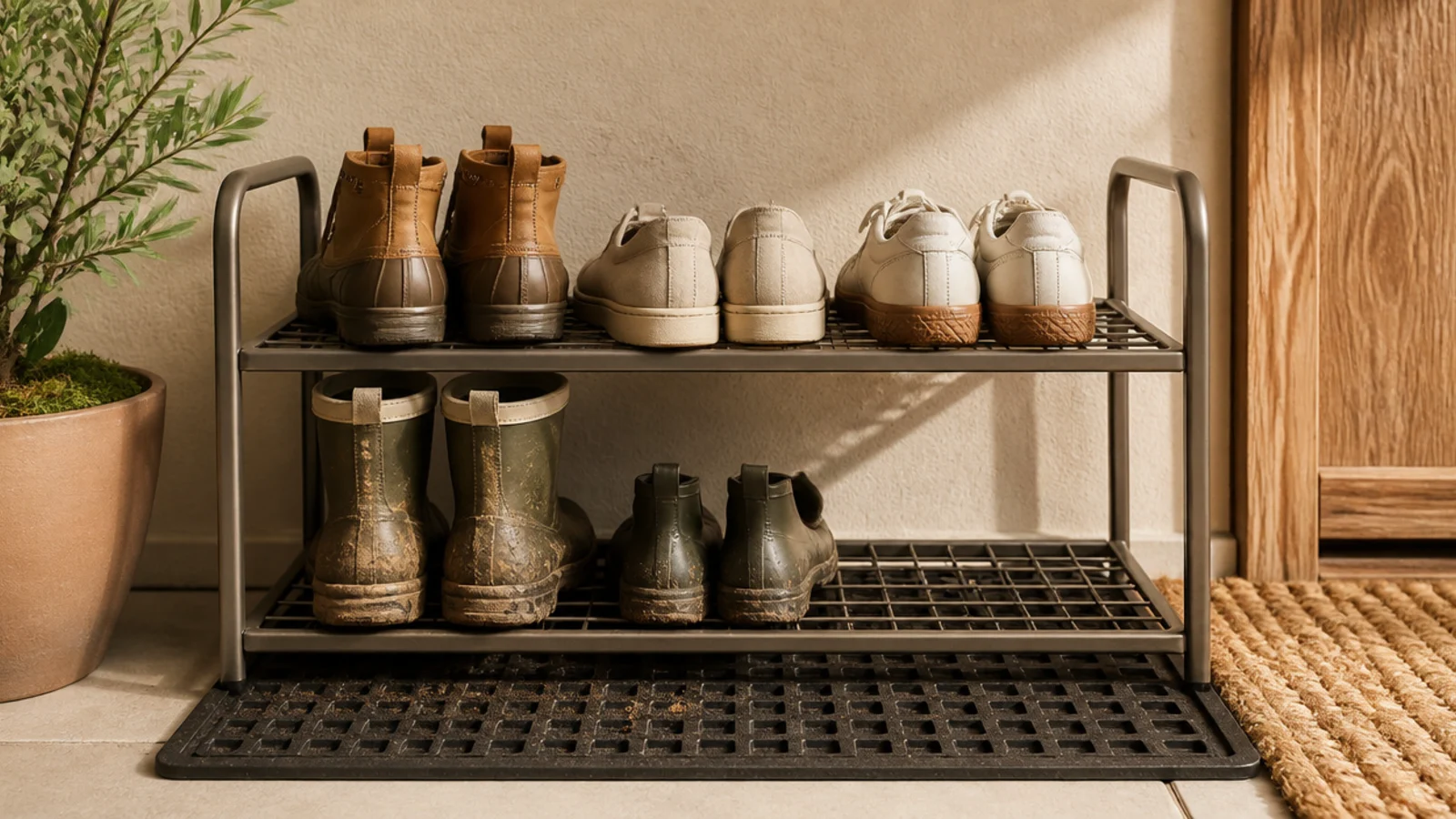
A low rack set on a rubber grid mat lets mud and water fall through to the ground below the shoes. It suits a busy, muddy door where a tray would overflow. Everything drains straight through the grid.
Lay a heavy rubber grid or scraper mat outside the door and set a low metal rack on top. Shoes drip and shed mud through the grid onto the ground. Lift the mat and hose both off when dirty. Best on a hard surface where the runoff drains away.
Editor's noteUse an open-grid scraper mat, not a solid mat, so the water and grit fall through instead of pooling under the rack.
Skip thisDo not set this combo on a wooden deck without airflow beneath; trapped runoff under a solid deck can rot the boards.
15. Wrought Iron Rack
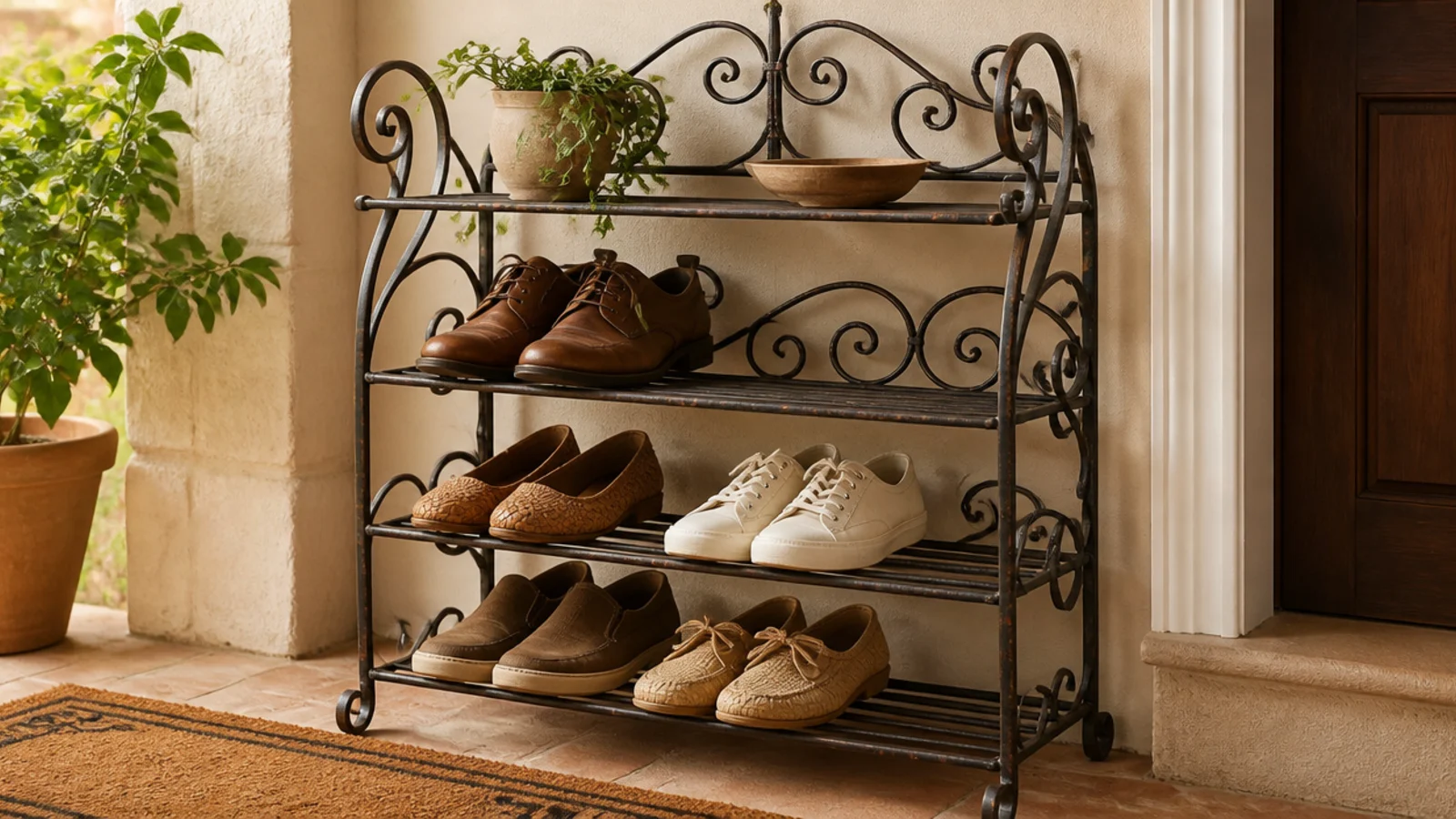
A wrought-iron rack adds classic, decorative weight to a traditional porch and holds shoes on curved tiers. The heavy metal looks elegant and lasts. It suits a covered period or traditional entrance.
Choose a powder-coated or galvanized wrought-iron rack for weather resistance, and keep it under cover to slow rust. Set it on pads so the feet are not in water. Wipe it down and touch up any chips or rust spots with a rust-inhibiting exterior paint each season.
Editor's noteGive it a coat of clear rust-inhibiting sealer each spring; decorative ironwork has lots of crevices where rust likes to start.
Skip thisDo not leave bare or chipped iron exposed to rain; untreated wrought iron streaks rust and stains the porch beneath it.
16. Composite Decking Rack
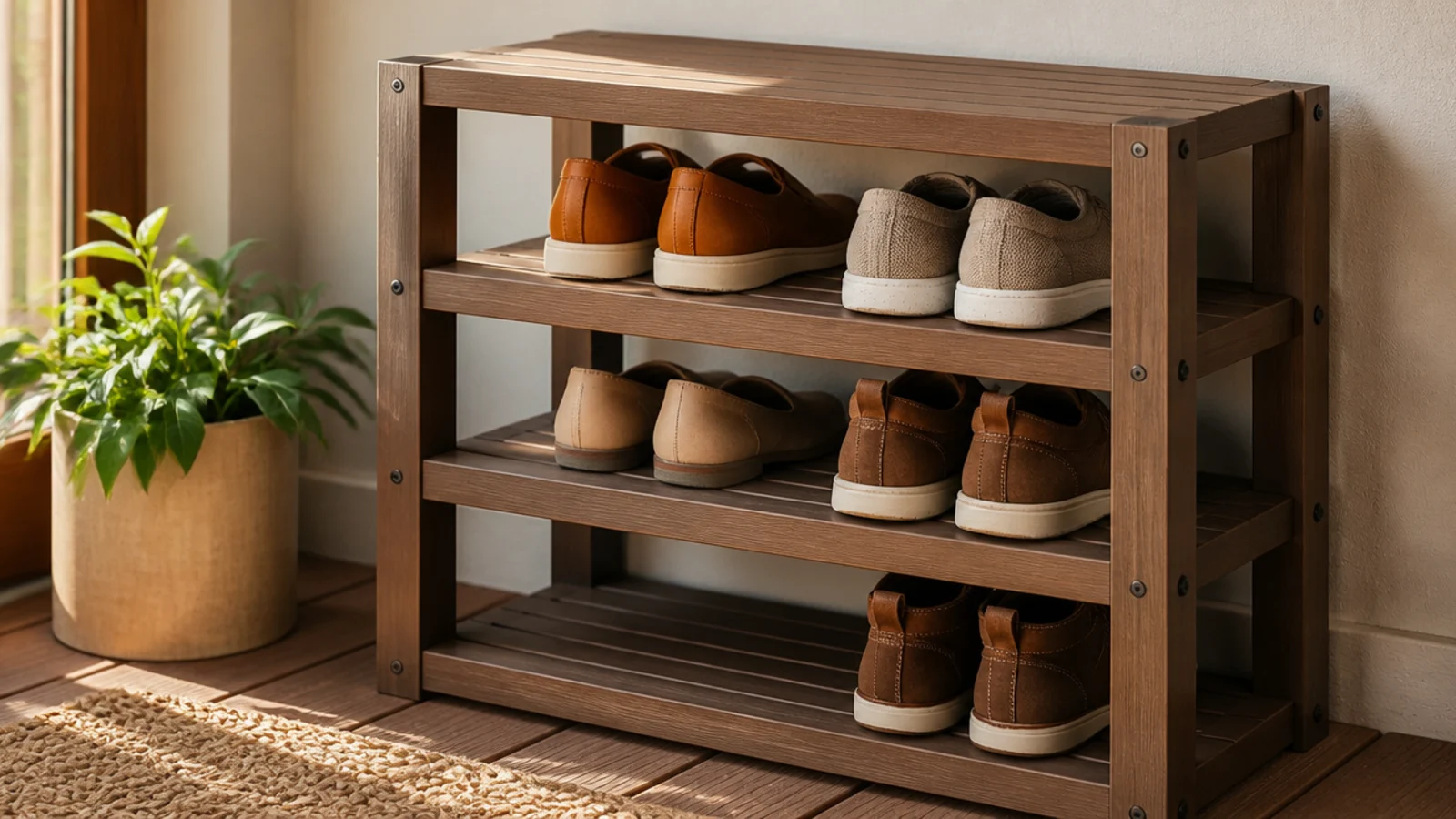
A rack built from leftover composite decking matches your deck and never rots or needs sealing. The slatted boards drain naturally. It suits a deck or patio where you want the rack to blend in.
Use offcut composite decking boards to build slatted shelves on a simple frame, joined with stainless screws. Leave gaps between boards for drainage. Set it on the deck; it needs no sealing and resists sun and rain. Hose it clean as needed.
Editor's noteMatch the decking color to your existing deck and the rack disappears into the space instead of looking like an add-on.
Skip thisDo not butt composite boards tight together; they expand in heat and need small gaps, which also help water drain through.
17. Stainless Wall Rail
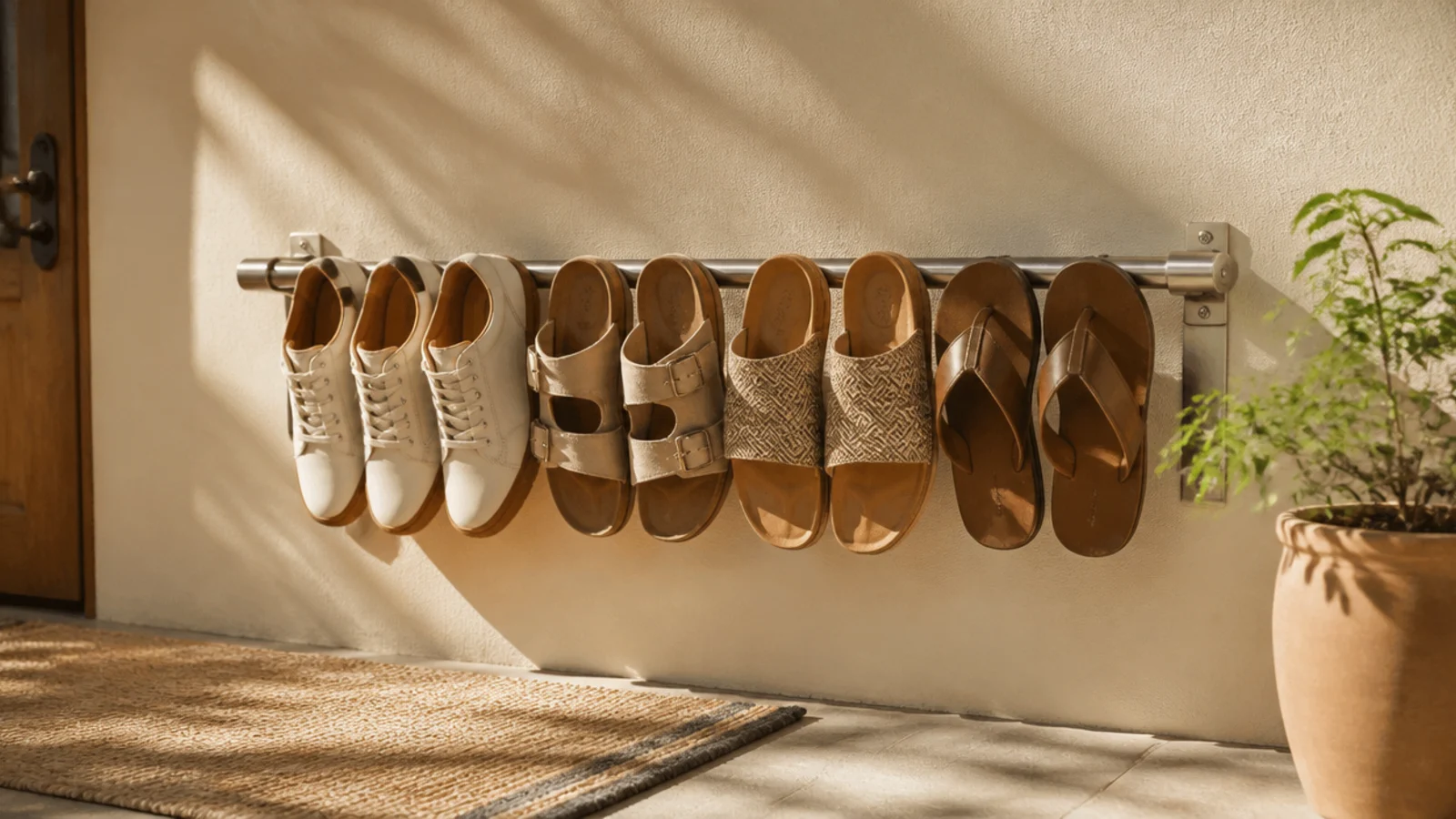
A brushed stainless rail on the exterior wall hangs shoes and sandals off the ground with zero rust worry. Stainless handles rain and even coastal salt. It suits a modern or seaside covered entry.
Mount a stainless rail on the exterior wall into studs with stainless fasteners, at hip height under cover. Hook sandals and flat shoes over it by their backs. Keep it to shoes with a heel or strap that catches. Wipe it clean; stainless needs no sealing.
Editor's noteMarine-grade (316) stainless is worth it near the coast; standard 304 can still spot with rust in constant salt spray.
Skip thisDo not mix stainless with plain steel anchors; the dissimilar metals corrode where they meet, so keep all the hardware stainless.
18. Rolling Outdoor Cart
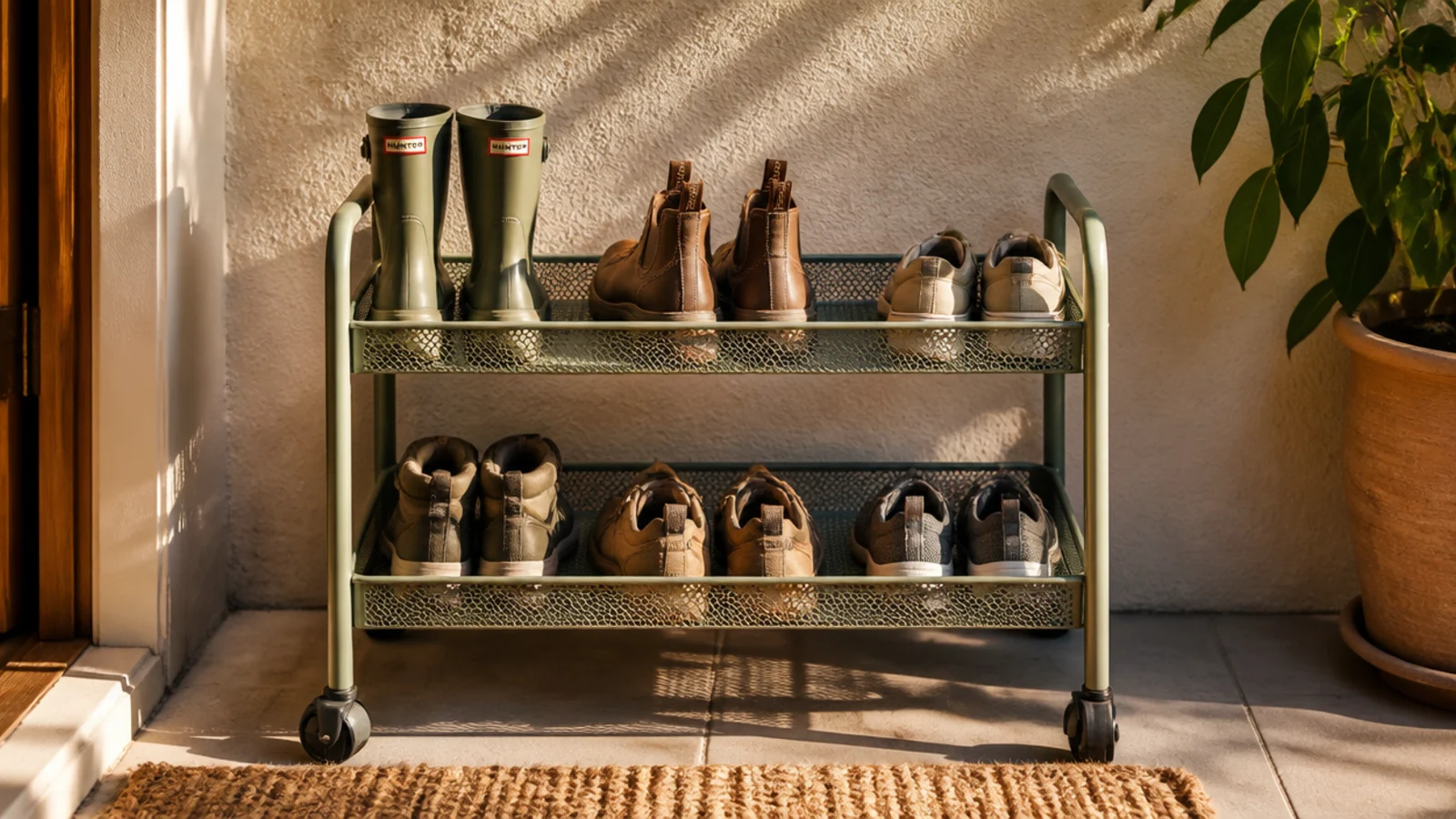
A rolling cart with mesh shelves holds outdoor shoes and wheels aside so you can sweep or move it under cover. It suits a porch where you want flexibility. Roll it in when a storm comes.
Choose a powder-coated or stainless cart with mesh (draining) shelves and lockable casters. Load transition shoes on the shelves. Roll it under cover in heavy weather or aside for cleaning. Lock the casters so it stays put on a sloped porch.
Lock the wheels once it is placed so it does not roll off a sloped porch or deck in the wind.
Do not use a solid-shelf cart outside; water pools on flat shelves, so choose mesh or wire that drains.
19. Paver Ledge Rack
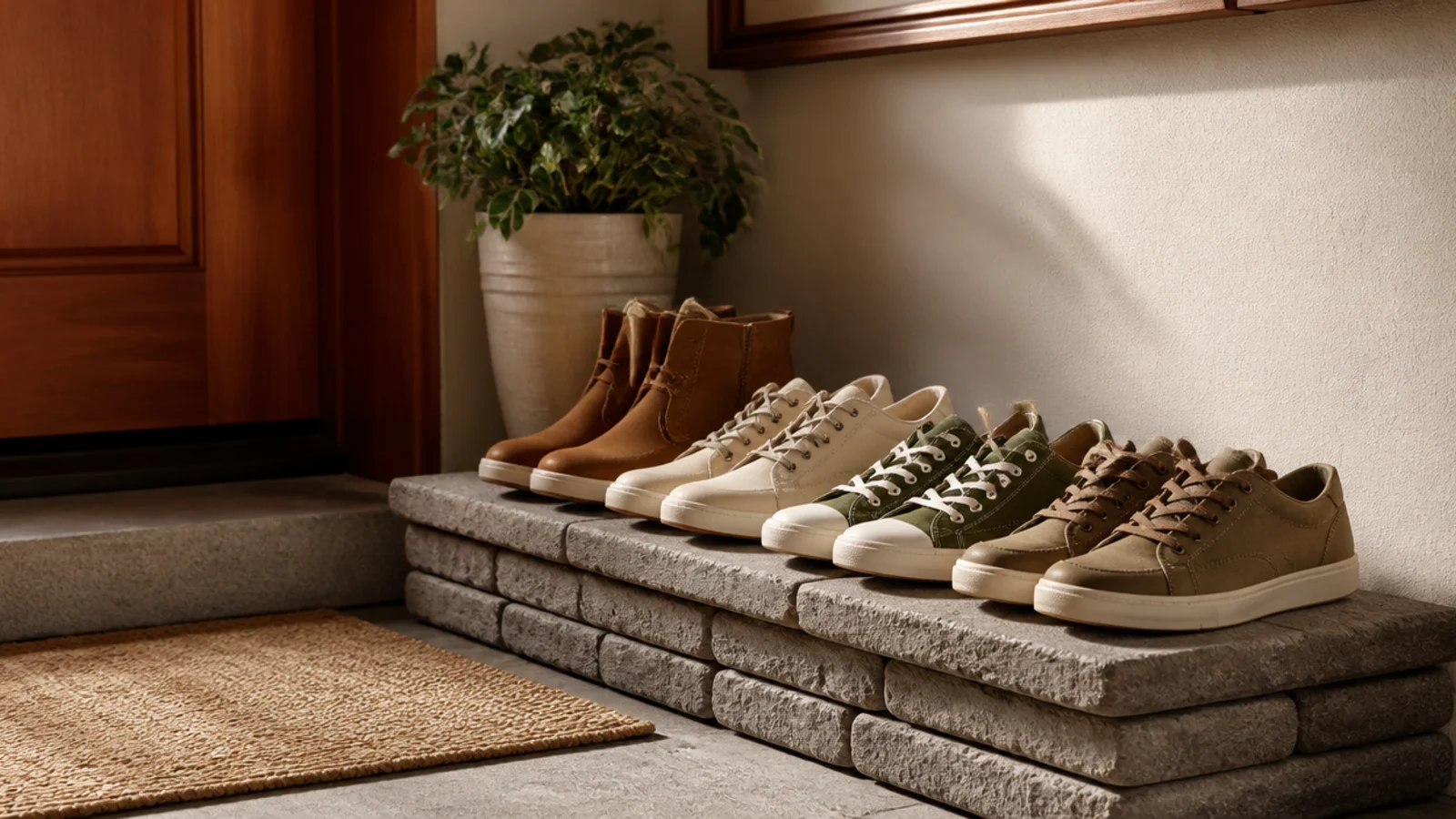
A low ledge of stacked pavers beside the door lifts shoes out of the dirt onto flat stone. It never rots or rusts and looks built-in. It suits a garden path or patio door.
Stack landscape pavers or bricks into a low ledge beside the door, dry-laid or set with landscape adhesive. Lay shoes along the flat top, off the wet ground. It drains naturally and handles any weather. Add a paver second tier for more pairs.
Editor's noteSlope the top course very slightly away from the door so rainwater runs off the ledge instead of pooling under the shoes.
Skip thisDo not stack pavers high without adhesive in a spot people brush past; a knocked dry-stack ledge topples, so bond the courses.
20. Vented Weatherproof Cabinet
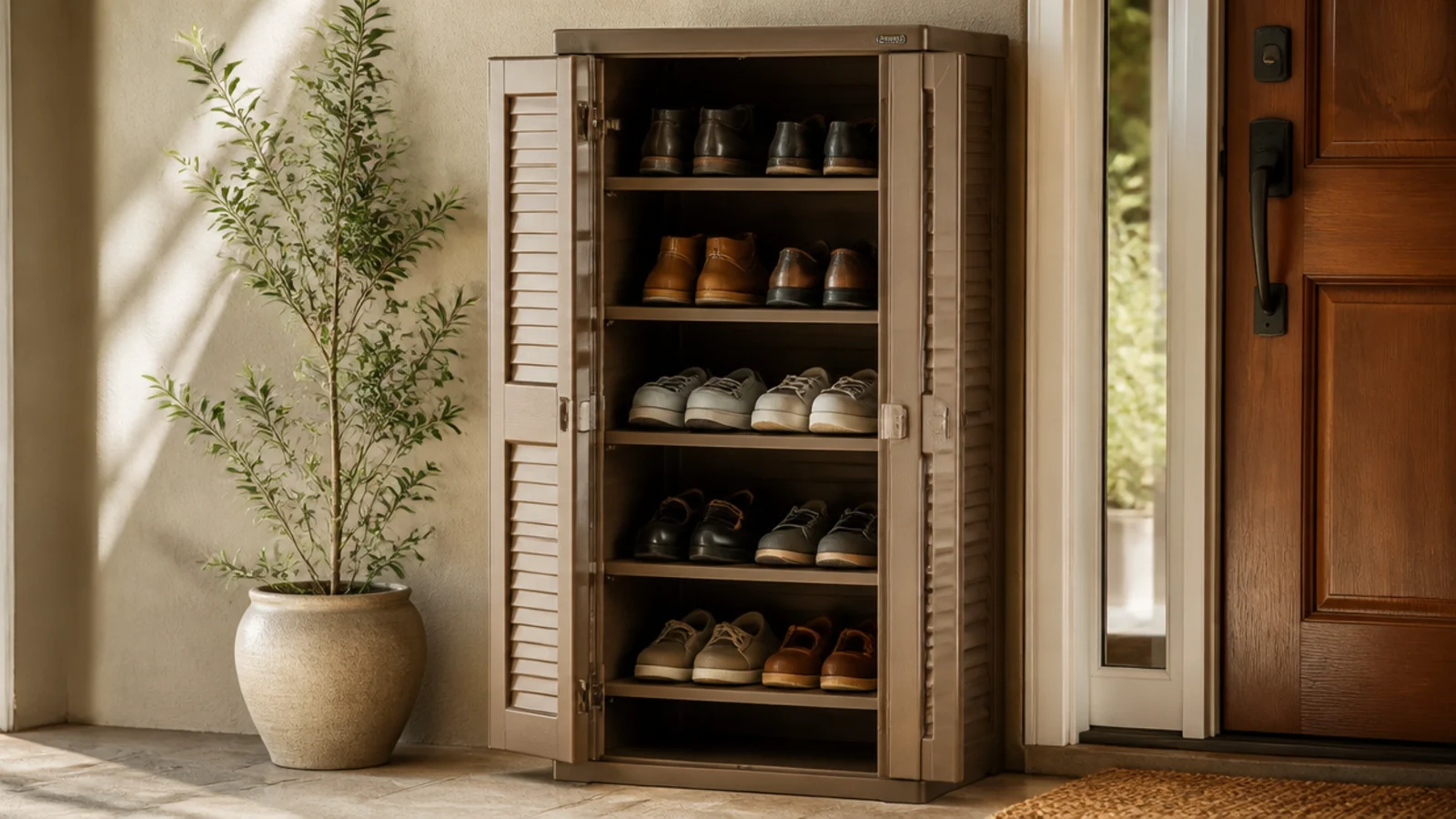
A tall vented resin cabinet stores a lot of shoes fully protected while airflow keeps them dry. It suits a front door with room beside it and a bigger household. It hides everything behind weatherproof doors.
Choose a UV-stable resin cabinet with vented or louvered doors and adjustable shelves. Set it on a covered or semi-covered spot, up on its feet. Store shoes on the shelves with wet pairs low near a drain hole. Keep vents clear so air moves and shoes dry.
Editor's noteDrill a couple of extra vent holes low and high if the cabinet has few; cross-ventilation is what keeps stored shoes from getting musty.
Skip thisDo not place a tall resin cabinet in full unshaded sun without checking it is UV-rated; cheap resin fades and turns brittle in a season.