

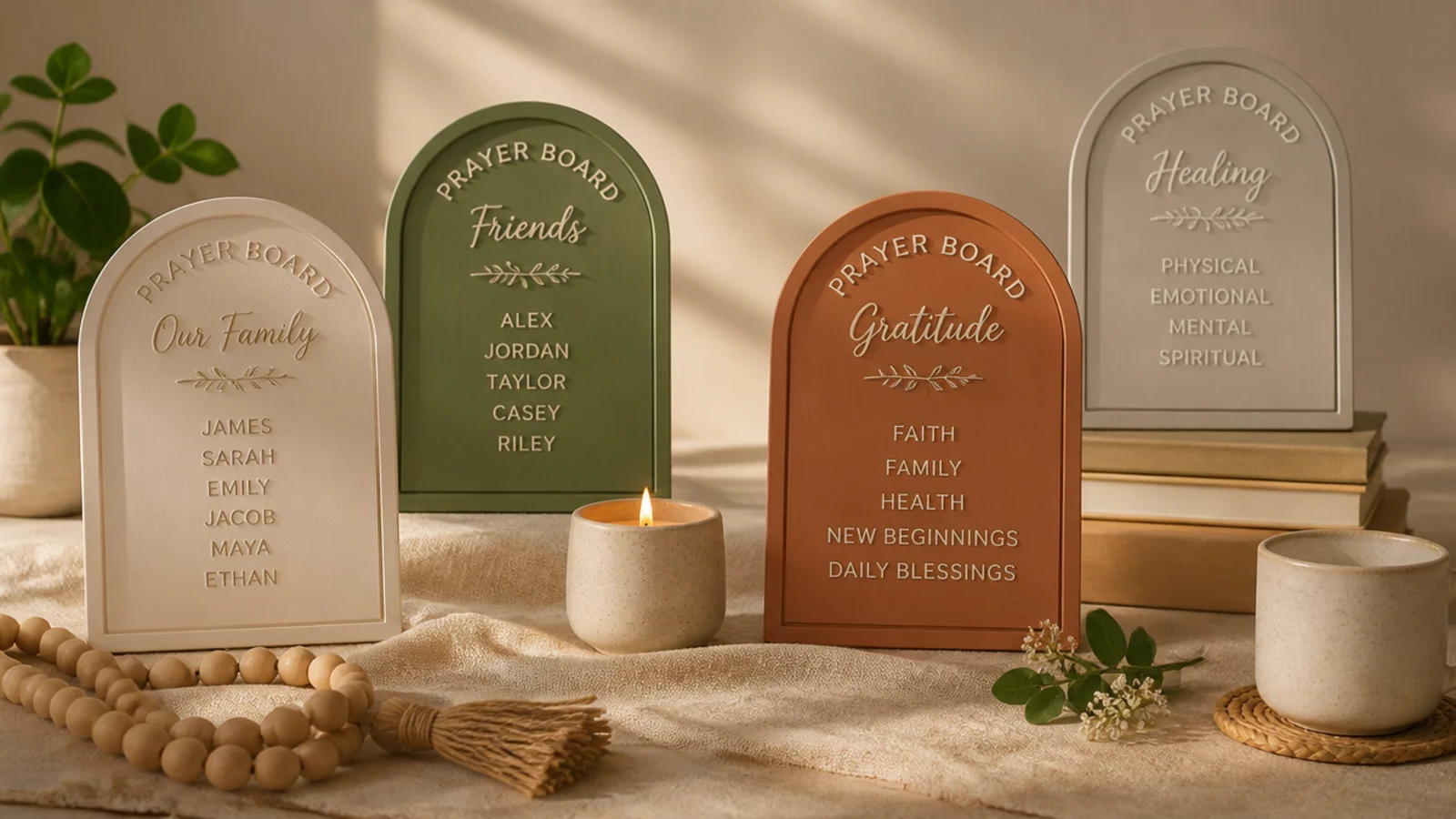
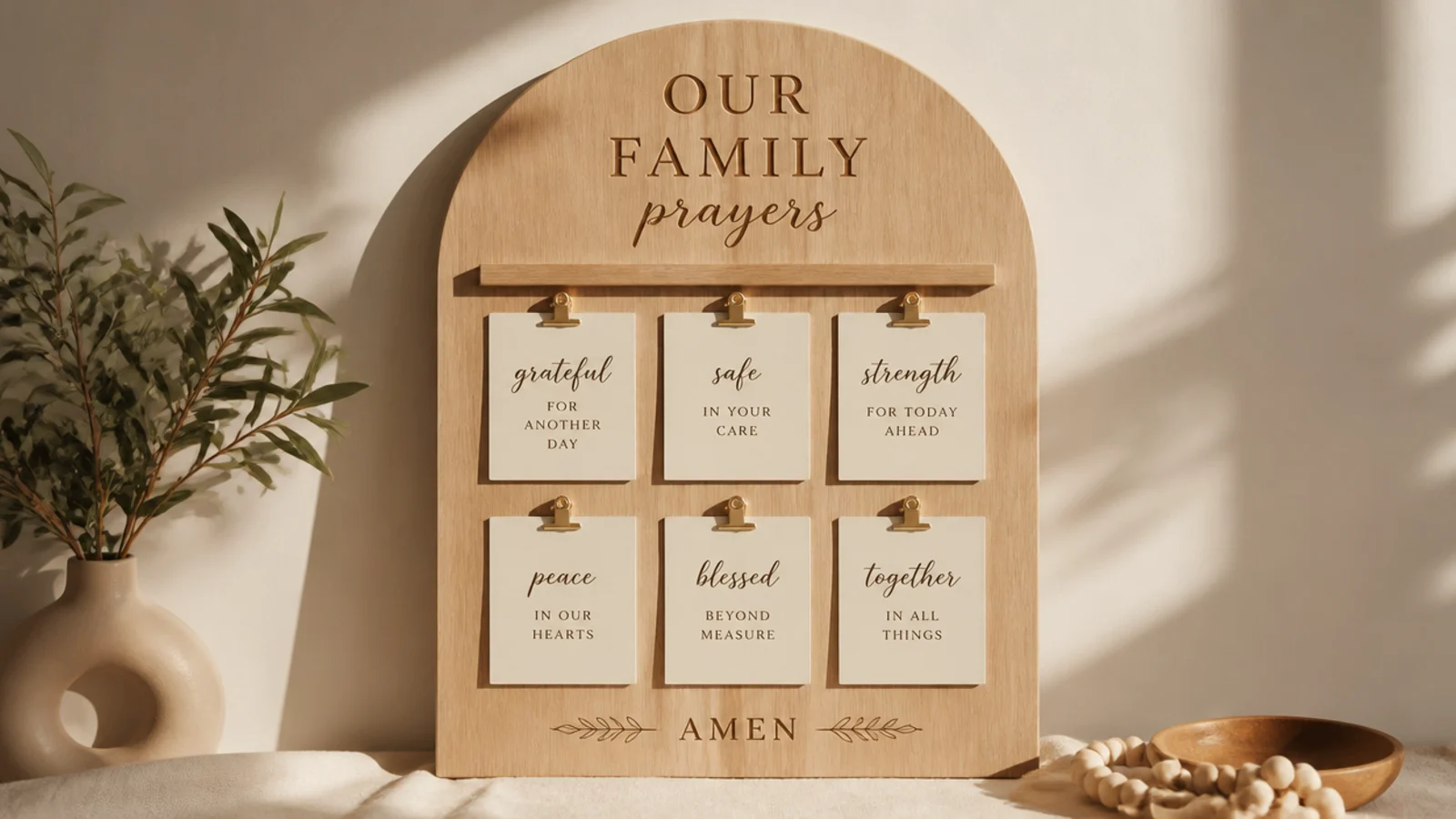
1. Family Photo Prayer Grid
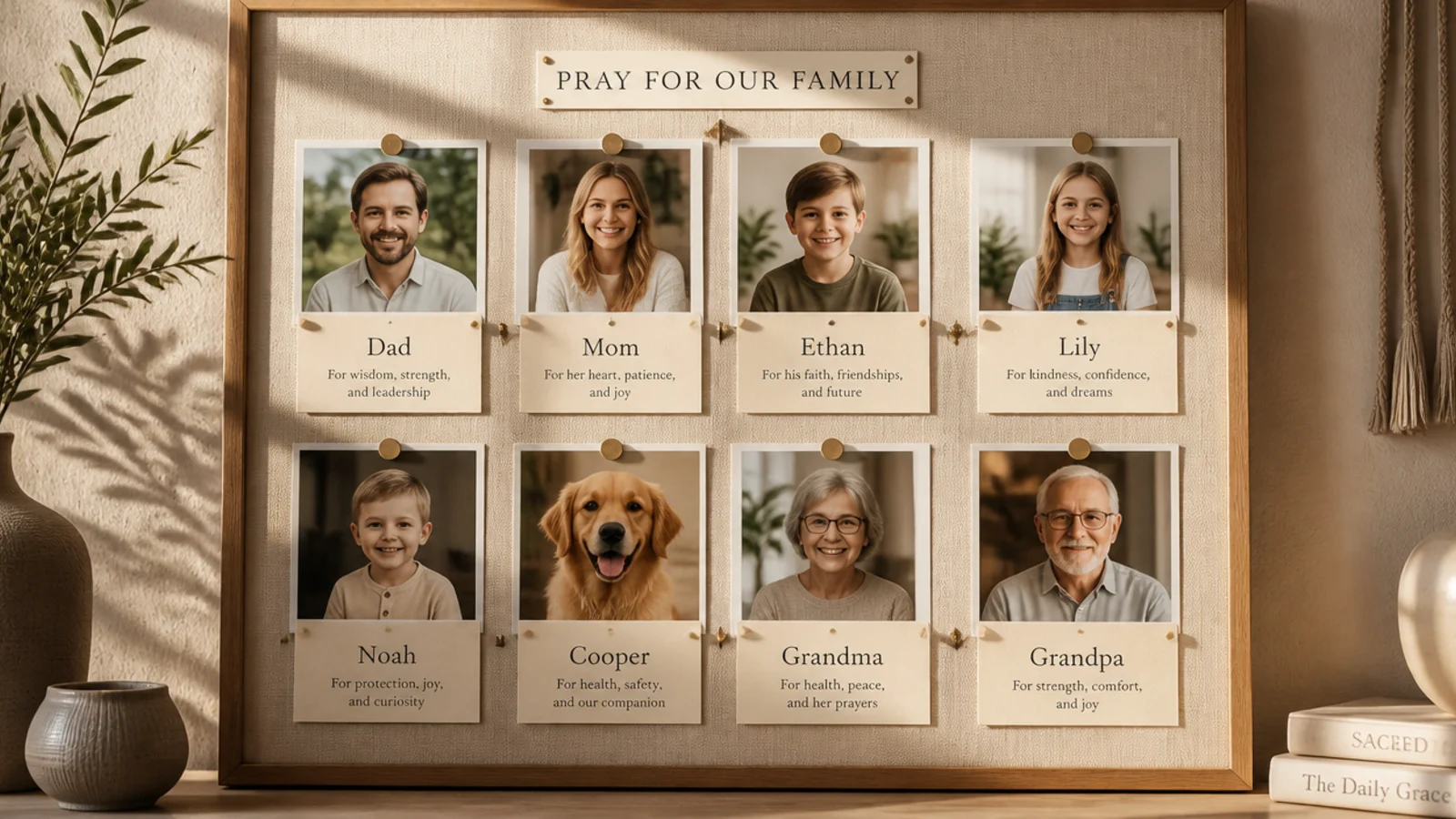
This is the simplest family board and the one that makes prayer personal for kids fastest. You pin a photo of each family member with a card of what to pray for them. It suits every age because it starts with faces they know. Seeing everyone’s picture makes praying by name automatic.
Print small photos of each family member and pin them in an even grid on a large board. Beside each, clip a card with a current request that you update as things change. At prayer time, go around the grid and let each person pray for the one to their right. Leave a blank card per person so requests are easy to swap without moving the photo.
Editor's noteLet each child pray for the family member next to their own photo, so everyone gets prayed for and everyone prays.
Skip thisDon’t leave photos up but requests stale; update the cards weekly so the prayers stay current and real.
2. Family Prayer Request Pockets
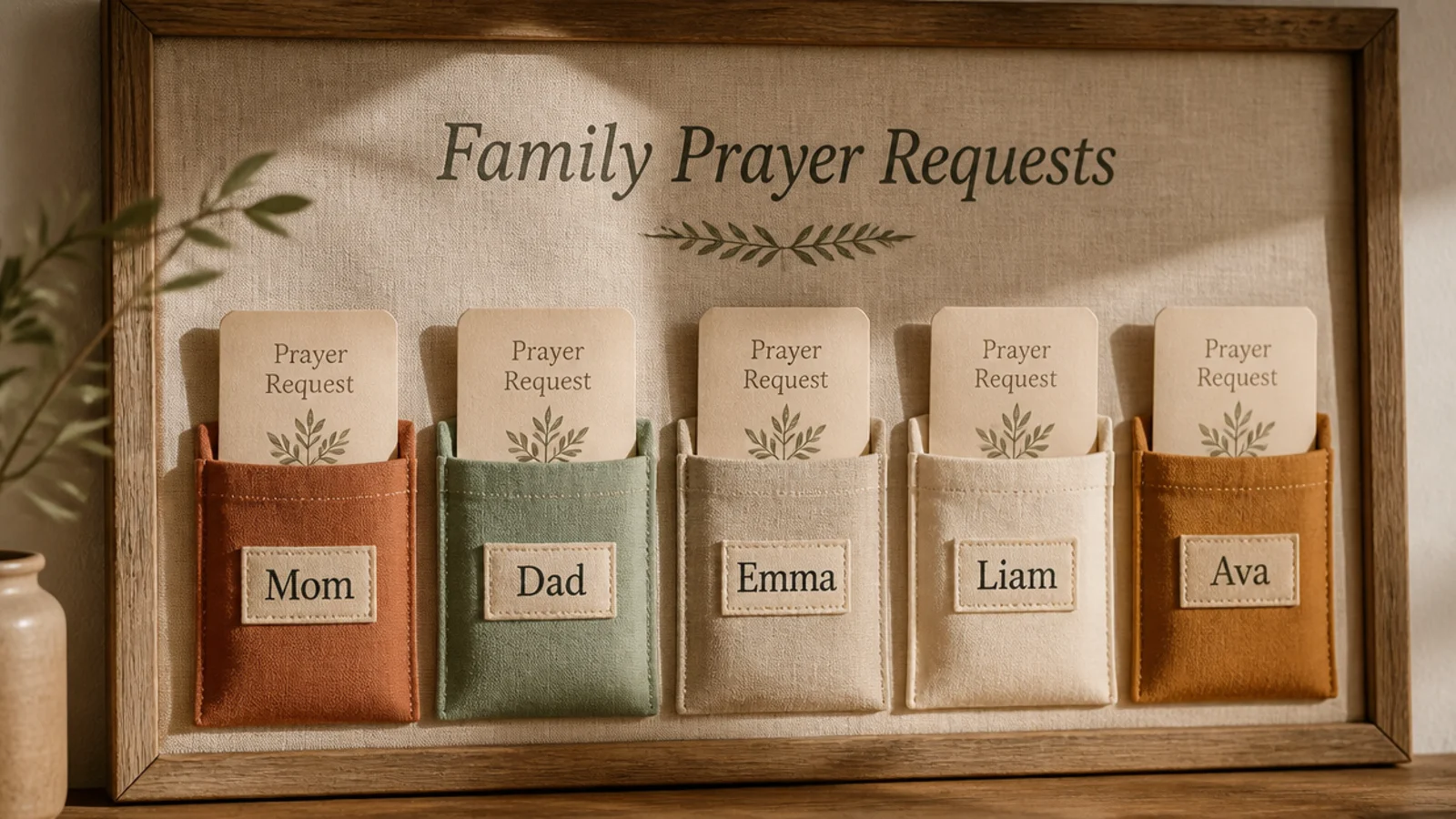
Individual pockets give each person a private place to drop a prayer request. You add a labeled pocket per family member for them to fill. It suits families with older kids who want some privacy. Everyone contributes without reading each other’s cards unless shared.
Pin a labeled pocket for each family member across the board — library pockets or folded cardstock work. Keep blank cards nearby. Anyone can write a request and slip it in their pocket, or a shared pocket for family-wide needs. At prayer time, each person pulls one card to share or keep private. Move answered ones to the answered wall together.
Add a shared 'family' pocket alongside the personal ones for needs that belong to everyone, like a big decision.
Don’t force kids to read out private requests; let them choose what to share so the pockets stay a safe space.
3. Family Answered-Prayer Wall
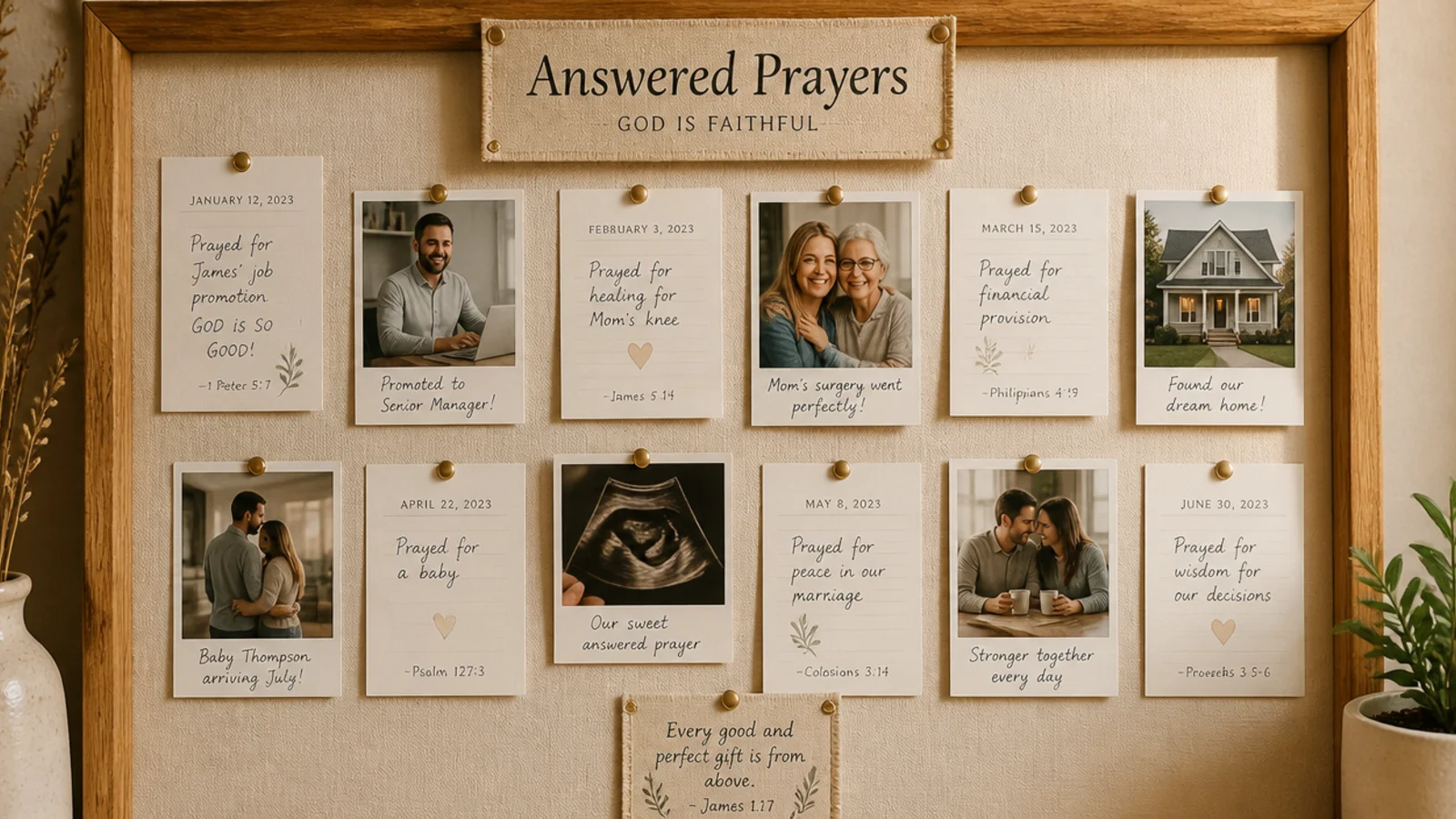
An answered-prayer wall is the section that keeps kids believing prayer works. You move cards here, dated, whenever God answers. It suits every family because the growing wall builds faith. Kids stay engaged when they can see answers pile up.
Reserve a clear section headed Answered. Each time a prayer is answered, write the date on the card, add a photo if there is one, and move it from requests to this wall together as a family. Read a few aloud when the family gathers. When it fills, archive the oldest into a keepsake book and keep the space fresh for new answers.
Editor's noteMake moving a card to the answered wall a little family celebration, so kids connect praying with seeing God act.
Skip thisDon’t quietly recycle answered cards; the whole point is the visible, growing record, so keep it in view.
4. Kids' Drawing Prayer Zone
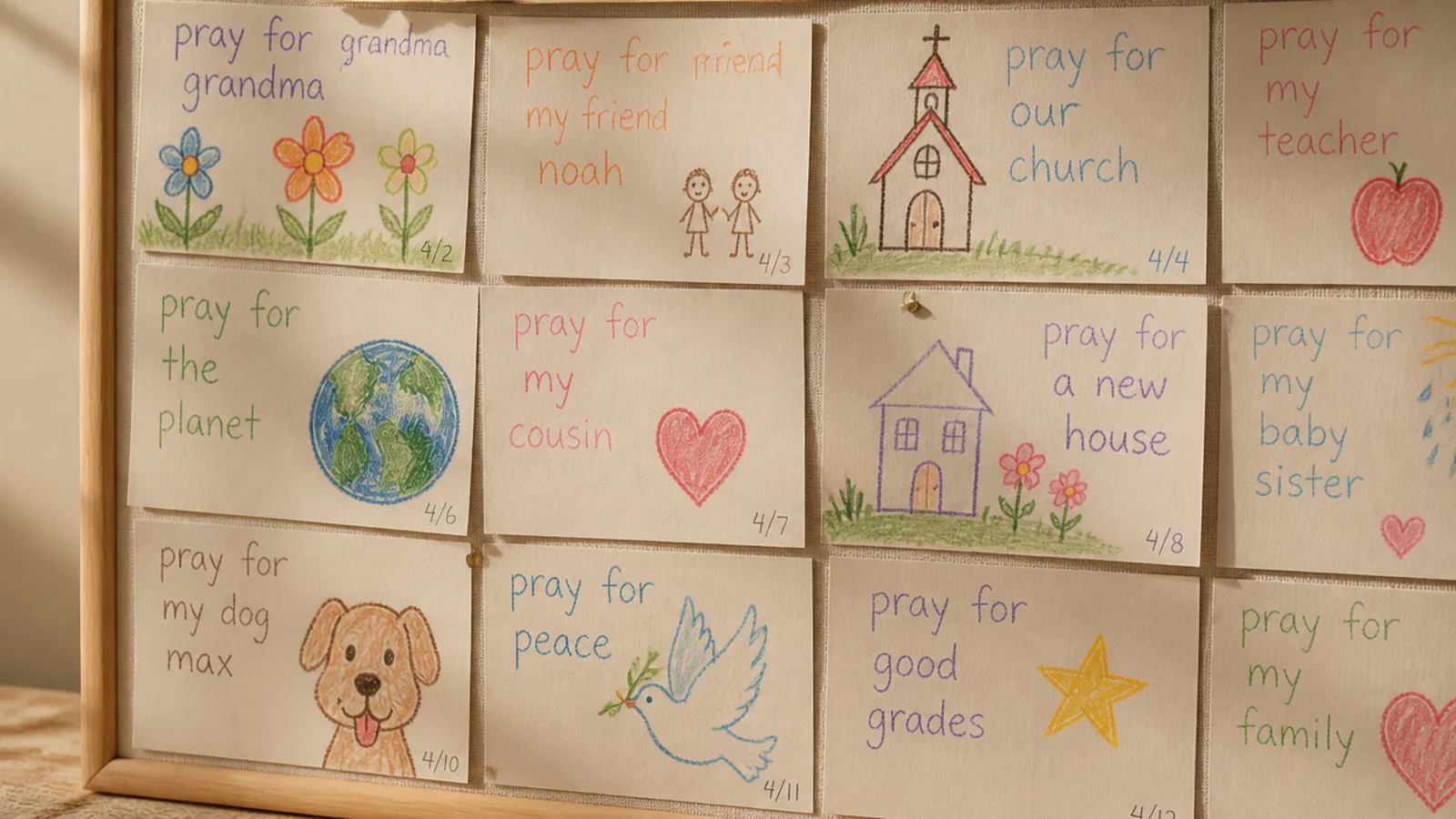
A drawing zone lets little kids pray in the way they know best — pictures. You give them a low section for crayon drawings of what they’re praying for. It suits preschool and early-elementary ages. Drawing makes prayer hands-on and truly theirs.
Reserve a lower section within kids' reach and stock cardstock and washable crayons nearby. Let children draw a person, a pet, or a worry they want to pray about and pin it themselves. Ask them to tell you about it at prayer time. Rotate old drawings into a keepsake folder so the zone stays fresh and every child gets space.
Editor's noteAsk kids to explain their drawing before you pray it; their explanation is usually the real prayer request.
Skip thisDon’t tidy away or correct their drawings; the wobbly art is the point, so let it stay proudly on the board.
5. Weekly Family Prayer Night Board
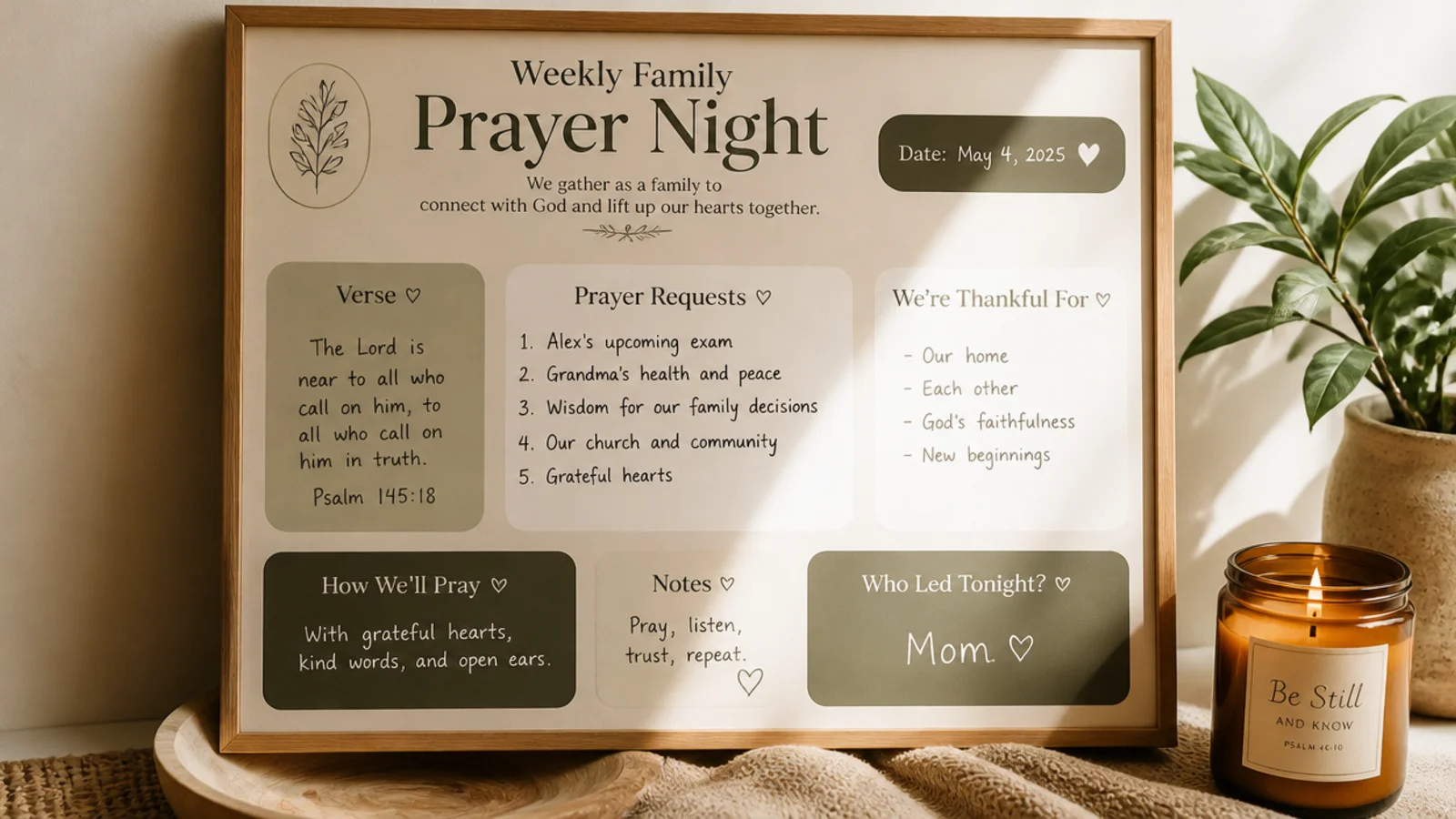
A prayer-night board anchors a weekly family gathering to pray together. You set it up as the centerpiece of one intentional night a week. It suits families wanting a rhythm beyond quick mealtime prayers. The board gives the night structure so it doesn’t fizzle.
Pick one night a week and build the board around it — a verse for the week, current requests, and a spot to note the night’s answered prayers. Light a candle, read the verse, go around sharing and praying, then update the board together. Keep it short for young kids. Rotate who leads so everyone owns the night over time.
Keep the first prayer nights short and warm; ten focused minutes beats a long one that makes kids dread it.
Don’t let it run long or turn into a lecture; a dragging prayer night is the fastest way to lose the kids.
6. Family Member Spotlight Rotation
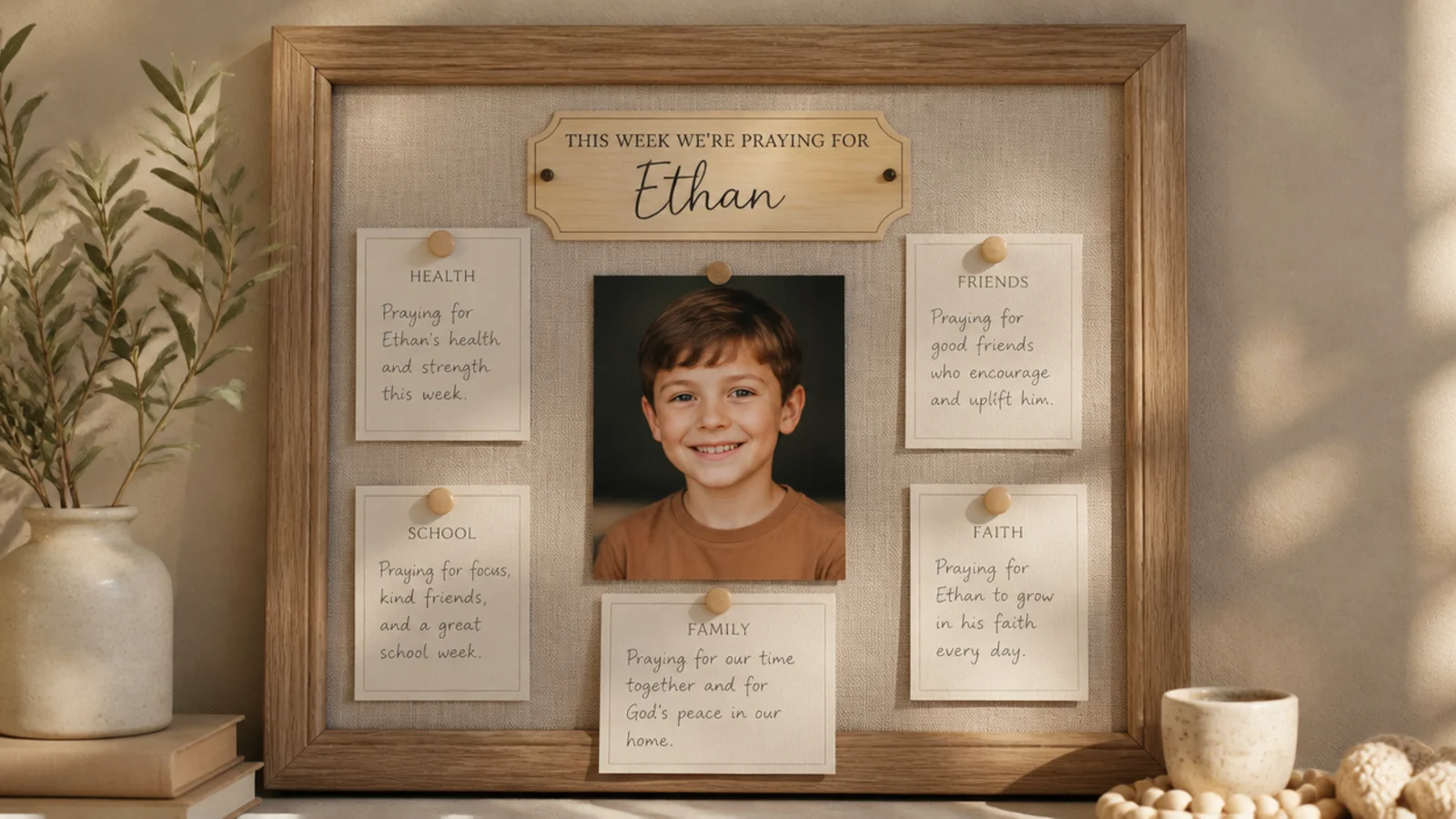
A rotating spotlight puts one family member at the center each week for extra prayer. You feature one person’s photo and requests in a highlighted spot. It suits families who want each person to feel deeply prayed for. The rotation guarantees no one gets overlooked.
Make a highlighted center spot with a Praying For header. Each week, move one family member’s photo there with a card of what they most need prayer for. The family prays over that person all week. Rotate on a set day so everyone knows whose turn is coming. Let the featured person share what they’d like prayed.
Let the spotlighted person choose their own top request; being asked what they need is part of feeling cared for.
Don’t skip anyone or lose the rotation order; the fairness is what makes each child trust their turn is coming.
7. Family Gratitude Tree
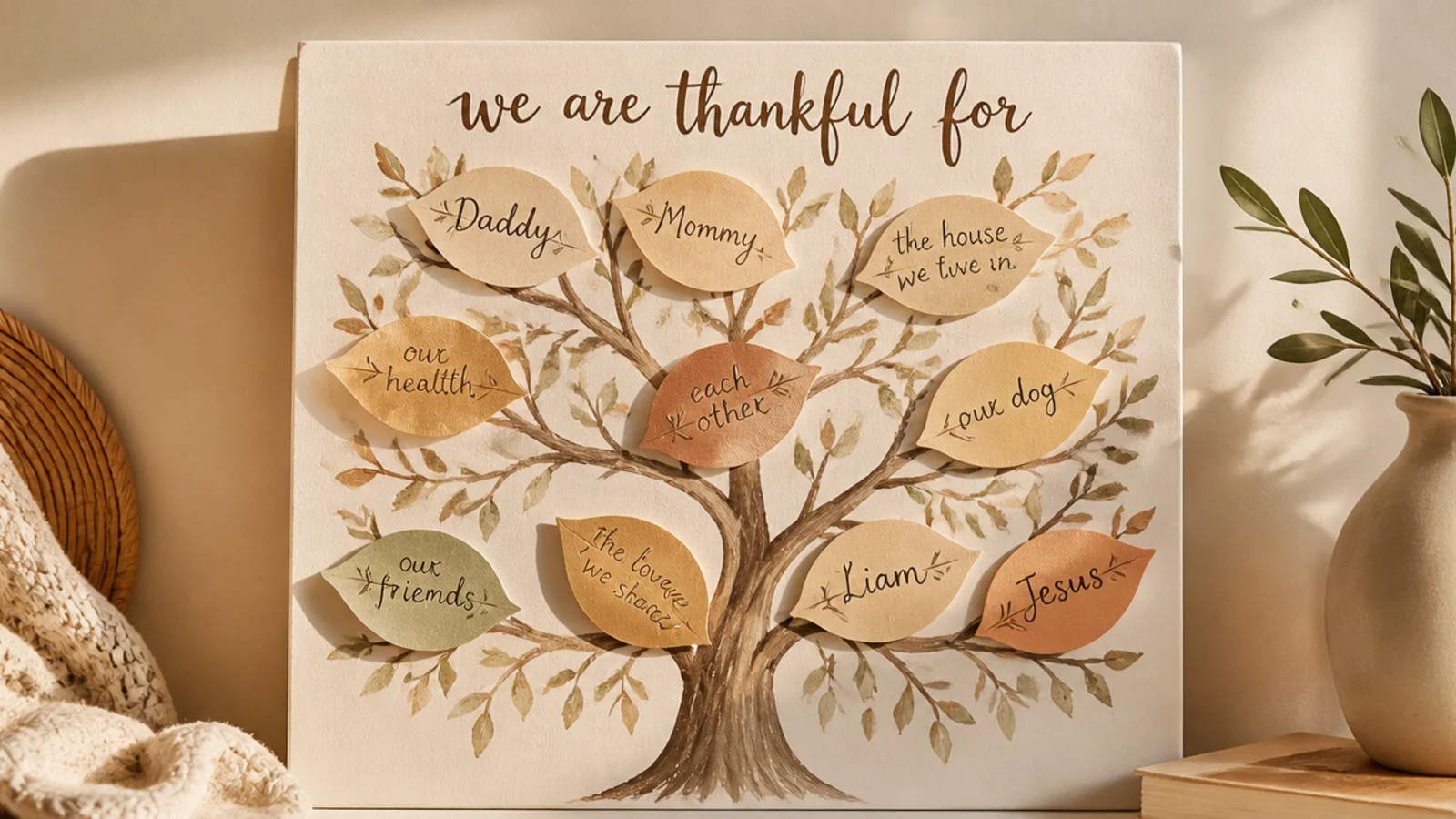
A gratitude tree grows leaves of thanks the whole family adds to. You post a tree and let everyone add a leaf for something they’re grateful for. It suits all ages and turns thankfulness into a shared, visible thing. Watching the tree fill lifts the whole family.
Draw or pin a simple tree branch on the board. Cut paper leaves in warm tones and keep them nearby. Anyone can write or draw one thing they’re thankful for and pin a leaf. Fill it especially in a gratitude season, then archive the leaves and start bare again. Read some leaves aloud at family prayer to give thanks together.
Add fresh leaves at dinner by asking each person one good thing from their day — the tree fills itself.
Don’t let leaves become vague; encourage one specific thing per leaf so the thanks stays real, not generic.
8. Grandparents and Extended Family Zone
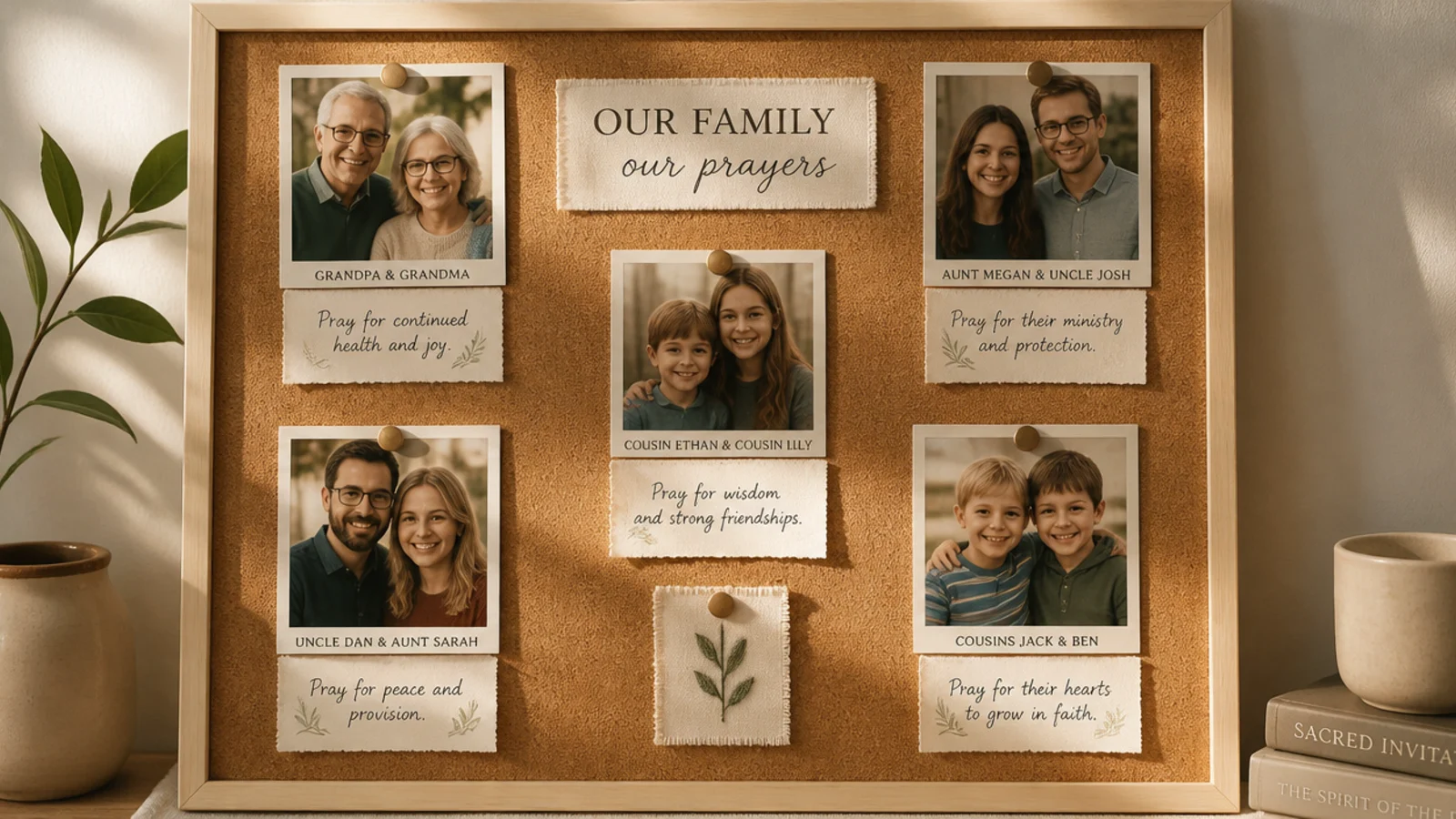
An extended-family zone widens prayer beyond the house to the wider family. You add photos and needs for grandparents, aunts, uncles, and cousins. It suits families who want kids to pray for relatives they don’t see daily. It keeps distant loved ones close in prayer.
Reserve a zone for extended family with small photos and a current need card for each household. Update after calls and visits so requests stay real. Pray through a couple of relatives each family prayer time. When you visit or call, tell them they’re on the board — it means a lot. Move answered needs to the family answered wall.
Editor's noteTell relatives they’re on your family’s prayer board; knowing they’re prayed for by name encourages them deeply.
Skip thisDon’t let it go stale between visits; a quick update after a phone call keeps the relatives' needs current.
9. Pets Prayer Corner
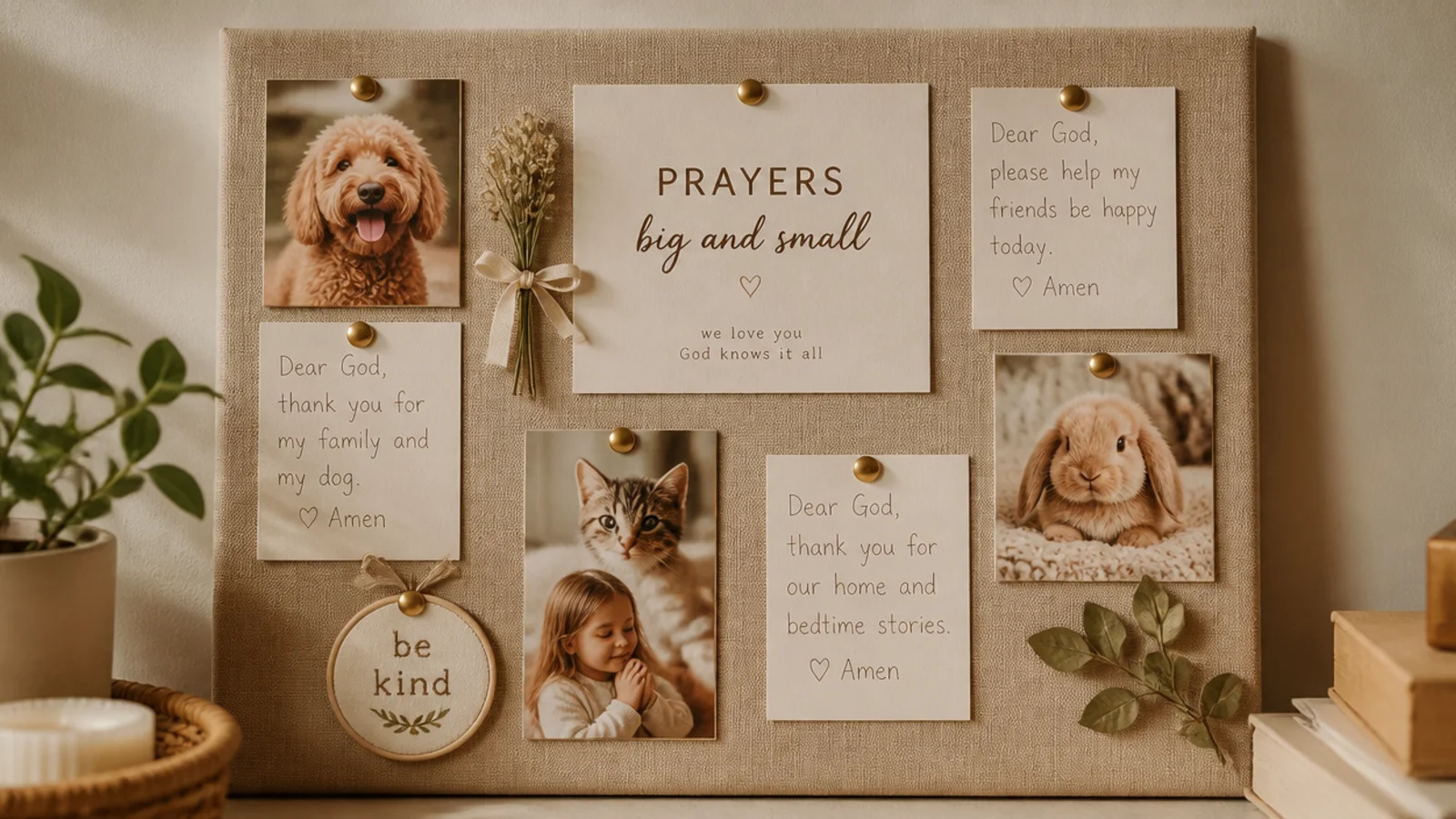
A pets corner meets little kids exactly where their hearts are. You add photos of pets and simple prayers for them. It suits families with young children who love their animals. It’s often the doorway that gets a small child praying at all.
Give pets a small corner with a photo and a simple prayer card — for health, or thanks for them. Let kids add a drawing of the pet too. At prayer time, let the youngest pray for the pet as their contribution. Keep it small so it stays a sweet corner, not the whole board. Add a card if a pet is sick or when a new one joins.
Let the youngest child be the official pet-pray-er; a small, doable job keeps them part of family prayer.
Don’t dismiss pet prayers as silly; for a small child it’s a real, tender concern and a great starting point.
10. Missionary and Sponsor Child Zone
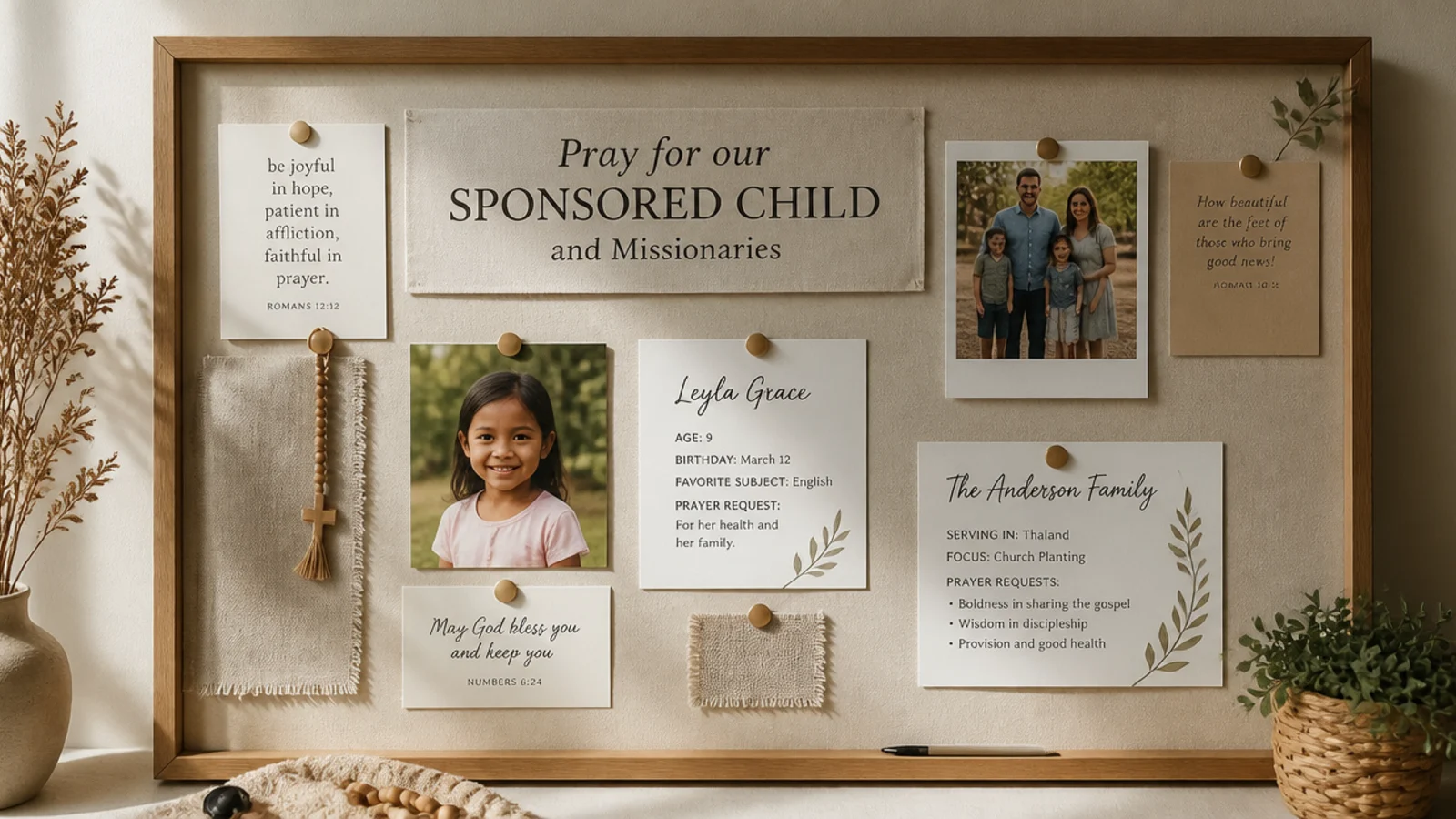
A missionary zone connects your family to people you support around the world. You add photos of missionaries or a sponsored child with their needs. It suits families who give and want prayer to go with it. It teaches kids the world is bigger than home.
Pin photos and updates from the missionaries or sponsored child your family supports. Add a card of their current needs from newsletters or letters. Pray for them by name at family prayer, and let kids write or draw them a note to send. Update the zone when new letters arrive so the connection feels alive and current.
Editor's noteHave kids draw or write to the person you pray for; connecting prayer with a real letter makes it stick.
Skip thisDon’t let the photos become anonymous decor; keep real, updated needs so the family prays specifically.
11. Family Verse of the Week
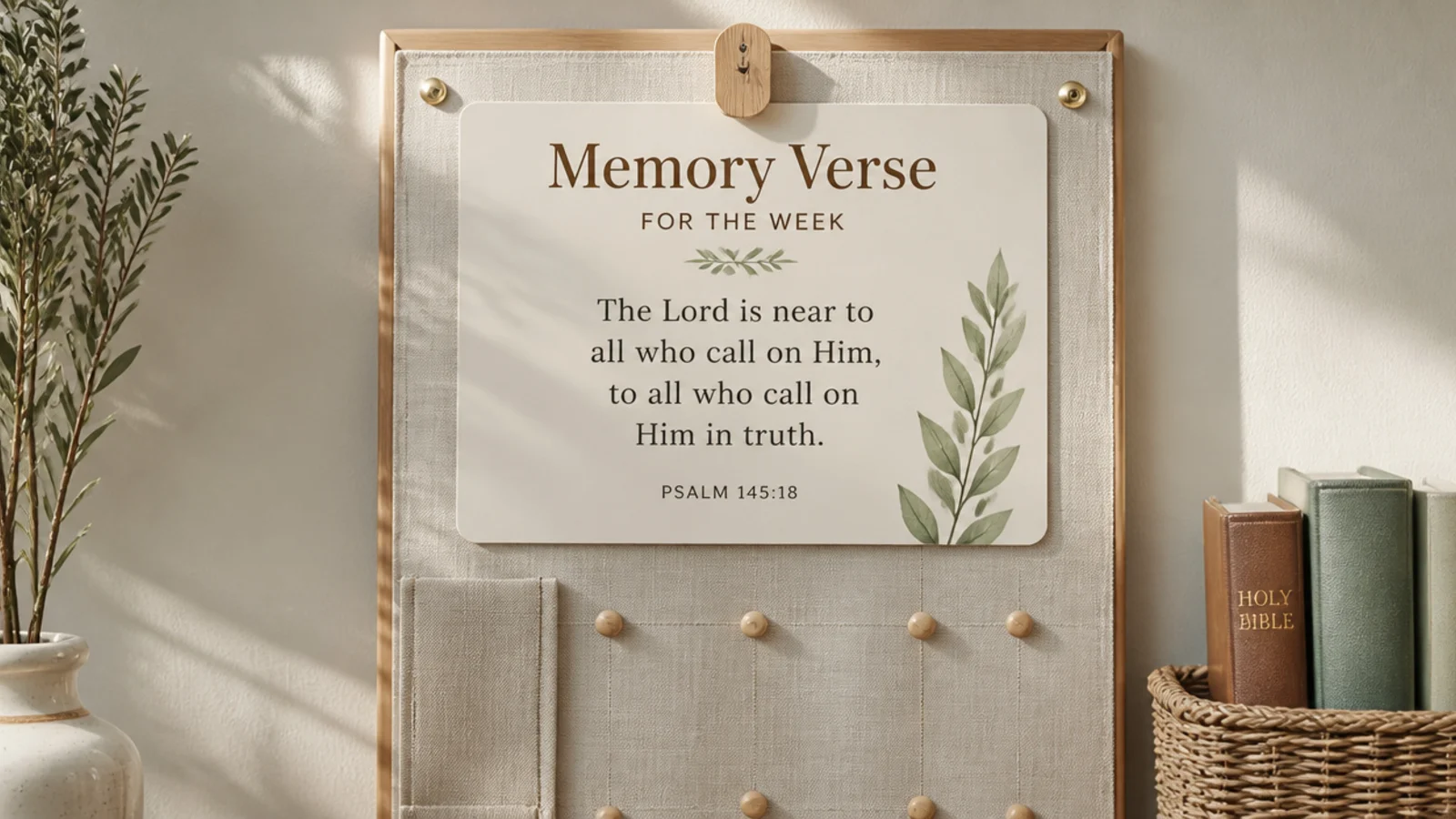
A verse of the week gives the whole family one scripture to learn together. You post a single verse large and change it weekly. It suits families building scripture memory as a team. Learning together makes it a game, not a chore.
Make a large banner card at the top of the board for one verse. Choose a short, kid-friendly verse each week and letter or print it big. Say it together at meals or bedtime, and by week’s end most will have it. Swap it on a set day, filing old verses on a ring you review. Let kids take turns picking or illustrating the verse.
Editor's noteKeep the verse short and repeat it at a fixed time daily; repetition at meals is how kids memorize it painlessly.
Skip thisDon’t pick long passages; one short verse a week is realistic and keeps memory a win, not a struggle.
12. Dinner Table Prayer Board
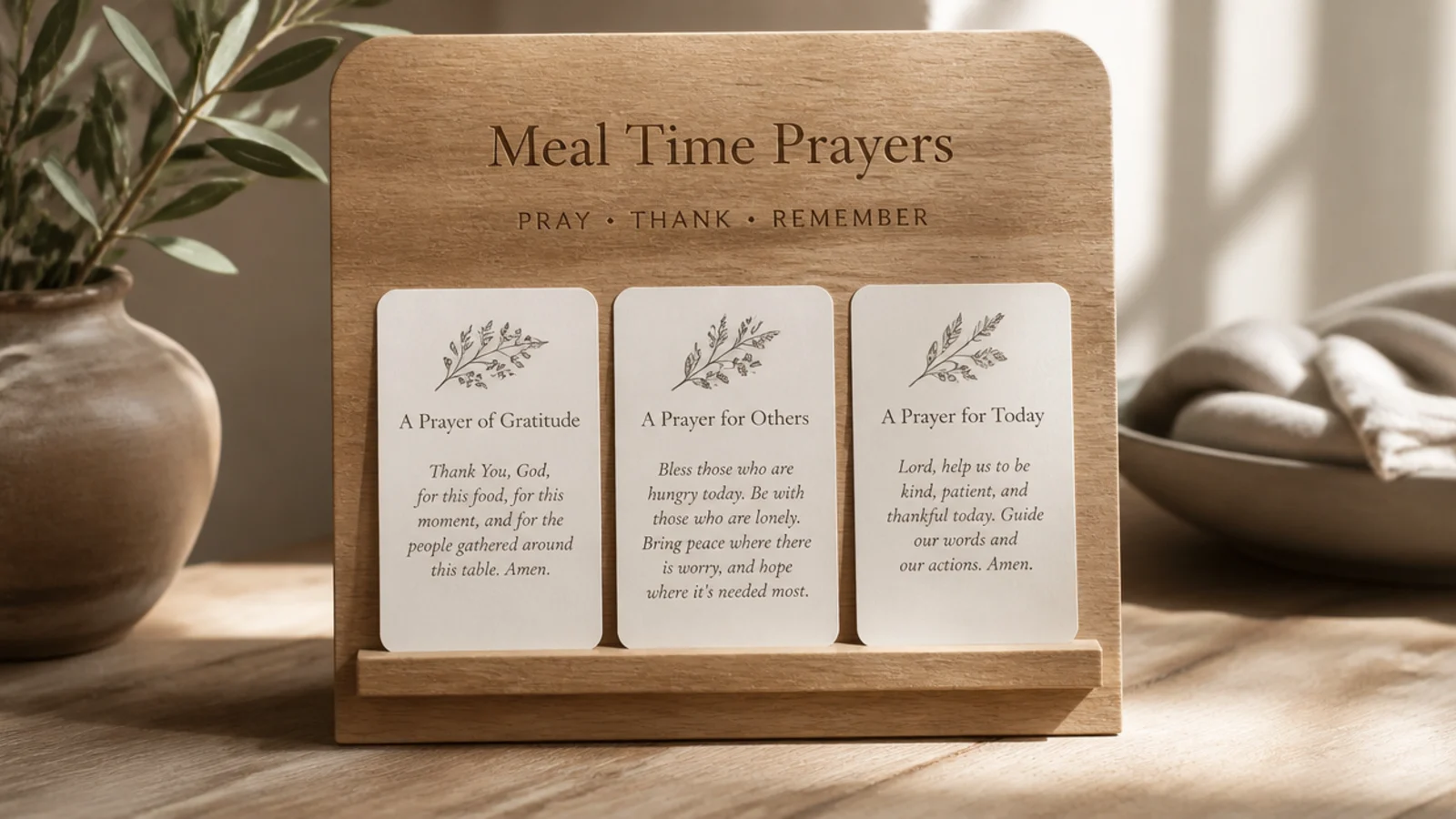
A tabletop board brings prayer right to where you already gather to eat. You keep a small standing board on the table with a few cards. It suits families who pray at meals but want more than a rote grace. It’s in reach, so prayers stay specific.
Set a small trifold or easel board on the dining table with a verse, one or two family requests, and a gratitude prompt. Before or after the meal, pray through what’s on it. Rotate the cards so it doesn’t go stale. Keep it small enough to move at mealtime and store between meals. Let a different child pick the card each night.
Let a different child choose which card the family prays each night; the small choice keeps them engaged.
Don’t make it big or fragile; a tabletop board has to be quick to set out and easy to move for dinner.
13. Family Prayer Jar
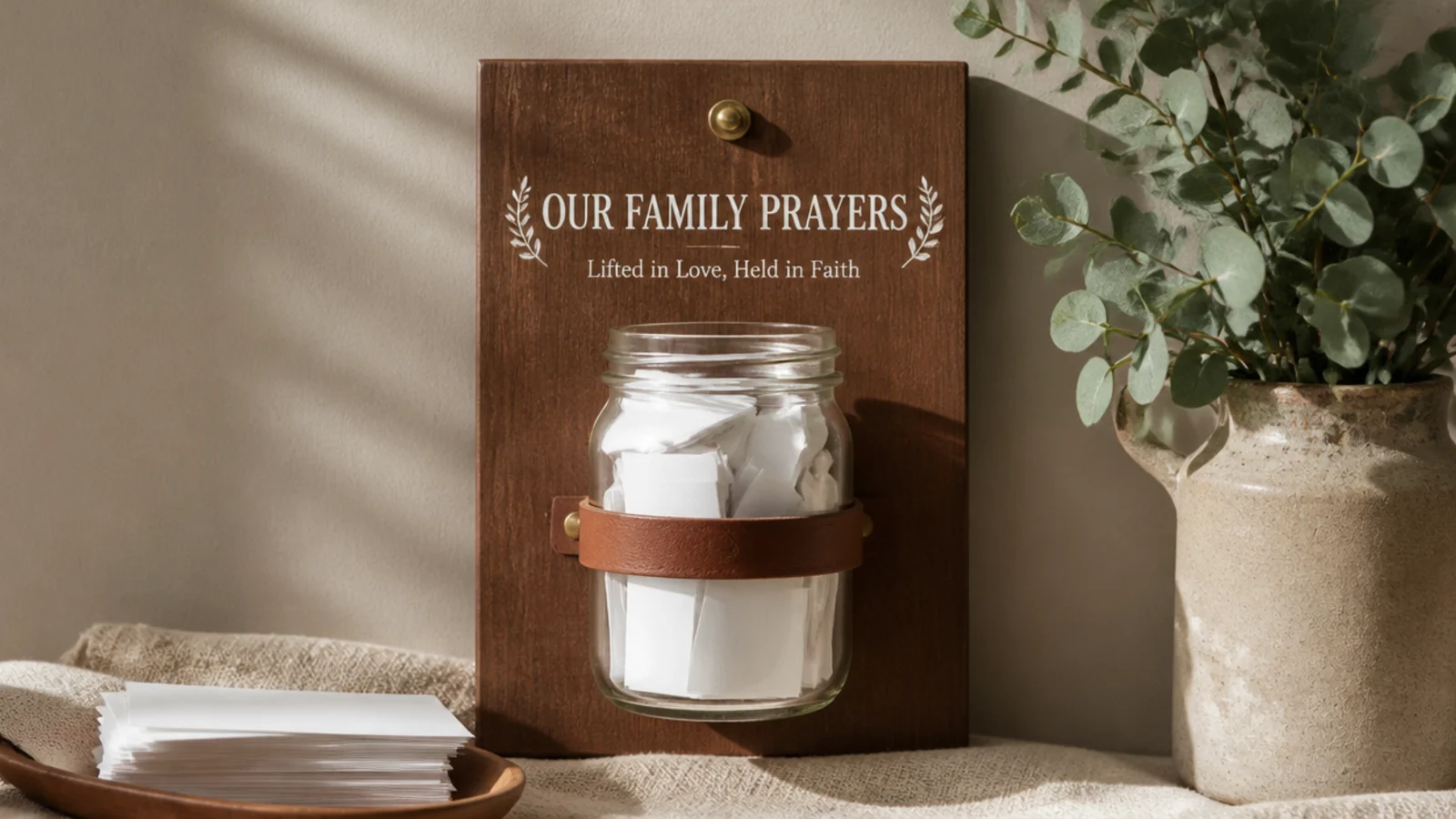
A family jar collects everyone’s prayers, including the private or hard ones. You write a request, fold it, and drop it in as a family. It suits families who want a place for tender things. Emptying it later to see answers is a highlight.
Mount a jar beside the board with a stack of slips. Anyone can write or dictate a prayer, fold it, and drop it in. Once a week, draw a few to pray together. At year’s end — or when full — empty it and read through, marking answered ones. It’s a moving way to look back on a year of prayers together as a family.
Empty the jar together on New Year’s or a birthday and read the year’s prayers aloud, celebrating the answered ones.
Don’t let it just fill forever; schedule regular draws so the prayers get prayed, not only collected.
14. School and Teachers Prayer Zone
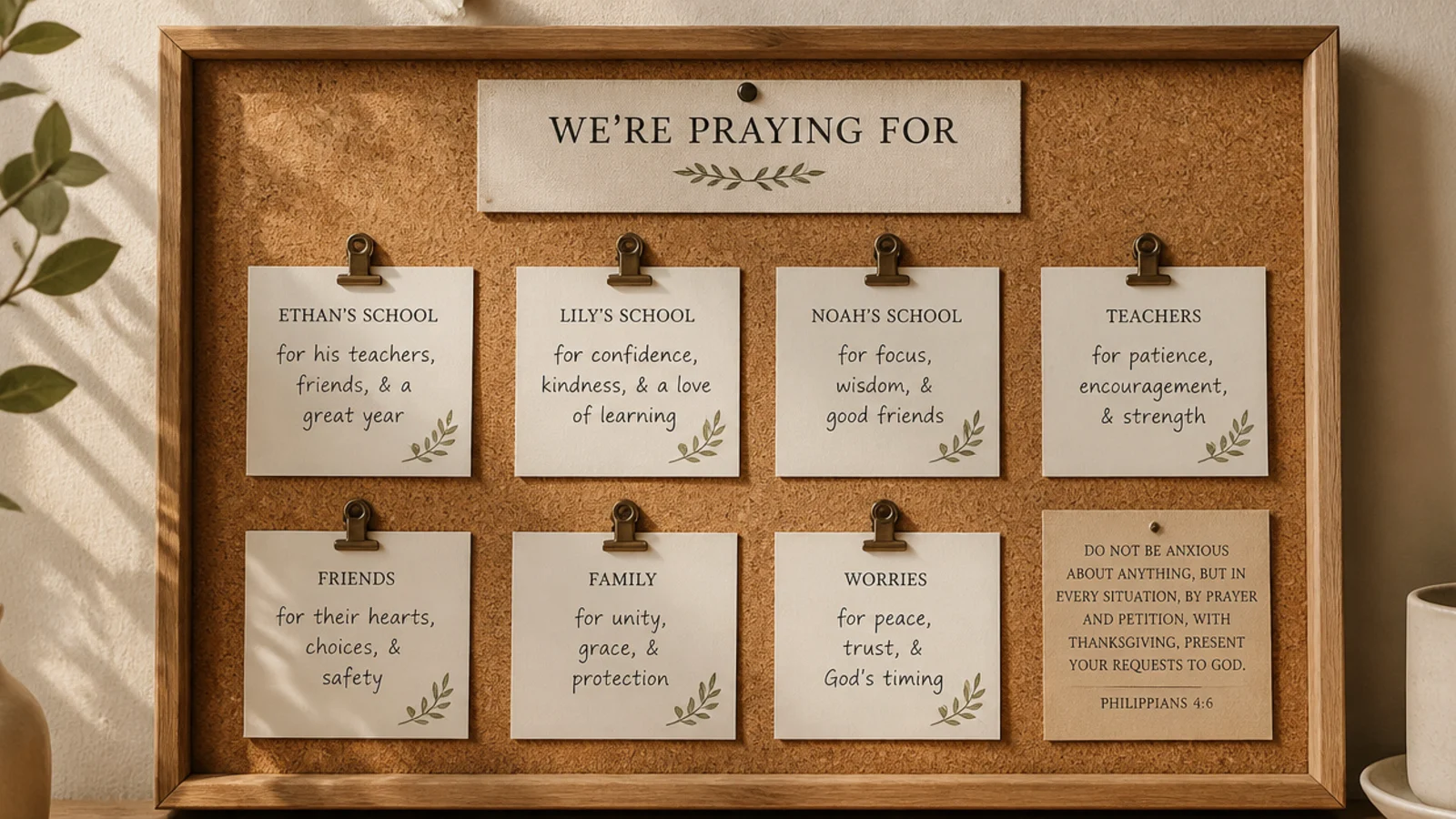
A school zone covers the biggest part of a kid’s day in prayer. You add cards for teachers, friends, tests, and worries. It suits school-age families, especially around a new year or big day. Praying over school meets kids where their stress actually lives.
Reserve a zone with a card for each child’s teacher, a friend or two, and any current school worry — a test, a hard subject, a lonely lunch. Pray over it before school or at breakfast. Update it as the term unfolds and new things come up. Move answered worries — a friend made, a test passed — to the answered wall to build their confidence in prayer.
Pray the school zone at breakfast on hard days; sending a kid off prayed-over settles first-day and test nerves.
Don’t pry every worry out of them; let kids name what they’ll share, and pray the rest generally.
15. Nightly Prayer Focus Calendar
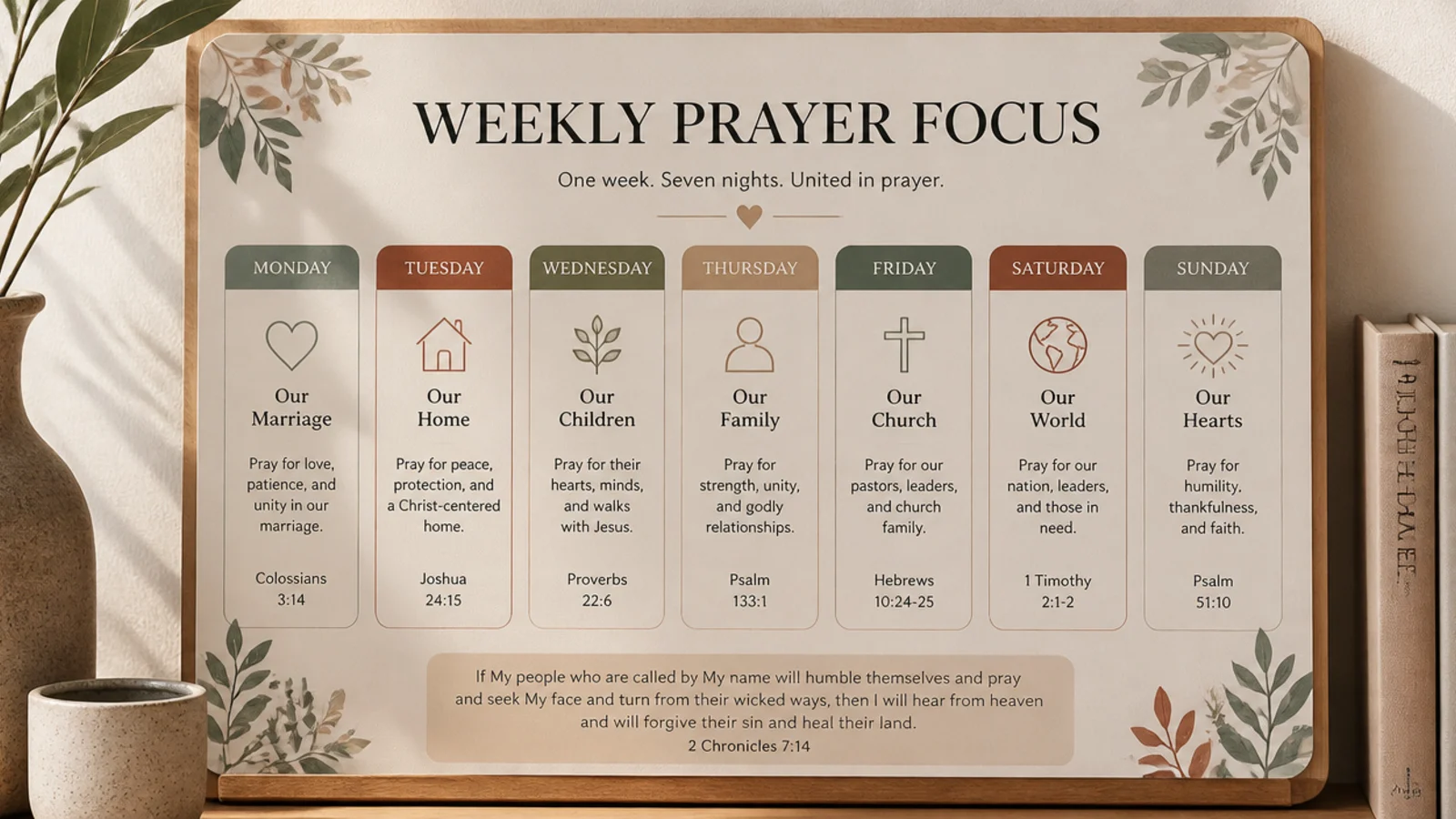
A nightly calendar gives each evening a clear prayer focus so bedtime prayer isn’t random. You assign a theme to each night — family, friends, the world. It suits families who pray at bedtime. Kids know what tonight is, so prayer starts itself.
Make a laminated weekly grid and assign each night a focus — Monday family, Tuesday friends, Wednesday church, and so on. Post it on the board with a marker. At bedtime, pray that night’s focus using the relevant cards. Keep it short. Let kids help choose the themes so they own the rhythm, and wipe and adjust as needed.
Let the kids help assign each night’s theme; a rhythm they invented is one they’ll remind you about.
Don’t overschedule bedtime; one focus per night, kept brief, is what makes it survive tired evenings.
16. Healing for Loved Ones Zone
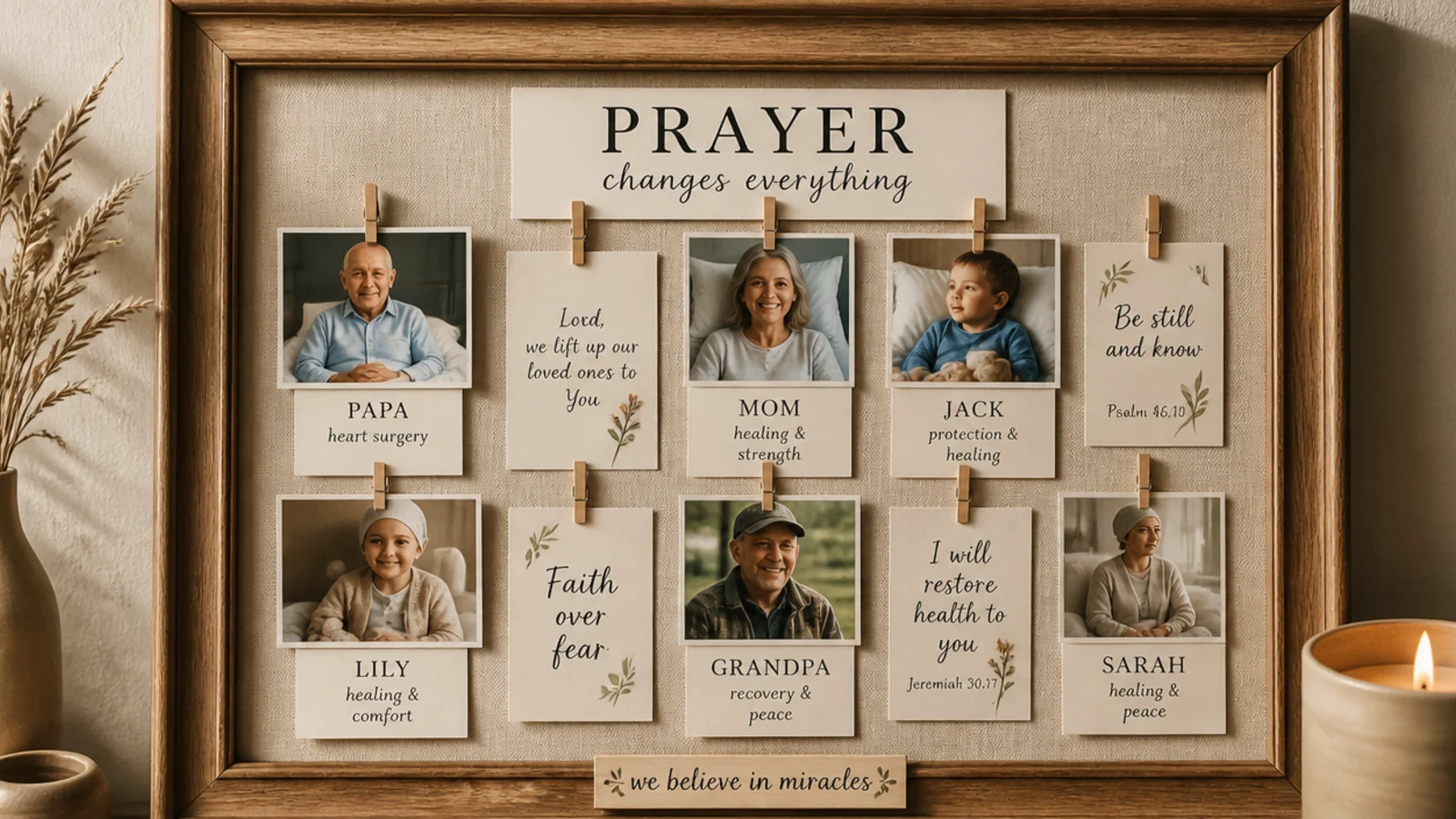
A healing zone holds the sick loved ones your family is carrying. You add photos and cards for those needing healing. It suits families walking through illness with someone they love. It gives kids a concrete way to help when they feel helpless.
Reserve a gentle zone for loved ones who are sick or struggling, with a photo and a simple card of their need. Pray over them by name at family prayer. Update as news comes, and be honest and age-appropriate with kids about hard outcomes. Move recoveries to the answered wall, and keep praying tenderly for those still waiting.
Editor's noteGive kids concrete words to pray for a sick loved one; naming the need helps them feel they’re truly helping.
Skip thisDon’t overwhelm young kids with grim details; keep it hopeful and simple while still being honest.
17. Church and Pastor Prayer Zone
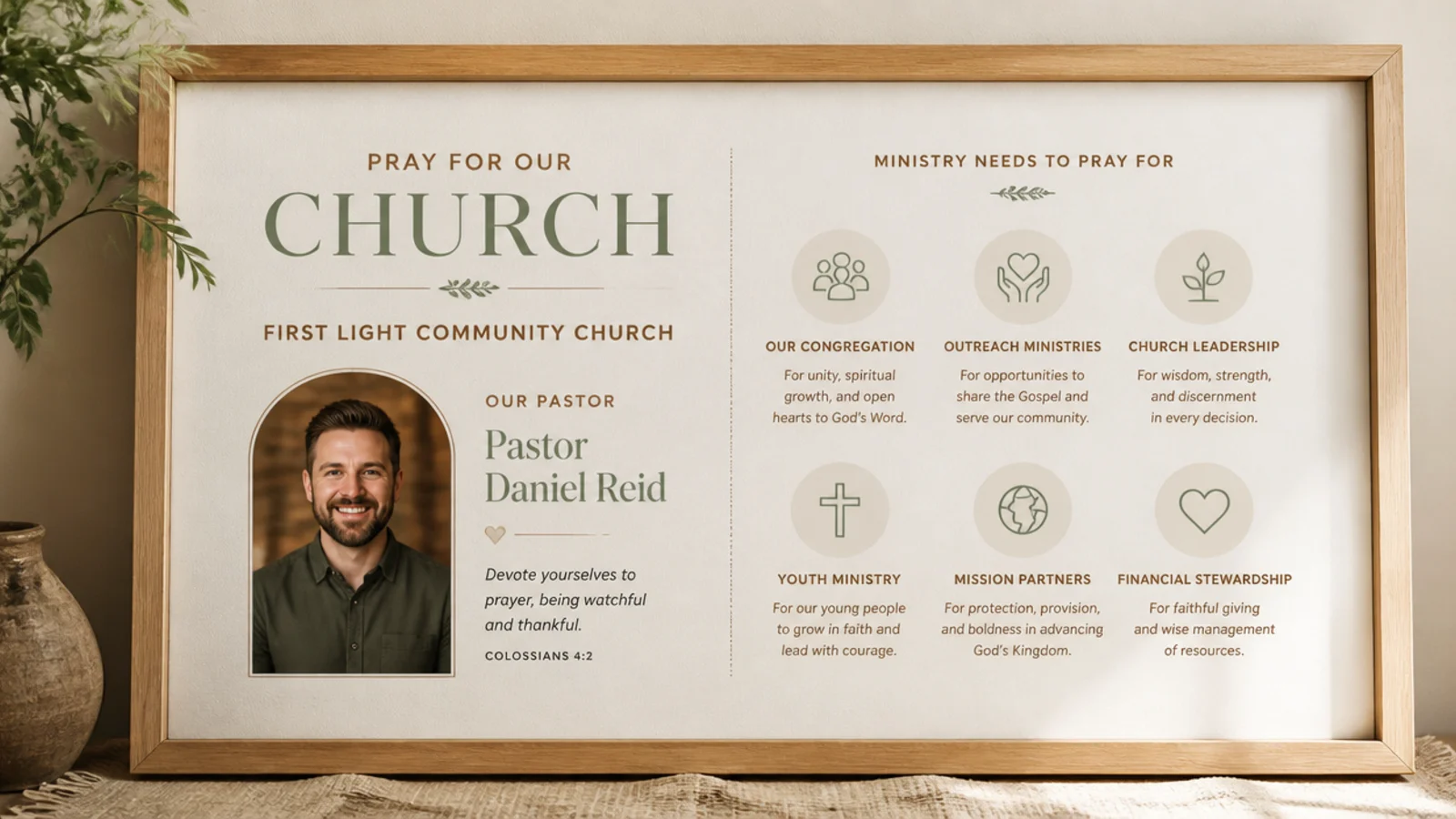
A church zone teaches kids to pray for their church family and leaders. You add the pastor, ministries, and church needs. It suits families who want kids invested in their church. Praying for leaders grows kids who love and support their church.
Add a zone with your pastor’s photo, key ministries, and current church needs — an event, a building project, someone hurting. Pray over it as a family, especially before Sunday. Let kids pray for their own Sunday school teachers. Update from the bulletin or announcements so it stays current. Move answered needs to the answered wall.
Editor's noteHave kids pray for their own Sunday school teachers by name; it deepens how they connect to church.
Skip thisDon’t keep it vague; pull real needs from the bulletin so the family prays specifically for the church.
18. Neighbors and Friends Zone
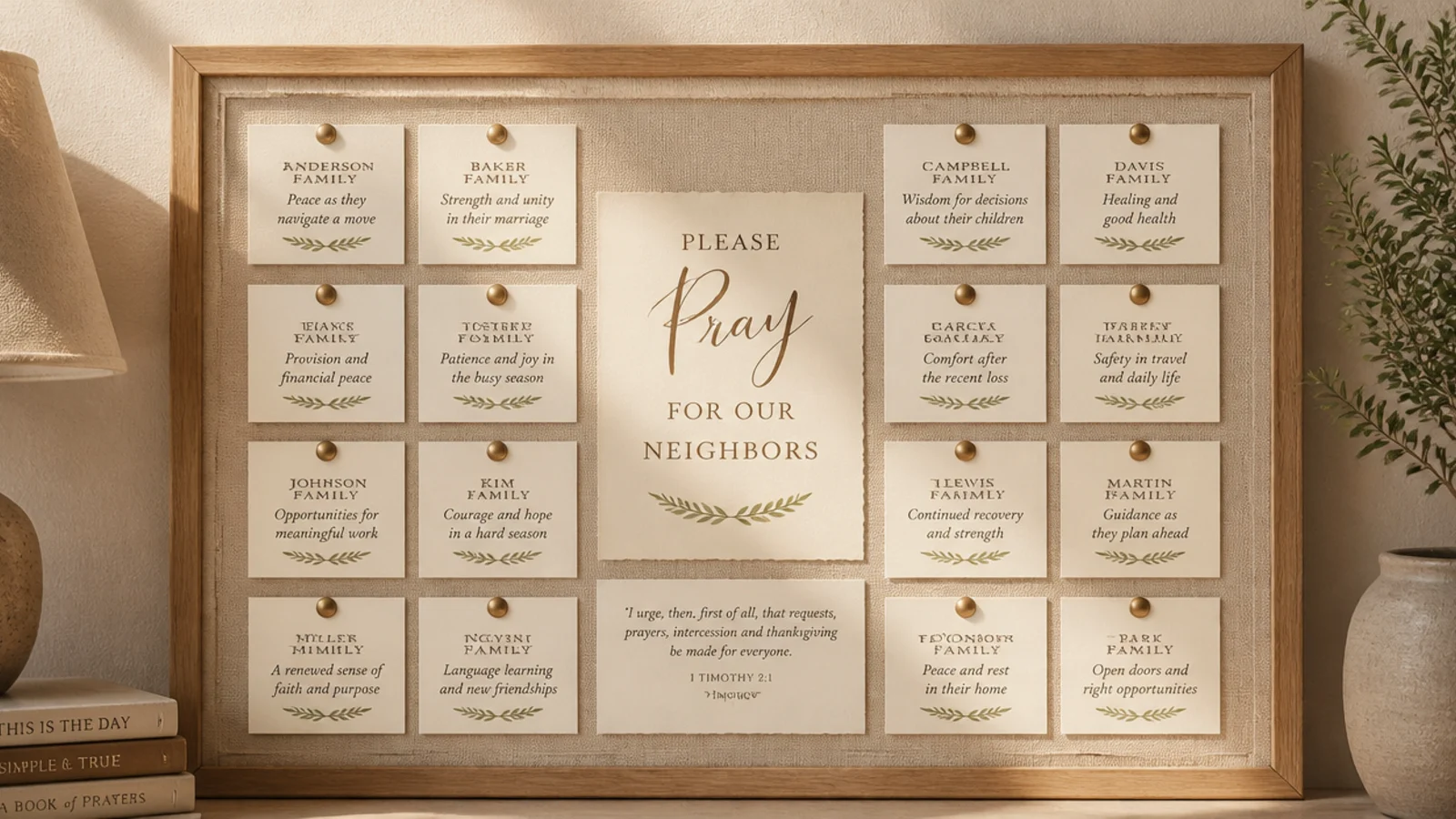
A neighbors zone stretches your family’s prayers to the people right around you. You name neighbors and friends with a need or a hope. It suits families wanting kids to think of others nearby. It turns neighbors into people you actively care for.
List neighbors and family friends on cards, with a known need or simply a prayer of blessing. Pray for a couple each family prayer time. When you learn of a real need — a job loss, an illness — update the card and consider a practical kindness too. Let kids suggest friends to add. Celebrate when you see prayers answered next door.
Editor's notePair a prayer with a small act — cookies, a note — so kids learn prayer and kindness go together.
Skip thisDon’t post neighbors' private struggles where guests would see; keep sensitive cards discreet or coded.
19. Answered Prayer Photo Timeline
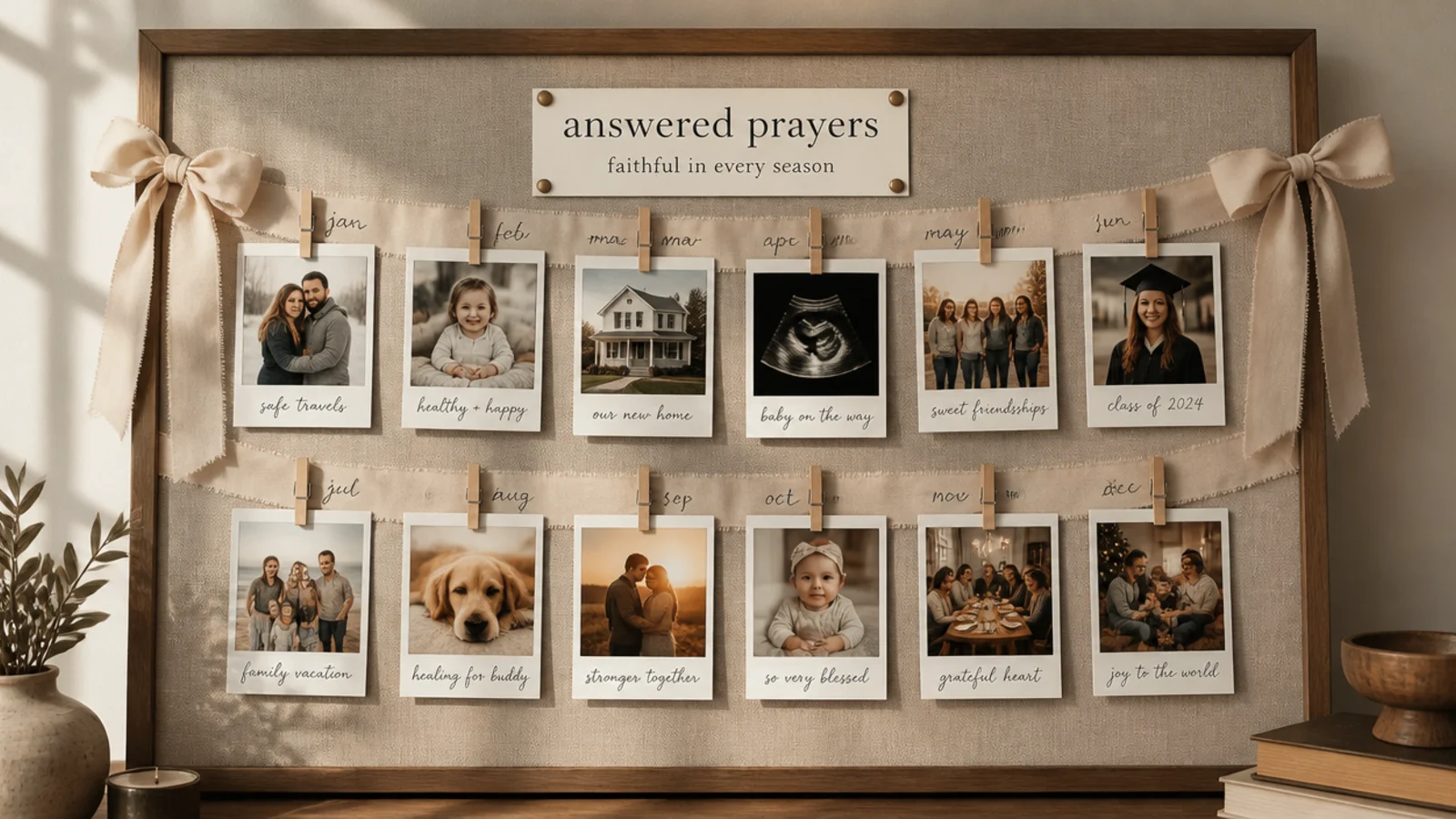
A photo timeline tells your family’s story of answered prayer in pictures. You clip dated photos of answers along a ribbon. It suits families who want a visual, year-long record. Kids love spotting themselves in the story of what God did.
String a ribbon across the board. When a prayer is answered, add a small dated photo — the new baby, the healed grandparent, the friend who moved in — and clip it in order. Walk the timeline together at year’s end. Photograph the whole line before archiving so the record lasts. Let kids help choose the photo for each answer.
Editor's noteAt the end of the year, walk the timeline together and let each child tell the story of one answered prayer.
Skip thisDon’t crowd the ribbon; give each answer space so it reads as its own moment in the family’s story.
20. Family Goals Under God Zone
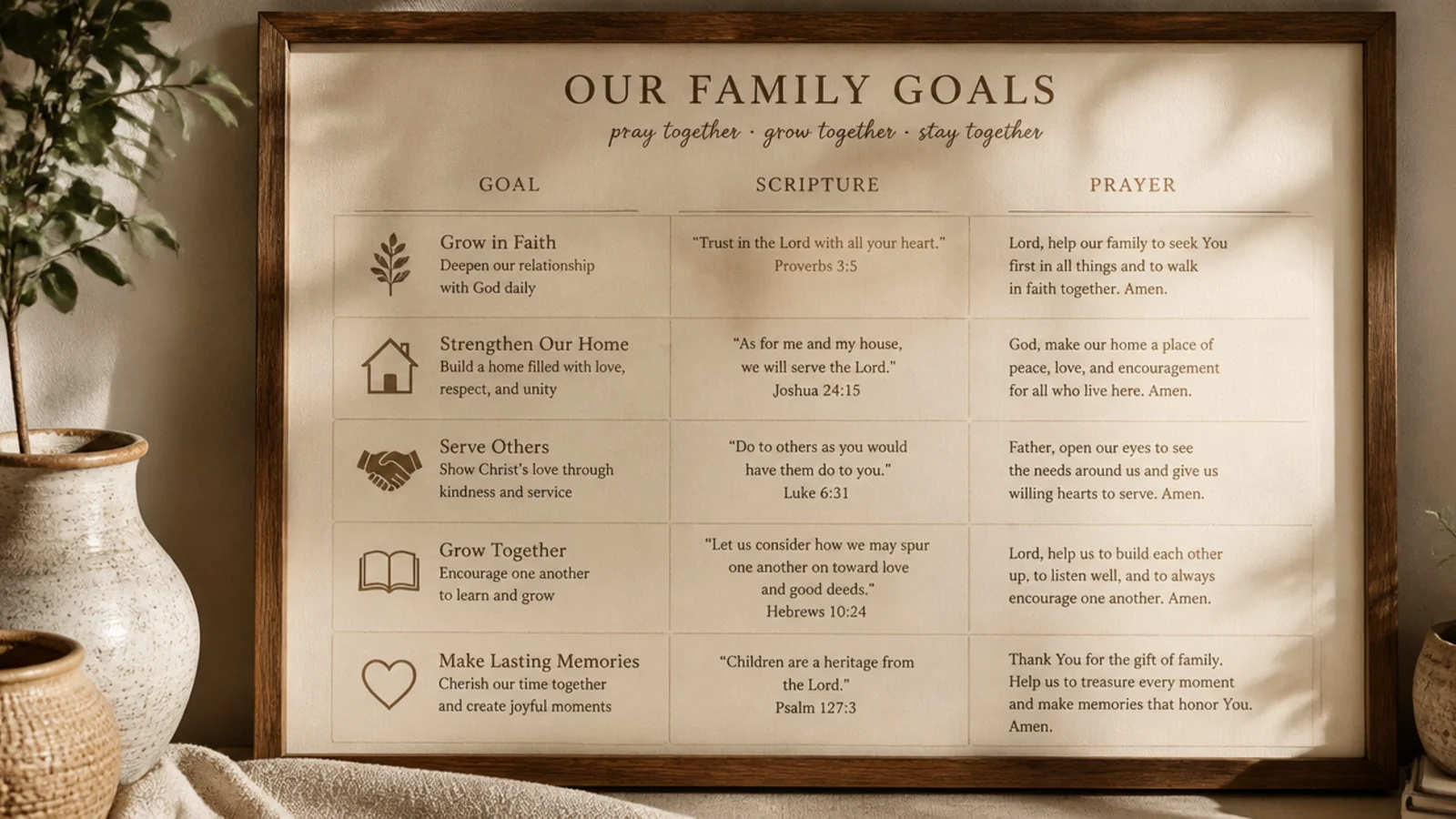
A family-goals zone brings shared hopes under prayer together. You list goals the whole family is praying toward, each with a verse. It suits families who set goals and want God in them. Praying goals together unites everyone behind them.
As a family, name a few shared goals — a trip, a habit, a big decision — and write each on a card with a scripture and a prayer. Pin them in one zone. Pray over them together and track movement. Move accomplished goals to the answered wall with thanks. Revisit and reset them each season so the zone stays current and shared.
Editor's noteLet each family member contribute one goal to the zone, so the shared hopes truly belong to everyone.
Skip thisDon’t make them all parent goals; include the kids' hopes so the whole family owns the zone.
21. Kids' Own Words Prayer Zone
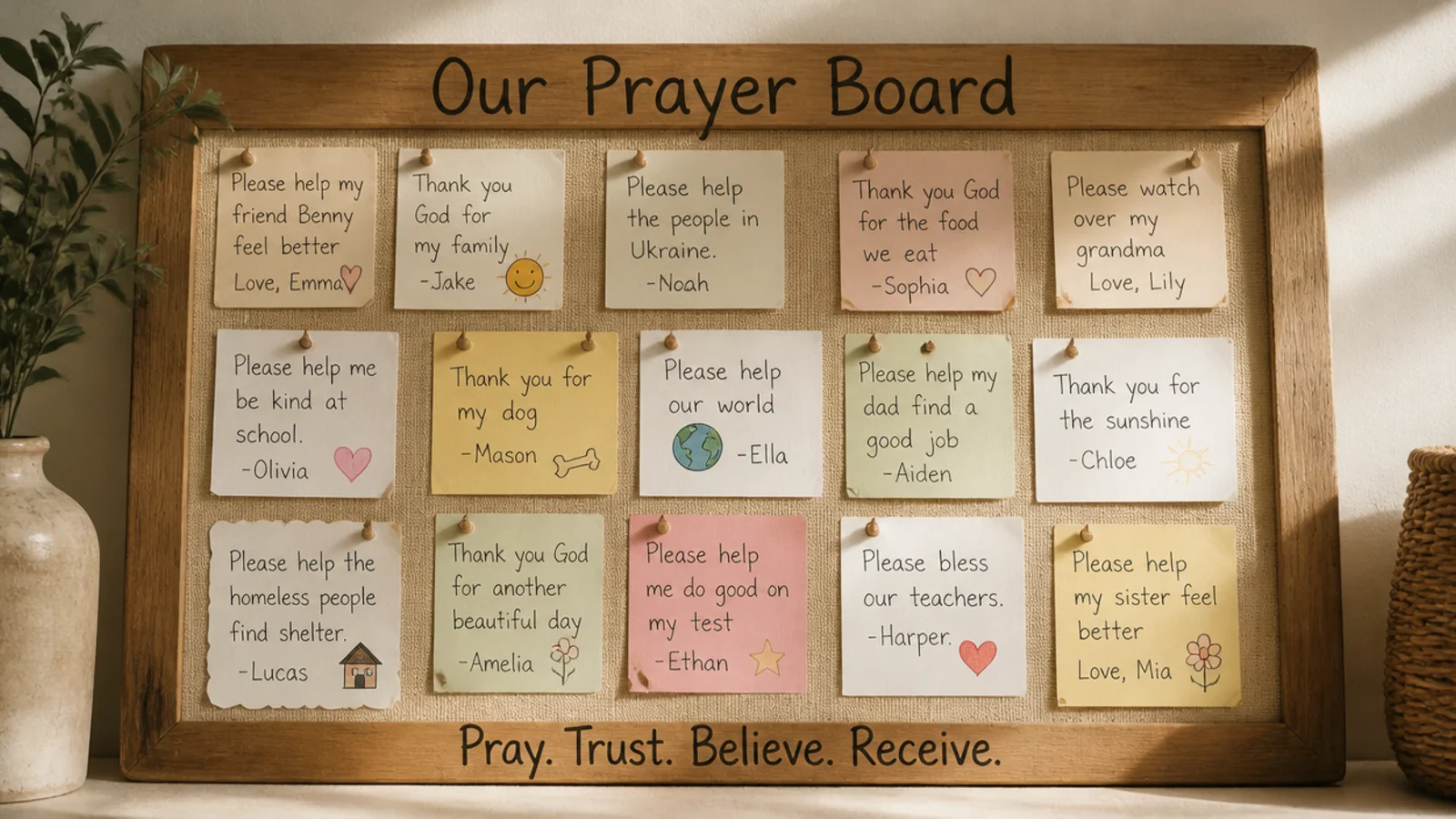
This zone captures kids' prayers exactly in their own words. You let children write or dictate their prayers, unedited. It suits families who want kids' faith to be authentically theirs. The misspelled, honest cards are treasures you’ll keep.
Give kids a zone and let them write their own prayer cards — or dictate for you to write verbatim, spelling and grammar untouched. Pin them as they are. Pray them aloud at family time, honoring their words. Save the cards as keepsakes when you rotate them out. The unpolished honesty is exactly what makes this zone precious.
Write down little kids' prayers word for word when they dictate; their exact phrasing is the keepsake.
Don’t correct spelling or reword their prayers; the authenticity is the whole value, so leave it untouched.
22. Family Devotion Reading Tracker
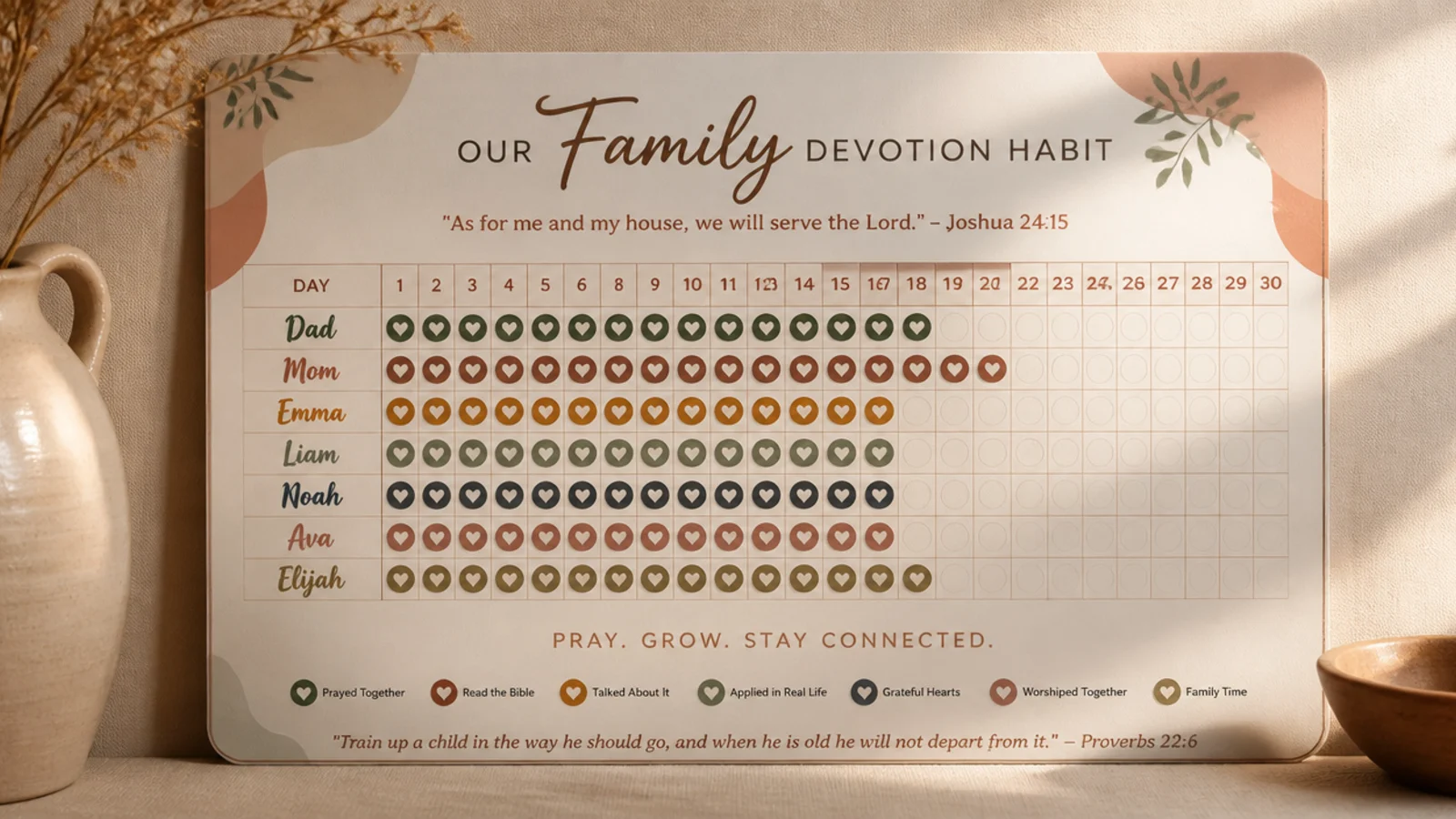
A reading tracker keeps family devotions consistent with a visible chart. You mark each day the family reads together. It suits families building a devotion habit. Kids love adding the sticker, which pulls everyone to the chart.
Make a laminated month grid and post it on the board. Each day the family does a short devotion or reading, let a child add a sticker or check the box. Keep devotions short for young kids. Celebrate a full week or month with a small treat. Start a fresh chart each month so a missed stretch doesn’t discourage the family.
Editor's noteLet the youngest add the daily sticker; a tiny job at the chart gets the whole family to devotions.
Skip thisDon’t guilt over gaps; start a fresh chart and keep going, since consistency matters more than a perfect grid.
23. Kids' Prayer for the World Map
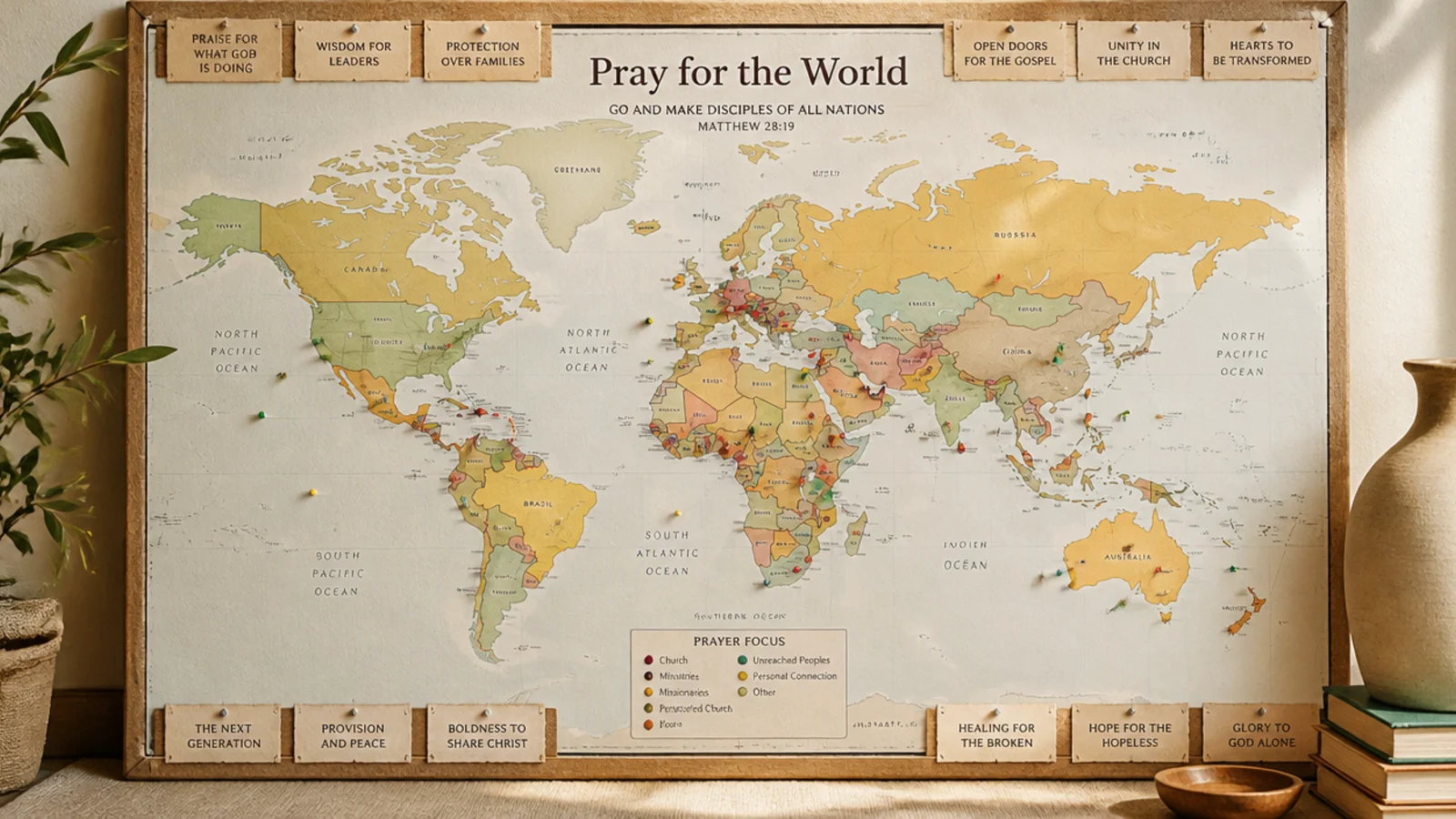
A world map turns global prayer into a game kids love. You pin countries and needs the family prays over. It suits families teaching kids to care beyond their own world. Finding the country each week is half the fun.
Pin a colorful, kid-friendly world map. Each week, pick a country together and pin it with a simple need — persecuted believers, a disaster, missionaries there. Let a child find it on the map. Pray for it that week. Rotate to a new place weekly so the map fills over time. Tie it to news kids can understand, kept age-appropriate.
Let a child find and pin the country of the week; the treasure-hunt feel makes global prayer exciting.
Don’t cover the map in pins; one focused country a week teaches more than an overwhelming sea of dots.
24. Bedtime Prayer Routine Board
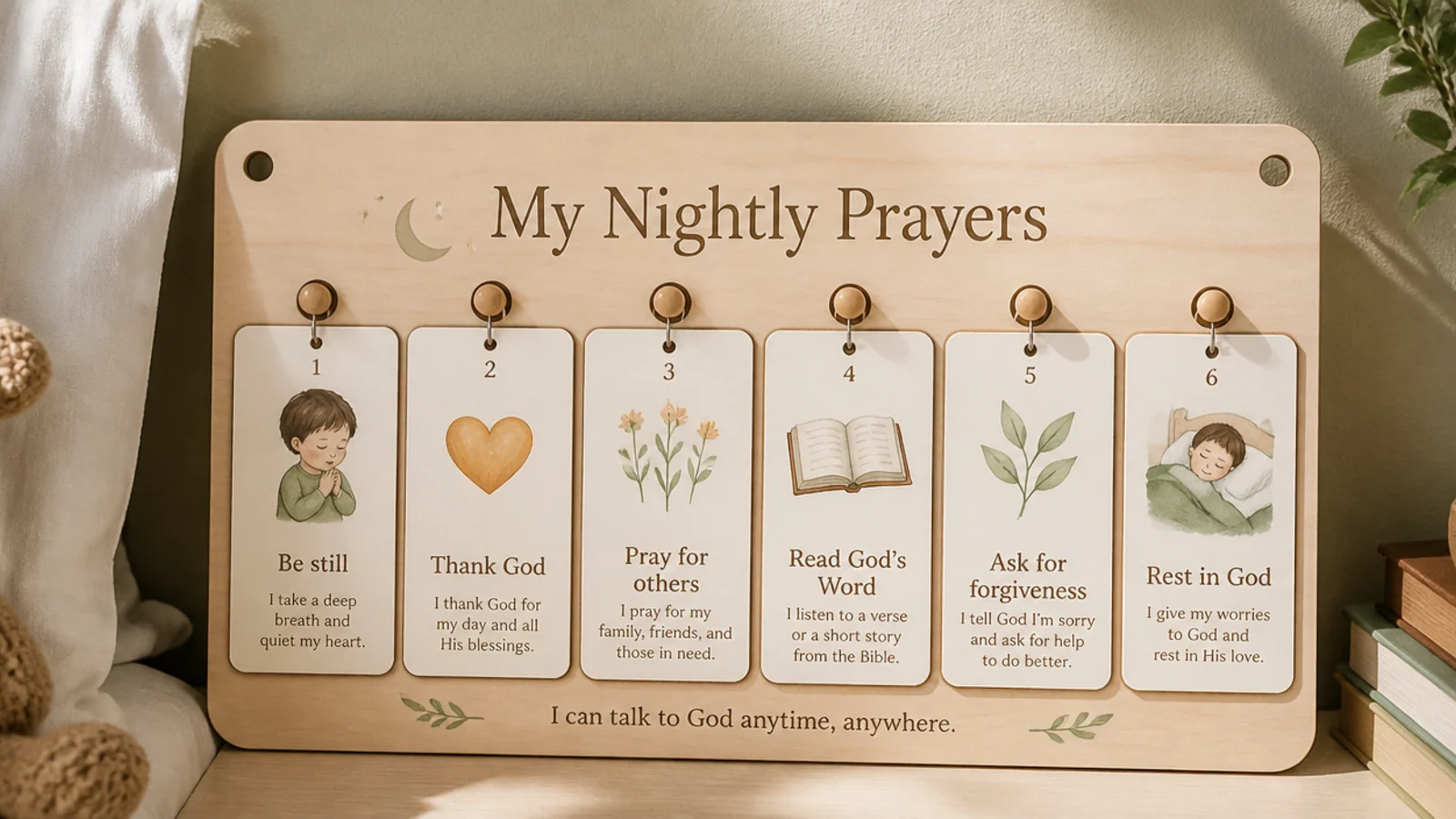
A bedtime board guides a short, calming prayer routine for kids. You use picture cards to walk little ones through what to pray. It suits families praying at bedtime with young children. The pictures let pre-readers lead their own prayer.
Hang a small board near the child’s bed with picture cards — thank you, sorry, please, someone I love. Walk through them each night as a gentle routine. Let the child point to each and pray in their own words. Keep it short and warm as part of winding down. Swap in a photo of someone specific to pray for that night.
Editor's noteUse picture cards so pre-readers can lead the prayer themselves by pointing, building independence and habit.
Skip thisDon’t stretch bedtime prayer long when they’re tired; a short, sweet routine is what makes it stick nightly.
25. Family Worship Song List
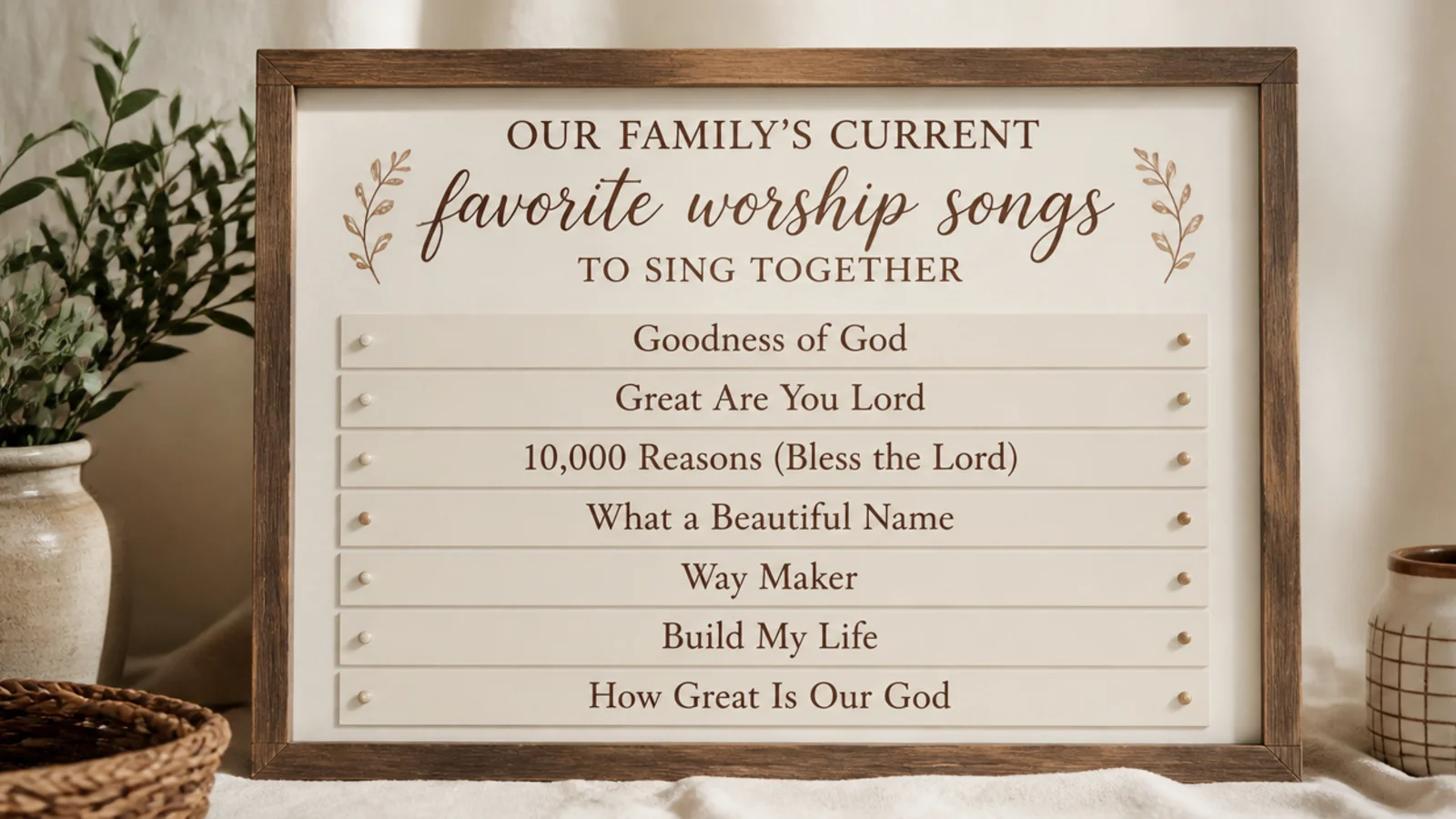
A song list adds worship to your family’s prayer time. You post the family’s current favorite songs to sing together. It suits families who want praise, not just requests. Singing loosens everyone up and kids join in eagerly.
Keep a card or small zone listing a few worship songs the family loves right now. Sing one together at family prayer or in the car. Let each person add a favorite, and rotate the list as new ones catch on. Pair it with the verse of the week when they connect. Kids often pray more freely after singing first.
Open family prayer with one song; singing first relaxes shy kids so they pray more freely afterward.
Don’t force performance or perfection; the point is joyful participation, not a polished sound.
26. Family Prayer Buddy System
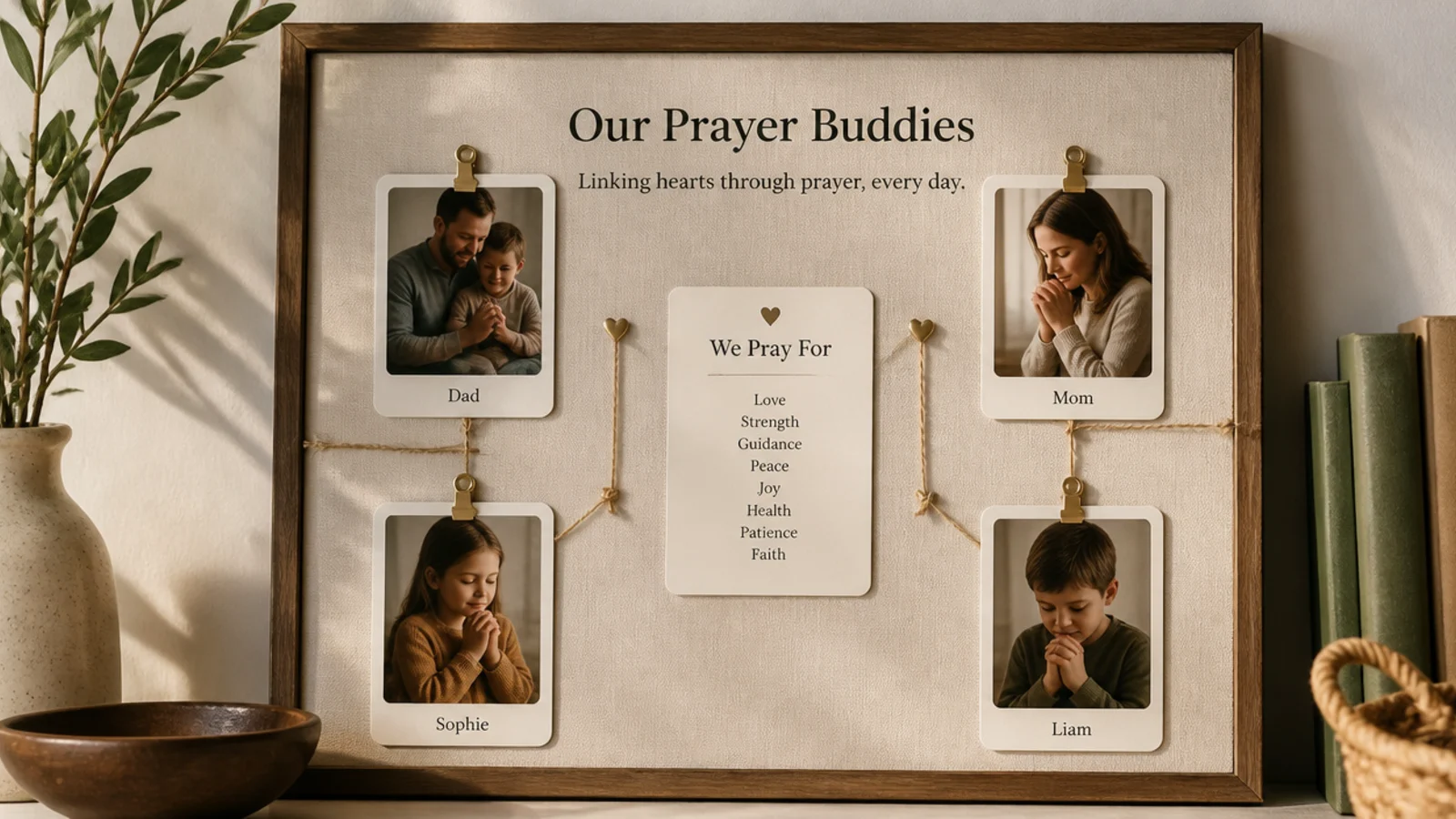
A buddy system pairs family members to pray for each other all week. You link two people as prayer buddies with a shared card. It suits families who want kids praying for siblings. It builds closeness between whoever gets paired.
Pair up family members — rotate weekly so pairings change. Link each pair’s photos with a shared card where each writes one thing they want prayed. Buddies pray for each other daily and check in. On rotation day, thank your buddy and switch. It gently teaches kids to carry someone else’s need and to open up about their own.
Editor's noteRotate the pairings weekly so, over time, every family member prays for every other one.
Skip thisDon’t let a sibling pairing turn into teasing; set the tone that a buddy’s request is treated with care.
27. Seasonal Family Prayer Focus
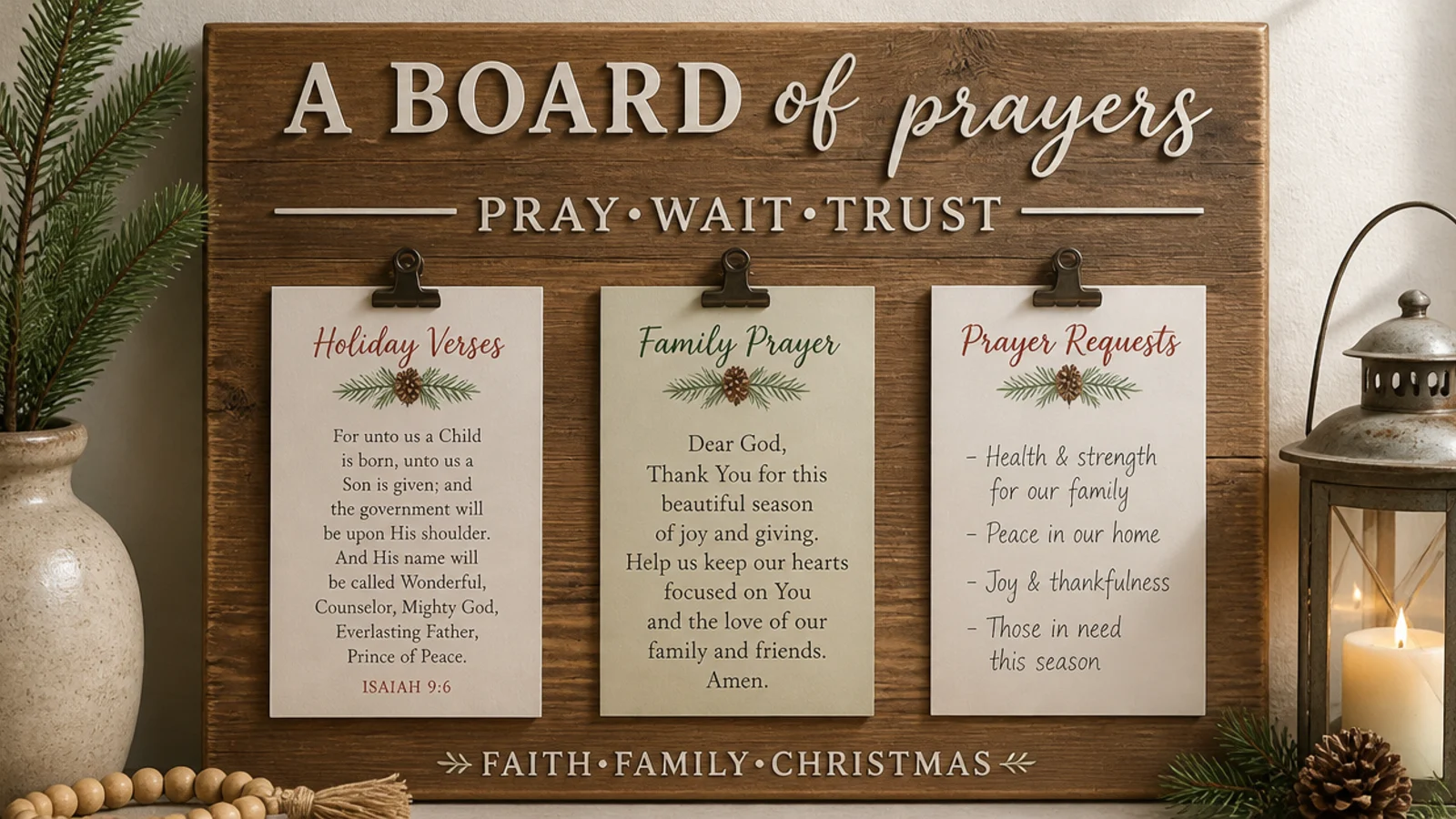
A seasonal focus keeps the board fresh and ties prayer to the time of year. You theme one zone for Advent, Lent, a new school year, or summer. It suits families who love marking seasons. Changing it keeps kids noticing the board.
Dedicate a zone to the current season with a themed verse and a few focus prayers — gratitude at harvest, giving at Christmas, new starts in fall. Build a small kit for each season stored in a labeled envelope so the swap is quick. Change it as seasons turn and let kids help decorate it. Tie it to family traditions you already keep.
Build all the seasonal kits at once and store them labeled; swapping later takes minutes, not an afternoon.
Don’t leave a past season up too long; a stale holiday zone is the quickest way kids stop noticing the board.
28. Send-Off Blessing Board
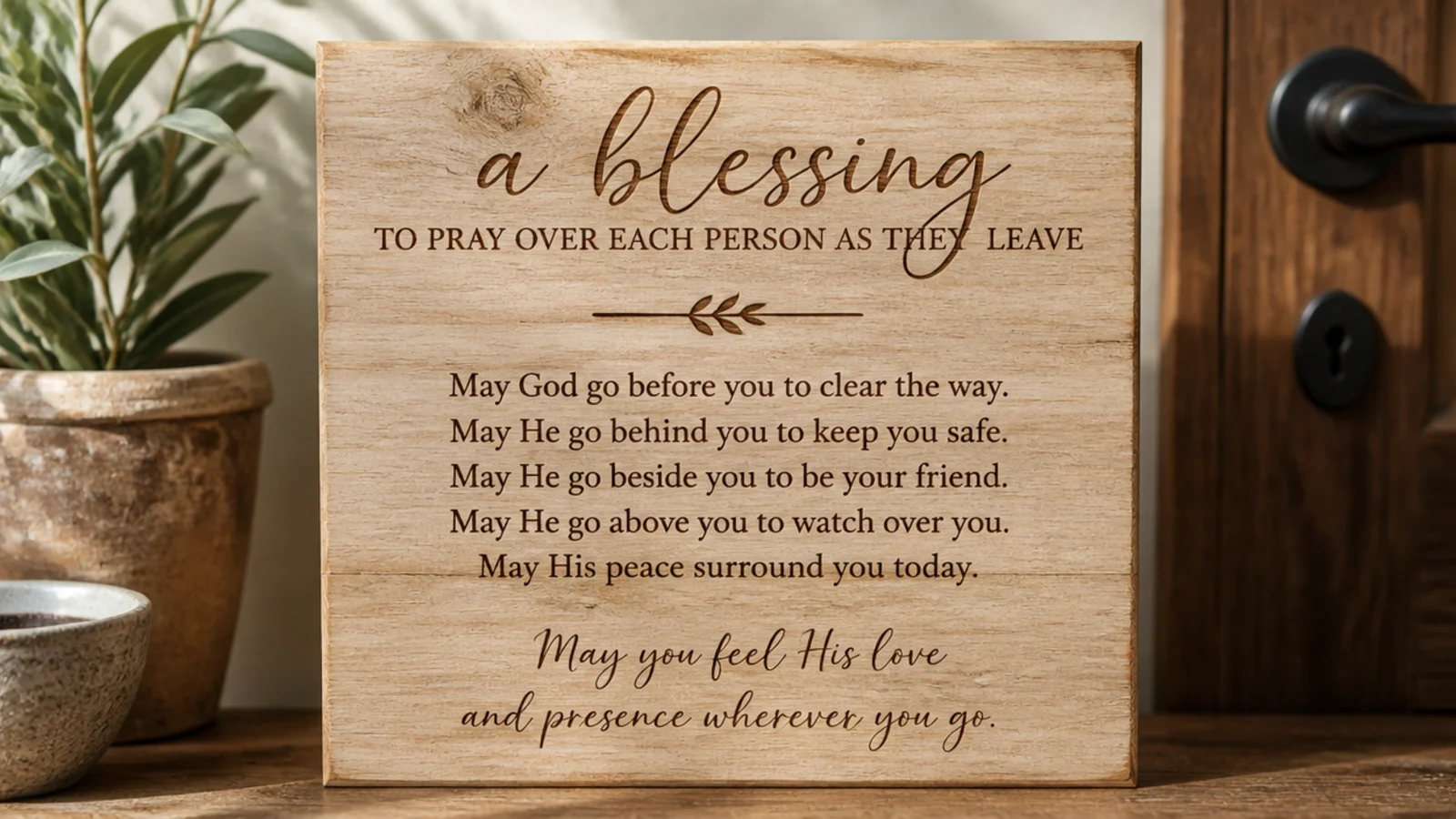
A send-off board blesses each person as they head out the door. You keep a short blessing or verse by the entry to pray over them. It suits busy families who can’t always sit down to pray. A ten-second blessing at the door still counts.
Hang a small board by the front door with a short blessing, a verse, or a simple prayer to say over each person leaving. Speak it as they head out — to school, to work. Rotate the blessing weekly. Let kids learn it and say it back. It turns a rushed exit into a moment of prayer without needing to sit down.
Editor's noteKeep the blessing short enough to say in the doorway; ten seconds of prayer beats a sit-down you skip.
Skip thisDon’t make it a lengthy ritual that stalls a rushed morning; brevity is what keeps this one alive.
29. Family Memory Verse Challenge
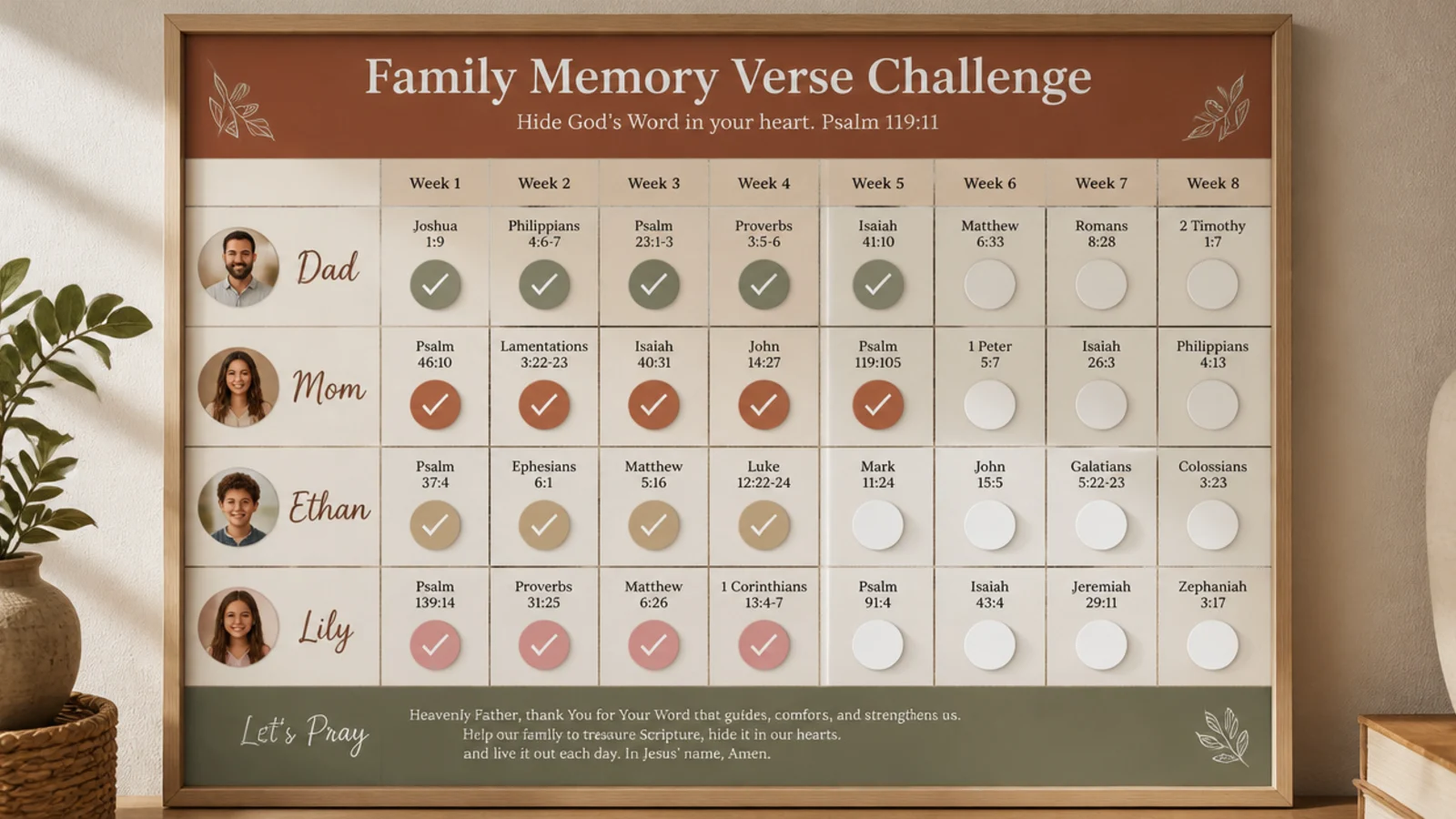
A memory challenge makes learning scripture a friendly family game. You track everyone’s progress on a shared verse or set. It suits families who thrive on a little challenge. Racing and cheering each other keeps it fun.
Pick a verse or a short set as the challenge. Post a tracker with each family member’s name and mark progress as they master it. Recite together at meals for practice. Offer a small family reward when everyone gets it. Then pick the next one. Keep it encouraging, not competitive to the point of pressure, so slower learners stay in.
Reward the whole family when everyone masters the verse, so kids cheer each other on instead of competing.
Don’t shame slower memorizers; keep it a team win so no child dreads the challenge board.
30. Fridge Magnetic Prayer Board
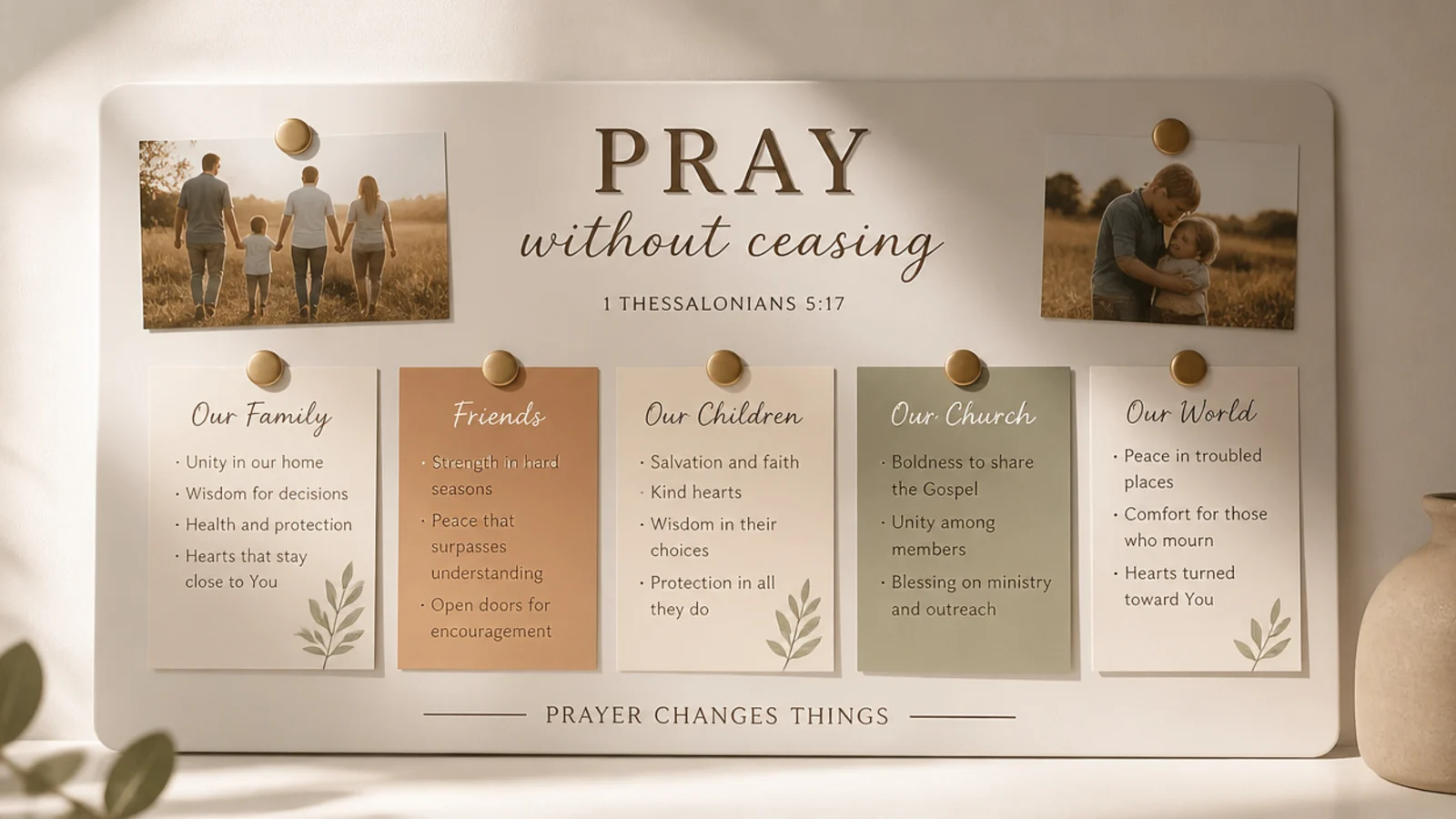
The fridge is where families already gather, and magnets make it the easiest board of all. You use the fridge as a magnetic prayer board with photo magnets and cards. It suits families short on wall space or wanting zero setup. It’s always in view, so prayers get noticed.
Claim a section of the fridge for prayer. Use photo magnets for family and magnetic clips or magnetic cards for requests and answered prayers. Keep a small magnetic marker board there for the verse of the week. Pray over it at breakfast or dinner since you’re already there. Kids can rearrange the magnets, which keeps them engaged and hands-on.
Editor's noteUse a magnetic strip of scripture as a header; the fridge’s own surface saves you building anything at all.
Skip thisDon’t let it blend into fridge clutter; keep the prayer section visually distinct so it doesn’t disappear among magnets and notes.