
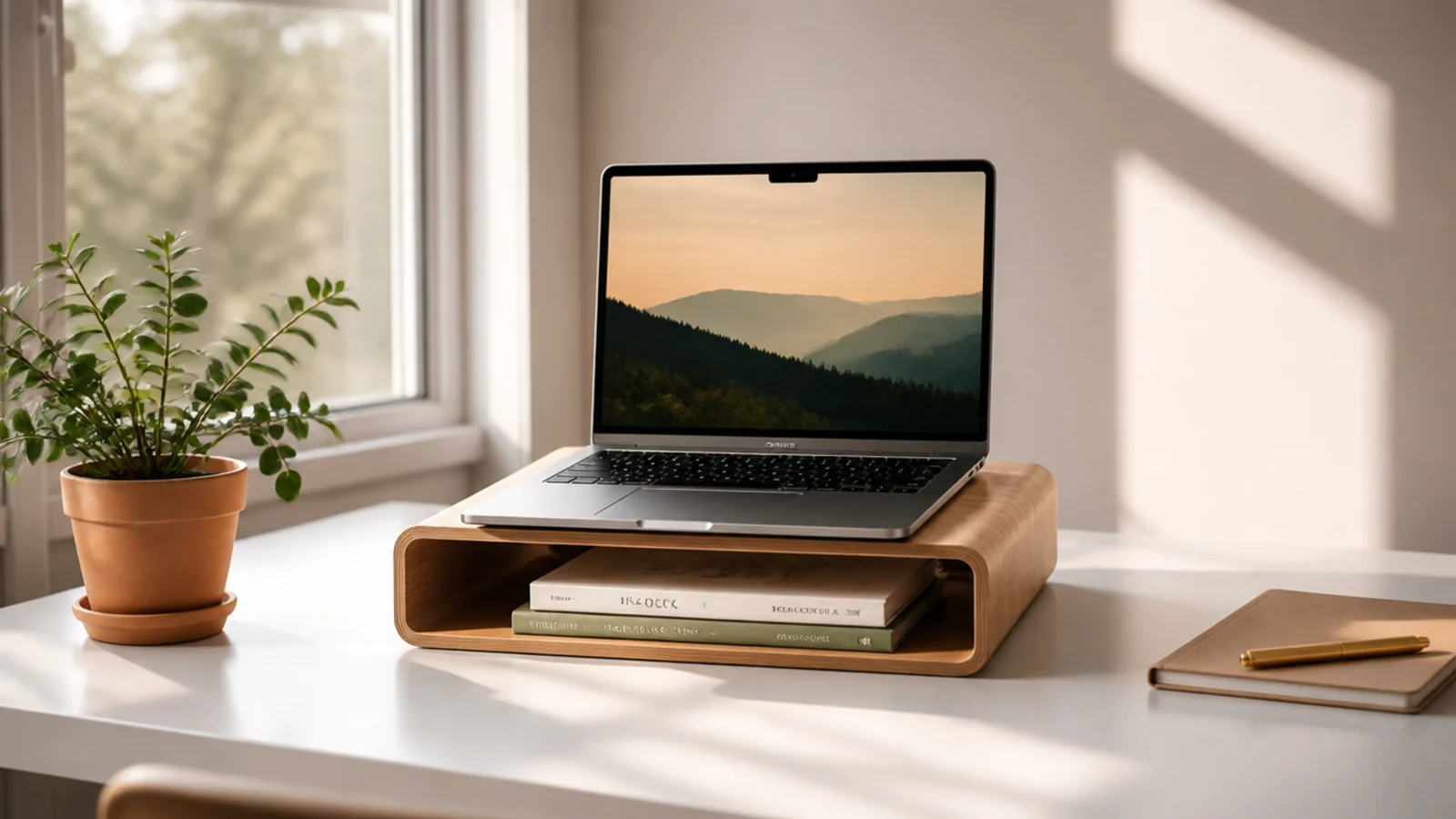
1. Neutral Monochrome Palette
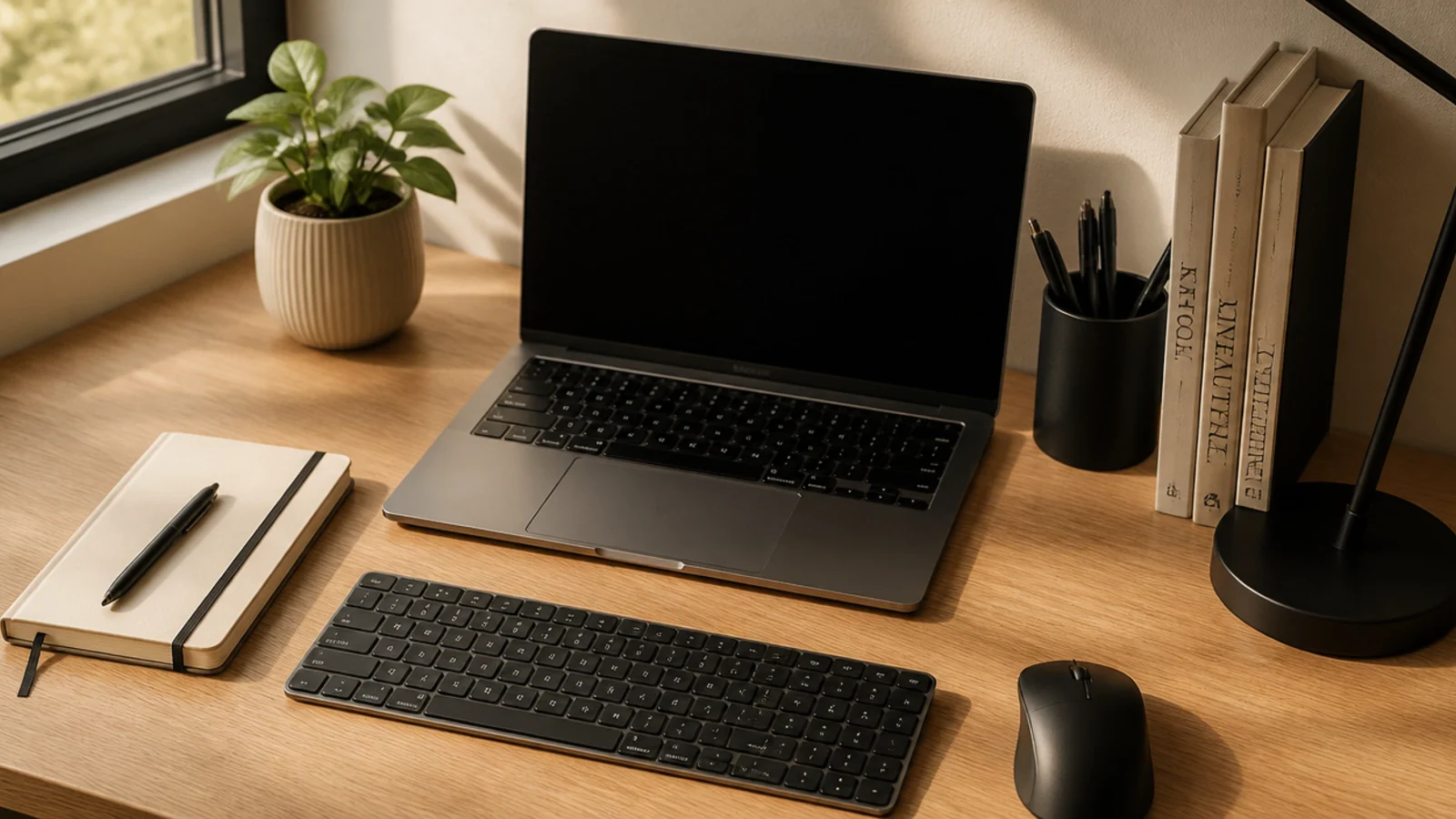
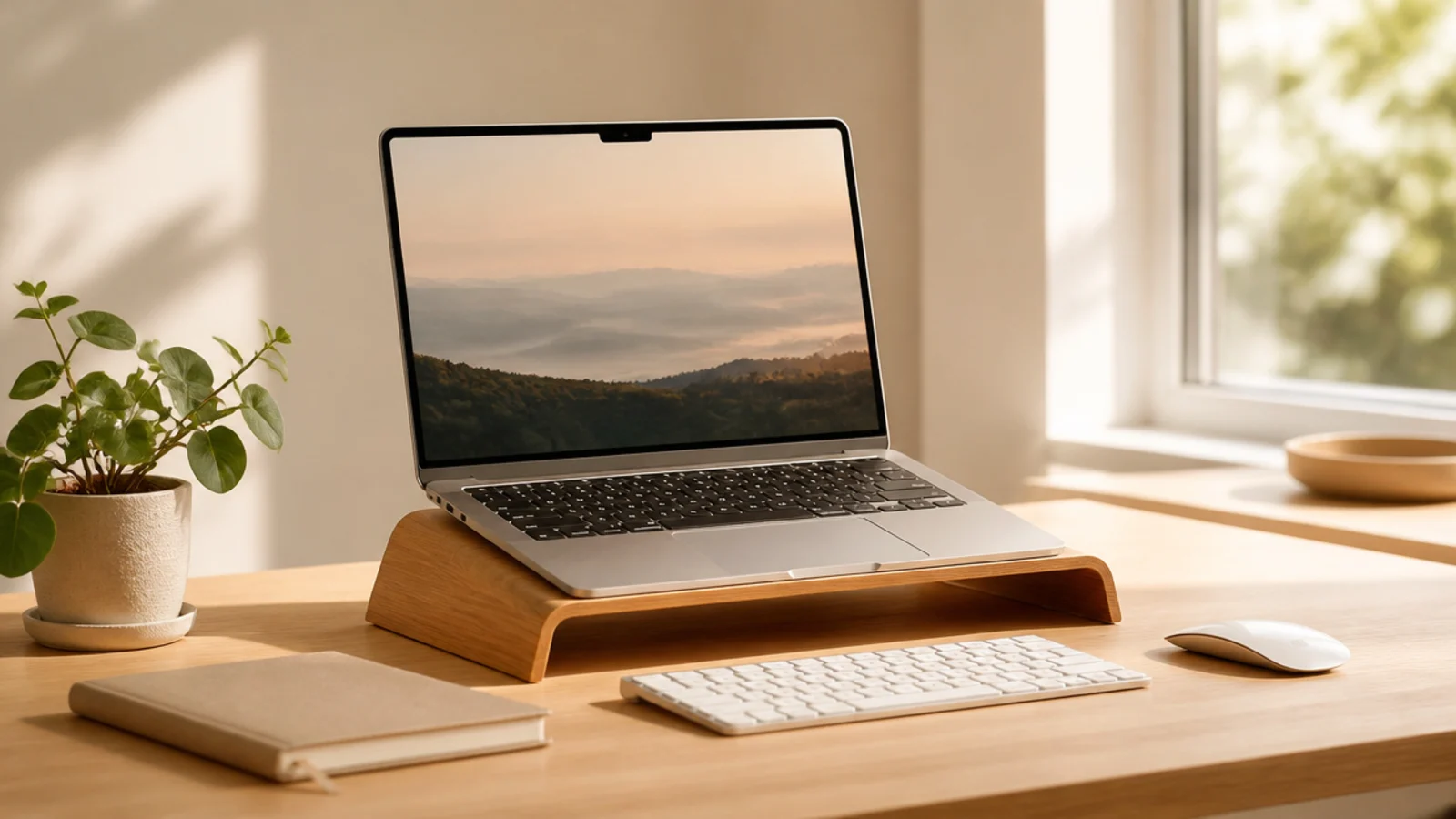
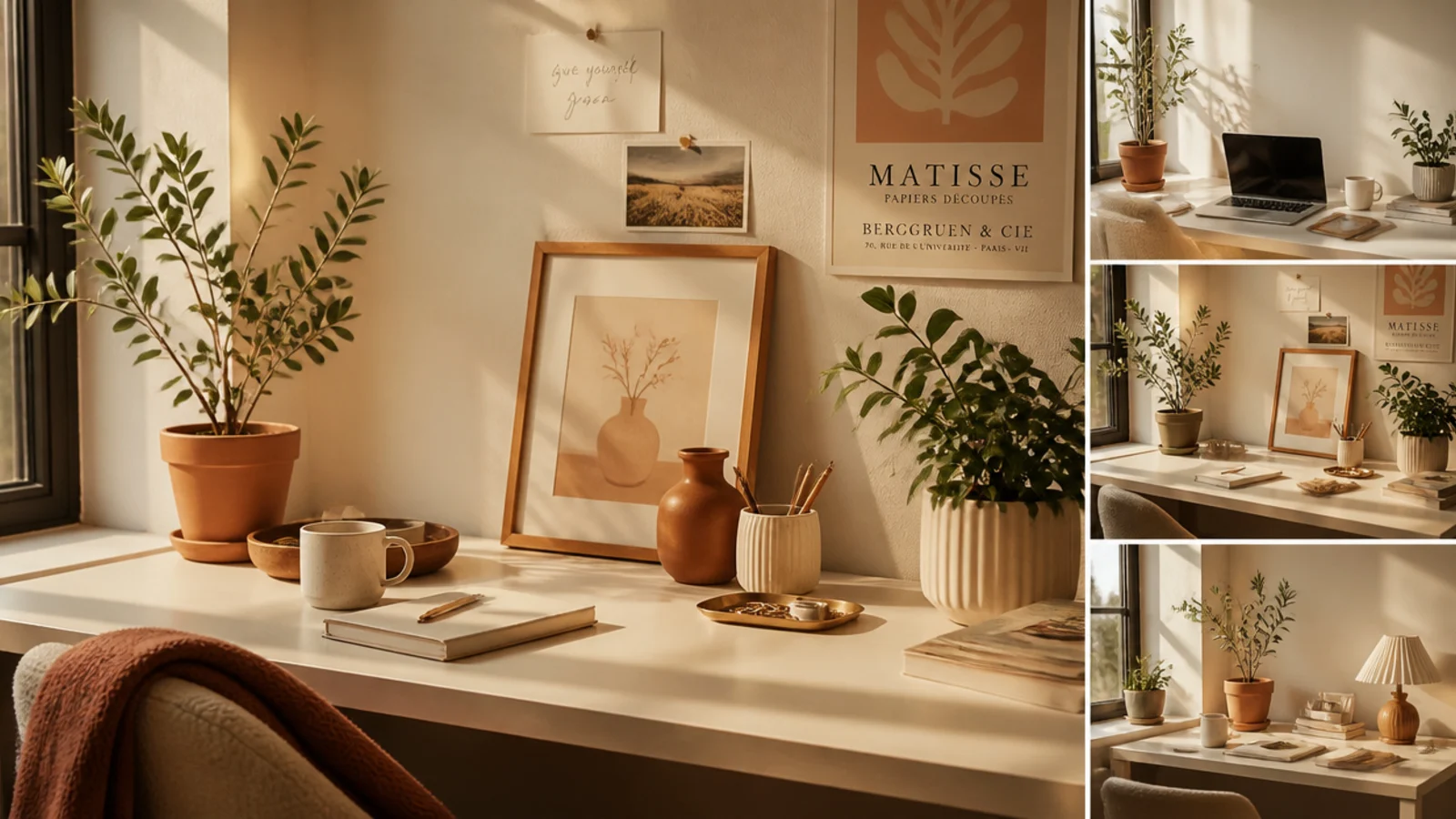
This is the foundation for every other idea — commit to a tight neutral palette. When everything on the desk shares three or four tones, the whole surface reads calm and intentional even before you add a single decorative object. It’s the easiest, cheapest aesthetic upgrade because it’s just editing what you already own.
Choose three or four neutrals — cream, warm wood, black, stone gray — and audit the desk against them. Swap, paint, or hide anything loudly off-palette (bright plastic, printed items). Repeat one tone across at least three objects to tie the desk together. Let wood and stone act as your neutrals so almost everything coordinates. Re-check the palette whenever you add something new.
Editor's noteDecant supplies from their bright branded packaging into neutral containers so labels and logos don’t break the palette.
Skip thisDon’t leave one loud, off-palette item 'because it’s useful'; find a neutral version or hide it, or it draws every eye.
2. Wooden Desk Valet Tray
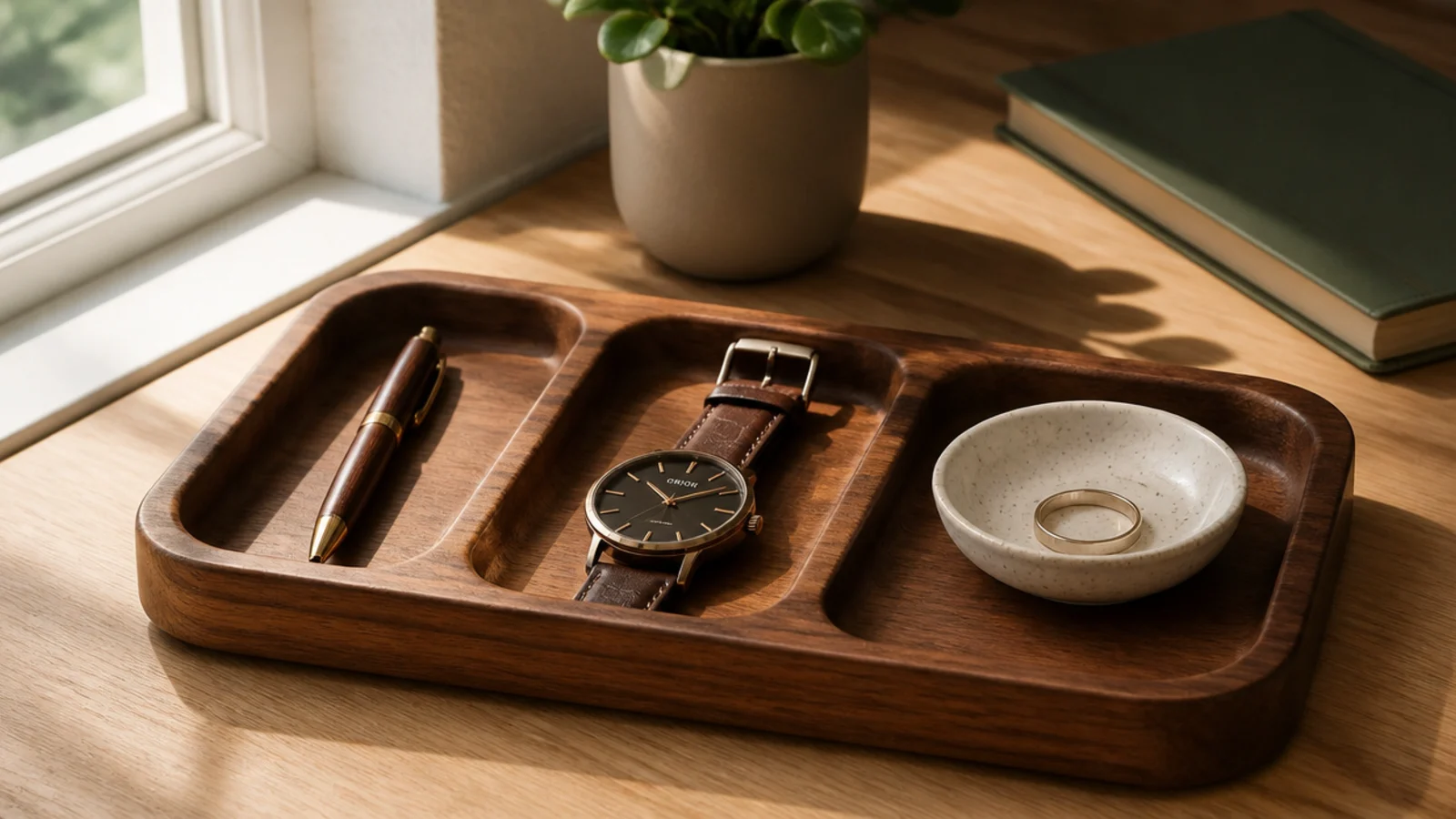
A wooden valet tray is the anchor of a curated desk — anything grouped on it instantly looks deliberate. It holds a few daily essentials in a warm, natural material that grounds the whole surface. It’s the single most useful aesthetic piece you can add.
Choose a solid wood tray with a low lip, around a foot long. Style it with three items of varying height — a pen, a small dish, a watch or a short candle. Keep the grouping loose with breathing room. Set it beside your keyboard or at a front corner as a landing zone for daily carry items. Oil the wood occasionally to keep the grain rich.
Editor's noteUse the rule of three and vary heights so the tray looks composed rather than like a row of objects lined up.
Skip thisDon’t fill the tray edge to edge; the negative space around the few items is what makes it look curated.
3. Minimal Monitor Arm
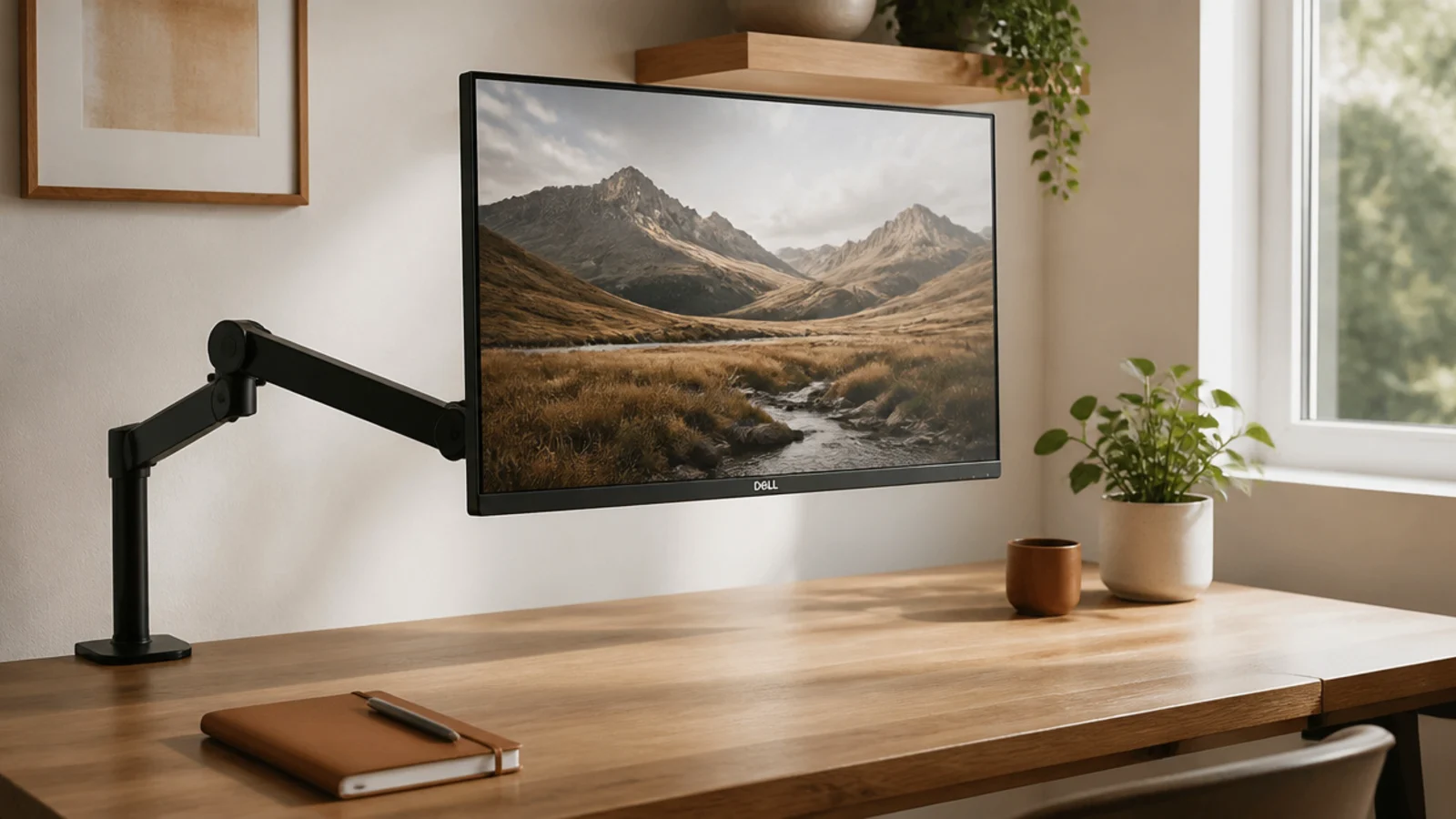
A monitor arm floats your screen and clears the entire footprint a stand would occupy, which is the cleanest look you can get. It also lets you set a perfect eye-height position. The freed space beneath reads as calm, open surface.
Choose a slim single arm in black or matte metal, rated for your monitor’s weight and VESA size. Clamp it to the back edge and route the cable through the arm’s channel so nothing dangles. Position the top of the screen at eye level and about an arm’s length away. Enjoy the clear surface underneath — keep it clear rather than refilling it.
Editor's noteRun the monitor cable through the arm’s internal channel and down through a grommet so not a single cord shows.
Skip thisDon’t clamp a heavy monitor to a thin or hollow desk without checking it can take the load, or the arm will sag.
4. Stone and Marble Accessories
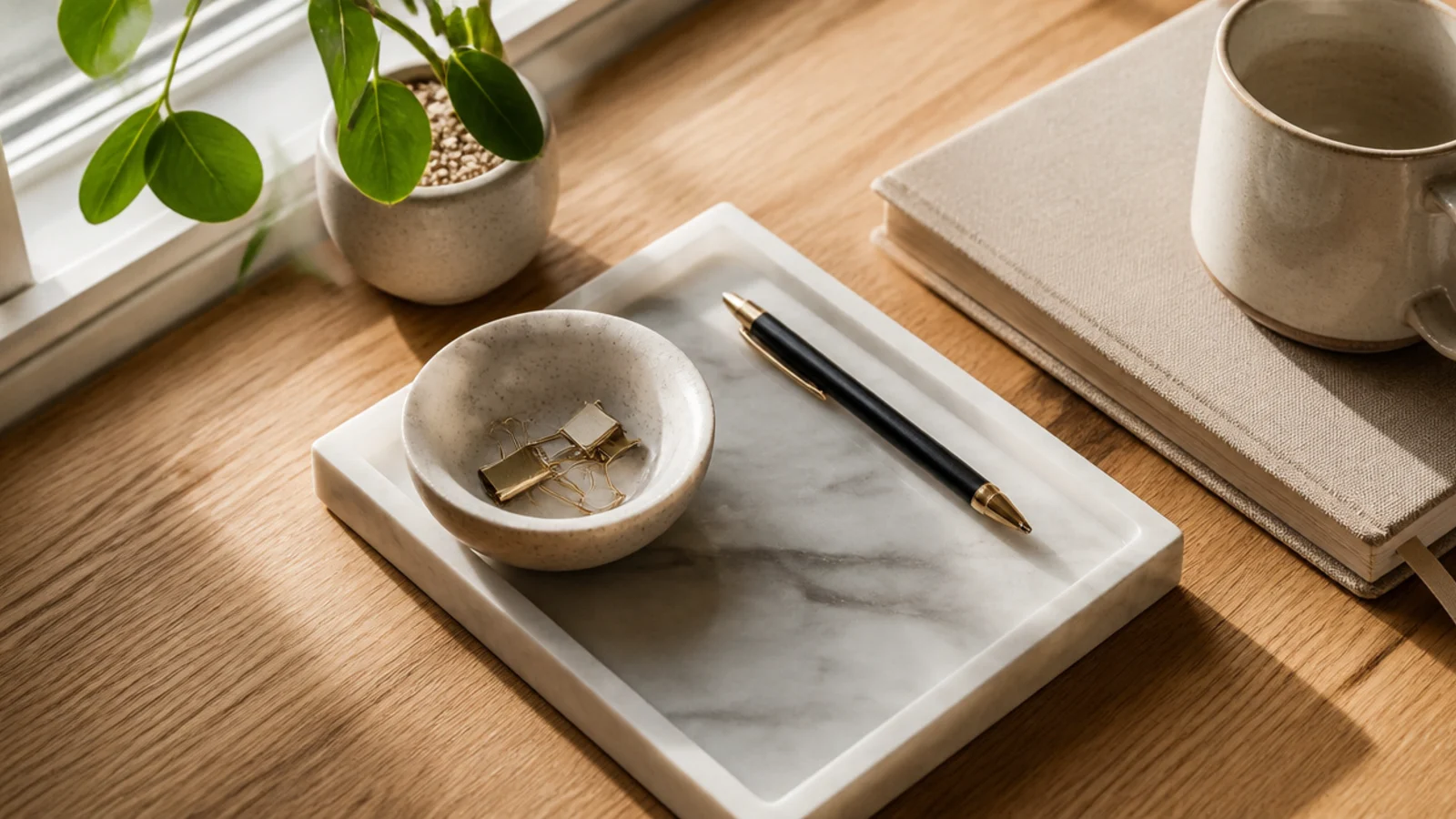
A few stone or marble pieces add a cool, weighty elegance that balances warm wood. A marble tray or a stone coaster reads high-end and anchors small items. It’s a material shortcut to an expensive look.
Add one or two stone pieces — a marble tray, a stone dish, a slate coaster — against your wood surface. Keep the stone tones consistent (all white marble or all gray) so they read as a set. Use them for genuine jobs: a dish for clips, a coaster for a drink, a tray for a grouping. Balance the cool stone with the warm wood so neither dominates.
Editor's notePair one metallic accent — a brass pen or clip — against the stone for a boutique, considered detail.
Skip thisDon’t mix several stone colors and patterns; one consistent stone tone looks intentional, a mix looks like leftovers.
5. Brass and Gold Accents
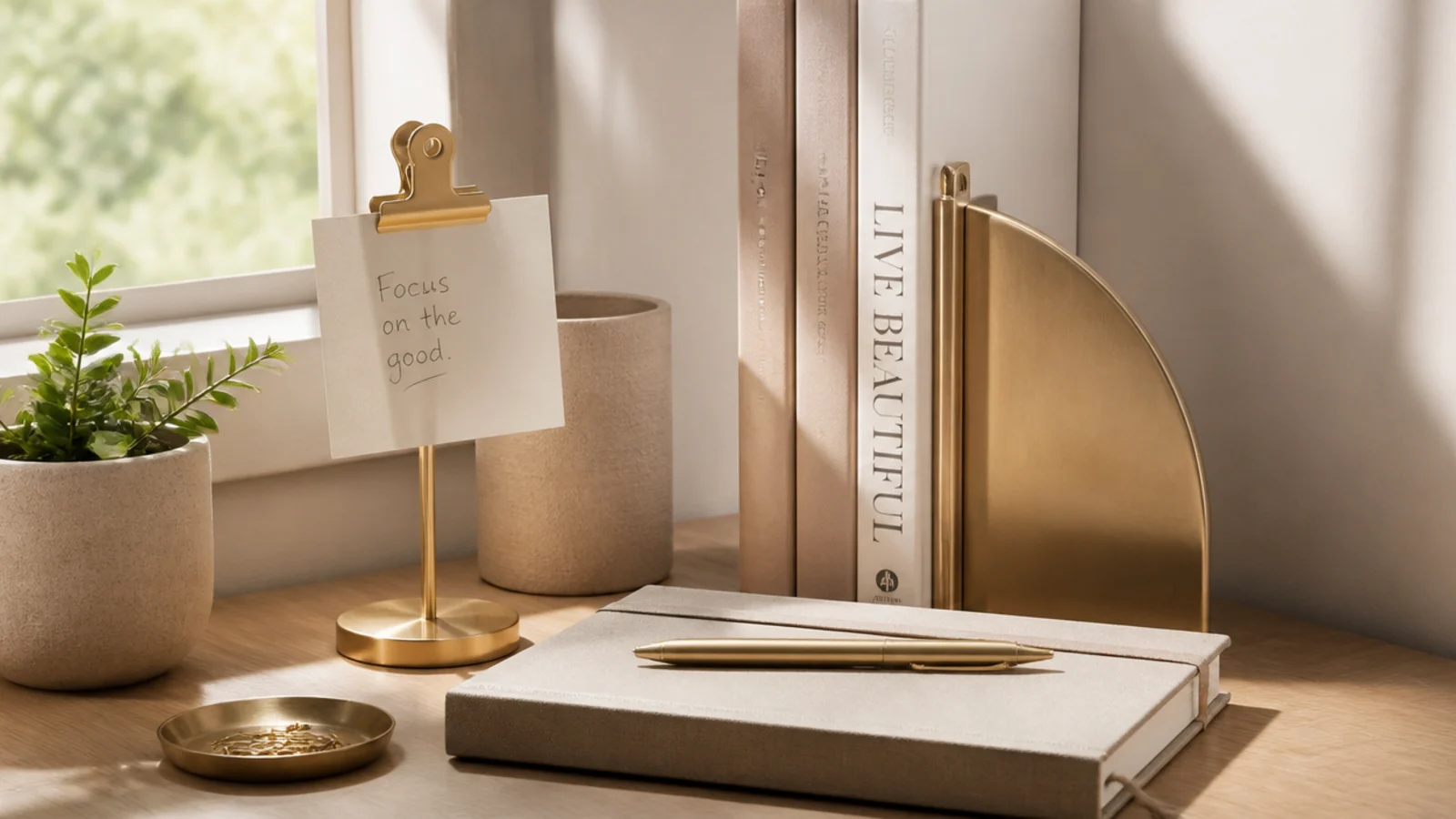
A touch of brass or matte gold is the quiet detail that makes a neutral desk feel finished and luxe. A gold clip dish, a brass pen, or a metal bookend catches the light without shouting. It’s the jewelry of the desk — a little goes a long way.
Add two or three small brass or gold pieces — a clip holder, a pen, a bookend, a lamp accent. Keep the metal tone consistent (all brass or all gold) so they coordinate. Space them across the desk rather than clustering them. Use matte or brushed finishes over shiny for a more grown-up look. Let the metal be the accent, not the theme.
Editor's noteRepeat the same metal tone in two or three spots so the accents read as an intentional thread through the desk.
Skip thisDon’t mix brass, silver, and rose gold on one desk; the clashing metals instantly cheapen an otherwise curated look.
6. Single Statement Plant
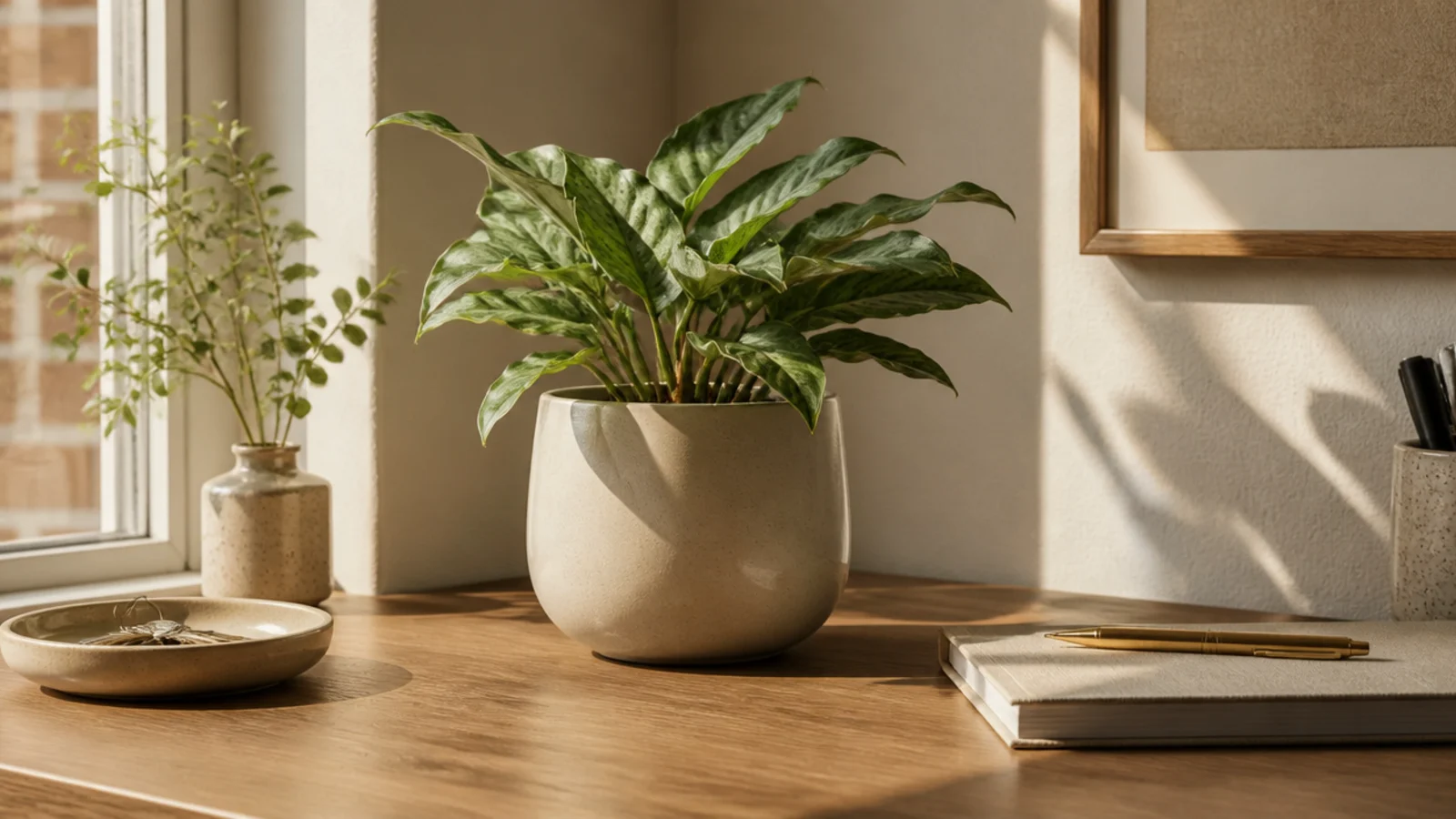
One well-chosen plant does more for an aesthetic desk than several small ones. A single sculptural plant in a beautiful pot becomes a living focal point and softens all the hard surfaces. Restraint is the point — one great plant, not a jungle.
Choose a plant with strong form — a snake plant, a small monstera, or a trailing pothos — in a matte ceramic or stone pot that fits your palette. Set it at a back corner where it frames the desk without crowding your work. Keep a saucer underneath. Pick something that thrives in your light so it stays lush; a healthy plant is the whole effect.
Match the pot to your palette and let the plant be the only bright color, so the green reads as a deliberate focal point.
Don’t line up several small plants; one sculptural specimen looks curated while a row looks like a nursery shelf.
7. Linen or Leather Desk Mat
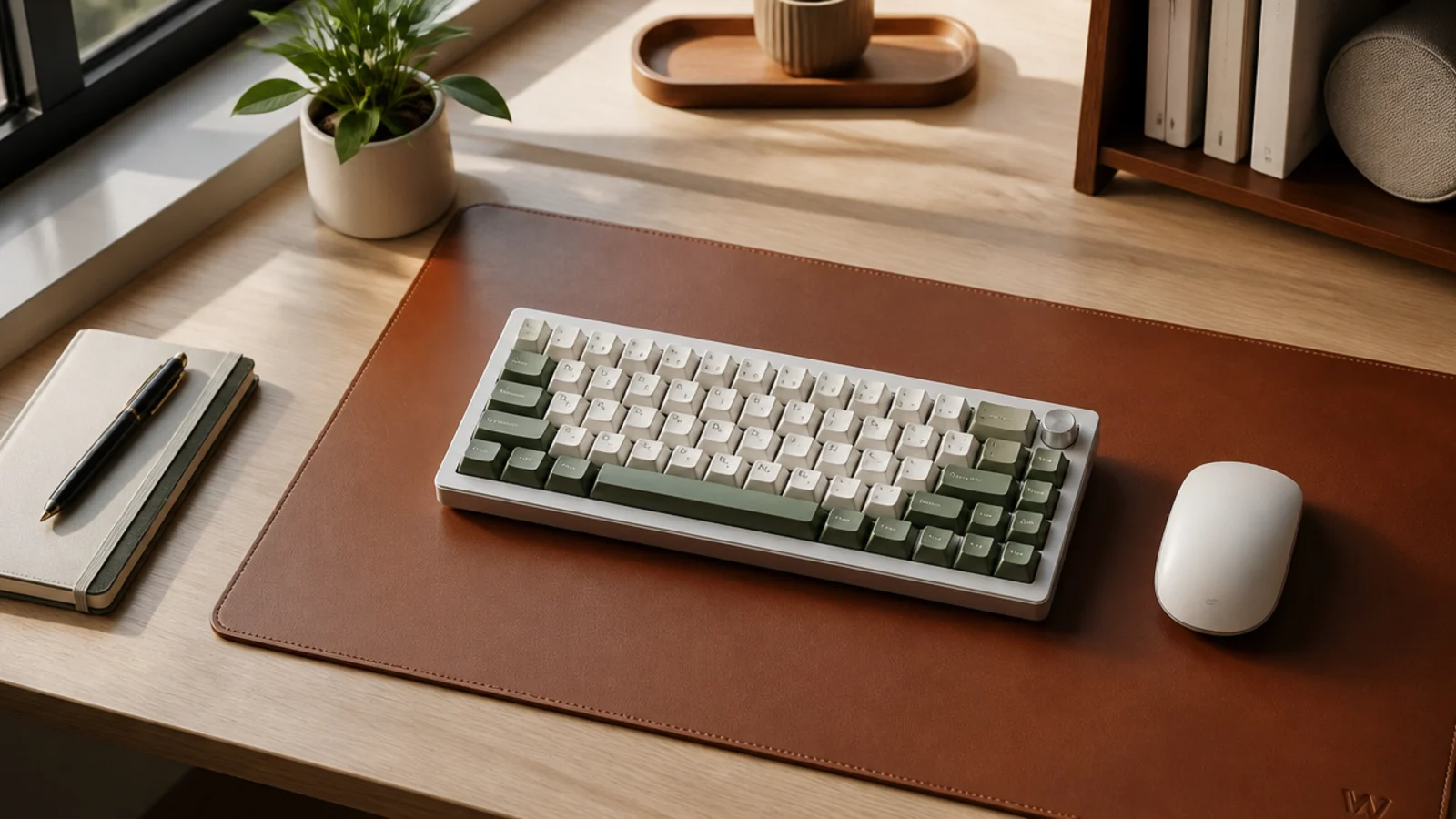
A leather or linen desk mat grounds the working zone in a natural material and instantly elevates the surface. It defines where work happens and adds warmth underfoot for your hands. Leather ages beautifully; linen reads soft and calm.
Choose a mat in a neutral leather or linen sized to hold your keyboard and mouse with room to spare — about 31 by 15 inches. Center it in front of the monitor. Keep only your input devices on it so it stays the clean anchor. Condition leather occasionally or brush linen to keep it looking fresh. Let the mat’s color contrast the desk slightly so the zone reads.
Editor's noteChoose a mat a shade darker than your desk so the work zone is defined without a harsh, high-contrast line.
Skip thisDon’t pile supplies onto the mat; the moment it holds clutter it stops grounding the space and starts adding to it.
8. Styled Shelf Backdrop
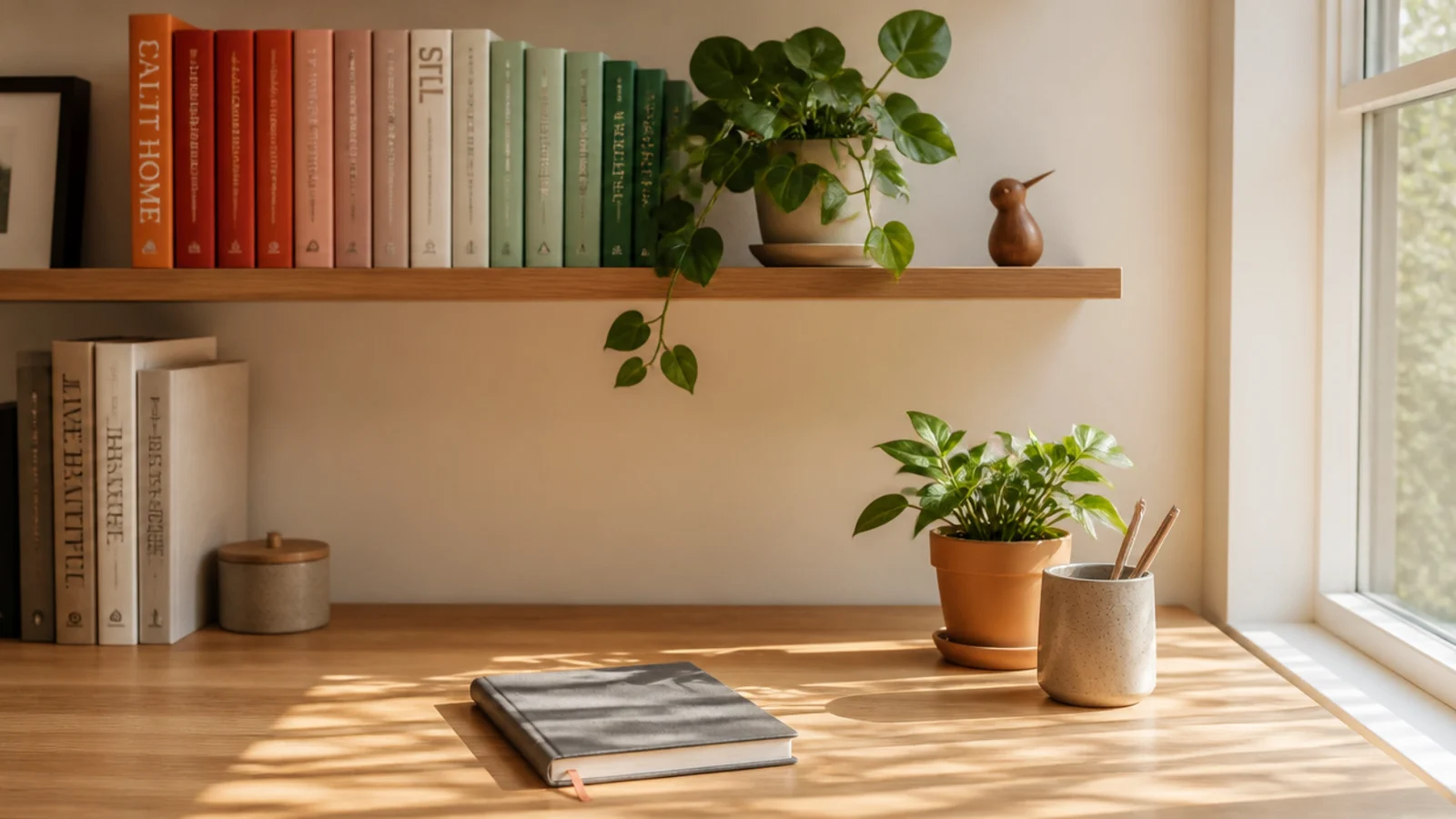
The shelf or wall behind a desk is part of the view, so styling it well elevates the whole workspace — especially on video calls. Books grouped by color, a plant, and one object create a considered backdrop. It moves the aesthetic beyond the desktop itself.
Style a shelf above or behind the desk in groupings, not a straight line. Stack some books horizontally, stand others vertically, and group them loosely by color or tone. Add a plant, one sculptural object, and leave gaps. Keep the palette consistent with the desk. Store the less-pretty items elsewhere so the visible shelf stays curated.
Turn a few books spine-in or wrap them in kraft paper so bright, mismatched spines don’t break the calm backdrop.
Don’t cram the shelf full; a packed shelf reads as storage, while a styled one with gaps reads as intentional decor.
9. Candle or Reed Diffuser
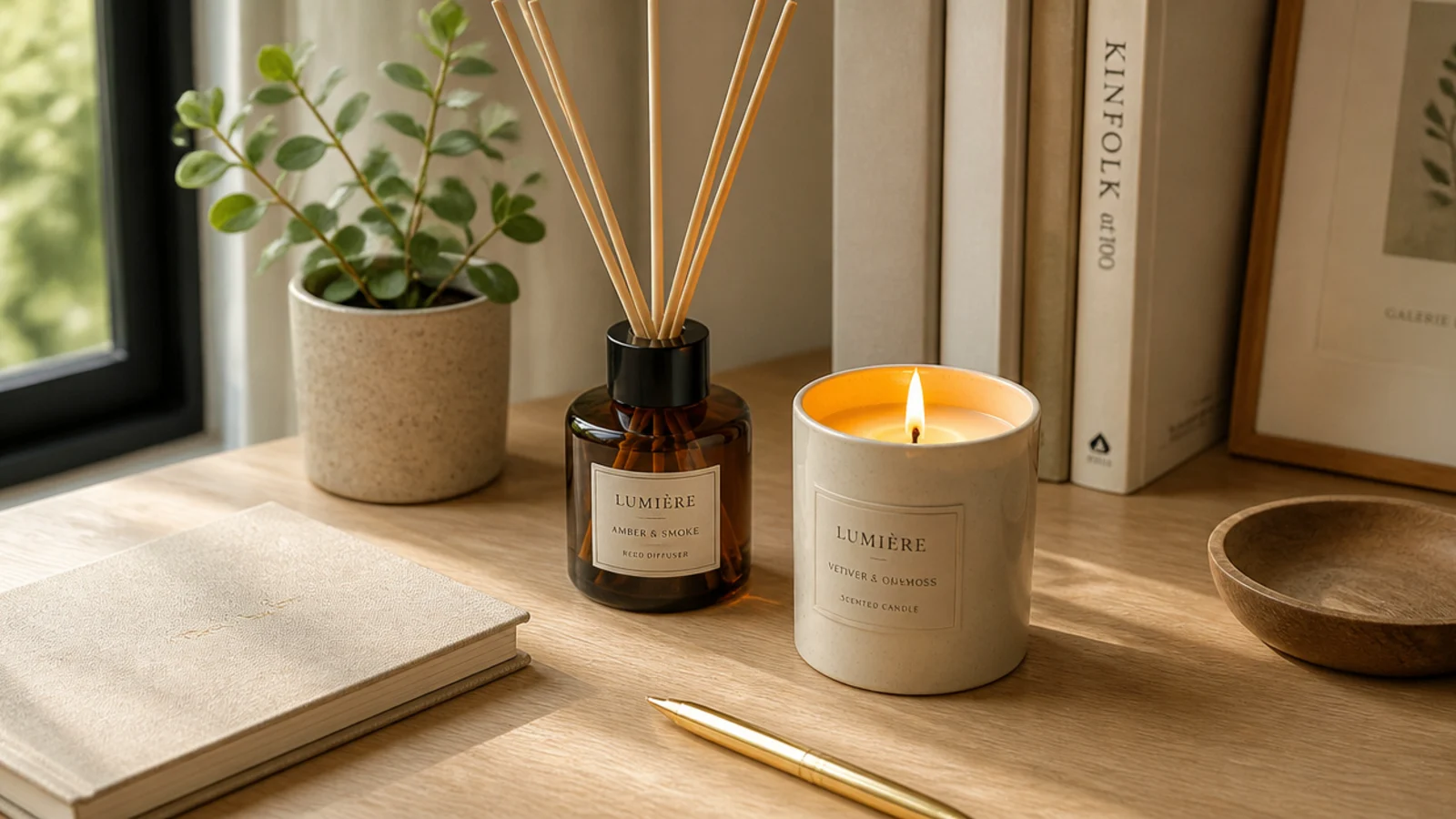
A candle or reed diffuser adds a sensory layer that photos can’t show but you feel every day. Visually, a minimalist vessel is a small sculptural accent; practically, it makes the space pleasant to sit at. Aesthetic isn’t only visual — scent completes the mood.
Choose a candle or diffuser in a simple ceramic or glass vessel that fits your palette. Set it at a back corner, away from paper and your working reach. Pick a subtle, clean scent — not overpowering, since you’ll sit close to it for hours. A diffuser is the safer pick for an unattended desk; a candle adds warmth when you’re present.
Editor's noteKeep the vessel in your palette so it doubles as a decorative object even when it’s not lit or in use.
Skip thisDon’t place an open flame near papers, curtains, or your reach; convenience never justifies a fire risk on a desk.
10. Invisible Cable Management
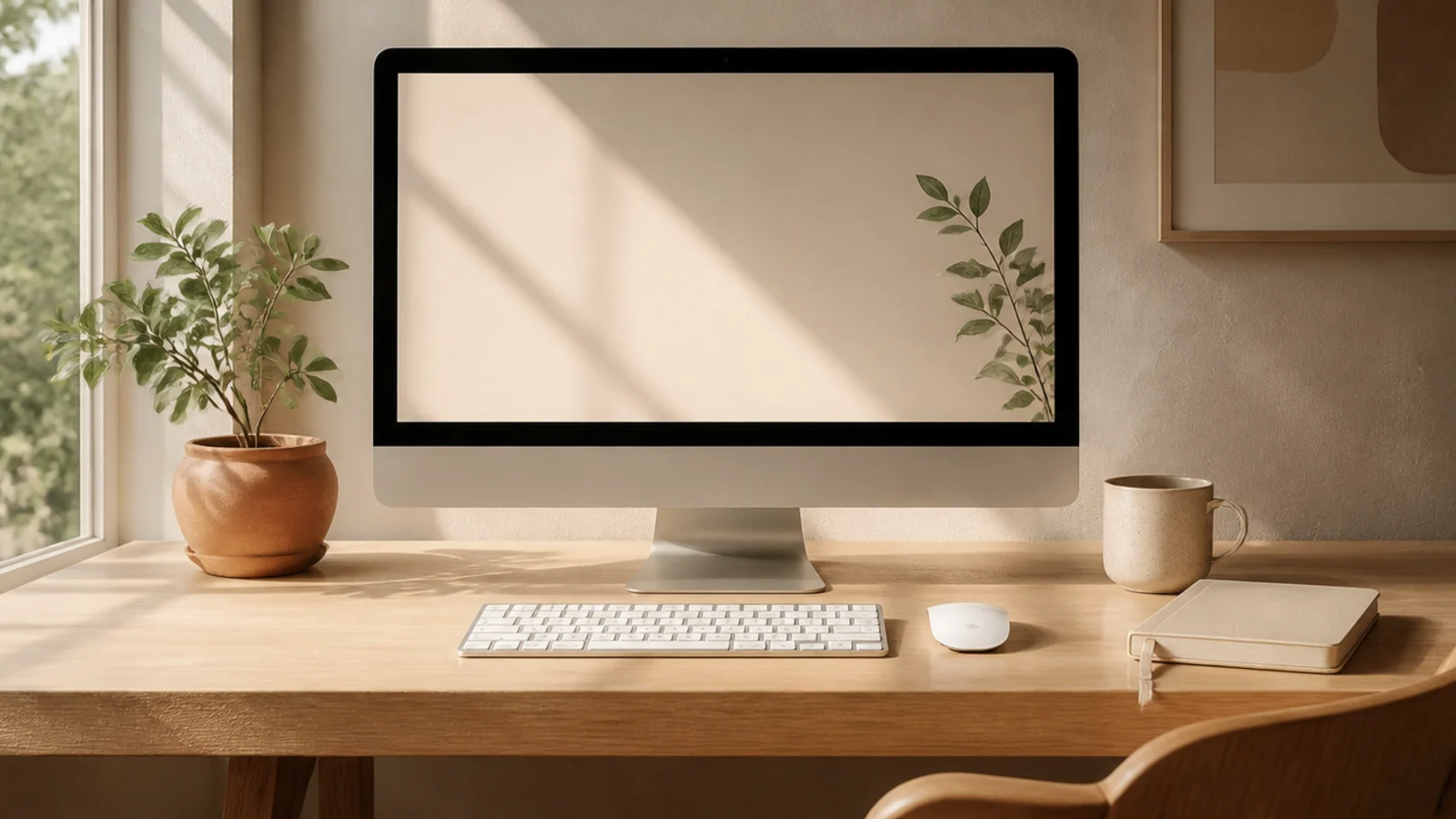
Nothing breaks an aesthetic desk faster than a tangle of visible cables, and making them disappear is the highest-impact move on this list. Routed under the desk and through the back, cords vanish and the surface reads impossibly clean. It’s the invisible work that makes everything else look effortless.
Mount the power strip under the desk in a cable tray. Route each cable down the back leg and secure it with adhesive clips or a sleeve. Feed desktop cables through a grommet hole if you have one, or clip them tight along the back edge. Use short cables to minimize slack. Aim for zero cords visible from where you sit and where the camera sees.
Add a cable sleeve or spiral wrap to bundle the run down the desk leg into one clean line instead of loose strands.
Don’t settle for cables 'mostly' hidden; one visible tangle is enough to undo an otherwise flawless surface.
11. Monochrome Accessory Set
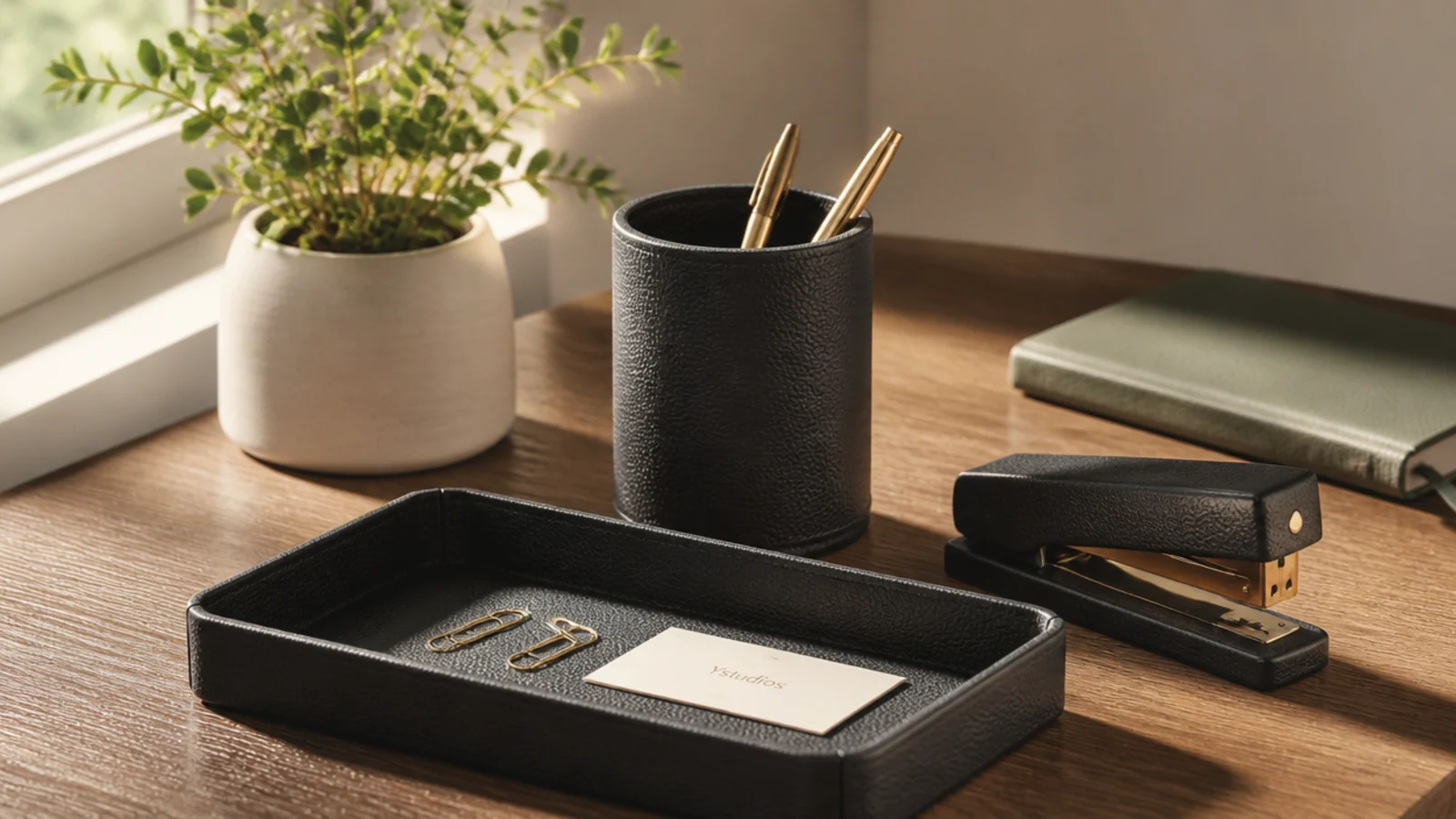
A matched accessory set in one finish — all black, all wood, all cream — reads far more curated than a mix of random pieces. The uniform material and color make even functional items look designed. It’s the fastest way to make the working tools themselves part of the aesthetic.
Choose a set — pen cup, tray, stapler, tape dispenser — in a single finish and material. Group them together as a little station rather than scattering them. Keep the set to the tools you actually use daily. If a matched set is out of budget, unify mismatched pieces by spray-painting them one color. Refill and maintain them so the set stays complete.
If you can’t find a matched set, spray-paint your existing organizers a single matte color to unify them instantly.
Don’t blend a sleek set with a few stray mismatched tools; one odd piece breaks the uniform look the set creates.
12. Framed Art Print
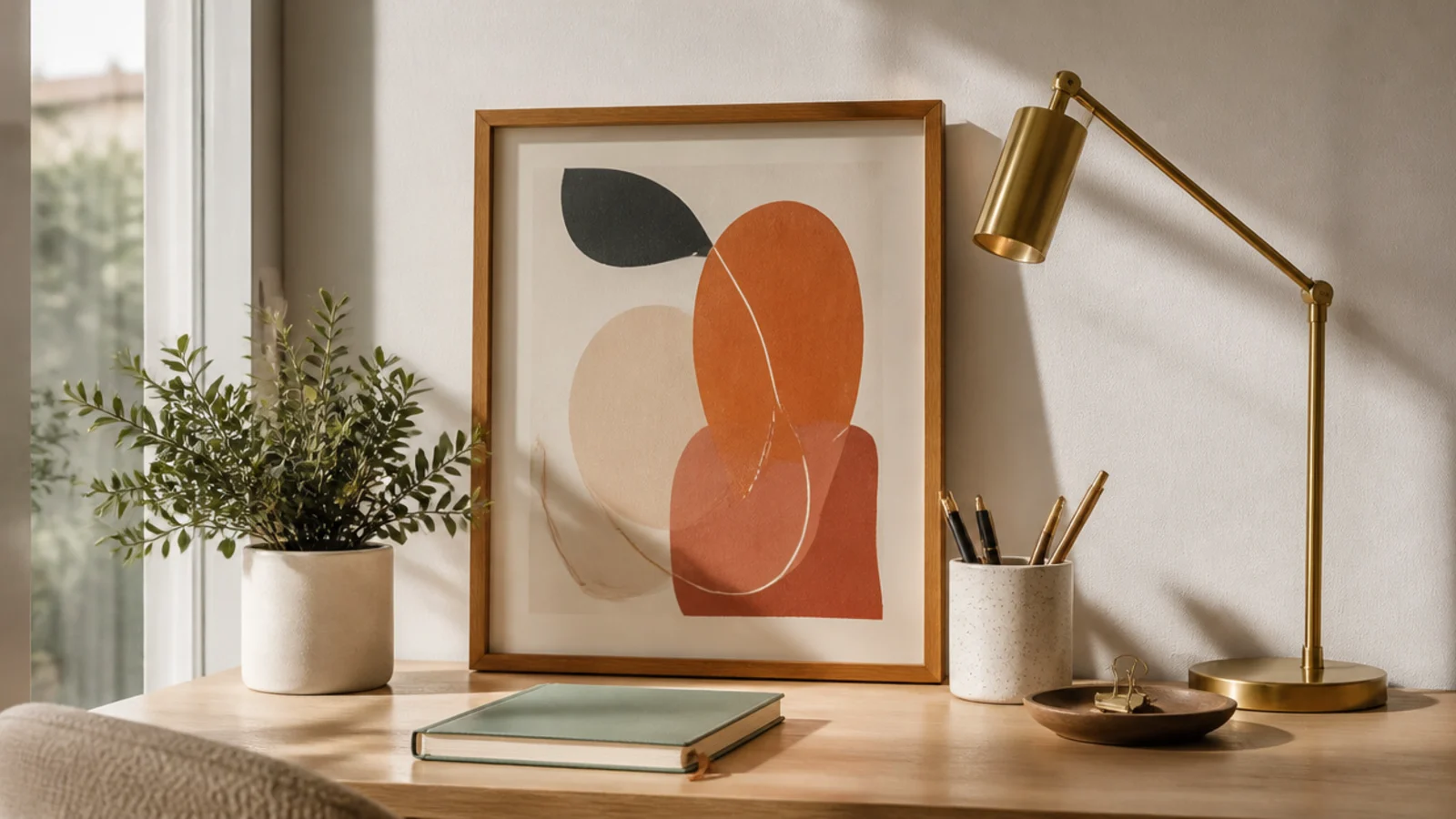
One framed print gives the desk a focal point and a bit of personality without adding surface clutter. Leaned against the wall or hung above, it draws the eye up and completes the composition. Art is what turns a functional corner into a considered space.
Choose one print in your palette — an abstract, a line drawing, a muted photograph — in a simple wood or black frame. Lean it against the wall behind the desk or hang it centered above. Keep it to one piece or a small trio, not a busy gallery wall over a work desk. Match the frame to your metal or wood tones for cohesion.
Lean the frame rather than hanging it for a relaxed, gallery feel that’s also easy to swap when you want a change.
Don’t crowd the wall with many small frames over a desk; one considered piece reads calmer than a busy cluster.
13. Woven Storage Baskets
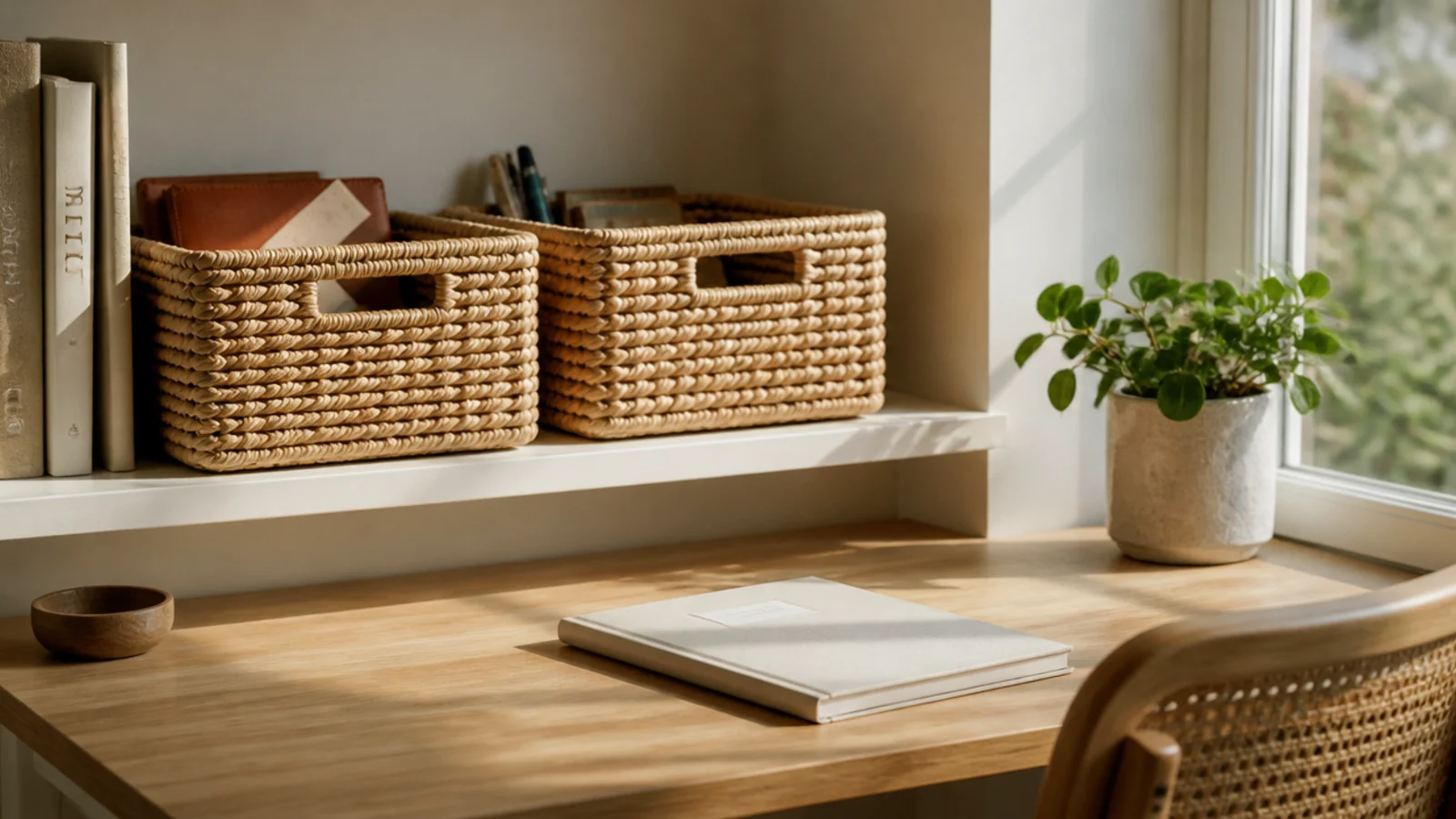
Woven baskets hide the bulky, un-aesthetic supplies behind a warm natural texture. They add material interest to a shelf while concealing cables, backups, and clutter. Texture plus concealment is a powerful aesthetic combination.
Choose seagrass or rattan baskets sized to your shelf. Use them for the items you don’t need daily — spare supplies, cables, papers. Add a small tag if you’ll forget what’s inside. Keep them on a shelf or the floor beside the desk, not on the surface. Group two matching sizes for a considered look rather than a random mix.
Line baskets with a plain cloth for loose small items so nothing snags on the weave or slips through the gaps.
Don’t use open baskets for daily items; constantly digging through one messes up the contents and the calm look.
14. Warm Task Lamp
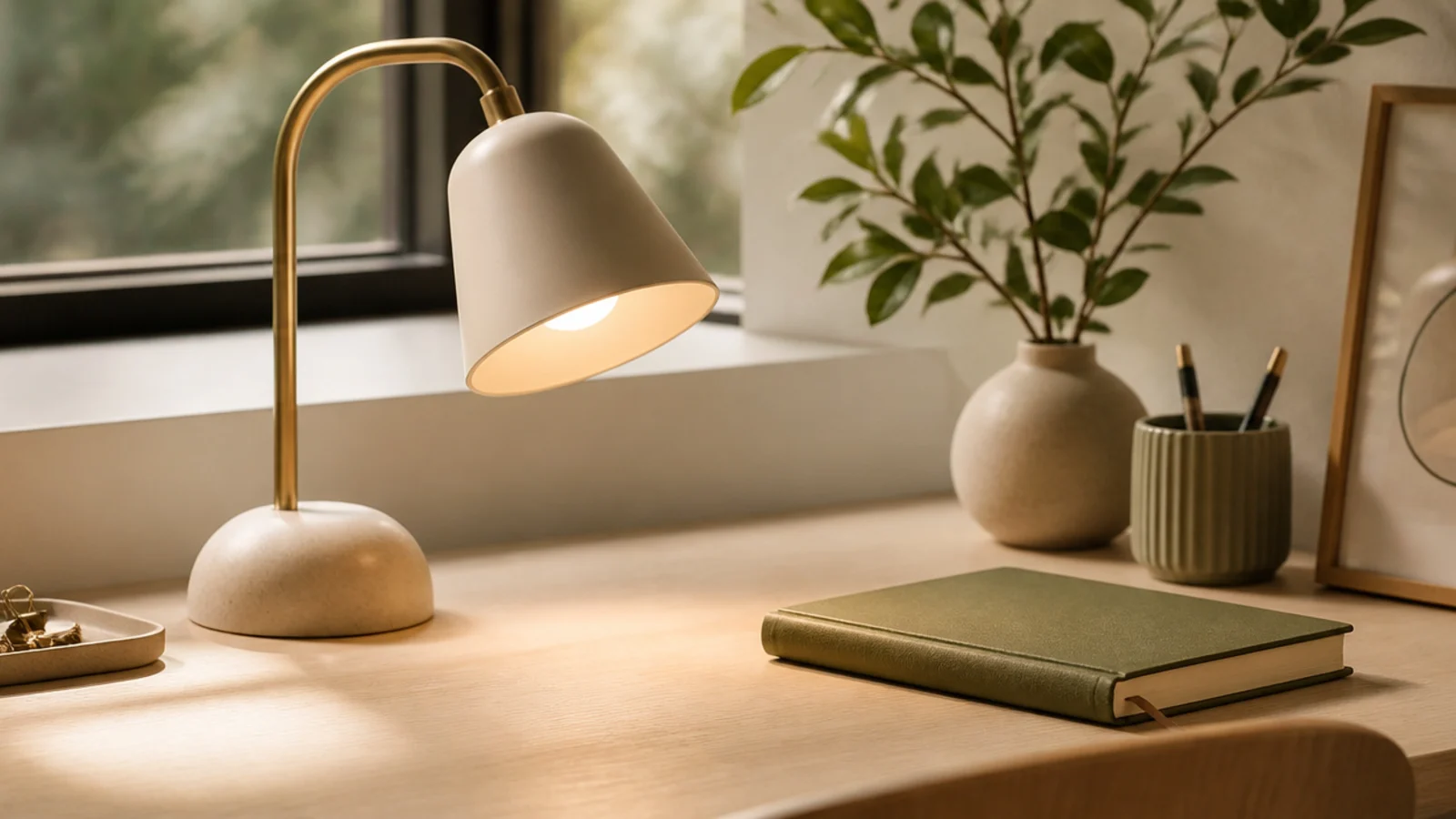
A beautiful lamp is both functional and a sculptural object, and warm light transforms how a desk feels. It replaces harsh overhead light with a soft, focused glow that reads cozy and considered. The right lamp is a centerpiece as much as a light source.
Choose a lamp with clean lines in your palette — matte black, brass, or wood — and fit it with a warm-white bulb (around 2700K). Position it on your non-dominant side so it lights your work without casting a hand shadow. Use it instead of or alongside overhead light for a softer mood. Pick an adjustable arm so you can aim the light where you need it.
Editor's noteSwap in a warm-white bulb over a cool-white one; the warm tone is the difference between cozy and clinical instantly.
Skip thisDon’t rely on a harsh cool overhead alone; flat bright light flattens the desk and kills the curated atmosphere.
15. Clear Acrylic Organizers
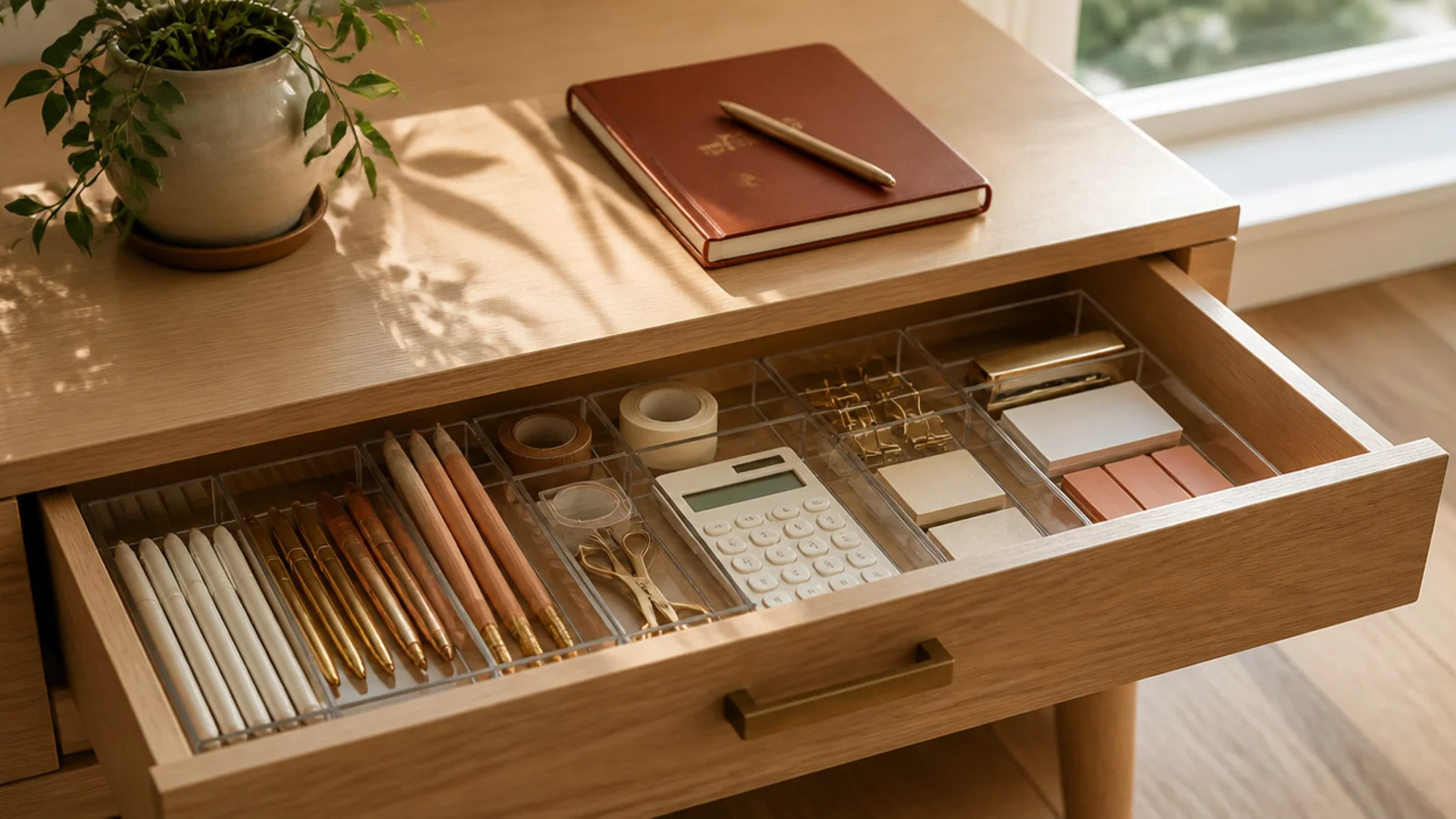
Clear acrylic organizers store supplies while nearly disappearing, which keeps the aesthetic minimal. Inside a drawer or on a shelf, they sort without adding visual weight. When you want function without a visible container, clear is the answer.
Use clear acrylic trays and dividers inside drawers to sort supplies invisibly. On the surface, a clear riser or holder stores items without breaking sightlines. Keep the contents themselves tidy since they show through. Choose smooth, quality acrylic over cloudy plastic. Reserve clear pieces for spots where you want storage to recede rather than stand out.
Editor's noteUse clear organizers inside drawers and neutral-material ones on show, matching each container to whether it should hide or feature.
Skip thisDon’t fill clear organizers with messy, mismatched contents; since they show through, the clutter inside becomes the look.
16. Negative Space Minimalism

The most aesthetic desks are defined by emptiness as much as objects. Deliberate negative space around a few chosen pieces reads as calm and confident. This is less an idea to add than a discipline to keep — protect the empty surface.
After styling, remove items until the desk feels almost too sparse, then stop there. Leave wide clear areas around each object so nothing competes. Store anything that isn’t daily-use or genuinely beautiful. Protect the negative space in your daily reset — it’s the first thing clutter erodes. Treat empty surface as a design element, not wasted space.
Editor's noteWhen you finish styling, remove one more thing than feels comfortable; the desk almost always looks better with less.
Skip thisDon’t fill empty space just because it’s there; the emptiness is the aesthetic, not a gap waiting to be used.
17. Layered Rug Underfoot
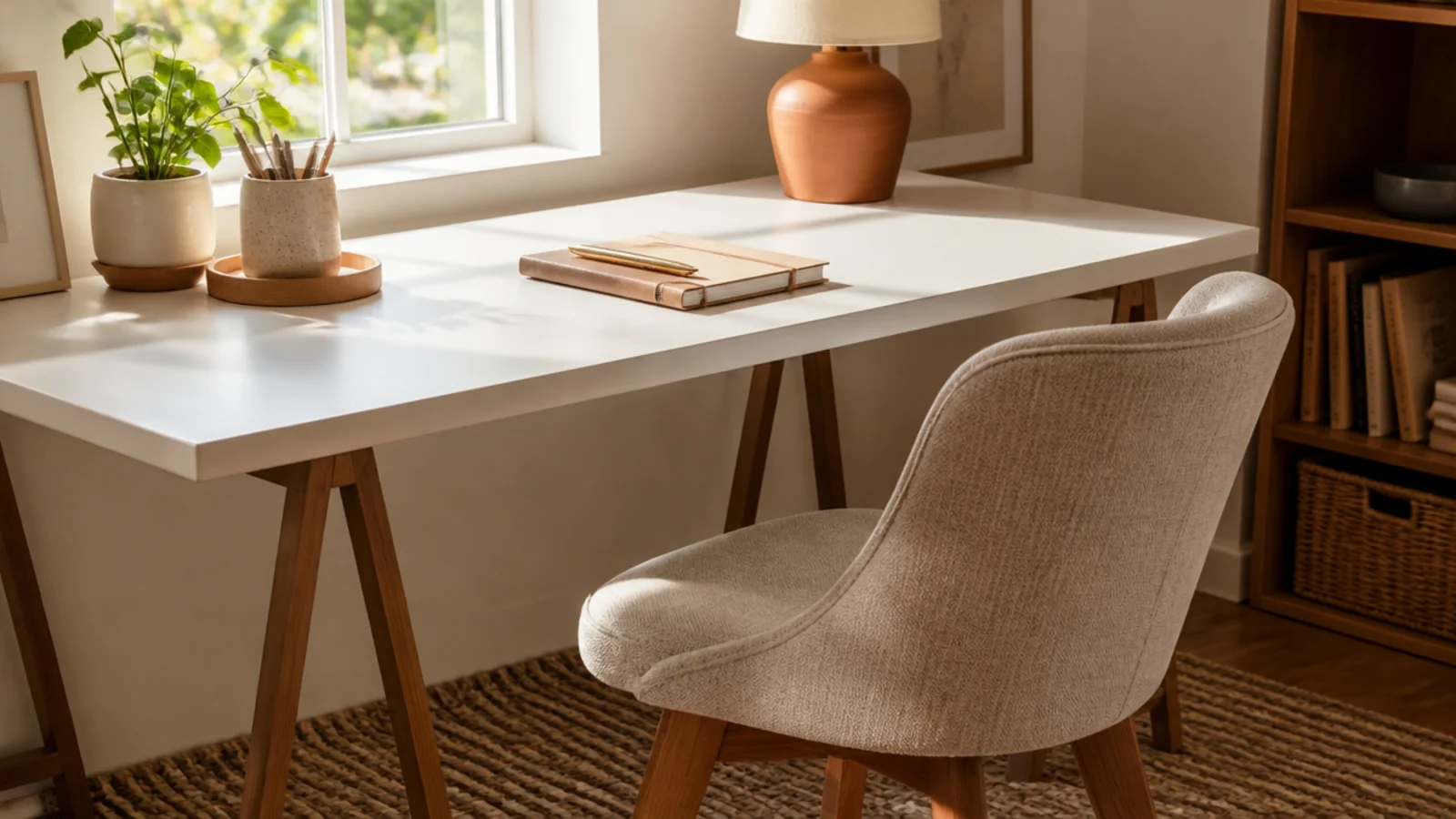
A rug under the desk grounds the whole workspace and adds warmth and texture from the floor up. It defines the desk as its own zone within a room and softens the hard lines of furniture. The aesthetic doesn’t stop at the desktop — the floor is part of it.
Place a low-pile or flatweave rug under the desk and chair, large enough that the chair stays on it when you roll back. Choose a texture and neutral tone that ties into your palette. A flatweave rolls easily under chair casters. Keep the pattern subtle so it grounds rather than dominates. Vacuum it into the routine so it stays crisp.
Editor's noteUse a flatweave or low-pile rug so your chair casters glide instead of catching, and the rug stays flat and neat.
Skip thisDon’t use a thick shag under a rolling chair; the pile catches the wheels and bunches into a tripping mess.
18. Ceramic Desk Objects
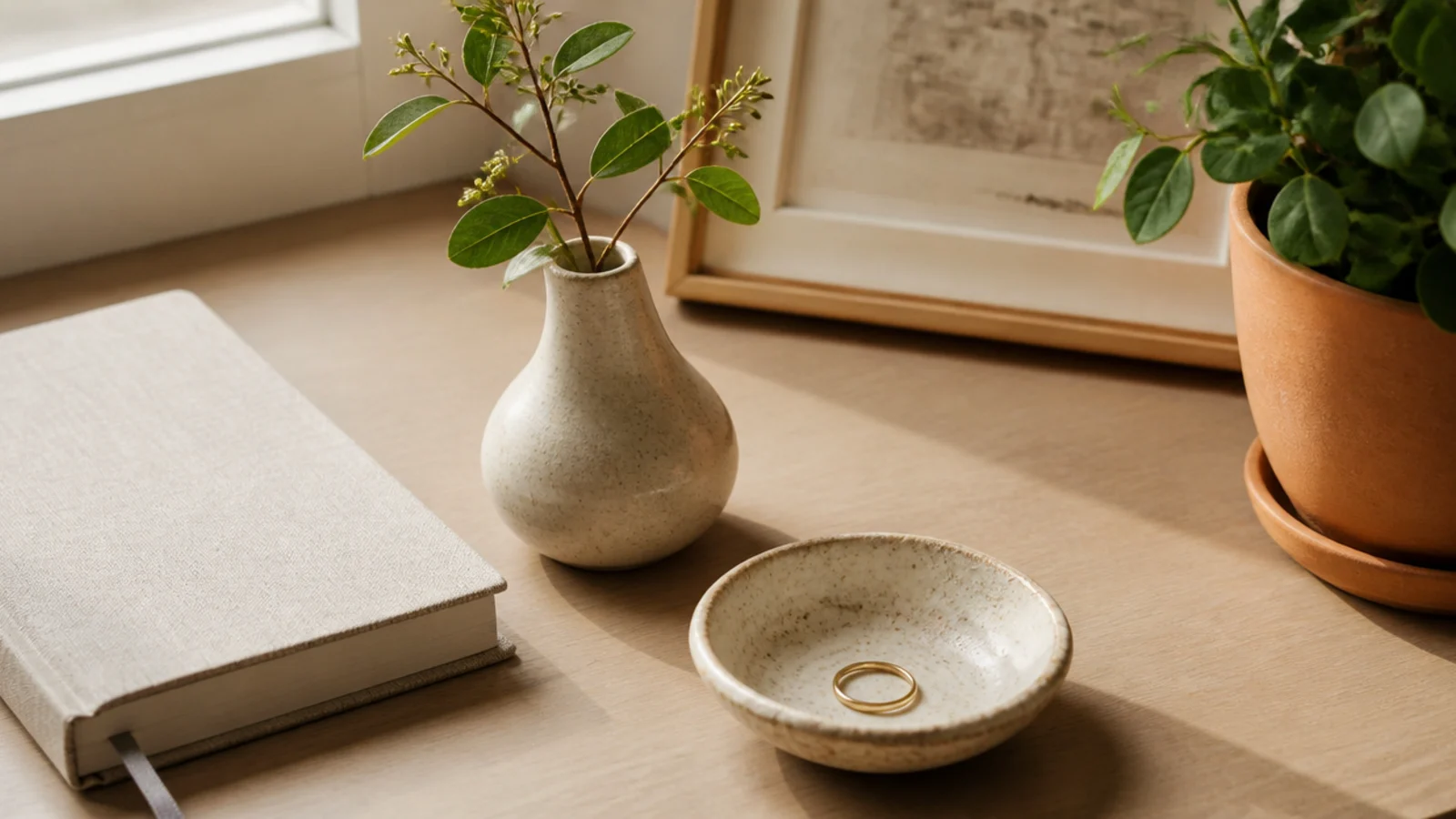
A couple of handmade ceramic objects — a bud vase, a small dish — add tactile, artisanal character that mass-produced plastic never will. Their slight imperfections read as warmth and craft. They’re the objects that make a desk feel personal and collected.
Add one or two ceramic pieces in your palette — a bud vase with a single stem, a small trinket dish, a speckled cup. Choose handmade or handmade-look pieces for character. Give them real jobs — the dish holds clips, the vase holds a stem, the cup holds pens. Group them loosely with your other objects. Let the glaze tones stay within the palette.
Editor's notePut a single fresh or dried stem in a bud vase for a small living accent that costs almost nothing to refresh.
Skip thisDon’t over-collect little ceramic objects; two characterful pieces charm, a shelf of them becomes clutter again.
19. Cohesive Material Story
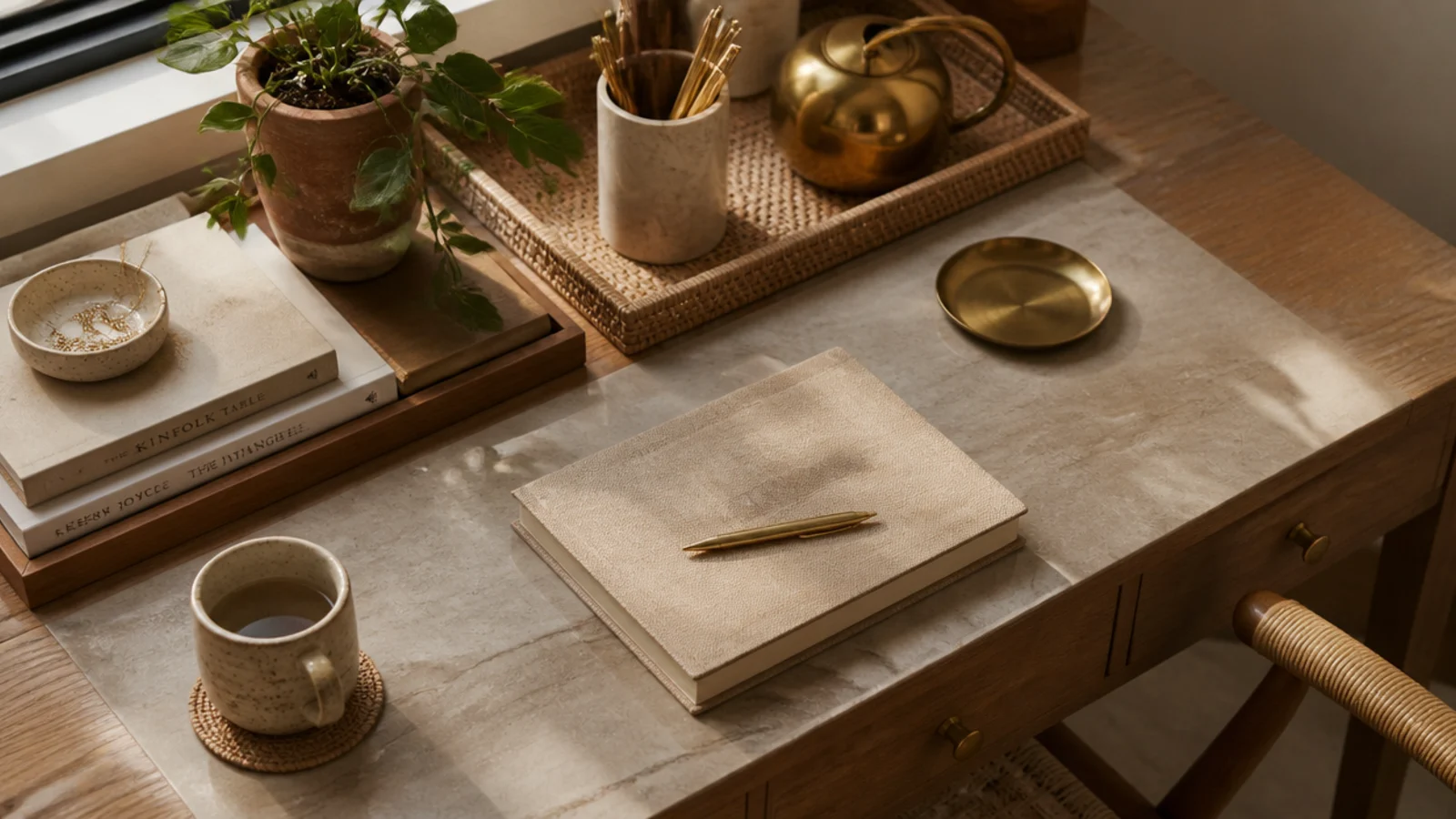
This is the idea that ties the aesthetic together: repeat a small set of materials across the desk. When wood, stone, linen, and brass each appear in two or three places, the desk reads as a designed whole rather than a collection of separate purchases. Material cohesion is what separates a styled desk from a nice-but-random one.
Pick three or four materials — say wood, stone, linen, and brass — and make sure each shows up more than once. The wood in the tray echoes the desk; the brass in the lamp echoes a pen; the linen mat echoes a basket. Remove materials that appear only once and don’t fit. This repetition is subtle but it’s what the eye reads as 'designed'. Re-check when you add anything new.
Editor's noteBefore buying a new piece, name which existing material it echoes; if it echoes none, it’ll read as an outlier.
Skip thisDon’t introduce a one-off material like chrome or bright plastic into a wood-and-stone desk; the odd texture stands out.
20. Nightly Reset Ritual
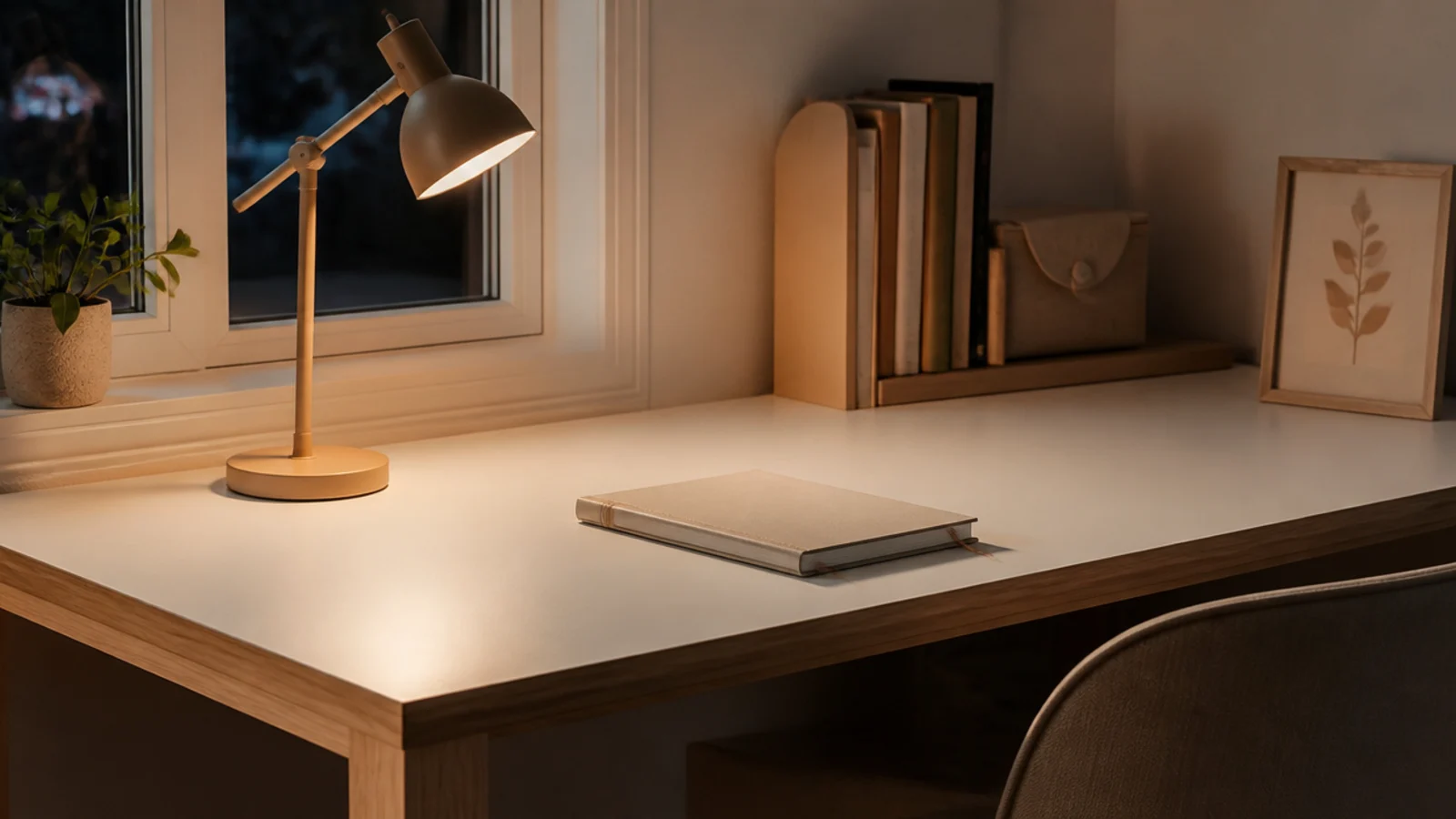
An aesthetic desk is a daily choice, not a one-time setup, and the nightly reset is what re-makes it. Returning everything to its home and protecting the negative space each evening is what keeps the curated look from eroding. No amount of beautiful objects survives without this habit.
At the end of each day, clear the working clutter back to its homes, wipe the surface, and restore the negative space you styled. Leave only the permanent pieces — lamp, plant, tray, monitor. Treat it as the closing ritual of the workday. After a week it becomes automatic, and you start each morning at a calm, curated surface instead of yesterday’s mess.
Editor's noteDo the reset as the last act of the workday, not 'later' — the calm morning desk is worth sixty seconds each evening.
Skip thisDon’t leave 'just one thing' out each night; a single item invites more, and the curated surface quietly disappears.