
1. Solid Blush Pink
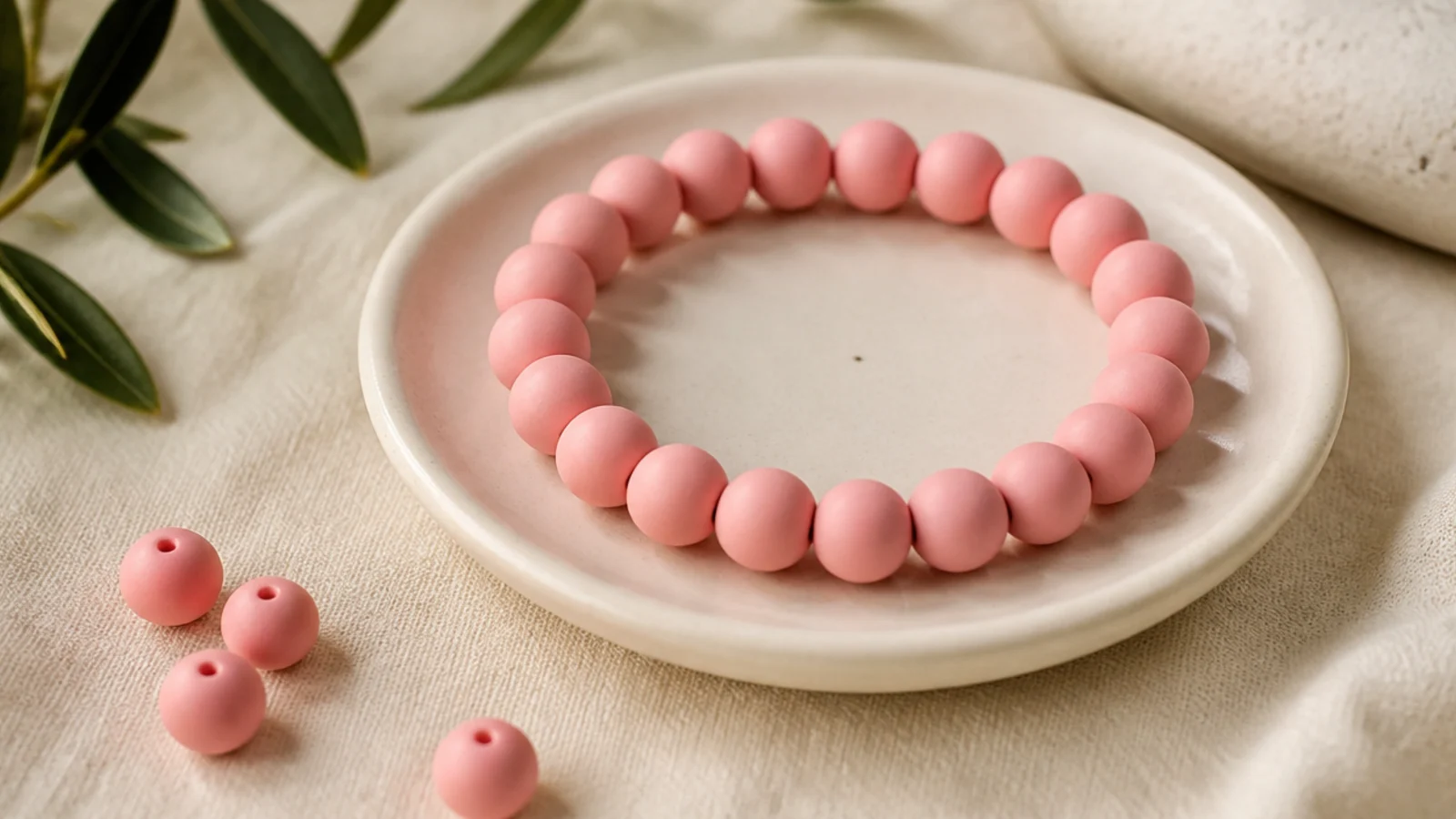
The easiest pink bracelet and a grown-up staple. One soft blush color, strung cleanly, looks calm and pretty. There’s no pattern to track. A perfect first pink and a great stack base.
Cut 9 to 10 inches of 0.8mm cord and tape one end. String soft blush beads to your measured wrist length minus a quarter inch, keeping them aligned so the band lies flat. Tie a surgeon’s knot, dab with clear glue, let it dry, and slide the knot inside a blush bead to hide it.
Choose a soft, slightly muted blush rather than a bright pink for the most grown-up, wearable solid.
Don’t let an off-shade pink sneak in from a mixed tube; a single mismatched bead shows on a solid.
2. Pink Ombré
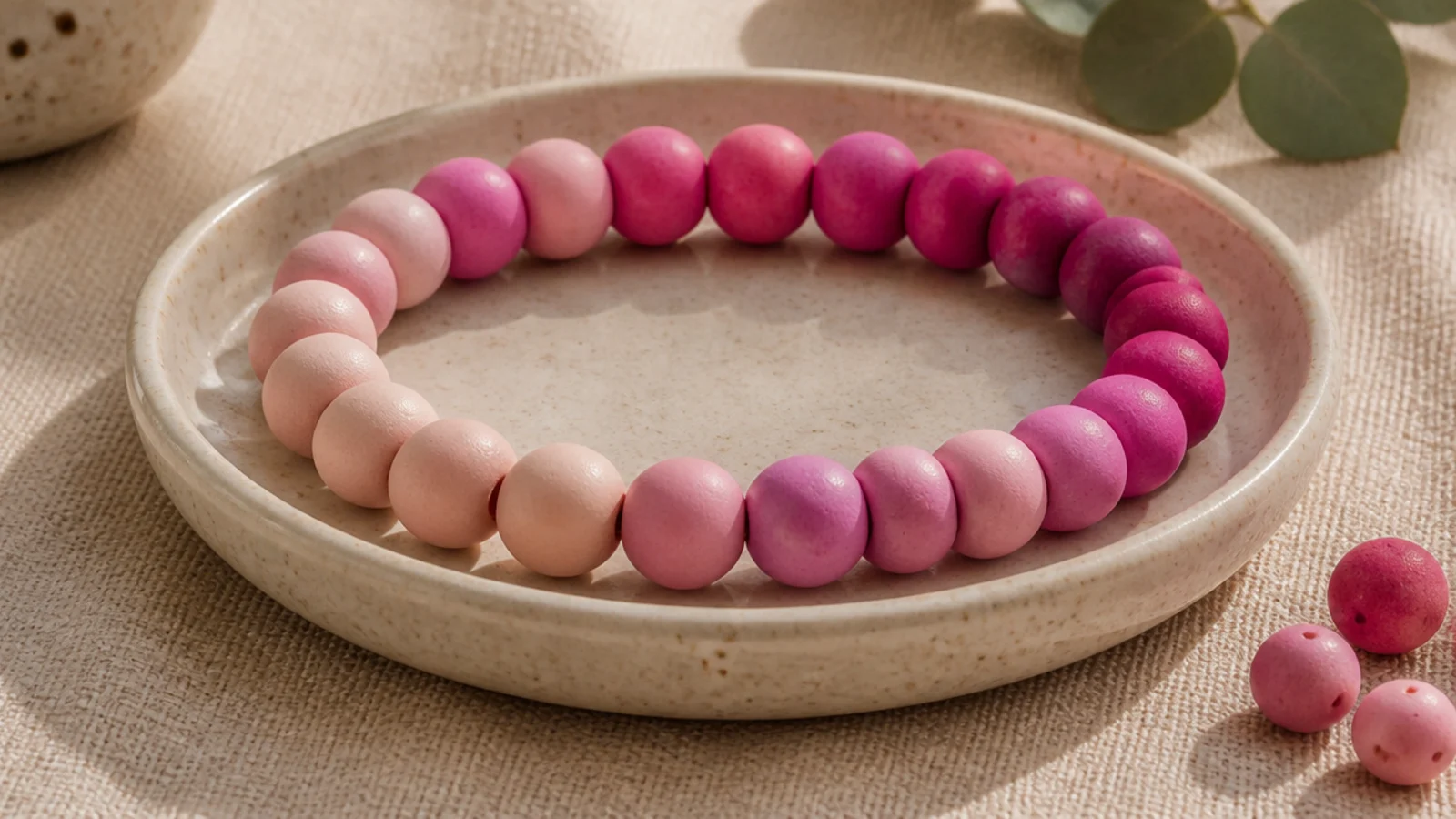
A pink gradient is a showpiece that’s still easy — just sorted shades strung in order. The fade from pale to deep magenta looks considered and lush. Staying within pink keeps it cohesive. The prettiest pink design here.
Sort three or four pinks lightest to darkest into your dish. String a run of the palest, then each deeper shade toward the center, then reverse back to pale for symmetry. Keep each run the same length. String to your wrist size, then tie a surgeon’s knot, seal, and hide the knot inside a pale bead.
Reverse the fade at the center so both ends are palest — a symmetrical ombre looks intentional from any angle.
Don’t jump from blush straight to magenta; the middle pinks are what make it a smooth fade, not a stripe.
3. Pink and White Alternating
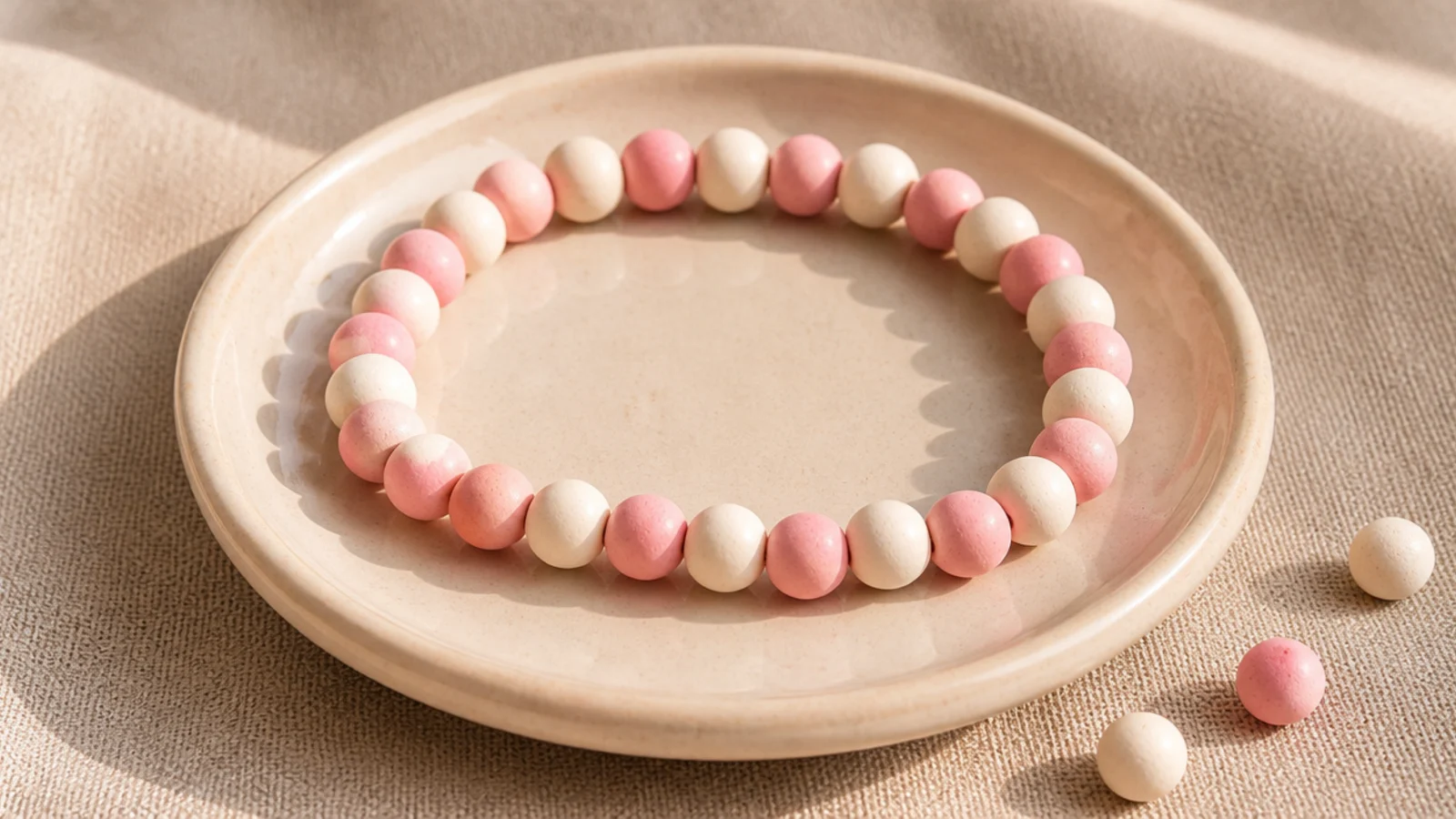
Pink alternating with white is crisp, fresh, and foolproof. The white makes the pink pop and keeps it clean. It’s an easy, cheerful design. A great second pink after the solid.
Pull pink and white into your dish. String them strictly alternating — one pink, one white — in a steady rhythm on 0.8mm cord. Any even total closes cleanly. String to your wrist size, then tie a surgeon’s knot, seal, and hide the knot inside a white bead.
String in a steady one-and-one rhythm so the pink-and-white alternation stays perfectly even.
Don’t double up a color; two pinks or two whites together break the crisp alternating rhythm.
4. Pink and Gold Spacers
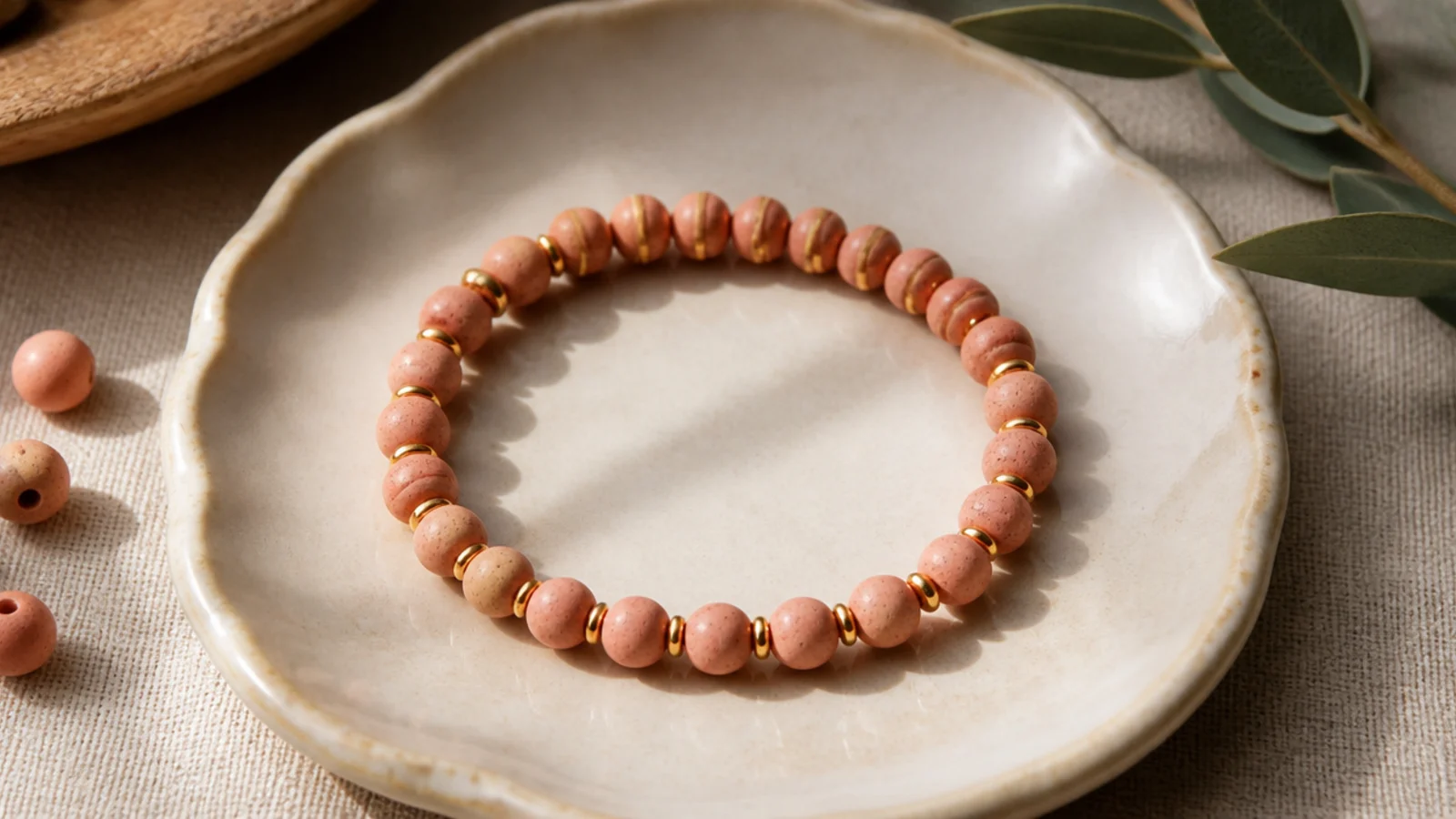
Pink with regular gold spacers looks luxe and expensive. The gold breaks add a jewelry-like rhythm and shine. It dresses pink up instantly. A refined pink design.
String pink beads and add a small gold rondelle spacer every fourth bead, keeping the count even. The thin spacers tuck between the discs. String to your wrist size so the gold spaces evenly, then tie a surgeon’s knot, seal, and hide the knot inside a pink bead.
Keep the gold spacing identical all the way around — the even metallic rhythm is what looks refined.
Don’t use chunky gold beads; small rondelles read like fine jewelry while big ones look costume.
5. Bubblegum Smiley
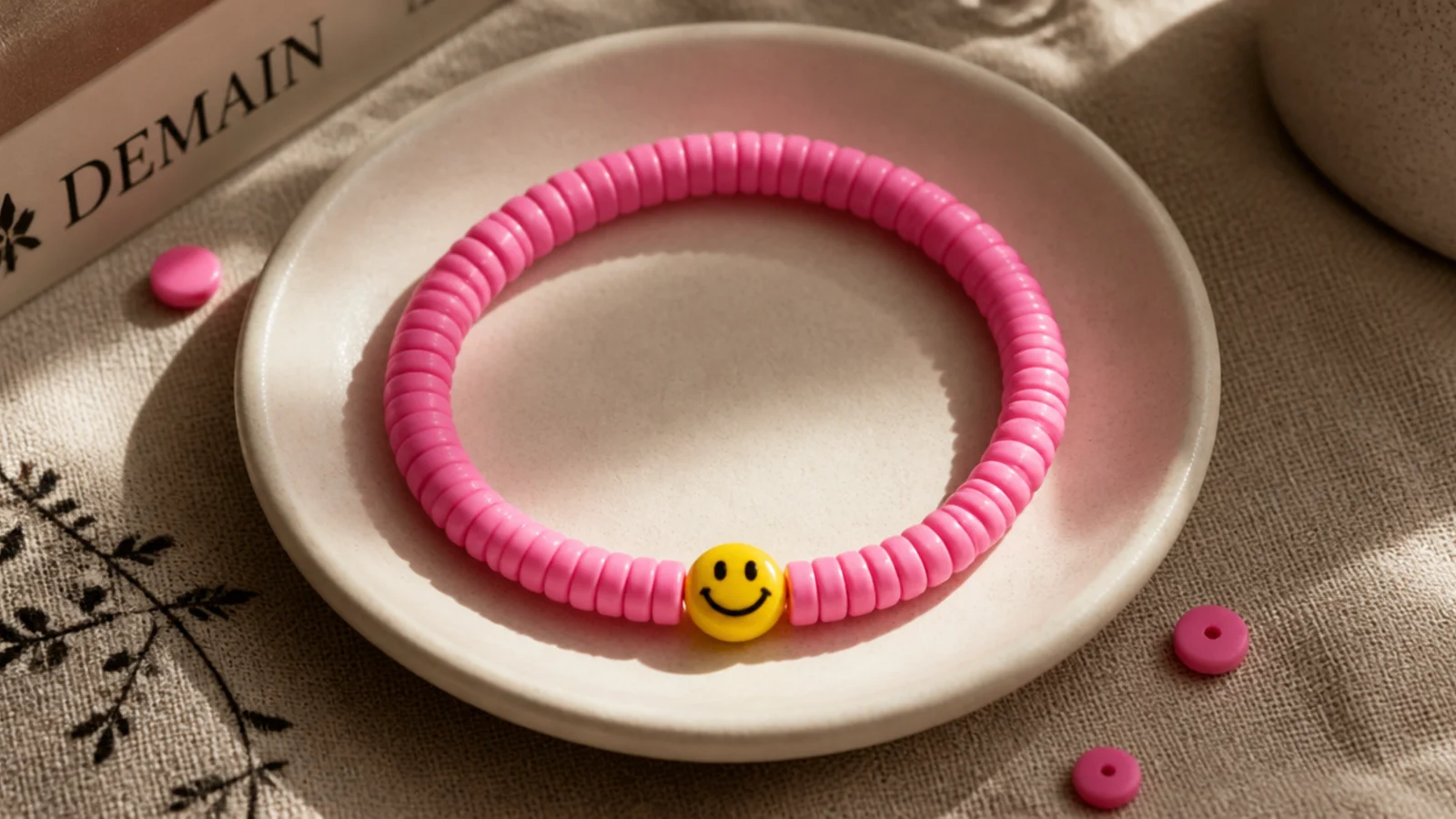
Bright bubblegum pink with a smiley face is fun and cheerful. The bold pink base and happy focal are pure playfulness. It’s quick and kid-approved. A joyful everyday pink.
String bubblegum pink beads to the center, add a yellow smiley-face bead flanked by a gold spacer on each side, then continue to your wrist length. Center the smiley by counting equal beads. String to your size, then tie a surgeon’s knot, seal, and hide the knot inside a pink bead.
Editor's noteFlank the smiley with a gold spacer on each side to frame it and make it look deliberate.
Skip thisDon’t crowd the smiley with extra charms; one focal on the pink base keeps it clean and cheerful.
6. Pink and Pearl
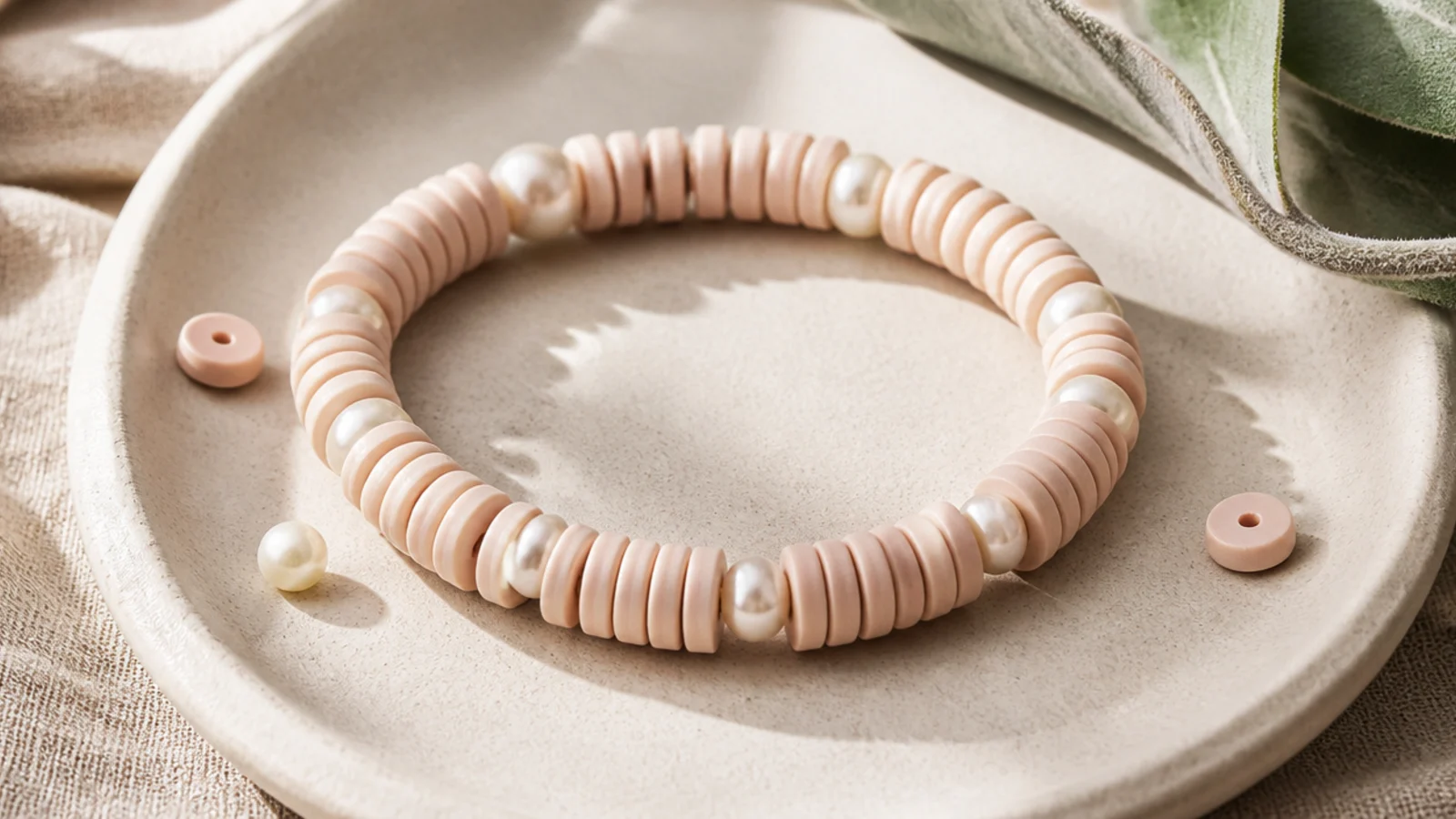
Pink with pearls is elegant and event-ready. The pearls add a classic, polished shine that lifts the pink. It’s dressed-up but easy. The prettiest pink for special occasions.
String soft pink beads and add a small white pearl every fifth bead, keeping the spacing even and checking the pearl holes fit your 0.8mm cord. The pearls contrast nicely with the flat discs. String to your wrist size, then tie a surgeon’s knot, seal, and hide the knot inside a pink bead.
Space the pearls evenly and keep them small — a few read elegant, a full row reads costume.
Don’t use dull off-white pearls against soft pink; a clean white pearl gives the crisp, pretty contrast.
7. Hot Pink Color Block
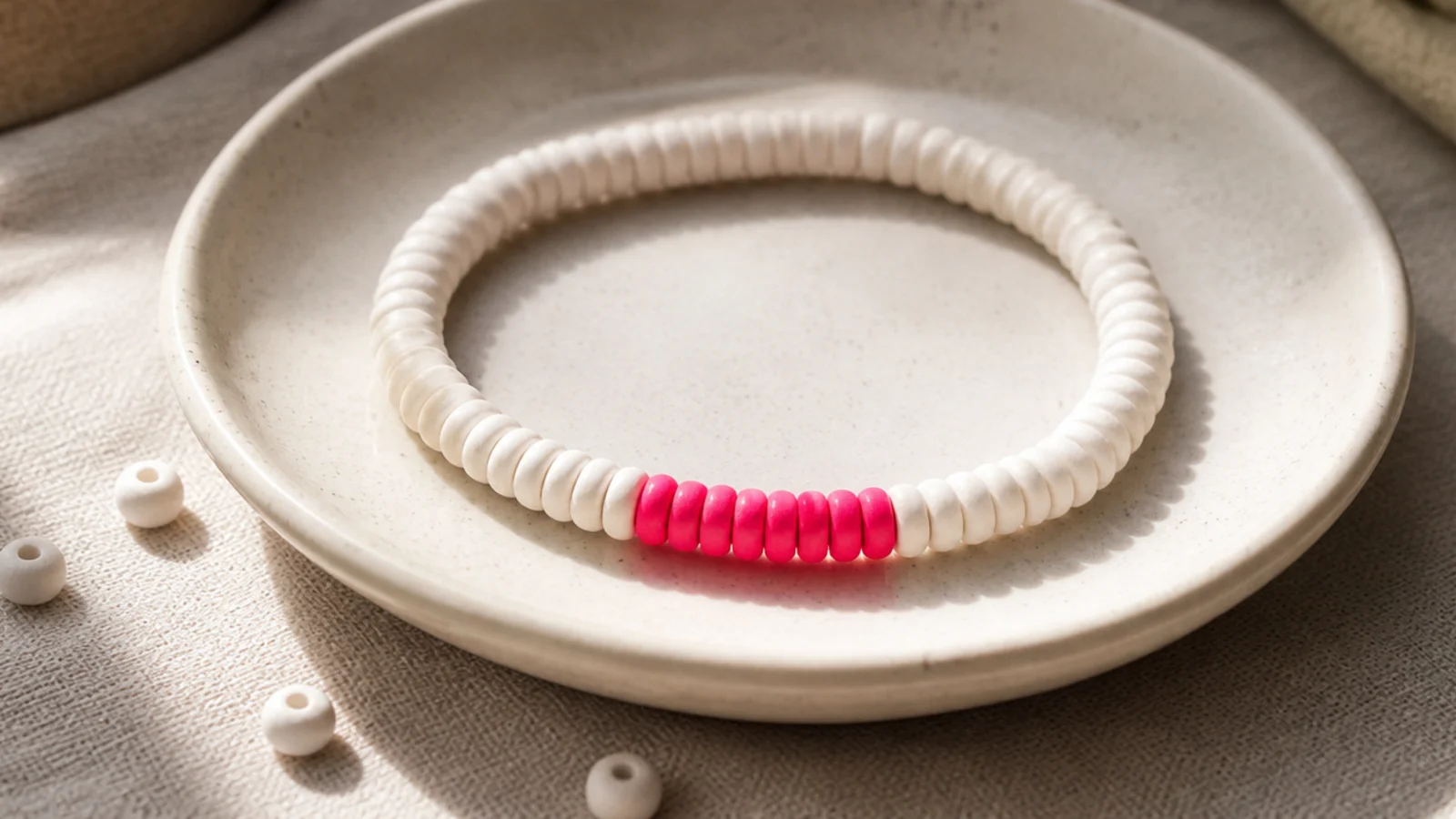
A white bracelet with one hot pink block is bold and modern. The single pink pop reads like a designed graphic against the white. It lets bright pink shine without overwhelming. A fresh, punchy pink.
String white beads for the first third, add a block of eight to ten hot pink beads across the front, then return to white. Center the block by counting equal white beads on each side. String to your wrist size, then tie a surgeon’s knot, seal, and hide the knot inside a white bead.
Count your beads and center the hot pink block exactly so it sits balanced on the wrist.
Don’t make the pink block too small; a stingy run looks like a stray section rather than a bold statement.
8. Pastel Pink Mix
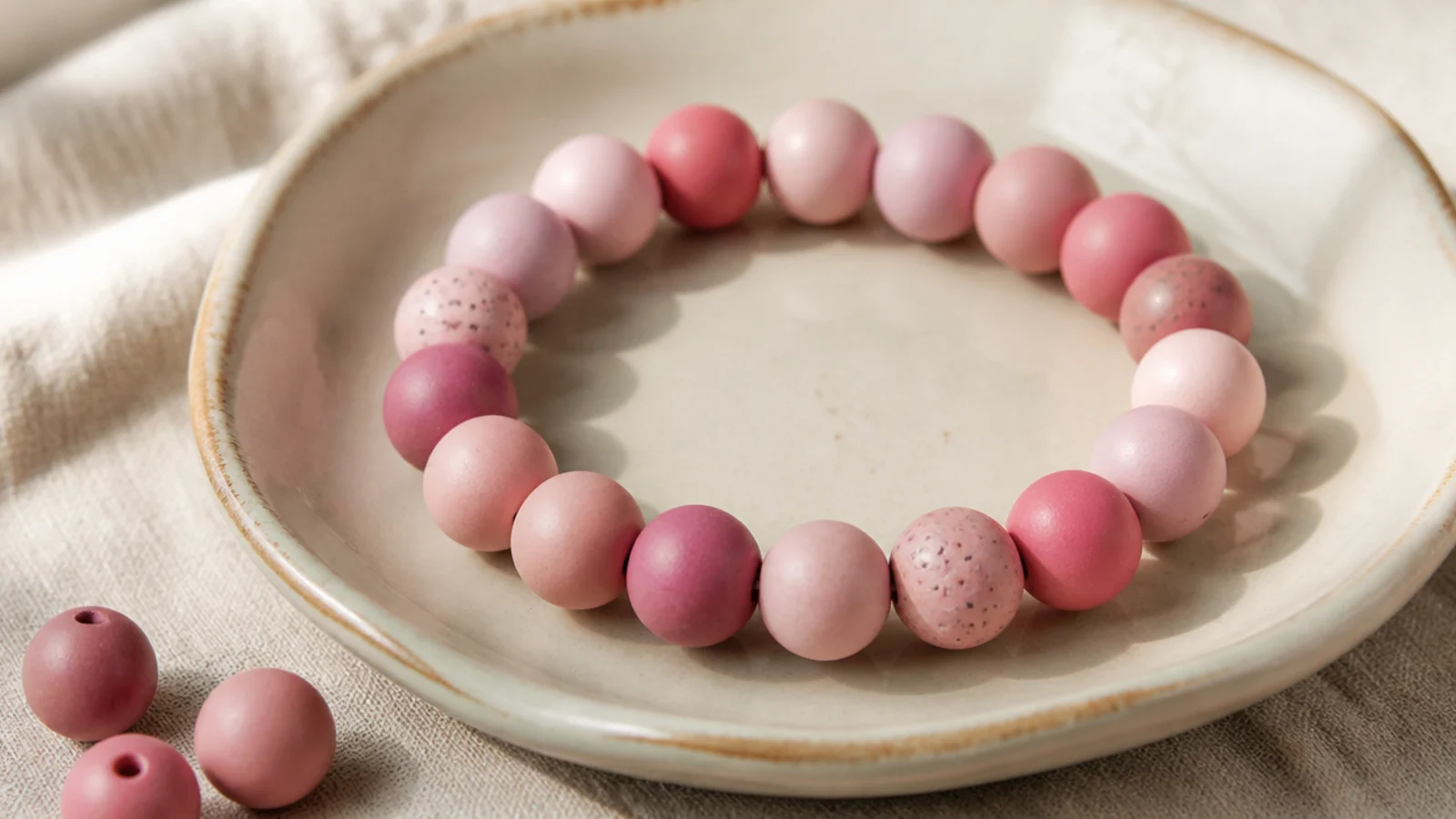
Several soft pinks mixed together read as one dreamy pink with quiet depth. Because the shades are close, there’s no way to get it wrong. It’s forgiving and pretty. An effortless tonal pink.
Pull three or four soft pink shades into your dish. String them in a loose mix on 0.8mm cord, only avoiding two identical beads adjacent. The close shades blend automatically. String to your wrist size, then tie a surgeon’s knot, seal, and hide the knot inside a pink bead.
Editor's noteChoose pinks only a hair apart in tone so the mix blends into one soft, expensive-looking pink.
Skip thisDon’t add a non-pink color; the whole appeal is the seamless pink wash, and one off color breaks it.
9. Pink Heart Focal
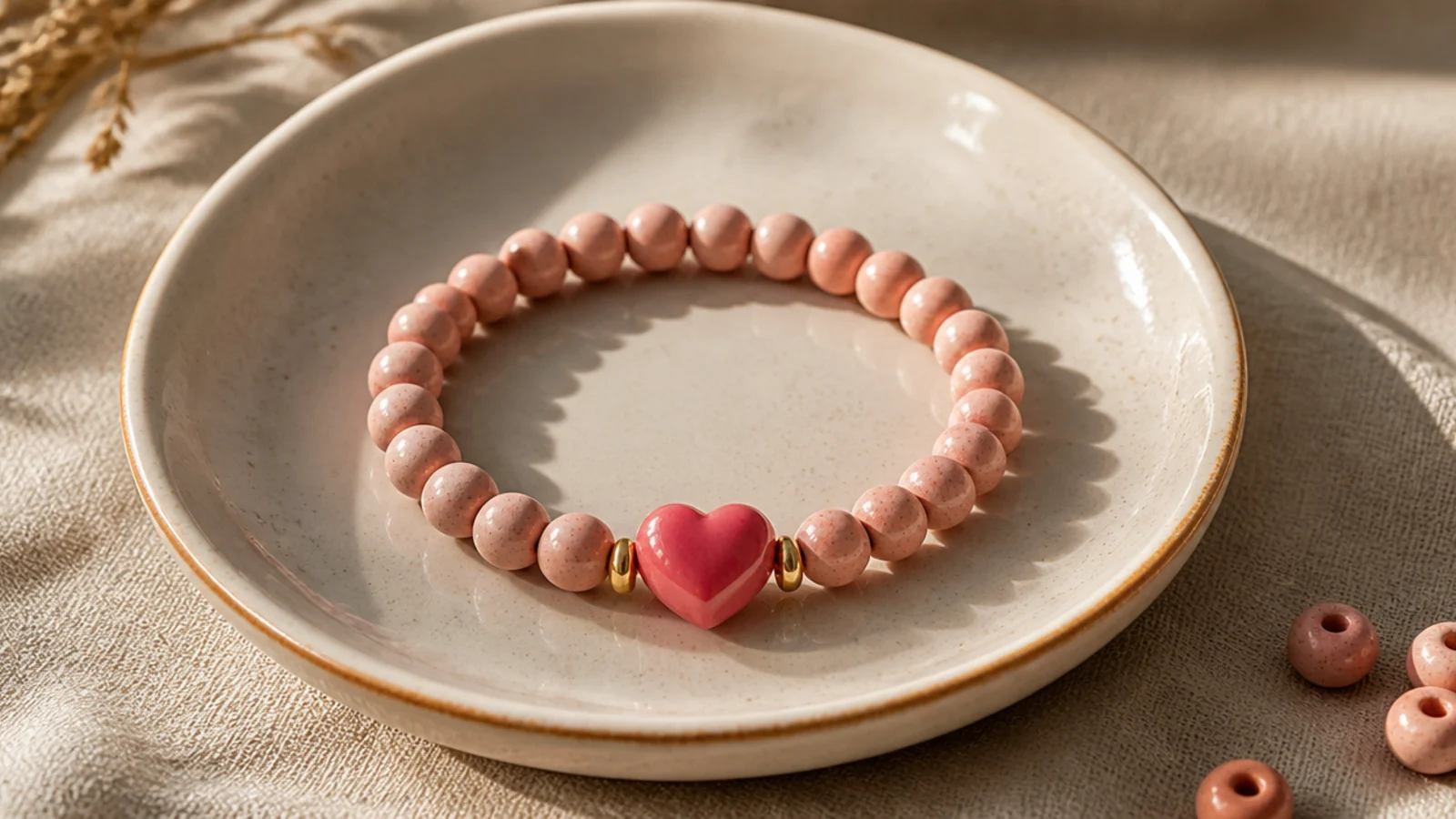
A heart on a pink base is the sweetheart of pink bracelets. The tonal pink-on-pink keeps it soft and romantic. It’s a lovely gift, especially for Valentine’s. Simple and sweet.
String blush beads to the center, add a deeper pink heart bead with a horizontal hole so it lies flat, then continue to your wrist length. String one fewer bead per side to allow for the heart. Tie a surgeon’s knot, seal, and hide the knot inside a blush bead.
Use a heart bead with a horizontal hole so it lies flat and faces outward on the wrist.
Don’t use a top-drilled heart on stretch cord; it will spin and hang sideways as the wrist moves.
10. Watermelon Pink and Green
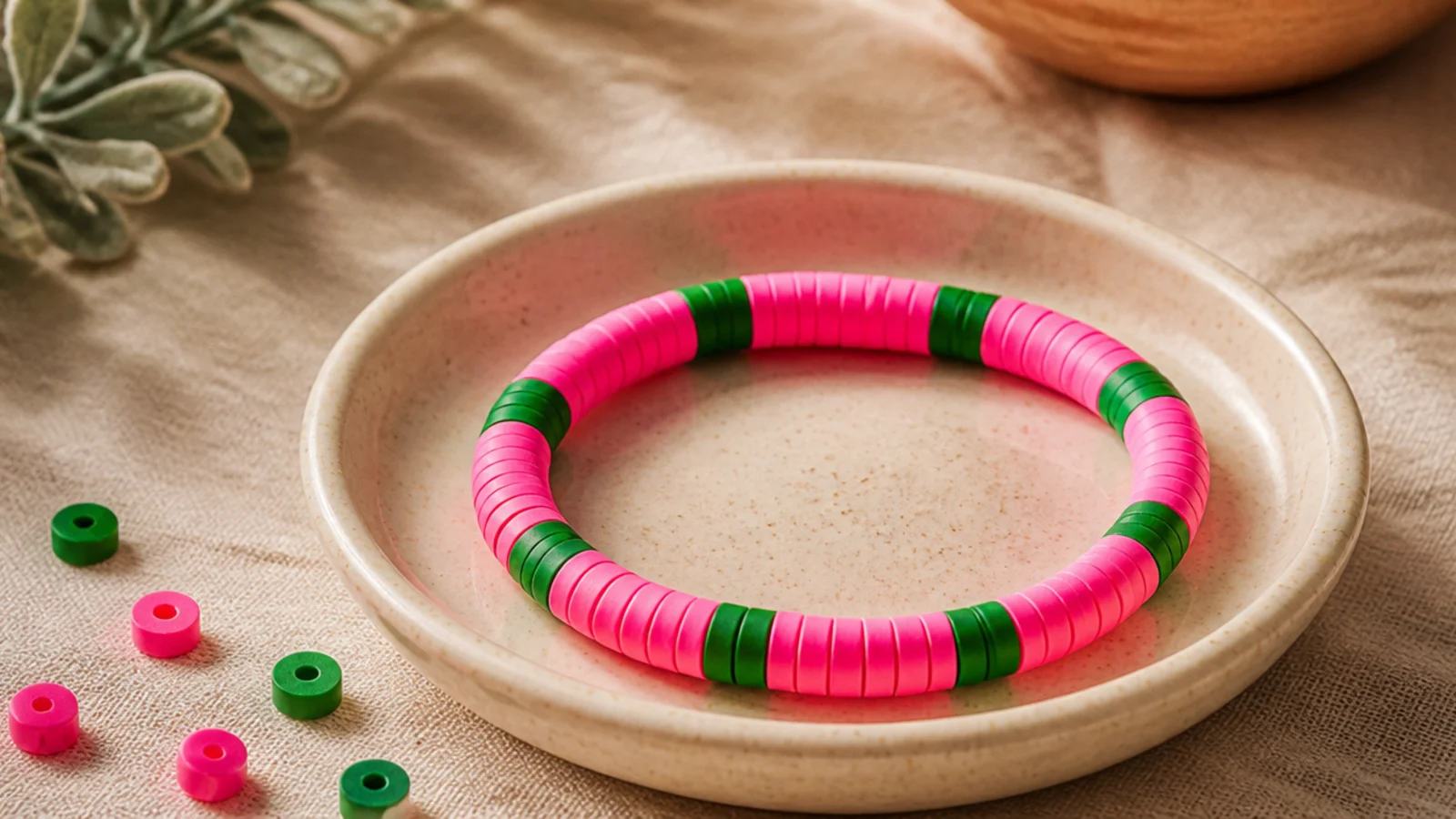
Pink with green is fresh and summery, like watermelon. The pink-and-green pairing is lively and unexpected. Blocks keep it clean. A cheerful pink with a pop of contrast.
Pull bright pink and green into your dish. String them in blocks of three, alternating around the band on 0.8mm cord. Keep the blocks equal. String to your wrist size so blocks meet cleanly, then tie a surgeon’s knot, seal, and hide the knot inside a pink bead.
Editor's noteUse a fresh, slightly bright green to get that crisp watermelon contrast against the pink.
Skip thisDon’t mute the green too much; a dull green loses the fresh watermelon pop the pink needs.
11. Pink Daisy Row
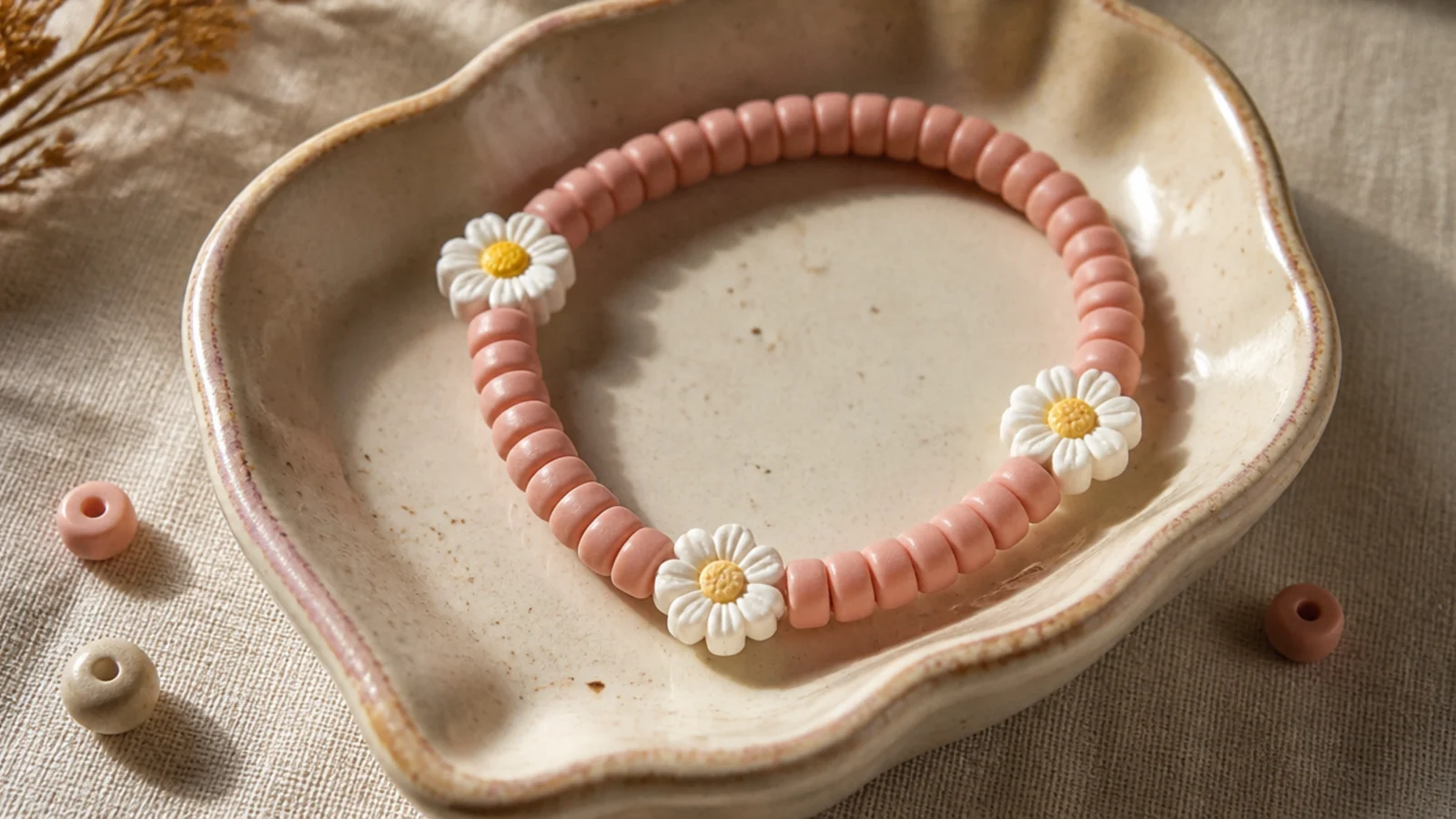
Pink with a few white daisies is sweet and springy. Three evenly spaced daisies look hand-picked. The soft pink base makes the white petals pop. A pretty, cheerful pink.
String a soft pink base for a few beads, add a daisy bead, then more pink, repeating so three daisies space evenly. Divide your total by three to set the spacing. String to your wrist size, then tie a surgeon’s knot, seal, and hide the knot inside a pink bead.
Editor's noteDivide your total bead count by three so the daisies land at even intervals around the band.
Skip thisDon’t place the daisies by eye; uneven gaps make them look scattered instead of spaced.
12. Pink Preppy With Lime
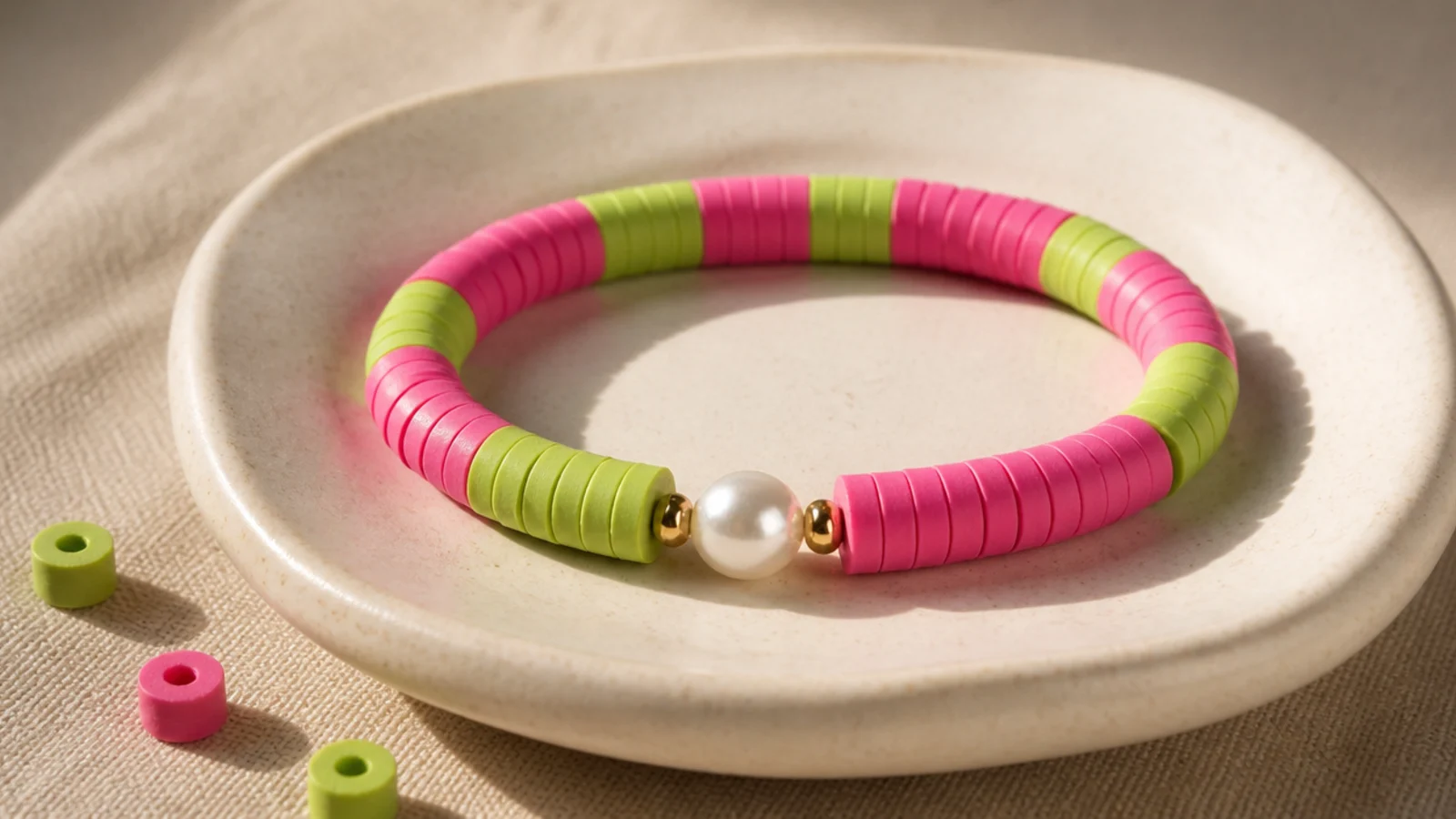
Hot pink with lime green is a bold, preppy pink pairing. The high-energy combo is fun and current. A pearl accent adds a preppy touch. A punchy, playful pink.
Pull hot pink and lime green. String them in blocks of three, alternating around the band, and add a single white pearl at the front. Keep blocks equal. String to your wrist size, then tie a surgeon’s knot, seal, and hide the knot inside a pink bead.
Add one pearl to the bold pink-and-lime combo for a preppy, polished touch.
Don’t add a third bright color; pink and lime are already high-contrast, and more turns it chaotic.
13. Pink Monochrome Shades
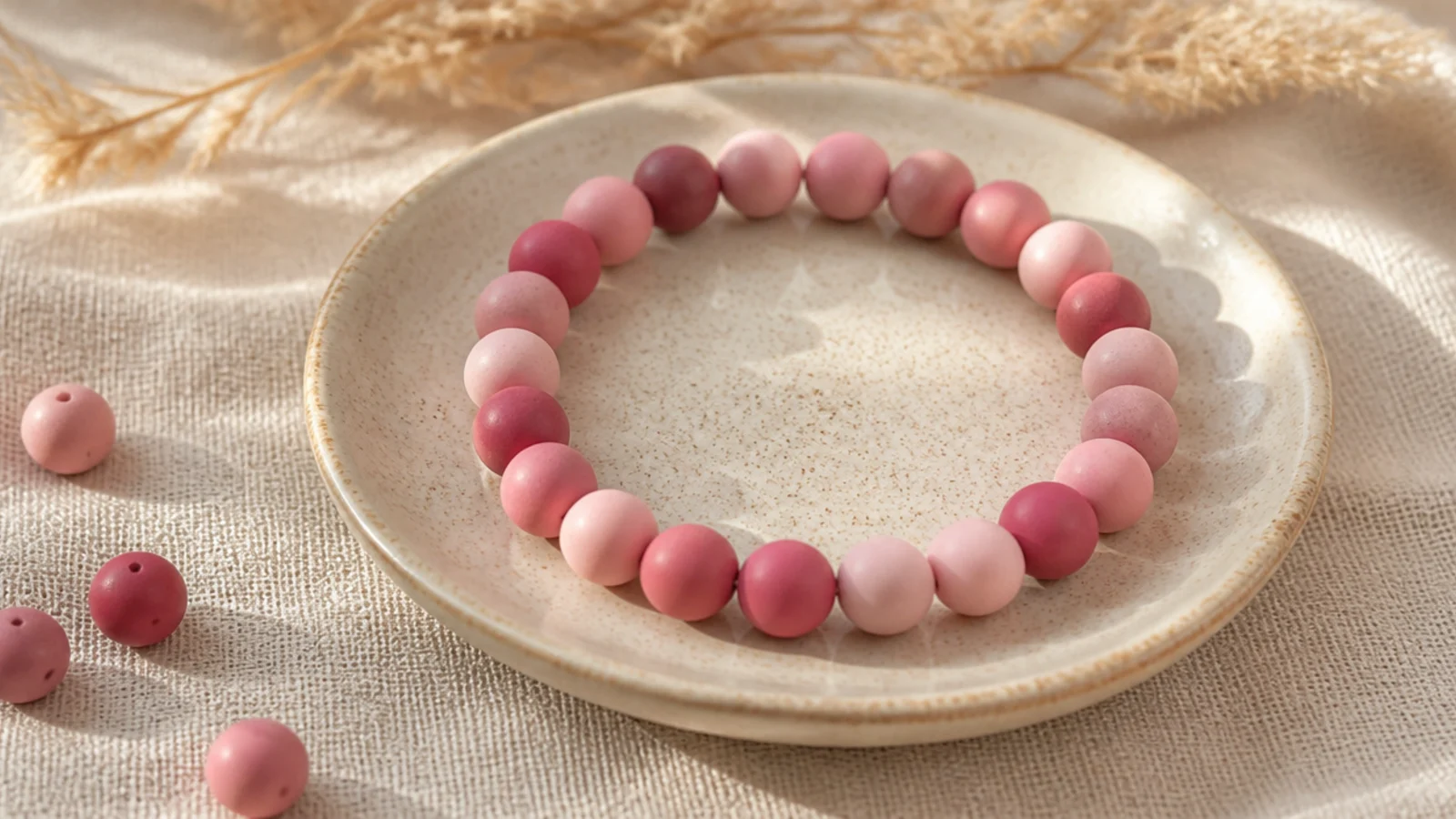
Pink in several shades, mixed randomly, gives rich tonal depth. All-pink reads as one lush color. It’s forgiving and looks intentional. A sophisticated single-color pink.
Pull pale, mid, and deep pink into your dish. String them in a random mix on 0.8mm cord, avoiding two identical beads adjacent and keeping the deepest pink the least frequent. String to your wrist size, then tie a surgeon’s knot, seal, and hide the knot inside a mid-pink bead.
Use the deepest pink sparingly as an accent so the blend has depth without going too dark.
Don’t add a second color family; the appeal is the all-pink tonal depth, and any other color breaks it.
14. Pink and Cream Tonal
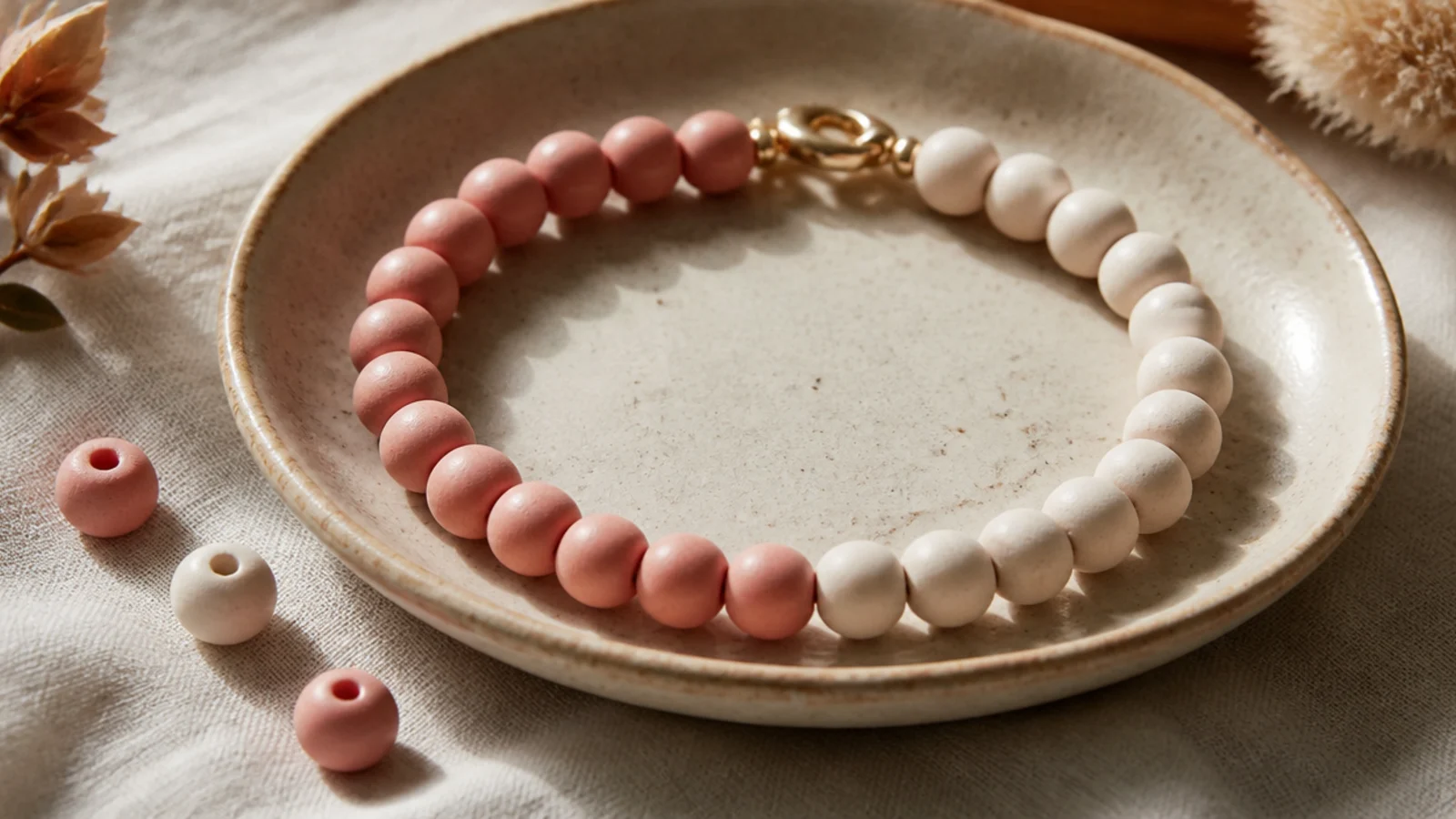
Soft pink with cream is a gentle, grown-up pairing. The cream softens the pink for a calm, aesthetic look. Blocks keep it tidy. A quiet, pretty pink for everyday.
Pull soft pink and cream. String them in blocks of three, alternating around the band on 0.8mm cord. Keep the blocks equal. Add a single gold spacer at the front if you like. String to your wrist size, then tie a surgeon’s knot, seal, and hide the knot inside a cream bead.
Pair the pink with cream rather than white for a softer, more grown-up tonal look.
Don’t use a bright white if you want it soft; cream keeps the pairing gentle and aesthetic.
15. Pink Stacked Trio
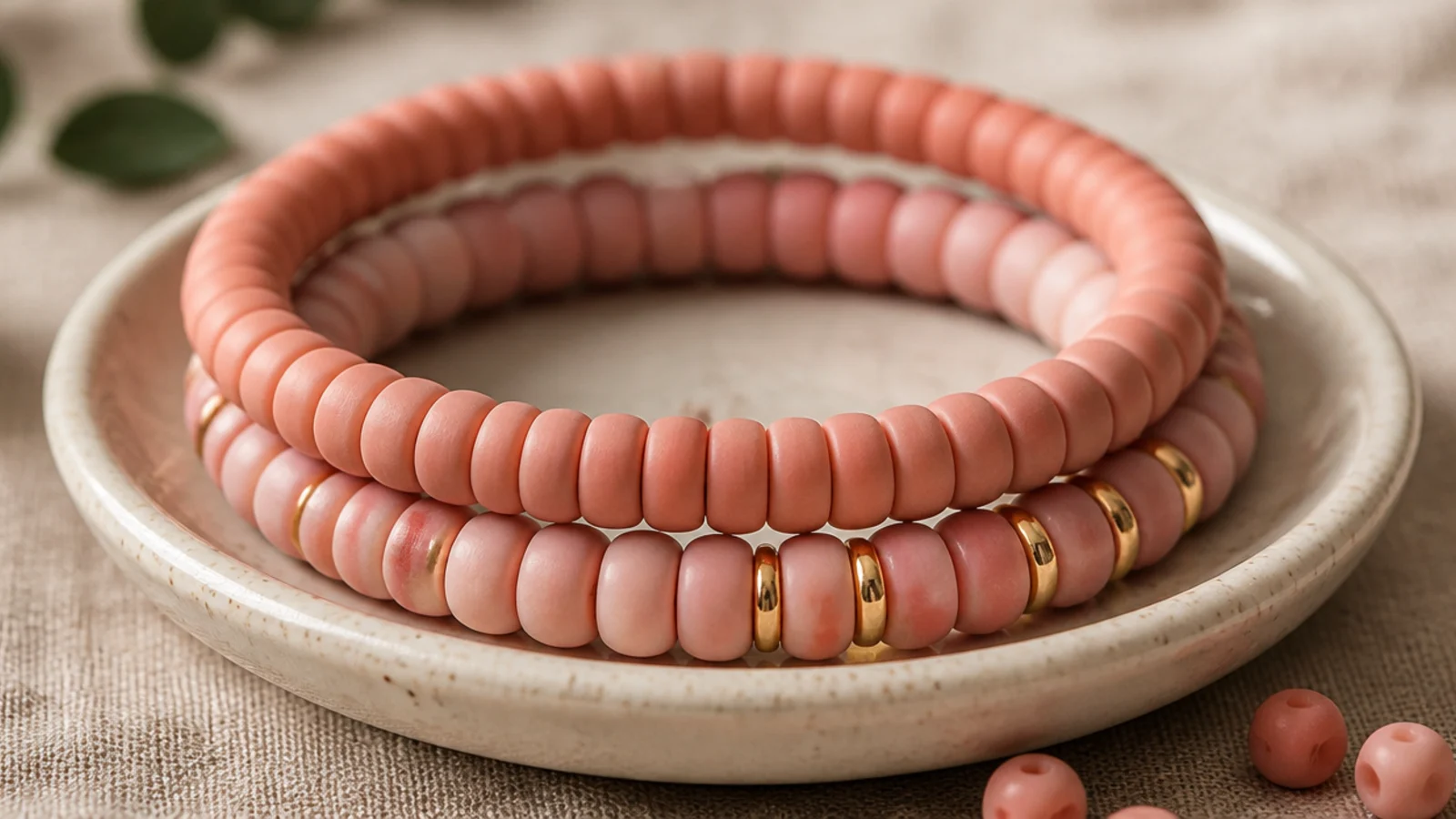
Three pink bracelets in one family make an instant pink stack. A solid, an ombré, and a pink-with-gold vary the texture while sharing the color. Stacking is how pink looks curated. The pretty pink payoff.
Make three pink bracelets on 0.8mm cord — one solid blush, one ombré, one pink-with-gold — all the same length. Keep them in the same pink family so they coordinate. Finish each with a hidden surgeon’s knot. Wear them together and the shared pink ties the varied designs into a set.
Keep all three in the same pink family and vary only the texture — solid, fade, gold — for a curated stack.
Don’t mix clashing pinks across the three; a shared pink family is what makes the stack look pulled together.