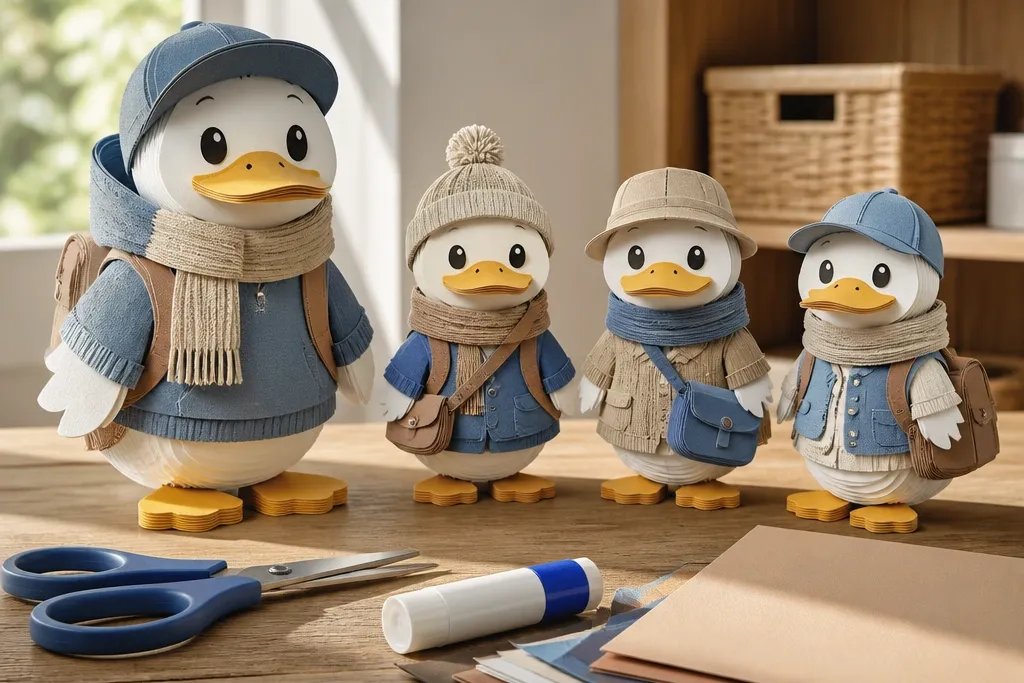
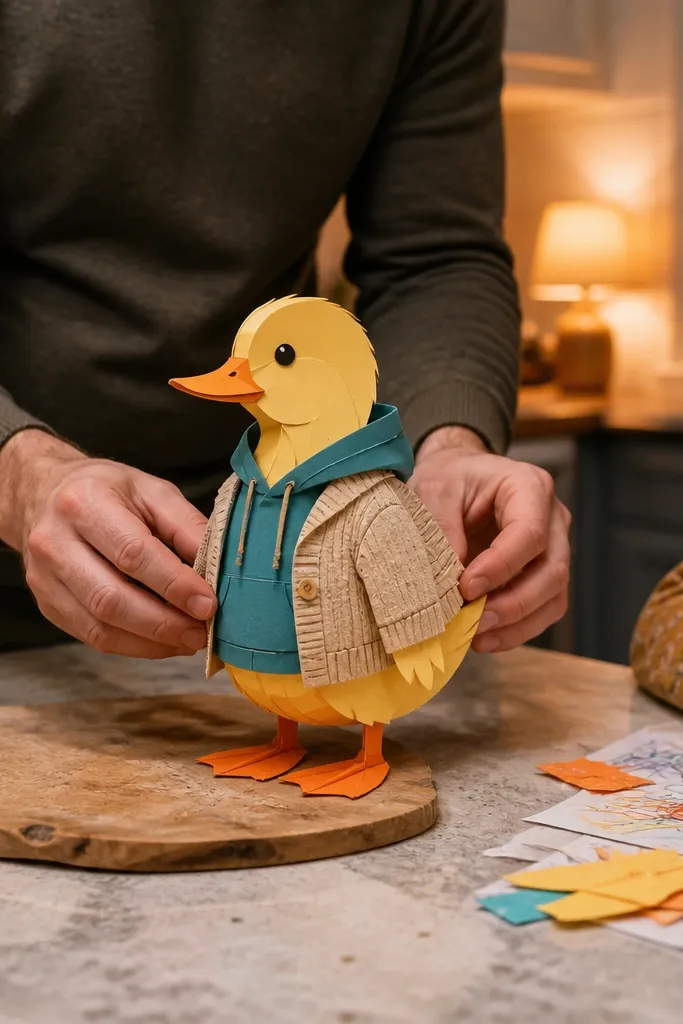
1. Cozy Scarf Duck With Fold-Over Collar
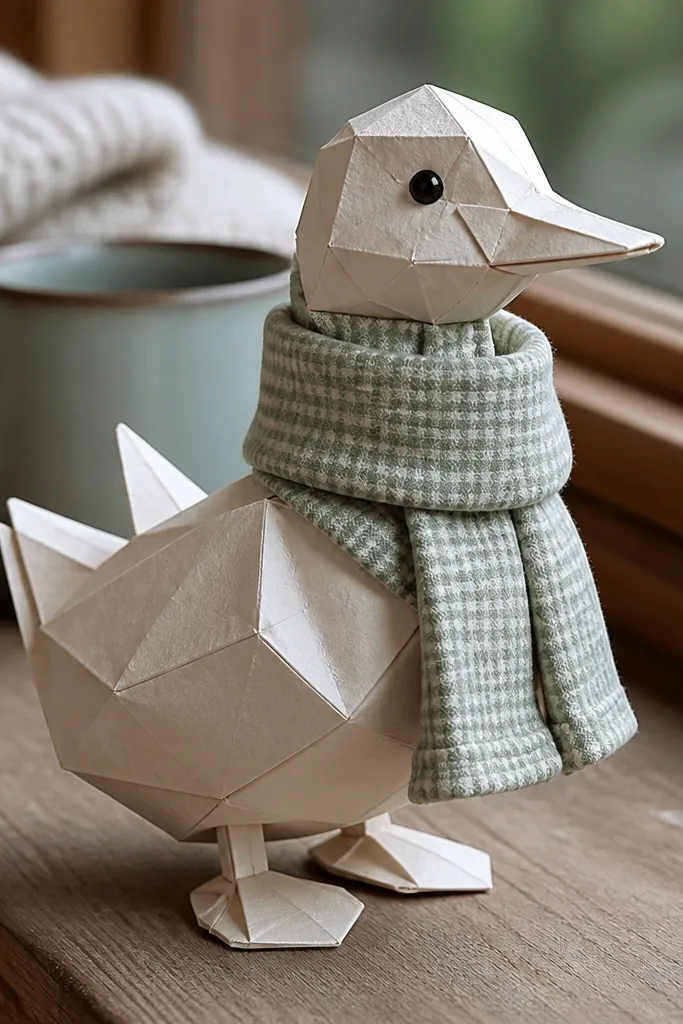
This one wins because the scarf gives a bold, cozy shape right at the neck. The fold-over collar hides the join line and makes the outfit look finished even when kids swap other clothes. Build it with a thick scarf piece that wraps across the chest, so it keeps its curve instead of flattening. Use a soft patterned paper for the scarf, like tiny checks or micro stripes, to make the doll feel warm without needing extra decorations.
Start with a duck base in 200-250 gsm cardstock and draw a simple neck outline where the scarf will sit. Cut the scarf as one piece with a fold guide line down the center; score lightly so it bends cleanly, then fold it before attaching. Add two small slits on the sides of the neck area and two matching tabs on the scarf so it locks in place without glue. Finish by adding a couple of short “stitch marks” with a brown marker along the scarf edges.
Editor's noteLaminate the scarf after assembly, then trim the edges — it holds the fold much longer during rough play.
Skip thisAvoid tiny fringe strips; they peel off when kids pull the scarf.
2. Hoodie Duck in Soft Fleece Paper Layers
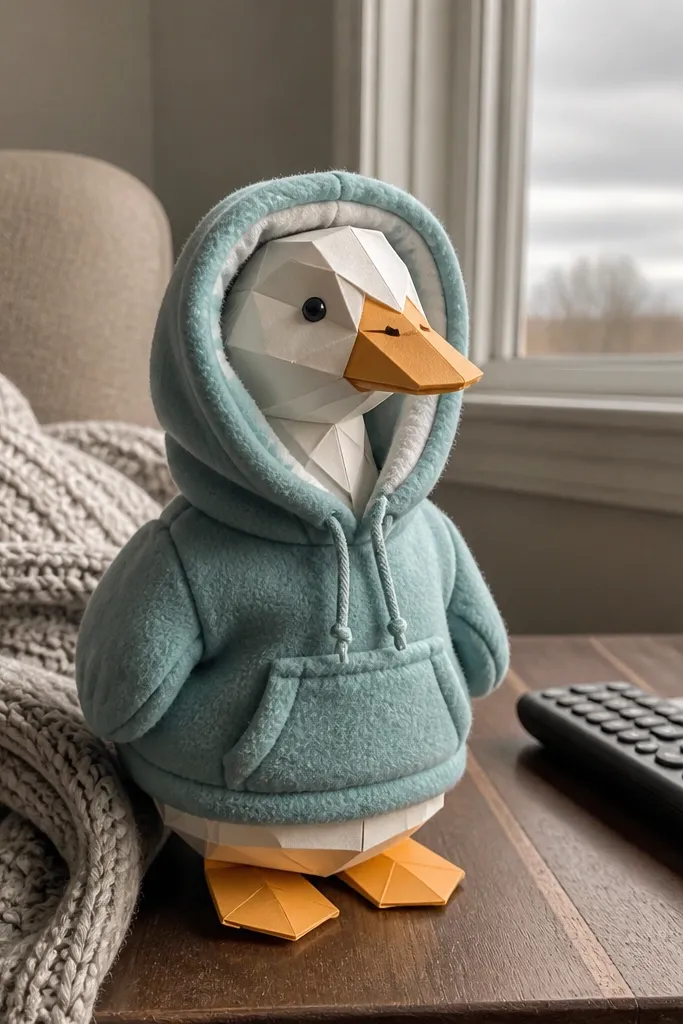
A hoodie is cozy by design, and layering makes it look plush instead of flat. This idea uses separate hood and pocket pieces so the front looks thick and dimensional. Pick a light teal or dusty blue paper, then add a lighter lining color inside the hood for that warm, inside-coat feel. The pocket gives kids a place to tuck small cutouts like a tiny note or candy wrapper for extra play.
Cut the hoodie as three parts: front body, hood top, and pocket. Glue only the pocket to the front body, leaving the hood separate so you can attach it with two small tabs at the sides. Add a simple inner hood lining by cutting a second hood piece in cream paper and gluing it slightly offset. Attach the hood to two slits on the duck head/neck area so it sits upright.
Editor's noteUse a foam sheet under the pocket for a soft “puff” look even with paper.
Skip thisDon’t glue the hood flat to the head; it kills the 3D shape.
3. Brown Boots Duck + Tan Boot Laces
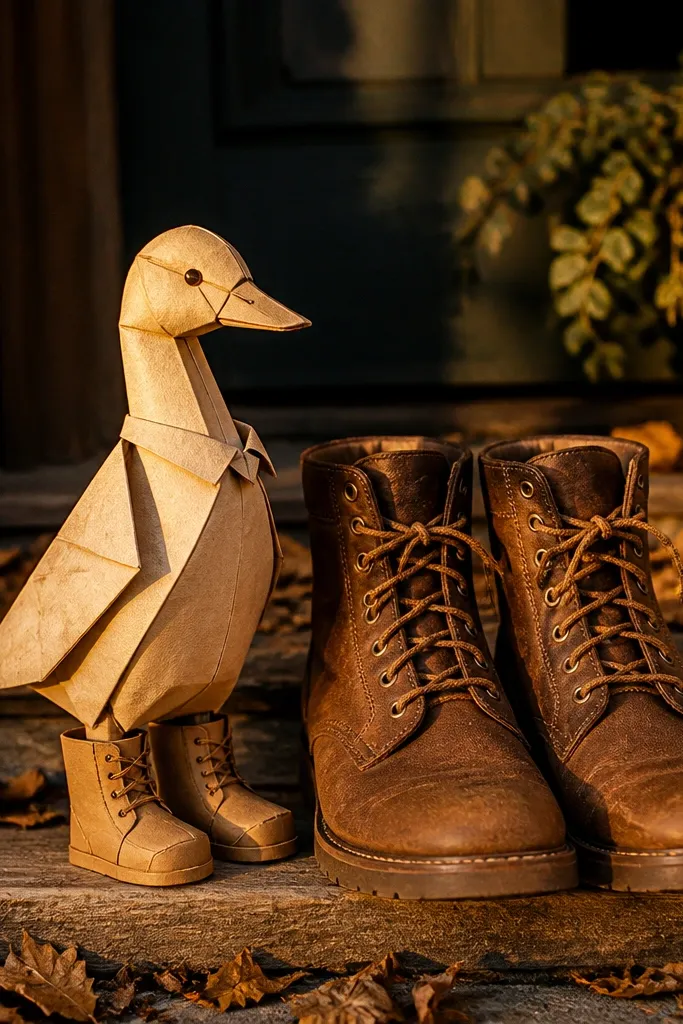
Boots make paper dolls look instantly more “real” and cozy because they anchor the outfit. This design uses a tall boot silhouette with lace lines that read well even from a distance. The tan laces add detail without needing tiny beads or buttons. It’s also practical: boots hide the bottom edge of the outfit and keep the doll from looking unfinished.
Draw and cut two boot pieces that wrap around the duck foot area; make them slightly wider than the foot for a snug fit. Add four lace lines per boot using a thin marker, then glue a thin tan strip across the top to mimic a lace opening. Create two tabs on the inside of the boot backs and two matching slits on the duck body near the feet. Press flat for 30 seconds so tabs stick cleanly.
Cut boot soles from darker cardstock so the edges look grounded and shadowy.
Skip glitter — it sheds and smears on other paper pieces.
4. Kitchen Cozy Apron Duck With Tiny Pocket
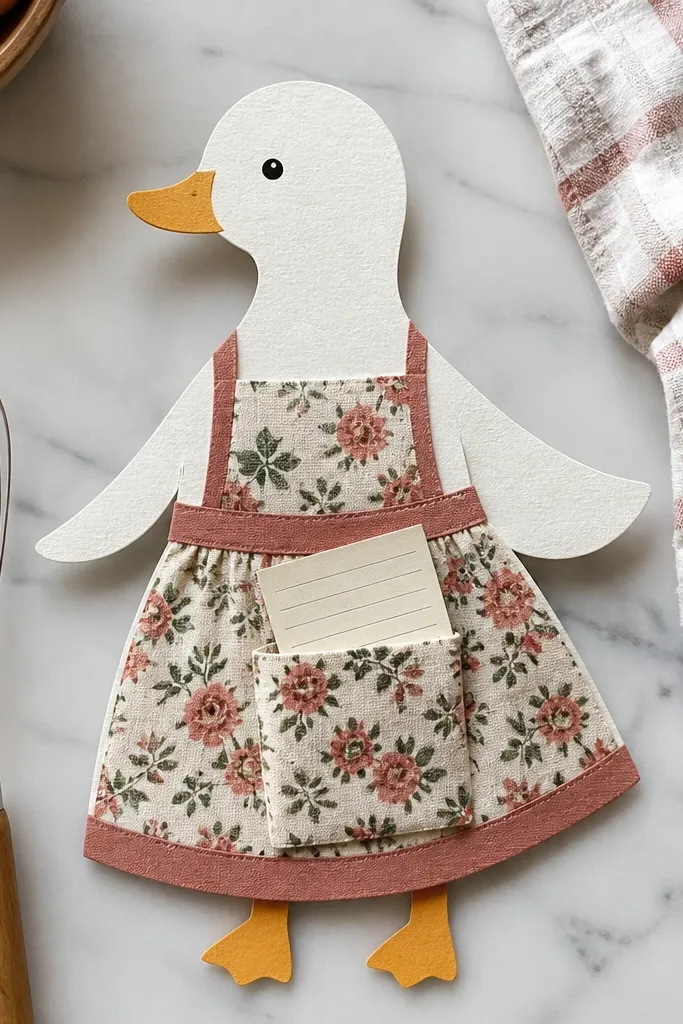
Aprons look cozy because they connect to home routines — baking, tea, and tidy counters. The tiny pocket gives kids something to interact with, like a folded recipe card or mitt. Keep the apron shape simple and wide so it photographs well and doesn’t tear at the straps. Use a gingham or warm floral paper so it reads as “cozy kitchen” without extra clutter.
Cut the apron as one large front panel plus two thin strap strips. Add a pocket piece that is 1.5-2 cm tall with a folded top edge so it stands out. Attach straps with small tabs behind the duck body so kids can swap the apron without re-gluing the whole outfit. Finish by drawing a few “stitch” dots around the pocket with a dark brown marker.
Editor's noteUse a ruler to keep apron straps straight; crooked straps make the whole doll look messy.
Skip thisDon’t make the pocket too thin; it warps and curls when handled.
5. Tea Time Cardigan Duck With Button Toggle
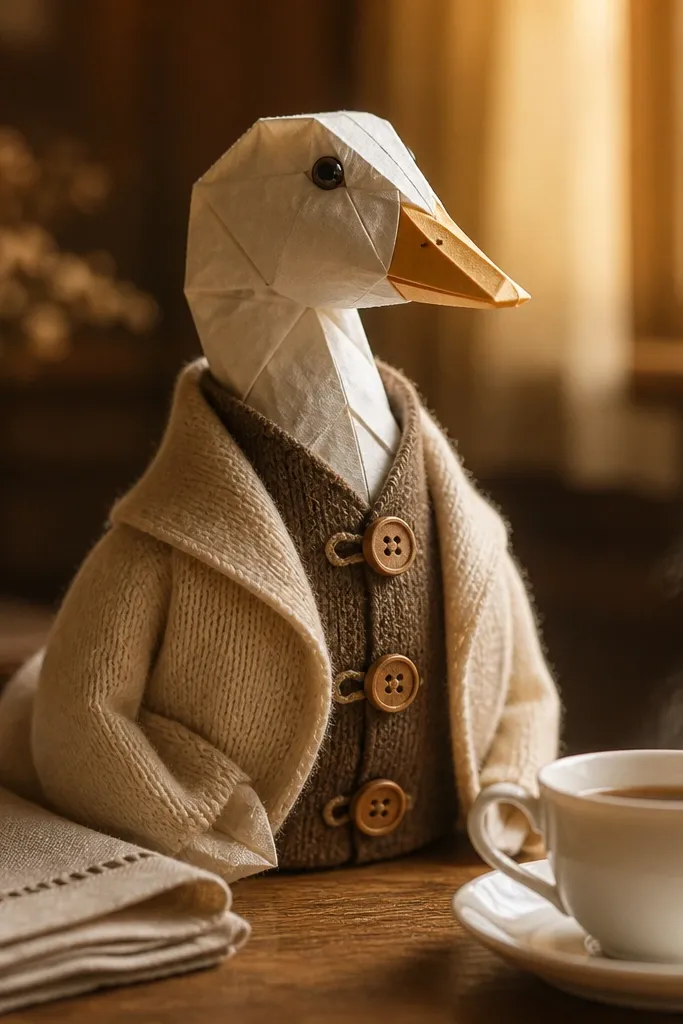
Cardigans look soft, and toggles make the outfit feel playful. This design uses a front-open cardigan with big round buttons kids can point at and swap positions with. The trick is to keep the cardigan edges slightly curved so it drapes over the duck body. Use warm beige or oatmeal paper, then add a darker brown for the button area so the contrast pops in photos.
Cut the cardigan front as two overlapping panels and a back piece that matches the duck torso outline. Add two large button circles and glue them only on the top layer so they don’t flatten into the base. Create four slits on the duck torso and matching tabs on each cardigan panel to hold the outfit open. Add a thin strip along the inner edge to mimic the cardigan lining.
Trace button circles with a coin or cap to keep them perfectly round.
Avoid tiny button holes; they rip when kids remove the cardigan.
6. Striped Nightshirt Duck With Scalloped Hem
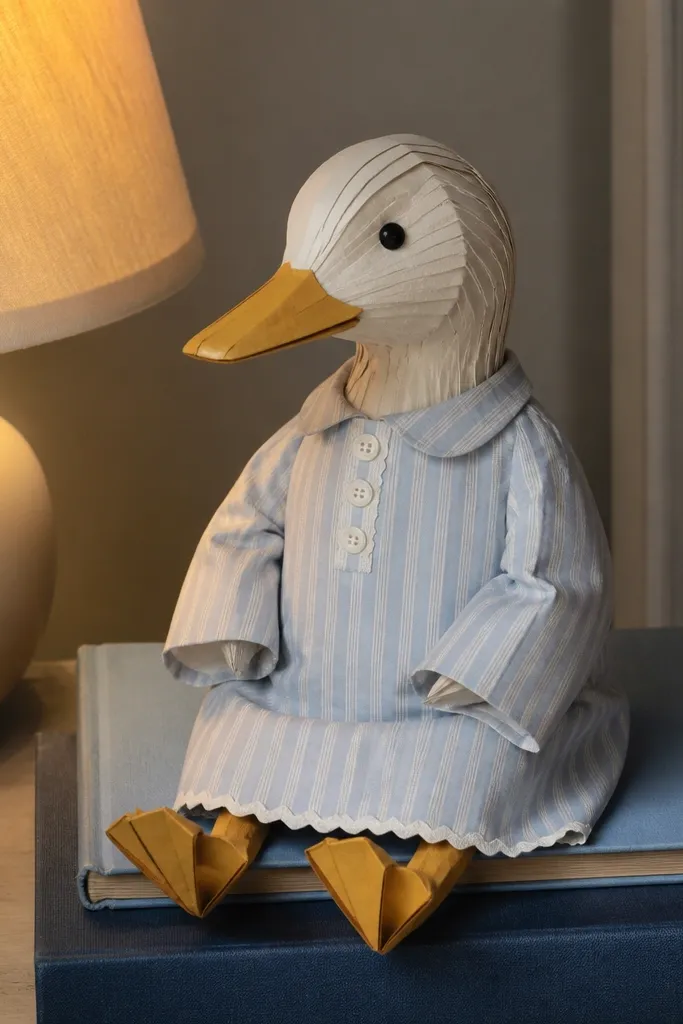
Nightshirts are cozy because they look like pajamas, and scalloped hems read as “soft” instantly. This outfit is built to look good from the front, with stripes that guide the eye down the body. Choose pastel stripes like cream and muted blue, then make the hem edge scalloped so it adds texture without extra materials. It’s a great first paper doll because the shapes are big and easy to cut.
Cut a nightshirt front/back from striped paper, leaving a 1 cm gap at the neck. Add a separate scalloped hem strip that attaches at the bottom edge with glue tabs. Create two small slits at the sides of the duck torso and add tabs on the nightshirt so it snaps into place. Finish with a simple collar outline drawn in a darker marker.
Editor's noteCut scallops using a craft punch if you want consistent curves fast.
Skip thisDon’t use very thin paper for stripes; the scalloped hem will ripple.
7. Cozy Beanie Duck With Pom-Pom Top
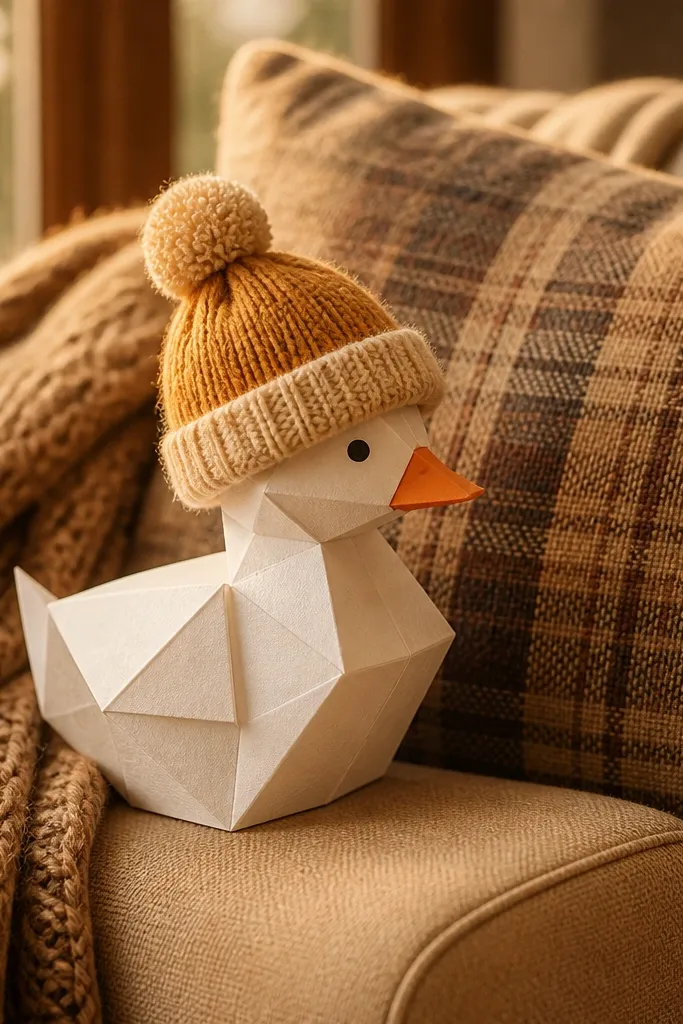
A beanie adds height and makes the duck look extra snuggly. The pom-pom is the photogenic part, and it’s easy to fake with layered paper circles. Knit texture comes from marker lines, not complicated crafting. Use a warm color like mustard, rust, or cocoa, then add a lighter cuff band so it looks like real knit.
Cut a beanie shape as a cone-like band that wraps around the duck head with a bottom cuff. Make the pom-pom from three circles: one large, one medium, one small — stack and glue them slightly offset. Add a slitted tab system at the back of the duck head so the beanie slides on and stays. Draw vertical knit lines with a fine-tip marker before you assemble the cuff.
Editor's noteUse a toothpick to press small marker lines into paper fibers for a knit-like texture.
Skip thisSkip glue on the front pom-pom edge; it can show messy shine.
8. Rainy Day Duck With Yellow Raincoat
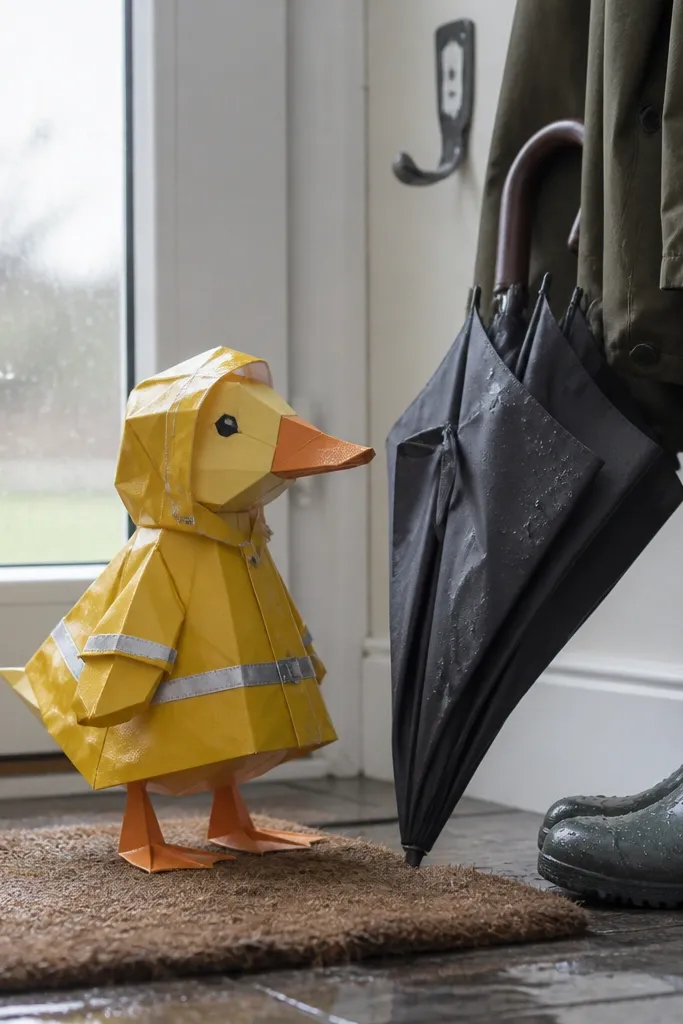
Raincoats look cozy even when the weather is gloomy because the hood and belt create a strong silhouette. This design uses a glossy-looking paper trick with clear tape on the raincoat panels so it catches light. Add a hood piece and a belt strip so the outfit reads as “ready to go” in photos. Choose a bright yellow or soft chartreuse to make it pop against darker backgrounds.
Cut the raincoat as front and back panels plus a hood. Add a belt strip across the middle with two short tabs that tuck behind the duck body. For the “rain” look, brush a thin layer of glue on the coat panels and spread clear packing tape in a patch pattern, then press flat. Attach the hood using two side tabs into slits on the duck head/neck.
Editor's notePut a scrap of paper under the coat while taping so tape doesn’t stick to your table.
Skip thisAvoid heavy tape on edges; it peels and makes the coat look warped.
9. Winter Sweater Duck With Paper Cable Knit
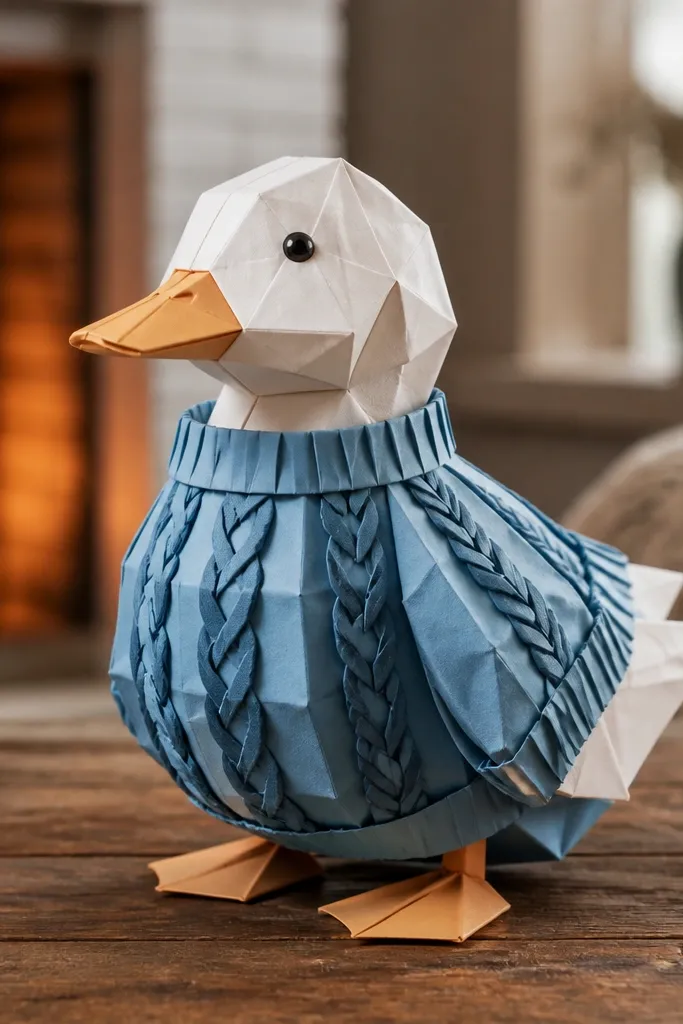
Cable knit is the cozy detail kids notice first. The trick is to make the cables with paper strips or drawn lines that look raised. This outfit looks best when the sweater base is solid and the cable pattern is slightly darker. It holds up because the cables are thick enough to survive bending, and the neckline framing keeps the duck face clear.
Use solid cardstock for the sweater body, then cut a cable pattern from a second cardstock color. Create three vertical cable columns as strips about 5-7 mm wide and glue them onto the sweater front in an “X” braid pattern. Add ribbed cuffs by cutting narrow bands and drawing short horizontal lines. Attach the sweater to the duck with side tabs and slits so it can be swapped quickly.
Draw the cable path lightly in pencil first; it keeps the braid centered.
Don’t make cable strips thinner than 4 mm or they crack when kids flex the outfit.
10. Cozy Blanket Wrap Duck With Fringe Edge
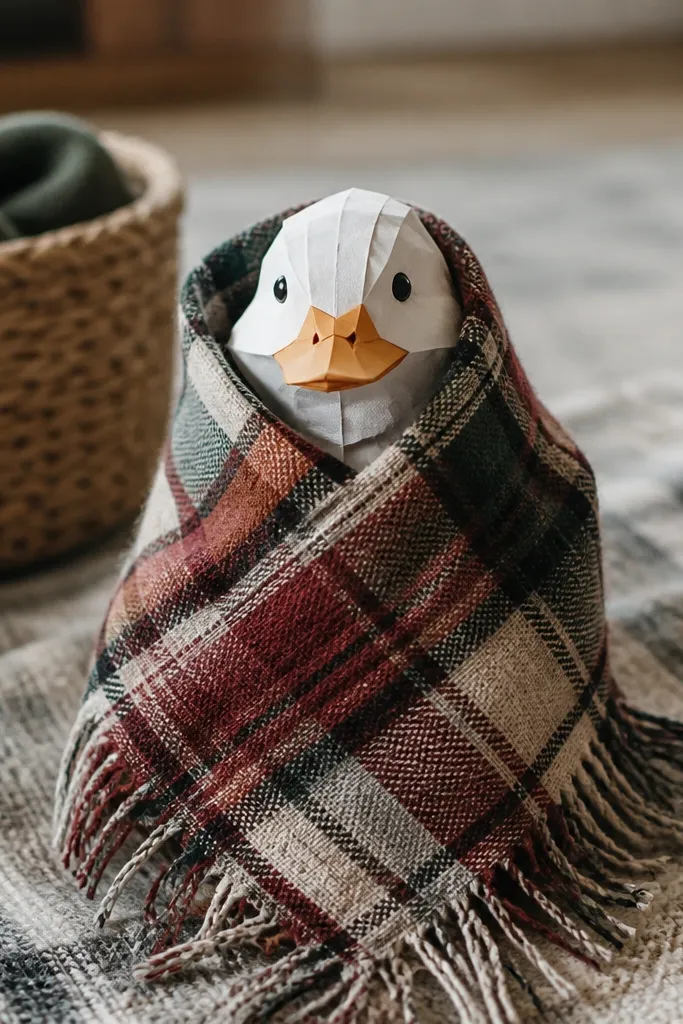
This one looks like a tiny burrito blanket, and it photographs like a whole moment, not just clothing. The fringe gives movement and texture, and the wrap shape covers the duck body so it hides any outfit edges. Use warm plaid paper or soft solid paper with a subtle pattern. Kids love it because it feels like a prop they can put the duck “in” for storytime.
Cut a blanket wrap as a large rectangle with rounded corners, then score a fold line 2-3 cm from one long edge to create the wrap flap. Fringe the opposite edge by cutting 6-8 mm strips down about halfway. Create two attachment tabs on the wrap flap and two slits on the duck torso so the blanket holds without glue mess. Add one small “button” circle on the flap to make it look tied.
Fringe looks cleaner when you cut with a metal ruler as a guide.
Skip very long fringe; it tangles with other paper pieces.
11. Mushroom Cottage Duck With Tiny Door Apron
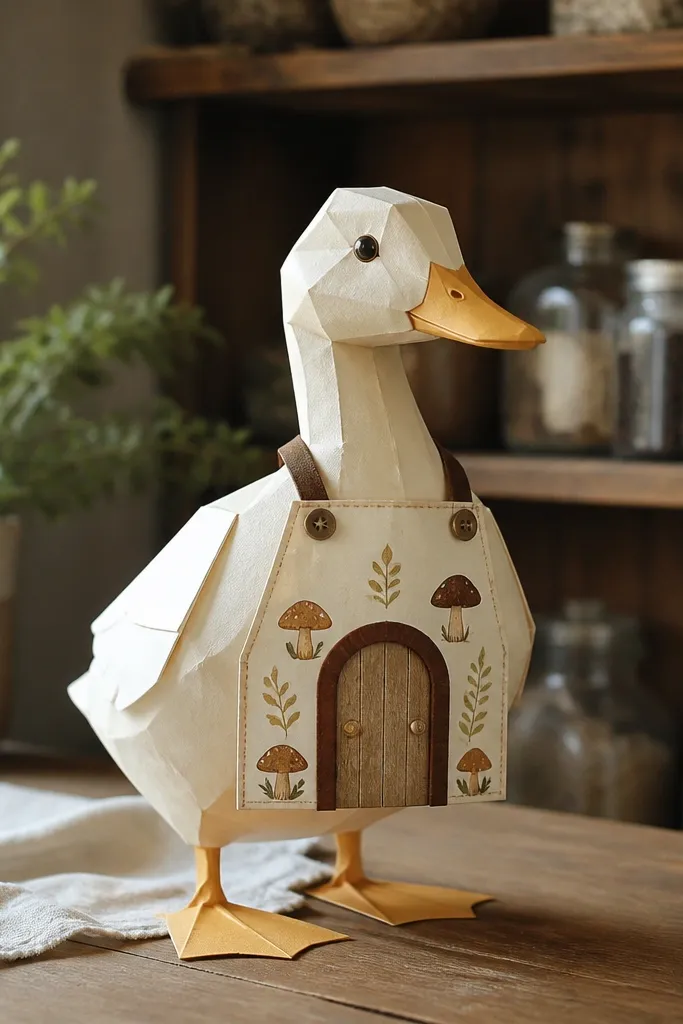
This is cozy in the “storybook cottage” way. The house-shaped apron panel gives a centered focal point, and the tiny door detail makes it interactive for kids who like roleplay. Keep the door large enough to cut easily and add a contrasting frame strip so it pops. The apron straps can be simple tabs, which keeps the whole build sturdy.
Cut an apron front shaped like a small cottage roof and body, using two layers for depth if you want a frame. Add a door piece as a rectangle with an arched top, then glue it so it sits slightly forward. Attach the apron to the duck with side slits and two tabs on the back. Draw simple window lines on the cottage paper with a fine marker so it looks painted, not blank.
Editor's noteUse a darker paper for the cottage outline — it makes the door read instantly.
Skip thisDon’t place details too close to the edges; kids will snag them.
12. Tea Cup Sweater Duck With Hanging Mug
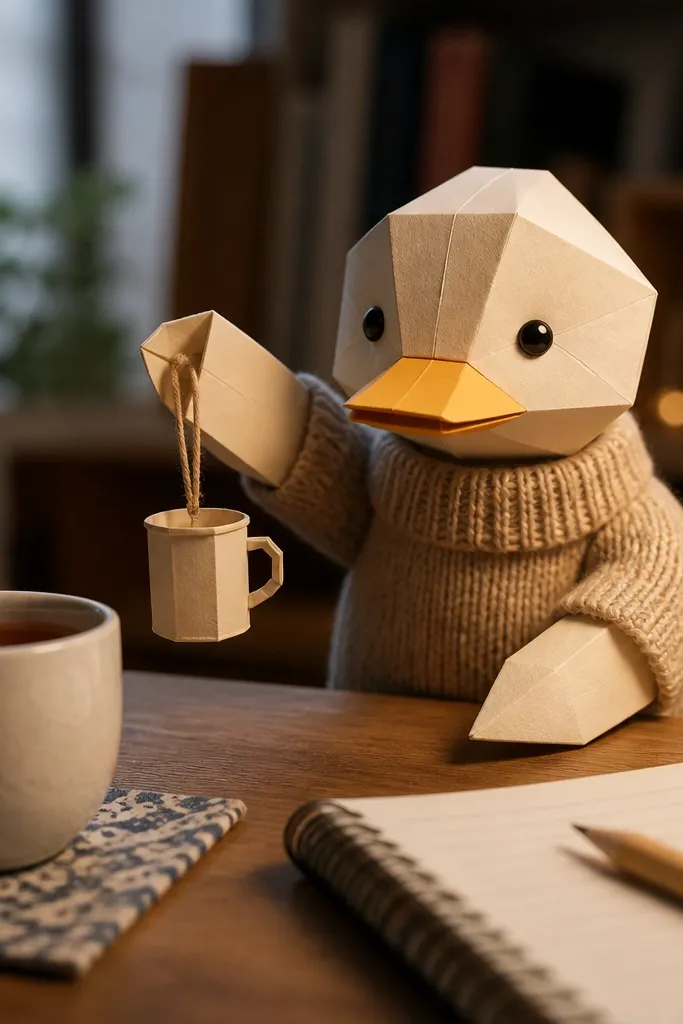
This idea goes beyond clothing by adding a cozy accessory that swings visually when the doll is moved. A hanging mug charm looks adorable in photos and makes the set feel like a “scene,” not a flat craft. The key is building the mug as a separate piece with a simple loop so it hangs straight. Use cream paper for the mug and a soft brown or muted red for tea stains or swirls.
Cut a sweater outfit in a warm solid color, then add a small chest pocket panel where the charm will attach. Make the mug from two layers: one mug body and one handle strip; glue the handle last so it stays crisp. Punch a small hole at the top of the mug and thread a short paper loop or thin string through it. Attach the loop to the sweater pocket area with a slit-tab connection so it hangs.
Editor's noteUse a single hole punch for the charm hole; it keeps the mug centered.
Skip thisAvoid string longer than 2 cm or the mug tangles with other outfits.
13. Cozy Knit Mittens Duck Sleeve Set
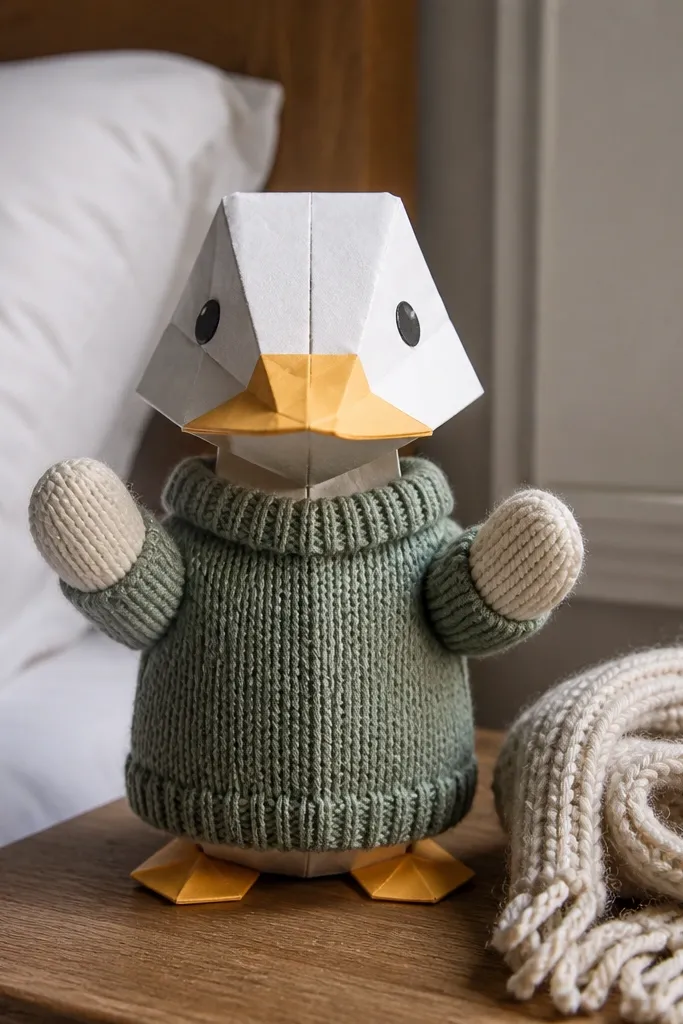
Mittens are instant winter comfort and they photograph well because they frame the duck’s front. This project uses separate sleeve pieces with cuff detail so the arms look thicker and softer. Choose a contrasting cuff color like oat cream against a muted green sweater. The mitten tips can be drawn with small rounded shapes, so you get the knit look without complicated cutting.
Cut a sweater front with open arm areas, then add two sleeve pieces that wrap around the sides. On each sleeve, attach a mitten cuff strip with a folded bottom edge so it stands out. Create tabs on the sleeve backs and slits on the duck sides to lock them in. Finish by drawing knit lines on the sleeve cuff and adding a tiny thumb marker with a lighter marker shade.
Editor's noteKeep cuff width around 1.2-1.5 cm for a plush look that still fits small hands.
Skip thisDon’t glue sleeves directly to the duck’s face area; leave clearance so the head stays readable.
14. Scandinavian Christmas Duck With Red Scarf Bow
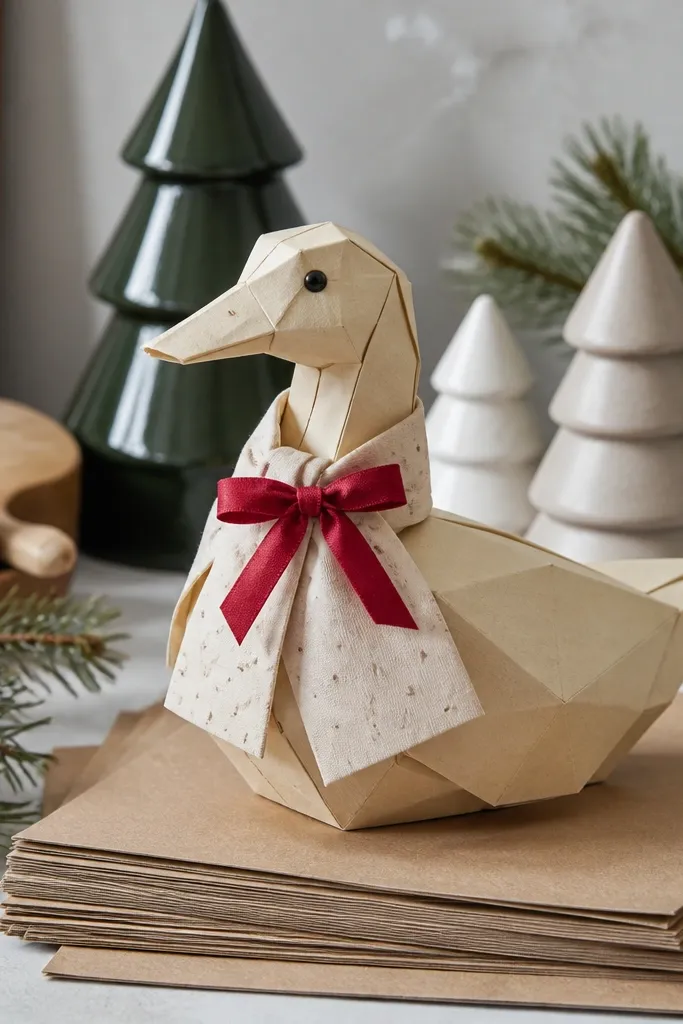
A scarf bow is a cozy holiday detail that looks neat even with simple paper. The bow creates a clear shape at the center, and red against cream gives strong contrast for photos. This design uses two ribbon strips with a knot point so it looks tied, not pasted. Add tiny dots or micro patterns to the scarf paper for a Scandinavian feel.
Cut two long scarf tails and one short knot strip. Score the tails lightly in the middle to create a gentle curve, then glue them to the knot strip only at the center. Attach the bow to the duck chest using two small tabs that fit into slits on the torso. Finish by drawing a few tiny dot accents along the scarf tails with a white gel pen or light marker.
Editor's noteUse a white gel pen for dot patterns — it stays crisp on dark paper.
Skip thisSkip thick glue near the bow edges; it squishes the shape.
15. Cozy Pajama Set Duck With Patchwork Knee
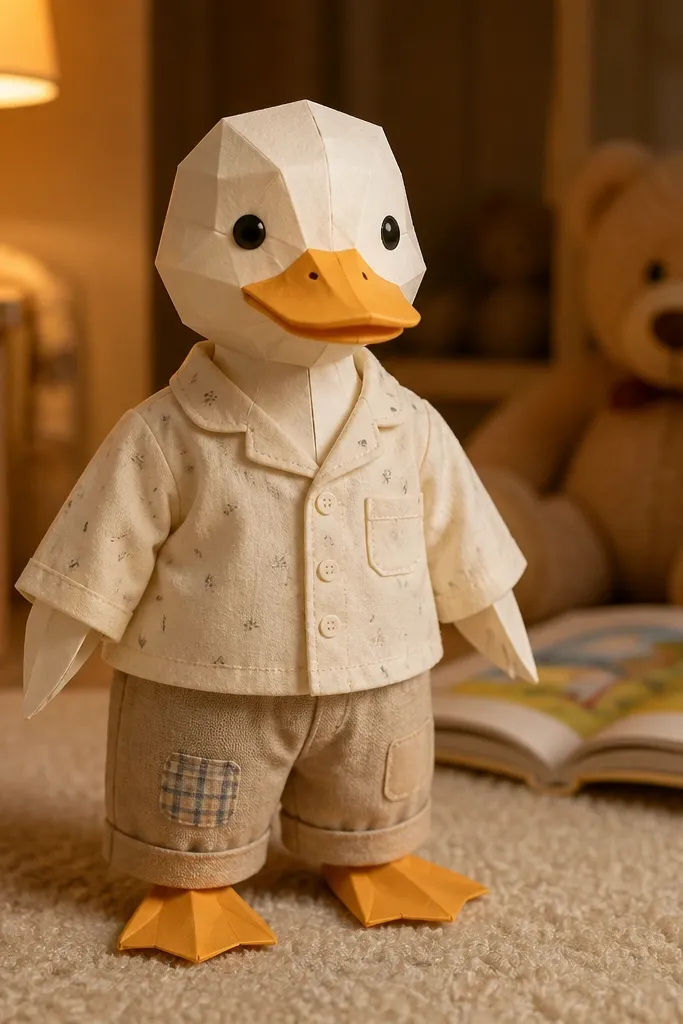
Pajamas look cozy because they feel like bedtime, and a patchwork knee gives a storytelling detail. This outfit is built from separate top and pant pieces so kids can swap just one part. The patchwork knee should be a contrasting square with stitched lines so it reads clearly. Keep the pajama palette soft: cream top, muted blue pants, cocoa patch.
Cut a pajama top and separate pants piece; connect them with two tabs at the waist so the outfit stays aligned. Add a knee patch as a small square or rounded rectangle and stitch-draw around it with a dark marker. Create slits on the duck torso for the top tabs and slits near the legs for the pants tabs. Finish by adding a simple cuff line at each wrist and ankle.
Editor's noteMake the patch size about 1.5 cm wide so it looks intentional, not random.
Skip thisDon’t use too many patterns; one patch plus one stripe reads better.
16. Felt-Style Pocket Vest Duck With Button Row
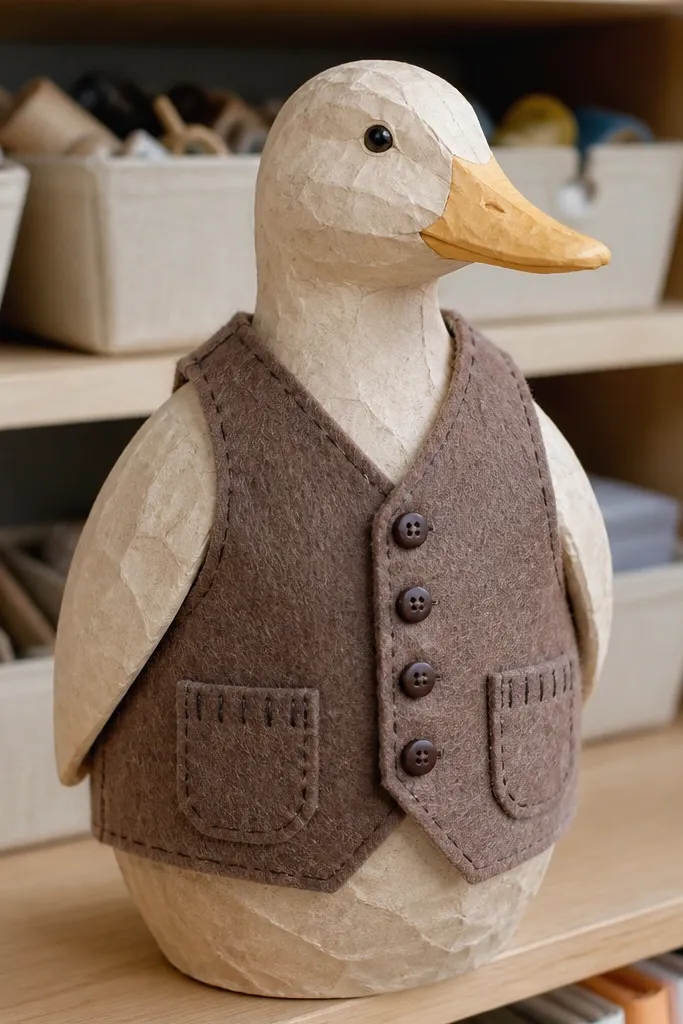
This vest reads “cozy” because it looks like felt even when you use paper. The pockets give structure and the button row adds a clean rhythm across the front. Choose a muted green, warm gray, or cocoa for the vest, then use darker thread-like marker lines for texture. It’s great for shelf display because the vest sits flat and frames the duck face.
Cut the vest front as a single piece with a shallow V neckline and pocket shapes. Add a separate pocket flap piece and glue it only along the top edge so the pocket looks layered. Draw a vertical line down the vest center and place three button circles with small glue dots. Attach the vest to the duck with side tabs so it doesn’t need glue at the neck.
Editor's noteUse a darker marker to draw faux seam lines around pockets; it makes paper look fabric.
Skip thisAvoid glossy paper for the vest; it reflects and hides the seam marks.
17. Winter Scarf Loop Duck With Patterned Ends
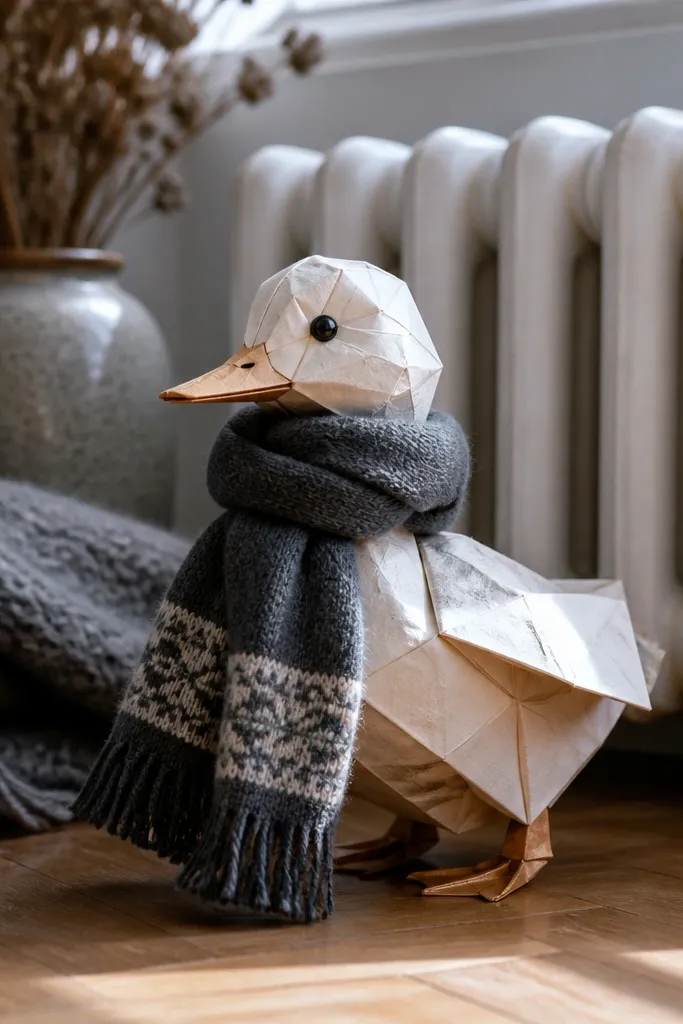
A loop scarf looks cozy because it creates a thick ring around the neck. Patterned ends add motion and visual interest without making the scarf complicated. This design also helps with durability because the scarf sits in one simple shape that kids can grab safely at the ends. Use a solid scarf base and patterned ends in a small-scale print like tiny stars or micro checks.
Cut the scarf as one long strip, then glue the ends together to form a ring. Leave a 1-2 cm gap at the join line and cover it with a small patterned end tab so the seam disappears. Attach the scarf ring to the duck neck using two tabs that tuck into slits on the torso. Add a short “tail” piece on each side if you want extra cozy volume.
Editor's noteMake the scarf ring diameter about 2.5-3 cm for a snug, photo-friendly loop.
Skip thisDon’t make the ring too tight; it will buckle when kids handle it.
18. Cozy Hot Cocoa Duck With Marshmallow Topper
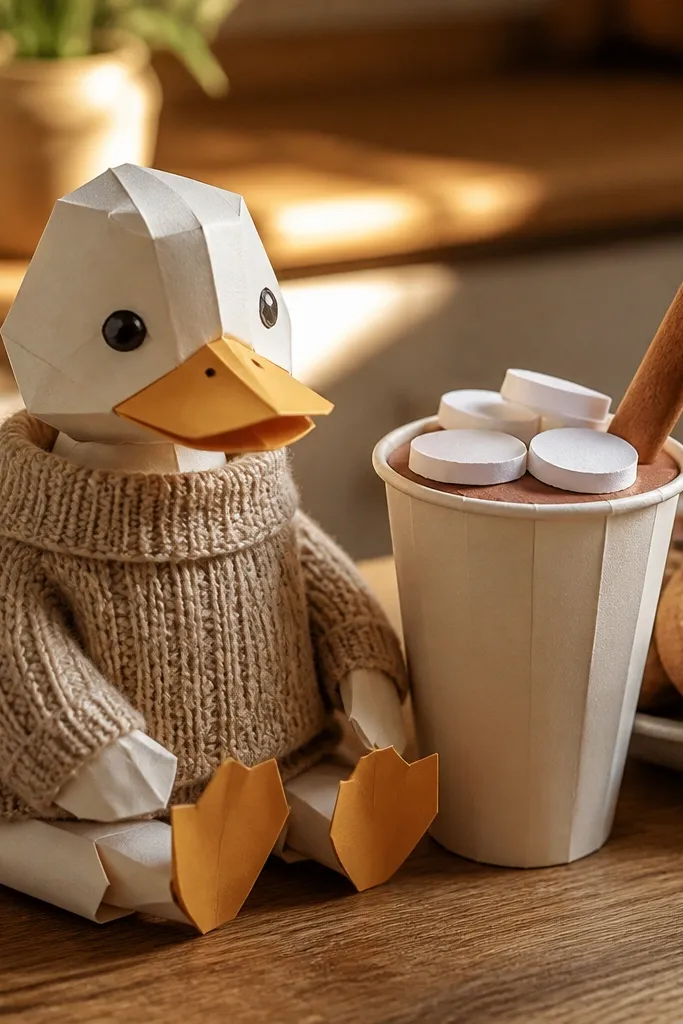
Hot cocoa is the easiest cozy theme to read instantly, and marshmallows make it cute without needing heavy materials. This outfit puts the “cozy” in the accessory, so even a simple sweater looks special. The marshmallow toppers are large circles that stay intact, and the cup can be a separate piece so kids can swap it with other drinks later. Keep colors warm: cocoa brown cup, cream marshmallows, soft red scarf or mitt accents.
Cut a simple sweater or cardigan base, then add a front hand-hold position using slits where the cup will attach. Build the cup as two layers for thickness and add a small handle strip. Glue three marshmallow circles on top, then add a tiny swirl line on the cup surface with a marker. Insert the cup tabs into the slits on the duck so it holds upright during play.
Editor's noteOutline the cup with a thin brown marker so it stays readable on light backgrounds.
Skip thisAvoid tiny sprinkles; they fall off and get lost.
19. Cozy Winter Beads Duck With Sweater Pattern
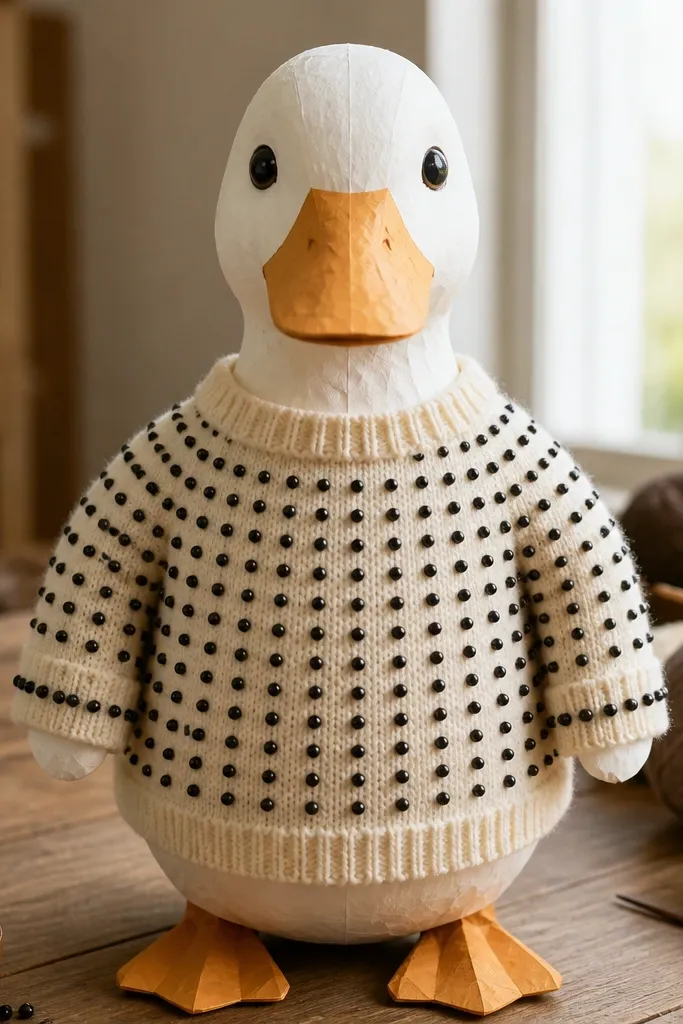
This one gives a cozy “knit texture” look using dot patterns that read like beads. It’s visually striking because the sweater pattern spreads across the whole front, and kids can customize the dot colors. Use a base sweater color like cream or pale blue, then add evenly spaced dots in a darker shade. Finish with cuff lines so the outfit looks intentional and framed.
Cut a sweater front piece and mark a grid with light pencil dots spaced about 8-10 mm apart. Use a fine marker or paint marker to fill dots in rows across the chest. Add cuff bands by cutting narrow strips and gluing them at the wrists and bottom edge. Attach the sweater to the duck with side tabs and slits so it stays straight when kids swap it.
Test dot spacing on scrap first so the pattern fits the duck shape cleanly.
Don’t freehand dot sizes; big variations make it look sloppy fast.
20. Cozy Reading Nook Duck With Book Bag Outfit
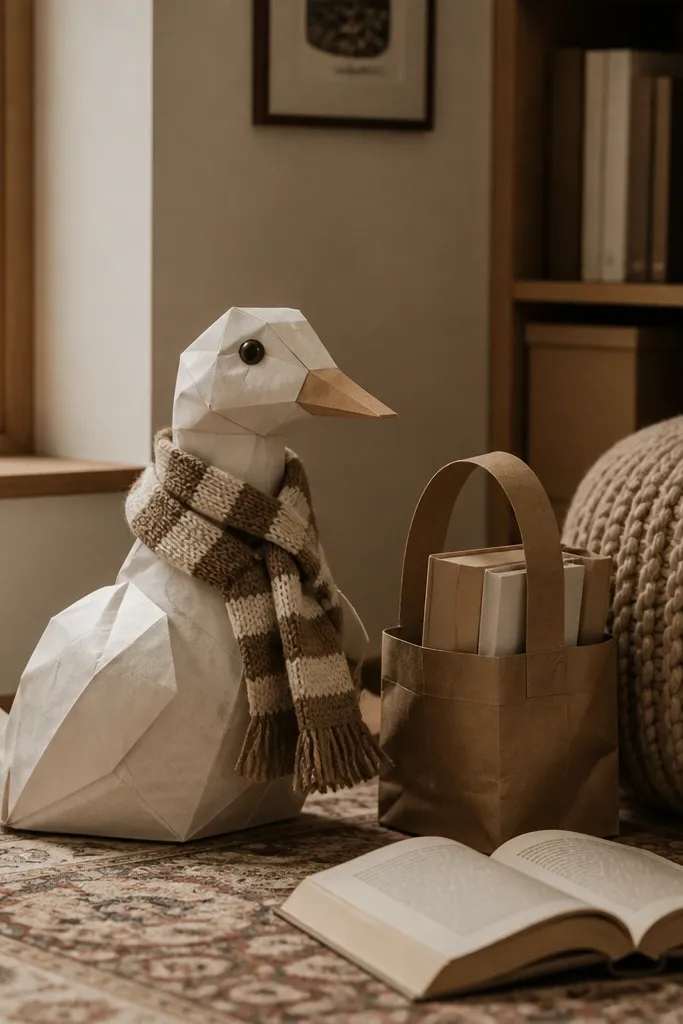
Reading nook outfits look cozy because they feel like a routine: book in hand, scarf on, relaxed stance. This design uses a tote-like bag or book pouch so the duck can hold something that’s clearly “the scene.” The book shape can be simple rectangles with a spine color strip, which keeps it sturdy. Make the scarf a separate piece so kids can swap it with other neck outfits.
Cut a book piece with a spine strip and two page rectangles; glue them so the book has slight thickness. Add a scarf as a separate neck wrap using tabs and slits. Build a small tote or pouch panel on the duck front with two side tabs that lock behind the torso. Insert the book into the pouch opening so it sits centered.
Editor's noteUse a thicker spine paper strip so the book doesn’t curl when handled.
Skip thisAvoid very thin book pages; they crumple under pressure.
21. Cozy Cabin Duck With Plaid Vest and Bow Tie
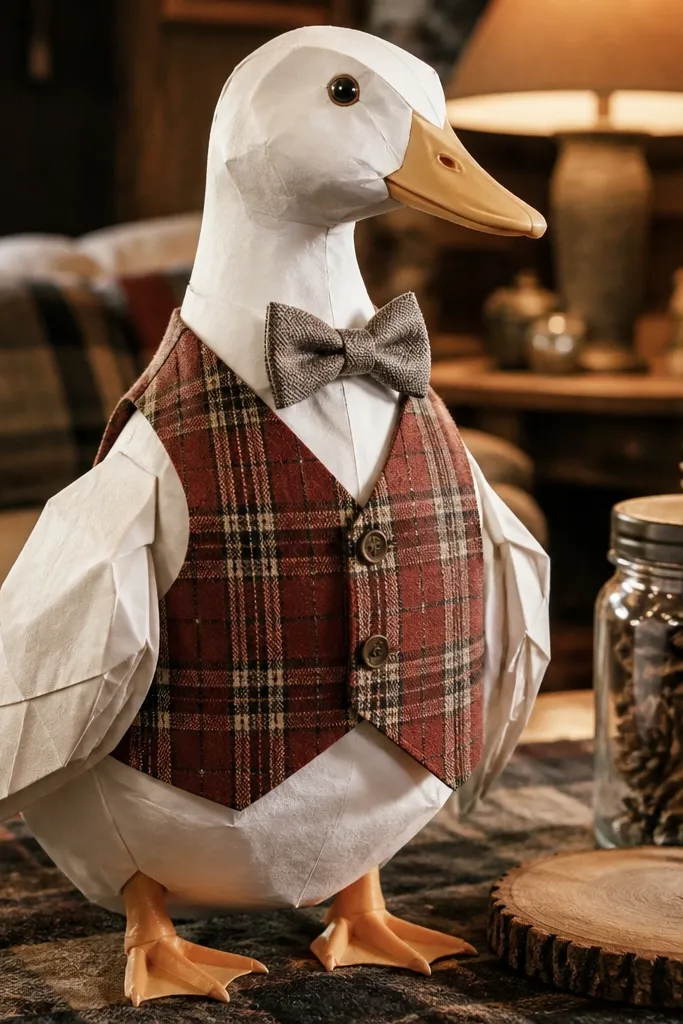
Plaid + bow tie screams cabin cozy without needing complicated cuts. The vest gives the main structure, and the bow tie adds a crisp focal point near the neck. Use warm plaid paper like red-brown with cream lines, then tone down the bow tie color so it doesn’t fight the pattern. This looks best when the bow tie is slightly raised with a small foam pad or layered paper.
Cut a plaid vest front and back from one plaid sheet so the pattern lines up across the chest. Create a bow tie from two symmetrical pieces, then layer them on top of a small center knot strip. Attach the vest to the duck using side tabs and slits at the torso. Glue the bow tie to the neck area after the vest is attached so it sits above the collar line.
Editor's noteIf your plaid looks misaligned, rotate the vest pattern before cutting — it makes the whole piece look intentional.
Skip thisDon’t add extra decorations to the vest; plaid already carries the look.
22. Cozy Snow Day Duck With Mittens and Blizzard Specks
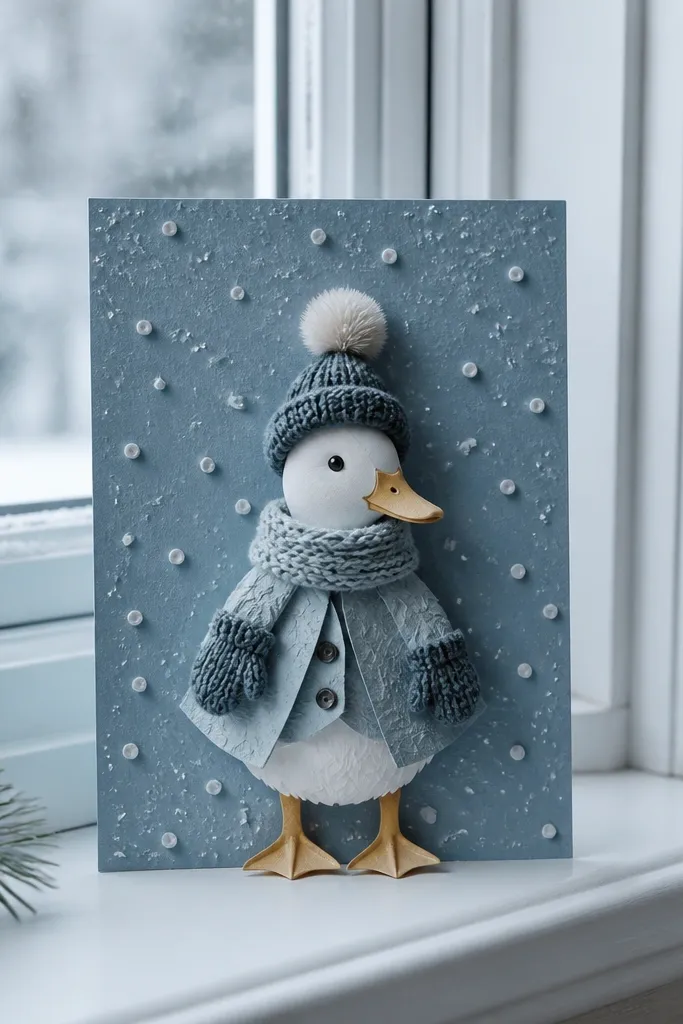
This is cozy because it adds a background moment, not just clothing. The blizzard specks make the outfit feel wintery, and mittens keep the hands cute and framed. The build is still simple because the specks are just dots and tiny circles on a backing card. Use a light blue or gray backing so the snow reads clearly, then add a warm scarf or sweater to balance it.
Make a backing card first, sized slightly larger than the duck, and color it with a gradient using sponge blending. Cut a mittens outfit with two sleeve pieces that attach to the duck sides using tabs. Add snow specks by stamping or punching small circles from white paper and gluing them lightly around the duck body. Place the duck on top and glue only the edges so the specks stay visible.
Glue specks at two heights — some flat, some with tiny paper shims — so it looks dimensional.
Avoid covering the duck with too many specks; it turns into visual noise.
23. Cozy Hoodie Pocket Duck With Removable Note
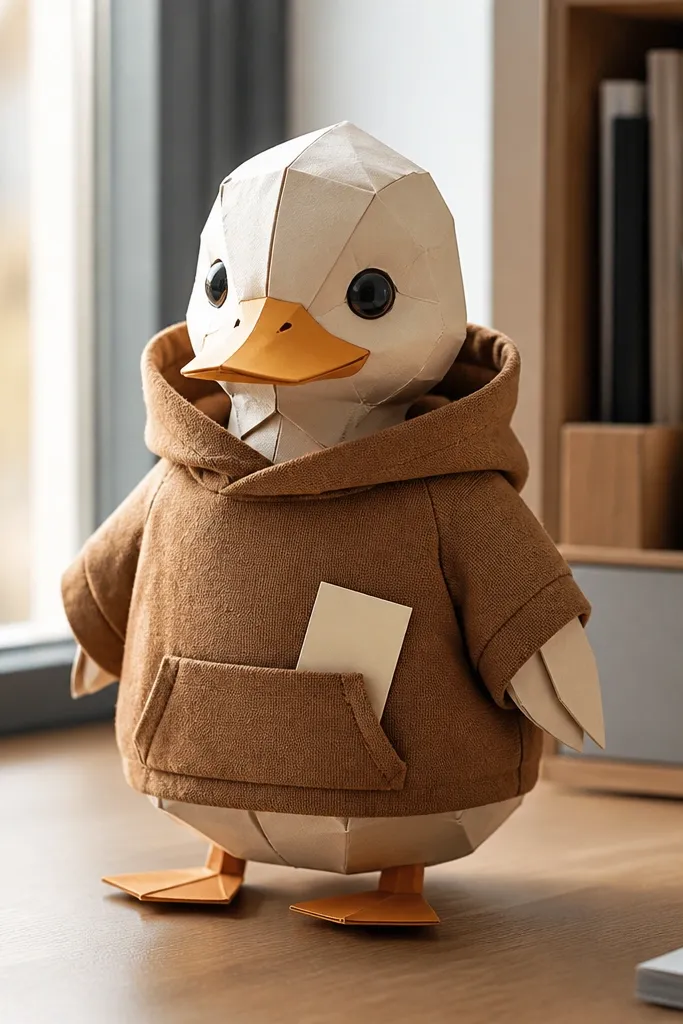
This one feels extra cozy because it includes a tiny “message” prop. The removable note makes the doll more interactive, and the hoodie pocket keeps it tidy. The look is clean and photogenic: pocket flap, note corner, and a warm hoodie color. Kids love it because they can swap notes with different phrases, drawings, or stickers without damaging the doll outfit.
Cut a hoodie with a front pocket that has an opening slit. Make the note as a rectangle folded once, then add a small tab on the back edge so it slides into the pocket. Attach the hoodie to the duck with side tabs and slits, and keep the pocket flap separate so it can open. Insert the note tab into the pocket opening and glue the flap only at the sides so it still looks like it opens.
Editor's noteUse 120-160 gsm paper for the notes so they fold crisply and slide easily.
Skip thisDon’t glue the note inside the pocket — kids will feel it’s “stuck” and lose interest.
24. Cozy Wrap Blanket Vest Duck With House Slippers
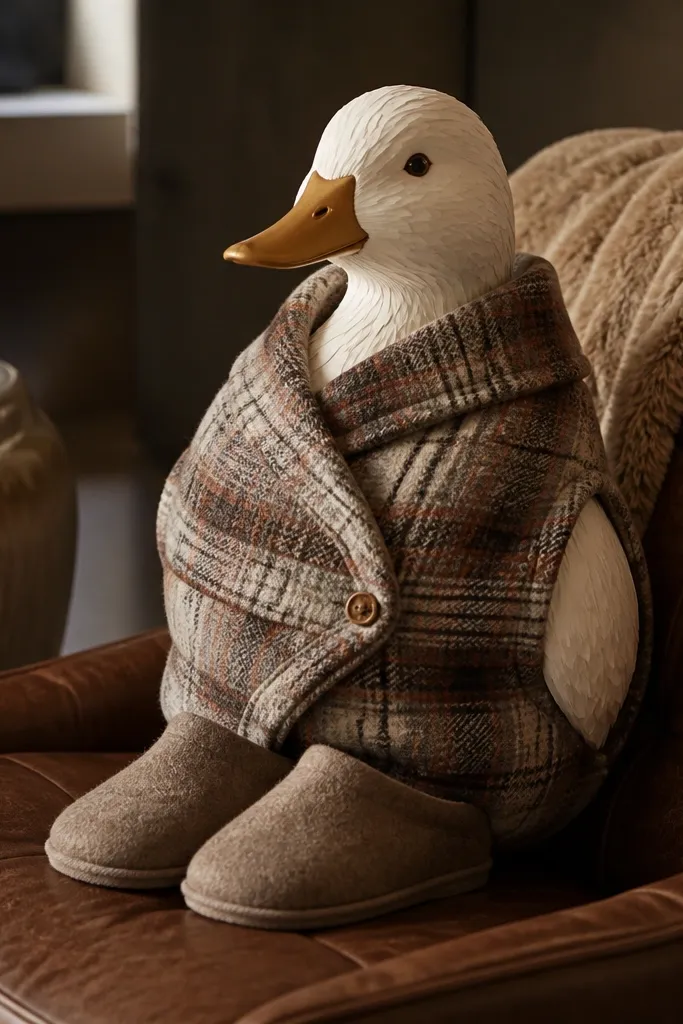
This combo is cozy on purpose: a wrap-vest look plus house slippers makes the duck feel like it’s ready to lounge. The vest wraps over the body for a thick silhouette, while the slippers add a warm base. Use a blanket-like patterned paper for the vest and solid felt-like paper for the slippers so the textures contrast. It’s one of the best “shelf set” builds because every part reads clearly from the front.
Cut a wrap vest panel that overlaps in the front by 1-1.5 cm, then add two small tie tabs that tuck into slits on the torso. Create house slippers as two separate shapes with a folded cuff at the top, then attach them using tabs into slits near the feet. Add a tiny slipper strap line with a marker to mimic stitching. Finish by trimming the vest overlap edge with a simple rounded outline so it looks intentional.
Score the vest overlap line lightly before folding so it lays flat instead of curling.
Avoid slippers with very thin cuffs; they tear at the fold.
25. Library Cardigan Duck With Pocket Bookmark Slot
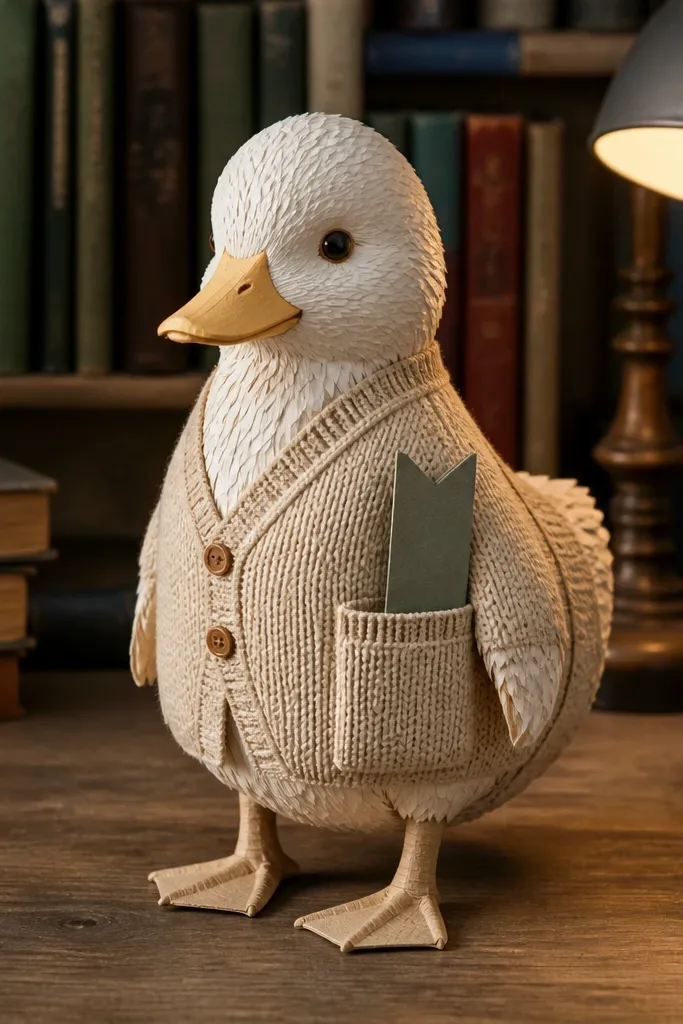
This one is cozy in a very specific way: it makes the duck feel like a tiny reader, and it gives kids a job their hands can do. The cardigan has a side pocket that actually holds a flat paper bookmark, so the doll is interactive, not just pretty. The bookmark slot also keeps the paper from flopping around, which makes the finished set look tidy in photos. Use warm browns and cream layers so it matches the “cozy” vibe, and add a little stitched-looking border to make it pop. It’s a medium-difficulty paper project that takes about an hour, and it works great for desks, reading nooks, and rainy-day quiet corners.
Cut the duck base from thick craft paper (about 200-250 gsm) and layer a cardigan front from two pieces: one for the chest panel and one for the pocket flap. Make the pocket opening by cutting a rectangle in the chest panel, then glue a thin paper backing behind it so the slot looks finished from the front. The pocket should be about 2.5 cm tall and 3 cm wide, placed 1.5 cm below the cardigan neckline. Create the bookmark from a 10 cm x 3 cm strip, then add a 1 cm wide tab at the top that slides under the pocket flap. Finish by adding a faux cardigan border with a darker marker line around the edges and glue the pocket flap so it holds the bookmark snugly without crushing it.
Editor's noteScore the bookmark tab line with a dull butter knife so it slides in smoothly without bending the whole bookmark.
Skip thisDon’t make the pocket opening too tight — if the bookmark tab drags, kids will tear the paper trying to force it.