
1. Glazed speckle clay travel mug with a black rim band
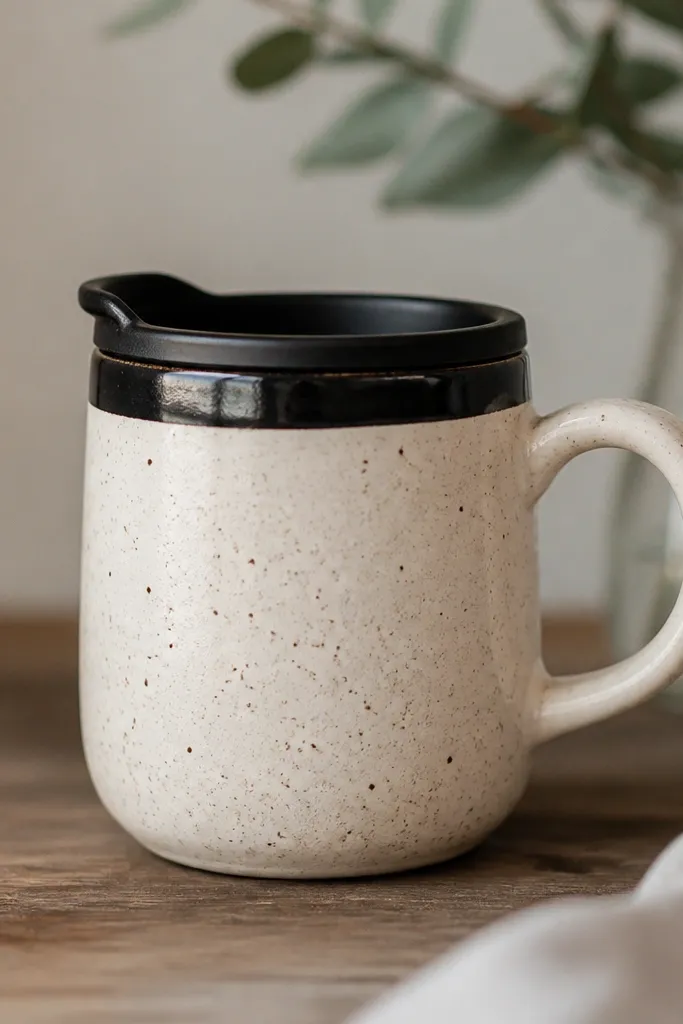
This is the easiest “looks expensive” travel mug because the speckle hides micro-scratches. The black rim band is glossy and wipes clean, so the area you touch after drinking stays neat. I like off-white plus black because coffee stains don’t show as harshly as on bright pastels. The lid matches the rim, so scuffs blend in instead of looking random.
Use a ceramic slip or air-dry clay mug body with a speckled finish (mix in fine sand or mineral pigment before shaping). After it’s cured, apply a food-safe clear glaze to the inside and a glossy clear glaze over the outside, then add the black band around the rim with glaze paint. Keep the band about 1 to 1.5 cm wide so it frames the opening and still feels smooth.
Wipe the rim with a damp cloth right after use; glossy glaze shows less staining when you don’t let coffee dry on it overnight.
Avoid thin paint-only rims that chip at the edge — if the band is fragile, the mug will look worn fast.
2. Decoupaged map band under clear epoxy
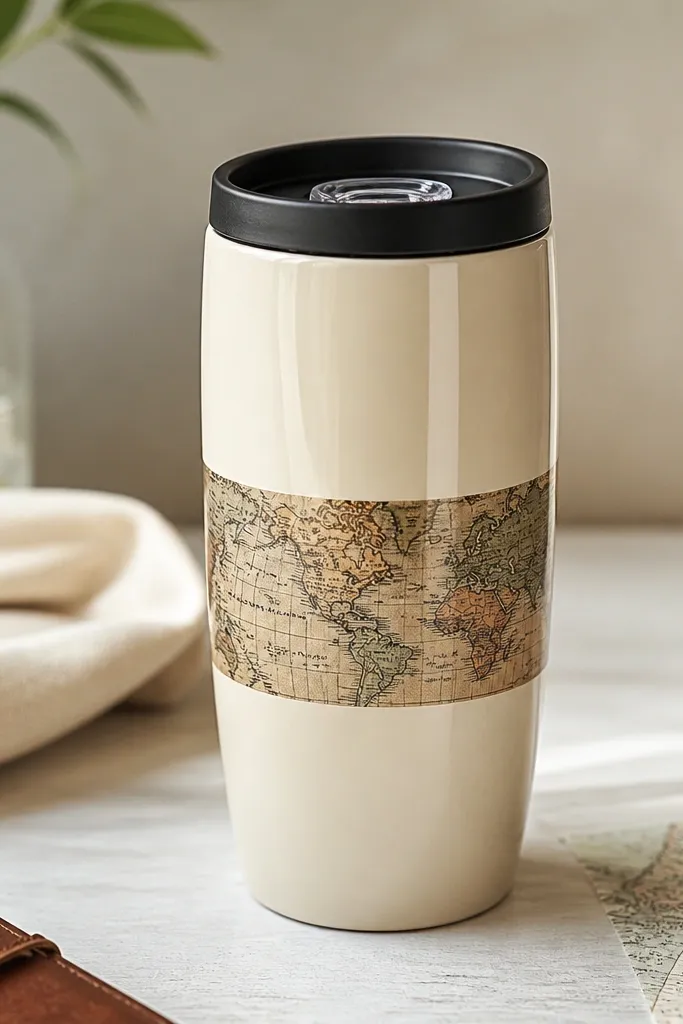
A single band design is my favorite for low maintenance because it’s the only decorated area. The map print adds character, and the epoxy locks it in so it doesn’t peel from heat and washing. Epoxy also makes the surface easy to wipe, which matters for travel mugs that live in bags. The glossy band catches light in a good way, even when the rest of the mug stays matte.
Cut a map strip to wrap the mug with a 2-3 mm overlap, then glue it with a thin layer of Mod Podge or decoupage medium. Let it dry fully, then paint epoxy only on the outside band and a little beyond the edges (about 5 mm extra) so you don’t get peeling at the seam. Keep the inside bare or glazed — never epoxy the inside unless you’re using a food-safe system rated for cup contact.
Editor's noteSeal the edges with a thin brush of epoxy before the full coat; edge lift is what makes decoupage look cheap later.
Skip thisSkip covering the whole mug with paper — paper texture under coating shows wear and can lift after repeated washing.
3. Stamped polymer clay pattern mug with matte seal
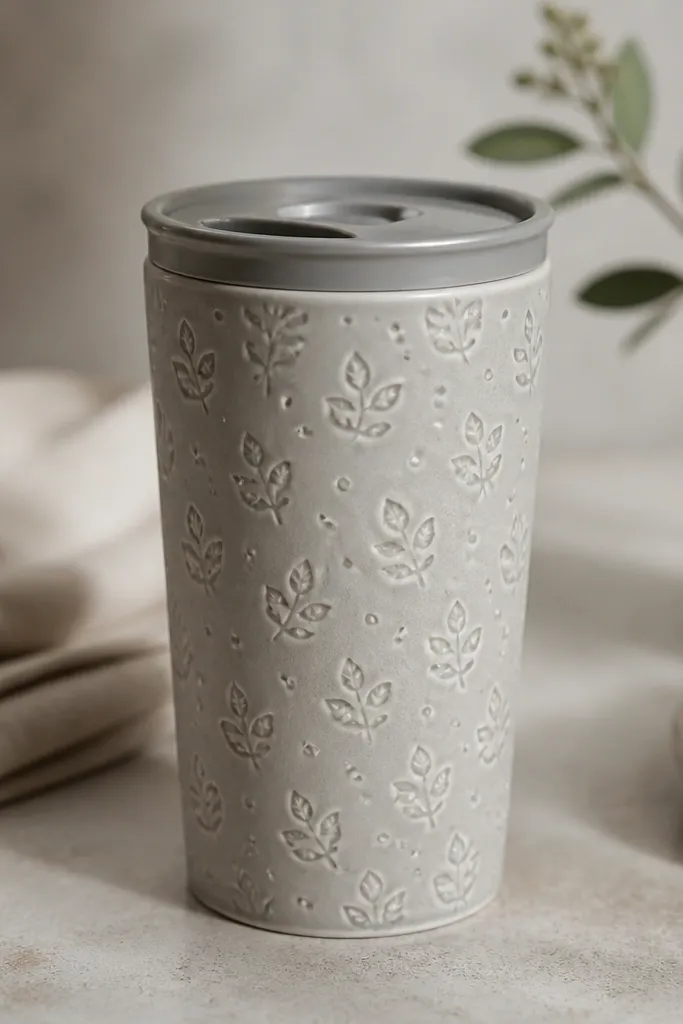
Stamped polymer clay gives you texture without fragile details. The impressions catch light so the mug looks interesting even when it’s clean and dry. A matte seal keeps the texture from feeling sticky and makes fingerprints less obvious. I’ve used this look on gift mugs for people who hate “decorations that need care,” because the pattern stays readable after scuffs.
Use polymer clay sheets pressed onto a mug surface (or create an outer sleeve that fits snugly). Stamp with a leaf texture tool or a small alphabet stamp for consistent marks. Bake the clay pieces if they’re attached as separate elements, then seal the outside with a matte, water-resistant sealant made for polymer. Keep the sealed layer thin so the texture stays tactile.
Editor's noteChoose one texture stamp and repeat it in a grid; random stamping looks messy after a few weeks of wear.
Skip thisDon’t use glittery polymer or loose flakes — they shed and end up in the lid seam.
4. Vinyl decal mug with clear coat over the design
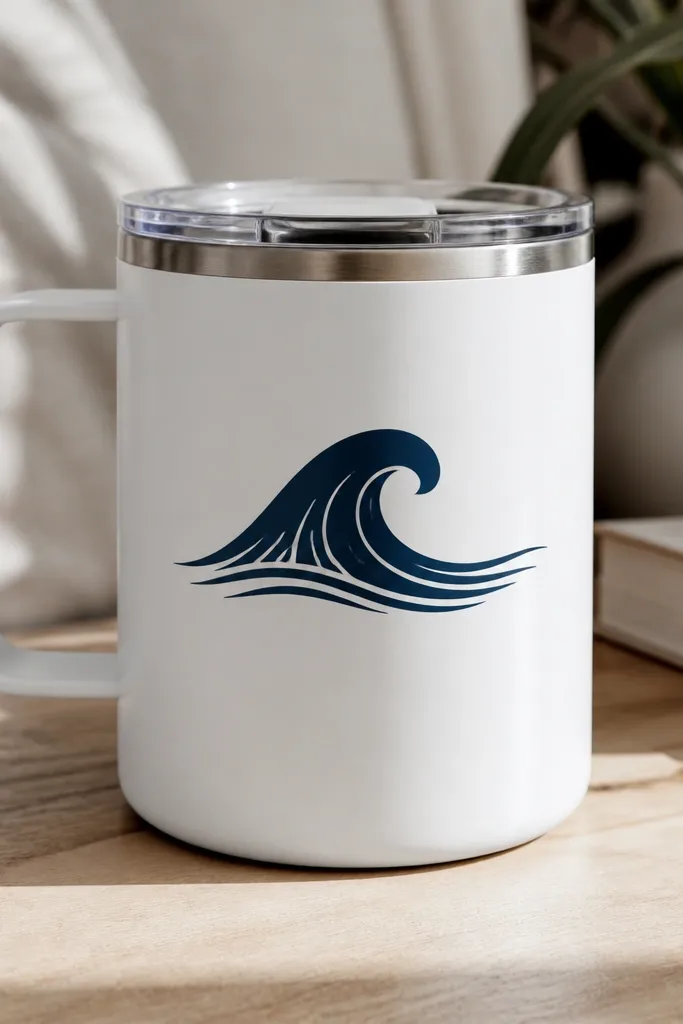
Vinyl decals are fast and forgiving. When you topcoat them, they stop peeling and don’t smear from repeated washing. I like this for people who want clean lines and a modern look without committing to hand painting. A dark decal on a light mug also hides minor scuffs around the edges.
Clean the mug thoroughly with rubbing alcohol and let it dry completely. Apply heat-transfer or craft vinyl decals, burnish firmly, then topcoat with a clear acrylic or polyurethane made for high-contact surfaces. Apply two thin coats, letting each cure between layers. Keep the decal away from the lid contact area so it doesn’t get scraped.
Editor's noteUse a hair dryer to warm the vinyl before burnishing; it sticks better on slightly curved surfaces.
Skip thisDon’t apply vinyl on dusty ceramic or unprimed painted surfaces — the decal lifts at the corners first.
5. Salt-glazed look mug using textured glaze and wipeable exterior
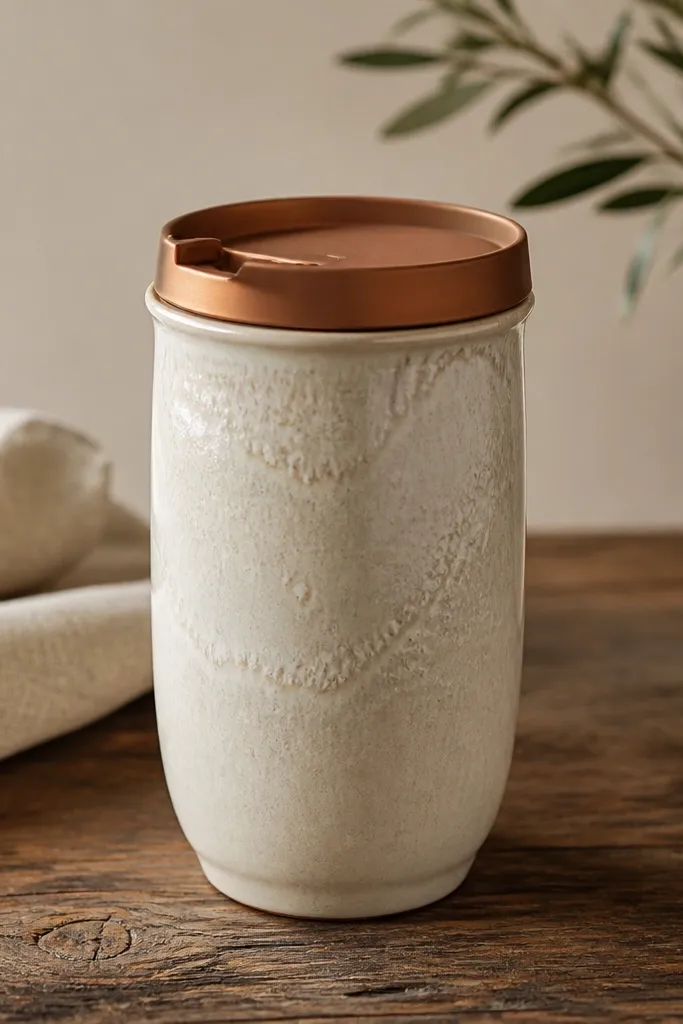
That salt-glazed look hides imperfections because the surface is naturally uneven. When you wipe it, the texture makes it look even, not like you’re rubbing off decoration. The warm cream tone also softens coffee staining, especially if the lid is darker. This style feels handmade without relying on delicate painted art.
If you’re working with real ceramic, use a textured glaze product that dries with speckled crystals, then glaze the inside with a smooth, food-safe clear layer. For non-ceramic bases, you can create a slip texture on the outside then seal it with a wipeable, heat-tolerant clear coat. Keep the handle smooth so your grip stays comfortable.
Editor's noteChoose a lid in a darker color than the body; it shows fewer scuffs from bag friction.
Skip thisAvoid porous finishes on the outside — if the glaze isn’t sealed, it will absorb odors.
6. Shibori-dyed sleeve mug with sealed fabric pocket
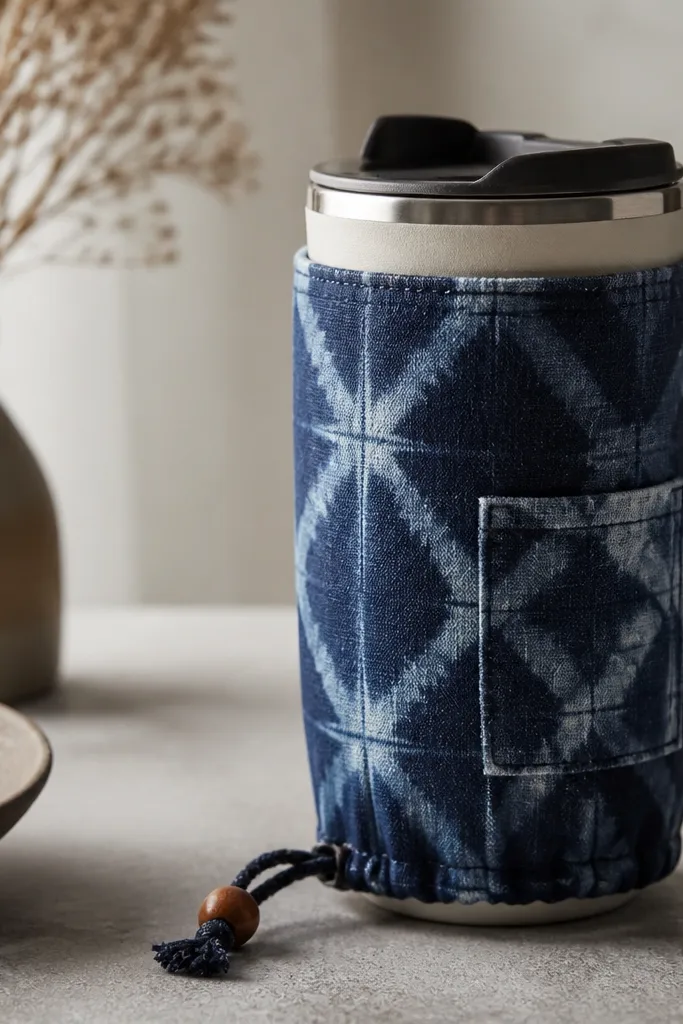
A fabric sleeve is low maintenance because the mug itself stays clean while the sleeve takes the visual hit. Shibori dye gives you depth and pattern that doesn’t show minor stains the way solid colors do. I like adding a pocket for a spoon or tea sachet because it turns the mug into a practical travel tool. Keep the sleeve removable and you can wash it without worrying about harming a sealed surface.
Tie-dye or shibori-dye cotton or linen fabric, then rinse until clear and dry fully. Make a sleeve sized to leave 5-8 mm gap around the mug so it doesn’t trap moisture. Seal the sleeve with a fabric fixative or wash-safe sealant, and stitch the pocket with strong thread. Use a drawstring or elastic at the bottom.
Editor's notePre-treat the fabric with a stain-resistant wash before dyeing if you want extra protection for long commutes.
Skip thisDon’t use a sleeve that touches the drink opening — fabric fibers get gross where condensation sits.
7. Painted ombre mug with a clear dishwasher-safe topcoat on outside
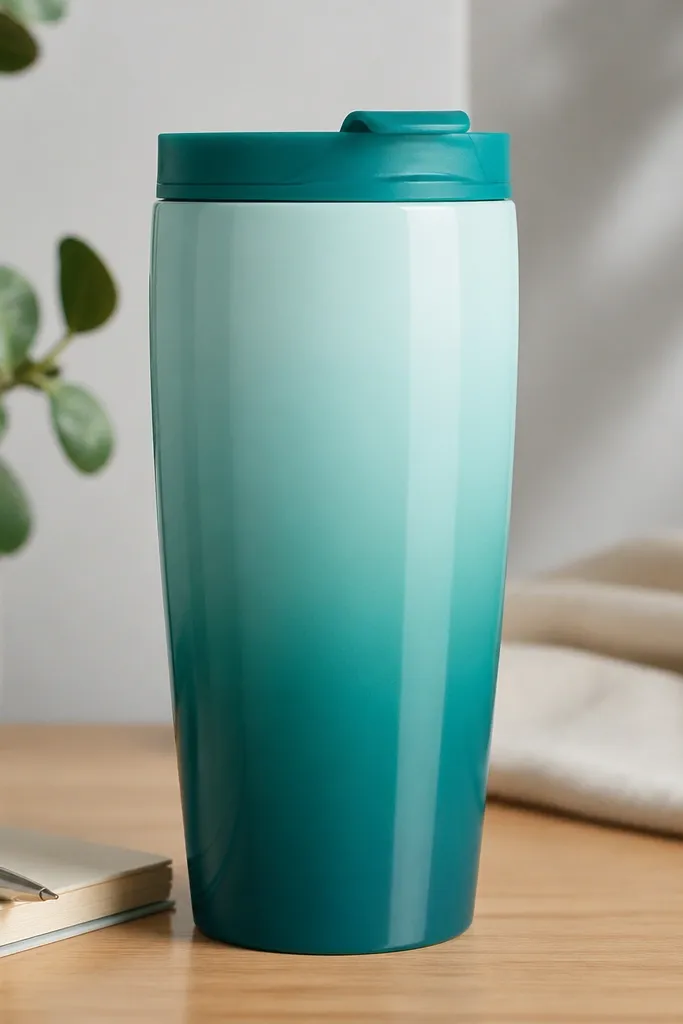
Ombre looks intentional and hides uneven wear because the color changes across the surface. When you seal it properly, it wipes clean like a factory finish. I’ve had the best results when the top area stays lighter and the bottom is darker — spills usually happen near the rim and base. This is a strong choice if you want color without detailed art.
Use ceramic paint or acrylic made for ceramics, then seal with a clear topcoat compatible with hot water exposure. Apply paint in 2-3 layers, blending with a damp sponge so the transition is smooth. Keep paint off the inside rim area where the lid seals. Cure fully per the paint instructions before you use it.
Do a small test spot on the bottom curve first; mugs dry differently on curved surfaces.
Skip thick brush strokes — they crack and look rough after a few washes.
8. Cork grip travel mug with wraparound strap and sealed base
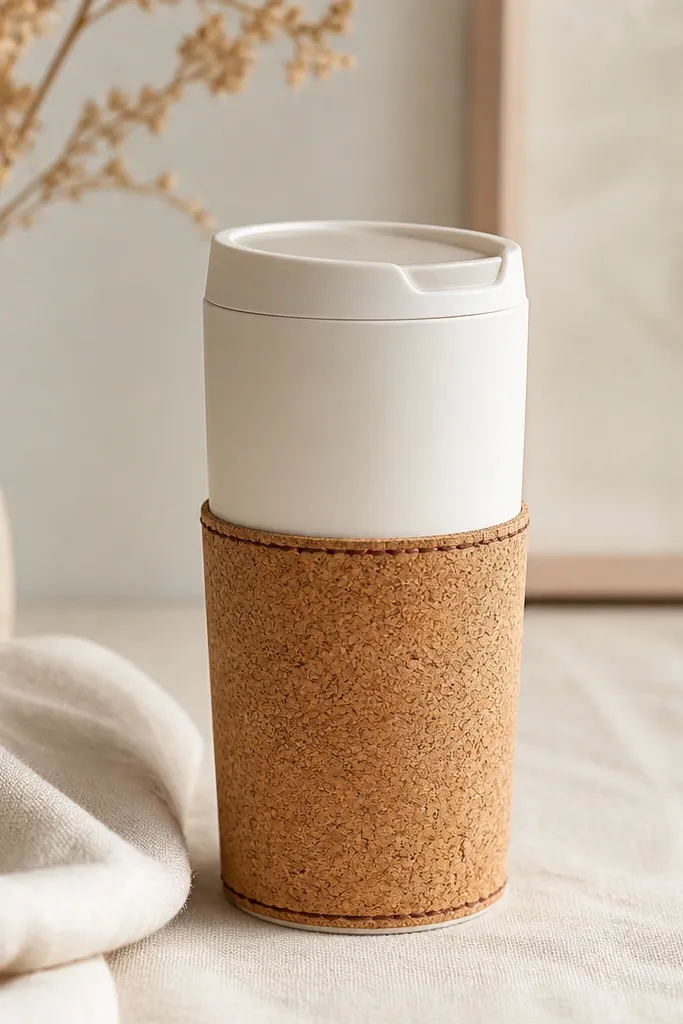
Cork grip is my favorite low maintenance upgrade because it hides fingerprints and makes the mug feel secure in your hand. It also protects the lower area from bag scuffs. The natural grain pattern means scratches blend in. Pairing cork with a simple painted or glazed body keeps the mug clean-looking even after months of daily use.
Cut cork sheet to wrap around the mug with a snug fit, leaving a 1-2 cm seam overlap. Seal the cork with a clear cork sealer so it wipes clean and doesn’t absorb odors. Stitch or glue the seam and add a wrap strap if you want extra hold. Keep the cork away from the lid and the drink opening so it stays dry.
Editor's noteUse a thin foam tape under the cork seam so it doesn’t rub and fray over time.
Skip thisAvoid unsealed cork — it stains fast from coffee and smells even after washing.
9. Mosaic bead rim mug with sealed grout look
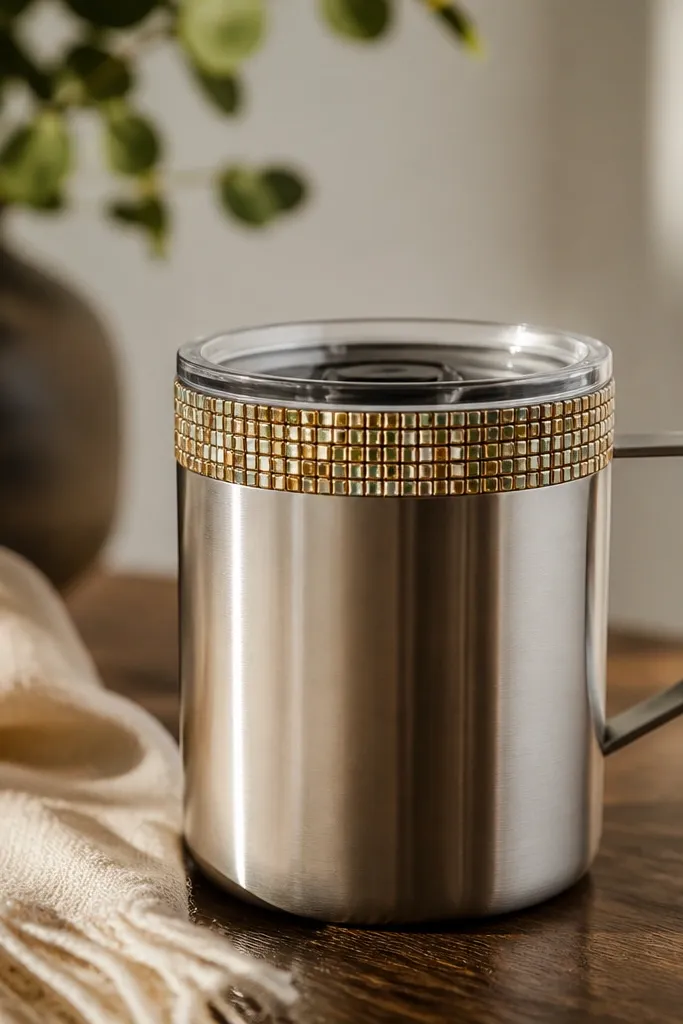
Keeping the mosaic limited to the rim is the trick. It looks decorative, but it doesn’t create a million cleaning points. A sealed grout look also makes it wipeable, so you don’t get sticky residue between pieces. This style feels handmade because the rim catches light with each angle.
Use small glass tile pieces or craft beads set into a rim band that’s 1-2 cm tall. Apply a strong adhesive, let it cure, then fill gaps with a thin tile grout-like filler or epoxy tinted to match. Finish with a clear sealant on top so the surface is smooth to the touch. Don’t put mosaic inside the drinking area.
Editor's noteChoose beads with a matte finish for the outside rim so they don’t scratch your lips.
Skip thisDon’t leave gaps unsealed — they trap coffee stains and look dirty quickly.
10. Leather wrap handle and lid loop on a ceramic travel mug
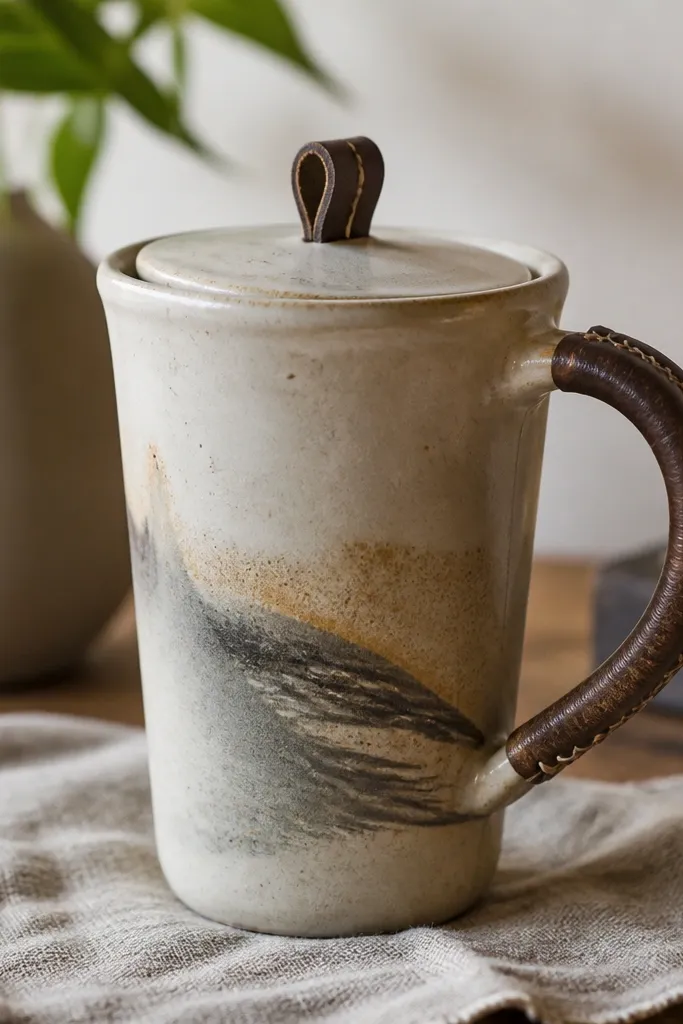
Leather is great for low maintenance because it ages in a good way. The wrap protects the handle from rubbing and gives you a grip that doesn’t slip when your hands are cold. A lid loop makes the mug easier to handle one-handed, which means you’re less likely to drop it and chip the rim. I like stone-colored mugs because the leather adds warmth without needing more decoration.
Cut leather strips about 12-15 mm wide for the handle wrap. Punch holes for stitching and wrap tightly so there’s no bulk. For the lid loop, stitch a small loop strap and anchor it to the lid with rivets or a sturdy adhesive that bonds to the lid material. Condition the leather with a small amount of leather balm.
Editor's noteUse waxed thread and pull it tight; loose stitching looks sloppy after a few weeks.
Skip thisAvoid thin craft leather that stretches — it turns floppy and the wrap looks unfinished.
11. Concrete-look outside with sealed resin topcoat and silicone lid
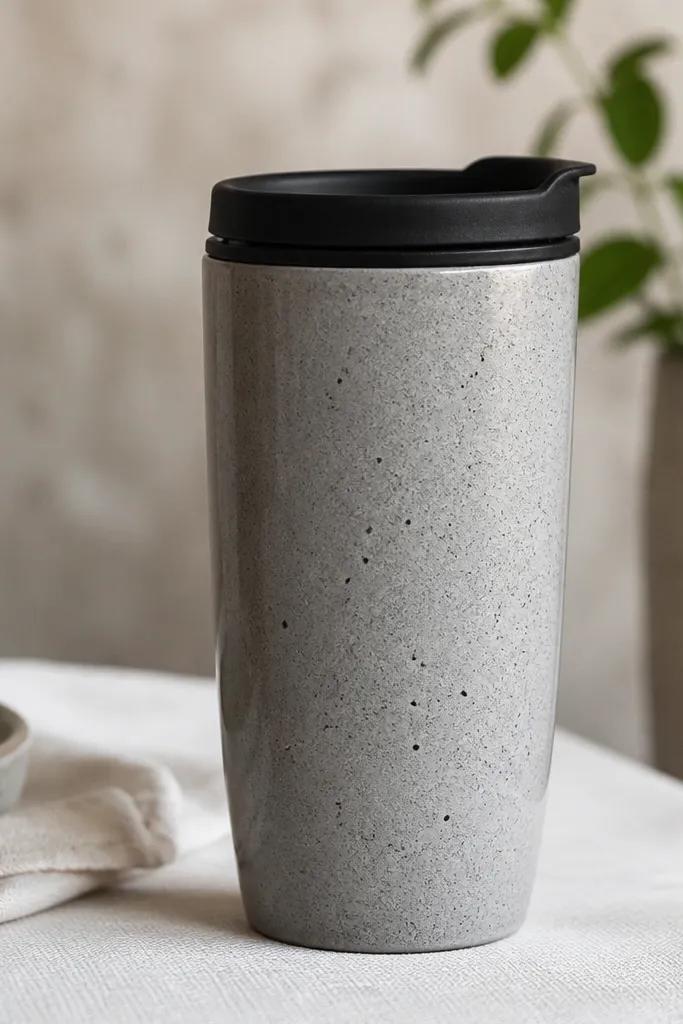
The concrete look hides dirt because it’s already speckled. When you seal it with resin, you get the matte vibe without the absorbent problem. The silicone lid with a ring seal is what keeps spills from happening in a bag — I’ve had better luck with silicone gaskets than thin plastic lids. This combo stays clean-looking even when you’re rushing.
Create a concrete-look finish using cement pigment or texture paste on the outside only. Let it cure fully, then apply a clear resin topcoat in thin layers so you don’t get bubbles. Use a lid that has a silicone gasket ring and fits your mug opening snugly. Keep the resin out of the drinking path unless it’s food-safe and cured properly.
Editor's noteDo a water bead test after sealing — if water soaks in, add another thin coat.
Skip thisSkip sealing too late — porous texture will stain before the topcoat goes on.
12. Recycled glass jar travel mug with cork lid and etched design
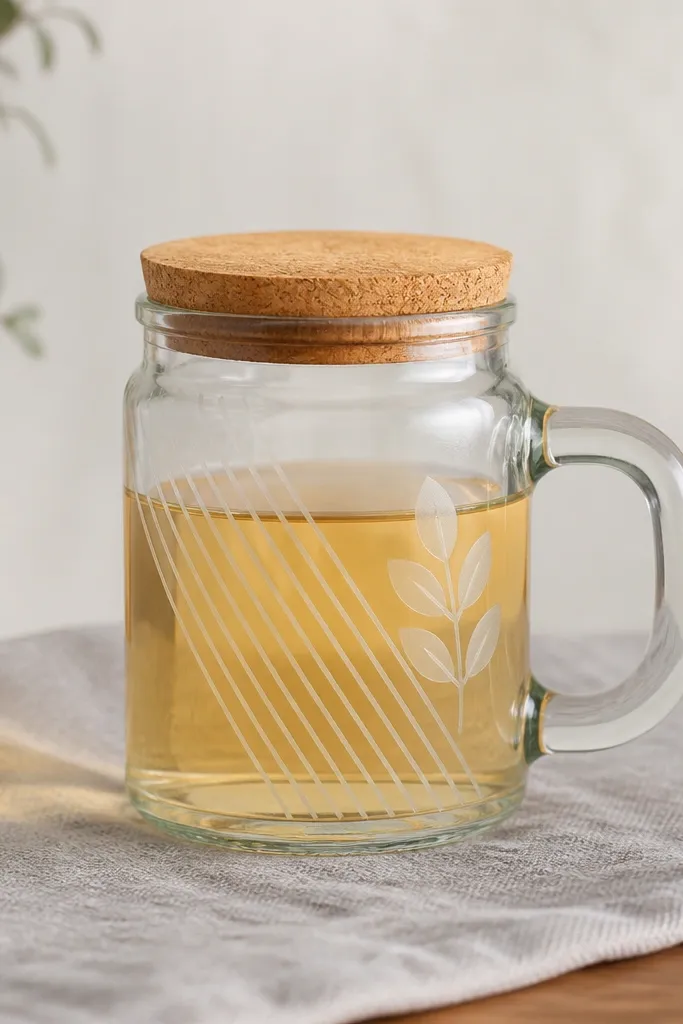
A glass body is easy because it doesn’t hold smells the way some porous ceramics do. Etching gives you a frosted look that doesn’t peel or scratch off like decals. Cork lids can be low maintenance if you seal the cork and keep it dry between uses. This style looks Scandinavian and clean, even when it’s lived-in.
Use a repurposed jar with a smooth rim and a lid you can modify. Etch the outside with glass etching cream using a stencil so the design stays crisp. Rinse thoroughly and dry. Seal the cork lid with a food-safe cork sealer so it resists moisture.
Editor's noteSkip intricate etching — simple shapes survive more handling and still look good after a few knocks.
Skip thisDon’t use cork that isn’t sealed; it absorbs coffee odor and gets sour fast.
13. Bandana wrap travel mug with heat-safe fabric tie
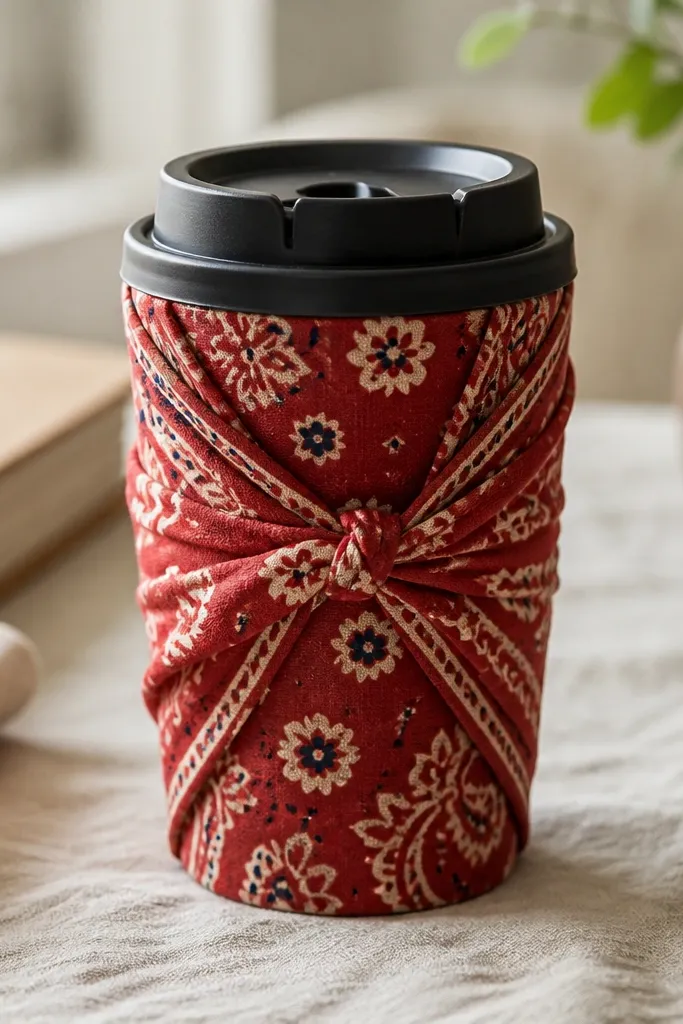
A bandana wrap is the easiest way to change the look without redoing the mug. It’s low maintenance because the fabric takes the wear and you can swap it out in seconds. I like this for commuting because it hides scuffs on the body and gives you a consistent color theme. When the wrap is tight and smooth, it stays neat even in a tote.
Choose cotton bandanas and wash them first so dye doesn’t bleed. Wrap around the mug body, leaving the lid area uncovered so it stays easy to open and wipe. Use a heat-safe fabric tie to secure it — I use a strip of cotton twill and knot it under the wrap. For a clean finish, fold corners inward so they don’t fray.
Editor's noteTie the fabric so the seam faces away from where your bag rubs most.
Skip thisAvoid loose wraps — they shift, bunch up, and end up looking wrinkled after a week.
14. Hand-painted citrus slice mug with sealed wax-resist rim
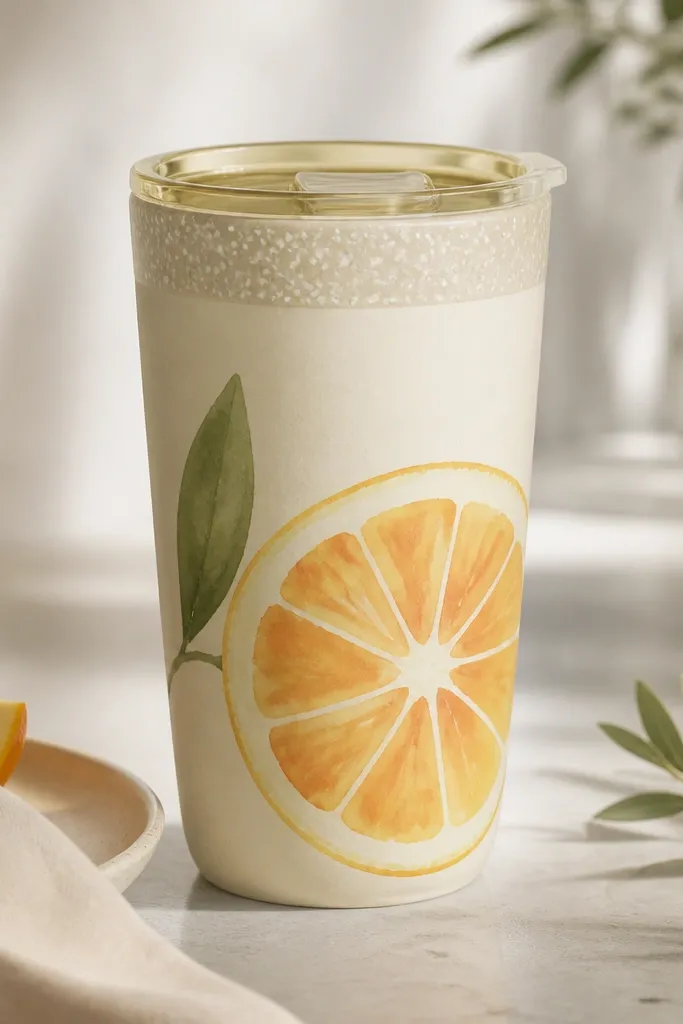
Citrus art looks cheerful, but the low maintenance part is how you protect it. Wax-resist speckling on the rim hides wear and makes the rim feel textured instead of glossy and slippery. Sealing the paint makes wipe-down easy, and the design is placed where you’ll see it, not where it gets scraped. This mug stays cute even after it’s been in a backpack all day.
Paint the citrus using ceramic paint or fabric-safe acrylic on a ceramic or sealed base. Use wax-resist around the rim before sealing so the glaze shows subtle texture. After painting, cure fully, then apply a clear topcoat over the artwork only on the outside. Keep the lid seal area paint-free.
Editor's noteLet the topcoat cure overnight before you use it — rushed curing is when paint chips around edges.
Skip thisSkip adding too much detail near the rim — tiny lines get worn first.
15. Rope-wrapped stainless travel mug with sealed knot ends
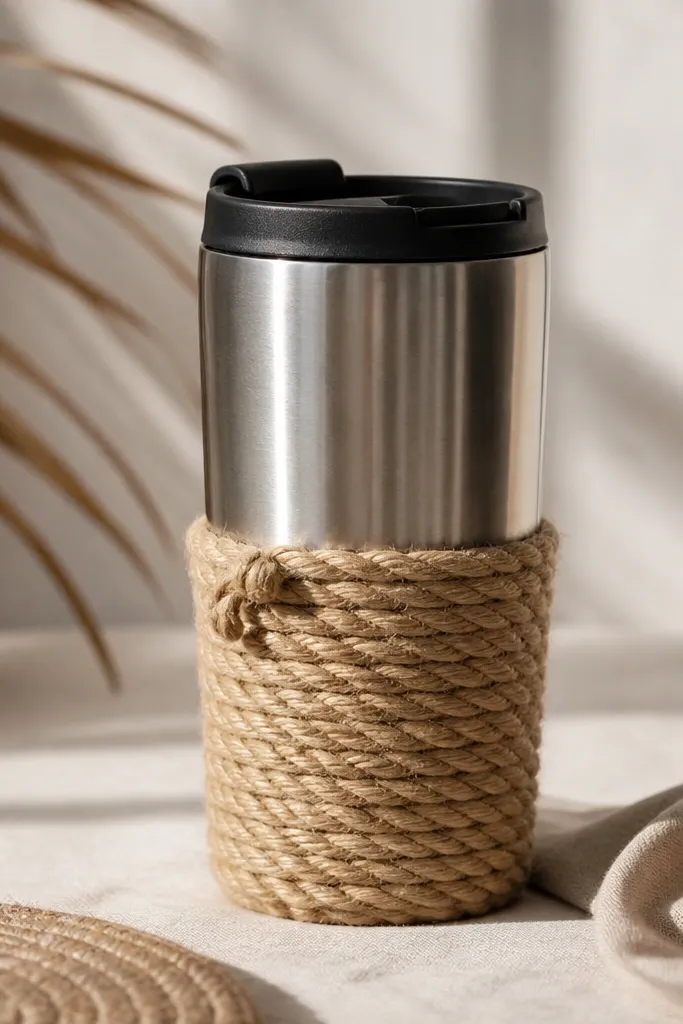
Rope wrap gives grip and hides dents or scratches on the outer metal. Because you wrap the lower half, spills usually hit the lid area, not the rope. Sealing the knot ends stops fraying and keeps the rope from soaking up moisture. It looks handmade and cozy, and it’s actually practical when you’re holding a warm mug in winter.
Wrap sisal or cotton rope around the mug in tight coils, starting just above the base curve. Use a clear, heat-tolerant adhesive in small dots under the rope so it doesn’t soak through. Seal the rope ends and knots with a clear varnish made for fabric or rope. Leave the top third bare so the lid seats correctly.
Editor's noteUse a slightly thicker rope than you think you need; thin rope shifts and looks uneven after a few uses.
Skip thisDon’t wrap over the lid seam — rope fibers get trapped in the gasket and slow down cleaning.