
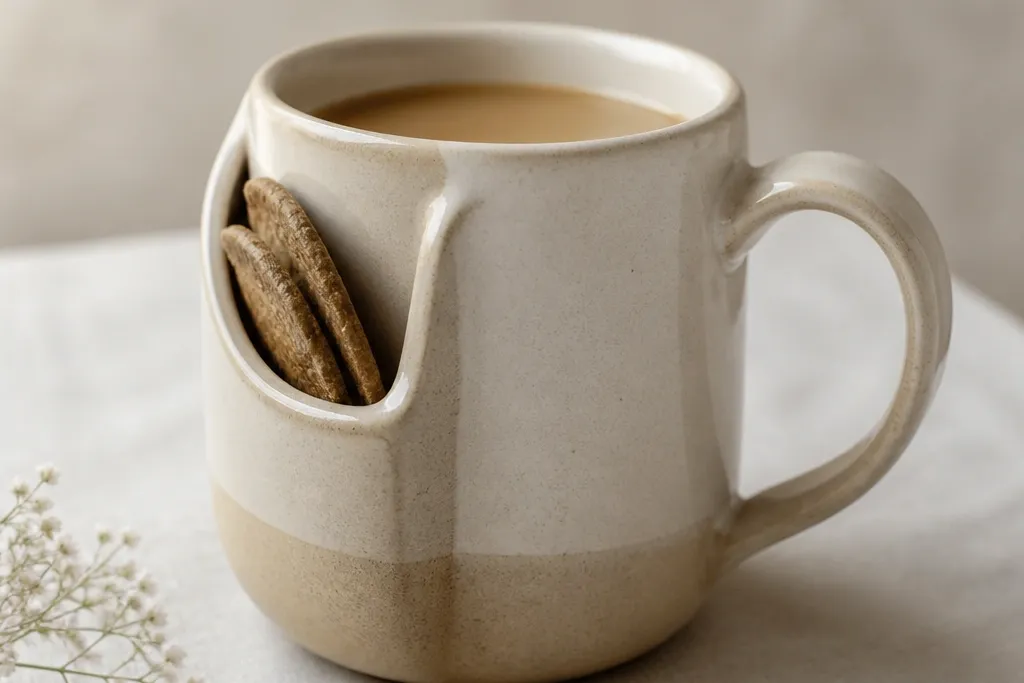
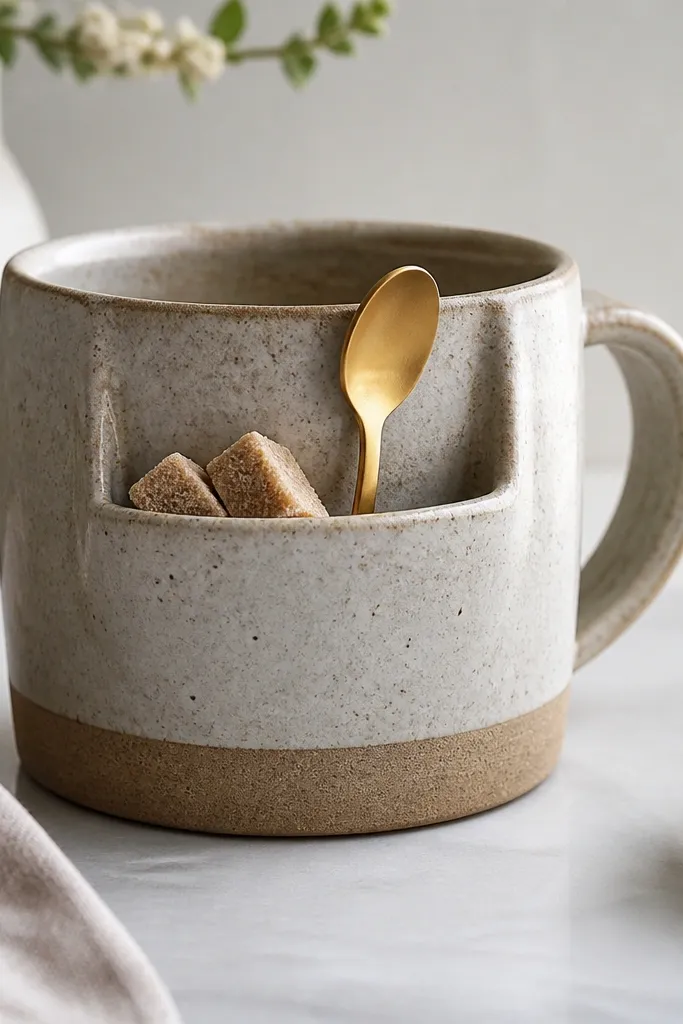
1. Berry Patch Mug with Side Tea-Bag Pocket
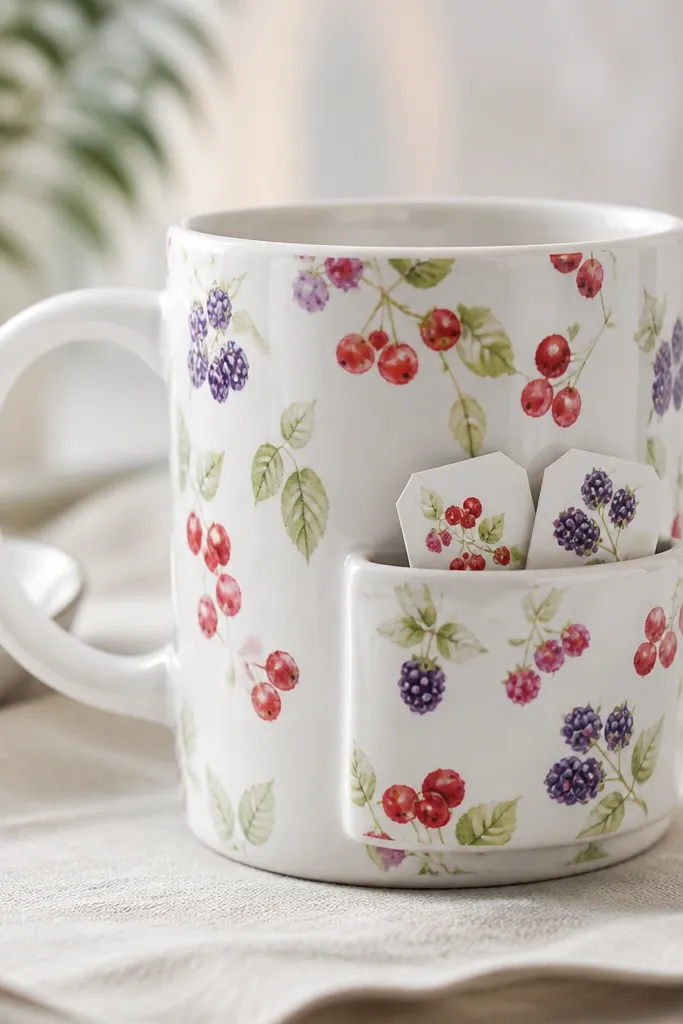
Use ceramic paint in three berry tones (raspberry, dark plum, and a lighter rose) plus leaf green. Make the pocket from a thin polymer clay wall or a pre-made ceramic side shelf, then rough it lightly and prime. Seal the pocket twice with a heat-safe clear if you’ll brew tea in the mug.
I paint the mug body with a loose berry pattern, then extend the artwork into a side pocket that’s only about 1.5 cm deep. The pocket gets a crisp lip so fingers don’t scrape the painted face when you pull tea bags out. I keep the berries matte and the lip glossy so it looks intentional, not like a sticker. The result is a mug that looks like folk art and still works as a tea organizer.
Skip thisDon’t make the pocket deep — deep pockets trap condensation and your paint edge will peel sooner.
Editor's noteMask the lip line with 1 cm painter’s tape and paint up to the tape, not over it. Pull the tape while the paint is slightly tacky to keep the edge sharp.
2. Sunset Speckle Mug with Spoon Slot on the Handle Side
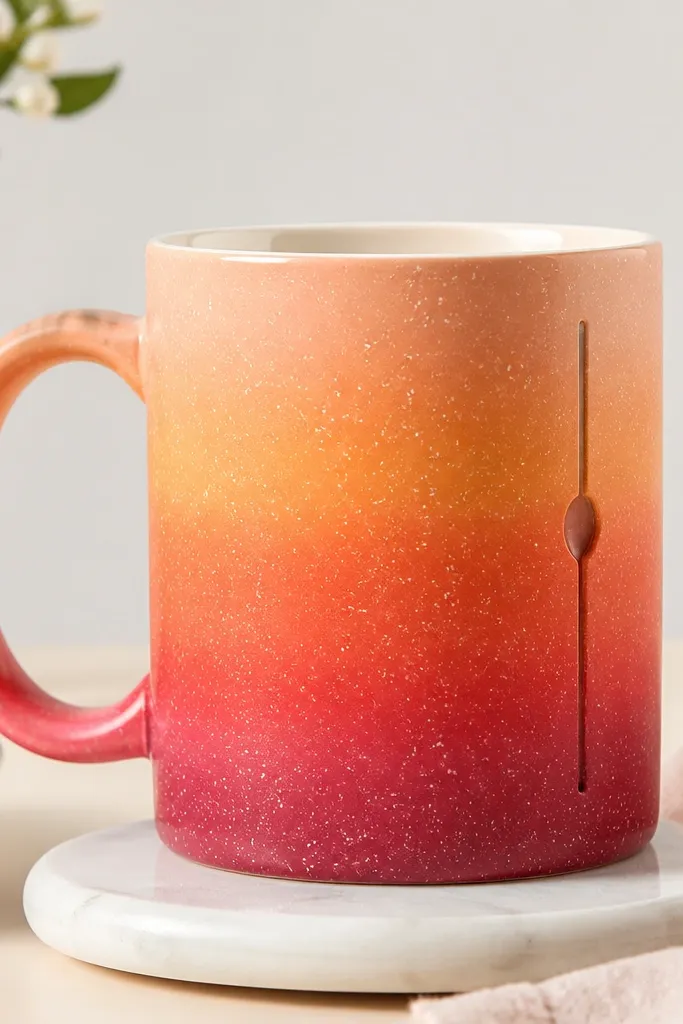
Build the slot using a thin resin strip or folded foam clay frame bonded to the mug, then sand and prime. Paint the slot interior a darker shade (burnt orange) so it looks clean even when you slide the spoon in. Seal the interior with two coats so metal doesn’t scuff the color.
This one is for people who hate searching for a teaspoon. The storage is a slim slot that holds a single spoon or long stir stick — about 0.8 cm wide clearance. I paint a sunset gradient on the mug, then add the slot as a “track” that matches the gradient. The visual cue makes it obvious where the utensil goes, and the narrow slot protects the painted inside edge.
Skip thisAvoid painting the slot interior with the same wet layer as the mug body — it smears when the spoon touches it.
Editor's noteTest-fit your spoon before sealing. Slide it in and out gently; if it catches on paint, sand the high spot and re-seal.
3. Maple Leaf Mug with Front Tray for Sugar Packets
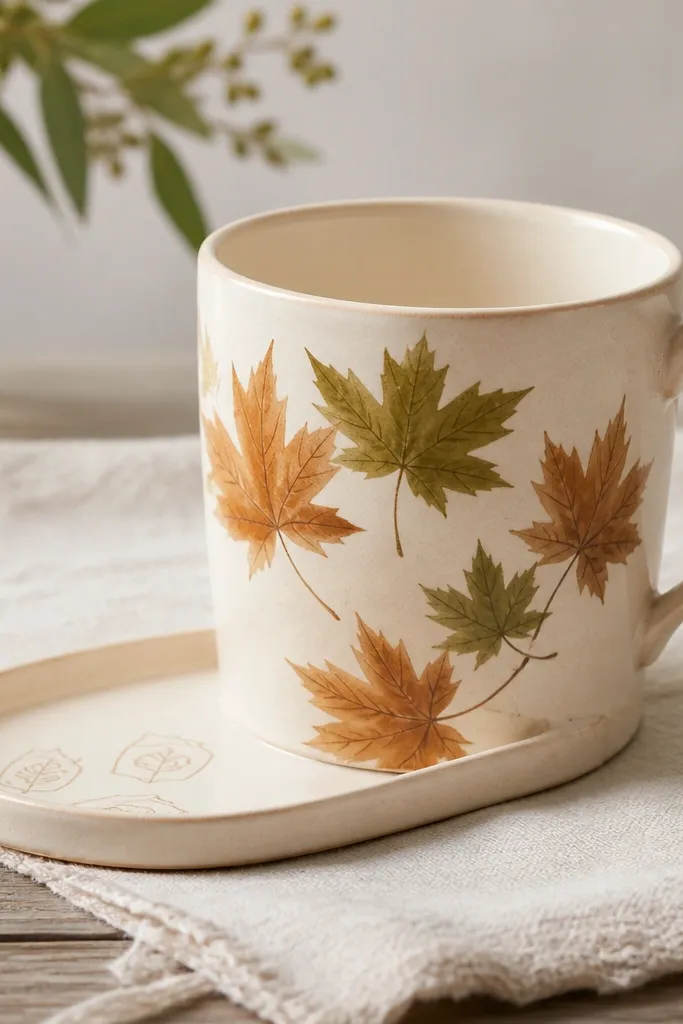
A front tray is the easiest storage upgrade because it’s flat and you can see everything at a glance. I paint maple leaves around the tray border so the tray looks like part of the design, not an add-on. The tray holds 2-4 sugar packets or sweetener sachets without tipping. The shallow lip stops packets from sliding off during pouring.
Create the tray with a low-profile ceramic shelf or polymer clay lip about 1.2 cm high. Prime it and paint the tray border first, then the leaf pattern on the mug body. Use a satin clear coat for a soft look that doesn’t glare.
Lightly score the clay/shelf edge with a craft knife before bonding so paint grabs and the tray doesn’t chip at the seam.
Don’t skip the raised lip. A flat tray makes packets slide and you’ll chip the paint trying to catch them.
4. Geometric Tile Mug with Side Organizer for Tea Tags
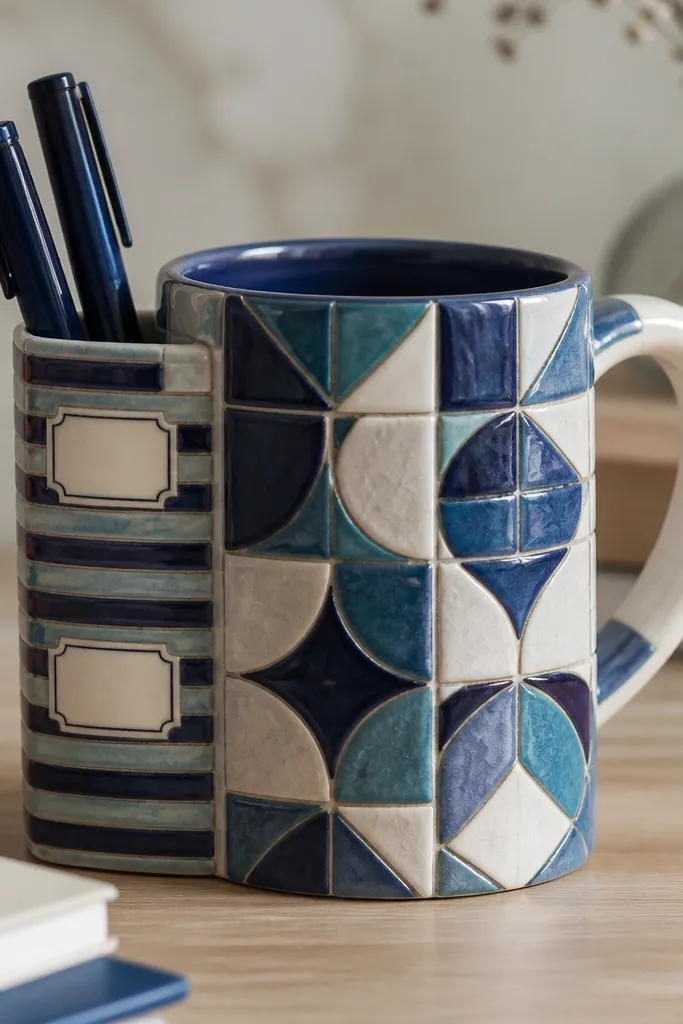
Use painter’s tape to create 5 mm to 1 cm blocks for the tile pattern. Build the pocket as a thin side panel with a top opening and a divider strip inside. Seal the pocket after painting all lines; if you used tape, remove it before the paint fully dries to avoid ridges.
Geometric patterns hide small imperfections because your eye reads lines, not tiny flaws. This design uses a side pocket divided into label zones, so you can drop tea tags or a tiny index card for flavors. I keep the pocket divider lines crisp and straight — that’s what makes it look like a tile set. The storage stays neat because each tag has a defined spot.
Skip thisDon’t use thick paint on the pocket lip — it rubs on the tea tag and flakes.
Editor's noteUse a fine liner brush for the divider lines and load it lightly. Too much paint makes the edges look rounded and cheap.
5. Lavender Apothecary Mug with Cork Insert Storage
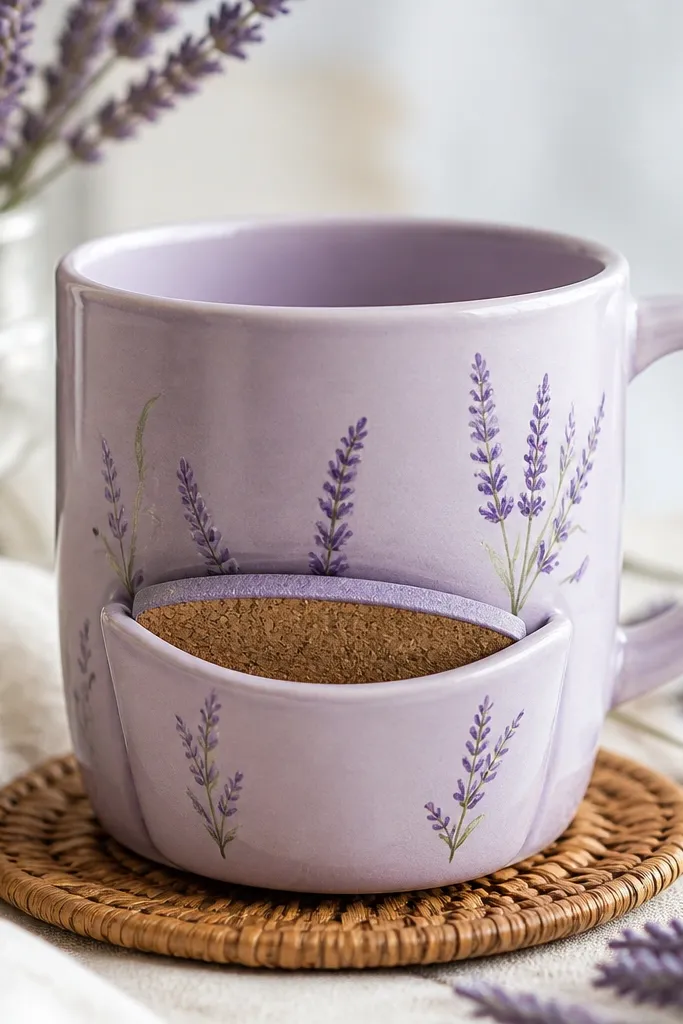
Cork makes storage cleaner because it grips and it’s easy to replace. I paint the mug like an apothecary jar, and the storage insert is a cork piece shaped to fit the pocket so tea bags or cotton swabs sit without sliding. The cork also protects the painted pocket interior from scuffs. It looks intentionally “old-timey” even if your mug started as plain white.
Cut a cork insert to fit a pocket opening about 3 cm wide by 5 cm long. Prime and paint the pocket walls, then leave the cork unpainted or lightly stained with diluted lavender paint. Seal the mug body heat-safe; seal the cork with a matte clear if you want it to resist tea spills.
Make the cork slightly oversized and compress it into place, then trim the edges once it sits flush.
Don’t glue cork directly to unprimed ceramic. The bond fails and you’ll lose the insert.
6. Ocean Wave Mug with Back-Shelf for Stir Sticks
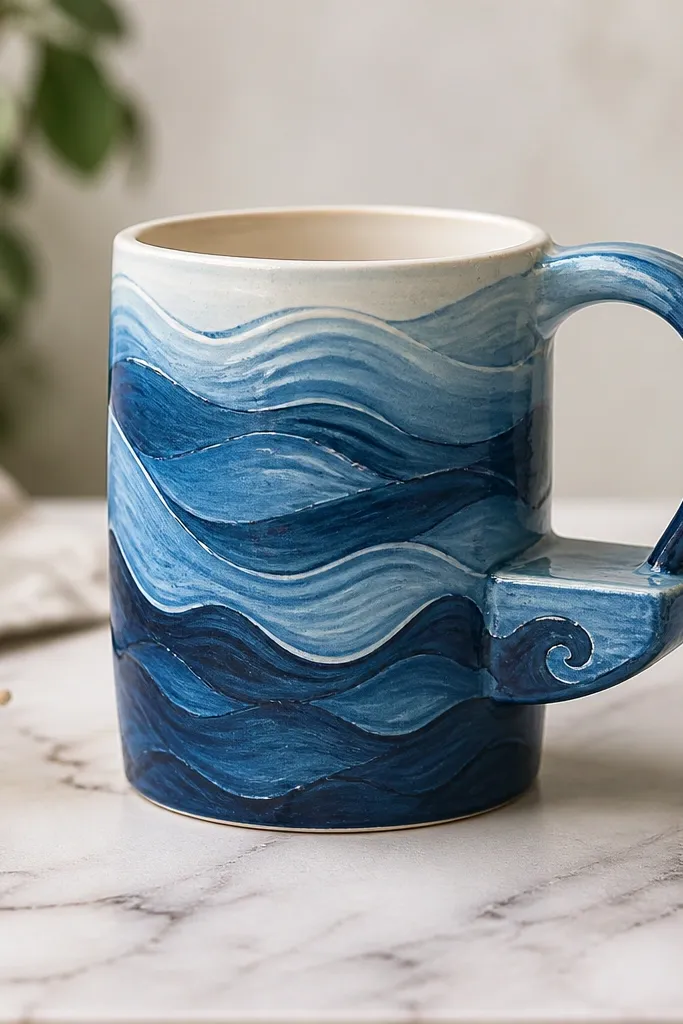
Add a shelf using a thin polymer clay slab under the mug’s back curve, leaving a 5 mm gap for the stick width. Prime and paint it last so you can align the wave line where it meets the mug body. Seal the shelf with extra clear because it gets the most contact.
A back shelf is perfect if you want storage without clutter showing on the front. I paint waves that wrap around the shelf so it looks like one continuous scene. Stir sticks sit flat and don’t bump the mug’s rim while you pour. The shelf placement also keeps hands away from wet paint when you’re working at the counter.
Skip thisAvoid placing the shelf too high. If the sticks are angled, they scrape the interior pocket edge.
Editor's noteUse a sponge to blend the wave colors on the shelf — it hides brush marks that show up on flat areas.
7. Rose Garden Mug with Tiny Side Planter Pocket
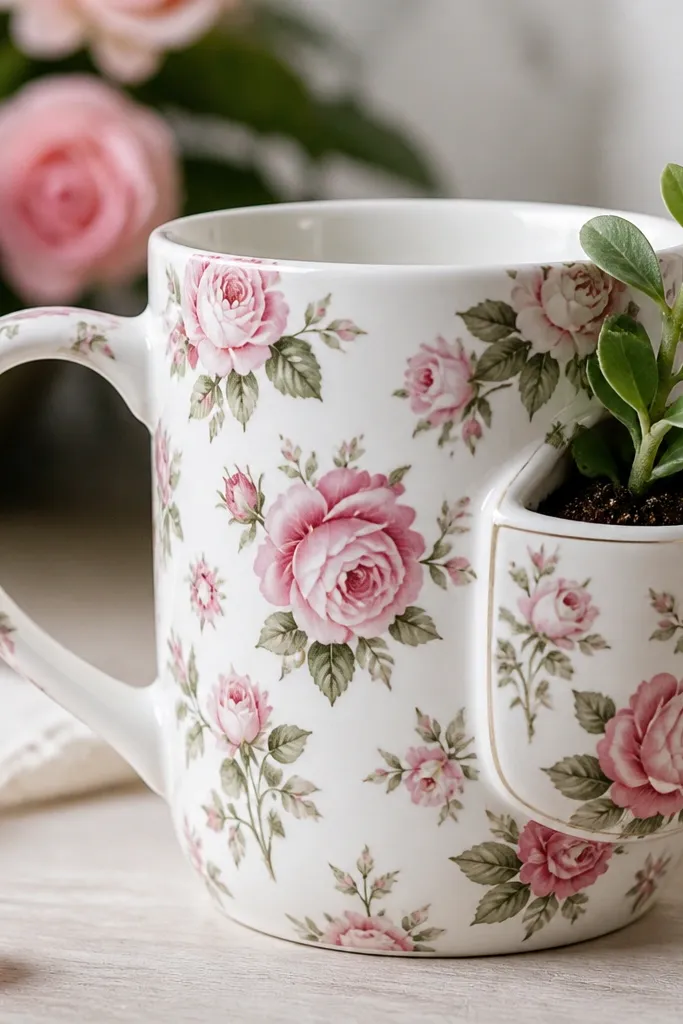
This is a storage idea that doubles as decor. The pocket holds small items like tea bag tags, hair ties, or mini jewelry — anything small and soft. I paint a “soil” texture inside the pocket with stippling, then frame it with a raised border so it looks like a miniature planter. Roses on a planter pocket make the whole mug feel like a single garden vignette.
Build the pocket as a shallow raised frame, about 2 cm tall with a top opening. Prime the frame, paint the soil with a mix of umber and brown-gray, then stipple with a damp brush for texture. Seal with a clear coat that resists fingerprints.
Add a tiny drainage illusion by painting a faint lighter line near the bottom; it makes the pocket look more realistic.
Don’t use glossy paint for the soil texture. It looks like plastic and cheapens the planter effect.
8. Citrus Slice Mug with Measuring-Spice Slot
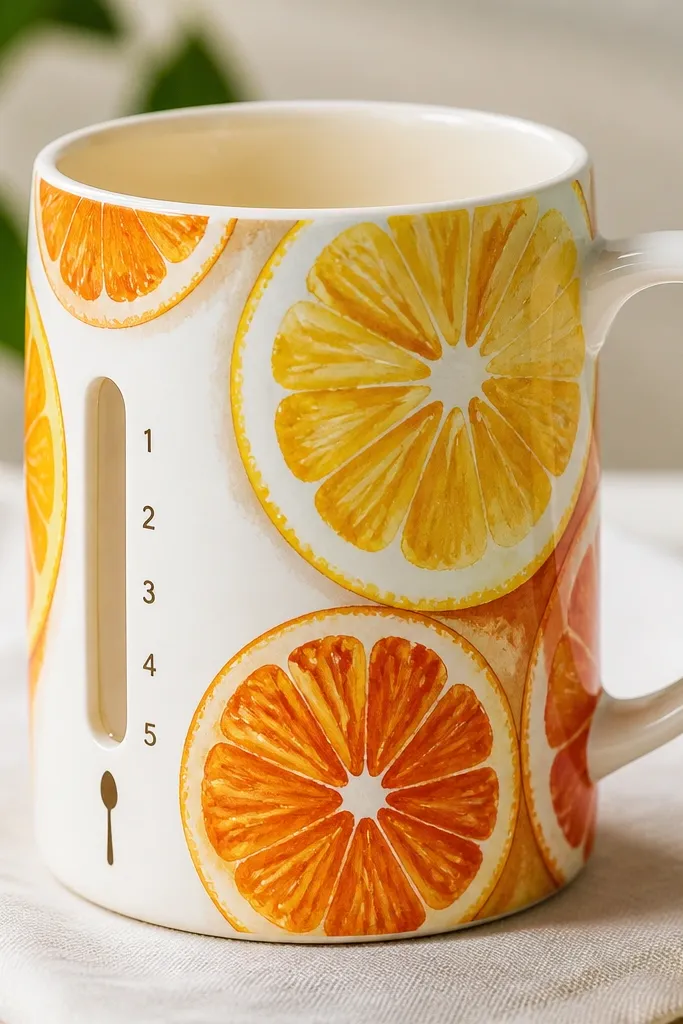
Create the slot with a thin resin wall and keep it straight, 1 cm wide inside. Paint the citrus slices first, then mask the slot edges with tape. Seal the slot interior twice, then do a third light coat on the lip where fingers rub.
This one is oddly satisfying because it turns a mug into a kitchen tool. The slot holds measuring spoons or a small spice scoop — I’ve used it for cinnamon scoops and instant coffee sticks. Citrus slices are bold and forgiving; the storage slot gives you a place to keep the scoop right with the mug. It makes your kitchen feel organized without adding a separate caddy.
Skip thisAvoid painting the slot lip too thick. Thick paint chips when a metal scoop slides in.
Editor's notePaint the numbers in a contrasting dark brown so they stay readable through the clear coat.
9. Monochrome Ink Mug with Floating Ledge for Paper Clips
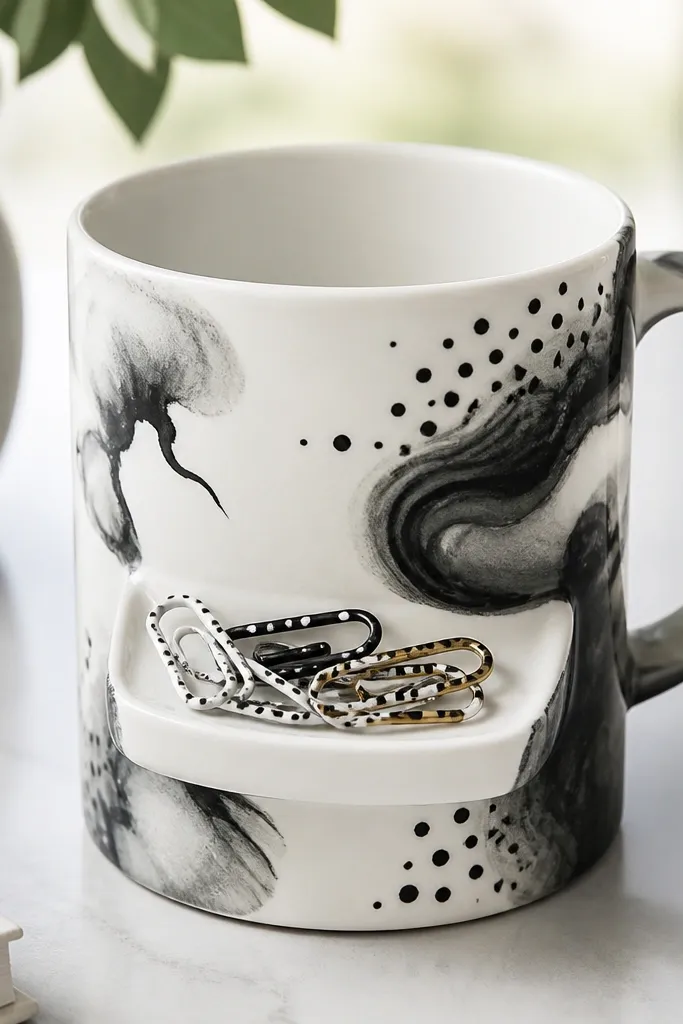
If you keep pens and clips on your desk, this design makes the mug do double duty. The storage is a small ledge that holds paper clips or tiny binder clips, and it’s painted to look like it’s part of the ink scene. Monochrome ink hides brush streaks because the dots and swirls cover transitions. The mug looks artsy, but the ledge is still functional.
Use white ceramic paint over a black base or paint the entire mug in black first, then add ink details with a liner brush. Build the ledge using a thin clay strip glued along the front lower curve. Seal twice, then do a final coat in satin so it doesn’t glare.
Use a toothpick to drag tiny ink lines — it gives that real handmade “ink pen” look.
Don’t use glossy clear on ink art. It makes the dots look like printed decals.
10. Chocolate Drip Mug with Side Pocket for Cocoa Mix
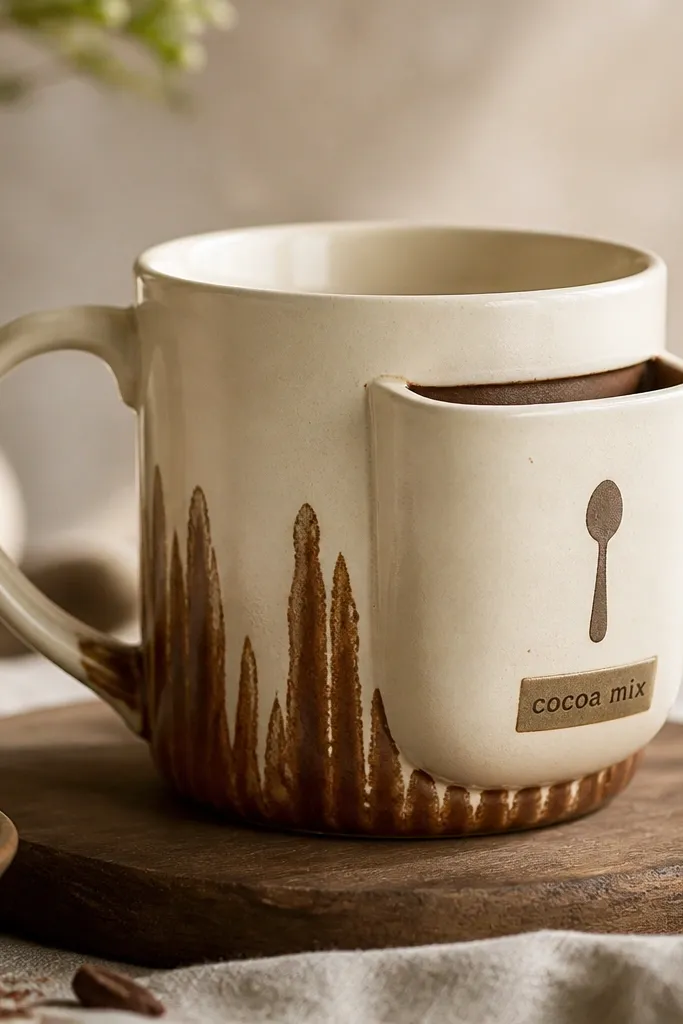
Paint drips with a flat brush and let gravity do the length — aim for 1 cm to 3 cm drips. Build the pocket with a shallow side panel and keep the opening wide enough for packets to slide. Prime and seal the pocket interior more heavily than the mug body.
Chocolate drips are easy to paint and they hide texture, which is perfect for a storage pocket. I make the pocket hold a small portion packet or a folded spoon rest card. The pocket interior is painted darker so any residue doesn’t show. The drip theme continues onto the pocket edge so it looks cohesive.
Skip thisDon’t seal before the drips cure. Soft drips smear and you’ll lose the drip edges.
Editor's noteBefore sealing, wipe the pocket interior with a barely damp cloth to remove dust from sanding seams.
11. Botanical Linework Mug with Handle-Hugging Sleeve Pocket
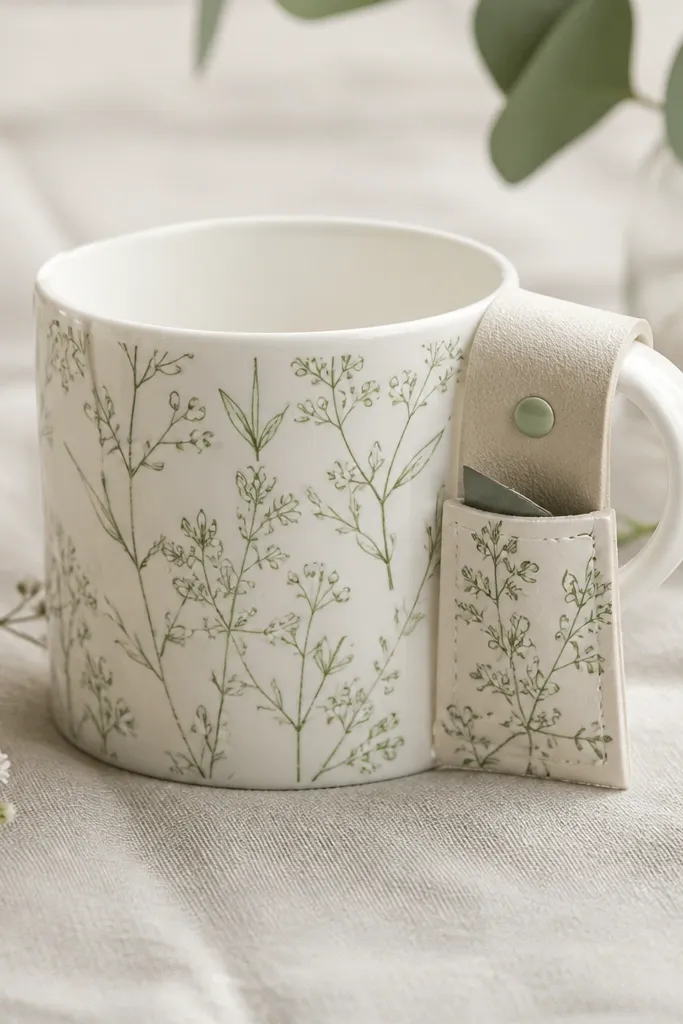
Use polymer clay to create a thin wrap sleeve on the handle side, leaving the handle gripping area clear. Paint linework with a fine liner brush and a steady hand — 2-3 mm lines look crisp. Seal with a flexible clear coat if you expect the sleeve to flex slightly.
A sleeve pocket around the handle keeps storage close to where your hand already rests. I like it for holding tea strainers, mini spoons, or a small roll-on essential oil cap for desk use. The linework makes the pocket look like a continuous botanical wrap, not a separate add-on. The sleeve also gives you a clean boundary for masking and painting.
Skip thisAvoid blocking the handle gap. If the sleeve touches your fingers, the finish gets scraped fast.
Editor's noteDry-fit the sleeve by placing it on the handle and checking finger clearance before you glue anything.
12. Rainbow Ombre Mug with Bottom Drawer for Tiny Tools
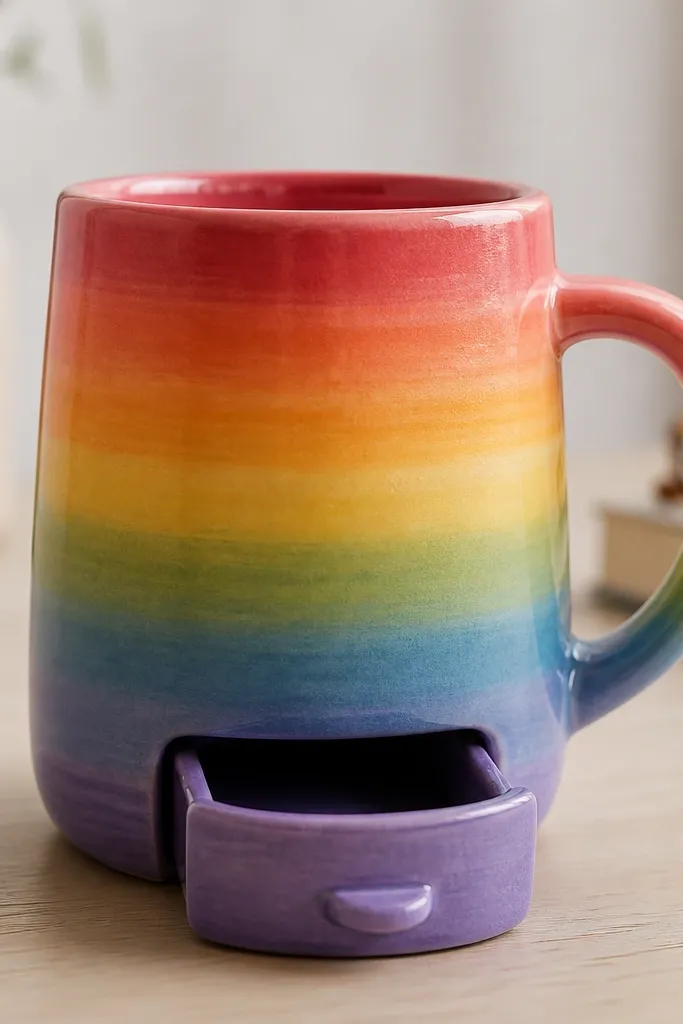
Build the drawer using a shallow polymer clay box glued to a base panel, leaving 2-3 mm clearance for movement. Paint the drawer face and the mug body in the same color order, then seal the drawer with a tougher clear. If you plan to move it often, add a thin silicone strip inside the drawer edge to reduce friction.
A bottom drawer is the most satisfying storage because it hides small tools. I’ve used these for craft erasers, small cuticle scissors, and spare craft needles. The drawer face is painted in the same ombré bands so it looks like one gradient system. The mug feels like a mini desk organizer when it’s closed.
Skip thisDon’t glue the drawer tight to the base. No clearance means it binds and chips the paint.
Editor's noteUse a ruler to align the rainbow band edges between mug body and drawer face. That alignment makes it look custom, not DIY.
13. Vintage Postcard Mug with Side Slot for Recipe Cards
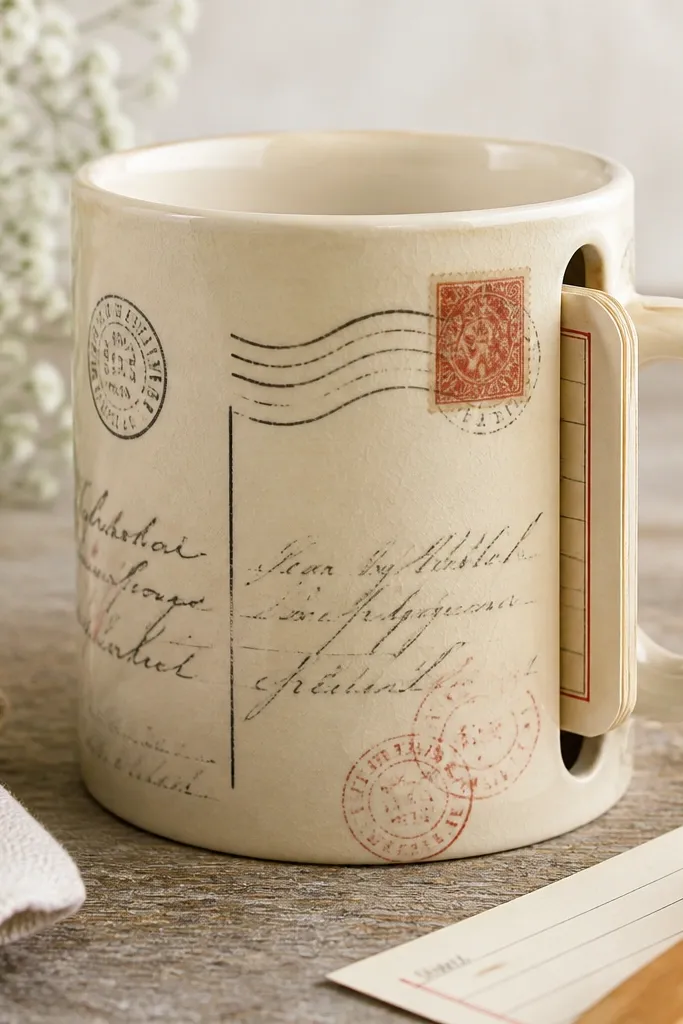
This is storage for people who cook from paper. The side slot holds a 3x5 recipe card upright, so you can glance while stirring. I paint the mug like a postcard, then paint the slot interior in a muted gray to look like card backing. It looks charming on a kitchen shelf and it keeps your recipe from getting splattered on the counter.
Use a thin resin strip frame to form the slot, leaving the opening 5 mm wider than your card thickness. Prime the frame, then paint the postcard design around it. Seal the slot edges heavily because fingers pinch there when you swap cards.
Cut card corners at a slight angle so they slide in without scraping paint.
Avoid busy patterns right next to the slot opening. It makes the slot hard to see and it looks messy.
14. Marble Swirl Mug with Hidden Pen Pocket
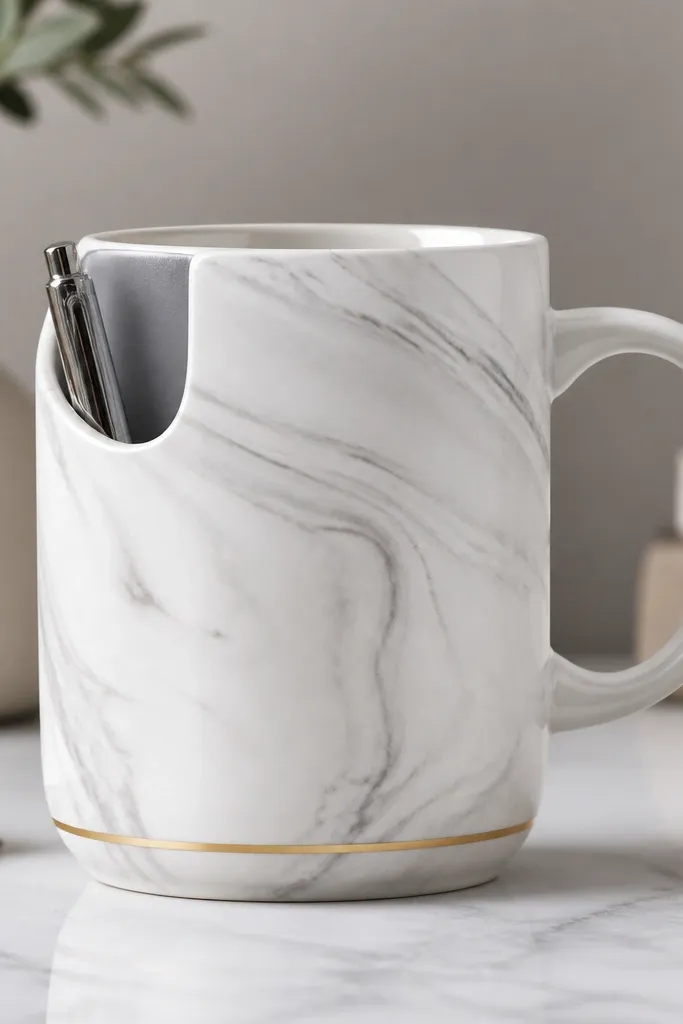
Marble swirls hide small touch-ups, and a pocket that looks “built in” makes the mug feel expensive. I add a pen pocket on the upper side so it holds a single gel pen or a few pencils for quick notes. The pocket interior stays light gray so it doesn’t show ink transfer. Gold line accents make the storage look like it belongs to the marble design.
Add a pocket with a thin clay wall that sits under the marble border line, about 3 cm long. Paint marble swirls first, then mask the pocket opening and paint the interior separately. Use a clear topcoat that resists ink stains for desk use.
Rub a tiny amount of wax on the pocket interior before sealing if you want smoother pen sliding.
Don’t put the pocket where your hand grips the mug. You’ll rub paint off with every sip.
15. Terra Cotta Fade Mug with Side Shelf for Tea Spoons
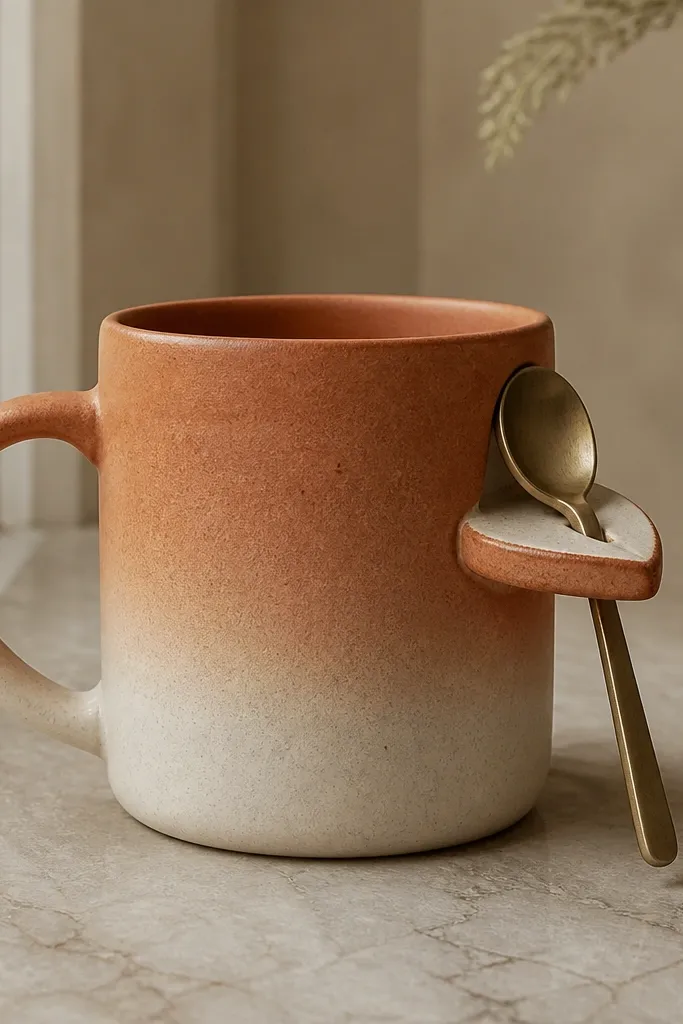
Make the shelf using a thin clay slab about 2 cm out from the mug side and 1 cm high at the front edge. Prime, paint the fade on the mug body, and paint the shelf border after masking. Seal the shelf top with two thick coats so metal doesn’t dull the finish.
A side shelf is a simple storage fix that doesn’t need a deep pocket. I paint a terra cotta fade and keep the shelf border darker, then add a spoon resting illustration so you know where it goes. The shelf holds 1-2 teaspoons or a tea spoon and it stays visible while you brew. It also makes the mug look like a functional piece of kitchen pottery.
Skip thisAvoid painting the shelf top too matte. Matte clears can scuff faster under repeated utensil contact.
Editor's noteDry brush a little lighter clay color at the shelf edge to mimic pottery wear.
16. Midnight Stars Mug with Pocket for Stirring Beads
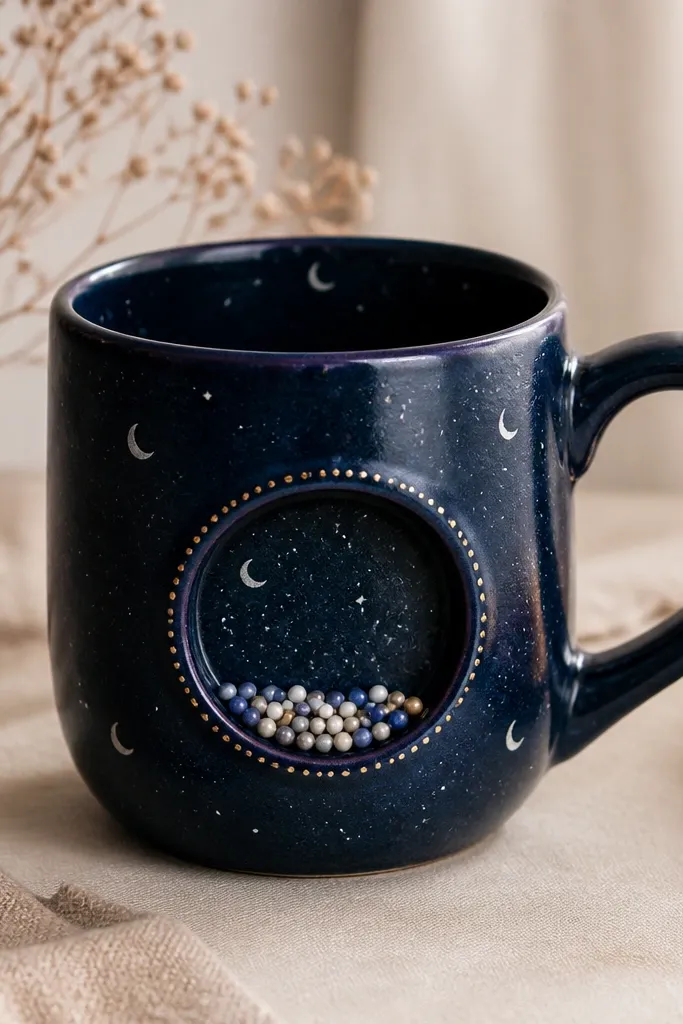
Use navy ceramic paint as the base, then add star dots with a stipple brush. Build the pocket as a shallow circular plate on the side and prime it well. Seal twice, then add a final clear coat only on the pocket interior if you expect spills.
This mug is for tea and coffee add-ins. The pocket holds stirring beads or sugar pearls, and the side placement keeps them from rattling in the mug. I paint the night sky patch slightly darker than the main mug so the pocket reads as a separate “mini scene.” Star dots look great on both curved and flat surfaces, so the storage doesn’t look like an afterthought.
Skip thisDon’t use glitter in the stars. It sheds and gets into the pocket when you reach in.
Editor's noteUse a toothpick for the brightest stars — it makes tiny sharp dots that look like real highlights.
17. Polka Dot Candy Mug with Clip-Top Pocket for Tea Bags
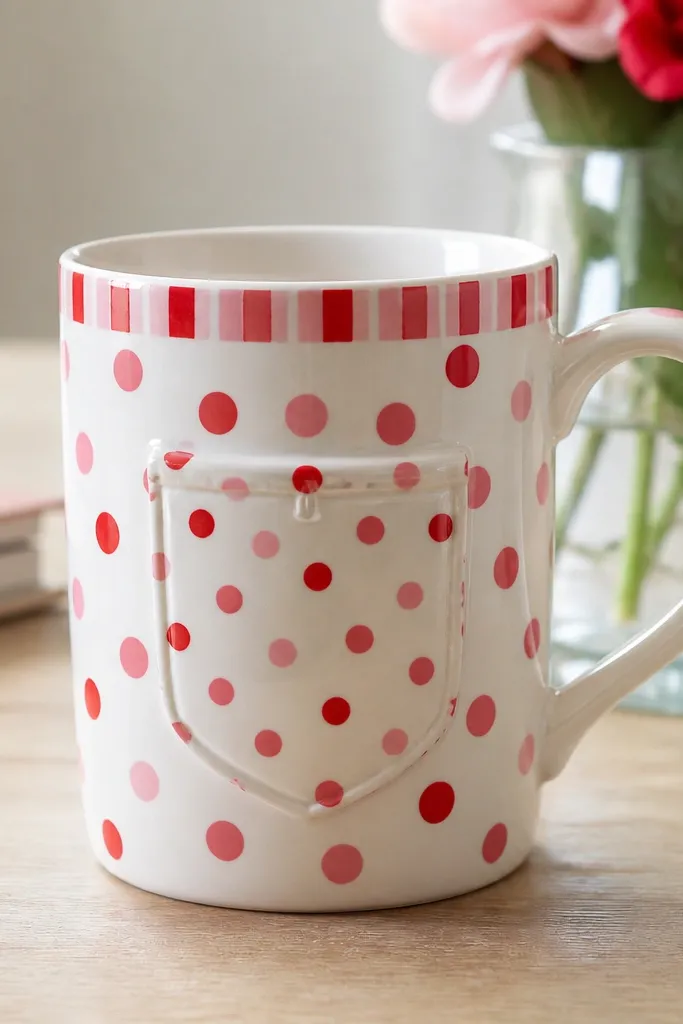
Create a front pocket about 2 cm deep with a thin raised lip that looks like a clip. Paint dots with a stencil or a dotting tool — keep dot size consistent. Seal with a glossy clear if you want that candy shine, but do two coats on the pocket lip.
The clip-top look gives you a visual promise of closure. I use this style for tea bags because you can tuck tags in and keep them from flaring open. The polka dots make the pocket look playful and consistent, and the band near the rim keeps the overall design from feeling bottom-heavy. It’s cute enough for parties, and the pocket edge is built to resist finger scraping.
Skip thisDon’t freehand dots on the pocket lip. Uneven dots make the edge look sloppy.
Editor's noteUse a single dot size for the pocket only, then vary dot sizes on the mug body. That contrast makes the storage area read instantly.
18. Cottage Checks Mug with Spoon Rest Shelf Inside the Pocket
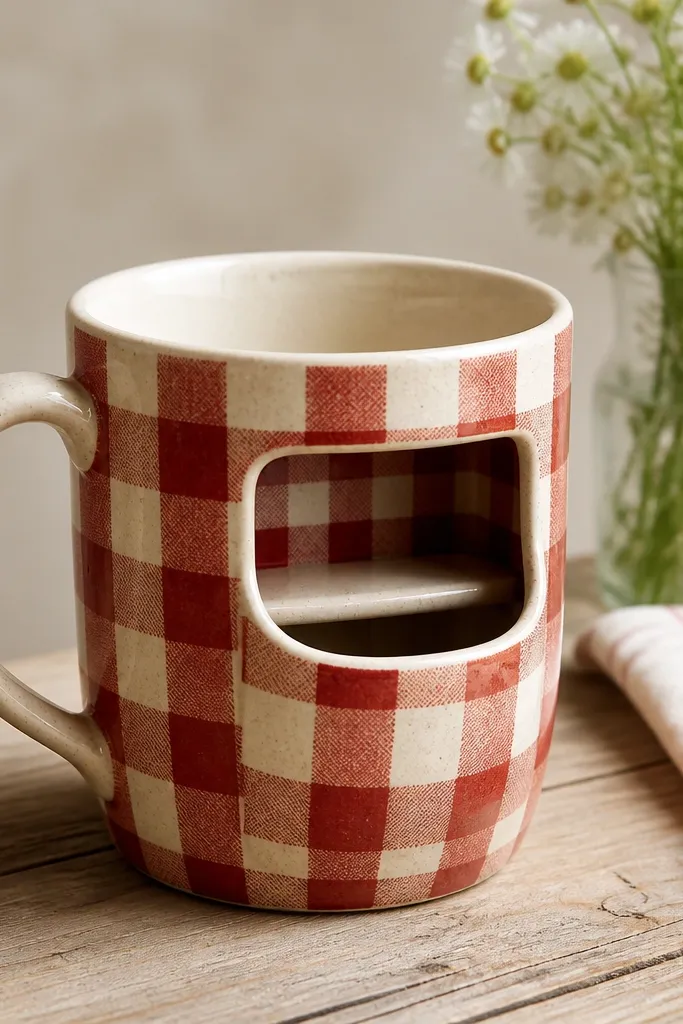
Use tape to create 6 mm squares for the check pattern, and repeat the same grid on the pocket interior. Add a small interior shelf using a thin clay strip glued inside the pocket at about 1 cm down from the opening. Seal the pocket interior with extra clear so the spoon doesn’t scratch the paint.
This design is built around one thing — keeping the spoon from clinking and sliding. Inside the pocket, there’s a small interior shelf line that holds the spoon handle at an angle. I paint the pocket interior with darker checks so it looks like a lined organizer. The check pattern makes it easy to measure spacing and keep everything looking tidy.
Skip thisAvoid using metallic paint on the check lines. It dries uneven and shows streaks in the tiny squares.
Editor's noteMark the pocket interior shelf position with a pencil on masking tape before painting — it saves you from guessing after the paint dries.
19. Coffee Shop Chalk Mug with Front Drawer for Filters
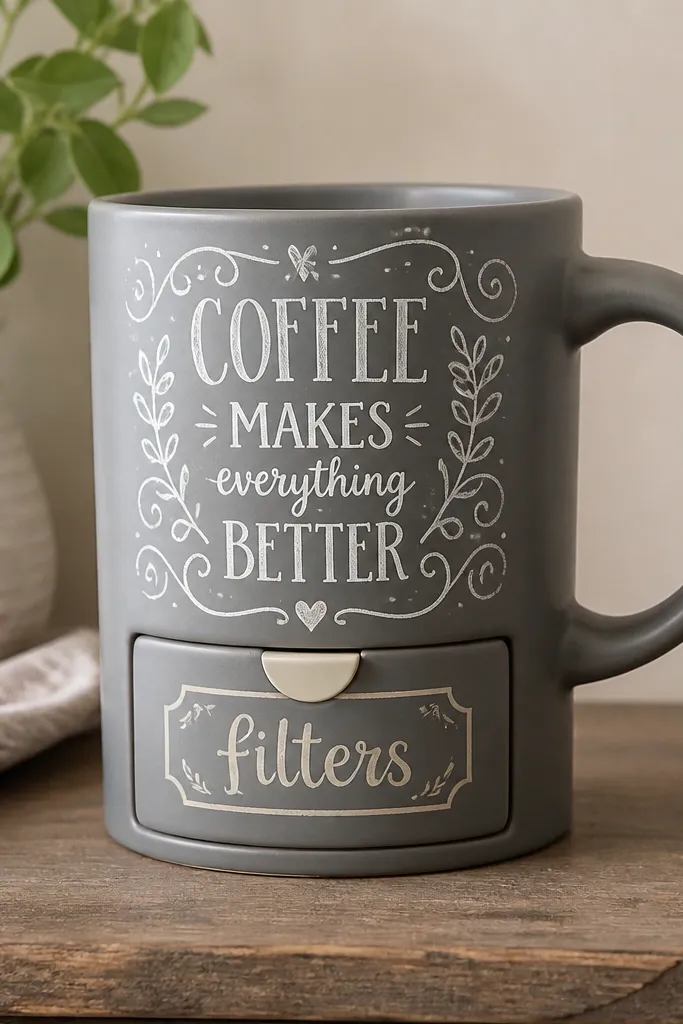
Use slate ceramic paint or a dark gray base, then add chalk-style text with a light paint and a soft brush. Build a shallow front drawer with a pull tab about 1.5 cm wide. Seal the drawer exterior but keep the interior slightly more matte so filters don’t slide too much.
Chalkboard style looks great on mugs, and the drawer makes it functional for pour-over filters. I paint the mug body in slate gray, then add faux chalk lettering and icons. The drawer holds 8-12 filters in a neat stack, and the pull tab gives you something to grab without touching the painted face much. It’s the kind of piece that gets used every morning.
Skip thisDon’t use water-heavy brush strokes on chalk style paint. It can streak and ruin the “chalk” texture.
Editor's noteWrite your labels in pencil first on the mug, then paint over the pencil lines so your spacing stays even.
20. Botanical Stamp Mug with Raised Side Frame Pocket
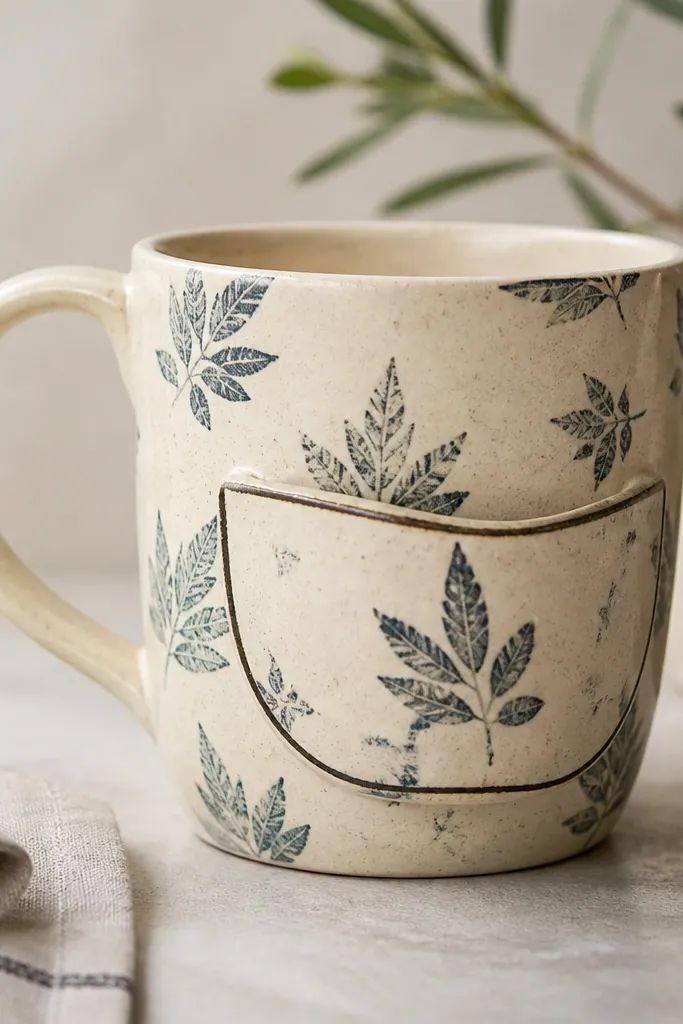
Stamp the leaves using a foam stamp or carved stamp with green and olive ink-like ceramic paint. Build the pocket frame using a thin polymer clay border, then fill the pocket interior with a slightly lighter leaf tone. Seal the frame and pocket interior twice, then add a final coat to the mug body once everything is cured.
A raised frame makes storage look like built-in pottery. I use leaf stamps because they repeat fast and hide small alignment issues. The pocket is outlined with a darker line, and that line is what keeps the whole mug from looking like random art. The storage frame also protects the pocket edges from scuffs.
Skip thisAvoid a pocket frame that’s too thin. Thin borders chip at the opening when you slide items in.
Editor's notePress stamps firmly for 2-3 seconds each. Quick taps make pale, uneven impressions.
21. Autumn Stripe Mug with Handle-Adjacent Pocket for Napkins
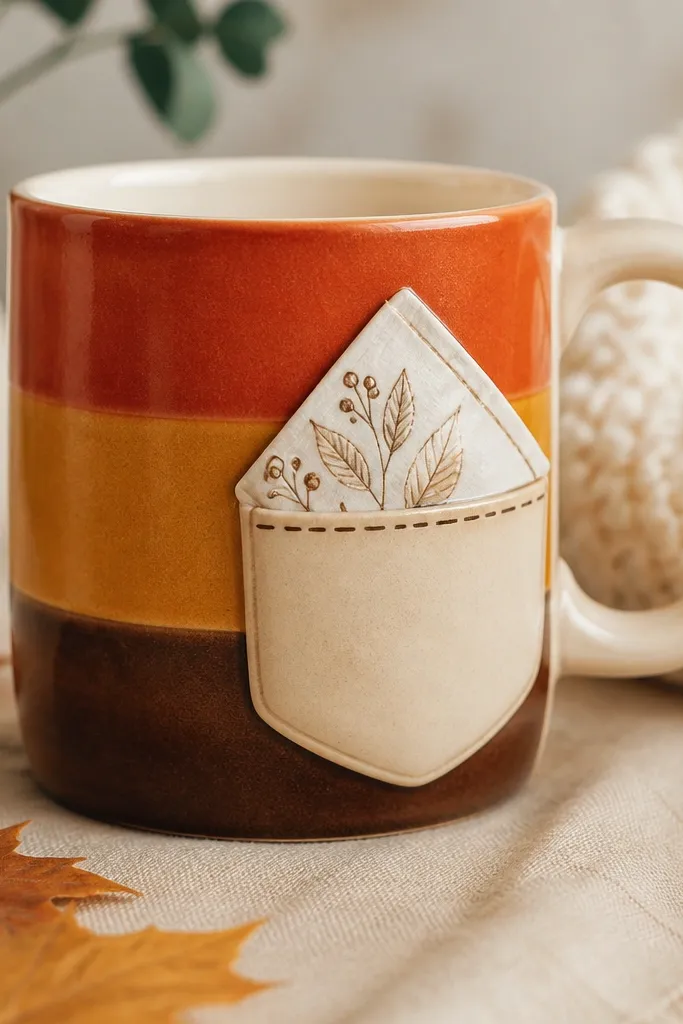
Create a pocket panel about 4 cm wide by 3 cm tall, with a top opening and a 3-4 mm lip. Paint stripes first on the mug body, then mask the pocket opening and continue stripes around the pocket edges. Seal the pocket lip with extra clear to resist repeated pulling.
Napkin storage is underrated because it keeps your table tidy without adding a holder. This pocket sits near the handle so you reach for napkins while you’re already holding the mug. I paint thick autumn stripes and let the pocket share the stripe palette so it looks like it belongs. The pocket opening is wide enough for folded napkins and stays neat.
Skip thisDon’t make the pocket opening narrow. If napkins catch, you’ll tear the lip finish.
Editor's noteFold napkins into a consistent 4 cm square. Consistent size makes the pocket look tidy even when you use it fast.
22. Galaxy Gradient Mug with Magnetic Side Insert Storage
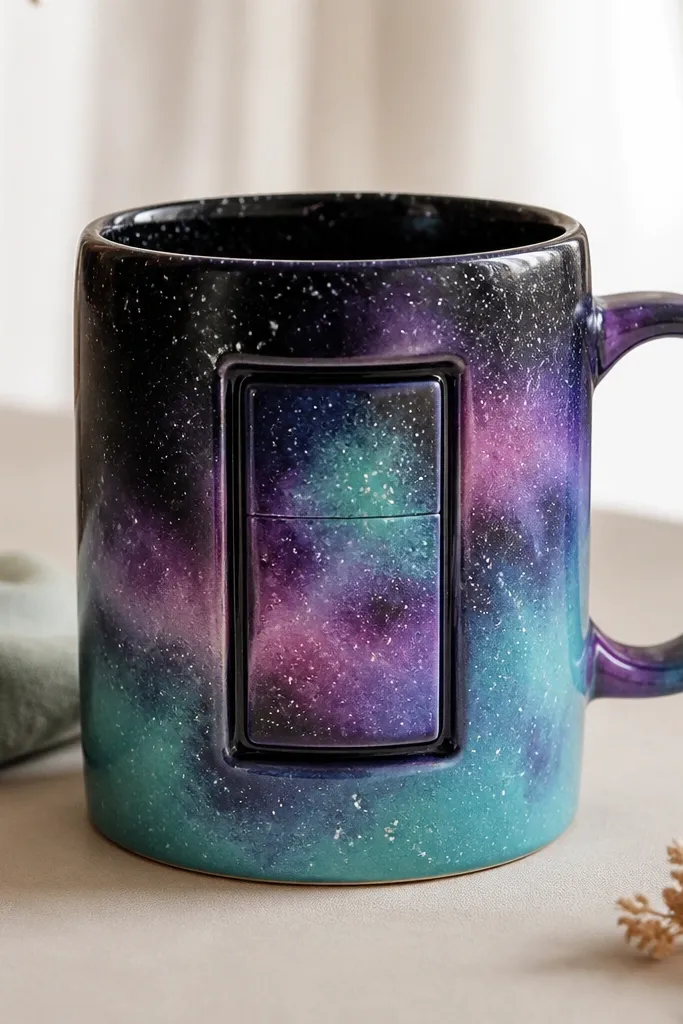
Use small neodymium magnets inside the recess and matching magnets in the insert, then keep the magnets fully sealed with epoxy so they don’t contact liquids. Prime and paint the insert and recess walls, then seal with a strong clear topcoat. If you plan to use the mug for drinks, keep magnets away from the inside drinking area.
Magnetic inserts let you clean the pocket without repainting. I paint the galaxy mug, then create a side recess where a removable insert holds small items like tea tags, paperclips, or craft bits. The insert is painted to match the mug so the seam disappears when it’s in place. When you pull the insert out, you can wipe any crumbs or dust.
Skip thisAvoid placing magnets too close to the rim or handle grip. You’ll feel it through the paint and it feels cheap.
Editor's noteTest magnet strength with the insert before painting. If it slides, add one more magnet location and re-seat it.
23. Beige Linen Mug with Crochet-Style Storage Pocket
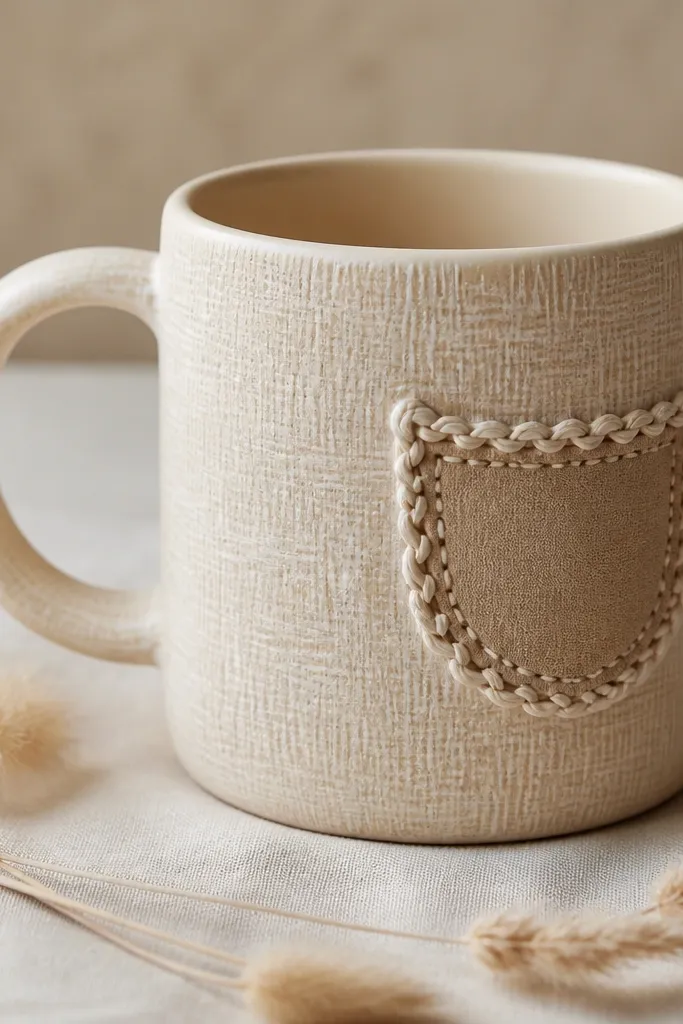
Make faux linen using a textured sponge with off-white and tan layered paint. Add raised crochet lines using fabric puff paint or thin dimensional paint, then let it cure fully. Seal over the pocket border carefully; dimensional paint needs multiple thin clear coats to avoid bubbling.
Textured paint makes the storage feel soft and intentional. I paint a linen-like base, then add a raised crochet-style border around the pocket. The pocket holds small craft supplies like rubber stamps or mini clips. Because the texture is part of the design, minor scuffs don’t look like damage — they look like part of the weave.
Skip thisDon’t rush cure time on dimensional paint. If it’s not fully cured, clear coat can wrinkle it.
Editor's notePractice the crochet border on a scrap ceramic tile first. The spacing has to be even to look like real crochet.
24. Mint Check Mug with Under-Handle Drawer for Tea Infusers
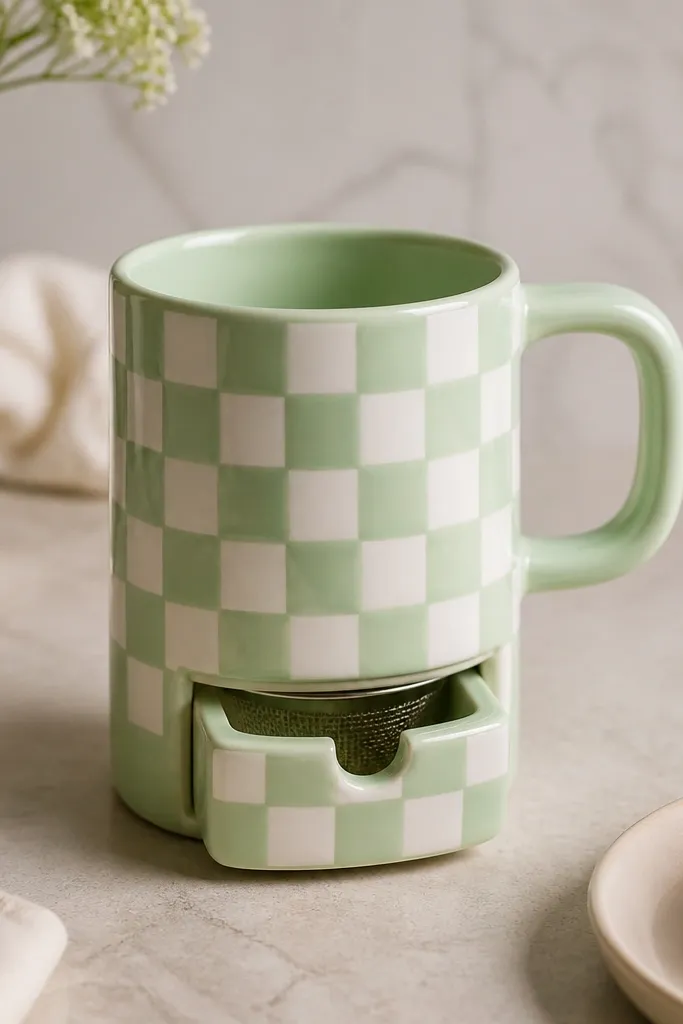
Infusers are always falling into the sink. This under-handle drawer keeps the infuser right next to the mug and out of the way. The mint check pattern gives you a clean, kitchen-friendly look, and the drawer face matches so it doesn’t look like hardware added later. It also keeps the infuser from bumping the mug rim while you brew.
Build the drawer as a shallow cavity under the handle area, leaving clearance so it slides without scraping. Paint the checks with tape so the grid lines line up across the drawer face and mug body. Seal the drawer interior with a water-resistant clear coat and let it cure longer than the mug body.
Dry slide the drawer 10-15 times before sealing the final coat. That burnishes the contact points and prevents sticking later.
Avoid placing the drawer where it gets wet from pouring. If it’s near splashes, you’ll see paint wear first.
25. Lemonade Stand Mug with Pocket for Straw Tags
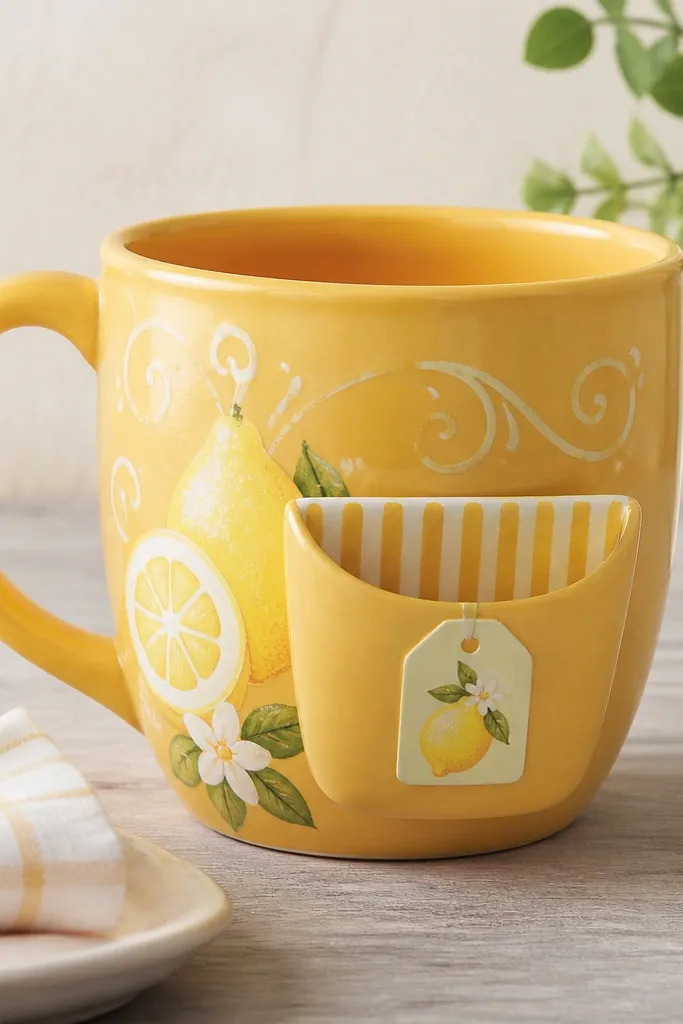
This is for iced drinks and party setups. The storage holds straw tags, drink stir cards, or small garnish labels so you can keep track of who ordered what. I paint the pocket interior with thin stripes so it looks fun even when empty. Rounded corners on the pocket opening make it feel friendly and prevent paint edge chips.
Create the pocket as a rounded rectangle about 2.5 cm tall and 4 cm wide. Prime and paint the pocket interior stripes first, then paint the outside lemonade art around it. Seal the pocket lip with two coats and do a third spot coat on the corners.
Round the pocket corners with a coin-sized template. Sharp corners are where paint chips first.
Don’t use flat matte clear on a pocket lip. Matte clears show scuffs and fingerprints more than satin.