
1. Sage-and-Cream Pinstripe Pots
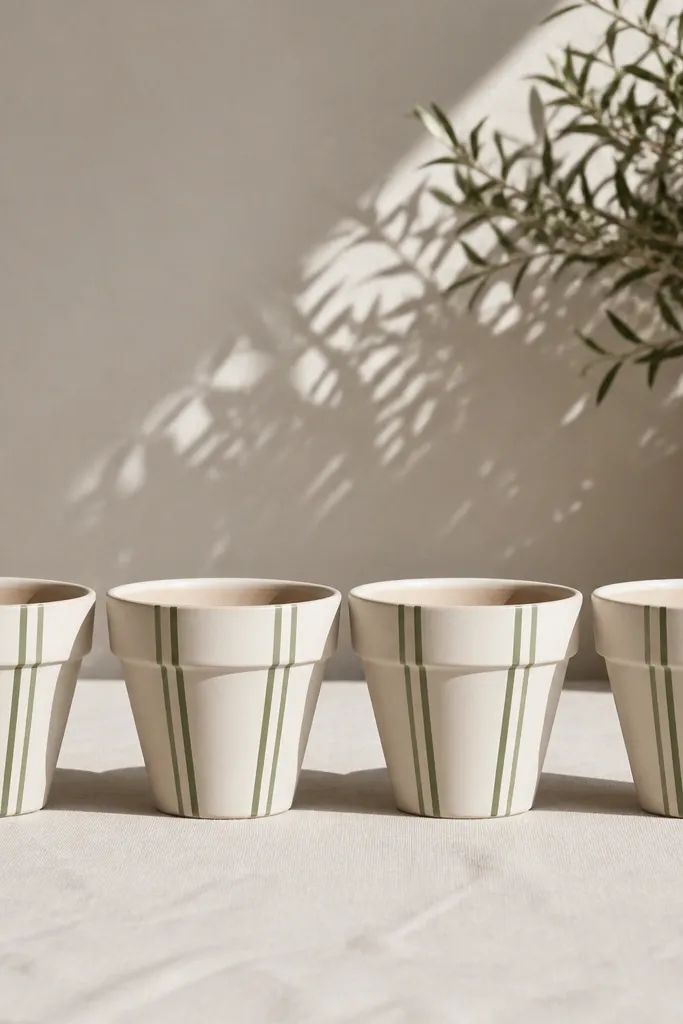
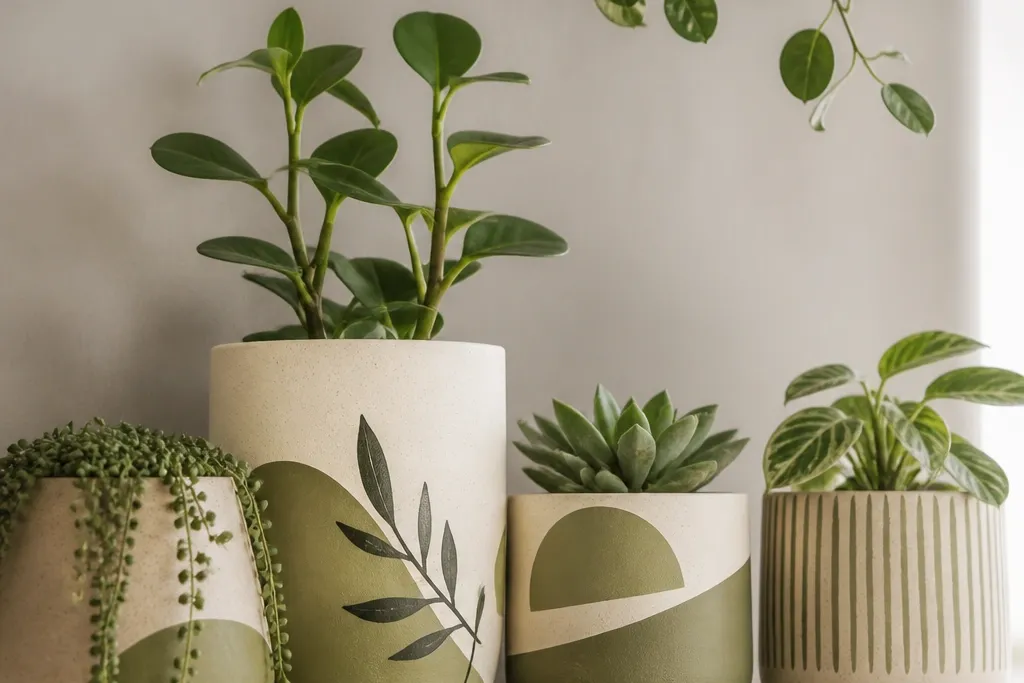
I love pinstripes because they make even a basic pot look intentional. Cream base softens the look, and sage green repeats a natural leaf tone without getting too loud. The stripes also frame plants so leaves look sharper against the pot.
Editor's noteUse a ruler made for crafts and rotate the pot only after each stripe dries — it keeps the pattern aligned.
Tape two 1/8-inch strips per pot, spaced about 1/2-inch apart, and keep the lines straight by marking the pot with a pencil tick at the rim and base. Paint in two thin coats, peel tape while paint is still slightly tacky, then let it cure fully before you water.
Skip thisDon’t use thick paint on tape lines; it bleeds under the edge and looks messy.
2. Olive Dot Cluster Planter Band
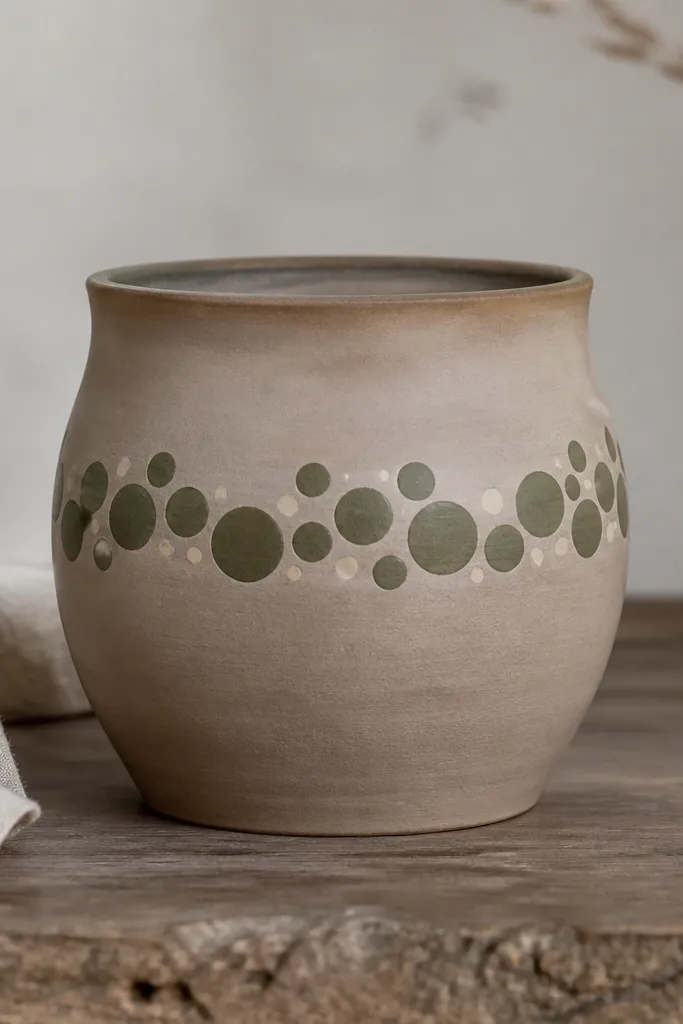
Dot clusters look playful but still tidy when you keep the band in one place. The olive dots echo leaf speckling you see in some succulents and create a “designed” horizon line. It’s a great option when your plants are already busy.
Editor's noteMake the largest dots slightly off-center so the band feels organic, not like a sticker sheet.
Paint the pot base in clay-leaning terracotta paint, then add a band across the middle that’s about 2.5 inches tall. Use a round sponge or a dotting tool to place dots in three sizes — small, medium, and one larger accent dot.
Skip thisSkip random dot placement all over the pot; it reads chaotic instead of coordinated.
3. White Rim + Forest Leaf Silhouette
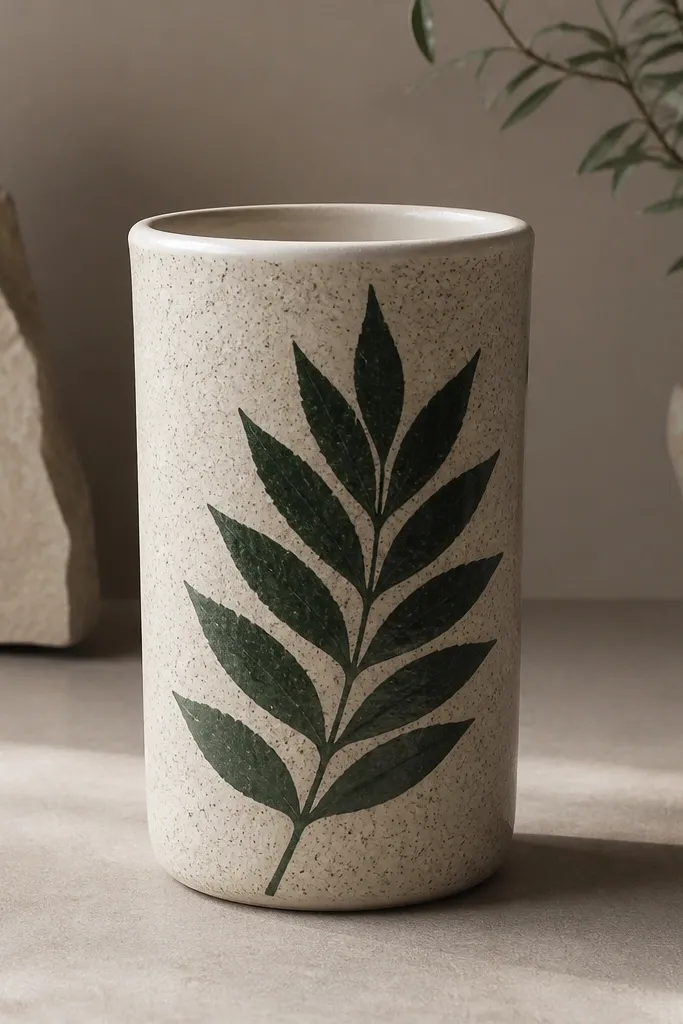
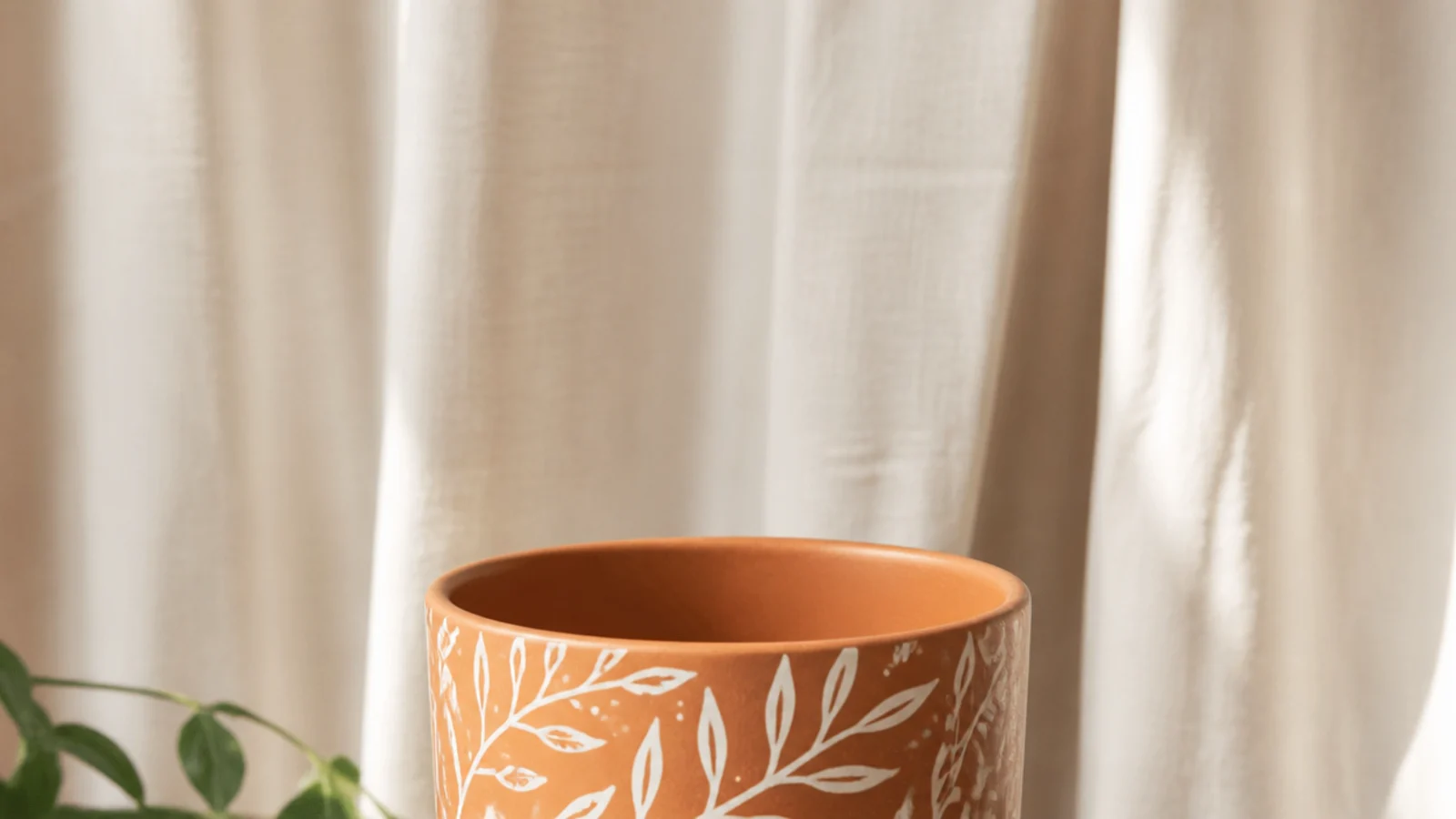
A white rim instantly makes pots look like they belong together on a porch or windowsill. The forest green leaf silhouette connects directly to plant shapes, so it looks like the pot is part of the plant display. I’ve used this on basil and pothos and the whole grouping looks cleaner.
Editor's noteUse the same leaf shape for the set, but flip it on alternating pots for variety.
Paint a 1/2-inch wide white ring around the rim using painter’s tape. For the leaf, trace a real leaf shape onto paper, then transfer with carbon paper or lightly freehand — fill it with forest green and add 5-8 tiny speckles around the edges using a small brush.
Skip thisDon’t outline the leaf in black; it looks harsh and cheap next to real greenery.
4. Terracotta Base with Hand-Drawn Arches
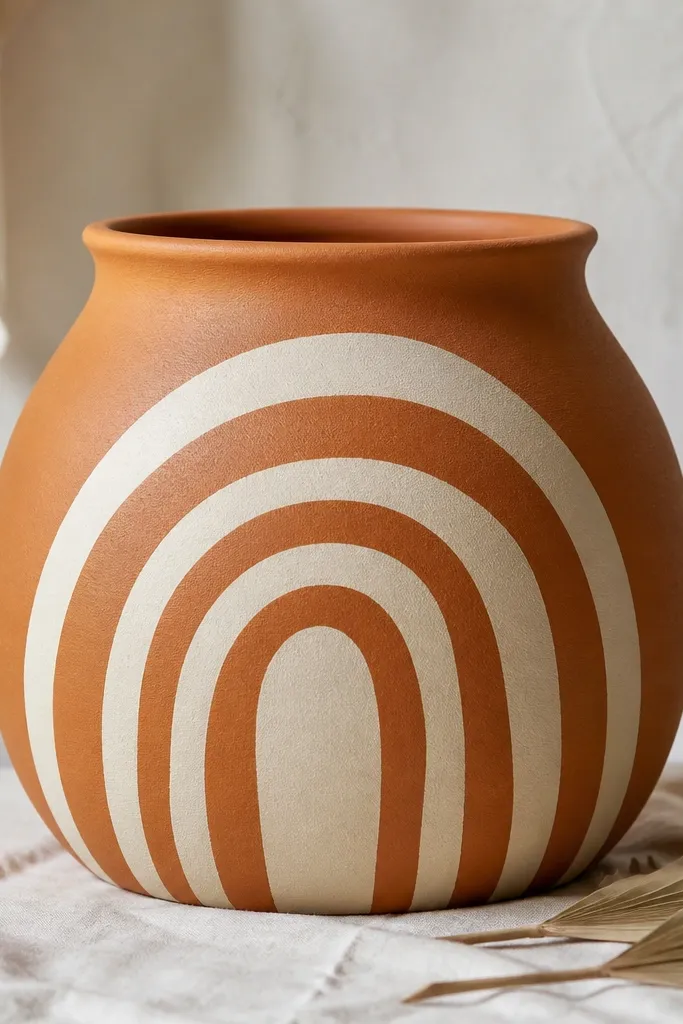
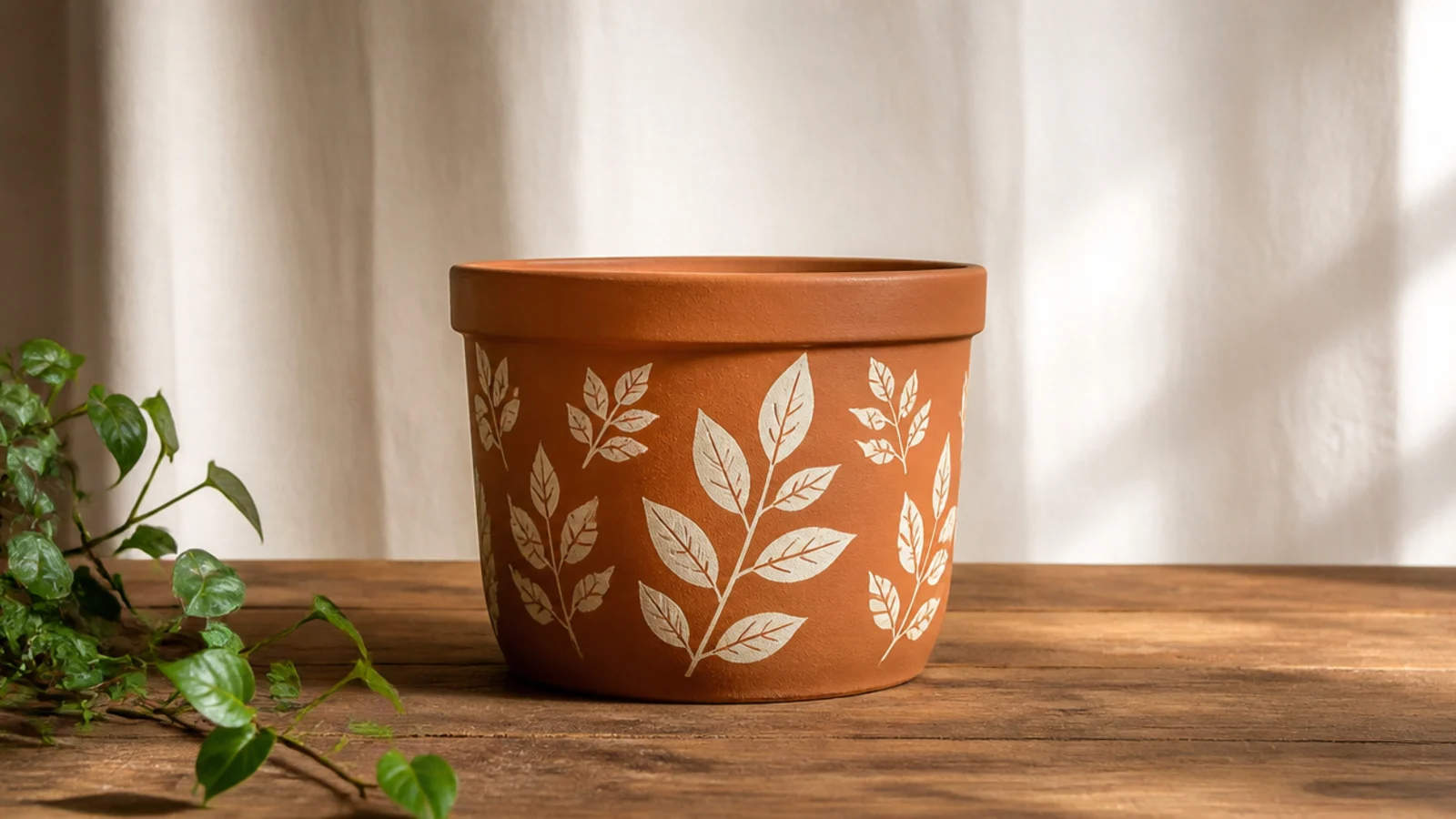
Arches look great with trailing plants because the curve pulls your eye upward and follows vine movement. Terracotta keeps it grounded, while cream arches brighten the pot and make leaves stand out. It’s also forgiving if your hand is imperfect — slight variation looks charming.
Editor's notePaint arches with a flat brush and pull steady curves from the center outward; it keeps the arch edges smooth.
Keep the base terracotta, then paint 5-7 cream arches starting 1 inch below the rim. Space them so the bottom of each arch nearly hits the next arch’s peak, leaving a small gap for breathing room.
Skip thisDon’t make arches too tall — if they reach the base, the pot looks top-heavy.
5. Seafoam Wave Wrap for Succulents
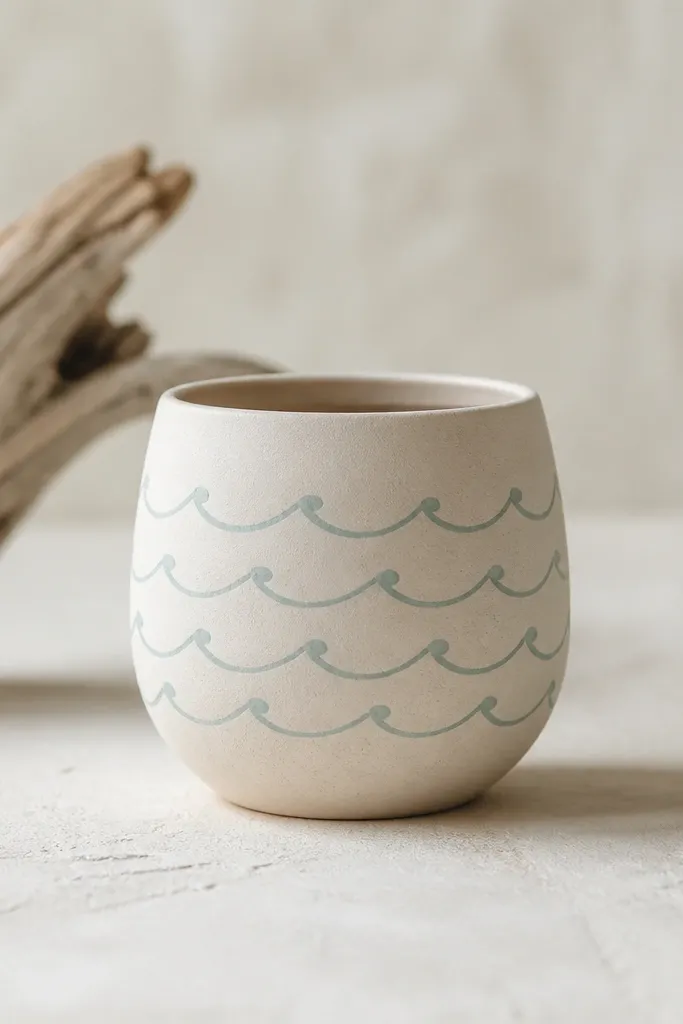
Wave lines give you movement without clutter, which is perfect for compact succulents. Seafoam pairs with many plant greens and makes the pot feel airy. The horizontal wrap also visually “bands” the plant, making a grouping look cohesive.
Off-white base first, then draw wave lines using a long liner brush. Repeat 6-8 waves around the pot, keeping crest dots tiny (use the tip of a dotting tool). Let each ring dry before adding the next to avoid smearing.
Mark one starting point with a pencil dot so your wave pattern lines up when you rotate the pot.
Don’t use glossy paint for the waves on a matte pot; it looks like a different product.
6. Blackboard Green Chalk-Style Labels
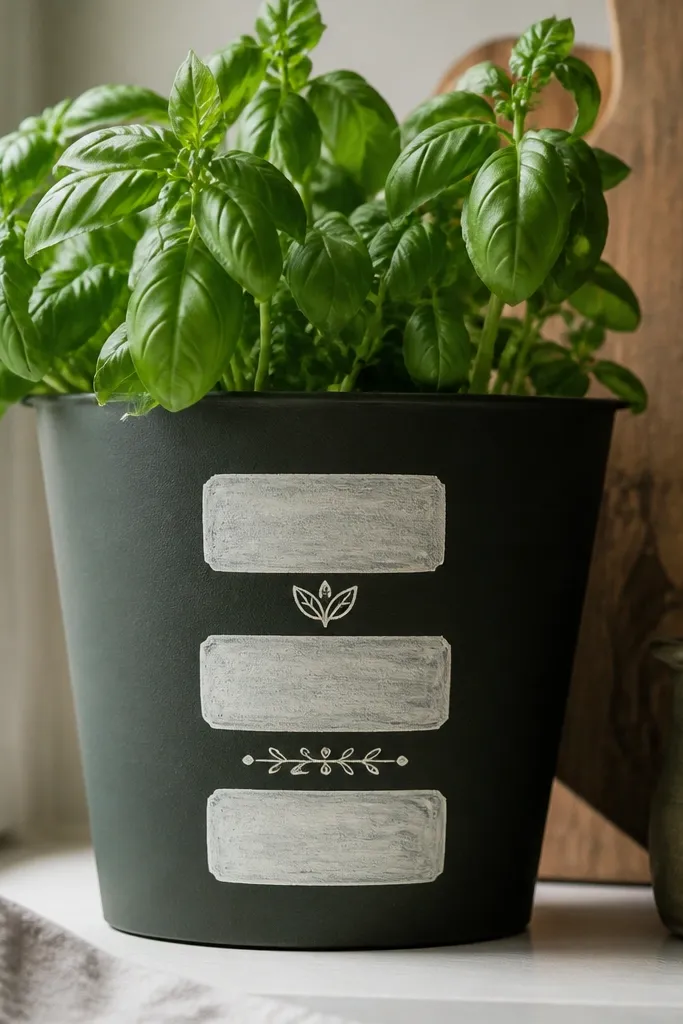
Chalk-style labels make plant pots feel like part of a functional display. The blackboard green gives a grounded backdrop, and the white lettering pops against leaf textures. I use this when I’m hosting because it looks cute even from across the room.
Paint the pot with matte blackboard green, then use a small stencil for label rectangles. Inside each label, write a short word or just initials in a slightly imperfect chalk font using a white acrylic paint marker or a fine brush. Add tiny doodles like a leaf or a dot cluster.
Seal with a matte clear coat, then let it cure two full days before water exposure.
Don’t seal with high-gloss; it turns chalk look into plastic.
7. Gold Speckle Spray with Deep Green Base
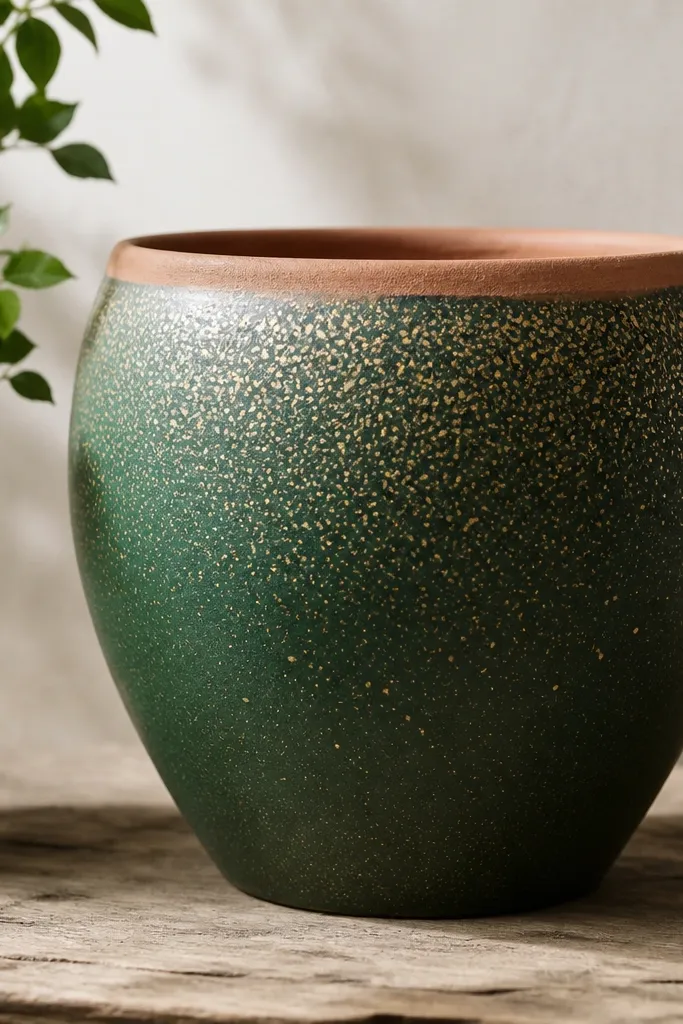
Speckles look like sunlight on leaves, and they hide brush strokes. Deep green makes the gold feel intentional instead of flashy. This one is a good pick if you want a “set” look but your plants vary a lot.
Editor's noteProtect your plants and floor with cardboard; metallic speckle travels farther than you think.
Paint the pot deep green and leave the rim terracotta or paint a thin green rim — keep it consistent across the set. For speckles, load an old toothbrush with gold metallic acrylic, then flick over the pot from 8-10 inches away. Do one light pass, let it dry, then add a second pass if you want more density.
Skip thisDon’t oversaturate speckles — if it turns into a gold wash, it stops reading as texture.
8. Cream Marble Swipe Pot
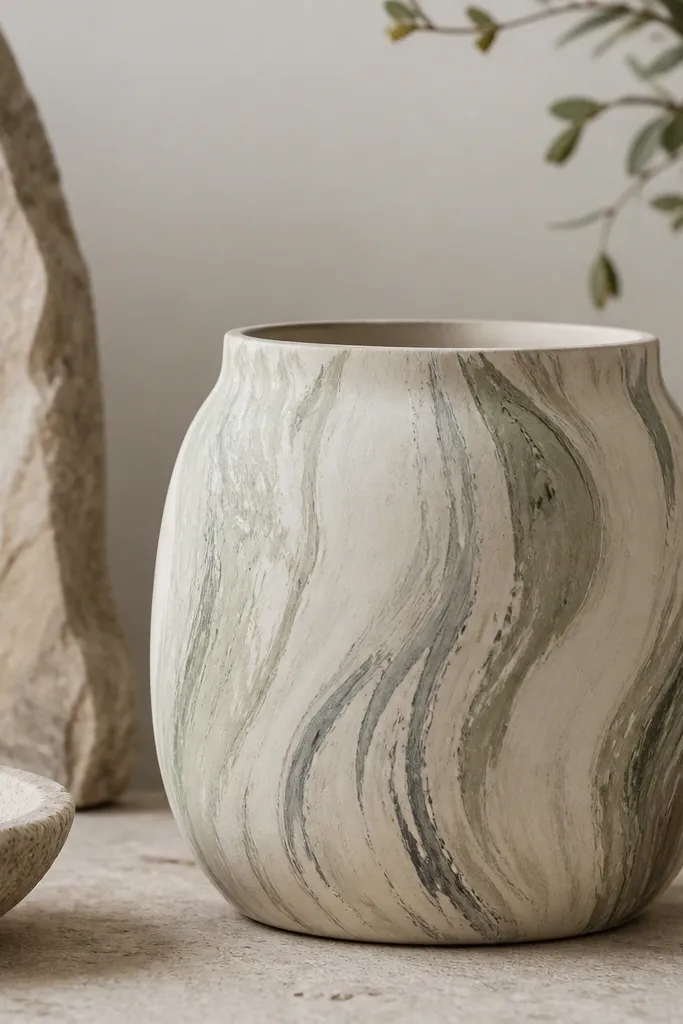
Marble swipes look fancy without needing fancy tools. The creamy base makes it bright, and gray plus muted sage echoes leaf veins and subtle color shifts. It’s one of my go-to patterns when I’m mixing multiple plant types on one stand.
Base coat in cream, then drag a slightly thinned gray paint using a wide makeup sponge or a dry brush. Add sage swipes on top while gray is still a bit tacky. Keep swipes vertical so the pot reads tall, not busy.
Thin paints with a little acrylic medium so the swipes stay translucent and stone-like.
Skip heavy contrast black/white marbling; it looks like a fake granite sink.
9. Pastel Gradient Fade from Rim
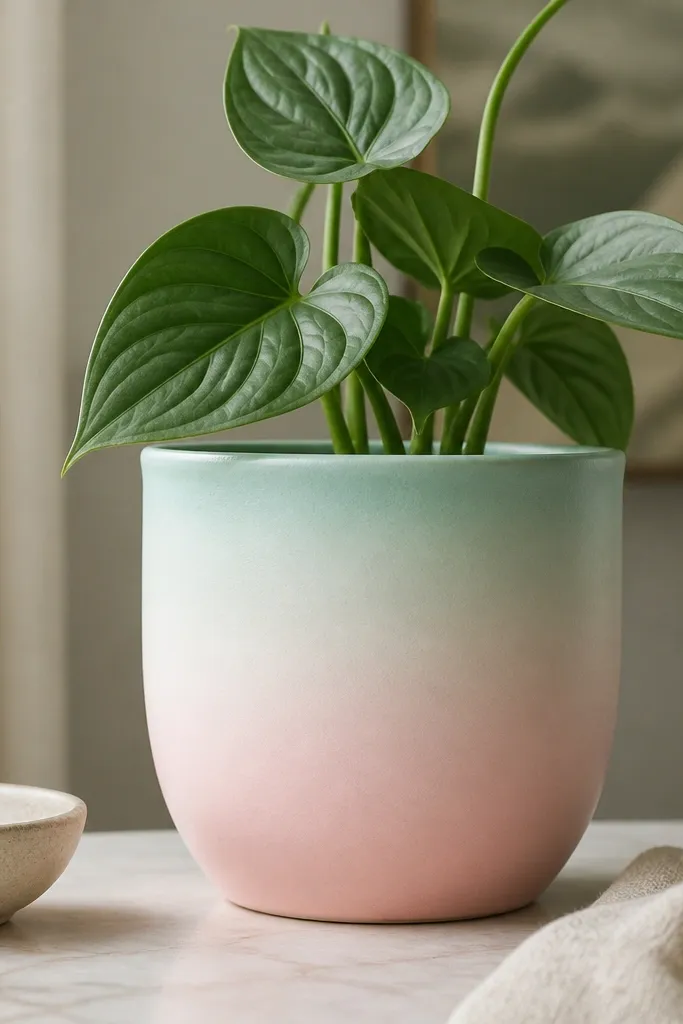
A gradient makes your pot look “grown-up” even with simple plants. Mint to blush mimics the color shift you see in new leaves. It also ties together different pot sizes because the color change is consistent across them.
Editor's noteUse three sponge passes — one for mint, one for blush, one for blending — so the middle looks smooth.
Paint mint at the rim in a band about 1 inch tall, then blend downward with a damp sponge using pale blush paint. Work in small sections while the paint is wet, then add a second blend coat if you see streaks. Seal after full cure.
Skip thisDon’t rush the blend; if the paint dries mid-stroke, you get hard lines.
10. Red-Orange Terracotta Check Band
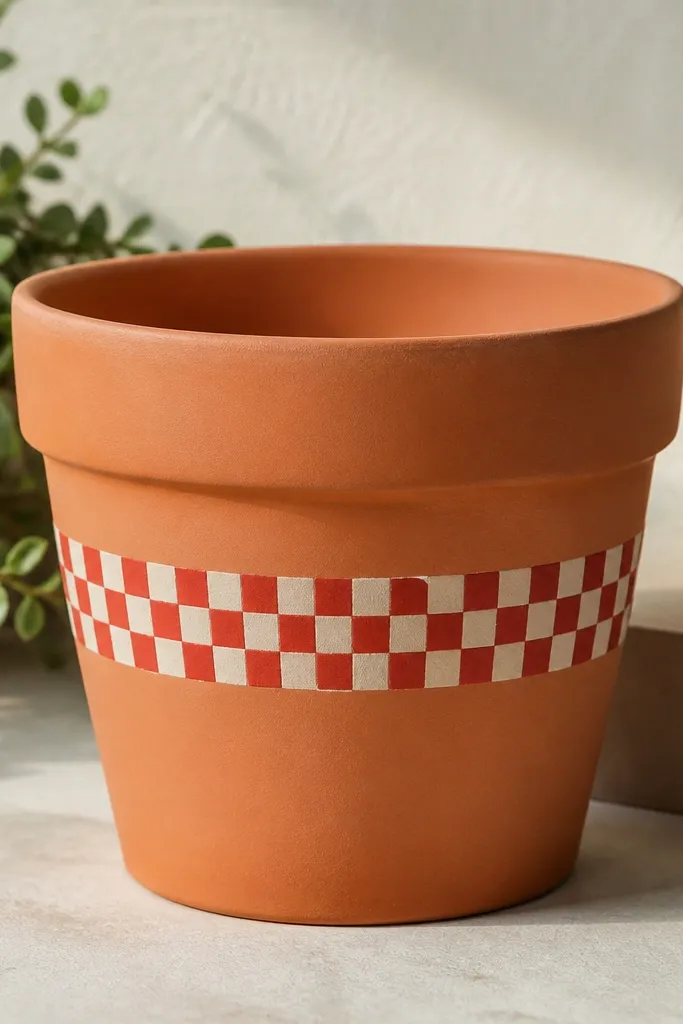
Checks look crisp and make trailing plants look extra neat because the pot pattern stays structured. Red-orange ties to terracotta without turning the whole set into one flat color. This pattern reads best on medium pots where the band has space to breathe.
Mask a band across the center about 2 inches tall. Use painter’s tape to create a grid of small squares — for a medium pot, think 1/2-inch squares. Paint alternating red and cream, let dry, then remove tape carefully.
Press tape edges firmly with a credit card so paint doesn’t creep under.
Skip freehand checks; wonky squares make it look like a kid’s craft.
11. Monstera Leaf Frame on Cream
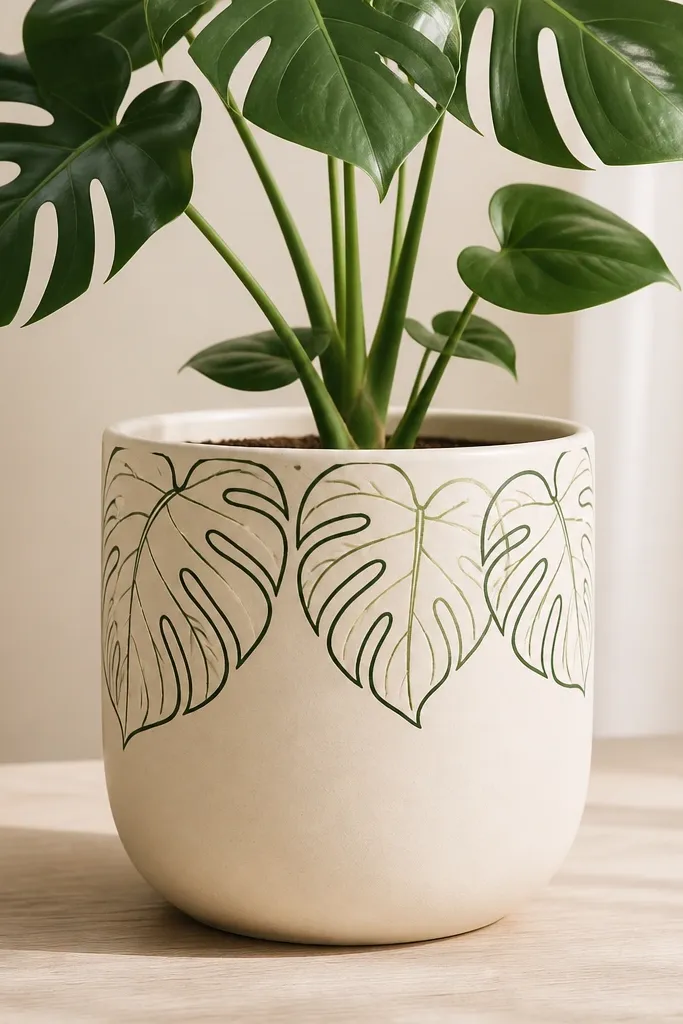
This works because monstera leaves have those cutouts, and your frame mimics that rhythm. Cream makes the leaf drawing crisp, and dark green keeps it grounded. It’s a strong choice if you own a monstera, swiss cheese plant, or any bold-leaf plant.
Editor's noteUse the same dark green as your plant stems if you can — matching undertones looks intentional.
Paint the whole pot cream first, then use a stencil of monstera leaf outline or trace a leaf photo. Place the leaf frame around the upper half so it doesn’t crowd the soil area. Add a couple faint vein lines with a thin liner brush for realism.
Skip thisDon’t fill the leaf with solid black; it overwhelms the plant’s texture.
12. Tiny Starburst Accents on Sage
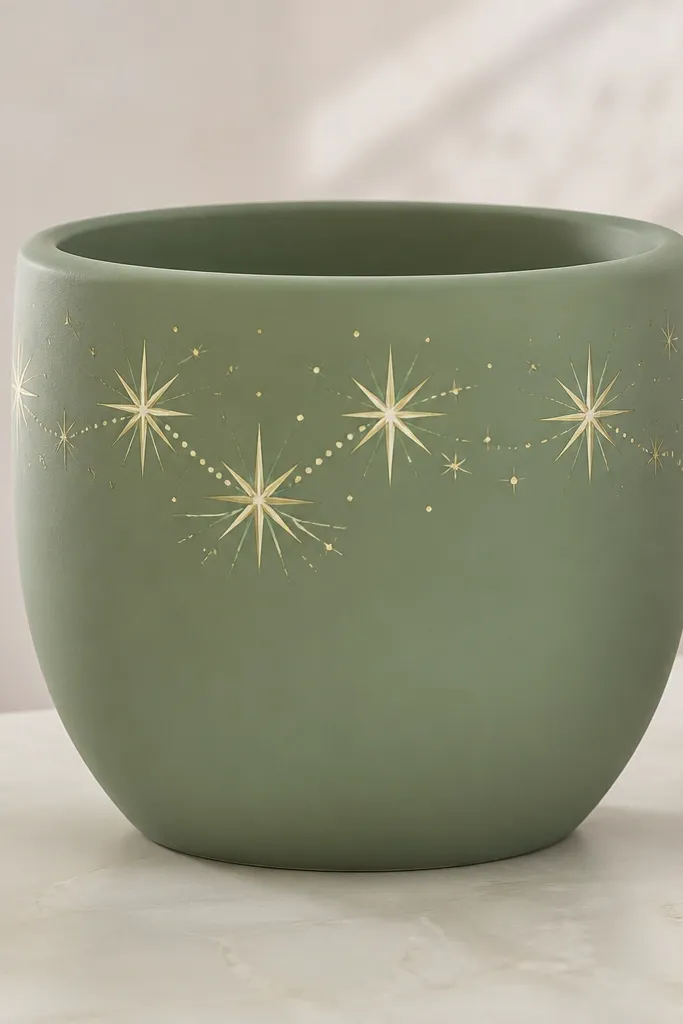
Starbursts give you a “sun-kissed” feel that looks great with houseplants in bright windows. Sage is calm, so the small star shapes don’t compete with leaves. I’ve used this on pothos and it makes the display feel festive without turning into holiday-only decor.
Editor's noteKeep starbursts under 1/4 inch wide; bigger ones look like stickers.
Base coat sage. Then paint 8-12 tiny starbursts using a fine brush: draw a plus shape, then add small angled strokes between arms. Add pale gold dots at the center, and connect a few bursts with tiny cream dots.
Skip thisDon’t place starbursts directly behind leaf stems; it gets visually messy.
13. Holiday Red and White Candy Stripe Base
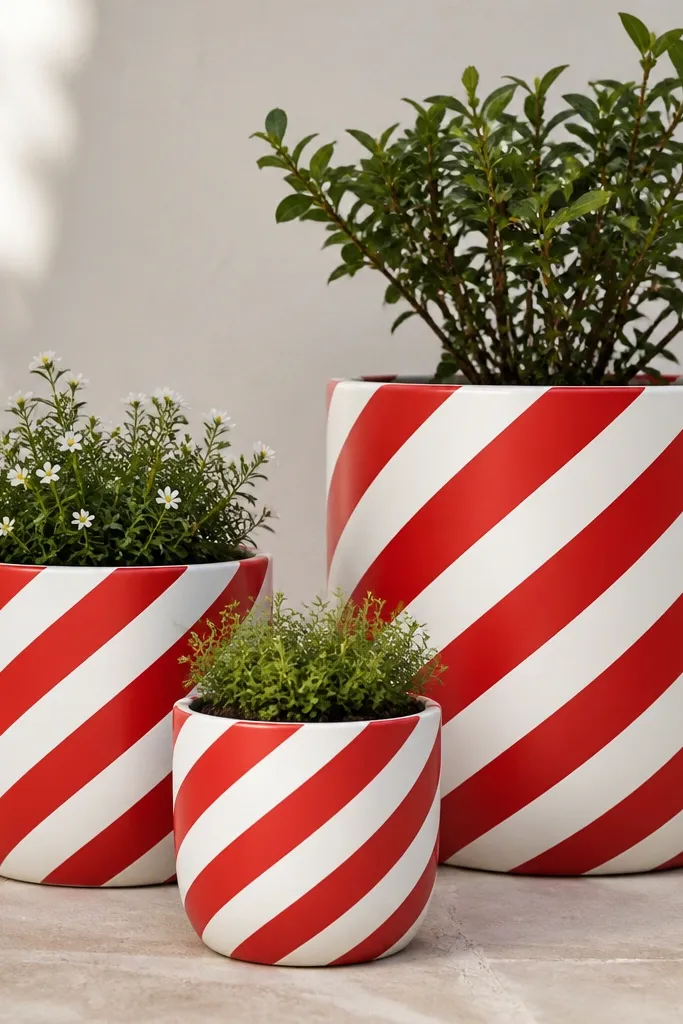
Candy stripes are the fastest way to make a plant corner look holiday-ready. Diagonal stripes create energy and make your plants feel like part of the decor. The red/white combo also works year-round because you can swap greenery for whatever season you’re in.
Prime, paint white base, then tape diagonal lines around the pot using a consistent angle (about 45 degrees). Paint red in two thin coats, peel tape, then add a clear topcoat. For a set, keep the stripe width identical across every pot size you’re using.
Use a flexible tape measure to wrap around the pot — it helps you keep stripe spacing consistent.
Skip thick paint layers; they crack on curved surfaces.
14. Lavender Sprig Vines for Spring Pots
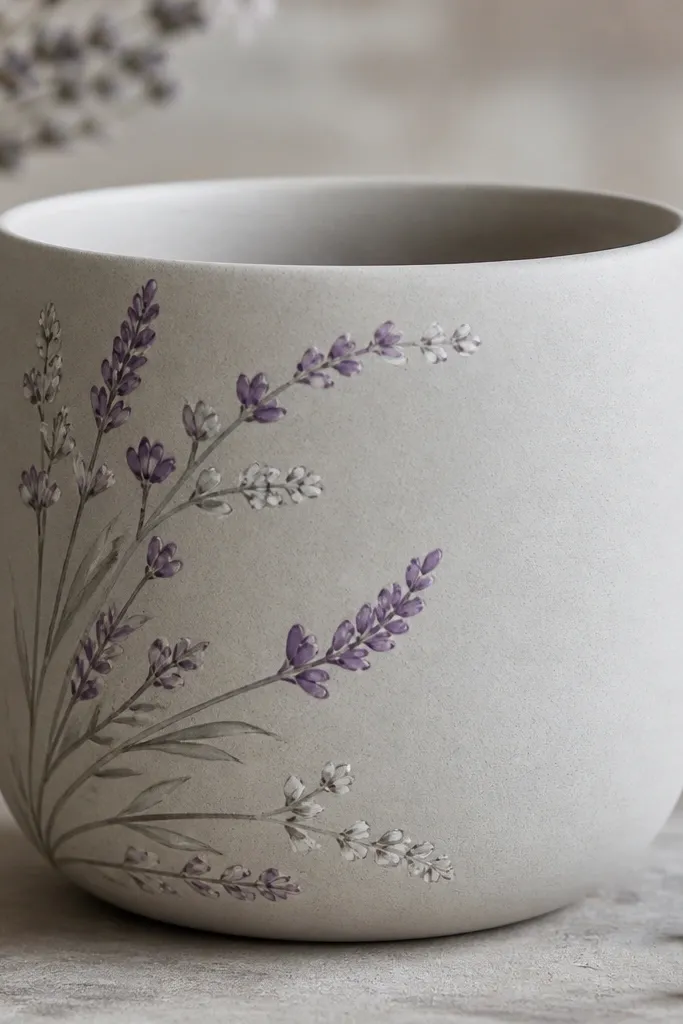
Sprig vines look natural and calm, which is why they work with real flowers and herb plants. Lavender tones match a lot of greens and help pots feel seasonal without screaming. I use this when I’m setting up a spring table with rosemary or thyme.
Paint base in pale gray or light stone color. Then freehand a vine line using a thin brush, adding sprigs about every 1 to 1.5 inches. Buds are small teardrops in muted purple; highlight buds with a lighter lilac dot.
Let the vine line dry between sprigs so buds stay crisp, not smudged.
Don’t paint sprigs too close together; crowding makes it look like a stamp pattern.
15. Navy Sailor Rope Border
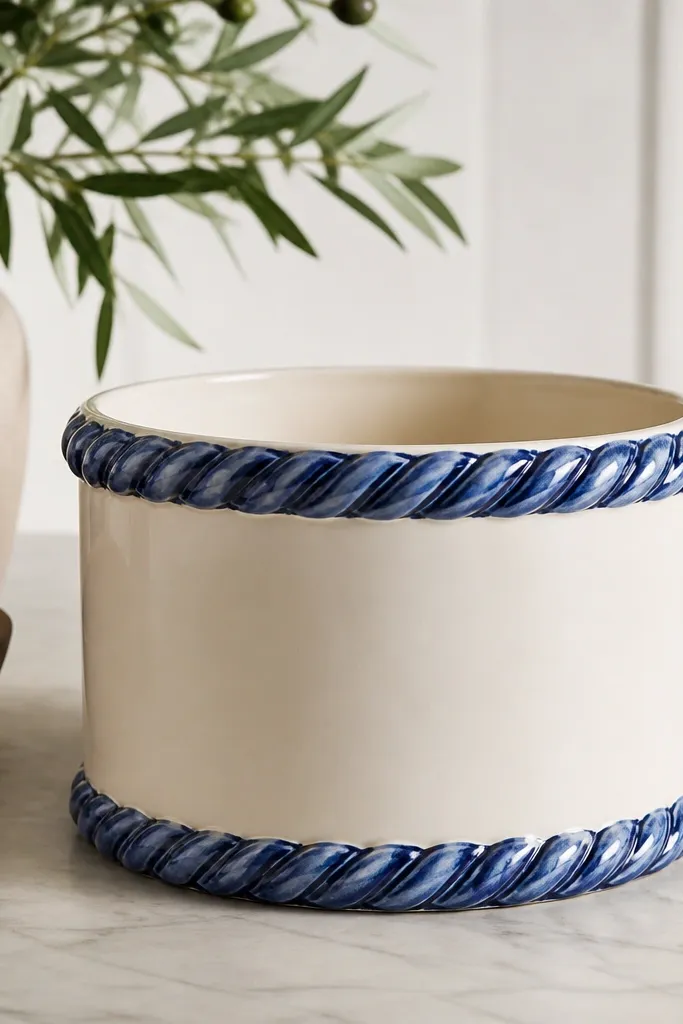
A rope border frames the pot like it’s part of nautical decor. Navy against cream reads clean, and the double-shade rope gives depth. It’s a great match for plants with long leaves, like agave or dracaena.
Paint cream base. For the rope border, use tape to mask a 1/4-inch band near the rim and another near the base. Paint navy loops with a small round brush, then add lighter navy highlights on the top half of each loop.
Use a damp paper towel to clean brush edges between loops — it keeps the rope lines sharp.
Skip single-color rope; flat navy looks like a sticker instead of rope.
16. Sunflower Petal Ring on Yellow Clay
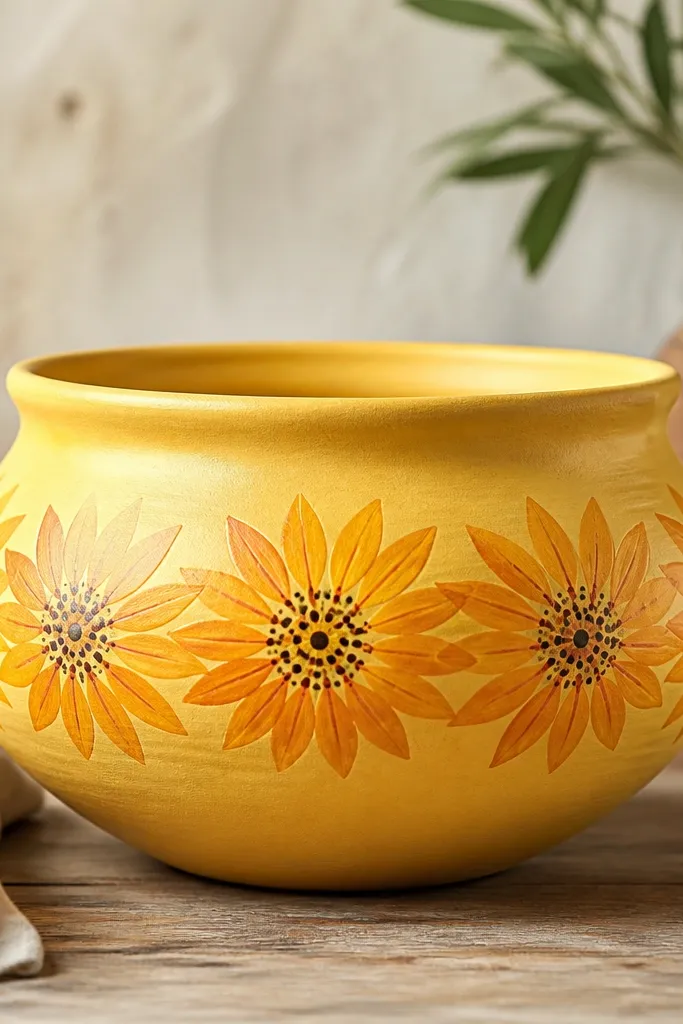
Sunflower rings make summer planters feel cheerful without adding extra props. The petal pattern sits where leaves spread, so it looks like the plant is growing from the motif. It’s also easy to scale — you can keep the ring position the same on every pot size.
Editor's noteOutline petals lightly with a darker orange before you fill — it makes the shapes read from across the porch.
Base coat in a warm yellow clay tone. Paint a ring about 2 inches tall with petal shapes in two oranges and one gold. Put a tight center dot cluster using a dotting tool in dark brown.
Skip thisDon’t use bright neon yellow; it clashes with most leaf greens.
17. Emerald Geometric Triangles
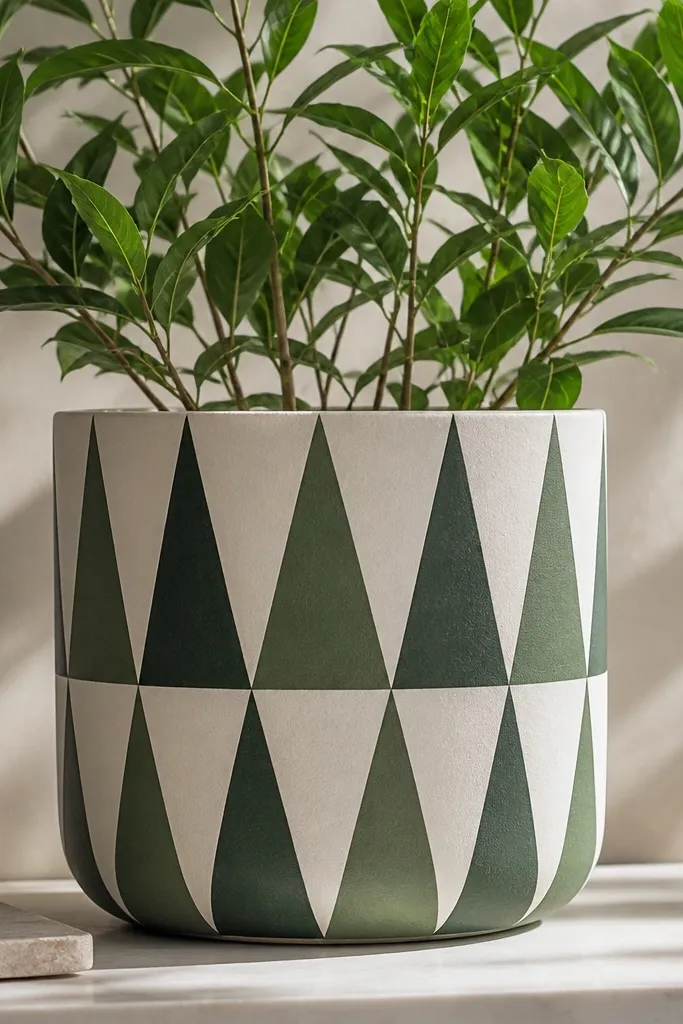
Geometric triangles look modern and make plant leaves look more graphic. Off-white keeps it airy, while emerald and forest give depth. I like this design for plants with simpler leaves because the pattern does the “decorating.”
Editor's noteKeep your triangle height consistent — 1.5 to 2 inches on a medium pot looks balanced.
Base coat off-white and let it dry fully. Mask triangle blocks with tape in a vertical repeat. Paint emerald first, then forest triangles, then remove tape slowly to avoid lifting edges.
Skip thisDon’t freehand triangles; uneven angles make the whole set look sloppy.
18. Burgundy Leaf Vein Lines on Cream
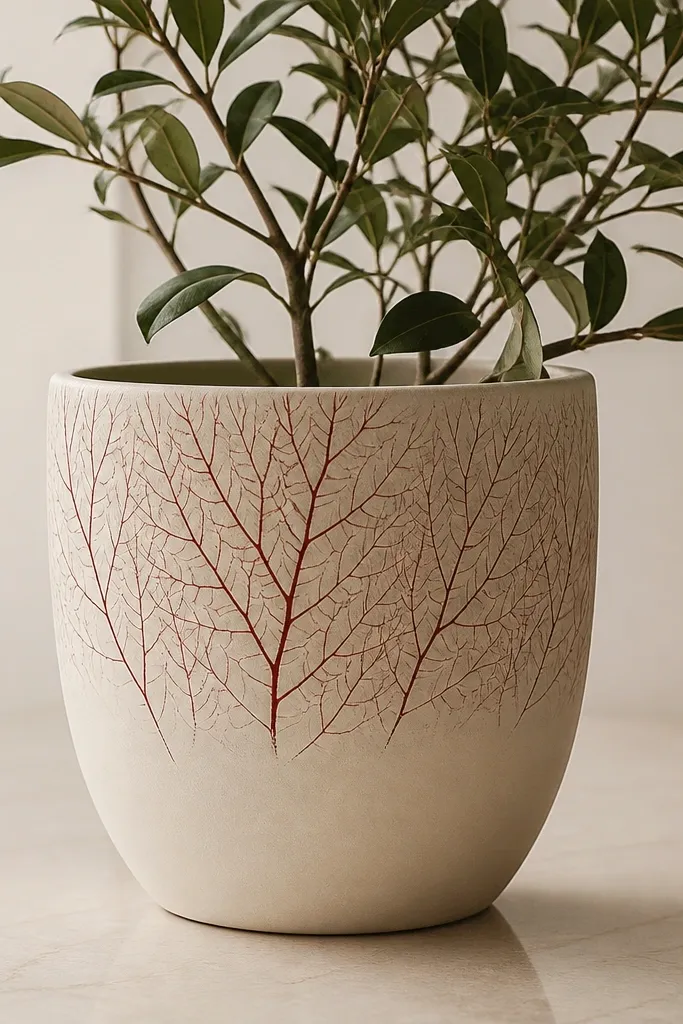
Leaf vein lines feel artsy but still match real plants because veins are a plant detail. Cream base makes the burgundy look warm, not harsh. This design works especially well when your plants have visible veins or thin leaves.
Editor's noteUse a fine brush and pull lines in one stroke — multiple passes thicken the paint and look like marker.
Paint cream base. Then draw one main vein line with a pencil, ink over it in burgundy, and add smaller branches. Fade the veins by thinning paint with water-based acrylic medium so the far branches look lighter.
Skip thisSkip black-burgundy; it looks like dried ink and doesn’t sit nicely with greenery.
19. White Lace-Edge Border with Sage Fill
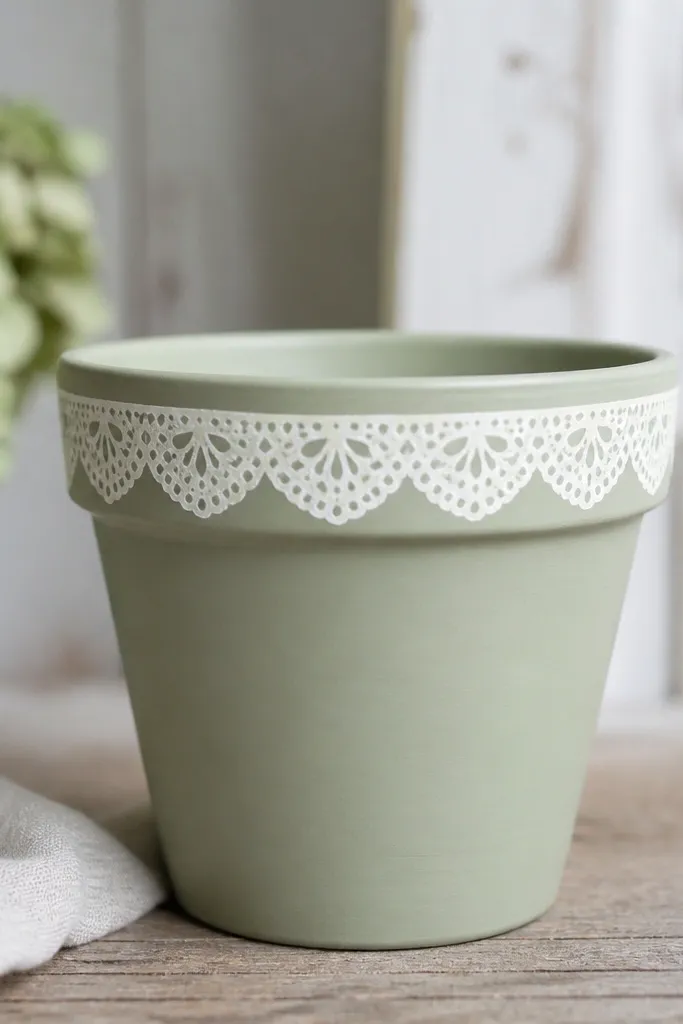
Lace-edge borders make pots feel delicate without being fragile-looking. The sage fill keeps it outdoors-friendly, and the white border brightens the rim where light hits. I’ve used this for spring and it looks great with soft plants like kalanchoe or small herbs.
Editor's notePractice the scallop spacing on a scrap pot first so your rhythm stays even.
Base coat sage. Mask a 3/4-inch band around the rim and paint scallops in white using a small round brush. Add tiny dots between scallops for a lace effect, then clean up edges with a damp cotton swab.
Skip thisDon’t paint lace too thick; wide white bands can look like tape.
20. Winter Evergreen Sprig Repeat
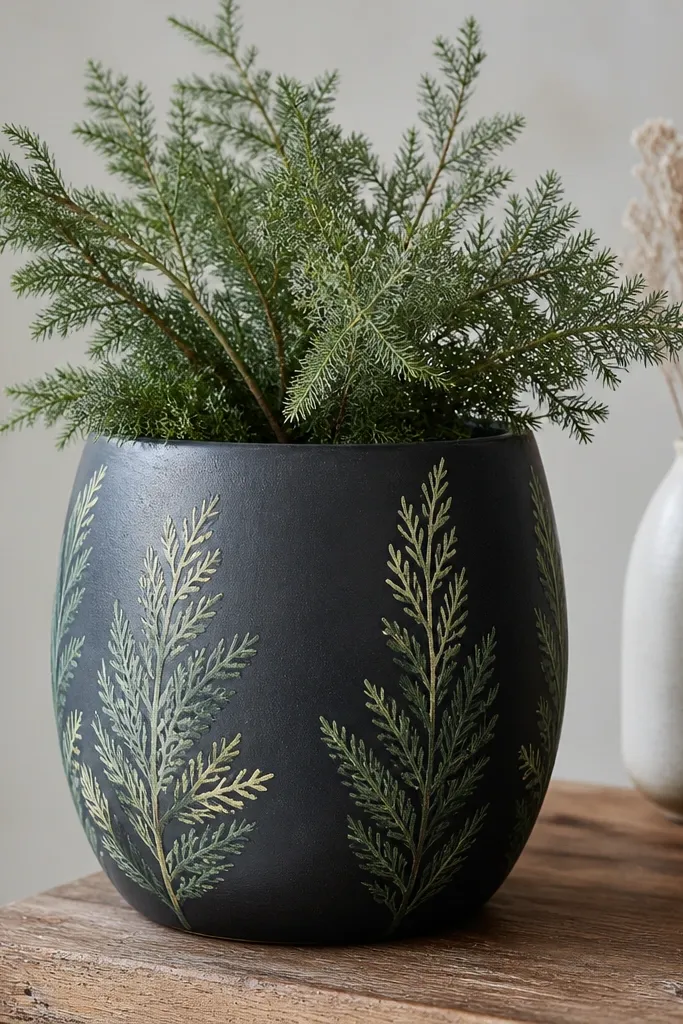
For winter, this is the pattern I reach for because it looks like greenery even when the plants slow down. Charcoal makes the greens pop, and the muted lime highlights mimic fresh new growth. It also looks good with white-flowering plants and even bare branches in the pot.
Paint charcoal matte base. Then repeat sprigs vertically: draw a central stem line, add small V-shaped needles on each side with two greens (muted green and pale lime). Space sprigs about 2 inches apart and keep them mostly on the upper half.
Use two brush sizes: one for the stem, one for needle strokes so the needles stay tiny.
Skip glossy base on winter pots; glare makes the sprigs look cheap.
21. Terra Cotta Ombre Fade with Cream Top
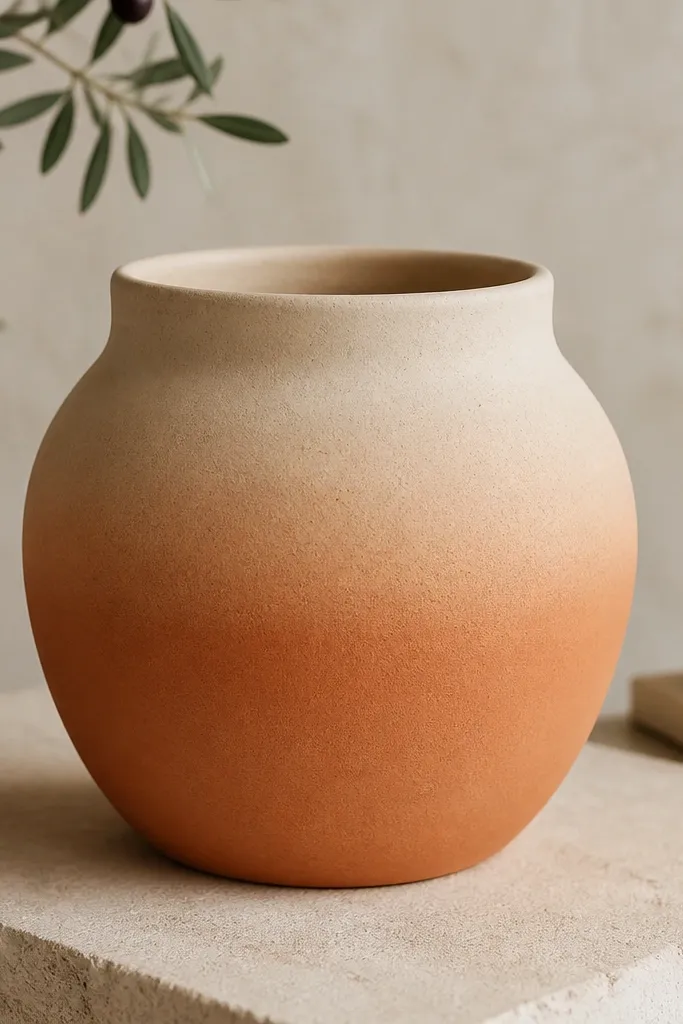
Ombre fades look expensive because they hide minor brush streaks. A cream top gives you a clean “cap” that looks good with trailing plants, and the darker bottom anchors the pot. This is one of the easiest designs to match across sizes.
Editor's noteBlend in a circular motion with the sponge to avoid vertical streaks.
Paint a cream band from the rim down about 1/3 of the height. Use a sponge to blend terracotta downward into the cream, working in gentle taps. Add a second blend layer if you see harsh lines.
Skip thisDon’t use too much water in the paint; it can cause patchy absorption on terracotta.
22. Monochrome Striped Pot with Terracotta Edge
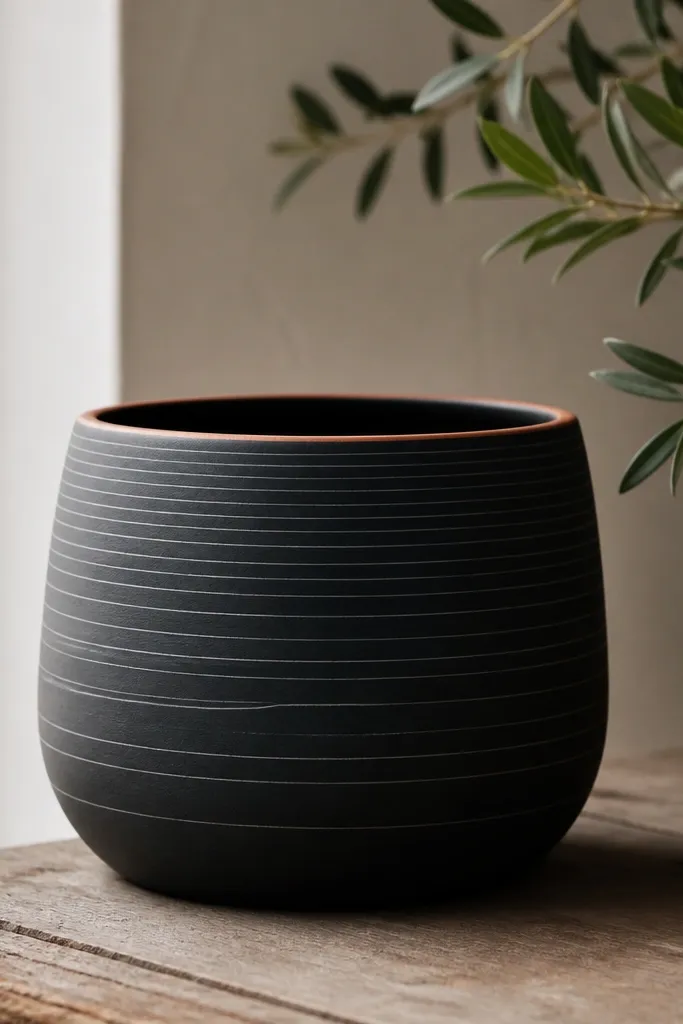
Monochrome stripes make a plant shelf look modern. The rim edge in terracotta keeps it warm so the black doesn’t feel cold. I used this on a corner stand with pothos and it made the leaves look shinier.
Prime and paint matte black first. Mask thin horizontal stripes with tape — 1/16 to 1/8 inch wide — spaced evenly. Leave a 1/4-inch rim band unpainted terracotta or paint it back in with a small brush for consistency.
Let stripes cure overnight before you move the pot so tape edges don’t scuff.
Skip metallic stripes on matte black; it looks uneven because metallic reflects differently.
23. Copper Linework with Leaf Doodles
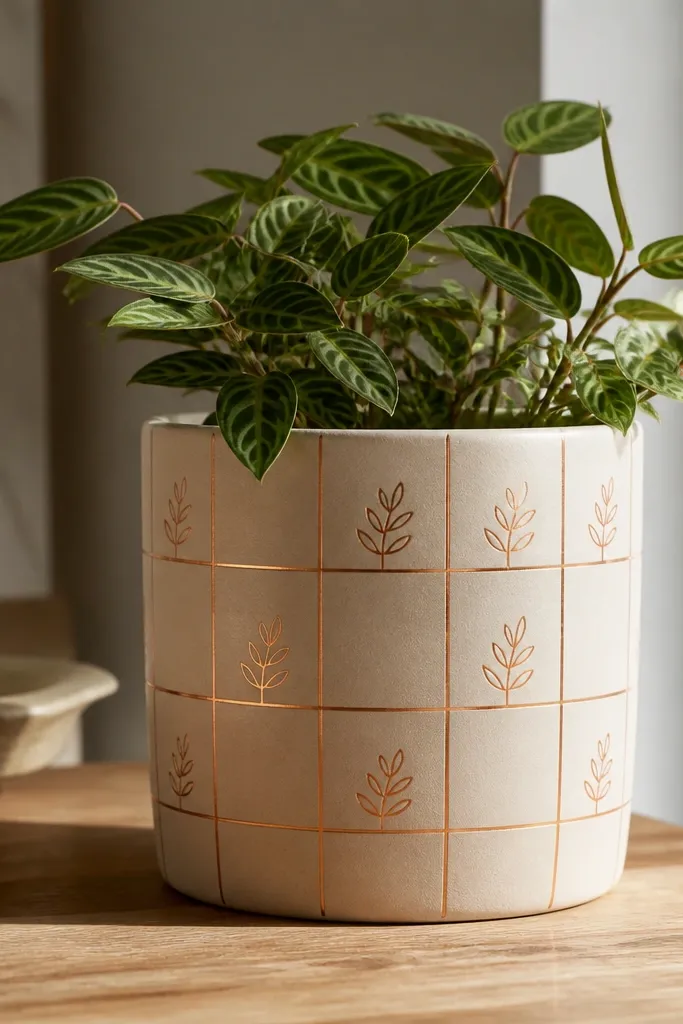
Copper linework looks like hand-drawn jewelry for your plants. The grid gives structure, and tiny leaf doodles bring it back to the theme. It works best when you have a few plants with similar leaf sizes so the pot pattern doesn’t compete.
Editor's noteIf copper paint dries dull, add a second thin coat instead of thickening the first.
Base coat light beige. Use painter’s tape to map a loose grid, then remove tape and paint copper lines with a fine liner brush. Add 10-15 leaf doodles — simple teardrops with a center vein line.
Skip thisDon’t cover the whole pot in copper; linework should breathe.
24. Rainbow Microband for Mixed Herbs
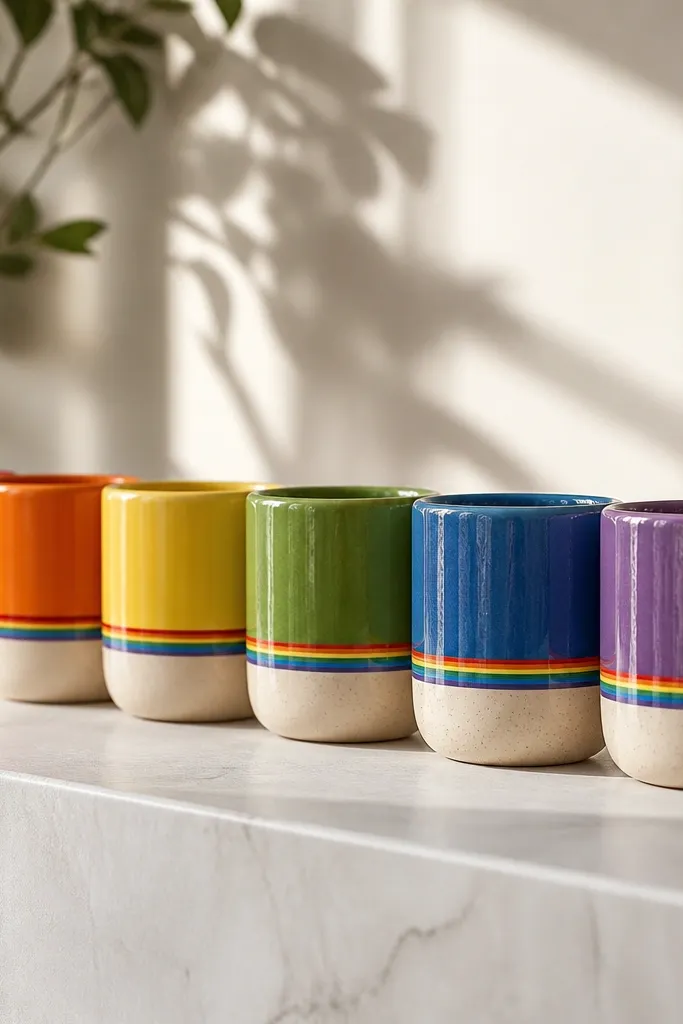
Microbands are the easiest way to make a group of different plants look coordinated. Each pot gets one color note, so the set feels intentional instead of chaotic. This is perfect for herb pots on a kitchen window because you can tie pots to your plant greens.
Paint all pots cream first. Add one 1/4-inch band across the middle using a different color per pot — red, orange, yellow, lime, teal, blue, purple. Use tape to keep the band straight and keep band height identical across every pot.
Choose colors from your herbs — basil reads green, chives reads blue-green, mint reads cooler green.
Skip multiple bands on small pots; they crowd and look like cheap crafts.
25. Holiday Pinecone Speckle + Pine Green Bands
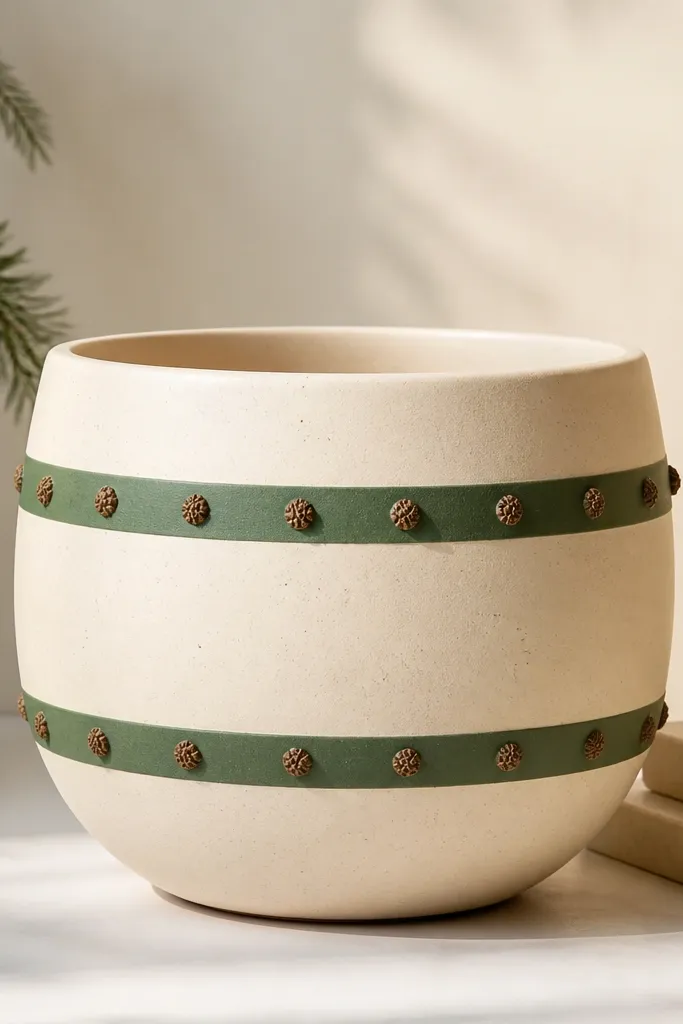
This pattern reads holiday without painting full pinecones. Pine green bands give you the seasonal cue, and brown speckle mimics pinecone texture. It looks good with rosemary, spruce cuttings, or any wintery greenery.
Base coat cream. Paint two pine green bands, each about 3/4-inch tall, leaving 1 inch between them. For speckle, dot brown paint in small clusters around the bands, then add tiny lighter dots to suggest highlight on bumps.
Use a toothpick to drag tiny lines from the center of each cluster for a pinecone-like texture.
Don’t make the speckle too uniform; random cluster sizes look real.