
1. Sand + Charcoal Geometric Blocks
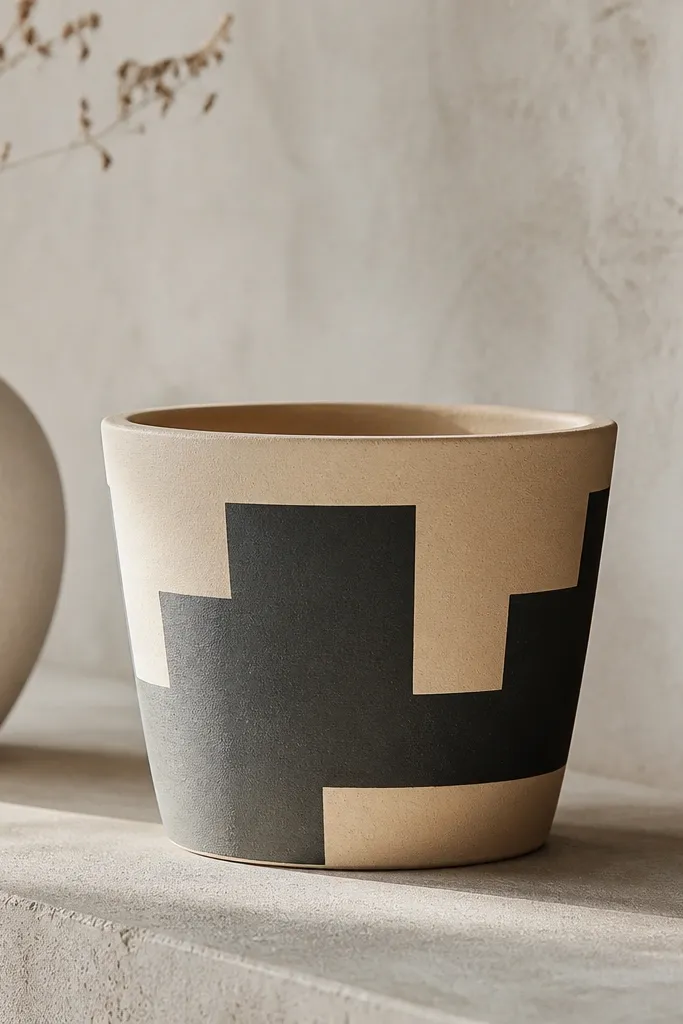
This one looks modern because the shapes are large and the palette stays tight. You paint a smooth sand beige base, then add charcoal blocks that wrap around the pot like a simple graphic. The contrast is high but controlled, so it reads clean instead of busy.
Editor's notePress tape down with your thumbnail along the rim so paint doesn’t bleed under.
Use painter’s tape to mask three horizontal bands, then cut small rectangles out of cardstock to make a stepped layout. Colors: sand beige acrylic craft paint plus charcoal acrylic paint. Keep the blocks about 1 to 2 inches tall so they’re readable from across a room.
Skip thisAvoid tiny shapes packed close together — they look messy on a curved surface.
2. Monochrome Line Art Vines
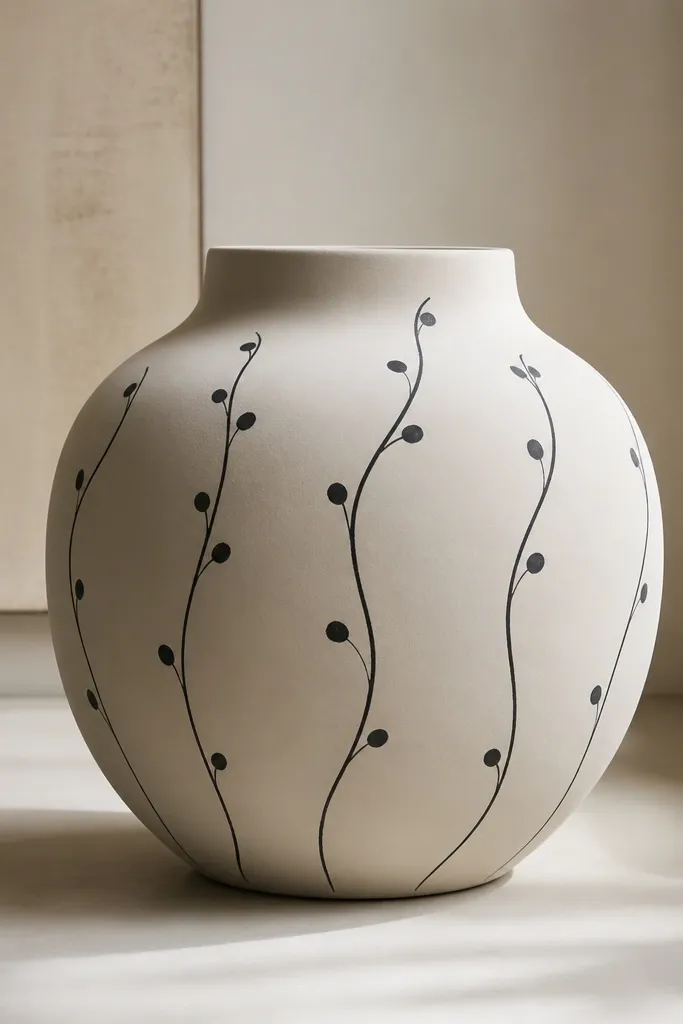
Line art looks modern when the lines are consistent and the pot is mostly negative space. A monochrome off-white base makes the black lines pop without extra colors. The slight unevenness in the line thickness feels hand-made, not childish.
Base coat in off-white matte acrylic. Use a 0/1 round liner brush or a fine paint marker for black vines. Add dots for leaves — keep dot size under 1/4 inch so the pattern stays airy.
Practice one vine curl on paper first; match the spacing before you touch the pot.
Skip heavy fill-in shading — thick black blobs read cluttered on small pots.
3. White Clay Pot with Blue Ombre Rim
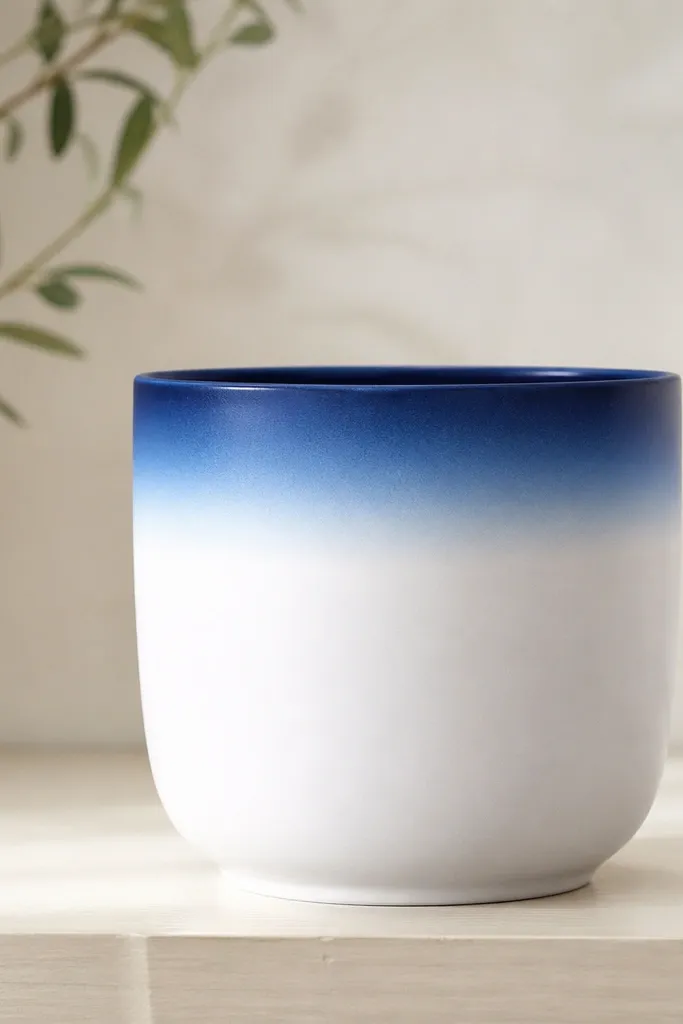
An ombre rim looks polished because it’s subtle and placed where your eye naturally lands. Keeping the body white keeps it modern and lets the gradient do the work. The navy-to-sky fade feels fresh for spring and summer decor.
Paint the whole pot matte white first. For the ombre, use navy acrylic and sky blue acrylic and blend with a dry sponge or wide flat brush, starting at the rim and fading downward 2 inches. Use a light touch — terracotta texture will add a natural speckle if you don’t overwork it.
Blend in small sections while the paint is still wet so you don’t get hard lines.
Don’t paint the gradient too thick — a narrow 2-inch band looks intentional.
4. Terracotta Base with Cream Half-Moon Panels
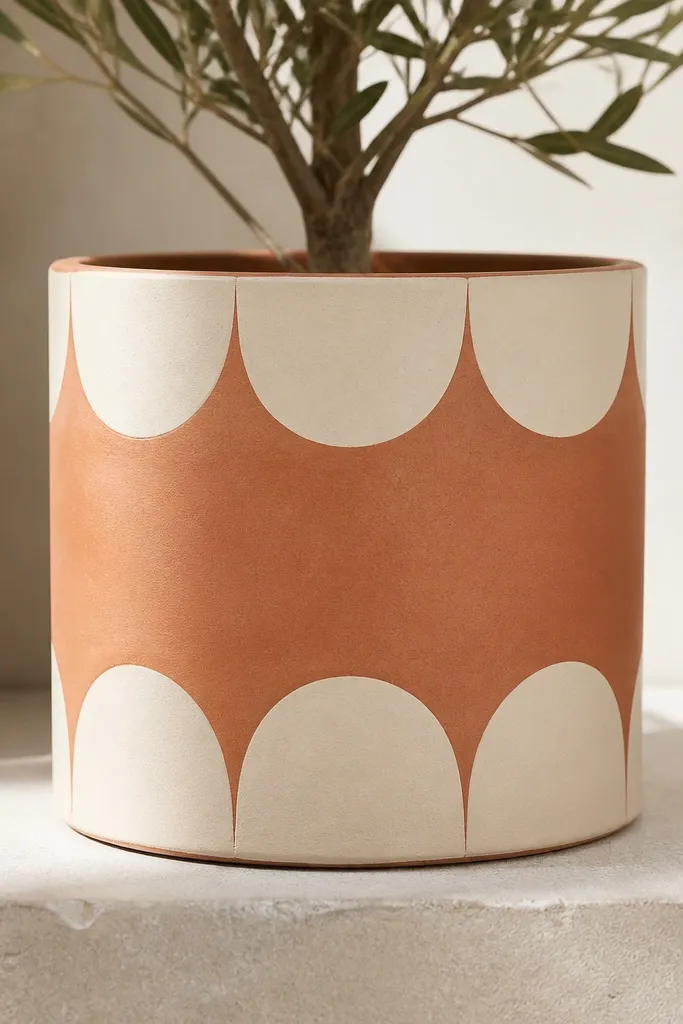
Leaving some terracotta showing gives warmth and keeps the design from looking like a flat plastic pot. Cream half-moons add a graphic, modern rhythm. The shape is simple, so it looks good even if your circles aren’t perfect.
Mask half-moons using a flexible craft stencil or painter’s tape curved strips. Paint cream acrylic over the masked areas only, then remove tape while paint is slightly tacky. Space the half-moons so each one covers about 20-25% of the pot circumference.
Use a damp paper towel to clean tape edges right after removal for razor lines.
Avoid covering the entire pot — full coverage makes it look like a generic paint job.
5. Black and Gold Speckle Modern Minimal
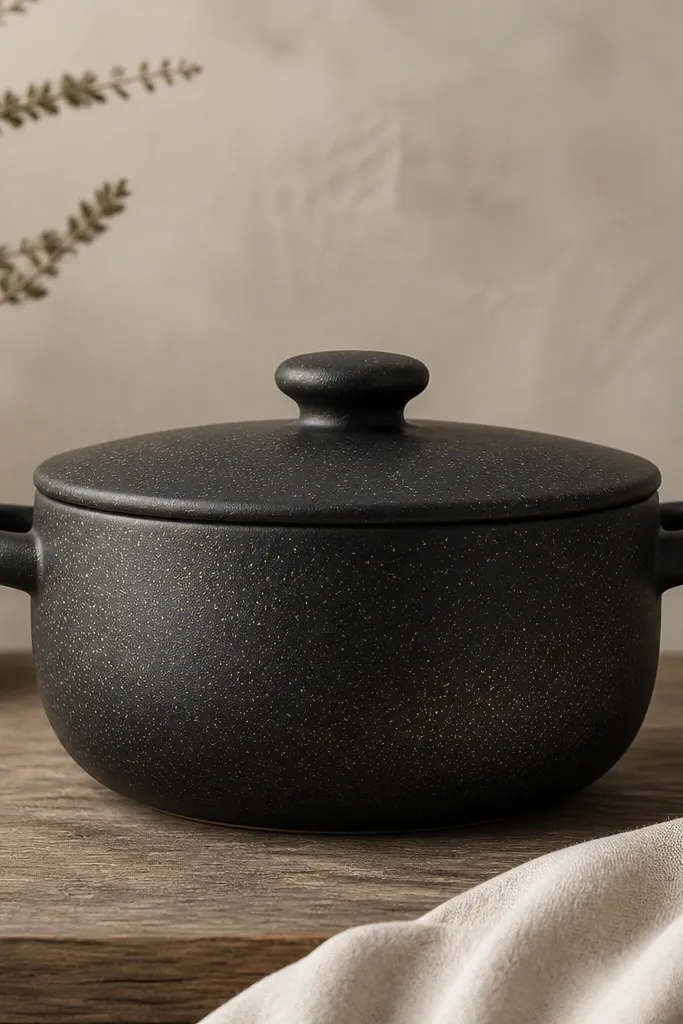
Speckle is modern when it’s controlled. Matte black gives a strong base, and small gold dots create a “night sky” effect that looks intentional. You’re not trying to cover the pot with mess; you’re adding texture.
Prime and paint matte black. Thin gold acrylic paint with a splash of water so it splatters finely. Tap a toothbrush or stiff brush near the pot to create micro speckles — focus on the upper two-thirds.
Do one test tap on scrap cardboard to dial in dot size before you hit the pot.
Don’t use thick, undiluted gold — it makes chunky blobs that look sloppy.
6. Two-Tone Checker Band
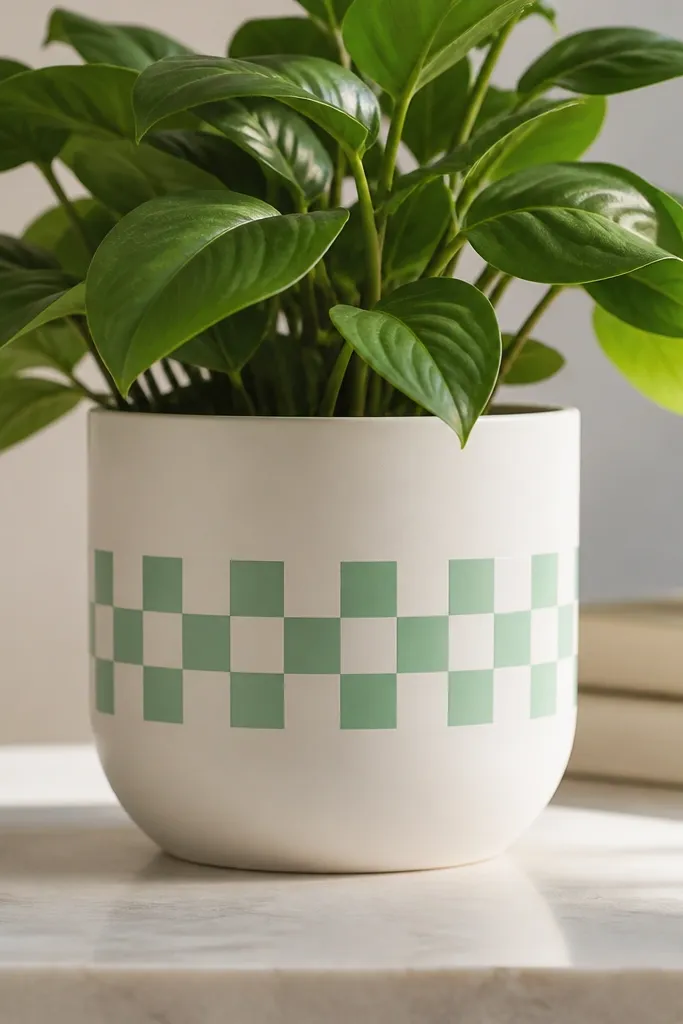
A checker band reads modern because it’s repeating and symmetrical. Mint and white keep it fresh and clean, especially for spring planters. You only paint one band, so it stays stylish instead of loud.
Editor's noteUse a ruler to mark tape placement at the start so the grid doesn’t drift on the curve.
Paint the whole pot white matte. Mask a single vertical band about 3 inches wide. Create squares with tape — alternate mint and white, removing tape between colors so lines stay crisp.
Skip thisDon’t make squares too small — under 1 inch makes the pattern blur.
7. Pastel Wash with White Stencil Botanicals
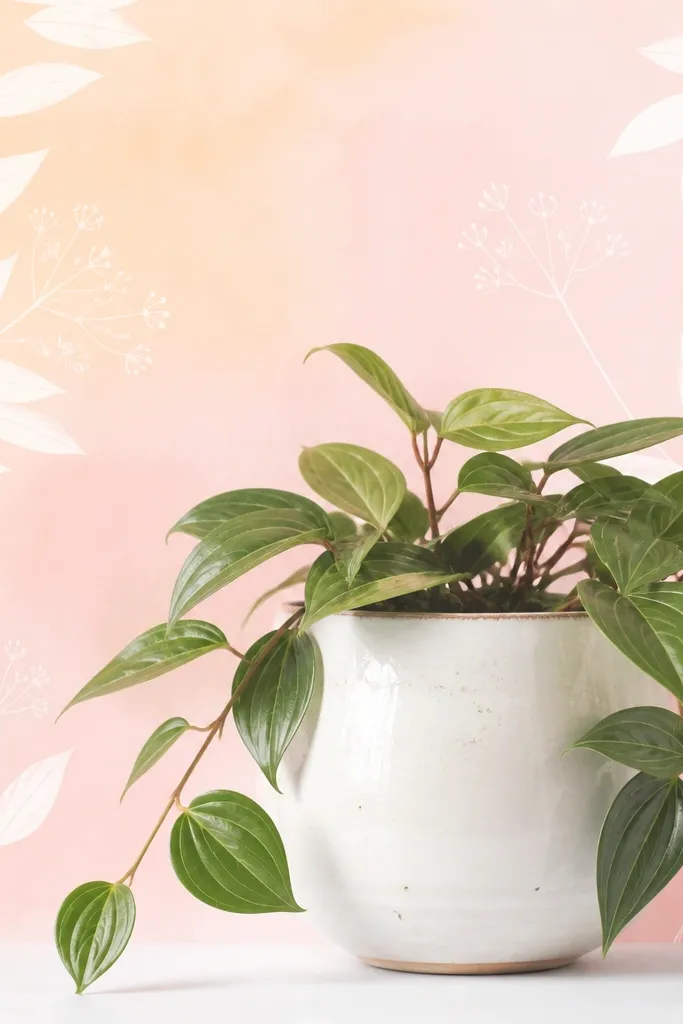
Stenciled botanicals look modern when they’re white on soft color, not green-on-brown. The pastel wash gives a gentle background, and the stencil gives crisp shape. It’s beginner-friendly because you’re not freehand drawing every leaf.
Base coat with a very light pastel wash using peach acrylic watered down, then blend a touch of pale pink at the top. Let dry, then stencil in white using a foam stencil brush. Keep the stencil placement staggered so you’re not repeating the exact same panel.
Tap off excess paint from the stencil brush on a paper towel so it doesn’t seep under the edges.
Avoid heavy paint loading on the stencil — it causes fuzzy outlines.
8. Terracotta to Denim Fade (Dry-Brush Texture)
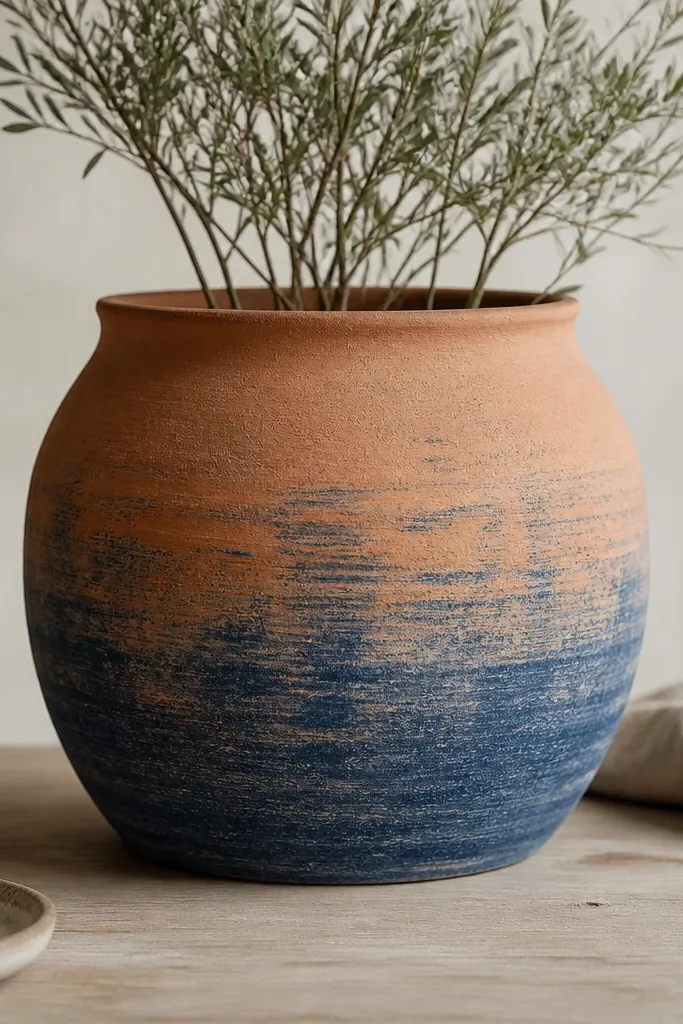
Dry-brushing makes a modern “fabric” look because it creates streaks like worn denim. Leaving some terracotta showing keeps it from turning into a solid painted block. It’s also forgiving — you don’t need perfect coverage.
Paint a thin white undercoat if you want the denim to look lighter; otherwise use terracotta as your warm base. Dry-brush denim blue acrylic with a flat brush — wipe most paint off on a paper towel first. Focus on the upper third and blend downward with lighter strokes.
Work in one direction for a consistent “grain” effect.
Don’t keep reloading the brush — it turns dry-brush into patchy paint.
9. Midnight Botanical Dots
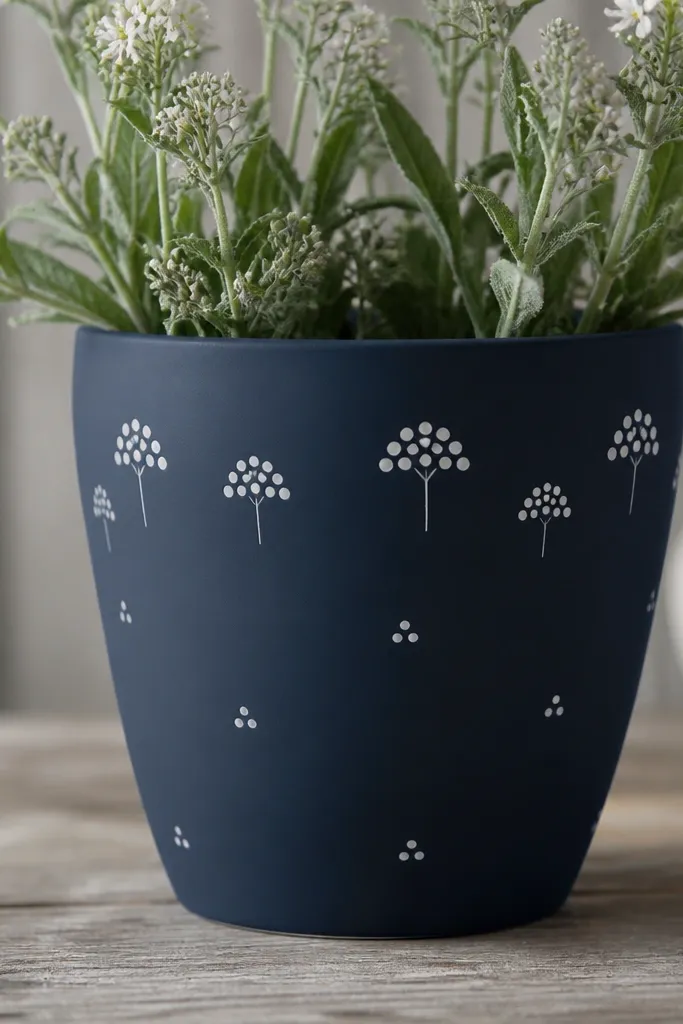
Dots look modern when they’re grouped like a pattern, not random. Deep navy sets a dramatic background, and white dots resemble minimal botanicals. This design hides small brush mistakes because dots are forgiving.
Base coat matte navy. Use a dotting tool or the eraser end of a pencil dipped in white acrylic. Make clusters of 5-7 dots for each flower, leaving space between clusters. Add a few single dots as stems or accents.
Plan dot spacing by marking light pencil dots first, then paint over them.
Avoid too many clusters — keep it to 6-10 groups so the pot doesn’t look speckled randomly.
10. Matte White with Color-Edge Accent Stripes
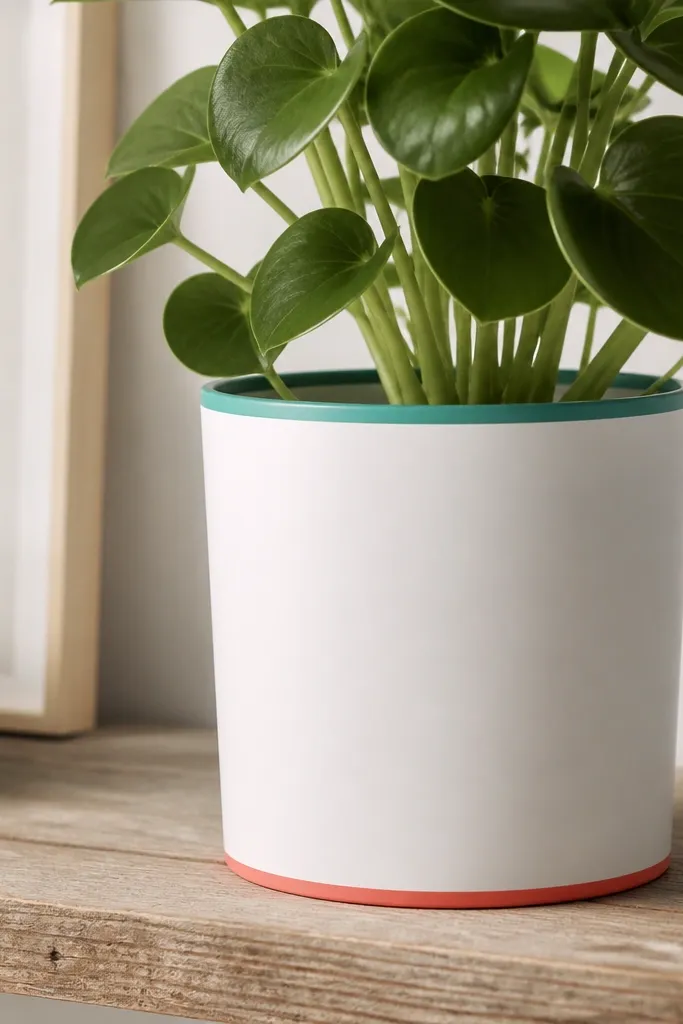
This design is modern because it’s restrained. You’re not painting big areas; you’re adding color where the eye naturally checks the pot. Thin stripes look crisp and intentional, and they’re easy to adjust for any holiday palette.
Paint the pot matte white. Mask a 1/4 inch rim stripe with tape, then paint teal. Do the same at the bottom edge with coral. Let it dry fully before removing tape so the stripe edges stay clean.
Use low-tack painter’s tape so it doesn’t peel the base coat when you pull it off.
Skip wide stripes — they look like a craft project on a curved pot.
11. Gold Foil Look with Brown Wash Panels
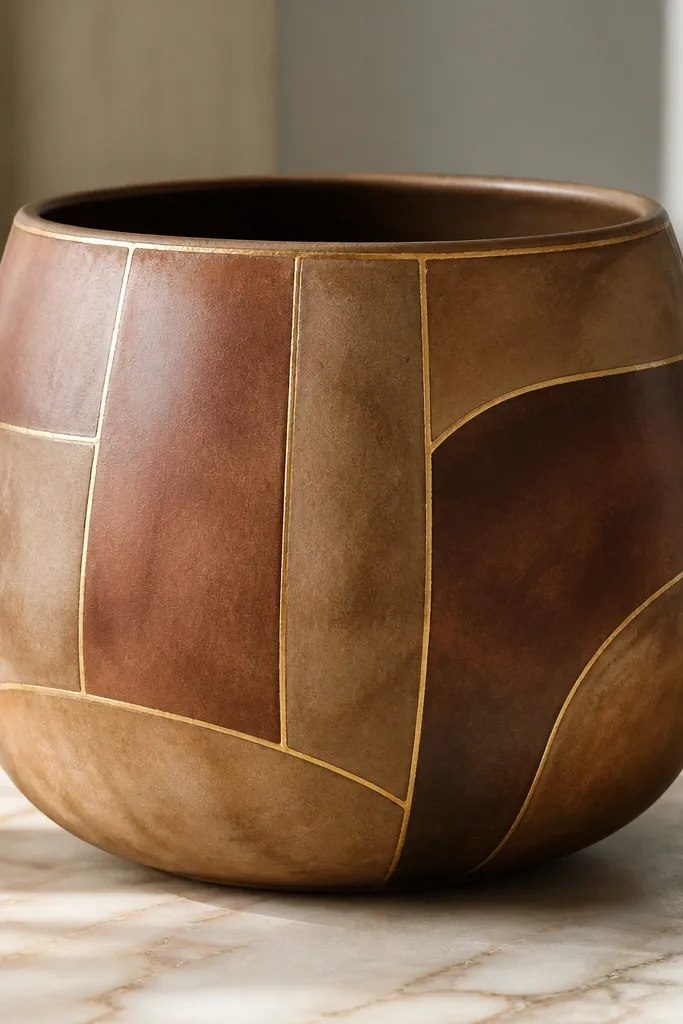
This is the closest beginner-friendly thing to “foil” without actual foil sheets. The brown wash gives depth, and the gold outlines make it feel decorative and modern. You get a stained-glass vibe without the fuss.
Editor's noteOutline after the wash is fully dry so lines don’t sink into wet paint.
Base coat with a light tan matte. Paint 3-4 overlapping brown wash panels using watered-down acrylic, letting some tan show through. Outline the panel edges with a metallic gold paint pen or metallic acrylic on a small liner brush.
Skip thisDon’t outline every tiny crack — keep the number of sections low.
12. Holiday Red and Green Minimal Frames
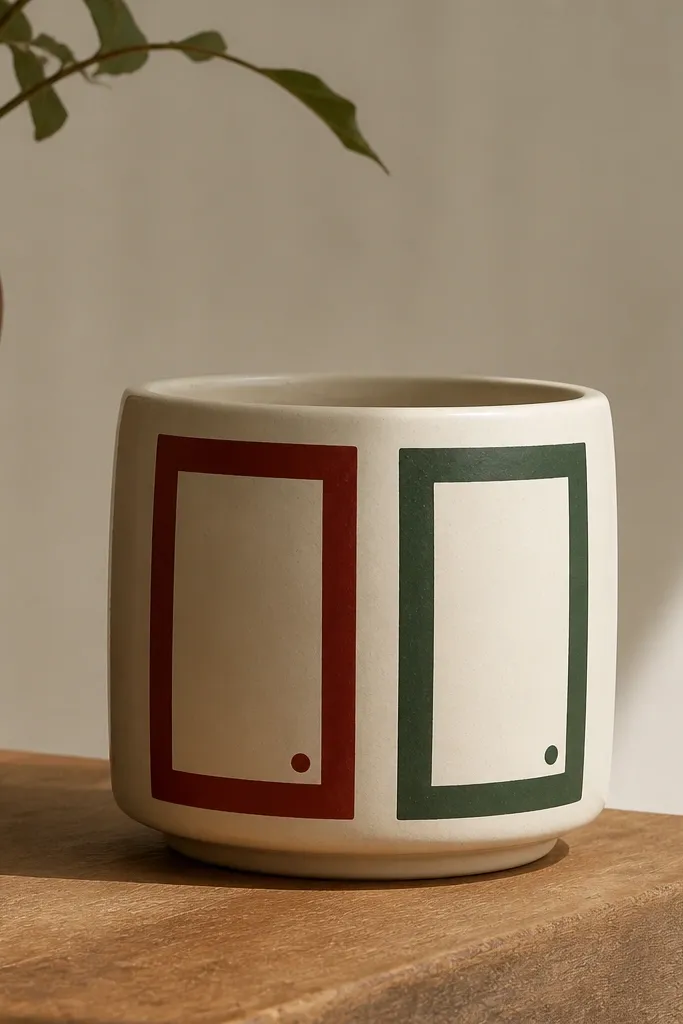
You can make holiday decor feel modern by using frames and spacing instead of ornaments everywhere. Red and green work because they’re classic, and the cream background keeps it clean. This style also lets you swap colors for spring without repainting the whole pot.
Editor's noteUse the same rectangle width on both sides so the pot looks balanced.
Base coat cream matte. Mask two vertical rectangles with tape, leaving a 1/2 inch border. Fill one rectangle with deep red and the other with forest green. Add small corner dots in gold if you want a festive touch.
Skip thisAvoid Christmas iconography like snowflakes everywhere — it looks busy fast.
13. Neutral Marble Slabs with Charcoal Veins
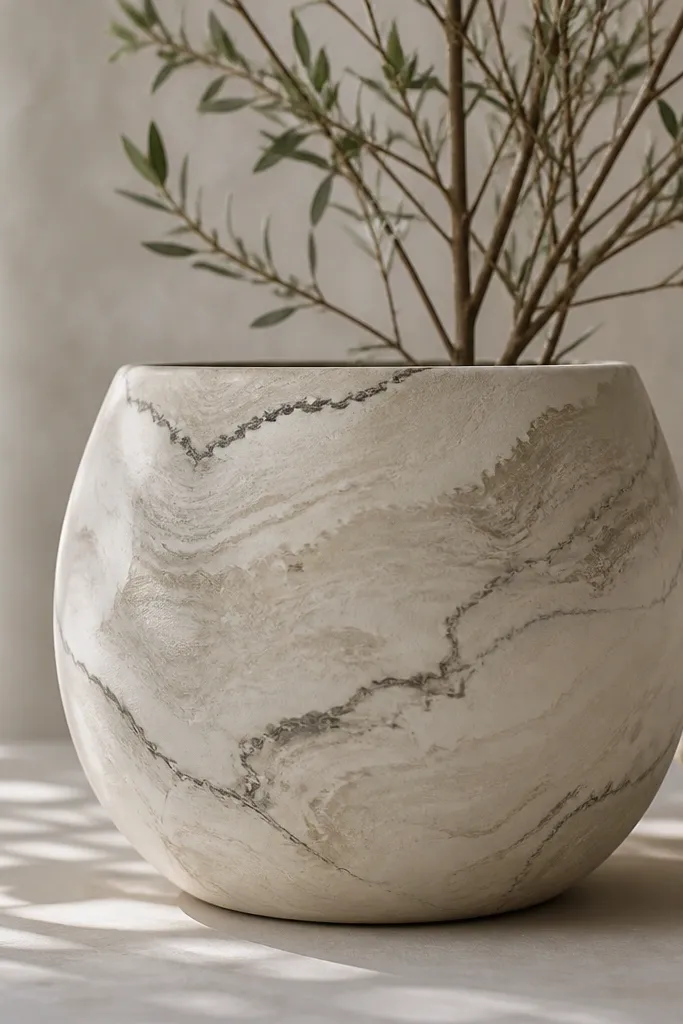
Marble looks modern when you keep it soft and let the veins be thin. Greige base keeps it neutral, and charcoal veins give definition without turning the pot gray and flat. It’s a great option for year-round decor because it doesn’t scream one season.
Editor's noteWipe your brush on a paper towel before dragging for vein lines so the paint stays hair-thin.
Paint the whole pot greige matte. Use a sponge to add lighter and darker streaks with off-white and taupe acrylic. Then add charcoal vein lines with a fine brush — a few long curves and a couple short offshoots are enough.
Skip thisDon’t make thick veins — marble should look delicate on a small surface.
14. Color-Block Steps with One Accent Dot
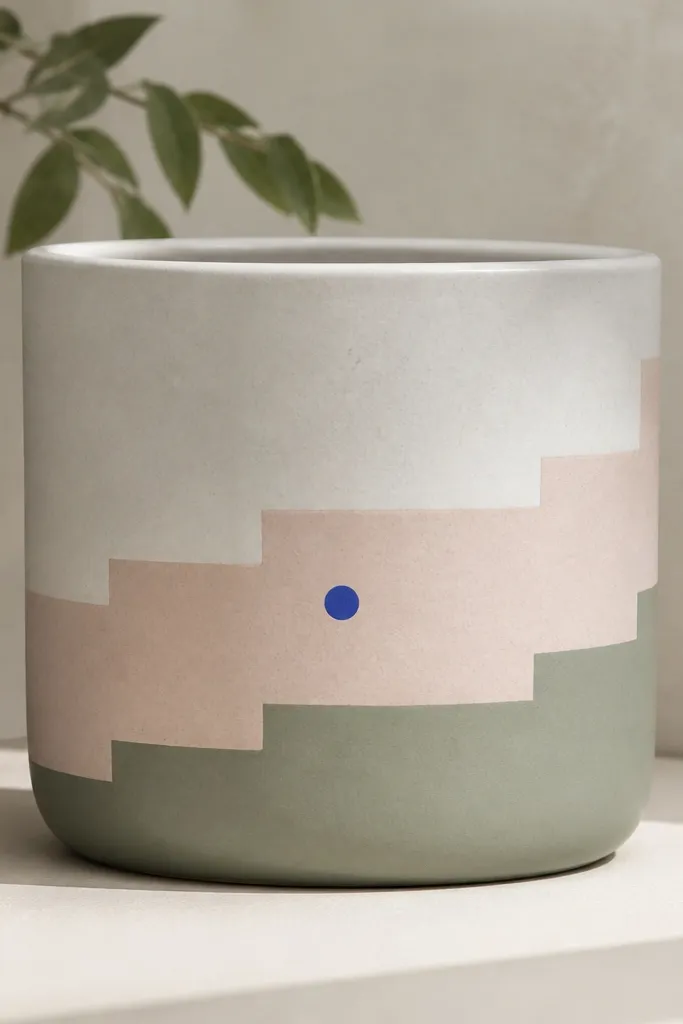
This design feels modern because it uses steps like a poster and adds only one bold accent. Most beginners use too many bright colors. Here you let the muted blocks do the heavy lifting, then you place one cobalt dot for the “pop.”
Editor's noteKeep your accent color to a single spot so it doesn’t compete with the blocks.
Base coat light gray matte. Mask and paint two or three stacked step sections in blush and muted sage. After dry, add one cobalt dot using a dotting tool — place it where the steps change color.
Skip thisAvoid adding extra dots — the single punctuation detail is the point.
15. Geometric Triangles Around the Shoulder
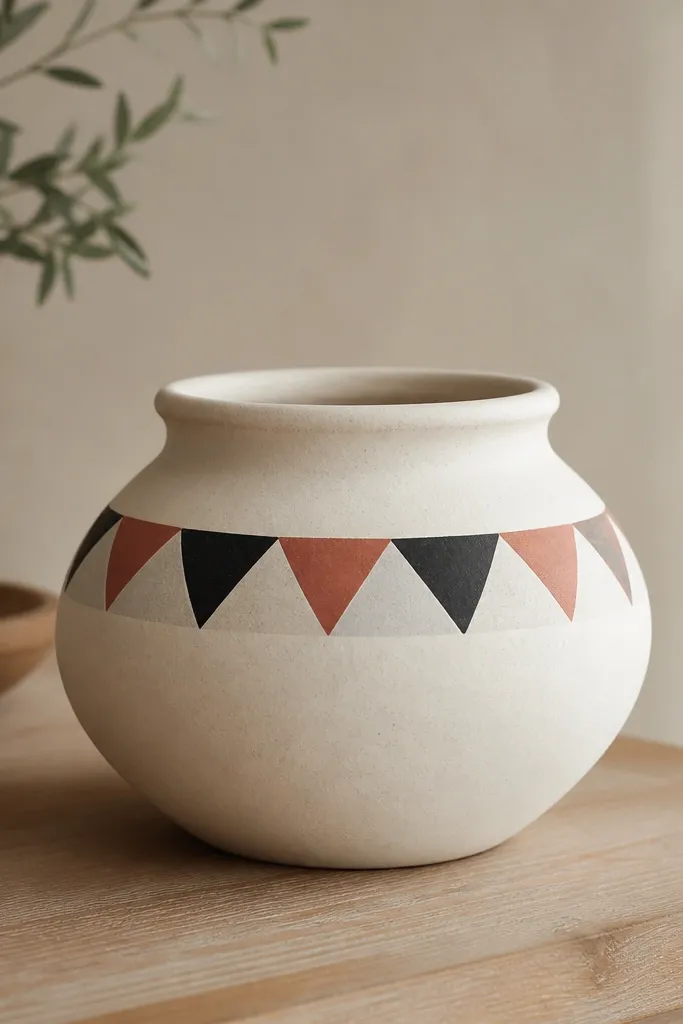
A triangle ring reads like mid-century graphic design. Painting it around the shoulder is perfect because it frames the pot and looks intentional from any angle. The mix of black, red, and gray stays modern because the shapes are clean and spaced.
Editor's noteUse the same triangle height each time and check alignment every 2-3 triangles.
Paint the pot white matte. Mask a band around the top third where triangles will sit. Use a triangle stencil or cut tape into triangles; fill alternating colors with flat acrylic. Remove tape carefully to keep edges sharp on the curve.
Skip thisDon’t let the triangle band drift down the pot — it ruins the “ring” look.
16. Citrus Peel Gradient with White Highlights
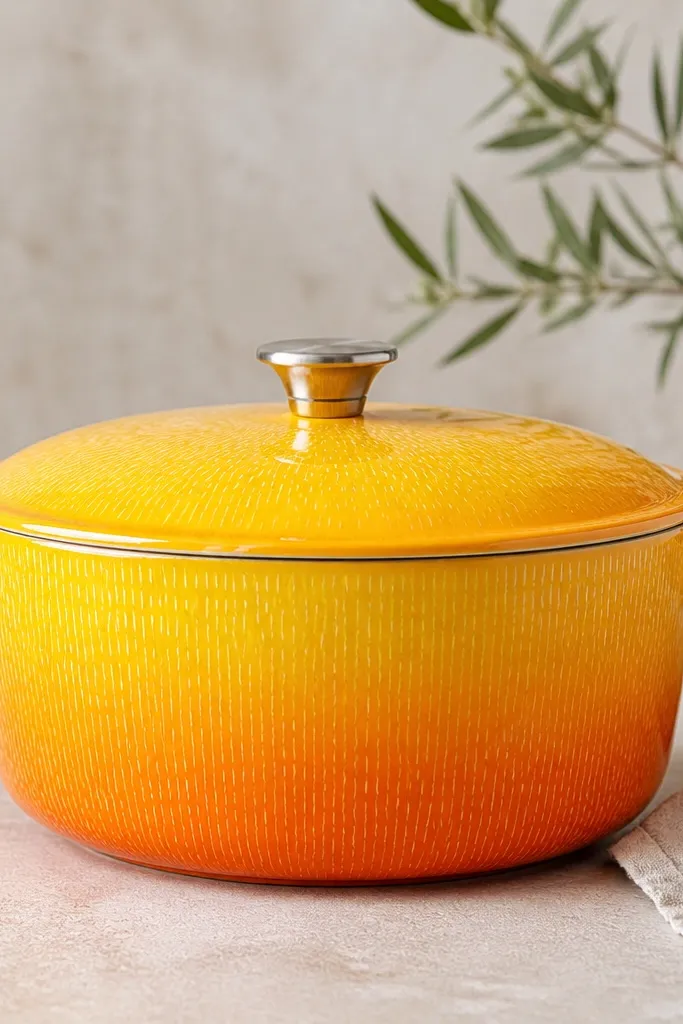
Citrus gradients look fun and modern when you add small highlight strokes. The gradient gives color movement, and the white lines add texture without making it look like a kid’s craft. It’s perfect for kitchens and summer planters.
Base coat in pale yellow matte. Blend orange acrylic into the lower half using a sponge for soft transitions. Add thin white highlight strokes with a small liner brush — keep them short and angled like peel ridges.
If the gradient looks streaky, blend again with a barely-damp sponge, not more paint.
Avoid neon colors that are too close to fluorescent — they look harsh next to greenery.
17. Monochrome Circle Galaxy (Matte Black + Silver)
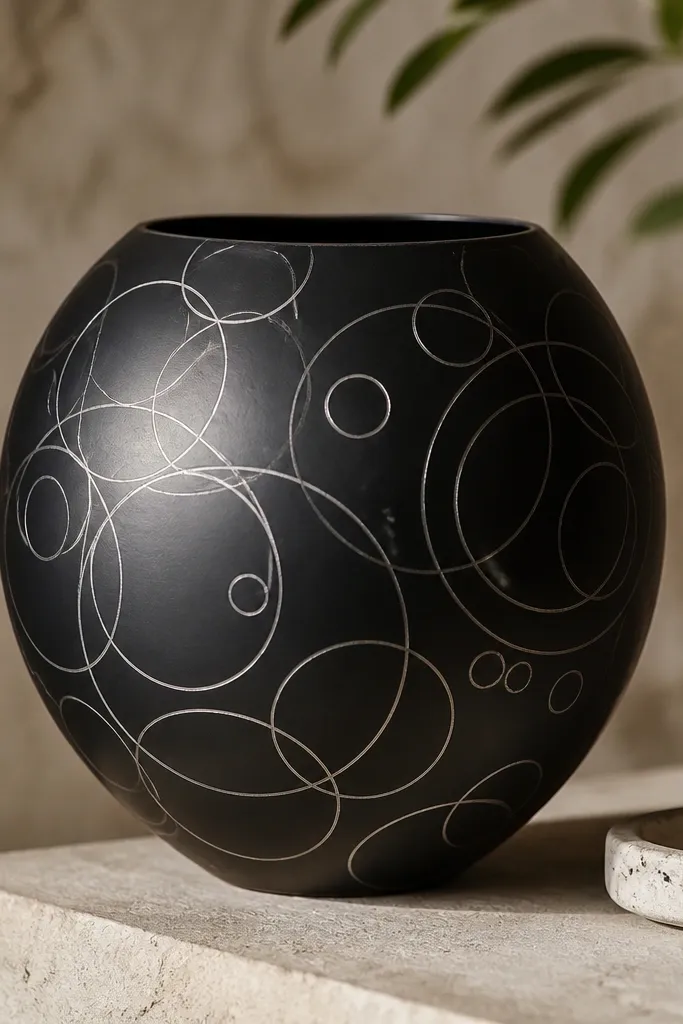
This reads modern because the pattern uses repetition and spacing, not random glitter. Matte black grounds everything, and silver circles look clean and graphic. Layering circle sizes creates depth even with a simple palette.
Editor's noteUse a craft sponge for circles so edges stay soft and not like perfect stickers.
Paint the pot matte black and let it cure. Use a sponge or round stencil to print silver circles — start with larger circles near the middle, then add smaller ones around the edges. If you want extra dimension, add a second pass with lighter silver in the center of a few circles.
Skip thisSkip chunky metallic paint — it dries textured and catches dust.
18. Soft Sage Watercolor Wash with White Drips
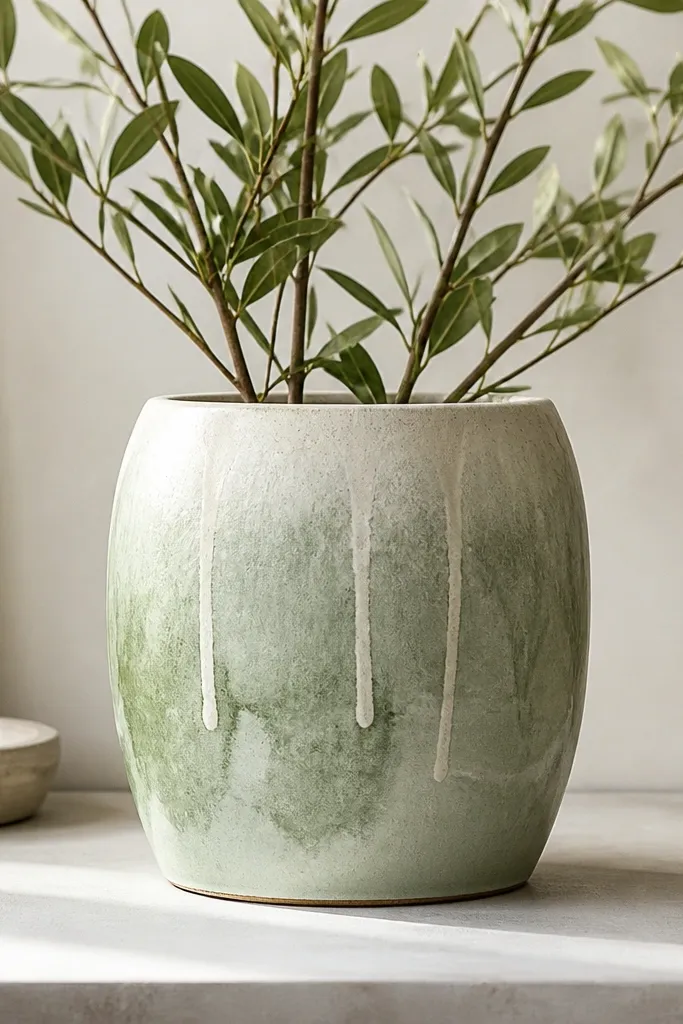
Watercolor washes look modern when you keep the color gentle and let the undercoat show through. Sage is calm and works with greenery and neutral decor. The white drips add a playful detail without turning into messy paint splatter.
Prime or base coat with a light off-white. Mix sage acrylic with water for a translucent wash and dab it on with a sponge. For drips, load a small brush with thick white acrylic and touch the pot lightly so drips start and stop quickly.
Tilt the pot slightly while the drips are setting so they fall straighter.
Avoid long drips all the way down — they make the pot look like an accident.
19. Modern Stripes with Two-Step Tape Method
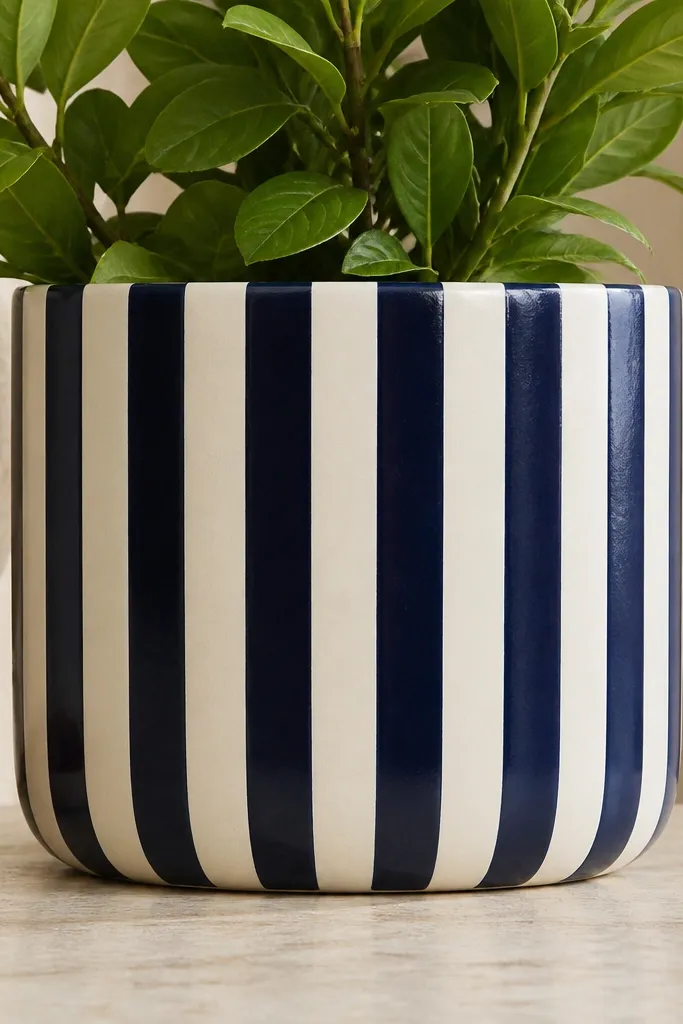
Vertical stripes look modern and make the pot feel taller. The trick is using a two-step masking method so you don’t fight the curve. Navy and cream give a clean contrast that also looks great with plants.
Paint the pot cream matte first. Mark stripe widths with a ruler and tape off alternating sections. Paint navy, let dry, then remove tape. For the crispest look, repeat with a second tape pass to clean up edges if you see tiny bleeds.
Keep stripe count even (like 6 or 8 stripes) so the pattern wraps symmetrically.
Don’t rush tape removal — pull the tape back slowly at a 45-degree angle.
20. Thanksgiving Pumpkin Minimal: Orange Band + Leaf Silhouette
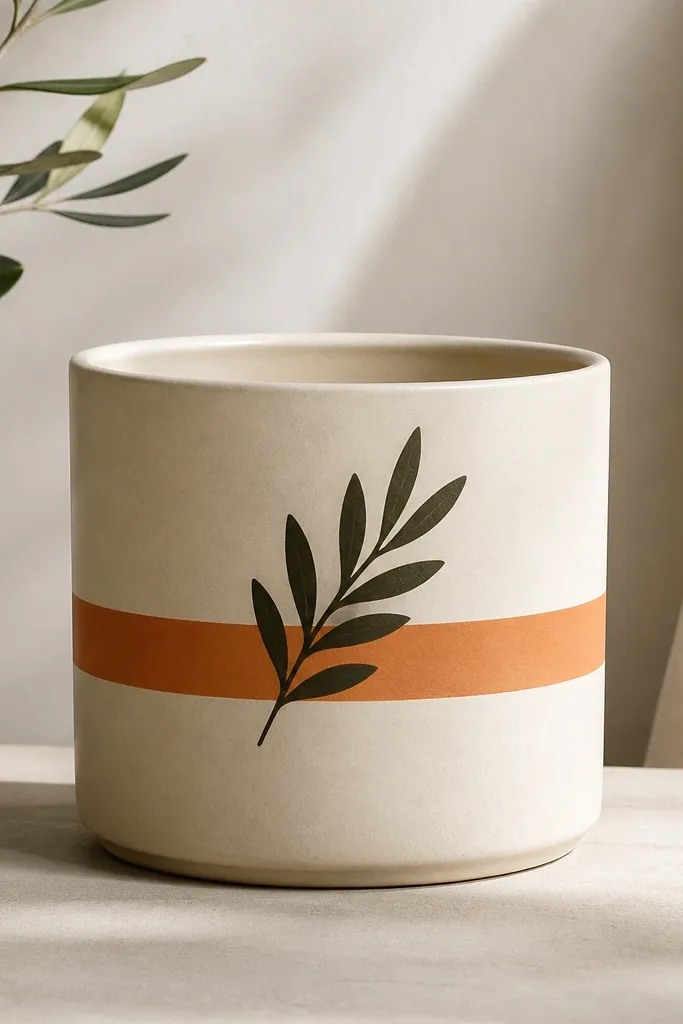
This is the easiest “holiday pumpkin” look without painting pumpkins. A single orange band reads seasonal, and one leaf silhouette keeps it modern instead of cartoonish. It’s also easy to reuse for fall by swapping the leaf color.
Base coat cream matte. Mask a midsection band about 3 inches tall and paint with orange acrylic. After it dries, stencil or freehand a leaf in dark olive on one side — keep the leaf about 2 inches long.
If your leaf edges wobble, trace over them with the same olive paint pen once the base is dry.
Avoid painting extra icons like gourds and stars — one leaf is enough.