
1. Cream Rim + Terracotta Shadow Bands
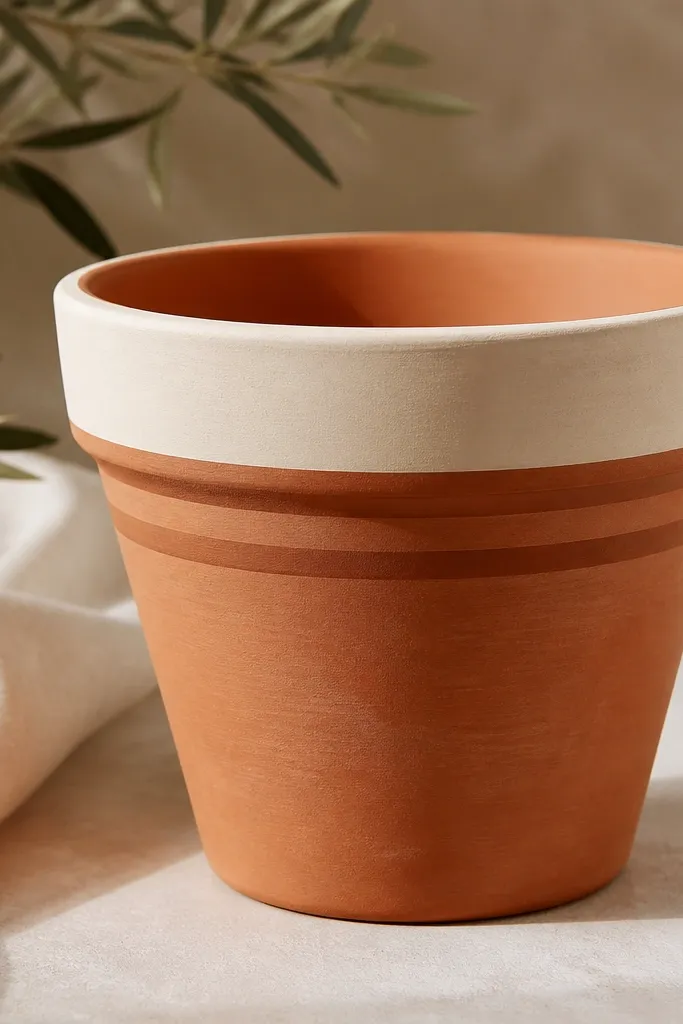
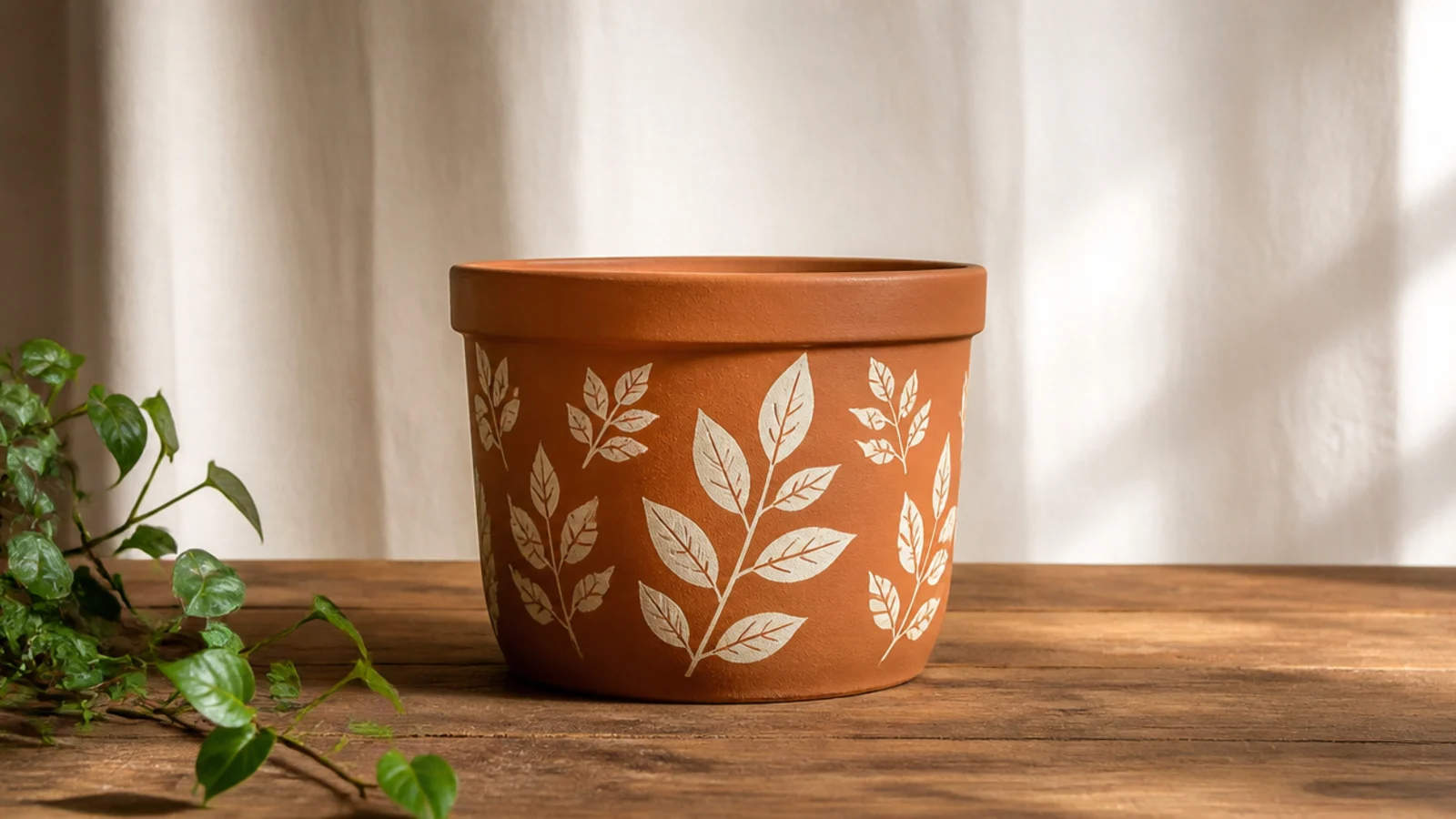
This one looks expensive because the rim is crisp and the rest stays warm and grounded. Paint a cream band around the top, then add shadow bands using a slightly darker terracotta mix so they look like depth, not flat color blocks. Keep the cream matte and let the terracotta body show through for that boutique contrast.
Use painter’s tape for a straight rim: measure the rim height you want (about 3-5 mm wide) and wrap tape evenly. For shadow bands, mix burnt sienna with a touch of brown craft paint, then lightly dry-brush to keep texture. Seal with a matte clear if the pot stays mostly indoors; use an outdoor clear if it’s on the porch.
Editor's noteAfter the first cream coat, sand lightly with 400-grit to remove any grainy spots, then add a second coat for a smooth rim.
Skip thisDon’t paint the entire pot solid cream — it hides the terracotta texture and reads cheap.
2. Olive + White Checkboard Wall Panels
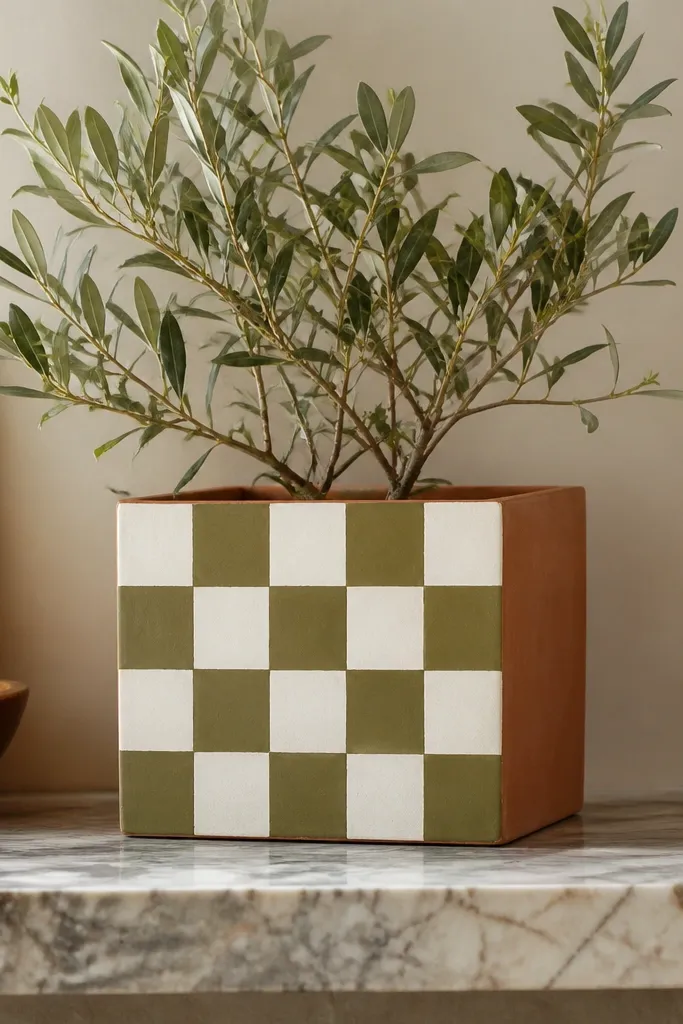
Checkers look clean because the pattern creates structure. Olive and white also photograph well — the olive keeps it earthy while the white makes the squares pop. Leave the sides natural or lightly tinted so the checkboard stays the hero.
Tape a rectangle on the front of the pot (about 5-7 inches wide on a 10-inch pot). Paint the rectangle white, let it dry, then tape smaller squares and fill with olive. Use a small flat brush for edges so the squares stay sharp.
Pull the tape while the paint is still slightly tacky so the edges stay crisp.
Avoid freehand checks — uneven squares make the whole pot look messy.
3. Black Cat Face with Chalky Eyes
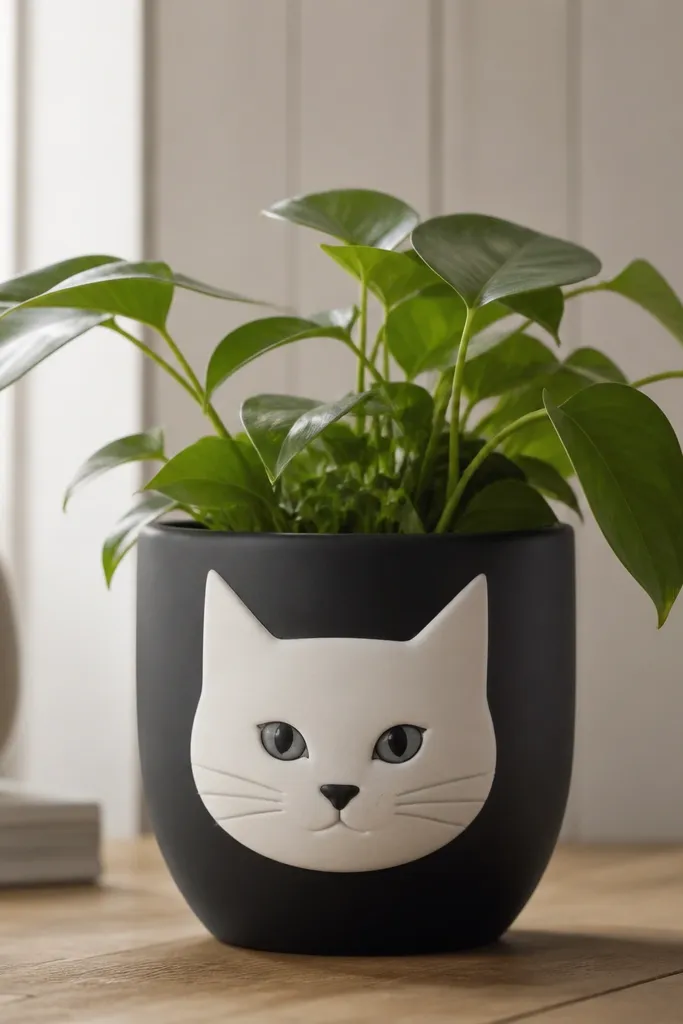
Halloween without looking childish. The matte black base makes the face look graphic, and the chalky gray in the eyes adds that hand-painted softness. Keep the face simple: two ears, one nose, two eye shapes. It looks intentional even from across a porch.
Brush two thin coats of matte black acrylic. For the face, use a cream or off-white paint, then add gray around the eyes with a dry sponge. Seal with a matte outdoor clear so the cat doesn’t smear when touched.
Stencil the face using a printed cat silhouette — trace lightly with a pencil first, then paint.
Don’t use glossy black; gloss makes brush marks look streaky.
4. Soft Sage Wavy Lines on Natural Clay
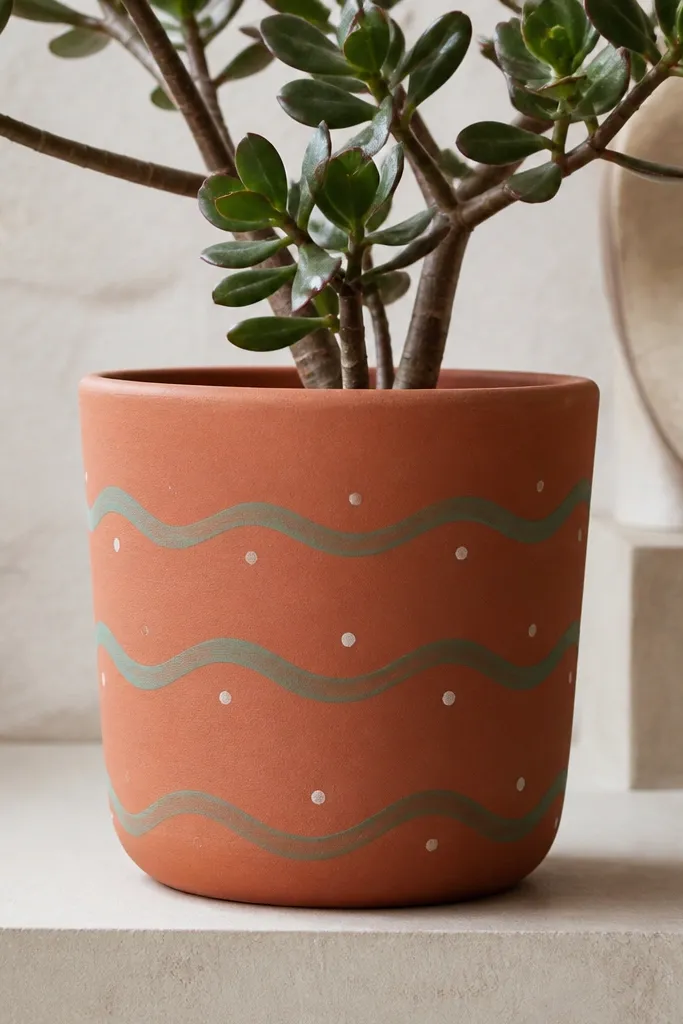
Waves look premium because they repeat smoothly and give movement. Keeping the base natural keeps it airy, and sage lines feel springy without screaming “decor.” Add small cream dots as a secondary detail so it reads like a pattern, not random marks.
Paint waves with a thin liner brush. Mix sage from green + a little gray or white, then test on paper first. For wrapping consistency, use a piece of string as a guide around the pot height and lightly mark with pencil.
Editor's noteUse a round brush tip and pull in one direction per stroke for cleaner wave edges.
Skip thisDon’t make the waves too thick — chunky lines look like craft paint, not design.
5. Snowy Pine Branch Silhouette
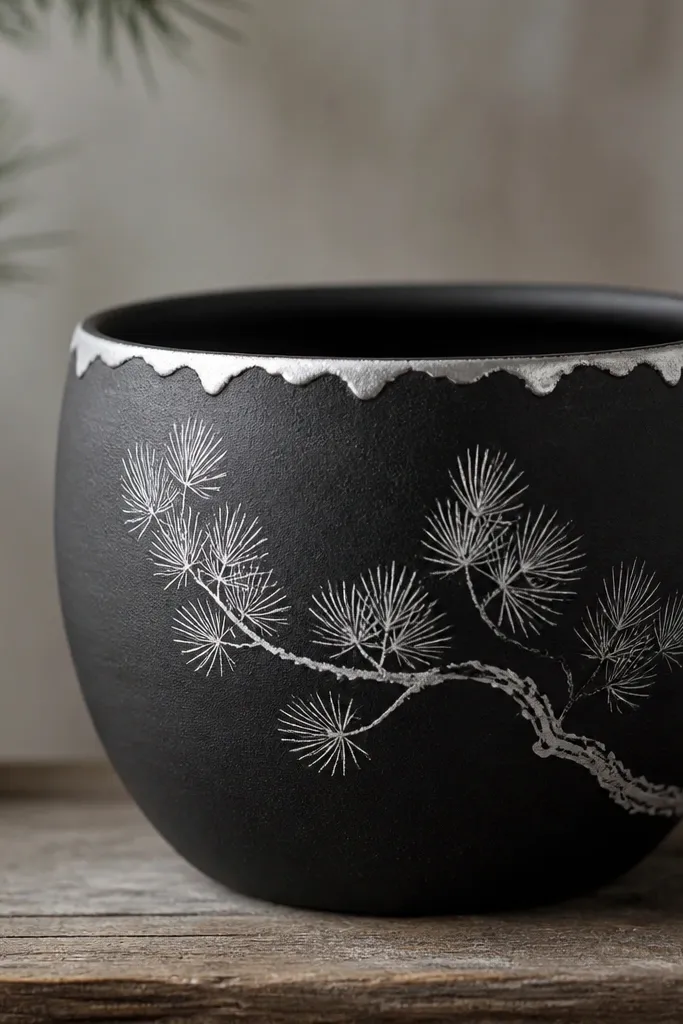
Silhouettes look expensive because they use contrast and negative space. Charcoal base makes the white branch feel crisp, while a thin silver line near the top reads like a frosty highlight. This is perfect for winter planters when you want something that looks good even without flowers.
Paint the pot charcoal and let it cure overnight. Transfer a pine branch shape (print a branch stencil and trace). Paint the silhouette in white, then add small “snow” flecks with a toothbrush and diluted white paint.
Hold your brush farther away for the flecking so the dots stay tiny.
Don’t overdo the snow texture — too many flecks turns it gray and muddy.
6. Terracotta + Blush Ombre Top Half
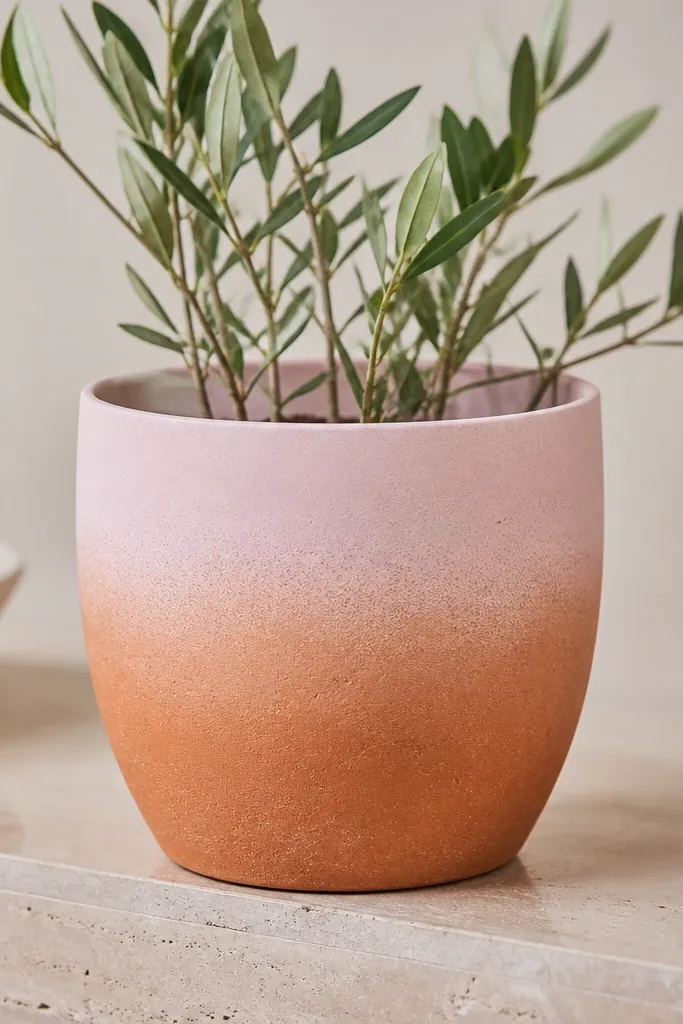
Ombre looks high-end when the fade is smooth and the color transition is controlled. Blush over terracotta warms the pot and makes it feel like soft spring styling. This also hides small brush marks because the gradient blends them.
Tape a line across the pot for where the ombre starts (about halfway up). Paint the top area blush, then blend downward with a damp sponge while the paint is still wet. Use 2-3 thin passes to build color without streaks. Seal with a satin or matte clear.
Wipe your sponge on a paper towel between passes so you don’t drag heavy paint downward.
Avoid one thick coat — it dries too fast and leaves hard stripes.
7. Gold-Edged Botanical Line Art
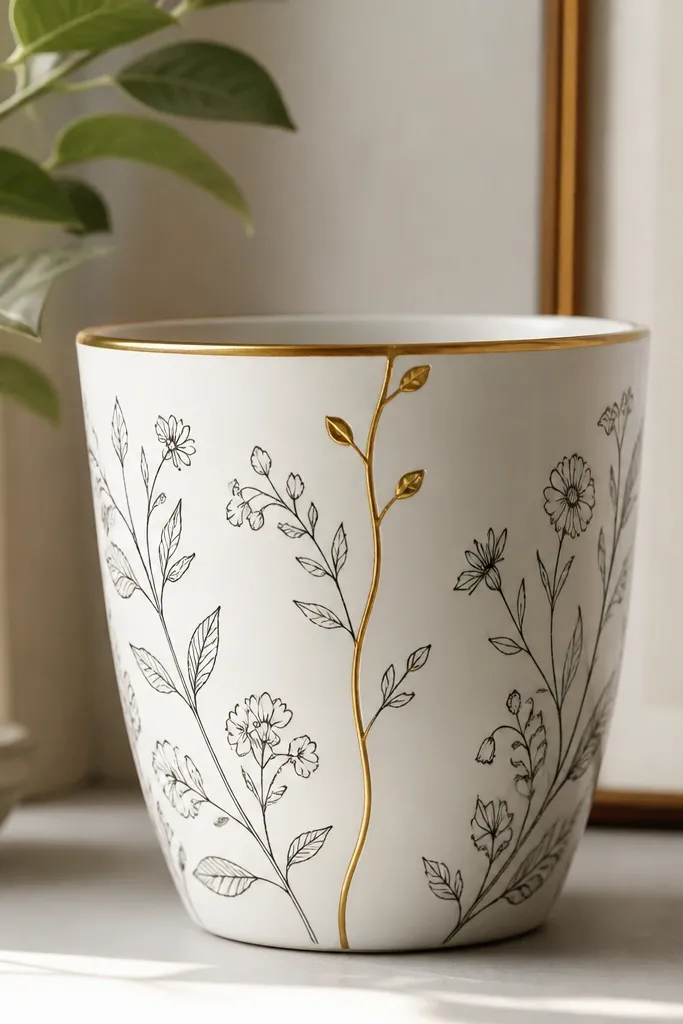
Line art reads expensive because it’s controlled and thin. A black pen-like line over white looks crisp, and a gold rim edge ties it together like a designer finish. Keep the drawings small enough that the plant will still look like the main character.
Paint pot white with two coats. Use a fine liner brush and black acrylic to draw one vine across the front. Add a gold acrylic line near the rim and a vertical highlight line with a steady hand. Seal with a clear topcoat that dries smooth.
Practice your vine stroke on cardboard first so your line weight stays consistent.
Don’t flood the gold — thick gold paint looks like sticker residue.
8. Pastel Rainbow Stripe with Uneven Edges
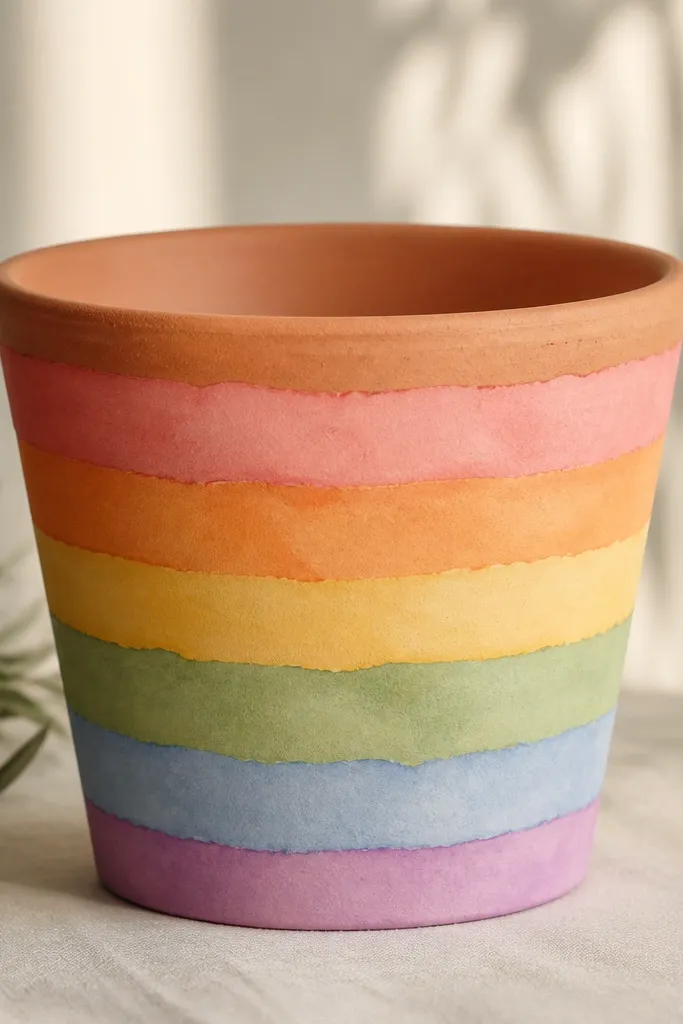
This is for when you want playful but still stylish. The uneven edges make it look hand-painted, and pastel colors keep it from feeling harsh. Wrap the stripes so the pot looks designed from multiple angles.
Paint 4-5 horizontal bands: peach, blush, pale yellow, light blue, and mint. Use a flat brush and drag the edge lightly so it feathers. If you want extra control, tape for the stripe boundaries but remove tape while paint is still tacky. Seal with a matte clear.
Editor's noteBlend the stripe edges with a nearly dry brush to avoid a hard boundary line.
Skip thisAvoid bright neon pastels — they read cheap against terracotta.
9. Monochrome Geometric Frames
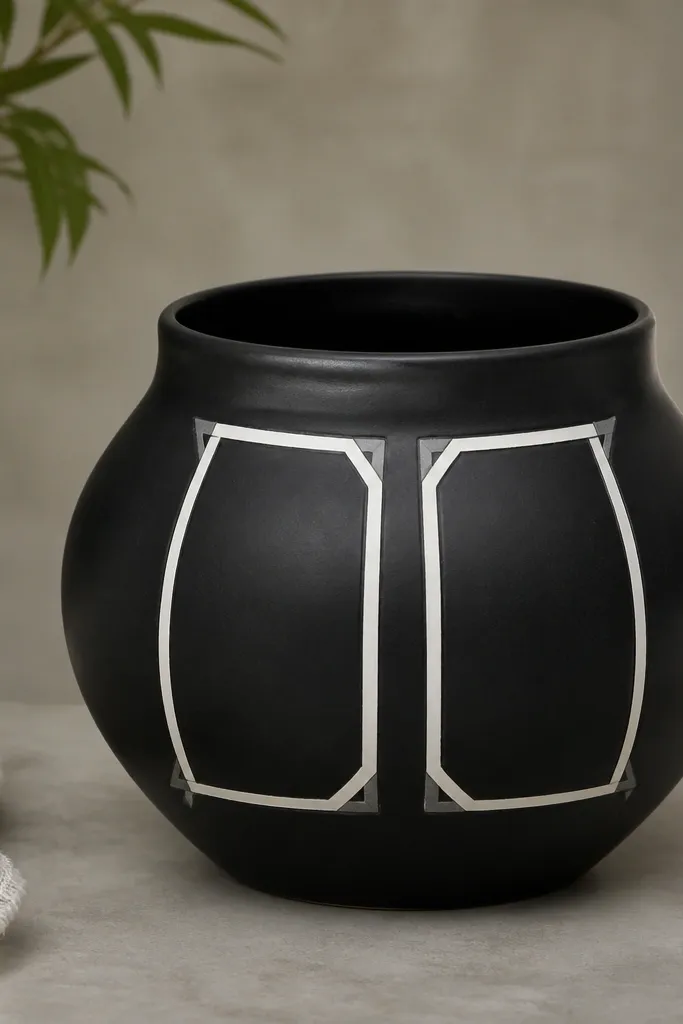
Frames make the pot look like a piece of wall art. Monochrome keeps it modern, and the corner triangles add a designer touch without getting busy. This style also works great when you want a neutral planter for any season.
Base coat black. Tape a rectangle on the front and paint it white. Add smaller corner triangles using a ruler and thin liner brush, then remove tape carefully. Use a gray paint for the triangles so they look lighter than the white frame.
Editor's noteUse a credit card edge to press tape down firmly so paint doesn’t bleed.
Skip thisDon’t make the lines too thick — chunky geometry looks like kid craft.
10. Candy Cane Mini Dots Border
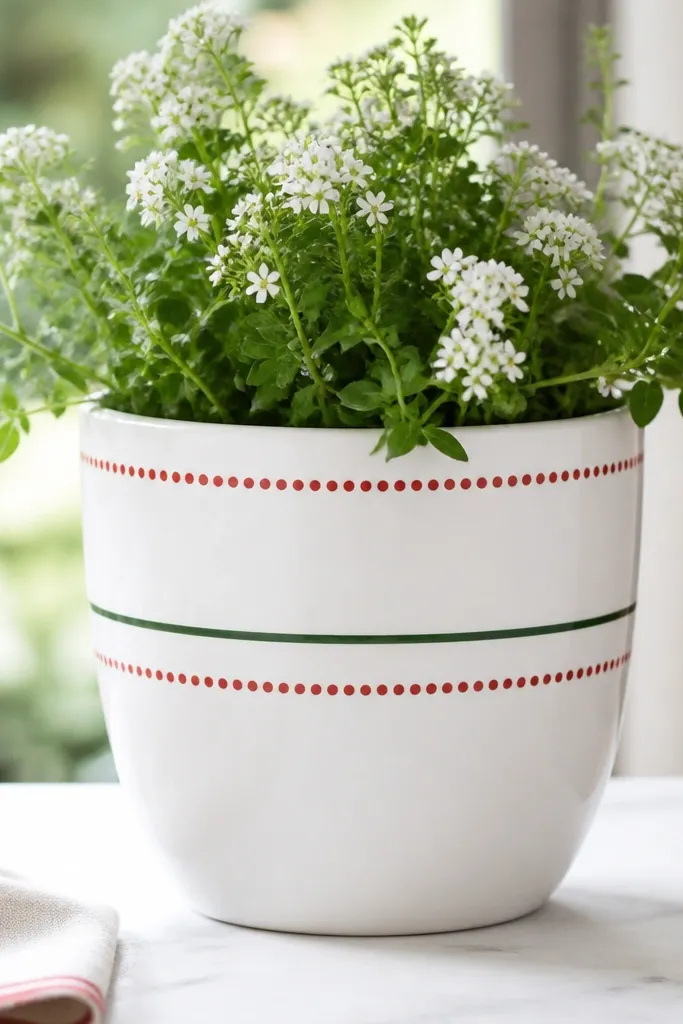
Small dot borders look polished because the pattern is consistent and contained. Red dots against white feel festive, and the green stripe keeps it from looking like only Christmas. It’s also quick — you can do multiple pots in an afternoon.
Paint the pot white. Use a dotting tool or the end of a wooden skewer dipped in red paint to place dots along two horizontal lines. Add a thin green stripe between the dot rows. Seal with a clear topcoat that resists scuffs.
Editor's noteDip the dot tool lightly and wipe once on a paper towel so dots stay the same size.
Skip thisAvoid uneven dot spacing — it makes the border look sloppy.
11. Terracotta Pot with Marble Finish Top Band
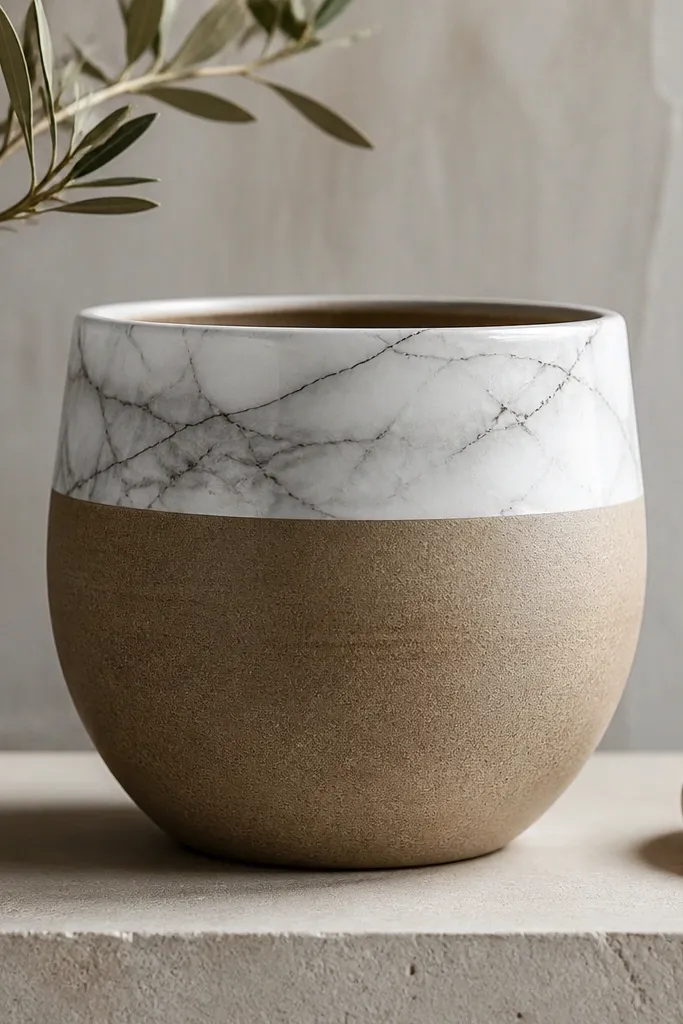
Marble banding looks pricey because it mimics stone veining. Keeping only the top band colored makes the pot look intentional and not fully painted. The natural terracotta below keeps it warm and not too cold.
Tape a band across the upper third. Paint white base for the band. Add gray streaks with a thin brush, then drag a corner of a sponge through wet paint for soft marbling. Finish with black vein lines using a fine liner. Seal once dry.
Work on one small section at a time so veins stay organic instead of overworked.
Don’t blend marble too much — it turns into gray paint soup.
12. Autumn Leaf Stamps in Warm Ochre
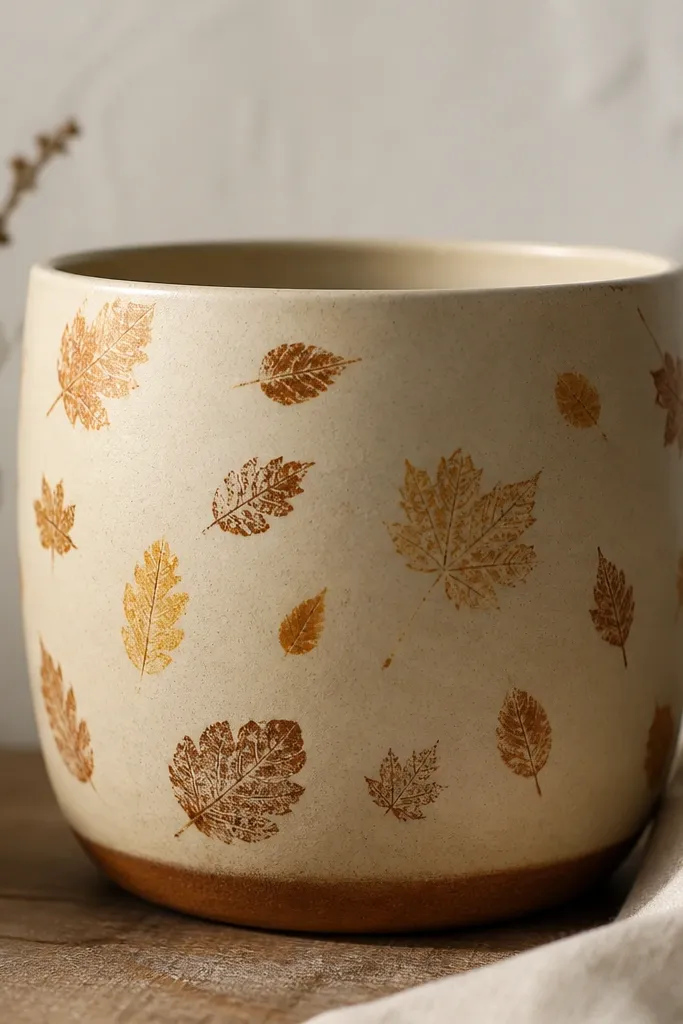
Leaf stamps look expensive when the color is warm and the stamps are uneven in a natural way. Ochre and burnt umber mimic dried leaves, and the cream background keeps it clean. The base ring makes it look grounded.
Paint pot cream. Use real leaf silhouettes (or a foam stamp) and press them lightly with ochre paint. Add a second pass with burnt umber on 20-30% of leaves so it has variation. Paint a thin darker ring near the bottom and seal.
Editor's noteSpritz a little water on the stamp before dipping to get softer edges.
Skip thisAvoid a perfectly repeating stamp grid — nature doesn’t line up that neatly.
13. Midnight Navy with Starry Speckle
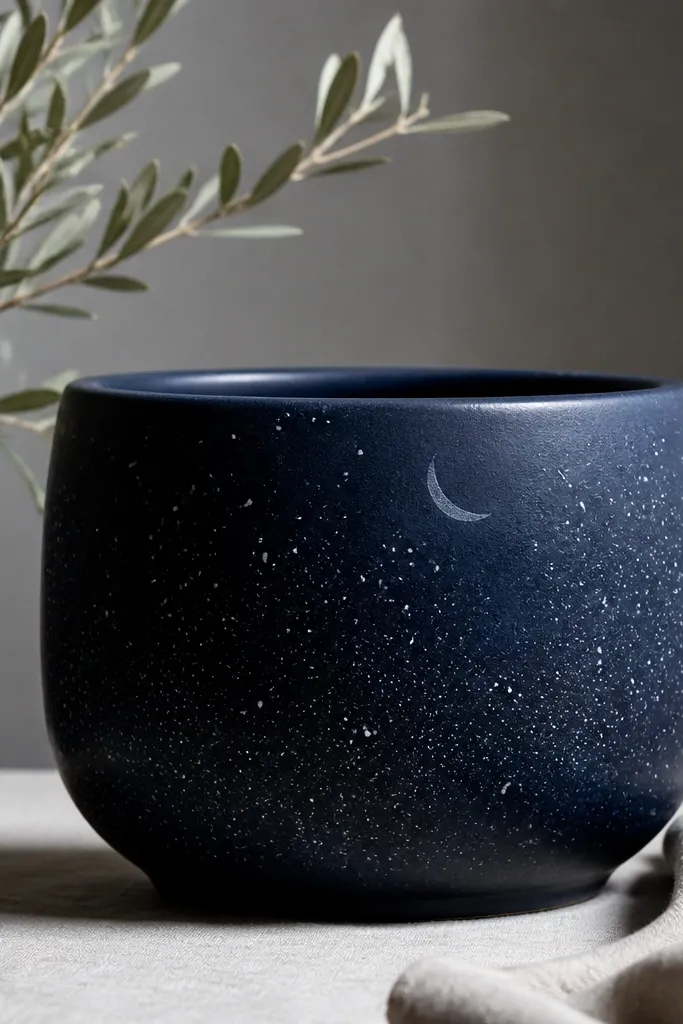
Speckle reads like starlight when the base is dark and the dots are tiny. Silver-white specks look crisp and feel festive for winter. The crescent gives a focal point so it doesn’t become random.
Base coat navy. Flick diluted white paint using a toothbrush — keep the bristles short for tight dots. Add a light blue crescent using a small stencil or a freehand curve. Seal with matte clear to keep the specks from turning glossy.
Do a test flick on scrap first, then adjust the paint thickness until dots look like dust.
Don’t use thick paint for speckling — it lands as blobs.
14. Terracotta Pot with French Stripe Wrap
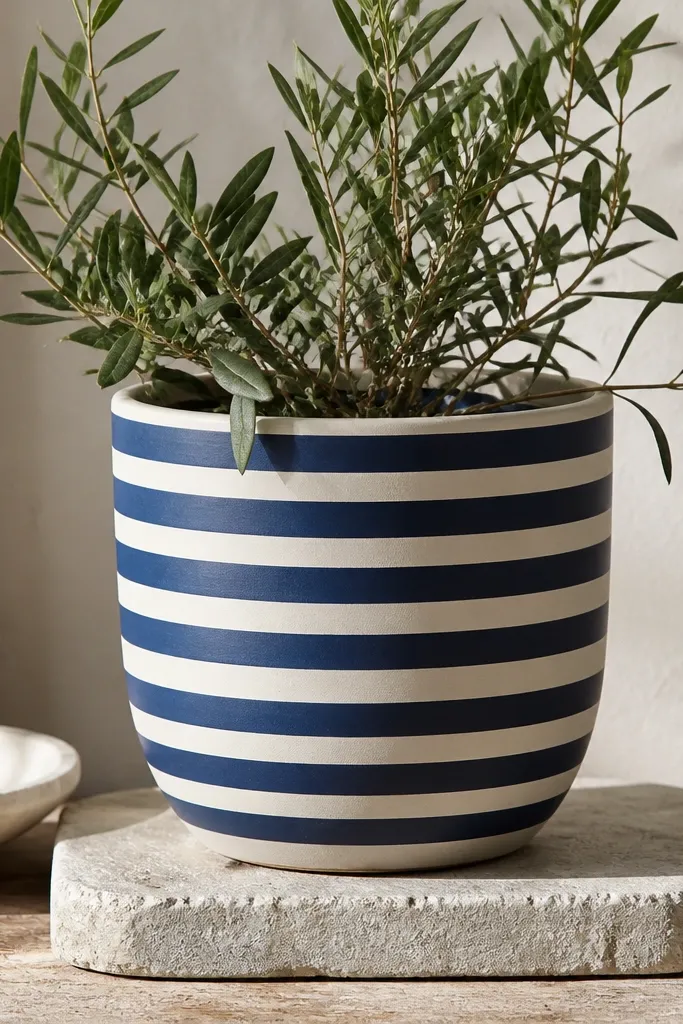
French stripes look clean and upscale because spacing is steady and colors are limited. Navy + cream also works year-round, so you’re not stuck repainting for every season. Leave the bottom edge slightly natural if you want a softer transition.
Measure stripe width (start with 1/4 inch) and tape evenly around the pot. Paint cream first, then remove tape, re-tape, and paint navy. Do two thin coats for crisp stripes. Finish with a clear coat that resists outdoor scuffs.
Editor's noteRotate the pot while painting to keep your brush at the same angle and avoid wobbly edges.
Skip thisAvoid stripes wider than 1/2 inch — they look cartoonish on small pots.
15. Vintage Postcard Scene in One Panel
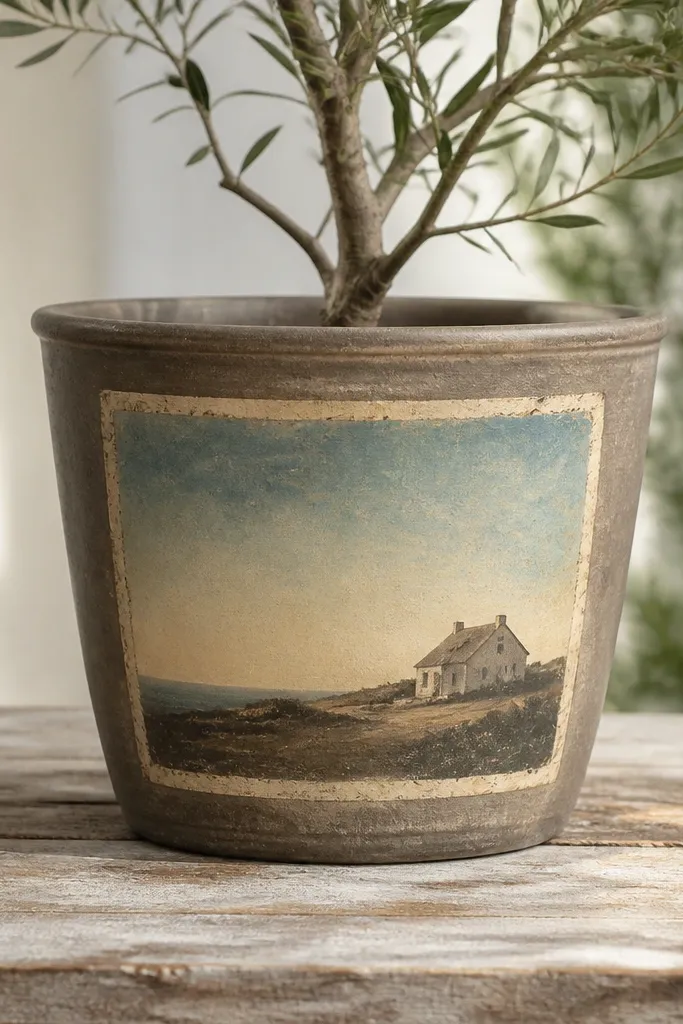
One-panel painting looks expensive because it gives the pot a “story” without covering every inch. Muted colors hide brush texture and feel aged. A worn cream border makes the scene look framed, like it belongs in a gallery.
Paint the whole pot a muted background color like dusty blue-gray. Tape a front rectangle and paint a simple scene: sky gradient, a tiny roof silhouette, and a hint of ground. Add a cream border and distress it with light sanding after drying. Seal with matte clear.
Editor's noteUse a reference photo and limit yourself to three colors total so it stays cohesive.
Skip thisDon’t add lots of tiny details — terracotta texture makes them look blurry.
16. Candy Swirl Base with Matte Finish
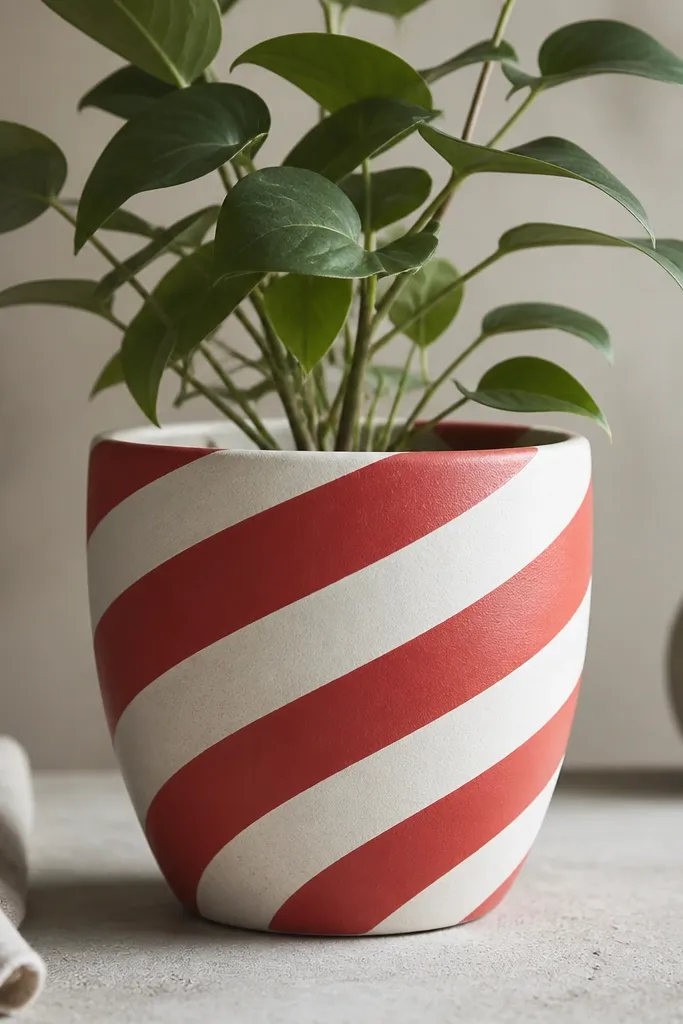
Swirls look like candy but still classy when they’re clean and matte. White and red give bold contrast, and the spiral direction adds movement. Matte finish hides small imperfections that glossy paint would show.
Base coat the pot white. Mark a vertical center line and draw a light guideline for the swirl pitch using pencil. Tape along the swirl path and paint red in thin coats. Remove tape carefully and let cure before sealing.
If tape won’t follow the curve cleanly, use thin painter’s tape strips and overlap them slightly.
Don’t paint the swirl too close to the rim — it will look crowded.
17. Soft Blush + Charcoal Dots Like Modern Ceramics
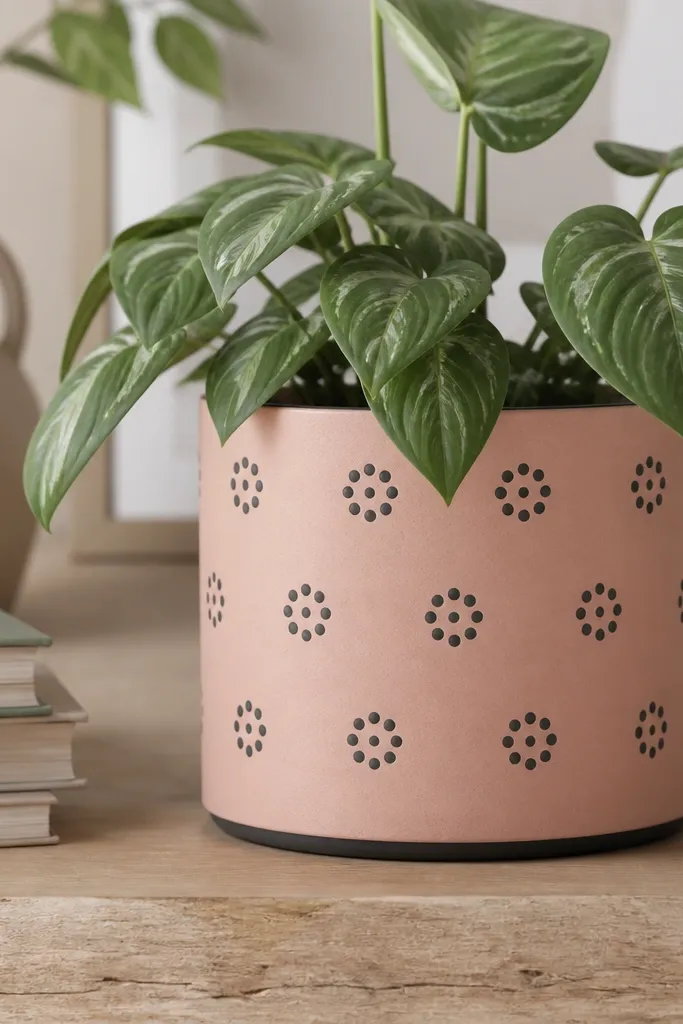
This pattern mimics modern ceramic pottery. Blush is gentle and makes the charcoal feel designed, not harsh. Dot clusters look better than single dots because they create a visual rhythm.
Paint the pot blush. Use a dotting tool to place charcoal dots in clusters of 3-5, alternating cluster sizes across the front. Add a thin charcoal ring near the base and a small ring just under the rim. Seal with a satin clear for a ceramic-like feel.
Use a paper grid under your pot to keep dot spacing consistent while you work.
Avoid random scattered dots — clusters make it look intentional.
18. Terracotta Pot with Faux Ceramic Tile Corners
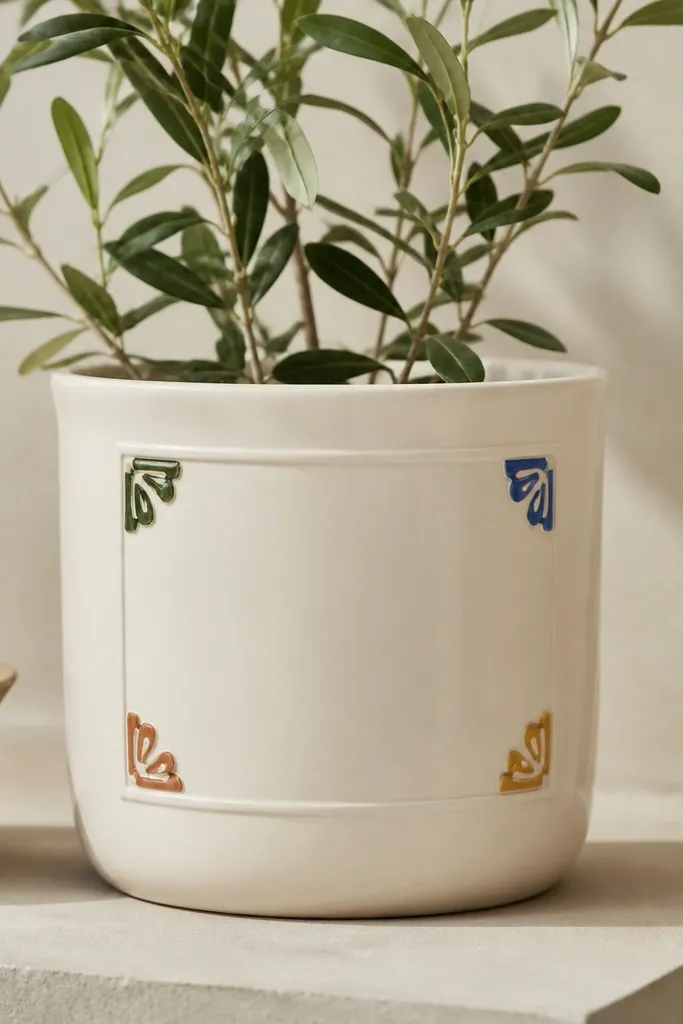
Tile corner accents look expensive because they’re geometric and contained. The off-white base keeps it clean, while small colored corner tiles add interest without covering the whole pot. It also hides uneven terracotta texture because the base is opaque.
Paint the pot off-white. Tape a front rectangle and paint it off-white too for a cleaner panel. Inside the rectangle, tape tiny squares at each corner and paint them teal, dusty blue, and mustard. After drying, remove tape and seal with a clear coat.
Keep tile corners small — about 1 inch across on a 10-inch pot.
Don’t cover the entire rectangle in tiles; it looks like craft foam, not ceramics.
19. Winter Monogram Lettering with Soft Shadow
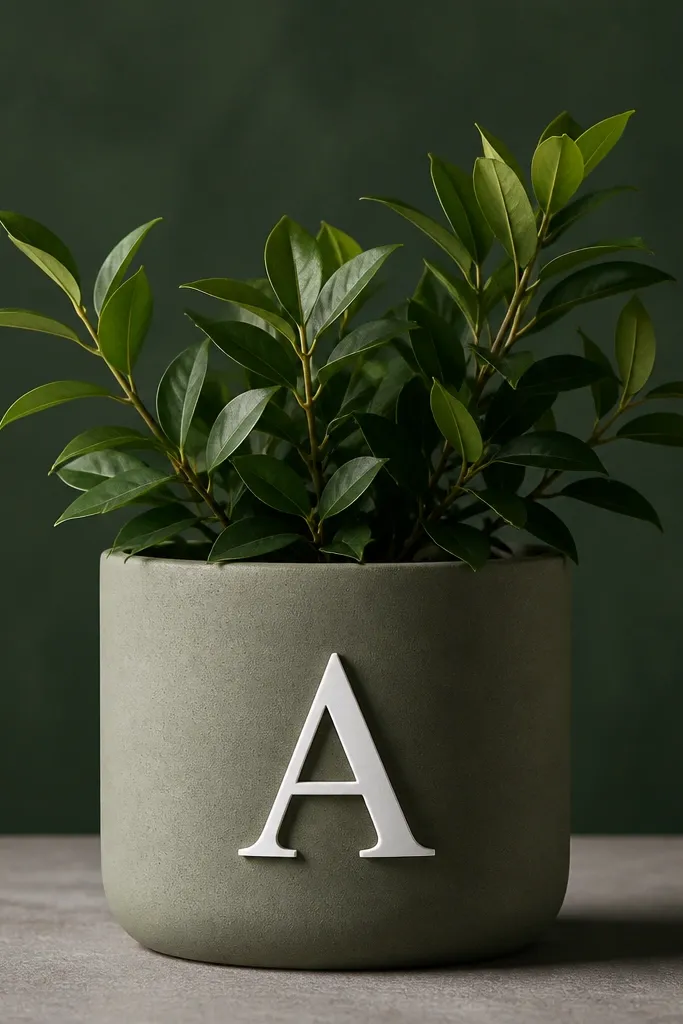
Monograms look high-end because they’re simple and centered. The shadow makes the letter feel printed rather than painted on. Dark green background makes winter letters feel classic.
Base coat the pot deep green. Print a letter in a bold serif font, trace the outline lightly on the pot, then paint the letter white. For the shadow, paint a slightly offset gray layer around the letter edges. Seal with matte clear so the letter doesn’t look glossy.
Use painter’s tape to mask the letter edges for a sharp shape, then remove tape after the paint sets 5-10 minutes.
Avoid thin lettering strokes — they crack and look uneven over terracotta texture.
20. Pastel Rainbow Half-Moon Cutouts
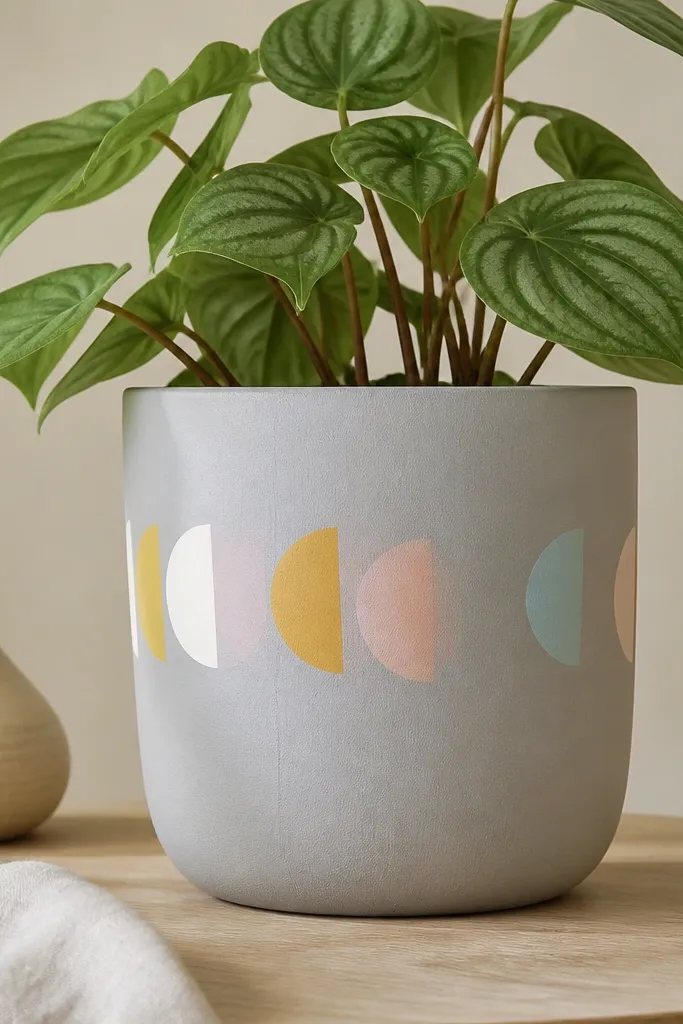
Half-moons look modern and tidy, especially when the background is neutral. Pastel arcs create a gentle festive vibe without looking like a kids' party. The repeated shapes make it feel like a design pattern, not decoration.
Paint the pot light gray. Mark a horizontal guide line around the pot and draw half-moons using a stencil or a round lid template. Paint arcs in pastel pink, yellow, mint, and lavender. Keep arcs evenly spaced and seal with a clear topcoat.
Editor's noteUse the same lid for every half-moon so the arcs match in size.
Skip thisDon’t vary arc sizes randomly; it makes the top look uneven.
21. Rusted Orange Base with White 'Crackle' Effect
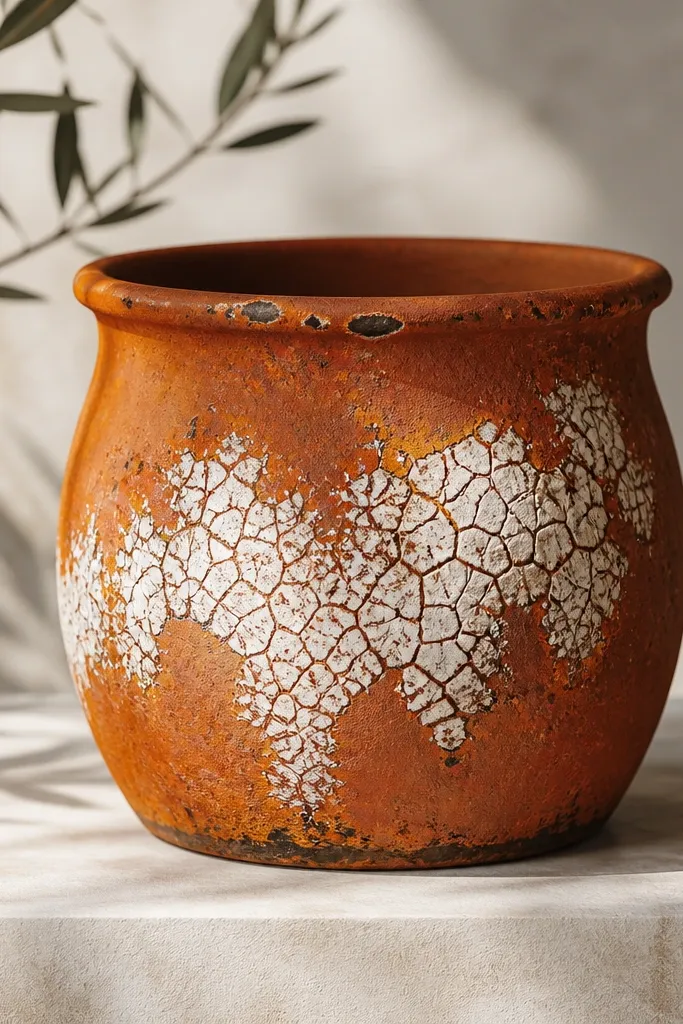
Crackle effects look pricey because they mimic aged glaze. Rusted orange feels autumnal, and the white crackle makes the texture visible without adding extra design elements. It’s also great when you want something that looks intentional even with simple shapes.
Use a crackle medium designed for acrylic paint. Paint rusted orange as the base, let it dry until tacky per product instructions, then apply the crackle medium, and top with white craft paint. Seal after fully cured so the crackle doesn’t rub off.
Editor's noteTest crackle timing on a spare tile or cardboard so you don’t get giant cracks on the first pot.
Skip thisDon’t rush the dry time — crackle that dries too fast looks patchy and uneven.
22. Monochrome Botanica with Sage Green Wash
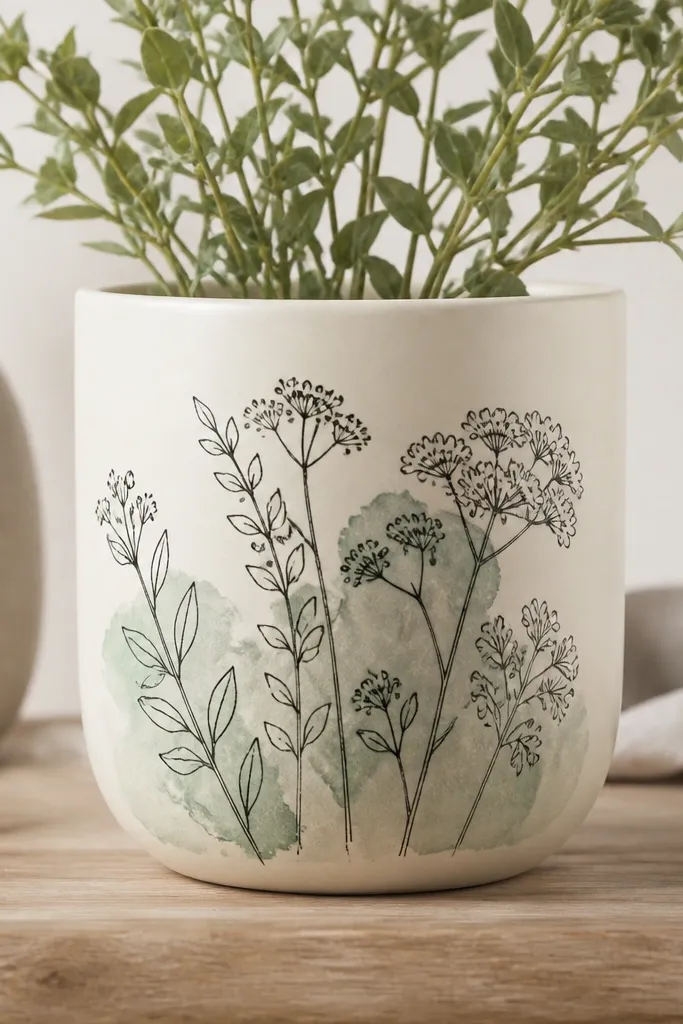
This one looks like a printed botanical illustration. Black outlines keep it crisp, while a sage wash makes the background feel soft and expensive. It’s subtle, so it works with real plants that have their own colors.
Paint the pot cream. Use a fine liner brush for stems and leaves in black. Mix sage paint with water to make a thin wash, then dab lightly behind the stems so it fades outward. Seal with matte clear so the wash stays soft.
Editor's noteLet outlines dry completely before adding the wash so lines don’t bleed.
Skip thisAvoid soaking the terracotta with wash — heavy water can cause streaks.
23. Red-White Striped Lid-Like Rim with Tiny Stars
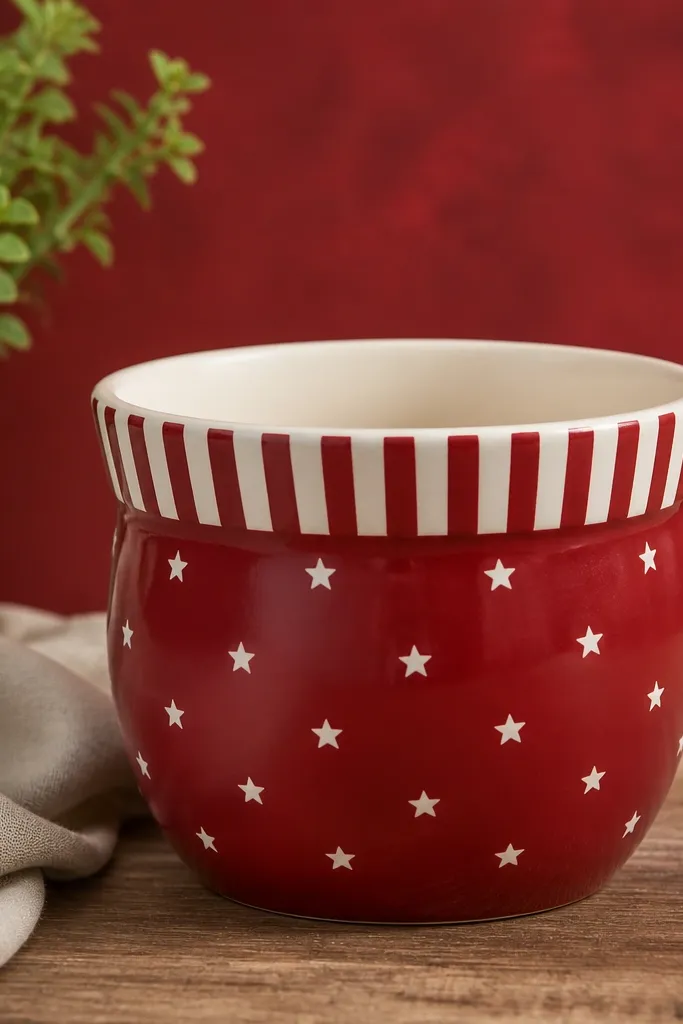
This looks like festive enamel because the rim has a clean stripe pattern. Tiny stars add holiday charm without turning the pot into a cartoon. Deep red base makes the stars pop and keeps it from looking washed out.
Paint the whole pot deep red. Tape a rim band and paint alternating red and white stripes (about 1 inch tall). Add tiny stars using a star stencil or a small brush tip. Seal with outdoor clear if it’s outside.
Use a star stencil made for scrapbooking — it gives you consistent star shapes.
Don’t make stars too big; large stars look like stickers.
24. Neutral Taupe Base with Thin Black 'Architect' Lines
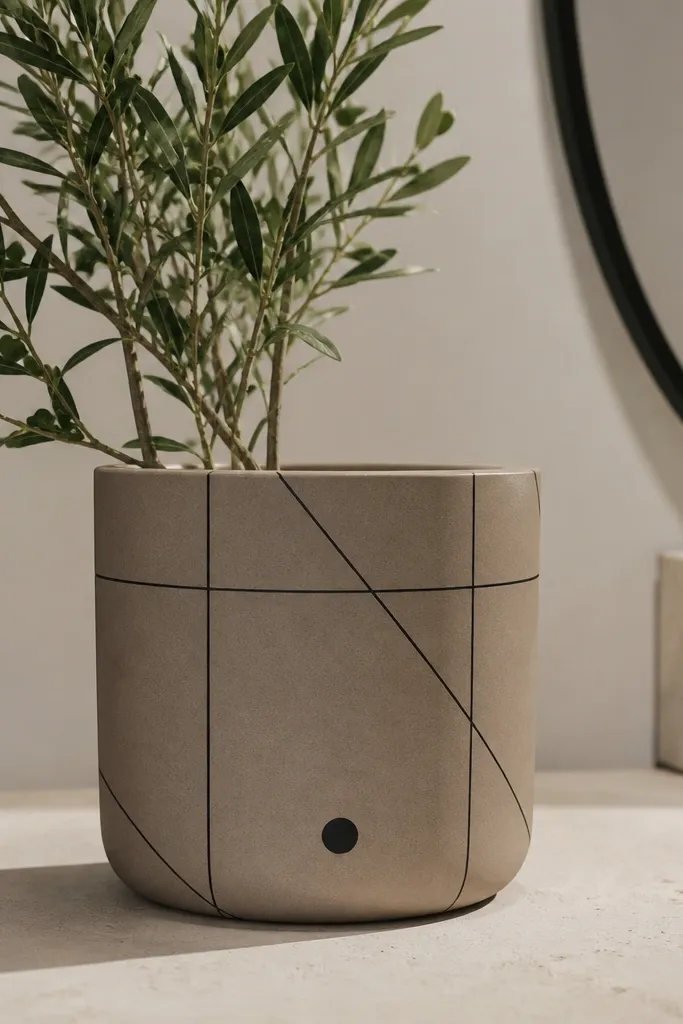
Architect-style lines look expensive because they’re minimal and controlled. Taupe is forgiving and hides small paint seams, while black lines create sharp structure. This style works for any season because it doesn’t scream holiday.
Base coat taupe (mix brown + white + a touch of gray). Use a ruler and painter’s tape to create a simple grid on the front panel. Paint thin black lines over tape, then remove tape for crisp edges. Seal with a matte clear to keep it modern.
Editor's noteMeasure line spacing once and mark with light pencil dots so your grid stays straight.
Skip thisAvoid thick marker-like lines — they overpower the pot’s shape.
25. Pastel Sunburst Behind a Center Dot
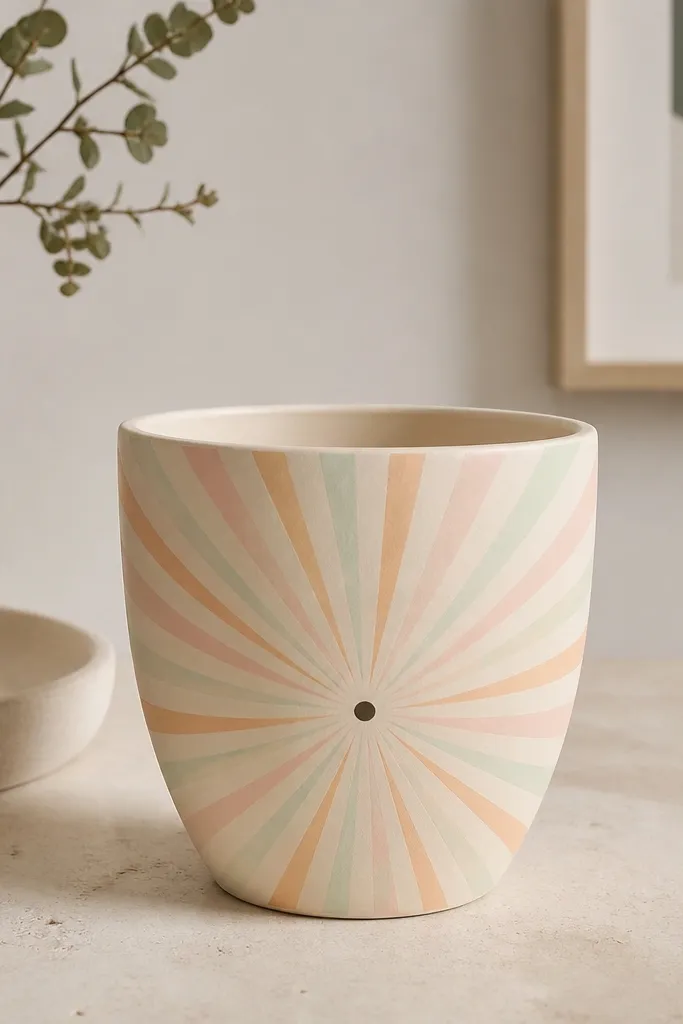
Sunbursts look playful but polished when the rays are thin and evenly spaced. A small center dot anchors the design and makes the rays feel intentional. Pastel rays keep it springy and soft against cream.
Paint pot cream. Draw a circle center (about 1 inch wide on a 10-inch pot) and a tiny dark dot inside. Create rays with a thin liner brush, spacing them evenly across the front. Use three pastel colors max so it stays cohesive.
Editor's noteMake rays with short strokes instead of one long line so they don’t wobble.
Skip thisDon’t use too many colors; it turns into a messy pattern.