
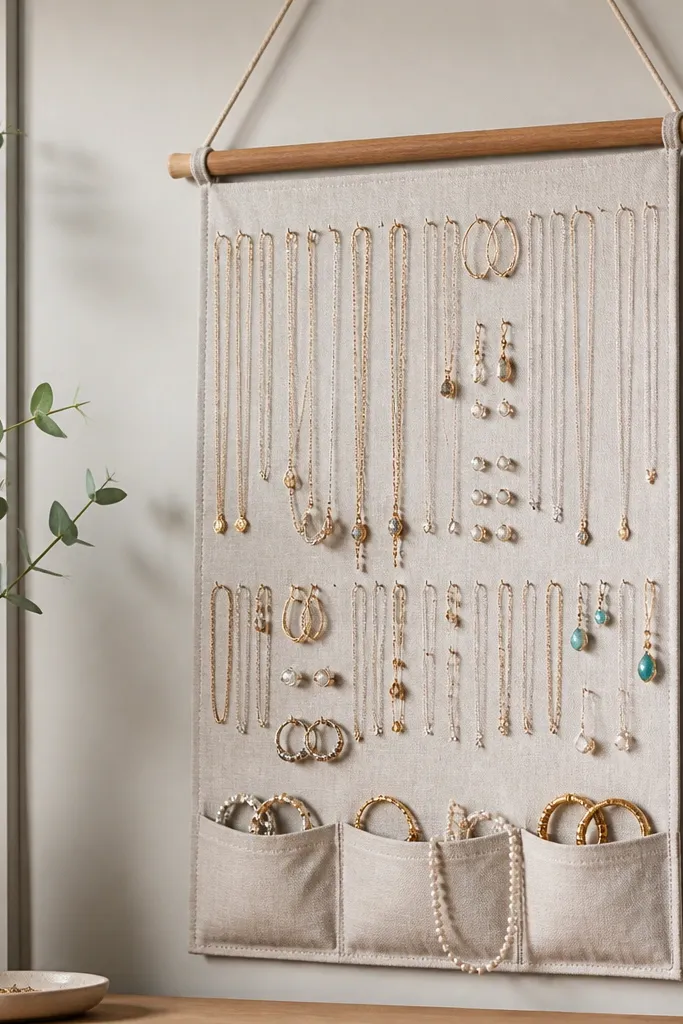
1. Velvet Ribbon Strip with Brass Mini Hooks
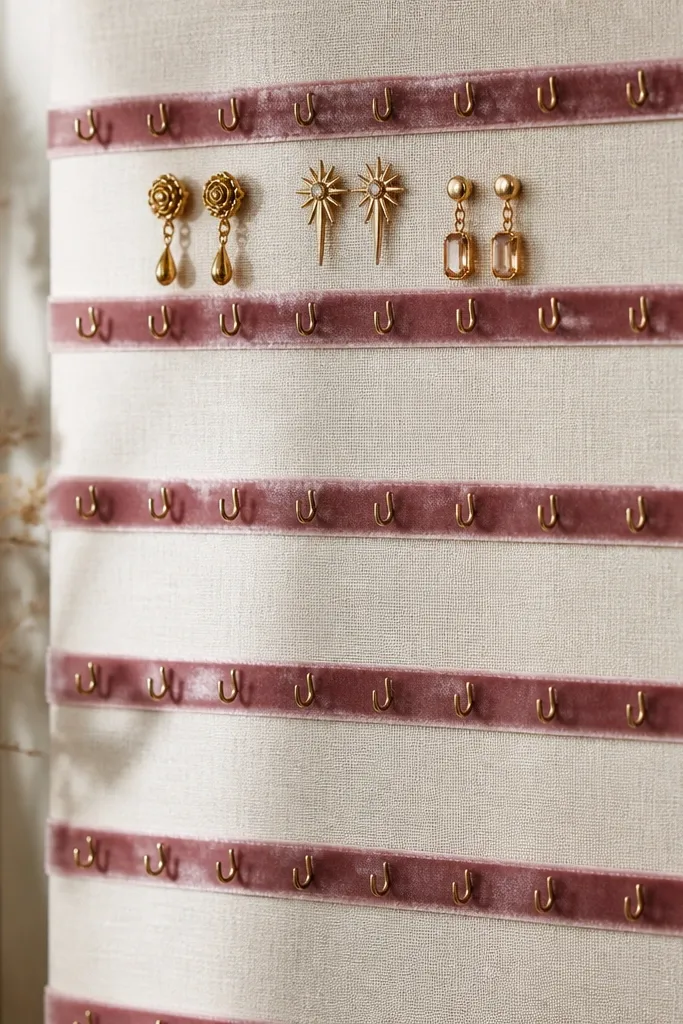
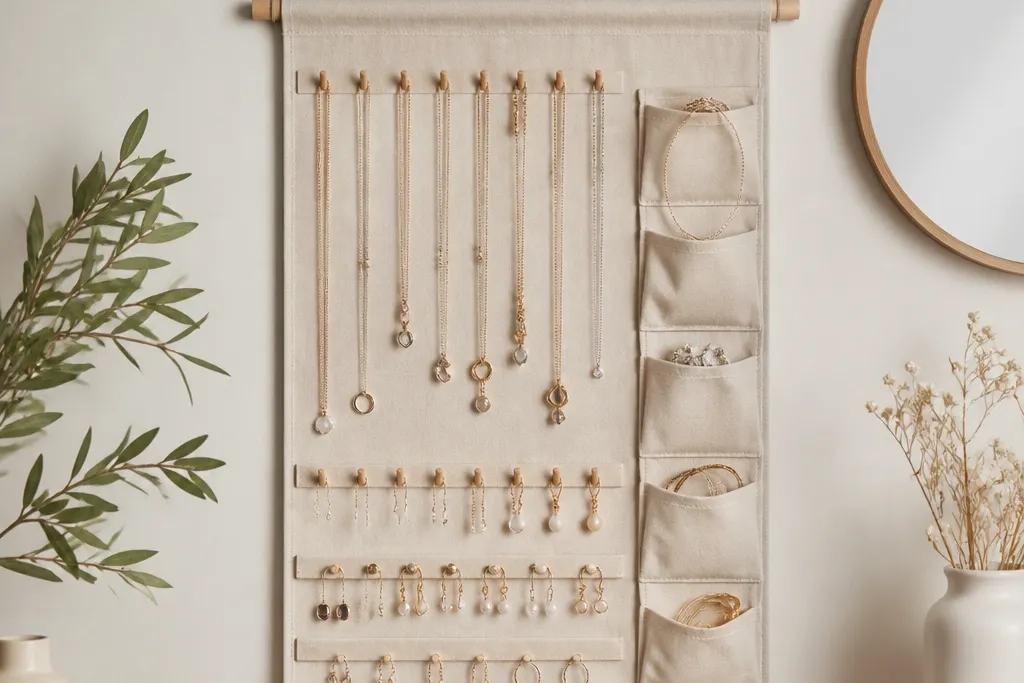
This one looks like a boutique jewelry counter. The velvet ribbon gives grip so chains don’t slide, and the brass mini hooks catch warm light without looking harsh. I like pairing mauve velvet with cream backing because it reads soft and expensive. The hook spacing is consistent, so you can grab what you need without searching.
Cut a backing panel from sturdy canvas or thin plywood wrapped in cream cotton. Glue or stitch 3-5 vertical velvet ribbon strips (about 2 inches wide each) spaced 2 inches apart. Screw in or hot-glue brass mini hooks on the ribbon so the hook points face forward. Hang it with a French cleat or two picture hooks rated for the panel weight.
Use a fabric glue that dries clear and test it on a scrap — some glues stain velvet. Keep hooks aligned with a ruler so the rows look straight from across the room.
Skip glossy satin ribbon — it makes chains slip and it shows every snag.
2. Pegboard with Stained Wood Clip Rails
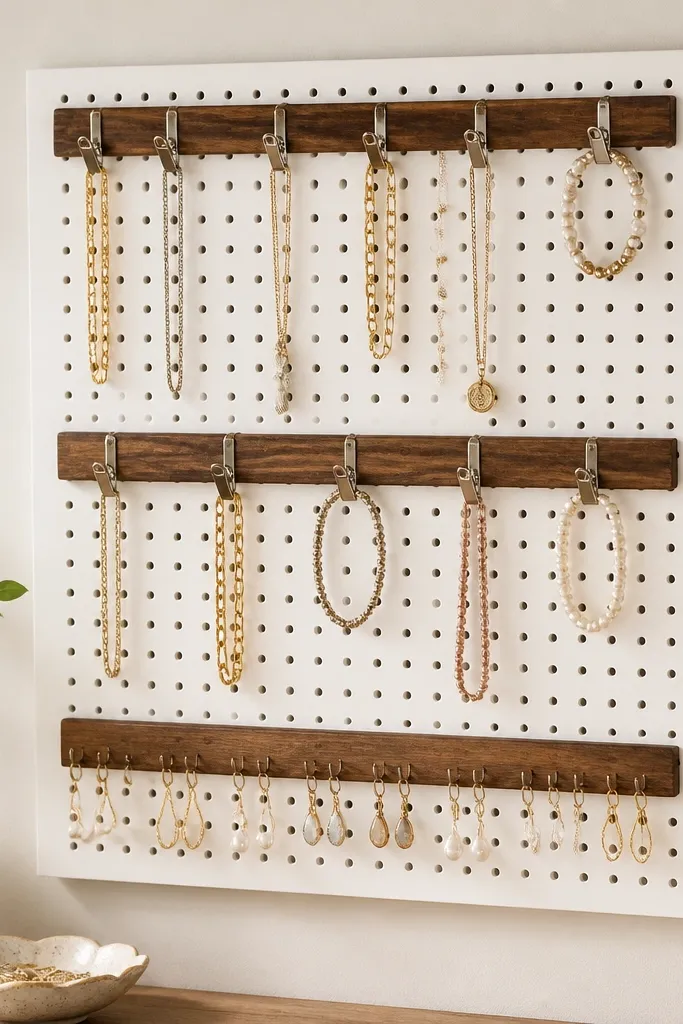
Pegboard is the fastest way to create a system that stays neat. The stained wood rails add warmth, while the pegboard grid lets you adjust hook heights as your collection changes. I’ve used this for seasonal swaps because you can move clips without rebuilding the whole organizer. It also looks clean because the grid keeps everything aligned.
Use a 16x20 inch pegboard. Mount it with wall anchors. Add three wood rails (1x2 inch strips stained walnut) across the pegboard and secure them with small screws. Attach S-hooks or spring clips to the peg holes for necklaces, and add tiny hooks for earrings below each rail.
Paint the pegboard the same color as your room trim so it disappears a little and the jewelry becomes the focus.
Don’t overload the rails — heavy necklaces pull clips out of alignment.
3. Clear Pocket File Folder Hanging Organizer
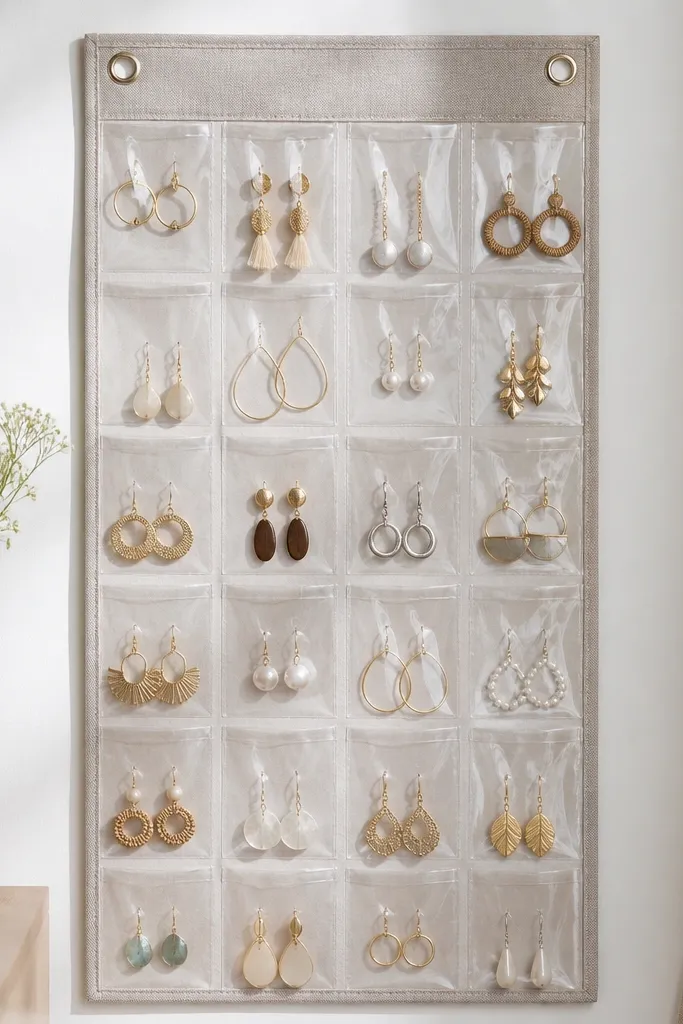
This is the “I want to see everything instantly” option. Clear pockets keep earrings separated and prevent mismatched pairs, and the plastic lets you spot what’s missing fast. It’s also beginner-friendly because you’re assembling pockets into a frame, not building hardware. I use it for sets I wear together — it keeps the look consistent.
Buy a clear pocket sheet (like those used for craft storage) and cut it to fit a fabric-wrapped board or a simple canvas frame. Add two grommets at the top edge and hang with a sturdy ribbon or rope. Place earrings in pockets with a small paper divider so studs don’t fall into each other. Add a strip of felt behind the pockets if you need more grip for lightweight charms.
Use label tape on the back side of the pockets, not on the front, so it stays invisible.
Skip cheap thin plastic pockets — they bow and look wrinkled after a few weeks.
4. Faux Leather Necklace Ladder with Studded Bar
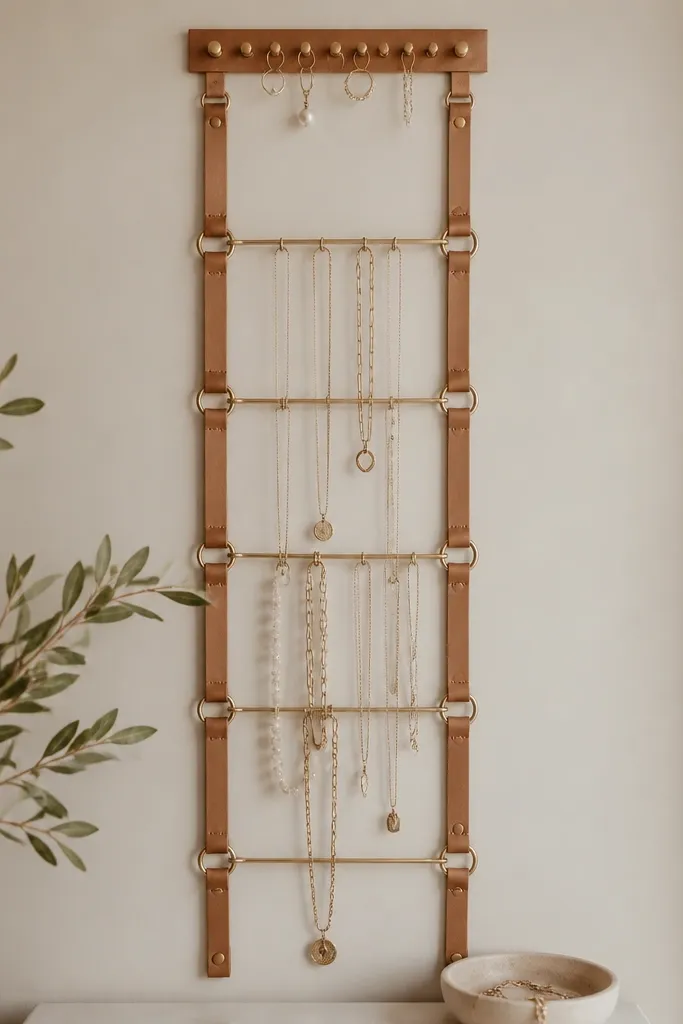
A ladder shape keeps chains from tangling because each necklace hangs in its own lane. Faux leather gives enough friction to slow sliding, and the metal rings add a tidy, intentional look. This design works especially well if you wear longer necklaces and want them to drape straight. The studded top bar makes it feel like decor, not storage.
Cut two faux leather strips and stitch or glue them to a backing board. Add three or four horizontal bars made from thin dowel painted matte black or brass. Use small metal rings or swivel hooks on each bar for necklace attachment. Attach earrings to a row of tiny hooks on the top bar.
Cut the faux leather ends at a slight angle so the ladder looks intentional, not like straps taped on.
Don’t use smooth vinyl — necklaces slide and clump at the bottom.
5. Linen Curtain Rod Mini Organizer for Small Spaces
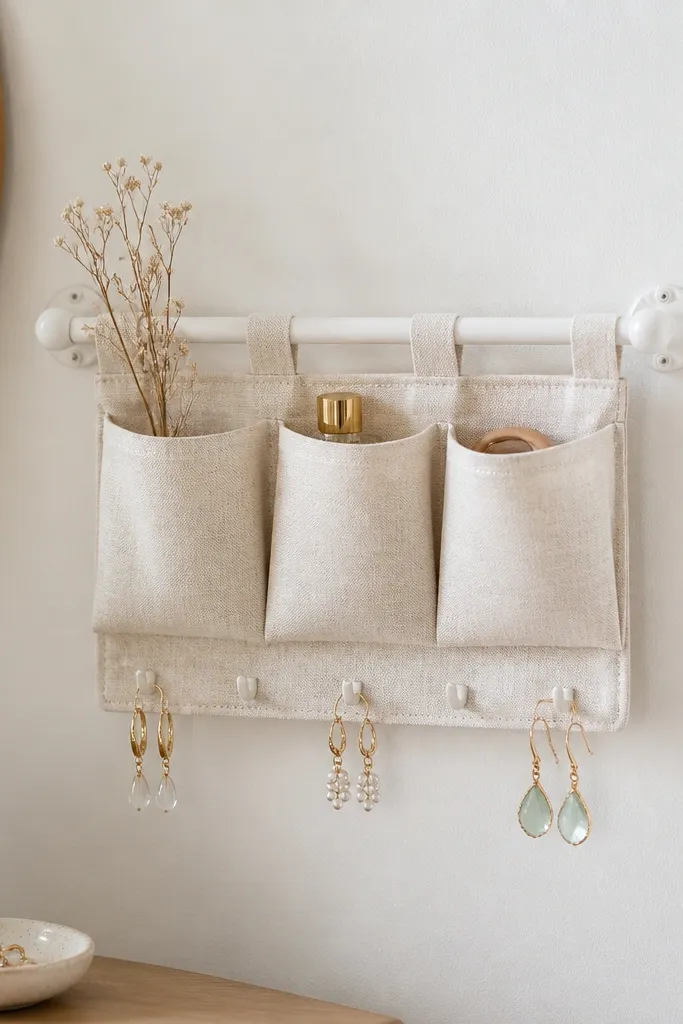
If your space is tight, this is one of the cleanest designs. The rod creates a straight line for fabric pockets, and the linen looks soft against a wall. You get separation for earrings and small pieces without bulky dimensions. It also looks light, which matters in hallways and apartments.
Editor's noteMake pockets in two sizes: 3 inches for studs and 4 inches for hoops.
Mount a small curtain rod (around 18 inches) with two brackets. Sew or attach 6-10 linen pockets to a fabric strip that loops over the rod. Add small grommets at the bottom for a few hanging earring hooks. Use a backing scrap of felt so the pockets hold their shape and don’t sag.
Skip thisSkip stretchy fabric pockets — earrings slip and the rows turn messy.
6. Embroidery Hoop Earring Grid Wall Set
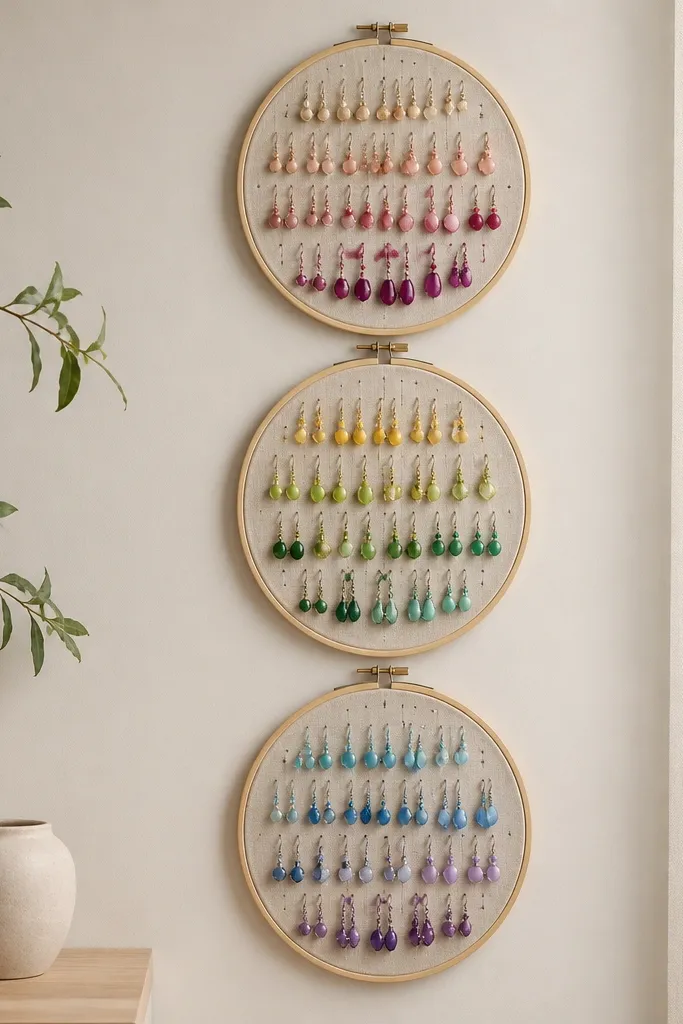
This one is oddly satisfying because every piece sits in a tiny frame. Wire hooks in a grid keep earrings from tangling and make it easy to sort by color or metal tone. The hoop look adds softness and makes it feel like wall art. I’ve used this on rental walls because the hoops are light and easy to hang.
Pick three embroidery hoops, 8-10 inches wide. Stretch linen or cotton over each hoop and secure with a hot glue gun. Insert a grid of small wire hooks (or screw-in micro hooks if your backing is sturdy) spaced 1 inch apart. Hang hoops with picture wire so they sit level.
Keep your hook count even across hoops so the spacing looks deliberate.
Don’t overpack hooks — when earrings overlap, the grid stops looking neat.
7. Magnetic Strip Board with Felt Covers
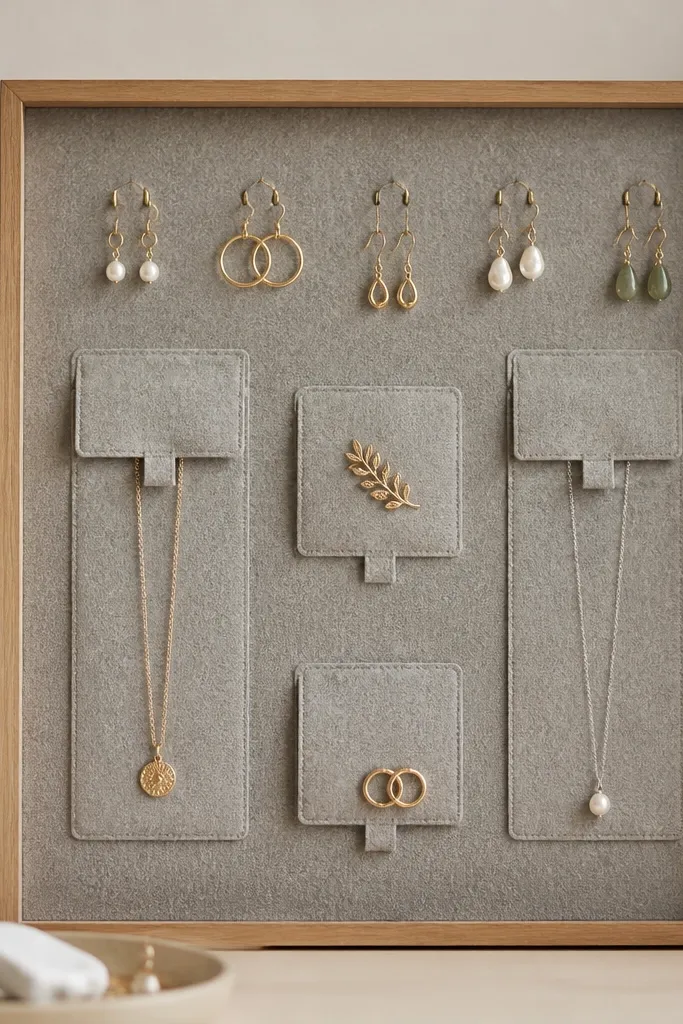
Magnetic storage is great for pieces that are already magnetic-friendly, like small charms on metal clasps or brooches. The felt covers keep magnets from looking industrial and reduce scratching. I like this for travel bags too because you can pull everything off in one motion. The organizer looks clean because the magnets are hidden under fabric.
Editor's noteTest magnet strength by shaking the board gently — if anything slides, use stronger magnets or add more contact points.
Cover a wood or MDF board with felt, then cut small felt flaps (about 2x2 inches). Glue magnets behind each flap and place tiny metal washers or magnetic dots where needed. Add a row of small hooks at the top for earrings and bracelets. Hang the board using two wall anchors.
Skip thisSkip uncovered magnets — they look cheap and can scratch surfaces.
8. Wall Corkboard with Jewelry Map Push Pins
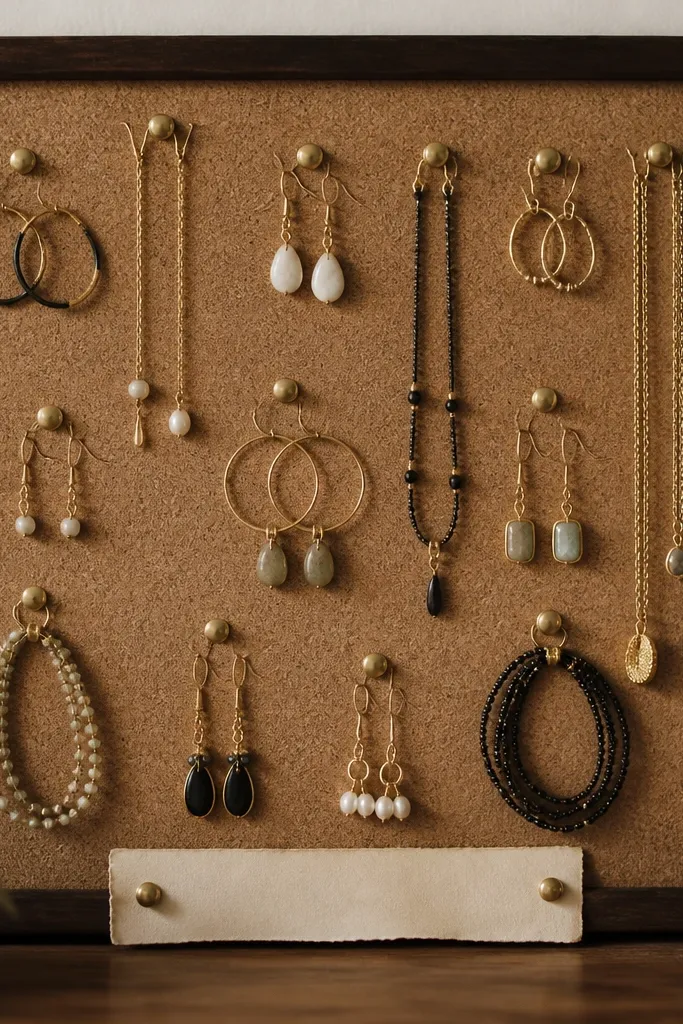
Corkboard is the fastest way to get a functional organizer that still looks like decor. Push pins with small hooks let you hang necklaces and hold earrings by their backs. The cork texture grips parts so they don’t swing and tangle. I’ve used this in bedrooms where I want a “planned and pinned” look.
Editor's noteSort by length: pin short necklaces closer to the top so they don’t hit the bottom row.
Use a corkboard panel about 18x24 inches. Frame it with a simple wood frame or stain the edges. Insert brass push pins with attached mini hooks for necklaces and chains. Keep earrings in a top row using small ring pins. Add a bottom strip of fabric or ribbon for a cleaner edge.
Skip thisDon’t use plastic push pins — they snap and the organizer starts looking worn.
9. Upcycled Shutter with Ribbon Tie Slots
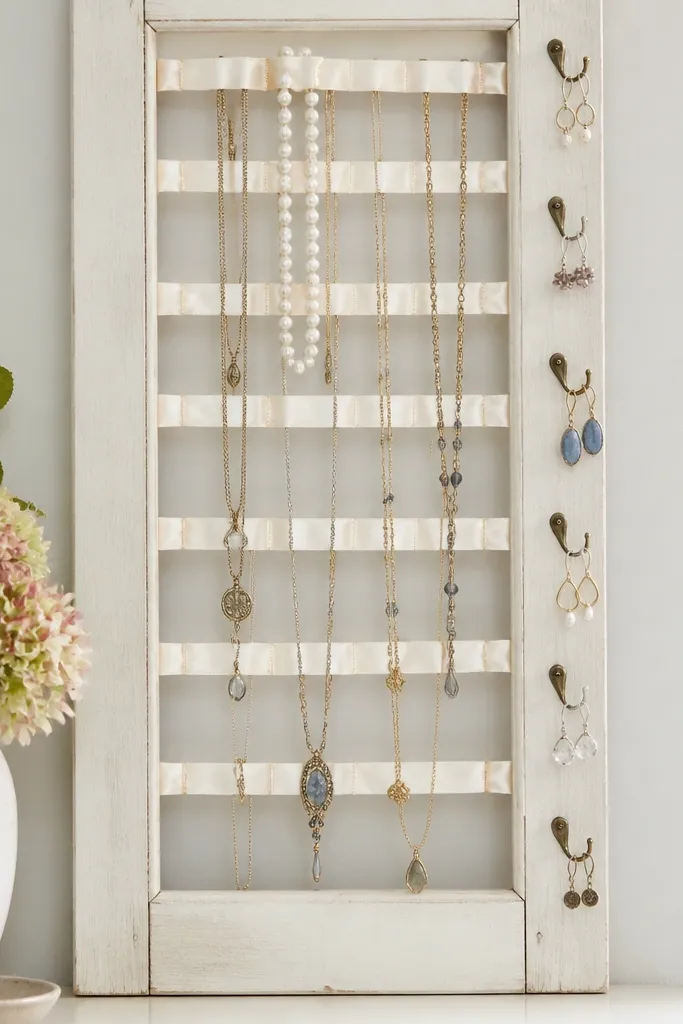
A shutter gives you built-in structure, so you don’t have to measure every grid line. Ribbon ties separate necklaces and keep them from rubbing together. The slat gaps create natural lanes, and the whole piece looks like vintage decor. I did this in a guest room and it made the jewelry feel like part of the theme.
Editor's noteUse ribbon widths around 3/8 to 1/2 inch so ties hold shape without bulk.
Sand and prime the shutter, then paint satin white or soft cream. Add ribbon ties by sewing small loops onto each slat gap or gluing them behind the slats. Use 3-4 ribbon rows for necklaces and a couple of side hooks for earrings. Tie each necklace once and let it hang freely inside its lane.
Skip thisSkip thick bulky ties — they take space and crowd the necklaces.
10. Sew-On Felt Pocket Organizer with Color Blocking
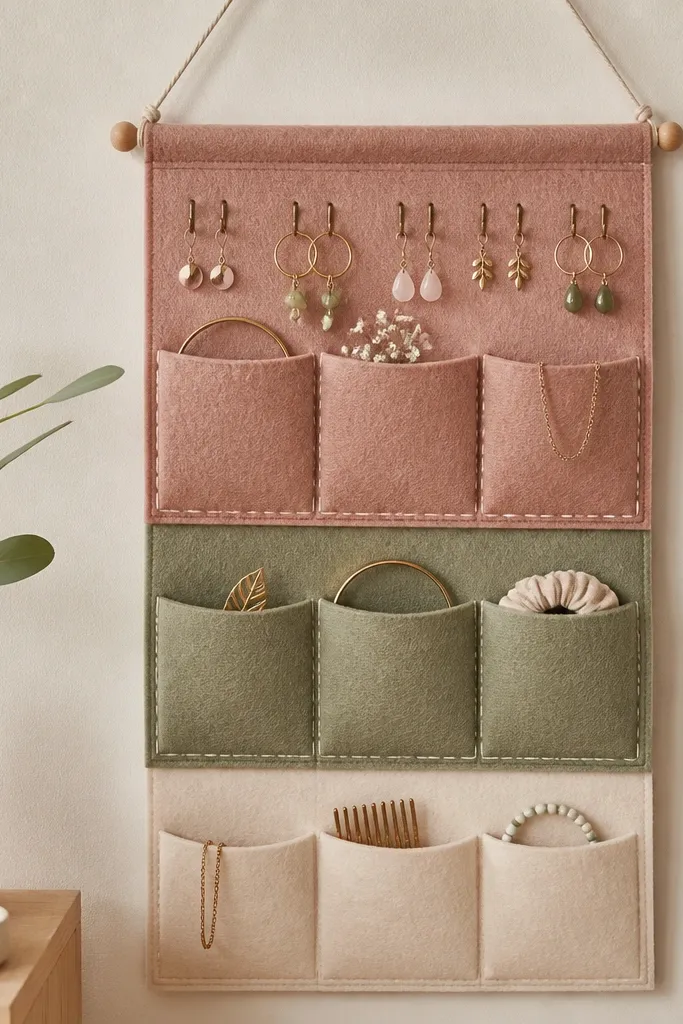
Felt pockets are sturdy and they grip chains better than you’d think. Color blocking makes it easy to remember where things go, and it looks playful without becoming messy. I like using three tones so the organizer matches everyday outfits. The stitched borders make every pocket look intentional.
Editor's noteMark pocket placement with chalk before sewing so everything lines up.
Cut a backing rectangle from thick felt (at least 3 mm). Add three vertical columns of pockets using felt in different colors. Sew pockets with a simple straight stitch or whip stitch around the edges. Add a top band of small hooks for earrings, and hang with a rod pocket or two straps.
Skip thisDon’t use thin craft felt — it stretches and pockets sag over time.
11. Macrame Necklace Organizer with Wooden Dowel Base
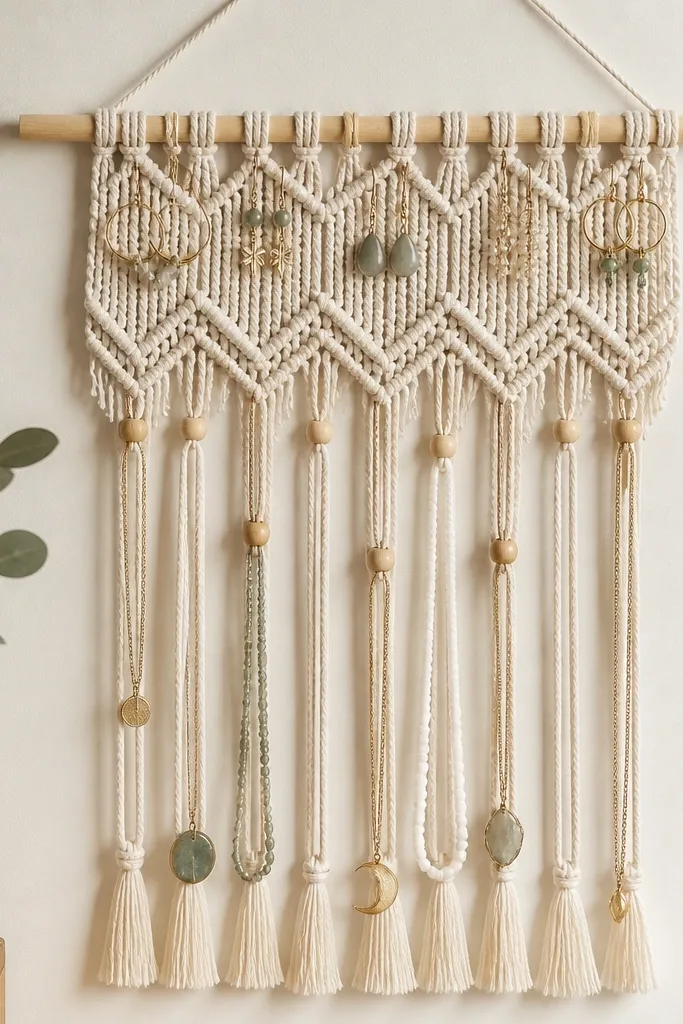
Macrame looks airy, but it still keeps necklaces separated if you tie it right. The cords grip lightly, and the vertical structure prevents the “necklace pile” look. Wooden dowels warm up the texture and make it feel handmade. This is the organizer I reach for when I want softness without losing function.
Editor's noteTie the cord knots with a firm double knot and trim ends neatly so it doesn’t look sloppy.
Use a 1-inch diameter wooden dowel as the top anchor. Tie vertical cords down and add knots at heights that match necklace lengths, leaving about 3 inches between hanging loops. Add small wooden beads as separators so necklaces don’t slide into each other. Hang the dowel with two wall hooks or a ceiling mount.
Skip thisSkip slippery rope — it makes necklaces drift and tangle.
12. Peg Rail + Acrylic Earring Blocks
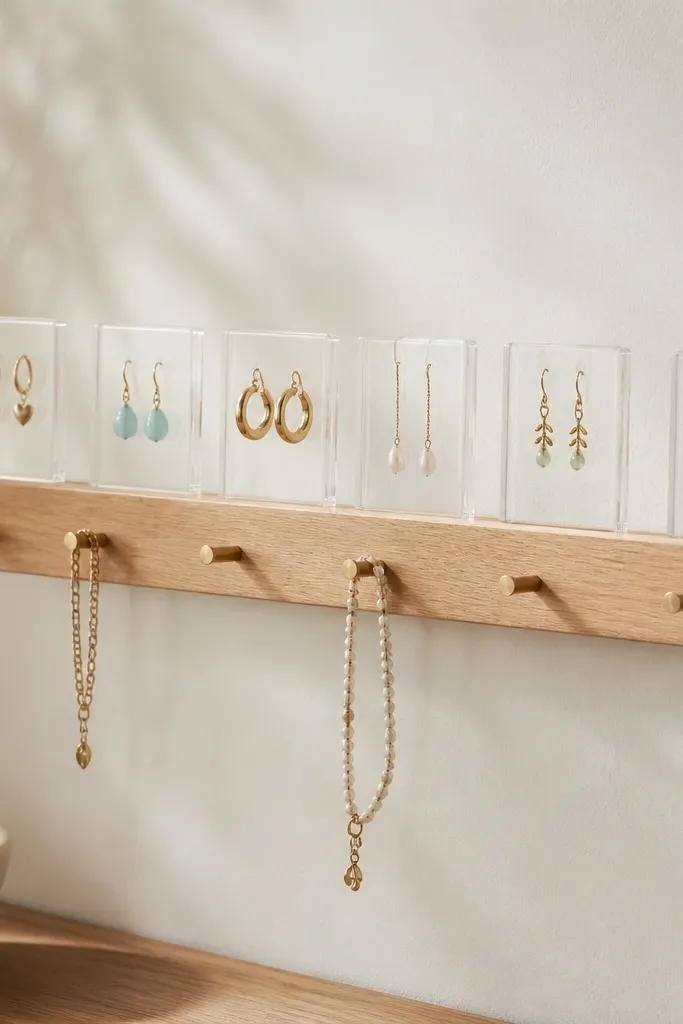
This mixes practical storage with a retail display look. Peg hooks hold necklaces and bracelets, while acrylic blocks keep earrings upright so you can see pairs at a glance. I like it because it doesn’t hide the jewelry — it shows it. The acrylic also makes the organizer look sleek and modern.
Mount a narrow peg rail (about 30 inches) on the wall. Add small hooks along the peg holes for chains and bracelets. Place clear acrylic earring display blocks or DIY acrylic stands on top using removable adhesive pads. Keep the blocks spaced so earrings don’t crowd.
Group earrings by metal color so the acrylic blocks look intentional, not random.
Don’t use frosted acrylic — it dims the jewelry and makes matching harder.
13. Reclaimed Picture Frame with Wire Mesh Earring Panel
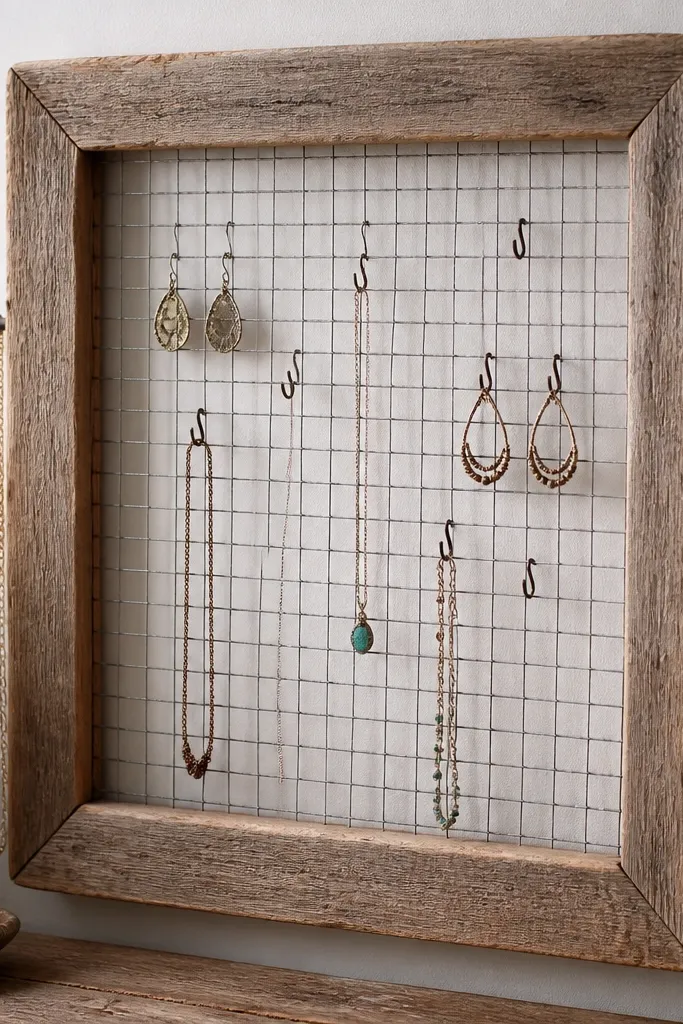
A frame makes jewelry storage look like art. Wire mesh gives you tons of hook options, so you can rearrange as your collection grows. The wood frame adds texture and hides the hardware. I’ve used this for earrings because the mesh keeps small pieces from falling through.
Editor's notePaint the mesh matte black if your room is neutral — it makes gold and silver jewelry pop.
Reclaim or buy a wooden picture frame with a backing you can remove. Stretch metal wire mesh across the frame and secure with staples or small nails. Attach tiny S-hooks to the mesh. Add two side hooks for short necklaces. Hang with the frame hardware so it sits flat.
Skip thisSkip thin wobbly mesh — hooks loosen and the whole panel looks sloppy.
14. Drawer Liner + Dowel Necklace Bar Organizer
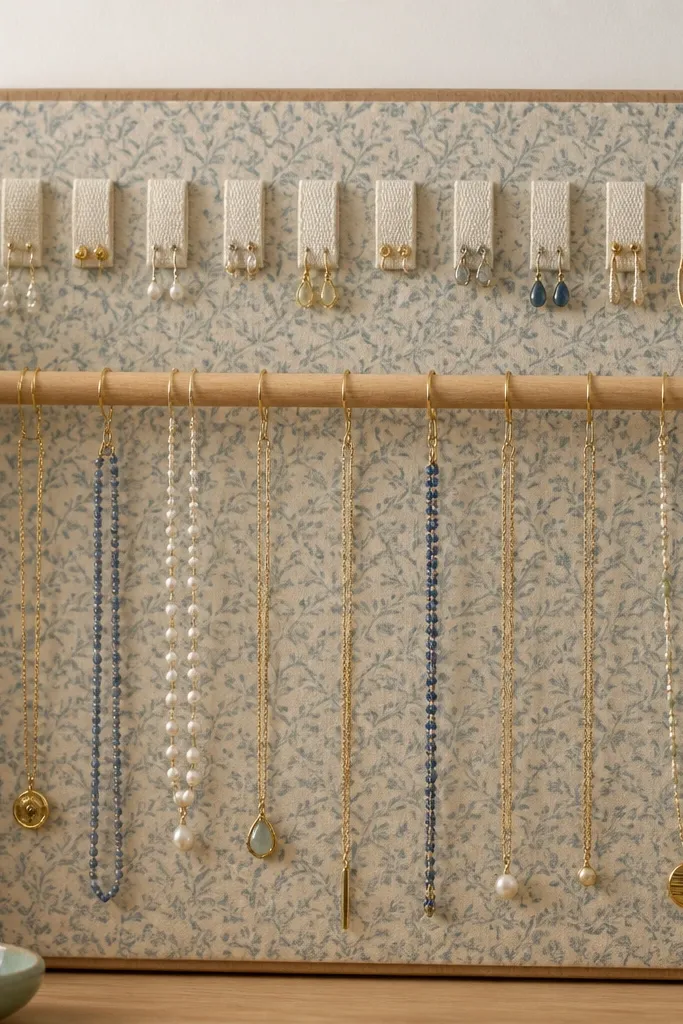
This is the “I want it to look soft” build. Drawer liner has grip, so chains don’t slide, and the pattern makes the board look finished. A dowel bar keeps necklaces at a consistent height, so they don’t tangle with earrings. It’s also easy to customize with your liner print.
Cover a board with drawer liner using contact cement. Add a dowel bar across the board using two small corner brackets. Pin or screw small rings along the dowel for necklace attachment. Stitch small fabric loops for earrings on the top edge.
Use a liner with a subtle pattern, not tiny busy prints — it looks cleaner from across the room.
Don’t skip a liner edge trim — exposed board edges look unfinished.
15. Hanging T-Shirt Organizer Turned Jewelry Board
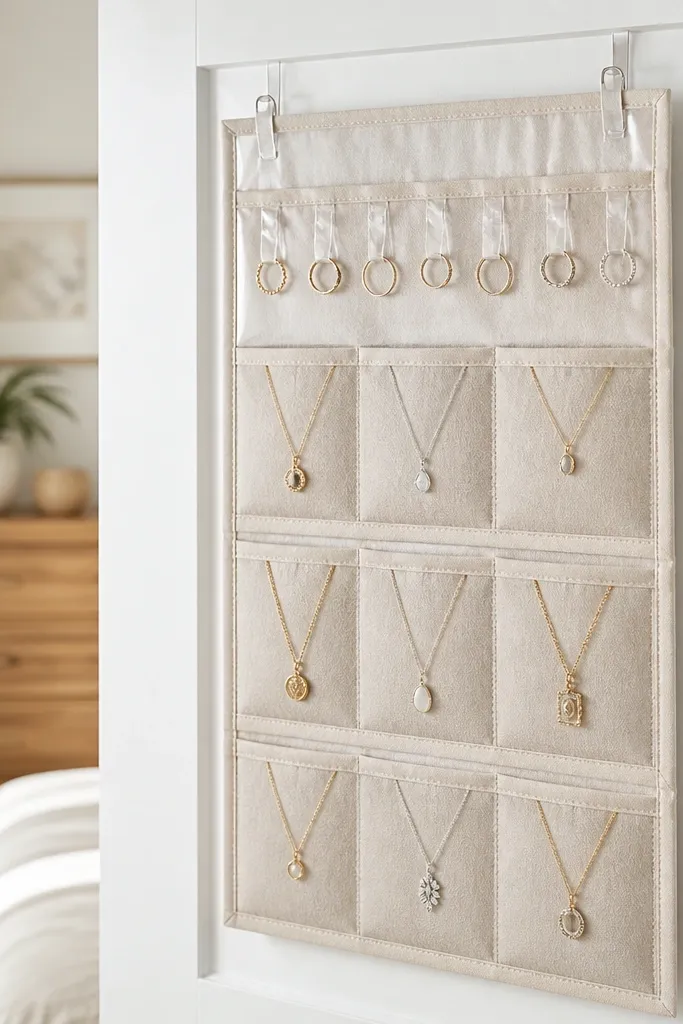
This is the easiest way to get a year round hanging jewelry organizer without building a frame. The over-the-door setup keeps it out of sight until you need it, and the pocket rows make sorting automatic. I added felt inserts because plain fabric pockets let chains slip. It’s a great option if you want a system for daily wear and don’t want wall mounting.
Editor's noteHang it on the door so you can see it while getting ready — you’ll actually use the sorting.
Use an over-the-door hanging organizer with 18-24 pockets. Add felt rectangles inside the pockets for grip (cut to fit snugly). For necklaces, use the deeper pockets and tuck chains into a loop of felt strip so they hang flat. Use the top pockets for rings in small zip pouches so they don’t drop.
Skip thisSkip overstuffing pockets — it turns into a tangled mess fast.
16. Macrame + Felt Coil for Bracelets and Bangles
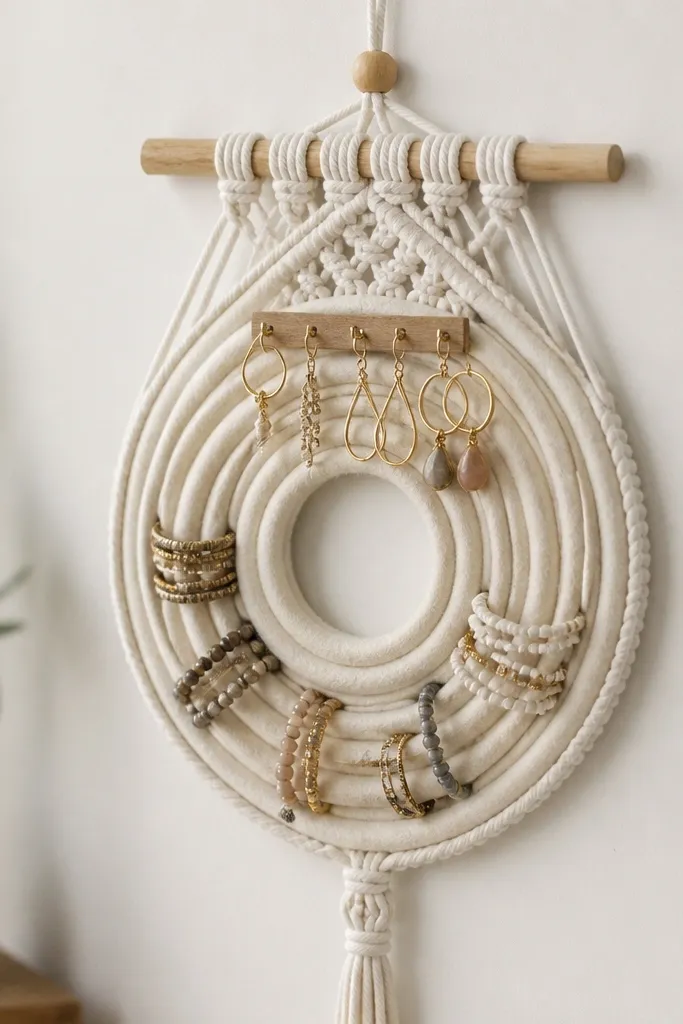
Bracelets and bangles are the pieces that usually ruin tidy organizers. A felt coil keeps them from stacking and tangling, and the macrame hanger makes the whole thing look light. I like using this for seasonal collections because you can swap coils without changing the wall setup. It also keeps metal from scratching because felt contacts the jewelry.
Sew a circular felt coil by rolling thick felt into a ring and stitching around the outer edge. Attach the coil to a macrame hanger made from 4-6 cords tied to a top knot. Add tiny hooks above the coil for earrings. Hang it at about chest height so you can reach easily.
Leave a 1-inch gap between coil loops so bangles don’t wedge in and get stuck.
Don’t use hard foam — it scratches bangles and looks bulky.
17. Ribbon-Covered Mini Pegboard with Clip-on Chain Holders
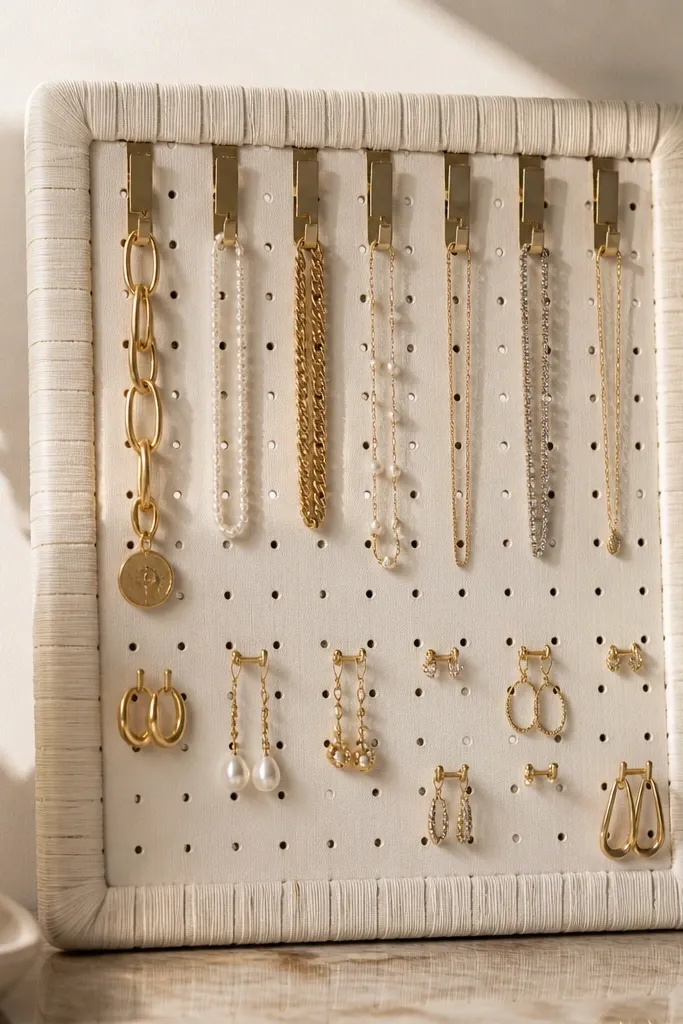
This is pegboard, but softer. Ribbon wrapping hides the industrial look and keeps it matching your decor. Clip-on chain holders keep necklaces from twisting because each chain has its own clip point. The result is a neat, styled wall piece that still works like a tool.
Editor's noteUse binder clips to hold ribbon in place while the glue sets so edges don’t drift.
Wrap a 12x18 inch pegboard with cream ribbon strips and glue them down. Add clip-on chain holders to the peg holes along one horizontal row. Add tiny hooks on the lower grid for earrings. Use a lightweight frame or simply anchor the pegboard through the ribbon-wrapped back.
Skip thisSkip bare pegboard — it looks harsh and scratches jewelry if you touch it.
18. Ceramic Tile Jewelry Grid on Rope Hanger
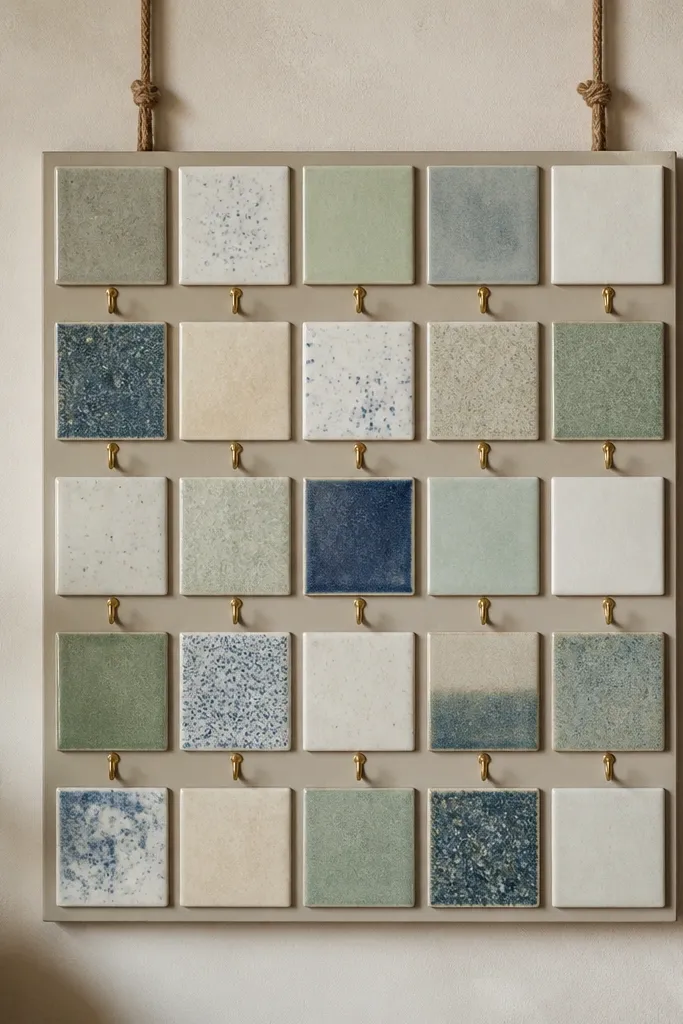
Tiles make the organizer feel sturdy and clean. The glossy surface makes jewelry look crisp, and the hooks between tiles keep pieces separated without extra padding. I like this for silver jewelry because it reflects light without looking messy. Rope hanging adds a handmade touch and keeps the board from feeling too industrial.
Editor's noteWipe tiles with a microfiber cloth before mounting hooks so dust doesn’t show through the glossy finish.
Glue small square ceramic tiles (about 2x2 inches) onto a plywood base. Install tiny brass hooks into grout lines or into drilled pilot holes between tiles. Add a felt strip behind any hooks that might contact delicate pieces. Hang with rope loops tied through eye screws.
Skip thisDon’t place hooks directly on the tile surface — drilling can crack tiles.
19. Suitcase Latch Necklace Organizer with Side Compartments
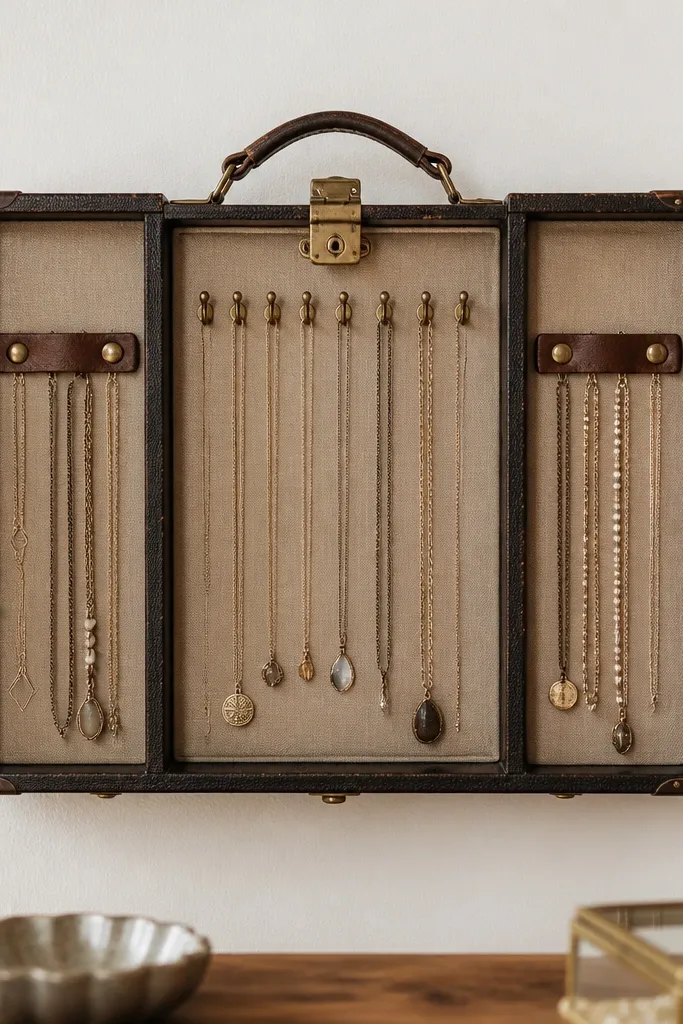
This looks like a travel memory, but it’s functional. The latch and leather strap create a structured place for necklaces, so they hang in a consistent direction. Side compartments keep bracelets from sliding and tangling. I like it for people who travel because it feels personal and easy to reset between trips.
Find a small suitcase lid or repurpose a rigid board with suitcase hardware. Mount it flat on the wall. Add leather straps or small side rails to hold necklaces in vertical lanes. Install micro hooks on the center panel for studs and hoops. Finish edges with fabric tape so raw materials don’t show.
Use two straps for necklaces longer than 20 inches so they hang evenly.
Skip flimsy cardboard suitcase panels — they bow and hooks pull out.
20. Tulle + Satin Bow Earring Display with Clip Bars
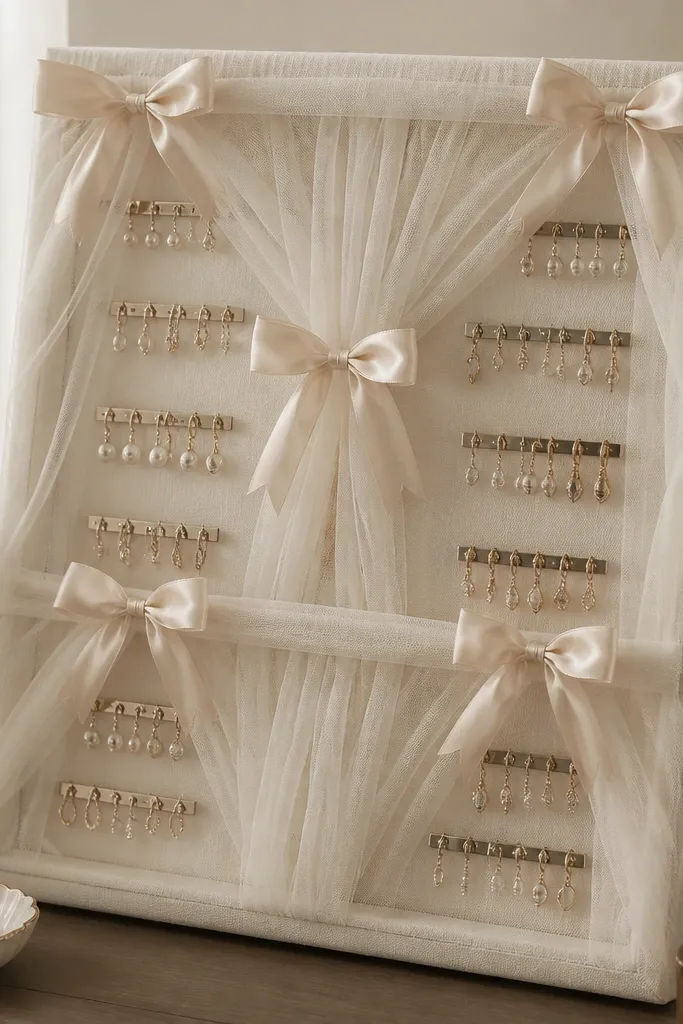
This is for the jewelry you want to feel pretty, not hidden. Tulle adds softness and makes the organizer look like a dress accessory. Clip bars keep earrings in a straight line so they don’t twist together. I use it when I’m styling a bedroom and want the jewelry to look like part of the room.
Build a light frame from wood strips or an embroidery hoop frame. Stretch tulle over the frame and attach satin ribbons as section dividers. Add small clip bars or mini clothespins covered with felt at the bottom edge. Put earrings in pairs by clipping through the backing or using small earring cards.
Match bow color to your hardware finish — gold bows with gold clips, silver bows with silver clips.
Don’t use slippery organza — clips slide and spacing gets messy.