
1. Pegboard earring map with numbered hooks
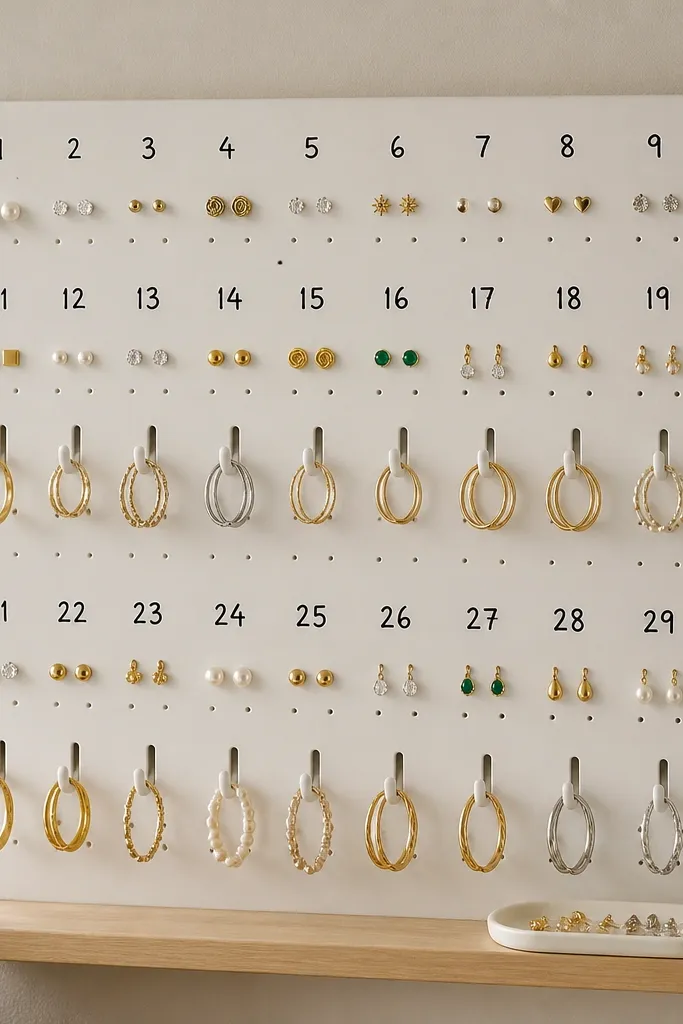
This looks modern because the pegboard grid is clean and the hooks create consistent spacing. Numbered hooks make it easy to put earrings back in the same exact spot, which keeps pairs together. I use a limited color palette: white board, black numbers, and silver hooks so the whole thing reads crisp. It also works well for mixed styles since hook sizes can match stud backs, hoops, and dangles.
Use a 12x18 inch or 16x20 inch pegboard sheet. Paint it matte white, then add hooks in a tight grid (about 1 inch between hook centers). Number the hooks with a paint pen, and keep earrings by type in separate rows so you don’t hunt.
Write the number list on a small card behind the bottom tray: “1-Studs, 2-Hoops, 3-Dangles.”
Avoid random hook heights — uneven spacing makes it look like a stash, not an organizer.
2. Clear acrylic necklace rail with hidden standoffs
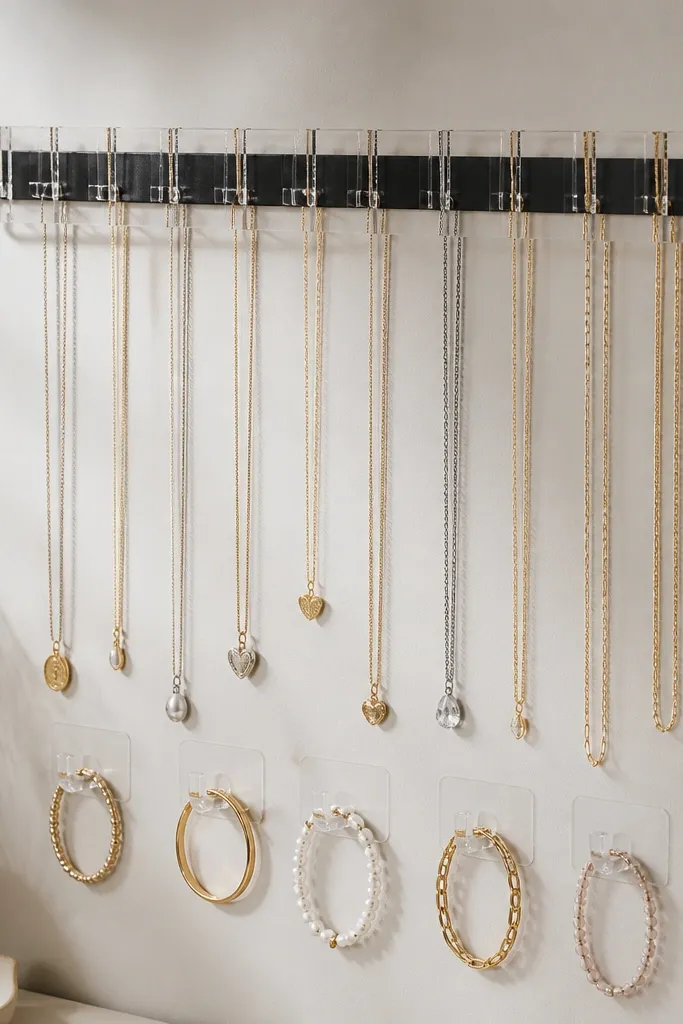
Clear acrylic gives that modern, gallery wall feel because the pieces look suspended. Hidden standoffs stop the chain from pressing flat against the wall, so links don’t tangle as easily. The black backing adds contrast, which makes gold and silver tones look sharper. This is the organizer I use when I want necklaces visible without clutter.
Cut or buy an acrylic rail about 18 inches wide. Add standoffs every 2.5 inches so each chain hangs separated. Use removable adhesive standoffs if you’re renting, or screw-mount with clear spacers if you can drill.
Hang necklaces by length: long chains go on the far ends, shorter ones closer to the center.
Skip glossy acrylic without a backing — glare makes the whole setup look messy.
3. Wine cork earring grid with a matte seal
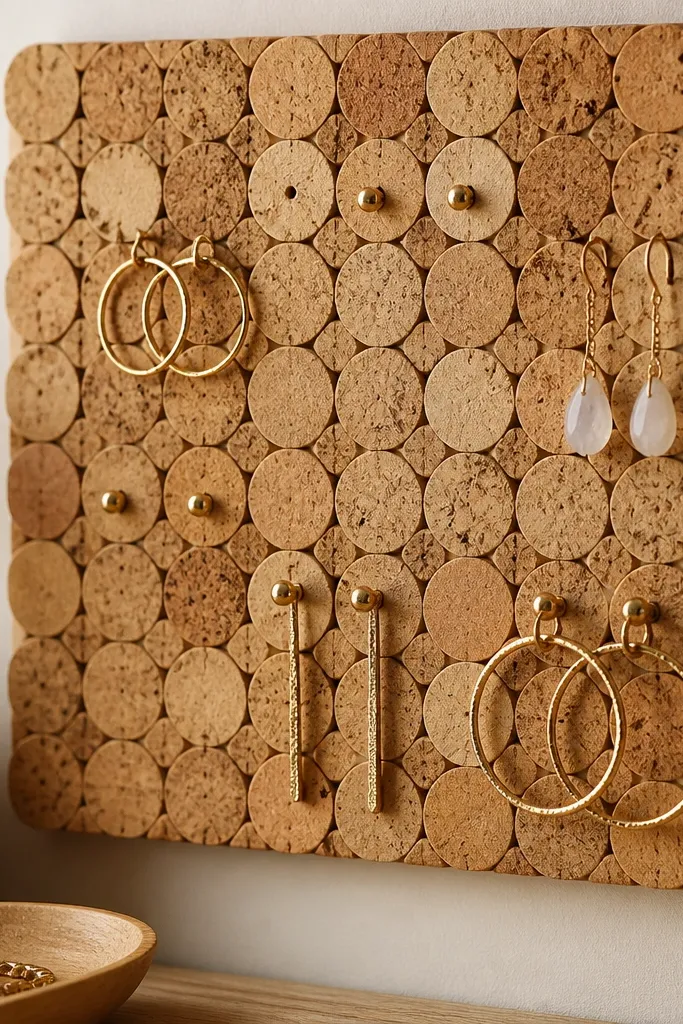
Cork is lightweight and forgiving, so earrings stay put without heavy hardware. The grid keeps studs aligned and makes the board look intentional. It also hides small scratches better than painted wood. Modern doesn’t have to be cold — cork can look clean when you seal it and keep the layout tight.
Cut cork into equal squares, then glue them to a thin plywood backing. Drill holes for studs (3-4 mm) and screw in eyelets for hoops. Seal with a matte clear coat in two thin layers so it doesn’t look shiny.
Paint a thin black border around the cork grid to frame it like a display piece.
Don’t use a thick glossy coat — it turns cork into a sticky-looking mess.
4. Drawer insert velvet tray with sliding dividers
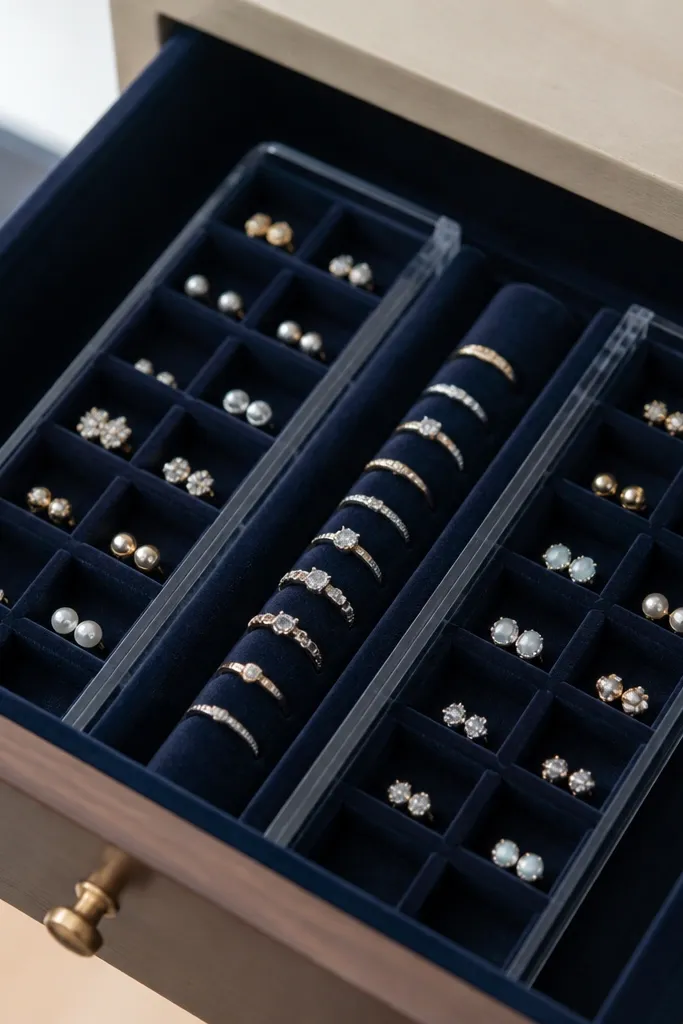
Cut a tray insert from plywood or buy a shallow plastic tray. Line it with 1/8 inch craft foam, then wrap with navy velvet and staple underneath. Use clear acrylic strips as dividers, sized to the drawer width so they slide smoothly.
Velvet makes jewelry feel cushioned and reduces metal-on-metal scratches. Sliding dividers are the modern upgrade because you can reconfigure the layout when your collection changes. Navy looks sophisticated and hides tiny lint better than light colors. This organizer also keeps small pieces from rolling into each other.
Skip thisSkip cheap velvet that sheds — you’ll spend more time cleaning than organizing.
Editor's noteStore rings in a channel with 1-inch dividers so they stand up and don’t stack into a tangle.
5. 3-tier wall shelf with cup hooks for bangles
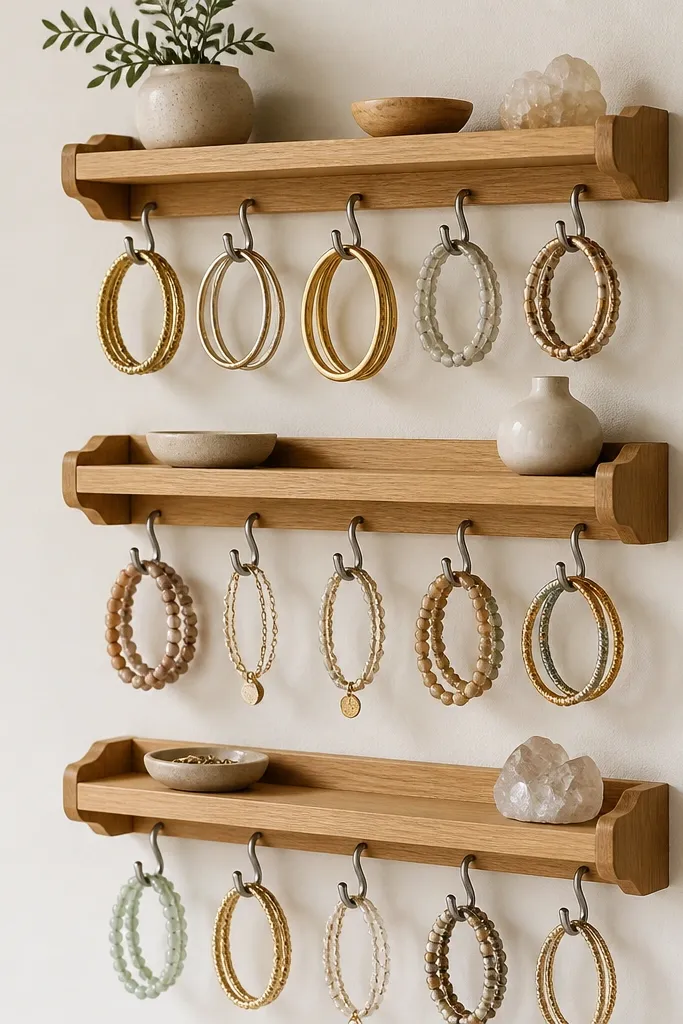
This layout makes bracelets visible without digging. The shelves create a rhythm, and cup hooks prevent bangles from sliding off like they do on flat hooks. Light oak keeps it warm and modern, while brushed nickel reads clean against skin. It’s a strong option if you wear multiple bracelet stacks and want them ready.
Mount three shelves with 8 inches between them. Install cup hooks under each shelf, leaving 2 inches between hook centers. Use a satin polyurethane topcoat on the wood so it wipes clean.
Hang one “daily stack” bracelet set on the middle shelf so you grab it without thinking.
Don’t space hooks too tight — bangles clink and scratch each other.
6. Peg rail with S-hooks for chain necklaces
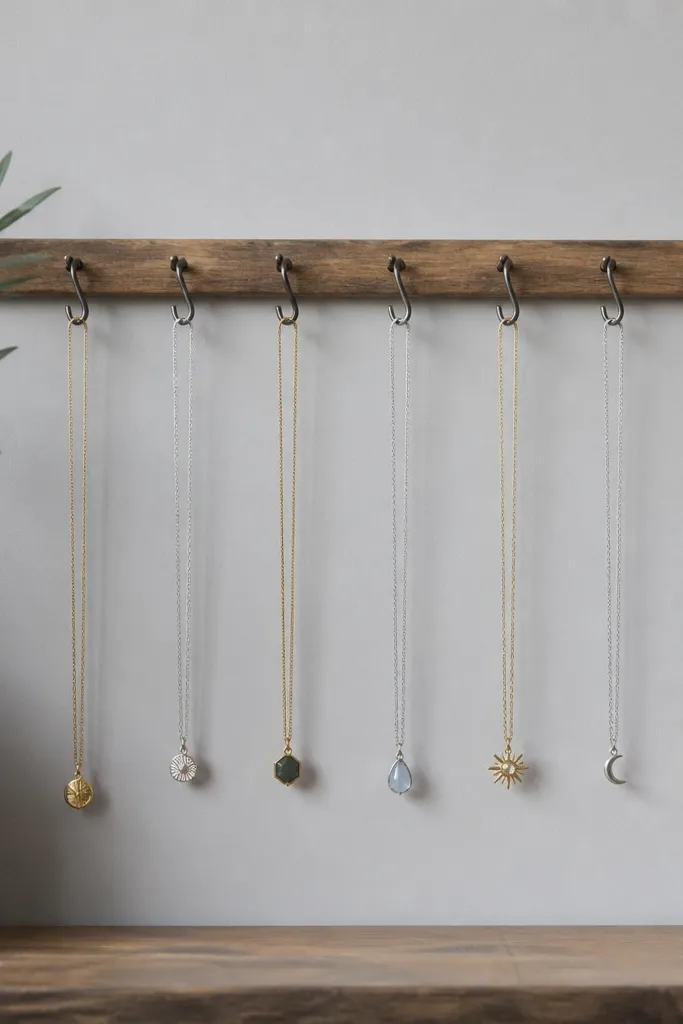
S-hooks let chains hang in a straight line, which stops the “one chain wraps another” problem. The rail keeps everything at a consistent height so it looks designed. I like this because it’s compact but still holds a surprising number of necklaces. The simple materials make it read modern, not DIY-chaotic.
Use a 1x4 board cut to 24 inches, sand smooth, and seal. Mark hook positions every 3 inches. Hang small chains by length: longer ones use the outer hooks; shorter ones use inner hooks.
Add a strip of felt behind the rail where chains touch so metal doesn’t scuff the wall.
Skip tiny hooks — chain links catch and pull, then everything ends up knotted.
7. Photo frame shadow box for stud pairs
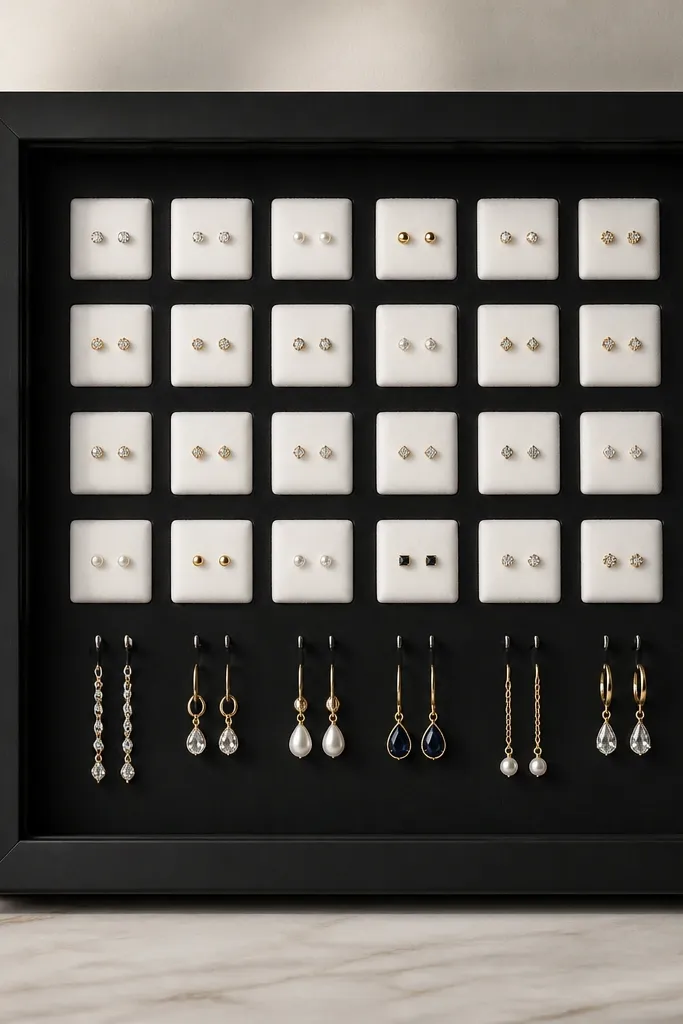
A shadow box makes studs look like wall art. The glass protects the jewelry from dust, and the black backing gives a modern contrast that makes stones and metals pop. Foam squares keep studs from sliding, so pairs stay in place. You also get a clean way to rotate seasonal earrings.
Use a 8x10 or 11x14 frame with deep backing. Cut foam to fit and glue it to the back, then poke holes for posts. Pin with small foam-safe needles or use short craft wire to secure backs. Keep the grid spacing tight: about 1.5 inches per stud pair.
Label the back of each foam square with a tiny paint pen number so you can re-pin quickly later.
Avoid bare foam without sealing — it stains from metal contact.
8. Magnetic strip board for metal earrings and pins
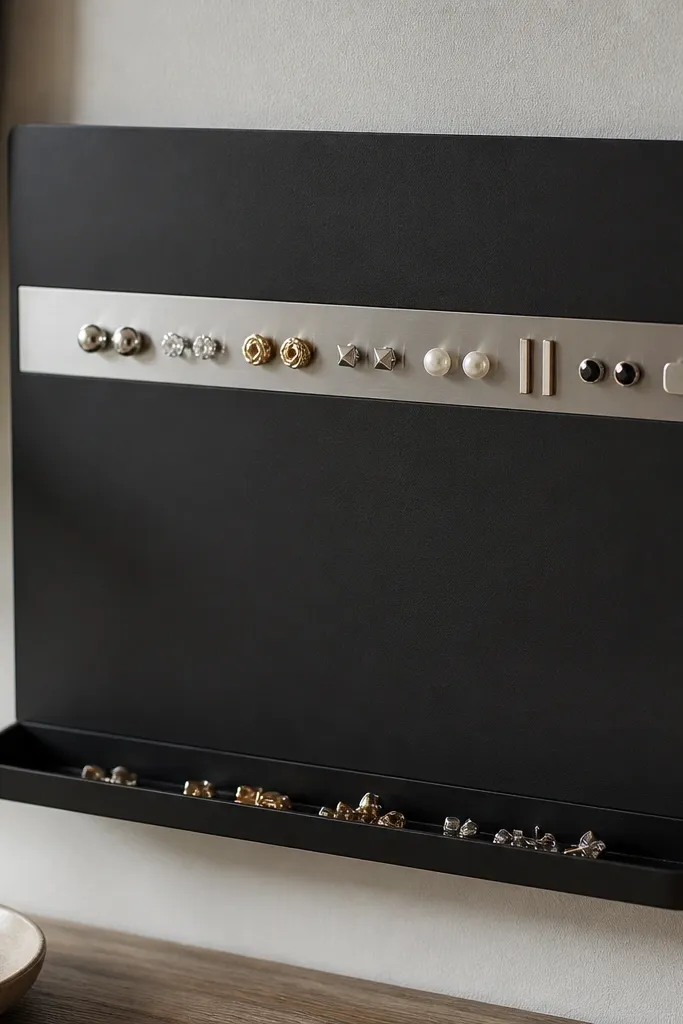
This is the fastest organizer I’ve used for metal pieces because you can reposition in seconds. Magnetic strips create a clean line and keep items visible instead of buried. The matte black board makes it look intentional, and it’s easy to wipe. It works best for earrings with metal backs that can magnetize securely.
Buy a magnetic sheet or strip and attach it to a board (plywood or MDF). Cover the board with matte paint or adhesive vinyl in black. Place pieces so weight hangs downward and doesn’t pull them off the strip.
For heavier earrings, add a tiny adhesive clear stopper under the strip to keep them from sliding down.
Don’t use a glossy board — reflections make the layout look messy.
9. Satin-finish ring stand on a ceramic base
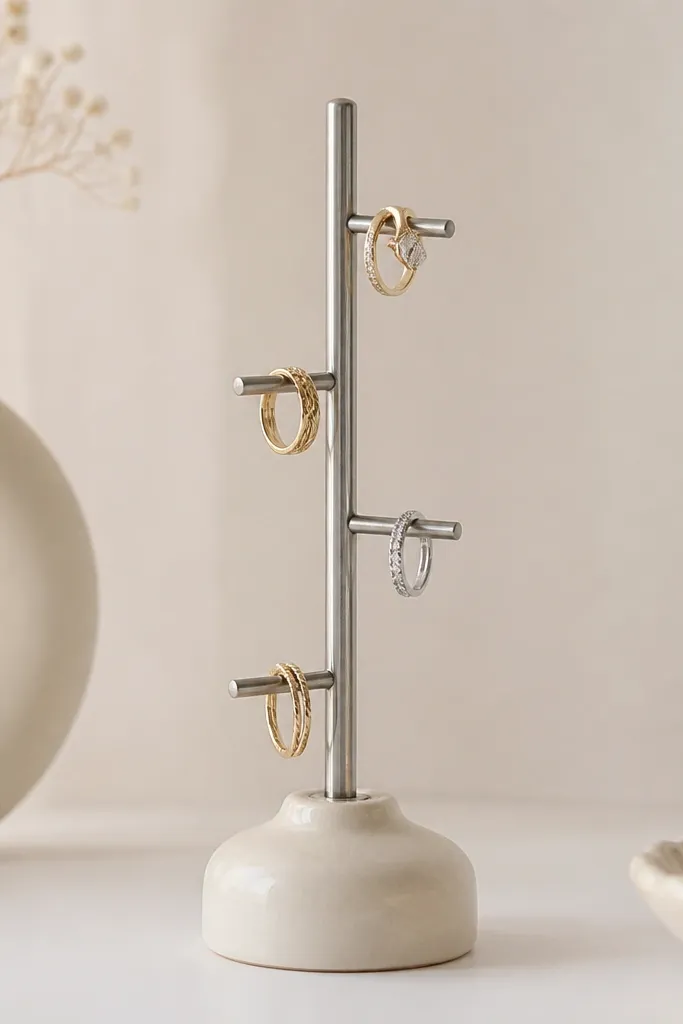
Use a small ceramic plant stand or candle holder and drill a hole if needed for the ring prongs. Install a multi-prong ring holder or build one with bent wire and epoxy. Keep heights spaced so rings don’t brush each other.
A ring stand makes rings look like they’re on display instead of stacked in a bowl. The ceramic base feels modern and stable, and the satin metal reduces glare compared to shiny chrome. This is best for daily rings and statement bands you don’t want tangled. It also keeps sizing consistent because each ring has a spot.
Skip thisSkip bare metal prongs that scratch — wrap wire with thin clear tape before finishing.
Editor's noteStore only rings you wear weekly on the stand; everything else goes in a tray drawer.
10. Wall-mounted toilet paper tube organizer for travel jewelry
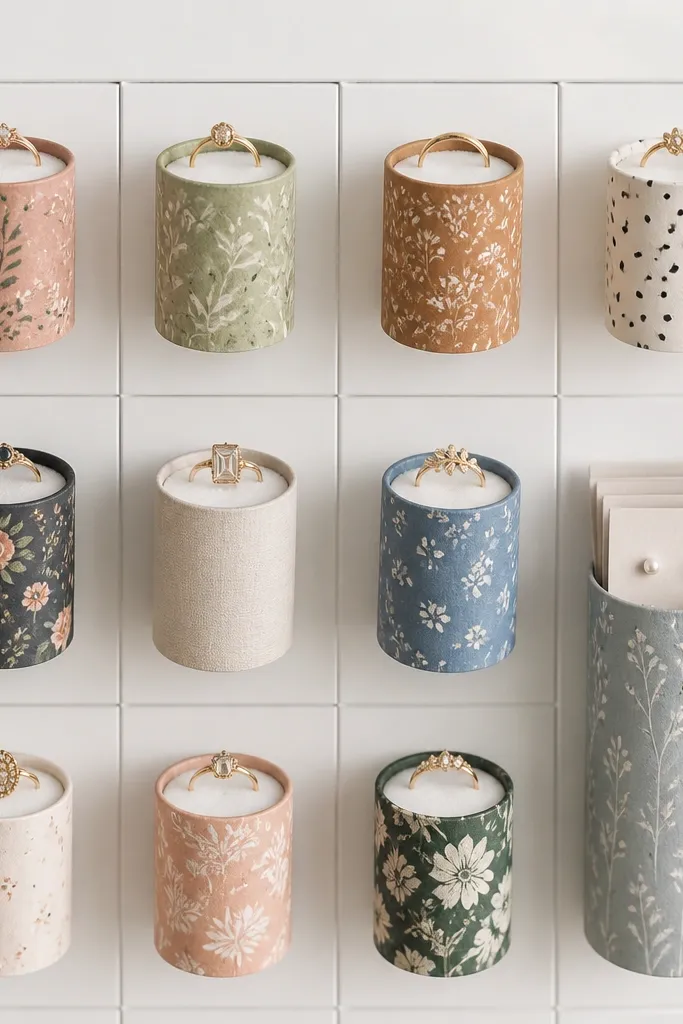
This is a practical modern idea for travel jewelry because tubes protect pieces from knocking around. The grid makes it look organized, not random storage. Foam inserts keep studs from falling through and protect finishes. It’s also cheap and easy to adjust if your travel kit changes.
Cut cardboard tubes into 3-4 inch sections. Wrap with paper or fabric and glue to a painted backing board. Add foam circles at the bottom for padding, then create separate tubes for rings, studs, and small charms.
Use a clear zip bag label on the back of each tube for quick packing lists.
Don’t leave tubes unlined — bare cardboard can snag earring posts and rough up finishes.
11. Hanging fabric organizer with clear vinyl pockets
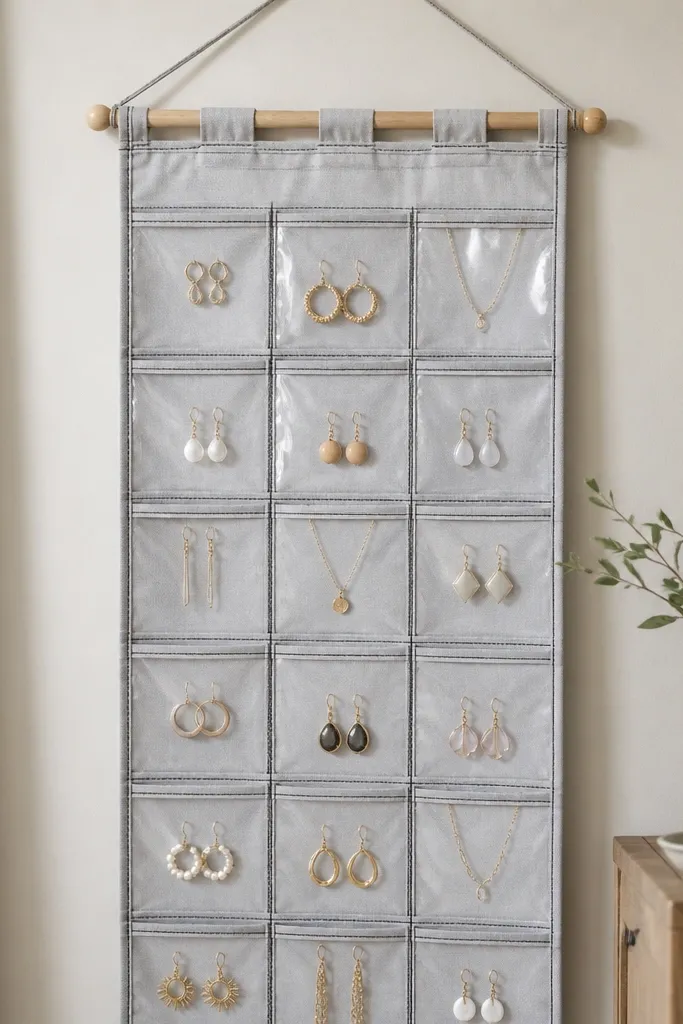
Clear vinyl pockets let you see pieces without opening anything, which keeps you from rummaging. The fabric backing looks softer than plastic organizers, but the vinyl makes it easy to wipe. This works great in closets where you want everything out of sight yet still visible. It’s a modern choice because the grid is uniform and the colors stay neutral.
Sew or glue fabric panels into a vertical organizer with pockets made from clear vinyl rectangles. Reinforce pocket edges with bias tape. Add 1-2 inches of spacing between pockets so chains don’t press together.
Use small binder clips to keep necklaces from slipping inside the pockets during hanging.
Avoid thick vinyl that warps in heat — it makes pocket edges look wavy.
12. Pegboard + clear lid bin shelf for mixed jewelry
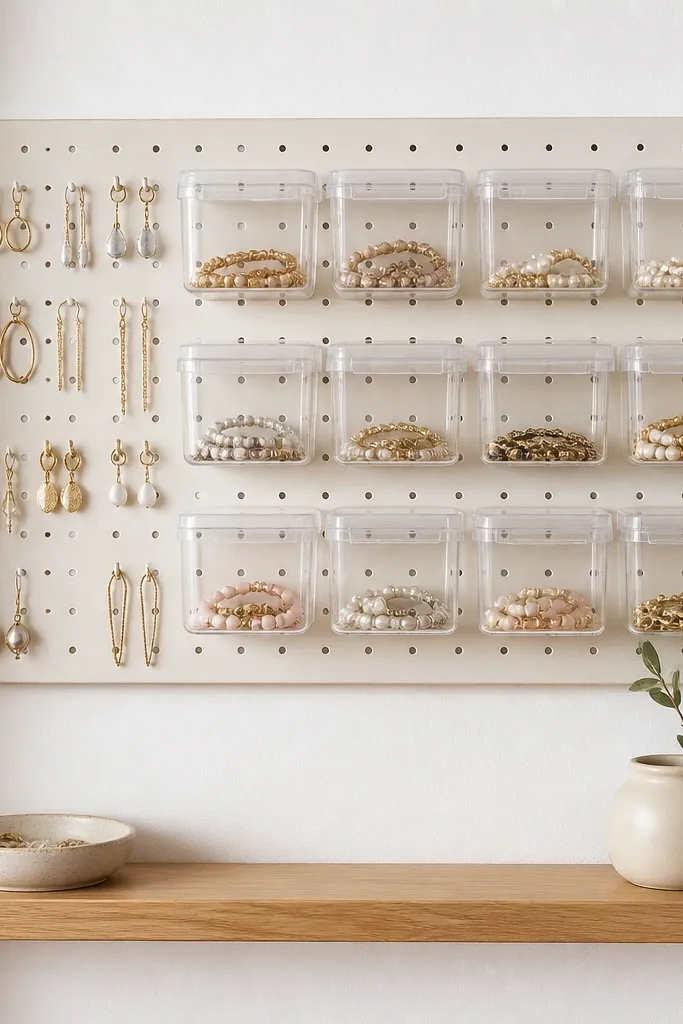
Clear bins make mixed jewelry manageable without losing visibility. The lids stop dust buildup on chains and keep clasps from catching. Pegboard gives you flexible anchor points for hooks and bins, so you can rearrange as your style changes. This is one of the best modern jewelry organizer ideas for people who own a little bit of everything.
Mount pegboard and attach clear bins using pegboard-compatible clips. Add hooks above for earrings and a small shelf for a brush or cleaning cloth. Keep bin sizes consistent so the wall looks orderly.
Label bins with small white stickers and black text, then place the labels on the bottom corner for a clean look.
Don’t overcrowd bins — cramped charms turn into a knot pile.
13. Brass ring catch bar with removable mini trays
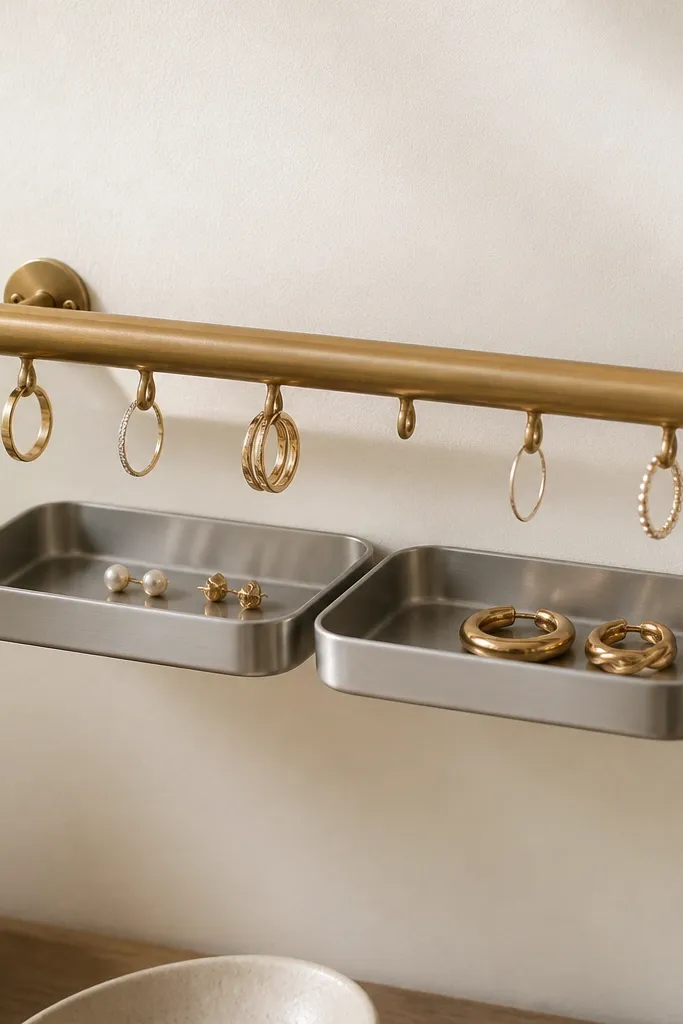
Brass catches rings cleanly and looks warm against neutral walls. The removable trays handle studs and tiny pieces so the bar stays uncluttered. I like the combo because it separates categories without needing a big cabinet. It reads modern because the bar and trays are minimal and aligned.
Use a brass-colored metal bar (or paint brass effect) and space ring loops every 2 inches. Make trays from thin metal or buy shallow aluminum trays and attach with small tabs. Finish with a clear protective coat to slow tarnish.
Wipe brass with a microfiber cloth right after wearing — it keeps that fresh look longer.
Skip bare loops without coating — rings can snag and leave scratches.
14. Desk organizer with modular felt blocks for earrings
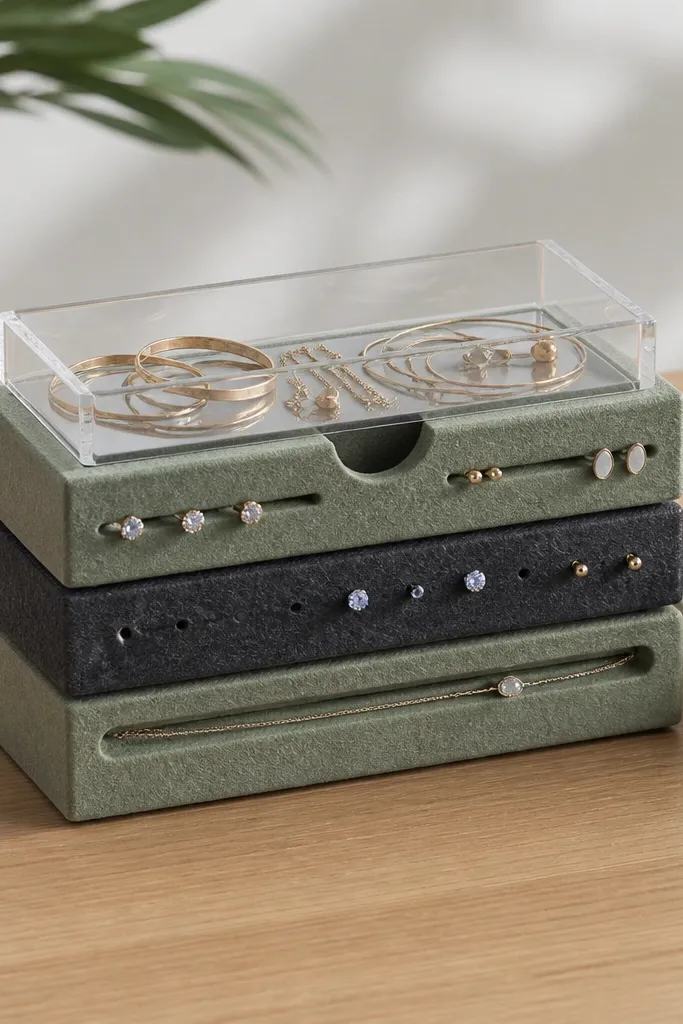
Felt blocks shape around your jewelry and keep it from sliding. The carved channels guide earrings and prevent pairs from mixing. Muted colors look modern, and the soft surface protects delicate finishes. This works best for jewelry you handle daily on your vanity.
Cut felt into uniform blocks (about 2x2x4 inches). Carve shallow channels for hoops and small holes for studs. Stack blocks on a base tray so the whole thing stays stable.
Use two blocks only for your top 10 pieces to keep the rest in a drawer.
Don’t use loose felt — it sheds and makes the organizer look worn fast.
15. Clear acrylic stud holder with color-matched backing
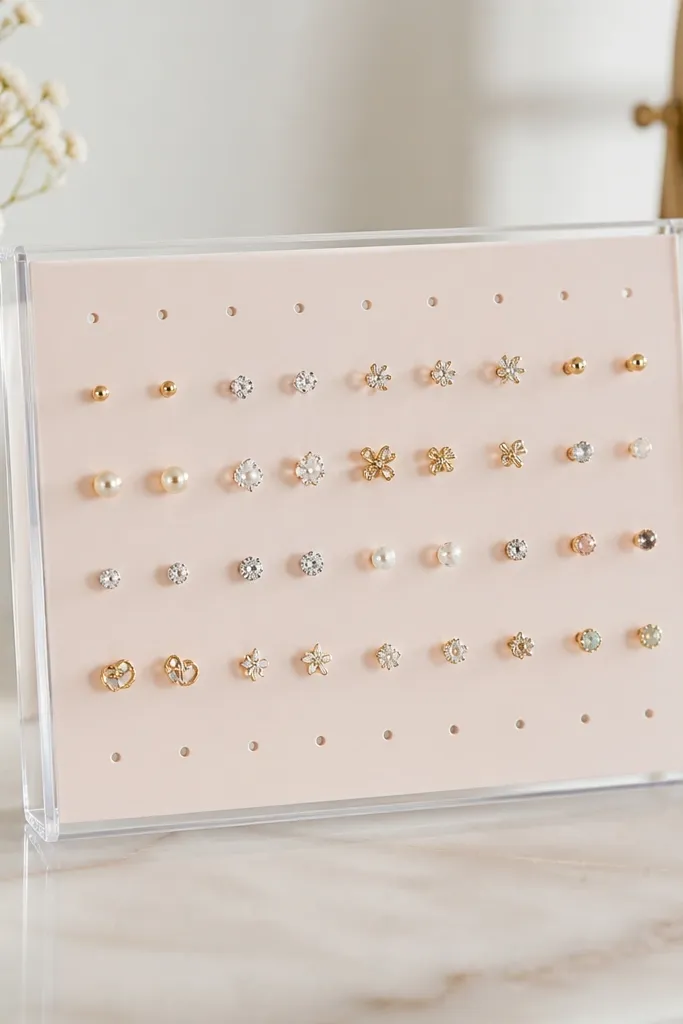
Buy or build a clear acrylic grid insert and place it over a backing sheet. Use a backing color that matches your jewelry tone: blush for gold, cool gray for silver. Keep hole sizes consistent with your stud posts (about 3-4 mm).
Clear acrylic plus a color-matched backing makes studs look neat and intentional. The grid spacing keeps posts from bending and makes it easy to spot matching pairs. Blush backing makes gold look warmer and silver look brighter. It’s modern because the design is minimal and the colors are controlled.
Skip thisAvoid mixed-color backings — they make the whole display look chaotic.
Editor's noteAdd a small piece of felt under the organizer so it doesn’t slide on your vanity.
16. Wood slat jewelry rack with clothespin clips
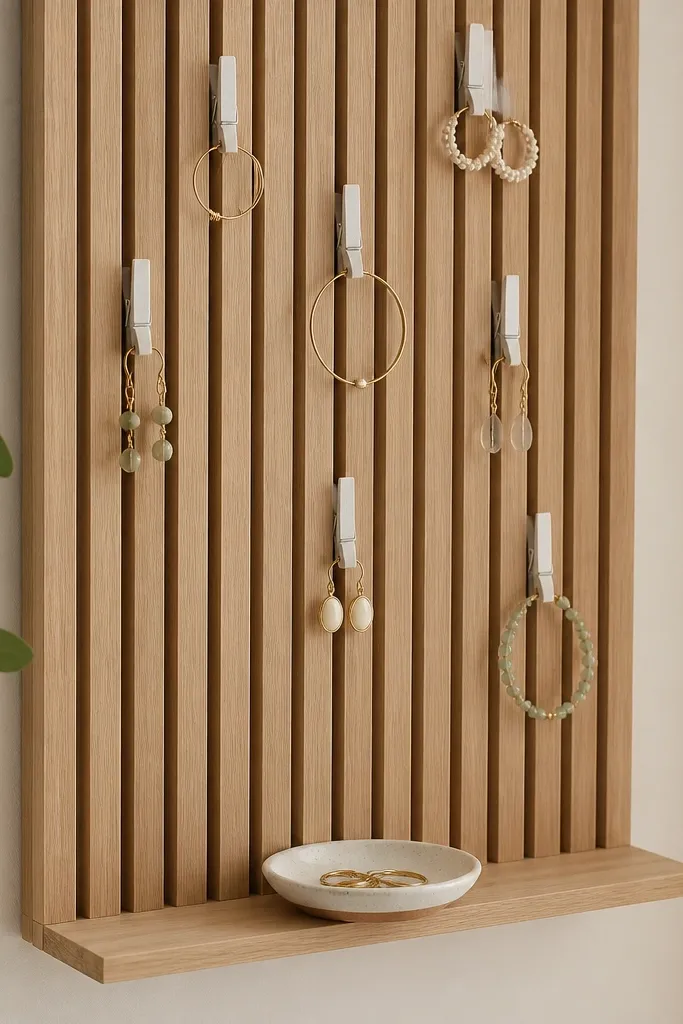
Mount 1x2 slats spaced about 3 inches apart. Paint slats and pins matte white. Clip earrings by the post or by a small chain loop, and keep heavier pieces on hooks instead.
Clothespin clips are surprisingly good for lightweight earrings and charm necklaces because they grip without punching metal. The slat structure makes it look like a modern display panel rather than a storage box. White pins keep it clean and bright. This setup is great for people who want visible pieces and quick swaps.
Skip thisDon’t clip heavy chains to clothespins — they stretch and slip.
Editor's notePaint a tiny dot next to each slat for left/right matching pairs.
17. Ceramic wall dish for earrings and a mini necklace hook
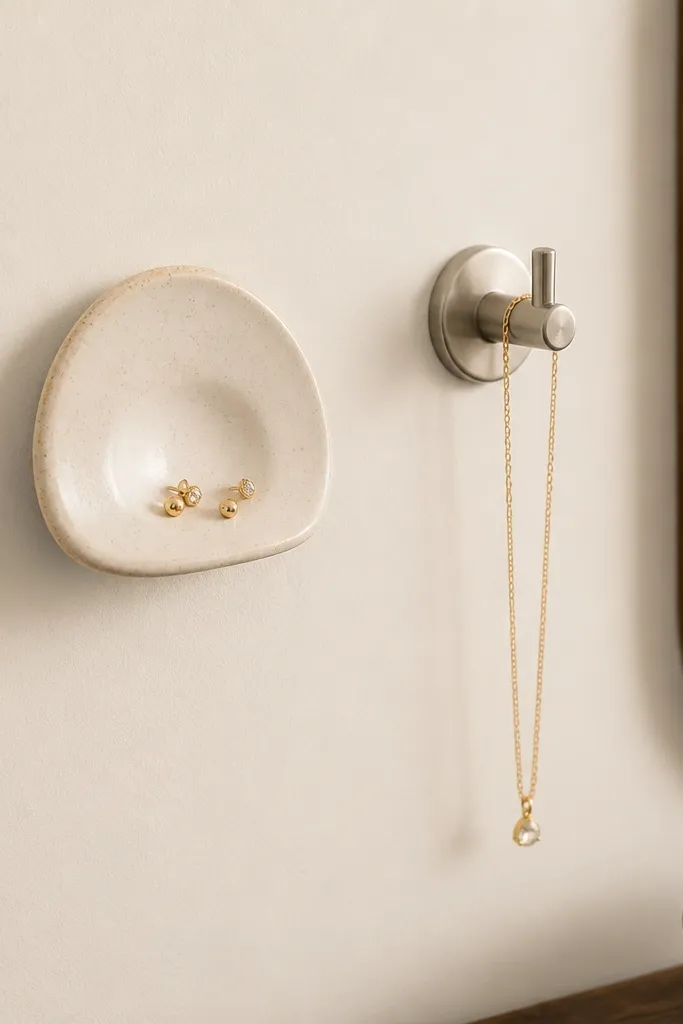
This is a minimal modern idea for tiny collections or daily wear. A ceramic dish holds studs without scatter, and the single hook keeps the matching necklace ready. The look is clean because there are only a few elements. It’s also easy to keep tidy since there’s nowhere for loose earrings to hide.
Mount the ceramic dish with small screws or strong adhesive rated for ceramics. Add one hook beside it at the same height as your collarbone. Keep the dish shallow and use it only for pieces you wear often.
Place a small folded cloth under the dish edge to catch any earring back that slips.
Avoid using this for dozens of earrings — it turns into a pile fast.
18. Stacked tin-can organizer with labeled fabric bands
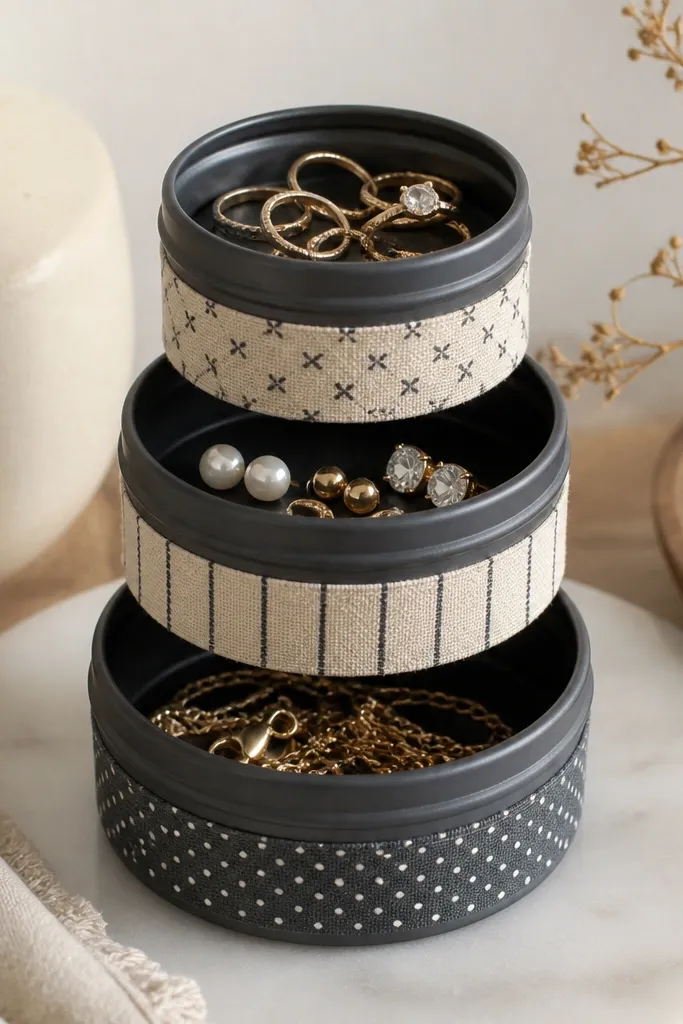
Tin cans give a modern industrial feel when you paint them matte. Fabric bands keep labels soft and readable without looking like office supplies. This is great for people who want a desk-ready organizer instead of a wall piece. It also separates tiny findings so you stop losing earring backs and jump rings.
Paint tins with matte spray paint in charcoal or deep gray. Glue fabric bands around the midsection and secure with a hot glue line at the back. Stack on a wooden base board and leave a small gap between cans for grab space.
Keep one can only for “repair parts” like clasp extenders and spare backs.
Skip shiny paint — it shows scratches and fingerprints.
19. Turntable ring display with hidden lid storage
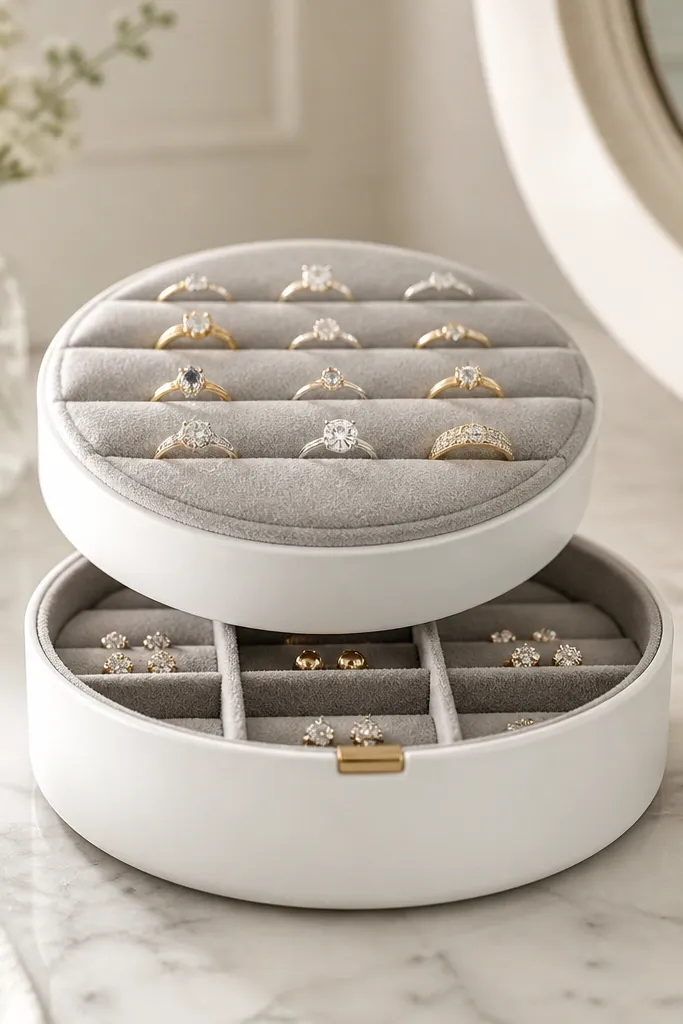
A turntable makes rings feel curated because you spin to pick instead of digging. The lid storage keeps small items from cluttering your surface. Light gray felt protects finishes and looks modern. This is one of my favorite ideas for people who hate taking everything out to find one ring.
Use a lazy Susan or small rotating tray as the base. Cover the top with felt and glue small ring risers or foam pedestals. Build a hinged lid storage below using a shallow box insert and keep compartments sized for stud cards or ring rolls.
Mark the edge of the turntable with a tiny arrow so you always return it to the same starting position.
Avoid slippery felt — use a thin layer of non-slip shelf liner under the felt.
20. Magnetic curtain rod for necklaces behind a door
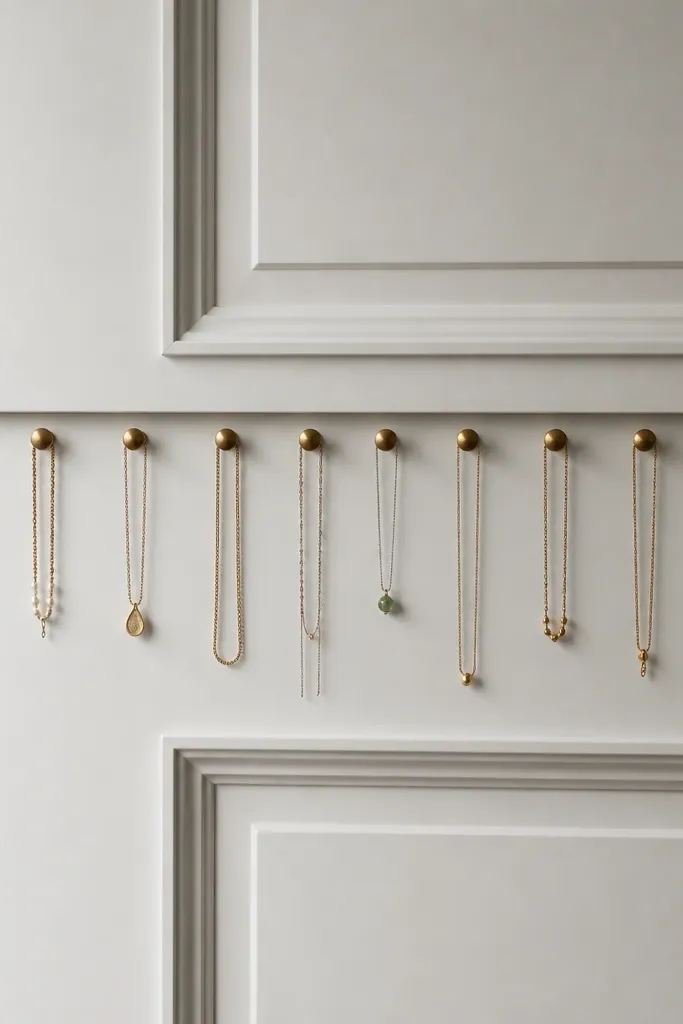
Behind-the-door storage keeps jewelry out of sight but easy to grab. Magnetic clips hold necklaces gently and let you adjust spacing without drilling. Even spacing keeps chains from wrapping around each other. It’s modern because the line looks tidy and the hardware is minimal.
Use a magnetic rod system or magnetic strip kit designed for hanging light items. Attach small clips every 2.5-3 inches along the rod. Hang chains by length and keep long pieces on the ends.
Add a small hook on the inside door edge for earrings you’re wearing today.
Don’t use heavy chains on weak magnets — they pull down and tangle.
21. Wall-mounted yarn organizer for earrings and bracelets
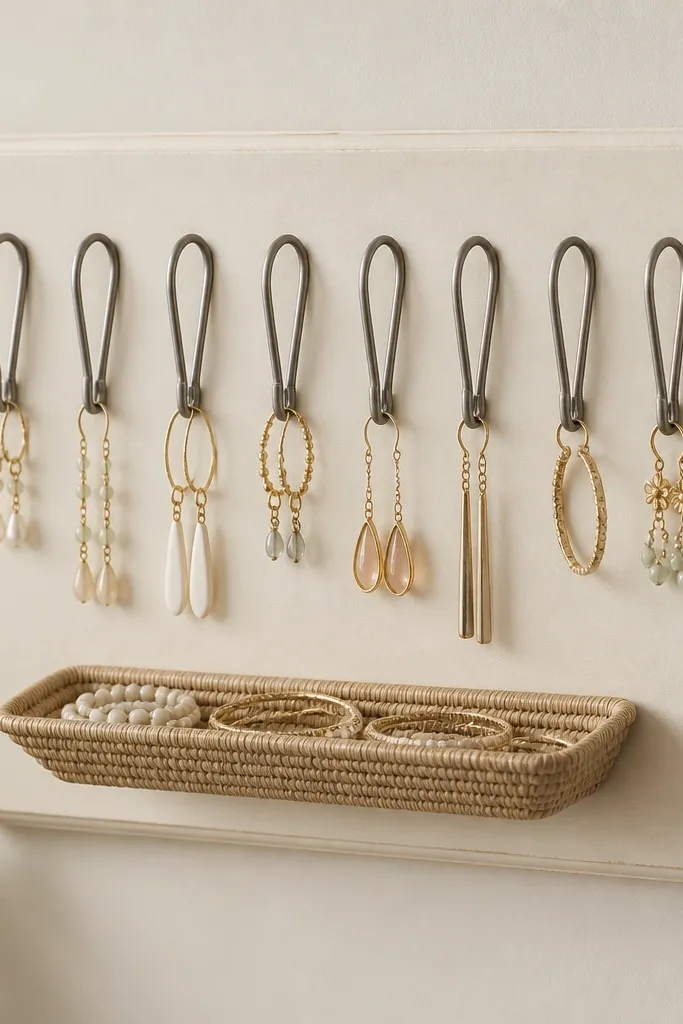
Mount a board and attach yarn guides with screws. Space guides 3 inches apart for chain separation. Use a small basket below for loose studs and earring backs.
Yarn guides are smooth and rounded, which means they don’t snag chain links like sharp hooks do. The large openings make it easy to slide jewelry on and off. This creates a modern, industrial look when you keep the board neutral. It’s also great for bracelets that need a little hang space to avoid kinks.
Skip thisSkip rough hardware — sharp edges chew up delicate finishes.
Editor's noteThread a thin piece of clear elastic behind each guide to stop tiny charms from slipping out.
22. Foldable tri-panel jewelry organizer with clear top pockets
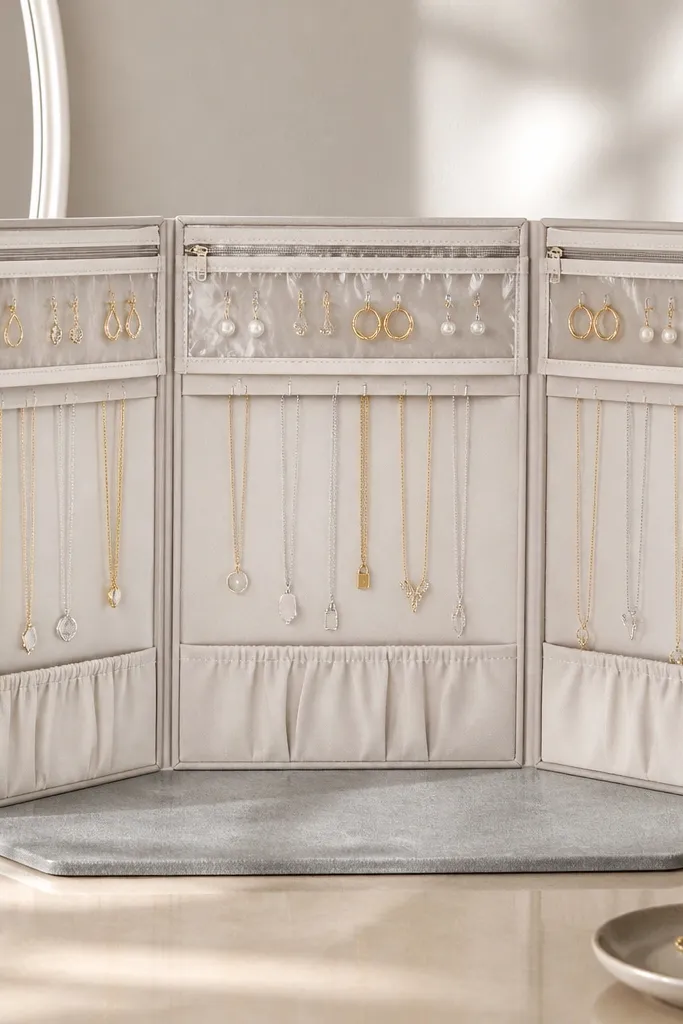
Build three panels with lightweight foam board. Cover with fabric and attach clear vinyl pockets using stitched edges. Add hooks on the upper portion for necklaces, and keep pocket sizes consistent (about 2x3 inches for studs).
Tri-panels let you see everything without wall mounting. Clear pockets keep studs visible, and the folding design makes it easy to pack or store. I like it for people who change their jewelry based on outfits, because you can rotate what faces you. The modern look comes from uniform compartments and neutral fabric.
Skip thisAvoid pocket sizes that are too big — jewelry shifts and the display looks sloppy.
Editor's noteStore heavy bracelets on the back panels, light earrings on the front pockets.
23. Stainless steel wire grid with pegboard feet
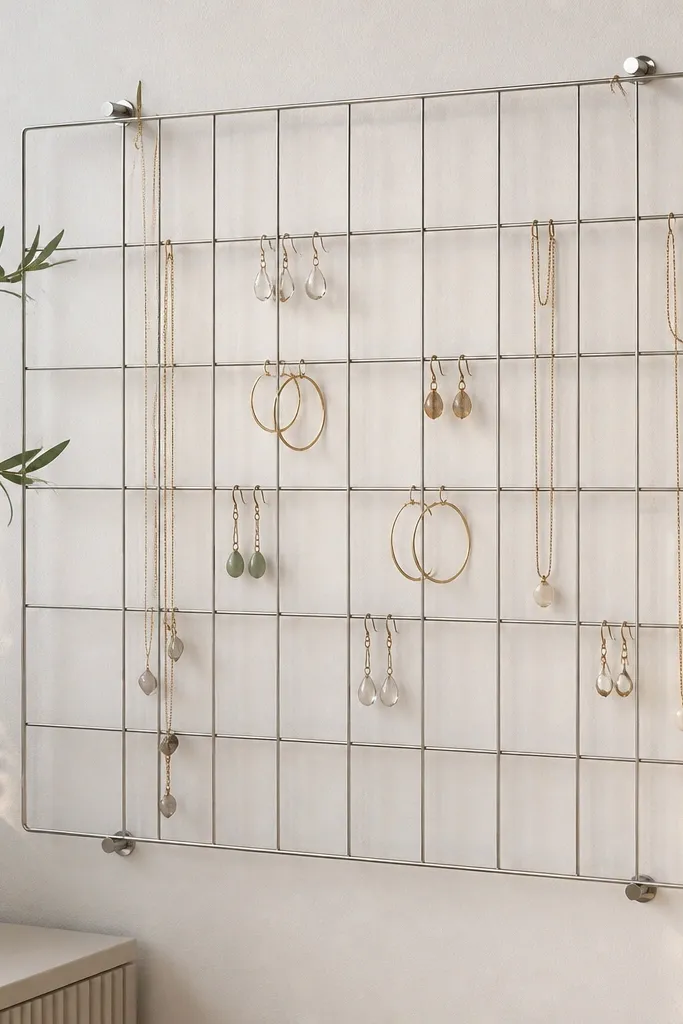
Wire grids look modern because you see the jewelry and the storage at the same time. The open structure reduces dust buildup and makes the setup feel light. It’s also easy to move pieces around quickly. I use this when I want a “floating” look for hoops and lightweight chains.
Buy a stainless wire grid panel and mount it with spacers so it sits off the wall. Add thicker wire bars for necklace drape and small loop hooks for earrings. Keep the spacing even so pairs align visually.
Use small zip ties under the grid to secure any sharp wire ends so nothing pokes you.
Don’t leave the grid uncoated if it’s sharp — it will scratch your jewelry.
24. Wall-mounted ring dish set with matching catch trays
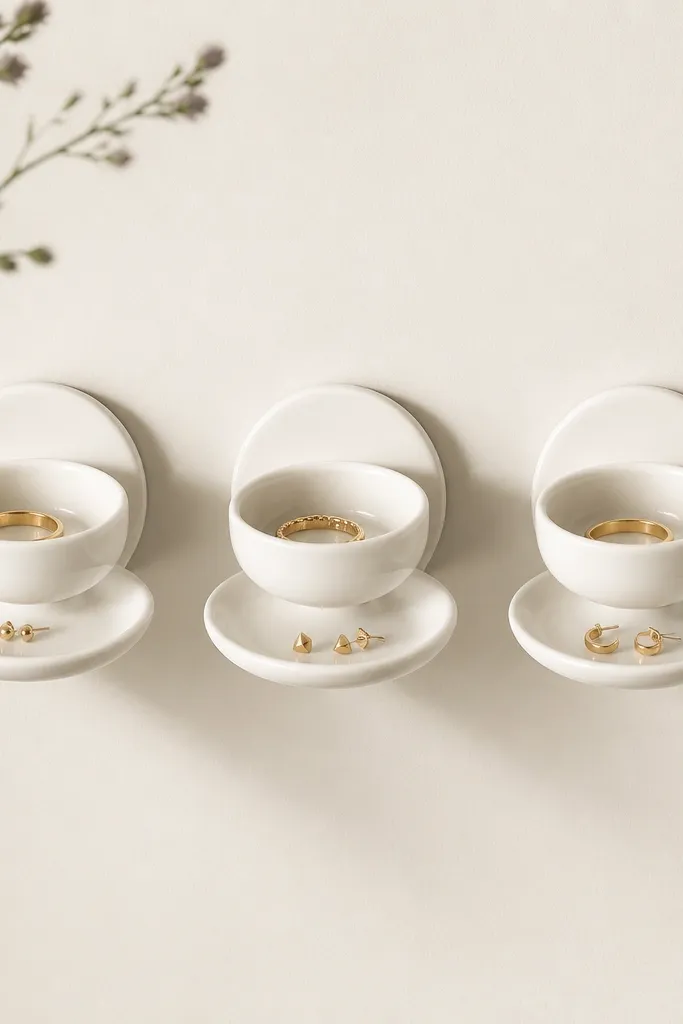
Ceramic dishes create a clean, intentional look because they have a defined shape. The matching trays catch earring backs and keep small pieces from falling. This setup works for people who wear multiple ring sets and want them sorted by day or outfit. It reads modern because the items are minimal and aligned.
Mount dishes at 60-66 inches height so you reach them easily. Use the same dish size for a uniform look. Add a shallow tray under each dish and keep each section for one category: rings, studs, and daily favorites.
Add a tiny strip of felt to the bottom of each tray to reduce sliding.
Avoid mixing dish colors — mismatched ceramics look like leftover thrift items.
25. Pegboard + elastic cord earring organizer for dangles
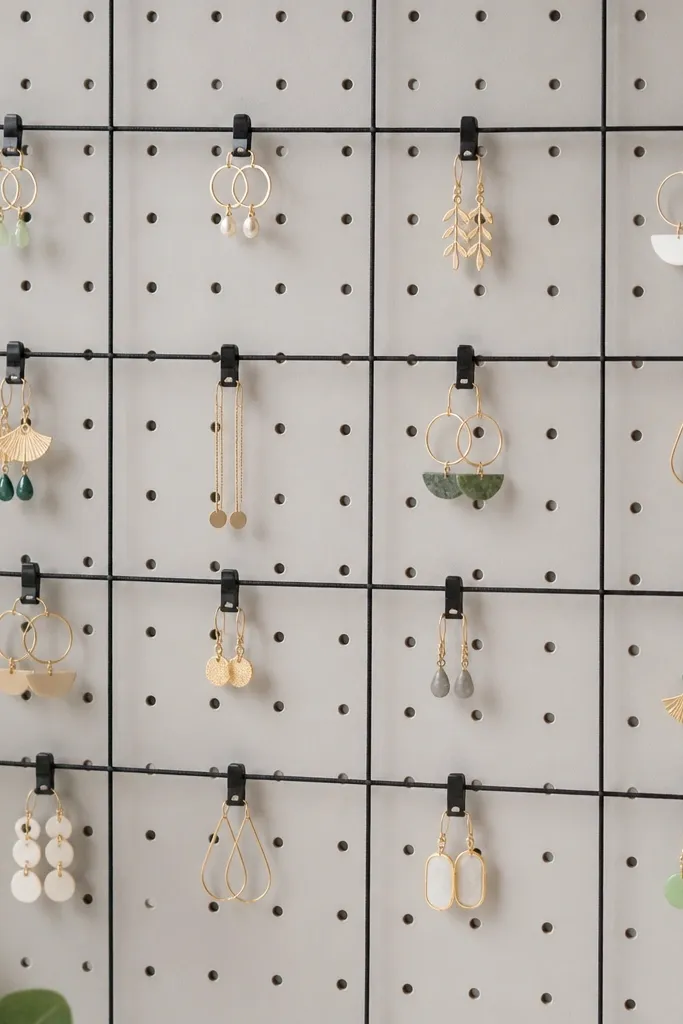
Stretch elastic cord between pegboard hooks in a grid pattern. Attach small mini clips or wire loops to hold earring posts. Keep cord tension firm enough that earrings hang straight, not drooping.
Elastic cords hold dangles without letting them twist into knots. The cords also prevent the heavy part from pulling the hook too far down. Black cords on a light board look modern and graphic. This is the organizer I reach for when my dangle earrings always end up braided together in a box.
Skip thisDon’t use stretchy cord that slackens — it leads to tangles again.
Editor's noteGroup dangles by length and use one row per length band.
26. Wooden slat + small glass knobs for necklaces
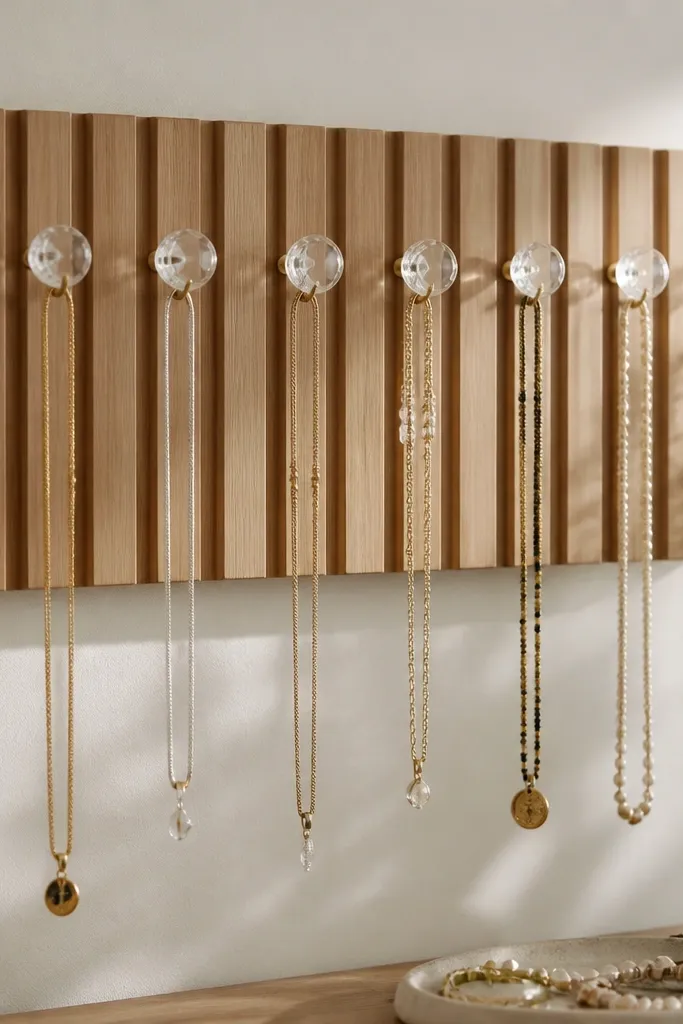
Mount a slat board and install small glass knobs with a screw-through base. Under each knob, add a small hook or eye screw for the necklace. Use satin wood finish so the glass feels the star.
Glass knobs add a clean sparkle without going overboard. The slat board keeps everything aligned, and the knobs make the jewelry look like it’s part of a display. This works best for necklaces that hang well from hooks and don’t need a stand. The light-catching knobs make the organizer feel more like decor than storage.
Skip thisAvoid mismatched knob sizes — it makes the spacing look accidental.
Editor's noteKeep knob colors consistent — clear glass with silver hardware looks best.
27. Modular magnetic ring tiles with removable labels
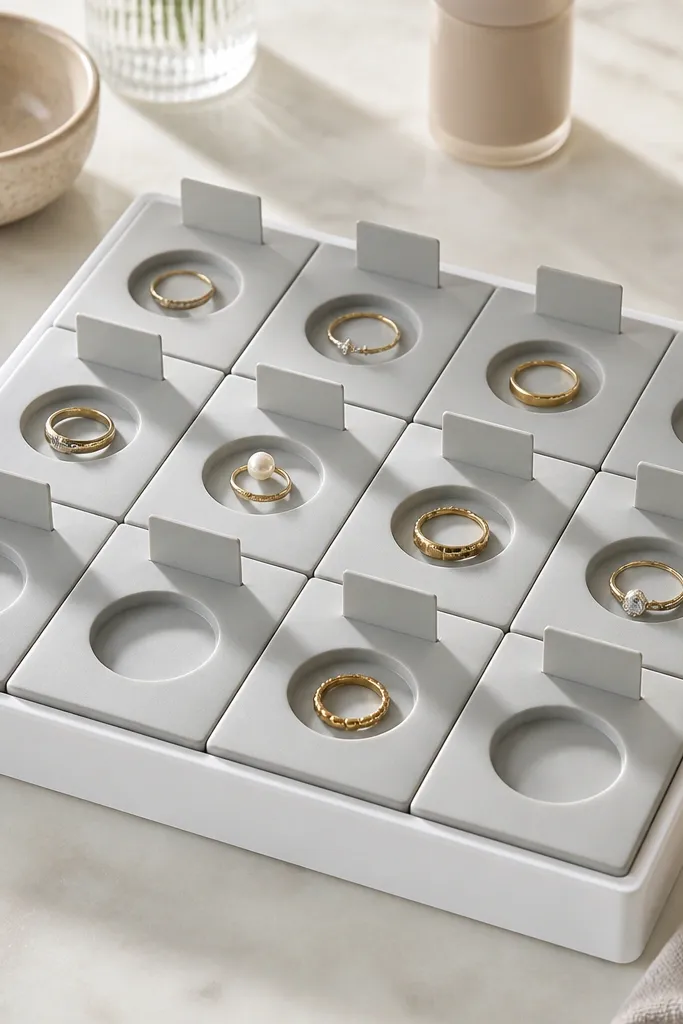
Use small metal-backed tiles with shallow recesses made from epoxy or resin. Glue magnets to the back and place tiles on a magnetic sheet base. Add label flags with a clip so you can swap them without redoing everything.
Ring tiles keep rings separated in a grid, which stops scratching. Magnetic tiles let you rearrange when you add new pieces, and removable labels keep you from guessing. The matte base keeps the look modern and calm. This is great for people who like to see rings spread out instead of stacked.
Skip thisSkip deep recesses — rings sink and you lose the visual shape.
Editor's noteUse one tile size for daily rings and another for statement pieces so your layout stays consistent.
28. Necklace braid stand made from dowels and cork
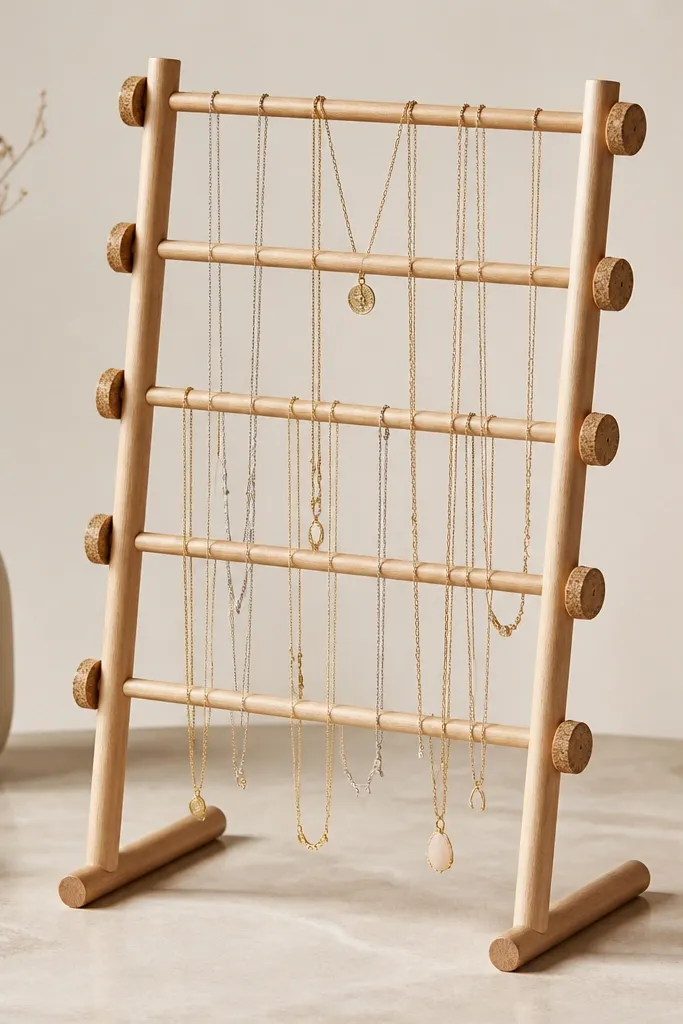
Dowel stands give you a sculptural modern look, and cork pads protect chain links from rubbing. The cork also grips the chain just enough to prevent sliding. I like this for longer necklaces because it keeps them separated into channels like a braid. It’s also easy to keep clean since it’s not fabric-lined.
Build a back frame with two vertical dowels and attach 3-5 horizontal dowels. Glue cork strips at the top of each horizontal dowel so chains rest on soft material. Sand everything smooth and seal with matte varnish.
Hang necklaces by clasp type — lobster claws go on one side, magnetic clasps on the other so you grab the right one quickly.
Avoid bare wood contact — chain links can scuff and dull.
29. Countertop catch tray with compartmented resin inserts
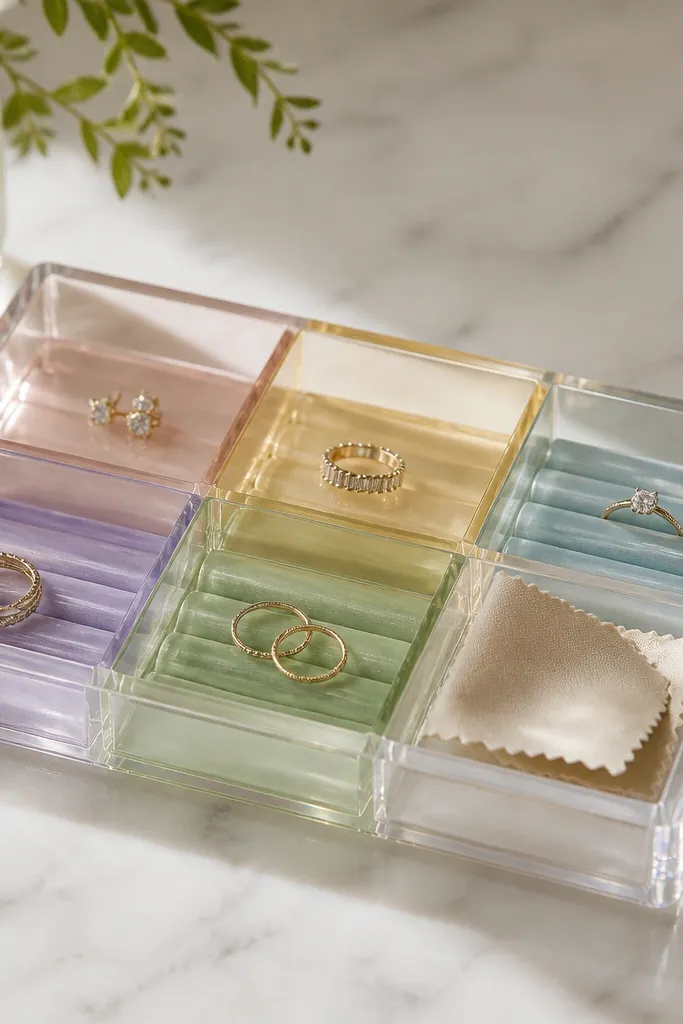
Resin inserts look modern because they’re smooth and uniform, and the tinted compartments help you sort at a glance. The raised ridges keep rings from sliding into each other. I like this for vanity setups because it prevents loose jewelry from migrating across the counter. The clear outer tray also keeps the look light and clean.
Use a clear acrylic tray or build a shallow box and line it. Pour small resin blocks tinted with mica or pigment into compartments, leaving a top lip for grip. After curing, clean the surface with isopropyl alcohol so it looks crystal clear.
Pick one tint for gold jewelry and one tint for silver so sorting stays fast.
Don’t overfill resin — bubbles and overflow make it look messy.
30. Closet rod necklace hanger with grid clips
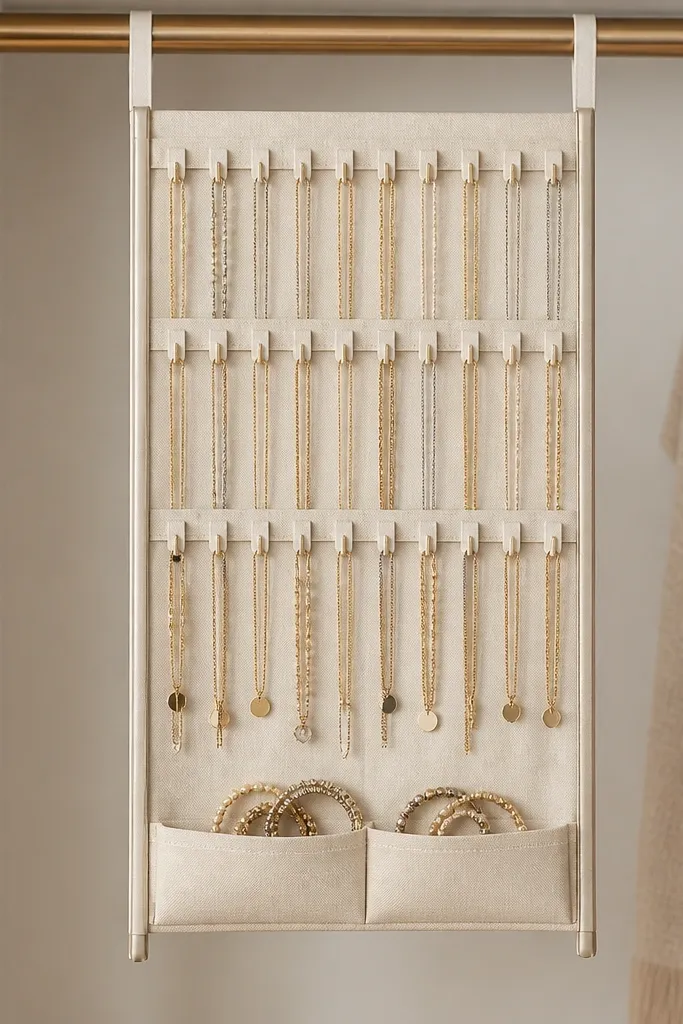
Use a closet rod clip system or build a frame from thin wood with clips at the top. Add small plastic or metal clips in a grid with about 2.5 inches between columns. Add bottom pockets for bracelets using fabric or clear vinyl.
This is modern and practical because it uses vertical closet space without a wall mount. The clip grid keeps chains separated and makes it easy to flip the organizer to access the back. I like it when I have renters or apartments where drilling is a no-go. The grid makes it look intentional, not like a random hanger.
Skip thisSkip clips that pinch chain links — you’ll end up with dents and tangles.
Editor's noteKeep one row reserved for “currently wearing” necklaces so you don’t move the whole organizer daily.