
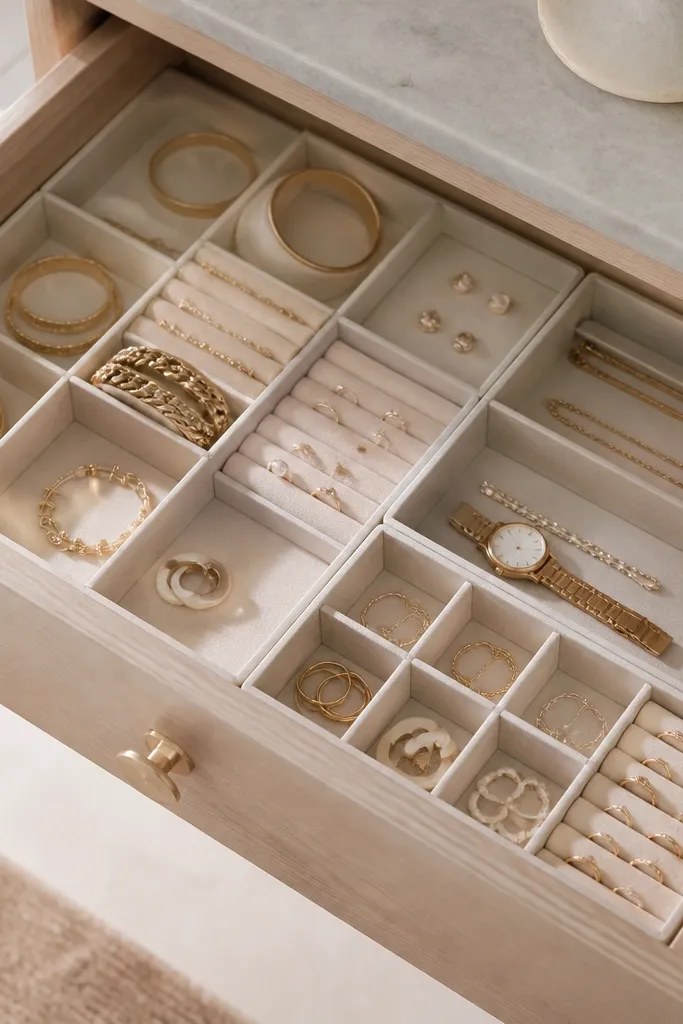
1. Felt Earring Strip with Two-Row Pin Holes
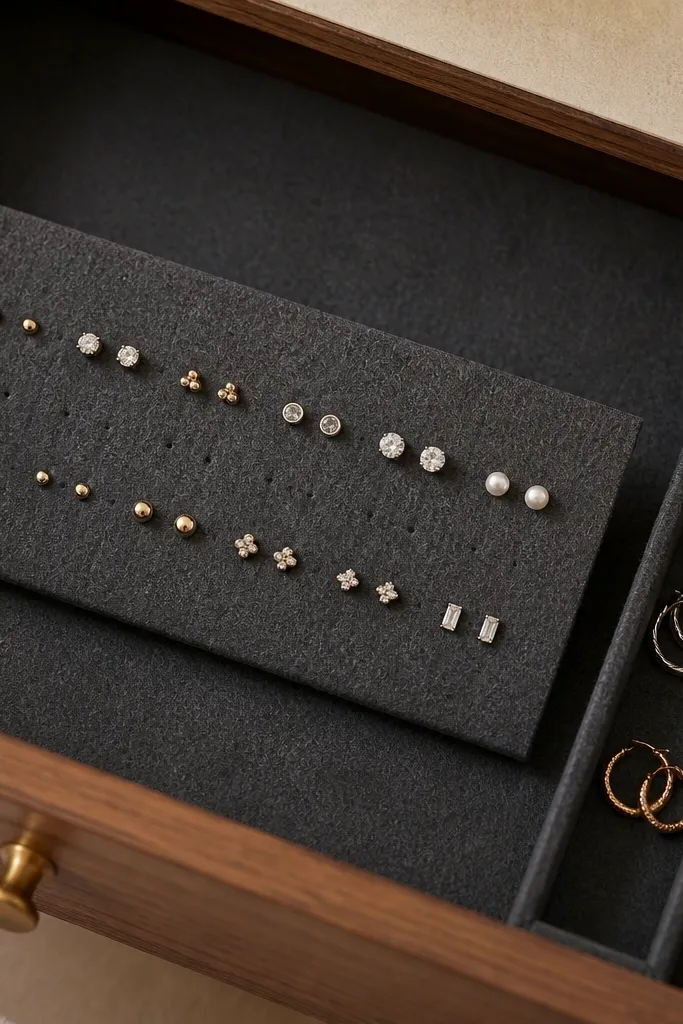
This works because stud earrings need a stable “post nest” that stops them from popping out when you open the drawer. Felt grips lightly, so silver posts don’t slide around, and the dark color hides smudges. The two rows let you separate left and right pairs without extra labels taking up space. It looks tidy because every stud sits at the same height.
Cut a strip of felt to the drawer’s width minus 1/4 inch on each side for a snug fit. Mark two rows with a ruler — I use 1 inch spacing between holes and 3/8 inch between rows. Use a leather punch or the tip of a soldering iron on low heat to make clean holes. Add a 1-inch wide folded felt strip on one side for hoops.
Write tiny codes on painter’s tape and stick them to the back of the drawer so you remember which row holds which type.
Avoid punching holes too big — loose posts fall out and the whole insert looks sloppy.
2. Clear Acrylic Cup Tray for Studs
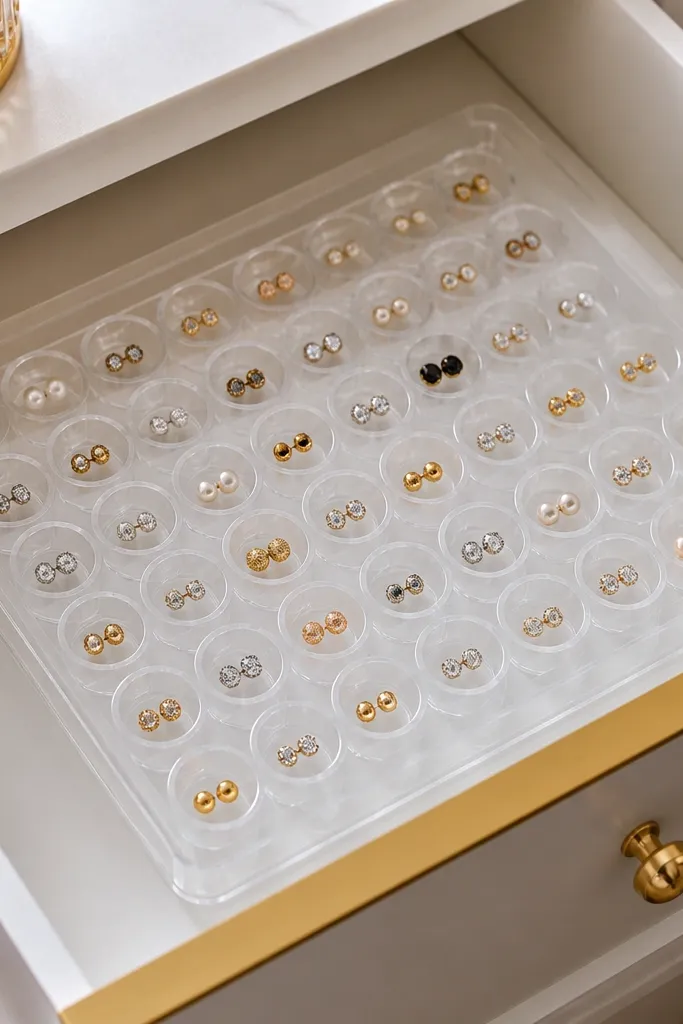
If you hate digging for matching studs, cup wells make the match instant. Acrylic looks crisp and keeps everything visible, so you don’t forget you own the piece. The rounded cup shape prevents earrings from tipping over. It also protects the earring backs because they sit in a small recess instead of loose on fabric.
Buy a small compartment tray made for craft beads, or make one by hot-gluing mini clear dome pieces into a shallow base. Keep cup diameter around 1/2 inch for small studs and 3/4 inch for larger ones. Line the drawer with a thin matte liner so acrylic doesn’t slide when you pull the drawer.
Add a piece of felt under the tray — just 1/8 inch — so cups don’t clack against the drawer bottom.
Skip glossy drawer liners under acrylic — glare makes the studs harder to spot.
3. Cork Sheet Ring Channels
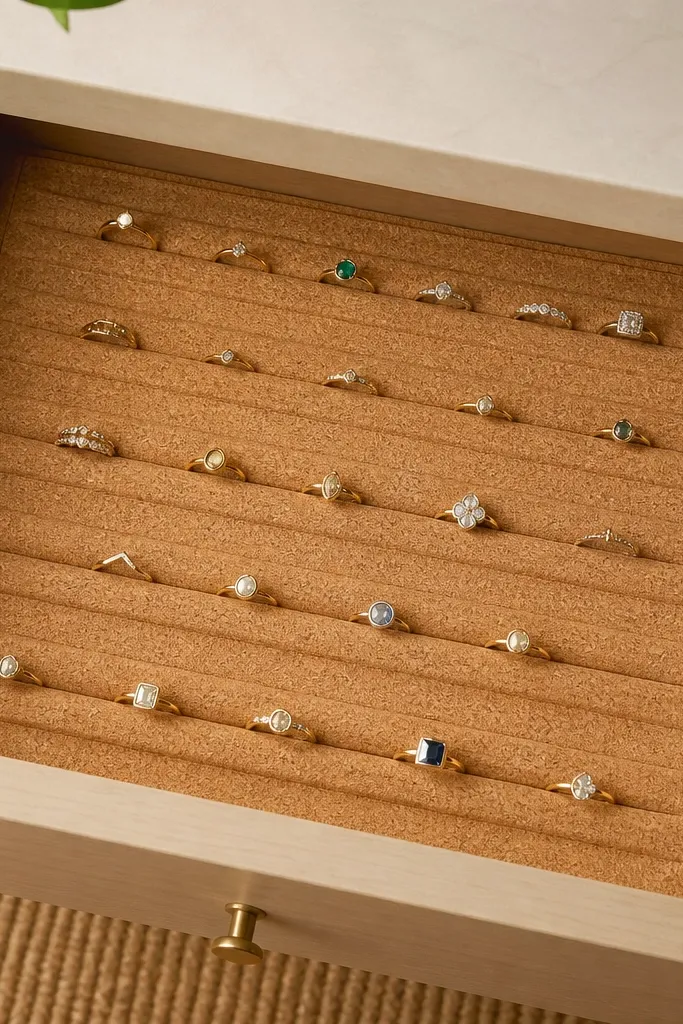
Cork is my go-to for rings because it grips without scratching like bare wood can. Carved channels stop rings from rotating, so you can grab the right one quickly. The warm tone also makes the drawer feel nicer than plain plastic bins. It’s forgiving — if you carve a channel slightly off, you can adjust with a sandpaper block.
Cut cork to the drawer footprint with a 1/4 inch clearance from each wall. Seal it with two thin coats of matte polyurethane so tarnish doesn’t soak in. Use a craft knife to carve U channels about 1/2 inch wide and 1/4 inch deep for most bands. Leave at least 3/4 inch between channels so thicker rings don’t bump.
Editor's notePut your widest rings in the outer row so the channels fit without crowding.
Skip thisDon’t skip sealing — raw cork stains from metal and looks aged fast.
4. Necklace Guard Bar with Soft Strap Holders
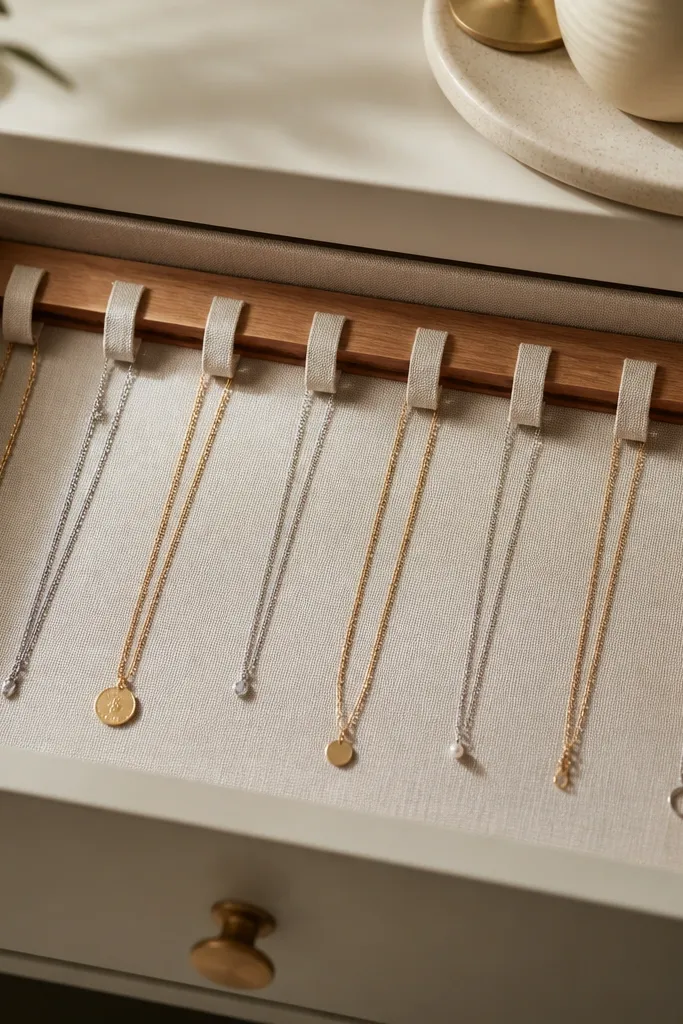
Necklaces tangle because gravity lets them twist and wrap around each other. A back bar plus strap holders stops the chain from turning — it stays in a controlled line. Soft loops protect clasps and prevent snagging. You can see each necklace’s length at a glance because the chain lies along a clear path.
Use a thin wooden dowel or a 1x2 strip of sealed wood, mounted with two small adhesive pads. Make strap holders from 1-inch wide cotton ribbon folded into loops, stitched or glued at the back. Space loops 2 to 3 inches apart for thin chains, closer (1.5 to 2 inches) for chunky pieces. Keep the bar height about 1.25 inches above the drawer bottom for easy grab.
Clip a small paper label to the ribbon loop with a binder clip so you remember which necklace is which.
Avoid rubber bands or bare elastic — they stretch and grab metal in a way that tangles chains later.
5. Stacked Mini Trays with Color-Lined Categories
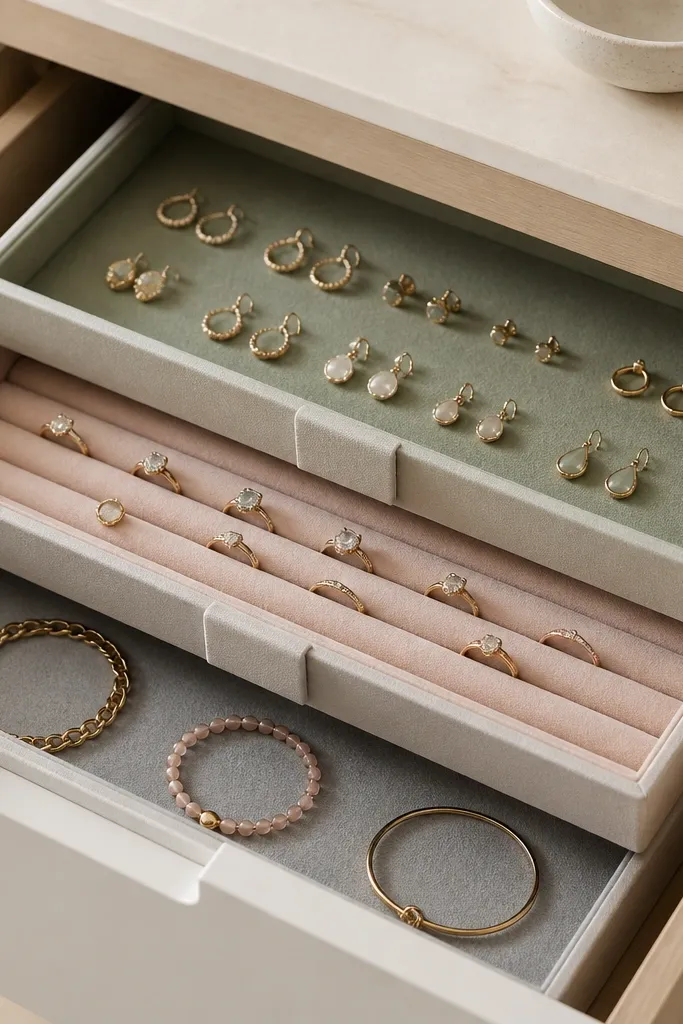
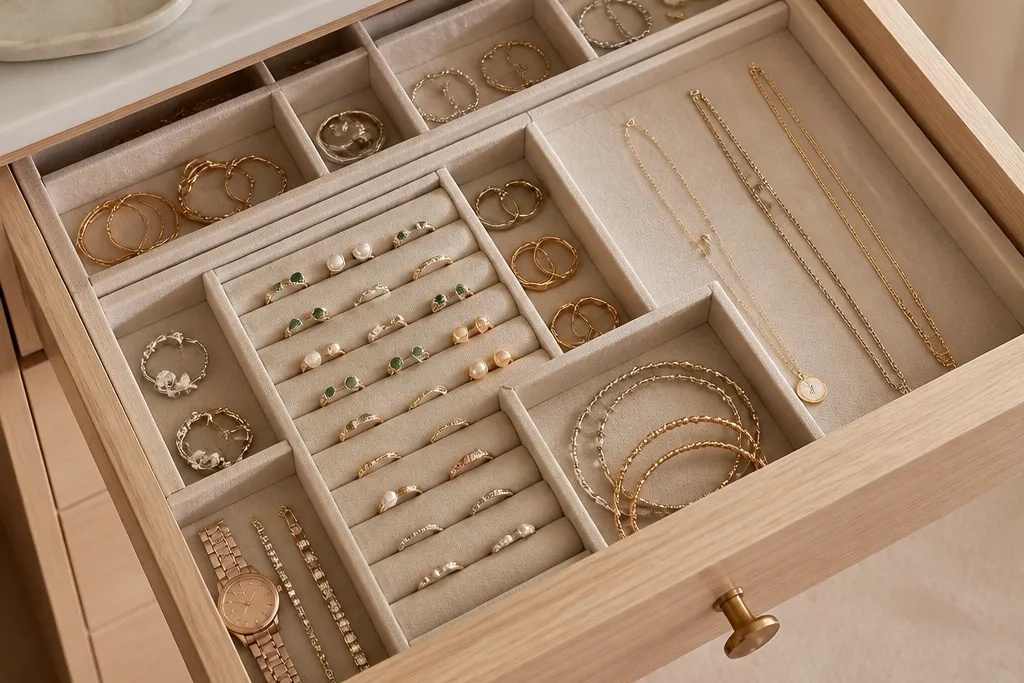
Stacking gives you vertical control, especially in deeper drawers. Color-lined categories make the system intuitive even when you’re rushing. The trays keep pieces from mixing when you pull the drawer, so your “set” stays intact. It also looks clean because each tray creates a visible boundary.
Use three shallow organizer trays with flat bottoms, about 10 to 12 inches long. Cut liners from thin felt or craft foam — 1/4 inch — and glue them so they don’t wrinkle. Add 1-inch tall tabs from cardstock covered in clear contact paper. Place earrings and rings on top where you grab most, put bracelets on the bottom tray.
Editor's noteUse the same color for the same category in every drawer so your brain learns the pattern.
Skip thisDon’t use thick fabric liners that lift the tray — they shift and the drawer looks uneven.
6. Shoe-Organizer Grid Insert for Mixed Earrings
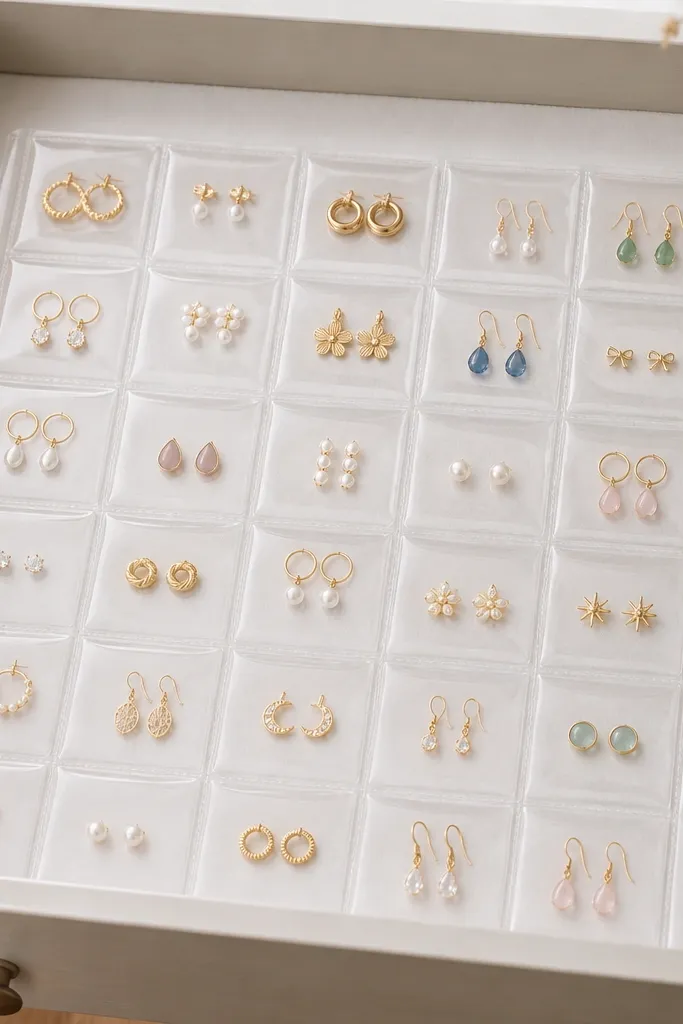
Small pockets stop the chaos of mixed earrings — studs, tiny hoops, and drops each have their own square. The clear pockets show what you own without digging. This works especially well for people with lots of single earrings because you can see matches fast. The grid also keeps pairs from sliding under each other.
Buy a hanging shoe organizer with clear pockets, then cut the panel to fit your drawer base. Line the drawer with felt to prevent the plastic from scraping and to keep it from shifting. Use a marker to draw tiny numbers above each pocket area on the felt liner, then write the same numbers on the back of a sticky note for reference.
Fold the organizer corners neatly before cutting so the pockets stay square.
Skip dark drawer liners under clear plastic — the pockets disappear when the drawer light hits at an angle.
7. Bangle Roll from Upholstery Foam and Cotton
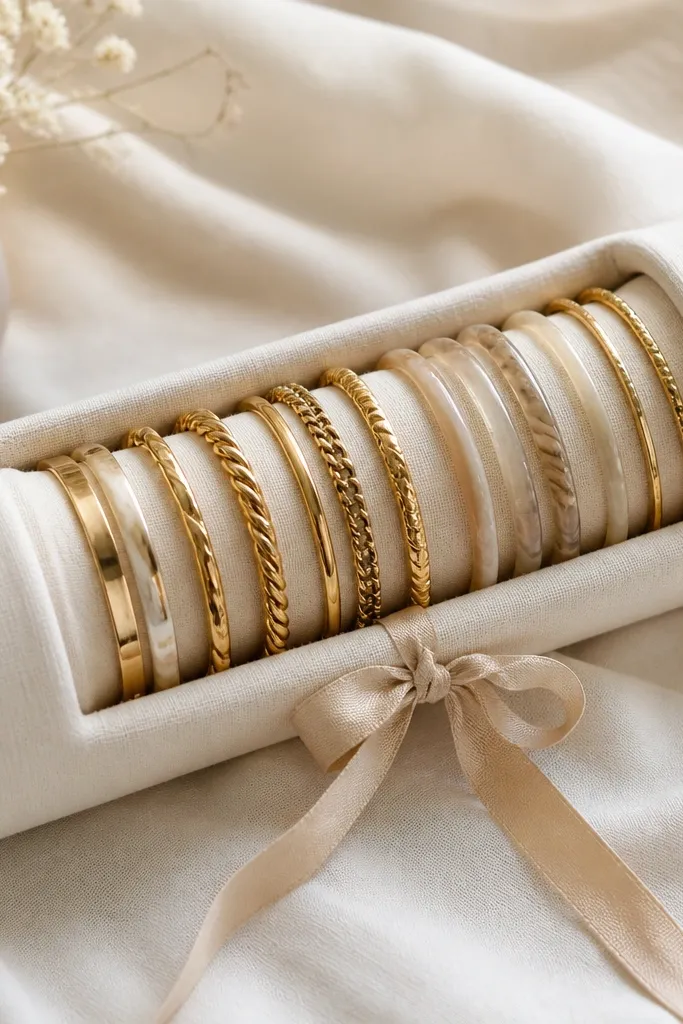
If your bangles clack and tangle, a roll gives them a curved home. Foam supports the weight so bangles don’t collapse into a messy pile. Cotton cover keeps metal from scratching, and it looks softer than plastic tubes. The roll shape also makes it easy to grab one bangle at a time.
Use 1-inch upholstery foam cut to the drawer length. Wrap with a piece of cotton fabric and glue the seam to the underside. Cut a shallow channel along the top with a serrated knife so bangles sit in a gentle arc. Add a ribbon tie around the middle so the roll stays fixed in the drawer.
Use a fabric with a tight weave — loose weaves snag delicate chains.
Avoid slippery satin covers — bangles slide and the roll stops acting like a holder.
8. Magnetic Strip for Metal Pins and Brooches
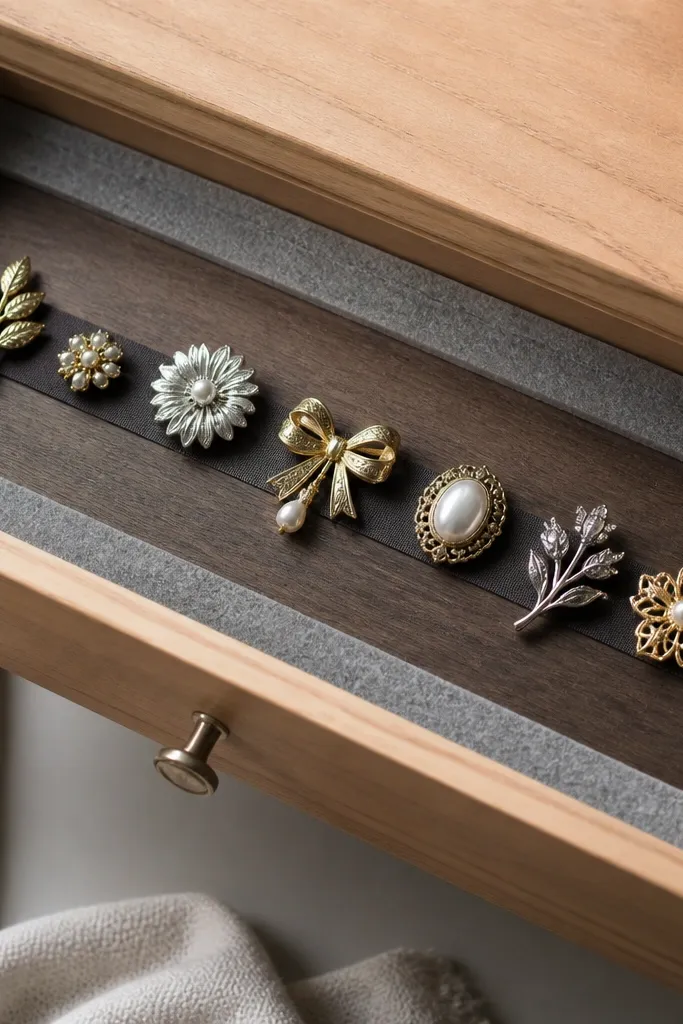
Brooches and pins often end up at the bottom because they don’t fit standard earring holes. A magnetic strip pins them in place so they don’t flip when you open the drawer. Felt around the edges keeps them from scratching the wood. The flat display makes it easy to see which piece you’re grabbing.
Cut a thin wooden strip to fit inside the drawer. Seal it with matte varnish, then adhere magnetic tape along the top edge. Frame the magnet with a 1-inch felt strip glued to the base so pins don’t scrape the wood. Space brooches about 1 inch apart so they don’t bump.
If your brooch has enamel, place a thin felt square between the brooch and magnet for softer contact.
Don’t use strong magnets right against delicate finishes — enamel can get tiny scuffs over time.
9. Toilet Paper Roll Mini Organizer for Tiny Studs
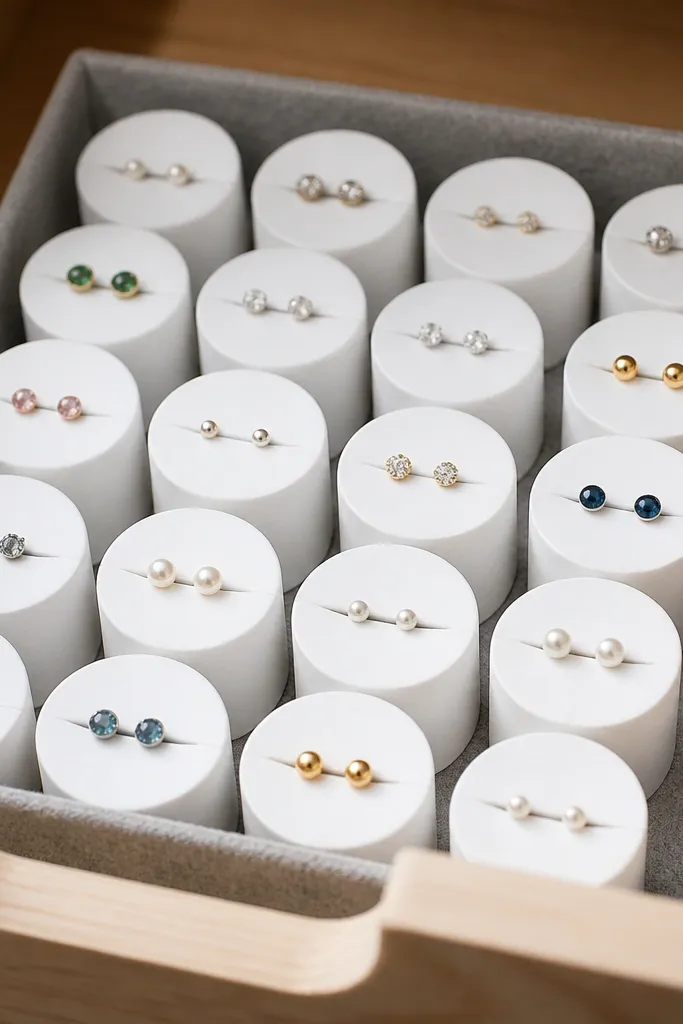
This is the fastest fix for tiny studs, especially when you have dozens of single posts. Cardboard tubes create consistent spacing and stop earrings from merging into one pile. Contact paper makes it look clean and prevents the cardboard from absorbing oils. The slit helps the post sit upright so you can grab without flipping.
Cut rolls into 1.25-inch lengths. Cover with contact paper — matte white or light blush looks clean in drawers. Cut a shallow slit across the top of each tube so the post can sit. Arrange tubes in rows with 1/4 inch gaps, and set the whole grid into a felt-lined base tray.
Mark the back of each row with a dot color to match your earring card colors.
Skip uncovered cardboard — it gets scuffed and looks worn quickly.
10. Pegboard Divider with Removable Hook Clips
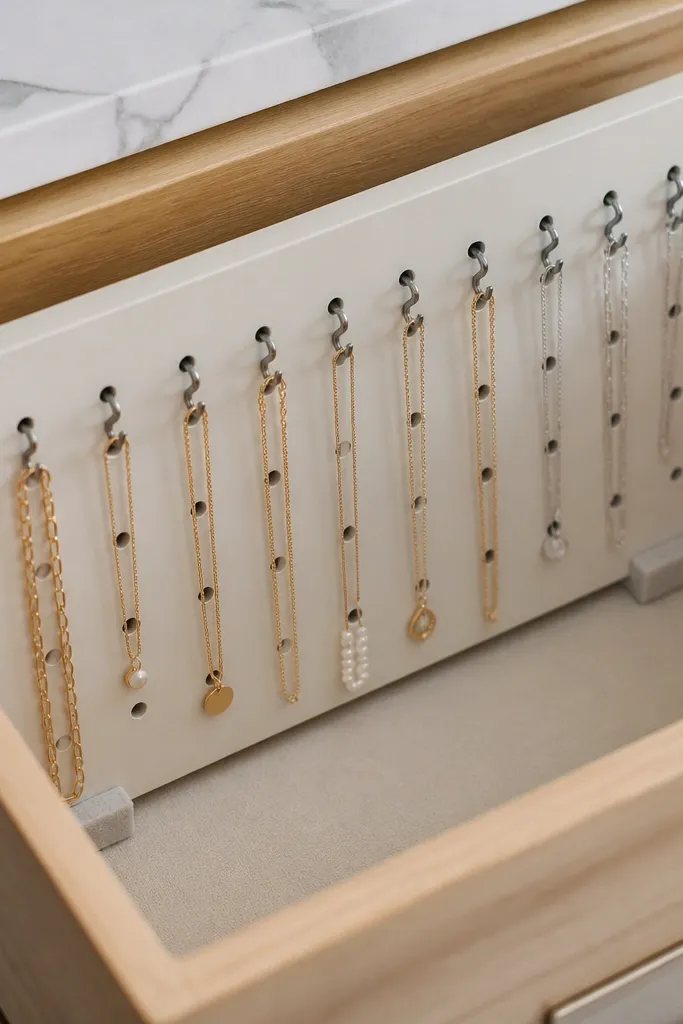
Pegboard makes your jewelry drawer feel adjustable, not locked into one layout. You can move hooks as your collection changes — I’ve added holes for longer chains and removed hooks for smaller pieces. The open grid keeps chains from bunching into one knot. It also looks organized because the hanging lines are straight.
Cut pegboard to drawer size and paint with two coats of primer plus one coat of satin paint. Add felt blocks under the corners so it doesn’t scrape. Insert small S-hooks into pegboard holes, spacing hooks 2.5 inches apart for average chains. Keep hook heights so chains hang about 1 inch above the drawer floor.
Use a ruler to keep hook rows aligned — straight lines make the drawer look intentional.
Avoid heavy hooks that bend — bent hooks make chains twist and slide off.
11. Folded Fabric Divider for Earrings and Rings
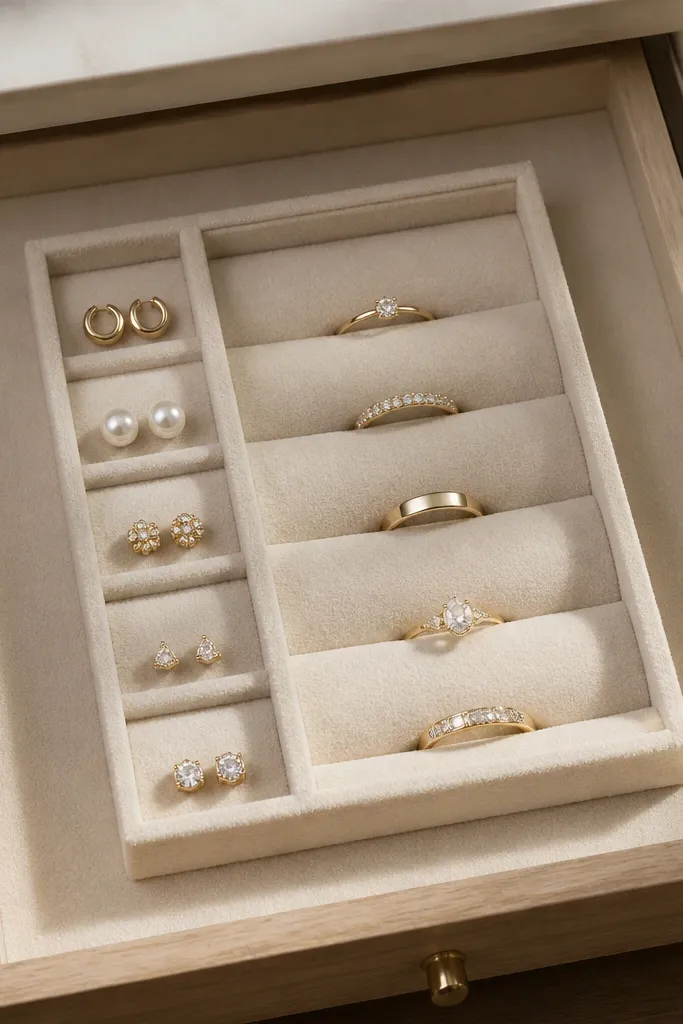
Fabric dividers look soft and hide clutter because the fabric absorbs sound and keeps pieces from clinking. Folded pockets hold earrings without needing holes or trays. The ring channel section stops bands from rolling into the wrong spot. It’s also forgiving if your drawer isn’t perfectly square.
Cut two long fabric strips from thick felt or cotton canvas. Create pockets by sewing or gluing the sides and leaving the top open just 1 inch. Make a ring channel by folding a strip into a V-shape and stitching the fold. Anchor the dividers by gluing the base edges to the felt liner.
Use contrasting thread in one place so the stitches look intentional, not temporary.
Don’t use thin felt that collapses — it makes compartments sag and everything mixes.
12. Clear Film Sliding Necklace Sleeve
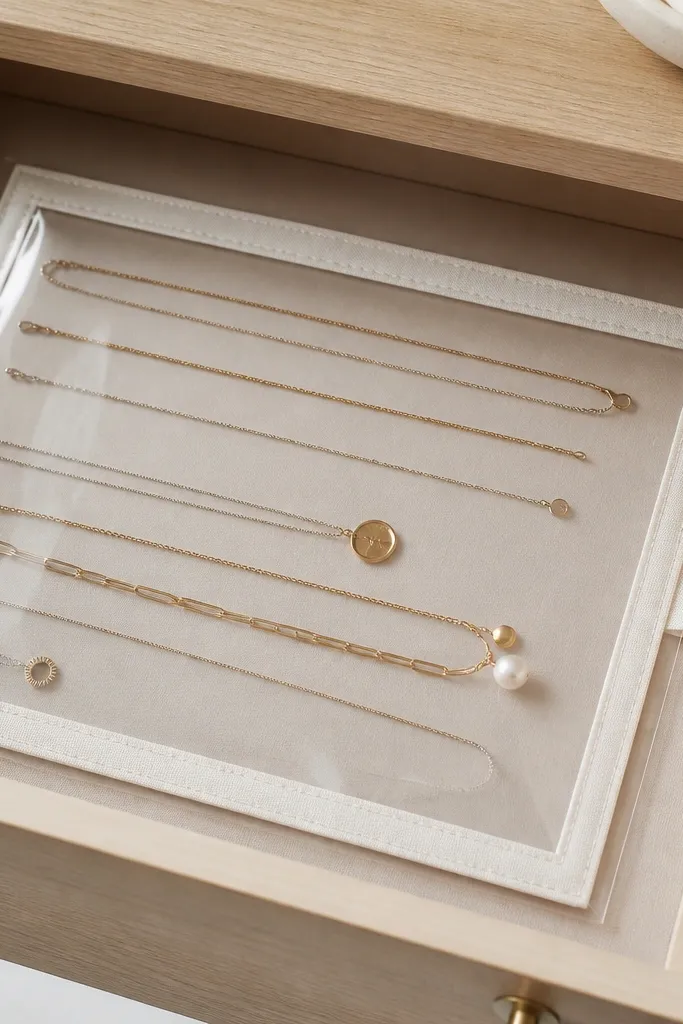
Necklaces look calmer when they’re laid flat behind a clear cover. The sleeve prevents dust and keeps chains from tangling with loose pieces in the drawer. You can see each necklace clearly without opening anything. This is especially helpful if your drawer is shared with other items or if you have delicate chains that snag easily.
Cut a rectangle of clear vinyl or thick acetate slightly smaller than the drawer opening. Sew or glue a fabric border around three sides, leaving one side as a sliding opening with a fabric pull tab. Lay each necklace flat and secure with a soft fabric tie at one end. Use a non-slip liner so the sleeve slides smoothly but stays put.
Editor's noteAdd a tiny strip of felt at the bottom of the sleeve so chains don’t skate.
Skip thisAvoid flimsy plastic that wrinkles — wrinkles turn into snags for chain links.
13. DIY Drawer Insert with Wooden Pegs for Hoop Earrings
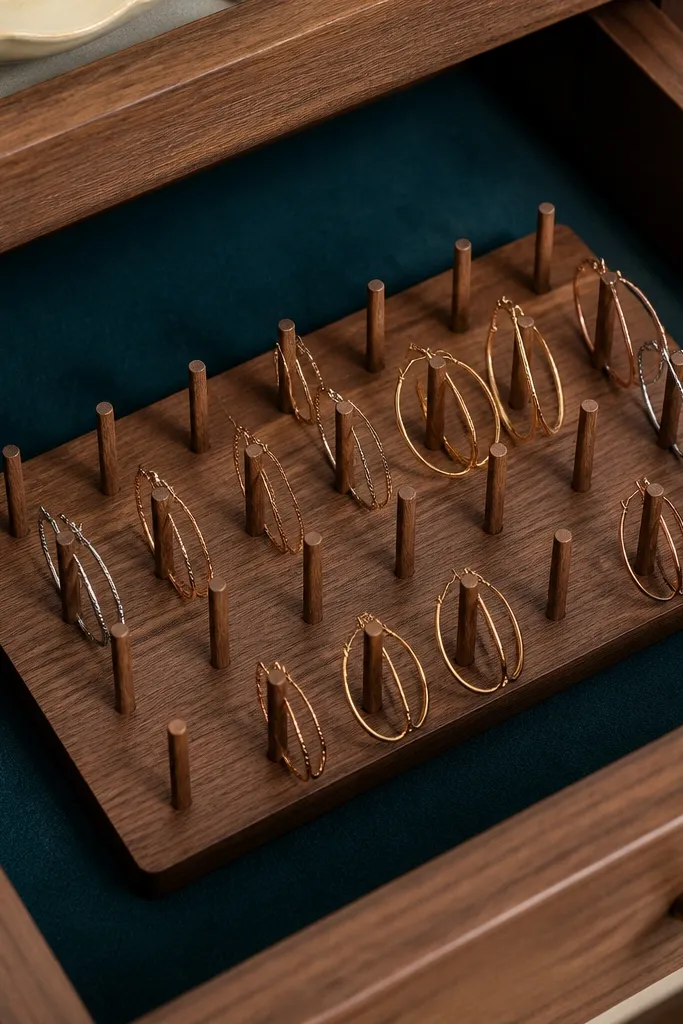
Hoops want a hanging hold, not a flat slot. Pegs give each hoop its own spot, so they don’t twist and tangle into a ring pile. Wood adds warmth and looks polished compared with plastic. The pegs also let you sort by size because larger hoops naturally need wider spacing.
Cut a wooden base the size of your drawer insert. Drill 3/4-inch deep holes spaced 1.25 inches apart for most hoops. Insert short dowels, then sand the tops smooth. Stain walnut or dark oak, seal with matte clear coat, and place on teal felt to reduce scratching.
Label peg rows with a piece of tape on the underside — it saves time when you add new hoops.
Skip sanded tops — rough dowels snag earring finishes.
14. Magnetic Lid Tray for Chains and Pendants
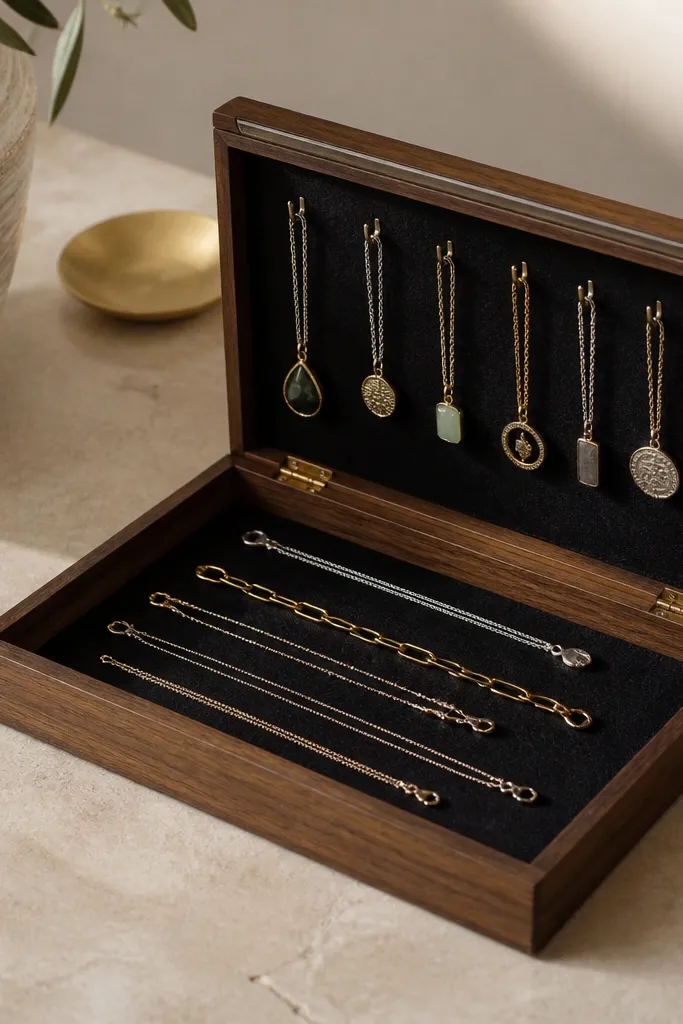
A lid stops chains from migrating into other compartments when you pull the drawer quickly. Magnetic closure keeps the lid from flopping open, and black felt hides chain links and dust. Pendants get clipped or laid in a dedicated area so they don’t dangle and twist. You get a cleaner look because the drawer appears “closed” even when it’s open.
Use a shallow tray with a matching lid, or build one from a wood frame and clear acrylic top. Add magnetic strip tape along the rim. Line the inside with black felt and add two small hooks for pendant chains. Keep chain coils in one direction so the pendant stays centered.
Editor's noteIf your chains are long, coil them around a bottle cap first so they keep the same shape every time.
Skip thisAvoid heavy lids without a stop — they slam shut and can knock delicate pendants around.
15. Origami-Style Folded Paperboard Organizer with Fabric Liner
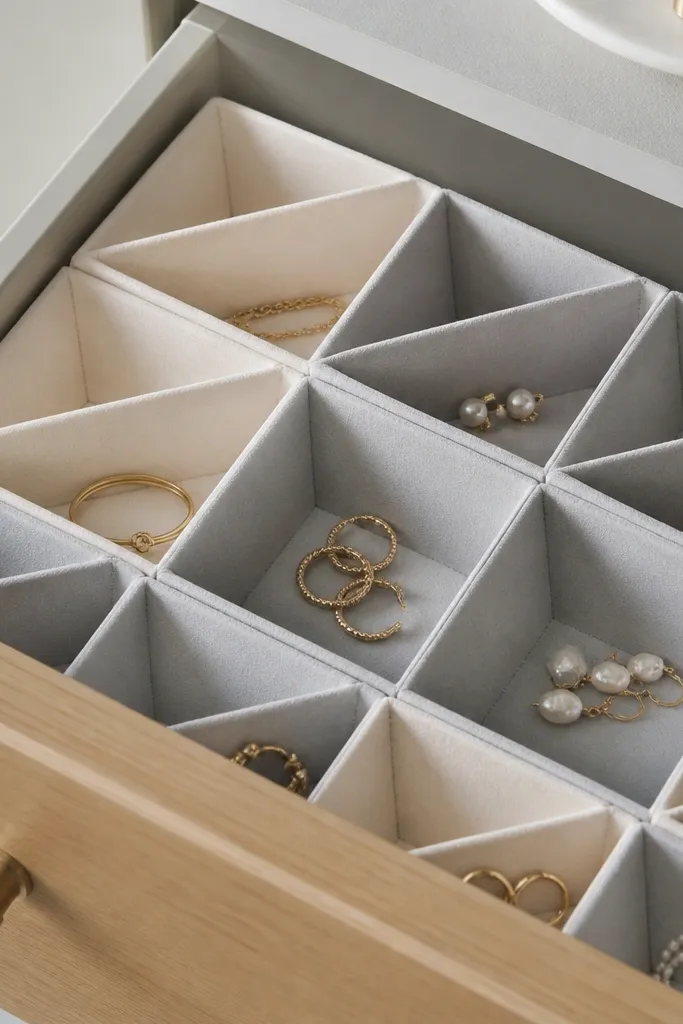
This looks sharp because the folds create straight walls without bulky plastic. Paperboard is easy to cut and reconfigure, and fabric liner makes it gentle on metal. I like it for mixed drawers where you don’t know your final layout yet. You get clean edges and compartments that stay upright when you open the drawer.
Use thick paperboard like bookboard, cut 1/2-inch tabs for folds, and assemble with glue so walls are square. Wrap each panel with fabric using spray adhesive, then glue the finished insert to a felt base. Make one long compartment for chains and two small ones for studs and rings. Keep fold lines at least 1 inch apart so compartments don’t collapse.
Editor's noteCover the top edges with bias tape fabric so raw paperboard never shows.
Skip thisDon’t rely on glue-only edges without fabric — paperboard edges fray and the insert looks cheap fast.