
1. Linen-covered pegboard with brass S-hooks
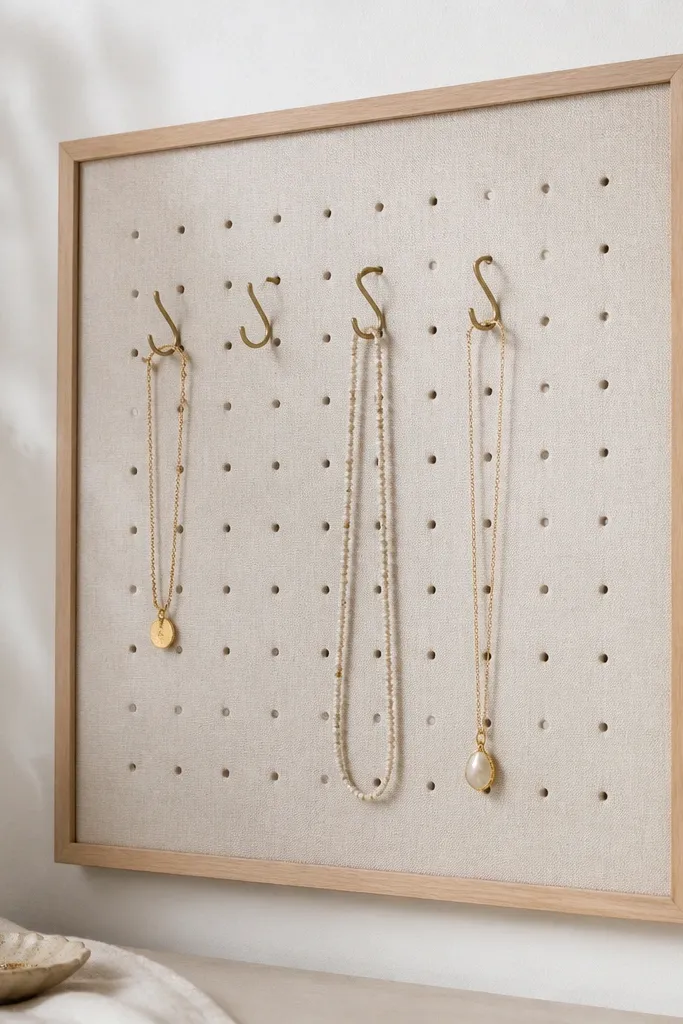
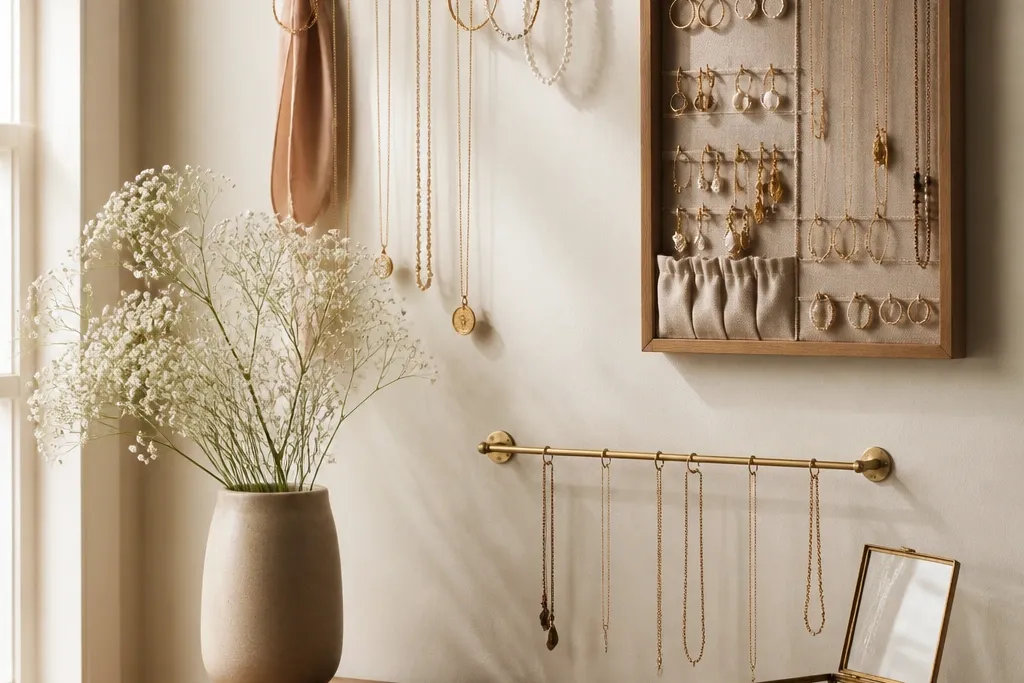
This one looks cozy because the fabric softens the hardware and hides the busy pegboard texture. The brass S-hooks give you smooth sliding for chains — they don’t snag as easily as sharp hooks. I like placing hooks in two heights: taller for long necklaces, shorter for chokers. The linen color also makes gold and pearl jewelry look warm on the wall.
Use a 1/4-inch pegboard panel cut to size, then wrap it with linen using a staple gun on the back. Add a thin wood frame (about 1 inch wide) so the staples don’t show. Mount with a French cleat or two wall screws at the top corners, then hang brass S-hooks spaced 2.5-3 inches apart.
Editor's noteHot-glue a strip of felt behind each hook base so the metal doesn’t rub the fabric as necklaces shift.
Skip thisAvoid wrapping fabric too tight — it puckers around the pegboard holes and looks messy.
2. Cork tile grid in a shadow box with mini clips
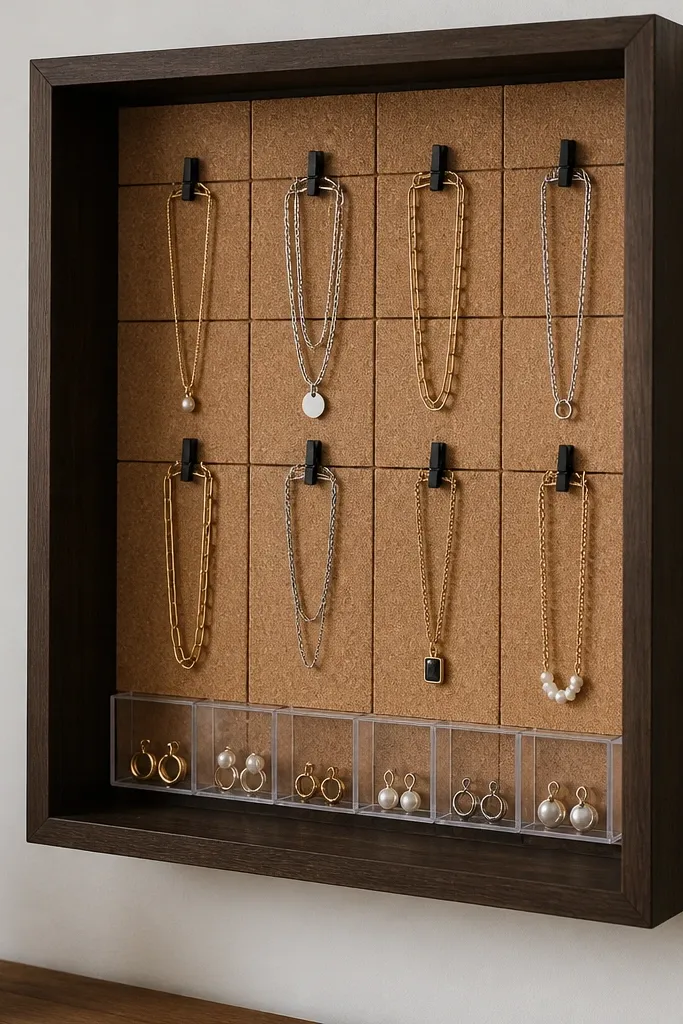
Cork reads warm and natural, and the shadow box keeps everything tidy like a display case. The mini clips let you attach chain ends so the jewelry hangs straight instead of collapsing. I’ve used this layout for bracelets and small chains because the clips keep them visible without tangling. The clear compartments at the bottom prevent earrings from disappearing into a pile.
Buy a deep shadow box frame (at least 2 inches deep), line the back with cork tiles or cork sheet cut into 1-inch squares. Screw or glue small clip bases into the cork, then add a strip of clear acrylic at the bottom for earring storage. Paint the frame in warm white or leave it natural light oak.
Editor's noteSpray cork with a matte sealer before assembly — it makes the surface easier to clean when oils from fingers get on it.
Skip thisSkip glossy spray finishes; they catch light and make the cork look shiny and cheap.
3. Picture frame organizer with mesh and ribbon row
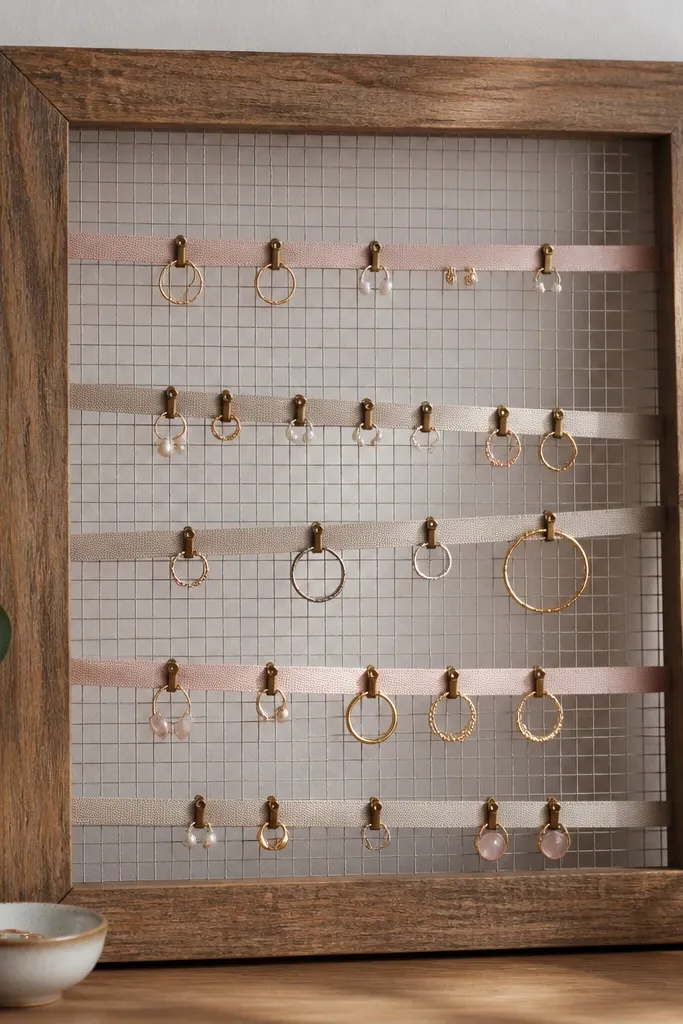
This works because it’s basically a jewelry bulletin board. The mesh holds lightweight pieces without stretching, and the ribbon row adds softness. I use ribbon to separate sets — one ribbon for “work,” one for “weekend.” It also hides the metal clips so the whole thing looks decorative instead of industrial.
Remove the glass, then cut wire mesh to fit the inner frame opening. Stretch it tight and staple to the back. Add 1-inch grosgrain ribbon strips across the top area with fabric glue, then attach mini binder clips or jump rings to catch earrings. Mount the frame with two sturdy hangers so it sits flush.
Editor's noteUse two ribbon colors only. Too many colors turns it into craft-room clutter.
Skip thisDon’t leave loose mesh corners — they create sharp points that snag delicate chains.
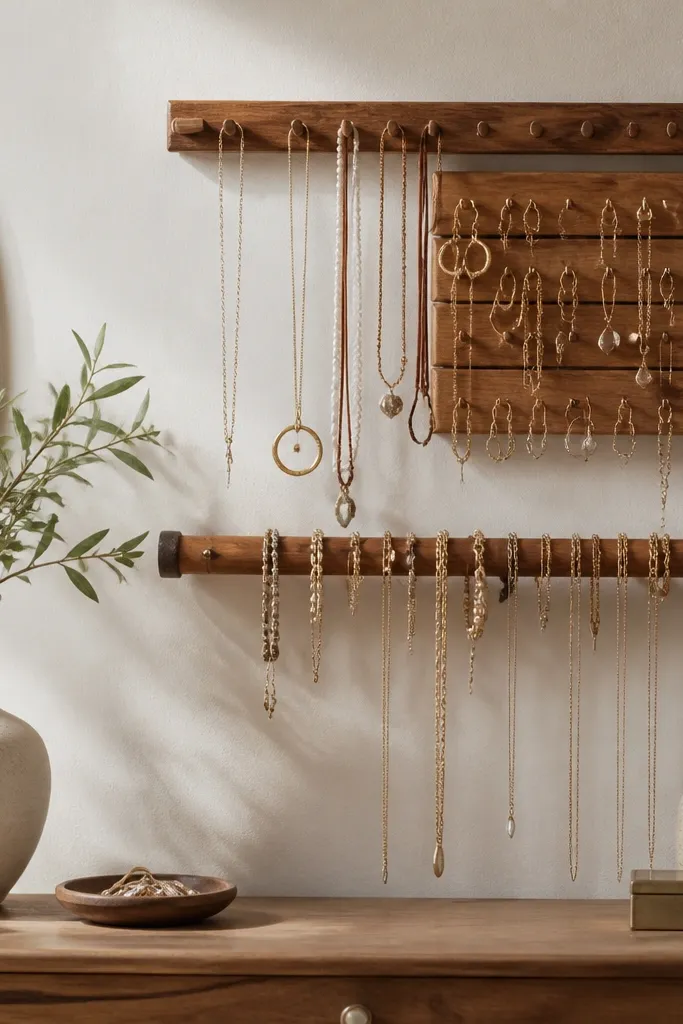
4. Reclaimed wood slat wall with painted cup hooks
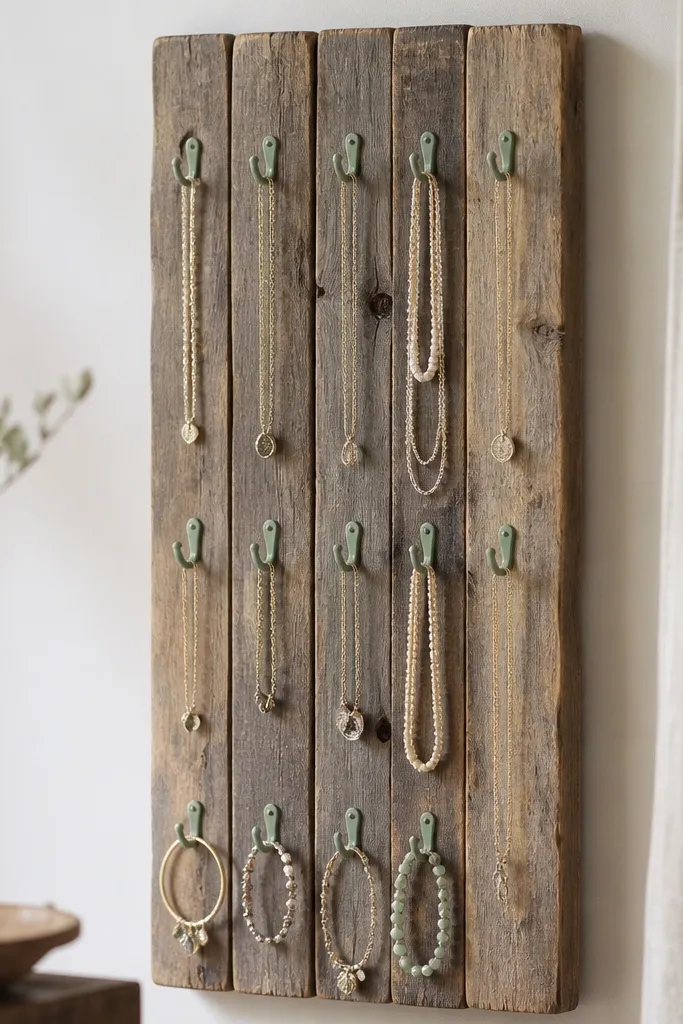
Wood slats feel cozy because they show grain and age, but the painted hooks keep it from looking like a garage rack. Cup hooks are great for necklaces because they cradle the chain links. I like mixing two hook colors — one warm (terracotta) and one cool (sage) — so the display looks curated without being fussy. The slats also create natural spacing so jewelry doesn’t overlap.
Use three to five slats, each about 2-3 inches wide, with a total width around 24 inches. Sand to remove splinters, then stain lightly (or leave natural) and seal. Paint cup hooks with enamel and let cure 48 hours before hanging jewelry. Screw hooks into the slats from the front using pilot holes.
Editor's noteLabel the back with a simple sticker chart — it helps when you rotate jewelry by season.
Skip thisAvoid painting over rust without sanding; it chips and looks sloppy after a few weeks.
5. Felt pocket organizer on a dowel bar
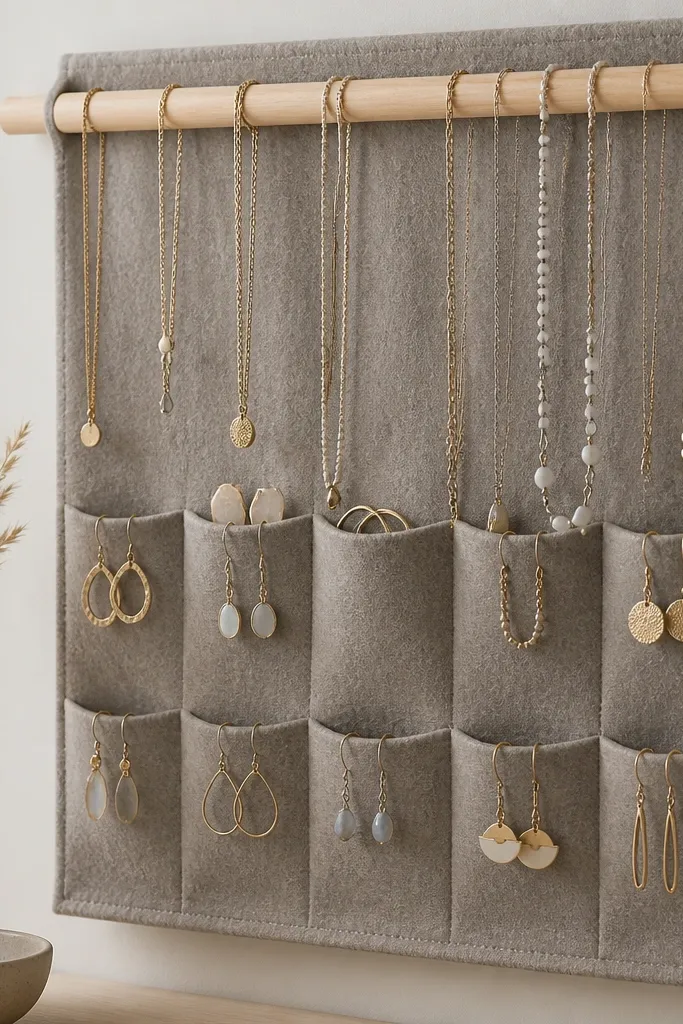
Felt pockets are the most forgiving DIY material for jewelry because they hold shape and hide small parts. The dowel bar gives you a clean hanging line for necklaces. I like this for earrings that you normally lose in a drawer. Felt also dampens the sound when jewelry shifts — it feels calmer on the wall.
Cut felt into a panel about 18-24 inches wide. Make pockets by sewing or hot-gluing rectangles with a small opening at the top. Use a dowel about 3/4 inch thick and mount it with two wall brackets. Attach the felt panel to the dowel with fabric ties or sew loops behind the felt.
Add a thin strip of interfacing behind the top edge so the felt doesn’t sag after months.
Skip slippery polyester felt; it slides around and the pockets lose their shape.
6. Macramé knot hanger with mini wooden beads
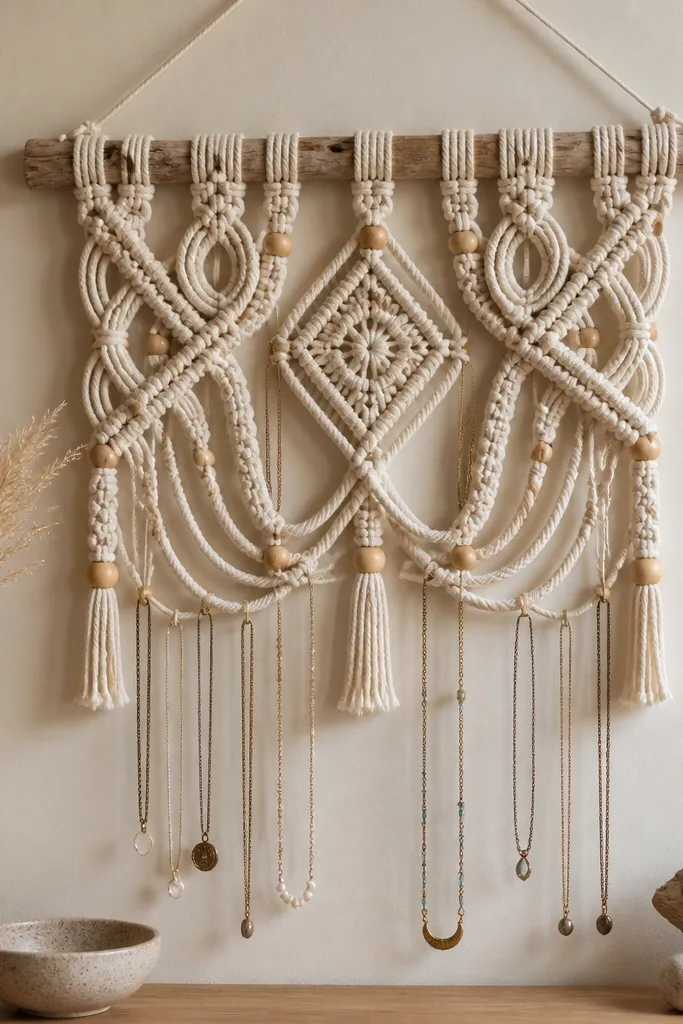
This is cozy because it’s soft, rope-textured, and visually warm. You get multiple hanging points without a rigid board. The mini wooden beads act like spacers so chains don’t clump together. I use this style for long necklaces and lightweight pendants where you want a gentle drape.
Use cotton macramé cord about 4-5 mm thick. Build a rectangular hanger with two side vertical ropes and cross knots every 4-5 inches. Slide small wooden beads onto a few horizontal strands so they sit between chain groups. Tie the top into a wall-mounted bracket or a single screw with a loop.
Wet-block the macramé after tying so it hangs even. I use a spray bottle and let it dry flat on a towel.
Don’t hang heavy statement pieces; rope stretches and the shape warps.
7. Antique tray wall with wire ring stand
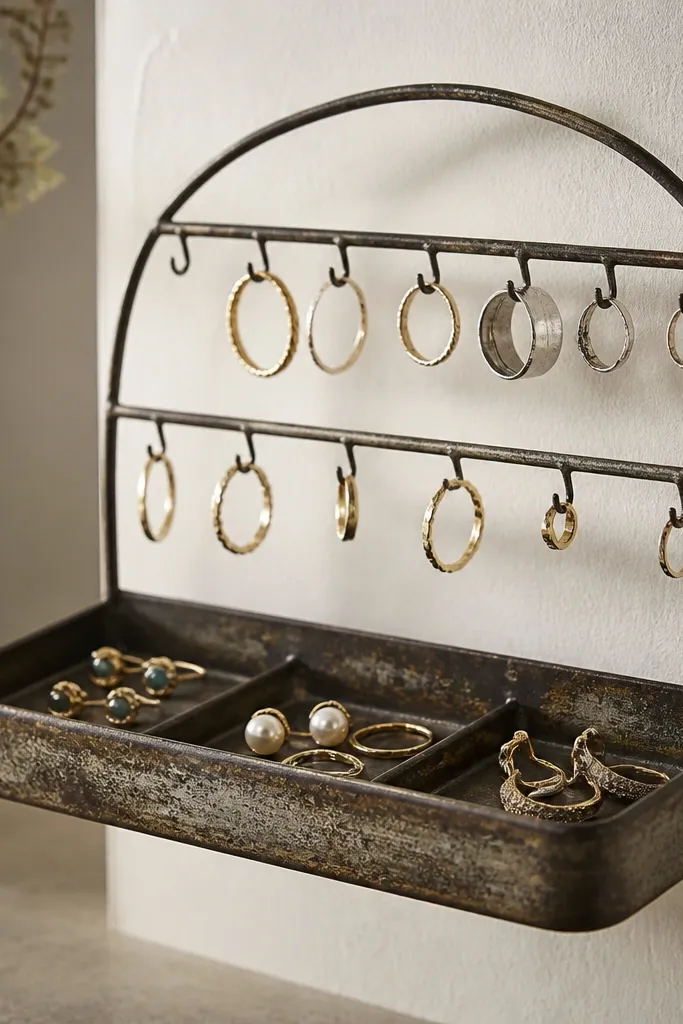
A tray gives you instant cozy because it looks like a dresser surface pushed onto the wall. The wire ring stand keeps rings upright so you can see them without digging. This is great for ring storage that doesn’t fit in tiny boxes. The metal tray also works with both gold and silver because it’s neutral and reflective.
Find a tray with shallow compartments, about 10-14 inches across. Mount it with a French cleat or two screws through the back lip. Bend a wire ring stand from 1/8-inch wire, then zip-tie or screw it to the back. Add small earring hooks under the tray edge.
Editor's notePaint the back of the tray a matte color so you don’t see raw metal through gaps.
Skip thisSkip thin wire that bends — your rings will sag and look messy.
8. Shower curtain ring organizer on a vertical wood board
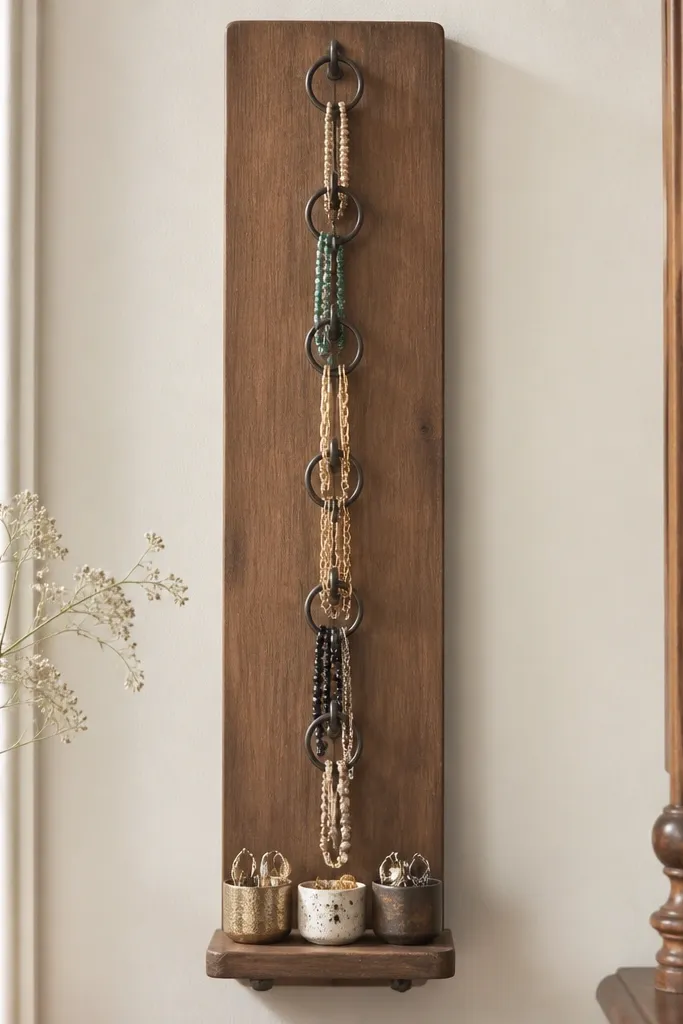
It’s weirdly functional. Shower curtain rings slide smoothly and hold necklaces without pinching. The vertical board makes it easy to separate lengths — short rings on top, longer ones below. The bottom shelf adds a place for clips and earring backs so you don’t constantly reach for a drawer. It looks cozy because the wood tones keep the hardware from looking plastic.
Use a board roughly 12 inches wide and 30 inches tall. Sand, stain, and seal. Screw rings into pre-drilled holes along the centerline, spacing about 3 inches apart. Add a 2-inch deep mini shelf at the bottom with two corner brackets.
Round over the board edges with sandpaper so it feels finished when you pass by it daily.
Don’t mount rings too close together; chains tangle at the overlap.
9. Beaded curtain panel as a necklace curtain board
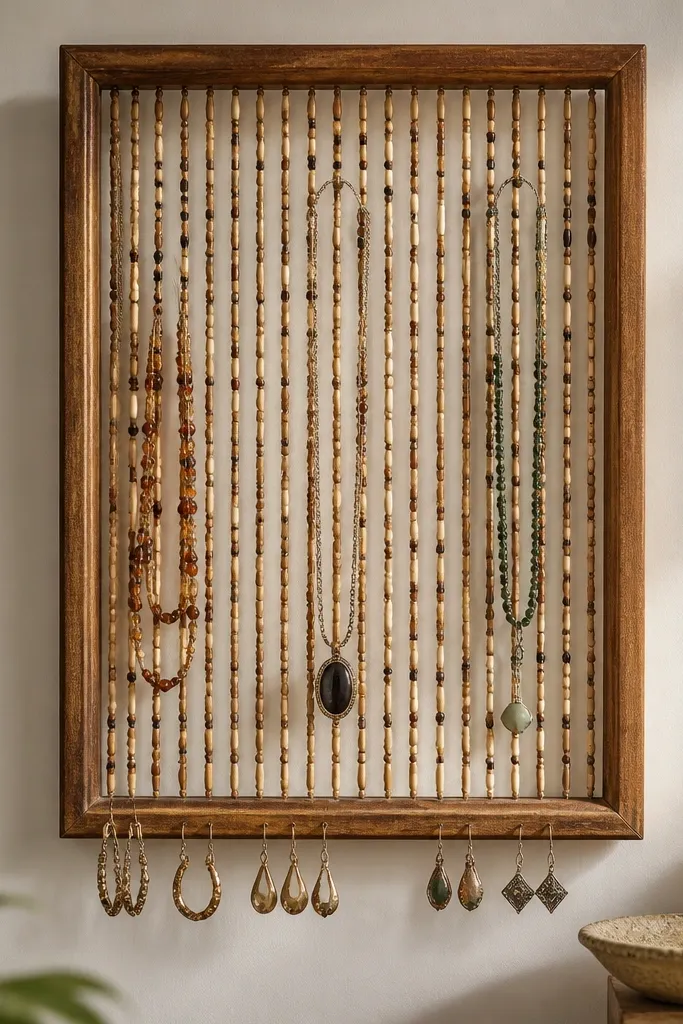
Beads create cozy movement. When you walk past, the strands shift slightly and you can see different pieces. It also separates necklaces because each chain rests in its own bead channel. I’ve used this for seasonal necklaces that I swap monthly — it’s faster than re-hooking everything onto individual points.
Cut a beaded curtain panel to fit inside a simple frame or use a square embroidery hoop. Tie the top to the frame with thin twine so the beads sit evenly. Add a small strip of cork behind the bottom edge for earring clips. Hang with two picture hooks so the panel stays straight.
Editor's noteChoose beads with a matte finish so they don’t glare in sunlight.
Skip thisAvoid heavy crystal strands; they pull frame edges down and look stretched.
10. Wooden utensil rack turned into a wall earring row
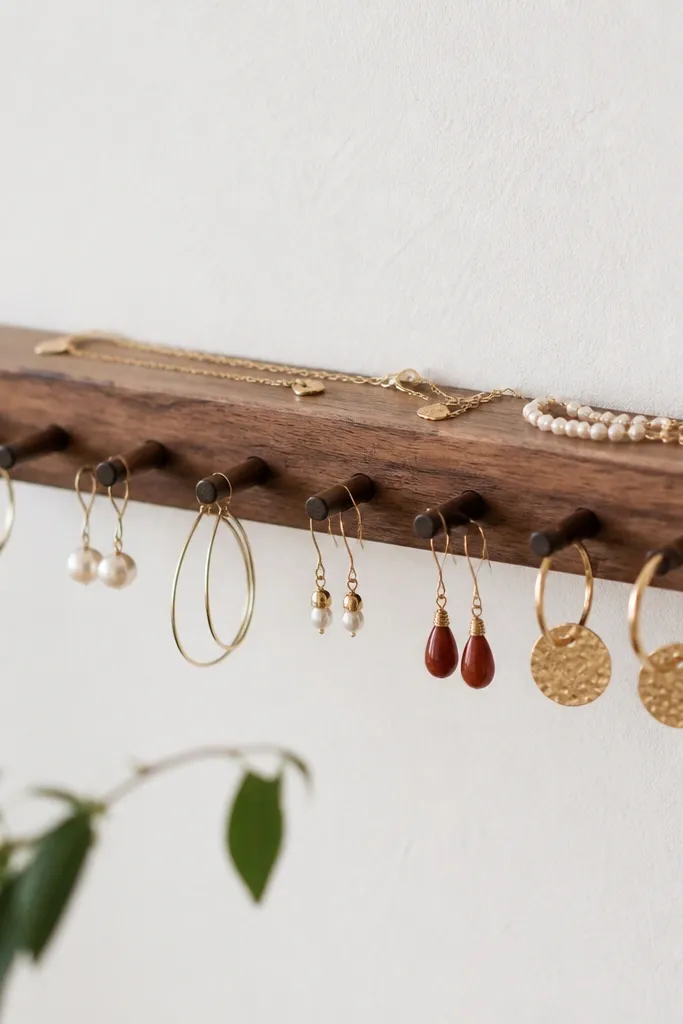
This is one of my favorite “borrow from the kitchen” tricks. Utensil racks already have a uniform peg spacing, so earrings don’t fall over. The wood grain reads warm, and the finish makes the display match natural decor. It works best for stud earrings and short hoops.
Pick a rack width around 18-20 inches with pegs about 2-3 inches tall. Sand and stain to match your room. Mount it using a French cleat for stability. Add tiny felt pads on peg tips if your earrings have delicate backs.
Editor's noteGroup earrings by metal tone: warm gold on one side, silver on the other.
Skip thisSkip racks with wobbly pegs; they’ll loosen from constant grabbing.
11. Painted peg rail with tassel charms
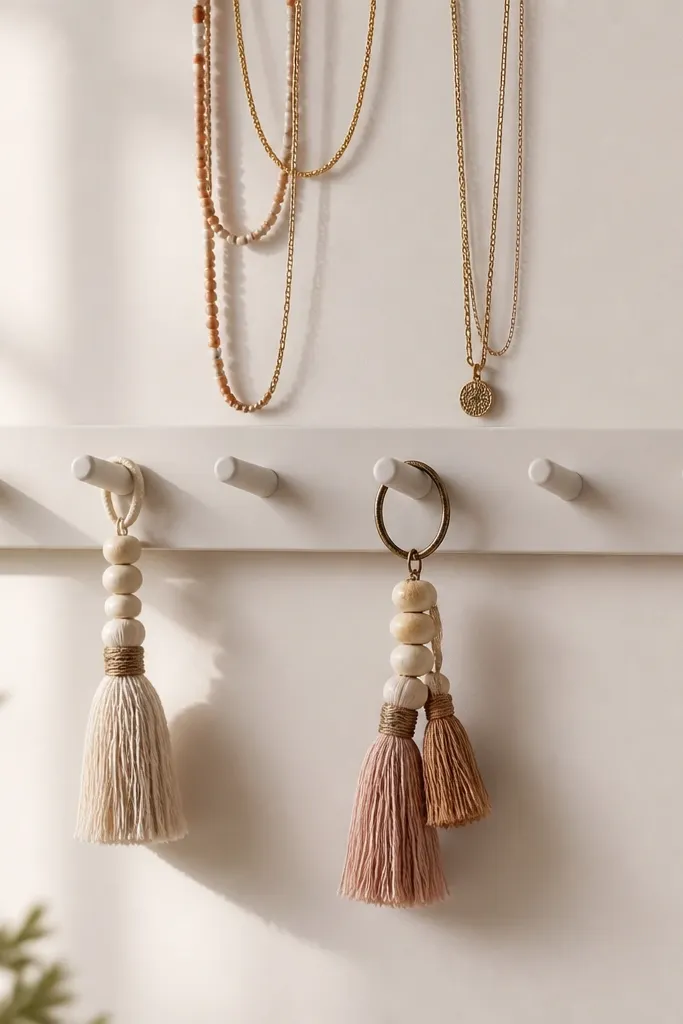
A peg rail is clean and cozy because it turns storage into a rhythmic pattern. The tassel charms add softness and make it feel like decor, not a tool. I use tassels as “anchor points” for one necklace set so I can find it fast. The painted color matters — I prefer dusty rose, muted teal, or warm cream.
Buy a metal or wood peg rail, then paint it with enamel. Mount at eye level — about 60 inches from the floor for me. Add tassels tied to small jump rings on two central pegs. Hang necklaces so the clasp sits on a peg and the chain falls straight.
Editor's noteIf your necklaces are delicate, add a tiny rubber band under the clasp so it doesn’t slip off the peg.
Skip thisDon’t paint over bare metal without primer; it flakes and looks cheap.
12. Chalkboard frame with ribbon tacks
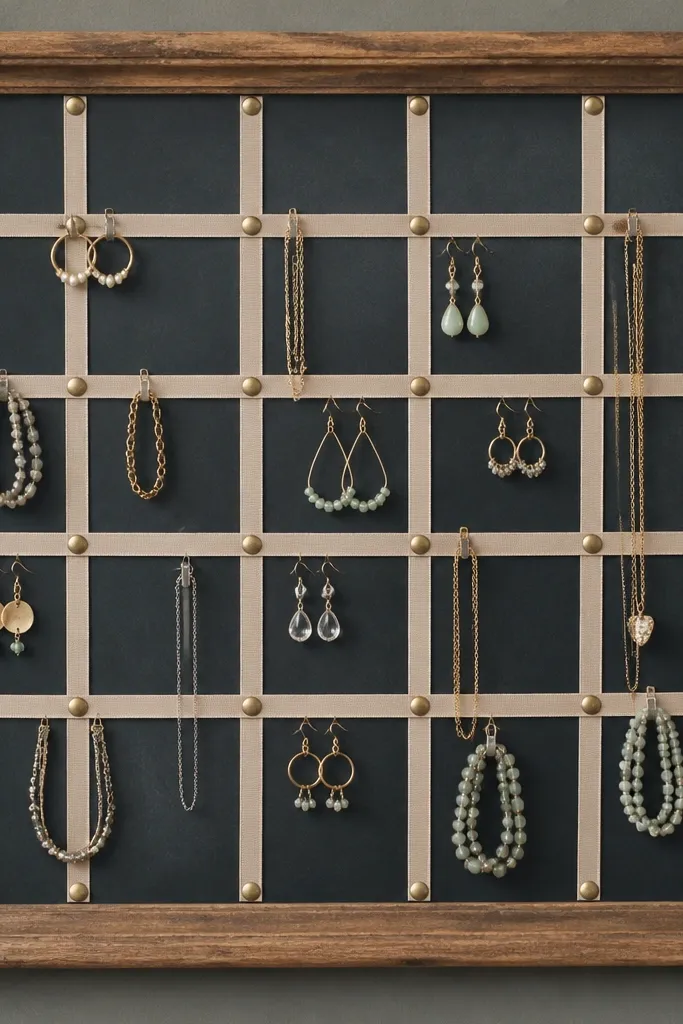
A chalkboard back makes this organizer feel cozy because it’s matte and calm. You can label sections with chalk — “rings,” “everyday,” “holiday” — and erase when you rotate jewelry. Ribbon tacks give you gentle attachment points that don’t scratch metal. The whole thing looks like wall art while you store.
Use a chalkboard panel sized to your frame. Stretch ribbon strips across the board and tack them down with brass tacks. Add small binder clips for earrings and short chains. Keep the chalk color consistent — white or light gold chalk shows best.
Write labels in big block letters so you can read them from across the room.
Skip glossy chalkboard paint; it reflects light and makes the frame look plastic.
13. Glass jar wall pockets for rings and studs
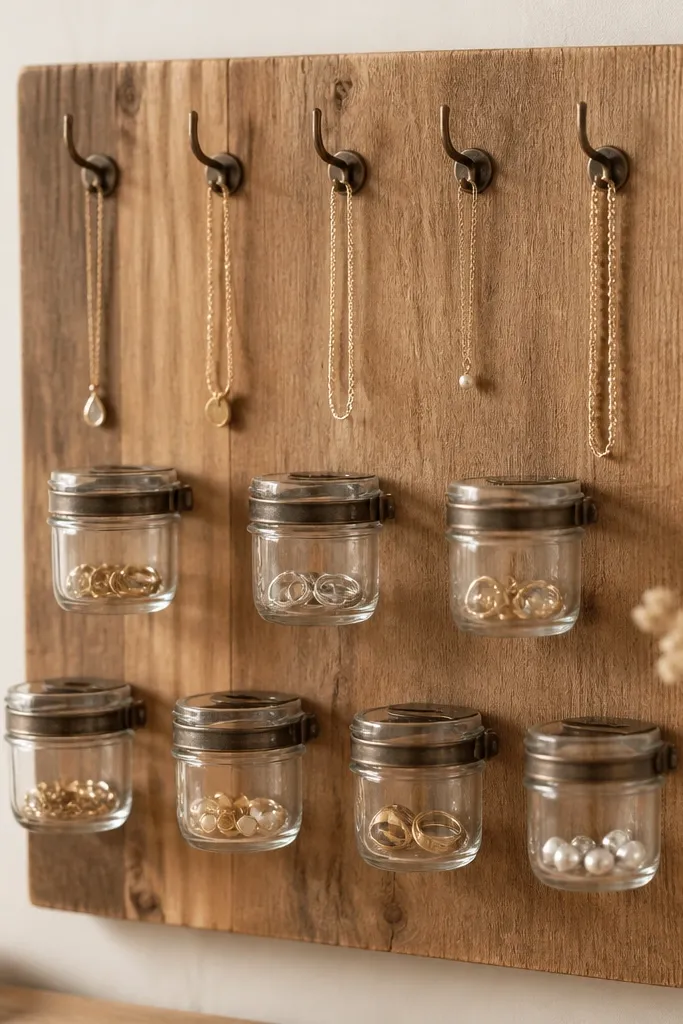
Glass jars make jewelry look cozy because they show shape and sparkle without digging. The jars also keep tiny pieces from mixing — studs stay in their own space. I pair this with a hook row above for necklaces, so you don’t need a second organizer. The jars look best when you use one consistent label style.
Mount three to five small glass jars in a wooden board with jar lids facing forward. I use 4-ounce jars and space them about 3-4 inches apart. Add two brass hooks at the top for necklaces, then paint the wood board a warm off-white. Glue or screw labels with thin kraft paper strips.
Editor's noteUse museum wax or clear gel on lid threads to reduce grime build-up from fingerprints.
Skip thisDon’t use jars that are too deep; rings sink and you forget what’s inside.
14. Wall quilt strip with button hooks for chokers
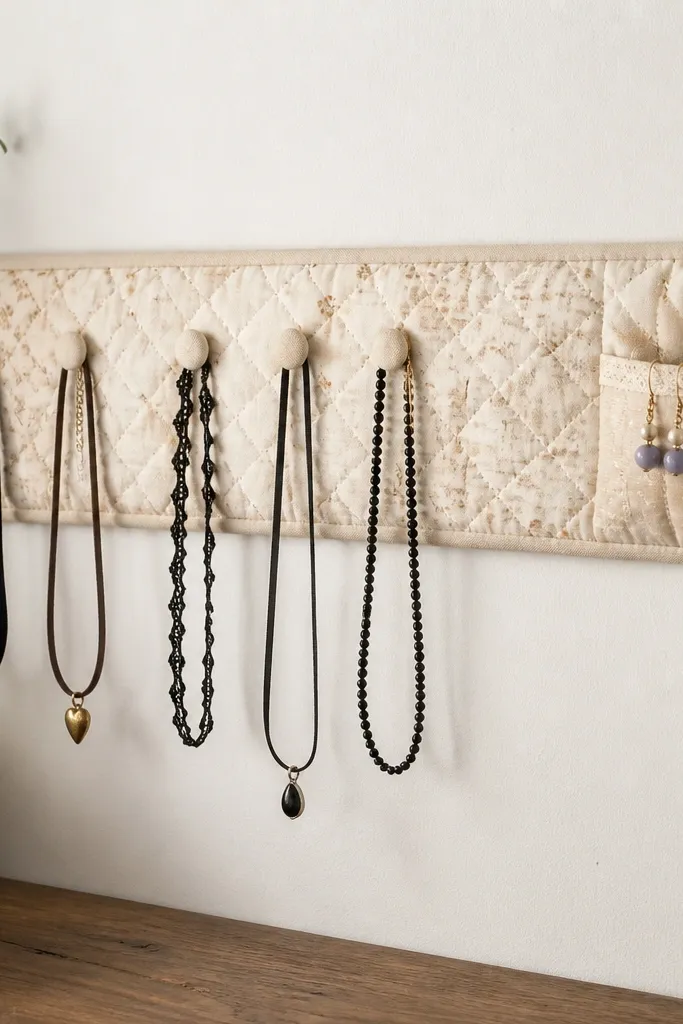
Quilted fabric reads cozy fast. It also protects jewelry from scratches because fabric is a soft buffer. Button hooks are perfect for chokers since they hold the chain at one point and keep the rest from sliding down. I like adding a stitched pocket on the side for earrings you wear together.
Use a quilted cotton panel, about 16-20 inches long. Sew or glue a pocket pocket (10 x 6 inches) on one end. Install small button hooks across the top seam line, spaced 2 inches apart. Mount with two screws through the top border or a hanging rail behind the fabric.
Editor's notePick fabric with one small pattern scale — tiny dots or micro-florals look better than big busy prints.
Skip thisAvoid slippery satin fabric; hooks slide and the organizer looks loose.
15. Pegboard with fabric-wrapped edges and clear bead pulls
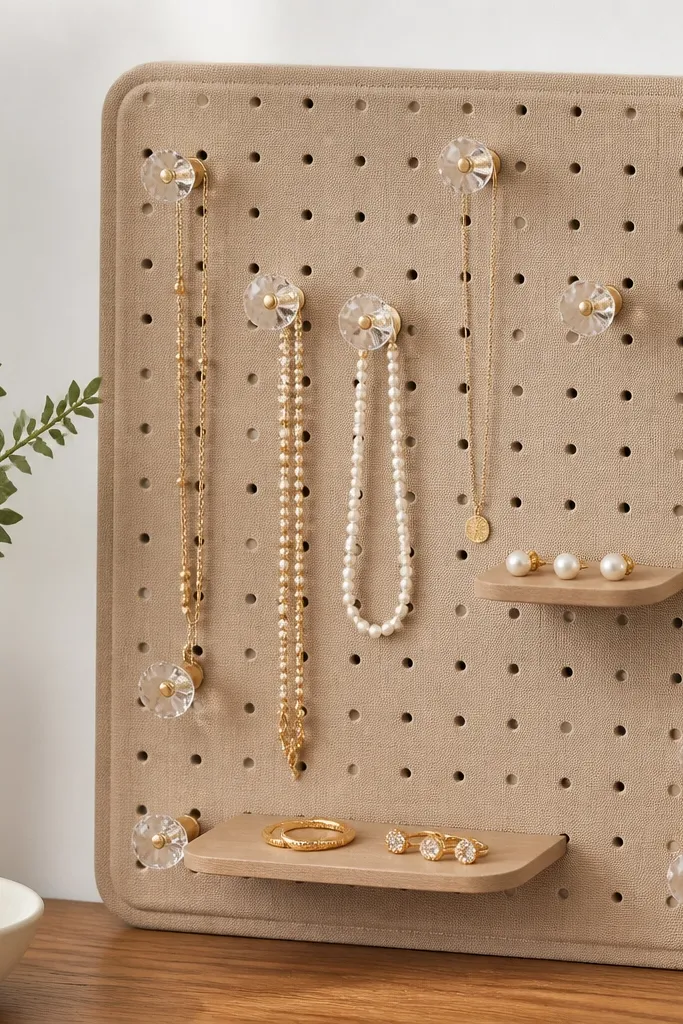
The pegboard gives you storage density, but the wrapped edges make it look cozy instead of utilitarian. Clear bead pulls keep jewelry from tangling because each pull creates a separate hang point. I like using clear acrylic pulls for delicate chains because they slide smoothly and look light on the wall. Small trays at the bottom catch earrings so they don’t roll off.
Cut pegboard and wrap only the edges with fabric so the center stays accessible. Screw clear bead pulls onto pegs using small washers. Add two shallow trays (like tiny drawer organizers) screwed into the bottom area. Paint the pegboard back behind the holes a matching warm tone so the holes don’t look harsh.
Editor's noteDust the pegboard with a dry cloth before adding jewelry — lint gets trapped in the holes.
Skip thisSkip metal-only designs without fabric edges; they look cold and read like a shop tool.
16. Macramé wreath frame with hoop hooks
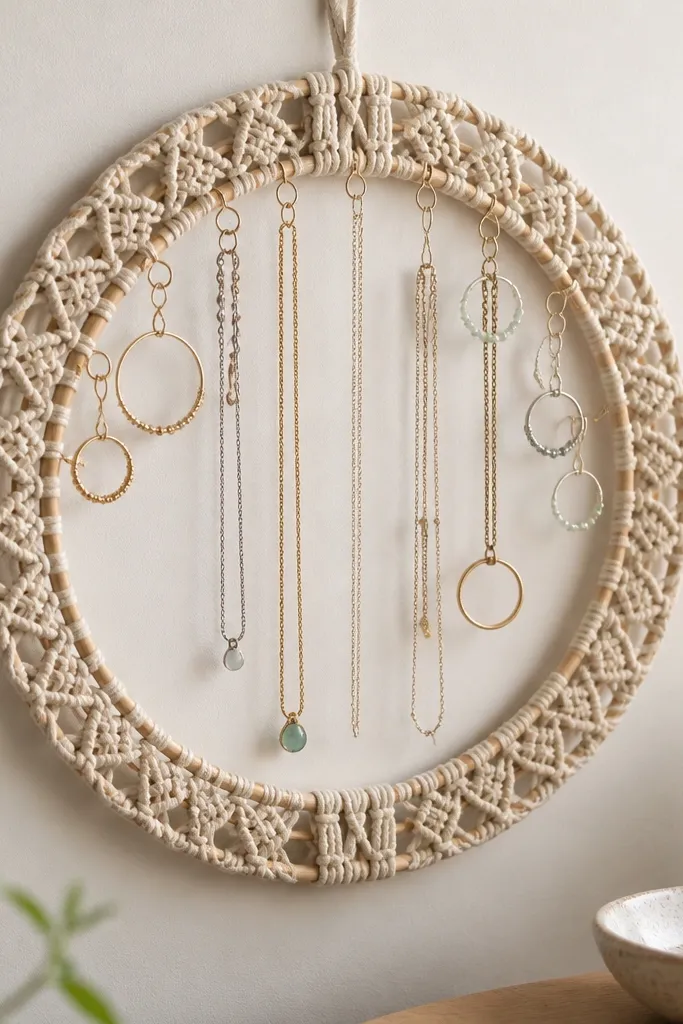
A wreath shape is cozy because it feels like decor you’d leave up year-round. Hoop hooks create consistent hang points so rings and short necklaces stay visible. I use this style for jewelry that I wear together — a ring stack plus a matching necklace. The macramé hides the mounting hardware and makes the hooks look intentional.
Use a 10-12 inch embroidery hoop or bent wire hoop as the base. Wrap with macramé cord and secure knots at even intervals. Attach small hoop hooks around the outer edge with screws through the hoop wrap. Hang with a single wall bracket so it sits centered.
Editor's noteAdd one small cluster of beads at the top so the wreath has a focal point.
Skip thisDon’t hang it too high; wreaths look fine but you won’t use them if you can’t reach easily.
17. Wall-mounted drawer pull row with earring pairs
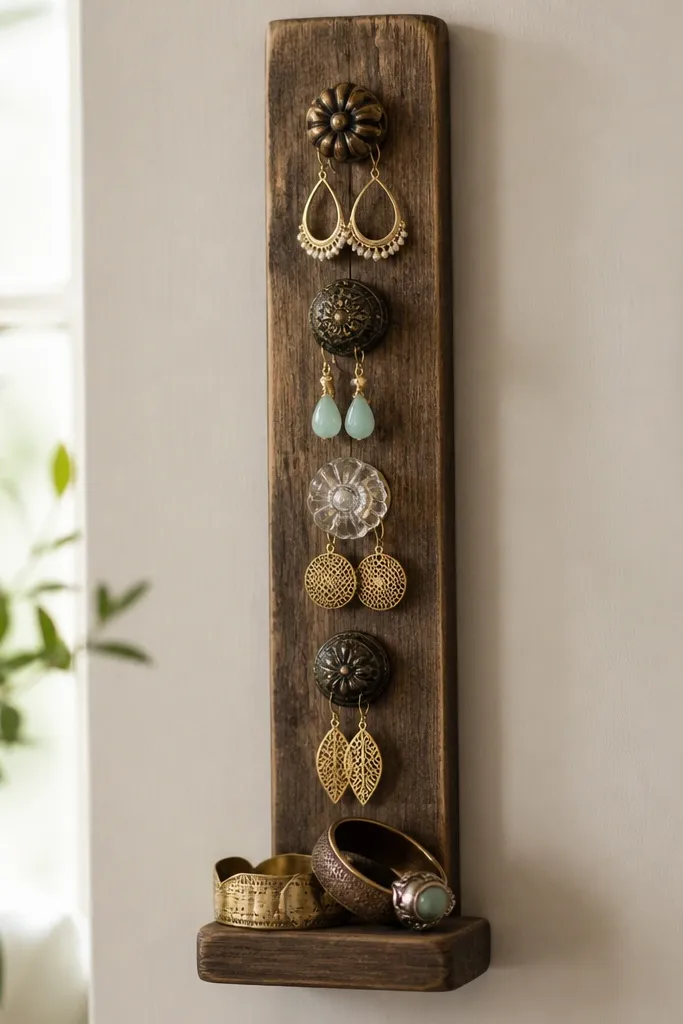
Drawer pulls make jewelry storage feel like furniture hardware, not craft storage. The knobs are rounded, so chains rest without sharp edges. This is great for keeping earrings paired — you can hang one pair per pull. It also works for lightweight cuff bracelets if you add a small ledge below.
Use a narrow board about 10 inches wide and 28 inches tall. Sand and paint or stain, then install drawer pulls spaced 4 inches apart. Mount the board on two screws into studs if possible. Add a 1-inch lip at the bottom using a thin wood strip for cuffs.
Use one finish for all pulls — antique brass or oil-rubbed bronze — so it looks cohesive.
Skip mixed random finishes; it looks like you grabbed whatever was in the drawer.
18. Rattan tray with cane backing and mini hooks
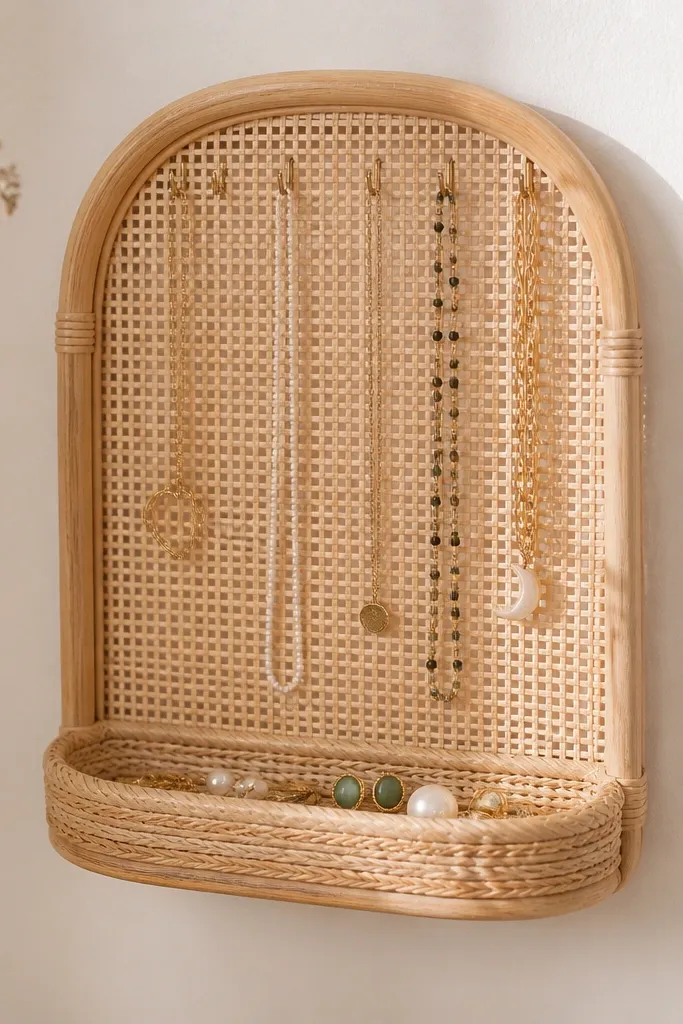
Rattan is cozy in a way that feels natural and warm, especially with brass hooks. The tray keeps earrings and small pieces from scattering. Cane backing adds texture without taking over the space. I like this setup in entryways or bedrooms because it looks like a decor piece even when it’s functional.
Mount a shallow rattan tray (around 14 inches wide) on a lightweight plywood backing. Attach mini brass hooks along the top edge of the backing, not the tray itself. Secure with screws and a thin backing strip so the hooks hold tight. Finish the plywood with a light stain that matches rattan.
Editor's noteAdd a small felt pad under each hook so chain clasps don’t rattle.
Skip thisDon’t mount hooks directly into rattan; it splits and the organizer gets loose.
19. Ceramic tile panel with painted ring pegs
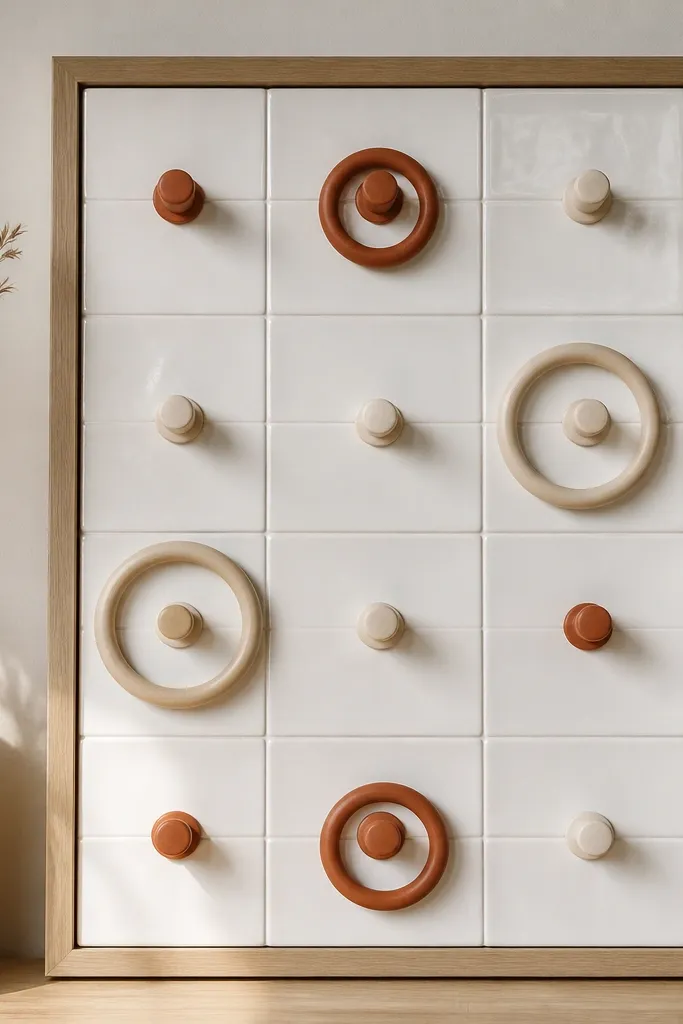
Ceramic tiles make jewelry look crisp and clean, and the frame keeps it cozy by containing the hardware. Painted ring pegs give you a clear placement for rings so they don’t slide. This is best for rings you wear often because they stay easy to grab. The white tile background also makes gemstones pop without extra lighting.
Use a tile board or foam board with adhesive-backed tile sheets. Frame it in wood and grout the edges if you’re using real tiles. Screw small ring pegs into the frame area and paint them to match your room palette. Mount at eye level so rings read clearly.
Wipe ceramic with a microfiber cloth before styling — fingerprints show on tile.
Skip glossy tile finishes if you hate glare; matte looks softer.
20. Yarn-wrapped dowel with chain loops
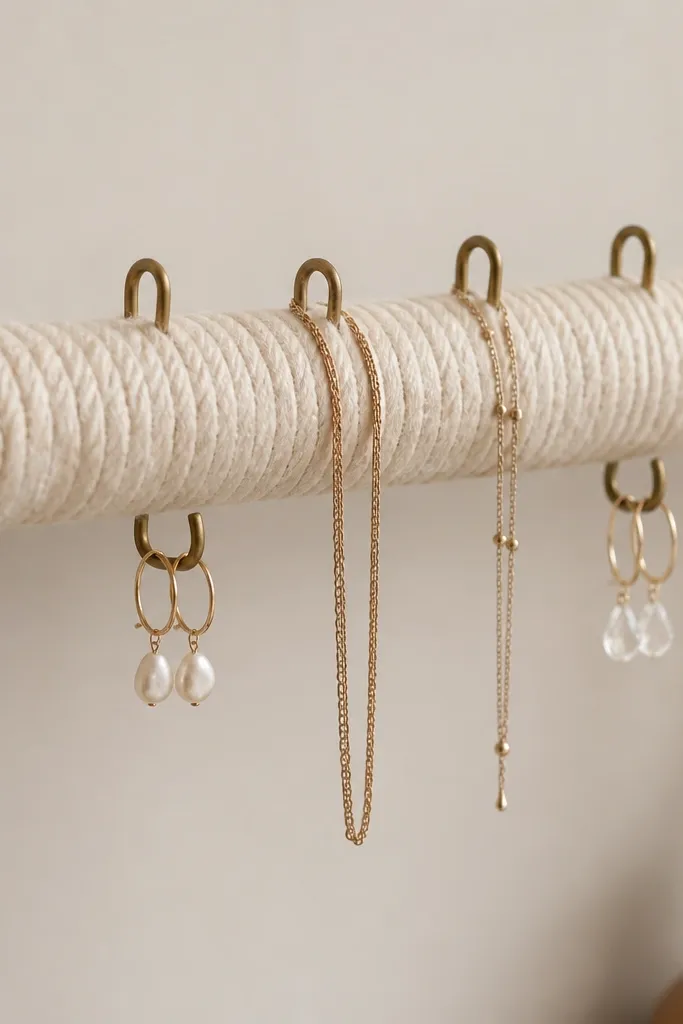
Chunky yarn makes the whole organizer feel cozy because it adds softness and warmth right away. The yarn also protects delicate chain finishes from metal-on-metal rubbing. I use looped hooks at spaced intervals so each necklace has its own lane. It’s surprisingly good for thicker chains because the yarn grips them lightly.
Wrap a 1-inch dowel with chunky cotton yarn, using hot glue at intervals. Install small screw-in hooks into the dowel before wrapping or after wrapping with shorter screws. Add two smaller hooks below for earrings. Mount using two brackets so the dowel stays level.
Editor's noteKeep yarn thickness consistent across the dowel; uneven wraps make hooks look crooked.
Skip thisAvoid thin yarn that flattens — it leaves smooth spots where chains slip.
21. Vintage doily + cork pad with pearl pushpins
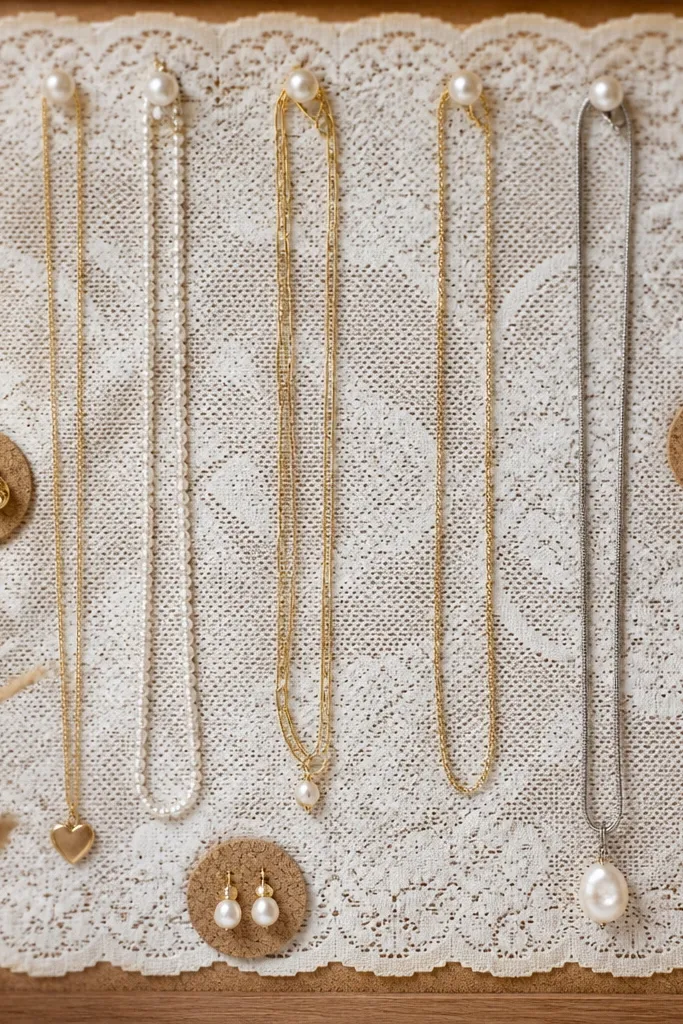
This is cozy because lace looks like your grandmother’s tablecloth, but it’s practical. Pushpins with pearl tops keep the look soft while holding necklaces in place. The cork underneath grips pushpins firmly, so you can reposition without the hardware loosening. I use this for delicate pieces that tangle easily, like fine chains and charm necklaces.
Cover cork with a doily that fits the surface, trimming edges and stapling the excess to the back. Use pearl-headed pushpins and pin necklaces by the clasp or a small loop at the end. Add small cork circles under studs so they don’t slide. Frame it like wall art with a simple wood border.
Editor's noteUse a lint roller on the doily before styling; the pins grab dust and it shows.
Skip thisDon’t use regular metal pushpins without pearl heads; they look harsh against lace.
22. Wood branch wall with clear acrylic earring bars
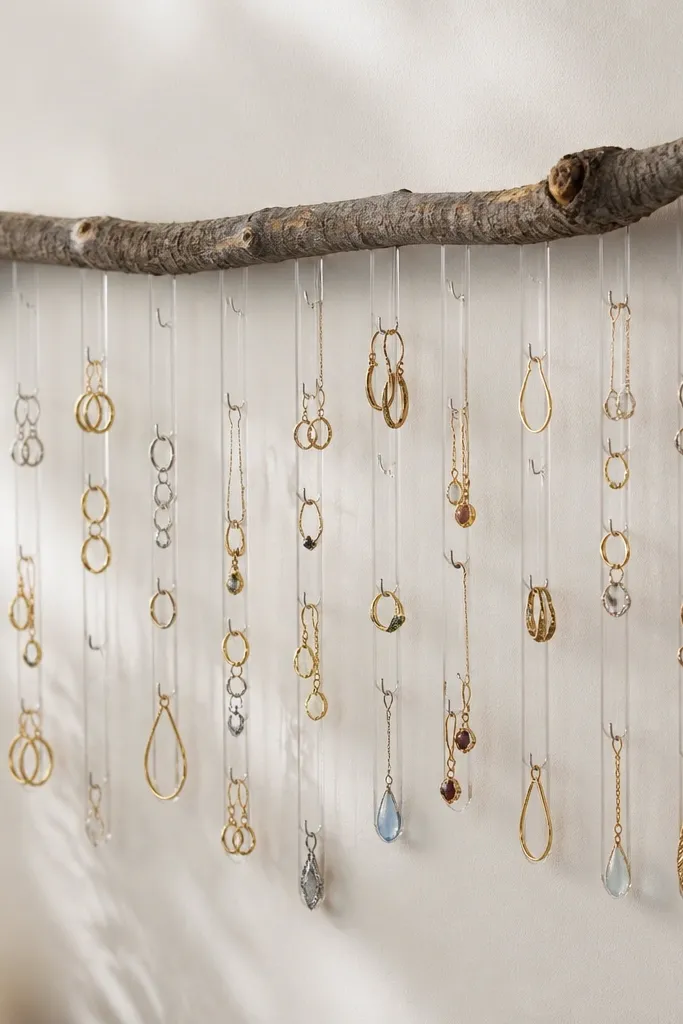
A branch looks cozy because it’s organic, and clear acrylic keeps it from getting too rustic. The branch handles necklaces and longer chains, while the acrylic bars organize earrings in a neat line. I like pairing warm wood with clear acrylic because the jewelry stays the focus. It also scales well — you can go small or big depending on your wall.
Clean and sand a branch, then seal it with matte clear coat. Mount it with two wall brackets and pilot holes. Hang clear acrylic strips using small chain links so there’s a slight gap under the branch. Attach small earring hooks along the acrylic strips with screws or adhesive mounts rated for acrylic.
Keep acrylic strips spaced about 1.5 inches so earrings don’t overlap.
Skip glossy branch seal; it makes natural wood look wet and cheap.
23. Rolled t-shirt fabric cuff hanger with knot ties
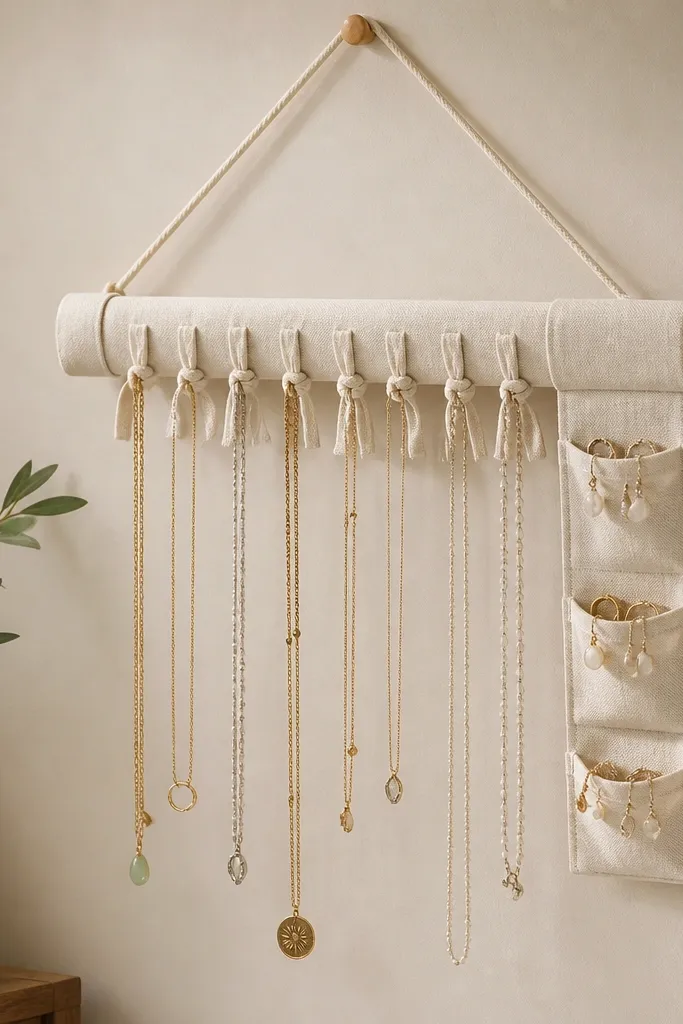
This one is cozy because it looks like fabric art, not storage. Knot ties create adjustable spacing, so you can hang different necklace lengths without remounting hardware. I use it for lighter chains and small pendant necklaces. The side pouches catch earrings and keep them from falling behind the hanger.
Roll a cotton t-shirt strip around a thin dowel and tie knots at intervals. Secure the fabric roll to a backing board with stitches. Sew two small pouches on one side, each about 4 x 6 inches. Mount the backing board with a top cleat so the knots hang evenly.
Editor's noteWash and dry the fabric first; it shrinks slightly and looks cleaner once installed.
Skip thisAvoid stretchy knit that curls; it twists the knots and makes the display uneven.
24. Marble-look contact paper + gold hook row
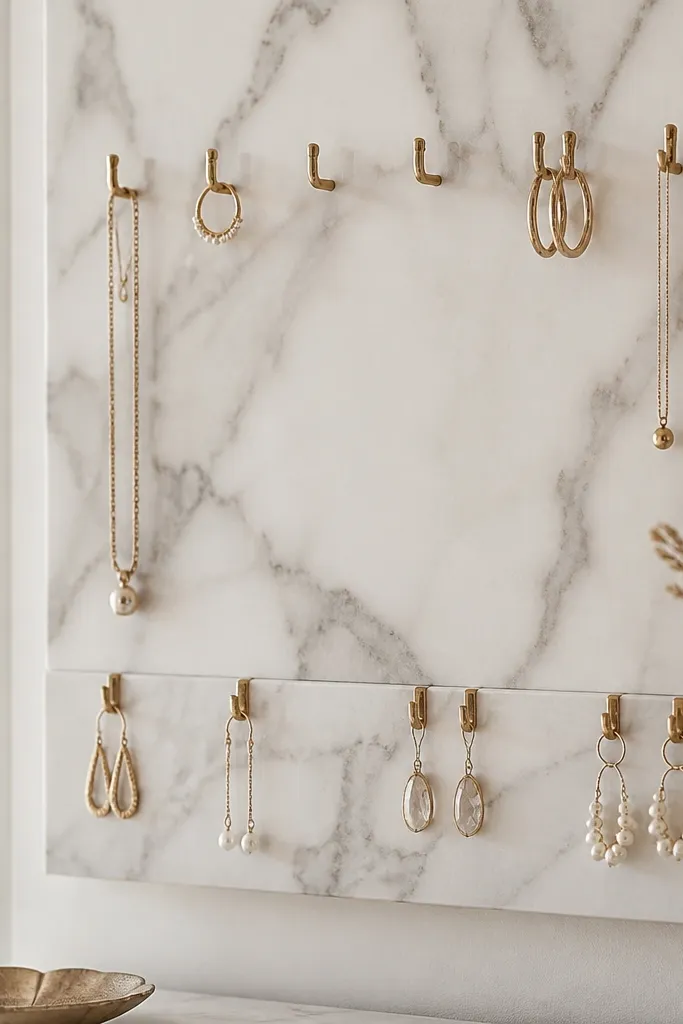
Marble-look contact paper makes a cozy organizer feel polished without heavy materials. The gold hook row gives you clean placement for necklaces, while the lower strip with clips holds earrings. I like this for renters because the panel is easy to replace if you change your decor. It also works in small spaces because it looks like a single piece of wall styling.
Cut a rigid board (foam board or thin plywood) and cover with marble-look contact paper, smoothing with a plastic scraper. Add gold hooks spaced 2.5 inches apart. Use a second strip of contact paper along the bottom for a clip rail, or attach a thin cork strip for clip bases. Mount with two screws into studs or with a cleat.
Editor's noteWarm the contact paper with a hair dryer so it conforms to corners without bubbles.
Skip thisDon’t stretch contact paper while applying; it wrinkles later.
25. Floating shelf + peg underside for necklace pairs
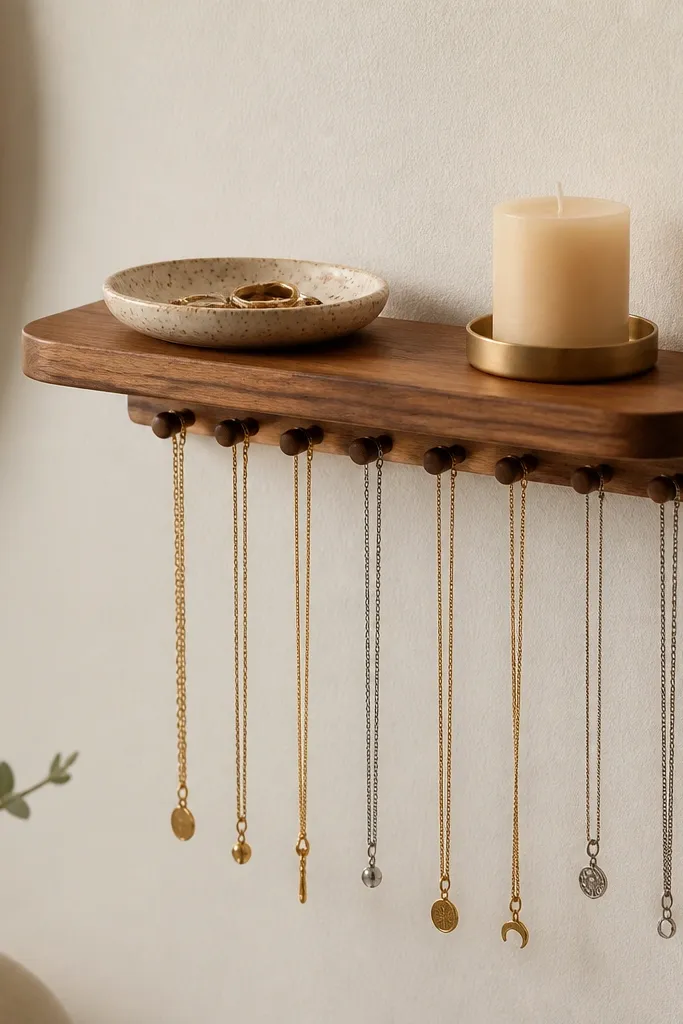
This is cozy because it blends jewelry storage with everyday styling. The floating shelf top gives you a place for a dish, and the peg underside keeps chains from falling. I use it for necklace pairs I wear together — two necklaces hang side-by-side under one peg lane. The shelf also hides the back wall so the whole area looks designed.
Mount a shelf about 18 inches long with two hidden brackets. Attach small pegs under the shelf using a thin board backing so the pegs don’t pull out. Space pegs 3 inches apart and keep the bottom clearance at least 6 inches so necklaces don’t brush the shelf. Add a dish on top for rings or a small tray for hair clips.
Seal the underside pegs with clear matte spray so chains slide without squeaking.
Avoid pegs mounted directly into thin shelf lips; they loosen from daily tugging.