
1. Felt divider sleeves with a plant-tray corner
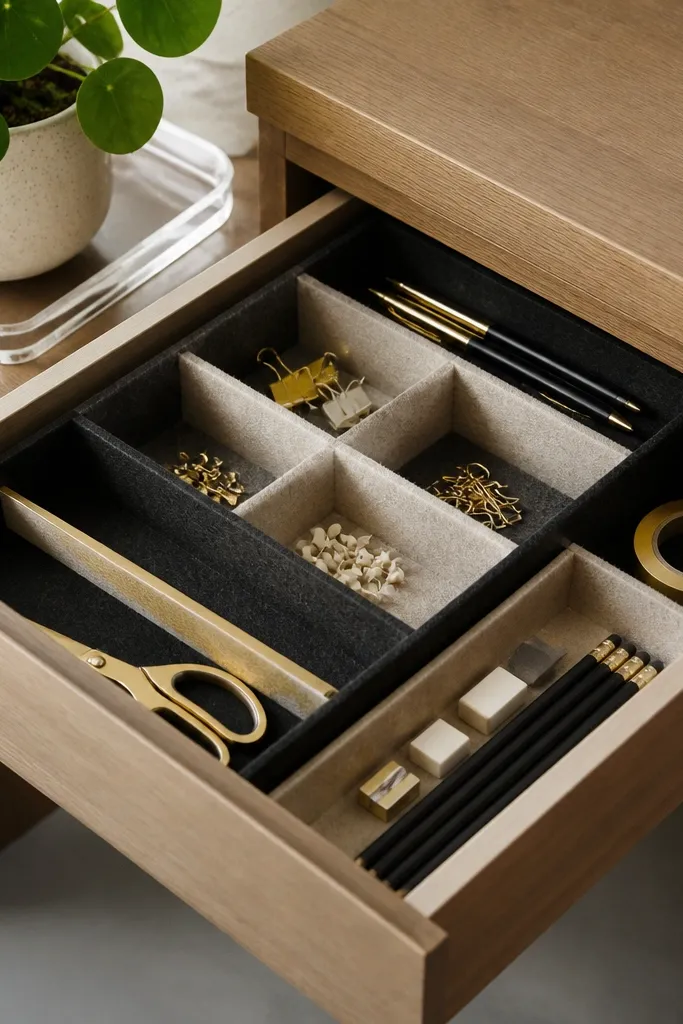
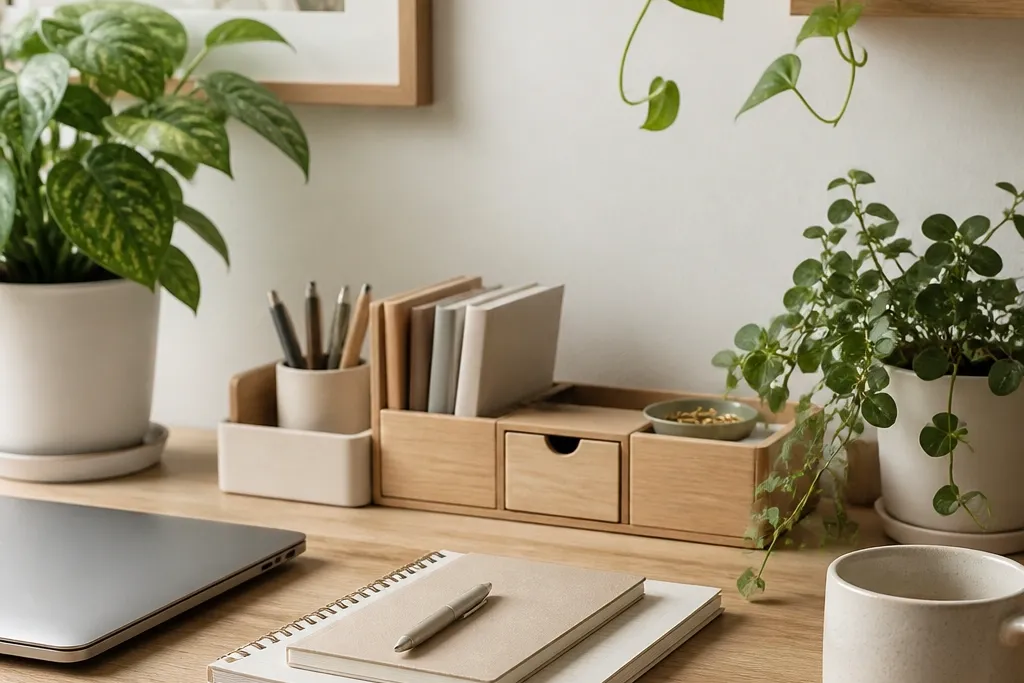
I use felt dividers when the drawer is full of small, slippery items that like to roll — pens, erasers, and kids' tiny scissors. Felt grips the items so they don’t rattle, and the neutral colors look tidy next to plants. The plant-tray corner keeps watering separate from paper so the drawer stays dry. It also gives you a visual “zone” that makes the desk feel designed.
Cut felt into 2.5-3 cm wide strips and fold them into U-shapes that sit inside the drawer. Make the compartments for pens 6-7 cm wide, and glue sticks 4-5 cm wide. Use a 20-25 cm wide waterproof tray under the plant pot so any drips land on plastic or glass, not the desk surface.
Editor's noteHot-glue a thin strip of fabric hook-and-loop along the top edge of the felt so you can reconfigure compartments without tearing.
Skip thisAvoid thin felt that flops — if it collapses when you pull a pen, it will look messy fast.
2. Clear acrylic cup grid for desk pens and plant labels
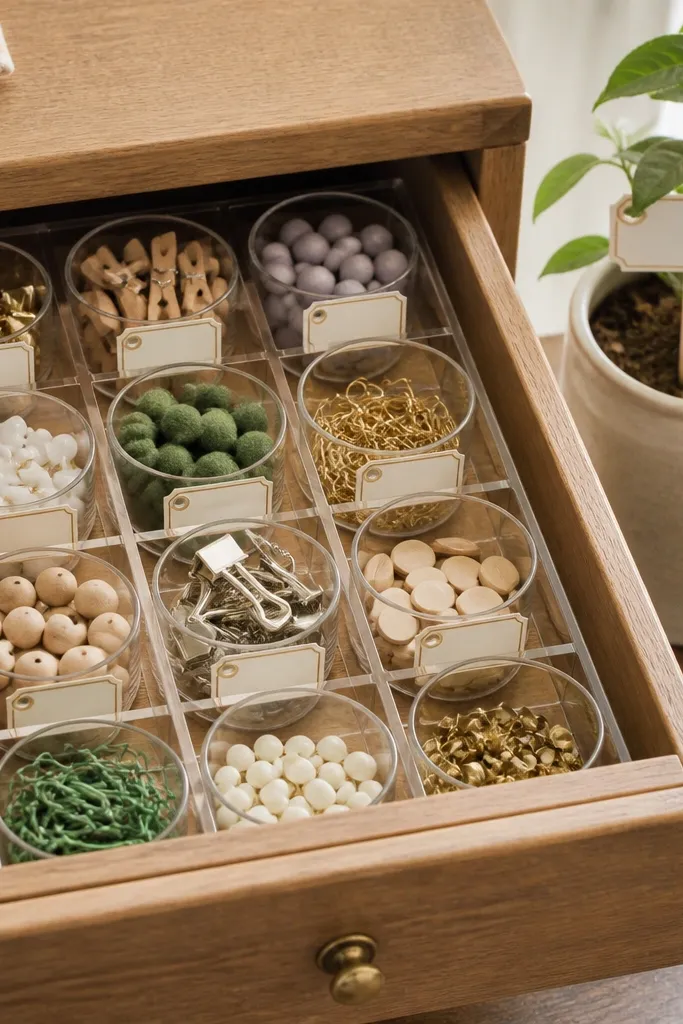
Clear cups make it easy to see what’s inside, and they look clean next to a plant setup because you can spot labels and tools instantly. I like this for kids because they stop dumping everything into one pile. The grid also works for plant label stakes, marker pens, and a tiny pack of plant ties. It’s visually light, so the drawer doesn’t look heavy.
Use an acrylic organizer tray with 2-3 cm cup spacing, or build a grid with acrylic sheets and silicone caulk. Keep the cups shallow for pens (about 6-7 cm tall) so the drawer stays easy to close. Put plant-label stakes in one cup and keep plant ties in another so you’re not hunting mid-project.
Editor's noteWrite labels on white tape with a fine-tip marker, then seal with clear packing tape so they don’t smear.
Skip thisSkip super cloudy acrylic — it looks dirty after a few weeks and defeats the “clean view” effect.
3. Wooden utensil tray insert with mini planters on top
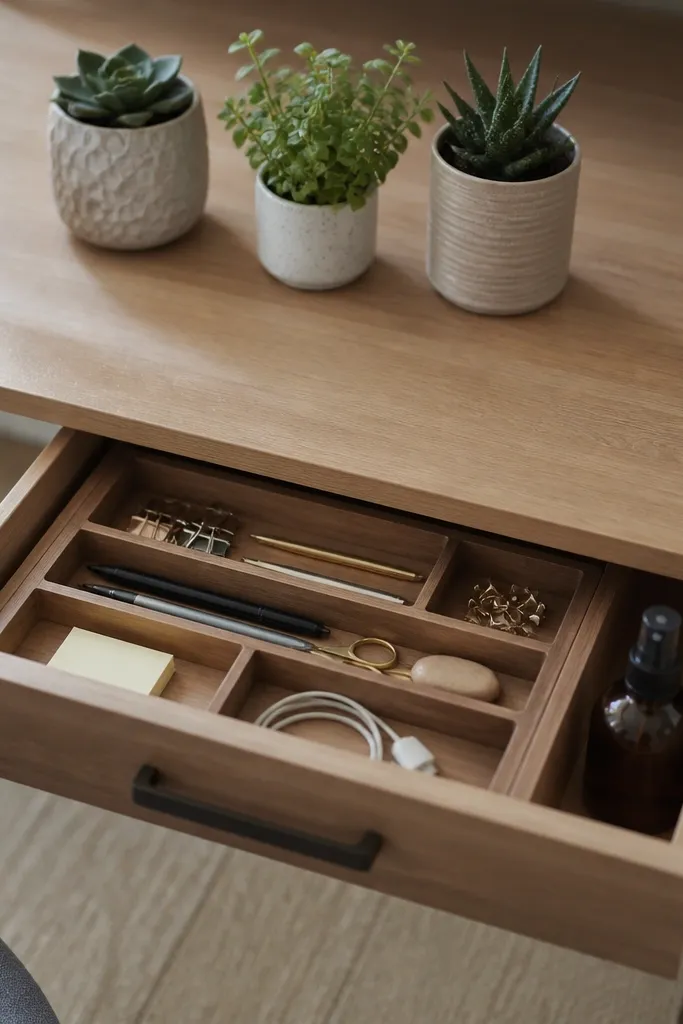
A wooden utensil tray gives you built-in, straight compartments that look warm and match plant pots. I use it when the drawer holds mixed tools: markers, tape, paper clips, and a few plant-care basics. Keeping mini planters on top makes the desk feel styled, and the drawer stays a no-drip zone because the spray bottle lives inside. Wood also hides scratches better than shiny plastic.
Pick a tray about 1-2 cm shorter than the drawer depth so it doesn’t scrape when closing. If your drawer is 35 cm wide, a 33 cm tray fits with room for a finger pull. Place a small spray bottle and plant food packet in one long compartment, and keep paper clips in the narrow slots.
Editor's noteWipe the tray with a damp cloth, then dry fully before placing plants — water spots show on light wood fast.
Skip thisDon’t leave the tray unsealed if it’s raw wood — it stains from occasional spills.
4. Stackable shoebox drawers for craft chaos
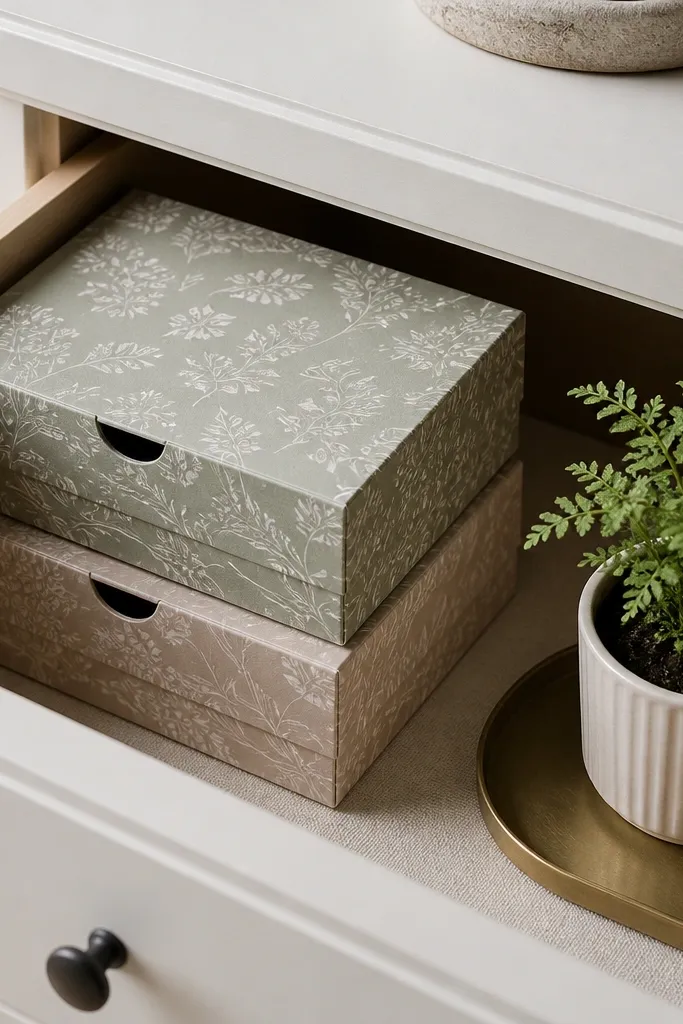
When kids' supplies take over, stackable shoebox-style inserts stop the “everything mixed together” problem. I wrap the boxes in patterned paper so the drawer looks intentional, not like a storage bin. Pairing this with plants desk organization works because the desk surface stays calm while the drawer holds messy craft items out of sight. It also makes it easy to pull one box for a school project.
Use shoeboxes or drawer-sized fabric bins, then trim cardboard so the stack fits with 1-2 cm clearance. Make one box for paper and stickers, one for glue, tape, and scissors. Leave a small gap near the front for a plant watering cloth so it’s always reachable.
Editor's noteAdd a label on the front edge, not the top, so kids can read it without pulling everything out.
Skip thisAvoid covering boxes with thick glossy paper — it wrinkles and peels when kids grab the edges.
5. Cable channel with cloth ties and a plant watering shelf
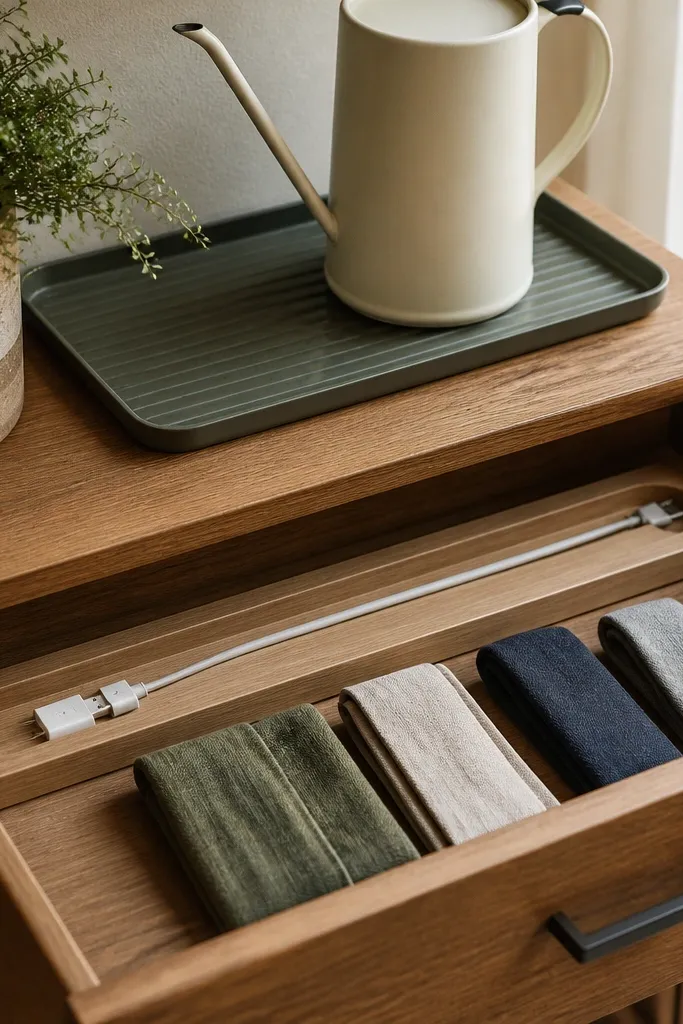
This setup keeps charging cables from becoming a tangled nest that spills into other compartments. The cable channel is low and wide so cords lie flat, and cloth ties look softer than plastic cable clips. I place the watering can on a drip mat on the side of the desk, separate from the drawer system. That way with plants desk organization stays neat instead of turning into wet mess.
Line a drawer with a thin foam sheet, then cut a cable channel using a ruler and craft knife. Make the channel depth about 1 cm so it doesn’t steal too much drawer height. Keep cloth ties in a small bin at the end, and store USB drives in a separate shallow compartment.
Editor's noteLoop cables around a 10 cm piece of cardboard and tie with cloth — it keeps the loop consistent every day.
Skip thisSkip loose cable piles under organizers — cords will re-tangle the moment the drawer is opened.
6. Magnetic strip inside drawer for scissors and metal tools
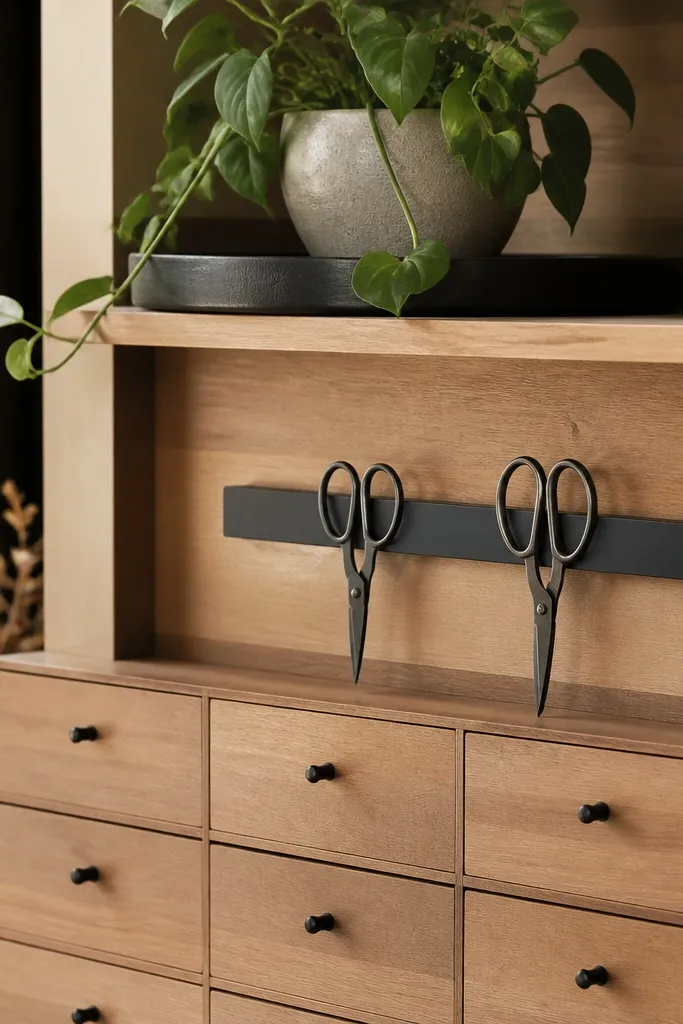
This is the fastest way I’ve found to stop metal tools from sliding around. Scissors stick where you put them, and rulers don’t disappear into the bottom. It also looks clean because the tools sit vertically along the drawer wall. With plants desk organization, I like keeping plant trimmers and metal stakes in the same drawer so plant care tools don’t mix with school supplies.
Use a thin magnetic strip (about 20-30 cm long) and attach it with a strong adhesive meant for magnets. Place it on one side wall so the tools don’t block the drawer from closing. Add one small tray for non-magnetic items like tape and plant labels.
Editor's noteCover the magnet with a thin strip of felt or faux leather so it doesn’t scratch blades.
Skip thisDon’t stick magnets directly onto bare particleboard — the adhesive fails after a few months.
7. Expandable accordion file in the drawer for paper that refuses to behave
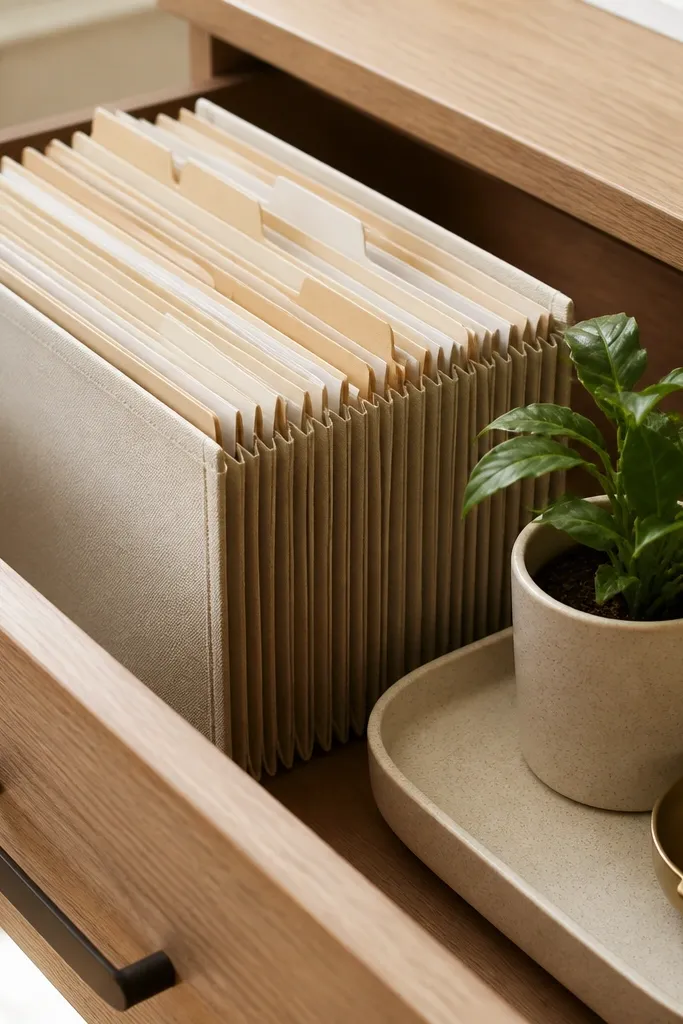
Paper takes over desks because it’s flexible. An accordion file turns that flexibility into controlled compartments, so kids can sort homework, permission slips, and art prints without piling them. The tabs make the system visible, which matters when you’re also using the desk for plants desk organization. I keep plant care instruction sheets and seed packets in one accordion slot so they never get lost.
Choose an accordion file that fits drawer width with 1-2 cm clearance on both sides. Use labels on tabs: “Home,” “School,” “Plants,” and “To File.” Keep the accordion towards the back so front items stay reachable.
Editor's noteUse a single color for plant-related tabs (sage green or muted terracotta) so the drawer scan is quick.
Skip thisSkip tiny accordion files that force you to cram — crammed paper makes tabs unreadable.
8. Bamboo drawer caddies with color-matched plant pot accents
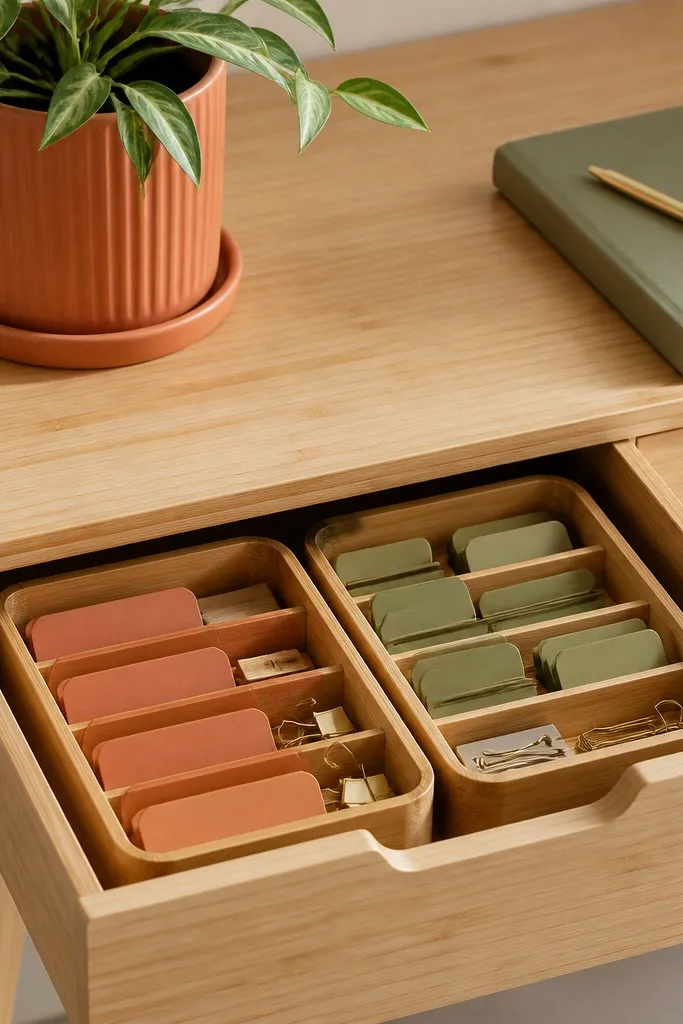
Bamboo caddies look warm and they match the earthy vibe of most houseplants. I use two caddies: one for school tools and one for plant-care basics. Color-matching tags makes it feel styled without being precious. When the plant pot color repeats inside the drawer labels, the whole desk looks like it belongs together.
Pick caddies with open sides so kids can grab without tipping. Keep caddy A for pens, markers, and erasers; caddy B for plant food, plant ties, and a tiny notebook. Label with masking tape in terracotta or sage and seal with clear tape.
Editor's noteAdd one small felt patch on the bottom of each caddy — it stops sliding and reduces drawer noise.
Skip thisAvoid glossy labels that peel — they turn into a crooked mess after daily use.
9. Silicone baking cups for tiny supplies
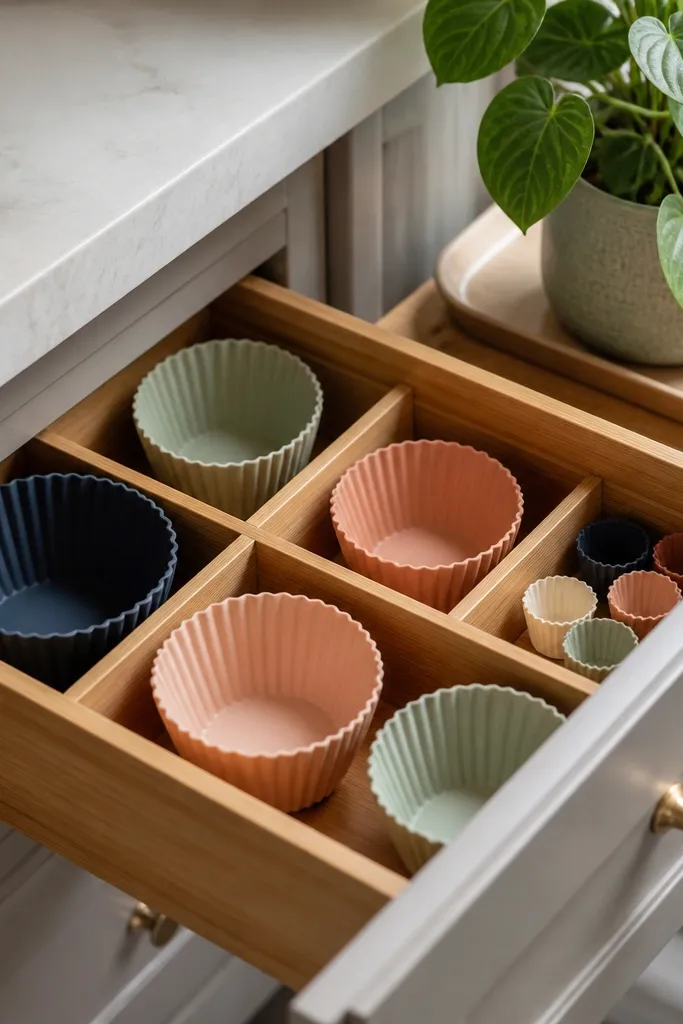
Silicone cups are surprisingly good for tiny supplies that clutter drawers: paper clips, rubber bands, push pins, and seed-starting accessories. They pop out easily for cleanup, and the flexible walls prevent items from falling into corners. This is one of the simplest ways to make with plants desk organization look neat because the drawer stays visually segmented. Silicone also handles occasional moisture better than cardboard.
Buy a silicone muffin-cup set and cut or trim only if needed, keeping the cups low (about 2-3 cm). Place small cups along the drawer front for quick access, and bigger cups near the back for bulk items. Add a single cup for “plant smalls” like ties and stakes.
Editor's noteRinse silicone cups and dry completely before returning — damp silicone smells after a week.
Skip thisSkip fabric liners here — they soak up spills and look stained.
10. Fold-flat divider from a shower curtain liner
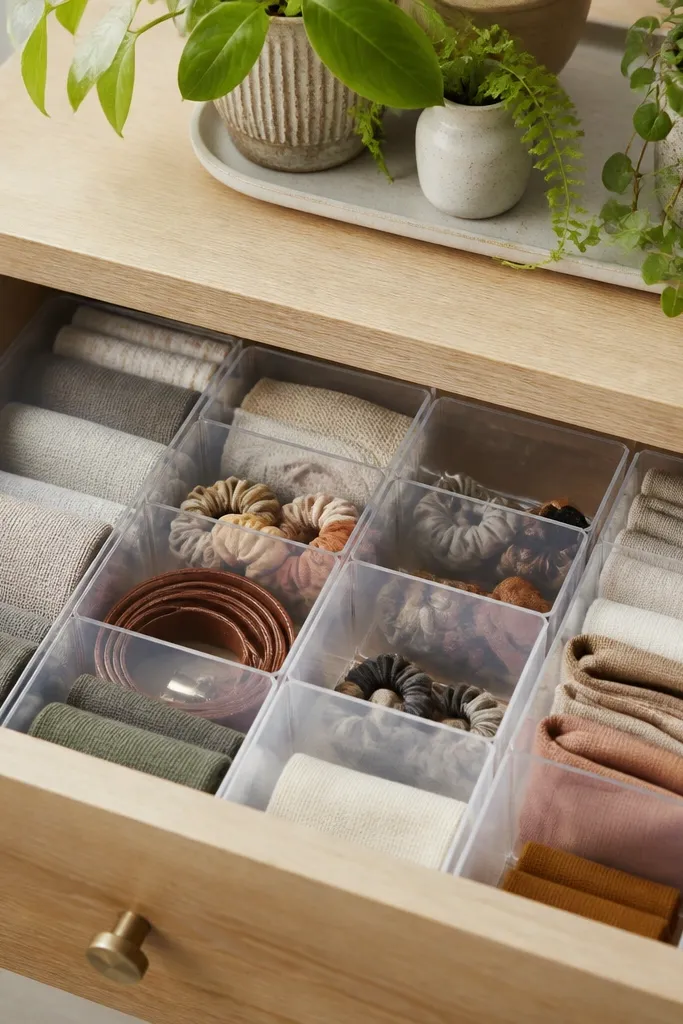
This is my budget trick for kids' desks when you want structure but still want to wipe everything clean. The plastic liner dividers are easy to cut, and they don’t absorb water from watering tools. I use them to separate sharp stuff (scissors) from paper and glue. With plants desk organization, the wipe-clean surface matters because a spray bottle always leaks at least once.
Cut plastic liner into panels and create tabs that tuck under the drawer lip. Make three sections: wide for paper, medium for tools, narrow for tape and labels. Use a marker to measure and cut straight — crooked dividers make the drawer look off.
Seal cut edges with clear packing tape so they don’t fray or curl.
Avoid floppy dividers that don’t sit tight — they slide and end up in a heap.
11. Pegboard drawer insert with removable hooks
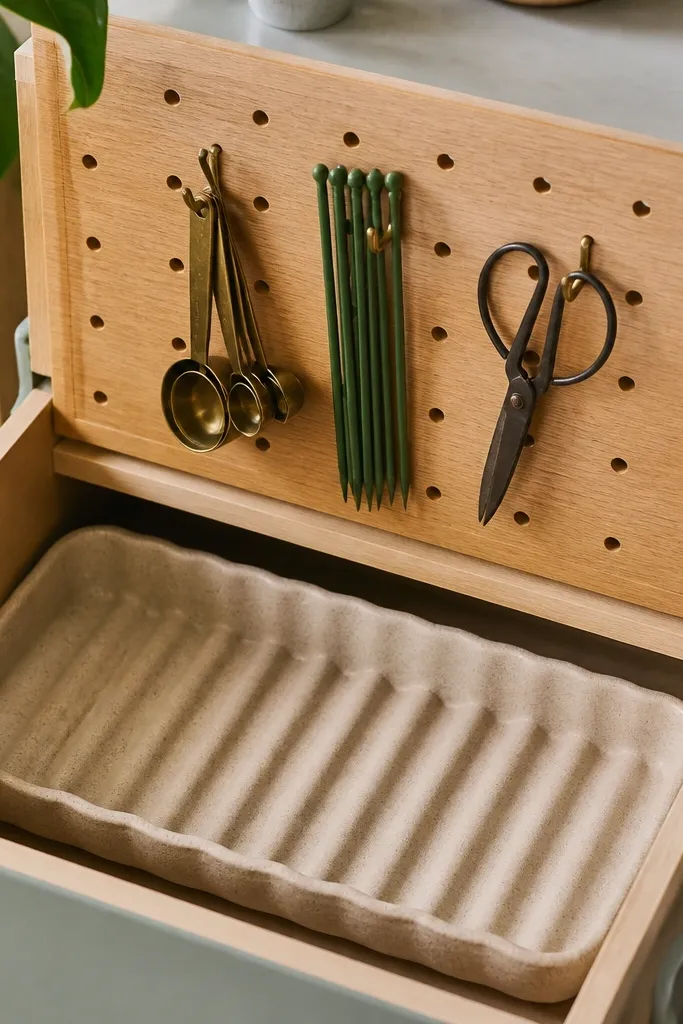
Pegboard inside a drawer gives you flexible hanging points without taking up desk space. I use it for tools that sit better on hooks than in bins: scissors, rulers, small measuring spoons, and plant stakes. The drawer still has compartments for paper and seeds, but the hooks keep metal items from disappearing. It looks tidy because everything has a visible spot.
Cut pegboard to fit the drawer bottom and drill or screw small hooks in two rows. Add plastic bins on the pegboard for non-hanging items. Use hooks sized so scissors hang by the handle, not the blades. Keep plant stakes in one hook row so plant care tools stay together.
Paint the pegboard with matte chalk paint and seal with clear matte — it resists scratches and looks clean.
Don’t overload hooks — if five tools share one hook, it pulls out and the drawer stops working.
12. Jar-lid organizer for markers, plant ties, and rubber bands
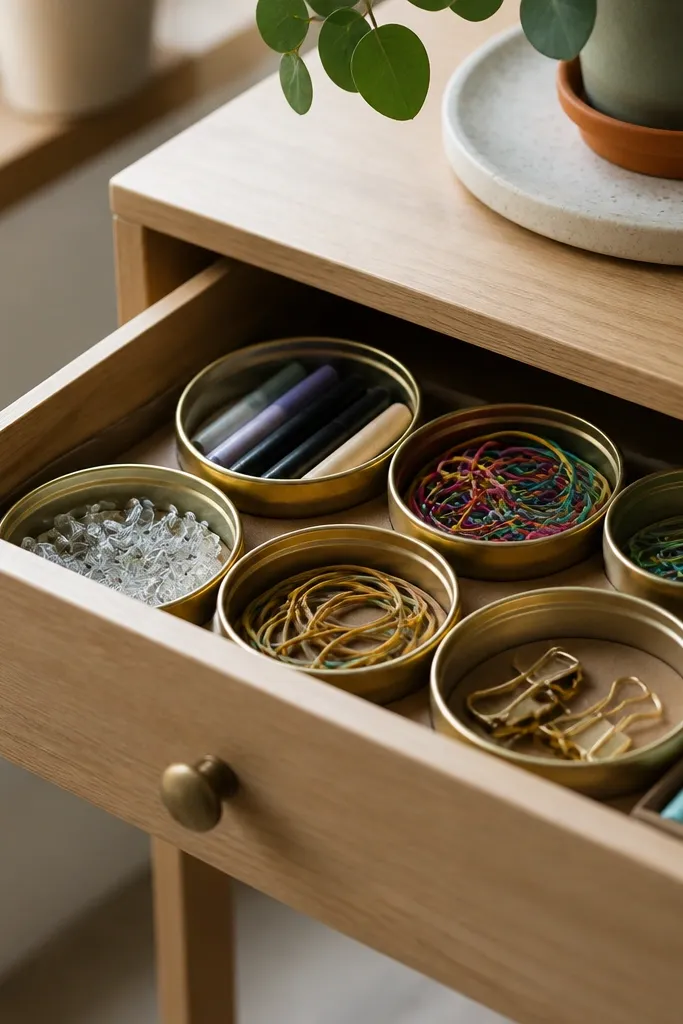
Repurposed jar lids turn a drawer into a no-drama grid for round-ish items. Markers stand upright in lids, rubber bands don’t get lost, and plant ties stay grouped. It’s a cheap upgrade that looks intentional because the circles repeat. With plants desk organization, I like dedicating a lid cluster to plant ties and label stakes so you grab them without searching.
Glue jar lids to a flat base board with hot glue, then set the base into the drawer. Space lids so marker bodies fit snugly — about 2-3 mm extra space around the marker. For rubber bands, use smaller lids or half-lids. Seal the base with matte varnish if it’s wood.
Editor's noteLabel each lid cluster by function using small paper circles taped to the lid rim.
Skip thisSkip super-wobbly glue — lids that wobble look cheap immediately.
13. Drawer tray with linen-look fabric edges
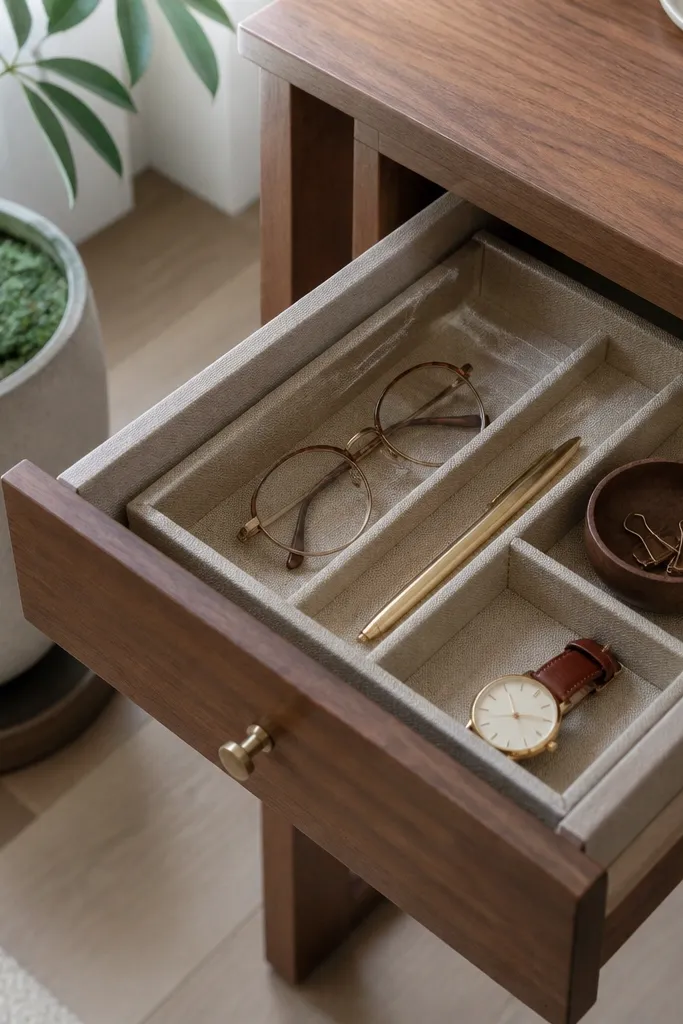
Hard plastic trays look stark next to plants, so I soften the look with fabric-wrapped edges. This is great for a “pretty but practical” drawer: small notebooks, sticky notes, and plant care labels. The fabric edges hide minor scuffs, and the tray keeps items from sliding. With plants desk organization, the soft texture makes the whole desk feel warmer without sacrificing function.
Use a shallow plastic or wood tray and wrap the sides with linen-look fabric using spray adhesive. Keep the fabric height around 1-2 cm above the tray bottom so it doesn’t catch when you close the drawer. Use a matching ribbon strip to reinforce the corners and keep it neat.
Mist fabric lightly with water and smooth it — it dries flatter and looks more even.
Avoid fuzzy fabrics that shed — drawer lint looks messy fast.
14. Modular clear drawer bins with linen labels
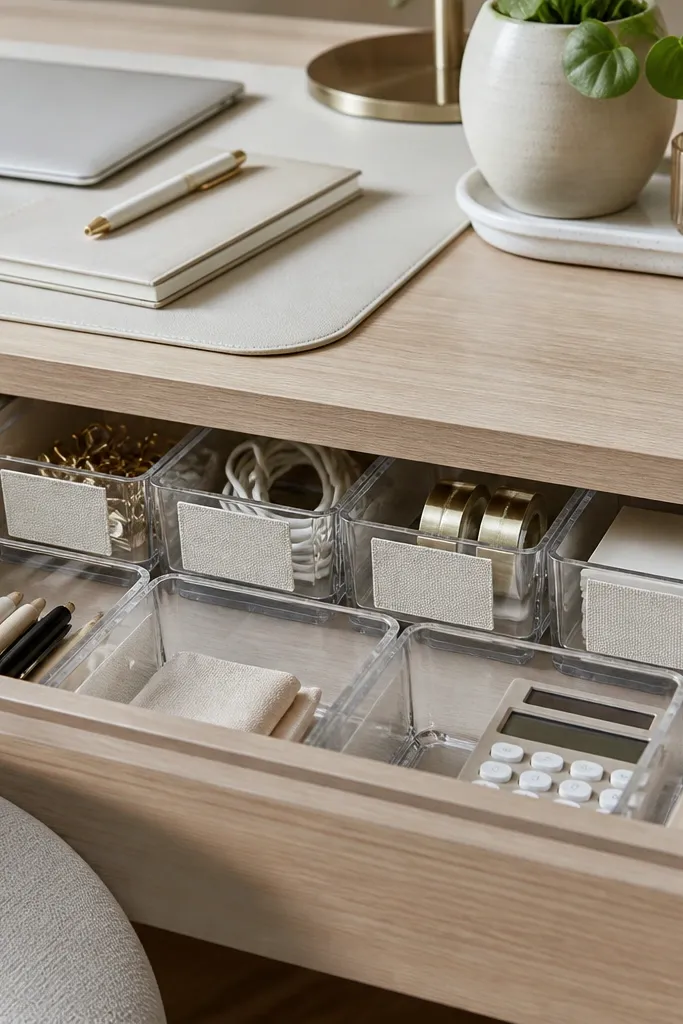
Clear bins keep the contents visible, and linen-texture labels make it feel calmer than bright stickers. I use this for kids because they can see crayons, glue sticks, and plant supplies without opening every bin. The bins also stack neatly when you add a second drawer layer. With plants desk organization, the clear bins let you coordinate label colors with your plant pots and tray.
Choose bins with straight sides so they stack without gaps. Keep the largest bin for paper and notebooks, then two smaller bins for small supplies and plant tools. Label with linen-look masking tape and a fine marker, then seal with clear tape.
Use one font size and keep labels short — long labels curl and peel.
Skip bins with curved bottoms — they trap crumbs and look gross over time.
15. DIY cork board dividers pinned inside the drawer
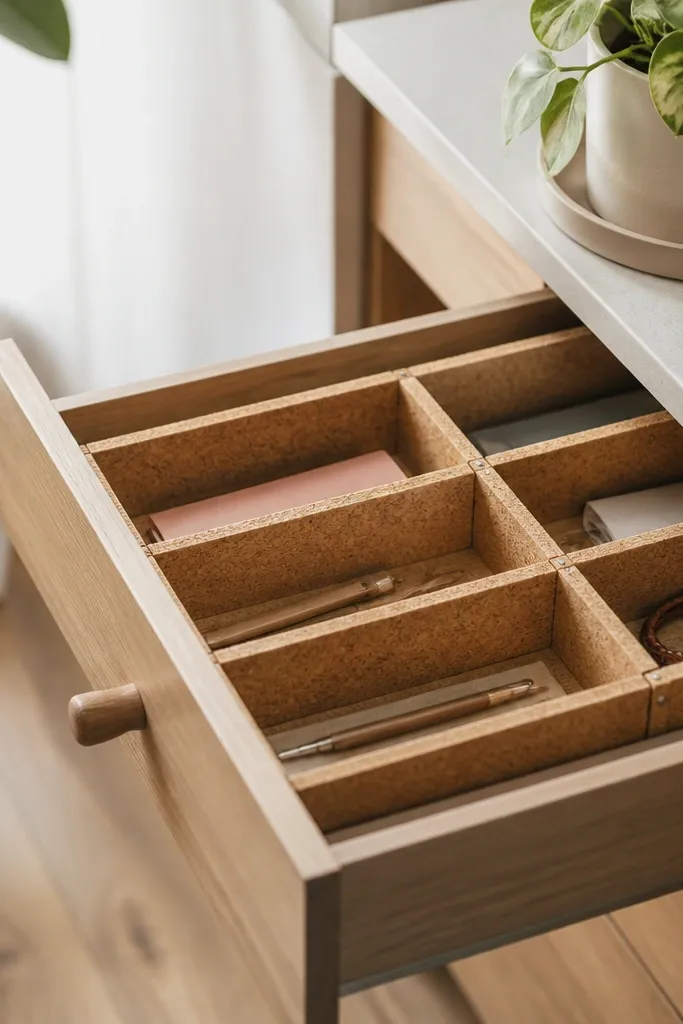
Cork is grippy and forgiving, and it makes dividers that look natural beside plants. I use cork strips to separate thicker items like small notebooks, construction paper stacks, and plant seed packets. Cork also absorbs tiny scuffs, so the drawer stays looking decent even when kids slam it shut. The texture gives the desk a handmade feel without going messy.
Cut cork strips to drawer height and pin them to a thin backing board that sits on the drawer bottom. Make compartments for notebooks about 10-12 cm wide, and a narrower section for seed packets around 6-7 cm. Seal cork edges with a thin layer of matte clear to reduce fraying.
Editor's notePress a strip of felt along the divider edge if your items scratch easily.
Skip thisAvoid bare cork in a drawer that gets moisture — it warps if watering drips inside.
16. Labeled snack-size bins for "grab and go" school supplies
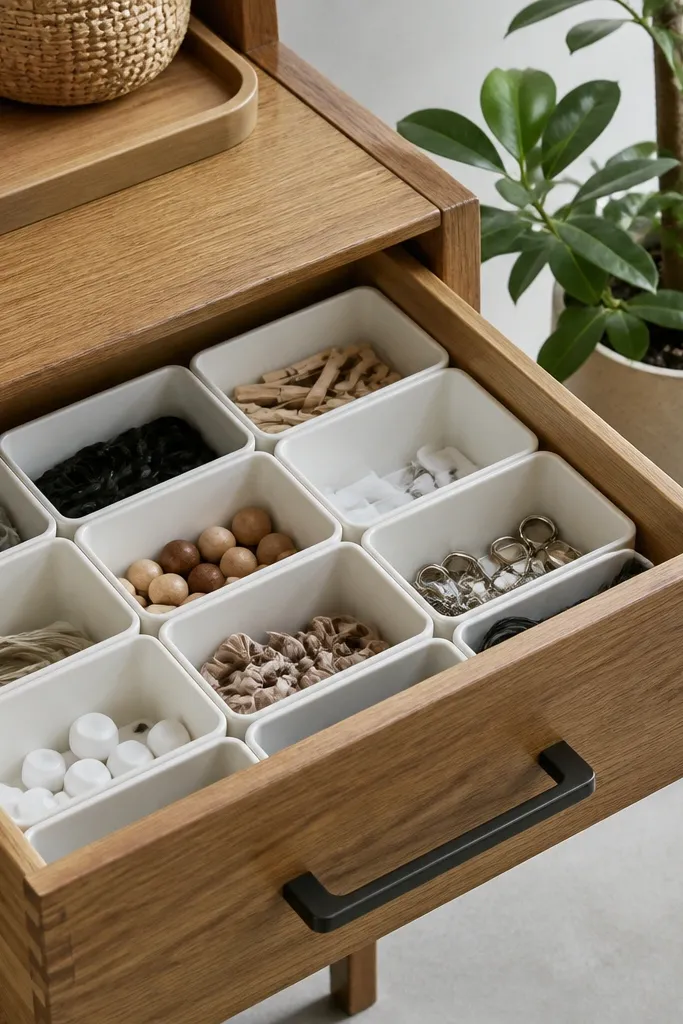
Snack-size bins are perfect because they match how kids actually work: grab one thing, use it, return it. When everything is in one big box, you end up with a daily spill. These small bins keep supplies contained and make the desk look organized even when it’s busy. Pairing them with plants desk organization is easy because you can dedicate one bin to plant care labels and ties so plant tasks stay orderly.
Use small plastic bins around 10-12 cm wide and 5-6 cm tall. Arrange them in a row across the drawer, leaving a small gap for a cloth. Label with masking tape and a black marker, then cover with clear tape. Keep scissors in a separate bin with a vertical divider so blades face the same direction.
Put the most-used items in the front two bins so kids don’t dig and dump.
Avoid bins that are too tall — kids will tip them trying to reach the bottom.
17. Folded magazine file for wrapping paper and craft sheets
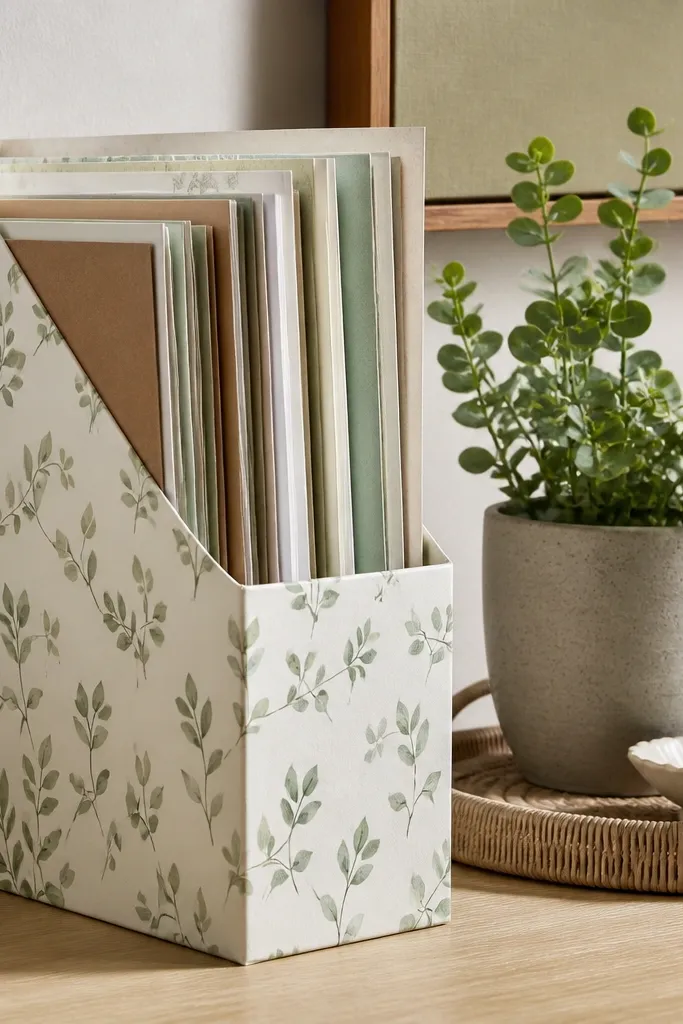
A magazine-style file keeps large flat items from turning into a wrinkled mess. I use it for wrapping paper scraps, craft sheets, and printouts that kids grab for projects. The file keeps paper edges aligned, which makes the drawer look neat even when you have plants on the desk. When you’re with plants desk organization, you want paper to stay crisp because plant labels and seed packets look sloppy next to crumpled sheets.
Use a cardboard magazine holder or make one from thick paperboard. Make the inner height tall enough for stacks of 5-8 cm thick paper without bending. Place the file toward the back of the drawer, and keep plant seed packets in a small side bin so they don’t get mixed.
Add two elastic bands around the closed file when kids are using it daily — it stops pages from sliding out.
Skip thin cardboard — it buckles fast and makes the drawer look tired.
18. Magnetic label maker strips for drawer function zones
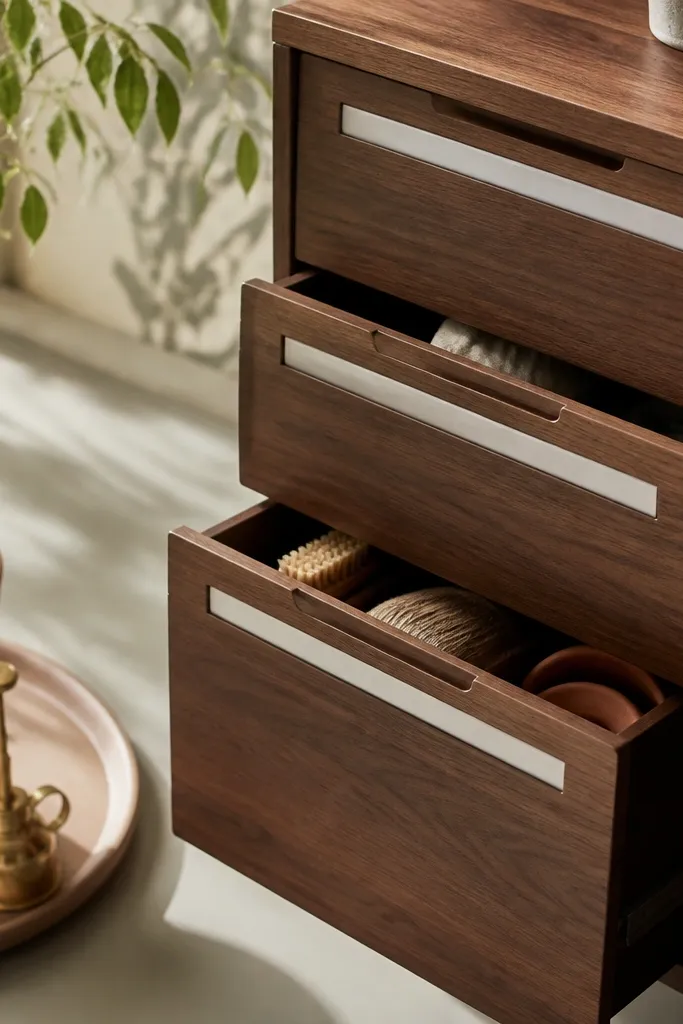
This is the method I use when the drawer system keeps changing. Magnetic label strips let you update categories without peeling tape every week. I organize by function: Writing, Cutting, Tape, Plants, and “Random.” With plants desk organization, the plant zone stays obvious, so kids return plant ties and label stakes correctly. The drawer looks clean because labels match and stay aligned.
Use magnetic label strips and cut them to fit the drawer front edge. Write labels with a label maker or fine marker, then place strips on the drawer. Keep one drawer for plants tools and label it clearly with a green dot sticker on the strip.
Editor's noteIf you don’t have magnets, use removable label tape on the drawer front and replace it every month — don’t let old labels stay crooked.
Skip thisAvoid handwritten labels that smear — they make the whole desk look rushed.
19. Drawer insert tray for plant watering tools and a blotting cloth
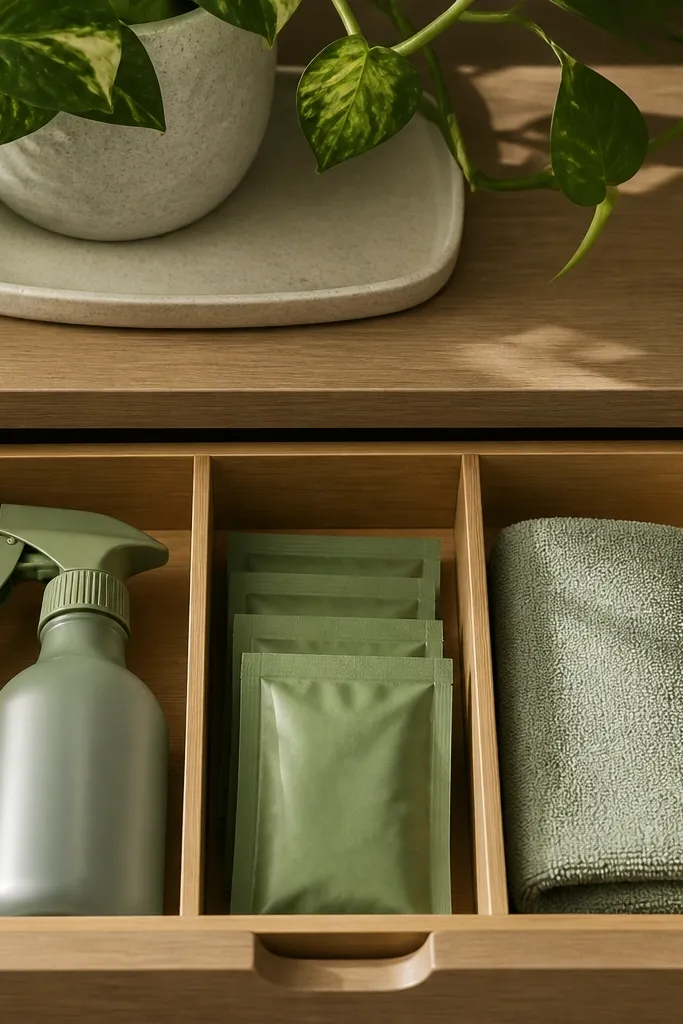
This is the “keeps it pretty” organizer. Instead of letting plant tools roam, the drawer has a dedicated watering setup: spray bottle, plant food, and a folded microfiber cloth for drips. When you with plants desk organization, you need a cleanup plan that’s part of the system, not an afterthought. The cloth catches any accidental drops, and the drawer stays dry so paper and pens don’t warp.
Use a shallow tray insert with one long compartment for the spray bottle (about 6-7 cm wide) and two small compartments for food sachets and a mini funnel. Add a center slot for a folded microfiber cloth — aim for a 20 x 20 cm fold that fits flat. Keep the plant tools toward the back so the front stays open for pens or sticky notes.
Editor's noteKeep the cloth in a small zip pouch inside the drawer so it stays clean and doesn’t pick up dust.
Skip thisSkip storing cloth loose — it ends up covered in crumb lint and looks gross next to plants.
20. Corner compartments from 2x2 foam blocks for staplers and tape
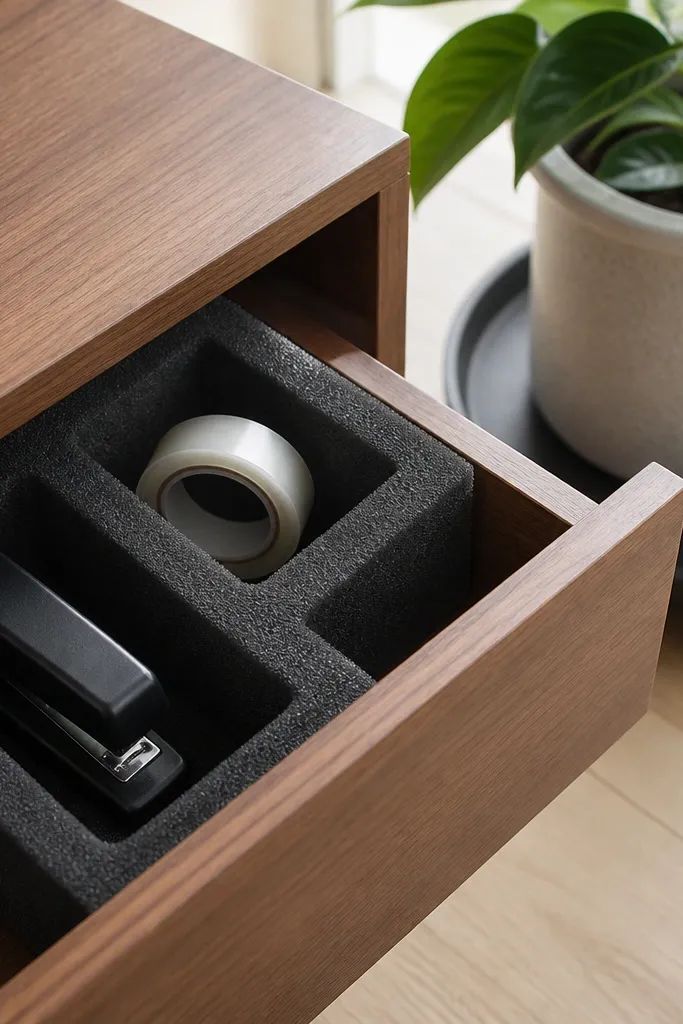
Foam blocks are a weird trick that works. They grip bulky items like staplers, tape dispensers, and thicker glue bottles so they don’t slide and knock into paper stacks. The drawer looks tidy because corners are clearly defined, and the foam hides tiny scratches on the tools. With plants desk organization, foam helps keep the plant-adjacent tools stable when kids yank drawers open.
Cut 2x2 foam blocks to fit drawer corners and wrap them with fabric or contact paper so they look clean. For a stapler, carve a shallow groove so the base sits flat. For tape, carve a semicircle channel for the roll so it sits upright. Cover the foam with matte fabric so it doesn’t look like craft foam.
Editor's noteUse a hot glue gun to attach fabric wrap — it grips foam fast and stays smooth.
Skip thisAvoid bare foam — it scuffs and looks unfinished immediately.